1. Introduction
Soccer is the most popular sport in the world and is played by all ages, genders and levels. The game is played for 90 min with two halves of 45 min, on a field with dimensions within a range of 100–110 m long by 64–75 m wide. Successful performance depends on a multitude of factors including physical, psychological, technical and tactical abilities. Historically, the science of soccer has mostly been focused on the physical and physiological considerations [
1]. Soccer is an intermittent invasion-based field sport, with players executing bouts of high-intensity actions (high-speed running, sprinting, tackling and shooting) interspersed with periods of low-intensity actions (walking, jogging).
Soccer, as an intermittent and high-intensity sport, places considerable physiological demands on its players, requiring a blend of both aerobic and anaerobic fitness to meet the rigors of the game [
1]. As professional soccer has evolved, these demands have intensified, with players now expected to sustain higher work rates and manage increased energy expenditure throughout matches while also playing more matches per season [
2]. To ensure that players can meet these challenges, it is crucial that training methods are designed to closely simulate the conditions of actual gameplay. One effective approach to achieving this is using small-sided games within training sessions [
3]. These games not only mirror the physical intensity of a match but also facilitate skill development [
4]. SSGs place a greater emphasis on technical skill development due to the reduced number of players, which increases the frequency of individual technical actions [
3]. However, small-sided games (SSGs) have limitations due to the reduced playing area, which restricts opportunities for sprinting, an essential component of soccer match play [
3]. Such a model, which incorporates the physical, technical, tactical and psychological components of the game, is adapted within tactical periodization. Within this methodology, physical, technical, tactical and psychological aspects are never trained in isolation and furthermore, based around the coach’s game model [
5]. By replicating match scenarios, this approach can offer a dual advantage, fostering both the physiological conditioning and technical skills required for success on the field.
The role of physical testing is integral in this context, as it allows for the identification of individual players’ strengths and weaknesses [
1]. Such assessments are essential in tailoring training programs to meet the specific needs of each player, thereby ensuring that they are physically prepared to maintain high-intensity performance levels throughout a match. The insights gained from these tests guide the development of targeted training interventions, enhancing overall team performance [
1]. Laboratory studies that simulate match conditions provide further opportunities to refine training strategies. By controlling specific aspects of play within a laboratory setting, researchers and coaches can evaluate the effectiveness of different training approaches and make informed adjustments to their programs [
1]. This methodical approach to training is critical in optimizing player performance. Moreover, the integration of fitness training into a broader, holistic approach is emphasized. Considerations for the positional roles and the dynamics of the team by aligning training with the specific demands of each position and the strategic objectives of the team, coaches can maximize the potential of their players, leading to better overall performance on the field.
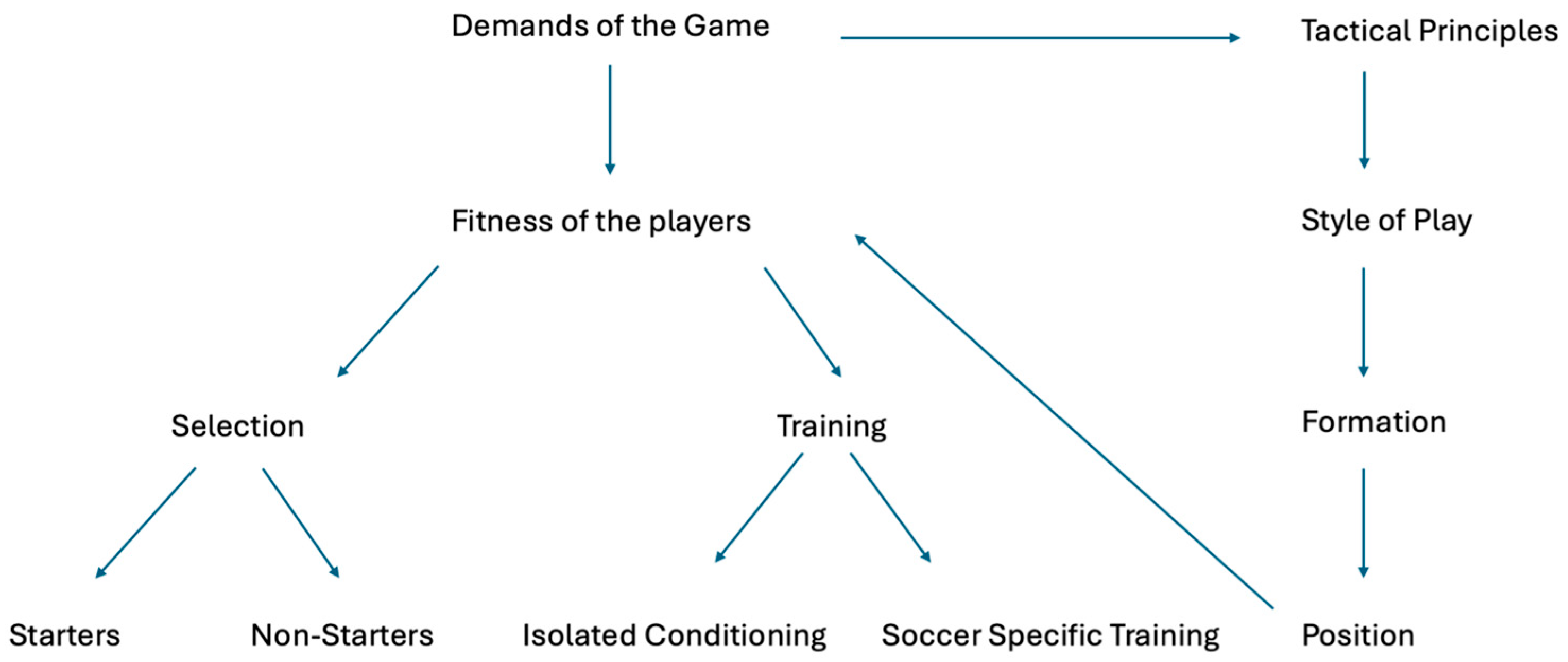
Despite the breadth of research in soccer, a persistent limitation has been the reductionist tendency to evaluate performance through physical and physiological metrics. The ergonomics model previously provided [
1] an important conceptual foundation by framing soccer performance as a multifactorial system [
1]. However, subsequent research has largely continued to treat physical, tactical and psychological dimensions in parallel rather than as an integrated, emergent system. The present review builds upon and extends the previous framework by synthesizing contemporary evidence across these dimensions and clarifying the practical implications for coaching, performance analysis and player selection. See
Figure 1 as an example of an updated ergonomic model of soccer.
3. Overview of the Physical Demands of Soccer
Data from the current literature demonstrates that players can cover anywhere between 9 and 14 km·h
−1, and high-intensity running or high-speed running (19.8—24.8 km·h
−1) accounts for approximately 10% of the distance covered [
2,
8,
9], while 2% of the distance covered is sprinting (>25 km·h
−1) [
2]. Research from 2015 found an increase in physical outputs, particularly high-velocity outputs in English Premier League match play within a six-season period from 2006 to 2013 [
9]. Further increases have been shown across seven seasons from 2015 to 2022 [
2]. These increases may be due to changes in style of play [
10] and further emphasize the importance of physical preparation for soccer players. These longitudinal trends likely reflect both changes in tactical style of play, particularly the increased defensive and pressing demands placed on all positions, and the progressive recruitment of athletes with superior physical capacities. However, caution is warranted when comparing findings across studies, as velocity thresholds for high-speed running and sprinting are not standardized across leagues or GPS manufacturers, limiting direct cross-study comparisons.
3.1. Total Distance
The total distance covered in an elite-level soccer game tends to range from 9 km·h
−1 to as high as 14 km·h
−1, with the average intensity being between 100 and 144 m·min
−1 [
11]. The distance covered in match play differs greatly due to a number of factors, but playing position, standard and style of play of the chosen team are the most prominent variables [
12]. Central Midfielders (CM) and Wide Midfielders (WM) typically cover the most distance with 10–12 km·h
−1, which is due to the greater area of the pitch the position has to cover, as midfielders tend to have a prominent role in both the attacking and the defending aspects of the game. Forwards (F) and Central Defenders (CD) tend to cover the least distance at approximately 9–11 km·h
−1 respectively [
1,
7,
9,
10,
12,
13]. Differences in total distance between the major leagues can be found in
Table 1. The positional differences are explained by the tactical role of each position within a given game model rather than purely by physical capacity, a distinction that is central to the ergonomic framework proposed in this review.
With regard to differences from the first half to the second half, previous research found that players who covered the greatest amounts of total distance in the first half had the largest decreases in the second half [
8]. Whereas, players who covered lower amounts of total distance in the first half had smaller decreases in the second half [
8]. Matches were analyzed in 15 min intervals across a season in the Hungarian league, and it was found that the interval with the most distance covered was from 0 to 15 min, with the lowest being 60–75 min [
15]. The researchers believe 0–15 min had the highest physical outputs, which were due to the potentiation effect of the pre-match warm-up and the hope of gaining a tactical advantage early in the match [
15]. These within-match fluctuations reflect a combination of tactical pacing strategies, pre-match activation effects and progressive nutrient depletion, which are factors that have largely failed to distinguish between the conditions.
Distance has rose by over 1.5 km·h
−1 over a ten-year period from pre-1992 to 2002 [
1]. The researcher attributes this increase in distance covered to rule changes that occurred during this time. Such rule changes, such as disallowing goalkeepers from picking up a back-pass from an outfielder and time-wasting, are a penalizing offense.
High-Speed Running
High-speed running is a speed threshold metric, and its given threshold can change based on the practitioner’s or manufacturer’s preference [
16,
17]. Currently, there is no universal threshold for high-speed running, but recent research has defined the metric as any given distance covered between 19 km·h
−1 and 25 km·h
−1 [
18]. Certain positional demands tend to require more HSR than other positions. Soccer players can cover anywhere between 550 and 1100 m of HSR during elite match play [
13]. The magnitude of HSR performed differs within positional groups; [
16] wide midfielders perform the most HSR (900–1100 m), central midfielders and outside backs perform similar outputs in HSR (900–1000 m), with central defenders performing the least with approximately 600–700 m [
12,
18]. The differences between the major leagues and their thresholds are represented in
Table 1. The tactical demands of positional groups impact their HSR capabilities [
19]. For instance, central defenders have a high tactical role, which allows for less high-intensity activities such as HSR. Central defenders tend to mirror and react to attacking players and aim to prevent an opportunity for the attacker to score. Due to this, central defenders would have to cover a lot less ground and therefore less at high speeds. The tactical nature of central midfielders and their role allows for that positional group to cover a significant amount of distance at high speed [
11]. Central midfielders’ HSR demands can vary greatly due to the versatility of the positional group. For instance, central midfielders can have more defensive and attacking responsibilities depending on their team’s game model. Crucially, these are tactical constraints, not merely physical differences, a distinction that underpins the ergonomic model proposed here.
When comparing HSR differences in first to second halves, the findings are similar to the total distance. Players who covered the greatest amounts of HSR in the first half had the largest decreases in the second half [
8]. Matches that have been analyzed in 15 min intervals have shown that the highest level of HSR is observed in the first 15 min of a match [
17], whereas the lowest HSR has been shown in the final 15 min [
17]. There is a 40% decrease in HSR (19–30 km·h
−1) from the last 15 min of a match compared to the first 15 min [
16]. The large decreases can be attributed to fatigue and pacing strategies, more specifically, lower muscle glycogen levels, creatine kinase, and an increase in blood lactate concentrations and dehydration [
11].
Research from the English Premier League has shown large increases over a 12-year period [
11], with a 30% increase in HSR from 2006 to 2013 [
11]. A cohort found further increases of 12% in HSR from 2013 to 2019 [
2]. The researchers suggest the large increase is due to changes in style of play (particularly for outside backs and central defenders) within the league and the arrival of players into the league with higher physical abilities [
10,
19,
20,
21].
3.2. Sprint Distance
Sprint distance is a threshold metric that is set to be above high-speed running, and its given threshold is not universal within the current literature [
22]. The majority of recent research has defined the metric as any given distance covered above 25 km·h
−1 [
18]. On average, players can cover anywhere from 50 to 300 m of sprint distance in match play. Positional demands have a large impact on sprinting and can cause a large variation within positions. Wide players with both attacking and defensive responsibilities tend to cover the most sprint distances in match play (200–350 m) [
2,
6,
14], while central defenders can sprint as low as 100 m in match play [
9]. Wide players tend to cover the most, as they tend to have more space, and their tactical responsibilities dictate these demands. Such tactical responsibilities would be 1v1 scenarios and aiming to create 2v1 scenarios with overlapping runs from typically wide players. These moments in match play tend to have more space for players to reach sprinting velocity. Large variations can be seen with forwards and sprinting, and this can be attributed to the vastly differing styles of play and how they can affect the sprinting demands of forwards (running in behind versus direct) [
2,
3,
9]. The wide variation within positional groups, particularly forwards, reflects the degree to which sprint demands are determined by the team’s game model (e.g., runs in behind vs. direct play) rather than by position alone.
Little research exists in comparing the differences in halves with sprinting, particularly where sprint distance is defined as any distance above 25 km·h
−1. One study examining the sprinting demands across La Liga in 2013–2014 found that players in all positional groups except for central defenders had greater sprint distance in the first half compared to the second [
23]. Research has observed that the first 15 min of a match had the greatest amounts of sprinting, with the last 15 min having the least [
16]. The researcher attributed the lower levels of sprinting in the last 15 min of the game to fatigue, but also to how the result of the game may have been decided [
16]. Large increases in sprinting have been shown in research from the English Premier League [
2,
10]. Increases by 35% have been shown over a 10-year period [
10], and more recent research highlighted a further 15% from 2014 to 2019 [
2]. The significant increase in sprinting over a 10-year period can be attributed to a change in style of play and a greater emphasis on players performing sprinting actions more regularly in match play.
Accelerations and Decelerations
Acceleration and deceleration profiles for soccer players have become more prevalent metrics within the sports science industry [
24]. The involvement of accelerometers in GPS units has become more prevalent, which has allowed practitioners to easily access the acceleration and deceleration demands of soccer match play [
24]. The eccentric muscle contraction and high rate of force during accelerations and decelerations have been shown to cause muscle soreness and fatigue [
25]. Henceforth, the importance of monitoring the acceleration and deceleration loads in soccer match play and training has become common.
Accelerometry technology in GPS units has progressed positively over time, as early research found the reliability and validity were poor [
26]. Advances in technology have improved such metrics and allowed them to be used widely amongst practitioners [
26]. The same issue presents itself with accelerations and decelerations as with other threshold-based metrics (high-speed running and sprint distance), and there is no universal prescribed threshold. Common thresholds for accelerations and decelerations are 3 m/s
2, and they can be defined as an increase or decrease in rate of speed [
18]. The lack of standardized thresholds across GPS manufacturers represents a critical methodological limitation that restricts cross-study comparisons, a problem analogous to that observed with high-speed running thresholds. Practitioners should interpret acceleration data relative to the specific GPS system and threshold applied, rather than in absolute terms.
It has been reported that elite-level players can accelerate and decelerate as much as 80 times each in a game [
27]. The researchers set the threshold to 2 m/s
2, which would inflate the number of accelerations and decelerations [
27]. On the other hand, it was found that Australian football players can accelerate and decelerate up to 100 times [
28]. The researchers used a slightly higher threshold of 2.78 m/s
2 [
28]. Wide players tended to perform the most accelerations and decelerations, while central defenders performed the least [
28]. Similarly to HSR and sprint distance, the tactical requirements of each positional group will impact the physical outputs. For instance, the central players (central midfield and defenders) have less space to reach the necessary thresholds required to register an acceleration or deceleration. The game model of each team would heavily impact the physical demands, as a team that presses and aims to put immediate pressure on the attacking team may likely see high outputs of accelerations and decelerations, as opposed to a team that employs a more conservative style of play.
Half differences for accelerations and decelerations with Iranian professional players have found that there was no significant difference between halves [
29]. Research from English Premier League reserve teams split accelerations/decelerations into three zones (low, medium and high) and found that the total accelerations and decelerations were lower in the second half than in the first, but only some were statistically significant [
30]. Temporal patterns of accelerations and decelerations were investigated by splitting the match into 15 min intervals [
30]. The researcher found that the most accelerations and decelerations occurred in the first 15 min of a match, with the lowest being in the last 15 min [
30]. It is believed that the first 15 min were the most intense due to the period of rest the players received from the warmup to the start of the game [
30]. A similar study was conducted with Australian professional soccer players, where the author split the match into 10, 9 min intervals [
29]. Within the given study, similar results were found, in which the first 9 min interval had the highest physical output, with the last interval having the least [
29].
To the author’s knowledge, no research has been conducted on the long-term changes in acceleration and deceleration demands within a soccer match. Given how new the technology is and how it has evolved over time, there is not enough data to make such an inference.
4. Interaction Between Tactical and Physical Demands of Match Play
The tactical strategy of a team and its game model will influence the physical demands placed on its players [
13]. However, there is limited research on this complex relationship. Certain factors, such as formation, possession and counterattacking, are all elements that can affect the demands placed on a player.
A study that compared the formations and physical outputs of teams in Brazil showed that the formation a team plays can dictate running match performance [
13]. This study investigated the difference between a 4-4-2 and a 4-3-3. The study found that players who played in a 4-3-3 tended to have higher running performances in match play. With that being said, the sample size was substantially higher for teams who played 4-3-3 (250 observations) compared to 4-4-2 (68 observations). Furthermore, each positional group saw an increase of 15–20% of high-intensity activities between 4-4-2 and 4-3-3. The author notes that the increase, with specific reference to central midfielders, is that the three midfielders have both defensive and attacking roles and support the corresponding positional groups. The author further references that forwards in 4-3-3 often have more defensive responsibilities without ball possession, which contributes to higher running performance. Additional research found that formation did not influence the running performance of players between three separate formations (4-4-2, 4-3-3, 4-5-1) [
11]. The author does note that ball possession may be a better indicator of an impact on running performance [
31]. On the other hand, research found the effect of the opposing team’s formations on match running performance [
32]. While the findings found statistical significance with average playing performance, when broken into positional groups, opposing formations did not have any impact on the physical output of a team [
32]. These contradictory findings are not necessarily irreconcilable. They likely reflect the degree to which formations are rigidly enforced in different playing contexts. A 4-3-3 that presses aggressively will impose different demands than a 4-3-3 that defends in a compact block, even within the same nominal formation. That underscores the limitation of using formation as a categorical variable and supports the ergonomic model’s emphasis on the game model, rather than the system of the player as the primary driver of physical demands.
Research has investigated the comparisons between running performance with ball possession and without ball possession [
33]. The researcher found that the running performance with or without possession differed based on position. For instance, forwards and wide forwards achieved greater distances with ball possession, while central defenders had an increase in demands without the ball [
33]. Both wide defenders and wide midfielders had lower running performances without possession, also [
33]. Findings within this topic have been contradictory, as research has stated that individual players’ possession of the ball [
32]. The findings coincide with other research [
32], which stated that individual players only had a small percentage of distance covered when in possession of the ball. The author noted that most high-intensity actions occur off the ball, and these actions are an important element of top-level soccer, as it involves other players aiming to create space to prepare for a goal-scoring opportunity [
32]. Together, these findings suggest that physical demands in soccer are fundamentally co-determined by tactical context, reinforcing the need for integrated performance models rather than position-specific normative profiles.
5. Other Factors Affecting Physical Demands
Several variables, such as tactical and environmental factors, can affect the running performance of elite-level soccer. Possession, match importance, formation and the opposing team’s league position are tactical factors that can impact the running performance of a player [
31]. Playing in altitude, extreme heat and cold weather are environmental factors that have been found to impact the running performance in elite-level soccer.
Soccer is played all over the world, and due to this, the game can be played in different kinds of climates with varying environmental challenges. Playing in very warm climates can cause an increased risk of dehydration. This is due to an increase in sweating and vasodilation or flushing in order to cool the body down [
34]. Declines in TD by approximately 4% were seen in elite-level French players when the temperature was 21 °C [
35]. Additionally, researchers observed match play when temperatures were above 40 °C and found a 23% decrease in HSR in elite Scandinavian players [
35]. These difficult conditions further emphasize the use of heat acclimation for elite soccer teams to ensure their performance does not decrease.
Soccer match playing at high altitudes can present players with different challenges. Altitude presents a hypobaric environment, and because the atmosphere is thinner, endurance performance may decrease due to limited oxidative energy production [
36]. The thinner atmosphere, in theory, should improve sprint performance because of less resistance to movement. In contrast, ATP resynthesis is slowed down, which could limit high-speed running activity, particularly with shorter rest periods [
37]. Furthermore, playing at altitudes of 1600—3600 m above sea level can decrease high-speed running and accelerations by 10–25% [
37]. The practical implication is that health acclimatization and altitude preparation should be treated as integral components of the training process, particularly external modulators of performance that are consistent with the system-based ergonomic framework, as physical output is context dependent.
6. Physiologic Demands
Internal load is defined by the physiological response to exercise [
38]. Examples of internal load are session-rated perceived exertion (sRPE), heart rate (average heart rate, max heart rate, heart rate recovery and heart rate variability) and conducting wellness questionnaires. The collection of heart rate (HR) data over the years has become substantially easier with advances in technology. These advances have allowed HR monitors to be portable and can be used in training and match play [
39]. Despite these advances, HR data can be difficult to collect accurately, and compliance with subjects can be problematic [
39]. sRPE is a popular and simple tool for understanding the internal load of exercise. Research noted that sRPE combines many factors, such as psychological, training status and external load, and the blend of these factors is believed to be a good representation of exercise intensity [
40].
Heart Rate Responses to Match Play
HR responses were investigated during match play in Danish professional players and found that the mean HR was 156 ± 13 beats per minute (bpm) for the entire match [
41]. Similar results found average HR was 165–175 bpm [
41]. The peak HR within this study was 187 ± 9 bpm. The current literature on first to second half comparison has shown no significant difference for average HR (157 ± 15 vs. 155 ± 13 bpm). The same can be said for max HR when comparing halves (186 ± 9 vs. 181 ± 10 bpm) [
42]. Similar to the external demands of match play, the physiological response varies due to positional groups [
42]. Midfielders possess the highest level of HR responses (176 ± 9 bpm), followed by forwards (173 ± 12 bpm) and central defenders (166 ± 15 bpm). Midfielders’ greater physiological load is due to the tactical component of their position, as they tend to be involved in both attacking and defending moments in the game, unlike their positional counterparts [
42]. Using the appropriate HR metric has come into question with recent practitioners, and research from 2012 [
42] proposed the notion that measuring HR max is not an efficient measure of exercise intensity. The researchers’ theory is based on the individuality and genetic factors of HR max. The researchers further believe that HR max is not appropriate for soccer due to HR max not taking into account “the magnitude of HR responses (HRmax—HRrest × 100)” [
42]. Recent advances in integrated load management frameworks suggest that combining HR-derived internal load metrics with external GPS data provides more complete athlete monitoring than either metric alone. This approach is directly aligned with the holistic ergonomic model proposed in this review.
8. Monitoring the Training Process Within Soccer
The training process in soccer is intended to elicit a physiological response, which in turn improves the physical abilities of players to enhance performance in match play. The process by which training is monitored is known as training load [
53]. Training load can be split into two categories: external and internal training load [
53]. External load refers to the physical work performed, such as total distance covered or number of sprints performed, whereas internal load is the physiological and psychological stress experienced by an athlete in response to the external demands of training or match play [
54]. While external training load is commonly measured by GPS, internal training load is best measured by heart rate, blood lactate and sRPE [
54]. The training outcome is directly determined by internal load, as it provides the physiological response to training. Given the ease in measuring external load in recent years, it has become the sole form of monitoring training load and can lead to misinterpretations, given that the same external training load can elicit differing internal responses among a variety of players [
53]. Therefore, a balanced approach to monitoring training load, both internal and external, is appropriate for the optimization of training and the understanding of athlete adaptation.
Common methods of monitoring training load are the Acute:Chronic workload ratio (ACWR), which is a simplistic method of measuring acute changes in training load, which can be considered a risk factor [
55]. The ACWR takes the rolling average for an external load measure over 7 days (acute) and divides it by the rolling average of an accumulated 28-day average (chronic). The popularity of such a model has grown in recent years [
56], but more recent research has shown its limitations, given its mathematical flaws and misinterpretation of use via predicting injury risk [
56]. Alternative approaches, including exponentially weighted moving averages (EWMA) and multivariate load models, have been proposed as more mathematically sound alternatives [
56]. Practitioners should be aware that no workload metric has demonstrated robust prospective injury prediction in elite soccer; ACWR and its alternatives are best interpreted as descriptive monitoring tools rather than prescriptive injury prevention thresholds. Despite these limitations, ACWR remains in common use among practitioners, owing to its simplicity.
Another common monitoring method is applying HSR exposures regularly to 1. Maintain the fitness levels of players who may not be playing as regularly (otherwise known as ”Top Off Runs”). 2. Apply enough chronic load of HSR to prevent any acute spikes in HSR, which may act as an injury risk [
57]. Multiple ways to standardize this approach are available; for example, by using % of max velocity or maximal aerobic speed (MAS). The most optimum approach to building chronic HSR is by using a more specific method while combining technical elements of the game, but given the potential variability of such, using isolated methods via MAS may be more consistent [
58]. Regular exposure to sprinting near maximal sprinting speed (MSS) has become a common practice in elite soccer and an effective mode of preventing hamstring injuries [
59]. Similar to building chronic HSR, regular exposures to maximal sprinting are optimum when combining all of the components of soccer, but given the variability of soccer drills, players may not get such exposures [
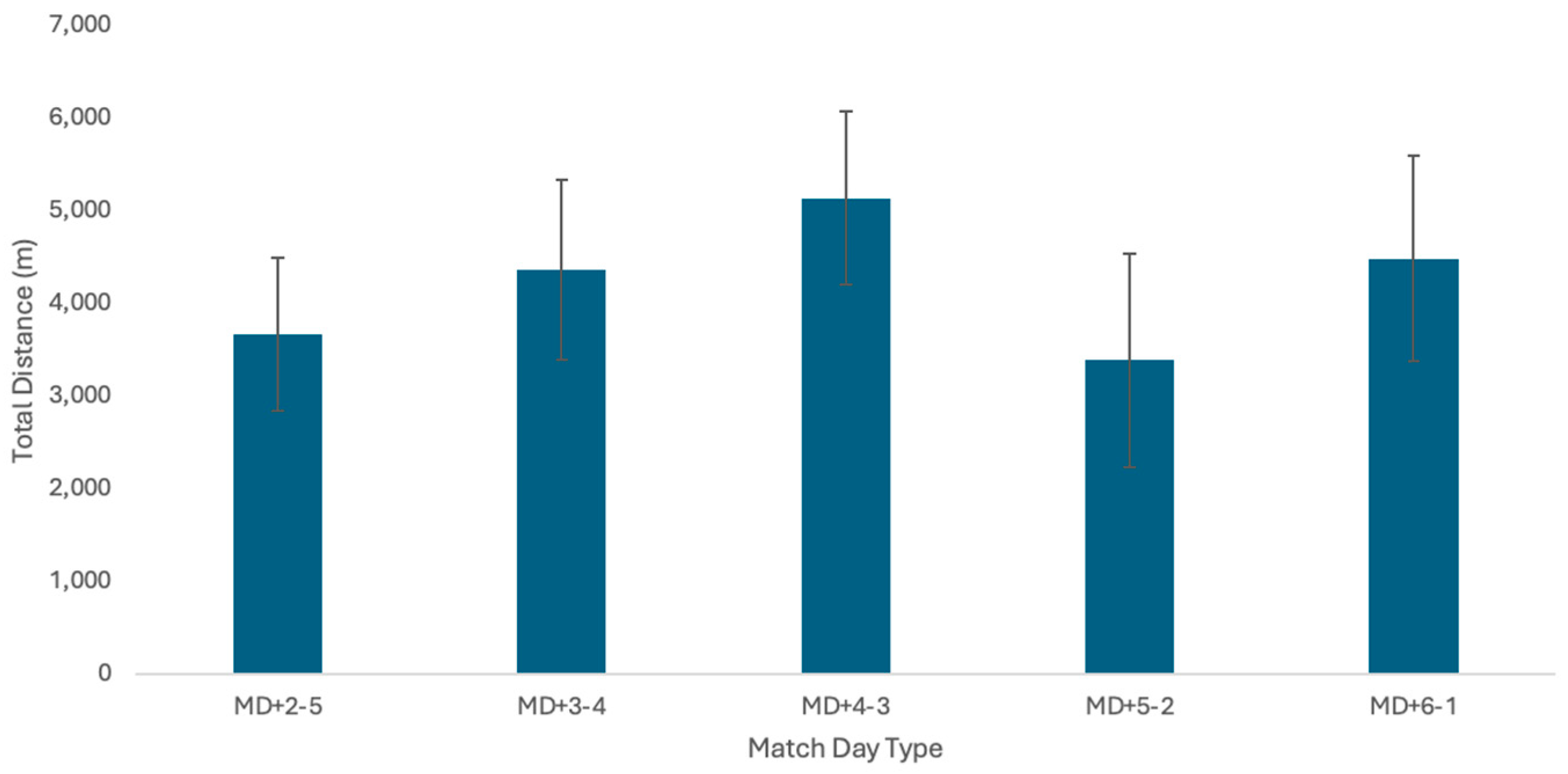
42]. A common day to perform such exposure is MD-2, as it still provides enough time for the player to recover leading into competition [
60], and is agreeable with the tactical periodization model, with MD-2 being considered a “speed day”. An example of s typical microcycle is presented in
Figure 2.
Training time is a latent load variable in athlete monitoring. Identical external loads, administered at varying diurnal junctures, may elicit disparate internal and biological costs. These discrepancies depend on an athlete’s chronotype, wake-to-training interval, and proximity to sleep. Training time effectiveness is an equilibrium between performance output and its concomitant recovery and molecular expenditure, rather than solely acute output. This buttresses the assertion that external load metrics are inherently inadequate in isolation. Consequently, integrated monitoring methodologies that incorporate internal load, autonomic recovery, and readiness are indispensable for precise interpretation of training stress [
61].
9. Weekly Structure Within the Soccer Training Process
Periodization is the deliberate manipulation or change in the volume and intensity of the training and load over a period in order to improve preparedness for an event [
62]. There are many factors that can account for soccer players being at their peak physical performance on match day, and the application of differing periodization schemes can improve the outcomes for teams who may experience long travel days, extreme playing conditions (climate), difficulty in opposition, match congestion and injuries [
37]. Periodization models differ from pre-season to in-season, as the main philosophy is different [
63]. In elite soccer, pre-season is an extended period that allows coaches to lay the foundation for their tactical principles while trying to progressively increase fitness levels leading into the start of the season [
64]. Coaches can be more aggressive in their periodization in pre-season than during in-season, given the outcome of their final position in the table is not affected during pre-season.
Traditional approaches to periodization consist of linear, block and undulating, made popular by Tudor Bompa [
65]. The models in question were designed for Olympic-style athletes who had 4-year cycles to prepare for their event and allowed athletes to taper and peak at a particular moment [
65]. The above models can still be used in soccer in pre-season, but more sophisticated approaches to periodization, which combine the technical, tactical, psychological and physical components in soccer, have been utilized in greater detail in-season. A common periodization approach is tactical periodization, which was developed by Vitor Frade, who believed periodization in soccer should be a wider concept that involves all aspects of the game (technical, tactical, psychological and physical) [
5]. Within tactical periodization, micro cycles and training sessions should be based around the coaches’ principles and sub-principles [
5]. The individual training session encompasses all training factors. Controversially, tactical periodization disagrees with any isolated physical training being conducted. Insinuating that the individual training session is organized to meet all physical goals despite the high variability in certain drills, particularly those that are tactical in nature [
5]. It is important to note that tactical periodization’s empirical evidence base is limited. A systematic review was conducted on tactical periodization [
5] and found an absence of prospective data supporting its efficacy relative to alternative periodization models. The methodology’s widespread adaptation in elite soccer reflects practitioners’ experience and conceptual appeal rather than controlled experimental evidence. This is not unique to tactical periodization, as most in-season periodization models in team sport lack robust empirical foundations, largely owing to the ethical and logistical challenges of randomized designs in elite settings.
A survey was conducted across 100 elite practitioners working in soccer with the aim of learning more about their periodization and loading parameters [
60]. The results gave insights into the uniqueness of periodization schemes used in elite soccer, with the majority claiming their periodization style was “Specific to us, but we have clear alternance in load and focus on each day”. The next two highest reported approaches were “Tactical periodization influenced” and “Mix between Tactical periodization influenced and Raymon Verheijen.” [
60]. This diversity in periodization loading parameters reflects that no single model is optimal across all team structures, playing styles and competitive calendars. The ergonomic model proposed in this review accommodates this variability by positioning periodization as one component of a broader system, to be adapted in response to training load data, recovery markers, and tactical objectives.
10. Selection
Within an ergonomic model, selection in soccer is a holistic decision that combines physiological, psychological and tactical aspects of individual players and how they correspond with their team.
Traditional models have suggested that performance profiles attribute heavily towards team selection [
1]. Such components include aerobic (VO
2max, maximal aerobic speed) and anaerobic abilities (maximal velocity, strength and agility) and anthropometric profiles. Despite previous research showing differences within performance profiles of elite to sub-elite soccer players [
66], the author believes there is an over-reliance on these variables with regard to team selection, and it is multifactorial. Other components, such as cognitive and perceptual factors, are critical to selection, such as decision-making, attention and perceptual skills [
67]. Higher levels of cognitive and perceptual factors demonstrate that skilled players exhibit superior anticipation and situational awareness [
67]. A player’s cognitive and perceptual ability can have an impact on the tactical components of games and the compatibility of an individual player within a team. Selection will be constructed, not necessarily by the highest performing individuals, but coaches must select a team with synergy and can work within the team’s principles set forth by the coaching team.
In practice, the ergonomic model can inform decision-making across several applied contexts. In terms of physical profiling, rather than using a single test, such as VO2max or straight-line sprint velocity as a primary selection criterion, practitioners can assess players across aerobic tests and positional GPS match data, interpreting the resulting profile relative to the demands of the team’s specific game model. In training load management, integrated monitoring of both external and internal load ensures that similar external outputs are not misread as equivalent adaptation stimuli when athletes differ in readiness or recovery status.
The narrative review has summarized evidence to propose an ergonomics-based understanding of soccer performance, conceptualizing the game as a complex system. The findings demonstrate that match performance is multifactorial and encompasses the physical, psychological, technical and tactical. The review further highlights the limitations of reductionist approaches that prioritize singular performance measures, relating to physical profiling and load monitoring. While advances in technology have enhanced the precision of performance quantification, their application must be embedded with the psychological, technical and tactical components. Within the ergonomics of the model of soccer, team selection is not solely based on the highest performing individual, but on the configuration of a functional unit. The model emphasizes the importance of cognitive and perceptual competencies as well as the dynamics within a team. Selection, therefore, is context-dependent and should be viewed as a continuous process aligned with the team’s game model.