Article

Adaptive Parameter Coordination of Grid-Forming Virtual Synchronous Generators Under Successive Disturbances Based on an Improved Parrot Optimization Algorithm

1
School of Electrical and Electronic Engineering, Shandong University of Technology, Zibo 255100, China
2
Shandong Provincial Key Laboratory of Advanced Power Distribution and Utilization Technology and Equipment, Zibo 255100, China
*
Author to whom correspondence should be addressed.
Appl. Sci. 2026, 16(12), 5856; https://doi.org/10.3390/app16125856
Submission received: 20 April 2026 / Revised: 29 May 2026 / Accepted: 6 June 2026 / Published: 10 June 2026
(This article belongs to the Section Electrical, Electronics and Communications Engineering)

Abstract

Grid-forming virtual synchronous generator control can improve the frequency-support capability of converter-interfaced systems. However, under successive disturbances and varying operating conditions, fixed inertia and damping settings often struggle to balance inertial response, oscillation suppression, and recovery speed. To address this issue, this paper develops an adaptive parameter coordination strategy for grid-forming virtual synchronous generators by using frequency deviation and rate of change of frequency as dynamic indicators. A piecewise regulation law is established to adjust virtual inertia and damping during different transient stages, while an improved parrot optimization algorithm is introduced for the offline coordinated tuning of the adaptive-law parameters. In the proposed optimizer, SPM-chaotic initialization, adaptive probability adjustment, and Cauchy-Gaussian hybrid mutation are incorporated to improve population diversity, convergence efficiency, and local refinement capability. Simulation results obtained in MATLAB/Simulink under successive disturbance events show that the proposed strategy achieves smaller frequency excursions, weaker secondary oscillations, and shorter settling times than fixed-parameter control and standard PO-based tuning. The results demonstrate that the proposed method can effectively enhance the dynamic support capability and disturbance adaptability of grid-forming virtual synchronous generators under complex operating conditions.

1. Introduction

The accelerated expansion of renewable generation and converter-interfaced equipment is weakening the equivalent inertia and damping characteristics of modern power systems, thereby increasing the demand for rapid voltage-frequency regulation and dynamic support [1,2,3]. Against this background, grid-forming converters have attracted substantial attention because they can establish internal voltage and frequency references instead of relying entirely on the external grid [4,5]. Among different control approaches, virtual synchronous generator control [6,7] remains attractive owing to its ability to emulate the inertial and damping characteristics of synchronous generators, thereby improving frequency-response capability [8,9] and enhancing operating stability under weak-grid conditions [10,11]. However, the transient performance of VSG control is strongly affected by the coordinated setting of virtual inertia J and damping coefficient D. Since different disturbances impose different requirements on inertial buffering, oscillation suppression, and recovery speed, fixed values of J and D make it difficult to maintain satisfactory dynamic performance under varying operating conditions.
To overcome the limitations of fixed-parameter VSG control [12], various adaptive inertia and damping strategies have been proposed in recent years [13,14]. These methods usually adjust the virtual inertia or damping coefficient according to frequency deviation, the rate of change of frequency (RoCoF), or power imbalance, thereby improving transient frequency support and oscillation suppression. However, most adaptive control laws involve multiple nonlinear coefficients, switching thresholds, and coupled control parameters, making empirical parameter tuning inefficient and difficult to generalize under successive disturbances [15,16,17,18]. In addition, model predictive control (MPC) has been applied to grid-forming converters and VSG-controlled systems [19,20]. Nevertheless, MPC-based methods usually depend on accurate prediction models, proper weighting-factor design, and sufficient online computational resources, which may limit their implementation under rapidly changing operating conditions. Learning-based and data-driven methods, especially deep reinforcement learning, have also been introduced for VSG parameter tuning and adaptive control [21,22]. However, their performance is strongly affected by the quality of training data, reward-function design, and generalization capability under untrained disturbance scenarios. Therefore, swarm-intelligence-based offline optimization remains a practical solution for coordinated VSG parameter tuning when large-scale training data or complex online predictive control is unavailable. Existing studies have applied algorithms such as particle swarm optimization (PSO) and grey wolf optimizer (GWO) to this problem [23,24]. Although PSO and GWO have shown effectiveness to some extent, they may still encounter premature convergence in the early search stage and insufficient exploitation capability in the later stage when solving high-dimensional and strongly nonlinear parameter optimization problems [25,26]. However, the coordinated tuning of multiple adaptive-law coefficients for GFM-VSGs under successive disturbances remains insufficiently investigated. When disturbances occur successively, the system may experience different transient stages, in which the requirements for inertial support, oscillation damping, and recovery speed are not identical. Therefore, a robust optimization-assisted coordination method is needed to improve the adaptive regulation capability of virtual inertia and damping under complex transient conditions.
To address the above research gap, an adaptive coordination scheme for virtual inertia and damping is proposed in this study to enhance the dynamic support capability of GFM-VSG control under successive disturbances. The main contributions of this paper are summarized as follows. First, a piecewise adaptive regulation framework is constructed by using frequency deviation and rate of change of frequency as dynamic indicators so that the parameter adjustment can better match different transient stages. Second, to avoid inefficient empirical tuning of the adaptive-law coefficients, an improved parrot optimization algorithm is introduced as an offline coordinated tuning tool. In the proposed IPO method, SPM chaotic mapping is employed to improve the distribution quality of the initial population, an adaptive probability factor is introduced to refine the search process, and a Cauchy-Gaussian hybrid mutation mechanism is introduced to further improve the coordination between global search and local refinement. Third, the novelty of the proposed approach is that a stage-dependent inertia-damping regulation mechanism is combined with IPO-based offline parameter coordination. The proposed method can improve the matching between adaptive-law parameters and transient operating requirements. The simulation results indicate that the proposed method provides an effective solution for improving the transient regulation capability and operating adaptability of grid-forming virtual synchronous generators under complex operating conditions.
The remainder of this paper is organized as follows. Section 2 introduces the control principle and dynamic characteristics of the GFM-VSG. Section 3 presents the improved parrot optimization algorithm. Section 4 describes the IPO-based adaptive parameter tuning method. Section 5 verifies the proposed strategy through simulation studies under successive disturbances. Section 6 concludes the paper.

2. Control Principle and Dynamic Characteristics of Grid-Forming Converters

This section examines the topology of the grid-forming converter and, on the basis of the VSG control scheme, establishes a dynamic model that captures the coupled effects of virtual inertia and damping.

2.1. Principle of VSG Control

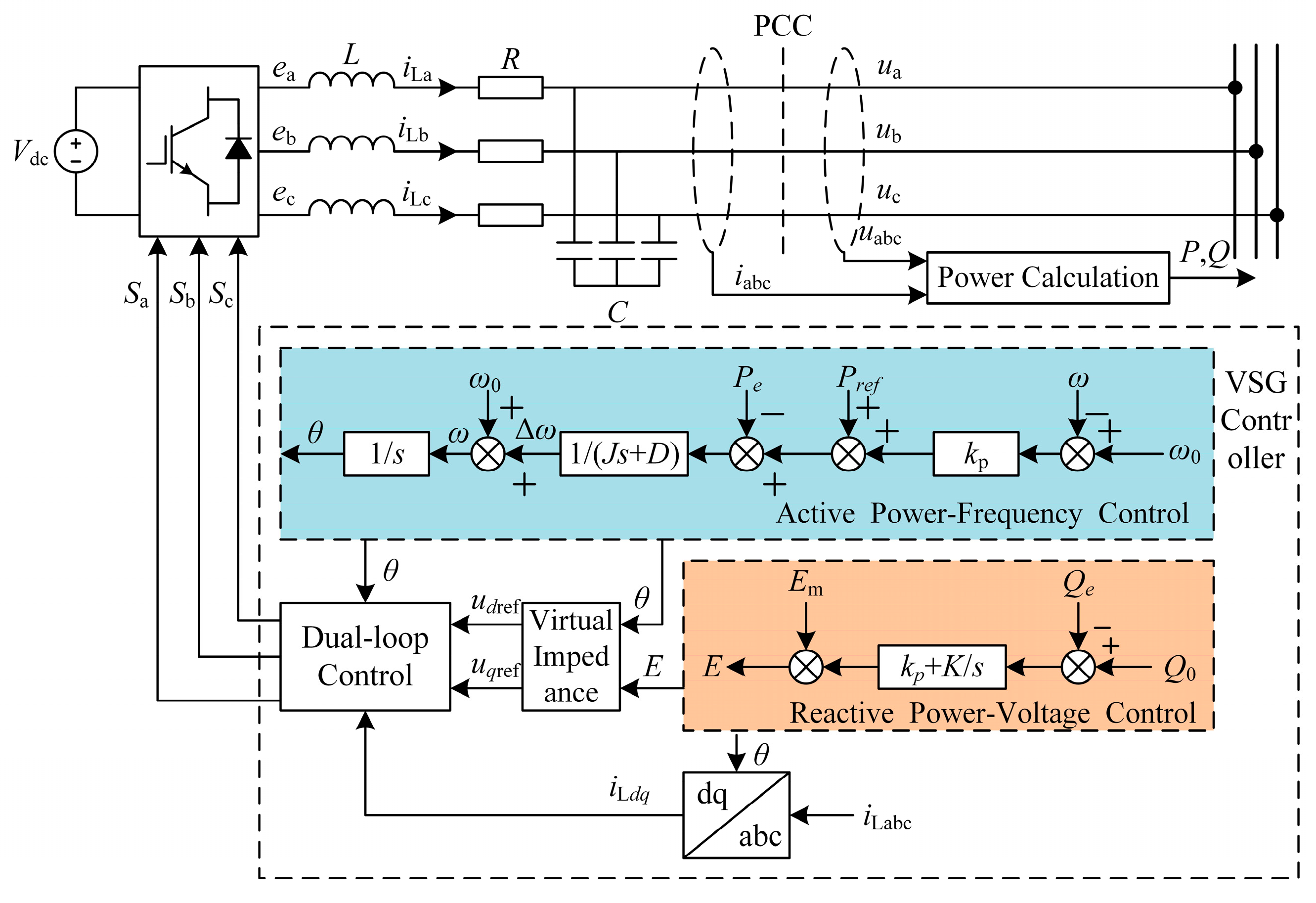
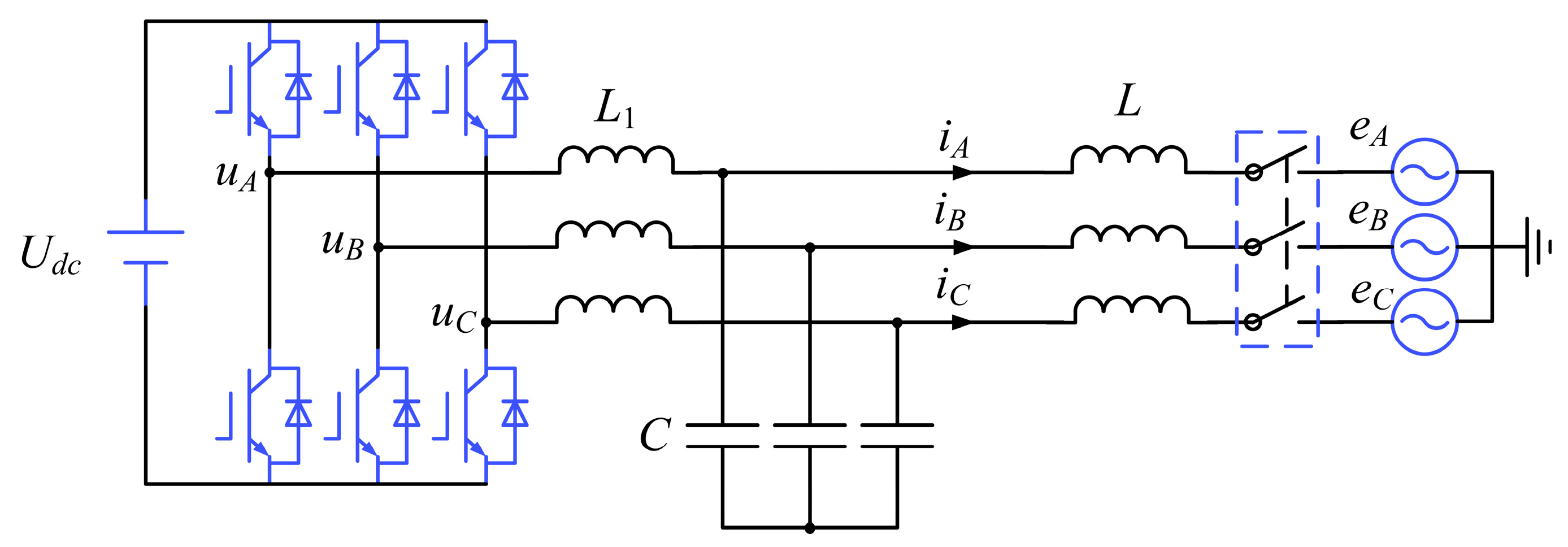
Before formulating the dynamic model of the GFM-VSG, the basic topology and control principle of the VSG-controlled grid-forming converter should first be clarified. This subsection aims to explain the fundamental operating mechanism of VSG control and clarify how the converter emulates the inertial and damping characteristics of a synchronous generator. Figure 1 presents the basic topology of the studied VSG system and provides the structural basis for the subsequent analysis of the VSG control principle.
Figure 1 depicts the overall configuration of the VSG system, which mainly consists of a DC source, a voltage-source converter, an output filter, the grid, and the connected load.
In this topology, V d c represents the DC-side source, while L , R , and C correspond to the filter inductance, parasitic resistance, and filter capacitance, respectively, and PCC denotes the common coupling point. The converter current and voltage at the PCC are expressed by i a b c and u a b c . The VSG controller generates the internal electromotive-force magnitude and phase by emulating synchronous-generator rotor dynamics, so that virtual inertia and damping characteristics can be introduced [13]. Meanwhile, the active power loop incorporates droop regulation through the governor-like mechanism shown in (1).
P m = P ref + k p ( ω 0 ω )
where P r e f corresponds to the active-power reference, and k p is the active power-frequency droop coefficient, hereinafter referred to as the droop coefficient.
The classical second-order swing equation of a synchronous generator can be expressed as follows [27]:
J d ω d t = T m T e T d = P m ω 0 P e ω 0 D ( ω ω 0 ) d δ d t = ω
where J and D denote the inertia constant and damping coefficient, respectively; T m , T e , and T d denote the mechanical, electromagnetic, and damping torques, respectively; P m and P e refer to the mechanical and electromagnetic powers, respectively; ω 0 denotes the rated angular velocity, whereas ω represents the actual angular velocity.

2.2. Dynamic Characteristic Analysis Considering the Coupled Effects of Inertia and Damping

Based on the small-signal dynamic analysis method for VSG systems, by combining (1) and (2), the relationship between system frequency and active power can be obtained as follows [28]:
Δ ω Δ P = ω ω 0 P e P ref = 1 J ω 0 s + D ω 0 + k p
Equation (3) shows that the output active power of the VSG depends not only on the reference active power but also on the deviation between the actual angular velocity and its rated value.
To further analyze the dynamic behavior of the system, the resistance of the grid-forming converter is neglected, and (2) is linearized around the steady-state operating point. By further incorporating the power transfer equation of the system, as given in (4), one obtains:
P e = E U X L cos ( θ δ ) U 2 X L cos θ
Accordingly, the closed-loop transfer function from the input active power to the output active power can be expressed as follows:
G ( s ) = P e ( s ) P ref ( s ) = K sym / J ω 0 s 2 + ( D ω 0 + k p ) s / ( J ω 0 ) + K sym / ( J ω 0 )
where K sym = E U X L denotes the synchronizing power coefficient.
By comparing the derived transfer function with the standard second-order form, the relationships among the characteristic angular frequency ω n , the damping ratio ξ , and the converter control parameters can be obtained as follows:
ω n = K sym J ω 0 ξ = D ω 0 + k p 2 J ω 0 K sym
The settling time t s , which describes the time required for the system to return to steady-state operation, cannot be directly determined solely from the natural angular frequency ω n and the damping ratio ξ . Nevertheless, within a tolerance band of 2% to 5%, it can be approximately expressed as follows:
t s = 4 ξ ω n = 8 J ω 0 D ω 0 + k p
As indicated by (6), when the droop coefficient remains unchanged, the damping ratio ξ is inversely related to the virtual inertia J and directly related to the damping coefficient D . In contrast, the settling time t s increases with J and decreases with D .
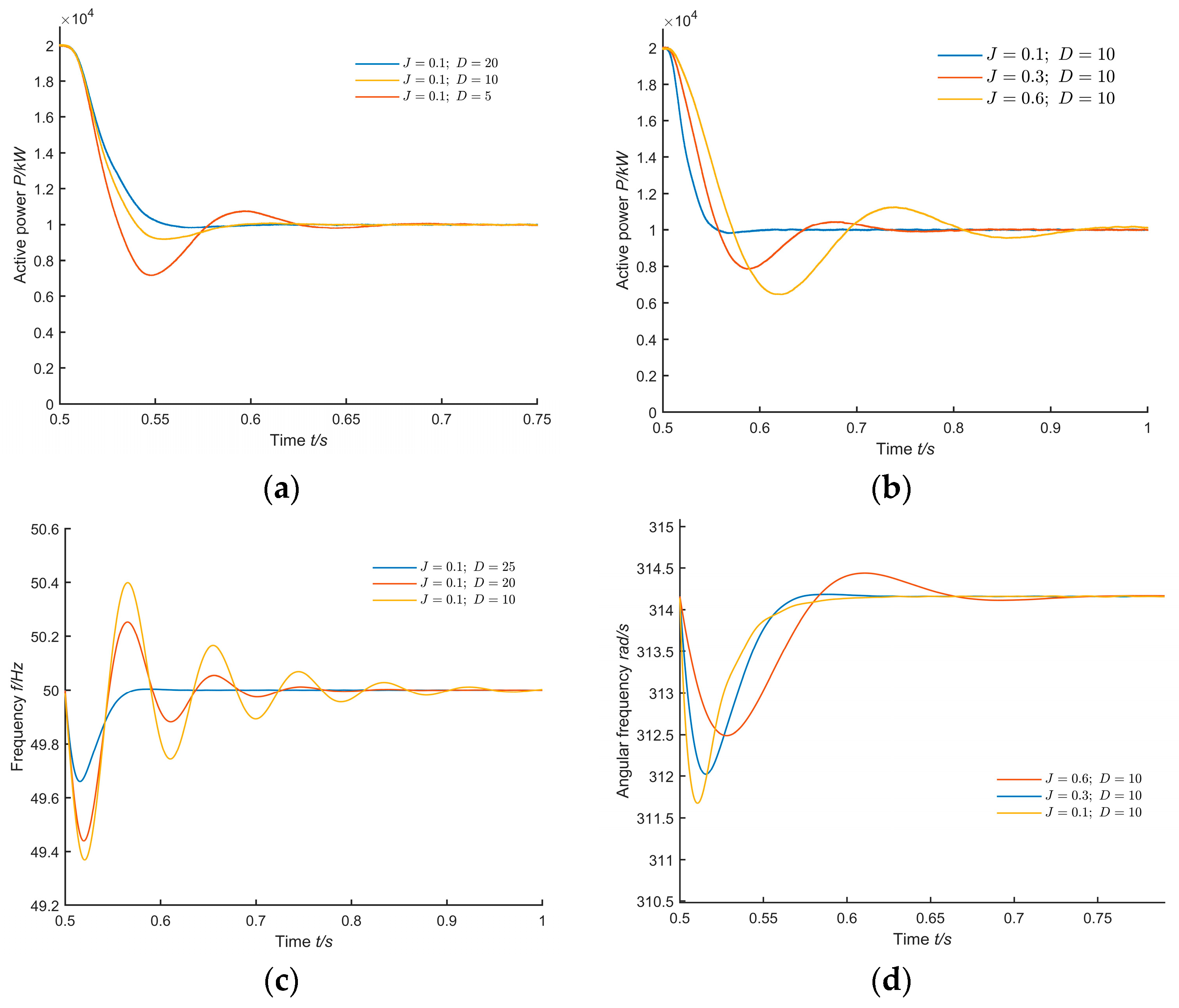
For the dynamic analysis in this section, the VSG is first operated with a load of 20 kW. At t = 0.5   s , a sudden 10 kW reduction in active load is introduced. By fixing either J or D and varying the other parameter, the respective influence of virtual inertia and damping on the dynamic response of the system can be observed, as shown in Figure 2.
The responses in Figure 2 show that a larger virtual inertia reduces the immediate sensitivity of the converter to active-power disturbances and lowers the initial frequency gradient, which reflects stronger inertial buffering. The drawback is that the transient process becomes slower. When D remains fixed, increasing J lowers the damping ratio and makes the response more oscillatory, so the corresponding overshoot becomes larger and the oscillation duration is extended.
By contrast, increasing the damping coefficient within a reasonable range is effective for suppressing overshoot and accelerating oscillation decay. The settling process therefore becomes shorter. However, if D is enlarged excessively, response flexibility deteriorates even though the stability margin is improved. These observations show that satisfactory dynamic behavior cannot be achieved by changing only one parameter independently, and coordinated adjustment of J and D is therefore required.

2.3. Adaptive Parameter Control Strategy

Based on the classical second-order motion equation, the following relationship can be established between the system frequency deviation and the rate of change of frequency:
Δ ω = T m T e J ω ˙ D ω ˙ = T m T e D Δ ω J
As indicated by (8), virtual inertia J exerts a more direct effect on the rate of frequency change, whereas the damping coefficient D plays a more prominent role in determining the frequency deviation. An appropriate increase in both J and D helps reduce the frequency deviation and the rate of frequency variation, thereby improving the overall stability of the system. Therefore, when power disturbances occur, properly increasing these two parameters can effectively restrain both the amplitude and the growth rate of frequency fluctuations.
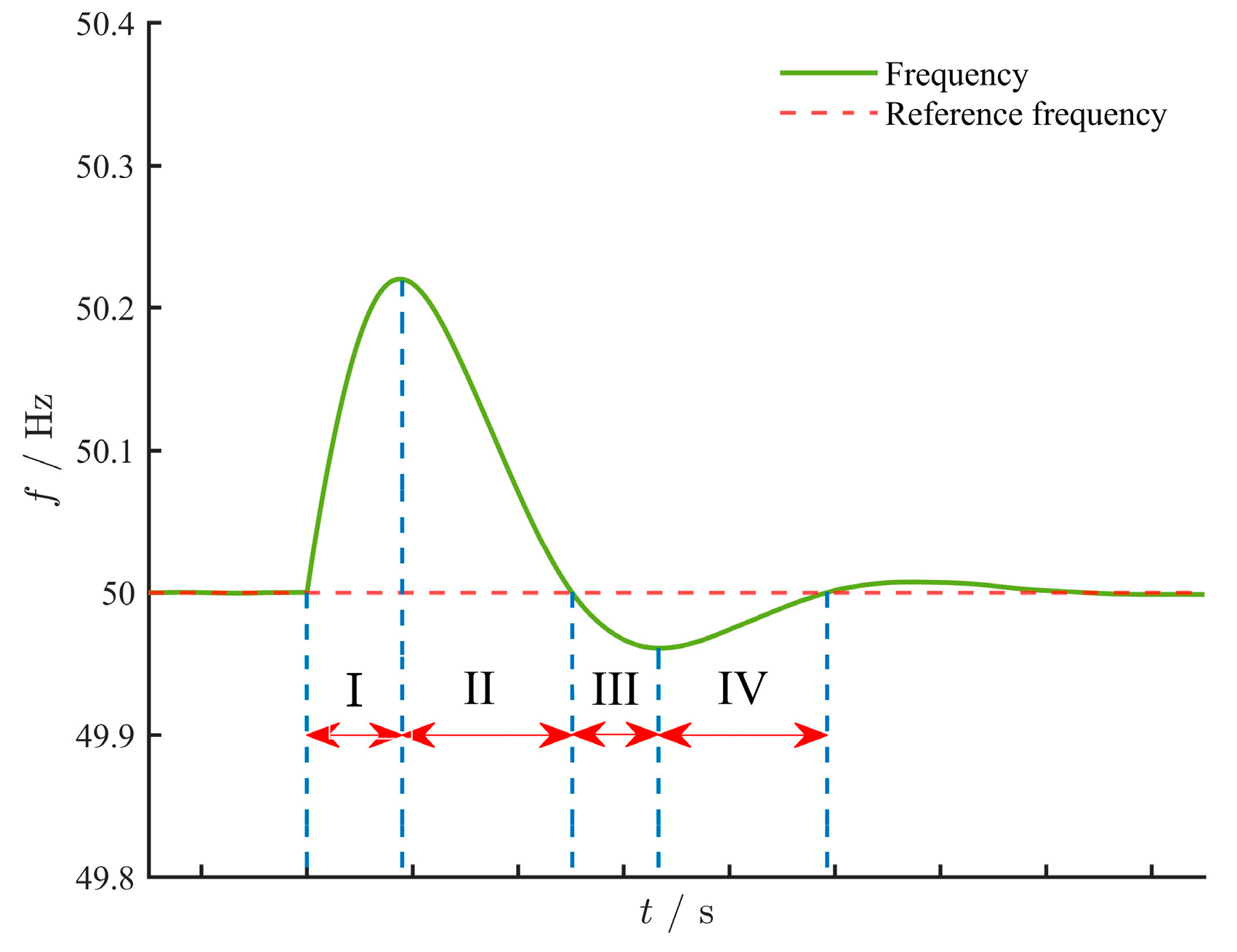
Nevertheless, fixed parameter settings cannot satisfy the distinct control requirements associated with different stages of the oscillatory process. Taking the transient response under a large disturbance as an example, the VSG output frequency curve shown in Figure 3 can be divided into four dynamic regions, denoted as Regions I, II, III, and IV.
Region I: The output frequency of the VSG is higher than the reference value and d f / d t > 0 , indicating that the frequency is still rising. Under this condition, Δ f d f / d t > 0 . To quickly suppress the upward frequency trend and drive d f / d t toward zero, the virtual inertia J should be increased so as to strengthen inertial support and restrain the rapid frequency excursion. At the same time, the damping coefficient D should also be increased to limit the overshoot during the transient process.
Region II: The output frequency remains above the reference value, whereas d f / d t < 0 , which means that the rising trend has ended and the frequency has started to fall back. In this case, Δ f d f / d t < 0 . Since the system has entered the recovery stage, J should be reduced to accelerate the return of the frequency to its nominal value. Meanwhile, D should be decreased appropriately to avoid an overly sluggish response that would weaken the recovery effect.
Regions III and IV: The parameter adjustment principles in these two regions follow the same logic as those in Regions I and II, respectively. Accordingly, the adaptive tuning rules for J and D throughout the disturbance-induced oscillation process are summarized in Table 1, where the arrows ↑ and ↓ indicate an increase and a decrease in the corresponding parameter, respectively.
Based on the hierarchical regulation concept, frequency deviation Δ f and frequency slope d f / d t are selected as the governing variables to construct the following piecewise adaptive regulation laws:
J ( t ) = J 0 , Δ f α and   d f / d t β J 0 + a 1 × Δ f + a 2 × d f / d t , ( Δ f > α or   d f / d t > β ) and Δ f × d f / d t > 0 J 0 a 3 × Δ f a 4 × d f / d t , ( Δ f > α or d f / d t > β ) and Δ f × d f / d t < 0
D ( t ) = D 0 , Δ f α and d f / d t β D 0 + b 1 × Δ f + b 2 × d f / d t , ( Δ f > α or d f / d t > β ) and Δ f × d f / d t > 0 D 0 b 3 × Δ f b 4 × d f / d t , ( Δ f > α or d f / d t > β ) and Δ f × d f / d t < 0
J min J ( t ) J max D min D ( t ) D max J min > 0 D min ω 0 + k p > 0
where J 0 and D 0 denote the steady-state values of virtual inertia and damping coefficient, respectively; a 1 , a 2 , a 3 , and a 4 are the adaptive coefficients associated with inertia regulation under disturbance conditions; b 1 , b 2 , b 3 , and b 4 are the corresponding coefficients for damping regulation; and α and β represent the thresholds for frequency deviation and frequency variation rate, respectively. In this study, a i 0 , b i 0 , i = 1 ,   2 ,   3 ,   4 and α is set to 0.1 and β is set to 1.

2.4. Small-Signal and Lyapunov Stability Analysis

Since the adaptive parameters are updated in a discrete control manner, J and D can be regarded as frozen parameters within each control sampling interval for local small-signal analysis. To verify the stability of the proposed adaptive laws, a small-signal model is established around the steady-state operating point. Let the small-signal state vector be defined as
x = Δ δ Δ ω
where Δ δ and Δ ω denote the small-signal deviations of the power angle and angular frequency, respectively. Considering the active power-frequency loop of the VSG, the small-signal dynamic equations can be written as
Δ δ ˙ = Δ ω
J ω 0 Δ ω ˙ = ( D ω 0 + k p ) Δ ω K sym Δ δ
where K s y m is the synchronizing power coefficient, ω 0 is the rated angular frequency, and k p is the active power-frequency droop coefficient. Therefore, the corresponding state-space model is
x ˙ = A x
A = 0 1 K sym J ω 0 D ω 0 + k p J ω 0
The characteristic equation of the state matrix A can be derived as
s 2 + D ω 0 + k p J ω 0 s + K sym J ω 0 = 0
According to the Routh-Hurwitz stability criterion for a second-order system, the system is locally stable if all coefficients of the characteristic equation are positive. Therefore, the small-signal stability conditions are
J > 0 , K sym > 0 , D ω 0 + k p > 0
The proposed adaptive laws adjust J and D according to the frequency deviation and RoCoF. As long as the adaptive parameters are constrained within positive bounded ranges, the above stability conditions can be satisfied during the regulation process.
To further verify the stability of the adaptive parameter regulation process, the following Lyapunov function is selected:
V = 1 2 K sym ( Δ δ ) 2 + 1 2 J ω 0 ( Δ ω ) 2
Since K s y m > 0 , J > 0 , and ω 0 > 0 , V is positive definite. In the digital control implementation, J and D are updated according to the adaptive laws and are held constant within each control sampling interval. Therefore, the derivative of V along the system trajectory is
V ˙ = K sym Δ δ Δ δ ˙ + J ω 0 Δ ω Δ ω ˙
Substituting the small-signal dynamic equations into the above expression gives
V ˙ = K sym Δ δ Δ ω + Δ ω ( D ω 0 + k p ) Δ ω K sym Δ δ
V ˙ = ( D ω 0 + k p ) ( Δ ω ) 2 0
When V ˙ = 0 , there is Δ ω = 0 . According to the small-signal dynamic equation, Δ ω = 0 further gives Δ δ = 0 . Therefore, the equilibrium point Δ δ , Δ ω ) = ( 0,0 is locally asymptotically stable.
Since the adaptive parameters are constrained by predefined upper and lower bounds, the updated values of J and D always satisfy J > 0 and D ω 0 + k p > 0 . Therefore, the state matrix remains Hurwitz during each sampling interval. The adaptive law changes only the numerical values of J and D , but does not alter the sign-definiteness of the damping and synchronizing terms. Hence, under the sample-and-hold implementation and bounded parameter constraints, the proposed adaptive regulation preserves the local small-signal stability of the VSG system.


3. IPO-Assisted Offline Coordination Method for Adaptive-Law Parameters

In this study, the mathematical model established in Section 2 provides the dynamic basis for the adaptive parameter coordination problem. Since the regulation performance of the proposed adaptive framework is strongly affected by the coordinated interaction among multiple inertia- and damping-related coefficients, the improved parrot optimizer is introduced in this section as the optimization tool, with the adaptive-law coefficients selected as the decision variables of the optimization problem.

3.1. Basic Principle of the Parrot Optimizer

The Parrot Optimizer is a metaheuristic algorithm developed from several characteristic behaviors observed in domesticated parrots, including foraging, perching, communication within the flock, and avoidance of unfamiliar individuals [29]. In the optimization process, each parrot corresponds to a candidate solution, and the population evolves by probabilistically mimicking these behavioral patterns.
During the foraging stage, individuals determine the approximate food location either by direct observation or by following the owner’s position, and then proceed toward the corresponding target. The update expression for this behavior is given as follows:
X i t + 1 = ( X i t X b e s t t ) L e v y ( d i m ) + r a n d ( 0 , 1 ) ( 1 t i t e r m a x ) 2 t i t e r m a x X m e a n t
where X i t , X m e a n t , and X b e s t t denote the current position, the mean position, and the best position of the parrot population, respectively; L e v y represents the Lévy flight mechanism; t is the current iteration index; and r a n d ( 0,1 ) is a random number uniformly distributed over the interval (0,1).
The perching behavior represents the process in which parrots move rapidly to a nearby position around the owner and then remain stationary. Its mathematical form is expressed as follows:
X i m t + 1 = X i t + X b e s t t L e v y ( d i m ) + r a n d ( 0 , 1 ) o n e s ( 1 , d i m )
In the communication stage, individuals either move toward the flock center or search more independently. Assuming that these two patterns occur with equal probability, the population center is introduced to guide individuals toward the central region of the flock so as to improve search efficiency. The corresponding update rule is given by:
X i t + 1 = 0.2 r a n d ( 0 , 1 ) ( 1 t i t e r m a x ) ( X i t X m e a n t ) , p 0.5 0.2 r a n d ( 0 , 1 ) exp ( t r a n d ( 0 , 1 ) i t e r m a x ) , p > 0.5
where p denotes the probability factor and is defined as a uniformly distributed random number in the interval (0,1).
The avoidance behavior reflects the tendency of parrots to keep distance from unfamiliar individuals while staying near a relatively safe area around the owner. This behavior can be described mathematically as follows:
X i t + 1 = X i t + r a n d ( 0 , 1 ) cos ( 0.5 π t i t e r m a x ) ( X b e s t X i t ) cos ( r a n d ( 0 , 1 ) π ) ( t i t e r m a x ) 2 i t e r m a x ( X i t X b e s t t )
where the first term cos ( 0.5 π t i t e r m a x ) is used to characterize the response of parrots to strangers at different stages of the iteration process, while the second term cos ( r a n d ( 0 , 1 ) π ) represents the random perturbation imposed on the population.

3.2. SPM Chaotic Map-Based Population Initialization Strategy

The quality of the initial population has a strong influence on the subsequent search trajectory of a metaheuristic algorithm. In the original PO, individuals are generated randomly, which may produce clustered distributions and weak early exploration. To alleviate this problem, the SPM chaotic map is employed to construct the initial population. The resulting samples cover the feasible domain more evenly, thereby improving diversity and providing a better starting condition for the subsequent optimization process. The mathematical expression of the SPM chaotic map is given as follows:
z k + 1 = mod ( f ( z k ) , 1 )
f ( z ) = z a + b sin ( π z ) + r , 0 z < a z a 0.5 a + b sin ( π z ) + r , a z < 0.5 1 z a 0.5 a + b sin ( π z ) + r , 0.5 z < 1 a 1 z a + b sin ( π z ) + r , 1 a z < 1
where z k denotes the value of the chaotic variable at the k -th iteration; α is the asymmetry parameter satisfying α ( 0,0.5 ) and is set to 0.4 in this study; b denotes the sine perturbation intensity satisfying b ( 0,0.5 ) and is set to 0.3; and r represents the random perturbation term.
After the SPM chaotic map is used for population initialization, the initial position of each parrot individual can be determined by:
X i , j = L B j + z i , j × ( U B j L B j )
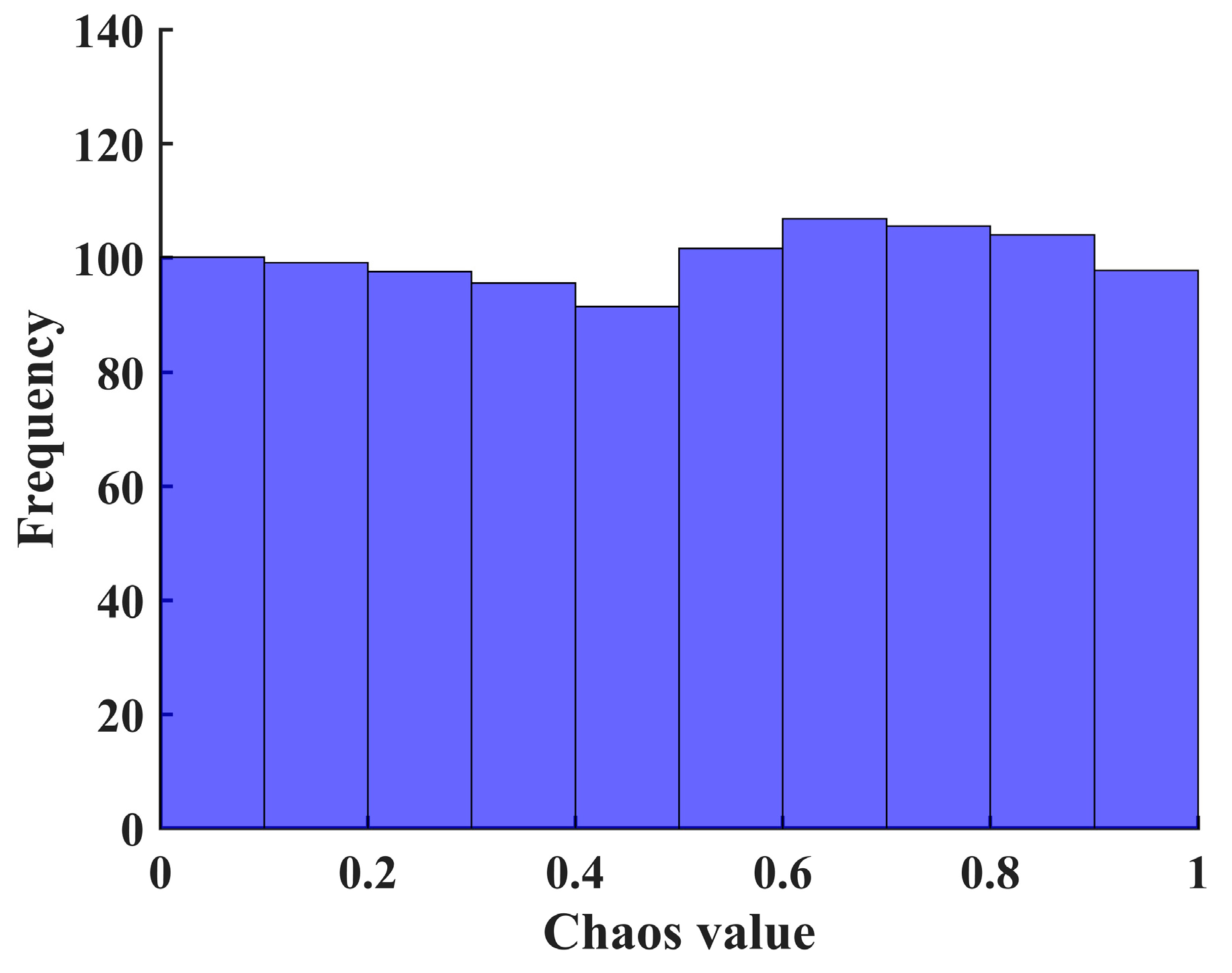
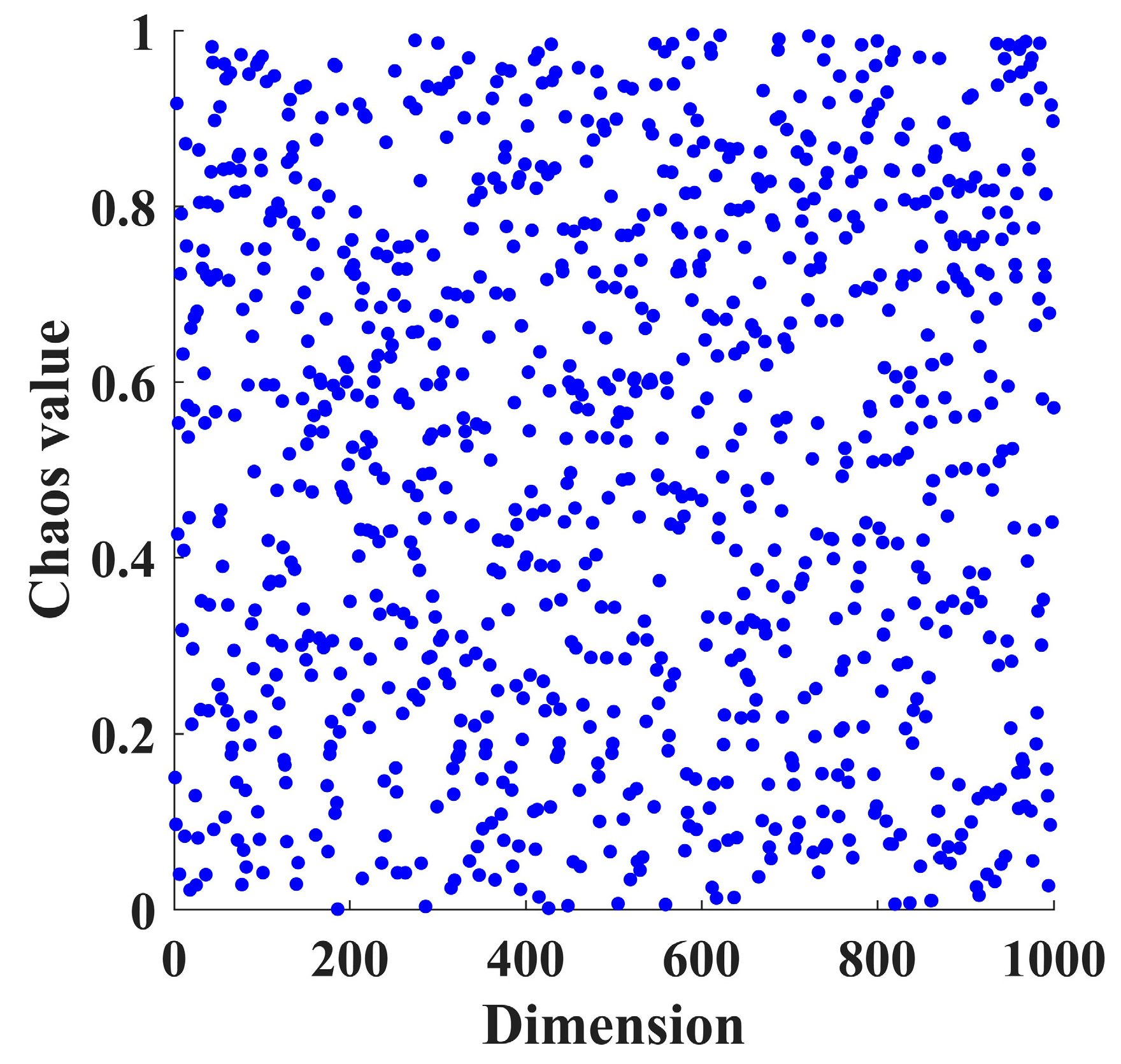
The frequency histogram and chaotic state distribution generated by the SPM chaotic map are shown in Figure 4 and Figure 5, respectively. It can be observed that the proposed initialization approach enhances the diversity of the parrot population and leads to a more uniform distribution over the search space.

3.3. Adaptive Probability Factor Design

During the intra-flock communication stage, the probability factor plays an important role in balancing the global exploration and local exploitation capabilities of the algorithm. When H < 0.5 , the individual tends to move toward the flock, which mainly reflects the local exploitation behavior. In contrast, when H 0.5 , the individual moves independently of the flock, and the algorithm shows stronger global exploration capability. To improve the balance between local refinement and global search throughout the optimization process, a cosine term is introduced into the probability factor. On this basis, the adaptive probability factor is defined as follows:
P = 0.5 + 0.5 cos ( π t i t e r m a x ) r a n d ( 0 , 1 ) + 0.2 ( 1 t i t e r m a x )
where r a n d denotes a uniformly distributed random number in the interval (0,1), i t e r m a x is the maximum number of iterations, and t represents the current iteration index.
At the initial stage, the modified factor more frequently stays in the range favorable to global exploration, which helps the population investigate a wider region of the search space. As the algorithm evolves, the factor progressively shifts toward values that encourage local exploitation, while still preserving a limited possibility of long-range exploration. This staged adjustment improves convergence efficiency and reduces the risk of premature stagnation.

3.4. Cauchy-Gaussian Hybrid Mutation-Based Position Update Strategy

To improve search efficiency further, mutation is introduced into the position-update process. Because of its heavy-tailed distribution, Cauchy mutation is suitable for enlarging the exploration range and helping individuals escape local attraction regions. Gaussian mutation, by contrast, produces milder perturbations and is therefore more suitable for local refinement around promising candidates.
Based on these complementary characteristics, a hybrid mutation strategy is adopted. Cauchy mutation dominates the early stage so that the search region can be broadened, whereas Gaussian mutation gradually becomes more important in the later stage to improve local precision. Through this coordinated mechanism, the optimizer preserves diversity while maintaining a more balanced exploration-exploitation process:
X n e w t = X b e s t t 1 + t i t e r m a x G a u s s ( σ ) + ( 1 t i t e r m a x ) C a u c h y ( σ )
where X new t denotes the updated position of the individual after applying the Cauchy-Gaussian hybrid mutation at the t -th iteration; G a u s s ( σ ) and C a u c h y ( σ ) denote the Gaussian and Cauchy mutation operators, respectively.

4. IPO-Based Adaptive Parameter Tuning

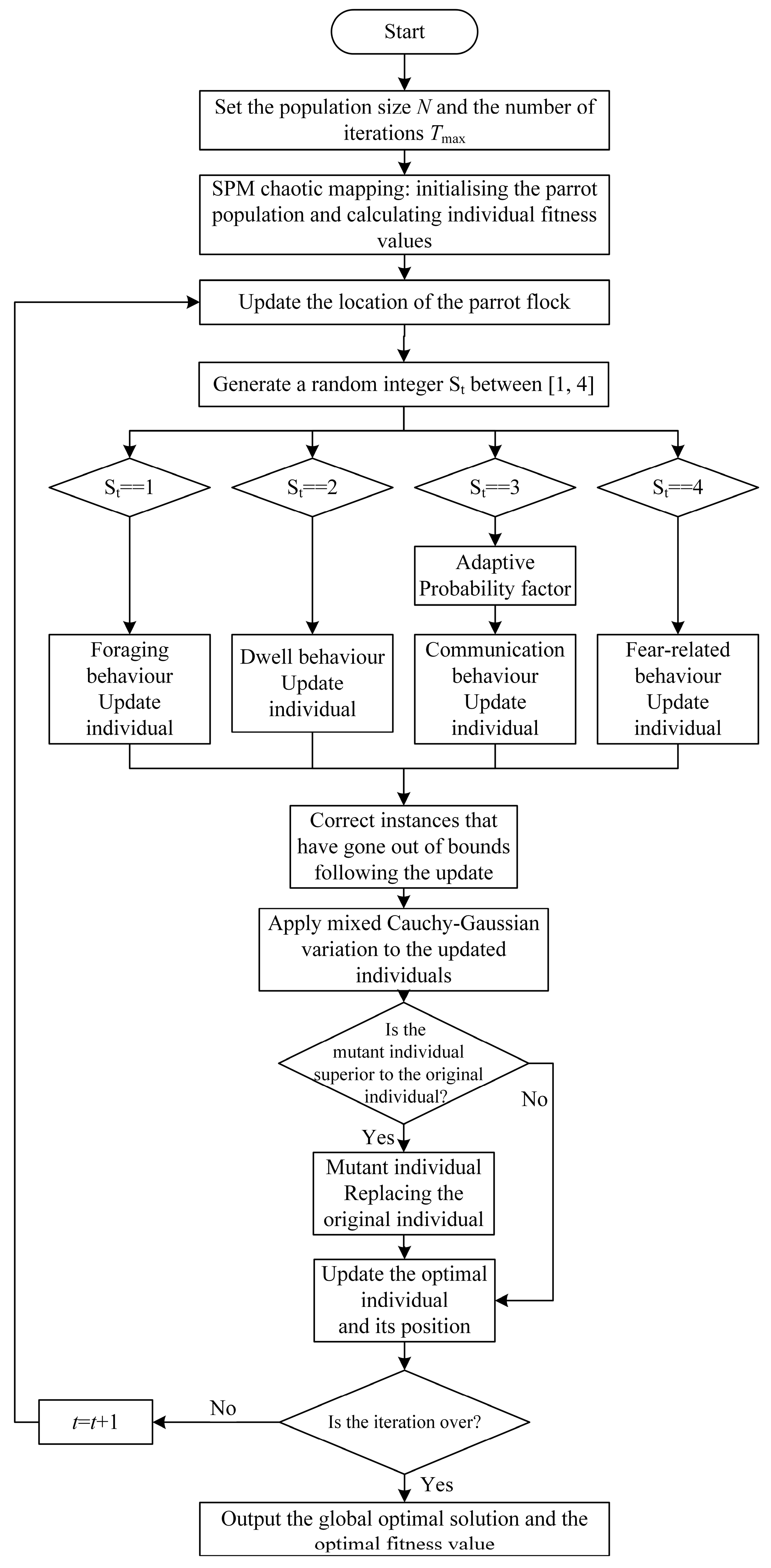
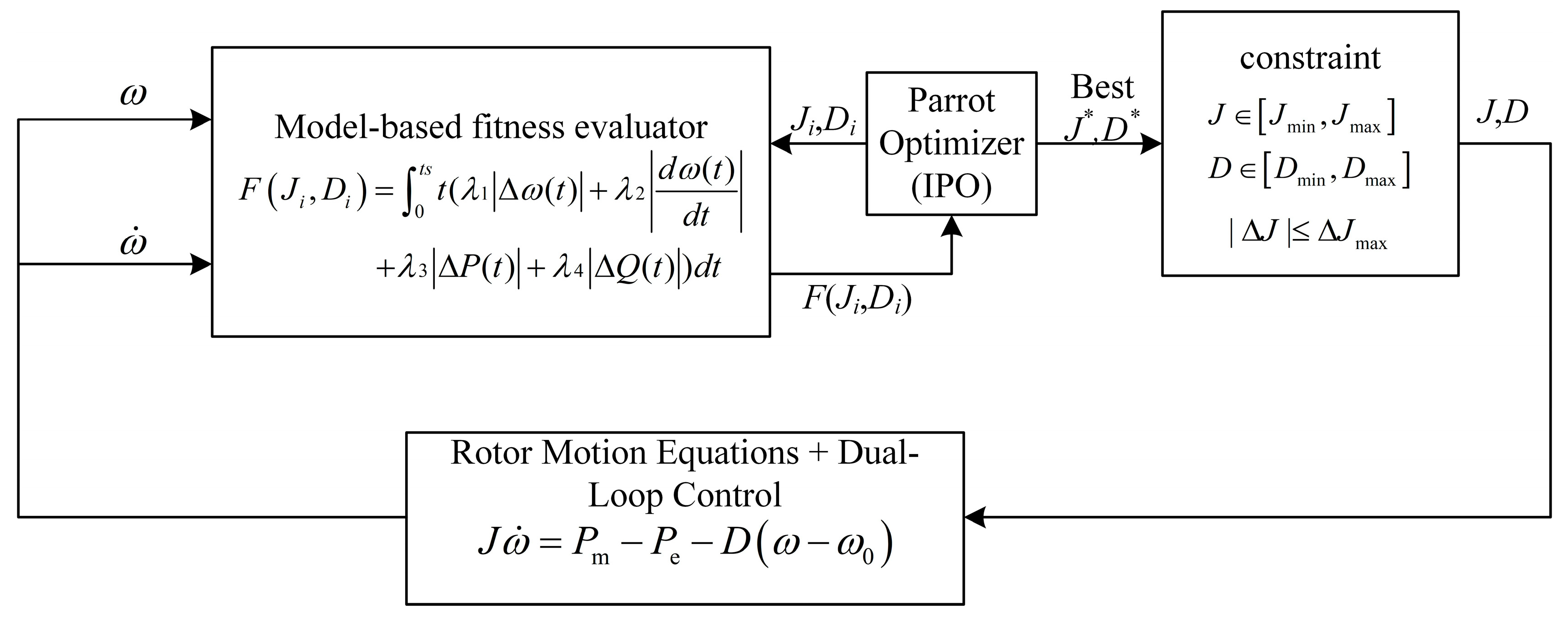
The IPO-based adaptive tuning procedure can be formulated as a multi-objective optimization problem. In this framework, sampled angular velocity and angular acceleration are embedded into the fitness function for performance evaluation. During iterative optimization, the fitness value is updated continuously and gradually minimized, and the corresponding optimal parameter combination is finally obtained. The overall framework of the proposed tuning scheme is illustrated in Figure 6.
The fitness function is defined as follows:
f = 0 t s t ( λ 1 Δ ω ( t ) + λ 2 d ω ( t ) d t + λ 3 Δ P ( t ) + λ 4 Δ Q ( t ) ) d t
where Δω(t) denotes the deviation between the VSG output frequency and the rated grid frequency; dω(t)/dt represents the rate of change of frequency; ΔP(t) and ΔQ(t) denote the deviations of output active and reactive power from their reference values, respectively. The coefficients λ1, λ2, λ3, and λ4 are weighting factors introduced to determine the relative importance of the four dynamic performance objectives in the fitness function. Specifically, λ1 is assigned to the frequency-deviation term, which reflects the requirement for suppressing frequency excursions. λ2 is assigned to the RoCoF term, representing the requirement for limiting the frequency variation rate during transient disturbances. λ3 is assigned to the active-power deviation term, which is associated with active-power tracking and transient active-power oscillation suppression. λ4 is assigned to the reactive-power deviation term, which reflects the requirement for reducing reactive-power fluctuations during transient operation. Therefore, a larger weighting factor indicates that the corresponding dynamic performance objective is given higher priority during the IPO-based parameter tuning process. In this study, the weighting factors are selected as non-negative normalized coefficients, satisfying λ i 0 , i = 1 ,   2 ,   3 ,   4 and λ1 + λ2 + λ3 + λ4 = 1. Considering that frequency support is the primary control objective of GFM-VSG under successive disturbances, the baseline weighting combination is set as λ1 = 0.40, λ2 = 0.30, λ3 = 0.20, and λ4 = 0.10. To further clarify the influence of the weighting factors in the proposed fitness function, a sensitivity analysis is further performed by changing λ1λ4 while keeping the simulation scenario and optimization settings unchanged.
Five representative weighting combinations are designed, as listed in Table 2, where W1 is used as the baseline case. In W1, larger weights are assigned to the frequency-deviation and RoCoF terms, reflecting the priority of frequency-support performance under successive disturbances. W2 increases λ1 to emphasize frequency-deviation suppression, W3 increases λ2 to enhance RoCoF limitation, while W4 and W5 assign larger weights to the active-power and reactive-power deviation terms, respectively.
As shown in Table 3, the weighting factors directly affect the optimization tendency of the proposed IPO-based tuning method. Compared with the baseline case W1, increasing λ1 in W2 reduces the maximum frequency deviation from 0.52 Hz to 0.48 Hz, indicating that a larger frequency-deviation weight improves frequency-excursion suppression. However, the maximum RoCoF and active/reactive power deviations increase to different degrees because less priority is assigned to the other objectives. When λ2 is increased in W3, the maximum RoCoF decreases from 21.1 Hz/s to 18.6 Hz/s, showing that RoCoF suppression is improved, whereas the maximum frequency deviation and power deviations increase. By contrast, W4 mainly improves active-power regulation, with the maximum active-power deviation decreasing from 2.40 kW to 1.78 kW, while W5 provides the most significant improvement in reactive-power regulation, with the maximum reactive-power deviation decreasing from 0.51 kvar to 0.31 kvar. These results demonstrate that λ1λ4 determine the trade-off among frequency deviation, RoCoF, active-power deviation, and reactive-power deviation. Therefore, the baseline weighting combination adopted in this study provides a balanced compromise, giving priority to frequency-support performance while maintaining acceptable active- and reactive-power regulation.
The flowchart of the IPO-based adaptive parameter tuning process is shown in Figure 7.

5. Simulation Results and Discussion

5.1. Performance Assessment of the Proposed Algorithm

Representative benchmark functions selected from CEC2017, CEC2020, and CEC2022 are employed to evaluate the search characteristics of the proposed IPO. The search range of all benchmark functions is [−100, 100]. The population size is set to N = 30, the maximum iteration number is T = 500, and each algorithm is executed independently 30 times to obtain statistical results. The comparison results of PSO, GWO, PO, and IPO are shown in Table 4, Table 5 and Table 6, while the Wilcoxon rank-sum test and Friedman test are further provided in Table 7 and Table 8. The results indicate that IPO achieves better search accuracy, stability, and statistical significance than the compared algorithms on most benchmark functions.
The Friedman test results reveal statistically significant differences in the performance of IPO, PO, GWO, and PSO across the twenty-nine benchmark test functions ( χ 2 = 87.00 , p < 0.001 ). Pairwise comparisons based on the Wilcoxon rank-sum test further demonstrate that IPO significantly outperforms PO, GWO, and PSO. These results verify that the IPO algorithm has favorable optimization capability, thereby providing a theoretical basis for the subsequent 8-dimensional strongly coupled VSG parameter optimization problem.

5.2. Simulation Configuration

To evaluate the effectiveness and robustness of the proposed IPO-based adaptive parameter control strategy for grid-forming converters, a simulation model is established in MATLAB/Simulink R2023a. The overall simulation structure of the system is shown in Figure 8.
To avoid the influence of transient oscillations caused by numerical initialization in the simulation software, all evaluations are carried out only after the system reaches steady-state operation. On this basis, a comparative analysis is performed on the convergence performance of the IPO algorithm and the dynamic response of the VSG under successive and complex operating conditions. The simulation parameters are summarized in Table 9.
To provide a comprehensive evaluation of the proposed method, three transient disturbance events are considered in the simulation:
Event 1: At t = 1.0   s , an additional 30 kW active load is suddenly connected to the microgrid system.
Event 2: At t = 1.5   s , a 20 kW active load is suddenly removed from the system.
Event 3: At t = 2.0   s , another 10 kW active load is disconnected.
To examine the effectiveness of the tuning results obtained by the improved algorithm, as well as their adaptability under different operating conditions, a test scheme combining single-scenario tuning with multi-scenario validation is adopted. Specifically, the IPO algorithm is first used to optimize the control parameters under Event 1. The obtained parameter set is then directly applied to Events 2 and 3 to evaluate the dynamic response of the system under additional disturbance scenarios.
For further performance evaluation of the proposed strategy, two control schemes are considered:
Case 1: A conventional fixed-parameter control strategy is used. According to typical engineering settings, the virtual inertia is fixed at J = 0.1 and the damping coefficient is fixed at D = 10 .
Case 2: The proposed adaptive parameter control strategy based on IPO tuning is adopted in the VSG.

5.3. Results and Discussion

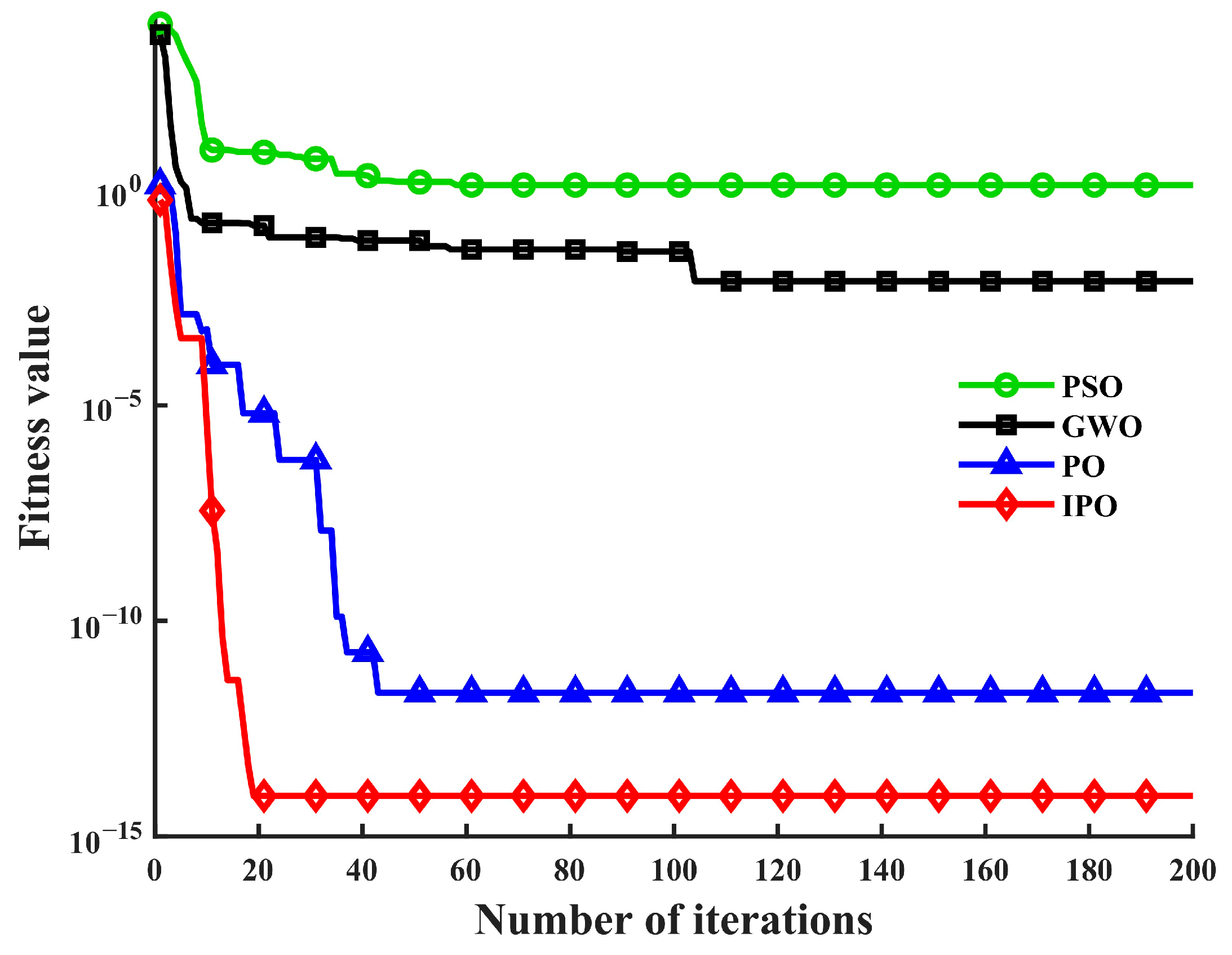
Figure 9 compares the convergence curves of PSO, GWO, PO, and IPO in the VSG adaptive-parameter optimization problem. It can be observed that PSO converges slowly and remains at a relatively high fitness value, indicating limited search accuracy for the strongly coupled controller-parameter optimization problem. GWO shows better convergence performance than PSO, but its fitness curve still stagnates at an intermediate level in the later iterations. Compared with PSO and GWO, PO achieves a lower final fitness value, showing better global search capability. However, the proposed IPO exhibits a steeper decline in the early iteration stage and reaches the lowest final fitness value among the four algorithms.
As shown in Table 10, IPO achieves the lowest mean best fitness and standard deviation. It also requires the fewest median convergence iterations, indicating faster convergence than PSO, GWO, and the original PO. Compared with the other algorithms, the proposed IPO provides higher optimization accuracy, better stability, and greater convergence efficiency for VSG adaptive-parameter optimization.
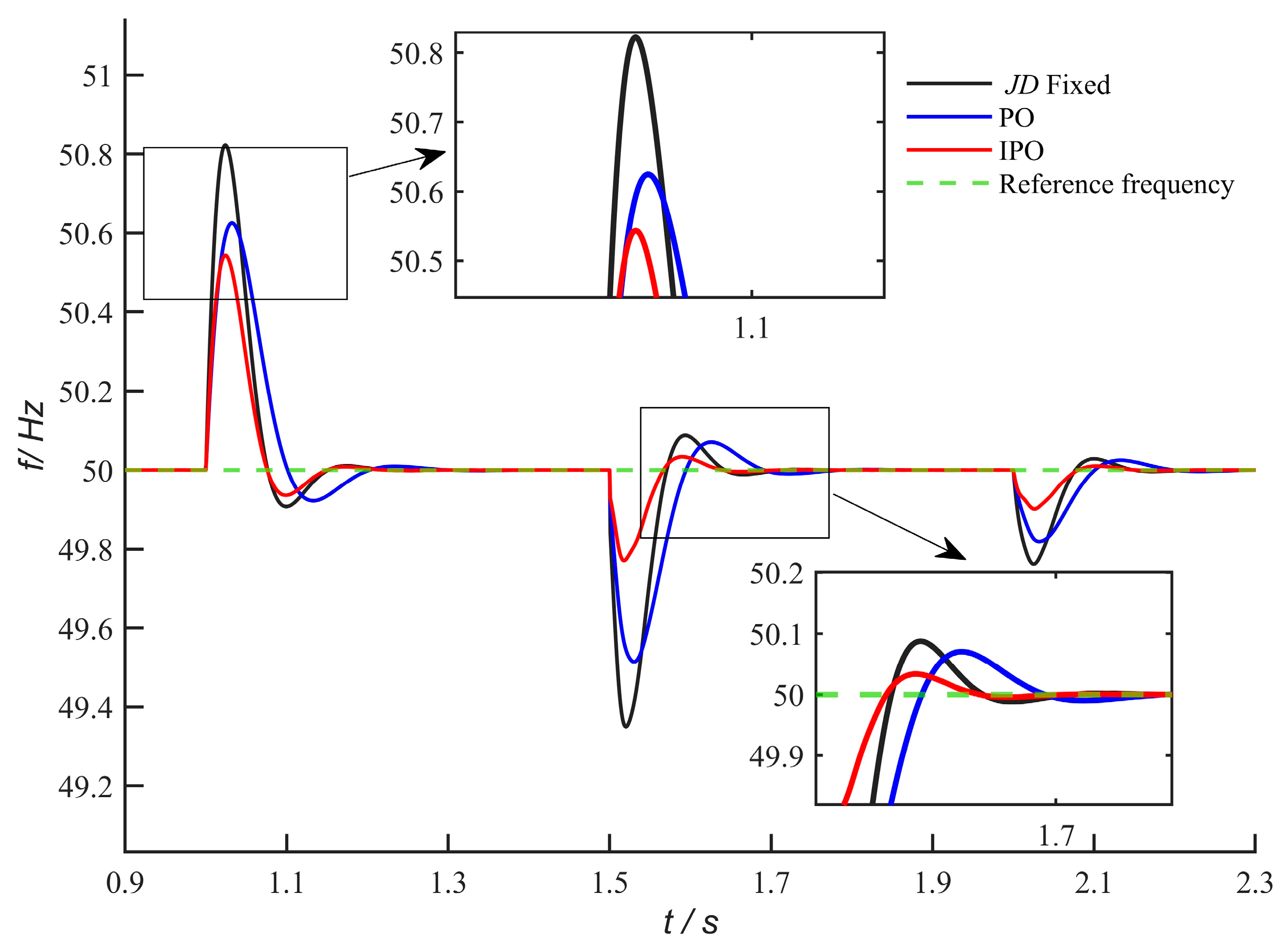
Figure 10 further compares the frequency responses obtained with the IPO-optimized parameters and the conventional fixed-parameter scheme under three successive disturbances. The IPO-based strategy produces a smaller frequency excursion and a shorter recovery interval, indicating better transient regulation capability. These results show that the tuned adaptive controller maintains satisfactory performance not only in the tuning scenario but also under additional disturbance conditions.
The proposed strategy exhibits better dynamic performance, as reflected by a smaller frequency overshoot and a shorter settling time. These simulation results indicate that the proposed tuning method is effective under consecutive disturbance conditions and maintains satisfactory robustness across different operating scenarios. They also suggest that the IPO-based adaptive parameter tuning strategy has good potential for application in complex operating conditions. The quantitative comparison of the dynamic frequency-response indices is summarized in Table 11.

6. Conclusions

This paper proposed an adaptive parameter coordination strategy for grid-forming virtual synchronous generators under successive disturbances. By using frequency deviation and the rate of change of frequency as dynamic indicators, a piecewise adaptive regulation framework for virtual inertia and damping was established. An improved parrot optimization algorithm was further introduced for the offline tuning of the adaptive-law parameters. Compared with the standard PO, the proposed IPO improves the tuning process through SPM-chaotic initialization, adaptive probability regulation, and Cauchy-Gaussian hybrid mutation, thus providing better convergence performance and parameter optimization capability.
Simulation results confirm the effectiveness of the proposed method. Relative to the fixed-parameter control scheme, the frequency overshoot in Event 1 decreases from 0.82 Hz to 0.54 Hz, the maximum frequency deviation in Event 2 decreases from 0.65 Hz to 0.23 Hz, and the secondary overshoot in Event 3 decreases from 0.08 Hz to 0.03 Hz. These findings indicate that the proposed approach improves transient frequency regulation capability as well as disturbance adaptability of grid-forming virtual synchronous generators under successive disturbances.
Although the proposed IPO adaptive parameter coordination method shows effective dynamic regulation performance under the studied successive-disturbance conditions, several limitations still need to be further addressed.
(1)
When the proposed framework is extended to larger-scale systems with multiple GFM-VSG units, the number of adaptive-law parameters and the coupling among different converters may increase, which may make the coordinated tuning problem more complex.
(2)
The optimized parameters in this study are obtained through offline tuning under selected disturbance scenarios. Therefore, the effectiveness of the proposed method depends on the accuracy of the GFM-VSG model.
(3)
The present study is mainly based on simulation verification. Further hardware-in-the-loop tests and experimental validation under practical grid conditions are still required to evaluate its engineering applicability.
The proposed IPO algorithm provides an effective tool for adaptive parameter coordination of GFM-VSGs under successive disturbances and offers useful support for improving transient frequency regulation performance. Future work will focus on multi-converter coordinated tuning, representative scenario selection, parallel optimization, and hardware-in-the-loop validation to further improve the scalability and practical applicability of the proposed method.

Author Contributions

Conceptualization, Y.L.; Methodology, Y.L.; Software, Y.L.; Validation, Y.L. and D.B.; Investigation, Y.L.; Writing—original draft preparation, Y.L.; Writing—review and editing, Y.L. and D.B.; Supervision, D.B. All authors have read and agreed to the published version of the manuscript.

Funding

This research received no external funding.

Institutional Review Board Statement

Not applicable.

Informed Consent Statement

Not applicable.

Data Availability Statement

The original contributions presented in this study are included in the article. Further inquiries can be directed to the corresponding author.

Conflicts of Interest

The authors declare no conflicts of interest.

Abbreviations

The following abbreviations are used in this manuscript:
GFM-VSGGrid-forming virtual synchronous generator
PSOParticle Swarm Optimization
GWOGrey Wolf Optimizer
POParrot Optimizer
IPOImproved Parrot Optimization Algorithm
SPMSine Piecewise Map

References

  1. Musca, R.; Vasile, A.; Zizzo, G. Grid-forming converters. A critical review of pilot projects and demonstrators. Renew. Sustain. Energy Rev. 2022, 165, 112551. [Google Scholar] [CrossRef]
  2. Rahman, K.; Hashimoto, J.; Orihara, D.; Ustun, T.S.; Otani, K.; Kikusato, H.; Kodama, Y. Reviewing control paradigms and emerging trends of grid-forming inverters—A comparative study. Energies 2024, 17, 2400. [Google Scholar] [CrossRef]
  3. Shadoul, M.; Ahshan, R.; AlAbri, R.S.; Al-Badi, A.; Albadi, M.; Jamil, M. A comprehensive review on a virtual-synchronous generator: Topologies, control orders and techniques, energy storages, and applications. Energies 2022, 15, 8406. [Google Scholar] [CrossRef]
  4. Rathnayake, D.B.; Razzaghi, R.; Bahrani, B. Generalized virtual synchronous generator control design for renewable power systems. IEEE Trans. Sustain. Energy 2022, 13, 1021–1036. [Google Scholar] [CrossRef]
  5. Chen, M.; Zhou, D.; Tayyebi, A.; Prieto-Araujo, E.; Dörfler, F.; Blaabjerg, F. On power control of grid-forming converters: Modeling, controllability, and full-state feedback design. IEEE Trans. Sustain. Energy 2023, 15, 68–80. [Google Scholar] [CrossRef]
  6. Cheema, K.M. A comprehensive review of virtual synchronous generator. Int. J. Electr. Power Energy Syst. 2020, 120, 106006. [Google Scholar] [CrossRef]
  7. Suvorov, A.; Askarov, A.; Kievets, A.; Rudnik, V. A comprehensive assessment of the state-of-the-art virtual synchronous generator models. Electr. Power Syst. Res. 2022, 209, 108054. [Google Scholar] [CrossRef]
  8. Zhong, C.; Li, H.; Zhou, Y.; Lv, Y.; Chen, J.; Li, Y. Virtual synchronous generator of PV generation without energy storage for frequency support in autonomous microgrid. Int. J. Electr. Power Energy Syst. 2022, 134, 107343. [Google Scholar] [CrossRef]
  9. Li, C.; Yang, Y.; Cao, Y.; Wang, L.; Dragicevic, T.; Blaabjerg, F. Frequency and voltage stability analysis of grid-forming virtual synchronous generator attached to weak grid. IEEE J. Emerg. Sel. Top. Power Electron. 2020, 10, 2662–2671. [Google Scholar] [CrossRef]
  10. Ambia, M.N.; Meng, K.; Xiao, W.; Al-Durra, A.; Dong, Z.Y. Interactive grid synchronization-based virtual synchronous generator control scheme on weak grid integration. IEEE Trans. Smart Grid 2021, 13, 4057–4071. [Google Scholar] [CrossRef]
  11. Mehrasa, M.; Sheikholeslami, A.; Rezanejad, M.; Alipoor, J.; Salehfar, H.; Selvaraj, D.F.; Bacha, S. Global stable virtual synchronous machine for weak grid-connected microgrid. Int. J. Electr. Power Energy Syst. 2023, 153, 109329. [Google Scholar] [CrossRef]
  12. Hou, X.; Sun, Y.; Zhang, X.; Lu, J.; Wang, P.; Guerrero, J.M. Improvement of frequency regulation in VSG-based AC microgrid via adaptive virtual inertia. IEEE Trans. Power Electron. 2019, 35, 1589–1602. [Google Scholar] [CrossRef]
  13. Li, M.; Huang, W.; Tai, N.; Yang, L.; Duan, D.; Ma, Z. A dual-adaptivity inertia control strategy for virtual synchronous generator. IEEE Trans. Power Syst. 2020, 35, 594–604. [Google Scholar] [CrossRef]
  14. Fu, S.; Sun, Y.; Liu, Z.; Hou, X.; Han, H.; Su, M. Power oscillation suppression in multi-VSG grid with adaptive virtual inertia. Int. J. Electr. Power Energy Syst. 2022, 135, 107472. [Google Scholar] [CrossRef]
  15. Li, L.; Sun, Y.; Liu, Y.; Tian, P.; Shen, S. A communication-free adaptive virtual inertia control of cascaded-type VSGs for power oscillation suppression. Int. J. Electr. Power Energy Syst. 2023, 149, 109034. [Google Scholar] [CrossRef]
  16. Ling, Z.; Liu, Y.; Wang, Z.; Yin, J. Adaptive inertia and damping of grid-connected inverter with improved VSG control. IET Power Electron. 2023, 16, 2769–2781. [Google Scholar] [CrossRef]
  17. Gurski, E.; Kuiava, R.; Perez, F.; Benedito, R.A.S.; Damm, G. A novel VSG with adaptive virtual inertia and adaptive damping coefficient to improve transient frequency response of microgrids. Energies 2024, 17, 4370. [Google Scholar] [CrossRef]
  18. Pian, H.; Meng, K.; Li, H.; Liu, Y.; Li, Z.; Jiang, L. An adaptive control strategy for a virtual synchronous generator based on exponential inertia and nonlinear damping. Energies 2025, 18, 3822. [Google Scholar] [CrossRef]
  19. Abou-Hussein, W.M.; Dabour, S.M.; Hamad, M.S.; Rashad, E.M. Model predictive control based virtual synchronous generator for parallel-connected three-phase split-source converters in islanded AC Microgrids. Energy Rep. 2023, 9, 1696–1706. [Google Scholar] [CrossRef]
  20. Meng, J.; Zhang, Z.; Zhang, G.; Ye, T.; Zhao, P.; Wang, Y.; Yang, J.; Yu, J. Adaptive model predictive control for grid-forming converters to achieve smooth transition from islanded to grid-connected mode. IET Gener. Transm. Distrib. 2023, 17, 2833–2845. [Google Scholar] [CrossRef]
  21. Xiong, K.; Hu, W.; Zhang, G.; Zhang, Z.; Chen, Z. Deep reinforcement learning based parameter self-tuning control strategy for VSG. Energy Rep. 2022, 8, 219–226. [Google Scholar] [CrossRef]
  22. Ding, X.; Cao, J. Deep and reinforcement learning in virtual synchronous generator: A comprehensive review. Energies 2024, 17, 2620. [Google Scholar] [CrossRef]
  23. Freitas, D.; Lopes, L.G.; Morgado-Dias, F. Particle swarm optimization: A historical review up to the current developments. Entropy 2020, 22, 362. [Google Scholar] [CrossRef] [PubMed]
  24. Nadimi-Shahraki, M.H.; Taghian, S.; Mirjalili, S. An improved grey wolf optimizer for solving engineering problems. Expert Syst. Appl. 2021, 166, 113917. [Google Scholar] [CrossRef]
  25. Hussain, K.; Salleh, M.N.M.; Cheng, S.; Shi, Y. On the exploration and exploitation in popular swarm-based metaheuristic algorithms. Neural Comput. Appl. 2019, 31, 7665–7683. [Google Scholar] [CrossRef]
  26. Bonyadi, M.R.; Michalewicz, Z. Particle swarm optimization for single objective continuous space problems: A review. Evol. Comput. 2017, 25, 1–54. [Google Scholar] [CrossRef]
  27. Xiong, X.; Wu, C.; Cheng, P.; Blaabjerg, F. An optimal damping design of virtual synchronous generators for transient stability enhancement. IEEE Trans. Power Electron. 2021, 36, 11026–11030. [Google Scholar] [CrossRef]
  28. Zhang, X.; Gong, L.; Zhao, X.; Li, R.; Yang, L.; Wang, B. Voltage and frequency stabilization control strategy of virtual synchronous generator based on small signal model. Energy Rep. 2023, 9, 583–590. [Google Scholar] [CrossRef]
  29. Lian, J.; Hui, G.; Ma, L.; Zhu, T.; Wu, X.; Heidari, A.A.; Chen, Y.; Chen, H. Parrot optimizer: Algorithm and applications to medical problems. Comput. Biol. Med. 2024, 172, 108064. [Google Scholar] [CrossRef]
Figure 1. Basic topology of the VSG.
Applsci 16 05856 g001
Figure 2. Influence of virtual inertia and damping coefficient on VSG dynamic characteristics. (a) Effect of damping coefficient variation on active power response; (b) Effect of virtual inertia variation on active power response; (c) Effect of damping coefficient variation on frequency response; (d) Effect of virtual inertia variation on frequency response.
Applsci 16 05856 g002
Figure 3. Typical frequency response curve of the VSG.
Applsci 16 05856 g003
Figure 4. Frequency histogram of the SPM chaotic map.
Applsci 16 05856 g004
Figure 5. Chaotic state distribution of the SPM map.
Applsci 16 05856 g005
Figure 6. Schematic diagram of IPO-based adaptive parameter tuning.
Applsci 16 05856 g006
Figure 7. Flowchart of the IPO-based adaptive parameter tuning process.
Applsci 16 05856 g007
Figure 8. System simulation model.
Applsci 16 05856 g008
Figure 9. Comparison of average fitness curves of PSO, GWO, PO, and IPO.
Applsci 16 05856 g009
Figure 10. Output frequency response of the VSG.
Applsci 16 05856 g010
Table 1. Adaptive Parameter Tuning Principles.
Region Δ f d f / d t Δ f × d f / d t JD
I>0>0>0
II>0<0<0
III<0<0>0
IV<0>0<0
Table 2. Weighting-factor combinations for sensitivity analysis.
Caseλ1λ2λ3λ4
W10.400.300.200.10
W20.550.200.150.10
W30.250.500.150.10
W40.250.200.400.15
W50.250.200.150.40
Table 3. Sensitivity analysis results of weighting factors.
CaseMax |Δ f| (Hz)Max RoCoF (Hz/s)Max |ΔP| (kW)Max |ΔQ| (kvar)
W10.5221.12.400.51
W20.4822.32.750.55
W30.5618.62.650.56
W40.5922.81.780.47
W50.6123.42.840.31
Table 4. Test Results of CEC2017 Benchmark Functions.
FunctionOptimumMetricPSOGWOPOIPO
F1100Mean3.78 × 1033.27 × 1032.65 × 1031.37 × 103
Std5.64 × 1034.35 × 1033.42 × 1031.92 × 103
F3300Mean3.74 × 1023.54 × 1023.39 × 1023.12 × 102
Std5.31 × 1004.75 × 1024.52 × 1013.71 × 10−1
F4400Mean4.94 × 1024.85 × 1024.77 × 1024.21 × 102
Std4.32 × 1024.11 × 1013.76 × 1023.32 × 10−2
F5500Mean6.34 × 1026.12 × 1025.87 × 1025.43 × 102
Std5.94 × 1025.83 × 1015.61 × 1015.31 × 101
F6600Mean6.84 × 1026.62 × 1026.45 × 1026.22 × 102
Std6.98 × 10−19.73 × 1016.01 × 1026.39 × 100
F7700Mean8.07 × 1027.89 × 1027.76 × 1027.43 × 102
Std7.83 × 1017.64 × 1027.53 × 1007.21 × 101
F8800Mean8.78 × 1028.65 × 1028.43 × 1028.27 × 102
Std9.12 × 1028.76 × 1028.47 × 1028.21 × 100
F9900Mean9.84 × 1029.76 × 1029.43 × 1029.27 × 102
Std1.32 × 1039.88 × 1029.64 × 1009.32 × 100
F101000Mean2.16 × 1031.71 × 1031.47 × 1031.23 × 103
Std2.47 × 1021.92 × 1021.64 × 1021.18 × 102
Overall
performance
Overall rank4321
Table 5. Test Results of CEC2020 Benchmark Functions.
FunctionOptimumMetricPSOGWOPOIPO
F1100Mean3.53 × 1032.79 × 1031.74 × 1031.42 × 103
Std3.27 × 1032.87 × 1032.13 × 1031.76 × 103
F21100Mean1.24 × 1031.20 × 1031.16 × 1031.12 × 103
Std3.12 × 1022.97 × 1022.78 × 1002.52 × 100
F3700Mean8.03 × 1027.87 × 1027.57 × 1027.34 × 102
Std7.98 × 1027.74 × 1027.52 × 1027.41 × 100
F41900Mean2.65 × 1032.23 × 1032.14 × 1031.94 × 103
Std2.86 × 1032.54 × 1032.21 × 1031.99 × 103
F51700Mean1.92 × 1031.87 × 1031.77 × 1031.71 × 103
Std2.02 × 1031.91 × 1031.84 × 1001.73 × 10−1
F61600Mean2.28 × 1032.01 × 1031.94 × 1031.86 × 103
Std2.17 × 1031.92 × 1031.87 × 1031.82 × 103
F72100Mean2.23 × 1032.18 × 1032.15 × 1032.12 × 103
Std2.18 × 1032.08 × 1032.28 × 1002.14 × 10−2
F82200Mean2.67 × 1032.53 × 1032.39 × 1032.26 × 103
Std3.02 × 1032.76 × 1032.45 × 1032.31 × 103
F92400Mean2.55 × 1032.51 × 1032.49 × 1032.42 × 103
Std2.41 × 1032.20 × 1031.87 × 1031.58 × 102
F102500Mean2.62 × 1032.58 × 1032.55 × 1032.51 × 103
Std2.42 × 1032.29 × 1032.10 × 1031.92 × 103
Overall
performance
Overall rank4321
Table 6. Test Results of CEC2022 Benchmark Functions.
FunctionOptimumMetricPSOGWOPOIPO
F1300Mean1.57 × 1031.41 × 1031.27 × 1031.09 × 103
Std1.85 × 1031.56 × 1031.31 × 1031.02 × 103
F2400Mean5.32 × 1025.09 × 1024.63 × 1024.21 × 102
Std3.65 × 1023.08 × 1022.65 × 1022.33 × 102
F3600Mean7.21 × 1027.02 × 1026.81 × 1026.38 × 102
Std6.62 × 1026.21 × 1025.62 × 1025.06 × 102
F4800Mean9.32 × 1028.87 × 1028.76 × 1028.21 × 102
Std6.31 × 1026.01 × 1025.41 × 1025.01 × 102
F5900Mean1.08 × 1039.88 × 1029.52 × 1029.21 × 102
Std2.51 × 1022.08 × 1021.51 × 1021.35 × 102
F61800Mean1.92 × 1031.87 × 1031.85 × 1031.82 × 103
Std2.31 × 1013.42 × 1011.31 × 1011.02 × 101
F72000Mean2.12 × 1032.09 × 1032.06 × 1032.02 × 103
Std6.84 × 1026.42 × 1025.73 × 1024.31 × 102
F82200Mean2.34 × 1032.30 × 1032.28 × 1032.21 × 103
Std2.31 × 1031.81 × 1031.31 × 1031.02 × 103
F92300Mean2.41 × 1032.38 × 1032.35 × 1032.31 × 103
Std9.21 × 1028.76 × 1028.51 × 1025.24 × 102
F102400Mean2.52 × 1032.49 × 1032.46 × 1032.42 × 103
Std5.86 × 1014.92 × 1014.32 × 1014.09 × 101
Overall
performance
Overall rank4321
Table 7. Wilcoxon rank-sum test.
Comparisonp-ValueConclusion
IPO vs PSOp < 0.001Significant
IPO vs. GWOp < 0.001Significant
IPO vs. POp < 0.05Significant
Table 8. Overall Friedman test results.
Test ItemCalculated ValueCritical Value (α = 0.05)p-ValueTest Conclusion
χ2877.815<0.001highly significant difference
Table 9. Simulation parameters.
ParameterValue
DC voltage (V)800
Rated voltage (V)380
Rated frequency (Hz)50
Rated active power (kW)20
Rated reactive power (var)0
Load active power (kW)20
Filter capacitance (F)1.5 × 10⁻³
Filter inductance (H)0.6 × 10⁻³
Line inductance (H)1.4 × 10⁻³
Table 10. Statistical results of 30 independent runs on VSG parameter optimization.
AlgorithmMean Best FitnessStandard DeviationMedian Convergence Iterations
PSO1.12 × 1002.85 × 10−159
GWO1.46 × 10−24.73 × 10−3107
PO2.31 × 10−127.86 × 10−1352
IPO4.28 × 10−151.15 × 10−1523
Table 11. Comparison of dynamic frequency-response performance of different control strategies under successive disturbances.
Disturbance EventPerformance IndexFixed-Parameter (J, D)POIPO
Event 1Peak frequency (Hz)50.8250.6250.54
Overshoot (Hz)0.820.620.54
Settling time (s)0.140.180.11
Event 2Minimum frequency (Hz)49.3549.5149.77
Frequency drop (Hz)0.650.490.23
Secondary overshoot (Hz)0.090.070.03
Settling time (s)0.130.160.09
Event 3Minimum frequency (Hz)49.7749.8249.90
Frequency drop (Hz)0.230.180.10
Secondary overshoot (Hz)0.080.060.03
Settling time (s)0.100.120.08
Disclaimer/Publisher’s Note: The statements, opinions and data contained in all publications are solely those of the individual author(s) and contributor(s) and not of MDPI and/or the editor(s). MDPI and/or the editor(s) disclaim responsibility for any injury to people or property resulting from any ideas, methods, instructions or products referred to in the content.