Article

Stress Distribution in Different Dental Provisional Restoration Materials with Different Posterior Connector Dimensions: A 3D Finite Element Analysis


by
Turki S. Alkhallagi
1,*,
Abdulaziz M. Alqarni
2 and
Thamer Y. Marghalani
1
1
Oral and Maxillofacial Prosthodontics Department, Faculty of Dentistry, King Abdulaziz University, Jeddah 21589, Saudi Arabia
2
Department of Prosthodontics, Dental Specialist Center, King Fahad General Hospital, Ministry of Health, Jeddah 22251, Saudi Arabia
*
Author to whom correspondence should be addressed.
Appl. Sci. 2026, 16(12), 5742; https://doi.org/10.3390/app16125742
Submission received: 29 April 2026 / Revised: 24 May 2026 / Accepted: 2 June 2026 / Published: 7 June 2026
(This article belongs to the Section Applied Dentistry and Oral Sciences)

Abstract

The aim of this in vitro study is to evaluate the stress distribution of different provisional materials designed with different connector dimensions using finite element analysis. Two adjacent prepped maxillary molars were designed digitally. Two-unit connected fixed dental prostheses (FDPs) were designed with four different connector dimensions (2 × 3, 3 × 3, 3 × 4, 4 × 4 mm (width × length)). The tested materials included polymethyl methacrylate (PMMA), bis-acrylate composite, and polyetheretherketone (PEEK). A total of 24 two-unit FDPs were tested using FEA in Autodesk Fusion 360. The study demonstrated a non-linear relationship between connector size and performance, with the 3 × 4 mm design exhibiting optimal stress distribution and the highest safety factors. Among materials, PMMA showed the greatest resistance to deformation, while PEEK provided the highest safety margins against yielding in optimal connectors. The 2 × 3 mm bis-acrylate composite configuration presented a critical failure risk, with stresses exceeding the material yield strength by 25-fold. Force angulation (0° vs. 10°) showed minimal effect on overall displacement patterns. Within the study limitations, the 3 × 4 mm connector demonstrated optimal performance across all materials. PEEK provided the highest safety factor in well-designed connectors, while bis-acrylate composite posed the greatest failure risk, particularly in smaller dimensions.

1. Introduction

Fixed dental prostheses (FDPs) are widely used prosthodontic treatment modalities for replacing missing teeth [1]. FDPs may be supported by natural teeth or dental implants and are intended to remain fixed intraorally without patient removal [1,2,3]. Their fabrication involves multiple clinical visits, starting with the diagnostic phase and concluding with prosthesis insertion [1]. In straightforward clinical situations, the required number of visits is limited; however, in cases involving full mouth rehabilitation, treatment duration may extend beyond one year [1,4]. FDPs are composed of several structural elements, including the pontic, retainer, connector, and abutment [1]. Each component must withstand functional occlusal loads [4]. Among these elements, the connector is recognized as the most mechanically vulnerable component [1]. The connector functions to unite the retainer(s) with the pontic(s) within the prosthetic framework [3]. Connector designs are broadly classified as rigid or non-rigid [3]. Accordingly, adequate connector size and strength are essential to resist masticatory forces [4]. Moreover, connector dimensions, type, and configuration play a critical role in determining the long-term survival and longevity of FDPs [5,6,7,8].
FDPs abutments should be protected between clinical visits using a provisional FDPs [1]. A provisional prosthesis is intended for short-term use to enhance patient esthetics and restore function during the treatment phase [3]. Such prostheses may be fabricated chairside in the dental clinic using the direct technique, in the dental laboratory using the indirect technique, or through a combination of both approaches (direct–indirect technique) [4]. Provisional prostheses can be fabricated from a variety of provisional materials [9,10]. Moreover, materials selected for provisional restorations must fulfill three fundamental requirements including biological, mechanical, and esthetic properties, to ensure suitability for intraoral use [4].
Polymethyl methacrylate (PMMA) remains the most commonly used material for provisional restorations in dentistry [10]. PMMA may be processed using conventional techniques, including cold-cured and heat-cured methods. Additionally, PMMA can be fabricated using digital manufacturing workflows, including subtractive and additive technologies [9,10]. In contrast, bis-acrylate materials are frequently selected in clinical settings when the direct fabrication technique is employed [4]. In addition to these materials, polyetheretherketone (PEEK), a semicrystalline linear aromatic polyacrylic polymer, has been introduced as an alternative material for the fabrication of polymer-based dental restorations [11]. In FDPs, PEEK exhibits an intermediate mechanical behavior between acrylic resins and resin composites [12]. PEEK can be manufactured using digital technology or by being heat-pressed from granules and pellets [13]. FDPs made from PEEK using digital workflow exhibit higher mechanical strength compared to pressed PEEK and other brittle materials [13,14]. Digitally fabricated PEEK also shows high Vickers hardness (31.55 ± 2.67), flexural strength (26.7 ± 4.3 MPa) [15], and fracture toughness ranging from 0.8 to 1.4 MN·m [15,16].
Computer-Aided Design and Computer-Aided Manufacturing (CAD/CAM) have become increasingly utilized in the fabrication of FDPs [17]. The desired FDP is first designed by a dental laboratory technician using specialized design software, and the resulting 3D model is exported in Standard Tessellation Language (STL) format for manufacturing via either additive or subtractive techniques. Additive manufacturing, commonly known as three-dimensional (3D) printing, is a computer-aided process in which an object is built layer by layer until the final 3D structure is achieved [3,18,19]. In contrast, subtractive manufacturing is a computer-aided process that removes material from a blank, ingot, or billet to produce the final 3D structure [3].
Additive manufacturing in dentistry utilizes a variety of 3D-printed resin materials [9,18,20,21]. Currently, provisional crowns and FDPs can be fabricated using 3D-printed resin materials, which are becoming increasingly accessible in dental clinics [17]. However, as with any emerging material, there is limited evidence regarding the optimal connector dimensions for 3D-printed resin provisional restorations compared to other provisional materials. Previous studies have primarily focused on determining the most suitable connector dimensions for all-ceramic materials.
Finite element analysis (FEA) has become an important investigative method in dental biomechanics because it enables the evaluation of stress behavior within restorative materials and prosthetic structures under simulated loading conditions. FEA allows researchers to predict areas of stress concentration, deformation, and potential mechanical failure without destructive laboratory testing. Furthermore, this method provides valuable insight into the biomechanical behavior of different restorative designs and materials before clinical application. Despite these advantages, FEA simulations are based on idealized assumptions regarding material properties, loading conditions, and boundary constraints, which may not fully replicate the complex intraoral environment. Furthermore, FEA findings should be interpreted as predictive biomechanical data rather than direct clinical outcomes. Therefore, the aim of this in vitro study is to evaluate the stress distribution of different provisional materials with varying connector dimensions using FEA.
Null Hypothesis (H0). The stress magnitudes and distribution are the same for the different provisional materials designed with different connector dimensions.

2. Materials and Methods

A simulated digital design of maxillary first and second molars was created using CAD software SolidWorks version 2021 (Dassault Systemes, Waltham, MA, USA). The teeth were designed to be adjacent to each other on a triangular base, forming a model. The teeth dimensions followed the average tooth size [22]. The model was then exported into the Standard for the Exchange of Product Data (STEP) file format and imported into another CAD software using Autodesk Fusion 360 (Autodesk Fusion 360 Professional, Autodesk, San Francisco, CA, USA) software. Digital teeth preparation was performed following Shillingburg’s tooth preparation guideline for all-ceramic restorations with rounded line angles, deep chamfer finish line, teeth dimensions simulating the average measurement of maxillary first molar for both abutments, and occluso-gingival preparation height of 5.5 mm using Autodesk Fusion 360 (Autodesk Fusion 360 Professional, Autodesk, San Francisco, CA, USA) software [4]. The prepared model was then exported into the Standard Tessellation Language (STL) file format to create the digital master model.
The digital master model was imported into dental design software (Exocad dentalcad 3.2 elefsina, Darmstadt, Germany). Afterward, a 2-unit FDPs was designed over the prepped teeth. The 2-unit FDPs included a triangular-shaped cross-section connector. While maintaining the connector position, 4 different connector dimensions were designed. Table 1 shows the different connector dimensions. All designs were exported from Exocad software (Exocad dentalcad 3.2 elefsina, Darmstadt, Germany) in STL file format. The design of all specimens was performed by a single examiner.
Both the digital master model and 2-unit FDPs designs were imported into Autodesk Fusion 360 (Autodesk Fusion 360 Professional, Autodesk, San Francisco, CA, USA) software, which was used to perform static stress simulation study using FEA methods in an ideal environment. Three dental provisional restoration materials with 4 different connector designs were tested. Each group consisted of two components, a digital master model and a 2-unit FDPs.
Each connector was subjected to two force directions, 0° and 10° angulation. Therefore, 24 groups were evaluated. A 100 N force was applied at the midpoint of each connector. The digital master model was fixed from movement during testing. Table 2 shows the tested material properties for all the groups. The finite element model was constructed using 265,326 quadratic tetrahedral elements and 405,204 nodes, resulting in a total of 1,215,612 degrees of freedom.
The performance of different dental provisional restoration materials with varying connector dimensions was evaluated in terms of total displacement, von Mises stresses, principal stresses, the factor of safety (FOS), and overall stress behavior in the 2-unit FDPs and the digital master model. The maximum displayed FOS value was capped at 15 by the software, indicating a highly safe condition rather than the actual upper calculated limit. Therefore, FOS values were interpreted comparatively among the tested groups rather than as absolute numerical values.
Because this study was based on deterministic finite element simulations without repeated experimental specimens, inferential statistical tests were not performed. The outcomes were analyzed descriptively by comparing von Mises stress, principal stresses, total displacement, and factor of safety across material type, connector dimension, and force angulation. Failure risk was interpreted by comparing calculated stress values with the reported yield strength of each material.

3. Results

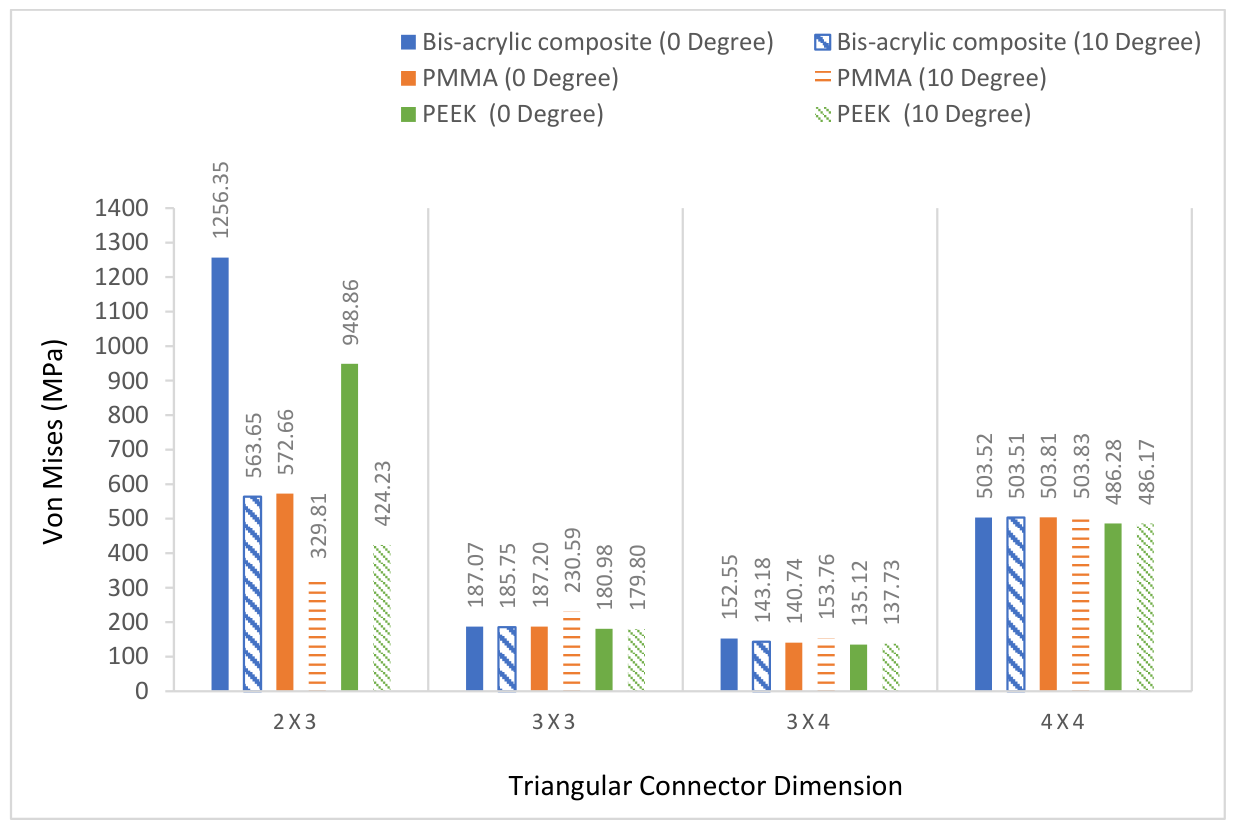
The finite element analysis findings for each of the four connector dimensions are summarized in Table 3, Table 4, Table 5 and Table 6 and Figure 1 and Figure 2.
There was a minimal difference in total displacement between the same tested material with the same connector dimension when different force angulations (0° and 10°) were used. Within the same connector dimension, PMMA consistently showed the lowest total displacement compared to bis-acrylate composite, which may be attributed to its significantly higher Young’s Modulus. The study demonstrated a clear, but non-linear, relationship between connector size and mechanical performance. The total displacement, von Mises stress, and principal stresses generally decreased as the connector dimensions increased from 2 × 3 mm to 3 × 4 mm, while the factor of safety increased. This trend indicates improved structural integrity with greater cross-sectional area in this range.
Notably, the 3 × 4 mm connector exhibited the best overall performance, with the lowest recorded stresses and the highest safety factors. However, this trend reversed for the largest 4 × 4 mm connector. This design showed a significant increase in von Mises and principal stresses and a decrease in the factor of safety compared to the 3 × 3 and 3 × 4 mm connectors, despite having the largest cross-sectional area.
Regarding material performance under loading conditions, bis-acrylate composite showed the lowest factor of safety at 0° angulation within each connector size, while PMMA showed a slightly lower factor of safety than PEEK at 10° angulation. Critically, PEEK demonstrated the highest safety margins in the 3 × 3 and 3 × 4 mm configurations, benefiting from its high yield strength (192 MPa). The maximum von Mises stress for the critical 2 × 3 mm bis-acrylate connector (1256.35 MPa) far exceeded the material’s yield strength (48.9 MPa), indicating a high probability of clinical failure for this specific combination. Among materials, PMMA offers the greatest resistance to deformation, while PEEK provides the highest safety factor against yielding in well-designed connectors.
The factor of safety values presented in the software output were interpreted comparatively among the tested groups because the software capped the maximum displayed value at 15, representing a highly safe condition rather than the actual calculated upper limit.
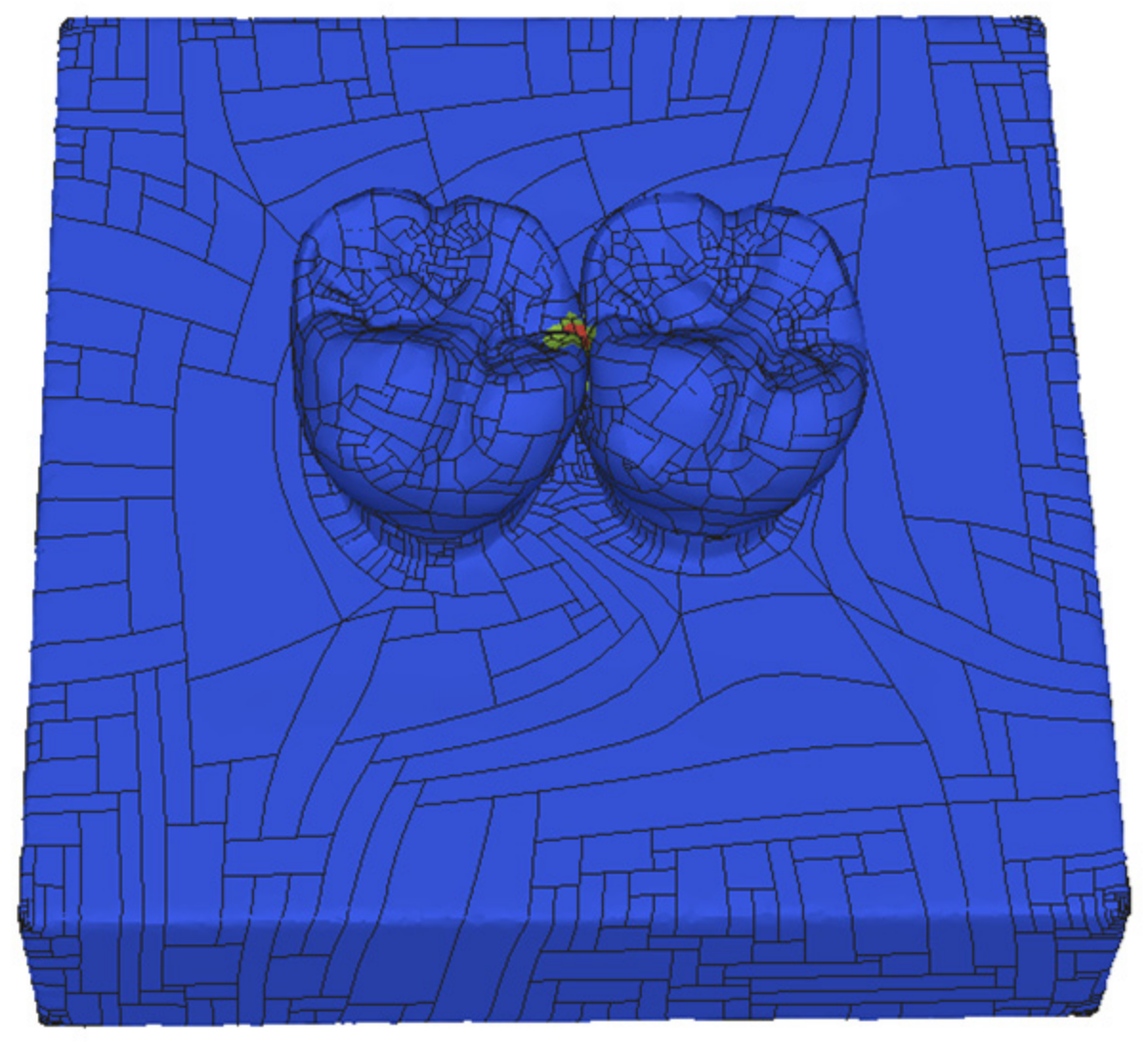
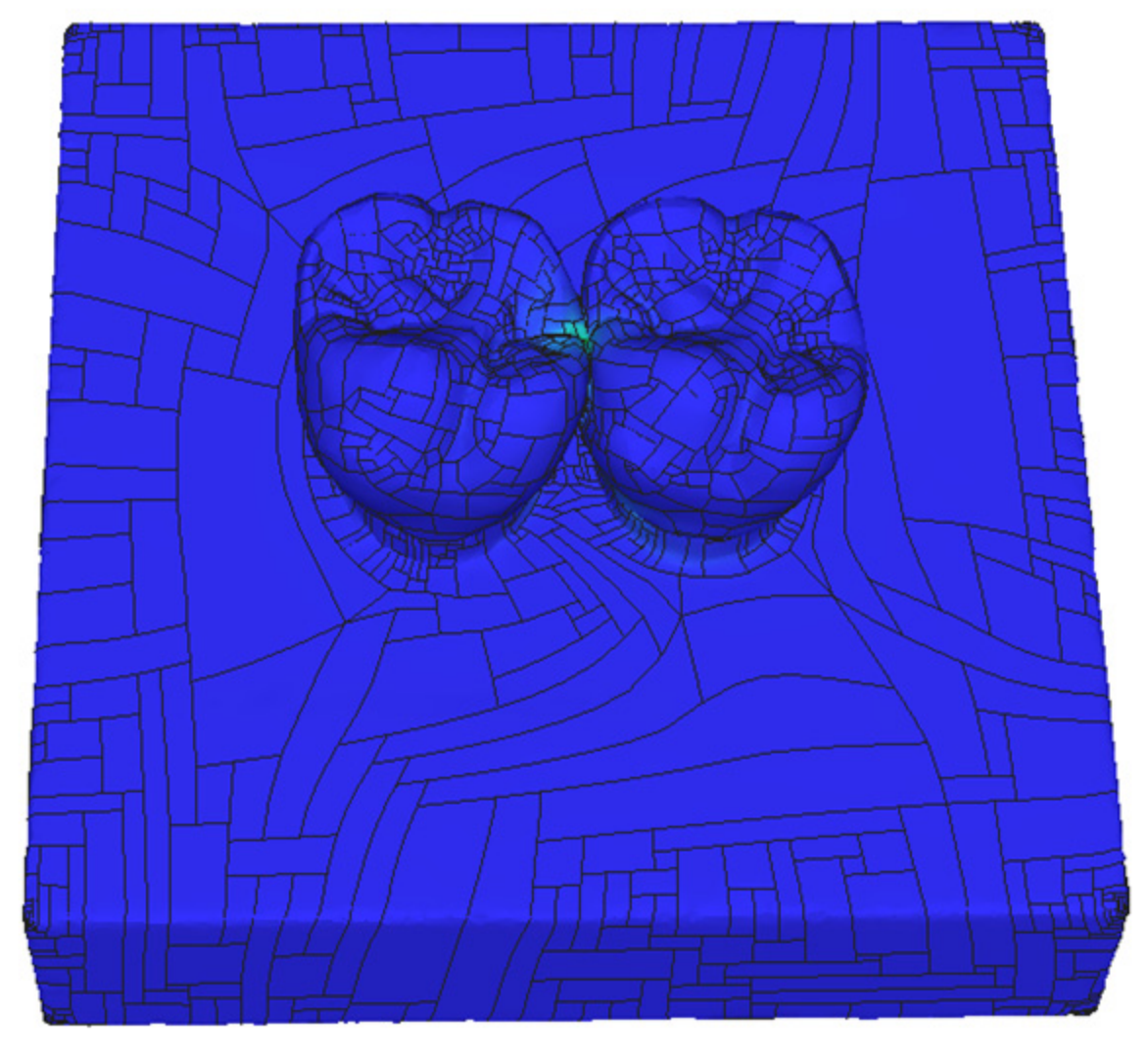
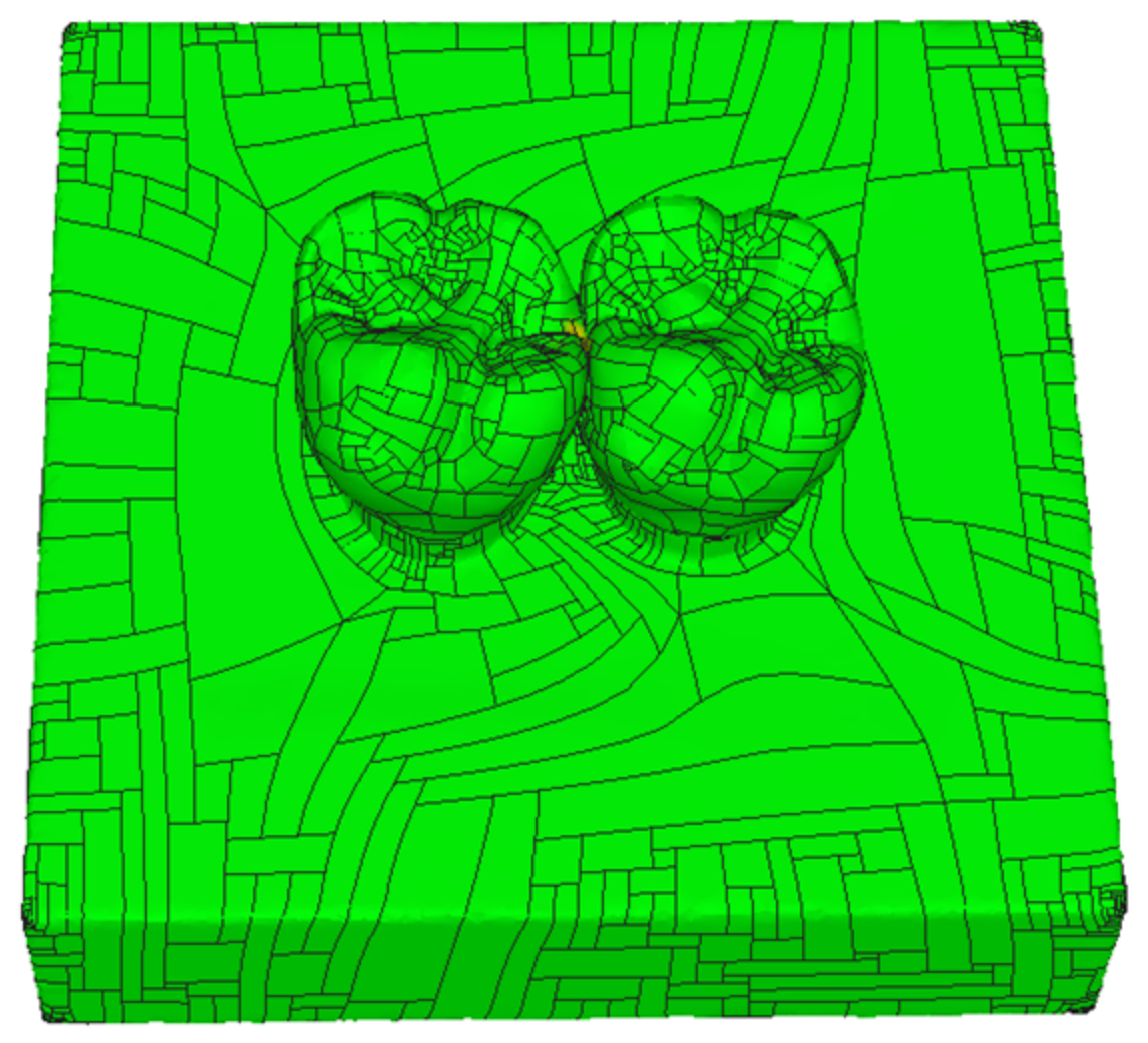
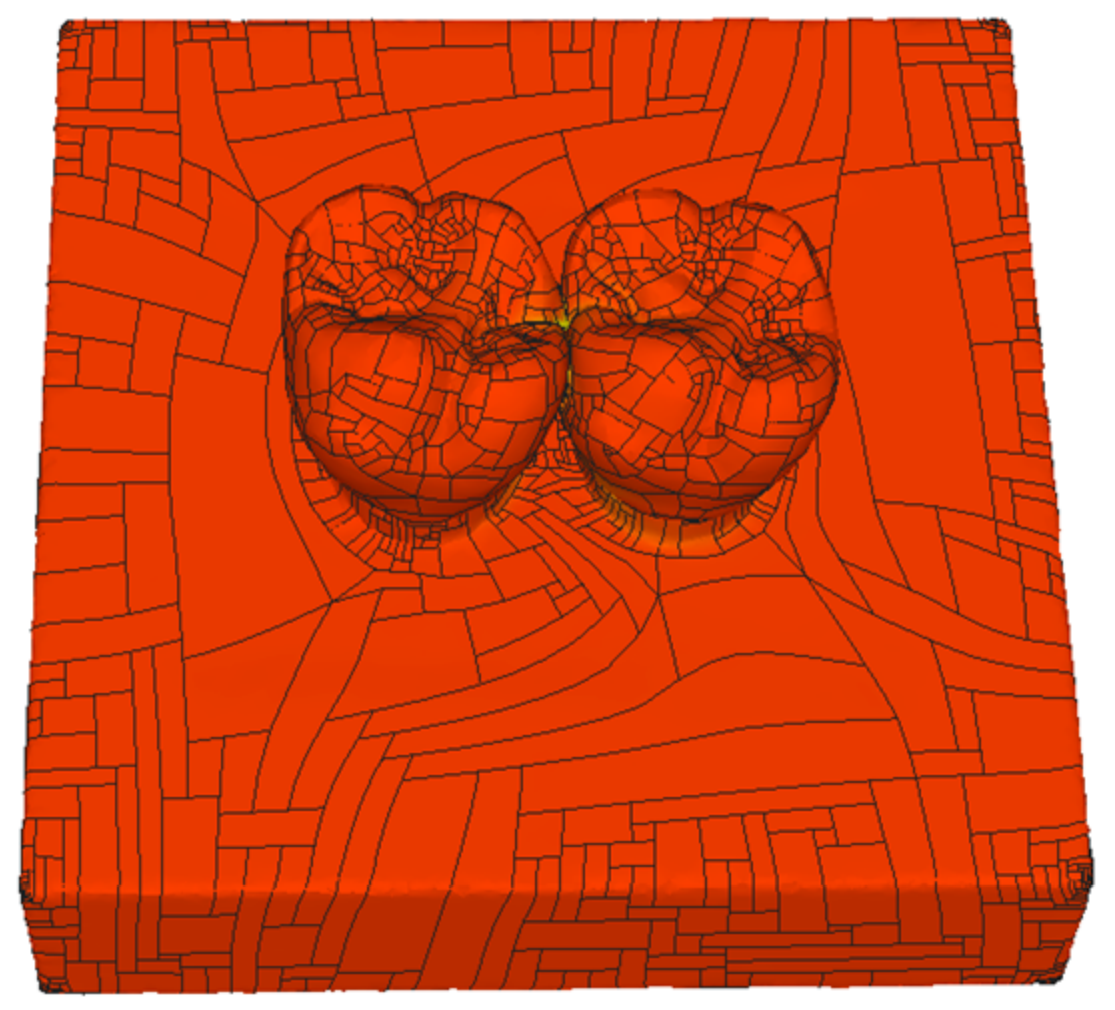
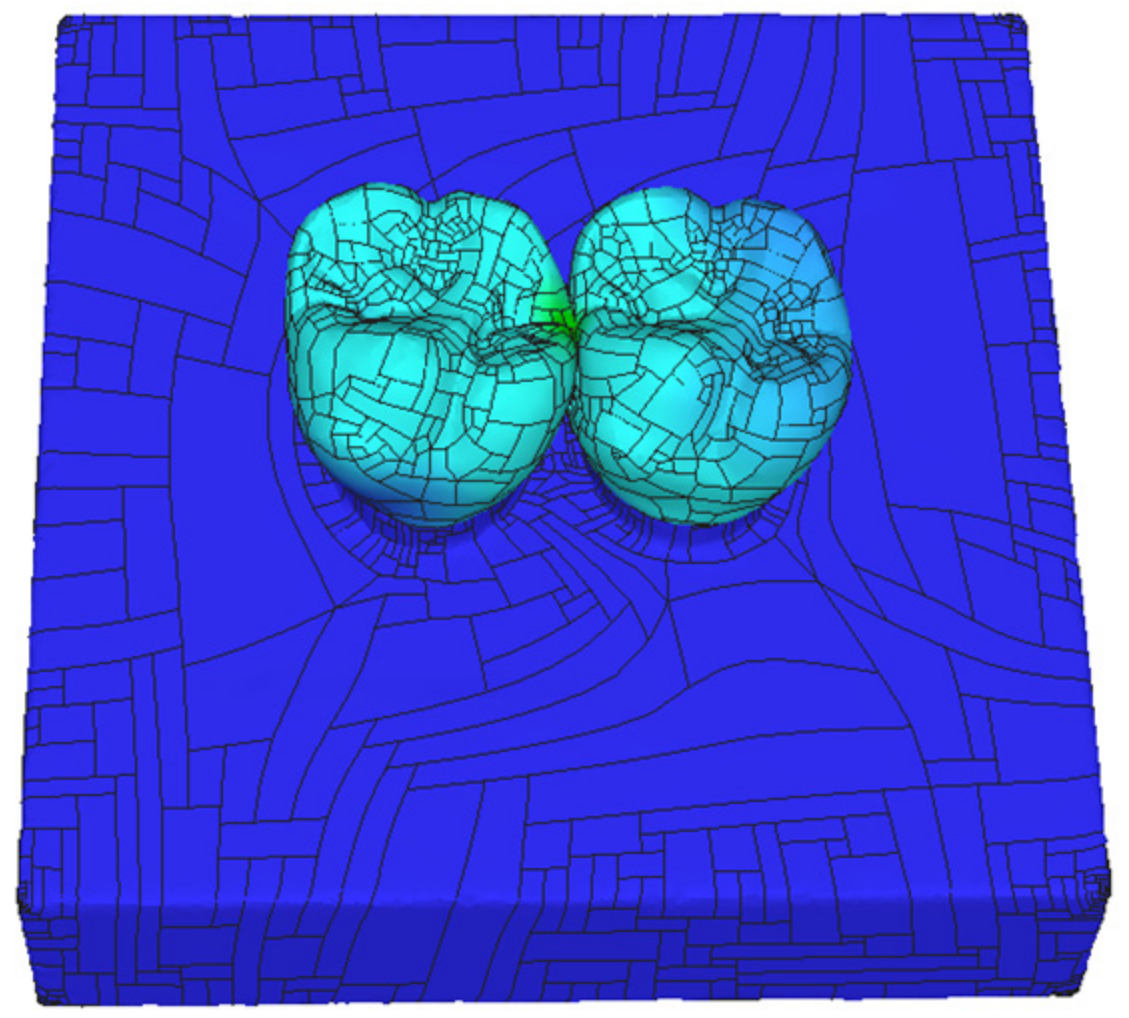
Figure 3, Figure 4, Figure 5, Figure 6 and Figure 7 illustrate the factor of safety, von Mises stress, principal stresses, and total displacement for PMMA tested under 10° force angulation as a representative example.

4. Discussion

This study evaluated the null hypothesis that stress magnitude and distribution do not differ among provisional materials with varying connector dimensions. Based on the observed differences in stress magnitudes across the tested materials and connector designs, the null hypothesis was rejected. The null hypothesis was rejected based on observed deterministic differences in stress distribution and safety factor among the simulated conditions; however, these differences should be interpreted as numerical FEA-based comparisons rather than statistically inferred differences.
In clinical practice, provisional restorations are associated with several modes of failure, most commonly fracture and loss of retention. The literature identifies the connector region of FDPs as a frequent site of mechanical failure, which may result in catastrophic fracture of the restoration and compromise overall treatment outcomes [23]. Such failures are typically associated with extensive rehabilitative procedures or large edentulous spans; however, no restorative material has yet been established as ideal for effectively reducing the incidence of these complications.
The connector is a fundamental structural element in FDPs, serving to link adjacent retainers or connect a retainer to a pontic [3]. Connector dimensions play a critical role in determining the ability of the prosthesis to withstand functional occlusal forces. Consequently, the present in vitro study aimed to evaluate the stress distribution of different provisional materials designed with varying connector dimensions using finite element analysis. The outcomes assessed included total displacement, von Mises stress, principal stresses, factor of safety (FOS), and overall stress distribution in a two-unit FDPs.
The present findings are consistent with previous studies, including the finite element analysis by Campaner et al. (2021), which identified the connector as the primary site of stress concentration in FDPs [12]. Both studies emphasize material selection as a critical determinant of biomechanical performance. By incorporating yield strength and factor of safety, the current study provides a clearer hierarchy of material behavior. For an optimal connector geometry, PMMA exhibited the greatest resistance to deformation, PEEK demonstrated the highest safety factor against failure, and bis-acrylate composite showed the poorest overall performance. These results suggest that minimizing connector failure risk depends not only on stress redistribution but also on the use of materials with high intrinsic mechanical strength.
An important methodological distinction should be acknowledged. In contrast to earlier investigations, which modeled a three-unit FDPs with a central pontic and complex asymmetric loading, the present study employed a simplified, symmetric two-unit model to isolate the effects of connector size and material properties under controlled conditions [12]. In addition, the connector was designed with a triangular geometry that has been reported to generate higher stress concentrations than other connector shapes [24]. This design choice allowed for a more rigorous evaluation of connector performance and facilitated the identification of a non-linear relationship between connector dimensions and stress distribution, which may be obscured in more clinically complex models.
A previous study tested a four-unit FDP with two pontics in the middle. They found that the maximum von Mises stresses are concentrated at the connector area, especially in the cervical region [24]. Furthermore, the triangular connector design had more stress than the cylindrical design [24]. In contrast to the present study, which has no pontic and uses only a two-unit FDPs, bis-acrylate composite exhibited the highest von Mises stress at the 2 × 3 connector dimension under 0-degree force direction, followed by PEEK and then PMMA. The 3 × 4 connector dimension demonstrated the lowest von Mises stress among all tested configurations, making it the most favorable connector dimension for all materials evaluated. In contrast, the 4 × 4 connector dimension showed higher von Mises stress than the 3 × 4 connector dimension, which is consistent with previous studies [25].
Although increasing connector cross-sectional area generally improves load distribution, excessively large connectors may alter the path of stress transmission and create localized stress concentrations within adjacent areas of the prosthesis. This finding suggests that increasing connector size beyond an optimal range does not necessarily result in improved biomechanical behavior.
The selected connector sizes (2 × 3, 3 × 3, 3 × 4, and 4 × 4 mm) were chosen to represent a clinically relevant range extending from minimally recommended dimensions to enlarged connector configurations commonly evaluated in previous prosthodontic and biomechanical studies [5,25,26,27]. Smaller connector sizes were included to simulate conservative clinical designs in limited occluso-gingival spaces, whereas larger dimensions were selected to evaluate whether increasing connector bulk would improve biomechanical performance under loading conditions.
The current study and Alkhallagi et al. should be considered complementary rather than conflicting because both studies utilized similar structural design concepts while investigating different loading parameters, materials, and outcome measures.
Finite element analysis describes how stress is initially distributed and what safety factor it would reach before the design starts to fail under a specific load. Then the mechanical properties explain the average mechanical property outcomes of that design and how that specific material can handle, including whether the fracture loads, which increase incrementally when applied to that same design, would lead to failure. Therefore, the latter study would also describe the components of the average stress–strain curve of only its tested material.
This distinction is important because the two methods evaluate different stages of the same mechanical failure pathway. In biomechanical terms, connector geometry and material properties first determine the local stress and strain distribution within the prosthesis. These stresses, in turn, govern the structure’s safety margin relative to the material’s strength limit. Once local stress exceeds the material’s tolerance, crack initiation, and propagation occur, they eventually manifest as measurable laboratory outcomes such as fracture load, yield-related behavior, compressive strength, and failure mode. Therefore, FEA endpoints such as von Mises stress and safety factor should not be interpreted as substitutes for fracture resistance testing. Rather, they serve as predictive biomechanical indicators that help clarify why a particular design may perform more favorably under simulated conditions.
Taken together, the available evidence supports the interpretation that connector dimension is a dominant determinant of FDPs biomechanical performance. However, the preferred connector dimension may vary depending on whether performance is evaluated through stress analysis, safety factor, or experimentally derived fracture resistance outcomes. Therefore, connector selection should be based on a combined interpretation of FEA findings and laboratory mechanical testing rather than reliance on a single parameter alone.
Rezaei et al. applied a vertical or angled load on different connector widths [28]. They found that von Mises stress decreased as the connector width increased, regardless of the load direction [28]. These results were confirmed by Ambre et al., as they found that the abutment core thickness is less important than the connector dimensions [5]. Junker et al. tested the connector dimensions for monolithic E.max CAD FPDs [26]. They found that 16 mm2 is recommended to improve the fracture resistance of monolithic lithium disilicate FDPs [26]. On the other hand, when zirconia-based FDPs are used, Larsson et al. recommend a minimum connector diameter of 4.0 mm for long spans or replacing molar teeth [27]. In comparison to provisional materials, all-ceramic materials are harder [29].
PEEK is considered a new material that is used for provisional and transitional prosthetic restorations [24,29]. Several studies have identified PEEK as an appropriate material for restorations in load-bearing occlusal regions [30,31,32,33,34]. Nevertheless, because of its elastic modulus, PEEK has also been described as exhibiting mechanical behavior comparable to that of provisional restorative materials [34]. Therefore, the findings of the present study may have implications not only for provisional FDPs but also for transitional and selected definitive restorative applications involving polymer-based prostheses.
Based on the present findings, PEEK demonstrated a high-performing and distinctive mechanical behavior among the evaluated provisional materials. It consistently exhibited the highest safety factors in the 3 × 3 and 3 × 4 mm connector designs, indicating superior resistance to permanent deformation and failure under functional loading. Unlike PMMA, which showed minimal displacement due to its high stiffness, and bis-acrylate composite, which displayed the lowest safety margins, PEEK provided a favorable balance between strength and flexibility. This behavior is primarily attributed to its high yield strength (192 MPa), which enabled greater protection against yielding, particularly under off-axis (10°) loading conditions where its safety factor exceeded that of PMMA. Overall, these results indicate that PEEK showed the most favorable performance under the tested conditions for maintaining structural integrity in optimally designed connectors.
From a clinical perspective, these findings suggest that appropriate connector design may improve the longevity and mechanical reliability of provisional FDPs, particularly in posterior load-bearing regions. The results also indicate that material selection should be carefully considered in situations involving increased occlusal loading or extended provisionalization periods.
The limitations of this study include the evaluation of only a single connector shape, specifically a triangular design, and the use of just three provisional materials. Additionally, the analysis was restricted to static loading at 0° and 10° angulations. Future research should consider dynamic loading conditions, a wider variety of connector shapes, loading angulations such as 15°, 20°, and 30°, additional provisional materials, and alternative connector positions to provide a more comprehensive understanding of connector performance.

5. Conclusions

Within the limitations of this in vitro study, the 3 × 4 mm connector dimension demonstrated the best overall performance across all tested materials and may represent a more favorable design to enhance FDPs longevity. Among the materials, PEEK demonstrated the most favorable performance in well-designed connectors (3 × 3 and 3 × 4 mm), exhibiting the highest safety factor under the tested conditions, while bis-acrylate composite demonstrated the lower mechanical performance across all connector dimensions.

Author Contributions

Conceptualization, T.S.A.; methodology, T.S.A., A.M.A. and T.Y.M.; software, T.S.A.; validation, T.S.A. and T.Y.M.; formal analysis, T.Y.M.; resources, A.M.A.; writing—original draft preparation, T.S.A. and A.M.A.; writing—review and editing, T.S.A., A.M.A. and T.Y.M.; visualization, T.S.A. and T.Y.M.; supervision, T.Y.M.; project administration, T.S.A. All authors have read and agreed to the published version of the manuscript.

Funding

This research received no external funding.

Institutional Review Board Statement

Not applicable.

Informed Consent Statement

Not applicable.

Data Availability Statement

The raw data supporting the conclusions of this article will be made available by the authors on request.

Conflicts of Interest

The authors declare no conflicts of interest.

References

  1. Rosenstiel, S.F.; Land, M.F.; Fujimoto, J. Contemporary Fixed Prosthodontics; Mosby/Elsevier: Amsterdam, The Netherlands, 2006. [Google Scholar]
  2. ELsyad, M.A.; Elgamal, M.; Mohammed Askar, O.; Youssef Al-Tonbary, G. Patient satisfaction and oral health-related quality of life (OHRQoL) of conventional denture, fixed prosthesis and milled bar overdenture for All-on-4 implant rehabilitation. A crossover study. Clin. Oral Implant. Res. 2019, 30, 1107–1117. [Google Scholar] [CrossRef] [PubMed]
  3. Layton, D.M.; Morgano, S.M.; Muller, F.; Kelly, J.A.; Nguyen, C.T.; Scherrer, S.S.; Salinas, T.J.; Shah, K.C.; Att, W.; Frelich, M.A. The Glossary of Prosthodontic Terms 2023: Tenth Edition. J. Prosthet. Dent. 2023, 130, e1–e3. [Google Scholar] [CrossRef]
  4. Shillingburg, H.T. Fundamentals of Fixed Prosthodontics; Quintessence Pub. Co.: New Malden, UK, 1997. [Google Scholar]
  5. Ambre, M.J.; Aschan, F.; Vult von Steyern, P. Fracture strength of yttria-stabilized zirconium-dioxide (Y-TZP) fixed dental prostheses (FDPs) with different abutment core thicknesses and connector dimensions. J. Prosthodont. 2013, 22, 377–382. [Google Scholar] [CrossRef]
  6. Peñate, L.; Basilio, J.; Roig, M.; Mercadé, M. Comparative study of interim materials for direct fixed dental prostheses and their fabrication with CAD/CAM technique. J. Prosthet. Dent. 2015, 114, 248–253. [Google Scholar] [CrossRef]
  7. Motta, A.B.; Pereira, L.C.; da Cunha, A.R.; Duda, F.P. The influence of the loading mode on the stress distribution on the connector region of metal-ceramic and all-ceramic fixed partial denture. Artif. Organs 2008, 32, 283–291. [Google Scholar] [CrossRef]
  8. Oh, W.S.; Anusavice, K.J. Effect of connector design on the fracture resistance of all-ceramic fixed partial dentures. J. Prosthet. Dent. 2002, 87, 536–542. [Google Scholar] [CrossRef]
  9. Park, S.M.; Park, J.M.; Kim, S.K.; Heo, S.J.; Koak, J.Y. Flexural Strength of 3D-Printing Resin Materials for Provisional Fixed Dental Prostheses. Materials 2020, 13, 3970. [Google Scholar] [CrossRef]
  10. Zafar, M.S. Prosthodontic Applications of Polymethyl Methacrylate (PMMA): An Update. Polymers 2020, 12, 2299. [Google Scholar] [CrossRef] [PubMed]
  11. Ma, R.; Tang, T. Current strategies to improve the bioactivity of PEEK. Int. J. Mol. Sci. 2014, 15, 5426–5445. [Google Scholar] [CrossRef]
  12. Campaner, L.M.; Silveira, M.P.M.; de Andrade, G.S.; Borges, A.L.S.; Bottino, M.A.; Dal Piva, A.M.d.O.; Lo Giudice, R.; Ausiello, P.; Tribst, J.P.M. Influence of Polymeric Restorative Materials on the Stress Distribution in Posterior Fixed Partial Dentures: 3D Finite Element Analysis. Polymers 2021, 13, 758. [Google Scholar] [CrossRef] [PubMed]
  13. Stawarczyk, B.; Eichberger, M.; Uhrenbacher, J.; Wimmer, T.; Edelhoff, D.; Schmidlin, P.R. Three-unit reinforced polyetheretherketone composite FDPs: Influence of fabrication method on load-bearing capacity and failure types. Dent. Mater. J. 2015, 34, 7–12. [Google Scholar] [CrossRef]
  14. Kolbeck, C.; Behr, M.; Rosentritt, M.; Handel, G. Fracture force of tooth–tooth- and implant–tooth-supported all-ceramic fixed partial dentures using titanium vs. customised zirconia implant abutments. Clin. Oral Implant. Res. 2008, 19, 1049–1053. [Google Scholar] [CrossRef]
  15. Kassem, Y.M.; Alshimy, A.M.; El-Shabrawy, S.M. Mechanical Evaluation of Polyetheretherketone Compared with Zirconia as a Dental Implant Material. Alex. Dent. J. 2019, 44, 61–66. [Google Scholar] [CrossRef]
  16. Khalesi, R.; Abbasi, M.; Shahidi, Z.; Tabatabaei, M.H.; Moradi, Z. Interfacial Fracture Toughness Comparison of Three Indirect Resin Composites to Dentin and Polyether Ether Ketone Polymer. Eur. J. Dent. 2020, 14, 456–461. [Google Scholar] [CrossRef]
  17. Masri, R.; Driscoll, C.F. Clinical Applications of Digital Dental Technology; Wiley-Blackwell: Hoboken, NJ, USA, 2023. [Google Scholar]
  18. Dawood, A.; Marti Marti, B.; Sauret-Jackson, V.; Darwood, A. 3D printing in dentistry. Br. Dent. J. 2015, 219, 521–529. [Google Scholar] [CrossRef]
  19. Liu, Q.; Leu, M.C.; Schmitt, S.M. Rapid prototyping in dentistry: Technology and application. Int. J. Adv. Manuf. Technol. 2005, 29, 317–335. [Google Scholar] [CrossRef]
  20. Barazanchi, A.; Li, K.C.; Al-Amleh, B.; Lyons, K.; Waddell, J.N. Additive Technology: Update on Current Materials and Applications in Dentistry. J. Prosthodont. 2017, 26, 156–163. [Google Scholar] [CrossRef]
  21. Tian, Y.; Chen, C.; Xu, X.; Wang, J.; Hou, X.; Li, K.; Lu, X.; Shi, H.; Lee, E.S.; Jiang, H.B. A Review of 3D Printing in Dentistry: Technologies, Affecting Factors, and Applications. Scanning 2021, 2021, 9950131. [Google Scholar] [CrossRef] [PubMed]
  22. Scheid, R.C.; Woelfel, J.B. Woelfel’s Dental Anatomy; Wolters Kluwer/Lippincott Williams & Wilkins Health: Philadelphia, PA, USA, 2012. [Google Scholar]
  23. Qin, L.; Yao, S.; Zhao, J.; Zhou, C.; Oates, T.W.; Weir, M.D.; Wu, J.; Xu, H.H.K. Review on Development and Dental Applications of Polyetheretherketone-Based Biomaterials and Restorations. Materials 2021, 14, 408. [Google Scholar] [CrossRef]
  24. Harshitha Gowda, B.H.; Satish Babu, C.L. Connector design in a long-span-fixed dental prosthesis: A three-dimensional finite element analysis. Indian J. Dent. Res. 2013, 24, 178–182. [Google Scholar] [CrossRef] [PubMed]
  25. Alkhallagi, T.S.; Alqahtani, M.A.; Marghalani, T.Y. 3D Printed Posterior Connector Dimensions’ Effect on Fracture Properties of Provisional Two-Unit Fixed Dental Prostheses. Appl. Sci. 2025, 15, 7171. [Google Scholar] [CrossRef]
  26. Junker, R.; Holler, M.; Yoshida-Anastasova, Y.; Frank, W.; Nothdurft, F.P. Influence of Connector Diameter on Fracture Load of CAD/CAM-Processed Monolithic Lithium Disilicate Fixed Partial Dentures. Int. J. Prosthodont. 2019, 32, 68–70. [Google Scholar] [CrossRef]
  27. Larsson, C.; Holm, L.; Lovgren, N.; Kokubo, Y.; Vult von Steyern, P. Fracture strength of four-unit Y-TZP FPD cores designed with varying connector diameter. An in-vitro study. J. Oral Rehabil. 2007, 34, 702–709. [Google Scholar] [CrossRef]
  28. Rezaei, S.M.; Heidarifar, H.; Arezodar, F.F.; Azary, A.; Mokhtarykhoee, S. Influence of Connector Width on the Stress Distribution of Posterior Bridges under Loading. J. Dent. 2011, 8, 67–74. [Google Scholar]
  29. Shen, C. Phillips’ Science of Dental Materials; Elsevier: Amsterdam, The Netherlands, 2022. [Google Scholar]
  30. Burns, D.R.; Beck, D.A.; Nelson, S.K. A review of selected dental literature on contemporary provisional fixed prosthodontic treatment: Report of the Committee on Research in Fixed Prosthodontics of the Academy of Fixed Prosthodontics. J. Prosthet. Dent. 2003, 90, 474–497. [Google Scholar] [CrossRef]
  31. Rauch, A.; Hahnel, S.; Günther, E.; Bidmon, W.; Schierz, O. Tooth-Colored CAD/CAM Materials for Application in 3-Unit Fixed Dental Prostheses in the Molar Area: An Illustrated Clinical Comparison. Materials 2020, 13, 5588. [Google Scholar] [CrossRef]
  32. Niem, T.; Youssef, N.; Wöstmann, B. Energy dissipation capacities of CAD-CAM restorative materials: A comparative evaluation of resilience and toughness. J. Prosthet. Dent. 2019, 121, 101–109. [Google Scholar] [CrossRef]
  33. Niem, T.; Youssef, N.; Wöstmann, B. Influence of accelerated ageing on the physical properties of CAD/CAM restorative materials. Clin. Oral Investig. 2020, 24, 2415–2425. [Google Scholar] [CrossRef] [PubMed]
  34. Dal Piva, A.M.O.; Tribst, J.P.M.; Borges, A.L.S.; Souza, R.O.A.E.; Bottino, M.A. CAD-FEA modeling and analysis of different full crown monolithic restorations. Dent. Mater. 2018, 34, 1342–1350. [Google Scholar] [CrossRef] [PubMed]
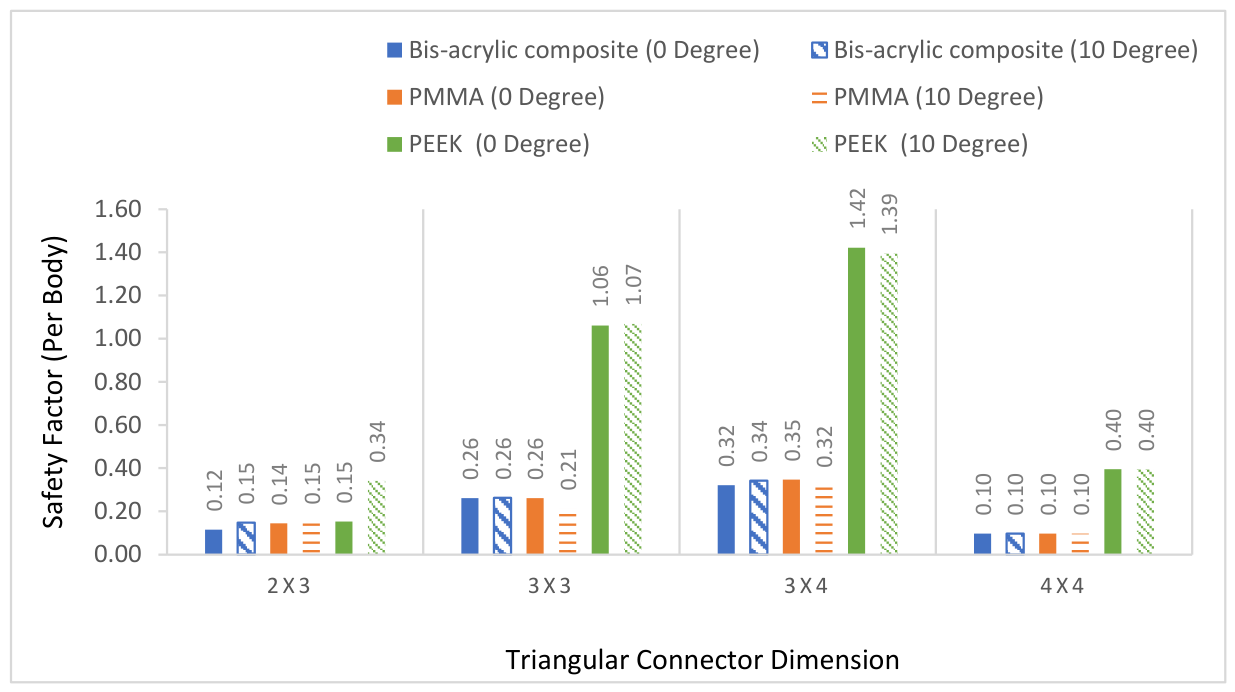
Figure 1. Bar chart showing safety factors for bis-acrylate composite, PMMA, and PEEK tested with 0-degree and 10-degree force angulation.
Applsci 16 05742 g001
Figure 2. Bar chart showing von Mises for bis-acrylate composite, PMMA, and PEEK tested with 0-degree and 10-degree force angulation.
Applsci 16 05742 g002
Figure 3. Example of the safety factor for PMMA tested with a 10-degree force angulation.
Applsci 16 05742 g003
Figure 4. Example of the von Mises for PMMA tested with a 10-degree force angulation.
Applsci 16 05742 g004
Figure 5. Example of the 1st Principal for PMMA tested with a 10-degree force angulation.
Applsci 16 05742 g005
Figure 6. Example of the 3rd Principal for PMMA tested with a 10-degree force angulation.
Applsci 16 05742 g006
Figure 7. Example of the total displacement for PMMA tested with 10-degree force angulation.
Applsci 16 05742 g007
Table 1. The tested connectors’ dimensions.
Connector SizeWidth (mm)Height (mm)Cross-Sectional Area (mm2)
2 × 3238.16
3 × 33310.30
3 × 43413.33
4 × 44415.08
Table 2. The tested material properties.
GroupAluminum
Moderate-Strength Alloy *
Bis-Acrylate
Composite
(Protemp 3 Garant) **
PMMA
(Telio CAD) **
PEEK
(CopraPeek Light) **
Density (kg/mm3)0.0000030.0000010.0000010.000001
Young’s modulus (MPa)68,950157832003700
Poisson’s ratio0.330.30.30.4
Yield strength (MPa)144.7948.948.9192
Ultimate tensile strength (MPa)151.68549.179.8184
Thermal conductivity (W/(mm C))0.15900.00020.00020.0004
Thermal expansion coefficient (/C)0.0000230.0000700.0000700.000008
Specific heat (J/(kg C))897243724371320
* Information taken from Fusion 360 (Autodesk). ** Information taken from MSD sheet.
Table 3. The result of the tested connector size 2 × 3.
Stress
MaterialForce
Direction
Safety Factor (Per Body)von Mises (MPa)1st Principal (MPa)3rd Principal (MPa)Displacement (Total in mm)
MinMaxMinMaxMinMaxMinMaxMinMax
Bis-acrylate composite00.115150.000041256.35−141.2961540.766−940.948275.70300.139
Bis-acrylate composite100.148150.00002563.65−152.146661.188−448.659100.700.133
PMMA00.144150.00004572.657−162.541336.303−721.60820.60700.002
PMMA100.148150.00002329.813−158.608113.494−420.5379.56800.001
PEEK00.153150.00004948.862−192.7781080.476−825.621153.30800.058
PEEK100.341150.00002424.232−203.336447.995−428.03941.200.055
Table 4. The result of tested connector size 3 × 3.
Stress
MaterialForce
Direction
Safety Factor (Per Body)von Mises (MPa)1st Principal (MPa)3rd Principal (MPa)Displacement (Total in mm)
MinMaxMinMaxMinMaxMinMaxMinMax
Bis-acrylate composite00.261150187.069−79.64496.166−220.666.40500.099
Bis-acrylate composite100.263150185.754−87.92292.655−245.1969.72700.104
PMMA00.2612150187.2036−88.167794.5603−223.69638.424300.0012
PMMA100.212150230.586−97.013111.209−284.70310.17100.001
PEEK01.061150180.981−122.04794.144−239.3197.89400.042
PEEK101.068150179.797−133.80590.28−250.7256.82900.044
Table 5. The result of tested connector size 3 × 4.
Stress
MaterialForce
Direction
Safety Factor (Per Body)von Mises (MPa)1st Principal (MPa)3rd Principal (MPa)Displacement (Total in mm)
MinMaxMinMaxMinMaxMinMaxMinMax
Bis-acrylate composite00.321150152.547−71.70976.67−204.7795.16300.081
Bis-acrylate composite100.342150143.178−71.24972.491−195.3025.23800.084
PMMA00.347150140.737−72.40875.747−194.1646.97300.001
PMMA100.318150153.76−74.89470.781−197.8978.11100.001
PEEK01.421150135.123−92.51480.546−204.1865.52900.034
PEEK101.394150137.727−98.9173.101−208.4195.96300.035
Table 6. The result of tested connector size 4 × 4.
Stress
MaterialForce
Direction
Safety Factor (Per Body)von Mises (MPa)1st Principal (MPa)3rd Principal (MPa)Displacement (Total in mm)
MinMaxMinMaxMinMaxMinMaxMinMax
Bis-acrylate composite00.097150503.516−184.666195.601−541.48219.91500.143
Bis-acrylate composite100.097150503.508−183.681184.484−542.66211.44600.144
PMMA00.097150503.806−190.578193.689−542.09210.79100.001
PMMA100.097150503.834−189.512182.308−543.38217.53800.002
PEEK00.395150486.278−266.62199.526−549.57414.47700.06
PEEK100.395150486.166−253.232187.439−551.09426.79400.061
Disclaimer/Publisher’s Note: The statements, opinions and data contained in all publications are solely those of the individual author(s) and contributor(s) and not of MDPI and/or the editor(s). MDPI and/or the editor(s) disclaim responsibility for any injury to people or property resulting from any ideas, methods, instructions or products referred to in the content.