1. Introduction
Thin-walled tubes have been widely used in the field of impact protection, primarily dissipating energy through mechanisms such as metal plastic deformation, friction, and material fracture. Main energy-absorbing forms include crushing [
1,
2], splitting [
3], and radial expansion [
4,
5]. Researchers worldwide have developed novel energy-absorbing devices such as foam-filled tubes [
6], multi-cell tubes [
7,
8], corrugated tubes [
9,
10,
11], and hybrid energy-dissipating tubes [
12,
13]. Studies have also focused on improving the expansion die for expanding tubes [
14]. Notably, expansion tube energy-absorbing devices have been employed in the crashworthiness design of traffic and aerospace vehicles because of their high energy-absorbing efficiency, stable force throughout the tube expansion process and insensitivity to impact load.
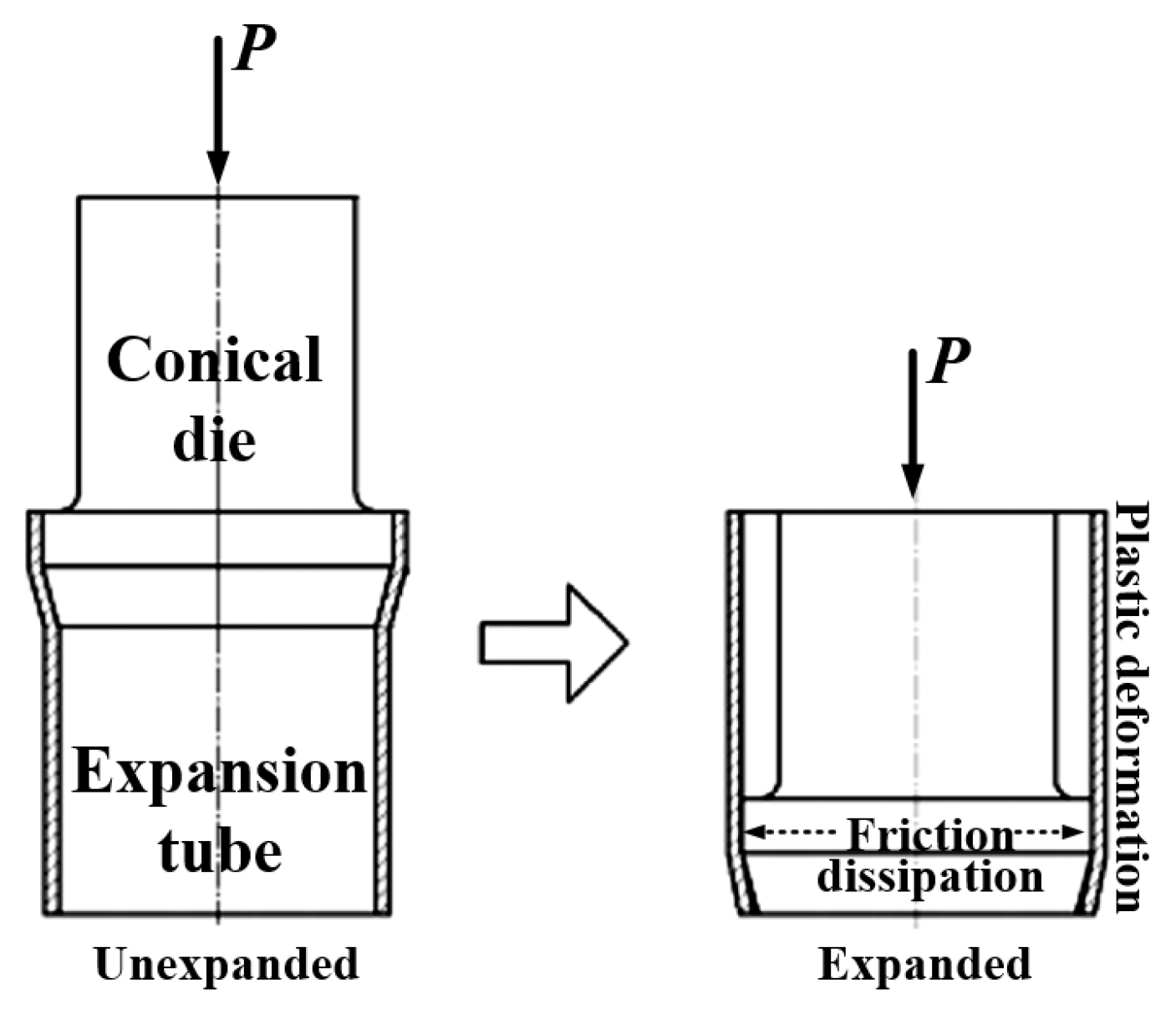
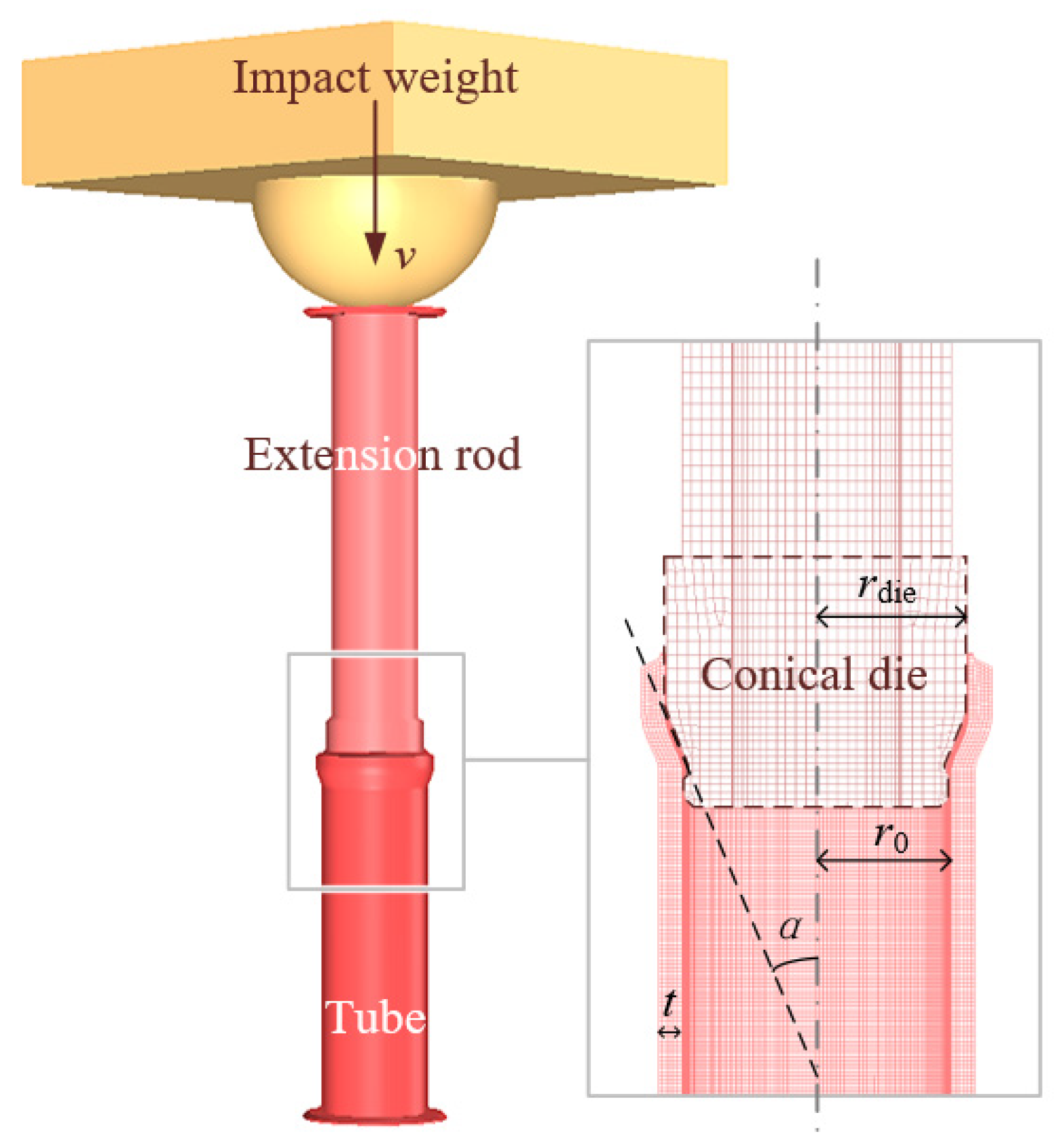
The working principle of tube expansion is shown in
Figure 1. When a conical die is axially inserted into a thin-walled tube, energy is dissipated mainly through plastic deformation and friction. To investigate the mechanical behaviors, many experimental tests were conducted. These tests could be classified into two categories depending on the load applied on the tube: quasistatic tests and dynamic tests.
Extensive tests of expansion tubes subjected to quasistatic loading have been carried out to investigate their mechanical behaviors. Shakeri et al. [
15] conducted quasistatic crushing tests with three different contact conditions to investigate the effect of friction. The mean load was found to increase with the friction coefficient. Based on the experimental and numerical results for 5A06 aluminum tubes, Yang et al. [
16] discussed the characteristics of force–stroke curves in different deformation modes and the effects of geometric parameters. They concluded that the specific energy absorption increased with increasing semi-angle. Seibi et al. [
17,
18] considered the expansion ratio and mandrel angle in an experimental study on two types of tube materials. For tubes of identical geometric dimensions, the energy required to expand steel tubes is approximately three times that required for aluminum tubes. Choi et al. [
19] also studied the influence of punch angle through quasistatic tests and finite element (FE) modeling. The results indicated that the specific die angle at which the dissipated energy no longer increased existed between 20° and 30°. Al-Abri et al. [
20] conducted tubular expansion tests using a full-scale test rig and established analytical and numerical models to describe the expansion process of a thick-wall tube. Most existing studies on expansion tubes have focused on carbon steels and aluminum alloys. S2205 duplex stainless steel, which offers excellent corrosion resistance and high strength, has rarely been investigated. If its energy absorption proves reliable, S2205 could extend the application of expansion tube absorbers to severe environments where corrosion resistance is critical, such as marine and offshore engineering.
Regarding dynamic tests, many studies have also been conducted. Based on dynamic tests (6.39 m/s) and numerical simulations, Yan et al. [
21] found that both die angles and the coefficient of friction had a great influence on the energy absorption performance of the expansion tube. Yao et al. [
22] conducted a dynamic test with an impact velocity of 8 m/s. They built an approximation model and optimized the specific energy absorption based on a full factorial design and a central composite design of experiments. Using Taguchi and response surface methods, Abolfathi et al. [
23] increased the specific energy absorption (SEA) of expansion tubes by 127% (single-objective) or 77% (multi-objective) with only a 37% peak force rise in the latter. This shows that combining expansion and folding with optimization yields high SEA and moderate peak forces. Tan et al. [
14] replaced a circular die with a square one to improve oblique stability. The square die offers a longer axial contact length (larger moment arm) and extra oblique line contact, resisting bending and rotation. In recent years, many studies have extended dynamic testing to higher speeds (≤65.47 m/s) [
24] and investigated the energy absorption characteristics of expansion tubes under explosive loads [
25,
26]. Authors examined deformation mode transitions (expansion, buckling, fracture) under quasistatic and impact loading, and established that the critical instability load is 85% of the plain tube value. However, due to the difficulty in conducting experiments, most research on the failure modes of expansion tubes is based on quasistatic tests [
27,
28]. The two studies identified failure modes (ductile fracture, local buckling, wrinkling, concertina buckling, necking) governed by friction and geometry, but did not treat thin-walled tubes as crashworthy energy absorbers. There is still a lack of research on the dynamic response and failure modes of expansion tubes at higher impact speeds.
The stable stage in the flare process is essential for energy absorption, and many theoretical investigations have been done to predict the steady-state force. Shakeri et al. [
15] proposed an analytical model to predict the mean crush load, considering the tube material as rigid and perfectly plastic with an average flow stress. Yan et al. [
21] proposed a theoretical model to predict the steady load force considering the hardening of the tube material and shear deformation brought by bending. The study regarded the deformation mode as three straight lines, which respectively indicate the un-deformed section, the expanding section and the expanded section. Liu et al. [
29,
30] proposed a two-arcs deformational theoretical model of the expansion tubes. The reaction force is a sum of contributions coming from tension in the circumferential direction, bending in the meridional direction, and friction. Within a wide range of geometrical parameters, the predictions agree well with the experimental and simulation results. A recently developed geometrically exact shell theory for elastic curvilinear tubular shells [
31] is able to describe the nonlinear behavior of thin-walled tubes under large displacements and rotations. The theory incorporates in-plane and out-of-plane warping and accounts for cross-sectional distortion. However, the applicable range of these theoretical models is limited to low-speed impact (≤20 m/s). Under high-speed impact, material characteristics (strain-rate sensitivity, adiabatic heating, dynamic fracture) make theoretical derivation difficult. Empirical formulas based on dimensional analysis offer a practical tool for predicting impact resistance at higher velocities. With a limited number of experiments and reliable simulations, the same fitting procedure can readily extend the formula’s applicability. Nevertheless, it is worth noting that the mechanical model remains irreplaceable for exploring failure mechanisms.
To understand the dynamic response and failure modes of expansion tubes, quasistatic and drop-weight impact tests were conducted on Q420 and S2205 tubes. Based on tests and simulations, the effects of key parameters (friction, thickness, die angle, inner diameter, expansion ratio, impact velocity) on impact resistance were obtained. Experimental expansion characteristics and simulated failure processes were summarized, leading to the identification of four failure modes. Finally, an empirical formula for predicting the steady-state force under low-speed impact was derived using similarity criteria and dimensional analysis, providing a reference for designing expansion energy absorbers. Notably, to fill the research gap regarding the failure characteristics of expansion tubes under high-speed impact, the simulations extended the impact velocity up to 100 m/s, which is beyond the experimental range in this study and most relevant studies, enabling an exploration of dynamic response and failure modes under high-speed impact conditions.
3. Results
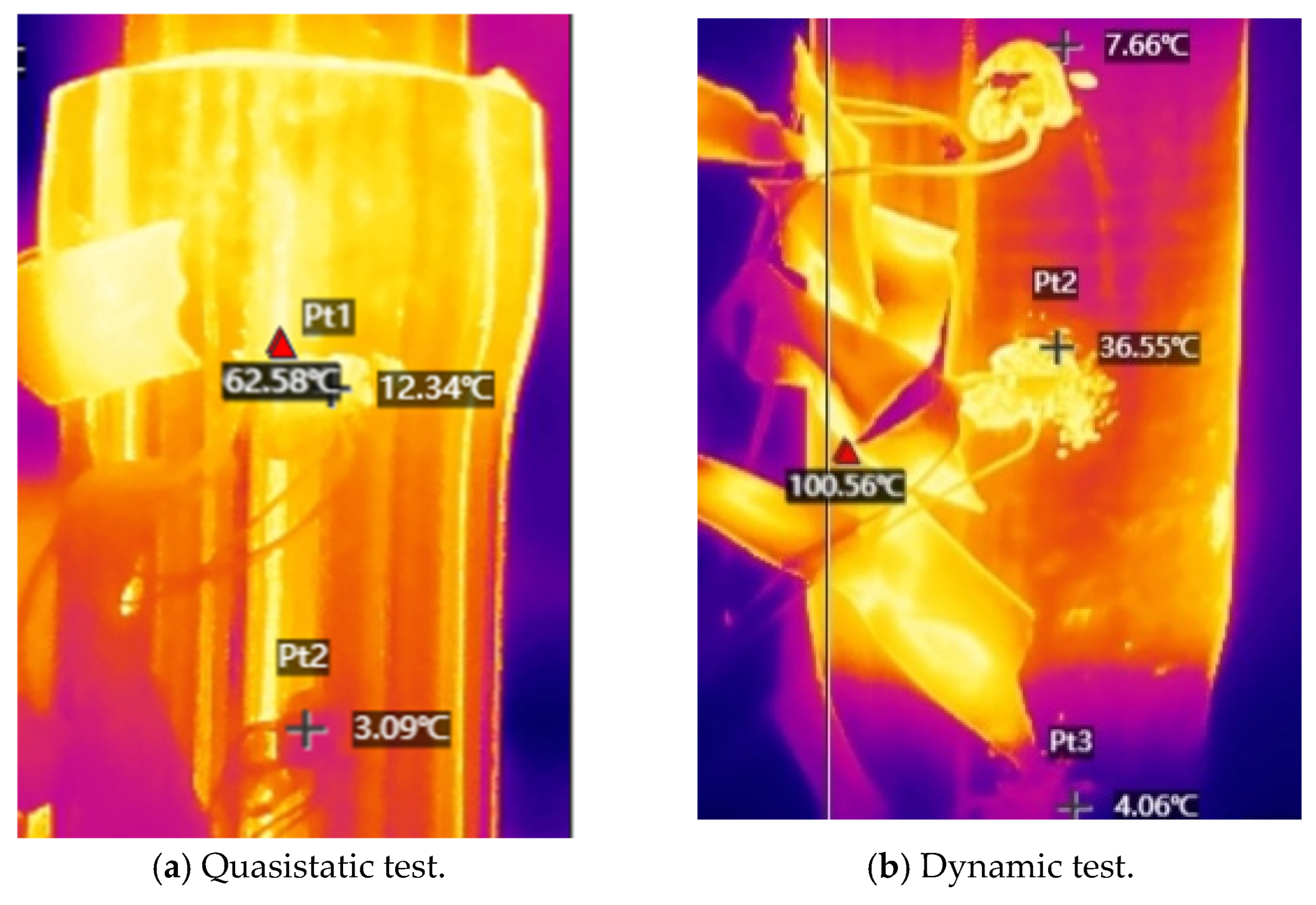
Recorded by MX85E19M shown in
Figure 9, the temperature of the expanded tubes can be up to over 60 °C in quasistatic tests and up to 100 °C in dynamic tests. Some existing standards (e.g., AISC 360-16 [
35] and EN 1993-12 [
36]) recommend neglecting the reduction in yield stress and tensile strength of steels when the temperature is below 200 °C. This paper does not take the effect of the heat generated by friction into consideration. Nevertheless, it should be noted that even when the globally measured temperature remains moderate, local adiabatic heating and frictional heating can cause significant localized temperature rises in regions of high-strain-rate deformation, which may in turn affect highly localized deformation and fracture initiation. All test results are summarized in
Table 4 and
Table 5. Since each configuration was tested once, the scatter of failure modes and steady-state forces cannot be statistically assessed.
By averaging the force results in the smooth fluctuation, the steady-state force is obtained and regarded as an important parameter used in the following comparison:
where
Fx is instant impact force, and
d1 and
d2 denote the displacement at the beginning and end of stable stage. The steady-state force of the expansion tubes that did not achieve stable expansion is represented by “/”.
3.1. Quasistatic Tests
In the process of the quasistatic test, the tube was crushed axially until the compressive force reached the steady state. All quasistatic test results are listed in
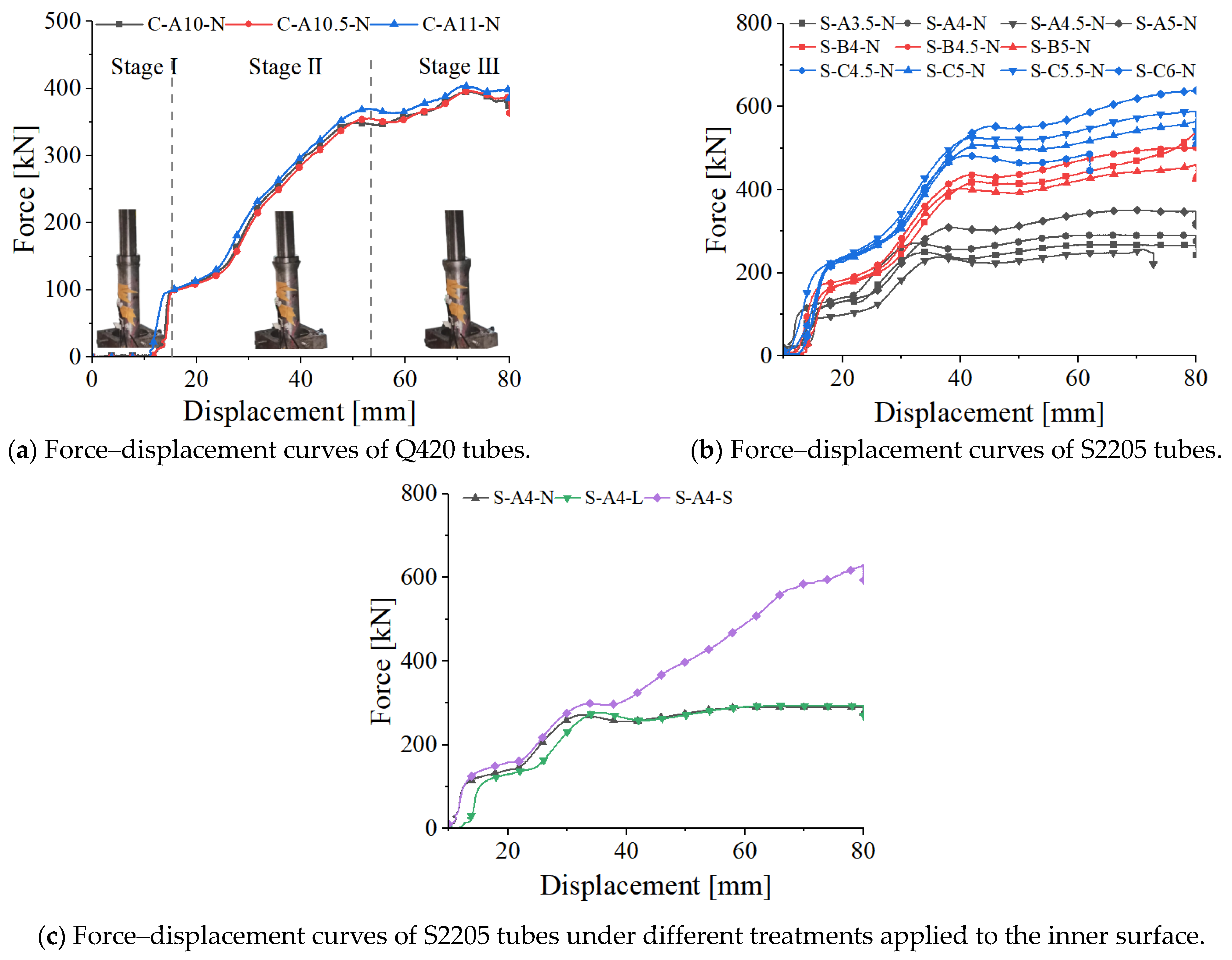
Table 4. From the force–displacement curves of Q420 tubes shown in
Figure 10a, the crushing process could be divided into three stages clearly: the force in the first stage increases rapidly and reaches a peak value. In the second stage, the force has a short-term platform and then grows slowly compared with the growth rate in the first stage. In the third stage, the force increases much more slowly until reaching the maximum value and fluctuates stably.
As shown in
Figure 10b, with the increase in tube thickness, the steady-state force increases significantly, and its influence is clearly greater than the effect of the expansion value on the steady-state force. Comparing the quasistatic compression test results of stainless steel expansion tubes, under the same expansion amount, a 50% increase in tube thickness and a 33.33% decrease in
r0/
t result in a 56.96% increase in steady-state force. On the other hand, under the same tube thickness, for different materials, the change in expansion value in the quasistatic compression tests of various tube thicknesses ranges from 10% to 42.86%, and the change in
rdie/
r0 ranges from 2.18% to 3.91%, while the maximum increase in steady-state force is only 28.13%. Among them, for the stainless steel tube with a 6 mm tube thickness and 4 mm expansion value, three different treatments were applied to the inner surface. The lubrication treatment did not show ideal results. However, under the condition with the roughest surface (i.e., the highest friction coefficient), the expansion tube failed to expand stably, meaning the expansion force did not reach the stable phase. It is speculated that friction plays an important role in the failure mode of the expansion tube. This factor will be further investigated in subsequent numerical simulations. In the quasistatic compression tests of stainless steel expansion tubes, no samples with a 10 mm expansion value successfully expanded.
3.2. Dynamic Tests
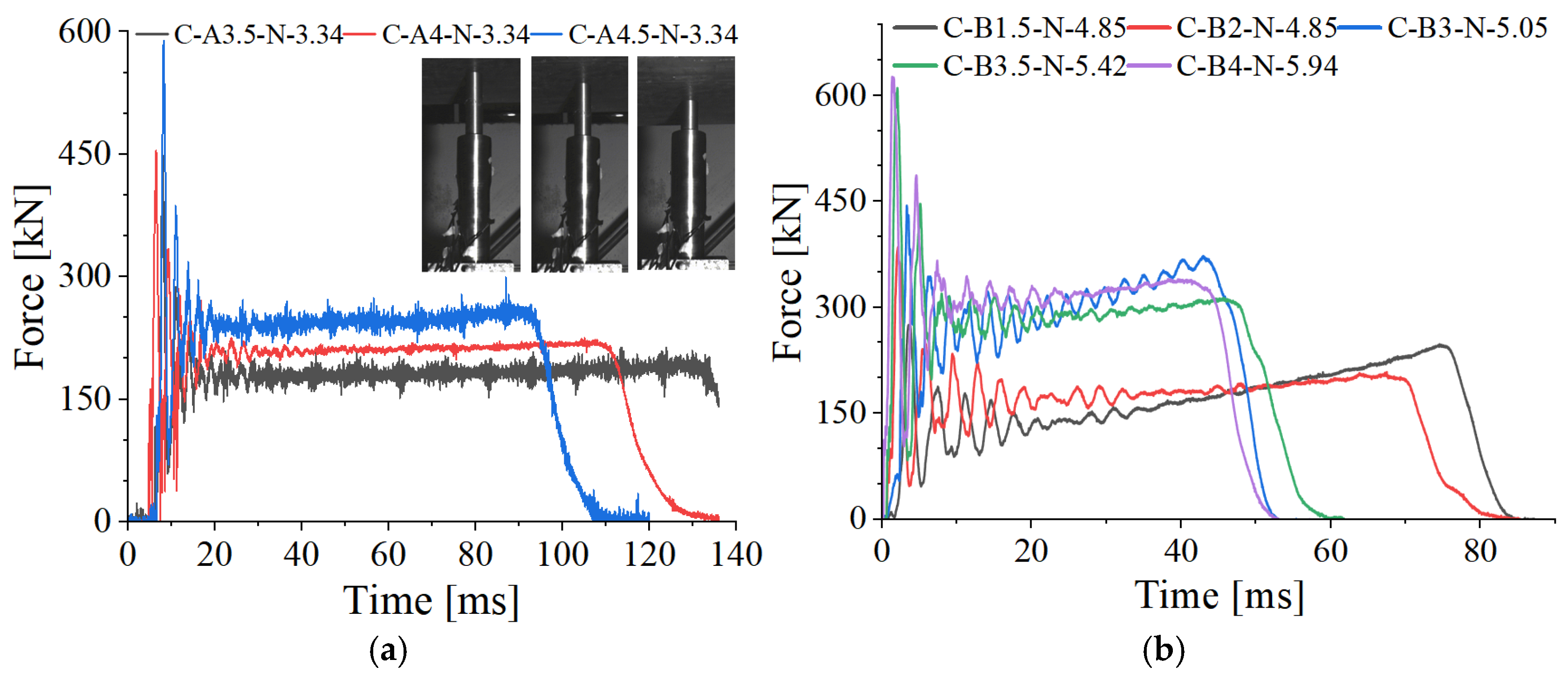
In the dynamic test, the impact progress can also be divided into three stages as shown in
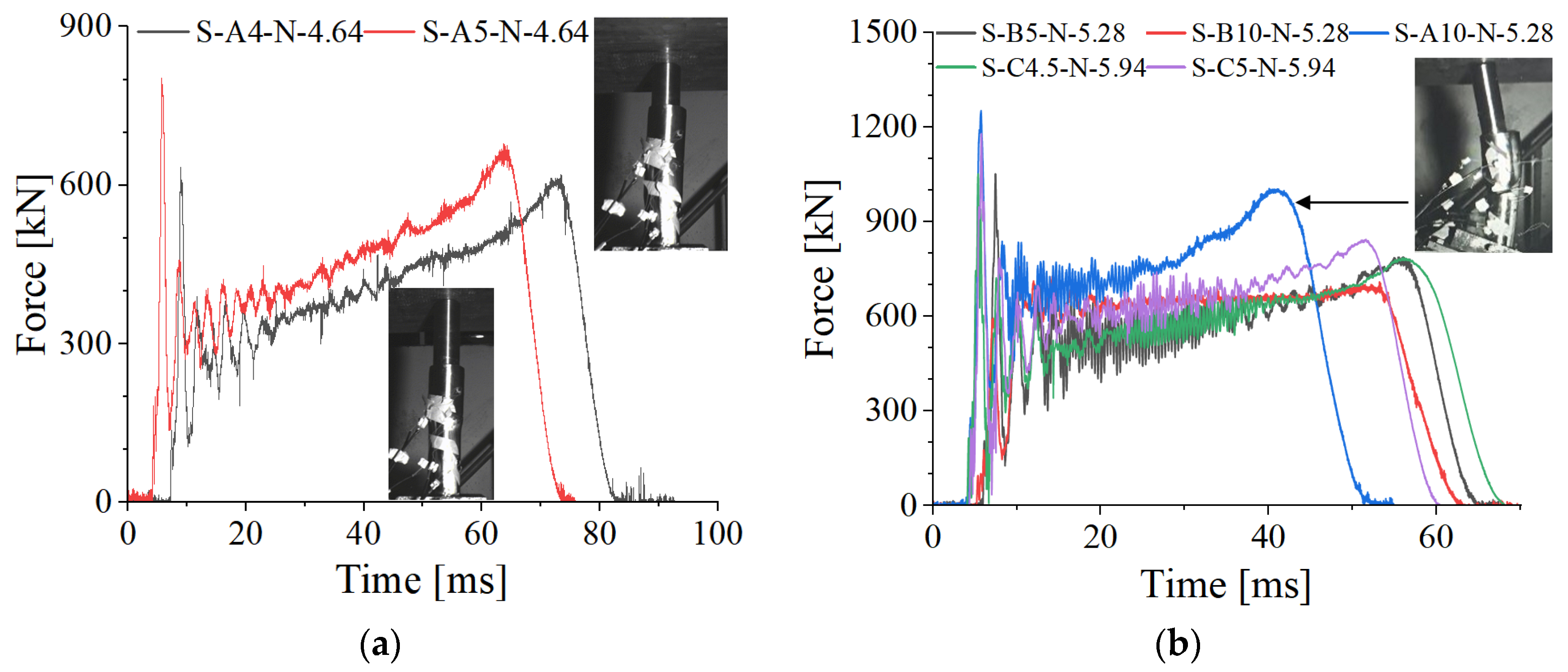
Figure 11a. In the first stage, the force shows drastic fluctuation, and the peak value decreases gradually until becoming stable. After this stage, the force and energy absorption tend to be stable, in which the steady-state force (the calculation method is the same as quasi tests) is regarded as an important parameter and used in the following comparison. Under the same experimental conditions, multiple expansion tubes in this stage exhibited overall instability. The success rate of stable expansion for Q420 expansion tubes was significantly higher than that of stainless steel expansion tubes, because the load-bearing capacity of Q420 expansion tubes is higher than that of stainless steel tubes. Stainless steel expansion tubes that failed to achieve stable expansion can be divided into two cases: one is where there is a short stable expansion phase, but overall instability occurs in the latter half of the expansion, and the expansion force–time history curve rises with a certain slope, such as in the case of S-A10-N-5.28 shown in
Figure 12b. The other is where overall instability occurs immediately after intense oscillations, and the expansion force–time history curve continues to rise during stage II until the expansion tube completely loses its load-bearing capacity. In stage III, the deformation stops, and the force reduces to zero in the end because of failure.
3.3. Model Verification
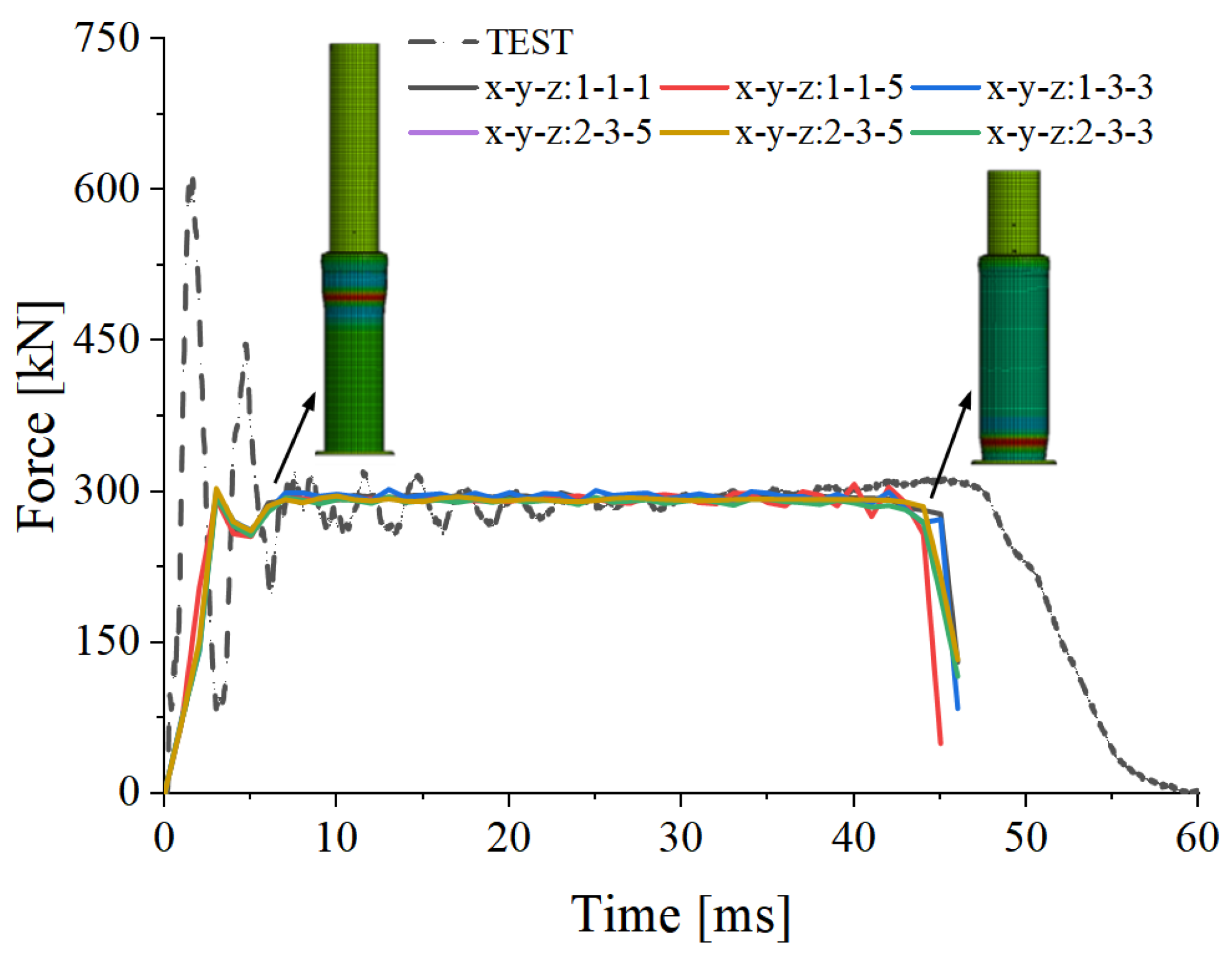
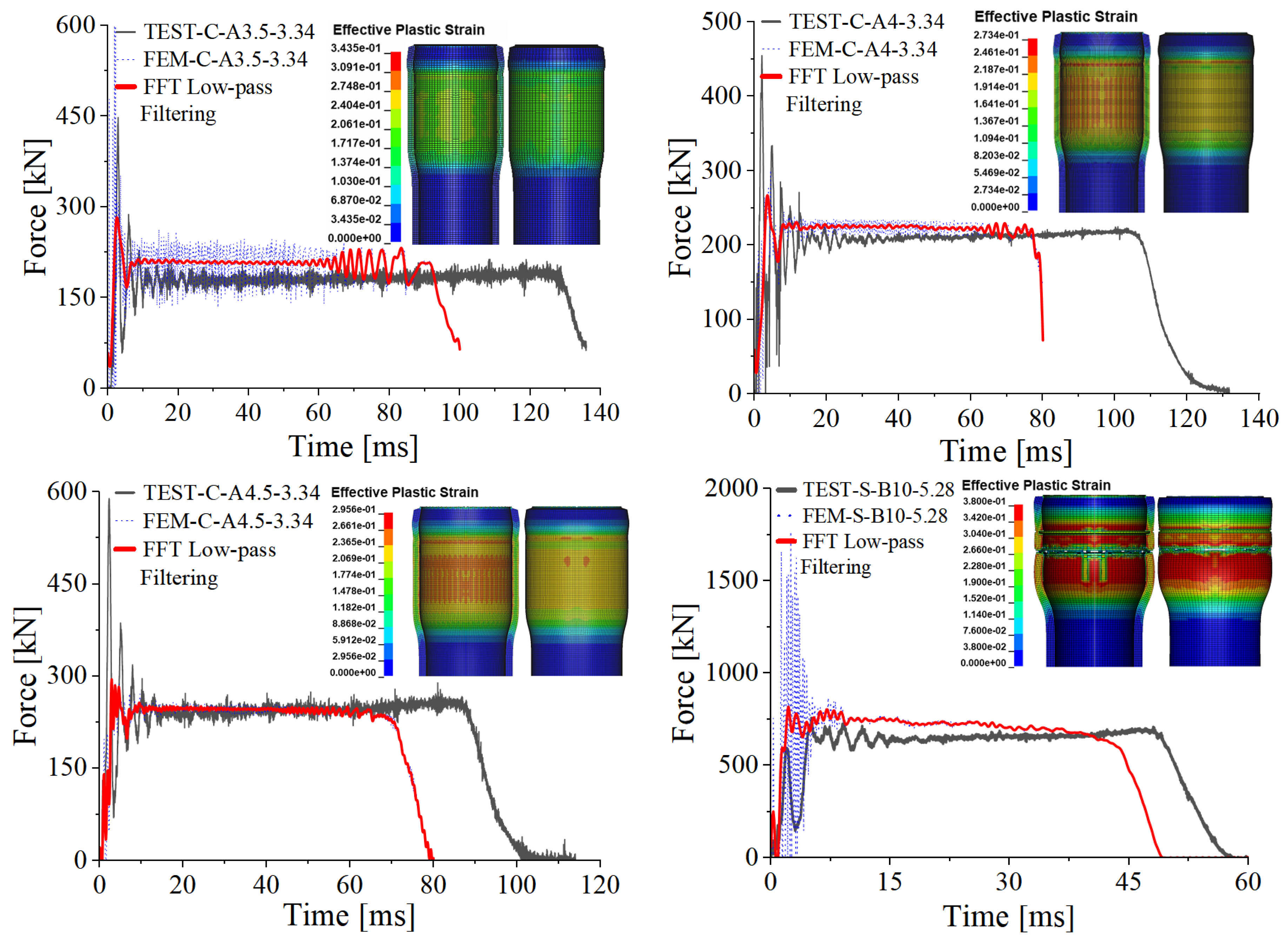
A comparison of the computed and observed force–time curves for four specimens with different dimensions is shown in
Figure 13. The values of those tested in dynamic tests and simulated steady-state forces are presented in
Table 6. The numerical results show reasonable agreement with the experimental measurements, with an average difference of 7.075% in steady-state force for the four validation cases. Given the complexities of dynamic impact, friction, plasticity and failure, these discrepancies are considered acceptable for engineering predictions. The high-frequency oscillations in the experimental force signal, caused by rig vibrations and contact chatter, are not captured by the FE model due to contact smoothing, idealized boundary conditions, and the relatively large time step used in the explicit simulation—a typical limitation of engineering-oriented impact simulations.
Given the very limited validation data, the applicability of the current modeling approach to stainless steel tubes under dynamic impact requires further verification and more accurate simulations need to be based on comprehensive material dynamic tests. Therefore, in the subsequent parametric analysis and failure mode discussion based on numerical simulations, we focus on the Q420 steel tubes. A constant failure strain of 0.35 is adopted as the element deletion criterion in this study, which was calibrated from uniaxial tensile tests and expansion experiments and is considered reasonable within the material, geometric, and velocity ranges investigated. It should be noted, however, that a constant failure strain model does not account for the effects of stress triaxiality and strain rate on fracture. Therefore, when extending the present approach to other conditions or more accurate and detailed numerical simulations are required, the use of more advanced ductile fracture models is recommended.
4. Discussion
By using the FE model given above, two more failure modes of the expansion tubes are found in the simulation, which are summarized with the failure modes observed in the experimental tests in this section. Combining the experimental and simulated results, the effects of the tube geometry parameters are discussed. Finally, on the basis of parametric study, by using the dimensional analysis method based on the similarity criteria, an empirical formula of steady-state force is proposed in the next section.
4.1. Parametric Study
4.1.1. Effect of Geometric Parameters
The geometric parameters that affect the expansion force include the tube thickness
t, inner radius of the expansion tube
r0, the outer radius of the conical die
rdie, and the expansion angle
α. To investigate the influence of these factors on the steady-state force, simulations were conducted to extend the ranges of the dimensionless parameters
r0/
t (from 5 to 8.33),
rdie/
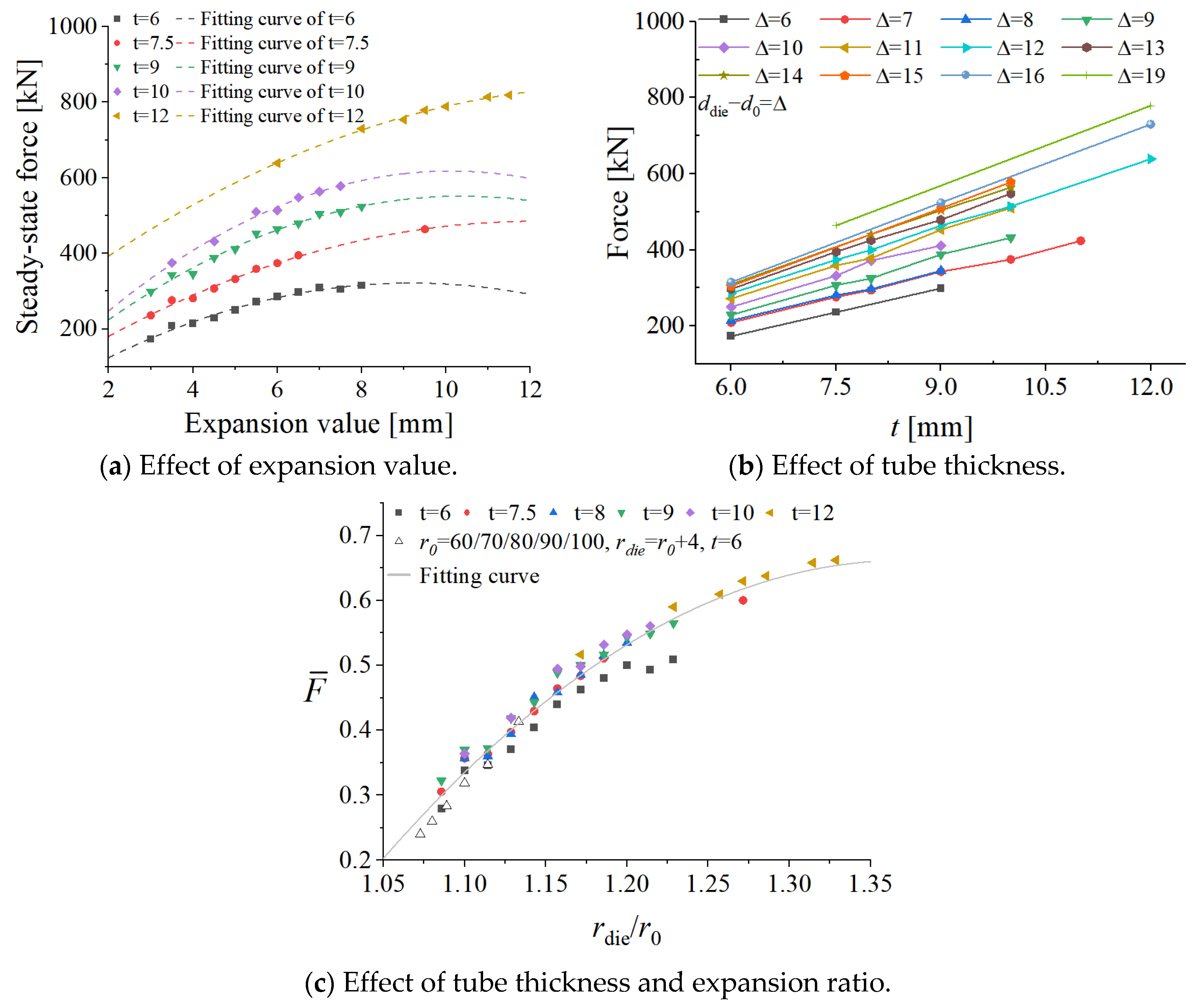
r0 (from 1.08 to 1.329), and expansion angle (from 10° to 40°) based on the experiments. Among the influencing factors, the increase in tube thickness has a particularly significant effect on the growth of the steady-state force (as shown in
Figure 14a,b). On the condition of expanding without cracks and overall instability, the stable expansion force increases linearly with the increase in tube thickness. As the expansion value increases, the growth rate of the steady-state force decreases, and it is more likely to cause splitting of the expansion tube. Under the same expansion angle, inner diameter of the expansion tube, and friction coefficient, when the tube thickness of the expansion tube doubles at different expansion values, the steady-state force increases by an average of 2.27 times. When the expansion value doubles at different tube thicknesses, the steady-state force increases by an average of 1.57 times. Based on the above analysis, to explore the relationship between steady-state force, tube thickness, and expansion value, the normalized compressive force
is introduced, and its relationship with
rdie/
r0 is shown in
Figure 14c. The conditions with different inner diameters (ranging from 60 to 100 mm) are also included. It can be observed that the magnitude of the steady-state force is closely related to the expansion ratio and the tube thickness.
will also be applied in the fitting of subsequent empirical formulas (
Section 5).
The influence of the expansion angle can be seen in
Figure 15. Within the simulation conditions of different angles, the maximum value of steady-state force (at an expansion angle of 25°) increases by only 1.77% compared to the experimental condition (at an expansion angle of 22°), and the minimum value (at an expansion angle of 10°) decreases by only 18.45% compared to the experimental condition. Therefore, within the range of geometric parameters discussed in this paper, the effect of the angle on the steady-state force value and failure mode is relatively smaller compared to the expansion value and tube thickness.
4.1.2. Effect of Coefficient of Friction
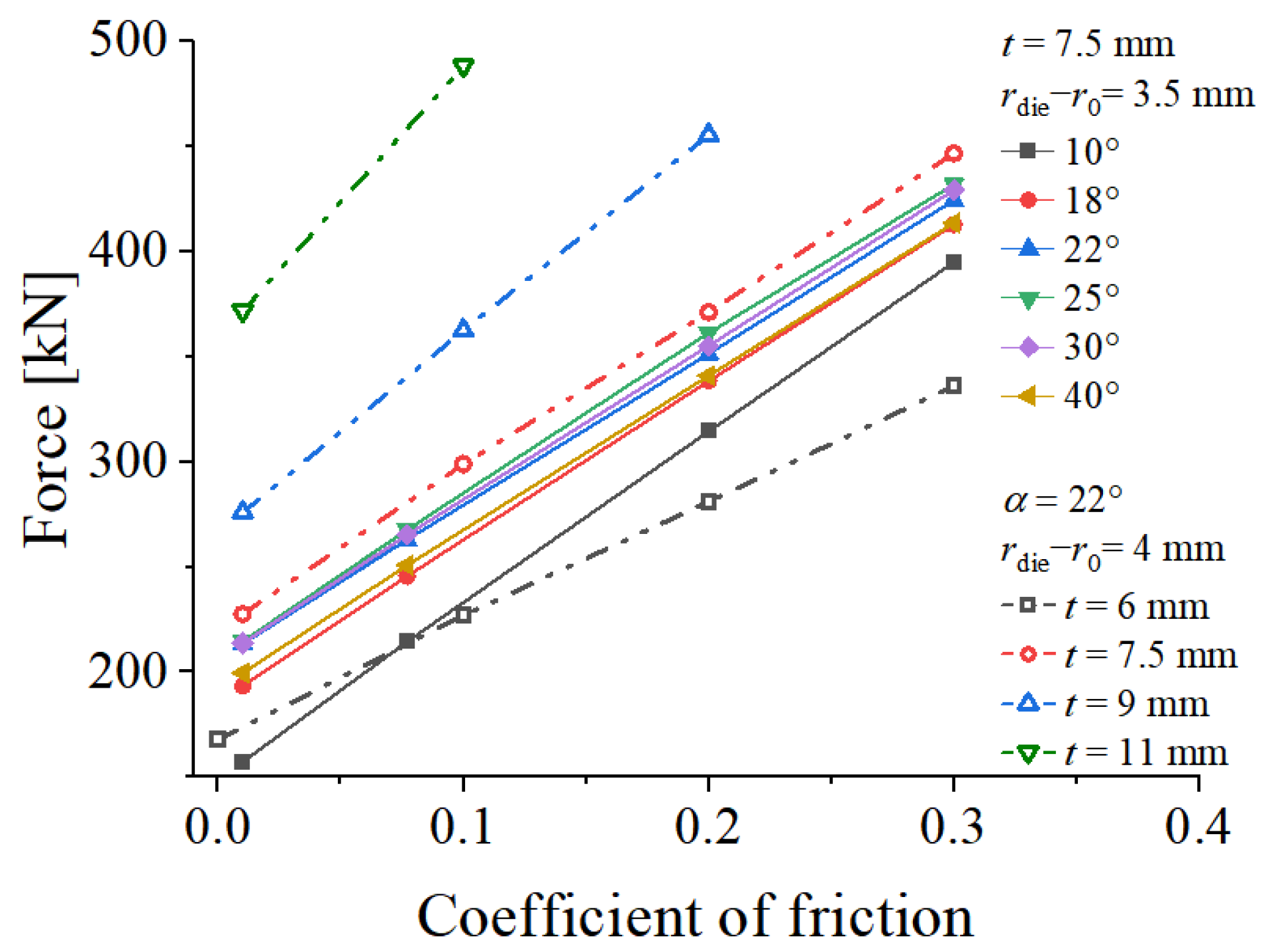
To investigate the influence of the friction coefficient on the steady-state force of the tube, simulation conditions with different geometric parameters were selected for multiple simulations with varying friction coefficients. The results are shown in
Figure 15. As the coefficient of friction increases, the steady-state force increases linearly. On the condition of expanding without cracks and overall instability, when the expansion angle or expansion value is different within the range of 18° to 40°, the increase in the friction coefficient has no significant impact on the growth rate of the steady-state force. When the expansion angle and expansion value are the same but the tube thickness varies, it can be observed that as the friction coefficient increases, the steady-state force increases, and the growth rate of this increase also grows with the tube thickness. With an 83.3% increase in tube thickness, the growth rate of the steady-state force increases by 2.31 times. Therefore, it is evident that the tube thickness has a particularly significant impact on the steady-state force.
4.1.3. Impact Velocity
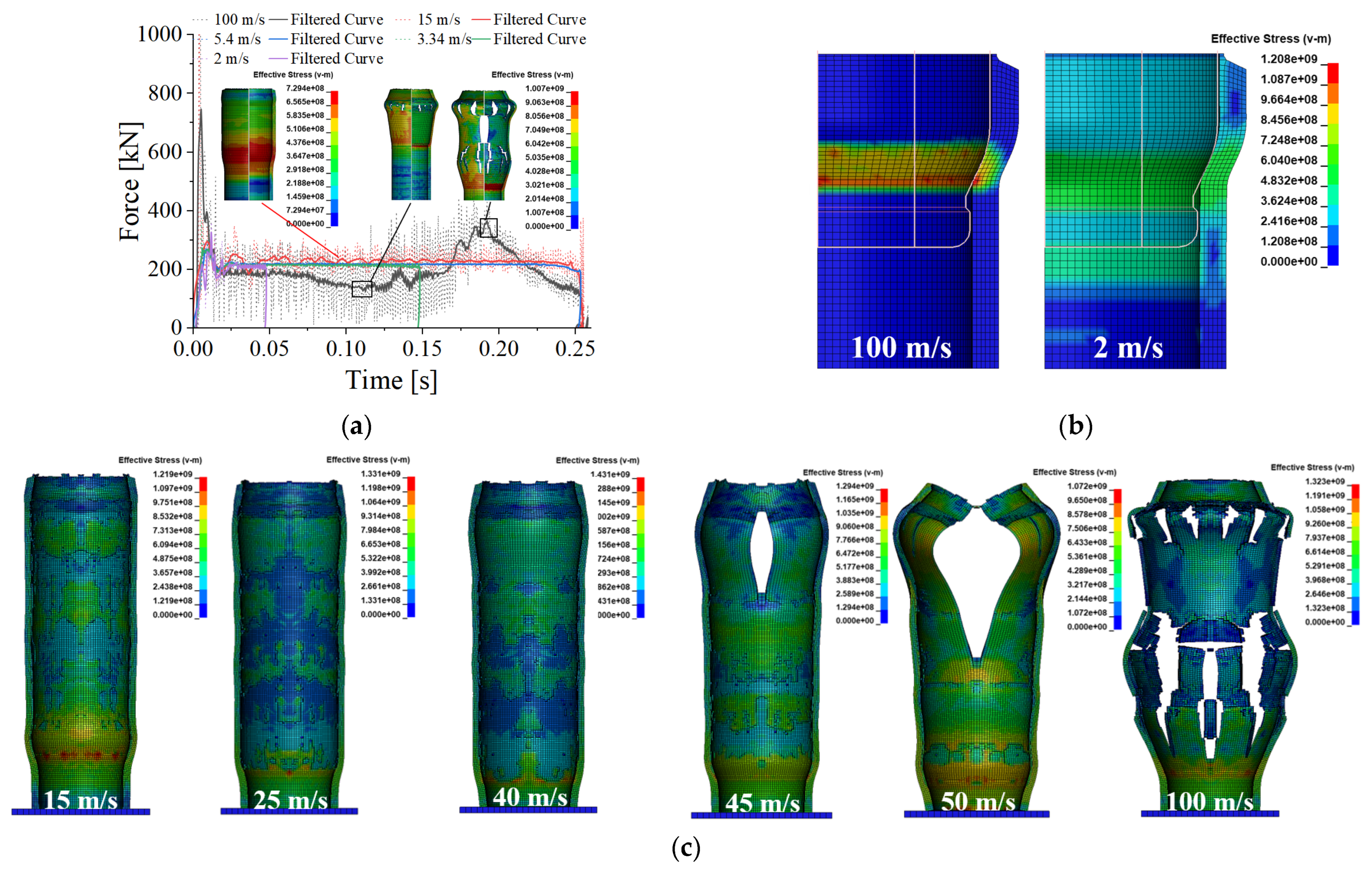
To investigate the impact of strain rate on the dynamic response and failure mode of expansion tube, the simulation analysis of the tube expansion process under different impact velocities was conducted for the condition C-A4-N. As shown in
Figure 16a, it can be observed that when the velocity does not exceed 5.4 m/s, the steady-state force of the tube remains nearly the same. When the velocity increases to 15 m/s, due to the strain rate effect, the steady-state force increases by 4.02% (from 219.15 kN to 227.966 kN), and no damage occurs to the tube. However, when the impact velocity increases to 100 m/s, the tube experiences severe longitudinal cracking, and the expansion force decreases and shows significant fluctuations under this failure mode.
To supplement the impact conditions between 15 m/s and 100 m/s, the failure of the expansion tube under different velocities is shown in
Figure 16c. It can be observed that under the impact velocities less than or equal to 40 m/s, the tube does not experience longitudinal cracking. However, within the impact velocity range of 25 m/s to 40 m/s, noticeable circumferential buckling occurs during the expansion process. When the impact velocity reaches 45 m/s, the tube undergoes longitudinal cracking at the beginning of the expansion, and the damage increases as the die continues pressing down.
The simulation retains the pre-pressurization treatment of the expansion tube. As shown in
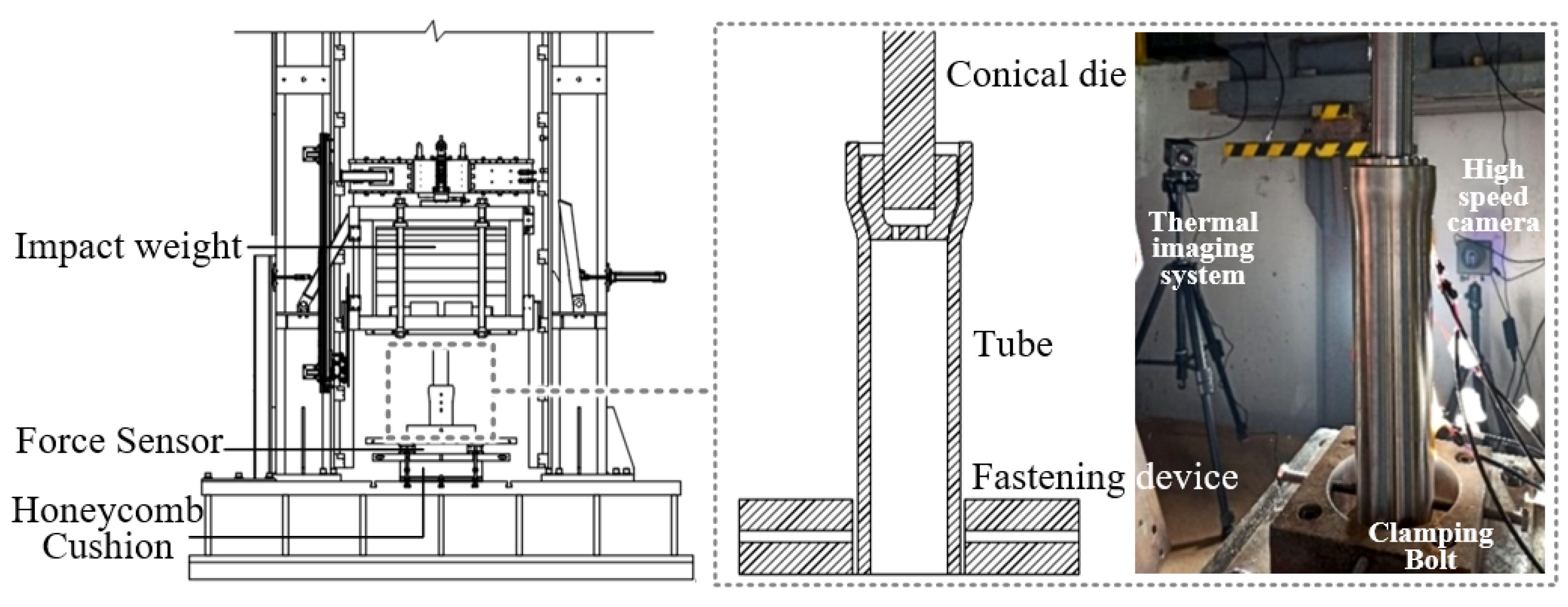
Figure 4, a static pressure device is used to press the conical section of the conical die into the tube end before the impact test, ensuring axial expansion during the impact process. In the simulation, there is no interaction between the tube and die in the pre-pressurized section before the expansion begins. It can be observed that the longitudinal cracking does not initiate from the upper edge of the tube, but rather occurs first at the junction between the pre-pressurized section and the unexpanded section of the tube. From the simulation of the expansion process, it can be found that this is the point where the tube first experiences the impact. The stress comparison of the tube’s pre-pressurized section’s lower edge under low-speed (2 m/s) and high-speed (100 m/s) impacts, as shown in
Figure 16b, reveals that under the high-speed impact of 100 m/s, the tube only experiences relatively high stress and large deformation at the bending point where the impact occurs, followed by element removal, resulting in longitudinal cracking. As the impact velocity and energy increase, the number of longitudinal cracks generated at this point also increases. It should be noted that these high-speed results are obtained from numerical simulations and have not been experimentally validated. They are presented as numerical predictions to illustrate trends and potential failure characteristics under extreme conditions. When extending the present numerical approach to higher strain rates, a more comprehensive thermal–mechanical analysis is recommended to assess the potential influence of local thermal effects.
4.2. Failure Modes and Mechanisms
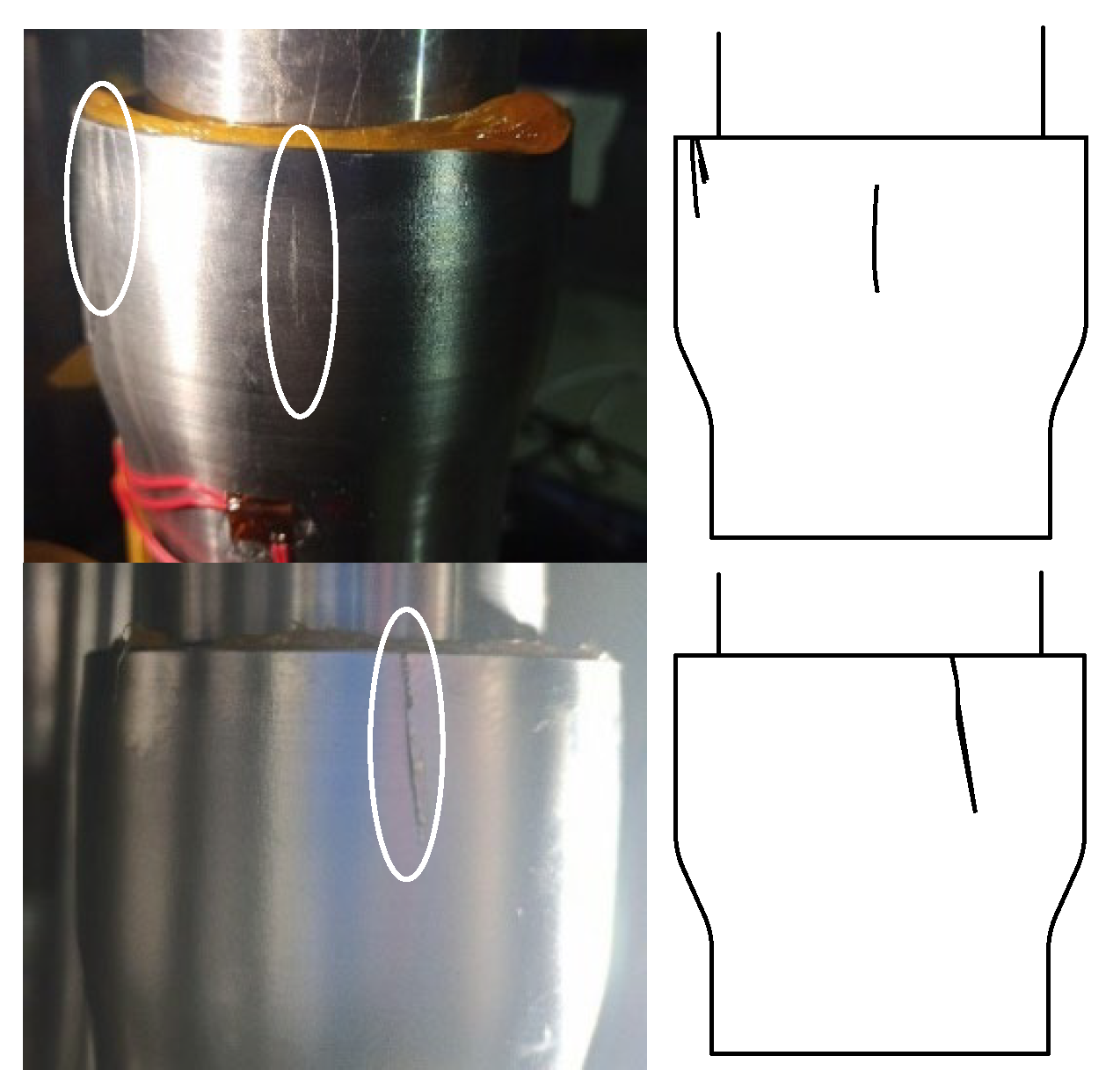
Based on the experiments and simulations, the failure of the expansion tube can be summarized into three types: local buckling, overall instability, and splitting. In the quasistatic compression test, some of the tubes were not successfully expanded. During the process of the die pressing in, because the maximum equivalent plastic strain is greater than the fracture strain, longitudinal cracks first appear at the upper edge of the tube expansion, or both the upper edge and the expanded section show longitudinal cracks (as shown in
Figure 17), causing a sudden drop in the tube’s bearing capacity, leading to the cessation of the test. In the impact test, under the same geometric parameters and impact velocity, overall instability is significantly more likely to occur in the stainless steel tubes, which have relatively lower strength and ductility, with the drop hammer impact exceeding its bearing capacity range. Local buckling of the tube expansion is not easily observed directly in the test, so finite element simulation is used to restore and analyze its failure process.
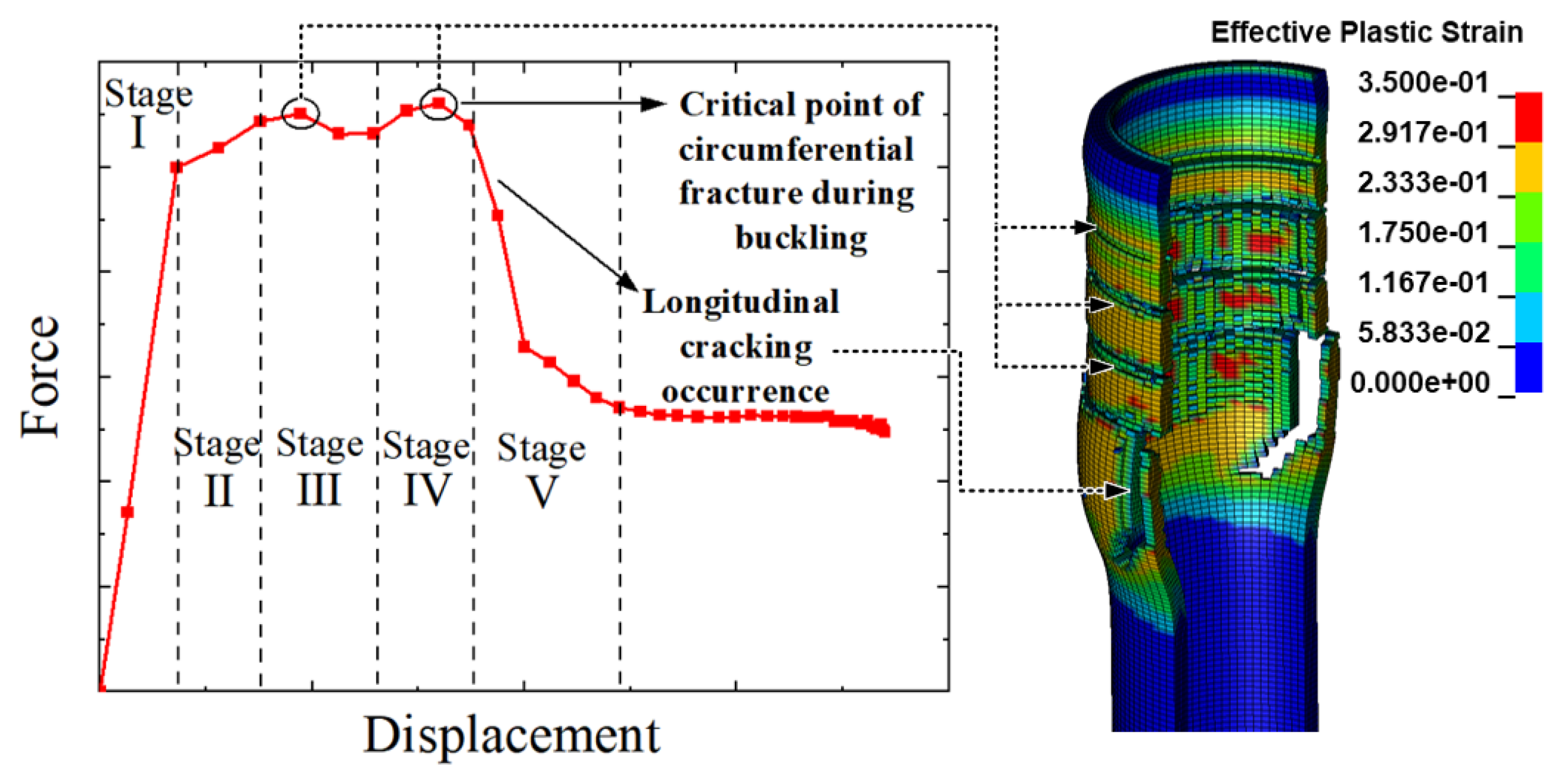
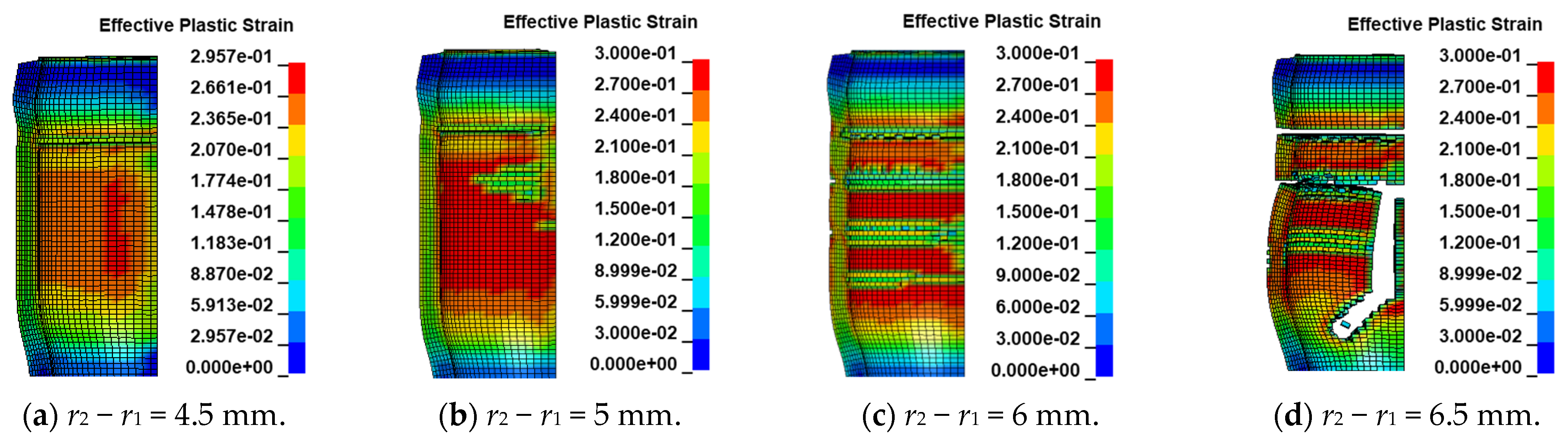
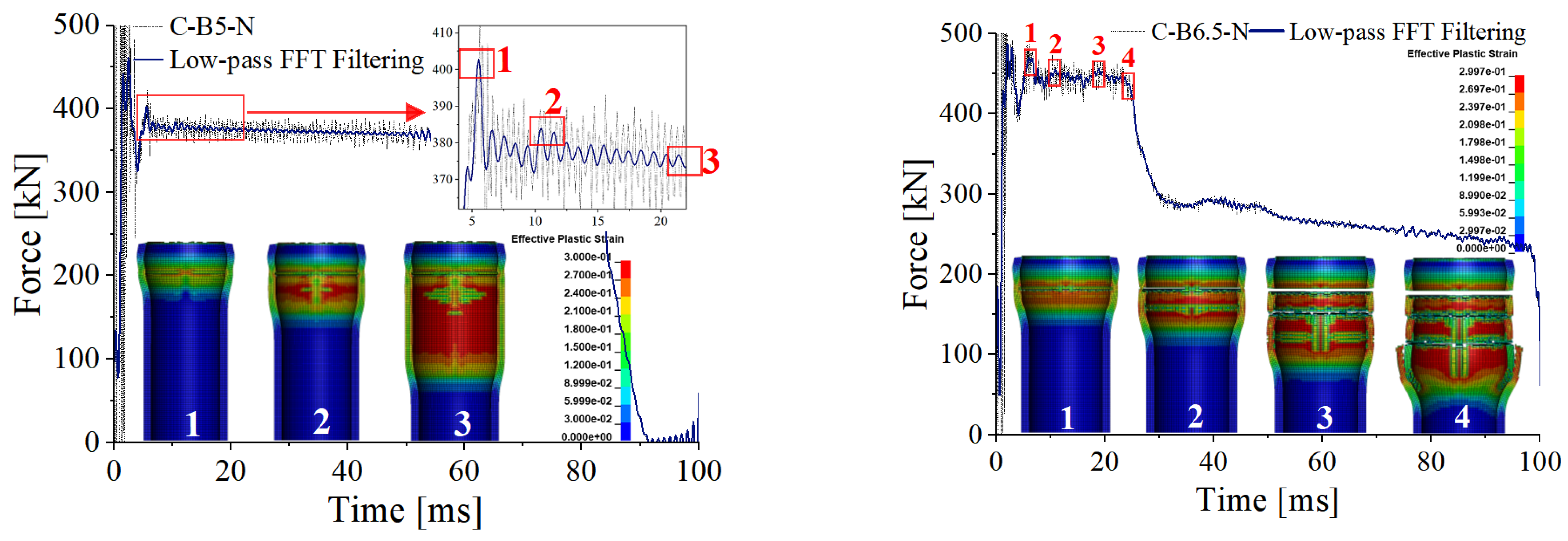
In simulation, local buckling and splitting may occur simultaneously during the tube expansion process. Four tubes with different expansion values are chosen to observe the detailed deformation process. As shown in
Figure 18, C-B4.5-N and C-B5-N expand normally and exhibit local buckling only once without fracture during deformation. C-B6-N expands normally without fracture and exhibits progressive buckling, while C-B6.5-N exhibits similar progressive buckling, but splitting damage occurs. The force–displacement curves of the expansion tubes numbered C-B5-N and C-B6.5-N are shown in
Figure 19, and five typical deformation stages of the expansion process (shown in
Figure 20) can be summarized: elastic deformation, bending deformation, progressive buckling, necking, and splitting.
In stage I, the force increases rapidly with displacement until reaching the trigger force, which indicates that tube expansion starts. In stage II, the tube expands, but the force grows much more slowly or even remains essentially constant. There is line contact along the inner edge of the free tube end. In stage III, the force increases to the critical value of fracture in the circumferential direction, and the first buckling appears, during which the inner surface begins to slide on the conical surface of the die, so that the structural response stiffens. Then, buckling causes a drop in the force, which prevents the conical tube section from necking. This process corresponds to a complete wave in the force–displacement curve. The number of buckles can be observed to be constant with the number of fluctuations on the curves in stage III. In stage IV, necking in the circumferential direction occurs, and the force decreases sharply and gradually tends to be stable. Then, cracks emanate from the necking area and then rupture occurs, and the expansion tube fails and loses load capacity because of splitting in the last stage.
At the same time, it is also observed in simulations of the effect of tube thickness that under the same impact velocity, if the tube wall is thin enough, only the fixed end of the tube progressively folds. All failure phenomena obtained from the experimental and numerical approaches can be summarized as four modes listed in
Table 7. During quasistatic pressing or impact tests, the failure modes of expansion tubes are classified based on the force history curves and the post-test macroscopic morphology. Progressive buckling is identified when the force exhibits a distinct plateau and the tube shows no obvious cracks or bending and remains upright. Splitting is characterized by the appearance of a longitudinal crack accompanied by a significant force drop (the steady-state force may not be reached before the drop), with the tube still upright after the test. Folding is recognized when folding initiates at the tube bottom and the force–time history shows fluctuations corresponding to wrinkle formation. Global instability is defined as large in-plane bending of the tube, leading to non-uniform circumferential loading, possibly accompanied by local buckling and splitting; the force shows a clear rising trend but the expansion stroke is shortened, and the tube eventually bends globally until failure. The above criteria for identifying the failure modes are also summarized in
Table 7.
5. Empirical Formula
From previous research, the energy-absorbing capacity is related to multiple parameters, such as tube thickness, coefficient of friction, die angle, expansion value and tube radius, which makes the mechanisms complex to explain. To obtain an engineering design method combining all key parameters and using the data obtained from experimental and numerical results, dimensional analysis based on similarity criteria is introduced to obtain the empirical formula for predicting the steady-state force during tube expansion. Due to the severe overall instability of the stainless steel tubes in the test, the empirical formula fitting is only applicable to the Q420 tube expansion under quasistatic and low-speed impact (≤10 m/s).
In terms of research on expansion tube characteristics, yield strength of tube material, tube thickness, expansion value, tube radius, coefficient of friction and die angle are determined as key parameters of the expansion force. A total of 56 data points (combined from numerical simulations and experiments) were used for regression. The ranges of the two dimensionless parameters
r0/
t and (
rdie −
r0)/
t are 3.42–6.33 and 0.64–2.67, respectively. Six independent data points were excluded from the fitting process and reserved for validation. According to the Buckingham theorem, the function of
F and all key parameters can be established:
Choose
σy and
t as fundamental dimensions and conduct dimensional normalization; the dimensionless function is
The dimensionless parameters are
Computed from the date of simulation, reference values are
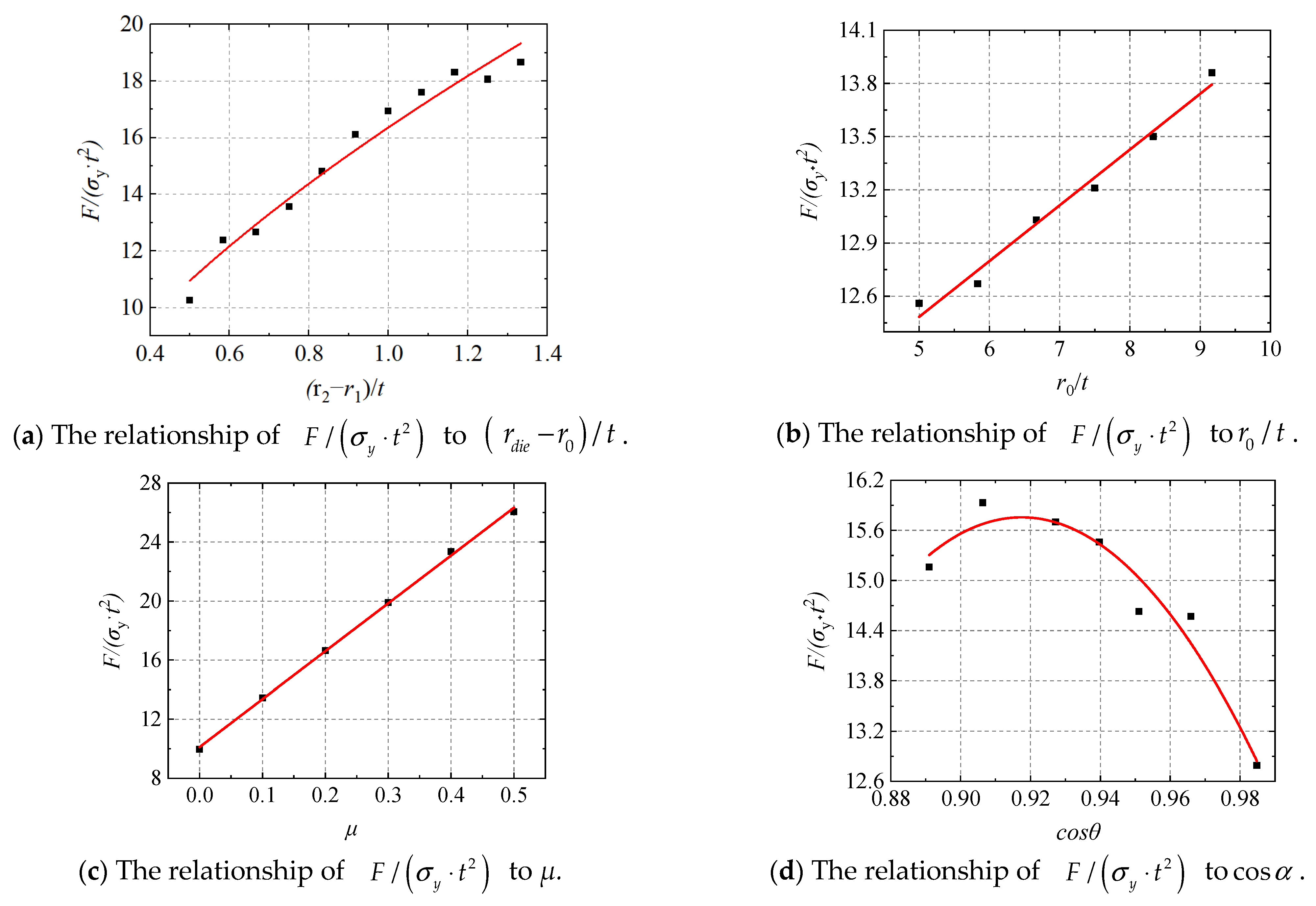
By fitting each independent parameter with the dependent parameter, as shown in
Figure 21, the fitting formulas are
According to Buckingham’s Π theorem, dimensional analysis can only identify the relevant dimensionless groups that govern a given phenomenon; it does not prescribe any specific functional form relating them. Consequently, the exact relationship between these groups must be determined. In many engineering applications, a multiplicative power-law form has been found to provide a simple yet effective approximation over a limited range of parameters. Following this empirical practice, we postulate the following power-law relationships for the dimensionless groups identified above:
where
.
Then, the empirical formula of steady-state force in steady-state could be obtained:
Comparing the steady-state force obtained from dynamic tests and theoretical analysis, as shown in
Table 8, the steady-state force of the empirical formula is found to have good agreement with the tested results of the Q420 tubes, and the error is less than 10%.
6. Conclusions
To explore the energy absorption characteristics of tube expansion, dynamic and static experimental research and simulation analysis were conducted with respect to different geometric parameters, materials, friction coefficients, and impact velocities. The following conclusions were drawn:
- (1)
Through experimental research, it was found that the load-bearing capacity and overall stability of the S2205 stainless steel tubes are lower than those of the Q420 tube expansion. In impact tests under the same experimental conditions, the S2205 tube, which can stably expand in quasistatic compression tests, has a much higher overall instability rate under low-speed impacts compared to the Q420 tubes. Therefore, without anti-instability measures, S2205 is not recommended as a material for impact-resistant expansion energy absorbers. Since no repeated tests were performed, future work should include repetitions to quantify the variability in failure modes and steady-state forces.
- (2)
Parameter analysis using finite element analysis revealed that the steady-state force is less affected by the expansion angle and the inner diameter of the tube, but increases linearly with the tube thickness and friction coefficient. Furthermore, as the friction coefficient increases, the growth rate of the steady-state force becomes larger with increasing tube thickness. As the expansion value increases, the growth rate of the stable expansion force slows down, and local buckling and splitting may occur, leading to tube failure.
- (3)
When the impact velocity is less than 15 m/s, the steady-state force of the tube is not sensitive to velocity changes and shows no damage. However, when the impact velocity is greater than or equal to 45 m/s, the impact energy exceeds the tube’s load-bearing capacity, causing severe longitudinal splitting at the initial stage of impact. The number of cracks increases with the velocity. Therefore, in practical applications, for high-speed impact scenarios, sufficient testing or numerical simulation verification of the tube energy absorber is required, and attention should be paid to splitting phenomena at the impact point.
- (4)
The empirical formula for calculating the steady-state force of Q420 steel tubes under quasistatic and low-speed impact expansion, derived through similarity criteria and dimensional analysis, agrees well with the experimental results and can provide a reference for the design of expansion tube energy absorption devices.
Due to limitations in experimental conditions and difficulty, if future experimental studies on expansion tubes under high-speed impact become available for further calibration and optimization of the numerical model, the failure analysis would become more reliable and accurate. The steady-state force data obtained from such tests and simulations could be used to further extend the empirical formula derived from dimensional analysis in this paper. For S2205 tubes, which offer excellent corrosion resistance but exhibit lower structural stability under impact expansion, we suggest increasing the wall thickness, using a die with a smaller semi-angle and longer conical taper, and adopting a bi-layer tube (e.g., S2205 outer layer with a Q420 inner core).