Research on Cooling and Hazardous Gas Dilution Performance of Underground Mining Culvert Ventilation System


Abstract
1. Introduction
2. Model Description and Validation
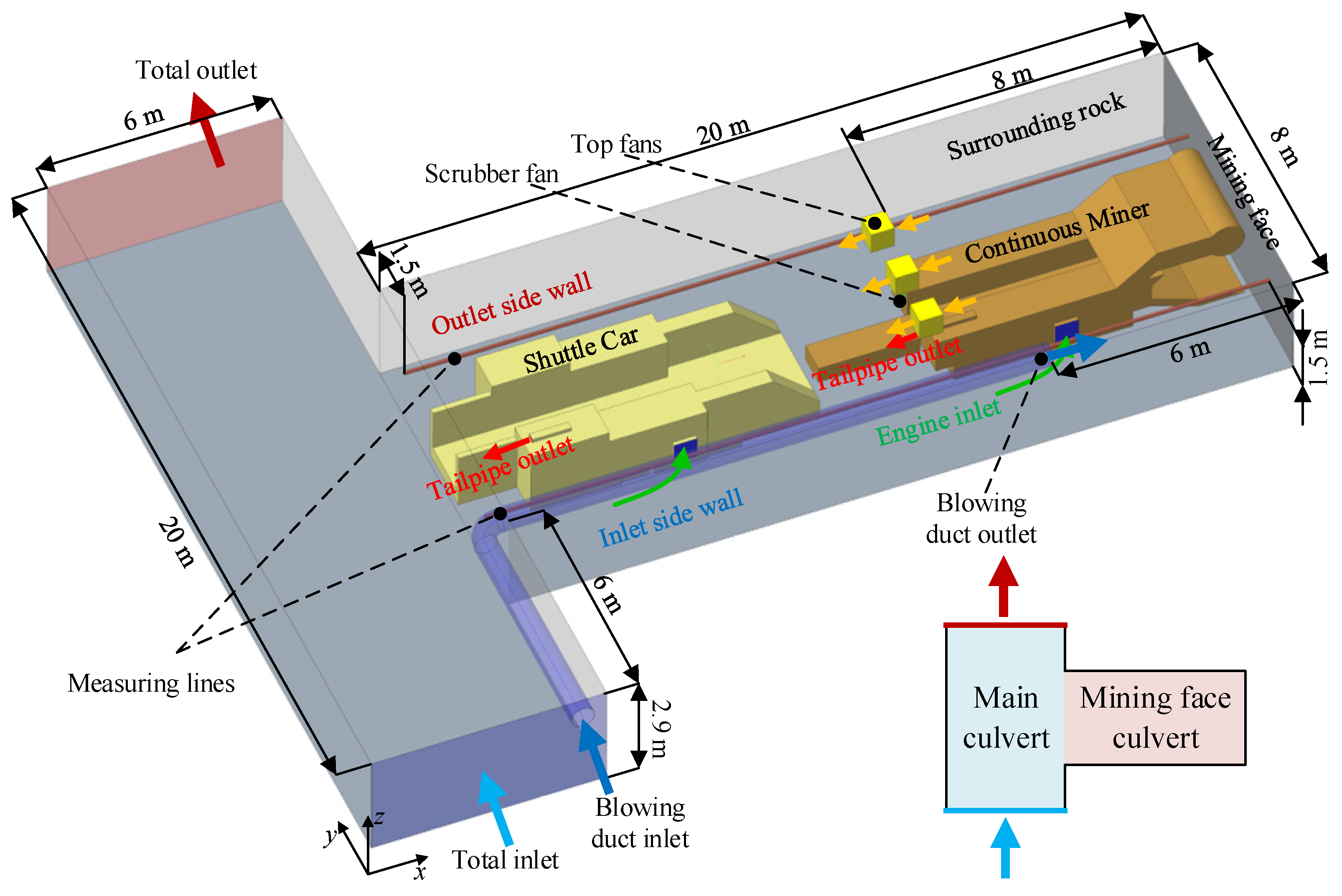
2.1. Description of Underground Mining Areas
2.2. Model Formulations and Boundary Conditions
2.2.1. Governing Equation
2.2.2. Turbulence Model
2.2.3. Mixture Species Properties Formulations
2.2.4. Diesel Engine Combustion
2.2.5. Boundary Conditions
2.3. Performance Indicators
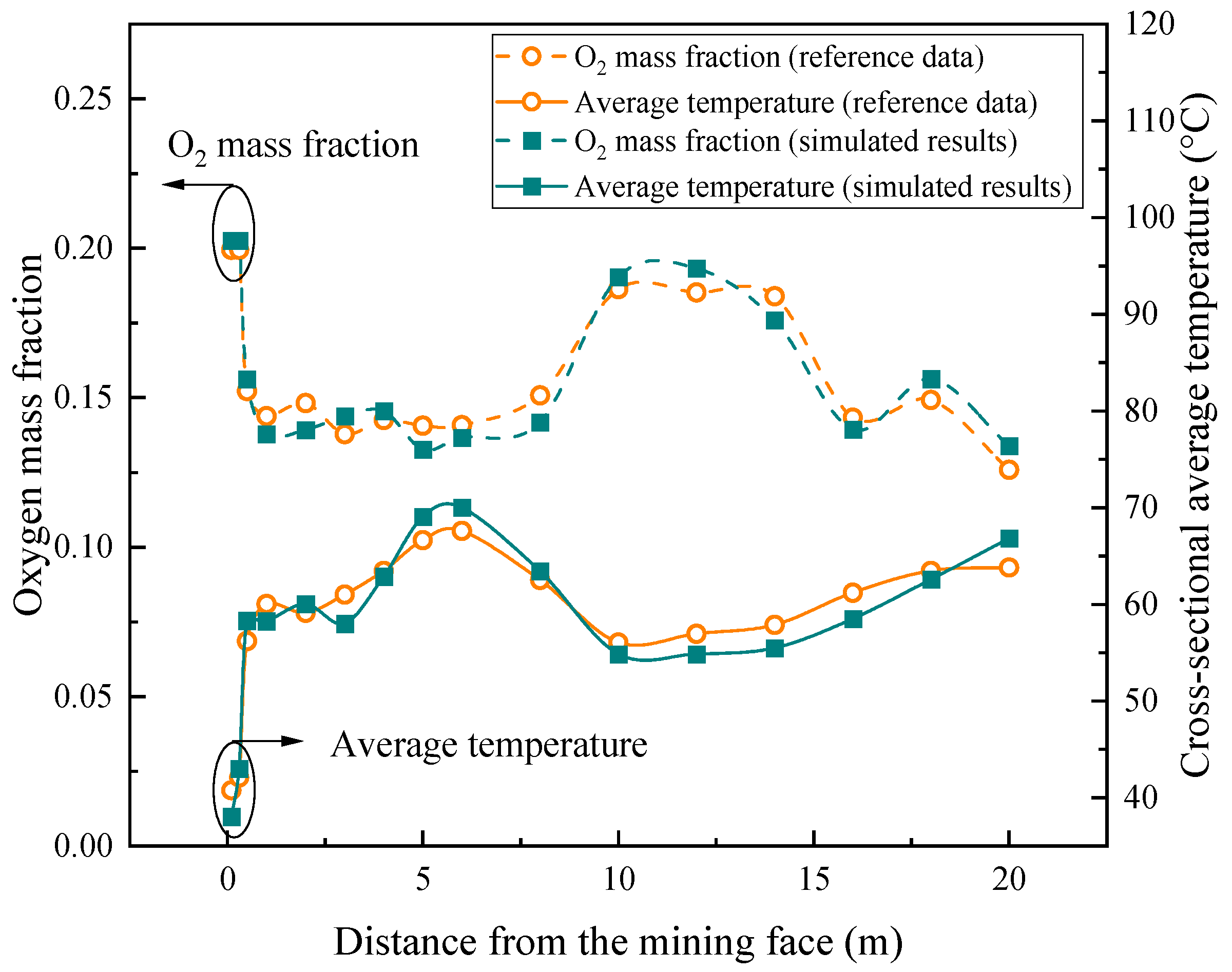
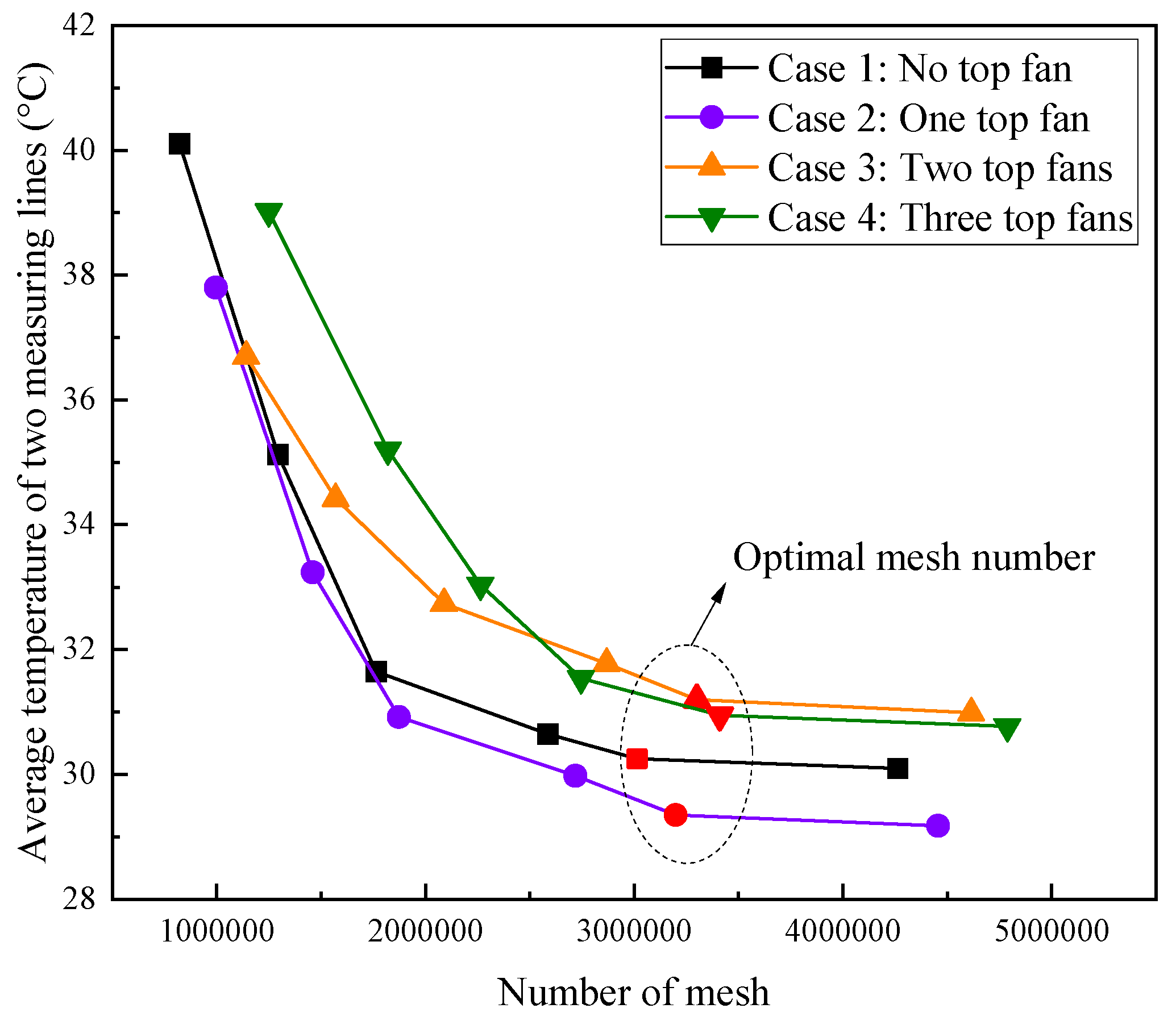
2.4. Model Validation
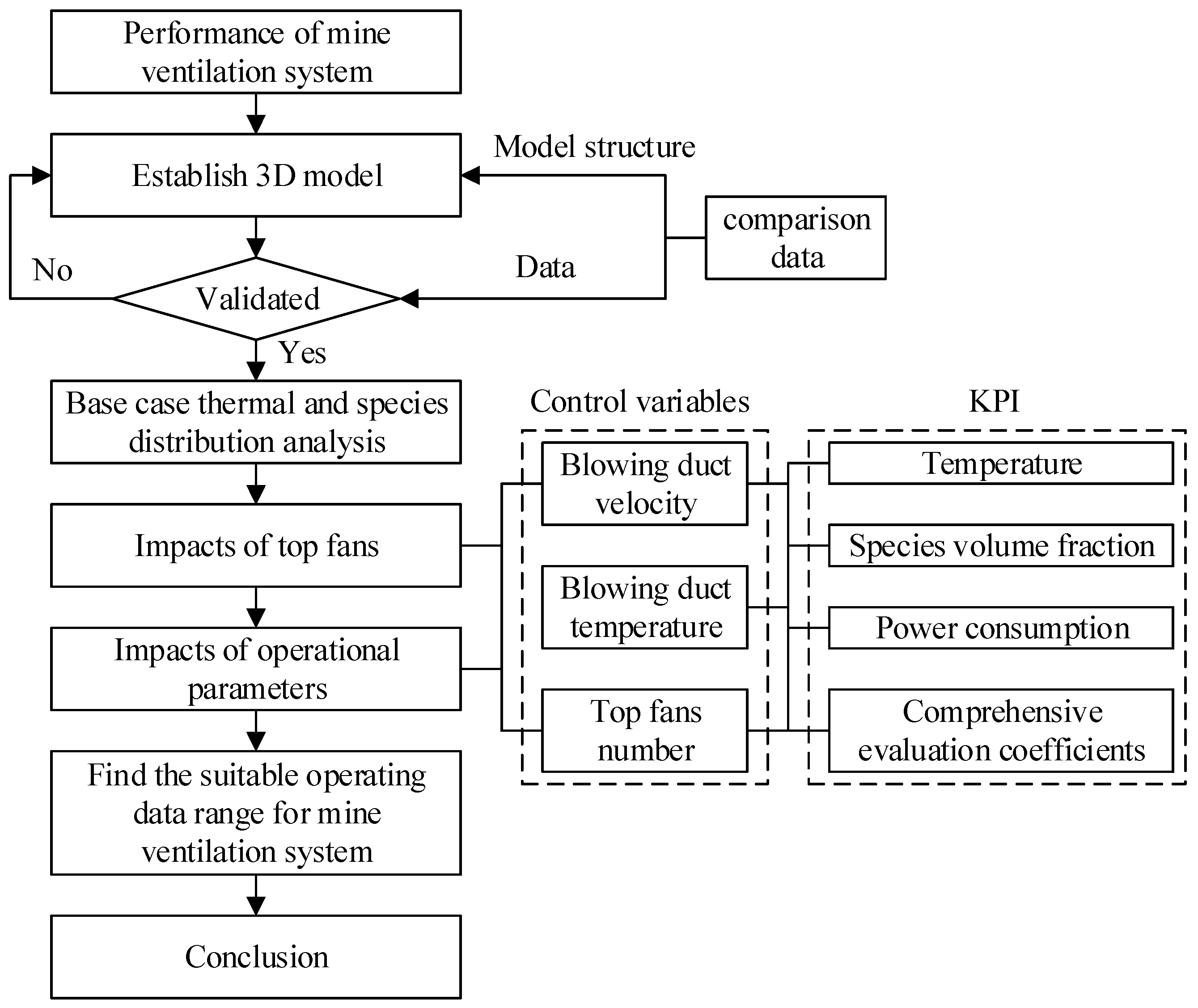
2.5. Flowchart
3. Results
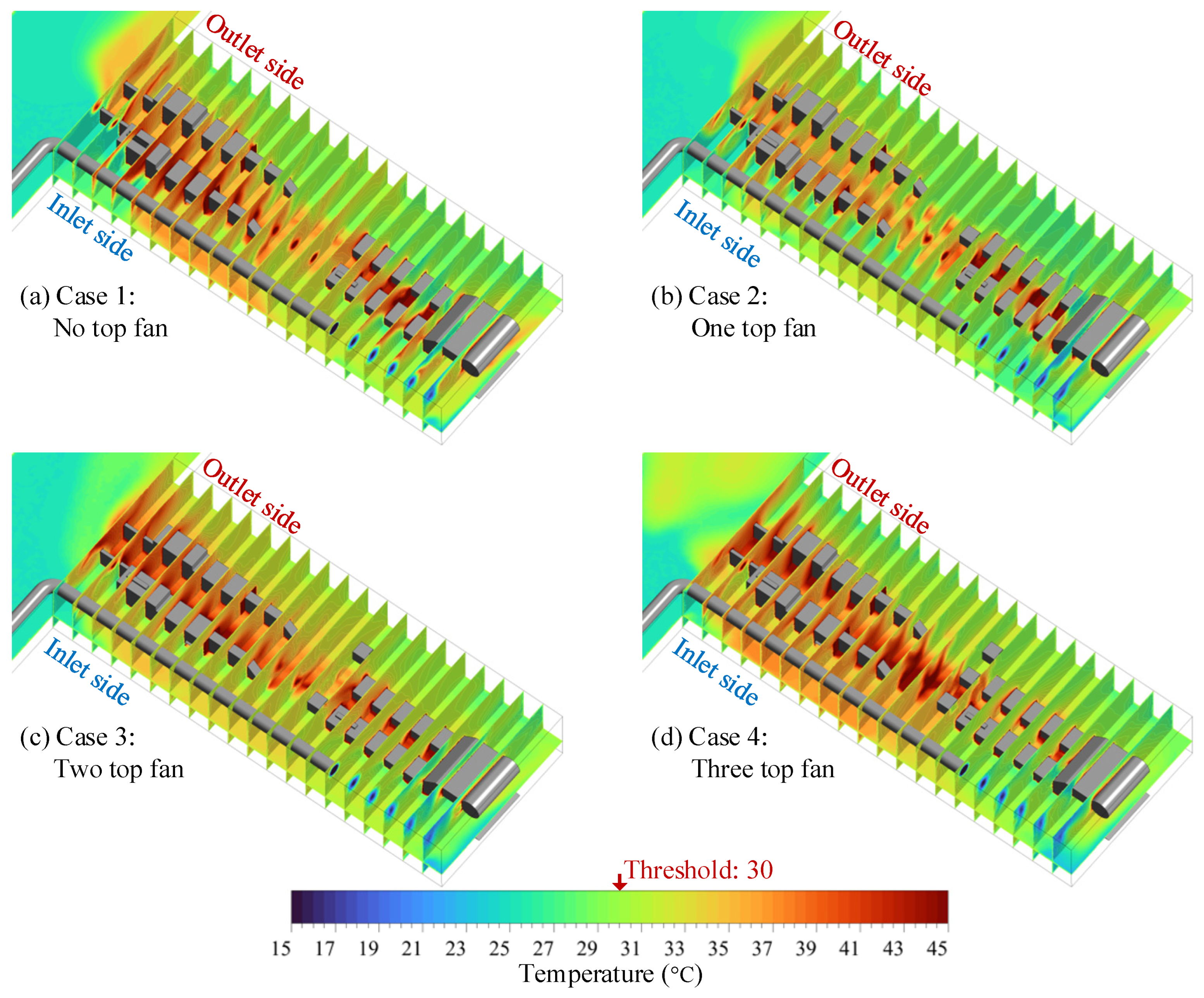
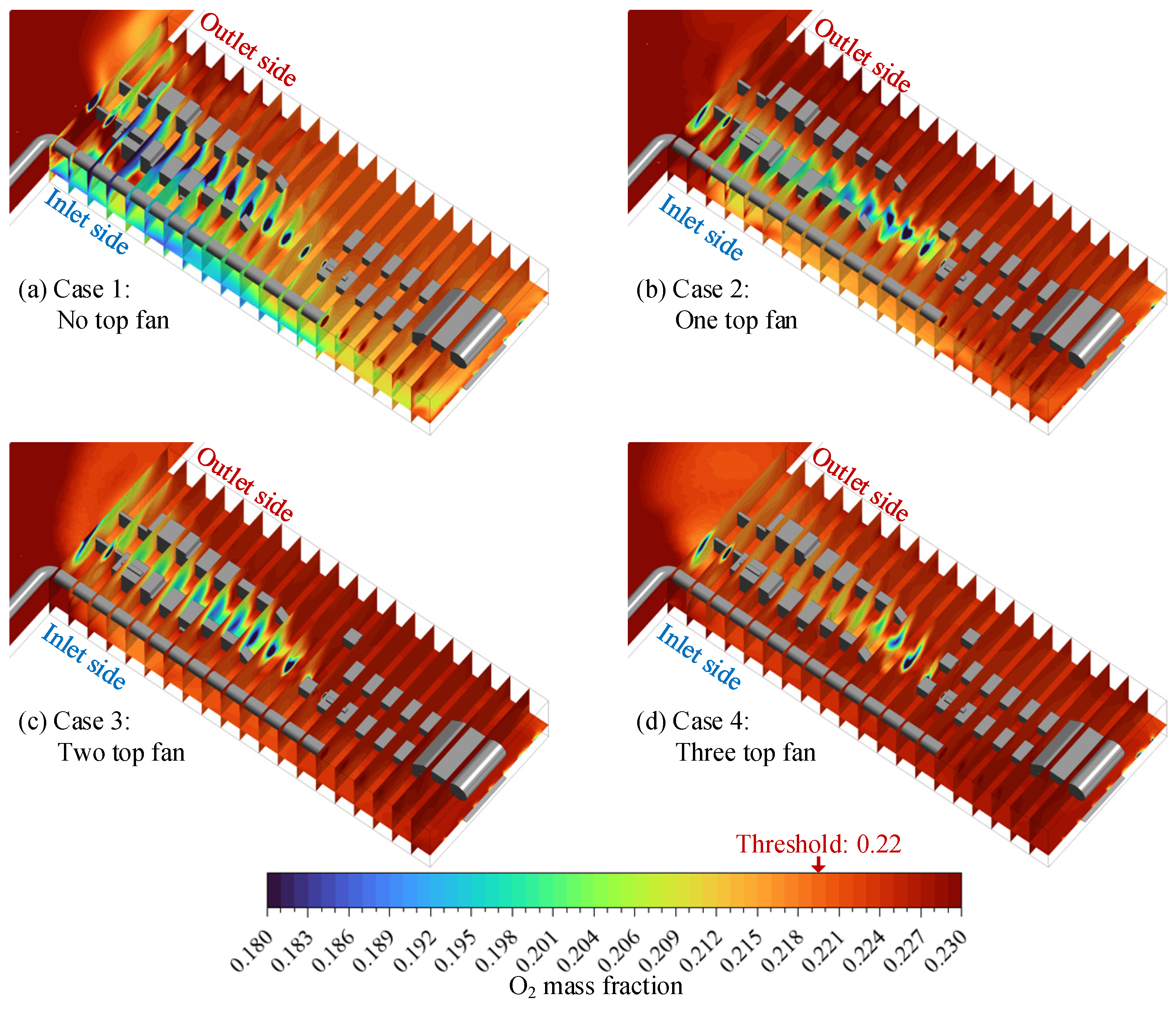
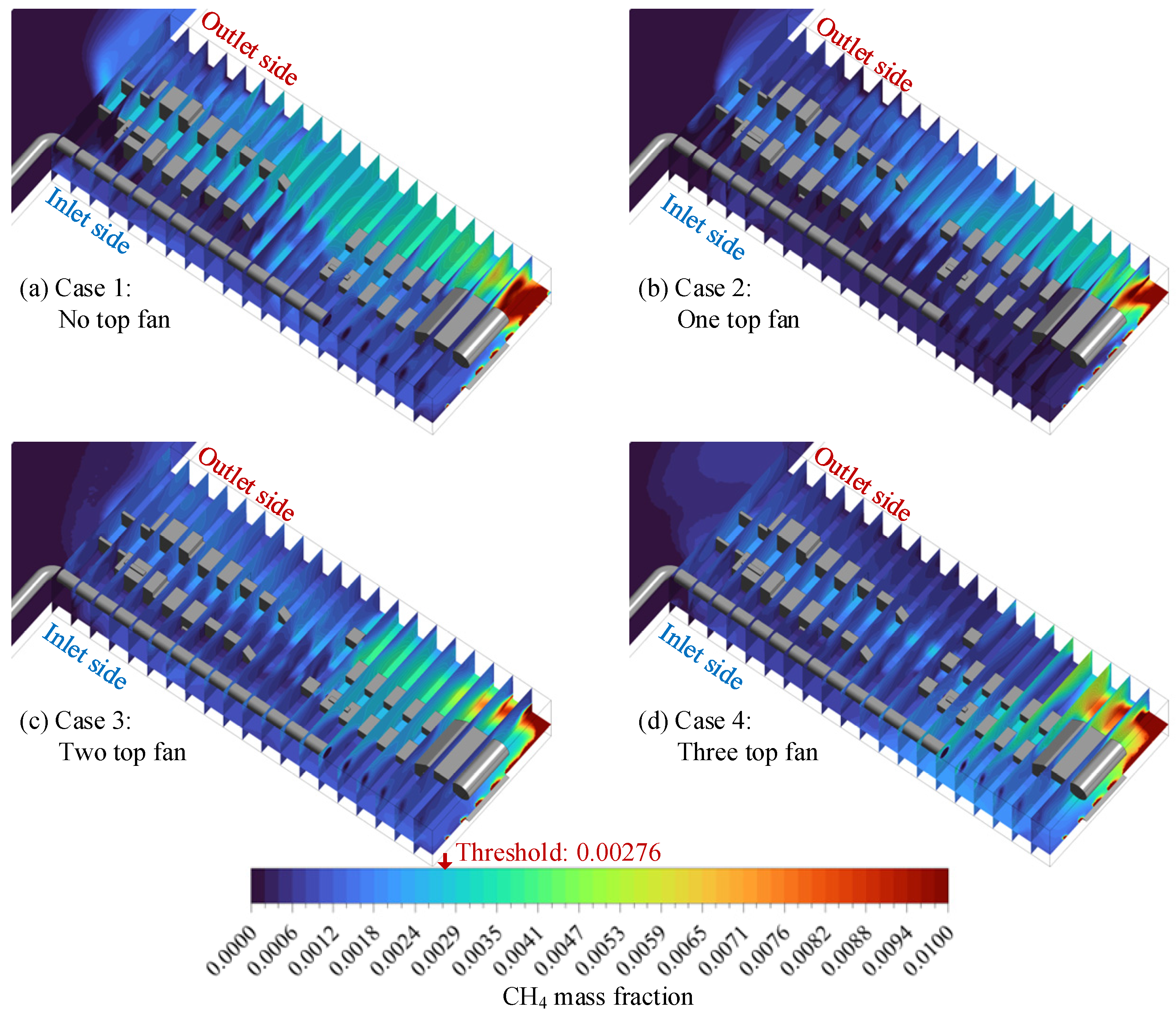
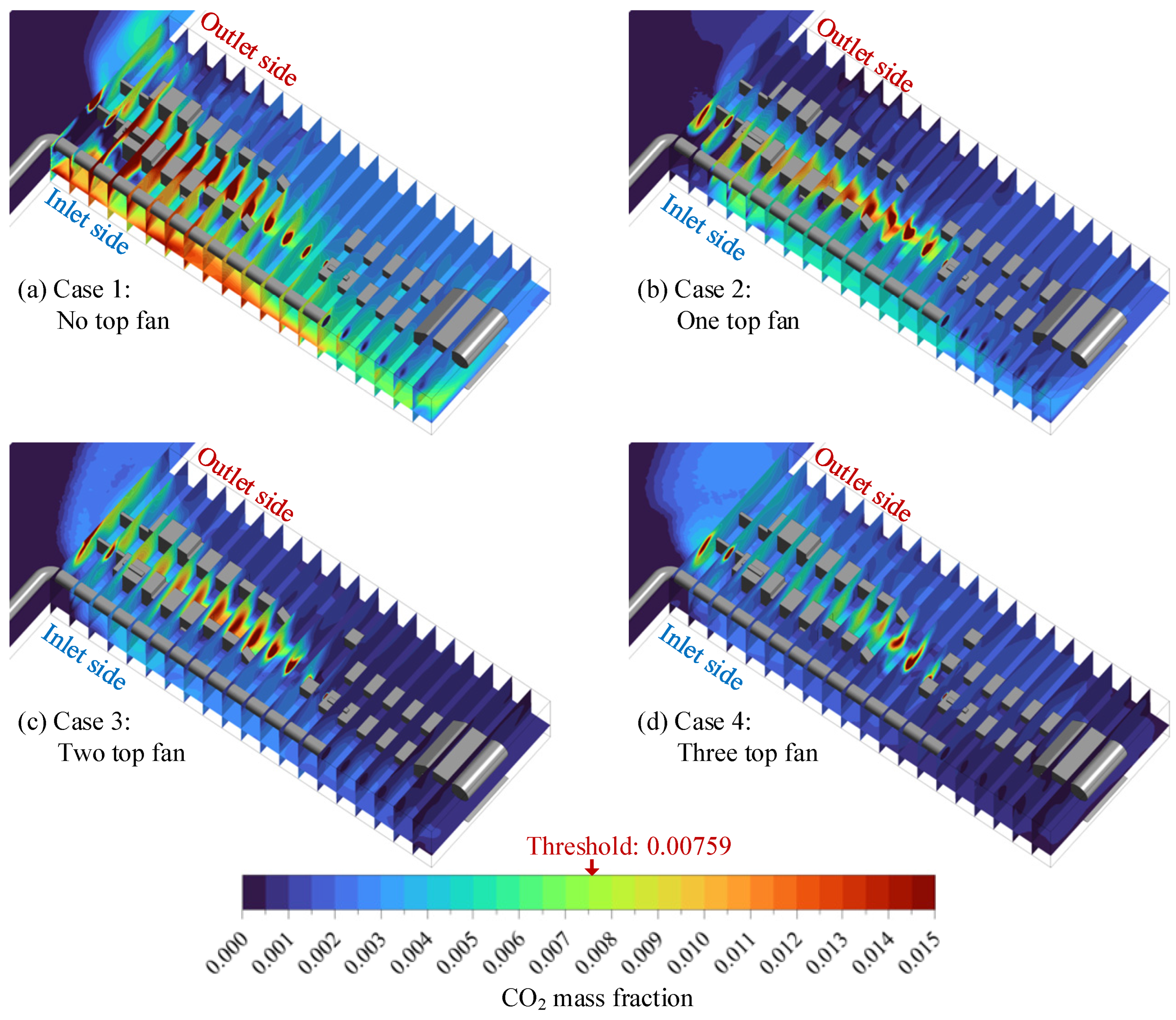
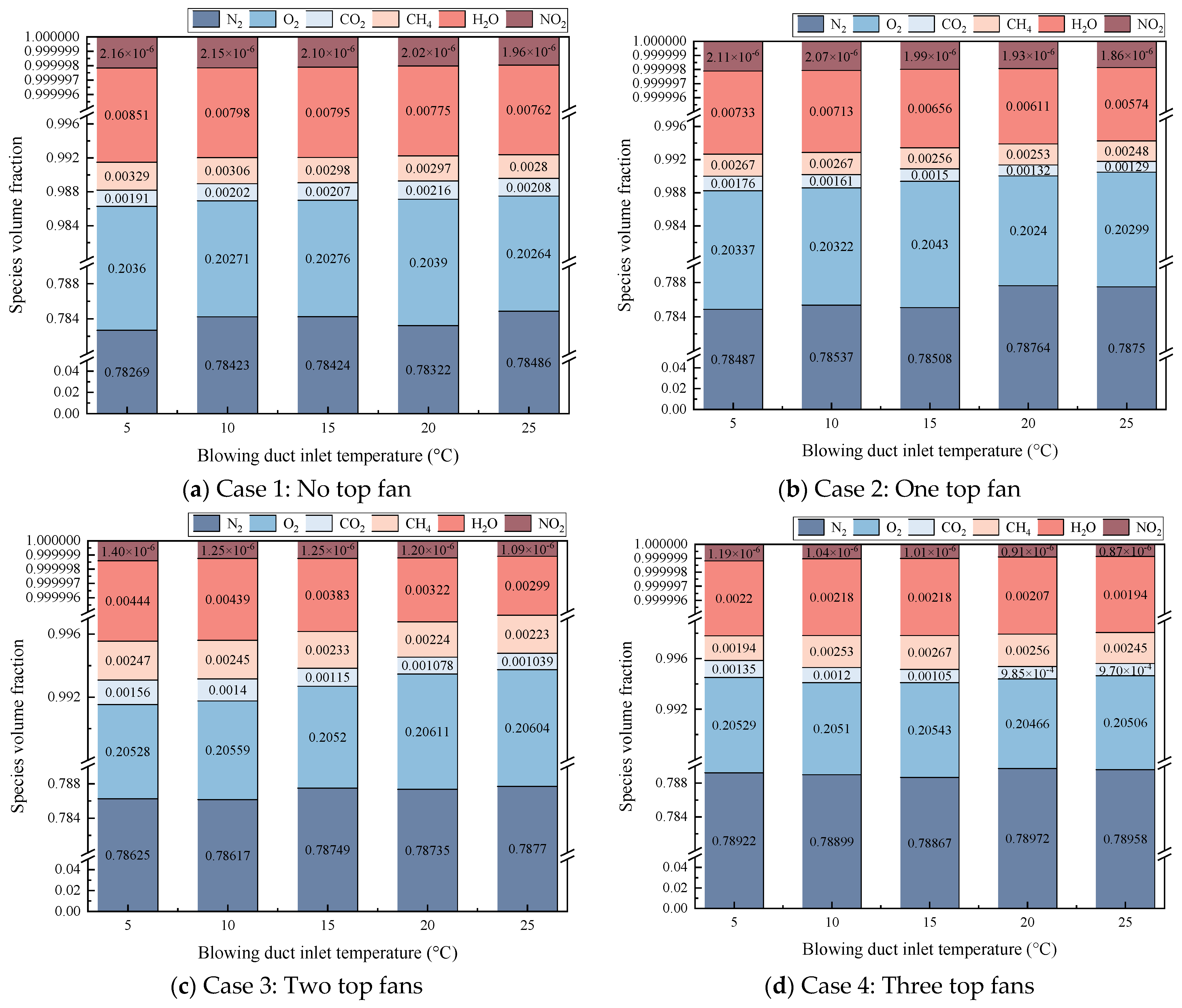
3.1. Temperature and Species Distribution for Different Top Fan Number
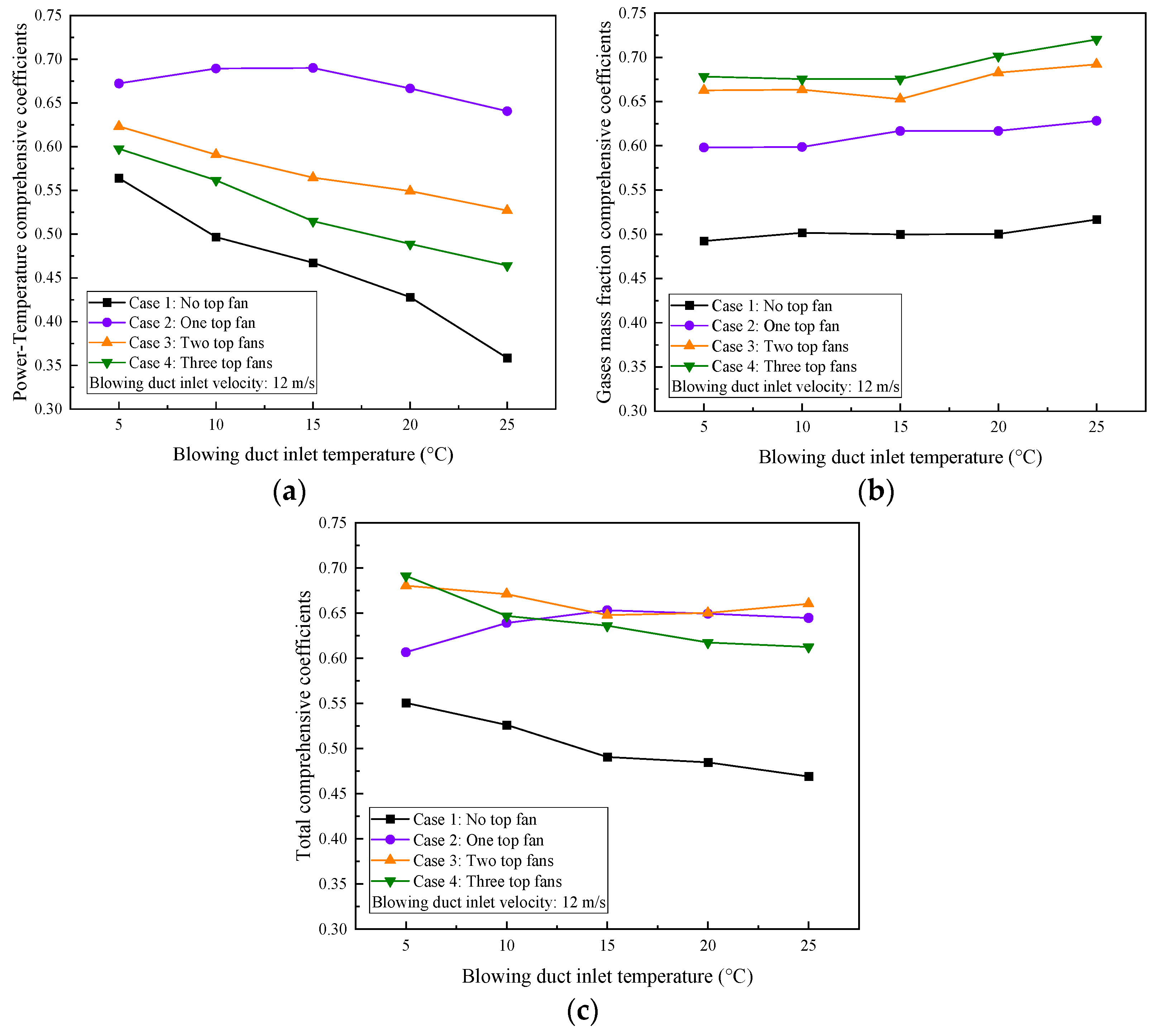
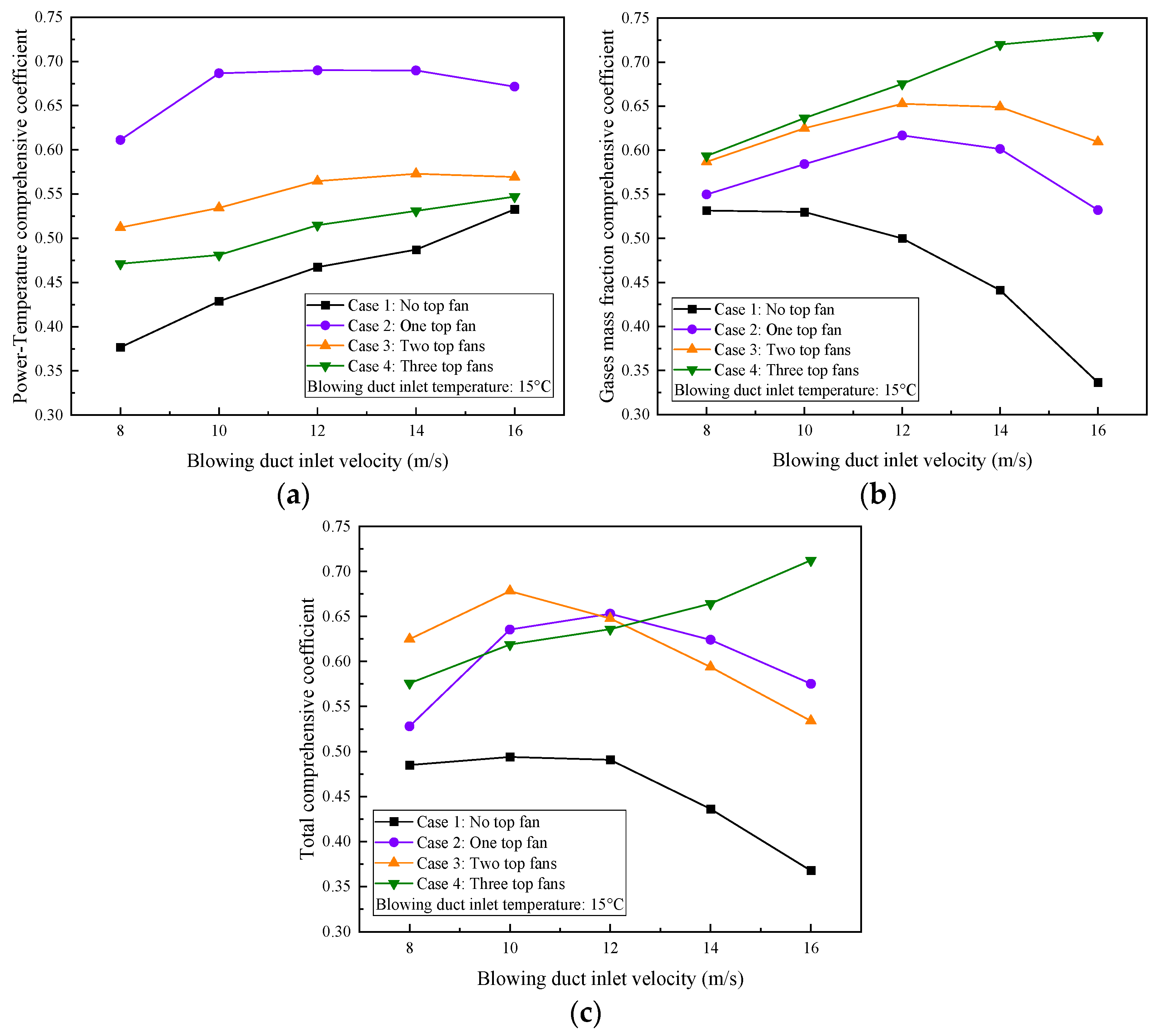
3.2. Impact of Operating Parameters
3.3. Comparison of Comprehensive Performance
4. Discussion
5. Conclusions
- (1)
- A single top fan achieves the best cooling performance due to its low energy consumption and obtains the maximum power–temperature comprehensive coefficient (0.69006); however, it performs poorly in hazardous gas dilution, yielding a maximum gas mass fraction comprehensive coefficient of only 0.62824.
- (2)
- Three top fans provide the maximum performance in diluting hazardous gases. Although this sacrifices some cooling capacity compared to the single top fan case, it achieves the maximum total comprehensive coefficient of 0.71246 (at a blowing inlet temperature of 15 °C, and a velocity of 16 m/s).
- (3)
- The total comprehensive coefficients show different trends depending on the inlet conditions of the blowing duct. At low blowing duct inlet velocities, the total comprehensive coefficient is mainly affected by the energy consumption and temperature, whereas at high blowing duct inlet velocities, the difference in gas mass fraction becomes the determining factor.
- (4)
- Different top fan cases show different sensitivities regarding cooling and hazardous gas dilution performance. This suggests that in practice, it is necessary to choose the most appropriate ventilation system configuration and operating parameters according to the specific mine environment and safety requirements, weighing the needs for temperature control, hazardous gas dilution and energy consumption.
Author Contributions
Funding
Data Availability Statement
Acknowledgments
Conflicts of Interest
Nomenclature
| Nomenclature | v | y direction velocity, m/s | |
| cp | Specific heat capacity at constant | V | Mole volume, L/mol |
| pressure, J/(kg⋅°C) | w | z direction velocity, m/s | |
| Di, m | Mass diffusion coefficient for species | X | Mole fraction |
| in the mixture, m2/s | Y | Local mass fraction | |
| DT, i | Thermal diffusion coefficient for species | ||
| in the mixture, m2/s | Greek symbol | ||
| g | Gravitational acceleration, m/s2 | β | Expansion coefficient |
| Gκ | Turbulent kinetic energy at the mean | γ | Species mass fraction, J |
| velocity gradient, J | ε | Dissipation rate of turbulent pulsation | |
| Gb | Turbulent kinetic energy generated by | kinetic energy, J | |
| buoyancy, J | η | Comprehensive coefficients | |
| I | Unit tensor | κ | Turbulent kinetic energy, J |
| Diffusion flux, Kg/(m2⋅s) | λ | Thermal conductivity, W/(m⋅°C) | |
| K | Motor capacity factor | μ | Dynamic viscosity, Pa⋅s |
| M | Molar mass of mixture species, Kg/mol | μt | Turbulent viscosity, Pa⋅s |
| yij | Normalized value of the j-th indicator | ωj | Weight of each indicator |
| n | Number of top fans | ρ | Density, kg/m3 |
| P | Pressure, Pa | ||
| Pr | Prandtl number | Abbreviations | |
| Prt | Turbulent Prandtl number | CFD | Computational Fluid Dynamics |
| Q | Volume flow rate, m3/s | COP | Coefficient of cooling |
| R | Universal gas constant | GIS | Geographic information system |
| Sct | Turbulent Schmidt number | 3D | Three-dimensional |
| T | Temperature, °C | ||
| u | x direction velocity, m/s | ||
References
- Wang, J.; Peng, S.; Li, Y. State-of-the-Art in Underground Coal mining and Automation Technology in the United States. J. China Coal Soc. 2021, 46, 36–45. [Google Scholar]
- Xie, H.; Zhou, H.; Xu, D.; Wang, H.; Zhang, R.; Gao, F. Research and consideration on deep coal mining and critical mining depth. J. China Coal Soc. 2012, 37, 535–542. [Google Scholar]
- Guo, P.; Bu, M.; Zhang, P.; He, M. Research progress on the prevention and utilization of mine geothermal energy. Chin. J. Eng. 2022, 44, 1632–1651. [Google Scholar]
- Chen, W.; Liang, S.; Liu, J. Proposed split-type vapor compression refrigerator for heat hazard control in deep mines. Appl. Therm. Eng. 2016, 105, 425–435. [Google Scholar] [CrossRef]
- Wu, S.; Chen, S.; Guo, Y.; Huang, M.; Wu, Z.; Jiang, J.; Wu, S. The approach of heat recovery from mine exhaust airflow and efficiency enhancement: Technical analysis of wet chord grids. Appl. Therm. Eng. 2025, 264, 125423. [Google Scholar] [CrossRef]
- Bornman, W.; Dirker, J.; Arndt, D.; Meyer, J. Integrated energy simulation of a deep level mine cooling system through a combination of forward and first-principle models applied to system-side parameters. Appl. Therm. Eng. 2017, 123, 1166–1180. [Google Scholar] [CrossRef]
- Guo, P.; Qin, F. Preventive measures against heat hazard and its utilization in Zhangshuanglou Coal Mine. J. China Coal Soc. 2013, 38, 393–398. [Google Scholar]
- Wang, D.; Zhang, P.; Zhang, Y.; Tu, S.; Wang, J.; Hao, Z. Distribution Characteristic and Migration Mechanism of Toxic Gases in Goafs during Close-Distance Coal Seam Mining: A Case Study of Shaping Coal Mine. ACS Omega 2022, 7, 7403–7413. [Google Scholar] [CrossRef] [PubMed]
- Cai, P.; Nie, W.; Hua, Y.; Wei, W.; Jin, H. Diffusion and pollution of multi-source dusts in a fully mechanized coal face. Process Saf. Environ. Prot. 2018, 118, 93–105. [Google Scholar] [CrossRef]
- He, M.; Xu, M. Research and development of HEMS cooling system and heat-harm control in deep mine. Chin. J. Rock Mech. Eng. 2008, 27, 1353–1361. [Google Scholar]
- Xu, Y.; Li, Z.; Chen, Y.; Jia, M.; Zhang, M.; Li, R. Synergetic mining of geothermal energy in deep mines: An innovative method for heat hazard control. Appl. Therm. Eng. 2022, 210, 118398. [Google Scholar] [CrossRef]
- Qi, Y.; Wang, M. EER test and analysis of surface ice cooling system for coal mine. Int. J. Low-Carbon Technol. 2020, 15, 382–388. [Google Scholar] [CrossRef]
- Schutte, A.; Kleingeld, M.; Zee, L.V. An integrated energy efficiency strategy for deep mine ventilation and refrigeration. In Proceedings of the 2014 International Conference on the Eleventh industrial and Commercial Use of Energy, Cape Town, South Africa, 19–20 August 2014; pp. 1–9. [Google Scholar]
- Wang, W.; Wang, S.; Dai, M.; Shao, K.; Cui, Z.; Liu, Y.; Shao, W.; Cheng, L. Experimental analysis on dynamic performance of refrigeration systems in a deep gold mine. Appl. Therm. Eng. 2022, 217, 119259. [Google Scholar] [CrossRef]
- Wang, X.; Zhang, P.; Dong, X.; Wang, J.; Fang, J.; Zhang, X.; Liu, L. Numerical research on geothermal energy extraction in backfilled mines by using the excellent heat transfer performance of loop heat pipe. Int. Commun. Heat Mass Transf. 2025, 160, 108385. [Google Scholar] [CrossRef]
- Bascompta, M.; Castañón, A.; Sanmiquel, L.; Oliva, J. A GIS-based approach: Influence of the ventilation layout to the environmental conditions in an underground mine. J. Environ. Manag. 2016, 182, 525–530. [Google Scholar] [CrossRef] [PubMed]
- Chen, X.; Zhang, Y.; Ji, J.; Miao, D. Ventilation and cooling of coal mining face based on CFD model optimization. Process Saf. Environ. Prot. 2023, 172, 746–777. [Google Scholar] [CrossRef]
- Wang, J.; Jiang, C.; Zhou, X.; Kang, J.; Yu, S.; Bai, G. Head-neck local ventilation mode for long-narrow mine working face. Sci. Rep. 2024, 14, 19663. [Google Scholar] [CrossRef] [PubMed]
- Habibi, A.; Kramer, R.; Gillies, A. Investigating the effects of heat changes in an underground mine. Appl. Therm. Eng. 2015, 90, 1164–1171. [Google Scholar] [CrossRef]
- Kurnia, J.; Sasmito, A.; Wong, W.; Mujumdar, A. Prediction and innovative control strategies for oxygen and hazardous gases from diesel emission in underground mines. Sci. Total Environ. 2014, 481, 317–334. [Google Scholar] [CrossRef] [PubMed]
- Ministry of Emergency Management of the People’s Republic of China, Coal Mine Safety Regulations 2016. Available online: https://www.mem.gov.cn/gk/gwgg/agwzlfl/zjl_01/201603/t20160325_233784.shtml (accessed on 26 February 2025).
- Pinna, F.; Zucca, M.; Simoncelli, M.; Stochino, F. A new logarithmic congestion model for vent sizing and reduced pressure prediction in baghouse dust collectors. J. Loss Prev. Process Ind. 2025, 99, 105829. [Google Scholar] [CrossRef]
- MT 220-1990; Coal Mine Explosion-Proof Diesel Engine Exhaust Carbon Monoxide Nitrogen Oxides Inspection Specification. National Energy Administration of China: Beijing, China, 1990.




| Items | Parameters | Value |
|---|---|---|
| Mine culvert | W × L × H (m × m × m) | 6 × 20 × 2.9 |
| Mining face culvert | W × L × H (m × m × m) | 20 × 8 × 2.9 |
| Top fan | W × L × H (m × m × m) | 0.6 × 0.6 × 0.6 |
| Distance to mining face (m) | 8 | |
| Blowing duct | Diameter (m) | 0.6 |
| Distance to side wall (m) | 0.3 | |
| Distance from outlet to mining face (m) | 6 | |
| Tailpipe outlet | L × H (m × m) | 0.2 × 0.1 |
| Engine inlet | W × H (m × m) | 0.6 × 0.6 |
| Continuous miner | Distance to mining face (m) | 0.15 |
| Size (m) | Ref. [20] | |
| Shuttle car | Distance to mining face (m) | 11 |
| Size (m) | Ref. [20] | |
| Measuring lines | Length (m) | 20 |
| Distance to bottom (m) | 1.5 | |
| Distance to side wall (m) | 1.5 | |
| Scrubber fan | L × H (m × m) | 0.5 × 0.5 |
| Items | Boundary Conditions | Parameters | Values |
|---|---|---|---|
| Total inlet | Velocity inlet | Velocity (m/s) | 2 |
| Temperature (°C) | 25 | ||
| Mass fraction | 0.2317 CO2 0.7683 N2 | ||
| Total outlet | Pressure outlet (Prevent reverse flow) | Pressure (Pa) | 101,325 |
| Blowing duct inlet | Velocity inlet | Velocity (m/s) | 8–16 |
| Temperature (°C) | 5–25 | ||
| Mass fraction | 0.2317 CO2 0.7683 N2 | ||
| Surrounding rock | Wall | Temperature (°C) | 31 |
| Continuous miner | Wall | Heat flux (W/m2) | 2732 |
| Continuous miner tailpipe outlet | Mass flow inlet | Mass flow rate (kg/s) | 0.5061 |
| Temperature (°C) | 77 | ||
| Mass fraction | 0.6946 N2 0.1860 CO2 0.1192 H2O 0.0002 NO2 | ||
| Continuous miner engine inlet | Out fan | Volume flow rate (m3/s) | 0.3929 |
| Scrubber fan | Fan | Velocity (m/s) | 10 |
| Pressure drops (Pa) | 170 | ||
| Shuttle car | Wall | Heat flux (W/m2) | 1458 |
| Shuttle car tailpipe outlet | Mass flow inlet | Mass flow rate (kg/s) | 0.3042 |
| Temperature (°C) | 77 | ||
| Mass fraction | 0.6946 N2 0.1860 CO2 0.1192 H2O 0.0002 NO2 | ||
| Shuttle car engine inlet | Out fan | Volume flow rate (m3/s) | 0.2361 |
| Mining face | Discrete perforated wall | Temperature (°C) | 31 |
| Number of holes | 14 | ||
| Diameter of holes (m) | 0.1 | ||
| Mass flow rate (kg/s) | 14 × 0.00135 | ||
| Mass fraction | 1.00 CH4 | ||
| Top fan | Fan | Velocity (m/s) | 10 |
| Pressure drops (Pa) | 190 |
| Items | Requirements |
|---|---|
| Temperature (°C) | 30 |
| CH4 | <0.276% |
| CO2 | <0.759% |
| NO2 | <0.000397% |
| O2 | >22% |
Disclaimer/Publisher’s Note: The statements, opinions and data contained in all publications are solely those of the individual author(s) and contributor(s) and not of MDPI and/or the editor(s). MDPI and/or the editor(s) disclaim responsibility for any injury to people or property resulting from any ideas, methods, instructions or products referred to in the content. |
© 2026 by the authors. Licensee MDPI, Basel, Switzerland. This article is an open access article distributed under the terms and conditions of the Creative Commons Attribution (CC BY) license.
Share and Cite
Liu, Y.; Zhu, Z.; Wang, H.; Luan, Z.; Meng, D.; Li, Q.; Lu, Z.; Ye, C. Research on Cooling and Hazardous Gas Dilution Performance of Underground Mining Culvert Ventilation System. Appl. Sci. 2026, 16, 5700. https://doi.org/10.3390/app16115700
Liu Y, Zhu Z, Wang H, Luan Z, Meng D, Li Q, Lu Z, Ye C. Research on Cooling and Hazardous Gas Dilution Performance of Underground Mining Culvert Ventilation System. Applied Sciences. 2026; 16(11):5700. https://doi.org/10.3390/app16115700
Chicago/Turabian StyleLiu, Yexian, Zhenlei Zhu, Hongtao Wang, Zhaobiao Luan, Delong Meng, Qiang Li, Zhenneng Lu, and Cantao Ye. 2026. "Research on Cooling and Hazardous Gas Dilution Performance of Underground Mining Culvert Ventilation System" Applied Sciences 16, no. 11: 5700. https://doi.org/10.3390/app16115700
APA StyleLiu, Y., Zhu, Z., Wang, H., Luan, Z., Meng, D., Li, Q., Lu, Z., & Ye, C. (2026). Research on Cooling and Hazardous Gas Dilution Performance of Underground Mining Culvert Ventilation System. Applied Sciences, 16(11), 5700. https://doi.org/10.3390/app16115700