1. Introduction
The continued use of fossil fuels has led to major environmental problems, including global warming and air pollution. In particular, the transportation sector accounts for a substantial share of these issues, and internal combustion engine (ICE) vehicles are regarded as one of the major sources of global fossil fuel consumption and carbon dioxide emissions [
1,
2]. In response, countries around the world have strengthened efforts to reduce pollutant emissions by introducing increasingly stringent emission regulations, such as Euro VII and Bharat Stage VI [
3,
4,
5]. Consequently, interest in environmentally friendly transportation systems has continued to grow [
6]. In this context, electric vehicles (EVs) have emerged as one of the most promising next-generation transportation solutions capable of replacing ICE vehicles [
7]. Major automobile manufacturers have also announced transitions from ICE-centered product lineups to EV-focused portfolios, positioning EVs as a core technology for future mobility [
8]. As a result, the EV market is expected to continue expanding, driven by strengthened environmental regulations and increasing demand, along with diverse development goals related to carbon neutrality, such as market penetration, charging infrastructure expansion, and technological innovation [
9].
In EV systems, the traction motor is a key component that converts electrical energy stored in the battery into mechanical energy, thereby determining both overall powertrain efficiency and vehicle driving performance [
10]. For this reason, improving motor efficiency and ensuring high reliability are recognized as essential requirements [
11]. Among various motor topologies, the interior permanent magnet synchronous motor (IPMSM) offers the advantage of utilizing both magnetic torque generated by permanent magnets and reluctance torque derived from rotor saliency [
12]. Owing to these characteristics, IPMSMs can provide high-power-density and superior efficiency over a wide operating range, and they have therefore been widely adopted as traction motors for EV applications [
13,
14,
15]. However, as demands for improved acceleration/deceleration performance and downsizing continue to increase, traction motors have become progressively more power-dense, resulting in complex coupled physical phenomena, including rapid temperature rise caused by electromagnetic losses, centrifugal forces acting on the rotor during high-speed operation, and mechanical losses due to friction [
16]. In particular, excessive temperature rise can induce additional losses and thermal demagnetization of permanent magnets, leading to overall performance degradation in terms of output power, torque, and efficiency [
17]. It may also cause reliability problems, such as insulation failure and reduced structural and mechanical robustness due to core thermal expansion [
18]. Therefore, multiphysics analysis that simultaneously considers electromagnetic performance, thermal stability, and structural robustness is essential from the design stage.
Recently, comprehensive performance evaluation based on multiphysics analysis integrating electromagnetic, thermal, and structural analyses has been actively conducted in order to predict complex physical phenomena more accurately during the design stage [
19,
20,
21]. In particular, for EV traction motors, the precise prediction of rotor stress concentration caused by centrifugal force under high-speed operating conditions and the thermal distribution in the winding region has become increasingly important. In this regard, previous studies have investigated electromagnetic–thermal coupling and rotor stress characteristics in high-speed IPMSMs to improve thermal stability and structural reliability [
22]. In addition, temperature-dependent electromagnetic and thermal characteristics have been actively considered in multiphysics analyses of high-speed traction motors [
23]. Furthermore, multiphysics effects in which thermally induced mechanical deformation influences electromagnetic performance under high-speed operating conditions have also been examined [
24]. Accordingly, recent studies have increasingly focused on integrated multiphysics analysis to secure both thermal characteristics and structural stability during high-speed operation.
In the practical EV traction industry, the IPMSM is widely regarded as the mainstream traction motor because it can achieve both high output power and a wide operating range [
25]. However, since the efficiency characteristics of an IPMSM vary significantly with speed and load conditions, performance evaluation at only a few representative operating points is insufficient to fully reflect realistic vehicle operating conditions, and energy analysis based on driving cycles provides a more realistic approach [
26]. Under real road conditions, frequent acceleration and deceleration occur, and changes in heat generation, magnetic saturation, and operating conditions directly affect the overall driving efficiency of the motor [
27,
28]. In addition, the energy performance of EVs has a strong influence on driving range and vehicle sustainability and must therefore be regarded as a key consideration [
29]. More importantly, efficient energy management is essential for reducing carbon emissions and realizing sustainable future mobility [
30]. However, a review of the existing literature indicates that most studies have addressed only a subset of these coupled phenomena. Several works have focused on multiphysics analysis by integrating electromagnetic, thermal, and structural evaluations, but did not extend the resulting motor characteristics to vehicle system-level driving-cycle simulation [
19,
20,
22,
23]. Conversely, other studies have incorporated driving-cycle analysis to evaluate energy consumption but primarily relied on electromagnetic performance data without explicitly considering thermally or structurally induced performance variations [
27,
28]. Therefore, the consistent connection of complete motor-level multiphysics analysis with driving-cycle-based system-level evaluation remains limited for 130 kW-class high-power-density traction motors, where magnetic saturation, thermal loading, and rotor structural stress are strongly coupled.
In this paper, an application-oriented numerical evaluation is presented for a 130 kW IPMSM-based EV traction motor by linking motor-level multiphysics characteristics with vehicle system-level driving performance. Conventional performance evaluation methods for EV traction motors mainly focus on electromagnetic characteristics at selected operating points. Such approaches have limitations in comprehensively reflecting nonlinear magnetic saturation, temperature-dependent performance variation, and rotor stress concentration during high-speed operation. To address these limitations, this study sequentially performs electromagnetic, thermal, and structural analyses for a 130 kW IPMSM. The loss data obtained from the electromagnetic analysis are used as inputs to the thermal analysis to evaluate the temperature stability of the windings and permanent magnets under the designed cooling system. The structural analysis is then conducted to assess rotor mechanical robustness under high-speed centrifugal loading while considering the temperature distribution and electromagnetic loading conditions.
In addition, the loss and efficiency data derived from the multiphysics analysis are incorporated into a MATLAB-/Simulink-based vehicle system-level simulation model. By applying the WLTP Class 3b driving cycle, which includes frequent acceleration and deceleration events representative of realistic driving conditions, the energy consumption characteristics, regenerative braking contribution, and energy economy are quantitatively evaluated. Unlike previous studies that primarily addressed either motor-level multiphysics analysis without vehicle-level driving-cycle evaluation or driving-cycle-based energy assessment without full consideration of thermal and structural motor characteristics, the present study provides an application-oriented evaluation of a 130 kW-class high-power-density EV traction motor from both multiphysics and vehicle system-level perspectives.
The remainder of this paper is organized as follows.
Section 2 defines the main specifications of the target C-segment SUV and the 130 kW PMSM and introduces the WLTP Class 3b driving cycle used for system-level evaluation.
Section 3 describes the multiphysics analysis procedure, including the sequential integration of electromagnetic, thermal, and structural analyses, and evaluates the robustness of the proposed design.
Section 4 presents the driving-cycle simulation results obtained from the MATLAB/Simulink-based vehicle system-level model and discusses energy consumption, regenerative braking efficiency, and battery state-of-charge (SoC) variation.
Finally,
Section 5 summarizes the main findings and discusses the limitations and future work.
2. Design Specifications and Process Definition
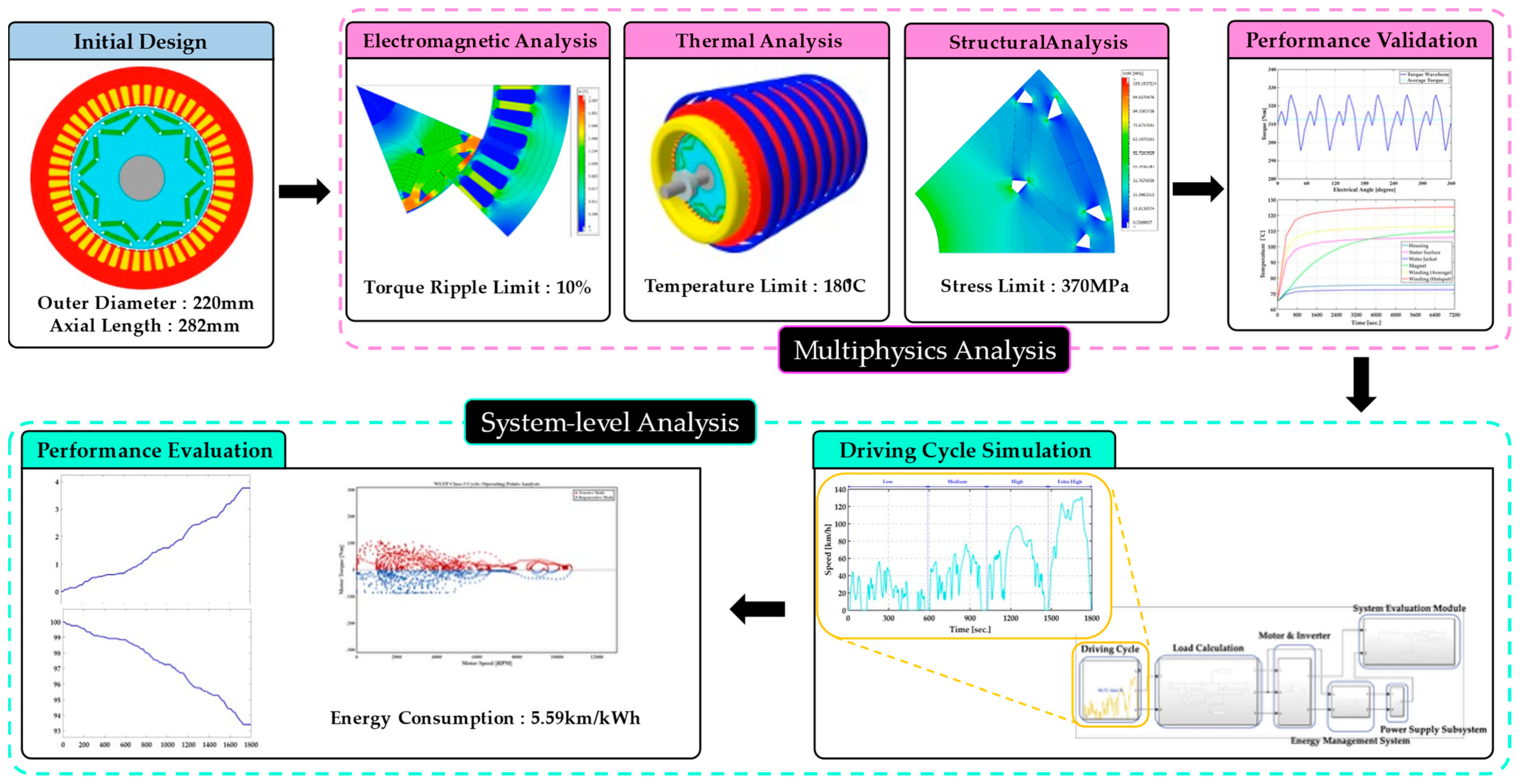
In this study, a high-efficiency design and performance analysis of a 130 kW IPMSM for EV traction were conducted. The overall research procedure is illustrated in
Figure 1 and consists of two main stages: the initial design and multiphysics analysis stage, and the driving-cycle-based system-level simulation stage.
In the first stage, the initial motor design was established by considering the vehicle class of the target application. A target output power of 130 kW was defined for a C-segment SUV traction motor, and an IPMSM topology was selected to secure both high output capability and a wide operating range suitable for EV traction applications. In the next stage, electromagnetic, thermal, and structural analysis models were constructed for the designed IPMSM. If the analysis results failed to satisfy the target design specifications, an iterative design process was performed by returning to the initial design stage and modifying the design variables. Once the design targets were satisfied, the multiphysics analysis results were integrated to generate an efficiency map over the entire motor operating region.
Subsequently, a vehicle system-level simulation model was established based on the derived efficiency map. This model combined representative vehicle specifications of a C-segment SUV with the motor efficiency map obtained from the multiphysics analysis, enabling real-time reflection of energy loss under varying driving loads. A driving cycle was then incorporated into the simulation model to reproduce realistic driving conditions and complete the performance evaluation methodology for the traction system. Finally, the designed IPMSM was quantitatively evaluated in terms of its traction performance under realistic driving conditions through simulation analysis.
2.1. Design Specification
2.1.1. Electric Vehicle Specification
To evaluate the performance of the EV traction system under realistic driving conditions, a C-segment SUV was selected as the target vehicle, as this class has shown strong market share and continued expansion in the global EV market [
31]. Recent EV market trends indicate that vehicles are required to satisfy not only urban driving energy efficiency but also dynamic performance during high-speed operation, and therefore, precise analysis of energy consumption characteristics under various driving cycles is necessary [
32]. The physical specifications of the target vehicle were defined with reference to publicly available specifications of representative mass-produced C-segment SUV EVs. Key parameters, including vehicle mass, wheel radius, and battery capacity, were established to reflect the typical specification range of this vehicle class, and the target motor output of 130 kW was defined accordingly to match the powertrain requirements representative of C-segment SUV EV applications. The purpose was not to reproduce the exact performance of a specific commercial vehicle but to establish realistic and representative vehicle-class parameters for system-level simulation. The detailed vehicle specifications are summarized in
Table 1.
2.1.2. Design of Traction Motor
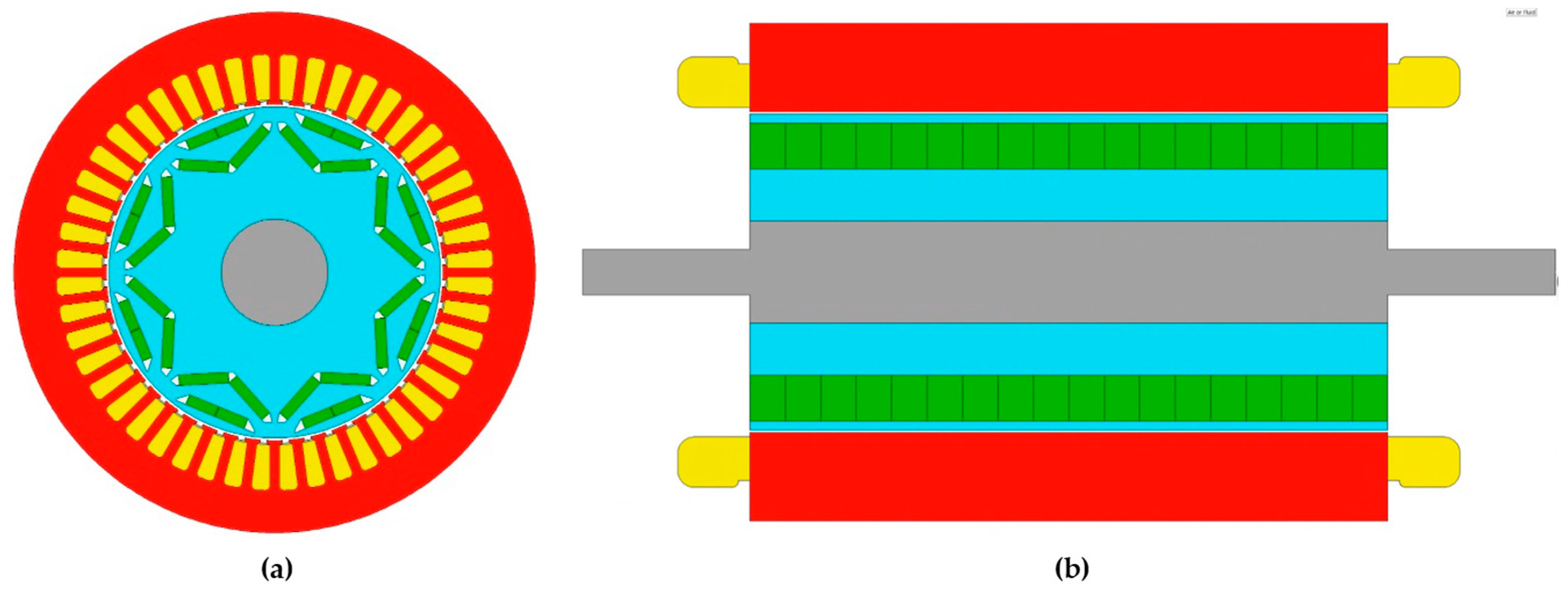
To satisfy the vehicle traction requirements defined in the previous subsection, a 130 kW IPMSM characterized by high power density and a wide operating range was designed. The configuration of the designed IPMSM is shown in
Figure 2.
For the pole/slot combination of the EV traction motor, an 8-pole/48-slot configuration was selected because of its well-established advantages in distributed-winding IPMSMs. This configuration provides a high winding factor, which enhances the fundamental air-gap flux density and torque capability, while suppressing low-order spatial harmonics that contribute to torque ripple and NVH (noise, vibration, and harshness) issues [
33]. These characteristics are important for C-segment EV traction applications. In particular, the rotor was designed with a double-layer permanent magnet configuration to ensure mechanical strength during high-speed operation and to maximize the flux concentration effect. As shown in
Figure 2a, the magnets in the outer layer were arranged in a straight configuration, whereas those in the inner layer adopted a V-shape arrangement, thereby preventing magnet scattering while increasing the flux density directed toward the stator [
34]. Compared with a single-layer configuration, this hybrid arrangement provides a larger saliency ratio and thus enables more effective utilization of both magnetic torque and reluctance torque, which are key advantages of IPMSMs, thereby improving the overall output torque [
35].
The 130 kW IPMSM analyzed in this study was not adopted from a previous study. It was newly designed under predefined constraints for application to a C-segment SUV EV. The design constraints used in the sizing process are summarized in
Table 2. To achieve the target rated torque of at least 310 Nm and the output power of 130 kW at the rated operating condition, iterative design refinement was conducted under predefined constraints. As a result, the selected geometrical dimensions fall within the packaging range of commercial high-power-density EV traction motors above the 100 kW class, thereby supporting the feasibility of the baseline design.
The detailed IPMSM design was carried out using Ansys Motor-CAD. The designed IPMSM has an outer diameter of 220 mm and a stack length of 282 mm. The current density of 9.56 A/mm
2 was selected to maximize torque output within the thermal loading constraint. This value is consistent with the range achievable in liquid-cooled IPMSM designs employing water jacket cooling systems [
36]. N42UH, a rare-earth permanent magnet material with excellent high-temperature stability, was employed, and a thin electrical steel sheet, 10JNEX900, was adopted to reduce losses and simultaneously secure thermal stability and high efficiency. The main design parameters of the proposed 130 kW IPMSM are summarized in
Table 3.
2.2. Driving Cycle
To realistically evaluate the energy consumption and dynamic characteristics of the traction system based on the designed 130 kW IPMSM, the WLTP was adopted as the driving cycle. Compared with the conventional NEDC (New European Driving Cycle), the WLTP is configured with more dynamic acceleration and deceleration patterns and more faithfully reflects real-road driving conditions [
37]. The detailed WLTP classes are classified by vehicle power-to-mass ratio (PMR) [
38]:
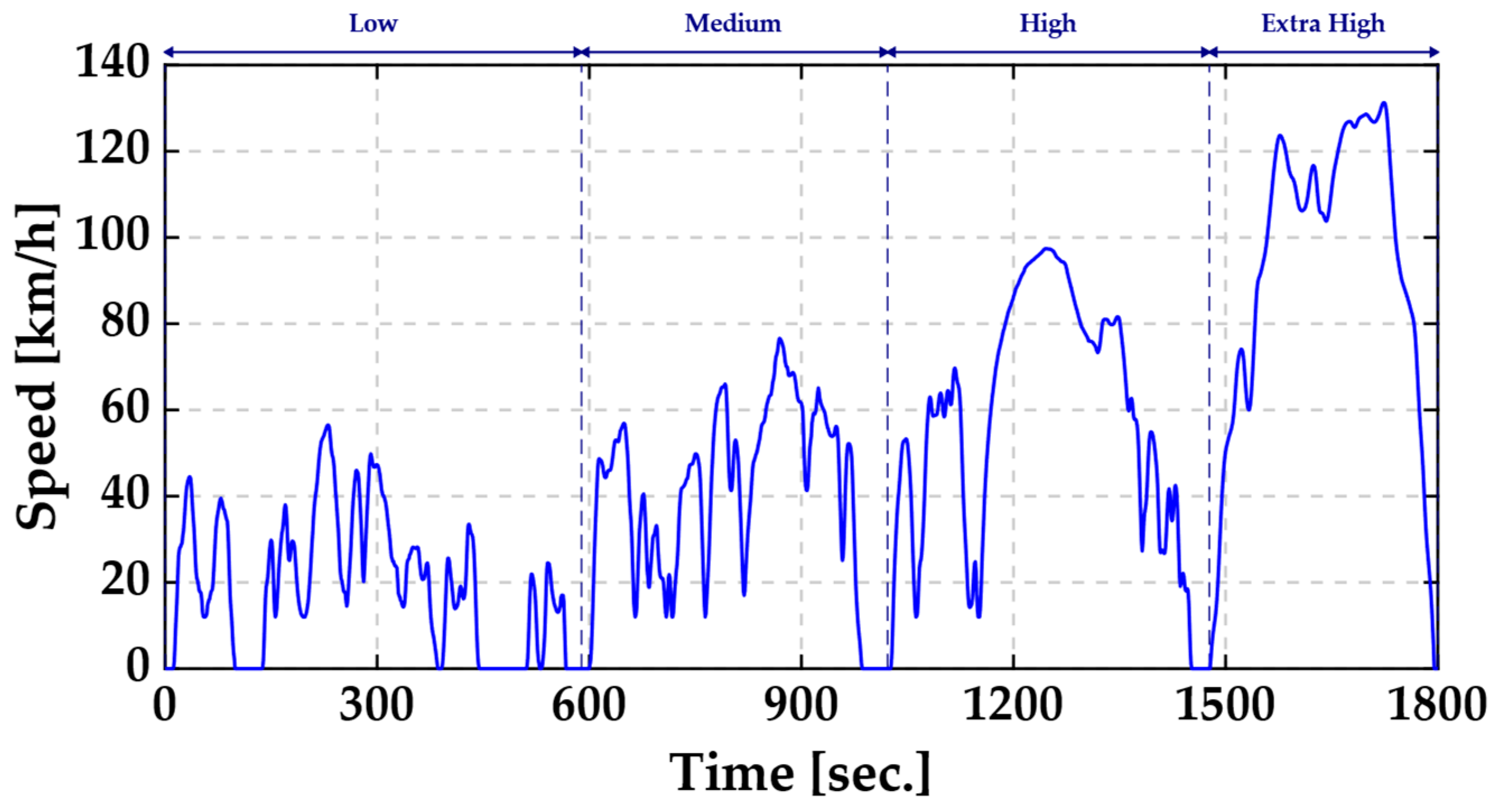
For the target vehicle considered in this study, the PMR was calculated as approximately 68.78 W/kg based on a curb mass of 1890 kg and a maximum output of 130 kW. Since this value significantly exceeds the Class 3 threshold of 34 W/kg, the target vehicle corresponds to WLTP Class 3. Furthermore, Class 3 is divided into Classes 3a and 3b according to the maximum vehicle speed. In this study, the Class 3b cycle, which corresponds to vehicles with a maximum speed of at least 120 km/h, was selected in order to include high-speed driving conditions. The detailed specifications and speed profile of the adopted driving cycle are presented in
Table 4 and
Figure 3, respectively.
The adopted WLTP Class 3b cycle consists of four phases—Low, Medium, High, and Extra High—thereby enabling an integrated analysis of a wide operating range from urban driving to highway driving. Compared with the conventional NEDC, the WLTP features more frequent acceleration and deceleration events and an average speed that is approximately 13 km/h higher, reflecting more dynamic driving characteristics. In addition, the proportion of stop phases is approximately 12% lower, making the WLTP more suitable for reflecting and analyzing the realistic energy consumption characteristics of high-performance EV traction systems. The total driving distance is also approximately 12.3 km longer than that of the NEDC, and the maximum speed reaches 131.3 km/h, which is 11.3 km/h higher than the NEDC maximum speed of 120.0 km/h. Therefore, the WLTP Class 3b cycle is suitable for a more precise evaluation of traction system characteristics under real driving conditions, including high-speed operation.
3. Multiphysics Analysis
Based on the design specifications established in
Section 2, multiphysics analysis was conducted to evaluate the performance and design-stage feasibility of the designed IPMSM. Because an EV traction motor is characterized by high power density, not only electromagnetic performance but also heat generation caused by losses and structural robustness under high-speed operation must be considered simultaneously. Since these physical phenomena are closely interrelated, single-physics analysis alone is insufficient for accurately predicting performance under actual operating conditions. Therefore, electromagnetic, thermal, and structural analyses were comprehensively carried out using Motor-CAD 2025.2.2.
The multiphysics analysis was configured as a sequentially coupled procedure to ensure both data consistency and continuity of the analysis process. First, the loss data calculated from the electromagnetic analysis were used as inputs to the thermal analysis model to obtain the temperature distribution. Subsequently, the centrifugal force generated during high-speed operation, together with the temperature distribution obtained from the thermal analysis and the electromagnetic load derived from the electromagnetic analysis, were applied as boundary conditions for the structural analysis to evaluate the stress distribution. Through this step-by-step coupled analysis, the interactions among the physical fields could be reflected more accurately, thereby enabling design-stage assessment of the multiphysics feasibility of the designed IPMSM.
3.1. Electromagnetic Analysis
As the first step of the multiphysics analysis, electromagnetic analysis was performed to evaluate the torque characteristics, efficiency, and flux distribution of the designed 130 kW motor and thereby assess the electromagnetic validity of the design. As described in
Section 2.1.2, the stator adopted an 8-pole/48-slot configuration with distributed windings. In addition, the rotor permanent magnets were designed in a double-layer hybrid configuration consisting of an inner V-shape layer and an outer I-shape layer to achieve flux concentration, and a 0.1 mm thick electrical steel sheet (10JNEX900) was employed for the core to minimize eddy-current loss in the high-frequency region.
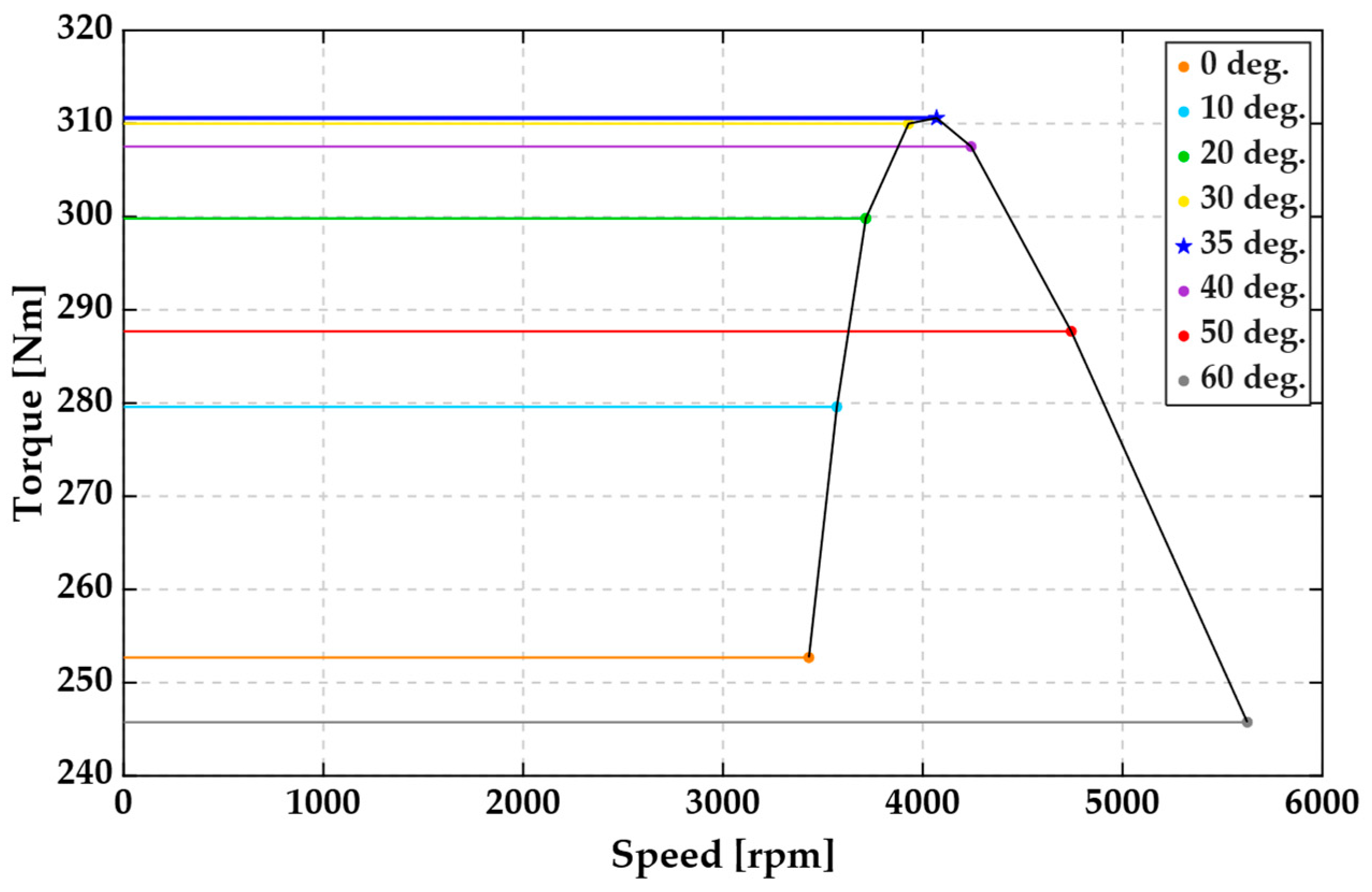
First, the torque characteristics as a function of current phase angle were analyzed in order to optimize the output performance of the designed IPMSM, and the results are presented in
Figure 4. The analysis showed that when the current phase angle was 35°, the constant-torque region was maintained up to the rated speed of 4000 rpm, and the target maximum torque of 312.56 Nm was achieved. It is noted that this 35° angle represents the Maximum Torque Per Ampere (MTPA) operating point, specifically at the rated current amplitude (RMS 300 A) and DC-link voltage (400 V) conditions. This operating point was therefore selected for the rated-condition electromagnetic analysis.
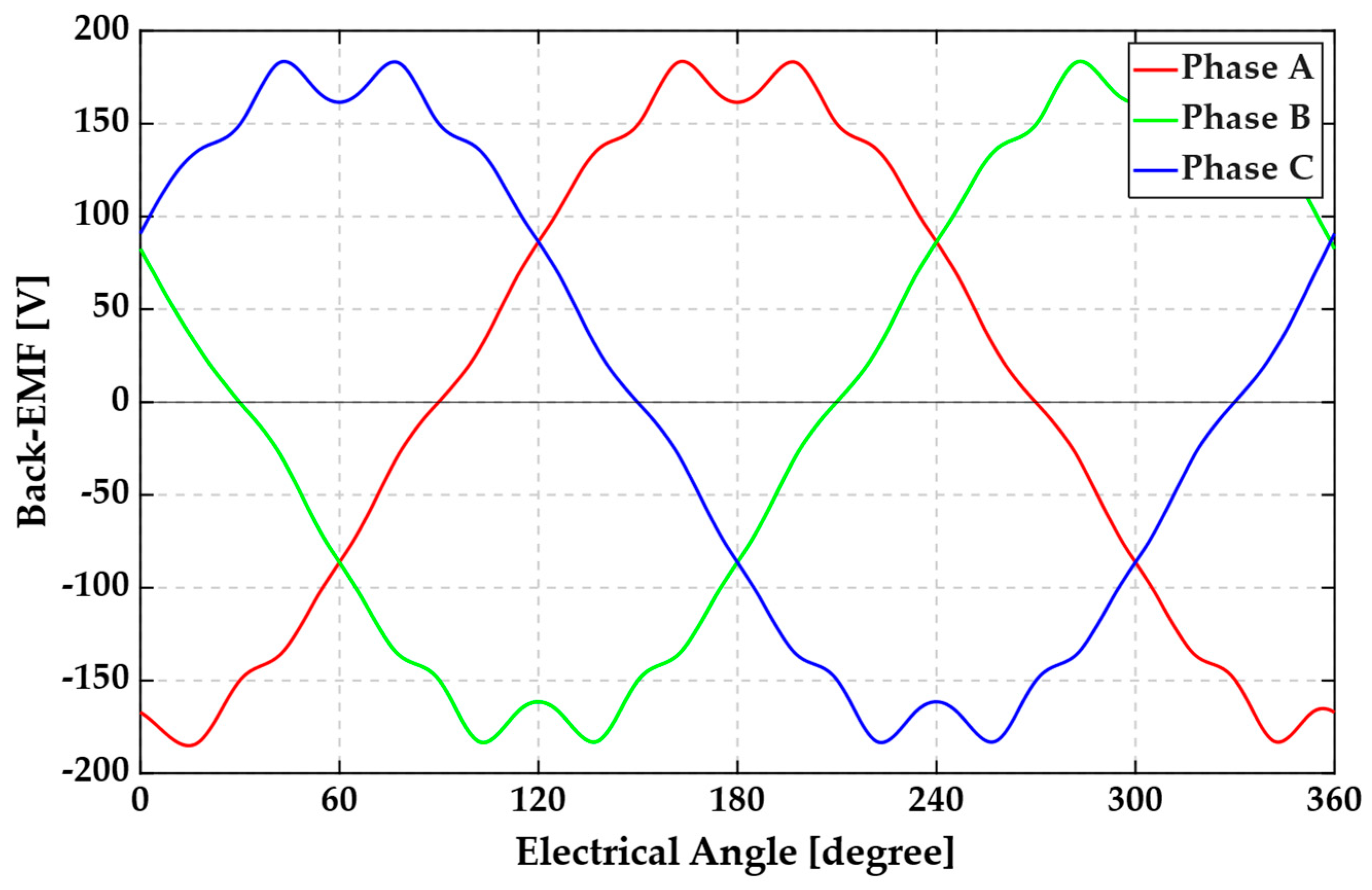
Next, a no-load analysis was performed at the optimal operating point to evaluate the fundamental electromagnetic performance, and the resulting three-phase back-EMF waveforms at the rated speed of 4000 rpm are shown in
Figure 5. The maximum phase back-EMF was calculated to be 182.87 V, and the three phases maintained a balanced condition with a 120° electrical phase difference. Although the waveform was generally close to sinusoidal, slight distortion was observed near the peak region. Since such distortion may affect torque ripple and NVH characteristics during operation, an additional harmonic analysis was carried out to assess electromagnetic stability.
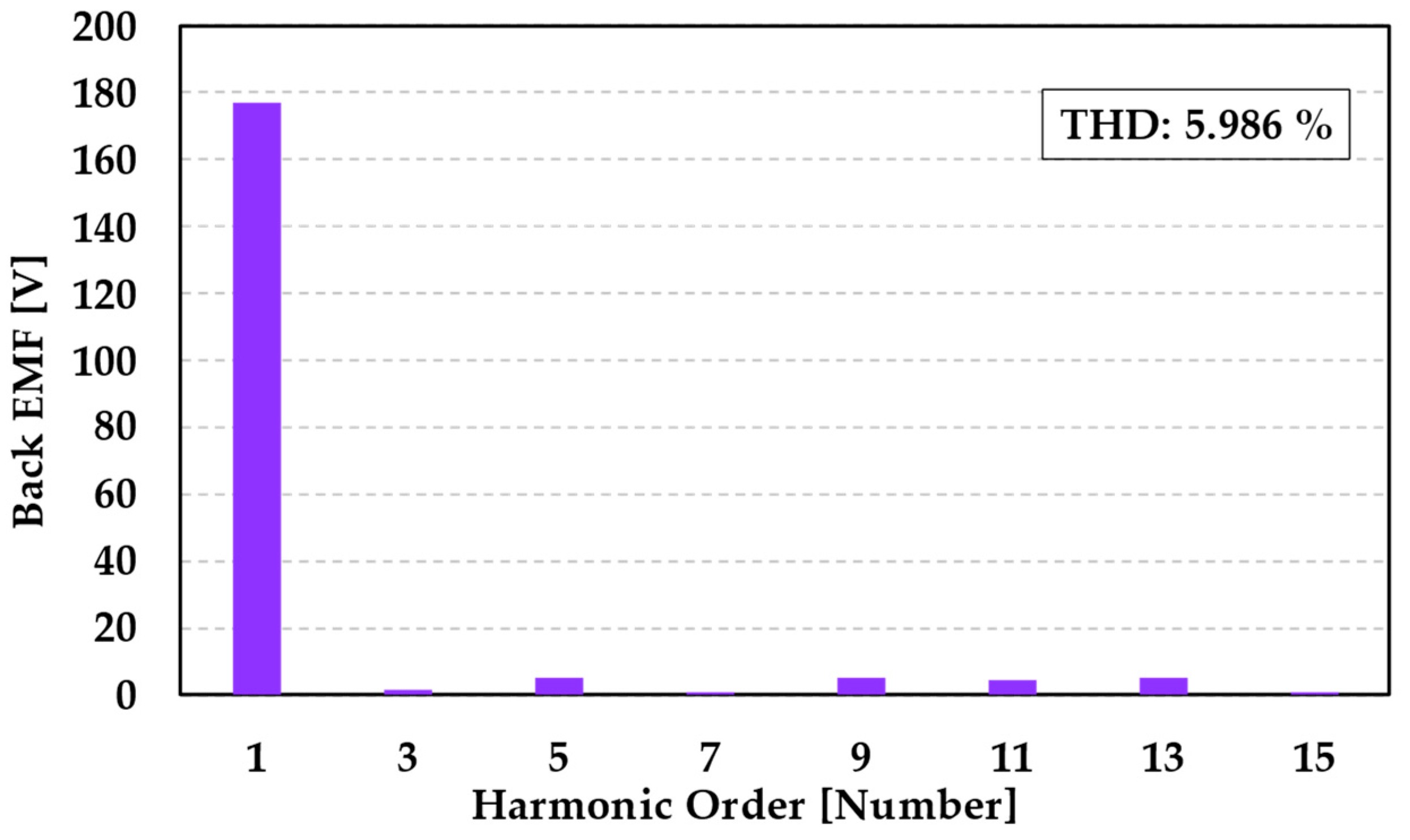
To quantitatively evaluate waveform distortion, harmonic analysis based on the Fast Fourier Transform (FFT) was performed, and the results are shown in
Figure 6. The fundamental component of the back-EMF was 177.25 V, while the Total Harmonic Distortion (THD), which indicates the overall degree of harmonic distortion, was calculated to be approximately 5.98%.
Although an increase in harmonic components may lead to increased torque ripple, the 3rd, 5th, and 7th harmonics were calculated as 1.46 V, 5.20 V, and 0.58 V, respectively, corresponding to only 0.82%, 2.93%, and 0.32% of the fundamental component. In contrast, the 9th and 13th harmonics were 5.60 V and 5.53 V, respectively, which correspond to approximately 3.1% of the fundamental component and are relatively larger than the other harmonic components. This is attributed to the concentration of magnetic flux in a narrow region caused by the double-layer structure adopted to achieve high power density. Increasing the spacing between permanent magnets would be beneficial for harmonic reduction, but it would also reduce power density, resulting in a trade-off. Therefore, in this design, a flux-concentrating structure was adopted to prioritize output performance, while the resulting harmonic components were maintained within an acceptable design range. As a result, the THD remained below 6%, indicating that the proposed design simultaneously secures both electromagnetic quality and output density.
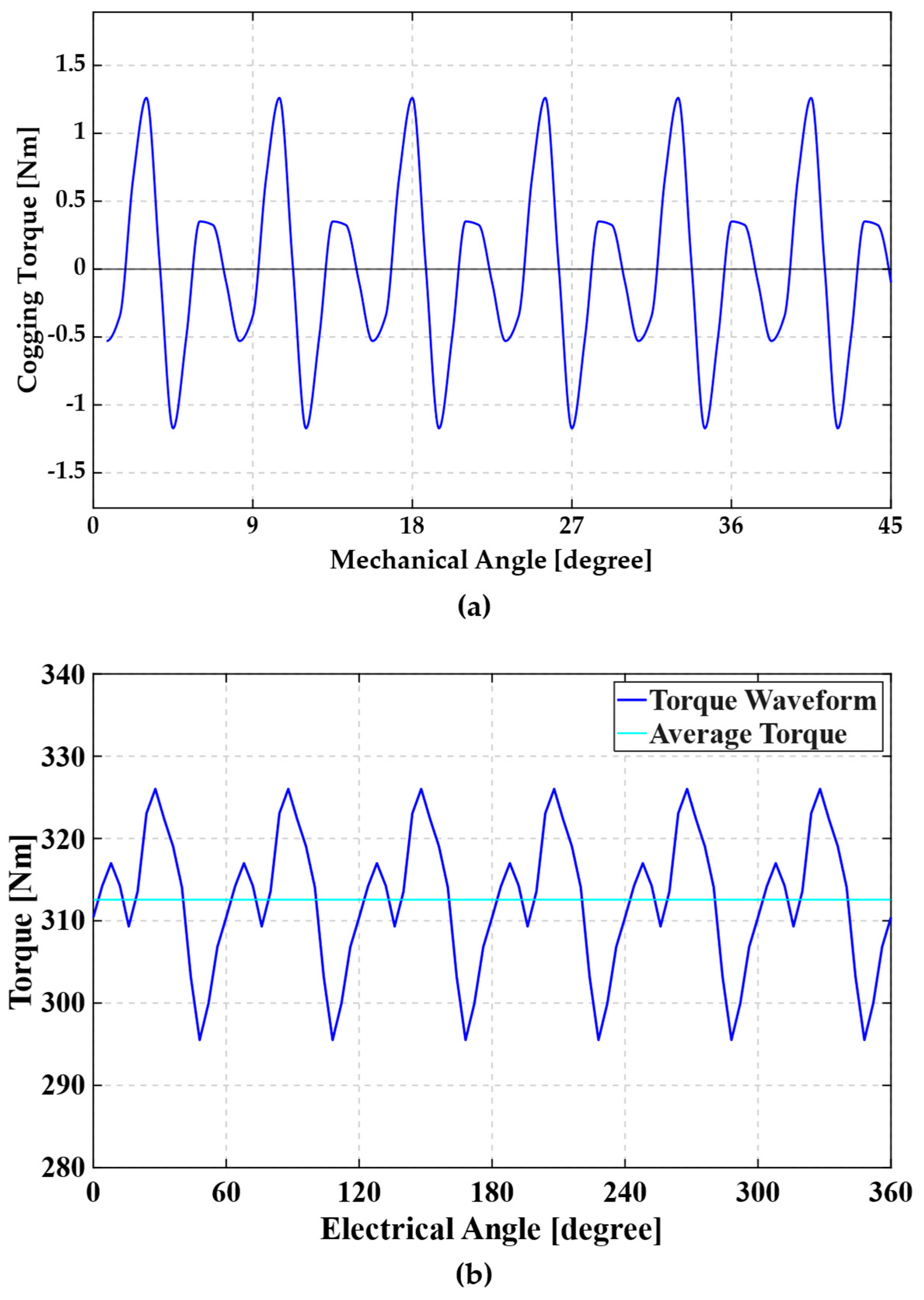
The torque output characteristics of the IPMSM are presented in
Figure 7.
Figure 7a shows the cogging torque characteristics under no-load conditions, while
Figure 7b shows the electromagnetic torque characteristics under rated operating conditions. As shown in
Figure 7a, the peak-to-peak cogging torque was calculated to be 2.43 Nm, corresponding to approximately 0.74% of the maximum torque of 326.02 Nm. This relatively low cogging torque suggests that low-speed torque pulsation can be limited in the present design. At the representative rated operating point of 35° and 4000 rpm, as shown in
Figure 7b, the average torque was calculated to be 312.56 Nm. The torque ripple was 30.5 Nm on a peak-to-peak basis, corresponding to 9.76% of the average torque. This result satisfies the design target adopted in this study while maintaining the required output torque. The torque ripple is mainly associated with the trade-off between torque-density improvement and harmonic suppression in the adopted double-layer rotor configuration. Therefore, further torque-ripple reduction through pole-shape refinement, notching, or skewing will be considered in future work to improve NVH-oriented performance.
The analysis of individual loss components at the rated operating point is summarized in
Table 5. Copper losses amount to 2099 W, accounting for 76.8% of the total losses, confirming that the winding area is the primary heat source under rated conditions. This is physically consistent with the high current density of 9.56 A/mm
2 required to achieve the target output within the limited stator volume and forms the basis for the thermal analysis.
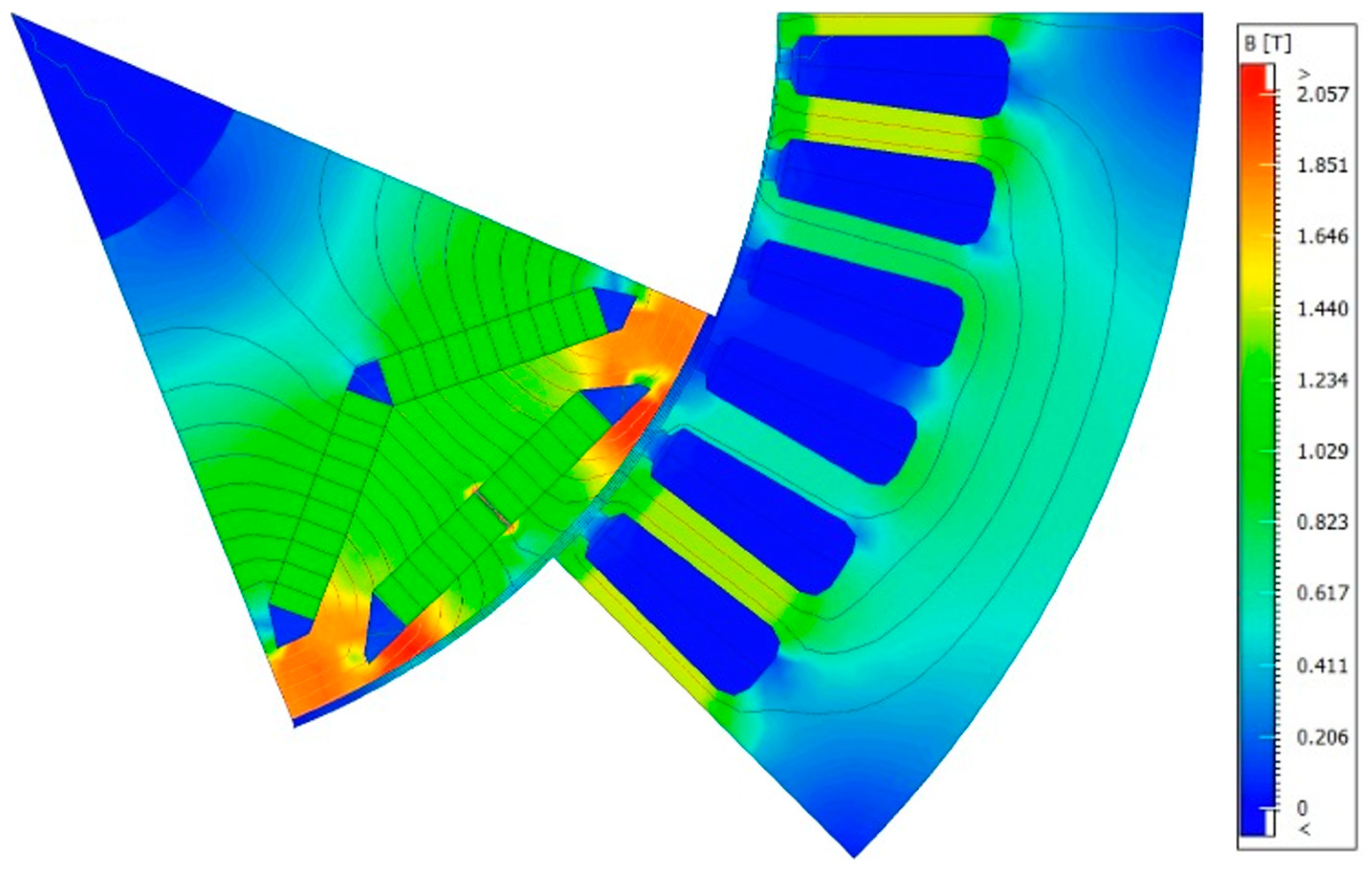
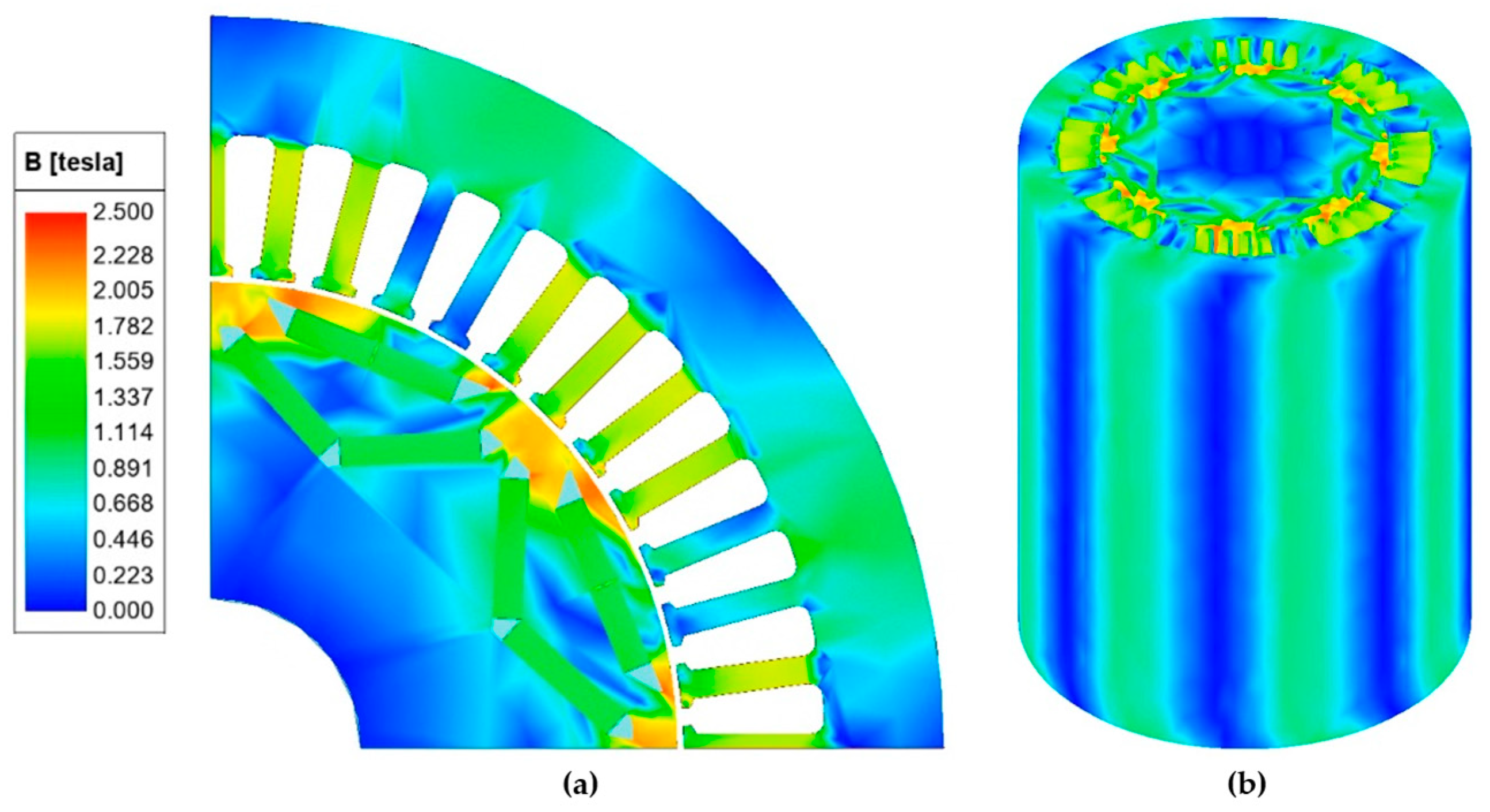
Finally, to examine the electromagnetic saturation characteristics under rated operating conditions, the magnetic flux density distribution was analyzed, and the results are shown in
Figure 8. The analysis revealed localized flux concentration at the ends of the rotor permanent magnets and in the magnetic bridge region. This is attributed to the characteristics of the double-layer hybrid structure consisting of an inner V-shape layer and an outer I-shape layer, in which the magnetic flux generated by the permanent magnets is concentrated along a relatively narrow iron path as it moves toward the stator. In contrast, the maximum magnetic flux density in the stator teeth and yoke regions was maintained at approximately 2.057 T. This value is within the saturation limit of the 10JNEX900 electrical steel employed in this design, indicating that sufficient electromagnetic design margin has been secured without excessive saturation-induced torque reduction or efficiency degradation.
The Motor-CAD-based analysis was used for efficient design-stage multiphysics evaluation, and a 3D FEM analysis was additionally performed at the rated operating point to cross-check the key electromagnetic performance indices. The 3D model was constructed using the same geometrical dimensions, material properties, winding configuration, and operating conditions as those of the Motor-CAD model. This cross-check was not intended to replace the Motor-CAD-based integrated analysis procedure, but to confirm, using a higher-fidelity 3D FEM model, whether the electro-magnetic predictions remain within an acceptable deviation range.
The comparison between the Motor-CAD and 3D FEM results is summarized in
Table 6. The average torque, torque ripple, maximum back-EMF, and maximum flux density obtained from the 3D FEM analysis differed from the Motor-CAD results by +1.4%, −4.7%, −0.9%, and +6.6%, respectively. These deviations indicate that the key electromagnetic quantities are within a reasonable range for design-stage evaluation. The 3D FEM model inherently accounts for axial end effects and leakage flux paths that are not fully represented in simplified electromagnetic models, which explains the relatively larger deviation in the maximum flux density. Nevertheless, the overall agreement between the two analyses indicates that the Motor-CAD-based results provide a credible basis for the multiphysics and system-level simulations conducted in this study. The agreement in electromagnetic characteristics also supports the reliability of the loss and performance data used as inputs for the subsequent sequentially coupled analyses.
The magnetic flux density distribution obtained from the 3D FEM analysis at the rated operating point is shown in
Figure 9. The flux density distribution is qualitatively consistent with the Motor-CAD result shown in
Figure 8, indicating that the main flux-concentration pattern in the rotor and the flux paths through the stator teeth and yoke are reasonably captured by the Motor-CAD model. Local flux saturation is observed in the rotor bridge region; however, this saturation is physically consistent with the adopted double-layer hybrid rotor structure under rated-load operation and does not indicate a critical design issue.
3.2. Thermal Analysis
In the second stage of the multiphysics analysis, a sequentially coupled thermal analysis was performed to assess the thermal behavior and temperature margin of the designed IPMSM by using the loss data obtained from the electromagnetic analysis in
Section 3.1 as input to the thermal model. Because EV traction motors are characterized by high-power-density, effective dissipation of the heat generated within a confined space is essential [
39]. An increase in the internal motor temperature may lead to degradation of magnetic material properties and structural deformation, which in turn can reduce both performance and reliability. Therefore, thermal management is a key factor directly related to motor lifetime and performance retention.
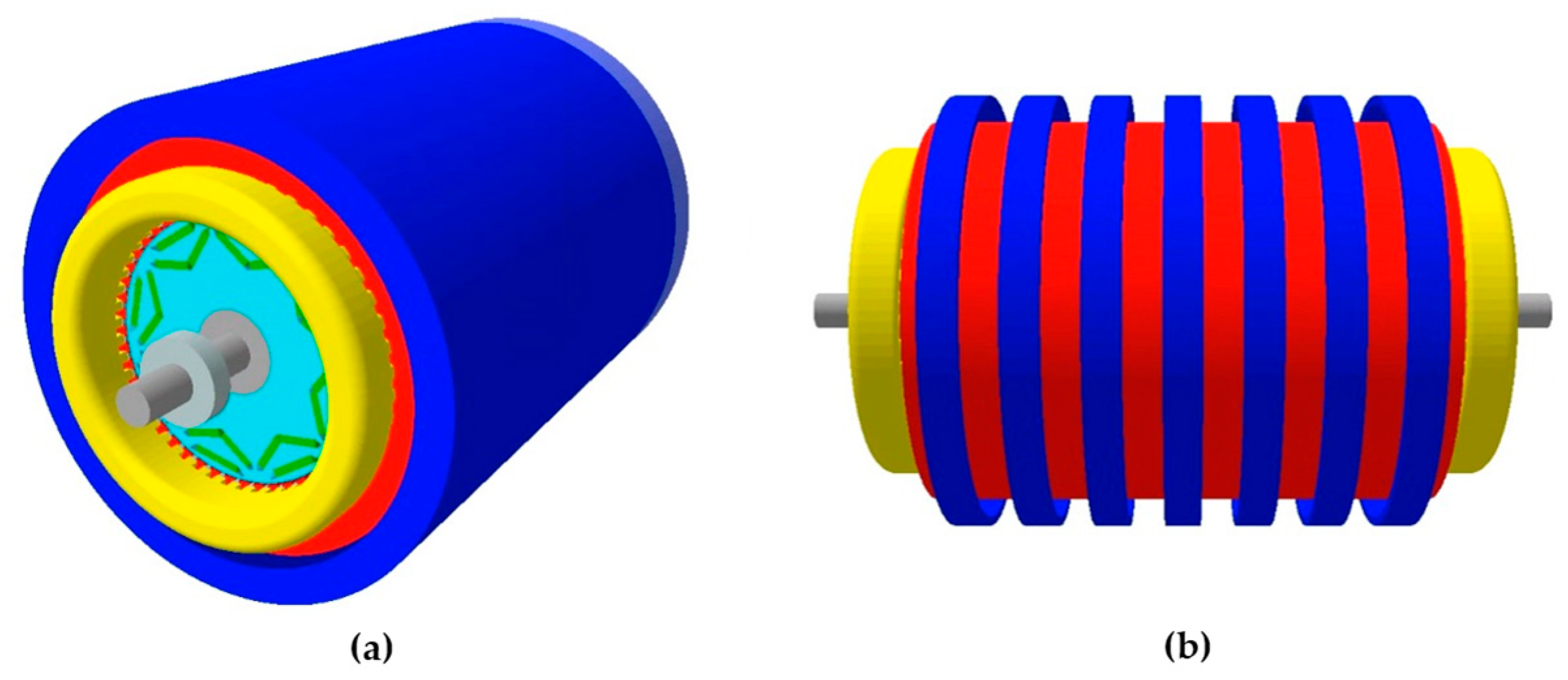
To ensure effective thermal management, a housing water-jacket cooling system was applied, in which coolant flows around the outer surface of the stator housing. The detailed specifications of the adopted cooling system are summarized in
Table 7. To enhance cooling performance, the internal flow path of the housing was designed with a seven-channel configuration, and the corresponding motor geometry is shown in
Figure 10. The seven-channel structure was selected because, compared with a simple single-channel flow path, it increases both the coolant contact area and the effective heat transfer area, thereby improving cooling efficiency [
40]. As the coolant, an EGW (ethylene glycol–water) 50/50 mixture, which is commonly used in EV cooling systems, was employed [
41]. In addition, electrified powertrain thermal management systems generally operate with coolant loop temperatures in the range of 60–70 °C [
42,
43].
Accordingly, to reflect the high-temperature cooling environment of practical EV applications, the coolant inlet temperature and flow rate were set to 65 °C and 6.5 LPM, respectively. Under these conditions, the average coolant velocity in the flow path was calculated as 1.083 m/s, and the Reynolds number was 6641. Since the flow velocity exceeds 1 m/s and the Reynolds number is greater than 6000, the internal flow can be considered to be in the turbulent regime [
44]. This also indicates that a sufficiently high convective heat transfer coefficient can be achieved, confirming that the proposed cooling structure is capable of effectively dissipating the heat generated within the motor.
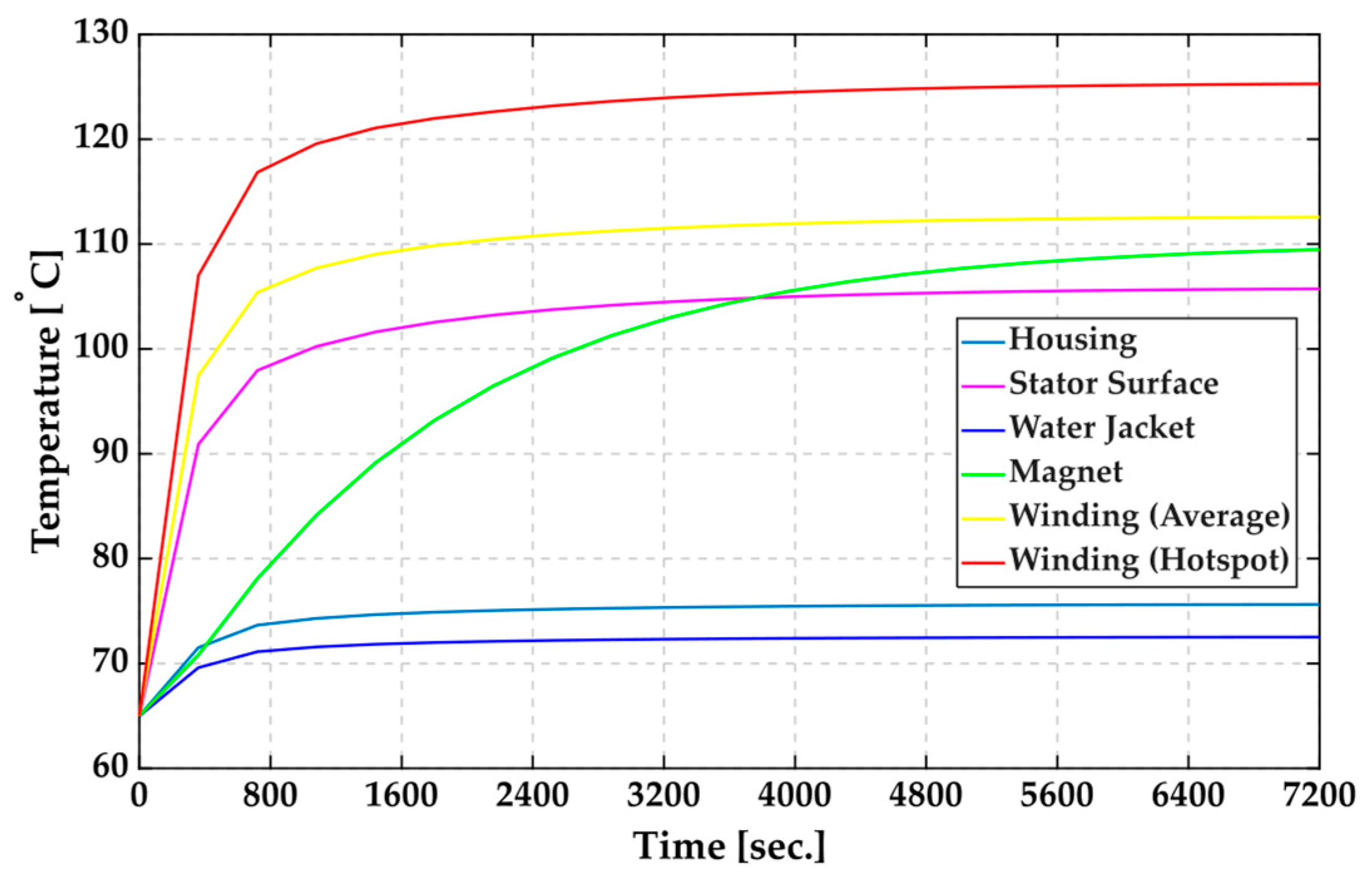
Based on the rated load and cooling conditions defined above, a transient thermal analysis was performed for 7200 s under continuous rated-load operation, which represents a conservative thermal scenario that imposes the maximum sustained heat generation. The resulting temperature evolution is presented in
Figure 11. The initial temperature of all components, including the coolant inlet, housing, permanent magnets, and windings, was set to 65.0 °C to reflect the hot-start operating condition of practical EV applications. The analysis showed that the hotspot temperature of the stator windings reached approximately 125.3 °C, which was the highest temperature in the motor. This corresponds to a thermal margin of approximately 54.7 °C below the allowable temperature limit of 180 °C for Class H insulation, which is commonly adopted in high-power-density EV traction motors. The rotor permanent magnets reached approximately 109.48 °C, which provides a margin of about 40.52 °C below the reversible demagnetization temperature of 150 °C for the applied N42UH magnets. As a result, most components reached thermal saturation after approximately 3600 s, and the permanent magnets also converged before 7200 s, indicating the establishment of thermal equilibrium. These results suggest that no excessive overheating is expected under the analyzed continuous rated-load condition.
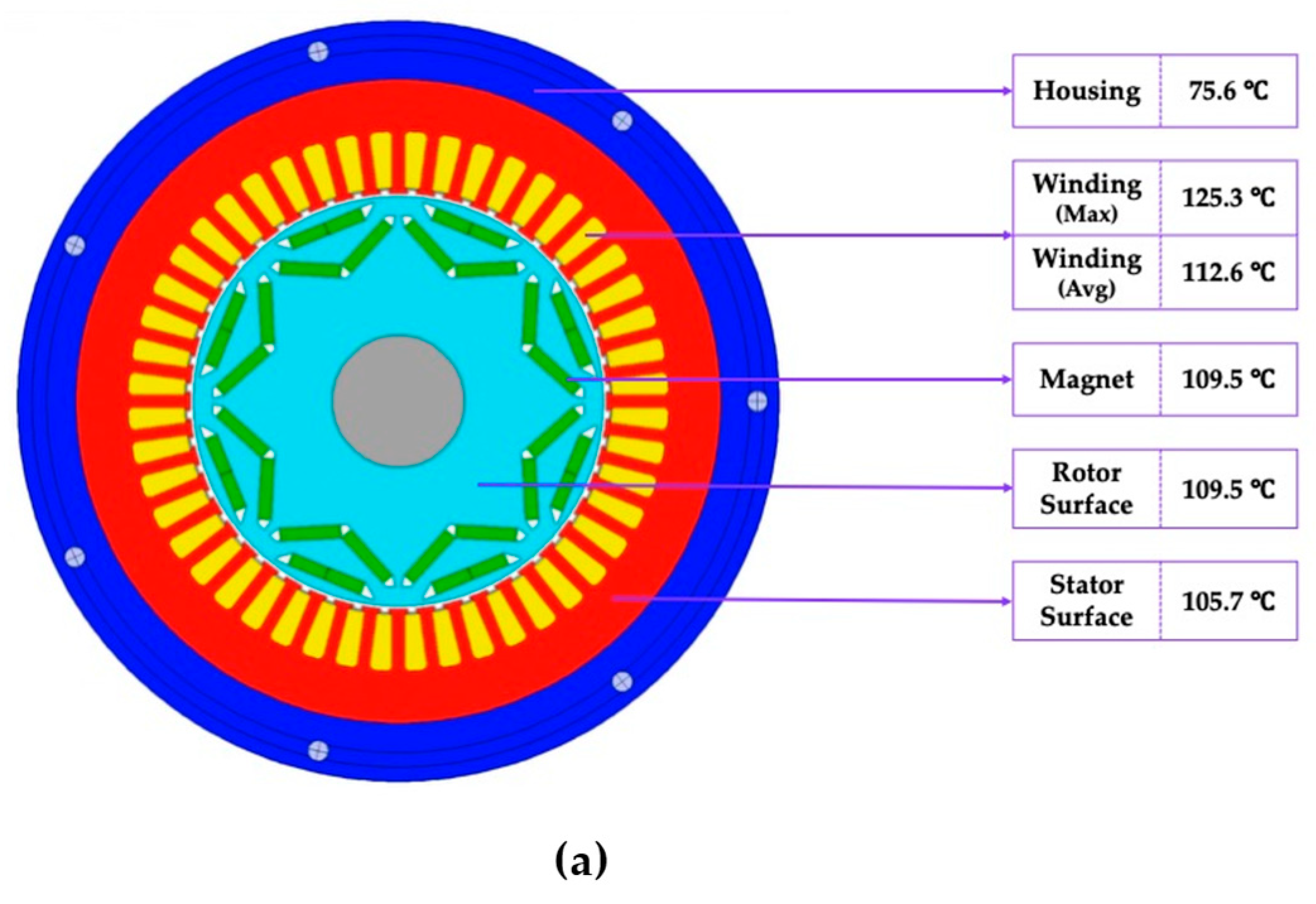
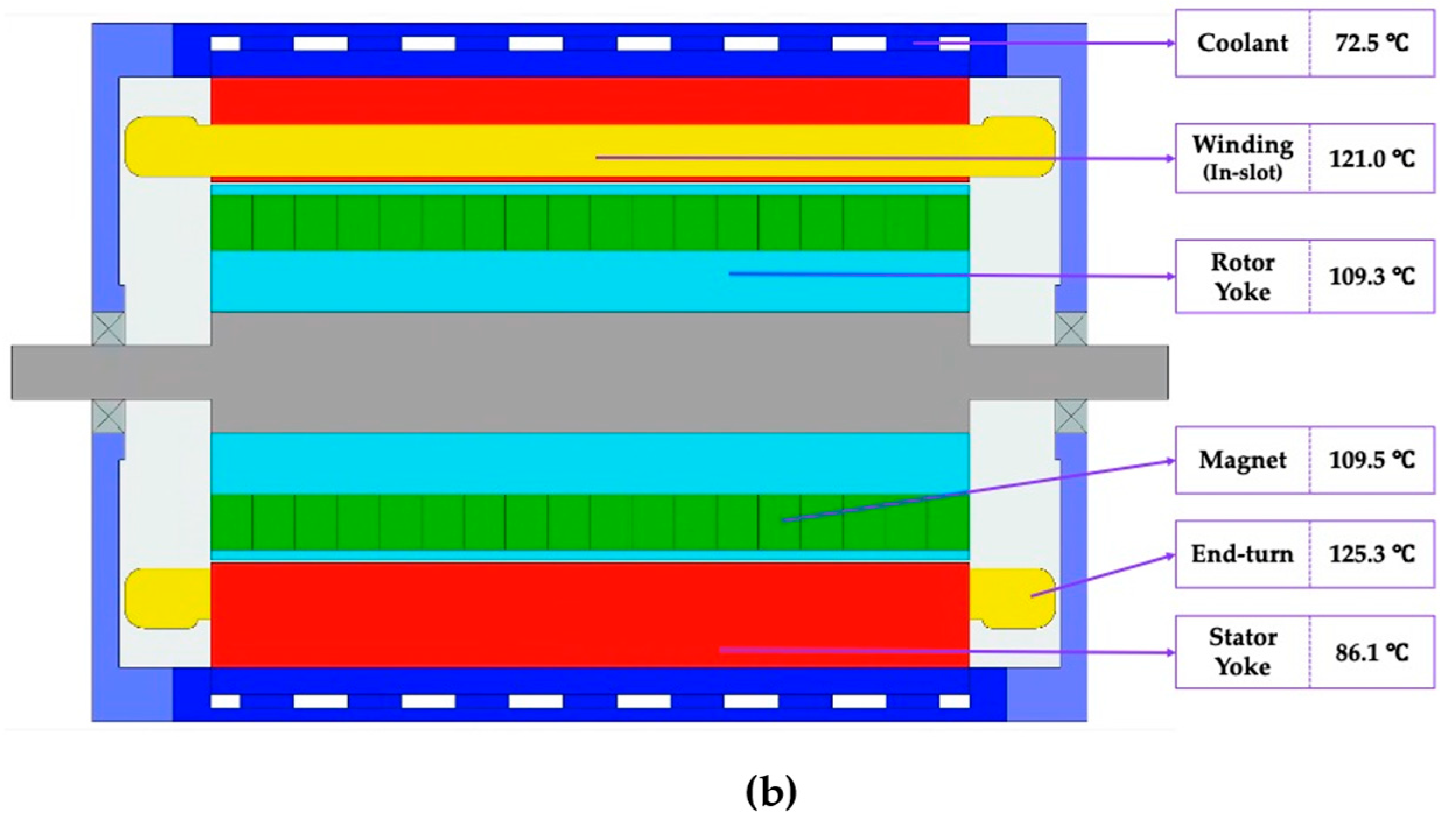
In addition to the time-dependent temperature evolution, the steady-state temperature distribution inside the motor was examined and is shown in
Figure 12.
Figure 12a presents the radial cross-sectional view, and
Figure 12b presents the axial side view, enabling a comprehensive interpretation of the internal temperature field. The analysis indicates that the winding temperature inside the stator slot was approximately 121.0 °C, whereas the maximum temperature of 125.3 °C was observed near the end-turn region, which is relatively distant from the coolant flow path. This distribution is a typical feature of housing water-jacket cooling, visually demonstrating that the heat generated during motor operation is effectively conducted through the stator core and removed through the seven-channel water jacket. In addition, the rotor yoke and permanent magnet surface temperatures remained relatively uniform at approximately 109.5 °C, indicating that heat transfer from the stator to the rotor across the air gap was effectively suppressed by the cooling system. Overall, the proposed cooling system effectively minimized local thermal saturation throughout the motor and maintained a stable temperature distribution within the allowable temperature range, thereby indicating that the motor maintains an acceptable thermal margin under the analyzed rated-load condition.
The thermal analysis in this study was conducted using the lumped-parameter thermal network in Motor-CAD. In this model, the convective heat-transfer coefficient at the coolant–housing interface was derived from the calculated flow conditions, including a flow velocity of 1.083 m/s and a Reynolds number of 6641, corresponding to the turbulent-flow regime, rather than being assumed as an arbitrary constant. The end-winding thermal behavior was included in the thermal network, as indicated by the predicted hotspot in the end-turn region (125.3 °C), rather than in the slot interior (121.0 °C). It is acknowledged that the explicit parameterization of interfacial contact thermal resistances was not performed in the present study and therefore represents a modeling simplification. Nevertheless, the thermal results are considered suitable for design-stage feasibility assessment under the analyzed rated-load condition.
3.3. Structural Analysis
In the final stage of the multiphysics analysis, structural analysis was performed to assess the structural robustness of the rotor by considering the combined loading conditions arising from centrifugal force during high-speed rotation, electromagnetic loading, and thermally induced expansion and stiffness variation caused by temperature rise. In the structural analysis, stress, defined as the internal force per unit area generated during deformation under external loading, was adopted as the primary evaluation metric for assessing the stiffness and durability of the motor. Owing to the structural characteristics of the IPMSM, stress tends to concentrate in the magnetic bridge and center-post regions; therefore, it is essential to ensure that the maximum stress in these regions does not exceed the yield strength of the material [
45].
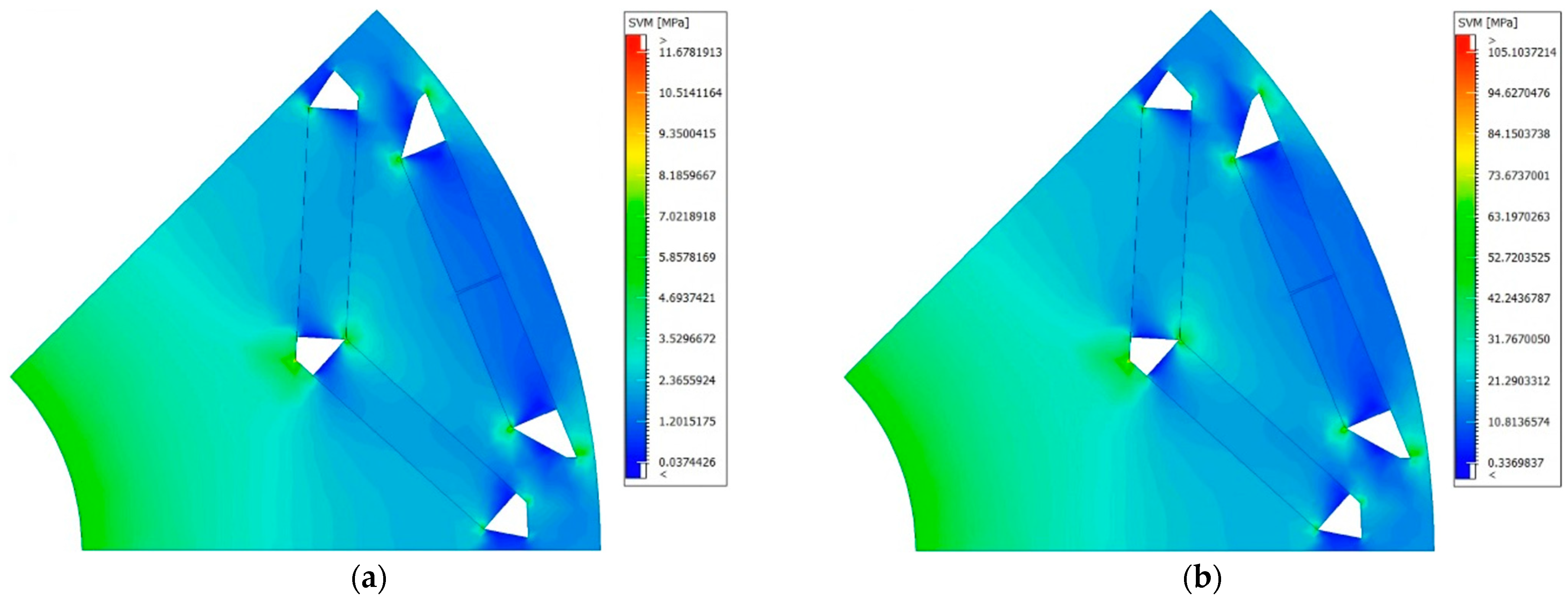
The analysis was conducted at the rated speed of 4000 rpm and at the high-speed operating condition of 12,000 rpm, and the results are presented in
Table 8 and
Figure 13.
Figure 13a shows the stress distribution under the rated-speed condition, whereas
Figure 13b shows the stress distribution under the high-speed operating condition. The results indicate that the maximum rotor stress at the rated speed was 9.98 MPa, which is significantly lower than the yield strength of the rotor core material, 370 MPa. Accordingly, the safety factor at this operating condition was calculated as 37.05. Under the high-speed operating condition of 12,000 rpm, the maximum rotor stress increased to 89.87 MPa; however, the corresponding safety factor was still 4.11, indicating that sufficient structural margin was maintained. In general, rotor design guidelines recommend a safety factor of at least 1.5 to prevent centrifugal-force-induced failure. Therefore, the proposed design is considered to satisfy this requirement with ample margin [
46].
These results confirm that the proposed motor can operate safely under high-speed conditions without structural deformation of the rotor core or the risk of permanent magnet scattering. Consequently, the structural analysis verified both the structural robustness and the mechanical reliability of the designed IPMSM.
4. Driving Cycle Simulation Analysis
The multiphysics analysis presented in
Section 3 confirmed that the designed IPMSM satisfies both the output performance required for EV traction and the associated thermal and structural reliability requirements. Specifically, while the calculated peak torque ripple is 9.76%, it satisfies the design requirement of being under the 10% threshold commonly accepted in the electric traction industry. This ripple value is the result of a strategic design trade-off to maximize power density and achieve the target output of 130 kW within a constrained rotor volume.
However, unlike fixed-rated operating conditions, real EV driving environments involve dynamic driving patterns characterized by frequent acceleration and deceleration. Therefore, accurate prediction of driving performance and energy efficiency under realistic operating conditions is of critical importance in the EV powertrain field. In view of this, the present study analyzed the energy consumption characteristics by integrating a high-fidelity loss model derived from multiphysics analysis with a driving-cycle-based simulation model.
4.1. Numerical Modeling for Vehicle System-Level Energy Evaluation
For system-level driving performance analysis, a motor efficiency map was first generated based on the multiphysics analysis results. The efficiency map was constructed by considering winding and permanent-magnet saturation temperatures obtained from the coupled electromagnetic–thermal analysis, while also incorporating MTPA operation and flux-weakening control according to variations in the current phase angle. The optimal phase angle at each operating point is automatically determined as a function of current amplitude by Motor-CAD’s saturation model, accounting for the nonlinear variation in d–q axis flux linkages due to magnetic saturation. The control transitions to flux-weakening as the speed exceeds the base speed, and the voltage limit is reached.
In addition, the operating region was defined over a speed range of 0–13,000 rpm and a torque range of 0–312.56 Nm and was discretized into a total of 286 operating points. Based on this procedure, a detailed efficiency map including loss data as functions of speed and torque was obtained, and these loss data were used to establish a simulation environment capable of reflecting the nonlinear loss characteristics of the motor. For the driving cycle condition, the WLTP Class 3b cycle described in
Section 2.2 was adopted to evaluate system efficiency and operating characteristics under time-varying load conditions.
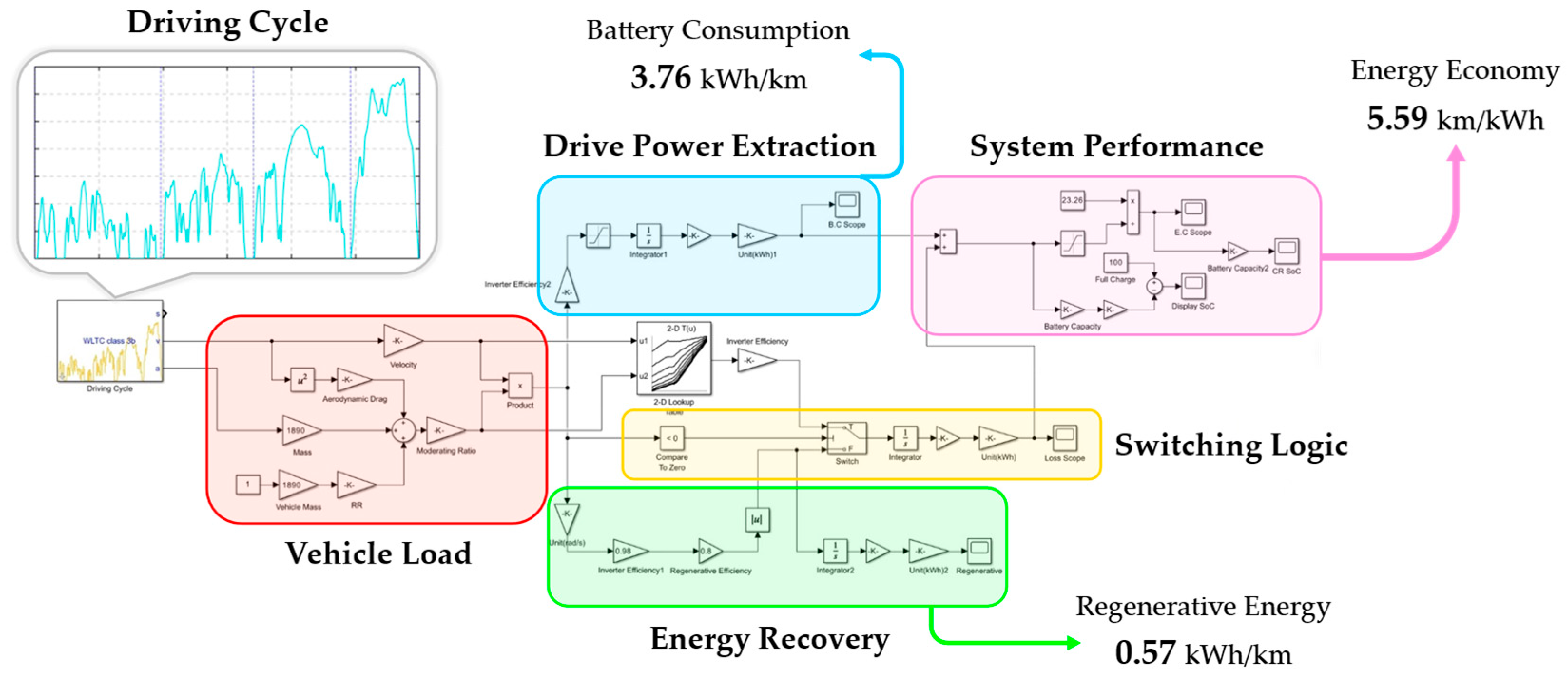
To analyze the driving performance and energy efficiency of the designed IPMSM, an integrated simulation model was constructed using MATLAB/Simulink (R2024b), and its overall architecture is shown in
Figure 14.
The vehicle dynamics and energy conversion equations employed in this model were formulated on the basis of physics-based models widely used in the vehicle traction field for analyzing road load and power balance [
47]. On this basis, the reliability of the system-level model was ensured by enabling load calculation, energy-flow analysis during acceleration and deceleration, and incorporation of motor losses [
48].
The constructed model consists of four major subsystems according to functionality, and the key parameters used in the model are summarized in
Table 9. It is noted that the inverter efficiency is treated as a constant representative value, consistent with the efficiency range reported for SiC-based automotive traction inverters [
49], and that battery internal resistance is not explicitly modeled, as the primary focus of this study is motor-level energy performance evaluation. The voltage constraint in the flux-weakening region is implicitly reflected in the efficiency map constructed over the full operating range, including the flux-weakening region with a DC-link voltage of 400 V.
4.1.1. Vehicle Load Calculation Block
To calculate driving resistance while accounting for vehicle dynamics, the following equations were incorporated into the simulation model. The total road load force
, acting on the vehicle during driving is defined as the sum of the rolling resistance,
, aerodynamic drag,
, and acceleration resistance,
, as expressed in Equation (1):
Each resistance component was modeled in detail using the parameters implemented in the Simulink block diagram, as given in Equations (2)–(6).
Rolling Resistance (): Rolling resistance arises from friction between the tire and the road surface and is determined by the vehicle mass, the gravitational acceleration, and the rolling resistance coefficient. Here,
is the vehicle mass;
is the gravitational acceleration; and
is the rolling resistance coefficient.
Aerodynamic Drag (): Aerodynamic drag is the resistance generated as the vehicle moves through air and has a significant effect on energy economy, particularly in the high-speed region. It is calculated as being proportional to the air density
, frontal area
, drag coefficient
, the square of the vehicle speed
, and the unit conversion factor
.
Acceleration Resistance (): Acceleration resistance represents the force required to reproduce the acceleration profile of the driving cycle and is calculated based on Newton’s second law.
Torque Conversion Factor (): The total road load force,
, is converted into the motor torque,
, using the torque conversion factor. This factor is determined from the wheel radius,
, and the gear ratio,
, as expressed in Equation (5).
Using Equations (1)–(5), the torque demand required from the motor during vehicle driving was determined from the road load force. To determine the motor operating point, the vehicle’s linear speed provided by the driving cycle was converted into the motor rotational speed .
Speed Conversion Factor (): The speed conversion factor transforms the vehicle linear speed,
, into the motor speed,
. In this process, the vehicle speed is first converted into the wheel angular speed by dividing by the wheel radius,
, and is then converted into motor rotational speed by multiplying by the gear ratio,
. Finally, the factor
is applied to convert the unit into
, resulting in Equation (6):
According to Equation (6), when the vehicle operates at the maximum speed of 131.3 km/h, the motor rotates at approximately 10,751 rpm. Finally, the mechanical power,
, was derived from the results obtained through Equations (1)–(6). The mechanical power is calculated by multiplying the torque component at the motor side by the converted motor rotational speed, as expressed in Equation (7):
A unit conversion factor was included so that the calculated mechanical power, , is expressed in watts .
4.1.2. Drive Power Extraction Block
The Drive Power Extraction Block calculates the power drawn from the battery by considering the losses generated in the motor during acceleration and steady-state driving. In this model, a loss-based approach was adopted to accurately reflect the nonlinear loss characteristics of the motor by directly mapping the loss data at each operating point. The procedure for calculating the battery discharge power, is described as follows.
Motor Loss Extraction (): The loss data obtained from the electromagnetic analysis as functions of motor speed,
, and torque,
, were mapped to a two-dimensional lookup table. At each time step, the corresponding motor loss,
, for the operating point defined by the driving cycle was extracted through bilinear interpolation, as expressed in Equation (8):
Battery Discharge Power (): The motor input power was determined by summing the mechanical power,
, and the motor loss,
, and the battery discharge power during acceleration and steady-state driving was then calculated by considering the inverter efficiency,
, as given in Equation (9):
The energy consumed during acceleration and steady-state driving directly affects the total energy consumption of the system. However, in EV operation, the amount of energy recovered during deceleration must also be considered, since it is another important factor influencing overall energy consumption.
4.1.3. Regenerative Energy Recovery Block
The Regenerative Energy Recovery Block was constructed to reflect the energy recovery characteristics during deceleration in EV operation. To accurately calculate the regenerative braking energy generated during deceleration in the driving cycle, the following step-by-step modeling procedure was adopted.
Unit Conversion: During deceleration, the mechanical energy transmitted from the wheel side to the motor is converted into electrical energy as the motor operates in generator mode. Therefore, the motor rotational speed,
, was converted into angular speed in radians per second,
, so that it could be multiplied by torque, as expressed in Equation (10):
Efficiency Application (): The actual recoverable energy,
, was calculated by sequentially applying the inverter efficiency,
, and the regenerative braking efficiency,
, to the power generated by the motor before it is delivered to the battery, as expressed in Equation (11). Since this quantity physically represents battery charging energy, an absolute value was applied to maintain consistency in the battery energy balance calculation.
4.1.4. Mode Switching Logic and Power Flow Control Block
A switching logic was implemented to select the appropriate energy path based on acceleration and deceleration states. The total net energy consumption was determined by combining the energy drawn from the battery with the system loss and the recovered energy.
4.1.5. System Performance Metrics
Energy consumption directly affects battery utilization efficiency and therefore has a direct influence on key performance indicators such as energy economy and driving range. Accordingly, to evaluate the applicability of the proposed system under driving conditions, the final net energy consumption, , obtained from the switching logic and energy integration process, was used to derive the main performance metrics of the system-level simulation, namely energy economy, state of charge (SoC), and driving range, as expressed in Equations (16)–(18).
Energy Economy: Energy economy is a performance index representing the energy utilization efficiency of an EV. In this model, it was calculated by dividing the total driving distance,
, by the final net energy consumption,
, over the driving cycle.
State of Charge: The battery SoC was calculated from the ratio of the cumulative net energy consumption,
, to the available battery energy,
, as given in Equation (17).
In this model, both consumed energy and recovered regenerative energy were reflected in real time, and the initial battery capacity was normalized to 100% to determine the SoC variation.
Driving Range: The predicted maximum driving range of the vehicle equipped with the designed IPMSM was calculated from the derived energy economy and the total available battery capacity,
, of the C-segment-class vehicle, as shown in Equation (18):
In this study, a system-level simulation model capable of comprehensively evaluating the performance of the designed IPMSM was established based on the numerical modeling methodology expressed in Equations (1)–(18). This model was configured to enable real-time coupling of vehicle dynamics and energy flow, thereby allowing a more precise analysis of the vehicle’s dynamic characteristics under actual road-driving conditions. As a result, the energy efficiency and applicability of the motor-based traction system could be quantitatively evaluated even under complex driving cycle conditions involving frequent acceleration and deceleration.
4.2. Driving Cycle Simulation Results
The driving performance and energy-efficiency characteristics of the designed 130 kW IPMSM were analyzed using the constructed system-level simulation model. The simulation was performed based on the WLTP Class 3b cycle, which is one of the representative international standard driving modes for EVs. This cycle includes both urban and highway driving conditions and consists of a composite driving scenario in which acceleration and deceleration occur frequently, making it suitable for performance evaluation under realistic driving environments. By linking the motor’s nonlinear loss data with the numerically modeled system-level simulation methodology, the proposed approach enables validation of the vehicle energy characteristics and the practical applicability of the motor under realistic driving conditions, which are difficult to capture through simple static calculations alone. Specifically, the simulation results include the distribution of motor operating points and corresponding efficiency characteristics throughout the driving cycle, as well as system-level performance indicators based on real-time energy flow, final battery SoC variation, single-charge driving range, and energy economy.
4.2.1. Analysis of Operating Point Distribution
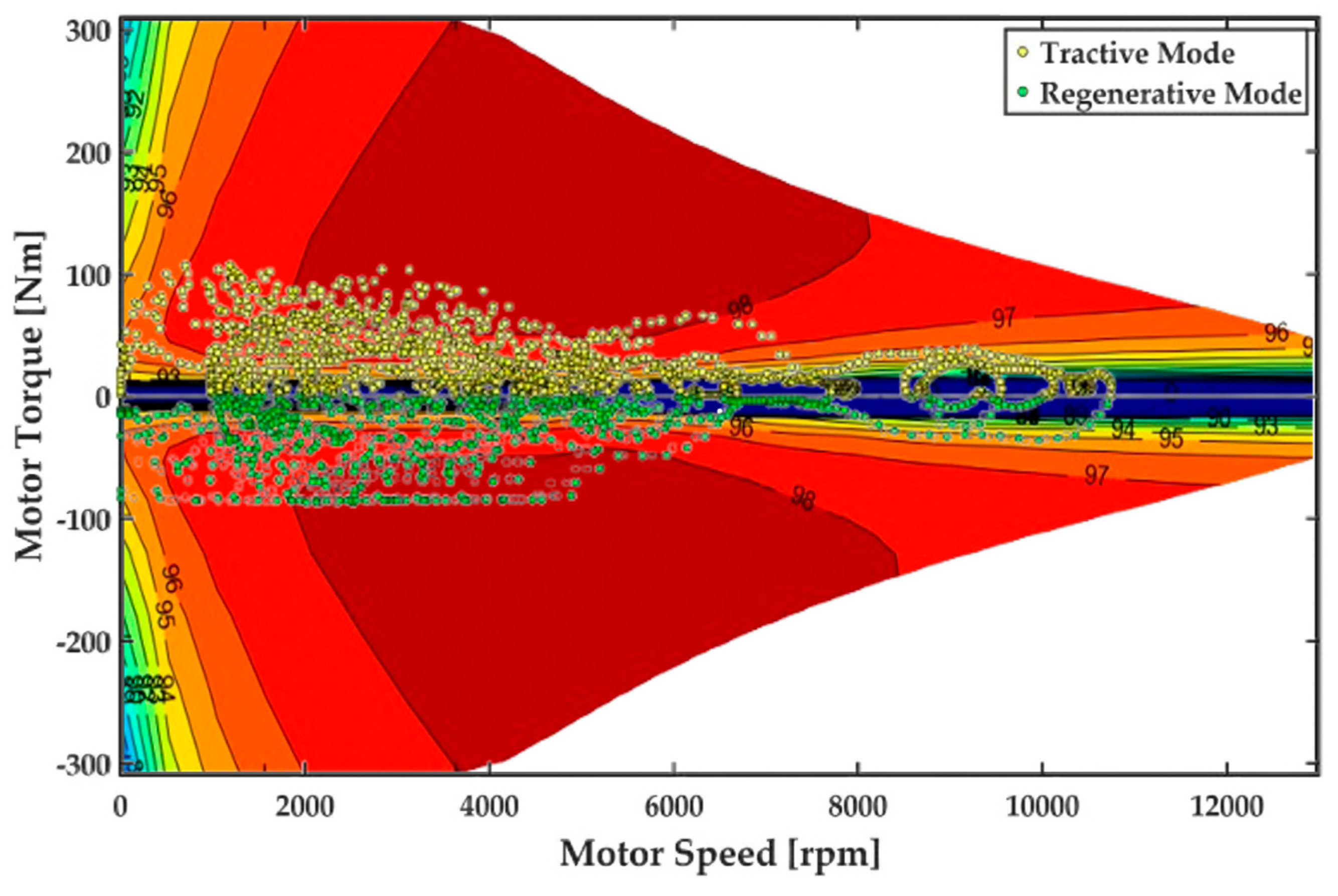
The energy-efficiency performance of a vehicle should be evaluated not only in terms of efficiency at a single operating point, but also by considering the distribution of operating points formed under varying driving cycle conditions, together with the motor efficiency map. Accordingly, the motor operating region was visualized using the real-time torque and speed data obtained from the simulation, and the results are presented in
Figure 15.
Figure 15 shows the operating points generated during the driving cycle overlaid on the efficiency map of the designed IPMSM.
The analysis indicates that, despite the frequent acceleration and deceleration events in the driving cycle, most operating points are concentrated in the high-efficiency region above 95%. More specifically, the designed IPMSM maintains high efficiency not only at low-torque operating points in the constant-torque region, which frequently occur during urban driving, but also in the constant-power region during high-speed operation. These results suggest that the designed motor can provide favorable system-level energy performance under the assumptions of the present WLTP-based simulation model.
4.2.2. Analysis of Power Flow and Regenerative Energy Recovery
To comprehensively evaluate the energy efficiency of the vehicle traction system, it is essential to accurately analyze changes in the power balance under dynamic driving conditions involving repeated acceleration and deceleration [
50]. To this end, the real-time interaction between the traction energy supplied by the battery and the energy recovered during braking was incorporated into the simulation model. This interaction between driving energy and regenerative energy is a key factor directly related to total vehicle energy consumption, energy economy, and driving range [
51]. Therefore, the time-dependent power flow during the driving cycle is presented in
Figure 16.
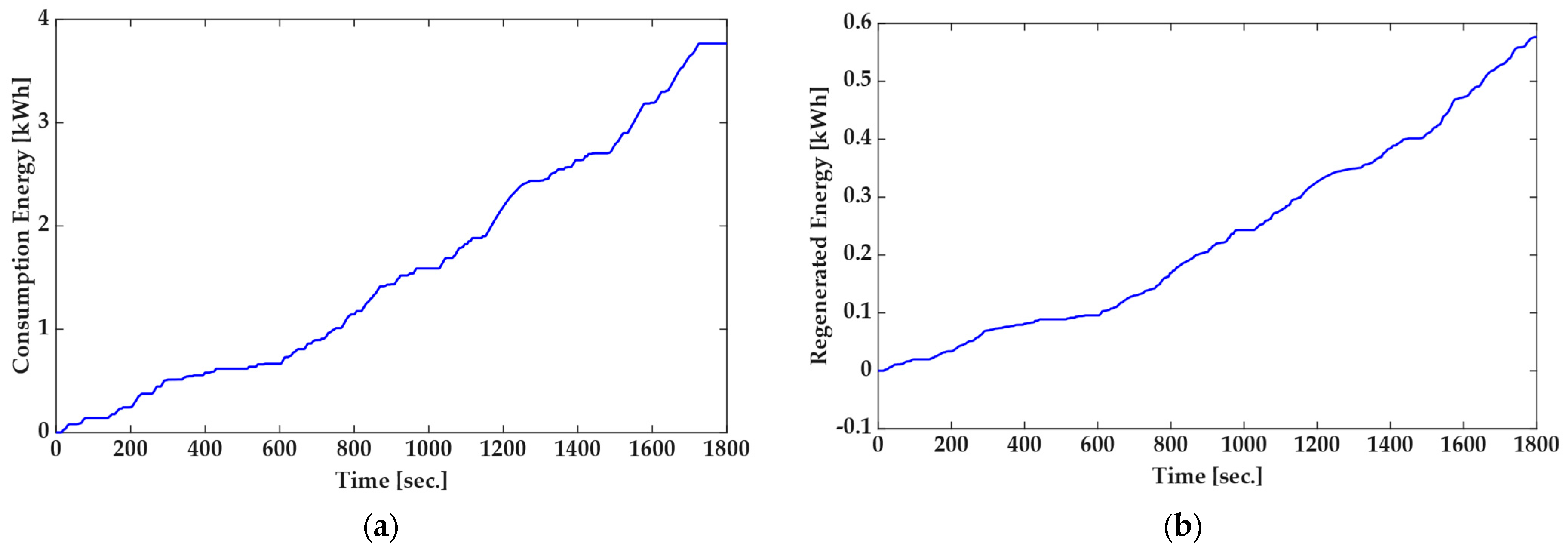
Figure 16a shows the continuous consumption of battery energy during acceleration, whereas
Figure 16b illustrates the recovery of energy during deceleration and braking, when the motor operates in generator mode. The simulation results show that the cumulative battery energy consumption during the driving cycle was approximately 3.76 kWh, while the energy recovered through regenerative braking was approximately 0.57 kWh. These results confirm that the switching logic in the model functions appropriately according to acceleration and deceleration conditions.
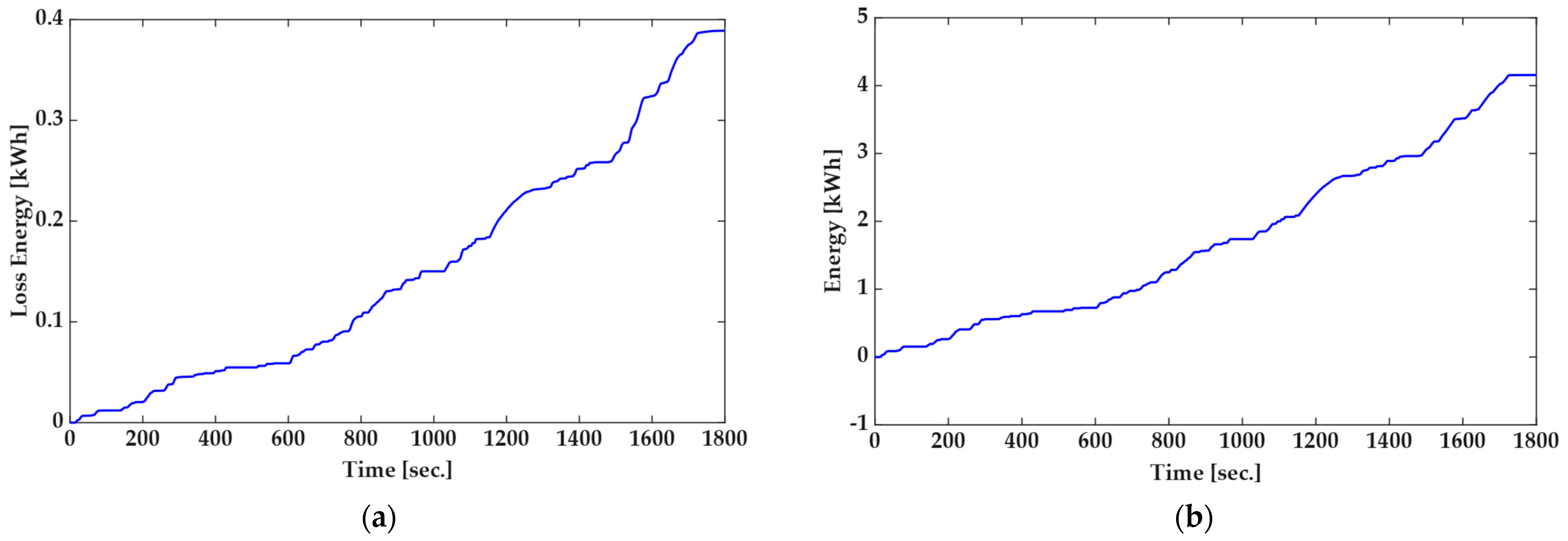
Based on Equation (14), the net loss energy was calculated by subtracting the energy recovered through regenerative braking from the internal system losses generated during driving. The resulting overall energy-balance analysis is presented in
Figure 17 in order to evaluate the actual improvement in system efficiency.
Figure 17a shows the cumulative net loss energy during the driving cycle, while
Figure 17b shows the total energy required by the system to propel the vehicle.
The analysis shows that the energy recovered through regenerative braking contributes to battery recharging and mitigates overall system power consumption, resulting in a final net loss energy of approximately 0.38 kWh. In addition, when the cumulative battery energy consumption is combined with the net loss energy considering regenerative braking, the total required energy, including the nonlinear loss data, is calculated to be approximately 4.15 kWh. This demonstrates that regenerative braking effectively reduces energy loss and enables stable energy management even under composite driving conditions involving repeated acceleration and deceleration.
In addition, the regenerative braking system directly contributes to extending the EV driving range and improving overall energy efficiency. In this study, the Regenerative Energy Ratio (RER) was calculated using Equation (19) to quantitatively evaluate the degree of efficiency improvement [
52].
The analysis result indicates that the proposed system achieves an RER of approximately 13.86%. This means that, compared with a driving condition without regenerative braking, energy equivalent to 13.86% of the total battery energy is effectively recharged. Consequently, this energy-recovery characteristic contributes to reducing the cumulative net loss energy of the system to approximately 0.38 kWh, thereby demonstrating that the designed IPMSM possesses excellent energy-management capability even under composite driving conditions.
4.2.3. Analysis of System-Level Energy Performance
Finally, based on the energy flow analyzed above, the final SoC variation and the energy-economy characteristics of the vehicle system were evaluated over the driving cycle. Real-time SoC variation is an important indicator for assessing the energy-management capability of the system under actual EV operating conditions and is also significant from the standpoint of ensuring vehicle energy reliability [
53].
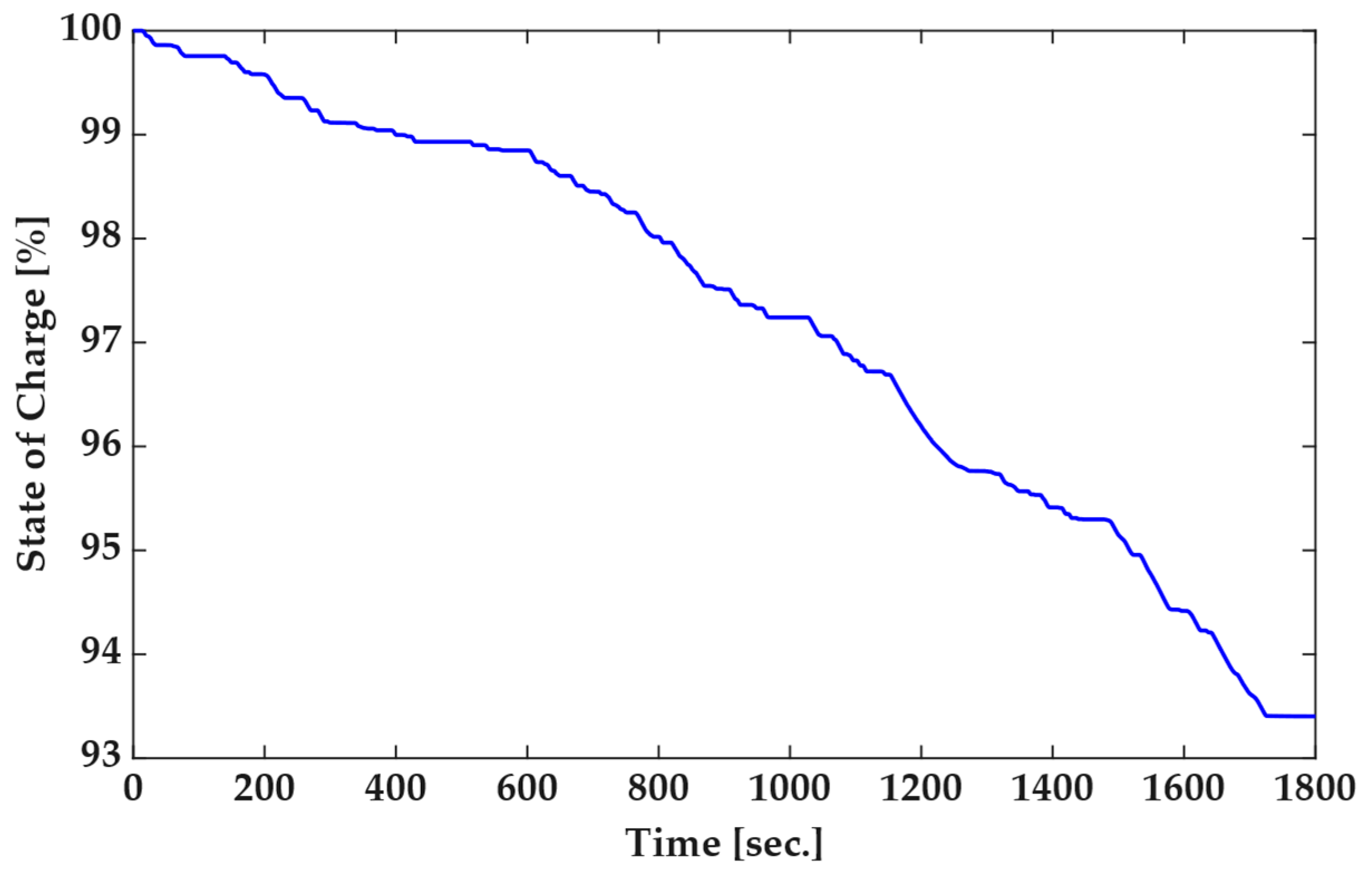
Accordingly, the battery state-of-charge profile during the driving cycle is presented in
Figure 18. The initial battery SoC was set to 100% at the beginning of the simulation, and the battery SoC at the end of the driving cycle (
t = 1800 s) was calculated to be 93.40%. In addition, the SoC profile includes regions in which the rate of decrease becomes more gradual or temporarily flat, which can be attributed to partial energy recovery through regenerative braking during deceleration. This indicates that the battery energy is utilized more efficiently under the proposed operating strategy.
After completion of the driving cycle, the energy economy was calculated using Equation (16). Based on the total driving distance of 23.26 km and the final net energy consumption, the energy economy was found to be approximately 5.59 km/kWh. Furthermore, using this value together with the total battery capacity of 63.0 kWh, the predicted maximum driving range on a single charge was calculated to be approximately 352.58 km. These results indicate that the designed 130 kW IPMSM not only satisfies the output performance required for a C-segment vehicle but also provides stable energy-conversion efficiency under system-level simulation conditions that reflect dynamic load variations in realistic road-driving environments. In particular, the concentration of operating points in the high-efficiency region and the contribution of regenerative braking confirm that the proposed motor yields meaningful improvements in vehicle-level performance, including SoC management, energy economy, and driving range. Finally, the overall performance of the designed IPMSM, combining the results of the multiphysics analysis and driving cycle simulation, is summarized in
Table 10.
5. Conclusions
This paper presented an application-oriented evaluation of a 130 kW IPMSM traction motor by linking sequentially coupled multiphysics analysis with WLTP-based vehicle system-level simulation. The purpose of this study was not to propose a new motor topology, optimization method, or control strategy, but to numerically assess the designed IPMSM from both motor-level and vehicle-level perspectives. Unlike previous studies that mainly focused on electromagnetic–thermal coupling without structural assessment [
23,
28] or on lower-power-class motors [
19,
20], this study consistently considered electromagnetic, thermal, structural, and vehicle-level energy characteristics for a 130 kW-class high-power-density EV traction motor.
The Motor-CAD-based multiphysics analysis showed that the designed IPMSM achieved a maximum efficiency of 97.94%, while the winding and permanent-magnet temperatures remained within the corresponding allowable limits under the analyzed rated-load thermal condition. In the structural analysis, a rotor safety factor of 4.11 was obtained at 12,000 rpm, indicating sufficient mechanical margin under the high-speed operating condition considered in this study. The resulting loss and efficiency data were then incorporated into a MATLAB/Simulink-based vehicle system-level model and evaluated under the WLTP Class 3b driving cycle. The simulation results showed that most operating points were distributed in the high-efficiency region above 95%. The predicted energy economy was 5.59 km/kWh, corresponding to an estimated single-charge driving range of 352.58 km under the assumptions of the present model.
Overall, the results indicate that the designed 130 kW IPMSM has feasible electromagnetic, thermal, structural, and vehicle-level energy characteristics for the target C-segment EV traction application. The study also demonstrates that connecting motor-level multiphysics results with WLTP-based system-level simulation can provide useful information for design-stage assessment of high-power-density EV traction motors.
Nevertheless, several limitations should be acknowledged. First, all results are based on numerical simulation, and no prototype-level experimental validation was performed. Therefore, the results should be interpreted as a simulation-based design-stage assessment rather than experimentally validated performance data. Second, although Motor-CAD enables efficient sequential coupling among electromagnetic, thermal, and structural analyses, the adopted model involves simplifications compared with dedicated high-fidelity 3D FEM and CFD-based analyses. Third, the vehicle system-level simulation used constant inverter and regenerative braking efficiencies, did not explicitly model battery internal resistance, and did not include auxiliary loads such as HVAC, infotainment, lighting, and other onboard electrical systems. These simplifications may lead to a somewhat optimistic estimate of the absolute vehicle energy economy.
Future work will focus on prototype-based experimental validation, model-fidelity improvement, and geometry optimization. Prototype validation will include dynamometer testing, back-EMF measurement, infrared thermal imaging, high-speed rotor integrity assessment, and drive-cycle-based energy validation. The numerical model will be further refined by extending the 3D FEM-based cross-check performed in this study to the thermal and structural domains and by incorporating operating-point-dependent inverter losses, battery internal-resistance effects, and CFD-based flow–thermal coupling. In addition, surrogate-model-based rotor geometry optimization and WLTP-duty transient thermal analysis will be pursued to reduce torque ripple, improve power density, and enhance design feasibility.