1. Introduction
The climate in the Southern Xinjiang region is extremely arid, characterized by scarce precipitation and intense evaporation [
1]. Groundwater runoff is sluggish, and vertical evaporation dominates water–salt migration. Salts in the widely distributed aeolian sand foundation soils accumulate as capillary water rises, leading to the extensive development of saline soils in basins, alluvial–proluvial plains, and oasis margins. Such soils exhibit strong salt heave, collapsibility, and corrosiveness [
2,
3,
4]. These foundations serve as the core engineering base for hydraulic structures such as lined canals and reservoir dams. Under the coupled effects of salt, water, and temperature, salt heave and frost heave in the foundation soil readily induce engineering distresses like the cracking of canal linings, posing a severe threat to the long-term safety and durability of infrastructure [
5]. Studies indicate [
6] that the essence of engineering distress in the cold-arid environment of Southern Xinjiang results from the coupling of water, salt, temperature, and stress fields within the foundation soil, along with the interaction between soil and structure. Temperature has been identified as the core driving factor, and thermal conductivity is a key parameter for establishing accurate temperature field models [
7]. Therefore, systematic research on the thermal conductivity characteristics of saline aeolian sand in Southern Xinjiang is driven by clear engineering requirements and theoretical significance.
Significant progress has been made in the study of soil thermal conductivity. Existing findings generally indicate that moisture content, dry density, salt content, and temperature are the key factors governing variations in thermal conductivity [
8,
9,
10]. Specifically, Abu-Hamdeh et al. [
11] investigated soil thermal conductivity using a single-probe method and noted that increases in both moisture content and density significantly enhanced thermal conductivity, whereas salt and organic matter altered the magnitude of this change. Yan et al. [
12] pointed out that an increase in moisture content shifted the soil heat transfer mechanism from particle contact conduction to liquid bridge conduction, thereby improving heat transfer efficiency. Subsequently, Lu et al. [
13] further developed an improved thermal conductivity prediction model based on moisture content. Wu et al. [
14] established a prediction formula for backfill soil thermal conductivity based on moisture content and dry unit weight. Nikoosokhan et al. [
15] validated the close relationship between thermal conductivity, compaction degree, and moisture state from the perspectives of dry density, soil structure, and water conditions. These studies demonstrate that soil thermal conductivity is not governed by a single variable but results from the combined effect of multiple physical state parameters. Building on this, researchers have progressively focused on the role of salt and its regulatory mechanisms on pore fluid properties and heat transfer paths. Siddiqua et al. [
16] found that changes in pore fluid chemistry significantly affect the thermal behavior of bentonite–sand mixtures, indicating that salt not only alters the thermal conductivity of the liquid phase but also influences inter-particle contact states and the electrical double-layer structure. Ju et al. [
17] further proposed a modified thermal conductivity model for saline soils, asserting that existing conventional models struggle to accurately describe the thermal response of saline soils if salt effects are neglected. This suggests that salt is no longer merely an additional influencing factor but a non-negligible controlling condition in the prediction of thermal parameters for saline soils.
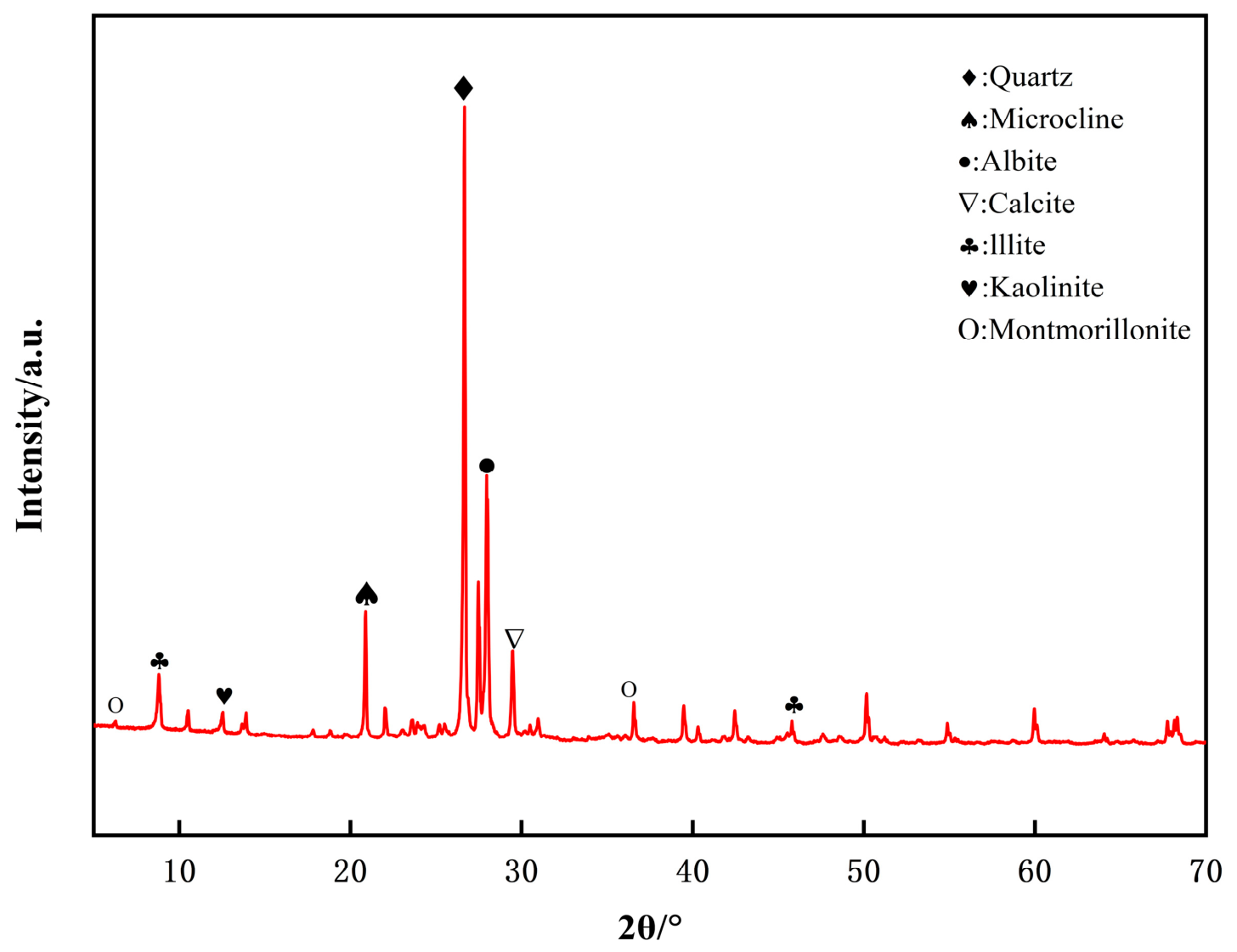
With the continued advancement of research on soil heat transfer mechanisms, the influence of mineral composition on soil thermal conductivity has received increasing attention. Different mineral constituents exhibit distinct solid-phase thermal properties. For instance, quartz generally has relatively high thermal conductivity, whereas feldspar, carbonate minerals, and clay minerals show different thermal characteristics. Therefore, even under comparable moisture content, dry density, and pore structure conditions, variations in mineral composition may still result in differences in soil thermal conductivity. Li et al. [
18] reported that quartz content is a key parameter for predicting soil thermal conductivity and that directly using sand content as a substitute for quartz content may introduce considerable uncertainty into thermal conductivity estimates. Xu et al. [
19]. further demonstrated that quartz, as a high-thermal-conductivity mineral, plays an important role in soil heat transfer, and neglecting its contribution may reduce the predictive accuracy of thermal conductivity models. These findings indicate that mineral composition, particularly the content of high-thermal-conductivity minerals such as quartz, is an important factor governing soil thermal conductivity, mainly by altering the intrinsic thermal conductivity of the solid phase and the heat transfer pathways within the soil skeleton.
As research deepens, the mechanisms governing the evolution of thermal parameters under temperature effects and during the freezing process have gradually become research foci [
20,
21]. Campbell et al. [
22] noted that temperature variations affect soil thermal conductivity. Hiraiwa et al. [
23] confirmed a significant response of soil thermal conductivity to temperature over a wider temperature range. Subsequently, Xu et al. [
24], in a study of red clay, further discovered that thermal conductivity increases with rising temperature, and the role of latent heat transfer is more pronounced under moderate saturation conditions. In the context of frozen soil research, Wan et al. [
25] focused on temperature’s effect on the thermal conductivity of lime-modified red clay, demonstrating that changes in unfrozen water content at low temperatures are the primary factor controlling thermal properties. Bi et al. [
26] established a method for predicting frozen soil thermal conductivity based on the soil freezing characteristic curve, highlighting that the evolution of unfrozen water and phase change processes are critical links governing thermal behavior under low-temperature conditions. Thus, it is evident that temperature changes not only affect the thermal properties of individual soil phases but also further alter the heat transfer process through water migration, phase transformation, and changes in unfrozen water content.
However, under unsaturated or saline conditions, heat transfer is often accompanied by coupled processes such as latent heat exchange and pore liquid phase restructuring [
27,
28,
29]. This renders the quantitative characterization of internal soil heat transfer mechanisms relatively difficult, and existing models are generally complex in form. Bayat et al. [
30] utilized terrain attributes and soil physical parameters to construct a thermal conductivity prediction model based on artificial neural networks, validating the feasibility of machine learning methods in thermal parameter prediction. Wan et al. [
25], based on the generalized thermal conductivity theory for geomaterials and considering the influence of particle shape, established a thermal conductivity prediction model for sodium sulfate saline soil, achieving a relative prediction error within 10%. Wu et al. [
31], in a recent review, further summarized that research on soil thermal conductivity has progressively evolved from single-factor experimental analysis to a parallel paradigm involving multi-factor coupling, model refinement, and intelligent prediction.
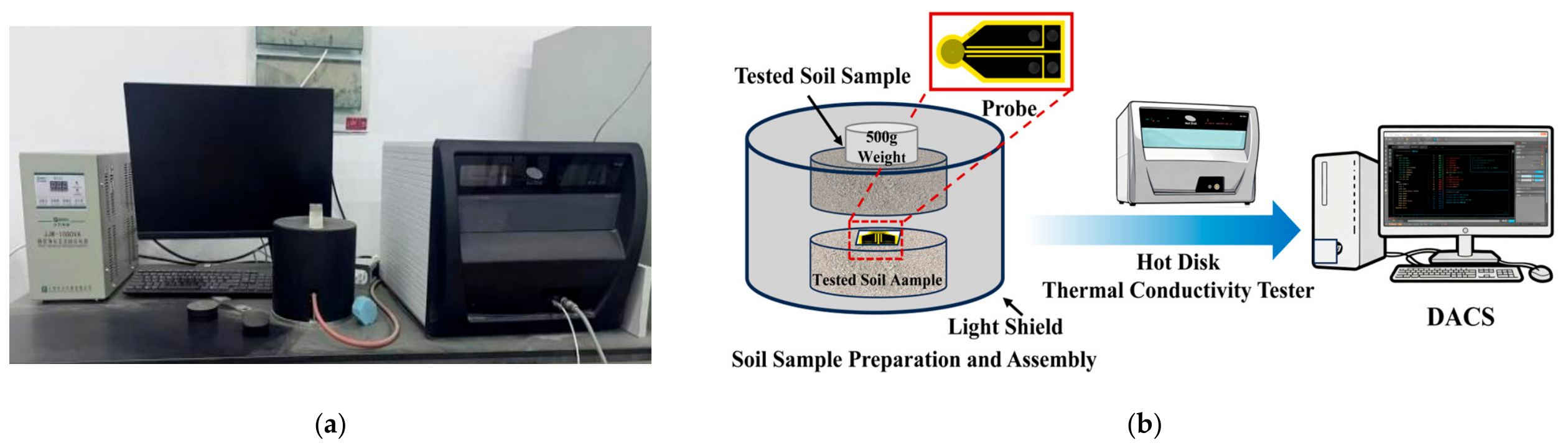
Existing research has gradually advanced from single-factor analysis to stages involving multi-factor coupling and model prediction. However, systematic studies on the thermal conductivity characteristics of sodium chloride-bearing aeolian sand—a material widely distributed in the foundations of hydraulic structures in the Southern Xinjiang region—remain relatively scarce. The available findings are not yet sufficient to directly support regional engineering design. Accordingly, this study investigates typical sodium chloride-bearing aeolian sand from southern Xinjiang and conducts thermal conductivity tests on artificially remolded specimens under room-temperature conditions using the transient plane source method. Unlike previous studies on the thermal behavior of saline–alkali soils, which have mainly focused on fine-grained saline soils, bentonite–sand mixtures, or improved soils, and have commonly established empirical prediction relationships based on single or dual factors such as water content, density, or salt content, this study emphasizes the coupled effects of water content, dry density, and salt content in unsaturated saline aeolian sand. Specifically, the nonlinear response mechanism of thermal conductivity under the combined action of these three factors is elucidated from the perspectives of enhanced heat transfer through water bridges, improved interparticle contact efficiency induced by increased dry density, and pore filling by salt crystallization, which alters the heat conduction pathways within the porous medium. Furthermore, the regulating effects of individual variables and their coupling interactions on thermal conductivity are quantified through influencing-factor analysis, and a thermal conductivity prediction model applicable to saline aeolian sand in southern Xinjiang is developed by integrating multiple nonlinear regression and machine learning methods. These findings enrich the understanding of the thermal physical properties of saline aeolian sand in arid and cold regions, improve the regional applicability of temperature-field calculation and thermal-parameter prediction for saline soil foundations, and provide a theoretical basis for analyzing salt expansion and frost heave mechanisms and for the disaster prevention and mitigation design of hydraulic structures in saline soil areas of southern Xinjiang. They may also serve as a reference for subsequent studies on thermal conductivity under subzero temperature conditions.
4. Discussion
To systematically elucidate the multi-factor response mechanism governing the thermal conductivity of sodium chloride-bearing aeolian sand, this section sequentially discusses the individual effects and intrinsic coupling mechanisms of dry density, moisture content, and salt content on thermal conductivity from three perspectives: the optimization of solid-phase heat conduction pathways, the construction of liquid-phase heat conduction channels, and the dissolution–crystallization phase transition of salt.
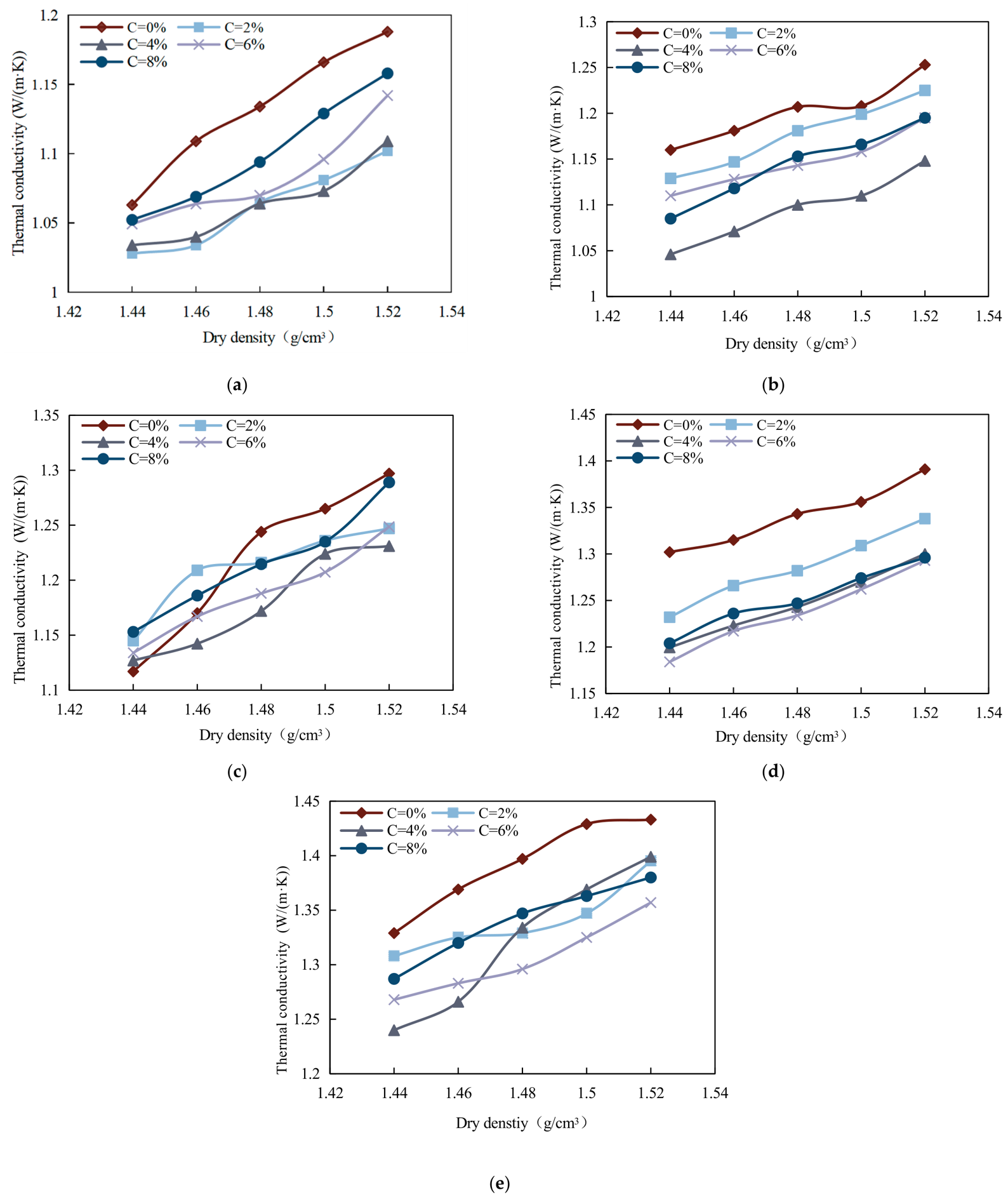
Increases in dry density significantly enhance soil thermal conductivity through the dual strengthening effects on solid-phase heat conduction pathways. On the one hand, at the microstructural scale, elevated dry density promotes tighter arrangements of soil particles, accompanied by remarkable increases in the effective contact area and coordination number between particles, which establishes a more continuous and efficient conduction network for heat flux transfer within the solid skeleton. Experimental investigations by Yun and Santamarina have verified that the quality of inter-particle contacts and the number of contacts per unit volume jointly dominate heat conduction behavior in dry soils [
35]. The continuous rise in soil coordination number with increasing dry density is not merely a direct geometric consequence of reduced porosity; more importantly, it implies that individual particles form more heat-conducting pathways with adjacent particles, enabling heat to bypass originally isolated gas-filled pores and transfer efficiently along continuous solid-phase routes. Meanwhile, enlarged contact areas effectively reduce inter-particle thermal contact resistance, further optimizing the transfer efficiency of solid-phase heat conduction pathways [
36]. Fei et al. pointed out that the weighted coordination number, which comprehensively considers particle connectivity and contact area, can more accurately characterize the evolution law of effective thermal conductivity in dry granular materials, revealing the intrinsic regulatory mechanism of dry density on solid-phase heat conduction from the perspective of microstructural parameters [
37]. On the other hand, at the macrostructural scale, increased dry density directly reduces porosity. Given that the thermal conductivity of air is only approximately 0.026 W m
−1 K
−1 under ambient temperature and pressure, far lower than that of soil mineral solid phases (e.g., approximately 7.7 W m
−1 K
−1 for quartz), the reduction in porosity decreases the volumetric proportion of low-conductivity air medium within soils and weakens the adverse impact of the gas phase on overall heat transfer. Existing studies have demonstrated a strong linear negative correlation between the thermal conductivity of mineral soils and air-filled porosity, whereby the decrease in air-filled porosity directly corresponds to a linear increase in thermal conductivity [
38]. Collectively, the significant improvement in soil thermal conductivity induced by increased dry density is ultimately achieved via two synergistic physical mechanisms: the enhanced inter-particle contact heat transfer efficiency of solid particles and the reduced volumetric fraction of the low-conductivity air phase.
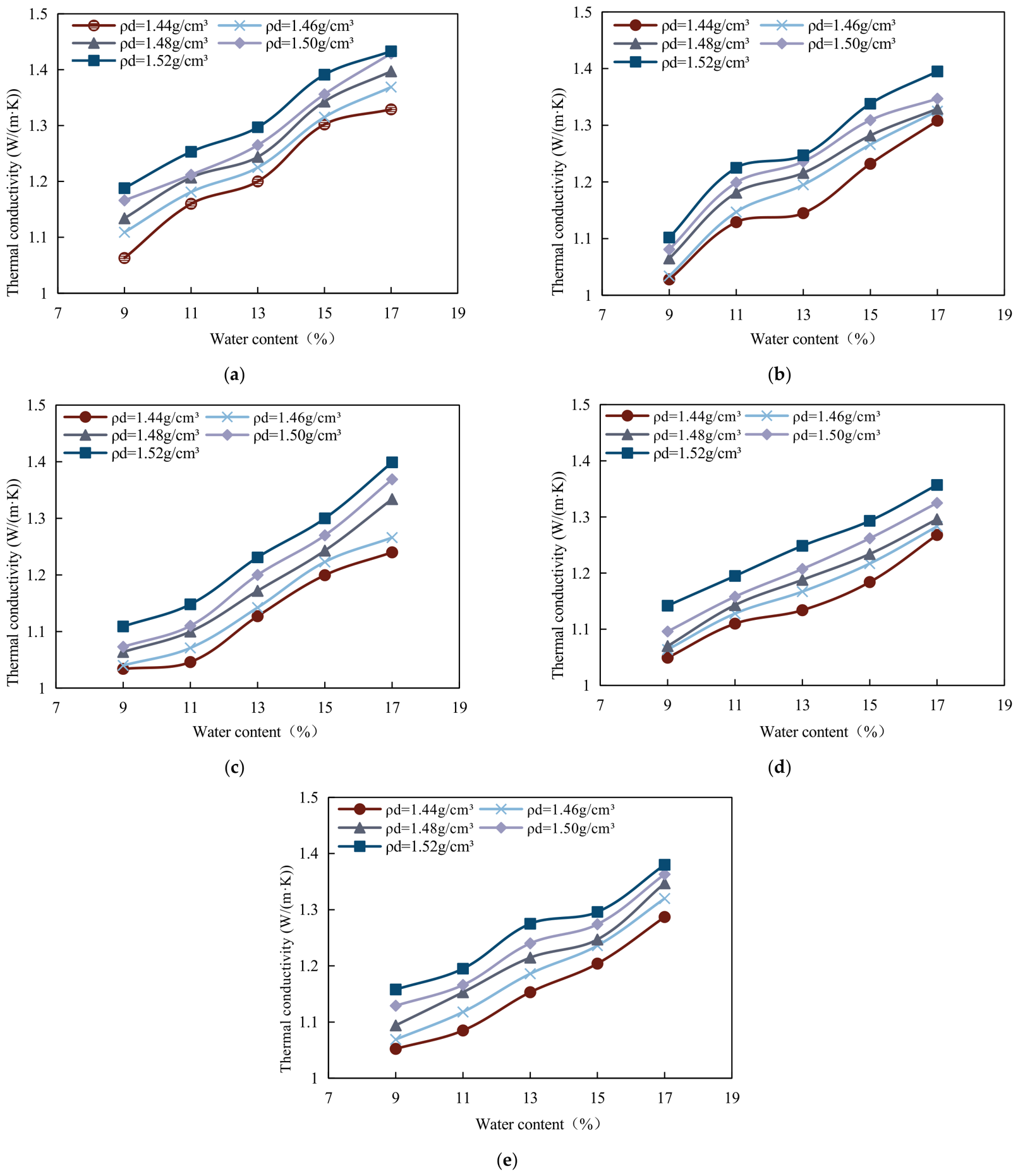
Under constant salt content and dry density, the effect of moisture content variation on thermal conductivity can be explained by two competing physical mechanisms, i.e., liquid-phase thermal enhancement and solid-phase attenuation. As moisture content increases, the volumetric fraction of gas phase in soil pores gradually decreases, accompanied by a corresponding rise in liquid-phase proportion, and air is continuously displaced by water and saline solution. At 20 °C, the thermal conductivity of pure water is 0.600 W/(m·K), and the thermal conductivity of sodium chloride solution with a concentration of 0–20% ranges from 0.578 to 0.599 W/(m·K). Both values are far higher than the thermal conductivity of air at ambient temperature, which is 0.026 W/(m·K) [
39,
40,
41]. Pore water inside soil predominantly exists as free water, which easily forms continuous water films and liquid heat conduction channels among soil particles. Therefore, the substitution of gas phase by liquid phase effectively optimizes the inter-particle thermal contact state at the microscopic scale, and liquid bridges form between particles with the growth of moisture content. This conclusion agrees well with the experimental results reported by Deng et al. [
42], who verified that soil thermal conductivity increases with rising moisture content under identical salt content and temperature conditions. Water films not only fill the pore space originally occupied by air but also construct liquid heat conduction bridges between adjacent particles. The thermal conduction capacity of these bridges is nearly two orders of magnitude higher than that of air. The inefficient heat transfer relying on point contact is converted into high-efficiency heat transport through continuous liquid medium, thereby remarkably improving the overall thermal conductivity of soil.
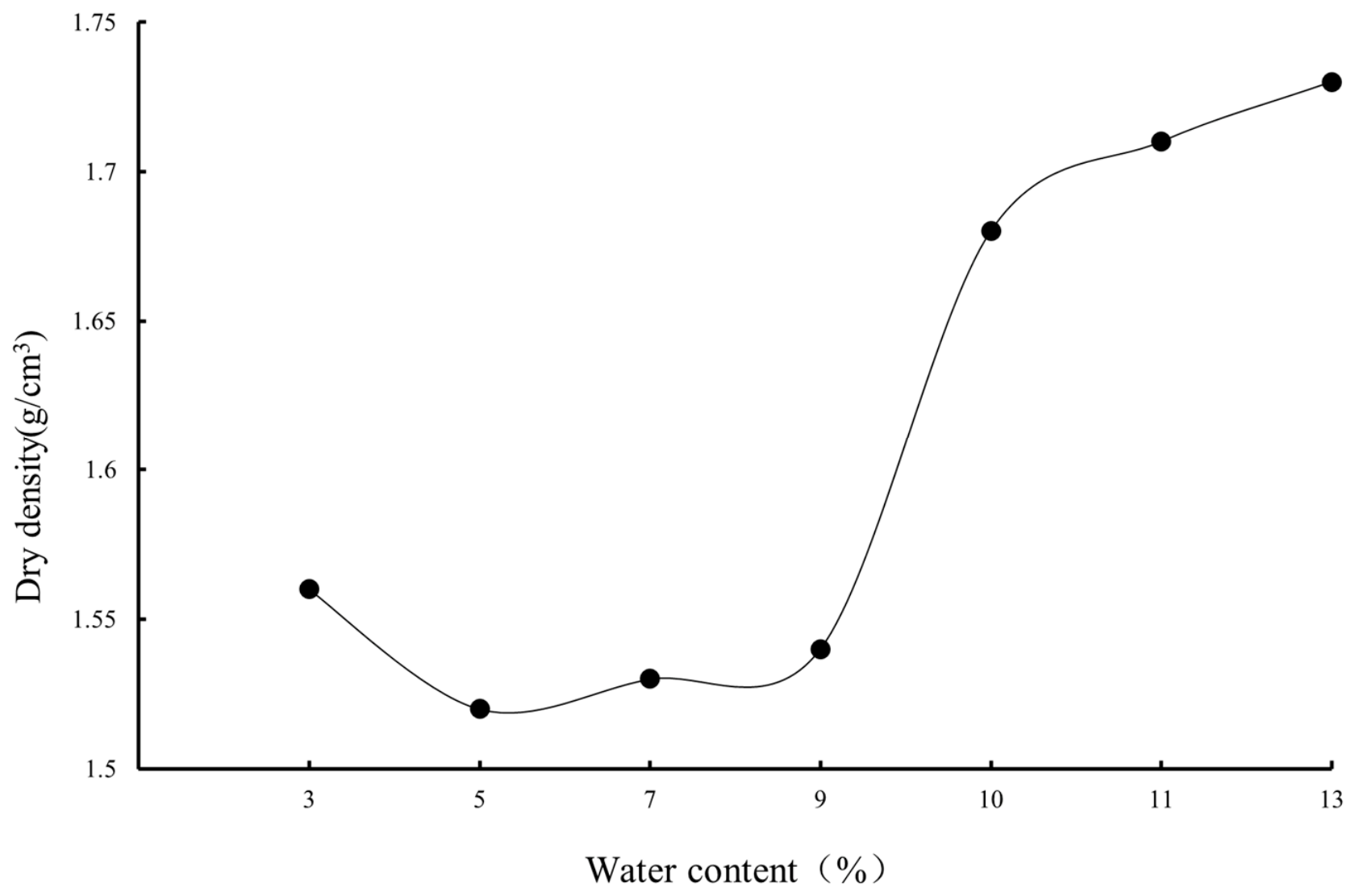
On the other hand, elevated moisture content facilitates salt dissolution under high salinity conditions and reduces the content of solid salt crystals, which weakens the heat transfer contribution of solid phase to a certain degree. For example, for aeolian sand with a dry density of 1.52 g/cm3, the thermal conductivity increases by 19.17% at the salt content of 8%, while the growth rate reaches 29.3% at the salt content of 2%, 1.53 times higher than the former. Experimental results indicate that the liquid-phase enhancement effect remains dominant despite the relatively lower growth magnitude of thermal conductivity under high salt content. Accordingly, the thermal conductivity of sodium chloride-containing aeolian sand generally increases with the rise of moisture content.
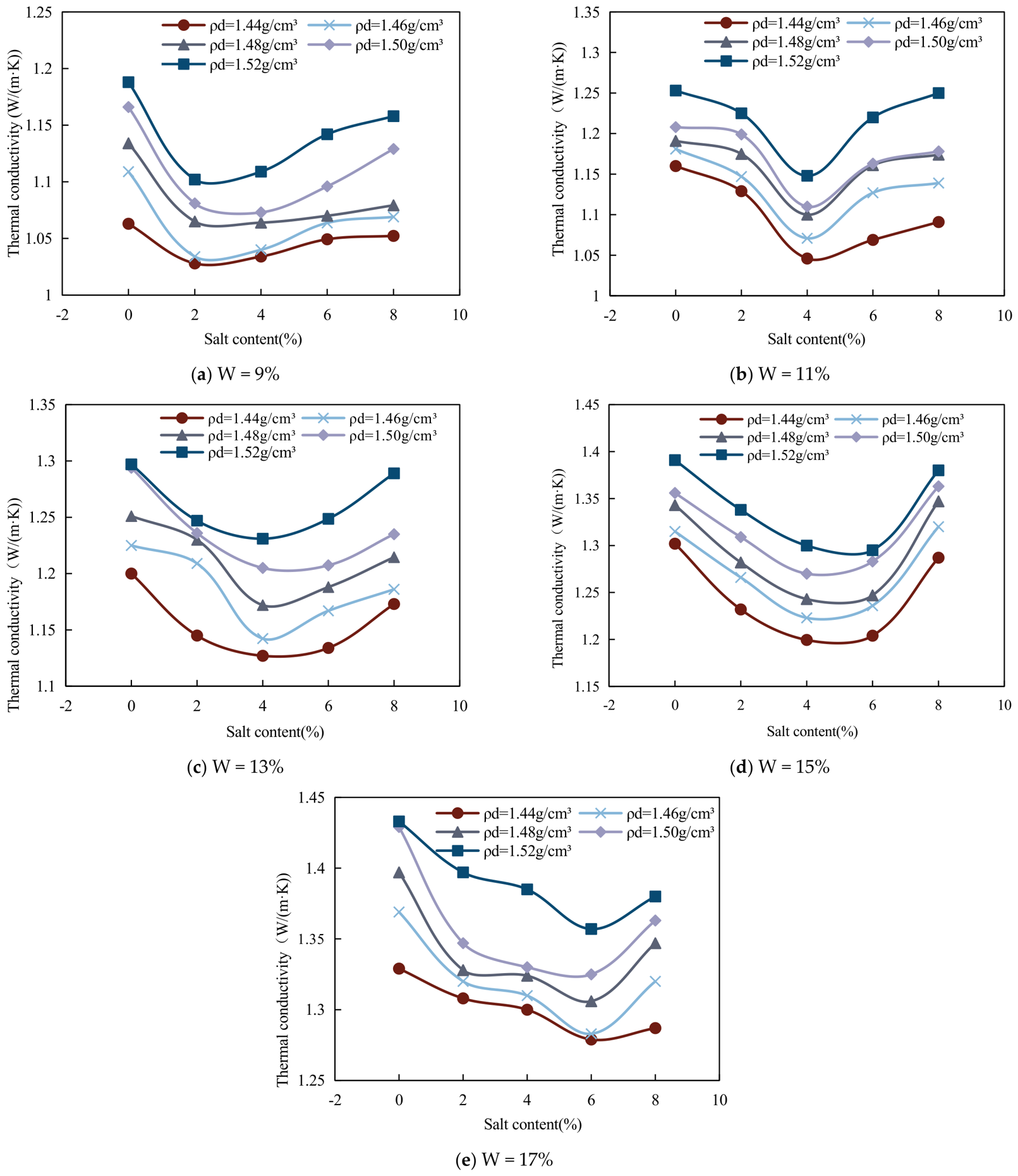
Experimental results revealed that the thermal conductivity of sodium chloride-containing aeolian sand does not present a monotonic increasing or decreasing trend with the variation of salt content. Instead, it exhibits staged characteristics of initial decline, subsequent slow variation, and final recovery or stabilization under different moisture content conditions. Essentially, this complex heat conduction behavior is governed by the changing occurrence state of salt within soil and its dynamic regulation effect on the microscopic heat transfer network.
In the low salt content range where salt content is below the critical threshold corresponding to each moisture content, salt mainly exists in the form of ions in pore solution. For instance, sodium chloride can be completely dissolved to form an electrolytic solution in specimens with a moisture content of 9% when the salt content is lower than 2%. At 20 °C, the thermal conductivity of pure water is 0.600 W/(m·K), which is higher than that of sodium chloride solution with a concentration ranging from 0% to 20% (0.578–0.599 W/(m·K)) [
41]. The conversion of pure water into saline solution reduces the thermal conductivity of pore fluid. Meanwhile, salt dissolution decreases the proportion of solid phase. Combinedly, these two factors lead to the reduction of soil thermal conductivity. Lei et al. [
43] systematically investigated the thermal conductivity of fine-grained saline soils and pointed out that the correlation between thermal conductivity and salt content is regulated by moisture content. At the low salt stage, added salt first alters the thermophysical properties of pore solution and further affects thermal conductivity.
When thermal conductivity approaches the inflection point under a certain moisture content, salt begins to transform from a dissolved state to a crystalline state [
44]. Taking specimens with a moisture content of 11–13% and salt content around 4% as examples, the salt concentration in pore solution reached the solubility critical point, and sodium chloride microcrystals started to precipitate at particle contact positions or pore throats. The newly generated salt microcrystals partially filled tiny pores and enhanced the mechanical and thermal contact areas between particles, which preliminarily offset the adverse effect caused by the declined thermal performance of pore solution. The slowing changing rate of thermal conductivity at this stage marked the transition of heat conduction mechanism from solution-dominated pattern to solid-participated pattern.
When salt content exceeds the inflection point and enters the high salt stage, salt crystallization is remarkably intensified and gradually forms locally continuous structures. For samples with moisture content of 15–17% and salt content higher than 6%, abundant salt crystals built salt bridges among soil particles and formed additional solid heat conduction pathways. Although high-concentration pore solution still possesses low thermal conductivity, the crystalline network constructed by sodium chloride single crystals with a thermal conductivity of approximately 6.182 W/(m·K) at 20 °C [
45] greatly optimizes the overall heat transfer framework. Accordingly, thermal conductivity slowly rises or tends to be stable with the continuous increase of salt content.
The influence mechanism of moisture content on transition threshold is closely associated with the dissolution-crystallization balance of salt. Under high moisture content conditions such as 15–17%, pore water produced a prominent dilution effect on salt, and salt tended to remain dissolved. Thus, a higher salt content of up to 6% is required to reach supersaturation and trigger large-scale crystallization. By contrast, limited pore water volume under low moisture content (e.g., 9%) made salt easily reach solubility limit at a relatively low salt content of 2%, resulting in advanced crystallization phase transition. This phenomenon explains why the transition threshold shifts to a higher salt content level as moisture content increases.
In summary, the evolution of thermal conductivity in sodium chloride-bearing aeolian sand is essentially a dynamic reflection of the trade-off and mutual adaptation among the solid–liquid–gas three-phase heat conduction pathways. An increase in dry density enhances intergranular thermal contact at the solid skeleton level, serving as the fundamental mechanism for improved thermal conductivity. Elevated moisture content induces a dominant thermal enhancement effect by constructing liquid-phase heat conduction bridges. Variations in salt content exert nonlinear influences by regulating the thermophysical properties of pore solution and the structure of salt crystal networks. These three factors do not act in isolation but rather exhibit a coupled effect by modifying the volume fraction and contact morphology of each phase: moisture content modulates the threshold of salt dissolution–crystallization equilibrium, dry density affects the efficiency of salt crystal network formation, and salt content counteracts the thermal performance of the liquid phase—collectively governing the macroscopic thermal conductivity behavior of the soil.
5. Conclusions
This study investigated the variation patterns of the thermal conductivity of sodium chloride-bearing aeolian sand under different dry densities and moisture contents based on the transient plane source method. The following conclusions are drawn:
(1) The thermal conductivity of sodium chloride-bearing aeolian sand increases with rising dry density and moisture content. The enhancement is attributed to an increase in both solid-phase and liquid-phase heat transfer pathways, and the relationship exhibits a favorable linear trend.
(2) The thermal conductivity varies nonlinearly with salt content, exhibiting a pattern of an initial decrease followed by a subsequent increase. The threshold salt content shifts to higher values as moisture content increases: a threshold of 2% salt content corresponds to 9% moisture content; a threshold of 4% salt content corresponds to moisture contents of 11–13%; and a threshold of 6% salt content corresponds to moisture contents of 15–17%. This behavior originates from the fact that salt dissolution reduces the thermal conductivity of the pore solution, whereas subsequent salt crystallization forms thermal bridges that provide a compensating effect on heat transfer.
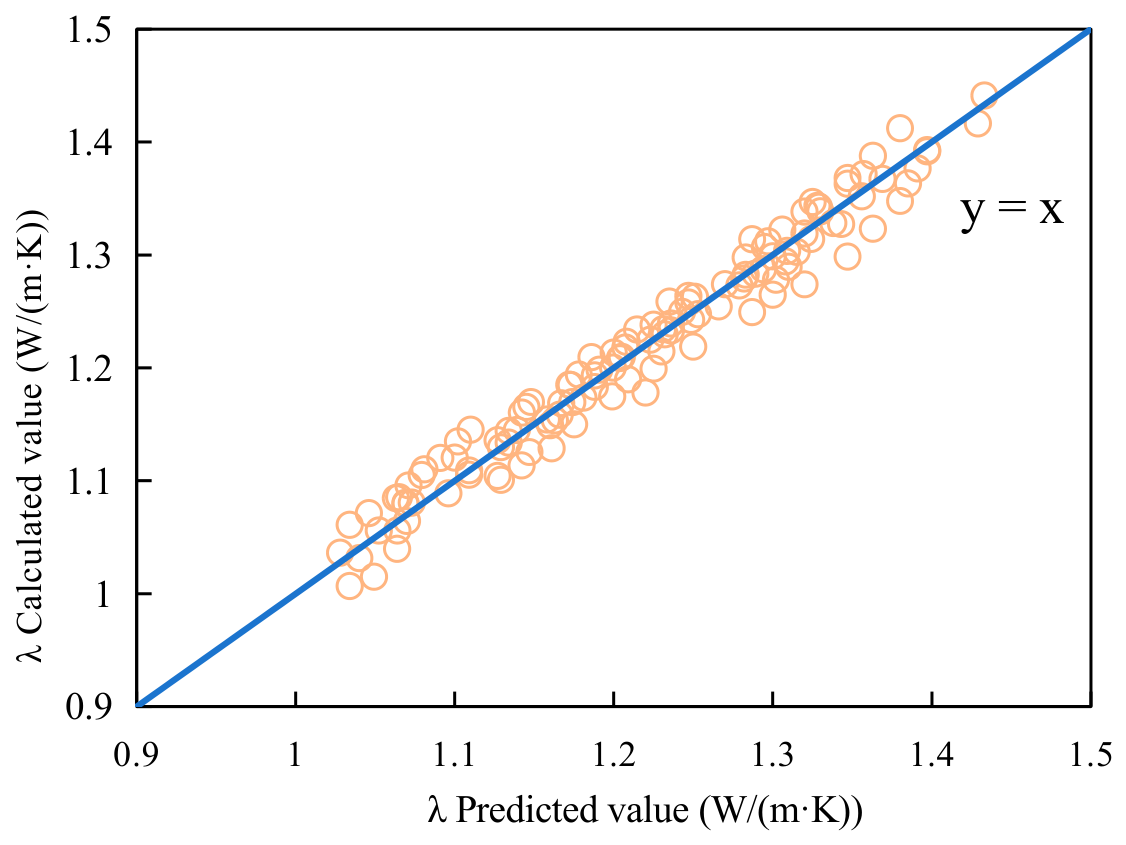
(3) A theoretical prediction model for the thermal conductivity of sodium chloride-bearing aeolian sand was established. Comparative analysis with measured data validated the good applicability and predictive accuracy of the model. The model provides a quantitative description of the variation of aeolian sand thermal conductivity under multi-factor coupling effects and can serve as a parametric basis for further analysis of the mechanisms of heat conduction in soils subjected to salt influence. Moreover, the model can offer a reference for the determination of thermal parameters and for thermal calculations of replacement materials in the design of roadbeds, foundations, lined canals, and sandy bases of hydraulic structures in saline soil regions, thereby improving the efficiency of thermal conductivity estimation and reducing the workload of repeated testing.
The findings of this study have practical significance for thermal parameter selection and temperature-field analysis of saline aeolian sand foundations in southern Xinjiang. The proposed model can provide parameter support for the thermal design of roadbeds, foundations, lined canals, and hydraulic structures, and it may contribute to the assessment of potential salt expansion risks. However, this study was conducted on remolded specimens under room-temperature laboratory conditions without fully considering the effects of in situ soil structure, seasonal temperature variations, freeze–thaw cycles, and field-scale water–salt migration. Future studies should therefore focus on field-scale validation of the proposed model and further investigate the temperature-dependent thermal conductivity of sodium chloride-bearing aeolian sand, particularly under subzero and freeze–thaw conditions.