Multi-Task Spatiotemporal Prediction of Gas Extraction-Induced Seismicity Using a Hybrid GAT-LSTM Neural Network

Abstract
1. Introduction
2. Problem Formulation and Methodology
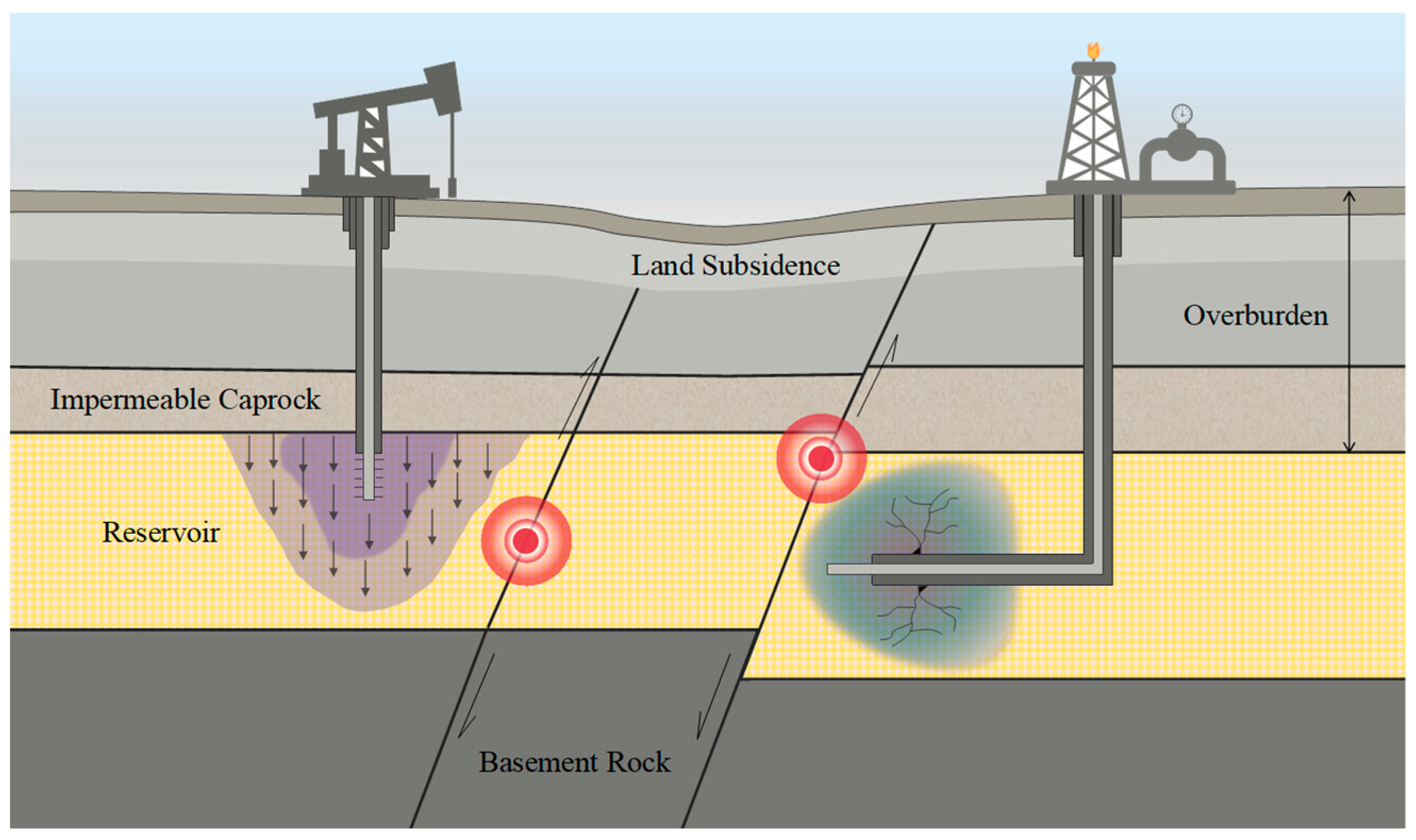
2.1. Physical Mechanisms of Induced Seismicity and the Temporal Prediction Principle
2.2. Graph Neural Networks
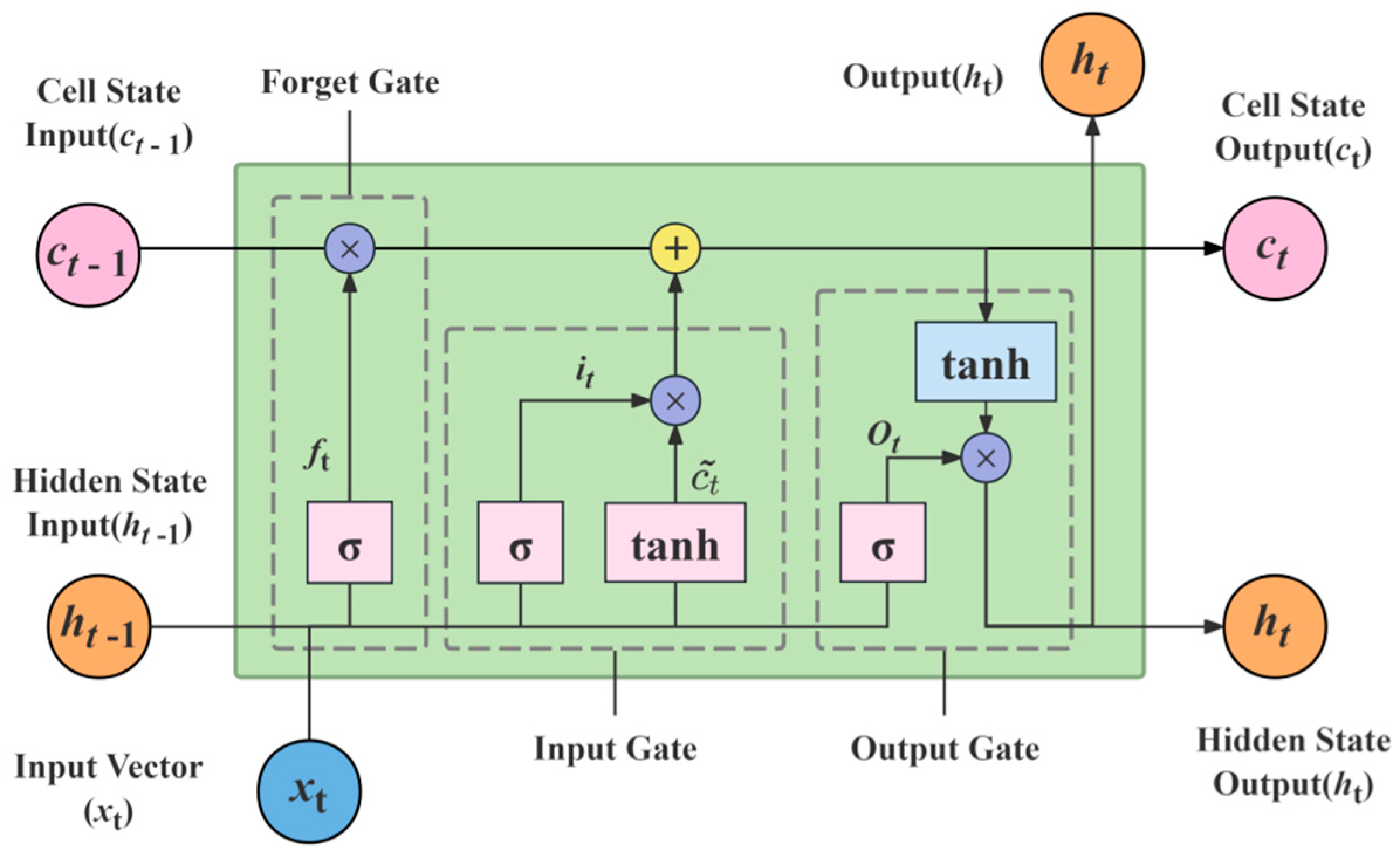
2.3. Long Short-Term Memory Networks
2.4. Multi-Task Learning and Class Imbalance Mitigation Strategies
3. Model Construction for Temporal Prediction of Induced Seismicity
3.1. Construction of Graph-Structured Seismic Time-Series Data
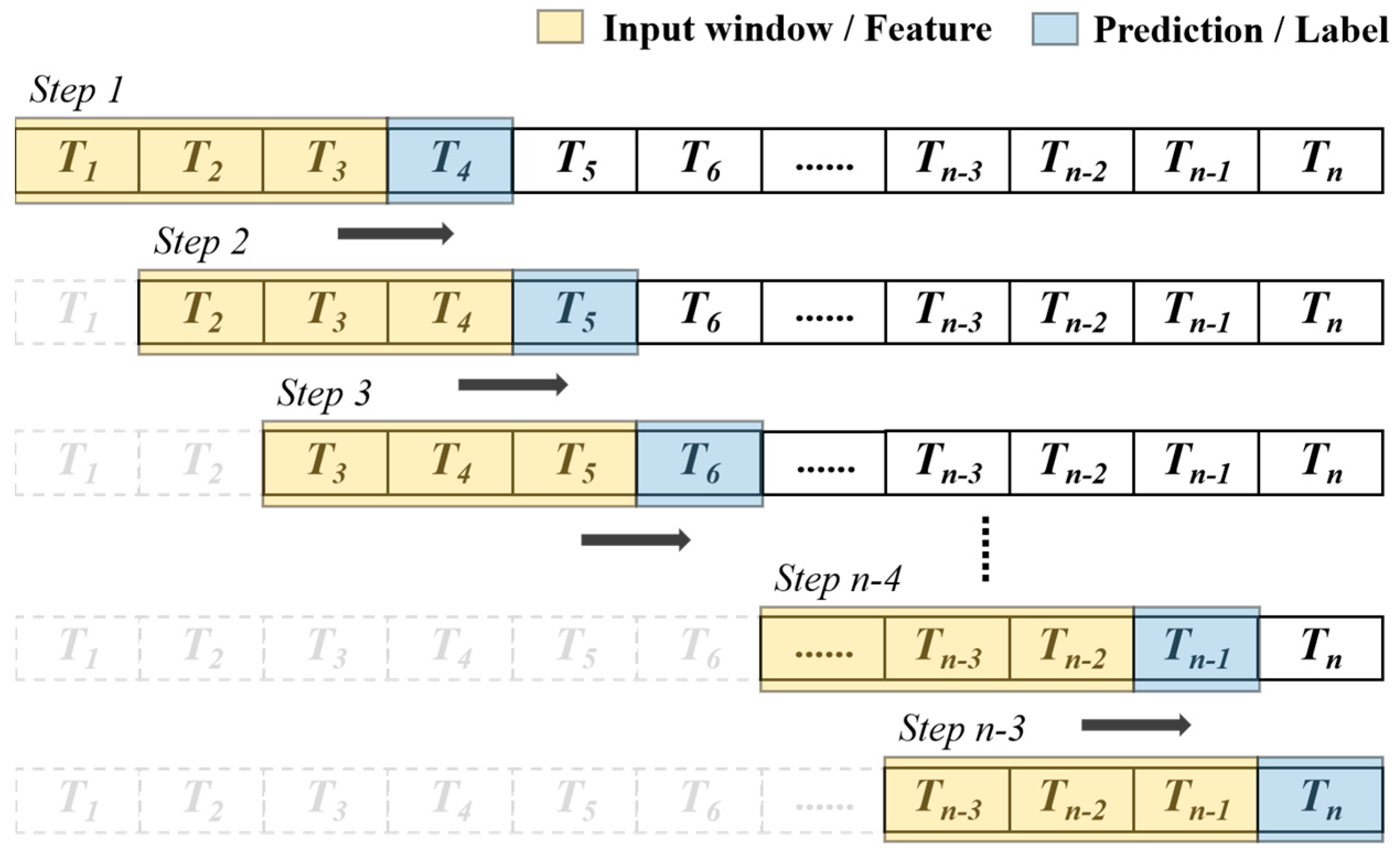
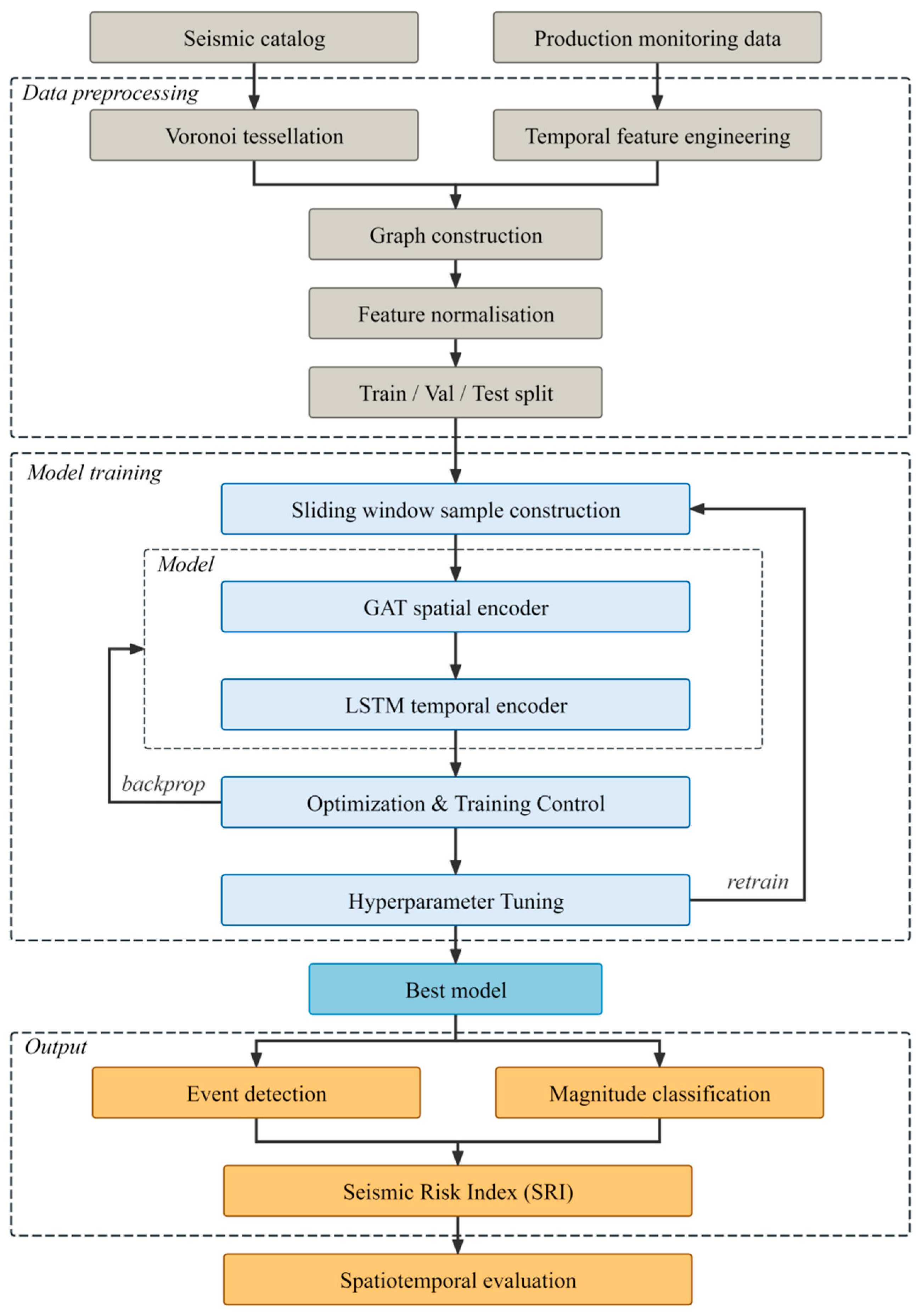
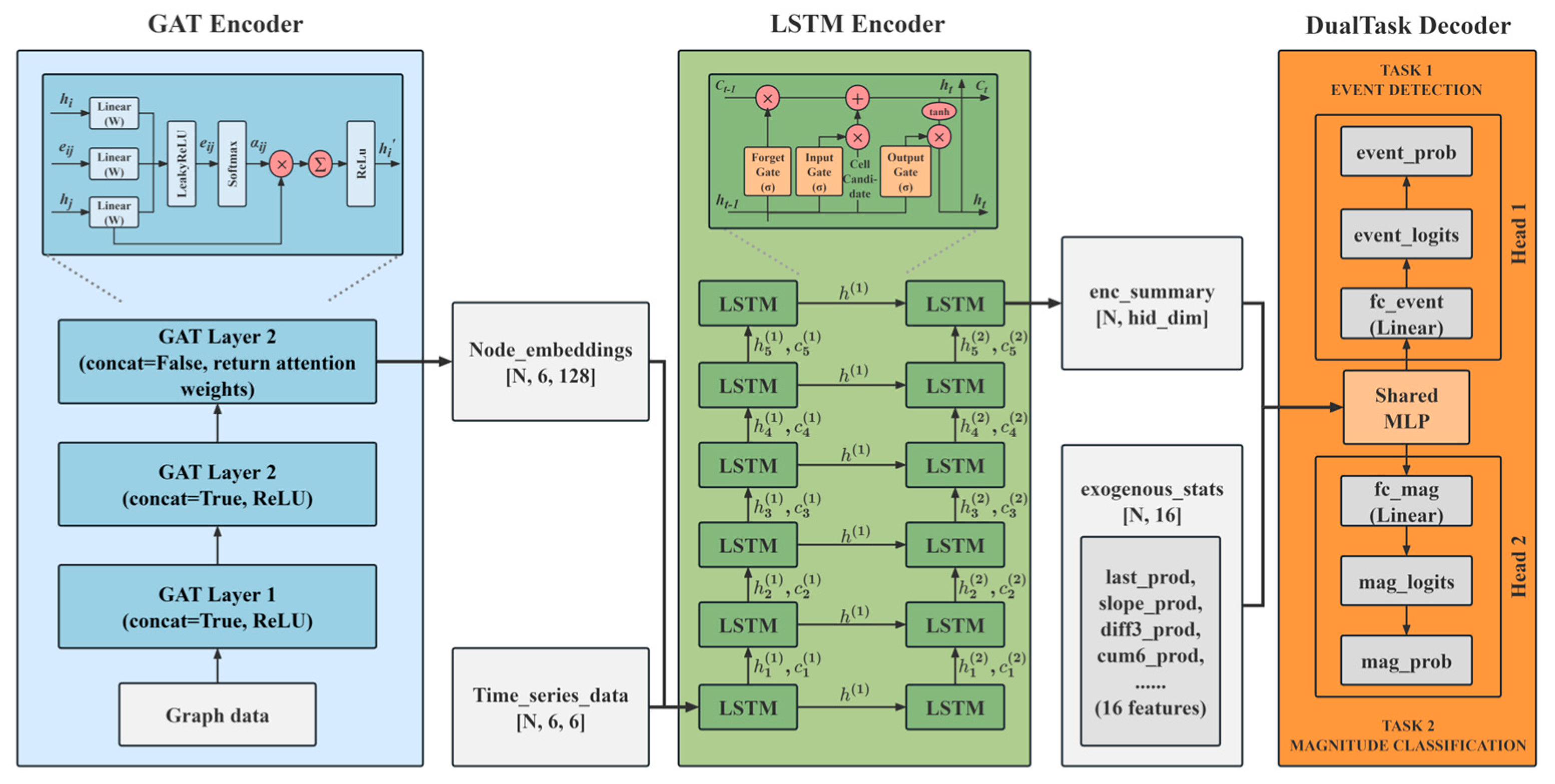
3.2. Design of the Dual-Encoder Multi-Task Spatiotemporal Prediction Model
3.3. Model Evaluation Metrics
3.4. Seismic Risk Index Definition
4. Model Validation and Analysis
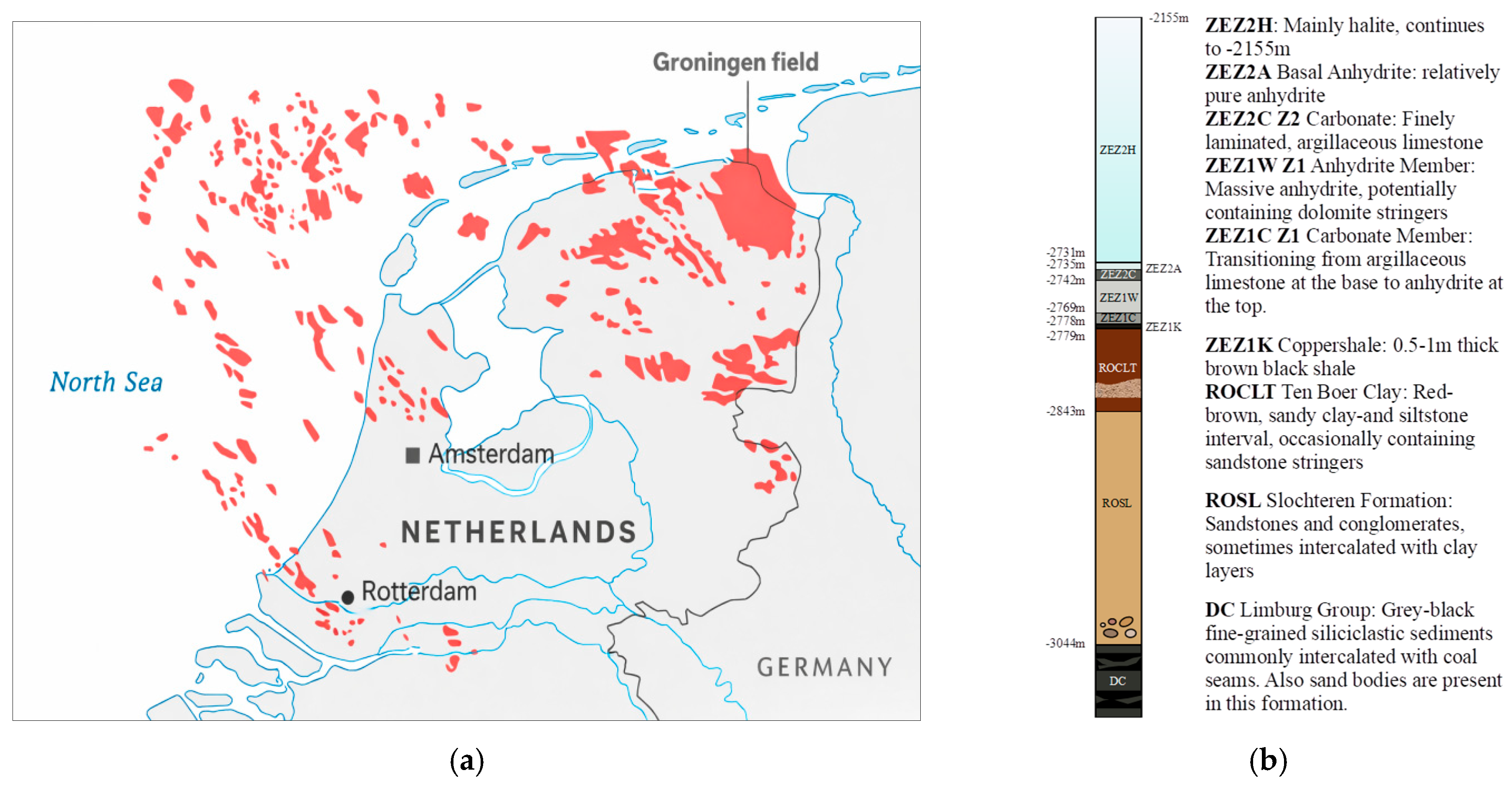
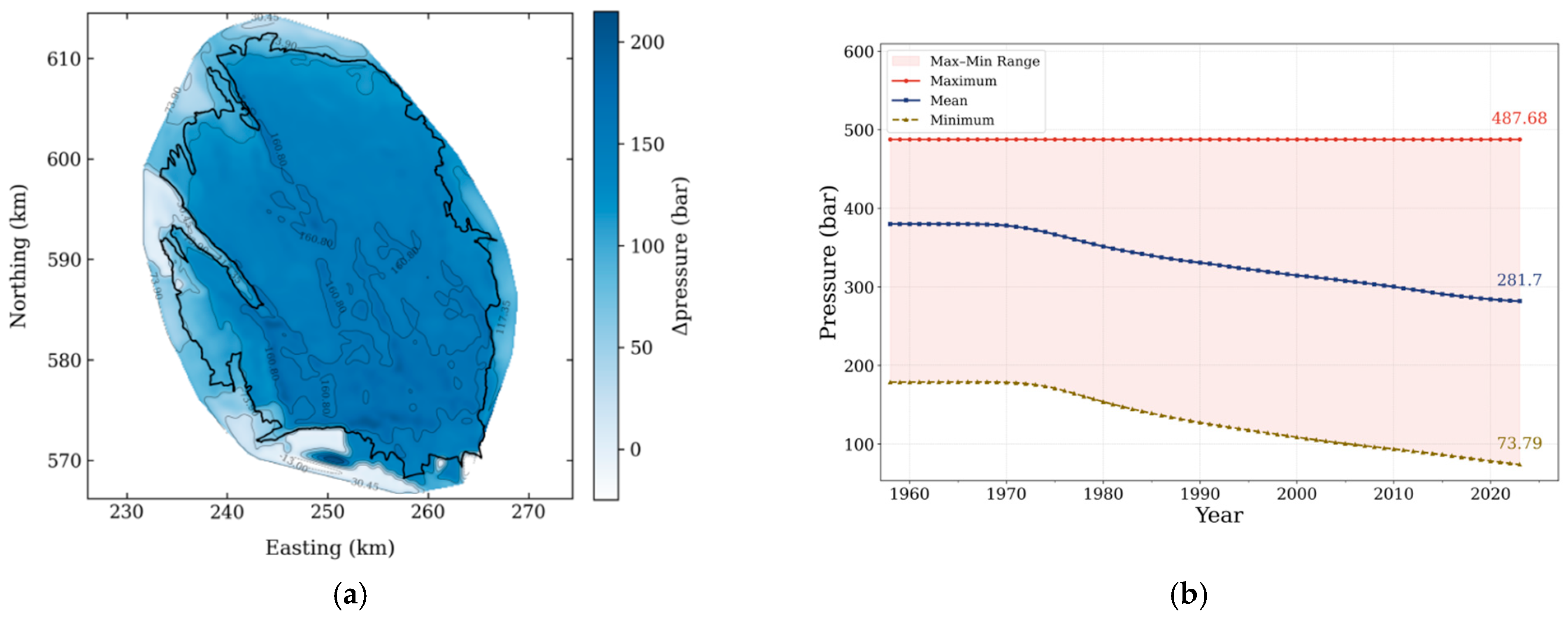
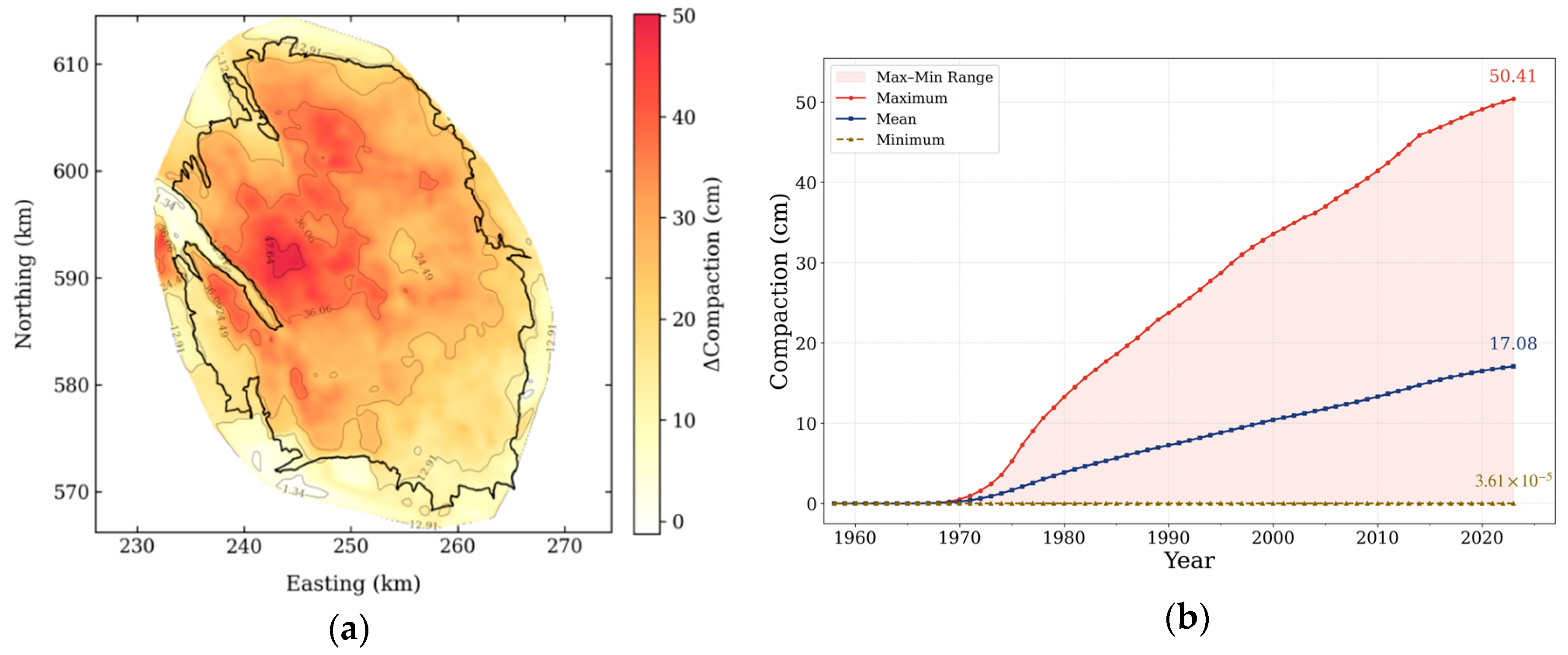
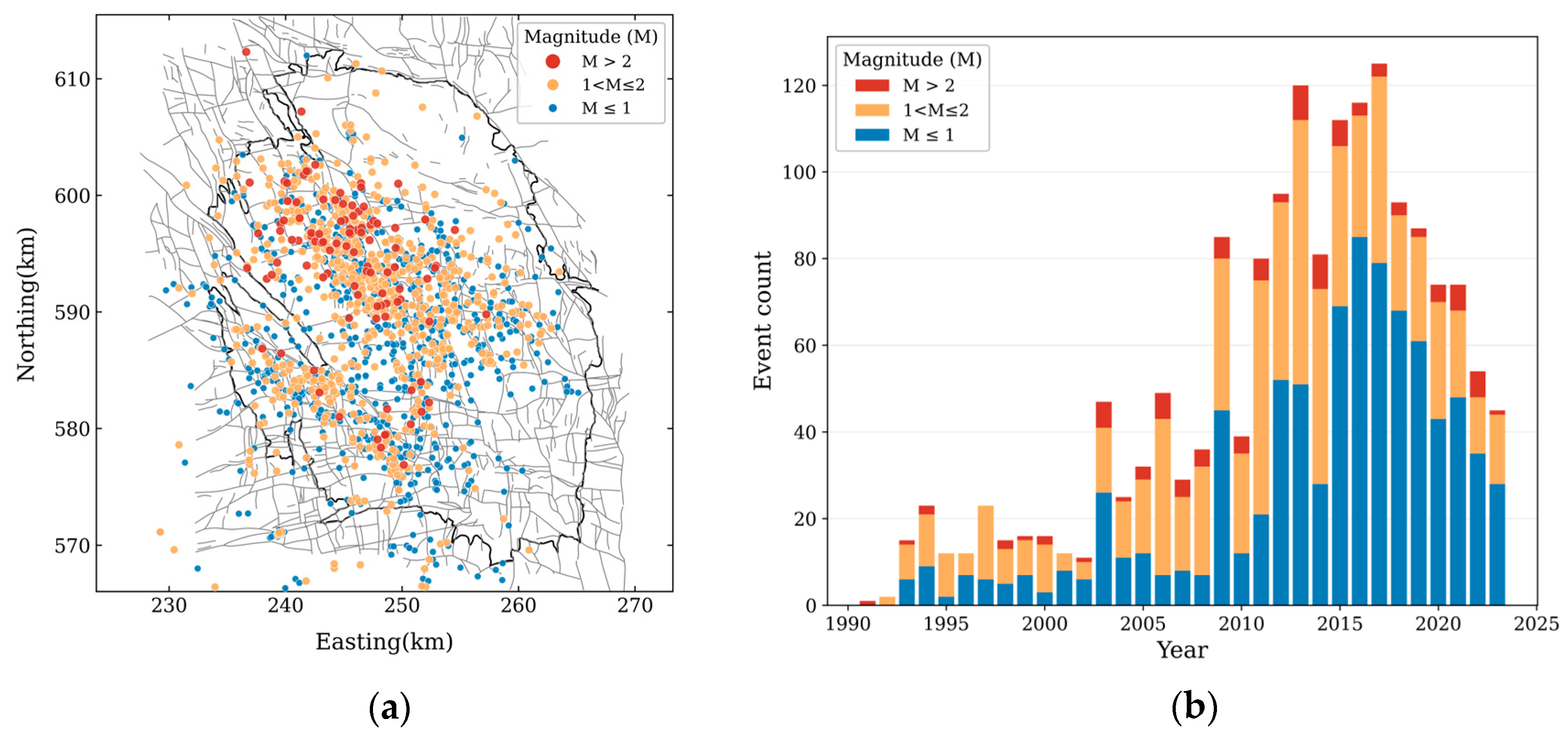
4.1. Study Area and Data Sources
4.2. Spatial Discretization of the Seismic Catalog Using Voronoi Tessellation
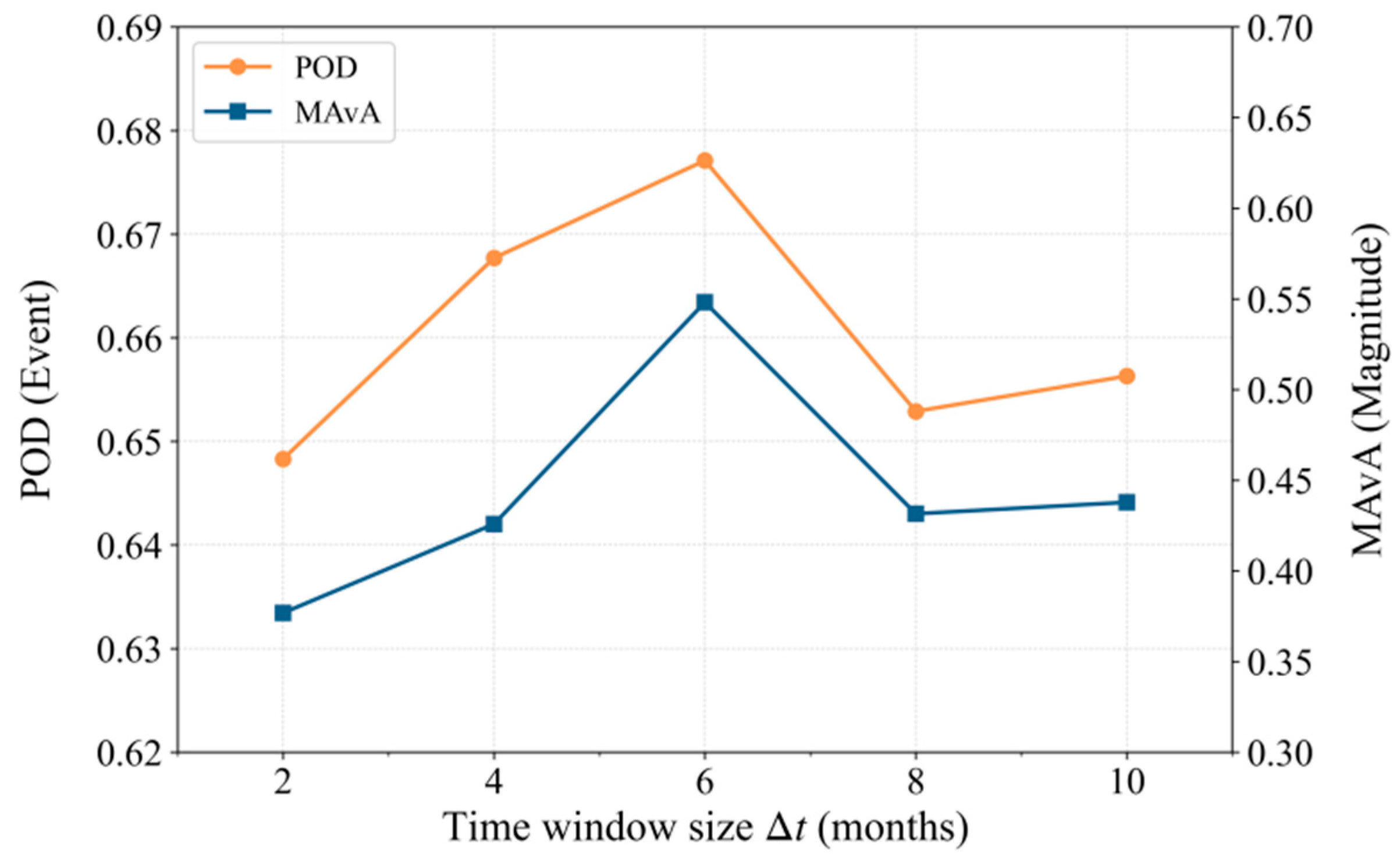
4.3. Model Training
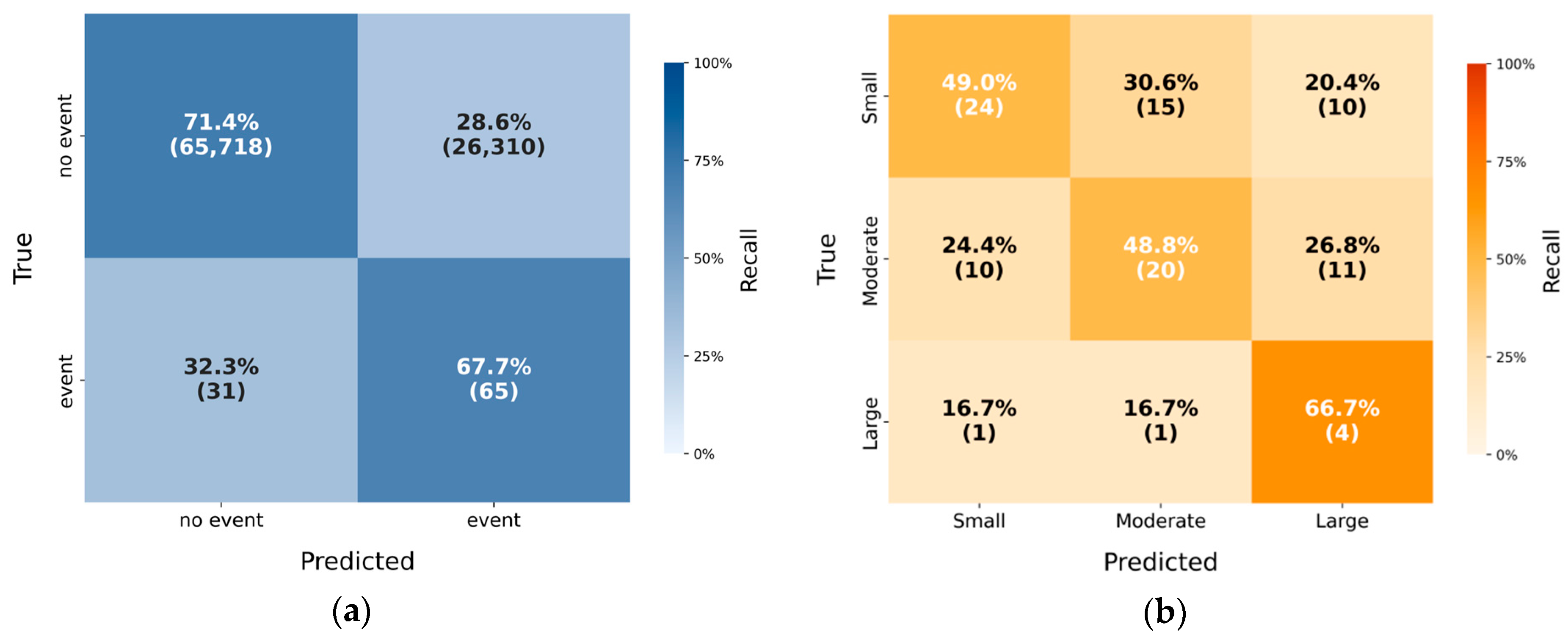
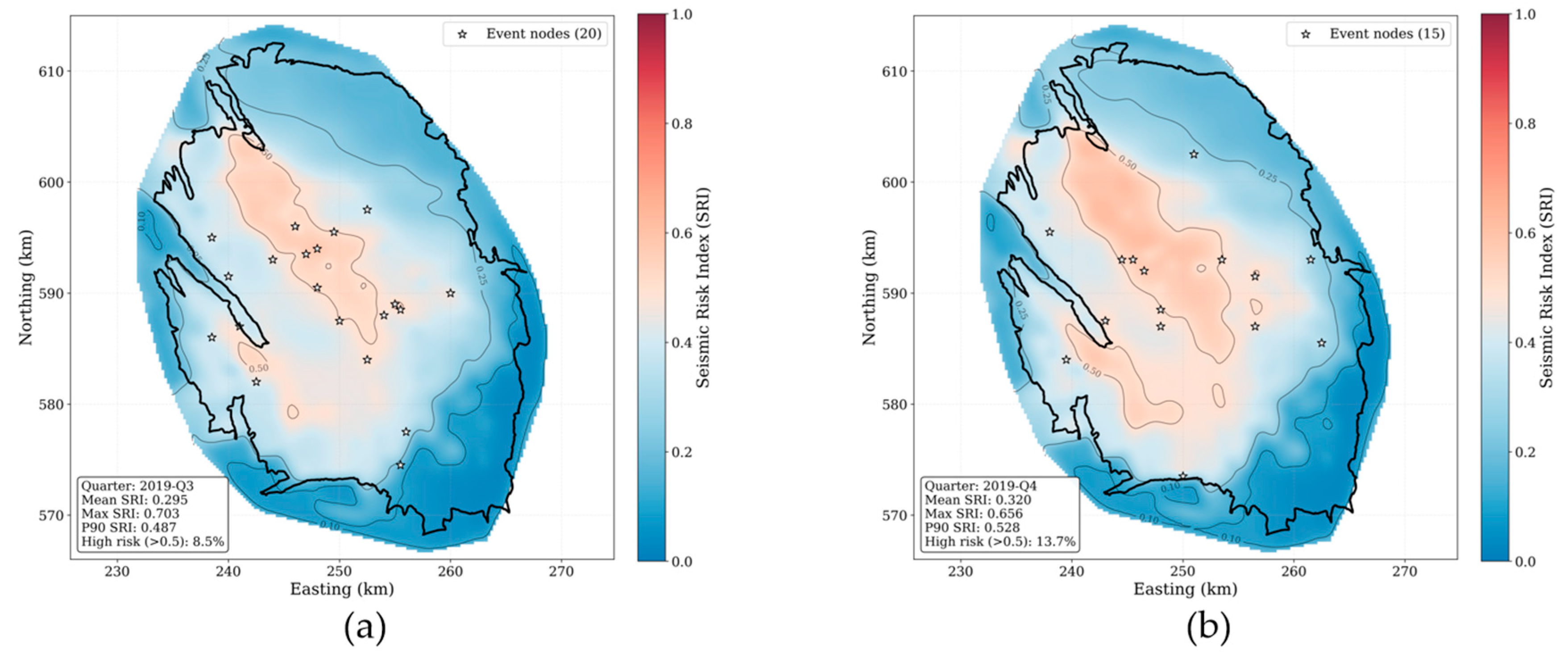
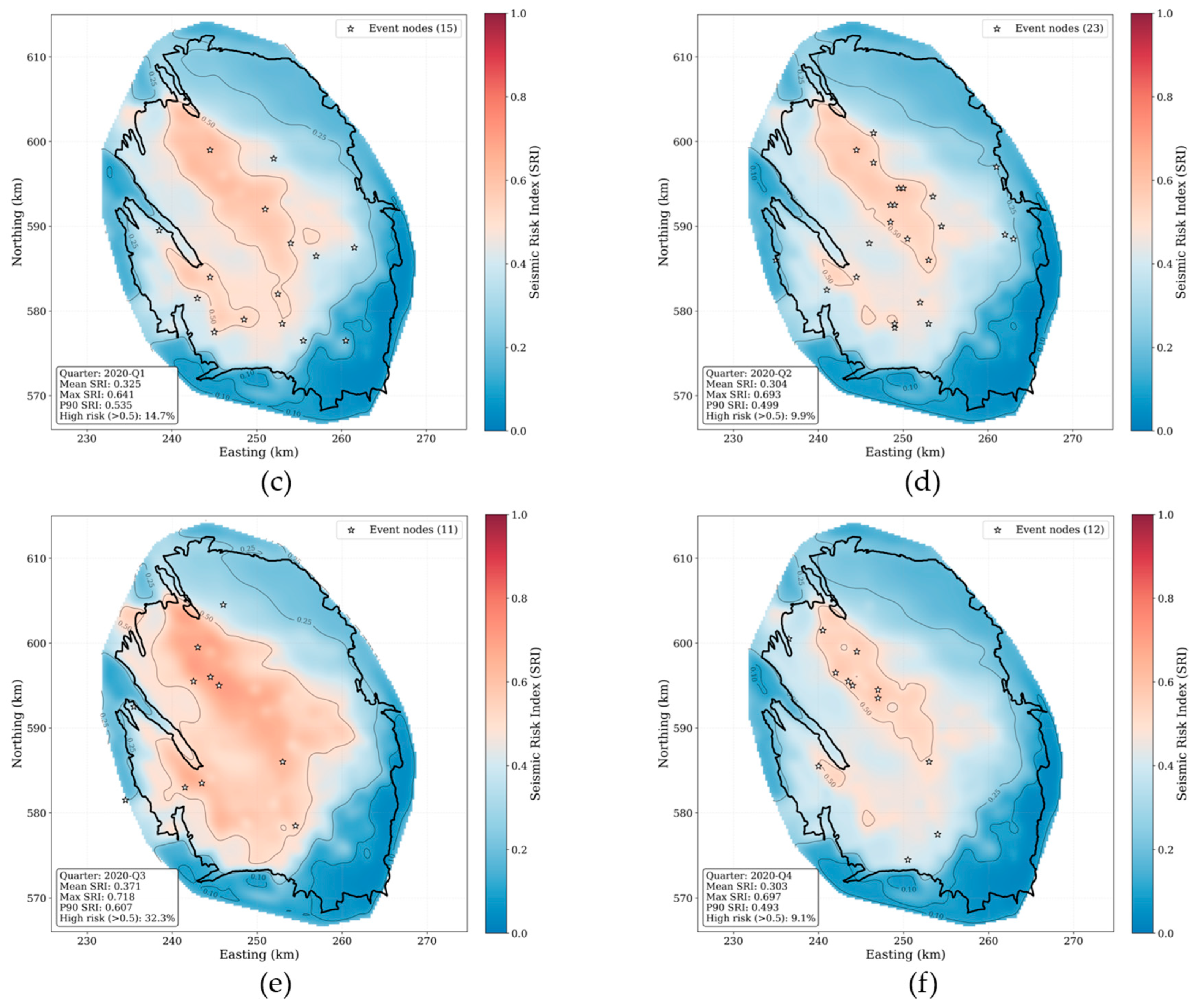
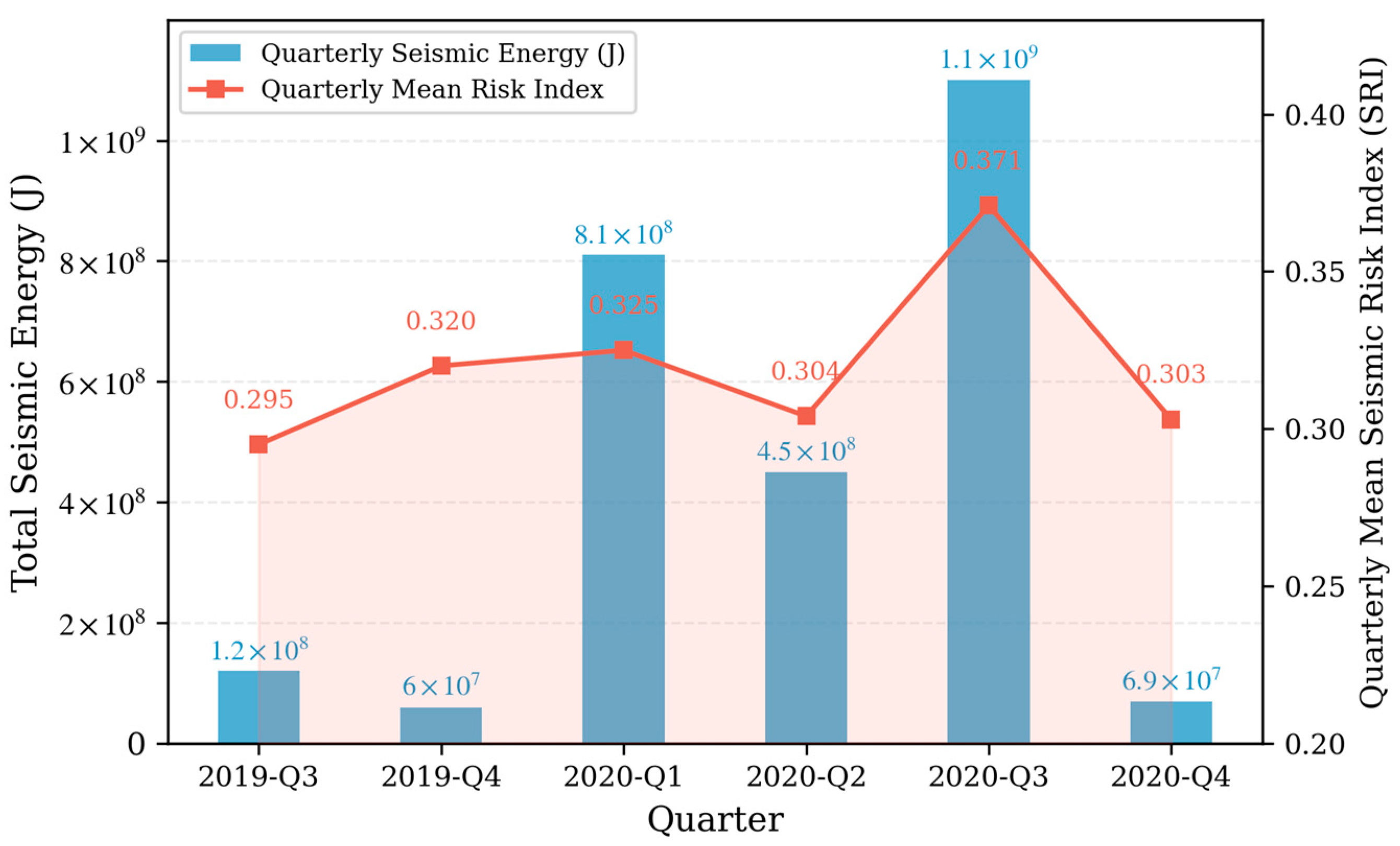
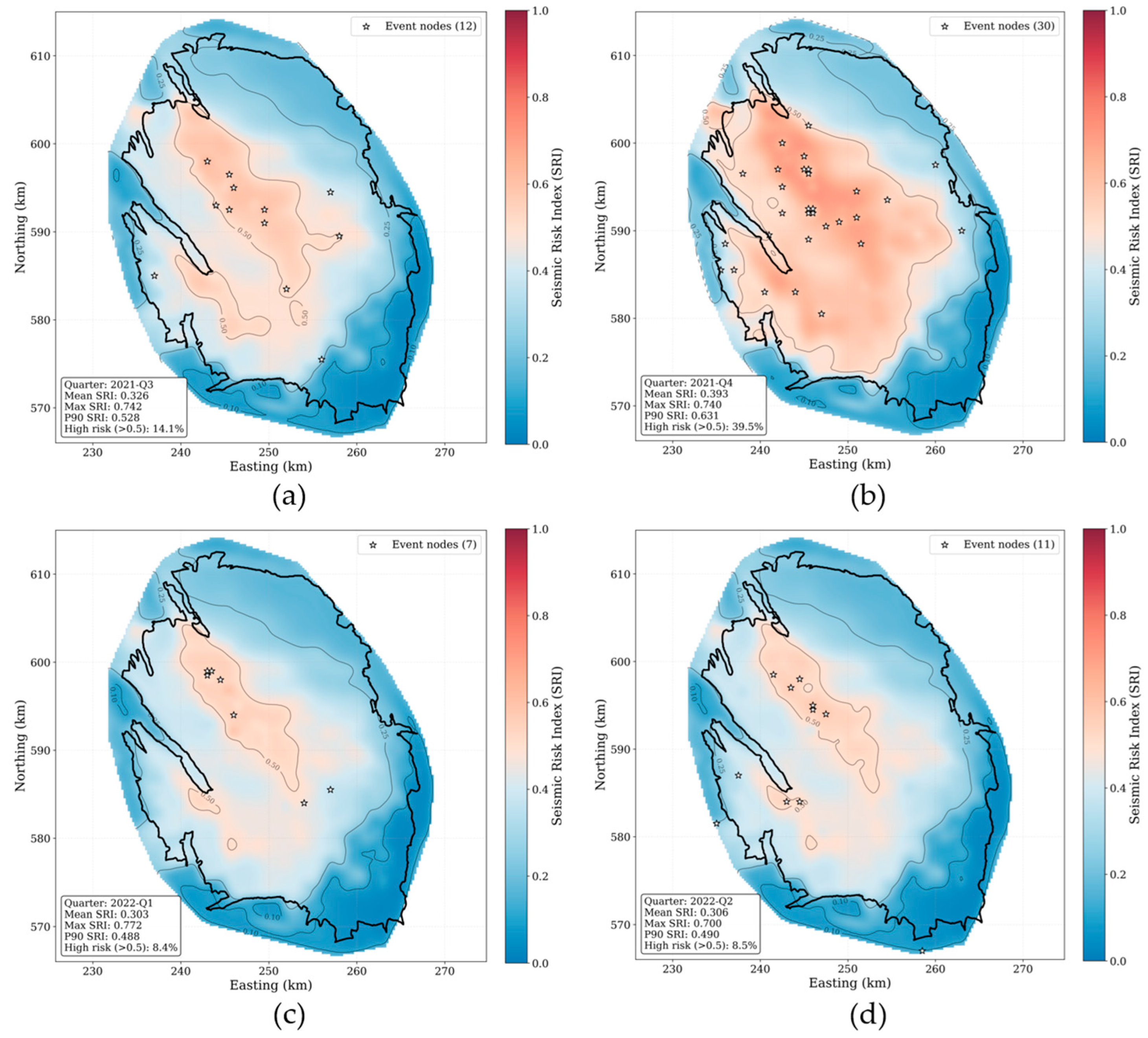
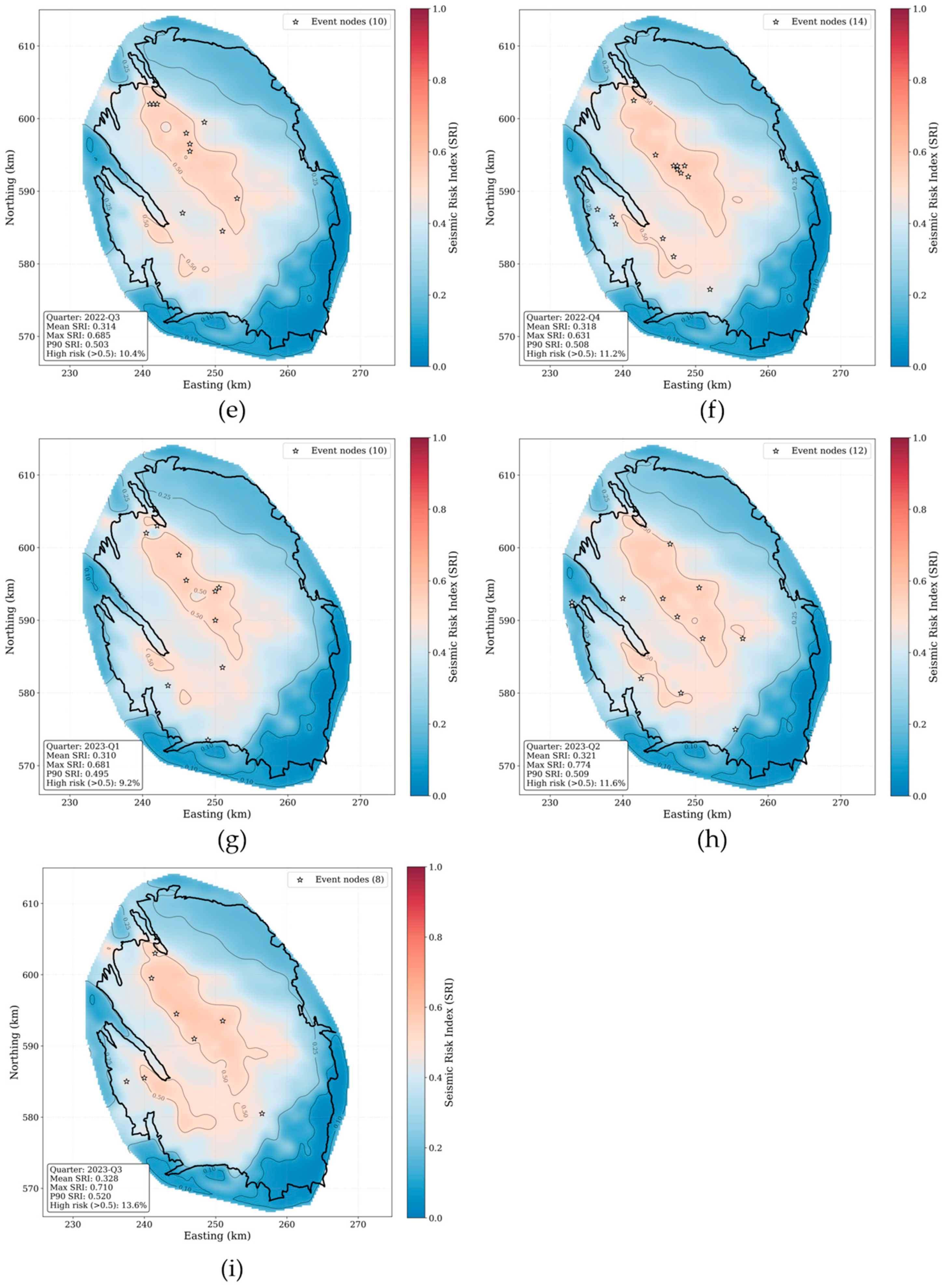
4.4. Prediction Results and Analysis
4.5. Extended Evaluation and Relation to Previous Groningen Studies
5. Conclusions
Author Contributions
Funding
Institutional Review Board Statement
Informed Consent Statement
Data Availability Statement
Acknowledgments
Conflicts of Interest
Abbreviations
| GAT | Graph Attention Network |
| LSTM | Long Short-Term Memory |
| GNN | Graph Neural Network |
| RNN | Recurrent Neural Network |
| SRI | Seismic Risk Index |
| POD | Probability of Detection |
| FAR | False Alarm Ratio |
| MAvA | Macro Average Arithmetic Recall |
| KNMI | Koninklijk Nederlands Meteorologisch Instituut |
| NAM | Nederlandse Aardolie Maatschappij |
| NSFC | National Natural Science Foundation of China |
References
- Keranen, K.M.; Weingarten, M. Induced Seismicity. Annu. Rev. Earth Planet. Sci. 2018, 46, 149–174. [Google Scholar] [CrossRef] [Scilit]
- Zang, A.; Oye, V.; Jousset, P.; Deichmann, N.; Gritto, R.; McGarr, A.; Majer, E.; Bruhn, D. Analysis of Induced Seismicity in Geothermal Reservoirs—An Overview. Geothermics 2014, 52, 6–21. [Google Scholar] [CrossRef] [Scilit]
- van Thienen-Visser, K.; Breunese, J.N. Induced Seismicity of the Groningen Gas Field: History and Recent Developments. Lead. Edge 2015, 34, 664–671. [Google Scholar] [CrossRef] [Scilit]
- van Elk, J.; Doornhof, D.; Bommer, J.J.; Bourne, S.J.; Oates, S.J.; Pinho, R.; Crowley, H. Hazard and Risk Assessments for Induced Seismicity in Groningen. Neth. J. Geosci. 2017, 96, s259–s269. [Google Scholar] [CrossRef] [Scilit]
- Bourne, S.J.; Oates, S.J.; van Elk, J.; Doornhof, D. A Seismological Model for Earthquakes Induced by Fluid Extraction from a Subsurface Reservoir. J. Geophys. Res. Solid Earth 2014, 119, 8991–9015. [Google Scholar] [CrossRef] [Scilit]
- Dempsey, D.; Suckale, J. Physics-Based Forecasting of Induced Seismicity at Groningen Gas Field, the Netherlands. Geophys. Res. Lett. 2017, 44, 7773–7782. [Google Scholar] [CrossRef] [Scilit]
- Candela, T.; Osinga, S.; Ampuero, J.-P.; Wassing, B.; Pluymaekers, M.; Fokker, P.A.; van Wees, J.-D.; de Waal, H.A.; Muntendam-Bos, A.G. Depletion-Induced Seismicity at the Groningen Gas Field: Coulomb Rate-and-State Models Including Differential Compaction Effect. J. Geophys. Res. Solid Earth 2019, 124, 7081–7104. [Google Scholar] [CrossRef] [Scilit]
- van Wees, J.-D.; Osinga, S.; Van Thienen-Visser, K.; Fokker, P.A. Reservoir Creep and Induced Seismicity: Inferences from Geomechanical Modeling of Gas Depletion in the Groningen Field. Geophys. J. Int. 2018, 212, 1487–1497. [Google Scholar] [CrossRef] [Scilit]
- Beroza, G.C.; Segou, M.; Mostafa Mousavi, S. Machine Learning and Earthquake Forecasting—Next Steps. Nat. Commun. 2021, 12, 4761. [Google Scholar] [CrossRef] [Scilit]
- Kubo, H.; Naoi, M.; Kano, M. Recent Advances in Earthquake Seismology Using Machine Learning. Earth Planets Space 2024, 76, 36. [Google Scholar] [CrossRef] [Scilit]
- Limbeck, J.; Bisdom, K.; Lanz, F.; Park, T.; Barbaro, E.; Bourne, S.; Kiraly, F.; Bierman, S.; Harris, C.; Nevenzeel, K.; et al. Using Machine Learning for Model Benchmarking and Forecasting of Depletion-Induced Seismicity in the Groningen Gas Field. Comput. Geosci. 2021, 25, 529–551. [Google Scholar] [CrossRef] [Scilit]
- Qin, Y.; Chen, T.; Ma, X.; Chen, X. Forecasting Induced Seismicity in Oklahoma Using Machine Learning Methods. Sci. Rep. 2022, 12, 9319. [Google Scholar] [CrossRef] [Scilit]
- Karimpouli, S.; Kwiatek, G.; Martínez-Garzón, P.; Caus, D.; Wang, L.; Dresen, G.; Bohnhoff, M. Forecasting Induced Seismicity in Enhanced Geothermal Systems Using Machine Learning: Challenges and Opportunities. Geophys. J. Int. 2025, 242, ggaf155. [Google Scholar] [CrossRef] [Scilit]
- Picozzi, M.; Iaccarino, A.G. Forecasting the Preparatory Phase of Induced Earthquakes by Recurrent Neural Network. Forecasting 2021, 3, 17–36. [Google Scholar] [CrossRef] [Scilit]
- Dascher-Cousineau, K.; Shchur, O.; Brodsky, E.E.; Günnemann, S. Using Deep Learning for Flexible and Scalable Earthquake Forecasting. Geophys. Res. Lett. 2023, 50, e2023GL103909. [Google Scholar] [CrossRef] [Scilit]
- Convertito, V.; Giampaolo, F.; Amoroso, O.; Piccialli, F. Deep Learning Forecasting of Large Induced Earthquakes via Precursory Signals. Sci. Rep. 2024, 14, 2964. [Google Scholar] [CrossRef] [Scilit]
- Moein, M.J.A.; Langenbruch, C.; Schultz, R.; Grigoli, F.; Ellsworth, W.L.; Wang, R.; Rinaldi, A.P.; Shapiro, S. The Physical Mechanisms of Induced Earthquakes. Nat. Rev. Earth Environ. 2023, 4, 847–863. [Google Scholar] [CrossRef] [Scilit]
- Wu, Z.; Pan, S.; Chen, F.; Long, G.; Zhang, C.; Yu, P.S. A Comprehensive Survey on Graph Neural Networks. IEEE Trans. Neural Netw. Learn. Syst. 2021, 32, 4–24. [Google Scholar] [CrossRef] [Scilit]
- Zhang, X.; Reichard-Flynn, W.; Zhang, M.; Hirn, M.; Lin, Y. Spatiotemporal Graph Convolutional Networks for Earthquake Source Characterization. J. Geophys. Res. Solid Earth 2022, 127, e2022JB024401. [Google Scholar] [CrossRef] [Scilit]
- Bloemheuvel, S.; van den Hoogen, J.; Jozinović, D.; Michelini, A.; Atzmueller, M. Graph Neural Networks for Multivariate Time Series Regression with Application to Seismic Data. Int. J. Data Sci. Anal. 2023, 16, 317–332. [Google Scholar] [CrossRef] [Scilit]
- Leema, A.; Balakrishnan, P.; Kiruba, G.G.; Rajarajan, G.; Goel, S.; Aggarwal, P. SeismoQuakeGNN: A Hybrid Framework for Spatio-Temporal Earthquake Prediction with Transformer-Enhanced Models. Front. Artif. Intell. 2025, 8, 1690476. [Google Scholar] [CrossRef] [Scilit]
- Biot, M.A. General Theory of Three-Dimensional Consolidation. J. Appl. Phys. 1941, 12, 155–164. [Google Scholar] [CrossRef] [Scilit]
- Labuz, J.F.; Zang, A. Mohr–Coulomb Failure Criterion. Rock. Mech. Rock. Eng. 2012, 45, 975–979. [Google Scholar] [CrossRef] [Scilit]
- Wang, J.; Jiang, W.; Li, Z.; Lu, Y. A New Multi-Scale Sliding Window LSTM Framework (MSSW-LSTM): A Case Study for GNSS Time-Series Prediction. Remote Sens. 2021, 13, 3328. [Google Scholar] [CrossRef] [Scilit]
- Brody, S.; Alon, U.; Yahav, E. How Attentive Are Graph Attention Networks? In Proceedings of the Tenth International Conference on Learning Representations (ICLR 2022), Virtual Event, 25–29 April 2022. [Google Scholar]
- Hochreiter, S.; Schmidhuber, J. Long Short-Term Memory. Neural Comput. 1997, 9, 1735–1780. [Google Scholar] [CrossRef] [Scilit]
- Kaveh, H.; Batlle, P.; Acosta, M.; Kulkarni, P.; Bourne, S.J.; Avouac, J.P. Induced Seismicity Forecasting with Uncertainty Quantification: Application to the Groningen Gas Field. Seismol. Res. Lett. 2023, 95, 773–790. [Google Scholar] [CrossRef] [Scilit]
- Lin, T.-Y.; Goyal, P.; Girshick, R.; He, K.; Dollár, P. Focal Loss for Dense Object Detection. In Proceedings of the 2017 IEEE International Conference on Computer Vision (ICCV), Venice, Italy, 22–29 October 2017; pp. 2999–3007, 9268–9277. [Google Scholar] [CrossRef] [Scilit]
- Cui, Y.; Jia, M.; Lin, T.-Y.; Song, Y.; Belongie, S. Class-Balanced Loss Based on Effective Number of Samples 2019. In Proceedings of the 2019 IEEE/CVF Conference on Computer Vision and Pattern Recognition (CVPR), Long Beach, CA, USA, 15–20 June 2019. [Google Scholar] [CrossRef] [Scilit]
- Sener, O.; Koltun, V. Multi-Task Learning as Multi-Objective Optimization 2019. In Proceedings of the Advances in Neural Information Processing Systems 31 (NeurIPS 2018), Montréal, QC, Canada, 3–8 December 2018; pp. 525–536. [Google Scholar]
- Galkina, A.; Grafeeva, N. Machine Learning Methods for Earthquake Prediction: A Survey. In Proceedings of the Fourth Conference on Software Engineering and Information Management (SEIM-2019), Saint Petersburg, Russia, 13 April 2019. [Google Scholar]
- He, H.; Garcia, E.A. Learning from Imbalanced Data. IEEE Trans. Knowl. Data Eng. 2009, 21, 1263–1284. [Google Scholar] [CrossRef] [Scilit]
- Sokolova, M.; Lapalme, G. A Systematic Analysis of Performance Measures for Classification Tasks. Inf. Process. Manag. 2009, 45, 427–437. [Google Scholar] [CrossRef] [Scilit]
- Gutenberg, B.; Richter, C.F. Magnitude and Energy of Earthquakes. Nature 1955, 176, 795. [Google Scholar] [CrossRef] [Scilit]
- de Jager, J.; Visser, C. Geology of the Groningen Field—An Overview. Neth. J. Geosci. 2017, 96, s3–s15. [Google Scholar] [CrossRef] [Scilit]
- Buijze, L.; van den Bogert, P.; Wassing, B.; Orlic, B.; ten Veen, J. Fault Reactivation Mechanisms and Dynamic Rupture Modelling of Depletion-Induced Seismic Events in a Rotliegend Gas Reservoir. Neth. J. Geosci. 2017, 96, s131–s148. [Google Scholar] [CrossRef] [Scilit]
- Dost, B.; Goutbeek, F.; Eck, T.; Kraaijpoel, D. Monitoring Induced Seismicity in the North of the Netherlands: Status Report 2010; KNMI: De Bilt, The Netherlands, 2012. [Google Scholar]
- Dost, B.; Ruigrok, E.; Spetzler, J. Development of Seismicity and Probabilistic Hazard Assessment for the Groningen Gas Field. Neth. J. Geosci. 2017, 96, s235–s245. [Google Scholar] [CrossRef] [Scilit]
- Yu, B.; Yin, H.; Zhu, Z. Spatio-Temporal Graph Convolutional Networks: A Deep Learning Framework for Traffic Forecasting. In Proceedings of the Twenty-Seventh International Joint Conference on Artificial Intelligence, Stockholm, Sweden, 13–19 July 2018; pp. 3634–3640. [Google Scholar] [CrossRef] [Scilit]
- Okabe, A.; Boots, B.; Sugihara, K.; Chiu, S.N.; Kendall, D.G. Spatial Tessellations: Concepts and Applications of Voronoi Diagrams, 2nd ed.; Wiley Series in Probability and Statistics; Wiley: Hoboken, NJ, USA, 2000. [Google Scholar] [CrossRef] [Scilit]
- Kamer, Y.; Hiemer, S. Data-Driven Spatial b Value Estimation with Applications to California Seismicity: To b or Not to b. J. Geophys. Res. Solid Earth 2015, 120, 5191–5214. [Google Scholar] [CrossRef] [Scilit]
- Fornasari, S.F.; Pazzi, V.; Costa, G. A Machine-Learning Approach for the Reconstruction of Ground-Shaking Fields in Real Time. Bull. Seismol. Soc. Am. 2022, 112, 2642–2652. [Google Scholar] [CrossRef] [Scilit]
- Muntendam-Bos, A.G.; Grobbe, N. Data-Driven Spatiotemporal Assessment of the Event-Size Distribution of the Groningen Extraction-Induced Seismicity Catalogue. Sci. Rep. 2022, 12, 10119. [Google Scholar] [CrossRef] [Scilit]
- Spetzler, J.; Dost, B. Hypocentre Estimation of Induced Earthquakes in Groningen. Geophys. J. Int. 2017, 209, 453–465. [Google Scholar] [CrossRef] [Scilit]
- Bommer, J.J.; van Elk, J.; Zoback, M.D. Estimating the Maximum Magnitude of Induced Earthquakes in the Groningen Gas Field, the Netherlands. Bull. Seismol. Soc. Am. 2024, 114, 2804–2822. [Google Scholar] [CrossRef] [Scilit]
- Boitz, N.; Langenbruch, C.; Shapiro, S.A. Production-Induced Seismicity Indicates a Low Risk of Strong Earthquakes in the Groningen Gas Field. Nat. Commun. 2024, 15, 329. [Google Scholar] [CrossRef] [Scilit]
- Hainzl, S.; Dahm, T.; Zöller, G. Modelling Induced Seismicity in Groningen Based on Subcritical Stressed Faults. Geophys. J. Int. 2025, 241, 840–851. [Google Scholar] [CrossRef] [Scilit]
- Dempsey, D.E.; Suckale, J. Physics-Based Forecasting of Induced Seismicity at Groningen Gas Field, The Netherlands: Post Hoc Evaluation and Forecast Update. Seismol. Res. Lett. 2023, 94, 1429–1446. [Google Scholar] [CrossRef] [Scilit]
- Candela, T.; Pluymaekers, M.; Ampuero, J.-P.; van Wees, J.-D.; Buijze, L.; Wassing, B.; Osinga, S.; Grobbe, N.; Muntendam-Bos, A.G. Controls on the Spatio-Temporal Patterns of Induced Seismicity in Groningen Constrained by Physics-Based Modelling with Ensemble-Smoother Data Assimilation. Geophys. J. Int. 2022, 229, 1282–1308. [Google Scholar] [CrossRef] [Scilit]
- Richter, G.; Hainzl, S.; Dahm, T.; Zöller, G. Stress-Based, Statistical Modeling of the Induced Seismicity at the Groningen Gas Field, The Netherlands. Environ. Earth Sci. 2020, 79, 252. [Google Scholar] [CrossRef] [Scilit]
- van Lieshout, M.N.M.; Baki, Z. Exploring Seismic Hazard in the Groningen Gas Field Using Adaptive Kernel Smoothing. Math. Geosci. 2024, 56, 1185–1206. [Google Scholar] [CrossRef] [Scilit]



| Predicted Positive | Predicted Negative | |
|---|---|---|
| Actual Positive | TP | FN |
| Actual Negative | FP | TN |
| Category | Hyperparameter | Value |
|---|---|---|
| Model Architecture | GAT layers/attention heads/hidden dim | 3/2/128 |
| LSTM layers/hidden dim. | 2/128 | |
| Dropout (GAT/LSTM/decoder) | 0.3/0.3/0.1 | |
| Training | Optimizer/weight initialization | AdamW/Xavier normal |
| Batch size/gradient clip norm/weight decay | 16/1.0/1 × 10−5 | |
| Learning rate | 5 × 10⁻⁴ | |
| LR scheduler | ReduceLROnPlateau (factor = 0.5) | |
| Early stopping patience | 30 | |
| Loss Function | Event detection loss/Focal γ/pos_weight | Focal loss/2.0/50 |
| Magnitude classification loss/Focal γ/label smoothing | Weighted CE + focal/2.0/0.05 | |
| 5.0/10.0 |
| Class | POD | FAR | Accuracy |
|---|---|---|---|
| No event | 0.714 | 0.001 | 0.714 |
| Event | 0.677 | 0.997 |
| Class | POD | FAR | MAvA | Accuracy |
|---|---|---|---|---|
| Small | 0.490 | 0.314 | 0.548 | 0.50 |
| Moderate | 0.488 | 0.444 | ||
| Large | 0.667 | 0.840 |
| Model | POD | FAR | Accuracy |
|---|---|---|---|
| GAT-LSTM | 0.677 | 0.997 | 0.714 |
| Baseline LSTM | 0.656 | 0.997 | 0.783 |
| Model | Class | POD | FAR | MAvA | Accuracy |
|---|---|---|---|---|---|
| GAT-LSTM Event | Small | 0.490 | 0.314 | 0.548 | 0.50 |
| Moderate | 0.488 | 0.444 | |||
| Large | 0.667 | 0.840 | |||
| Baseline LSTM | Small | 0.347 | 0.393 | 0.469 | 0.448 |
| Moderate | 0.561 | 0.50 | |||
| Large | 0.50 | 0.864 |
Disclaimer/Publisher’s Note: The statements, opinions and data contained in all publications are solely those of the individual author(s) and contributor(s) and not of MDPI and/or the editor(s). MDPI and/or the editor(s) disclaim responsibility for any injury to people or property resulting from any ideas, methods, instructions or products referred to in the content. |
© 2026 by the authors. Licensee MDPI, Basel, Switzerland. This article is an open access article distributed under the terms and conditions of the Creative Commons Attribution (CC BY) license.
Share and Cite
Zhang, H.; Chen, S.; Wen, F.; Xu, R.; Luo, Y.; Liu, F.; Wang, S.; Duan, H. Multi-Task Spatiotemporal Prediction of Gas Extraction-Induced Seismicity Using a Hybrid GAT-LSTM Neural Network. Appl. Sci. 2026, 16, 5568. https://doi.org/10.3390/app16115568
Zhang H, Chen S, Wen F, Xu R, Luo Y, Liu F, Wang S, Duan H. Multi-Task Spatiotemporal Prediction of Gas Extraction-Induced Seismicity Using a Hybrid GAT-LSTM Neural Network. Applied Sciences. 2026; 16(11):5568. https://doi.org/10.3390/app16115568
Chicago/Turabian StyleZhang, Hanfeng, Shuai Chen, Fenggang Wen, Rui Xu, Yuhao Luo, Fushen Liu, Shouguang Wang, and Hongfei Duan. 2026. "Multi-Task Spatiotemporal Prediction of Gas Extraction-Induced Seismicity Using a Hybrid GAT-LSTM Neural Network" Applied Sciences 16, no. 11: 5568. https://doi.org/10.3390/app16115568
APA StyleZhang, H., Chen, S., Wen, F., Xu, R., Luo, Y., Liu, F., Wang, S., & Duan, H. (2026). Multi-Task Spatiotemporal Prediction of Gas Extraction-Induced Seismicity Using a Hybrid GAT-LSTM Neural Network. Applied Sciences, 16(11), 5568. https://doi.org/10.3390/app16115568