1. Introduction
Ammonia is one of the most important chemicals and is essential for numerous industrial applications, particularly in agriculture for fertiliser production. Ammonia is typically produced through the Haber–Bosch process, a method that has been finely tuned over the last century to maximise efficiency [
1]. This catalytic process involves the combustion of fossil fuels with air and water to produce a mixture of hydrogen, nitrogen, and carbon dioxide. The hydrogen and nitrogen are then reacted under high pressure and temperature to synthesise ammonia [
2]. However, the dependence on fossil fuels in this process raises concerns regarding its environmental impact, particularly in terms of carbon emissions [
3]. In this process, the synthesis of ammonia occurs at high temperatures (400–500 °C) and pressures (150–300 atm) over a catalyst. The reaction mixture consists of ammonia along with unreacted nitrogen and hydrogen. The mixture is cooled down, and since ammonia has a much higher boiling point (−33 °C) compared to nitrogen (−196 °C) and hydrogen (−253 °C), it condenses into a liquid at higher temperatures [
4,
5]. Separating ammonia from the gas stream via condensation is challenging, and operating at low pressures (below 50 bar) is not practical due to ammonia’s high vapour pressure at ambient conditions, which is 8.5 bar at 20 °C [
4,
6].
In a conventional ammonia production plant, ammonia is separated by phase-change condensation at high pressure (300 bar) and low temperature (25 °C) using water cooling. For lower-pressure manufacturing (150 bar), a refrigeration system is required to achieve the lower temperatures necessary for ammonia condensation [
7]. Since gas compression and refrigeration are the primary contributors to the overall energy consumption in ammonia production, there is a critical need to design separation processes that minimise energy use and improve efficiency [
7,
8].
Adsorption of ammonia from unreacted nitrogen and hydrogen using adsorbents is a suitable method. The efficiency of this method depends on the sorbent capacity and affinity to bind ammonia as well as the sorption kinetics [
9,
10]. In this method, selective adsorbent materials, such as zeolites or metal-organic frameworks (MOFs), are used to capture ammonia due to their high affinity for it. These porous materials adsorb ammonia molecules from the gas mixture while allowing nitrogen and hydrogen to pass through. The adsorbed ammonia can later be released by adjusting temperature or pressure conditions, allowing it to be recovered in a controlled manner. This adsorption-based separation is energy-efficient compared to condensation, especially at lower pressures, making it an attractive alternative for enhancing process sustainability. If the ammonia concentration is low, the condensation temperature becomes too low to effectively separate the ammonia.
Ammonia–gas separation through adsorption and recovery for reuse is a well-established process, though it has not been widely implemented. In this method, the ammonia can be effectively desorbed and recovered through conventional regeneration strategies such as temperature swing adsorption (TSA), pressure swing adsorption (PSA), or a combination of both. The desorbed ammonia stream can then be condensed to obtain high-purity ammonia as the final product.
The challenges for ammonia adsorption are related to the selectivity, capacity, and regeneration of the adsorbents used. Regeneration is particularly important for industrial applications, as ammonia tends to bind strongly to many sorbents, making the process less efficient. Most applications focus on separating ammonia from gas streams in ammonia production, where sorbents like zeolites, alumina, silica gel, and activated carbon are commonly used [
11,
12]. Zeolites, with their tuneable pore structures, exhibit high selectivity and capacity for ammonia, though regeneration remains challenging due to strong adsorption. Activated carbon has been studied for its lower cost and moderate ammonia uptake, while alumina and silica gel show varying levels of adsorption efficiency [
11,
12].
The literature shows that various adsorbents have been investigated for ammonia separation, including activated carbons, alumina-based materials, silica gel, and zeolites. Studies by Rodrigues et al. [
13], Zeng et al. [
14], and Cárdenas et al. [
15] on activated carbon systems reported moderate ammonia adsorption capacities but generally limited selectivity and stability under cyclic operation. Helminen et al. [
11] demonstrated that zeolite-based materials, particularly zeolite 13X, exhibit significantly higher ammonia adsorption capacity compared to alumina, silica gel, and natural zeolites due to the strong interaction between ammonia and cationic sites. Ouyang et al. [
16] further showed that zeolite composition (Si/Al ratio) strongly influences adsorption performance and selectivity, particularly at very low ammonia concentrations. However, most of these studies are limited to equilibrium measurements and do not provide detailed insight into dynamic adsorption behaviour or regeneration stability under practical operating conditions.
Saha et al. [
17] studied the adsorption performance of ammonia on activated alumina. They systemically carried out ammonia adsorption using the synthesised porous. Vo et al. [
18] reported the adsorption of ammonia gas on the synthesised mesoporous alumina.
In addition, Zheng et al. [
19] reported ammonia isotherms on zeolite 13X and activated carbon, but only at atmospheric pressure, while San et al. [
20] investigated adsorption–desorption behaviour in composite materials without exploring high-pressure or multicomponent gas effects. Overall, the literature indicates that although ammonia adsorption behaviour is relatively well studied at low pressure, there remains a lack of systematic data on adsorption performance, selectivity in ammonia/nitrogen/hydrogen mixtures, regeneration behaviour, and dynamic breakthrough characteristics under elevated pressure conditions.
Isotherm studies offer valuable insights into the equilibrium behaviour of ammonia in various materials. However, breakthrough curve measurements, which more closely simulate real industrial conditions, have been explored to a much lesser extent.
The lack of data on how ammonia interacts with hydrogen and nitrogen in a flowing system highlights the need for further experimental studies to optimise separation processes under dynamic conditions. This information is crucial for designing efficient adsorption-based separation technologies in ammonia production.
This research aims to measure the isotherm data for ammonia and to investigate the adsorption of ammonia from a hydrogen and nitrogen gas mixture, using zeolite 13X as the adsorbent. Zeolite 13X is chosen for its well-known properties, including high surface area, uniform pore structure, and strong affinity for polar molecules like ammonia [
21].
Zeolite materials have strong interactions with ammonia and good shape-selectivity [
22]. The capacity of zeolite adsorbent with a lower Si/Al ratio generally leads to higher ammonia adsorption due to an increased number of available acidic sites for ammonia molecules [
23,
24]. The Si/Al ratio of zeolite 13X is around 1.15–1.3 [
25], which makes it a suitable candidate for separating ammonia from gas mixtures. Its selective adsorption potential, especially in the presence of non-polar gases like hydrogen and nitrogen, is expected to enhance the efficiency of the separation process. By exploring the performance of zeolite 13X in this application, the study seeks to optimise ammonia recovery and contribute to the development of more energy-efficient separation technologies in ammonia production [
16].
In this research, the adsorption performance of ammonia on zeolite 13X was systematically investigated under both static equilibrium and dynamic breakthrough conditions over a wide range of operating pressures and temperatures. The novelty of this work lies in reporting both static adsorption isotherm data and dynamic breakthrough adsorption data for ammonia/nitrogen/hydrogen gas mixtures at pressures above atmospheric conditions, where experimental adsorption data for ammonia on zeolite 13X remain scarce in the literature. Ammonia adsorption equilibrium measurements were conducted at pressures up to 5 bar, providing valuable adsorption data in a pressure range that has rarely been experimentally reported. In addition, the relationship between equilibrium and dynamic adsorption capacities was analysed. The regeneration and cyclic stability of the adsorbent were also evaluated to assess its practical applicability for repeated operation. The findings of this work provide useful insight into ammonia adsorption behaviour and contribute to the development of efficient ammonia recovery and purification systems for clean energy and industrial applications.
3. Results and Discussion
3.1. Characterisation of Zeolite 13X
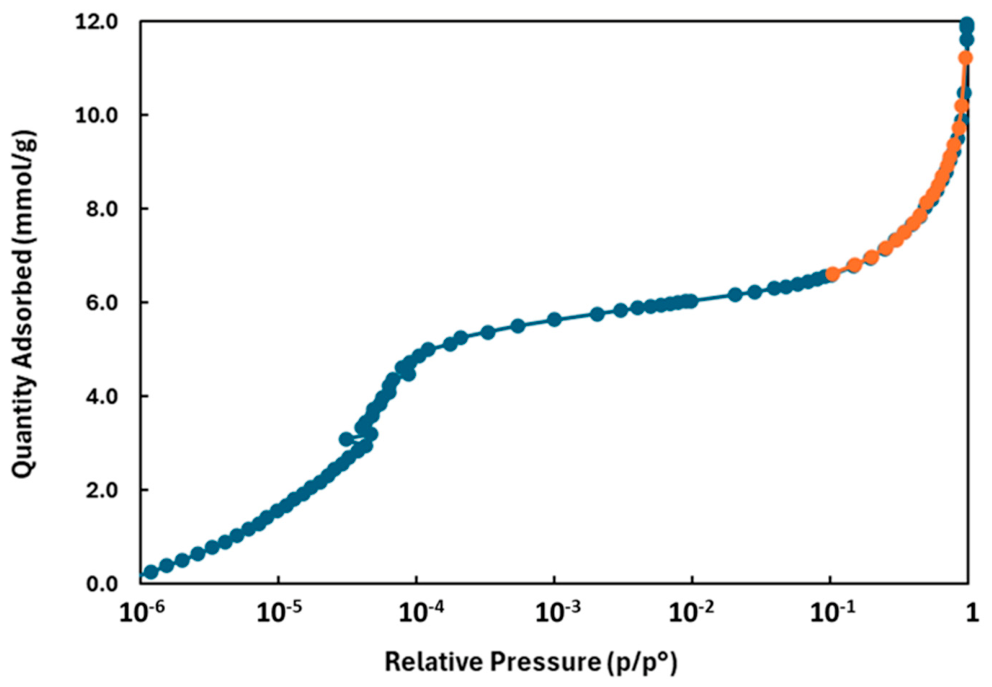
Nitrogen adsorption–desorption isotherms at 77 K were used as the experimental technique for zeolite 13X, while the specific surface area was calculated using the Brunauer-Emmett-Teller (BET) model. Furthermore, the method used to estimate the micropore volume was the t-plot method. The surface area was calculated as 515 m
2/g with a micropore volume of 0.16 cm
3/g. The adsorption/desorption isotherm of nitrogen at 77 K is shown in
Figure 2. The isotherm is type I according to IUPAC classification [
32]. The sharp increase in nitrogen adsorption at low relative pressures (P/P
0) < 0.1 is attributed to the micropore filling in the zeolite structure. In the intermediate relative pressure range (approximately 0.1–0.9), the isotherm shows a gradual increase in adsorption capacity. This region corresponds to a combination of monolayer formation, multilayer adsorption on external surfaces, and progressive filling of accessible pore surfaces. This behaviour is typical of microporous solids with additional external surface contribution and possible minor textural porosity.
At high relative pressures (P/P0 > 0.9), the steep rise in adsorption is mainly associated with capillary condensation in interparticle voids and particle packing (textural porosity) rather than mesopore filling. This indicates that the high-pressure uptake is governed predominantly by external void spaces between agglomerated particles rather than internal pore structure.
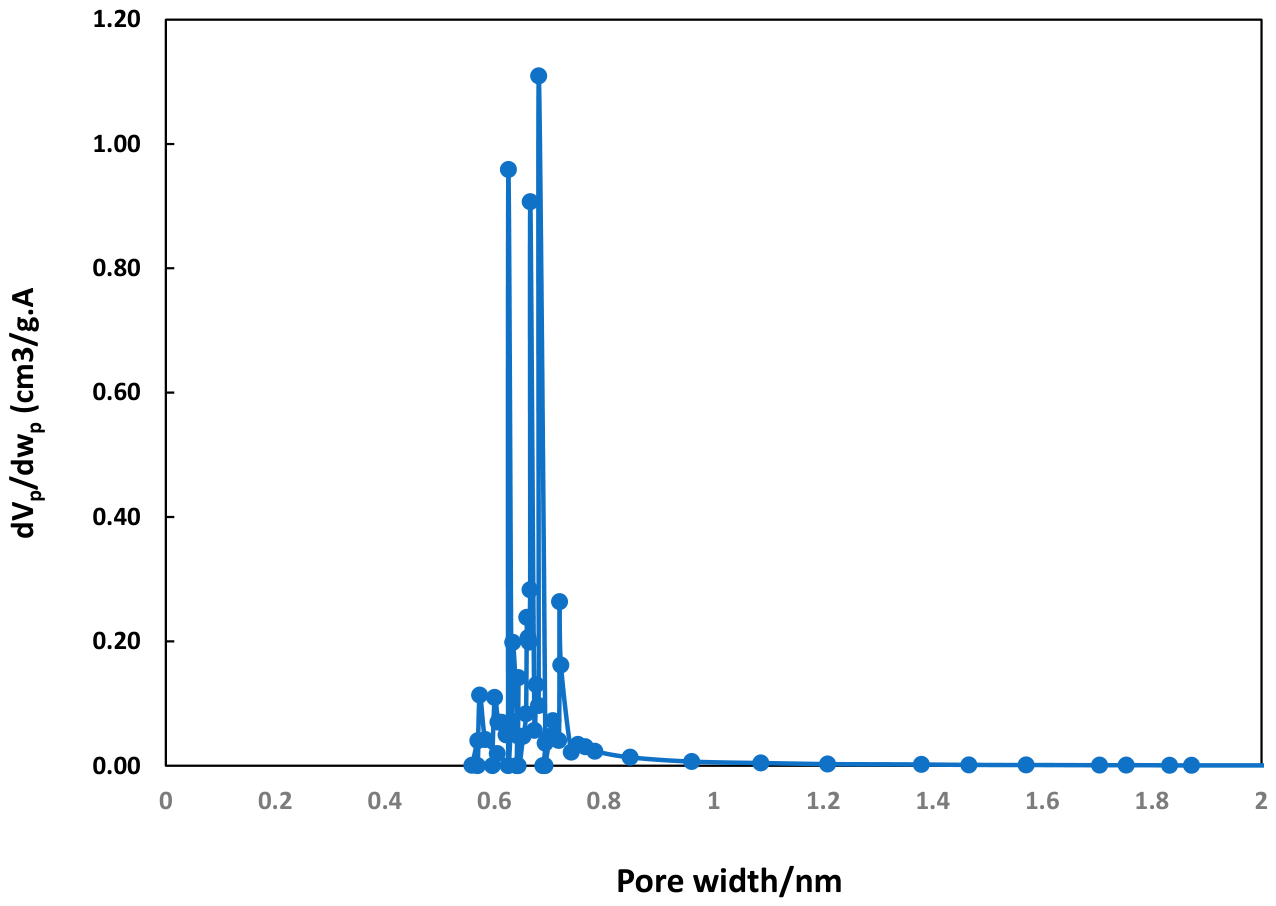
Figure 3 shows the pore-size distribution represented by the measured pore radius using the N
2 adsorption–desorption data. The pore size distribution was calculated using the Horvath-Kawazoe (HK) method. The obtained micropore diameter is slightly smaller than the nominal pore diameter commonly reported for zeolite 13X (~7.4 Å) [
33], such deviation is acceptable considering the limitations and assumptions associated with the HK method and N
2 adsorption measurements at 77 K.
3.2. Isotherm Experimental Results
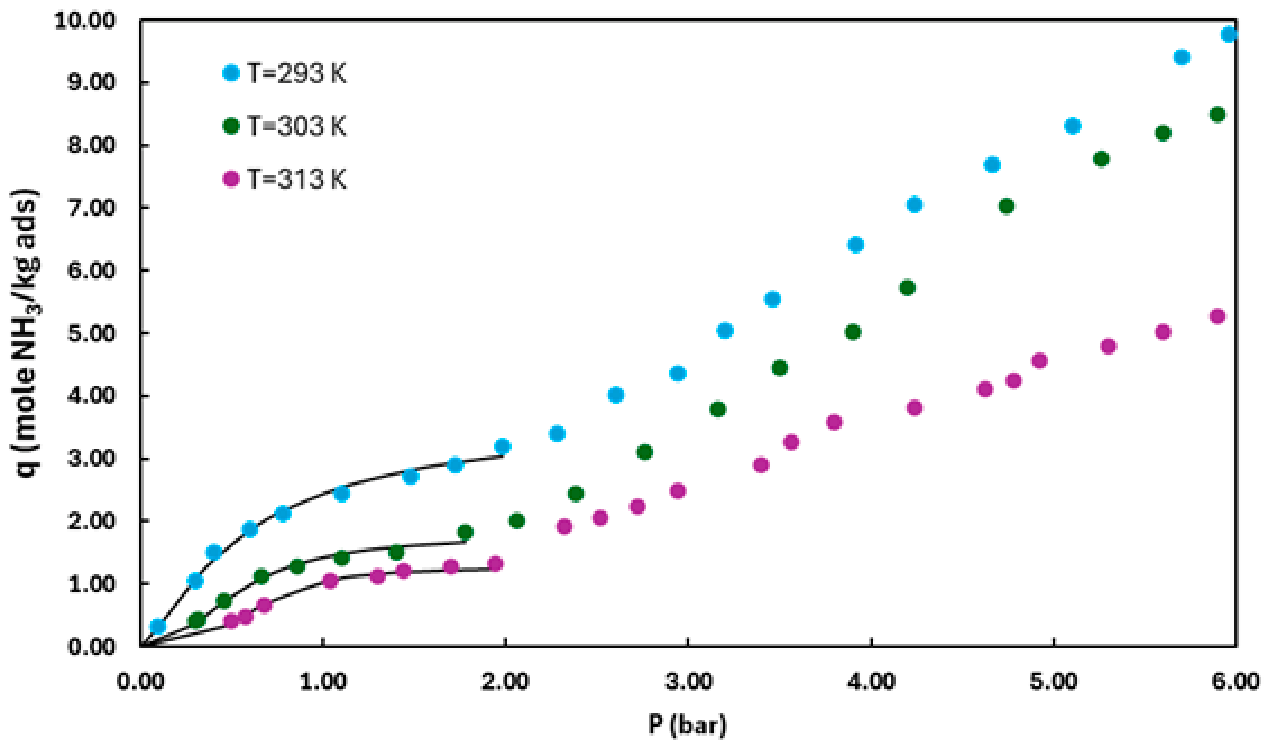
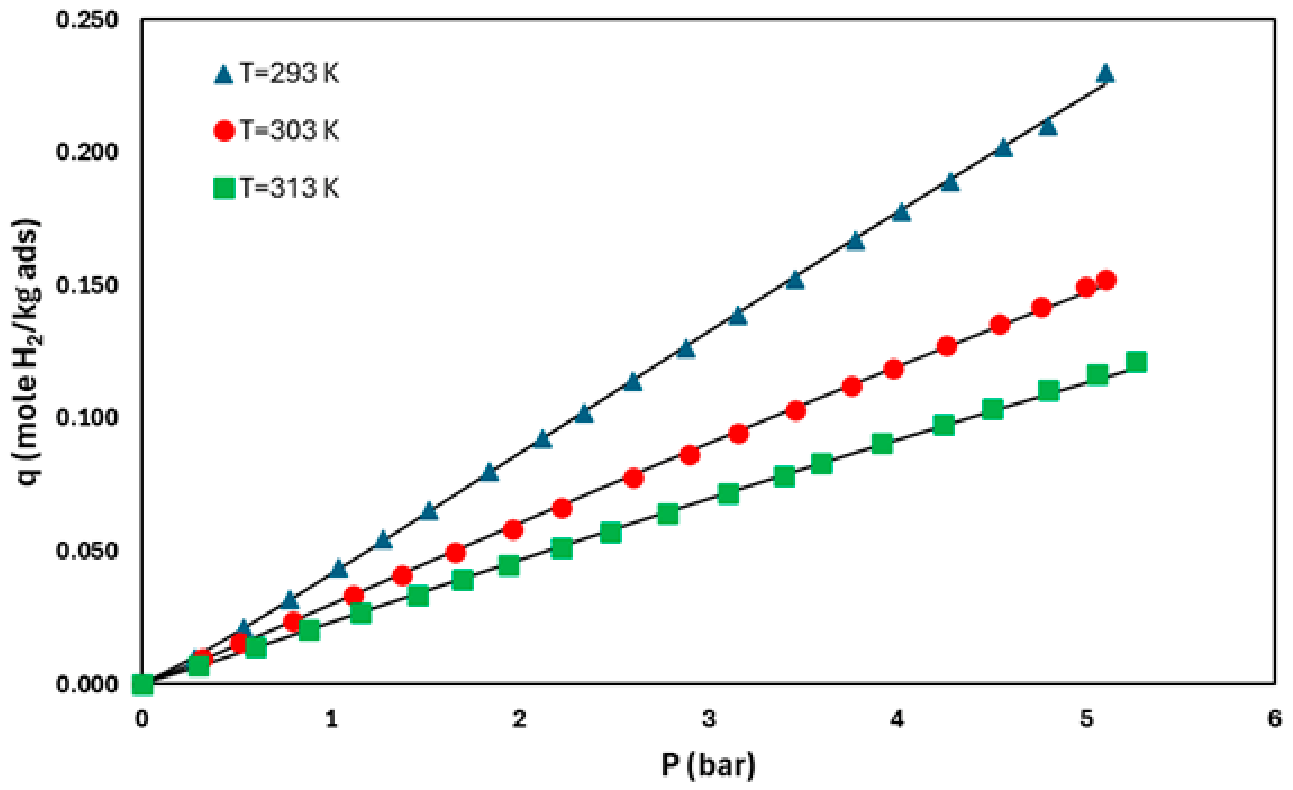
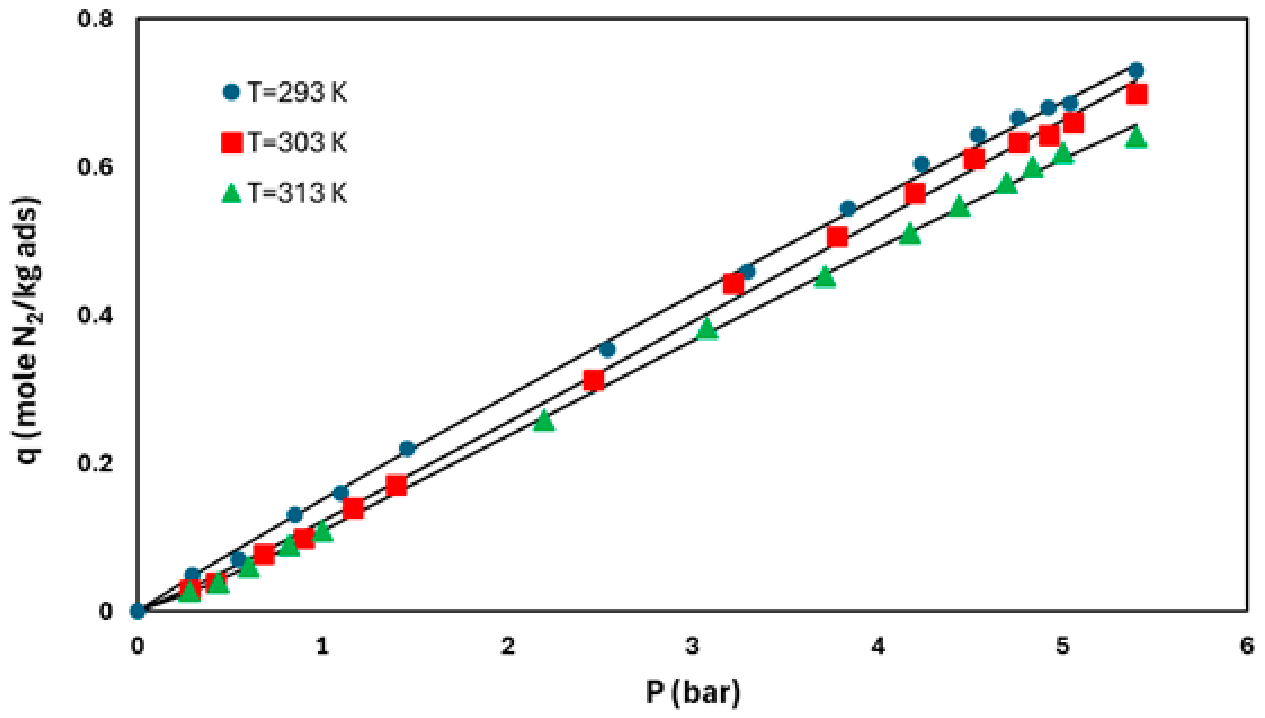
The adsorption isotherms of ammonia, nitrogen, and hydrogen were measured at the three temperatures 293, 303, and 313 K and at pressures up to 5 bar. These measurements were conducted using the adsorbent saturation method. The adsorption capacity (q), expressed in moles of adsorbate per kg of adsorbent (mole/kg), is reported as a function of absolute pressure at constant temperature. The adsorption isotherms for ammonia were measured twice, and the mean values were reported. The adsorption isotherms for ammonia, hydrogen and nitrogen are presented in
Figure 4,
Figure 5,
Figure 6 and
Figure 7 and compared with the Sips model [
30]. As
Figure 4 shows, at pressures below 2 bar, the equilibrium data are well described by the Sips isotherm model.
This behaviour is attributed to a site-limited adsorption mechanism followed by a transition to secondary adsorption within the micropores. At low pressures, ammonia is strongly adsorbed on the high-energy cationic sites (Na+) through strong electrostatic interactions. As pressure increases, these primary adsorption sites gradually become saturated. Around ~2 bar, a transition occurs where adsorption shifts from primarily site-specific binding to additional adsorption in the micropore volume (secondary filling). This change in adsorption regime appears as an inflection in the isotherm.
Figure 4 shows the experimental data for ammonia adsorption. The adsorption capacity decreases with increasing temperature, indicating the exothermic nature of the adsorption process. The rate of increase in the adsorption of ammonia is different at P < 2 bar. The results show that the ammonia adsorption isotherms on zeolite 13X display a Langmuir-type (Type I) behaviour, characteristic of monolayer adsorption on microporous materials. However, at P > 2 bar, the adsorption capacity increases, suggesting multilayer adsorption or the involvement of additional adsorption mechanisms beyond the initial monolayer saturation.
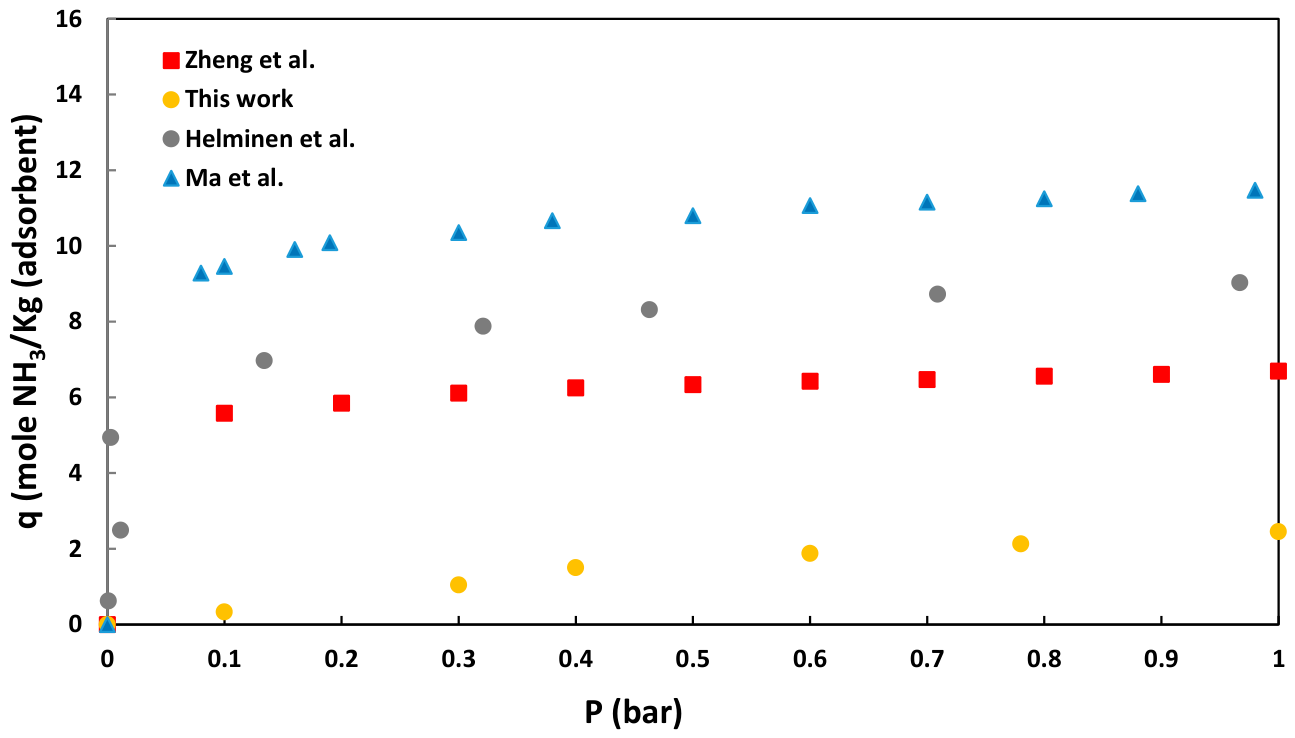
The experimental data for the ammonia adsorption isotherm in this study were compared with the literature values for ammonia adsorption on zeolite 13X in
Figure 5. It should be noted that experimental data for ammonia adsorption at pressures higher than one bar is scarce; we found just three sets of isotherm data for ammonia adsorption on zeolite 13X at pressures less than one bar. However, large discrepancies between the experimental data were observed. All sets of experimental data identified in the literature reported higher maximum adsorption capacities than those observed in this work [
12,
19]. Helminen et al. [
12] reported a maximum adsorption capacity of 9 mole/kg at 96.7 kPa and 298 K, while Zheng et al. [
19] observed a capacity of 6.7 mole/kg at 1 bar and 293 K. Ma et al. [
34] reported the maximum adsorption capacity of 11.5 mole/Kg at 1 bar and 298 k. All these values exceed the maximum adsorption capacity obtained in this study, which was approximately 2 mole/kg at 1 bar and 293 K. However, the adsorption capacity of 9 mole/kg was observed at a higher pressure than 5 bar. This discrepancy may be attributed to differences in the type or quality of zeolite 13X used. For pressure levels more than one bar, the adsorption of ammonia on zeolite 13X is increased with pressure and tends to approach a saturation plateau. The continued increase in ammonia uptake above 1 bar suggests that adsorption is not limited to monolayer coverage but involves cooperative interactions and pore-filling effects at higher pressures.
Figure 6 presents the experimental adsorption isotherm data for hydrogen on zeolite 13X. The results indicate that hydrogen adsorption is negligible at pressures below 1 bar, suggesting limited interaction between hydrogen molecules and the zeolite surface under low-pressure conditions. As the pressure increases beyond 1 bar, the adsorption capacity rises, reflecting enhanced occupation of available micropores by hydrogen molecules. However, this adsorption behaviour is notably affected by temperature. As the temperature increases, the adsorption capacity decreases, which is consistent with the exothermic nature of physical adsorption. Higher temperatures lead to increased kinetic energy of hydrogen molecules, reducing their tendency to remain adsorbed on the zeolite surface.
Figure 7 illustrates the experimental adsorption isotherm data for nitrogen on zeolite 13X. The results show that the adsorption capacity of nitrogen is significantly lower than that of ammonia, reflecting weaker interactions between nitrogen molecules and the zeolite surface. However, nitrogen adsorption is higher than that of hydrogen, indicating that nitrogen has a moderate affinity for zeolite 13X. This suggests that the nitrogen adsorption on zeolite 13X is not negligible and is influenced by molecular size and polarizability. The intermediate adsorption behaviour of nitrogen, compared to ammonia and hydrogen, highlights the selective adsorption characteristics of zeolite 13X for different gases based on their physical and chemical properties.
The isotherm data show that ammonia exhibits a significantly higher adsorption capacity compared to hydrogen and nitrogen, both of which display minimal adsorption on the zeolite surface. This difference in adsorption behaviour implies that zeolite 13X has a much stronger affinity for ammonia molecules, enabling selective adsorption. Consequently, ammonia can be efficiently separated from the mixture through adsorption-based processes, while hydrogen and nitrogen remain largely desorbed.
The kinetic diameter of ammonia (0.29 nm) [
35] is smaller than nitrogen (0.36 nm) [
36], allowing ammonia molecules to more easily access the pore structure of zeolite 13X. This size advantage facilitates faster diffusion and enhances the adsorption rate of ammonia within the porous zeolite. Additionally, ammonia possesses a higher polarizability and a significantly larger dipole moment compared to nitrogen, which strengthens its interaction with the polar sites of the zeolite surface. These physicochemical properties contribute to the higher adsorption affinity of ammonia on zeolite 13X.
In contrast, hydrogen exhibits the smallest kinetic diameter (0.289 nm) [
37], but due to its non-polar nature and extremely low polarizability, it interacts only weakly with the zeolite surface. As a result, hydrogen shows the lowest adsorption strength among the three gases and is not significantly retained by zeolite 13X. On the other hand, ammonia demonstrates the highest adsorption strength, driven by both size compatibility and strong electrostatic interactions with the zeolite framework [
38].
3.3. Isotherm Modelling and Selectivity
The experimental adsorption data were fitted using the Sips and Toth models to describe the adsorption behaviour of gases on zeolite 13X. The Sips model was identified as the most appropriate model due to its ability to describe adsorption on energetically heterogeneous surfaces while accounting for finite adsorption capacity. This makes it particularly suitable for zeolite 13X, where ammonia adsorption occurs on a distribution of cationic sites with varying adsorption energies.
The Sips model was confirmed for the adsorption isotherm of ammonia on zeolite 13X by another researcher [
19]. The Sips model parameters obtained from the fitting are summarised in
Table 3. For ammonia, the Sips model fitting was specifically performed using data at pressures below 2 bar, where the adsorption behaviour closely follows a Type I isotherm, characteristic of monolayer adsorption on a microporous material. The Sips model demonstrated good agreement with the experimental data, indicating its suitability for capturing the heterogeneous adsorption sites and non-ideal behaviour observed in real systems.
The Toth model parameters were also obtained from the experimental data and are reported in
Table 4. As shown in this table, the RMSD obtained from the Toth model is higher than that of the Sips model.
The Henry constant and the selectivity based on nitrogen are reported in
Table 5. For ammonia, the Henry constant was estimated from the low-pressure region (0.1–0.4 bar), yielding an average value of ~3.85 mol·kg
−1·bar
−1 at 293 K, although slight deviation from linearity indicates the onset of strong adsorption interactions even at low pressure.
The Henry constants for nitrogen and hydrogen were estimated from the fitted Sips isotherm parameters. Since the heterogeneity parameter for both gases was found to be close to unity (n ≈ 1), the Sips model reduces to a Langmuir-type linear form in the low-pressure region. Under this condition, the Henry constant can be expressed as
which represents the initial slope of the adsorption isotherm.
The larger Henry constant refers to a stronger tendency of the gas toward the adsorbent surface. The Henry constant of ammonia is the highest among the studied gases. Furthermore, the selectivity of ammonia compared to nitrogen is the highest and shows the affinity of ammonia toward adsorption on zeolite 13X.
The selectivity of ammonia over nitrogen decreases with increasing temperature (27.5 at 293 K to 8.3 at 313 K), indicating that adsorption is governed by exothermic physisorption interactions. A similar decreasing trend is observed for hydrogen, while nitrogen remains the reference component. This behaviour confirms that higher temperatures reduce the adsorption affinity of weakly and moderately interacting gases, leading to lower selectivity values.
3.4. Breakthrough Adsorption Experiments
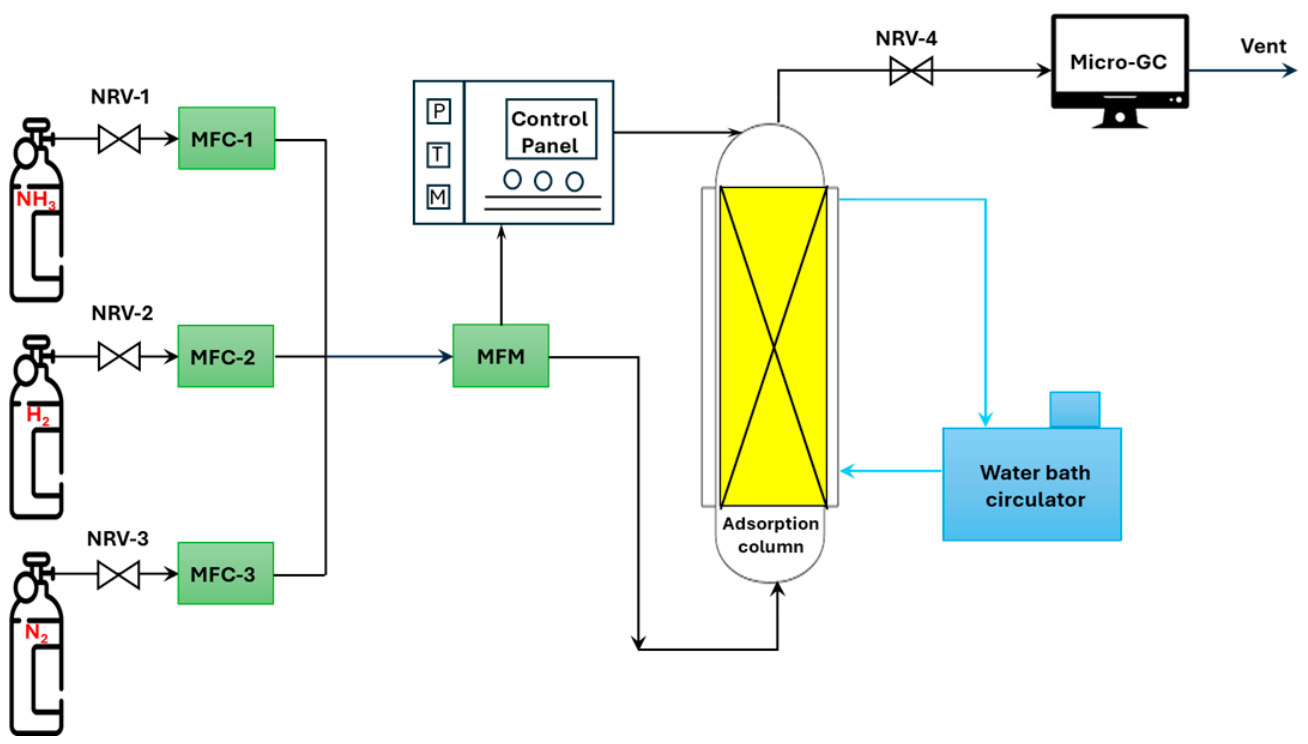
Breakthrough adsorption experiments on zeolite 13X were conducted at various adsorption pressures, using a feed gas with a constant ammonia concentration. The gas mixture, comprising ammonia, hydrogen, and nitrogen, was passed through the adsorption column, and the effluent was continuously monitored using a micro-GC. The micro-GC measured the gas composition every minute throughout the experiment. It is worth noting that the micro-GC is equipped with two columns: one designed for hydrogen analysis and the other for measurement of ammonia and nitrogen concentrations.
The breakthrough adsorption experiments were conducted in six runs at a temperature of 293 K, as presented in
Table 6. As shown in the table, the experiments were carried out in two stages. In the first stage, the breakthrough tests were performed using a mixture of ammonia and nitrogen (run Nos. 1–3). In the second stage, hydrogen was added to the mixture to study its effect on the adsorption behaviour (run Nos. 4–6).
The results of each run are reported in
Table 7. In the first run, a gas mixture consisting of 20 mole% ammonia and 80 mole% nitrogen was passed through an adsorption column packed with 100 g of zeolite 13X, at a temperature of 293 K and a pressure of 1.26 bar. The concentration of the effluent gas was continuously monitored using a micro-GC. After 138 min, the first breakthrough of ammonia was detected, indicating that zeolite 13X effectively adsorbed ammonia molecules during this period.
This result demonstrates the strong affinity of zeolite 13X for ammonia, with a noticeable delay in ammonia detection in the effluent, while nitrogen, having a much lower adsorption affinity, passed through the column almost immediately. The delayed breakthrough time confirms the selective adsorption behaviour of zeolite 13X toward ammonia, making it a promising material for ammonia separation or purification processes from nitrogen-rich gas mixtures.
In the second run, the effect of pressure on ammonia adsorption was investigated by reducing the system pressure to 0.7 bar while keeping the ammonia–nitrogen mixture composition the same as in the first run. As expected, the lower pressure led to a decrease in the adsorption capacity of the bed. This was observed by the earlier breakthrough of ammonia, with the first peak detected after 85 min. The reduced residence time of ammonia on the adsorbent surface highlights the pressure-dependent nature of the adsorption process, consistent with physical adsorption behaviour.
In the third run, the influence of ammonia concentration in the feed gas was examined. The ammonia content in the ammonia–nitrogen mixture was reduced to 10 mole%, while maintaining the same temperature conditions as in the first run. Under these conditions, the first breakthrough of ammonia occurred after 125 min. Despite the lower ammonia concentration, the delayed breakthrough compared to the second run (with reduced pressure) suggests that concentration plays a significant role in adsorption dynamics, but the total adsorption loading was inherently lower due to the reduced amount of ammonia in the feed.
These observations confirm that both pressure and ammonia concentration substantially affect the adsorption performance of zeolite 13X. Higher pressure and higher ammonia content favour greater adsorption capacity and delayed breakthrough, supporting the material’s suitability for selective ammonia capture under optimised conditions.
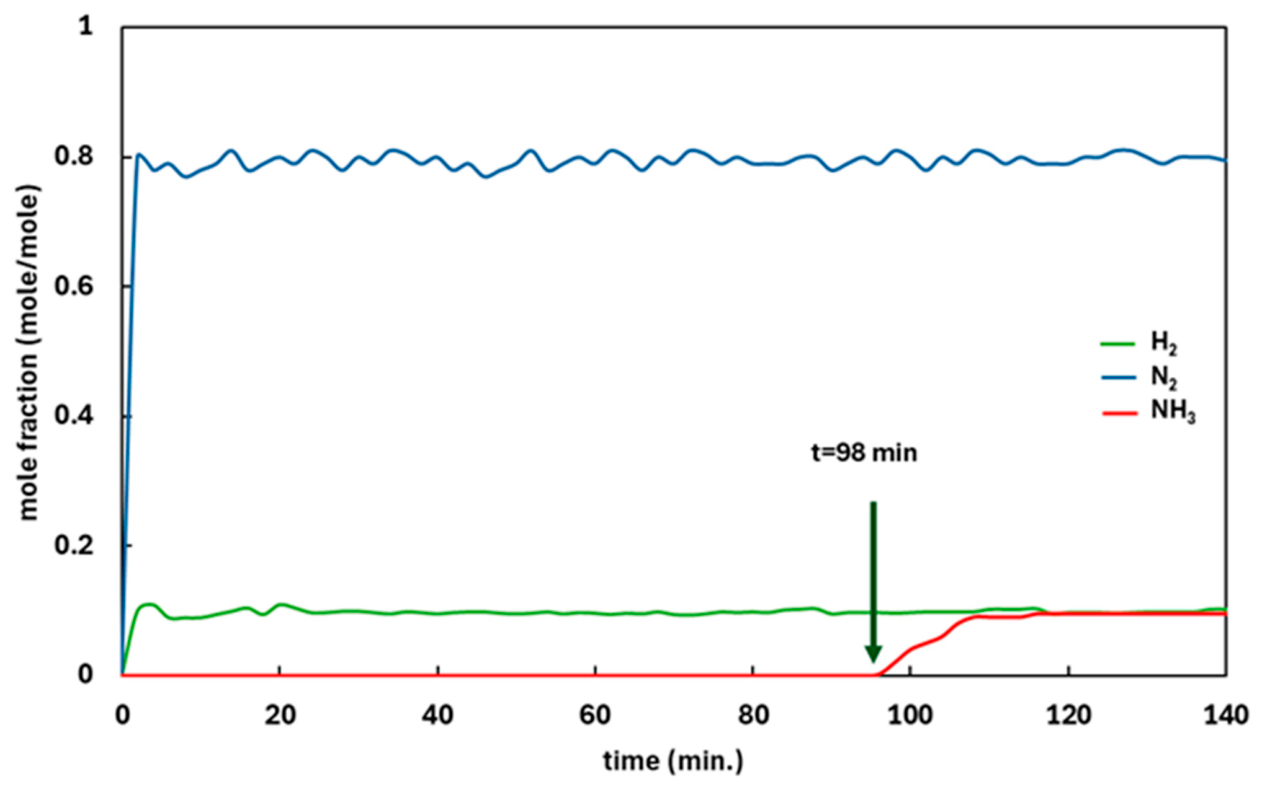
In the second stage of the experiments, hydrogen was introduced into the gas stream at a concentration of 10 mole%. In the fourth run, the total system pressure was set to 1.46 bar, and the gas mixture comprising ammonia, nitrogen, and hydrogen was passed through the zeolite 13X adsorption column. The ammonia breakthrough was observed after 98 min. Notably, hydrogen and nitrogen showed negligible adsorption on zeolite 13X, as they were detected in the effluent almost immediately after the start of the experiment. This result confirms the weak interaction of hydrogen and nitrogen with the adsorbent and highlights the high selectivity of zeolite 13X for ammonia under these conditions.
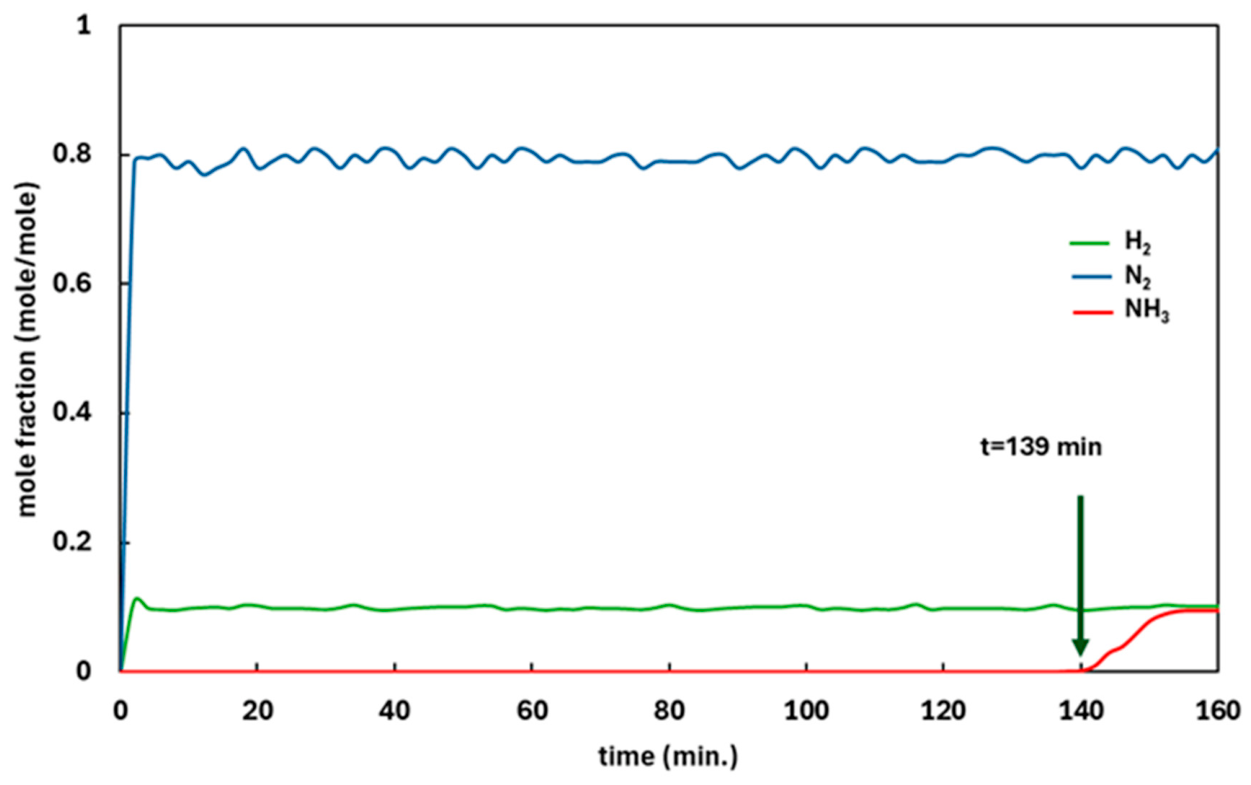
In the fifth run, the system pressure was increased to 2.7 bar while maintaining the same gas composition. Under these conditions, the ammonia breakthrough occurred after 139 min, indicating a significant enhancement in the adsorption capacity of zeolite 13X at elevated pressure. The extended breakthrough time suggests that higher pressure promotes greater adsorption of ammonia molecules due to increased driving force and improved adsorbate–adsorbent interactions.
Figure 8 and
Figure 9 shows the ammonia breakthrough curve for the fourth and fifth runs. These figures show that ammonia adsorption is increased with the pressure of the systems. These results demonstrate that while hydrogen and nitrogen have minimal interaction with zeolite 13X, the adsorption of ammonia is strongly influenced by pressure. Increasing the system pressure enhances the overall adsorption performance, making pressure optimisation a key factor in designing efficient ammonia separation systems using zeolite 13X.
To evaluate the reusability of the adsorbent, zeolite 13X was regenerated after the fifth run using the desorption procedure described in
Section 2.2. Following regeneration, a sixth breakthrough adsorption experiment was carried out under the same conditions as the fifth run, with a system pressure of 2.7 bar and the same gas composition.
The results showed that ammonia breakthrough occurred after 110 min, which is slightly earlier than in the fifth run (139 min) but still indicates a relatively high adsorption capacity. This minor decrease in performance suggests that the regeneration process was largely effective and that zeolite 13X retains its adsorption properties after use.
These findings imply that zeolite 13X exhibits good stability and can be reused for ammonia separation in multi-component gas streams with minimal loss in performance. This reusability enhances the economic and operational feasibility of using zeolite 13X in practical adsorption-based separation processes. Further cycles of adsorption–desorption would help to more thoroughly assess the long-term durability and regeneration efficiency of the adsorbent.
Table 6 compares the dynamic adsorption capacities obtained from breakthrough experiments with the equilibrium capacities derived from static ammonia isotherms at 293 K. The results show that both values are generally comparable, but some deviations are observed depending on operating conditions. At lower ammonia partial pressures, the dynamic capacities are slightly higher than the equilibrium values, while at higher partial pressures the equilibrium capacities become higher. These differences are mainly attributed to mass transfer zone (MTZ) effects, axial dispersion, and non-isothermal behaviour during breakthrough, as well as possible limitations in equilibrium measurements due to slow adsorption kinetics on zeolite 13X.
4. Conclusions
Zeolite 13X is a suitable adsorbent for the separation of ammonia from gas mixtures containing nitrogen and hydrogen. New experimental adsorption isotherm data were acquired for ammonia, hydrogen, and nitrogen in the temperature range of 293–313 K and at pressures up to 5 bar.
The adsorption performance of zeolite 13X for separating ammonia from gas mixtures containing nitrogen and hydrogen was systematically investigated through a series of breakthrough experiments under varying pressure and composition conditions. The results demonstrated that zeolite 13X exhibits a strong and selective affinity for ammonia, while nitrogen and hydrogen show negligible adsorption. This selectivity is attributed to the smaller kinetic diameter of ammonia, its higher polarizability, and stronger dipole moment, which enhance its interaction with the zeolite’s polar surface.
The breakthrough time for ammonia was found to increase with system pressure, indicating that adsorption capacity is pressure-dependent and can be optimised for improved performance. Moreover, the presence of hydrogen in the gas stream had no significant impact on ammonia adsorption, further confirming the poor interaction of hydrogen with the adsorbent.
Importantly, zeolite 13X showed good regeneration potential, maintaining much of its adsorption capacity after thermal desorption and reuse in a subsequent run. These findings confirm that zeolite 13X is an effective and reusable adsorbent for selective ammonia capture in multi-component gas streams, making it a promising material for applications such as ammonia recovery, gas purification, and emission control in industrial processes.
However, despite these promising results, there is still much work to be done to translate these findings into practical industrial applications. Further research is needed to assess long-term stability over multiple adsorption–desorption cycles, evaluate performance under real process conditions, and optimise system design and scale-up strategies for continuous industrial use.