Article

Occurrence, Mineralogical Characteristics, and Management Strategies for Naturally Occurring Asbestos in the Midwestern Korean Peninsula


Department of Biological and Environmental Science, Dongguk University, 32 Dongguk-ro, Ilsandong-gu, Goyang 10326, Republic of Korea
*
Authors to whom correspondence should be addressed.
These authors contributed equally to this work.
Appl. Sci. 2026, 16(11), 5457; https://doi.org/10.3390/app16115457 (registering DOI)
Submission received: 24 April 2026 / Revised: 25 May 2026 / Accepted: 26 May 2026 / Published: 31 May 2026
(This article belongs to the Section Earth Sciences)

Abstract

This study implemented an integrated mineralogical and microscopic workflow to identify naturally occurring asbestos (NOA) in former mining areas of H County in the central-western Korean Peninsula and to derive practical implications for long-term site management. Five former mining localities were selected based on regional NOA distribution maps and historical mining records. Representative rock samples were analyzed using polarized light microscopy, X-ray diffraction, scanning electron microscopy–energy-dispersive spectroscopy, and transmission electron microscopy. The findings revealed that chrysotile was the dominant type of asbestos, with localized occurrences of actinolite and anthophyllite also identified. The results indicate that mixed asbestos assemblages can form in structurally controlled and altered lithologic domains, highlighting the need for complementary analytical methods for reliable identification instead of relying on a single technique. Importantly, the study suggests that the response to NOA-bearing environments should focus on long-term management rather than just documenting their presence. Effective management strategies should include revegetation, engineered covering or backfilling, control of dust-generating activities, restrictions on material reuse, provision of information on health risk prevention and exposure reduction, and long-term monitoring for adaptive site control.

1. Introduction

Naturally occurring asbestos (NOA) refers to asbestos-bearing minerals found in rocks and soils within their natural geological context, excluding materials that have been intentionally mined or manufactured for commercial use. NOA becomes an environmental concern when natural weathering or human activities release respirable fibers from NOA-bearing bedrock, altered ultramafic rocks, and derived soils. These fibers can remain airborne during excavation, road use, cultivation, slope cutting, and other surface-disturbing activities. Consequently, NOA has emerged as an issue that directly links mineralogical identification with site management and exposure prevention [1].
Although asbestos is a naturally occurring mineral, the risk of exposure is largely influenced by land use and surface disturbance [2]. Activities such as excavation, road construction, agriculture, quarrying, and recreational traffic can transform a geological occurrence into a long-term environmental management problem by increasing dust generation and fiber transport [3]. Previous studies have shown that NOA-related exposure concerns are not confined to mining districts; they also occur in residential, agricultural, transport, and redevelopment settings where NOA-bearing materials are brought to the surface or redistributed into near-surface soils and dust [4]. For this reason, applied NOA research should extend beyond simple occurrence mapping. After NOA-bearing locations are identified, practical management actions are required, including evaluation of disturbance potential, restriction of soil- and rock-disturbing activities, dust suppression, surface stabilization, covering or backfilling of exposed materials, risk communication, and long-term monitoring.
In Korea, the legacy of asbestos mining and the growing awareness of NOA-contaminated rocks and industrial minerals have shifted the focus from solely occupational exposure to broader environmental exposure scenarios. This transition highlights the necessity for region-specific investigations, as NOA-bearing lithologies, abandoned mine sites, and reused mineral materials can each present distinct disturbance pathways and management priorities. National discussions have increasingly emphasized not only the presence of asbestos in geological materials but also the need for practical control strategies, sensitive analytical methods, and long-term institutional management to mitigate preventable exposure. In many countries, asbestos use has been progressively prohibited or replaced by alternative materials; for example, in Brazil, asbestos was historically used in asbestos–cement products, including roof tiles and water tanks; more recent regulatory and industrial changes have promoted prohibition and replacement with non-asbestos materials [5,6].
A persistent challenge in NOA studies is the analytical distinction among chrysotile, amphibole asbestos, and other elongate mineral particles [7]. Amphibole identification is especially difficult because morphology alone is often insufficient to distinguish regulated asbestos fibers from non-asbestiform cleavage fragments or chemically similar elongate minerals [8]. In addition, no single analytical method can fully resolve occurrence, morphology, chemistry, and crystal structure. Polarized light microscopy (PLM) is useful for rapid screening; X-ray diffraction (XRD) helps identify bulk mineral phases; scanning electron microscopy–energy-dispersive spectroscopy (SEM-EDS) provides surface morphology and elemental information; and transmission electron microscopy (TEM) offers high-resolution confirmation of fiber habit, composition, and lattice structure. Therefore, an integrated analytical workflow is essential not only for documenting occurrences but also for supporting technically defensible decisions regarding management and future monitoring.
From an applied science perspective, the critical question is not merely whether NOA exists at a specific site, but rather how to manage identified NOA-bearing zones to minimize disturbance and reduce the likelihood of chronic exposure. In cases where NOA-bearing rock is exposed at or near the surface, management strategies may include a combination of revegetation, surface stabilization, covering, controlled backfilling, and restrictions on soil-disturbing activities. These engineering and land management approaches should be accompanied by effective risk communication, guidance on preventive behaviors and exposure-reduction practices, and ongoing monitoring, as site conditions, land use, and disturbance intensity can change over time.
The H County area in the central-western Korean Peninsula serves as a relevant case study because it contains serpentinite-bearing lithologies, former asbestos mine sites, and current agricultural, forest, and access-road environments where disturbance of NOA-bearing materials may occur [9,10,11,12,13]. Previous research in this region has documented the geological framework and the general occurrence of asbestos-related minerals; however, a more management-focused interpretation, supported by integrated mineralogical analysis, is still necessary. Specifically, the combined use of PLM, XRD, SEM-EDS, and TEM can enhance asbestos identification and clarify how site characteristics and occurrence modes inform practical control strategies.
Thus, this study aims to (i) identify the occurrence types and mineralogical characteristics of NOA in selected former mining areas of H County, (ii) evaluate the strengths and limitations of a multi-method analytical workflow for asbestos identification, and (iii) derive management implications for disturbed NOA-bearing sites. Rather than focusing exclusively on confirming the existence of NOA, this study emphasizes providing the mineralogical basis for site management. During our investigations, field observations revealed that NOA-bearing rocks in the study area are frequently exposed along cut slopes, unpaved local access roads, and agricultural margins, leaving them highly susceptible to natural weathering and anthropogenic disturbance. By linking these physical site conditions with our mineralogical characterization results, we suggest practical management priorities, including revegetation, covering, backfilling, providing information on health-damage prevention and exposure reduction, and long-term monitoring to ensure sustained control of NOA-bearing environments.

2. Geological Setting

2.1. Regional Geology

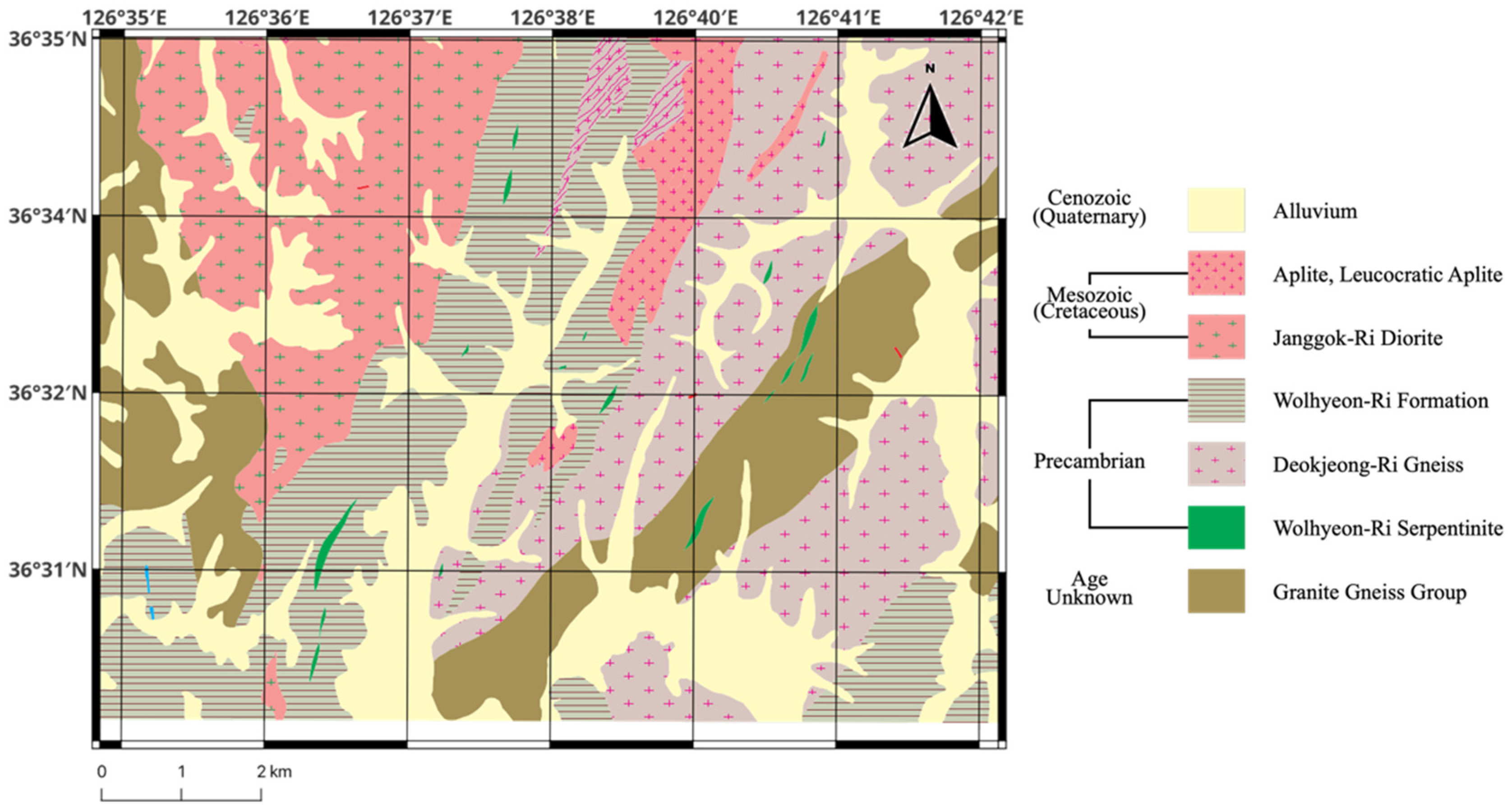
The study area is situated in H County, in the southwestern part of the Gyeonggi Massif (Figure 1). The regional geology consists mainly of Precambrian metasedimentary and gneissic rocks, locally containing augen- to lens-shaped serpentinite bodies, and younger Mesozoic Cretaceous intrusive rocks [9]. The younger intrusions are mainly felsic to intermediate in composition, including coarse-grained biotite granite, felsic intrusive rocks, local diorite, and hornblende-bearing porphyritic granitic rocks [10]. These intrusive rocks are distinguished from the principal NOA source lithologies because NOA in the study area is related mainly to serpentinite, serpentinized ultramafic bodies, and altered mafic–ultramafic domains, where serpentinization can form chrysotile, and related alteration may locally produce amphibole asbestos [11,12,13,14,15,16,17,18].

2.2. Local Geology

Surrounding the former asbestos mine sites, the predominant lithologies include Precambrian hornblende granite and schist, granitic gneiss, injection gneiss, and augen gneiss, with serpentinite occurring as augen- to lens-shaped bodies within schist units [11]. These serpentinite-bearing and altered mafic–ultramafic domains are regarded as the main NOA-relevant lithologies, whereas nearby Cretaceous porphyritic granitic rocks are treated as adjacent intrusive units rather than direct NOA source rocks.

3. Materials and Methods

3.1. Field Sampling

Field investigations and outcrop surveys were conducted after reviewing the NOA geological map and relevant literature. The sampling focused on outcrops within lithologic units that were known or suspected to contain NOA. Targeted rock sampling was used because asbestos often occurs heterogeneously in altered rocks, typically concentrated in fractures, veinlets, shear zones, or other localized features. As a result, samples were preferentially collected from outcrop areas where fibrous minerals were visible or strongly suspected [19]. This sampling strategy was designed to confirm the mineralogical occurrence and occurrence mode of NOA in selected outcrop samples, rather than to delineate the complete spatial distribution of NOA-bearing soils or surface materials across the study area. Each sample was sealed immediately after collection to minimize fragment dispersion, and the coordinates of the sampling sites were recorded using GPS (Table S1).

3.2. Selection of Investigation Sites Using NOA Distribution and Mining Maps

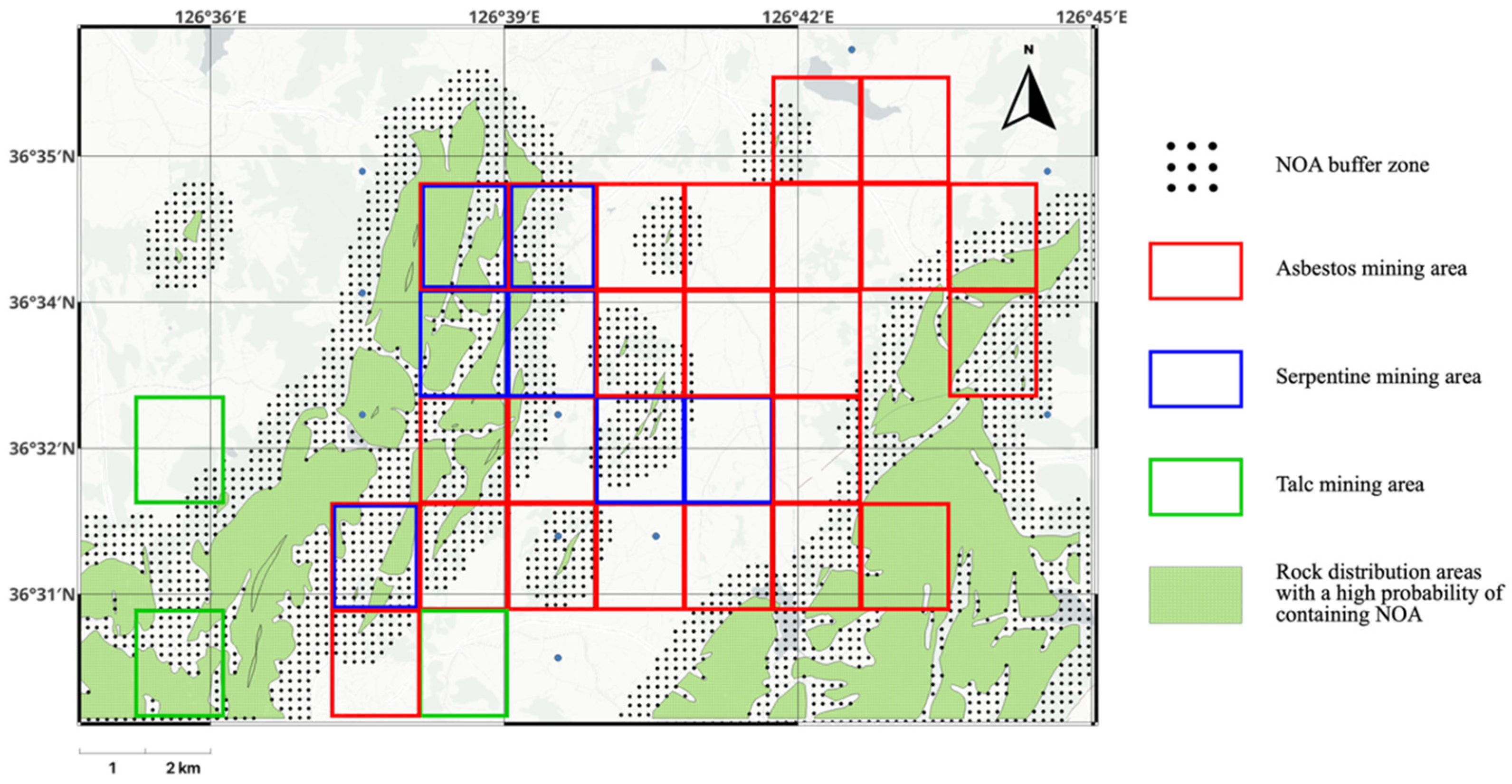
Under the Korean Asbestos Safety Management Act, regional geological maps of NOA are created to outline lithologies with varying risks of NOA occurrence and to identify buffer zones where exposure management may be necessary [20]. In H County, which contains former asbestos mining districts including Gwangcheon-eup [12], the NOA distribution map was analyzed in conjunction with historical mining records to identify locations with both geological susceptibility and potential human disturbance (Figure 2).
A numerical scoring system, random stratification, or grid-based sampling design was not applied. Instead, the five sites were selected using a criterion-based targeted approach, because the objective of this study was to examine exposed, management-relevant NOA-bearing outcrops in former mining areas rather than to produce a statistically representative inventory of all NOA occurrences across H County. The selection criteria included overlap with mapped NOA high-potential zones or buffer zones, evidence of historical asbestos mining, the presence of exposed rock outcrops that could be directly examined, and current land-use conditions that could influence disturbance and potential exposure.
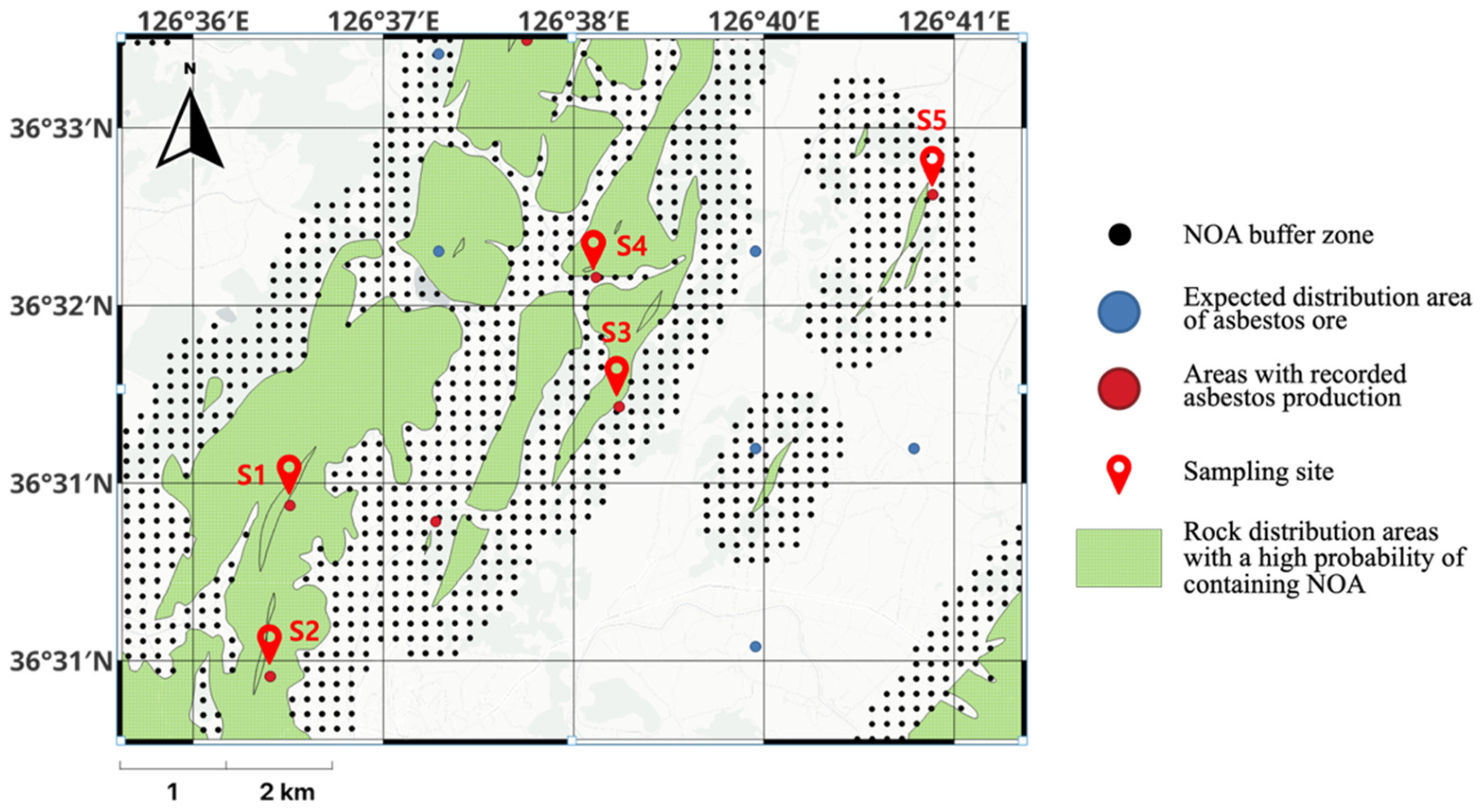
Based on this targeted screening, five sites within former mining areas were chosen for detailed field investigation: three sites in Gwangcheon-eup, one site in Guhang-myeon, and one site in Hongdong-myeon (Figure 3). Because the selected former mine sites overlap with agricultural areas, forest restoration areas, access roads, and local residential activities, both natural weathering and land-use changes were considered relevant to potential NOA exposure.

3.3. Analytical Methods

The analytical workflow combined PLM, XRD, SEM-EDS, and TEM to identify asbestos minerals in rock samples. Samples were first examined by PLM, and PLM-positive or ambiguous samples were further analyzed by XRD, SEM-EDS, and TEM.
For PLM analysis, dried rock samples were prepared by selecting visible fibrous portions where present; when visible fibers were not recognized, representative portions of the rock sample were selected. The selected materials were ground using an agate mortar and pestle until the sample material passed the 75 μm sieve, avoiding over-grinding. PLM observations were performed using a Ci POL polarized light microscope (Nikon Corporation, Tokyo, Japan) equipped with a MOTICAM ProS5 Lite digital camera (Motic, Xiamen, China) operated by Motic Images Plus software (Version 3.0). The analysis followed the US Environmental Protection Agency (EPA) Method 600/R-93-116 and Ministry of Employment and Labor Notice No. 2022-9 of the Republic of Korea. Asbestos presence and species were identified at 100×–400× magnification based on morphology, color, pleochroism, refractive index, dispersion staining colors, crossed polars, birefringence, extinction angle, and sign of elongation. High-dispersion refractive index liquids of 1.550 HD and 1.605 HD (Cargille Laboratories, Cedar Grove, NJ, USA) were used for chrysotile and amphibole asbestos, including actinolite, tremolite, and anthophyllite, respectively. Because the analytical workflow was designed for the qualitative confirmation of asbestos presence and species identification in outcrop rocks, semi-quantitative visual estimations (e.g., rare/moderate/abundant per field of view) were not performed. Such visual estimations in crushed rock matrices without formal point-counting can be highly subjective and potentially misleading. Therefore, a fixed grain-count procedure was not applied.
XRD data were obtained using an Ultima IV X-ray diffractometer (Rigaku Corporation, Tokyo, Japan). The rock samples were crushed to <100 μm and then sieved through a 75 μm mesh. XRD analysis was performed in continuous scan mode using Cu-Kα radiation with a Ni filter, an accelerating voltage of 40 kV, a current of 30 mA, a scan speed of 3°/min (0.05°/s), a step size of 0.02°, and 2θ/θ geometry. Mineral phases were identified by comparing diagnostic diffraction peaks with Joint Committee on Powder Diffraction Standards (JCPDS) reference data using PDXL software (Version 2.8, Rigaku Corporation). XRD was used as a qualitative phase-confirmation method; therefore, no independent quantitative phase-abundance threshold was applied, and final phase assignments were evaluated together with PLM, SEM-EDS, and TEM results.
SEM-EDS data were obtained using a CLARA LMH field-emission scanning electron microscope (TESCAN Brno, Brno, Czech Republic). A portion of the sample sieved to <75 μm was evenly dispersed onto conductive tape on a copper (Cu) stub. After gently removing loosely attached particles with compressed air, the samples were coated with platinum (Pt) to prevent charging and particle detachment during analysis. SEM observations were conducted at an accelerating voltage of 20 kV, with magnifications ranging from 2000× to 10,000×. EDS spectra were acquired for 20 s, and elemental quantification was performed using the P/B-ZAF quantitation mode in AZtec software (Version 6.0, Oxford Instruments, Abingdon, UK).
TEM data were obtained using a Tecnai G2 Spirit transmission electron microscope (FEI Company, Hillsboro, OR, USA). The fraction sieved to <75 μm was dispersed in acetone (Sigma-Aldrich, St. Louis, MO, USA) and ultrasonicated for 10 min using a bath sonicator. A droplet of the suspension was deposited onto a carbon-coated copper (Cu) grid and dried under ambient laboratory conditions without additional heating. TEM observations were conducted at an accelerating voltage of 120 kV, with magnifications ranging from 2000× to 10,000×. Selected-area electron diffraction patterns were acquired at a camera length of 440 mm and analyzed using TIA (Tecnai Imaging & Analysis) software (Version 4.1, FEI Company). The combined morphological, chemical, and crystallographic data were used to identify asbestos species.
For QA/QC, sample preparation tools and substrates were checked to minimize cross-contamination, and procedural blank preparations were examined during the analytical sequence. Known asbestos-positive reference preparations or previously confirmed positive materials were also used to verify the optical, morphological, chemical, and crystallographic identification criteria. Ambiguous identifications were confirmed using complementary methods before final species assignment.

4. Results

4.1. Field Occurrence

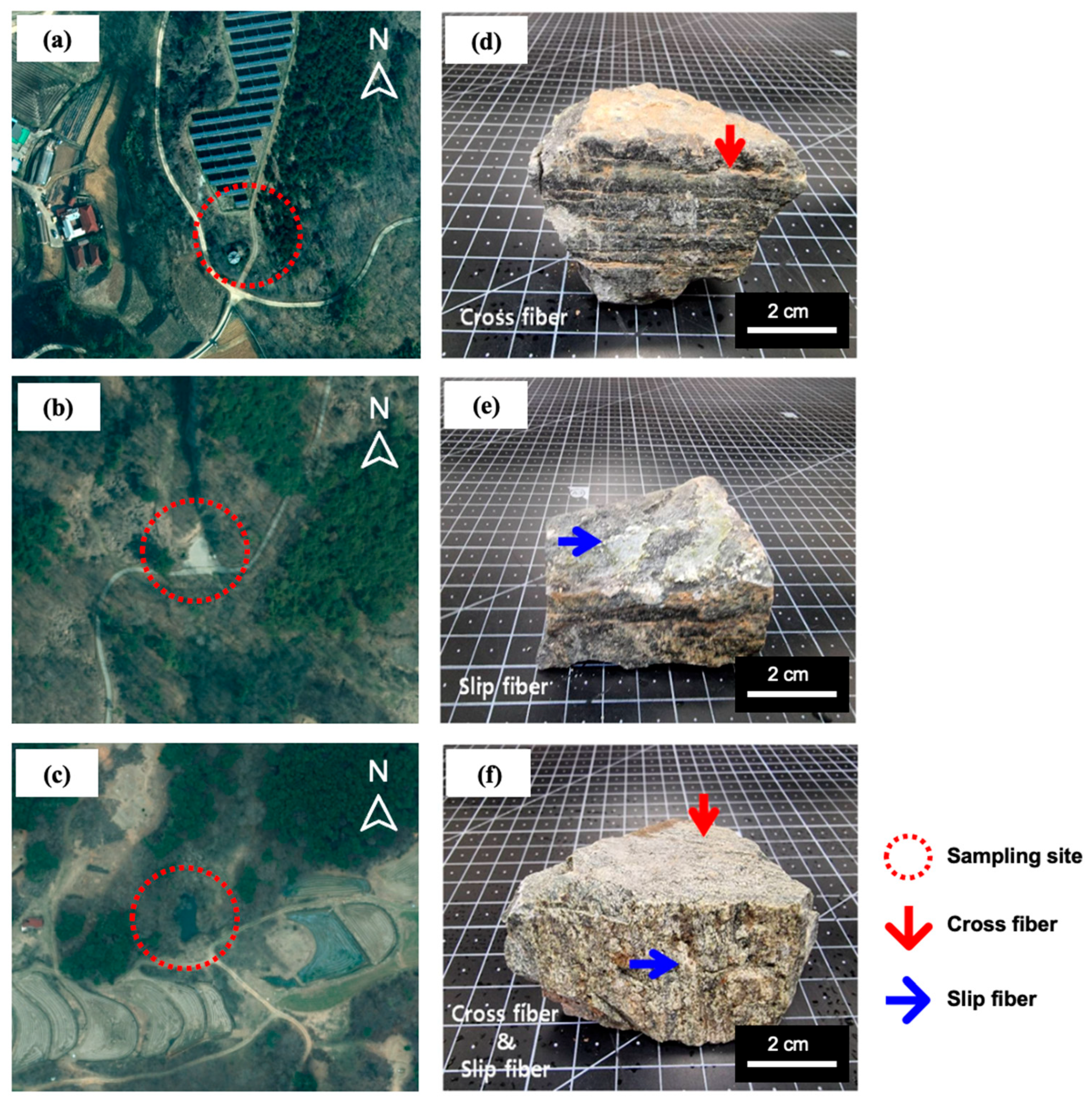
Targeted sampling confirmed that occurrences of NOA in the study area are associated with altered ultramafic to mafic lithologies, serpentinite-bearing zones, and fibrous mineral development controlled by fractures or veins (Figure 4). The fibrous minerals were identified as cross-fibers, slip fibers, and mass fibers, indicating multiple occurrence modes related to alteration pathways and structural controls. The observed field patterns indicate that NOA is spatially heterogeneous rather than uniformly distributed across the investigated former mine areas, with visible fibrous materials concentrated in altered and structurally controlled domains [19].

4.2. Identification of NOA by Polarized Light Microscopy (PLM)

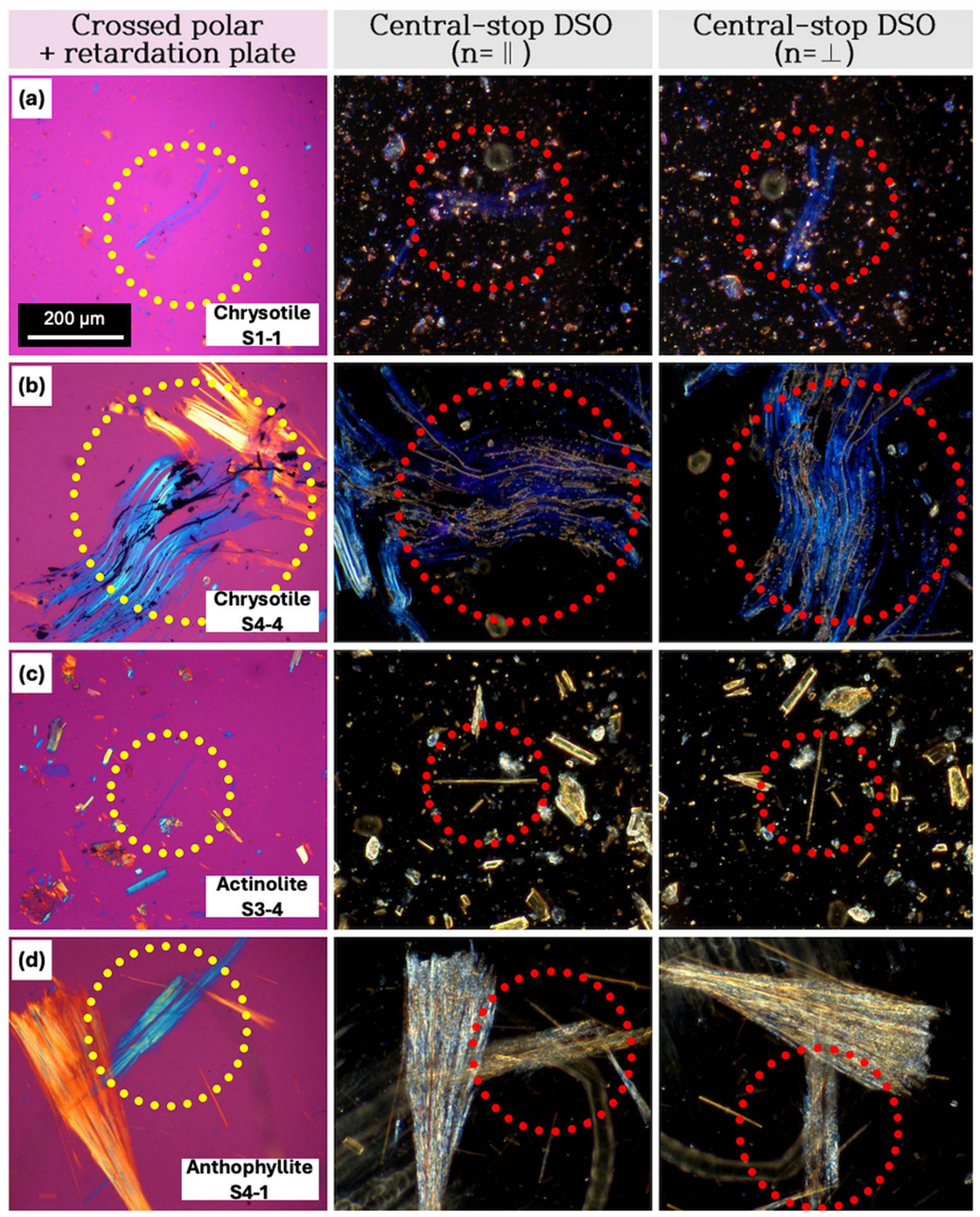
PLM screening revealed chrysotile in 14 out of 25 rock samples and amphibole asbestos in 3 samples (Table 1; see Table S2 for detailed individual sample data). Chrysotile was typically observed as wavy to curly fiber bundles without significant pleochroism, exhibiting the optical characteristics typical of serpentine-group asbestos, such as positive elongation and the distinctive magenta/blue dispersion-staining response. In contrast, actinolite and anthophyllite asbestos appeared as straight to slightly curved acicular fibers and fiber bundles. These amphibole fibers were distinguishable from chrysotile due to their sharper morphology and different dispersion-staining responses; however, several samples required further confirmation as more than one type of amphibole asbestos was indicated. Overall, the PLM results suggest that chrysotile is the predominant asbestos type in the analyzed rock samples, while amphibole asbestos is found more sporadically in specific former mine locations (Figure 5).

4.3. X-Ray Diffraction

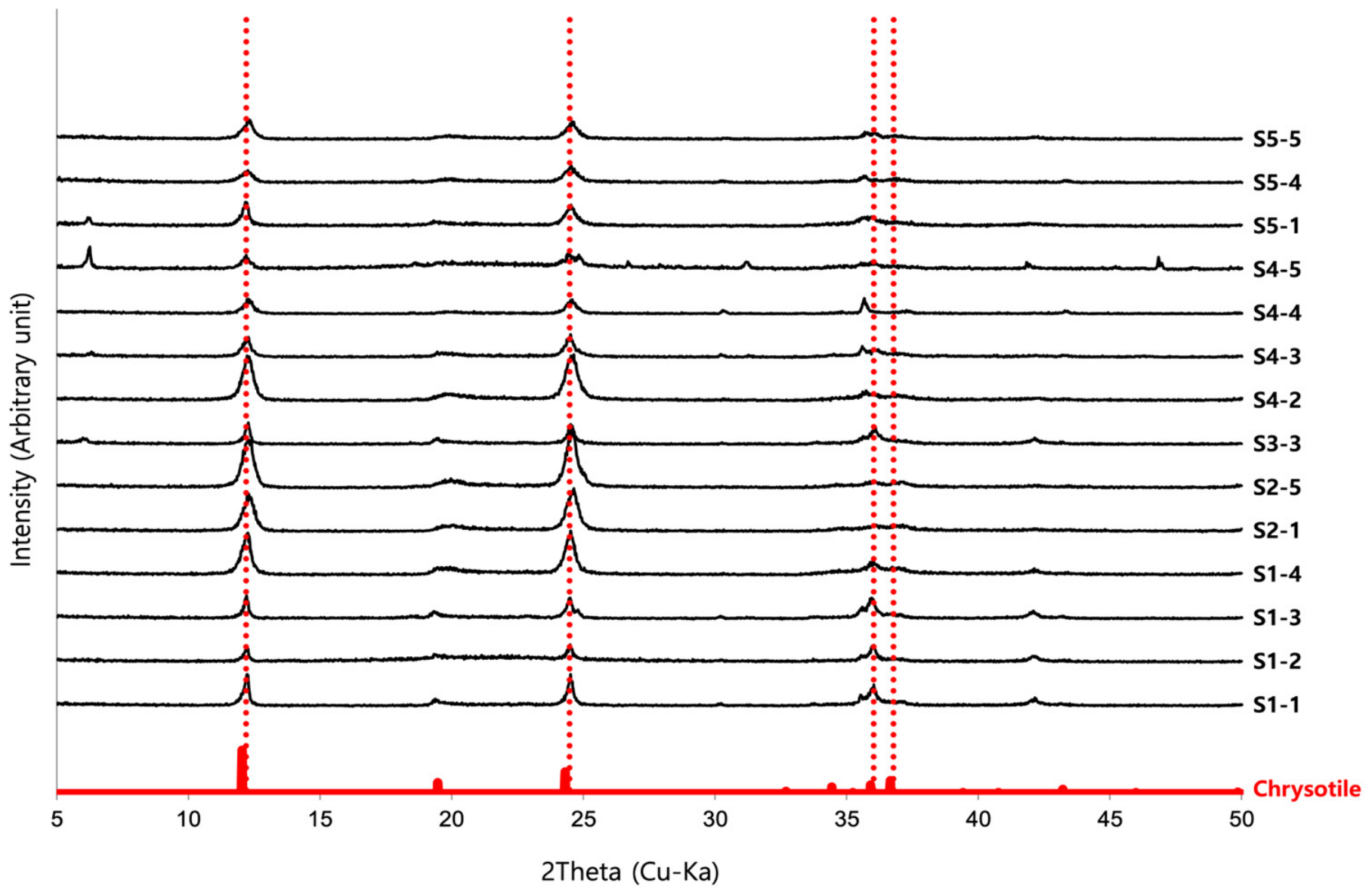
XRD analysis was conducted on representative PLM-positive samples to confirm the mineral phases present. The chrysotile-bearing samples exhibited consistent diffraction patterns across various sites, indicating that chrysotile is the primary serpentine-group asbestos identified in the study area.
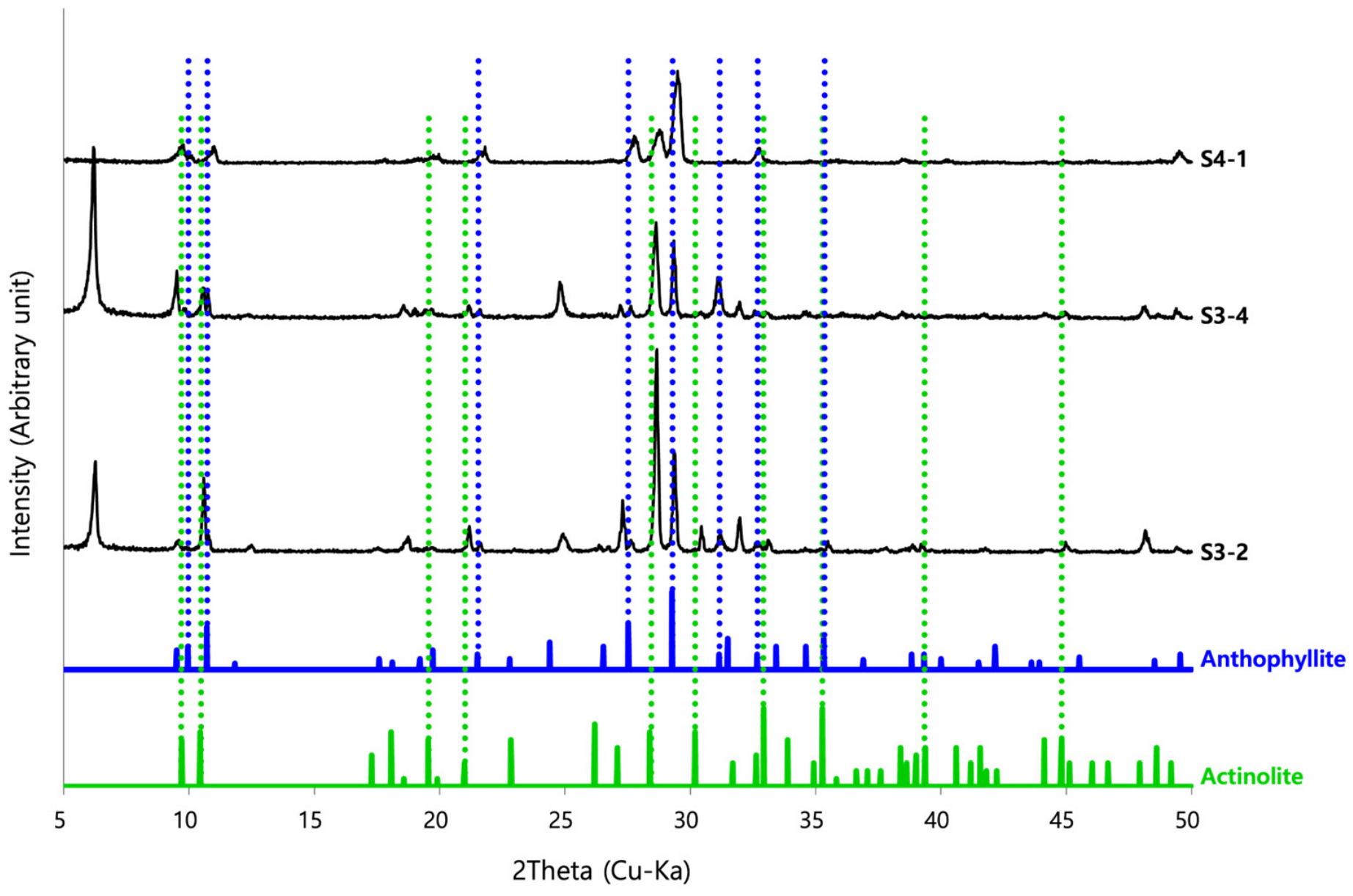
For chrysotile-bearing samples, the differences among samples were primarily related to relative peak intensity, while the overall peak positions and pattern shapes aligned well with reference chrysotile data (Figure 6). In contrast, the amphibole-bearing samples displayed more complex diffraction patterns. In samples containing both actinolite and anthophyllite asbestos, the reflections of amphibole species and associated non-asbestiform minerals overlapped, leading to partially merged peak sets (Figure 7). Therefore, complementary methods such as SEM-EDS and TEM are necessary for more accurate species-level identification.
The need for complementary methods was especially important for the amphibole-bearing samples because previous NOA studies have emphasized that overlapping peaks and mixed mineral assemblages can obscure final identification when XRD is used alone [13,15].

4.4. Scanning Electron Microscopy

SEM observations clearly distinguished between serpentine-group and amphibole-group fibrous morphologies. Chrysotile appeared as wavy, curly, and often split fiber bundles, while amphibole asbestos manifested as straighter, acicular to needle-like fibers with more rigid outlines and well-defined cleavage-related forms.
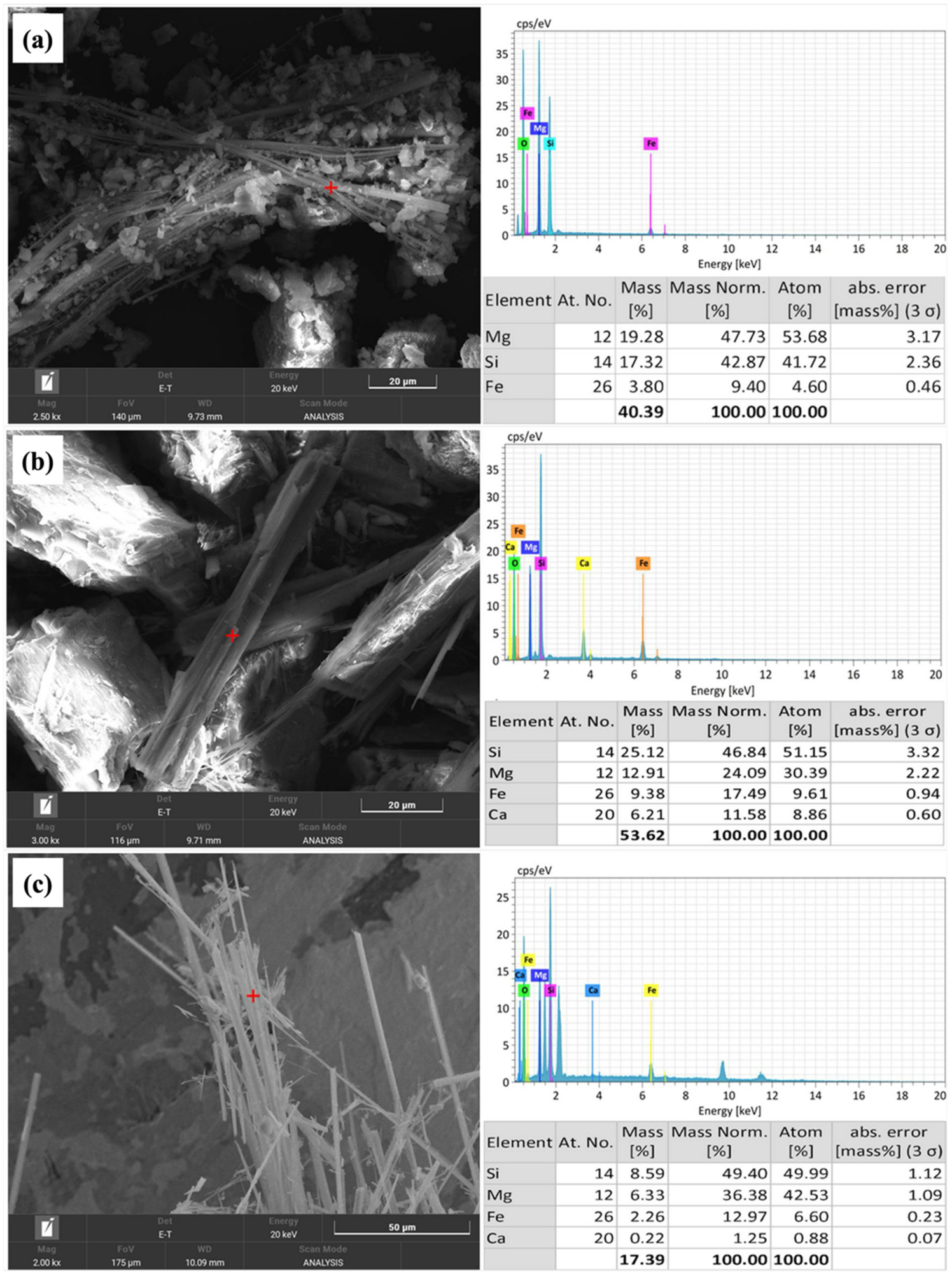
EDS analyses supported these morphological interpretations. Chrysotile was primarily composed of Mg, Si, and O; actinolite asbestos contained Mg, Si, O, and clearly detectable Ca, along with Fe; and anthophyllite asbestos exhibited Mg- and Si-dominant compositions with minor Fe and little to no Ca.
The SEM-EDS results provided a valuable link between the optical observations from PLM and the high-resolution structural information obtained by TEM. However, SEM-EDS alone was not considered sufficient for definitive asbestos identification in all samples, because it does not provide the full crystallographic confirmation obtained by TEM and may require support from PLM and XRD in mixed mineral assemblages (Figure 8).
Among the analyzed amphibole fibers, the presence of Ca and Fe was consistent with actinolite asbestos, whereas fibers lacking Ca but enriched in Mg and Si were identified as anthophyllite asbestos [16,17]. This compositional contrast was crucial, as the optical properties and XRD patterns of amphiboles alone may be ambiguous in mixed samples. Overall, the SEM-EDS observations indicate that the NOA identified in the investigated samples was not confined to a single asbestos species but included mixed serpentine- and amphibole-group assemblages associated with altered and structurally controlled rock domains.

4.5. Transmission Electron Microscopy

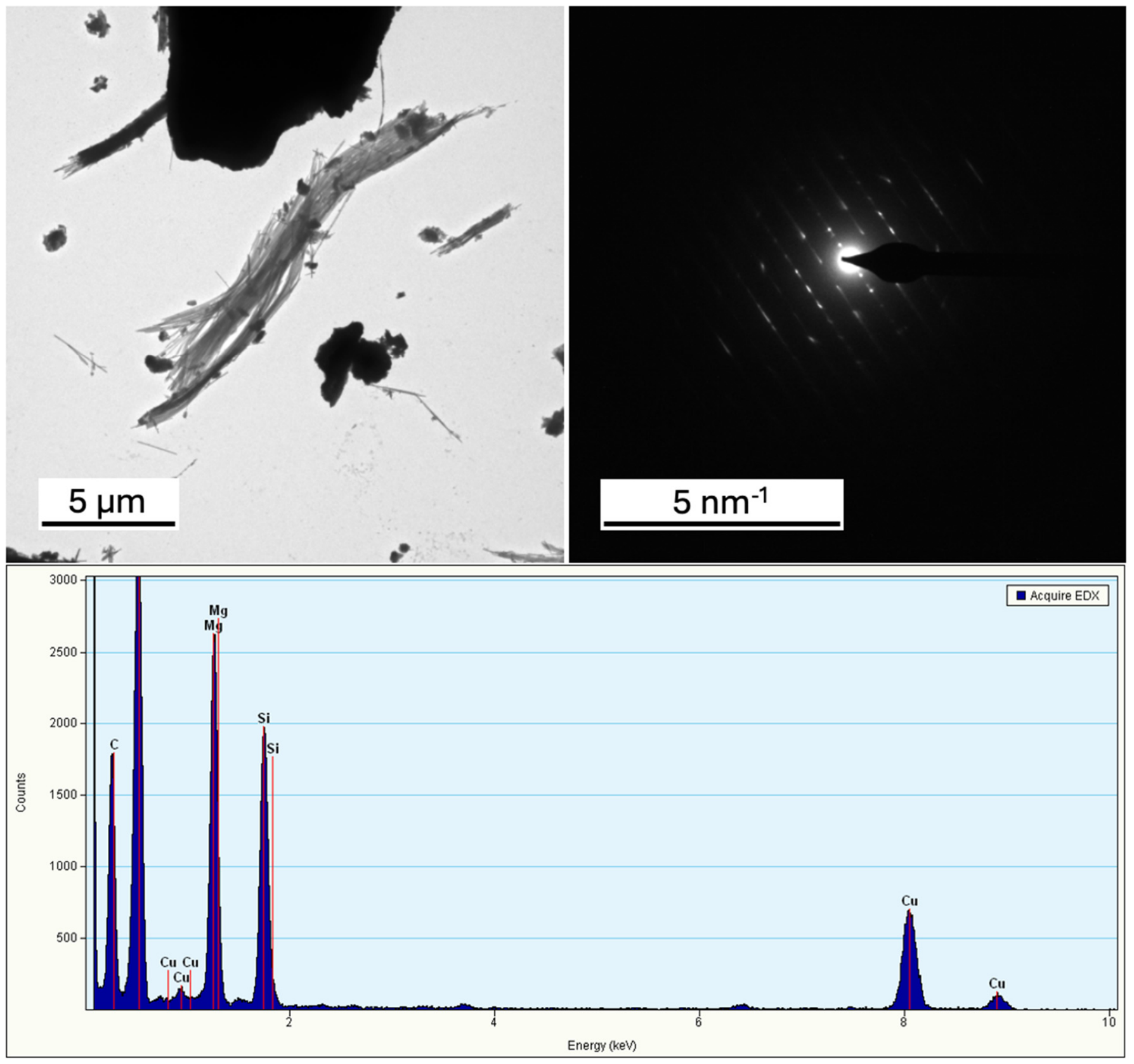
TEM provided the most definitive particle-scale evidence for asbestos identification, but it was interpreted together with PLM, XRD, and SEM-EDS to ensure reliable identification across screening, bulk mineralogical, morphological, chemical, and structural levels. Chrysotile was easily recognized by its characteristic hollow tubular structure, which results from the rolling of layered serpentine sheets. Additionally, the electron diffraction patterns were consistent with chrysotile crystallography (Figure 9).
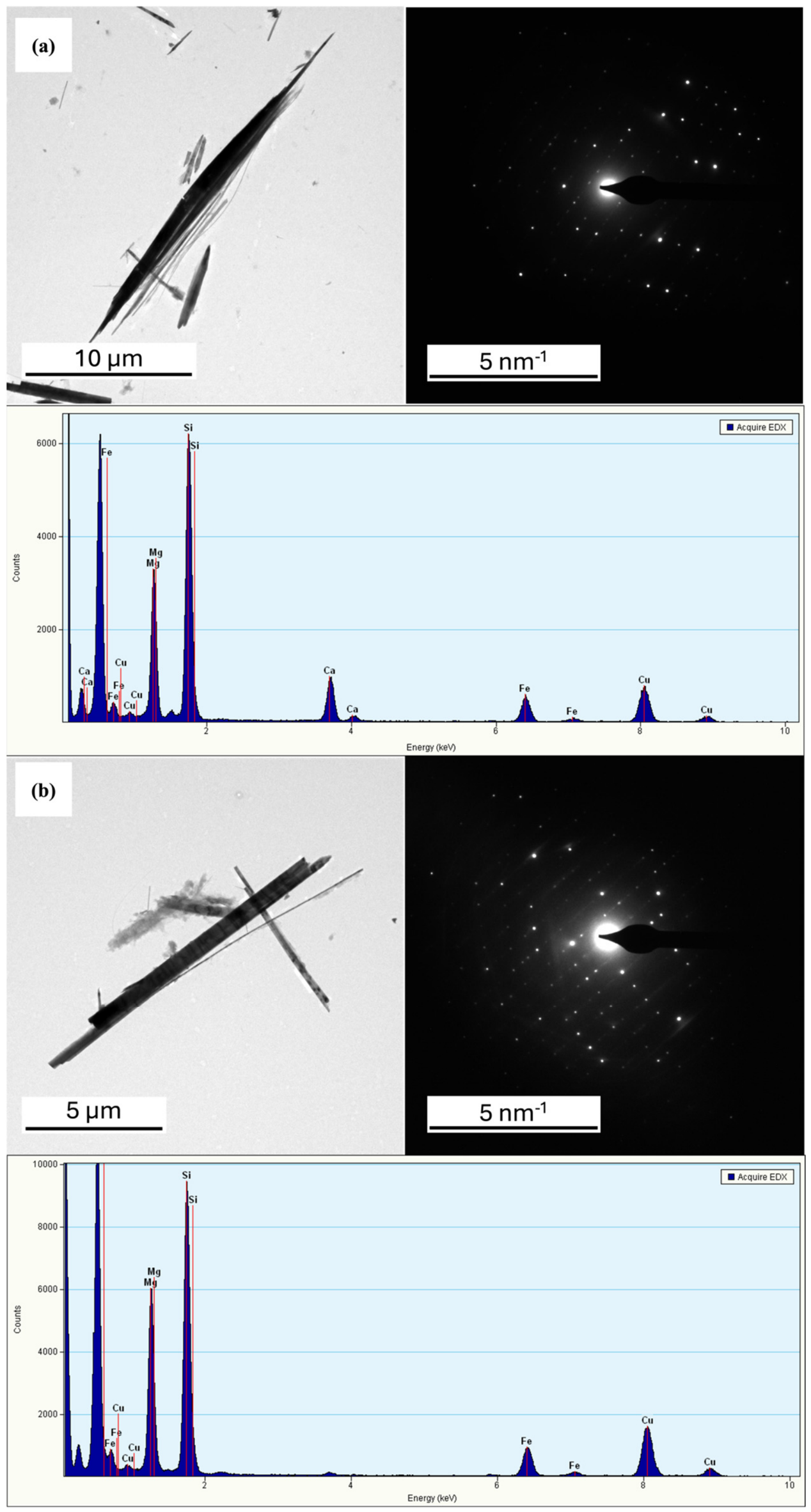
For the amphibole asbestos samples, TEM combined with EDS and electron diffraction confirmed straight-fibrous morphologies and species-specific chemical signatures. Actinolite asbestos was identified by the presence of Ca together with Mg, Si, and Fe, whereas anthophyllite asbestos was distinguished by Mg-Si-Fe chemistry without comparable Ca enrichment (Figure 10).
The TEM results also revealed that the amphibole fibers fundamentally differed from chrysotile, not only in composition but also in internal structure and external form. This multi-technique confirmation is crucial in NOA studies because regulatory and risk-related interpretations often rely on the confidence with which fibrous particles can be assigned to specific asbestos minerals [18,21].
Overall, the combined PLM, XRD, SEM-EDS, and TEM dataset supports a consistent interpretation of mixed NOA occurrences in the investigated H County sites, with chrysotile as the dominant phase and localized occurrences of actinolite and anthophyllite asbestos.

5. Discussion

5.1. Geological and Analytical Context for Management-Oriented NOA Evaluation

The combined analytical results indicate that NOA occurrence in the investigated outcrop samples is closely associated with lithology and structural features rather than only with the general presence of former asbestos mines. In the sampled materials, asbestos-bearing minerals were mainly observed in altered and fracture-related domains, including veinlets and structurally controlled fibrous occurrences. These lithologic and structural settings provide the main geological basis for prioritizing management because they identify outcrops and rock materials that may generate NOA-bearing fragments or dust if disturbed. Therefore, the present results provide mineralogical evidence for recognizing disturbance-sensitive NOA-bearing outcrops, but they should not be interpreted as a complete spatial delineation of NOA distribution across the former mine landscape. Future work should include detailed geological and structural mapping of fracture zones, faults, shear zones, their orientations, and vein-filling minerals, together with systematic soil and surface-material sampling, to identify priority areas for management.
Chrysotile was closely associated with serpentinite and alteration veinlets, typically observed in cross- and slip-fiber forms, while amphibole asbestos was found more locally in cleavage- and joint-related settings [22,23]. This occurrence pattern has direct management relevance because management priorities differ according to both mineral assemblage and disturbance context. Chrysotile-dominant serpentinite and veinlet-rich zones should be prioritized for surface stabilization, revegetation, and dust suppression where exposed, weathered, or slope-disturbed materials may generate fibers. In contrast, localized amphibole-bearing or mixed chrysotile–amphibole domains, including actinolite and anthophyllite asbestos, should be treated more conservatively during excavation, slope modification, or reuse of rock fragments, with confirmatory identification, engineered covering or controlled backfilling, and restrictions on the reuse of suspect materials [12,13]. The coexistence of chrysotile, actinolite asbestos, and anthophyllite asbestos suggests that the investigated sites should be considered mixed NOA environments. Consequently, management implications in this study should be restricted to the investigated NOA-bearing outcrops and comparable exposed materials. Other landscape elements, such as reclaimed slopes, cultivated margins, reused rock materials, and road-adjacent exposures, require additional field surveys and sampling before site-specific management priorities can be assigned.

5.2. Implications of the Analytical Workflow for Applied NOA Management

The PLM, XRD, SEM-EDS, and TEM results collectively indicate that the investigated outcrops contain mixed NOA assemblages dominated by chrysotile, with more localized occurrences of actinolite and anthophyllite asbestos. PLM was useful for recognizing diagnostic fibrous habits and for distinguishing the wavy to curly morphology of chrysotile from straighter amphibole-like fibers. However, several amphibole-bearing samples required additional confirmation because optical observations alone were insufficient to resolve mixed amphibole assemblages. XRD provided bulk mineralogical support for chrysotile and amphibole-group phases, but overlapping amphibole reflections and the absence of direct morphological information limited its ability to distinguish asbestiform particles from non-asbestiform fragments [8,14,15]. Therefore, SEM-EDS and TEM were necessary to refine the interpretation by linking morphology, elemental composition, and crystallographic characteristics.
The integrated analytical results support a consistent occurrence model for the study area. Chrysotile is interpreted as the dominant asbestos mineral because its wavy to curly fiber bundles observed by PLM were supported by chrysotile-related XRD patterns and by Mg-Si-rich fibrous particles with chrysotile-compatible morphology and structural characteristics in SEM-EDS and TEM analyses [18,21]. By contrast, actinolite and anthophyllite asbestos occurred only in selected samples and were distinguished mainly through the combined interpretation of straight fibrous morphology, amphibole-related diffraction patterns, and chemical composition. Ca- and Fe-bearing amphibole fibers were consistent with actinolite asbestos, whereas Ca-poor Mg-Si-Fe fibers were interpreted as anthophyllite asbestos [16,17]. For example, in sample S3-2, PLM and XRD indicated the presence of amphibole phases, but it was only through the integrated application of SEM-EDS and TEM that the co-occurrence of both actinolite and anthophyllite asbestos could be definitively distinguished based on Ca/Fe compositional contrasts and structural data. This highlights the practical benefit of the multi-method approach in resolving complex mixed NOA environments. These relationships indicate that NOA occurrence in the investigated former mining areas is not represented by a single mineral phase but by mixed serpentine- and amphibole-group assemblages associated with altered and structurally controlled rock domains [12,13].
This analytical interpretation is important for applied NOA management because each method provides different but complementary evidence. Management decisions based on only one analytical technique may underestimate mineralogical complexity or overgeneralize the distribution of NOA-bearing materials. In particular, XRD-based phase identification should be interpreted together with microscopic and chemical evidence, where amphibole asbestos may occur together with chrysotile. The localized identification of amphibole asbestos also suggests that management priorities should be assigned at the scale of confirmed outcrops, fracture-related zones, disturbed slopes, and redistributed rock materials rather than assuming uniform asbestos distribution across the entire landscape. Thus, the analytical workflow supports a narrative decision logic in which NOA assemblage, occurrence mode, and disturbance condition are considered together: chrysotile-dominant serpentinite or veinlet-rich zones primarily require erosion and dust-control measures when disturbed; amphibole-bearing or mixed assemblages require confirmatory identification and conservative material handling; and stable outcrops require preservation of surface stability and monitoring rather than unnecessary disturbance. These findings provide the analytical basis for the management measures discussed below, including disturbance minimization, covering or controlled backfilling, restrictions on the reuse of suspect rocks, dust control, risk communication, and long-term monitoring [24,25,26,27].

5.3. Long-Term Management Priorities for NOA-Bearing Sites

Based on the geological relationships described above, the investigated outcrops can be interpreted as management-relevant NOA-bearing materials, particularly where fibrous minerals occur in exposed, altered, or structurally controlled rock domains. In this context, the significance of identified NOA is influenced not only by asbestos species but also by whether serpentinite-related rocks, altered mafic–ultramafic lithologies, fracture zones, and vein-hosted materials are likely to be disturbed under actual land-use conditions [22]. Therefore, management priorities should be clarified using two linked criteria: mineral assemblage, such as chrysotile-dominant versus amphibole-bearing or mixed assemblages, and physical site condition, such as stable outcrops versus disturbed or unstable materials.
Based on the observed occurrence modes and species diversity, future management should prioritize evaluating revegetation, surface stabilization, dust suppression, and engineered covering for chrysotile-dominant zones. For localized amphibole-bearing or mixed chrysotile–amphibole domains, including actinolite and anthophyllite asbestos, management should be more conservative during excavation, slope modification, rock breaking, or reuse of rock fragments. In such cases, priority actions include confirmatory mineralogical testing, controlled handling, engineered covering or controlled backfilling, and restrictions on the reuse of suspect materials [22,23,24,25].
Physical site condition further determines the intensity of management. Stable NOA-bearing outcrops should be managed primarily by preserving existing surface cover, limiting unnecessary excavation, providing exposure-reduction information, and conducting periodic monitoring. In contrast, disturbed or unstable conditions, such as cut slopes, road-adjacent exposures, loose surface materials, or redistributed rock fragments, require active containment and dispersion-prevention measures, including surface stabilization, engineered covering or controlled backfilling, dust control during construction or maintenance, access control where needed, and avoidance of material reuse [24].
These engineering and land-management strategies should be complemented by ongoing communication focused on public health. Local residents, land users, and site workers should receive information on the prevention of health impairment, practical methods for reducing exposure, and precautions to take during soil and rock disturbance [25]. Additionally, long-term monitoring is essential to track changes in surface conditions, identify newly exposed materials, and support adaptive management [26,27]. Operationally, this monitoring should be guided by specific measurable indicators, including airborne fiber concentrations, vegetation cover percentages (e.g., ensuring >70% coverage on stabilized slopes), and visual assessments of surface erosion extent. The monitoring frequency is recommended to be at least biannually (e.g., post-monsoon and post-thaw periods) or immediately following extreme weather events, sustained for a minimum duration of 3 to 5 years post-mitigation until site stability is firmly established. Recent policy reviews in Korea underscore that NOA management is most effective when analytical standards, preventive control measures, and communication efforts are harmonized. Current governmental directives emphasize the transition to precision geological mapping, the designation of NOA management zones, and the enhancement of local governance for risk communication [28]. However, recent empirical academic studies (2023–2025) evaluating the effectiveness of these post-reclamation efforts remain exceedingly rare, largely due to the socio-political sensitivity of NOA disclosures at the municipal level. This scarcity of published monitoring data highlights the timely necessity of the practical management framework proposed in this study. This study reinforces that perspective by explicitly connecting mineralogical identification and site condition with actionable management priorities. However, because this study was conducted as a qualitative reconnaissance study without quantitative fiber counting or exposure assessment and did not systematically analyze soils, scattered surface materials, or areas inside and outside the mapped buffer zones, these management strategies should be regarded as general implications derived from confirmed outcrop-scale NOA occurrence. Site-wide management decisions require additional soil and surface-material sampling, detailed mapping of fracture zones, faults, shear zones, and vein-filling minerals, and spatial evaluation of NOA distribution.

6. Conclusions

This study confirmed, through integrated PLM, XRD, SEM-EDS, and TEM analyses, that selected outcrop samples from former mine areas in H County contain mixed NOA assemblages dominated by chrysotile, with localized occurrences of actinolite and anthophyllite asbestos. The results highlight the effectiveness of a multi-technique workflow for robust asbestos identification in geologically complex and management-relevant settings. The findings provide a mineralogical basis for recognizing NOA-bearing materials at the investigated outcrops and for identifying management issues that should be considered in future site assessment. However, because this is a qualitative reconnaissance study without fiber counting, the sampled sites are not sufficient by themselves for comprehensive site-wide decision-making. Such decisions require additional systematic sampling of soils and surface materials, detailed structural and geological mapping, and spatial evaluation of NOA distribution within and outside buffer zones. Practices such as revegetation, engineered covering, controlled backfilling, and other disturbance-minimizing techniques may be considered for confirmed NOA-bearing materials, depending on local exposure conditions and future site-specific assessment. Additionally, information on health impairment prevention and exposure-reduction measures should be actively communicated to residents and land users. Continuous monitoring, evaluated through defined measurable indicators (e.g., airborne fiber levels and vegetation cover) over a specified multi-year duration, is essential to detect re-exposure of treated surfaces and to support adaptive management in NOA-affected areas.

Supplementary Materials

The following supporting information can be downloaded at: https://www.mdpi.com/article/10.3390/app16115457/s1, Table S1: Geographic coordinates of the rock sampling sites; Table S2: Morphological and optical characterization of NOA using PLM.

Author Contributions

Conceptualization, H.J. and S.-K.C.; methodology, J.-M.K. and H.J.; investigation, J.-M.K.; data curation, J.-M.K. and T.L.; writing—original draft preparation, J.-M.K. and T.L.; writing—review and editing, H.J. and S.-K.C.; visualization, J.-M.K. and T.L.; supervision, H.J. and S.-K.C.; project administration, H.J. and S.-K.C.; funding acquisition, H.J. and S.-K.C. All authors have read and agreed to the published version of the manuscript.

Funding

This work was supported by the Dongguk University Research Fund of 2025.

Institutional Review Board Statement

Not applicable.

Informed Consent Statement

Not applicable.

Data Availability Statement

The original contributions presented in this study are included in the article. Further inquiries can be directed to the corresponding authors.

Acknowledgments

The authors sincerely thank Chang-Jae Shin (RMS Institute of Environment) and Seok-Hwan Song (Joongbu University) for insightful comments and valuable support during this study.

Conflicts of Interest

The authors declare no conflicts of interest.

Abbreviations

The following abbreviations are used in this manuscript:
NOANaturally occurring asbestos
PLMPolarized light microscopy
XRDX-ray diffraction
SEM-EDSScanning electron microscopy–energy-dispersive spectroscopy
TEMTransmission electron microscopy
EDSEnergy-dispersive X-ray spectrometry
DSODispersion staining objective
OSHAOccupational Safety and Health Administration

References

  1. Hendrickx, M. Naturally Occurring Asbestos in Eastern Australia: A Review of Geological Occurrence, Disturbance and Mesothelioma Risk. Environ. Earth Sci. 2008, 57, 909–926. [Google Scholar]
  2. Buck, B.J.; Goossens, D.; Metcalf, R.V.; McLaurin, B.; Ren, M.; Freudenberger, F. Naturally Occurring Asbestos: Potential for Human Exposure, Southern Nevada, USA. Soil Sci. Soc. Am. J. 2013, 77, 2192–2204. [Google Scholar] [CrossRef]
  3. Baumann, F.; Buck, B.J.; Metcalf, R.V.; McLaurin, B.T.; Merkler, D.J.; Carbone, M. The Presence of Asbestos in the Natural Environment Is Likely Related to Mesothelioma in Young Individuals and Women from Southern Nevada. J. Thorac. Oncol. 2015, 10, 731–737. [Google Scholar] [CrossRef]
  4. Pan, X.; Day, H.W.; Wang, W.; Beckett, L.A.; Schenker, M.B. Residential Proximity to Naturally Occurring Asbestos and Mesothelioma Risk in California. Am. J. Respir. Crit. Care Med. 2005, 172, 1019–1025. [Google Scholar] [CrossRef] [PubMed]
  5. Buralli, R.J.; Pinheiro, R.D.C.; Susviela, L.L.; Duracenko, S.R.C.; De Capitani, E.M.; Savaris, A.; Algranti, E. The Brazilian System for Monitoring Workers and General Population Exposed to Asbestos: Development, Challenges, and Opportunities for Workers’ Health Surveillance. Int. J. Environ. Res. Public Health 2023, 20, 4295. [Google Scholar] [CrossRef]
  6. Lombardi Filho, P.; Günther, W.M.R.; Viana, E. Asbestos Cement Materials: Impacts on the Use and Waste Generation in Brazil. Rev. Bras. Ciências Ambient. 2022, 57, 618–629. [Google Scholar] [CrossRef]
  7. Castellan, R.; Castranova, V.; Harper, M.; Hearl, F.J.; Middendorf, P.J.; Stayner, L.; Sullivan, P.A.; Wallace, W.; Zumwalde, R.D. Current Intelligence Bulletin 62: Asbestos Fibers and Other Elongate Mineral Particles: State of the Science and Roadmap for Research; NIOSH: Cincinnati, OH, USA, 2011.
  8. Occupational Safety and Health Administration (OSHA). OSHA ID-160, Asbestos in Air; OSHA: Washington, DC, USA, 1997.
  9. Park, S.I.; Kim, S.W.; Kwon, S.H. Biotite K-Ar Ages from the Hongseong Area, Southwestern Gyeonggi Massif: Implications. J. Geol. Soc. Korea 2012, 48, 249–258. [Google Scholar] [CrossRef]
  10. Woo, Y.G.; Suh, M.C. Petrological Study on the Ultramafic Rocks in Choongnam Area. J. Korean Earth Sci. Soc. 2000, 21, 323–336. [Google Scholar]
  11. Song, S.H.; Choi, S.G.; Oh, C.W.; Seo, J.E.; Choi, S.H. Petrography and Geochemistry of the Ultramafic Rocks from the Hongseong and Kwangcheon Areas, Chungcheongnam-Do. Econ. Environ. Geol. 2004, 37, 477–497. [Google Scholar]
  12. Song, S.H.; Hwang, J.H.; Hwang, B.G.; Kim, H.W. Occurrence Types and Mineralogical Characteristics of Asbestos for the Kwangcheon Area, Chungnam. J. Korean Soc. Occup. Environ. Hyg. 2008, 18, 271–281. [Google Scholar]
  13. Song, S.H. Characteristics of Asbestos Occurrence in the Vicinity of Serpentine Mines in the Western Part of Chungnam: A Study Based on the Hongseong and Bibong Mine Areas. Korean J. Mineral. Petrol. 2023, 36, 233–257. [Google Scholar]
  14. Lee, R.J.; Strohmeier, B.R.; Bunker, K.L.; Van Orden, D.R. Naturally Occurring Asbestos-A Recurring Public Policy Challenge. J. Hazard. Mater. 2008, 153, 1–21. [Google Scholar] [CrossRef] [PubMed]
  15. Ministry of Environment. Create a Precision Geological Map of Naturally Occurring Asbestos (3); Ministry of Environment: Sejong, Republic of Korea, 2016.
  16. Nesse, W.D. Introduction to Mineralogy; Oxford University Press: New York, NY, USA, 2000. [Google Scholar]
  17. Hawthorne, F.C.; Oberti, R. Classification of the Amphiboles. Rev. Mineral. Geochem. 2007, 67, 55–88. [Google Scholar] [CrossRef]
  18. Yada, K. Study of Chrysotile Asbestos by High Resolution Electron Microscope. Acta Crystallogr. 1967, 23, 704–707. [Google Scholar] [CrossRef]
  19. Ministry of Environment. Evaluation of Field Applicability of the Naturally Occurring Asbestos Impact Survey (Main Survey) Method; Ministry of Environment: Sejong, Republic of Korea, 2022.
  20. Ministry of Environment. Comprehensive Asbestos Management Information Network. Available online: https://asbestos.me.go.kr/ (accessed on 13 April 2026).
  21. Yada, K. Study of Microstructure of Chrysotile Asbestos by High Resolution Electron Microscopy. Acta Crystallogr. Sect. A 1971, 27, 659–664. [Google Scholar] [CrossRef]
  22. Petriglieri, J.R.; Bersani, D.; Laporte-Magoni, C.; Tribaudino, M.; Cavallo, A.; Salvioli-Mariani, E.; Turci, F. Portable Raman Spectrometer for in Situ Analysis of Asbestos and Fibrous Minerals. Appl. Sci. 2020, 11, 287. [Google Scholar] [CrossRef]
  23. Militello, G.M.; Bloise, A.; Gaggero, L.; Lanzafame, G.; Punturo, R. Multi-Analytical Approach for Asbestos Minerals and Their Non-Asbestiform Analogues: Inferences from Host Rock Textural Constraints. Fibers 2019, 7, 42. [Google Scholar] [CrossRef]
  24. Li, X.; Chen, Y.; Li, X.; Wang, M.; Xie, W.; Ding, D.; Kong, L.; Jiang, D.; Long, T.; Deng, S. Asbestos-Environment Pollution Characteristics and Health-Risk Assessment in Typical Asbestos-Mining Area. Toxics 2023, 11, 494. [Google Scholar] [CrossRef]
  25. Schapira, J.S.; Bolhar, R. Fibrous Minerals and Naturally Occurring Asbestos (NOA) in the Metacarbonate Hosted Fe Oxide-Cu-Au-Co Mineralized Rocks from the Guelb Moghrein Mine, Akjoujt, Mauritania: Implications for In Situ Hazard Assessment and Mitigation Protocols. Minerals 2025, 15, 991. [Google Scholar] [CrossRef]
  26. Gonneau, C.; Miller, K.; Mohanty, S.K.; Xu, R.; Hwang, W.-T.; Willenbring, J.K.; Casper, B.B. Framework for Assessment and Phytoremediation of Asbestos-Contaminated Sites. Environ. Sci. Pollut. Res. 2017, 24, 25912–25922. [Google Scholar] [CrossRef]
  27. Jeong, Y.; Yu, J.; Wang, L.; Huynh, H.H.; Kim, H.-C. Monitoring Asbestos Mine Remediation Using Airborne Hyperspectral Imaging System: A Case Study of Jefferson Lake Mine, US. Remote Sens. 2022, 14, 5572. [Google Scholar] [CrossRef]
  28. Roh, Y.; Jeong, H.; Park, B.; Kim, C.; Kim, Y.; Seo, M.; Shin, H.; Kim, H.; Sung, Y. Asbestos Trend in Korea from 1918 to 2027 Using Text Mining Techniques in a Big Data Environment. Econ. Environ. Geol. 2023, 56, 457–473. [Google Scholar] [CrossRef]
Figure 1. Geologic map of the studied area (H County). Modified after the 1:50,000 Geological Map of Korea.
Applsci 16 05457 g001
Figure 2. The concession map and geological map of mining areas showing the distribution of NOA in H County.
Applsci 16 05457 g002
Figure 3. Geologic map for the distribution of NOA and sampling sites in H County (black dots: NOA buffer zone; blue dots: expected distribution area of asbestos ore; red circles: areas with recorded asbestos production; red pins: sampling sites).
Applsci 16 05457 g003
Figure 4. (ac) Satellite images of the sampling sites (S1, S2, and S4) and rock samples showing fibrous minerals: (d) cross-fiber (S1-4), (e) slip fiber (S2-5), and (f) cross-fiber and slip fiber (S4-2).
Applsci 16 05457 g004
Figure 5. Representative PLM images showing optical properties of asbestos and central-stop dispersion staining objective (DSO) images by PLM observation (original magnification: 100×): (a) chrysotile (S1-1), (b) chrysotile bundle (S4-4), (c) actinolite asbestos (S3-4), and (d) anthophyllite asbestos (S4-1). The yellow and red dashed circles highlight the identical asbestos fibers observed under different optical conditions.
Applsci 16 05457 g005
Figure 6. Representative XRD results of chrysotile within the study area. The red reference pattern (bottom) and its corresponding vertical dashed lines represent the characteristic XRD peaks of chrysotile.
Applsci 16 05457 g006
Figure 7. Representative XRD results of actinolite and anthophyllite asbestos within the study area. The blue and green reference patterns (bottom) and their corresponding vertical dashed lines represent the characteristic XRD peaks of anthophyllite and actinolite, respectively.
Applsci 16 05457 g007
Figure 8. Representative examples of SEM-EDS analyses in rock samples: (a) chrysotile (S1-1), (b) actinolite asbestos (S3-2), and (c) anthophyllite asbestos (S4-1). The red crosshairs (+) in the SEM images indicate the specific locations where the EDS spot analyses were performed.
Applsci 16 05457 g008
Figure 9. Representative examples of TEM-EDS analyses of chrysotile in the rock sample (S1-1).
Applsci 16 05457 g009
Figure 10. Representative examples of TEM-EDS analyses in rock samples: (a) actinolite asbestos (S3-2); (b) anthophyllite asbestos (S3-2).
Applsci 16 05457 g010
Table 1. Summary of morphological and optical characteristics and occurrence frequency of NOA using PLM.
Asbestos TypeFibrous
Morphology
Cross
Polarization
Sign of
Elongation
Dispersion
Staining
SitesFrequency (n, %)
ChrysotileWavy,
kinked fibers
Parallel+(n = ||) Magenta
(n = ⊥) Blue
S1, S2, S3,
S4, S5
14 (73.7%)
AnthophylliteStraight,
slightly curved fibers
Parallel+(n = ||) Pale yellow
(n = ⊥) Yellow ~ Blue
S3, S43 (15.8%)
ActinoliteStraight,
slightly curved fibers
Parallel+(n = ||) Pale yellow
(n = ⊥) Yellow
S32 (10.5%)
Disclaimer/Publisher’s Note: The statements, opinions and data contained in all publications are solely those of the individual author(s) and contributor(s) and not of MDPI and/or the editor(s). MDPI and/or the editor(s) disclaim responsibility for any injury to people or property resulting from any ideas, methods, instructions or products referred to in the content.