Article

Control of Water-Conducting Fracture Zone and Phreatic Response in Shallow Coal Seam Groups via Gangue Grouting Backfilling: An Integrated Field Monitoring and Physical Simulation Study


1
School of Mines, China University of Mining and Technology, Xuzhou 221116, China
2
State Key Laboratory of Coal Resources and Safe Mining, China University of Mining and Technology, Xuzhou 221116, China
*
Author to whom correspondence should be addressed.
Appl. Sci. 2026, 16(11), 5311; https://doi.org/10.3390/app16115311
Submission received: 30 March 2026 / Revised: 17 May 2026 / Accepted: 18 May 2026 / Published: 26 May 2026

Abstract

Intensive extraction in shallow coal seam groups poses a severe threat to regional hydrogeological stability. This study investigates the evolutionary laws of water-conducting fracture zone (WCFZ) height and phreatic level response at the Wanli No. 1 Mine. Although limited to a two-dimensional physical model and a single-case study, the research integrates field monitoring with similarity simulations to evaluate the efficacy of gangue grouting backfilling (GGB). The results reveal a significant superposition effect in dual-seam mining, where cumulative disturbances trigger the reactivation of upper-seam fractures, causing the WCFZ to penetrate the surface (170 m)—a phenomenon absent in single-seam mining. Scientifically, this work identifies a dual-threshold effect for ecological and structural preservation. While an equivalent filling rate (η) of 35% is sufficient to maintain the ecological water level in single-seam mining, dual-seam extraction requires a minimum η of 65% to restrict phreatic drawdown within the 1.5 m ecological threshold. Notably, while the laboratory model suggests a higher mechanical safety limit of η = 80% to prevent fracture propagation, the 65% threshold provides a balance between backfilling efficiency and environmental protection. The primary scientific contribution of this study is the quantification of the coupling relationship between overburden mechanical stability and long-term ecological functions. By shifting the overburden failure mode from “surface-penetrating fracturing” to “controlled bending subsidence,” this research provides a robust theoretical foundation for decoupling mining intensity from hydrogeological degradation in fragile multi-seam environments.

1. Introduction

Coal remains a cornerstone of the global primary energy mix. However, intensive coal extraction frequently induces severe disturbances in the overlying strata, causing substantial ground subsidence and the degradation of water resources [1,2]. This conflict is particularly acute in shallow coal seams, where the thin overburden leads to a direct and intensified interaction between mining-induced fractures and overlying aquifers [3,4]. Consequently, the core objective of “water-conserving mining” is to rigorously control the developmental height of WCFZ to prevent the breach of overlying aquifers [5].
The formation mechanism and height prediction of the WCFZ have been subjects of extensive investigation. Theoretically, the overburden above a mined-out area is categorized into the caved zone, the fractured zone, and the continuous deformation zone [6]. A hazardous hydraulic connection is established when the WCFZ—comprising the caved and fractured zones—propagates upward to the aquifer, resulting in mine water inrush or the depletion of phreatic water resources [7,8]. To predict WCFZ height, researchers have employed diverse methodologies, including empirical formulations, numerical simulations, and physical similarity modeling [8,9]. Similarly, Chang et al. (2022) and Hu et al. (2024) investigated fracture evolution in thick coal seams and fully mechanized top-coal caving faces, respectively, identifying the stability of the key stratum as a decisive factor in fracture propagation [10,11]. More recently, intelligent algorithms and geo-electrical monitoring have been introduced for the dynamic, real-time observation of fracture evolution [12,13]. Despite these advancements, most existing studies focus on conventional caving mining, where roof collapse is unconstrained. This inevitably results in excessive WCFZ heights that compromise aquifer integrity [14].
To mitigate strata movement and constrain WCFZ development, backfill mining has been widely adopted as an effective green mining solution. By filling the mined-out void with solid materials, this method restricts the displacement of overlying strata, thereby suppressing the upward propagation of fractures. Zhang and Cao (2021) demonstrated that solid backfill mining effectively controls fracture development when an optimal backfill body compression ratio is maintained [15]. Furthermore, physical simulations and numerical analyses by Sun et al. (2020) confirmed that the backfilling rate is a critical parameter for maintaining roof stability and preventing water inrush [16]. Nevertheless, traditional solid backfilling encounters operational limitations, including low filling efficiency, complex transport logistics, and insufficient roof contact [17].
Addressing these challenges, GGB has emerged as a promising alternative. This technique involves pumping a slurry mixture—comprising crushed coal gangue, water, and additives—directly into the goaf. It capitalizes on high fluidity for efficient pipeline transport and the capability to infiltrate irregular voids within the caved zone [18]. Current literature has largely focused on the material properties and rheological mechanics of this technology. For instance, Li et al. (2022) and Zhang et al. (2023) established models for slurry deposition and viscosity by investigating diffusion laws in the caving goaf of thick seams [19,20]. Additionally, Wang et al. (2022) numerically simulated the interaction between aggregate and rockfill in grouting systems, while Zhu et al. (2024) elucidated the pressure reduction mechanisms in gangue-filled mining [21,22].
However, a significant knowledge gap remains concerning the application of GGB in shallow coal seam groups. In such geological conditions, the cumulative disturbance from the repeated mining of multiple seams significantly exacerbates overburden failure compared to single-seam mining [23]. The specific mechanism by which grouting backfill bodies interact with the caved rock mass to inhibit WCFZ propagation in a multi-seam environment is not yet fully understood. Moreover, physical simulation studies explicitly targeting WCFZ control via this specific backfilling method remain limited [24].
While most previous studies have focused on separation backfilling, this study innovatively investigates a three-dimensional backfilling model encompassing the separation zone, fracture zone, and caved zone. This study utilizes the GGB operation at the Wanli No. 1 Mine in Ordos, Inner Mongolia, as the engineering background. We investigate the characteristics of overburden movement and phreatic water level fluctuations during shallow single-seam and coal seam group mining under equivalent filling ratios of 0%, 30%, 60%, and 80%. This research integrates field measurement analysis with physical similarity simulation experiments, utilizing the MatchID-2D non-contact full-field displacement measurement system and associated monitoring sensors. Furthermore, the study reveals the coupling mechanism between the surrounding rock of the stope and the gangue backfill material during the GGB process. The findings of this study establish a robust theoretical framework for the ecological disposal of coal gangue and the regulation of phreatic water levels. Furthermore, they provide critical technical benchmarks for implementing water-preserved mining in similar shallow-buried, weakly cemented coal seams across ecologically fragile multi-seam coalfields in Western China.

2. Research Background

2.1. General Situation of the Mine

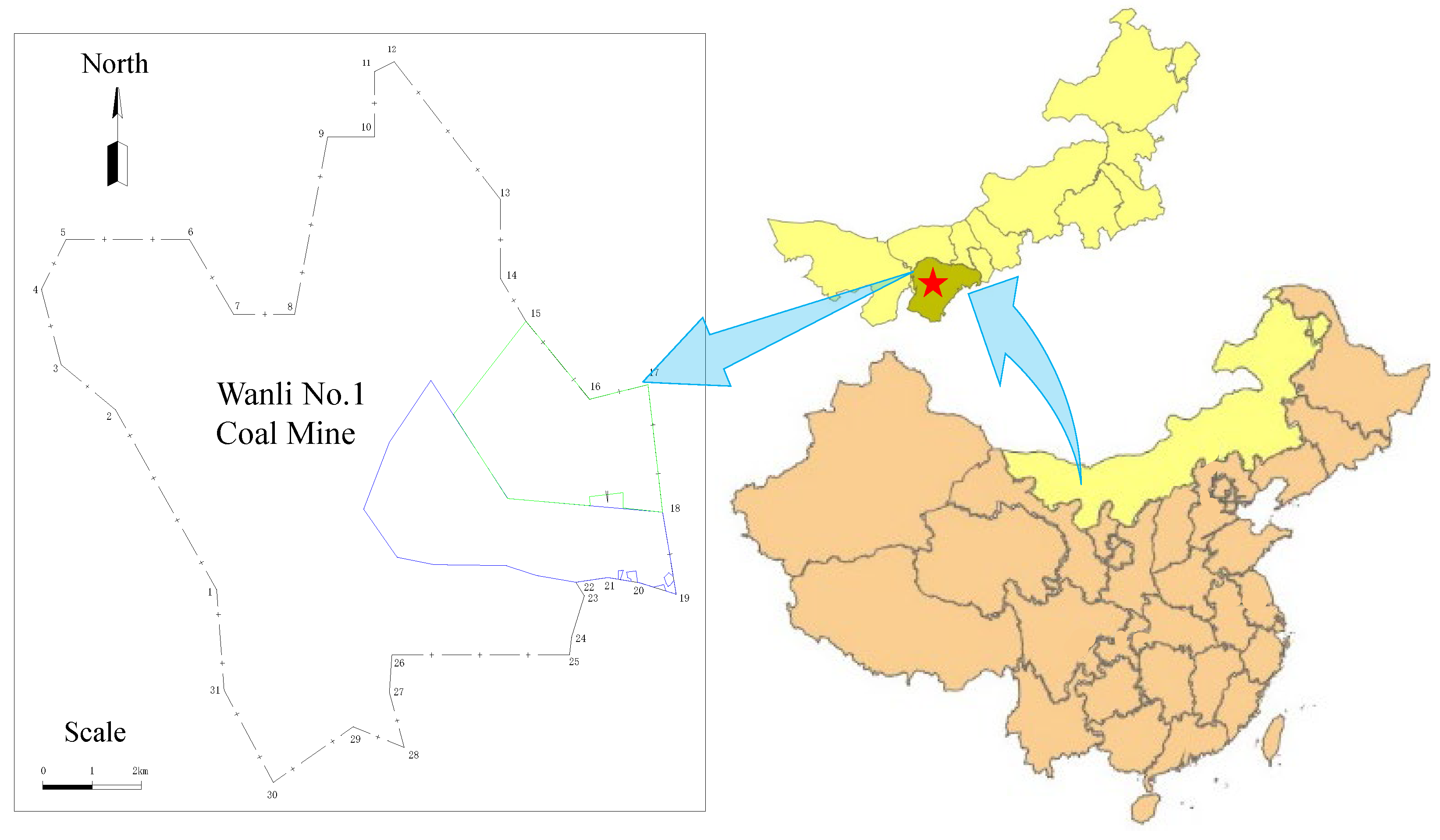
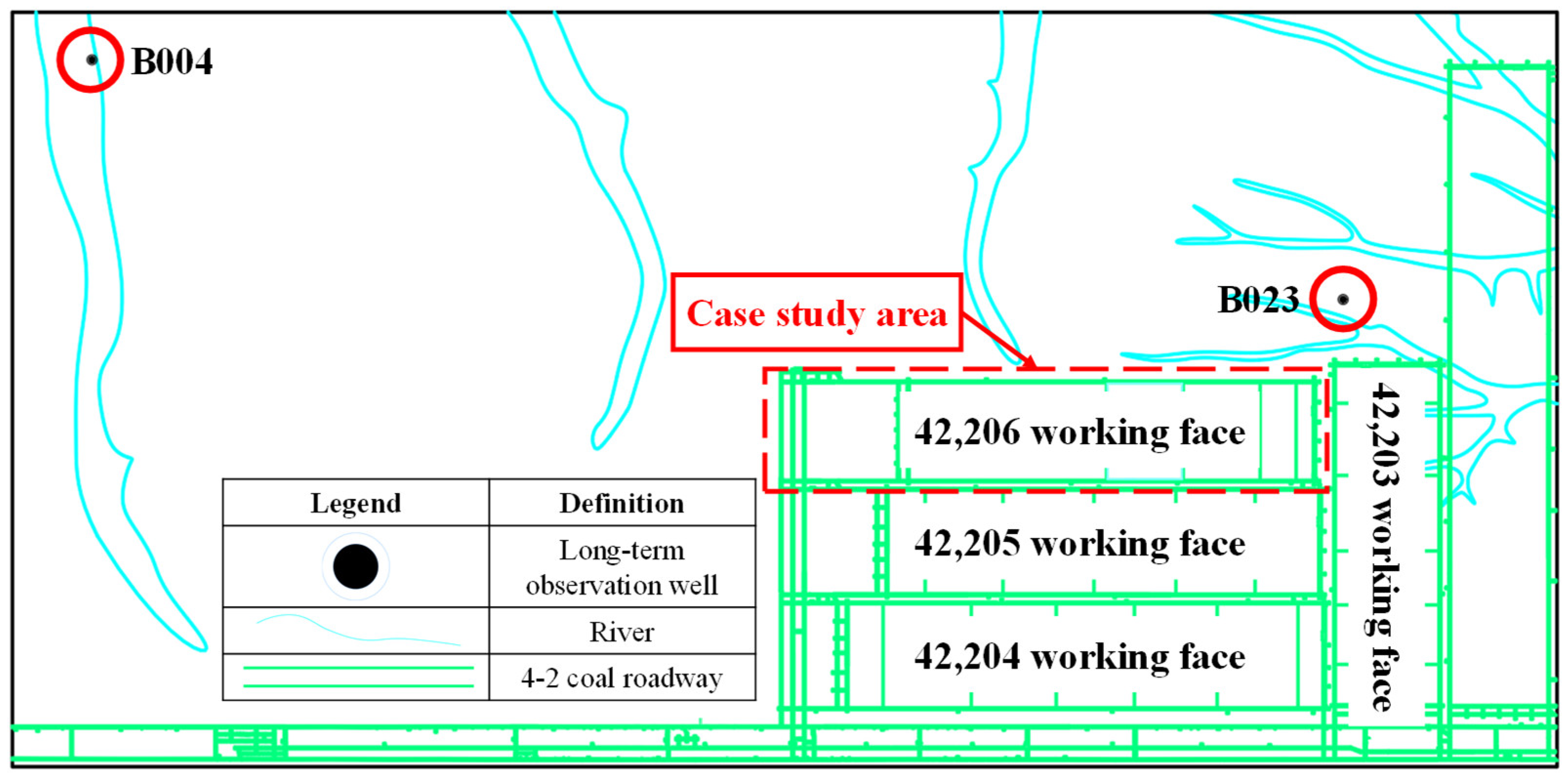
Wanli No. 1 Coal Mine is situated in the northern part of Dongsheng District, Ordos City, Inner Mongolia Autonomous Region, approximately 7 km from the district center. Administratively, it falls under the jurisdiction of Wanli Town. As a significant large-scale coal production facility, the mine has a designed production capacity of 10.0 Mt/a. The annual output of coal gangue is approximately 1.0 Mt, with a current accumulated stockpile reaching 2.66 million m3. The primary mineable coal seams are Seam 3 and Seam 4. The location of the mine is illustrated in Figure 1.
The 42,206 working face is designated as the initial mining panel for gangue grouting backfilling at Wanli No. 1 Coal Mine. This panel extracts the No. 4-2 Coal Seam, which has an average thickness of 2.35 m and a burial depth of 160.29 m. The working face is 300 m in dip width and approximately 1500 m in strike length. The No. 4-2 Coal Seam is overlain by the No. 3-1 Coal Seam, which has a thickness of 2.51 m and is located at a depth of 105.19 m. The interburden spacing between these two seams is 55.1 m. The layout of the 42,206 working face is illustrated in Figure 2.
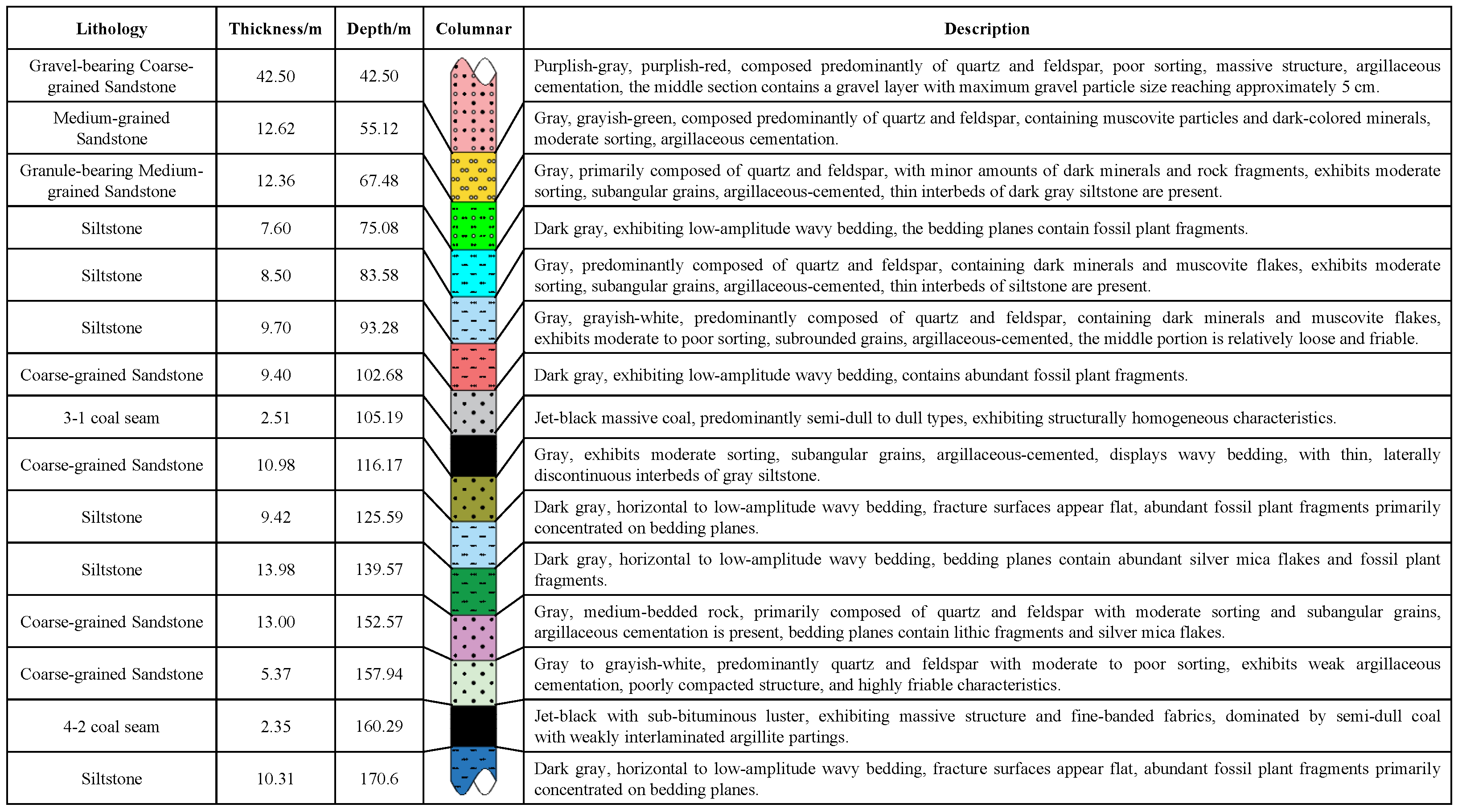
The stratigraphic column from the borehole is presented in Figure 3. The phreatic aquifer consists of the Quaternary Holocene (Q4) loose-layer pore phreatic aquifer. This aquifer exhibits significant thickness variation and is composed of sands of various grain sizes as well as alluvial-proluvial sand and gravel layers, primarily distributed within the valleys of the mining area. The aquifer has a thickness of 20.59 m and a burial depth of 2 m. The water-bearing section mainly consists of the lower coarse sand and gravel layers.

2.2. Hydrogeological Characteristics

1.
Topographical and Geomorphological Features
Geographically, the Wanli mining area is situated on the northern side of Dongsheng Ridge, a regional highland within the Dongsheng Coalfield in the northeastern Ordos Plateau. The terrain generally trends downward from northwest to southeast. The highest point, with an elevation of +1464.20 m, is located at the southern end of Changhan Ridge in the northern part of the mining area. The lowest point, at an elevation of +1354.20 m, is found near Machangyao in the southeast. The maximum elevation difference is 110 m, with a general relief variation of approximately 70 m.
2.
Hydrogeological Features
Within the boundaries of Wanli No. 1 Coal Mine, the primary aquifer is the Q4 unconsolidated pore phreatic aquifer. This aquifer exhibits significant variation in thickness, ranging from 0 to 29.48 m (average: 4.34 m). It is composed of sands of varying grain sizes and alluvial-proluvial sand and gravel layers, primarily distributed within the valleys of the mining area. The water-bearing section is mainly concentrated in the lower coarse sand and gravel layers. Hydrological testing indicates that the specific capacity of boreholes ranges from 0.0012 to 0.029 L/(s·m) and that the hydraulic conductivity ranges from 5.0 × 10⁻⁶ to 1.6 × 10⁻³ m/d. The groundwater chemical types are predominantly HCO3-Ca·Mg·Na and SO4·HCO3\-Ca·Mg, with a total dissolved solids concentration of 0.34~0.84 g/L and a pH value of 8.1~8.2. Due to the uneven thickness and variable water abundance of this aquifer, it maintains a close hydraulic connection with the underlying Yan’an Formation aquifer, particularly in deep-cut valley sections, serving as one of its recharge sources.

2.3. Field Measurement and Analysis of WCFZ Height and Phreatic Water Level Variations

2.3.1. In Situ Measurement of the WCFZ Height

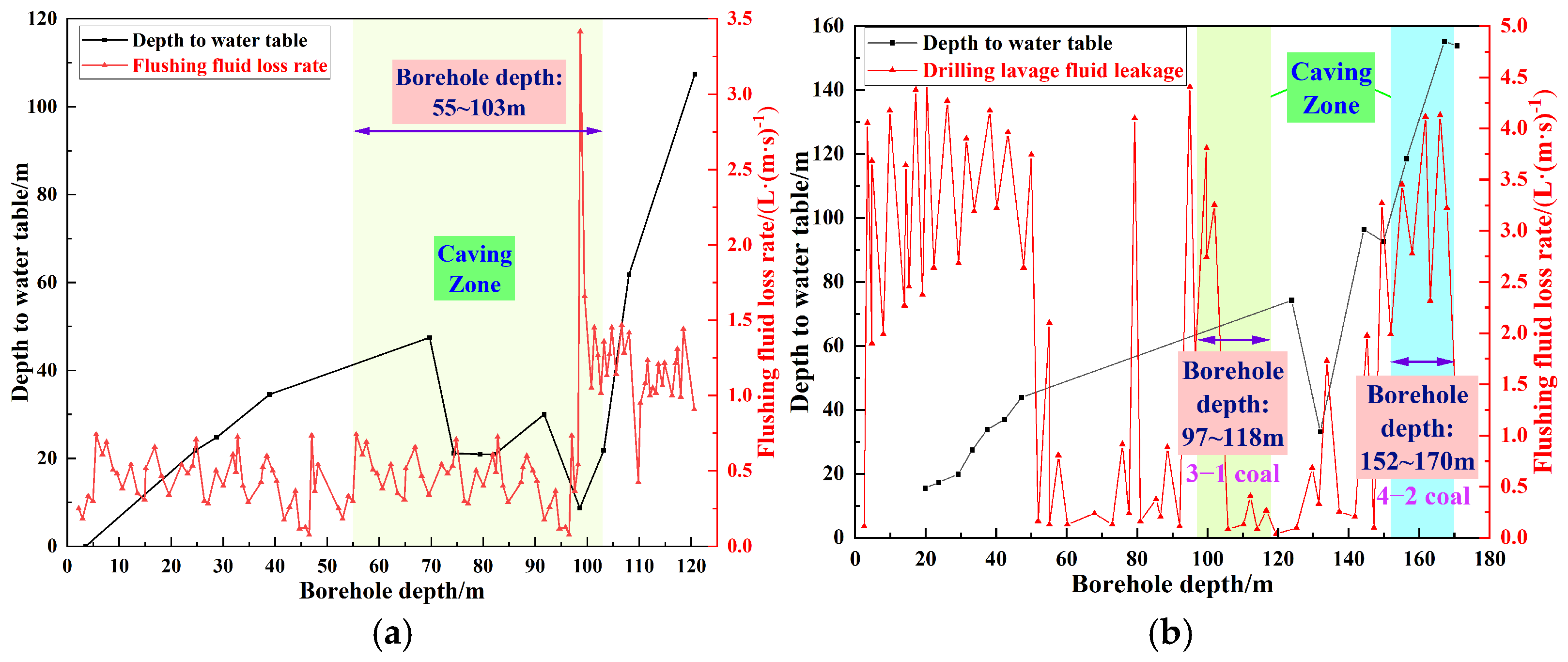
To investigate the height of the WCFZ, two detection boreholes, T1 and T2, were constructed at the 42,206 working face. Both boreholes are located approximately 70~80 m from the boundary section coal pillar. Specifically, borehole T1 corresponds to the mining area of the 4-2 coal seam, while borehole T2 is situated in the area where both the 3-1 and 4-2 coal seams are mined. During the drilling process, the variations in flushing fluid loss and water level in the borehole were monitored and are presented in Figure 4.
As shown in Figure 4, during the bedrock drilling of T1 (final depth: 120 m), the flushing fluid loss remained initially stable with no slurry return, accompanied by a gradual water level decline. At a depth of 55 m, the fluid loss slightly decreased before surging, which corresponded to a rapid drop in the water level. A significant anomaly in both parameters at 97 m indicated the interception of massive water-conducting channels, suggesting the transition boundary between the fractured and caving zones. Subsequently, the fluid loss stabilized at 1.0~1.5 L/(m·s). Upon completion, the water level rested at 12.3 m above the borehole bottom.
Borehole T2 (final depth: 170 m) was drilled through two goafs (seams 3-1 and 4-2). Initial drilling (<49 m) showed no slurry return with a high fluid loss of 2~4 L/(m·s). From 50 m downwards, slurry return resumed, and the fluid loss dropped to 0.1~0.4 L/(m·s). Minor fluid loss spikes were recorded at 78~79 m and 94~101 m (nearing seam 3-1). Below 132 m, the loss fluctuated and surged to 3~4 L/(m·s) from 147 m to the final depth. Correspondingly, the water level dropped slowly above 140 m but plummeted rapidly thereafter, finally stabilizing at 14.6 m above the bottom.
Based on the dynamic leakage profiles, the WCFZ induced by the repeated mining of seams 3-1 and 4-2 has propagated to the surface, resulting in a WCFZ height of 170 m. For the 4-2 seam, the fractured zone developed up to a depth of 55 m (height: 62.4 m), and the caving zone reached a depth of 152 m (height: 18 m). These results demonstrate that the WCFZ height induced by overlapping dual-seam mining is significantly greater than that caused by single-seam mining.

2.3.2. Evaluation of Mining-Induced Water Level Drawdown

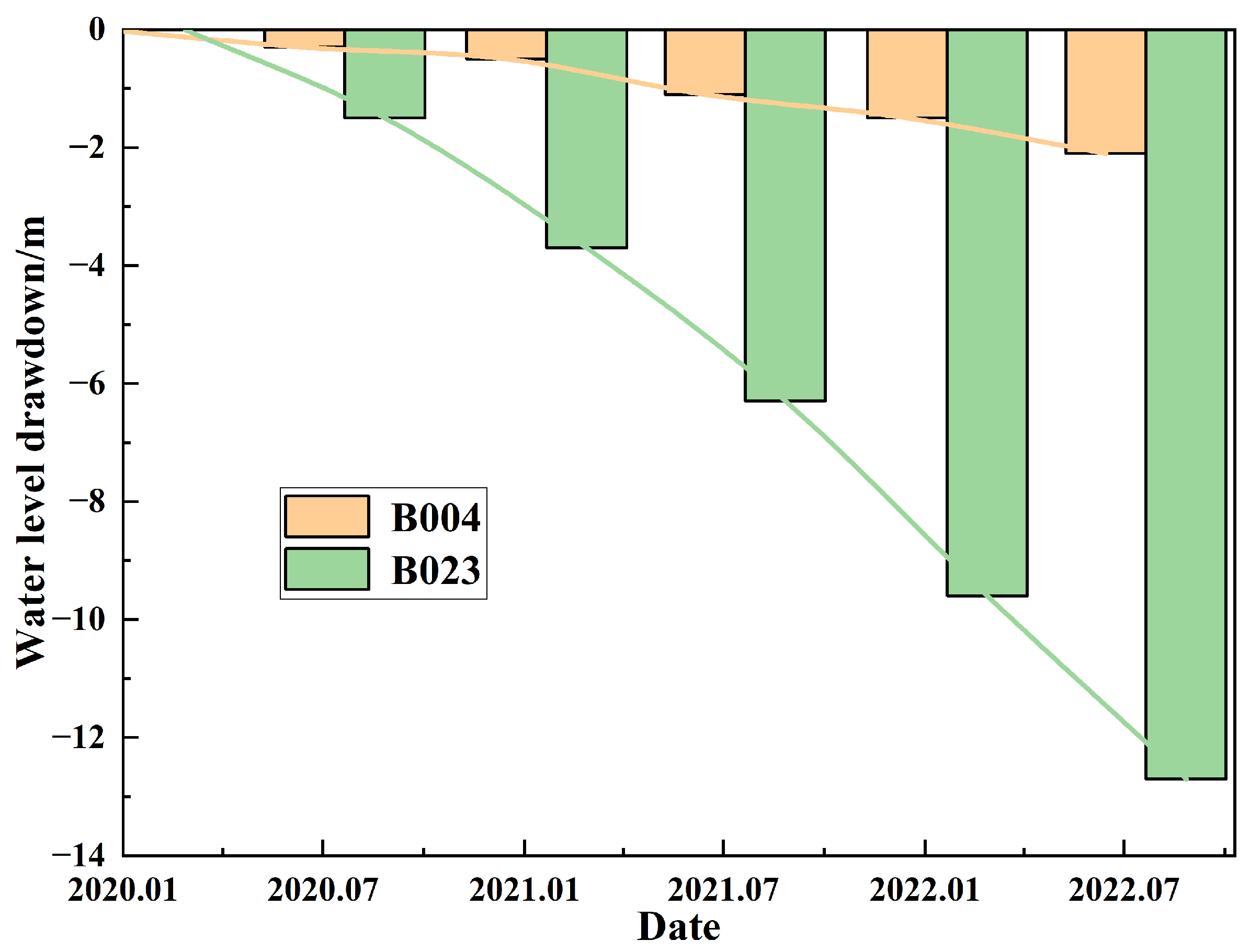
Currently, the Wanli No. 1 Coal Mine utilizes two long-term hydrogeological monitoring boreholes, B004 and B023, with depths of 268 m and 237 m, respectively. Continuous observations commenced in February 2018. While these data are inevitably influenced by seasonal recharge, evapotranspiration, aquifer heterogeneity, hydraulic connectivity with adjacent strata, and regional groundwater trends, mining activities remain the dominant driver triggering the water level fluctuations. This study primarily analyzes the variations in water levels using monitoring data recorded between 2020 and 2022; the water level drawdown relationship curve was obtained, as shown in Figure 5.
Analysis of the monitoring results in Figure 5 reveals several key findings:
(1)
Data from borehole B004 showed a minor phreatic water level decline of 2.1 m, representing a relatively stable state. In contrast, borehole B023 exhibited a substantial drawdown of 12.7 m, indicating a high sensitivity to external disturbances.
(2)
B004 is situated at a considerable distance from the mining area, where its water level remains relatively stable. The observed decline is attributed to subsidence resulting from mining activities, which facilitates surface water replenishment. In contrast, B023 is located within the mining operation zone, where the water level has experienced a significant decrease due to ongoing mining operations.
(3)
Borehole B023 is surrounded by multiple extracted panels (42,202, 42,203, and 42,205) and the active 42,206 face. The cumulative extraction led to significant surface subsidence, forming a localized subsidence basin. This topographical depression altered the hydraulic gradient, causing groundwater to migrate toward the surrounding goafs and resulting in a rapid decline of the phreatic level.

3. Physical Simulation Analysis Under Varying Equivalent Filling Rates

3.1. Principle of Gangue Grouting Backfilling Technology

The technology of gangue grouting backfilling via surface boreholes for water-retaining mining involves crushing coal gangue and mixing it with water to prepare a stable slurry. Utilizing high-pressure grouting pumps and pipelines, this slurry is injected through surface boreholes into the caving zones, fractured zones, and bed separation areas formed post-extraction. This approach successfully achieves the synergistic goals of water-preserving mining and the efficient underground disposal of coal gangue.
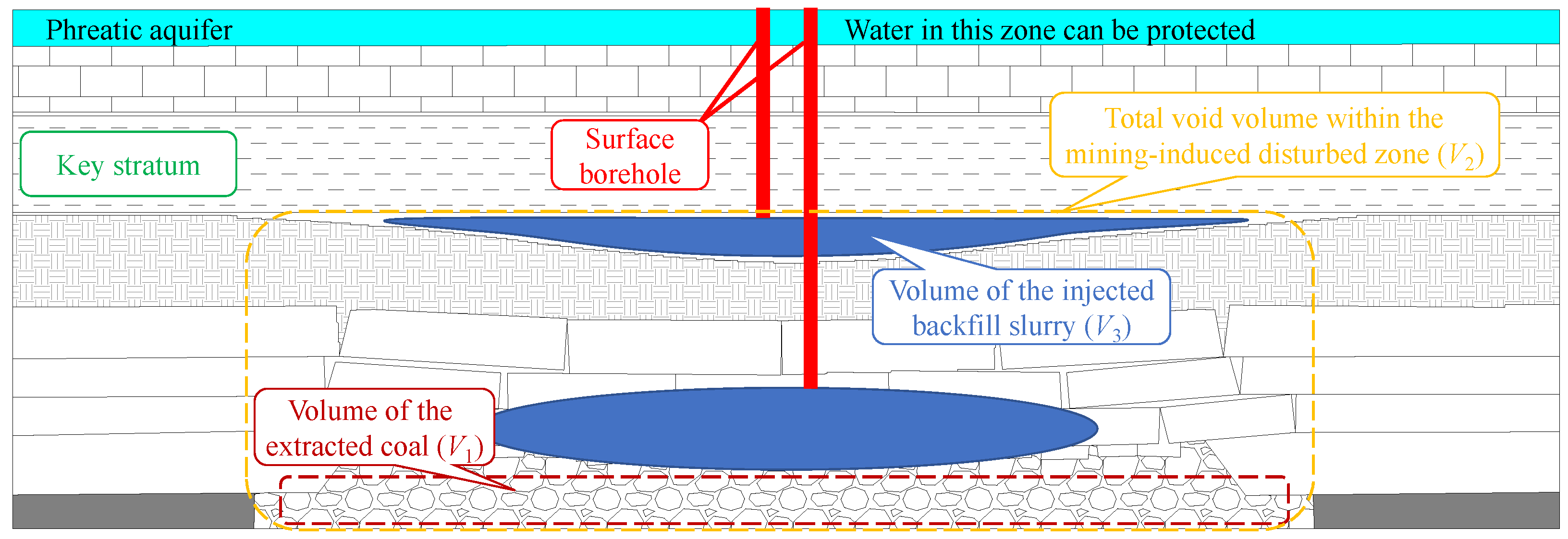
Coal extraction inevitably induces the fracturing, bending, and deformation of the overlying strata. When this structural damage propagates upward but is arrested beneath a stable key stratum, the rock mass reaches a state of temporary equilibrium. Assuming the key stratum remains stable and prevents the upward transmission of mining-induced subsidence to the surface, theoretically, the volume of the extracted coal V1 should be equivalent to the total void volume within the mining-induced disturbed zone V2. To stabilize the overburden before the key stratum undergoes significant creep deformation, gangue slurry is injected via pipelines into the underlying bed separation and fractured zones. The volume of the injected backfill slurry V3 is precisely recorded using flow metering valves. By treating the entire disturbed space beneath the key stratum as a unified conceptual model, the η is defined as the ratio of the injected backfill slurry volume V3 to the theoretical total void volume V2. The schematic diagram of η calculation s illustrated in Figure 6.
η = V 3 V 2

3.2. Model Design

(1)
Design of basic model parameters
Based on the geological conditions of the 3-2 and 4-2 coal seams in the northern wing of the Wanli No. 1 Coal Mine, a physical similarity simulation scheme for gangue grouting backfill was developed. Two types of physical models—representing a single coal seam and a coal seam group—were constructed to investigate overburden migration and phreatic level dynamics. A total of eight experimental groups were designed to evaluate the effects of η = 0%, 30%, 60%, and 80% for both the single-seam extraction and the sequential grouting of the coal seam group. The experiments were conducted using a physical model frame with a geometric similarity ratio of 150:1. Following coal extraction, the goaf was backfilled via a simulated grouting pipeline system to achieve the targeted filling rates. To ensure high-precision data acquisition, a non-contact full-field strain measurement system was employed to monitor the displacement field across the model. This setup allowed for a comprehensive analysis of overburden deformation and the evolutionary laws of the phreatic level. The calculated basic parameters for the model, derived from site-specific geological data and similarity criteria, are summarized in Table 1.
(1)
Geometric ratio
C l = l y l = 150 : 1
where Cl is the geometric ratio, ly is the original size, and lm is the model size.
(2)
Motion Similarity Ratio
C t = t y t m = C l = 12.25 : 1
where Ct is the time motion similarity ratio, ty is the original motion time, and tm is the model motion time.
(3)
Stress Similarity Ratio
C p = P y P m = c r c l = 250 : 1
In the formula, Cp is the stress similarity ratio, Py is the original stress, and Pm is the model stress.
(4)
Volume-to-weight ratio
C m = m y m m = c r c l 3 = 5.63 × 10 6 : 1
where Cm is the volume-to-weight ratio, my is the original mass, and mm is the model mass.
(2)
Experimental material ratio design
According to the experimental content, combined with the geological conditions and relevant parameters of physical simulation, sand, calcium carbonate, gypsum and mica flakes were used as experimental materials to lay the model. The specific mechanical properties parameters of similar simulated coal rock formations and the proportion parameters of similar simulated experimental materials are shown in Table 2.
(3)
Selection of Similar Materials for the Phreatic Aquifer
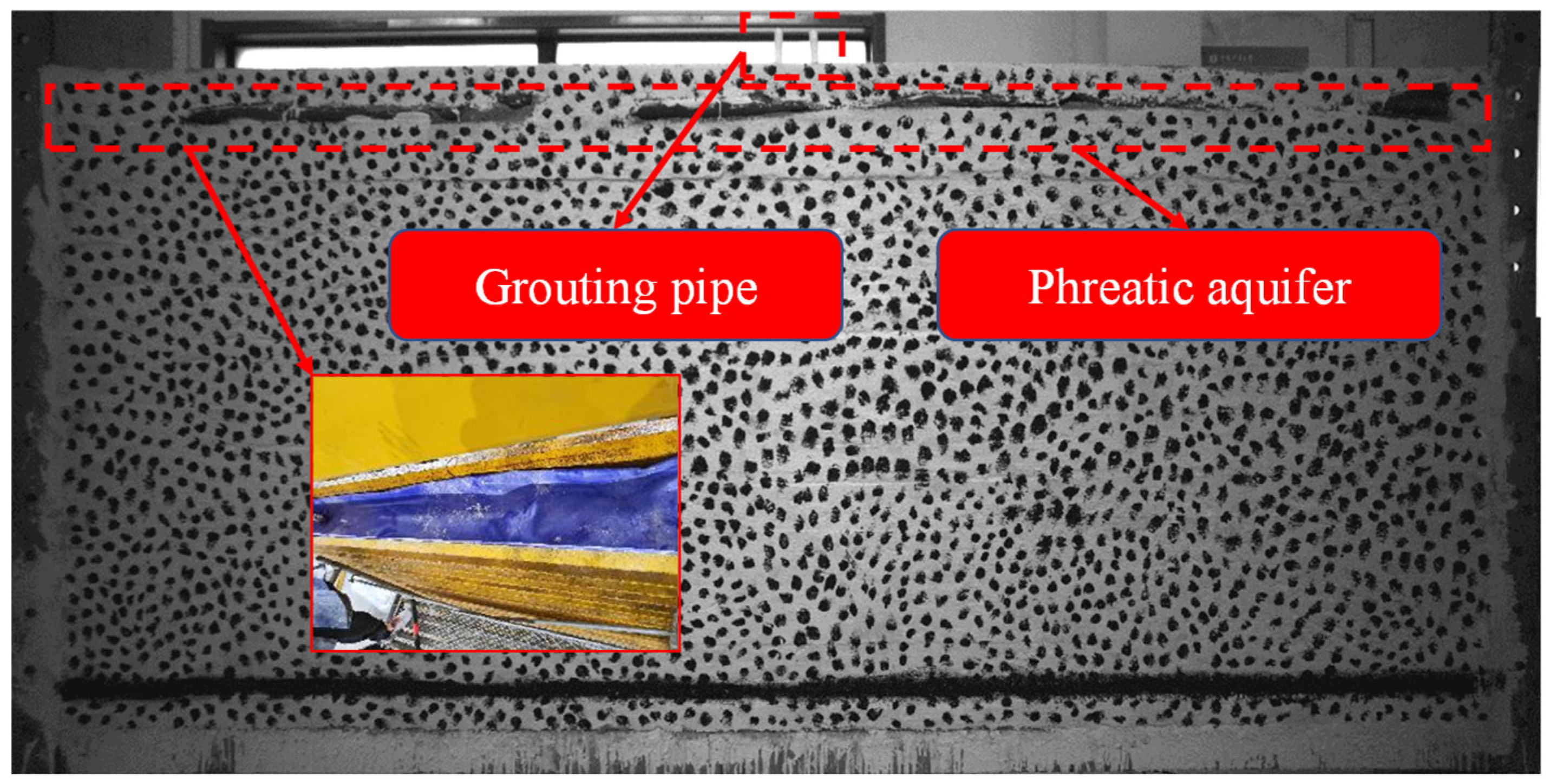
In this study, a specialized water–sand bag was utilized to simulate the phreatic aquifer. To provide a constant seepage pressure of 0.012 MPa to the aquifer, the right side of the bag was connected to a constant-head water supply device. Based on the permeability parameters and similarity ratios calculated for the overburden above the target coal mining face, 22 groups of permeable holes (diameter: 5 mm) were distributed across the bottom of the water bag in two rows, with a spacing of 20 cm × 10 cm.
(4)
Design of the Equivalent Grouting Backfill System
In this study, eight sets of two-dimensional physical similarity models with identical dimensions of 2.5 m × 0.3 m × 1.14 m were constructed, among which Models M1 and M5 served as non-filled control groups. Considering the inherent complexity of void distribution within caving and fractured zones and the associated challenges of directly simulating multi-point slurry injection, an equivalent simulation approach was employed. Specifically, Models M2, M3, M4, M6, M7, and M8 were designed to simulate the gangue grouting backfill process by targeting the overburden bed separation zones, thereby representing the filling of the broader mining-induced disturbed space. The simulation hardware for the grouting system integrated an electronic flow meter for high-precision injection volume recording, a miniature water pump, and PVC grouting pipelines (outer diameter: 0.8 cm; inner diameter: 0.6 cm), with the schematic of the gangue grouting backfill simulation system illustrated in Figure 7.
(5)
Simulation monitoring system design
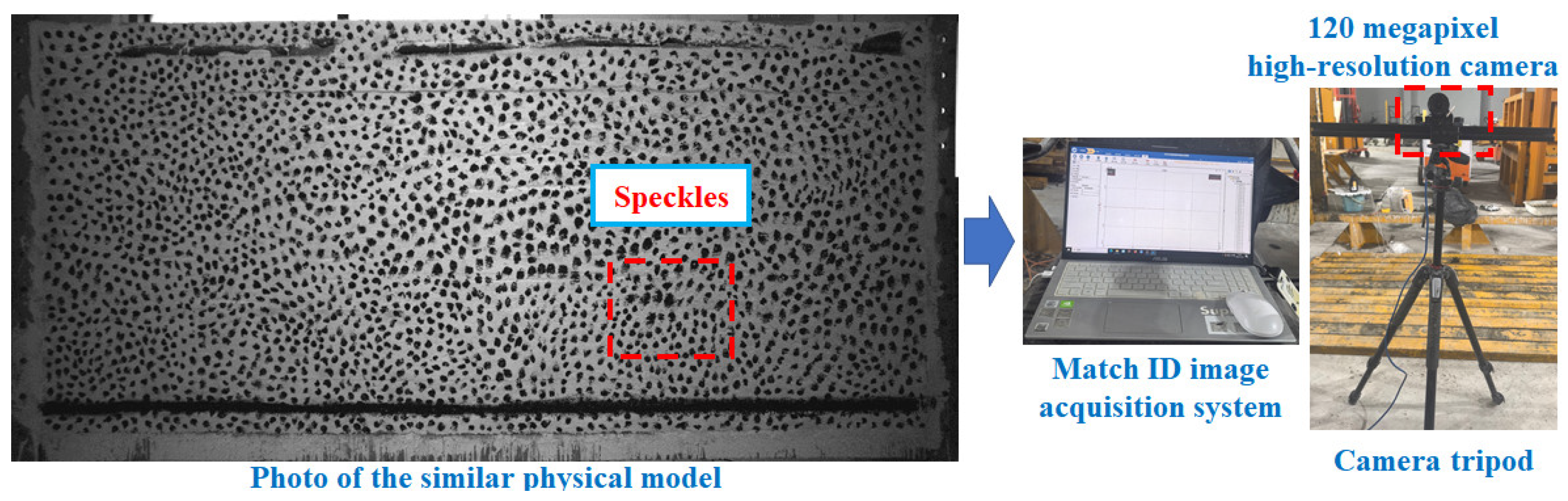
To achieve the research objectives, a comprehensive monitoring system was deployed to track overburden displacement, fracture propagation, and phreatic level fluctuations during the gangue grouting backfill process. This setup was applied to both single coal seam and coal seam group scenarios. The core of the displacement monitoring program utilized the MatchID-2D non-contact full-field strain measurement system. The actual photo of the simulation monitoring system is presented in Figure 8.
(6)
Excavation Procedures
Models M1 to M4: Mining was initiated from a setup entry established 20 cm from the left boundary of the 4-2 coal seam model. The working face advanced from left to right with an excavation increment of 5 cm and a time interval of 5 min between successive steps.
Models M5 to M8: A sequential extraction approach was adopted for the coal seam group. Initially, the upper 3-1 coal seam was extracted from left to right, starting from a setup entry 20 cm from the left boundary. Upon the completion of the 3-1 seam mining, the lower 4-2 coal seam was excavated following identical spatial and temporal parameters.

3.3. Investigation into Overburden Migration, Deformation, and Phreatic Level Evolution During Single-Seam Mining

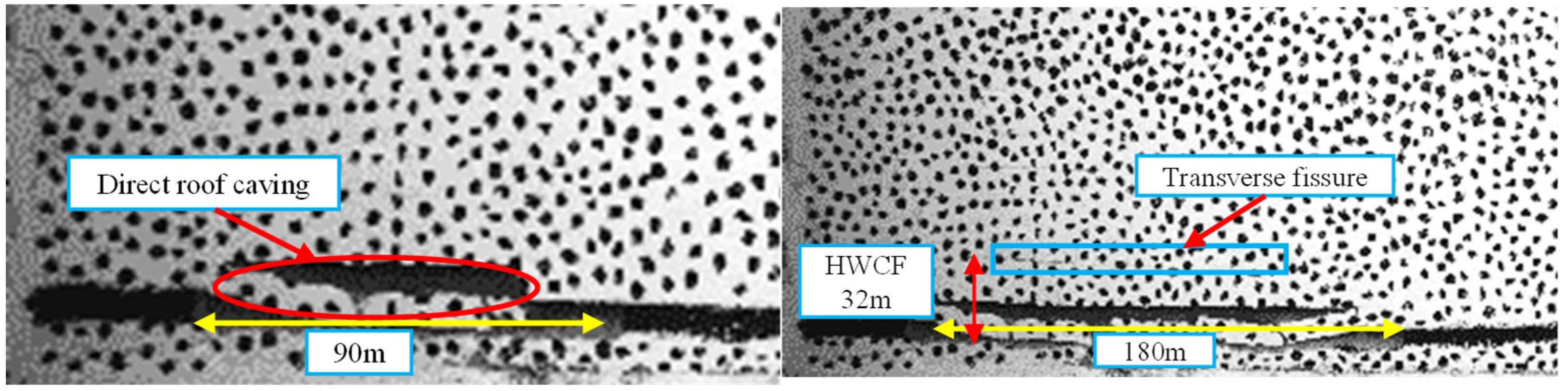
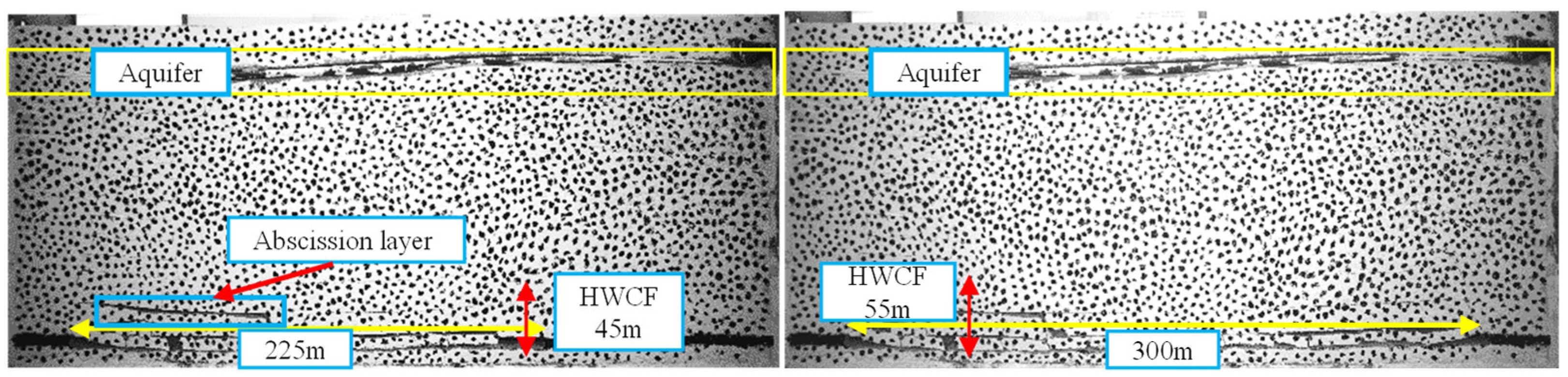
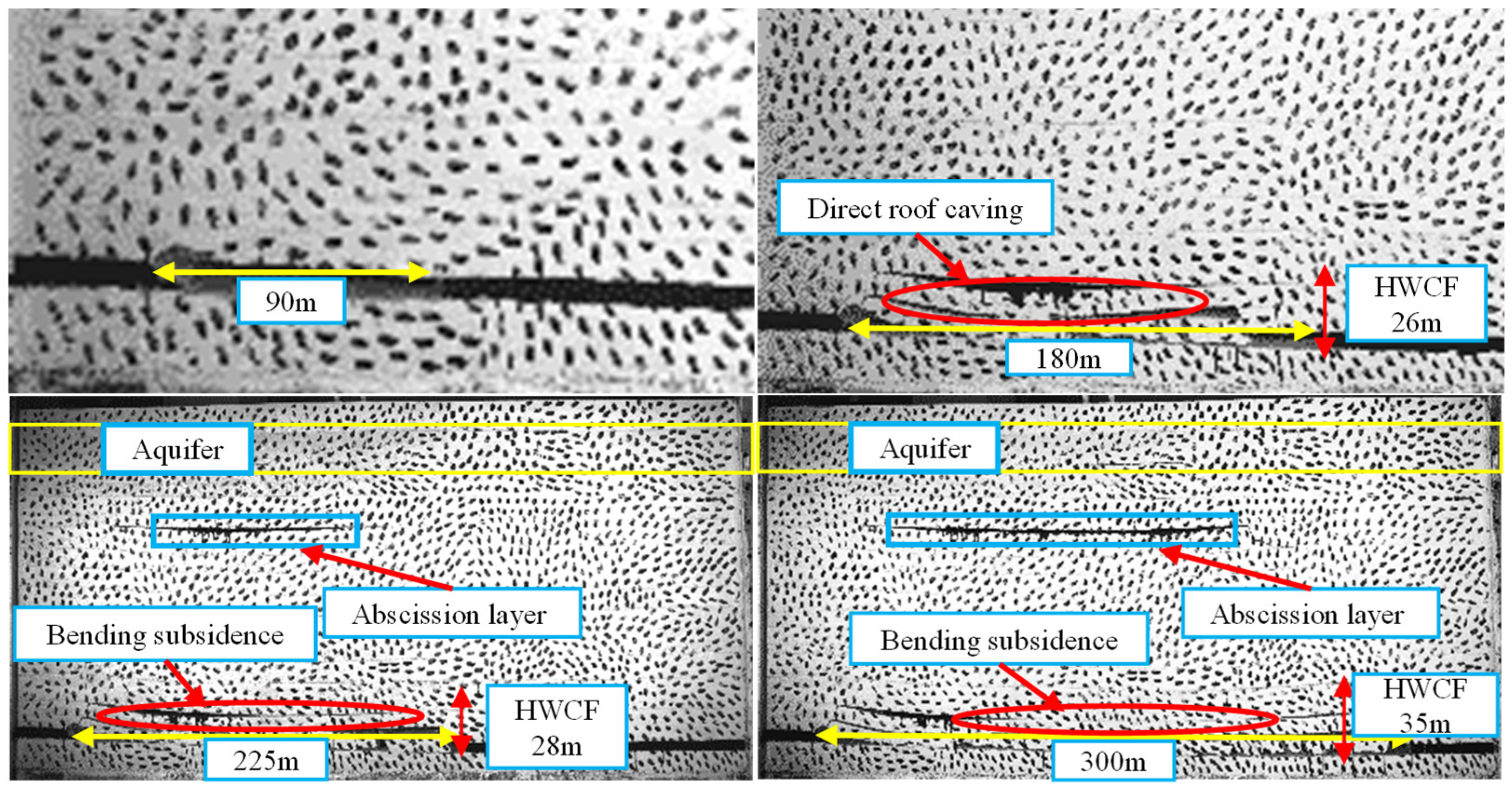
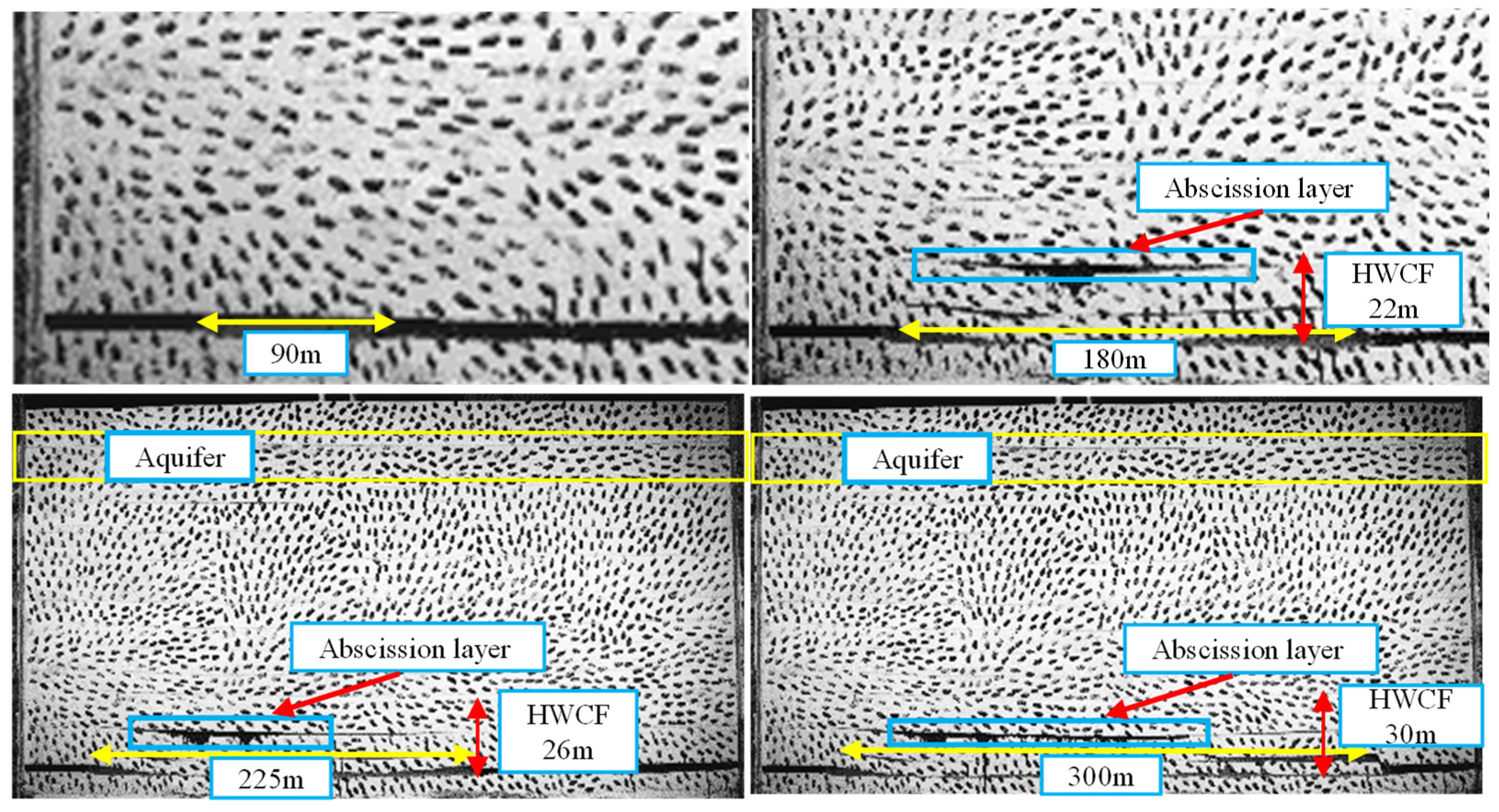
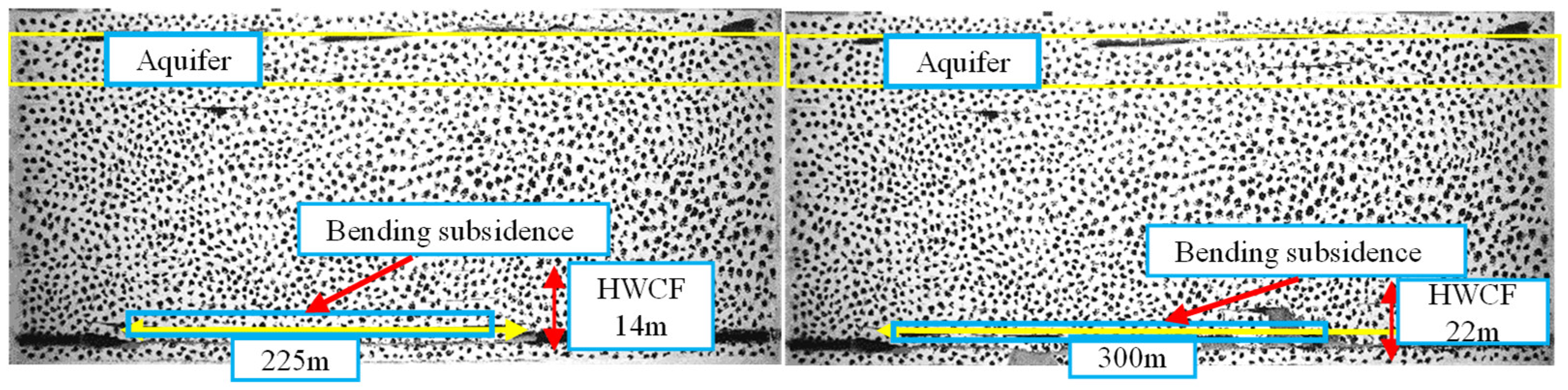
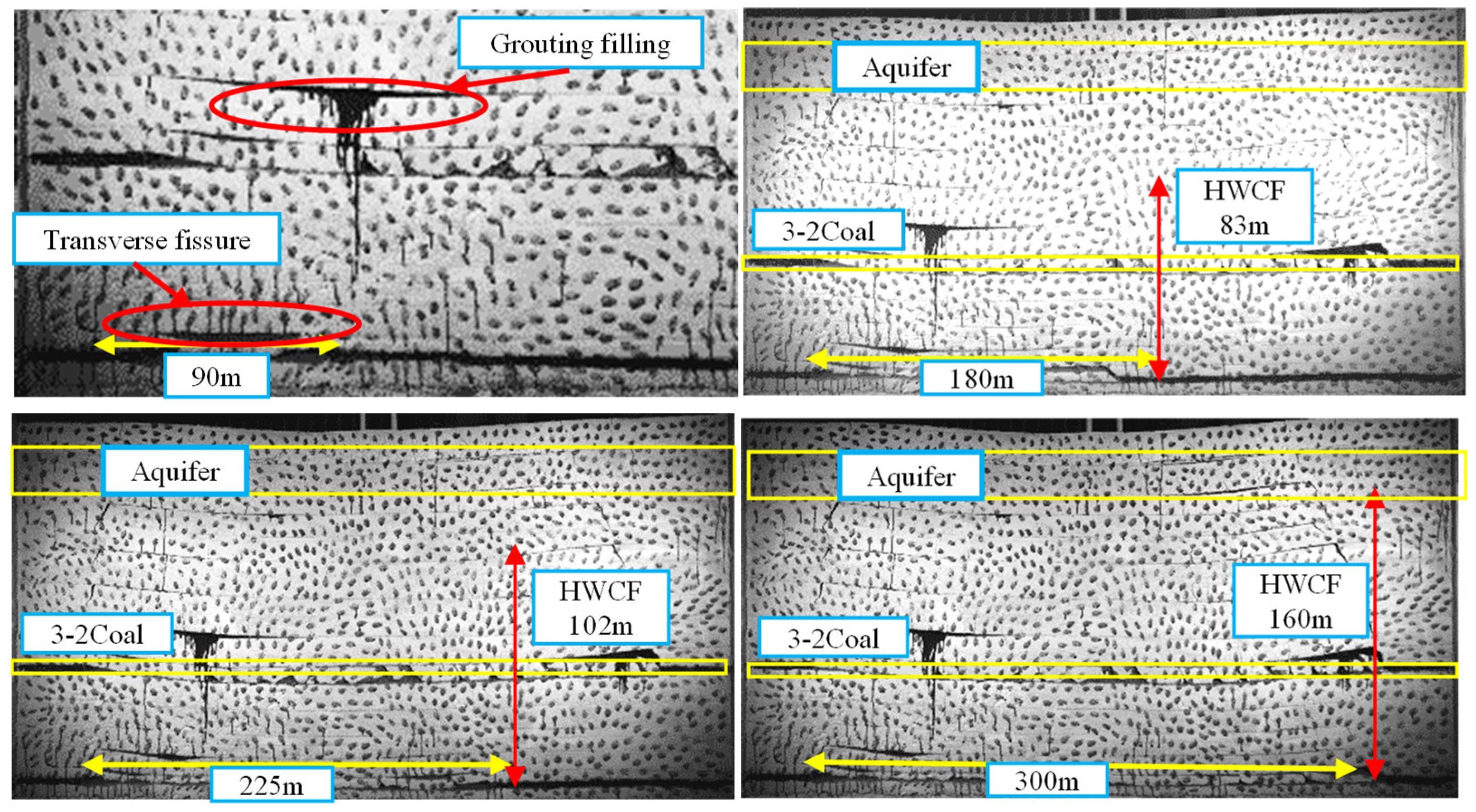
The height of WCFZWCFZ and the corresponding fluctuations in the phreatic level under η of 0%, 30%, 60%, and 80% during single-seam mining are illustrated in Figure 9, Figure 10, Figure 11 and Figure 12.
Based on the experimental results presented in Figure 9, Figure 10, Figure 11 and Figure 12, the evolutionary laws of the overburden and phreatic level under varying η during single-seam mining can be summarized as follows:
(1)
Inverse Correlation between η and WCFZ: A clear negative correlation exists between the η and the ultimate WCFZ. As η increases from 0% to 30%, 60%, and 80%, the stabilized WCFZ decreases significantly from 62 m to 35 m, 30 m, and 22 m, respectively. This demonstrates that GGB effectively suppresses the upward propagation of mining-induced fractures by providing timely support to the overlying strata.
(2)
Mitigation of Structural Instability: In the non-filled control group (η = 0%), the WCFZ penetrates deep into the bedrock, reaching a maximum height of 62 m. Conversely, at higher filling rates (η ≥ 60%), the hinged support provided by the backfilled gangue and the intact bedrock significantly maintains the structural integrity of the main roof. This support mechanism limits the development of longitudinal fractures and prevents them from interconnecting, thereby reducing the risk of groundwater seepage.
(3)
Phreatic Level and Bed Separation Response: The closure of bed separation and the subsequent surface subsidence are notably delayed and minimized as η increases. At η = 80%, the maximum WCFZ is restricted to only 22 m, effectively preserving the hydrologic integrity of the upper phreatic aquifer. The compaction of fractures in the central goaf further facilitates the restoration of the overburden’s relatively impermeable characteristics.

3.4. Investigation into Overburden Migration, Deformation, and Phreatic Level Evolution During Dual-Seam Mining

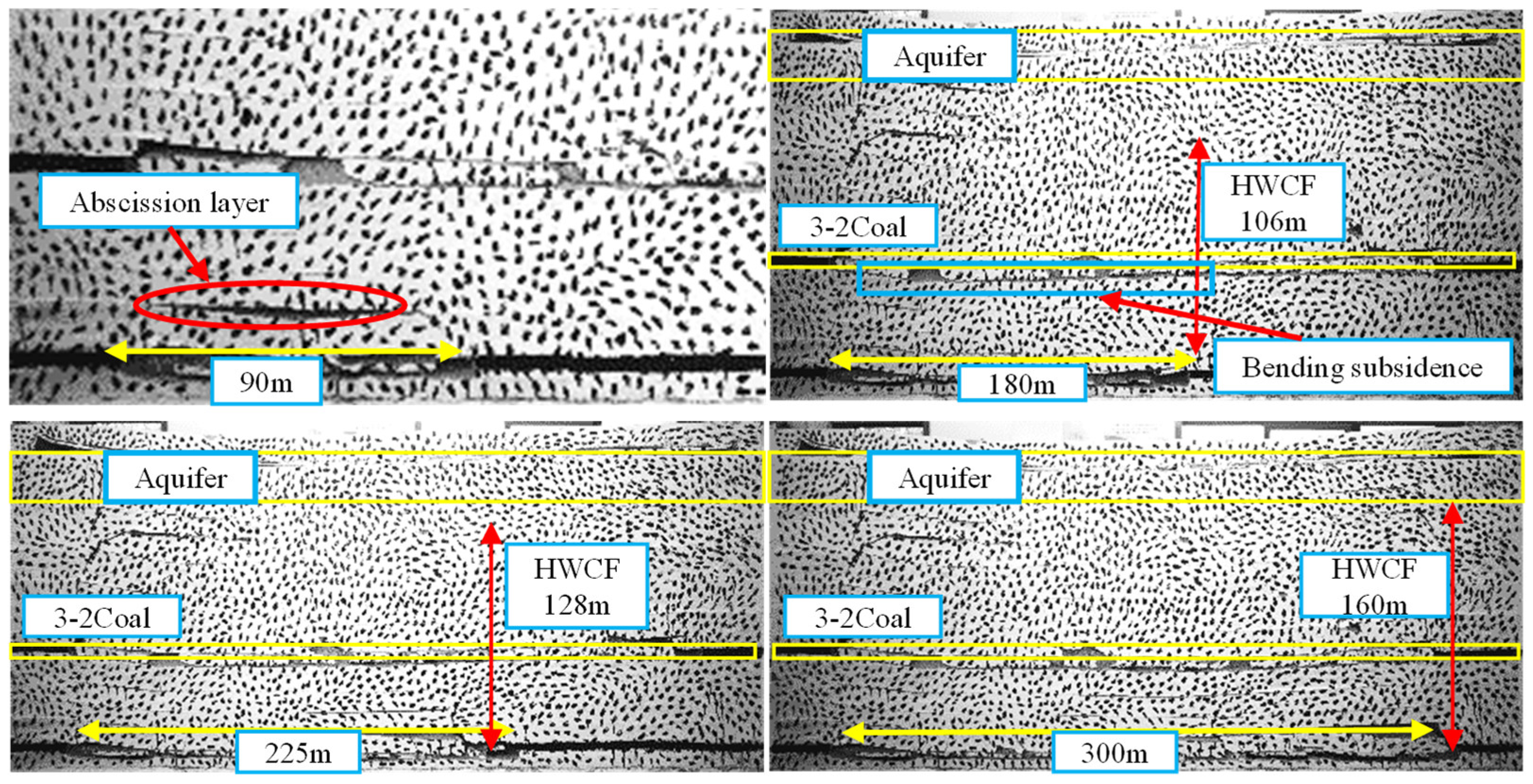
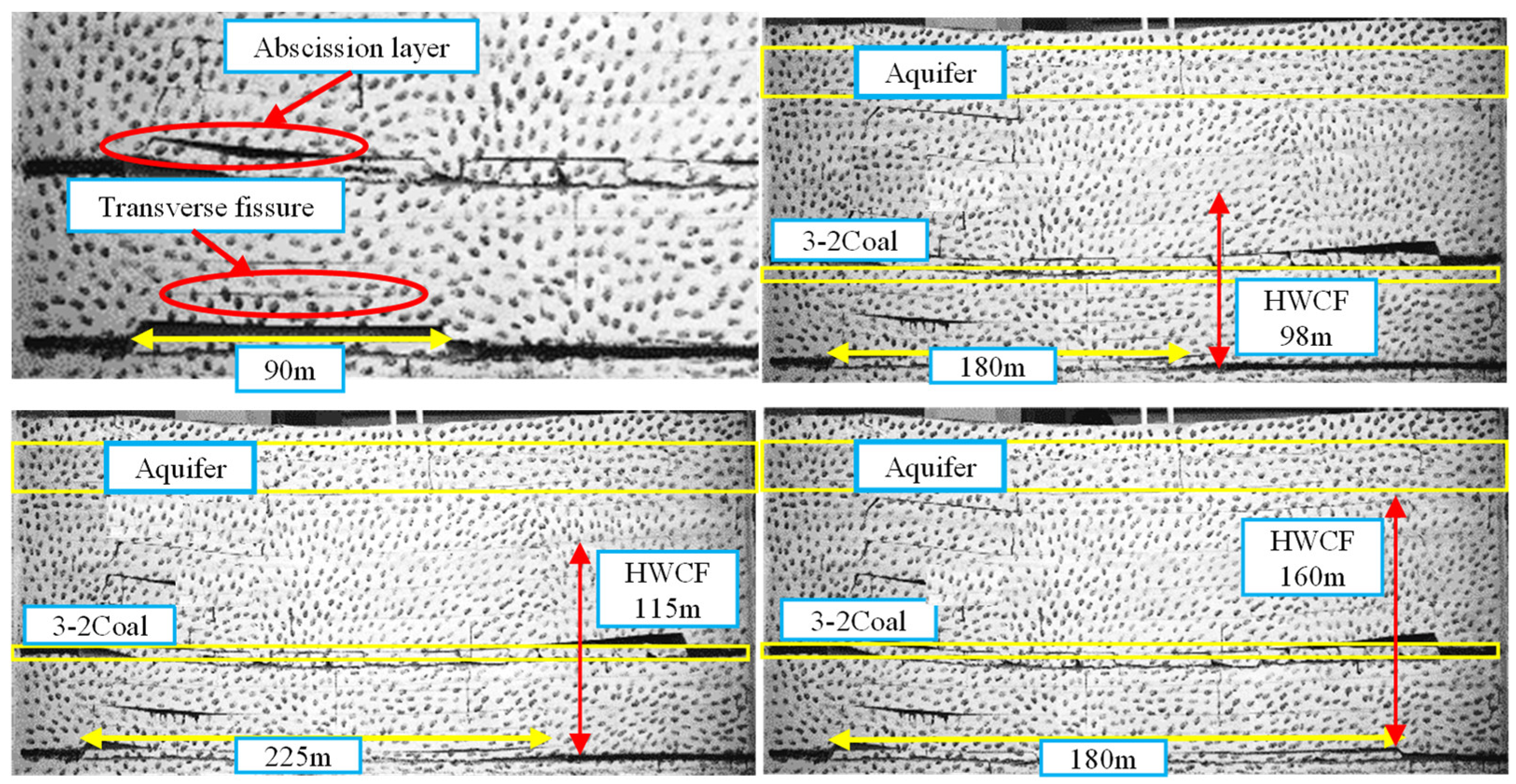
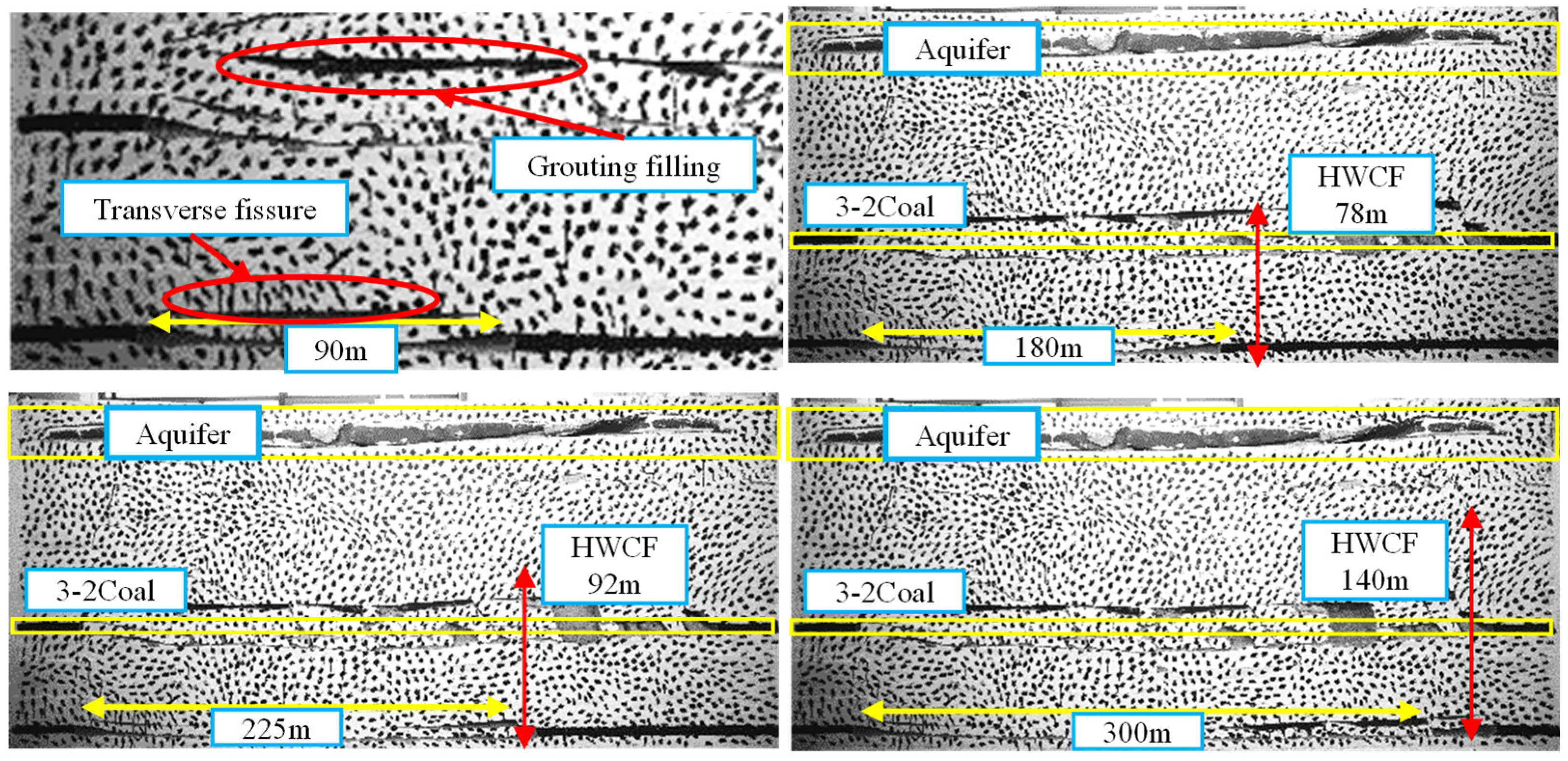
The WCFZ and the corresponding fluctuations in the phreatic level under η of 0%, 30%, 60%, and 80% during dual-seam mining are illustrated in Figure 13, Figure 14, Figure 15 and Figure 16.
Based on the experimental results of Schemes M5–M8 presented in Figure 13, Figure 14, Figure 15 and Figure 16, the evolution of the overburden and WCFZ during the sequential extraction of the 3-1 and 4-2 coal seams is summarized as follows:
(1)
Compared to single-seam mining, the sequential extraction of the 3-1 and 4-2 coal seams significantly amplifies the disturbance to the overlying strata. At η of 0%, 30%, and 60%, the cumulative mining-induced stress and displacement led to the complete fracture of the primary key stratum. Consequently, the WCFZ in these three schemes fully penetrated the bedrock and reached the surface, with a stabilized height of 160 m. This indicates that at η ≤ 60%, the backfill materials provided insufficient support to counteract the superimposed void volume from the two coal seams, failing to prevent the convective termination of the fractures at the surface.
(2)
A critical transition in overburden control was observed when the η reached 80%. In Scheme M8, the WCFZ was restricted to 140 m, effectively preventing the fractures from penetrating to the surface. Under this high-intensity backfilling condition, the GGB successfully maintained the structural stability of the primary key stratum. The reduction in the total volumetric deficit prevented the catastrophic failure of the upper overburden, thereby preserving the relatively impermeable characteristics of the near-surface strata.
(3)
The divergence between the 60% and 80% filling rates highlights the nonlinear response of the overburden to backfilling intensity. While η was sufficient to significantly reduce the WCFZ in single-seam mining (from 62 m to 30 m), it proved inadequate for multi-seam scenarios where the superposition of subsidence and fracture propagation is more severe. Only at η = 80% did the hinged support and compaction of the backfill material provide a high-stiffness foundation capable of supporting the primary key stratum and mitigating the risk of large-scale groundwater loss.

3.5. Comparative Analysis of Phreatic Aquifer Response to Single-Seam and Dual-Seam Mining

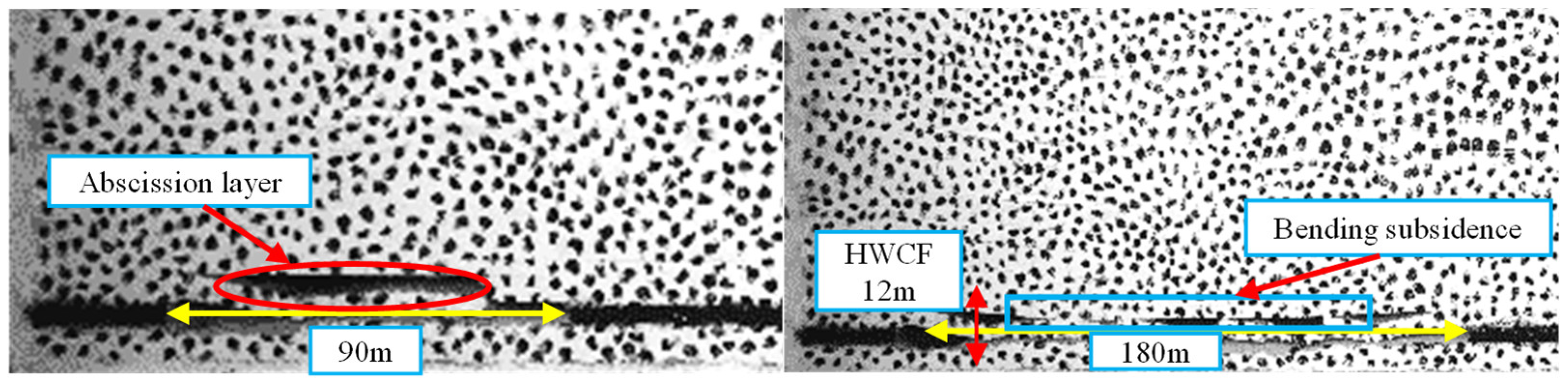
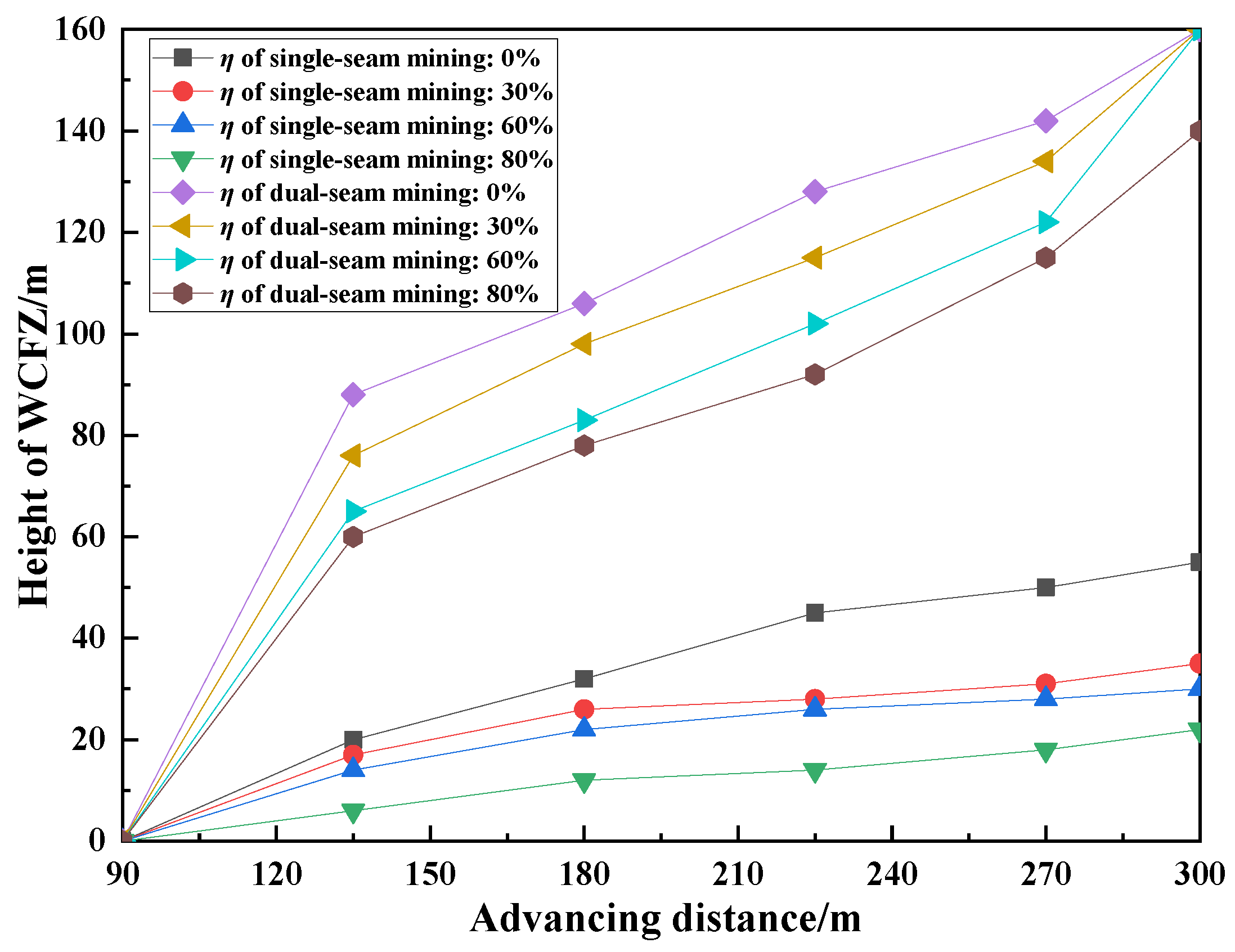
Table 3 shows the height of WCFZ under different mining methods, different equivalent fill rates and different advance distances. Figure 17 illustrates the evolutionary characteristics of the WCFZ under various η for both single-seam and dual-seam mining scenarios.
From Figure 17, it can be seen that a distinct disparity in WCFZ development is observed between single-seam and dual-seam mining scenarios. Due to the cumulative disturbance and the superposition effect of sequential extraction, the WCFZ in dual-seam mining (ranging from 140 m to 160 m) is significantly higher than that in single-seam mining (ranging from 22 m to 55 m). Notably, the suppression effect of GGB becomes more pronounced as η increases. While η ≥ 30% is sufficient to limit fracture propagation in single-seam mining, a critical threshold is observed at η = 80% for dual-seam extraction, which successfully restricts the WCFZ to 140 m and prevents it from penetrating the surface. These results suggest that high-intensity backfilling (η ≥ 80%) is essential for maintaining the structural stability of the primary key stratum and ensuring the hydrologic integrity of the overlying phreatic aquifer in dual-seam environments.
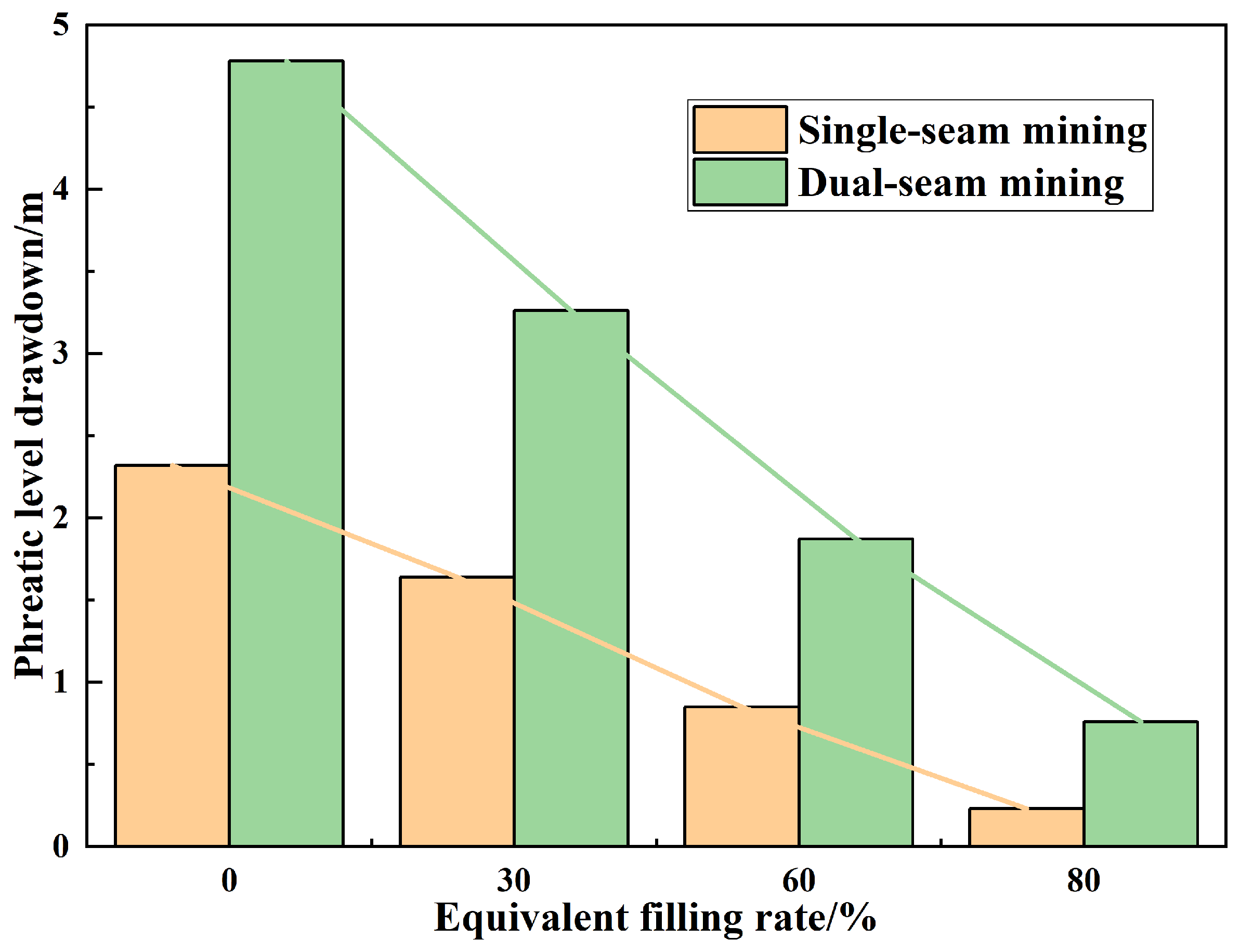
Additionally, Figure 18 demonstrates the corresponding response of the phreatic level across different backfilling intensities and extraction conditions.
The actual mining heights for the single-seam and dual-seam groups are 2.5 m and 4.99 m, respectively. From Figure 18, it can be seen that:
(1)
Single-Seam Mining Response: For single-seam extraction, the phreatic level drawdown exhibits a steady decline as η increases. At η = 60%, the maximum drawdown is approximately 1.12 m, accounting for 44.8% of the mining height. Under this condition, the drawdown remains relatively gentle because the primary key stratum maintains its structural integrity without fracturing. The observed phreatic level drop is primarily attributed to the bending subsidence of the overlying strata rather than direct fracture connectivity.
(2)
Dual-Seam Mining Response: In the dual-seam group scenario, the cumulative disturbance significantly amplifies the groundwater impact. At lower filling rates, the drawdown is substantial; however, a critical transition occurs at η = 80%. At this high filling intensity, the maximum drawdown is restricted to 0.8 m (representing only 16.0% of the total mining height). Most importantly, this threshold prevents the WCFZ from reaching the phreatic aquifer.
(3)
Conclusion for Water Conservation: The comparative analysis demonstrates a clear threshold effect for water-preserved mining. While single-seam mining shows moderate hydrological impact at η ≥ 60%, the dual-seam group requires an η of 80% to effectively block the upward propagation of fractures and preserve the groundwater resources. Therefore, η = 80% is identified as the optimal engineering parameter for achieving water-preserved mining in multi-seam environments.

4. Discussion

This study elucidates the intricate dynamics of overburden movement induced by repeated mining in dual-seam groups through physical similarity simulation. The observed response mechanism exhibits pronounced nonlinear characteristics, primarily because the extraction of the lower coal seam not only creates new disturbance zones but also reactivates and destabilizes the pre-existing fractures from the upper seam, resulting in a significant damage superposition effect.
Admittedly, the two-dimensional model employed in this research has inherent constraints in simulating three-dimensional stress fields and characterizing lateral support. Furthermore, the condensed time scale of laboratory experiments cannot fully replicate the long-term poroelastic response, strata consolidation, and gradual drainage processes occurring in natural settings. Nevertheless, the physical model, designed according to the similarity criterion, retains substantial scientific validity in capturing the prevailing trends of mechanical failure, the propagation height of the WCFZ, and the evolution of phreatic water levels.
From a hydrogeological protection perspective, preventing hydraulic connectivity between the WCFZ and the floor of the phreatic aquifer helps maintain the local stability of the fracture system and mitigates direct downward seepage. However, this condition fundamentally differs from comprehensive, long-term hydrogeological protection. Sustaining ecological integrity requires not only the prevention of leakage but also the active management of surface subsidence. Such management is considered critical for minimizing the risk of the root systems of surface vegetation detaching from the phreatic layer due to the relative decline in water tables.
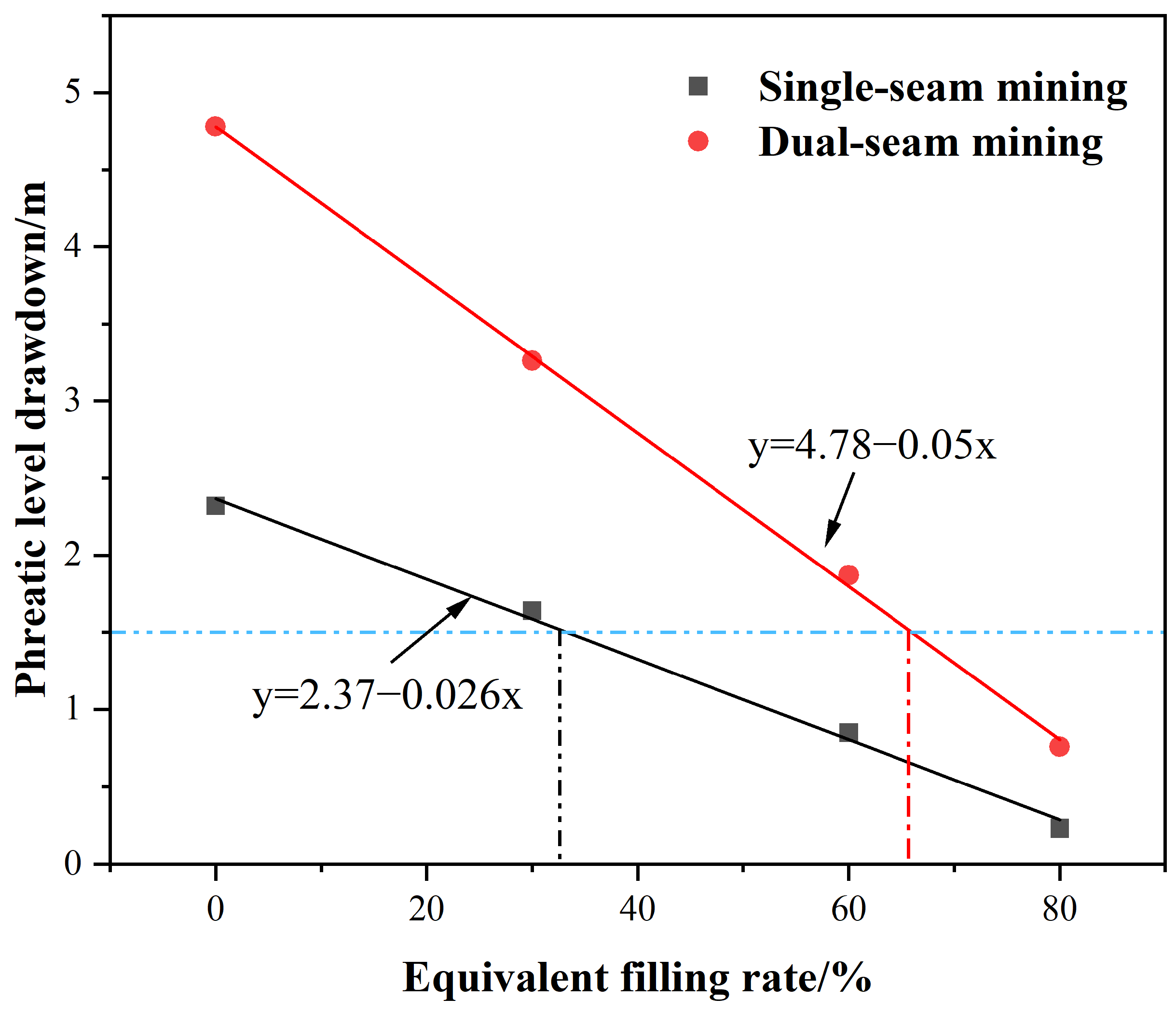
Regional research in the Wanli No. 1 Mine indicates that maintaining the phreatic drawdown within 1.5 m is crucial for supporting indigenous vegetation growth [25]. As illustrated in Figure 19, the continuous relationship between phreatic water drawdown, mining methods, and backfilling rates was established through mathematical curve-fitting of the physical similarity simulation datasets. Specifically, to maintain the phreatic water table within the critical ecological threshold, the required η for single-seam mining is determined to be 32%~34%. Conversely, for repeated dual-seam mining, this engineering threshold must be elevated to 64%~66%. For practical field applications, the backfilling scheme should be dynamically adjusted to accommodate site-specific hydrogeological conditions and the seasonal recharge dynamics of the phreatic aquifer.
These conclusions are strictly site-specific and applicable only to the unique geological, hydrogeological, and mining conditions of the Wanli No. 1 Mine. Consequently, the derived threshold values should be interpreted as localized engineering references rather than generalized standards for water-preserved mining.
To apply the findings of this study to field engineering practices, future work must integrate hydrological monitoring and field measurements with multi-factor analyses, including seasonal recharge, evapotranspiration, aquifer heterogeneity, hydraulic connectivity with adjacent strata, and regional groundwater trends, thereby enhancing the precision of the recommended thresholds.
Furthermore, the water–sand bag in the physical similarity simulation is only capable of approximating variations in the phreatic water table; it fails to reproduce complex dynamic processes such as three-dimensional groundwater flow, long-term drainage, poroelastic responses, seasonal recharge, and evapotranspiration. As a two-dimensional similarity simulation, this model serves merely as an approximate framework that cannot fully account for three-dimensional surface deformations or accommodate long-term, continuous chronological research.

5. Conclusions

(1)
Field measurements from boreholes T1 and T2 confirm that sequential extraction in dual-seam groups induces a significant superposition effect on overburden failure. The WCFZ in single-seam mining (T1) was measured at 62.4 m, which did not affect the phreatic aquifer. In contrast, the WCFZ in the dual-seam scenario (T2) propagated 170 m to the surface, demonstrating that overlapping disturbances significantly enhance the vertical connectivity of water-conducting channels.
(2)
Long-term hydrogeological monitoring reveals that phreatic level drawdown is highly sensitive to the formation of subsidence basins. Borehole B023, located near the active mining front, experienced a substantial drawdown of 12.7 m due to cumulative extraction, while borehole B004 remained relatively stable (2.1 m). This disparity indicates that beyond direct fracture leakage, enhanced evaporation—driven by the loss of overburden protection and increased solar exposure within subsidence depressions—is a critical mechanism for ecological water loss.
(3)
Physical simulations identify a distinct threshold effect for GGB in suppressing fracture propagation. For single-seam mining, an equivalent filling rate of η ≥ 60% is sufficient to maintain key stratum stability, limiting drawdown to 1.12 m (44.8% of mining height). However, dual-seam extraction requires a critical threshold of η = 80% to successfully restrict the WCFZ to within 140 m and reduce phreatic drawdown to 0.8 m (only 16.0% of mining height).
(4)
The core of water-preserved mining in shallow multi-seam environments lies in transitioning the overburden failure mode from “penetrating fracturing” to “controlled bending subsidence” through high-intensity backfilling (η = 80%). This strategy not only preserves the structural integrity of the water-resisting key stratum to block upward fracture propagation but also mitigates secondary groundwater depletion by minimizing surface subsidence and associated evaporative losses.
(5)
By mathematically fitting the physical similarity simulation datasets, the critical η required to maintain the phreatic water table within the 1.5 m ecological threshold is determined to be 32%~34% for single-seam mining and 64%~66% for dual-seam mining, respectively. These quantitative benchmarks refine the conservative mechanical safety lower limit of 80% previously obtained from purely laboratory-based structural research. Consequently, this expansion broadens the evaluation and application framework of coal gangue grouting backfilling technology in the Wanli No. 1 Mine, shifting the engineering focus from purely ensuring overburden mechanical stability to integrating long-term hydro-ecological preservation. Nevertheless, for practical field applications, the backfilling design must be flexibly tailored to accommodate site-specific geological configurations and local hydrogeological conditions.

Author Contributions

J.Z. (Jiaqi Zhang): Conceptualization, Writing—review and editing. X.C.: Formal analysis and Investigation. H.N.: Data curation, Writing—original draft. J.Z. (Jixiong Zhang): Software, Resources. S.X. Methodology, Formal analysis. Y.H.: Methodology, Formal analysis. All authors have read and agreed to the published version of the manuscript.

Funding

This work is supported by the National Natural Science Foundation of China (52574174), the Shaanxi Qinchuangyuan “Scientists + Engineers” Team Construction Funding Project (2025QCY-KXJ 028). The authors gratefully acknowledge the financial support of the abovementioned organizations.

Informed Consent Statement

Informed consent was obtained from all subjects involved in the study.

Data Availability Statement

Data will be made available on request.

Acknowledgments

The authors would like to thank the mining company for providing monitoring data.

Conflicts of Interest

The authors declare no conflicts of interest.

References

  1. Hu, S.; Jin, Z.; Zhang, K.; Xu, M.; Yi, X.; Liu, W.; Yu, Y. Analyzing Water Resource Protection Techniques When Mining Shallow Coal Seam. Electron. J. Geotech. Eng. 2016, 21, 1131–1140. [Google Scholar]
  2. Li, H.; Xu, D.; Li, G.; Wei, S.; Wu, B. Feasibility Study on the Construction of Underground Reservoirs in Coal Goaf—A Case Study from Buertai Coal Mine, China. Sustainability 2024, 16, 9912. [Google Scholar] [CrossRef]
  3. Li, Y.; Wu, B.; Dai, J.; Luo, X.; Qu, B.; Ma, L.; Li, K. A Study on Overburden Movement and the “Three Zones” in a Composite Goaf of Closely-Spaced Shallow Coal Seams. Results Eng. 2026, 29, 109305. [Google Scholar] [CrossRef]
  4. Zha, H.; Liu, W.; Liu, Q. Physical Simulation of the Water-Conducting Fracture Zone of Weak Roofs in Shallow Seam Mining Based on a Self-Designed Hydromechanical Coupling Experiment System. Geofluids 2020, 2020, 2586349. [Google Scholar] [CrossRef]
  5. Wan, F.; Zhang, H.; Zhou, P.; Guo, J. Determination of Water-Proof Coal (Rock) Pillar Height in Mining Coal Seam Group under Water-Bearing Rock Stratum. Shock Vib. 2021, 2021, 6699726. [Google Scholar] [CrossRef]
  6. Lai, X.; Liu, B.; Shan, P.; Cui, F.; Zhang, Y.; Zhang, X.; Bai, R.; Wu, X. Study on the Prediction of the Height of Two Zones in the Overlying Strata under a Strong Shock. Geofluids 2021, 2021, 4237061. [Google Scholar] [CrossRef]
  7. Ren, S.; Cui, F.; Zhao, S.; Cao, J.; Bai, J.; Jiang, Z.; Li, Y. Investigation of the Height of Fractured Water-Conducting Zone: A Case Study. Geotech. Geol. Eng. 2021, 39, 3019–3031. [Google Scholar] [CrossRef]
  8. Odintsov, E.E.; Gusev, V.N. Rock Mass Condition Control by the Method of Predicting of Water-Conducting Fracture Zone Parameters for the Deposits of Polymetallic Ores. Int. J. Eng. 2026, 39, 1326–1333. [Google Scholar] [CrossRef]
  9. Odintsov, E.; Zhao, Z.; Gusev, V.; Wang, K.; Wang, W. Integrated Physical and Numerical Assessment of the Formation of Water-Conducting Fracture Zones in Deep Ore Mines with Structural Faults. Mining 2026, 6, 10. [Google Scholar] [CrossRef]
  10. Chang, X.; Wang, M.; Zhu, W.; Fan, J. Study on Development Height of Water Flowing Fractured Zone in Shallow Thick Coal Seam Mining of Daheng Coal Mine. Review 2022. [Google Scholar] [CrossRef]
  11. Hu, T.; Han, K.; Song, C.; Che, J.; Li, B.; Huo, T.; Hu, T. Development Law of Water-Conducting Fracture Zones in Overburden above Fully Mechanized Top-Coal Caving Face: A Comprehensive Study. Processes 2024, 12, 2076. [Google Scholar] [CrossRef]
  12. Li, J.; Li, F.; Hu, M.; Zhou, X.; Huo, Y. Dynamic Monitoring of the Mining-Induced Fractured Zone in Overburden Strata, Based on Geo-Electrical Characteristics. Arab. J. Geosci. 2019, 12, 435–446. [Google Scholar] [CrossRef]
  13. Xu, C.; Zhou, K.; Xiong, X.; Gao, F.; Zhou, J. Research on Height Prediction of Water-Conducting Fracture Zone in Coal Mining Based on Intelligent Algorithm Combined with Extreme Boosting Machine. Expert Syst. Appl. 2024, 249, 123669. [Google Scholar] [CrossRef]
  14. Long, T.; Hou, E.; Xie, X.; Fan, Z.; Tan, E. Study on the Damage Characteristics of Overburden of Mining Roof in Deeply Buried Coal Seam. Sci. Rep. 2022, 12, 11141. [Google Scholar] [CrossRef] [PubMed]
  15. Zhang, Y.; Cao, S. Control of Water-Flowing Fracture Development with Solid Backfill Mining: Designing a Backfill Body Compression Ratio for Water Resources Protection. Mine Water Environ. 2021, 40, 877–890. [Google Scholar] [CrossRef]
  16. Sun, Q.; Meng, G.; Sun, K.; Zhang, J. Physical Simulation Experiment on Prevention and Control of Water Inrush Disaster by Backfilling Mining under Aquifer. Environ. Earth Sci. 2020, 79, 429. [Google Scholar] [CrossRef]
  17. Zhang, Y.; Cao, S.; Guo, S.; Wan, T.; Wang, J. Mechanisms of the Development of Water-Conducting Fracture Zone in Overlying Strata during Shortwall Block Backfill Mining: A Case Study in Northwestern China. Environ. Earth Sci. 2018, 77, 543–559. [Google Scholar] [CrossRef]
  18. Li, A.; Ji, B.; Ma, Q.; Ji, Y.; Mu, Q.; Zhang, W.; Mu, P.; Li, L.; Zhao, C. Physical Simulation Study on Grouting Water Plugging of Flexible Isolation Layer in Coal Seam Mining. Sci. Rep. 2022, 12, 875–890. [Google Scholar] [CrossRef]
  19. Li, L.; Huang, Q.; Zuo, X.; Wu, J.; Wei, B.; He, Y.; Zhang, W.; Zhang, J. Study on the Slurry Diffusion Law of Fluidized Filling Gangue in the Caving Goaf of Thick Coal Seam Fully Mechanized Caving Mining. Energies 2022, 15, 8164. [Google Scholar] [CrossRef]
  20. Zhang, J.; He, X.; Yang, K.; Wei, Z.; Zhao, X.-Y.; Fang, J. Diffusion Law of Coal Gangue Slurry and the Application of Fluidized Filling Technology of Gangue in Caving Area. Sci. Rep. 2023, 13, 13226. [Google Scholar] [CrossRef]
  21. Wang, J.; Zhang, J.; Li, M.; Sartaj, M.; Wang, Y. A Numerical Simulation of the Interaction of Aggregate and Rockfill in a Gangue Fluidized Filling Method. Sustainability 2022, 14, 12838. [Google Scholar] [CrossRef]
  22. Zhu, L.; Xu, Y.; Liu, C.; Zhou, Y.; Gu, W.; Zhou, N.; Liu, Z. Study on the Mechanism of Pressure Reduction in Gangue-Filled Mining and Sensitivity of Main Controlling Factors. Review 2024. [Google Scholar] [CrossRef]
  23. Chang, X.; Wang, M.; Zhu, W.; Fan, J.; Liu, M. Study on Height Development Characteristics of Water-Conducting Fracture Zone in Fully Mechanized Mining of Shallow Thick Coal Seam under Water. Sustainability 2023, 15, 7370. [Google Scholar] [CrossRef]
  24. Qin, Y.; Xu, N.; Zhang, Z.; Zhang, B. Failure Process of Rock Strata Due to Multi-Seam Coal Mining: Insights from Physical Modelling. Rock Mech. Rock Eng. 2021, 54, 2219–2232. [Google Scholar] [CrossRef]
  25. Wang, S.; Shen, Y.; Sun, Q.; Hou, E. Scientific issues of coal detraction mining geological assurance and their technology expectations in ecologically fragile mining areas of Western China. J. Min. Strat. Control Eng. 2020, 2, 043531. [Google Scholar]
Figure 1. Location map of Wanli No. 1 Coal Mine.
Applsci 16 05311 g001
Figure 2. Plan view of the 42,206 working face.
Applsci 16 05311 g002
Figure 3. Comprehensive borehole columnar section.
Applsci 16 05311 g003
Figure 4. Variation curves of drilling flushing fluid loss and water level: (a) Detection borehole T1; (b) Detection borehole T2.
Applsci 16 05311 g004
Figure 5. Water level drawdown.
Applsci 16 05311 g005
Figure 6. Schematic diagram of η calculation.
Applsci 16 05311 g006
Figure 7. Gangue grouting backfill simulation system.
Applsci 16 05311 g007
Figure 8. Actual photo of the simulation monitoring system.
Applsci 16 05311 g008
Figure 9. Evolution of the WCFZ in single-seam mining at η = 0%.
Applsci 16 05311 g009aApplsci 16 05311 g009b
Figure 10. Evolution of the WCFZ in single-seam mining at η = 30%.
Applsci 16 05311 g010
Figure 11. Evolution of the WCFZ in single-seam mining at η = 60%.
Applsci 16 05311 g011
Figure 12. Evolution of the WCFZ in single-seam mining at η = 80%.
Applsci 16 05311 g012aApplsci 16 05311 g012b
Figure 13. Evolution of the WCFZ in dual-seam mining at η = 0%.
Applsci 16 05311 g013
Figure 14. Evolution of the WCFZ in dual-seam mining at η = 30%.
Applsci 16 05311 g014
Figure 15. Evolution of the WCFZ in dual-seam mining at η = 60%.
Applsci 16 05311 g015
Figure 16. Evolution of the WCFZ in dual-seam mining at η = 80%.
Applsci 16 05311 g016
Figure 17. Comparison of WCFZ under various η.
Applsci 16 05311 g017
Figure 18. Comparison of phreatic level drawdown under various η.
Applsci 16 05311 g018
Figure 19. Variation patterns of phreatic level drawdown with filling intensity and ecological threshold analysis in single-seam and dual-seam mining.
Applsci 16 05311 g019
Table 1. Basic parameters of the physical similarity model.
ProjectParameterProjectParameter
Model Type2D planeStress Similarity Ratio250:1
Model length2.5 mMotion Similarity Ratio12.25:1
Model width0.3 mModel cumulative thickness113.74 cm
3-1 Coal seam height1.67 cmGeometric ratio150:1
4-2 Coal seam height1.57 cmVolume-to-weight ratio5.63 × 106:1
Table 2. Mechanical properties and mixing ratios of the similar simulated materials.
Serial NumberRock FormationsActual Thickness/mModel Thickness/cmCompressive Strength/MPaSimulated Compressive Strength/kPaSimilar Materials/kg
m1m2m3
15Gravel-bearing Coarse-grained Sandstone42.5028.3370139.97409.7734.1534.15
14Medium-grained Sandstone12.628.414691.98106.4424.8410.64
13Granule-bearing Medium-grained Sandstone12.368.2470139.97121.678.698.69
12Siltstone7.605.0778155.9774.865.355.35
11Siltstone8.505.674691.9883.725.985.98
10Siltstone9.706.475099.9890.9812.745.46
9Coarse-grained Sandstone9.406.274079.9890.6910.584.53
83-1 coal seam2.511.672549.9924.662.471.06
7Coarse-grained Sandstone10.987.325099.9898.8217.297.41
6Siltstone9.426.284691.9884.7814.846.36
5Siltstone13.989.3270139.97125.8222.029.44
4Coarse-grained Sandstone13.008.674079.98125.4114.636.27
3Coarse-grained Sandstone5.373.5878155.9751.786.042.59
24-2 coal seam2.351.572549.9923.182.320.99
1Siltstone10.316.8770139.9786.9520.298.69
m1 is the mass of river sand; m2 is the mass of calcium carbonate; m3 is the mass of gypsum.
Table 3. Height of WCFZ under different mining methods, different equivalent fill rates and different advance distances.
Advance Distance90 m180 m225 m300 m
η of single-seam mining:0%0324555
30%0262835
60%0222630
80%0121422
η of dual-seam mining: 0%0106128160
30%098115160
60%083102160
80%07892140
Disclaimer/Publisher’s Note: The statements, opinions and data contained in all publications are solely those of the individual author(s) and contributor(s) and not of MDPI and/or the editor(s). MDPI and/or the editor(s) disclaim responsibility for any injury to people or property resulting from any ideas, methods, instructions or products referred to in the content.