1. Introduction
With the development of 6G and next-generation wireless communication systems, emerging applications such as vehicular networks, unmanned platform communications, and integrated space–air–ground networks impose increasingly stringent requirements on the spectral efficiency, reliability, and implementation complexity of wireless transmission [
1,
2,
3]. Orthogonal frequency-division multiplexing (OFDM) effectively combats frequency-selective fading and offers low-complexity frequency-domain equalization, making it widely adopted in broadband wireless communication systems [
4,
5,
6]. However, conventional OFDM primarily relies on constellation symbols on each subcarrier to carry information. To further increase the transmission rate, it is typically necessary to either expand the bandwidth or adopt higher-order modulation, which reduces the minimum Euclidean distance between constellation points and degrades bit error rate (BER) performance under fading channels and noise. Therefore, improving spectral efficiency and transmission reliability simultaneously under limited spectral resources remains a critical challenge in multicarrier system design.
Index modulation (IM) provides an additional information-carrying dimension by mapping a portion of the input bits onto the index states of resource elements [
7,
8,
9]. In the frequency domain, OFDM with index modulation (OFDM-IM) is a representative IM-assisted multicarrier scheme, where information bits are conveyed through both subcarrier activation patterns and conventional constellation symbols [
10]. However, conventional OFDM-IM activates only a subset of subcarriers within each subblock, leaving the remaining subcarriers silent. Although this structure improves energy efficiency, it may also cause spectral-efficiency loss, limiting its ability to meet high-throughput requirements. For coordinate-interleaved OFDM-IM systems, a unified design is further needed to enhance spectral-efficiency configuration while preserving diversity gain and avoiding excessive receiver detection complexity, especially when additional index or mode dimensions are introduced.
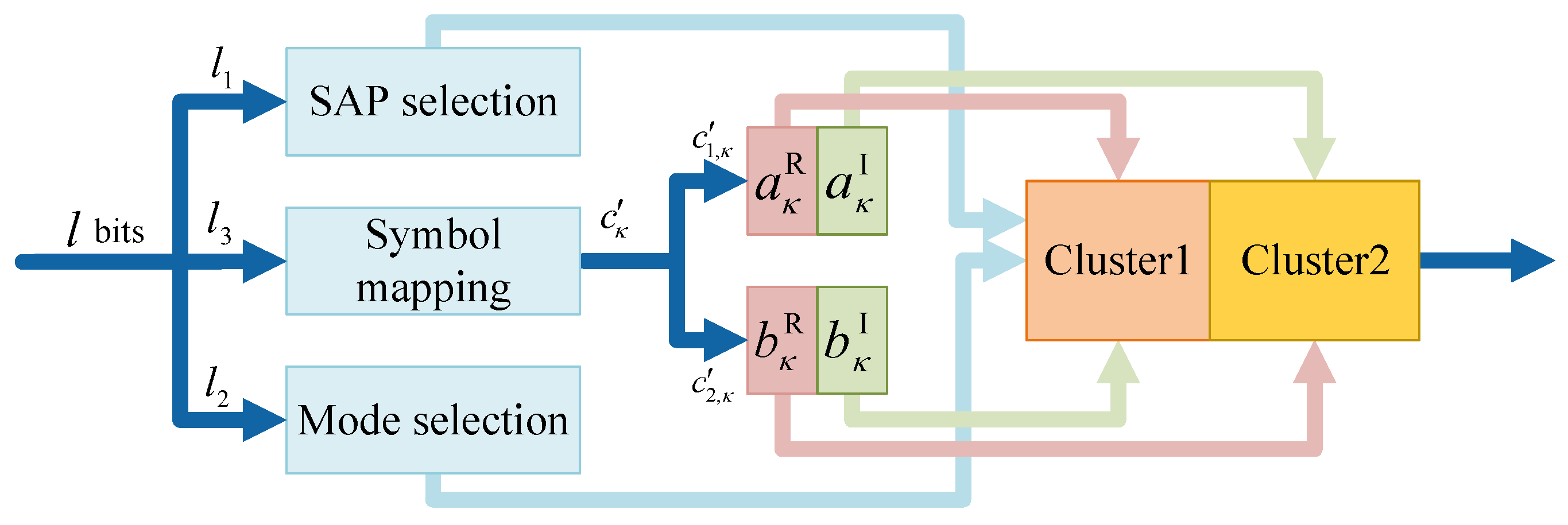
Motivated by this need, this paper proposes a mode and repeated-index modulated coordinate-interleaved OFDM scheme, referred to as MRIM-CI-OFDM. The proposed scheme retains the shared SAP and coordinate-interleaving structure of RIM-CI-OFDM while introducing an additional cross-cluster mode-indexing dimension. Specifically, the two clusters share the same SAP set to maintain the one-to-one pairing required by coordinate interleaving. Meanwhile, the mode-pair selection determines the constellation sets employed for the two interleaved symbol groups, allowing additional information bits to be carried in the mode domain. Unlike CI-OFDM-RIQIM/IQIM, the proposed scheme does not rely on multiple independent I/Q SAP decisions. Instead, it introduces mode-pair indexing within the shared SAP structure, enhancing spectral-efficiency configuration while preserving the repeated-index coordinate-interleaving framework.
The main contributions of this paper are summarized as follows:
An MRIM-CI-OFDM transmission scheme is proposed. The proposed scheme introduces cross-cluster mode-pair indexing within the shared SAP and coordinate-interleaving structure, jointly utilizing the SAP domain, mode domain, and constellation symbol domain for information transmission. Compared with CI-OFDM-RIQIM/IQIM, the proposed scheme avoids multiple independent I/Q SAP decisions while maintaining the repeated-index coordinate interleaving mapping, thus enhancing the spectral efficiency configuration capability.
A rotated multi-mode constellation construction method for MRIM-CI-OFDM is designed. To address the need for reliable discrimination among different constellation sets in the mode domain, this paper employs a minimum product distance-based design criterion to improve separability between modes while preserving the set-related distance properties required by the coordinate interleaving structure.
A low-complexity detection method for MRIM-CI-OFDM is developed. Based on the equivalent real-valued orthogonal structure introduced by coordinate interleaving, a low-complexity ML detector and a three-stage Max-Log detector are designed. This approach avoids exhaustive joint search over SAP, mode pairs, and constellation combinations while maintaining near-ML performance.
Theoretical analysis and simulation verification are provided. The BER upper bound is derived under finite discrete input conditions, and the achievable rate is analyzed. Simulation results validate the effectiveness of the proposed MRIM-CI-OFDM scheme in enhancing spectral efficiency via mode-domain extension while preserving good BER performance under both perfect and imperfect CSI.
The remainder of this paper is organized as follows.
Section 2 reviews related works.
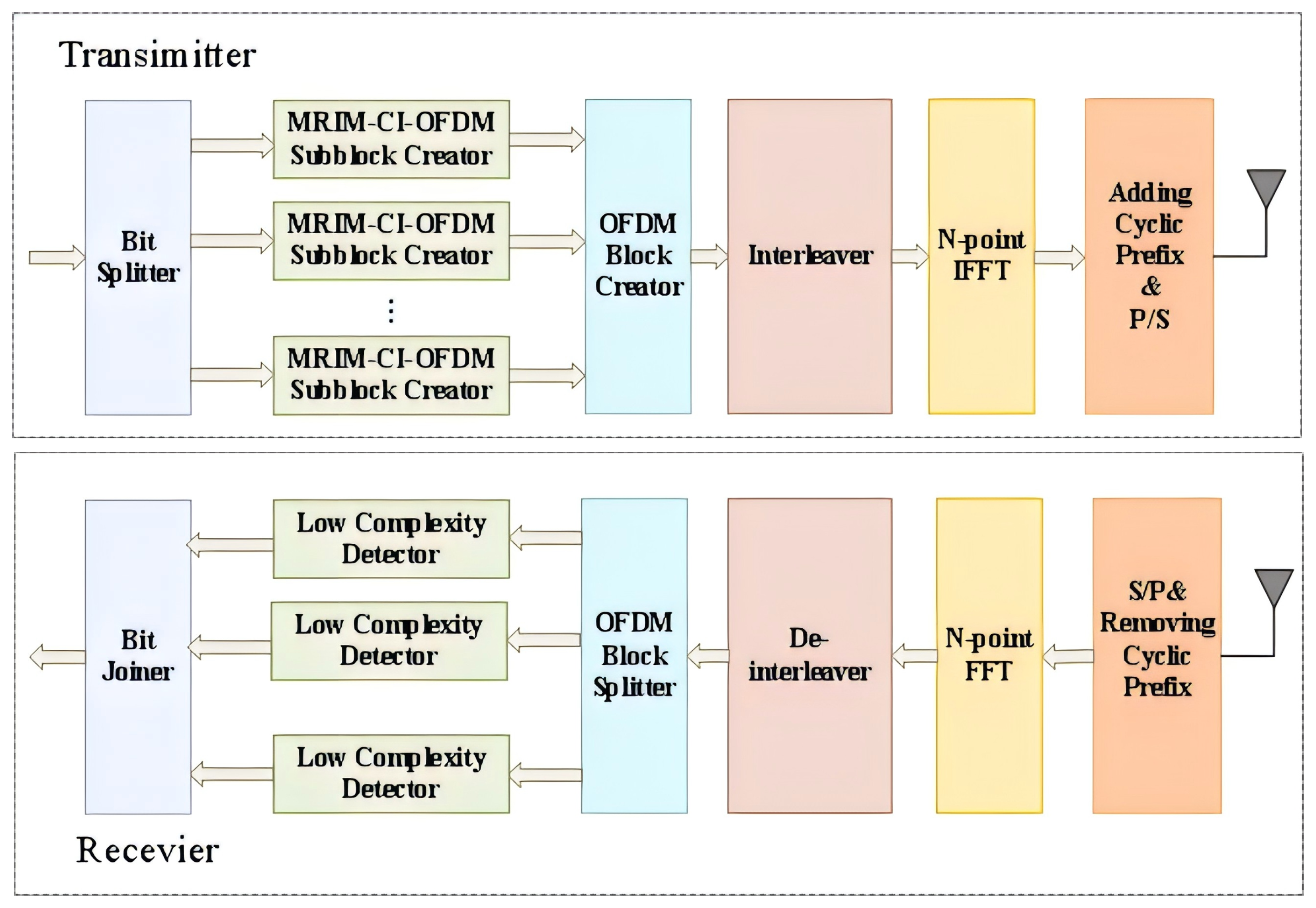
Section 3 presents the system model, constellation construction, and low-complexity detection methods of MRIM-CI-OFDM.
Section 4 provides the performance analysis.
Section 5 presents the numerical results, and
Section 6 concludes the paper.
2. Related Work
Existing studies related to the proposed MRIM-CI-OFDM scheme mainly fall into three categories, namely index-domain enhanced OFDM-IM schemes, mode-domain enhanced OFDM-IM schemes, and coordinate-interleaved OFDM-IM schemes.
Based on the original OFDM-IM framework [
10], subsequent studies have investigated the achievable rate, low-complexity detection, and differential detection of OFDM-IM systems [
11,
12,
13]. These works improved the theoretical understanding and receiver implementation of OFDM-IM. To further enhance spectral efficiency, various index-domain enhancement methods have been developed. Jaradat et al. [
14] proposed hybrid-number OFDM with index modulation, which conveys information through both the number and positions of activated subcarriers. Yarkin et al. [
15] introduced index and composition modulation by mapping bits into energy composition patterns. Li et al. [
16] proposed layered OFDM-IM using multi-layer SAP selection to increase the number of index bits. Arslan et al. [
17] developed sparse-coded codebook index modulation from a codebook design perspective. Omri et al. [
18] proposed frequency-domain index modulation by exploiting non-transmission states. In addition, OFDM-IM has been applied to NOMA, integrated communication and sensing, optical wireless communications, cognitive radio, and vehicular networks [
19,
20,
21,
22,
23,
24]. These index-domain methods improve the flexibility of OFDM-IM and expand its application scenarios. However, they usually require additional index candidate patterns, energy states, layers, or codebooks. As a result, the receiver needs to distinguish a larger set of index configurations, which increases the detection burden and may cause index misdetection under high spectral-efficiency configurations.
Mode-domain enhanced OFDM-IM schemes have been developed to reduce the spectral-efficiency loss caused by inactive subcarriers. Mao et al. [
25] proposed dual-mode OFDM, in which a second distinguishable constellation is employed to modulate originally silent subcarriers, enabling all subcarriers to participate in information transmission. Later, generalized dual-mode OFDM was proposed to improve system flexibility by varying the number of subcarriers modulated in different modes [
26]. Building upon this idea, Wen et al. [
27] proposed multiple-mode OFDM-IM, where multiple distinguishable constellations and their permutation patterns are used to transmit mode index bits. Its generalized version further allows different modes to employ constellations of different sizes [
28]. To expand the mode-domain index space, Q-ary multi-mode OFDM-IM, maximum-distance separable modulation, super-mode OFDM-IM, composite multi-mode OFDM-IM, and cascade-index modulation schemes have also been proposed [
29,
30,
31,
32,
33]. Moreover, index and mode modulated OFDM and its generalized forms jointly exploit the index and mode domains to improve spectral efficiency [
34,
35], and dual-mode index modulation has been extended to non-orthogonal multicarrier systems [
36]. These studies show that mode-domain indexing is an effective way to improve spectral efficiency without relying solely on higher-order modulation. However, as the number of modes and indexing dimensions increases, the valid candidate set grows rapidly. The receiver must jointly distinguish SAPs, mode combinations, and constellation symbols, which increases detection complexity. In addition, the geometric separability among different mode-dependent constellation sets becomes a key factor affecting mode detection reliability.
Coordinate-interleaved OFDM-IM schemes have been investigated to improve transmission reliability under multipath fading channels. Basar [
37] proposed coordinate-interleaved OFDM-IM, which maps the real and imaginary components of data symbols onto different subcarriers, allowing the two components to experience relatively independent fading processes and thereby achieve diversity gain. Le et al. [
38] introduced repeated-index modulation with coordinate interleaving, where the same SAP is shared across two clusters to improve index-bit detection reliability and BER performance. Subsequently, power-distribution index modulation and repeated in-phase/quadrature index modulation were incorporated into coordinate-interleaved OFDM to further enhance diversity or increase the number of index bits [
39,
40]. Among these schemes, CI-OFDM-RIQIM and its extended version CI-OFDM-IQIM employ repeated or independent index modulation on the I/Q components, improving both the number of IM bits and the error performance [
40]. These coordinate-interleaved schemes improve the diversity performance of OFDM-IM and enhance reliability under fading channels. However, RIM-CI-OFDM provides only limited independent index bits because the two clusters share the same SAP. In contrast, CI-OFDM-RIQIM/IQIM increases the number of index bits by introducing repeated or independent I/Q index modulation, but it requires multiple correlated SAP decisions for I/Q components, leading to higher receiver complexity.
Overall, prior studies have improved OFDM-IM systems from the perspectives of index-domain enhancement, mode-domain extension, and coordinate-interleaving-based diversity improvement. Nevertheless, a unified design that can jointly exploit shared SAPs, coordinate-interleaving diversity, and mode-domain indexing while maintaining low receiver complexity has not been fully investigated. In particular, how to introduce additional mode-domain information within the repeated-index coordinate-interleaved structure without relying on multiple independent I/Q SAP decisions remains insufficiently addressed. To address this gap, this paper proposes an MRIM-CI-OFDM scheme that introduces cross-cluster mode-pair indexing into the shared-SAP coordinate-interleaved framework. The proposed scheme jointly utilizes the SAP domain, mode domain, and constellation symbol domain for information transmission, while a rotated multi-mode constellation design and low-complexity detectors are developed to improve mode separability and reduce receiver detection complexity.
5. Numerical Results
In this section, MATLAB R2022b simulations are conducted to verify the performance of the proposed MRIM-CI-OFDM scheme in terms of bit error rate (BER), achievable rate, error event distribution, and transmission performance under imperfect channel state information (CSI). Unless otherwise specified, all schemes are compared under a 10-tap frequency-selective Rayleigh fading channel, and the receiver adopts the corresponding low-complexity detector or maximum-likelihood (ML) detector. The main simulation parameters are summarized in
Table 3.
For fair comparison, all compared constellation sets were normalized to the same average symbol energy. The rotated multi-mode constellation sets preserve the average power of the corresponding base constellation because constellation rotation does not change the symbol energy.
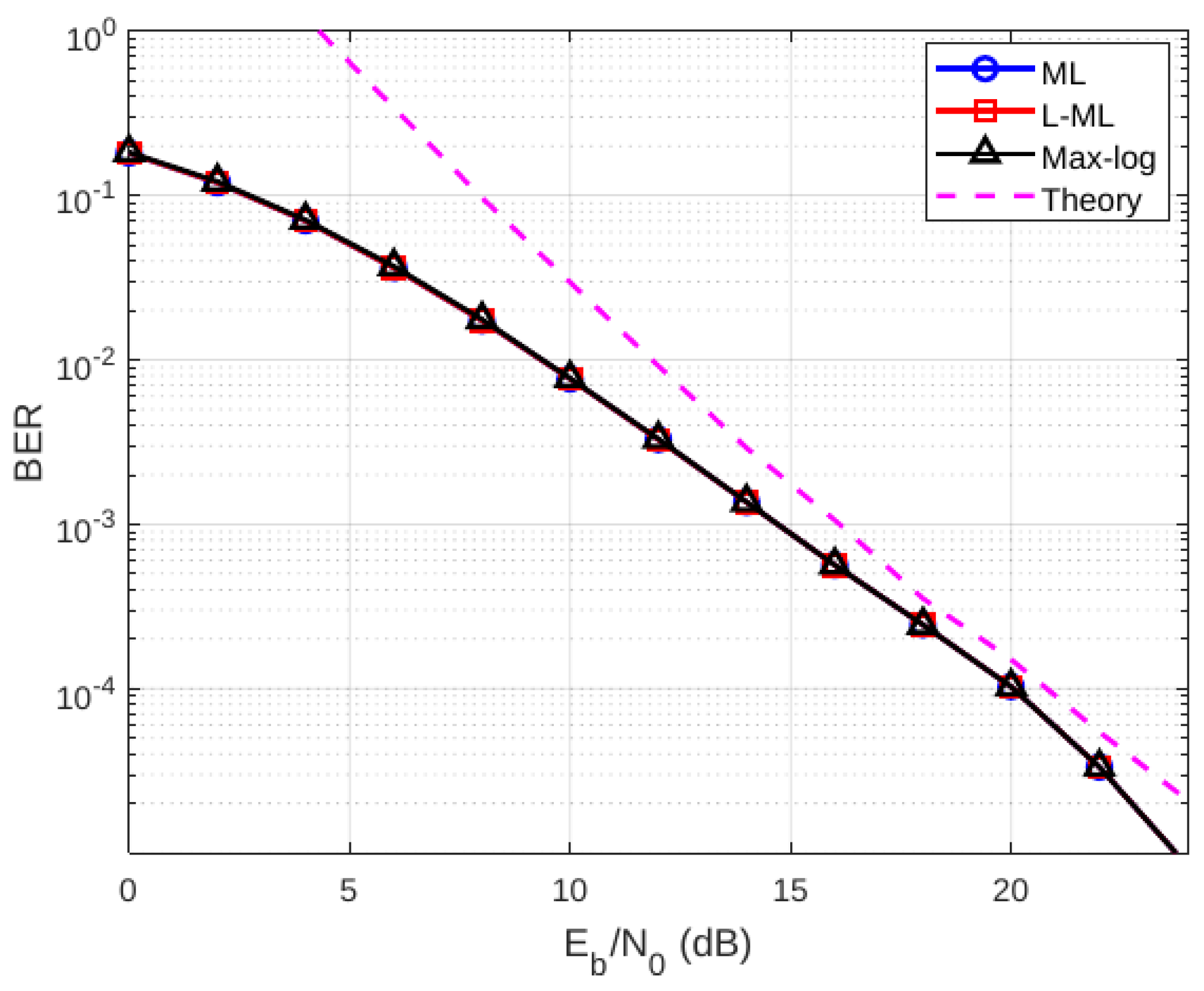
Figure 3 presents the BER performance of the ML detector, the low-complexity ML detector (L-ML), and the three-stage Max-Log detector. The three simulated BER curves are almost superimposed over the entire SNR range, indicating that the proposed low-complexity detectors can achieve near-ML performance with negligible degradation. Specifically, at a BER of
, the SNR gap among the three detectors is less than 0.2 dB. The analytical BER upper bound is relatively loose in the low-SNR region but gradually approaches the simulated curves as the SNR increases. This behavior is a common limitation of union-bound-based BER analysis. At low SNR, many pairwise error events have relatively high probabilities, and the accumulation of these events may overestimate the actual error probability. As the SNR increases, the error performance is dominated by fewer significant error events, and therefore the analytical upper bound becomes closer to the simulated BER curves.
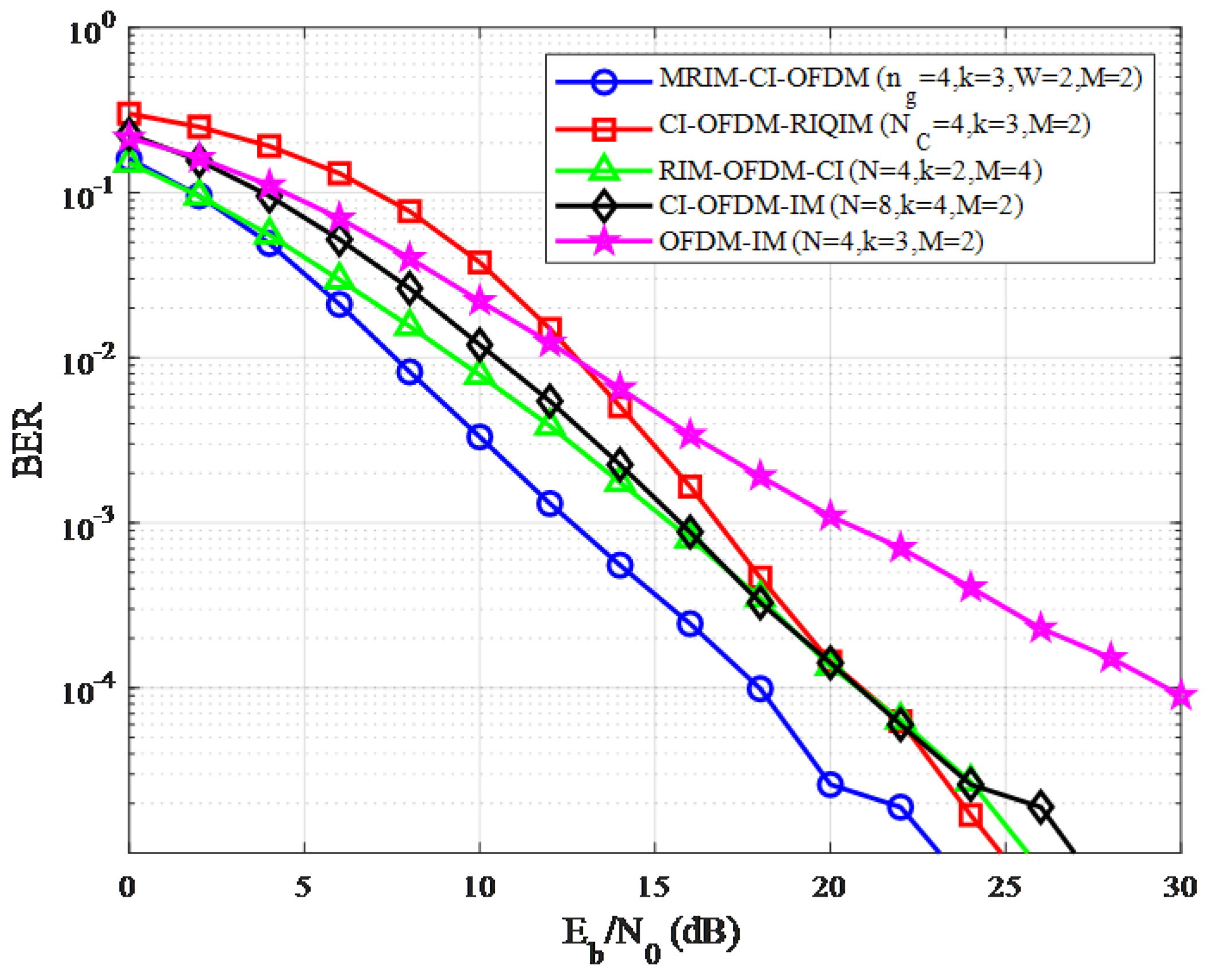
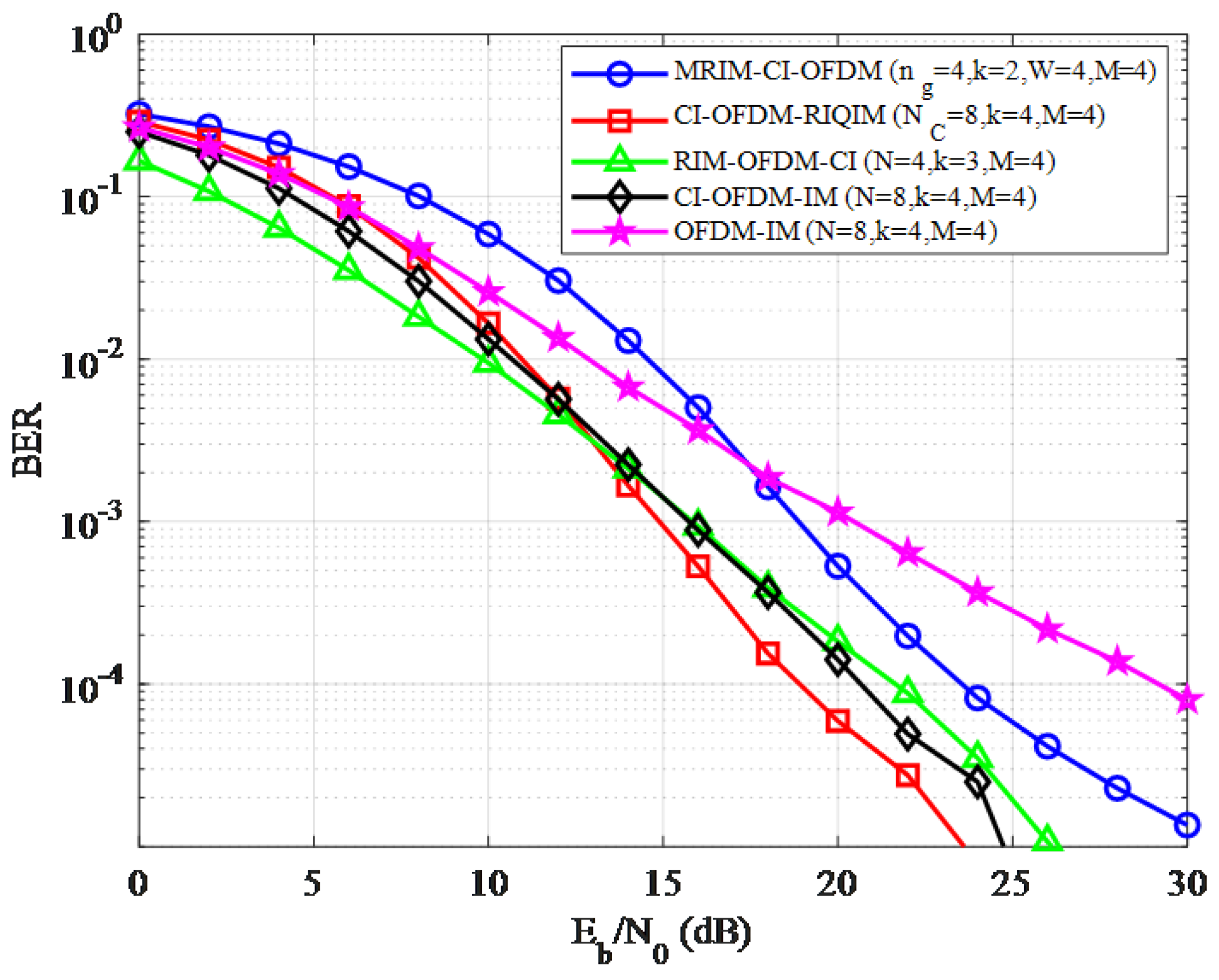
Figure 4 shows the BER performance at a spectral efficiency of 1.25 bps/Hz. The proposed MRIM-CI-OFDM achieves the best error performance among all considered schemes. At a BER of
, MRIM-CI-OFDM requires approximately 13 dB, providing about 3 dB SNR gain over the coordinate-interleaved and repeated-index benchmarks and more than 5 dB gain over OFDM-IM. This gain arises from the joint use of SAP, mode-domain selection, and coordinate interleaving. The additional mode-pair index bits are introduced within the shared-SAP and coordinate-interleaved structure, so that the spectral-efficiency improvement does not rely solely on increasing the constellation order. As a result, the diversity benefit of coordinate interleaving can still be preserved under this spectral-efficiency configuration.
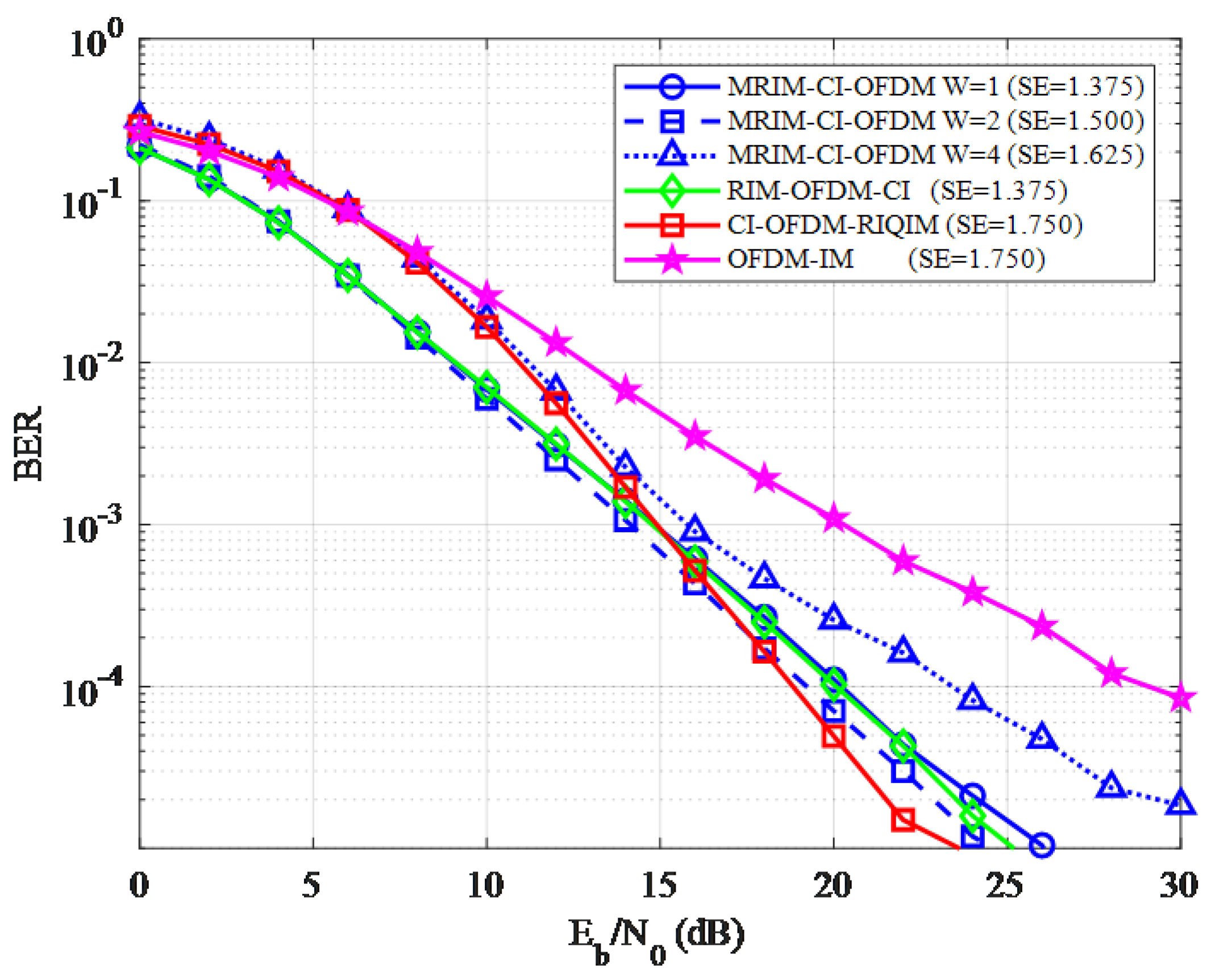
Figure 5 presents the comparison at 1.75 bps/Hz. In this case, the proposed MRIM-CI-OFDM is no longer the best BER curve, because the larger mode set increases the difficulty of mode-pair discrimination at the receiver. Nevertheless, MRIM-CI-OFDM still clearly outperforms OFDM-IM. For example, at BER
, MRIM-CI-OFDM obtains about 2 dB SNR gain over OFDM-IM, while it is around 2–3 dB behind CI-OFDM-RIQIM. These results indicate that the mode-domain extension provides additional flexibility in spectral-efficiency configuration by increasing the number of available mode-pair indices. However, a larger
W also enlarges the mode-pair candidate space and increases the ambiguity among different mode pairs, making mode-pair discrimination at the receiver more difficult. Therefore, the performance at higher spectral efficiency is jointly affected by the additional index gain and the reduced separability among different mode pairs.
Figure 6 presents the BER performance of different schemes under the fixed configuration
. When
, the BER curve of the proposed MRIM-CI-OFDM scheme coincides with that of RIM-CI-OFDM, since the mode-selection freedom disappears and the proposed scheme reduces to RIM-CI-OFDM. As
W increases from 1 to 2, the spectral efficiency rises from 1.375 to 1.500 bps/Hz, corresponding to a 9.1% increase, while the additional SNR required to achieve a BER of
is within approximately 0.5 dB. When
W further increases to 4, the spectral efficiency reaches 1.625 bps/Hz, which is 18.2% higher than that for
. However, the BER performance degradation becomes more pronounced, which can be attributed to the reduced inter-mode separability and the increased ambiguity in joint detection.
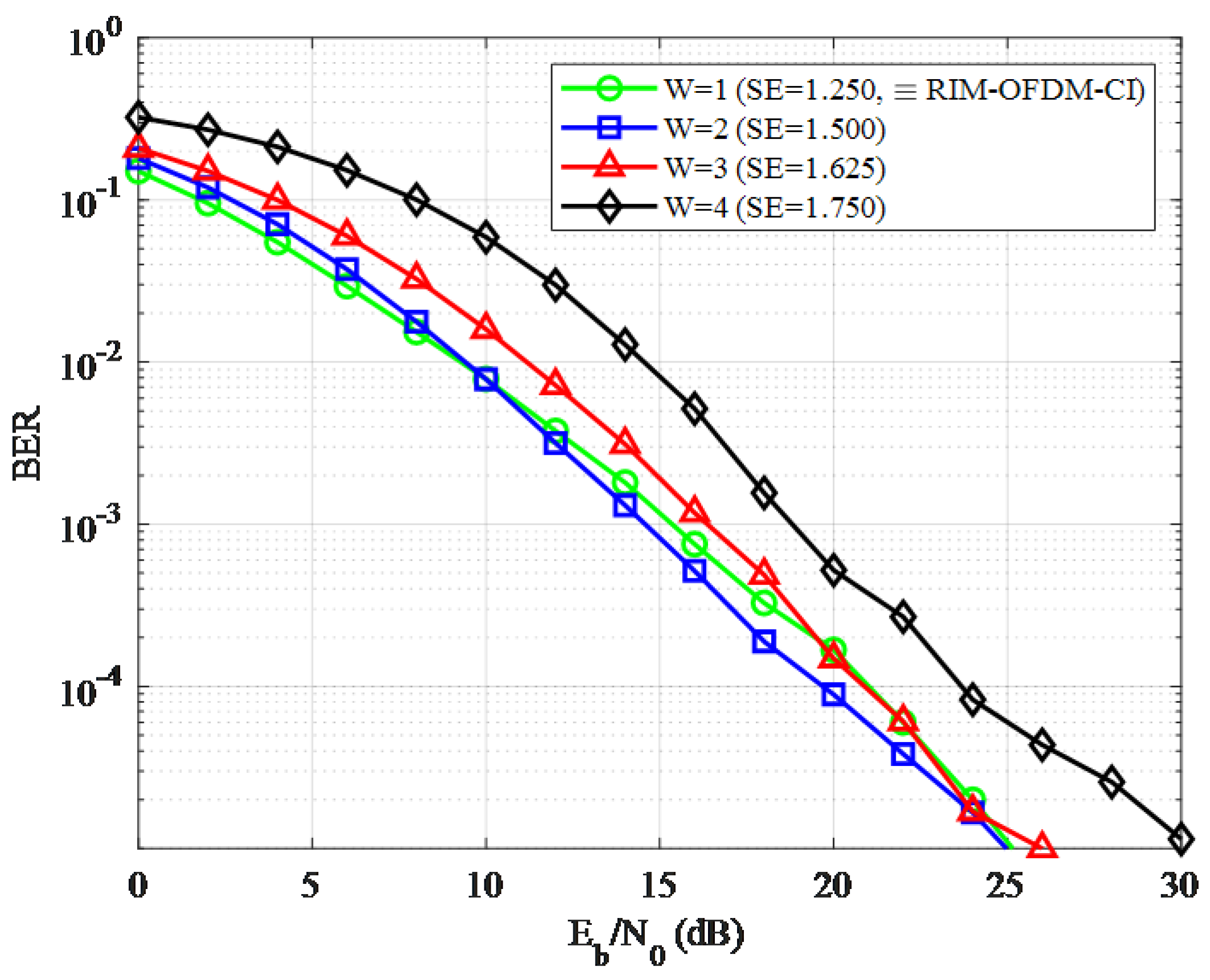
Figure 7 shows the BER curves of the proposed MRIM-CI-OFDM scheme for different values of
W under the fixed configuration
. Increasing
W from 1 to 2 raises the spectral efficiency from 1.25 to 1.50 bps/Hz, i.e., by 20%, while maintaining the best BER performance in the medium-to-high SNR region. For
, the spectral efficiency is 1.75 bps/Hz, which is 40% higher than that for
, but an additional SNR of approximately 5 dB is required compared with
at a BER of
. These results confirm that the mode-domain parameter
W provides a flexible degree of freedom for rate-reliability adaptation. In general, the value of
W should be selected according to the target spectral efficiency and reliability requirement. When the required spectral efficiency is relatively low,
W = 1 is preferable because the proposed scheme reduces to RIM-CI-OFDM and avoids mode-domain detection ambiguity. For moderate spectral-efficiency requirements,
W = 2 provides a favorable trade-off between rate improvement and BER performance. It introduces additional mode-pair index bits while maintaining sufficient inter-mode separability, and therefore achieves the best or near-best BER performance in the considered configurations. When a higher spectral efficiency is required,
W = 4 can further increase the number of mode-domain bits, but it is not always optimal in terms of BER. The degradation for
W = 4 mainly results from the enlarged mode-pair candidate space and the reduced geometric separability among different rotated constellation sets. As
W increases, more constellation sets must be placed within the same complex plane, which makes their real and imaginary projections closer after coordinate interleaving. This increases the probability of mode-pair misdetection and weakens the advantage of the mode-domain extension. Therefore,
W = 4 is more suitable for rate-oriented configurations, whereas
W = 2 is generally preferred when both spectral efficiency and BER performance are considered.
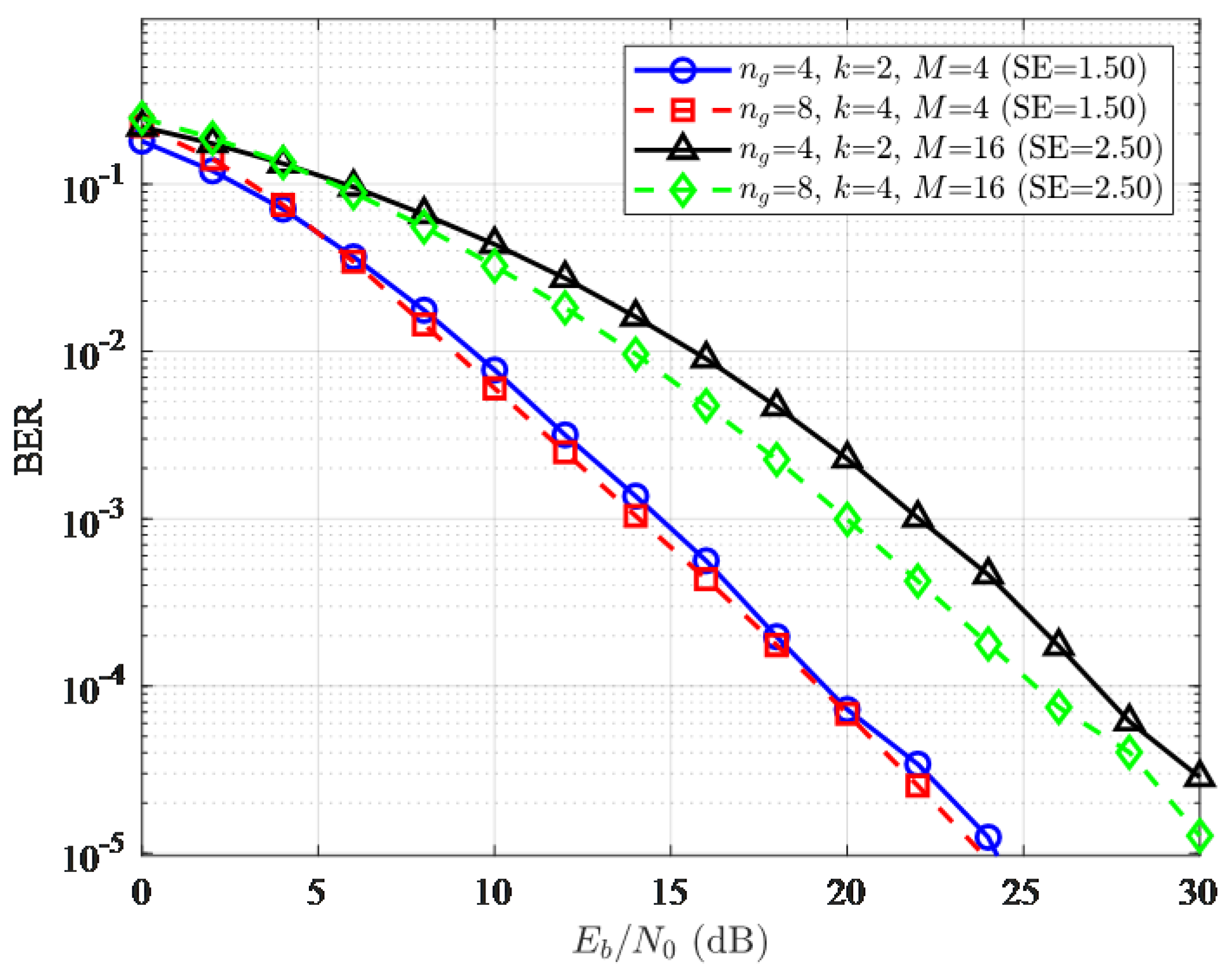
Figure 8 presents the BER performance of the proposed MRIM-CI-OFDM scheme under different subblock sizes. At a spectral efficiency of 1.50 bps/Hz, the BER curves for
and
are close to each other, indicating that the proposed structure is relatively insensitive to moderate changes in the subblock size. At a spectral efficiency of 2.50 bps/Hz, increasing
from 4 to 8 provides an SNR gain of approximately 2 dB at a BER of
. This improvement can be attributed to the fact that a larger subblock provides a larger codeword construction space and generates more high-rank error events, thereby enhancing the robustness of the system against frequency-selective fading.
The above results also provide useful guidelines for selecting the main system parameters. The subblock size, the number of active subcarriers, and the modulation order should be jointly determined according to the target spectral efficiency, BER requirement, and receiver complexity. For the activation ratio,
provides a balanced configuration, since it offers sufficient SAP candidates while keeping the detection search space moderate. A larger
increases the subblock construction space and may improve BER performance at high spectral efficiency, as observed in
Figure 8, but it also increases the number of valid SAP candidates and therefore the detection complexity. The modulation order
M controls the number of symbol-domain bits. Increasing
M improves spectral efficiency but reduces the constellation distance and may degrade BER performance. Therefore, when additional mode-domain bits are introduced through
W, a relatively low modulation order is preferred to maintain symbol separability and control detection complexity. In the considered simulations,
is suitable for moderate-complexity configurations, whereas
can be used when higher spectral efficiency or improved high-rate BER performance is required. Overall, the parameters
should be selected jointly rather than independently, so as to balance spectral efficiency, reliability, and implementation complexity.
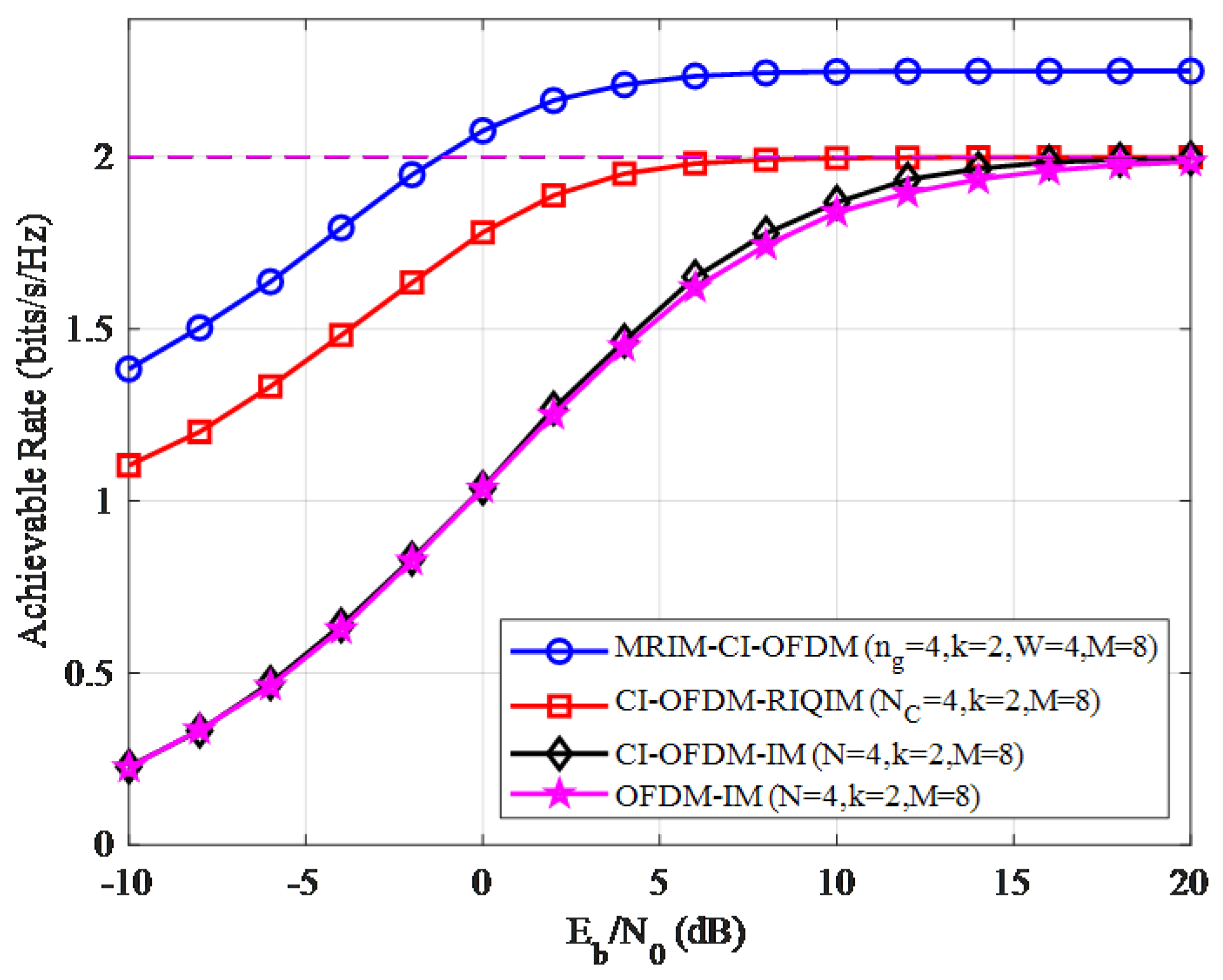
Figure 9 shows the achievable-rate performance of different schemes. All curves increase with
and gradually saturate due to the finite-cardinality input alphabet. Compared with the benchmark schemes, the proposed MRIM-CI-OFDM scheme converges to the saturation region more rapidly and achieves a higher asymptotic achievable rate. Specifically, the high-SNR achievable rate of MRIM-CI-OFDM approaches 2.25 bps/Hz, which is 12.5% higher than the 2.00 bps/Hz saturation level of the compared schemes. Around
dB, MRIM-CI-OFDM already achieves approximately 2.0 bps/Hz, which is higher than that of CI-OFDM-RIQIM and nearly twice those of OFDM-IM and CI-OFDM-IM under the same simulation setting. The rate advantage is consistent with the proposed codeword construction, where the valid transmit vectors are determined not only by the shared SAP and data symbols, but also by the cross-cluster mode pair. The introduced mode-domain index enlarges the finite input set and improves the achievable information rate under finite discrete-input conditions. Meanwhile, the rotated multi-mode constellation design enhances the geometric separability among different mode-dependent constellation sets, thereby helping to maintain the distinguishability of valid codewords in the moderate-to-high SNR region.
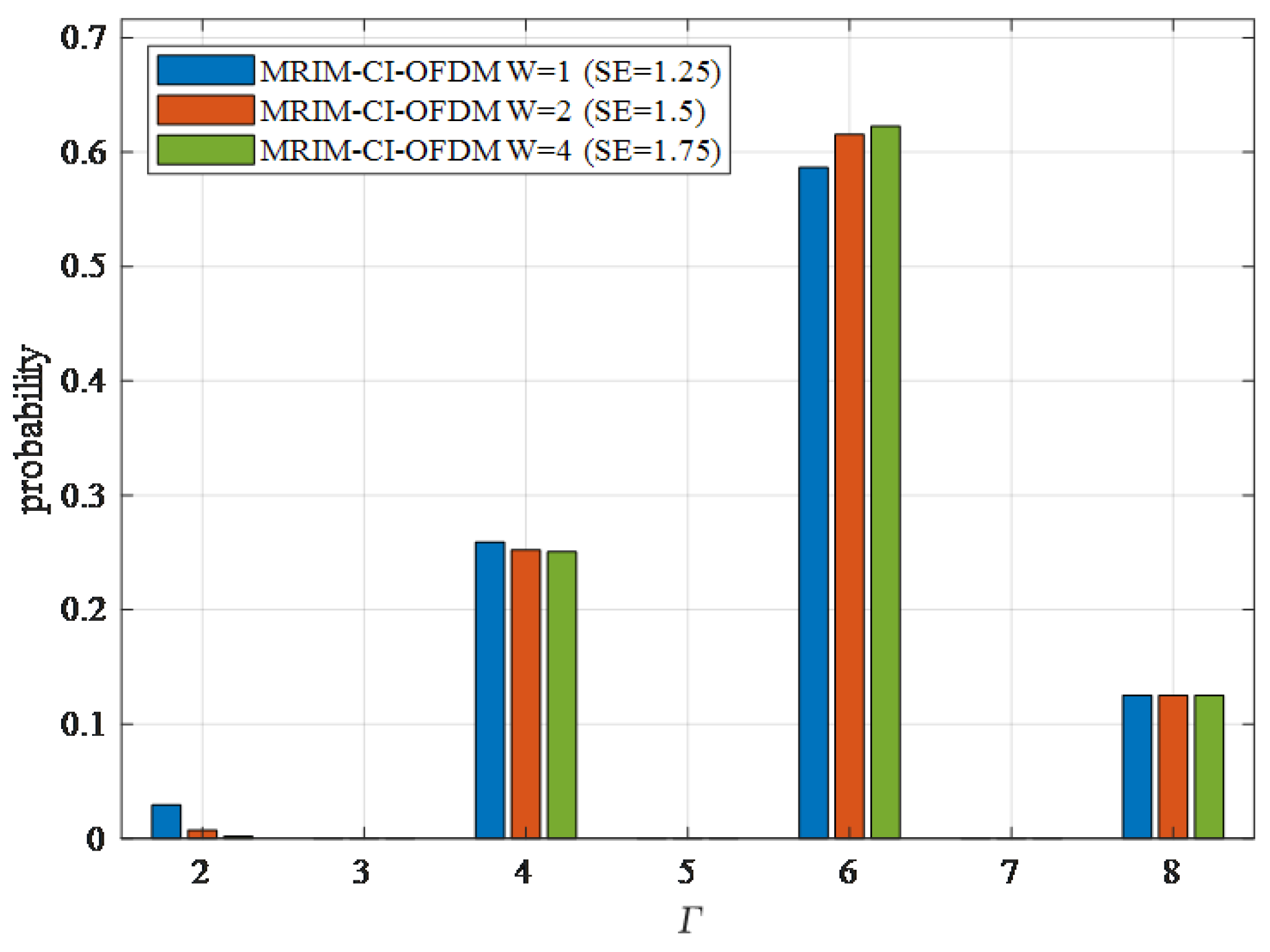
Figure 10 shows the rank distribution of error events for different values of
W. The dominant error events are concentrated at
, whose proportion is approximately 0.59–0.62 for all tested
W values, while the
events maintain a stable proportion of about 0.13. Overall, the error events with
account for more than 70% of all error events. Meanwhile, the low-rank
events remain below approximately 3% and do not increase as
W grows. The rank distribution therefore suggests that increasing
W does not noticeably change the diversity-related error-event structure of the proposed scheme. Hence, the BER degradation observed for larger
W is more likely caused by the increased ambiguity in mode-pair discrimination and the reduced inter-mode separability, rather than by a reduction in diversity order.
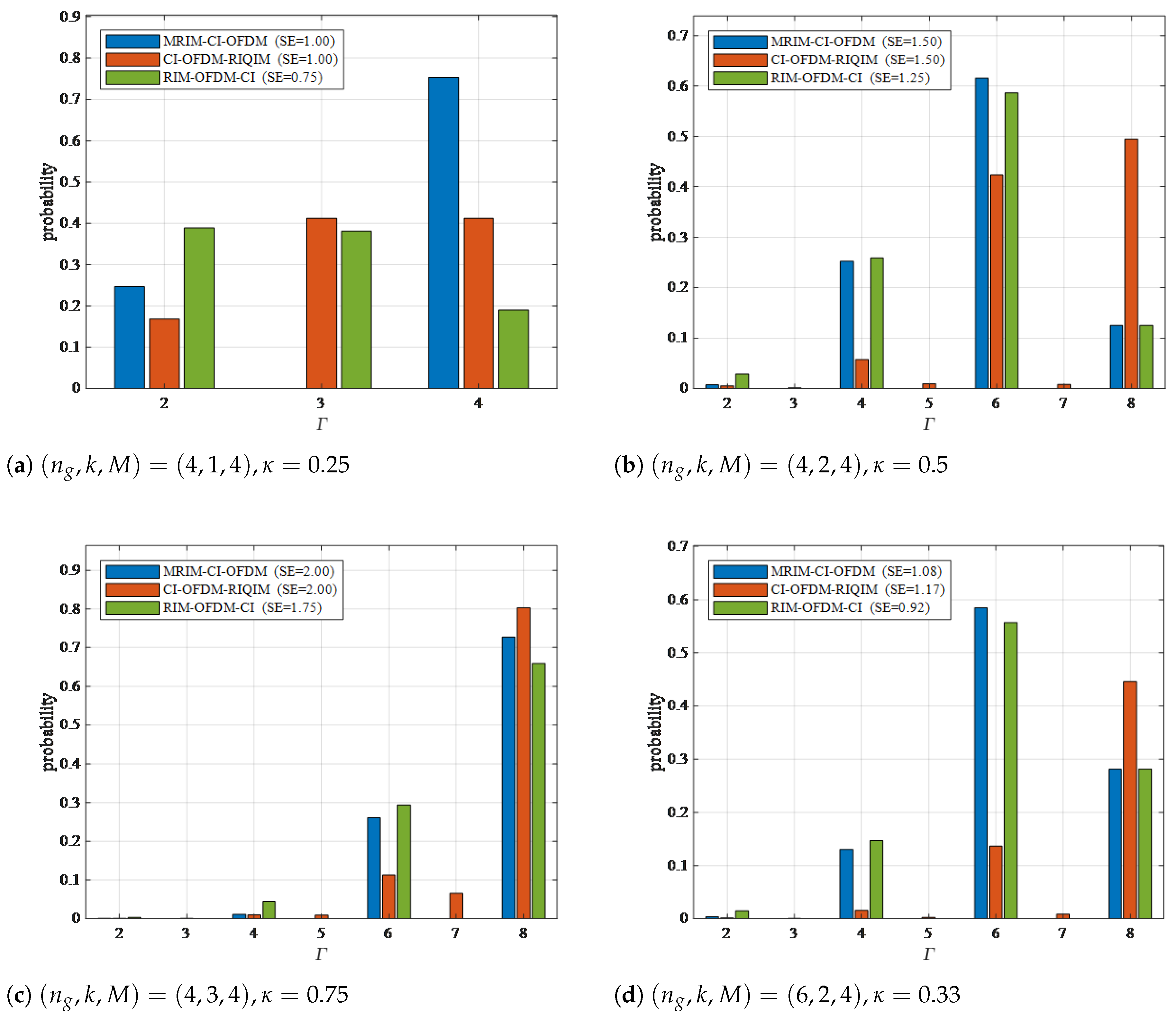
Figure 11 presents the rank distributions of error events under different activation ratios. As
increases, the distribution of the proposed MRIM-CI-OFDM scheme shifts toward higher-rank regions, indicating an enhanced potential diversity gain. For example, when
, high-rank error events dominate the overall distribution, and the proposed scheme maintains a higher proportion of high-rank events than the reference schemes. These results indicate that the introduced mode-domain mapping can provide additional spectral-efficiency flexibility without significantly weakening the high-rank error-event structure under different activation configurations.
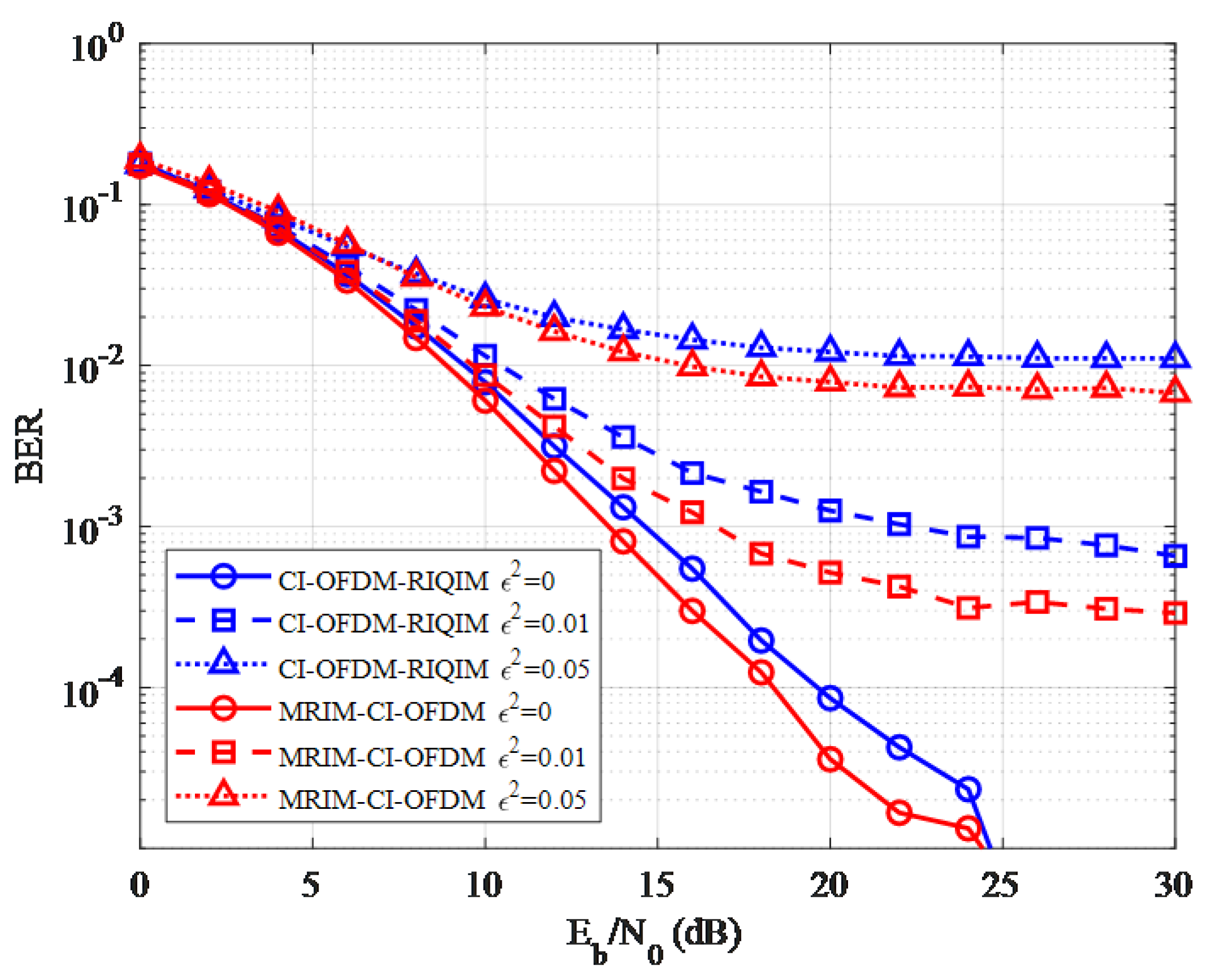
To evaluate the robustness of the proposed scheme under imperfect channel state information (CSI), an additive Gaussian channel-estimation error model is adopted in the simulations. Specifically, the estimated frequency-domain channel coefficient is modeled as , where is the true channel coefficient and denotes the CSI estimation error independent of . The received signal is generated using the true channel, while the receiver performs detection based on the estimated channel .
Figure 12 presents the BER performance under imperfect CSI conditions. As the channel-estimation error variance increases from 0 to 0.01 and 0.05, all schemes suffer noticeable BER degradation and gradually exhibit error floors in the high-SNR region. This is because channel-estimation errors introduce a mismatch between the equivalent channel model used at the receiver and the actual transmission channel, thereby affecting SAP detection, mode-pair discrimination, and symbol recovery. Nevertheless, the proposed MRIM-CI-OFDM scheme still maintains better BER performance than the benchmark scheme under different CSI error levels, indicating its robustness to channel-estimation errors owing to the joint effect of shared SAP, coordinate interleaving, and mode-domain mapping.
To provide a concise summary of the BER simulation results,
Table 4 lists the main observations of the proposed MRIM-CI-OFDM scheme under different spectral-efficiency configurations.
To further summarize the overall performance trade-off,
Table 5 compares representative OFDM-IM-based schemes in terms of BER performance, spectral efficiency, and normalized-energy characteristics.
In
Table 5, the normalized-energy characteristic refers to the performance comparison under the same average symbol-energy normalization, rather than an independently defined bit-per-joule metric. In the simulations, all compared constellation sets are normalized to the same average symbol energy. Under this condition, the proposed MRIM-CI-OFDM improves the effective information-carrying capability by introducing cross-cluster mode-pair indexing, instead of increasing the transmit power. Therefore, the proposed scheme provides a favorable trade-off among BER performance, spectral-efficiency configuration, and normalized-energy utilization.
6. Conclusions and Future Work
In this paper, we propose a coordinate-interleaved OFDM scheme with mode-pair indexing and repeated-index modulation, termed MRIM-CI-OFDM, to address the difficulty of jointly improving spectral efficiency, maintaining error performance, and controlling receiver complexity in OFDM-IM systems. In the proposed scheme, the two clusters share the same SAP, while cross-cluster mode-pair indexing is introduced as an additional information-bearing dimension, so that information bits are conveyed through the SAP domain, the mode domain, and the constellation symbol domain. Meanwhile, coordinate interleaving assigns the real and imaginary components of symbols to different subcarriers, preserving the diversity benefit under frequency-selective fading. To improve the reliability of mode-domain detection, a rotated multi-mode constellation construction method based on the inter-constellation minimum product distance is designed. By exploiting the equivalent real-valued orthogonal structure induced by coordinate interleaving, low-complexity ML and three-stage Max-Log detectors are further developed to reduce the joint detection complexity of SAPs, mode pairs, and data symbols. In addition, the BER upper bound and the achievable rate under finite discrete-input conditions are derived to characterize the system performance. Simulation results show that the proposed low-complexity detectors achieve near-ML performance, with an SNR gap of less than 0.2 dB at a BER of . Under a representative spectral efficiency of 1.25 bps/Hz, MRIM-CI-OFDM provides about 3 dB SNR gain over the coordinate-interleaved and repeated-index benchmark schemes and more than 5 dB gain over conventional OFDM-IM. Moreover, the high-SNR achievable rate of MRIM-CI-OFDM approaches 2.25 bps/Hz, which is about 12.5% higher than the 2.00 bps/Hz saturation level of the benchmark schemes. These results demonstrate that MRIM-CI-OFDM can improve spectral-efficiency configuration capability and transmission reliability while maintaining low receiver complexity. It should also be noted that the mode-domain extension introduces a design trade-off: increasing the number of modes W provides more flexibility in rate configuration, but also enlarges the mode-pair candidate space and reduces the separability among different mode pairs, which may increase mode-domain decision errors. Therefore, W should be selected according to the target spectral efficiency, reliability requirement, and receiver complexity.
The present work focuses on the fundamental transmission performance of MRIM-CI-OFDM, including BER, achievable rate, and receiver detection complexity. Future work will investigate adaptive mode-pair selection, constellation optimization, and channel-coded low-complexity MRIM-CI-OFDM transmission under time-varying fading and interference-limited conditions. Owing to its shared SAP structure, coordinate-interleaving diversity, and mode-pair indexing flexibility, the applicability of the proposed scheme to complex scenarios such as UAV-assisted wireless links will also be further explored.In addition, security-aware operation, RF-based signal identification, interference-aware transmission, and UAV-specific propagation effects will be considered in future extensions of the proposed MRIM-CI-OFDM framework.