Article

Research on Key Disaster-Inducing Factors of Shallow Gas Disasters in Rail Transit Engineering

by
Ning Wang
1,2,
Yong Wang
2,*,
Xiaobin Wu
3 and
Liucheng Chang
2
1
School of Civil Engineering and Architecture, Anhui University of Science and Technology, Huainan 232000, China
2
State Key Laboratory of Geomechanics and Geotechnical Engineering Safety, Institute of Rock and Soil Mechanics, Chinese Academy of Sciences, Wuhan 430070, China
3
Second Geological Brigade of Jiangsu Provincial Geological Bureau, Changzhou 213022, China
*
Author to whom correspondence should be addressed.
Appl. Sci. 2026, 16(11), 5182; https://doi.org/10.3390/app16115182
Submission received: 25 March 2026 / Revised: 25 April 2026 / Accepted: 28 April 2026 / Published: 22 May 2026

Featured Application

This paper presents a method suitable for the safety risk analysis and evaluation of metro tunnels under adverse shallow gas geological conditions. On this basis, an engineering risk assessment was carried out for metro tunnels in shallow gas-bearing strata. According to the assessment outcomes, targeted suggestions and prevention-control measures are proposed for sections at different risk levels, with emphasis placed on the investigation phase.

Abstract

Urban rail transit projects situated in Quaternary deposits are progressively influenced by ultra-shallow gas. During the investigation and construction phases, this gas may instigate gas outbursts, combustion, explosions, stratum disturbances, and secondary ground deformations. To transparently and applicably identify the most crucial disaster-inducing factors in engineering practice, this research constructs a hierarchical risk factor evaluation framework for shallow gas hazards during the investigation stage of rail transit engineering. Initially, candidate indicators were screened via a literature review of shallow gas hazard studies and metro engineering reports. Subsequently, by employing the AHP, four first-level indicators and fifteen second-level indicators were compared and weighted. The findings indicate that shallow gas pressure, methane content per ton of soil, and the occurrence form of shallow gas are the three most influential factors, with comprehensive weights of 0.2735, 0.2319, and 0.1113 respectively. A metro tunnel case in Guangdong Province was then utilized to illustrate how the ranked indicators can guide the verification of suspected zones, section-based hazard discrimination, and the planning of controlled gas release. In comparison with existing studies that concentrate on descriptive disaster phenomena or single-factor analyses, the contributions of this study are threefold. Firstly, it offers a structured indicator system specifically tailored to Quaternary shallow gas in rail transit engineering. Secondly, it makes the expert-based weighting process explicit. Thirdly, it links the ranking results to practical investigation and prevention decisions. This framework is intended as a preliminary engineering decision support tool rather than a substitute for detailed predictive modeling or large-sample statistical validation.

1. Introduction

In recent years, in economically developed regions of China such as the Yangtze River Delta, Hangzhou Bay, and Pearl River Delta, with the continuous expansion of the scale of urban rail transit construction, underground engineering increasingly encounters complex strata and specific unfavorable geological bodies. During the investigation and construction of rail transit projects, a Quaternary shallow gas geological phenomenon (hereinafter referred to as “shallow gas”) characterized by shallow burial depth, wide distribution, small single-layer thickness, relatively limited reserves, and a methane-dominated composition has been successively discovered and encountered [1,2]. Numerous urban rail transit projects, including Wuhan Metro Line 2 and Line 8, Hangzhou Metro Line 1, Guangzhou Metro Line 6, and Shanghai Metro Line 2, have been affected to varying degrees by the adverse geological conditions of shallow gas during construction, presenting potential safety hazards such as blowouts, gas migration, accumulation, combustion/explosion, and secondary environmental disturbances within the project timeline [3,4,5]. Scientifically identifying and evaluating the adverse impacts of shallow gas on urban rail transit construction, and accordingly proposing targeted prevention, control, and safety treatment measures, has become one of the important issues urgently requiring resolution in the construction of rail transit projects in shallow gas-developed areas.
Existing studies and engineering case histories indicate that the formation and evolution of shallow gas geological risks result from the coupling of multiple factors. Duan Xiaoyong, Kortekaas et al., and Roy et al. [6,7,8] point out that the occurrence of shallow gas disasters is first closely related to the occurrence characteristics of the shallow gas itself, such as gas composition, gas pressure, reserve scale, and occurrence morphology; it is then controlled by regional geological environment conditions, such as stratigraphic structure, permeability, gas source conditions, reservoir conditions, and cap rock sealing properties. Further studies [9,10] add that human engineering activities are also important external factors inducing shallow gas disasters, including the choice of construction method, borehole exposure behavior, soil disturbance intensity, and ventilation and drainage conditions.
Current research on shallow gas is relatively insufficient in the quantitative assessment of its engineering hazard level, and a unified, mature risk assessment system suitable for the unconsolidated sedimentary geological conditions of onshore Quaternary shallow gas has not yet been established both domestically and internationally. In contrast, significant progress has been made in risk assessment for gas tunnels in bedrock-type geological conditions. For example, research on Line 7 of the Tehran Metro by Bakhshandeh Amnieh et al. [11] indicates that a relatively mature geological risk identification framework has been established for urban tunnel construction. Ayhan et al. [12] investigated a methane deflagration incident during the excavation of the Silvan Water Diversion Tunnel in Turkey and noted that failure to adequately consider the natural gas basin background and the possibility of gas presence during the engineering planning and construction method selection stages may lead to sudden gas disasters in TBM construction. Wang et al. [13] used the gray relational analysis method to analyze the influencing factors of tunnel gas accidents in China, revealing the degree of influence of factors such as gas content in surrounding rock, stratigraphic lithology, and groundwater on gas accidents, providing empirical support for related risk management. Wang Zichao et al. [14] and Yun Feng et al. [15] used the AHP to construct a well-defined hierarchical risk assessment system, systematically evaluating gas tunnels to obtain scientifically reliable risk assessment conclusions and offer constructive suggestions tailored to engineering practice.
In general, scholars have amassed substantial research findings regarding the mechanisms of gas disasters, tunnel explosion prevention, ventilation monitoring, and data-driven risk assessment. Nevertheless, systematic research on the risks of Quaternary shallow gas within the shallow-buried, linear, and densely built environment of urban rail transit requires further in-depth exploration. Among these, the AHP is well-suited for the small sample data of Quaternary shallow gas, which demonstrate prominent hierarchical features, as it can quantify qualitative issues, systematically stratify intricate decision-making problems, and effectively integrate expert experience with objective data.
Therefore, taking the engineering investigation stage as the entry point, this paper constructs a hazard factor evaluation model for shallow gas geological risks using the AHP, systematically analyzes the importance of each influencing factor, and identifies the key hazard factors, thereby providing a reference for the risk assessment and prevention/control of urban rail transit projects in Quaternary shallow gas-developed areas.
Accordingly, this study constructs an AHP-based evaluation framework for disaster-inducing factors of Quaternary shallow gas in rail transit engineering and applies it to a representative metro tunnel case. The main scientific contributions are: (1) establishing a risk factor indicator system tailored to shallow gas in Quaternary unconsolidated strata; (2) making the indicator screening and expert consultation process explicit; (3) linking the ranking results to engineering investigation, hazard zoning, and controlled gas release measures. The remainder of this paper is organized as follows. Section 2 summarizes the main disaster forms of shallow gas across project stages and engineering types. Section 3 describes indicator selection, expert consultation, and AHP weighting. Section 4 interprets the ranking results and their engineering implications. Section 5 presents a metro case for applicability verification, and Section 6 discusses robustness, limitations, and future research directions.

2. Disaster Forms of Quaternary Shallow Gas in Rail Transit Engineering

The construction cycle of urban rail transit projects encompasses stages such as investigation, pre-construction preparation, design, construction, and operation. At different stages, factors including the burial depth of shallow gas, gas pressure, the relative position of the gas-bearing stratum with engineering structures and construction machinery, and the occurrence conditions of shallow gas will undergo dynamic changes. These changes will result in different disaster forms and extents of shallow gas at various construction stages. Below, the disaster forms of shallow gas are presented in accordance with the chronological sequence of urban rail transit project construction.
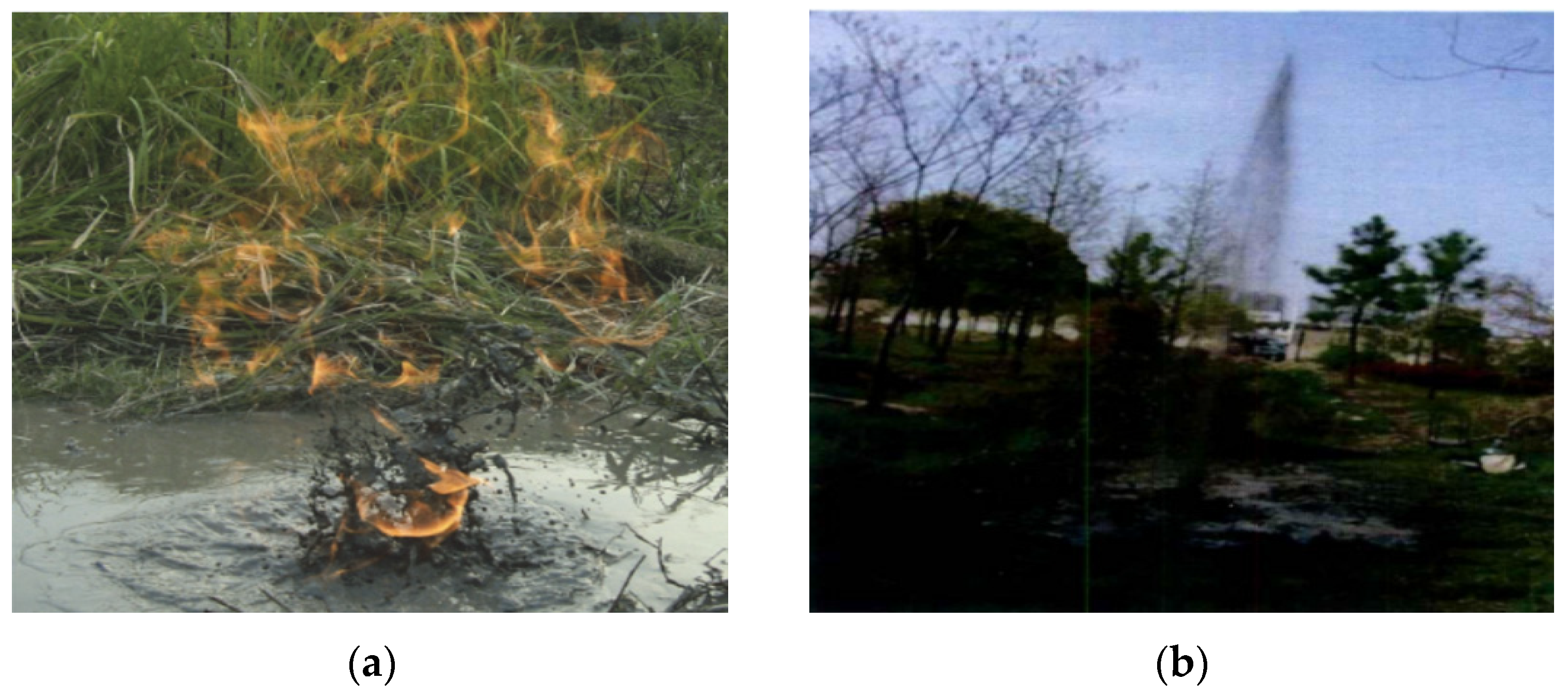
The core task of the investigation stage is to ascertain information such as the occurrence stratum, gas source type, pressure value, and distribution range of shallow gas. This necessitates guiding shallow gas from the underground gas-bearing layer to the surface via boreholes. In this process, high-pressure shallow gas is the primary cause of direct safety accidents (e.g., fire and explosion) and indirect geological hazards (e.g., stratum disturbance). Firstly, the main component of Quaternary shallow gas is methane, which can ignite when exposed to open flames and even explode at high concentrations, seriously endangering the safety of construction personnel and drilling machinery [16]. Secondly, improper operation is highly likely to lead to the uncontrolled eruption of shallow gas. The high-pressure airflow generated by the eruption will directly damage drilling equipment and, in severe cases, even threaten the stability and safety of the drilling platform (or survey vessel) [17]. Simultaneously, the ejected high-pressure airflow will also cause severe disturbance to the original stratum, altering its physical and mechanical properties and posing long-term risks to subsequent engineering construction [18]. The representative shallow disasters, as shown in Figure 1, are from the Hangzhou Metro Line 1 in China.
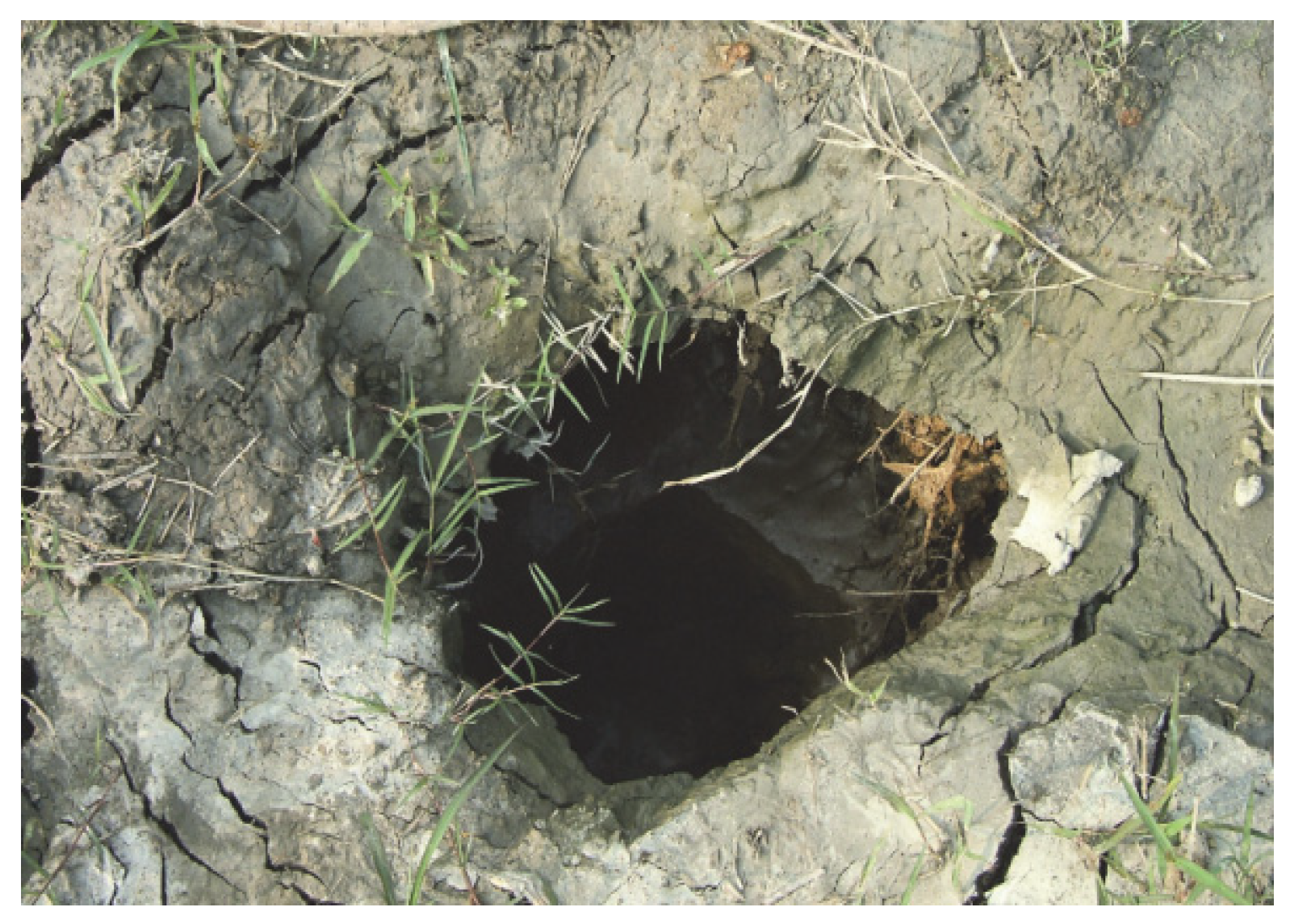
The main task of the pre-construction preparation stage is to carry out site leveling and construct temporary facilities to ensure that the project meets the requirements for formal commencement. To reduce the harm of shallow gas in subsequent construction during the pre-construction preparation stage, it is necessary to conduct pre-exhaust operations in the proven shallow gas areas. However, improper exhaust measures or uncontrolled exhaust are likely to cause severe blowouts and carry away a large amount of mud and sand, resulting in a large area of stratum subsidence. Meanwhile, it will cause large-scale and varying degrees of severe disturbance to the overlying, underlying, and surrounding strata [19]. According to the degree of disturbance, Kong et al. classified the disturbed area into severely disturbed areas, seriously disturbed areas, slightly disturbed areas, and gas-bearing layer compaction areas [18]. Figure 2 presents an on-site photo of ground collapse caused by the underground mud and sand being carried away due to uncontrolled gas release in a domestic metro project.
Urban rail transit engineering primarily encompasses supporting and load-bearing structures, traffic channel structures, and station hub structures, specifically covering projects such as bridge pile foundation engineering, foundation pit engineering, and tunnel engineering. The forms of shallow gas disasters vary across different projects. Therefore, it is necessary to describe the disaster risks of Quaternary shallow gas during the construction stage according to project categories.
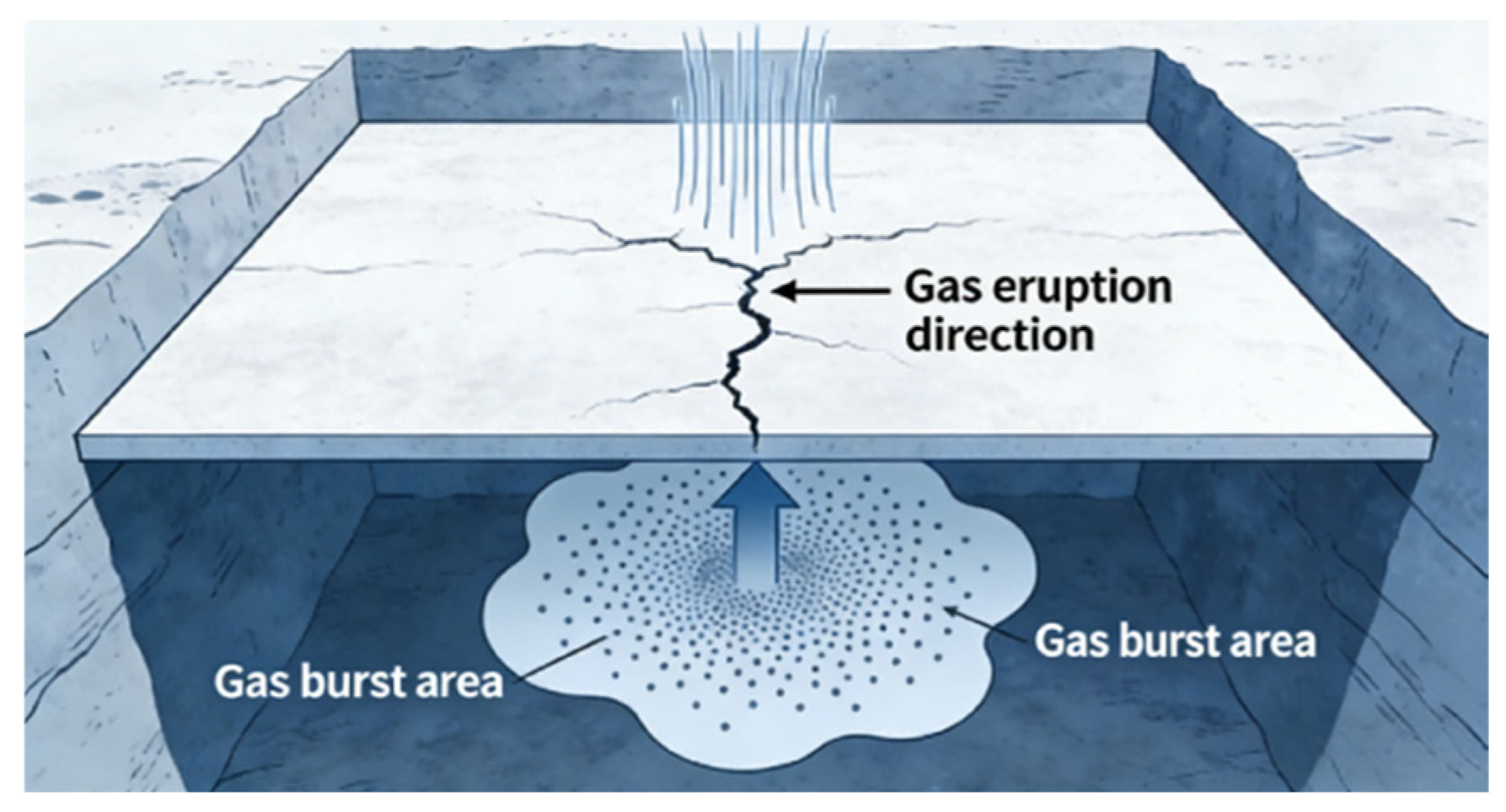
Foundation pit engineering: During the process of foundation pit excavation, the sudden reduction of overlying soil pressure due to excavation unloading disrupts the original pressure equilibrium of the gas-bearing stratum, which is likely to trigger shallow gas outbursts or cause the gas to accumulate in the foundation pit. Once such gas outbursts occur, if the gas pressure is high, the reserves are large, the burial depth is shallow, and the excavation depth of the foundation pit is great, it will create extremely hazardous working conditions. The main problem which may occur is the heave of the foundation pit bottom plate. If the construction method and emergency measures are inappropriate, it may not only lead to extensive damage to the soil at the foundation pit bottom plate and a sharp decline in bearing capacity, but also cause damage to construction machinery and even result in personnel injuries. Shallow gas continuously seeps out along the weak parts of the foundation pit bottom plate or side wall and accumulates in low-lying or poorly ventilated areas of the foundation pit. If ventilation measures are not implemented, its concentration will rise rapidly. When the concentration reaches the explosion limit of 5–15%, it will explode violently upon exposure to open fire [20]. Figure 3 is a schematic diagram of a shallow gas outburst into the foundation pit induced by the sudden reduction of overlying soil pressure due to excavation unloading.
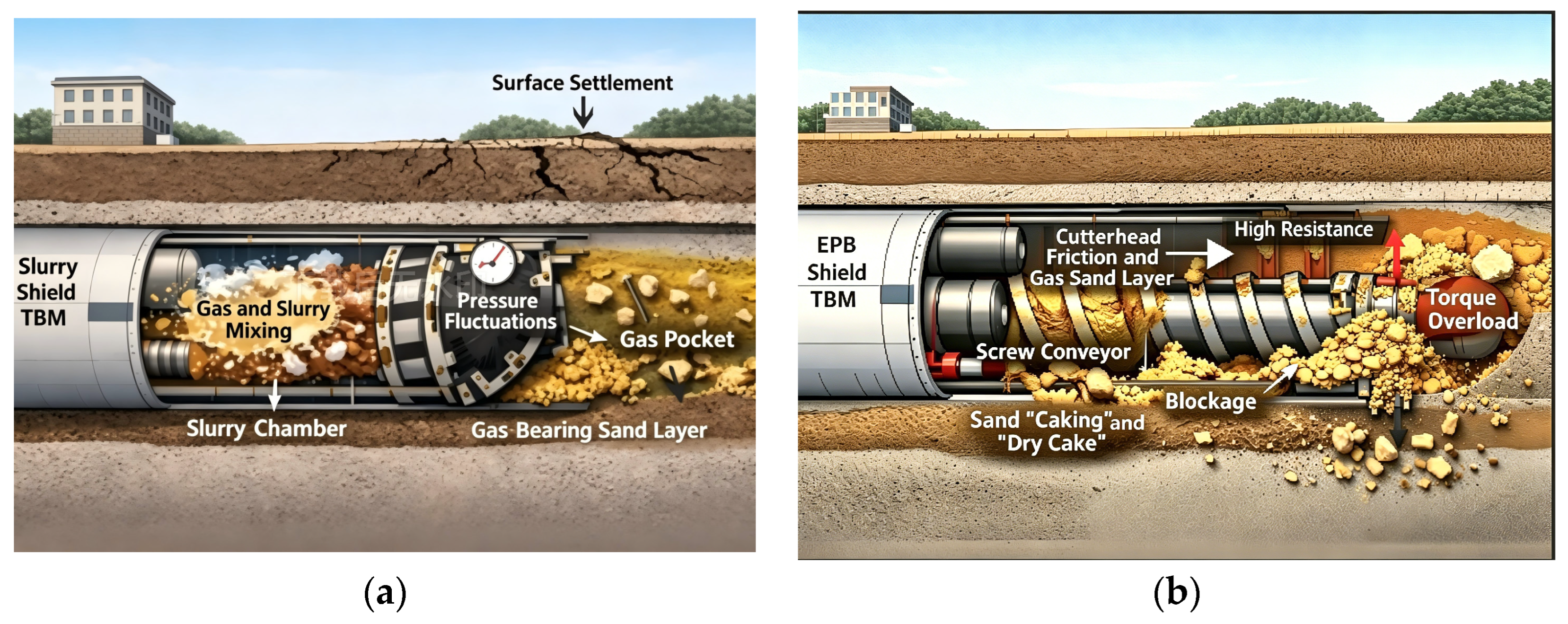
Tunnel engineering: When a slurry balance shield machine is used for tunnel driving, passing through a gas-bearing stratum is likely to cause the mixing of gas and liquid phases in the slurry cabin, resulting in pressure fluctuations and the failure of the mud film, which seriously threatens the stability of the excavation face. When an earth pressure balance shield penetrates a shallow gas-bearing sand layer, on the one hand, due to the high friction of the high-pressure shallow gas sand, rapid excavation will lead to a sharp increase and frequent fluctuations in the cutter head friction resistance and jack thrust, which is likely to cause excessive soil disturbance and ground settlement. On the other hand, the gas-bearing sand layer has poor fluidity because of its low water content and gas interfacial tension between particles. This not only increases the torque of the cutter head and the main bearing and slows down the excavation speed, but also easily induces “dry cake” or “sand cake” formations due to gas–soil separation in the screw conveyor. This destroys the uniformity and pressure balance of the soil in the sealed cabin, leading to the instability of the working face and difficulty in shield direction control [21]. As is shown in Figure 4, Figure 4a is a schematic diagram of the pressure fluctuations caused by the mixing of gas and liquid phases in the slurry cabin during the driving of the slurry shield machine, which threatens the stability of the excavation face. Figure 4b is a schematic diagram of disasters such as sand agglomeration and dry agglomeration caused by the action of shallow gas and torque overload caused by the action of shallow gas during the driving of the earth pressure balance shield machine.
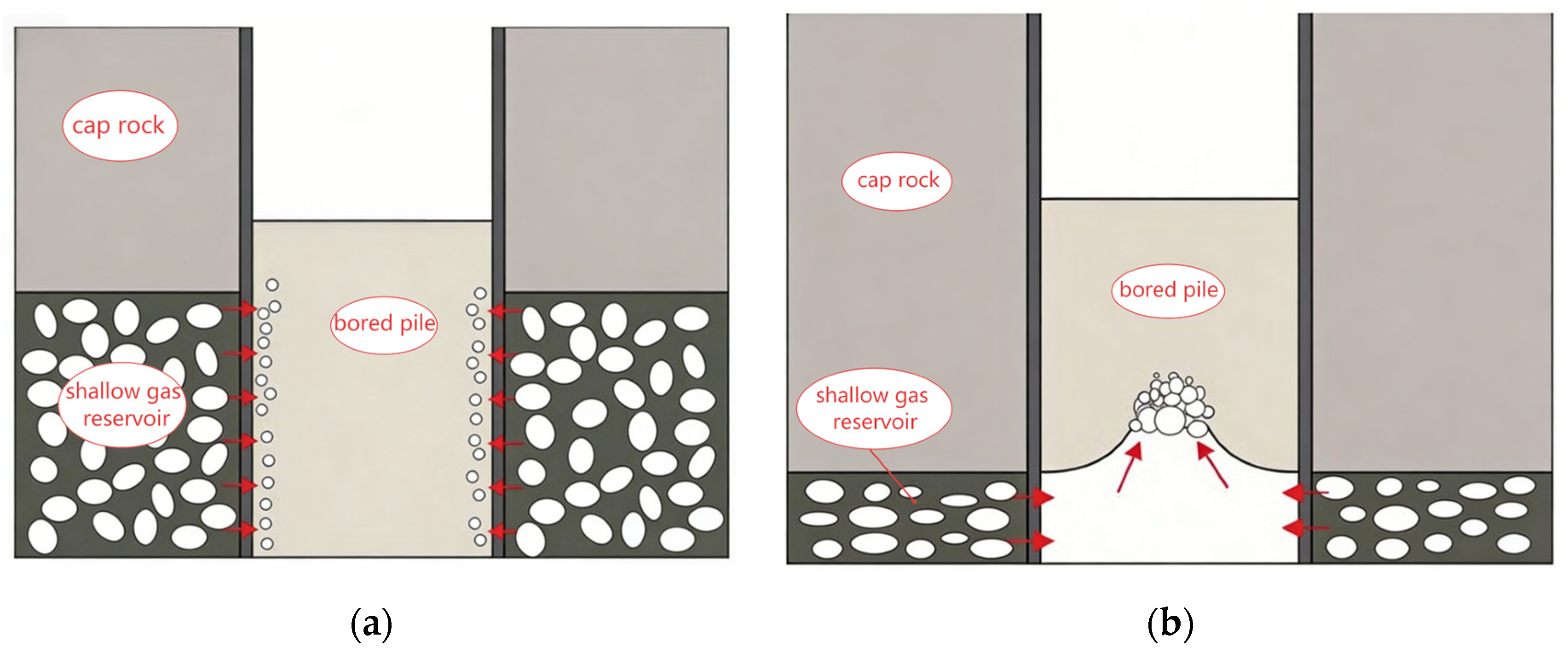
Bridge pile foundation engineering: The pile side frictional resistance is the main component of the pile foundation bearing capacity. However, when the soil around the pile moves downward relative to the pile body due to the release of shallow gas, the frictional resistance will transform into negative frictional resistance, resulting in an increase in pile foundation settlement and a decrease in the effective bearing capacity. During the hole-forming process, the airflow released by shallow gas will erode the hole wall and damage the stability of the mud cake, which is highly likely to cause hole collapse [19]. Simultaneously, the fine particles carried upward by the gas and the collapse materials caused by the instability of the hole wall accumulate at the bottom of the hole, which may lead to local “necking” or even blockage of the borehole, jamming the drilling tool or casing in the hole and causing drill-sticking accidents, which can seriously affect construction safety and progress [22]. During the pile-pouring process, if the shallow gas cannot be effectively discharged or isolated, the gas will intrude into the concrete along the inner wall of the casing, resulting in continuous bubbling of the pile body. This in turn affects the bonding between the concrete, the hole wall, and the steel bars, and forms a large number of air holes and local grooves inside the pile body, causing serious honeycomb and pockmark defects, affecting the quality of pile formation [22,23]. The failure mode is shown in Figure 5.
In the event of shallow gas leakage in the metro tunnel during the operation phase, the leaked gas will continuously accumulate in enclosed spaces such as tunnels and stations, resulting in a gradual decrease in the oxygen content in local areas, which may cause suffocation among personnel. Meanwhile, the primary component of the leaked gas is methane, a flammable gas. When its concentration reaches the explosion limit (5–15%), it is highly likely to trigger severe fires or even explosion accidents upon contact with ignition sources, such as electrical sparks and overheated equipment in the tunnel. This not only seriously endangers the lives of passengers and staff but may also lead to damage to the tunnel structure, equipment impairment, and long-term disruption of line operation [21].

3. Materials and Methods

3.1. Risk Assessment

Through a systematic review of the relevant literature, in combination with engineering investigation reports from metro projects such as those of Guangzhou Metro, Wuhan Metro, and Hangzhou Metro in China, and through consultations with experts and scholars in related fields as well as front-line engineering and technical personnel, the risk factors of geological hazards associated with Quaternary shallow gas were screened and summarized in line with the fundamental principles of “operability, accessibility, and quantifiability”. A total of fifteen experts were consulted, including university scholars, researchers from scientific research institutions, and professionals in engineering survey, design, and construction with extensive on-site experience in engineering geology, geotechnical engineering, urban rail transit investigation, petroleum geology, and coal-bed gas geology. Among these experts, a relatively high proportion held senior professional titles or corresponding industry-registered practice qualifications, and generally had many years of relevant engineering practice or research experience, thus enabling a relatively comprehensive range of perspectives from both theoretical research and engineering application.
In the process of consolidating expert opinions, a combination of expert scoring and focused group discussion was utilized to conduct a comprehensive evaluation of candidate indicators in terms of representativeness, accessibility, quantifiability, and engineering applicability. For indicators with significant divergence, consensus was achieved through multiple rounds of consultation, inductive statistical analysis, and comparative assessment. Ultimately, four first-level indicators, namely, the intuitive characteristics of shallow gas reservoir development, source rock conditions, cap rock conditions, and reservoir conditions, and fifteen second-level indicators, including shallow gas occurrence morphology, methane content per ton of soil, gas pressure, etc., were identified. Based on these, an indicator system for hazard factors related to Quaternary shallow gas geological risk was established, as shown in Table 1.

3.2. AHP Analysis for Weighting

In accordance with the established hazard factor index system for Quaternary shallow gas geological risk and in combination with the general matrix model of the AHP (Table 2), the Saaty 1–9 scaling method (Table 3) was employed to conduct pairwise comparisons of the relative importance between Si and Sj, thereby completing the construction of the judgment matrix for each layer of indicators.
After consulting relevant experts and scholars in the field as well as front-line engineering and technical personnel, the judgment matrices were obtained, as presented in Formulas (1)–(5):
A = 1 2 3 4 1 / 2 1 2 3 1 / 3 1 / 2 1 2 1 / 4 1 / 3 1 / 2 1 ,
B = 1 4 6 7 8 1 / 4 1 3 4 5 1 / 6 1 / 3 1 2 3 1 / 7 1 / 4 1 / 2 1 2 1 / 8 1 / 5 1 / 3 1 / 2 1 ,
C = 1 6 7 1 / 6 1 2 1 / 7 1 / 2 1 ,
D = 1 3 7 1 / 3 1 5 1 / 7 1 / 5 1 ,
E = 1 4 6 8 1 / 4 1 3 5 1 / 6 1 / 3 1 3 1 / 8 1 / 5 1 / 3 1 .
Based on the determined judgment matrix, the square root method was employed to compute the weight vector of each factor in the risk assessment and the maximum characteristic root. The calculation steps are as follows:
Step 1: Multiply the values of each row of the judgment matrix to obtain Mi.
M i = j = 1 n a i j ( i = 1 , 2 , n ) .
Step 2: Take the nth root of Mi to get:
W i ¯ = M i n ( i = 1 , 2 , n ) .
Step 3: Normalize = ( W 1 ¯ , W 2 ¯ , …, W n ¯ ) to get Wi, and calculate the maximum characteristic value λmax:
W i = W i ¯ i = 1 n W i ¯ ( i = 1 , 2 , n ) ,
λ m a x = i = 1 n ( A W ) i n W i ( i = 1 , 2 , n ) .
After the judgment matrix is calculated via the computational process of Formulas (6)–(9), the weight vector and the maximum characteristic root can be obtained as presented in the Table 4.
Step 4: Perform consistency verification on the judgment matrix. As the judgment matrix relies on human subjective judgment, logical contradictions may arise. Therefore, it is necessary to assess the rationality of the matrix through a consistency test:
C I = λ m a x 1 n 1 .
Simultaneously, the average random consistency index RI of the judgment matrix is introduced, and the value of RI can be acquired from Table 5. The value of CR is derived by dividing CI by RI:
C R = C I R I .
When CR ≤ 0.1, the ≤ consistency is satisfactory; when CR ≥ 0.1, the consistency is unsatisfactory, and the judgment matrix requires adjustment until CR ≤ 0.1. The final calculated results of the consistency test are presented in Table 6.
It is evident that the consistency index CR values of all judgment matrices are less than 0.1, indicating that the consistency test has been passed and the results of the AHP are reliable.
All the above calculation results are integrated into a table (Table 7) to obtain the comprehensive weight of the AHP indicators.

4. Results and Engineering Implications

Based on the AHP, the comprehensive weight ranking of hazardous factors for shallow gas geohazards in river- and lake-crossing rail transit projects is as follows: shallow gas pressure > methane content per ton of soil > occurrence morphology of shallow gas > cap rock thickness > eruption duration > actual gas layer thickness > source layer thickness > cap rock permeability coefficient > orifice flow rate > fault development > orifice methane concentration > reservoir burial depth > displacement pressure > confined water pressure > effective porosity of the reservoir. Among these, shallow gas pressure, methane content per ton of soil, and occurrence morphology of shallow gas rank as the top three risk factors. This indicates that these key factors should be prioritized during the investigation and design of such engineering projects to mitigate the risk of shallow gas geohazards.
Research reveals that the geohazard risk of shallow gas in river- and lake-crossing rail transit projects is not the result of a single geological condition, but rather the combined effect of gas source conditions, dynamic conditions, and sealing conditions. The AHP results demonstrate that the dynamic characteristics of shallow gas have the highest weight (0.4917), significantly higher than source layer conditions, cap rock conditions, and reservoir conditions. This is in line with the view that the key to determining the occurrence and impact of geohazards lies not only in the presence of shallow gas, but more importantly in its activity and release dynamics. Therefore, incorporating dynamic characteristics into the risk identification framework is more consistent with the formation and evolution patterns of shallow gas hazards, compared to evaluation methods that rely solely on static stratigraphic parameters.
Regarding the comprehensive weights of the secondary indicators, the shallow gas pressure and the methane production per ton of soil rank first and second respectively, succeeded by the occurrence form of shallow gas in third, with comprehensive weights of 0.2735, 0.2319, and 0.1113, respectively. Collectively, these three indicators account for more than 0.60. This is because the gas pressure directly determines the potential for gas outbursts in the stratum and acts as the direct driving force for disasters such as gushing and gas emission under construction disturbance. The methane production per ton of soil reflects the capacity of organic matter decomposition and gas generation in the stratum, serving as an important material foundation for the formation and continuous replenishment of shallow gas. The occurrence form of shallow gas determines its distribution pattern within the soil. Research indicates that shallow gas in Quaternary deposits mainly occurs in forms such as scattered single pores, columnar or pinnate shapes, and chimney-like shapes. Naturally, there are also thick-layered, lumpy, and cystic forms, which have been observed in regions like Hangzhou and Guangzhou [24,25]. In comparison with the former, the latter types are characterized by higher shallow gas pressure, larger gas storage capacity, greater potential hazard, and a higher degree of development of gas-generating layers. Among these, free gas is more likely to be suddenly released under engineering disturbance, resulting in the concentration of construction risks. The occurrence of shallow gas disasters generally follows the evolutionary process of “continuous gas supply–local accumulation–disturbance-induced release,” where an adequate gas source and pressure accumulation are prerequisites for engineering risk.
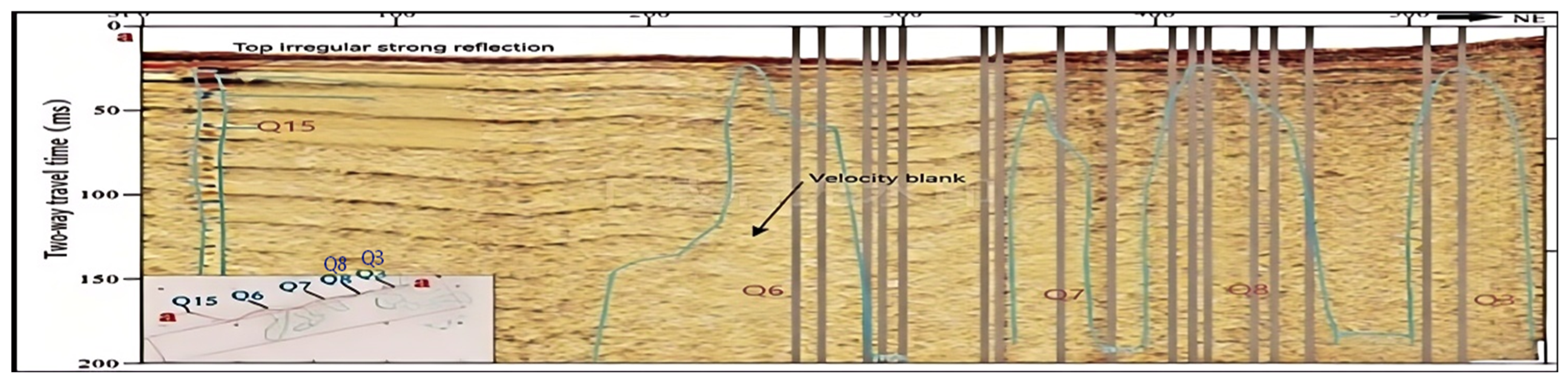
Certainly, the rationale for the relatively low weight assigned to the occurrence form of shallow gas is grounded in practical engineering considerations. The exploration of Quaternary shallow gas adheres to the principle of “conducting geophysical reconnaissance initially, followed by verification through drilling and cone penetration testing, and quantification via in situ tests and laboratory experiments”. Owing to substantial interference from electromagnetic fields, vibrations, and other factors, the accuracy of geophysical detection is relatively limited. This phenomenon was manifested in a special investigation for a subway project in Guangzhou (Figure 6): although acoustic blank zones (Q3 and Q8) were identified in the geophysical survey outcomes, no shallow gas was detected during the subsequent verification by drilling and cone penetration testing. As a result, its weight is ranked lower than that of the methane content per ton of soil.
Overall, this study clarifies the relative primary and secondary relationships among various factors in risk formation through AHP, highlighting the priority of gas pressure and gas generation capacity in river- and lake-crossing rail transit projects. Risk assessment should focus not only on “whether gas storage conditions exist” but also on “whether high-pressure release conditions and sustained gas supply capacity exist”. Risk management should shift from general shallow gas identification to a high-risk shallow gas system identification oriented toward construction safety, and from static stratigraphic description to a comprehensive evaluation model emphasizing dynamic response, process control, and graded prevention.

5. Engineering Case Validation

5.1. Engineering Geological Setting

To validate the practical applicability of the proposed framework, a metro tunnel section in Guangdong Province (YEDK57 + 480.000 to YEDK58 + 470.000) was selected as the dependent engineering case. The target area is located beneath a river channel. The riverbed is covered by mud of approximately 10–15 m thickness; beneath it is muddy soil and consolidated muddy silty clay of approximately 3–11 m thickness. These are underlain by medium-coarse sand, fine sand, and gravel strata, with moderately weathered migmatitic granite as the base.

5.2. Investigation Results

In the investigation region, a total of 64 boreholes were arranged, and all 64 boreholes were successfully completed. Gas blowout or gas emission was observed in 29 boreholes, accounting for 45.31% of the total number of boreholes. The maximum height of the gas jet exceeded the casing opening by approximately 11 m, and in certain boreholes, the duration of the gas eruption reached 1.6 h. Based on drilling site testing and static cone penetration test results, the depth of the upper boundary of the gas-bearing intervals in the blowout boreholes ranged from 19.00 m to 36.60 m. The shallow gas with engineering significance primarily occurred in muddy soil, particularly in the fine sand and medium sand interlayers within the muddy soil. The gas samples were predominantly composed of methane4, with a content ranging from 91.38% to 93.55% and an average of 92.36%, indicating a typical biogenic dry gas.
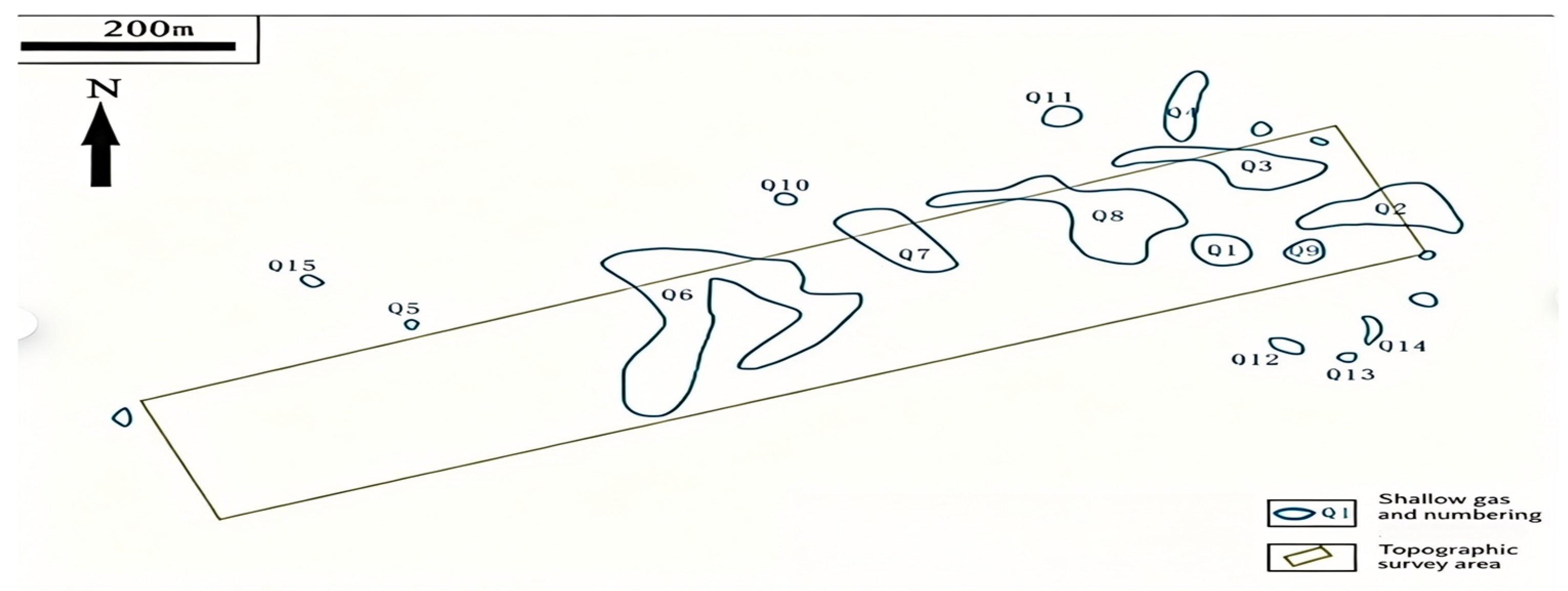
In the subsequent detailed investigation phase, the three key indicators identified through this research are applied to conduct a comprehensive and meticulous survey of the target area. Firstly, geophysical survey methods are utilized to explore the area and delineate acoustic blank zones, which are recognized as suspected shallow gas accumulation zones (Figure 7).
Subsequently, drilling and cone penetration testing techniques are employed to verify these suspected zones, and relevant indicators such as shallow gas pressure and methane content per ton of soil are obtained. Among them, the shallow gas pressure is taken as the maximum pressure from exploration boreholes within the delineated area, and the methane content per ton of soil is taken as the average value within the delineated area. The obtained data are shown in Table 8.

5.3. Case-Based Validation of the AHP Ranking

The engineering case was further used to examine whether the AHP ranking corresponds to observed investigation outcomes. The two highest weight quantitative indicators available in the case, shallow gas pressure and methane content per ton of soil, were normalized by their maximum observed values in the delineated zones. A composite verification index was calculated as I = 0.2735(P/Pmax) + 0.2319(M/Mmax), where P is shallow gas pressure and M is methane content per ton of soil. This index was not used to recalibrate the AHP weights; it was used only to test whether the AHP-prioritized factors are consistent with field phenomena.
The calculated verification index was highest in Q6, where the measured gas pressure reached 0.12 MPa and methane content reached 0.521 m3/t. This zone also showed the strongest field indication among the listed zones and was therefore classified as the priority section for controlled pressure relief. Q7 ranked second, with a gas pressure of 0.08 MPa and a methane content of 0.348 m3/t, corresponding to a medium-risk section requiring strengthened verification and local pressure-reduction measures. Q1, Q2, and Q9 had lower but non-zero pressure and methane content, and were treated as low-to-medium-risk verification zones. Q3 and Q8 had no measured gas pressure despite being acoustic blank zones in the geophysical survey; these zones were therefore downgraded after drilling and cone penetration verification.
This comparison demonstrates the practical value of the ranking. If only the geophysical acoustic blank zones were considered, Q3 and Q8 could have been overestimated. After incorporating the AHP-prioritized indicators, the decision focus shifted to Q6 and Q7, where pressure and gas-generation capacity were both more significant. The observed correspondence between high ranked-factor values, borehole gas release behavior, and the need for pressure relief supports the applicability of the AHP results for section-based hazard discrimination.
This case illustrates an enhancement in decision-making performance during the investigation phase. The ranked indicators facilitated the transformation of a descriptive suspected zone map into a graded treatment scheme. High-priority zones necessitated pressure relief and continuous monitoring; medium-risk zones required supplementary drilling and methane testing. Geophysical anomalies without pressure confirmation were set aside for observation instead of immediate intensive treatment.
Simultaneously, this case should be regarded as a verification of the applicability of the AHP framework, rather than as comprehensive statistical validation. The comparison of results from Q6, Q7, Q3, and Q8 reveals that the framework aids in differentiating confirmed high-risk zones from unconfirmed geophysical anomalies and supports graded engineering decision-making.
Nonetheless, prior to the framework being employed as a predictive model, validation across multiple projects using independent construction outcomes remains requisite.

5.4. Engineering Prevention and Control Measures

To reduce the hazard of high-pressure shallow gas to subsequent construction, different response measures should be adopted for sections with different engineering hazard levels when metro tunnels pass through Quaternary ultra-shallow gas-enriched areas.
First, exploration and construction personnel should receive dedicated safety training to understand the hazard mechanisms of ultra-shallow gas. During investigation, special attention should be paid to shallow gas pressure at borehole openings so that personnel can be evacuated in time when abnormal release is detected.
Secondly, for shallow high-pressure gas zones with significant or relatively high risks, to alleviate the hazards of high-pressure shallow gas to subsequent construction, pre-construction gas emission work should be conducted approximately 3 to 6 months in advance. This involves pre-designing advanced gas release wells to guide the slow and safe release of shallow gas in a controlled fashion, thus effectively reducing formation gas pressure and geological risks before construction. The fundamental principle is to avoid disturbing the formation structure and prevent the leakage of sand-laden gas. Generally, a wellhead pressure below 0.05 MPa can be used as the termination criterion to ensure a stable and controllable pressure reduction process. The layout of pressure relief wells should be based on detailed preliminary investigation results, integrating key risk factor data such as shallow gas pressure, methane content per ton of soil, and occurrence patterns, to scientifically determine well locations, depths, spacing, and release rates, thereby establishing a systematic and efficient pressure relief network. This technology has proven its effectiveness in the risk prevention and control practices in the Ningming Basin [19].
A pre-construction controlled gas release network was established 3 to 6 months prior to the project, which decreased the borehole pressure to below 0.05 MPa, thereby effectively alleviating the risk of gas outbursts during the subsequent excavation process.


6. Discussion: Robustness, Comparison with Previous Studies, and Uncertainty and Sensitivity

6.1. Comparison with Previous Studies

Previous research on tunnel gas risks has predominantly concentrated on bedrock tunnels, coal measure strata, ventilation control, gas explosion prevention, or post-construction risk management. In comparison, this study centers on Quaternary unconsolidated shallow gas strata during the investigation phase of urban rail transit projects. It emphasizes factors such as shallow gas pressure, gas-generation capacity, occurrence form, and detectability at the investigation stage, rather than simply focusing on the presence of gas or general ventilation risk.
Different from traditional gas tunnel risk assessments, the proposed framework transforms the specific features of Quaternary shallow gas, including shallow burial depth, discontinuous gas-bearing lenses, weakly consolidated sediments, cap rock sealing, and uncertainty at the investigation stage, into a hierarchical indicator system. As a result, the obtained rankings function as a decision support tool for prioritizing investigations, planning verification, and designing pressure-relief measures, rather than serving as a universal model for predicting gas disasters. A comparison with previous international studies is summarized in Table 9.

6.2. Engineering Meaning of the Top-Ranked Indicators

The dominance of shallow gas pressure indicates that the direct driving force of gas release is more critical than the mere existence of gas-bearing strata. Methane yield per ton of soil represents the potential for continuous gas supply, while occurrence form controls whether gas is diffusely distributed or locally accumulated. These three factors jointly describe the process of “gas generation–accumulation–disturbance-induced release”, which is the central mechanism of shallow gas hazards in metro investigation and construction.

6.3. Uncertainty and Sensitivity

Uncertainty remains in both the input data and the weighting process. Field measurements of gas pressure and methane yield may be affected by borehole sealing quality, test duration, release disturbance, and spatial heterogeneity of gas-bearing lenses. Expert judgments may also vary with professional background and project experience. In addition, several middle-ranked indicators have close weights, and their order may change if pairwise judgments vary moderately. Therefore, future studies should adjust the judgment matrix elements within reasonable ranges and examine whether the top-ranked indicators remain stable.

6.4. Applicability Boundary

The present research framework is solely applicable to the preliminary risk ranking work in the investigation stage of shallow gas hazards within Quaternary loose sedimentary layers for metro engineering projects traversing rivers and lakes. In the case of shallow gas in offshore regions, it should merely serve as a reference. Regarding natural gas hazards in bedrock tunnels, they necessitate re-evaluation owing to their distinct disaster mechanisms.

7. Conclusions

(1)
During the construction of urban rail transit engineering, attention should be paid to the disaster effects of Quaternary shallow gas, including a series of chain engineering disasters such as fire, suffocation, explosion, scouring, hollowing, and the disturbance of the original stratum caused by the eruption of high-pressure shallow gas, as well as the resulting uneven stratum subsidence, reduction in pile foundation bearing capacity, hole collapse, stuck drill, and structural instability.
(2)
An AHP-based indicator framework containing four first-level indicators and fifteen second-level indicators was established for the investigation stage assessment of shallow gas hazards in rail transit engineering. The screening criteria, expert consultation process, and consistency testing were made explicit to improve methodological transparency. The results indicate that shallow gas pressure, methane content per ton of soil, and shallow gas occurrence form are the three dominant disaster-inducing factors.
(3)
The engineering case from the Guangdong metro tunnel demonstrates that the framework can be translated into section-based evaluation in practice. By comparing AHP-prioritized indicators with borehole gas release observations, the method identified Q6 and Q7 as the sections requiring greater engineering attention, while geophysical anomalies without pressure confirmation were downgraded after verification. This result shows that the ranking can improve the consistency between investigation evidence and graded mitigation decisions.
(4)
In the engineering investigation stage, it is proposed to adopt a comprehensive and multi-scale investigation technical system that combines “geophysical general survey first, verification by drilling and static cone penetration, and quantification through in situ tests and laboratory tests” to achieve refined detection of Quaternary shallow gas. On the basis of refined detection, the active pressure reduction technology of controlled gas release is employed to mitigate the harm of high-pressure shallow gas to subsequent engineering construction. Future research should strengthen the framework through sensitivity analysis, multi-project validation, and comparison with alternative quantitative assessment methods.

Author Contributions

N.W.: Investigation, Writing—original draft preparation. Y.W.: Methodology, Conceptualization, Writing—review and editing, Supervision. L.C.: Methodology. X.W.: Investigation. All authors have read and agreed to the published version of the manuscript.

Funding

This research was funded by the Joint Fund Project of the National Natural Science Foundation of China: Refined Detection Methods, Disaster-Causing Mechanisms, and Risk Prevention and Control of Quaternary Shallow Gas in River-Crossing and Lake-Crossing Metro Engineering, grant number U24A20617; and by the Major Instrumentation Project of the National Natural Science Foundation of China: Experimental Apparatus for Simulating Gas Migration and Induced Disasters in Deep-Sea Geomaterials, grant number 52127815.

Institutional Review Board Statement

Not applicable.

Informed Consent Statement

Not applicable.

Data Availability Statement

The raw data supporting the conclusions of this article will be made available by the authors on request.

Acknowledgments

We acknowledge the funding support from the National Natural Science Foundation of China (Grant No. U24A20617; Grant No. 52127815).

Conflicts of Interest

The authors declare no conflicts of interest.

References

  1. He, C.Y.; Huang, F. Field and numerical studies of subsidence induced by double—Line shield tunneling in gas—Bearing strata of Hangzhou metro. Bull. Eng. Geol. Environ. 2025, 84, 355. [Google Scholar] [CrossRef]
  2. Zhao, H.; Chen, J.H.; Chen, K.X.; Cai, W.Q.; Cen, Y.R. Case analysis of underground shallow harmful gas release in metro shield interval in soft soil area. Ground Improv. 2024, 6, 603–610. [Google Scholar] [CrossRef]
  3. Guo, A.G.; Kong, L.W.; Shen, L.C.; Zhang, J.R.; Wang, Y.; Qin, J.S.; Huang, X.F. Study on prevention and control measures of shallow gas hazards in metro construction. Rock Soil Mech. 2013, 34, 769–775. [Google Scholar] [CrossRef]
  4. Liu, Z.Y.; Han, Z.; Su, B.; Ma, Y.F.; Li, Y.G. Characteristics of shallow harmful gases in metro engineering and advanced exhaust measures. Chin. J. Undergr. Space Eng. 2019, 15, 479–485. [Google Scholar] [CrossRef]
  5. Guo, A.G.; Shen, L.C.; Zhang, J.R.; Qin, J.S.; Huang, X.F.; Wang, Y. Analysis of influence mode of shallow gas on Hangzhou metro construction. J. Railw. Eng. Soc. 2010, 27, 78–81. [Google Scholar]
  6. Duan, X.Y.; Yin, P.; Xie, Y.Q.; Cao, K.; Qiu, J.D.; Li, M.N.; Li, X. Research progress of shallow gas survey in China’s offshore areas. Mar. Geol. Quat. Geol. 2024, 44, 183–196. [Google Scholar] [CrossRef]
  7. Kortekaas, S.; Sens, E.; Sarata, B. Shallow gas hazard linked to worldwide delta environments. In Frontiers in Offshore Geotechnics II; CRC Press: Boca Raton, FL, USA, 2010; pp. 221–225. [Google Scholar] [CrossRef]
  8. Roy, S.; Senger, K.; Hovland, M.; Römer, M.; Braathen, A. Geological controls on shallow gas distribution and seafloor seepage in an Arctic fjord of Spitsbergen, Norway. Mar. Pet. Geol. 2019, 107, 237–254. [Google Scholar] [CrossRef]
  9. Zhang, T.W.; Pang, Z.Y.; Zhao, Y.H.; Dai, S.H. Simulation study on active blowout of deepwater shallow gas. J. Eng. Geol. 2024, 25, 44–56. [Google Scholar] [CrossRef]
  10. Buckley, F. Shallow Gas: How to Better Map the Risk? GeoExpro: Oslo, Norway, 2025. [Google Scholar]
  11. Bakhshandeh Amnieh, H.; Zamzam, M.S.; Mozdianfard, M.R. Geological Hazards analysis in Urban Tunneling by EPB Machine (Case study: Tehran subway line 7 tunnel). Int. J. Min. Geo-Eng. 2016, 50, 23–36. [Google Scholar]
  12. Ayhan, M.; Aydın, D.; İmamoğlu, M.Ş.; Çoğalan, M.; Karakuş, A. Investigation of a methane flare during the excavation of the Silvan irrigation tunnel, Turkey. Bull. Eng. Geol. Environ. 2019, 78, 2641–2652. [Google Scholar] [CrossRef]
  13. Wang, H.; Zhao, S.; Chen, X.; Wang, J.; Zhou, Y.M. Statistical analysis and influencing factors of tunnel gas accidents in China. Chin. J. Saf. Sci. 2021, 31, 34–40. [Google Scholar] [CrossRef]
  14. Wang, Z.; Lei, K.; Yang, S.; Xiao, B.; Li, C.X.; Yin, Y.X.; Huang, Y.L. Safety risk assessment of gas tunnel construction based on fuzzy analytic hierarchy process. J. Wuhan Univ. Eng. 2019, 41, 573–579. [Google Scholar]
  15. Yun, F.; Huang, F.; An, J.; Huang, X.L.; Zhang, P.H.; Liu, P.P.; Liu, Y. Fuzzy hierarchical evaluation of construction risks for gas tunnels crossing structural coal seams. J. Saf. Environ. 2023, 23, 3447–3454. [Google Scholar]
  16. Cao, B.; Yin, Q.; Guo, Y.; Yang, J.; Zhang, L.; Wang, Z.; Tyagi, M.; Sun, T.; Zhou, X. Field data analysis and risk assessment of shallow gas hazards based on neural networks during industrial deep-water drilling. Reliab. Eng. Syst. Saf. 2023, 232, 109079. [Google Scholar] [CrossRef]
  17. Ren, S.; Liu, Y.; Huang, F.; Zhang, P. Quantitative classification of shallow gas blowout during offshore drilling process. J. Pet. Environ. Biotechnol. 2019, 10, 1–6. [Google Scholar]
  18. Kong, L.W.; Guo, A.G.; Chen, S.Y.; Huang, Y.Q. Analysis of formation damage impact caused by shallow natural gas blowout and hazard to pile foundation engineering. J. Disaster Prev. Mitig. Eng. 2004, 24, 375–381. [Google Scholar] [CrossRef]
  19. Chang, Y. Study on Geological Occurrence Characteristics of Shallow Gas and Engineering Advanced Exhaust Measures in the Bridge Site Area of Nali Bridge. Master’s Thesis, Northwest University, Xi’an, China, 2022. [Google Scholar] [CrossRef]
  20. Ding, Z.; He, C.Y.; Zhang, X.; Zhang, W.H.; Wu, S. Research prospect on the influence and control technology of shield construction in gas-bearing soil. Mod. Tunn. Technol. 2021, 58, 9–20. [Google Scholar] [CrossRef]
  21. Wang, Y. Study on Engineering Effect Evolution Characteristics and Disaster Mechanism of Shallow Gas-Bearing Sand. Ph.D. Thesis, Graduate School of the Chinese Academy of Sciences (Institute of Rock and Soil Mechanics, CAS), Wuhan, China, 2009. [Google Scholar]
  22. Yu, G.M.; Gu, C.W.; Song, Y.; Zhao, Y.H.; Li, L.; Liu, H.X.; Du, W.; Zhao, S.W. Risk assessment and control technology of deepwater shallow gas drilling. Oil Drill. Prod. Technol. 2022, 44, 297–301. [Google Scholar] [CrossRef]
  23. Zhang, F.; Jia, P.F.; Wang, Y.; Chen, K.W. Geological occurrence characteristics and engineering hazards of ultra-shallow gas in Ningming Basin. J. Eng. Geol. 2023, 31, 1105–1115. [Google Scholar] [CrossRef]
  24. Zhang, X.; Lin, C.M. Characteristics and accumulation model of the late Quaternary shallow biogenic gas in the modern Changjiang delta area, eastern China. Pet. Sci. 2017, 14, 261–275. [Google Scholar] [CrossRef]
  25. Hu, J.; Cai, C.; Liu, H.; Hu, B.; Dai, S.X. Study on the distribution characteristics of shallow gas in the submarine pipeline routing area of Hangzhou Bay. Mar. Oil 2024, 44, 25–29. [Google Scholar] [CrossRef]
Figure 1. Types of shallow gas disasters during the investigation stage of Hangzhou Metro Line 1. (a) Illustrates the eruption and combustion of shallow gas at a survey location of Hangzhou Metro Line 1. (b) Portrays the intense eruption of high-pressure shallow gas along the survey route, with the eruption capable of reaching a height of several meters. Source: engineering photographs compiled by the authors from the project investigation archive and reproduced here with attribution.
Applsci 16 05182 g001
Figure 2. Shallow gas blowout carrying sediment caused by ground subsidence. Source: engineering photograph from a metro project archive, reproduced by the authors with attribution.
Applsci 16 05182 g002
Figure 3. Schematic diagram of shallow gas eruption in a foundation pit. This schematic was redrawn by the authors based on the hazard mechanisms summarized from the literature and engineering observations; it is not reproduced from a single prior publication.
Applsci 16 05182 g003
Figure 4. Schematic diagrams of different types of shallow gas disasters in tunnel engineering. (a) Schematic diagram of shallow gas disasters in slurry shield tunneling. (b) Schematic diagram of shallow gas disasters in earth pressure shield tunneling. Both schematics were prepared by the authors based on the mechanisms summarized in the cited literature.
Applsci 16 05182 g004
Figure 5. Types of shallow buried gas invasion into the bored pile foundation. (a) Schematic diagram of diffusive invasion; (b) schematic diagram of channelized invasion. Figure reproduced from reference [23].
Applsci 16 05182 g005
Figure 6. Seismic engineering profile of a subway project in Guangzhou: Q3, Q6, Q7, Q8, and Q15 in the figure are all acoustic blank zones. Source: engineering photograph from a metro project archive, reproduced by the authors with attribution.
Applsci 16 05182 g006
Figure 7. Map of shallow gas delineation within the survey area. Source: engineering photograph from a metro project archive, reproduced by the authors with attribution.
Applsci 16 05182 g007
Table 1. Indicator system for hazardous factors of Quaternary shallow gas geological risks.
Target LayerPrimary IndicatorSecondary Indicator
Assessment of Key Geological Risk Factors for Shallow Gas in Rail Transit (A)Shallow gas dynamic characteristics (B)Shallow gas pressure (B1)
Shallow gas occurrence form (B2)
Eruption duration (B3)
Orifice flow rate (B4)
Orifice methane concentration (B5)
Shallow gas source layer conditions (C)Methane yield per ton of soil (C1)
Gas source layer thickness (C2)
Fault development (C3)
Shallow gas cap rock conditions (D)Cap rock thickness (D1)
Cap rock permeability coefficient (D2)
Displacement pressure (D3)
Shallow gas reservoir conditions (E)Actual gas layer thickness (E1)
Reservoir burial depth (E2)
Confined water pressure (E3)
Effective porosity of reservoir (E4)
Table 2. General form of judgment matrix.
S1S2Sn
S1s11s12s1n
S2s21s22s2n
Snsn1sn2snn
Table 3. Saaty 1–9 scaling method.
ScalingDefinition
1Factor Si is equally important as Sj
3Factor Si is slightly more important than Sj
5Factor Si is obviously more important than Sj
7Factor Si is much more important than Sj
9Factor Si is fundamentally more important than Sj
2, 4, 6, 8Take the middle value of adjacent judgments
ReciprocalIf the value of Si compared with Sj is Sij, then Sji = 1/Sij
Table 4. Weight vector and maximum characteristic root table.
Judgment MatrixWeight VectorWeight Vector λmax
A(0.4917, 0.306, 0.1246, 0.0777)4.0463
B(0.5563, 0.2264, 0.1059, 0.0674, 0.0439)5.161
C(0.7579, 0.1522, 0.0899)3.03
D(0.65, 0.2784, 0.0715)3.0537
E(0.6147, 0.2298, 0.1058, 0.0498)4.1483
Table 5. Mean random consistency index of judgment matrix.
Index123456
RI000.580.901.121.24
Table 6. Consistency test results.
Judgment MatrixCIRICR
A0.015440.900.0171
B0.040261.120.0359
C0.014980.580.0258
D0.026830.580.0463
E0.049430.900.0549
Table 7. Weights of hazard factor indicators for shallow gas geological disasters.
First-Level IndicatorWeightSecond-Level IndicatorWeightComprehensive Weight
Shallow gas dynamic characteristics0.4917Shallow gas pressure0.55630.2735
Shallow gas occurrence form0.22640.1113
Eruption duration0.10590.0521
Orifice flow rate0.06740.0331
Orifice methane concentration0.04390.0216
Shallow gas source layer conditions0.3060Methane yield per ton of soil0.75790.2319
Gas source layer thickness0.15220.0466
Fault development0.08990.0275
Shallow gas cap rock conditions0.1246Cap rock thickness0.65000.0810
Cap rock permeability coefficient0.27840.0347
Displacement pressure0.07150.0089
Shallow gas reservoir conditions0.0777Actual gas layer thickness0.61470.0478
Reservoir burial depth0.22980.0179
Confined water pressure0.10580.0082
Effective porosity of reservoir0.04980.0039
Table 8. Measured values of key indicators in delineated shallow gas zones.
NumberQ1Q2Q3Q6Q7Q8Q9
Shallow Gas Pressure
(MPa)
0.020.0300.120.0800.03
Methane Content per Ton of Soil (m3/t)0.1230.1230.1230.5210.3480.1230.123
Table 9. Comparison of this study with previous international studies.
StudyGeological SettingRisk Evaluation MethodInvestigation Stage FocusRelevance to Quaternary Shallow Gas
Silvan Water Diversion Tunnel, TurkeyBedrock, coal measureCase study + descriptiveConstructionLow
Tehran Metro Line 7Hard rockAHP + expert judgmentConstructionMedium
International gas tunnel studiesCoal tunnels, bedrockGray relational, Bayesian, MLVariousLow to medium
This studyQuaternary shallow buried, unconsolidatedAHP + hierarchical indicator systemInvestigation stageHigh
Disclaimer/Publisher’s Note: The statements, opinions and data contained in all publications are solely those of the individual author(s) and contributor(s) and not of MDPI and/or the editor(s). MDPI and/or the editor(s) disclaim responsibility for any injury to people or property resulting from any ideas, methods, instructions or products referred to in the content.