Article

The Application of Thoracic Impedance-Based End-Tidal Carbon Dioxide Estimate in Cardiopulmonary Resuscitation: A Rat Study

1
School of Disaster and Emergency Medicine, Tianjin University, Tianjin 300072, China
2
Wenzhou Safety (Emergency) Institute of Tianjin University, Tianjin University, Wenzhou 325000, China
*
Author to whom correspondence should be addressed.
These authors contributed equally to this work.
Appl. Sci. 2026, 16(10), 5040; https://doi.org/10.3390/app16105040 (registering DOI)
Submission received: 8 April 2026 / Revised: 14 May 2026 / Accepted: 14 May 2026 / Published: 19 May 2026

Abstract

Thoracic impedance (TI) correlates with end-tidal carbon dioxide (ETCO2) in large animals. This pilot study in Sprague-Dawley rats investigated whether TI can estimate ETCO2 and dynamically guide compression depth. A dataset of TI and ETCO2 measurements in rats was established to analyze the correlation between the two and construct a regression model. TI peak was strongly and positively correlated with ETCO2 (r = 0.78, p < 0.001) and exhibited a progressive decay during prolonged compression. This pilot study demonstrated the feasibility of using TI-estimated ETCO2 to guide compression depth in a rat model. The TI-guided strategy maintained ETCO2 closer to the target value of 20 mmHg; however, no significant differences were observed between groups in ROSC rates, survival rates, blood gas parameters, or histopathological damage. Larger-scale studies are needed to evaluate clinical efficacy.

1. Introduction

Cardiac arrest (CA) is a life-threatening emergency. Without timely intervention, it rapidly progresses to irreversible multiple organ failure, particularly in oxygen-sensitive organs such as the brain and heart [1]. Out-of-hospital cardiac arrest (OHCA) represents a significant public health challenge, with a global average adult incidence of 55 cases per 100,000 individuals [2]. Yet survival remains dismal: the global average survival rate is only 7% [1], 8% in Europe [3], and 10.4% in the United States even after system-wide optimization of resuscitation care [4].
The American Heart Association (AHA) guidelines for cardiopulmonary resuscitation (CPR) and cardiovascular emergency care state that CPR is a critical intervention for treating CA patients [5]. To improve resuscitation quality, some studies have suggested using feedback devices during CPR [6,7]. In 2015, the AHA guidelines permitted the use of visual and auditory feedback devices during CPR in an effort to optimize the effectiveness of resuscitation in real time; these devices can be used to guide chest compressions and correct compression depth and rate [8]. Feedback on chest compressions can be obtained using accelerometers or force sensors; however, these sensors have not yet been widely adopted, particularly outside of research settings [9]. Beyond mechanical feedback, physiology-guided resuscitation—in which coronary perfusion pressure (CPP), diastolic blood pressure (DBP), and end-tidal carbon dioxide (ETCO2) are monitored in real time to titrate compression quality—has gained considerable attention [10,11]. Incorporating individual physiological responses into the resuscitation protocol may improve rates of return of spontaneous circulation (ROSC) and survival [12,13]. Nevertheless, invasive hemodynamic monitoring is impractical during ongoing chest compressions in OHCA because it requires specialized personnel, stringent surgical conditions, and—critically—time that delays the start of monitoring and may interrupt CPR [14].
ETCO2 is widely regarded as a key physiological parameter during resuscitation. It predicts ROSC [15,16], and the 2025 AHA guidelines affirm that ETCO2 ≥ 20 mmHg is a predictor of ROSC [17]. Moreover, ETCO2 is sensitive to compression quality: each 10 mm increase in depth raises ETCO2 by approximately 1.5–2.5 mmHg [18,19], allowing it to serve as a feedback indicator of resuscitation effectiveness. Unfortunately, ETCO2 monitoring requires endotracheal intubation and mechanical ventilation, procedures that demand skilled personnel and introduce a setup delay of roughly 4 min after the rapid response team arrives [20]. Consequently, ETCO2 feedback is often unavailable during the critical early phase of out-of-hospital resuscitation.
A non-invasive, rapidly deployable alternative that correlates with ETCO2 and hemodynamic indices would therefore be valuable. Thoracic impedance (TI)—electrical bioimpedance acquired through defibrillation pads—may fulfill this role. Previous work has demonstrated strong correlations between TI amplitude and cardiac output (CO) [21], CPP [22], and ETCO2 [21,23,24], as well as between TI and compression depth [22,23,24]. As for TI itself, since most basic defibrillators can acquire TI signals via defibrillation pads, this may make it one of the earliest signals available in OHCA [25]. Therefore, TI has the potential to serve as an alternative indicator for monitoring the quality of chest compressions and estimating physiological parameters during CPR (particularly ETCO2, which is relatively easy to obtain). This noninvasive measurement may facilitate the development of new CPR feedback algorithms [21]. However, current research remains focused on investigating the relationship between TI and physiological parameters, and has not yet succeeded in transforming TI from a monitoring parameter into a feedback control tool.
Previous studies have found a strong intra-animal correlation between TI and ETCO2 in porcine models [23]. We aim to evaluate whether a similar relationship exists in rats, another commonly used animal model for CPR, and further investigate whether TI gradually decreases over time during compression. We chose a rat CPR model because it is well established, cost-effective, and provides a reproducible platform for testing feedback algorithms. Finally, this study aimed to establish a proof-of-concept framework for using TI as a feedback control variable to regulate compression depth.

2. Materials and Methods

2.1. Experimental Overview and Animal Allocation

We used male Sprague-Dawley rats (300 ± 20 g) obtained from Beijing Huafukang Biotechnology Co., Ltd. (Beijing, China). Animals were housed in a clean-grade facility at 25 °C under a 12 h light/dark cycle (2–3 rats per cage) with ad libitum access to food and water. Following a 1-week acclimatization period, rats were fasted for 12 h before the experiment but allowed free access to water.
The rat experimental protocol was approved by the Tianjin University Ethics Committee (Approval No.: TJUE2025-A-S-064). The protocol was completed and the data reported in accordance with the ARRIVE guidelines.
This study consisted of three phases using a total of 44 male Sprague-Dawley rats. The phases were designed to progressively establish the TI-ETCO2 relationship, characterize signal behavior, and validate the control strategy. Table 1 summarizes the purpose, criteria, and animal allocation for each phase.

2.2. Dataset Creation

TI was measured using a custom-built bioimpedance acquisition circuit built around the MAX30009 analog front-end (Analog Devices, Inc., Wilmington, MA, USA). A four-electrode (tetrapolar) configuration was employed, with a constant-current excitation of 1.28 mA at a frequency of 50 kHz applied through the outer current-injection electrodes, while voltage was sensed via the inner pair of electrodes to minimize contact resistance errors [26,27,28]. ETCO2 was measured using a small animal monitor (Vet12, Shenzhen Mindray Animal Medical Technology Co., Ltd., Shenzhen, China).
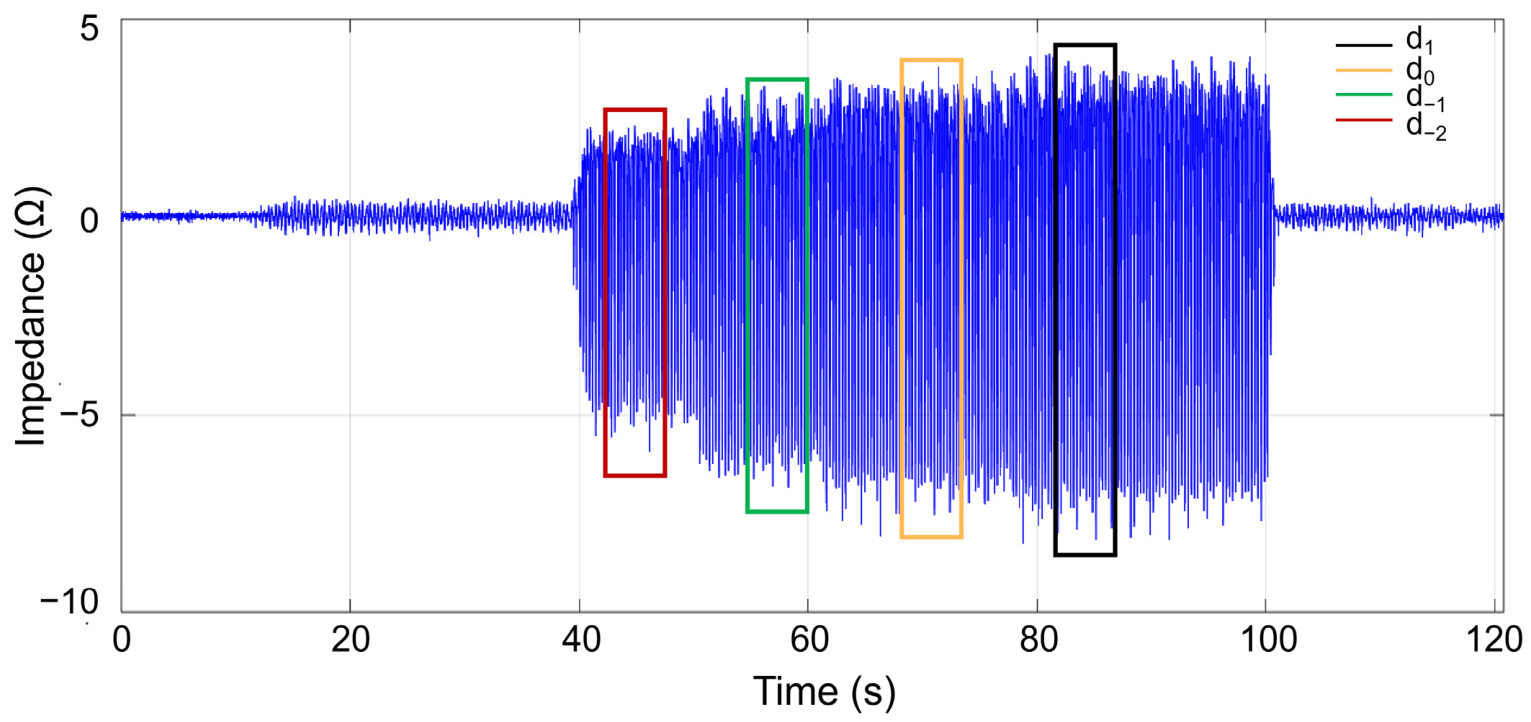
We set four compression depths—d−2, d−1, d0, and d1—using one-third of each rat’s anteroposterior thoracic diameter (d0) as the reference [29,30,31]. Specifically, d-−2 is 2 mm shallower than d0, d−1 is 1 mm shallower than d0, and d1 is 1 mm deeper than d0. Chest compressions were performed sequentially at depths d−2, d−1, d0, and d1, with each depth maintained for 10 s, resulting in a total of 40 s of data acquisition. We extracted 5 s segments from the middle portions of the TI signals at each of the four compression depths (Figure 1) and computed the mean TI value. ETCO2 was recorded manually at the midpoint of each 10 s compression-depth interval.

2.3. Processing and Utilization of TI

We applied a sliding window peak detection algorithm [32] to identify peaks or troughs in the TI within each window (using peaks as an example here). Let the amplitude of the i-th peak be PAi, and let N be the total number of peaks detected within the window. The mean peak PA is computed as:
P A = i N P A i N
In our study, the window size was fixed at 128 points, and the TI sampling rate was 100 Hz. Since the compression rate was 210 bpm, the window could accommodate four TI peaks. We averaged four consecutive TI peaks to generate a smoothed PA.
Compression rate was estimated from the same peak sequence. Let P1 and PN represent the sample indices of the first and last peaks, respectively, and Fs the sampling frequency. The rate in beats per minute (bpm) is then given by:
b p m = ( N 1 ) × F s × 60 P N P 1

2.4. Analysis of TI Characteristics During 5 Min Compression

Lee et al. demonstrated that mechanical impedance decreased significantly with repeated chest compressions in a porcine model, attributing this attenuation to decreased elastic modulus of the thoracic structure, possibly involving partial rib fracture or joint damage [33]. However, there are very few high-quality studies reporting whether electrical impedance decreases during chest compressions. Therefore, we decided to investigate this issue.
Six rats were included in the study, and all six completed the 5 min continuous pressing test without any dropouts. The compression depth was set at one-third of the anteroposterior diameter of the rat’s thorax and remained constant throughout the compression process, with TI signals continuously recorded. The analysis period spanned 5 min following the start of compression. To quantify the trend of TI over time, the absolute error (AE) was defined as:
A E = P 1 P N
where P1 and PN denote the first and final TI peaks, respectively.
Define the relative error (RE) as:
R E = A E P 1 × 100 %
Given the small sample size (n = 6) and paired design (repeated measurements within the same animal), we compared initial and terminal TI values using the exact paired-samples Wilcoxon signed-rank test (two-tailed α = 0.05). We summarized decay magnitude by computing the median absolute decay, median relative decay rate, and their corresponding interquartile ranges (IQR). The 95% confidence interval (CI) for the median absolute decay and median relative decay rate was estimated using the bias-corrected and accelerated (BCa) bootstrap method with 10,000 resamples. The statistical analyses were performed using MATLAB R2023b (MathWorks, Natick, MA, USA).

2.5. An Investigation into the Relationship Between TI and ETCO2

We first assessed the correlation between TI and ETCO2 using Pearson correlation analysis. We then fitted a simple linear regression model to quantify their association [34]. This method assumes linearity, independent residuals, normality, and homoscedasticity [35]. The model was specified as: E T C O 2   =   β 0   +   β 1   × T I +   ε . Where β 0 denotes the intercept, β 1 the slope, and ε the random error term [36]. The ordinary least squares (OLS) method was used to estimate the regression coefficients, which minimizes the sum of squared residuals [37].
We verified the assumptions of simple linear regression through residual diagnostics. Residual plots were examined for patterns indicating non-linearity or heteroscedasticity. We used the Breusch-Pagan test to further assess the homoscedasticity [38]. Normality of residuals was evaluated using the Lilliefors test and Q-Q plots.
Given that multiple measurements (four compression depths) were obtained from each rat, the independence assumption of OLS regression was potentially violated due to within-subject correlation. We therefore computed cluster-robust standard errors (SE) via the Huber–White sandwich estimator, clustering at the rat level [39,40]. To gauge the impact of clustering, we examined the ratio of cluster-robust to conventional SE and calculated the intraclass correlation coefficient (ICC) to quantify within-rat correlation [41].

2.6. Animal Testing

We randomly allocated ten rats to the control (n = 5) and experimental (n = 5) groups by lottery. This study was designed as a pilot feasibility investigation. We selected the sample size (n = 5 per group) based on prior experience and practical constraints without conducting a formal power analysis. All rats completed the protocol; none were excluded.
Table 2 presents the baseline characteristics of the two groups. We observed no significant between-group differences in body weight, anteroposterior chest diameter, heart rate, or mean arterial pressure (MAP) (all p > 0.05).
We induced anesthesia with a smallanimal anesthesia machine (R500, Shenzhen Ruowode Life Science Technology Co., Ltd., Shenzhen, China) and maintained it with intraperitoneal sodium pentobarbital (60 mg/kg). Next, chest height and body weight were recorded. We performed endotracheal intubation with a 14G tube (with a metal guidewire) under direct visualization using a light source. A small animal ventilator (VentStar, Shenzhen Ruoward Life Science Co., Ltd., Shenzhen, China) was set to volume-controlled mode (fraction of inspired oxygen, 21%; ventilation rate, 70 bpm; tidal volume, 7 mL/kg). We monitored the electrocardiogram (lead II) using a multi-channel physiological acquisition system (MP160, BIOPAC, Goleta, CA, USA). Arterial and venous access was established using 24-gauge indwelling needles (pre-flushed with 5 IU/mL sodium heparin solution). Following 10 min of stabilization, we recorded baseline heart rate and arterial blood pressure. Subsequently, vecuronium bromide (1 mg/kg) was administered intravenously, and the trachea was clamped 2 min later. CA was initiated when the MAP dropped to 20 mmHg. CPR was performed immediately following 7 min of CA [42].
The control group used a small animal CPR device (KW-XF, Nanjing Calvin Biotechnology Co., Ltd., Nanjing, China), with the compression rate set to 210 bpm and the compression depth fixed at one-third of the anteroposterior diameter of the thorax. The experimental group used the same CPR device at the same rate, but the compression depth adjusted based on ETCO2 estimated from TI. We administered adrenaline (30 μg/kg) starting 2 min after CPR onset and repeated the dose every 2 min up to a maximum of three doses. The maximum CPR duration was 10 min; if the rat did not achieve ROSC within 10 min, resuscitation was discontinued. ROSC was defined as a MAP exceeding 60 mmHg sustained for 10 min [43]. After 2 h of monitoring, the rat was weaned from mechanical ventilation and its incision was closed. For postoperative analgesia, the animals received a single subcutaneous injection of buprenorphine sustained-release (1.0 mg/kg) for postoperative analgesia.
In the experimental group, compression depth was adjusted every 10 s based on the TI-derived ETCO2 estimate displayed to the operator. A single trained operator performed all adjustments, blinded to actual ETCO2 values. At each 10 s interval, the operator reviewed the sequence of displayed ETCO2 estimates and applied the following adjustment protocol: (1) if the estimated ETCO2 was <18 mmHg, increase depth by 0.5 mm; (2) if the estimated ETCO2 was >22 mmHg, decrease depth by 0.5 mm; (3) if within the target range (18–22 mmHg), maintain current depth. Adjustments were made using the KW-XF small animal CPR device, which permits precise depth modulation via mechanical control. The adjustment range was bounded by d−2 (2 mm shallower than d0) and d1 (1 mm deeper than d0).
To minimize bias, all personnel involved in outcome assessment and data analysis were blinded to group allocation. Specifically:
(1) Physiological outcome assessors: The researcher performing arterial blood gas measurements and recording ETCO2 values was unaware of group assignment, with samples and recordings labeled only by animal identification numbers.
(2) Histopathological assessors: Independent pathologists evaluated hematoxylin-and-eosin (HE)-stained brain and lung tissue sections. We coded the sections with random numbers before examination, and the pathologists remained unaware of group allocation during scoring.
(3) Data analysts: Researchers conducting statistical analyses used coded identifiers (Group A and Group B) during initial data processing. We disclosed group allocation only after all analyses were complete.
Primary outcome: The proportion of animals that achieved and maintained the target ETCO2 level (≥20 mmHg) during compression. This endpoint directly reflects the effectiveness of the dynamic compression strategy guided by TI in maintaining adequate pulmonary blood flow and ventilation-perfusion matching.
Secondary endpoints: (1) ROSC rate; (2) survival rates at 24, 48, and 72 h post-ROSC; (3) arterial blood gas parameters; (4) histopathology at 72 h post-ROSC.
For arterial blood gas analysis, we used Origin 2024 (OriginLab Corporation, Northampton, MA, USA) software for data analysis. Quantitative data are presented as the median (IQR). We compared groups using the exact Mann–Whitney U test (two-tailed). A p-value of <0.05 was considered statistically significant.

3. Results

3.1. TI Analysis Results

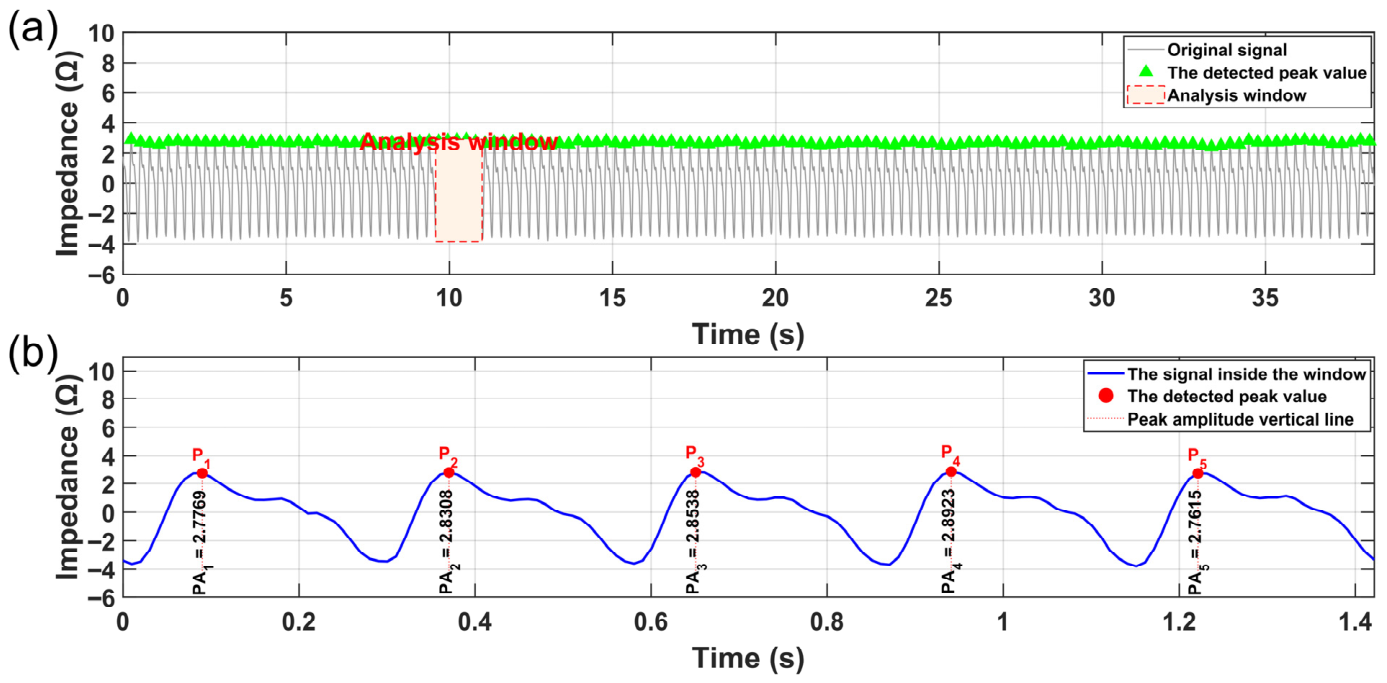
The results of the MATLAB peak detection algorithm identifying TI peaks are shown in Figure 2a, where all peaks in approximately 38 s of TI signal were successfully identified (the green triangles indicate the locations of the TI peaks). Figure 2b shows a magnified view of the local TI signal waveform within the red dashed box in Figure 2a, with the peak amplitudes labeled.
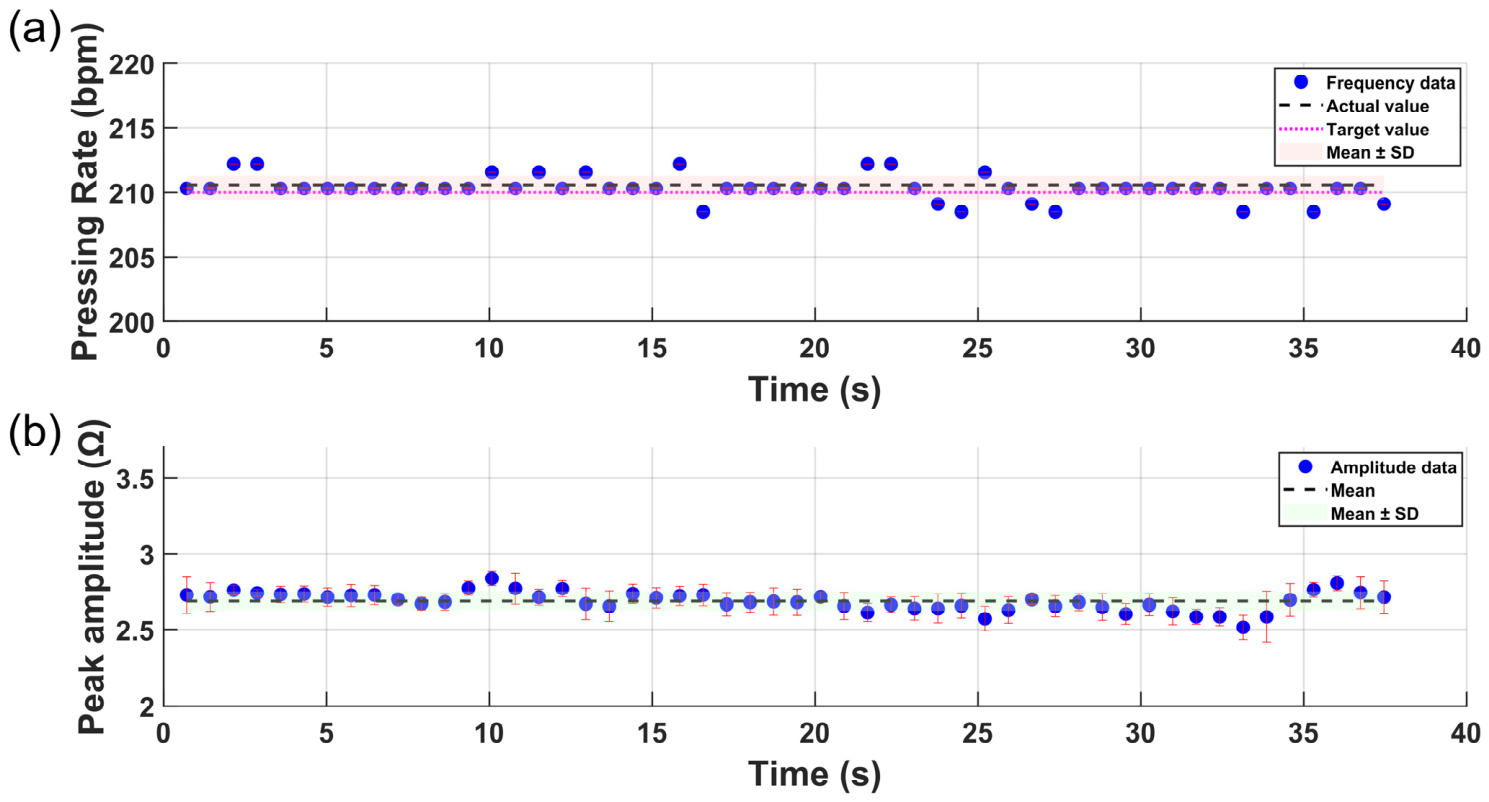
The results of the MATLAB calculations are shown in Figure 3. The compression rate was 210.3 ± 0.9 bpm, with an average frequency error of 0.3 bpm and a coefficient of variation of 0.4%; the peak value was 2.6874 ± 0.0629 Ω, with a coefficient of variation of 2.3%. These results indicate that the peak detection algorithm is capable of calculating both the compression rate and the TI peak.

3.2. Analysis of TI Characteristics During Prolonged Compression

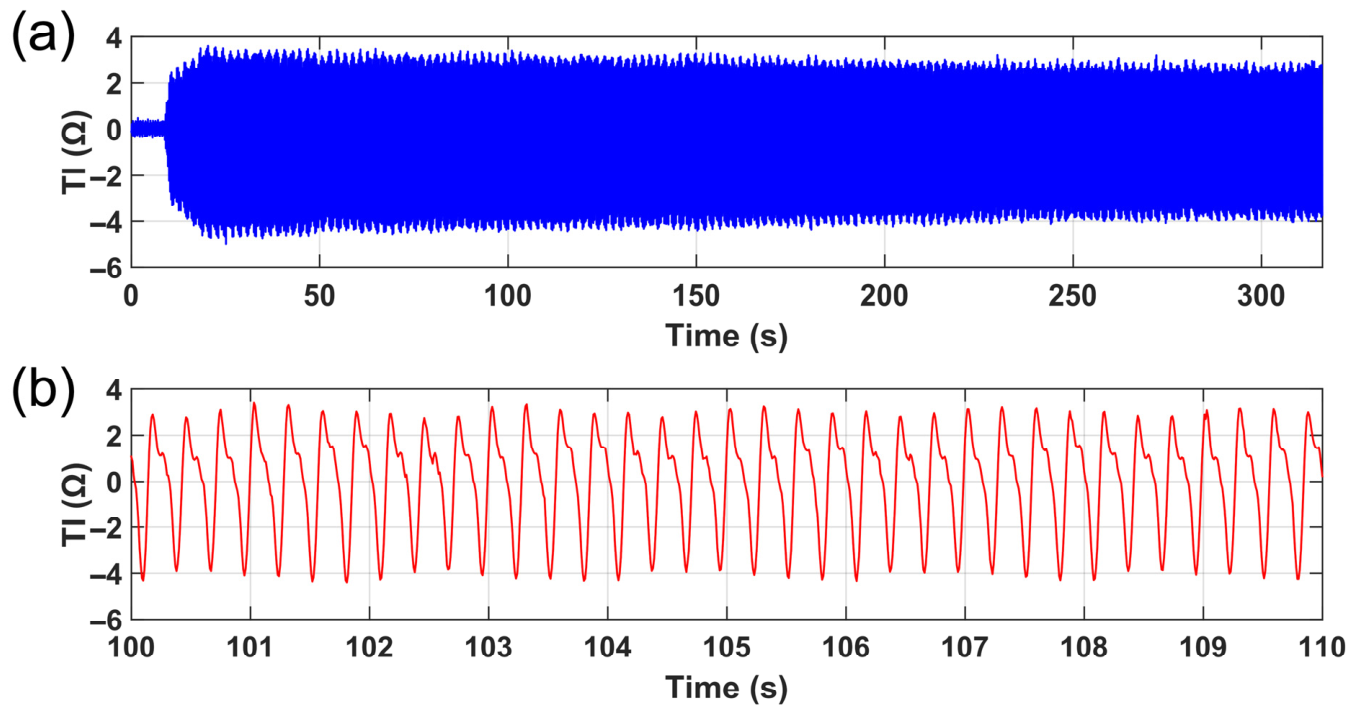
TI gradually declined during continuous compression (Figure 4). The AE of TI ranged from 0.21 to 0.66 Ω, with a RE of 7.0–19.0% (Table 3). The paired-samples Wilcoxon signed-rank test confirmed a statistically significant decrease from initial to terminal measurements over the 5 min period (W = 21.0, exact p = 0.031). The median absolute decay was 0.485 Ω (IQR: 0.410–0.570); the 95% BCa bootstrap CI was 0.310–0.570. The median relative decay rate was 14.96% (IQR: 13.56–17.92%); the 95% BCa bootstrap CI was 7.0–17.9%.
Time-dependent TI decline during chest compressions has also been observed in porcine models [33]. Notably, the measured impedance above was mechanical, whereas our study assessed electrical TI, which reflects tissue conductivity. Although both parameters decrease during prolonged compression, the underlying mechanisms may differ. Mechanical impedance decline is attributed to structural damage to the thoracic cage (e.g., rib fracture, cartilage fatigue) and viscoelastic energy dissipation of the chest wall [44]. In contrast, the decrease in electrical TI observed in the present study may reflect progressive alveolar collapse, pulmonary edema, or altered intrathoracic fluid distribution, all of which reduce lung gas content and increase electrical conductivity, thereby lowering impedance [45]. Regardless of the specific mechanism, a key implication of the decline in TI is that the mechanical efficacy of chest compression may be diminishing over time, meaning that compression at a fixed depth cannot compensate for this attenuation. Therefore, real-time monitoring of TI—using changes in TI as a physiological feedback indicator rather than mechanical depth—allows for automatic adjustment of depth when attenuation occurs, thereby maintaining effective compression and avoiding excessive or insufficient compression caused by a “one-size-fits-all” depth setting. This study aims to elevate TI from a “monitoring indicator” to a “control target,” providing a proof-of-concept foundation for future closed-loop resuscitation strategies.

3.3. Regression Model

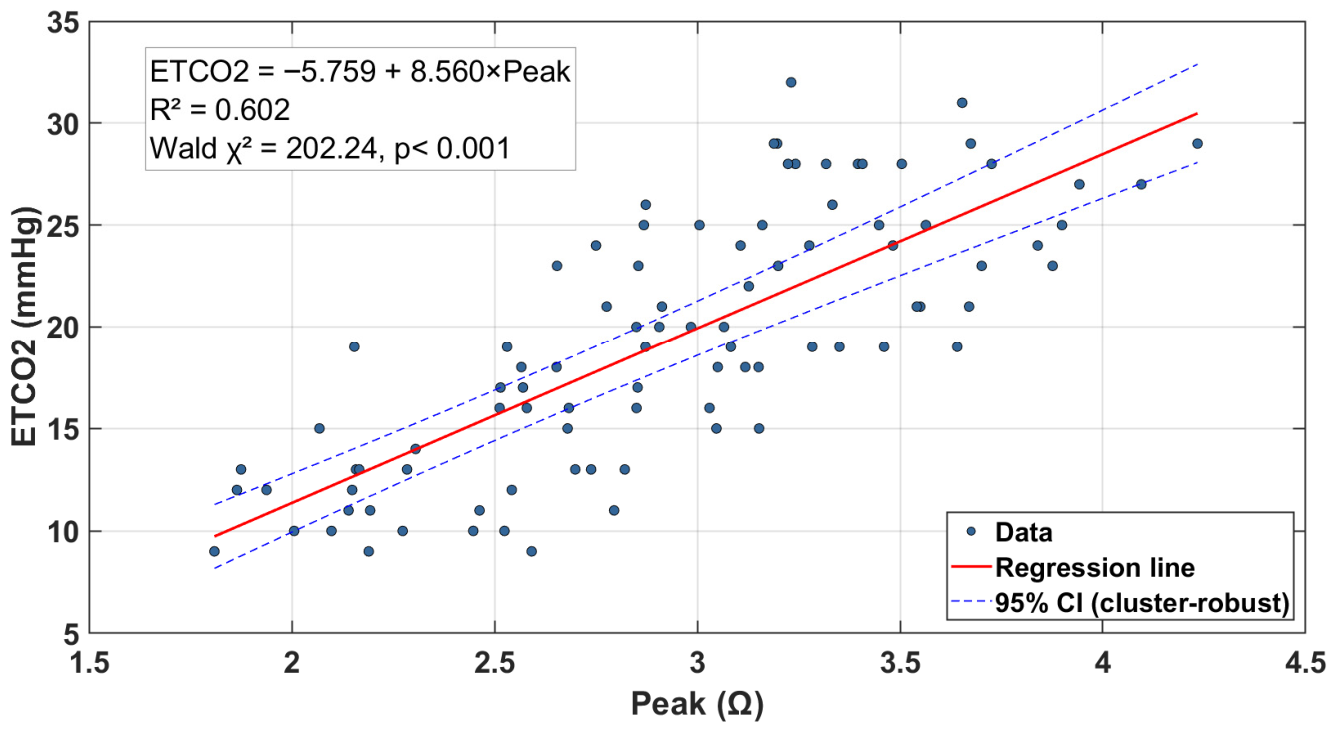
Figure 5 depicts the linear association between TI peak and ETCO2. TI peak was strongly correlated ETCO2 (Pearson r = 0.776, 95% CI: 0.679–0.846, p < 0.001). The OLS regression fit (red solid line) is described by: ETCO2 = −5.759 + 8.560 × Peak. We computed all inferential statistics with cluster-robust SE to account for within-animal correlation. The intercept was −5.759 (cluster-robust SE = 1.660, 95% CI: −9.202, −2.317, p = 0.002), and the slope was 8.560 (cluster-robust SE = 0.602, 95% CI: 7.312, 9.808, p < 0.001). For every 1 Ω increase in TI peak, ETCO2 increased by an average of 8.56 mmHg. The model was highly significant overall (Wald χ2(1) = 202.236, p < 0.001) and explained 60.2% of the variance (R2 = 0.602, 95% CI: 0.542–0.686, based on 2000 bootstrap replicates with resampling at the rat level). Notably, cluster-robust SE were slightly smaller than conventional OLS SE (deflation factor: intercept 0.76, slope 0.82), likely due to weak or negative within-animal residual correlation arising from physiological ETCO2 fluctuations. The blue dashed line indicates the 95% CI based on cluster-robust SE. The prediction accuracy was root mean square error = 3.90 mmHg, mean absolute error = 3.22 mmHg.
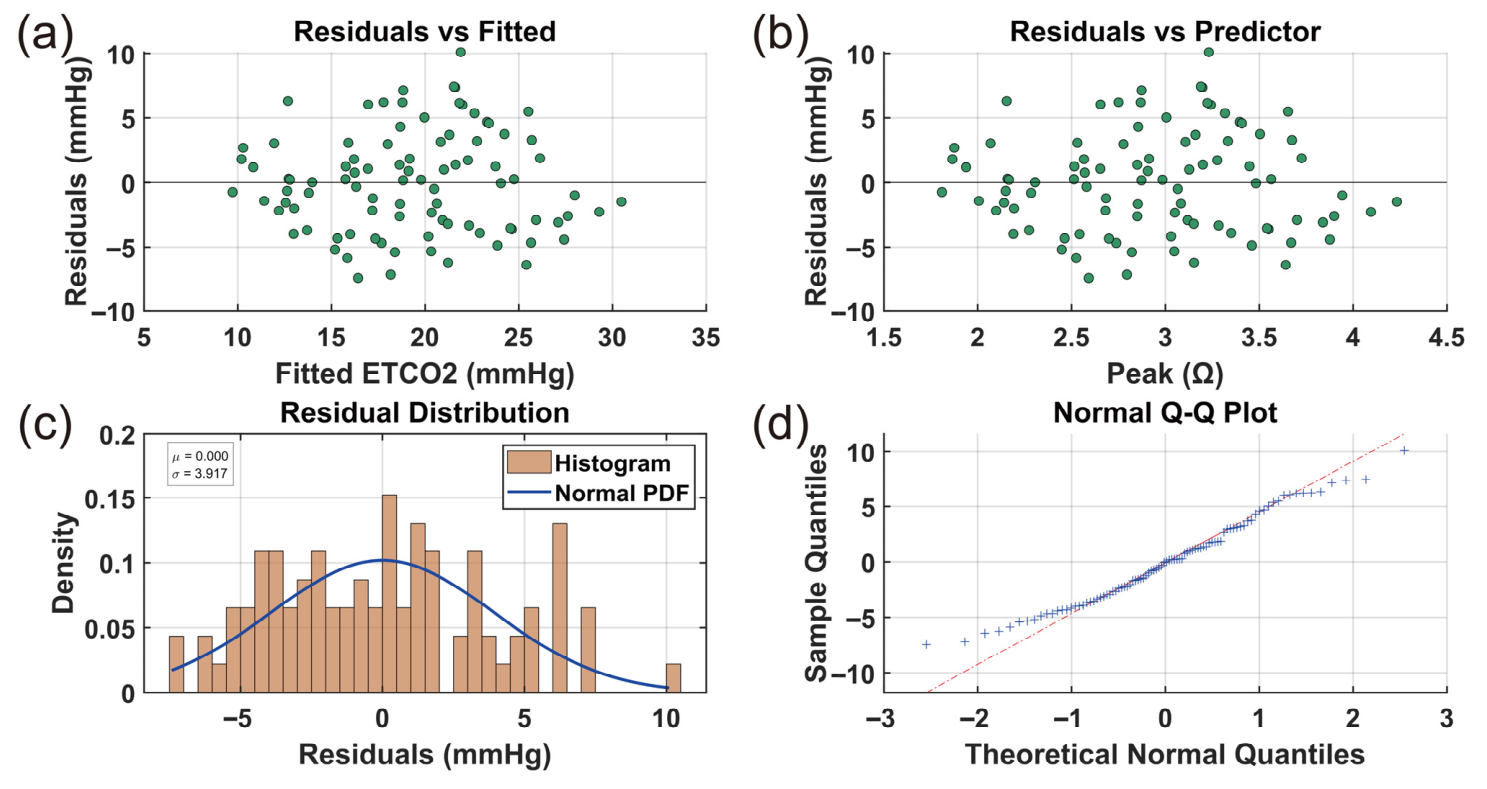
Figure 6 presents the regression diagnostics. Residuals were randomly distributed around zero, with no discernible funnel or curved patterns, supporting the assumptions of homoscedasticity and linearity; the Breusch–Pagan test yielded p = 0.207. Residuals approximated a normal distribution (Lilliefors test, p > 0.05). Q-Q plots displayed minor tail deviation, suggesting mild fat tails, which did not compromise the primary inferences. Intraclass correlation was extremely weak (ICC(1) = −0.237).
For each ETCO2 estimate, four consecutive TI peaks were averaged, and the mean value was input into the regression equation (ETCO2 = −5.759 + 8.560 × TI peak) to generate a ETCO2 estimate. This estimate was displayed on-screen to the operator, refreshed approximately every four compression cycles (1.28 s). The target ETCO2 was set at 20 mmHg, corresponding to a TI peak target of 3.0 Ω.

3.4. Results of Animal Studies

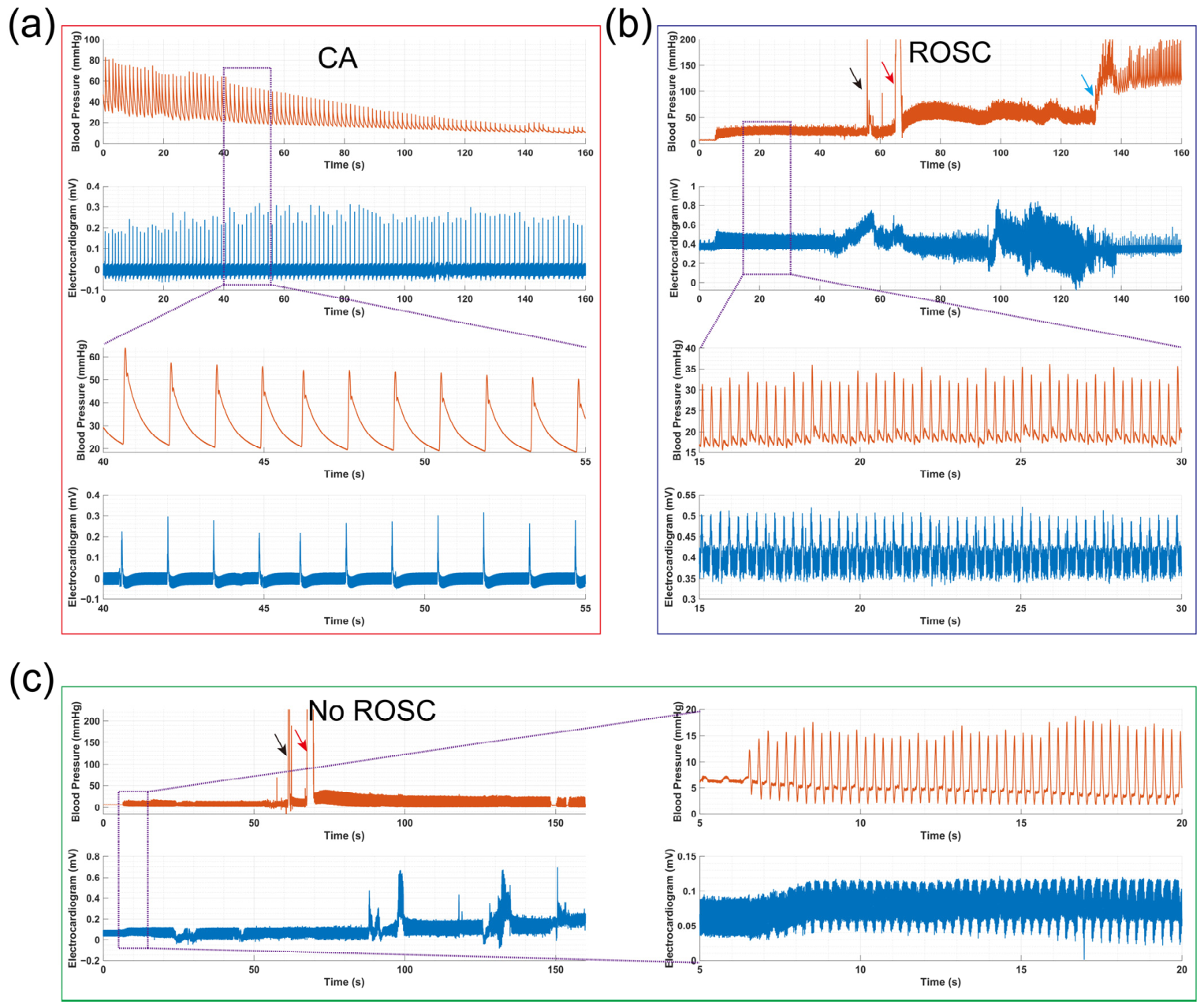
Figure 7 presents representative arterial pressure and electrocardiogram tracings during asphyxia and CPR. The upper panel of Figure 7a shows a continuous decline in arterial pressure in rats during asphyxia, while the lower panel is a close-up of the same data. Figure 7b illustrates the CPR phase leading to ROSC: compressions generated elevated systolic and diastolic pressures, epinephrine administration produced a marked pressor response, and ROSC was marked by a sudden sustained rise in arterial pressure. Figure 7c shows the situation where ROSC was not achieved. In rats that did not achieve ROSC, blood pressure following chest compressions exhibited low diastolic and systolic pressures, and there was no significant increase in blood pressure after epinephrine injection.
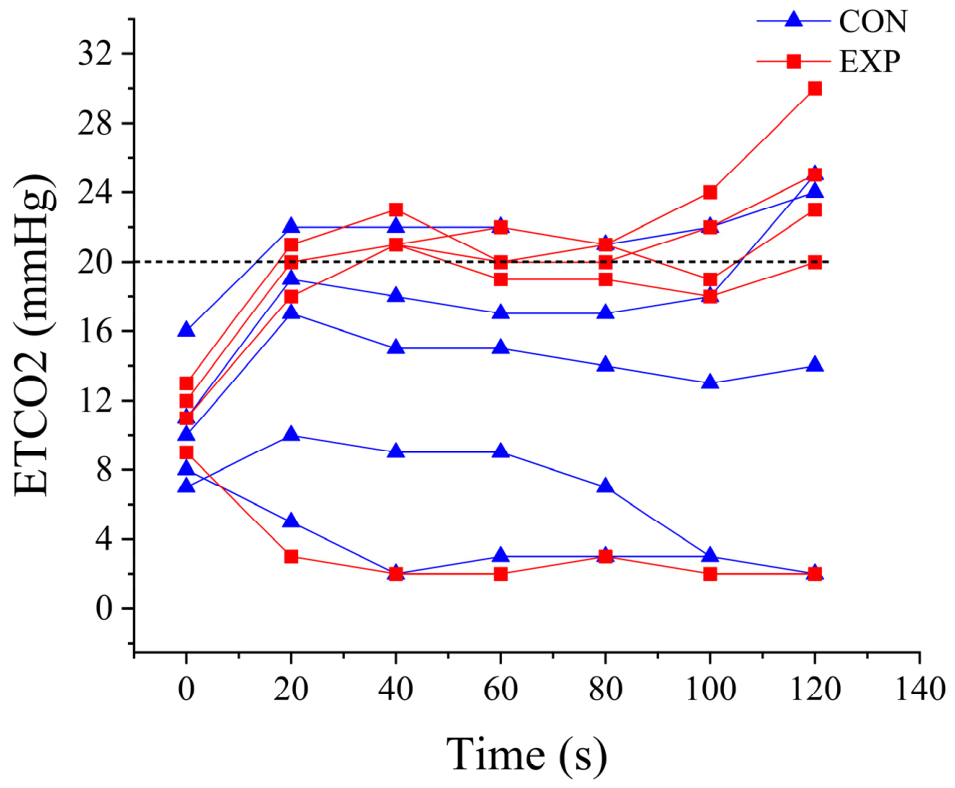
As shown in Figure 8, the control group (CON, n = 5, blue triangles) received fixed-depth compression, while the experimental group (EXP, n = 5, red squares) received dynamic compression guided by TI-based ETCO2 estimate (with a target ETCO2 of 20 mmHg and a corresponding TI peak target of 3 Ω); the dashed line indicates the target ETCO2 level (20 mmHg). In the control group, ETCO2 started at a lower level and mostly showed a downward trend, with high variability at the end (3–24 mmHg); only a few individuals briefly approached the target ETCO2 level; In contrast, the experimental group started at a higher level and showed an overall upward trend, with endpoints concentrated between 20 and 30 mmHg; most individuals remained consistently close to or above the target ETCO2 level. ROSC occurred in 4 of 5 rats in each group. Survival rates were comparable: 3/5 versus 4/5 at 24 h, 3/5 versus 3/5 at 48 h, and 3/5 versus 3/5 at 72 h.
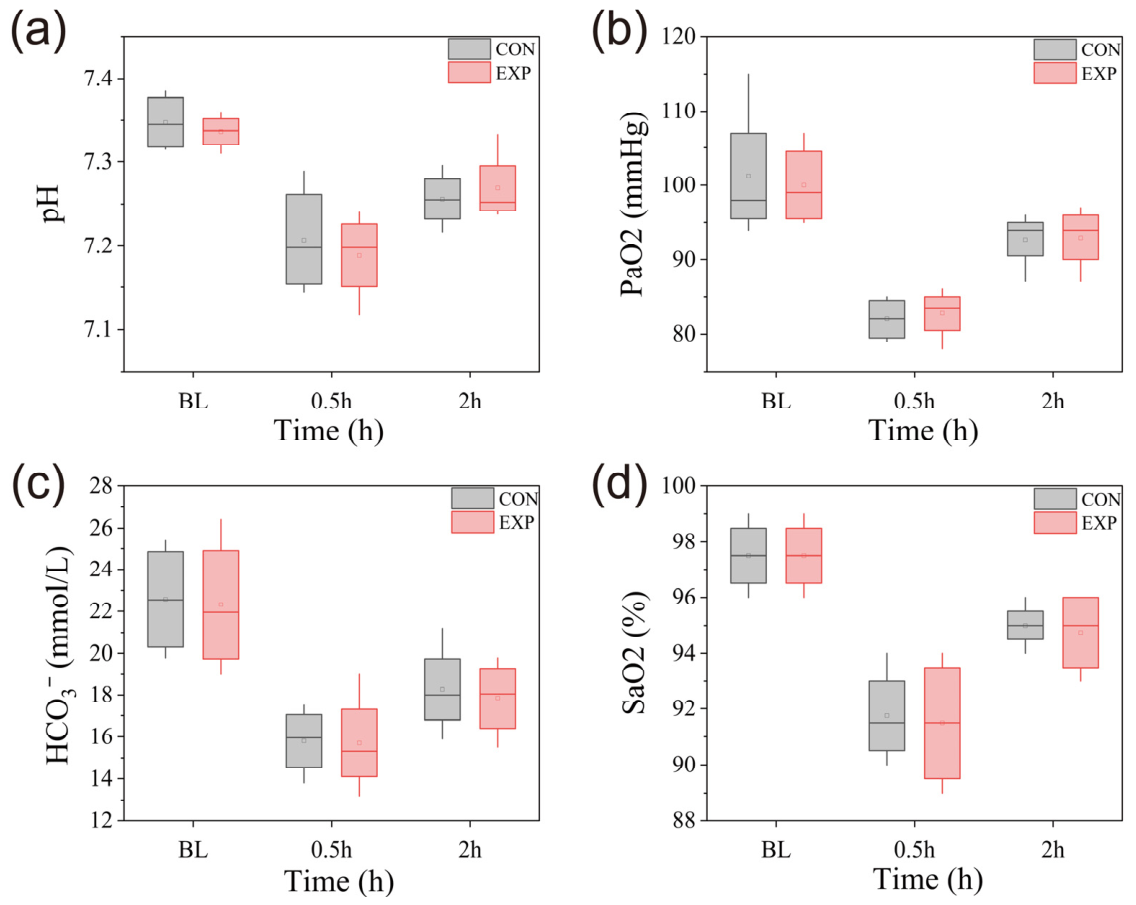
Table 4 summarizes arterial blood gas parameters. We detected no significant between-group differences at any time point (all p > 0.05).
Figure 9 illustrates the temporal evolution of blood gas parameters. Both groups of rats exhibited a decrease in pH 0.5 h after ROSC. Two hours after ROSC, pH levels in both groups had risen, indicating a trend toward recovery of acid-base balance. PaO2 levels in both groups decreased 0.5 h after ROSC, followed by a significant rebound at 2 h post-ROSC. HCO3 levels decreased significantly after resuscitation and showed an upward trend at 2 h after ROSC. SaO2 decreased slightly 0.5 h after ROSC, consistent with the downward trend in PaO2, and rebounded 2 h after ROSC.
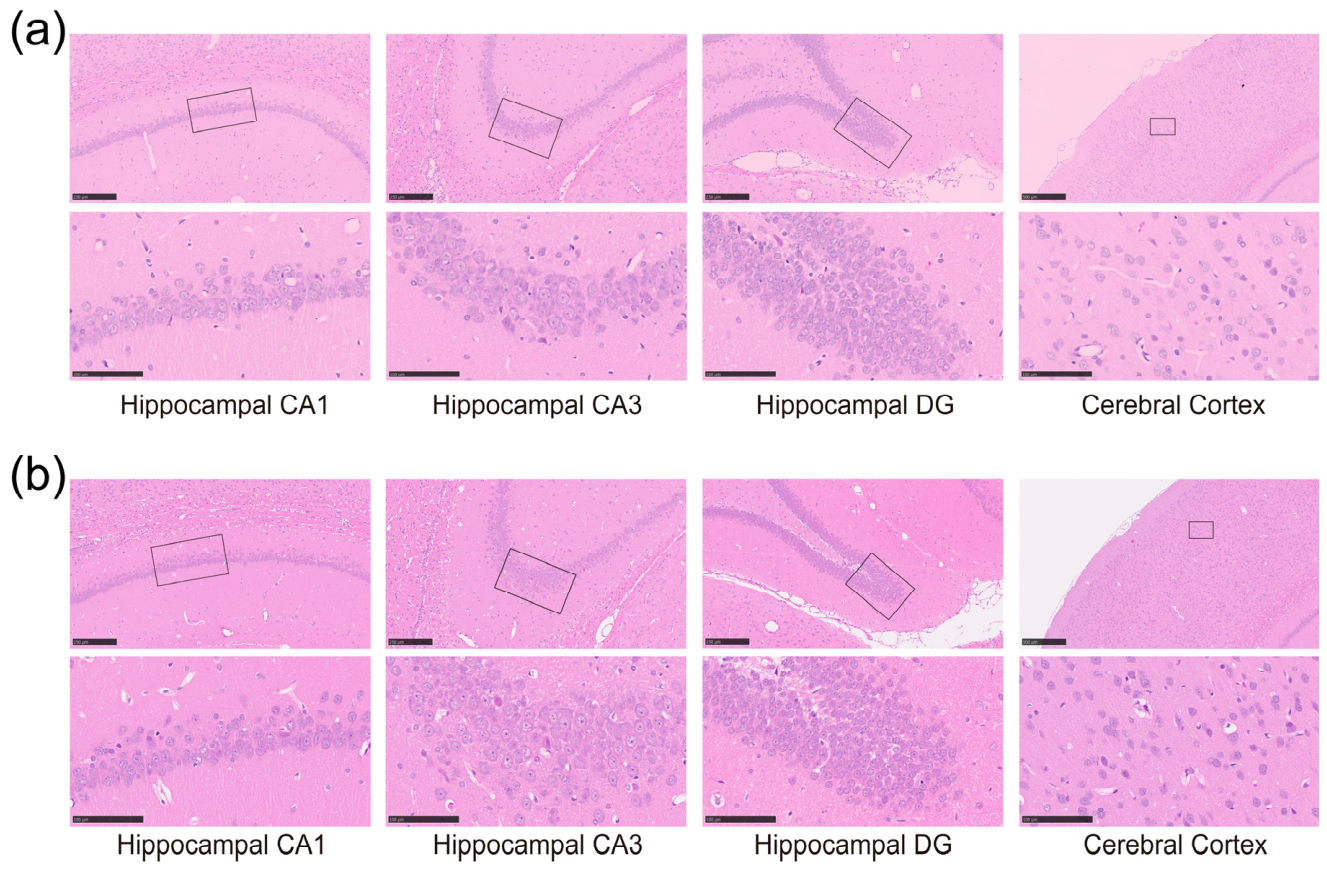
As shown in Figure 10, both the control and experimental groups exhibited loose cellular arrangement in the CA1 region, along with neuronal loss; some cells were smaller, hyperchromatic, and irregular in shape. The CA3 region of the hippocampus exhibited lower sensitivity than the CA1 region, with mildly disorganized cell arrangement. The DG region demonstrated significantly higher tolerance than the CA1 region; in the CA model, this region remained largely intact. Pathological changes, such as nuclear condensation and irregular cell shapes, were observed in cortical regions. Histopathological severity did not differ appreciably between groups.
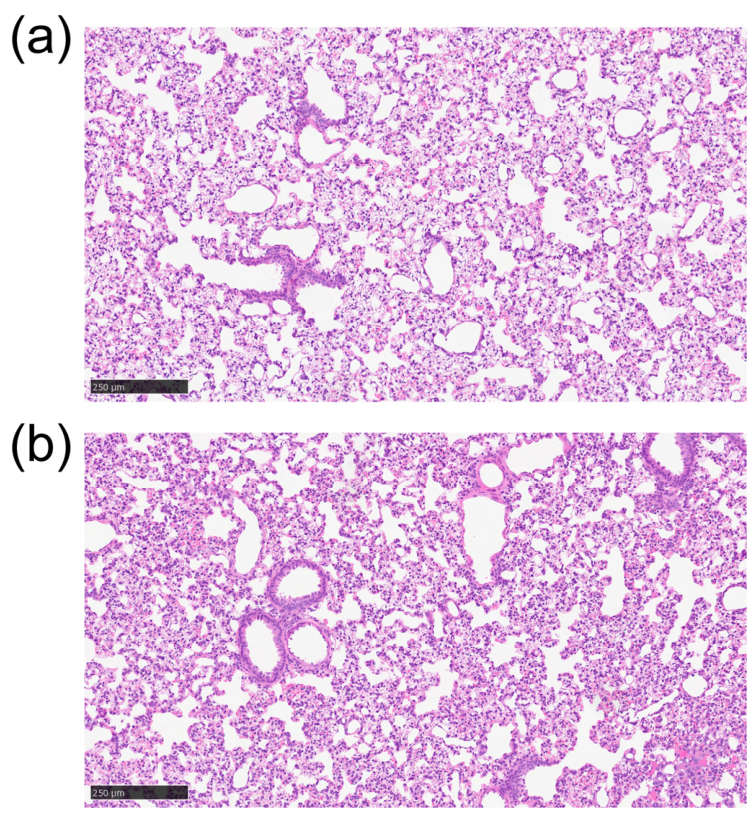
Figure 11 shows pulmonary histopathology at 72 h. Both groups displayed interstitial hemorrhage, thickened alveolar walls, reduced airspace, and inflammatory infiltrates. Again, no qualitative between-group differences were evident on HE staining.

4. Discussion

In this study, we established a dataset to examine the TI–ETCO2 relationship during chest compressions in rats. Our findings indicated a strong correlation between TI and ETCO2 in the rat population. Based on this strong correlation, we further used simple linear regression analysis to establish a regression equation for the relationship between TI and ETCO2. The equation indicated that for every 1 Ω increase in peak TI, ETCO2 increases by an average of 8.56 mmHg.
We also quantified the time-dependent decay of TI during 5 min compression. A dedicated 5 min compression protocol confirmed that TI decline is common in rats, although its magnitude varies individually (absolute decay 0.21–0.66 Ω).
Within this pilot study, animals were randomized to two arms: the control group employed a personalized compression strategy (compression depth set at one-third of the anterior–posterior chest diameter), which represents an advanced resuscitation approach. Notably, 4 out of 5 rats (80%) in the experimental group maintained ETCO2 levels above 20 mmHg during the later phase of compression, compared to only 2 out of 5 (40%) in the control group. No significant differences were observed between the experimental and control groups in terms of ROSC rate, survival rate, blood gas parameters, or organ injury, with results being comparable between the two groups.
The post-resuscitation blood gas profiles in both groups matched the temporal patterns reported previously in rat asphyxial cardiac arrest models [46]. Similarly, the histopathological findings, including neuronal loss in the hippocampal CA1 region and pulmonary hemorrhage with inflammatory cell infiltration, mirror patterns documented in CA and resuscitation studies [29,46].
Without a sham control in the present study, we cannot quantify the baseline level of physiological disturbance attributable to the experimental procedures themselves. Anesthesia and surgical trauma, including thoracotomy or vascular catheterization, activates systemic inflammatory responses and stress hormone release that may independently affect tissue histology [47,48,49]. Consequently, the specificity of our blood gas derangements and organ injury patterns as direct consequences of cardiac arrest and resuscitation—rather than confounding effects of anesthesia, mechanical ventilation, and surgical manipulation—remains uncertain. Future studies should incorporate a sham surgery group to delineate the true magnitude of injury specific to CA and resuscitation.
In a pediatric resuscitation model, ETCO2-directed compressions maintained higher MAP than AHA-optimized CPR, yet ROSC rates were similar (70% vs. 65%), suggesting that physiological feedback may optimize hemodynamics without necessarily improving short-term survival [50]. The 2023 ILCOR CoSTR review identified four animal studies assessing ETCO2-guided chest compressions, finding no differences in ROSC or survival compared to standard CPR [51]. These findings collectively suggest that while physiological feedback systems can improve real-time perfusion metrics, their translation into survival benefits requires further investigation in larger cohorts. The absence of significant differences between TI-guided and fixed-depth strategies in this pilot study is consistent with above study that physiological feedback systems may help maintain target physiological values during CPR without necessarily improving short-term survival in small animal models. However, our findings should be regarded as preliminary rather than conclusive.
This study utilized a model of asphyxiation-induced cardiac arrest in male rats. Although rats are widely recognized as a common experimental animal in CPR research, several anatomical and physiological differences limit the direct extrapolation of findings to humans. Nevertheless, the correlation between TI and ETCO2 observed in rats is consistent with previous findings in porcine models, suggesting that this relationship may be conserved across mammalian species. The physiological feedback principle demonstrated in this study—namely, the use of TI as a surrogate marker for ETCO2 to guide compression depth—is not species-specific and may be applicable to human CPR, particularly given that TI can be obtained non-invasively via defibrillation pads. Future studies in large animals and ultimately in human CA scenarios are necessary.
Outlook for the future:
Preliminary observations from this pilot study indicate that a dynamic compression strategy based on TI-estimated ETCO2 maintains physiological targets during CPR. Future research could further explore aspects such as dataset size and the selection of models describing the relationship between TI and ETCO2. Additionally, TI monitoring can be integrated with CPR devices to form a physiologically based closed-loop resuscitation system, further improving the timeliness and accuracy of depth adjustments.
The integration of TI monitoring into closed-loop feedback systems represents a promising engineering frontier. Current closed-loop feedback in automatic chest compressors incorporates real-time monitoring of physiological parameters to assess compression effectiveness and achieve individualized control [1]. However, these systems typically rely on invasive measurements. The non-invasive nature of TI acquisition, combined with its demonstrated correlation with both ETCO2 and compression depth, positions it as a potential candidate for next-generation feedback devices. Recent advances in impedance-based ventilation detection during continuous CPR, achieving F1-scores exceeding 89% even in challenging clinical scenarios, further support the feasibility of multi-parameter TI analysis. Future systems could simultaneously feedback compression depth, rate, and ventilation adequacy from a single TI signal, addressing the current limitation that “feedback devices lack the ability to comprehensively assess and provide guidance on these critical aspects”.
Limitations:
This study has the following limitations. First, rib fracture assessment was not included in this study; therefore, the impact of rib fractures on chest compliance and TI measurements could not be evaluated. Second, the sample size was small (n = 5 per group), resulting in insufficient statistical power; therefore, the observed numerical differences (e.g., 80% vs. 40% achieving target ETCO2) should be interpreted as exploratory. Third, the absence of a sham surgery control precludes determination of whether the observed blood gas derangements and histopathological changes reflect ischemia–reperfusion injury per se or confounding effects of anesthesia, surgical trauma, and mechanical ventilation.

5. Conclusions

This proof-of-concept pilot study demonstrates the technical feasibility of using TI-estimated ETCO2 to guide dynamic compression depth in a rat CPR model. The TI-guided strategy maintained ETCO2 closer to the 20 mmHg physiological target, but the small sample size (n = 5 per group) precludes any conclusions regarding clinical effectiveness or non-inferiority compared to fixed-depth strategies. The primary value of this study lies in establishing the TI-ETCO2 correlation and the methodological framework for closed-loop feedback, which requires validation in adequately powered studies before clinical translation can be considered.

Author Contributions

Conceptualization, P.Z., S.M. and B.F.; methodology, P.Z., S.M. and B.F.; software, P.Z. and S.M.; validation, P.Z., S.M. and Z.D.; formal analysis, P.Z.; investigation, P.Z., S.M. and B.F.; resources, P.Z.; data curation, P.Z. and Z.D.; writing—original draft preparation, P.Z. and S.M.; writing—review and editing, P.Z., S.M. and B.F.; visualization, P.Z., S.M. and Z.D.; supervision, P.Z. and B.F.; project administration, P.Z. and B.F.; funding acquisition, B.F. All authors have read and agreed to the published version of the manuscript.

Funding

This research was funded by the National Key Research and Development Program of China, grant number: 2023YFC3011802, grant name: Research on Key Technologies and Prototype Development of Fully Closed Loop Digital Intelligence Integrated Cardiopulmonary Resuscitation.

Institutional Review Board Statement

This animal study protocol was approved by the Ethics Committee of Tianjin University (Protocol No.: TJUE2025-A-S-064; Approval Date: 22 December 2025).

Informed Consent Statement

Not applicable.

Data Availability Statement

The original contributions presented in this study are included in the article. Further inquiries can be directed to the corresponding author.

Acknowledgments

We sincerely thank the instructor in charge of the Basic Life Support lab for their assistance.

Conflicts of Interest

The authors declare no conflicts of interest.

Abbreviations

The following abbreviations are used in this manuscript:
CACardiac arrest
OHCAOut-of-hospital cardiac arrest
AHAThe American Heart Association
CPRCardiopulmonary resuscitation
bpmbeats per minute
BLBaseline
AEAbsolute error
RERelative error
CPPCoronary perfusion pressure
DBPDiastolic blood pressure
ETCO2End-tidal carbon dioxide
ROSCReturn of spontaneous circulation
COCardiac output
TIThoracic impedance
OLSOrdinary least squares
IQRInterquartile range
BCaBias-corrected and accelerated
SEStandard error
CIConfidence interval
MAPMean arterial pressure
SDStandard deviation
PDFProbability density function
Q-QQuantile–quantile
HEHematoxylin and eosin
CONControl group
EXPExperimental group
PaO2Partial pressure of arterial oxygen
HCO3Bicarbonate
SaO2Arterial oxygen saturation
CA1Cornu ammonis 1
DGDentate gyrus

References

  1. Zhao, P.; Tong, Y.; Du, Z.; Ma, S.; Fan, B. Key physiological indicators and technological trends in physiology-directed cardiopulmonary resuscitation: A narrative review. Resusc. Plus 2026, 27, 101180. [Google Scholar] [CrossRef] [PubMed]
  2. Berdowski, J.; Berg, R.A.; Tijssen, J.G.; Koster, R.W. Global incidences of out-of-hospital cardiac arrest and survival rates: Systematic review of 67 prospective studies. Resuscitation 2010, 81, 1479–1487. [Google Scholar] [CrossRef] [PubMed]
  3. Gräsner, J.T.; Wnent, J.; Herlitz, J.; Perkins, G.D.; Lefering, R.; Tjelmeland, I.; Koster, R.W.; Masterson, S.; Rossell-Ortiz, F.; Maurer, H.; et al. Survival after out-of-hospital cardiac arrest in Europe—Results of the EuReCa TWO study. Resuscitation 2020, 148, 218–226. [Google Scholar] [CrossRef]
  4. Kotini-Shah, P.; Del Rios, M.; Khosla, S.; Pugach, O.; Vellano, K.; McNally, B.; Vanden Hoek, T.; Chan, P.S. Sex differences in outcomes for out-of-hospital cardiac arrest in the United States. Resuscitation 2021, 163, 6–13. [Google Scholar] [CrossRef]
  5. Merchant, R.M.; Topjian, A.A.; Panchal, A.R.; Cheng, A.; Aziz, K.; Berg, K.M.; Lavonas, E.J.; Magid, D.J. Part 1: Executive Summary: 2020 American Heart Association Guidelines for Cardiopulmonary Resuscitation and Emergency Cardiovascular Care. Circulation 2020, 142, S337–S357. [Google Scholar] [CrossRef]
  6. Ateyyah, K.A.; Cady, C.E.; Poltrock, J.T.; Pirrallo, R.G. A Novel Use of a Metronome in Dis-patcher-assisted Cardiopulmonary Resuscitation. Prehosp. Emerg. Care 2015, 19, 131–134. [Google Scholar] [CrossRef] [PubMed]
  7. Wang, Y.; Ma, S.; Chen, Z.; Fan, B.; Hou, S. Feedback Devices for Cardiopulmonary Resuscitation: A Narrative Review. Appl. Sci. 2023, 13, 10222. [Google Scholar] [CrossRef]
  8. Kleinman, M.E.; Brennan, E.E.; Goldberger, Z.D.; Swor, R.A.; Terry, M.; Bobrow, B.J.; Gazmuri, R.J.; Travers, A.H.; Rea, T. Part 5: Adult Basic Life Support and Cardiopulmonary Resuscitation Quality: 2015 American Heart Association Guidelines Update for Cardiopulmonary Resuscitation and Emergency Cardiovascular Care. Circulation 2015, 132, S414–S435. [Google Scholar] [CrossRef]
  9. Kwok, H.; Coult, J.; Liu, C.; Blackwood, J.; Kudenchuk, P.J.; Rea, T.D.; Sherman, L. An accurate method for real-time chest compression detection from the impedance signal. Resuscitation 2016, 105, 22–28. [Google Scholar] [CrossRef]
  10. Soar, J.; Böttiger, B.W.; Carli, P.; Jiménez, F.C.; Cimpoesu, D.; Cole, G.; Couper, K.; D’Arrigo, S.; Deakin, C.D.; Ek, J.E.; et al. European Resuscitation Council Guidelines 2025 Adult Advanced Life Support. Resuscitation 2025, 215, 110769. [Google Scholar] [CrossRef] [PubMed]
  11. Meaney, P.A.; Bobrow, B.J.; Mancini, M.E.; Christenson, J.; de Caen, A.R.; Bhanji, F.; Abella, B.S.; Kleinman, M.E.; Edelson, D.P.; Berg, R.A.; et al. Cardiopulmonary resuscitation quality: [corrected] improving cardiac resuscitation outcomes both inside and outside the hospital: A con-sensus statement from the American Heart Association. Circulation 2013, 128, 417–435. [Google Scholar] [CrossRef]
  12. Sutton, R.M.; Friess, S.H.; Bhalala, U.; Maltese, M.R.; Naim, M.Y.; Bratinov, G.; Niles, D.; Nadkarni, V.M.; Becker, L.B.; Berg, R.A. Hemodynamic directed CPR improves short-term survival from asphyxia-associated cardiac arrest. Resuscitation 2013, 84, 696–701. [Google Scholar] [CrossRef]
  13. Hamrick, J.T.; Hamrick, J.L.; Bhalala, U.; Armstrong, J.S.; Lee, J.H.; Kulikowicz, E.; Lee, J.K.; Kudchadkar, S.R.; Koehler, R.C.; Hunt, E.A.; et al. End-Tidal CO2-Guided Chest Compression Delivery Improves Survival in a Neonatal Asphyxial Cardiac Arrest Model. Pediatr. Crit. Care Med. 2017, 18, e575–e584. [Google Scholar] [CrossRef] [PubMed]
  14. Kucewicz, J.C.; Salcido, D.D.; Adedipe, A.A.; Truong, K.; Nichol, G.; Mourad, P.D. Towards a non-invasive cardiac arrest monitor: An in vivo pilot study. Resuscitation 2019, 134, 76–80. [Google Scholar] [CrossRef] [PubMed]
  15. Yılmaz, Y.; Yılmaz, F.; Yılmaz, A.; Sönmez, B.M.; Tekkanat, S.; Kavalcı, C.; Komut, S.; Beydilli, İ.; Zortuk, Ö. Comparison of manual versus mechanical chest compression with ETCO2 value in-hospital cardiac arrest: A prospective observational study. J. Med. Dent. Investig. 2025, 6, e250172. [Google Scholar] [CrossRef]
  16. Morgan, R.W.; Reeder, R.W.; Bender, D.; Cooper, K.K.; Friess, S.H.; Graham, K.; Meert, K.L.; Mourani, P.M.; Murray, R.; Nadkarni, V.M.; et al. Associations between end-tidal carbon dioxide during pediatric cardiopulmonary resuscitation, cardiopulmonary resuscitation quality, and survival. Circulation 2024, 149, 367–378. [Google Scholar] [CrossRef]
  17. Wigginton, J.G.; Agarwal, S.; Bartos, J.A.; Coute, R.A.; Drennan, I.R.; Haamid, A.; Kudenchuk, P.J.; Link, M.S.; Panchal, A.R.; Pelter, M.M.; et al. Part 9: Adult Advanced Life Support: 2025 American Heart Association Guidelines for Cardiopulmonary Resuscitation and Emergency Cardiovascular Care. Circulation 2025, 152, S538–S577. [Google Scholar] [CrossRef]
  18. Ruiz, J.M.; Ruiz de Gauna, S.; González-Otero, D.M.; Daya, M.; Russell, J.K.; Gutiérrez, J.J.; Leturiondo, M. Relationship between EtCO2 and quality-parameters during cardiopulmonary resuscitation. In Proceedings of the 2016 Computing in Cardiology Conference (CinC), Vancouver, BC, Canada, 11–14 September 2016; pp. 957–960. [Google Scholar]
  19. Sheak, K.R.; Wiebe, D.J.; Leary, M.; Babaeizadeh, S.; Yuen, T.C.; Zive, D.; Owens, P.C.; Edelson, D.P.; Daya, M.R.; Idris, A.H.; et al. Quantitative relationship between end-tidal carbon dioxide and CPR quality during both in-hospital and out-of-hospital cardiac arrest. Resuscitation 2015, 89, 149–154. [Google Scholar] [CrossRef] [PubMed]
  20. Putowski, M.; Dudzikowska, M.; Wieczorek, W.; Pruc, M.; Szarpak, L.; Siudak, Z. Correlation Between End-Tidal Carbon Dioxide and Regional Cerebral Oxygen Saturation During Cardiopulmonary Resuscitation. J. Clin. Med. 2025, 14, 3747. [Google Scholar] [CrossRef]
  21. Howe, A.J.; Di Maio, R.; Crawford, P.; Brody, D.; Navarro, C.; McEneaney, D.; Clutton, E.; Anderson, J.; Adgey, J. Abstract 54: The Impedance Cardiogram as an Indicator of Chest Compression Efficacy During Cardiopulmonary Resuscitation in a Porcine Model: Correlation with Physiological Parameters and Comparison with Compression Depth and Thrust. Circulation 2011, 124, A54. [Google Scholar] [CrossRef]
  22. Zhang, H.; Yang, Z.; Huang, Z.; Chen, B.; Zhang, L.; Li, H.; Wu, B.; Yu, T.; Li, Y. Transthoracic impedance for the monitoring of quality of manual chest compression during cardio-pulmonary resuscitation. Resuscitation 2012, 83, 1281–1286. [Google Scholar] [CrossRef]
  23. Howe, A.; O’Hare, P.; Crawford, P.; Delafont, B.; McAlister, O.; Di Maio, R.; Clutton, E.; Adgey, J.; McEneaney, D. An investigation of thrust, depth and the impedance cardiogram as measures of cardiopulmonary resuscitation efficacy in a porcine model of cardiac arrest. Resuscitation 2015, 96, 114–120. [Google Scholar] [CrossRef] [PubMed]
  24. Di Maio, R.; O’Hare, P.; McAlister, O.; McIntyre, C.; Delafont, B.; McEneany, D.; Adgey, J. The correlation between the impedance cardiogram and end-tidal carbon dioxide during cardiopulmonary resuscitation in a porcine model of cardiac arrest. Resuscitation 2014, 85, S6. [Google Scholar] [CrossRef]
  25. Jaureguibeitia, X.; Aramendi, E.; Wang, H.E.; Idris, A.H. Impedance-Based Ventilation Detection and Signal Quality Control During Out-of-Hospital Cardiopulmonary Resuscitation. IEEE J. Biomed. Health Inform. 2023, 27, 3026–3036. [Google Scholar] [CrossRef] [PubMed]
  26. Yazdanian, H.; Mahnam, A.; Edrisi, M.; Esfahani, M.A. Design and Implementation of a Portable Impedance Cardiography System for Noninvasive Stroke Volume Monitoring. J. Med. Signals Sens. 2016, 6, 47–56. [Google Scholar] [PubMed]
  27. Jacobs, I.; Lowe, A.; Garcia, L.; Zhang, H. Advancing physical activity monitoring through bioimpedance measurement: A review. Prog. Biomed. Eng. 2026, 8, 022002. [Google Scholar] [CrossRef]
  28. Arabsalmani, N.; Ghouchani, A.; Jafarabadi Ashtiani, S.; Zamani, M. Exploring Bio-Impedance Sensing for Intelligent Wearable Devices. Bioengineering 2025, 12, 521. [Google Scholar] [CrossRef]
  29. Yu, S.; Wu, C.; Zhu, Y.; Diao, M.; Hu, W. Rat model of asphyxia-induced cardiac arrest and resuscitation. Front. Neurosci. 2023, 16, 1087725. [Google Scholar] [CrossRef]
  30. Leong, K.H.; Zhou, L.L.; Lin, Q.M.; Wang, P.; Yao, L.; Huang, Z.T. Therapeutic effects of various methods of MSC transplantation on cerebral resuscitation following cardiac arrest in rats. Mol. Med. Rep. 2016, 13, 3043–3051. [Google Scholar] [CrossRef] [PubMed]
  31. Tian, B.; Liu, X.; Wang, F.; Gu, Y.; Zhou, X.; Li, N.; Ye, Q.; Li, Y. Investigating the neuroprotective effect of heparin in improving mitochondrial function in rats with cardiac arrest cardiopulmonary resuscitation based on transcriptome sequencing. Front. Med. 2026, 12, 1712265. [Google Scholar] [CrossRef]
  32. Lee, J.; Jeong, K.; Yoon, J.; Lee, M. A simple real-time QRS detection algorithm. In Proceedings of the 18th Annual International Conference of the IEEE Engineering in Medicine and Biology Society, Amsterdam, The Netherlands, 31 October–3 November 1996; Volume 4, pp. 1396–1398. [Google Scholar]
  33. Lee, D.Y.; Kang, S.M.; Choi, S.W. Utility of CPR Machine Power and Change in Right Atrial Pressure for Estimating CPR Quality. Sci. Rep. 2019, 9, 9250. [Google Scholar] [CrossRef] [PubMed]
  34. Zapf, A.; Wiessner, C.; König, I.R. Regression Analyses and Their Particularities in Observational Studies—Part 32 of a Series on Evaluation of Scientific Publications. Dtsch. Arztebl. Int. 2024, 121, 128–134. [Google Scholar]
  35. Roustaei, N. Application and interpretation of linear-regression analysis. Med. Hypothesis Discov. Innov. Ophthalmol. 2024, 13, 151–159. [Google Scholar] [CrossRef] [PubMed]
  36. del Águila, M.M.R.; Benítez-Parejo, N. Simple linear and multivariate regression models. Allergol. Immunopathol. 2011, 39, 159–173. [Google Scholar] [CrossRef] [PubMed]
  37. Kilmer, J.T.; Rodríguez, R.L. Ordinary least squares regression is indicated for studies of allometry. J. Evol. Biol. 2017, 30, 4–12. [Google Scholar] [CrossRef]
  38. Halunga, A.G.; Orme, C.D.; Yamagata, T. A heteroskedasticity robust Breusch–Pagan test for Contemporaneous correlation in dynamic panel data models. J. Econom. 2017, 198, 209–230. [Google Scholar] [CrossRef]
  39. Huang, F.L.; Li, X. Using cluster-robust standard errors when analyzing group-randomized trials with few clusters. Behav. Res. Methods 2022, 54, 1181–1199. [Google Scholar] [CrossRef]
  40. Jackson, J.E. Corrected Standard Errors with Clustered Data. Political Anal. 2020, 28, 318–339. [Google Scholar] [CrossRef]
  41. Collings, T.J.; Lima, Y.L.; Dutaillis, B.; Bourne, M.N. Concurrent validity and test–retest reliability of VALD ForceDecks’ strength, balance, and movement assessment tests. J. Sci. Med. Sport 2024, 27, 572–580. [Google Scholar] [CrossRef]
  42. Barajas, M.B.; Oyama, T.; Shiota, M.; Li, Z.; Zaum, M.; Zecevic, I.; Riess, M.L. Ischemic Post-Conditioning in a Rat Model of Asphyxial Cardiac Arrest. Cells 2024, 13, 1047. [Google Scholar] [CrossRef]
  43. Wang, F.; Tian, B.; Li, N.; Gu, Y.; Li, X.; Zhou, X.; Li, Y.; Liu, X.; Gu, Y.; Wang, Y.; et al. Proteomic analysis of heparin amelioration of cardiac injury after CA-CPR in rats: An exploratory proteomic study. Front. Med. 2026, 12, 1657698. [Google Scholar] [CrossRef]
  44. De Gauna, S.R.; Gutiérrez, J.J.; Sandoval, C.L.; Russell, J.K.; Azcarate, I.; Urigüen, J.A.; González-Otero, D.M.; Daya, M.R. Characterization of mechanical properties of adult chests during pre-hospital manual chest compressions through a simple viscoelastic model. Comput. Methods Programs Biomed. 2023, 242, 107847. [Google Scholar] [CrossRef] [PubMed]
  45. Duhem, H.; Terzi, N.; Segond, N.; Bellier, A.; Sanchez, C.; Louis, B.; Debaty, G.; Guérin, C. Effect of automated head-thorax elevation during chest compressions on lung ventilation: A model study. Sci. Rep. 2023, 13, 20393. [Google Scholar] [CrossRef] [PubMed]
  46. Liu, X.; Li, Y.; Gu, Y.; Wang, F.; Tian, B.; Liu, W.; Ye, Q. A modified rat model of 8 minutes asphyxial cardiac arrest and cardiopulmonary resuscitation. PLoS ONE 2025, 20, e0322473. [Google Scholar] [CrossRef]
  47. Svorc, P.; Petrášová, D.; Svorc, P., Jr. Arterial pH and blood gas values in rats under three types of general anesthesia: A chronobiological study. Physiol. Res. 2018, 67, 721–728. [Google Scholar] [CrossRef]
  48. Ince, R.; Ozgodek, H.B.; Kahramanlar, A.A.; Yucel, N.; Sarıgül, C.; Suleyman, H. Relationship Between the Duration of Intravenous Ketamine Anesthesia and Postoperative Oxidative Stress and Inflammatory Response in Rats. Int. J. Mol. Sci. 2025, 26, 9465. [Google Scholar] [CrossRef]
  49. Cobelens, P.M.; van Putte, B.P.; Kavelaars, A.; Heijnen, C.J.; Kesecioglu, J. Inflammatory consequences of lung ischemia-reperfusion injury and low-pressure ventilation. J. Surg. Res. 2009, 53, 295–301. [Google Scholar] [CrossRef]
  50. Hamrick, J.L.; Hamrick, J.T.; Lee, J.K.; Lee, B.H.; Koehler, R.C.; Shaffner, D.H. Efficacy of chest compressions directed by end-tidal CO2 feedback in a pediatric resuscitation model of basic life support. J. Am. Heart Assoc. 2014, 3, e000450. [Google Scholar] [CrossRef]
  51. Berg, K.M.; Bray, J.E.; Ng, K.C.; Liley, H.G.; Greif, R.; Carlson, J.N.; Morley, P.T.; Drennan, I.R.; Smyth, M.; Scholefield, B.R.; et al. 2023 International Consensus on Cardiopulmonary Resuscitation and Emergency Cardiovascular Care Science with Treatment Recommendations: Summary From the Basic Life Support; Advanced Life Support; Pediatric Life Support; Neonatal Life Support; Education, Implementation, and Teams; and First Aid Task Forces. Circulation 2023, 148, e187–e280. [Google Scholar] [CrossRef]
Figure 1. Snapshot of a thoracic impedance signal.
Applsci 16 05040 g001
Figure 2. Identification of peak points in thoracic impedance (TI) using MATLAB: (a) Identification of TI wave peaks; (b) Magnified waveform.
Applsci 16 05040 g002
Figure 3. Results calculated based on compression frequency and thoracic impedance (TI) peak: (a) Compression rate; (b) TI peak. The green error bars represent mean ± standard deviation (SD).
Applsci 16 05040 g003
Figure 4. Time-dependent characteristics of thoracic impedance (TI) during compression: (a) Trend of TI over 300 s; (b) Amplified waveform from 100 to 110 s.
Applsci 16 05040 g004
Figure 5. Linear regression relationship between thoracic impedance peak and end-tidal carbon dioxide (ETCO2). The blue dashed lines represent the 95% confidence interval (CI) based on cluster-robust standard errors.
Applsci 16 05040 g005
Figure 6. Regression diagnostic plots for the linear regression of end-tidal carbon dioxide (ETCO2) on thoracic impedance peak: (a) Residuals versus fitted values; (b) Residuals versus independent variables; (c) Residual histogram and normal probability density function (PDF) curve; (d) Normal quantile–quantile (Q-Q) plot; the blue crosses represent the sample quantiles, and the red dashed line represents the theoretical normal reference line (y = x).
Applsci 16 05040 g006
Figure 7. Blood pressure and electrocardiogram waveforms during cardiac arrest (CA) and cardiopulmonary resuscitation: (a) Asphyxia; (b) Return of spontaneous circulation (ROSC) achieved; (c) No ROSC. The black arrows indicate blood pressure artifacts caused by the injection of epinephrine; the red arrows indicate blood pressure artifacts caused by the injection of a small amount of saline; the blue arrows indicate a sudden rise in blood pressure during resuscitation.
Applsci 16 05040 g007
Figure 8. Dynamic changes in end-tidal carbon dioxide (ETCO2) during compression in the control group (CON) and experimental group (EXP). Note: The black line indicates 20 mmHg, representing proper compression.
Applsci 16 05040 g008
Figure 9. Arterial blood gas analysis results for the control group (CON) and the experimental group (EXP) at baseline (BL), 0.5 h, and 2 h after return of spontaneous circulation. In each box plot, the horizontal line denotes the median, the small square denotes the mean. (a) pH; (b) Partial pressure of arterial oxygen (PaO2); (c) Bicarbonate (HCO3); (d) Arterial oxygen saturation (SaO2).
Applsci 16 05040 g009
Figure 10. Histopathological observations of rat hippocampal and cortical tissues 72 h after resuscitation: (a) Control group; (b) Experimental group. The black rectangles in the upper panels indicate the regions that are magnified in the lower panels. The scale bar for the hippocampal cornu ammonis 1 (CA1), CA3 and dentate gyrus (DG) regions is 250 μm, with a magnification of 200×; the scale bar for the magnified images of these three regions is 100 μm, with a magnification of 800×. The scale bar for the cortical region is 500 μm, with a magnification of 100×; the scale bar for the magnified image of this region is 100 μm, with a magnification of 800×.
Applsci 16 05040 g010
Figure 11. Histopathological observations of rat lung tissue 72 h after resuscitation: (a) Control group; (b) Experimental group.
Applsci 16 05040 g011
Table 1. Overview of experimental phases, inclusion/exclusion criteria, and animal allocation.
ItemPhase I: Dataset CreationPhase II: 5 min CompressionPhase III: Animal Testing
PurposeEstablish TI-ETCO2 correlation; construct regression modelCharacterize time-dependent decay of TI during 5 min compressionCompare TI-guided dynamic compression vs. fixed-depth strategy
Experimental procedureTI and ETCO2 recorded; establishing a simple linear regression model for TI-ETCO2Compression depth fixed at d0 for 5 min continuous compression; TI recordedAsphyxial CA; CPR for 10 min max; collect physiological data
Inclusion criteriaBody weight 300 ± 20 g; stable baseline heart rate and blood pressureBody weight 300 ± 20 g; stable baseline heart rate and blood pressureBody weight 300 ± 20 g; good TI signal quality; stable baseline heart rate and blood pressure
Exclusion criteriaSevere respiratory depression or circulatory instability post-anesthesia; failed or poor-quality TI/ETCO2 signal recording; surgical failureSurgical failure; signal loss > 10% during 5 min recordingAnesthesia failure or complications; intubation failure or tracheal injury; catheterization failure; uncontrolled bleeding during asphyxia or CPR; failure to achieve ROSC within 10 min with incomplete data recording
Animals initially included28610
Animals excluded (reason)5 (2 respiratory depression; 2 TI electrode detachment; 1 surgical failure)00
Animals analyzed23610 (Control: 5; Experimental: 5)
Table 2. Baseline physiological data in rats.
Control Group
(n = 5)
Experimental Group
(n = 5)
U Valuep Value
Weight (g)301 (293–310.5)304 (296–311.5)110.84
Anteroposterior Chest diameter (cm)3.4 (3.4–3.5)3.5 (3.4–3.5)100.63
Heart rate (bpm)338 (325.5–382.5)351 (336–366.5)121.00
MAP (mmHg)131 (121–141)121 (117–128)190.22
Table 3. TI error.
Table 3. TI error.
Initial TI (Ω)Terminal TI (Ω)AE (Ω)RE (%)
13.042.550.4916.1
23.182.610.5717.9
32.972.560.4113.8
43.543.060.4813.5
52.992.780.217.0
63.472.810.6619.0
Table 4. Blood gas analysis results for the control and experimental groups.
ParameterTime PointControl GroupExperimental GroupU Valuep Value
pHBL7.345 (7.316–7.381)7.338 (7.315–7.356)100.686
ROSC 0.5 h7.198 (7.149–7.275)7.198 (7.134–7.233)90.886
ROSC 2 h7.255 (7.225–7.288)7.252 (7.240–7.314)81.000
PaO2 (mmHg)BL98.000 (94.750–111.000)99.000 (95.250–105.750)81.000
ROSC 0.5 h82.000 (79.250–84.750)83.500 (79.250–85.500)7.50.971
ROSC 2 h94.000 (88.750–95.500)94.000 (88.500–96.500)7.50.971
HCO3 (mmol/L)BL22.550 (20.050–25.125)21.950 (19.375–25.650)90.886
ROSC 0.5 h15.950 (14.175–17.275)15.300 (13.650–18.150)90.886
ROSC 2 h18.000 (16.350–20.475)18.050 (15.950–19.550)90.886
SaO2 (%)BL97.500 (96.250–98.750)97.500 (96.250–98.750)81.000
ROSC 0.5 h91.500 (90.250–93.500)91.500 (89.250–93.750)90.826
ROSC 2 h95.000 (94.250–95.750)95.000 (93.250–96.000)8.51.000
Disclaimer/Publisher’s Note: The statements, opinions and data contained in all publications are solely those of the individual author(s) and contributor(s) and not of MDPI and/or the editor(s). MDPI and/or the editor(s) disclaim responsibility for any injury to people or property resulting from any ideas, methods, instructions or products referred to in the content.