Reduced-Order Modeling of Non-Newtonian Fluid Mixing in a Twin-Blade Planetary Mixer Using Data-Driven Singular Value Decomposition


Abstract
1. Introduction
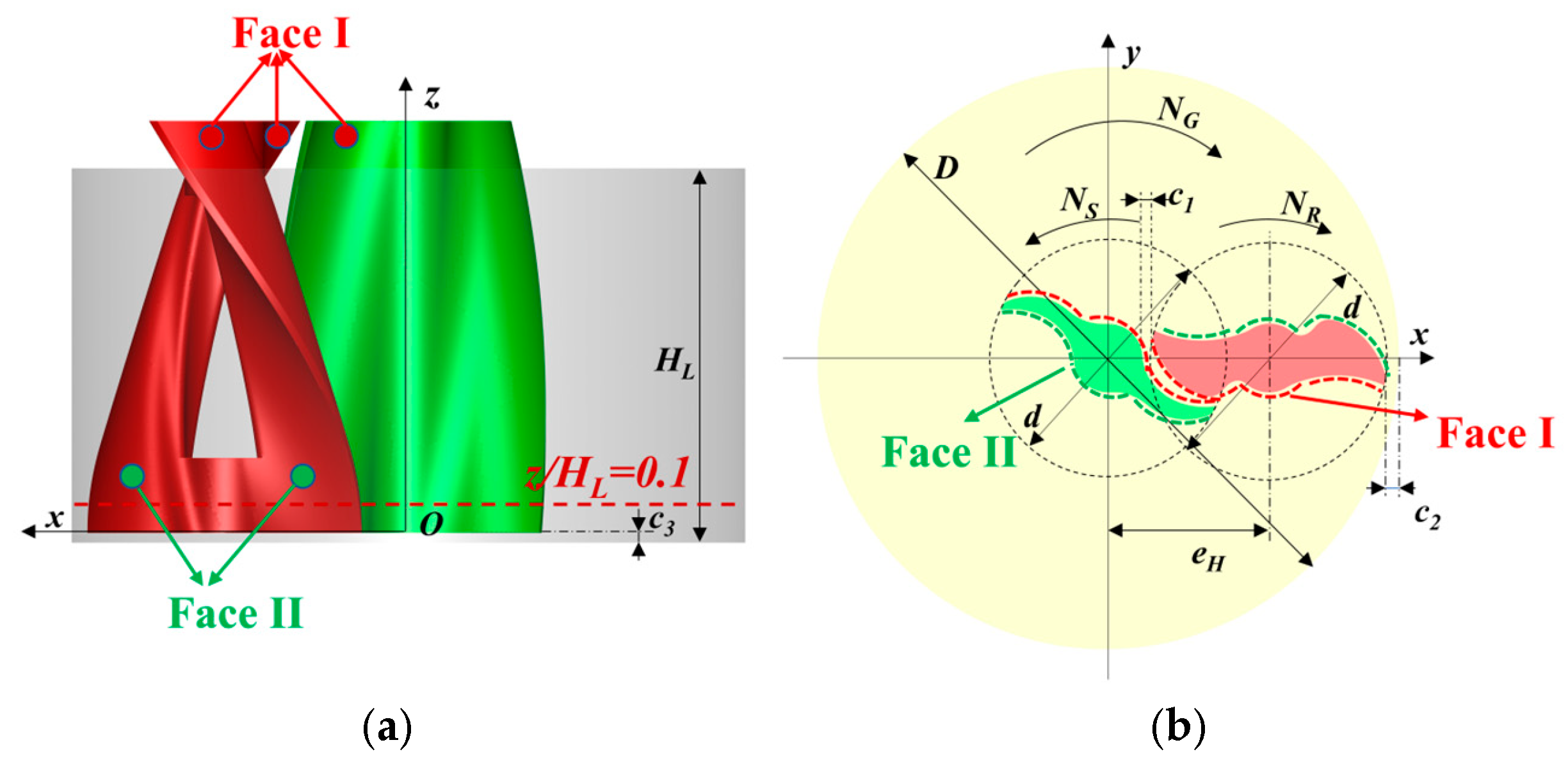
2. Geometry and Parameters
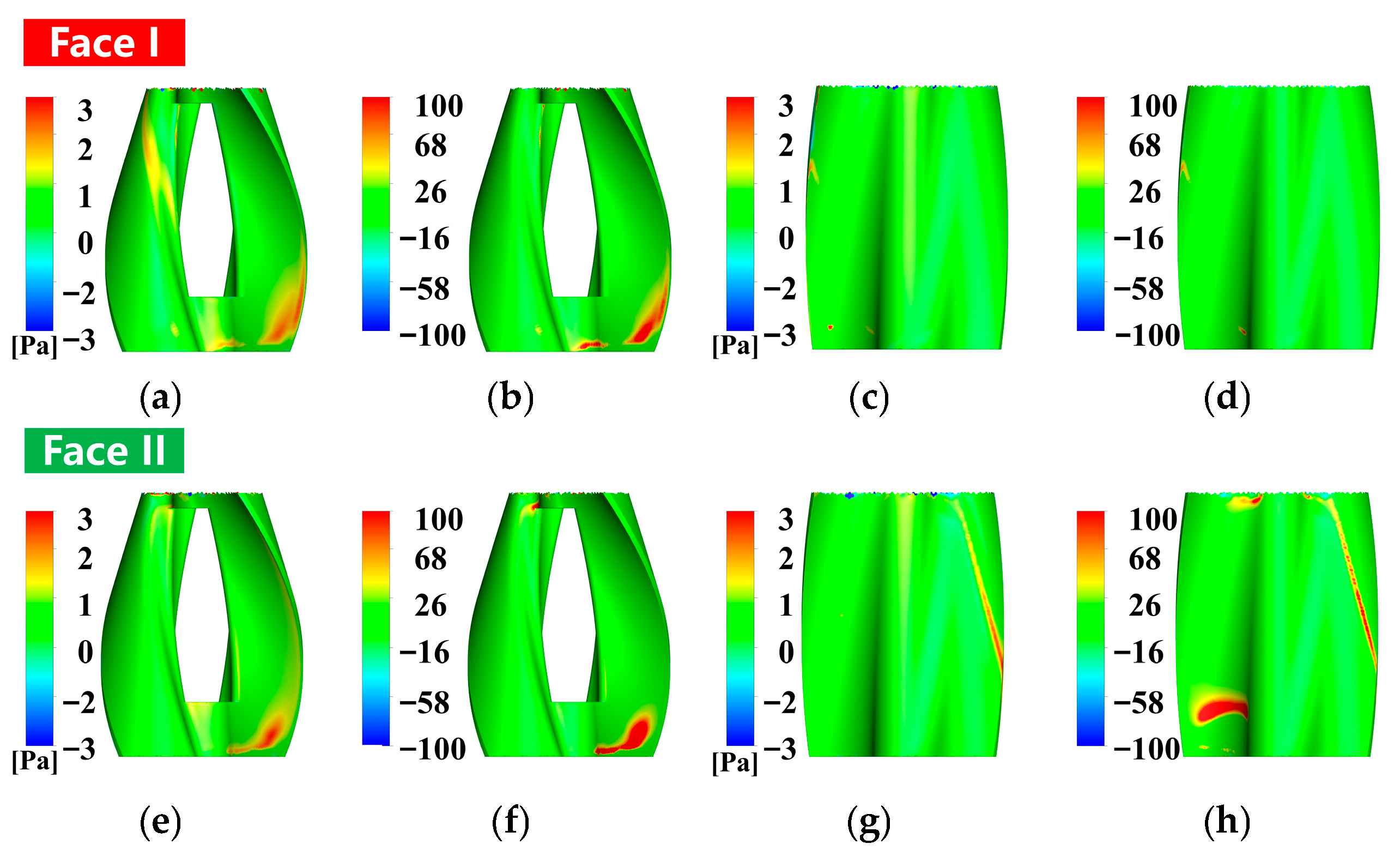
- Face I: The two adjacent faces between the blades.
- Face II: The two non-adjacent faces between the blades.
3. CFD Solution
3.1. Material Properties
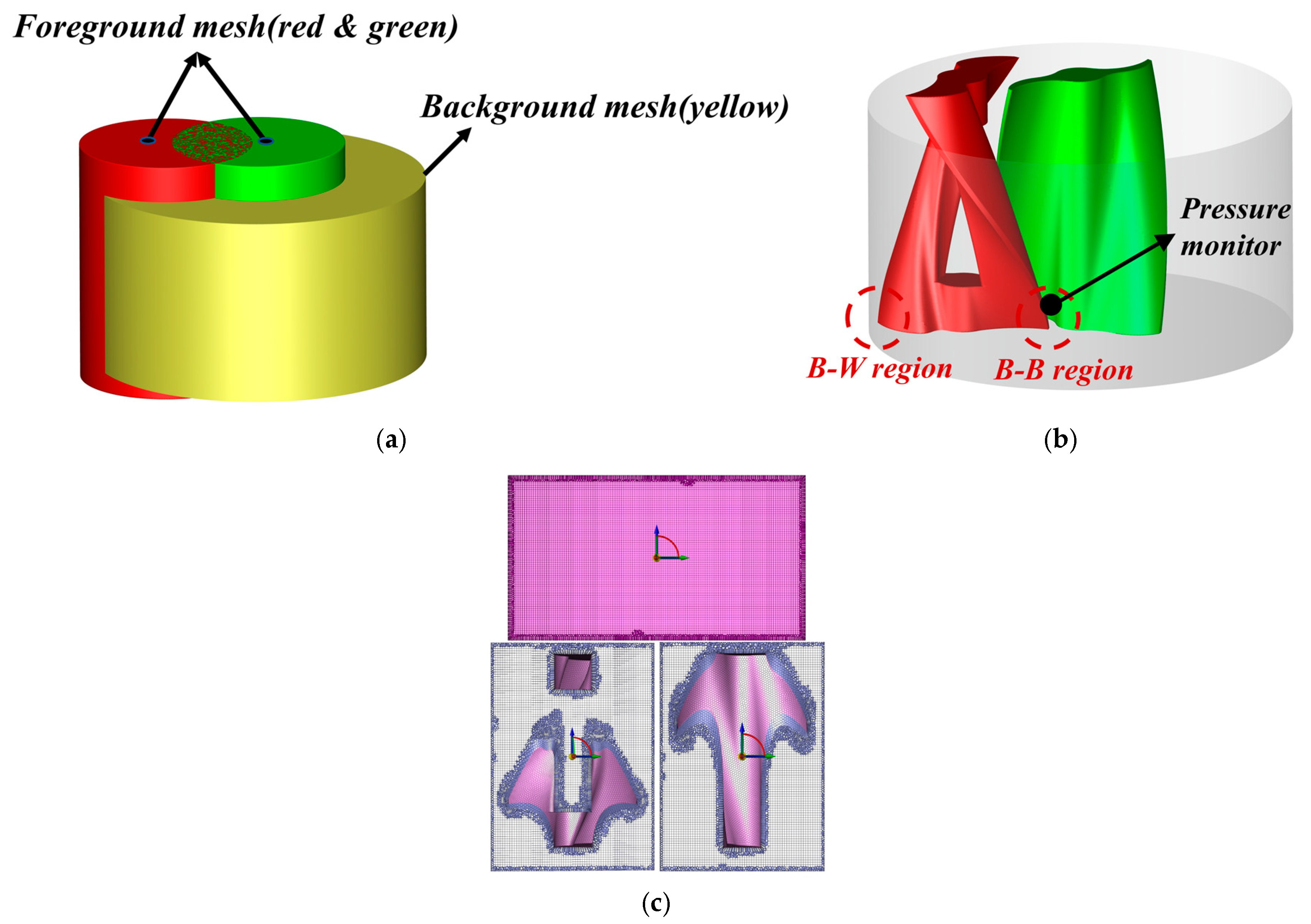
3.2. CFD Modeling Strategy
3.3. Validation and Verification
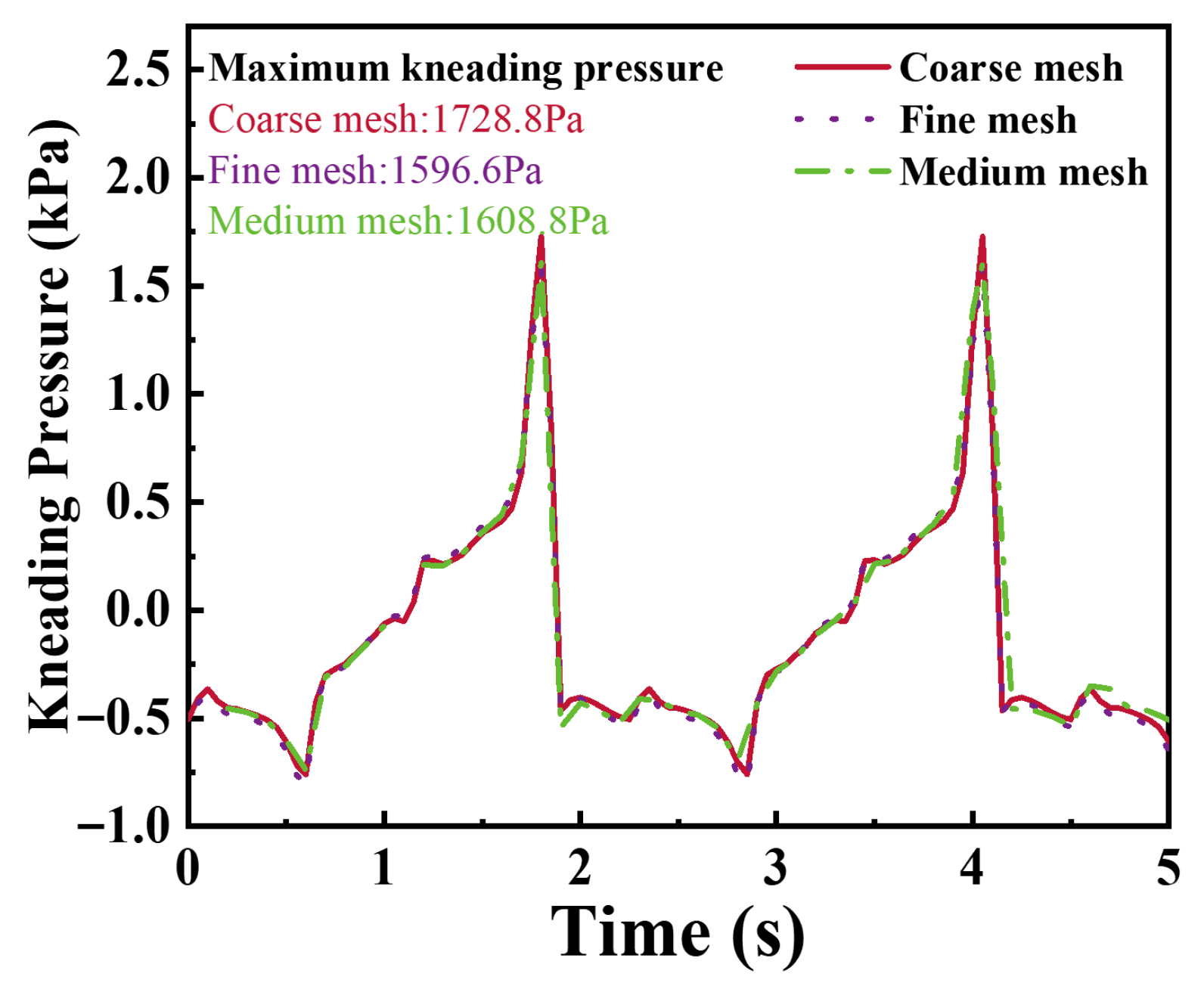
3.3.1. Grid Independence
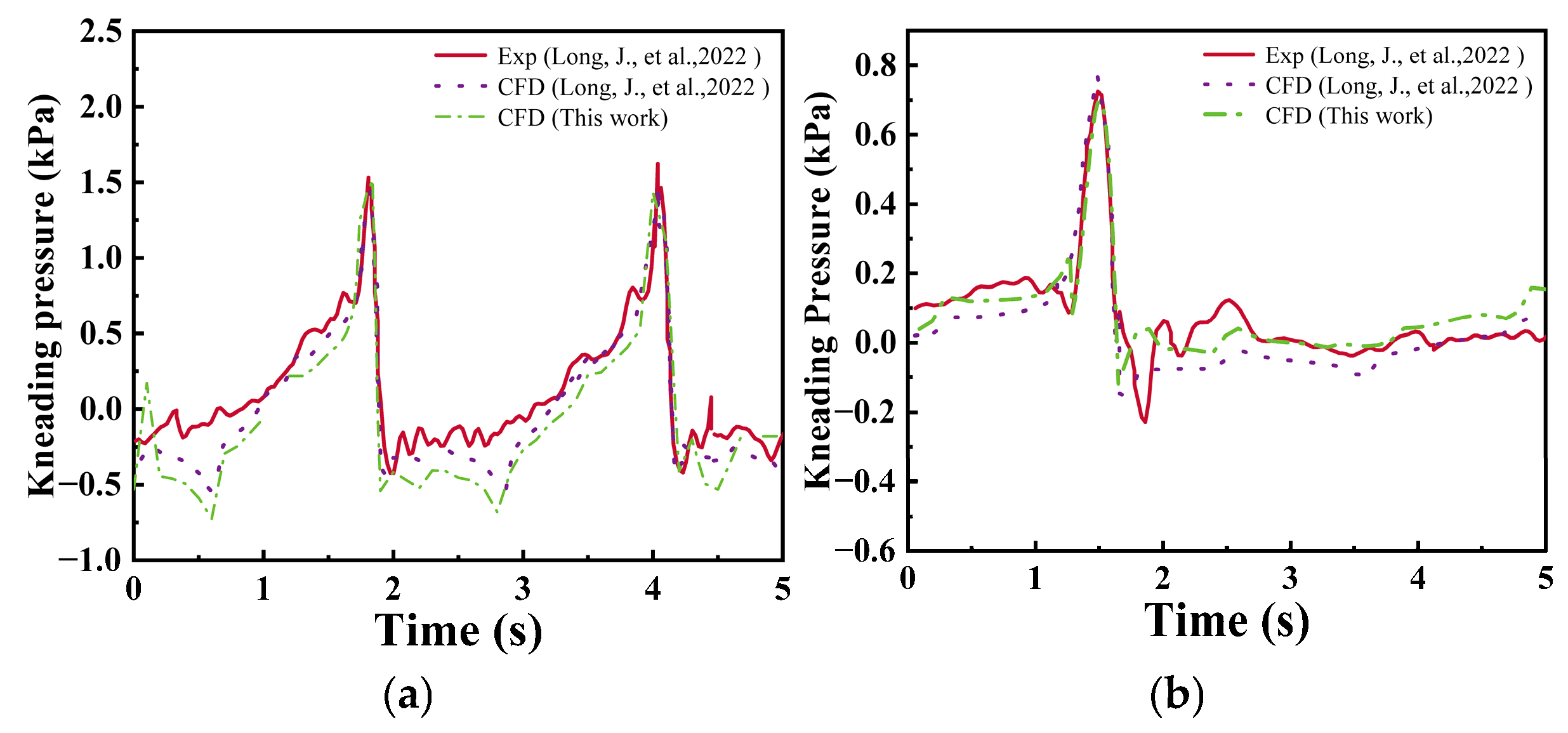
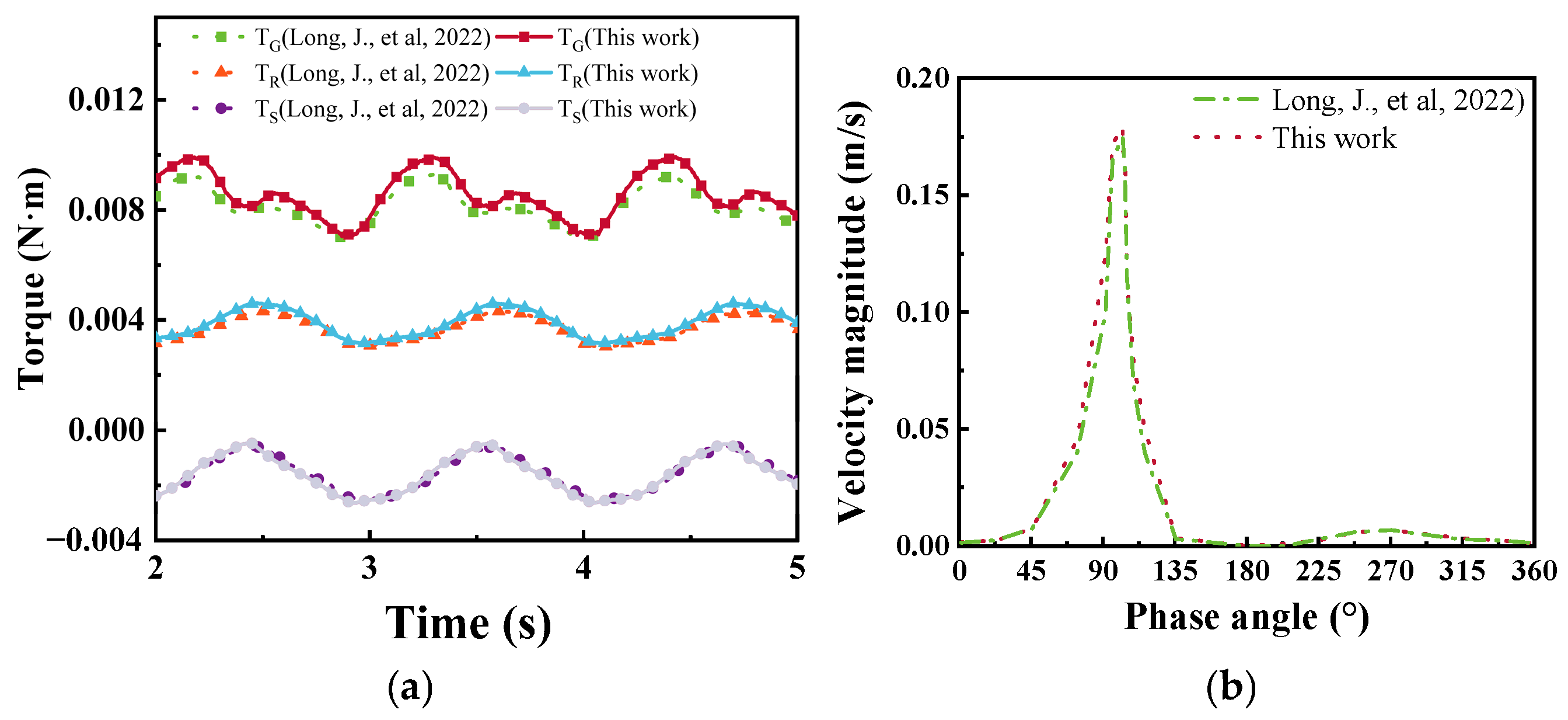
3.3.2. Validation of the CFD Model
4. SVD-Based Reduced-Order Model Construction
4.1. Singular Value Decomposition
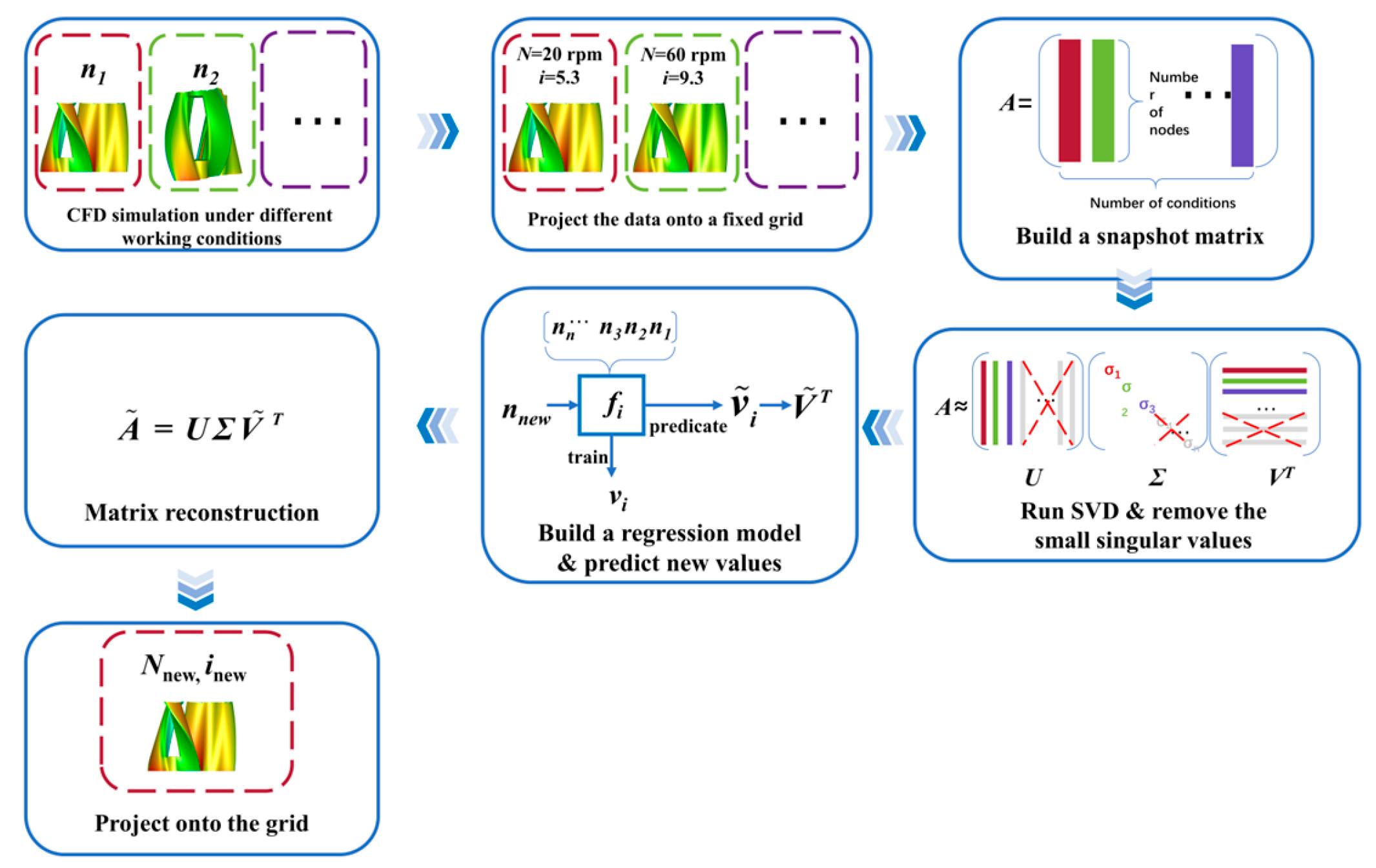
4.2. Data Acquisition and Process
5. Results and Discussion
5.1. Analysis of Flow Field and Load Characteristics
5.1.1. Flow Field Analysis
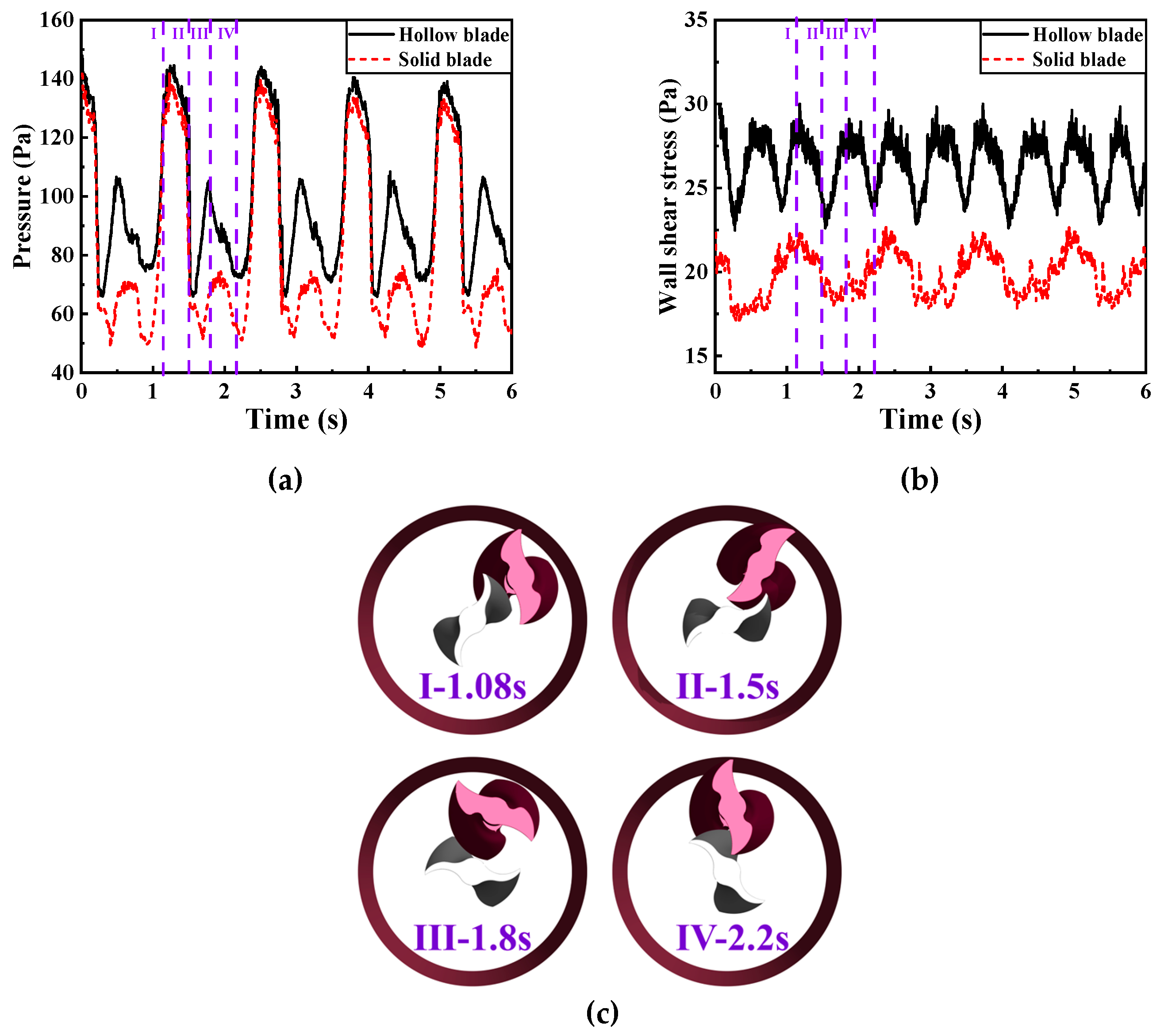
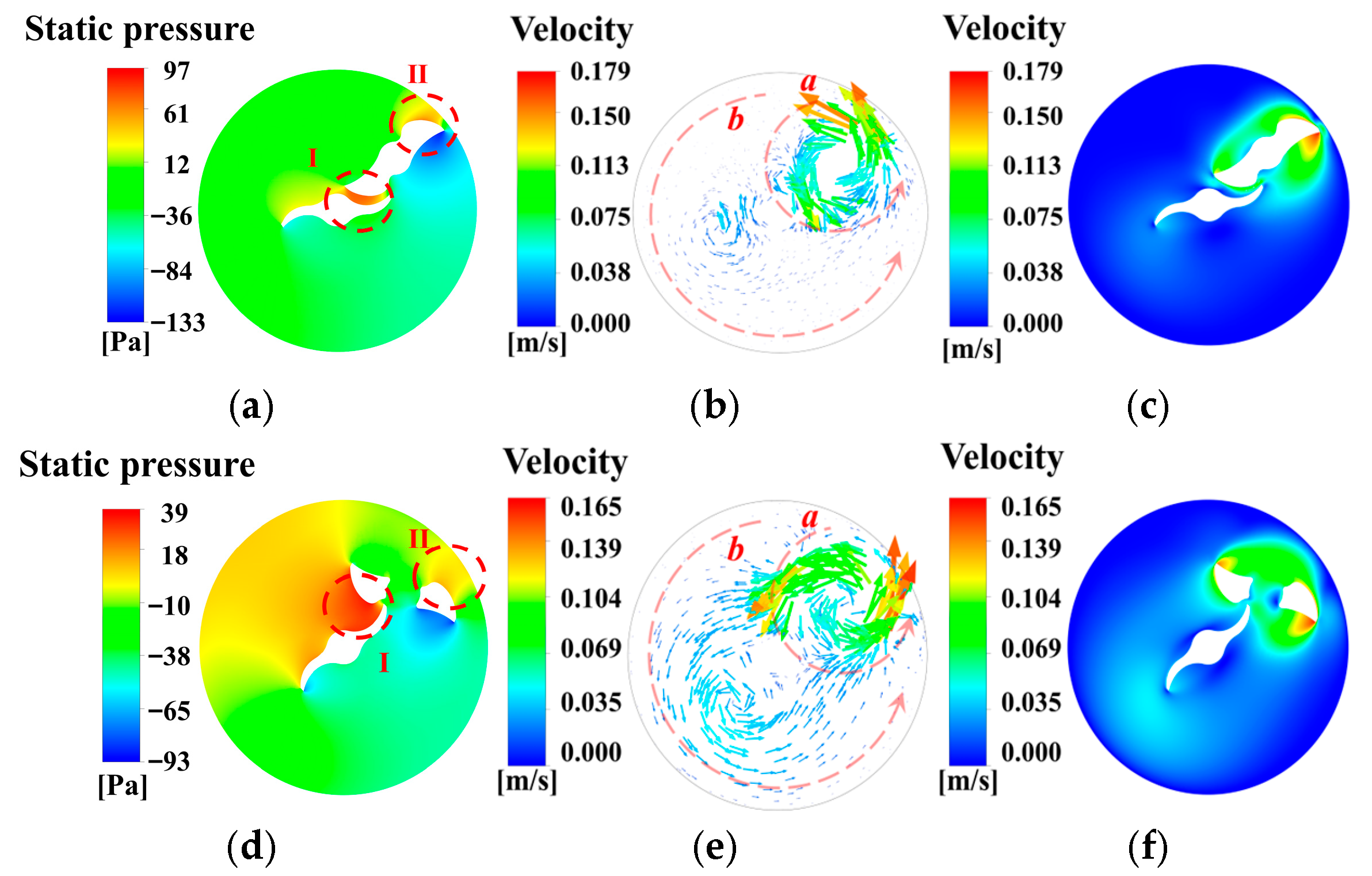
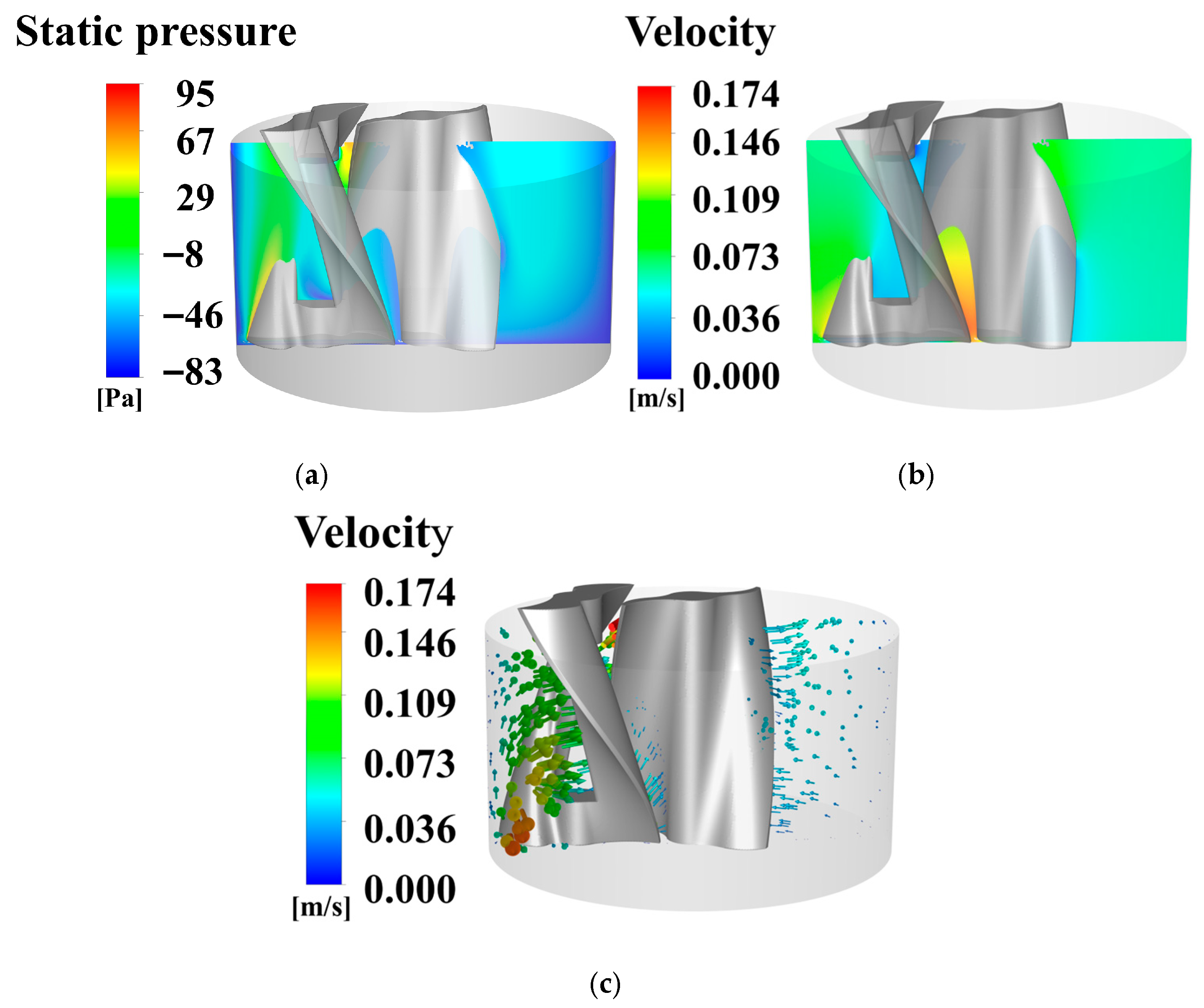
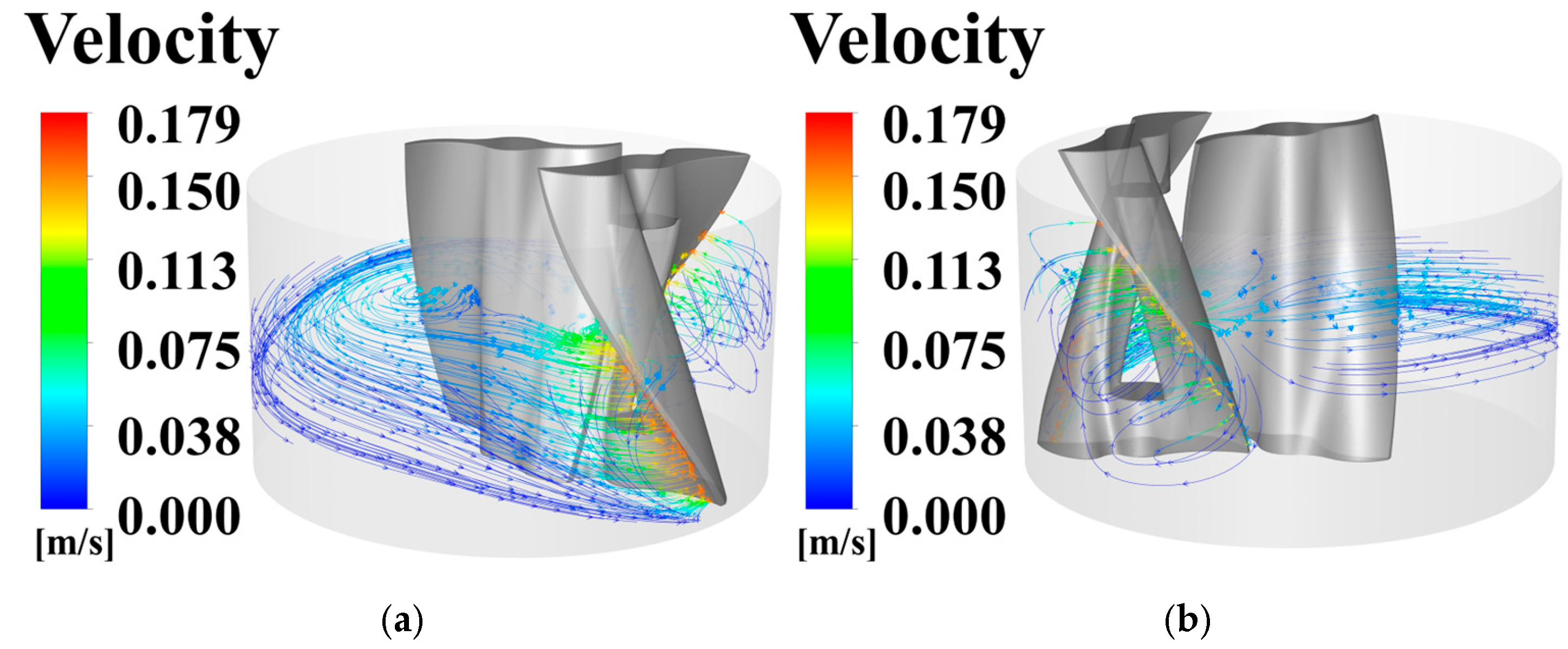
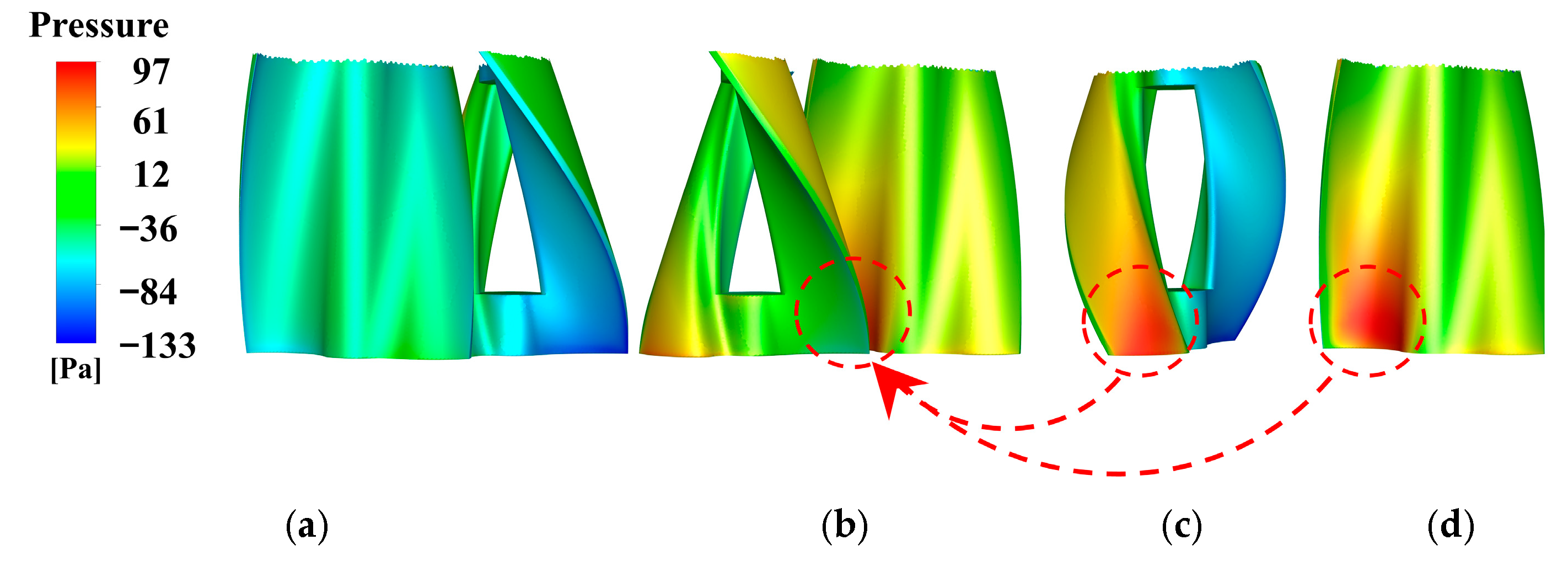
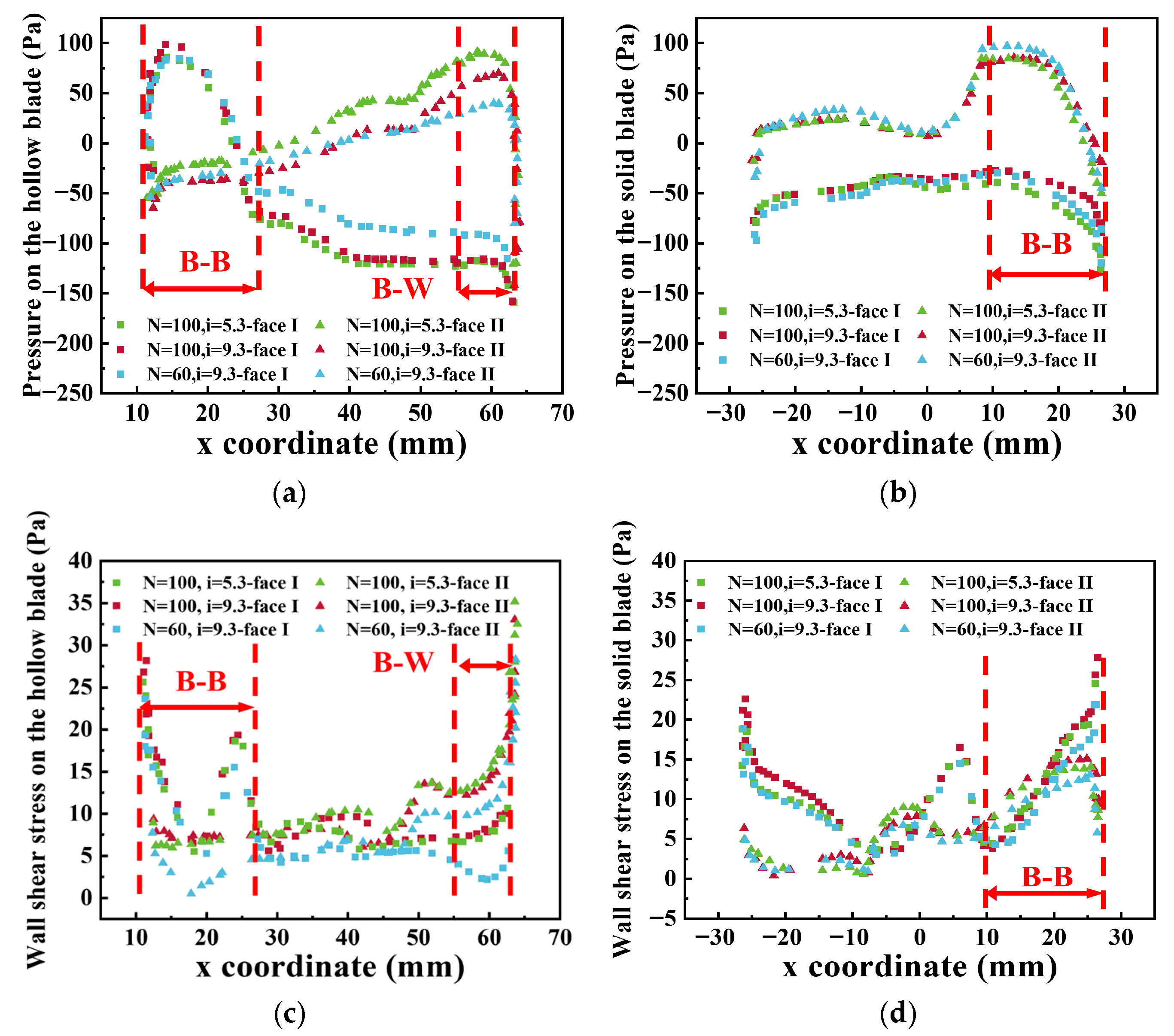
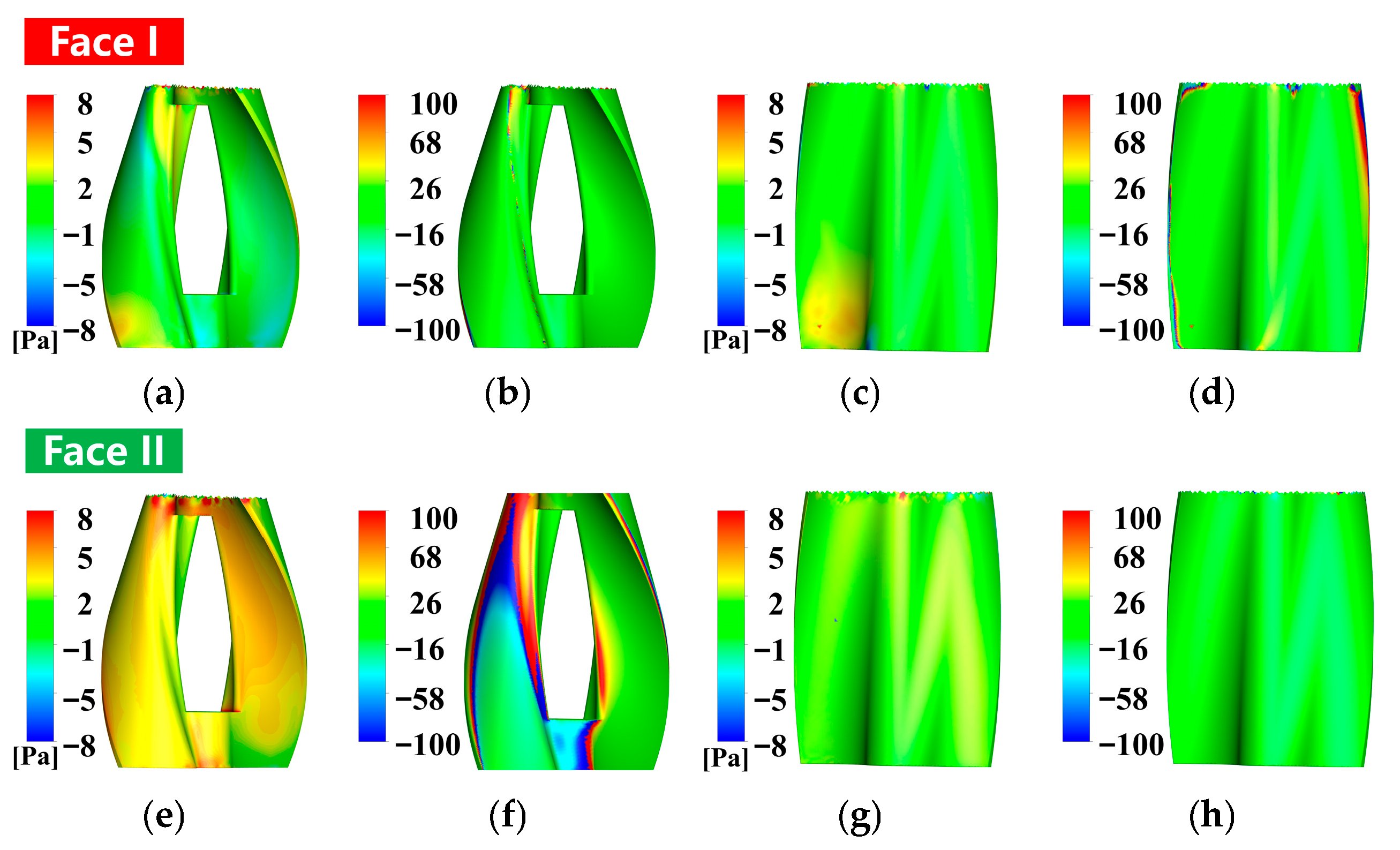
- Blade–Blade (B-B) Region (Figure 8a—I region): Occurs when the two blades mutually approach each other. Due to the speed difference between the blades, the kneading cavity between them rapidly narrows to a minimum gap width of 2 mm (c1). The material is strongly compressed, causing a sharp pressure rise, and the pressure in this region is significantly higher than in adjacent areas. Subsequently, the cavity expands, and the pressure quickly drops. The pressure curve in Figure 8 also indicates that this pressurization-depressurization process is completed within 0.1 s.
- Blade–Wall (B-W) Region (Figure 8a—II region): Occurs when a blade tip sweeps near the vessel wall. Here, the local linear velocity of the blade is at its maximum, leading to significant compression of the fluid and resulting in a region of high pressure that is markedly greater than in surrounding areas.
5.1.2. Load Distribution on the Blades
5.1.3. Influence of Rotational Speed on Load Distribution
5.2. SVD and Model Analysis
5.2.1. Modal Retention
5.2.2. Reduced-Order Model Performance Evaluation
6. Conclusions
Author Contributions
Funding
Data Availability Statement
Conflicts of Interest
References
- Mishra, P.; Ein-Mozaffari, F. Critical review of different aspects of liquid-solid mixing operations. Rev. Chem. Eng. 2020, 36, 555–592. [Google Scholar] [CrossRef]
- Jaszczur, M.; Młynarczykowska, A. A General Review of the Current Development of Mechanically Agitated Vessels. Processes 2020, 8, 982. [Google Scholar] [CrossRef]
- Kabra, A.; Nema, A.; Karvinkoppa, M.; Nema, A.; Thorat, S. Computational fluid dynamics used by mixing vessels for predicting hydrodynamic behaviour of mixture: An overview. Mater. Today Proc. 2021, 47, 2305–2309. [Google Scholar] [CrossRef]
- Xie, J.H.; Zhang, L.J.; Derksen, J.J. Detailed simulations of particle breakage as a result of agitation. Chem. Eng. Res. Des. 2021, 168, 298–306. [Google Scholar] [CrossRef]
- Jiang, S.B.; Zhang, H.W.; Zeng, Q.L.; Du, Q.; Liu, X.P. Numerical Study of Wear Characteristics of Vertical Shaft Planetary Mixer Blades. Materials 2025, 18, 3137. [Google Scholar] [CrossRef]
- Arratia, P.E.; Kukura, J.; Lacombe, J.; Muzzio, F.J. Mixing of shear-thinning fluids with yield stress in stirred tanks. AIChE J. 2006, 52, 2310–2322. [Google Scholar] [CrossRef]
- Ayala, J.S.; de Moura, H.L.; Amaral, R.d.L.; Oliveira Júnior, F.D.A.; Nunhez, J.R.; de Castilho, G.J. Two-dimensional shear rate field and flow structures of a pseudoplastic fluid in a stirred tank using particle image velocimetry. Chem. Eng. Sci. 2022, 248, 117198. [Google Scholar] [CrossRef]
- Luan, D.; Wang, Z.; Wang, H.; Wang, S.; Li, L.; Chen, Y. Determination method of the cavern boundary viscosity in a stirred tank with pseudoplastic fluid. AIChE J. 2020, 66, e16941. [Google Scholar] [CrossRef]
- Erwin, L. Theory of laminar mixing. Polym. Eng. Sci. 2004, 18, 1044–1048. [Google Scholar] [CrossRef]
- Chien, W.L.; Rising, H.; Ottino, J.M. Laminar mixing and chaotic mixing in several cavity flows. J. Fluid Mech. 2006, 170, 355–377. [Google Scholar] [CrossRef]
- Singh, B.; Kovács, K.L.; Bagi, Z.; Nyári, J.; Szepesi, G.L.; Petrik, M.; Siménfalvi, Z.; Szamosi, Z. Enhancing efficiency of anaerobic digestion by optimization of mixing regimes using helical ribbon impeller. Fermentation 2021, 7, 251. [Google Scholar] [CrossRef]
- Mihailova, O.; Mothersdale, T.; Rodgers, T.; Ren, Z.; Watson, S.; Lister, V.; Kowalski, A. Optimisation of mixing performance of helical ribbon mixers for high throughput applications using computational fluid dynamics. Chem. Eng. Res. Des. 2018, 132, 942–953. [Google Scholar] [CrossRef]
- Gu, D.; Liu, Z.; Xu, C.; Li, J.; Tao, C.; Wang, Y. Solid-liquid mixing performance in a stirred tank with a double punched rigid-flexible impeller coupled with a chaotic motor. Chem. Eng. Process. Process Intensif. 2017, 118, 37–46. [Google Scholar] [CrossRef]
- Long, J.C.; Wang, C.; Zhu, J.Z.; Zhan, X.B.; Sun, Z.B.; Shen, B.J.; Li, X.W. Discrete element simulation for mixing performances and power consumption in a twin-blade planetary mixer with non-cohesive particles. Adv. Powder Technol. 2022, 33, 103437. [Google Scholar] [CrossRef]
- Lu, W.M.; Chen, S.M.; Zheng, J.N.; Fu, X.Y.; Fu, G.H.; Zhong, J.; Li, Q.Y.; Zhen, Z.B. Optimum analysis of inclined angle of mixing blades in planetary mixer based on discrete element method. Adv. Mech. Eng. 2024, 16, 1–18. [Google Scholar] [CrossRef]
- Gu, D.Y.; Wang, J.; Yang, H.; Deng, Y.Y. Investigation on Solid Particles and Pseudoplastic Fluid Mixing Characteristics in a Dislocated Self-Similarity Impeller Stirred Reactor. Ind. Eng. Chem. Res. 2023, 62, 10700–10710. [Google Scholar] [CrossRef]
- Yu, K.; Yan, P.; Hu, J. Numerical analysis of blade stress of marine propellers. J. Mar. Sci. Appl. 2020, 19, 436–443. [Google Scholar] [CrossRef]
- Ascanio, G. Mixing time in stirred vessels: A review of experimental techniques. Chin. J. Chem. Eng. 2015, 23, 1065–1076. [Google Scholar] [CrossRef]
- Heidari, A. CFD simulation of impeller shape effect on quality of mixing in two-phase gas–liquid agitated vessel. Chin. J. Chem. Eng. 2020, 28, 2733–2745. [Google Scholar] [CrossRef]
- Kaminoyama, M. Review of Visualization of Flow and Dispersion States of Slurry System Fluids in Stirred Vessels. J. Chem. Eng. Jpn. 2014, 47, 109–114. [Google Scholar] [CrossRef]
- Ochieng, A.; Onyango, M.; Kiriamiti, K. Experimental measurement and computational fluid dynamics simulation of mixing in a stirred tank: A review. S. Afr. J. Sci. 2009, 105, 421–426. [Google Scholar] [CrossRef]
- Ochieng, A.; Onyango, M.S. Cfd Simulation of Solids Suspension in Stirred Tanks: Review. Hem. Ind. 2010, 64, 365–374. [Google Scholar] [CrossRef]
- Ramírez-López, A. Analysis of Mixing Efficiency in a Stirred Reactor Using Computational Fluid Dynamics. Symmetry 2024, 16, 237. [Google Scholar] [CrossRef]
- Sajjadi, B.; Raman, A.A.A.; Ibrahim, S.; Shah, R. Review on gas-liquid mixing analysis in multiscale stirred vessel using CFD. Rev. Chem. Eng. 2012, 28, 171–189. [Google Scholar] [CrossRef]
- Wang, Y.D.; Li, Z.Q.; Li, K.X.; Zhang, B.Q.; Chen, H.M.; Zhou, Q.; Zhou, Z.Y. CFD-DEM study of heat transfer and particle dissolution in stirred tanks. Chem. Eng. Sci. 2025, 315, 121858. [Google Scholar] [CrossRef]
- Wodolazski, A. Coupled CFD-DEM Numerical Simulation of Hydrothermal Liquefaction (HTL) of Sludge Flocs to Biocrude Oil in a Continuous Stirred Tank Reactor (CSTR) in a Scale-Up Study. Energies 2025, 18, 4557. [Google Scholar] [CrossRef]
- Long, J.; He, Y.; Zhan, X.; Sun, Z.; Shen, B.; Li, X. Study of kneading pressure and power consumption in a twin-blade planetary mixer for mixing highly viscous fluids. Chem. Eng. Sci. 2021, 241, 116723. [Google Scholar] [CrossRef]
- Long, J.; Zhan, X.; Guo, F.; Sun, Z.; Shen, B.; He, Y.; Li, X. Study of hydrodynamics and flow characteristics in a twin-blade planetary mixer with non-Newtonian fluids. AIChE J. 2022, 68, e17797. [Google Scholar] [CrossRef]
- Li, S.; Duan, G.; Sakai, M. Development of a reduced-order model for large-scale Eulerian–Lagrangian simulations. Adv. Powder Technol. 2022, 33, 103632. [Google Scholar] [CrossRef]
- Jiang, Y.; Byrne, E.; Glassey, J.; Chen, X. Reduced-order modeling of solid-liquid mixing in a stirred tank using data-driven singular value decomposition. Chem. Eng. Res. Des. 2023, 196, 40–51. [Google Scholar] [CrossRef]
- Araújo, I.G.; Laier, J.E. Operational modal analysis using SVD of power spectral density transmissibility matrices. Mech. Syst. Signal Process. 2014, 46, 129–145. [Google Scholar] [CrossRef]
- Vinuesa, R.; Brunton, S.L. Enhancing computational fluid dynamics with machine learning. Nat. Comput. Sci. 2022, 2, 358–366. [Google Scholar] [CrossRef] [PubMed]
- Li, A.; Yao, Y.; Zhang, X.; Wan, Y.; Li, P.; Wang, Y.; Tao, C.; Liu, Z. Using CFD and machine learning to explore chaotic mixing in laminar diameter-transformed stirred tanks. Chem. Eng. J. 2024, 499, 156201. [Google Scholar] [CrossRef]
- Hasegawa, K.; Fukami, K.; Murata, T.; Fukagata, K. CNN-LSTM based reduced order modeling of two-dimensional unsteady flows around a circular cylinder at different Reynolds numbers. Fluid Dyn. Res. 2020, 52, 065501. [Google Scholar] [CrossRef]
- Murata, T.; Fukami, K.; Fukagata, K. Nonlinear mode decomposition with convolutional neural networks for fluid dynamics. J. Fluid Mech. 2020, 882, A13. [Google Scholar] [CrossRef]
- Diaz-Morales, P.; Corrochano, A.; Lopez-Martin, M.; Le Clainche, S. Deep learning combined with singular value decomposition to reconstruct databases in fluid dynamics. Expert Syst. Appl. 2024, 238, 121924. [Google Scholar] [CrossRef]
- Abdalla, H.B.; Kumar, Y.; Marchena, J.; Guzman, S.; Awlla, A.; Gheisari, M.; Cheraghy, M. The Future of Artificial Intelligence in the Face of Data Scarcity. CMC-Comput. Mater. Contin. 2025, 84, 1073–1099. [Google Scholar] [CrossRef]
- Pant, P.; Doshi, R.; Bahl, P.; Barati Farimani, A. Deep learning for reduced order modelling and efficient temporal evolution of fluid simulations. Phys. Fluids 2021, 33, 107101. [Google Scholar] [CrossRef]
- Phillips, T.R.F.; Heaney, C.E.; Smith, P.N.; Pain, C.C. An autoencoder-based reduced-order model for eigenvalue problems with application to neutron diffusion. Int. J. Numer. Methods Eng. 2021, 122, 3780–3811. [Google Scholar] [CrossRef]
- Zhan, X.; Li, X.; Zhang, J.; Cui, F. Design and optimization on blade profile of vertical kneader. J. Solid Rocket. Technol. 2014, 37, 413–417. [Google Scholar]





| Geometry Parameters | Values (mm) | Motion Parameters | Relationships |
|---|---|---|---|
| Diameter of vessel, D | 133 | Absolute speed, N (rpm) | N = NG + NR (+) |
| Diameter of blades, d | 55 | Speed ratio, i | i = N/NG ≥ 3 |
| Eccentric distance, eH | 37.5 | Rotational speed of hollow blade, NR (rpm) | (+) |
| Blade–blade clearance, c1 | 2 | Gyration speed of hollow blade, NG (rpm) | (+) |
| Blade–wall clearance, c2 | 2.5 | Absolute speed of solid blade, Nsolid (rpm) | Nsolid = NS + NG |
| Blade–bottom clearance, c3 | 2 | Relative speed of solid blade, NS (rpm) | NS = −0.5NR (−) |
| Liquid height, HL | 75 | Diameter of rotation, dR | dR = d |
| Diameter of gyration, dG | dG = 2eH |
| Corn Syrup | 3.0 wt% CMC Solution | Representative Shear-Thinning Fluid | |
|---|---|---|---|
| k (Pa·sn) | 4.00 | 35.32 | 4 |
| n | 1.00 | 0.446 | 0.25 |
| Density ρ (kg/m3) | 1340 | 1038 | 1340 |
| Region | Boundary Type | Details |
|---|---|---|
| Vessel walls | No slip | u = 0 |
| Blade surfaces | Moving walls | Velocity from combined rotation and gyration |
| Vessel top | No shear stress | No tangential stress and zero scalar normal flux |
| Overset interfaces | Overset interpolation | Smooth velocity transfer |
| Hollow Blade | Solid Blade | |
|---|---|---|
| Coarse mesh | 320,886 | 259,898 |
| Medium mesh | 544,838 | 428,644 |
| Fine mesh | 987,963 | 989,522 |
| Parameter | Training Set | |||||||
|---|---|---|---|---|---|---|---|---|
| N | 100 | 100 | 100 | 80 | 80 | 80 | 60 | 60 |
| i | 9.3 | 7.3 | 5.3 | 11.3 | 9.3 | 7.3 | 11.3 | 5.3 |
| N | 40 | 40 | 40 | 40 | 20 | 20 | 20 | |
| i | 11.3 | 9.3 | 7.3 | 5.3 | 11.3 | 9.3 | 5.3 | |
| Parameter | Prediction Set | ||
|---|---|---|---|
| N | 60 | 70 | 110 |
| i | 9.3 | 7.3 | 9.3 |
| Item | Mode | Fit Function | R2 |
|---|---|---|---|
| pH | 1st | 0.9866 | |
| 2nd | 0.9509 | ||
| 3rd | 0.7416 | ||
| τH | 1st | 0.9987 | |
| 2nd | 0.4184 | ||
| 3rd | 0.7175 | ||
| pS | 1st | 0.9863 | |
| 2nd | 0.9959 | ||
| 3rd | 0.6052 | ||
| τS | 1st | 0.9969 | |
| 2nd | 0.9255 | ||
| 3rd | 0.8932 |
| pS | pH | τS | τH | |
|---|---|---|---|---|
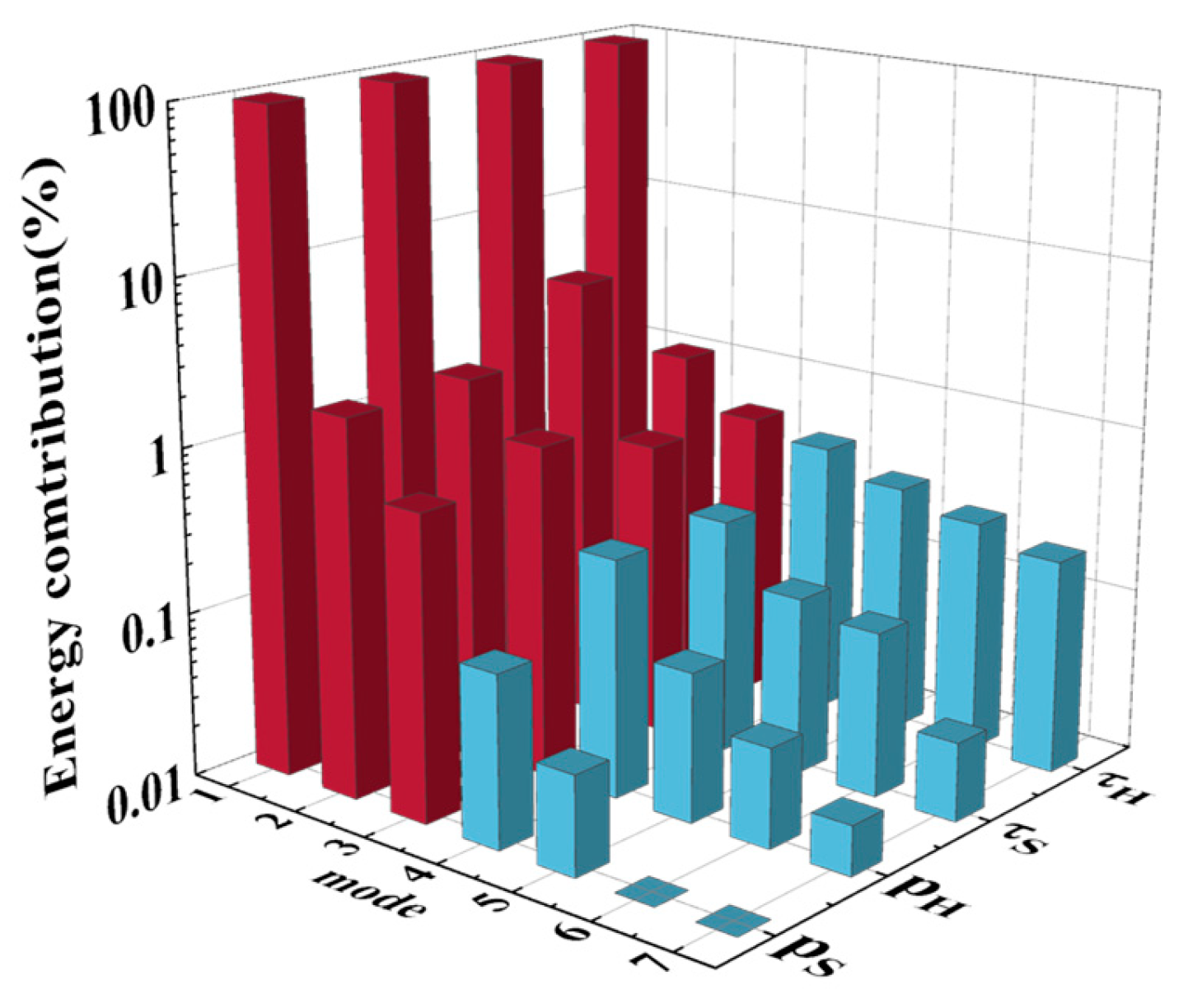
| Energy contribution | 99.8% | 99.6% | 99.4% | 98.3% |
| Exceedance Level (Fraction of Mean) | MSE | MAE | MPE | Proportion of Data | ||
|---|---|---|---|---|---|---|
| N = 60 rpm i = 9.3 | pH | All data | 11.07 | 2.86 | 63.12 | 1.00 |
| 50% | 8.86 | 2.50 | 7.57 | 0.72 | ||
| 100% | 6.78 | 2.10 | 4.00 | 0.37 | ||
| 200% | 3.01 | 1.42 | 1.74 | 0.15 | ||
| pS | All data | 5.31 | 1.98 | \ | 1.00 | |
| 50% | 6.15 | 2.18 | 5.56 | 0.70 | ||
| 100% | 6.89 | 2.34 | 4.81 | 0.50 | ||
| 200% | 10.76 | 2.85 | 3.76 | 0.06 | ||
| τH | All data | 3.95 | 0.41 | 6.88 | 1.00 | |
| 50% | 4.18 | 0.38 | 3.88 | 0.92 | ||
| 100% | 8.99 | 0.40 | 2.13 | 0.41 | ||
| 200% | 96.98 | 1.70 | 4.39 | 0.04 | ||
| τS | All data | 1.05 | 0.33 | \ | 1.00 | |
| 50% | 1.26 | 0.34 | 4.10 | 0.81 | ||
| 100% | 1.88 | 0.35 | 2.84 | 0.44 | ||
| 200% | 11.04 | 0.64 | 3.18 | 0.06 | ||
| N = 70 rpm i = 7.3 | pH | All data | 3.14 | 1.27 | 25.24 | 1.00 |
| 50% | 3.27 | 1.26 | 3.10 | 0.72 | ||
| 100% | 4.09 | 1.36 | 2.14 | 0.38 | ||
| 200% | 2.95 | 1.15 | 1.27 | 0.15 | ||
| pS | All data | 3.45 | 1.13 | \ | 1.00 | |
| 50% | 3.93 | 1.16 | 2.96 | 0.71 | ||
| 100% | 3.63 | 1.09 | 2.05 | 0.51 | ||
| 200% | 2.50 | 1.12 | 1.42 | 0.05 | ||
| τH | All data | 1.05 | 0.46 | 6.40 | 1.00 | |
| 50% | 1.08 | 0.46 | 4.57 | 0.92 | ||
| 100% | 1.82 | 0.45 | 2.82 | 0.43 | ||
| 200% | 12.87 | 0.72 | 2.39 | 0.03 | ||
| τS | All data | 0.58 | 0.25 | \ | 1.00 | |
| 50% | 0.69 | 0.25 | 3.14 | 0.80 | ||
| 100% | 1.08 | 0.24 | 1.85 | 0.44 | ||
| 200% | 7.07 | 0.36 | 1.15 | 0.06 | ||
| N = 110 rpm i = 9.3 | pH | All data | 98.44 | 8.04 | 52.39 | 1.00 |
| 50% | 82.35 | 7.22 | 13.90 | 0.72 | ||
| 100% | 48.98 | 5.29 | 6.21 | 0.40 | ||
| 200% | 17.40 | 3.34 | 2.52 | 0.10 | ||
| pS | All data | 26.14 | 3.60 | \ | 1.00 | |
| 50% | 31.21 | 4.14 | 6.90 | 0.79 | ||
| 100% | 43.23 | 5.25 | 7.40 | 0.49 | ||
| 200% | 53.61 | 6.29 | 5.84 | 0.05 | ||
| τH | All data | 7.04 | 1.12 | 13.37 | 1.00 | |
| 50% | 7.35 | 1.12 | 9.99 | 0.94 | ||
| 100% | 13.75 | 1.05 | 5.16 | 0.41 | ||
| 200% | 144.23 | 2.81 | 6.32 | 0.03 | ||
| τS | All data | 3.40 | 0.51 | \ | 1.00 | |
| 50% | 4.16 | 0.55 | 5.29 | 0.79 | ||
| 100% | 7.05 | 0.59 | 3.65 | 0.43 | ||
| 200% | 43.66 | 1.05 | 3.08 | 0.06 |
Disclaimer/Publisher’s Note: The statements, opinions and data contained in all publications are solely those of the individual author(s) and contributor(s) and not of MDPI and/or the editor(s). MDPI and/or the editor(s) disclaim responsibility for any injury to people or property resulting from any ideas, methods, instructions or products referred to in the content. |
© 2026 by the authors. Licensee MDPI, Basel, Switzerland. This article is an open access article distributed under the terms and conditions of the Creative Commons Attribution (CC BY) license.
Share and Cite
Huang, F.; Fu, X.-X.; Ma, Z.-C.; Zhao, L.; Zong, Y. Reduced-Order Modeling of Non-Newtonian Fluid Mixing in a Twin-Blade Planetary Mixer Using Data-Driven Singular Value Decomposition. Appl. Sci. 2026, 16, 5039. https://doi.org/10.3390/app16105039
Huang F, Fu X-X, Ma Z-C, Zhao L, Zong Y. Reduced-Order Modeling of Non-Newtonian Fluid Mixing in a Twin-Blade Planetary Mixer Using Data-Driven Singular Value Decomposition. Applied Sciences. 2026; 16(10):5039. https://doi.org/10.3390/app16105039
Chicago/Turabian StyleHuang, Fei, Xin-Xiang Fu, Zhi-Chao Ma, Ling Zhao, and Yuan Zong. 2026. "Reduced-Order Modeling of Non-Newtonian Fluid Mixing in a Twin-Blade Planetary Mixer Using Data-Driven Singular Value Decomposition" Applied Sciences 16, no. 10: 5039. https://doi.org/10.3390/app16105039
APA StyleHuang, F., Fu, X.-X., Ma, Z.-C., Zhao, L., & Zong, Y. (2026). Reduced-Order Modeling of Non-Newtonian Fluid Mixing in a Twin-Blade Planetary Mixer Using Data-Driven Singular Value Decomposition. Applied Sciences, 16(10), 5039. https://doi.org/10.3390/app16105039