Article

Reduced-Order Modeling of Non-Newtonian Fluid Mixing in a Twin-Blade Planetary Mixer Using Data-Driven Singular Value Decomposition


School of Chemical Engineering, East China University of Science and Technology, Shanghai 200237, China
*
Author to whom correspondence should be addressed.
Appl. Sci. 2026, 16(10), 5039; https://doi.org/10.3390/app16105039 (registering DOI)
Submission received: 6 April 2026 / Revised: 30 April 2026 / Accepted: 13 May 2026 / Published: 18 May 2026

Abstract

Twin-blade planetary mixers are widely employed in the mixing of particle-laden non-Newtonian fluids. Their unique blade configuration makes accurate blade load distribution determination crucial for structural integrity and mixing efficiency. However, computational fluid dynamics (CFD) simulations are often prohibitively expensive, limiting their practical application. To address this, this study develops a reduced-order model (ROM) from CFD data to rapidly predict the blade load distribution of a 1 L twin-blade planetary mixer at key operational points. Flow field analysis shows blade pressure extremes arise from blade-to-blade and blade-to-wall interactions, with magnitudes determined by rotational and gyrational speeds; local shear extremes mainly stem from blade–wall interactions. Validation demonstrates the ROM achieves over 93% prediction accuracy in key regions covering over 30% of the dataset, cutting computational time from days (full CFD) to seconds. This model enables fast, accurate blade load prediction across varying speeds, providing a practical tool for blade design and real-time monitoring.

1. Introduction

In industrial production, product uniformity significantly influences performance. Mixing equipment has therefore been widely used in chemical, food, bioprocessing, and civil engineering fields due to its simple structure and high mixing efficiency [1,2,3]. In many applications, such as lithium-ion battery slurries, conductive pastes, food suspensions, etc., materials exhibit particle-laden non-Newtonian fluid characteristics with high viscosity and complex rheological behavior, where viscous forces dominate inertial forces, and the flow is typically laminar with minimal turbulence. Accurate prediction of blade loads is particularly critical for these systems, as excessive hydrodynamic forces can induce particle breakage, equipment wear, and degradation of product functional properties [4,5]. Theoretical studies indicate that the mixing effectiveness of highly viscous materials is predominantly governed by stretching, folding, and squeezing mechanisms within the flow field [6,7,8,9,10]. In addition to homogenization of the continuous phase, uniform particle dispersion, suppression of sedimentation, and preservation of particle morphology or functional structures are also required. Accordingly, impeller types capable of providing strong enough squeezing and stretching effects, such as anchor and helical ribbon impellers, are commonly employed for processing such materials [11,12,13]. Among them, the twin-blade planetary mixer is characterized by its unique planetary motion, in which each blade undergoes simultaneous self-rotation and revolution around the vessel axis. This coupled motion generates pronounced kneading zones and complex orbital flow trajectories throughout the vessel, leading to repeated stretching, folding, and squeezing of the material. As a result, twin-blade planetary mixers are particularly suitable for processing highly viscous and particle-laden non-Newtonian materials. Recent studies have further investigated the effects of blade profile optimization [14], clearance adjustment [15], and multi-phase flow characteristics [16] on mixing performance, confirming that blade–blade and blade–wall interactions are the dominant factors determining both mixing efficiency and structural loads. Therefore, a detailed investigation of the flow field and blade loading is essential to elucidate the underlying mixing mechanisms and provide a mechanistic basis for optimizing mixing performance while controlling the mixing intensity for particle-laden non-Newtonian systems.
However, the complexity of such non-Newtonian fluid flow renders experimental methods inadequate for capturing the complete transient internal flow and load information [17,18]. With the advancement of computer technology and computational fluid dynamics (CFD), numerical simulation has become an effective tool for studying such problems [19,20,21,22,23,24]. Wang et al. combined CFD-DEM with the Noyes–Whitney equation to study heat-assisted particle dissolution in a stirred tank, reporting that higher initial fluid temperature speeds up dissolution yet lowers heat transfer efficiency, and that smaller particles promote both heat and mass transfer via larger specific surface area [25]. Wodolazski used a CFD-DEM approach coupled with HTL kinetics to simulate biocrude production from sludge flocs in a stirred tank, revealing that agitator speed and slurry flow rate critically affect the dynamic yield [26]. Long et al. employed dynamic mesh and mesh reconstruction techniques to establish a CFD model for a 1 L twin-blade vertical mixer [27,28]. They analyzed the flow and power characteristics of Newtonian and pseudoplastic fluids within the equipment, extracted the maximum pressure on the blade surface, and further developed a correlation between rotational speed and maximum kneading pressure through dimensional analysis. However, numerical investigation of planetary mixers using CFD remains computationally demanding due to the multi-degree-of-freedom of blade motion and the resulting highly transient flow field. Moreover, because planetary blades generate periodic orbital flow structures, the blade loading varies continuously with its spatial position, and single-point load information provides limited physical insight into the overall hydrodynamic behavior.
To overcome these limitations, it is necessary to develop rapid and accurate methods for predicting the load distribution on the blade. Reduced-order modeling (ROM) provides an effective framework by projecting high-dimensional data (e.g., load distribution) onto a low-dimensional subspace and establishing mappings between operating parameters and reduced features. Among ROM techniques, Singular Value Decomposition (SVD), as a classical linear dimensionality reduction method, offers strong mathematical transparency and is well-suited for scenarios with limited data due to its efficiency with small sample sizes [29,30,31]. Li et al. proposed a Proper Orthogonal Decomposition (POD) method based on the Lanczos algorithm, significantly reducing the requirements [29]. Jiang et al. used SVD to reduce the dimensionality of solid concentration distribution in a stirred tank and combined it with a Kriging response surface model to predict the mixing state under new operating conditions. While retaining over 95% of the energy, the predicted solid concentration and static pressure distributions were close to CFD results, although some errors remained in regions with large gradients, such as near the blade tip. To address computational and memory challenges with large matrices [30].
Meanwhile, data-driven machine learning (ML) approaches have also been explored for reduced-order modeling and flow reconstruction due to their capability to represent nonlinear relationships. However, such methods typically require large training datasets and may suffer from convergence difficulties and overfitting in data-limited scenarios, as encountered in this study [32,33,34,35,36,37,38,39]. Therefore, linear dimensionality reduction techniques such as SVD remain advantageous under limited data availability. Accordingly, this study proposes an SVD-based reduced-order modeling framework to efficiently characterize and predict the spatial distribution of blade loading in twin-blade planetary mixers using limited CFD data.
The internal kneading mechanism and load distribution in twin-blade planetary mixers exhibit high nonlinearity and localization due to the complex motion trajectories of the impellers and the significant coupling effect between them, posing challenges for traditional modeling [40]. To address this, this study proposes a ROM construction method for blade load distribution based on SVD. Specifically, load data under representative operating conditions are first obtained through a limited number of CFD simulations and mapped onto a unified spatial grid. SVD is then applied to extract dominant modes from the high-dimensional dataset, followed by the establishment of an explicit relationship between the input rotational speed and the modal weight coefficients. This framework enables rapid reconstruction and prediction of the blade load distribution under new operating conditions.
This paper is organized as follows. Section 2 introduces the physical model and geometric parameters. Section 3 elaborates on the CFD model setup and validation. Section 4 details the SVD-based ROM construction process. Section 5 analyzes the internal flow characteristics and evaluates the prediction accuracy and computational efficiency of the proposed approach.

2. Geometry and Parameters

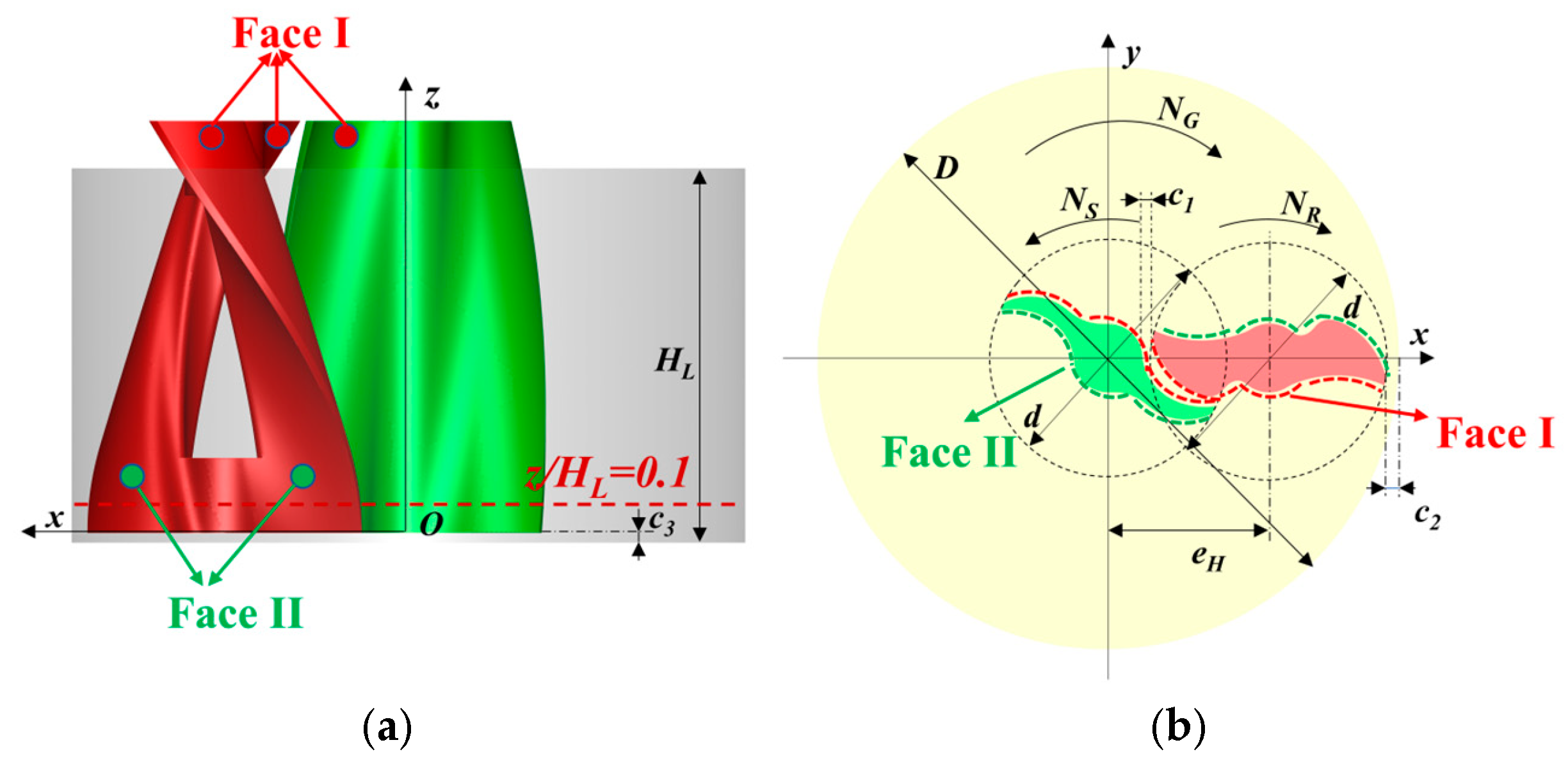
The geometric model in this study is derived from reference [14], as shown in Figure 1. The twin-blade planetary mixer consists of a vessel and two blades. The red blade features a hollowed-out central section and is therefore referred to as the hollow blade. Its motion involves gyration around the central axis of the vessel at a speed of NG while simultaneously rotating around its own central axis at a speed of NR. The green blade is not hollowed out and is referred to as the solid blade, which rotates only around the central axis of the vessel. The dimensional parameters of the mixer are illustrated in Table 1.
The motions of the two blades are coupled and interact with each other. To ensure proper meshing during their movement, a specific speed condition must be met. In the present work, due to the 1:2 pitch ratio between the hollow and solid blades, their relative rotational speed ratio needs to be 2:1. The specific rotational relationships and dimensional data are provided in Table 1, where the (+)/(−) signs indicate positive/negative rotational directions, respectively. Based on engineering experience, the typical speed range is N = 20~100 rpm.
For clarity, the blade surfaces are divided into two groups, as shown in Figure 1.
  • Face I: The two adjacent faces between the blades.
  • Face II: The two non-adjacent faces between the blades.
Notably, owing to the adopted speed ratio, Faces I and II of the solid blade swap periodically every 180° of rotation, while those of the hollow blade remain unchanged at the fixed sampling phase. This periodic interchange exerts no influence on the load analysis and phase identification, due to the structural symmetry of the solid blade.
For clarity, two key interaction regions are defined as follows:
Blade–Blade region (B-B region): the region where the two blades approach and knead each other.
Blade–Wall region (B-W region): the region where the blade tip moves close to the vessel wall.

3. CFD Solution

3.1. Material Properties

Since particle-laden non-Newtonian fluids most commonly exhibit shear-thinning behavior due to the shear-induced breakdown of particle network structures, this study employs shear-thinning fluids for CFD calculations and data acquisition. The rheological characteristics are described using the power-law model:
η = k γ ˙ n 1
where k is the consistency index, n is the flow behavior index, and γ ˙ is the shear rate defined as follows:
γ ˙ = 2 D : D
where D = 1/2(∇u + ∇ uT) is the strain rate tensor.
To verify the reliability of the numerical model established herein, two sets of experimental conditions from reference [15] were replicated by numerical simulation, using corn syrup and a 3.0 wt% carboxymethyl cellulose (CMC) solution as the working fluids. And for the results discussion in Section 5, a representative shear-thinning fluid is adopted. The properties of the adopted fluids used are listed in Table 2.

3.2. CFD Modeling Strategy

The fluids used in this study are all incompressible, and the mixing process is assumed to be adiabatic and at constant pressure. Due to the high viscosity, the maximum characteristic Reynolds number inside the mixer is on the order of 10~102, far below the threshold for transition to turbulence. Therefore, a laminar flow model is employed to describe the flow. The governing equations used for the calculations are as follows:
u = 0
t ( ρ u ) + ( ρ u u ) = p + ( μ ( u + ( u ) T ) )
where ρ is the fluid density (kg/m3), u is the velocity (m/s), η is the dynamic viscosity of the fluid, and p is the static pressure.
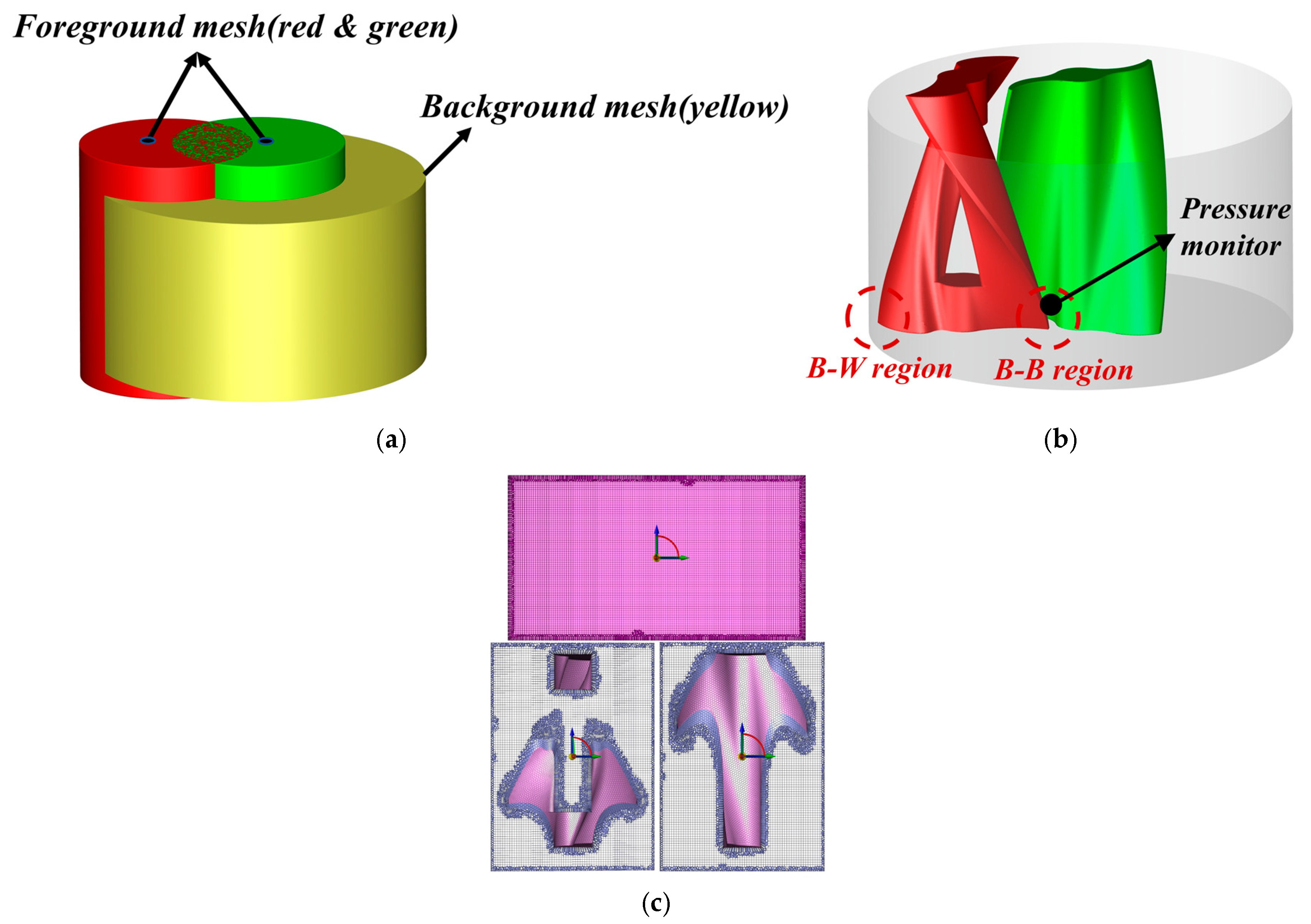
In this study, the overset mesh technique is employed to handle blade motion. Independent grids are constructed for the moving and stationary regions: the stationary region forms the background mesh, and the moving regions form the foreground mesh, which are nested within each other, as shown in Figure 2a. During the calculation, overlapping areas of lower-priority grids are removed based on their priority levels, and interpolation is performed at the interfaces of the remaining grids. The overset mesh eliminates the need for mesh reconstruction, allowing the use of high-quality structured grids for the main body, and effectively ensures numerical stability and calculation accuracy.
The whole computational domain is mainly discretized by structured hexahedral cells, as shown in Figure 2c. The upper layer is the background mesh, and the lower layer is the foreground mesh. Mesh refinement is implemented in the near-wall region to enhance the resolution of wall-bounded flow features. The transition region between the prism layer and the main body mesh is filled with polyhedral cells. Additionally, the motion of the mesh is defined via a User-Defined Function (UDF).
The mixing process is simulated using a transient solver based on commercial CFD software Ansys Fluent (version 2021 R1). Boundary conditions for different boundaries are listed in Table 3. In this model, no air phase is considered, and the entire stirred vessel is fully filled with working fluid. Due to the constraints of the overset mesh, the pressure-velocity coupling employs the Coupled algorithm. Gradient discretization uses the Least Squares Cell-Based method, which balances computational resources with accuracy and is well-suited for polyhedral meshes. Pressure and momentum are discretized using the Second-Order and Second-Order Upwind schemes, respectively. The time steps are set between 0.001~0.01 s. Since the implicit discretization scheme is unconditionally stable, the First-Order Implicit scheme is used for temporal discretization. To ensure calculation accuracy, the convergence criterion for continuity is set to 10−4, and for other variables to 10−6. All numerical simulations were performed on a server equipped with an AMD EPYC 7532 32-Core Processor@2.40GHz and 256 GB of RAM (Advanced Micro Devices, Inc., Santa Clara, CA, USA).

3.3. Validation and Verification

3.3.1. Grid Independence

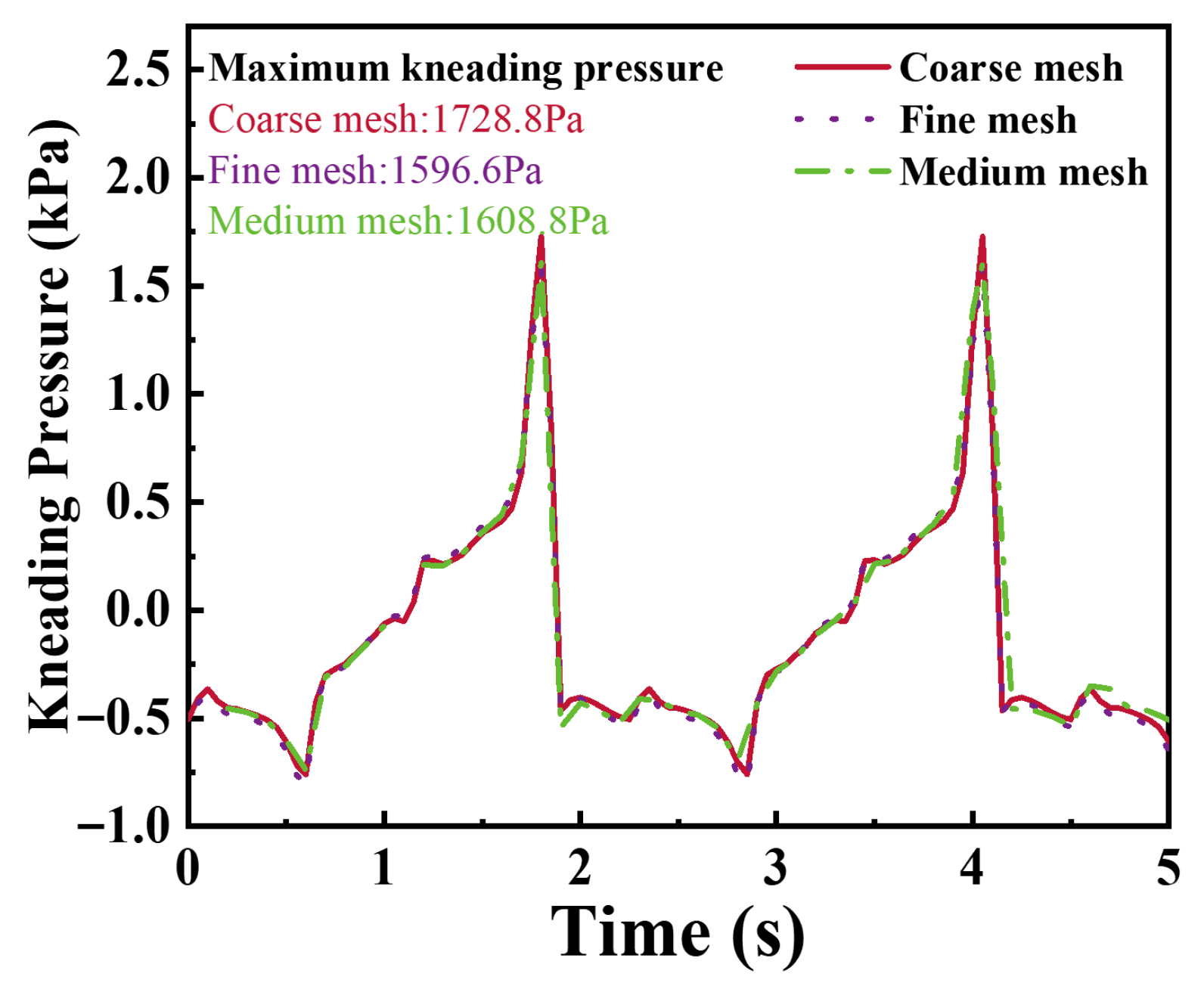
Define the static pressure at the monitoring point in Figure 2b as kneading pressure. Figure 3 shows the static pressure curves at the monitoring point defined in Figure 2b, obtained from simulations using three grids with different mesh densities for a 3.0 wt% CMC material at an operating speed of N = 80 rpm and i = 3, as detailed in Table 4. Based on the calculation results, the deviation of the kneading pressure between the Coarse mesh and the Medium mesh is 7.46%, while that between the Medium mesh and the Fine mesh is only 0.709%, but the computational time increases from 6 h for the Medium mesh to 15 h for the Fine mesh. To balance computational accuracy and efficiency, the Medium mesh scheme is selected for the subsequent calculations in this study.

3.3.2. Validation of the CFD Model

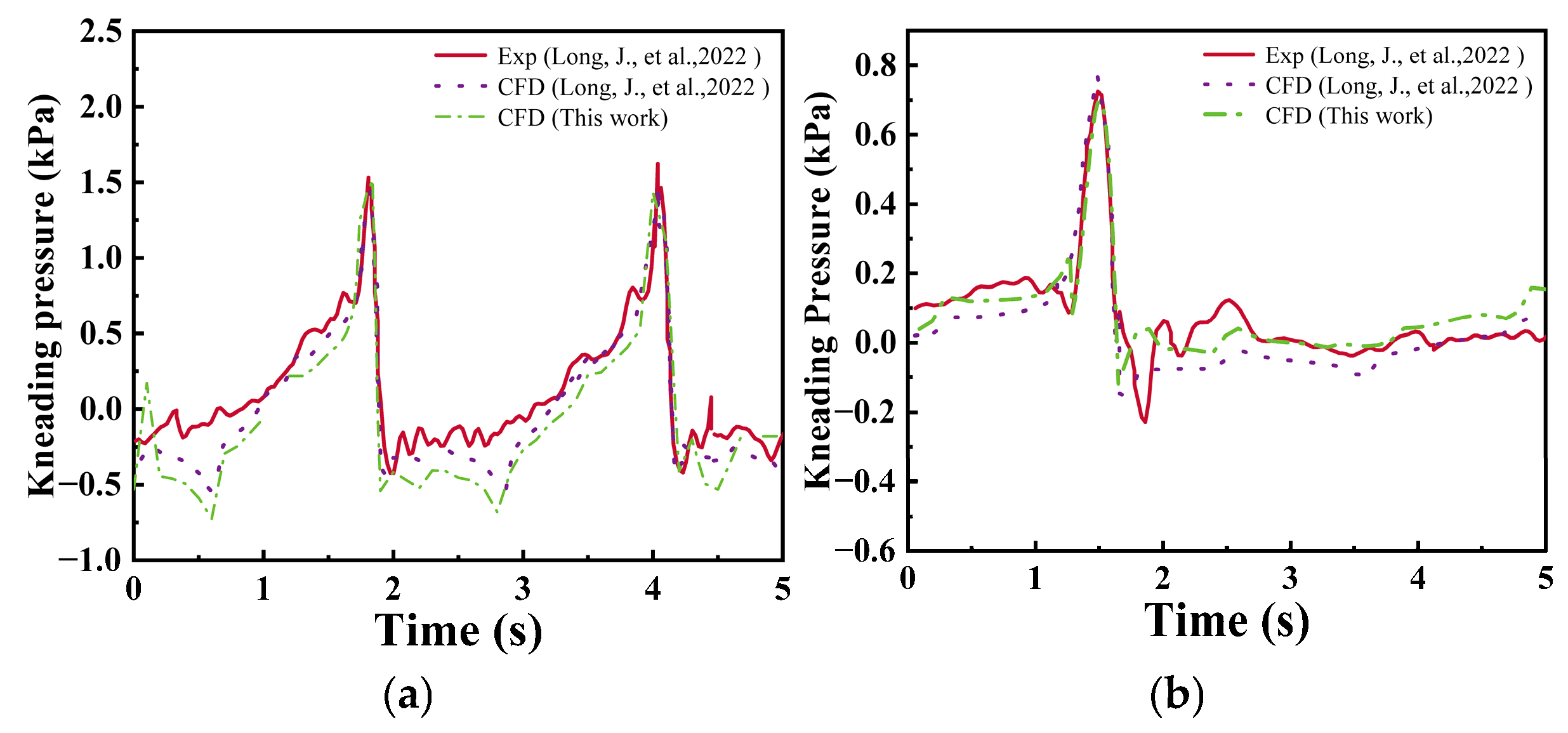
The kneading pressures obtained from the reference experiments [28] and the simulation results with two fluids, 3.0 wt% CMC and corn syrup, were compared, as shown in Figure 4. The results show good agreement between the simulation results and those from the literature, with average deviations of 10.52% (Figure 4a) and 7.78% (Figure 4b), respectively. Although the average deviation is slightly large, the majority of the discrepancy is concentrated near zero values, while the accuracy is satisfactory in other regions, which may be attributed to the limited sensitivity of the pressure sensor near zero readings.
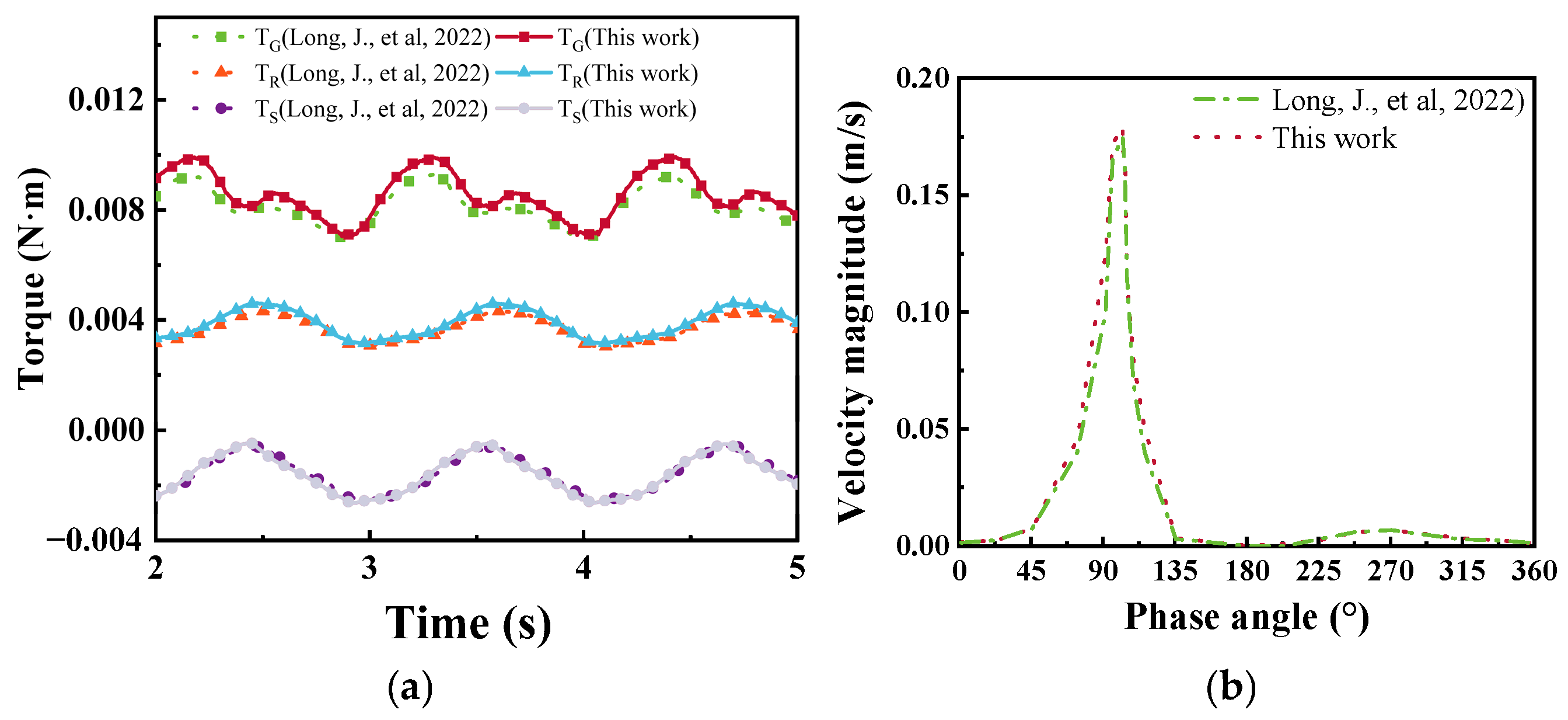
In addition, to validate both the overall mechanical characteristics and the velocity field of the blades, Figure 5a compares the simulated total torque of the blades with the calculated values from Reference [28]; the two show good agreement, with an average deviation of 3.87%. Figure 5b compares the circumferential velocity distribution at a radius of 62 mm and height of z = 11.5 mm. Both the reference data and the results obtained in this study are numerically predicted by CFD simulations. A good agreement can be observed, with an average deviation of only 3.20%.
In summary, the established CFD model in this study shows good agreement with both experimental and computational results from the literature. It can provide reliable support for the accuracy of the subsequent results presented in this paper.

4. SVD-Based Reduced-Order Model Construction

4.1. Singular Value Decomposition

Singular Value Decomposition (SVD) is analogous to eigenvalue decomposition, fully decomposing an arbitrary matrix A of shape m × n into three matrices U, Σ, and V, as shown below:
A = U Σ V T
Here, U is an m × m matrix, known as the left singular matrix, whose column vectors define an orthonormal basis for the output space. Σ is an m × n diagonal matrix whose diagonal elements are the singular values of matrix A, arranged in descending order. The magnitude of a singular value represents the “length” of the matrix along that vector’s direction. V is an n × n matrix, known as the right singular matrix. The rows of the right singular matrix define an orthonormal basis for the input space. From a physical perspective, the column vectors in U represent different modes, the singular values in Σ represent the energy magnitude of each mode, and the column vectors in V represent the activation level of the corresponding mode under specific operating conditions.
SVD enables effective dimensionality reduction in any data matrix Am×n. Dimensionality reduction via SVD is achieved by truncating the decomposition A = UΣVT; retaining only the first r singular values, whose cumulative energy contribution exceeds a specified threshold (e.g., 90%), together with their corresponding left and right singular vectors, provides a low-rank approximation that projects the original data onto an r-dimensional subspace where rn. The retained r singular vectors are also referred to as the r-order modes.
In engineering practice, spatial field data (e.g., blade load distribution) from different operating conditions (e.g., different rotational speeds) is typically assembled into a snapshot matrix A, where each column corresponds to a specific operating condition from the 15 datasets listed in Table 5, and each row corresponds to a fixed spatial discrete node (coordinate position) on the blade surface. The specific implementation steps are as follows. First, perform SVD on the constructed snapshot matrix (grid point data × rotational speed data points) to obtain three sub-matrices. Then proceed with the following operations:
Retain the first r singular values to obtain the right singular matrix Vr corresponding to these r modes:
V q T = v 11 v 12 v 1 n v q 1 v q 2 v q n
Each column of this matrix corresponds to one mode. Subsequently, establish functional relationships between the weight coefficients v j r and the rotational speed data:
v j k = f k ( N , i )
Here, (N, i) represents a speed combination. Each column of data in V q T and all corresponding speed data can be fitted to obtain a function f r ( N ,   i ) .
Next, use the fitted functions to predict the weight coefficients for new speed conditions:
v ˜ j k = f k ( N ˜ , i ˜ ) = v ˜ 11 v ˜ 12 v ˜ 1 p v ˜ q 1 v ˜ q 2 v ˜ q p = V ˜ q T
Here, v ~ j r represents the predicted weight coefficients using the fitted equations, ( N ~ , i ~ ) represents the speed combinations used for prediction, which were not included in the SVD calculation, and p is the number of speed combinations.
Finally, multiply the predicted V ~ q T with U and Σ to obtain the reconstructed matrix A ~ :
A ˜ = U Σ V ˜ T
A crucial underlying assumption is that the dominant spatial modes U contained in the original data matrix A and their corresponding energy distribution Σ possess strong robustness. When adding a small number of new column data (significantly fewer than the original number of columns n) representing unknown speeds to A, these additions do not significantly alter or excite new dominant mechanisms (i.e., they do not introduce new significant singular values or change the structure of the existing dominant spatial modes). In other words, the newly added column vectors primarily lie within the original low-dimensional subspace spanned by the columns of U. Their introduction is considered only a minor perturbation to the original column space, insufficient to change the matrix’s rank or significantly affect the first r dominant singular values and their corresponding left singular vectors. Therefore, it is reasonable to fix U and Σ and only extrapolate V to predict spatial distributions under new speed conditions.
This assumption is validated within the studied operational range by observing that: (1) the first three modes capture more than 98% of the total energy for all cases; (2) the spatial load distribution patterns and peak locations remain highly consistent at different rotational speeds and speed ratios. Furthermore, for practical engineering applications, the operating rotational speed is typically limited by load constraints and will not exceed the maximum speed included in the training dataset. Thus, the assumption holds for the interpolative conditions within the training range, where flow nonlinearity is moderate.
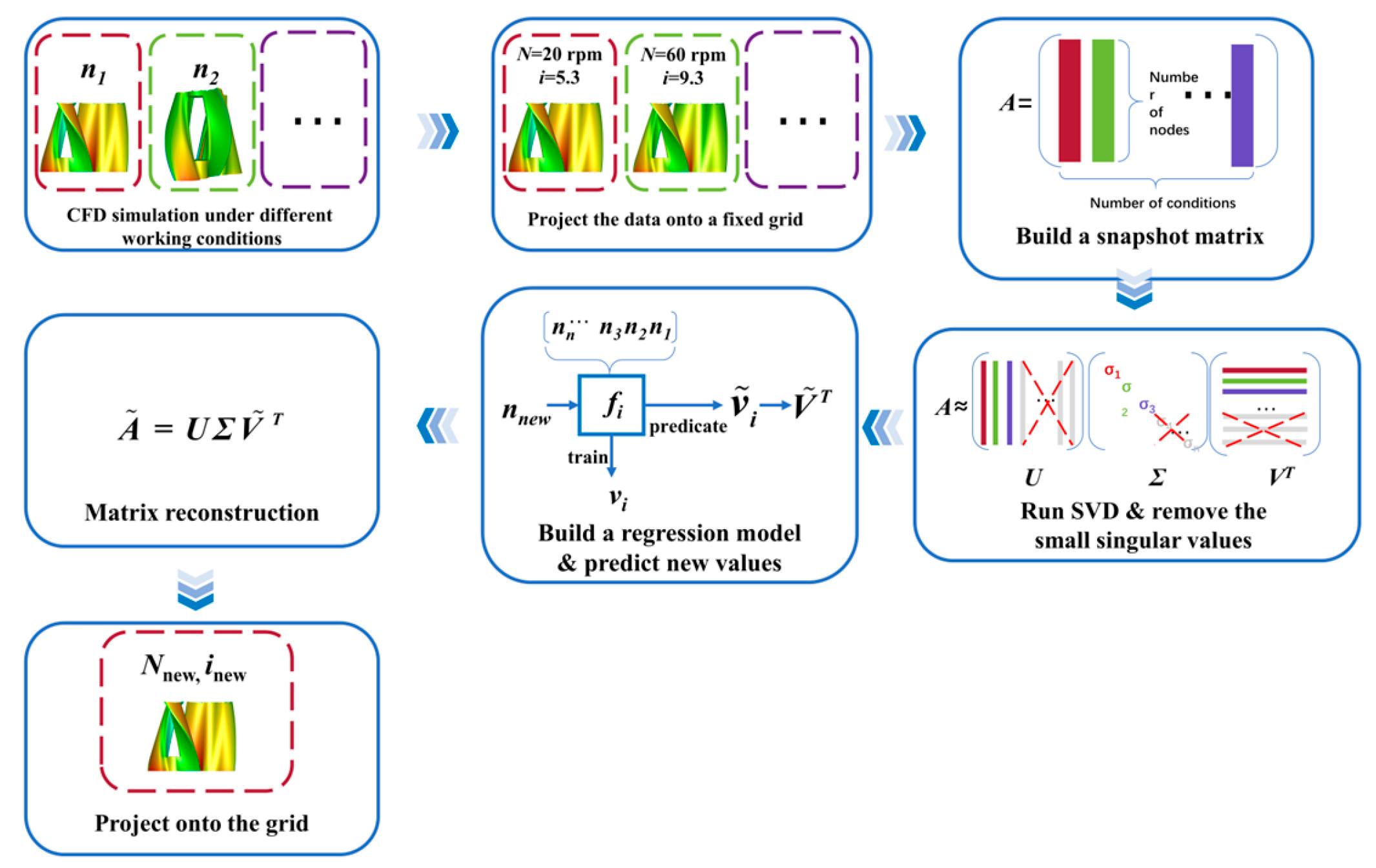
Each column in the reconstructed matrix corresponds to the spatial distribution of blade load (grid data) under the corresponding speed combination. The specific workflow is illustrated in Figure 6.

4.2. Data Acquisition and Process

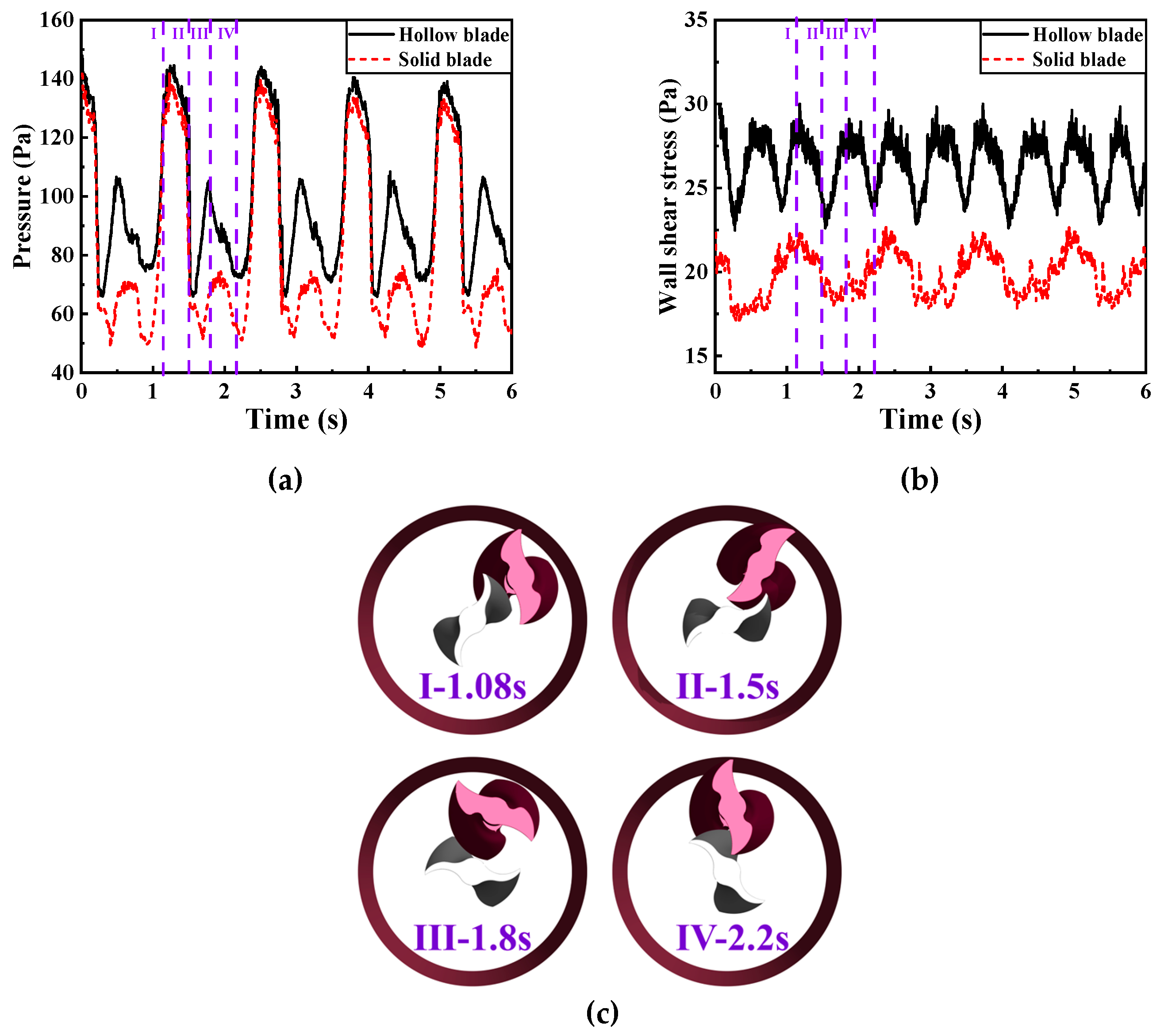
To systematically obtain blade load data in the kneading zone under different rotational speed combinations, this study first established a unified spatial reference grid. Using consistent blade phase as the criterion, the corresponding instantaneous time points for other speed combinations were determined through reverse mapping. An industrially common operating condition (N = 60 rpm, i = 9.3) was selected as the reference. The temporal evolution of the maximum local load on the blade under this condition is shown in Figure 7. The data extraction strategy involved using a User-Defined Function (UDF) to traverse all surface mesh elements on the blades, automatically identifying the top 20 mesh nodes with the highest loads and taking their average. This method allowed for obtaining the occurrence time of load extremes without needing to track the specific location of the maximum load.
As shown in Figure 7, the load on the blade surfaces exhibits significant periodicity. Within one rotation cycle, the pressure and shear load curves on the hollow blade both display two peaks. The pressure curve on the solid blade is similar to that of the hollow blade; however, for shear load on the solid blade, the smaller peak is almost entirely absent compared to the hollow blade. A more detailed analysis of this is provided in Section 5.1.2.
According to the blade positions in Figure 7c, regions I–II correspond to the period when the two blades enter the kneading zone from the bottom and exit from the top. Regions III–IV correspond to the period when the blades are not in the kneading zone relative to each other, but the hollow blade engages in wall-scraping with the vessel. Since both pressure and shear loads on the two blades are at high levels during the I–II time period, this phase warrants focused attention. At t = 1.08 s (point I), the pressure and shear loads just enter the peak region, corresponding to the instant when the lower ends of the blades just enter the kneading zone. This moment is representative of the mechanisms generating pressure and shear load during the I–II period. Therefore, this phase is defined as the kneading phase. All subsequent analysis and calculations are focused on this kneading phase. To ensure consistent phase alignment across different rotational speeds, all data were acquired at the first occurrence of the kneading phase, starting from the same initial position.
To acquire snapshot matrices of blade load distribution at the same phase under different rotational speeds, it is first necessary to map the load data at the kneading phase for each speed onto a unified computational grid. In the numerical model, each wall cell on the blade has a unique and fixed grid ID, which remains constant despite changes in blade phase. Therefore, using this grid ID as an index, data from various speed conditions are aligned and sorted. Subsequently, by employing the commercial software TECPLOT (version 2023 R1) for grid interpolation and visualization processing, blade data from different speeds can be aligned to construct the snapshot matrix. Using the method described above, 15 CFD datasets (Table 5) covering total rotational speeds N = 20–100 rpm and speed ratios i = 5.3–11.3 were used for SVD calculation and equation fitting, and an additional three cases (Table 6) were selected for validation: two interpolated points within the training range (N = 60 rpm, i = 9.3; N = 70 rpm, i = 7.3) and one slightly extrapolated point (N = 110 rpm, i = 9.3) to evaluate model generalizability.
Given the high viscosity of the mixed material in this study, the blade speed is generally limited to below 100 rpm to avoid generating excessive loads. Since the data used to build the mapping relationship in this case essentially cover the entire operational range, the model’s extrapolation capability can be considered less critical in this context. To achieve model simplicity and accuracy, ten different explicit equations were fitted for each dataset in this study. The equation with the highest degree of fit was selected as the mapping function. The specific equations and their fitting performance are detailed in Table 7. Notably, the third mode of static pressures and the second and third modes of shear stress on the hollow blade wall exhibit relatively lower fitting accuracy. This is attributed to the fact that these higher-order modes correspond to small-scale localized flow fluctuations with weak inherent regularity and inconsistent parameter dependence, making them difficult to accurately characterize using simple polynomial functions. Given their relatively small total energy contribution, this has a limited impact on the overall prediction accuracy of the ROM. Testing confirmed that this method yields favorable fitting results for the small sample of 15 datasets used in this study.
To quantitatively evaluate the error between the reconstructed matrices for static pressure and wall shear stress and the CFD-computed matrix data, the following metrics are defined: Mean Absolute Error (MAE), Mean Squared Error (MSE), and Mean Percentage Error (MPE).
M A E = 1 n i = 1 n a i a ˜ i
M S E = 1 n i = 1 n a i a ˜ i 2
M P E = 1 n i = 1 n ( a i a ˜ i a i ) × 100 %
where a i represents the blade load data at node i obtained from CFD simulation, and a ˜ i denotes the corresponding node data predicted by the constructed reduced-order model (ROM). Based on the definitions of these error metrics, MSE is more sensitive to extreme values due to the squared term, whereas MAE is less sensitive to outliers. MPE reflects the relative deviation between the two values. Together, these three indicators provide a reasonable assessment of the error between the reconstructed matrix and the CFD results.

5. Results and Discussion

5.1. Analysis of Flow Field and Load Characteristics

5.1.1. Flow Field Analysis

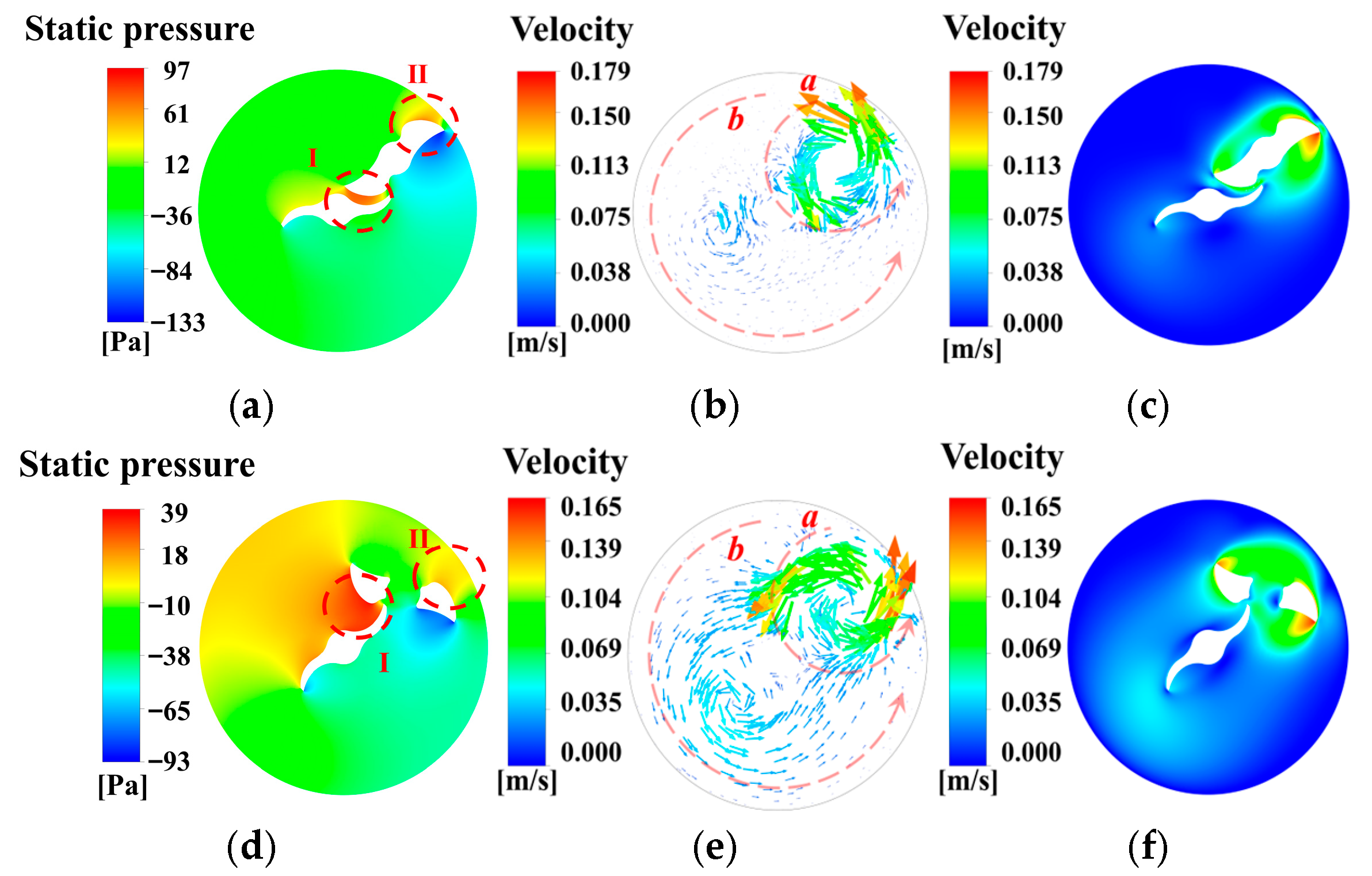
The strong squeezing and shearing actions in the B-B and B-W regions of this twin-blade planetary mixer cause local coexistence of high pressure and high velocity, which contradicts the classic Bernoulli-type behavior for incompressible fluids. Therefore, both pressure and velocity fields are shown together to better reveal the complex flow features and the generation of blade loads.
Figure 8 shows the pressure and velocity distributions at the cross sections z/HL = 0.5 and 1.0 when the blades are at the kneading phase. It can be observed that the velocity fields at these two sections exhibit similar patterns. Locally, the high-speed rotation of the hollow blade induces small-scale recirculation zones in the vicinity of the blade, with the maximum velocity consistently occurring near the outer tip of the hollow blade. Consequently, a large velocity gradient exists in this region, resulting in high wall shear stress on the blade surface. Globally, the gyration of the hollow blade drives the formation of a large-scale circulation throughout the entire vessel. In contrast, the solid blade, which rotates at a considerably lower speed, has only a minor influence on the overall flow field and primarily generates a noticeable trailing vortex in the wake region near its own blade tip.
Moreover, the static pressure distribution shows distinct characteristics in the two key regions, i.e., Blade–Blade (B-B) and Blade–Wall (B-W) regions, as shown in Figure 2b.
  • Blade–Blade (B-B) Region (Figure 8a—I region): Occurs when the two blades mutually approach each other. Due to the speed difference between the blades, the kneading cavity between them rapidly narrows to a minimum gap width of 2 mm (c1). The material is strongly compressed, causing a sharp pressure rise, and the pressure in this region is significantly higher than in adjacent areas. Subsequently, the cavity expands, and the pressure quickly drops. The pressure curve in Figure 8 also indicates that this pressurization-depressurization process is completed within 0.1 s.
  • Blade–Wall (B-W) Region (Figure 8a—II region): Occurs when a blade tip sweeps near the vessel wall. Here, the local linear velocity of the blade is at its maximum, leading to significant compression of the fluid and resulting in a region of high pressure that is markedly greater than in surrounding areas.
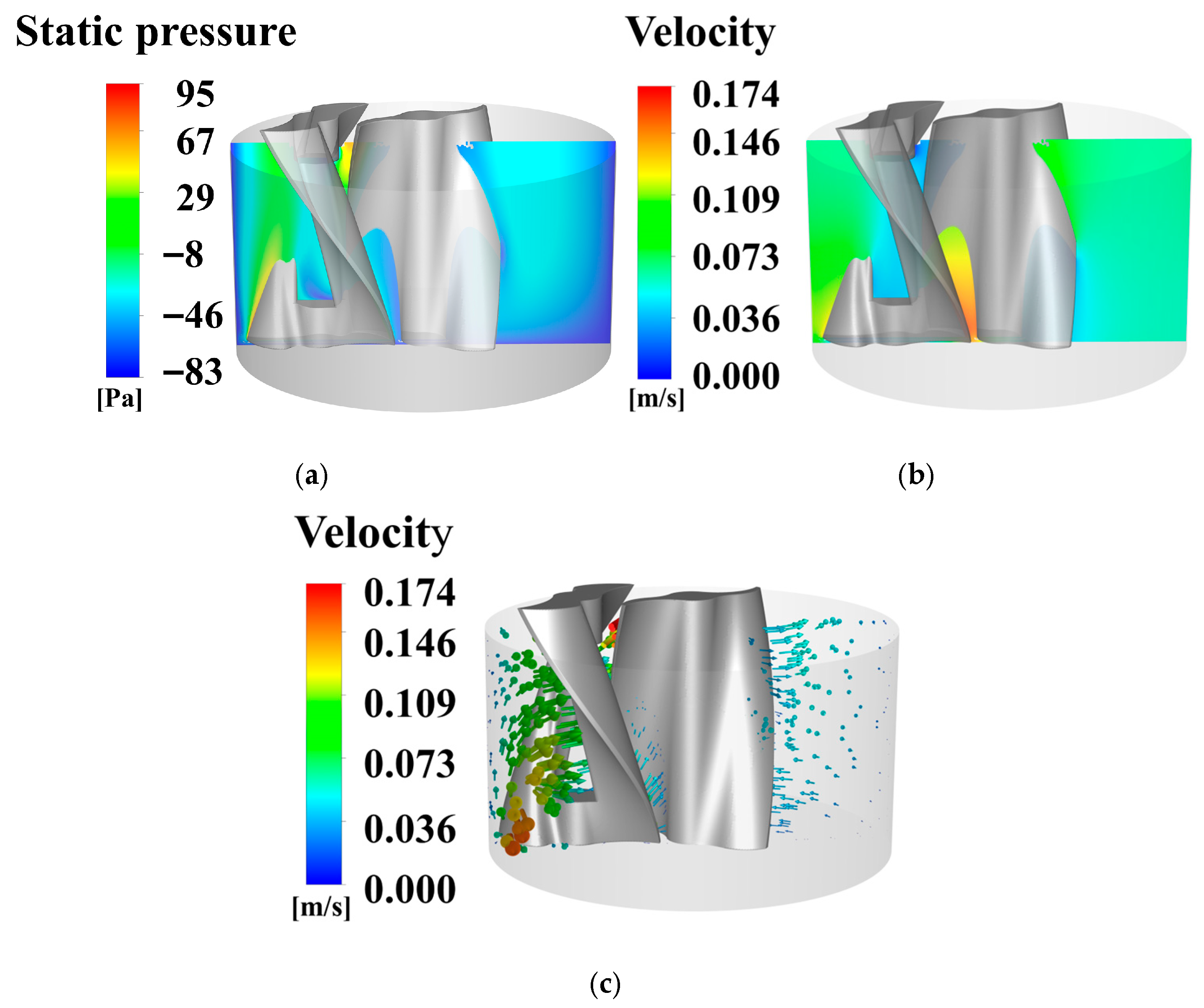
Figure 9 presents the static pressure and velocity distributions on the longitudinal cross-section at the kneading phase. It is evident that significant gradients exist in both parameters along the longitudinal direction, and the high-pressure and high-velocity zones are concentrated within the height range corresponding to the B-B and B-W region. Away from this height range, the pressure and velocity distributions become more uniform.
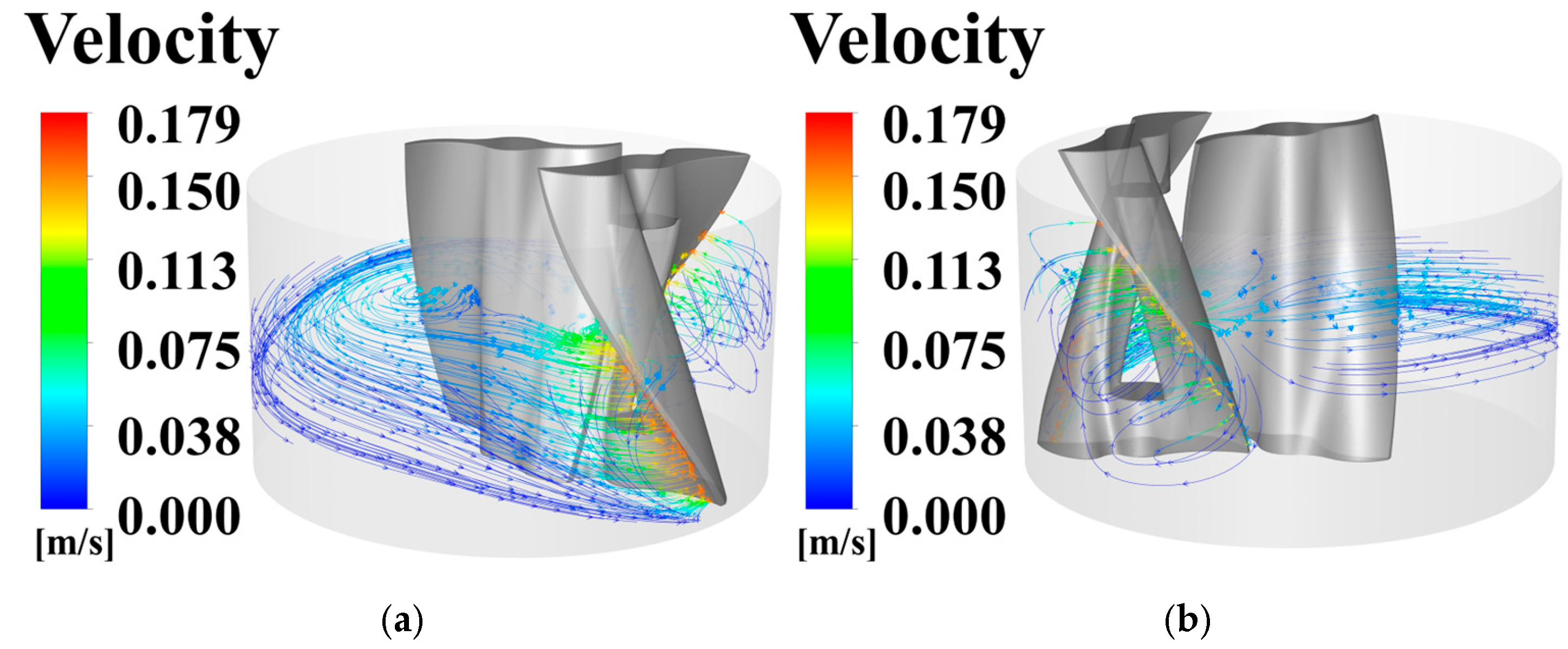
Combining the velocity vectors, contour plots in Figure 9, and the streamlines in Figure 10, it can be observed that fluid movement inside the vessel is achieved through the coupling of axial and circumferential circulation. Here, the pressure face (also referred to as the material-facing side) of the helical hollow blade continuously pushes the fluid upward, while the suction face (the back side) draws fluid downward due to negative pressure induced by flow acceleration near the blade bottom. This forms an axial circulation loop. Circumferential circulation is accomplished through the aforementioned large- and small-scale circulation flow described previously. The interplay between axial and circumferential motion ensures efficient overall mixing performance.
Furthermore, the hollow section acts as a pressure relief channel during operation. Driven by the pressure gradient between the two sides of the blade, a portion of the fluid flows through this opening, creating a flow diversion effect that prevents excessive local shear from damaging the product. Meanwhile, the high pressure and shear stress in the kneading region promote micro-scale mixing uniformity.

5.1.2. Load Distribution on the Blades

The preceding flow analysis reveals that the blade surfaces are subjected to fluid impact and strong velocity gradients, leading to localized regions of elevated pressure and wall shear stress, especially near blade tips. From a process perspective, such hydrodynamic forces are of particular importance, as excessive shear and impact may induce undesirable effects, including particle breakage, structural degradation of agglomerates, etc. Therefore, beyond characterizing the flow topology, it is essential to quantify the hydrodynamic forces (pressure, wall shear stress) acting on the blades to elucidate their spatial distribution and intensity. This analysis facilitates evaluation of mixing–shear trade-offs and provides guidance for blade design and operation.
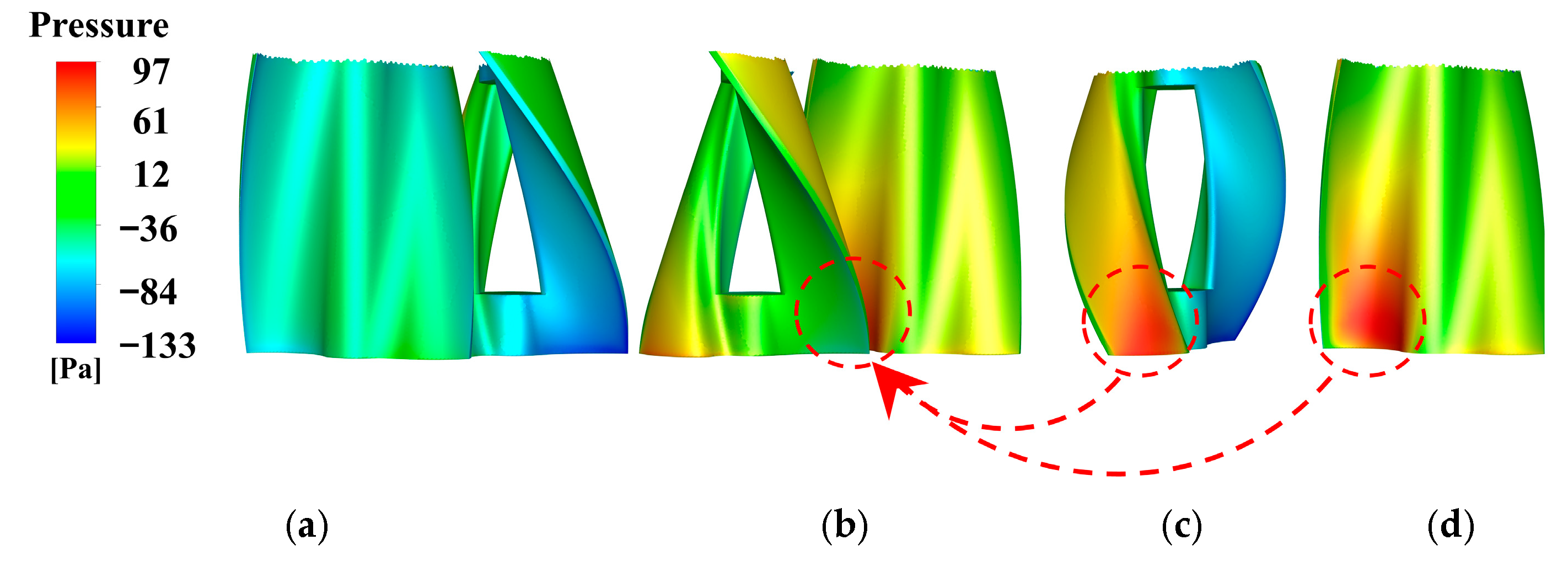
Figure 11 presents the pressure distribution on the surfaces of both blades at the kneading phase. Consistent with the preceding flow field analysis, high-pressure zones are primarily located in the B-B and B-W regions of the blades. For the hollow blade, the pressure surface exhibits positive pressure, while the suction face is characterized by negative pressure, resulting in a significant pressure difference across the blade. A pressure difference also exists across the solid blade. However, owing to its opposite rotation direction and lower rotational speed, approximately half that of the hollow blade, its influence on the overall fluid field is comparatively limited. The pressure difference across the solid blade mainly originates from the kneading action between the blades.
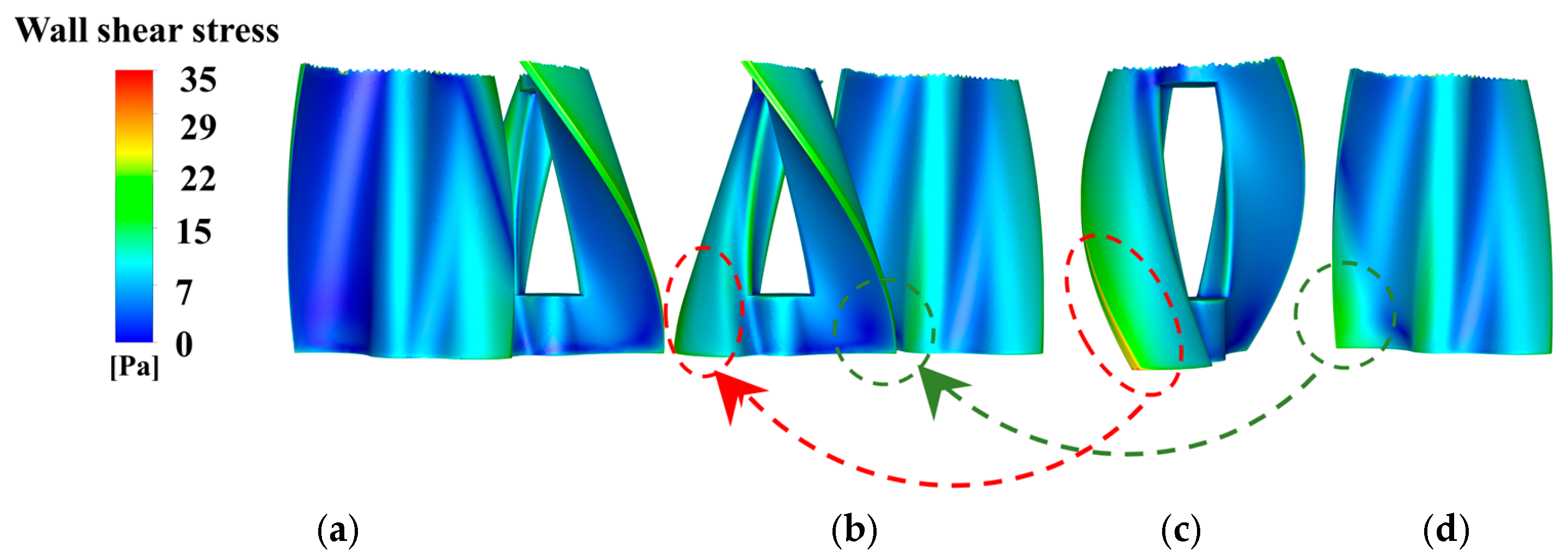
Figure 12 shows the distribution of wall shear stress on the blades at the kneading phase. The wall shear stress appears as concentrated bands, increasing significantly near the blade edges. In contrast to the static pressure distribution, the maximum wall shear stress does not occur in the B-B region but is located in the B-W region. Nevertheless, the B-B region also experiences considerable shear stress due to the squeezing action, but its magnitude is lower than that in the B-W region. This is mainly attributed to two main factors: first, the extremely narrow clearance in this region, and second, the large rotational radius of the hollow blade tip, which yields the highest linear velocity. The combination of the narrow clearance between the stationary vessel wall and the high-speed rotating blade tip produces the maximum fluid velocity gradient, leading to the high wall shear stress zone.
Combined with the time-history curves of blade loads shown in Figure 7, notable differences emerge in the pressure responses of the two blades. Phase analysis indicates that the smaller pressure peak on the hollow blade originates from the scraping interaction between its tip and the vessel wall, indicating that the pressure generated by the wall scraping is lower than that generated by the kneading between the blades. The solid blade does not participate in wall scraping. Its larger pressure peak aligns with that of the hollow blade and is attributed to the kneading action, while the secondary pressure peak stems from convective flow induced by the motion of the hollow blade. Therefore, the pressure loading associated with kneading in the B-B region deserves particular attention.
Wall shear stress also exhibits distinct periodic behavior, yet its characteristics differ significantly from those of pressure, as shown in Figure 7b. The hollow blade still shows two comparable peaks corresponding to two wall-scraping events within one rotation cycle, but the smaller peaks are relatively less prominent. In contrast, the secondary peak of wall shear stress on the solid blade is negligible, as it primarily results from moderate tip velocity and convection driven by the hollow blade. The magnitude of the shear stress on the solid blade remains far lower than that on the hollow blade, indicating that the scraping-induced wall shear stress in the B-W region is the dominant shear mechanism requiring focused analysis.
In summary, under the kneading phase, pressure and wall shear stress on the blades exhibit distinct distribution characteristics. Pressure maxima exist in both B-B and B-W regions, with the pressure generated by the kneading action in the B-B region, with kneading in the B-B zone producing the greater contribution. The high-shear-stress zone is primarily confined at the tip of the hollow blade in the B-W region near the wall. Although pressure amplitude generally exceeds shear stress, both are of the same order of magnitude and act on the fluid in different ways. Therefore, both must be considered comprehensively in blade load analysis and mixer performance evaluation.

5.1.3. Influence of Rotational Speed on Load Distribution

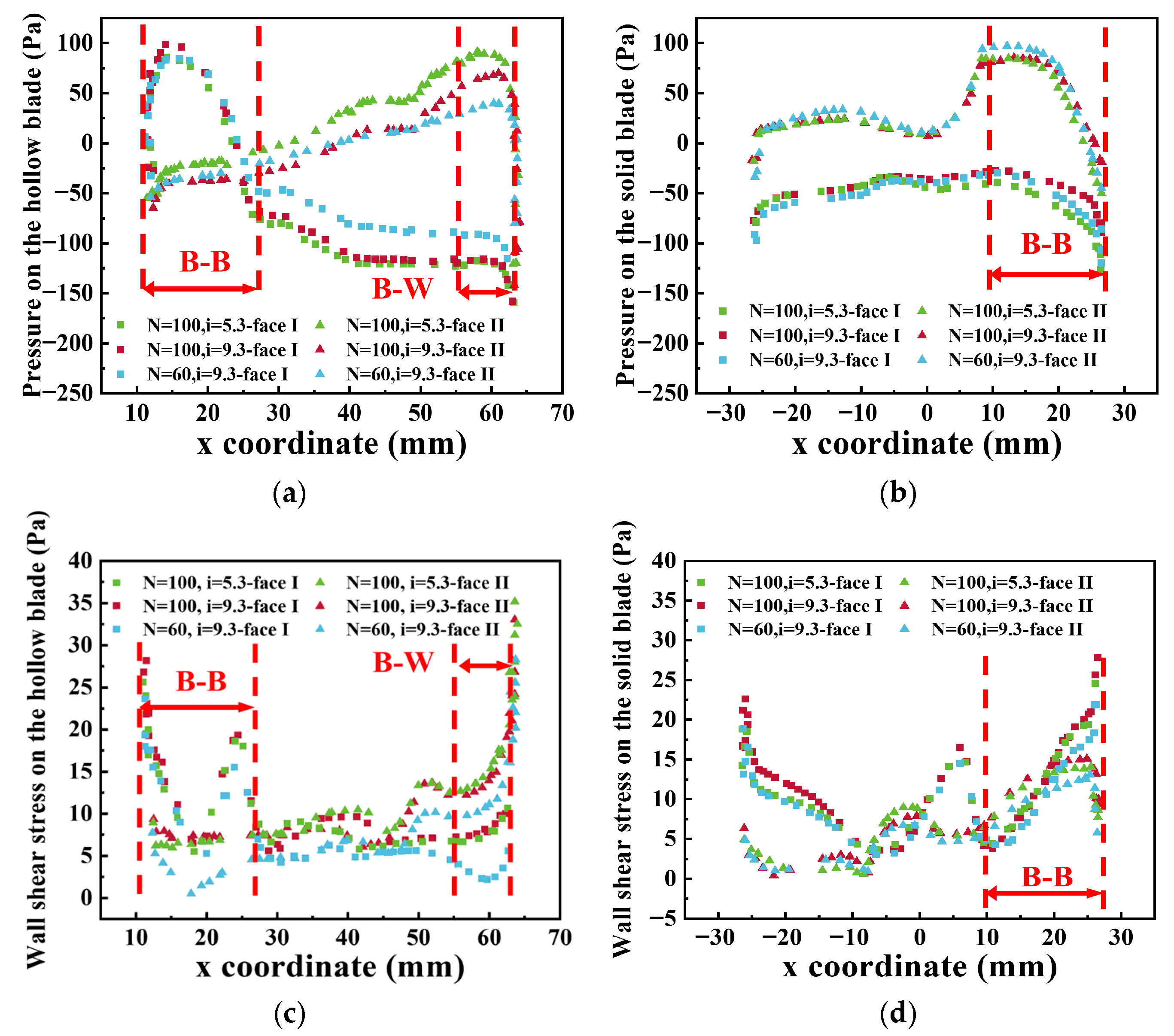
As can be seen from Figure 11 and Figure 12, blade loads are most concentrated near the bottom. Toward the upper part of the blades, the squeezing effect gradually weakens, and the load level decreases significantly. Therefore, the subsequent analysis focuses on the height of z/HL = 0.1. Figure 13 shows the distribution of pressure and wall shear stress along the x direction at z/HL = 0.1, which encompasses both the B-B and B-W regions under different rotational speed conditions. The horizontal axis represents the spatial coordinate along the blade, spanning from one tip to another. In each subfigure, the two curves of the same color depict the load distributions on the two opposite sides of the blade (Figure 1b). For each rotational speed, the two curves of the same color represent the two sides of the blade. Consistent with the previous analysis, pressure exhibits maxima near the blade tips, while wall shear stress shows maxima at the very tips.
Figure 13a,c reveal substantial variations in the loads on the hollow blade under different rotational speeds, and such variations are mainly observed in the B-W interface region. In contrast, the curves in Figure 13b,d for the solid blade largely overlap, showing only minor local differences at the tips. Moreover, in Figure 13a, two extrema appear at both blade tips. The extrema at smaller x correspond to the B-B region, and the one at larger x to the B-W region. Quantitatively, for a fixed speed ratio i = 9.3, when the total rotational speed N increases from 60 rpm to 100 rpm, the maximum pressure in the B-W region rises by 30.23 Pa, whereas that in the B-B region increases by only 14.37 Pa. Conversely, at a constant N = 100 rpm, increasing the speed ratio i from 5.3 to 9.3 (i.e., a higher proportion of self-rotation speed), reduces the B-W pressure maximum by 21.23 Pa but raises the B-B pressure maximum by 12.89 Pa. These opposite trends demonstrate that the speed ratio can effectively modulate the pressure load distribution between the B-B and B-W regions.
As shown in Figure 13a, pressure in the B-B region increases with both the overall rotational speed N and the speed ratio i. The positive correlation arises because the B-B region is confined between the blades and is minimally affected by the strong convective flow caused by the blade gyration. Instead, the pressure generation here is dominated by the reduction in cavity volume between the two blades due to their relative rotation. Therefore, higher N (faster overall motion) and higher i (greater proportion of hollow blade rotation) intensify the kneading action and elevate pressure in this region. This behavior aligns with the correlation between maximum kneading pressure, total speed N, and speed ratio i established in reference [28].
However, pressure in the B-W region shows a positive correlation with N but a negative correlation with i. Here, the pressure is generated by the hydrodynamic force from the fluid being pushed at high speed by the outermost blade tip. This force is independent of the solid blade and directly proportional to the local velocity of the hollow blade. The maximum velocity Vmax at the outermost tip of the hollow blade arises from the superposition of its self-rotation and gyration, expressed as:
V max = N G e H + 1 2 N R d = 1 2 d N R ( 2 N G e H d N R + 1 ) = 1 2 d N ( 2 e H d d i + 1 )
indicating that a larger total speed N and a smaller speed ratio i both contribute to higher tip velocities and thus elevated local pressure in the B-W region.
Although the magnitude of blade loads changes nonlinearly with rotational speed, the overall load spatial distribution patterns remain highly consistent under the different rotational speed conditions. Specifically, the locations of load extrama and the qualitative variation trends are preserved. Therefore, this modal similarity suggests that blade load distributions can be effectively represented using a limited set of dominant modes, which provides a physically grounded basis for the development of a Reduced-Order Model (ROM) for blade load prediction.

5.2. SVD and Model Analysis

5.2.1. Modal Retention

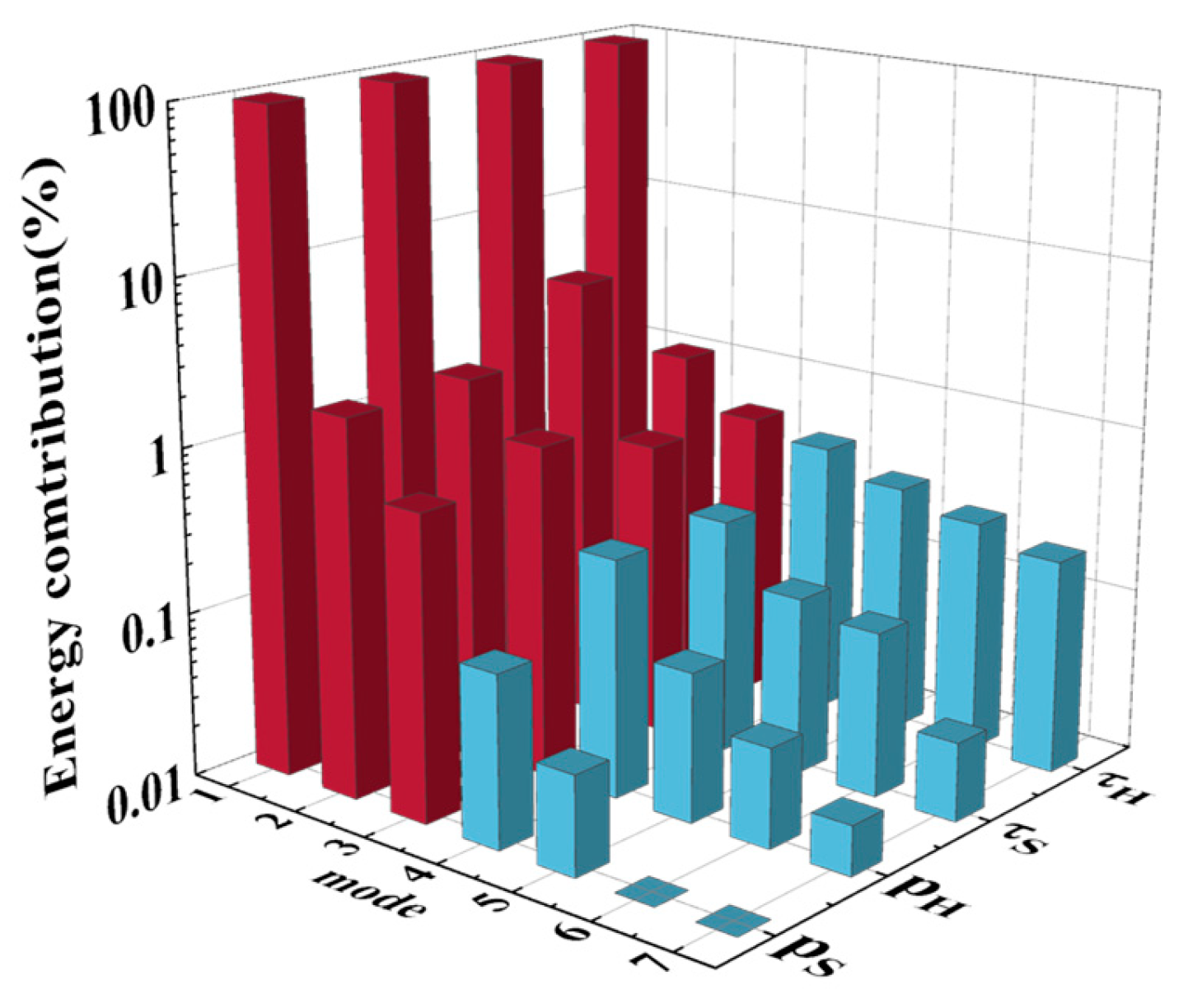
SVD was performed on the snapshot matrix obtained using the method described in Section 4.2. The resulting singular values quantify the energy contribution of each mode to the overall blade load distribution. Figure 14 presents the energy contributions of the first seven modes on a logarithmic scale. In engineering practice, retaining over 90% of the cumulative energy is typically sufficient to preserve the dominant system characteristics. As shown, the first three dominant modes can capture over 98% of the total energy for all load distributions, indicating that the blade load distributions involved in this study can be effectively described by these three primary modes.
Based on this observation, the first three dominant modes were retained to construct the ROM representation for all four types of load cases, enabling substantial parameter reduction while maintaining high fidelity. The proportion of total energy retained for each case is summarized in Table 8. It can be found that for different load distributions, the first three modes can capture more than 98% of the total energy, indicating that the load distribution can be described by the three main modes.

5.2.2. Reduced-Order Model Performance Evaluation

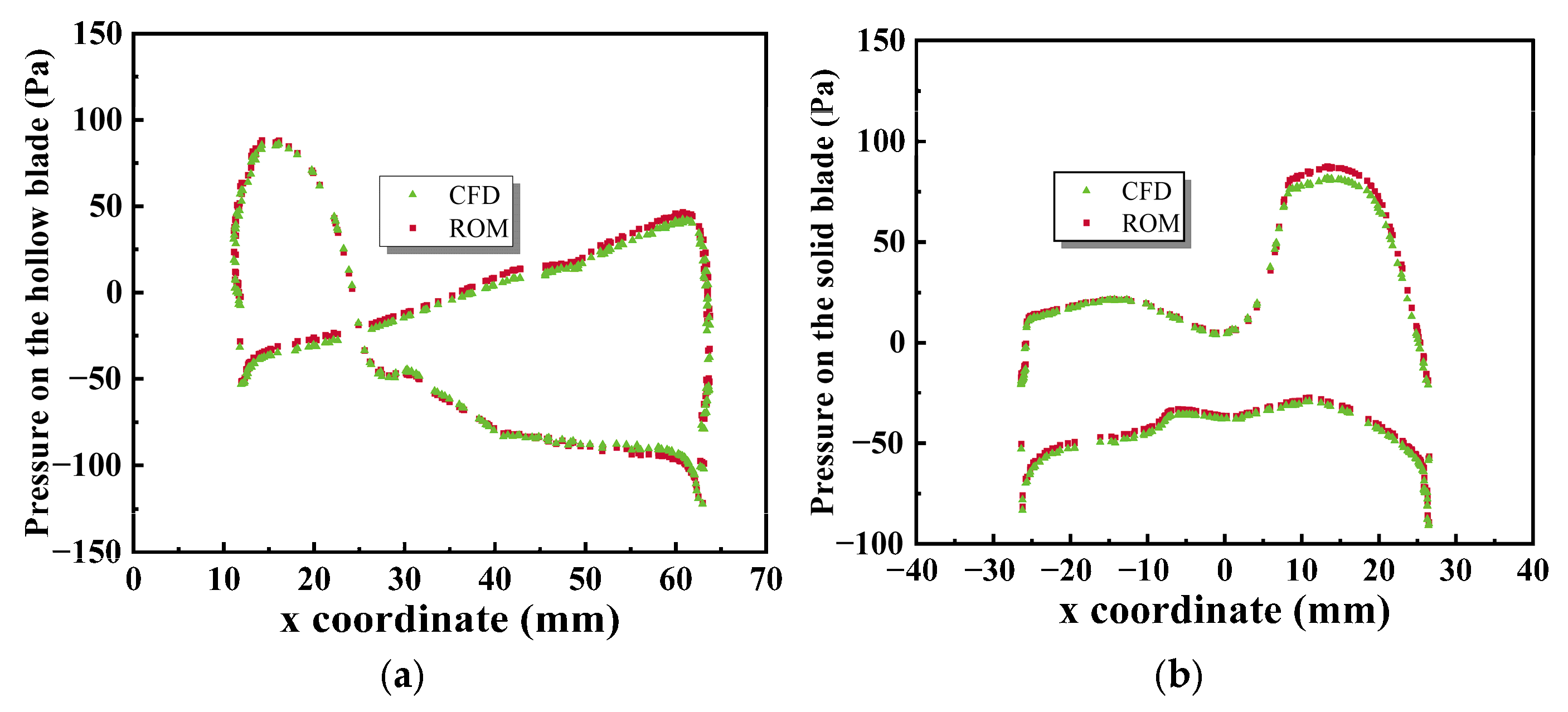
The operating condition of N = 60 rpm and i = 9.3 was selected as a representative case to demonstrate the deviation between the CFD-computed data and the ROM-predicted data for the blade load distribution at the kneading phase.
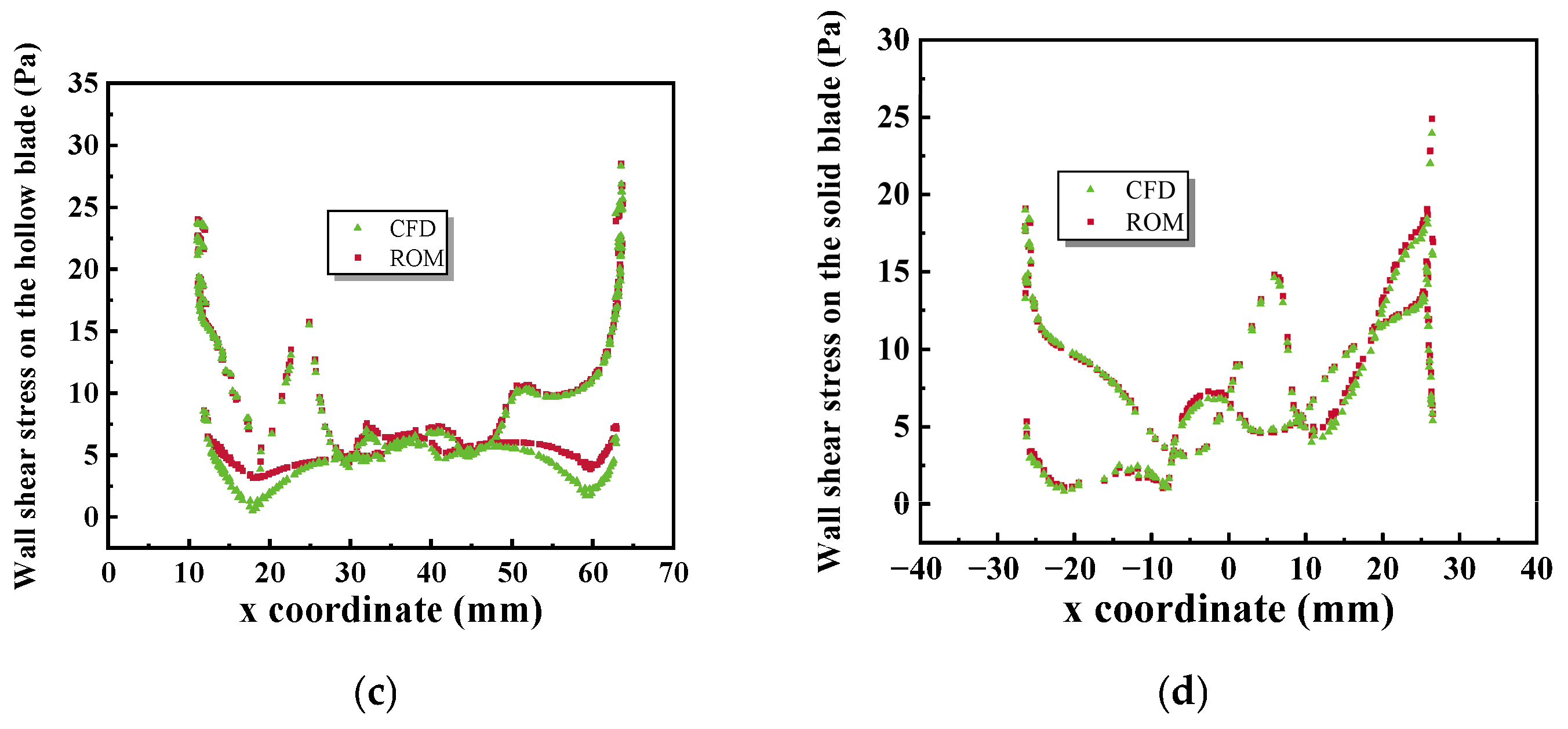
The blade loads at the height of z/HL = 0.1 in the B-B and B-W regions were extracted for comparison and their distribution along the x-axis is presented in Figure 15. At this height, the pressure and wall shear stress exhibit significant gradients and distinct distribution characteristics. Primarily due to the combined effects of blade-tip confinement near the vessel bottom, axial circulation impingement associated with loop closure, and intensified blade–blade interactions during the kneading phase. Overall, the ROM predictions show good agreement with the CFD results, except for a local low-shear region on the hollow blade shown in Figure 15c.
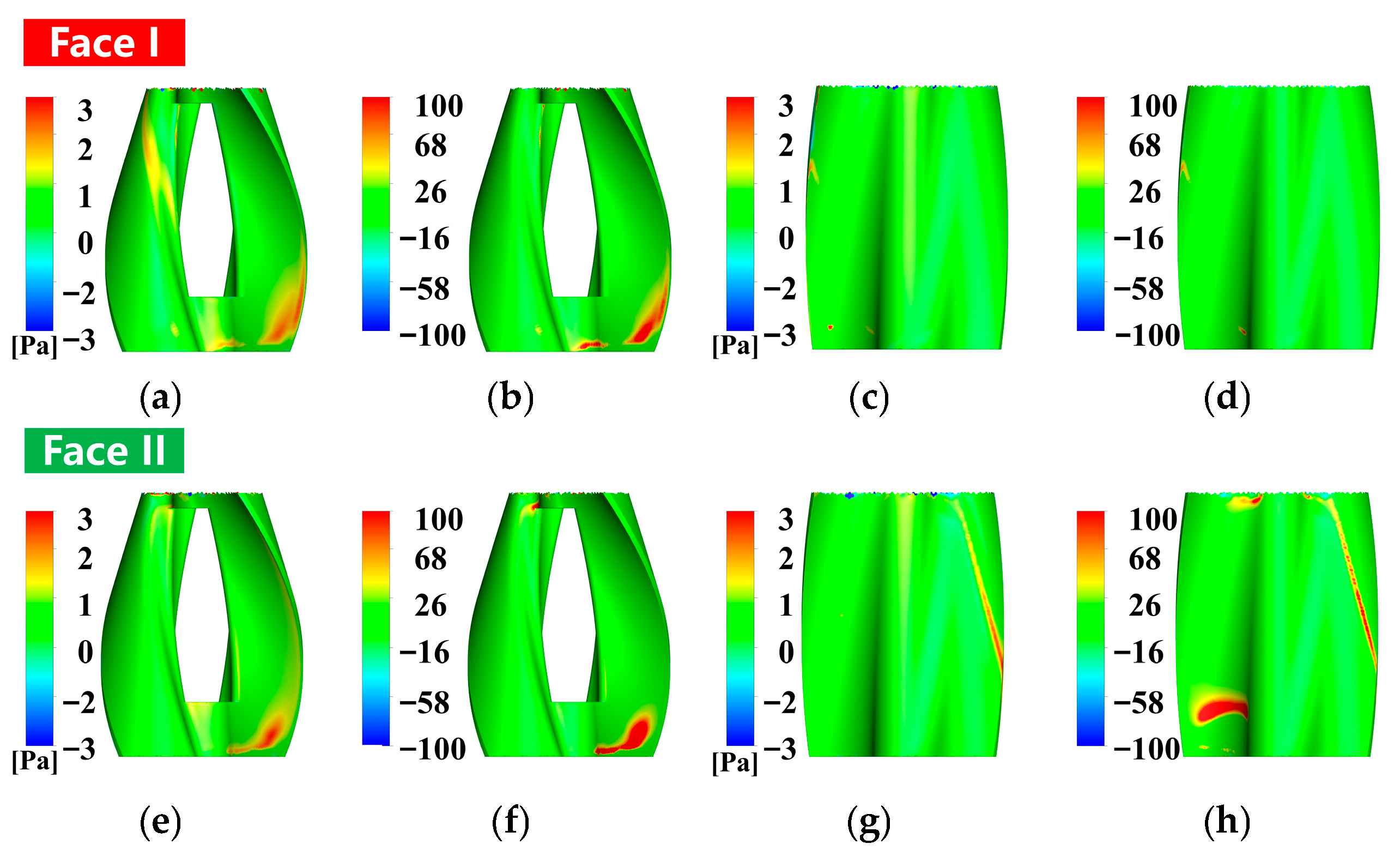
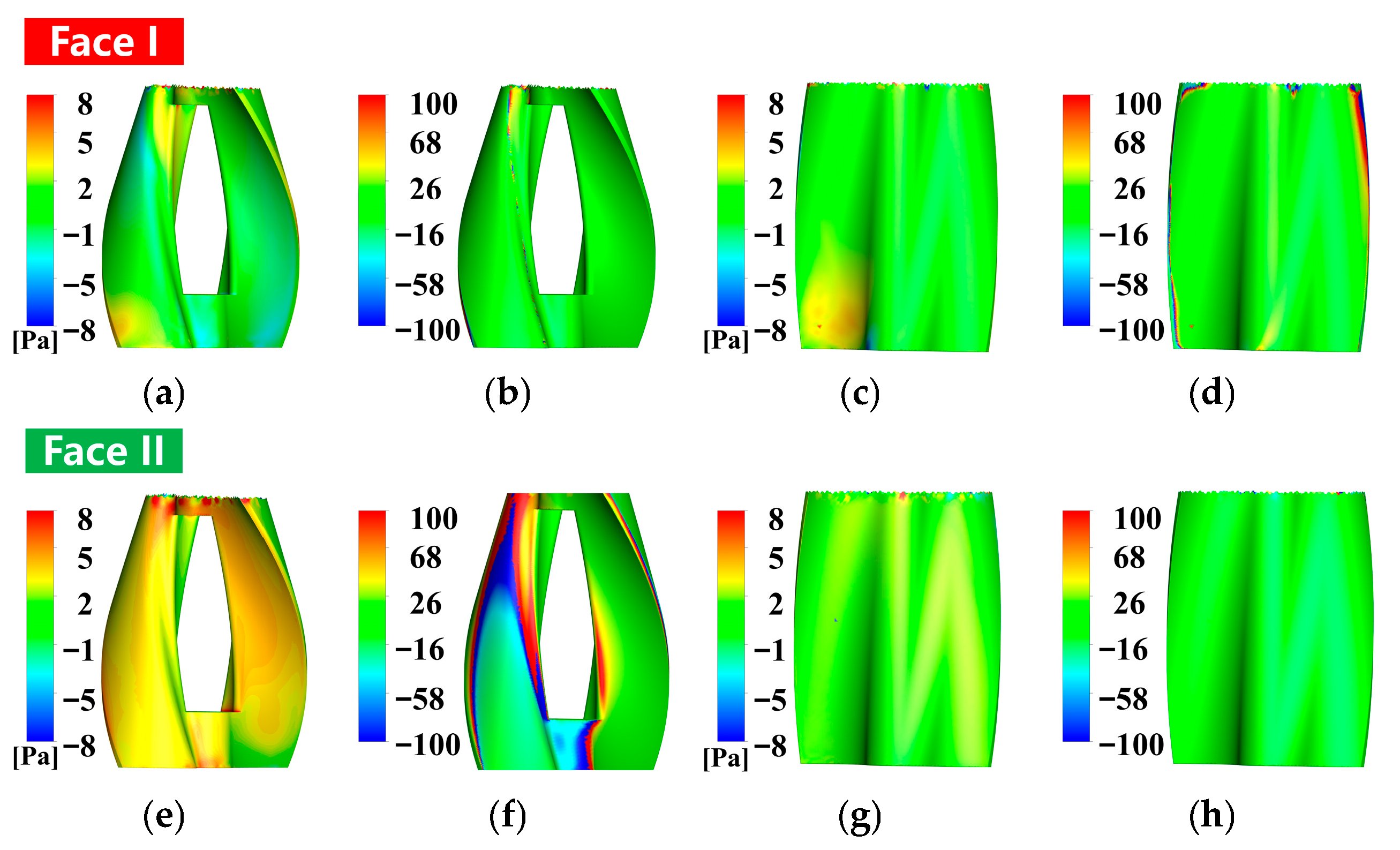
To visualize the spatial distribution of deviations across different parts of the blade surface, the deviation data was projected onto a fixed grid, as shown in Figure 16 and Figure 17. Under this operating condition, ROM pressure prediction errors are mainly concentrated on face II. This region is characterized by relatively low mean pressure levels and strong local fluctuations. The prediction accuracy for face II is inevitably compromised upon truncation of the low-energy modes, as its load distribution contributes less to the dominant modes and is primarily represented by the discarded higher-order modes. This behavior is consistent with the deviations observed in the low-shear region shown in Figure 15c. However, the contribution of these low-magnitude regions to the overall blade load is negligible and is therefore of limited engineering significance. In contrast, regions with larger load magnitudes are predominantly located on Face I, where energy is focused and modal features are prominent, enabling the ROM to capture the dominant load structures with high fidelity. The ROM robustly captures its principal components with extremely high prediction accuracy. This pattern holds true for all four types of load distributions.
Table 9 summarizes the error statistics for all three predicted rotational conditions. To quantify the relationship between prediction accuracy and data magnitude, subsets of data exceeding 50%, 100%, and 200% of the mean absolute value were analyzed separately. It can be observed that the larger the absolute data value (i.e., the closer to the load peaks on the blade), the higher the prediction accuracy of the ROM. When the data value exceeds twice the mean value, the prediction accuracy for all load distributions reaches above 93%, and the number of such data points accounts for over 30% of the total dataset. Furthermore, the error decreases further as the value increases. Some missing values occur due to the presence of zero values, for which the relative error cannot be calculated.
The errors in ROM predictions can be attributed to ROM-intrinsic errors and CFD computational errors. The intrinsic ROM error arises from discarding modes with minor energy contributions during model construction, leading to the loss of features that have a small overall impact on the distribution. The CFD computational error originates from pre-existing inaccuracies in the snapshot matrix, including numerical precision limitations and data transfer effects in parallel computations.
The ROM constructed in this study reduces the computational time from several days required by CFD to mere seconds by the ROM. By specifying the rotational speed parameters, the ROM can rapidly predict the blade load distribution at the critical phase, providing an efficient tool for design analysis and engineering decision-making.

6. Conclusions

This study systematically investigates the flow characteristics and blade load distribution at the critical kneading phase in a 1 L twin-blade planetary mixer using CFD simulations, and establishes a reduced-order model (ROM) based on SVD for rapid load prediction. The main innovations include: (1) a novel application of CFD load data to construct a ROM for blade load distribution; (2) a rapid prediction method that maps multi-condition data to a unified grid and combines SVD principal mode analysis with explicit function fitting, reducing prediction time from days to seconds; and (3) elucidation of the distinct governing mechanisms of rotational and gyrational speeds on the B-B and B-W load regions.
The results reveal that the flow field features coexisting large-scale gyration-induced circulation and small-scale rotation-induced circulations around the blades. The B-B and B-W regions experience elevated pressure from blade interactions, with magnitudes regulated by the speed combination (N, i), while the B-W region also sustains higher wall shear stress due to steep velocity gradients. The three-mode SVD-ROM, constructed from 15 CFD datasets and retaining over 98% of the energy, achieves second-level prediction with an accuracy exceeding 93% in key regions, significantly reducing computational cost.
This work provides a theoretical basis for blade optimization and parameter selection: loads concentrate in the B-B and B-W regions, which should serve as design thresholds. Adjusting the rotational-to-gyrational speed ratio effectively controls key region loads, mitigating stress concentration and extending component life. Notably, the proposed ROM exhibits limited extrapolation capability beyond the training range of operating conditions and fluid properties. Future work will expand the training database with diverse rheological parameters and particle concentrations, explore nonlinear dimensionality reduction and advanced regression models, and integrate multiphase flow and dynamic mode decomposition to extend model applicability and improve generalization performance.

Author Contributions

Conceptualization, F.H. and Y.Z.; methodology, F.H.; software, F.H.; validation, F.H.; formal analysis, F.H.; investigation, F.H., Z.-C.M. and X.-X.F.; resources, Y.Z.; data curation, F.H., Z.-C.M. and X.-X.F.; writing—original draft preparation, F.H.; writing—review and editing, Y.Z. and L.Z.; visualization, F.H.; supervision, Y.Z.; project administration, Y.Z. and L.Z. All authors have read and agreed to the published version of the manuscript.

Funding

This research received no external funding.

Data Availability Statement

The raw data supporting the conclusions of this article will be made available by the authors upon request.

Conflicts of Interest

The authors declare no conflicts of interest.

References

  1. Mishra, P.; Ein-Mozaffari, F. Critical review of different aspects of liquid-solid mixing operations. Rev. Chem. Eng. 2020, 36, 555–592. [Google Scholar] [CrossRef]
  2. Jaszczur, M.; Młynarczykowska, A. A General Review of the Current Development of Mechanically Agitated Vessels. Processes 2020, 8, 982. [Google Scholar] [CrossRef]
  3. Kabra, A.; Nema, A.; Karvinkoppa, M.; Nema, A.; Thorat, S. Computational fluid dynamics used by mixing vessels for predicting hydrodynamic behaviour of mixture: An overview. Mater. Today Proc. 2021, 47, 2305–2309. [Google Scholar] [CrossRef]
  4. Xie, J.H.; Zhang, L.J.; Derksen, J.J. Detailed simulations of particle breakage as a result of agitation. Chem. Eng. Res. Des. 2021, 168, 298–306. [Google Scholar] [CrossRef]
  5. Jiang, S.B.; Zhang, H.W.; Zeng, Q.L.; Du, Q.; Liu, X.P. Numerical Study of Wear Characteristics of Vertical Shaft Planetary Mixer Blades. Materials 2025, 18, 3137. [Google Scholar] [CrossRef]
  6. Arratia, P.E.; Kukura, J.; Lacombe, J.; Muzzio, F.J. Mixing of shear-thinning fluids with yield stress in stirred tanks. AIChE J. 2006, 52, 2310–2322. [Google Scholar] [CrossRef]
  7. Ayala, J.S.; de Moura, H.L.; Amaral, R.d.L.; Oliveira Júnior, F.D.A.; Nunhez, J.R.; de Castilho, G.J. Two-dimensional shear rate field and flow structures of a pseudoplastic fluid in a stirred tank using particle image velocimetry. Chem. Eng. Sci. 2022, 248, 117198. [Google Scholar] [CrossRef]
  8. Luan, D.; Wang, Z.; Wang, H.; Wang, S.; Li, L.; Chen, Y. Determination method of the cavern boundary viscosity in a stirred tank with pseudoplastic fluid. AIChE J. 2020, 66, e16941. [Google Scholar] [CrossRef]
  9. Erwin, L. Theory of laminar mixing. Polym. Eng. Sci. 2004, 18, 1044–1048. [Google Scholar] [CrossRef]
  10. Chien, W.L.; Rising, H.; Ottino, J.M. Laminar mixing and chaotic mixing in several cavity flows. J. Fluid Mech. 2006, 170, 355–377. [Google Scholar] [CrossRef]
  11. Singh, B.; Kovács, K.L.; Bagi, Z.; Nyári, J.; Szepesi, G.L.; Petrik, M.; Siménfalvi, Z.; Szamosi, Z. Enhancing efficiency of anaerobic digestion by optimization of mixing regimes using helical ribbon impeller. Fermentation 2021, 7, 251. [Google Scholar] [CrossRef]
  12. Mihailova, O.; Mothersdale, T.; Rodgers, T.; Ren, Z.; Watson, S.; Lister, V.; Kowalski, A. Optimisation of mixing performance of helical ribbon mixers for high throughput applications using computational fluid dynamics. Chem. Eng. Res. Des. 2018, 132, 942–953. [Google Scholar] [CrossRef]
  13. Gu, D.; Liu, Z.; Xu, C.; Li, J.; Tao, C.; Wang, Y. Solid-liquid mixing performance in a stirred tank with a double punched rigid-flexible impeller coupled with a chaotic motor. Chem. Eng. Process. Process Intensif. 2017, 118, 37–46. [Google Scholar] [CrossRef]
  14. Long, J.C.; Wang, C.; Zhu, J.Z.; Zhan, X.B.; Sun, Z.B.; Shen, B.J.; Li, X.W. Discrete element simulation for mixing performances and power consumption in a twin-blade planetary mixer with non-cohesive particles. Adv. Powder Technol. 2022, 33, 103437. [Google Scholar] [CrossRef]
  15. Lu, W.M.; Chen, S.M.; Zheng, J.N.; Fu, X.Y.; Fu, G.H.; Zhong, J.; Li, Q.Y.; Zhen, Z.B. Optimum analysis of inclined angle of mixing blades in planetary mixer based on discrete element method. Adv. Mech. Eng. 2024, 16, 1–18. [Google Scholar] [CrossRef]
  16. Gu, D.Y.; Wang, J.; Yang, H.; Deng, Y.Y. Investigation on Solid Particles and Pseudoplastic Fluid Mixing Characteristics in a Dislocated Self-Similarity Impeller Stirred Reactor. Ind. Eng. Chem. Res. 2023, 62, 10700–10710. [Google Scholar] [CrossRef]
  17. Yu, K.; Yan, P.; Hu, J. Numerical analysis of blade stress of marine propellers. J. Mar. Sci. Appl. 2020, 19, 436–443. [Google Scholar] [CrossRef]
  18. Ascanio, G. Mixing time in stirred vessels: A review of experimental techniques. Chin. J. Chem. Eng. 2015, 23, 1065–1076. [Google Scholar] [CrossRef]
  19. Heidari, A. CFD simulation of impeller shape effect on quality of mixing in two-phase gas–liquid agitated vessel. Chin. J. Chem. Eng. 2020, 28, 2733–2745. [Google Scholar] [CrossRef]
  20. Kaminoyama, M. Review of Visualization of Flow and Dispersion States of Slurry System Fluids in Stirred Vessels. J. Chem. Eng. Jpn. 2014, 47, 109–114. [Google Scholar] [CrossRef]
  21. Ochieng, A.; Onyango, M.; Kiriamiti, K. Experimental measurement and computational fluid dynamics simulation of mixing in a stirred tank: A review. S. Afr. J. Sci. 2009, 105, 421–426. [Google Scholar] [CrossRef]
  22. Ochieng, A.; Onyango, M.S. Cfd Simulation of Solids Suspension in Stirred Tanks: Review. Hem. Ind. 2010, 64, 365–374. [Google Scholar] [CrossRef]
  23. Ramírez-López, A. Analysis of Mixing Efficiency in a Stirred Reactor Using Computational Fluid Dynamics. Symmetry 2024, 16, 237. [Google Scholar] [CrossRef]
  24. Sajjadi, B.; Raman, A.A.A.; Ibrahim, S.; Shah, R. Review on gas-liquid mixing analysis in multiscale stirred vessel using CFD. Rev. Chem. Eng. 2012, 28, 171–189. [Google Scholar] [CrossRef]
  25. Wang, Y.D.; Li, Z.Q.; Li, K.X.; Zhang, B.Q.; Chen, H.M.; Zhou, Q.; Zhou, Z.Y. CFD-DEM study of heat transfer and particle dissolution in stirred tanks. Chem. Eng. Sci. 2025, 315, 121858. [Google Scholar] [CrossRef]
  26. Wodolazski, A. Coupled CFD-DEM Numerical Simulation of Hydrothermal Liquefaction (HTL) of Sludge Flocs to Biocrude Oil in a Continuous Stirred Tank Reactor (CSTR) in a Scale-Up Study. Energies 2025, 18, 4557. [Google Scholar] [CrossRef]
  27. Long, J.; He, Y.; Zhan, X.; Sun, Z.; Shen, B.; Li, X. Study of kneading pressure and power consumption in a twin-blade planetary mixer for mixing highly viscous fluids. Chem. Eng. Sci. 2021, 241, 116723. [Google Scholar] [CrossRef]
  28. Long, J.; Zhan, X.; Guo, F.; Sun, Z.; Shen, B.; He, Y.; Li, X. Study of hydrodynamics and flow characteristics in a twin-blade planetary mixer with non-Newtonian fluids. AIChE J. 2022, 68, e17797. [Google Scholar] [CrossRef]
  29. Li, S.; Duan, G.; Sakai, M. Development of a reduced-order model for large-scale Eulerian–Lagrangian simulations. Adv. Powder Technol. 2022, 33, 103632. [Google Scholar] [CrossRef]
  30. Jiang, Y.; Byrne, E.; Glassey, J.; Chen, X. Reduced-order modeling of solid-liquid mixing in a stirred tank using data-driven singular value decomposition. Chem. Eng. Res. Des. 2023, 196, 40–51. [Google Scholar] [CrossRef]
  31. Araújo, I.G.; Laier, J.E. Operational modal analysis using SVD of power spectral density transmissibility matrices. Mech. Syst. Signal Process. 2014, 46, 129–145. [Google Scholar] [CrossRef]
  32. Vinuesa, R.; Brunton, S.L. Enhancing computational fluid dynamics with machine learning. Nat. Comput. Sci. 2022, 2, 358–366. [Google Scholar] [CrossRef] [PubMed]
  33. Li, A.; Yao, Y.; Zhang, X.; Wan, Y.; Li, P.; Wang, Y.; Tao, C.; Liu, Z. Using CFD and machine learning to explore chaotic mixing in laminar diameter-transformed stirred tanks. Chem. Eng. J. 2024, 499, 156201. [Google Scholar] [CrossRef]
  34. Hasegawa, K.; Fukami, K.; Murata, T.; Fukagata, K. CNN-LSTM based reduced order modeling of two-dimensional unsteady flows around a circular cylinder at different Reynolds numbers. Fluid Dyn. Res. 2020, 52, 065501. [Google Scholar] [CrossRef]
  35. Murata, T.; Fukami, K.; Fukagata, K. Nonlinear mode decomposition with convolutional neural networks for fluid dynamics. J. Fluid Mech. 2020, 882, A13. [Google Scholar] [CrossRef]
  36. Diaz-Morales, P.; Corrochano, A.; Lopez-Martin, M.; Le Clainche, S. Deep learning combined with singular value decomposition to reconstruct databases in fluid dynamics. Expert Syst. Appl. 2024, 238, 121924. [Google Scholar] [CrossRef]
  37. Abdalla, H.B.; Kumar, Y.; Marchena, J.; Guzman, S.; Awlla, A.; Gheisari, M.; Cheraghy, M. The Future of Artificial Intelligence in the Face of Data Scarcity. CMC-Comput. Mater. Contin. 2025, 84, 1073–1099. [Google Scholar] [CrossRef]
  38. Pant, P.; Doshi, R.; Bahl, P.; Barati Farimani, A. Deep learning for reduced order modelling and efficient temporal evolution of fluid simulations. Phys. Fluids 2021, 33, 107101. [Google Scholar] [CrossRef]
  39. Phillips, T.R.F.; Heaney, C.E.; Smith, P.N.; Pain, C.C. An autoencoder-based reduced-order model for eigenvalue problems with application to neutron diffusion. Int. J. Numer. Methods Eng. 2021, 122, 3780–3811. [Google Scholar] [CrossRef]
  40. Zhan, X.; Li, X.; Zhang, J.; Cui, F. Design and optimization on blade profile of vertical kneader. J. Solid Rocket. Technol. 2014, 37, 413–417. [Google Scholar]
Figure 1. Geometric shape and dimensions of 1 L twin-blade planetary mixer: (a) front view; (b) bottom view.
Applsci 16 05039 g001
Figure 2. (a) Grid overview; (b) grid layout and (c) grid used for simulation, where purple represents the background mesh and gray represents the foreground mesh.
Applsci 16 05039 g002
Figure 3. Grid independence verification with i = 3, N = 80 rpm and 3.0 wt% CMC solution.
Applsci 16 05039 g003
Figure 4. Comparison of the experimental and numerical kneading pressure curves: (a) corn syrup with i = 3.0 and N = 40 rpm; (b) 3.0 wt% CMC with i = 3.0 and N = 80 rpm [27].
Applsci 16 05039 g004
Figure 5. Comparison of (a) torque and (b) velocity distribution between simulations and reference data at N = 60 rpm, i = 9.3 for a representative shear-thinning fluid [27].
Applsci 16 05039 g005
Figure 6. Schematic of ROM from SVD and CFD, ni represents different combinations of rotational speeds and different colors represent different working conditions.
Applsci 16 05039 g006
Figure 7. Temporal variation in the maximum local load at N = 100 rpm and i = 5.3: (a) pressure; (b) wall shear stress and (c) top view of the geometric configuration.
Applsci 16 05039 g007
Figure 8. (ac) show the pressure and velocity distributions at the plane z/HL = 0.1; (df) show the pressure and velocity distributions at the plane z/HL = 0.5. The rotating condition is N = 60 rpm and i = 9.3. Arrows represent circulation flows, region I denotes the Blade–Blade (B-B) region, and region II denotes the Blade–Wall (B-W) region.
Applsci 16 05039 g008
Figure 9. Distribution of (a) pressure; (b) velocity and (c) velocity in the axial plane passing through the centers of the two blades.
Applsci 16 05039 g009
Figure 10. Streamlines released from the plane z/HL = 0.5: (a,b) are different views.
Applsci 16 05039 g010
Figure 11. Static pressure distribution on the two blades: (a,b) are different views of two blades; (c) individual view of the hollow blade; (d) individual view of the solid blade. Red dashed circles indicate the same position on the blades.
Applsci 16 05039 g011
Figure 12. Wall shear stress distribution on the two blades: (a,b) are different views of the two blades; (c) individual view of the hollow blade; (d) individual view of the solid blade. Red dashed circles indicate the same position on the blades.
Applsci 16 05039 g012
Figure 13. Distribution of pressure and wall shear stress along the radial direction of two blades at z/HL = 0.1 under different rotational speed combinations: (a) static pressure on hollow blade, pH; (b) static pressure on solid blade, pS; (c) wall shear stress on hollow blade, τH; (d) wall shear stress on solid blade τS.
Applsci 16 05039 g013
Figure 14. Energy distribution of the top 7 modes, where red represents the first three modes and blue represents the last four modes.
Applsci 16 05039 g014
Figure 15. Comparison of CFD and ROM pressure and wall shear stress along the x direction at z/HL = 0.1 for two blades in the same phase: (a) pH; (b) pS; (c) τH; (d) τS.
Applsci 16 05039 g015aApplsci 16 05039 g015b
Figure 16. Comparison of pressure distribution by CFD and ROM prediction: (ad) are face I. (eh) are face II. (a,c,e,g) represent the MAE of CFD and ROM data; (b,d,f,h) represent the MPE of CFD and ROM data.
Applsci 16 05039 g016
Figure 17. Comparison of wall shear stress distribution by CFD and ROM prediction: (ad) are face I, (eh) are face II. (a,c,e,g) represent the MAE of CFD and ROM data; (b,d,f,h) represent the MPE of CFD and ROM data.
Applsci 16 05039 g017
Table 1. Dimensions and motion parameters of 1 L twin-blade planetary mixer.
Geometry ParametersValues
(mm)
Motion ParametersRelationships
Diameter of vessel, D133Absolute speed, N (rpm)N = NG + NR (+)
Diameter of blades, d55Speed ratio, ii = N/NG ≥ 3
Eccentric distance, eH37.5Rotational speed of hollow blade, NR (rpm)(+)
Blade–blade clearance, c12Gyration speed of hollow blade, NG (rpm)(+)
Blade–wall clearance, c22.5Absolute speed of solid blade, Nsolid (rpm)Nsolid = NS + NG
Blade–bottom clearance, c32Relative speed of solid blade, NS (rpm)NS = −0.5NR (−)
Liquid height, HL75Diameter of rotation, dRdR = d
Diameter of gyration, dGdG = 2eH
Here, the (+)/(−) signs indicate positive/negative rotational directions, respectively.
Table 2. Rheological parameters of 3 types of fluids [15].
Corn Syrup3.0 wt% CMC SolutionRepresentative Shear-Thinning Fluid
k (Pa·sn)4.0035.324
n1.000.4460.25
Density ρ (kg/m3)134010381340
Table 3. Boundary conditions.
RegionBoundary TypeDetails
Vessel wallsNo slipu = 0
Blade surfacesMoving wallsVelocity from combined rotation and gyration
Vessel topNo shear stressNo tangential stress and zero scalar normal flux
Overset interfacesOverset interpolationSmooth velocity transfer
Table 4. Three mesh schemes.
Hollow BladeSolid Blade
Coarse mesh320,886259,898
Medium mesh544,838428,644
Fine mesh987,963989,522
Table 5. Training data.
ParameterTraining Set
N1001001008080806060
i9.37.35.311.39.37.311.35.3
N40404040202020
i11.39.37.35.311.39.35.3
Table 6. Predicting data.
ParameterPrediction Set
N6070110
i9.37.39.3
Table 7. Summary of the fitting equations.
ItemModeFit FunctionR2
pH1st z = a × s i n b × N + c + d × s i n e × i + f + g 0.9866
2nd z = a × ( N + b ) c × ( i + d ) e + f 0.9509
3rd z = a × ( N b + i c ) / ( d + e × N × i ) + f 0.7416
τH1st z = a × N 2 + b × i 2 + c × N × i + d × N + e × i + f 0.9987
2nd z = a × N 2 + b × i 2 + c × N × i + d × N + e × i + f 0.4184
3rd z = a × s i n b × x + c + d × s i n e × y + f + g 0.7175
pS1st z = a × x b + c × y d + e 0.9863
2nd z = a × N 2 + b × i 2 + c × N × i + d × N + e × i + f 0.9959
3rd z = a × s i n b × N + c + d × s i n e × i + f + g 0.6052
τS1st z = a / b × N + c + d / e × i + f + g 0.9969
2nd z = a × s i n b × N + c + d × s i n e × i + f + g 0.9255
3rd z = a × ( N b + i c ) / ( d + e × N × i ) + f 0.8932
Here, pH and pS represent the static pressure on the hollow blade and the solid blade, respectively, while τH and τS denote the wall shear stress on the hollow blade and the solid blade, respectively. These symbols correspond to the overall physical variables adopted for modal decomposition, rather than discrete local values extracted at a specific time or position. The parameters a to g are model coefficients. The terms 1st, 2nd and 3rd correspond to the first, second, and third largest energy contributions, respectively.
Table 8. Top 3 modes’ energy contributions.
pSpHτSτH
Energy contribution99.8%99.6%99.4%98.3%
Table 9. Summary of ROM prediction errors at three predicted rotational speeds.
Exceedance Level (Fraction of Mean)MSEMAEMPEProportion of Data
N = 60 rpm
i = 9.3
pHAll data11.072.8663.121.00
50%8.862.507.570.72
100%6.782.104.000.37
200%3.011.421.740.15
pSAll data5.311.98\1.00
50%6.152.185.560.70
100%6.892.344.810.50
200%10.762.853.760.06
τHAll data3.950.416.881.00
50%4.180.383.880.92
100%8.990.402.130.41
200%96.981.704.390.04
τSAll data1.050.33\1.00
50%1.260.344.100.81
100%1.880.352.840.44
200%11.040.643.180.06
N = 70 rpm
i = 7.3
pHAll data3.141.2725.241.00
50%3.271.263.100.72
100%4.091.362.140.38
200%2.951.151.270.15
pSAll data3.451.13\1.00
50%3.931.162.960.71
100%3.631.092.050.51
200%2.501.121.420.05
τHAll data1.050.466.401.00
50%1.080.464.570.92
100%1.820.452.820.43
200%12.870.722.390.03
τSAll data0.580.25\1.00
50%0.690.253.140.80
100%1.080.241.850.44
200%7.070.361.150.06
N = 110 rpm
i = 9.3
pHAll data98.448.0452.391.00
50%82.357.2213.900.72
100%48.985.296.210.40
200%17.403.342.520.10
pSAll data26.143.60\1.00
50%31.214.146.900.79
100%43.235.257.400.49
200%53.616.295.840.05
τHAll data7.041.1213.371.00
50%7.351.129.990.94
100%13.751.055.160.41
200%144.232.816.320.03
τSAll data3.400.51\1.00
50%4.160.555.290.79
100%7.050.593.650.43
200%43.661.053.080.06
Here, the symbol \ indicates that the relative error cannot be calculated due to the presence of zero values in the original data.
Disclaimer/Publisher’s Note: The statements, opinions and data contained in all publications are solely those of the individual author(s) and contributor(s) and not of MDPI and/or the editor(s). MDPI and/or the editor(s) disclaim responsibility for any injury to people or property resulting from any ideas, methods, instructions or products referred to in the content.