1. Introduction
Supercritical carbon dioxide (sCO
2) Brayton cycles are considered highly promising for energy utilization in sectors such as nuclear power, solar energy, and geothermal energy because of their high power density, high cycle efficiency, and compact system configuration [
1]. These cycles can be applied to power generation and marine propulsion systems. As a key component of the sCO
2 Brayton cycle, the turbine plays a crucial role, and its efficiency directly affects the overall cycle performance. Specifically, a 5-percentage-point improvement in turbine efficiency can result in an approximately 2-percentage-point increase in the thermal efficiency of a recompression cycle [
2]. Therefore, the optimal design of sCO
2 turbines and the identification of suitable performance parameters are of great importance for improving overall cycle efficiency.
Extensive investigations have been conducted worldwide on sCO2 Brayton cycle systems and turbine design. Axial turbines are widely employed in power generation and propulsion systems because they can accommodate high mass flow rates and enable multi-stage expansion, thereby improving cycle efficiency. Owing to the lack of experimental flow data for sCO2 turbines, a dedicated design philosophy and methodology specifically developed for sCO2 axial turbine stages has not yet been fully established. As a result, current design studies still rely primarily on concepts and loss models originally developed for conventional steam and gas turbines. Among the available approaches, one-dimensional (1D) design remains the most widely adopted. Because sCO2 turbines usually exhibit high power density and relatively small blade heights, especially in low-power applications, 1D modeling is particularly suitable for preliminary design. In addition, the 1D method offers clear physical interpretation and high computational efficiency, making it well-suited to rapid parametric analysis and preliminary optimization of sCO2 axial turbines.
Several classical loss models have therefore been adopted in sCO
2 turbine design. The Soderberg model [
3], derived from extensive steam turbine and cascade data, provides acceptable accuracy with a limited number of parameters. The Ainley–Mathieson model [
4] accounts for a broader range of aerodynamic losses, including profile, secondary-flow, and tip-clearance losses. The Dunham–Came model [
5] further refines the prediction of tip-clearance and secondary losses within the Ainley–Mathieson framework using updated experimental data. Craig and Cox [
6] and Kacker and Okapuu [
7] also proposed representative methods for estimating axial turbine efficiency. Denton [
8] developed a loss model for axial and radial turbines based on entropy generation, and the Aungier model [
9] has also been applied to the assessment of axial turbine efficiency. These models provide the basis for most current 1D design studies of sCO
2 axial turbines.
Utilizing these loss models and the two major conceptual design routes, numerous studies have investigated the preliminary design and performance evaluation of sCO
2 axial turbines. Yong Wang at MIT [
10] modified the ideal-gas-based design codes TURBAN and AXOD to create TURBAN-MOD and AXOD-MOD, both of which incorporate real-gas property treatment for sCO
2. Schmitt et al. [
11] and Salah et al. [
12] employed the Soderberg and Ainley–Mathieson models, respectively, together with mean-line methods to design the first-stage sCO
2 turbines with capacities of 100 MW and 100 kW, although the prediction accuracy remained limited. Lee et al. [
13] developed a TurboDesign program based on real-gas properties and the Kacker–Okapuu loss model for the design of an sCO
2 axial turbine. Bidkar [
14] scaled a 10 MWe sCO
2 axial turbine to a 50 MW Brayton-cycle test platform and proposed a 450 MW conceptual design in collaboration with SwRI and GE. Salah et al. [
15] extended mean-line turbine design to sCO
2 mixtures by combining the Aungier loss model with rotor and mechanical constraints. Uysal and Weiland [
16] adopted the TBM design tool and the MIDACO optimization algorithm for steam-turbine-inspired one-dimensional real-gas sCO
2 design. These studies indicate that methodologies originally developed for conventional turbines can be extended to sCO
2 applications by incorporating real-gas property treatment and suitable loss models. At the same time, mechanical integrity has increasingly been introduced as an important design consideration.
To further improve design quality and computational efficiency, optimization algorithms have increasingly been integrated into 1D design frameworks. For example, Shi et al. [
17] employed the self-developed S-CO
2TBTD software, which was developed using Visual Basic 6.0 and Intel Fortran 2013, to design a 10 MW three-stage sCO
2 axial-flow turbine and performed three-dimensional CFD verification. Feng and Han [
18] established a self-developed two-stage mean-line design program for a 5 MW sCO
2 Brayton system using the Denton loss model. Stepanek et al. [
19] developed the TACOS design program based on the Dostal [
20] design approach, using dimensionless parameters such as the degree of reaction and velocity ratio for parametric design and optimization. More recent studies have further expanded the capability of one-dimensional design frameworks. Peiyu Wang et al. [
21] performed multi-objective optimization of turbine-stage output power and isentropic efficiency based on a 1D design method and an expected hypervolume improvement active-learning framework coupled with CFD simulations. Laubscher et al. [
22] developed a mean-line-based design and optimization framework for high- and low-loaded high- and low-pressure axial-flow turbines in a 50 MWe sCO
2 Brayton cycle, combining design-of-experiments sampling, surrogate modeling, genetic algorithms, and CFD validation, while explicitly considering the trade-off between efficiency and mechanical stress. Han et al. [
23] presented a preliminary design method for a small-scale single-stage sCO
2 axial turbine, in which AXIAL 8.8.15.0 software and the NIST Refprop property database were used to screen initial design parameters and evaluate turbine performance. Abdeldayem et al. [
24] further reported the design of a 130 MW multi-stage axial turbine operating with a supercritical CO
2 mixture, in which mean-line design based on the Aungier loss model was combined with mechanical and rotor-dynamic constraints, CFD refinement, and blade-shape optimization. Their results showed that stage number has a strong influence on efficiency through changes in blade aspect ratio and tip-clearance-related losses. These studies indicate that one-dimensional methods have evolved from simple preliminary sizing tools into integrated frameworks for parametric screening, optimization, and design validation.
Despite these advances, several limitations remain. First, most existing studies focus on the application, optimization, or validation of a specific design tool, rather than on a systematic comparison of different one-dimensional design philosophies. Second, the physical correspondence between steam-turbine-based and gas-turbine-based design routes has not yet been clarified within a unified framework. Third, many methods still rely on empirically prescribed velocity coefficients, design charts, or partially transferable loss correlations, which may limit predictive robustness and automation capability when applied to sCO2 turbines. Finally, although optimization and CFD-coupled workflows can improve design-point performance, they do not directly resolve the methodological inconsistencies among existing 1D design approaches.
Therefore, this study aims to establish a unified physical interpretation of representative one-dimensional design methods for sCO2 axial turbine stages and to clarify their differences in parameter definition, velocity-triangle construction, loss modeling, and engineering applicability. On this basis, a modified steam-turbine-iteration-based framework is proposed to iteratively correct the stator and rotor velocity coefficients through a numerical loss-model-based procedure. The main contributions of this work are as follows: (1) five representative one-dimensional design methods are systematically classified and compared within a unified framework; (2) the limitations associated with empirically predefined velocity coefficients in the conventional STI method are identified, and a modified STI method is proposed; and (3) the effects of key design parameters are analyzed under practical constraints to identify suitable parameter regions for sCO2 axial turbine stage design.
2. One-Dimensional Thermodynamic Design Methods for sCO2 Turbine Stages
Owing to the high power density of sCO
2 turbine stages, blade heights are typically small, especially in low-power applications. As a result, one-dimensional (1D) flow modeling plays an important role in the thermodynamic design of sCO
2 turbine stages, particularly during the preliminary design phase, because of its clear physical interpretation and high computational efficiency. However, owing to the lack of experimental flow data for sCO
2 turbines, a dedicated design philosophy specifically developed for sCO
2 axial turbine stages has not yet been fully established. Consequently, current design practice still relies mainly on design concepts and loss models originally developed for conventional steam and gas turbines. In view of this situation, the present study considers the sCO
2 axial turbine stage as a representative object for a comparative analysis of different 1D thermodynamic design methods. The purpose of this section is to clarify the physical basis, methodological characteristics, and applicable scope of representative design approaches, thereby providing a foundation for the subsequent comparison and improvement of 1D design methods for sCO
2 axial turbines.
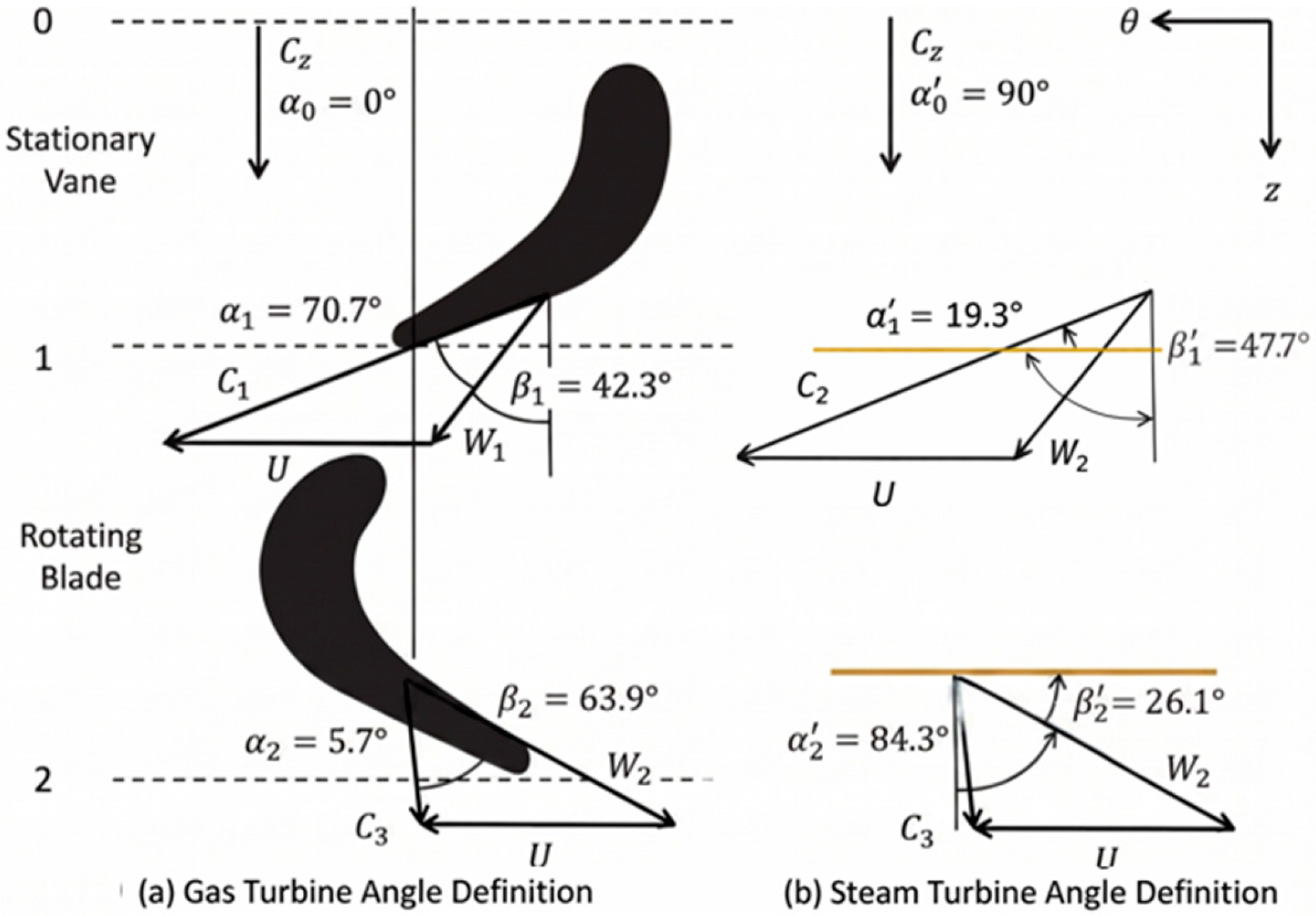
Figure 1 illustrates the schematic geometry of the investigated single-stage sCO
2 axial turbine and the corresponding angle definitions adopted in the steam-turbine-based and gas-turbine-based design frameworks.
2.1. General Design Framework and Assumptions
The one-dimensional design methods investigated in this study are all applied to a single-stage sCO2 axial turbine under steady-state operating conditions. The analysis is based on a mean-line representation of the turbine stage, in which the flow is described by averaged thermodynamic and kinematic quantities at representative blade-row sections. The governing framework is established from the conservation of mass, momentum, and energy, combined with the corresponding velocity-triangle relations and loss-model-based efficiency evaluation. Although the specific parameterization differs from method to method, all of the selected approaches aim to determine the velocity triangles, main geometric parameters, aerodynamic losses, and isentropic efficiencies of the turbine stage from a prescribed set of design conditions.
In the present work, the turbine stage is treated as an adiabatic flow system at the preliminary design level. Detailed three-dimensional flow structures, such as endwall vortices, unsteady blade-row interactions, and local secondary-flow features, are not directly resolved within the one-dimensional framework, but their effects are represented through empirical or semi-empirical loss correlations. Common boundary conditions used in the design procedures include inlet total pressure, inlet total temperature, outlet static pressure, mass flow rate, and rotational speed. Based on these inputs, each method constructs the corresponding thermodynamic states and velocity triangles, and then evaluates the geometric and performance parameters of the stage through its own iteration strategy and loss model.
Real-gas thermophysical properties of sCO2 were evaluated using the NIST REFPROP 9.1 database, which was embedded into the in-house design program. The required properties, including enthalpy, entropy, density, and specific volume, were called during the iterative calculation of thermodynamic states throughout the turbine stage. These real-gas properties enter the design process through the evaluation of stage enthalpy drop, local thermodynamic states, outlet flow area, blade-height-related quantities, and efficiency or loss calculations. In this way, the non-ideal thermodynamic behavior of sCO2 is consistently accounted for in all one-dimensional design procedures considered in this study.
2.2. One-Dimensional Design Concept and Method Based on Steam Turbines
Owing to the thermodynamic and aerodynamic similarities between steam turbines and sCO2 axial turbines under high-pressure expansion conditions, steam-turbine-based concepts have been widely adapted for preliminary one-dimensional design. In this category, the turbine stage is mainly parameterized by variables such as degree of reaction, velocity ratio, and outlet flow angle, and loss evaluation is closely associated with steam-turbine-derived empirical correlations. In the present work, two representative methods are considered, namely the Steam Turbine Iteration (STI) method and the Dostal Modify (DOM) method.
2.2.1. STI Method
Following the classical steam-turbine mean-line design framework, the STI method determines the thermodynamic states, velocity triangles, and stage geometry through iterative adjustment of degree of reaction, velocity ratio, and nozzle outlet angle.
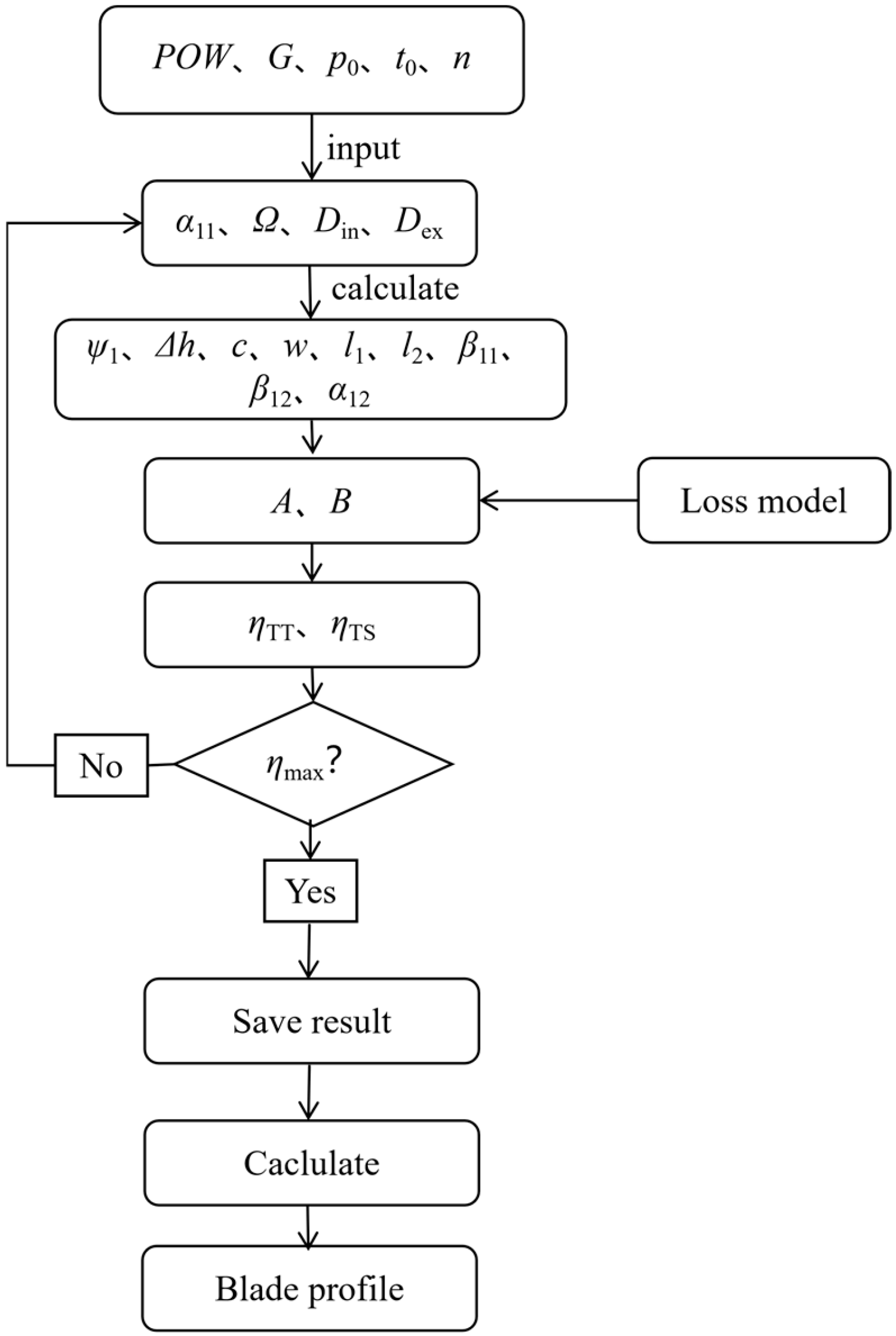
Based on the structural and performance requirements of the turbine stage, the STI method first defined the known design parameters: inlet total pressure (
), total temperature (
), outlet static pressure (
), mass flow rate (
), rotational speed (
), stator velocity coefficient (
), and rotor velocity coefficient (
). The initial values are then assumed for key parameters, including nozzle outlet angle (
), degree of reaction (
), and velocity ratio (
). These initial parameters were used to construct a velocity triangle to determine internal flow velocities and angles. Subsequently, the isentropic efficiencies (
and
) were calculated based on the assumed parameters and the selected loss model. An iterative process was then applied to optimize the key variables, including nozzle outlet angle (
), degree of reaction (
), and velocity ratio (
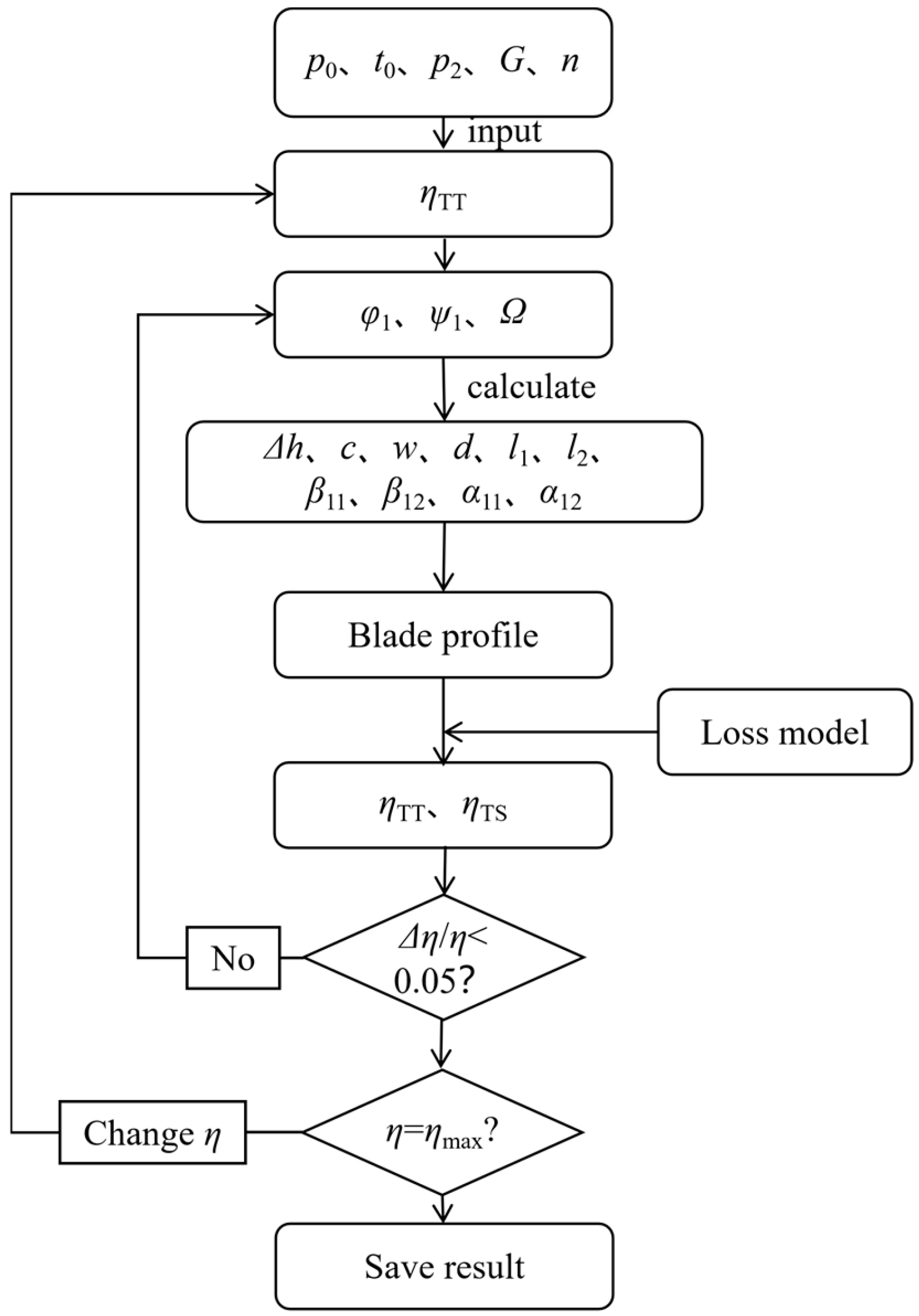
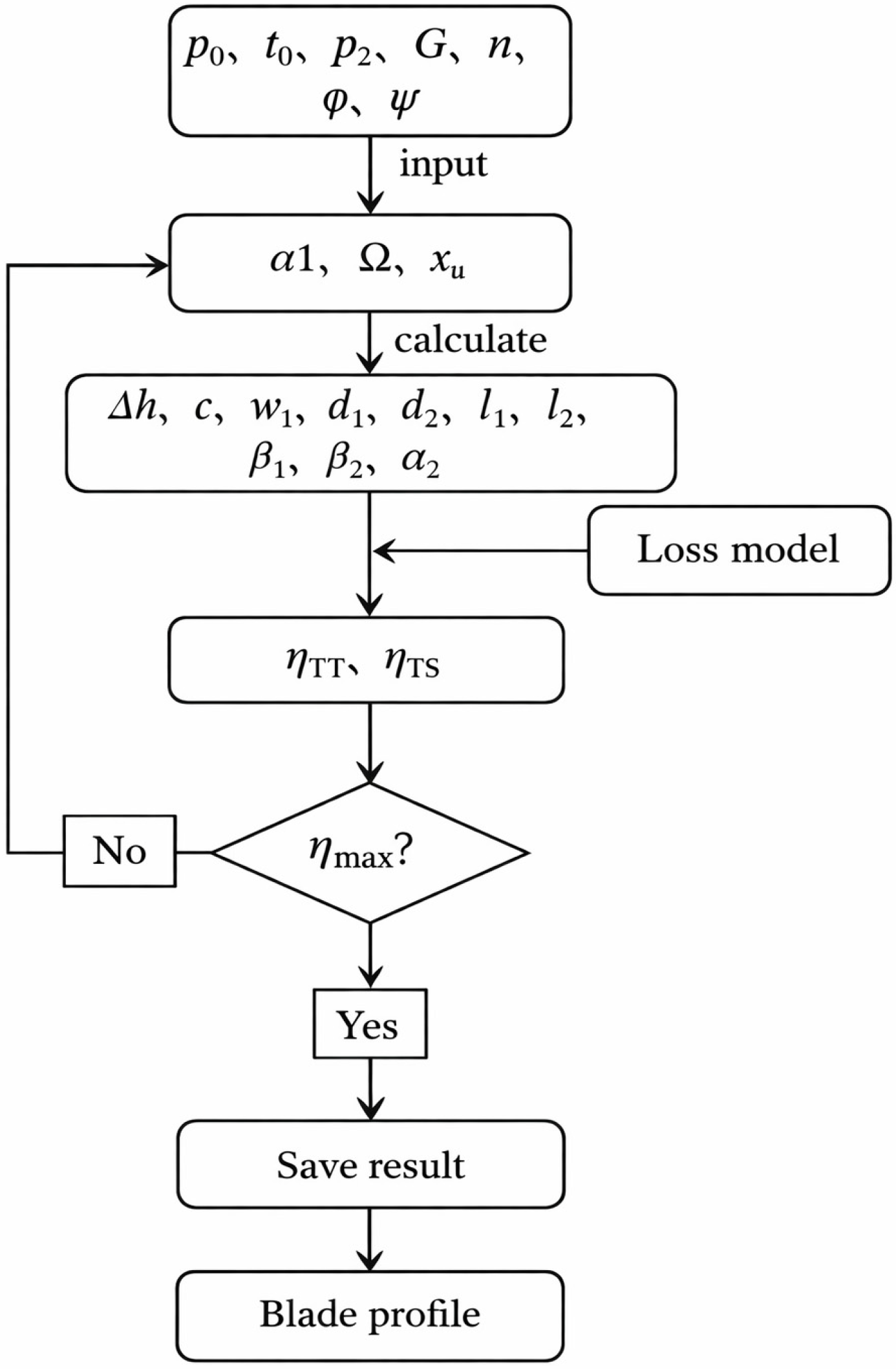
). Once the optimal design parameters are determined, the thermodynamic performance parameters of the turbine stage can be obtained. The design workflow is illustrated in
Figure 2.
Based on the conservation of energy and the assumed reaction distribution, the total stage enthalpy drop is divided between the stator and rotor as follows. First, the total stage enthalpy drop was calculated from the inlet and outlet conditions. Subsequently, using the assumed degree of reaction, the nozzle enthalpy drop, ideal exit velocity, and rotor enthalpy drop were determined. The following equations are derived within the classical steam-turbine design framework:
According to the nozzle outlet parameters, the nozzle outlet cross-sectional area was calculated. Using the velocity ratio and nozzle outlet angle, peripheral speed, mean diameter, and blade height were derived:
The degree of reaction represents the extent of flow expansion in the rotor, expressed as the ratio of the rotor enthalpy drop to the total enthalpy drop, and typically ranges from 0 to 0.5. The velocity ratio is defined as the ratio of the circumferential velocity of the stage to the ideal stage velocity, and its value typically ranges from 0 to 1.
The remaining flow angles and velocities were determined based on the velocity triangle, using the stator/rotor velocity coefficients and nozzle outlet angle.
The stator velocity coefficient is defined as the ratio of the actual to ideal nozzle outlet velocity, whereas the rotor velocity coefficient refers to the ratio of the actual to ideal relative velocity at the rotor exit. In the sCO
2 turbine design, both coefficients are typically determined based on empirical values [
14]. The nozzle outlet angle
is typically selected within the range between 11° and 25°.
Finally, the losses were evaluated. The 1D loss model for steam turbines generally includes nozzle loss, rotor loss, residual velocity loss, blade height loss, tip leakage loss, and friction loss. An empirical formula based on extensive experimental data from steam turbines was used to calculate the losses.
where
is the nozzle loss;
is the rotor loss;
is the residual velocity loss;
is the blade height loss;
is the tip leakage loss;
is the friction loss;
is the friction loss coefficient;
is the empirical coefficient; and
is the blade tip clearance.
After completing the loss calculations, the isentropic efficiencies and power outputs of the turbine stage were evaluated as follows:
where
is the total-to-total isentropic efficiency (excluding residual velocity losses); and
is the total-to-static isentropic efficiency (considering residual velocity losses).
By iteratively adjusting the assumed values of degree of reaction (), velocity ratio (), and nozzle outlet angle (), the maximum isentropic efficiency can be determined. Once the optimal stator and rotor blade parameters are identified, the appropriate blade shape can be selected based on the nozzle pressure ratio and the inlet and outlet airflow angles. The number of blades in the turbine stage can be determined by parameters such as blade pitch to realize the turbine stage design.
2.2.2. DOM Method
The DOM method is formulated according to the Dostal-type steam-turbine design route, in which hub diameter, nozzle outlet angle, rotor relative outlet angle, and degree of reaction are used as the principal iterative variables.
In accordance with the structural and performance requirements of the turbine stage, the DOM method began by specifying the known design parameters: inlet total pressure (
), total temperature (
), outlet static pressure (
), mass flow rate (
), rotational speed (
), stator velocity coefficient (
), and rotor velocity coefficient (
). The initial estimates were then provided for key variables, including the hub diameter (
), nozzle outlet angle (
), rotor relative outlet angle (
), and degree of reaction (
). These initial values were incorporated into the velocity triangle construction to derive the internal flow velocities and angles. Subsequently, in conjunction with appropriate loss models, the isentropic efficiencies (
and
) were calculated. Critical design parameters, such as nozzle outlet angle (
), degree of reaction (
), and velocity ratio (
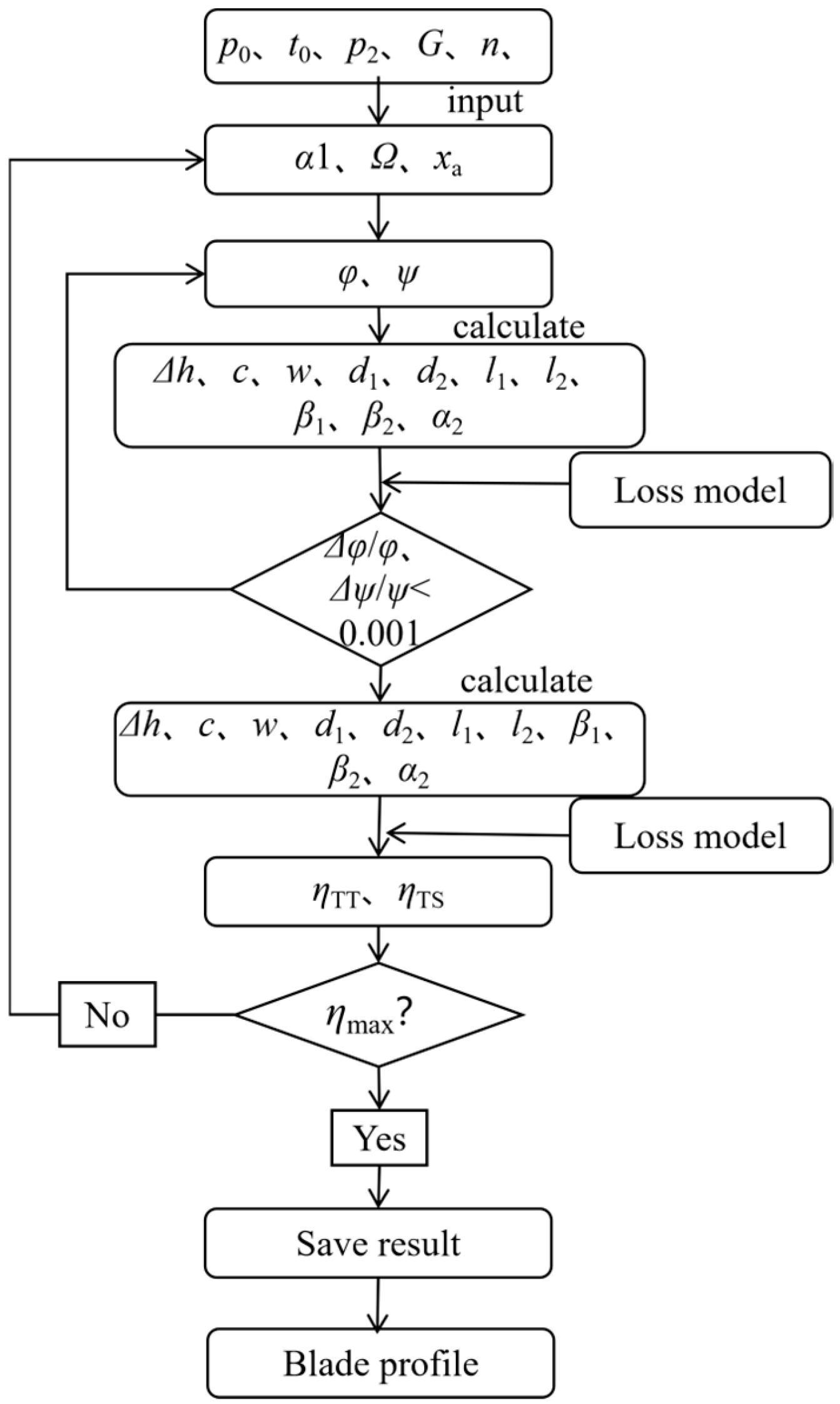
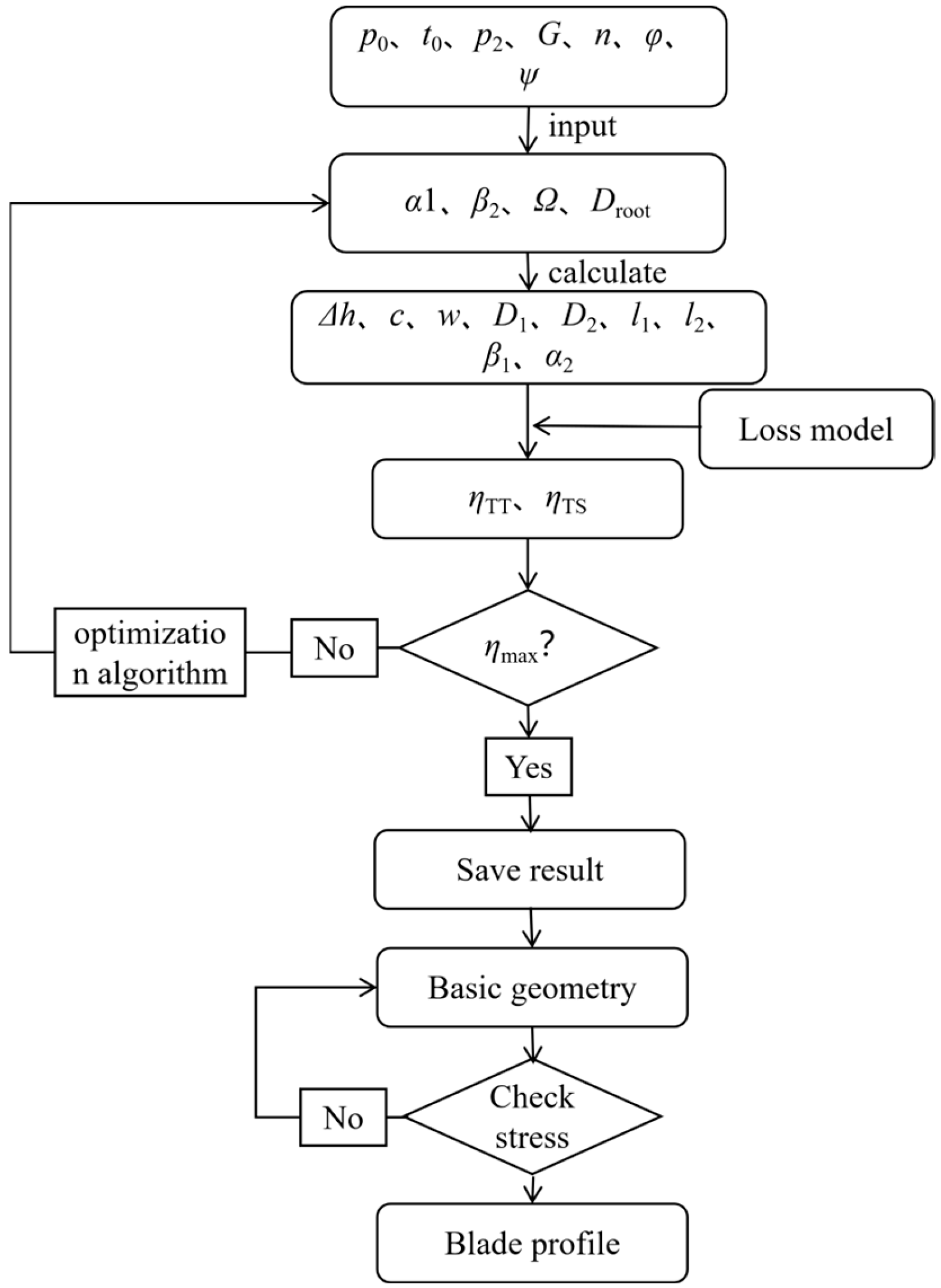
), were iteratively refined until an optimal parameter set was achieved. Once determined, the thermodynamic performance characteristics of the turbine stage can be evaluated. The complete design workflow is illustrated in
Figure 3.
The design process begins with the computation of enthalpy values using inlet and outlet conditions. Based on the assumed degree of reaction, the enthalpy drops across the stator and rotor were evaluated, and the nozzle outlet velocity was obtained using the same computational steps as in the STI method.
Next, the hub diameter, nozzle outlet angle, rotor relative outlet angle, and stator and rotor velocity coefficients were used to calculate the blade height and peripheral velocity. These geometric and aerodynamic parameters serve as the basis for completing the velocity triangle and determining the internal flow velocity and angle. The following calculation formulas are summarized from the literature [
19]:
The losses are evaluated using the Dostal loss model [
12], which incorporates various loss mechanisms, including nozzle loss, rotor loss, outlet loss, ventilation loss, and trailing-edge loss.
where
is the ventilation loss coefficient, and
is the trailing edge loss coefficient.
Once all losses are accounted for, the isentropic efficiencies and power output of the turbine stage can be determined as follows:
The DOM method treats key design variables, such as hub diameter (), nozzle outlet angle (), rotor relative outlet angle (), and degree of reaction (), as the optimization targets. These variables were refined using appropriate algorithms integrated with loss models to maximize the stage isentropic efficiency. To identify the optimal stator and rotor blade parameters, dedicated software was employed to generate blade profiles and conduct structural strength verification, thereby completing the turbine stage design.
The primary distinction between the two 1D design methods (STI and DOM) lies in their approaches to the parameter assumptions and iterations. The STI method iteratively adjusts the degree of reaction, velocity ratio, and nozzle outlet angle to enhance isentropic efficiency. In contrast, the DOM method regards the hub diameter, nozzle outlet angle, rotor relative outlet angle, and degree of reaction as the iterative variables. As the hub diameter is derived from empirical experience, assumptions should also be made regarding the rotor outlet angle to enable blade height and peripheral velocity calculations. Unlike average-diameter-based estimations, this approach offers improved accuracy, particularly when the diameter-to-height ratio is small. In the DOM method, the axial velocity parameters are assumed to be constant when constructing the velocity triangle. Conversely, the STI method considers the actual angular velocity distribution within the stage, accounting for the radial variation and flow-condition changes, making it more precise in reflecting real turbine dynamics. In terms of loss modeling, the STI method incorporates a more comprehensive loss range, whereas the DOM model omits factors such as blade-height loss. In addition, the key difference lies in how the loss components can be treated in each framework. Moreover, the STI method selects the velocity ratio based on the parameters of the average blade diameter, which represents the radial distribution of the blade. The DOM method incorporates the influence of hub diameter and blade height in radial distribution calculations. In the context of the sCO2 turbine design, both approaches are applicable and provide a complete and accurate loss model. However, given the empirically defined range of hub diameters, the STI method is generally more suitable for original-stage design applications.
2.3. One-Dimensional Design Concepts and Methods Based on Gas Turbines
The 1D thermodynamic design of the sCO
2 turbines is derived from the gas turbine design framework. Both gas and sCO
2 turbines operate under the Brayton cycle and exhibit similar thermodynamic structures. The core principle of the 1D design involves the conservation of mass, momentum, and energy. By simplifying the 3D flow into a quasi-one-dimensional flow along the streamline, the mean-line method is employed. This approach remains applicable to sCO
2 turbine design, requiring only the equation of state and transport models to be modified according to the distinct properties of the working fluid. The ideal gas assumption used in traditional gas turbine design becomes invalid in the near-critical region of sCO
2, necessitating replacement with high-precision equations of state or thermophysical property tables. Nevertheless, the original modeling framework and thermodynamic logic of gas turbines can still be inherited directly. Accordingly, gas turbine-based methods for the 1D design of sCO
2 turbines have been categorized into the UCF [
3] method, the TURBAN MOD (TBM) method, and the GAS TURBAN (GAST) method. These classifications are based on differences in thermodynamic input parameters, iterative variables, and loss modeling approaches.
2.3.1. UCF Method
Based on the structural and performance requirements of the turbine stage, the UCF method began by defining known design parameters: inlet total pressure (
), total temperature (
), outlet static pressure (
), mass flow rate (
), and rotational speed (
). The initial estimates for key design variables were then derived using the Smith chart [
25] (
Figure 3), including the flow coefficient (
), loading coefficient (
), degree of reaction (
), and target total-to-total isentropic efficiency (
). To account for constraints such as blade height,
and
were iteratively adjusted to match the desired target efficiency. Velocity triangles were then constructed to determine the internal flow velocities and angles at various blade sections. Subsequently, using appropriate loss models, the isentropic efficiencies (
and
) were calculated. The degree of reaction (
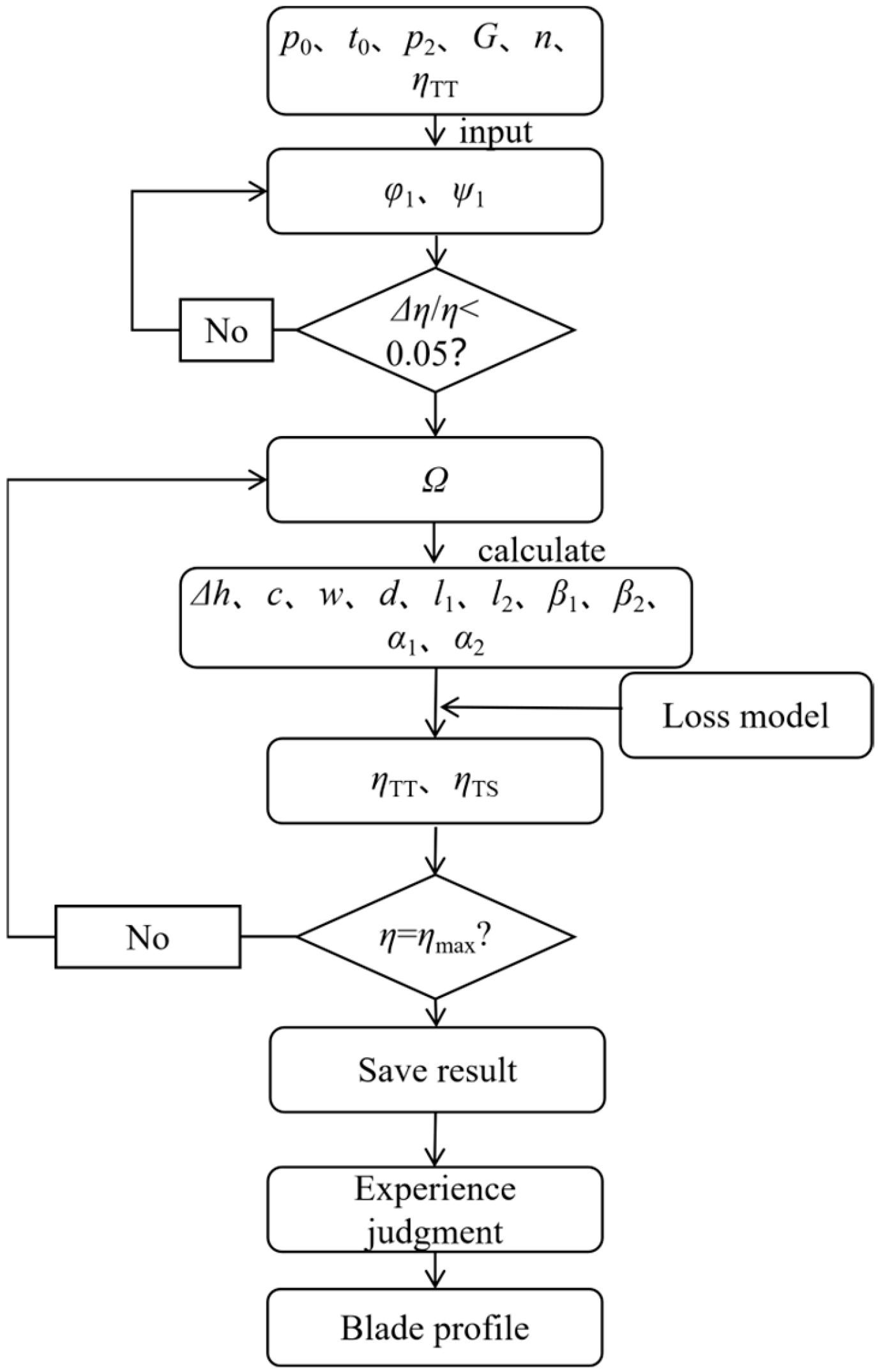
) was further optimized using iterative refinement. Upon determining the optimal set of design parameters, the thermodynamic performance of the turbine stage was evaluated. The full design workflow of the UCF method is illustrated in
Figure 4. It should be noted that the Smith chart was originally developed for conventional gas-turbine design under ideal-gas assumptions. In the present work, it was used as a practical preliminary design aid for selecting the initial values of flow coefficient, loading coefficient, degree of reaction, and target efficiency, rather than as a fully recalibrated sCO
2-specific efficiency map.
2.3.2. TBM Method
According to the structural and performance requirements of the turbine stage, the TBM method defined the known design inputs, which include axis power output (
), mass flow rate (
), inlet total pressure (
), total temperature (
), and rotational speed (
). The initial values were then provided for core parameters such as inlet mean diameter (
), outlet mean diameter (
), nozzle outlet angle (
), and degree of reaction (
). Velocity triangles were constructed based on these parameters to calculate the internal flow velocities and flow angles. Loss models were subsequently introduced to estimate stage isentropic efficiencies (
and
). An iterative process was then employed to optimize the design variables, including inlet mean diameter (
), outlet mean diameter (
), nozzle outlet angle (
), and degree of reaction (
), until convergence was achieved. Once the optimal set of parameters is determined, the thermodynamic performance of the turbine stage can be computed. The full design procedure is illustrated in
Figure 5.
The initial stage involved computing the peripheral velocity and loading coefficient of the turbine based on the specified axis power, rotational speed, and mean radius. Additional velocity and angular parameters within the blade rows were derived from the degree of reaction and the corresponding velocity triangle. The following calculation formulas are summarized from the literature [
10].
The loading coefficient (
) is a dimensionless parameter that reflects the actual stagnation enthalpy decrease across the turbine stage. The intra-stage loss coefficients in the TBM method are evaluated using gas-turbine-style loss relations embedded in the TURBAN-MOD [
10] framework, with the loss coefficients introduced into the loading-coefficient-based efficiency model as follows: Based on the given nozzle outlet angle and calculated velocity angle, the intra-stage loss coefficients denoted as
and
were then computed as follows:
where
is the loss coefficient value;
is the Reynolds number within the turbine stage;
is the weighting factor for the rotor;
is the rotor loss parameter;
the weighting factor for the stator;
is the stator loss parameter; and
is the outlet blade loss parameter.
Once the loss coefficients were established, they were integrated into the loading coefficient model to derive the isentropic efficiencies of the turbine stage:
The key design variables, such as nozzle outlet angle (), degree of reaction (), inlet mean diameter (), and outlet mean diameter (), were iteratively refined to achieve the highest isentropic efficiency while incorporating the effects of loss models. The blade chord ratio was determined using the blade loading model, whereas the installation angle model was employed to calculate the number of blades and chord length. Together, these parameters complete the aerodynamic design of the turbine stage.
2.3.3. GAST Method
In the GAST method, the aerodynamic losses are evaluated using classical gas-turbine loss correlations.
According to the structural and performance requirements of the turbine stage, the GAST method began by specifying known design inputs, which include inlet total pressure (
), total temperature (
), outlet static pressure (
), mass flow rate (
), and rotational speed (
). The initial estimates were then provided for key parameters such as flow coefficient (
), loading coefficient (
), degree of reaction (
), and target isentropic efficiency (
). Using these initial values, velocity triangles were constructed to calculate the internal flow velocities and flow angles. Appropriate loss models were then applied to estimate isentropic efficiencies (
and
). An iterative optimization process was performed to adjust
,
, and
to achieve the target efficiency. Once the efficiency target is satisfied and the optimal design parameters are established, the thermal performance characteristics of the turbine stage are computed. The overall design procedure is illustrated in
Figure 6.
The design process began by calculating the isentropic enthalpy drop using the inlet and outlet pressure and temperature conditions. The actual enthalpy drop was determined based on the specified target isentropic efficiency. The following equations are based on the classical gas-turbine design framework.
The velocity triangle was constructed based on the assumed flow coefficient, loading coefficient, degree of reaction, and rotational speed. This enables the calculation of internal flow variables such as velocity angles, mean radius, and blade height throughout the turbine stage:
The flow coefficient (
) is a dimensionless variable representing the mass flow handling capacity of the turbine:
Using the calculated flow velocities, the blade heights at the stator and rotor inlet and outlet can be determined with the mean value typically employed for subsequent computations.
The final step involved the evaluation of aerodynamic losses. In gas turbine design, the principal types of loss include profile loss, secondary flow loss, and tip leakage loss.
The Soderberg simplified loss model [
15] categorizes these into stator and rotor losses.
where
is the deflection as the change in the angle within the turbine, and
is the loss coefficient.
In a more detailed approach, the loss calculation is performed using refined models, such as the Ainley–Mathieson model [
14], which decomposes the total aerodynamic loss into three components: blade profile loss, secondary flow loss, and blade tip leakage loss.
where
is the loss coefficient;
are pressure loss coefficients for profile, secondary, and tip leakage losses, respectively;
is the tip clearance;
is the secondary flow loss coefficient;
is the lift coefficient; and
is the pitch-to-chord ratio.
Combined with the loss calculations, the turbine stage efficiency and power were obtained as follows:
To enhance performance, the GAST method iteratively adjusts the initial estimates of the flow coefficient (), loading coefficient (), and degree of reaction (), aiming to maximize the total-to-total isentropic efficiency. Empirical correlations and design experience, such as blade profile databases, diameter-to-height ratios, pitch-to-chord ratios, and blade count, are employed to support optimal turbine stage configuration.
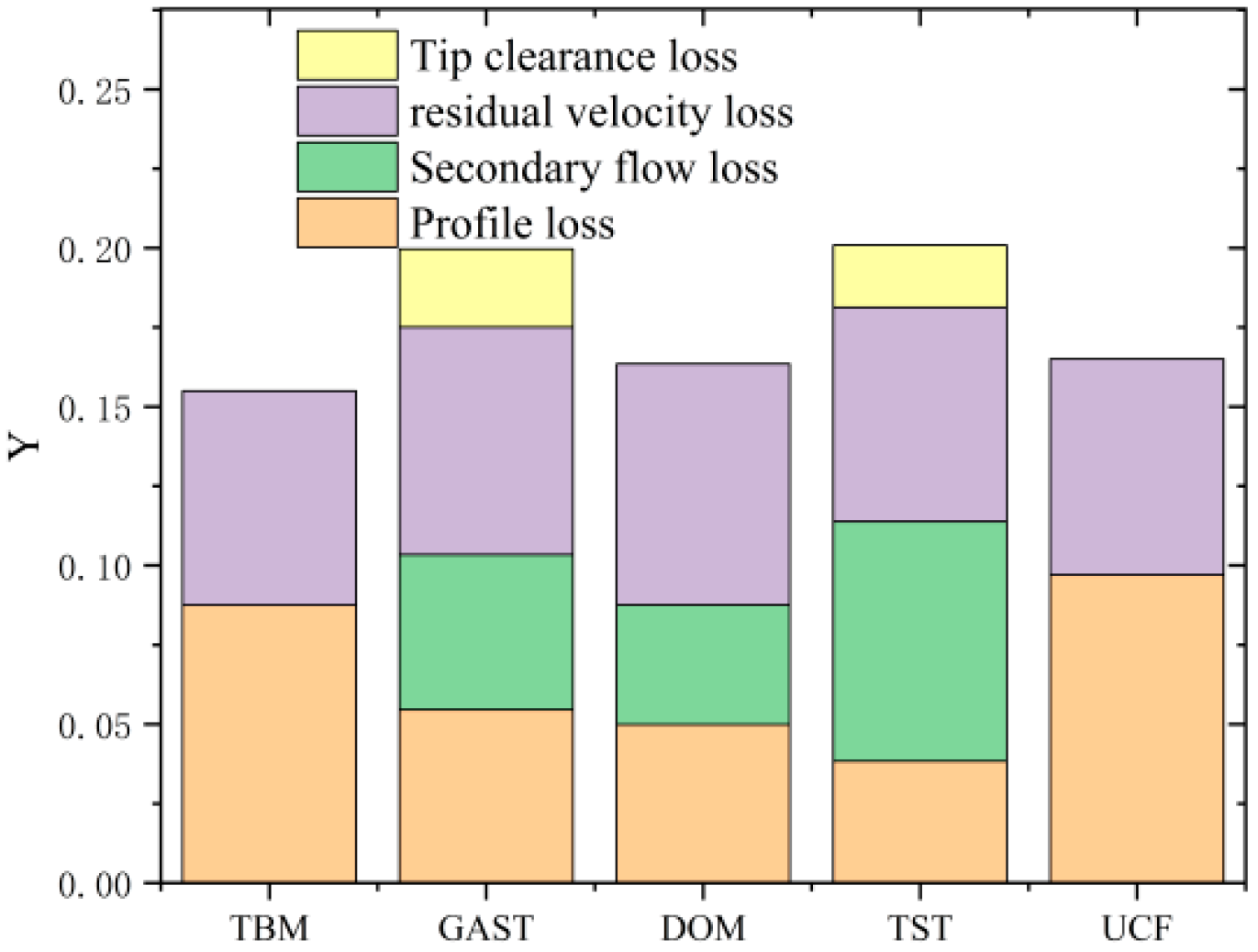
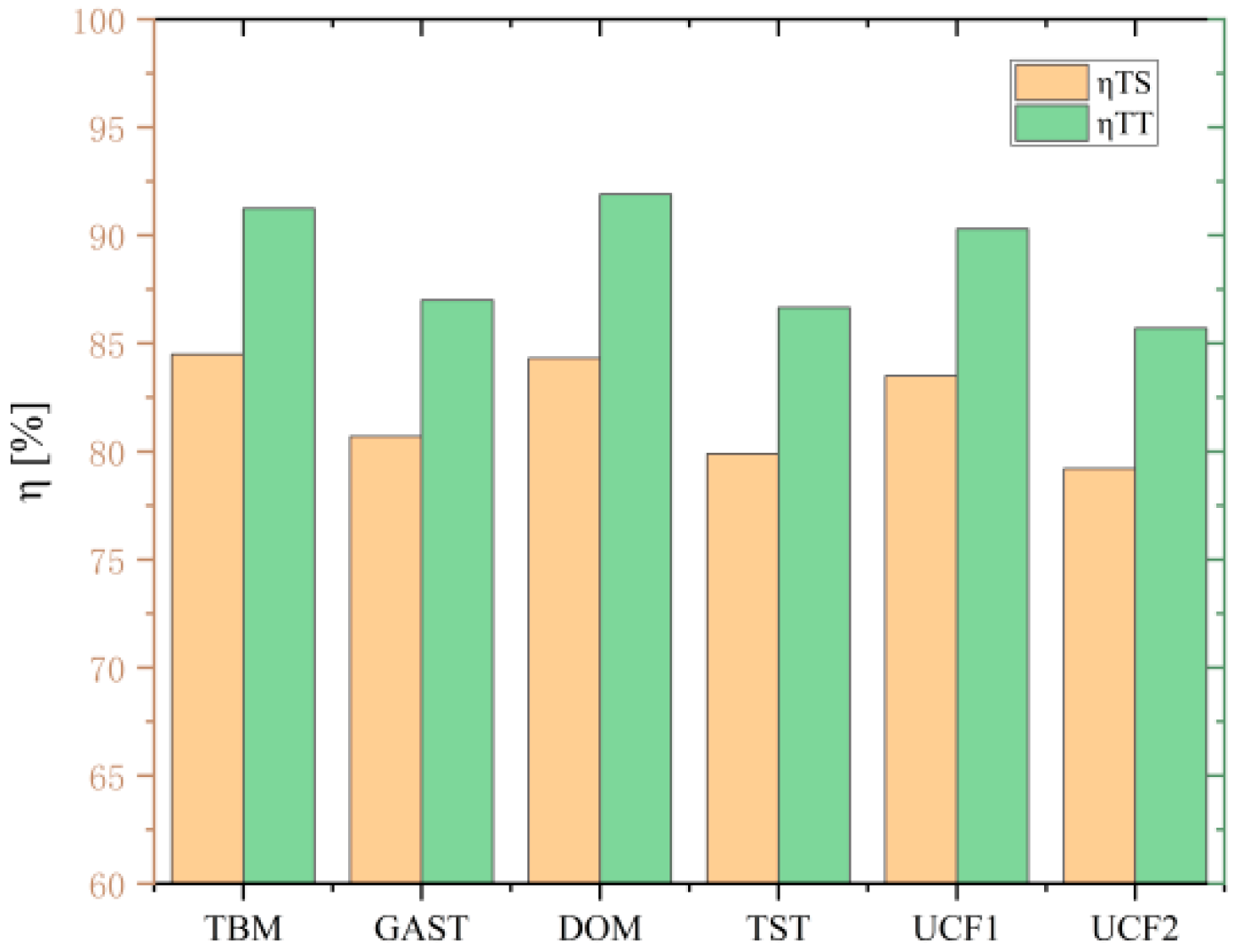
The TBM, GAST, and UCF methods are based on the gas turbine design concept, which typically assumes a constant axial velocity across the turbine stage. Under this assumption, a velocity triangle can be constructed without relying directly on a loss model. The primary distinctions between these methods are as follows: (1) Input parameters. The TBM method utilizes known mean diameters at both the turbine inlet and outlet, making it particularly advantageous when prior geometric data are available for rapidly estimating radial bounds. In contrast, the GAST and UCF methods do not require mean diameter values for turbine design. (2) Required inputs. TBM requires the turbine’s axial power output and inlet conditions to initiate the design process. In comparison, GAST and UCF methods depend on both inlet and outlet parameters but do not incorporate the output power as an input variable. (3) Automation and computational implementation. Both TBM and GAST can be programmed and iterated without empirical charts, enabling full automation and facilitating the search for maximum achievable efficiency. In contrast, the UCF method relies heavily on empirical datasets, which can be more suitable for rapid preliminary design with a fixed efficiency target but limits its ability to accurately predict the maximum performance. (4) Blade geometry definition. TBM enables precise blade geometry construction by integrating empirical inputs for geometric parameters, whereas GAST and UCF can generate blade profiles based on loss model assumptions, often resulting in coarser approximations of geometric features. (5) Loss calculation. The loss computations used in TBM and UCF are not fully comprehensive, which may lead to overestimated efficiency predictions owing to partial accounting for aerodynamic losses. In summary, when loss model limitations are not the primary consideration, TBM is well-suited for the 1D turbine stage design, where output power is explicitly defined, and prior geometric experience is available. UCF is appropriate when inlet and outlet conditions are known, and a clear efficiency target is specified. GAST is most effective for designs focused on maximizing stage efficiency, especially when both boundary parameters and performance objectives are clearly established.
4. sCO2 Turbine Stage Design and Validation Based on the Modified STI Method
When the conventional STI method is applied to sCO2 turbine stages, the stator and rotor velocity coefficients must be specified in advance, and these coefficients are usually determined empirically. In practice, however, the stator and rotor velocity coefficients are influenced not only by blade profile geometry, but also by the thermodynamic state and flow properties of the working fluid. Therefore, directly adopting velocity coefficients from conventional steam or gas turbine applications may introduce additional uncertainty when the method is used for sCO2 stage design.
In the present study, real-gas properties were introduced through thermodynamic state evaluation rather than through a direct empirical correction to the stator and rotor velocity coefficients. Specifically, the NIST REFPROP database was used to determine the enthalpy drop, density, and other state-dependent flow quantities at the stator and rotor outlets. These real-gas-state variables then affected the loss estimation and the resulting update of the stator and rotor velocity coefficients in the modified STI loop. In other words, the velocity coefficient correction is not an explicit output of the real-gas equation of state itself, but an indirect consequence of the real-gas-based thermodynamic and aerodynamic calculations. To improve computational efficiency in one-dimensional design, a numerical correction strategy was adopted instead of relying on repeated empirical chart consultation. Both the Ainley–Mathieson model and the Soderberg simplified loss model can be used to estimate profile loss. The former requires relatively detailed geometric information and relies on lookup tables, whereas the latter evaluates the combined effect of profile and secondary losses using only the inlet and outlet flow angles. Since the profile- and secondary-loss trends predicted by the Soderberg model remain consistent with those obtained from the Ainley–Mathieson model, the Soderberg simplified loss model was adopted in this study to numerically update and correct the stator and rotor velocity coefficients for sCO2 turbine stage design.
4.1. sCO2 Turbine Stage Design Method and Validation Based on Modified STI Method
The modified STI method retained the original STI loss breakdown, including tip leakage loss, while only revising the treatment of stator and rotor velocity coefficients through iterative correction. According to the structural and performance requirements of the turbine stage, the modified STI method specified known input parameters, including the inlet total pressure (
), total temperature (
), outlet static pressure (
), mass flow rate (
), and rotational speed (
). The initial assumptions were subsequently made for the critical design variables, such as nozzle outlet angle (
), degree of reaction (
), velocity ratio (
), stator velocity coefficient (
), and rotor velocity coefficient (
). These variables were employed to construct the velocity triangle and to compute internal flow velocities and angles. The Soderberg simplified loss model was utilized to calculate and iteratively update the stator and rotor velocity coefficients (
and
). Once updated, the velocity triangle was recalculated using the corrected coefficients to obtain the revised internal flow characteristics. The convergence criterion for the inner correction loop was defined as a relative change below 0.1% for both the stator and rotor velocity coefficients between two successive iterations. Under this criterion, the correction process typically converged within 3–5 iterations for the cases considered in this study. Subsequently, stage isentropic efficiencies (
and
) were evaluated based on the loss model. Further iterative optimization was then performed for the key variables, such as nozzle outlet angle (
), degree of reaction (
), and velocity ratio (
), to refine the design. Once the optimal values of these parameters were determined, the thermal performance indicators of the turbine stage were computed (
Figure 9).
The input parameters were maintained consistent with those adopted in the original STI design method. The corresponding results were compared with the 3D thermodynamic calculation values derived from the original STI method, the GAST method, and the UCF method (
Table 8). The findings show that the modified STI method maintains good numerical consistency with the UCF-based 3D thermal calculation values for the present benchmark case. In addition, the prediction error of the modified STI method is lower than that of the GAST method. This indicates that the modified STI method can provide reliable one-dimensional loss prediction for preliminary design and comparative analysis. However, since the present validation is based on numerical cross-comparison rather than experimental confirmation, the method should be regarded as a preliminary design and parametric screening tool rather than a substitute for final engineering qualification.
4.2. Analysis of Variation Trends in the Modified STI Method
Based on the initial input parameters obtained from the UCF method, a sequence of design calculations was performed to examine the variation trends of the performance indicators using the modified STI method. The analysis centered on the iterative behavior of key design parameters. Specifically, the effect of the nozzle outlet angle was investigated, and the velocity ratio and degree of reaction were held constant. The corresponding trends in efficiency, output power, individual loss components, and corrected stator and rotor velocity coefficients under varying nozzle outlet angles were subsequently analyzed. Under a velocity ratio of 0.5 and a degree of reaction of 0.292, the changes in each performance parameter were recorded, and the correction process for the velocity coefficients associated with each nozzle outlet angle was performed. It should be noted that the 3–5 iterations reported here refer specifically to the inner velocity-coefficient correction loop rather than to the outer parameter-optimization loop.
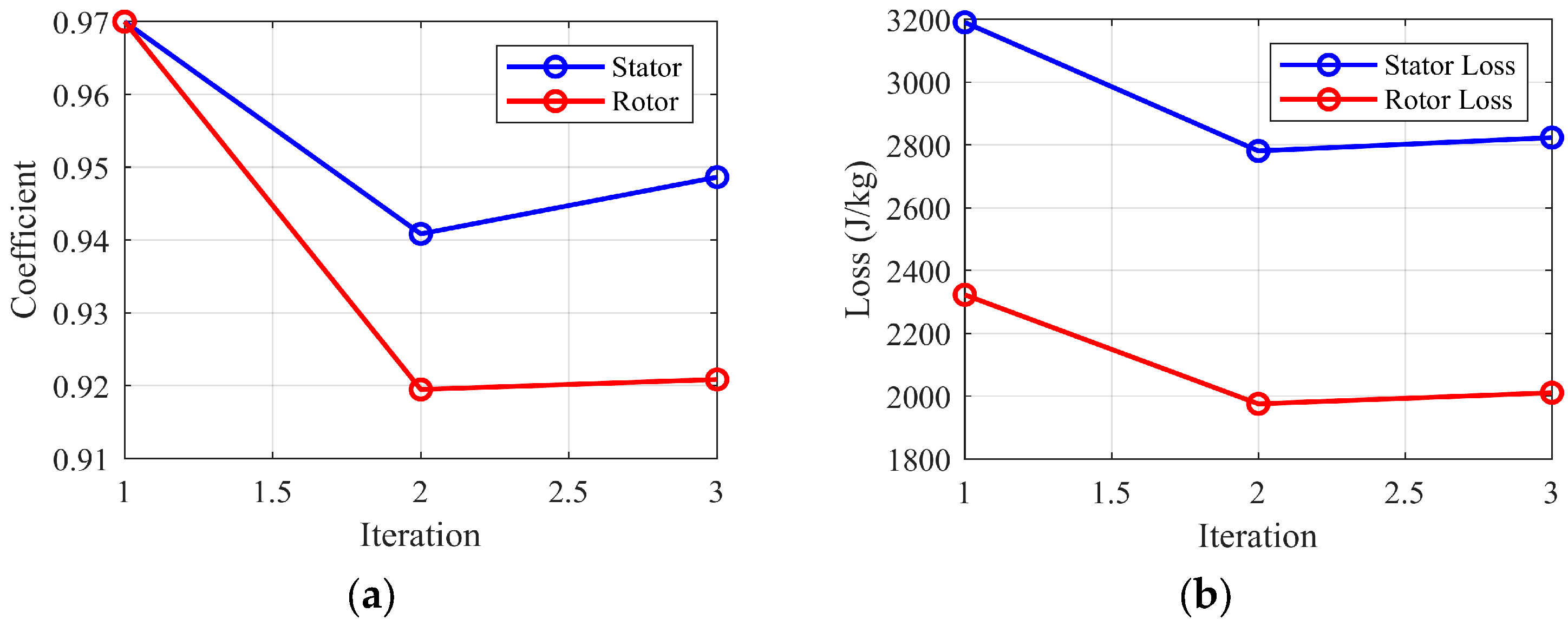
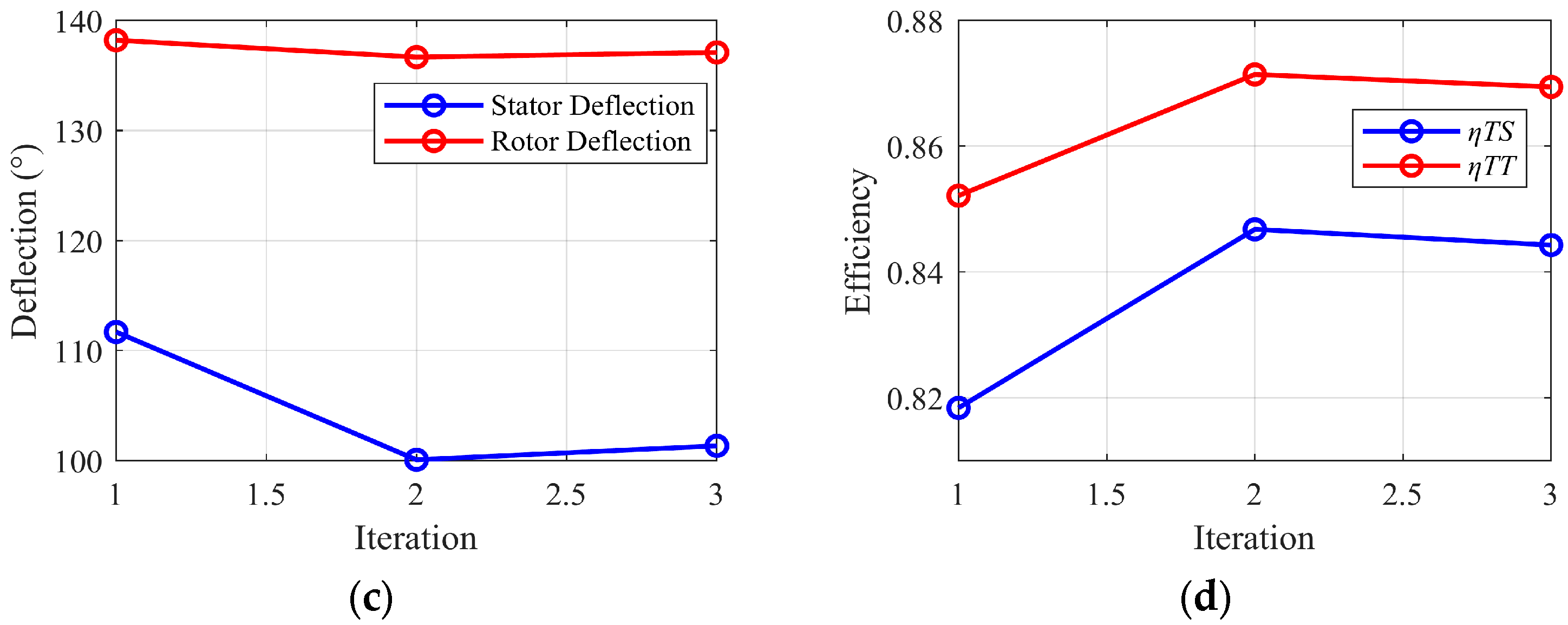
Figure 9 illustrates the convergence behavior of this inner correction process for the stator and rotor velocity coefficients and the corresponding loss-related quantities.
The convergence criterion for the inner correction loop was defined as a relative change below 0.1% in both the stator and rotor velocity coefficients between two successive iterations. The iterative correction processes for both coefficients are illustrated in
Figure 10a–d. After three iterations, the corrected stator and rotor velocity coefficients corresponding to each nozzle outlet angle were obtained along with updated values for stator and rotor losses, flow deflection, and stage efficiency.
As shown in
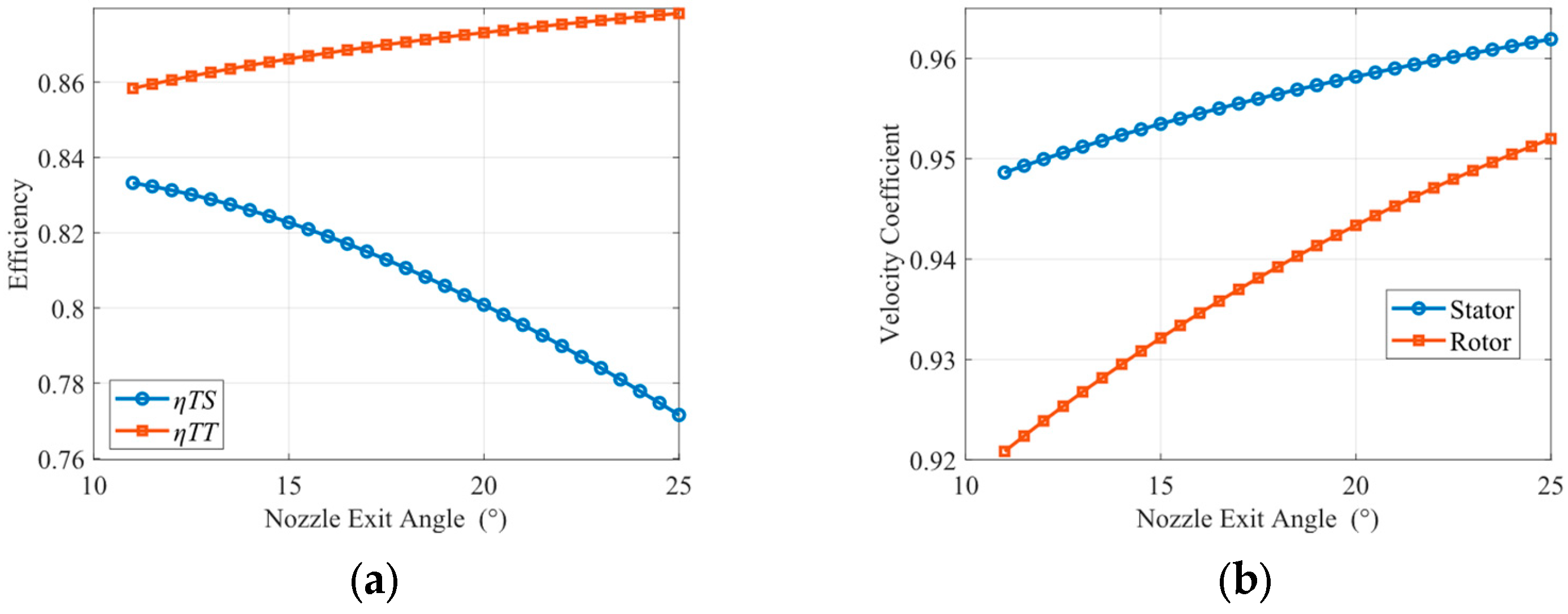
Figure 11a,b, the total-to-total isentropic efficiency increased with larger nozzle outlet angles, whereas the total-to-static isentropic efficiency decreased. This was accompanied by an increase in both stator and rotor velocity coefficients as the nozzle outlet angle increased. Under a fixed velocity ratio and degree of reaction, this trend indicated a reduction in both stator and rotor losses. Specifically, the profile loss and secondary flow loss were diminished. As depicted in
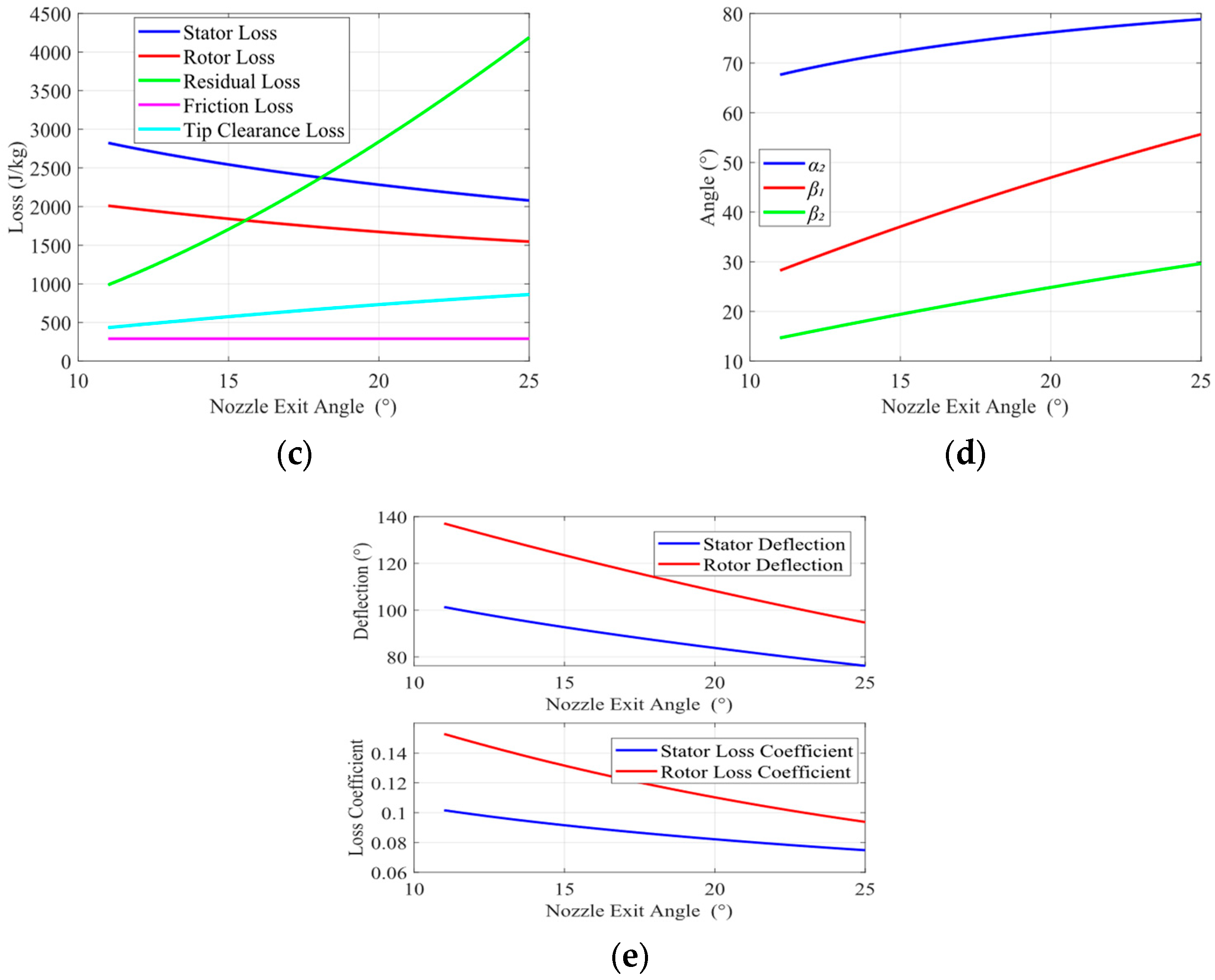
Figure 11c, the total stator and rotor losses within the stage decreased with increasing nozzle outlet angle. However, the total-to-static isentropic efficiency was negatively affected by the simultaneous increase in residual velocity loss and tip leakage loss. Since no dedicated sCO
2-specific leakage correction was introduced in the present study, the reported leakage-loss trend should be interpreted as a model-based comparative result within the present framework rather than as a quantitatively validated final value. The magnitude of these increases surpassed the reduction in stator and rotor losses, resulting in a net decrease in total-to-static isentropic efficiency. In contrast, the gain in total-to-total isentropic efficiency was primarily attributed to the elevated contribution of residual velocity loss. As the nozzle outlet angle increased, both the rotor relative inlet angle and rotor absolute outlet angle also increased, while the corresponding flow deflection decreased (
Figure 11d). The reduction in loss coefficient was positively correlated with the decrease in flow deflection (
Figure 11e).
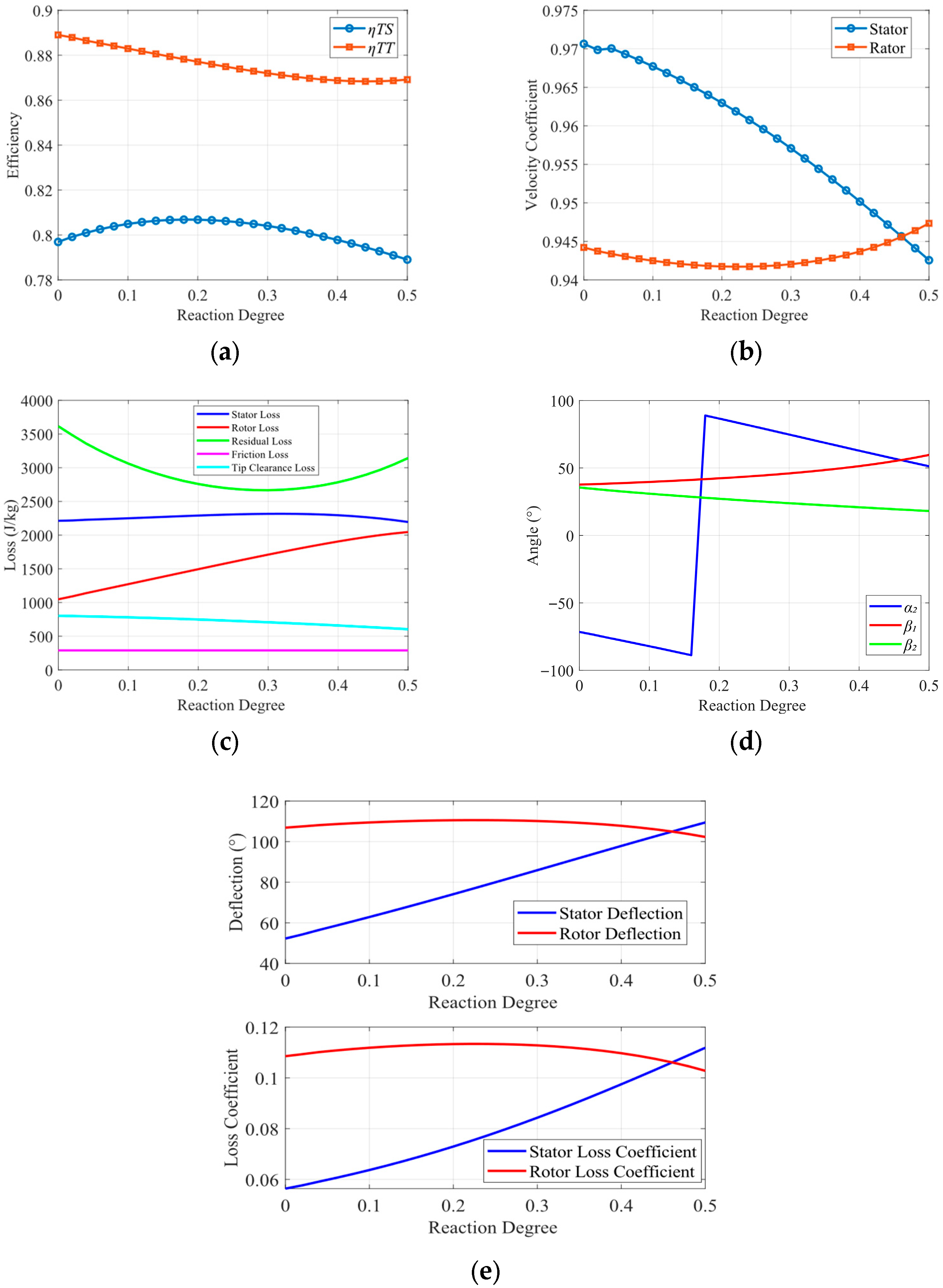
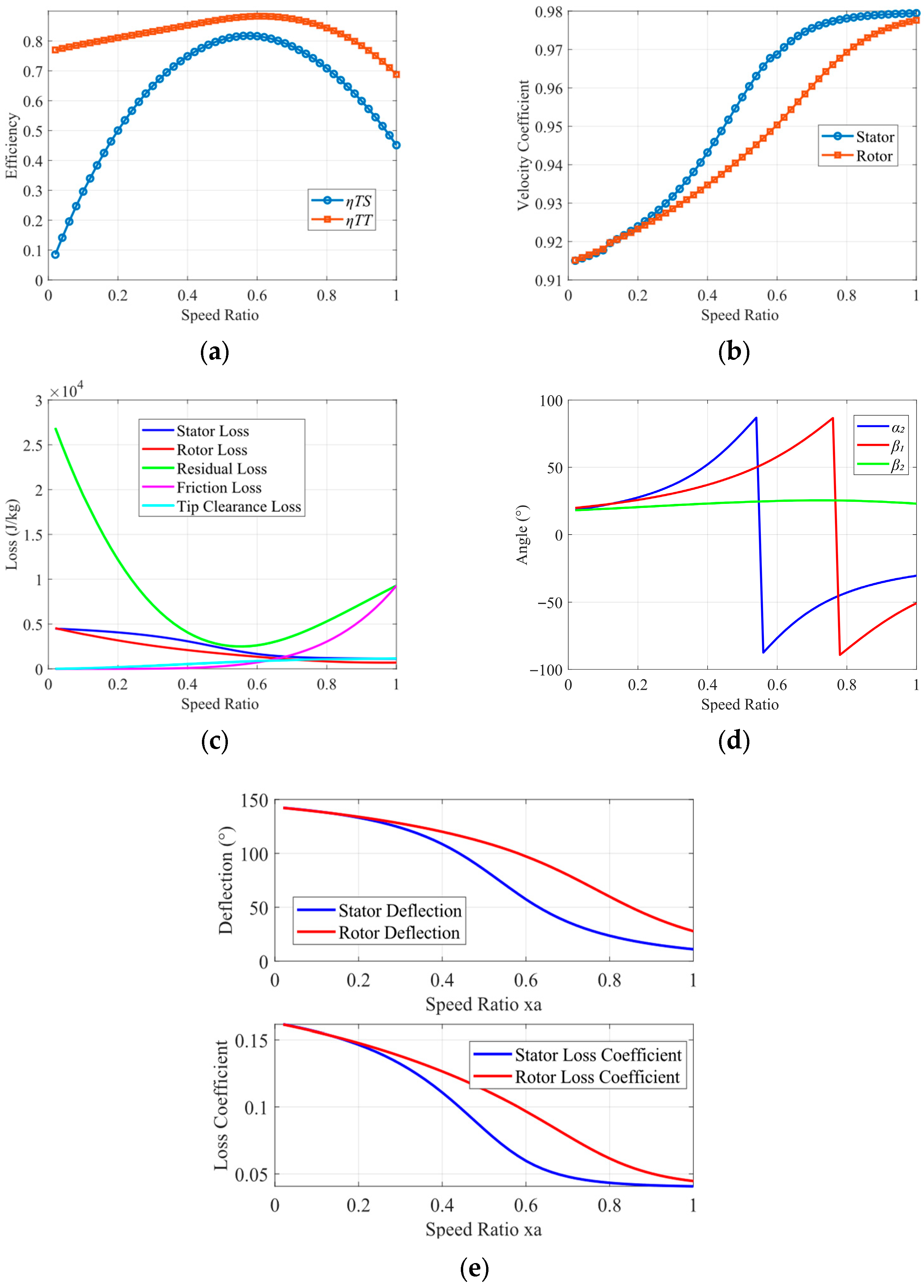
A parametric analysis was conducted to evaluate the effect of the degree of reaction under a fixed velocity ratio of 0.5 and a nozzle outlet angle of 19.3°. The trends of key performance indicators are shown in
Figure 12a,b. The total-to-total isentropic efficiency initially declined and then stabilized as the degree of reaction increased. Conversely, the total-to-static isentropic efficiency followed a trend of first increasing and then decreasing. The nozzle velocity coefficient exhibited a downward trend with increasing degree of reaction, while the rotor velocity coefficient first decreased and subsequently increased as the degree of reaction increased. From the loss distribution analysis shown in
Figure 12c, the residual velocity loss initially decreased and then increased with higher degrees of reaction. In contrast, the stator loss exhibited a modest increase, followed by a decline, showing a limited overall fluctuation. The rotor loss increased steadily, whereas the tip leakage loss gradually decreased with an increasing degree of reaction. For the degrees of reaction below 0.3, both the residual velocity and tip leakage losses decreased; however, the magnitudes of rotor and stator losses were larger than the combined reduction in the residual velocity loss and tip leakage loss. Consequently, the total-to-total isentropic efficiency declined. When the degree of reaction exceeded 0.3, the increase in residual velocity loss became the primary factor limiting the total-to-total isentropic efficiency. The initial increase and subsequent decline in efficiency were primarily attributed to the changes in residual velocity loss. Meanwhile, variations in the stator and rotor angles were also observed as the degree of reaction changed. When the degree of reaction was approximately 0.15,
shifted from a negative to a positive value. Other angular parameters, including
and
, also changed.
increased, and
decreased as the degree of reaction increased (
Figure 12d). According to
Figure 12e, the deflection increased consistently in the rotor and first increased, then decreased in the stator. Additionally, both the stator and rotor velocity coefficients exhibited a positive correlation with the flow deflection.
An additional analysis was conducted to assess the impact of the velocity ratio on turbine stage performance under the same nozzle outlet angle of 19.3° and a fixed degree of reaction of 0.292. The results in
Figure 13a,b indicated that both the total-to-total and total-to-static isentropic efficiencies followed a non-monotonic trend with respect to the velocity ratio. Efficiency initially increased with the velocity ratio, reached a peak, and then decreased. The maximum total-to-static isentropic efficiency occurred within the range of 0.5 to 0.6, whereas the total-to-total isentropic efficiency peaked near the velocity ratio of 0.6. Both the stator and rotor velocity coefficients increased with the rising velocity ratio. The loss distribution within the sCO
2 turbine stage is illustrated in
Figure 13c, showing that the stator and rotor losses, as well as the residual velocity loss, decreased at low velocity ratios. The other loss components remained relatively stable and low in magnitude. Among all loss types, the residual velocity loss remained the dominant contributor. The observed decrease in the residual velocity loss explains the increase in the total-to-static isentropic efficiency, and the overall decline in the total loss contributed to an increase in the total-to-total isentropic efficiency. However, when the velocity ratio exceeded 0.5, the residual velocity loss began to increase again, resulting in a reduction in the total-to-static isentropic efficiency. Simultaneously, the friction loss increased, causing a decline in total-to-total efficiency. As shown in
Figure 13d, when the velocity ratio reached 0.52,
changed from positive to negative. When the ratio increased to 0.75,
also shifted from positive to negative. As illustrated in
Figure 13e, both the deflection and stator and rotor velocity coefficients continued to decrease with an increasing velocity ratio.
4.3. Optimized Design of sCO2 Turbine Stages Based on the Modified STI Method
The sCO
2 turbine was designed using the UCF method and its turbine case [
14]. The maximum efficiency of the first stage was calculated, and both total-to-total and total-to-static isentropic efficiencies were evaluated. The modified STI method was subsequently applied for iterative optimization. Unlike ideal conditions, structural and manufacturing constraints should be considered in practical design scenarios. Specifically, the nozzle outlet angle and rotor relative outlet angle should be constrained. In addition, limitations should be imposed on the blade height, average diameter, and diameter-to-height ratio. Therefore, additional restrictive factors were introduced during the actual design iteration. By incorporating a large dataset of turbine blade parameters and accounting for real sCO
2 turbine configurations, the design constraints were established, as listed in
Table 9. It should be noted that the constraints listed in
Table 9 were not introduced as strict universal limits specifically derived for sCO
2 turbines. Instead, they were adopted as practical preliminary design bounds based primarily on conventional axial-steam-turbine design experience and on the applicability ranges of the corresponding one-dimensional design formulas used in this study. Since the modified STI framework itself is rooted in the steam-turbine design concept, these bounds are closely related to the empirical and geometric assumptions underlying the method. These limits were further screened against the compact geometry and high-density operating characteristics of sCO
2 turbine stages so as to exclude obviously impractical design regions during the iterative optimization process.
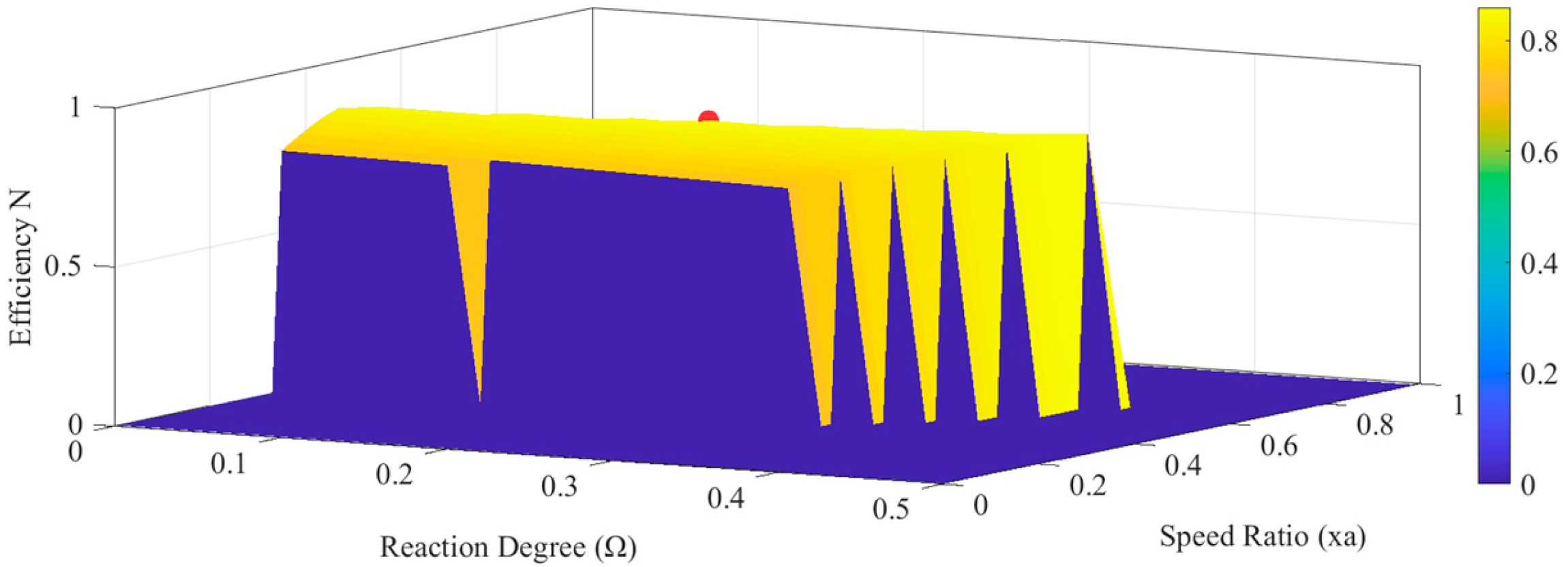
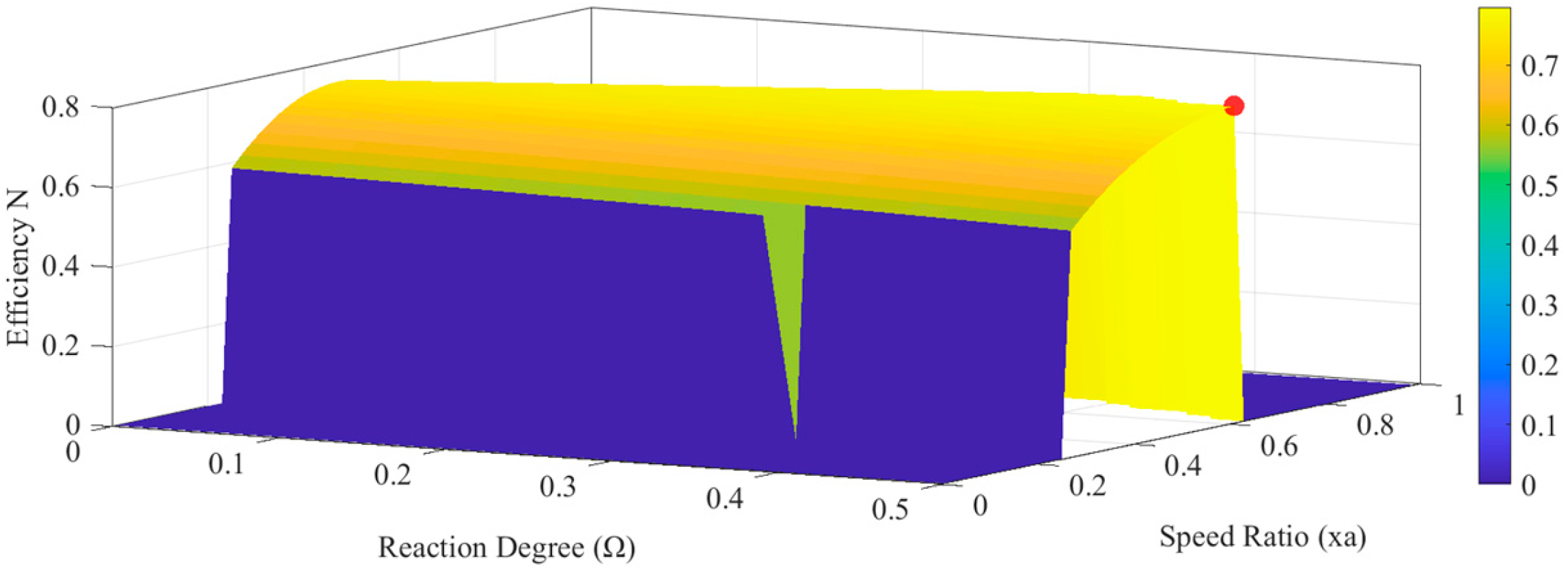
The optimal results are presented in
Figure 14 and
Figure 15. The inclusion of these constraints introduced certain restricted zones in the iterative process, which contributed to improving both the iteration rate and the accuracy of the optimization results.
Figure 14 and
Figure 15 present the constrained optimal design regions for the two efficiency objectives. For total-to-static isentropic efficiency, the optimum is found at a moderate degree of reaction and a velocity ratio of approximately 0.5–0.6, together with a relatively small nozzle outlet angle. For total-to-total isentropic efficiency, the optimum shifts toward a lower reaction degree and a larger nozzle outlet angle, while the preferred velocity ratio remains in nearly the same range. This result shows that the two objectives are governed by different aerodynamic trade-offs: the former is more sensitive to the final residual kinetic energy, whereas the latter is more closely associated with the internal stage loss distribution. Therefore, the optimal parameter set should be selected according to the intended application of the turbine stage. The outer optimization loop searched the feasible design space defined by the imposed constraints in
Table 9. Therefore, the reported optimum should be interpreted as the best solution found within the examined design domain, rather than as a mathematically guaranteed unique global optimum.
The optimal design parameters obtained using the modified STI method under these constraints are summarized in
Table 10. The results indicated that to achieve a high total-to-static isentropic efficiency, the design required a moderate degree of reaction (approximately 0.2), a velocity ratio between 0.5 and 0.6, and a small nozzle outlet angle. Conversely, maximizing the total-to-total isentropic efficiency required a minimal degree of reaction, a velocity ratio in the same range (0.5–0.6), and a large nozzle outlet angle. A comparison between the two optimized configurations revealed that when the total-to-total isentropic efficiency was maximized, the design resulted in a smaller blade height but lower total-to-static isentropic efficiency. Therefore, this design is suitable for the first stage of a multi-stage turbine. When the total-to-static isentropic efficiency is maximized, the design features a larger blade height and yields isentropic efficiency values close to the total-to-total efficiency, which is suitable for use in a single-stage turbine. It should be emphasized that the optimal reaction degree of 0.2 obtained in this study should not be interpreted as a universal recommendation for all sCO
2 axial turbines. This value emerged from the specific single-stage objective, inlet/outlet boundary conditions, adopted loss model, and imposed geometric constraints considered in the present optimization. In addition, Mach-number-related effects were not treated as an independent optimization constraint in the present study. Therefore, the possible influence of low reaction degree on the rotor relative Mach number and on compressibility-related penalties should be incorporated into future work.
Furthermore, the modified STI method leverages automated programming for iterative refinement of the rotor and stator blade velocity coefficients. While this requires iterative adjustment, the overall computational speed significantly outpaces methods like GAST and UCF, which rely on loss calculations via look-up tables. Convergence meeting the accuracy requirements is typically achieved within 3 to 5 iterations. Regarding precision, the modified STI method surpasses the original STI method and achieves accuracy comparable to the GAST method, making it suitable for preliminary single-stage design, parametric screening, and one-dimensional optimization of sCO2 turbine stages.
Limitations of the Current Study: The developed design code is currently applicable only to the design of single-stage sCO2 turbines. The design of multi-stage turbines requires a more complex enthalpy-drop distribution strategy and a larger number of coupled design variables. In a future multi-stage extension, the total turbine enthalpy drop would need to be distributed among stages, and stage-to-stage matching constraints would need to be imposed, including continuity of mass flow, inter-stage flow-angle compatibility, and the cumulative evolution of mean radius and blade height. Under such a framework, the modified STI correction could be applied as an inner loop for each individual stage, while an outer loop would be used to optimize the stage loading and reaction distribution across the full turbine. In addition, the optimization ranges and several design constraints adopted in this study are still based mainly on current empirical knowledge. The inlet and outlet boundary conditions used in the present optimization correspond to the rated operating condition; therefore, the reported optimum should be interpreted as a design-point-specific result. Although off-design analysis can, in principle, be performed within the same one-dimensional framework, the robustness of the identified optimum under part-load operation or inlet-state variation was not assessed in the present study. In practical turbine design, the final parameter set should therefore be selected as a compromise solution satisfying both rated and off-design requirements rather than relying solely on the single-point optimum reported here. Owing to the scarcity of publicly available sCO2 turbine test data, the present validation was limited to cross-comparison with a higher-fidelity 3D CFD benchmark for the same reference case. Therefore, the modified STI method should be regarded as a preliminary design and parametric screening tool rather than a substitute for experimental qualification. Future work should focus on experimental validation, extension to multi-stage turbine design, off-design and multi-point optimization, and further calibration of the design constraints and loss correlations for short-blade sCO2 turbine stages.