


Abstract
The long-term safety of rockfill dams is critically dependent on the quality of the filling material. Therefore, it is essential to predict the blasting grading distribution scientifically and accurately. This paper proposes an engineering-scale numerical simulation method to predict the grading distribution of hydraulic-grade rockfill material and verify its effectiveness through major hydropower engineering applications. Firstly, based on the mechanical mechanism of rock fragmentation and relevant experimental data, the critical blasting damage threshold for rock detachment is determined. Then, the threshold is used to identify the boundaries of blasted rock blocks, enabling the quantitative derivation of grading curves. The method is applied to simulate the blasting mining of fill materials at the Lianghekou Hydropower Station. A comparison with field screening data demonstrates that the method effectively simulates the spatial distribution of blast-induced block sizes. Furthermore, numerical simulations investigate the influence of hole arrangements and delay times on fragmentation. The results indicate a significant difference in the grading distribution characteristics between rectangular and staggered hole arrangements, with the rectangular arrangement conducive to producing a continuously non-uniform gradation. Delay time also markedly impacts fragmentation, primarily affecting the distribution of medium and large-sized blocks. The mean fragment size initially decreases and then gradually increases with longer delay times.
1. Introduction
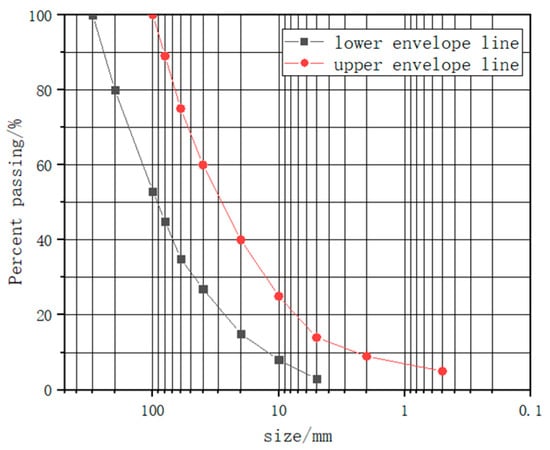
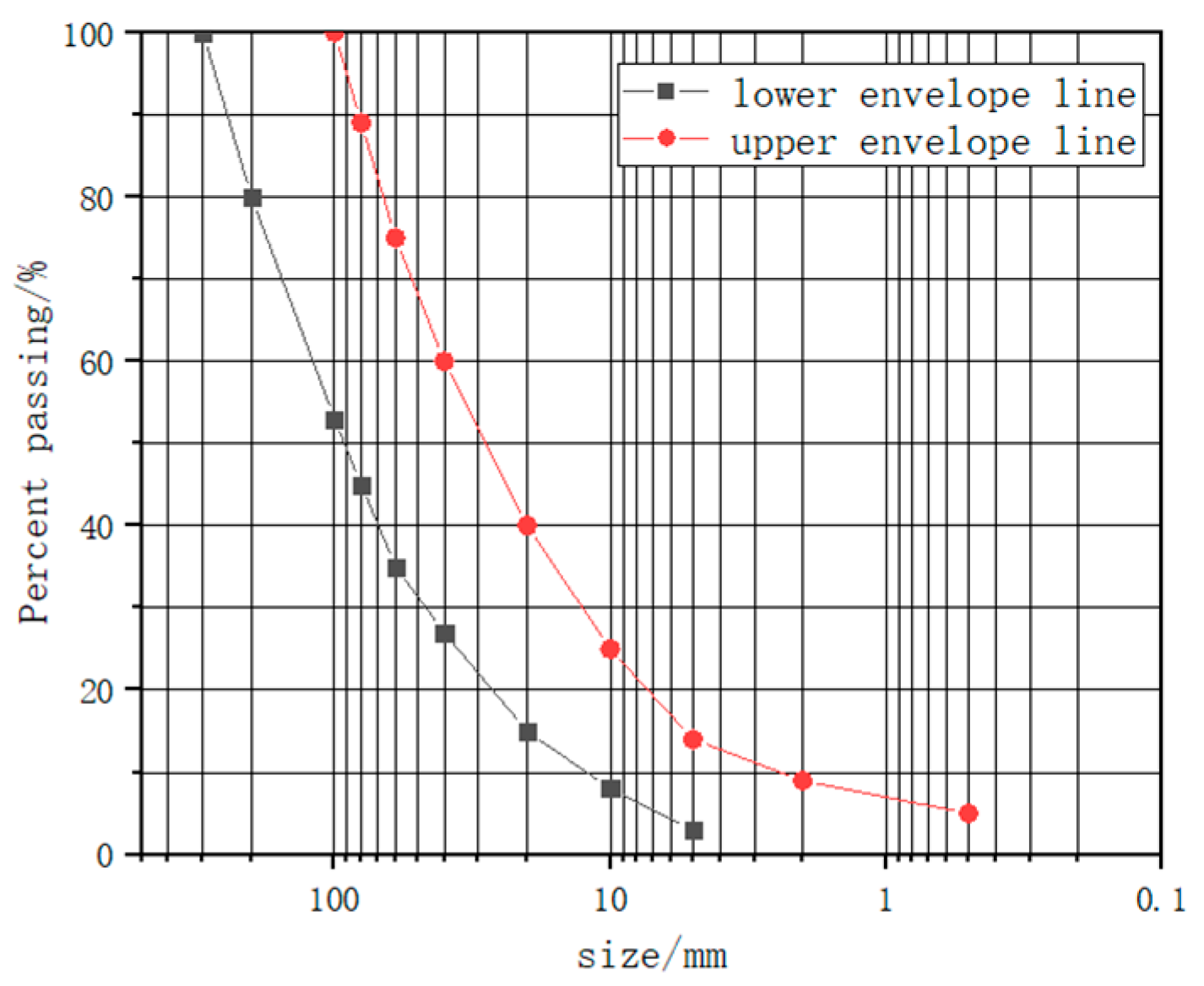
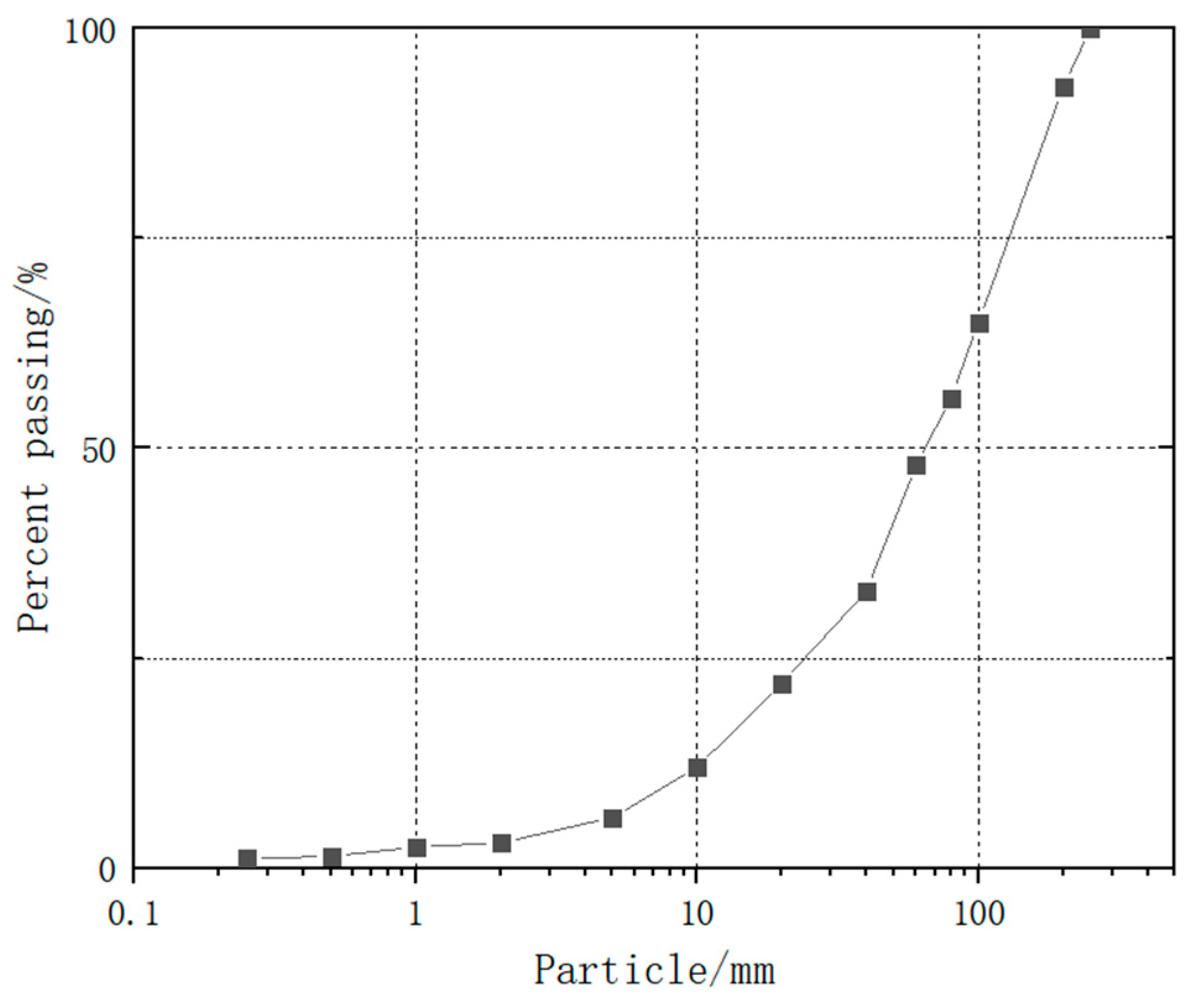
China boasts the world’s largest hydropower potential, with theoretical reserves exceeding 694 GW and technically exploitable capacity close to 542 GW. The construction of high dams and large reservoirs plays a central role in hydropower development. The main types of dams built today include concrete dams and local material dams. Among them, rockfill dams—a typical form of local material dams—have seen remarkable progress in China, owing to their cost-effectiveness in material use. To date, the maximum height of concrete face rockfill dams has surpassed 300 m. By 2019, there were as many as 131 rockfill dams in China with heights exceeding 100 m. The mining of grading materials for rockfill dams require an uneven block size, a grading distribution curve that meets specific requirements, and a large excavation volume for the dam body, with high requirements. In engineering, the design party usually proposes the upper and lower envelope lines for the gradation of the rockfill material based on the construction requirements of the main project. As shown in Figure 1, the gradation distribution curve of graded material must fall within the lines to be considered qualified material and allowed for the dam.
Figure 1.
Grading envelope line for rockfill dam.
The key to mining hydraulic grading materials lies in controlling the blasting fragmentation, and the difference is that the block size of grading materials requires a specific non-uniform distribution, which is opposite to the uniform block size requirement for mines. At present, the prediction and control of blasting fragmentation are mostly based on prediction models derived from empirical formulas, among which the most commonly used is the Kuz–Ram model [1]. However, the Kuz–Ram model only has a certain prediction precision in engineering with good rock integrity, and the prediction results for rock masses with developed fractures and joints are poor [2]. Some scholars have made some corrections and improvements [3] to address this deficiency, proposing prediction models such as the CZM model [4,5] and the BCM model [6] that consider fractures in rock masses. However, these models have shortcomings, such as requiring complex parameters that are difficult to obtain, and considering the form of joints and fractures as relatively simple. With the development of artificial intelligence and machine learning methods, new technologies such as artificial neural networks [7,8,9], SVM [10,11] and deep learning [12,13,14,15] have also been applied to the prediction of blasting fragmentation.
Due to the complexity of rock-mass blasting and fragmentation, it is difficult to obtain accurate theoretical solutions in theoretical research. Research methods such as indoor experiments and on-site monitoring are often expensive, with strict test conditions and a limited number of tests, making it difficult to capture the evolution characteristics of core variables such as stress or damage inside the rock mass. Based on reasonable numerical simulation methods, combined with experimental verification and parameter verification, an effective approach has been provided for the study of rock blasting fragmentation.
Many scholars have done a lot of work using numerical simulation to simulate and identify rock-mass blasting fragmentation. Wu et al. [16] used finite element numerical simulation to investigate the crack propagation after rock blasting and studied the grading distribution of rock after blasting. A. Saadatmand Hashemi et al. [17] simulated the damage distribution of rock mass under single row borehole porous delayed detonation and hide units with excessive damage values to analyze the blasting fragmentation under different borehole delay conditions. Huo et al. [18] created and calculated the bench blasting model with joints in LS-DYNA and compared the fragmentation with field tests to analyze the accuracy. Yan et al. [19] simulated the process of bench blasting and explored the influence of the bench height and burden length on the blasting muck pile and rock fragmentation. Fan et al. [20] simulated the geometric characteristics of blasting craters and the fragmentation characteristics of rock under the conditions of different charge embedding depth and charge quality and studied the fragmentation of rock in blasting funnels. Liu et al. [21] study the fragmentation and crack propagation under different pre-stress conditions through experiments and numerical simulations. Panagiotis D. Katsabanis [22] used AUTODYN (AUTODYN 2009) to analyze the influence of different parameters on blast-induced fragmentation during the blasting process.
Numerical simulation methods for simulating rock fragmentation can be classified into three categories: continuous methods based on continuum mechanics; discontinuous methods rooted in Newtonian classical mechanics such as the SPH [23,24], DEM [25] methods; and continuous-discontinuous methods [26]. Although the continuous-discontinuous methods are gradually developing, existing research has shown that current discontinuous methods can process models at the specimen scale, lacking the ability to simulate rock fragmentation processes at the engineering scale, and their stability requires further improvement. With the increasing development of construction technology and efficiency, there is a need to propose a numerical simulation technology for blasting fragmentation at the engineering scale to provide guidance for engineering practice. Considering the existing research methodologies, most of them are based on small-scale models for calculation, which have weak engineering adaptability and cannot intuitively display the spatial distribution effects of different particle sizes after blasting, resulting in significant limitations.
Based on the mechanical mechanisms of blasting damage simulation in continuous media and the formation of blast-induced fragmentation, relevant experiments and tests are conducted to analyze and determine the blasting damage threshold under critical conditions for rock fragmentation and detachment from the parent rock. This establishes a rock fragmentation criterion for hydraulic grading material excavation. Building on this, image processing software is employed to identify the boundaries of blast-induced fragments from finite element numerical simulation results of damage, determining the spatial distribution characteristics of blast-induced fragments and quantitatively generating the blast-induced gradation distribution curve. Finally, using the blasting excavation of dam-filling materials at the Lianghekou Hydropower Station, the accuracy of this method is validated, and further research is conducted on the influence of blast-hole arrangements and inter-hole delay times on the distribution of blasting fragmentation.
2. Determination of Critical Damage Threshold for Rock Mass Blasting Fragmentation
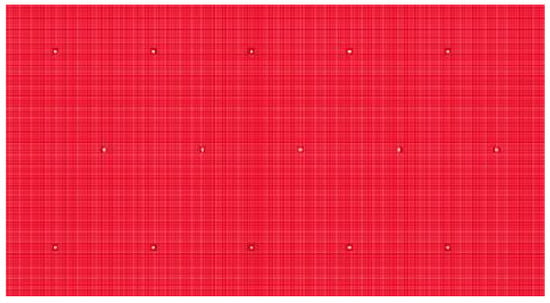
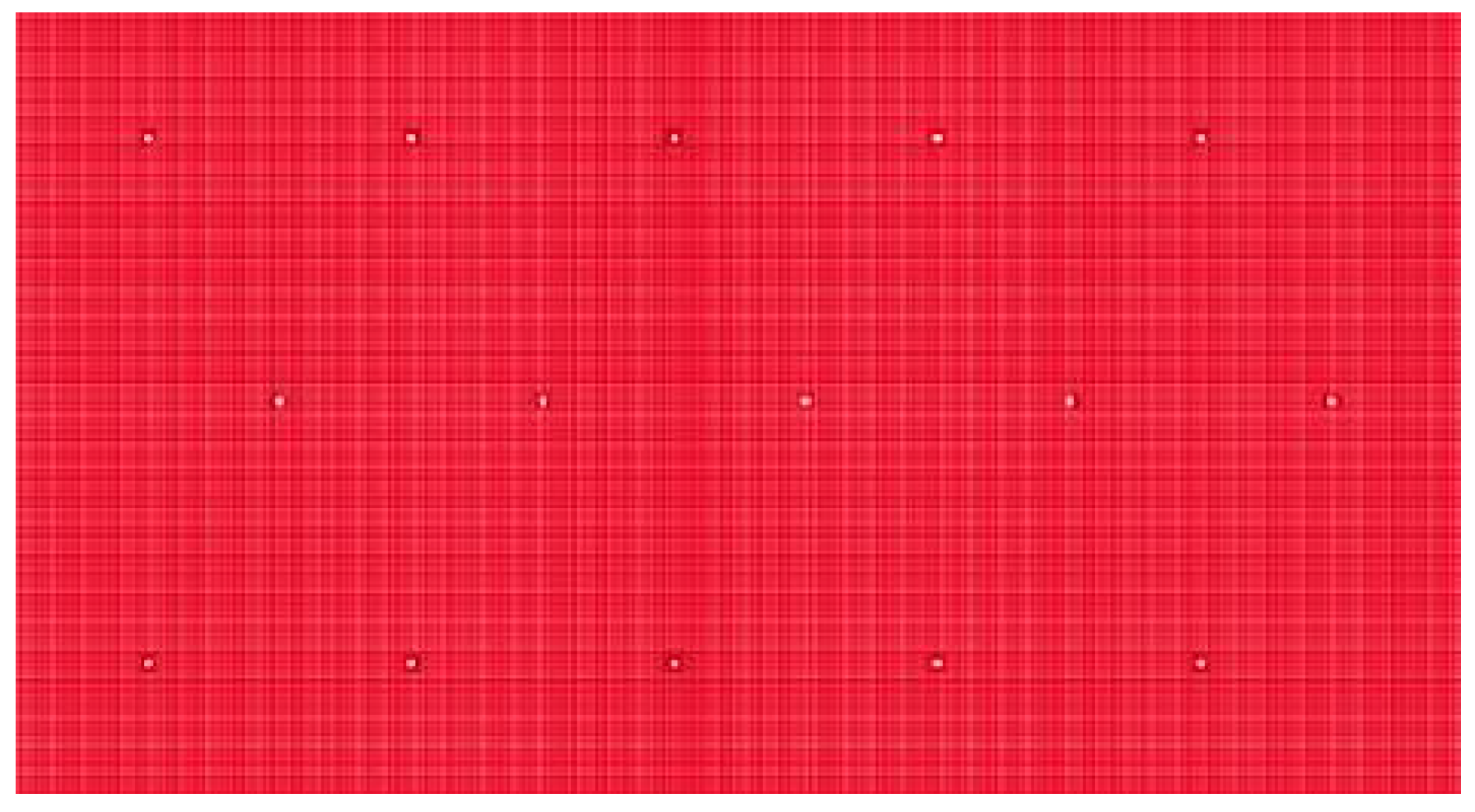
LS-DYNA is used to create a plain model to simulate multi-row borehole bench blasting. This example simulates a homogeneous rock mass within a range of 9 × 15 m in total. The grid mainly consists of squares with a side length of 1 cm. In the model, one long edge is set as a free surface, and the other three edges are set as non-reflecting boundaries to prevent stress wave reflection to simulate semi-infinite rock mass. The blast hole has a diameter of 115 mm, coupled with continuous charging using staggered hole arrangement with hole spacing and row spacing of 3 m. The boreholes are detonated hole by hole with a delay of 10 ms. The model is shown in Figure 2.
Figure 2.
The Plane model.
The simulation prescribes a load on the wall of the boreholes to simulate the impact of explosion on the rock mass. This numerical simulation simplifies the explosive blasting load into a triangular load curve, and the peak value of the load curve is calculated using the following formula:
where e is the charge density; D is the explosive detonation velocity; Kd is the charge decoupling coefficient; and η is the multiple of pressure increase when explosive gas collides with the wall of borehole, η = 8~11, usually takes 10.
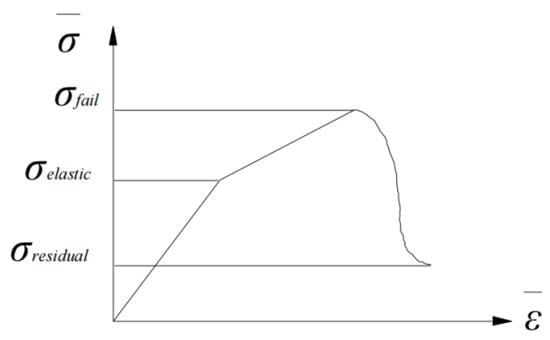
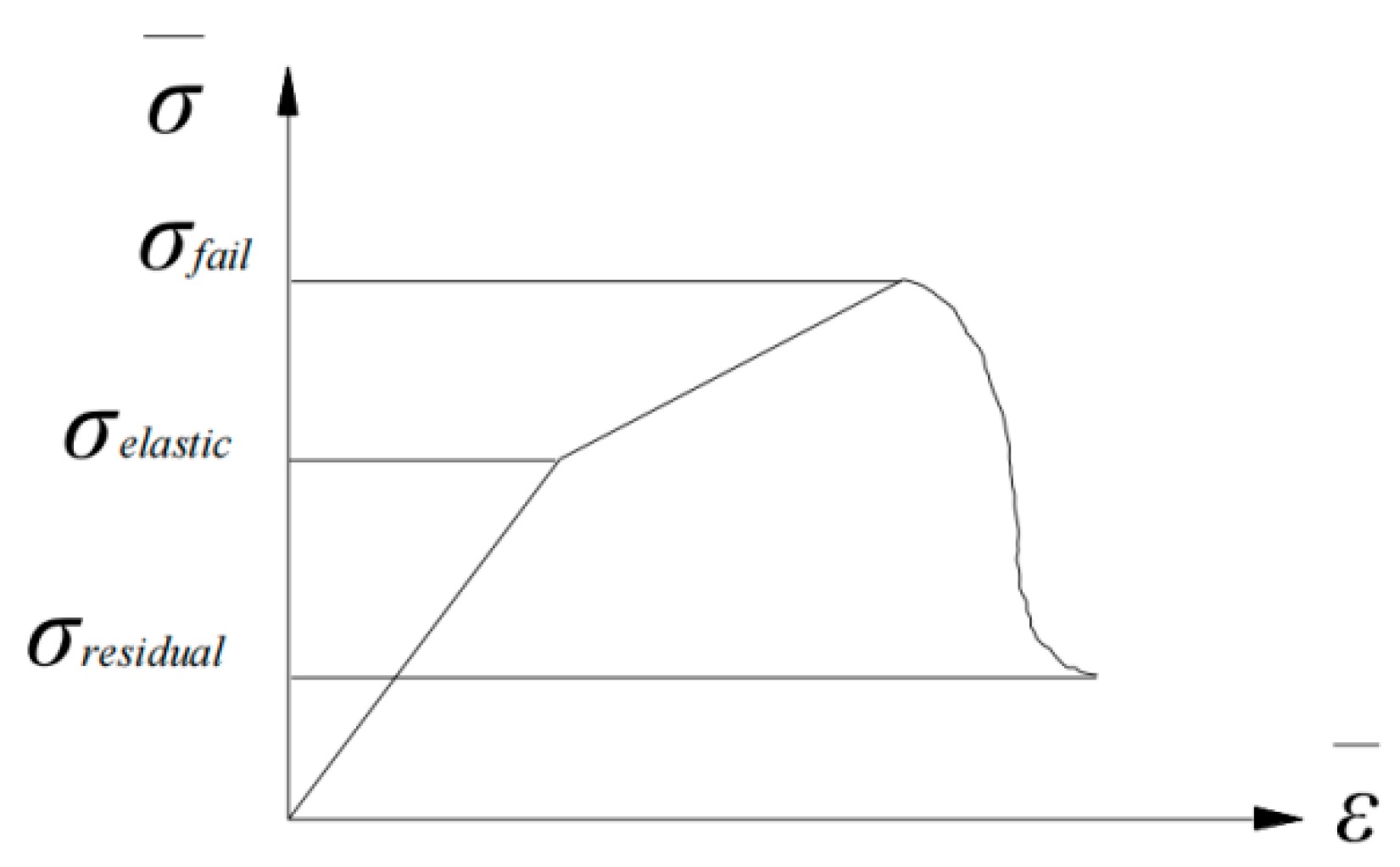
The RHT (Riedel–Hiermaier–Thomas) model is used to model the rock material [27], this model can simulate rock’s damage and destruction process under impulsive and dynamic loading. RHT model divides the process of rock damage into 3 stages: the elastic stage, the linear reinforcement stage, and the damage softening stage, as it shows in Figure 3.
Figure 3.
The three stages of the RHT model.
The RHT model uses the formula below to define the rock damage:
where is the accumulated plastic strain, and is the failure strain.
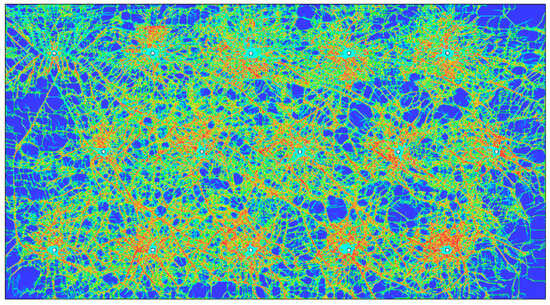
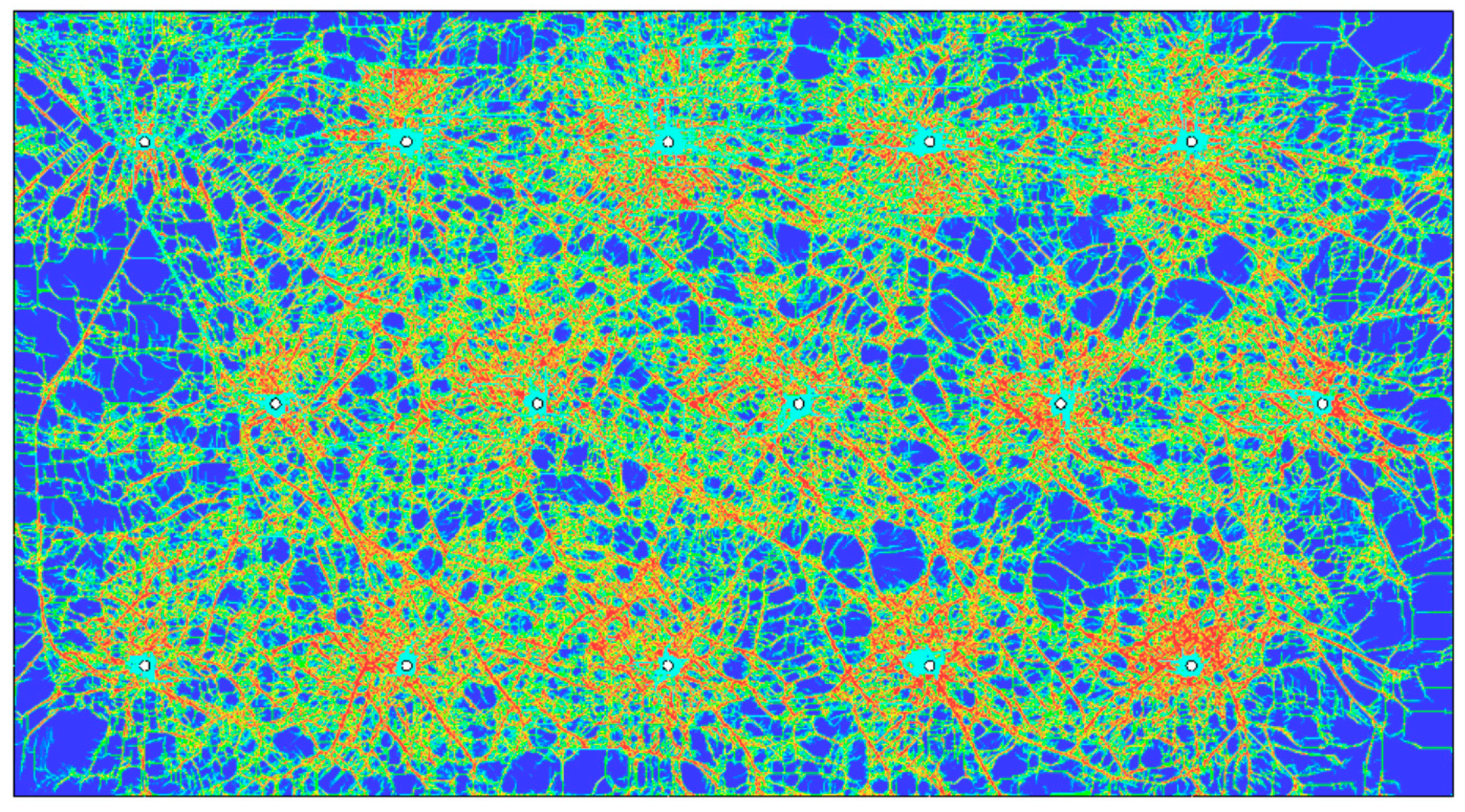
The example simulation starts with the initiation of the first borehole and ends with 5 ms after the last borehole detonation. The final damage distribution image is shown in Figure 4.
Figure 4.
The damage distribution of the simulation.
The rock unit could be considered completely destroyed when damage parameter D surpassed a certain value. The fragmentation of rocks can be determined by calculating distribution of damage variables; the lower the damage threshold is, the greater the degree of rock fragmentation. Therefore, selecting an appropriate damage threshold has a significant impact on the accuracy of block size recognition.
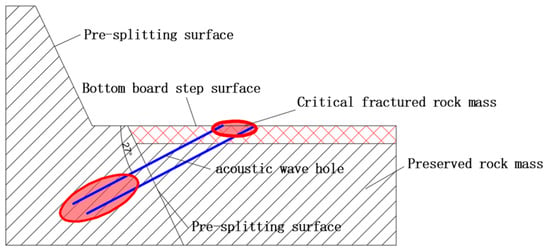
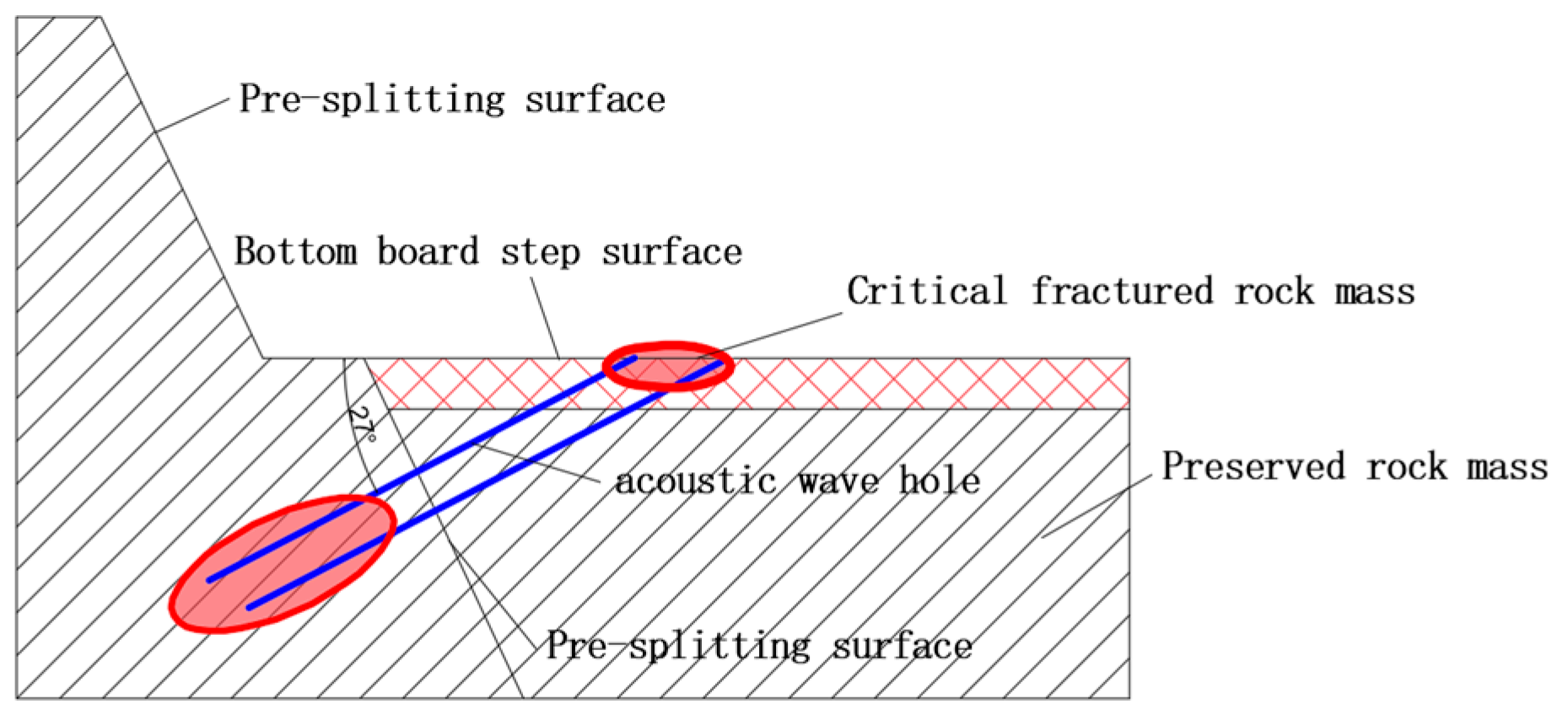
The core difficulty of simulating blasting fragmentation based on continuous media and outputting blasting block size lies in determining the blasting damage threshold for discretizing continuous media, that is, determining the critical damage threshold for rock-mass to detach from the parent rock and form blasting fragmentation. From the perspective of physical and mechanical properties, its essence is to determine the degree of damage when the rock-mass separates from the parent rock. Numerous scholars have studied the critical damage threshold for rock fragmentation [28,29,30]. The usual method to determine the critical damage threshold for rock mass blasting fragmentation is the rock mass acoustic testing method, as shown in Figure 5. By comparing the acoustic wave tests before and after continuous adjacent step blasting of the rock mass, the critical threshold for the rock mass to detach from the parent rock due to blasting damage can be obtained.
Figure 5.
Sonic wave test for critical rock damage.
By gathering data from multiple engineering projects, acoustic data related to critically fractured rock-masses was gathered and their damage thresholds were calculated. The relative rock mass parameters, testing methods, and rock acoustic wave velocities are shown in Table 1.
Table 1.
The statistic damage thresholds in different projects.
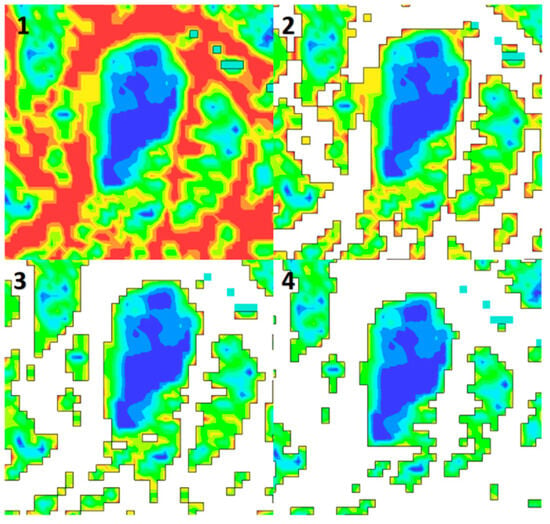
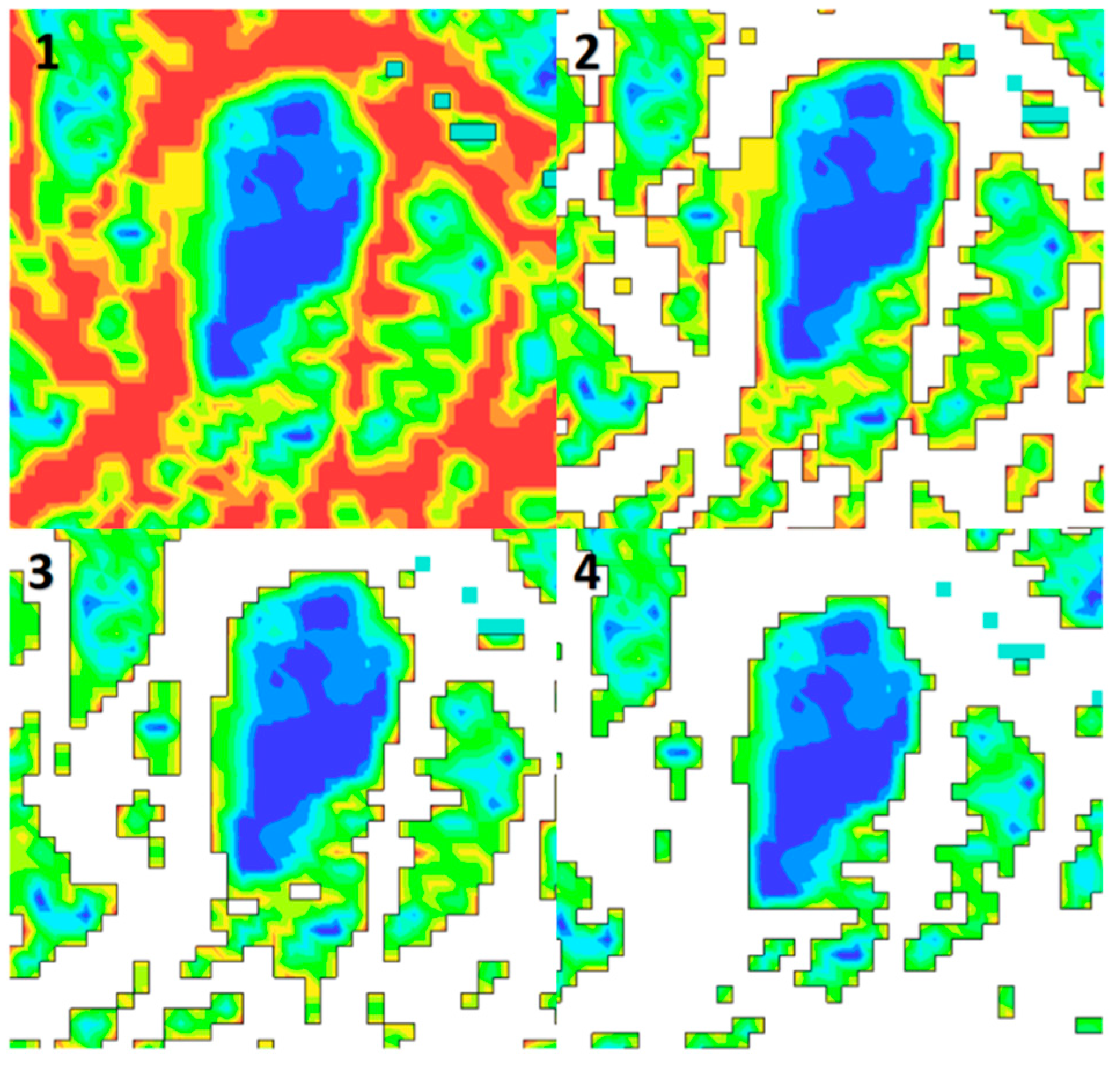
It can be seen from the comparison of the acoustic data from Baihetan hydropower station and other engineering projects that there is an obvious difference in rock-mass properties, blasting parameters, damage range, and other aspects of relevant engineering tests between different engineering projects. However, it is possible to characterize different degrees of rock fragmentation by combining the rock damage variable with changes in the velocity of acoustic waves through the rock mass. For surface rock in a critically fragmented state, the damage conditions and acoustic wave reduction rates are relatively similar in different conditions. By measuring the acoustic velocity of intact rock mass and rock under damage state, the range of the damage threshold D for determining the critical fracture state of rock mass is 0.75–0.85. In this article the damage threshold is set to 0.8. The rock mass separates from the parent rock and forms independent blocks when its damage value is higher than 0.8. For the same simulation result, the difference in damage threshold could lead to a difference in block size distribution, as shown in Figure 6.
Figure 6.
Comparison between different damage levels on rock element. (1) D ≤ 1; (2) D ≤ 0.8; (3) D ≤ 0.7; (4) D ≤ 0.6.
3. Statistical Method for Block Size Simulation of Blasting Block Size
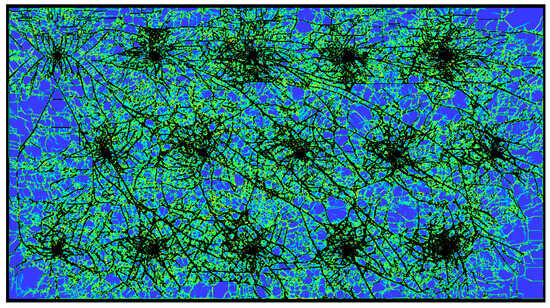
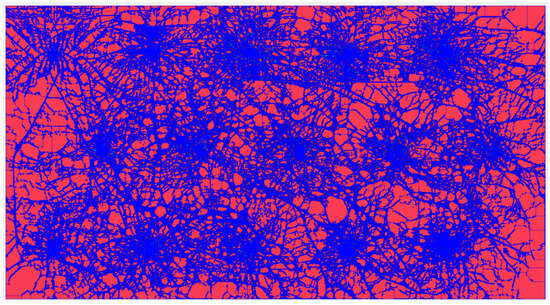
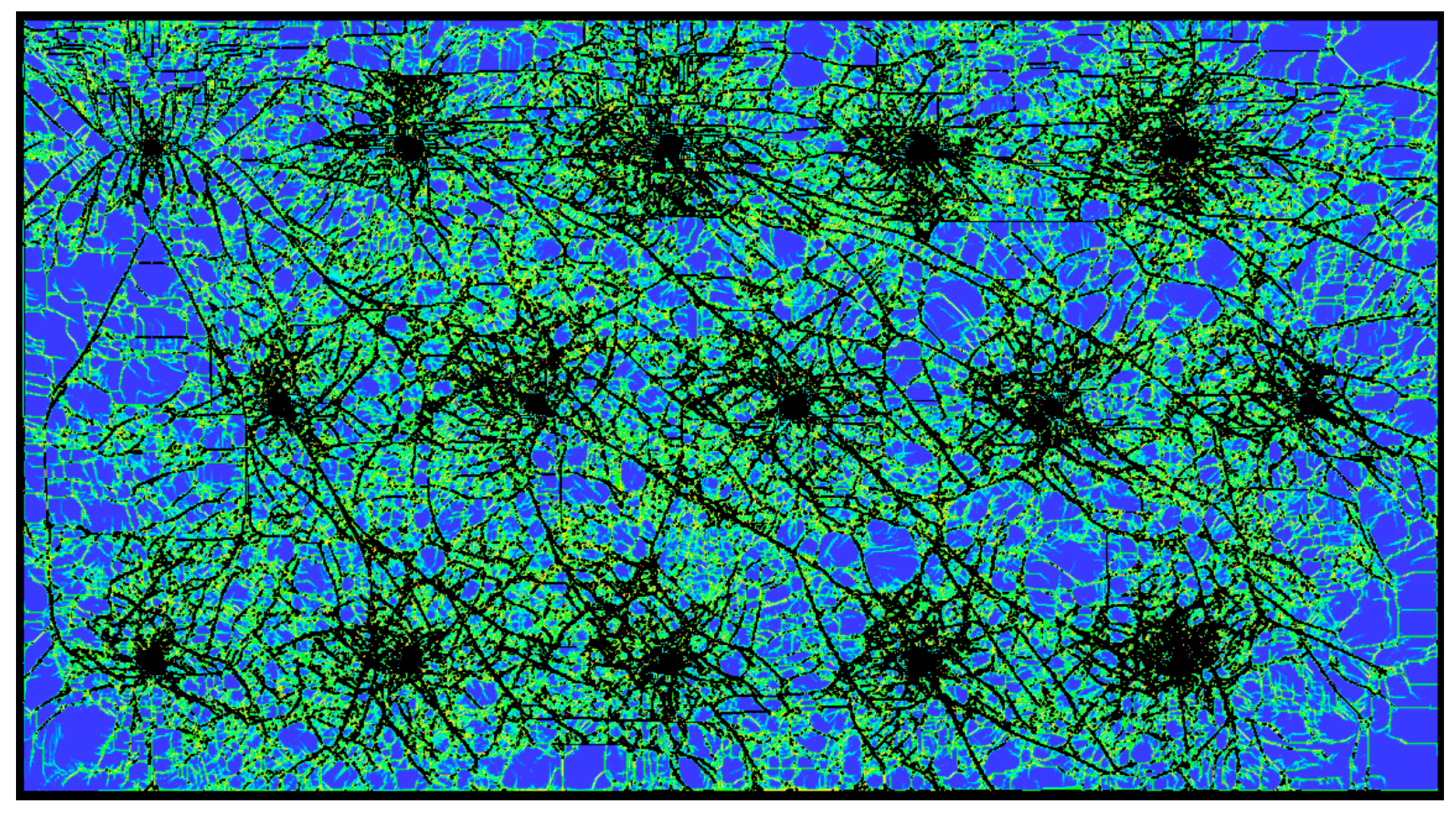
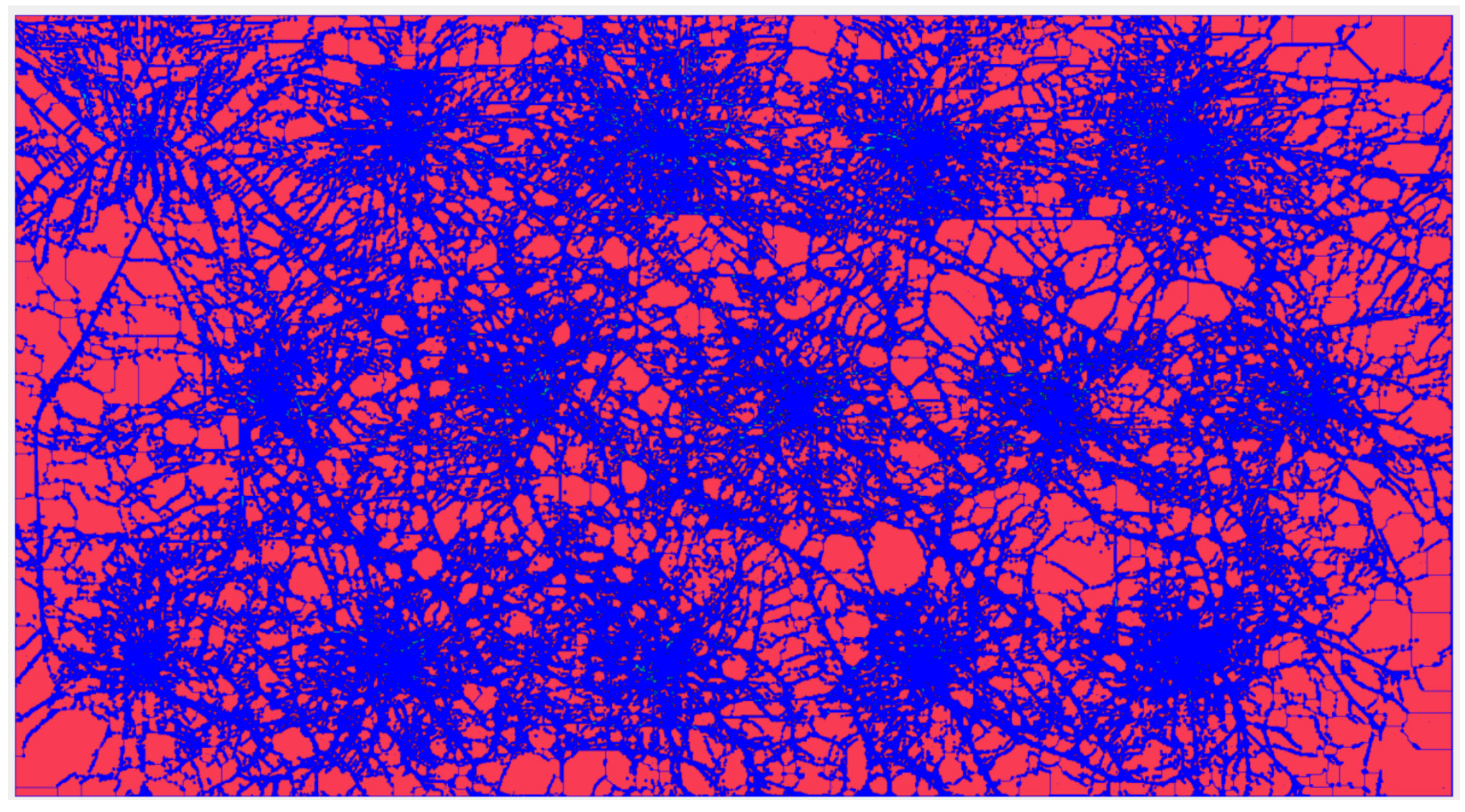
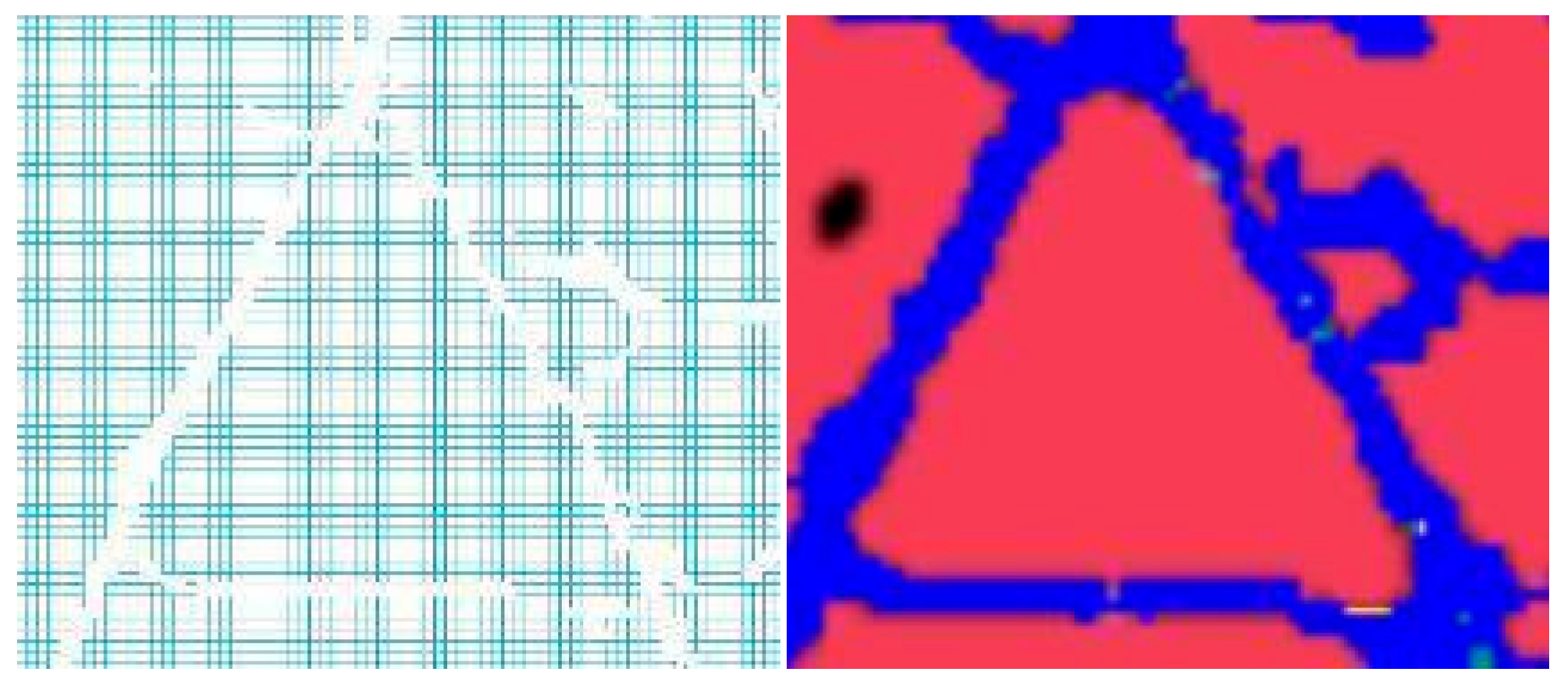
The damage images are processed and analyzed by image block size recognition software to obtain the predicted distribution of blasting block size. After obtaining the damage result diagram through computation, it is necessary to process the damage result diagram to facilitate subsequent recognition and processing by imaging software. Based on the research above, rock-mass elements with damage values higher than 0.8 in RHT model can be considered as complete destruction. The complete destruction elements are hidden to help the image analysis software divide blocks, then Split-Desktop is used to distinguish blocks of different sizes based on cracks caused by damage of rock elements as shown in Figure 7. A particle size distribution curve, such as Figure 8, is obtained after excluding blocks located at the edge of the model that are incomplete, and identifying block size based on the results of image recognition.
Figure 7.
The process of damage image processing.
Figure 8.
Particle grading curve.
Grids of different particles were randomly selected to compare their sizes with the results from image recognition software (shown in Figure 9) to verify the deviation of image recognition software. The comparison is shown in Table 2.
Figure 9.
Comparison between particle elements and identification.
Table 2.
Size comparison.
Table 2 shows that the particle size of image recognition is generally smaller compared to the simulated particle size, and the larger the particle size, the better the recognition is. Based on the example, it can be said that this method can effectively simulate the actual situation numerically according to the blasting parameters on site and predict the distribution of block size grading after blasting.
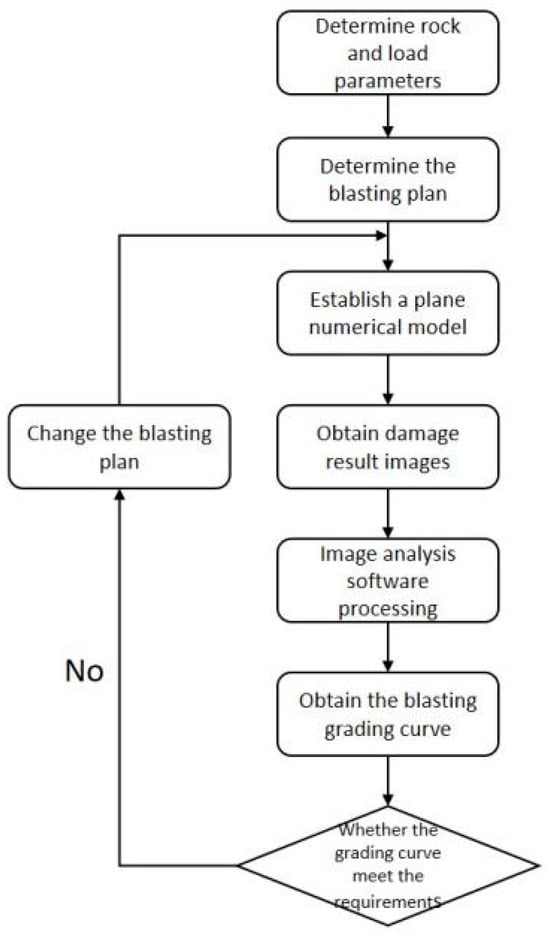
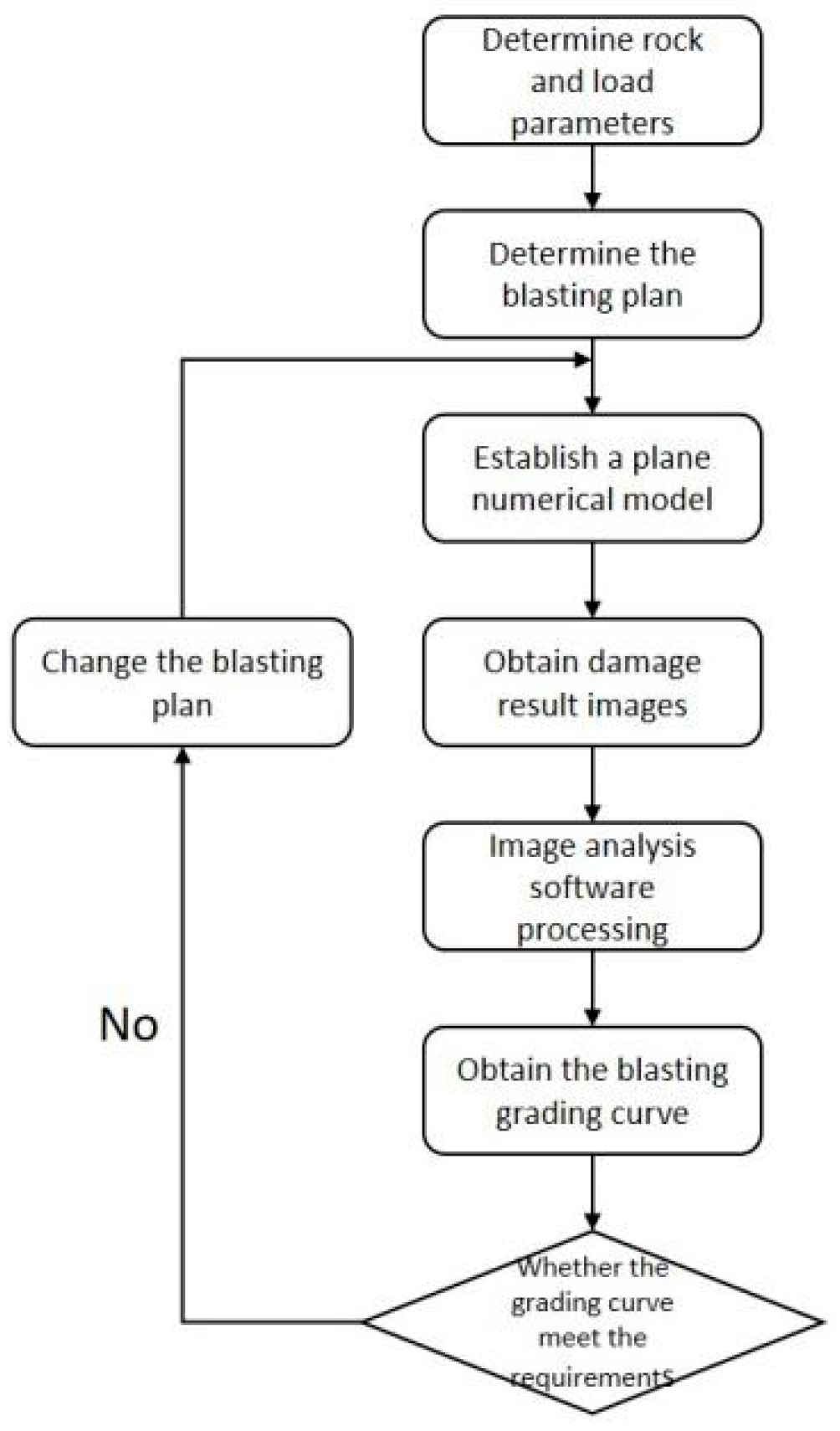
Above all, this article proposes a method that combines dynamic finite element blasting damage numerical simulation with image fragmentation recognition software to achieve accurate prediction of blasting fragmentation distribution. First, based on the in situ rock-mass characteristics and blasting design, an FEM model is established to conduct numerical simulation of blasting damage. Then, the critical damage threshold for blast-induced rock fragmentation is determined and applied to define the boundaries for forming specific fragment sizes. Finally, image recognition technology is applied to statistically analyze the blast-induced fragments, outputting the particle grading curve of the simulation. The specific implementation technology route is shown in Figure 10.
Figure 10.
Procedure for fragmentation identification.
4. Engineering Verification Based on Lianghekou Gravel Material Mining
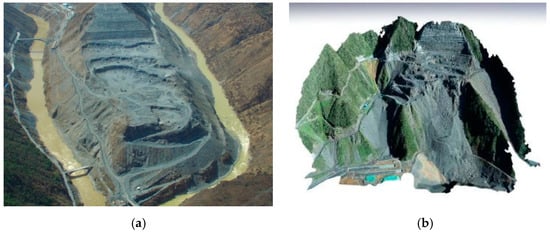
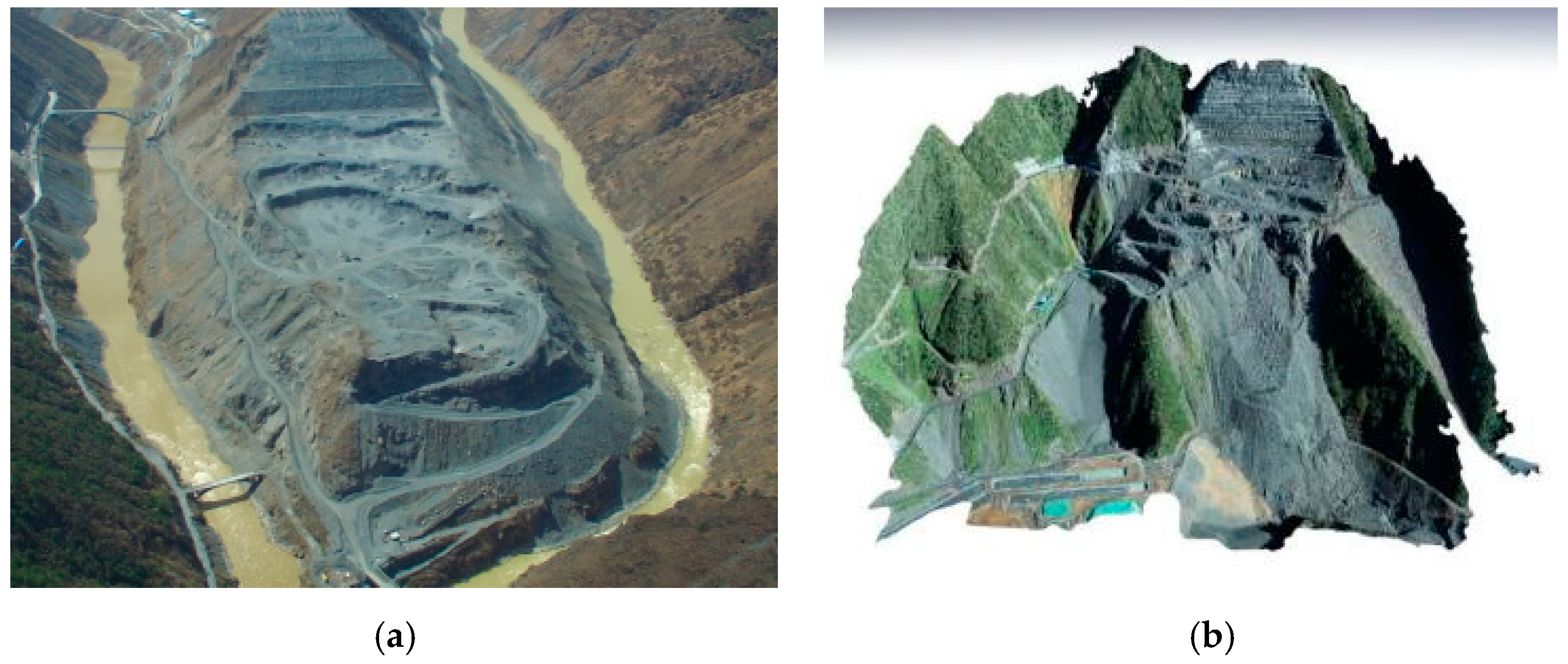
The Lianghekou Hydropower Station is located downstream of the confluence of the Yalong River and its tributary, the Qingda River, in Yajiang County, Garze Prefecture, Sichuan Province. It is approximately 25 km upstream of Yajiang County. The average annual flow rate at the dam site is 664 m3/s. The normal water level of the reservoir is 2865 m, with a corresponding storage capacity of 10.154 billion m3 and a regulating storage capacity of 6.56 billion m3. The reservoir has the ability to regulate for many years. The in-stalled capacity of the power station is 3000 MW, and the average annual power generation is 11.062 billion kW.h. The Lianghekou Hydropower Station is the largest installed hydropower station among the seven cascade hydropower stations planned and constructed in the middle reaches of the Yalong River, and also the largest comprehensive hydropower station project under construction in Tibetan areas of China. The engineering plan includes two quarries, Lianghekou and Wazhigou (shown in Figure 11). The Lianghekou quarry primarily consists of metamorphic siltstone with small amounts of silty slate. No completely or intensely weathered rock masses are present within the site; the rock is predominantly moderately weathered and of low strength. The Wazhigou quarry mainly comprises silty slate and metamorphic sandstone, exhibiting a relatively low degree of weathering. In comparison, the rock strength here is higher, and the overall slope stability is superior. The blasting control of the dam-filling material mining is facing severe challenges.
Figure 11.
The grading yard (a) Lianghekou (b) Wazhigou.
4.1. Numerical Simulation Verification of Graded Material Extraction
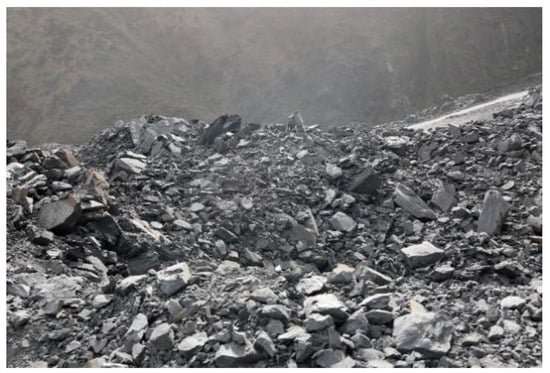
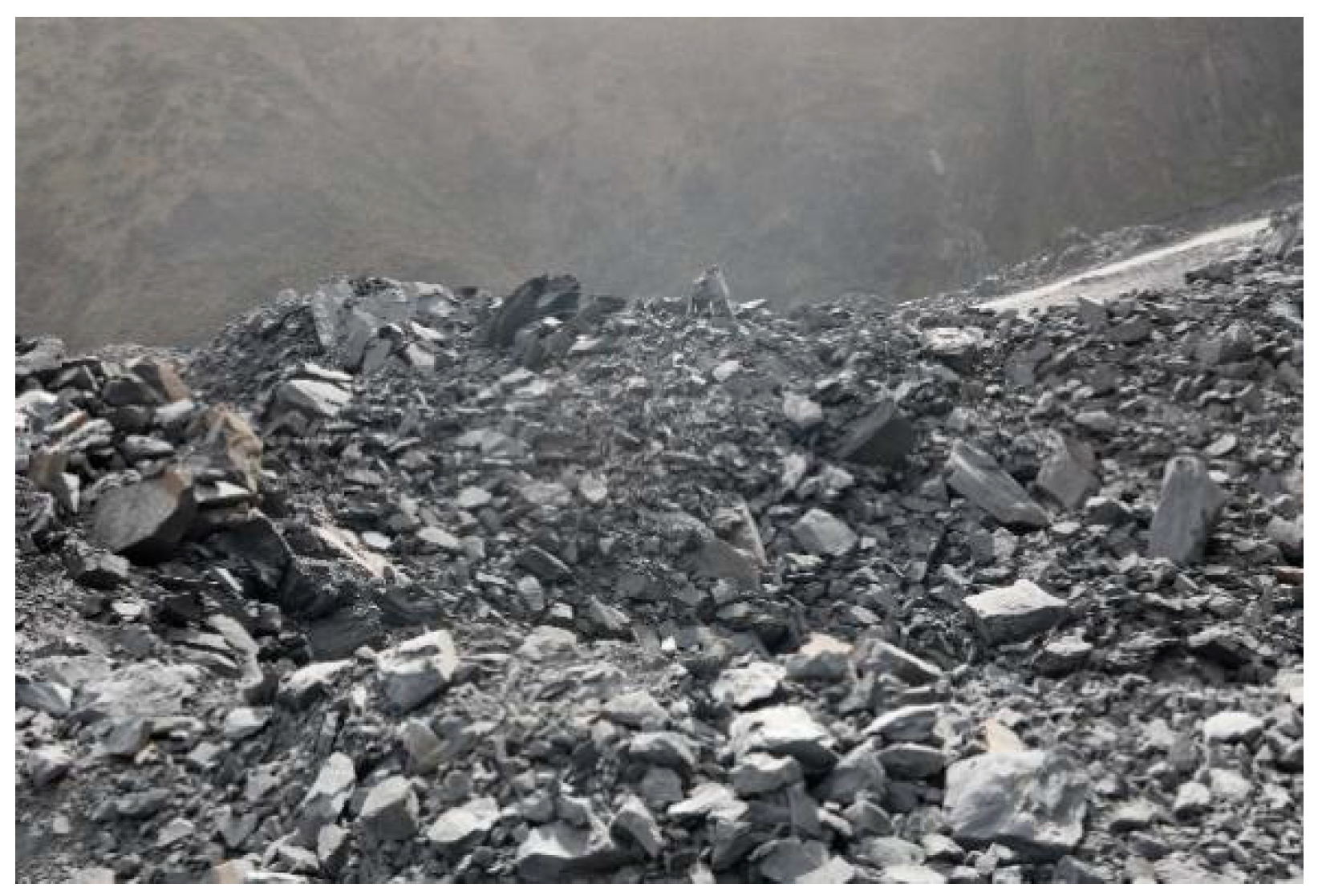
In order to obtain reasonable blasting parameters, detailed blasting tests were conducted, and the blasting piles (shown in Figure 12) were screened in detail, which provided favorable conditions for verifying the numerical simulation method of rock-mass blasting fragmentation at the engineering scale proposed above.
Figure 12.
Typical blasting on site.
To verify the accuracy of the method, two typical blasting tests for the extraction of rockfill material and transition materials from the Lianghekou quarry are selected to conduct numerical simulations and contrast the results. The parameters are shown in Table 3.
Table 3.
Comparison of blasting parameters for rockfill material and transition material in Lianghekou quarry.
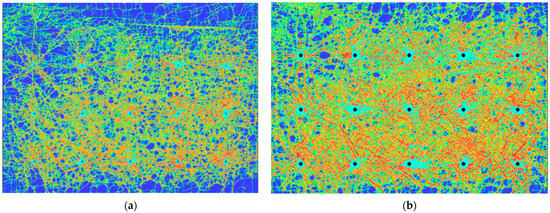
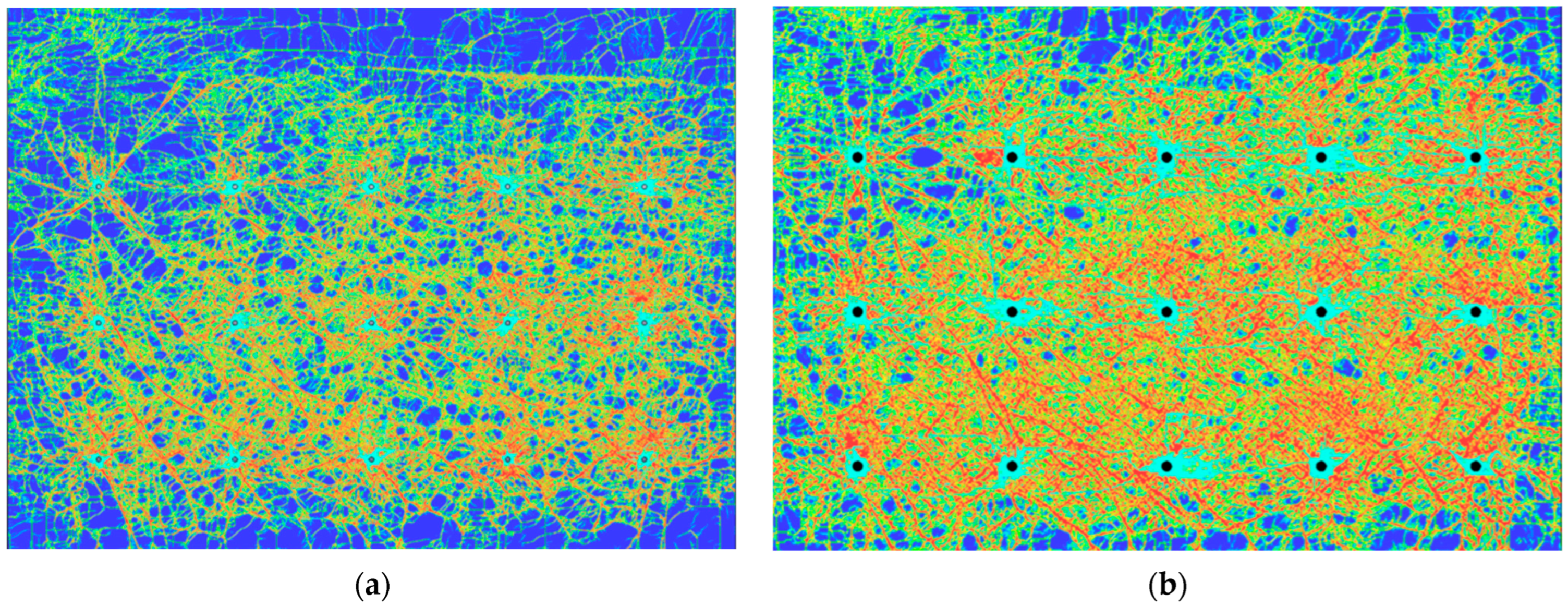
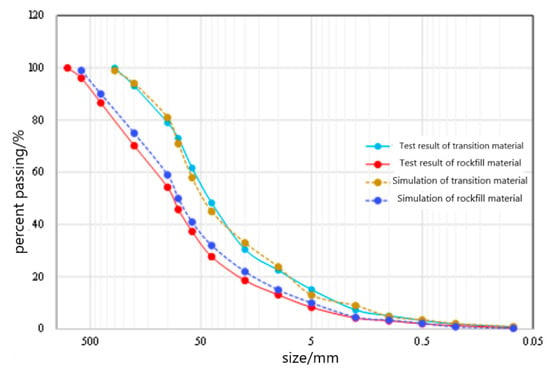
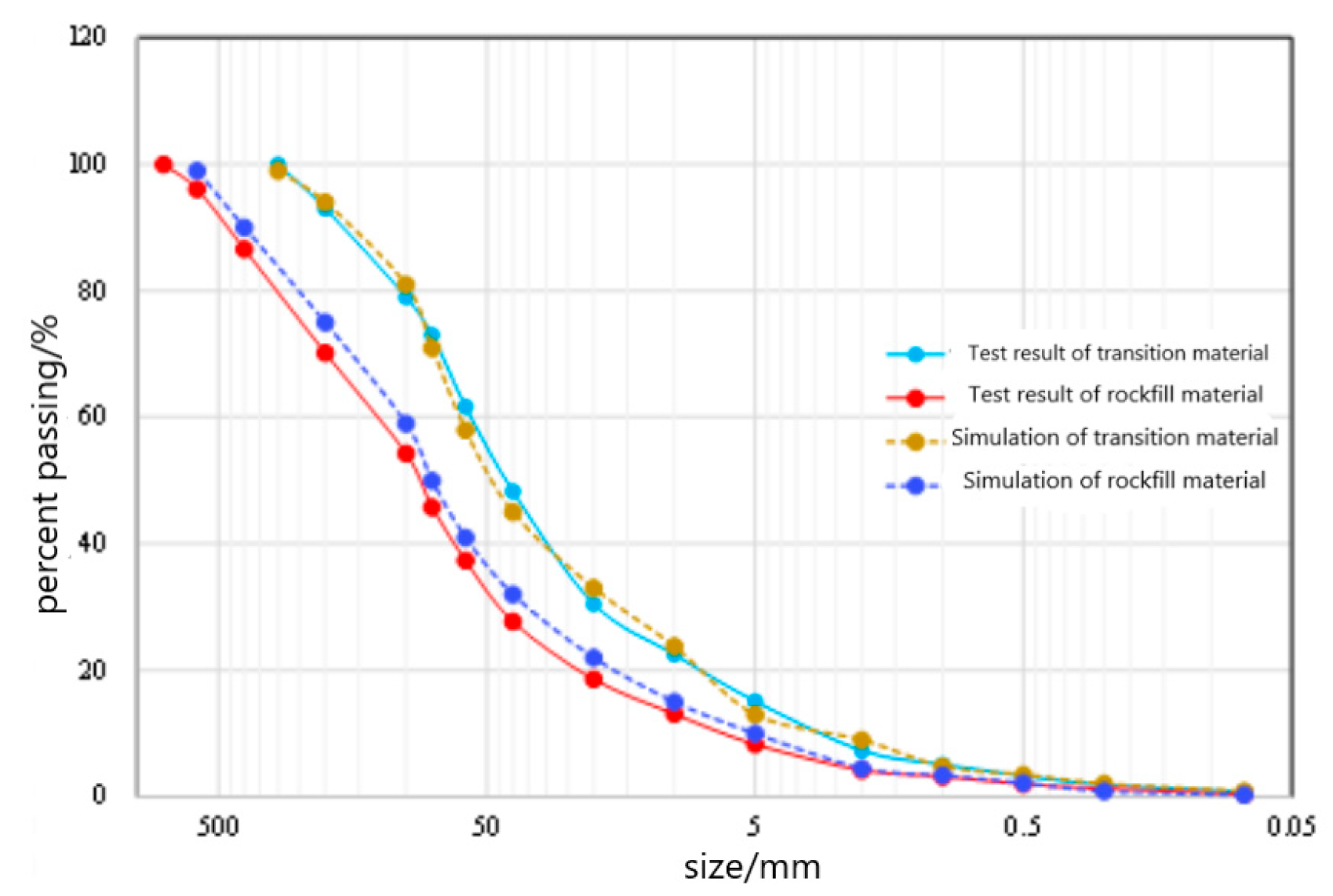
During the tests, rockfill and transition materials were screened to obtain screening grading curves for different types of stone materials. The results are compared with simulation results to verify the accuracy of the method. The results of simulation are shown in Figure 13.
Figure 13.
The damage distribution. (a) Rockfill material; (b) transition material.
The picture shows that a crushing zone is formed around the borehole and there is a high damage area cutting the area under low stress between holes, forming medium to large-sized blocks. In the numerical simulation of blasting fragmentation in continuous media, the selection of a damage threshold for the fragmentation boundary has a decisive impact on the distribution of blasting fragmentation. The damage threshold previously proposed is used as the boundary value of blasting fragmentation. There is a significant difference in fragmentation distribution between gravel and transition materials. The gradation of the transition material is smaller when the spacing between holes is smaller, which is in line with general understanding. The comparison of simulation results is shown in Figure 14.
Figure 14.
Comparison of blasting tests and numerical simulations of different materials.
The results show that the simulation matches the field test well in both gravel and transition materials. The error of the blasting fragmentation of the rockfill material is around 10%, and the maximum simulation error of the transition material is within 8%. This indicates that the simulation method proposed in this paper can effectively simulate the distribution characteristics of blasting gradation.
4.2. Formation Characteristics of Blasting Grading Material with Different Hole Arrangements
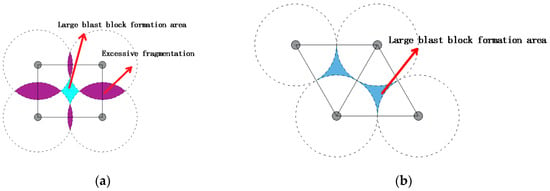
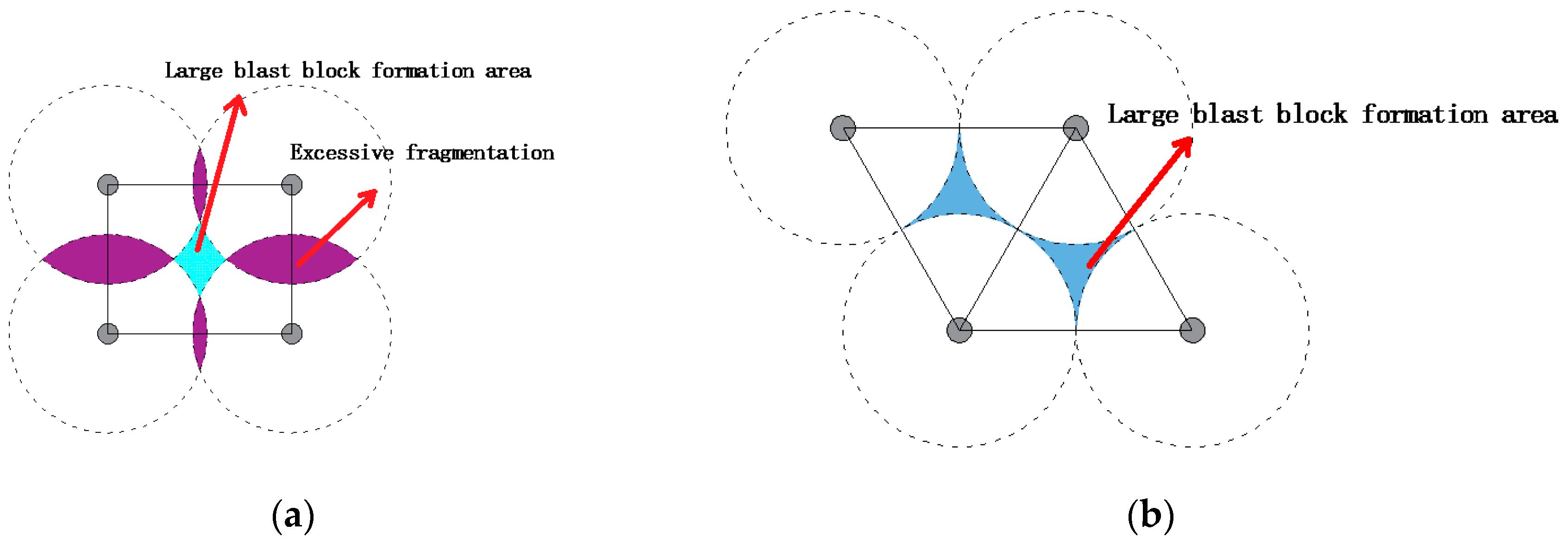
There are two regular blasting hole arrangements: rectangular hole arrangement and staggered hole arrangement, used in the mining of grading material in hydraulic engineering projects. In mining, staggered hole arrangement is often used to bring a more even block size, while in hydraulic engineering projects rectangular hole arrangement is more often used to guarantee continuous uneven block size. The comparison of distribution characteristics of stress concentration zones in different hole arrangements is shown in Figure 15.
Figure 15.
The distribution characteristics of stress wave fields under different hole arrangements. (a) Rectangular hole arrangement; (b) staggered hole arrangement.
From the picture, it can be seen that for rectangular hole arrangement, the distribution of the stress superposition zone is more obvious, the degree of rock-mass blasting fragmentation is deeper, and it is easier to form uneven grading with a wide distribution range and continuous size. Meanwhile for the staggered hole arrangement, the fragmentation range of the rock mass is better distributed, the distribution of stress concentration areas is less, and the fragmentation formed is more uniform in size. This is based on a qualitative understanding of stress wave field distribution and has been verified through multiple practical applications in engineering projects. In order to compare and analyze the influence of different hole arrangements on fragmentation, based on the numerical simulation method proposed above and field tests, the distribution characteristics of blasting fragmentation under different hole arrangements were studied using a spacing of 3 m × 4 m simulation model as an example. The damage distribution images of rectangular hole arrangement and staggered hole arrangement are shown in Figure 16.
Figure 16.
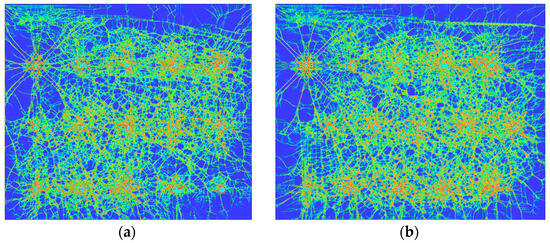
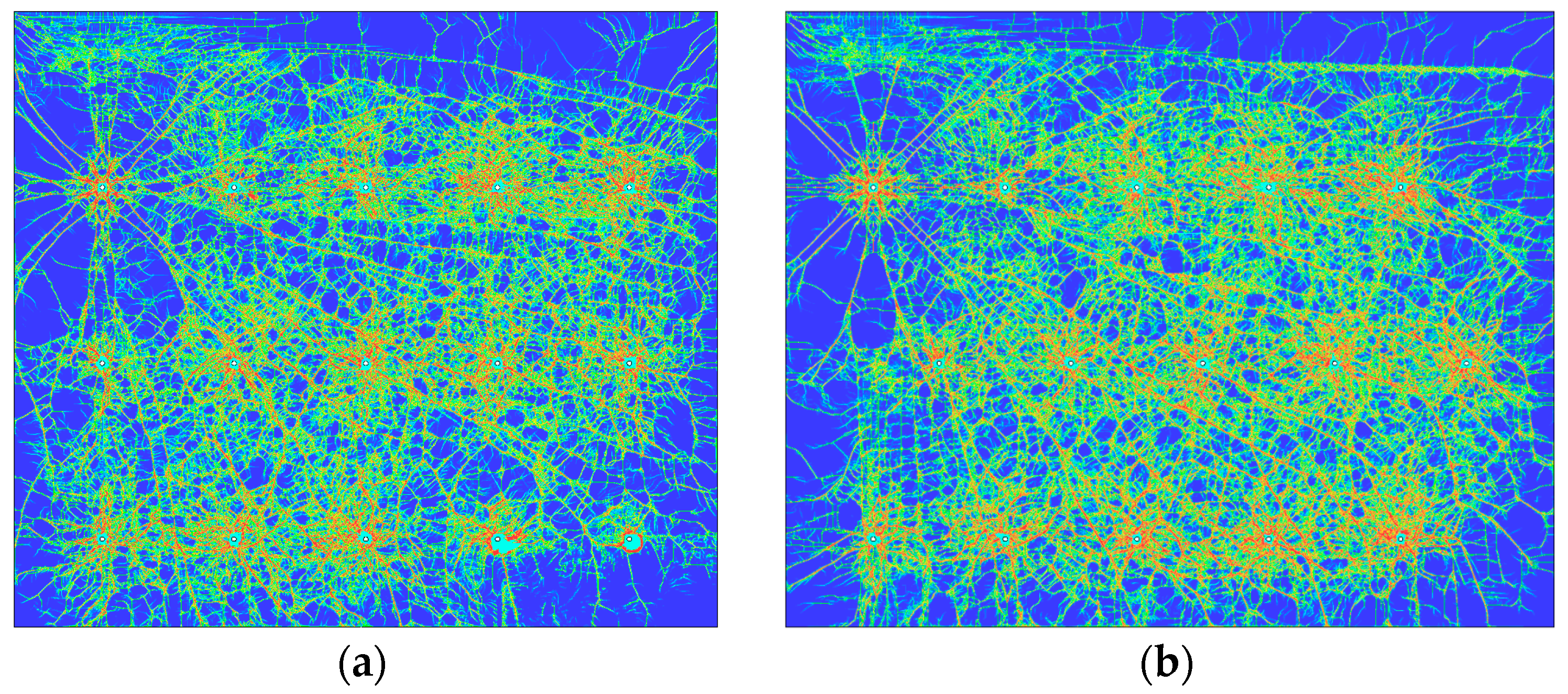
Damage distribution under different hole arrangements. (a) Rectangular hole arrangement; (b) staggered hole arrangement.
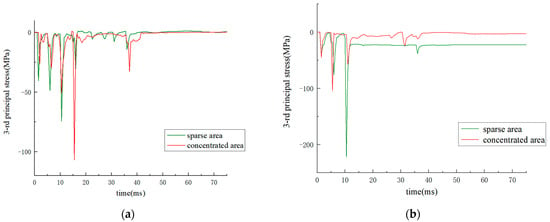
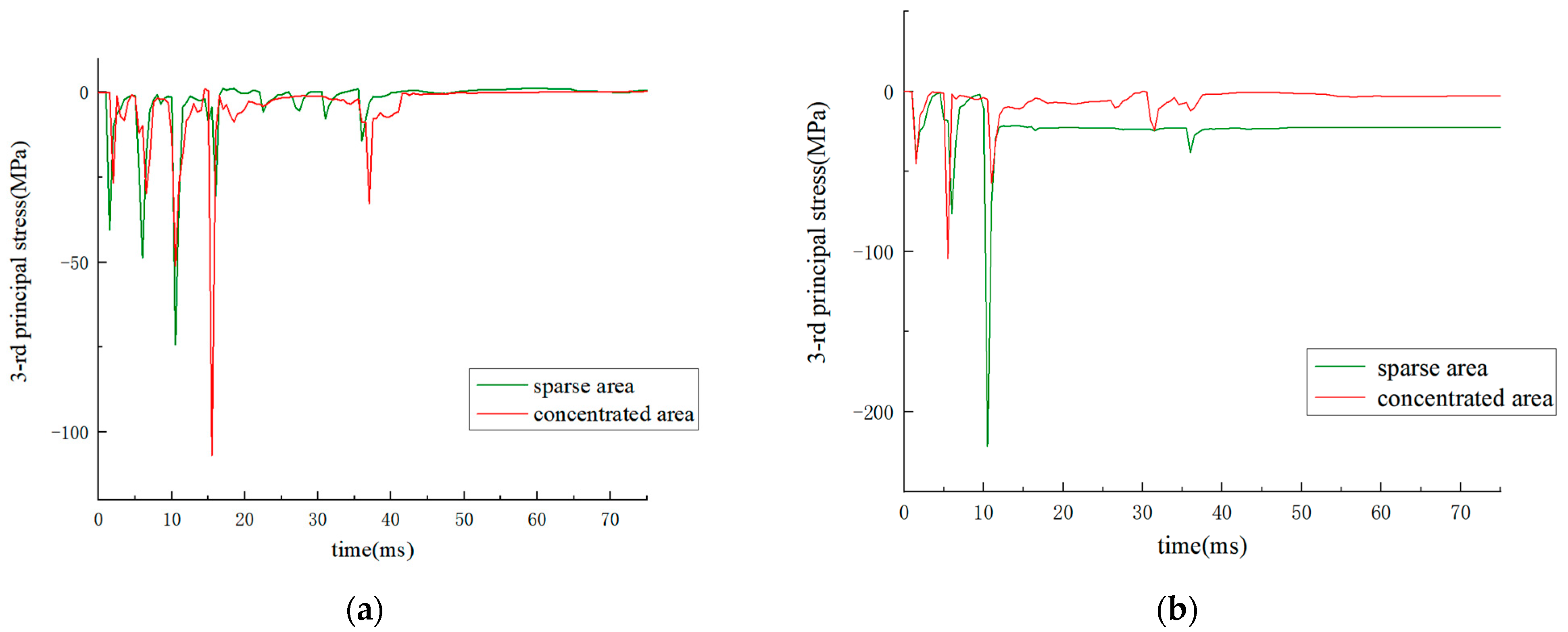
The simulation results show that these two-hole arrangements have similar blasting fragmentation distribution. However, it can be seen that staggered hole arrangement has a more even blasting fragmentation distribution and rectangular hole arrangement has a more continuous blasting distribution by observing the blasting fragmentation in the white frame in Figure 14. To compare the stress characteristics in different situations, stress time history curves of the stress concentration superposition area (concentrated area) and the resistance line larger area (sparse area) are extracted and compared in Figure 17.
Figure 17.
Comparison of stress characteristics under different hole arrangements. (a) Rectangular hole arrangement; (b) staggered hole arrangement.
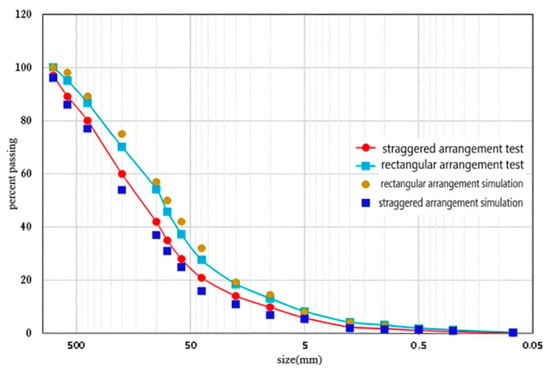
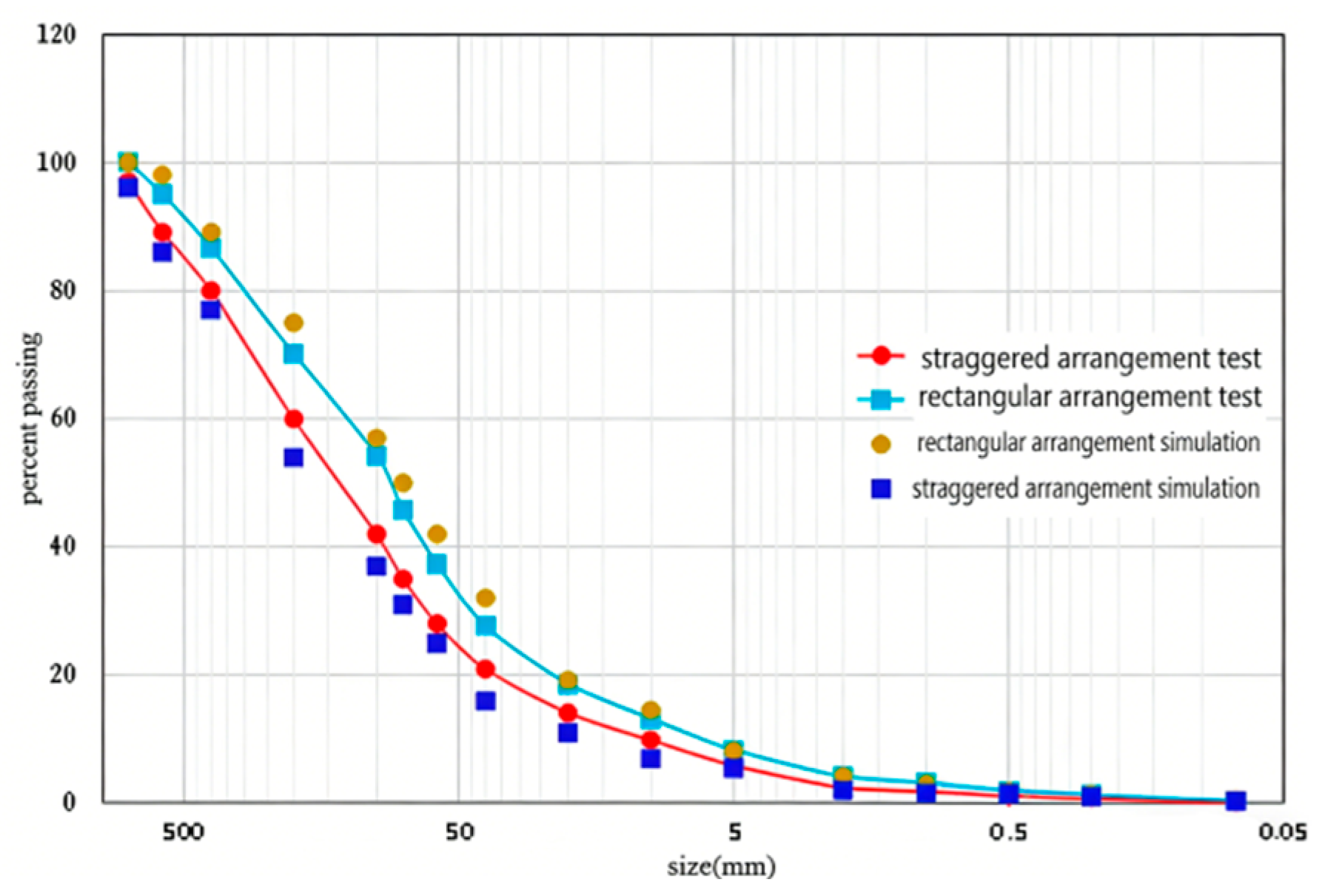
As it shows in Figure 17, there is a clear difference in stress value between the two-hole arrangements in both stress concentration zone and stress sparsity zone. For rectangular hole arrangement, the stress level of the stress concentration zone is close to twice that of the stress sparsity zone, which makes it easier to form a graded continuous blasting block size. For the staggered hole arrangement, the stress level of the stress concentration zone is about 1.3 times that of the stress sparsity zone, and the distribution of the stress field is more uniform under this condition. Therefore, from the perspective of stress distribution, the use of rectangular hole arrangement is beneficial for the formation of continuous non-uniform blasting fragmentation in the material mining of rockfill dams. Figure 18 shows the comparison of results of field tests and numerical simulations under different hole arrangements.
Figure 18.
Comparison of tests and numerical simulation results for different hole arrangements.
From the picture it can be seen that the simulation results match the field tests well in both two-hole arrangements, indicating that the method proposed in this article is suitable for engineering-scale blasting fragmentation. On the other hand, the difference in blasting block size between the two types of hole arrangements is mainly reflected in the range of medium to large-sized block sizes of 50–100 mm. It confirms the analysis about the difference in mechanism of the rectangular and staggered hole arrangements above. The change in hole arrangement could lead to a change in the superposition area of stress waves. However, due to the rapid attenuation characteristics of stress waves, the superposition area of the stress wave mainly forms medium particle size blocks. While small particle size blocks are mainly affected by charging construction, the distribution in different hole arrangements are similar due to the same charging construction.
4.3. Formation Characteristics of Blasting Grading Material with Different Delay Time
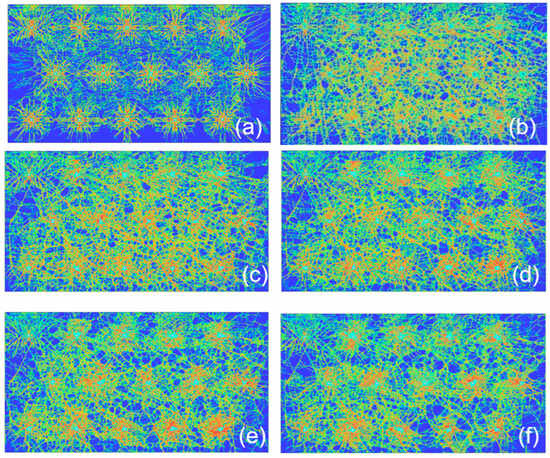
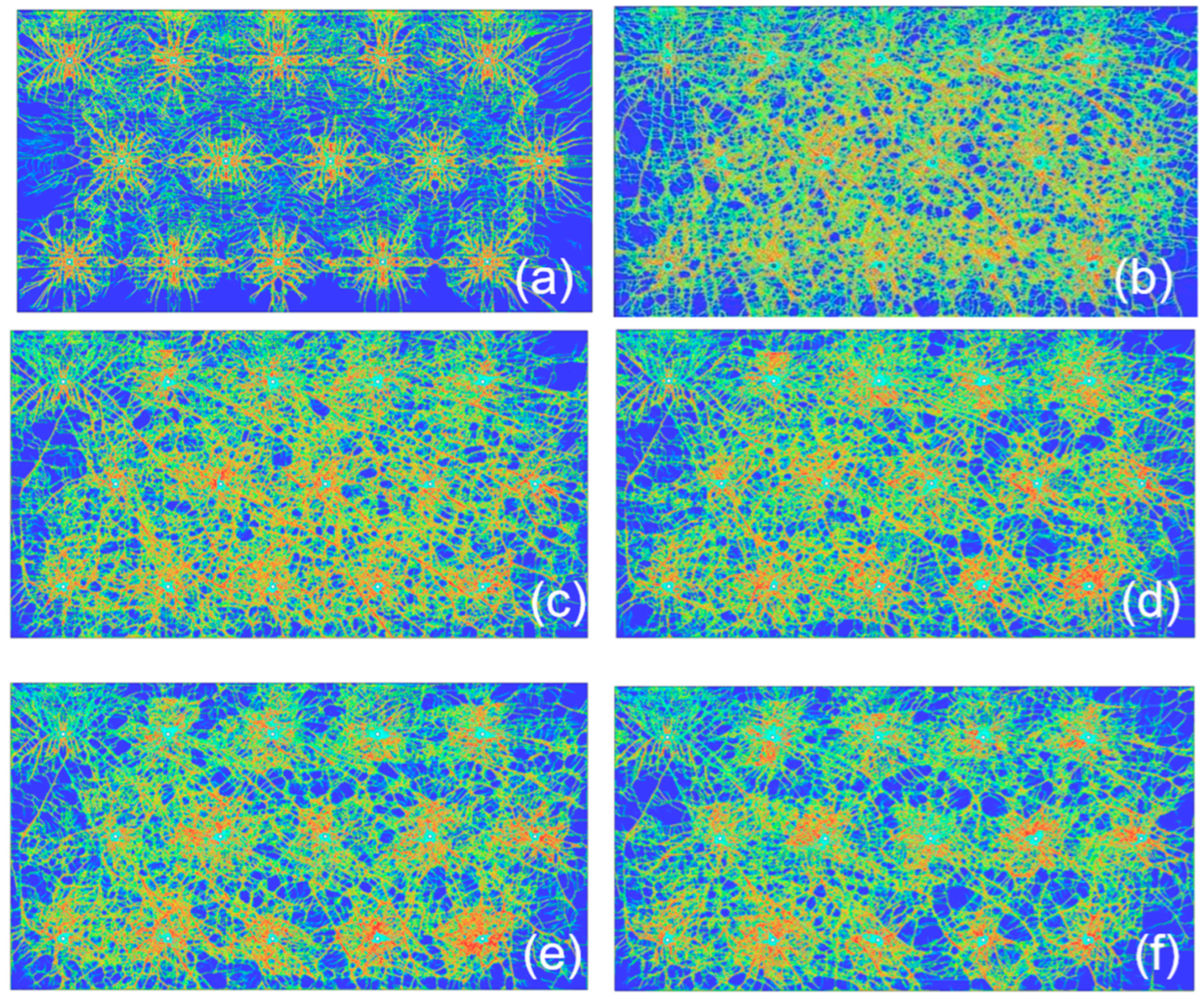
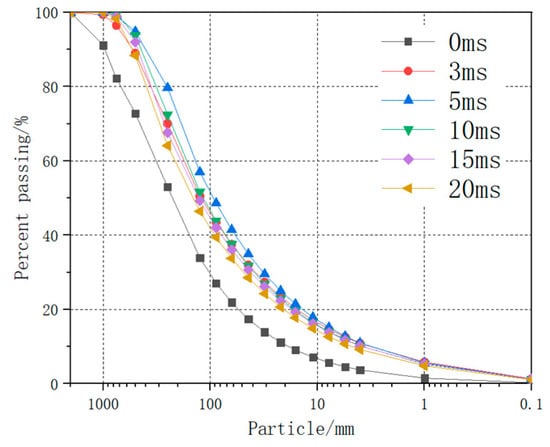
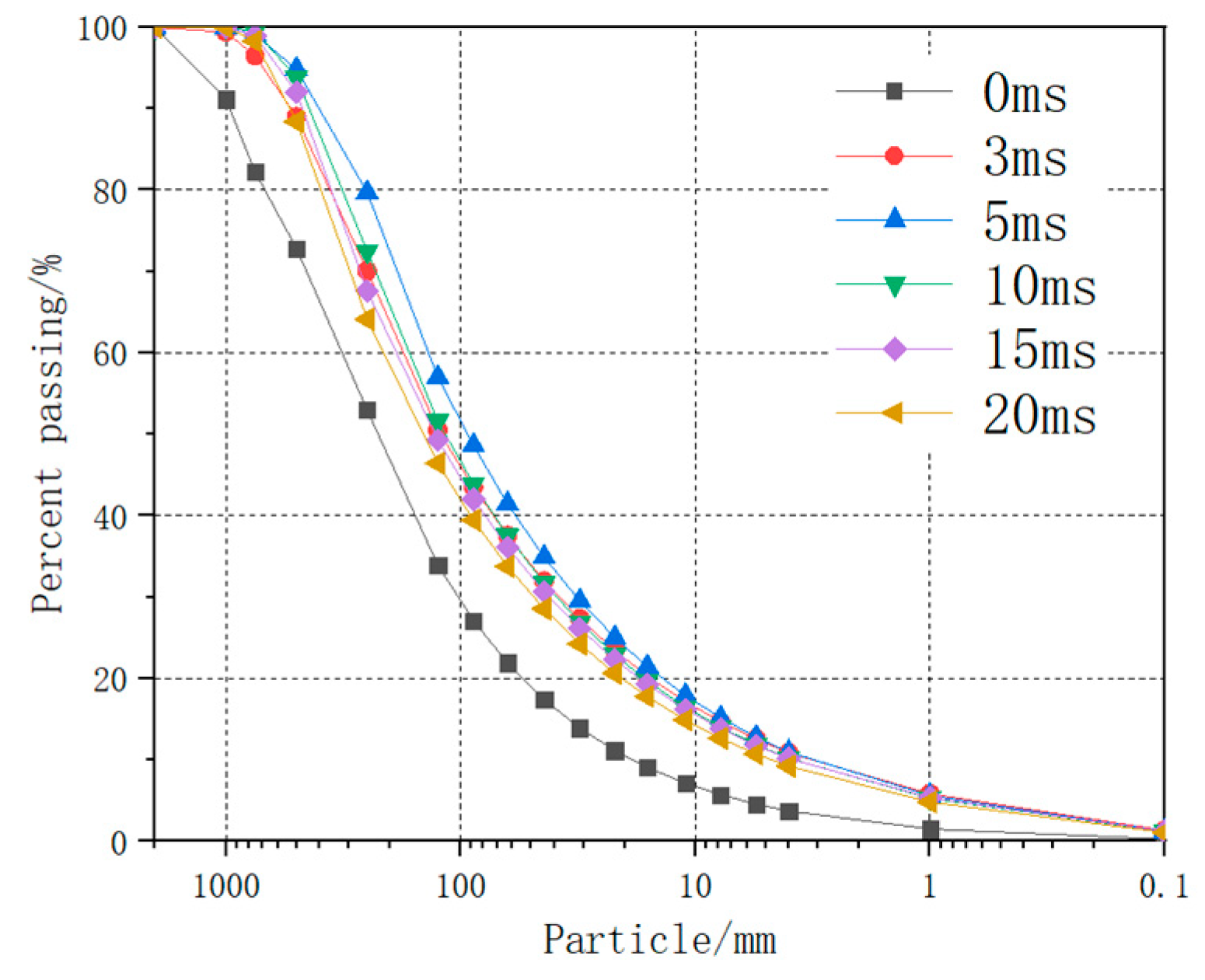
Simulations were conducted with time delays between boreholes of 0 ms, 3 ms, 5 ms, 10 ms, 15 ms, 20 ms. The rock damage of the simulation results is shown in Figure 19.
Figure 19.
Rock damage distribution under different delay time conditions. (a) 0 ms; (b) 3 ms; (c) 5 ms; (d) 10 ms; (e) 15 ms; (f) 20 ms.
The grading curves and mean fragment size were obtained by using the above steps to analyze the numerical simulation results, which are shown in Figure 20 and Table 4.
Figure 20.
Grading curves of block sizes with different delays.
Table 4.
Mean fragment size with different delay times.
From the grading curves and Table 4, it can be seen that the detonation delay time can reduce the generation of large blocks. Compared with simultaneous detonation, the maximum particle size of the block significantly decreases under the simulation of longer delay time conditions. The changes are mainly reflected in the distribution of medium to large particle size blocks, for the blocks smaller than 10 mm, the change in proportion is not significant. The trend of mean fragment shows a decreasing trend followed by a slow increasing trend, with a minimum value of around 10 ms.
5. Conclusions
This paper proposed a simulation method based on theoretical analysis and field experiments and employed this method to investigate the effects of different influencing factors on blasting fragmentation. The main conclusions are as follows:
- (1)
- A method for characterizing the boundary of blasting fragmentation, based on the critical damage threshold at which rock mass detaches from the parent rock, is proposed.
- (2)
- By integrating damage numerical simulation with image recognition technology, an engineering-scale numerical simulation method for predicting fragmentation in bench blasting has been developed, along with a specific technical implementation pathway. This method could export calculated blasting fragmentation distribution curves. Its accuracy was validated using mining test data of rockfill and transition materials from the Lianghekou quarry.
- (3)
- Investigation into different borehole arrangements using this method revealed that a rectangular hole arrangement generates a more heterogeneous stress field, which facilitates the formation of a continuous blasting fragmentation distribution. Furthermore, simulations of varying inter-hole delay times preliminarily indicate that the mean fragment size shows an initial decrease followed by an increase as the delay time changes.
This study focuses on homogeneous rock-masses and does not account for the influence of rock-mass structural planes. Additionally, the numerical simulation analysis employed a continuous medium approach, which has inherent limitations in representing the discontinuous nature of rock mass blasting and fragmentation. Therefore, this aspect requires further research.
Author Contributions
Methodology, validation, formal analysis, and writing, G.L.; conceptualization, supervision, and funding acquisition, Y.Y.; writing—review and editing, Y.H.; writing—review and editing, R.N.; writing—review and editing, C.H. All authors have read and agreed to the published version of the manuscript.
Funding
This research was funded by the National Natural Science Foundation of China (52279093; 52079009) and the Basic Research Fund for Central Public Research Institutes (CKSF2025188/YT).
Institutional Review Board Statement
Not applicable.
Informed Consent Statement
Not applicable.
Data Availability Statement
The data presented in this study are available upon request from the corresponding author.
Acknowledgments
The authors sincerely acknowledge the relevant personnel and the construction unit for providing the fragmentation screening data in Lianghekou Project.
Conflicts of Interest
The authors declare no conflicts of interest.
References
- Cunningham, C. The Kuz-Ram model for prediction of fragmentation from blasting. In Proceedings of the First International Symposium on Rock Fragmentation by Blasting, Lulea, Sweden, 23–26 August 1983; pp. 439–453. [Google Scholar]
- Zhu, Z.; Yin, Y.; Chen, M.; Wei, D.; Lu, W.; Liu, J. Study on prediction of blasting fragmentation in Changjiu Shenshan Limestone Mine. Blasting 2021, 38, 17–23+31. [Google Scholar]
- Lawal, A.I. A new modification to the Kuz-Ram model using the fragment size predicted by image analysis. Int. J. Rock Mech. Min. Sci. 2021, 138, 104595. [Google Scholar] [CrossRef] [Scilit]
- Esens, S.; Onederrai, I.; Bilgin, H.A. Modelling the size of the crushed zone around a blast hole. Int. J. Rock Mech. Min. Sci. 2003, 40, 485–495. [Google Scholar] [CrossRef] [Scilit]
- Zhang, Z.; Sanchidrian, J.A.; Ouchterlony, F.; Luukkanen, S. Reduction of fragment size from mining to mineral processing: A review. Rock Mech. Rock Eng. 2023, 56, 747–778. [Google Scholar] [CrossRef] [Scilit]
- Margolin, L.G. Numerical simulation of blasting. In Proceedings of the First International Symposium on Rock Fragmentation by Blasting, Lulea, Sweden, 23–26 August 1983. [Google Scholar]
- Esmaeili, M.; Salimi, A.; Drebenstedt, C.; Abbaszadeh, M.; Bazzazi, A.A. Application of PCA, SVR, and ANFIS for modeling of rock fragmentation. Arab. J. Geosci. 2015, 8, 6881–6893. [Google Scholar] [CrossRef] [Scilit]
- Yin, X.; Liu, Q.; Huang, X.; Pan, Y. Real-time prediction of rockburst intensity using an integrated CNN-Adam-BO algorithm based on microseismic data and its engineering application. Tunn. Undergr. Space Technol. 2021, 117, 104133. [Google Scholar] [CrossRef] [Scilit]
- Trivedi, R.; Singh, T.N.; Gupta, N. Prediction of blastinduced flyrock in opencast mines using ANN and ANFIS. Geotech. Geol. Eng. 2015, 33, 875–891. [Google Scholar] [CrossRef] [Scilit]
- Feng, X.T.; Zhao, H.B. Prediction of rock burst using support vector machine. J. Northeast. Univ. Nat. Sci. 2002, 23, 57–59. [Google Scholar]
- Khandelwal, M.; Kanker, P.K.; Harsha, S.P. Evaluation and prediction of blast induced ground vibration using support vector machine. Min. Sci. Technol. 2010, 20, 64–70. [Google Scholar]
- Yin, X.; Gao, F.; Chen, Z.; Pan, Y.; Liu, Q.; Cheng, S. Intelligent multi-channel classification of microseismic events upon TBM excavation. J. Rock Mech. Geotech. Eng. 2025, 17, 7056–7077. [Google Scholar] [CrossRef] [Scilit]
- Asl, P.F.; Monjezi, M.; Hamidi, J.K.; Armaghani, D.J. Optimization of flyrock and rock fragmentation in the Tajareh limestone mine using metaheuristics method of firefly algorithm. Eng. Comput. 2018, 34, 241–251. [Google Scholar] [CrossRef] [Scilit]
- Thomas, B.; Kamran, E.; Angela, P.S. A deep learning approach for rock fragmentation analysis. Int. J. Rock Mech. Min. Sci. 2021, 145, 104839. [Google Scholar]
- Yin, X.; Cheng, S.; Yu, H.; Pan, Y.; Liu, Q.; Huang, X.; Gao, F.; Jing, G. Probabilistic assessment of rockburst risk in TBM-excavated tunnels with multi-source data fusion. Tunn. Undergr. Space Technol. 2024, 152, 105915. [Google Scholar] [CrossRef] [Scilit]
- Wu, F.; Liu, Y.; Li, H.; Yao, Q. Fragmentation distribution prediction of rockfill materials based on statistical results of primary joints and simulation of blasting cracks. Chin. J. Rock Mech. Eng. 2017, 36, 1341–1352. [Google Scholar]
- Saadatmand Hashemi, A.; Katsabanis, P. The Effect of Stress Wave Interaction and Delay Timing on Blast-Induced Rock Damage and Fragmentation. Rock Mech. Rock Eng. 2020, 53, 2327–2346. [Google Scholar] [CrossRef] [Scilit]
- Huo, X.; Jiang, Y.; Wei, W.; Qiu, X.; Yu, Z.; Non, J.; Li, Q. Three-dimensional finite element simulation and reconstruction of jointed rock masses for bench blasting. Simul. Model. Pract. Theory 2024, 135, 102975. [Google Scholar] [CrossRef] [Scilit]
- Yan, P.; Zhou, W.; Lu, W.; Chen, M.; Zhou, C. Simulation of bench blasting considering fragmentation size distribution. Int. J. Impact Eng. 2016, 90, 132–145. [Google Scholar] [CrossRef] [Scilit]
- Fan, Y.; Wu, J.; Leng, Z.; Yang, G.; Cui, X.; Gao, Q. Experiment and simulation of rock fragmentation size of blasting crater. Chin. J. Rock Mech. Eng. 2023, 42, 2125–2139. [Google Scholar]
- Liu, H.; Huang, L.; Chen, J.; Wang, Z.; Wu, Y.; Li, M.; Li, X. Research on fracturing behavior and mechanism of multi-empty-hole directional blasting in deep hard rock. Tunn. Undergr. Space Technol. 2025, 165, 106925. [Google Scholar] [CrossRef] [Scilit]
- Panagiotis, D.K. Analysis of the Effects of Blasting on Comminution Using Experimental Results and Numerical Modelling. Rock Mech. Rock Eng. 2020, 53, 3093–3109. [Google Scholar] [CrossRef] [Scilit]
- Gharehdash, S.; Barzegar, M.; Palymskiy, I.B.; Fomin, P.A. Blast induced fracture modelling using smoothed particle hydrodynamics. Int. J. Impact Eng. 2020, 135, 103235. [Google Scholar] [CrossRef] [Scilit]
- Li, Z.; Zhou, J.; Wu, Y.; Li, H.; Li, Y.; Hu, Y.; Gao, W.; Liu, H.S. Experimental study on the influence of decoupling coefficient on rock blasting fragmentation and energy. Eng. Fract. Mech. 2025, 315, 110779. [Google Scholar] [CrossRef] [Scilit]
- Shen, W.G.; Zhao, T.; Crosta, G.B.; Dai, F. Analysis of impact-induced rock fragmentation using a discrete element approach. Int. J. Rock Mech. Min. Sci. 2017, 98, 33–38. [Google Scholar] [CrossRef] [Scilit]
- Xu, C.; Hu, Y.; Li, G.; Ma, C.; Liu, M. Study on Dynamic Evolution of the Landslide–Anchorage Structure System Under Earthquake with the Combined Finite–Discrete Element Method. Appl. Sci. 2025, 15, 6248. [Google Scholar] [CrossRef] [Scilit]
- Riedel, W.; Thoma, K.; Hiermaiser, S. Penetraion of reinforced concrete by BETA-B-500 numerical analysis using a macroscopic concrete model for hydrocodes. In Proceedings of the 9th International Symposium Interaction of the Effect of Munitions with Structure, Berlin, Germany, 3–7 May 1999. [Google Scholar]
- Yi, C.; Sjöberg, J.; Johansson, D. Numerical modelling for blast-induced fragmentation in sublevel caving mines. Tunn. Undergr. Space Technol. 2017, 68, 167–173. [Google Scholar] [CrossRef] [Scilit]
- Yi, C.; Johansson, D.; Greberg, J. Effects of in situ stresses on the fracturing of rock by blasting. Comput. Geotech. 2018, 104, 321−330. [Google Scholar] [CrossRef] [Scilit]
- Liu, L.; Lu, W.; Chen, M.; Yan, P.; Wang, G. Statistic damage threshold of critical broken rock mass under blasting load. Chin. J. Rock Mech. Eng. 2016, 35, 1133–1140. [Google Scholar]

Disclaimer/Publisher’s Note: The statements, opinions and data contained in all publications are solely those of the individual author(s) and contributor(s) and not of MDPI and/or the editor(s). MDPI and/or the editor(s) disclaim responsibility for any injury to people or property resulting from any ideas, methods, instructions or products referred to in the content. |
© 2026 by the authors. Licensee MDPI, Basel, Switzerland. This article is an open access article distributed under the terms and conditions of the Creative Commons Attribution (CC BY) license.