Article

Research on Damage Assessment of Buried Polyurea-Reinforced Petroleum Pipelines with Localized Defects Subjected to Blast Loading in Soil


by
Xiaowei Li
1,
Ying Cui
2,3,*,
Weihan Li
3,
Zhaoqiang Zhang
1 and
Rui Yang
3
1
Shock and Vibration of Engineering Materials and Structures Key Laboratory of Sichuan Province, School of Civil Engineering and Architecture, Southwest University of Science and Technology, Mianyang 621010, China
2
The Key Laboratory of Well Stability and Fluid & Rock Mechanics in Oil and Gas Reservoir of Shaanxi Province, Xi’an Shiyou University, Xi’an 710065, China
3
School of Pipeline Engineering, Xi’an Shiyou University, Xi’an 710065, China
*
Author to whom correspondence should be addressed.
Appl. Sci. 2026, 16(10), 4703; https://doi.org/10.3390/app16104703
Submission received: 1 March 2026 / Revised: 20 April 2026 / Accepted: 4 May 2026 / Published: 9 May 2026
(This article belongs to the Topic Advances in Oil and Gas Wellbore Integrity, 2nd Edition)

Abstract

Buried petroleum pipelines with localized defects are vulnerable to blast loading, and an effective damage assessment method for polyurea-reinforced defective pipelines is still lacking. In this study, full-scale blast tests and numerical simulations were combined to investigate the dynamic response and damage characteristics of standard and polyurea-reinforced N80 buried pipelines with localized defects under shallow-buried blast loading. The experimental results showed that, at a scaled distance of 0.23 m/kg1/3, polyurea reinforcement reduced the maximum dent depth from 69 mm to 63 mm, corresponding to a reduction of 8.69%, and decreased the peak overpressure on the blast-facing surface by 23.0% compared with the unreinforced pipeline. Based on the critical dent depth-to-length ratio of 0.072, a pressure–impulse (P–I) damage evaluation curve and its fitted equation were established for engineering assessment. The proposed method establishes a preliminary framework for evaluating blast-induced damage in buried polyurea-reinforced petroleum pipelines with localized defects under the specific tested conditions and provides a preliminary framework and a basis for future research, while its general applicability remains to be further validated. Therefore, this work is explicitly designated as a pilot study that offers initial insights under the tested conditions, and further research is needed to validate its broader applicability.

1. Introduction

Pipelines are an important and widely used means of transportation for oil, natural gas, and various petroleum products. To meet such a large requirement in the world, safety and reliability are required for pipeline transportation [1,2,3]. However, pipeline accidents frequently occur during installation and long-term use. The formation of defects due to external interference and corrosion is a major threat to the integrity of oil and gas pipelines. External interference can produce defects in the form of cracks, perforations, dents, gouges, and combinations of these defects [4,5,6]. Meanwhile, blast loadings including local wars, terrorist attacks, and artificial blasting during in-progress construction have also become threats to the buried oil and gas pipelines in service [7]. Once a damaged pipeline is subjected to blast loading, it will not only have a great negative environmental effect but also cause casualties and huge economic losses. Thus, the structural safety of pipelines has become a widely concerned research field [8,9]. How to effectively improve the anti-explosion performance of buried petroleum pipelines is a scientific issue with practical significance. Recently, more and more scholars have paid attention to the acquisition of dynamic response parameters for pipelines and the method for enhancing pipeline anti-explosion performance [10]. Gong et al. conducted multiple sets of shallow-buried explosion tests on oil and gas pipelines and analyzed the relationships between burial depth, peak strain, and standoff distance, providing valuable experimental data for understanding the dynamic response of buried pipelines under blast loading [11]. Much research has shown that using polyurea to reinforce pipelines can be an effective method for structure strengthening [12,13,14]. As a new lightweight protective material, polyurea with excellent mechanical properties is green and pollution-free, waterproof and anti-corrosive, and has vibration damping and wear resistance [15]. Additionally, many scholars have carried out an in-depth investigation on the mechanical properties of polyurea and found that the stress–strain curve of polyurea is nonlinear, and the strain rate effect and temperature effect of polyurea are highly sensitive [16,17,18]. These research results demonstrate that polyurea is a potential anti-explosion material. Thai et al. conducted blast tests and simulation studies of composite structures with different spray types under equal surface density conditions, and the results showed that the back spraying configuration had a much more positive effect on steel plate structures than the front spraying configuration [19]. Hadianfard et al. concluded from their blast tests of aluminium plates in an underwater environment that both front and back spraying resulted in better blast resistance compared to double-sided spraying methods [20]. Meanwhile, some scholars have researched the damage failure and dynamic response of pipeline components subjected to blast loading. A study on the dynamic response, failure characteristics, and damage prediction of buried petroleum pipelines subjected to blast loading was conducted based on pressure–impulse theory and artificial neural network modelling [21]. Thus, the establishment of a pressure–impulse (P–I) curve based on the critical deformation index of failure subjected to blast loading has important theoretical and practical significance for evaluating the damage degree of structural members [22]. Although many effective explorative studies have been conducted by researchers, there is still limited research on how to evaluate the anti-explosion performance of polyurea-reinforced buried petroleum pipelines with localized defects subjected to blast loading. It is of great importance to investigate the damage effects for buried petroleum pipelines with localized defects with or without polyurea reinforcement during buried blast loading shocks and to establish an effective and convenient damage assessment method [23].
This study designed and conducted explosion experiments on buried petroleum pipelines with localized defects (scaled distance not exceeding 0.8 m/kg1/3) at a specialized experiment site to obtain the plastic deformation characteristics of standard petroleum pipelines with localized defects and polyurea-reinforced petroleum pipelines with localized defects subjected to blast loading. The enhancement effect of the polyurea coating on buried petroleum pipelines with localized defects was then evaluated. Furthermore, the LS-DYNA finite element software (version R11.0, Livermore Software Technology Corporation, Livermore, CA, USA) was employed to explore the influence of blast loading on the dynamic response differences of pipelines under the condition of varying reinforcement thicknesses. Based on investigations into the dynamic responses and damage characteristics of buried petroleum pipelines with localized defects subjected to blast loading, a pressure–impulse (P–I) curve for polyurea-reinforced buried petroleum pipelines with localized defects were established using the critical dent depth-to-length ratio as the damage assessment criterion. Additionally, an analytical equation for the curve was derived and a corresponding damage assessment methodology was established.

2. Research Methodology

Buried oil and gas pipelines are prone to failure due to local bearing capacity loss subjected to blast loading. Current related studies are mostly focused on anti-corrosion and detection, while research on damage evolution, protective measures and the dynamic responses of pipelines under blast loading remains limited. The core controlling parameter of blast load on buried structures is the scaled distance Z   =   R W 1 3   (where R   is the standoff distance and W is the TNT equivalent charge mass). According to the widely validated cube-root scaling law (Blast Similarity Law) in blast mechanics, key shock wave parameters (peak overpressure, impulse, positive pressure duration) are highly consistent for any charge mass-standoff distance combination with an identical scaled distance, laying a theoretical foundation for the generalizability of test conclusions. Scaled distances below 0.8 m/kg1/3 are classified as shallow-buried explosions [24], which frequently induce severe plastic deformation or even rupture buried pipelines. A scaled distance of 0.23 m/kg1/3 was selected in this study, as it represents a typical high-risk near-field blast scenario that poses the most severe threat to pipeline structural integrity; in contrast, far-field scenarios (scaled distance > 0.3 m/kg1/3) only cause minimal pipeline plastic deformation, making it impossible to accurately quantify polyurea’s reinforcement effect and distinguish the blast resistance difference between unreinforced and polyurea-reinforced defective pipelines. On this basis, shallow buried explosion tests were conducted at a professional test site in this chapter, aiming to obtain the plastic deformation characteristics of polyurea-reinforced pipelines with localized defects, compare the anti-explosion performance of pipelines under different protection conditions, and reveal the corresponding dynamic response laws under blast loading.

2.1. Experiment Design

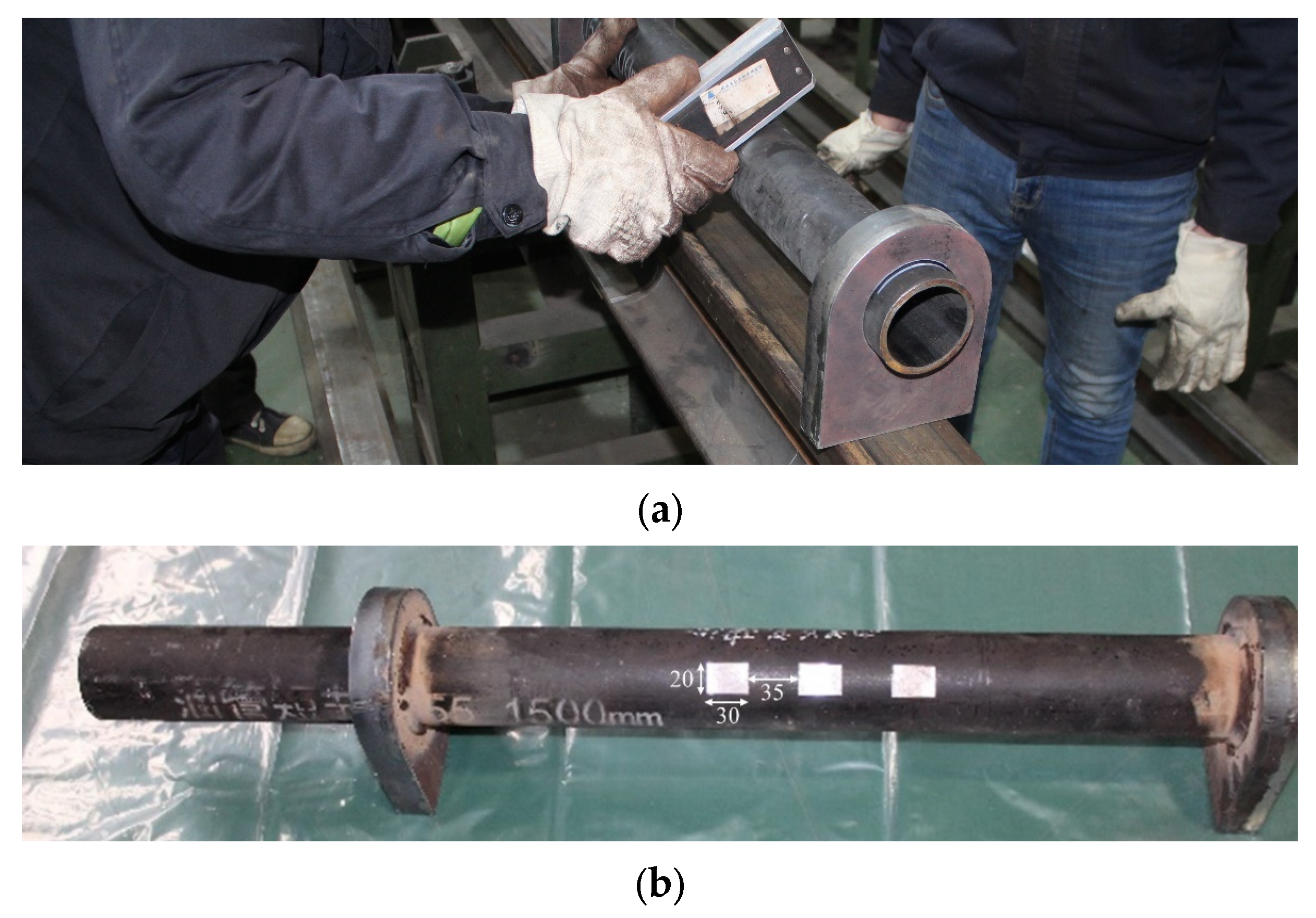
The N80 pipeline (manufactured by Panjin Renhe Casing Co., Ltd., Panjin City, China) served as the experimental specimen. Two types of specimens were fabricated: a standard buried petroleum pipeline with localized defects and a polyurea-reinforced buried petroleum pipeline with localized defects. Three pre-designed defects (30 mm length × 20 mm width × 2 mm depth) were incorporated into each specimen, axially spaced at 35 mm. The basic specimen configuration is shown in Figure 1. The design parameters are shown in Table 1.
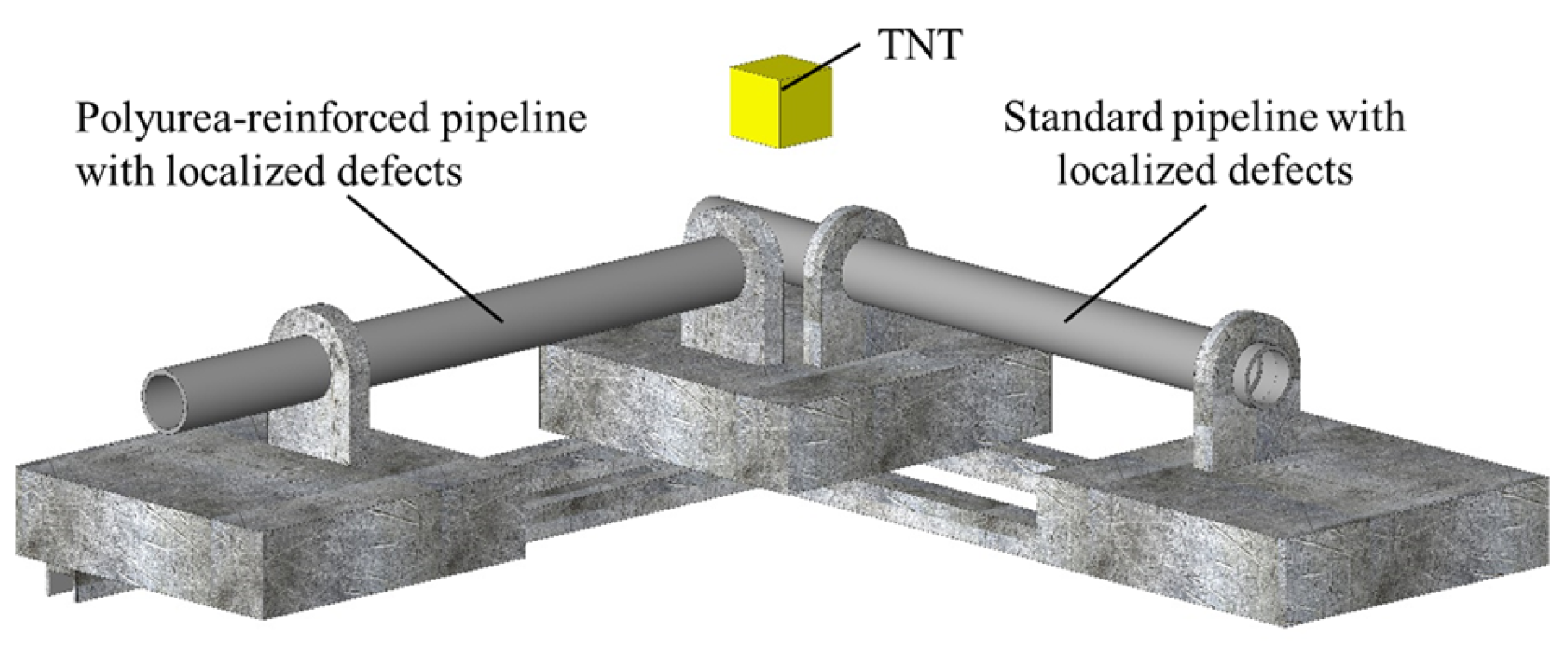
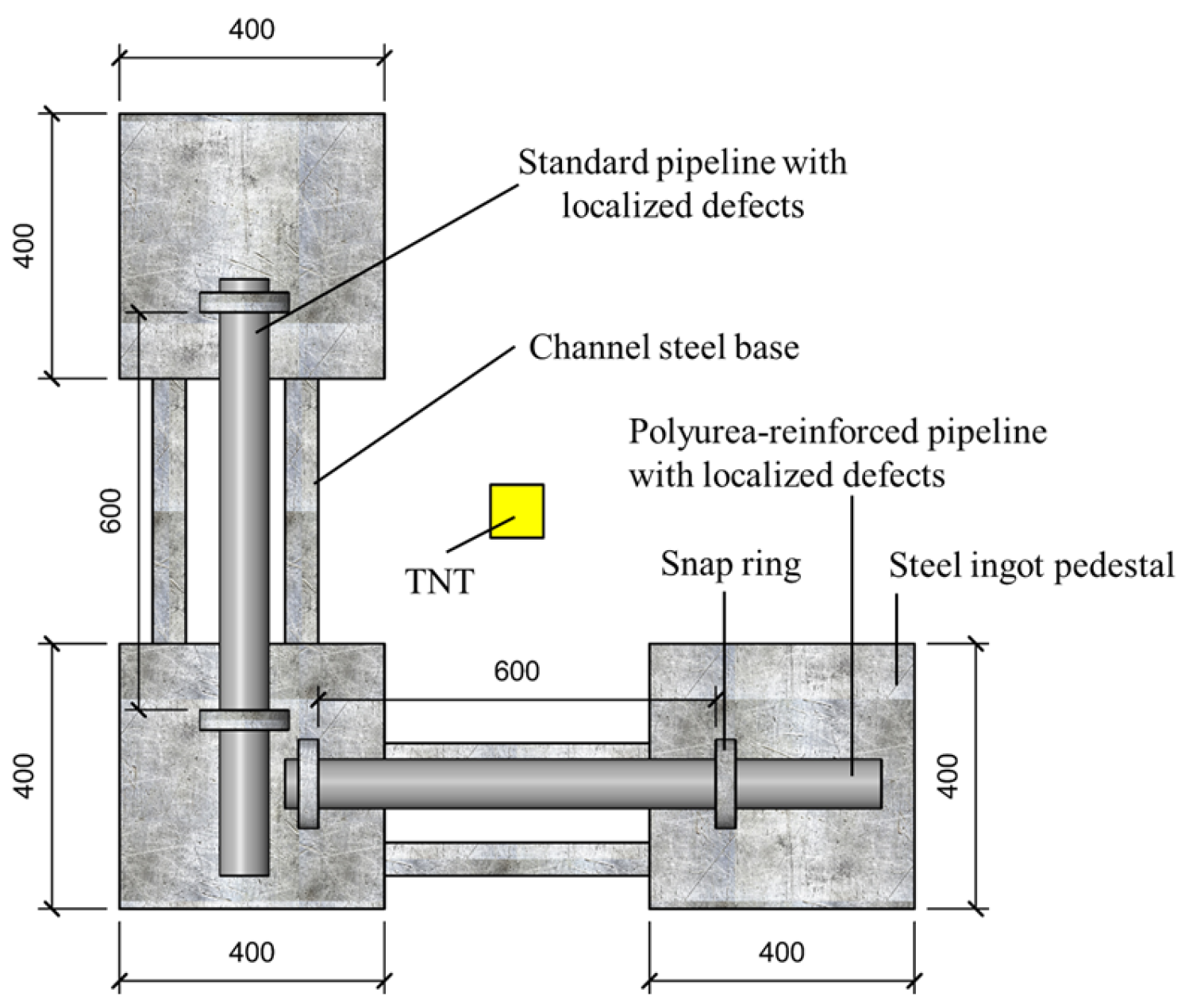
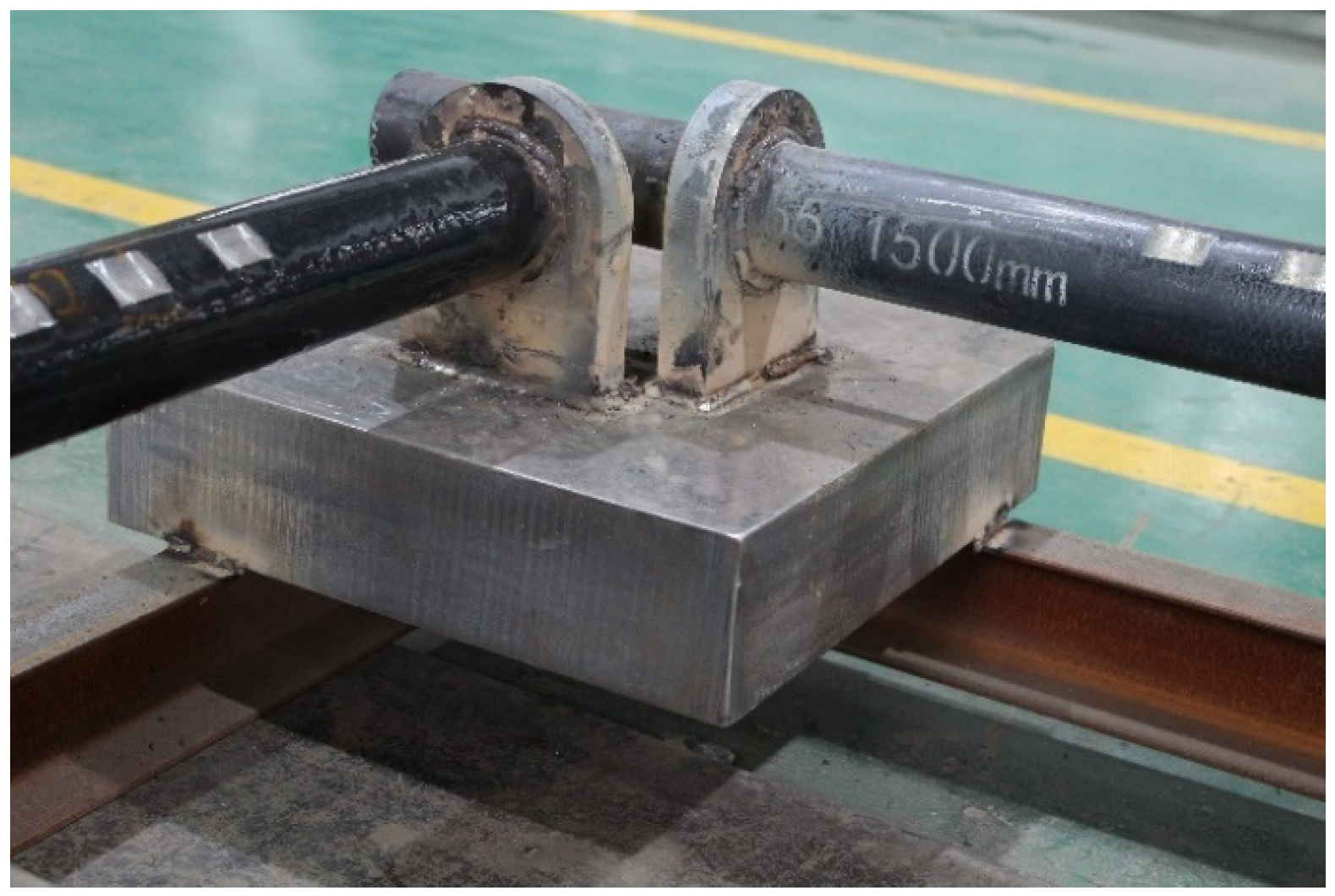
The experimental setup consisted of a channel steel base, two steel ingot pedestals, and two snap rings, all made of steel. Each pipeline specimen was secured by inserting into a snap ring and then welding to establish fixed boundary conditions. To ensure uniform spacing between both pipelines and the explosive, they were mounted and welded onto the same steel ingot pedestal, thereby forming the basic structure of the experimental device. The schematic diagram of the pipeline constraint device is shown in Figure 2, and the dimensional configuration of the setup is shown in Figure 3.
According to the Repair of Pressure Equipment and Piping Standard (American National Standards Institute/American Society of Mechanical Engineers PCC-2S-2015) [25], one of the pipelines with localized defects was selected for reinforcement with polyurea with a thickness of no less than 2 mm. The two pipeline specimens and the equipment used to achieve constraints through pipeline specimens are shown in Figure 4.
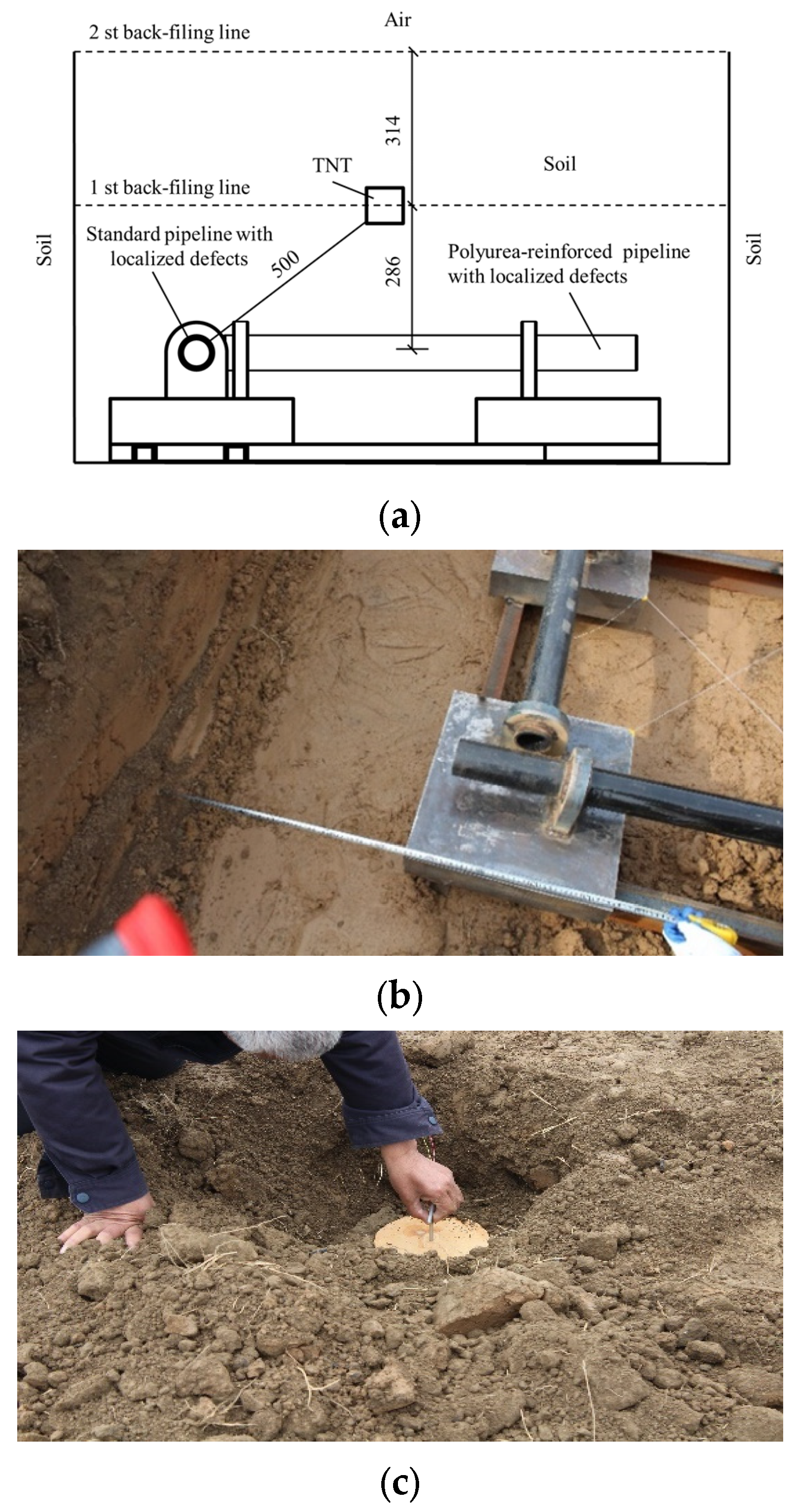
To investigate blast-induced damage in buried pipelines, explosion tests were conducted on two N80 pipeline variants: standard and polyurea-reinforced, both with localized defects. All specimens were tested under identical constraint conditions. Key test parameters included a 10 kg TNT charge buried at a 314-mm depth. To simulate shallow buried blast scenarios near petroleum pipelines, the vertical distance from the explosion center to both pipeline surfaces was set at 286 mm. The measured explosion center-to-pipeline surface distance of 500 mm yielded a scaled distance of 0.23 m·kg1/3 (≤0.8 m·kg1/3), calculated as the ratio of standoff distance to the cube root of charge mass (as shown in Figure 5).

2.2. Experimental Results

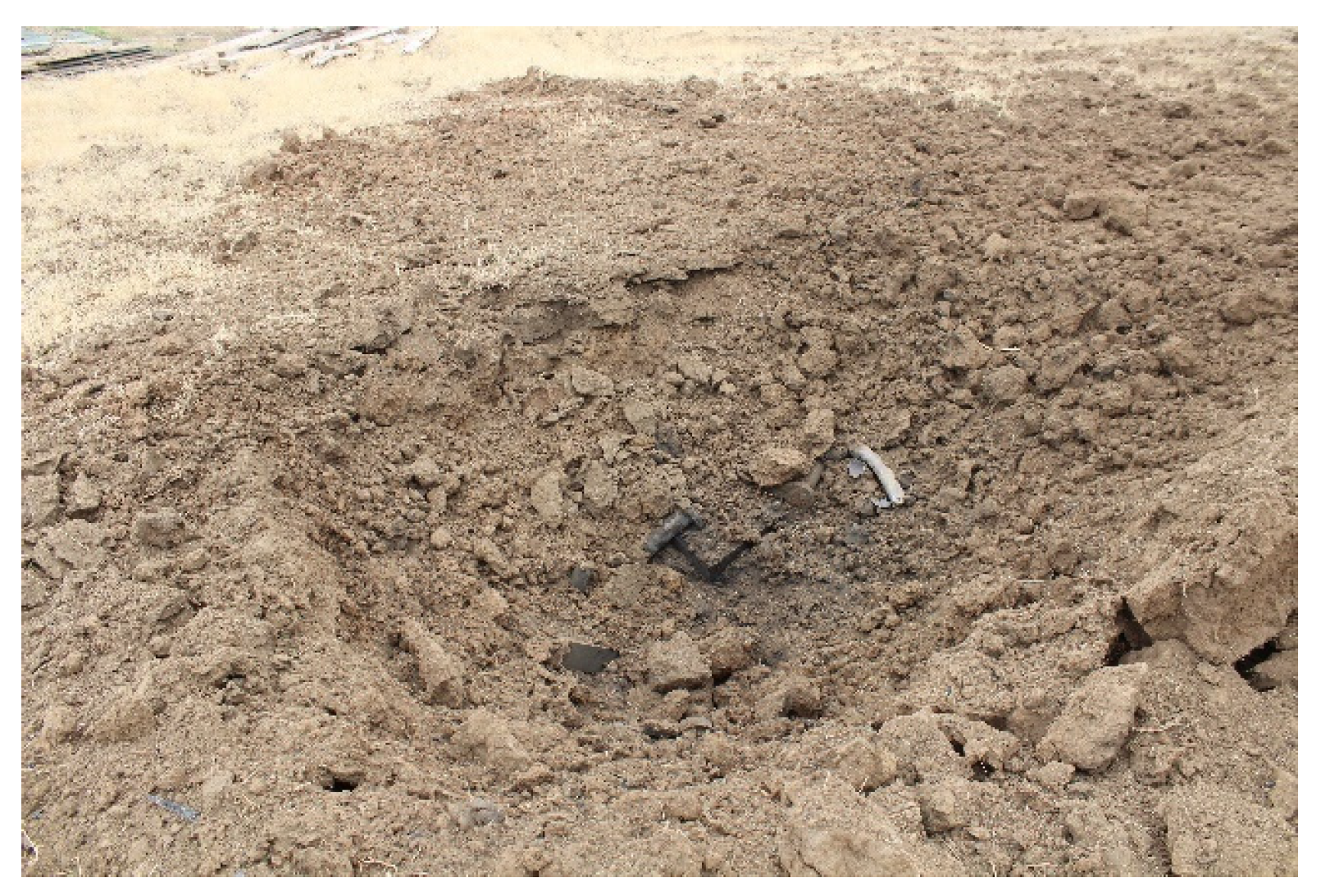
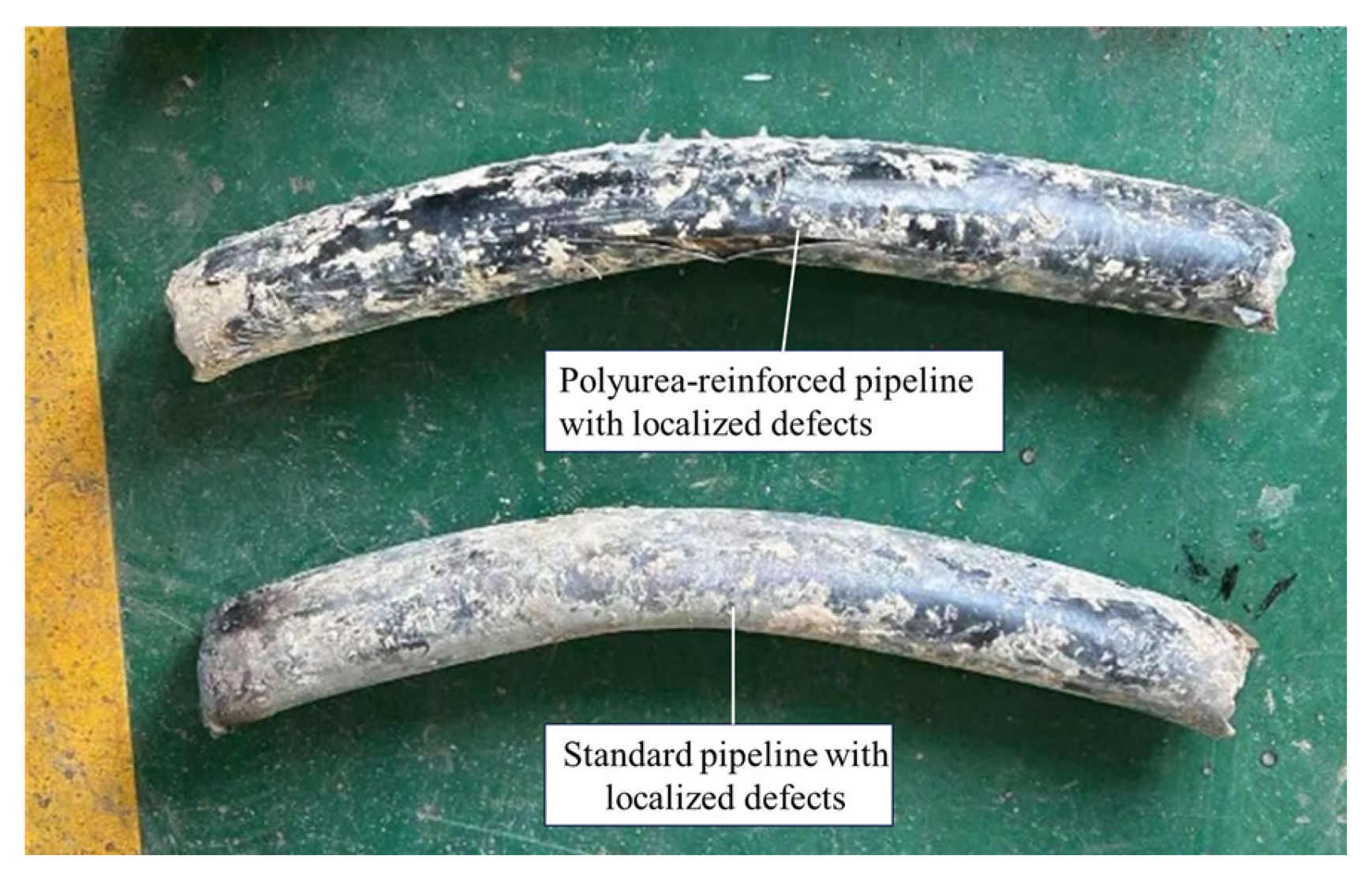
Figure 6 shows the post-explosion test site, featuring a distinct blasting funnel from shallow subsurface detonation. Figure 7 shows the deformation of pipeline specimens. Under the scaled distance of 0.23 m·kg1/3, both the standard buried petroleum pipeline with localized defects and the polyurea-reinforced buried petroleum pipeline with localized defects exhibited significant plastic deformation at the middle of the front surface.

2.3. Numerical Simulations

LS-DYNA finite element analysis was employed to investigate the dynamic response of both standard and polyurea-reinforced buried petroleum pipelines with localized defects.

2.3.1. Material Constitutive Model

(1)
Steel Pipeline
The high strain-rate behavior of the steel pipeline was simulated by the *MAT_PLASTIC_KINEMATIC model. Corresponding parameters are listed in Table 2 [26].
(2)
Constitutive model of soil
Given the cohesive test soils, soil dynamics were simulated by the *MAT_SOIL_AND_FOAM model in LS-DYNA. It’s ideal plastic yield function is as follows:
  =   J 2     a 0   +   a 1 σ   +   a 2 σ 2
where: J 2   =   σ ij σ ij 2 ,   σ ij is the partial stress component; σ   is the average stress; and   a 0 ,   a 1 ,   a 2 are the secondary fitting curve constants of the dimensionless curve   J 2 σ . The corresponding parameters of this constitutive model are shown in Table 3 [26].
(3)
Constitutive model of polyurea
To capture the dynamic response and energy dissipation of polyurea under high-strain-rate blast loading, the polyurea coating was modeled using *MAT_PIECEWISE_LINEAR_PLASTICITY (Material Type 24 in LS-DYNA). This model represents the material behavior through a piecewise linear stress–strain relationship with strain rate-dependent scaling of the yield stress, enabling the simulation of large deformation and associated energy dissipation. Although polyurea inherently exhibits viscoelastic characteristics, a rate-dependent elastic–plastic approximation was adopted to describe its dominant response under blast loading. The bulk response is assumed elastic. The stress–strain curve and material parameters were defined with reference to Ref. [27] and adjusted within a reasonable range to reflect the present loading conditions. The complete parameters are summarized in Table 4, using the mm-ms-kg unit system commonly employed in LS-DYNA.
(4)
Constitutive models of explosive and air
Air in LS-DYNA was simulated by the *MAT_NULL model, with parameters listed in Table 5 [25]. Air properties during explosion were defined by the *EOS_LINEAR_POLYNOMIAL equation of state:
P   =   C 0   +   C 1 μ   +   C 2 μ 2   +   C 3 μ 3   +   ( C 4   +   C 5 μ   +   C 6 μ 2 )
where: μ   =   1 / V     1 , P is the detonation pressure, E is the internal energy per unit volume of the detonation product, and C0–C6 are the parameters of the equation of state. For air, C 0   =   C 1   =   C 2   =   C 3   =   C 6   =   0 , and C 4   =   C 5   =   0.4 . The corresponding parameters of the equation of state of air are shown in Table 6 [26].

2.3.2. Numerical Simulation Model

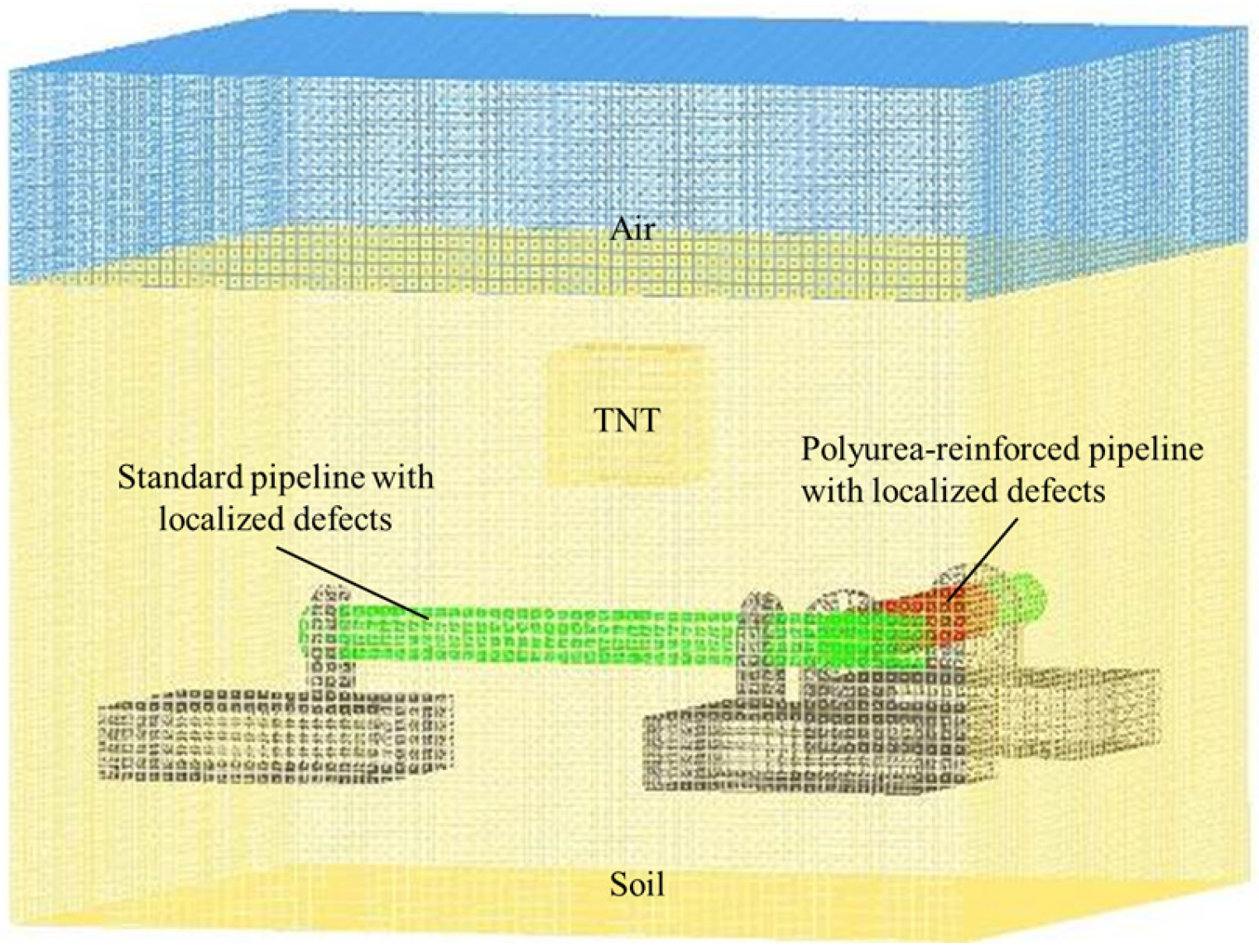
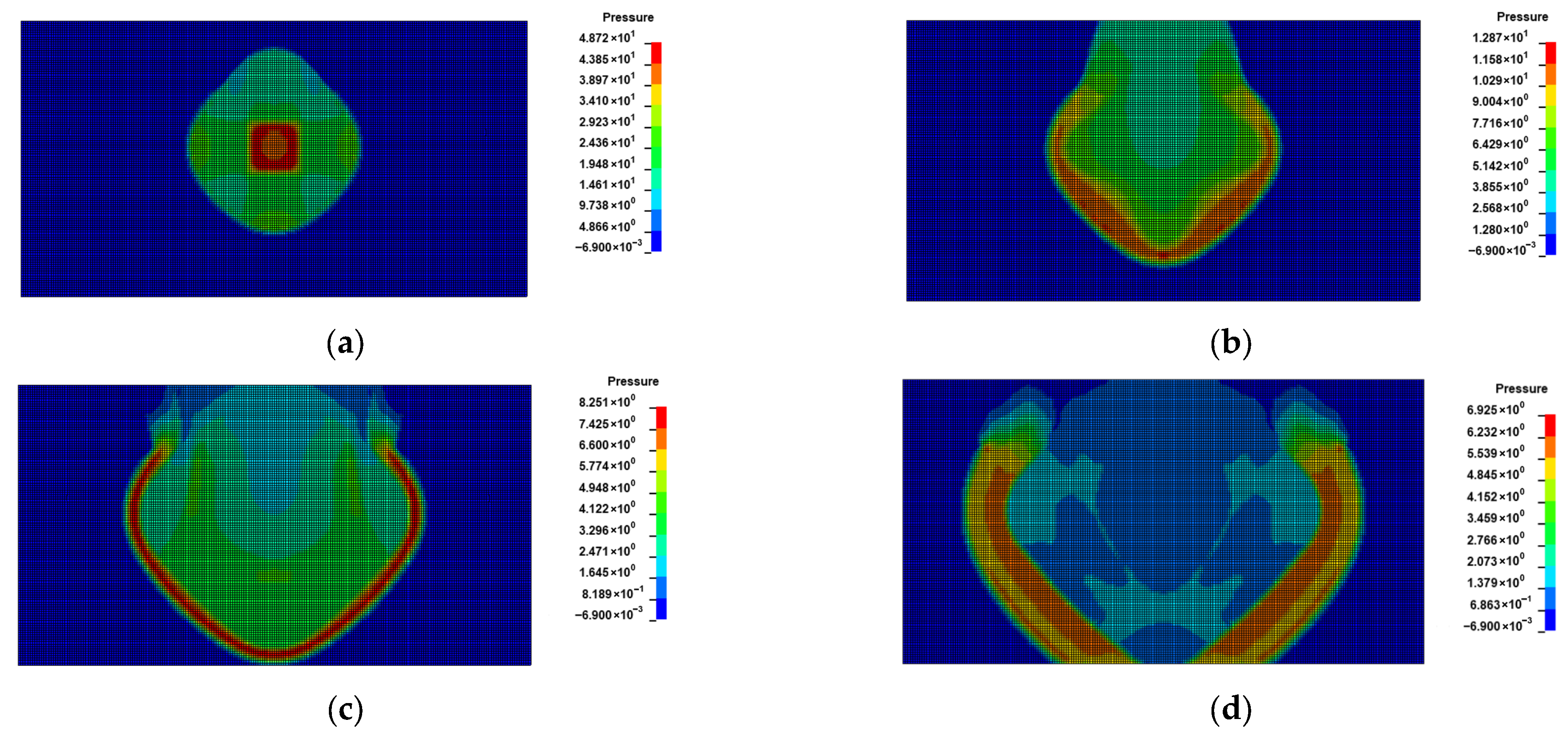
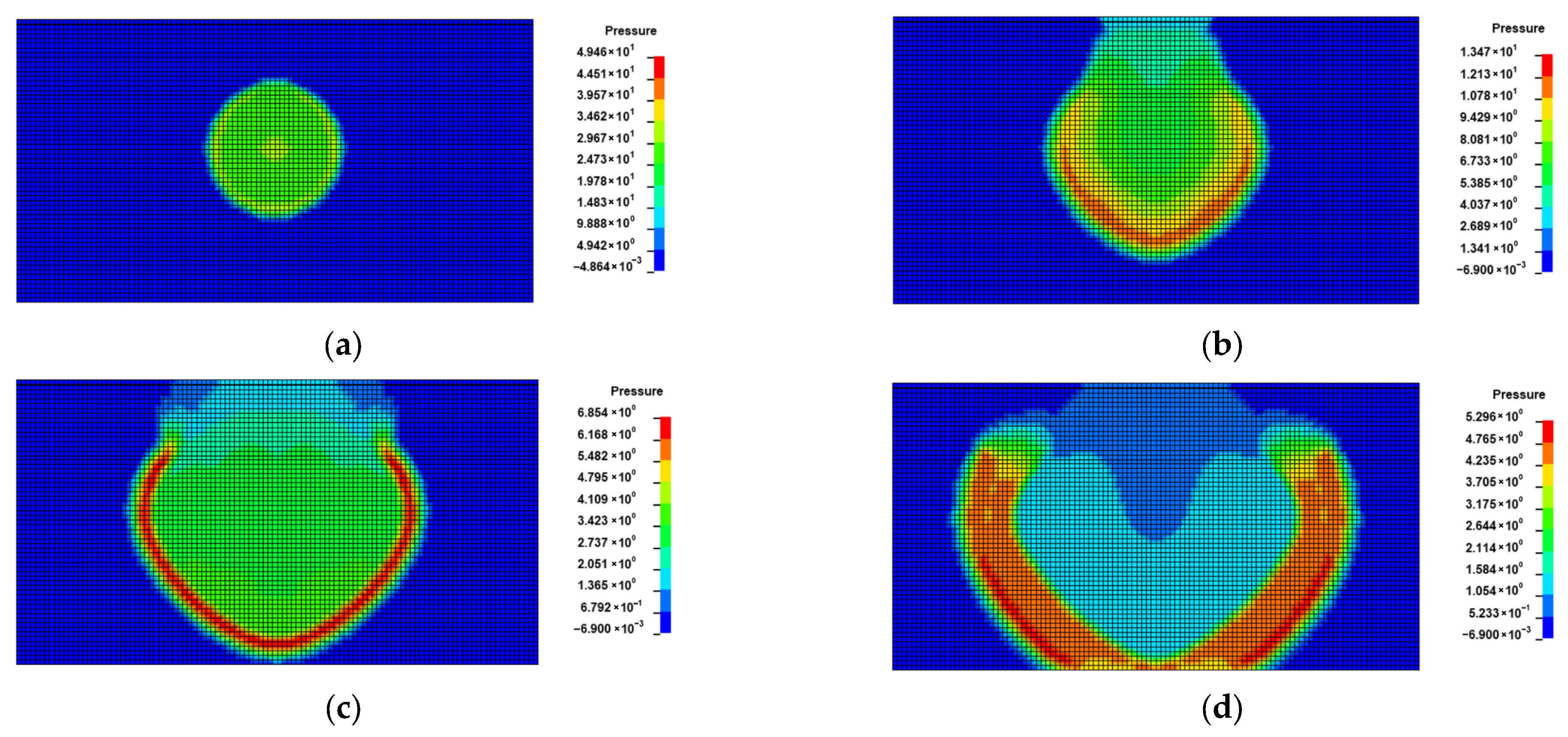
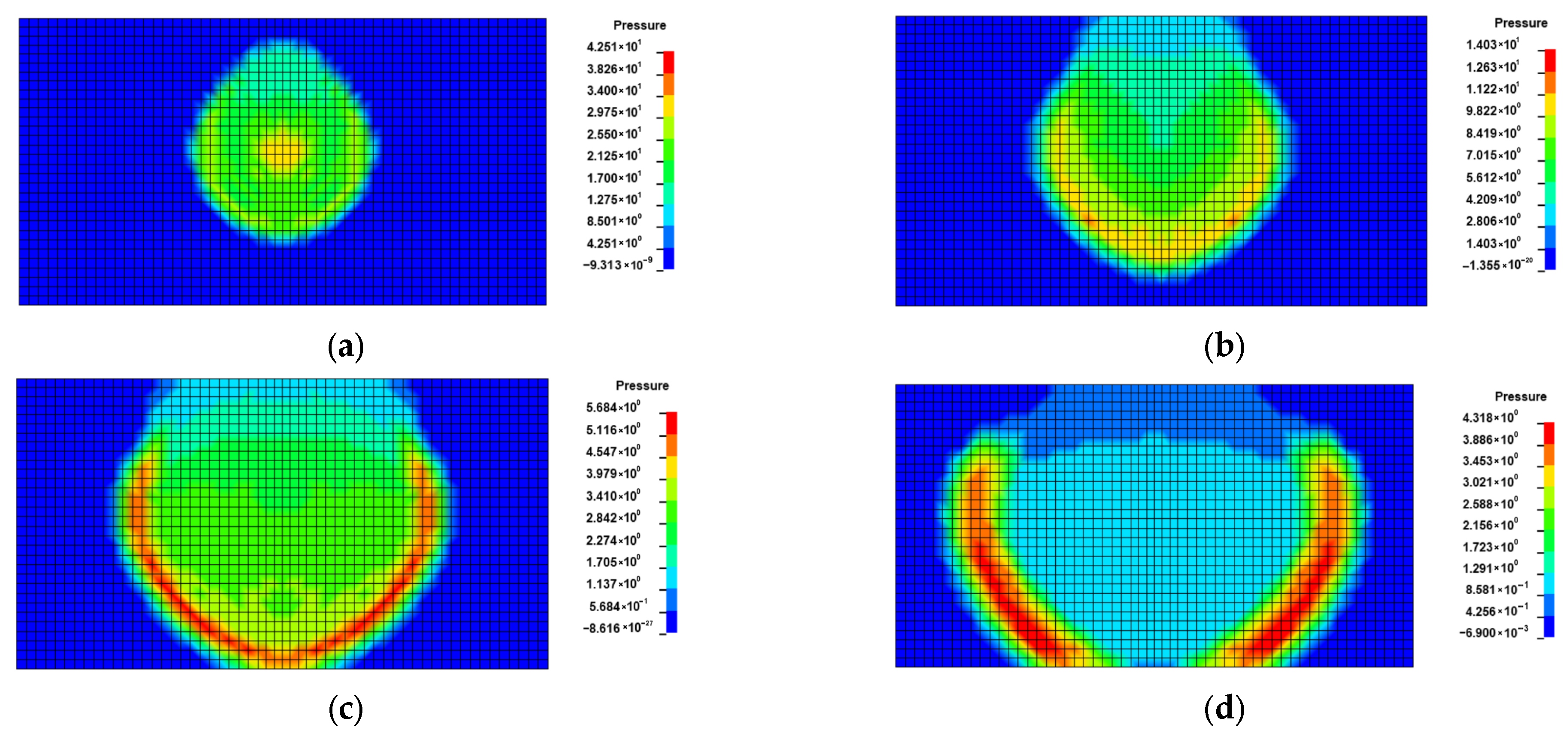
Numerical models employed SOLID164 elements for 3D solid structures and the multi-material ALE method. Both pipeline specimens featured fixed-end constraints with non-reflecting boundaries to absorb outgoing stress waves; a comparison with and without these boundaries showed a difference of less than 2% in peak pipeline deformation, confirming that boundary reflections did not significantly affect the response. Experimental results confirmed effective adhesion between polyurea and pipelines with localized defects (no separation observed), thus justifying the use of the “glue” method at joint nodes to ensure deformation consistency. Since the different sizes of elements would affect the simulation result, mesh sensitivity analysis was conducted using three element sizes: 1 mm, 2 mm, and 4 mm in this research. The pressure distributions obtained with the 1 mm, 2 mm and 4 mm meshes are compared in Figure 8, Figure 9 and Figure 10. From Figure 8 to Figure 10, the following analysis can be clearly seen. Compared to the 1-mm mesh, the 2-mm mesh introduced only a 0.8% relative error in peak pipeline deformation while reducing computation time by 40.1%; the 4-mm mesh resulted in a 5.3% error with a further 52.6% reduction in computation time. Considering both accuracy and efficiency, the 2-mm mesh was selected for the simulations. Additional validation focused on three aspects: (1) time-step convergence; LS-DYNA’s automatic time-step control based on the Courant–Friedrichs–Lewy condition (CFL) condition produced a minimum step of 2.5   ×   10 4 ms, two orders of magnitude smaller than the pipeline’s characteristic response time (≈2.6 ms), with peak deformation changing by less than 1.5% when the step was halved; (2) ALE formulation stability; the multi-material ALE algorithm maintained artificial energy below 5% of total energy throughout the simulation; and (3) soil parameter uncertainty; soil parameters were adopted from the literature [24] and pre-test calibration, validated against experimental data (error < 15%), and this uncertainty is noted as a limitation in the conclusions. The final model (as shown in Figure 11) contained 230,361 SOLID164 elements.

2.3.3. Numerical Simulation Results

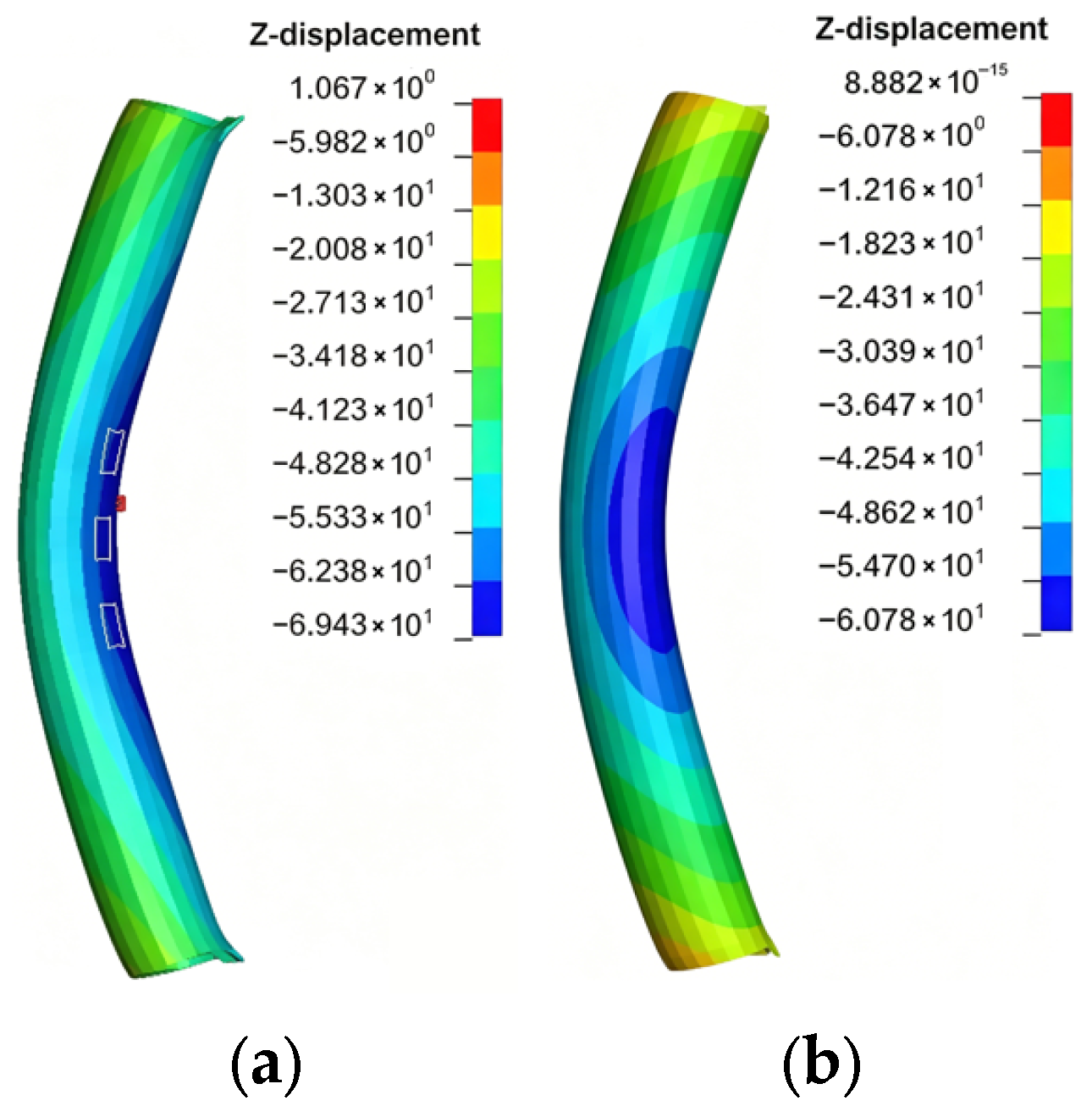
The simulation and experiment are directly contrasted in Figure 12. Key measurements are as follows: for the standard buried petroleum pipeline with localized defects, the simulated dent depth was 78.28 mm, compared to the experimental value of 69 mm (13.46% error). For the polyurea-reinforced buried petroleum pipeline with localized defects, the simulated dent depth obtained with the updated model was 60.1 mm, compared to the experimental value of 63 mm (3.0% error). Both errors are within 15%, indicating acceptable consistency between the simulation and the single experimental measurement. However, further experimental validation under different scaled distances is needed. Therefore, the model is considered preliminarily consistent with this specific test, not fully validated. This study should be regarded as a pilot investigation; the numerical results are used to complement the limited experimental data.
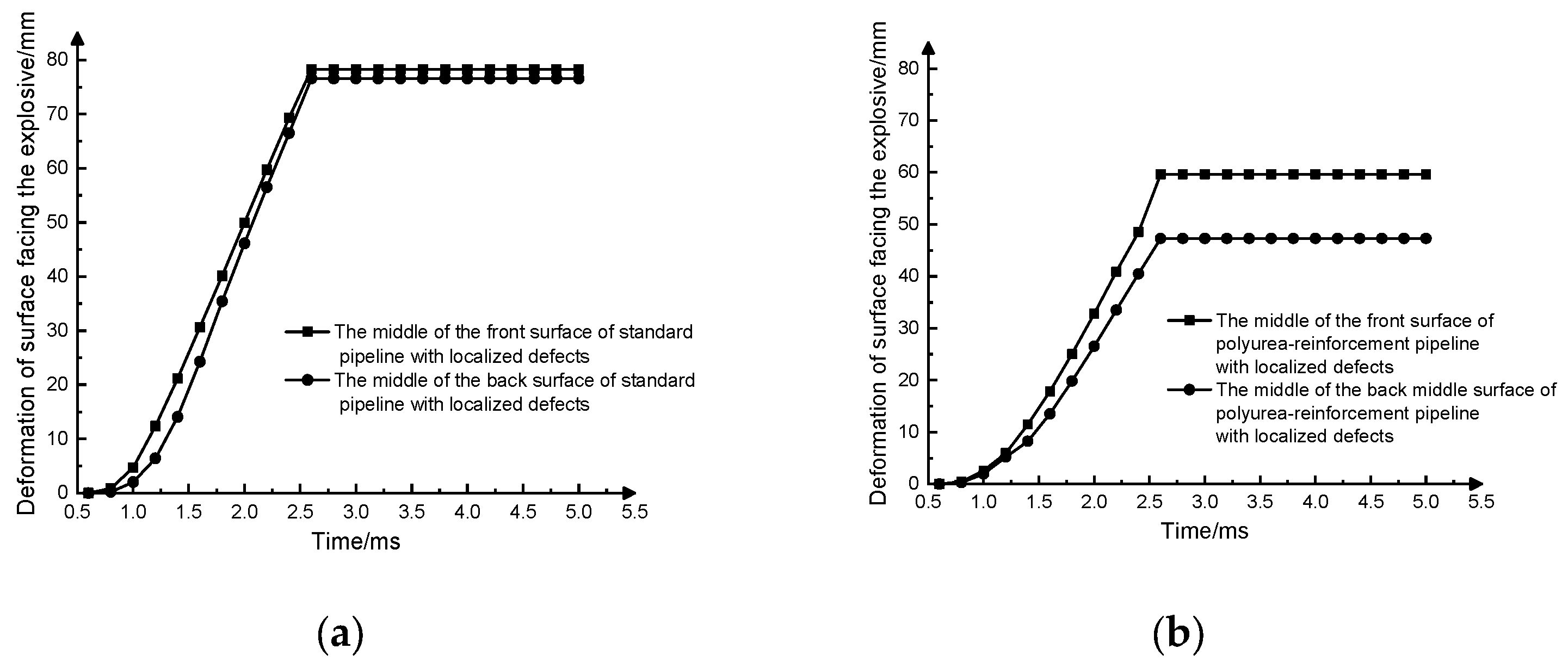
Deformation–time curves for the middle of the front and back surfaces of the standard pipeline with localized defects are presented in Figure 13 to analyze pipeline deformation under shallow-buried blast loading. The maximum deformation occurred at 2.6 ms for both pipeline configurations. The deformation reductions attributable to polyurea reinforcement are as follows: 18.18 mm at the middle of the front surface (from 78.28 mm to 60.1 mm) and 38.87 mm at the middle of the back surface. These results demonstrate the effectiveness of polyurea in reducing deformation at critical locations.

3. Analysis and Evaluation

3.1. Propagation Processes of Shock Wave

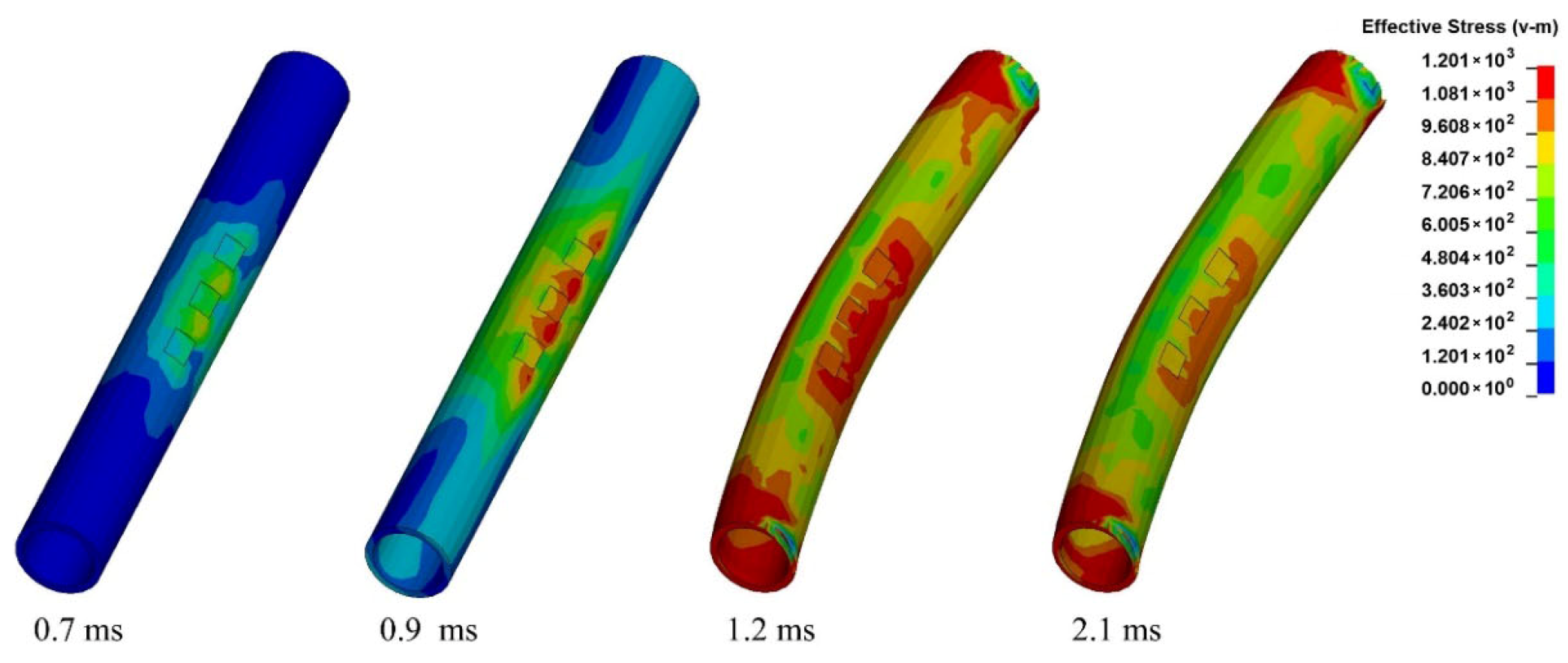
Shock wave pressure constitutes a key damaging factor in explosions. Figure 14 shows its propagation through defective standard pipelines. At 0.7 ms, obvious stress distribution appeared at the center of localized defects appeared, and the explosion wave began to act on the pipe. At 0.9 ms, obvious deformation in the standard pipeline with localized defects had not yet occurred; high-stress zones were mainly concentrated in the defects on the front surface facing the explosion and continued to extend along the axial direction. At 1.2 ms, the standard pipeline with localized defects was significantly deformed, and the high-stress zones expanded to the two ends of the specimens. At 2.1 ms, the deformation of the standard pipeline with localized defects was stable, and the distribution of the high-stress zone did not change significantly, but the distribution area shrunk, indicating that the action of the explosion shock wave was almost finished.

3.2. Effect of Radial Defect Dimension on Pipeline Residual Strength

To investigate the influence of radial defect dimension on the mechanical response characteristics of the buried standard pipeline with localized defects subjected to blast loading, this study designed controlled simulation experiments by varying the radial defect depth d under other fixed key parameters (explosion distance R = 500 mm, axial defect length L = 30 mm, circumferential defect width C = 20 mm). The specific experimental configuration is detailed in Table 7.
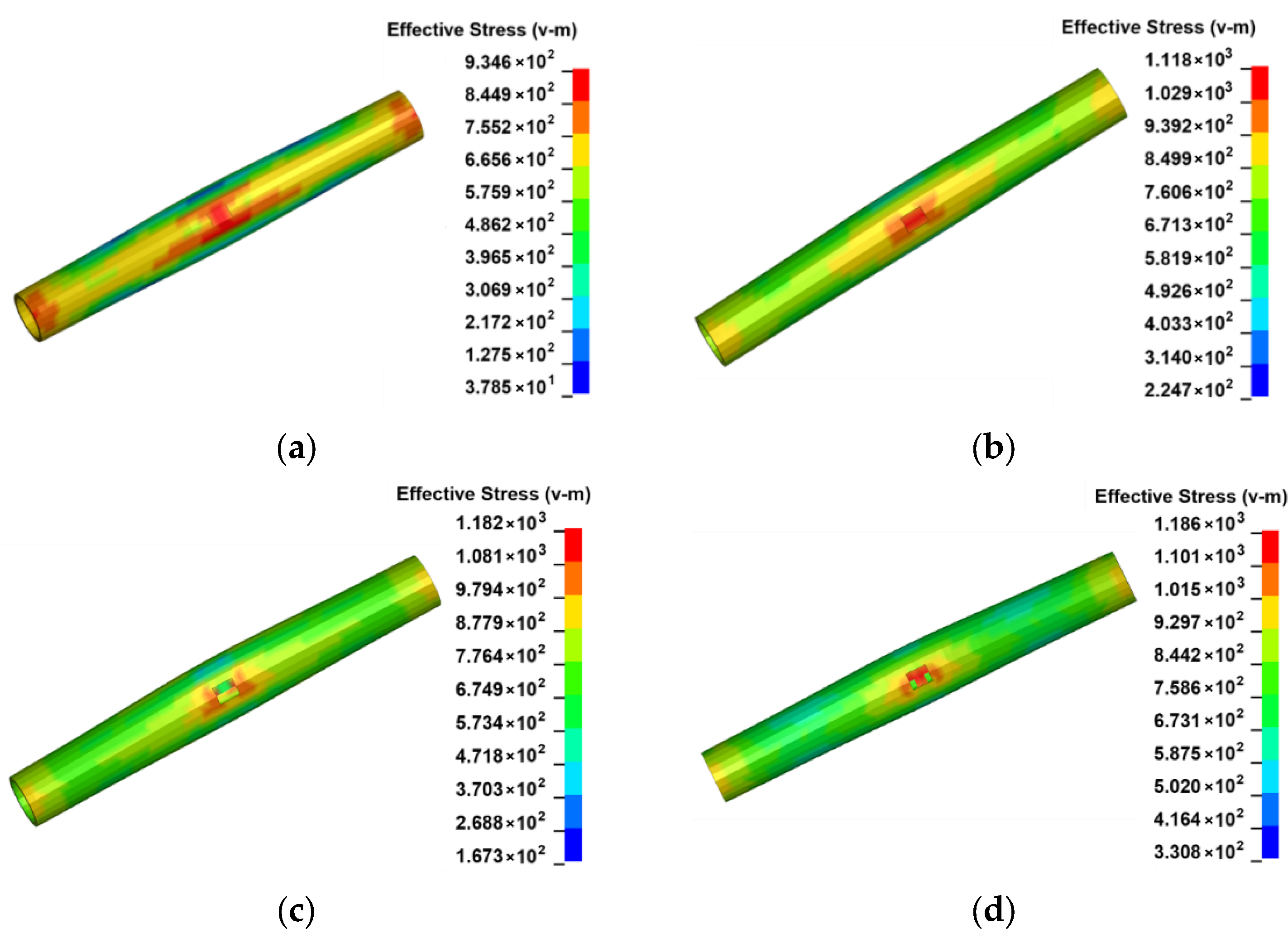
Numerical simulations revealed the von Mises stress distribution and failure mechanisms of the buried standard pipeline with localized defects subjected to blast loading (Figure 15). The results demonstrated that a pressure peak exceeding 180 MPa formed at the middle of the front surface of the standard pipeline with localized defects within 0.5 ms, subsequently diffusing axially. At defect depths of 1 mm and 2 mm, the maximum von Mises stress reached 934.6 MPa and 1118 MPa, respectively, on the front surface of the standard pipeline with localized defects. The pipeline predominantly underwent bending deformation-induced failure. In contrast, at defect depths of 3 mm and 4 mm, the maximum Von Mises stress on the front surface of standard pipeline with localized defects increased to 1182 MPa and 1186 MPa, both exceeding the yield strength. Notably, high-stress concentration zones persistently emerged at two critical locations: (1) the middle of the front surface of the standard pipeline with localized defects and (2) the constraint regions near the pipeline’s fixed end, regardless of defect depth.
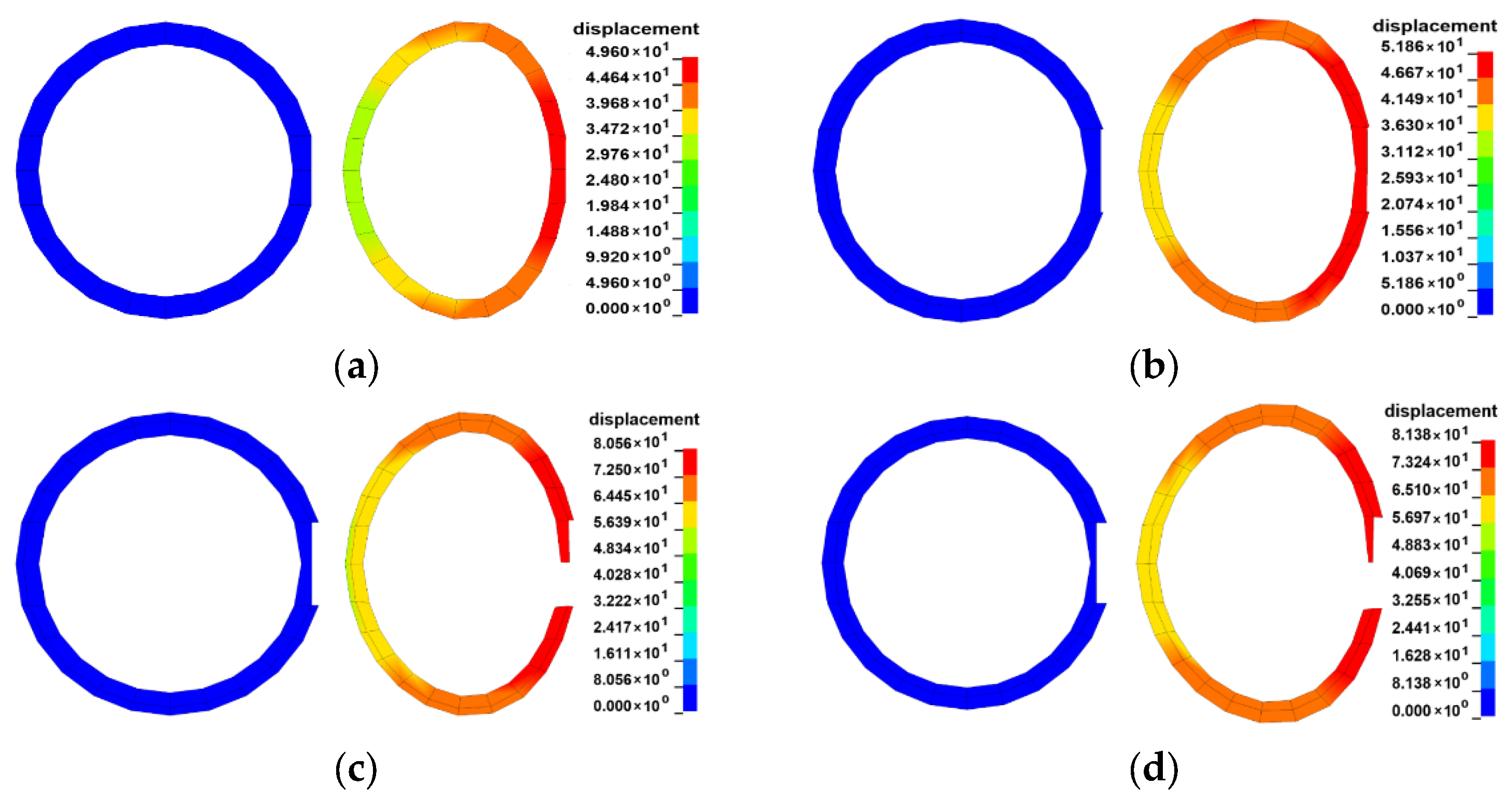
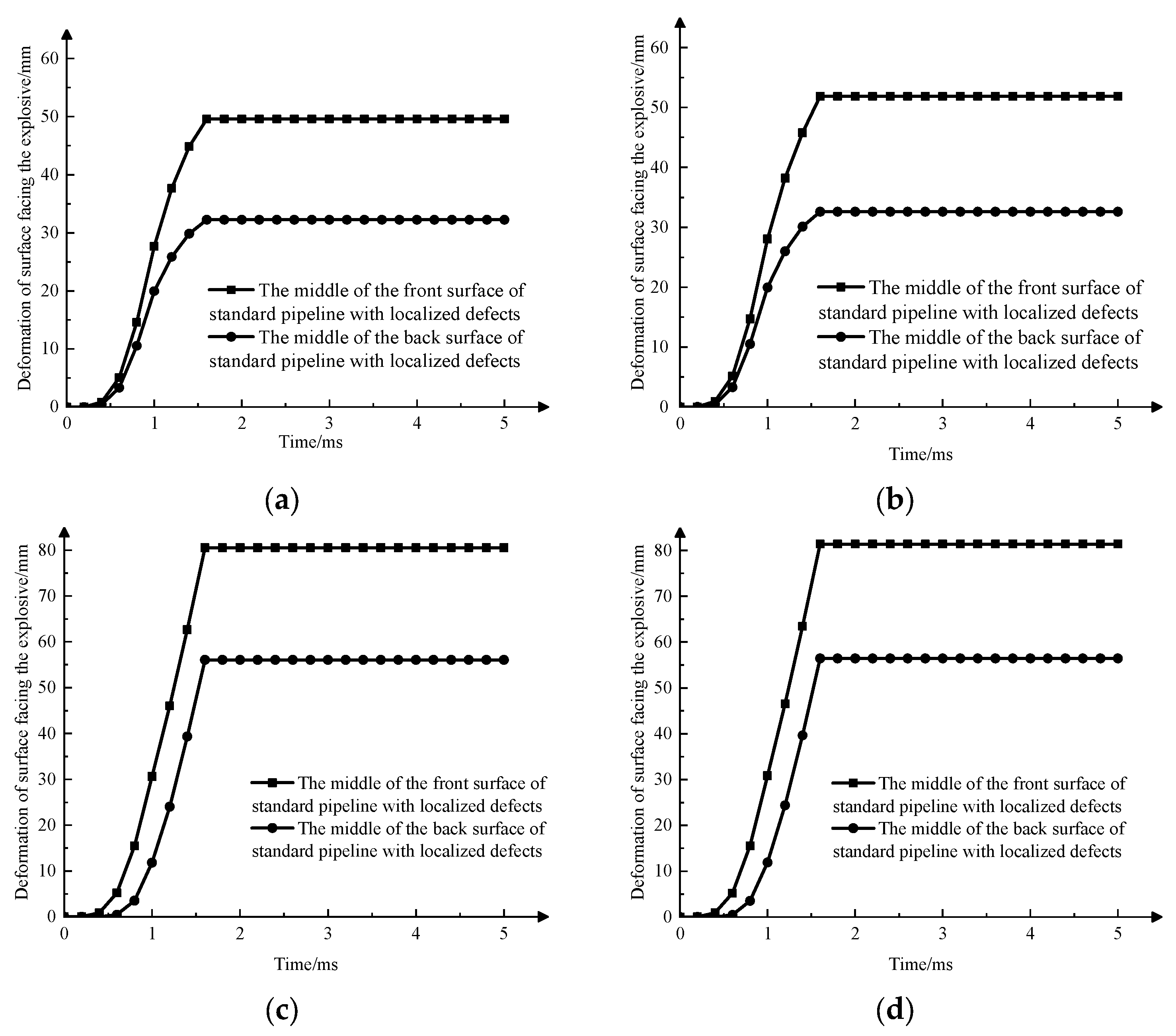
Deformation contour maps of the front surface of the standard pipeline with localized defects at varying defect depths were extracted from finite element numerical simulations, as shown in Figure 16. At defect depths of 1 mm, 2 mm, 3 mm, and 4 mm, maximum dent depths at the front surface of standard pipeline with localized defects measured 49.60 mm, 51.86 mm, 80.56 mm, and 81.38 mm, respectively. Corresponding deformations at the back surface of the standard pipeline with localized defects were 32.25 mm, 32.58 mm, 56.07 mm, and 56.43 mm. Analysis revealed that the pipeline’s response to blast loading intensifies proportionally with defect depth, with the most significant deformation consistently localized at the middle of the front surface of the standard pipeline with localized defects.
The time–history curves depicting dent evolution on the standard pipeline with varying defect depths (Figure 17) demonstrates that under identical scaled distances, all pipelines with localized defects failed within 1.5 ms after loading initiation, regardless of defect depth. Deformation on the front surface of the standard pipeline with localized defects consistently exceeded that on the back surface of the standard pipeline with localized defects by over 50%.
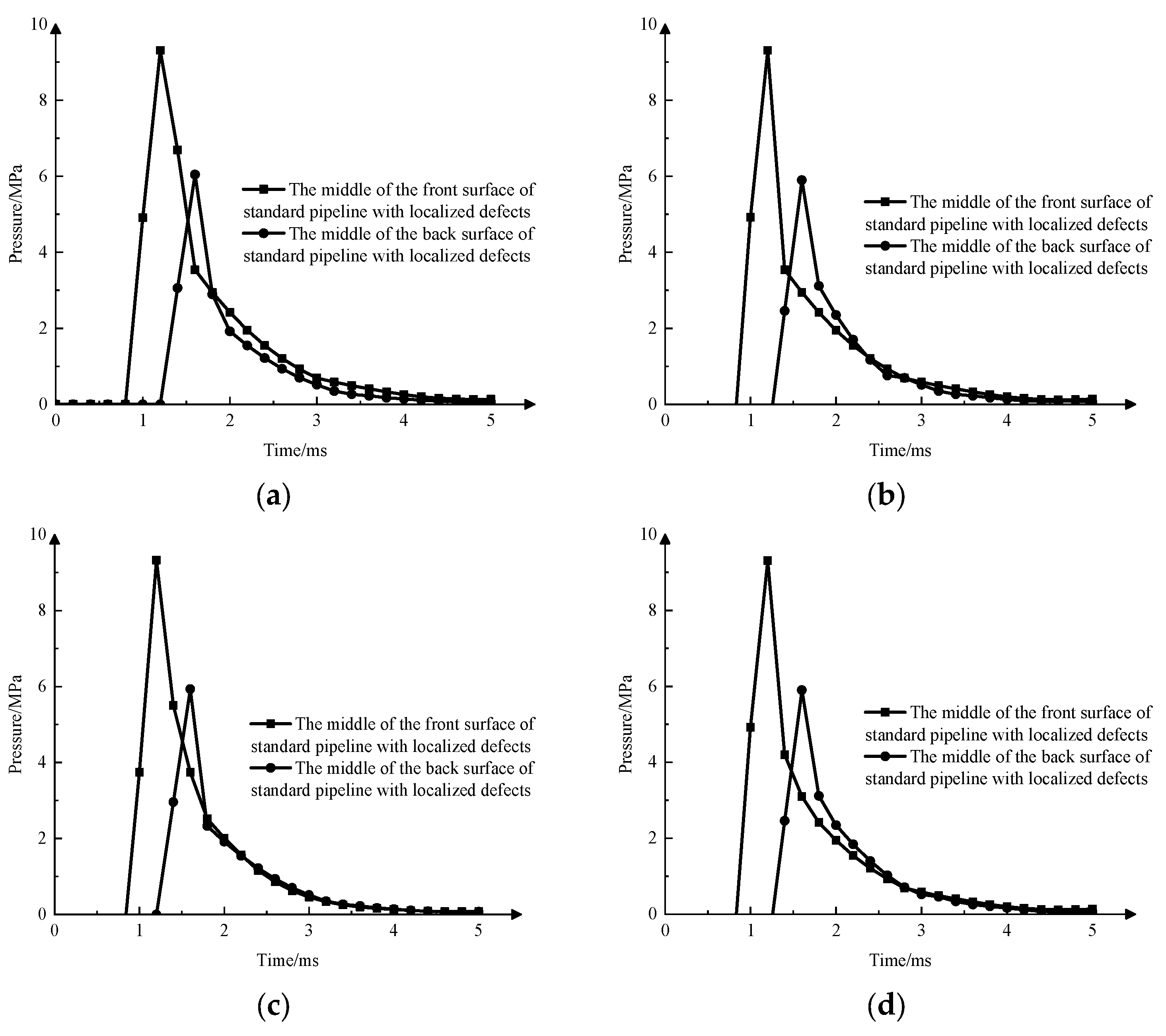
The pressure time–history curves for the standard pipeline with localized defects subjected to blast loading were extracted from finite element numerical simulation software at varying defect depths, as shown in Figure 18. Under the test conditions of a 10 kg TNT and a 500 mm explosion center distance, both the front and back surfaces of the standard pipeline with localized defects exhibited near identical pressure–time curves, characterized by steep pressure peaks followed by a plateau. Notably, significant differences existed between the peak pressures at the front and back surfaces of the standard pipeline with localized defects within the same working condition: the front surface experienced markedly higher peak pressures than the back surface, with the peak pressure occurrence time on the back surface being delayed relative to the front surface of the standard pipeline with localized defects.
Radial defect depth (d) was identified as the primary factor governing the dynamic response of the standard pipeline with localized defects subjected to blast loading. Specifically, the von Mises stress at the middle of the front surface was observed to increase monotonically with deeper defects (d ranging from 1 to 4 mm). In contrast, overpressure profiles were found to remain highly consistent across all defect depths. Element deletion was observed at the middle of the front surface when d ≥ 3 mm, leading to fracture-dominated failure.

3.3. Effect of Polyurea Thickness on Pipeline Anti-Deformation Under Blast Loading

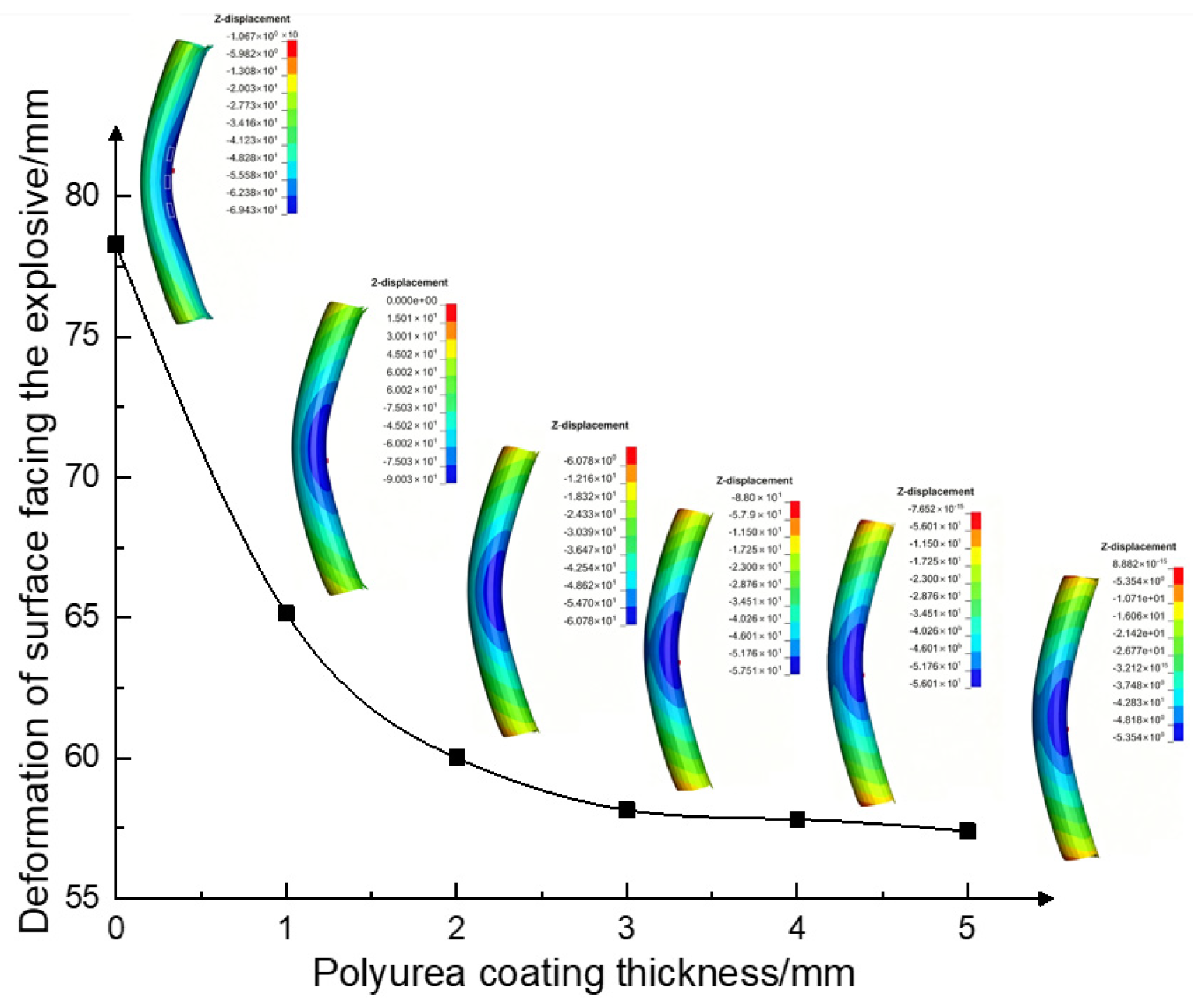
To investigate the different impact on anti-explosion ability with different thicknesses of polyurea, a further numerical simulation was conducted. The relationship between the maximum displacement of the front surface of the pipeline facing the explosion and the coating thickness is shown in Figure 19. When the thickness of the polyurea increased from 0 mm to 2 mm, the displacement of the middle of the front surface facing the explosive decreased from 78.28 mm to 60.1 mm with a decreased efficiency of 23.22%. When the thickness of polyurea increased from 2 mm to 5 mm, the displacement of the middle of the front surface facing the explosive decreased from 60.1 mm to 54.39 mm, with a decreased efficiency of 2.3%. This indicates a significant diminishing marginal benefit beyond 2 mm. From an energy absorption perspective, the polyurea coating absorbs blast energy through its deformation; the increment in energy absorption per unit thickness decreases substantially after 2 mm. Therefore, under the specific conditions of this study—namely, a scaled distance of 0.23 m/kg1/3, an N80 pipeline with 73 mm outer diameter and a 5.5 mm wall thickness, and a 10 kg TNT charge—2 mm provides the most pronounced reduction in deformation among the thicknesses tested (0–5 mm).

3.4. Pressure-Time History Curves

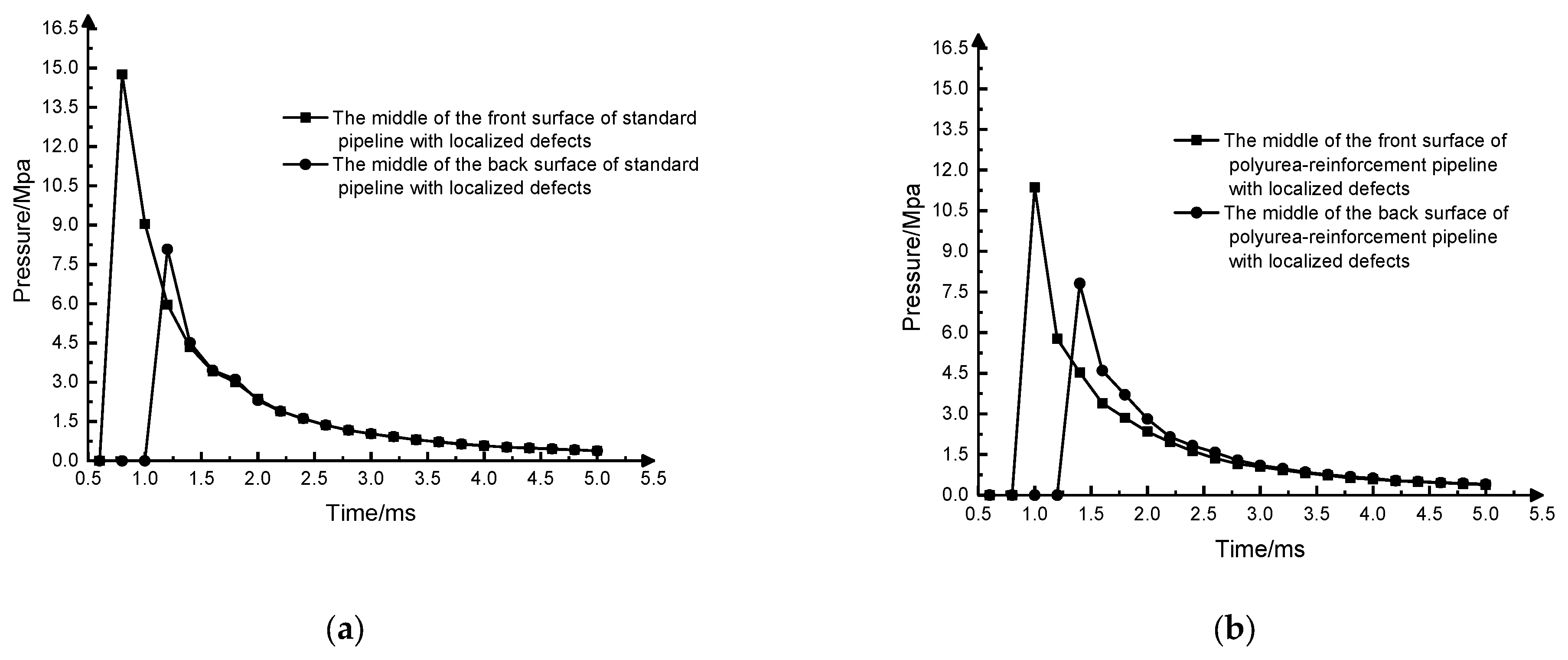
The pressure–time curves for the middle of front surface facing the explosive and the middle of the back surface facing the explosive of the two kinds of pipeline specimens were also obtained from the numerical simulation results, as shown in Figure 20.
The peak pressure values of the standard pipeline with localized defects were 14.75 MPa at the middle of the front surface facing the explosive and 8.08 MPa at the middle of the back surface facing the explosive. The peak pressure values of the polyurea-reinforced pipeline with localized defects were 11.36 MPa at the middle of the front surface facing the explosive and 7.81 MPa at the middle of the back surface facing the explosive. This was shown by the comparison of the results that the peak pressure values of the middle of the front surface facing the explosive and the middle of the back surface facing the explosive of the polyurea-reinforced pipeline with localized defects were lower than those of the standard pipeline with localized defects. The peak pressure values of the buried pipeline were decreased by the polyurea-reinforced pipeline with localized defects. Based on this analysis, although damage occurred both at the middle of the front surface facing the explosive and the middle of the back surface facing the explosive of the two buried pipelines, the damage could be effectively decreased by the polyurea to some extent.
Peak pressures were reduced by polyurea reinforcement by 23.0% at the middle of the front surface and 3.3% at the middle of the back surface compared to standard pipelines. Polyurea’s effectiveness in reducing blast damage at critical locations is demonstrated by this pressure mitigation.

4. Results and Discussion

4.1. Establishment of Pressure–Impulse Diagram (P–I Curve)

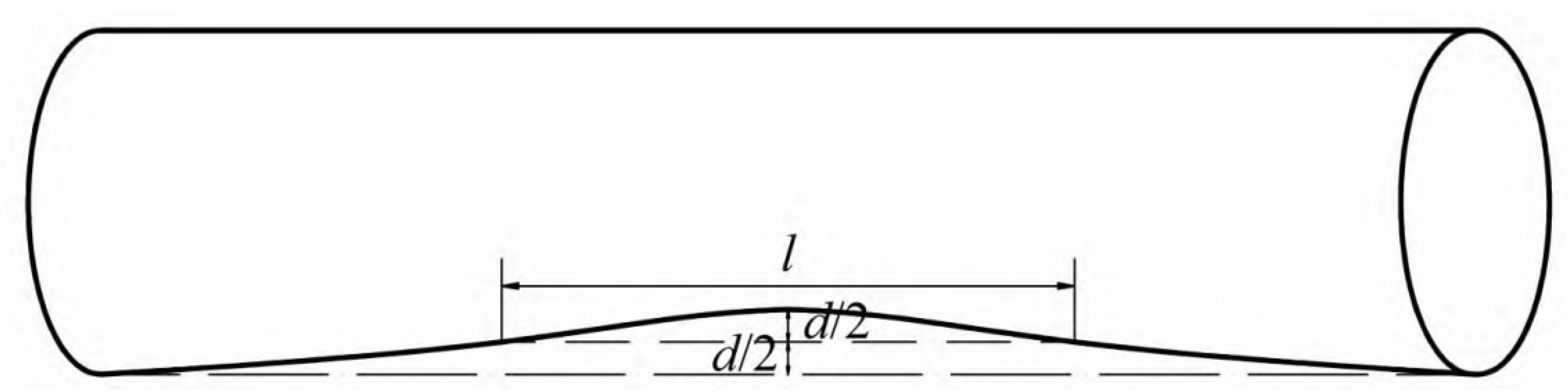
It can be concluded from the experimental results that the deformation of the buried pipeline with localized defects was mainly in the form of bending deformation. According to the national standards of the People’s Republic of China Risk-Based-Inspection and Assessment Methodology of External Damage for Buried Steel Pipelines (GB/T30582-2014) [28], a dent (permanent deformation) is acceptable for the safety of a pipeline if it is no larger than 6% of the outer diameter of the pipeline. The dent could be defined as the maximum value of the permanent deformation, where d represented the depth of the dent and l represented the length of the dent, as shown in Figure 21. To establish a quantitative damage criterion, the relationship between dent depth and dent length was further analyzed. For a pipeline subjected to bending deformation, the maximum tensile strain at the outer surface can be approximated by membrane strain theory. The maximum strain ε at the dent location can be expressed as:
ε = 1 2 × d l 2
According to pipeline design codes, the allowable strain for steel pipelines is typically limited to 0.5% to 1.0% to ensure structural integrity. Based on the numerical simulation results of the polyurea-reinforced pipeline, the failure strain was identified as ε   =   0.0026 (the strain corresponding to the maximum von Mises stress). Substituting this value into the above equation yields:
d l   =   2 ε   =   2 × 0.0026     0.072
Thus, the accurate measurement of the depth of the dent should be ensured. The effective parameter, the critical failure dent depth-to-length ratio, is defined as follows:
R critical   =   d / L   =   0.072
For each simulation, the standoff distance R was maintained at 500 mm, while the TNT charge mass W varied from 5 kg to 25 kg to obtain different scaled distance conditions, thereby obtaining overpressure–impulse data points covering the safe, critical condition, and failure zones.
Computation of impulse: The blast wave impulse I was computed by numerically integrating the pressure–time history at the center element of the pipeline’s front surface over the positive pressure duration, as expressed in the following formula:
I   = t 0 t 0 + t d P t dt
where P(t) is the pressure–time history, t0 is the arrival time of the shock wave, and td is the positive pressure duration.
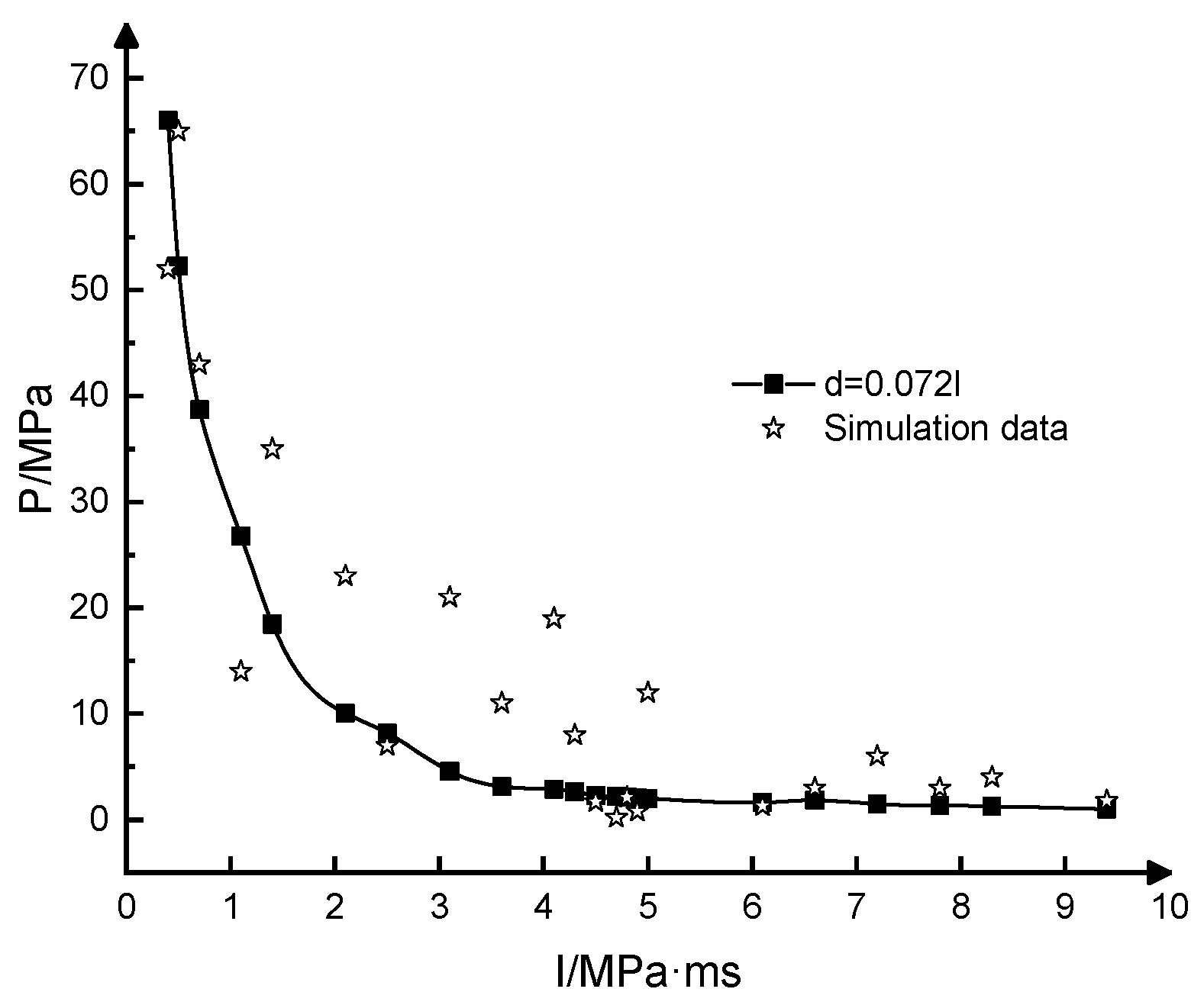
Determination of the damage boundary: Based on the numerical simulation data points, the critical dent depth-to-length ratio (d/L = 0.072) was adopted as the damage failure criterion to define the boundary between safe and failure zones. The critical values of the pressure and impulse were determined from the data, which agreed with the condition of d = 0.072 L. The data points located to the left of the P–I curve (Figure 22) indicated a dent depth-to-length ratio (d/L) not exceeding the critical threshold of 0.072, signifying pipeline safety. Conversely, points to the right (d/L > 0.072) or on the curve classified the pipeline as unsafe. For instance, the polyurea-reinforced pipeline with localized defects exhibited P–I values (11.36 MPa, 10.32 MPa·ms) positioned to the right of the curve, confirming its unsafe status after being subjected to blast loading.

4.2. The Mathematical Formula for the Pressure–Impulse Diagram

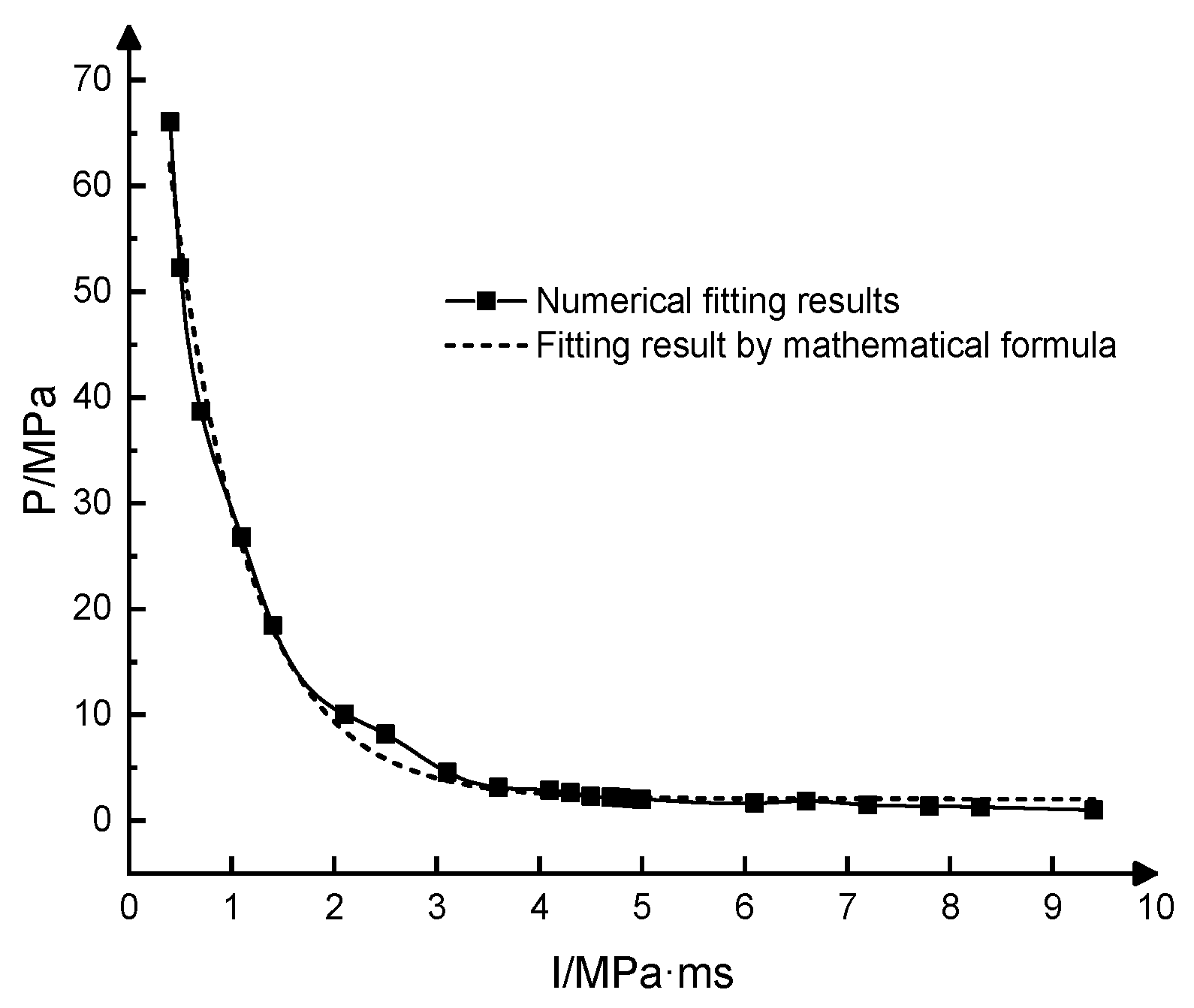
To mathematically interpret the P–I curves of polyurea-reinforced pipelines with localized defects, an exponential decay function relationship between impulse (I) and peak pressure (P) was derived from the data. The fitted equation is expressed as:
P   =   101.614 exp I / 0.76   +   2.048
where P denotes blast wave peak pressure and I is impulse. The fitting results, shown in Figure 23, illustrate the applicability of this P–I curve to the specific tested conditions (fixed-end constraints, backfill soil, N80 pipeline, and a scaled distance of 0.23 m/kg1/3 for calibration). Extrapolation to other pipeline geometries, soil types, or blast scenarios requires further experimental validation. Therefore, this P–I curve should be regarded as a preliminary assessment method and a methodological demonstration, not a generally validated engineering tool.

5. Conclusions and Future Work

5.1. Conclusions

This study conducted explosion tests and numerical simulations to explore polyurea’s role in enhancing the anti-explosion performance of buried petroleum pipelines with localized defects and reducing blast-induced damage. Key conclusions are summarized as follows:
(1)
The polyurea reinforcement of buried petroleum pipelines with localized defects can improve their anti-explosion performance under the tested conditions. Subject to blast loading, the dent depth of the standard pipeline was 69 mm, while that of the polyurea-reinforced pipeline was 63 mm under identical conditions. This represents an 8.69% reduction in the tested configuration, but this value should be interpreted with caution due to the lack of experimental replication.
(2)
Increasing defect depth significantly intensified the deformation at the middle of both the front and back surfaces of pipelines with localized defects under blast loading, accompanied by more severe local stress concentration. As a result, the deformation resistance and structural stability of the pipeline were markedly reduced. At a scaled distance of 0.23 m/kg1/3, both pipeline configurations exhibited clear plastic deformation. Moreover, stress concentration and a tendency for local damage were observed near the ends of the polyurea-reinforced region. The high-stress zone propagated initially along the axial direction and subsequently along the circumferential direction of the pipeline. These findings indicate that, in practical engineering applications, reinforcement should focus not only on the middle of the front surface facing the explosion but also on the end regions of the pipeline.
(3)
The increase of polyurea thickness can effectively improve anti-explosion performance. Polyurea absorbs blast energy through its deformation and reduces the deformation and pressure of pipelines with localized defects. Within the tested thickness range (0–5 mm), the 2-mm coating provided the greatest reduction in deformation under the specific blast condition examined, indicating a diminishing marginal benefit beyond 2 mm.
(4)
A pressure–impulse (P–I) damage assessment framework for polyurea-reinforced buried petroleum pipelines with localized defects is proposed based on a critical dent depth-to-length ratio (d/L = 0.072) derived from numerical simulations. However, this framework is preliminary and has been validated only against a single experiment. The P–I curve and the critical ratio should be considered specific to the tested conditions (fixed-end constraints, backfill soil, N80 pipeline, scaled distance of 0.23 m/kg1/3). Extrapolation to other conditions requires further experimental validation. The proposed method is presented as a methodological illustration rather than a generally applicable engineering tool.

5.2. Limitations and Future Work

Although many useful conclusions were achieved in this study, there are still several limitations that should be considered and analyzed in future research.
Limitations: (1) Single-point experimental validation: only one scaled distance (0.23 m/kg1/3) was tested with a limited number of specimens (one per pipeline type). The numerical model was calibrated against and shows consistency with only this single experiment. Therefore, this study should be considered a pilot investigation; the conclusions are specific to the tested conditions and require further verification under a wider range of blast scenarios. (2) The critical dent depth-to-length ratio (d/L = 0.072) did not consider the shape change of the pipeline section.
Future work: (1) Expanded experimental program: Future work will conduct blast tests at multiple scaled distances with replicated specimens (e.g., three or more per pipeline type) to enable the statistical validation of the observed trends. High-speed photography and pressure sensors will be used to capture dynamic responses.
(2) Extension of the P–I methodology: The assessment method should be extended to different anti-explosion configurations (e.g., front-spraying vs. back-spraying polyurea) and to pipelines with other defect geometries.
(3) P–I diagram validation: The critical dent depth-to-length ratio and the resulting P–I curve require independent experimental validation using P–I data points from multiple scaled distances. This validation is planned as a separate follow-up study.
For clarity, the principal abbreviations and notations employed throughout this manuscript are listed in Table 8.

Author Contributions

Conceptualization, X.L. and Y.C.; methodology, Y.C.; software, W.L.; validation, X.L., Y.C. and W.L.; investigation, Z.Z.; resources, W.L.; data curation, Y.C.; writing—original draft preparation, X.L.; writing—review and editing, Y.C.; visualization, W.L.; supervision, R.Y.; project administration, R.Y.; funding acquisition, Y.C. All authors have read and agreed to the published version of the manuscript.

Funding

This research was funded by Shock and Vibration of Engineering Materials and Structures Key Lab of Sichuan Province, grant number 24kfck02 and by the Scientific Research Projects of Shaanxi Provincial Department of Education (Energy Project Management and Innovation Strategy), grant number 22JT035.

Data Availability Statement

The experimental and numerical simulation data used to support the findings of this research are presented in this paper.

Conflicts of Interest

The authors declare no conflicts of interest.

References

  1. Stergiou, T.; Baxevanakis, K.P.; Roy, A.; Sazhenkov, N.A.; Nikhamkin, M.S.; Silberschmidt, V.V. Impact of Polyurea-coated Metallic Targets: Computational Framework. Compos. Struct. 2021, 267, 113893. [Google Scholar] [CrossRef]
  2. Zhou, G.; Wang, R.; Wang, M.; Ding, J.; Zhang, Y. Explosion Resistance Performance of Reinforced Concrete Box Girder Coated with Polyurea: Model Test and Numerical Simulation. Def. Technol. 2024, 33, 1–18. [Google Scholar] [CrossRef]
  3. Shahi, V.; Alizadeh, V.; Amirkhizi, A.V. Thermo-mechanical Characterization of Polyurea Variants. Mech. Time Depend. Mater. 2021, 25, 447–471. [Google Scholar] [CrossRef]
  4. Lyu, P.; Fang, Z.; Wang, X.; Huang, W.; Zhang, R.; Sang, Y.; Sun, P. Explosion Test and Numerical Simulation of Coated Reinforced Concrete Slab Based on Blast Mitigation Polyurea Coating Performance. Materials 2022, 15, 2607. [Google Scholar] [CrossRef] [PubMed]
  5. Sonoda, Y.; Tamai, H.; Ifuku, T.; Koshiishi, M. Reinforcing Effect of Polyurea Resin Coating on RC Members Subject to Low-speed and Medium-speed Impact. Adv. Struct. Eng. 2022, 25, 1609–1621. [Google Scholar] [CrossRef]
  6. Zhu, H.; Ji, C.; Feng, K.; Tu, J.; Wang, X.; Zhao, C. Polyurea Elastomer for Enhancing Blast Resistance of Structures: Recent Advances and Challenges Ahead. Thin-Walled Struct. 2024, 200, 111938. [Google Scholar] [CrossRef]
  7. Patnaik, G.; Rajput, A. Safety Assessment of Underground Steel Pipelines with CFRP Protection against Subsurface Blast Loading. Structures 2023, 54, 1541–1559. [Google Scholar] [CrossRef]
  8. Wang, H.; Chen, H.; Zhou, Y.; Wang, P.; Zhou, J.; Fan, H. Blast Responses and Damage Evaluation of CFRP Tubular Arches. Constr. Build. Mater. 2019, 196, 233–244. [Google Scholar] [CrossRef]
  9. Liu, Q.; Guo, B.; Chen, P.; Su, J.; Arab, A.; Ding, G.; Yan, G.; Jiang, H.; Guo, F. Investigating Ballistic Resistance of CFRP/polyurea Composite Plates Subjected to Ballistic Impact. Thin-Walled Struct. 2021, 166, 108111. [Google Scholar] [CrossRef]
  10. Yang, Z.; Yan, B.; Han, G.Z.; Wang, S.; Liu, F. Experimental Study and Numerical Simulation of Damage Mechanism of RC Box Girder under Internal Blast Loads. J. Perform. Constr. Facil. 2022, 36, 04021098. [Google Scholar] [CrossRef]
  11. Gong, X.C.; Zhong, D.W.; Si, J.F.; Li, H. Dynamic responses of hollow steel pipes directly buried in high-saturated clay to blast waves. Explos. Shock Waves 2020, 40, 022202. [Google Scholar]
  12. Shojaei, B.; Najafi, M.; Yazdanbakhsh, A.; Abtahi, M.; Zhang, C. A review on the applications of polyurea in the construction industry. Polym. Adv. Technol. 2021, 32, 2797–2812. [Google Scholar] [CrossRef]
  13. Lim, K.M.; Kyung, K.S.; Park, J.E.; Choi, C.H. Effect of reinforcement on RC column using polyurea and honeycomb steel plate. Int. J. Steel Struct. 2025, 25, 571–580. [Google Scholar] [CrossRef]
  14. Zhang, R.; Huang, W.; Lyu, P.; Yan, S.; Wang, X.; Ju, J. Polyurea for blast and impact protection: A review. Polymers 2022, 14, 2670. [Google Scholar] [CrossRef]
  15. Rigas, F.P. One-step Estimation Method and Nomogram to Predict Safety Distances of Pressurized Gas Pipelines from Blast Sources. J. Loss Prev. Process Ind. 2021, 69, 104345. [Google Scholar] [CrossRef]
  16. Chaudhuri, C.H.; Choudhury, D. Buried Pipeline subjected to Underground Blast Load: Closed-form Analytical Solution. Int. J. Geomech. 2022, 22, 06022024. [Google Scholar] [CrossRef]
  17. Seyed-Kolbadi, S.M.; Safi, M.; Keshmiri, A.; Kolbadi, S.M.; Mirtaheri, M. Explosive Performance Assessment of Buried Steel Pipeline. Adv. Civ. Eng. 2021, 2021, 9868956. [Google Scholar] [CrossRef]
  18. Yan, Q.S. Damage Assessment of Subway Station Columns Subjected to Blast Loadings. Int. J. Struct. Stab. Dyn. 2018, 18, 1850034. [Google Scholar] [CrossRef]
  19. Thai, D.K.; Pham, T.H.; Nguyen, D.L. Damage Assessment of Reinforced Concrete Columns Retrofitted by Steel Jacket under Blast Loading. Struct. Des. Tall Spec. Build. 2019, 29, e1676. [Google Scholar] [CrossRef]
  20. Hadianfard, M.A.; Malekpour, S.; Momeni, M. Reliability Analysis of H-section Steel Columns under Blast Loading. Struct. Saf. 2018, 75, 45–56. [Google Scholar] [CrossRef]
  21. Li, M.; Xia, M.; Zong, Z.; Wu, G.; Zhang, X. Residual Axial Capacity of Concrete-filled Double-skin Steel Tube Columns under Close-in Blast Loading. J. Constr. Steel Res. 2023, 201, 107697. [Google Scholar] [CrossRef]
  22. Shi, Y.C.; Hao, H.; Li, Z.X. Numerical Derivation of Pressure-impulse Diagrams for Prediction of RC Column Damage to Blast Loads. Int. J. Impact Eng. 2008, 35, 1213–1227. [Google Scholar] [CrossRef]
  23. Xu, J.; Wu, H.; Ma, L.; Fang, Q. Experimental and Numerical Study on the Residual Axial Capacity of RC Bridge Piers after Contact Explosion. ASCE J. Bridge Eng. 2023, 28, 04023031. [Google Scholar] [CrossRef]
  24. Kong, X.Q.; Zhao, Q.; Qu, Y.D.; Zhang, W.J. Blast response of cracked reinforced concrete slabs repaired with CFRP composite patch. KSCE J. Civ. Eng. 2018, 22, 1214–1224. [Google Scholar] [CrossRef]
  25. PCC-2-2015; Repair of Pressure Equipment and Piping. American Society of Mechanical Engineers: New York, NY, USA, 2015.
  26. Cui, Y.; Gao, Y.; Fang, J.; Qu, Z.; Li, Z.; Zhao, M. Research on damage assessment of buried pipelines with circular dent defects subjected to blast loading. Eng. Fail. Anal. 2024, 163, 108581. [Google Scholar] [CrossRef]
  27. Cui, Y.; Fang, J.; Qu, Z.; Song, M.; Zhao, J. Research on Damage Assessment of Buried Standard and Carbon-Fibre-Reinforced Polymer Petroleum Pipeline Subjected to Shallow Buried Blast Loading in Soil. Shock Vib. 2021, 2021, 1459260. [Google Scholar] [CrossRef]
  28. GB/T 30582-2014; Risk-Based-Inspection and Assessment Methodology of External Damage for Buried Steel Pipelines. Standardization Administration of China: Beijing, China, 2014.
Figure 1. N80 specimens. (a) Prefabrication process for localized defects, (b) Size of localized defects (units: mm).
Applsci 16 04703 g001
Figure 2. Schematic diagram of the equipment.
Applsci 16 04703 g002
Figure 3. Dimensions of the equipment (units: mm).
Applsci 16 04703 g003
Figure 4. Photograph of the specimens and the equipment.
Applsci 16 04703 g004
Figure 5. Layout of the shallow-buried blast test. (a) Schematic diagram of the test site (units: mm), (b) Schematic view of the specimen’s arrangement, (c) Schematic view of an explosive arrangement.
Applsci 16 04703 g005
Figure 6. Photograph of test site after explosion.
Applsci 16 04703 g006
Figure 7. Diagrammatic sketch of pipeline specimen deformation.
Applsci 16 04703 g007
Figure 8. Pressure of shock wave at different times (mesh size = 1 mm). (a) 0.5 ms, (b) 1 ms, (c) 2 ms, (d) 4 ms.
Applsci 16 04703 g008
Figure 9. Pressure of shock wave at different times (mesh size = 2 mm). (a) 0.5 ms, (b) 1 ms, (c) 2 ms, (d) 4 ms.
Applsci 16 04703 g009
Figure 10. Pressure of shock wave at different times (mesh size = 4 mm). (a) 0.5 ms, (b) 1 ms, (c) 2 ms, (d) 4 ms.
Applsci 16 04703 g010
Figure 11. Arbitrary Lagrange–Euler (ALE) model.
Applsci 16 04703 g011
Figure 12. Results of numerical simulation for two pipeline specimens. (a) Standard pipeline with localized defects, (b) Polyurea-reinforced pipeline with localized defects.
Applsci 16 04703 g012
Figure 13. Deformation–time curves at the front and back surfaces of the standard and polyurea-reinforced pipeline with localized defects. (a) Standard pipeline with localized defects, (b) polyurea-reinforced pipeline with localized defects.
Applsci 16 04703 g013
Figure 14. Main propagation processes of the shock wave.
Applsci 16 04703 g014
Figure 15. Equivalent stress distribution in pipes with different radial defect depths. (a) 1 mm, (b) 2 mm, (c) 3 mm, (d) 4 mm.
Applsci 16 04703 g015
Figure 16. Deformation contour maps of the front surface of standard pipeline with localized defects at varying defect depths. (a) 1 mm, (b) 2 mm, (c) 3 mm, (d) 4 mm.
Applsci 16 04703 g016
Figure 17. The time–history curves depicting dent evolution at the standard pipeline with varying defect depths. (a) 1 mm, (b) 2 mm, (c) 3 mm, (d) 4 mm.
Applsci 16 04703 g017
Figure 18. The pressure time–history curves for standard pipeline with localized defects with varying defect depths. (a) 1 mm, (b) 2 mm, (c) 3 mm, (d) 4 mm.
Applsci 16 04703 g018
Figure 19. Relationship between the maximum displacement of pipeline with localized defects and different coating thickness.
Applsci 16 04703 g019
Figure 20. Pressure–time curves at front and back surfaces of standard and polyurea-reinforced pipelines with localized defects. (a) Standard pipeline with localized defects, (b) polyurea-reinforced pipeline with localized defects.
Applsci 16 04703 g020
Figure 21. Diagrammatic sketch of dent of pipeline.
Applsci 16 04703 g021
Figure 22. Pressure–impulse (P–I) curve of the polyurea-reinforced pipeline with localized defects.
Applsci 16 04703 g022
Figure 23. Comparison between the fitted pressure–impulse (P–I) curve and the numerical simulation results for the polyurea-reinforced pipeline with localized defects.
Applsci 16 04703 g023
Table 1. Design parameters of buried pipeline specimens.
SpecimenLength
/mm
Outer Diameter of the Pipeline
/mm
Thickness of Pipeline
/mm
Yield Strength
/MPa
Polyurea
/mm
Schematic Representation
Standard pipeline with localized defects600735.5551NoneApplsci 16 04703 i001
Polyurea-reinforced pipeline with localized defects600735.55512Applsci 16 04703 i002
Table 2. Pipeline material parameters.
ParametersValueParametersValue
RO7.83 × 10−3BETA0
E2.10 × 105SRC40
PR0.3SRP5
SIGY292.5FS0.2
ETAN2.10 × 103VP0
Table 3. Soil parameters.
ParametersValueParametersValue
RO1.73 × 10−3EPS20.05
G63.85EPS30.09
BULK3 × 104EPS40.11
A03.4 × 10−3EPS50.15
A17.033 × 10−2EPS60.19
A20.3EPS70.21
PC−6.9 × 10⁻³EPS80.22
VCR0EPS90.25
REF0EPS100.3
EPS10
Table 4. Parameters of MAT_PIECEWISE_LINEAR_PLASTICITY for polyurea.
ParametersROEPRSIGYETANFAILTDELCPLCSS
Value9.070 × 10−4 0.00084 0.40.0014 0.00025 1.4040510,001
Table 5. Air material parameters.
ParametersROPCMUTERODCERODYMPR
Value1.29 × 10−6000000
Table 6. Equation of state parameters of air.
ParametersC0C1C2C3C4C5C6E1V0
Value0.00.00.00.00.40.40.00.251.0
Table 7. The specific experimental configuration of different radial defect depths.
Defect Size ParametersExplosion DistanceTNT Equivalent/kg
L/mmC/mmd/mmR/mm
3020150010
3020250010
3020350010
3020450010
Table 8. Glossary of Terms.
SymbolDescriptionUnit
ALEArbitrary Lagrange–Euler-
P–IPressure–impulse-
TNTTrinitrotoluene-
FEMFinite element method-
d Dent depthmm
l Dent lengthmm
R Standoff distancemm
W TNT equivalent charge masskg
Z Scaled distance ( Z   =   R / W 1 / 3 )m/kg1/3
P Peak overpressureMPa
I ImpulseMPa·ms
t 0 Arrival time of shock wavems
t d Positive pressure durationms
σ StressMPa
ε Strain-
E Elastic modulusMPa
ρ Densityg/mm3
μ Poisson’s ratio-
Disclaimer/Publisher’s Note: The statements, opinions and data contained in all publications are solely those of the individual author(s) and contributor(s) and not of MDPI and/or the editor(s). MDPI and/or the editor(s) disclaim responsibility for any injury to people or property resulting from any ideas, methods, instructions or products referred to in the content.