Localized Resonance Mechanism of Rail Corrugation and Active Suppression via Wheel–Rail Self-Grinding on Urban Express Line with Different Tracks


Abstract
1. Introduction
2. On-Site Characteristics of Rail Corrugation Under Different Track Types of Urban Express Line
- (1)
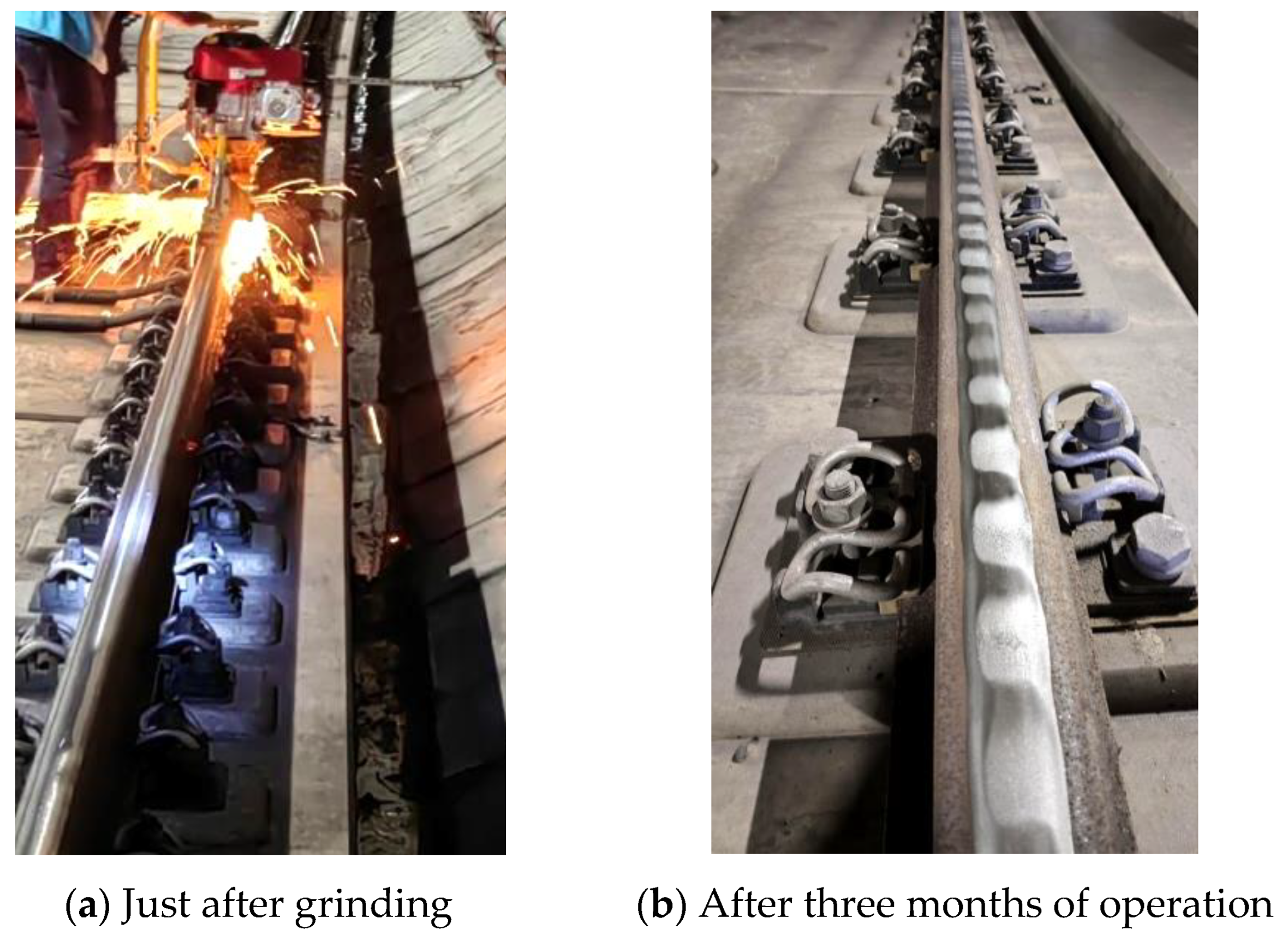
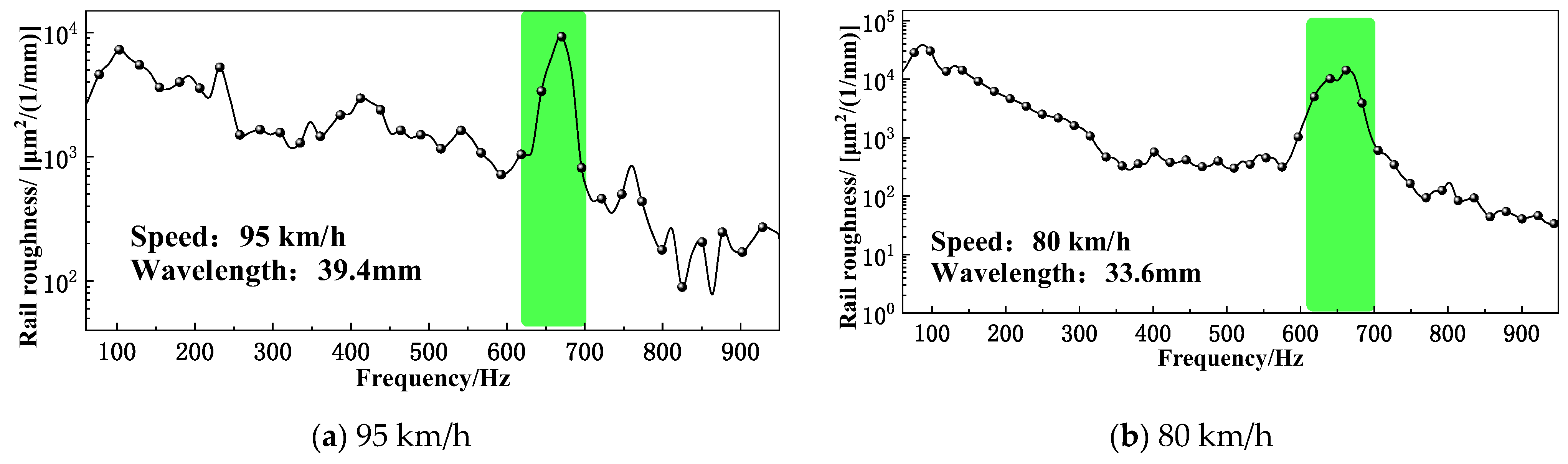
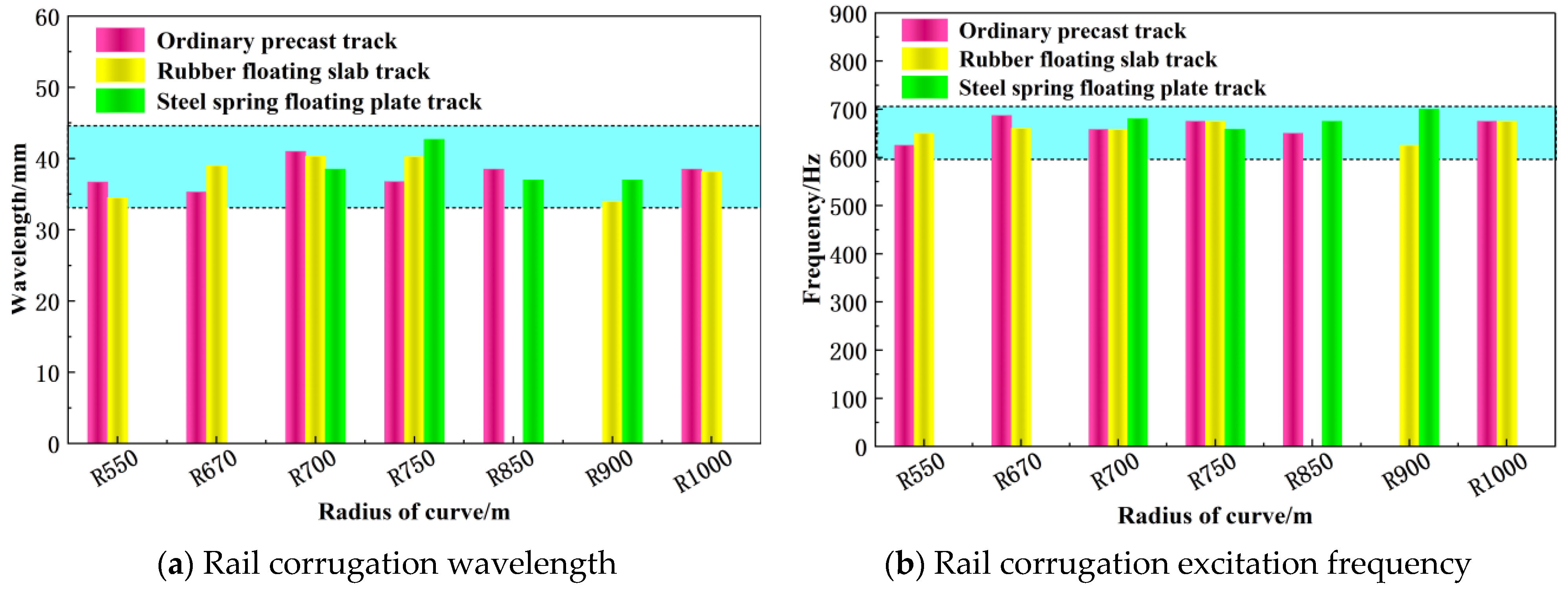
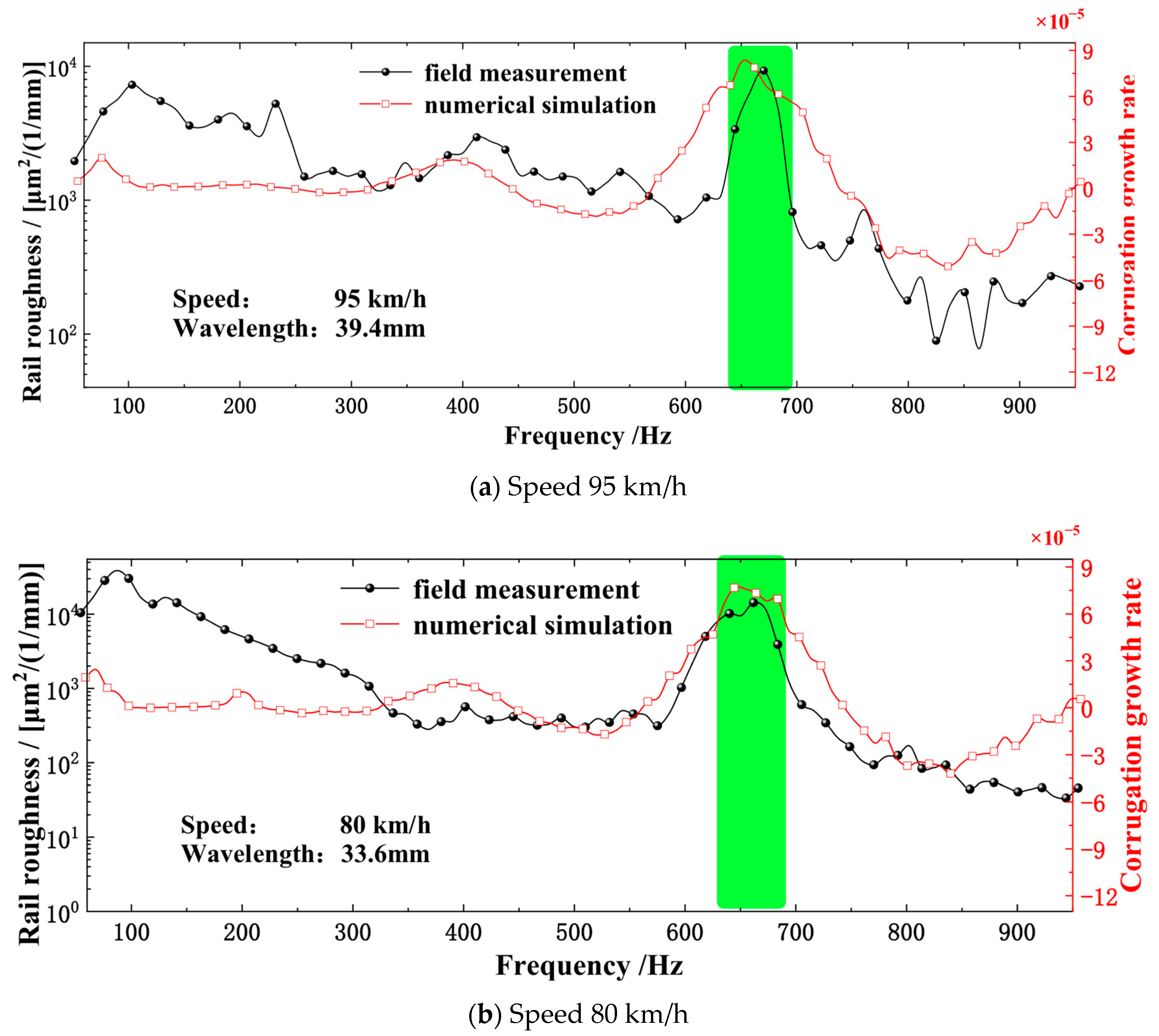
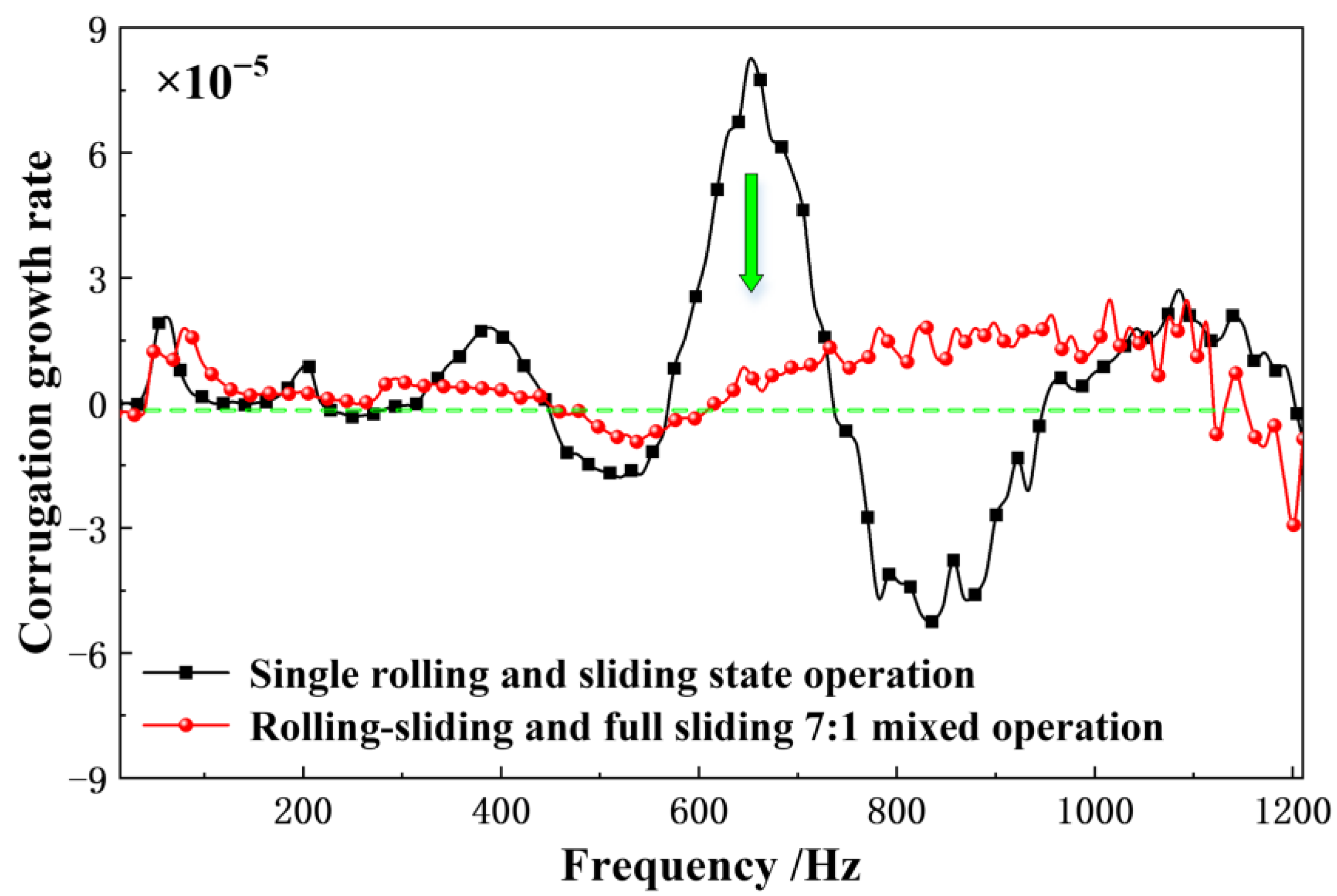
- Rail corrugation is exclusively localized on curved segments of the alignment, with the low (inner) rail consistently exhibiting more pronounced corrugation severity relative to the high (outer) rail. Irrespective of the curve radius, the corrugation wavelength consistently falls within the range of 32–44 mm. Based on the operational speeds recorded for vehicles traversing the corrugated sections, the corresponding excitation frequency is estimated to lie between 600 and 700 Hz. Notably, despite variations in curve radii (ranging from R550 to R1000 m) and fluctuations in vehicle running speeds (80–110 km/h) across the affected sections, the excitation frequency associated with rail corrugation remains relatively invariant.
- (2)
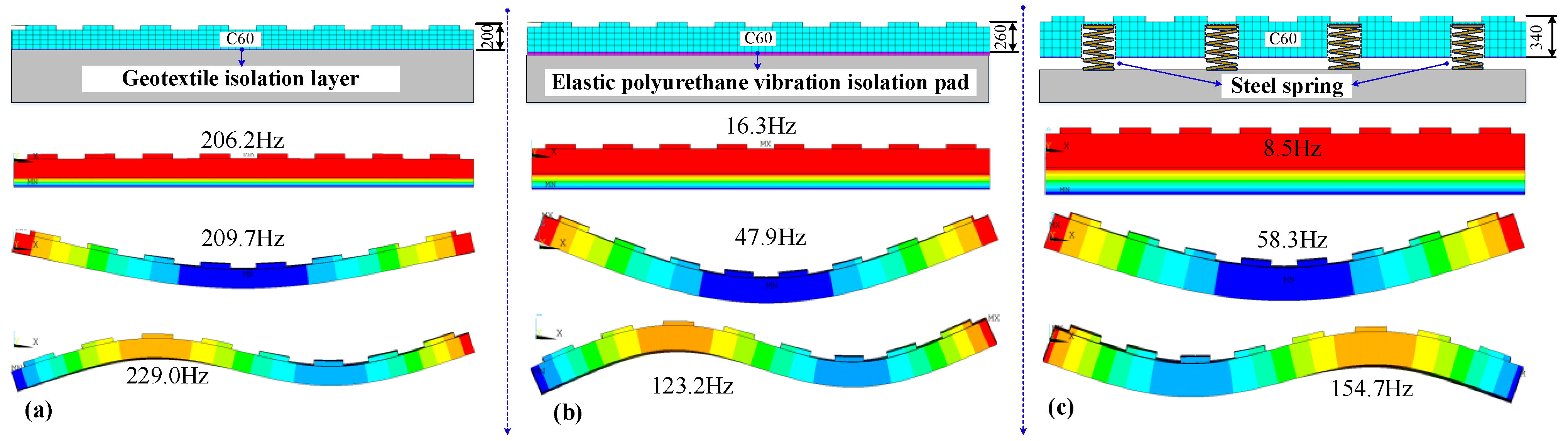
- Severe corrugation is observed across all track structure typologies. Although the structural configurations of conventional prefabricated track, rubber-booted floating slab track, and steel-spring floating slab track differ substantially, the predominant excitation frequency of the resulting corrugation is essentially identical across all three systems.
3. Analysis Model and Method of Rail Corrugation in Urban Express Line
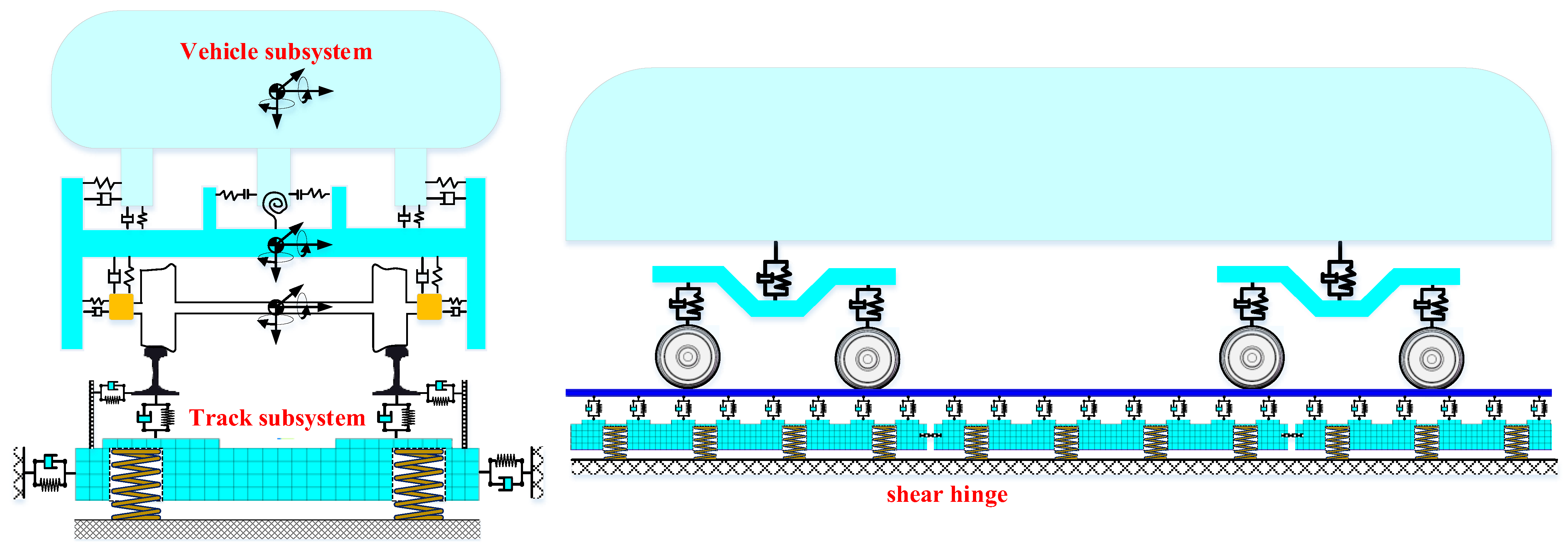
3.1. Dynamic Interaction Model of Different Types of Vehicle–Track Coupling
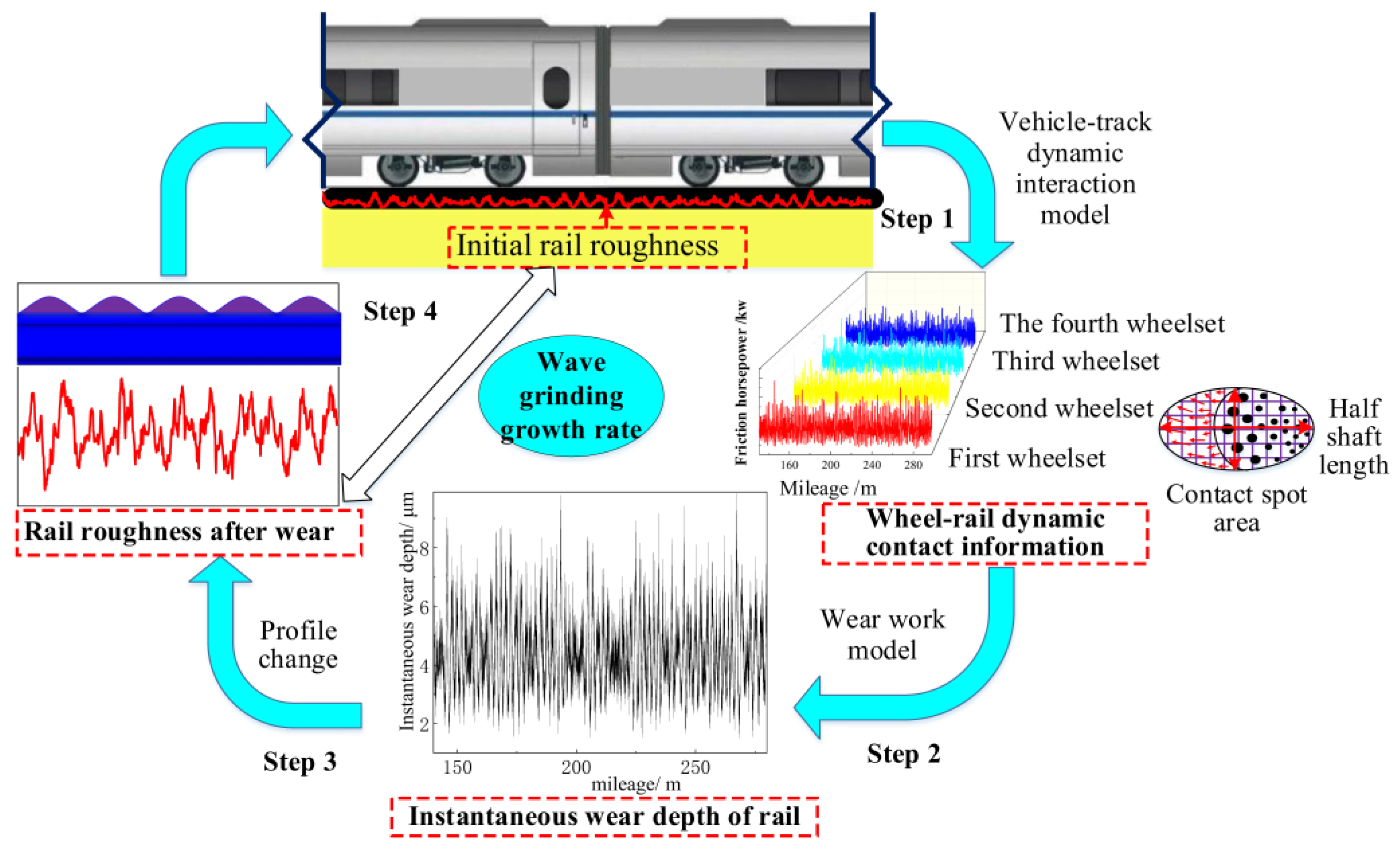
3.2. Analysis Process of Rail Corrugation Based on the Growth Rate Index of Corrugation
4. Characteristics and Genesis of Rail Corrugation in Urban Express Line
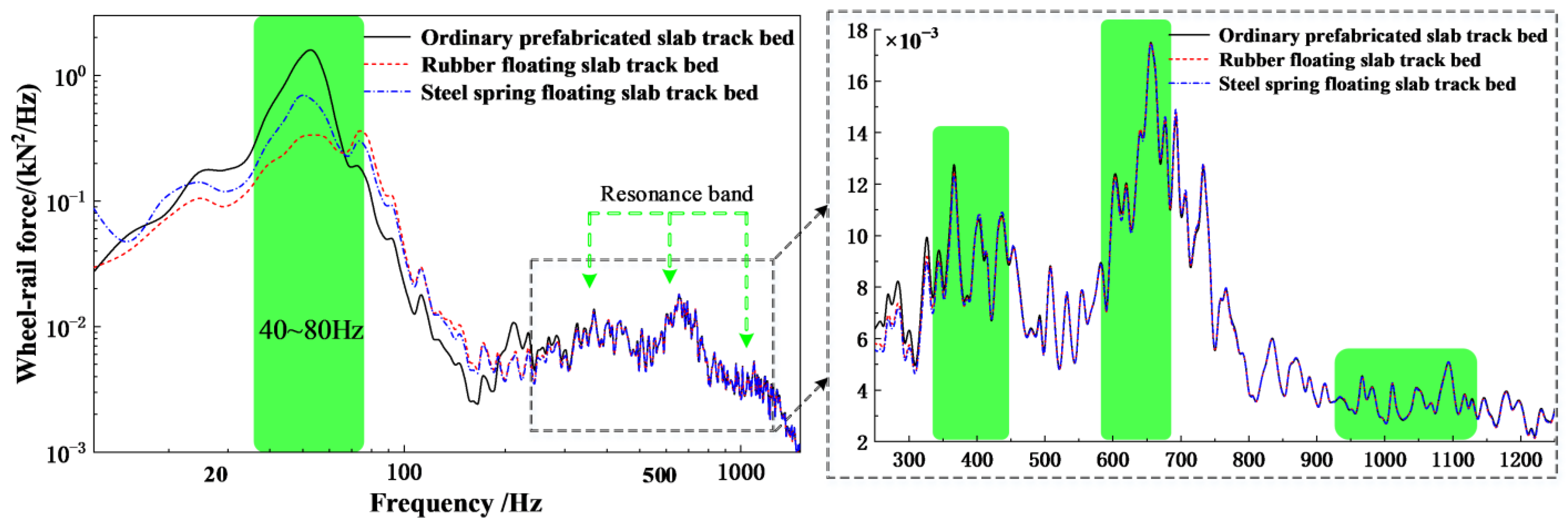
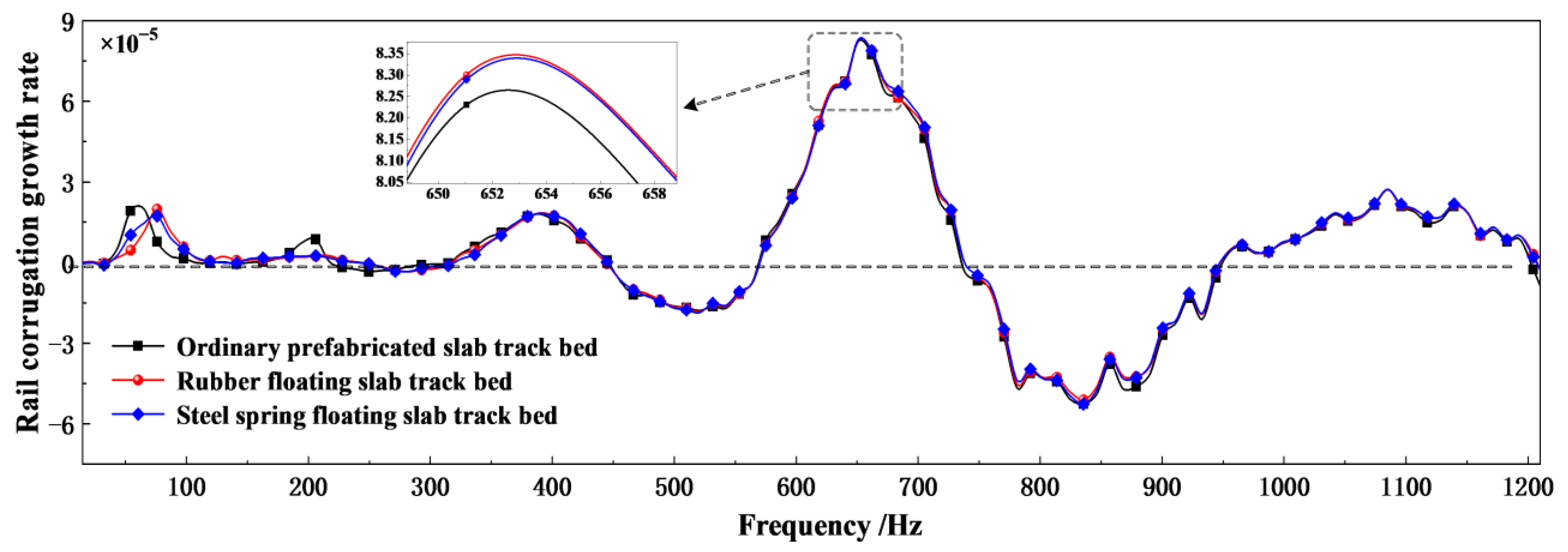
4.1. Analysis of Wheel–Rail Dynamic Response and Wave Grinding Growth Rate Under Different Rail Types
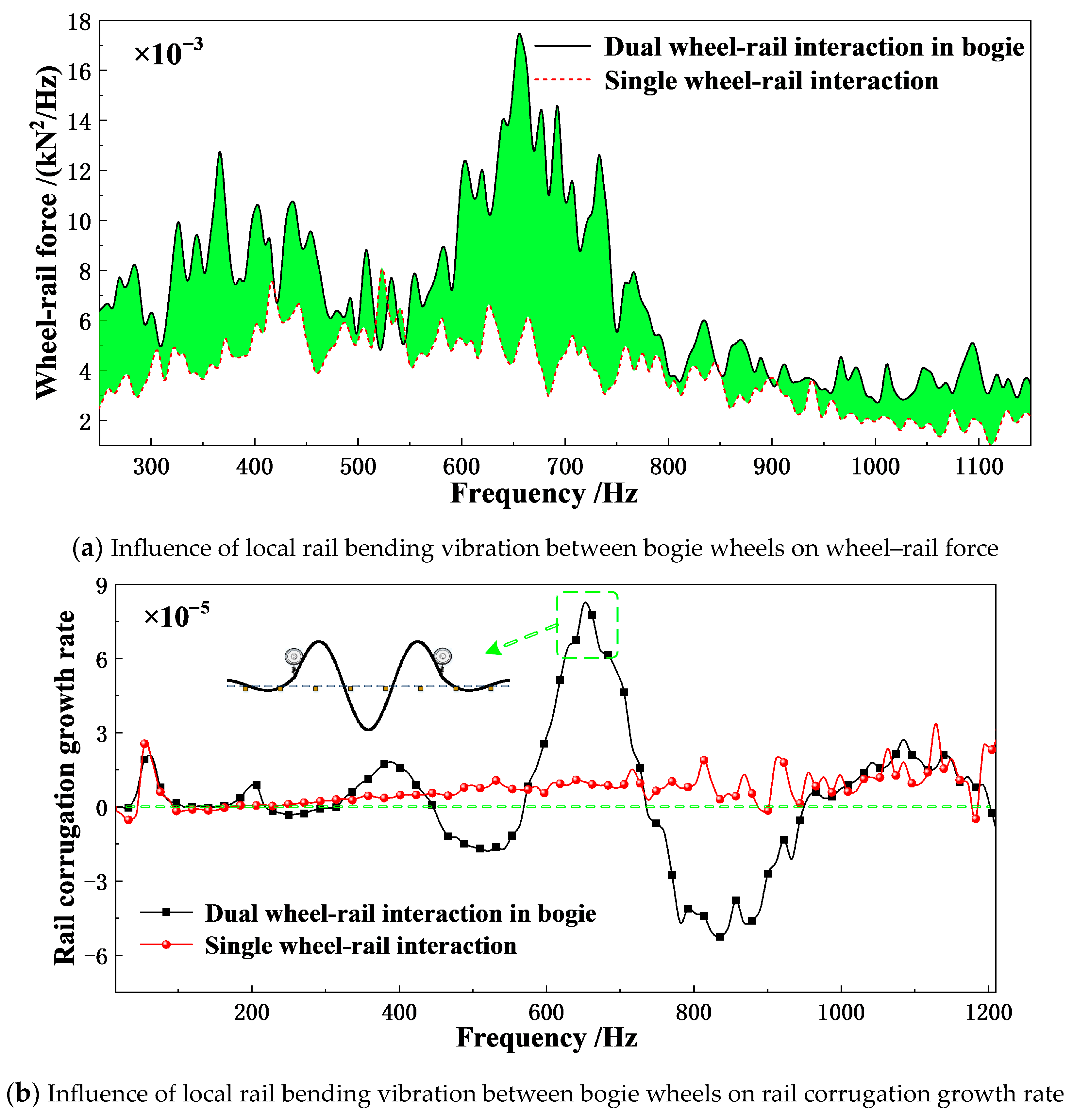
4.2. Wheel–Rail Coupling Vibration Modes and Rail Corrugation Causes Under Different Rail Types
5. A New Method for Restraining Rail Corrugation Self-Wear Based on Creep Control
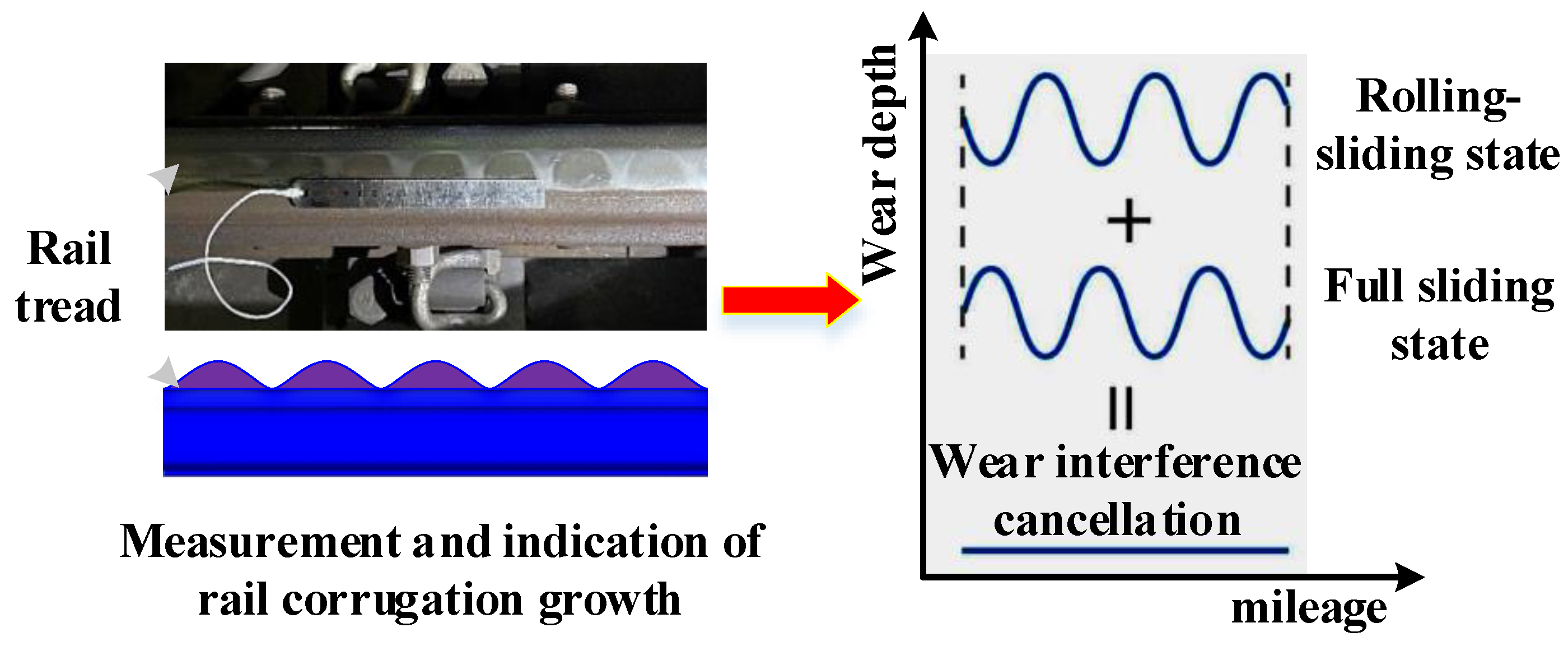
5.1. Principle of Restraining Rail Wave Wear by Wheel–Rail Natural Wear
5.2. Suppression Effect of Rail Wave Grinding Self-Polishing
6. Conclusions
- (1)
- The excitation frequency of rail corrugation on the urban express line is predominantly concentrated within the 600–700 Hz band, exhibiting a distinct and invariant fixed-frequency characteristic. Notably, parameters including curve radius, track structure typology, and vehicle operating speed exert no statistically significant influence on this dominant excitation frequency.
- (2)
- Although the modal frequencies and mode shapes of the wheel–rail P2 resonance exhibit pronounced sensitivity to variations in track structure configuration, the second- and third-order bending modes of the rail segment situated between the bogie wheels—as well as the pinned–pinned resonance mode—demonstrate comparatively weak dependence on track bed typology. These higher-order modes are instead governed by localized vibration characteristics inherent to the rail segment itself. An interesting insight emerging from this analysis is that the third-order bending resonance of the rail confined between the bogie wheels constitutes the primary and invariant driver of corrugation initiation. This localized resonance accelerates corrugation propagation far more rapidly than global track modes and is identified as the dominant contributing factor in the formation of 600–700 Hz rail corrugation on urban express lines, irrespective of the underlying track structure.
- (3)
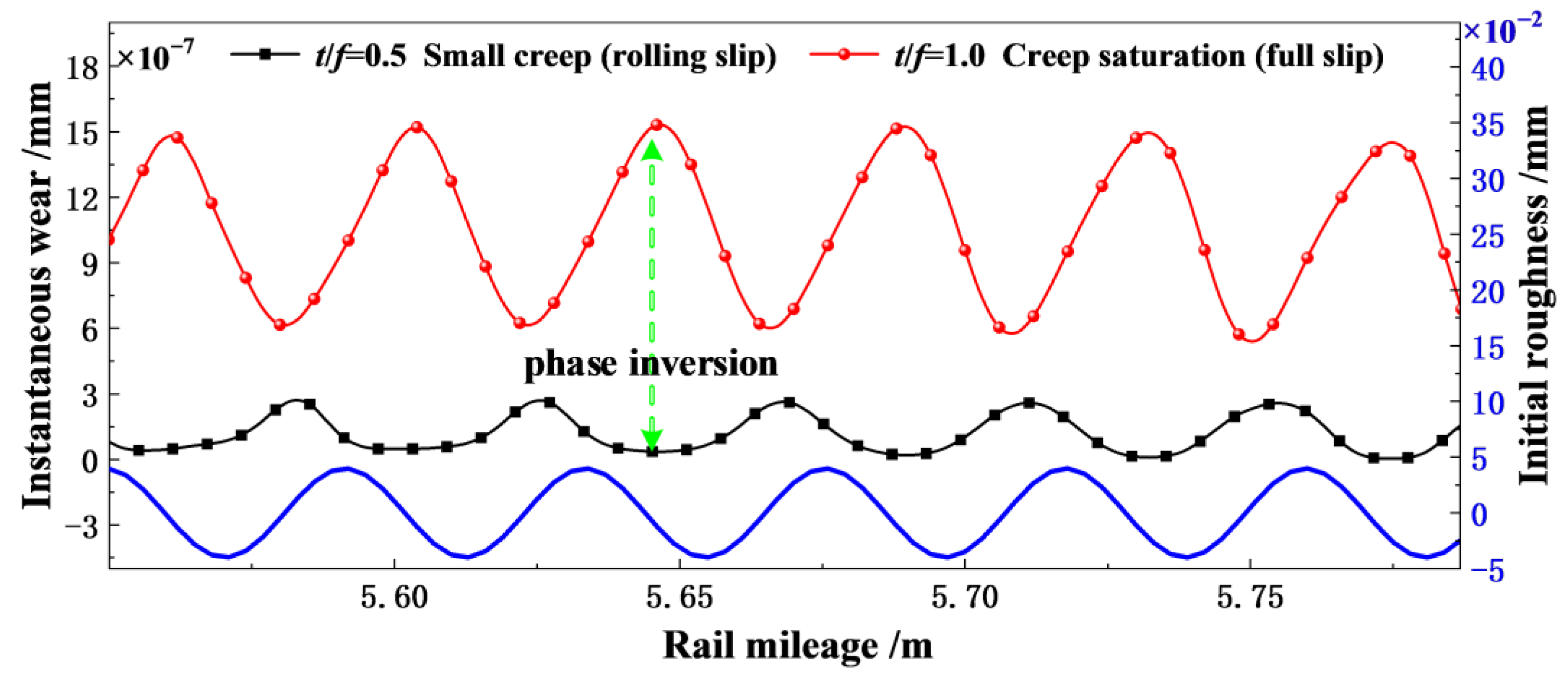
- The instantaneous wear phase of the rail exhibits a pronounced dependence on the prevailing creep regime. Specifically, the wear profiles corresponding to creep saturation (full sliding) and low-creep (rolling–sliding) conditions manifest a distinct anti-phase relationship. This finding introduces a novel mechanistic basis for corrugation control: By intentionally mixing operational regimes to achieve destructive interference between these out-of-phase wear contributions, the net corrugation growth rate is substantially diminished relative to that observed under exclusive rolling–sliding operation. The results thereby demonstrate the considerable potential for achieving the effective self-wear suppression of rail corrugation through the deliberate regulation of wheel–rail creep states, a strategy that fundamentally differs from conventional passive grinding or damping interventions.
Author Contributions
Funding
Institutional Review Board Statement
Informed Consent Statement
Data Availability Statement
Conflicts of Interest
References
- Jin, X.; Li, X.; Li, W.; Wen, Z. Review of rail corrugation progress. J. Southwest JiaoTong Univ. 2016, 29, 264–273. [Google Scholar]
- Zhu, H.; Yuan, Y.; Xiao, Q.; Li, J.; Zhen, Y. Review of rail corrugation progress. J. Traffic Transp. Eng. 2021, 21, 110–133. [Google Scholar]
- Grassie, S.L. Rail corrugation: Characteristics, causes, and treatments. Proc. Inst. Mech. Eng. Part F J. Rail Rapid Transit 2009, 223, 581–596. [Google Scholar] [CrossRef]
- Chen, G.; Qian, W.; Mo, J.; Zhu, M. A transient dynamics study on wear-type rail corrugation on a tight curve due to the friction-induced self-excited vibration of a wheelset-track system. J. Mech. Eng. 2014, 50, 71–76. [Google Scholar] [CrossRef]
- Cui, X.; Chen, G.; Zhao, J.; Yan, W.; Ouyang, H. Field investigation and numerical study of the rail corrugation caused by frictional self-excited vibration. Wear 2017, 376–377, 1919–1929. [Google Scholar] [CrossRef]
- Nielsen, J.C.O. Numerical prediction of rail roughness growth on tangent railway tracks. J. Sound Vib. 2003, 267, 537–548. [Google Scholar] [CrossRef]
- Yu, M.; Wang, W.; Liu, J. High frequency dynamic characteristics of high-speed wheel-rail transient rolling contact in rail corrugation section. China Railw. Sci. 2018, 39, 58–66. [Google Scholar]
- Zhang, H.; Liu, W.; Liu, W.; Wu, Z. Study on the cause and treatment of rail corrugation for Beijing metro. Wear 2014, 317, 120–128. [Google Scholar] [CrossRef]
- Li, X.; Li, W.; Shen, Y.; Wen, Z.; Jin, X. Study on the rail corrugation of the ladder-type sleepers track based on the track vibration theory. J. Mech. Eng. 2016, 52, 121–128. [Google Scholar] [CrossRef]
- Li, X.; Li, W.; Wu, L.; Wang, H.; Wen, Z.; Jin, X. Preliminary study on rail corrugation of rubber booted short sleepers track. J. China Railw. Soc. 2014, 36, 80–85. [Google Scholar]
- Li, W.; Zhou, Z.; Wen, Z. Initiation cause of subway rail corrugation on track with rubber-booted short sleepers. J. Southwest JiaoTong Univ. 2021, 56, 619–626. [Google Scholar]
- Wang, M.; Gu, X.; Wang, A. Mechanism of rail corrugation formation in straight track sections with cologne-egg fasteners. J. Railw. Sci. Eng. 2024, 21, 3595–3607. [Google Scholar]
- Wang, Y.; Hu, J.; Xiao, H.; Cui, X.; Liu, G.; Zhang, Z. Vibration characteristics of spring-steel floating slab track and cause analysis of rail corrugation. J. Railw. Sci. Eng. 2023, 20, 2456–2466. [Google Scholar]
- Ma, C.; Gao, L.; Xin, T.; Cai, X.; Nadakatti Mahantesh, M.; Wang, P. The dynamic resonance under multiple flexible wheelset-rail interactions and its influence on rail corrugation for high-speed railway. J. Sound Vib. 2021, 498, 115968. [Google Scholar] [CrossRef]
- Tao, G.; Yuan, Q.; Yang, X.; Wu, X.; Xie, Q.; Guan, Q.; Li, W.; Wen, Z. On short-pitch rail corrugation of suburban express railway caused by localized rail-bending vibrations within the bogie wheelbase. Int. J. Rail Transp. 2025, 13, 1200–1218. [Google Scholar] [CrossRef]
- Zhao, G. Several urgent problems to be solved in railway transportation system. J. Mech. Eng. 2018, 54, 1–2. [Google Scholar] [CrossRef]
- Cui, X.; Xiao, Y.; Zhong, Y.; Li, J.; Yin, Y.; Kong, X.; Zhu, Q. Study on the effect of rail vibration absorber on the formation and evolution of rail corrugation in cologne egg fastener section of metro. Eng. Mech. 2024, 1–12. Available online: https://link.cnki.net/urlid/11.2595.o3.20240918.1500.020 (accessed on 5 May 2026).
- Liu, W.; Zhang, H.; Chen, J.; Du, L. A test of treating rail corrugation by tuned rail damper for Beijing metro. J. Vib. Eng. 2019, 32, 695–700. [Google Scholar]
- Eadie, D.T.; Santoro, M. Top-of-rail friction control for curve noise mitigation and corrugation rate reduction. J. Sound Vib. 2006, 293, 747–757. [Google Scholar] [CrossRef]
- Egana, J.I.; Vinolas, J.; Gil-Negrete, N. Effect of liquid high positive friction (HPF) modifier on wheel-rail contact and rail corrugation. Tribol. Int. 2005, 38, 769–774. [Google Scholar] [CrossRef]
- Wang, P.; Liu, Y.; Gao, Y.; Xu, J.; An, B.; Guo, J. A study on influence of surface strengthening on wheel-rail rolling contact behavior at rail corrugation. J. China Railw. Soc. 2020, 42, 105–112. [Google Scholar]
- Zhai, W.; Xia, H.; Cai, C.; Gao, M.; Li, X.; Guo, X.; Zhang, N.; Wang, K. High-speed train–track–bridge dynamic interactions–Part I: Theoretical model and numerical simulation. Int. J. Rail Transp. 2013, 1, 3–24. [Google Scholar] [CrossRef]
- Piotrowski, J.; Kik, W. A simplified model of wheel/rail contact mechanics for non-Hertzian problems and its application in rail vehicle dynamic simulations. Veh. Syst. Dyn. 2008, 46, 27–48. [Google Scholar] [CrossRef]
- Zobory, I. Prediction of wheel/rail profile wear. Veh. Syst. Dyn. 1997, 28, 221–259. [Google Scholar] [CrossRef]
- Fu, B.; Bruni, S.; Luo, S. Study on wheel polygonization of a metro vehicle based on polygonal wear simulation. Wear 2019, 438–439, 203071. [Google Scholar] [CrossRef]


| Track Types | Prefabricated Slab Track Bed | Rubber Floating Slab | Steel–Spring Floating Slab |
|---|---|---|---|
| Rail mass per unit length (kg) | 60.64 | 60.64 | 60.64 |
| Rail elastic modulus (GPa) | 206 | 206 | 206 |
| Rail Poisson ratio | 0.3 | 0.3 | 0.3 |
| Fasteners vertical/lateral stiffness (MN·m−1) | 40/50 | 40/50 | 40/50 |
| Fasteners vertical/lateral damping (kN·s·m−1) | 30/50 | 30/50 | 30/50 |
| Fastener node spacing (m) | 0.6 | 0.6 | 0.6 |
| Slab density (kg·m−3) | 2500 | 2500 | 2500 |
| Slab length (m) | 4.80 | 4.80 | 4.80 |
| Slab height (m) | 0.20 | 0.26 | 0.34 |
| Slab width (m) | 2.30 | 2.30 | 2.60 |
| Modal Type | Ordinary Prefabricated Slab Track Bed | Rubber Floating Slab Track Bed | Steel–Spring Floating Slab Track Bed |
|---|---|---|---|
| Wheel–rail P2 resonance |  | 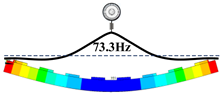 | 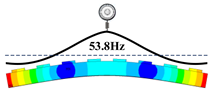 |
| Second-order bending of rail | 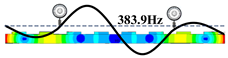 | 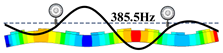 | 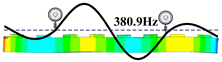 |
| Third-order bending of rail | 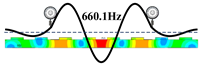 | 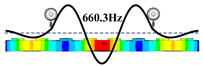 | 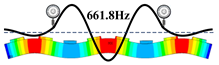 |
| Pinned–pinned vibration of rail | 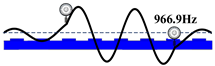 | 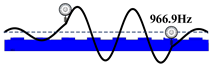 | 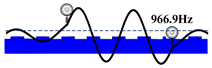 |
| Track Type | Field Corrugation Characteristics | Dominant Contributing Factors | Possible Control Measures |
|---|---|---|---|
| Ordinary prefabricated slab track bed | Wavelength: 32–44 mm Excitation frequency: 600–700 Hz | 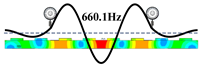 Rail third-order bending resonance | Achieving rail self-grinding by mixing rolling–sliding and full-sliding |
| Rubber floating slab track bed | Wavelength: 32–44 mm Excitation frequency: 600–700 Hz | 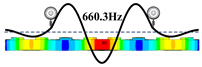 Rail third-order bending resonance | |
| Steel–spring floating slab track bed | Wavelength: 32–44 mm Excitation frequency: 600–700 Hz | 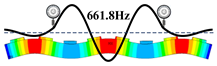 Rail third-order bending resonance |
Disclaimer/Publisher’s Note: The statements, opinions and data contained in all publications are solely those of the individual author(s) and contributor(s) and not of MDPI and/or the editor(s). MDPI and/or the editor(s) disclaim responsibility for any injury to people or property resulting from any ideas, methods, instructions or products referred to in the content. |
© 2026 by the authors. Licensee MDPI, Basel, Switzerland. This article is an open access article distributed under the terms and conditions of the Creative Commons Attribution (CC BY) license.
Share and Cite
Zhong, J.; Tong, J.; Shao, C.; Ma, C.; Zhou, P. Localized Resonance Mechanism of Rail Corrugation and Active Suppression via Wheel–Rail Self-Grinding on Urban Express Line with Different Tracks. Appl. Sci. 2026, 16, 4672. https://doi.org/10.3390/app16104672
Zhong J, Tong J, Shao C, Ma C, Zhou P. Localized Resonance Mechanism of Rail Corrugation and Active Suppression via Wheel–Rail Self-Grinding on Urban Express Line with Different Tracks. Applied Sciences. 2026; 16(10):4672. https://doi.org/10.3390/app16104672
Chicago/Turabian StyleZhong, Jie, Jing Tong, Chunqiang Shao, Chaozhi Ma, and Peng Zhou. 2026. "Localized Resonance Mechanism of Rail Corrugation and Active Suppression via Wheel–Rail Self-Grinding on Urban Express Line with Different Tracks" Applied Sciences 16, no. 10: 4672. https://doi.org/10.3390/app16104672
APA StyleZhong, J., Tong, J., Shao, C., Ma, C., & Zhou, P. (2026). Localized Resonance Mechanism of Rail Corrugation and Active Suppression via Wheel–Rail Self-Grinding on Urban Express Line with Different Tracks. Applied Sciences, 16(10), 4672. https://doi.org/10.3390/app16104672