Article

LC-MS Identification of Phthalates of Neopentyl/Propylene Glycol and Quaternary Ammonium Cations in Nail Conditioners

Faculty of Chemistry, Adam Mickiewicz University, Uniwersytetu Poznańskiego 8, 61-614 Poznań, Poland
*
Author to whom correspondence should be addressed.
Appl. Sci. 2026, 16(10), 4618; https://doi.org/10.3390/app16104618
Submission received: 30 March 2026 / Revised: 28 April 2026 / Accepted: 5 May 2026 / Published: 8 May 2026
(This article belongs to the Special Issue Analytical Chemistry: Techniques and Applications, 2nd Edition)

Abstract

Nail cosmetics, such as nail polish or nail conditioners, are considered as safe; however, their use may be accompanied with risks, e.g., related to contact of allergens with the periungual skin or to the transfer of a small amount of cosmetic to other areas of the skin. Therefore, the identification of potentially dangerous ingredients of nail cosmetics is of importance. In this work non-volatile organic compounds present in nail conditioners were analyzed by high-pressure liquid chromatography-mass spectrometry. Unexpectedly, in two samples the esters of phthalic acid with neopentyl glycol and mixed esters of phthalic acid with neopentyl glycol/propylene glycol were detected. Their structures were deduced on the basis of characteristic fragmentation pathways. It is reasonable to suppose that these compounds were formed by the reaction between the ingredients of the analyzed samples. The second group of the detected non-volatile organic compounds were quaternary ammonium salts, which are quite common in cosmetic products. These compounds were most probably transferred to the conditioners from the material from the inside of barrels in which the nail conditioners were stored. Although the presence of detected non-volatile organic compounds in nail conditioners is not particularly dangerous to human health, it is worth knowing that they can occur in the analyzed type of cosmetic products.

1. Introduction

The main biological role of nails is to protect the nerve endings of the fingertips from mechanical injury and to enhance the precision of touch and grip. The appearance of the nail plate is also seen as an indicator of the overall health of the human body. Damage to the structure of the nail plate, such as brittleness or fragility, may indicate the influence of exogenous or endogenous factors such as internal diseases and nutrient deficiencies, as well as the effects of chemicals, especially detergents [1].
The aesthetic function of nails has led to an increase in the interest in their care. In response, cosmetic companies offer a wide range of care products that both improve the appearance of the nail plate and strengthen it. Cosmetic companies offer many types of nail care products. Conditioners play a special role here and among them we can distinguish strengthening, regenerating, moisturizing, and protective ones. They are widely used to improve the condition and appearance of nails, both through private use and in beauty salons. The increase in the interest in nail conditioners is due to a growing consumer awareness of care, as well as of the chemical composition offered by manufacturers. This leads to the creation of newer and newer compositions, increasing the variety of products available on the market. Vegan nail polish removers, in which the manufacturer declares natural ingredients, are becoming particularly popular [2].
The chemical composition of nail conditioners is quite diverse. Their key ingredients should show regenerating and moisturizing effects. An effective nail conditioner contains substances such as glycerin, water, plasticizers, vitamins, minerals, proteins, and natural ingredients such as plant extracts. Some conditioners, especially the hardening ones, may also contain plasticizers, formaldehyde, and organic solvents. The product formula may contain substances considered controversial, which may cause undesirable effects such as irritation of the nail plate or allergic reactions [3].
The majority of nail cosmetics, such as nail polishes or nail conditioners, are considered as rather safe since the nail plate is known as a good barrier to chemicals [3,4,5]. On the other hand, their use may be accompanied with risks, since nail cosmetic ingredients, e.g., acrylates, may cause allergic contact dermatitis [2,6,7]. This may be related to contact of the allergens with the periungual skin or to the transfer of a small amount of cosmetic to other areas of the skin [1,8,9]. Therefore, the identification of potentially dangerous ingredients of nail cosmetics is of importance for the health of their users. In this area of research, works devoted to the analysis of phthalates [10,11,12] are quite common but analysis of other chemicals may also be important, e.g., parabens [12], formaldehyde [13], and toxic metals [14].
In this study we analyzed the main non-volatile organic compounds present in selected nail conditioners by LC-MS. To the best of our knowledge, until now the phthalates analyzed in nail cosmetics have been exclusively alkyl esters of phthalic acid and benzyl butyl phthalate [10,11,12], which are mentioned (prohibited) in EU Regulation 1223/2009 on cosmetic products [15], whereas in the two samples studied, unexpectedly, the main non-volatile organic compounds were esters of phthalic acid and neopentyl glycol. Mixed esters contained neopentyl glycol and propylene glycol have also been identified. Besides the esters of phthalic acid, a number of quaternary ammonium cations have also been detected but their occurrence in cosmetic products is quite common [16,17,18,19,20].

2. Materials and Methods

2.1. Characteristics of the Analyzed Nail Cosmetics

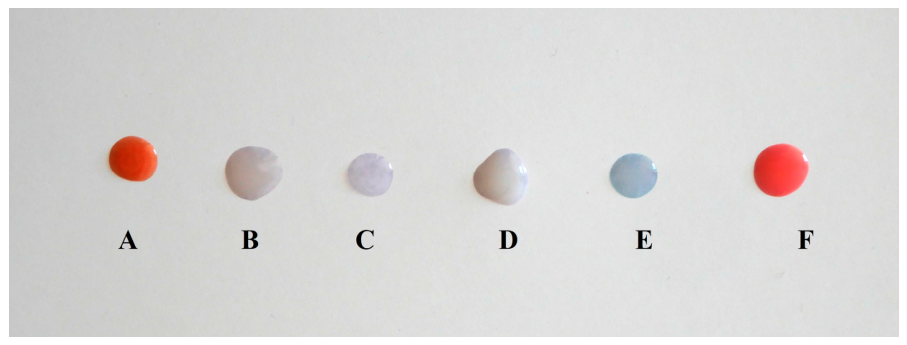
Several nail strengthening products were analyzed and in two of them (labelled A and B, Figure 1) the esters of phthalic acid and neopentyl/propylene glycol were detected.
Product A is a classic example of a nail product that works by mechanically stiffening the nail and reducing its brittleness—it contains nitrocellulose, which, after the volatile solvents in the formula have evaporated, forms a hard, protective coating. The plasticizers contained in the composition increase the nail plate elasticity, and copolymers increase its mechanical resistance. Product B, in addition to typical strengthening components, also contains biologically active ingredients such as niacinamide and cholesterol. Biologically active ingredients can not only improve resistance and elasticity by rebuilding the lipid barrier but also exert other effects. According to the manufacturer’s declaration, products A and B have strengthening properties by creating a protective layer on the nail plate. After analyzing the ingredients declared by the manufacturers (Supplementary Materials), it can be concluded that A focuses mainly on protective properties, while B, due to its additional mineral components and biologically active ingredients, not only creates a protective coating, but also supports the condition of the nail plate.

2.2. Preparation of the Samples for LC-MS Analysis

A 1.00 g sample of the studied nail conditioners (samples A and B) was mixed with methanol (10 mL) and stirred for 10 min. The resulting suspension was then centrifuged (6000 rpm, 10 min), and the supernatant was filtered through a PTFE syringe filter (0.45 μm pore size; Chemland, Stargard, Poland). It is important to prepare a fresh sample for LC-MS analyses (performed at different cone voltage values and for semiquantitative determination of the analyzed compounds) each time, because a sample stored at room temperature for a few days and then injected onto the column causes a significant increase in pressure. This is likely due to the polymerization reactions taking place in it.
In order to confirm the structures of the identified esters and to determine semi-quantitively their amounts, compounds 1, 2 and 3, and the meta and para isomers of 1, were synthetized. The detailed procedure and NMR data are attached in the Supplementary Materials (Figures S1–S8).
Two types of materials which the analyzed products were in contact with were also analyzed, namely a plastic bag foil and material from the inside of the barrel in which the analyzed samples were stored. The analyzed polymer sheet (plastic bag foil) was cut into small pieces (<5 mm). A 1.00 g portion of the material was suspended in methanol (10 mL) and refluxed for 1 h. The resulting extract was filtered through a PTFE syringe filter (0.45 μm pore size). The polymer coating from the inner side of the barrel wall was scraped off and ground. A 1.00 g portion of the obtained sample was mixed with methanol (10 mL) and sonicated for 30 min in an ultrasonic bath at 40 °C. The resulting extract was filtered through a PTFE syringe filter (0.45 μm pore size). On the basis of its FT-IR spectrum (Supplementary Materials, Figure S9) it can be concluded that the polymer coating from the inner side of the barrel is a polyurethane material.

2.3. LC-MS Analysis

The LC-MS analyses were done with a Waters Arc HPLC pump and a Waters SQD mass spectrometer (single quadrupole-type instrument equipped with electrospray ionization (ESI) source, Z-spray, Milford, MA, USA). The software used was MassLynx V4.2 SCN1046 (Milford, MA, USA). The sample solutions were injected into the XBridge® C18 column (3.5 µm, 100 mm × 3 mm i.d.; Waters, Warsaw, Poland) using an autosampler. The injection volume was 5 µL. The solutions were analyzed using a linear gradient of CH3CN-H2O, at a flow rate of 0.5 mL/min. The gradient started from 0% CH3CN and 95% H2O with 5% of a 10% solution of formic acid in water, reaching 95% CH3CN (and 0% H2O) after 15 min, and the latter concentration was kept for 10 min. LC-MS was performed in the positive ion mode in the m/z range 50–1000. Each sample was analyzed twice. The nebulizing and desolvation gases were nitrogen at the flow rates of 100 and 300 L/h, respectively. The source temperature was 120 °C, and the desolvation temperature was 300 °C. The electrospray source potentials were capillary 3 kV, lens 0.5 V, extractor 4 V, and cone voltage (CV) was 30–150 V. This parameter has the greatest impact on the full scan mass spectra recorded. An increase in this parameter leads to the so-called “in-source” fragmentation/dissociation, but a too-low cone voltage may cause a decrease in sensitivity.

3. Results and Discussion

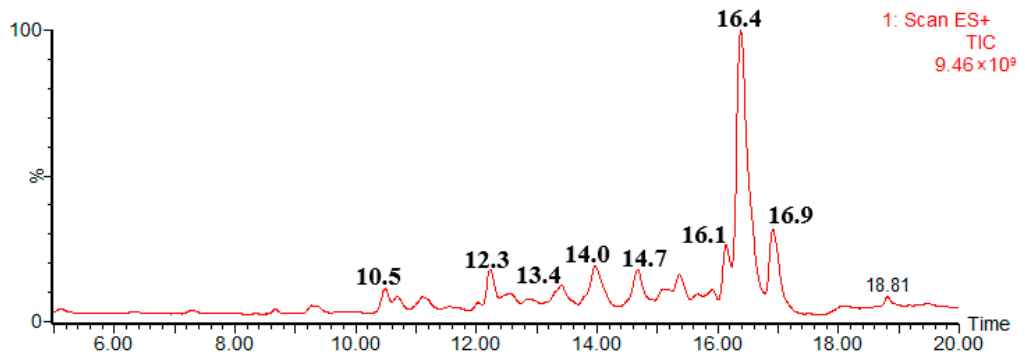
Figure 2 shows the total ion current chromatogram obtained for sample A (an almost identical chromatogram was obtained for sample B). The most abundant peak at rt = 16.4 min corresponds to the tributyl O-acetyl citrate which is mentioned as one of the most abundant compounds occurring in this sample. At a low cone voltage (CV = 30) abundant [M + H]+ ion at m/z 403 along with two product ions of moderate abundances, at m/z 361 (loss of CH2=C=O since there is an acetyl group) and at m/z 329 (loss of a butanol molecule), were observed. At a higher cone voltage (CV = 50), abundant [M + Na]+ ion at m/z 425 and abundant product ions (the most abundant at m/z 185) were detected (Supplementary Materials, Figure S10), which is in agreement with results reported elsewhere [21,22].

3.1. Phthalic Acid Conjugates with Neopentyl/Propylene Glycol

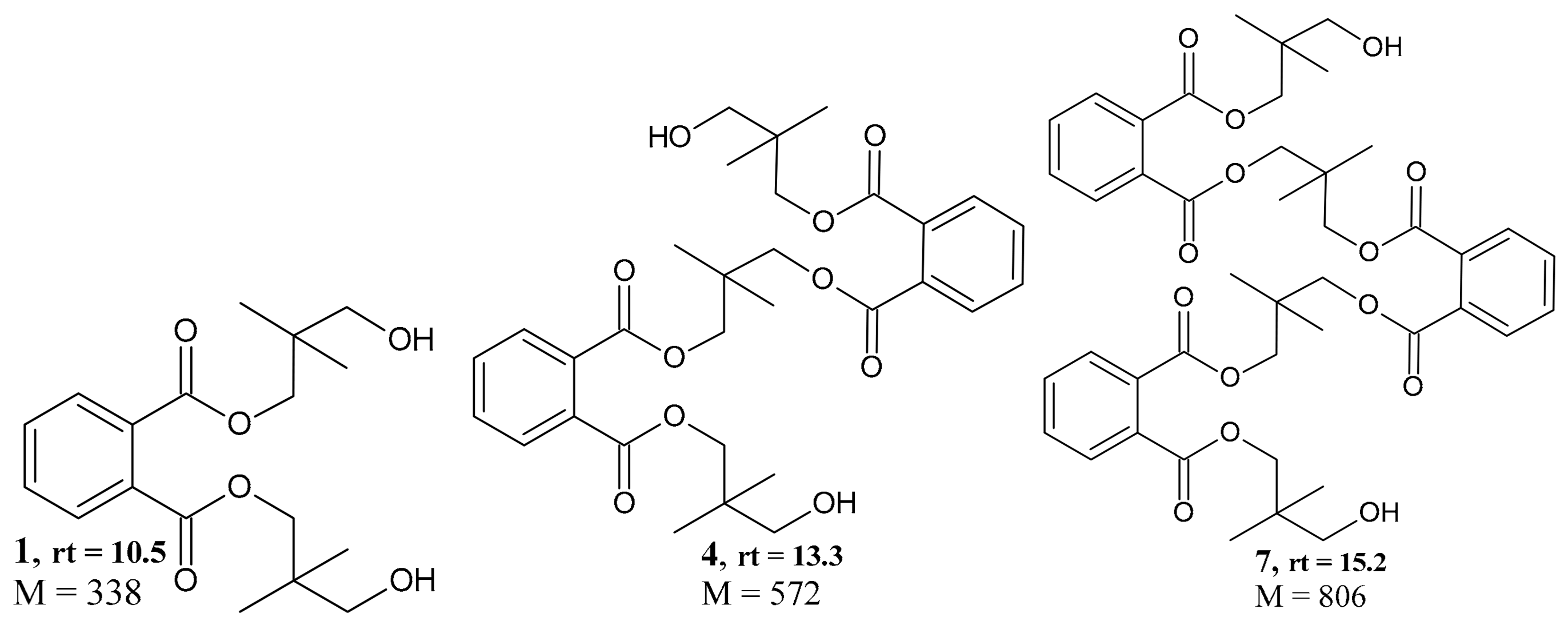
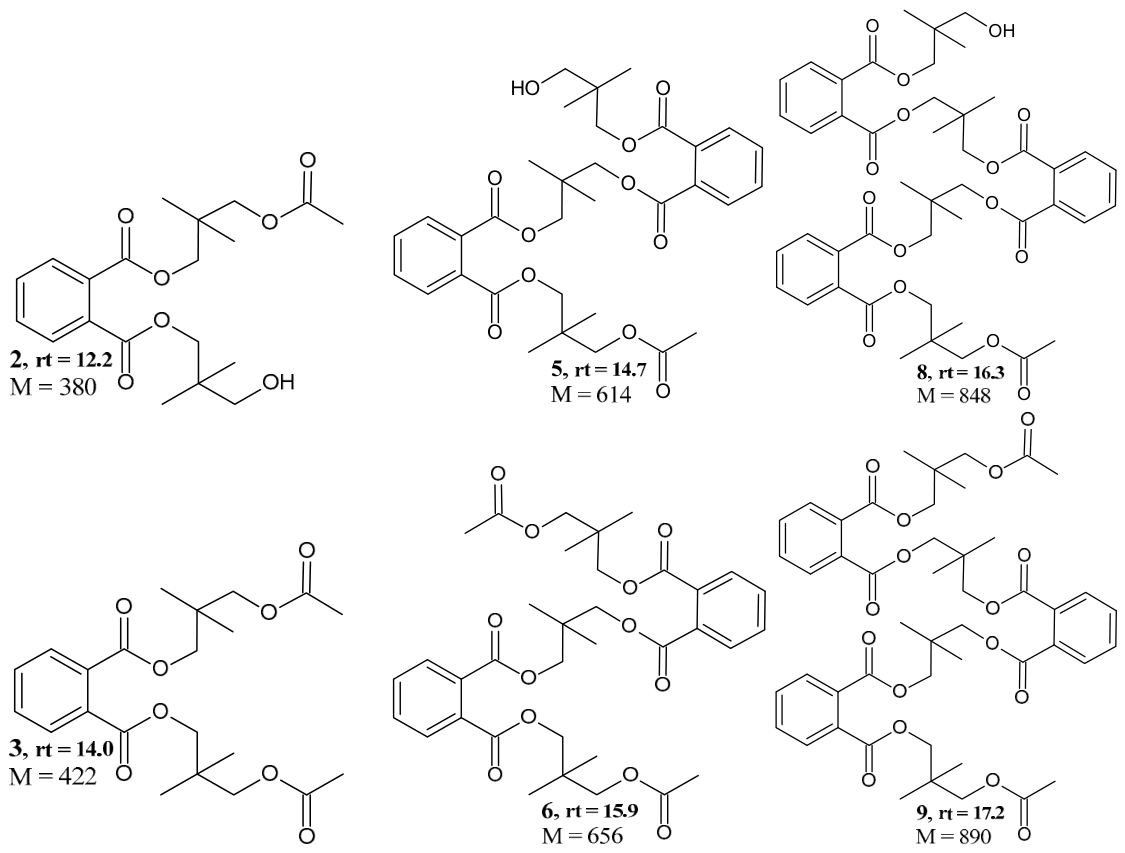
It has been found that most of the other peaks (Figure 2) correspond to the ester conjugates of phthalic acid (PA) with neopentyl glycol (NPG), acetylated to varying degrees (in both samples A and B). The acetyl substitution increases the molecular mass by 42 units, and addition of PA-NPG moiety increases the molecular mass by 234 units [23]. The plausible structures of the nine detected ester conjugates of phthalic acid with neopentyl glycol (19) are shown in Figure 3, and single ion chromatograms of their [M + Na]+ ions are provided in the Supplementary Materials (Figure S11).
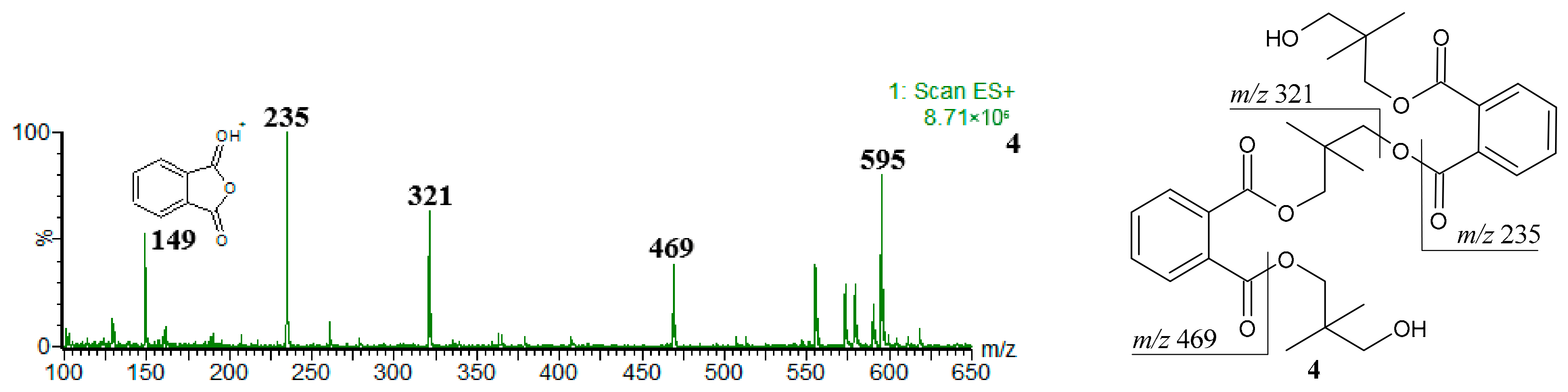
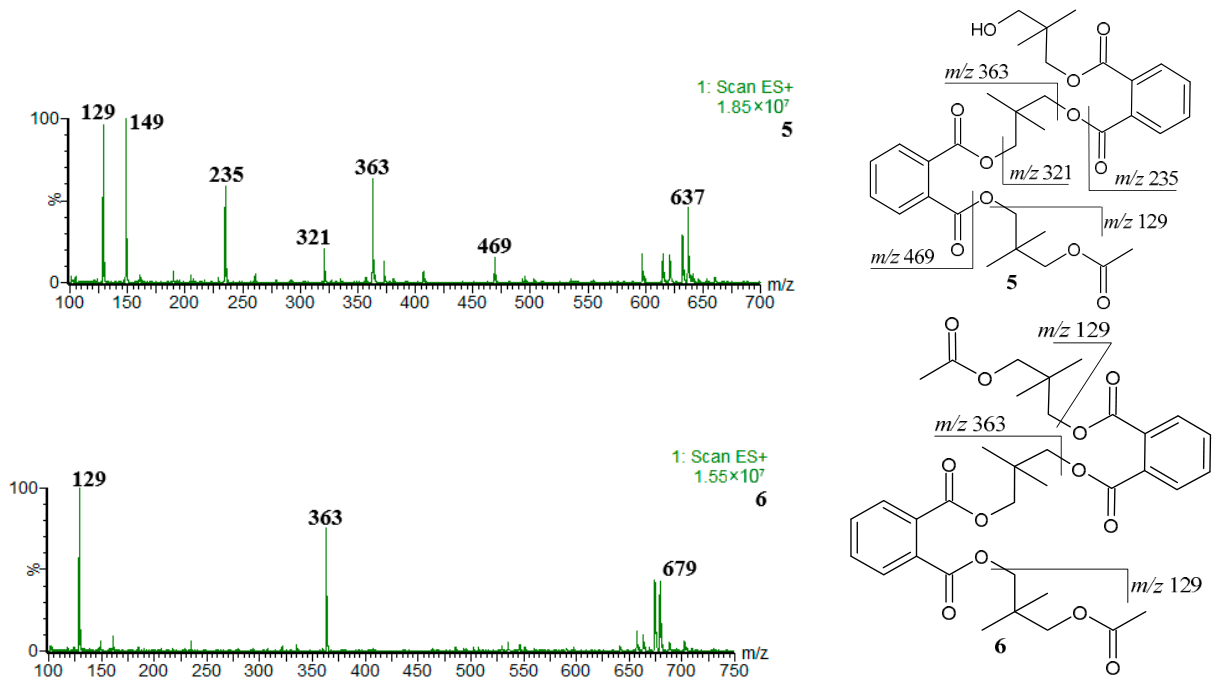
Upon the LC-MS analysis performed at the low cone voltage (CV = 30 V) ions allowing molecular mass determination, namely [M + H]+, [M + NH4]+, and [M + Na]+, were detected. In order to detect the product ions which would allow the structure determination, the LC-MS analysis was performed at a higher cone voltage (CV = 50 V). In the ESI mass spectra obtained at CV = 50, the peaks of [M + Na]+ ions were still quite intensive, and the lack of the peaks of [M + H]+ and [M + NH4]+ ions (or their low intensities) indicates that the detected product ions, which enabled the structure determination of the detected compounds, were formed from these very ions. The representative ESI mass spectra of 46, and formation of diagnostic product ions, are shown in Figure 4.
The product ion at m/z 149 is a well-known protonated phthalic anhydride [24,25,26], which indicates that we deal with phthalic acid (ortho isomer) conjugates. The product ion at m/z 129 implies the presence of conjugates containing acetylated neopentyl glycol moiety. The doubly acetylated conjugate (6) formation of the product ion at m/z 129 dominates over that of other product ions (Figure 4). It has to be pointed out that the LC-MS analyses of the synthetized standards of 1, 2 and 3 fully confirmed the structures of the compounds identified in the extracts of A and B. Furthermore, the LC-MS analysis of the synthetized standards of the meta and para isomers of 1 excluded their presence in the analyzed samples.
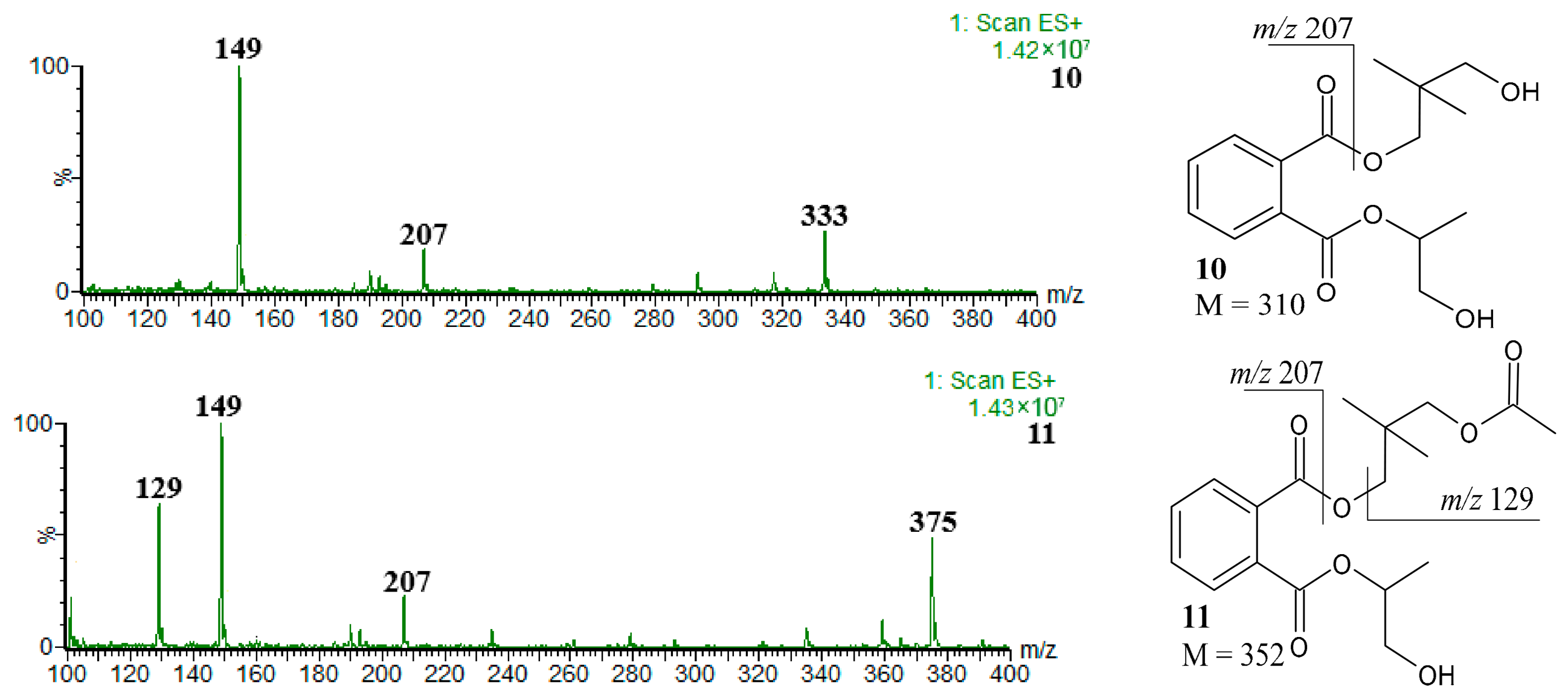
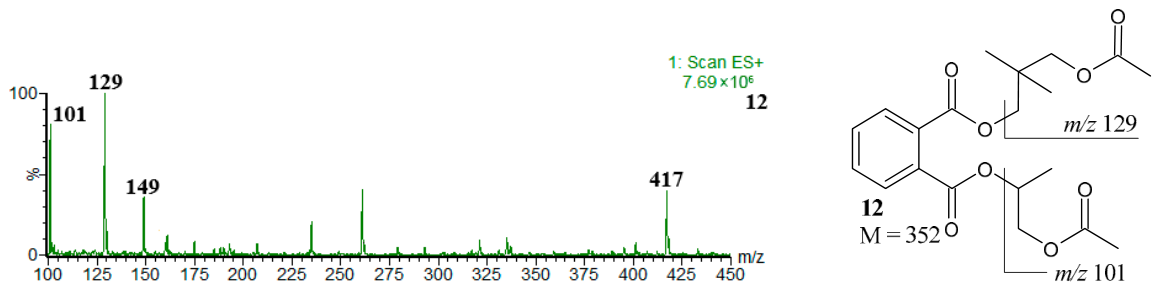
The second group of phthalic esters identified in samples A and B included conjugates 1018 which have one neopentyl glycol moiety exchanged for propylene glycol (PG) moiety (therefore their masses were 28 units lower than those of the respective compounds 19). Single ion chromatograms of their [M + Na]+ ions are presented in the Supplementary Materials (Figure S12). However, many possible isomers may be formed of these compounds and they are difficult to separate chromatographically. They may differ in location of the methyl group in the PG moiety, location of NPG/PG moieties for the conjugates containing three and four glycol units, and the substitution place of the acetyl group for the conjugates containing terminal NPG/PG moiety. Some of the peak shapes (Figure S12) indicated the presence of isomers; however, it was difficult to elucidate which of the possible isomers was the most abundant. On the other hand, the obtained ESI mass spectra have confirmed that we really deal with this class of compounds (e.g., ion at m/z 101 corresponds to the acetylated PG moiety) as shown in Figure 5 for compounds 1012.
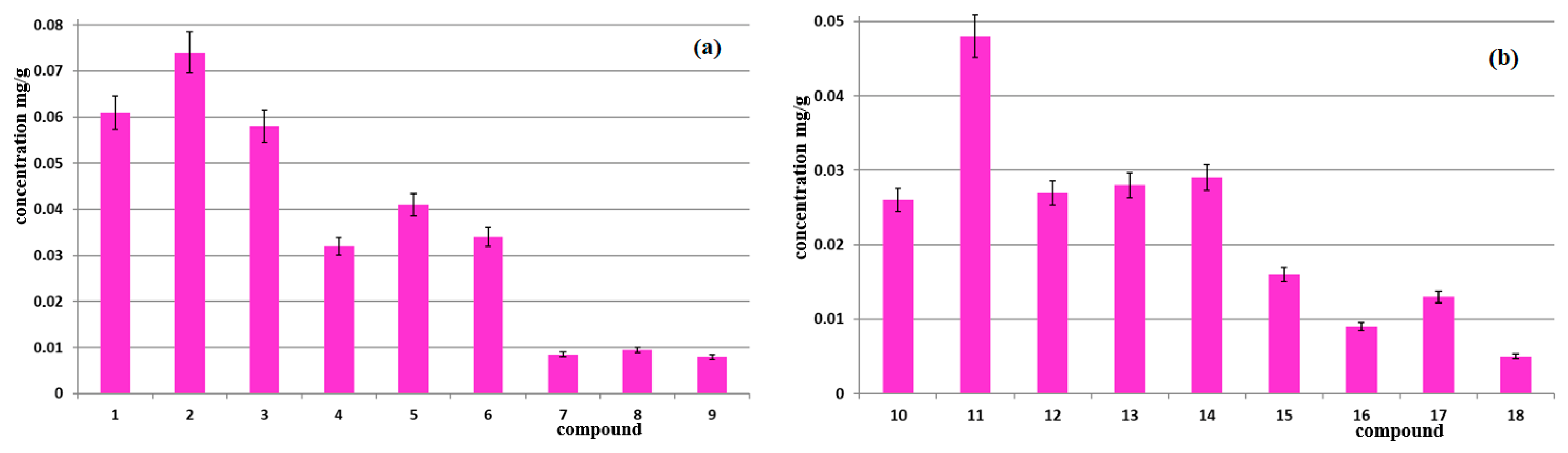
By using the standards of compounds 1, 2 and 3, the concentrations of the detected phthalic acid conjugates with neopentyl/propylene glycol were estimated semi-quantitatively. Their concentrations were estimated by comparing the extracted ion chromatogram peak areas of [M + Na]+ obtained at CV = 50 V (for these ions the fragmentation was not observed at CV = 50 V). It was assumed that non-acetylated conjugates have an ESI-MS response similar to that of 1, mono-acetylated conjugates have an ESI-MS response similar to that of 2, and di-acetylated conjugates have an ESI-MS response similar to that of 3. Figure 6a,b show the estimated concentrations of 19 and 1018, respectively, in sample A (in sample B their amounts were very similar). The estimated concentrations of the detected esters were at a level of 0.05 mg/g of the analyzed sample. In both samples the amounts of monomers (13) were the highest and the amounts of trimers (79 and 1618) were the lowest. It is worth noting the high amount of monoacetylated conjugates (2 and 11). Compounds 7 and 15 have almost identical retention times (~15.2 min, Figures S11 and S12). Therefore, these compounds may mutually affect their ESI responses and their concentrations may be underestimated.
A possible source of the detected esters of phthalic acid and neopentyl/propylene glycol (118) may be oligoesters which have various industrial and everyday life applications, e.g., as food packaging materials or innovative materials for biomedical applications [27,28]. On the other hand, oligoesters are usually formed from terephthalic acid (para isomer) or isophthalic acid (meta isomer) [29,30], whereas in our work we exclusively detected conjugates of phthalic acid (ortho isomer) as indicated by the abundant product ion at m/z 149 [24,25,26] and confirmed by the standards of 1, 2 and 3 (Supplementary Materials, Figures S1–S8). Therefore oligoesters are probably not the source of 118.
It should be emphasized that the materials which the analyzed products were in contact with were also analyzed (as a possible source of 118), namely foil and material from the inside of the barrel in which the analyzed samples were stored; however, their analysis did not reveal the presence of phthalic ester conjugates; therefore, these materials cannot be the source of these conjugates. It is also unlikely that they were intentionally added to the nail conditioners.
It is reasonable to suppose that the detected conjugates were formed in the reaction between the ingredients of the analyzed preparations, i.e., phthalic acid, neopentyl glycol (ingredient not indicated by the manufacturer), propylene glycol and tributyl O-acetyl citrate; the latter is most probably the source of acetyl groups. It is worth adding that tributyl citrate was also detected in samples A and B (Supplementary Materials, Figure S13, [21]) which confirms that tributyl O-acetyl citrate (present in high amount, Figure 1) can be an acetylating agent.
The so-called classic phthalates, e.g., dibutyl phthalate and diisooctyl phthalate, which are mentioned (prohibited) in EU Regulation 1223/2009 on cosmetic products [15], were also detected in the analyzed nail conditioners, but with a low signal-to-noise ratio. Therefore, they were not analyzed.

3.2. Quaternary Ammonium Salts

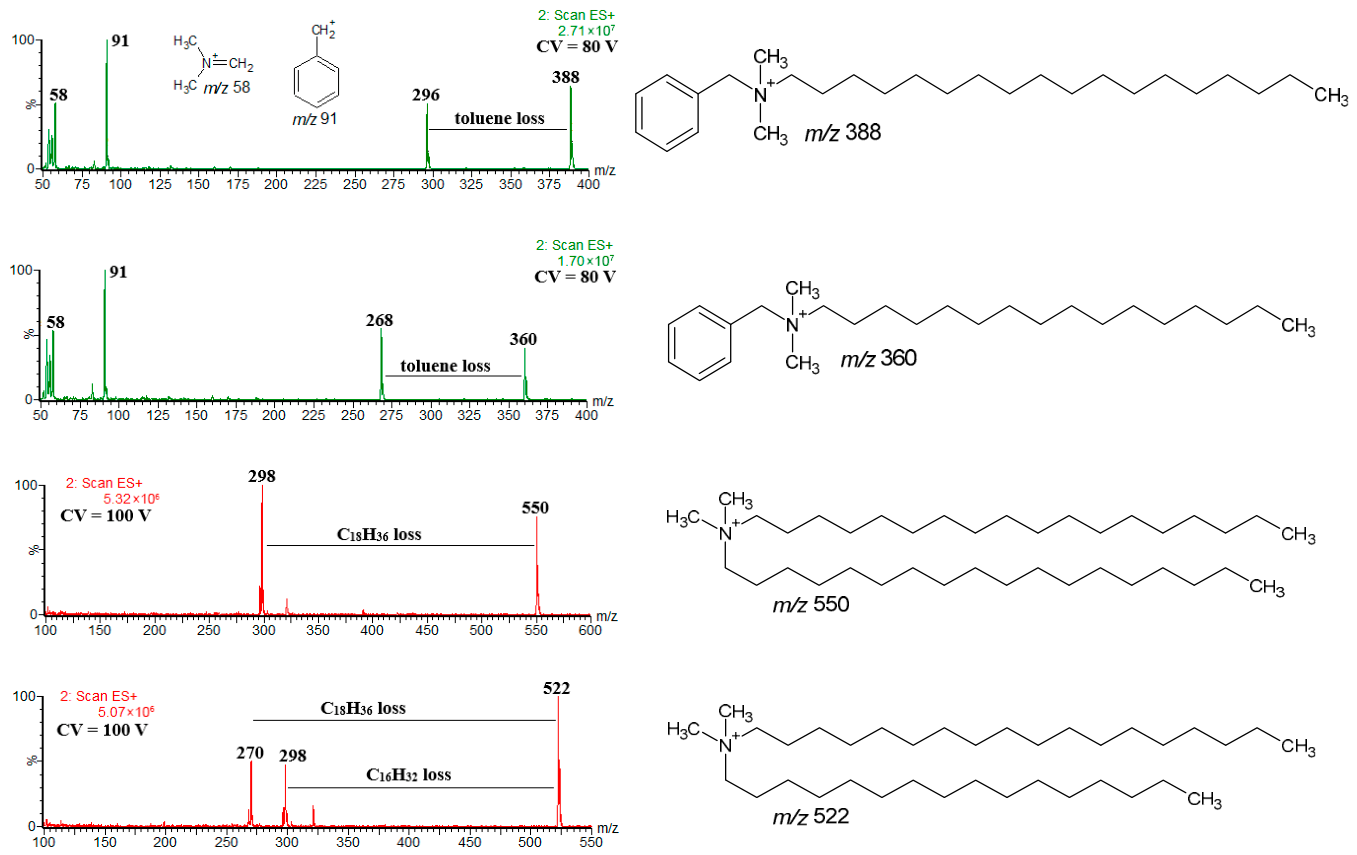
The second group of compounds detected by LC-MS in the analyzed samples were quaternary ammonium salts. Single ion chromatograms of the respective cations are shown in the Supplementary Materials (Figures S14 and S15). The ESI mass spectra of the most abundant ones and the observed fragmentation pathways are shown in Figure 7.
In the analyzed samples two types of quaternary ammonium cations were detected. The first one was alkyldimethylbenzylammonium cations (e.g., cetalkonium at m/z 360), which yield a characteristic product ion at m/z 91 and product ions formed as result of the loss of the toluene molecule, as mentioned elsewhere [31]. We found that these compounds also yield a product ion at m/z 58 (Figure 7). The second type of quaternary ammonium cations detected was dialkyldimethylammonium cations (e.g., dimethyldioctadecylammonium at m/z 550) which yield product ions formed as a result of the loss of the alkene molecule (Figure 7) [31].
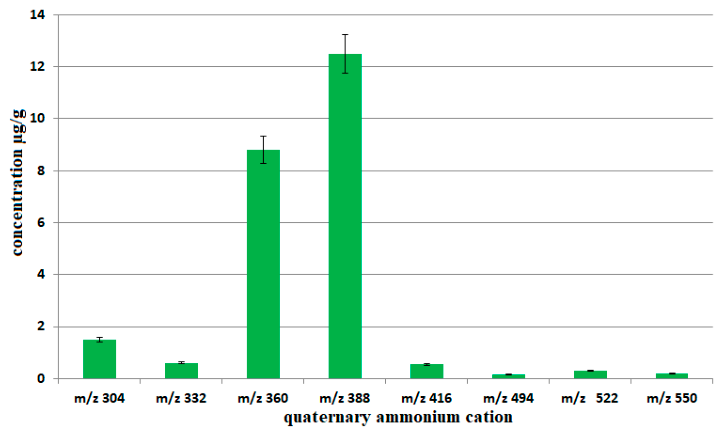
Using the standards of the detected quaternary ammonium salts their concentrations in the analyzed nail conditioners were estimated semi-quantitatively. Their concentrations were estimated by comparing the extracted ion chromatogram peak areas of quaternary ammonium cations obtained at CV = 50 V (for these ions the fragmentation was not observed at CV = 50 V). Figure 8 shows the estimated concentrations of alkyldimethylbenzylammonium cations and dialkyldimethylammonium cations, respectively, in sample B (in sample A their amounts were very similar). The estimated concentration of the detected alkyldimethylbenzylammonium cations at m/z 360 and 388 was at a level of 10 µg/g of the analyzed sample, and the estimated concentration of the detected alkyldimethylbenzylammonium cations was below 1 µg/g of the analyzed sample. The relatively high concentration of alkyldimethylbenzylammonium cations at m/z 360 and 388 is in agreement with the finding that benzalkonium chlorides are commonly used in cosmetics [17]. It has to be stressed that it is unlikely that the evaluated concentrations may cause a risk of skin irritation [32]. It is reasonable that their presence in nail conditioners may be related to the broad spectrum of their antimicrobial properties against bacteria, fungi, and viruses [33].
Although quaternary ammonium salts are quite common in cosmetic products [16,17,18,19,20], the manufacturer has not indicated their presence in the analyzed nail conditioner. It has been found that one of the materials which the analyzed products were in contact with, namely the inside of the barrel (but not the foil) also contained the detected quaternary ammonium salts. Therefore, this material can be a potential source of these compounds. On the other hand, in the extract of the material from the inside of the barrel, beside the alkyldimethylbenzylammonium and dialkyldimethylammonium cations, alkyltrimethylammonium cations were detected which were not found in the analyzed nail conditioner (Supplementary Materials, Figure S16). Therefore, it is a matter of discussion why the alkyldimethylbenzylammonium and dialkyldimethylammonium conjugates were transferred to the analyzed samples, whereas the alkyltrimethylammonium conjugates were not.

4. Conclusions

Among the several conditioners analyzed by LC-MS, in two of them the main non-volatile organic compounds were esters of phthalic acid and neopentyl/propylene glycol. They were identified on the basis of characteristic fragmentation patterns. Their presence in the analyzed samples is rather unexpected and they most probably were formed in the reaction between the ingredients of the analyzed preparations. Since the detected esters are monomers and short linear oligoesters their toxicity is moderate [34,35,36]; therefore, their presence in the analyzed material does not pose a significant risk to human health. Furthermore, in EU Regulation 1223/2009 on cosmetic products the esters of phthalic acid and neopentyl/propylene glycol are not mentioned, and the concentration restriction for quaternary ammonium salts is much higher than their estimated concentrations in this work [15]. On the other hand, it is important to be aware of the possible presence of such compounds in nail conditioners. Another group of non-volatile organic compounds detected in the analyzed samples was quaternary ammonium salts. It is likely that these compounds were transferred to the nail conditioners from the material from the inside of the barrel in which the nail conditioners were stored. Quaternary ammonium salts are quite common in cosmetic products and their occurrence in nail conditioners also does not pose a significant risk to human health.

Supplementary Materials

The following supporting information can be downloaded at: https://www.mdpi.com/article/10.3390/app16104618/s1.

Author Contributions

Conceptualization, W.Z. and R.F.; methodology, W.Z., R.F. and B.G.; formal analysis, W.Z., R.F., B.G. and M.Z.; investigation, W.Z., R.F., B.G. and M.Z.; writing—original draft preparation, W.Z., R.F. and B.G.; writing—review and editing, R.F., B.G. and M.Z.; visualization, W.Z., R.F., B.G. and M.Z.; supervision, R.F., B.G. and M.Z.; funding acquisition, R.F., B.G. and M.Z. All authors have read and agreed to the published version of the manuscript.

Funding

This research received no external funding.

Institutional Review Board Statement

Not applicable.

Informed Consent Statement

Not applicable.

Data Availability Statement

The original contributions presented in this study are included in the article. Further inquiries can be directed to the authors (R.F. and M.Z.).

Conflicts of Interest

The authors declare no conflicts of interest.

References

  1. Dahdah, M.J.; Scher, R.K. Nail diseases related to nail cosmetics. Dermatol. Clin. 2006, 24, 233–239. [Google Scholar] [CrossRef]
  2. Calado, R.; Gomes, T.; Matos, A.; Gonçalo, M. Contact dermatitis to nail cosmetics. Curr. Dermatol. Rep. 2021, 10, 173–181. [Google Scholar] [CrossRef]
  3. Tyagi, M.; Singal, A. Nail cosmetics: What a dermatologist should know! Indian J. Dermatol. Venereol. Leprol. 2024, 90, 178–185. [Google Scholar] [CrossRef]
  4. Yin, X.J.; Hewitt, N.J.; Erler, S.; Bryson, P.; Blömeke, B.; Gaspari, A.A.; Goebel, C. Safety assessment for nail cosmetics: Framework for the estimation of systemic exposure through the nail plate. Regul. Toxicol. Pharmacol. 2024, 148, 105588. [Google Scholar] [CrossRef]
  5. Dinani, N.; George, S. Nail cosmetics: A dermatological perspective. Clin. Exp. Dermatol. 2019, 44, 599–605. [Google Scholar] [CrossRef]
  6. Chou, M.; Dhingra, N.; Strugar, T.L. Contact sensitization to allergens in nail cosmetics. Dermatitis 2017, 28, 231–240. [Google Scholar] [CrossRef]
  7. Heymann, W.R. Nail cosmetics: Potential hazards. J. Am. Acad. Dermatol. 2007, 57, 1069–1070. [Google Scholar] [CrossRef]
  8. Lin, Y.T.; Tsai, S.W.; Yang, C.W.; Tseng, Y.H.; Chu, C.Y. Allergic contact dermatitis caused by acrylates in nail cosmetic products: Case reports and review of the literatures. Dermatol. Sin. 2018, 36, 218–221. [Google Scholar] [CrossRef]
  9. Baran, R. Nail cosmetics: Allergies and irritations. Am. J. Clin. Dermatol. 2002, 3, 547–555. [Google Scholar] [CrossRef]
  10. De Orsi, D.; Gagliardi, L.; Porra, R.; Berri, S.; Chimenti, P.; Granese, A.; Carpani, I.; Tonelli, D. A environmentally friendly reversed-phase liquid chromatography method for phthalates determination in nail cosmetics. Anal. Chim. Acta 2006, 555, 238–241. [Google Scholar] [CrossRef]
  11. Aldegunde-Louzao, N.; Lolo-Aira, M.; Herrero-Latorre, C. Phthalate esters in different types of cosmetic products: A five-year quality control survey. Molecules 2024, 29, 4823. [Google Scholar] [CrossRef]
  12. Shen, H.-Y.; Jiang, H.-L.; Mao, H.-L.; Pan, G.; Zhou, L.; Cao, Y.-F. Simultaneous determination of seven phthalates and four parabens in cosmetic products using HPLC-DAD and GC-MS methods. J. Sep. Sci. 2007, 30, 48–54. [Google Scholar] [CrossRef]
  13. Lv, C.; Sun, J.; Cheng, H. Determination of formaldehyde residue in cosmetics by short-column high performance liquid chromatography with mass spectrometric confirmation. Anal. Methods 2015, 7, 1630–1634. [Google Scholar] [CrossRef]
  14. Meena, B.I.; Tahir, T.F.; Sdeeq, S.Z.; Sediq, K.N. Toxic metals in some decorative cosmetics and nail products: Analysis, evaluation, and mitigation. Aro-Sci. J. Koya Univ. 2022, 10, 56–61. [Google Scholar] [CrossRef]
  15. Available online: https://eur-lex.europa.eu/legal-content/EN/TXT/?uri=celex%3A32009R1223 (accessed on 13 April 2026).
  16. Baydar, A.; Johnston, R. Novel quaternary ammonium salts derived from triglycerides and their application in skin and hair products. Int. J. Cosmet. Sci. 1991, 13, 169–190. [Google Scholar] [CrossRef]
  17. Lunestad, B.T.; Hegstad, K.; Langsrud, S.; Scheie, A.A.; Sunde, M. Quaternary Ammonium Compounds in Cosmetic Products, Risk Assessment of Antimicrobial and Antibiotic Resistance Development in Microorganisms; The Norwegian Scientific Committee for Food Safety: Oslo, Norway, 2009; pp. 1–35. ISBN 978-828082-339-7. [Google Scholar]
  18. Dobler, D.; Schmidts, T.; Wildenhain, S.; Seewald, I.; Merzhäuser, M.; Runkel, F. Impact of selected cosmetic ingredients on common microorganisms of healthy human skin. Cosmetics 2019, 6, 45. [Google Scholar] [CrossRef]
  19. Cumming, J.; Hawker, D.; Chapman, H.; Nugent, K. The fate of polymeric quaternary ammonium salts from cosmetics in wastewater treatment plants. Water Air Soil Pollut. 2011, 216, 441–450. [Google Scholar] [CrossRef]
  20. Cumming, J.L.; Hawker, D.W.; Matthews, C.; Chapman, H.F.; Nugent, K. Analysis of polymeric quaternary ammonium salts as found in cosmetics by metachromatic polyelectrolyte titration. Toxicol. Environ. Chem. 2010, 92, 1595–1608. [Google Scholar] [CrossRef]
  21. Zhang, Y.; Li, J.; Su, G. Identifying citric acid esters, a class of phthalate substitute plasticizers, in indoor dust via an integrated target, suspect, and characteristic fragment-dependent screening strategy. Environ. Sci. Technol. 2021, 55, 13961–13970. [Google Scholar] [CrossRef]
  22. Rizvi, S.N.R.; Afzal, S.; Khan, K.U.R.; Aati, H.Y.; Rao, H.; Ghalloo, B.A.; Shahzad, M.N.; Khan, D.A.; Esatbeyoglu, T.; Korma, S.A. Chemical characterisation, antidiabetic, antibacterial, and in silico studies for different extracts of Haloxylon stocksii (Boiss.) Benth: A promising halophyte. Molecules 2023, 28, 3847. [Google Scholar] [CrossRef]
  23. Beszterda-Buszczak, M.; Frański, R. Oligoester identification in the inner coatings of metallic cans by high-pressure liquid chromatography-mass spectrometry with cone voltage-induced fragmentation. Materials 2024, 17, 2771. [Google Scholar] [CrossRef]
  24. Jeilani, Y.A.; Cardelino, B.H.; Ibeanusi, V.M. Density functional theory and mass spectrometry of phthalate fragmentations mechanisms: Modeling hyperconjugated carbocation and radical cation complexes with neutral molecules. J. Am. Soc. Mass Spectrom. 2011, 22, 1999–2010. [Google Scholar] [CrossRef]
  25. Jeilani, Y.A.; Cardelino, B.H.; Ibeanusi, V.M. Positive chemical ionization triple-quadrupole mass spectrometry and ab initio computational studies of the multi-pathway fragmentation of phthalates. J. Mass Spectrom. 2010, 45, 678–685. [Google Scholar] [CrossRef]
  26. Aldegunde-Louzao, N.; Lolo-Aira, M.; Herrero-Latorre, C. Fast phthalate detection in textile samples: A LC-MS/MS screening method using precursor ion scans. Chem. Proc. 2024, 16, 1. [Google Scholar]
  27. Seyednejad, H.; Ghassemi, A.H.; Van Nostrum, C.F.; Vermonden, T.; Hennink, W.E. Functional aliphatic polyesters for biomedical and pharmaceutical applications. J. Control. Release 2011, 152, 168–176. [Google Scholar] [CrossRef]
  28. Paseiro-Cerrato, R.; Noonan, G.O.; Begley, T.H. Evaluation of long-term migration testing from can coatings into food simulants: Polyester coatings. J. Agric. Food Chem. 2016, 64, 2377–2385. [Google Scholar] [CrossRef]
  29. Belan, F.; Bellenger, V.; Mortaigne, B.; Verdu, J. Relationship between the structure and hydrolysis rate of unsaturated polyester prepolymers. Polym. Degrad. Stab. 1997, 56, 301–309. [Google Scholar] [CrossRef]
  30. Amundarain, I.; López-Montenegro, S.; Asueta, A.; Arnaiz, S.; Pereda-Ayo, B. Neopentyl glycol as an alternative solvent for the chemical recycling of complex PET waste. Mater. Adv. 2025, 6, 1042–1050. [Google Scholar] [CrossRef]
  31. Li, Z.M.; Lakuleswaran, M.; Kannan, K. LC-MS/MS methods for the determination of 30 quaternary ammonium compounds including benzalkonium and paraquat in human serum and urine. J. Chromatogr. B 2023, 1214, 123562. [Google Scholar] [CrossRef]
  32. Basketter, D.A.; Marriott, M.; Gilmour, N.J.; White, I.R. Strong irritants masquerading as skin allergens: The case of benzalkonium chloride. Contact Dermat. 2004, 50, 213–217. [Google Scholar] [CrossRef]
  33. Merchel Piovesan Pereira, B.; Tagkopoulos, I. Benzalkonium chlorides: Uses, regulatory status, and microbial resistance. Appl. Environ. Microbiol. 2019, 85, e00377-19. [Google Scholar] [CrossRef] [PubMed]
  34. Lestido-Cardama, A.; Vázquez-Loureiro, P.; Sendón, R.; Bustos, J.; Santillana, M.I.; Paseiro Losada, P.; Rodríguez Bernaldo de Quirós, A. Characterization of polyester coatings intended for food contact by different analytical techniques and migration testing by LC-MSn. Polymers 2022, 14, 487. [Google Scholar] [CrossRef] [PubMed]
  35. Eckardt, M.; Hetzel, L.; Brenz, F.; Simat, T.J. Release and migration of cyclic polyester oligomers from bisphenol A non-intent polyester-phenol-coatings into food simulants and infant food-a comprehensive study. Food Addit. Contam. Part A 2020, 37, 681–703. [Google Scholar] [CrossRef]
  36. Ubeda, S.; Aznar, M.; Rosenmai, A.K.; Vinggaard, A.M.; Nerín, C. Migration studies and toxicity evaluation of cyclic polyesters oligomers from food packaging adhesives. Food Chem. 2020, 311, 125918. [Google Scholar] [CrossRef] [PubMed]
Figure 1. Samples of the analyzed nail conditioners (Supplementary Materials).
Applsci 16 04618 g001
Figure 2. Total ion current chromatogram obtained upon LC-MS analysis of sample A.
Applsci 16 04618 g002
Figure 3. Structures of the nine detected ester conjugates of phthalic acid with neopentyl glycol.
Applsci 16 04618 g003aApplsci 16 04618 g003b
Figure 4. The representative ESI mass spectra of 46, and formation of diagnostic product ions.
Applsci 16 04618 g004aApplsci 16 04618 g004b
Figure 5. The representative ESI mass spectra of 1012, and formation of diagnostic product ions.
Applsci 16 04618 g005aApplsci 16 04618 g005b
Figure 6. The estimated concentrations of 19 (a) and 1018 (b) in sample A.
Applsci 16 04618 g006
Figure 7. The ESI mass spectra of the most abundant quaternary ammonium cations and the observed fragmentation pathways.
Applsci 16 04618 g007
Figure 8. The estimated concentrations of alkyldimethylbenzylammonium cations and dialkyl-dimethylammonium cations.
Applsci 16 04618 g008
Disclaimer/Publisher’s Note: The statements, opinions and data contained in all publications are solely those of the individual author(s) and contributor(s) and not of MDPI and/or the editor(s). MDPI and/or the editor(s) disclaim responsibility for any injury to people or property resulting from any ideas, methods, instructions or products referred to in the content.