1. Introduction
Within the family of wind energy technologies, bladed wind systems are generally more efficient in electricity generation than their bladeless counterparts [
1]. However, they also present several drawbacks, including substantial costs of installation, large installation area requirements, and significant noise emissions [
2,
3]. These shortcomings restrict their applicability, particularly in densely populated urban environments with limited space and relatively low wind speeds [
3]. Such limitations have motivated the exploration of alternative wind energy concepts, among which the bladeless wind turbine (BWT) offers a promising solution. BWTs can be further classified according to the underlying oscillation mechanisms of galloping, flutter, and vortex-induced vibration (VIV) [
4].
A BWT typically employs a cylindrical mast that oscillates through vortex-induced vibration (VIV), converting aerodynamic vortex shedding into structural motion for power generation [
5]. Because the BWT lacks rotating components, its structure is mechanically simple, compact, and suitable for low-to-moderate wind conditions [
2,
4,
5,
6].
The operating principle of a BWT relies on the Kármán vortex street that forms when airflow separates from a cylindrical body when
[
7]. Periodic lift forces arise perpendicular to the flow direction, and when the vortex-shedding frequency approaches the structural natural frequency, resonance occurs, resulting in large-amplitude oscillations [
8,
9]. The resonance-induced vibration can then be harvested through electromagnetic or piezoelectric transducers to generate electricity [
5,
10,
11].
Because the vortex-shedding frequency varies linearly with wind velocity, any deviation in the ambient wind from the tuned resonance rapidly diminishes vibration amplitude and energy output. Hence, improving performance requires maintaining resonance across fluctuating wind conditions [
10]. Since the structural natural frequency of the BWT is a static property, conventional designs lack the capability to adapt dynamically to a wide range of wind speeds.
Efforts to extend the lock-in range through aerodynamic and structural modifications include reshaping mast geometry, adding fin-type appendages, or altering surface roughness [
12,
13,
14,
15]. While these approaches can modestly extend the operating bandwidth, they remain passive and cannot dynamically respond to rapid wind variations.
There have been different strategies to enhance BWT efficiency, including modifying the structure’s stiffness to align the natural frequency with the incoming vortex frequency. Villarreal et al. [
5] applied permanent-magnet-based magnetically actuated stiffness control based on the magnetic repulsion force that acts as a nonlinear compression spring. Zhang et al. [
16] presented a magnetic repulsion-based tuning approach, where the relative displacement between two magnets is varied to shift the natural frequency. In contrast to these magnetically driven concepts, Sun et al. [
17] developed a piezoelectric-based self-tuning system that changed the effective beam length. Another study used mechanisms that vary the length of the elastic rod [
3], and tuned mass dampers [
18]. These methods demonstrate potential, yet often increase mechanical complexity or power consumption.
A different strategy was introduced by Kang et al. [
10], who proposed a discrete resonance shift module utilizing a magnetorheological elastomer (MRE). MREs are smart elastomers, the stiffness of which increases under an external magnetic field, and they have been widely investigated for semi-active vibration control applications [
19,
20]. The MRE-based BWT demonstrated a tunable structural frequency shift of over 60%, effectively broadening the usable wind speed range [
10]. Although the discrete resonance-shift BWT showed promising adaptability, the study primarily focused on feasibility verification, relied on manual control adjustments, and did not include systematic design optimization. Furthermore, the study did not assess the power needed to adjust the MRE stiffness, since the tuning relied on manually placed permanent magnets.
Therefore, this study extends the semi-active VIV-based BWT in [
10] to focus on structural optimization with integrated motorized resonance control. The research systematically identifies the key design parameters and clarifies the relationship between structural configuration and electrical voltage output. Based on this analysis, an optimal set of design parameters is derived to maximize power generation. Furthermore, a motorized resonance control module is introduced, employing a binary magnetic field controller that adjusts a variable-stiffness spring through discrete minimum and maximum magnetic fields. The energy used for resonance control is quantified to assess the net power output. By combining a motorized semi-active resonance control device with structural optimization, the proposed approach enhances both the energy conversion efficiency and the adaptability of small-scale VIV-BWTs under varying wind conditions.
The main contributions of this study are summarized as follows:
We propose a multi-parameter optimization using coupled mechanical–electromagnetic modeling to correlate geometry with the voltage generation output of a semi-active VIV-BWT. Based on this, we propose an optimized set of structural design parameters to maximize the power generation efficiency.
We design a power efficiency motorized-structure resonance control system that can automatically retune the BWT stiffness adaptively to the varying wind speed.
We provide experimental validation of the power efficiency of the broadened lock-in range compared to that of an uncontrolled system under different wind speeds.
2. Semi-Active VIV-BWT System
2.1. Principle of VIV-BWT
The vortex-induced vibration bladeless wind turbine (VIV-BWT) is based on the principle of structure vibration resonance excited by a Kármán vortex street. When air flows past the cylindrical body, the BWT mast, alternating vortices are shed in its wake that form a periodic low-pressure region, which is known as the Kármán vortex street. This produces fluctuating pressure differences along the cylinder surface that exert a periodic lift force perpendicular to the wind flow.
The frequency of the vortex vibration (
) can be derived by wind speed (
v) and cylinder diameter (
) as
where
is the Strouhal number, which is approximately
for a circular cylinder in the operation range [
5].
When this vortex frequency (
) approaches the structure frequency of the BWT (
), a large-amplitude oscillation of resonance occurs. The corresponding wind velocity range in which the structure resonance occurs is known as the lock-in region [
21]. However, if the wind speed is varied such that it goes out of the lock-in range, the oscillation of the BWT dramatically decreases.
Since the BWT extracts electrical energy from mechanical vibration, its structural design should ensure resonance under the representative wind speeds of the target site. Typically, the dynamics of the BWT can be described as a damped mass–spring system, the natural frequency of which is given by
where
m is the effective mass of the mast,
k is the structural stiffness, and
c is the damping coefficient. Accordingly, the parameters of
m,
k, and
c should be selected for a specified average wind speed
and cylinder diameter
to satisfy the lock-in condition with the vortex frequency
.
2.2. Need for Semi-Active VIV-BWT Resonance
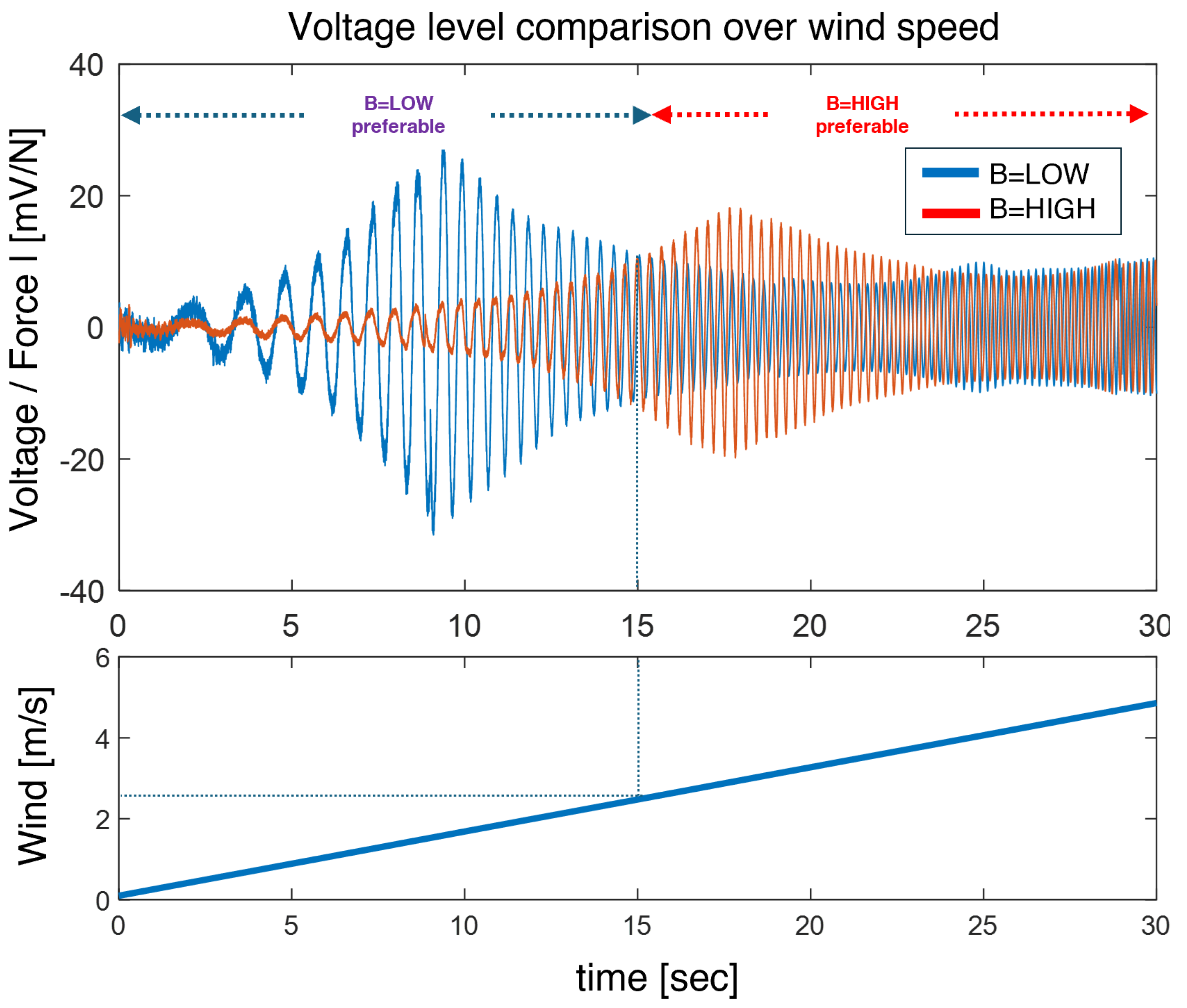
For maximum energy extraction, the incoming wind must be maintained within the lock-in range, where the shedding frequency synchronizes with the natural frequency of the structure. However, due to varying external conditions, wind velocity often fluctuates beyond this lock-in range. When this occurs, the power conversion efficiency of the BWT is drastically reduced, or in some cases, vibration and energy generation may cease altogether.
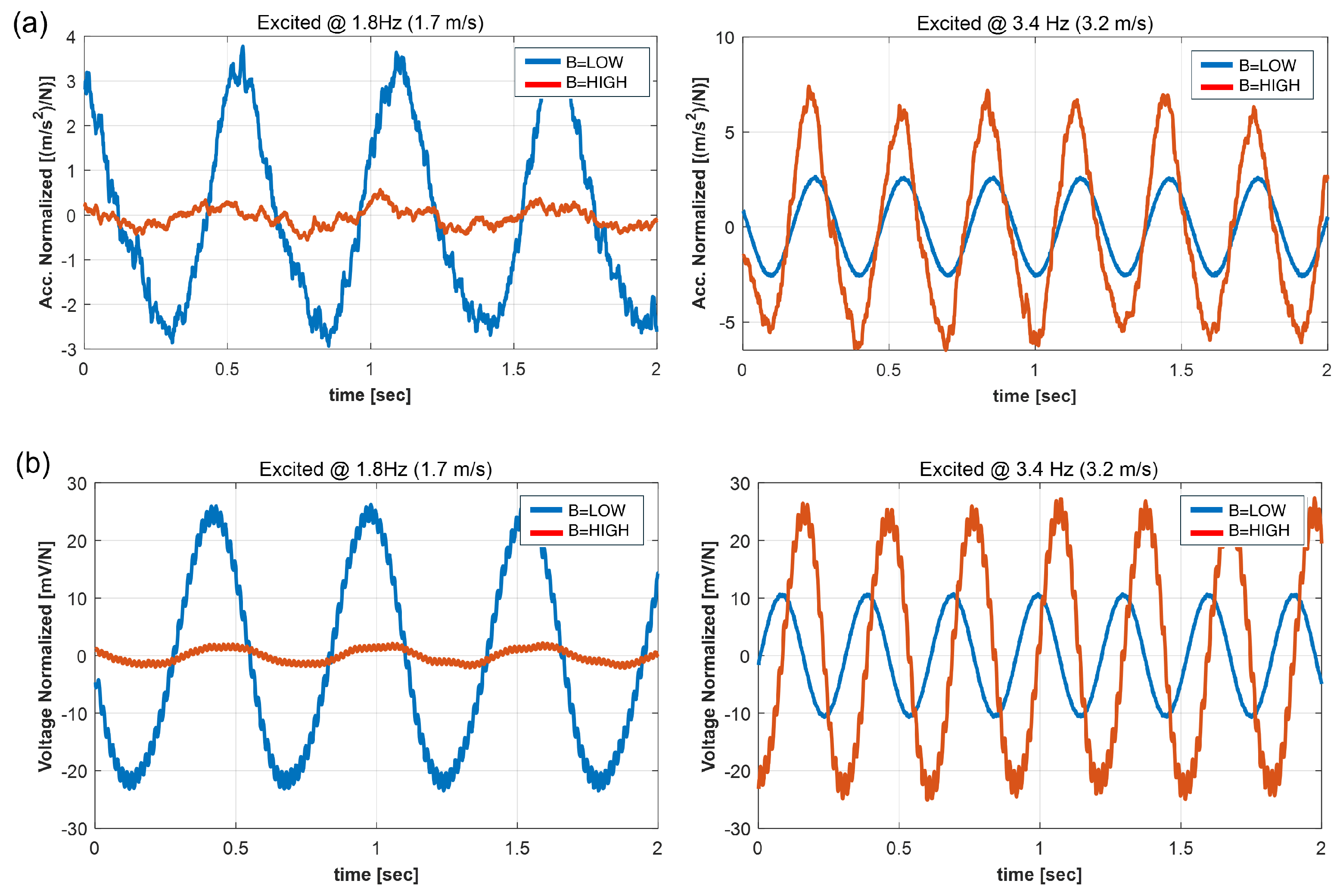
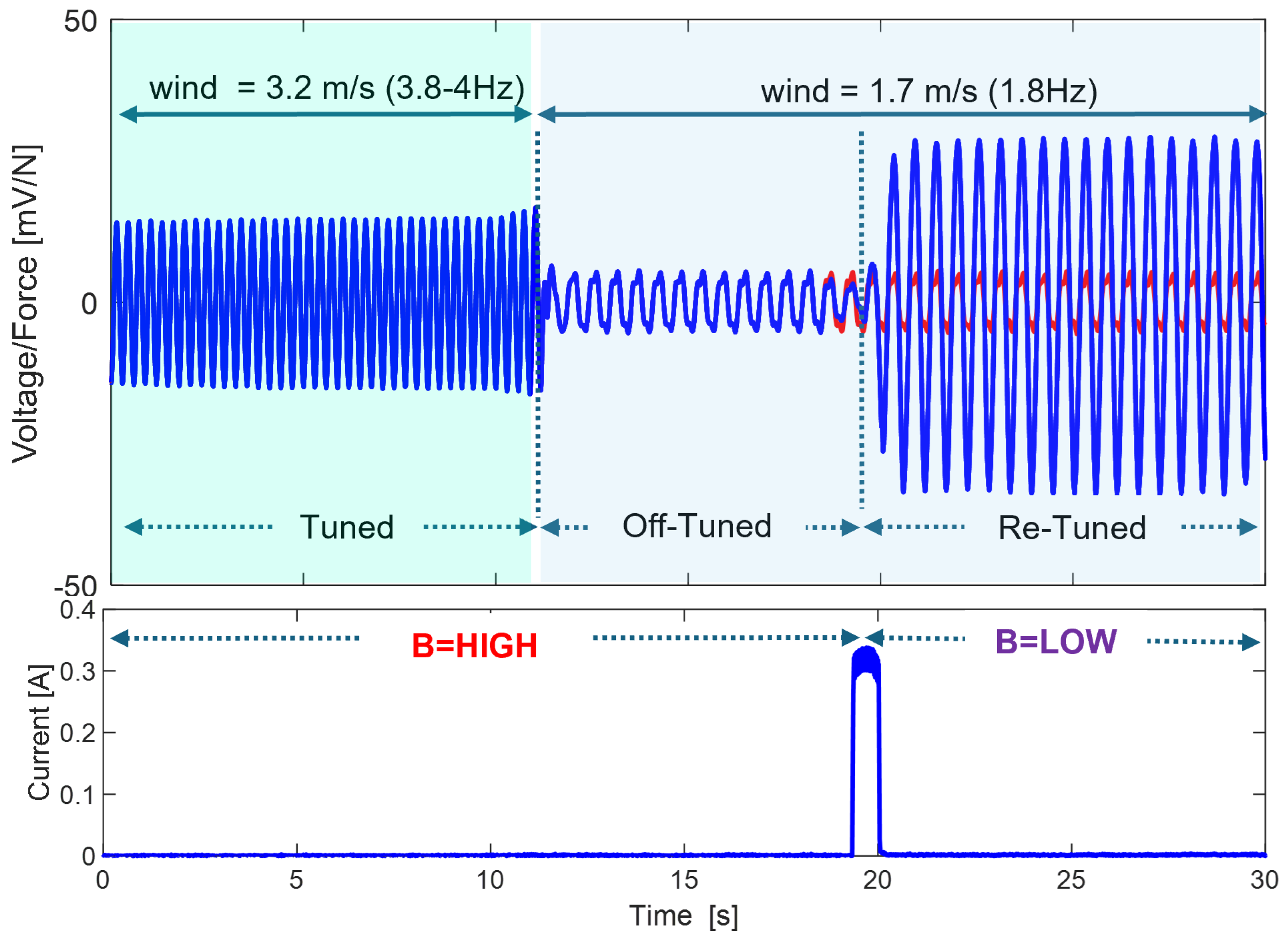
When the wind speed is matched with the structural resonance frequency of the BWT (), this results in strong oscillations and maximum energy generation. When the wind speed increases such that falls outside the initial lock-in range, this leads to a significantly diminished oscillation amplitude and reduced power output. For such a detuned state, the resonance can be recovered if the BWT is capable of adaptively tuning its resonance frequency from to to realign with the lock-in range at the new wind velocity.
Thus, this study proposes a semi-active resonance tuning system based on a smart elastomer, the stiffness of which can be dynamically controlled under the influence of an external magnetic field. This structure tuning mechanism enables the BWT to maintain resonance within a larger range of wind speeds.
2.3. Hardware Configuration
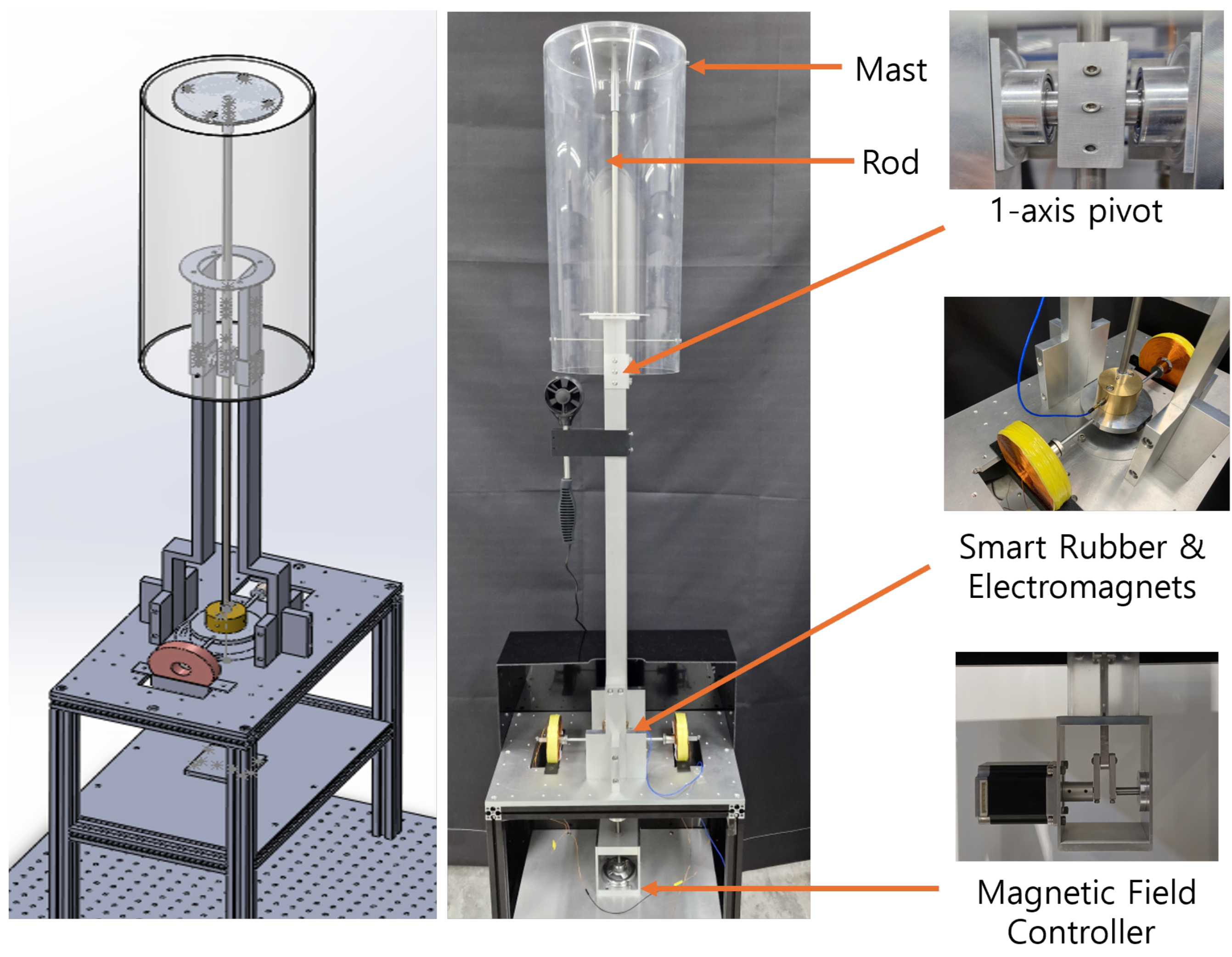
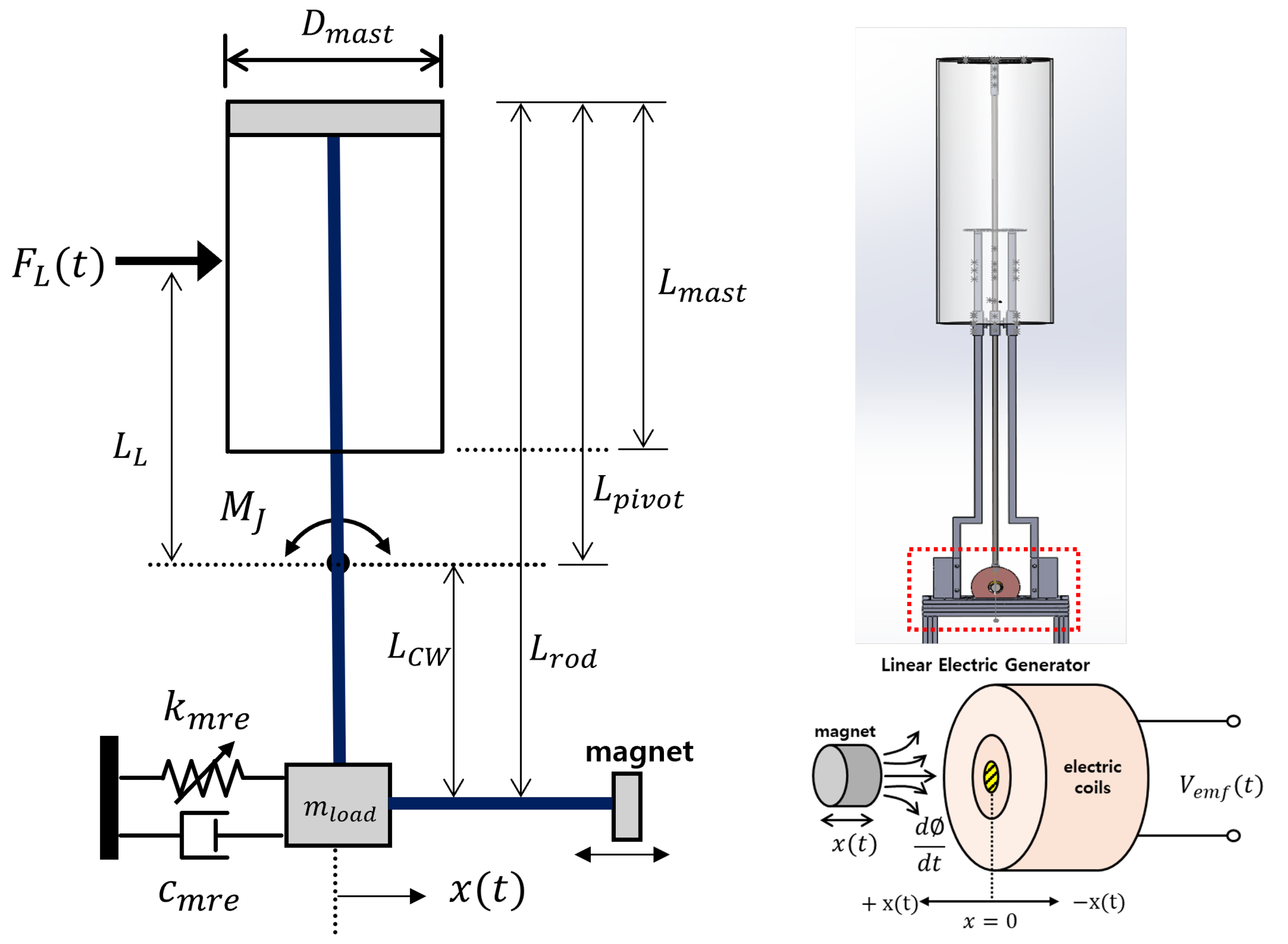
The designed BWT system is composed of a cylinder mast, a pivoted oscillating rod, a linear electromagnet generator, and a semi-active structure resonance control module using a stiffnes-variable smart rubber, as shown in
Figure 1. This is a similar design to the BWT in [
10], but the major difference is in the design optimization and the semi-active structure resonance control module.
2.3.1. Mast and Pivot
The mast of the bladeless wind turbine (BWT) is fabricated from a cylindrical polycarbonate tube with a wall thickness of 3 mm. It is supported by a slender stainless steel rod and mounted on a pin-joint with bearing, which permits free oscillation of the mast.
The geometric design parameters of the mast, including its diameter (), height () and the corresponding weight, are selected through the design optimization in the next section. However, to ensure portability, the overall height and total mass of the BWT are constrained to less than 1 m and 3 kg, respectively.
2.3.2. Electromagnet Generator
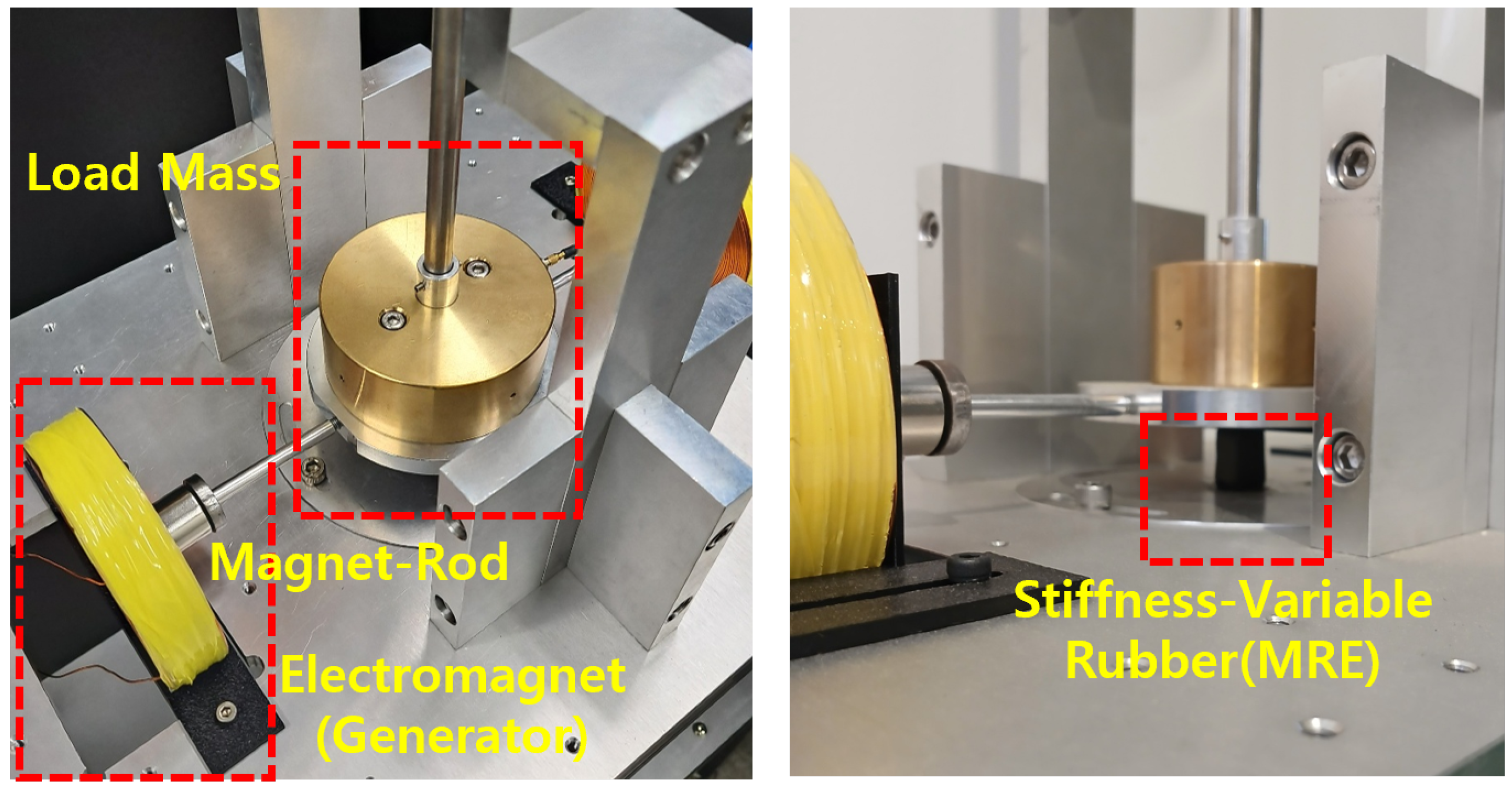
The induced voltage was generated by electromagnets positioned on either side of the load mass, as shown in
Figure 2. Each coil consisted of 1500 turns of copper wire, with an inner loop diameter of 60 mm. Permanent magnets were affixed to the ends of a rigid rod connected to the load mass. As the load mass oscillated with the mast, the relative motion of the permanent magnets within the surrounding coil produced the induced voltage.
2.3.3. Semi-Active Resonance Control Module
The structural frequency of the BWT can be tuned by the proposed semi-active resonance control module, which employs magnetorheological elastomers (MREs). MREs are smart materials, the stiffness of which increases in response to an externally applied magnetic field. An MRE block was placed at the bottom of the load mass, as shown in
Figure 2, to provide controllable shear stiffness to the BWT structure through a designed magnetic field generator.
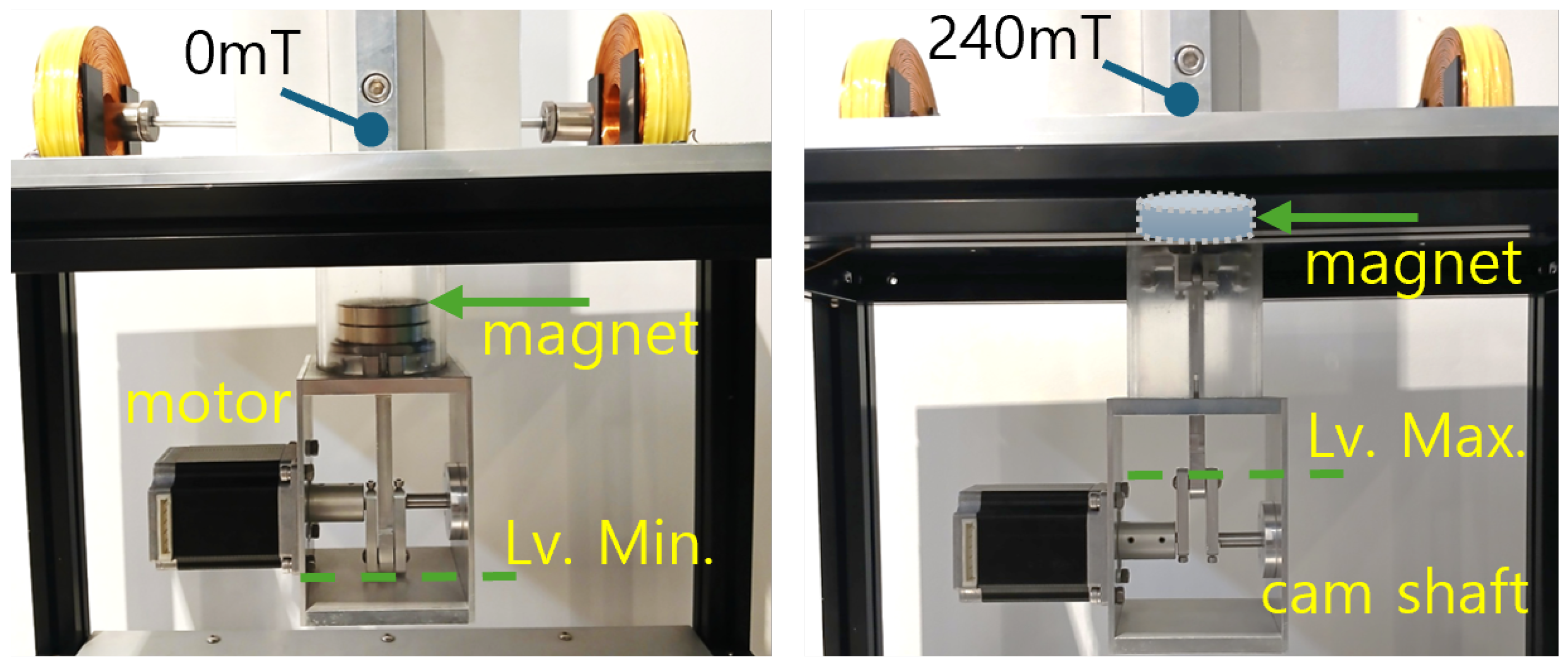
The motorized magnetic field controller consists of permanent magnets actuated vertically by a stepper motor using a cam–shift mechanism, as illustrated in
Figure 3. When the permanent magnet is in its lowest position, the magnetic field applied to the MRE is nearly negligible. Conversely, when the magnet is raised to its highest position, a maximum field of approximately 240 mT is applied to the MRE. This increases the MRE stiffness and enhances the effective stiffness of the overall BWT structure, consequently.
To reduce the power consumption of the stepper motor during magnet positioning, a discrete on–off control strategy was adopted for magnetic field generation. This resonance tuning approach enables adaptive control of the structural frequency, thereby improving the energy harvesting efficiency of the BWT across a broader range of wind speeds.
3. Optimization of BWT Design Parameters
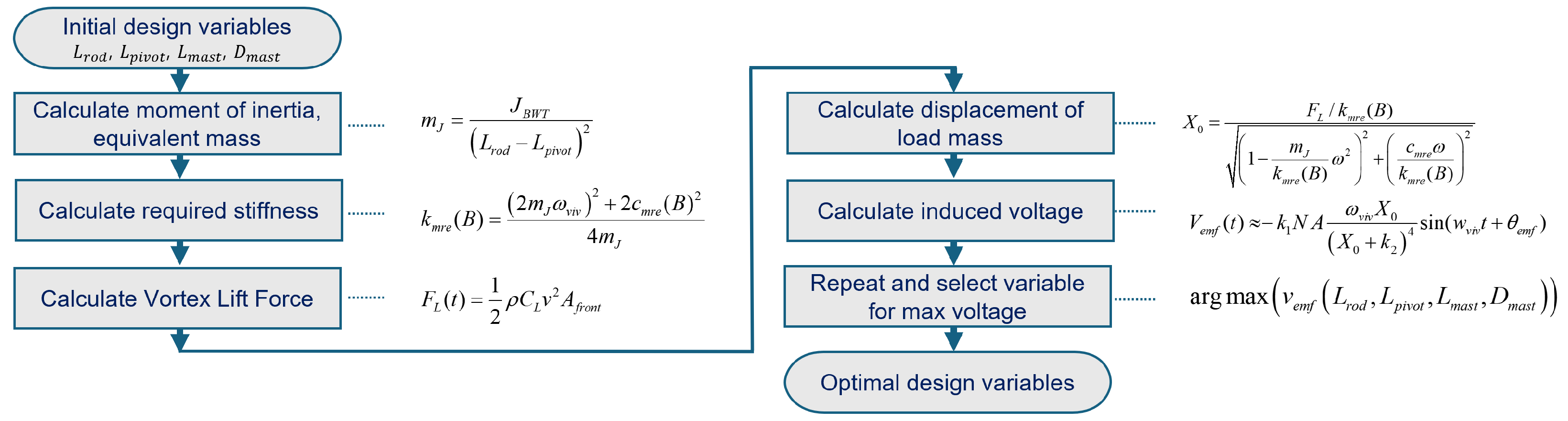
The optimization of the bladeless wind turbines (BWTs) aims to maximize the electrical energy output through the optimal hardware design within given physical constraints. To achieve this, the coupled effects of structural dynamics and electromechanical energy conversion must be comprehensively considered. In this study, the governing equations for both the mechanical and electrical response of the BWT system were formulated. The primary design variables include the rod length, mast geometry, and pivot position. The overall optimization procedure is schematically illustrated in
Figure 4.
3.1. Mechanical Modeling
3.1.1. Moment of Inertia and Mass
As the BWT oscillates about its pivot, the total moment of inertia,
, is obtained by summing the individual moments of inertia of all moving components, as shown in
Figure 5.
From the total moment of inertia, the equivalent oscillating mass of the BWT can be derived as
3.1.2. Calculation of the BWT Tuning Stiffness
In the BWT system, the MRE contributes the variable stiffness (
) and damping (
) to the overall dynamics of the BWT system. The variable stiffness of the MRE,
, is a function of its initial stiffness and an increment stiffness, which is caused by the applied magnetic field (
B):
The nominal structural stiffness of the BWT must be designed such that the structural resonance frequency aligns with the nominal operating wind speed that generates the vortex shedding frequency of
, which is a function of the wind speed, mast diameter, and Strouhal number:
Since the BWT is designed to resonate at the targeted wind speed, the desired structural frequency,
, should be matched to the vortex shedding frequency as
where
is the damped structural frequency,
Using the variable stiffness property of the MRE in Equation (
5) and the formula for the natural frequency and damping ratio, the natural resonance of BWT can be expressed as
Thus, the condition in which the vortex shedding frequency triggers the resonances in the BWT of Equation (
7) becomes
Consequently, the stiffness of the BWT, which must be adjusted to maintain resonance with the vortex shedding frequency
, is defined as
3.1.3. BWT Vibration Dynamics
The electric voltage is induced by the vibration of the BWT, which causes the permanent magnets attached to the load mass to oscillate relative to the surrounding electric coils. As the vibration amplitude of the load mass increases, the induced voltage also increases proportionally. Therefore, the BWT vibration , representing the displacement of the load mass, serves as the primary dynamic response to be maximized through design optimization.
Given the small amplitude of vibration displacement, the motion of
can be approximated as linear and modeled as a single-degree-of-freedom (SDOF) mass–spring–damper system with the expression of
where
is the horizontal displacement,
is the magnetic-field-dependent damping coefficient,
is the effective stiffness, and
is the external excitation force.
The external force arises from the lift generated by vortex shedding around the mast, acting through an effective lever arm distance
from the pivot. Thus, the effective force transmitted to the load mass can be expressed in terms of the effective arm length of the force (
) and the mass load (
where
is the lift force defined by
with
being the lift coefficient,
the air density, and
the frontal projected area of the mast. At steady state, the lift force excitation generated by the vortex shedding can be approximated as a sinusoidal input, expressed as
where
is the amplitude of the external excitation and
is the excitation frequency. Accordingly, under a constant wind speed, the oscillating external force can be expressed in terms of the lift force as
In the frequency domain, the vibration amplitude
can be expressed as a function of the excitation frequency
and the wind velocity, based on the dynamic equation given in Equation (
9). The frequency response of the system is thus obtained as
The maximum vibration amplitude at a steady wind velocity, denoted as , occurs when the excitation frequency matches the natural frequency of the BWT system, i.e., . At this resonance condition, the vibration magnitude can be expressed as
3.2. Induced Electrical Energy from Vibration
Electrical energy harvesting is achieved through electromagnetic induction, which occurs due to the oscillatory motion of the permanent magnet relative to the stationary coils. According to Faraday’s law, the induced electromotive force can be estimated as
where
N is the number of coil turns,
A is the effective area through which the magnetic flux passes, and
represents the magnetic field strength as a function of magnet displacement
x.
A permanent magnet can be approximated as a magnetic dipole with moment
m. On the axis of the magnet, the magnetic field
can be expressed as an inverse-cube function of the distance
x from the magnet [
22] as
where
m is the magnetic dipole moment and
is the magnetic permeability of free space.
By substituting Equations (
17) and (
18), the induced voltage generated by the vibration of a permanent magnet can be expressed as a nonlinear function of the magnet distance as
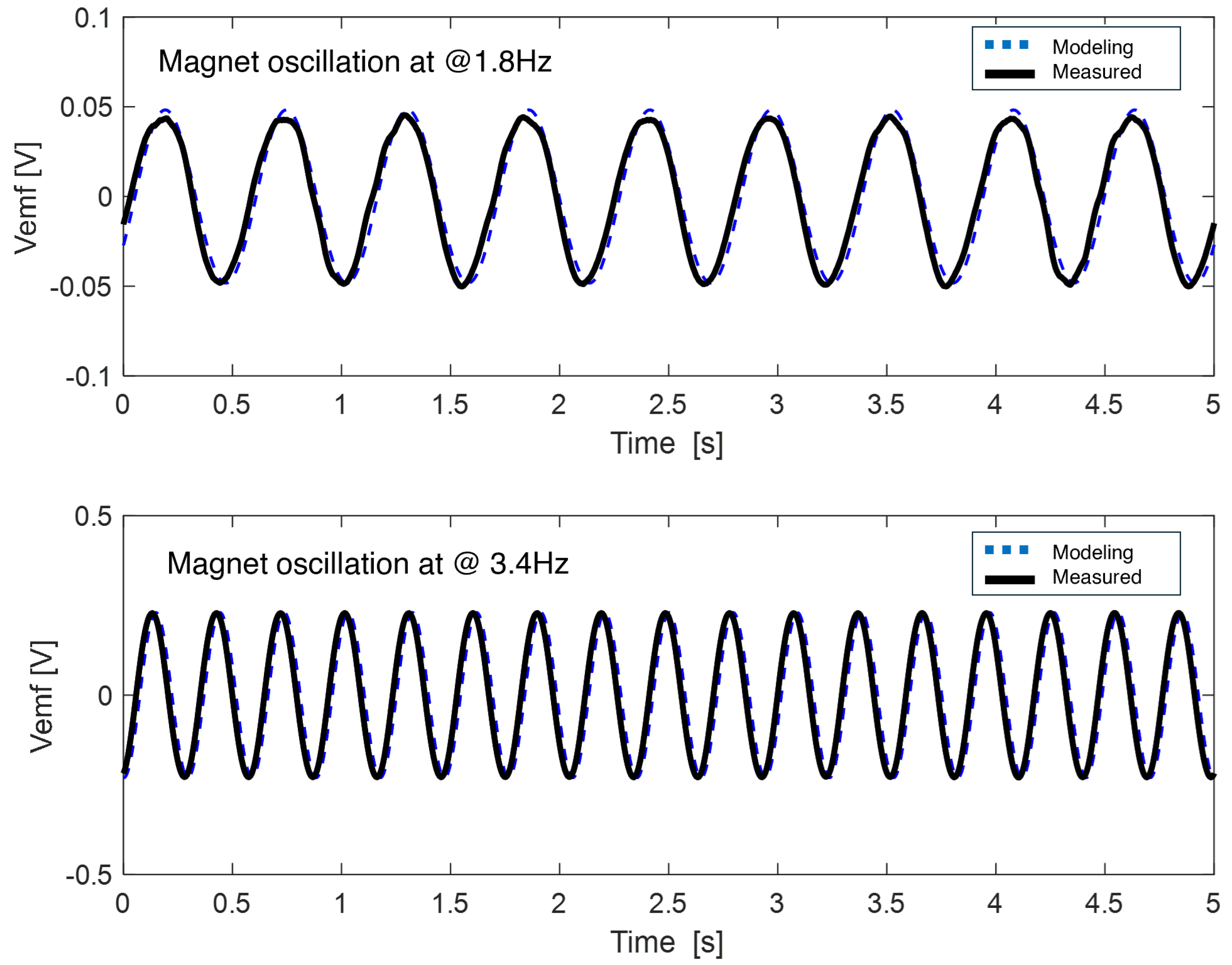
In the proposed system, the permanent magnet undergoes sinusoidal motion at the vortex-induced vibration frequency with a small amplitude, modeled as
. Experiments showed that, within the frequency range of interest, the induced voltage can be approximated as a harmonic signal at the vortex frequency:
where the model parameters were identified from experiments as
and
. The voltage predicted by the derived model is compared with the experimental measurements in
Figure 6, confirming that the model adequately captures the dependence of the induced voltage on the vibration displacement and excitation frequency.
3.3. Design Optimization Simulation
The design variables for the optimization process are the rod length (), pivot position (), mast length (), and mast diameter (). Since the total mass of the BWT is proportional to the total volume of its structural components, it can be expressed as . Conversely, the same geometric parameters increase the projected frontal area of the mast, which determines the aerodynamic lift force, as .
From Equation (
15), the maximum vibration displacement of the BWT is directly proportional to the frontal projected area and inversely proportional to the total mass as
As and increase, the total mass of the BWT increases, which tends to reduce the vibration amplitude under a given lift force. However, larger values of and also increase the frontal surface area, thereby enhancing the lift force and producing greater vibration amplitude. These competing effects reveal a strong coupling between aerodynamic excitation and structural dynamics, underscoring the need for optimization to achieve the best compromise in BWT performance.
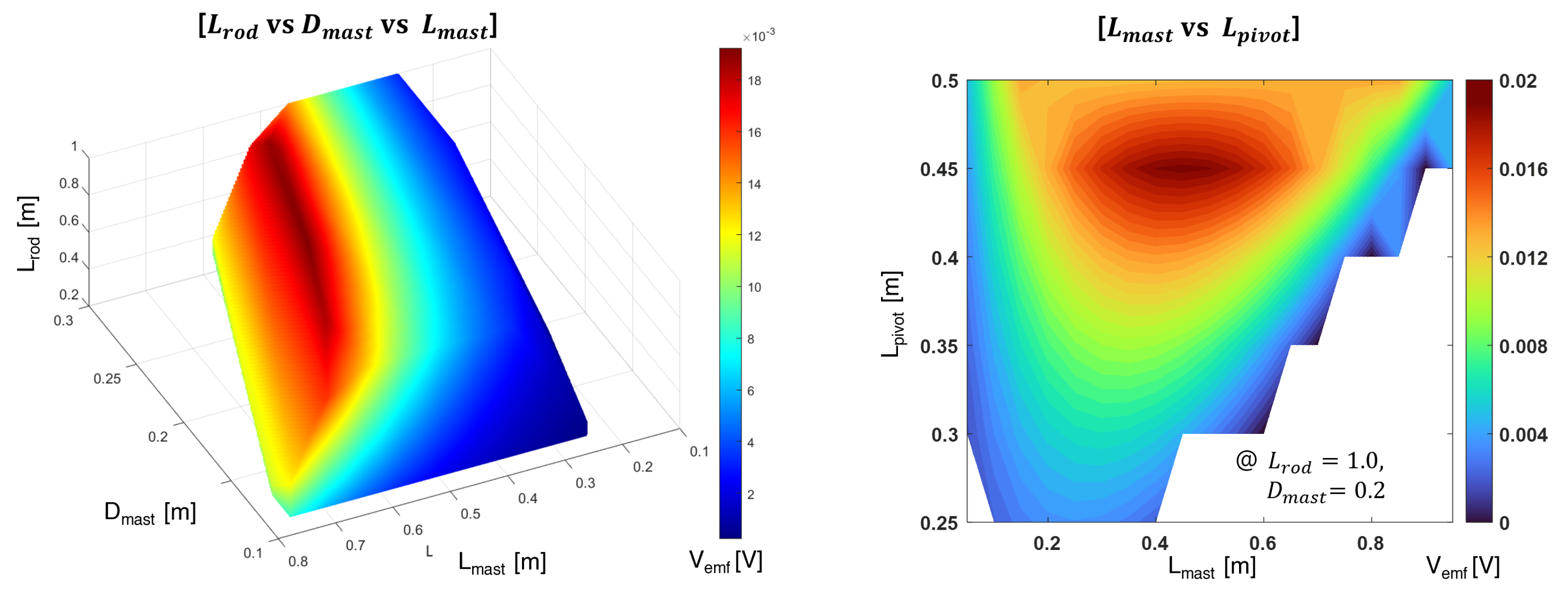
To quantitatively evaluate these interactions, simulations were performed within constrained design ranges. The maximum rod length was limited to 1 m, the mast diameter was restricted to less than 0.3 m, and the total mass was constrained to remain below 2 kg, considering the overall size and portability of the prototype.
Simulation results revealed that larger values of both
and
tend to yield higher induced voltage levels, as illustrated in
Figure 7. Among the feasible configurations satisfying the mass constraint, the optimal pair was determined to be
m and
m. Furthermore, among various combinations of
and
in
Figure 7, the configuration of
m produced the maximum voltage output.
The final optimal design parameters and corresponding calculated variables are summarized in
Table 1.
5. Conclusions
This study presented the design optimization and experimental validation of a small-scale vortex-induced vibration (VIV) bladeless wind turbine (BWT) integrated with a semi-active resonance control module based on magnetorheological elastomers (MREs). The mechanical–electromagnetic coupling model was developed to establish the relationship between the structural design parameters and induced voltage, and an optimization procedure was conducted to maximize energy harvesting efficiency within the given size and mass constraints, which were not conducted in previous related studies.
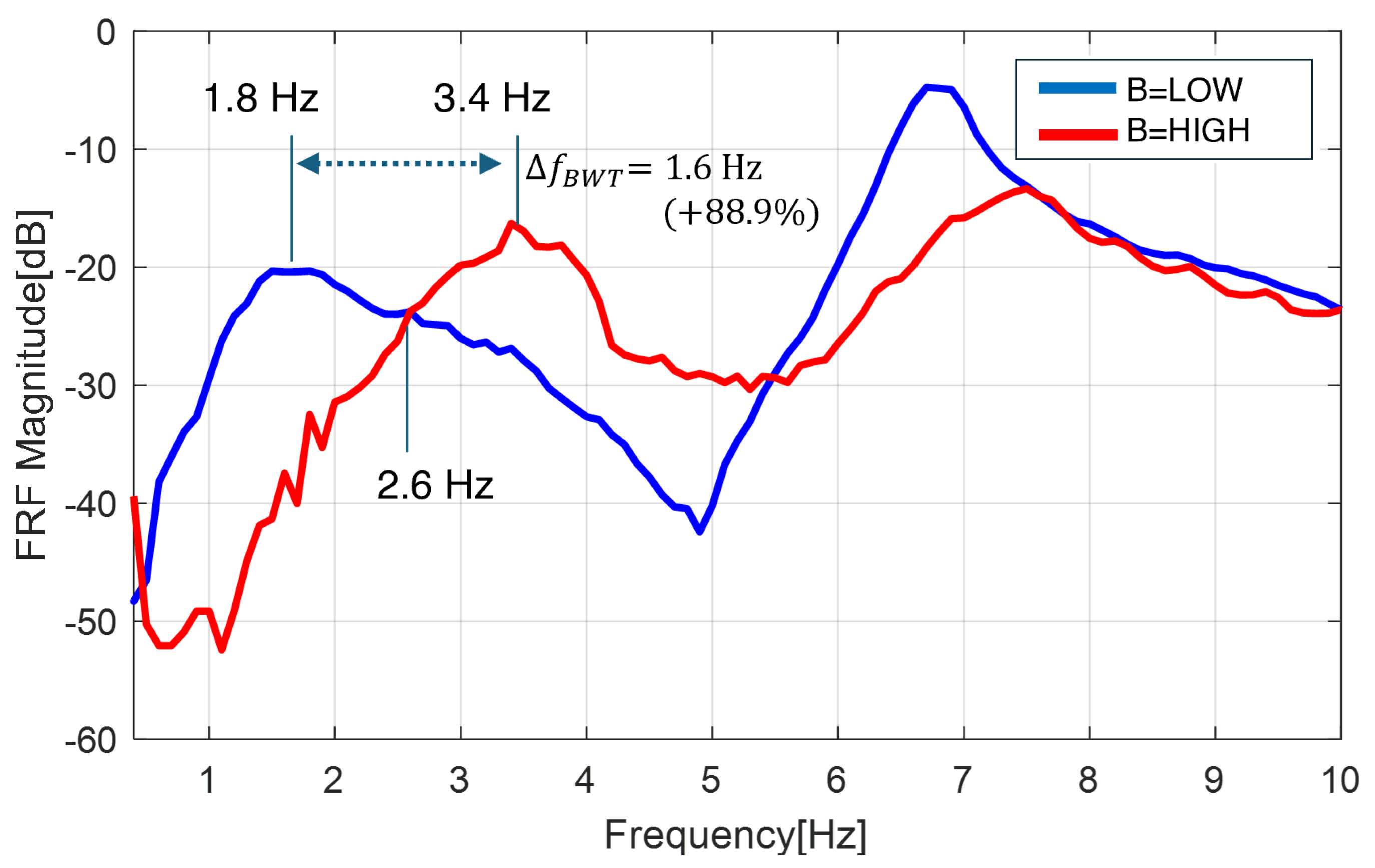
Experimental results demonstrated that the proposed binary magnetic field controller effectively tuned the structural resonance frequency of the BWT, achieving a frequency shift of 88.9% and extending the lock-in wind speed range from 1.7 m/s to 3.2 m/s. The adaptive control enabled stable voltage generation and sustained high vibration amplitudes under fluctuating wind conditions.
The findings confirm that combining structural optimization with semi-active resonance tuning significantly enhances the adaptability and energy conversion efficiency of small-scale BWT systems. The proposed concept provides a promising framework for compact, low-noise, and maintenance-free wind energy harvesters suitable for urban and distributed power applications. Future work will focus on real-time feedback control strategies and scaling up the prototype for practical deployment in variable outdoor environments.