A Comparative Evaluation of Greek Fig Cultivars Utilizing Instrumental Analytical Methodologies, In Silico Studies and Machine Learning Prediction

 , , and
Abstract
1. Introduction
2. Materials and Methods
2.1. Fig Sampling
2.2. Total Soluble Solids (TSS) Determination of the Fig Flesh
2.3. Extraction and Spectrophotometric Evaluation of Phenolic Compounds of Fig Peel and Flesh
2.4. Attenuated Total Reflectance–Fourier Transform Infrared Spectroscopy (ATR-FTIR)
2.5. Statistical Analysis
2.6. Molecular Docking
2.6.1. Collection and Preparation of the Phytochemical Dataset Derived from Ficus carica L.
2.6.2. Beta-Secretase 1 (BACE1) Enzyme Preparation
2.6.3. Grid Box Generation and Molecular Docking Simulations
2.7. Establishment of a Machine Learning Model Predicting the Inhibitory Activity of Fig Compounds
3. Results and Discussion
3.1. Total Soluble Solids (TSS) and Spectrophotometric Results of the Fig Samples
3.1.1. Total Soluble Solids (TSS) Results
3.1.2. Spectrophotometric Results
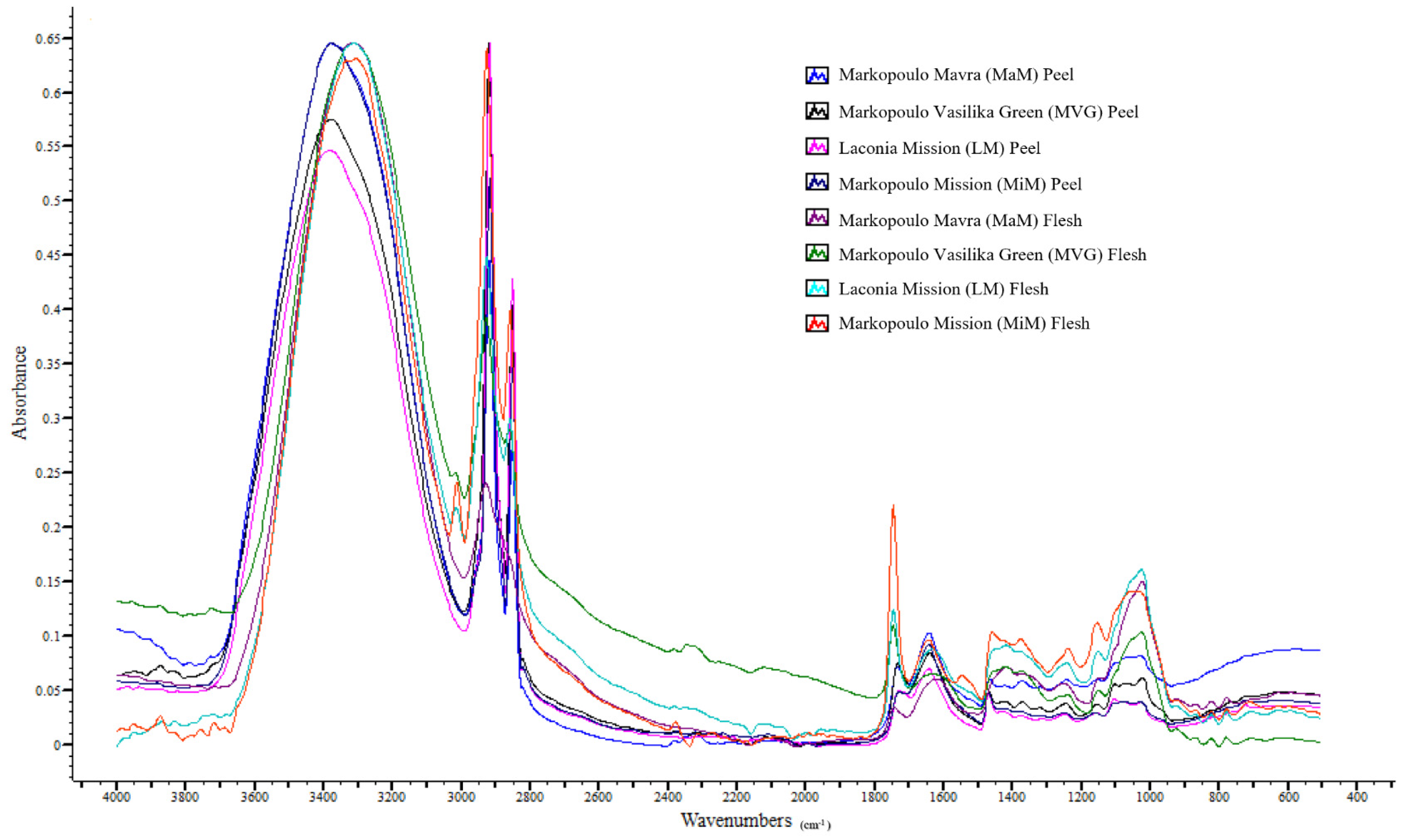
3.2. Interpretation of the ATR-FTIR Spectral Absorbance Bands of the Fig Peel and Flesh Samples
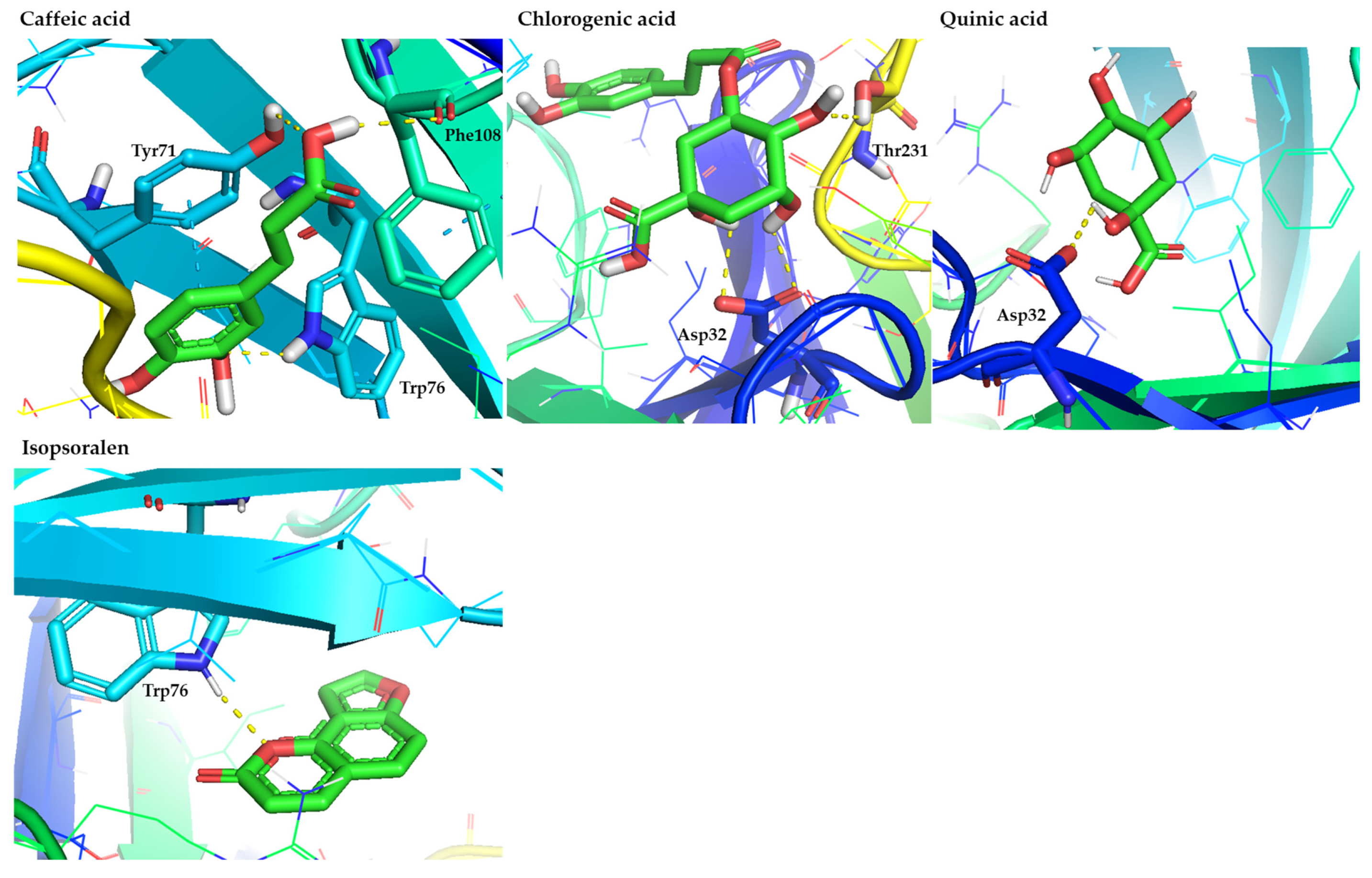
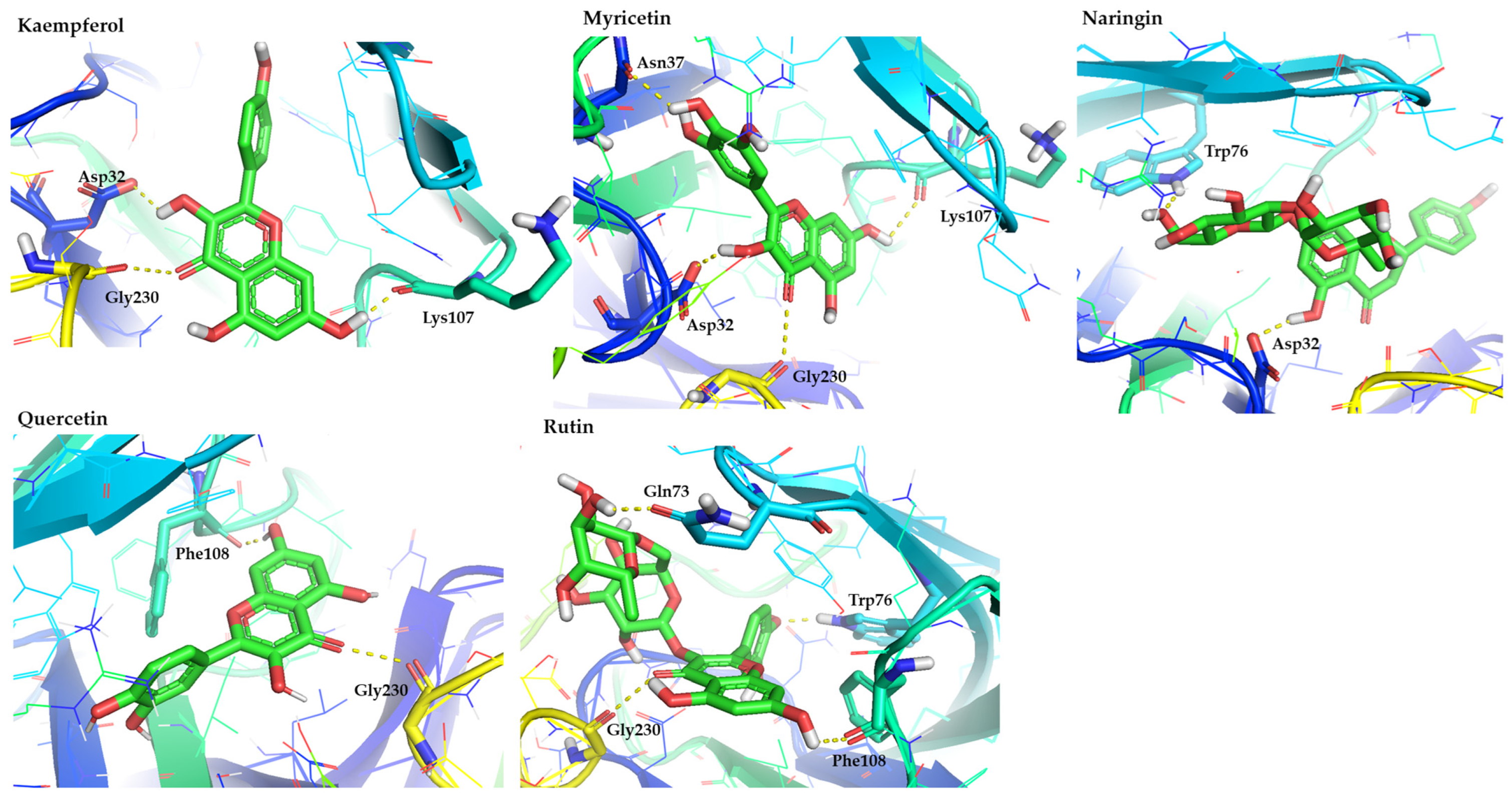
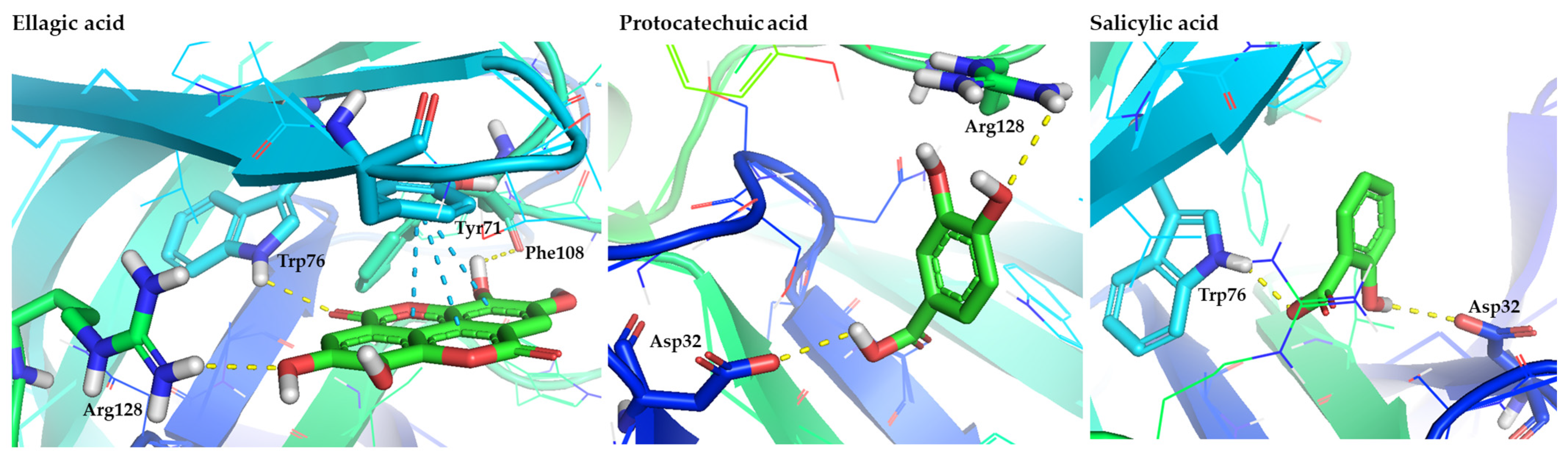
3.3. Molecular Docking Results for Figs’ Principal Compounds Against Beta Secretase 1 Enzyme
3.4. Machine Learning-Based Classification and Descriptor Analysis of BACE1 Potential Inhibitors
3.4.1. Descriptor Selection and Their Biochemical Relevance
3.4.2. Model Performance and Predictive Robustness
3.4.3. Classification of Fig Phytochemicals Using the Machine Learning Model
3.4.4. Structural Explanation for the Universal Predicted Activity of Fig-Derived Compounds—Comparison with Molecular Docking Results
4. Conclusions
Author Contributions
Funding
Institutional Review Board Statement
Informed Consent Statement
Data Availability Statement
Acknowledgments
Conflicts of Interest
References
- Dogara, A.M.; Hama, H.A.; Ozdemir, D. Taxonomy, Traditional Uses and Biological Activity of Ficus carica L. (Moraceae): A Review. Plant Sci. Today 2024, 11, 385–400. [Google Scholar] [CrossRef]
- Alzahrani, M.Y.; Alshaikhi, A.I.; Hazzazi, J.S.; Kurdi, J.R.; Ramadan, M.F. Recent Insight on Nutritional Value, Active Phytochemicals, and Health-Enhancing Characteristics of Fig (Ficus craica). Food Saf. Health 2024, 2, 179–195. [Google Scholar] [CrossRef]
- Sandhu, A.K.; Islam, M.; Edirisinghe, I.; Burton-Freeman, B. Phytochemical Composition and Health Benefits of Figs (Fresh and Dried): A Review of Literature from 2000 to 2022. Nutrients 2023, 15, 2623. [Google Scholar] [CrossRef] [PubMed]
- Veberic, R.; Colaric, M.; Stampar, F. Phenolic Acids and Flavonoids of Fig Fruit (Ficus carica L.) in the Northern Mediterranean Region. Food Chem. 2008, 106, 153–157. [Google Scholar] [CrossRef]
- Hajam, T.A.; H, S. Phytochemistry, Biological Activities, Industrial and Traditional Uses of Fig (Ficus carica): A Review. Chem. Biol. Interact. 2022, 368, 110237. [Google Scholar] [CrossRef]
- Shahrajabian, M.H.; Sun, W.; Cheng, Q. A Review of Chemical Constituents, Traditional and Modern Pharmacology of Fig (Ficus carica L.), a Super Fruit with Medical Astonishing Characteristics. Pol. J. Agron. 2021, 22–29. [Google Scholar] [CrossRef]
- Khadhraoui, M.; Bagues, M.; Artés, F.; Ferchichi, A. Phytochemical Content, Antioxidant Potential, and Fatty Acid Composition of Dried Tunisian Fig (Ficus carica L.) Cultivars. J. Appl. Bot. Food Qual. 2019, 143–150. [Google Scholar] [CrossRef]
- Mahmoudi, S.; Khali, M.; Benkhaled, A.; Boucetta, I.; Dahmani, Y.; Attallah, Z.; Belbraouet, S. Fresh Figs (Ficus carica L.): Pomological Characteristics, Nutritional Value, and Phytochemical Properties. Eur. J. Hortic. Sci. 2018, 83, 104–113. [Google Scholar] [CrossRef]
- Sedaghat, S.; Rahemi, M. Effects of Physio-Chemical Changes during Fruit Development on Nutritional Quality of Fig (Ficus carica L. Var. ‘Sabz’) under Rain-Fed Condition. Sci. Hortic. 2018, 237, 44–50. [Google Scholar] [CrossRef]
- Pereira, C.; López Corrales, M.; Martín, A.; del Villalobos, M.C.; Córdoba, M.d.G.; Serradilla, M.J. Physicochemical and Nutritional Characterization of Brebas for Fresh Consumption from Nine Fig Varieties (Ficus carica L.) Grown in Extremadura (Spain). J. Food Qual. 2017, 2017, 6302109. [Google Scholar] [CrossRef]
- Rasool, I.F.u.; Aziz, A.; Khalid, W.; Koraqi, H.; Siddiqui, S.A.; AL-Farga, A.; Lai, W.-F.; Ali, A. Industrial Application and Health Prospective of Fig (Ficus carica) By-Products. Molecules 2023, 28, 960. [Google Scholar] [CrossRef] [PubMed]
- Walia, A.; Kumar, N.; Singh, R.; Kumar, H.; Kumar, V.; Kaushik, R.; Kumar, A.P. Bioactive Compounds in Ficus Fruits, Their Bioactivities, and Associated Health Benefits: A Review. J. Food Qual. 2022, 2022, 6597092. [Google Scholar] [CrossRef]
- Karantzi, A.D.; Kafkaletou, M.; Christopoulos, M.V.; Tsantili, E. Peel Colour and Flesh Phenolic Compounds at Ripening Stages in Pollinated Commercial Varieties of Fig (Ficus carica L.) Fruit Grown in Southern Europe. Food Meas. 2021, 15, 2049–2063. [Google Scholar] [CrossRef]
- Arvaniti, O.S.; Samaras, Y.; Gatidou, G.; Thomaidis, N.S.; Stasinakis, A.S. Review on Fresh and Dried Figs: Chemical Analysis and Occurrence of Phytochemical Compounds, Antioxidant Capacity and Health Effects. Food Res. Int. 2019, 119, 244–267. [Google Scholar] [CrossRef]
- Hssaini, L.; Elfazazi, K.; Razouk, R.; Ouaabou, R.; Hernandez, F.; Hanine, H.; Charafi, J.; Houmanat, K.; Aboutayeb, R. Combined Effect of Cultivar and Peel Chromaticity on Figs’ Primary and Secondary Metabolites: Preliminary Study Using Biochemical and FTIR Fingerprinting Coupled to Chemometrics. Biology 2021, 10, 573. [Google Scholar] [CrossRef]
- Palmeira, L.; Pereira, C.; Dias, M.I.; Abreu, R.M.V.; Corrêa, R.C.G.; Pires, T.C.S.P.; Alves, M.J.; Barros, L.; Ferreira, I.C.F.R. Nutritional, Chemical and Bioactive Profiles of Different Parts of a Portuguese Common Fig (Ficus carica L.) Variety. Food Res. Int. 2019, 126, 108572. [Google Scholar] [CrossRef]
- Manik, M.M.; Quader, M.F.B.; Masum, M.A.A.; Iftekhar, A.B.; Rahman, S.A.; Sarker, M.S.; Hossain, D. Nutritional Composition, Bioactive Compounds, and Antioxidant Activity of Fig (Ficus carica L.) Jam Varieties: A Functional Food Perspective. Health Dyn. 2025, 2, 275–282. [Google Scholar] [CrossRef]
- Teruel-Andreu, C.; Cano-Lamadrid, M.; Hernández, F.; Wojdyło, A. Bioactive Compounds (LC-PDA-Qtof-ESI-MS and UPLC-PDA-FL) and in Vitro Inhibit α-Amylase and α-Glucosidase in Leaves and Fruit from Different Varieties of Ficus carica L. Food Chem. 2025, 465, 141977. [Google Scholar] [CrossRef]
- Subash, S.; Essa, M.M.; Braidy, N.; Al-Jabri, A.; Vaishnav, R.; Al-Adawi, S.; Al-Asmi, A.; Guillemin, G.J. Consumption of Fig Fruits Grown in Oman Can Improve Memory, Anxiety, and Learning Skills in a Transgenic Mice Model of Alzheimer’s Disease. Nutr. Neurosci. 2016, 19, 475–483. [Google Scholar] [CrossRef]
- Essa, M.M.; Subash, S.; Akbar, M.; Al-Adawi, S.; Guillemin, G.J. Long-Term Dietary Supplementation of Pomegranates, Figs and Dates Alleviate Neuroinflammation in a Transgenic Mouse Model of Alzheimer’s Disease. PLoS ONE 2015, 10, e0120964. [Google Scholar] [CrossRef]
- Tikent, A.; Laaraj, S.; Adiba, A.; Elfazazi, K.; Ouakhir, H.; Bouhrim, M.; Shahat, A.A.; Herqash, R.N.; Elamrani, A.; Addi, M. Nutritional Composition Health Benefits and Quality of Fresh and Dried Figs from Eastern Morocco. Sci. Rep. 2025, 15, 9776. [Google Scholar] [CrossRef] [PubMed]
- Hosseini, E.; Tsegay, Z.T.; Smaoui, S.; Varzakas, T. Chemical Structure, Composition, Bioactive Compounds, and Pattern Recognition Techniques in Figs (Ficus carica L.) Quality and Authenticity: An Updated Review. J. Food Compos. Anal. 2025, 137, 106863. [Google Scholar] [CrossRef]
- Russo, F.; Caporaso, N.; Paduano, A.; Sacchi, R. Phenolic Compounds in Fresh and Dried Figs from Cilento (Italy), by Considering Breba Crop and Full Crop, in Comparison to Turkish and Greek Dried Figs. J. Food Sci. 2014, 79, C1278–C1284. [Google Scholar] [CrossRef] [PubMed]
- Trad, M.; Le Bourvellec, C.; Gaaliche, B.; Ginies, C.; Renard, C.M.G.C.; Mars, M. Caprification Modifies Polyphenols but Not Cell Wall Concentrations in Ripe Figs. Sci. Hortic. 2013, 160, 115–122. [Google Scholar] [CrossRef]
- Ladika, G.; Strati, I.F.; Tsiaka, T.; Cavouras, D.; Sinanoglou, V.J. On the Assessment of Strawberries’ Shelf-Life and Quality, Based on Image Analysis, Physicochemical Methods, and Chemometrics. Foods 2024, 13, 234. [Google Scholar] [CrossRef]
- Christodoulou, P.; Kritsi, E.; Ladika, G.; Tsafou, P.; Tsiantas, K.; Tsiaka, T.; Zoumpoulakis, P.; Cavouras, D.; Sinanoglou, V.J. Estimation of Tomato Quality During Storage by Means of Image Analysis, Instrumental Analytical Methods, and Statistical Approaches. Appl. Sci. 2025, 15, 7936. [Google Scholar] [CrossRef]
- Christodoulou, P.; Ladika, G.; Tsiantas, K.; Kritsi, E.; Tsiaka, T.; Cavouras, D.; Zoumpoulakis, P.; Sinanoglou, V.J. Quality Assessment of Greenhouse-Cultivated Cucumbers (Cucumis sativus) during Storage Using Instrumental and Image Analyses. Appl. Sci. 2024, 14, 8676. [Google Scholar] [CrossRef]
- Sinanoglou, V.J.; Tsiaka, T.; Aouant, K.; Mouka, E.; Ladika, G.; Kritsi, E.; Konteles, S.J.; Ioannou, A.-G.; Zoumpoulakis, P.; Strati, I.F.; et al. Quality Assessment of Banana Ripening Stages by Combining Analytical Methods and Image Analysis. Appl. Sci. 2023, 13, 3533. [Google Scholar] [CrossRef]
- Andreou, V.; Strati, I.F.; Fotakis, C.; Liouni, M.; Zoumpoulakis, P.; Sinanoglou, V.J. Herbal Distillates: A New Era of Grape Marc Distillates with Enriched Antioxidant Profile. Food Chem. 2018, 253, 171–178. [Google Scholar] [CrossRef]
- Matić, P.; Sabljić, M.; Jakobek, L. Validation of Spectrophotometric Methods for the Determination of Total Polyphenol and Total Flavonoid Content. J. AOAC Int. 2017, 100, 1795–1803. [Google Scholar] [CrossRef]
- Lantzouraki, D.Z.; Sinanoglou, V.J.; Zoumpoulakis, P.G.; Glamočlija, J.; Ćirić, A.; Soković, M.; Heropoulos, G.; Proestos, C. Antiradical–Antimicrobial Activity and Phenolic Profile of Pomegranate (Punica granatum L.) Juices from Different Cultivars: A Comparative Study. RSC Adv. 2014, 5, 2602–2614. [Google Scholar] [CrossRef]
- Lantzouraki, D.Z.; Sinanoglou, V.J.; Zoumpoulakis, P.; Proestos, C. Comparison of the Antioxidant and Antiradical Activity of Pomegranate (Punica Granatum L.) by Ultrasound-Assisted and Classical Extraction. Anal. Lett. 2016, 49, 969–978. [Google Scholar] [CrossRef]
- Ladika, G.; Christodoulou, P.; Kritsi, E.; Tsiaka, T.; Sotiroudis, G.; Cavouras, D.; Sinanoglou, V.J. Exploring Postharvest Metabolic Shifts and NOX2 Inhibitory Potential in Strawberry Fruits and Leaves via Untargeted LC-MS/MS and Chemometric Analysis. Metabolites 2025, 15, 321. [Google Scholar] [CrossRef] [PubMed]
- Luo, J.; Dong, X.; Liang, J.; Jia, M.; Sun, L.; Han, Y.; Zhou, S.; Sun, R. Analysis of the Relationship Between Organic Acid, Total Soluble Solids, Total Phenolic, and Total Flavonoids in Ficus carica. Appl. Fruit. Sci. 2025, 67, 167. [Google Scholar] [CrossRef]
- Hoxha, L.; Kongoli, R.; Dervishi, J. Influence of Maturity Stage on Polyphenolic Content and Antioxidant Activity of Fig (Ficus carica L.) Fruit in Native Albanian Varieties. Chem. Proc. 2022, 10, 49. [Google Scholar] [CrossRef]
- Swetha, D.; Chandrasekaran, I.; Gurumeenakshi, G.; Rani, A.; Amuthaselvi, G.; Neelavathi, R. Evaluation of Quality Attributes in Fresh Fig (Ficus carica L.) Fruits. Biol. Forum–Int. J. 2022, 14, 532–537. [Google Scholar]
- Hssaini, L.; Charafi, J.; Hanine, H.; Ennahli, S.; Mekaoui, A.; Mamouni, A.; Razouk, R. Correction to: Comparative Analysis and Physio-biochemical Screening of an Ex-situ Fig (Ficus carica L.) Collection. Hortic. Environ. Biotechnol. 2019, 60, 797. [Google Scholar] [CrossRef]
- Galán, A.J.; Domínguez, M.G.; Pérez-López, M.; Galván, A.I.; Pérez-Gragera, F.; López-Corrales, M. Agronomic Performance and Fruit Quality of Fresh Fig Varieties Trained in Espaliers Under a High Planting Density. Horticulturae 2025, 11, 750. [Google Scholar] [CrossRef]
- Gündeşli, M.A.; Ugur, R.; Urün, I.; Ercisli, S.; Kafkas, N.E.; Ilhan, G.; Spalevic, V.; Ullah, R.; Bari, A. Evaluation of the Total Phenolic Content, Sugar, Organic Acid, Volatile Compounds and Antioxidant Capacities of Fig (Ficus carica L.) Genotypes Selected from the Mediterranean Region of Türkiye. Hortic. Sci. 2024, 51, 111–126. [Google Scholar] [CrossRef]
- Hoxha, L.; Koto, R. Principal Component Analysis (PCA) of Physico-Chemical Characteristics in Different Native Albanian Fig Varieties (Ficus carica L.). J. Hyg. Eng. Des. 2022, 41, 288–296. [Google Scholar]
- Garza-Alonso, C.A.; Niño-Medina, G.; Gutiérrez-Díez, A.; García-López, J.I.; Vázquez-Alvarado, R.E.; López-Jiménez, A.; Olivares-Sáenz, E. Physicochemical Characteristics, Minerals, Phenolic Compounds, and Antioxidant Capacity in Fig Tree Fruits with Macronutrient Deficiencies. Not. Bot. Horti Agrobot. Cluj-Napoca 2020, 48, 1585–1599. [Google Scholar] [CrossRef]
- Pereira, C.; Martín, A.; López-Corrales, M.; de Córdoba, M.G.; Galván, A.I.; Serradilla, M.J. Evaluation of the Physicochemical and Sensory Characteristics of Different Fig Cultivars for the Fresh Fruit Market. Foods 2020, 9, 619. [Google Scholar] [CrossRef]
- Henriques, B.R.; Neves, C.M.B.; Moumni, M.; Romanazzi, G.; Le Bourvellec, C.; Cardoso, S.M.; Wessel, D.F. A Comparative Study of Traditional Sun Drying and Hybrid Solar Drying on Quality, Safety, and Bioactive Compounds in “Pingo de Mel” Fig. Antioxidants 2025, 14, 362. [Google Scholar] [CrossRef] [PubMed]
- Ferraz, R.A.; Leonel, S.; Souza, J.M.A.; Modesto, J.H.; Ferreira, R.B.; de Silva, M.S. Agronomical and Quality Differences of Four Fig Cultivars Grown in Brazil. Semin. Ciênc. Agrár. 2021, 42, 619–634. [Google Scholar] [CrossRef]
- Mascellani, A.; Natali, L.; Cavallini, A.; Mascagni, F.; Caruso, G.; Gucci, R.; Havlik, J.; Bernardi, R. Moderate Salinity Stress Affects Expression of Main Sugar Metabolism and Transport Genes and Soluble Carbohydrate Content in Ripe Fig Fruits (Ficus carica L. Cv. Dottato). Plants 2021, 10, 1861. [Google Scholar] [CrossRef]
- Aljane, F.; Neily, M.H.; Msaddak, A. Phytochemical Characteristics and Antioxidant Activity of Several Fig (Ficus carica L.) Ecotypes. Ital. J. Food Sci. 2020, 32. [Google Scholar] [CrossRef]
- Çalişkan, O.; Aytekin Polat, A. Phytochemical and Antioxidant Properties of Selected Fig (Ficus carica L.) Accessions from the Eastern Mediterranean Region of Turkey. Sci. Hortic. 2011, 128, 473–478. [Google Scholar] [CrossRef]
- Bayrak, Ç.; Birinci, C.; Kemal, M.; Kolayli, S. The Phenolic Composition and Antioxidant Properties of Figs (Ficus carica L.) Grown in the Black Sea Region. Plant Foods Hum. Nutr. 2023, 78, 539–545. [Google Scholar] [CrossRef]
- Ara, I.; Syeda Hina Naqvi, M.Q.; Rehman, N.U. Comparative Antioxidative and Antidiabetic Activities of Ficus carica Pulp, Peel and Leaf and Their Correlation with Phytochemical Contents. OAJPR 2020, 4, 1–8. [Google Scholar] [CrossRef]
- Hssaini, L.; Hernandez, F.; Viuda-Martos, M.; Charafi, J.; Razouk, R.; Houmanat, K.; Ouaabou, R.; Ennahli, S.; Elothmani, D.; Hmid, I.; et al. Survey of Phenolic Acids, Flavonoids and In Vitro Antioxidant Potency Between Fig Peels and Pulps: Chemical and Chemometric Approach. Molecules 2021, 26, 2574. [Google Scholar] [CrossRef]
- Trad, M.; Ginies, C.; Gaaliche, B.; Renard, C.M.G.C.; Mars, M. Relationship between Pollination and Cell Wall Properties in Common Fig Fruit. Phytochemistry 2014, 98, 78–84. [Google Scholar] [CrossRef] [PubMed]
- Nandiyanto, A.B.D.; Oktiani, R.; Ragadhita, R. How to Read and Interpret FTIR Spectroscope of Organic Material. Indones. J. Sci. Technol. 2019, 4, 97–118. [Google Scholar] [CrossRef]
- Kritsi, E.; Christodoulou, P.; Michos, M.; Ladika, G.; Bratakos, S.; Tsiantas, K.; Tsiaka, T.; Cavouras, D.; Sinanoglou, V. A Comparative Study of the Molecular Constituent Profile Among Brussels Sprout Leaf Layers by Mid-Infrared Spectroscopy and Chemometrics. Anal. Lett. 2024, 58, 1–14. [Google Scholar] [CrossRef]
- Yu, Y.; Yu, S.; Battaglia, G.; Tian, X. Amyloid-β in Alzheimer’s Disease: Structure, Toxicity, Distribution, Treatment, and Prospects. Ibrain 2024, 10, 266–289. [Google Scholar] [CrossRef] [PubMed]
- Hampel, H.; Vassar, R.; De Strooper, B.; Hardy, J.; Willem, M.; Singh, N.; Zhou, J.; Yan, R.; Vanmechelen, E.; De Vos, A.; et al. The β-Secretase BACE1 in Alzheimer’s Disease. Biol. Psychiatry 2021, 89, 745–756. [Google Scholar] [CrossRef]
- Sayad, A.; Najafi, S.; Hussen, B.M.; Abdullah, S.T.; Movahedpour, A.; Taheri, M.; Hajiesmaeili, M. The Emerging Roles of the β-Secretase BACE1 and the Long Non-Coding RNA BACE1-AS in Human Diseases: A Focus on Neurodegenerative Diseases and Cancer. Front. Aging Neurosci. 2022, 14. [Google Scholar] [CrossRef]
- Hernández-Rodríguez, M.; Correa-Basurto, J.; Gutiérrez, A.; Vitorica, J.; Rosales-Hernández, M.C. Asp32 and Asp228 Determine the Selective Inhibition of BACE1 as Shown by Docking and Molecular Dynamics Simulations. Eur. J. Med. Chem. 2016, 124, 1142–1154. [Google Scholar] [CrossRef]
- Varma, T.; Kamble, P.; Garg, P. Rational Discovery of BACE1-Selective Inhibitors as Potential Therapeutics for Alzheimer’s Disease. Drug Dev. Res. 2025, 86, e70169. [Google Scholar] [CrossRef]
- Sharma, A.; Bharate, S.B. Synthesis and Biological Evaluation of Coumarin Triazoles as Dual Inhibitors of Cholinesterases and β-Secretase. ACS Omega 2023, 8, 11161–11176. [Google Scholar] [CrossRef]
- Naushad, M.; Durairajan, S.S.K.; Bera, A.K.; Senapati, S.; Li, M. Natural Compounds with Anti-BACE1 Activity as Promising Therapeutic Drugs for Treating Alzheimer’s Disease. Planta Med. 2019, 85, 1316–1325. [Google Scholar] [CrossRef]
- Mohamed Yusof, N.I.S.; Abdullah, Z.L.; Othman, N.; Mohd Fauzi, F. Structure–Activity Relationship Analysis of Flavonoids and Its Inhibitory Activity Against BACE1 Enzyme Toward a Better Therapy for Alzheimer’s Disease. Front. Chem. 2022, 10, 874615. [Google Scholar] [CrossRef]
- Zhou, Y.; Shrestha, S.; Jung, H.A.; Choi, J.S. Bioassay-Guided Isolation of BACE1 Inhibitors from Crataegus pinnatifida. Phytomedicine Plus 2023, 3, 100460. [Google Scholar] [CrossRef]
- Bhatia, S.; Singh, M.; Sharma, P.; Mujwar, S.; Singh, V.; Mishra, K.K.; Singh, T.G.; Singh, T.; Ahmad, S.F. Scaffold Morphing and In Silico Design of Potential BACE-1 (β-Secretase) Inhibitors: A Hope for a Newer Dawn in Anti-Alzheimer Therapeutics. Molecules 2023, 28, 6032. [Google Scholar] [CrossRef] [PubMed]
- M, Y.; Shetty, N.S. Advances in the Synthetic Approaches to β-Secretase (BACE-1) Inhibitors in Countering Alzheimer’s: A Comprehensive Review. ACS Omega 2025, 10, 35367–35433. [Google Scholar] [CrossRef] [PubMed]
- Jawarkar, R.D.; Khan, A.; Mali, S.N.; Deshmukh, P.K.; Ingle, R.G.; Al-Hussain, S.A.; Al-Mutairi, A.A.; Zaki, M.E.A. Cheminformatics-Driven Prediction of BACE-1 Inhibitors: Affinity and Molecular Mechanism Exploration. Chem. Phys. Impact 2024, 9, 100754. [Google Scholar] [CrossRef]
- van der Westhuizen, C.; Van Greunen, D.; Cordier, W.; Nell, M.; Steenkamp, V.; Stander, A.; Panayides, J.-L.; Riley, D. Binding Pose Analysis of Hydroxyethylamine Based β-Secretase Inhibitors and Application Thereof to the Design and Synthesis of Novel Indeno[1,2-b]Indole Based Inhibitors. Arkivoc 2020, 2020, 84–107. [Google Scholar] [CrossRef]
- Spronk, S.A.; Carlson, H.A. The Role of Tyrosine 71 in Modulating the Flap Conformations of BACE1. Proteins 2011, 79, 2247–2259. [Google Scholar] [CrossRef]
- Brodney, M.A.; Beck, E.M.; Butler, C.R.; Barreiro, G.; Johnson, E.F.; Riddell, D.; Parris, K.; Nolan, C.E.; Fan, Y.; Atchison, K.; et al. Utilizing Structures of CYP2D6 and BACE1 Complexes to Reduce Risk of Drug–Drug Interactions with a Novel Series of Centrally Efficacious BACE1 Inhibitors. J. Med. Chem. 2015, 58, 3223–3252. [Google Scholar] [CrossRef]
- Swahn, B.-M.; Kolmodin, K.; Karlström, S.; von Berg, S.; Söderman, P.; Holenz, J.; Berg, S.; Lindström, J.; Sundström, M.; Turek, D.; et al. Design and Synthesis of β-Site Amyloid Precursor Protein Cleaving Enzyme (BACE1) Inhibitors with in Vivo Brain Reduction of β-Amyloid Peptides. J. Med. Chem. 2012, 55, 9346–9361. [Google Scholar] [CrossRef]
- Nozal, V.; García-Rubia, A.; Cuevas, E.P.; Pérez, C.; Tosat-Bitrián, C.; Bartolomé, F.; Carro, E.; Ramírez, D.; Palomo, V.; Martínez, A. From Kinase Inhibitors to Multitarget Ligands as Powerful Drug Leads for Alzheimer’s Disease Using Protein-Templated Synthesis. Angew. Chem. 2021, 133, 19493–19503. [Google Scholar] [CrossRef]
- Ozdal, T.; Capanoglu, E.; Altay, F. A Review on Protein–Phenolic Interactions and Associated Changes. Food Res. Int. 2013, 51, 954–970. [Google Scholar] [CrossRef]



| Cultivation Region | Cultivar | Peel Color | Fruit Part | Sample Code | |
|---|---|---|---|---|---|
| Markopoulo | Mavra | Black | Peel | Flesh | Markopoulo Mavra (MaM) |
| Markopoulo | Vasilika | Green | Peel | Flesh | Markopoulo Green Vasilika (MVG) |
| Markopoulo | Mission | Green with red areas | Peel | Flesh | Mission from Markopoulo (MiM) |
| Laconia | Mission | Green with red areas | Peel | Flesh | Mission from Laconia (LM) |
| Sample | TSS 1 (°Brix) | TPC 2 (mg GAE/100 g FW) | ABTS 3 (mg TE/100 g FW) | FRAP 4 (mg Fe2+/100 g FW) | TFC 5 (mg QE/100 g FW) |
|---|---|---|---|---|---|
| Markopoulo Mavra Peel (MaMP) | - | 123.17 ± 7.13 a | 239.87 ± 15.12 a | 654.53 ± 21.17 a | 206.34 ± 8.74 a |
| Markopoulo Vasilika Green Peel (MVGP) | - | 62.30 ± 6.63 b | 132.14 ± 7.53 b | 352.13 ± 19.35 b | 88.89 ± 4.06 b |
| Markopoulo Mission Peel (MiMP) | - | 46.64 ± 3.72 c | 126.30 ± 12.56 b | 301.35 ± 16.46 c | 104.23 ± 11.85 b |
| Laconia Mission Peel (LMP) | - | 28.90 ± 3.77 d | 82.76 ± 4.98 c | 196.20 ± 13.95 d | 75.94 ± 7.48 c |
| Markopoulo Mavra Flesh (MaMF) | 20.9 ± 0.5 a | 19.88 ± 2.33 e | 57.51 ± 4.49 de | 211.15 ± 16.99 d | 18.42 ± 2.54 d |
| Markopoulo Vasilika Green Flesh (MVGF) | 20.2 ± 1.8 a | 20.91 ± 3.05 e | 64.64 ± 4.03 d | 265.02 ± 15.99 e | 24.87 ± 3.30 e |
| Markopoulo Mission Flesh (MiMF) | 15.7 ± 1.2 b | 20.02 ± 3.13 e | 57.35 ± 4.01 de | 260.33 ± 15.35 e | 22.19 ± 2.39 ed |
| Laconia Mission Flesh (LMF) | 16.8 ± 1.3 b | 20.61 ± 2.34 e | 53.41 ± 3.33 e | 258.96 ± 14.80 e | 20.27 ± 2.24 ed |
| Regions (cm−1) | Markopoulo Mavra (MaM) | Markopoulo Vasilika Green (MVG) | Markopoulo Mission (MiM) | Laconia Mission (LM) | ||||
|---|---|---|---|---|---|---|---|---|
| Peel | Flesh | Peel | Flesh | Peel | Flesh | Peel | Flesh | |
| 3630 | - | - | - | 0.010 ± 0.001 a | - | 0.004 ± 0.001 b | - | - |
| 3300 | 0.808 ± 0.033 ab | 0.827 ± 0.029 a | 0.849 ± 0.027 a | 0.774 ± 0.016 b | 0.413 ± 0.018 c | 0.619 ± 0.020 d | 0.623 ± 0.040 d | 0.724 ± 0.032 e |
| 2922 | 0.741 ± 0.041 a | 0.179 ± 0.011 b | 0.576 ± 0.048 c | 0.209 ± 0.027 b | 0.795 ± 0.049 a | 0.570 ± 0.037 c | 0.787 ± 0.031 a | 0.347 ± 0.019 d |
| 2854 | 0.451 ± 0.038 a | - | 0.278 ± 0.031 b | 0.035 ± 0.003 c | 0.521 ± 0.034 d | 0.206 ± 0.035 e | 0.448 ± 0.037 a | 0.074 ± 0.010 f |
| 1735–1728 | 0.033 ± 0.005 a | 0.025 ± 0.002 b | 0.070 ± 0.011 cf | 0.154 ± 0.019 d | 0.057 ± 0.006 c | 0.401 ± 0.038 e | 0.079 ± 0.005 f | 0.243 ± 0.026 g |
| 1637–1627 | 0.160 ± 0.014 a | 0.084 ± 0.005 b | 0.187 ± 0.011 c | 0.078 ± 0.009 b | 0.100 ± 0.007 d | 0.089 ± 0.005 bd | 0.155 ± 0.017 a | 0.139 ± 0.016 a |
| 1454 | 0.064 ± 0.007 a | - | 0.048 ± 0.005 b | - | 0.079 ± 0.003 c | 0.075 ± 0.005 c | 0.073 ± 0.005 c | - |
| 1411 | 0.011 ± 0.003 a | 0.059 ± 0.003 b | 0.020 ± 0.002 c | 0.051 ± 0.004 d | 0.010 ± 0.001 a | 0.054 ± 0.003 bd | - | 0.073 ± 0.006 e |
| 1367 | 0.019 ± 0.003 a | 0.036 ± 0.004 b | 0.019 ± 0.002 a | 0.037 ± 0.003 b | 0.009 ± 0.001 c | 0.027 ± 0.003 d | 0.010 ± 0.002 c | 0.027 ± 0.003 d |
| 1315 | 0.007 ± 0.001 a | - | 0.018 ± 0.002 b | - | 0.004 ± 0.001 c | - | 0.004 ± 0.001 c | - |
| 1246 | 0.034 ± 0.004 a | 0.038 ± 0.003 a | 0.044 ± 0.004 b | 0.047 ± 0.007 bc | 0.033 ± 0.004 a | 0.055 ± 0.006 cd | 0.034 ± 0.003 a | 0.062 ± 0.005 d |
| 1143 | 0.014 ± 0.003 a | 0.026 ± 0.003 b | 0.031 ± 0.004 bc | 0.037 ± 0.005 c | 0.018 ± 0.002 ae | 0.077 ± 0.009 d | 0.021 ± 0.002 e | 0.052 ± 0.004 f |
| 1100 | 0.018 ± 0.001 a | - | 0.030 ± 0.003 b | - | 0.021 ± 0.003 ac | - | 0.026 ± 0.004 bc | - |
| 1074 | 0.008 ± 0.001 a | - | 0.006 ± 0.002 a | - | 0.006 ± 0.001 a | - | 0.008 ± 0.002 a | - |
| 1056–1050 | 0.012 ± 0.002 a | - | 0.018 ± 0.002 b | - | - | - | - | - |
| 1028–1022 | 0.050 ± 0.007 a | 0.533 ± 0.022 b | 0.085 ± 0.008 c | 0.546 ± 0.052 b | 0.032 ± 0.004 d | 0.427 ± 0.026 e | 0.037 ± 0.003 d | 0.459 ± 0.017 e |
| 920 | - | 0.027 ± 0.002 a | - | 0.028 ± 0.003 a | - | 0.021 ± 0.002 b | - | 0.021 ± 0.004 b |
| 866 | - | 0.023 ± 0.002 a | - | 0.027 ± 0.003 a | - | 0.023 ± 0.004 a | - | 0.024 ± 0.003 a |
| 818 | - | 0.045 ± 0.003 a | - | 0.047 ± 0.005 ab | - | 0.047 ± 0.006 ab | - | 0.051 ± 0.002 b |
| 775 | - | 0.059 ± 0.004 a | - | 0.060 ± 0.005 a | - | 0.059 ± 0.005 a | - | 0.064 ± 0.004 a |
| 721 | 0.026 ± 0.004 a | - | 0.019 ± 0.002 b | 0.029 ± 0.004 a | 0.048 ± 0.003 c | 0.021 ± 0.002 ab | 0.022 ± 0.003 ab | |
| 630–623 | - | 0.012 ± 0.001 a | 0.012 ± 0.002 a | 0.010 ± 0.002 a | - | 0.010 ± 0.002 a | - | 0.010 ± 0.002a |
| 518–514 | 0.011 ± 0.002 a | 0.015 ± 0.002 b | 0.010 ± 0.002 a | 0.013 ± 0.002 ab | 0.005 ± 0.001 c | 0.013 ± 0.002 ab | 0.005 ± 0.001 c | 0.016 ± 0.002 b |
| Compound Class | Compound | Binding Affinity (kcal·mol−1) | Interaction Pattern |
|---|---|---|---|
| PDB ID: 6EJ3 | (1r,4r)-4-methoxy-6′-(5-methyl-3-pyridinyl)-3′H-dispiro[cyclohexane-1,2′-indene-1′,4″-[1,3]oxazol]-2″-amine | −11.7 | HB Asp32, HB Asp228, HB Trp76 |
| Phenolic acids | Caffeic acid | −6.2 | HB Tyr71, π-π Tyr71, HB Trp76, HB Phe108 |
| Chlorogenic acid | −7.6 | HB Asp32, HB Thr231 | |
| Cinnamic acid | −6.1 | HB Tyr71 | |
| Ferulic acid | −6.3 | HB Tyr71, HB Trp76 | |
| p-coumaric acid | −5.8 | HB Trp76 | |
| Quinic acid | −5.0 | HB Asp32 | |
| Sinapic acid | −6.4 | HB Arg128 | |
| Coumarins | Bergapten | −6.9 | HB Phe108 |
| Isopsoralen | −7.0 | HB Asp32, HB Gln12 | |
| Psoralen | −7.1 | π-π Tyr71 | |
| Flavonoids | Apigenin | −7.5 | HB Lys107, HB Gly230 |
| Catechin | −7.8 | HB Ile118, HB Gly230 | |
| Cirsiliol | −8.1 | HB Lys107 | |
| Epicatechin | −8.2 | HB Ile118 | |
| Epigallocatechin | −8.1 | HB Asn37, HB Phe108 | |
| Galangin | −7.3 | HB Gly230 | |
| Kaempferol | −8.5 | HB Asp32, HB Gly230 | |
| Luteolin | −7.9 | HB Lys107, HB Phe108, HB Trp76 | |
| Myricetin | −7.8 | HB Lys107, HB Gly230, HB Asp32, HB Asn37 | |
| Naringenin | −7.7 | HB Lys107, HB Phe108, HB Asn37 | |
| Naringin | −8.6 | HB Asp32, HB Trp76 | |
| Quercetin | −8.1 | HB Phe108, HB Gly230 | |
| Rutin | −9.2 | HB Tyr14, HB Gln73, HB Trp76, HB Phe108 | |
| Hydroxybenzoic acids | Benzoic acid | −8.7 | HB Trp76 |
| Ellagic acid | −7.5 | HB Trp76, HB Arg128, HB Phe108, π-π Tyr71 | |
| Gallic acid | −4.9 | HB Phe108, HB Tyr71, HB Gln12, HB Gly230 | |
| Protocatechuic acid | −5.3 | HB Asp32, HB Arg128 | |
| Salicylic acid | −4.8 | HB Asp32, HB Trp76 | |
| Syringic acid | −5.5 | HB Trp76, HB Arg128 | |
| Vanillic acid | −5.1 | HB Trp76 |
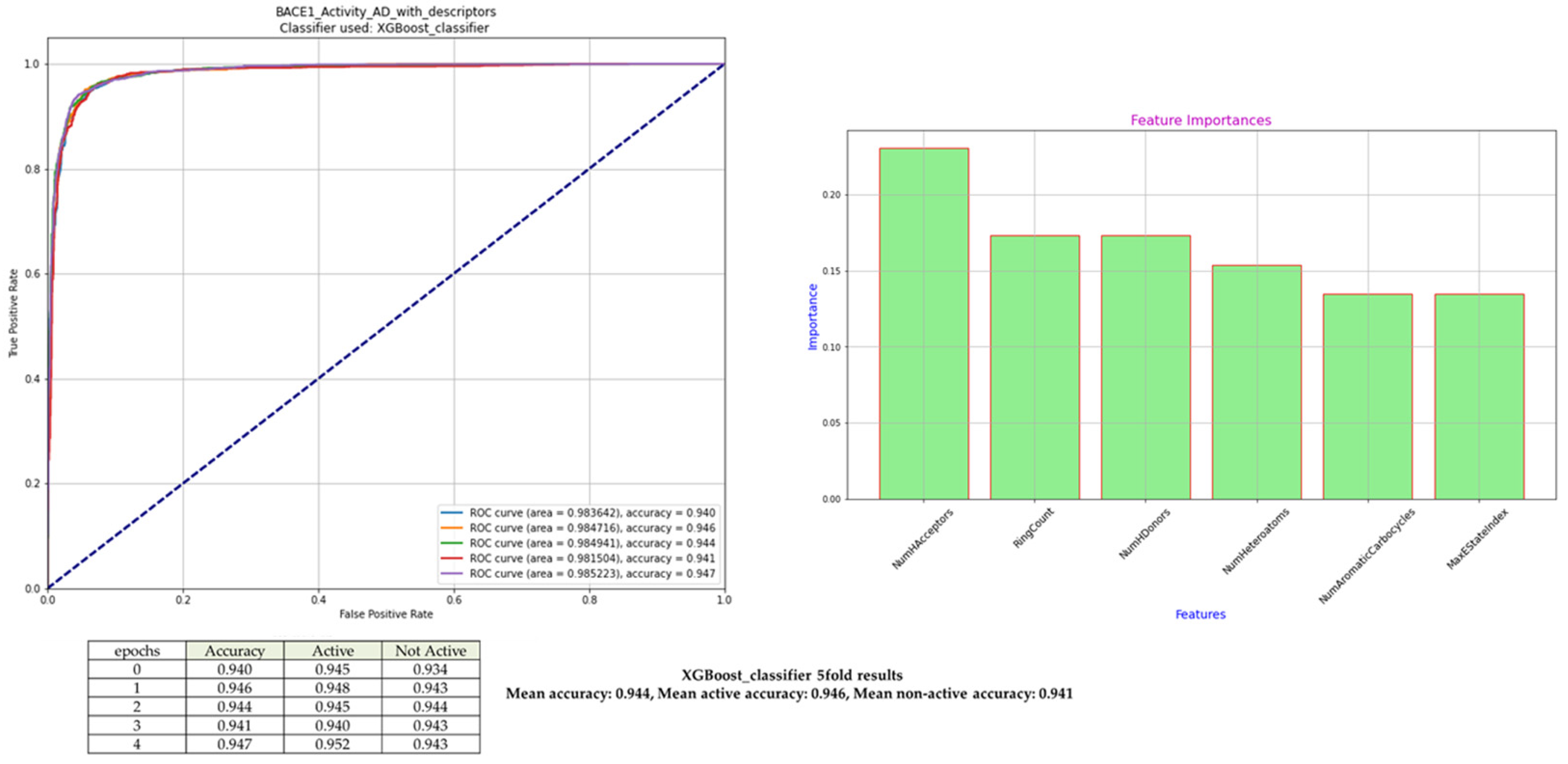
| Descriptor | p-Value | Importance |
|---|---|---|
| NumHAcceptors | <0.001 | 0.231 |
| RingCount | <0.001 | 0.173 |
| NumHDonors | <0.001 | 0.173 |
| NumHeteroatoms | <0.001 | 0.154 |
| NumAromaticCarbocycles | <0.001 | 0.135 |
| MaxEStateIndex | <0.001 | 0.135 |
| Compound | SMILE Code | Prediction |
|---|---|---|
| Caffeic acid | O=C(O)\C=C\c1cc(O)c(O)cc1 | Active |
| Chlorogenic acid | O=C(O)[C@]2(O)C[C@@H](O)[C@@H](O)[C@H](OC(=O)\C=C\c1ccc(O)c(O)c1)C2 | Active |
| Quinic acid | O[C@]1(C[C@@H](O)[C@@H](O)[C@H](O)C1)C(O)=O | Active |
| Isopsoralen | C1=CC2=C(C=CO2)C3=C1C=CC(=O)O3 | Active |
| Kaempferol | O=c1c(O)c(-c2ccc(O)cc2)oc2cc(O)cc(O)c12 | Active |
| Myricetin | Oc1cc(O)c2c(=O)c(O)c(oc2c1)c3cc(O)c(O)c(O)c3 | Active |
| Naringin | O=C4c5c(O)cc(O[C@@H]2O[C@H](CO)[C@@H](O)[C@H](O)[C@H]2O[C@H]1O[C@@H]([C@H](O)[C@H](O)[C@H]1O)C)cc5O[C@H](c3ccc(O)cc3)C4 | Active |
| Quercetin | O=C1c3c(O/C(=C1/O)c2ccc(O)c(O)c2)cc(O)cc3O | Active |
| Rutin | CC1C(C(C(C(O1)OCC2C(C(C(C(O2)OC3=C(OC4=CC(=CC(=C4C3=O)O)O)C5=CC(=C(C=C5)O)O)O)O)O)O)O)O | Active |
| Protocatechuic acid | C1=CC(=C(C=C1C(=O)O)O)O | Active |
| Salicylic acid | O=C(O)c1ccccc1O | Active |
| Ellagic acid | O=C1Oc3c2c4c1cc(O)c(O)c4OC(=O)c2cc(O)c3O | Active |
Disclaimer/Publisher’s Note: The statements, opinions and data contained in all publications are solely those of the individual author(s) and contributor(s) and not of MDPI and/or the editor(s). MDPI and/or the editor(s) disclaim responsibility for any injury to people or property resulting from any ideas, methods, instructions or products referred to in the content. |
© 2026 by the authors. Licensee MDPI, Basel, Switzerland. This article is an open access article distributed under the terms and conditions of the Creative Commons Attribution (CC BY) license.
Share and Cite
Christodoulou, P.; Stefanaki, I.; Aouant, K.; Ladika, G.; Tsiokou, M.; Cavouras, D.; Kritsi, E.; Sinanoglou, V.J. A Comparative Evaluation of Greek Fig Cultivars Utilizing Instrumental Analytical Methodologies, In Silico Studies and Machine Learning Prediction. Appl. Sci. 2026, 16, 538. https://doi.org/10.3390/app16010538
Christodoulou P, Stefanaki I, Aouant K, Ladika G, Tsiokou M, Cavouras D, Kritsi E, Sinanoglou VJ. A Comparative Evaluation of Greek Fig Cultivars Utilizing Instrumental Analytical Methodologies, In Silico Studies and Machine Learning Prediction. Applied Sciences. 2026; 16(1):538. https://doi.org/10.3390/app16010538
Chicago/Turabian StyleChristodoulou, Paris, Ioanna Stefanaki, Konstantinos Aouant, Georgia Ladika, Marina Tsiokou, Dionisis Cavouras, Eftichia Kritsi, and Vassilia J. Sinanoglou. 2026. "A Comparative Evaluation of Greek Fig Cultivars Utilizing Instrumental Analytical Methodologies, In Silico Studies and Machine Learning Prediction" Applied Sciences 16, no. 1: 538. https://doi.org/10.3390/app16010538
APA StyleChristodoulou, P., Stefanaki, I., Aouant, K., Ladika, G., Tsiokou, M., Cavouras, D., Kritsi, E., & Sinanoglou, V. J. (2026). A Comparative Evaluation of Greek Fig Cultivars Utilizing Instrumental Analytical Methodologies, In Silico Studies and Machine Learning Prediction. Applied Sciences, 16(1), 538. https://doi.org/10.3390/app16010538