Review

Molecular Mechanisms of Chemoresistance in Oral Squamous Cell Carcinoma: A Narrative Review with Present and Future Perspectives


by
Everton Freitas de Morais
1,2,3,*,
Lilianny Querino Rocha de Oliveira
1,
Cintia Eliza Marques
1,
Hannah Gil de Farias Morais
4,
Déborah Gondim Lambert Moreira
5,
Lucas de Araújo Albuquerque
3,
José Roberto Viana Silva
3,
Roseana de Almeida Freitas
5 and
Ricardo D. Coletta
1,2
1
Graduate Program in Oral Biology, School of Dentistry, University of Campinas, Piracicaba 13414-018, SP, Brazil
2
Department of Oral Diagnosis, School of Dentistry, University of Campinas, Piracicaba 13414-018, SP, Brazil
3
Laboratory of Biotechnology and Physiology of Reproduction, Federal University of Ceara, Sobral 62041-040, CE, Brazil
4
Multicampi School of Medical Sciences, Federal University of Rio Grande do Norte, Caicó 59300-000, RN, Brazil
5
Department of Oral Pathology, Federal University of Rio Grande do Norte, Natal 59056-000, RN, Brazil
*
Author to whom correspondence should be addressed.
Appl. Sci. 2026, 16(1), 525; https://doi.org/10.3390/app16010525
Submission received: 21 November 2025 / Revised: 22 December 2025 / Accepted: 29 December 2025 / Published: 5 January 2026

Abstract

Oral squamous cell carcinoma (OSCC) remains a highly prevalent and aggressive malignancy with limited improvements in survival rates. One of the major obstacles to successful treatment is the development of chemoresistance, which contributes to recurrence, metastasis, and treatment failure. This narrative review aims to integrate current evidence on the molecular and cellular mechanisms that drive chemoresistance in OSCC and to delineate how these processes converge under therapeutic pressure. A structured search was performed to identify relevant studies addressing chemoresistance in OSCC, focusing on preclinical and translational evidence. Multiple interconnected mechanisms have been implicated in driving resistance in OSCC, including epigenetic alterations, deregulated signaling pathways, cancer stem cell plasticity, epithelial–mesenchymal transition (EMT), interactions with the tumor microenvironment (TME), drug efflux mediated by ATP-binding cassette (ABC) transporters, and enhanced DNA damage response. In combination, these mechanisms support tumor persistence and limit effective antitumor immunity. Emerging strategies such as epigenetic modulators, signaling pathway inhibitors, immunomodulation, and nanomedicine-based delivery systems have shown promising results in preclinical models. By highlighting convergent resistance networks, this integrative perspective supports the rational design of combination therapies and biomarker-guided strategies aimed at overcoming chemoresistance in OSCC.

1. Introduction

Oral squamous cell carcinoma (OSCC) is the most frequent malignancy of the oral cavity and remains a major clinical challenge due to its high recurrence rate and poor survival, particularly in advanced stages [1]. Despite advances in multimodal management involving surgery, radiotherapy, and chemotherapy, patient outcomes remain suboptimal. Current systemic therapy largely relies on platinum-based combinations, such as cisplatin with 5-fluorouracil (5-FU) or taxane-containing regimens, whose long-term efficacy is frequently compromised by the development of therapeutic resistance [2,3]. In selected clinical settings, the addition of the anti-EGFR monoclonal antibody cetuximab to platinum-based therapy provides only modest survival benefits, while more recent immune checkpoint inhibitors targeting PD-1 or PD-L1 (e.g., nivolumab and pembrolizumab) induce durable responses in only a subset of patients with recurrent or metastatic disease [4]. Clinically, chemoresistance has major prognostic implications in OSCC, as approximately 30–40% of patients develop locoregional recurrence after standard treatment, and resistance to platinum-based chemotherapy is commonly observed in recurrent or metastatic cases, contributing to poor overall survival and limited therapeutic options [2].
Chemoresistance in OSCC is a complex and multifactorial phenomenon. It arises from genetic and epigenetic changes, metabolic adaptations, and dynamic interactions with the tumor microenvironment (TME) [5,6]. Among the classical mechanisms are enhanced DNA damage repair, deregulated apoptosis, altered drug transport, and the activation of epithelial–mesenchymal transition (EMT). EMT not only confers plasticity and invasive potential but also contributes to the enrichment of cancer stem cells (CSCs), a population with self-renewal capacity and marked resistance to therapy, which fuels intratumoral heterogeneity and recurrence [7,8,9].
The role of CSCs in chemoresistance has been increasingly demonstrated. These cells, identified by markers such as CD44, ALDH1, SOX2 and NANOG, exhibit enhanced drug efflux, quiescence and robust DNA repair, allowing them to persist under therapeutic stress. Their survival is further supported by stemness-related pathways including Wnt/β-catenin, Hedgehog and Notch, making CSCs an attractive target for therapeutic intervention [10]. In parallel, epigenetic regulation through non-coding RNAs (ncRNAs) has emerged as a critical layer in resistance. MicroRNAs and long non-coding RNAs (lncRNAs) modulate EMT, apoptosis, DNA repair and drug efflux, frequently acting via extracellular vesicles (EVs) that disseminate resistant phenotypes within the tumor niche [11].
Several oncogenic signaling cascades intersect with these processes. Mutations in TP53, activation of EGFR/FAK/NF-κB and PI3K/AKT/mTOR pathways and other molecular alterations have been directly implicated in therapeutic escape [12,13]. Multidrug resistance is further reinforced by ATP-binding cassette (ABC) transporters, including ABCB1, ABCC1 and ABCG2, which actively expel a wide variety of chemotherapeutic agents. Recent structural studies using cryo-EM have shed light on their function and suggest novel strategies to inhibit or bypass their efflux activity [14]. Beyond intrinsic tumor cell mechanisms, TME contributes decisively to resistance. By supplying pro-survival signals, reshaping the extracellular matrix (ECM) and modulating immune responses, the TME creates a protective niche that favors the persistence of resistant clones [6]. Experimental OSCC models confirm that resistant cells undergo metabolic reprogramming and microenvironmental adaptation, which reinforce EMT and resistance phenotypes [7].
Given the intricate interplay of molecular and microenvironmental drivers, innovative therapeutic approaches are urgently needed to overcome chemoresistance in oral squamous cell carcinoma (OSCC). Current strategies under investigation include molecularly targeted agents, immunotherapies, inhibitors of stemness-associated pathways, and multimodal regimens that combine classical chemotherapeutics with resistance modulators. Computational biology and artificial intelligence are also increasingly applied to identify predictive biomarkers and therapeutic vulnerabilities [9,10,15,16]. Importantly, these therapeutic challenges arise because the molecular mechanisms underlying chemoresistance in OSCC do not operate as isolated pathways, but rather as functionally interconnected processes that often emerge in a coordinated and adaptive sequence under therapeutic pressure. Epigenetic reprogramming frequently represents an early permissive event, reshaping transcriptional landscapes and enabling phenotypic plasticity, including epithelial–mesenchymal transition (EMT) activation and cancer stem cell enrichment. These plastic states are subsequently reinforced by oncogenic signaling and sustained through reciprocal interactions with the tumor microenvironment, ultimately converging on terminal resistance mechanisms such as drug efflux activation and enhanced DNA damage response [2,5]. In this context, by critically reviewing recent advances in the field, this narrative review adopts an integrative framework to clarify how these biological processes interact hierarchically and temporally to sustain therapeutic resistance, and to explore emerging strategies aimed at overcoming these barriers and improving clinical management in OSCC.
In this context, the present review aims to provide an updated and comprehensive synthesis of the molecular mechanisms that drive chemoresistance in oral squamous cell carcinoma. To this end, a structured literature search was conducted in major health science databases, including PubMed/MEDLINE, Scopus, Embase, and the Cochrane Library, focusing primarily on studies published over the past 20 years, with emphasis on recent preclinical and translational advances. Search terms included combinations of “oral squamous cell carcinoma”, “OSCC”, “chemoresistance”, “drug resistance”, “cisplatin resistance”, “epithelial–mesenchymal transition”, “cancer stem cells”, “epigenetics”, “tumor microenvironment”, “ABC transporters”, and “DNA damage response”. As this work was designed as a narrative review, no formal systematic screening protocol was applied; instead, studies were selected based on relevance, methodological quality, and their contribution to understanding the mechanisms of chemoresistance in OSCC. By critically examining recent advances in the field, this review seeks to clarify how interconnected biological processes converge to sustain therapeutic resistance and to explore emerging strategies aimed at overcoming these barriers and improving clinical management of OSCC.

2. Epigenetic Alterations Driving Chemoresistance

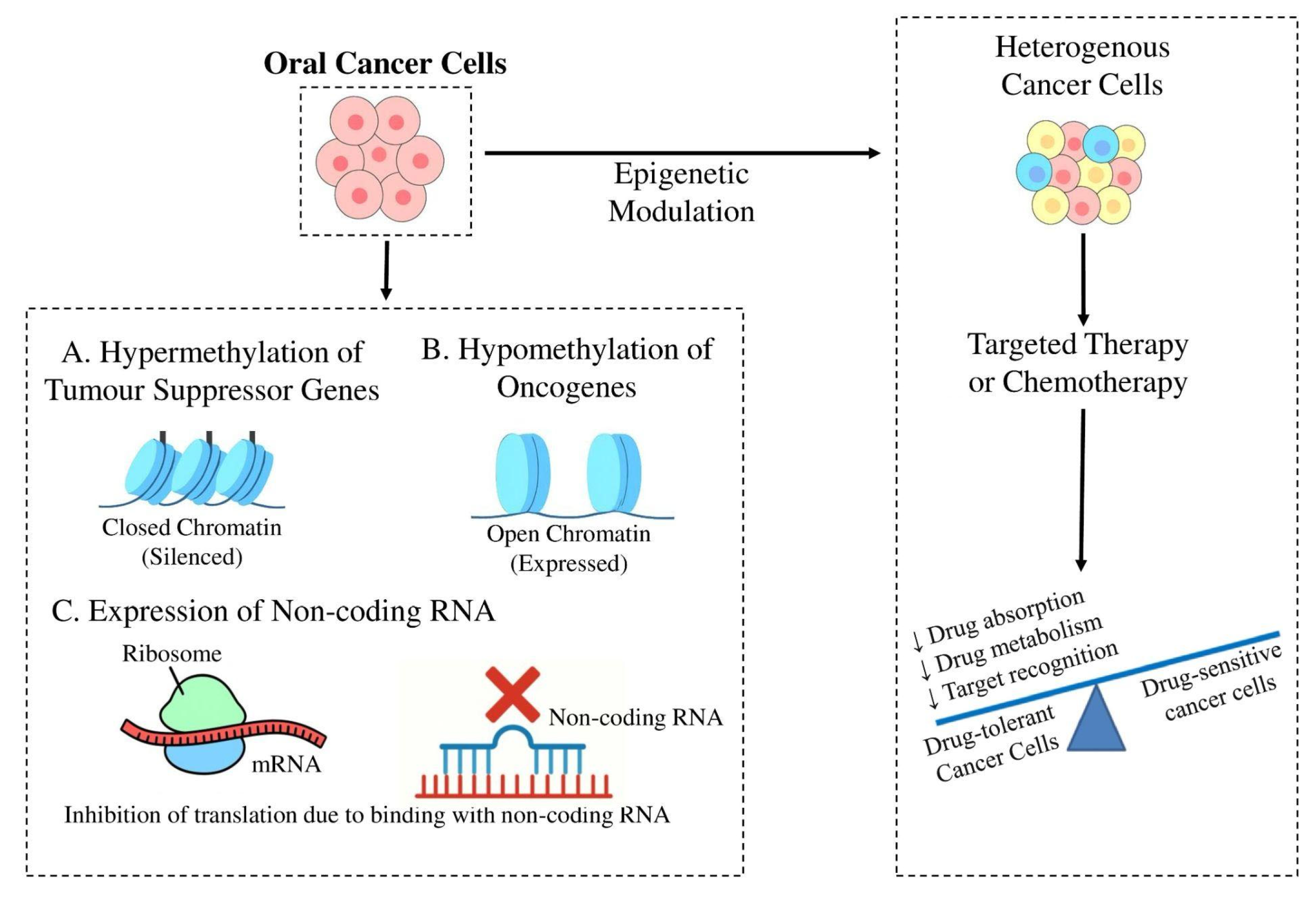
Epigenetic alterations, including DNA methylation, histone modifications and the regulatory influence of ncRNAs, have emerged as crucial determinants of cancer progression and therapeutic response (Figure 1). Unlike genetic mutations, these changes are reversible, conferring tumor cells remarkable adaptability under therapeutic stress, shaping transcriptional plasticity and cellular heterogeneity that sustain drug tolerance [17,18,19]. As Castilho et al. [20] noted, epigenetic alterations may occur either in an unsystematic manner or as part of an aberrant transcriptional machinery, promoting selective advantages to tumor cells and directly impacting therapeutic resistance. These mechanisms orchestrate resistance by silencing tumor suppressor genes through promoter hypermethylation, altering chromatin accessibility via histone acetylation and methylation, and modulating signaling pathways associated with apoptosis, DNA damage response, EMT, and CSC persistence [19,21]. ncRNAs, particularly microRNAs and long ncRNAs, further fine-tune gene expression programs involved in chemoresistance and have been increasingly recognized as potential biomarkers and therapeutic targets [18]. In this context, Falzone et al. [22] identified novel microRNAs with diagnostic and prognostic relevance in oral cancer, such as hsa-miR-let-7i-3p, which was associated with tumor recurrence, underscoring the centrality of epigenetic regulators in oral tumor biology.
DNA methylation is among the most consistently reported epigenetic hallmarks in head and neck carcinogenesis. In OSCC, promoter hypermethylation of CDKN2A, RASSF1A, MGMT, and DAPK1 has been repeatedly linked to tumor progression, invasion, and treatment response [23]. The literature indicates that numerous tumor suppressor genes are silenced through epigenetic mechanisms, with reports suggesting that more than 40 genes may be affected in head and neck cancer [24]. The development of non-invasive diagnostic strategies has expanded the clinical applicability of these findings. Rapado-González et al. [25] demonstrated that combinations of methylated gene panels significantly outperform single-gene analyses, achieving higher diagnostic accuracy for head and neck cancers.
ncRNAs have emerged as pivotal regulators of chemoresistance in OSCC, modulating essential cellular programs including apoptosis, DNA damage repair, EMT, drug efflux, and intercellular communication. MicroRNAs, such as miR-21 and the miR-200 family, illustrate the dualistic role of ncRNAs in mediating drug resistance: miR-21 promotes cell survival by repressing tumor suppressors including PTEN and PDCD4, whereas members of the miR-200 family act as key antagonists of EMT, whose downregulation has been consistently associated with resistance to cisplatin and 5-FU [11,26]. lncRNAs, notably HOTAIR, MALAT1, and HOXA11-AS, reinforce chemoresistant phenotypes through their function as competing endogenous RNAs (ceRNAs), sponging tumor-suppressive miRNAs and sustaining oncogenic signaling networks [11,27]. In parallel, circular RNAs (circRNAs) add a further regulatory dimension, with circ_0109291 and circAP1M2 driving cisplatin tolerance by sequestering miRNAs that normally inhibit ABC transporters or autophagy-related pathways [27]. Beyond intracellular regulation, ncRNAs are frequently secreted via EVs, thereby mediating horizontal transfer of chemoresistant traits within the TME [11]. Clinically, ncRNAs such as miR-21, members of the let-7 family, and circRNAs detectable in saliva or plasma have shown diagnostic and prognostic utility, underscoring their promise as minimally invasive biomarkers to guide therapeutic monitoring [26,28]. Collectively, these findings underscore the central role of ncRNAs in tumor adaptation, positioning them both as critical mediators of drug resistance and as promising targets for biomarker-driven therapeutic interventions in OSCC.
Histone modifications further shape chemoresistant phenotypes. In cisplatin-resistant OSCC populations enriched for cancer stem cell features, the upregulation of HDAC2, HDAC9, SIRT1, KAT2B, KAT6A, and KAT6B, together with reductions in multiple acetylated histone marks (e.g., H3K9ac, H3K36ac), was associated with loss of adhesion and increased aggressiveness. Milan et al. [29] showed that the HDAC inhibitor vorinostat was able to partially restore adhesion by upregulating FAK, integrin β3, and vinculin, directly linking histone acetylation imbalances to cisplatin tolerance and tumor persistence.
Beyond intrinsic tumor alterations, epigenetic mechanisms also shape the TME, influencing inflammation, angiogenesis, immune evasion, and intercellular communication, which together reinforce resistance and plasticity states [30]. Adaptive chromatin remodeling contributes to reversible “drug-tolerant or persister” states that enable survival under cisplatin or 5-FU, further complicating therapeutic outcomes [31]. Tumor metabolism also sustains the epigenetic machinery by providing essential cofactors such as S-adenosylmethionine, acetyl-CoA, and α-ketoglutarate, thereby creating a tightly interlinked metabolic–epigenetic axis that reinforces drug tolerance [32]. This crosstalk between metabolic rewiring and epigenetic regulation represents a crucial adaptive layer that helps OSCC cells withstand cytotoxic stress.
A central obstacle to therapeutic advances, however, is the intrinsic heterogeneity of OSCC. As Camuzzi et al. [33] emphasized, head and neck cancers “are not alike when tarred with the same brush,” since even tumors sharing the same epithelial origin diverge in their molecular carcinogenesis pathways according to anatomical subsite, exposure to risk factors such as tobacco, alcohol, and Human papillomavirus (HPV), and patient-specific molecular contexts. This heterogeneity translates into distinct epigenetic profiles, limiting the reproducibility of biomarker-driven strategies and explaining the variable responses observed in clinical trials of epi-drugs. Such complexity underscores the need for stratification approaches that incorporate not only clinical stage and histology, but also molecular and epigenetic profiles to refine therapy selection.
From a translational perspective, epigenetic-based interventions are rapidly gaining ground. DNA methyltransferase inhibitors (DNMTi) and histone deacetylase inhibitors (HDACi) are the most studied agents to restore chemosensitivity, either alone or in combination with platinum-based drugs and immunotherapy [18,19,34]. Preclinical studies in OSCC using HDAC inhibitors such as entinostat, apicidin, and FR901228 have demonstrated modulation of tumor suppressors including maspin and hTERT, supporting biomarker-driven exploration [35,36]. Moreover, as Romanowska et al. [37] pointed out, clinical results remain highly variable due to tumor and patient heterogeneity, highlighting the necessity of designing biomarker-guided trials to maximize efficacy. Looking forward, Li and Lu [38] argue that future strategies should prioritize the development of next-generation epi-drugs such as bromodomain and histone demethylase inhibitors, microRNA-based therapeutics, and rational combinations with immune checkpoint inhibitors. The integration of circulating DNA methylation markers and microRNA panels, including miR-21 and let-7 family members, into minimally invasive biomarker platforms is a particularly promising avenue for precision medicine in OSCC.
Altogether, current evidence underscores that epigenetic regulation is not only a fundamental driver of chemoresistance in OSCC but also a key upstream modulator of multiple adaptive programs activated under therapeutic stress. By reshaping chromatin accessibility and transcriptional responsiveness, epigenetic alterations create a permissive molecular landscape that facilitates the activation of oncogenic signaling cascades governing survival, plasticity, and stress adaptation. In this way, epigenetic reprogramming frequently precedes and potentiates the engagement of intracellular signaling pathways that coordinate redox balance, inflammatory responses, EMT induction, and stemness maintenance, ultimately consolidating resistant phenotypes.

3. Signaling Pathways Involved in Chemoresistance

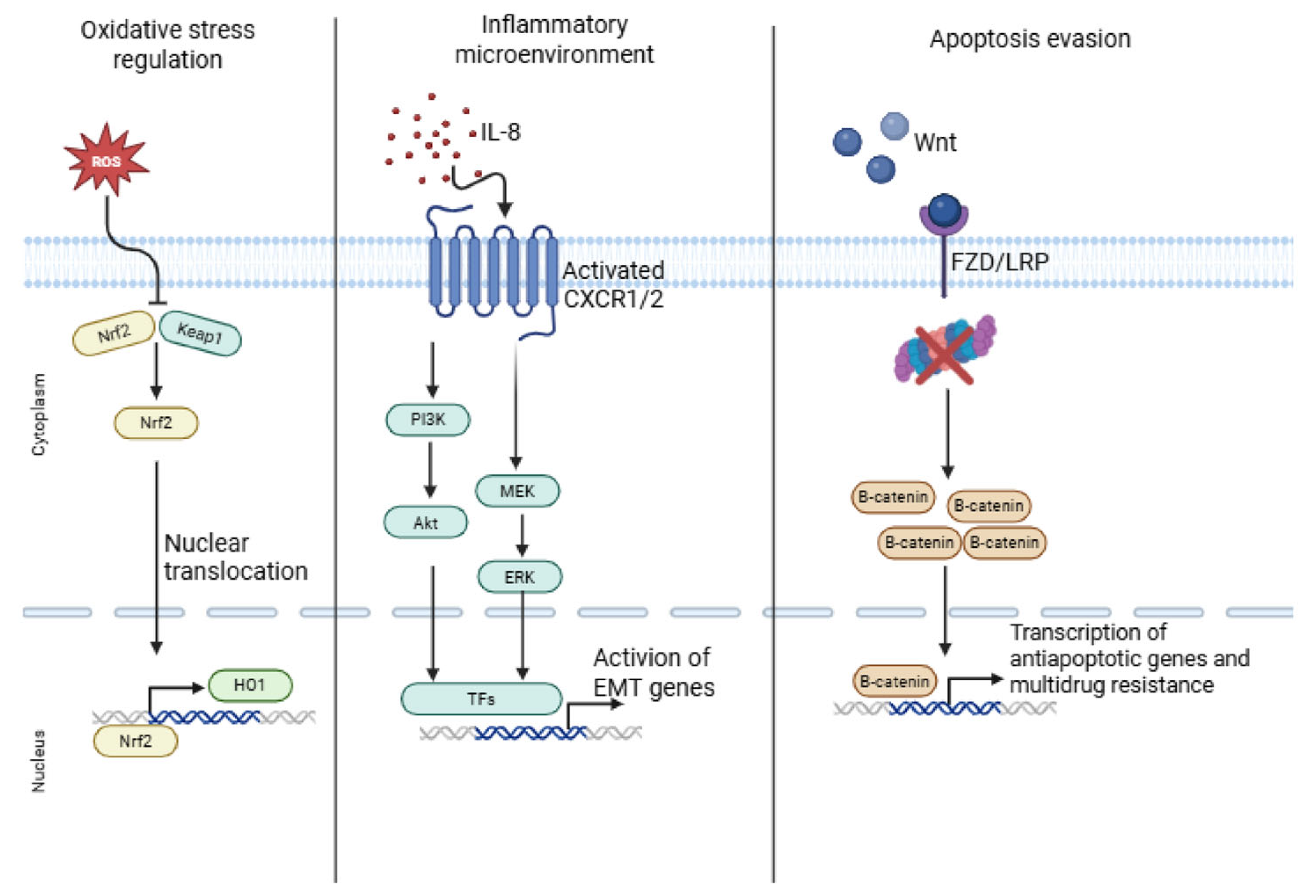
Multiple signaling pathways converge to sustain tumor survival, cancer stemness, and drug efflux, ultimately compromising the efficacy of conventional chemotherapies (Figure 2). Recent studies have provided critical insights into the molecular mechanisms underlying this phenomenon and have identified potential therapeutic targets to overcome it. Among these mechanisms, oxidative stress regulation has emerged as a pivotal determinant of drug response. Several molecular pathways enable tumor cells to evade drug-induced death, preserve their self-renewal potential, and adapt to the oxidative and inflammatory stress imposed by cytotoxic agents. In this context, ferroptosis, a regulated form of cell death driven by lipid peroxidation, has gained prominence by revealing that elevated intracellular reactive oxygen species (ROS) play central roles in tumorigenesis, angiogenesis, invasion, metastasis, and therapy resistance [39]. The oxidative stress characteristic of ferroptosis can activate nuclear factor erythroid 2-related factor 2 (NRF2), a transcription factor that normally exerts cytoprotective functions. However, its chronic activation in cancer cells promotes proliferation, metabolic reprogramming, and resistance to anticancer therapies [40].
One of the main downstream targets of NRF2 is heme oxygenase-1 (HO-1), whose upregulation enhances the antioxidant capacity of cells and protects them from oxidative damage [41]. In this context, Han et al. [42] demonstrated, through the establishment of cisplatin-resistant OSCC cell lines, that the NRF2/HO-1/xCT signaling axis represents a key antioxidant pathway involved in the acquisition of cisplatin resistance within the ferroptotic framework in OSCC cells. Inhibition of this pathway by carnosic acid increased oxidative stress and lipid peroxidation, leading to ferroptotic cell death and restoration of drug sensitivity. Collectively, these findings highlight that sustaining redox homeostasis through NRF2-driven antioxidant responses constitutes a major pillar of chemoresistance in OSCC.
Cell adhesion and cytoskeletal remodeling also exert a significant influence. Huang et al. [43] identified a novel pathway, the miR-365-3p/EHF/KRT16/β5-integrin/c-Met axis, in which KRT16 overexpression stabilizes c-Met and β5-integrin, activating the Src/STAT3/FAK/ERK signaling cascades. This activation increases migration, invasion, and resistance to 5-FU in both in vitro and in vivo models. KRT16 or c-Met suppression reversed resistance, highlighting that the coupling between integrins and receptor tyrosine kinases is critical for tumor cell survival under chemotherapeutic stress.
In the context of classical survival signaling, Li et al. [44] demonstrated that the Wnt/β-catenin pathway plays a central role in cisplatin resistance. In OSCC cell lines, nuclear accumulation of β-catenin induced by CTNNB1 knock-in promoted the transcription of anti-apoptotic genes, including Bcl-2, P-gp, and MRP-1. It also increased the expression of c-Myc and GSK-3β, all associated with apoptotic evasion and multidrug resistance. This pathway exemplifies how aberrant activation of transcription factors can orchestrate broad cellular defense responses. Another level of regulation occurs through intercellular communication. Liu et al. [45] demonstrated that exosomes derived from cisplatin-resistant cells carry miR-21, capable of transferring the resistant phenotype to sensitive cells. This microRNA suppresses PTEN and PDCD4, inhibiting pro-apoptotic pathways and stimulating survival. This mechanism demonstrates that resistance can be disseminated among tumor subpopulations, configuring a collective adaptive process mediated by EVs. Furthermore, Kawasaki et al. [46] identified the platelet-activating factor receptor (PAFR) as a regulator of chemoresistance in OSCC cell lines. Inhibition of PAFR by ginkgolide B reduced Akt and ERK phosphorylation, increasing apoptosis and restoring cisplatin sensitivity. These findings link PAFR to the modulation of kinase cascades common to IL-8 and Nrf2-mediated resistance, reinforcing the interconnected nature of these pathways. Taken together, these studies reveal that chemoresistance in OSCC does not stem from a single isolated pathway, but rather from a multifactorial signaling system involving antioxidant, inflammatory, metabolic, adhesion, and cellular communication components. Pathways such as Nrf2/HO-1/xCT, Wnt/β-catenin, IL-8/NFκB, AKR1B10/Snail, PAFR/Akt/ERK, and S1P/SphK1 converge to activate cell survival programs and suppress apoptosis. Blocking these axes represents a promising strategy for restoring the efficacy of cytotoxic agents such as cisplatin and 5-FU, offering new therapeutic perspectives for the management of resistant oral cancer. Despite these advances, the translation of these mechanistic insights into effective clinical interventions remains limited. Understanding how these pathways interact in real tumor environments and under therapeutic pressure will be essential for the development of truly effective combined strategies.
Future research on chemoresistance in OSCC should therefore focus on integrating molecular, metabolic, and microenvironmental insights to develop more effective therapeutic strategies. Importantly, these signaling networks do not act solely as transient survival responses but function as key regulators of cellular identity, driving phenotypic plasticity and the emergence of stem-like states under therapeutic pressure. Comprehensive multiomics approaches, coupled with advanced 3D tumor models and patient-derived organoids, may help delineate how these pathways cooperate to sustain resistant phenotypes and promote the maintenance or reprogramming of cancer stem cell populations. Identifying biomarkers predictive of resistance and monitoring their expression during therapy could further enable more personalized and adaptive treatment regimens.

4. CSCs and Tumor Cell Plasticity in OSCC

CSCs represent a small but functionally crucial subpopulation within tumors, endowed with self-renewal, differentiation, and tumor-initiating abilities. They are major drivers of tumor heterogeneity, metastasis, and resistance to therapy [47,48,49]. In OSCC, the presence of CSCs has been increasingly recognized as a determinant of tumor aggressiveness and therapeutic failure [50,51,52]. Tumor cell plasticity is the capacity of cancer cells to dynamically switch between differentiated and stem-like states, further enhancing this adaptability, allowing cells to survive environmental and therapeutic pressures [47,48].
Cellular plasticity is not exclusive to stem cells, differentiated cancer cells can dedifferentiate or transdifferentiate under specific cues such as inflammation, hypoxia, or exposure to therapy [47,48]. Silva-Diz et al. [49] proposed a CSC plasticity model in which cancer cells can reversibly transition between non-CSC and CSC states, integrating elements of clonal evolution and stem cell hierarchies. This model highlights that CSCs are not a fixed population but rather a dynamic state regulated by both intrinsic genetic programs and extrinsic microenvironmental signals. In OSCC, this plasticity explains the emergence of therapy-resistant and recurrent tumors, as CSCs can regenerate the tumor bulk even after cytotoxic treatments [47,50]. Pérez-González et al. [47] emphasized that tumor growth and relapse are sustained by such dynamic subpopulations capable of reacquiring stemness following ablation or differentiation.
CSCs also exhibit enhanced DNA damage response mechanisms that contribute to their survival under chemotherapeutic stress. Using an OSCC spheroid model, Saha et al. [53] demonstrate that TRF2 maintains the CSC phenotype by promoting efficient DNA repair in the presence of cisplatin, reducing apoptosis, and sustaining stemness markers such as CD44, Oct4, Sox2, KLF4, and c-Myc. Impairment of TRF2 function diminishes orosphere formation, reduces proliferative capacity, and attenuates CSC marker expression, highlighting DNA damage response (DDR) as a core component of CSC maintenance and therapeutic resistance in OSCC.
Experimental evidence in OSCC supports the biological relevance of CSC markers such as CD44, ALDH1, CD133, SOX2, OCT4, and NANOG [50,51,52,54]. Similarly, Dhumal et al. [54] demonstrated that CD44 and ALDH1 expression correlate with lymph node metastasis and histopathological grading, suggesting their predictive value for tumor aggressiveness. In a recent study, Aquino et al. [50] isolated distinct CSC subpopulations (CD44Low/CD326, CD44Low/CD326High, and CD44High/CD326) from metastatic OSCC cells, showing that mesenchymal-like CSCs exhibited higher proliferation, migration, and metastatic potential than epithelial-like counterparts, supporting the concept that CSC plasticity frequently aligns with epithelial–mesenchymal phenotypic states.
Another key survival mechanism of CSCs is quiescence, a reversible slow-cycling state that protects cells from chemotherapy-induced cytotoxicity. OSCC CSCs exhibit variable degrees of quiescence, often mediated by regulators such as DYRK1B, NR2F1, and p21. In primary OSCC cultures, DYRK1B activity maintains CSCs in G0 and confers resistance, whereas DYRK1B inhibition forces CSCs back into the cell cycle, rendering them more sensitive to apoptosis and increasing ROS and DNA damage. This underscores quiescence not merely as a passive state, but as an active survival strategy within the CSC compartment [55].
Overall, CSCs and tumor cell plasticity form a tightly interconnected axis driving OSCC progression. The coexistence of hierarchically organized CSCs and the ability of differentiated tumor cells to revert to a stem-like state create a continuous spectrum of cellular states that underlies tumor heterogeneity, recurrence, and drug resistance. This plastic equilibrium provides a biological substrate upon which EMT programs operate, facilitating phenotypic switching, survival under therapeutic stress, and acquisition of invasive traits. Targeting CSC-associated signaling pathways (e.g., Wnt, TGF-β, and Notch), reprogramming factors (SOX2, OCT4), or plasticity mechanisms governing EMT-related state transitions may therefore represent promising therapeutic avenues for OSCC. Further understanding of CSC plasticity within the epithelial–mesenchymal continuum could provide critical insights for designing therapies that not only eradicate CSCs but also prevent their re-emergence from non-stem cancer cells.

5. From Plasticity to Persistence: EMT and Chemoresistance in OSCC

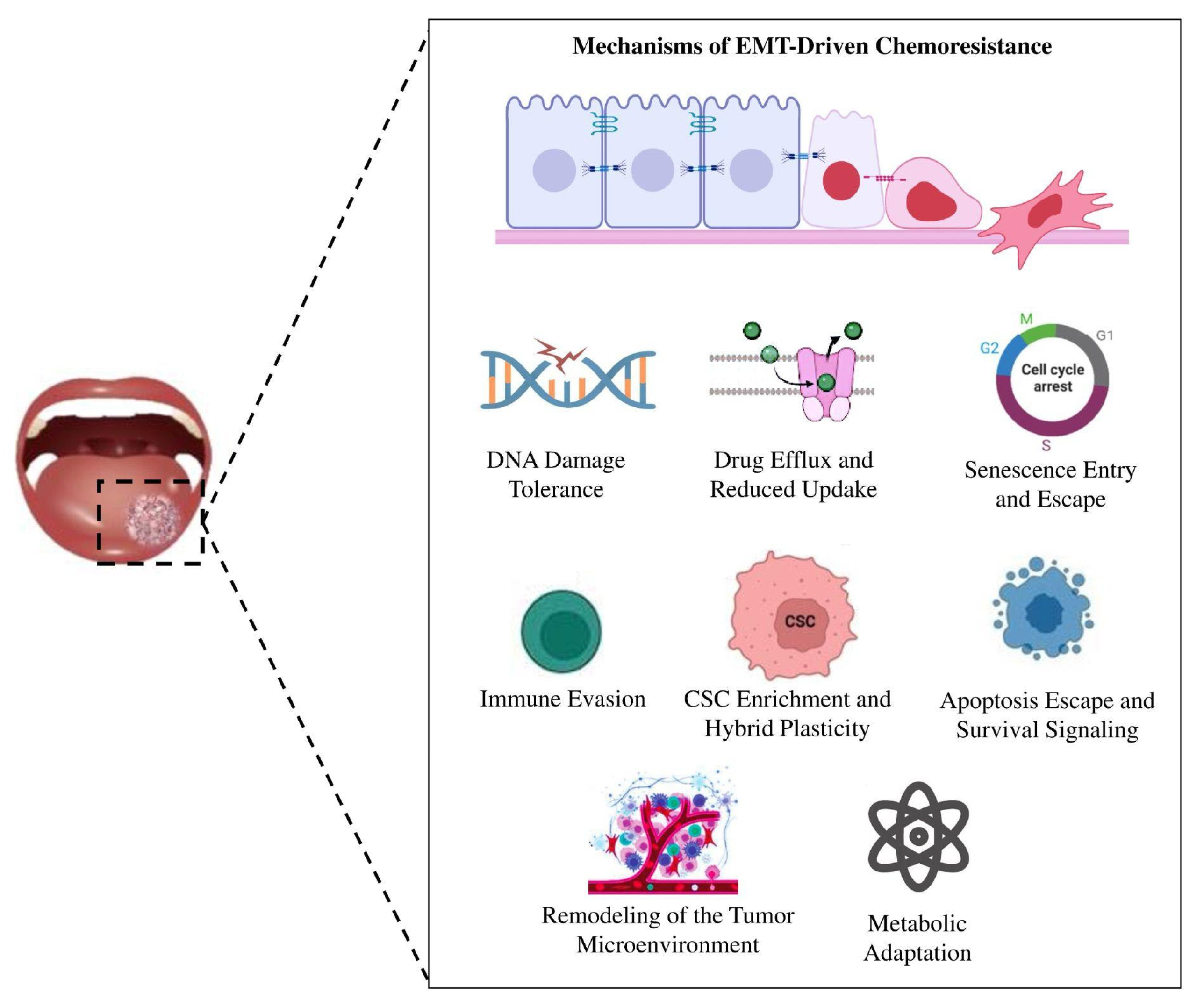
The EMT is a dynamic biological program in which epithelial cells progressively lose their polarity and intercellular adhesion, acquiring a mesenchymal phenotype with enhanced motility, invasiveness, and survival capacity [56]. Initially described in embryogenesis and wound healing, EMT has become increasingly recognized as a hallmark of cancer progression and therapeutic resistance [57]. Mechanistically, EMT integrates multiple oncogenic signaling cascades, including TGF-β, Wnt/β-catenin, PI3K/AKT, and NF-κB, which converge to repress epithelial genes such as CDH1 while activating mesenchymal effectors [58]. Importantly, neoplastic cells exploit EMT not as a fixed binary state, but as a plastic and reversible process, allowing them to transiently adopt hybrid phenotypes or undergo complete EMT depending on microenvironmental pressures. This cellular plasticity is particularly relevant in metastasis, where cells undergoing EMT acquire migratory and invasive capabilities to disseminate, but may subsequently revert through mesenchymal-to-epithelial transition (MET) to adapt and proliferate efficiently within the metastatic niche [56]. Thus, EMT and MET operate as complementary programs that confer adaptability to tumor cells, sustaining invasion, colonization, and therapeutic resistance (Figure 3).
Building on the CSC-associated plasticity discussed above, EMT contributes to chemoresistance by rewiring drug transport, death signaling, and stress-response programs that stabilize therapy-tolerant phenotypes. At the transcriptional levels, EMT-inducing transcription factors bind regulatory elements in ABC transporter promoters and upregulate multidrug efflux, including P-glycoprotein, thereby lowering intracellular drug exposure [58,59]. EMT programs also diminish drug uptake and favor anti-apoptotic states, with broad evidence across cancers that decreased influx, increased efflux, and apoptosis evasion are core resistance nodes amplified during EMT [57,58]. EMT signaling further heightens DNA-damage tolerance and repair capacity and is reinforced by cytokine-rich microenvironments that activate canonical EMT pathways; for example, cisplatin can upregulate TGF-β, and oncostatin-M drives ZEB1 and SNAIL, both of which promote EMT and protect against cytotoxics [59]. In hypoxia, EMT-linked effectors such as PLOD2 are induced and contribute to resistance, while ABC-transporter transactivation by EMT-TFs adds an additional layer of metabolic adaptation under therapeutic pressure [59]. Beyond cell-intrinsic changes, EMT correlates with immune evasion that blunts treatment response; in non-small-cell lung cancer, EMT signatures inversely associate with T-cell infiltration, and EMT reversal can resensitize tumors to anticancer drugs [57]. Finally, EMT fosters hybrid E/M and stem-like states that slow cycling, resist apoptosis, and seed intratumoral heterogeneity, which together underlie persistent or acquired resistance [57,59].
An additional layer of complexity in the EMT–chemoresistance axis arises from its interplay with cellular senescence. While senescence is classically associated with irreversible growth arrest, therapy-induced senescent (TIS) cells frequently persist within the TME, sustaining resistance through the senescence-associated secretory phenotype (SASP). Senescent cancer cells and cancer-associated fibroblasts secrete SASP factors—such as IL-6, IL-8, and TGF-β—that activate EMT-transcription factors, reinforcing epithelial plasticity and promoting drug tolerance [27,60]. In OSCC and head-and-neck cancers, cisplatin and radiotherapy have been shown to induce TIS, yet these senescent cells often escape proliferative arrest or undergo partial reprogramming through EMT-TFs (e.g., TWIST and ZEB1), re-entering the cell cycle as aggressive, chemoresistant clones [61,62]. Moreover, SASP-mediated chronic inflammation and immunosuppression facilitate the recruitment of regulatory T cells and myeloid-derived suppressor cells, further shielding EMT-positive tumor cells from immune clearance [61]. Thus, EMT enables senescent escape, establishing a reservoir of persistent, therapy-resistant cells that underlie relapse and poor outcomes in OSCC [60,62].
In OSCC, EMT plays a critical role at multiple stages of carcinogenesis, from oral potentially malignant disorders (OPMDs) to invasive and metastatic disease [63]. The repression of epithelial markers, such as E-cadherin, and the induction of mesenchymal proteins, including vimentin and N-cadherin, are tightly regulated by EMT-inducing transcription factors (EMT-TFs), such as Snail, Slug, Twist, and ZEB1/2 [64,65,66]. Their aberrant expression in OSCC has been consistently correlated with tumor progression, reduced overall survival, and poor prognosis [66]. The clinical importance of EMT is reinforced by experimental and translational studies that demonstrate its direct role in mediating chemoresistance. Wang et al. [67] showed that the lncRNAs metastasis-associated lung adenocarcinoma transcript 1 (MALAT1) is markedly upregulated in cisplatin-resistant CAL27R and SCC-9R OSCC cells. MALAT1 overexpression in parental lines promoted colony formation, migration, invasion, and suppressed apoptosis under cisplatin treatment, whereas MALAT1 knockdown restored drug sensitivity both in vitro and in vivo. Mechanistically, MALAT1 activated the PI3K/AKT/mammalian target of rapamycin (mTOR) pathway and increased P-glycoprotein (P-gp) expression, but importantly, it also correlated with loss of epithelial markers such as E-cadherin and gain of mesenchymal proteins including N-cadherin and vimentin, reinforcing the link between MALAT1-driven signaling, EMT activation, and multidrug resistance. Similarly, Chen et al. [68] identified FOXD1 as an EMT driver that promotes cisplatin resistance by transcriptionally activating the lncRNA CYTOR (cytoskeleton regulator RNA), which functions as a competitive endogenous RNA (ceRNA) to suppress miR-1252-5p and miR-3148. This repression relieved inhibition of LIM domain-containing preferred translocation partner in lipoma (LPP), leading to increased motility and invasive behavior. In xenografts, FOXD1 overexpression sustained tumor growth despite cisplatin exposure and was associated with upregulation of mesenchymal EMT markers. At the same time, FOXD1 knockdown restored epithelial features such as E-cadherin expression and reduced migratory capacity, thereby re-sensitizing tumors to therapy.
Lin et al. [69] further demonstrated that chemotherapy-induced lncRNA CILA1 promotes EMT and resistance via activation of Wnt/β-catenin signaling, while its inhibition induces MET and restores drug sensitivity. These observations reinforce the role of ncRNAs as functional effectors rather than independent drivers of EMT-associated chemoresistance.
Beyond transcriptional and post-transcriptional regulation, epigenetic remodeling plays a decisive role in consolidating EMT-driven resistance. Lima de Oliveira et al. [8] demonstrated that cisplatin-resistant CAL27 and SCC-9 lines exhibited downregulation of histone deacetylases (HDAC1/2) and upregulation of ZEB1 and B lymphoma Mo-MLV insertion region 1 homolog (BMI1), which coincided with expansion of cancer stem cell (CSC) populations with elevated ALDH1 activity. These alterations reflected a stable EMT program reinforced by epigenetic mechanisms. Complementary evidence from de Morais et al. [7] using resistant OSCC models (SCC-9R, HSC-3R) showed consistent EMT activation with increased ZEB1, ZEB2, TWIST1, and vimentin, alongside suppression of E-cadherin. Resistant cells displayed increased migratory and invasive capacities, higher half-maximal inhibitory concentration (IC50) values for cisplatin, and elevated activity of matrix metalloproteinases (MMP-2 and MMP-9), confirming that EMT is not only a molecular marker but also a functional determinant of drug tolerance. Furthermore, experimental repression of EMT or induction of MET has been shown to partially restore drug sensitivity. Choi et al. [70] demonstrated that combining cisplatin with the epidermal growth factor receptor (EGFR) monoclonal antibody cetuximab reduced proliferation and migration in resistant OSCC lines and shifted EMT markers toward an epithelial phenotype, upregulating E-cadherin and claudin-1 while downregulating N-cadherin. Although apoptosis was not fully restored, this partial reversal of EMT impaired motility and contributed to enhanced cisplatin response. Similarly, Kitahara et al. [71] reported that the microtubule inhibitor eribulin induced a MET-associated gene switch in mesenchymal OSCC cells (HOC313), enhancing EGFR expression and abrogating TGF-β-induced EMT signatures. Eribulin pretreatment sensitized resistant cells to cetuximab, underscoring the therapeutic potential of pharmacologically reversing EMT.
Taken together, these findings demonstrate that EMT induction via transcription factors, ncRNAs, and epigenetic remodeling enhances cisplatin resistance in OSCC by promoting survival, drug efflux, invasion, and CSC enrichment. Conversely, EMT repression or MET induction reinstates epithelial traits and improves therapeutic efficacy, positioning EMT as both a prognostic marker of poor outcome and a promising therapeutic target in oral cancer. Importantly, however, EMT programs are rarely sustained in a cell-autonomous manner; instead, they are dynamically shaped, reinforced, and stabilized by extracellular cues and stromal interactions within the tumor microenvironment. Context-specific signaling crosstalk involving TGF-β, Wnt/β-catenin, and PI3K/AKT pathways integrates EMT activation with epigenetic regulation, CSC dynamics, and microenvironmental inputs. Large-scale multi-omics approaches combining genomics, transcriptomics, epigenomics, and proteomics in resistant OSCC models may help unravel EMT-related vulnerabilities within this complex ecosystem. Moreover, preclinical studies combining EMT-targeting agents with standard chemotherapy or immunotherapy may pave the way for translational applications.

6. Reciprocal Crosstalk with TME

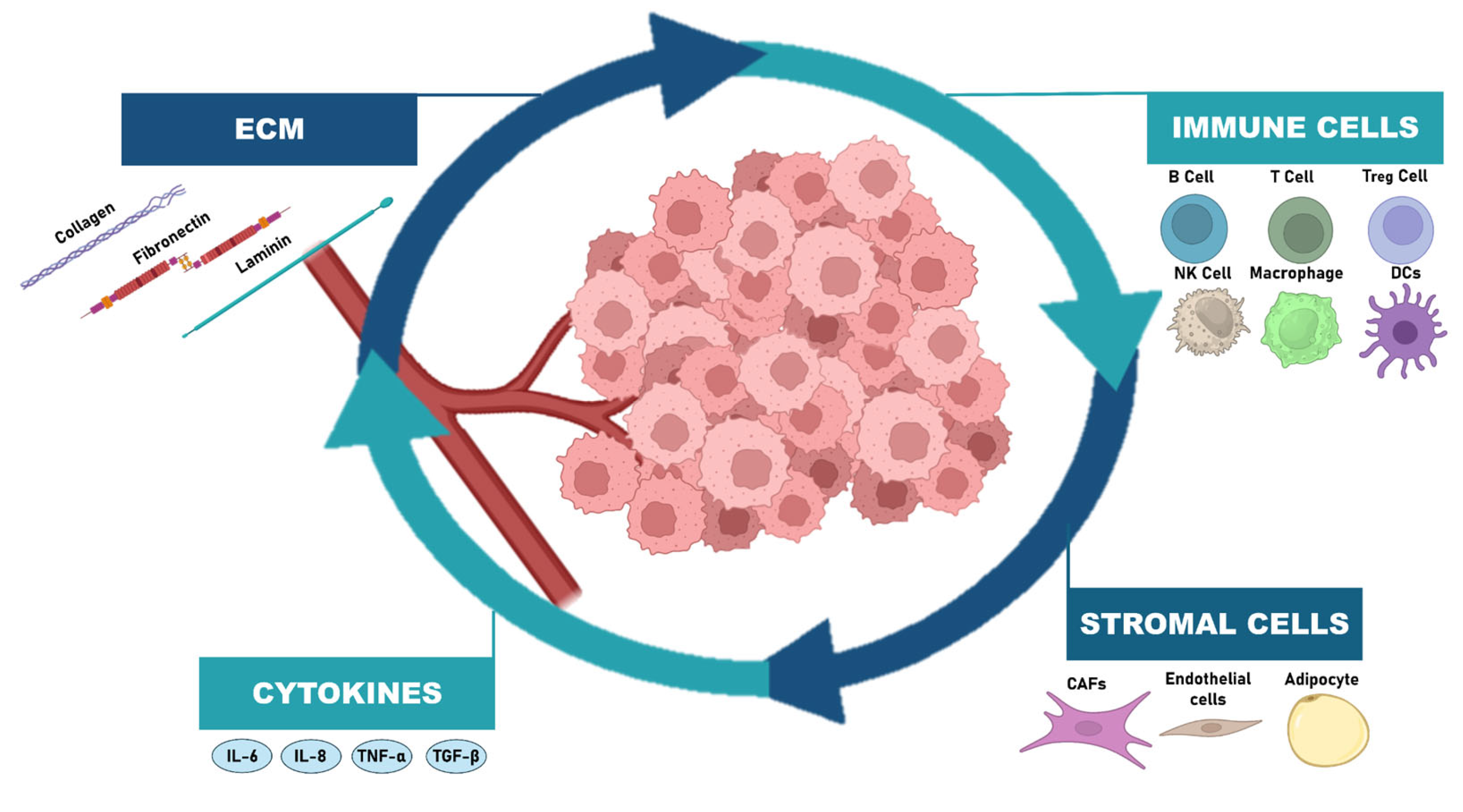
The TME in oral cancer is characterized as a highly dynamic and complex ecosystem composed of tumor cells, stromal cells, and non-cellular components such as the extracellular matrix (ECM), exosomes, and interleukins (Figure 4). These elements interact in an integrated manner, playing decisive roles in tumor growth and progression [72,73]. A pro-tumorigenic TME promotes tumor invasion, metastasis, and immune evasion, while also hindering the effective penetration of pharmacological agents, which directly affects the response to antineoplastic therapy [74]. In this context, a comprehensive understanding of the interactions between tumor parenchyma and stroma within the complex TME of OSCC is essential for the development of innovative therapeutic strategies capable of positively influencing the prognosis of patients diagnosed with oral cancer [7].
Among the main cellular constituents of the TME are the cancer-associated fibroblasts (CAFs), which are regarded as central protagonists in the context of OSCC, as they play a crucial role in tumor initiation and progression, and have therefore received increasing attention over the past decades [7,75]. Accumulating evidence demonstrates that CAFs actively participate in ECM remodeling and secrete cytokines and growth factors that promote cell proliferation, angiogenesis, and tumor invasion [76]. Furthermore, multiple studies confirm that interactions between CAFs and immune cells, as well as with other components of the TME, modulate immune responses, often resulting in the suppression of antitumor immunity [75,77]. To perform this role, CAFs regulate both innate and adaptive immune responses [78], promote the expression of immune checkpoint molecules, and remodel the ECM, thereby directly impacting immune cell recruitment and activity [75]. Through the secretion of cytokines, chemokines, and effector molecules, including TGF-β, CXCL2, collagens, MMPs, and laminin, CAFs not only influence the participation of immune cells in tumor occurrence and progression but also facilitate ECM degradation and reorganization [79]. In this scenario, a growing number of studies have been elucidating the mechanisms by which CAFs orchestrate an immunosuppressive TME, providing valuable insights for the translation of CAF-based therapeutic targets into clinical trials [75].
Tumor-associated macrophages (TAMs) exhibit remarkable functional plasticity within the TME of OSCC, being able to polarize into M1 phenotypes, which are pro-inflammatory and antitumoral, or M2 phenotypes, which display pro-tumorigenic and immunosuppressive profiles. M1 macrophages contribute to tumor control through the secretion of pro-inflammatory cytokines and the activation of immune responses [72], an activity associated with the production of IL-1β and TNF-α [80], molecules that have been shown to reduce tumor cell migration [73]. Conversely, M2 macrophages promote immunosuppression, angiogenesis, and tumor progression [76], an effect related to IL-6 release mediated by this phenotype, which is known to enhance tissue invasion and metastasis [81]. These findings indicate that the TME in OSCC contains elements capable of locally influencing both tumor behavior and the inflammatory response, particularly through macrophage plasticity [73].
The TME in cancer is also highly enriched with many immune cells, among which T lymphocytes represent an essential component of the immunological landscape in OSCC [72,82]. The TME exerts a suppressive effect on immunity, modulating signaling pathways that regulate the expression of regulatory T cells (Tregs) and helper T cells (Th), impair the functionality of cytotoxic T lymphocytes (CTLs) and Th cells [82], and promoting interactions between Tregs and CTLs, which constitute key determinants of tumor immune evasion [76].
In addition to the main protagonists already described other cellular components of the TME include endothelial cells, natural killer (NK) cells, inflammatory cells, dendritic cells, and adipocytes [83,84,85,86,87,88,89], whose reciprocal interactions remain largely unexplored but also exert a critical influence on tumor biology. Together with CAFs, TAMs, T lymphocytes, and neoplastic cells, these elements actively participate in ECM remodeling, promoting structural and functional alterations that favor oral cancer progression [76]. This complex protein network, primarily composed of collagen, fibronectin, and laminin, not only provides mechanical support but also regulates cellular behavior through biochemical signaling pathways [90]. Under stimulation by tumor cells, TME components are recruited to secrete cytokines that act at different stages of tumorigenesis, including cell proliferation, ECM degradation, and metastatic niche preparation [91] management of oral cancer [73].
Cytokines are central modulators within the TME, playing a crucial role in tumor progression and metastatic dissemination in OSCC. Among the most relevant pro-inflammatory cytokines, IL-6 stands out as a key regulator of oral cancer metastasis via the IL-6/JAK/STAT3/Sox4 axis [92], whereas IL-8 functions as an autocrine growth factor in head and neck squamous cell carcinoma (HNSCC), being associated with tumor progression, chemoresistance, and metastatic spread, mediated by MMPs, STAT3, and the Akt/ERK-NF-κB axis [92]. Other mediators, including TNF-α and TGF-β, contribute to migration, invasion, angiogenesis, and oncogenic signaling [93,94], with TGF-β being particularly relevant in the induction of EMT and TME remodeling, processes that promote metastasis in OSCC [87,94].
Another mechanism of tumor–immune cell interaction involved in immunosuppression and tumor immune escape in OSCC is the overexpression of inhibitory molecules from the B7 family, particularly PD-L1 [83]. This process is closely associated with EMT [87], during which PD-L1, expressed on the surface of tumor cells, binds to PD-1 on cytotoxic T lymphocytes, thereby suppressing their effector activity [88]. This interaction triggers immunosuppressive signaling strongly associated with a poorer prognosis in OSCC, as demonstrated by immunohistochemical and in vitro studies [89]. In HNSCC, PD-L1 expression has been correlated with invasive patterns and the presence of cervical lymph node metastases in immunohistochemical studies [86], contributing to a more aggressive tumor phenotype and reduced overall survival [84]. Similarly, de Farias Morais et al. [89] reported a statistically significant association between high PD-L1 levels and larger oral tongue squamous cell carcinoma tumors, as well as a trend toward more advanced TNM stages.
In summary, the crosstalk between tumor cells, stromal components, and soluble factors within the tumor microenvironment of OSCC creates a dynamic ecosystem that promotes tumor progression, immune evasion, and therapeutic resistance. Beyond shaping inflammatory and immunosuppressive niches, this microenvironment actively conditions tumor cells to survive under sustained therapeutic pressure by reinforcing stress-adaptive programs. Importantly, microenvironmental cues contribute to the activation of terminal resistance mechanisms, including drug efflux and enhanced DNA damage response, which ultimately determine tumor persistence and treatment failure. Although this cellular and molecular dialog represents a significant clinical challenge, it also opens avenues for innovative therapeutic strategies aimed at modulating the TME and restoring immune surveillance. In this context, exploring the roles of less-studied cellular populations such as endothelial cells, NK cells, inflammatory cells, dendritic cells, and adipocytes, as well as their cytokine-mediated interactions, may reveal vulnerabilities that converge on efflux regulation and DNA repair capacity.

7. Mechanisms of Drug Efflux and DNA Damage Response

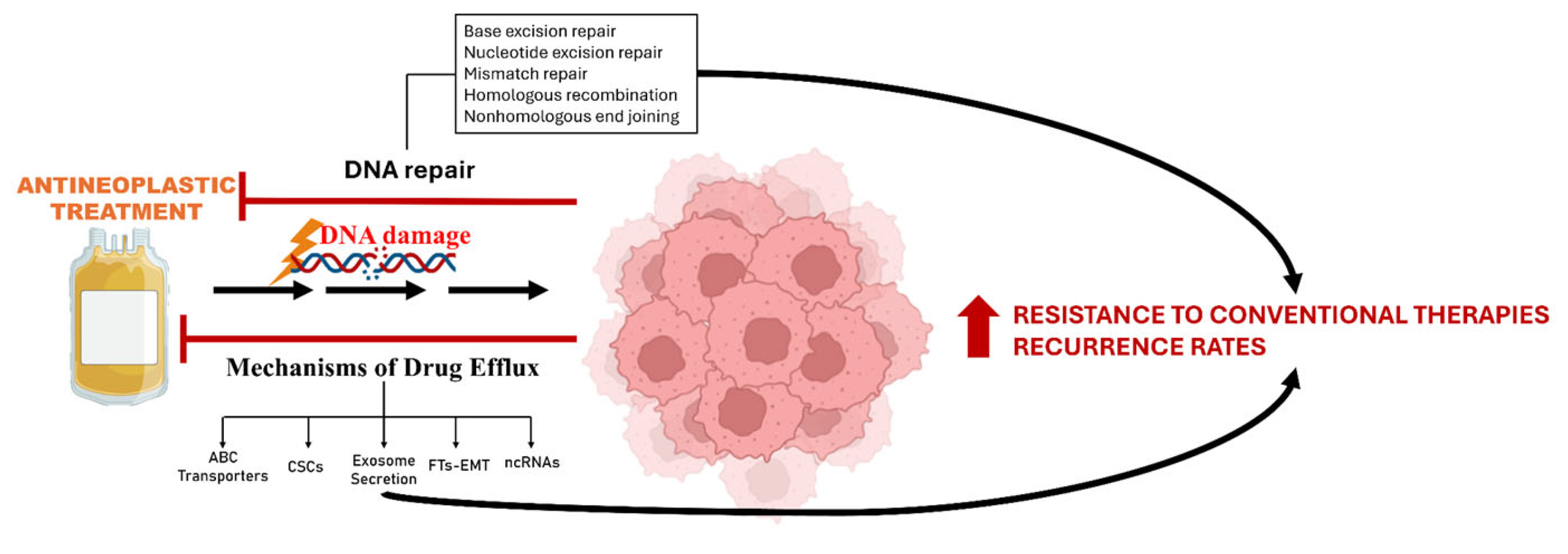
Drug efflux represents one of the main resistance mechanisms in tumor cells, being associated with reduced intracellular drug concentrations, often resulting from the overexpression of genes encoding efflux pumps [95,96] (Figure 5). This process involves decreased drug influx, increased active efflux, and the sequestration of drugs in vesicles and intracellular compartments. These mechanisms are regulated by transcriptional and post-transcriptional programs previously discussed, converging here on drug transport and detoxification.
Among the most relevant mechanisms in OSCC is the overexpression of drug efflux pumps, particularly members of the ABC transporter family. These transporters actively pump chemotherapeutic agents out of the cell, reducing their intracellular concentration and consequently limiting cytotoxic effects [97]. The main transporters implicated in cancer chemoresistance include ABCB1, ABCC1, and ABCG2 [14]. These transporters utilize ATP hydrolysis to extrude a wide range of drugs, including doxorubicin, paclitaxel, and methotrexate [98], maintaining intracellular levels below the threshold required to induce apoptosis. This process promotes tumor cell survival and supports the persistence of therapy-tolerant subpopulations [99]. Supporting these findings, evidence shows that ABC transporters, such as ABCG2, are frequently overexpressed in multidrug-resistant cells with CSC characteristics in OSCC [100]. Recent studies further suggest that aberrant ABCG2 expression may be associated with activation of the WNT/β-catenin signaling pathway [101]. Sun et al. [101] demonstrated that in oxaliplatin-resistant (OXA-R) cells, WNT3 regulation increases LEF1 binding to the ABCG2 promoter, elevating its expression, enhancing oxaliplatin efflux, and promoting drug resistance in OSCC.
In addition to classical efflux pumps, recent studies have shown that tumor cells can enhance drug efflux and consequently reduce the intracellular accumulation of antineoplastic agents through the secretion of exosomes [95]. Exosomes represent the smallest subset of EVs released by both normal and cancer cells, functioning in the removal of unwanted cellular components and in mediating intercellular communication through the transfer of encapsulated bioactive molecules. Growing evidence indicates that exosomes contribute to drug resistance in tumor cells through multiple mechanisms, including miRNA transport, drug efflux, and anti-apoptotic signaling. Exosome-mediated efflux represents an alternative pathway for cellular waste elimination, parallel to lysosomal degradation via autophagy [102]. Although non-coding RNAs have been reported to modulate efflux-related genes, their contribution is largely context-dependent and remains insufficiently characterized in OSCC [96].
Although frequently examined independently, resistance mechanisms in OSCC exhibit functional interconnections [96]. Many antineoplastic drugs exert their therapeutic effects by inducing DNA damage in tumor cells; however, these cells can activate DNA repair mechanisms, neutralizing cytotoxic effects and promoting treatment resistance [103]. In this context, the antitumor efficacy of chemotherapy and radiotherapy directly depends on their ability to induce genomic breaks and lesions in cancer cells [104]. Therefore, understanding the molecular mechanisms regulating DNA repair pathways has critical implications for improving therapeutic efficacy against cancer [105].
The DDR represents the cellular capacity to detect and repair genomic alterations induced by endogenous or exogenous mutagenic agents. Upon encountering such damage, a complex signaling network activates cell cycle checkpoints, promoting either repair of the genetic material or cellular senescence and death [106]. The main pathways involved in this process include base excision repair, nucleotide excision repair, mismatch repair, homologous recombination, and non-homologous end joining [107]. Defects in DDR-associated genes have been widely recognized as potential diagnostic and prognostic markers, in addition to representing promising therapeutic targets in the tumor context [104].
In a cohort of OSCC, Pomella et al. [104] observed copy number amplifications in approximately 60% of DDR genes and deletions in 40%. TP53 was the most frequently altered gene, corroborating genomic studies reporting mutations in 65–85% of cases, primarily within the DNA-binding domain, which compromises its tumor suppressor function and promotes tumor progression [108]. Interestingly, immunohistochemical overexpression of p53 was associated with a better prognosis in some cohorts, suggesting that its expression pattern may reflect complex regulatory mechanisms beyond mutational status. CASP8, a regulator of apoptosis, also exhibited recurrent mutations in OSCC tissues. The ATR-ATM-Chk1-Wee1 signaling pathway plays a central role in replication phase surveillance, being activated even under low levels of replicative stress, and its inhibition can induce cellular senescence or apoptosis [108]. Among DDR-associated regulators, CHK2 stands out as essential for damage signal transduction and for mediating cell cycle arrest via the TP53 pathway [106]. Additionally, HMG20A has been identified as a potent regulator of DNA repair and metastasis genes in OSCC cells, whose inhibition increases cisplatin sensitivity and reduces repair and tumor invasiveness, representing a promising therapeutic target [105].
Although significant advances have been made in understanding drug efflux mechanisms and the DNA damage response in OSCC, gaps remain regarding the functional validation of these findings in physiologically relevant contexts closer to the clinical setting. Additional studies involving animal models and patient-derived samples are essential to confirm the therapeutic potential of newly identified molecular targets and biomarkers. Future investigations should also consider the complex interactions between tumor cells and the host TME, as well as the influence of genetic and environmental factors, to more precisely elucidate the mechanisms of chemoresistance, particularly those mediated by EVs. Deepening these analyses may guide the development of more effective and personalized therapeutic strategies, ultimately contributing to the improved clinical management of OSCC patients.

8. Therapeutic Resistance: Clinical Implications in OSCC

Chemoresistance is inextricably linked to disease relapse, resulting in the recurrence of tumors following a period of remission. Relapsed tumors often harbor more aggressive, treatment-refractory cells, complicating subsequent clinical management and reducing overall survival. The consequence is a measurable shortening of progression-free survival and overall survival duration. Patients who initially respond well often experience rapid disease worsening as drug-resistant clones overtake the tumor burden. Furthermore, resistance introduces significant economic challenges. The need to develop and implement novel, often high-cost, anti-resistance therapies strains global healthcare systems and imposes heavy financial burdens on patients and their families, especially in resource-limited settings [16]. Therapeutic resistance in OSCC has profound implications for clinical decision-making, necessitating increasingly personalized and adaptive treatment strategies. The early identification of resistance-related biomarkers, such as epigenetic alterations and ferroptosis-associated gene expression, has become essential for guiding therapeutic choices and improving outcomes [17,19].
Research dedicated to elucidating the intricate interaction between tumor cells and their microenvironment is critical for unveiling novel therapeutic targets and developing strategies to prevent the emergence of treatment resistance. Predictive biomarkers now occupy a central role in contemporary oncology practice. These tools are essential for aiding clinicians in selecting appropriate therapies, anticipating resistance mechanisms, and tailoring treatment regimens to individual patient profiles. In response to the complexity of tumor escape mechanisms, clinicians are often compelled to employ combination therapies. These strategies integrate conventional chemotherapeutics with molecularly targeted agents to circumvent resistance. Recent evidence confirms that such combination approaches not only enhance overall therapeutic efficacy but also actively reduce the emergence of resistant tumor clones [30,109].
To overcome the diverse mechanisms underlying therapeutic resistance, recent strategies have increasingly emphasized combination regimens that simultaneously target multiple molecular pathways. Evidence suggests that integrating conventional chemotherapeutic agents with specific molecular inhibitors can enhance treatment efficacy and delay the emergence of resistant tumor clones [110]. Within this framework, modulation of cell death pathways has emerged as a central focus in oral cancer therapy, reflecting the inherent limitations of traditional modalities that primarily rely on surgical, radiological, and chemotherapeutic interventions.
The acquisition of resistance is intimately associated with poor prognosis and higher rates of cancer recurrence, representing a major cause of treatment failure. Given the complex interplay among epigenetic regulators that co-govern tumor initiation and progression, combinatorial regimens involving two or more inhibitors with distinct molecular targets may yield superior outcomes in overcoming drug resistance. Over the past four decades, research has been intensely directed toward developing therapeutic agents—commonly known as epigenetic drugs—that target enzymes essential for maintaining genome function. Several of these compounds have already achieved clinical approval, while others remain under rigorous evaluation in clinical trials to confirm their efficacy and safety profiles. Furthermore, the validation of predictive biomarkers could help identify patients who are more likely to respond to episensitization therapy [17,19,20,34].

9. Targeting Molecular Mechanisms of Chemoresistance: Current Strategies and Future Perspectives

The development of therapeutic strategies for OSCC has evolved in parallel with advances in the understanding of tumor biology. Early treatment paradigms were largely based on empirical cytotoxic approaches aimed at reducing tumor burden, with limited consideration of the molecular determinants of treatment failure. Over time, increasing recognition of therapy resistance, tumor relapse, and metastatic progression shifted research efforts toward elucidating the biological mechanisms that enable tumor persistence under therapeutic pressure. More recently, this transition has led to mechanism-driven strategies that seek to target the molecular and cellular processes underlying chemoresistance. In this context, sustained investment in research remains essential to improve survival rates and enhance the quality of life of patients affected by OSCC. Future efforts should prioritize the identification of molecular drivers of oral cancer and the development of innovative therapeutic strategies. Combination therapies, in particular, offer distinct advantages over monotherapies by enabling a multifaceted approach to overcome resistance, promote tumor regression, and prevent recurrence, representing an emerging paradigm for achieving more durable clinical outcomes [109].
The identification and utilization of biomarkers, particularly those related to genetic mutations, expression patterns, and other cellular behaviors unique to OSCC, are crucial for improving both diagnostic precision and prognostic assessment. Strategies to reverse cisplatin resistance and explore new therapeutic opportunities are actively being developed, including innovative approaches such as combination therapies that use multiple agents to target different resistance pathways. Key developments include the use of epigenetic inhibitors (Epi-drugs) such as HDAC and DNMT inhibitors, targeted blockade of signaling pathways using monoclonal antibodies or tyrosine kinase inhibitors, and the application of nanotechnology and targeted delivery systems to enhance drug bioavailability and reduce adverse effects [2,18,19].
A bibliometric analysis conducted by Xu and Wang [110], covering the period from 2000 to 2024, demonstrated a significant evolution in drug resistance research in oral carcinoma, particularly OSCC. The field has progressed from investigating basic mechanisms to sophisticated molecular approaches, highlighting several key areas: cisplatin resistance, the role of ABC transporters, major signaling pathways such as PI3K/AKT, NF-κB, Hippo-YAP, and Wnt/β-catenin, as well as CSCs, EVs, and nanotherapeutic strategies and combinations as promising methods to overcome resistance.
The review notably emphasized successful combinations involving signaling inhibitors and synergistic agents, such as cisplatin combined with CXCR4 antagonists, which proved effective in oral cancer models, as well as the use of CDK4/6 inhibitors to overcome BAG1-mediated resistance. These combinations specifically target survival and proliferation pathways that sustain drug resistance. Among the anti-resistance strategies highlighted, the importance of a multifactorial approach capable of simultaneously targeting the various mechanisms that uphold treatment resistance in oral carcinoma is strongly emphasized. The findings demonstrate that reversing resistance depends not only on novel drugs but on rational combinations that interfere with core cell survival pathways, such as PI3K/AKT, NF-κB, Hippo-YAP, and Wnt/β-catenin, while also neutralizing the role of efflux transporters like MDR1 and ABCG2, which are primarily responsible for expelling chemotherapy agents from cancer cells.
Therapeutic nanotechnologies emerge as a central axis, enabling the co-delivery of drugs and gene inhibitors, such as siRNAs targeting resistance transporters, thereby optimizing efficacy and minimizing adverse effects. Concurrently, the focus on CSCs and EVs broadens the understanding of resistance as a dynamic and communicative phenomenon, where cell subpopulations and vesicles exchange pro-survival signals. By integrating molecular, cellular, and technological fronts, the field is advancing toward more personalized and precise therapies, reinforcing the notion that addressing resistance in oral carcinoma requires synergy between systems biology, nanomedicine, and precision medicine rather than isolated interventions [11,110].
Zhao [111], in his review study, presents a comprehensive overview of emerging therapies that modulate cell death pathways as a strategy to overcome resistance in OSCC. The central proposal is to transform the mechanisms of tumor cell death by combining agents capable of restoring apoptosis, inducing alternative forms of cell death, or sensitizing tumors to chemotherapy and immunotherapy. The study highlights both synthetic and natural compounds, such as SMAC mimetics, acacetin, curcumin, and erianin, that reactivate apoptosis or promote autophagic death, as well as agents like erastin and RSL3, which effectively induce ferroptosis, an iron-dependent form of cell death resistant to conventional drugs. The review also explores emerging therapeutic targets such as cuproptosis (copper-mediated cell death) and parthanatosis (PARP-dependent programmed necrosis), often studied in conjunction with DNA inhibitors or agents that induce mitochondrial stress. Furthermore, the combined use of these death pathways with signaling inhibitors (e.g., IL-6/JAK/STAT3) to prevent metastasis, and with PD-1/PD-L1 blockers to enhance antitumor immune responses, underscores the strategy of immunomodulation [111]. An integrated approach is thus proposed, consisting of targeted therapies, immunomodulation, and nanotechnology, aimed at reprogramming tumor cell vulnerability and transforming resistance into therapeutic sensitivity—a decisive step toward precision oncology in the treatment of oral cancer.
The in vitro experimental study conducted by Choi; Kim; Yun [70], investigated the effects of the combination of cisplatin and cetuximab on cisplatin-resistant OSCC cells. The cells were exposed to cisplatin, cetuximab, and the combination of both. Several tests were performed to evaluate cell proliferation, cytotoxicity, apoptosis, migration, and expression of proteins associated with EMT. The study showed that the combination of cetuximab and cisplatin does not sensitize resistant cells by inducing apoptosis, but reduces proliferation and migratory capacity through modulation of the EGFR pathway and reversal of EMT.
In potential clinical terms, this combination may help control cisplatin-resistant oral tumors by limiting their spread, although it does not eliminate the tumor cells directly. With these results, it would be possible to evaluate the combination in vivo (animal models) and, later, in clinical trials, to verify whether the control of EMT really translates into therapeutic benefit in patients with resistant oral cancer. Emerging evidence supports the use of neoadjuvant immunotherapy in OSCC. This is exemplified by the study of Hesham et al. [112], which reports the combination of pembrolizumab, carboplatin, and paclitaxel as neoadjuvant therapy, leading to a complete clinical and pathological response, thereby enabling curative surgery and sustained disease control. Although this represents a single case, the findings highlight a promising therapeutic strategy that warrants validation in larger, controlled trials.
Based on the mechanisms discussed throughout this review, we argue that the limited clinical success of many anti-resistance strategies in OSCC reflects a mismatch between therapeutic design and resistance biology. Most current approaches still focus on downstream or terminal resistance mechanisms, such as drug efflux or enhanced DNA repair, which often represent late and stabilized phenotypes. In contrast, the evidence reviewed here indicates that chemoresistance in OSCC is initiated earlier through epigenetic reprogramming, EMT induction, and cancer stem cell plasticity, processes that precede and enable the activation of efflux transporters and DDR pathways. From this perspective, therapeutic strategies that intervene upstream at the level of phenotypic plasticity, for example, by targeting EMT regulators, stemness-associated signaling, or epigenetic permissiveness, may be more effective in preventing the establishment of stable, multidrug-resistant tumor states than approaches aimed solely at reversing resistance after it is fully established.
Addressing chemoresistance in OSCC requires a multifaceted and integrated approach focused on identifying molecular mechanisms and developing innovative therapies. Together, these advances aim to transform tumor resistance into therapeutic vulnerability, paving the way for precision oncology in OSCC.

10. Conclusions and Future Directions

Chemoresistance remains a major barrier to effective treatment of OSCC. This review summarizes the main mechanisms driving resistance, including epigenetic alterations, deregulated signaling pathways, cancer stem cell plasticity, EMT, interactions with the TME, drug efflux, and DNA damage response. These interconnected processes sustain tumor survival under therapeutic pressure and contribute to recurrence and poor patient outcomes.
Future progress will depend on translating mechanistic insights into clinically applicable strategies. Promising approaches, such as the use of epigenetic modulators, inhibitors of oncogenic signaling, agents that target CSCs or reverse EMT, modulation of the TME, and nanomedicine-based delivery systems, have already demonstrated encouraging preclinical evidence. However, their true potential can only be established through well-designed clinical studies that validate biomarkers, evaluate efficacy in real-world patient populations, and assess safety and cost-effectiveness.
In summary, overcoming chemoresistance in OSCC requires more than the identification of molecular mechanisms. It demands the translation of these discoveries into clinically meaningful applications. Rigorous clinical trials designed with biomarker-driven patient selection, integration of innovative therapeutic strategies, and standardized outcome measures are essential to determine which approaches truly benefit patients. By strengthening the connection between preclinical evidence and clinical practice, future research can move toward therapies that are not only more effective but also tailored to the individual patient, ultimately improving survival and quality of life in this challenging disease.

Author Contributions

Conceptualization, E.F.d.M., L.Q.R.d.O. and R.D.C.; methodology, L.Q.R.d.O., E.F.d.M. and R.D.C.; software, L.Q.R.d.O., E.F.d.M. and C.E.M.; validation, L.Q.R.d.O., E.F.d.M., R.D.C., H.G.d.F.M. and R.d.A.F.; formal analysis, E.F.d.M., L.d.A.A. and J.R.V.S.; writing—original draft preparation, E.F.d.M.; writing—review and editing, E.F.d.M., R.D.C., R.d.A.F. and D.G.L.M.; visualization, E.F.d.M., H.G.d.F.M. and L.Q.R.d.O.; supervision, R.D.C. and R.d.A.F. All authors have read and agreed to the published version of the manuscript.

Funding

This research was funded by grants from Fundação de Amparo à Pesquisa do Estado de São Paulo (FAPESP; grant 2025/01323-5 to R. D. Coletta). E.F. de Morais is a research fellow supported by the Fundação de Amparo à Pesquisa do Estado de São Paulo-FAPESP (2022/00994-5).

Institutional Review Board Statement

Not applicable.

Informed Consent Statement

Not applicable.

Data Availability Statement

The data supporting the findings of this study are included in the article.

Conflicts of Interest

The authors declare no conflicts of interest.

Abbreviations

ABCATP-binding cassette
ABCB1ATP-binding cassette subfamily B member 1 (P-glycoprotein)
ABCC1ATP-binding cassette subfamily C member 1 (multidrug resistance-associated protein 1)
ABCG2ATP-binding cassette subfamily G member 2 (breast cancer resistance protein)
AKTProtein kinase B
ALDH1Aldehyde dehydrogenase 1
ATM/ATRAtaxia telangiectasia mutated/ATR serine/threonine kinase
Bcl-2B-cell lymphoma 2
BMI1B lymphoma Mo-MLV insertion region 1 homolog
CAF/CAFsCancer-associated fibroblast(s)
CASP8Caspase-8
CD133Cluster of differentiation 133
CD44Cluster of differentiation 44
CDKN2ACyclin-dependent kinase inhibitor 2A (p16INK4a)
ceRNACompeting endogenous RNA
CHK1/CHK2Checkpoint kinase 1/2
CSC/CSCsCancer stem cell(s)
CTLsCytotoxic T lymphocytes
CXCR1/CXCR2C-X-C chemokine receptor 1/2
DDRDNA damage response
DNMTiDNA methyltransferase inhibitor
ECMExtracellular matrix
EGFREpidermal growth factor receptor
EMTEpithelial–mesenchymal transition
ERKExtracellular signal-regulated kinase
EVsExtracellular vesicles
FAKFocal adhesion kinase
FOXD1Forkhead box D1
GSK-3βGlycogen synthase kinase 3 beta
HDAC/HDACiHistone deacetylase/Histone deacetylase inhibitor
HMG20AHigh mobility group protein 20A
HO-1Heme oxygenase-1
HPVHuman papillomavirus
IC50Half-maximal inhibitory concentration
IL-1β/IL-6/IL-8Interleukin-1 beta/6/8
JAK/STAT3Janus kinase/Signal transducer and activator of transcription 3
KAT2B/KAT6A/KAT6BLysine acetyltransferases 2B, 6A, and 6B
KRT16Keratin 16
lncRNALong non-coding RNA
LPPLIM domain-containing preferred translocation partner in lipoma
MAPKMitogen-activated protein kinase
MALAT1Metastasis-associated lung adenocarcinoma transcript 1
MDR1Multidrug resistance gene 1
METMesenchymal-to-epithelial transition
miRNA/microRNAMicroRNA
MMP-2/MMP-9Matrix metalloproteinase-2/9
mTORMammalian target of rapamycin
NF-κBNuclear factor kappa-light-chain-enhancer of activated B cells
NRF2Nuclear factor erythroid 2–related factor 2
ncRNANon-coding RNA
OPMDsOral potentially malignant disorders
OSCCOral squamous cell carcinoma
PAFRPlatelet-activating factor receptor
PARPPoly(ADP-ribose) polymerase
PD-1/PD-L1Programmed cell death protein-1/ligand-1
PI3KPhosphoinositide 3-kinase
PLOD2Procollagen-lysine 2-oxoglutarate 5-dioxygenase 2
PTENPhosphatase and tensin homolog
p53/TP53Tumor protein p53
p21Cyclin-dependent kinase inhibitor 1A
p16Cyclin-dependent kinase inhibitor 2A
ROSReactive oxygen species
SASPSenescence-associated secretory phenotype
SIRT1Sirtuin 1
SNAIL/SLUG/TWIST/ZEB1/ZEB2EMT-related transcription factors
SMACSecond mitochondria-derived activator of caspases
SOX2/OCT4/NANOG/KLF4/c-MycStemness transcription factors
STAT3Signal transducer and activator of transcription 3
TAM/TAMsTumor-associated macrophage(s)
TGF-βTransforming growth factor beta
ThHelper T cells
TISTherapy-induced senescence
TMETumor microenvironment
TregsRegulatory T cells
VEGFVascular endothelial growth factor
Wnt/β-cateninWingless-related integration site/β-catenin pathway
xCTCystine/glutamate antiporter (SLC7A11)

References

  1. Bray, F.; Laversanne, M.; Sung, H.; Ferlay, J.; Siegel, R.L.; Soerjomataram, I.; Jemal, A. Global Cancer Statistics 2022: GLOBOCAN Estimates of Incidence and Mortality Worldwide for 36 Cancers in 185 Countries. CA Cancer J. Clin. 2024, 74, 229–263. [Google Scholar] [CrossRef]
  2. Cheng, Y.; Li, S.; Gao, L.; Zhi, K.; Ren, W. The Molecular Basis and Therapeutic Aspects of Cisplatin Resistance in Oral Squamous Cell Carcinoma. Front. Oncol. 2021, 11, 761379. [Google Scholar] [CrossRef] [PubMed]
  3. Marta, G.N.; Riera, R.; Bossi, P.; Zhong, L.P.; Licitra, L.; Macedo, C.R.; de Castro, G., Jr.; Carvalho, A.L.; William, W.N., Jr.; Kowalski, L.P. Induction Chemotherapy Prior to Surgery with or without Postoperative Radiotherapy for Oral Cavity Cancer Patients: Systematic Review and Meta-Analysis. Eur. J. Cancer 2015, 51, 2596–2603. [Google Scholar] [CrossRef]
  4. Zotta, A.; Marciano, M.L.; Sabbatino, F.; Ottaiano, A.; Cascella, M.; Pontone, M.; Montano, M.; Calogero, E.; Longo, F.; Fasano, M.; et al. Neoadjuvant Immunotherapy in Head and Neck Cancers: A Paradigm Shift in Treatment Approach. Biomedicines 2024, 12, 2337. [Google Scholar] [CrossRef] [PubMed]
  5. Bukowski, K.; Kciuk, M.; Kontek, R. Mechanisms of multidrug resistance in cancer chemotherapy. Int. J. Mol. Sci. 2020, 21, 3233. [Google Scholar] [CrossRef] [PubMed]
  6. Liu, C.; Wang, M.; Zhang, H.; Li, C.; Zhang, T.; Liu, H.; Zhu, S.; Chen, J. Tumor Microenvironment and Immunotherapy of Oral Cancer. Eur. J. Med. Res. 2022, 27, 198. [Google Scholar] [CrossRef]
  7. De Morais, E.F.; de Oliveira, L.Q.R.; Marques, C.E.; Téo, F.H.; Rocha, G.V.; Rodini, C.O.; Gurgel, C.A.; Salo, T.; Graner, E.; Coletta, R.D. Generation and Characterization of Cisplatin-Resistant Oral Squamous Cell Carcinoma Cells Displaying an Epithelial–Mesenchymal Transition Signature. Cells 2025, 14, 1311. [Google Scholar] [CrossRef]
  8. Lima de Oliveira, J.; Moré Milan, T.; Longo Bighetti-Trevisan, R.; Fernandes, R.R.; Machado Leopoldino, A.; Oliveira de Almeida, L. Epithelial–Mesenchymal Transition and Cancer Stem Cells: A Route to Acquired Cisplatin Resistance through Epigenetics in HNSCC. Oral Dis. 2023, 29, 1991–2005. [Google Scholar] [CrossRef]
  9. Ayyachamy, S.; Yadalam, P.K.; Kumar, R.N.; Charumathi, P.; Devi, M.B.; Ardila, C.M. Predicting and identifying key genes driving chemoresistance and cancer stemness in oral squamous cell carcinoma. Netw. Model. Anal. Health Inform. Bioinform. 2025, 14, 43. [Google Scholar] [CrossRef]
  10. Dorna, D.; Paluszczak, J. Targeting Cancer Stem Cells as a Strategy for Reducing Chemotherapy Resistance in Head and Neck Cancers. J. Cancer Res. Clin. Oncol. 2023, 149, 13417–13435. [Google Scholar] [CrossRef]
  11. Yamaguchi, K.; Yamamoto, T.; Chikuda, J.; Shirota, T.; Yamamoto, Y. Impact of Non-Coding RNAs on Chemotherapeutic Resistance in Oral Cancer. Biomolecules 2022, 12, 284. [Google Scholar] [CrossRef]
  12. Usman, S.; Jamal, A.; Teh, M.T.; Waseem, A. Major Molecular Signaling Pathways in Oral Cancer Associated with Therapeutic Resistance. Front. Oral Health 2021, 1, 603160. [Google Scholar] [CrossRef]
  13. Kanno, Y.; Chen, C.Y.; Lee, H.L.; Chiou, J.F.; Chen, Y.J. Molecular Mechanisms of Chemotherapy Resistance in Head and Neck Cancers. Front. Oncol. 2021, 11, 640392. [Google Scholar] [CrossRef]
  14. Sajid, A.; Rahman, H.; Ambudkar, S.V. Advances in the Structure, Mechanism and Targeting of Chemoresistance-Linked ABC Transporters. Nat. Rev. Cancer 2023, 23, 762–779. [Google Scholar] [CrossRef] [PubMed]
  15. Labrie, M.; Brugge, J.S.; Mills, G.B.; Zervantonakis, I.K. Therapy Resistance: Opportunities Created by Adaptive Responses to Targeted Therapies in Cancer. Nat. Rev. Cancer 2022, 22, 323–339. [Google Scholar] [CrossRef] [PubMed]
  16. Garg, P.; Malhotra, J.; Kulkarni, P.; Horne, D.; Salgia, R.; Singhal, S.S. Emerging therapeutic strategies to overcome drug resistance in cancer cells. Cancers 2024, 16, 2478. [Google Scholar] [CrossRef]
  17. Wang, N.; Ma, T.; Yu, B. Targeting Epigenetic Regulators to Overcome Drug Resistance in Cancers. Signal Transduct. Target. Ther. 2023, 8, 69. [Google Scholar] [CrossRef] [PubMed]
  18. Sadida, H.Q.; Abdulla, A.; Marzooqi, S.A.; Hashem, S.; Macha, M.A.; Akil, A.S.A.; Bhat, A.A. Epigenetic Modifications: Key Players in Cancer Heterogeneity and Drug Resistance. Transl. Oncol. 2024, 39, 101821. [Google Scholar] [CrossRef]
  19. Tao, R.; Qin, X.; Zhou, F.; Yan, R.; Hao, S.; Ji, Y.; Li, D.; Chen, S. Epigenetic Regulation in Cancer Therapy: From Mechanisms to Clinical Advances. MedComm Oncol. 2024, 3, e59. [Google Scholar] [CrossRef]
  20. Castilho, R.M.; Squarize, C.H.; de Almeida, L.O. Epigenetic Modifications and Head and Neck Cancer: Implications for Tumor Progression and Resistance to Therapy. Int. J. Mol. Sci. 2017, 18, 1506. [Google Scholar] [CrossRef]
  21. Vatsa, P.P.; Jindal, Y.; Bhadwalkar, J.; Chamoli, A.; Upadhyay, V.; Mandoli, A. Role of Epigenetics in OSCC: An Understanding above Genetics. Med. Oncol. 2023, 40, 122. [Google Scholar] [CrossRef] [PubMed]
  22. Falzone, L.; Lupo, G.; La Rosa, G.R.M.; Crimi, S.; Anfuso, C.D.; Salemi, R.; Rapisarda, E.; Libra, M.; Candido, S. Identification of Novel MicroRNAs and Their Diagnostic and Prognostic Significance in Oral Cancer. Cancers 2019, 11, 610. [Google Scholar] [CrossRef] [PubMed]
  23. Lim, I.; Tan, J.; Alam, A.; Idrees, M.; Brenan, P.A.; Coletta, R.D.; Kujan, O. Epigenetics in the Diagnosis and Prognosis of Head and Neck Cancer: A Systematic Review. J. Oral Pathol. Med. 2024, 53, 90–106. [Google Scholar] [CrossRef] [PubMed]
  24. Gaździcka, J.; Gołąbek, K.; Strzelczyk, J.K.; Ostrowska, Z. Epigenetic Modifications in Head and Neck Cancer. Biochem. Genet. 2020, 58, 213–244. [Google Scholar] [CrossRef]
  25. Rapado-González, Ó.; Martínez-Reglero, C.; Salgado-Barreira, Á.; Muinelo-Romay, L.; Muinelo-Lorenzo, J.; López-López, R.; Díaz-Lagares, Á.; Suárez-Cunqueiro, M.M. Salivary DNA Methylation as an Epigenetic Biomarker for Head and Neck Cancer. Part I: A Diagnostic Accuracy Meta-Analysis. J. Pers. Med. 2021, 11, 568. [Google Scholar] [CrossRef]
  26. Dey, S.; Biswas, B.; Manoj Appadan, A.; Shah, J.; Pal, J.K.; Basu, S.; Sur, S. Non-coding RNAs in oral cancer: Emerging roles and clinical applications. Cancers 2023, 15, 3752. [Google Scholar] [CrossRef]
  27. Zhang, Y.; Peng, Y.; Lin, B.; Yang, S.; Deng, F.; Yang, X.; Li, A.; Xia, W.; Gao, C.; Lei, S.; et al. Non-coding RNA and drug resistance in head and neck cancer. Cancer Drug Resist. 2024, 7, 34. [Google Scholar] [CrossRef]
  28. Balakittnen, J.; Weeramange, C.E.; Wallace, D.F.; Duijf, P.H.G.; Cristino, A.S.; Kenny, L.; Vasani, S.; Punyadeera, C. Noncoding RNAs in oral cancer. Wiley Interdiscip. Rev. RNA 2023, 14, e1754. [Google Scholar] [CrossRef]
  29. Milan, T.M.; Eskenazi, A.P.E.; Bighetti-Trevisan, R.L.; de Almeida, L.O. Epigenetic Modifications Control Loss of Adhesion and Aggressiveness of Cancer Stem Cells Derived from Head and Neck Squamous Cell Carcinoma with Intrinsic Resistance to Cisplatin. Arch. Oral Biol. 2022, 141, 105468. [Google Scholar] [CrossRef]
  30. Dos Santos, E.S.; Wagner, V.P.; Cabral Ramos, J.; Lambert, D.W.; Castilho, R.M.; Leme, A.F.P. Epigenetic Modulation of the Tumor Microenvironment in Head and Neck Cancer: Challenges and Opportunities. Crit. Rev. Oncol. Hematol. 2021, 164, 103397. [Google Scholar] [CrossRef]
  31. Grumetti, L.; Lombardi, R.; Iannelli, F.; Parmigiani, B.; Avigliano, A.; De Giorgio, E.; Barcellona, A. Epigenetic Approaches to Overcome Fluoropyrimidines Resistance in Solid Tumors. Cancers 2022, 14, 695. [Google Scholar] [CrossRef]
  32. Gupta, I.; Badrzadeh, F.; Tsentalovich, Y.; Gaykalova, D.A. Connecting the Dots: Investigating the Link between Environmental, Genetic, and Epigenetic Influences in Metabolomic Alterations in Oral Squamous Cell Carcinoma. J. Exp. Clin. Cancer Res. 2024, 43, 239. [Google Scholar] [CrossRef]
  33. Camuzzi, D.; Simão, T.A.; Dias, F.; Ribeiro Pinto, L.F.; Soares-Lima, S.C. Head and neck cancers are not alike when tarred with the same brush: An epigenetic perspective from the cancerization field to prognosis. Cancers 2021, 13, 5630. [Google Scholar] [CrossRef]
  34. Strauss, J.; Figg, W.D. Epigenetic Approaches to Overcoming Chemotherapy Resistance. Lancet Oncol. 2015, 16, 1013–1015. [Google Scholar] [CrossRef]
  35. Murakami, J.; Asaumi, J.-I.; Kawai, N.; Tsujigiwa, H.; Yanagi, Y.; Nagatsuka, H.; Inoue, T.; Kokeguchi, S.; Kawasaki, S.; Kuroda, M. Effects of histone deacetylase inhibitor FR901228 on the expression level of telomerase reverse transcriptase in oral cancer. Cancer Chemother. Pharmacol. 2005, 56, 22–28. [Google Scholar] [CrossRef]
  36. Mesgari, H.; Esmaelian, S.; Nasiri, K.; Ghasemzadeh, S.; Doroudgar, P.; Payandeh, Z. Epigenetic Regulation in Oral Squamous Cell Carcinoma Microenvironment: A Comprehensive Review. Cancers 2023, 15, 5600. [Google Scholar] [CrossRef]
  37. Romanowska, K.; Sobecka, A.; Rawłuszko-Wieczorek, A.A.; Suchorska, W.M.; Golusiński, W. Head and Neck Squamous Cell Carcinoma: Epigenetic Landscape. Diagnostics 2020, 11, 34. [Google Scholar] [CrossRef]
  38. Li, Y.; Lu, C. Targeting epigenetic dysregulations in head and neck squamous cell carcinoma. J. Dent. Res. 2025, 104, 225–234. [Google Scholar] [CrossRef]
  39. Li, B.; Yang, L.; Peng, X.; Fan, Q.; Wei, S.; Yang, S.; Li, X.; Jin, H.; Wu, B.; Huang, M.; et al. Emerging mechanisms and applications of ferroptosis in the treatment of resistant cancers. Biomed. Pharmacother. 2020, 130, 110710. [Google Scholar] [CrossRef]
  40. Siquara da Rocha, L.O.; de Morais, E.F.; de Oliveira, L.Q.R.; Barbosa, A.V.; Lambert, D.W.; Gurgel Rocha, C.A.; Coletta, R.D. Exploring beyond common cell death pathways in oral cancer: A systematic review. Biology 2024, 13, 103. [Google Scholar] [CrossRef] [PubMed]
  41. Zhao, Y.; Zhu, S. Nrf2/HO-1 alleviates disulfiram/copper-induced ferroptosis in oral squamous cell carcinoma. Biochem. Genet. 2024, 62, 144–155. [Google Scholar] [CrossRef]
  42. Han, L.; Li, L.; Wu, G. Induction of Ferroptosis by Carnosic Acid-Mediated Inactivation of Nrf2/HO-1 Potentiates Cisplatin Responsiveness in OSCC Cells. Mol. Cell Probes 2022, 64, 101821. [Google Scholar] [CrossRef] [PubMed]
  43. Huang, W.C.; Jang, T.H.; Tung, S.L.; Yen, T.C.; Chan, S.H.; Wang, L.H. A Novel miR-365-3p/EHF/Keratin 16 Axis Promotes Oral Squamous Cell Carcinoma Metastasis, Cancer Stemness and Drug Resistance via Enhancing β5-Integrin/c-Met Signaling Pathway. J. Exp. Clin. Cancer Res. 2019, 38, 89. [Google Scholar] [CrossRef]
  44. Li, L.; Liu, H.C.; Wang, C.; Liu, X.; Hu, F.C.; Xie, N.; Lü, L.; Chen, X.; Huang, H.Z. Overexpression of β-Catenin Induces Cisplatin Resistance in Oral Squamous Cell Carcinoma. Biomed. Res. Int. 2016, 2016, 5378567. [Google Scholar] [CrossRef] [PubMed]
  45. Liu, T.; Chen, G.; Sun, D.; Lei, M.; Li, Y.; Zhou, C.; Li, X.; Xue, W.; Wang, H.; Liu, C.; et al. Exosomes Containing miR-21 Transfer the Characteristic of Cisplatin Resistance by Targeting PTEN and PDCD4 in Oral Squamous Cell Carcinoma. Acta Biochim. Biophys. Sin. 2017, 49, 808–816. [Google Scholar] [CrossRef]
  46. Kawasaki, K.; Kasamatsu, A.; Ando, T.; Saito, T.; Nobuchi, T.; Nozaki, R.; Iyoda, M.; Uzawa, K. Ginkgolide B Regulates CDDP Chemoresistance in Oral Cancer via the Platelet-Activating Factor Receptor Pathway. Cancers 2021, 13, 6299. [Google Scholar] [CrossRef]
  47. Pérez-González, A.; Bévant, K.; Blanpain, C. Cancer cell plasticity during tumor progression, metastasis and response to therapy. Nat. Cancer 2023, 4, 1063–1082. [Google Scholar] [CrossRef]
  48. Shen, S.; Clairambault, J. Cell plasticity in cancer cell populations. F1000Research 2020, 9, 635. [Google Scholar] [CrossRef]
  49. Silva-Diz, V.; Lorenzo-Sanz, L.; Bernat-Peguera, A.; López-Cerda, M.; Muñoz, P. Cancer cell plasticity: Impact on tumor progression and therapy response. Semin Cancer Biol. 2018, 53, 48–58. [Google Scholar] [CrossRef]
  50. Aquino, I.G.; Cuadra-Zelaya, F.J.M.; Bizeli, A.L.V.; Palma, P.V.B.; Mariano, F.V.; Salo, T.; Coletta, R.D.; Bastos, D.C.; Graner, E. Isolation and phenotypic characterization of cancer stem cells from metastatic oral cancer cells. Oral Dis. 2024, 30, 4886–4897. [Google Scholar] [CrossRef]
  51. Prince, M.E.; Sivanandan, R.; Kaczorowski, A.; Wolf, G.T.; Kaplan, M.J.; Dalerba, P.; Weissman, I.L.; Clarke, M.F.; Ailles, L.E. Identification of a subpopulation of cells with cancer stem cell properties in head and neck squamous cell carcinoma. Proc. Natl. Acad. Sci. USA 2007, 104, 973–978. [Google Scholar] [CrossRef]
  52. Patil, S.; Al-Brakati, A.; Abidi, N.H.; Almasri, M.A.; Almeslet, A.S.; Patil, V.R.; Raj, A.T.; Bhandi, S. CD44-positive cancer stem cells from oral squamous cell carcinoma exhibit reduced proliferation and stemness gene expression upon adipogenic induction. Med. Oncol. 2022, 39, 23. [Google Scholar] [CrossRef]
  53. Saha, A.; Roy, S.; Kar, M.; Roy, S.; Thakur, S.; Padhi, S.; Akhter, Y.; Banerjee, B. Role of Telomeric TRF2 in Orosphere Formation and CSC Phenotype Maintenance through Efficient DNA Repair Pathway and Its Correlation with Recurrence in OSCC. Stem Cell Rev. Rep. 2018, 14, 871–887. [Google Scholar] [CrossRef] [PubMed]
  54. Dhumal, S.N.; Choudhari, S.K.; Patankar, S.; Ghule, S.S.; Jadhav, Y.B.; Masne, S. Cancer Stem Cell Markers, CD44 and ALDH1, for Assessment of Cancer Risk in OPMDs and Lymph Node Metastasis in Oral Squamous Cell Carcinoma. Head Neck Pathol. 2022, 16, 453–465. [Google Scholar] [CrossRef]
  55. Saluja, T.S.; Kumar, V.; Agrawal, M.; Tripathi, A.; Meher, R.K.; Srivastava, K.; Gupta, A.; Singh, A.; Chaturvedi, A.; Singh, S.K. Mitochondrial Stress-Mediated Targeting of Quiescent Cancer Stem Cells in Oral Squamous Cell Carcinoma. Cancer Manag Res. 2020, 12, 4519–4530. [Google Scholar] [CrossRef]
  56. Yang, J.; Antin, P.; Berx, G.; Blanpain, C.; Brabletz, T.; Bronner, M.; Campbell, K.; Cano, A.; Casanova, J.; Christofori, G.; et al. Guidelines and Definitions for Research on Epithelial-Mesenchymal Transition. Nat. Rev. Mol. Cell Biol. 2020, 21, 341–352. [Google Scholar] [CrossRef]
  57. De Las Rivas, J.; Brozovic, A.; Izraely, S.; Casas-Pais, A.; Witz, I.P.; Figueroa, A. Cancer Drug Resistance Induced by EMT: Novel Therapeutic Strategies. Arch. Toxicol. 2021, 95, 2279–2297. [Google Scholar] [CrossRef]
  58. Ebrahimi, N.; Manavi, M.S.; Faghihkhorasani, F.; Fakhr, S.S.; Baei, F.J.; Khorasani, F.F.; Zare, M.M.; Far, N.P.; Rezaei-Tazangi, F.; Ren, J.; et al. Harnessing Function of EMT in Cancer Drug Resistance: A Metastasis Regulator Determines Chemotherapy Response. Cancer Metastasis Rev. 2024, 43, 457–479. [Google Scholar] [CrossRef]
  59. Bangarh, R.; Saini, R.V.; Saini, A.K.; Singh, T.; Joshi, H.; Ramniwas, S.; Shahwan, M.; Tuli, H.S. Dynamics of epithelial-mesenchymal plasticity driving cancer drug resistance. Cancer Pathog. Ther. 2024, 3, 120–128. [Google Scholar] [CrossRef]
  60. Yang, Z.; Guo, L.; Wang, B. Senescence and Oral Cancer: From Mechanisms to Therapeutic Opportunities. Transl. Dent. Res. 2025, 1, 100034. [Google Scholar] [CrossRef]
  61. Luo, J.; Sun, T.; Liu, Z.; Liu, Y.; Liu, J.; Wang, S.; Shi, X.; Zhou, H. Persistent Accumulation of Therapy-Induced Senescent Cells: An Obstacle to Long-Term Cancer Treatment Efficacy. Int. J. Oral Sci. 2025, 17, 59. [Google Scholar] [CrossRef] [PubMed]
  62. Palomares, B.H.; Martins, M.D.; Martins, M.A.T.; Squarize, C.H.; Castilho, R.M. Future Perspectives in Senescence-Based Therapies for Head and Neck Cancer. Cancers 2025, 17, 1965. [Google Scholar] [CrossRef]
  63. De Morais, E.F.; Rolim, L.S.A.; de Melo Fernandes Almeida, D.R.; de Farias Morais, H.G.; de Souza, L.B.; de Almeida Freitas, R. Biological Role of Epithelial-Mesenchymal-Transition-Inducing Transcription Factors in Head and Neck Squamous Cell Carcinoma: A Systematic Review. Arch. Oral Biol. 2020, 119, 104904. [Google Scholar] [CrossRef] [PubMed]
  64. De Morais, E.F.; de Farias Morais, H.G.; de Moura Santos, E.; Barboza, C.A.G.; Téo, F.H.; Salo, T.; Coletta, R.D.; de Almeida Freitas, R. TWIST1 Regulates Proliferation, Migration, and Invasion and Is a Prognostic Marker for Oral Tongue Squamous Cell Carcinoma. J. Oral Pathol. Med. 2023, 52, 127–135. [Google Scholar] [CrossRef]
  65. De Morais, E.F.; Morais, H.G.F.; de França, G.M.; Téo, F.H.; Galvão, H.C.; Salo, T.; Coletta, R.D.; Freitas, R.A. SNAIL1 Is Involved in the Control of the Epithelial-Mesenchymal Transition in Oral Tongue Squamous Cell Carcinoma. Oral Surg. Oral Med. Oral Pathol. Oral Radiol. 2023, 135, 530–538. [Google Scholar] [CrossRef] [PubMed]
  66. De Morais, E.F.; Santos, H.B.P.; Cavalcante, I.L.; Rabenhorst, S.H.B.; dos Santos, J.N.; Galvão, H.C.; Freitas, R.A. Twist and E-Cadherin Deregulation Might Predict Poor Prognosis in Lower Lip Squamous Cell Carcinoma. Oral Surg. Oral Med. Oral Pathol. Oral Radiol. 2019, 127, 318–329. [Google Scholar] [CrossRef]
  67. Wang, R.; Lu, X.; Yu, R. lncRNA MALAT1 Promotes EMT Process and Cisplatin Resistance of Oral Squamous Cell Carcinoma via PI3K/AKT/m-TOR Signal Pathway. OncoTargets Ther. 2020, 13, 4049–4061. [Google Scholar] [CrossRef]
  68. Chen, S.; Yang, M.; Wang, C.; Ouyang, Y.; Chen, X.; Bai, J.; Hu, Y.; Song, M.; Zhang, S.; Zhang, Q. Forkhead Box D1 Promotes EMT and Chemoresistance by Upregulating lncRNA CYTOR in Oral Squamous Cell Carcinoma. Cancer Lett. 2021, 503, 43–53. [Google Scholar] [CrossRef]
  69. Lin, Z.; Sun, L.; Xie, S.; Zhang, S.; Fan, S.; Li, Q.; Chen, W.; Pan, G.; Wang, W.; Weng, B.; et al. Chemotherapy-Induced Long Non-Coding RNA 1 Promotes Metastasis and Chemo-Resistance of TSCC via the Wnt/β-Catenin Signaling Pathway. Mol. Ther. 2018, 26, 1494–1508. [Google Scholar] [CrossRef]
  70. Choi, H.S.; Kim, Y.K.; Yun, P.Y. Cisplatin Plus Cetuximab Inhibits Cisplatin-Resistant Human Oral Squamous Cell Carcinoma Cell Migration and Proliferation but Does Not Enhance Apoptosis. Int. J. Mol. Sci. 2021, 22, 8167. [Google Scholar] [CrossRef]
  71. Kitahara, H.; Hirai, M.; Kato, K.; Bou-Gharios, G.; Nakamura, H.; Kawashiri, S. Eribulin Sensitizes Oral Squamous Cell Carcinoma Cells to Cetuximab via Induction of Mesenchymal-to-Epithelial Transition. Oncol. Rep. 2016, 36, 3139–3144. [Google Scholar] [CrossRef]
  72. Manickasamy, M.K.; Vishwa, R.; Bharathwaj Chetty, B.; Alqahtani, M.S.; Abbas, M.; Kunnumakkara, A.B. Cytokine Symphony: Deciphering the Tumor Microenvironment and Metastatic Axis in Oral Cancer. Cytokine Growth Factor Rev. 2025, 85, 1–10. [Google Scholar] [CrossRef]
  73. Alves, A.; Diel, L.; Ramos, G.; Pinto, A.; Bernardi, L.; Yates, J., 3rd; Lamers, M. Tumor Microenvironment and Oral Squamous Cell Carcinoma: A Crosstalk between the Inflammatory State and Tumor Cell Migration. Oral Oncol. 2021, 112, 105038. [Google Scholar] [CrossRef]
  74. Bożyk, A.; Wojas-Krawczyk, K.; Krawczyk, P.; Milanowski, J. Tumor Microenvironment: A Short Review of Cellular and Interaction Diversity. Biology 2022, 11, 929. [Google Scholar] [CrossRef]
  75. Mao, X.; Xu, J.; Wang, W.; Liang, C.; Hua, J.; Liu, J.; Zhang, B.; Meng, Q.; Yu, X.; Shi, S. Crosstalk between Cancer-Associated Fibroblasts and Immune Cells in the Tumor Microenvironment: New Findings and Future Perspectives. Mol. Cancer 2021, 20, 131. [Google Scholar] [CrossRef]
  76. Babu, S.; Manavalan, M.J.; Jasmine, S.H.; Krishnan, M. Tumor microenvironment in oral squamous cell carcinoma: Implications for novel therapies. Oral Oncol. Rep. 2024, 12, 100612. [Google Scholar] [CrossRef]
  77. Sun, Q.; Zhang, B.; Hu, Q.; Qin, Y.; Xu, W.; Liu, W.; Yu, X.; Xu, J. The Impact of Cancer-Associated Fibroblasts on Major Hallmarks of Pancreatic Cancer. Theranostics 2018, 8, 5072–5087. [Google Scholar] [CrossRef]
  78. Liu, T.; Han, C.; Wang, S.; Fang, P.; Ma, Z.; Xu, L.; Yin, R. Cancer-Associated Fibroblasts: An Emerging Target of Anti-Cancer Immunotherapy. J. Hematol. Oncol. 2019, 12, 86. [Google Scholar] [CrossRef]
  79. Ziani, L.; Chouaib, S.; Thiery, J. Alteration of the Antitumor Immune Response by Cancer-Associated Fibroblasts. Front. Immunol. 2018, 9, 414. [Google Scholar] [CrossRef]
  80. DeNardo, D.G.; Barreto, J.B.; Andreu, P.; Vasquez, L.; Tawfik, D.; Kolhatkar, N.; Coussens, L.M. CD4(+) T Cells Regulate Pulmonary Metastasis of Mammary Carcinomas by Enhancing Protumor Properties of Macrophages. Cancer Cell 2009, 16, 91–102. [Google Scholar] [CrossRef]
  81. Weagel, E.; Smith, C.; Liu, P.G.; Robison, R.; O’Neill, K. Macrophage Polarization and Its Role in Cancer. J. Clin. Cell Immunol. 2015, 6, 338. [Google Scholar]
  82. Li, C.; Dong, X.; Li, B. Tumor Microenvironment in Oral Squamous Cell Carcinoma. Front. Immunol. 2024, 15, 1485174. [Google Scholar] [CrossRef] [PubMed]
  83. Groeger, S.; Meyle, J. The Role of Programmed Death Receptor (PD-)1/PD-Ligand (L)1 in Periodontitis and Cancer. Periodontology 2000, 96, 150–169. [Google Scholar] [CrossRef] [PubMed]
  84. Müller, T.; Braun, M.; Dietrich, D.; Aktekin, S.; Höft, S.; Kristiansen, G.; Göke, F.; Schröck, A.; Brägelmann, J.; Held, S.A.E.; et al. PD-L1: A Novel Prognostic Biomarker in Head and Neck Squamous Cell Carcinoma. Oncotarget 2017, 8, 52889–52900. [Google Scholar] [CrossRef]
  85. Anderson, N.M.; Simon, M.C. The Tumor Microenvironment. Curr. Biol. 2020, 30, R921–R925. [Google Scholar] [CrossRef]
  86. Takamaru, N.; Fukuda, N.; Akita, K.; Kudoh, K.; Miyamoto, Y. Association of PD-L1 and ZEB-1 Expression Patterns with Clinicopathological Characteristics and Prognosis in Oral Squamous Cell Carcinoma. Oncol. Lett. 2022, 23, 75. [Google Scholar] [CrossRef]
  87. Morais, H.G.; Costa, C.S.; Gonçalo, R.I.; Carlan, L.M.; Morais, E.F.; Galvão, H.C.; Freitas, R.D. Biological Role of the Bidirectional Interaction between Epithelial-Mesenchymal Transition and PD-L1 Expression in Head and Neck Squamous Cell Carcinomas: A Systematic Review. Med. Oral Patol. Oral Cir. Bucal 2023, 28, e395–e403. [Google Scholar] [CrossRef]
  88. Omori, Y.; Noguchi, K.; Kitamura, M.; Makihara, Y.; Omae, T.; Hanawa, S.; Yoshikawa, K.; Takaoka, K.; Kishimoto, H. Bacterial Lipopolysaccharide Induces PD-L1 Expression and an Invasive Phenotype of Oral Squamous Cell Carcinoma Cells. Cancers 2024, 16, 343. [Google Scholar] [CrossRef]
  89. De Farias Morais, H.G.; Martins, H.D.D.; da Paz, A.R.; de Morais, E.F.; Bonan, P.R.F.; de Almeida Freitas, R. Bidirectional Interaction between Epithelial-Mesenchymal Transition and PD-1/PD-L1 Expression in Tongue Carcinogenesis. Arch. Oral Biol. 2025, 176, 106304. [Google Scholar] [CrossRef]
  90. Baghban, R.; Roshangar, L.; Jahanban-Esfahlan, R.; Seidi, K.; Ebrahimi-Kalan, A.; Jaymand, M.; Kolahian, S.; Javaheri, T.; Zare, P. Tumor Microenvironment Complexity and Therapeutic Implications at a Glance. Cell Commun. Signal. 2020, 18, 59. [Google Scholar] [CrossRef]
  91. Hanahan, D.; Coussens, L.M. Accessories to the Crime: Functions of Cells Recruited to the Tumor Microenvironment. Cancer Cell 2012, 21, 309–322. [Google Scholar] [CrossRef]
  92. Xiao, L.; Li, X.; Cao, P.; Fei, W.; Zhou, H.; Tang, N.; Liu, Y. Interleukin-6 Mediated Inflammasome Activation Promotes Oral Squamous Cell Carcinoma Progression via JAK2/STAT3/Sox4/NLRP3 Signaling Pathway. J. Exp. Clin. Cancer Res. 2022, 41, 166. [Google Scholar] [CrossRef]
  93. Brierly, G.; Celentano, A.; Breik, O.; Moslemivayeghan, E.; Patini, R.; McCullough, M.; Yap, T. Tumour necrosis factor alpha (TNF-α) and oral squamous cell carcinoma. Cancers 2023, 15, 1841. [Google Scholar] [CrossRef]
  94. Guo, Y.; Xu, T.; Chai, Y.; Chen, F. TGF-β Signaling in Progression of Oral Cancer. Int. J. Mol. Sci. 2023, 24, 10263. [Google Scholar] [CrossRef]
  95. Shi, S.; Yu, Z.L.; Jia, J. The Roles of Exosomes in the Diagnose, Development and Therapeutic Resistance of Oral Squamous Cell Carcinoma. Int. J. Mol. Sci. 2023, 24, 1968. [Google Scholar] [CrossRef]
  96. Meng, X.; Lou, Q.Y.; Yang, W.Y.; Wang, Y.R.; Chen, R.; Wang, L.; Xu, T.; Zhang, L. The Role of Non-Coding RNAs in Drug Resistance of Oral Squamous Cell Carcinoma and Therapeutic Potential. Cancer Commun. 2021, 41, 981–1006. [Google Scholar] [CrossRef]
  97. Pfeffer, C.M.; Singh, A.T.K. Apoptosis: A Target for Anticancer Therapy. Int. J. Mol. Sci. 2018, 19, 448. [Google Scholar] [CrossRef]
  98. Shen, B.; Dong, P.; Li, D.; Gao, S. Expression and Function of ABCG2 in Head and Neck Squamous Cell Carcinoma and Cell Lines. Exp. Ther. Med. 2011, 2, 1151–1157. [Google Scholar] [CrossRef]
  99. Huang, Q.; Cai, T.; Bai, L.; Huang, Y.; Li, Q.; Wang, Q.; Chiba, P.; Cai, Y. State of the Art of Overcoming Efflux Transporter Mediated Multidrug Resistance of Breast Cancer. Transl. Cancer Res. 2019, 8, 319–329. [Google Scholar] [CrossRef]
  100. Nagarathna, P.J.; Patil, S.R.; Veeraraghavan, V.P.; Daniel, S.; Aileni, K.R.; Karobari, M.I. Oral Cancer Stem Cells: A Comprehensive Review of Key Drivers of Treatment Resistance and Tumor Recurrence. Eur. J. Pharmacol. 2025, 989, 177222. [Google Scholar] [CrossRef] [PubMed]
  101. Sun, K.; Zhang, X.; Gan, R.; Lin, S.; Chen, Y.; Zheng, D.; Lu, Y. WNT3 Promotes Chemoresistance to Oxaliplatin in Oral Squamous Cell Carcinoma via Regulating ABCG2 Expression. Cell Biosci. 2025, 15, 77. [Google Scholar] [CrossRef]
  102. Law, Z.J.; Khoo, X.H.; Lim, P.T.; Goh, B.H.; Ming, L.C.; Lee, W.L.; Goh, H.P. Extracellular Vesicle-Mediated Chemoresistance in Oral Squamous Cell Carcinoma. Front. Mol. Biosci. 2021, 8, 629888. [Google Scholar] [CrossRef]
  103. Cleary, J.M.; Aguirre, A.J.; Shapiro, G.I.; D’Andrea, A.D. Biomarker-Guided Development of DNA Repair Inhibitors. Mol. Cell 2020, 78, 1070–1085. [Google Scholar] [CrossRef]
  104. Pomella, S.; Cassandri, M.; Melaiu, O.; Marampon, F.; Gargari, M.; Campanella, V.; Rota, R.; Barillari, G. DNA Damage Response Gene Signature as Potential Treatment Markers for Oral Squamous Cell Carcinoma. Int. J. Mol. Sci. 2023, 24, 2673. [Google Scholar] [CrossRef] [PubMed]
  105. Na, L.; Meijie, Z.; Wenjing, Z.; Bing, Z.; Yanhao, D.; Shanshan, L.; Yongle, Q. HMG20A Was Identified as a Key Enhancer Driver Associated with DNA Damage Repair in Oral Squamous Cell Carcinomas. BMC Oral Health 2022, 22, 473. [Google Scholar] [CrossRef] [PubMed]
  106. Schuch, L.F.; de Arruda, J.A.A.; Viana, K.S.S.; Caldeira, P.C.; Abreu, M.H.N.G.; Bernardes, V.F.; Aguiar, M.C.F. DNA Damage-Related Proteins in Smokers and Non-Smokers with Oral Cancer. Braz. Oral Res. 2022, 36, e027. [Google Scholar] [CrossRef]
  107. Guo, H.; Liu, H.; Wu, H.; Cui, H.; Fang, J.; Zuo, Z.; Deng, J.; Li, Y.; Wang, X.; Zhao, L. Nickel Carcinogenesis Mechanism: DNA Damage. Int. J. Mol. Sci. 2019, 20, 4690. [Google Scholar] [CrossRef]
  108. Lindemann, A.; Takahashi, H.; Patel, A.A.; Osman, A.A.; Myers, J.N. Targeting the DNA Damage Response in OSCC with TP53 Mutations. J. Dent. Res. 2018, 97, 635–644. [Google Scholar] [CrossRef]
  109. Damodaran, C.; Cho, J.-Y.; Güngör, C. Therapeutic resistance and combination therapy for cancer: Recent developments and future directions. Sci. Rep. 2025, 15, 26881. [Google Scholar] [CrossRef]
  110. Xu, X.; Wang, Z. A two-decade bibliometric analysis of drug resistance in oral cancer research: Patterns, trends, and future directions. Discov. Oncol. 2025, 16, 1–20. [Google Scholar] [CrossRef]
  111. Zhao, C. Exploring cell death pathways in oral cancer: Mechanisms, therapeutic strategies, and future perspectives. Discov. Oncol. 2025, 16, 395. [Google Scholar] [CrossRef]
  112. Hesham, A.; AlOtaibi, F.; Kim, D.D.; Alshamrani, Y.; Hyppolito, J.; Jubala, K. Neoadjuvant pembrolizumab-carboplatin-paclitaxel in locally advanced squamous cell carcinoma of the oral cavity: A case report and literature review. Oral Oncol. Rep. 2024, 11, 100596. [Google Scholar] [CrossRef]
Figure 1. Epigenetic alterations contributing to chemoresistance in oral cancer cells. Aberrant epigenetic modulation promotes tumor heterogeneity and therapy resistance through three main mechanisms: (A) hypermethylation of tumor suppressor genes, leading to closed chromatin and gene silencing; (B) hypomethylation of oncogenes, resulting in open chromatin and aberrant expression; and (C) deregulated expression of ncRNAs, which inhibit translation by binding to target mRNAs. Collectively, these changes impair drug absorption, metabolism, and target recognition, shifting the balance toward drug-tolerant cancer cell populations and reducing the efficacy of targeted therapies and chemotherapy.
Applsci 16 00525 g001
Figure 2. Main molecular pathways contributing to tumor progression and chemoresistance. The figure summarizes three major signaling mechanisms that collectively enhance tumor cell survival and resistance to therapy. (Left) Oxidative stress induces the stabilization and nuclear translocation of Nrf2, leading to the upregulation of antioxidant genes, such as HO-1, which mitigates ROS-induced cytotoxicity and promotes chemoresistance. (Center) Inflammatory cues, particularly IL-8, activate CXCR1/2, initiating PI3K/Akt and MEK/ERK cascades that drive the transcription of EMT-related genes, fostering an invasive phenotype and cancer stem cell–like features associated with reduced drug sensitivity. (Right) Activation of the Wnt/FZD–LRP complex stabilizes β-catenin, enabling the transcription of antiapoptotic regulators (Bcl-2) and multidrug-efflux transporters (P-gp, MRP-1), thereby promoting apoptosis evasion and multidrug resistance. Together, these pathways illustrate how oxidative adaptation, inflammatory signaling, and Wnt-driven transcription converge to support chemoresistance in tumor cells.
Applsci 16 00525 g002
Figure 3. Schematic representation of the major mechanisms through which EMT drives chemoresistance in OSCC. EMT activation promotes (i) DNA damage tolerance, (ii) drug efflux and reduced uptake, (iii) senescence entry and escape, (iv) immune evasion, (v) enrichment of CSCs and hybrid plasticity, (vi) apoptosis escape and survival signaling, (vii) remodeling of the TME, and (viii) metabolic adaptation. Collectively, these interconnected processes sustain tumor cell persistence and therapy failure.
Applsci 16 00525 g003
Figure 4. The figure provides an integrated illustration of the TME in oral cancer, highlighting its main constituents: immune cells, stromal components, and elements of the ECM, as well as the cytokines involved in the interactions among these compartments. Together, these elements shape the complex and dynamic microenvironment that characterizes OSCC.
Applsci 16 00525 g004
Figure 5. Antineoplastic treatments induce DNA damage in tumor cells, which can activate DNA repair pathways, including base excision repair, nucleotide excision repair, mismatch repair, homologous recombination, and nonhomologous end joining. In parallel, drug efflux mechanisms mediated primarily by ABC transporters reduce intracellular drug accumulation and limit therapeutic efficacy. Additional adaptive processes, such as extracellular vesicle–mediated drug extrusion and transcriptional programs regulating transporter expression, further contribute to therapy tolerance. The convergence of enhanced drug efflux and efficient DNA damage repair promotes resistance to conventional therapies and increases the risk of tumor recurrence in OSCC.
Applsci 16 00525 g005
Disclaimer/Publisher’s Note: The statements, opinions and data contained in all publications are solely those of the individual author(s) and contributor(s) and not of MDPI and/or the editor(s). MDPI and/or the editor(s) disclaim responsibility for any injury to people or property resulting from any ideas, methods, instructions or products referred to in the content.