


Featured Application
Air-coupled ultrasonic mapping enables non-invasive, repeatable assessment of consolidation effectiveness on fragile and powdering painted surfaces.
Abstract
This study presents the first application of an automatic ultrasonic mapping system for the assessment of natural consolidants applied to replicas of painted wall surfaces. In Cultural Heritage conservation, evaluating consolidation efficiency remains a critical issue, particularly for substrates characterized by high porosity, heterogeneity, and mechanical fragility. Ultrasonic testing offers a fully non-contact diagnostic approach capable of detecting variations in cohesion, stiffness, and internal discontinuities, thus overcoming the limitations of semi-invasive mechanical procedures. Three polysaccharide-based consolidants—Arabic gum, Funori, and Opuntia ficus-indica mucilage—were applied to wall-painting replicas prepared according to historically documented techniques. Their performance was investigated through a comparative methodology combining a peeling test with non-contact air-coupled ultrasonic probes. Results indicate that Opuntia mucilage, although still at an experimental stage, provides significant improvements in cohesion, confirming its potential as a sustainable and substrate-compatible alternative to conventional consolidants. By demonstrating the complementary nature of ultrasonic mapping and peeling tests, this work contributes to the development of reproducible, non-invasive diagnostic strategies for evaluating consolidation treatments, particularly on fragile surfaces where conventional mechanical testing is unsuitable.
1. Introduction
In the field of Cultural Heritage conservation, the scientific evaluation of consolidating treatments remains a complex and unresolved challenge. Decorated surfaces are often fragile and heterogeneous, requiring diagnostic methods that preserve the integrity of the original materials.
The most employed technique, the peeling test, quantifies the amount of material removed by adhesive tapes. However, this invasive method is unsuitable for fragile or unstable surfaces and lacks standardized protocols or guidelines ensuring reproducibility within the Cultural Heritage sector [1].
Ultrasound is widely applied in industrial contexts [2] to detect internal discontinuities and assess material cohesion [3], avoiding direct contact with the surfaces. Yet, its use in conservation is still limited, methodologically underdeveloped, and in need of further validation. For these reasons, non-contact ultrasonic testing [4,5] represents a promising advance for the preservation of fragile surfaces in Cultural Heritage. ENEA laboratory has developed an automatic system for ultrasonic mapping using non-contact probes for examining samples that cannot be inspected with immersion-in-water or contact ultrasonic techniques [6,7]. The technology consists of a high-energy ultrasonic pulse generator, a band-pass receiver, and U.S.-patented probes [8] that enable the transmission of ultrasonic waves through air. This technique, also known as air-coupling, does not require any additional transmission medium—such as gel or other liquids—to provide mechanical continuity. The distinctive feature of this system lies in the combination of a point-based setup, represented by an ultrasonic probe, and a precision positioner capable of moving along Cartesian axes, consisting of linear guides that displace the ultrasonic probe. Until now, the application of this technique has been restricted to pioneering studies on sandstone samples [9] and wooden panel paintings [10]; the present study marks its first application to wall paintings replicas. By eliminating the need for a coupling agent, this method prevents potential surface alteration, thereby maintaining the non-invasive nature of the diagnostic process. Moreover, it can be applied before consolidation, making it particularly suitable for highly degraded surfaces that cannot withstand mechanical action.
The recent shift toward eco-sustainable practices has renewed interest in natural consolidants for Cultural Heritage conservation. These materials are historically documented, compatible with original substrates, and pose no risk to human health or the environment [11]. Unlike synthetic products, they do not form irreversible plastic films and allow for future interventions using similar natural substances. In this study, three polysaccharide-based consolidants were selected:
- (1)
- Arabic gum, traditionally used as an adhesive and binder [12], and still employed in conservation for retouching and consolidating canvas and wall paintings. Despite its advantages, it presents drawbacks [13], particularly its tendency to become brittle with aging [14].
- (2)
- Funori, a red algae extract widely adopted in recent decades for its adhesive and consolidating properties on paper [15], canvas, wood, and wall paintings [16]. Its optical behavior makes it particularly suitable for matte surfaces [17]. Funori has also been applied in cleaning, stain removal, and surface deformation treatments [18].
- (3)
- Opuntia ficus-indica mucilage, an experimental material that has shown promising results in recent years. In addition to its historical use in pre-Hispanic Mesoamerican art [19], it has been successfully tested as an additive in mortars for stucco repairs on canvas and stone, and as a consolidant for calcium carbonate-based canvas preparations [20]; as an additive in lime mortars [21] and adobe constructions typical of Mesoamerican architecture [22].
Samples were produced using different artistic techniques, replicating “dry” wall paintings, executed on dry plaster according to historically documented methods. This study introduces, for the first time, an automatic ultrasonic mapping system to evaluate consolidation treatments on replicas simulating painted wall surfaces. The ultrasonic results were compared with those obtained from the peeling test to assess the reliability and repeatability of this innovative diagnostic approach.
2. Materials and Methods
2.1. Replicas Preparation and Painting Techniques
The samples were prepared with the aim of reproducing realistic wall-painting replicas. Ceramic tiles were used as support, onto which two mortar layers with different grain sizes—a rough coat and a finishing coat—were applied. The prepared specimens were then placed in a climate-controlled chamber at 20 °C and 50% relative humidity for one month allowing the mortars to dry.
The painting techniques selected for the pictorial layers replicate those most frequently encountered in historic buildings in the study region: lime painting (or whitewash painting) and tempera painting.
The preparation of the painting binders was informed by historical treatises and by a comparison of the most common traditional techniques still in use. The pigments were dispersed in one or more binders, namely: animal glue [23], egg and linseed oil [24], and egg yolk [25] (Table 1).
Table 1.
Preparation process of replicas for different techniques. dw: demineralized water.
For each technique, seven tiles were prepared, yielding a total of 28 painted samples. Each 20 × 20 cm support was divided into nine investigation areas (approximately 6 × 6 cm each), to which individual pigments were assigned. A total of eight pigments were selected: vermilion red, yellow ochre, ultramarine blue, natural sienna, natural umber, green earth, zinc white, and carbon black. The bottom-left area of each tile was intentionally left unpainted to serve as a standard reference throughout the experiment.
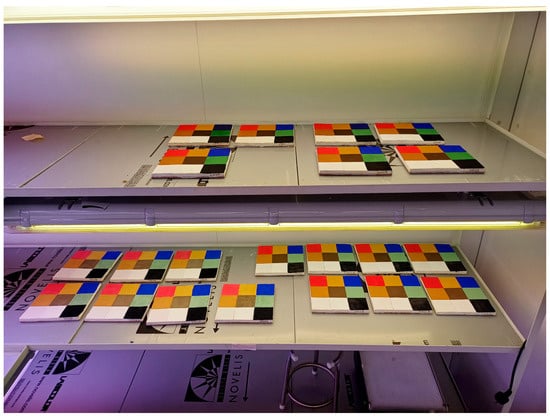
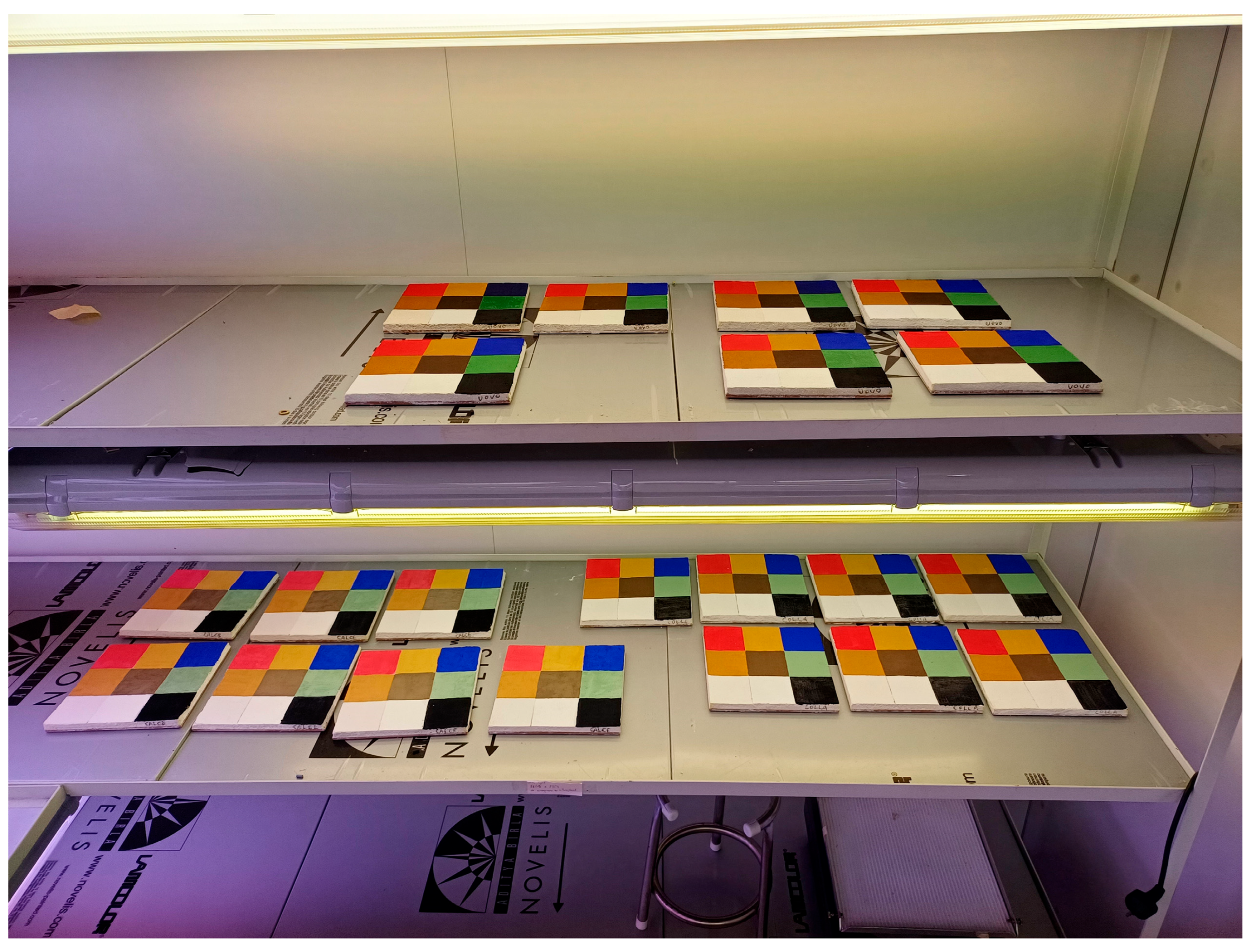
The samples were subsequently allowed to age naturally for three months in climate-controlled chambers (20 °C, 50% relative humidity), to achieve the full drying of aqueous solvents (Figure 1).
Figure 1.
Replica samples of different painting techniques drying in a climate-controlled chamber.
2.2. Extraction Methods of Natural Polymers
Opuntia ficus-indica mucilage: Cladodes of Opuntia ficus-indica were sourced from certified organic cultivation in San Cono (Sicily). After thorough rinsing under running water to remove surface residues, the glochids (spines) were manually removed using a scalpel, followed by the excision of the outer layers containing waxes and chlorophyll. The cleaned vegetal tissue was cut into 1–2 cm pieces and immersed in demineralized water at a 1:1 (w/w) ratio for 24 h under dark, room-temperature conditions to promote mucilage release. The extracted mucilage was then separated from the solid matrix by mechanical sieving [21].
Arabic Gum: Dry Arabic gum pearls were dispersed in demineralized water (1% w/v) and left to hydrate for 24 h. The mixture was then heated (50 °C) in a bain-marie until a homogenous and translucent solution was obtained.
Funori: Dried algae were manually cleaned to remove dark filaments and then soaked in demineralized water (1% w/v) for 24 h. The hydrated algae were heated (50 °C) in a bain-marie until mucilage formation occurred. The extract was purified through three successive filtration steps using pure cotton cloths to ensure optimal recovery and clarity of the product.
Arabic gum, Funori and all the pigments were purchased from a fine arts supplier in conservation-grade products (G.Poggi s.r.l., Rome, Italy). Details of the products characteristics, advantages and limitations are provided in Table 2.
Table 2.
Physicochemical characteristics, advantages and limitations of the Arabic gum, Funori, and Opuntia ficus-indica mucilage.
2.3. Non-Destructive Analysis
2.3.1. Colorimetry
Colorimetric measurements were conducted to assess chromatic variations induced by the treatments on the surface layers. The procedure followed the NORMAL guidelines [33] using a 3nh spectrophotometer (model YS3060; Shenzhen Threenh Technology Co., Ltd., Guangzhou, China) equipped with a D65 illuminant and a 3 mm spot. Each investigation area was carefully identified and documented through photography to ensure that measurements could be consistently repeated at the same locations during the different experimental phases. For each pigment, five points were selected, and three measurements per point were acquired, resulting in a total of 135 measurements per tile.
2.3.2. Automated Ultrasonic Mapping System with Non-Contact Probes and Data Analysis
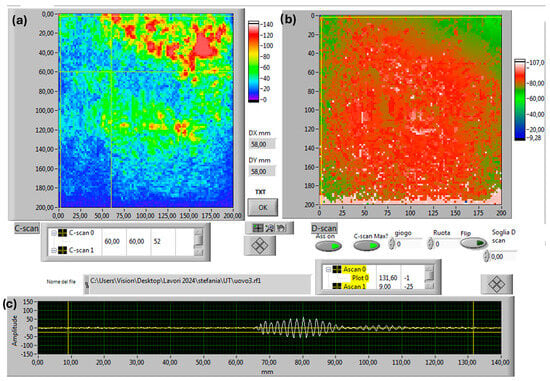
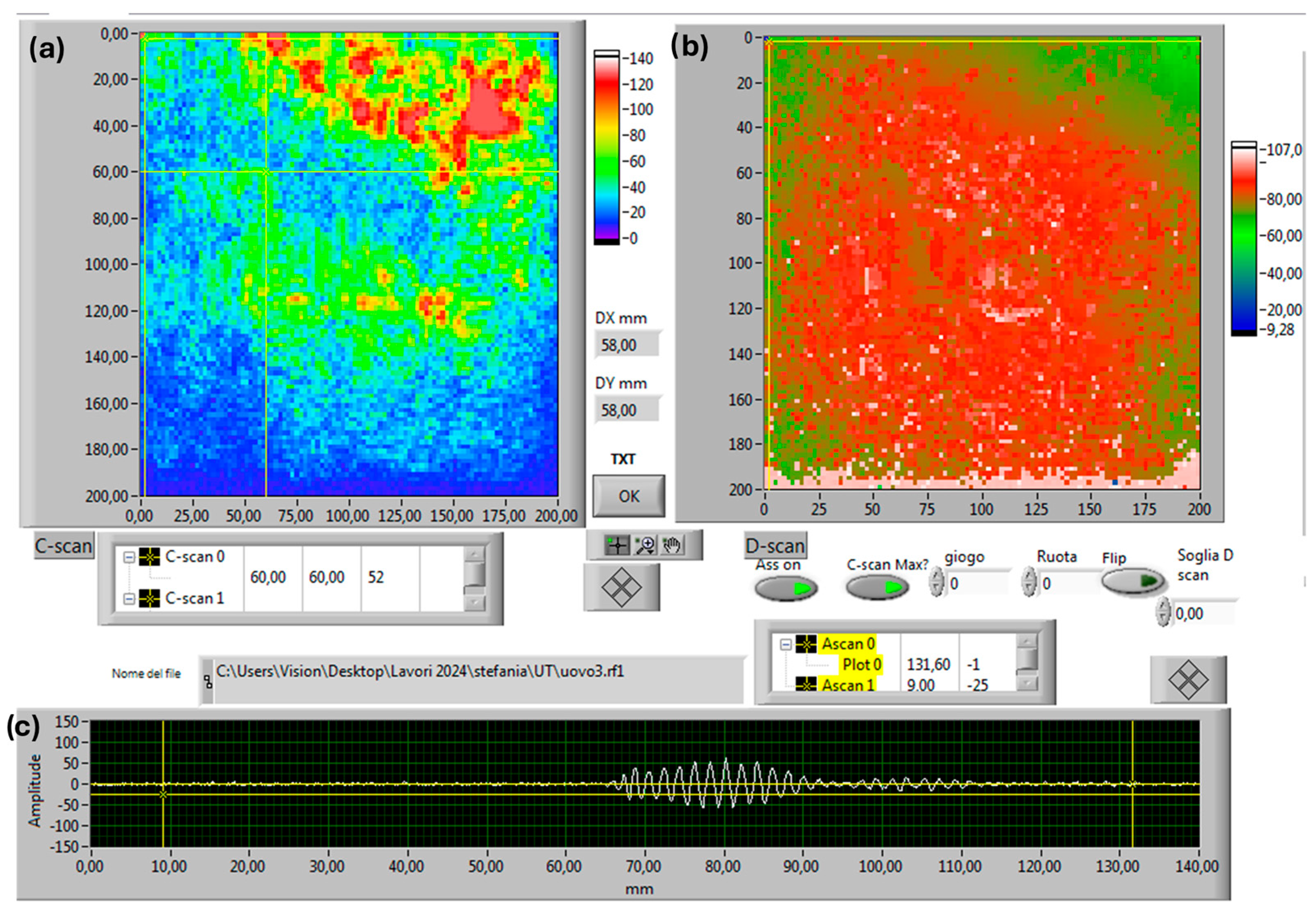
Ultrasonic measurements using non-contact probes [4,5] were performed to further evaluate the effectiveness of the consolidation treatments. The analyses were conducted using an Ultran UT instrument (Model HF400PG NDC System, Ultran Group, State College, PA, USA) equipped with a Ultran 1 MHz air probe, Pulse-Echo technique, Tektronics MDO 3032 Ethernet digitizer (Tektronics Inc., Cedar Hills, OR, USA), MICOS-National Instruments automatic XYZ + Theta motion system controlled by an HP workstation with a National Instruments four-axis card (Micos-Newport, Irvine, CA, USA and National Instruments, Austin, TX, USA). The Ultrasonic mapping Software used for acquisition and processing was developed in-house at ENEA (Figure 2).
Figure 2.
Ultrasonic mapping Software, showing the C-scan maps (a,b) and the amplitude of the reflected signal (c).
The ultrasonic probe was translated over the sample surface along the XY Cartesian axes using precision linear guides, enabling the full area scanning of each tile from the same side. The emitted ultrasonic wave propagates through the material, and internal irregularities or changes in density generate reflected waves (defect echoes). The collection of these echoes forms the ultrasonic signal, which provides information on the condition and thickness (up to 3 mm) of the investigated layer. A higher signal amplitude corresponds to greater material compactness and hardness, whereas lower amplitudes indicate reduced density or weaker cohesion. By comparing measurements acquired before and after consolidation, changes in surface behavior and the effectiveness of the applied consolidants could be quantitatively assessed.
The acquired data were processed to generate C-scan maps (Figure 2a,b), representing the maximum amplitude of the reflected signal across the scanned surface. The resulting maps match the dimensions of the tile and employ a color scale in which red indicates maximum amplitude, blue minimum amplitude, and green intermediate values, with intensity values ranging from 0 to 128. Data analysis was carried out pigment by pigment. A Region of Interest (ROI) measuring 58 × 58 mm was defined on the full C-scan map of each tile [3]. The ROI was repositioned over each of the nine color zones, and the corresponding amplitude values were extracted. For each color, only the mean reflected-echo amplitude was retained for graphical representation and further evaluation. This procedure was repeated for all samples and all painting techniques, yielding a total of 9 colors × 3 samples × 4 techniques = 108 ROIs, from which Mean, Variance, and Standard Deviation were calculated.
2.3.3. Contact Angle Measurement
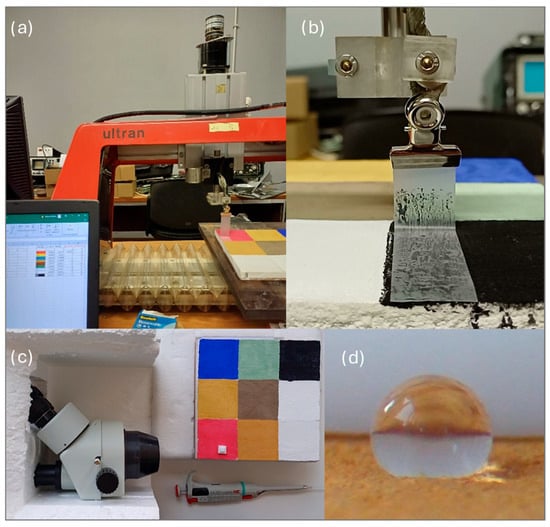
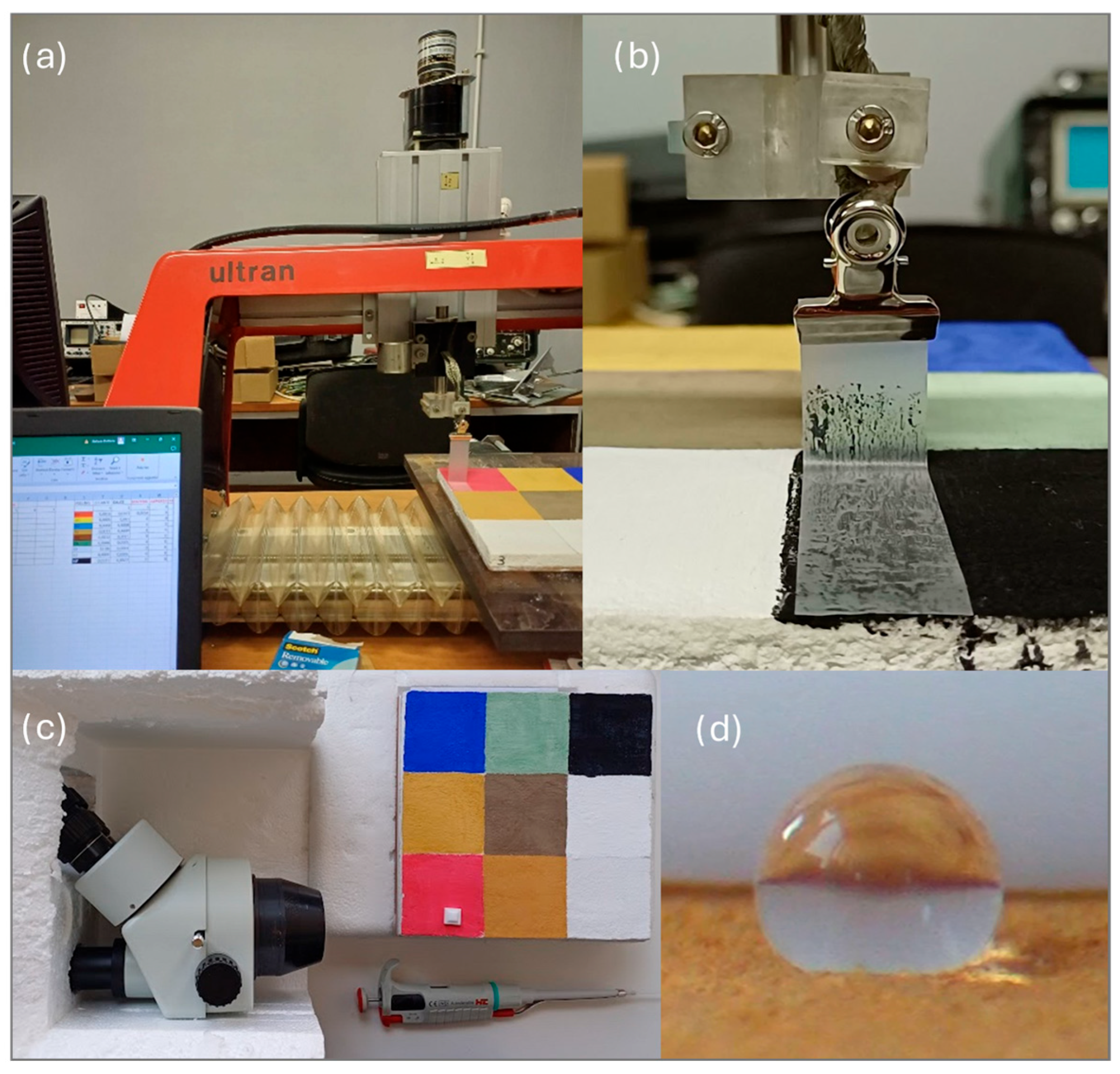
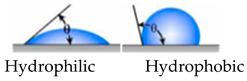
Contact angle measurements were performed to assess the surface wettability of the samples before and after consolidation. The analyses were carried out and processed in accordance with UNI standards [34] and the NORMAL Recommendation [35]. A 5 μL drop of demineralized water was deposited on the surface of each sample using an Eppendorf micropipette (Table 3). A dedicated support system was prepared to ensure the correct positioning of the optical microscope, aligning the visual axis parallel to the surface area where the drop was to be placed (Figure 3c,d). The deposition of each droplet was recorded using a video camera mounted on the microscope. Video acquisition was essential to guarantee the reproducibility of the measurements: through post-processing, still frames were extracted exactly three seconds after droplet deposition, ensuring consistent timing across all samples.
Table 3.
Contact angle, observation of the results.
Figure 3.
Peeling test technique: the Ultran Instruments automatic XYZ motion system (a) that applies a standard level of traction to the tape (b); Contact angle technique: support system for the microscope (c) aligned to record the water drop on the surface (d).
2.4. Peeling Test for Consolidation Assessment
An original experimental protocol was developed to ensure the repeatability of the peeling test (or Scotch tape test), which was performed on the samples before and after consolidation. Since the method is not currently supported by any official standard or reliably validated guidelines [36], the test was optimized and standardized using an Ultran Instruments automatic XYZ motion system, specifically designed to control application parameters and minimize operator-dependent variability (Figure 3a,b). The samples were positioned horizontally, and strips of adhesive tape (3M—Removable Magic™ Tape—811; 3M, Saint Paul, MN, USA) were applied using standard strength traction and left on the surface for two minutes. Each strip of tape was then attached to a mechanical arm capable of maintaining constant movement along the x, y, and z axes, ensuring a uniform and repeatable peeling action across all samples. Every tape strip was weighed using an analytical balance (10−4 g precision) before and after the test, allowing for an accurate determination of the amount of material removed during the procedure.
3. Results
3.1. Colorimetric Measurements
Table 4 reports ΔE values, which represent color differences after treatment. Each consolidant was tested on four tempera types: Lime tempera, Lean tempera, Egg–oil tempera, and Egg tempera. Data revealed that the three consolidants did not induce chromatic alteration perceptible to the naked eye, considering that noticeable color differences generally occur when ΔE exceeds 5 units [37]. Arabic gum shows good chromatic stability on lime tempera but produced slightly higher color variation in lean and egg tempera. Funori maintained an acceptable chromatic variation, which rose by two units in the case of the egg-based technique. The Opuntia mucilage achieved the best average performance, maintaining very low ΔE values (0.5 and 0.6), except for a moderate shift observed in egg–oil tempera.
Table 4.
Average ΔE values and standard deviation of chromatic variation before and after consolidation with Opuntia mucilage, Arabic gum, and Funori for the different execution techniques.
3.2. Peeling Test
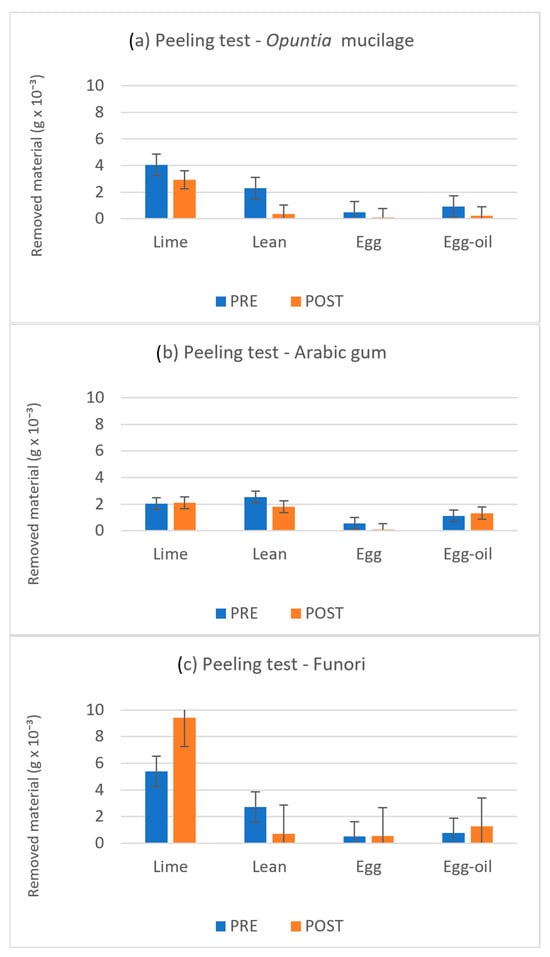
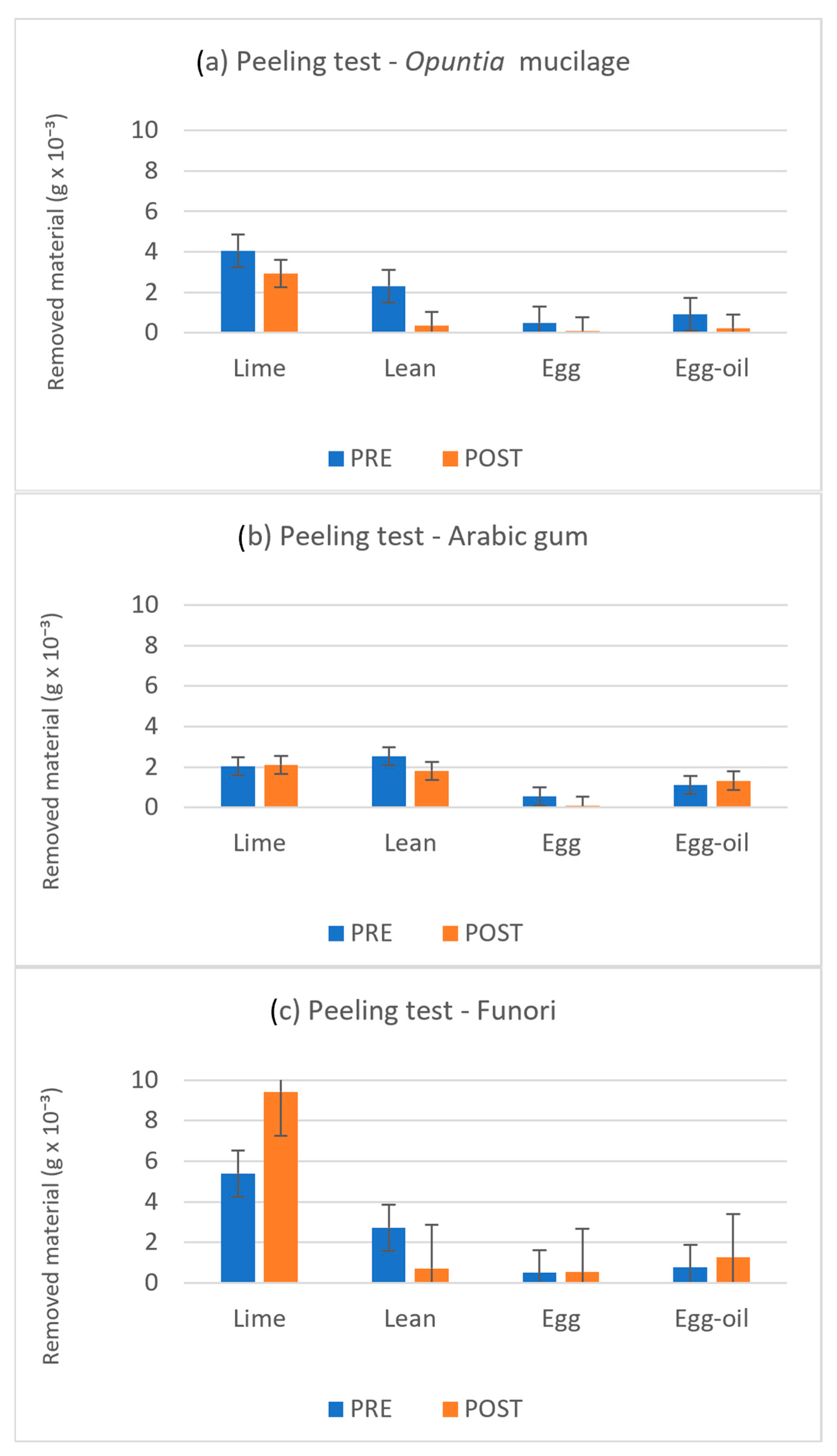
Post-consolidation results (Figure 4) generally indicate an improvement in material cohesion across the tested samples. The Opuntia mucilage produced the most effective consolidation, showing a marked reduction in the amount of material removed by the adhesive tapes after treatment. Arabic gum exhibited a limited consolidating effect on lime and egg–oil tempera, and its impact on lean and egg tempera was not significant. Funori showed the weakest performance on lime tempera. In addition to its inadequate behavior during the consolidation phase, the lime-based samples treated with Funori experienced complete detachment of the color layers during the peeling test.
Figure 4.
Average peeling test (mean values ± standard deviation) results on replicas treated with the different consolidants: (a) Opuntia mucilage, (b) Arabic gum, and (c) Funori. PRE: pre-consolidation; POST: post-consolidation for the different execution techniques.
3.3. Automated Ultrasonic Mapping System
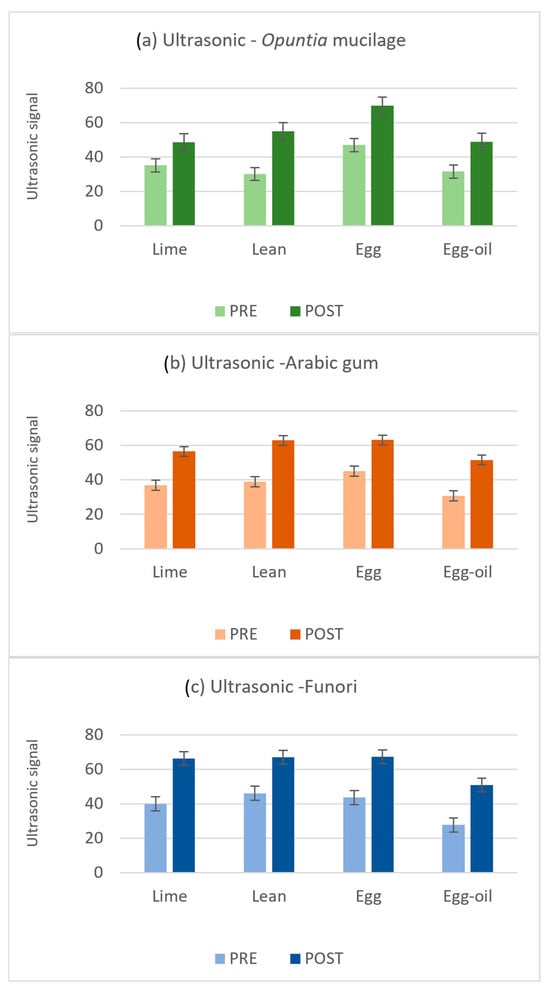
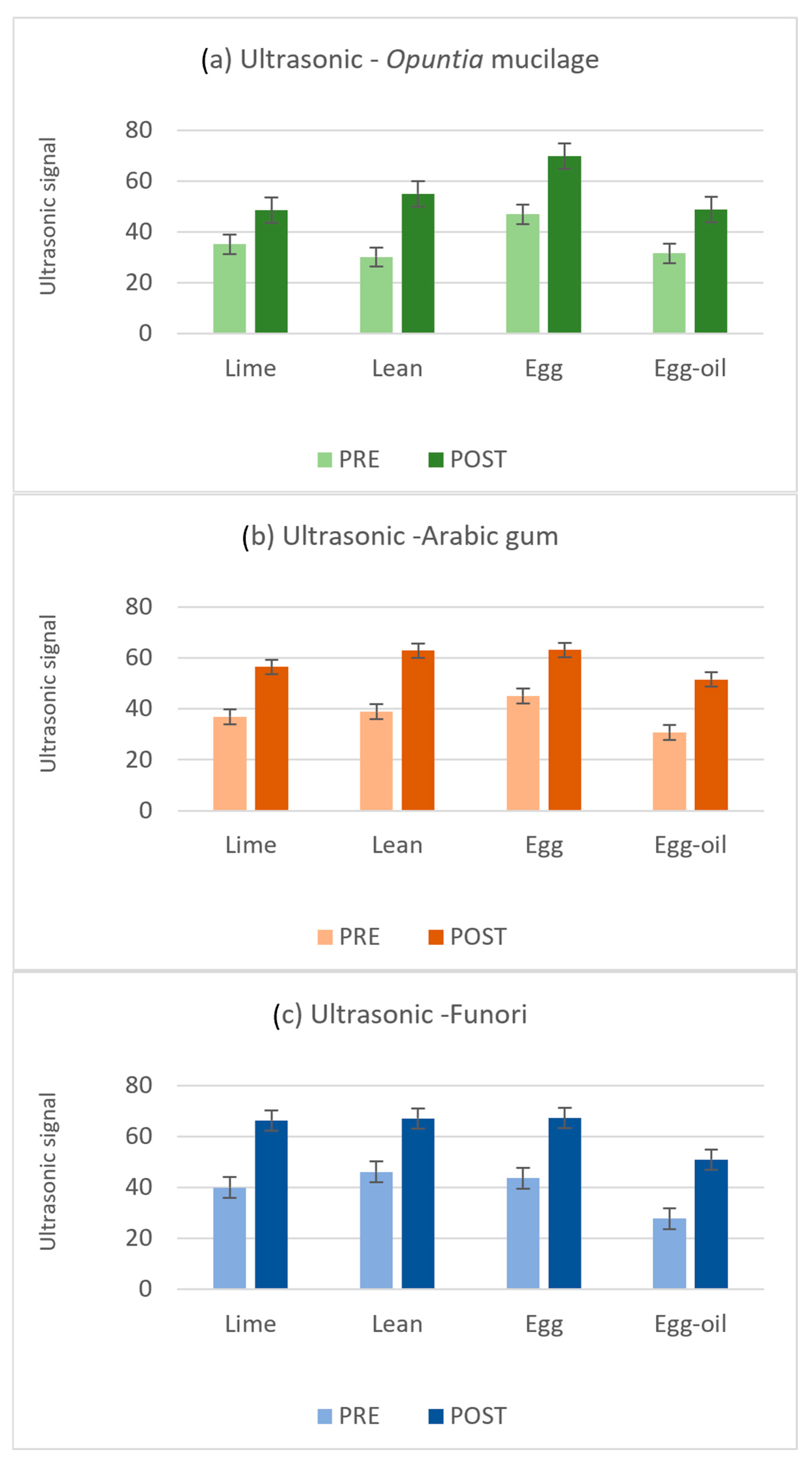
The results shown in Figure 5 indicate a general increase in ultrasonic signal intensity from the pre-consolidation to the post-consolidation phase. This increase is directly associated with an enhancement in compactness and hardness across the entire thickness of the samples. Ultrasonic mapping demonstrates that all three consolidants—Opuntia mucilage, Arabic gum, and Funori—significantly improved cohesion, with POST values consistently higher than PRE. Funori generally produced the highest increases, particularly in lime tempera (+26.32) and egg–oil tempera (+23.23), indicating strong consolidating performance. Opuntia mucilage performed best in lean tempera (+24.95), while Arabic gum provided consistent but comparatively lower improvements. For egg tempera, all treatments proved highly effective, with Funori displaying slightly superior results. Overall, Funori emerges as the most reliable consolidant for enhancing structural cohesion, followed closely by Opuntia mucilage, whereas Arabic gum offers moderate yet steady improvements.
Figure 5.
Ultrasonic results (mean values ± standard deviation) on the replicas treated with the different consolidants: (a) Opuntia mucilage, (b) Arabic gum, and (c) Funori. PRE: pre-consolidation; POST: post-consolidation; for the different execution techniques. Ultrasonic signal indicates digitized voltage values expressed not in volts but in pure numbers.
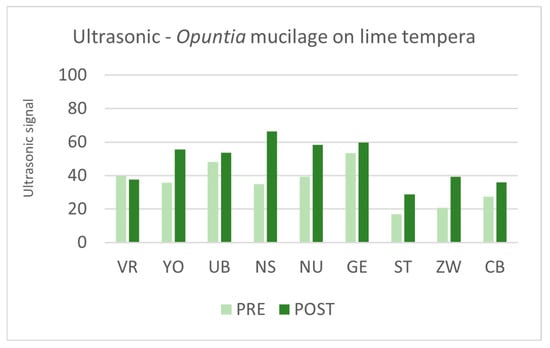
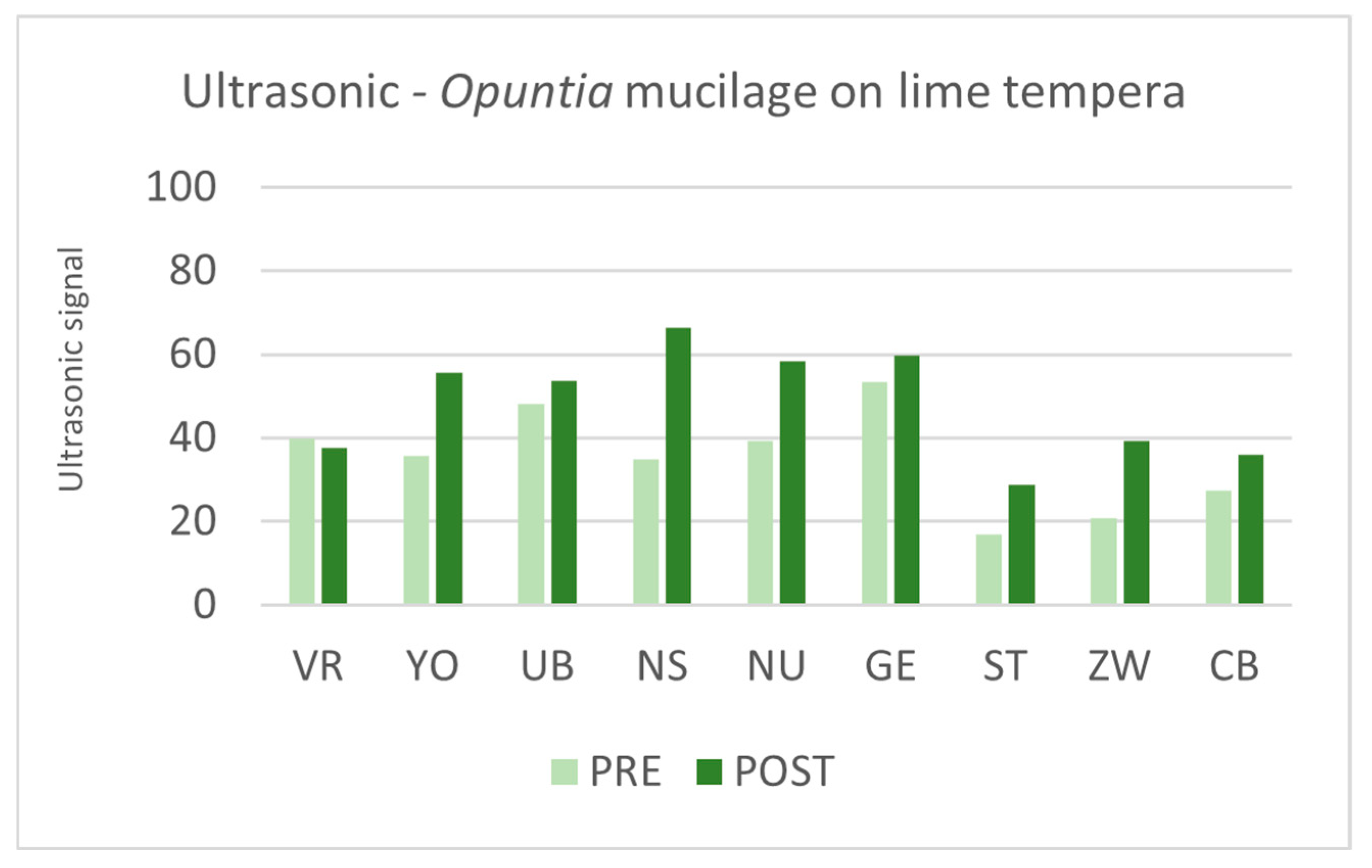
Interesting results emerged from the analysis of the response of individual pigments to the consolidants (see Supplementary Material S1). For example, the treatment with Opuntia mucilage on lime tempera, shown in Figure 5, highlights that the ultrasonic signal is strongly influenced by the pigments used in the execution technique. The most effective consolidation was observed on NS, NU, YO, and ZW, while on some pigments (VR, UB, CB) the treatment produced only negligible effects (Figure 6). This finding indicates that the same consolidating treatment can yield markedly different outcomes depending on the pigment employed, and not solely on the binder.
Figure 6.
Ultrasonic signal results from the treatment with Opuntia mucilage on lime tempera, for each pigment pre- and post-consolidation. VR = Vermilion red, YO = Yellow ochre, UB = Ultramarine blue, NS = Natural sienna, NU = Natural umber, GE = Green earth, ST = Standard, ZW = Zinc white, CB = Carbon black.
3.4. Contact Angle Measurement
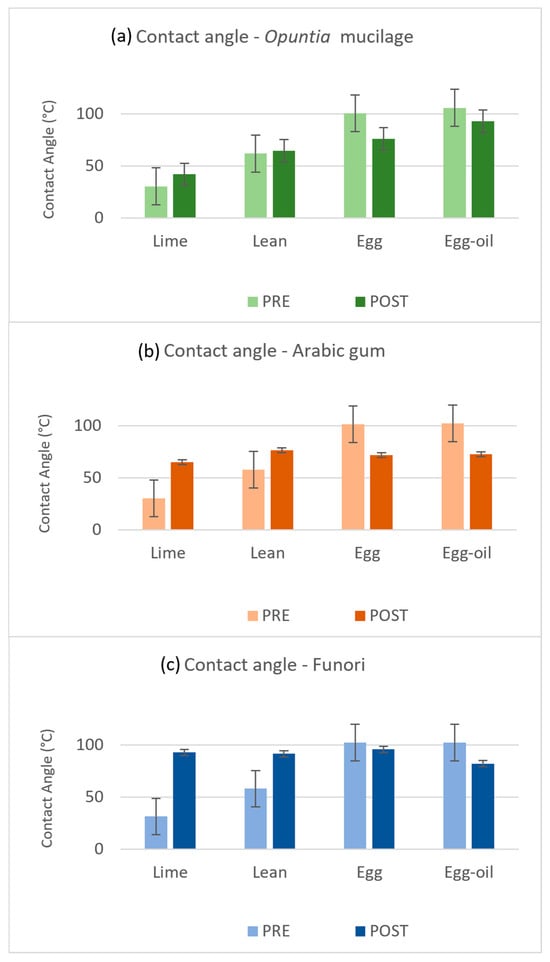
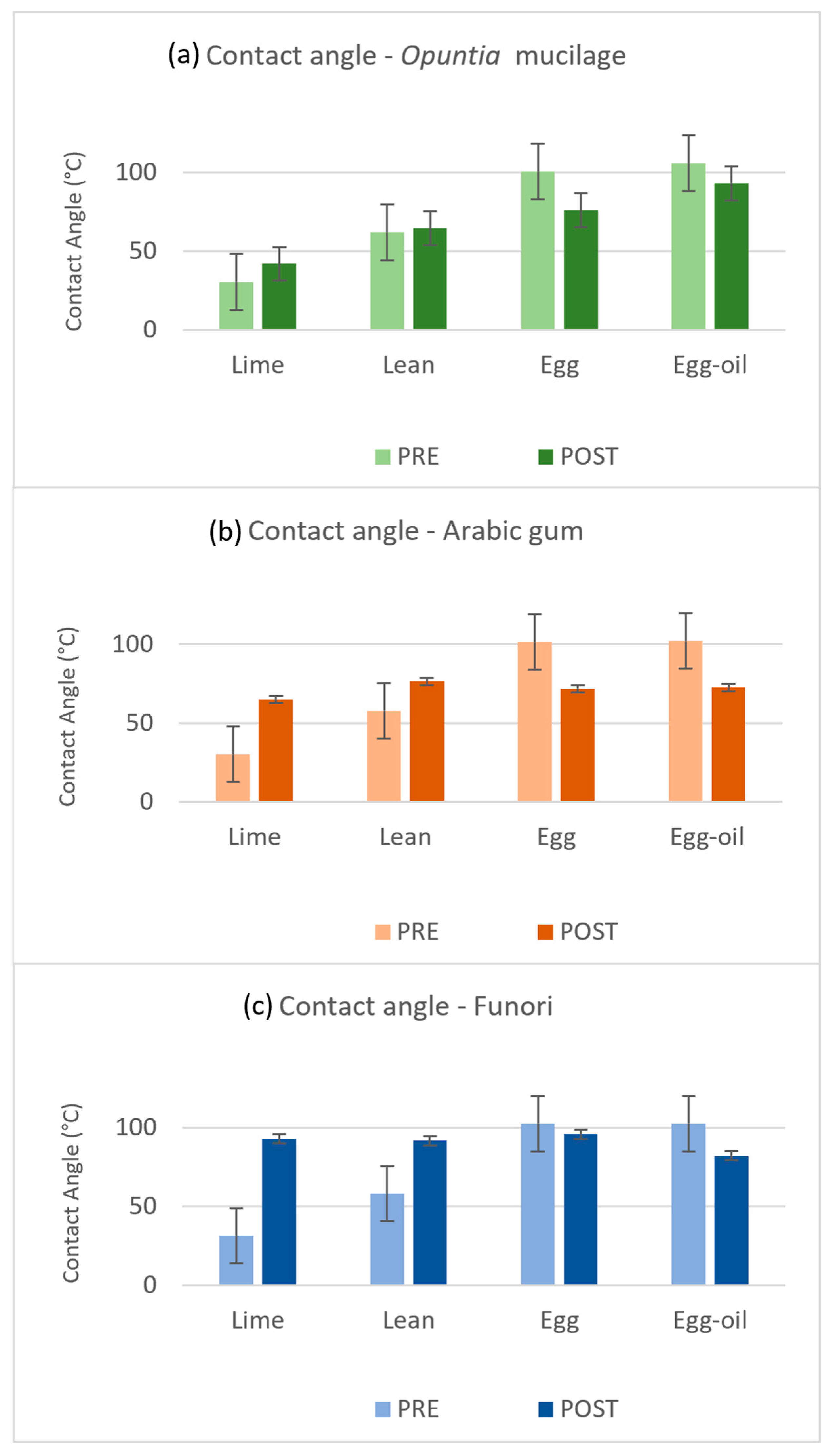
Using dedicated image-processing software (ImageJ version 1.54p) [38,39], the contact angles of each specimen were determined during pre- and post-consolidation by analyzing the corresponding photographs. Two measurements were performed for each color, across seven replicates for each application technique, resulting in a total of 504 video recordings. Individual frames were extracted from these recordings for subsequent evaluation. All consolidating treatments (Figure 7) produced an increase in hydrophobic behavior in the lime- and glue-based tempera samples. The most significant shift toward hydrophobicity was observed in the replica samples treated with Funori, whereas those treated with Opuntia mucilage showed only minimal variation, maintaining surface characteristics closely comparable with the pre-consolidation phase. Overall, the lime and glue tempera samples retained an intermediate wettability profile throughout the study. In contrast, the oil- and egg-based tempera samples exhibited a slight increase in surface hydrophilicity following all treatments, while still maintaining their hydrophobic character.
Figure 7.
Contact Angle results (mean values ± standard deviation) on the replicas treated with the different consolidants: (a) Opuntia mucilage, (b) Arabic gum, and (c) Funori. PRE: pre-consolidation; POST: post-consolidation for the different execution techniques.
4. Discussion
The effectiveness of the selected consolidating treatments (Opuntia mucilage, Arabic gum, and Funori) was assessed through non-destructive diagnostics and compared to semi-destructive investigations performed on replica samples before and after consolidation.
The surfaces of the test specimens appeared consolidated to the touch without dusting, and the contact angle measurements revealed no significant changes in surface wettability, except in the case of lime tempera treated with Funori.
Opuntia mucilage consistently demonstrated balanced and conservative behavior across all tested painting techniques. On lime tempera, it provided structural reinforcement with excellent color stability (ΔE ≈ 0.6) and reduced material loss, indicating improved cohesion. On lean tempera, it achieved a substantial structural gain (+24.95) and a marked decrease in material loss, confirming enhanced internal cohesion of the paint layer. On egg–oil and egg tempera, it produced significant cohesion increases, excellent chromatic stability, and improved peeling resistance, making it the most balanced treatment overall. Although still experimental in the field of Cultural Heritage, Opuntia mucilage confirmed its excellent consolidant properties, as previously reported [20,32].
Funori, despite yielding the highest structural gains on three of the four substrates (lime +26.32, egg–oil +23.23, egg +23.45), presented critical limitations in peeling resistance. On lime tempera, for instance, the increase in ultrasonic response contrasts with the increase in removed material. This apparent contradiction can be explained by Funori’s limited penetration and accumulation in superficial layers. Ultrasonic testing, which detects cohesion up to ~3 mm in depth, recorded strong signals from these layers. However, the peeling test revealed discontinuities between the consolidated surface and the underlying substrate, exposing a mechanical weakness. This limitation is linked to Funori’s high viscosity, already noted in previous studies [16]. In wall paintings, especially in the presence of soluble salts, Funori tends to form gels that hinder penetration, consolidating only the surface without reinforcing deeper layers. On egg–oil tempera, material loss slightly increased, while color change remained acceptable (ΔE ≈ 1.7), indicating partial compatibility. On egg tempera, despite good cohesion gain, peeling resistance did not improve, and the highest chromatic variation was observed (ΔE ≈ 3.2), attributable to superficial whitening caused by product accumulation and light-scattering phenomena (Supplementary Material S2). For this reason, the distribution of the colorimetry replicates appears inconsistent, which accounts for the high standard deviation. Reports indicate that Funori sheets may contain sodium chloride and sodium peroxide residues [29]. Given the variability of natural seaweed in viscosity and pH, Junfunori—a purified derivative—has been preferred for its chemical stability [17], though its use remains limited by production costs [18,40].
Arabic gum, although not achieving the highest structural cohesion, exhibited conservative and stable behavior. On lime and lean tempera, it provided moderate structural reinforcement, acceptable color variation, and slight improvement in peeling resistance. On egg–oil tempera, it showed a good cohesion gain and ΔE with no variation related to peeling values. On egg tempera, improvements were modest, with moderate ΔE and limited peeling resistance. A phenomenon observed after treatment was the appearance of superficial glossy spots under raking light (Supplementary Material S3), likely responsible for slight increases in ΔE values. This issue has also been documented in previous studies [28].
Both the peeling test and non-contact ultrasonic investigation aim to assess surface cohesion, but they differ in methodology and invasiveness. The peeling test, although semi-destructive, provides direct evidence of mechanical resistance to delamination and material loss under tangential stress. In contrast, ultrasonic testing is non-invasive and contactless, detecting acoustic responses in the uppermost 3 mm of the substrate. This makes it particularly suitable for fragile or unstable painted surfaces, where mechanical testing could compromise integrity.
The case of Funori exemplifies the need for integrated interpretation: ultrasonic intensity increased markedly (from 39.98 to 66.30 on lime tempera), yet peeling revealed higher material loss. This apparent contradiction can be explained by considering that the ultrasonic method detects the cohesion of the 3 mm superficial layer—likely consolidated by Funori accumulation—while the peeling test highlights the structural discontinuity between the treated surface and the underlying substrate, which acts as a mechanical weakness. In this case, the elevated acoustic response does not reflect deep cohesion, but rather a partial and localized consolidation.
The collected data demonstrate that, when interpreted together, these two techniques offer a complementary and coherent reading of the effectiveness of a consolidating treatment.
5. Conclusions and Future Perspectives
This study demonstrates the strong potential of non-contact air-coupled ultrasonic diagnostics as an innovative and fully non-invasive tool for the evaluation of consolidation treatments on fragile painted surfaces that do not tolerate any mechanical action. The automated ultrasonic mapping system and the dedicated acquisition and processing software, specifically developed at ENEA, allow repeatable, high-resolution assessment of cohesion and compactness without the need for coupling media such as water or gels, thus preserving surface integrity. When combined with a mechanically controlled and repeatable peeling test—also optimized at ENEA—this approach defines a complementary and integrated methodology capable of overcoming the limitations of each technique when used independently, providing a more comprehensive interpretation of consolidation effectiveness. Although ultrasonic testing is widely established in industrial diagnostics, its application to Cultural Heritage remains extremely limited; the results presented here highlight its relevance and adaptability to conservation science, suggesting that future developments may also integrate deep-learning approaches [41] for the combined analysis of ultrasonic and peeling-test data, thereby enhancing the completeness and reliability of diagnostic interpretations in conservation practice. Future research will focus on post-aging evaluations, the extension of the method to different substrates and stratigraphies, and its application to real case studies, consolidating air-coupled ultrasonics as a promising diagnostic strategy for sustainable conservation practices.
Supplementary Materials
The following supporting information can be downloaded at: https://www.mdpi.com/article/10.3390/app16010504/s1, S1: Ultrasound_data; S2: funori vs. pigments; S3: arabicgum_scattering, S4: Colorimetry results, S5: Pigments list.
Author Contributions
Conceptualization, S.D. and C.A.; methodology, S.D., L.B. and A.T.; validation, S.D., A.T., L.B. and C.A.; formal analysis, S.D.; investigation, S.D. and C.A.; resources, C.A.; data curation, S.D., A.T. and C.A.; writing—original draft preparation, S.D. and C.A.; writing—review and editing, S.D., A.T., L.B. and C.A. All authors have read and agreed to the published version of the manuscript.
Funding
S.D. was supported by the National PhD in Heritage Science–Next Generation EU, CUP: B53C22007250006.
Institutional Review Board Statement
Not applicable.
Informed Consent Statement
Not applicable.
Data Availability Statement
The original contributions presented in this study are included in the Supplementary Material. Further inquiries can be directed at the corresponding author.
Acknowledgments
S.D. thanks Sapienza University of Rome and the University of Campania “Luigi Vanvitelli” (Naples), represented by Elena Manzo, for their support in her PhD thesis. The authors wish to thank the anonymous reviewers for their comments and suggestions.
Conflicts of Interest
The authors declare no conflicts of interest.
References
- Drdácký, M.; Lesák, J.; Rescic, S.; Slížková, Z.; Tiano, P.; Valach, J. Standardization of peeling tests for assessing the cohesion and consolidation characteristics of historic stone surfaces. Mater. Struct. 2011, 45, 505–520. [Google Scholar] [CrossRef] [Scilit] [PubMed]
- Chimenti, D.E. Review of air-coupled ultrasonic materials characterization. Ultrasonics 2014, 54, 1804–1816. [Google Scholar] [CrossRef] [Scilit] [PubMed]
- Pirinu, A.; Saponaro, A.; Nobile, R.; Panella, F.W. Low-velocity impact damage quantification on sandwich panels by thermographic and ultrasonic procedures. Exp. Tech. 2024, 48, 299–322. [Google Scholar] [CrossRef] [Scilit]
- Bhardwaj, A.; Patel, K.; Bhardwaj, M.C.; Fetfatsidis, K.A. Application of advanced non-contact ultrasound for composite material qualification. In Proceedings of the CAMX 2014—The Composites and Advanced Materials Expo, Orlando, FL, USA, 13–16 October 2014; SAMPE: Orlando, FL, USA, 2014. [Google Scholar]
- Bhardwaj, M.C.; Neeson, I.; Langron, M.E.; Vandervalk, L. Contact-Free Ultrasound: The Final Frontier in Non-Destructive Materials Characterization. In Ceramic Engineering and Science Proceedings; Jessen, T., Ustundag, E., Eds.; Wiley-American Ceramic Society: Westerville, OH, USA, 2000. [Google Scholar]
- Pagliaroli, T.; Pagliaro, A.; Patanè, F.; Tatì, A.; Peng, L. Wavelet analysis of ultra-thin metasurfaces for hypersonic flow control. Appl. Acoust. 2020, 157, 107032. [Google Scholar] [CrossRef] [Scilit]
- Tatì, A. I sistemi di mappatura non distruttiva UT. EAI—Energ. Ambiente E Innov. 2021, 3. [Google Scholar] [CrossRef]
- Vun, R.; Eischeid, T.; Bhardwaj, M. Quantitative Non-Contact Ultrasound Testing and Analysis of Materials for Process and Quality Control. In Proceedings of the 9th European Conference on NDT, Berlin, Germany, 25–29 September 2006; ECNDT: Berlin, Germany, 2006. [Google Scholar]
- Cheng, Y.; Xia, G.; Zhang, R.; Zhang, Y.; Li, Y.; Huang, J. A novel air-coupled ultrasonic technique for assessing the weathering degree of sandstone heritage. J. Cult. Herit. 2025, 74, 204–213. [Google Scholar] [CrossRef] [Scilit]
- Siddiolo, A.M.; D’Acquisto, L.; Maeva, A.R.; Maev, R.G. Wooden panel paintings investigation: An air-coupled ultrasonic imaging approach. IEEE Trans. Ultrason. Ferroelectr. Freq. Control 2007, 54, 836–846. [Google Scholar] [CrossRef]
- Vadrucci, M. Sustainable Cultural Heritage Conservation: A Challenge and an Opportunity for the Future. Sustainability 2025, 17, 584. [Google Scholar] [CrossRef] [Scilit]
- Vieira, M.; Melo, M.J.; de Carvalho, L.M. Towards a Sustainable Preservation of Medieval Colors through the Identification of the Binding Media, the Medieval Tempera. Sustainability 2024, 16, 5027. [Google Scholar] [CrossRef] [Scilit]
- Mshelia, Y.M.; Lawan, M.Z.; Lawan, D.M.; Sulum, A.M. Effect of pH on Microbial Growth and Performance of Paint Produced Using Gum Arabic as a Binder. Asian J. Sci. Technol. Eng. Art 2025, 3, 1634–1644. [Google Scholar] [CrossRef] [Scilit]
- Xu, L.; Zhu, W.; Chen, X.; Liu, X. Applications and Challenges of Modern Analytical Techniques for the Identification of Plant Gum in the Polychrome Cultural Heritage. Coatings 2025, 15, 1042. [Google Scholar] [CrossRef] [Scilit]
- Baudone, F. Funori Seaweed Extracts as Alternative Material to Semi-Synthetic Products Used in Paper Conservation. Progressus 2020, 7, 6–18. [Google Scholar]
- Catenazzi, K. Evaluation of the use of Funori for consolidation of powdering paint layers in wall paintings. Stud. Conserv. 2017, 62, 96–103. [Google Scholar] [CrossRef] [Scilit]
- Geiger, T.; Michel, F. Studies on the Polysaccharide JunFunori Used to Consolidate Matt Paint. Stud. Conserv. 2005, 50, 193–204. [Google Scholar] [CrossRef] [Scilit]
- Harrold, J.; Wyszomirska-Noga, Z. Funori: The Use of a Traditional Japanese Adhesive in the Preservation and Conservation Treatment of Western Objects. In Adapt & Evolve 2015: East Asian Materials and Techniques in Western Conservation; Icon: London, UK, 2017; pp. 69–79. [Google Scholar]
- Magaloni Kerpel, D.I. Metodología Para El análisis de la Técnica Pictórica Mural Prehispánica: El Templo Rojo de Cacaxtla, México; IINHA: Mexico City, Mexico, 1994. [Google Scholar]
- D’Ottavio, S.; Persia, F.; Mirabile Gattia, D.; Lavorini, B.; Coladonato, M.; Cassese, G.; Carnazza, P. Sostenibilità e restauro: Analisi sperimentali sulla mucillagine di Opuntia ficus-indica per il consolidamento dei dipinti. In Atti del XVII Congresso Nazionale IGIIC «Lo Stato dell’Arte»; IGIIC: Matera, Italia, 2019. [Google Scholar]
- Alisi, C.; Bacchetta, L.; Bojorquez, E.; Falconieri, M.; Gagliardi, S.; Insaurralde, M.; Martinez, M.F.F.; Orozco, A.M.; Persia, F.; Sprocati, A.R.; et al. Mucilages from different plant species affect the characteristics of bio-mortars for restoration. Coatings 2021, 11, 75. [Google Scholar] [CrossRef] [Scilit]
- Ricaldi, J.A.P.; Chavez, J.A.P.; Parian, G.J.M.; Luna, M.I.L. Evaluation of the Mechanical Properties of Adobe with the Addition of Rice Husk Ash and Opuntia ficus-indica. SSRG Int. J. Civ. Eng. 2025, 12, 79–96. [Google Scholar]
- Aldrovandi, A.; Altamura, M.L.; Cianfanelli, M.T.; Ritano, P. I materiali pittorici: Tavolette campione per la caratterizzazione mediante analisi multispettrale. OPD Restauro 1996, 8, 191–210, 101–103. [Google Scholar]
- Hebborn, E. Il Manuale del Falsario; Neri Pozza Editore: Vicenza, Italia, 2004. [Google Scholar]
- Cennini, C.; Frezzato, F. (Eds.) Il Libro dell’Arte; Neri Pozza Editore: Vicenza, Italia, 2003. [Google Scholar]
- Prasad, N.; Thombare, N.; Sharma, S.C.; Kumar, S. Gum arabic—A versatile natural gum: A review on production, processing, properties and applications. Ind. Crops Prod. 2022, 187, 115304. [Google Scholar] [CrossRef] [Scilit]
- Gorter, L.; Seymour, K.; van den Burg, J.M.; van den Berg, K.J. Consolidation of Paint and Ground: Paintings Conservation. Cultural Heritage Agency of the Netherlands, 2023. Available online: https://www.cultureelerfgoed.nl (accessed on 18 December 2025).
- Carnazza, P.; Francone, S.; Kron Morelli, P.; Reale, R.; Sammartino, M.P. Retouching Matt Contemporary Paint Layers: A New Approach Using Natural Polymers. Ge-Conserv 2019, 18, 384–393. [Google Scholar] [CrossRef] [Scilit]
- Wagner, J.; van Lookeren Campagne, K.; Megens, L.; Wei, B.; de Groot, S. Scratching the Surface: Research into the Use of Funori as Consolidant for Friable White Surface Coatings on Greek and Roman Terracotta Figurines. Heritage 2023, 6, 1–20. [Google Scholar]
- Gattuso, C.; Campanella, L.; Giosafatto, C.V.L.; Mariniello, L.; Roviello, V. The Consolidating and Adhesive Properties of Funori: Microscopy Findings on Common and Ancient Paper Samples. J. Cult. Herit. 2021, 48, 153–160. [Google Scholar] [CrossRef] [Scilit]
- Souza, G.F.A.; Pereira, M.M.L.; de Souza, F.A.; Palma e Silva, A.A.; Capuzzo, V.M.S.; Machado, F. Opuntia ficus-indica Mucilage: A Sustainable Bio-Additive for Cementitious Materials. Constr. Build. Mater. 2024, 396, 139254. [Google Scholar] [CrossRef] [Scilit]
- D’Ottavio, S.; Manzo, E.; Bacchetta, L.; Tatì, A.; Alisi, C. Il gel di Opuntia: Una proposta sostenibile per il consolidamento di pitture murali “a secco”. In Atti del XL Convegno Scienza e Beni Culturali—Le prossime Sfide per I Beni Culturali: Ricerca, Competenze e Professioni a Fronte di Cambiamenti Climatici, Sostenibilità e Transizione Digitale; Driussi, G., Morabito, Z., Eds.; Edizioni Arcadia Ricerche: Venezia, Italy, 2025; pp. 725–736. [Google Scholar]
- NORMAL 43/93; Misure Colorimetriche di Superfici Opache. NORMAL Commission: Sesto Fiorentino, Italy, 1994.
- UNI EN 15802; Determinazione dell’Angolo di Contatto Statico. UNI: Milano, Italy, 2010.
- NORMAL 33/89; Misura dell’Angolo di Contatto Acqua–Materiale Lapideo in Condizioni Statiche. NORMAL Commission: Sesto Fiorentino, Italy, 1989.
- Drdácký, M.; Slížková, Z. In situ peeling tests for assessing the cohesion and consolidation characteristics of historic plaster and render surfaces. Stud. Conserv. 2015, 60, 120–130. [Google Scholar] [CrossRef] [Scilit]
- Mokrzycki, W.; Tatol, M. Color difference Delta E—A survey. Mach. Graph. Vision 2011, 20, 383–411. [Google Scholar]
- ImageJ. Available online: https://imagej.net (accessed on 24 November 2025).
- Stalder, A.F.; Kulik, G.; Sage, D.; Barbieri, L.; Hoffmann, P. A Snake-Based Approach to Accurate Determination of Both Contact Points and Contact Angles. Colloids Surf. A Physicochem. Eng. Asp. 2006, 286, 92–103. [Google Scholar] [CrossRef] [Scilit]
- Wagner, J. A Comparative Study of Funori, JunFunori and TriFunori. Bachelor’s Thesis, University of Amsterdam, Amsterdam, The Netherlands, 2017. [Google Scholar]
- Wu, Y.; Wang, Y.; Li, D.; Zhang, J. Two-step detection of concrete internal condition using array ultrasound and deep learning. NDT E Int. 2023, 139, 102945. [Google Scholar] [CrossRef] [Scilit]

Disclaimer/Publisher’s Note: The statements, opinions and data contained in all publications are solely those of the individual author(s) and contributor(s) and not of MDPI and/or the editor(s). MDPI and/or the editor(s) disclaim responsibility for any injury to people or property resulting from any ideas, methods, instructions or products referred to in the content. |
© 2026 by the authors. Licensee MDPI, Basel, Switzerland. This article is an open access article distributed under the terms and conditions of the Creative Commons Attribution (CC BY) license.