Article

A Physical Modeling Method for the Bulking–Compaction Behavior of Rock Mass in the Caving Zone


1
School of Mines, China University of Mining and Technology, Xuzhou 221116, China
2
State Key Laboratory for Fine Exploration and Intelligent Development of Coal Resources, China University of Mining and Technology, Xuzhou 221116, China
3
School of Mining and Coal, Inner Mongolia University of Science and Technology, Baotou 014010, China
*
Author to whom correspondence should be addressed.
Appl. Sci. 2026, 16(1), 423; https://doi.org/10.3390/app16010423 (registering DOI)
Submission received: 8 December 2025 / Revised: 24 December 2025 / Accepted: 29 December 2025 / Published: 30 December 2025

Abstract

Traditional physical similarity simulation methods struggle to replicate the cumulative unloading–expansion effect in overburden, particularly due to inherent limitations in representing the bulking–compaction behavior of fractured rock masses in the caving zone. This significantly hinders a deeper understanding of overburden movement mechanisms. To address this technical challenge, this study innovatively proposes an experimental method designed to simulate the bulking–compaction process of rock masses in the caving zone. The method employs a composite of EPE and PP sheets. Through systematic uniaxial compression tests and orthogonal experimental design optimization, an optimal material mix ratio with superior performance was identified. Its stress–strain behavior was systematically analyzed, and its feasibility was comprehensively verified from the perspective of the synergistic evolution of displacement and stress fields. The results demonstrate that the stress–strain response of the new similar simulation material (SSM) aligns highly with the Salamon model. Furthermore, its load-bearing capacity exhibits a non-linear strengthening characteristic with increasing EPE thickness. Physical simulation validation tests, based on the engineering context of the Shilawusu Coal Mine, showed that all the relative error parameters were strictly controlled within 12%. The overall accuracy was significantly superior to existing simulation methods, achieving a substantial reduction in prediction errors for key parameters.

1. Introduction

The movement of overburden is the root cause of a series of safety and environmental issues, including surface subsidence, the development height of water-conducting fracture zones, mining pressure manifestation in the stope, and gas migration. Therefore, systematically studying and mastering the movement patterns of overburden is crucial for effectively identifying and mitigating these problems. During coal mining, as the failure height of the overlying strata increases, the total thickness of rock layers undergoing unloading-induced expansion deformation continuously accumulates. Simultaneously, the bulking rock mass is subjected to compaction by the load from the overlying fractured key strata (KS). As a result, the total amount of overburden unloading–expansion exhibits dynamic evolution characteristics under the combined influence of these two mechanisms. This phenomenon is defined in the literature [1,2] as the “accumulative effect of overburden strata expansion induced by stress relief” (AEOSEISR). The caving zone, as the rock failure area immediately adjacent to the goaf, is formed by the fracturing, fragmentation, and collapse of the immediate roof rock. The bulking and re-compaction mechanical behavior of the rock mass within this zone is key to influencing the degree of overburden movement response and surface subsidence [3,4,5]. Therefore, within the research framework of the AEOSEISR, deeply understanding the bulking–compaction evolution mechanism of the rock mass in the caving zone holds significant theoretical and engineering importance for refining overburden movement theory and guiding subsidence control practices.
However, the broken rock mass within the caving zone is deeply buried underground, characterized by a highly heterogeneous, discontinuous, and dynamically evolving structure, which poses significant challenges for in situ monitoring. Currently, researchers worldwide primarily rely on laboratory experiments, numerical simulations, and physical similarity modeling to study its bulking–compaction characteristics. In terms of laboratory experiments, studies have focused on variables such as particle gradation, loading rate, rock strength, moisture content, and load levels. Findings reveal that the compaction process of broken rock exhibits distinct stage-wise characteristics [6], primarily occurring during the initial compaction stage [7]. This stage can be further subdivided into rapid compaction, preliminary stabilization, and slow compaction phases [8]. Concurrently, the bulking coefficient of rock mass demonstrates a notable size effect [9] and is closely correlated with lithology and particle size [10,11]. Based on these insights, scholars have proposed methods for calculating the bulking coefficient [12,13]. Among these, Salamon, applying fundamental geotechnical mechanics theories, treated the fragmented rock mass as granular material. Based on analyses of rock block porosity, bulking coefficient, and compressive stress, he established a constitutive model to describe the compaction behavior of broken coal and rock mass [14]. Experimental validation indicates that these models can effectively reflect the compaction patterns of collapsed rock within goaf areas [15]. In terms of numerical simulation, software platforms such as the finite element software RFPA2D, FLAC3D and Examine2D and the discrete element software UDEC and 3DEC were employed to achieve visualized simulation of the entire process of overburden caving, bulking, and re-compaction [16,17,18,19]. Along the working face strike, typical mechanical zones, including the natural accumulation zone, load-affected zone, and re-compaction zone, were identified [20]. Moreover, it reveals the distribution characteristics of horizontal and vertical stresses within the main roof strata [21], clarifies that the height of the caving arch increases exponentially with the exposed span of the goaf, and establishes the dependence of the conditions for complete surface instability on the depth of the mining area [22]. In terms of physical simulation, physical modeling studies have revealed that the compaction degree of bulking rock within the goaf exhibits a spatial distribution characterized by “higher values in the central area and lower values at the edges” [23,24,25,26]. Moreover, the compaction degree decreases as a power function with increasing unloading height [27], a trend consistent with findings from the aforementioned research. For specific conditions such as rockburst and grouting backfill mining, studies have introduced dynamic similarity criteria centered on acceleration [28]. Novel similarity materials possessing properties such as low strength with strong rockburst tendency [29] and non-slaking upon water exposure [30] have been developed. These advancements enable refined physical simulations under complex dynamic and fluid-solid coupling conditions.
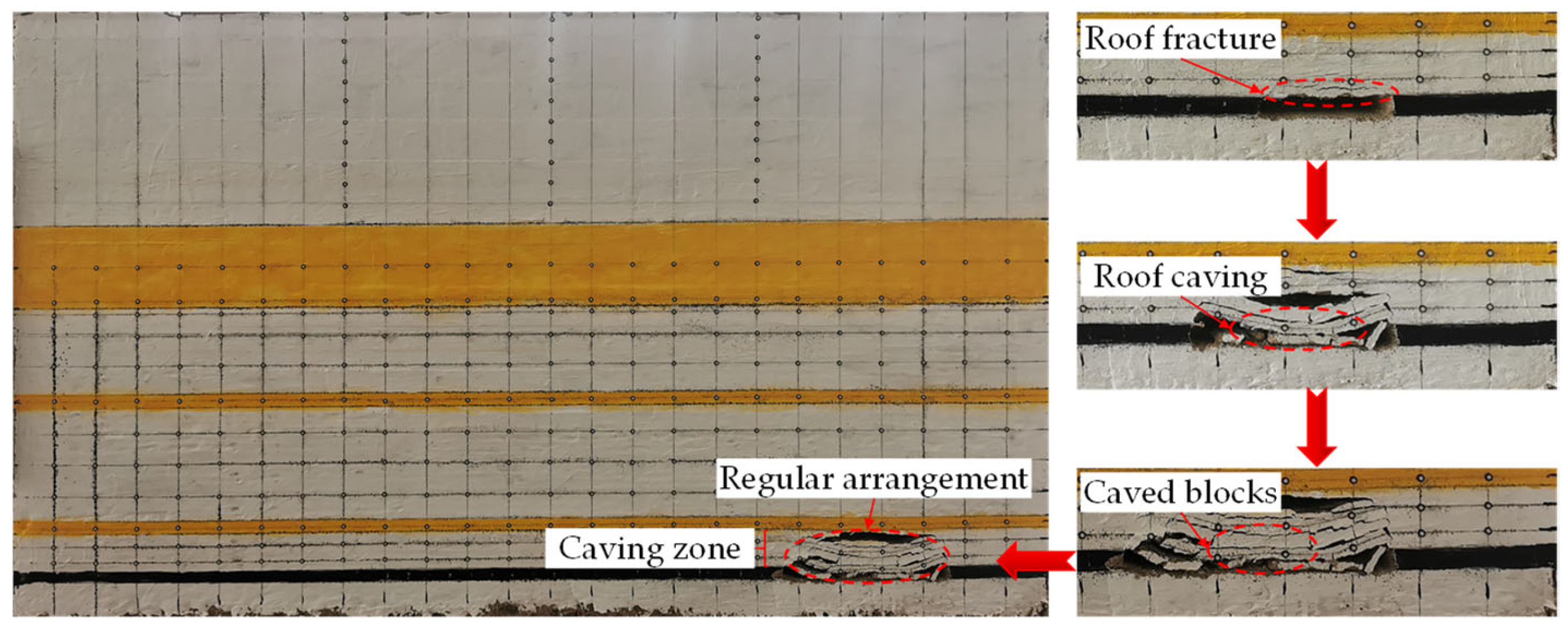
However, existing research methods still exhibit significant limitations in characterizing the bulking–compaction behavior of rock in the caving zone. Laboratory experiments are constrained by sample size, making it difficult to accurately represent the mechanical behavior of in situ rock masses influenced by scale effects [31,32,33]. Physical simulation studies have primarily focused on observing macroscopic phenomena, such as the failure height of overlying strata and fracture development, lacking the capability to fully and precisely reproduce the entire lifecycle of caving zone rock masses—from initial fragmentation and bulking evolution to gradual compaction. Furthermore, while traditional similarity simulation can reproduce the characteristic progressive caving of rock masses in the caving zone, the caved strata typically exhibit an “unbreakable” nature. Moreover, the fully collapsed rock masses often fail in a slab-like manner and arrange themselves in a regular pattern. This presents a significant deviation from the disordered accumulation morphology and complex mechanical responses of fragmented rock masses in actual goafs. Consequently, it struggles to accurately simulate the true bulking characteristics and dynamic compaction behavior of fragmented rock, constituting an inherent bottleneck that limits the realism of physical simulation, as illustrated in Figure 1. Given the decisive influence of the bulking–compaction behavior of caving zone rock masses on overburden movement, systematically overcoming these limitations has become an urgent research priority. The novel similarity simulation material addresses this by replacing the caving zone rock mass in the physical model with a composite of EPE and PP, simulating its bulking behavior. Due to the favorable elasticity of the EPE component within the novel material and its conformity to the Salamon model curve, the material can accurately represent the re-compaction process of bulked rock when subjected to loading from the overlying strata.
Therefore, to address the critical challenge of realistically simulating the bulking–compaction process of rock masses in the caving zone within physical models, this study treats five levels of EPE thickness and three levels of EPE position as variables. Fifteen experimental schemes were designed through orthogonal experimental design, and systematic uniaxial compression tests were conducted. Based on the experimental results and combined with specific operational parameters, an optimal mix formulation for a new similar simulation material (SSM) was selected. Grounded in the engineering context of the Shilawusu Coal Mine in the Meng-Shan mining area of China, the feasibility of this new similarity material for simulating the mechanical behavior of caving zone rock masses was validated from two dimensions: displacement response and stress response. This research provides both a material foundation and methodological support for advancing the refined physical simulation of overburden movement patterns.

2. Materials and Methods

2.1. New Similar Simulation Material of the Caving Zone

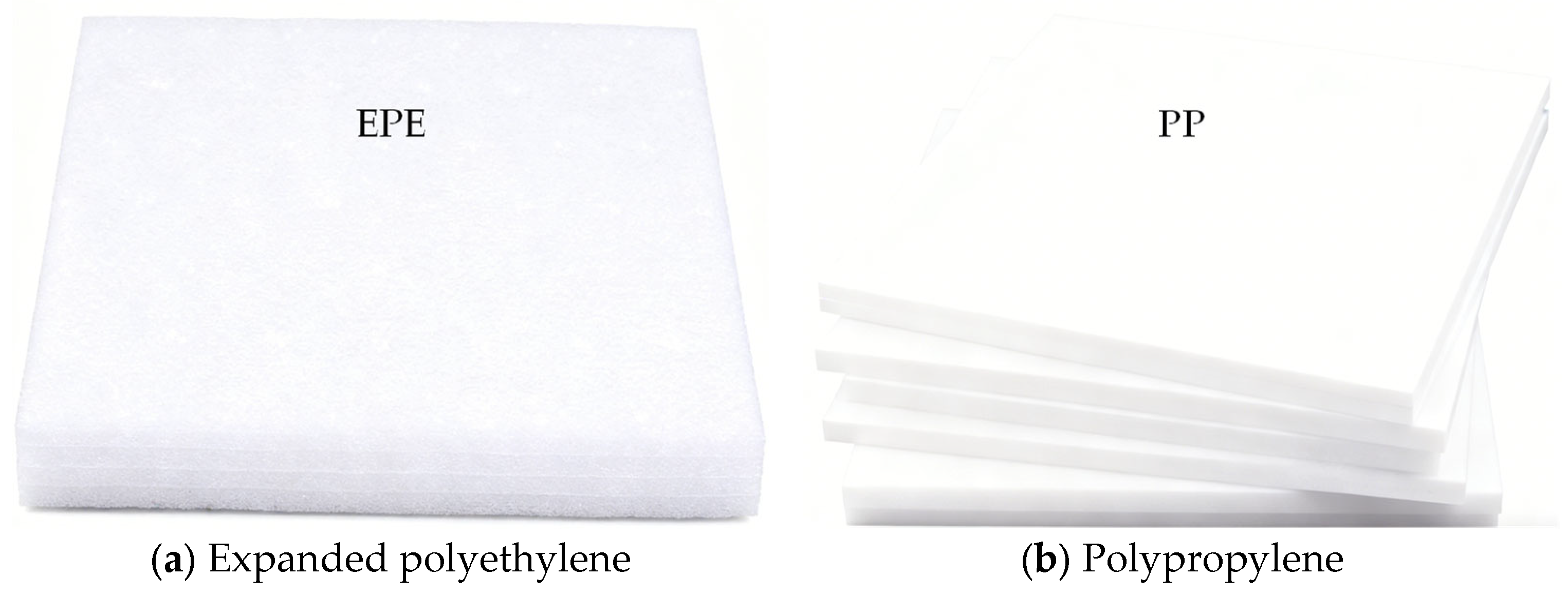
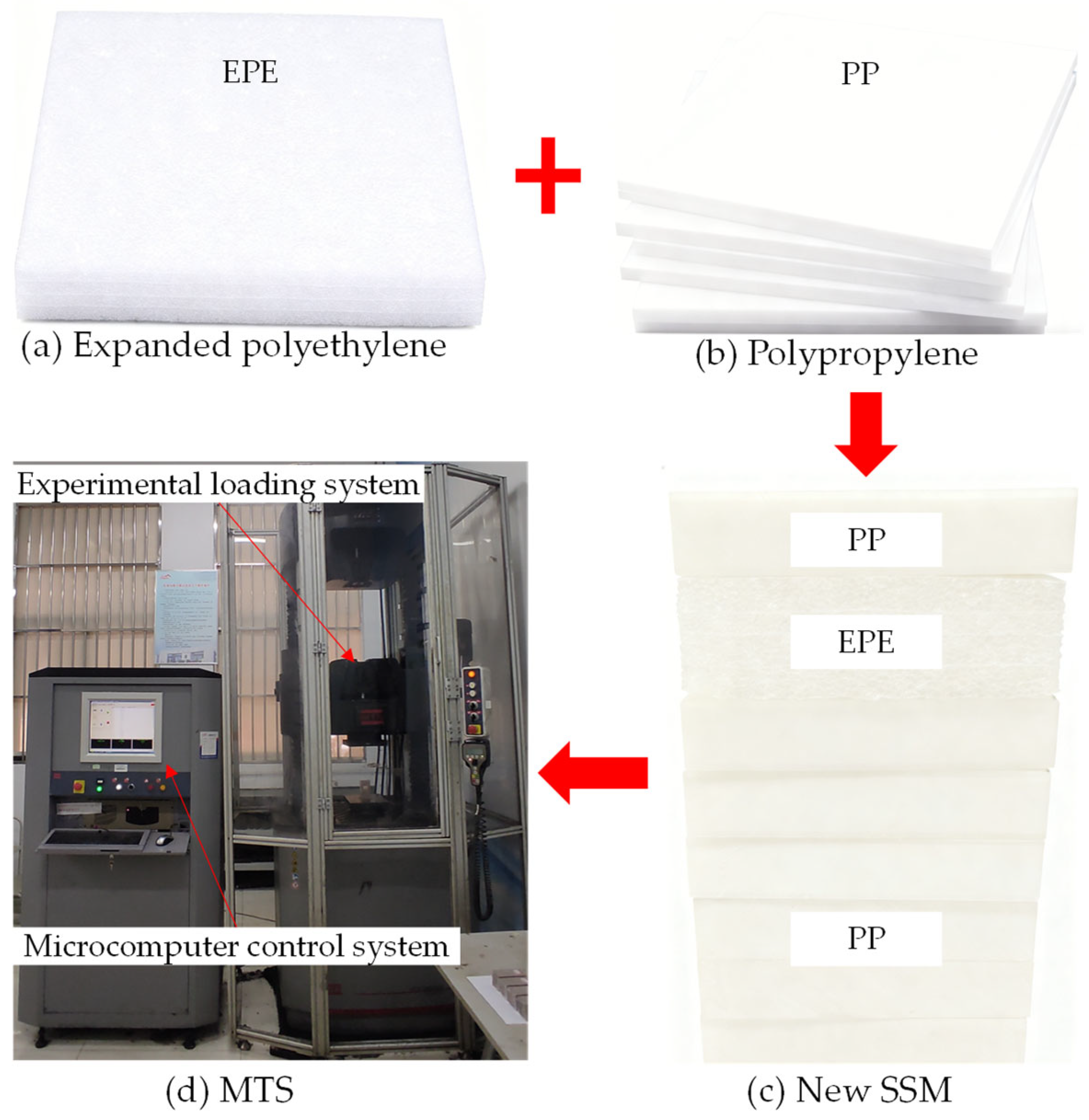
The new SSM for the unloading-induced bulking rock mass in the caving zone is composed of a combination of EPE (expanded polyethylene) foam boards and PP (polypropylene) boards, as shown in Figure 2. The EPE (Shanghai Hongying Industrial Co., Ltd. Shanghai, China) is a non-crosslinked, closed-cell structure material produced by physically foaming low-density polyethylene resin. It contains uniformly distributed independent air bubbles, with a density ranging from 20 to 200 kg/m3 and bubble diameters approximately between 0.5 and 5 mm. Its elastic modulus falls within approximately 0.5–10 MPa. The stress–strain curve of EPE typically includes a linear elastic region, a plateau region, and a densification region, classifying it as a typical strain-hardening material. Furthermore, EPE possesses excellent elasticity and high compressibility, enabling it to accurately characterize the bulking and re-compaction behavior of coal–rock masses in the caving zone during the mining process. The PP(Shandong Kunlun Rubber & Plastic Co., Ltd. Shandong, China) component, relying on its outstanding stiffness and deformation resistance, ensures structural stability even under high-stress conditions.

2.2. Orthogonal Experimental Design

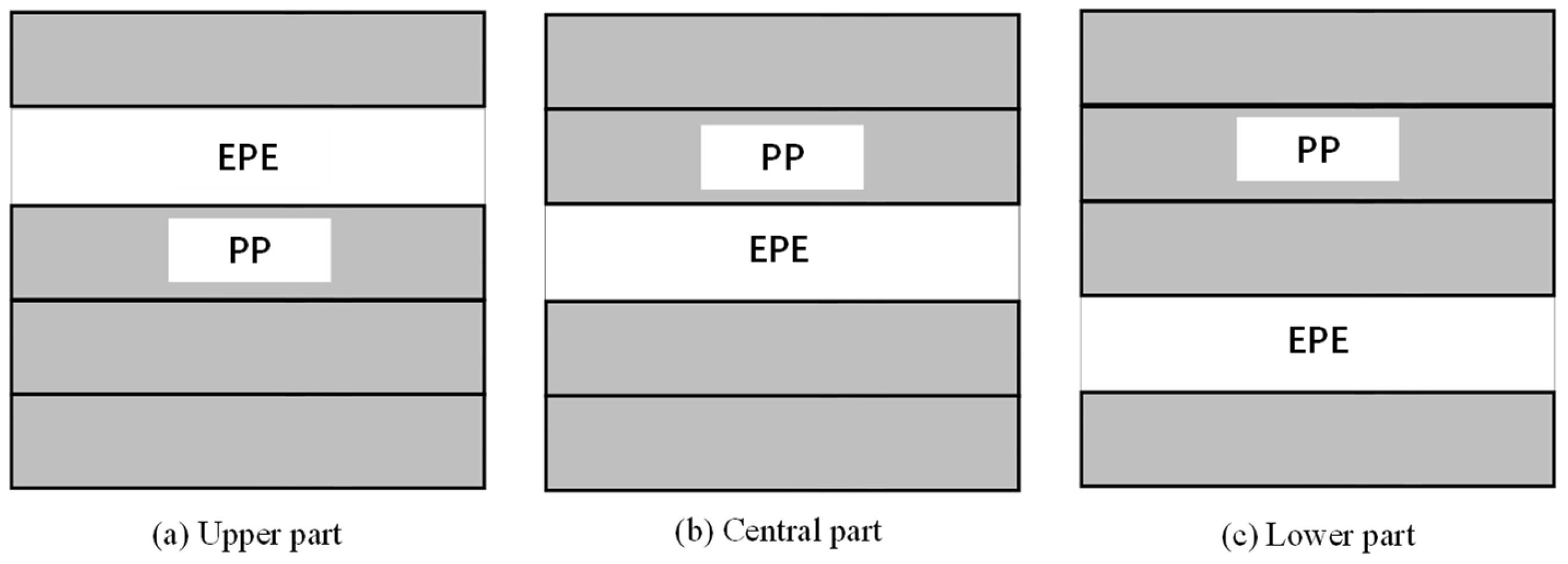
To investigate the compaction characteristics of the new SSM, this study systematically analyzed the influence of both the location and thickness variations in the EPE component on its mechanical behavior. The experiment simplified the EPE positioning into three typical configurations: upper, middle, and lower, as illustrated in Figure 3.
Considering that the compaction behavior of fragmented rock masses in the caving zone is predominantly governed by lithology and occurrence conditions, while the variability in compaction behavior of the new SSM is primarily determined by the thickness and positioning of the EPE component, this study established five EPE thickness levels (1 cm, 2 cm, 3 cm, 4 cm, and 5 cm). Combined with three positional configurations (a, b, and c), orthogonal experiments were conducted to elucidate the dominant controlling factors governing the compaction characteristics of the new SSM. The detailed experimental design is presented in Table 1.

2.3. Experimental Methods

PP boards and EPE materials were assembled in a PP-EPE-PP layered structure, and uniaxial compression tests on the new SSM for the caving zone were conducted using an MTS electro-hydraulic servo-controlled rock mechanics testing system, as illustrated in Figure 4. Due to the excellent elasticity of the EPE component, which enables significant elastic energy storage under load, the loading process was terminated when the stress–strain curve of the new SSM entered the densification region during the experiment. All mechanical response data from the new SSM were recorded in real time by the MTS data acquisition system.

3. Orthogonal Experimental Results

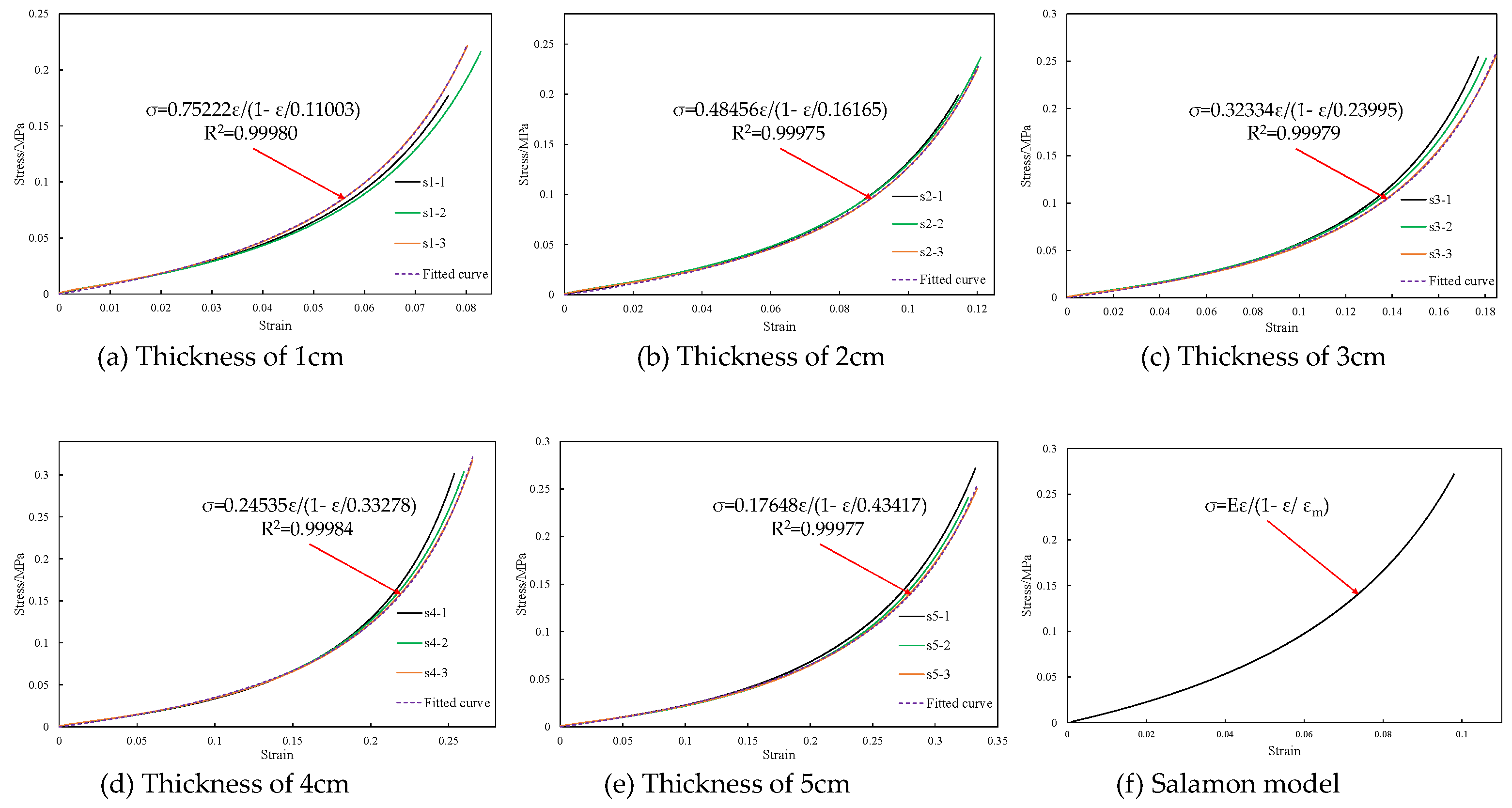
Figure 5 reveals that the stress–strain curves of all new SSM exhibit morphological characteristics consistent with the theoretical Salamon curve shown in Figure 5f. When the EPE position is fixed, variations in EPE thickness do not induce significant changes in the shape of the stress–strain curves. Similarly, under constant EPE thickness, adjusting the EPE position only slightly affects the material’s stress response magnitude without altering its fundamental curve morphology. This observation indicates that the constitutive relationship of the new SSM possesses stable mathematical characteristics, and its mechanical behavior is predominantly governed by the material composition.
Salamon’s model employs an elasto-plastic constitutive relationship of rock mass materials to establish a hyperbolic parabolic model. The primary assumptions of this model are that the rock mass is a linear elasto-plastic material without internal cracking, the strain rate is relatively low, and stress changes occur gradually. Based on the formulation of Salamon’s model in Figure 5f, the new SSM curves in Figure 5a–e were fitted. It was found that the initial tangent modulus (E) in the fitting function gradually decreases with increasing thickness, and the coefficient of determination (R2) for all fitted equations exceeds 0.999. This verifies the theoretical consistency between the novel similarity simulation material and Salamon’s model.
As observed in Figure 5a, as the EPE position varies from top to bottom, the stress–strain curve of the new SSM exhibits a slight increasing trend, though the overall change is not significant. The same pattern is observed in Figure 5b–e. Notably, as the EPE thickness increases, the influence of the position parameter on the stress–strain curves gradually intensifies. Nevertheless, the overall morphology of the stress–strain curves for the new SSM remains stable, consistently displaying typical strain-hardening characteristics—where the curve progressively approaches a horizontal asymptote with increasing stress. More importantly, the critical transition point at which the curve reaches a stable state is unaffected by the EPE position. This indicates that the intrinsic mechanism governing the strain hardening of the new SSM is position-independent.
As observed in Figure 5a–e, the compaction stress–strain curves of the new SSM exhibit a systematic increase with rising EPE thickness. Specifically, at a stress level of 0.1 MPa, the strain values for the 5 cm and 1 cm thick EPE configurations are 0.25 and 0.06, respectively, representing an increase of 307.86%. Similarly, at 0.2 MPa, the corresponding strain values are 0.31 and 0.08, respectively, indicating an increase of 302.75%. Moreover, the magnitude of strain enhancement shows a clear upward trend with increasing thickness. This pattern accurately reveals the controlling mechanism of lithology on the compaction behavior of unloading-induced bulked rock masses in actual coal mine strata: an increase in EPE thickness effectively simulates a reduction in rock mass stiffness. Thinner EPE layers, representing stiffer rock strata, exhibit greater resistance to compression, whereas thicker EPE layers, corresponding to softer rock strata, although more susceptible to initial compression, require higher stress levels to achieve a fully compacted state. By systematically quantifying the influence of EPE parameters on the material’s mechanical behavior, a mapping relationship has been established between the material parameters and the mechanical properties of the rock mass.

4. Verification by Physical Similarity Modeling

4.1. Physical Simulation Experimental Program

4.1.1. Physical Simulation Model

Physical similarity modeling is a crucial experimental method conducted in the laboratory to investigate the movement of overlying strata and the distribution of in situ stress following coal seam extraction using small-scale models. To ensure the engineering relevance of the experimental results, it is necessary to downscale the actual geological prototype to a laboratory model according to specific similarity ratios, based on similarity theory. Subsequently, by observing the movement and fracture behavior of the overburden during the simulated mining process in the model, the laws governing strata movement in real-world engineering can be inferred and deduced. Therefore, physical similarity modeling must strictly adhere to the fundamental principles of similarity theory.
C L = L m L p = 1 200 C ρ = ρ m ρ p = 18 25 C S = S m S p = 9 2500 C σ = σ m σ p = 9 2500
where CL represents the geometric similarity ratio; Cρ denotes the density similarity ratio; CS signifies the strength similarity ratio; and Cσ indicates the stress similarity ratio.
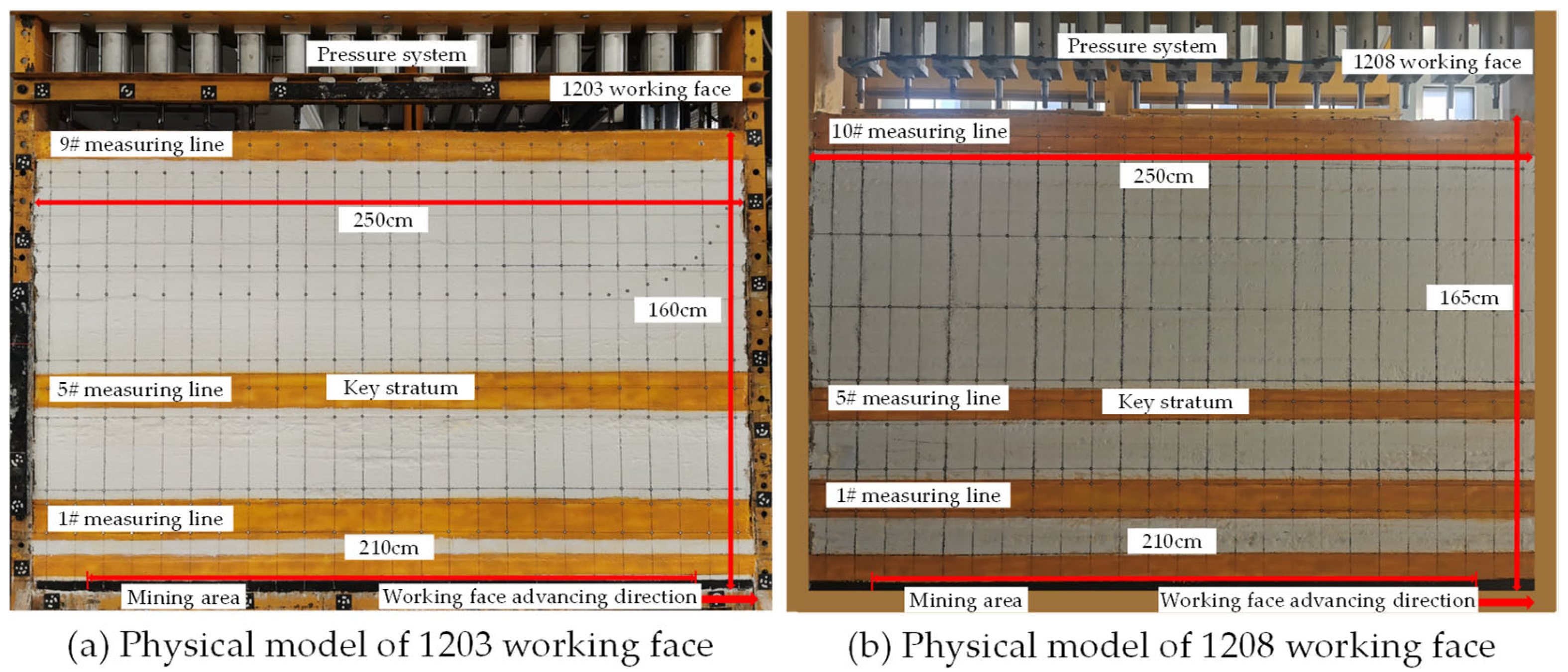
The constructed similarity model has dimensions of 2.5 m (length) × 0.2 m (width). The model heights for simulating Panel 1203 and Panel 1208 of the Shilawusu Coal Mine are 1.6 m and 1.65 m, respectively. A 20 cm wide protective coal pillar was left in place, resulting in an actual mining advance length of 210 cm. For Panel 1203, with a mining height of 2.5 cm, the strata simulated from bottom to top in the model are sequentially the coal seam, soft rock, KS1, soft rock, KS2, soft rock, KS3, soft rock, and KS4, as shown in Figure 6a. For Panel 1208, with a mining height of 5 cm, the strata sequence is the coal seam, KS1, soft rock, KS2, soft rock, KS3, soft rock, and KS4, as shown in Figure 6b. The specific configurations and mix ratios for each coal/rock layer are provided in Table 2 and Table 3.
The model data were converted into corresponding prototype parameters according to the similarity ratios for the descriptive analysis of the experimental results. The dynamic responses of KS2, KS3, and KS4 in the two working faces were monitored through the deployed survey lines #1, #5, #9, and #10.

4.1.2. Determination of the New SSM Dimensions

Based on the experimental data, in the simulation of Panel 1203, the mining height was 2.50 cm, and the height of the caved rock mass was 14 cm, resulting in a total actual excavation height of 16.50 cm. After excavation, the new SSM of the same thickness was immediately filled in. Calculations determined that the initial bulking coefficient for the caving zone in this panel was 1.18, with a maximum strain (εm1) of 0.15. The comprehensive elastic modulus (E) of the caving zone is 0.88 MPa. For Panel 1208, the simulated mining height was 5 cm, the caved rock mass height was 21 cm, and the filling thickness of the new SSM was correspondingly 21 cm. Its initial bulking coefficient was 1.24, with a maximum strain (εm1) of 0.19. The comprehensive elastic modulus (E) of the caving zone is 0.59 MPa.
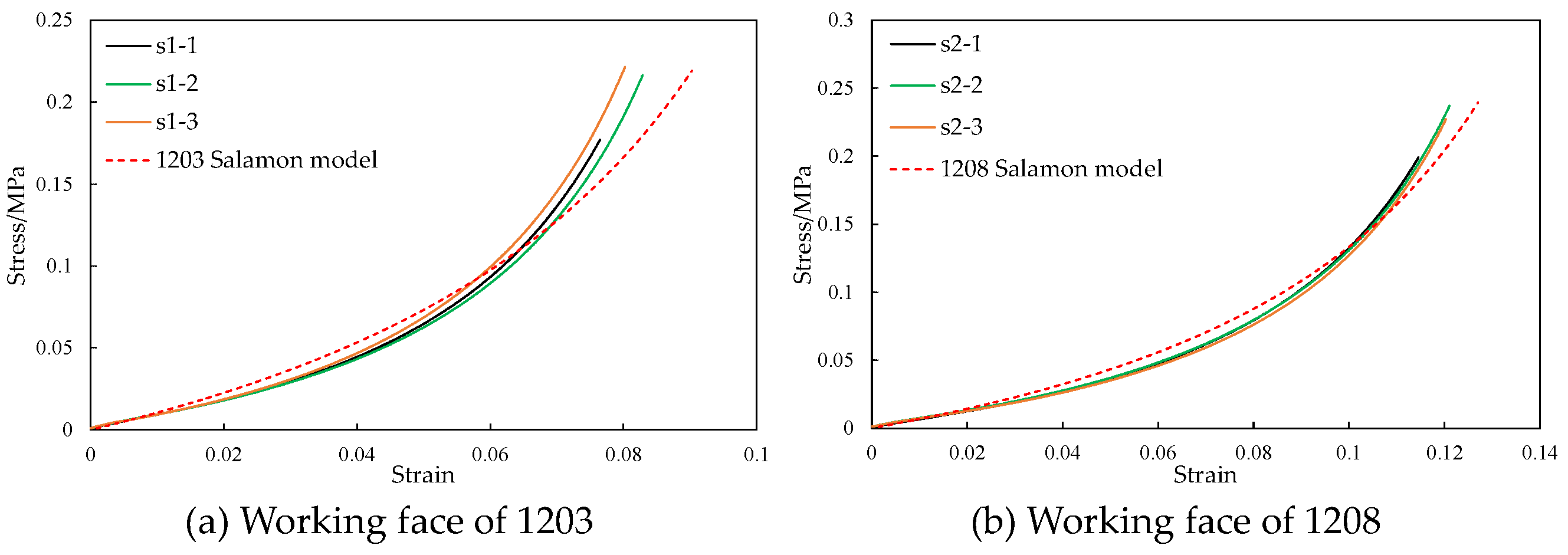
By substituting the aforementioned parameters into the Salamon model, the theoretical stress–strain relationships for the bulking rock masses in the caving zones of both panels were calculated, respectively. As shown in Figure 7, a comparative analysis was conducted between the theoretical curves and the compaction curves of the new SSM from Figure 5. This led to the final determination of the optimal configurations: for Panel 1203, the new SSM combines a 1 cm thick EPE foam board with PP boards; for Panel 1208, it combines a 2 cm thick EPE foam board with PP boards. In both configurations, the EPE is positioned in the middle layer of the new SSM. This specific setup results in a highly consistent mechanical response between the experimental material and the theoretical model, thereby validating the applicability of the new SSM for simulating the mechanical behavior of caving zone rock masses under different mining height conditions.

4.2. Materials and Methods for Physical Modeling

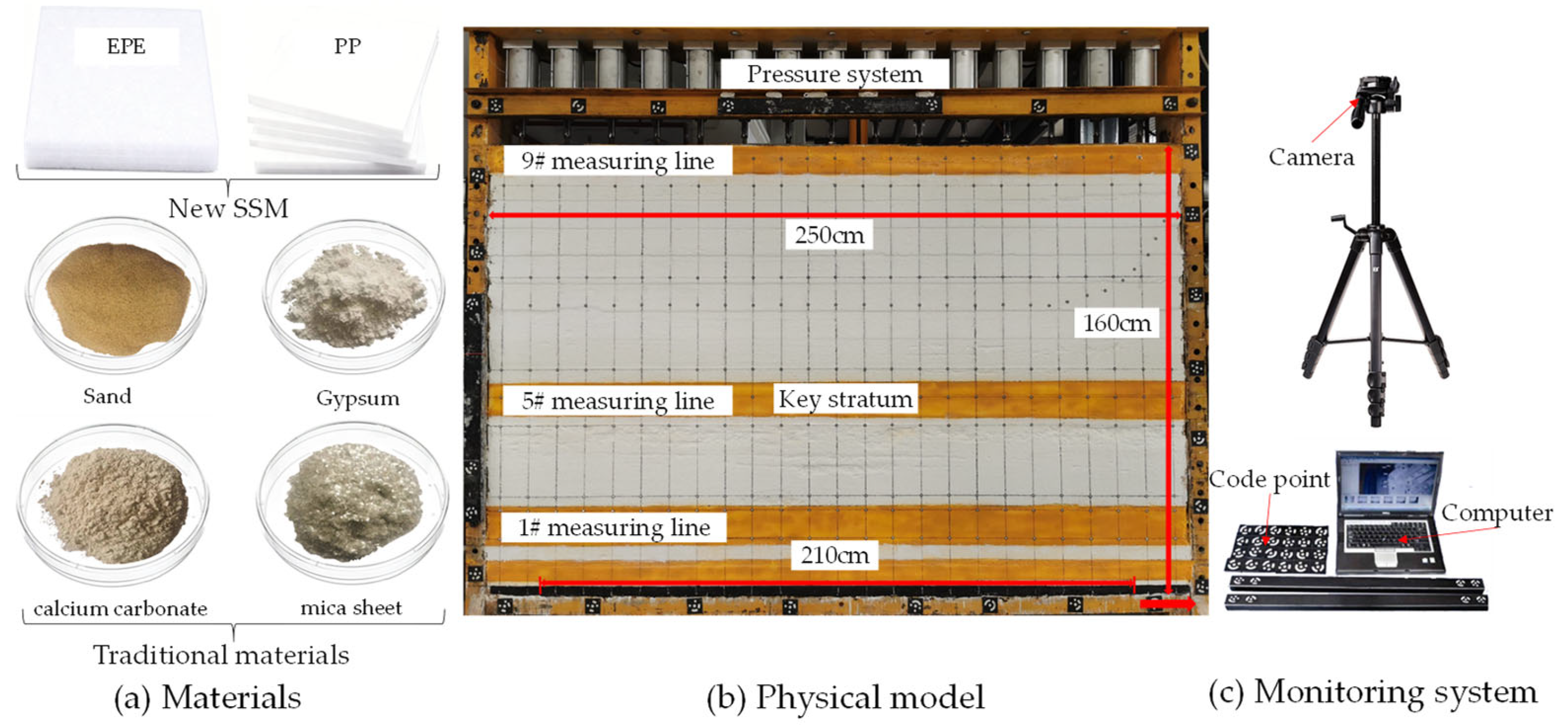
In the physical simulation experiment, apart from the caving zone, which utilized the aforementioned new SSM, all other strata were simulated using the conventional similarity material system. This system employs sand as the primary aggregate for the rock skeleton, with gypsum and calcium carbonate serving as cementing agents to regulate the mechanical strength of the strata. Mica sheets were placed at the interfaces between strata to simulate the weak bedding planes present in actual geological formations, as illustrated in Figure 8.
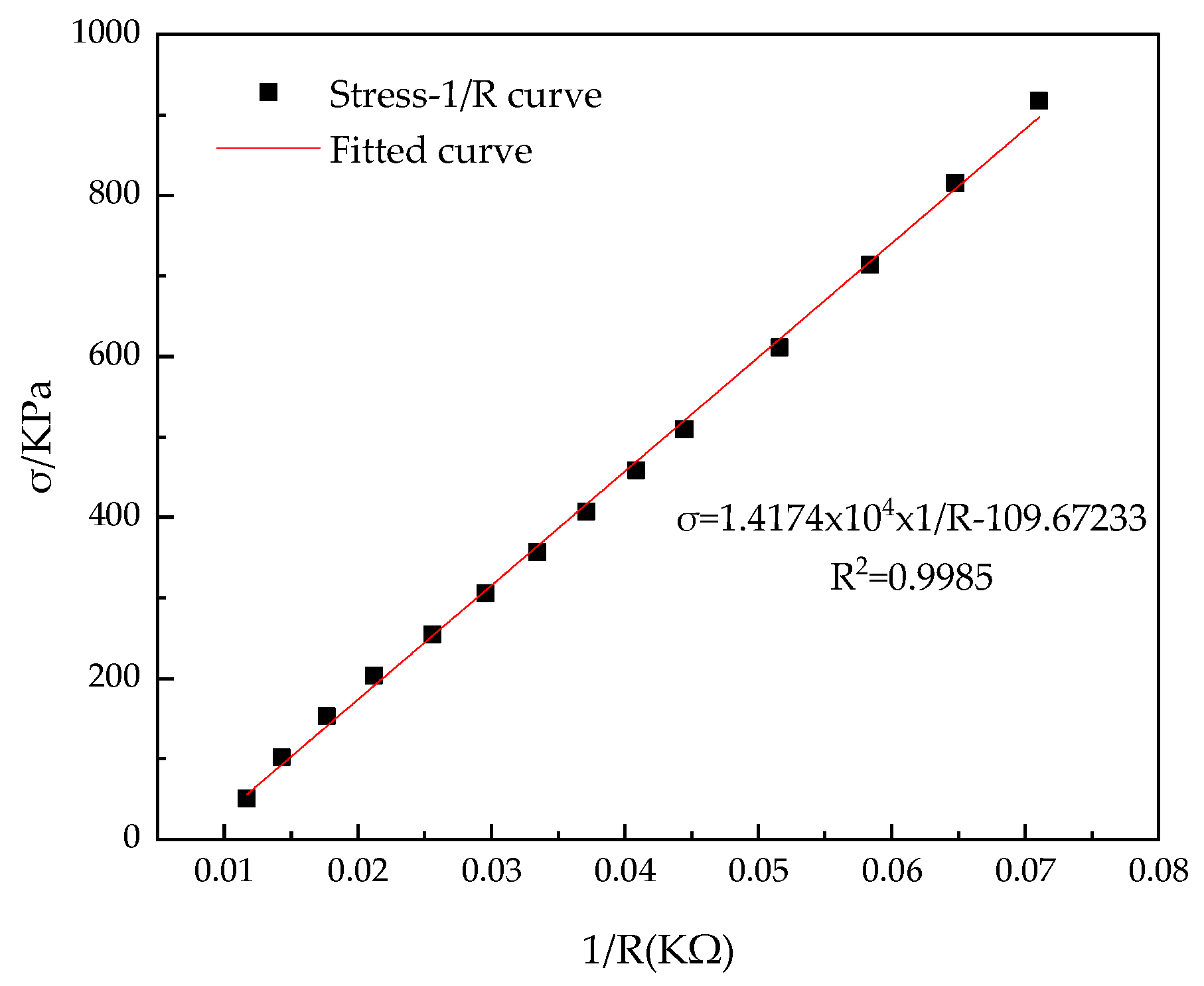
The physical similarity simulation experiment employed a multi-source data monitoring system, encompassing the real-time acquisition of two critical parameter types: displacement and stress. Displacement monitoring was conducted using the “Tianyuan” photogrammetric system. This system utilizes coded points and measurement points arranged on the model surface, along with high-resolution cameras, to continuously capture dynamic behaviors such as the movement and deformation of strata during the mining process of the working face. The entire system consists of core components, including coded points, measurement points, cameras, and computers, as illustrated in Figure 7. Stress monitoring was achieved using resistive pressure film sensors. The resistance change in the film under different axial loads was measured via a digital bridge, and a fitted relationship was established between the reciprocal of resistance and the axial force. The specific calibration curve is shown in Figure 9.
In the physical simulation experiment, the research focus was on the bulking–compaction behavior of fragmented rock masses within the caving zone. Consequently, a full-scale simulation of the entire overburden was not conducted; instead, only the bedrock section was physically modeled, while the unconsolidated surface layer was represented by an equivalent uniformly distributed load. The overburden load compensation system consisted of a pressure application device, an operating console, and hydraulic support columns, as shown in Figure 8. Based on the actual geological conditions, the thicknesses of the remaining overlying strata requiring simulation for the Panel 08 and Panel 03 models were 322 m and 366 m, respectively. This corresponded to a model laying thickness of 161 cm and 183 cm, respectively. Calculations indicated that the actual in situ overburden loads were 8.05 MPa and 9.15 MPa, respectively. Accordingly, the equivalent loads that needed to be applied via the load compensation system for the two models were determined to be 28.98 kPa and 32.94 kPa, respectively.

4.3. Physical Simulation Results

The physical model was mined sequentially from left to right, with each mining advancement set at 10 cm over a total mining length of 210 cm. Following each mining step, the newly developed similarity simulation material was immediately backfilled into the excavated area. After achieving stability post-mining, displacement and stress data were collected via the monitoring system. These measured vertical displacements and stresses from the physical simulation were then converted into their full-scale prototype equivalents using Equation (1). The converted data were subsequently analyzed.
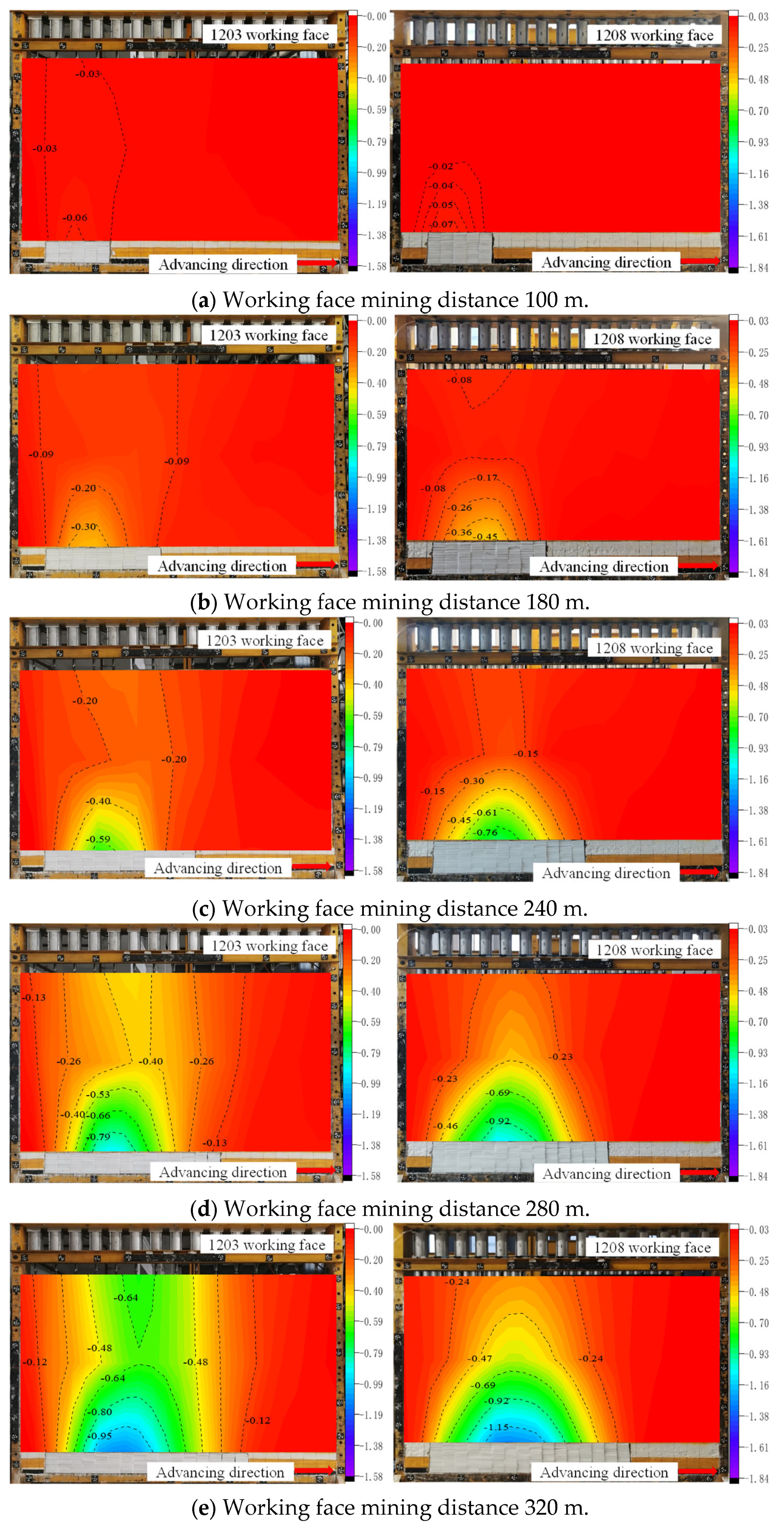
As observed in Figure 10a, when the working face advanced to the 100 m position, the rock mass in the caving zone was in a fully fragmented state and randomly filled the goaf. This occurred because the caved rock mass had been extracted during mining and backfilled with the new SSM, which conforms to the mechanical properties of the Salamon model. The KS2 at the top of the caving zone in Panels 1203 and 1208 was a medium sandstone layer with thicknesses of 30 m and 27 m, respectively. Possessing relatively high load-bearing capacity, it was able to support the main load from the overburden. At this stage, the compression of the new SSM was 0.07 m and 0.09 m for the two panels, respectively. Concurrently, the observation values from survey line #9 remained essentially stable, indicating that KS4 at the bottom interface of the Cretaceous system had not yet undergone significant bending or subsidence.
As shown in Figure 10b, as the working face advanced to 180 m, the span of KS2 further increased. Consequently, a portion of the load it originally carried was gradually transferred to the unloaded and bulked rock mass within the caving zone in the goaf. During this process, the compression of the new SSM increased to 0.36 m for Panel 1203 and reached 0.46 m for Panel 1208. Despite this, KS4 was only minimally affected, exhibiting a relatively small magnitude of subsidence change.
As shown in Figure 10c, when the advance reached 240 m, the compression of the rock mass in the caving zone exhibited a sharp increase. The compression of the new SSM rose to 0.648 m for Panel 1203 and increased to 0.87 m for Panel 1208. Analysis suggests that the primary reason for this dramatic rise in compression during this stage is the continuous expansion of the span of KS2. This led to an increase in its own bending subsidence, thereby transferring a greater portion of the load to the goaf, which in turn promoted further compaction of the unloaded and bulked rock mass.
As observed in Figure 10d, when the advance reached 280 m, the load originally borne by KS2 had been almost entirely transferred to the bulked and caved rock mass within the goaf. Consequently, the compression curve of the caving zone displayed a nearly horizontal step-like feature, with the compression of the new SSM reaching 0.92 m and 1.07 m for Panels 1203 and 1208, respectively. This phenomenon originated from the significantly weakened load-bearing capacity of KS2 due to its excessive span. In contrast, the KS3 in both panels was a thick, hard sandstone layer, which at this point undertook the major portion of the load. This prevented further transfer of the overburden load to the goaf, resulting in a near-flat-bottom characteristic in the bending subsidence of KS2.
As shown in Figure 10e, when the working face advanced to 320 m, the load originally borne by KS2 had been completely transferred to the goaf, while KS3 still supported the vast majority of the overburden load. At this stage, the compression of the caving zone continued to exhibit a plateau feature. The compression of the new SSM increased to 1.10 m for Panel 1203 and reached 1.28 m for Panel 1208. Given that only an extremely small portion of the load was transferred from KS3 to the goaf, it can be concluded that this stratum remained the dominant load-bearing structure.
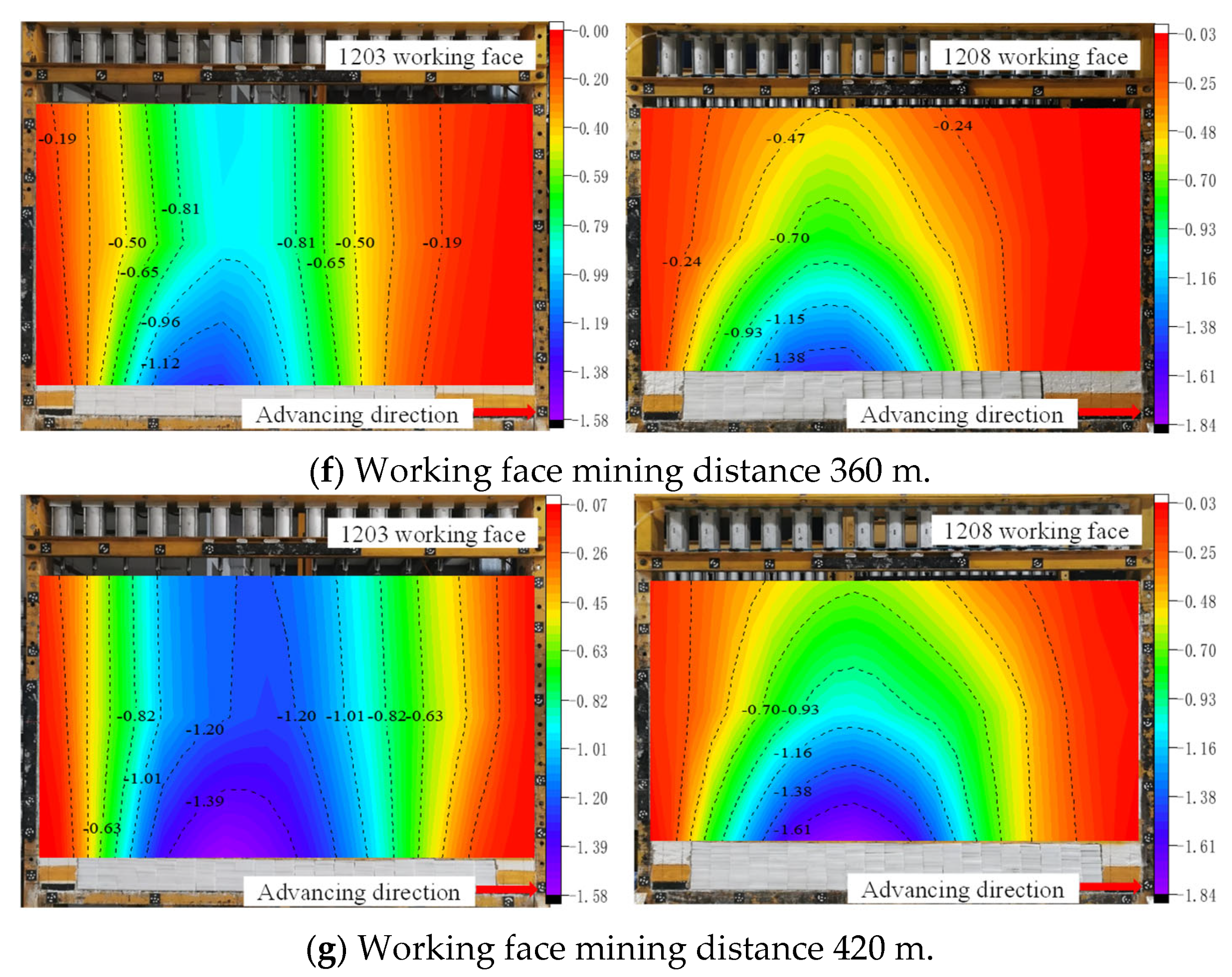
As shown in Figure 10f, when the working face advanced to 360 m, a portion of the load borne by KS3 began to transfer downward to the unloaded and bulked rock mass. This induced further compaction of the rock mass in the caving zone under the applied load. Consequently, the plateau phenomenon in caving zone compression disappeared. The compression of the new SSM increased to 1.27 m for Panel 1203 and to 1.50 m for Panel 1208.
As the working face continued to advance to 420 m, KS3 transferred the majority of its load to the underlying unloaded and bulked rock mass, promoting sustained compaction of the caving zone rock mass. During this stage, the compression of the new SSM rose to 1.57 m for Panel 1203 and reached 1.83 m for Panel 1208, as illustrated in Figure 10g.

4.4. Validation of the New Similar Simulation Material

4.4.1. Verification of Caving Zone Compression

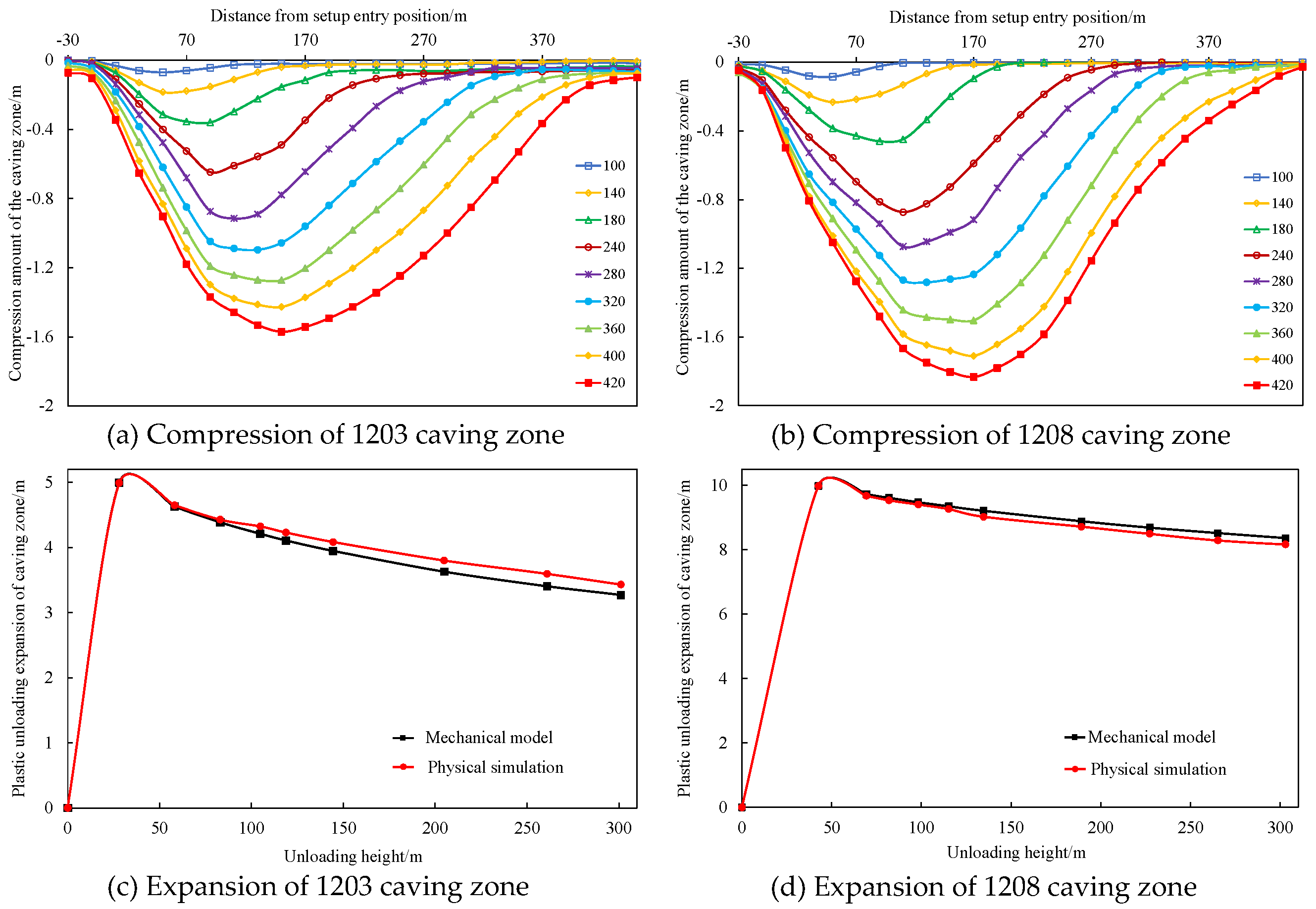
By comparing the physically measured data from the simulation with the theoretical calculation results from the Salamon mechanical model, the feasibility of the new SSM was validated, as illustrated in Figure 11.
After the completion of panel mining, in the physical simulation of Panel 1203, the maximum subsidence of KS2 was 1.57 m, which corresponds to the measured maximum compression of the new SSM in the caving zone, also 1.57 m (Figure 11a). The Salamon mechanical model calculated a plastic unloading-induced bulking volume of 3.27 m for the caving zone (Figure 11c). Based on a mining height of 5 m, the theoretical plastic bulking compression was derived as 1.73 m. The relative error between the measured and theoretical values was 10.19%; detailed data are presented in Table 4.
For Panel 1208, in the physical simulation, the maximum subsidence of KS2 was 1.83 m, equating to a measured maximum compression of the new SSM of 1.83 m (Figure 11b). The mechanical model calculated a plastic bulking volume of 8.36 m for the caving zone (Figure 11d). Given a mining height of 10 m, the theoretical plastic bulking compression was calculated to be 1.64 m, resulting in a relative error of −10.38%; detailed data are presented in Table 4.
The errors between the measured data and the theoretical predictions for both panels were confined to a relatively small range (with absolute values both less than 11%). This outcome not only validates the applicability and accuracy of the Salamon mechanical model under actual engineering conditions but also demonstrates the high reliability and effectiveness of the new SSM in simulating the bulking–compaction characteristics of rock masses in the caving zone.

4.4.2. Feasibility Validation Based on Goaf Stress

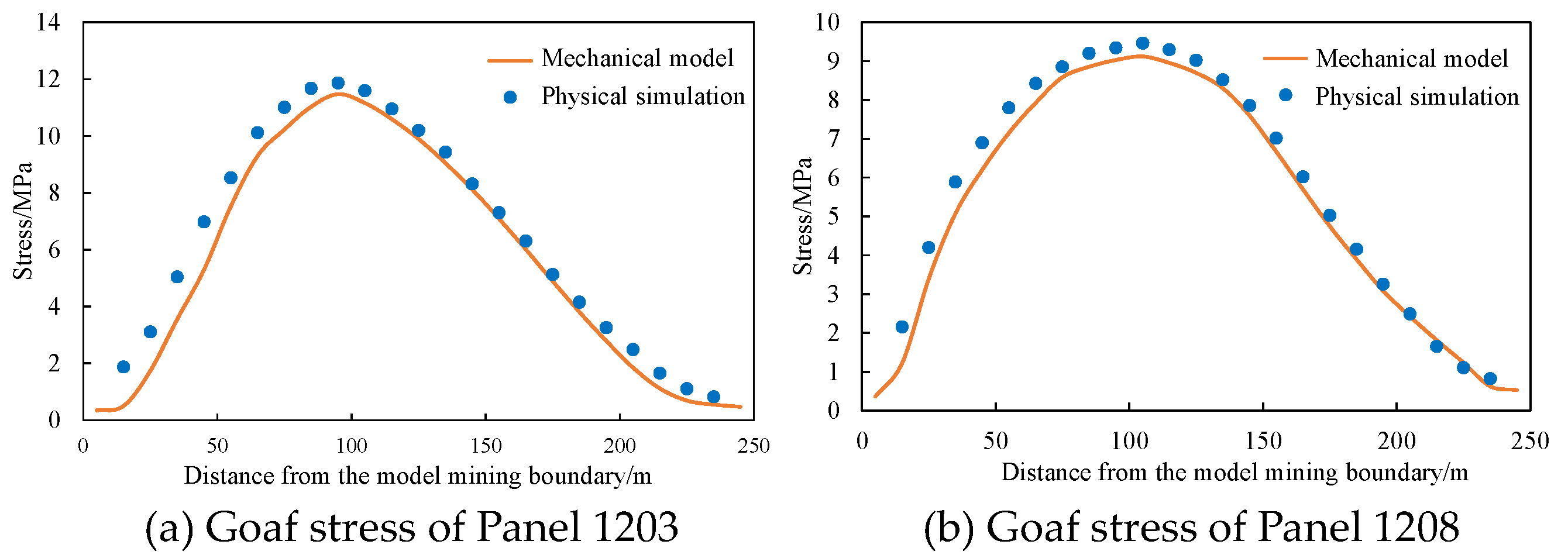
According to the Salamon theoretical model, the strain of the unloaded and bulked rock mass in the caving zone can be expressed as the ratio of the unloading-induced bulking volume to the sum of the mining height and the caving zone height. Substituting the relevant experimental data into Equation (2) yields the theoretically predicted value of the goaf stress. A comparison between this predicted value and the physically simulated measured results is presented in Figure 12.
σ 1 = E 0 ε 1 ( 1 ε 1 / ε m 1 )
where σ1 is the axial stress, Pa; E0 is the initial tangent modulus, Pa; ε1 is the axial strain; εm1 is the maximum possible axial strain.
As observed in Figure 12, the measured stress values in the model boundary regions for both Panels 1203 and 1208 are higher than the back-calculated results from the Salamon model. To mitigate the influence of boundary effects, the focus of the analysis was placed on the data agreement at the open-off cut and the central section of the working faces. At the open-off cut, the relative errors between the measured and theoretical values of goaf stress for the two panels were −11.84% and −10.06%, respectively. In contrast, within the central section of the working faces, these errors decreased significantly to −3.74% and −3.24%, respectively; detailed data are presented in Table 5 and Table 6.
Despite the larger errors observed in the boundary regions, all discrepancies remain within an acceptable range. Furthermore, the central sections exhibit a high degree of consistency between measurement and theory. This outcome not only validates the applicability of the Salamon theoretical model in describing the distribution patterns of goaf stress [14,15] but also confirms the effectiveness of the new SSM proposed in this study for simulating the stress evolution at the top boundary of the caving zone. This demonstrates that the material does not introduce systematic bias to the stress distribution characteristics in critical regions.

5. Discussions

This study addresses the inherent limitation of traditional physical simulations in accurately reproducing the bulking–compaction behavior of rock masses within the caving zone. It proposes a new SSM and validates its feasibility through physical simulation experiments, thereby providing a new material foundation and methodological support for refined research on overburden movement patterns.
The research demonstrates that the stress–strain curve of the new SSM exhibits a high degree of conformity with the Salamon model, displaying typical characteristics of rapid initial-stage compaction. This finding aligns with previous studies that employed this model to describe the compaction behavior of caved rock in goafs [14,15]. Notably, this study reveals that the stress–strain behavior of the new SSM is primarily governed by the thickness of the EPE component, while being largely independent of its position. Under conditions of identical EPE thickness, variations in position cause the stress–strain curve to fluctuate only within a narrow range, with insignificant increases. Conversely, with a fixed position, increasing the EPE thickness leads to a pronounced, stepwise enhancement of the stress–strain curve, accompanied by a progressively widening increase in magnitude. Furthermore, the material’s response time to stress lengthens with greater EPE thickness. This phenomenon elucidates the fundamental characteristics of rock mass mechanical behavior in actual coal mine strata: soft rock layers are prone to compressive deformation yet difficult to fully compact, whereas hard rock layers exhibit strong resistance to compression.
Meanwhile, existing traditional physical simulation results show the following: for a working face with a coal seam thickness of 8.80 m, the subsidence of KS1 after mining completion is 7.80 m [34], corresponding to a bulking volume of 1.00 m in the caving zone. For a working face with a coal seam thickness of 5 m, the subsidence of KS1 is approximately 4 m [35], while the bulking volume of the caving zone remains 1.00 m. Compared with the physical simulation data of Panels 1203 and 1208 in this study, the subsidence of KS1 in traditional simulations is greater than that obtained using the new SSM, whereas the bulking volume of the caving zone is smaller than the new SSM simulated values. This comparison indicates that the physical simulation method employing new SSM can more realistically reproduce the bulking mechanical behavior of rock masses in the caving zone, and its simulation results show better consistency with field-measured engineering data.
Although the new SSM can effectively represent the bulking–compaction features of fragmented rock in the caving zone, it achieves only partial similarity ratio matching when compared to traditional physical simulation methods. Specifically, the new SSM satisfies similarity requirements with the caving zone rock mass in terms of parameters such as dimension and stress. However, due to the inherent properties of the EPE material—namely, its high elasticity and low density (approximately 200 kg/m3)—it cannot meet the density similarity ratio. Consequently, it is not suitable for studying the stress evolution patterns of the floor, though this limitation has minimal impact on simulating stress evolution at the top boundary of the caving zone. Additionally, the novel material is composed of combined PP and EPE layers, exhibiting anisotropic characteristics in the vertical direction. This allows it to reflect the distribution features of different lithologies within the caving zone, representing a fundamental distinction from the homogeneous rock strata commonly used in traditional simulations. While this characteristic restricts the study of compression heterogeneity in the vertical direction within the caving zone, it does not impede the material’s accurate characterization of the overall compression and deformation patterns of the caving zone.

6. Conclusions

This paper presents an experimental method for simulating the bulking–compaction process of rock masses within the caving zone. The compaction characteristic curve of the new SSM shows a high degree of agreement with the Salamon model, effectively overcoming the shortcomings of traditional similarity materials in simulating unloading-induced bulking behavior. This provides a new technical approach for physically simulating the movement patterns of overlying strata.
(1)
A novel method for simulating the bulking–compaction characteristics of the caving zone is proposed, breaking through the technical bottleneck where traditional materials struggle to accurately reproduce the bulking–compaction process of fragmented rock masses in goafs. Experimental results indicate that the stress–strain curve of the new SSM exhibits high consistency with the Salamon model. This addresses, at the constitutive relationship level, the critical issue of distortion in simulating rock mass bulking–compaction behavior in traditional physical simulations.
(2)
The dominant controlling factors of the stress–strain behavior of the new SSM are revealed. The study finds that the material’s mechanical response is significantly correlated only with the thickness of the EPE component and is independent of its position. Under fixed position conditions, the stress–strain response exhibits a non-linearly enhancing characteristic with increasing EPE thickness, and this strengthening effect becomes progressively more pronounced. Conversely, under different position conditions, the stress–strain curves remain essentially consistent.
(3)
A selection method for the dimensions of the new SSM under different working conditions has been established. In the curve-fitting formula for the new SSM, the initial tangent modulus (E) gradually decreases with increasing material thickness, while the maximum strain (εm1) increases with thickness. Therefore, based on the required numerical ranges of the E and εm1 for the target working condition, the corresponding thickness of the new SSM can be selected, thereby achieving precise simulation and matching of its mechanical behavior.
(4)
The feasibility of the new SSM for the caving zone is validated through physical simulation experiments. Taking the Shilawusu Coal Mine as an example, the simulation errors for key parameters—including caving zone compression subsidence, goaf stress, and stress in the central section of the working face—using the new SSM are all controlled within 12%. This fully demonstrates the feasibility of this material in physical simulations.

Author Contributions

Study conception and design: X.C., W.Q. and J.X.; data collection: X.C., J.L. and R.Y.; analysis and interpretation of results: X.C.; draft manuscript preparation: X.C.; review and editing: W.Q. and J.X. All authors have read and agreed to the published version of the manuscript.

Funding

This research was supported by National Natural Science Foundation of China (52174212) and Graduate Innovation Program of China University of Mining and Technology (KYCX23_2801).

Institutional Review Board Statement

Not applicable.

Informed Consent Statement

Not applicable.

Data Availability Statement

The raw data supporting the conclusions of this article will be made available by the authors on request.

Conflicts of Interest

The authors declare no conflict of interest.

References

  1. Xu, J.; Qin, W.; Xuan, D. Accumulative effect of overburden strata expansion induced by stress relief. J. China Coal Soc. 2020, 45, 35–43. [Google Scholar]
  2. Xu, J.; Qin, W.; Chen, X. Influencing factors of accumulative effect of overburden strata expansion induced by stress relief. J. China Coal Soc. 2022, 47, 115–127. [Google Scholar]
  3. Qian, M.; Xu, J.; Wang, J. Mining Pressure and Strata Control; China University of Mining and Technology Press: Xuzhou, China, 2021. [Google Scholar]
  4. Can, E.; Mekik, C.; Kuscu, S. Subsidence occurring in mining regions and a case study of Zonguldak-Kozlu basin. Sci. Res. Essays 2011, 6, 1317–1327. [Google Scholar]
  5. Li, J.; Li, H.; Li, L. Rock strata failure and subsidence characteristics under the mining of short distance thick coal seams: A case in west China. Int. J. Glob. Energy Issues 2021, 43, 356–370. [Google Scholar] [CrossRef]
  6. Zhou, N.; Han, X.; Zhang, J. Compressive deformation and energy dissipation of crushed coal gangue. Powder Technol. 2016, 297, 220–228. [Google Scholar] [CrossRef]
  7. Zhang, Z.; Miao, X.; Ge, X. Testing study on compaction breakage of loose rock blocks. Chin. J. Rock Mech. Eng. 2005, 24, 451–455. [Google Scholar]
  8. Yang, J.; Zhang, J.; Zhou, S. Method for determination of mined-out roof expansion coefficient of self-formed roadway without pillar. Saf. Coal Mines 2020, 51, 142–146. [Google Scholar]
  9. Miao, X.; Mao, X.; Hu, G. Research on broken expand and press solid characteristics of rocks and coals. J. Exp. Mech. 1997, 3, 64–70. [Google Scholar]
  10. Zhang, C.; Tu, S.; Zhao, Y. Compaction characteristics of the caving zone in a longwall goaf: A review. Environ. Earth Sci. 2019, 78, 27. [Google Scholar] [CrossRef]
  11. Qin, Y.; Xu, N.; Guo, Y. Physical simulation of the influence of the original rock strength on the compaction characteristics of caving rock in longwall goaf. R. Soc. Open Sci. 2022, 9, 220558. [Google Scholar] [CrossRef]
  12. Yavuz, H. An estimation method for cover pressure re-establishment distance and pressure distribution in the goaf of longwall coal mines. Int. J. Rock Mech. Min. Sci. 2004, 41, 193–205. [Google Scholar] [CrossRef]
  13. Palchik, V. Bulking factors and extents of caved zones in weathered overburden of shallow abandoned underground workings. Int. J. Rock Mech. Min. Sci. 2015, 79, 227–240. [Google Scholar] [CrossRef]
  14. Salamon, M. Mechanism of caving in longwall coal mining. In Rock Mechanics Contribution and Challenges, Proceedings of the 31th US Symposium of Rock Mechanics, Golden, CO, USA, 18–20 June 1990; Taylor & Francis Group: Abingdon, UK, 1990. [Google Scholar]
  15. Pappas, D.M.; Mark, C. Behavior of Simulated Longwall Gob Material; Department of the Interior, Bureau of Mines: Pittsburgh, PA, USA, 1993. [Google Scholar]
  16. Zhang, G.; Tao, G.; Cao, Z. Study on failure characteristics of stope overlying rock considering strain hardening characteristics of caved rock mass. Coal Sci. Technol. 2022, 50, 46–52. [Google Scholar]
  17. Li, L.; Tang, C.; Liang, Z. Investigation on overburden strata collapse around coal face considering effect of broken expansion of rock. Rock Soil Mech. 2010, 31, 3537–3541. [Google Scholar]
  18. Lavoie, T.; Eberhardt, E.; Pierce, M.E. Numerical modelling of rock mass bulking and geometric dilation using a bonded block modelling approach to assist in support design for deep mining pillars. Int. J. Rock Mech. Min. Sci. 2022, 156, 105145. [Google Scholar] [CrossRef]
  19. Pan, W.; Li, X.; Zhao, Z. Strata Caving and Gob Evolution Characteristic in Longwall Mining. Shock Vib. 2022, 2022, 3235063. [Google Scholar] [CrossRef]
  20. Lv, W.; Song, T.; Gu, W. Research on the Distribution Characteristics of the Bulking Coefficient in the Strike Direction of the Longwall Goaf Filled with Slurry. Sustainability 2023, 15, 2508. [Google Scholar] [CrossRef]
  21. Takhanov, D.; Zhienbayev, A.; Zharaspaev, M. Determining the parameters for the overlying stratum caving zones during repeated mining of pillars. Min. Miner. Depos. 2024, 18, 93–103. [Google Scholar] [CrossRef]
  22. Le, T.D.; Nguyen, C.K.; Tran, M.T. Longwall mining-induced weighting mechanism and its interactions with shield support and coal wall. Min. Miner. Depos. 2025, 19, 1–13. [Google Scholar] [CrossRef]
  23. Zhang, J. Physical simulation research on the dynamic bulking of mining-induced fractured rock mass. Coal Prep. Technol. 2006, S1, 69–72+19. [Google Scholar]
  24. Deng, K.; Zhou, M.; Tan, Z. Study on Laws of Rockmass Breaking Induced by Mining. J. China Univ. Min. Technol. 1998, 3, 43–46. [Google Scholar]
  25. Wang, Y.; Deng, K.; Zhang, D. The study on the character of strata subsidence during repeat mining. J. China Coal Soc. 1998, 5, 24–29. [Google Scholar]
  26. Wang, L.; Cao, H.; Jiang, Z. Influence of Gangue Compaction Process on Coal Pillar Supporting Pressure in Goaf. Saf. Coal Mines 2020, 51, 62–68. [Google Scholar]
  27. Zhang, D.; Deng, K.; Zhou, M. Research on variation law of bulking factor of mining-induced rock mass. Energy Technol. Manag. 1998, 1, 3–5. [Google Scholar]
  28. Dou, L.; Kan, Z.; Cao, A. Physical Similarity Principles of Coal–Rock Dynamics Simulation for Coal Burst. J. China Coal Soc. 2025, 12, 1–19. [Google Scholar]
  29. Li, Y.; Bai, J.; Wang, X. Development and performance study on low strength and high rockburst tendency similar simulation material of coal. Constr. Build. Mater. 2023, 404, 133230. [Google Scholar] [CrossRef]
  30. Zheng, K. The Experimental System and Application of Slurry Flow Simulation of Isolated Grouting Filling for Overburden. Master’s Thesis, China University of Mining and Technology, Xuzhou, China, 2021. [Google Scholar]
  31. Wang, B.; Wu, L.; Zhang, J. Experiment on size effect of coal and rock deformation characteristics in coalmine underground reservoir. J. Min. Saf. Eng. 2021, 38, 810–818. [Google Scholar]
  32. Zhang, C.; Zhang, L. Permeability Characteristics of Broken Coal and Rock Under Cyclic Loading and Unloading. Nat. Resour. Res. 2019, 28, 1055–1069. [Google Scholar] [CrossRef]
  33. Zhang, C.; Zhao, Y.; Tu, S. Influence mechanism of particle size on the compaction and breakage characteristics of broken coal mass in goaf. J. China Coal Soc. 2020, 45, 660–670. [Google Scholar]
  34. Ren, P.; Fan, B.; Cheng, J. The whole-cycle dynamic evolution characteristics of overburden fracture and movement in extremely high mining longwall face in western mining area. J. Min. Sci. Technol. 2025, 10, 648–660. [Google Scholar]
  35. Xie, J.; Li, K.; Zhang, J. Mining-induced displacement deformation law in full-columnar overburden and its design guidance in gas extraction. Fuel 2024, 363, 130934. [Google Scholar] [CrossRef]
Figure 1. Caving zone behavior simulated by traditional physical modeling.
Applsci 16 00423 g001
Figure 2. New similar simulation material for caving zone.
Applsci 16 00423 g002
Figure 3. Schematic diagram of replacing bodies’ EPE position.
Applsci 16 00423 g003
Figure 4. Experimental process of uniaxial compression of new SSM.
Applsci 16 00423 g004
Figure 5. Stress–strain curve of compaction characteristics of new SSM.
Applsci 16 00423 g005
Figure 6. Schematic diagram of physical simulation of rock stratum settings.
Applsci 16 00423 g006
Figure 7. Consistency between the stress–strain response of a new SSM and the Salamon model.
Applsci 16 00423 g007
Figure 8. Physical simulation materials and the monitoring system.
Applsci 16 00423 g008
Figure 9. Fitting curve between the reciprocal of resistive pressure film resistor and axial force.
Applsci 16 00423 g009
Figure 10. Displacement nephograms of physical simulation with different mining distances.
Applsci 16 00423 g010aApplsci 16 00423 g010b
Figure 11. Measured and theoretically calculated results of unloading−expansion in the caving zone.
Applsci 16 00423 g011
Figure 12. Measured and theoretical results of stress in the gob.
Applsci 16 00423 g012
Table 1. Orthogonal experimental scheme for the compaction characteristics.
Group NumberEPE PositionEPE Thickness/cmGroup NumberEPE PositionEPE Thickness/cm
s1-1a1s3-3c3
s1-2b1s4-1a4
s1-3c1s4-2b4
s2-1a2s4-3c4
s2-2b2s5-1a5
s2-3c2s5-2b5
s3-1a3s5-3c5
s3-2b3
Note: In the table, a, b, and c indicate that the EPE is positioned in the upper, middle, and lower layers of the new SSM, respectively.
Table 2. Strata configuration and the related material composition of 1203 working face.
NumberLithologyThickness/cmDensity (kg/m3)Sand/kgCaCO3/kgGypsum/kgLayer Thickness/cm
1KS410.50180088.608.8520.7010.50
2Soft rock75.001800723.2084.4036.202.50
3KS312.501800105.5010.5024.6012.50
4Soft rock30.501800294.1034.3014.702.03
5KS215.001800126.6012.7029.5015.00
6Soft rock4.50180043.405.102.202.25
7KS17.00180063.004.7011.007.00
8Soft rock2.50180024.102.801.202.50
9Coal2.50180016.401.600.702.50
Table 3. Strata configuration and the related material composition of 1208 working face.
NumberLithologyThickness/cmDensity (kg/m3)Sand/kgCaCO3/kgGypsum/kgLayer Thickness/cm
1KS411.50180097.009.7022.6011.50
2Soft rock82.501800795.5092.8039.802.38
3KS39.50180085.506.4015.009.50
4Soft rock22.501800217.0025.3010.802.25
5KS213.001800109.7011.0025.6013.00
6Soft rock12.001800115.7013.505.802.00
7KS19.00180081.006.1014.209.00
8Coal5.00180032.803.301.405.00
Table 4. Theoretical vs. measured error in vertical displacement.
Working FaceMeasurement ValueTheoretical ValueErrorError Rate
12031.571.730.1610.19%
12081.831.64−0.19−10.38%
Table 5. Theoretical vs. measured error in vertical displacement of 1203.
Distance of BoundaryMeasurement ValueTheoretical ValueErrorError Rate
1108.537.52−1.01−11.84%
13010.129.30−0.82−8.13%
15011.0110.22−0.79−7.14%
17011.6811.03−0.65−5.58%
19011.8711.47−0.40−3.35%
21011.5911.16−0.43−3.73%
23010.9510.60−0.36−3.24%
25010.219.89−0.31−3.08%
2709.439.05−0.38−4.02%
2908.328.12−0.20−2.42%
3107.307.09−0.21−2.90%
3306.306.01−0.29−4.60%
3505.124.89−0.23−4.55%
3704.163.81−0.35−8.39%
Table 6. Theoretical vs. measured error in vertical displacement of 1208.
Distance of BoundaryMeasurement ValueTheoretical ValueErrorError Rate
906.906.21−0.69 −10.06%
1107.807.16−0.64 −8.23%
1308.437.94−0.49 −5.81%
1508.858.59−0.27 −3.02%
1709.208.86−0.34 −3.75%
1909.359.03−0.32 −3.39%
2109.469.12−0.34 −3.60%
2309.308.96−0.34 −3.69%
2509.028.70−0.32 −3.56%
2708.528.30−0.22 −2.54%
2907.867.59−0.27 −3.43%
3107.016.67−0.34 −4.91%
3306.025.70−0.32 −5.35%
3505.034.74−0.28 −5.63%
3704.163.90−0.26 −6.26%
3903.263.08−0.17 −5.36%
4102.492.42−0.06 −2.58%
4301.651.810.16 9.59%
Disclaimer/Publisher’s Note: The statements, opinions and data contained in all publications are solely those of the individual author(s) and contributor(s) and not of MDPI and/or the editor(s). MDPI and/or the editor(s) disclaim responsibility for any injury to people or property resulting from any ideas, methods, instructions or products referred to in the content.