Article

Geochemistry of Late Permian Coals in the Laochang Mining Area from Eastern Yunnan: Emphasis on Mineral Matter in Coal


1
Jiangsu Key Laboratory of Coal-Based Greenhouse Gas Control and Utilization, Carbon Neutrality Institute, China University of Mining & Technology, Xuzhou 221008, China
2
Key Laboratory of Coalbed Methane Resources & Reservoir Formation Process of the Ministry of Education, School of Resources and Geosciences, China University of Mining & Technology, Xuzhou 221116, China
3
School of Geology and Mining Engineering, Xinjiang University, Urumqi 830002, China
4
Key Laboratory for Resource Exploration Research of Hebei Province, Hebei University of Engineering, Handan 056038, China
*
Authors to whom correspondence should be addressed.
Appl. Sci. 2026, 16(1), 42; https://doi.org/10.3390/app16010042
Submission received: 25 October 2025 / Revised: 27 November 2025 / Accepted: 13 December 2025 / Published: 19 December 2025
(This article belongs to the Special Issue Research on Mineralogical and Geochemical Characterization)

Abstract

The mineral matter in coal has great significance for geological evolution, and clean and fractional utilization. The Laochang mining area is one of the largest anthracite coal production bases in Southern China, and the most important coal energy base in Yunnan province, China. This study investigates the composition and mode of occurrence of mineral matter in the Laochang coals to reveal the sediment provenance, sedimentary environment, and hydrothermal fluids. The predominant minerals in the Laochang coals include oxide (quartz, anatase), clay (kaolinite, illite/smectite mixed layer), sulfide (pyrite, sphalerite), phosphate (xenotime, monazite, goyazite–gorceixite), and carbonate (calcite, dolomite, sideroplesite, siderite). The minerals in the Laochang coals are dominated by quartz (2.4~54.8%) and kaolinite (3.4~39.2%), followed by illite, smectite, muscovite, calcite, pyrite, and anatase. Quartz and dolomite in SB-7+8 coal have the highest proportions, reaching 54.8% and 17.3%. The modes of occurrence of minerals reflect that the Laochang coals are affected by the epigenetic hydrothermal fluids and seawater. The chalcophile elements Hg, Pb, Se, and Cr, and lithophile elements Li, Nb, Ta, Zr, Hf, and REY are slightly enriched in XB-3 coal, which is attributed to the intrusion of seawater and the supply of terrestrial detrital materials, respectively. REY is dominated by LREY, followed by MREY, and a lower level of HREY in the Laochang coals, which have a high fractionation degree. The REY enrichment H-type is influenced by the hydrothermal fluids. Based on the relationship between Al2O3 and TiO2, Al2O3/TiO2 and Nb/Yb, and the negative anomaly Eu, the detrital material in the erosion source area of the Laochang coal is derived from the Emeishan Large Igneous Province basalt and felsic–intermediate rocks.

1. Introduction

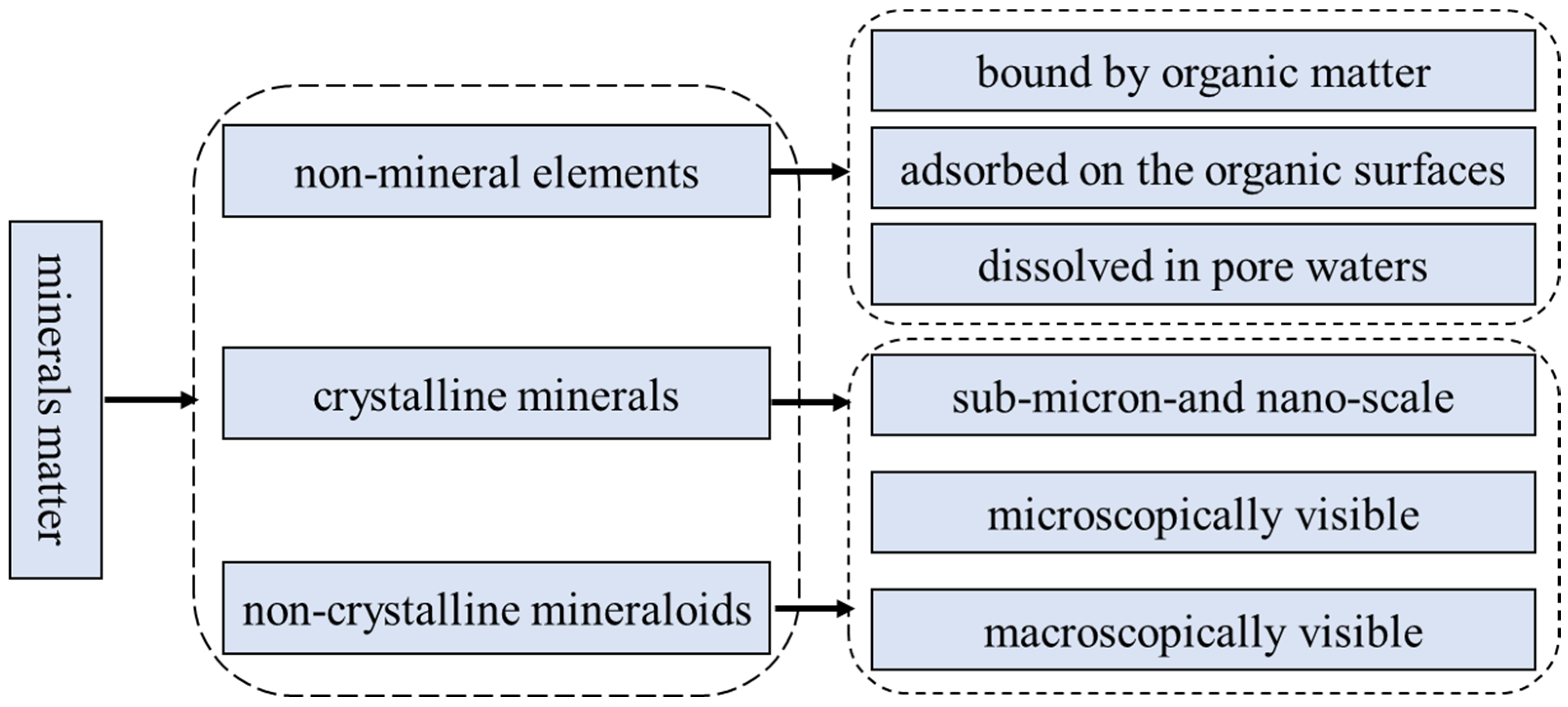
Coal is the world’s major energy source, with global production and consumption reaching approximately 1.79 × 10¹² MJ and 1.64 × 10¹² MJ in 2023, respectively [1]. The Asia Pacific region accounted for nearly 80% of this global output, with activity concentrated in just four countries, including Australia, China, India, and Indonesia. China is by far the largest consumer of coal (it surpassed its record set for 2022 and now accounts for 56% of the world’s total consumption), and coal will remain a fundamental position of China’s fossil energy consumption structure into the future. Coal is a complex matter formed through the diagenesis of organic matter, predominantly composed of organic components and macerals, with minor amounts of mineral matter (diverse minerals and chemical elements) [2,3]. The organic components or macerals in coal are key indicators for determining coal quality, assessing its value in various utilization processes, i.e., combustion, gasification, liquefaction, and revealing information about depositional environments [3]. The mineral matter in coal includes non-mineral elements, crystalline minerals, and non-crystalline mineraloids (Figure 1) [2,4]. The non-mineral elements mainly exist in three forms: bound by organic matter, adsorbed on organic surfaces, and dissolved in pore waters [2].
Currently, more than 5000 natural minerals have been discovered in nature, and over 200 minerals or mineraloids have been identified in coals [5]. According to their elemental composition and crystal structure, minerals in coal or low-temperature coal ash can be classified into silicates, carbonates, sulfides, oxides (oxy-hydroxides), phosphates, sulfates, or other minerals [5,6]. The existence of minerals in coals significantly influences their utilization, including mining, combustion, solid waste management, gasification, and liquefaction, and may also pose potential risks to the environment and human health. For instance, quartz commonly occurs in coal, which may exacerbate health risks through respirable dust generated during coal mining activities, which is a significant contributing factor to lung cancer through indoor combustion [7,8]. Previous studies verified that quartz is a dominant mineral in Late Permian coals from Xuanwei city, Yunnan province [9]. Nano-quartz in coal is directly related to the high incidence rate of female lung cancer in Xuanwei city, which is an area of universal indoor coal combustion [8,10].
The types, structure, and occurrence modes of minerals in coal have abundant geological implications. Mineral matter records complete information on the original coal-forming materials, peat swamp environments, and later geological transformations. This information can be used to determine the origins of coal from paleogeography, paleoclimate, or later hydrothermal activity, which is an effective indicator for revealing the sedimentary environment and geological evolution. This is because geological events or processes can induce distinctive alternation of minerals during syngenetic, diagenetic, and epigenetic stages [11]. From an application perspective, minerals no longer have an insignificant “ash content”, instead, this is a key factor directly affecting thermal conversion of coal, pollution, and equipment safety. During combustion, gasification, and other processes, the composition, content, and occurrence of minerals directly determine the tendency and severity of slagging, contamination, corrosion, and other behaviors. They are also the main carriers of harmful trace elements such as sulfur, mercury, and arsenic in coal, and their transformation and migration are related to the prevention and control of air pollution.
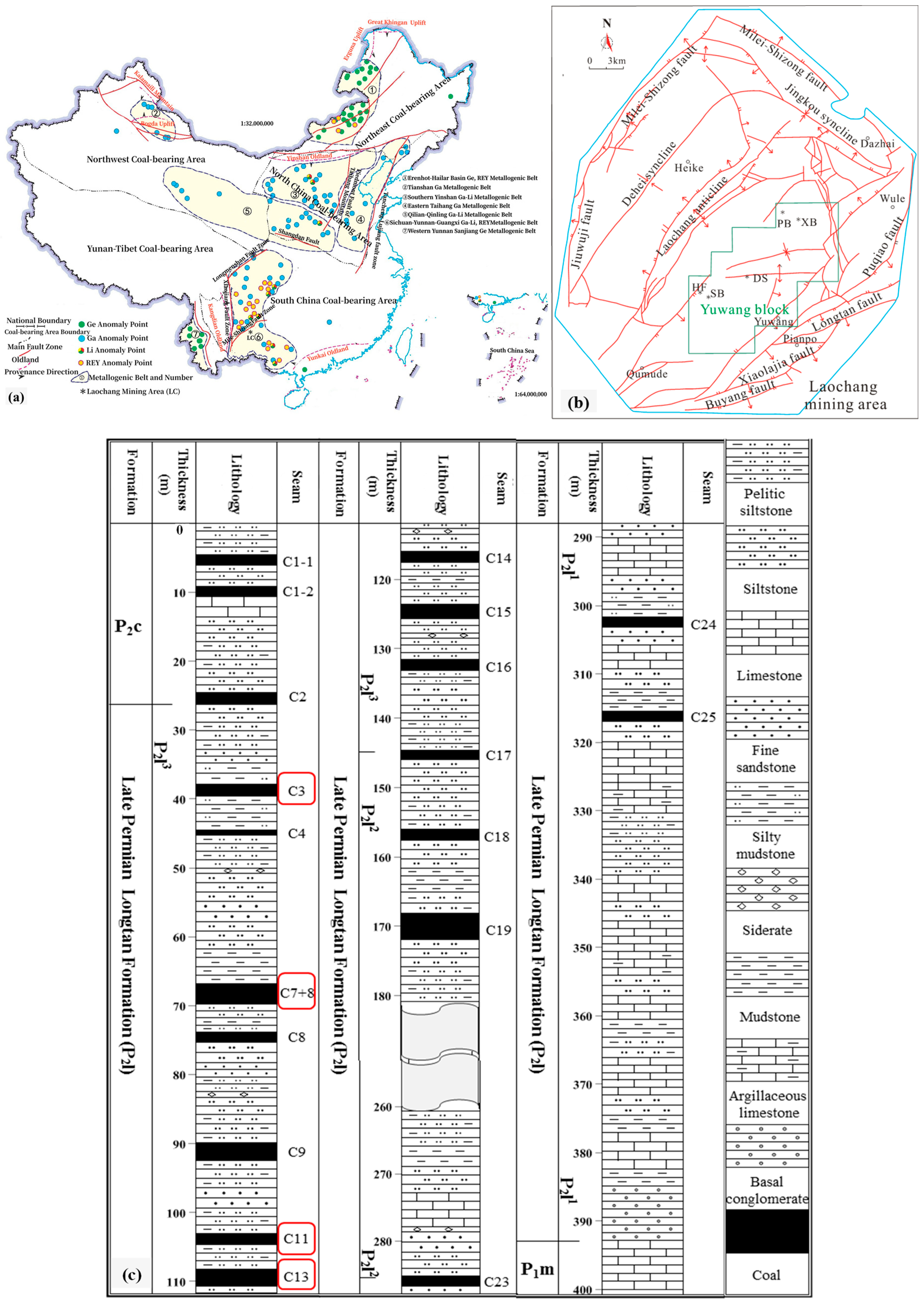
Furthermore, as a sedimentary organic rock mineral with reduction and adsorption barrier properties, coal can enrich critical trace elements such as lithium, gallium, germanium, rare earth elements, uranium, vanadium, selenium, beryllium, rubidium, cesium, niobium, tantalum, zirconium, hafnium, gold, silver, and platinum group elements under special geological processes, many of which even reach the grade of conventional mineral deposits [12,13]. Based on anomalous critical metal elements in coal, coal quality, regional tectonic setting and evolution, and stratigraphic depositional environments, the critical metal resources (e.g., Ga, Ge, REY, and Li) in Chinese coals are primarily classified into seven metallogenic belts (Figure 2a) [14]. These belts include the following: (1) the Erenhot-Hailar Basin Ge, REY Metallogenic Belt; (2) the Tianshan Ga Metallogenic Belt; (3) the Southern Yinshan Ga-Li Metallogenic Belt; (4) the Eastern Taihangshan Ga Metallogenic Belt; (5) the Qilian-Qinling Ga-Li Metallogenic Belt; (6) the Sichuan–Yunnan–Guangxi Ga-Li, REY Metallogenic Belt; (7) the Western Yunnan Sanjiang Ge Metallogenic Belt. The delineation of these metallogenic belts provides crucial support for comprehensive surveys and the evaluation of critical metal elements.
Rare metal and rare earth metal resources in Chinese coal are mainly distributed in the Carboniferous–Permian coal-bearing sequence in North China, and the Permian coal-bearing sequence in Southwest and South China. Rare scattered metal resources in coal are mainly distributed in the Jurassic coal-bearing sequence in North China, the Permian coal-bearing sequence in South China, and the Jurassic coal-bearing sequence of the northwest. Rare noble metal resources in coal are mainly distributed in the Carboniferous and Cretaceous coal-bearing sequence of North China, and the Permian coal-bearing sequence of Southwest and South China [14,15]. Specifically, coal–Li deposits have been discovered in the Guanbanwusu mine of the Jungar coalfield in Inner Mongolia, and the Ningwu coalfield in Shanxi [16,17]. Coal–Ga deposits have been discovered in the Hedaigou mine of the Jungar coalfield in Inner Mongolia, and the Zhundong coalfield in Xinjiang [18,19]. Coal–Ge deposits exist in the Dazhai mine of the Lincang in Yunnan, Wulantuga mine of the Shengli coalfield, and Wumuchang mine of the Yimin coalfield of Inner Mongolia [18,20,21]. Enriched rare earth elements in coal have been discovered in the Heidaigou mine of the Jungar coalfield in Inner Mongolia, and the Huaqiu exploration area of the Qianbei coalfield in Guizhou [18,22]. The occurrence and enrichment of inorganic components in coal are controlled by the terrestrial detrital materials supply, volcanic ash input, seawater intrusion, and hydrothermal fluids injection [23].
Therefore, conducting systematic and in-depth research on minerals in coal not only has fundamental scientific value for revealing the geological laws of coal formation, but also serves as an important theoretical basis for achieving the clean and efficient utilization of coal, controlling and reducing environmental pollution, and comprehensively evaluating and developing coal-bearing associated resources. The purpose of this study is to systematically explore the composition and modes of occurrence of mineral matter in coal from the Laochang mining area in Fuyuan, Yunnan, in order to evaluate the potential for critical metals and reveal the depositional environment, sediment sources, and hydrothermal fluids of the Laochang coals.

2. Geological Setting

The Laochang mining area is located in Fuyuan County, Qujing City, Eastern Yunnan province, bordering the Guizhou provinces (Figure 2a). It is under the jurisdiction of Laochang, Yuwang, Shibalianshan, and Huangnihe towns in Fuyuan County. The Laochang mining area is an octagon shape in plane, with a N-S length of 33 km, an E-W length of 25 km, and a total area of about 482 km2. Tectonically, the Laochang mining area is located in the junction composite zone between the Circum–Pacific tectonic domain and the Tethyan tectonic domain at the Southwestern Yangtze plate [24]. Specifically, the Laochang mining area is located between the Mile-Shizong, Puqiao, Buyang, and Jiuwuji faults (Figure 2b). The folds and faults are well developed, showing the characteristics of SW convergence and NE twisted dispersion. Kangdian Upland was formed by the Emeishan mantle plume uplift and extensive flood basalt eruption [25]. Meanwhile, the Kangdian Upland was the only possible sediment source for the Longtan, Changxing, and Xuanwei Formations in Eastern Yunnan [26].
The exposed strata in this area include Early Permian Maokou Formation (P1m), Late Permian Longtan Formation (P2l), Changxing Formation (P2c), Early Triassic Kayitou Formation (T1k), Feixianguang Formation (T1f), Yongningzhen (T1yn) Formations, Guangling Formation (T1g), and Quaternary (Q) strata from old to new. The coal-bearing sedimentary strata of the Laochang mining area are the Late Permian Longtan (P2l) and Changxing (P2c) Formations [27]. The sedimentary environment of the Laochang mining area is a continent–7898marine transitional environment [25]. The Changxing Formation, with a thickness of 26 m, is mainly composed of siltstone, pelitic siltstone, and limestone, and 2~3 thin coal seams. The Longtan Formation is dominated by siltstone, pelitic siltstone, fine stone, limestone, argillaceous limestone, basal conglomerate, and coal seams (Figure 2c). The Longtan Formation is divided into three parts, i.e., lower (P2l1), middle (P2l2), and upper (P2l3) sections, with thicknesses of 107.8 m, 140.4 m, and 118.4 m, respectively. The Laochang mining area generally contains 27–42 coal seams, with a total coal seam thickness of 40.3 m. These coal seams can be classified into full-area minable seams (C2, C3, and C7+8), mostly minable seams (C9, C13, C16, and C19), locally minable seams (C4, C11, C14, C15, C16, C17, C18, and C23), and several unminable seams [28]. The minable coal seams in the Laochang mining area are primarily located in the upper section of Longtan Formation (P2l3). The thickness of coal seams is mainly characterized by medium-thick coal seams and thin coal seams, ranging from 0.8 m to 3.8 m. In particular, No. 7 and No. 8 coal seams are usually merged into one (C7+8) in the Laochang mining area.

3. Samples and Analytical Methods

3.1. Sample Collection and Preparation

A total of 5 mixed coal samples were collected from the Nos. 3 (Danshuo and Xingbo mines), 7 + 8 (Sebu mine), 11 (Pubai mine), and 13 (Hongfa mine) coal seams of the Laochang mining area, Eastern Yunnan, following the Chinese Standard method GB/T 482-2008 [29]. In total, 3, 1, 2, 1, 2 subsamples from the Danshuo, Xingbo, Sebu, Pubai, and Hongfa mines were combined to obtain each mixed sample, respectively. Three subsamples in the Danshuo mine, 2 subsamples in the Sebu mine, and 2 subsamples in the Hongfa mine were collected from the upper and lower parts of the coal seam. Only 1 sample was collected in the No. 3 coal seam (reduplicative coal seam) in the Xingbo mine and the No. 11 coal seam (locally minable seams) in the Pubai mine. The samples were designated as DS-3, XB-3, SB-7+8, PB-11, and HF-13, respectively. The sample seams are highlighted in Figure 2c. All collected samples were immediately sealed in plastic bags to prevent contamination and oxidation. The coal samples were ground to 200-mesh and 40-mesh sizes for subsequent analyses, including proximate, sulfur, element, and mineralogical analyses.

3.2. Experimental Analysis Procedures

The proximate analyses, including the moisture, ash yield, and volatile matter yield of the coals, were determined using the ASTM Standard D3173-11, D3175-11, and D3174-11, respectively [30,31,32]. Fixed carbon was calculated based on the moisture, ash, and volatile matter yields. The total sulfur of coal was determined following the ASTM Standard D3177-02 [33]. The detection limits of moisture, ash, volatile matter, and sulfur are 0.01%, 0.01%, 0.1%, and 0.01%, respectively.
The major element oxides, including SiO2, Al2O3, Fe2O3, TiO2, CaO, MgO, P2O5, K2O, Na2O, and MnO, were determined via an X-ray fluorescence spectrometer (XRF, ARL9800, Thermo Fisher Scientific, US). The detection limits of these oxides in coal ash are 0.01%, 0.01%, 0.005%, 0.005%, 0.005%, 0.01%, 0.005%, 0.005%, 0.01%, 0.005%, respectively. The detection limits of oxides in coals depend on the ash yields. The associated trace elements in coal were determined using an inductively coupled plasma mass spectrometer (ICP-MS, X-II, Thermal Elemental, US), an atomic fluorescence spectrophotometer (AFS, AFS-8510, Haiguang, CN), and an ion meter (IM, PXSJ-216, Leici, CN). According to the Chinese Standard method GB/T 14506.30-2010 [34], 50 mg of 200-mesh coal was digested for 24 h at 185 °C in PTFE bottles using 1 mL HF (1.16 g/mL) and 0.5 mL HNO3 (1.42 g/mL). The bottles were heated nearly dry on an electric heating plate after cooling. Then, 5 mL HNO3 (1:1) was added to the bottles, which reacted for 3 h at 130 °C. The digested solution was then transferred to a plastic bottle and diluted to 50 mL with deionized water. The contents of associated elements in the digested solution were tested using ICP-MS. In particular, the concentration of As and Hg in coal was determined using AFS according to the Chinese Standard method GB/T 14506.33-2019 [35]. The element of F in coals was detected by an ion meter according to the Chinese Standard method GB/T 14506.12-2010 [36]. The stock solutions used for preparing the calibration curve were sourced from National Certified Reference Materials, either as single-element or multi-element mixed standard solutions with a concentration of 1000 μg/mL. CRM-based control analyses were performed for both ICP-MS and AFS analyses. The detection limit of V, Zn, Li, Ni, As, Rb, Th, Ba, Co, Cu, Ga, Sr, Mo, Cs, Sc, Tl, and Pb, were greater than 0.2 μg/g; detection limits of Be, Zr, Bi, Cd, Y, Nb, La, Ce, Pr, Nd, Sm, Gd, Yb, Hf, and In were greater than 0.005 μg/g; and detection limits of Eu, Tb, Dy, Ho, Er, Tm, Lu, and U were greater than 0.003 μg/g, respectively.
Mineralogical characteristics in the Laochang coals were ascertained using X-ray powder diffraction (XRD, D8 Advance, Bruker, Germany), and scanning electron microscopy coupled with an energy dispersive X-ray spectrum (SEM-EDS, Sigma, Carl Zeiss, Germany). About 1~2 g of 200-mesh coal was ashed in the low-temperature oxygen plasma ashes (K1050X-D, Quorum, UK) to reduce or eliminate the effect of organic matter. Low-temperature ashing operational conditions for coals: the sample-stage temperature of the low-temperature asher was set at 120 °C. The Peltier cooling system precisely controlled the stage temperature, while the actual sample temperature typically remained lower than the plasma gas temperature, thereby preventing mineral phase transitions in the coal. The oxygen plasma power was set at 75 W with an operating vacuum of 0.5 mbar. Each ashing cycle was set for 4 h. After venting the chamber, the sample was taken out for weighing. This process was repeated until the mass change between two consecutive weigh-ins was less than 0.1%, indicating complete ashing. Then, the minerals in the low-temperature ash (LTA) were determined via XRD. The testing angle (2θ) of XRD ranged from 4° to 70°, with a step size of 0.02°. The voltage and current of the X-ray generator were 40 kV and 40 mA, respectively. The Rietveld method was performed to determine the relative content of each phase, with an estimated error of less than 5%. The detection limit for Rietveld analysis varied with conditions, typically ranging from 0.1 to 1.0 wt%. Meanwhile, the polished grain mounts were prepared using 40-mesh coal samples with an epoxy resin and curing agent. Then, the grain mounts were polished with sandpapers and alumina polishing liquid, for later testing of vitrinite reflectance (Ro), and minerals. Au was sprayed on the surface of dry and polished grain mounts to increase electrical conductivity. The morphology and elemental composition of minerals in coals were obtained by SEM-EDS, with an accelerated voltage and beam current of 15 kV and 5 μA, and at a working distance of about 10 mm.

4. Results and Discussion

4.1. Coal Chemistry

The proximate and sulfur analyses, and the vitrinite reflectance of coal from the Laochang mining area are listed in Table 1. According to the average vitrinite reflectance (2.86%) and volatile matter yields on a dry and ash-free basis (10.36%), the Laochang coals were classified as low volatile anthracite. Specifically, the volatile matter yield of the XB-3 coal was higher than that of other coals, with a yield of 17.81%. The moisture contents of these five coals were low, with an average of 1.86%. As such, the five coals were classified into ultra-low (PB-11 and HF-13, 3.92% and 6.91%), low (DS-3 and SB-7+8, 13.29% and 14.51%), and high (XB-3, 34.65%) ash-yield coal on a dry basis. The samples of DS-3, SB-7+8, PB-11, and HF-13 coals had high levels of fixed carbon, ranging from 78.10% to 87.59% (on average 82.72%) on a dry basis, while the fixed carbon of XB-3 was low (53.71%). The total sulfur of the five coals was significantly different, varying from 0.39% to 3.52%. The total sulfur contents in XB-3 (3.52%) and HF-13 (1.58%) coals were characterized by high and medium levels, respectively.

4.2. Composition and Occurrence of Minerals

4.2.1. Analyses of X-Ray Diffraction

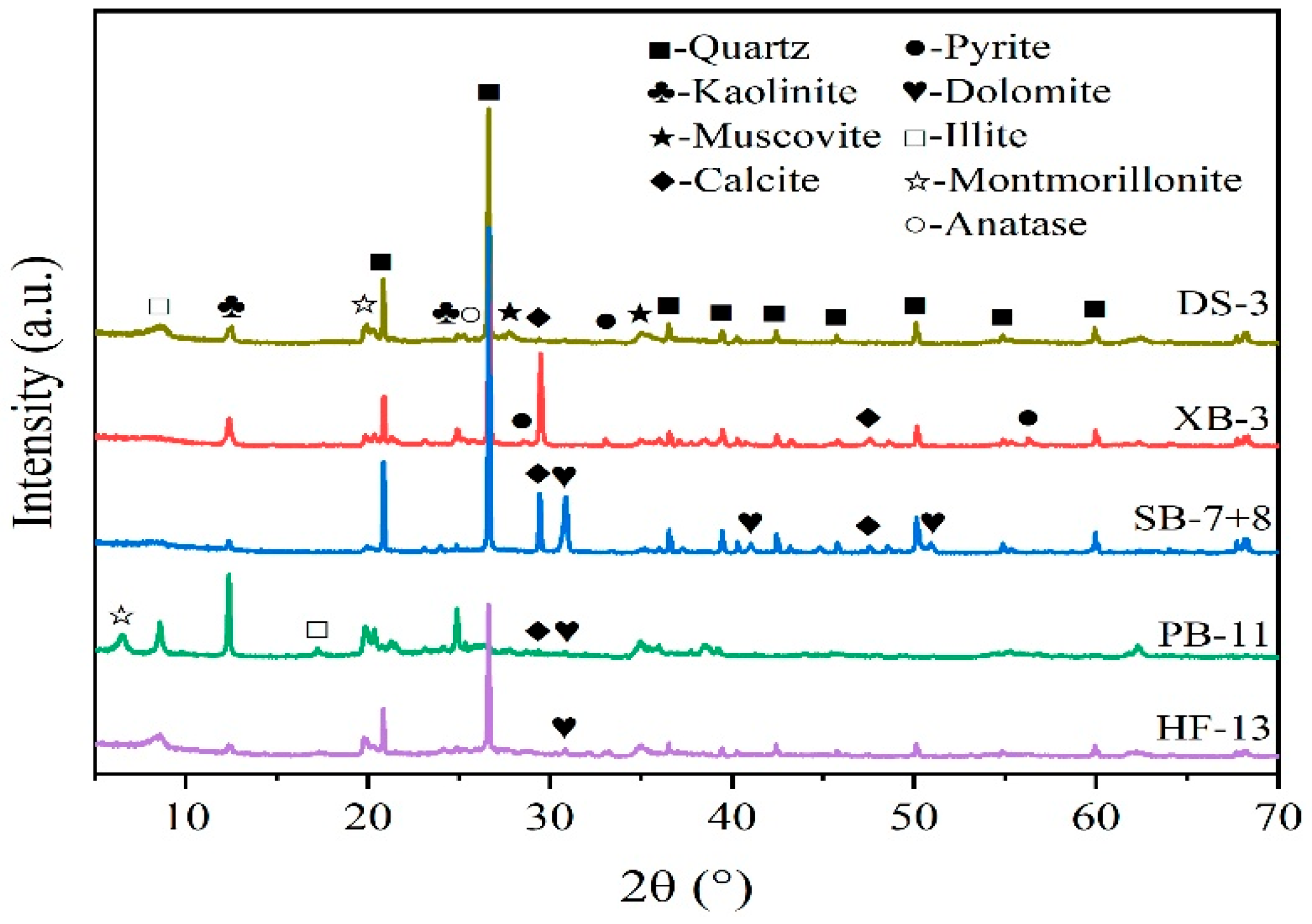
The main minerals identified through XRD in the Laochang coals were quartz, kaolinite, illite, muscovite, smectite, dolomite, calcite, pyrite, and anatase (Figure 3). The content of quartz, kaolinite, calcite, illite, and smectite varied significantly across the five coal seams. With the exception of Pubai No. 11 coal (2.4%), the content of quartz in other coals is higher than 30%, ranging from 30.3% to 54.8%. The content of kaolinite in coals ranges from 3.4% to 39.2%. Calcite is absent in the Hongfa No. 13 coal, and has the highest content in Xingbo No. 3 coal (16.8%). Trace pyrite and anatase existed in these five coal seams, ranging from 0.8% to 2.8% and 0.2% to 1.3%, respectively. Illite and smectite have a higher content in the underlying coal seams. Muscovite exists in all coals, varying from 4.4% to 20.7%. Dolomite was detected in the lower three coal seams, with the highest content of 17.3% in the Sebu No. 7+8 coal (Table 2). The primary carbonate minerals are calcite and dolomite in the coal from the Laochang mining area. The proportion of calcite and dolomite was relatively high in the low-temperature ashing samples of XB-3 and SB-7+8, respectively, which is consistent with the carbonate minerals observed in subsequent raw coal particles under scanning electron microscopy. Considering the low ashing temperature and short duration, it can be concluded that the low-temperature ashing process in this study had minimal impact on mineral alteration.

4.2.2. Analyses of SEM-EDS

Oxide Minerals
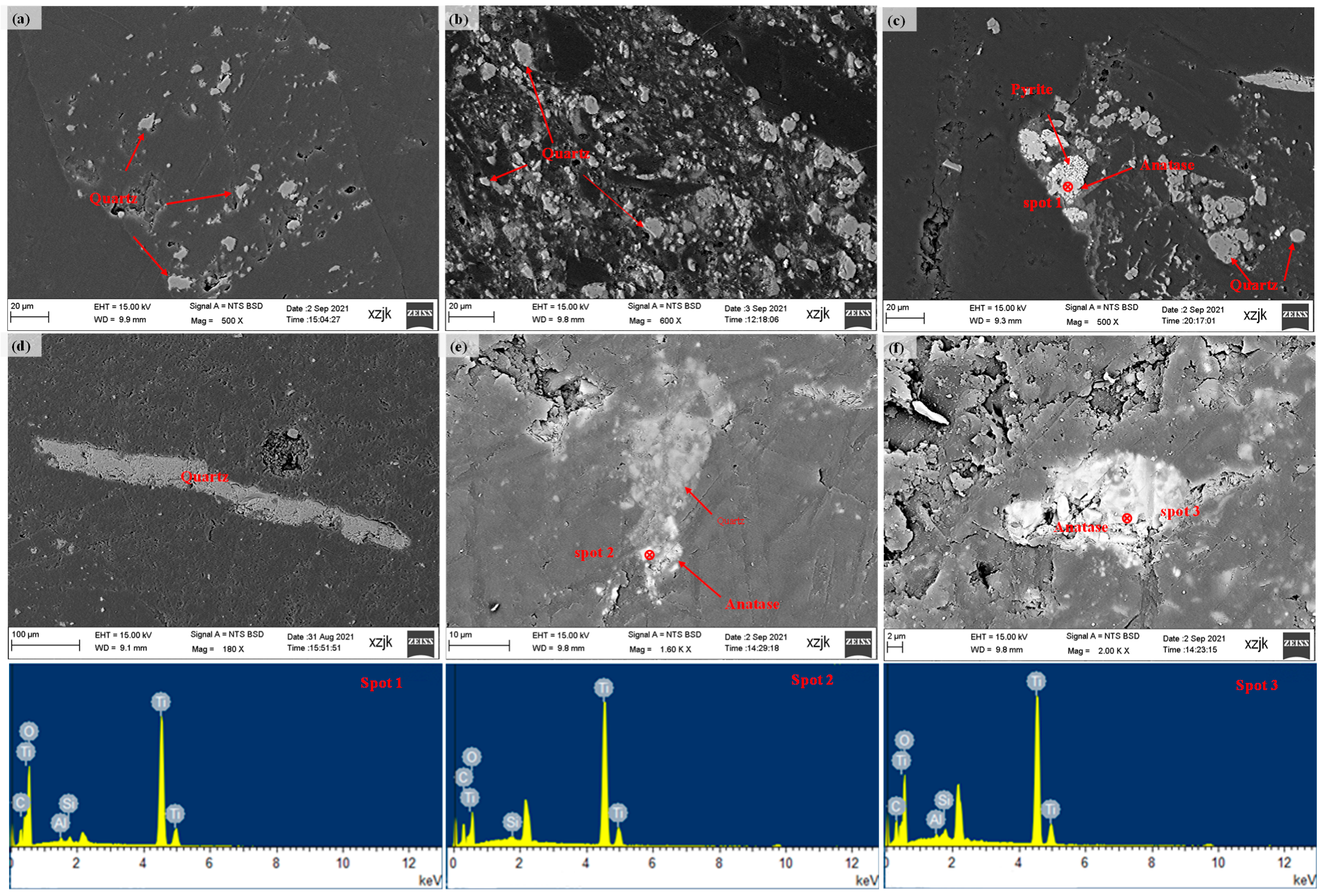
The most common oxide minerals in coal are quartz, rutile, anatase, brookite, hematite, and magnetite [3,5]. Rutile, anatase, and brookite are homogeneous polymorphic minerals of TiO2. Corundum is rare in coal, while it is a common oxide mineral in coal fly ash, especially high-alumina coal fly ash. Oxide minerals in Laochang coals include quartz and anatase (Figure 4). Quartz exists in the form of dispersed fine particles (5~20 μm) associated with collodetrinite (Figure 4a–c) and fracture-filling (Figure 4d) in Laochang coals, reflecting their syngenetic and epigenetic origin, respectively. Anatase has two modes of occurrence: it can coexist with pyrite and quartz (Figure 4c), and present as irregular fine particles in the kaolinite matrix (Figure 4e,f).
Clay Minerals
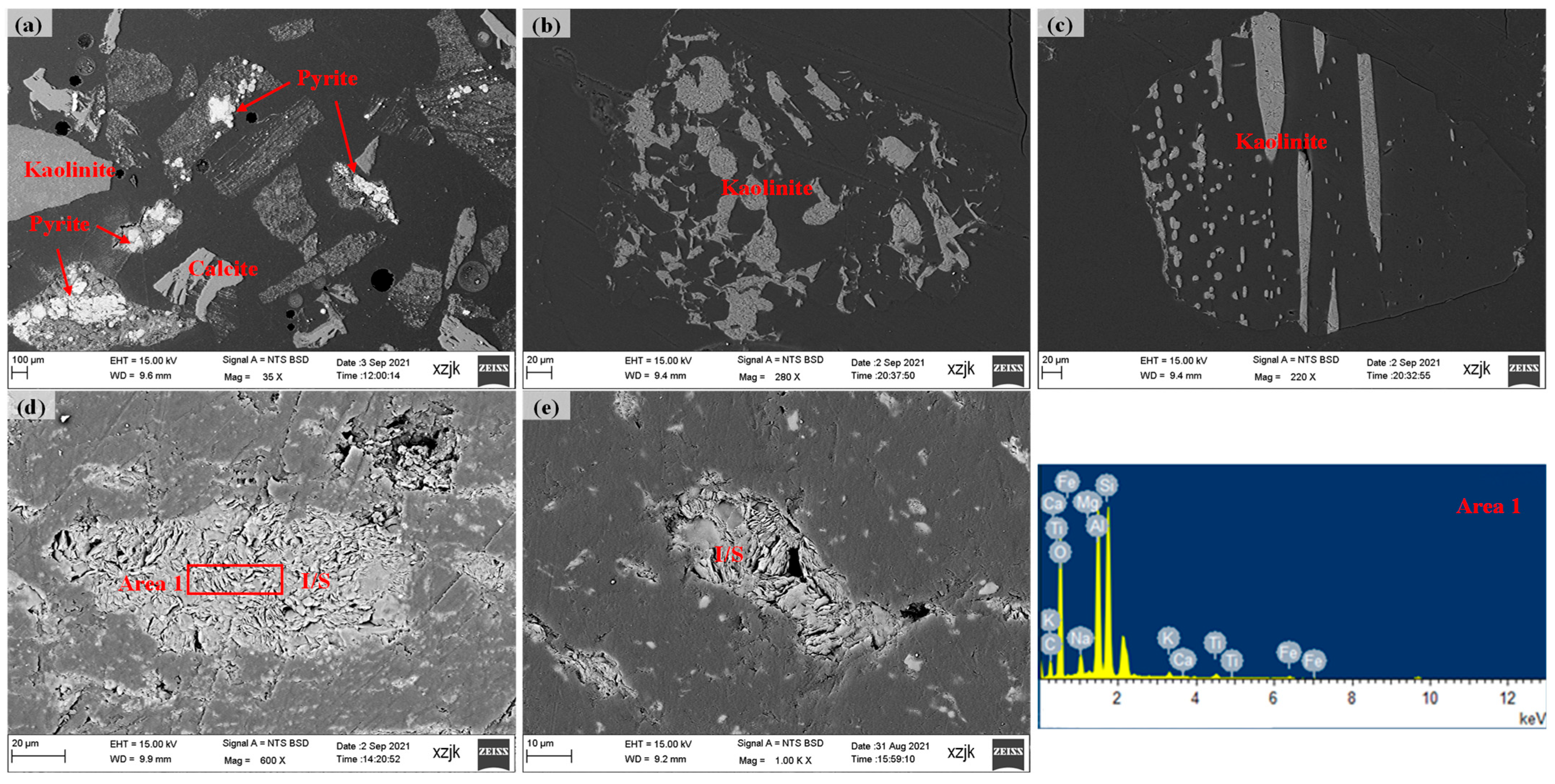
Clay minerals in coal refer to a type of silicate mineral that is deposited with plant remains during the coal formation process, or which is filled into the fractures and cavities of coal after coal formation. Clay minerals are usually the main source of ash in coal, and typically include kaolinite, illite, smectite, and chlorite. Clay minerals are mainly composed of kaolinite, illite, and smectite in the Laochang coals. Kaolinite occurs as massive, cell-, and fracture-filling structures in the Laochang coals, indicating the terrigenous detrital and authigenic origins, respectively (Figure 5a–c). Cell-filling kaolinite in coals is formed by the precipitation of enriched Al3+ and Si4+ solutions in the cavities during the peat-accumulation and early diagenesis stages. Illite/smectite (I/S) mixed-layer minerals are the intermediate products caused by the transformation from smectite to illite. A large amount of I/S was found in the Late Permian coal of the Changxing coal mine, Eastern Yunnan. Under scanning electron microscopy, I/S minerals were detected in the Laochang coals, mainly existing in a matrix form, with a lower amount of K, Na, and Mg, and no clear structure (Figure 5d,e).
Sulfide Minerals
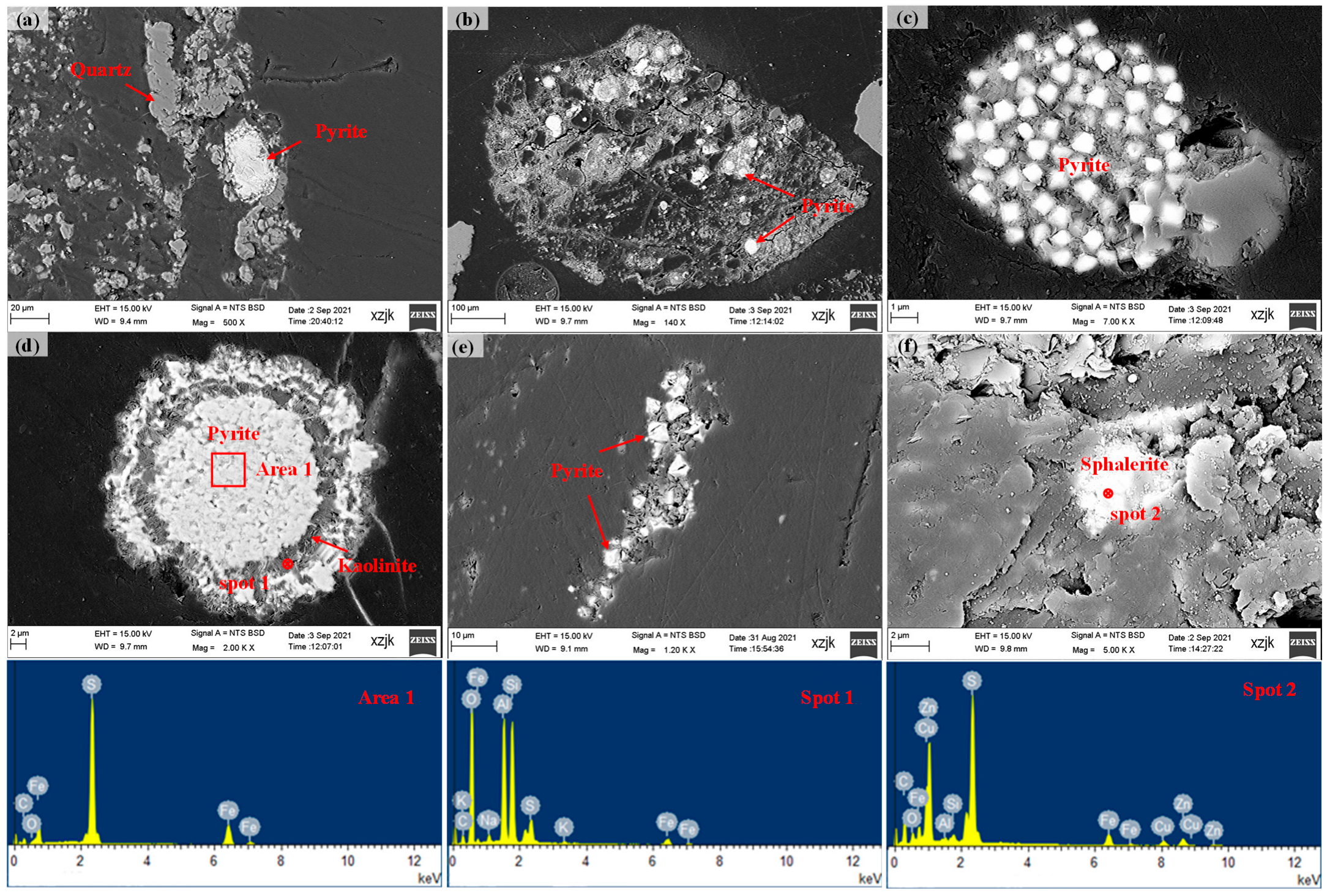
Pyrite is a widely distributed sulfide mineral in many coals. Pyrite occurs as massive (Figure 5a and Figure 6a), disseminated (Figure 6b), framboidal (Figure 6c), spherical (Figure 6d), and euhedral crystals (Figure 6e) in the Laochang coals. Massive pyrite is usually filled with clay minerals and quartz in telocollinite cavities, and mainly forms during the late stage of diagenesis. Framboidal pyrite is composed of several small euhedral crystal pyrites, the crystals of which are aggregated into an overall spherical form. The outer edge of the spherical pyrite has abundant pores, which are filled with kaolinite (Figure 6d). Disseminated, and cell- or fracture-filling pyrites have an epigenetic origin, possibly influenced by the low-temperature hydrothermal fluid in the late coal-forming period [37,38]. Framboidal and euhedral pyrite mostly have a cubic structure and small size in coal and are formed in the syngenetic stage [39]. Sphalerite was detected in the DS-3 coal (Figure 6f), with a disseminated structure and a small size of 2–3 μm. Sphalerite is embedded in the organic matter or clay minerals with an irregular shape, suggesting an epigenetic origin. The discovery of sphalerite indicates that the coal sample was affected by hydrothermal fluids with a medium–low-temperature.
Phosphate Minerals
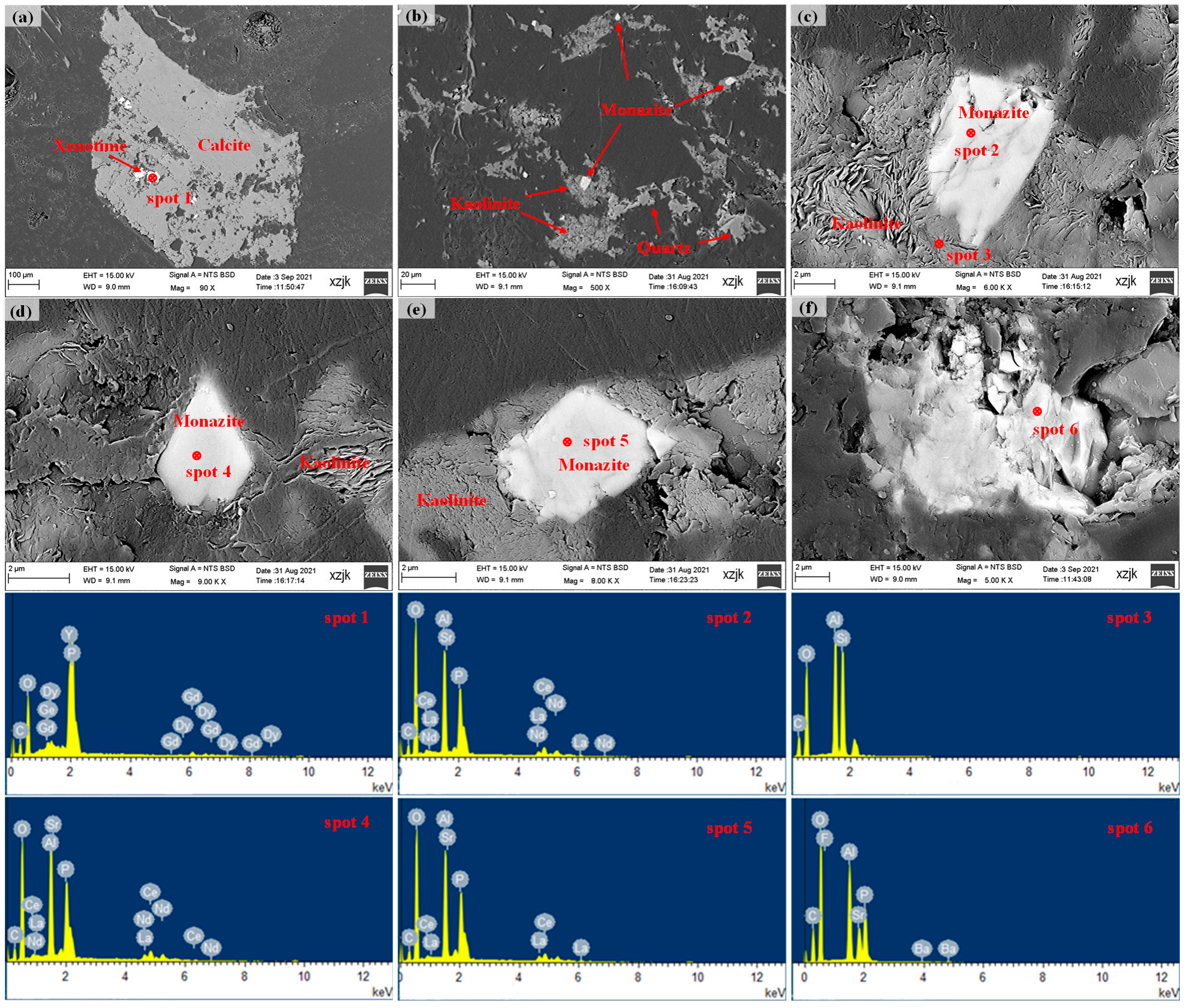
Many kinds of phosphate minerals exist in coal, including apatite, monazite, xenotime, florencite, goyazite, and gorceixite. Phosphate minerals in the Laochang coals are composed of xenotime (Figure 7a), monazite (Figure 7b–e), and mixed goyazite–gorceixite minerals (Figure 7f). Phosphate minerals in Laochang coals occur as pore infilling and are mixed with kaolinite and calcite, indicating an epigenetic hydrothermal origin. Xenotime and monazite are the primary carrier minerals for rare earth elements, such as Y, La, Ce, Nd, and Gd. Under high magnification, monazite has relatively sharp edges. Goyazite–gorceixite mixed minerals in coal mainly fill cell cavities, without any clear structure.
Carbonate Minerals
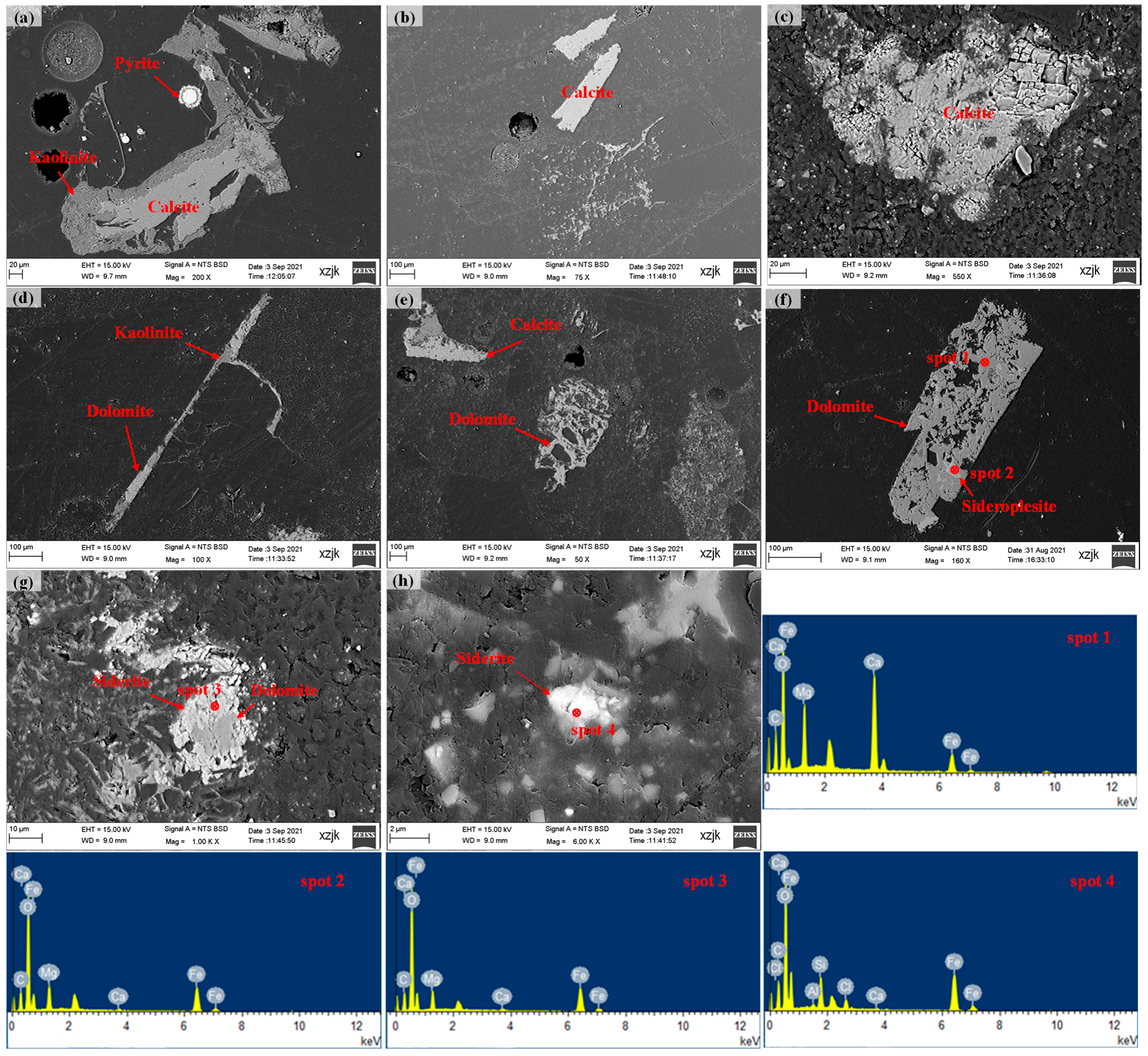
Carbonate minerals are one of the main minerals in coal, including calcite, dolomite, ankerite, kutnohorite, siderite, and magnesite [3,5]. Minerals, such as dolomite, ankerite, kutnohorite, and magnesite, are mostly products of the alteration in calcite, and their formation is influenced by the Mg2+, Fe2+, and Mn2+ content of the infiltrating solution during the alteration process. Meanwhile, Mg2+, Fe2+, and Mn2+ can replace Ca2+ through isomorphism [5,40]. Calcite, dolomite, siderite, and sideroplesite were detected in the Laochang coals. Calcite mainly fills organic matter fractures in the form of veins and lumps, with a large size (>100 μm), and partially coexists with kaolinite (Figure 8a–c). The modes of occurrence of calcite in coal indicate that it is of epigenetic origin, which is mostly related to the hydrothermal fluid activities and the precipitation of Ca2+-rich solutions in the fractures during the diagenesis process [41]. Similarly, dolomite occurs as fracture-filling and massive in organic matter (Figure 8d–f), indicating that the coal seam is affected by the epigenetic Mg2+-rich hydrothermal fluids after the diagenesis process. Sideroplesite and siderite are associated with dolomite or filled in organic matter fractures in SB-7+8 coal (Figure 8f–h). The identification of dolomite, sideroplesite, and siderite in coals reflects a strongly reducing environment [3].

4.3. Elemental Geochemistry

4.3.1. Major Element Oxides

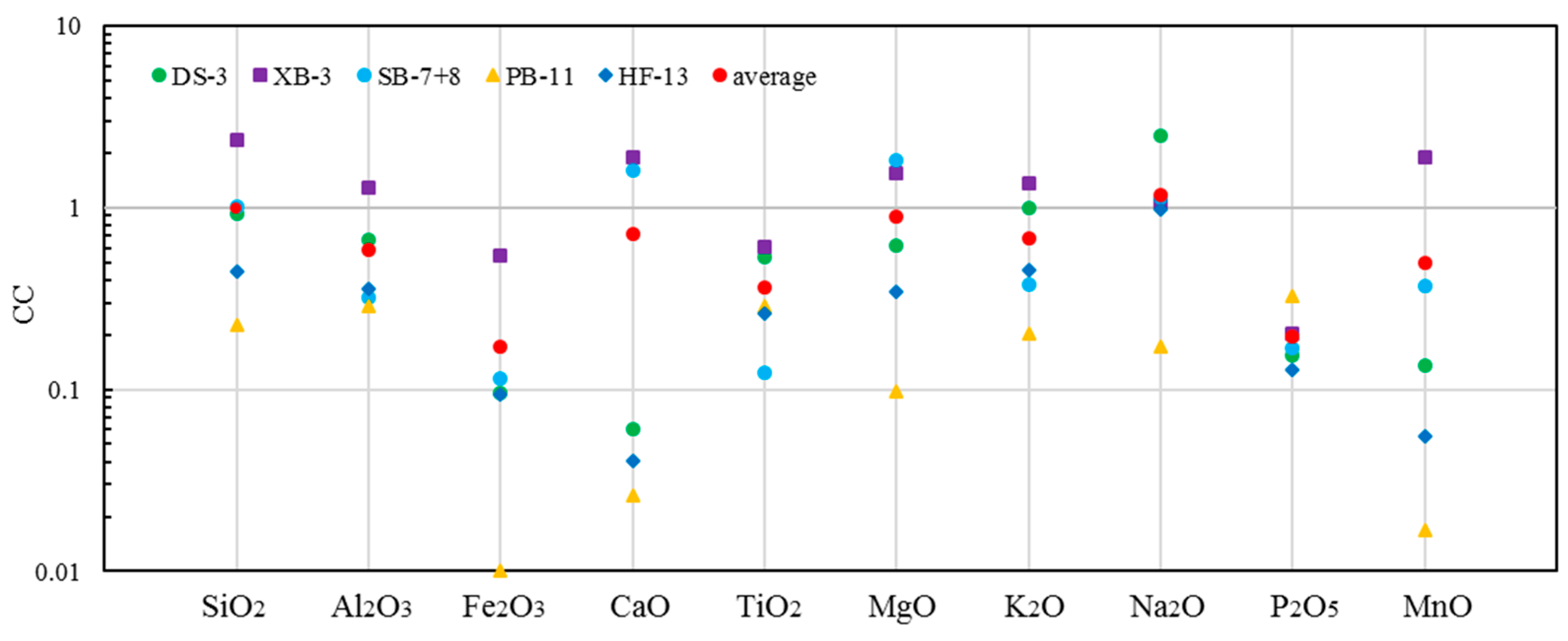
The contents of major element oxides in the Laochang coals are listed in Table 3. The average content of major element oxides in the Chinese coals is also listed in Table 3 [42]. Owing to the major element oxides being the main components of coal ash, the contents of major element oxides in these five coals are obviously different. The contents of SiO2, Al2O3, Fe2O3, CaO, TiO2, K2O, and MnO in the XB-3 coal are higher than those in other coals. Due to the low ash yield of PB-11 coal, the contents of major element oxides are much lower than those of the other four coals, except for P2O5. Although the contents of major element oxides, SiO2 and Al2O3, are the dominant oxides in the coals. The contents of SiO2 (2.35, 1.01), CaO (1.87, 1.60), MgO (1.55, 1.82), and Na2O (1.07, 1.12) in the XB-3 and SB-7+8 coals are higher than average contents of Chinese coals, with a concentration coefficient (CC) higher than 1 (Figure 9). Meanwhile, Al2O3, K2O, and MnO in the XB-3, and Na2O in the DS-3 coals, also have higher contents, with CC of 1.27, 1.36, 1.90, and 2.50, respectively.

4.3.2. Trace Elements

The concentrations of associated trace elements in the Laochang coals and world hard coals are provided in Table 4. The trace elements in world hard coals were reported by Ketris and Yudovich [43]. The concentration coefficient (CC, the ratio of elemental content in researched coal compared to world coals) is widely used to represent the enrichment degree of trace elements in coals [44]. The enrichment degrees of trace elements are divided into six levels, i.e., depleted (CC < 0.5), normal (0.5 ≤ CC < 2), slightly enriched (2 ≤ CC < 5), enriched (5 ≤ CC < 10), significantly enriched (10 ≤ CC < 100), and anomalously enriched (CC ≥ 100). The associated trace elements are classified into critical and hazardous elements in this study. For example, the critical elements in the Laochang coals include rare elements (Li, Be, Rb, Sr, Zr, Nb, Cs, Hf, Ta, W, Bi), rare scattered elements (Ga, Ge, Re, Se, In, Tl), and rare earth elements (Sc, REY). Environmentally relevant elements, including B, F, V, Cr, Co, Ni, Cu, Zn, As, Mo, Cd, Sb, Ba, Hg, Pb, Th, and U, are classified as hazardous elements. In particular, some elements belong to both hazardous and critical elements, which are analyzed together with hazardous elements. For example, U and V are elements that were once, and are currently, industrially utilized, while Mo and Cr are highly promising and promising for utilization in coal, respectively [45].
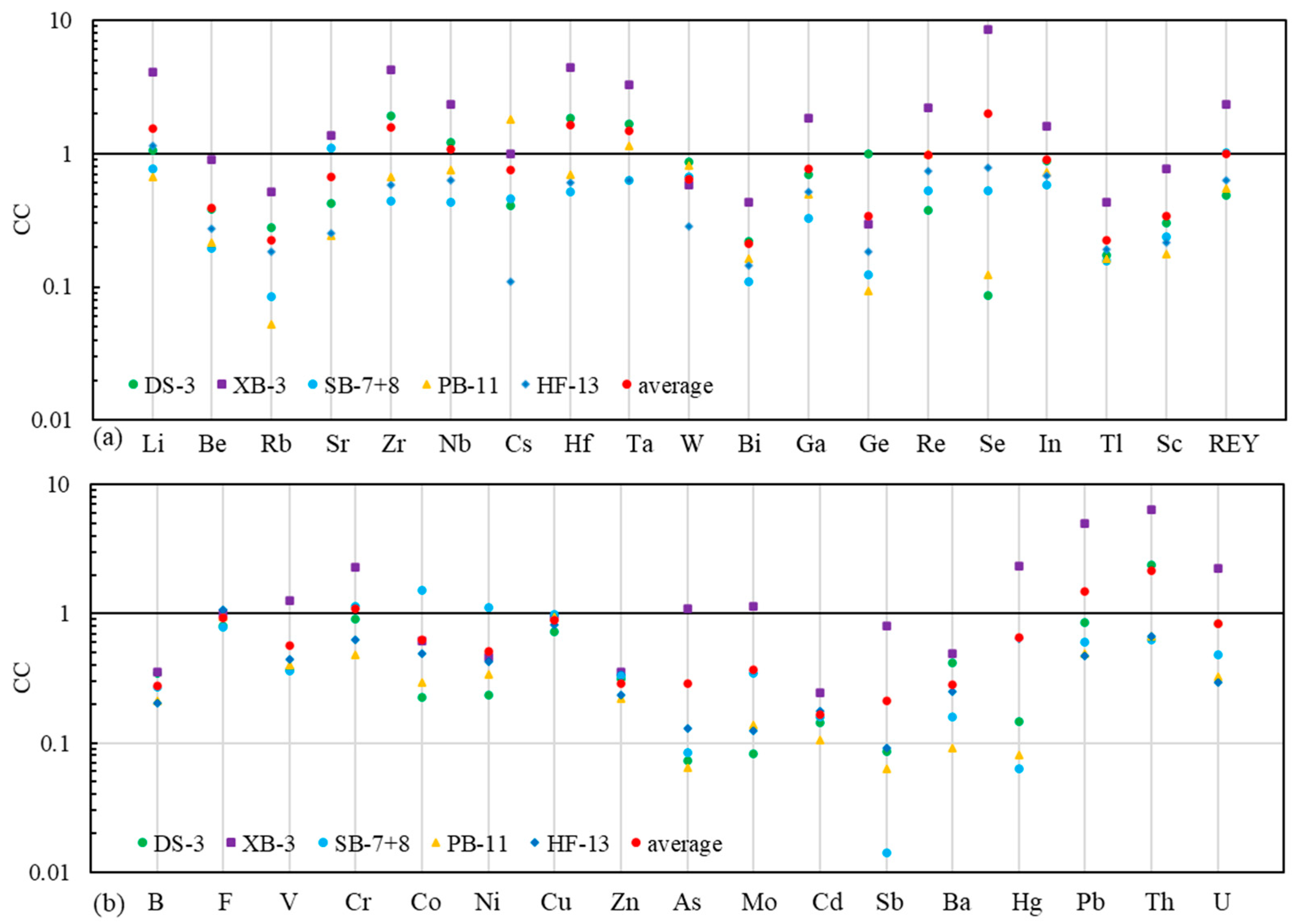
For critical elements in the Laochang coals, Li, Zr, Nb, Hf, Ta, Re, and REY in the XB-3 coal are slightly enriched, with CC of 4.07, 4.22, 2.33, 4.43, 3.30, 2.21, and 2.32, respectively. Selenium (CC, 8.49) is enriched in the XB-3 coal. The hazardous elements of Cr, Hg, Pb, Th, and U are slightly enriched in the XB-3 coal, and Th is also slightly enriched in DS-3 coal. Other associated trace elements have a depleted or normal level in the researched coals (Figure 10).

4.3.3. REY Geochemistry

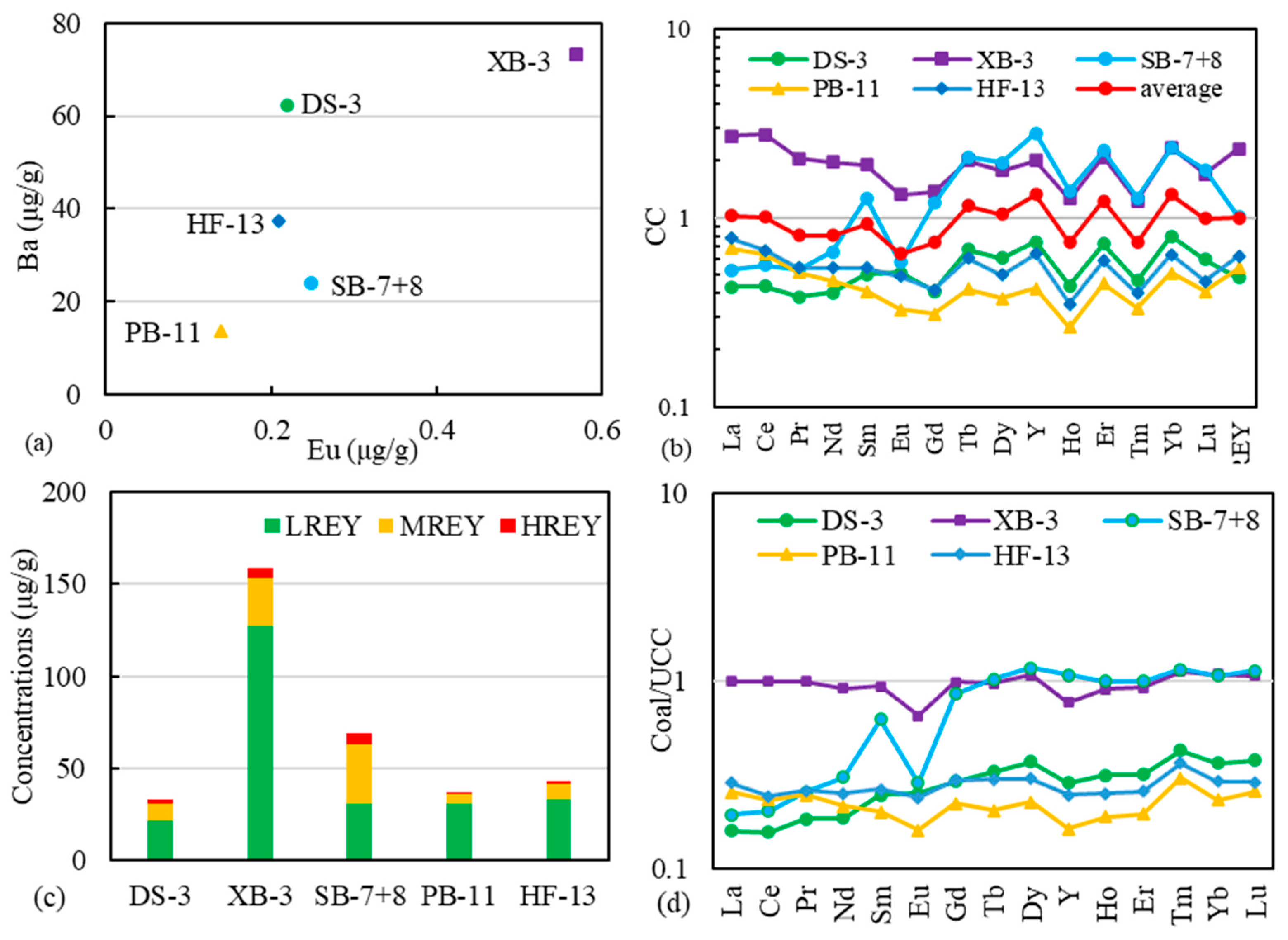
The individual concentrations and geochemical parameters of REY in the Laochang coals are provided in Table 4 and Table 5, respectively. Yan et al. [46] reported that if the ratio of Ba to Eu is higher than 1000 in coals or sedimentary rocks, Ba interferes with the Eu concentration. The values of Ba/Eu range from 95.60 to 283.64 (on average 156.51), indicating that Ba has no interference with Eu in the Laochang coals (Figure 11a). The REY concentration in the XB-3 coal is 159.14 μg/g, which is higher than that of world hard coal [43]. REY in the other four coals is lower than or close to world hard coal, varying from 43.20 μg/g to 69.11 μg/g. A three-fold classification of REY, including LREY (La, Ce, Pr, Nd, plus Sm), MREY (Eu, Gd, Tb, Dy, plus Y), and HREY (HREY, Ho, Er, Tm, Yb, plus Lu), was used to analyze the REY geochemistry. The concentration coefficient of the individual element is shown in Figure 11b, the LREY in XB-3, and all or part of MREY and HREY in PB-11 and HF-13 coals are depleted, with CC < 0.5. The elements of La, Ce, Pr, Er, and Yb in XB-3 coal, and Tb, Y, Er, and Yb in SB-7+8 coals are slightly enriched (2 ≤ CC < 5).
The REY concentration is generally dominated by LREY (21.97~127.79 μg/g), MREY (5.46~31.72 μg/g), and less content of HREY (1.29~6.14 μg/g) in the Laochang coals (Figure 11c). The ratios of LREY/HREY and LREY/MREY in the Laochang coals are higher than 1, reflecting the high fractionation degree of REY [47]. REY was normalized to the Upper Continental Crust (UCC) [48], and the REY distribution patterns were drawn in Figure 11d. There are three types of REY enrichment, including L-type (LaN/LuN > 1), M-type (LaN/SmN < 1, GdN/LuN > 1), and H-type (LaN/LuN < 1) [49]. The enrichment type of REY is H-type in the Laochang coals, which may be related to the hydrothermal injection [50]. The anomaly values of Ce (CeN/CeN*), Eu (EuN/EuN*), and Gd (GdN/GdN*) were calculated in Table 5. The Ce anomaly varies from 0.89 to 1.00 (0.93 on average), indicating no distinct or weak negative anomaly. The Eu was characterized by a negative anomaly, ranging from 0.38 to 0.91 (0.73). The SB-7+8 coal has a distinct negative Eu anomaly (0.38), and a “V” structure at the position of Eu in the REY distribution pattern (Figure 4d). The Gd anomaly values range from 0.96 to 1.09 in the Laochang coals, reflecting no distinct anomalies of Gd.

4.4. Geochemical Significance

4.4.1. Evaluation of Associated Elements

Late Permian coal seams and associated host rocks (roof, floor, and parting) in southwestern China were enriched in critical metals, such as Li, Ge, Ga, and REY. The enrichment of critical metals in these layers is primarily contributed to by terrigenous detrital and alkaline volcanic ash, penetration, as well as the intrusion of hydrothermal fluids [45,47]. Meanwhile, hazardous elements in coal may have an impact on the environment and human health.
The cut-off grades of Ga, Ge, Zr, Nb, Sc, V in coal ash are 100 μg/g, 300 μg/g, 2000 μg/g, 300 μg/g, 100 μg/g, and 1000 μg/g, and Li in coal is 120 μg/g [12,13]. These elements have not reached industrial grades in the Laochang coal. When the REO concentration exceeds 1000 μg/g, it can be used as a cut-off grade for REY recovery; meanwhile, REY with 0.7 ≤ Coutl ≤ 1.9 and Coutl > 2.4 are represented as promising and highly promising REY alternative resources, respectively [51]. The Coutl of DS-3, XB-3, SB-7+8, PB-11, and HF-13 are 1.20, 0.71, 2.31, 0.68, and 0.84, respectively, and REO concentration of these coals are 304 μg/g, 418 μg/g, 571 μg/g, 1167 μg/g, and 735 μg/g, indicating that REY in PB-11 coal has a promising potential as REY alternative resources. The XB-3 coal is high selenium coal (>10 μg/g), while DS-3 and PB-11 are special low selenium coal (<0.5 μg/g), SB-7+8 and HF-13 coal are low selenium coal (0.5~2 μg/g).
According to the Chinese Standard method GB/T 20457.3-2012, GB/T 20457.4-2012, GB/T 20457.5-2020, and MT/T 964-2005 [52,53,54,55], the Laochang coals are generally classified as special low As (<4 μg/g), special low Hg (<0.15 μg/g), special low F (<100 μg/g), and low Pb (<20 μg/g) coal. However, the XB-3 coal is low As (4~25 μg/g), low Hg (0.15~0.25 μg/g), high Pb (>40 μg/g) coal. The elevated concentration of hazardous elements in XB-3 coal is unfavorable for its clean utilization, and its combustion may pose potential risks to the environment and human health.

4.4.2. Sedimentary Provenance

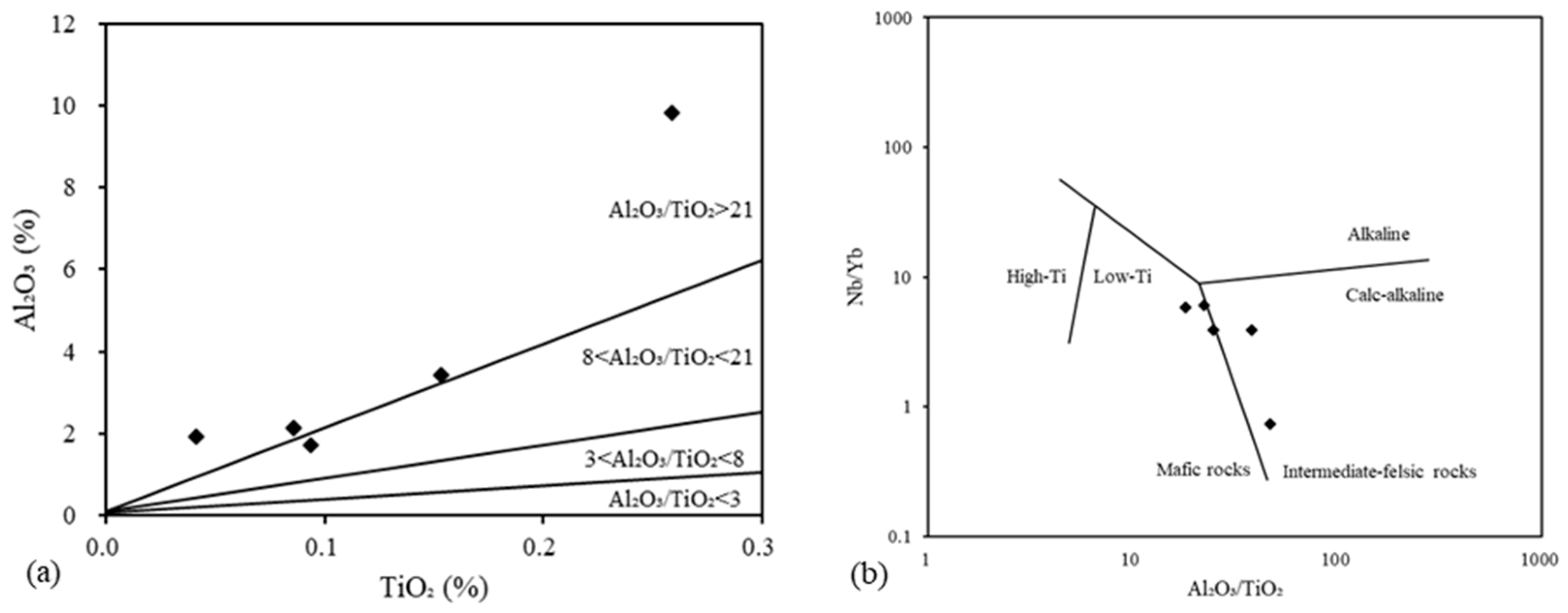
The geochemistry parameter of Al2O3/TiO2 is widely used to determine the sediment source of sedimentary rock [56,57]. Due to the geochemical stability of Al and Ti in the supergene environment, Al2O3/TiO2 was subsequently applied in coal [44,58]. The Al2O3/TiO2 values of 3–8, 8–21, and 21–70 reflect that the sedimentary rocks are derived from mafic, intermediate, and felsic igneous rocks, respectively [59]. The ratios of Al2O3/TiO2 range from 18.19 to 46.99 in the Laochang coal, reflecting that the sediment source regions are characterized by felsic and intermediate rocks (Figure 12a). The low Al2O3/TiO2 of PB-11 coal is probably attributed to the relatively low Al2O3 content and high proportion of anatase. In addition, the relationship between Nb/Y and Zr/TiO2 indicates that the magma source, the discrimination diagram of Nb/Y vs. Zr/TiO2 is widely used to reveal sources of inorganic components in coal and coal-bearing strata [60,61]. Because the chemical stability of Yb is stronger than that of Y, a new relationship diagram of Al2O3/TiO2 vs. Nb/Yb was proposed to identify the sedimentary source [62]. The diagram of Al2O3/TiO2 vs. Nb/Yb indicates that the Laochang coals are characterized by low-Ti, calc-alkaline intermediate–felsic rocks (Figure 12b). The Emeishan Large Igneous Province provided the main source of sedimentary deposits and inorganic matter in peat from the Late Permian coal-bearing basins in Southwestern China, and the Kangdian Upland was the main erosion source area for the coal-bearing strata in this region [63,64]. Based on the negative anomaly of Eu and geochemistry parameters in the Laochang coals, it is speculated that the detrital material in the erosion source area of coal is input from the Emeishan Large Igneous Province low-Ti basalt and felsic–intermediate rocks.

4.4.3. Depositional Environment

The Late Permian Longtan Formation coal-bearing sequence was formed in the marine-terrestrial transitional environment. The influence of the sedimentary environment on the enrichment and differentiation of associated elements in coal is mainly caused by the action of seawater. Seawater can provide abundant material sources for coal-bearing strata, and the movement of seawater can also affect the supply of terrestrial detrital materials. Seawater can change the pH, Eh, and H2S content of peat swamps, forming specific geochemical barriers that facilitate the enrichment of associated elements [65].
The Kangdian Upland is located to the west of the study area. The uplift of the Kangdian Upland formed a pattern that is low in the east and high in the west of the Upper Yangtze Basin, and this determined the paleogeographic pattern of the western land and eastern sea in Southwest China, i.e., Chongqing, Guizhou, and Yunnan provinces [66]. The study area is located in Eastern Yunnan, and it is a transitional environment. The sulfur content of the Laochang coals ranges from 0.39% to 3.52%, and the proportion of pyrite ranges from 0.8% to 2.8%. Pyrite and Fe2O3 are significantly correlated with sulfur (0.935, 0.922), indicating that sulfur mainly occurs in the form of pyrite sulfur. The sedimentary environment of peat swamp influenced by seawater is mostly a reducing environment, which is conducive to the reproduction and activity of bacteria and promotes the formation of pyrite. Furthermore, the discovery of dolomite, sideroplesite, and siderite in coal reflects the reducing environment, providing evidence of the intrusion of seawater. Meanwhile, syngenetic framboidal and euhedral pyrite were detected, indicating that seawater affects peat accumulation during the syngenetic and early diagenetic stage [67]. Syngenetic pyrite may be formed by the reduction in SO42− provided by seawater [68]. The Fe and sulfur of pyrite originate from the reduction in Fe3+ supplied from terrestrial detrital materials and SO42− supplied from seawater.
Selenium and sulfur can form extensive isomorphic relationships. Selenium most readily incorporates into the crystal lattice of sulfide minerals and can also exist as microscopic inclusions within sulfide minerals. Pyrite is an important host mineral for selenium [69]. Total sulfur (pyrite) is significantly correlated with Se (0.953), reflecting that the Se mainly exists in pyrite. The element of Se is enriched in the XB-3 coal, which is primarily attributed to the reducing depositional environment influenced by seawater and subsequent low-temperature hydrothermal fluid activity.

4.4.4. Hydrothermal Fluids

Hydrothermal fluid activities have a significant influence on the enrichment and occurrence of inorganic components (elements and minerals) in coal. A large amount of authigenic quartz was discovered in the Laochang coals (Figure 4a–c). Syngenetic quartz commonly originates from the silicon-containing solution of Emeishan basalt weathering [70]. Vein quartz (Figure 4d) is related to the rich-Si hydrothermal fluid [71]. Cell- and fracture-filling kaolinite (Figure 5b,c) in the Laochang coals reflects its origin from hydrothermal fluids.
Sphalerite (Figure 6f) is formed by medium–low-temperature hydrothermal fluids during the epigenetic stage. Phosphate minerals are the main carrier minerals of rare earth elements in the Laochang coals, including monazite and xenotime (Figure 7), which are generally of epigenetic hydrothermal origin [72]. The formation of vein calcite (Figure 8a–c) is related to epigenetic hydrothermal fluids. The formation temperature of vein calcite is approximately 190 °C, which may be formed by the precipitation of Ca-containing meteoric fluids or Ca-rich fluids [73,74]. Meanwhile, fracture-filling and massive dolomite (Figure 8d–f) are affected by epigenetic Mg2+- and Fe2+-rich hydrothermal fluids after the diagenesis process [75].

5. Conclusions

Five coal samples from the Danshuo, Xingbo, Sebu, Pubai, and Hongfa mines, Laochang mining area, Eastern Yunnan, have various yields of ash, volatile, and sulfur. Overall, the Laochang coals are characterized by low volatile anthracite. The distribution trends of total sulfur content in these coals are consistent with the proportion of pyrite identified by XRD. Compared to world hard coals, the critical elements of Li, Zr, Nb, Hf, Ta, Re, and REY are slightly enriched, and Se is enriched in the XB-3 coal. The enrichment of Se in coal is mainly related to the sedimentary environment and the activity of hydrothermal fluids. The hazardous elements of Cr, Hg, Pb, Th, and U are slightly enriched in the XB-3 coal, and Th is slightly enriched in the DS-3 coal. Other associated trace elements have a depleted or normal level in the researched coals. REY in the Laochang coals exhibits a high fractionation degree, with an H-type enrichment pattern. Kangdian Upland is the main erosion source area in Late Permian coals, and the Emeishan Large Igneous Province basalt and felsic–intermediate rocks are regarded as the primary input of terrestrial detrital materials. The sedimentary environment of the Laochang coal has suffered the seawater intrusion.
Syngenetic and epigenetic quartz originated from silicic solutions derived from Emeishan basalt weathering and from silicon-rich hydrothermal fluids. Vein calcite precipitates were derived from calcium-rich meteoric or hydrothermal fluids. The epigenetic Mg2+- and Fe2+-rich hydrothermal fluids were formed after the diagenesis process. The modes of occurrence of minerals reveal that the coal was influenced by the multi-stage hydrothermal fluids during the peat-accumulation and diagenesis stages, and after the diagenesis stage.

Author Contributions

Conceptualization, Q.L.; methodology, Q.L. and B.Z.; formal analysis, Q.L. and B.Z.; investigation, Q.L.; data curation, Q.L.; writing—original draft preparation, Q.L.; writing—review and editing, W.W. and S.Q.; supervision, W.W. and S.Q.; funding acquisition, Q.L., W.W. and S.Q. All authors have read and agreed to the published version of the manuscript.

Funding

This research was supported by the National Key Research and Development Program of China (2021YFC2902003), the National Natural Science Foundation of China (Nos. 42402176, 42472236, 42172191), the Fundamental Research Funds for the Central Universities (No. 2024QN11071), and the Jiangsu Funding Program for Excellent Postdoctoral Talent (No. 2024ZB489).

Institutional Review Board Statement

Not applicable.

Informed Consent Statement

Not applicable.

Data Availability Statement

The original contributions presented in this study are included in the article. Further inquiries can be directed to the corresponding author.

Conflicts of Interest

The authors declare no conflicts of interest.

References

  1. Energy Institute. Statistical Review of World Energy, 73rd ed.; Energy Institute: London, UK, 2024. [Google Scholar]
  2. Dai, S.F.; Hower, J.C.; Finkelman, R.B.; Graham, I.T.; French, D.; Ward, C.R.; Eskenazy, G.; Wei, Q.; Zhao, L. Organic associations of non-mineral elements in coal: A review. Int. J. Coal Geol. 2020, 218, 103347. [Google Scholar] [CrossRef]
  3. Ward, C.R. Analysis, origin and significance of mineral matter in coal: An updated review. Int. J. Coal Geol. 2016, 165, 1–27. [Google Scholar] [CrossRef]
  4. Jia, R.K.; Liu, J.J.; Han, Q.C.; Zhao, S.M.; Shang, N.D.; Tang, P.Q.; Zhang, Y.Q. Mineral matter transition in lignite during ashing process: A case study of Early Cretaceous lignite from the Hailar Basin, Inner Mongolia, China. Fuel 2022, 328, 125252. [Google Scholar] [CrossRef]
  5. Finkelman, R.B.; Dai, S.F.; French, D. The importance of minerals in coal as the hosts of chemical elements: A review. Int. J. Coal Geol. 2019, 212, 103251. [Google Scholar] [CrossRef]
  6. Tang, Y.G.; Zhang, J.Y.; Wang, S.Q.; Xu, D.P.; Chen, B.W.; Hu, Y.F.; Yuan, D.Y.; Ding, H.; Bai, X.F. Research progress of enrichment characteristics of hazardous mineral matter in coal and their migration and transformation during thermal technology. J. China Coal Soc. 2025, 50, 452–490. [Google Scholar]
  7. Schatzel, S.J. Identifying sources of respirable quartz and silica dust in underground coal mines in southern West Virginia, western Virginia, and eastern Kentucky. Int. J. Coal Geol. 2009, 78, 110–118. [Google Scholar] [CrossRef]
  8. Tian, L.; Dai, S.F.; Wang, J.; Huang, Y.; Ho, S.C.; Zhou, Y.; Lucas, D.; Koshland, C.P. Nanoquartz in Late Permian C1 coal and the high incidence of female lung cancer in the Pearl River Origin area: A retrospective cohort study. BMC Public Health 2008, 8, 398. [Google Scholar] [CrossRef] [PubMed]
  9. Dai, S.F.; Tian, L.; Chou, C.-L.; Zhou, Y.; Zhang, M.; Zhao, L.; Wang, J.; Yang, Z.; Cao, H.; Ren, D.Y. Mineralogical and compositional characteristics of late Permian coals from an area of high lung cancer rate in Xuanwei, Yunnan, China: Occurrence and origin of quartz and chamosite. Int. J. Coal Geol. 2008, 76, 318–327. [Google Scholar] [CrossRef]
  10. Large, D.; Kelly, S.; Spiro, B.; Tian, L.; Shao, L.Y.; Finkelman, R.B.; Zhang, M.; Somerfield, C.; Plint, S.; Ali, Y.; et al. Silica-volatile interaction and the geological cause of the Xuan Wei lung cancer epidemic. Environ. Sci. Technol. 2009, 43, 9016–9021. [Google Scholar] [CrossRef]
  11. Dai, S.F.; Zhou, Y.P.; Ren, D.Y.; Wang, X.B.; Li, D.; Zhao, L. Geochemistry and mineralogy of the late permian coalsfrom the songzo coalfield, chongqing, southwestern china. Sci. China Ser. D Earth Sci. 2007, 50, 678–688. [Google Scholar] [CrossRef]
  12. Qin, S.J.; Xu, F.; Cui, L.; Wang, J.X.; Li, S.Y.; Zhao, Z.S.; Xiao, L.; Guo, Y.X.; Zhao, C.L. Geochemistry characteristics and resource utilization of strategically criticatrace elements from coal-related resources. Coal Sci. Technol. 2022, 50, 1–38. (In Chinese) [Google Scholar]
  13. Dai, S.F.; Zhao, L.; Wei, Q.; Song, X.L.; Wang, W.F.; Liu, J.J.; Duan, P.P. Resources of critical metals in coal-bearing sequences in China: Enrichment types and distribution. Chin. Sci. Bull. 2020, 65, 3715–3729. (In Chinese) [Google Scholar] [CrossRef]
  14. Ning, S.Z.; Huang, S.Q.; Zhu, S.F.; Zhang, W.; Deng, X.L.; Li, C.C.; Qiao, J.W.; Zhang, J.Q.; Zhang, N. Mineralization zoning of coal-metal deposits in China. Chin. Sci. Bull. 2019, 64, 2501–2513. (In Chinese) [Google Scholar] [CrossRef]
  15. Ning, S.Z.; Deng, X.L.; Li, C.C.; Qin, G.H.; Zhang, J.Q.; Zhu, S.F.; Qiao, J.W.; Chen, L.; Zhang, W. Research status and prospect of metal element mineral resources in China. J. China Coal Soc. 2017, 42, 2214–2225. (In Chinese) [Google Scholar]
  16. Sun, Y.Z.; Zhao, C.L.; Li, Y.H.; Wang, J.X.; Liu, S.M. Li distribution and mode of occurrences in Li-bearing coal seam 6# from the Guanbanwusu Mine, Inner Mongolia, northern China. Energy Explor. Exploit. 2012, 30, 109–130. [Google Scholar]
  17. Sun, Y.Z.; Zhao, C.L.; Zhang, J.Y.; Yang, J.J.; Zhang, Y.Z.; Yuan, Y.; Xu, J.; Duan, D.J. Concentrations of valuable elements of the coals from the Pingshuo Mining District, Ningwu Coalfield, northern China. Energy Explor. Exploit. 2013, 31, 727–744. [Google Scholar] [CrossRef]
  18. Dai, S.F.; Ren, D.Y.; Li, S.S. Discovery of the super-large gallium ore deposit in Jungar, Inner Mongolia, North China. Chin. Sci. Bull. 2006, 51, 2243–2252. (In Chinese) [Google Scholar] [CrossRef]
  19. Chen, L.; Shao, P.; Xiong, W.H.; Qi, W.Q.; Zhang, S.J.; Zhang, Z.X. Discussion on distribution and occurrence mechanism of gallium in the Middle Jurassic coal-bearing strata of the eastern Junggar coalfield Xinjiang. Earth Sci. Front. 2018, 25, 76–85. (In Chinese) [Google Scholar]
  20. Dai, S.F.; Wang, P.P.; Ward, C.R.; Tang, Y.G.; Song, X.L.; Jiang, J.H.; Hower, J.C.; Li, T.; Seredin, V.V.; Wagner, N.J.; et al. Elemental and mineralogical anomalies in the coal-hosted Ge ore deposit of Lincang, Yunnan, southwestern China: Key role of N2-CO2-mixed hydrothermal solutions. Int. J. Coal Geol. 2015, 152, 19–46. [Google Scholar] [CrossRef]
  21. Dai, S.F.; Wang, X.B.; Seredin, V.V.; Hower, J.C.; Ward, C.R.; O’Keefe, J.M.K.; Huang, W.H.; Li, T.; Li, X.; Liu, H.D.; et al. Petrology, mineralogy, and geochemistry of the Ge-rich coal from the Wulantuga Ge ore deposit, Inner Mongolia, China: New data and genetic implications. Int. J. Coal Geol. 2012, 90/91, 72–99. [Google Scholar] [CrossRef]
  22. Cao, Z.D. Geochemical characteristics of lanthanide in the 9th and 16th coal seams in the Huaqiu exploration area in Northern Guizhou coalfield. Acta Mineral. Sin. 2007, 27, 499–504. (In Chinese) [Google Scholar]
  23. Liu, J.J.; Dai, S.F.; Song, H.J.; Nechaev, V.P.; French, D.; Spiro, B.F.; Graham, I.T.; Hower, J.C.; Shao, L.Y.; Zhao, J.T. Geological factors controlling variations in the mineralogical and elemental compositions of Late Permian coals from the Zhijin-Nayong Coalfield, western Guizhou, China. Int. J. Coal Geol. 2021, 247, 103855. [Google Scholar] [CrossRef]
  24. Fang, X.J. Mechanical Properties of No.3 Coal Reservoir in Laochang Mining Area and Its Deformation Response to the Process of Hydraulic Fracturing. Master’s Thesis, China University of Mining and Technology, Xuzhou, China, 2021. (In Chinese). [Google Scholar]
  25. Wang, X.B.; Wang, R.X.; Wei, Q.; Wang, P.P.; Wei, J.P. Mineralogical and Geochemical Characteristics of Late Permian Coals from the Mahe Mine, Zhaotong Coalfield, Northeastern Yunnan, China. Minerals 2015, 5, 380–396. [Google Scholar] [CrossRef]
  26. He, B.; Xu, Y.G.; Guan, J.P.; Zhong, Y.T. Paleokarst on the top of the Maokou Formation: Further evidence for domal crustal uplift prior to the Emeishan flood volcanism. Lithos 2010, 119, 1–9. [Google Scholar] [CrossRef]
  27. Li, J.L.; Li, Q.; Cai, Y.D.; Chen, W.; Chen, Z.Z.; Wang, J.; Xue, X.H. Geological conditions and resource potential of coalbed methane reservoirs in Laochang mining area, Yunnan province. Geoscience 2022, 36, 1351–1359. [Google Scholar]
  28. Hu, Z.X. The Comparison of Coal Seams in the Laochang Mining Area. West-China Explor. Eng. 2017, 29, 119–124. [Google Scholar]
  29. GB/T 482-2008; Sampling of Coal Seams. Chinese Management Committee of Standard Specifications: Beijing, China, 2008.
  30. ASTM Standard D3173-11; Standard Test Method for Moisture in the Analysis Sample of Coal and Coke. ASTM International: West Conshohocken, PA, USA, 2011.
  31. ASTM Standard D3174-11; Standard Test Method for Ash in the Analysis Sample of Coal and Coke. ASTM International: West Conshohocken, PA, USA, 2011.
  32. ASTM Standard D3175-11; Standard Test Method for Volatile Matter in the Analysis Sample of Coal and Coke. ASTM International: West Conshohocken, PA, USA, 2011.
  33. ASTM Standard D3177-02; Standard Test Methods for Total Sulfur in the Analysis Sample of Coal and Coke. ASTM International: West Conshohocken, PA, USA, 2002.
  34. GB/T 14506.30-2010; Methods for Chemical Analysis of Silicate Rocks-Part 30: Determination of 44 Elements. Chinese Management Committee of Standard Specifications: Beijing, China, 2010.
  35. GB/T 14506.33-2019; Methods for Chemical Analysis of Silicate Rocks-PART 33: Determination of Arsenic, Stibium, Bismuth and Mercury Elements Content-Hydride Generation Atomic Fluorescence Spectrometry. Chinese Management Committee of Standard Specifications: Beijing, China, 2019.
  36. GB/T 14506.12-2010; Methods for Chemical Analysis of Silicate Rocks-Part 12: Determination of Fluorine Content. Chinese Management Committee of Standard Specifications: Beijing, China, 2010.
  37. Chou, C.-L. Sulfur in coals: A review of geochemistry and origins. Int. J. Coal Geol. 2012, 100, 1–13. [Google Scholar] [CrossRef]
  38. Duan, P.P.; Wang, W.F.; Liu, X.H.; Sang, S.X.; Ma, M.Y.; Zhang, W. Differentiation of rare earth elements and yttrium in different size and density fractions of the Reshuihe coal, Yunnan Province, China. Int. J. Coal Geol. 2019, 207, 1–11. [Google Scholar] [CrossRef]
  39. Lu, Q.F.; Qin, S.J.; Wang, W.F.; Gao, K.; Xing, J.K. Geochemistry of Late Permian coals from the Moxinpo mine, Chongqing, Southwestern China: Emphasis on petrology, minerals, and organic matter. Appl. Geochem. 2023, 149, 105558. [Google Scholar] [CrossRef]
  40. Warren, J. Dolomite: Occurrence, evolution and economically important associations. Earth-Sci. Rev. 2000, 52, 1–81. [Google Scholar] [CrossRef]
  41. Lu, Q.F.; Qin, S.J.; Bai, H.Y.; Wang, W.F.; Qi, D.E.; He, X.; Zhang, B.F. Geochemistry of rare earth elements and yttrium in Late Permian coals from the Zhongliangshan coalfield, Southwestern China. Front. Earth Sci. 2023, 17, 230–250. [Google Scholar] [CrossRef]
  42. Dai, S.F.; Ren, D.Y.; Chou, C.L.; Finkelman, R.B.; Seredin, V.V.; Zhou, Y.P. Geochemistry of trace elements in Chinese coals: A review of abundances, genetic types, impacts on human health, and industrial utilization. Int. J. Coal Geol. 2012, 94, 3–21. [Google Scholar] [CrossRef]
  43. Ketris, M.P.; Yudovich, Y.E. Estimations of Clarkes for carbonaceous biolithes: World average for trace element contents in black shales and coals. Int. J. Coal Geol. 2009, 78, 135–148. [Google Scholar] [CrossRef]
  44. Dai, S.F.; Seredin, V.V.; Ward, C.R.; Hower, J.C.; Xing, Y.W.; Zhang, W.G.; Song, W.J.; Wang, P.P. Enrichment of U-Se-Mo-Re-V in coals preserved within marine carbonate successions: Geochemical and mineralogical data from the Late Permian Guiding Coalfield, Guizhou, China. Miner. Depos. 2015, 50, 159–186. [Google Scholar] [CrossRef]
  45. Dai, S.F.; Finkelman, R.B. Coal as a promising source of critical elements: Progress and future prospects. Int. J. Coal Geol. 2018, 186, 155–164. [Google Scholar] [CrossRef]
  46. Yan, X.Y.; Dai, S.F.; Graham, I.T.; He, X.; Shan, K.H.; Liu, X. Determination of Eu concentrations in coal, fly ash and sedimentary rocks using a cation exchange resin and inductively coupled plasma mass spectrometry (ICP-MS). Int. J. Coal Geol. 2018, 191, 152–156. [Google Scholar] [CrossRef]
  47. Lu, Q.F.; Qin, S.J.; Wang, W.F.; Wang, Q.; Kang, S. Geochemistry of Late Permian coals from the Yueliangtian coal deposit, Guizhou: Evidence of sediment source and evaluation on critical elements. Sci. Total Environ. 2023, 856, 159123. [Google Scholar] [CrossRef] [PubMed]
  48. Taylor, S.R.; McLennan, S.H. The Continental Crust: Its Composition and Evolution; Blackwell: Oxford, UK, 1985; 312p. [Google Scholar]
  49. Dai, S.F.; Graham, I.T.; Ward, C.R. A review of anomalous rare earth elements and yttrium in coal. Int. J. Coal Geol. 2016, 159, 82–95. [Google Scholar] [CrossRef]
  50. Wang, P.P.; Yan, X.Y.; Guo, W.M.; Zhang, S.Y.; Wang, Z.; Xu, Y.G.; Wang, L. Geochemistry of Trace Elements in Coals from the Yueliangtian Mine, Western Guizhou, China: Abundances, Modes of Occurrence, and Potential Industrial Utilization. Energy Fuels 2016, 30, 10268–10281. [Google Scholar] [CrossRef]
  51. Seredin, V.V.; Dai, S.F. Coal deposits as potential alternative sources for lanthanides and yttrium. Int. J. Coal Geol. 2012, 94, 67–93. [Google Scholar] [CrossRef]
  52. GB/T 20457.3-2012; Classification for Content of Harmful Elements in Coal-Part 3: Arsenic. Chinese Management Committee of Standard Specifications: Beijing, China, 2012.
  53. GB/T 20457.4-2012; Classification for Content of Harmful Elements in Coal-Part 4: Mercury. Chinese Management Committee of Standard Specifications: Beijing, China, 2012.
  54. GB/T 20457.5-2020; Classification for Content of Harmful Elements in Coal-Part 5: Fluorine. Chinese Management Committee of Standard Specifications: Beijing, China, 2020.
  55. MT/T 964-2005; Classification for Plumbum in Coal. National Coal Standardization Technical Committee: Beijing, China, 2005.
  56. Hayashi, K.I.; Fujisawa, H.; Holland, H.D.; Ohmoto, H. Geochemistry of ~1.9 Ga sedimentary rocks from northeastern Labrador, Canada. Geochem. Cosmochim. Acta 1997, 61, 4115–4137. [Google Scholar] [CrossRef]
  57. Toyin, A.; Adekeye, O.A. Assessment of chemical and mineralogical composition of tertiary shales from the Nigerian sector of Iullemmeden basin: Implication for paleoclimate and provenance. J. Afr. Earth Sci. 2019, 150, 485–498. [Google Scholar] [CrossRef]
  58. Hower, J.C.; Eble, C.; O’Keefe, J.M.K.; Dai, S.F.; Wang, P.P.; Xie, P.P.; Liu, J.J.; Ward, C.R.; French, D. Petrology, palynology, and geochemistry of Gray Hawk coal (Early Pennsylvanian, Langsettian) in eastern Kentucky, USA. Minerals 2015, 5, 592–622. [Google Scholar] [CrossRef]
  59. Dai, S.F.; Xie, P.P.; Jia, S.H.; Ward, C.R.; Hower, J.C.; Yan, X.Y.; French, D. Enrichment of U-Re-V-Cr-Se and rare earth elements in the late Permian coals of the Moxinpo Coalfield, Chongqing, China: Genetic implications from geochemical and mineralogical data. Ore Geol. Rev. 2017, 80, 1–17. [Google Scholar] [CrossRef]
  60. Winchester, J.A.; Floyd, P.A. Geochemical discrimination of different magma series and their differentiation products using immobile elements. Chem. Geol. 1977, 20, 325–343. [Google Scholar] [CrossRef]
  61. Liu, J.J.; Nechaev, V.P.; Dai, S.F.; Song, H.; Nechaeva, E.V.; Jiang, Y.F.; Graham, I.T.; French, D.; Yang, P.; Hower, J.C. Evidence for multiple sources for inorganic components in the Tucheng coal deposit, western Guizhou, China and the lack of critical-elements. Int. J. Coal Geol. 2020, 223, 103468. [Google Scholar] [CrossRef]
  62. Zheng, X.; Dai, S.F.; Nechaev, V.P.; Sun, R.Y. Environmental perturbations during the latest Permian: Evidence from organic carbon and mercury isotopes of a coal-bearing section in Yunnan Province, southwestern China. Chem. Geol. 2020, 549, 119680. [Google Scholar] [CrossRef]
  63. Dai, S.F.; Chekryzhov, I.Y.; Seredin, V.V.; Nechaev, V.P.; Graham, I.T.; Hower, J.C.; Ward, C.R.; Ren, D.Y.; Wang, X.B. Metalliferous coal deposits in East Asia (Primorye of Russia and South China): A review of geodynamie controls and styles of mineralization. Gondwana Res. 2016, 29, 60–82. [Google Scholar] [CrossRef]
  64. Liu, J.J.; Han, Q.C.; Zhao, S.M.; Jia, R.K. The sources of abnormaly enriched critical metals in the Late Permian coals of Western Guizhou Provinee. J. China Coal Soc. 2022, 47, 1782–1794. (In Chinese) [Google Scholar]
  65. Ren, D.Y.; Zhao, F.H.; Dai, S.F. Geochemistry of Trace Elements in Coal; Science Press: Beijing, China, 2006. [Google Scholar]
  66. Shao, L.Y.; Gao, C.X.; Zhang, C.; Wang, H.; Guo, L.J.; Gao, C.H. Sequence-Palaeogeography and Coal Accumulation of Late Permian in Southwestern China. Acta Sedimentol. Sin. 2013, 31, 856–866. (In Chinese) [Google Scholar]
  67. Wang, P.P.; Ji, D.P.; Yang, Y.C.; Zhao, L.X. Mineralogical compositions of Late Permian coals from the Yueliangtian mine, western Guizhou, China: Comparison to coals from eastern Yunnan, with an emphasis on the origin of the minerals. Fuel 2016, 181, 859–869. [Google Scholar] [CrossRef]
  68. Chague-Goff, C.; Goodarzi, F.; Fyfe, W.S. Elemental distribution and pyrite occurrence in a freshwater peatland, Alberta. J. Geol. 1996, 104, 649–663. [Google Scholar] [CrossRef]
  69. Dai, S.; Finkelman, R.B.; French, D.; Hower, J.C.; Graham, I.T.; Zhao, F. Modes of occurrence of elements in coal: A critical evaluation. Earth-Sci. Rev. 2021, 222, 103815. [Google Scholar] [CrossRef]
  70. Wang, X.B.; Dai, S.F.; Chou, C.-L.; Zhang, M.Q.; Wang, J.M.; Song, X.L.; Wang, W.; Jiang, Y.F.; Zhou, Y.P.; Ren, D.Y. Mineralogy and geochemistry of Late Permian coals from the Taoshuping Mine, Yunnan Province, China: Evidences for the sources of minerals. Int. J. Coal Geol. 2012, 96–97, 49–59. [Google Scholar] [CrossRef]
  71. Yang, J.Y. Modes of occurrence and origins of noble metals in the Late Permian coalsfrom the Puan Coalfield, Guizhou, southwest China. J. Fuel 2006, 85, 1679–1684. [Google Scholar] [CrossRef]
  72. Dai, S.F.; Luo, Y.B.; Seredin, V.V.; Ward, C.R.; Hower, J.C.; Zhao, L.; Liu, S.D.; Zhao, C.L.; Tian, H.M.; Zou, J.H. Revisiting the late Permian coal from theHuayinshang, Sichuan, southwestern China: Enrichment and occurrence modes ofminerals and trace elements. Int. J. Coal Geol. 2014, 122, 110–128. [Google Scholar] [CrossRef]
  73. Dai, S.F.; Ren, D.Y.; Tang, Y.G.; Yue, M.; Hao, L.M. Concentration and distribution of elements inLate Permian coals from western Guizhou Province, China. Int. J Coal Geol. 2005, 61, 119–137. [Google Scholar] [CrossRef]
  74. Kolker, A.; Chou, C.L. Cleat-filling calcite in Illinois Basin coals: Trace element evidence for meteoric fluid migration in a coal basin. J. Geol. 1994, 102, 111–116. [Google Scholar] [CrossRef]
  75. Ward, C.R. Analysis and significance of mineral matter in coal seams. Int. J. Coal Geol. 2002, 50, 135–168. [Google Scholar] [CrossRef]
Figure 1. Composition of mineral matter in coal.
Applsci 16 00042 g001
Figure 2. Metallogenic belt of critical metal in China and their location (a), structure outline (b), and stratigraphic column and sampling seams (c) of the Laochang Mining area (LC, Laochang mining area; DS, Danshuo; XB, Xingbo; SB, Sebu; PB, Pubai; HF, Hongfa. In (b) the blue area represents the boundaries of the Laochang Mining Area, while the green area represents the boundaries of the Yuwang block. The target coal seams are outlined with red boxes in (c).
Applsci 16 00042 g002
Figure 3. X-ray diffraction patterns of the low-temperature ashes from the Laochang coals.
Applsci 16 00042 g003
Figure 4. Oxides minerals in the Laochang coals ((a,e,f) DS-3; (b) XB-3; (c) PB-11; (d) HF-13).
Applsci 16 00042 g004
Figure 5. Clay minerals in the Laochang coals ((a) XB-3; (b,c) PB-11; (d) DS-3; (e) HF-13).
Applsci 16 00042 g005
Figure 6. Sulfide minerals in the Laochang coals ((a) PB-11; (bd) XB-3; (e) HF-13; (f) DS-3).
Applsci 16 00042 g006
Figure 7. Phosphate minerals in the Laochang coals ((a,f) SB-7+8; (be) HF-13).
Applsci 16 00042 g007
Figure 8. Carbonate minerals in the Laochang coals ((a) XB-3; (be,g,h) SB-7+8; (f) HF-13).
Applsci 16 00042 g008
Figure 9. Concentration coefficients (CCs) of major element oxides in the Laochang coals.
Applsci 16 00042 g009
Figure 10. Concentration coefficient (CC) of critical (a) and hazardous (b) elements in the Laochang coals.
Applsci 16 00042 g010
Figure 11. Diagram of Ba vs. Eu (a), concentration of REY (b) and LREY, MREY, and HREY (c), and UCC-normalized distribution patterns of REY (d) in the Laochang coals.
Applsci 16 00042 g011
Figure 12. Diagrams of Al2O3 vs. TiO2 (a) and Nb/Yb vs. Al2O3/TiO2 (b) in the Loachang coals.
Applsci 16 00042 g012
Table 1. Proximate and total sulfur analyses, and the vitrinite reflectance of the Laochang coals (%).
SampleT (m)MadVadAadAdVdafFCdSt,dRo
DS-31.622.417.1512.9113.238.4579.440.392.59
XB-31.622.1611.5844.8845.8721.8642.303.522.61
SB-7+82.722.158.8514.5114.8310.6276.120.513.05
PB-111.602.048.213.783.858.7187.770.603.01
HF-132.542.687.396.947.138.1785.281.583.06
Average-2.298.6316.6016.9811.5674.181.322.86
T, thickness; M, moisture; A, ash yield; FC, fixed carbon; V, volatile matter; St, total sulfur; Ro, vitrinite reflectance; ad, air dry basis; d, dry basis; daf, dry and ash-free basis.
Table 2. Proportion of minerals in low-temperature ashes from the Laochang coals (%).
SamplesQtzKaoCalPyrMusDolIllSmeAna
DS-336.419.80.20.815.5 21.55.60.2
XB-345.821.416.82.84.4 6.41.70.7
SB-7+854.83.49.30.97.017.34.91.90.6
PB-112.439.20.51.26.61.725.521.61.3
HF-1330.313.3 2.320.71.820.210.70.7
Qtz, quartz; Kao, kaolinite; Cal, calcite; Pyr, pyrite; Mus, muscovite; Dol, dolomite; Ill, illite; Sme, smectite; Ana, anatase.
Table 3. The content of major element oxides in the Laochang coals (coal basis, %).
SiO2Al2O3Fe2O3CaOTiO2MgOK2ONa2OP2O5MnO
DS-37.803.960.460.070.180.140.190.400.01410.0020
XB-319.937.622.632.300.200.340.260.170.01880.0286
SB-7+88.571.920.561.970.040.400.070.180.01550.0055
PB-111.901.730.030.030.090.020.040.030.02980.0003
HF-133.752.130.450.050.090.080.090.160.01180.0008
Chinese *8.475.984.851.230.330.220.190.160.0920.015
Chinese *, the average content of major element oxides in the Chinese coals.
Table 4. Concentrations of trace elements in the Laochang coals (coal basis, Re, and Hg in ng/g, otherwise μg/g).
SamplesLiBeBFScVCrCoNiCuZnGaGe
DS-314.70.7616.365.21.1310.315.41.363.9811.68.74.152.37
XB-357.01.8116.882.72.8335.638.53.687.8915.29.9811.00.71
SB-7+810.80.3912.764.40.8710.219.49.1119.015.79.301.940.30
PB-119.370.439.9177.30.6511.38.131.765.7315.16.222.960.23
HF-1315.90.559.6388.20.7912.310.72.947.1713.26.513.070.44
Average38.420.7913.175.51.2515.918.43.778.7514.28.144.620.81
World *14247823.72817617162862.4
SamplesAsSeRbSrZrNbMoCdInSbCsBaHf
DS-30.650.145.0242.068.54.860.170.0290.0350.0860.4562.42.21
XB-39.7313.69.351361529.332.410.0490.0640.8101.1073.05.31
SB-7+80.760.851.5310915.81.720.730.0320.0230.0140.5023.90.62
PB-110.570.200.9424.123.82.980.290.0210.0290.0632.0013.60.83
HF-131.171.243.2725.220.92.510.260.0350.0270.0910.1237.40.72
Average2.583.204.0267.2656.24.280.770.030.040.210.8342.061.94
World *91.6181003642.10.20.0411.11501.2
SamplesTaWReHgTlPbBiThULaCePrNd
DS-30.500.850.3814.80.107.680.247.581.604.7410.01.304.82
XB-30.990.582.212320.2544.80.4720.44.2429.763.27.0123.7
SB-7+80.190.660.536.330.095.370.122.020.925.8112.91.817.94
PB-110.340.800.988.050.0944.380.182.150.627.6214.81.755.59
HF-130.190.280.7464.40.114.250.162.140.568.5515.51.846.50
Average0.440.630.9765.10.1313.30.236.861.5911.28423.32.749.71
World *0.30.9911000.5891.13.21.911233.412
SamplesSmEuGdTbDyYHoErTmYbLuREY
DS-31.110.221.10.211.296.280.250.730.140.800.1233.11
XB-34.180.573.720.623.7416.80.722.100.372.370.34159.1
SB-7+82.790.253.230.654.0923.50.792.270.382.340.3669.11
PB-110.900.140.840.130.793.560.150.450.100.510.08237.41
HF-131.190.211.120.191.055.410.200.590.120.640.09243.20
Average2.030.282.000.362.1911.10.421.2280.221.330.19868.40
World *2.20.432.70.312.18.40.5710.310.268.61
World *, the average concentration of trace elements in the world hard coals.
Table 5. Geochemical parameters of REY in the Laochang coals.
SamplesREY
(μg/g)
L R E Y M R E Y L R E Y H R E Y M R E Y H R E Y L a N L u N L a N S m N G d N L u N Type C e N C e N E u N E u N G d N G d N δY
DS-333.112.4110.774.460.420.640.77H0.920.910.960.91
XB-3159.145.0221.664.310.931.070.92H1.000.691.020.85
SB-7+869.110.995.095.170.170.310.76H0.900.380.961.08
PB-1137.415.6223.734.230.991.270.86H0.920.791.090.86
HF-1343.204.2120.454.860.991.081.03H0.890.871.030.98
Average68.393.6516.344.610.700.870.87H0.930.731.010.94
N, normalized; LaN = (La)coal/(La)UCC; LuN = (Lu)coal/(Lu)UCC; SmN = (Sm)coal/(Sm)UCC; GdN = (Gd)coal/(Gd)UCC; δCe = CeN/CeN* = CeN/(0.5*LaN + 0.5*PrN); δEu = EuN/EuN* = EuN/(0.67*SmN + 0.33*TbN); δGd = GdN/GdN* = GdN/(0.33*SmN + 0.67*TbN).
Disclaimer/Publisher’s Note: The statements, opinions and data contained in all publications are solely those of the individual author(s) and contributor(s) and not of MDPI and/or the editor(s). MDPI and/or the editor(s) disclaim responsibility for any injury to people or property resulting from any ideas, methods, instructions or products referred to in the content.