


Abstract
Deep coalbed methane (CBM) development faces significant challenges due to extreme geological conditions (high stress, elevated pressure, high temperature) that differ fundamentally from shallow reservoirs. Traditional productivity models developed for shallow CBM often fail to accurately predict deep reservoir performance. The complex “stress-desorption-flow” multi-field coupling mechanism, intensified under deep conditions, critically controls production dynamics but remains poorly understood. This study develops a multi-layer, commingled, coupled geomechanical-flow model for the Hujiertai deep CBM block (2140~2170 m) in Xinjiang, China. The model, integrating gas-water two-phase flow, Langmuir adsorption, and transient geostress evolution, was validated against field production data, achieving a low relative error of 1.2% in the simulated average daily gas rate. Results indicate that: (1) Geomechanical coupling is critical. The dynamic competition between effective stress compaction and matrix shrinkage limits fracture porosity reduction to ~2%, enabling a characteristic “rapid incline, 1–2-year plateau, gradual decline” production profile and significantly enhancing cumulative gas production. (2) Porosity (10~30%) is positively correlated with productivity: a 10-percentage-point increase raises the peak gas rate by 2.1% and cumulative production by 2.8%. Conversely, high initial cleat permeability boosts early rates but accelerates geomechanical damage (cleat closure), lowering long-term productivity. (3) Stimulation parameters show a trade-off. SRV only dictates short-term, near-wellbore production. Higher fracture permeability (peak rate +17% per 500 mD) boosts early output but accelerates depletion and stress-induced closure. The multi-field coupling mechanisms revealed and the robust model developed provide a theoretical basis for optimizing fracturing design and production strategies for analogous deep CBM plays.
1. Introduction
Coalbed methane (CBM), as a crucial unconventional natural gas resource, is playing an increasingly strategic role in the global energy transition and in safeguarding energy security [1,2,3]. With the development of shallow CBM resources approaching maturity, the focus of exploration and production is progressively shifting toward deep coal seams, typically defined as those exceeding 2000 m in depth [4,5]. Xinjiang, one of China’s most CBM-rich regions, holds an estimated 25.64 trillion cubic meters (TCM) of geological resources in deep (>2000 m) coal seams within the Junggar [6] and Turpan-Hami basins, of which approximately 5.97 TCM is considered recoverable—accounting for over 40% of China’s total deep CBM resources [7,8,9].
The generation and accumulation of CBM originate from complex organic geochemical reactions during coalification, primarily controlled by kerogen composition, thermal maturation, and depositional environment. In peat accumulation environments, ancient plant remains undergo diagenesis and metamorphism, transforming into different types of kerogen. In coal-bearing sequences, Type II and Type III kerogen predominate, with Type III kerogen, rich in lignin and cellulose, serving as the principal source material for gas generation [10]. Increasing burial depth subjects organic matter to progressive thermal evolution under elevated temperature and pressure. At low maturity (vitrinite reflectance, Ro < 0.5%), biogenic methane is produced mainly via microbial pathways. At intermediate to high maturity (Ro = 0.5–2.0%), thermal cracking of complex macromolecular structures in coal yields substantial thermogenic gas [11]. In deep CBM systems (>2000 m), coal generally reaches high to over-mature stages (Ro > 1.5%), corresponding to peak hydrocarbon generation, although this is accompanied by increased structural heterogeneity and substantial alterations in reservoir properties [12].
In the studied Hujiertai block, coal seams occur at depths of 2140–2170 m with measured vitrinite reflectance values of 1.8–2.3%, indicating conditions conducive to peak thermogenic gas generation. Such thermal maturity not only favors significant gas accumulation but also fundamentally influences matrix sorption characteristics and pore–fracture network architecture—key factors controlling gas storage and flow capacity in deep coal reservoirs [13]. Therefore, elucidating the relationship between kerogen maturation and hydrocarbon generation provides a critical foundation for understanding deep CBM accumulation mechanisms and formulating effective development strategies.
Reservoir conditions in deep CBM settings, however, differ markedly from those in shallow deposits. Deep environments are characterized by high in-situ stress, elevated reservoir pressure, steep geothermal gradients, and more complex coal structures. These geological constraints profoundly affect gas occurrence, transport mechanisms, and production performance [14,15], posing considerable theoretical and technical challenges. Conventional reservoir models developed for shallow seams often fail to deliver reliable productivity forecasts for deep targets [16].
CBM production involves strongly coupled multiphysics processes [17,18], centered on three interacting phenomena: stress field evolution, gas adsorption/desorption, and fluid flow [19,20]. These processes are linked through complex feedback mechanisms rather than operating independently [21,22]. Numerical simulation has therefore become an essential tool for investigating such multi-field coupling effects. Developing high-fidelity productivity models is fundamental to unraveling the complex flow behavior and enabling dynamic production forecasting in CBM reservoirs [23].
Significant advances have been made in CBM productivity simulation. Reservoir models have evolved from early single-porosity representations [24] to more realistic dual-porosity frameworks. The Warren-Root dual-porosity model, which describes gas transfer between matrix and fracture systems via a pseudo-steady-state interporosity flow function, has been widely adopted [25,26,27]. Extending such models, studies have incorporated the dynamic interplay between matrix shrinkage (induced by gas desorption) and effective stress changes (driven by pressure depletion)-a nonlinear feedback that markedly modifies flow pathways. Coupled stress-flow models, notably the Palmer-Mansoori [28] and Shi-Durucan [29,30] formulations, emphasize the impact of effective stress and matrix shrinkage on permeability evolution [31,32]. These models are implemented in commercial simulators (e.g., COMET3, GEM) and have been adapted for heterogeneous reservoirs [33].
Nevertheless, applying these existing models to the distinct geomechanical setting of deep CBM reservoirs remains problematic. In particular, they often poorly reproduce the propagation of reservoir pressure [22], greatly limiting the engineering applicability of productivity predictions for coal seams deeper than 2000 m.
This study targets the Hujiertai deep CBM block (burial depth 2140–2170 m) in the Yili Basin, Xinjiang. We developed a novel, coupled fluid-solid (geomechanical) model for multi-layer commingled production, specifically adapted for deep CBM reservoirs. The model is built upon: (i) gas-water two-phase flow dynamics; (ii) Langmuir-type isotherm for real gas adsorption/desorption behavior; and (iii) a transient geostress evolution mechanism that captures the reservoir’s response to pressure depletion and matrix deformation. Using this model, we investigate the impact of geomechanical properties on reservoir production characteristics. Furthermore, the study elucidates the controlling effects of porosity, permeability, and stimulated reservoir volume (SRV) on productivity under these fully coupled conditions. The findings of this research provide a theoretical tool and strategic guidance for optimizing hydraulic fracturing design, selecting commingled production zones, and managing dynamic production allocation in deep CBM reservoirs.
2. Materials and Methods
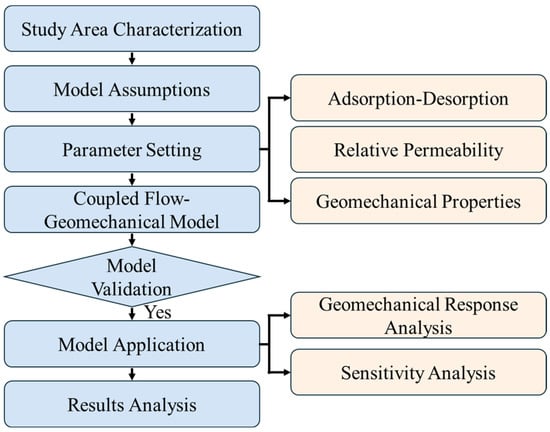
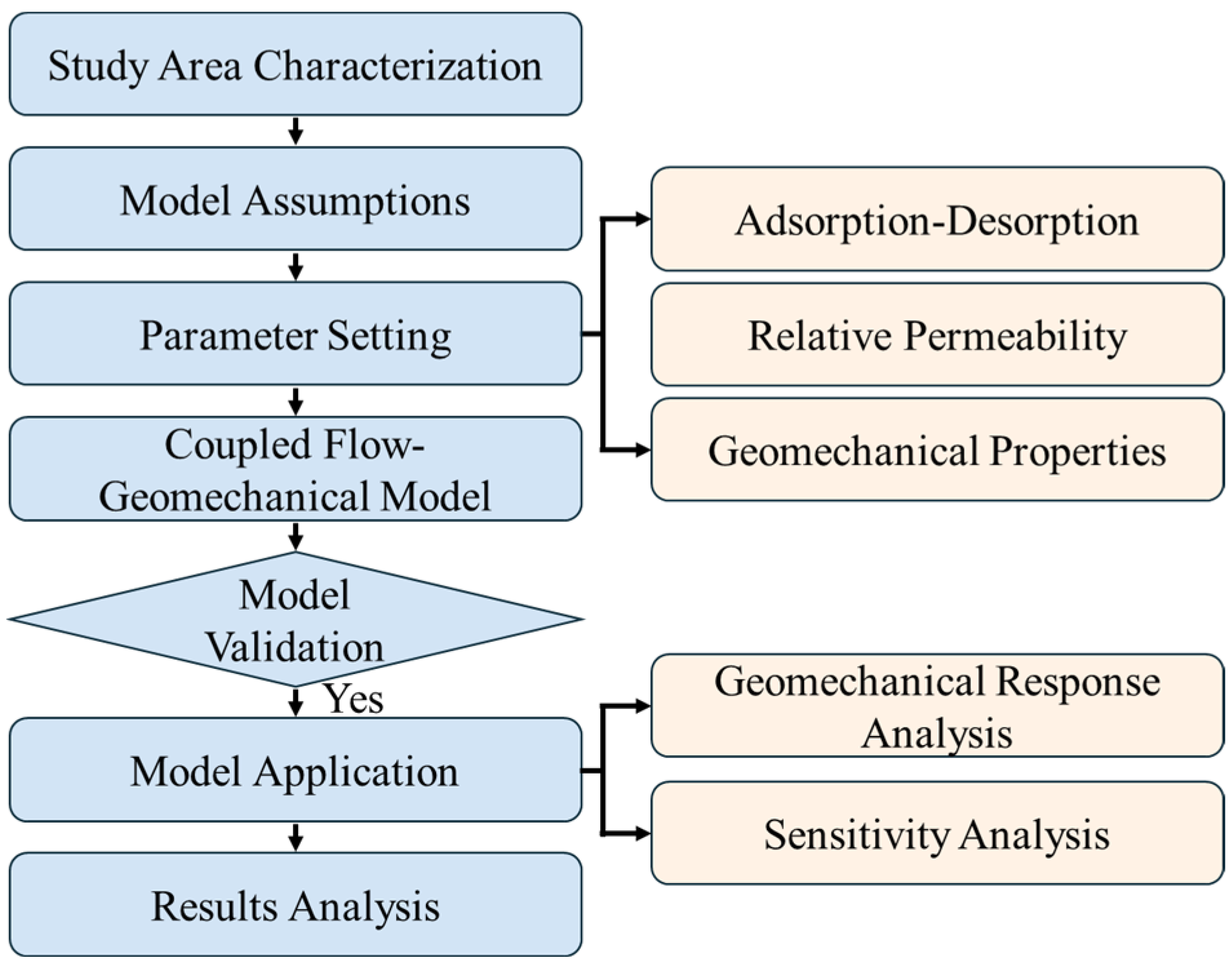
The overall workflow of this study is illustrated in Figure 1, which presents the integrated approach combining experimental characterization, model development, validation, and sensitivity analysis.
Figure 1.
Workflow of the Proposed Methodology.
2.1. Regional Overview
The Hujiertai block, located in the Yili Basin, Xinjiang, is the focus of this study. The primary coal-bearing strata belong to the Middle Jurassic Xishanyao Formation. This formation is characterized by abundant recoverable resources, with 33 developed minable seams, an average total thickness of 179.21 m, and a coal-bearing coefficient of 9.12%. The total thickness of the minable seams is 126.32 m, corresponding to a minable coal-bearing coefficient of 6.43%. Individual seam thickness ranges from 1.08 m to 9.43 m, with a high resource abundance of 1.2–3.8 × 10⁸ m3/km2. The areal extent of these seams ranges from 2.23 × 10⁶ m2 to 8.33 × 10⁷ m2.
The coal structure is predominantly simple to moderately complex, with localized complex structures. Fracture development is moderate, forming a shear fracture system with high conductivity. Microscopic analysis reveals disseminated pyrite films and oolitic pyrite nodules within the macerals. The apparent density of the coal across the region averages between 1.25 g/cm3 and 1.43 g/cm3.
Macroscopic analysis indicates that the coal color is black, brownish-black, or brown. Shallow seams typically exhibit a dull, non-vitreous, or silken luster. In contrast, the middle and lower seams display a weak-asphaltic, asphaltic, or semi-vitreous luster, with some localized vitreous luster. Reservoir permeability ranges from 0.035 mD to 0.21 mD, classifying it as a low-to-medium permeability reservoir [34].
2.2. Experimental Material
A multi-layer, coupled fluid-solid (geomechanical) model, accounting for dynamic geostress evolution, was established using the CMG (Computer Modeling Group) numerical simulation suite. Based on the single-well drainage area and the vertical stratigraphic architecture of the target block, the grid parameters for the 3D geological model were defined. A Cartesian grid was adopted in the horizontal (I/J) directions, discretized into 80 × 80 grid cells. The vertical (K) direction was divided into 10 heterogeneous layers based on the actual geological stratification, with a total thickness of 30 m. This model includes 7 coal seams (cumulative thickness 20.6 m; individual thickness 1.6–4.1 m) and 3 sandstone layers (a roof sandstone of 2.7 m, an interbedded sandstone of 3.6 m, and a floor sandstone of 1.8 m). The basic reservoir properties are summarized in Table 1.
Table 1.
Layer Configuration in 3D Model.
To enhance the simulation accuracy and the reliability of the results, the model explicitly accounts for the impacts of effective stress and matrix shrinkage on reservoir porosity and permeability during deep CBM production. The permeability evolution, as a function of porosity changes, was described using the Kozeny-Carman (K-C) [35] equation (as shown in Equation (1)):
where is permeability, is porosity, is the pore shape factor, is the pore tortuosity, and is the specific surface area per unit grain volume (m2/g). These parameters reflect the evolution of the rock’s pore structure. According to regional investigations, the deep Xishanyao Formation coal is characterized by well-developed pores and fractures, predominantly exhibiting plate-like and slit-like pore geometries. Consequently, the shape factor () is expected to be 2.0 or higher. Based on low-temperature nitrogen adsorption (LTNA) experiments on deep coal samples from the Yili Basin, was set to 1.98 m2/g, and was set to 1.38.
Furthermore, a skin factor was introduced to quantitatively characterize the near-wellbore formation damage caused by hydraulic fracturing fluid invasion.
2.3. Model Assumptions
The numerical model was established based on the following fundamental assumptions:
(1) The target reservoir is a heterogeneous composite system formed by interbedded coal and sandstone. The coal seams function as both the source rock and the primary flow conduits, while the sandstone layers act as fluid conduction units and the mechanical support framework [36,37].
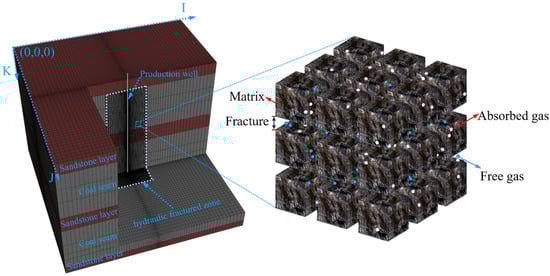
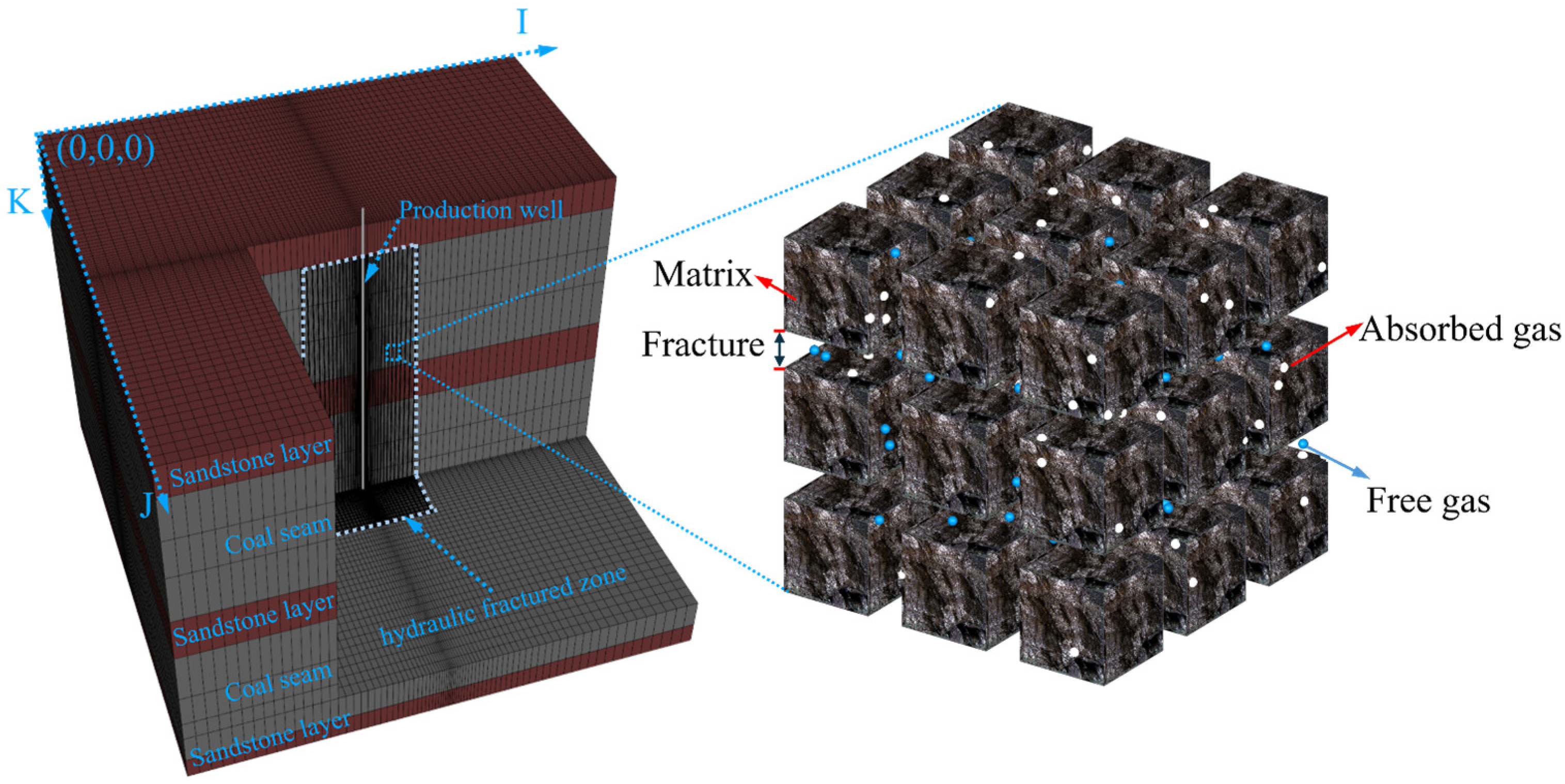
(2) The coal seams are represented by a dual-porosity, single-permeability (DPSP) model (Figure 2) to capture the matrix-fracture dual-medium characteristics. The matrix system stores adsorbed gas and a minor amount of free gas, whereas the fracture system stores free gas. The sandstone layers are treated as a single-porosity, single-permeability (SPSP) medium, neglecting gas adsorption effects [38,39].
Figure 2.
Conceptual Schematic of Coal Matrix-Fracture Dual-Porosity System.
(3) Gas transport adheres to multi-scale dynamic mechanisms: (i) The adsorption and desorption processes follow the Langmuir isotherm equation. (ii) Gas diffusion within the matrix system obeys Fick’s first law of diffusion. (iii) Gas flow (seepage) within the fracture system satisfies Darcy’s linear flow law [8,40,41].
(4) Gas exchange between the matrix and fracture systems is described by the pseudo-steady-state (PSS) transfer model (i.e., the Warren-Root model) [42].
(5) The external reservoir boundaries are defined as infinite-acting (open) boundaries, where the pressure gradient approaches zero [1,43].
2.4. Parameter Setting
2.4.1. Relative Permeability Data
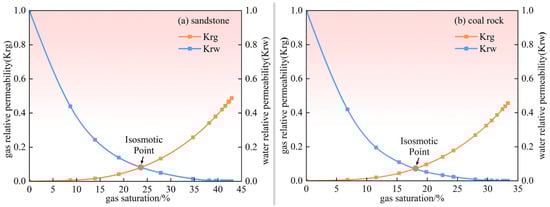
Significant discrepancies exist between the gas-water relative permeability (kr) curves of coal rock and sandstone [41,44]. To acquire these data, unsteady-state, constant pressure, and constant-rate core flooding experiments were performed on deep coal and sandstone samples.
As illustrated in Figure 3, the experimental results indicate that for both coal and sandstone, the relative permeability to gas (krg) increases while the relative permeability to water (krw) decreases as gas saturation (Sg) increases. A key distinction was observed at the crossover point: for sandstone, the crossover (where krg = krw) occurs at a gas saturation of 23.8%. In contrast, for coal, this point occurs at a much lower gas saturation of 18.7%. Furthermore, the coal rock achieves its maximum krg (endpoint) at a lower Sg compared to sandstone, indicating superior gas flow mobility under low gas saturation conditions.
Figure 3.
Comparison of Gas-Water Relative Permeability Curves for Coal and Sandstone. (a) gas-water relative permeability curves for sandstone; (b) gas-water relative permeability curves for coal (Experimental conditions: Temperature = 27 °C).
2.4.2. Methane Adsorption–Desorption Parameters
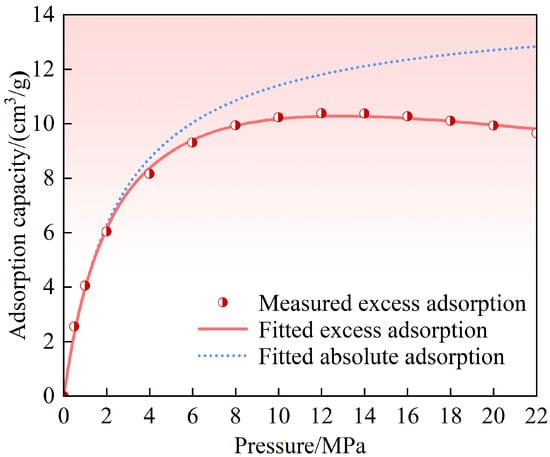
Methane isothermal adsorption experiments were conducted to determine the adsorption capacity of the coal samples under specific reservoir conditions (temperature and pressure) [45,46], following the Chinese National Standard GB/T 35210.2-2020 [47]. The experiments were performed at a constant temperature of 80 °C. Adsorption volumes were measured at various equilibrium pressure points, up to a maximum pressure of 22 MPa.
As shown in Figure 4, the experimental data were linearized by plotting P/V (Pressure/Adsorbed Volume) against P. The Langmuir adsorption constants were then calculated from the linear fit. The Langmuir volume (maximum adsorption capacity), VL, was determined to be 14.34 cm3/g, and the Langmuir pressure, PL, was 2.57 MPa (Table 2).
Figure 4.
Experimental Isothermal Adsorption Curve for Methane-Coal System (Experimental conditions: Temperature = 60 °C).
Table 2.
Coal Adsorption–Desorption Parameter.
Based on these constants, the theoretical methane adsorption volume (V) at any given reservoir pressure (P) can be calculated using the Langmuir isotherm equation (as shown in Equation (2)) [48,49]:
where VL is the Langmuir volume (14.34 cm3/g) and PL is the Langmuir pressure (2.57 MPa). The adsorbed phase density (Pad) was specified as 0.544 g/cm3 for the simulation input.
2.4.3. Geomechanical Properties
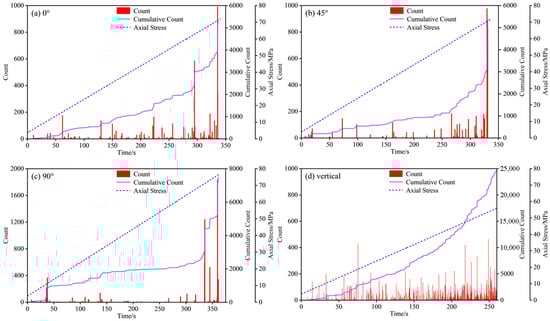
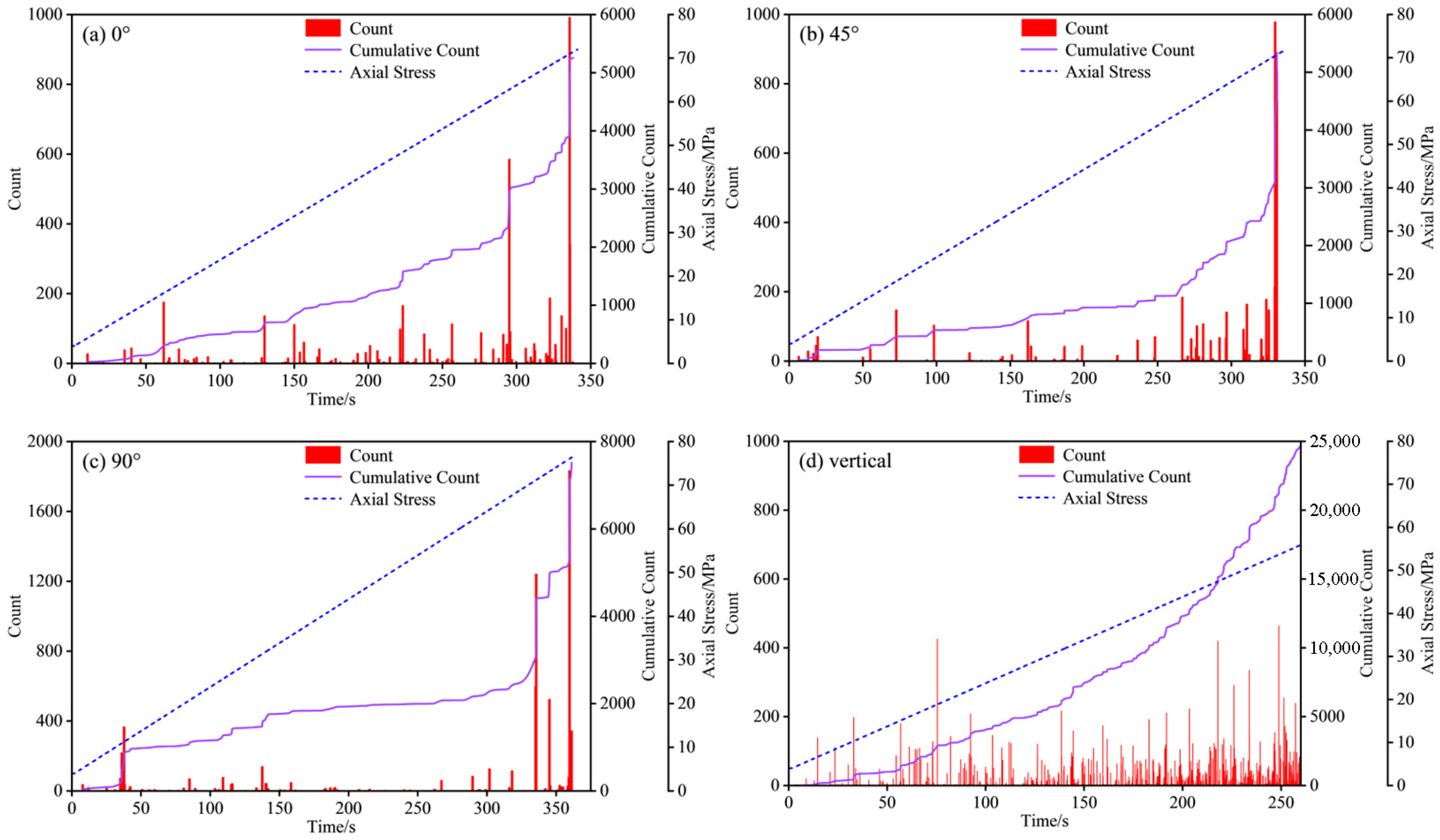
To determine the in-situ stress state, standard coal core plugs (φ 50 mm × 100 mm) were drilled from the main coal seam of the Fukang block, with the bedding plane oriented parallel to the core axis. Acoustic Emission (AE) Kaiser effect tests were subsequently conducted on these samples [41,50,51,52]. The tests were performed under triaxial compression, where the axial stress simulates the vertical in-situ stress (σv) and the confining pressure simulates the horizontal stress constraint.
The AE event rate as a function of time (or applied stress) during loading is presented in Figure 5. The “Kaiser point” is identified as the stress level at which a significant inflection (a sharp increase) occurs in the cumulative AE event rate curve, representing the “memory” of the maximum in-situ effective stress the rock has previously experienced [45,48]. The geomechanical parameters used in the coupled model are summarized in Table 3.
Figure 5.
Kaiser Point Stress Identification: (a) Stress curve for core at 0-degree horizontal orientation; (b) Stress curve for core at 45-degree horizontal orientation; (c) Stress curve for core at 90-degree horizontal orientation; (d) Stress curve for core at vertical orientation.
Table 3.
Geomechanical Parameters of Coal Seams.
According to Equations (3)–(6), in-situ stress components (total stresses) were calculated by adding the pore pressure (Pp) to the effective stresses derived from the Kaiser points (assuming a Biot coefficient α = 1, as is common for coal geomechanics):
where , and are the total vertical, maximum horizontal, and minimum horizontal principal stresses, respectively. is formation pore pressure (MPa), is Biot’s coefficient, is Kaiser point stress in vertical core orientation (MPa), and , , are Kaiser point stresses at 0°, 45°, and 90° horizontal orientations (MPa).
Based on the analysis of the AE curve inflection points, the effective vertical stress () was determined to be 19.204 MPa. Assuming an initial reservoir pore pressure (Pp) of 19.0 MPa (based on the calculation 19.204 + 19 = 38.204), the total vertical stress () was calculated as 38.204 MPa. The total maximum horizontal principal stress () and minimum horizontal principal stress () were determined to be 30.190 MPa and 22.790 MPa, respectively.
2.5. Model Validation
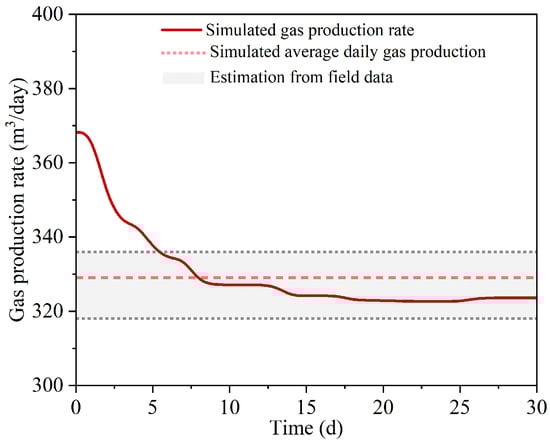
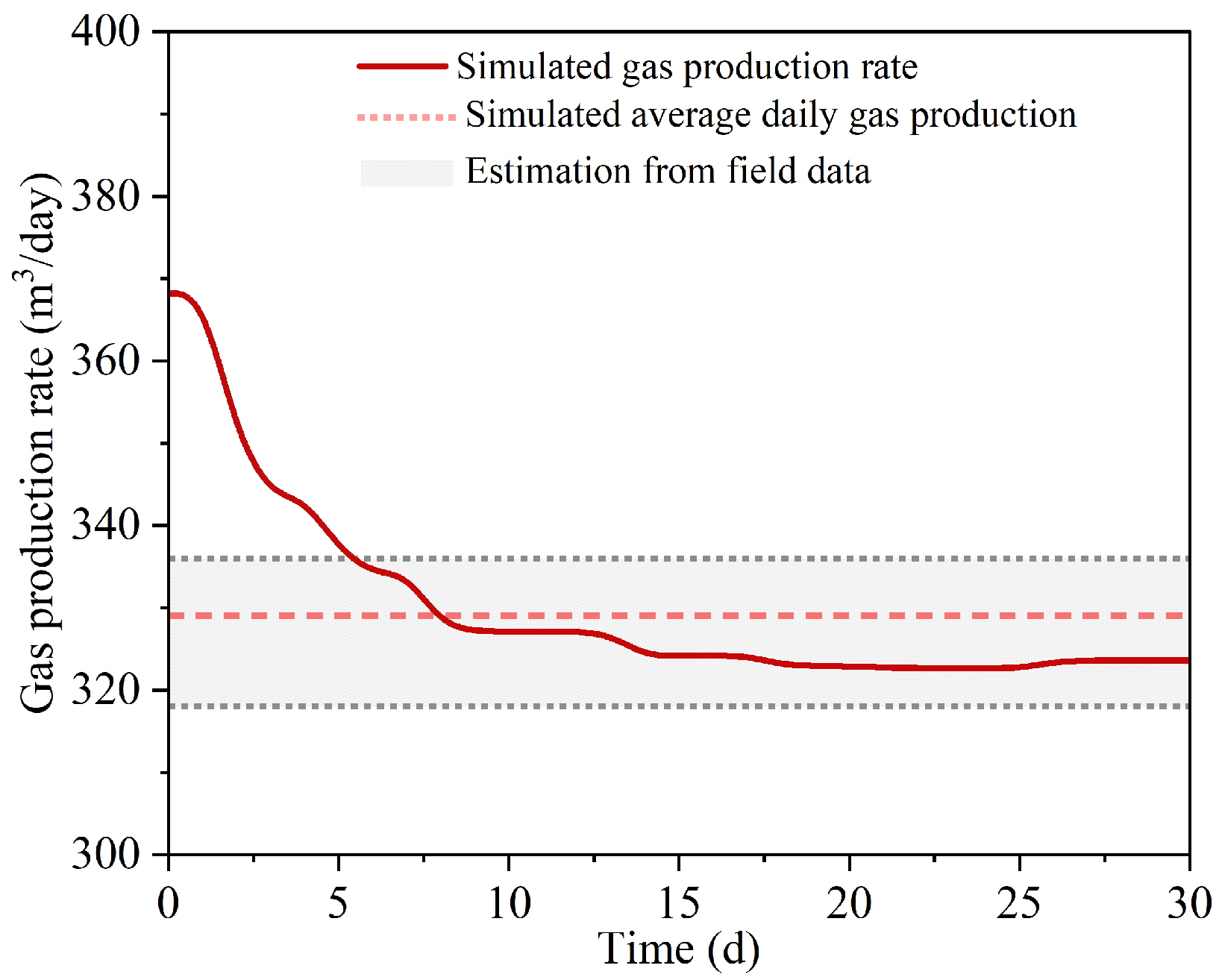
To validate the reliability of the established model, a history matching procedure was performed using 30 days of field production data from Well X in the Hujiertai block. The well’s actual production period was 30 days, achieving a cumulative gas production of 1.3 × 10⁴ m3. The actual daily gas rate fluctuated within the range of 300~349 m3/day, with an average of 332.9 m3/day.
Using the constructed coupled geomechanical-flow model, the 30-day production dynamic was simulated. As shown in Figure 6, the simulated average daily gas rate was 329.44 m3/day, corresponding to a relative error of only 1.2% compared to the field average. This simulated rate falls well within the actual production fluctuation range (300~349 m3/day). This strong agreement validates the model’s accuracy and fidelity in representing the complex coupled geomechanical-flow mechanisms governing deep CBM production.
Figure 6.
Comparison Between Numerical Simulation Results and Initial Production Data.
3. Results and Analysis
Under a primary depletion scenario, fourteen simulation cases were designed to investigate the influence of key reservoir and stimulation parameters on gas productivity. These parameters included reservoir porosity, natural fracture (cleat) permeability, stimulated reservoir volume (SRV), and hydraulic fracture permeability. This analysis aims to elucidate the unique production characteristics of deep CBM reservoirs. The specific design details for each case are summarized in Table 4.
Table 4.
Design of Simulation Scenarios.
3.1. Analysis of the Geomechanical Response
During CBM production, the reservoir is subject to a complex and evolving geomechanical environment, which critically impacts productivity. This study targets a deep coal seam (approximate burial depth: 2000 m) with an in-situ cleat permeability estimated in the range of 15–20 mD.
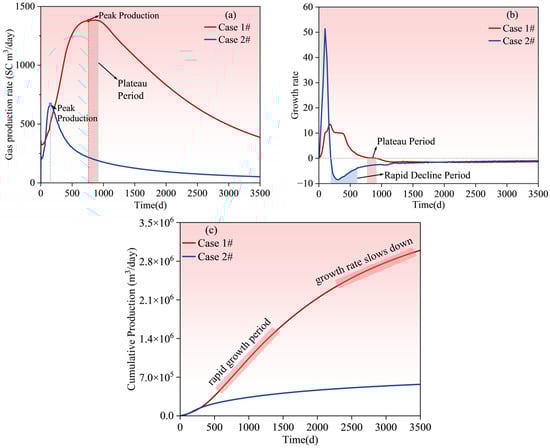
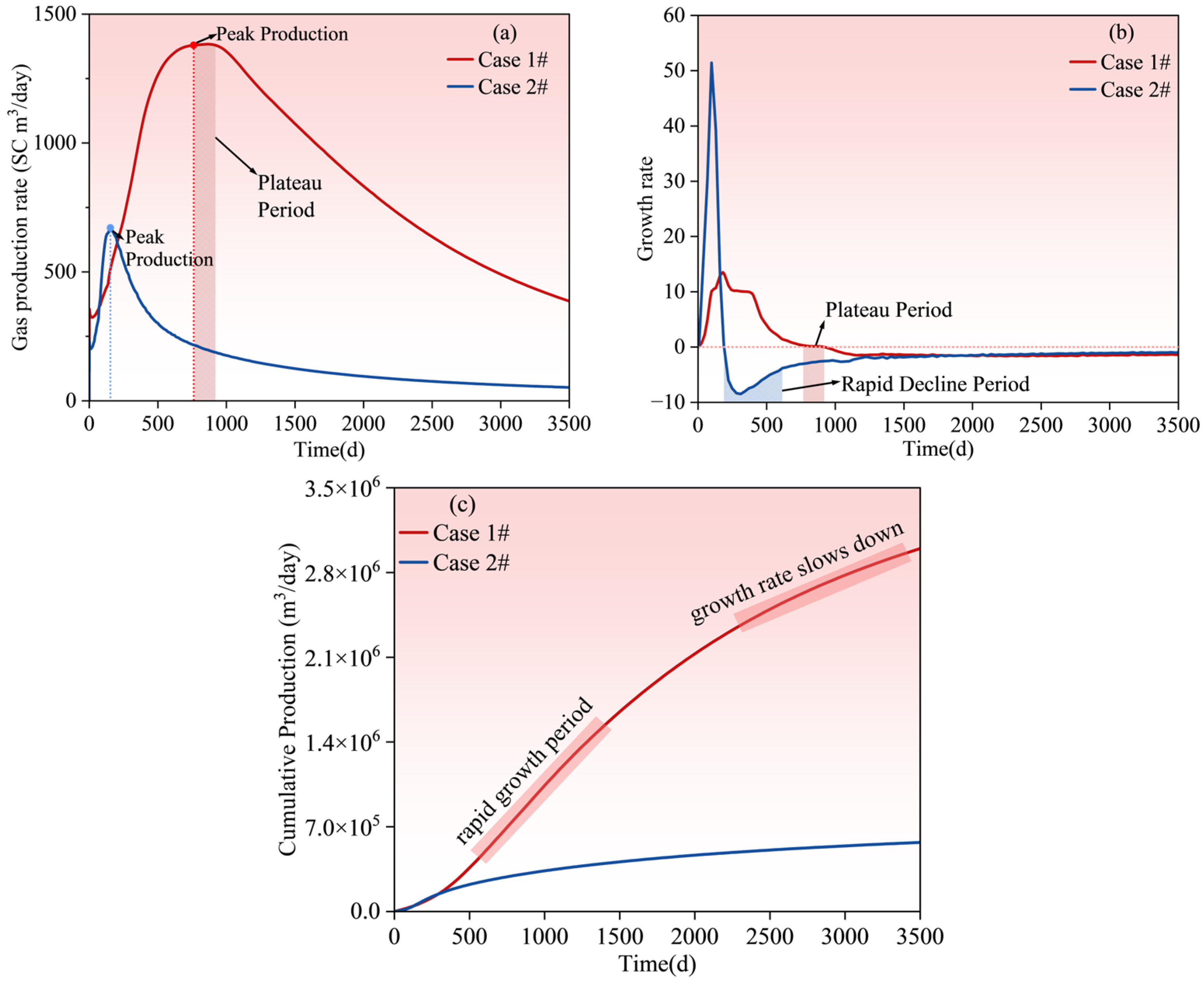
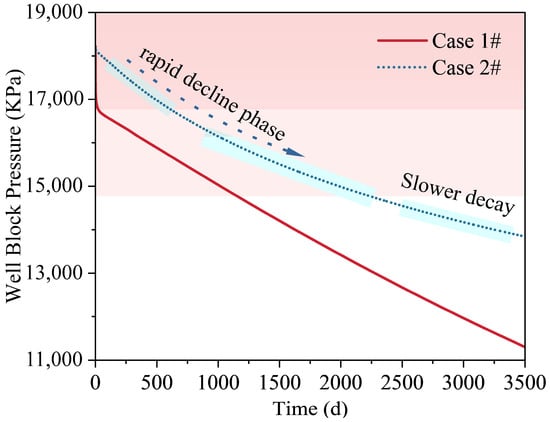
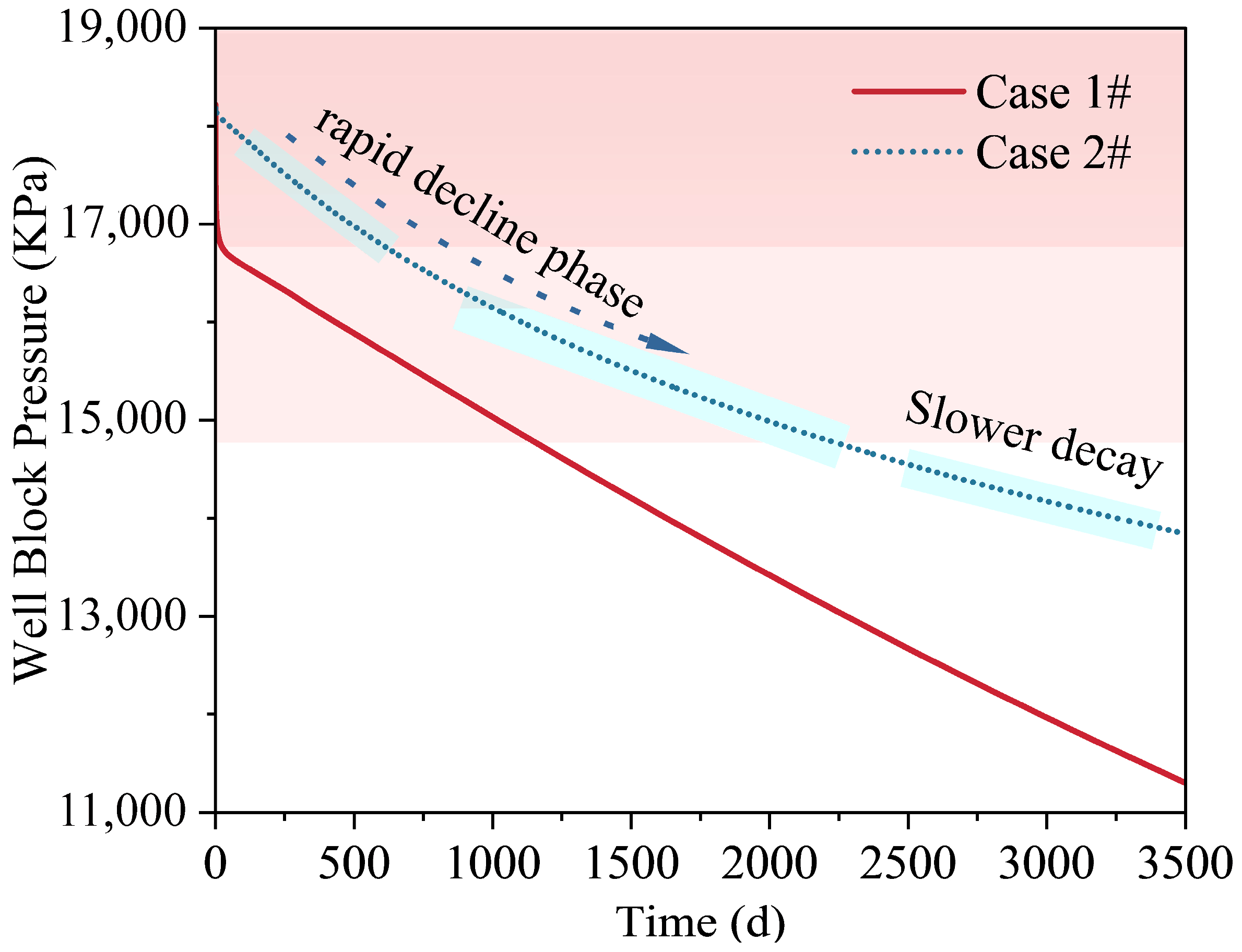
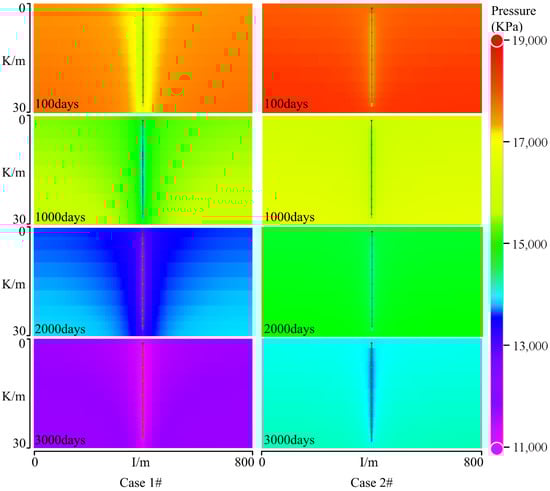
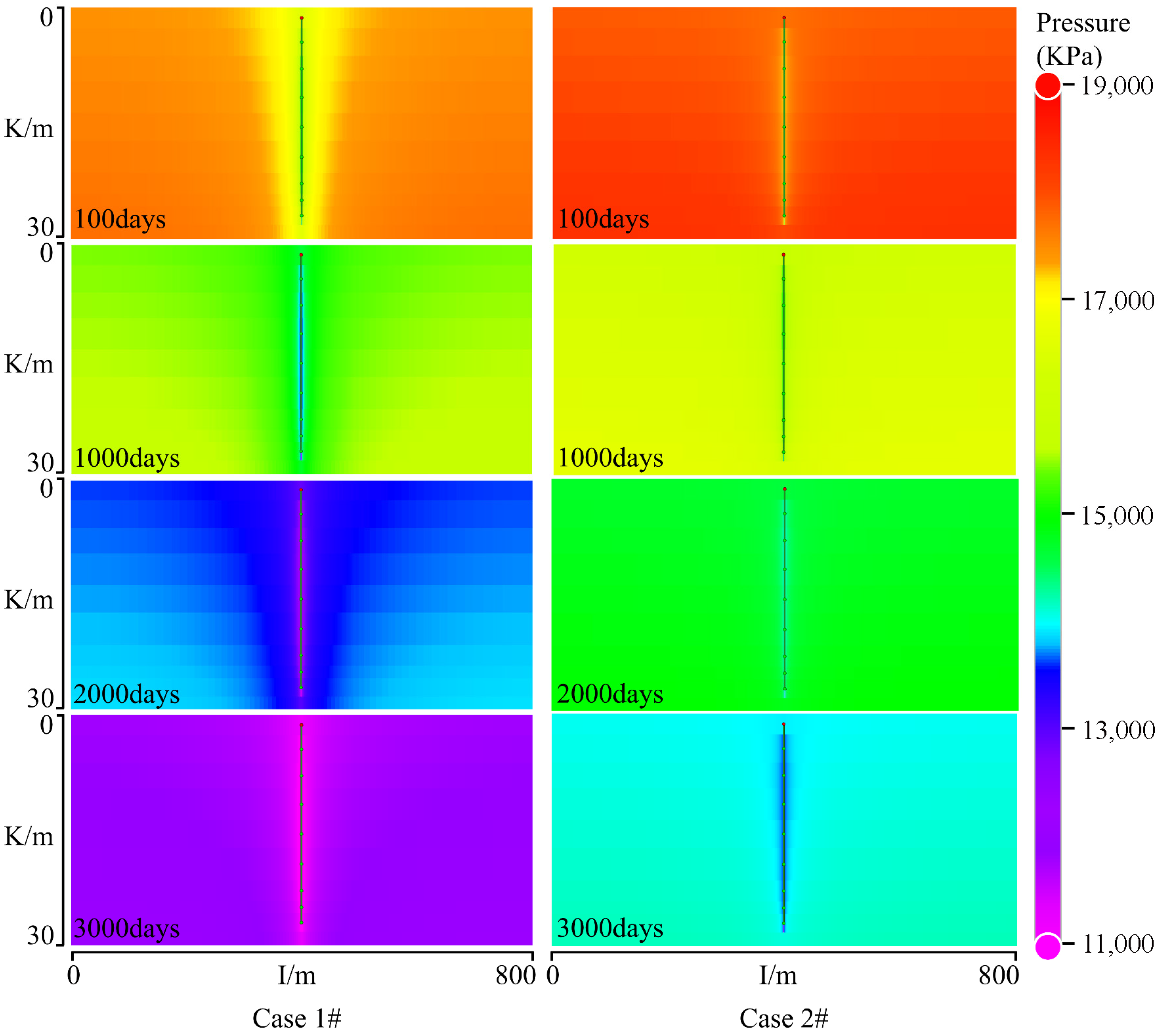
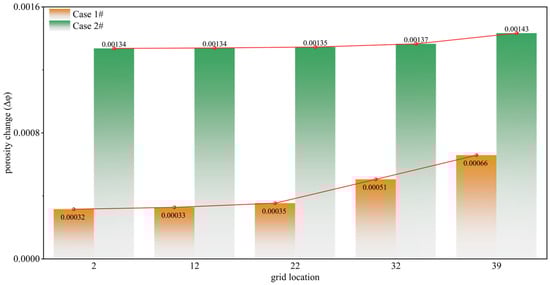
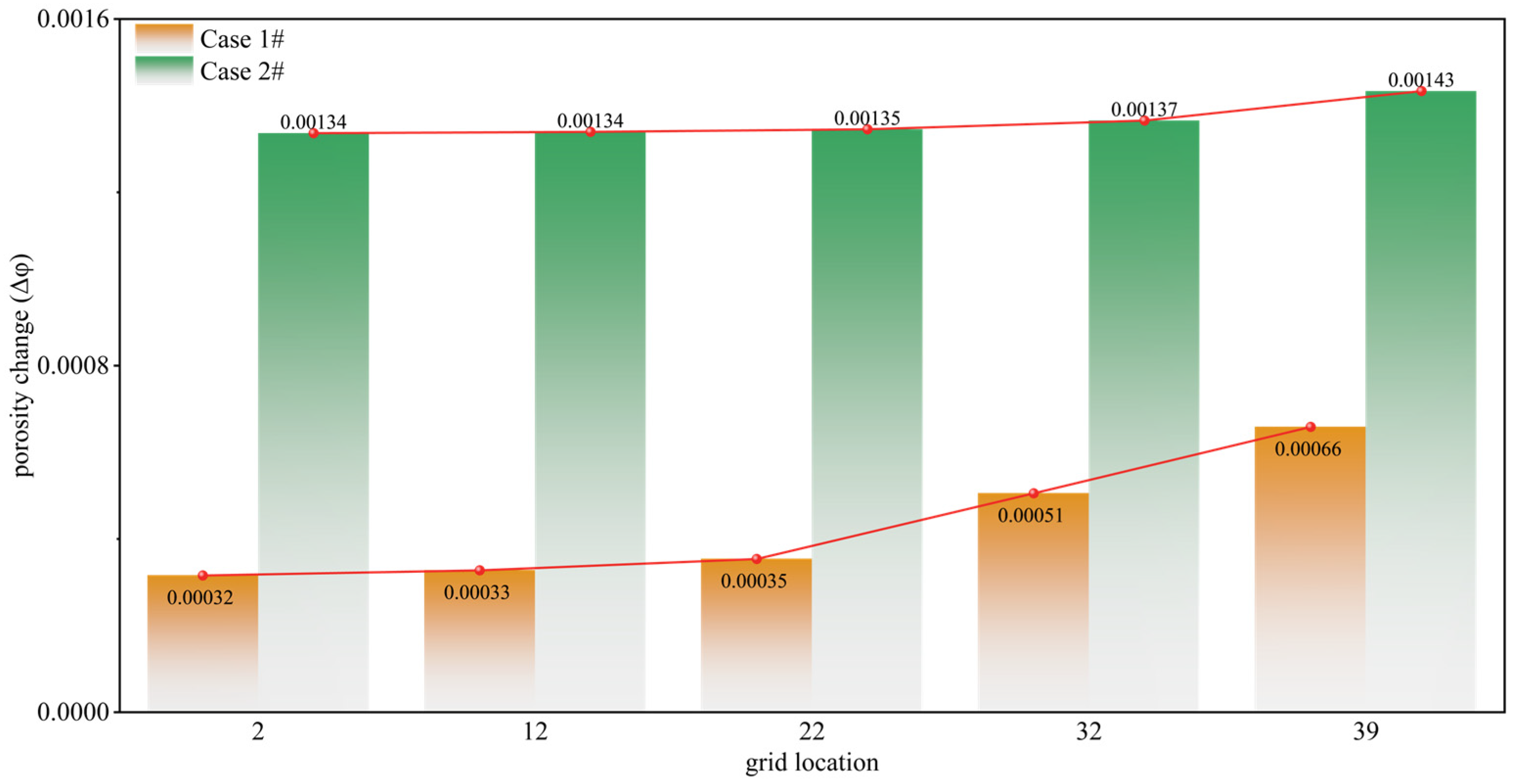
To evaluate the impact of geomechanics, a comparative analysis was conducted between Case 1# (which fully couples geomechanical stress) and Case 2# (which neglects geomechanical effects). The analysis focuses on contrasting the gas production characteristics (Figure 7), reservoir pressure dynamics (Figure 8 and Figure 9), and porosity evolution (Figure 10, Figure 11 and Figure 12) to elucidate the influence of geomechanical factors.
Figure 7.
Gas daily production and cumulative production curves under geomechanics-coupled (Case 1#) and uncoupled (Case 2#) conditions. (a) Gas production rate as a function of time; (b) Growth rate of gas production as a function of time; (c) Cumulative gas production as a function of time.
Figure 8.
Reservoir pressure variation curves under geomechanics-coupled (Case 1#) and uncoupled (Case 2#) conditions.
Figure 9.
Reservoir pressure contour maps under geomechanics-coupled (Case 1#) and uncoupled (Case 2#) conditions.
Figure 10.
Change in Porosity within Layer 3.
Figure 11.
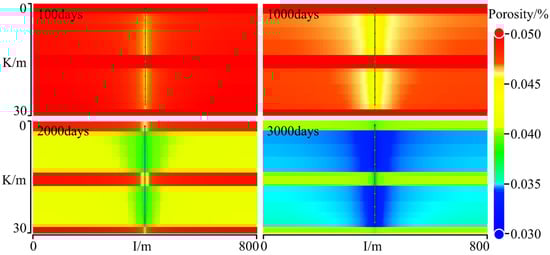
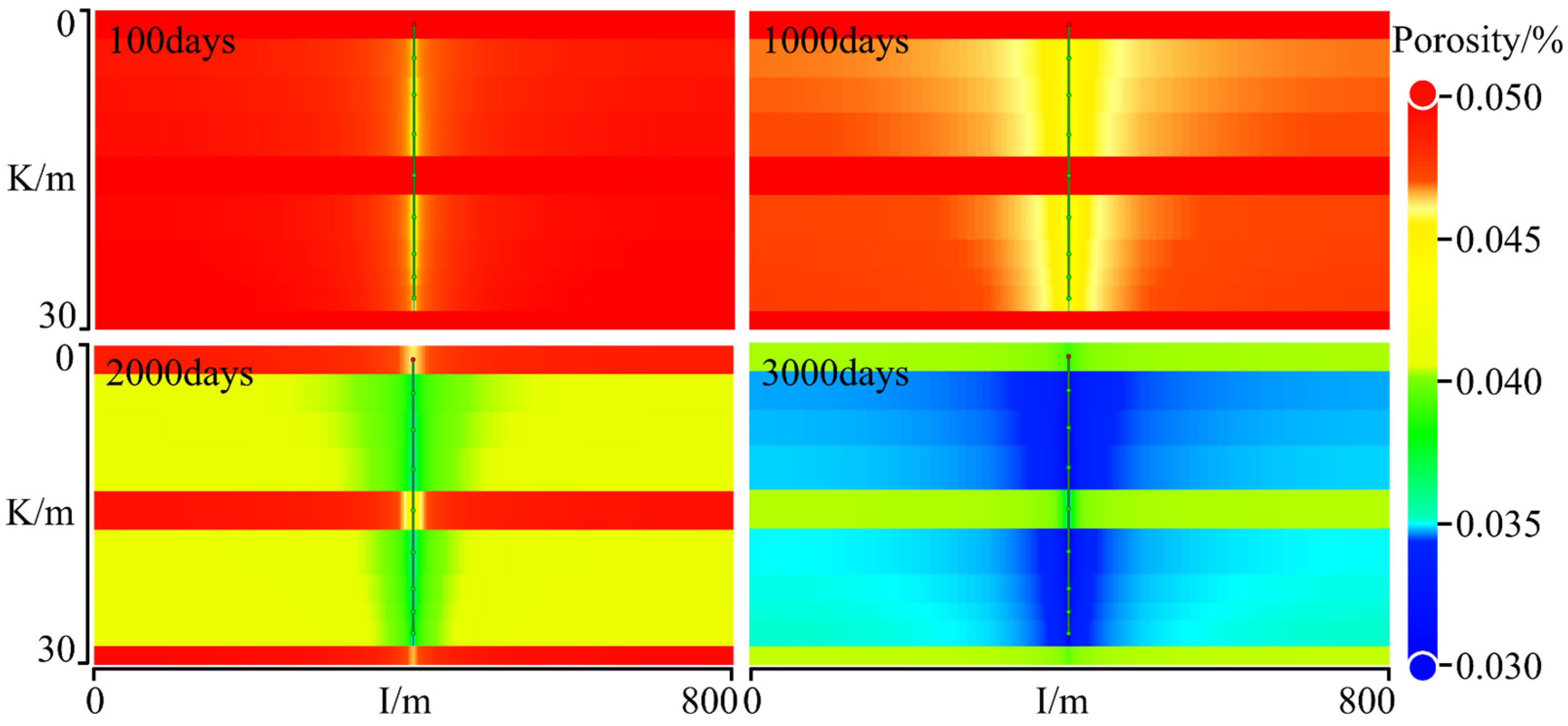
Contour maps of reservoir porosity variation under geomechanics-coupled conditions.
Figure 12.
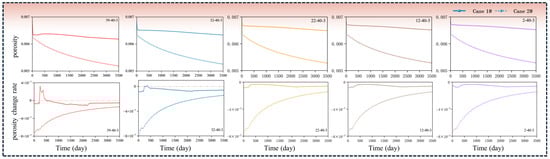
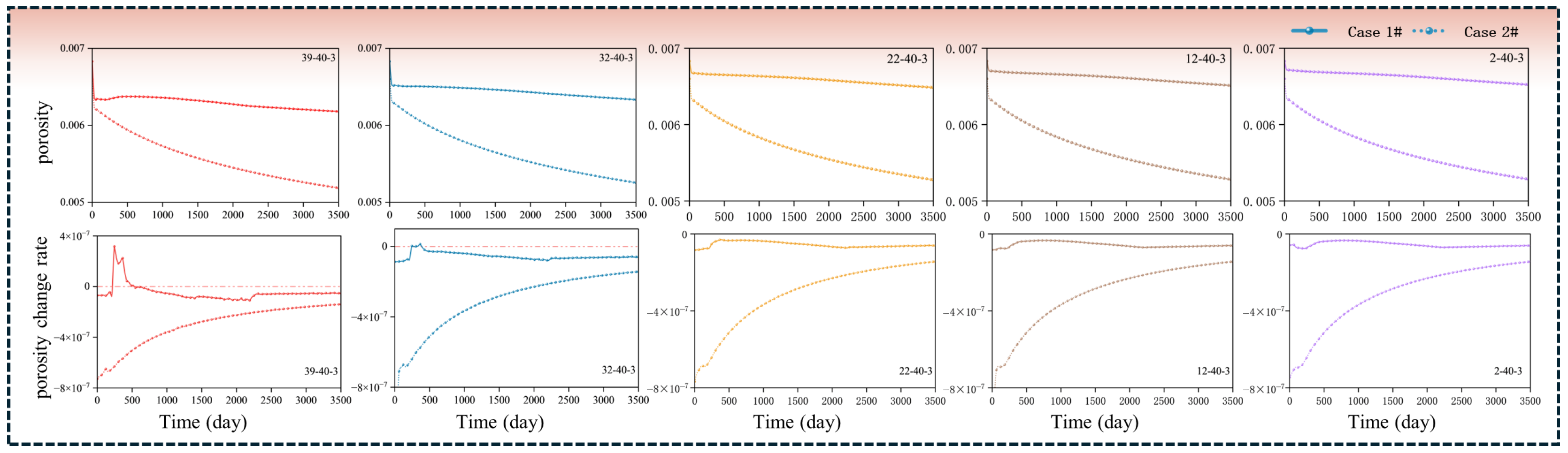
Porosity change in the same layer (Layer 3).
As shown in Figure 7, over the 10-year production forecast, Case 1# (coupled geomechanics) yields significantly higher cumulative gas production and daily gas rates than Case 2# (uncoupled). In Case 1#, the daily gas rate exhibits a rapid initial incline, reaching a peak of 1373 m3/day. This peak is followed by a distinct production plateau lasting approximately 1–2 years, during which the gas rate remains relatively stable (Figure 7a). Subsequently, the well enters a decline phase, but the decline rate gradually decelerates, demonstrating strong production sustainability. Correspondingly, the cumulative gas production shows an initial rapid increase, followed by a progressively slower growth rate, highlighting the significant contribution of the plateau phase.
In contrast, the initial gas rate for Case 2# is lower than Case 1# from the onset. It peaks earlier and fails to establish a discernible production plateau. Instead, it enters a rapid decline phase (rapid depletion) immediately after peaking (Figure 7b). During the late-time production, the rate in Case 2# stabilizes at a low level (60–150 m3/day), indicating significant reservoir energy depletion. The gas rate change curve (Figure 7c) further validates this: Case 1# transitions to a gradual, stable decline, confirming production sustainability, whereas Case 2# shows a rapid decay, indicating a lack of sustainable productivity.
The discrepancy in production behavior stems from the dynamic evolution of reservoir porosity and permeability, which is only captured by the coupled geomechanical model (Case 1#). This behavior is governed by the dynamic competition between two opposing mechanisms:
1. Effective Stress Compaction: As reservoir pressure declines, the effective in-situ stress increases, leading to the compression of the coal matrix and a reduction in the aperture of the cleat system (i.e., a decrease in porosity and permeability).
2. Matrix Shrinkage: Concurrently, as adsorbed gas desorbs from the matrix, the coal matrix itself shrinks. This shrinkage counteracts the compaction effect, potentially stabilizing or even (locally) increasing the effective pore space of the fracture system.
This dynamic interplay between stress-induced compaction and desorption-induced shrinkage is the key underlying reason for the extended production plateau and slower post-peak decline observed in Case 1#.
Figure 8 presents the areal distribution of reservoir pressure for both the coupled and uncoupled models. In the coupled geomechanical case, the reservoir pressure exhibits a rapid decline, forming a distinct cone of depression (drawdown funnel) centered on the wellbore. The pressure drop propagates outward from the near-wellbore region. Due to gas-water gravity segregation during production, gas (being less dense) accumulates in the upper part of the reservoir, leading to preferential depletion and an initial pressure drop in these structurally higher zones.
The average reservoir pressure declines curves (Figure 9) show that while both cases exhibit depletion, the dynamics differ. The coupled model (Case 1#) starts at a slightly higher initial pressure (~18,219 KPa) than the uncoupled model (~18,179 KPa). Critically, in the coupled model, the stress-sensitive permeability (which decreases as effective stress rises) increases the resistance to flow. This “choking” effect necessitates a larger local pressure differential (drawdown) to drain the reservoir. Consequently, the pressure decline in Case 1# is more pronounced (steeper) than in Case 2#, where permeability is constant and the pressure depletes more uniformly and gradually.
In this comparative simulation, the geomechanical effects were fully coupled into the reservoir system. The results (Figure 10) indicate that as fluid pressure continuously declines, the effective stress increases, leading to significant compression of the cleat-fracture system. This results in an overall average porosity reduction of approximately 2%. The spatiotemporal evolution of porosity exhibits distinct spatial-gradient characteristics: the near-wellbore region, experiencing the largest pressure drop and the most intense stress increase, is the first to show a significant porosity decline. Subsequently, as the pressure wave propagates outward, the zone of porosity reduction gradually expands from the wellbore, and this overall evolutionary trend is highly consistent with the pressure distribution (Figure 11). This process further intensifies the heterogeneity of the reservoir properties.
In the simulation results that couple fluid-solid mechanics (including adsorption–desorption effects), a phenomenon of transient porosity rebound (or increase) was observed in the near-wellbore region during the early production stage (Figure 12). In contrast, the model that did not couple geomechanical responses (the uncoupled model) did not exhibit this characteristic.
The mechanism stems from the competition between two opposing effects. First, as pressure declines, adsorbed gas desorbs from the coal matrix, causing the matrix to shrink (Matrix Shrink Vge); this shrinkage can induce a micro-expansion of the cleats, leading to a localized increase in porosity. Concurrently, the pressure drop increases the effective stress, causing overall formation compression and reducing porosity (Effective Stress Compaction). In the fully coupled model, the desorption-induced shrinkage effect partially offsets this effective stress compaction. Consequently, the net porosity reduction observed in the coupled simulation is less pronounced than that in the uncoupled simulation.
3.2. Sensitivity Analysis
3.2.1. Reservoir Porosity
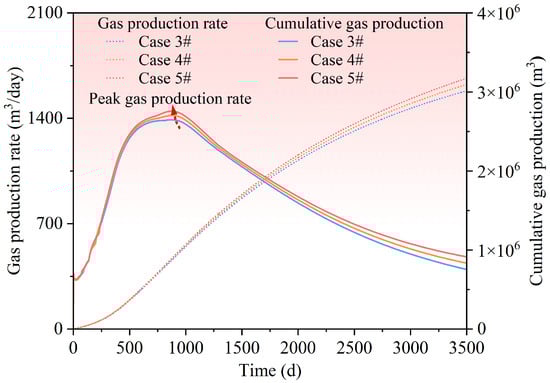
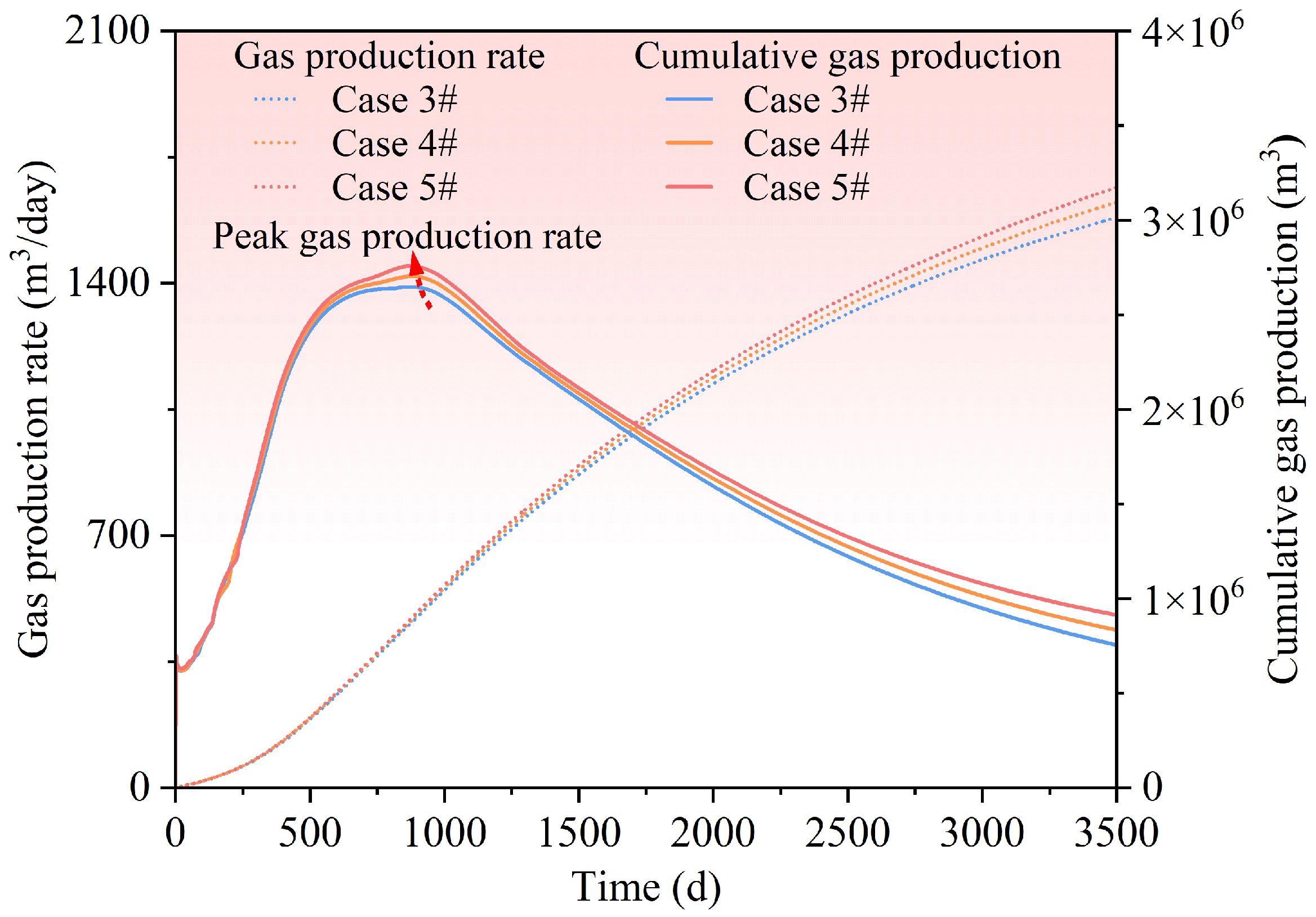
As illustrated in Figure 13, reservoirs with varying porosity (10%, 20%, and 30%) exhibit a consistent production profile: the daily gas rate rapidly inclines, stabilizes during a 1–2-year plateau, and subsequently enters a gradual decline phase. The analysis reveals a strong positive correlation between porosity and productivity. Reservoirs with higher porosity achieve a higher peak gas rate and greater cumulative gas production.
Figure 13.
Production characteristic curves of the reservoir under varying porosity levels.
A quantitative assessment shows that for every 10-percentage-point increase in porosity (e.g., from 10% to 20%), the peak gas rate increases by 2.1%, and the ultimate cumulative gas production increases by 2.8%. Furthermore, high-porosity reservoirs demonstrate a slower production decline rate during the late-time production phase.
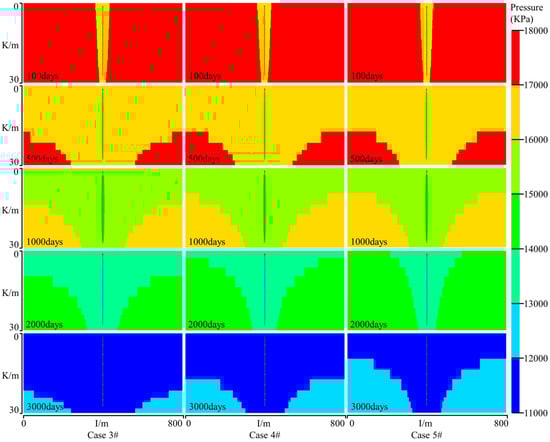
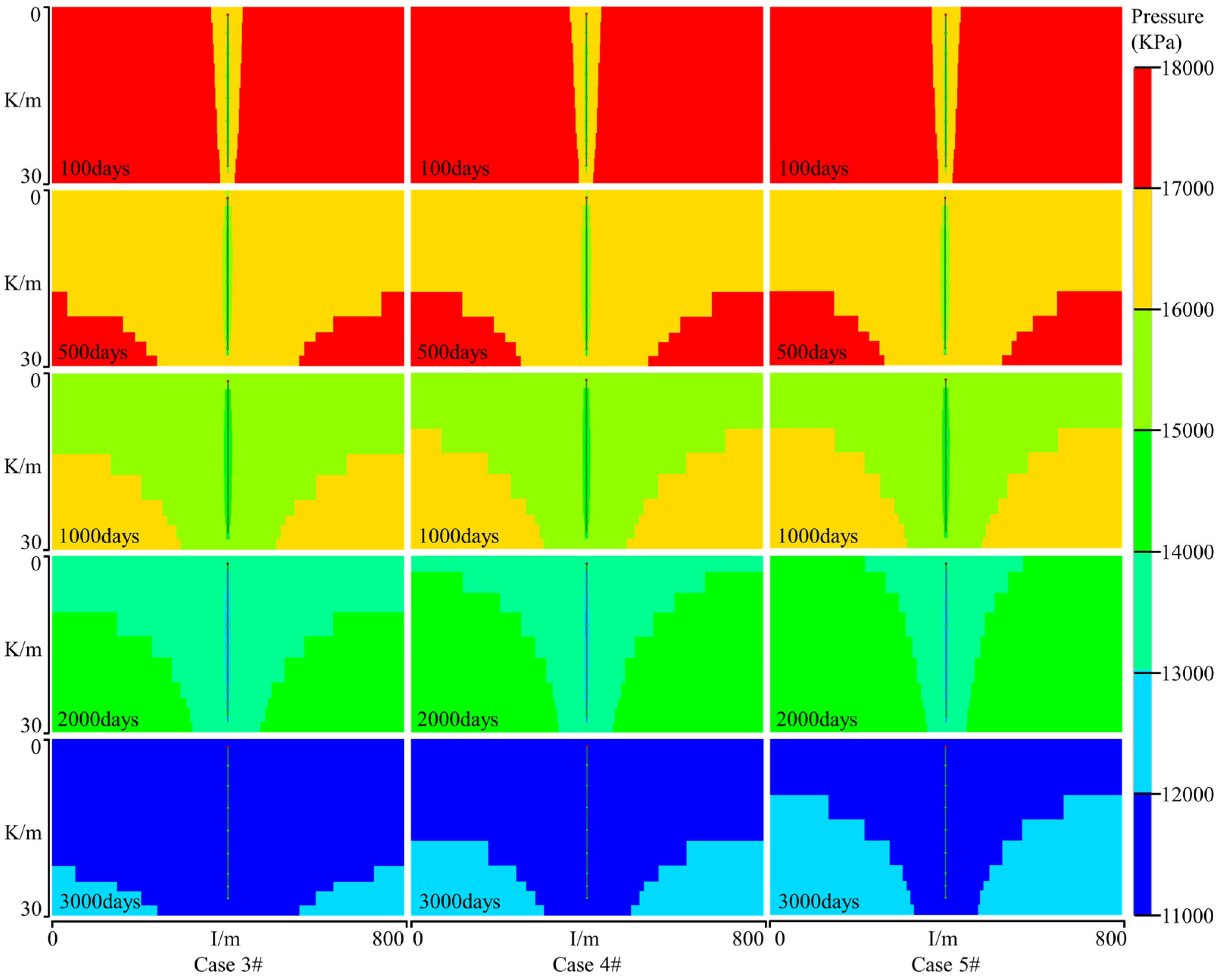
The reservoir pressure dynamics (Figure 14) provide further insight. During the early production stage, pressure declines uniformly across all cases. However, in the late-time stage, porosity significantly dictates the depletion pattern: lower porosity reservoirs experience a faster pressure depletion rate and develop a wider, more pronounced cone of depression (drawdown funnel).
Figure 14.
Contour maps of reservoir pressure depression funnel at varying porosity levels.
This behavior is attributed to the fact that high-porosity coal possesses a superior, better-connected pore-cleat system. This provides a larger storage volume (pore space) and a greater specific surface area for adsorption, offering a more substantial gas-in-place (both free and adsorbed gas) during initial depletion. This directly translates to a higher peak production rate. Moreover, a high-porosity network facilitates more efficient gas diffusion from the matrix surface to the cleat system, enhancing overall desorption efficiency and flow mobility. Consequently, in high-porosity media, a larger volume of free and desorbed gas is released per unit of pressure drop. Conversely, in low-porosity reservoirs, gas desorption requires a greater energy drive (i.e., a larger pressure drawdown), leading to faster pressure depletion and the formation of a wider cone of depression, as observed in Figure 13.
3.2.2. Natural Fracture Permeability
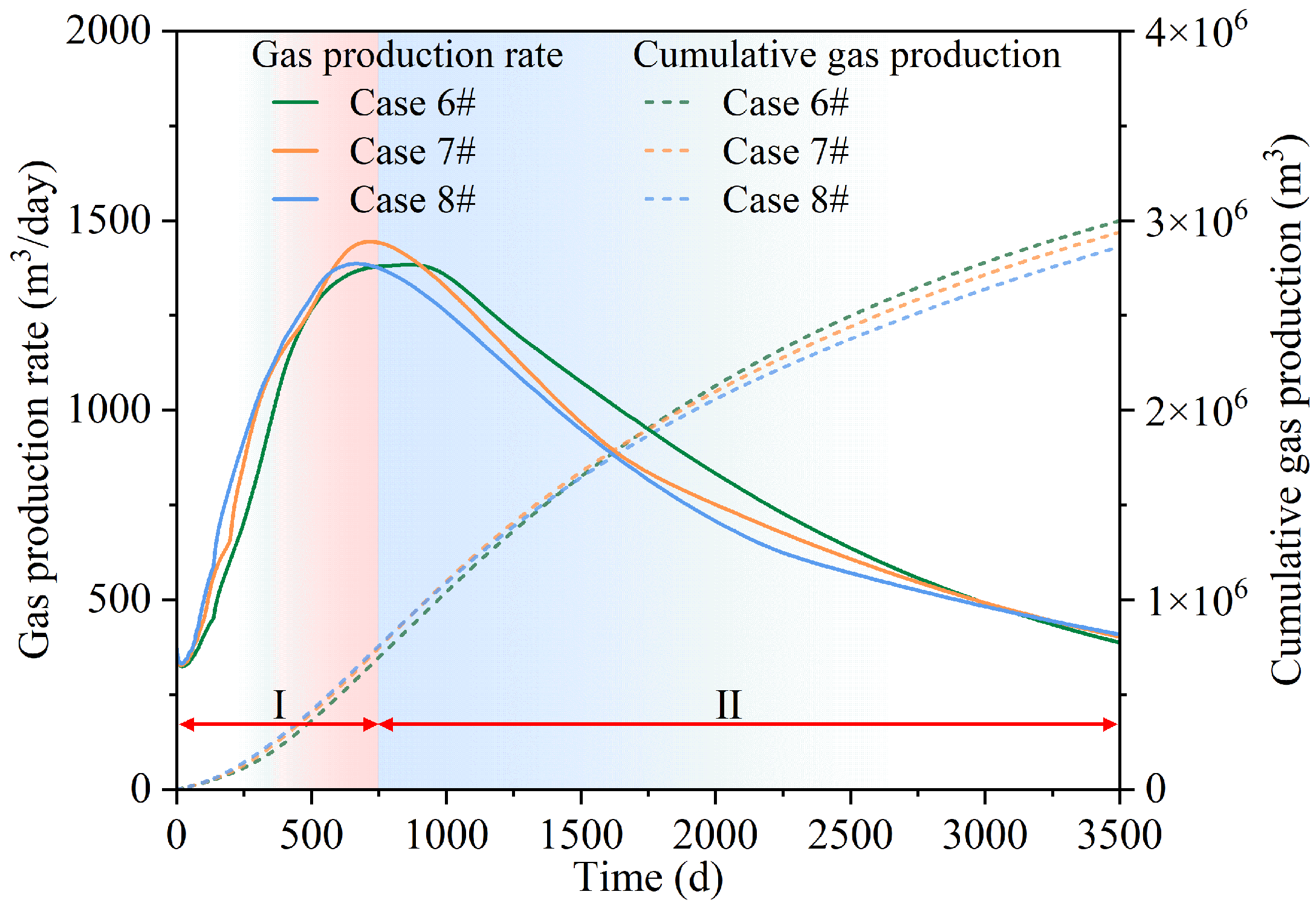
Figure 15 illustrates the 10-year production characteristics under different initial cleat permeabilities (10 mD, 20 mD, 30 mD). In Phase I (early time), reservoirs with higher initial cleat permeability yield a higher daily gas rate. However, this trend reverses in Phase II (late time): the low-permeability (10 mD) case sustains a higher daily gas rate than the higher-permeability cases.
Figure 15.
Production characteristic curves of the reservoir under varying natural fracture permeability conditions.
Consequently, the ultimate cumulative gas production exhibits a negative correlation with the initial cleat permeability. When permeability is increased from 10 mD to 20 mD, the 10-year cumulative production decreases by approximately 1.9%. When further increased from 20 mD to 30 mD, the cumulative production reduction is amplified to 2.5%. This demonstrates that high initial permeability has a net inhibitory effect on long-term productivity, and this effect is exacerbated at higher permeability values.
The underlying mechanism is as follows: In Phase I, high initial permeability facilitates rapid gas drainage from the matrix to the cleats, resulting in a high initial production rate. However, this accelerated depletion causes a rapid reservoir pressure drop near the wellbore. This, in turn, leads to a rapid increase in effective stress, inducing significant compression and closure of the natural fractures (i.e., stress-induced permeability damage). The permeability of the cleat system, which serves as the primary high-speed conduit for gas flow to the wellbore, is critically impaired. Therefore, the initial production advantage afforded by high permeability is outweighed by the severe, accelerated degradation of the fracture network conductivity, leading to lower sustained production in the long term.
3.2.3. Stimulated Reservoir Volume (SRV)
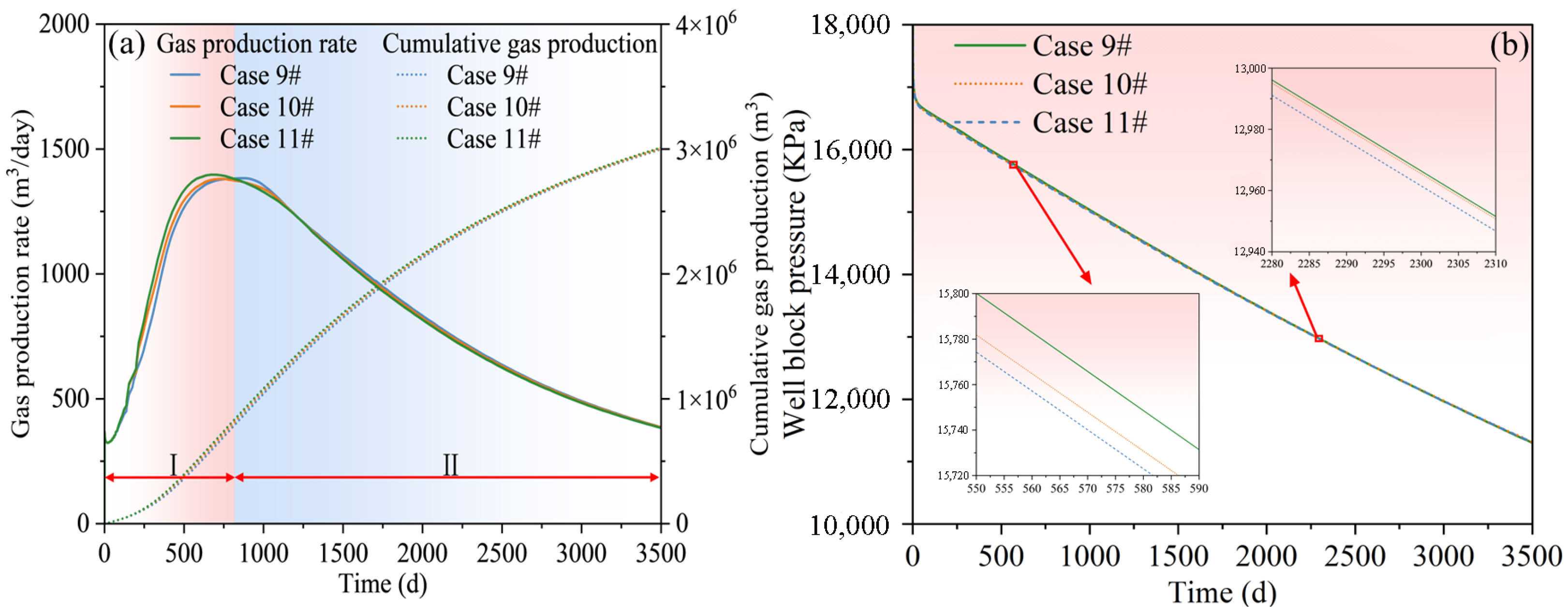
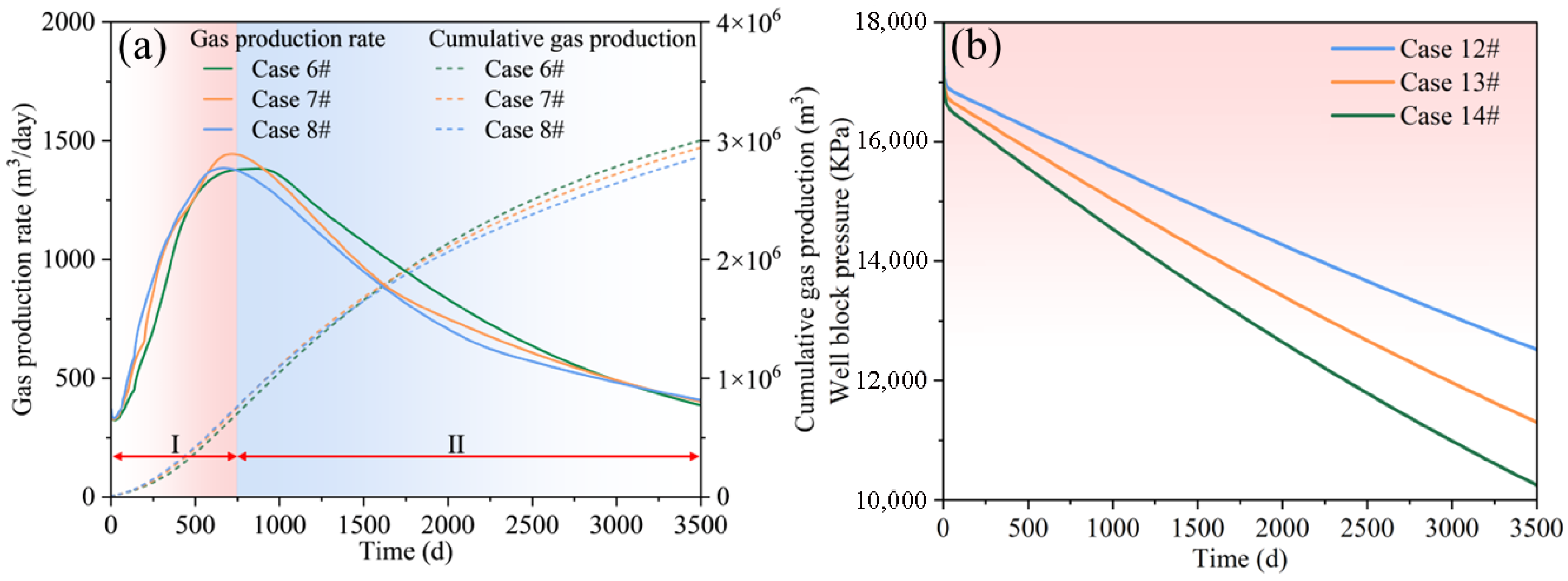
Figure 16a shows the impact of the stimulated reservoir volume (SRV) on production. In Phase I (the pre-peak and peak production period), a larger SRV correlates directly with a higher gas production rate. However, after the peak, all cases enter a decline phase, and the size of the SRV appears to have no significant influence on the subsequent production decline rate.
Figure 16.
Production characteristic (a) and Pressure variation (b) curves of the reservoir under varying SRV conditions.
This is because, in Phase I, a larger SRV (implying a denser, more extensive fracture network) significantly enhances the equivalent permeability of the near-wellbore region. This provides short, high-conductivity pathways for the initially desorbed gas. As the SRV increases, gas transport efficiency to the wellbore is improved, leading to higher early-time rates.
However, hydraulic fracturing only modifies this near-wellbore zone. Gas in the unstimulated, far-field reservoir must still migrate via matrix diffusion to reach the fracture network, and this diffusion rate is independent of the SRV. Once the gas in the near-wellbore SRV is depleted, the overall productivity becomes limited by the mass transfer and diffusion rate from the far-field matrix. This mechanism is clearly demonstrated in Figure 16b: while different SRV sizes (Cases 9#, 10#, 11#) create distinct near-wellbore pressure gradients during early production, the well block pressure curves in the far-field region converge over time, confirming that SRV has minimal impact on long-term reservoir pressure propagation. At this point, the SRV size is no longer the controlling factor for production.
3.2.4. Hydraulic Fracture Permeability
As shown in Figure 17, hydraulic fracture permeability is strongly correlated with production performance. The analysis (comparing 1500 mD, 2000 mD, and 2500 mD) shows that fracture permeability is positively correlated with both the peak gas rate and the cumulative gas production. However, higher permeability is also associated with a faster post-peak decline rate.
Figure 17.
Production (a) characteristics and reservoir pressure (b) evolution curves of the reservoir under varying hydraulic fracture permeability conditions.
Quantitatively, for every 500 mD increase in fracture permeability, the peak gas rate increases by approximately 17%. However, diminishing returns are observed in cumulative production: increasing permeability from 1500 mD to 2000 mD boosts cumulative production by 18%, but a further increase from 2000 mD to 2500 mD yields only a 13% increase (Figure 17a). High-permeability fractures provide highly efficient flow paths, allowing for rapid early-time gas release and a high peak rate. This, however, leads to faster depletion of the gas resources within the stimulated region, causing the subsequent decline to be more rapid.
In Phase II, this trend reverses: cases with higher initial fracture permeability exhibit lower daily gas rates. This is attributed to the accelerated depletion of the SRV. As illustrated by the pressure profiles in Figure 17b, high-permeability fractures facilitate faster fluid withdrawal, causing a more rapid and pronounced pressure drop. This rapid depletion not only exhausts the near-wellbore gas resource faster but also exacerbates the geomechanical effects (stress-induced closure) due to the larger drawdown, further limiting late-time production efficiency.
4. Conclusions
Based on the coupled geomechanical-flow modeling and sensitivity analysis of the Hujiertai deep CBM block, the following conclusions are drawn:
(1) Geomechanical coupling is the critical mechanism governing the production stability of deep CBM. The dynamic competition between effective stress-induced compaction and desorption-induced matrix shrinkage limits the overall fracture porosity reduction to approximately 2%, effectively mitigating severe permeability degradation. This coupling effect results in a characteristic production profile: a rapid incline, followed by a 1–2-year plateau, and a subsequent gradual decline. Compared to uncoupled models, this mechanism significantly enhances cumulative gas production and decelerates reservoir pressure depletion. Spatially, the porosity reduction initiates in the near-wellbore region and progressively propagates outward.
(2) Reservoir porosity and natural cleat permeability exert differential impacts on productivity. Porosity (10–30%) is positively correlated with productivity: a 10-percentage-point increase yields a 2.1% increase in peak gas rate and 2.8% increase in cumulative production. High-porosity media enhance gas storage, optimize desorption-diffusion efficiency, and slow late-time decline. Conversely, high initial cleat permeability (>20 mD) boosts early production but accelerates pressure depletion and effective stress increase, exacerbating cleat closure. This causes late-time productivity to fall below that of low-permeability reservoirs, resulting in reduced cumulative production.
(3) Stimulation parameters exhibit critical trade-offs between short-term gains and long-term stability. SRV primarily influences early-time production by enhancing the near-wellbore transport network, while late-time productivity is governed by matrix mass transfer. Hydraulic fracture permeability shows a ~17% peak rate increase per 500 mD increment. However, high conductivity (>2000 mD) accelerates gas depletion and drawdown funnel formation, inducing stress-sensitive closure and rapid late-time decline, requiring careful optimization.
(4) The coupled geomechanical-flow model for multi-layer commingled production developed in this study accurately captures the complex “stress-desorption-flow” multi-field coupling mechanisms. Successfully validated against field production data with only 1.2% relative error in average daily gas rate, this framework provides robust theoretical guidance for hydraulic fracturing design, commingled production zone selection, and dynamic production allocation, holding significant reference value for the Hujiertai block and analogous deep CBM plays worldwide.
Author Contributions
Conceptualization, P.Z. and Z.M.; methodology, P.Z. and R.W.; validation, C.Z. and M.H.; formal analysis, Q.W.; investigation, C.Z. and M.H.; resources, Z.M.; data curation, C.Z. and M.H.; writing—original draft preparation, P.Z. and R.W.; writing—review and editing, Z.M.; visualization, P.Y.; supervision, H.W.; project administration, Z.M.; funding acquisition, Z.M. All authors have read and agreed to the published version of the manuscript.
Funding
The authors would like to appreciate Science and Technology Development Project of the Silk Road Economic Belt Innovation Zone, China (Grant No. 2023LQ01005); Science and Technology Development Project of the Silk Road Economic Belt Innovation Zone (No. 2023LQ03005); Research Foundation of China University of Petroleum-Beijing at Karamay (Project No. XQZX20250028); Sub-project of the Key R&D Program of Xinjiang Uygur Autonomous Region (No. 2024B01017-3); and Introduction Program for Young Doctors (“Tianchi Talents”) in the Xinjiang Uygur Autonomous Region.
Institutional Review Board Statement
Not applicable.
Informed Consent Statement
Not applicable.
Data Availability Statement
Data are contained within the article.
Conflicts of Interest
Author Hu Wang was employed by the company Xinjiang Yaxin Coalbed Methane Investment and Development (Group). The remaining authors declare that the research was conducted in the absence of any commercial or financial relationships that could be construed as a potential conflict of interest.
References
- Hu, B.; Nie, B.; Ma, C.; Zhang, Y.; Bao, S.; Li, Z.; Luo, X. Enhanced coalbed methane extraction by high-strength electric detonation technology: Numerical study and field test. Fuel 2025, 396, 135340. [Google Scholar] [CrossRef] [Scilit]
- Zhao, F.; Han, S.; Ren, H.; Zhou, X.; Zhang, J.; Xiang, W.; Guo, Z.; Yang, Y. Characteristics of middle-high-rank coal reservoirs and prospects for CBM exploration and development in western Guizhou, China. Nat. Gas Ind. B 2024, 11, 326–339. [Google Scholar] [CrossRef] [Scilit]
- Yuhua, C.; Luo, J.; Wu, C.; Hu, X.; Yang, Y.; Wei, C. A model of evaluating dynamical process of the interlayer interference of tight gas and coalbed methane and its application. Gas Sci. Eng. 2025, 134, 205528. [Google Scholar] [CrossRef] [Scilit]
- Shang, Z.; Zhang, J.; Wang, H.; Wang, Z.; Li, B.; Guo, P.; Zhang, X. Fracture propagation characteristics driven by liquid CO2 BLEVE for coalbed methane recovery. Fuel 2025, 381, 133162. [Google Scholar] [CrossRef] [Scilit]
- Li, Q.; Xu, J.; Shu, L.; Yan, F.; Pang, B.; Peng, S. Exploration of the induced fluid-disturbance effect in CBM co-production in a superimposed pressure system. Energy 2023, 265, 126347. [Google Scholar] [CrossRef] [Scilit]
- Song, G.; Song, X.; Li, G.; Shi, Y.; Wang, G.; Ji, J.; Xu, F.; Song, Z. An integrated multi-objective optimization method to improve the performance of multilateral-well geothermal system. Renew. Energy 2021, 172, 1233–1249. [Google Scholar] [CrossRef] [Scilit]
- Li, S.; Qin, Y.; Tang, D.; Shen, J.; Wang, J.; Chen, S. A comprehensive review of deep coalbed methane and recent developments in China. Int. J. Coal Geol. 2023, 279, 104369. [Google Scholar] [CrossRef] [Scilit]
- Li, G.; Zhang, S.; He, H.; He, X.; Zhao, Z.; Niu, X.; Xiong, X.; Zhao, Q.; Guo, X.; Hou, Y.; et al. Coal-rock gas: Concept, connotation and classification criteria. Pet. Explor. Dev. 2024, 51, 897–911. [Google Scholar] [CrossRef] [Scilit]
- Song, G.; Shi, Y.; Xu, F.; Song, X.; Li, G.; Wang, G.; Lv, Z. The magnitudes of multi-physics effects on geothermal reservoir characteristics during the production of enhanced geothermal system. J. Clean. Prod. 2024, 434, 140070. [Google Scholar] [CrossRef] [Scilit]
- Miao, H.; Vandeginste, V.; Zhang, J.; Chen, S.; Chang, X.; Du, Y.; Wang, Y.; Wei, C.; Luo, J.; Quan, F.; et al. Control mechanism of pressure drop rate on coalbed methane productivity by using production data and physical simulation technology. Fuel 2026, 406, 137060. [Google Scholar] [CrossRef] [Scilit]
- Pandey, S.; Mendhe, V.A.; Singh, V.P.; Shukla, P.; Murthy, S. Unveiling the petrographical, palynological, palynofacies and geochemical archives of coal and shaly coal deposits in the Mandakini–B block of Talcher Basin: An insight into the paleoecology, depositional environment, kerogen type and source rock potential. Gondwana Res. 2024, 132, 64–87. [Google Scholar] [CrossRef] [Scilit]
- Wang, H.; Niu, D.; Luan, Z.; Dang, H.; Pan, X.; Sun, P. Kinetic characteristics of secondary hydrocarbon generation from oil shale and coal at different maturation stages: Insights from open-system pyrolysis. Int. J. Coal Geol. 2025, 308, 104845. [Google Scholar] [CrossRef] [Scilit]
- Quirico, E.; Bonal, L.; Montagnac, G.; Beck, P.; Reynard, B. New insights into the structure and formation of coals, terrestrial and extraterrestrial kerogens from resonant UV Raman spectroscopy. Geochim. Cosmochim. Acta 2020, 282, 156–176. [Google Scholar] [CrossRef] [Scilit]
- Chang, Y.-J.; Huang, W.-L.; Hsu, A.; Huang, S.-Y.L. Characterization of kerogens and coals using fluorescence measured in situ at elevated temperatures. Int. J. Coal Geol. 2008, 75, 63–75. [Google Scholar] [CrossRef] [Scilit]
- Zhang, B.; Tao, S.; Sun, B.; Tang, S.; Chen, S.; Wen, Y.; Ye, J. Genesis and accumulation mechanism of external gas in deep coal seams of the Baijiahai uplift, Junggar Basin, China. Int. J. Coal Geol. 2024, 286, 104506. [Google Scholar] [CrossRef] [Scilit]
- Zhang, X.; Hu, S.; Feng, G.; Li, G. Research on acidizing blockage removal to enhance gas production in low-yield coalbed methane horizontal wells. Fuel 2026, 404, 136197. [Google Scholar] [CrossRef] [Scilit]
- Sun, Z.; Huang, B.; Liu, Y.; Jiang, Y.; Zhang, Z.; Hou, M.; Li, Y. Gas-phase production equation for CBM reservoirs: Interaction between hydraulic fracturing and coal orthotropic feature. J. Pet. Sci. Eng. 2022, 213, 110428. [Google Scholar] [CrossRef] [Scilit]
- Liu, Y.; Sun, X.; Yao, Y.; Liu, D.; Qiu, Y. CO2-enhanced methane recovery in deep coalbeds: Displacement and diffusion/pressure-driven behaviors. Gas Sci. Eng. 2025, 143, 205730. [Google Scholar] [CrossRef] [Scilit]
- Zhang, K.; Li, S.; Zhong, G.; Feng, P.; Chang, C.; Li, H. Characteristics of in-situ stress field of coalbed methane reservoir in the eastern margin of Ordos Basin. Int. J. Coal Geol. 2025, 301, 104715. [Google Scholar] [CrossRef] [Scilit]
- Li, C.; Qin, Y.; Guo, T.; Shen, J.; Yang, Y. Supercritical methane adsorption in coal and implications for the occurrence of deep coalbed methane based on dual adsorption modes. Chem. Eng. J. 2023, 474, 145931. [Google Scholar] [CrossRef] [Scilit]
- Wang, T.; Deng, Z.; Hu, H.; Ding, R.; Tian, F.; Zhang, T.; Ma, Z.; Wang, D. Pore structure of deep coal of different ranks and its effect on coalbed methane adsorption. Int. J. Hydrogen Energy 2024, 59, 144–158. [Google Scholar] [CrossRef] [Scilit]
- Du, X.; Wang, M.; Zhao, L.; Wang, Z.; Xiu, C.; Jia, G.; Li, Q.; Lu, D. Field experiment of stress sensitivity effect in the Mabidong CBM block, southern Qinshui Basin, China. Geoenergy Sci. Eng. 2023, 222, 211441. [Google Scholar] [CrossRef] [Scilit]
- Zong, P.; Xu, H.; Tang, D.; Zhao, T. A dynamic prediction model of reservoir pressure considering stress sensitivity and variable production. Geoenergy Sci. Eng. 2023, 225, 211688. [Google Scholar] [CrossRef] [Scilit]
- Li, Y.; Zhou, F.; Li, Y.; Zhang, K.; Chen, T.; Zhou, L.; Li, B. Engineering sweet spot evaluation of deep coal seam: Algorithm construction and application integrated with geological sweet spot—A case study in Ordos Basin, China. SPE J. 2025, 30, 2530–2549. [Google Scholar] [CrossRef] [Scilit]
- Mao, Z.; Wang, E.; Liu, Q.; Jia, H.; Wang, D. Vibration-enhanced coalbed methane recovery: Coupled vibration-thermo-hydro-mechanical modeling. Gas Sci. Eng. 2025, 139, 205634. [Google Scholar] [CrossRef] [Scilit]
- Song, G.; Song, X.; Xu, F.; Li, G.; Shi, Y.; Ji, J. Contributions of thermo-poroelastic and chemical effects to the production of enhanced geothermal system based on thermo-hydro-mechanical-chemical modeling. J. Clean. Prod. 2022, 377, 134471. [Google Scholar] [CrossRef] [Scilit]
- Lin, L.; Lu, H.; Huang, L.; Luo, P. A molecular dynamics study of methane/water diffusion and water-blocking effects in coalbed methane. Fuel 2025, 386, 134234. [Google Scholar] [CrossRef] [Scilit]
- Li, S.; Hu, S.; Zhang, X.; Feng, G.; Sun, X. Numerical investigation of seepage characteristics of propped fracture in coalbed methane reservoirs. Gas Sci. Eng. 2023, 110, 204863. [Google Scholar] [CrossRef] [Scilit]
- King, G.R. Material-balance techniques for coal-seam and Devonian shale gas reservoirs with limited water influx. SPE Reserv. Eng. 1993, 8, 67–72. [Google Scholar] [CrossRef] [Scilit]
- Safaei-Farouji, M.; Misch, D.; Sachsenhofer, R.F. A review of influencing factors and study methods of carbon capture and storage (CCS) potential in coals. Int. J. Coal Geol. 2023, 277, 104351. [Google Scholar] [CrossRef] [Scilit]
- Liu, C.; Gong, B.; Wu, H.; Huang, H.; Zhao, H. Intelligent coalbed methane drainage optimization: A deep reinforcement learning-driven life-cycle strategy. Energy AI 2025, 22, 100598. [Google Scholar] [CrossRef] [Scilit]
- Xu, H.; Qin, Y.; Yang, D.; Wang, G.; Huang, Q.; Zhang, F. Experimental investigation of gas diffusion kinetics and pore-structure characteristics during coalbed methane desorption within a coal seam. Gas Sci. Eng. 2024, 121, 205173. [Google Scholar] [CrossRef] [Scilit]
- Connell, L.D. A new interpretation of the response of coal permeability to changes in pore pressure, stress and matrix shrinkage. Int. J. Coal Geol. 2016, 162, 169–182. [Google Scholar] [CrossRef] [Scilit]
- Han, S.; Gan, X.; Yang, Y.; Li, Z.; Cao, P. Research and application of seismic exploration technology in coalbed methane exploration in Hujiertai block, Yili. Coal Technol. 2025, 44, 123–126. [Google Scholar] [CrossRef]
- Connell, L.D. Coupled flow and geomechanical processes during gas production from coal seams. Int. J. Coal Geol. 2009, 79, 18–28. [Google Scholar] [CrossRef] [Scilit]
- Tai, P.-L.; Nguyen, X.-X.; Dong, J.-J. A novel method to estimate the Stress-Dependent Kozeny-Carman constant of Low-Permeability, clastic sedimentary rocks. J. Hydrol. 2023, 621, 129595. [Google Scholar] [CrossRef] [Scilit]
- Liang, S.; Liang, Y.; Elsworth, D.; Yao, Q.; Fu, X.; Kang, J.; Hao, Y.; Wang, M. Permeability evolution and production characteristics of inclined coalbed methane reservoirs on the southern margin of the Junggar Basin, Xinjiang, China. Int. J. Rock Mech. Min. Sci. 2023, 171, 105581. [Google Scholar] [CrossRef] [Scilit]
- Song, G.; Song, X.; Ji, J.; Wu, X.; Li, G.; Xu, F.; Shi, Y.; Wang, G. Evolution of fracture aperture and thermal productivity influenced by chemical reaction in enhanced geothermal system. Renew. Energy 2022, 186, 126–142. [Google Scholar] [CrossRef] [Scilit]
- Wang, B.; Huang, Y.; Zhang, D.; Wang, H.; Zheng, X.; Liu, J.; Wang, L.; Huang, W.; Chen, X.; Hu, W.; et al. Numerical modeling of deep coalbed methane accumulation in the central-eastern Ordos Basin, China. Nat. Gas Ind. B 2024, 11, 405–419. [Google Scholar] [CrossRef] [Scilit]
- Shi, J.; Pan, Z.; Durucan, S. Analytical models for coal permeability changes during coalbed methane recovery: Model comparison and performance evaluation. Int. J. Coal Geol. 2014, 136, 17–24. [Google Scholar] [CrossRef] [Scilit]
- Liu, W.; Han, D.; Xu, H.; Chu, X.; Qin, Y. Modeling of gas migration in a dual-porosity coal seam around a borehole: The effects of three types of driving forces in coal matrix. Energy 2023, 264, 126181. [Google Scholar] [CrossRef] [Scilit]
- He, W.; Huang, W.; Cui, Z.; Liu, L.; Duan, L.; Zhao, Y. Play fairway mapping and strategies for efficient production of low-rank coalbed methane in the Surat block, Australia. Oil Gas Geol. 2025, 46, 31–46. [Google Scholar] [CrossRef]
- Liu, Q.; Li, Z.; Wang, E.; Feng, X.; Kong, X.; Wang, D. Synchronous inversion of coal seam gas pressure and permeability based on a dual porosity/dual permeability model and surrogate optimization algorithm. Nat. Resour. Res. 2023, 32, 2115–2136. [Google Scholar] [CrossRef] [Scilit]
- Liang, X.; Kang, T.; Kang, J.; Zhang, X.; Zhang, L.; Li, H.; Zhu, W.; Guo, J.; Zhang, B. Investigation of limonene leaching effects on methane adsorption–desorption behaviors in various rank coals: Insights from surface chemical composition and chemical structure analyses. Fuel 2025, 379, 133047. [Google Scholar] [CrossRef] [Scilit]
- Fu, X.; Lun, Z.; Zhao, C.; Zhou, X.; Wang, H.; Zhou, X.; Xu, Y.; Zhang, H.; Zhang, D. Influences of controlled microwave field irradiation on physicochemical property and methane adsorption and desorption capability of coals: Implications for coalbed methane (CBM) production. Fuel 2021, 301, 121022. [Google Scholar] [CrossRef] [Scilit]
- Yang, Z.; Zhang, Z.; Qin, Y.; Wu, C.; Yi, T.; Li, Y.; Tang, J.; Chen, J. Optimization methods of production layer combination for coalbed methane development in multi-coal seams. Pet. Explor. Dev. 2018, 45, 312–320. [Google Scholar] [CrossRef] [Scilit]
- GB/T 35210.2-2020; Determination Methods of Methane Isothermal Adsorption of Shale—Part 2: Gravimetric Method. Standards Press of China: Beijing, China, 2020.
- Hu, K.; Zhang, Q.; Liu, Y.; Thaika, M.A. A developed dual-site Langmuir model to represent the high-pressure methane adsorption and thermodynamic parameters in shale. Int. J. Coal Sci. Technol. 2023, 10, 59. [Google Scholar] [CrossRef] [Scilit]
- Xu, C.; Yuan, Y.; Wang, K.; Hu, Y.; Nie, Z.; Shi, Y. Coalbed methane extraction: Characteristics of damage-seepage evolution and dynamic response of methane transport in non-homogeneous coal seams under cavitation. Gas Sci. Eng. 2025, 142, 205689. [Google Scholar] [CrossRef] [Scilit]
- Yan, J.; Meng, Z.; Li, G. Diffusion characteristics of methane in various rank coals and the control mechanism. Fuel 2021, 283, 118959. [Google Scholar] [CrossRef] [Scilit]
- Wang, C.; Zhang, D.; Li, S.; Chen, Y.; Wang, C.; Ren, K. Study on in situ stress testing method based on Kaiser effect of acoustic emission and COMSOL simulation. Front. Earth Sci. 2023, 17, 818–831. [Google Scholar] [CrossRef] [Scilit]
- Zhang, T.; Li, J.X.; Zhu, Y.; Rudolph, V.; Chen, Z. Impact of gas adsorption on coal relative permeability: A laboratory study. Int. J. Rock Mech. Min. Sci. 2025, 194, 106191. [Google Scholar] [CrossRef] [Scilit]

Disclaimer/Publisher’s Note: The statements, opinions and data contained in all publications are solely those of the individual author(s) and contributor(s) and not of MDPI and/or the editor(s). MDPI and/or the editor(s) disclaim responsibility for any injury to people or property resulting from any ideas, methods, instructions or products referred to in the content. |
© 2025 by the authors. Licensee MDPI, Basel, Switzerland. This article is an open access article distributed under the terms and conditions of the Creative Commons Attribution (CC BY) license.