Optimizing Cotton Picker Cab Layout Based on Upper-Limb Biomechanics Using the AMS-RF-DBO Framework

Abstract
1. Introduction
1.1. Operational Characteristics and Ergonomic Challenges of Cotton Pickers
1.2. Current Cab Optimization Approaches
1.2.1. Simulation-Based Methods
1.2.2. Biomechanical Evaluation Methods
1.3. The Proposed AMS-RF-DBO Framework
- (1)
- To develop a biomechanical driver–cabin coupling model using the AMS and validate its accuracy against sEMG data, establishing a reliable simulation basis for muscle load assessment.
- (2)
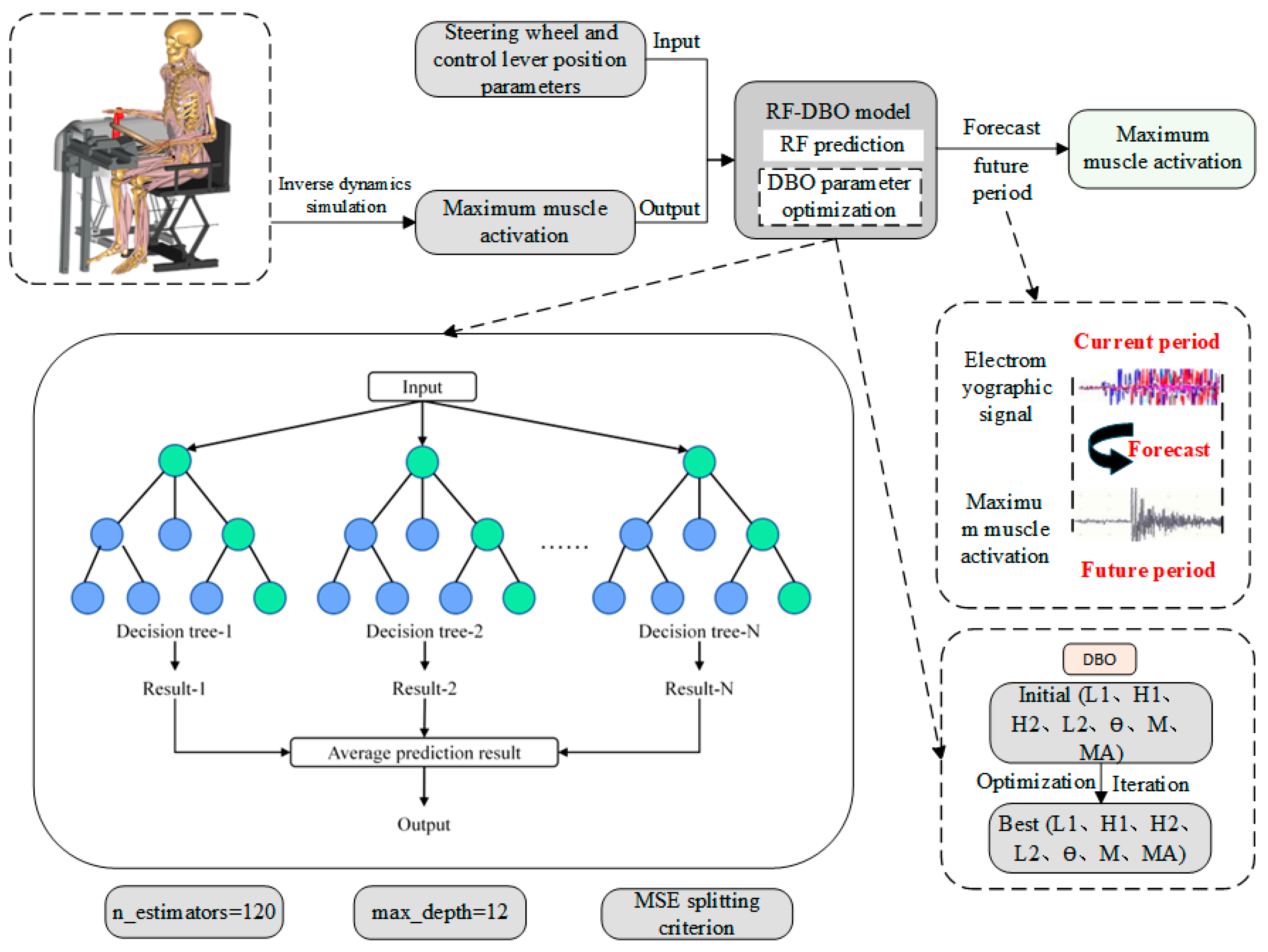
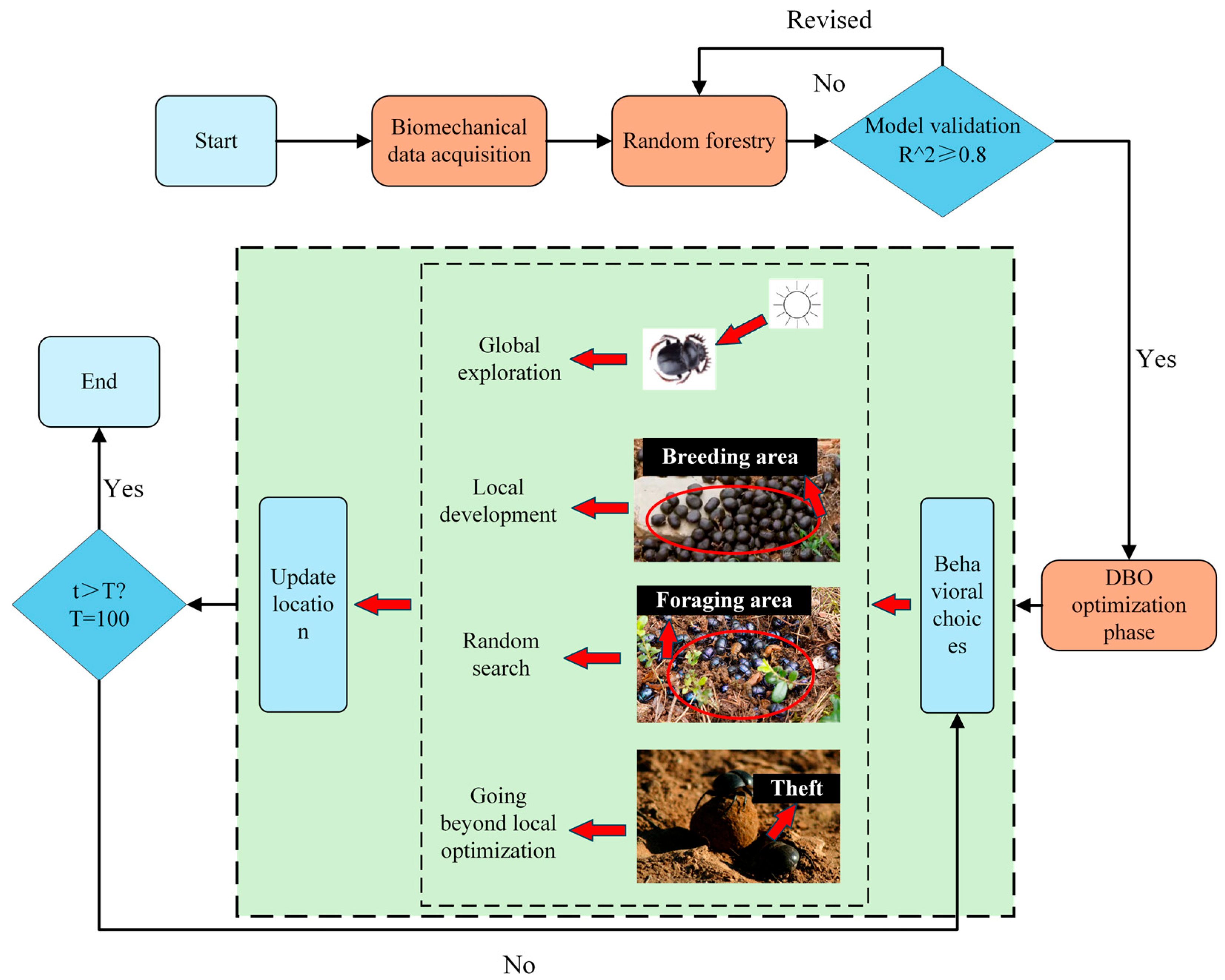
- To construct an RF regression model that predicts maximum MA based on cab layout parameters and to employ the DBO algorithm to identify an optimal configuration that minimizes upper-limb muscle effort.
- (3)
- To propose and verify a reusable AMS-RF-DBO technical framework that provides a replicable paradigm for the ergonomic design of other specialized agricultural machinery, ultimately promoting operator well-being.
2. Materials and Methods
2.1. Biomechanical Modeling and Simulation
2.1.1. Musculoskeletal Model
2.1.2. Cab Modeling and Driver–Cabin Coupling
2.2. Experiment Design
2.2.1. Independent Variables
2.2.2. Participants
2.2.3. Experimental Setup and Apparatus
2.2.4. Maximum Voluntary Contraction (MVC) Calibration
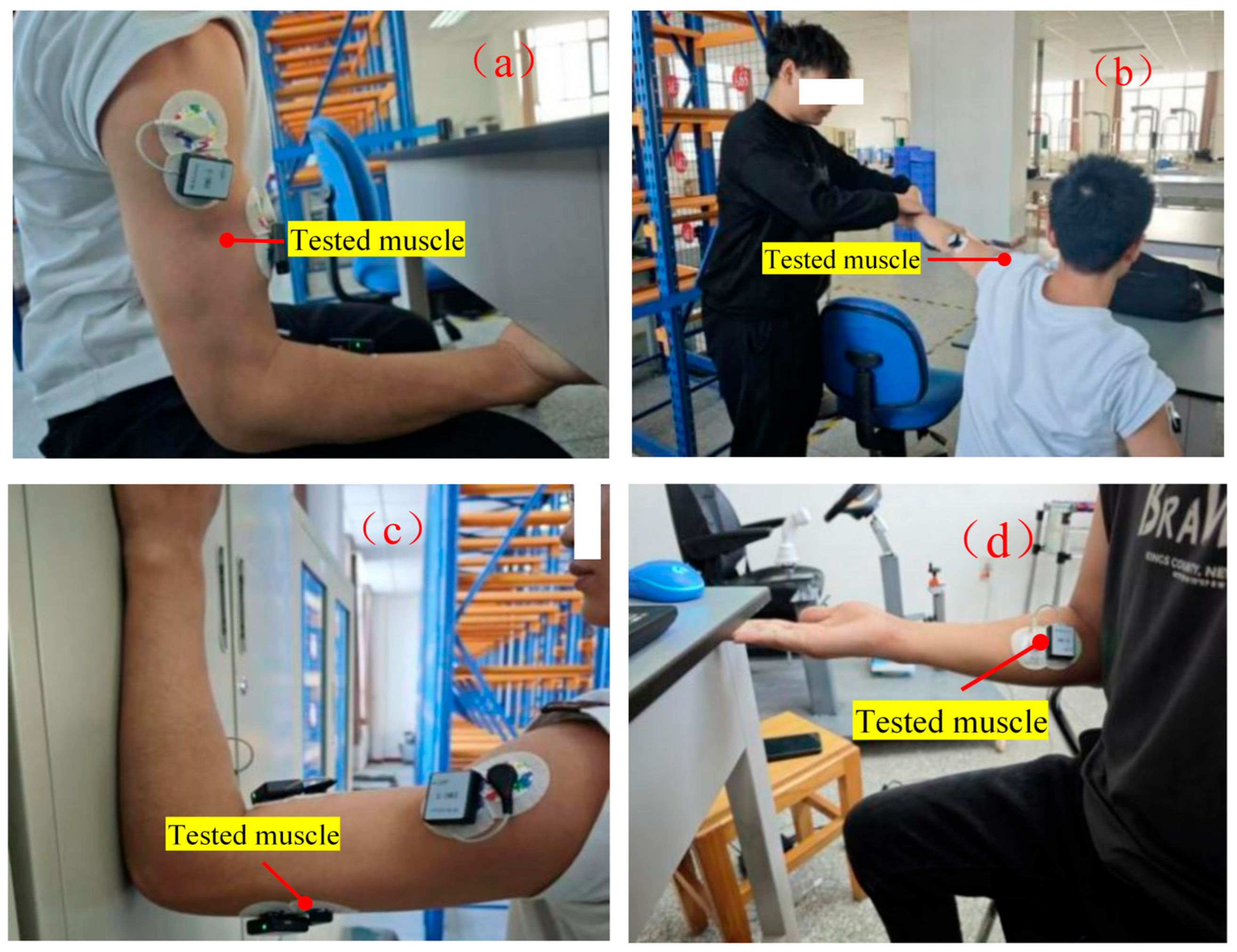
- (1)
- The surface skin of the target muscle group was repeatedly wiped with 70% medical alcohol cotton balls to remove epidermal oils and the stratum corneum.
- (2)
- Electrodes were positioned according to the SENIAM guidelines.
- (1)
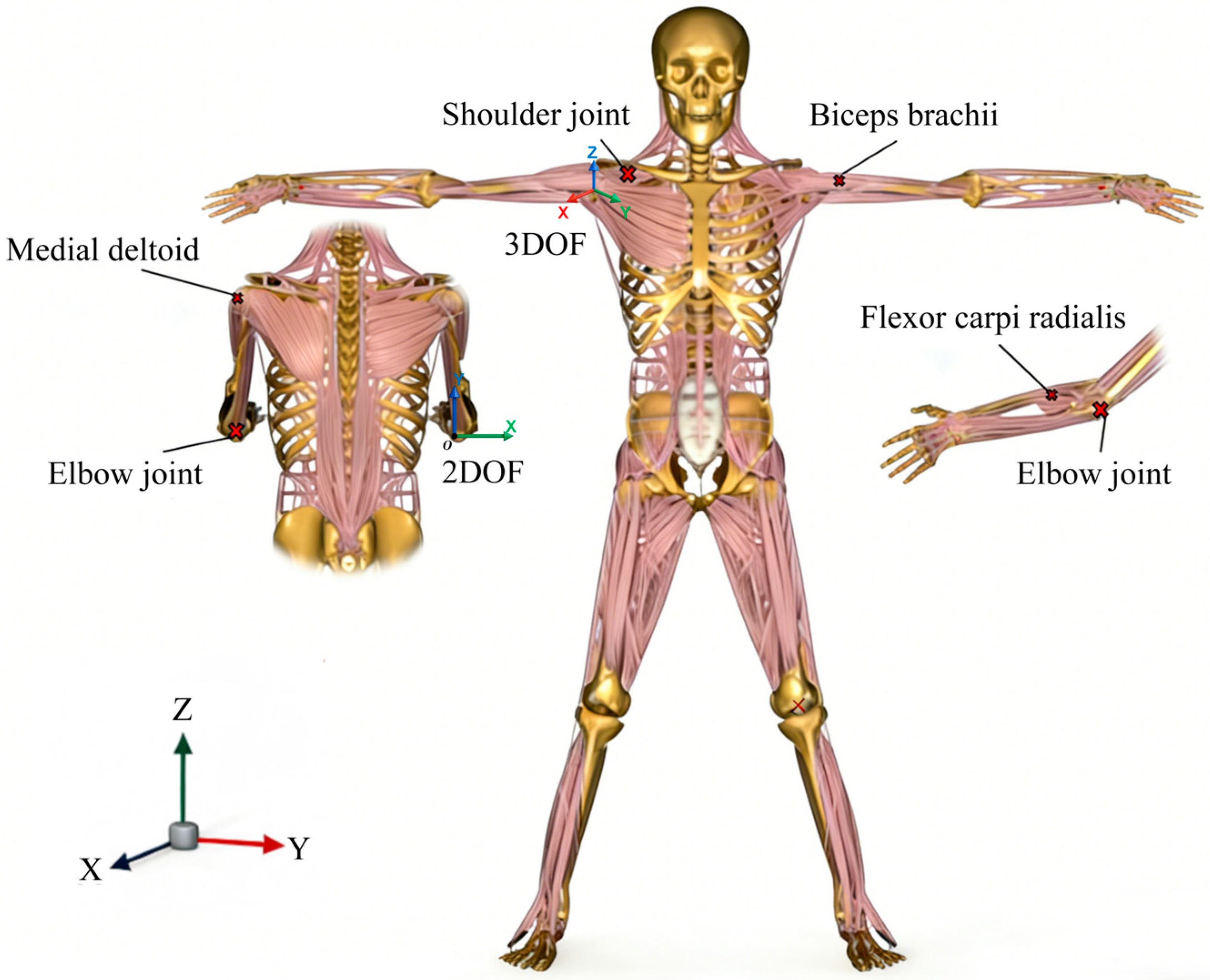
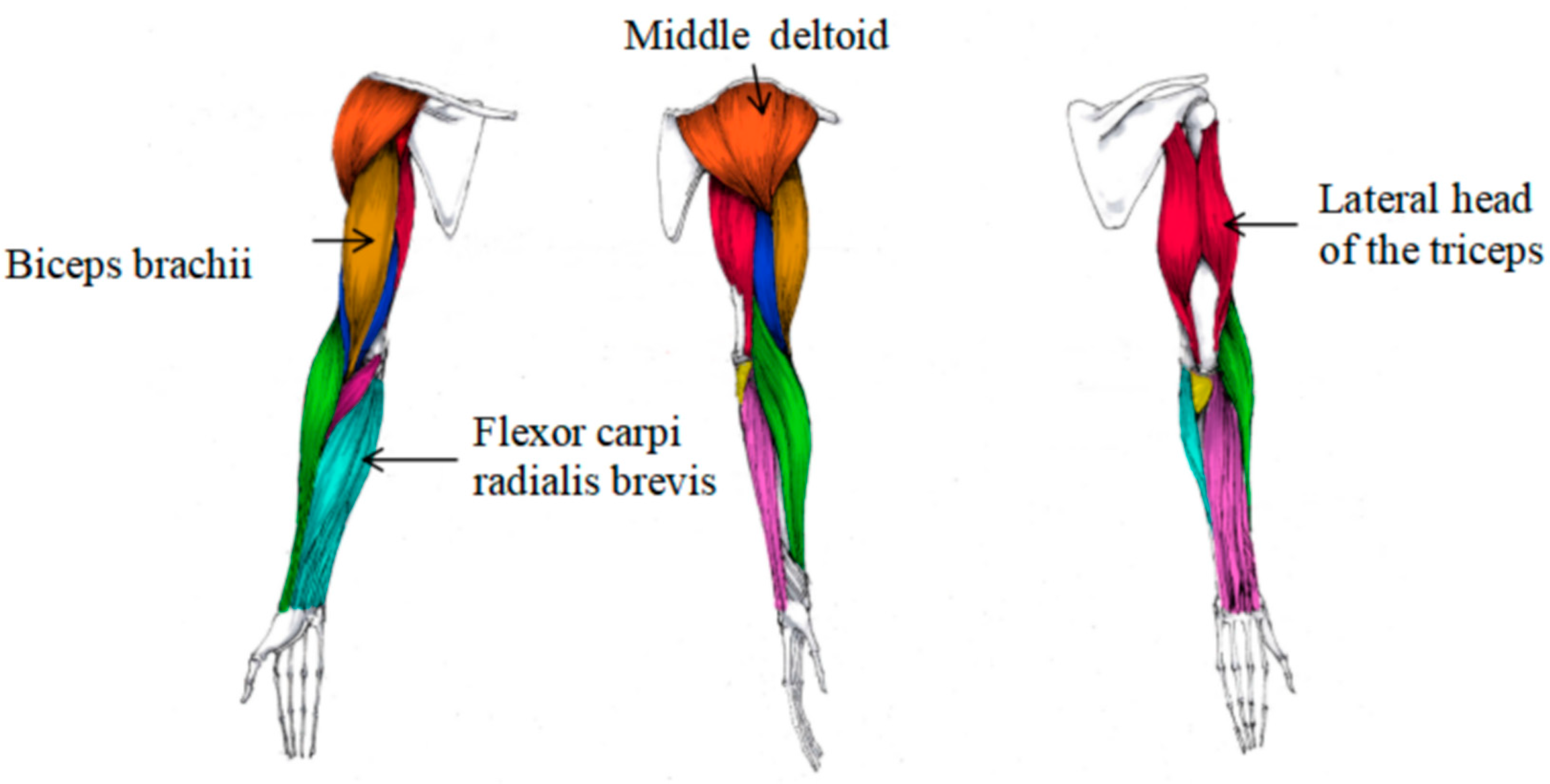
- Biceps brachii: Electrodes were placed on the proximal one-third of the elbow crease, with the subject flexing the elbow to 90° against desk resistance.
- (2)
- Middle deltoid: The “empty can” position [39] (shoulder abduction 90° with internal rotation) was used, and electrodes were placed along the line connecting the acromion and lateral epicondyle;
- (3)
- Triceps brachii: Electrodes were placed two finger-widths lateral to the line connecting the posterior acromion and olecranon process. The subject flexed the elbow to 90° and pushed against a wall.
- (4)
- Flexor carpi radialis: Electrodes were placed along the longitudinal axis of the muscle belly. The subject raised their four fingers against resistance on the table. All electrodes were spaced 20 mm apart, and calibration was performed simultaneously on both sides.
2.3. sEMG Signal Processing and MA Calculation
2.4. Experimental Procedure
2.5. AMS-RF-DBO Prediction and Optimization Framework
3. Results
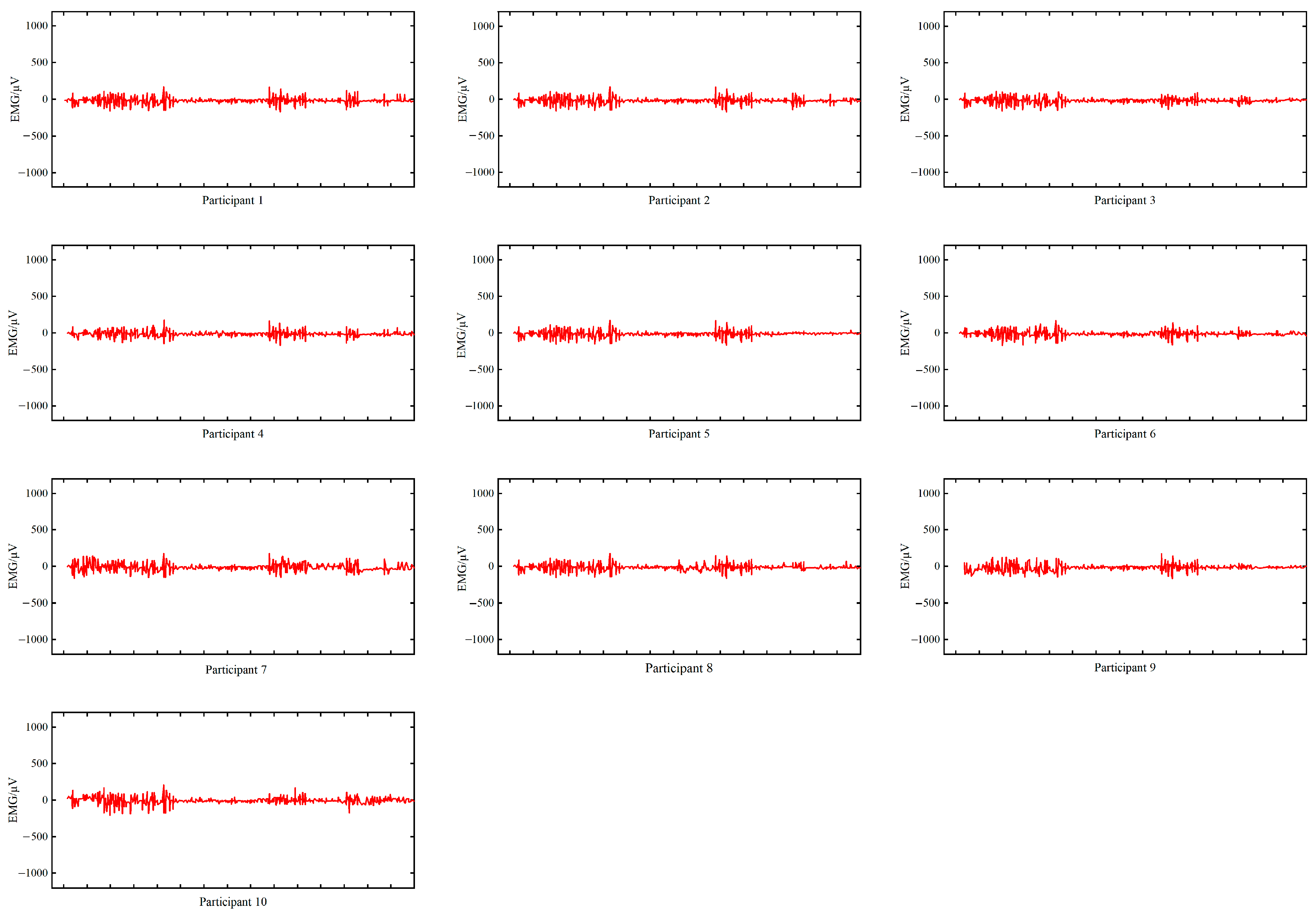
3.1. Selection of Target Muscles for sEMG Analysis
3.2. Validation Analysis of the Biomechanical Model
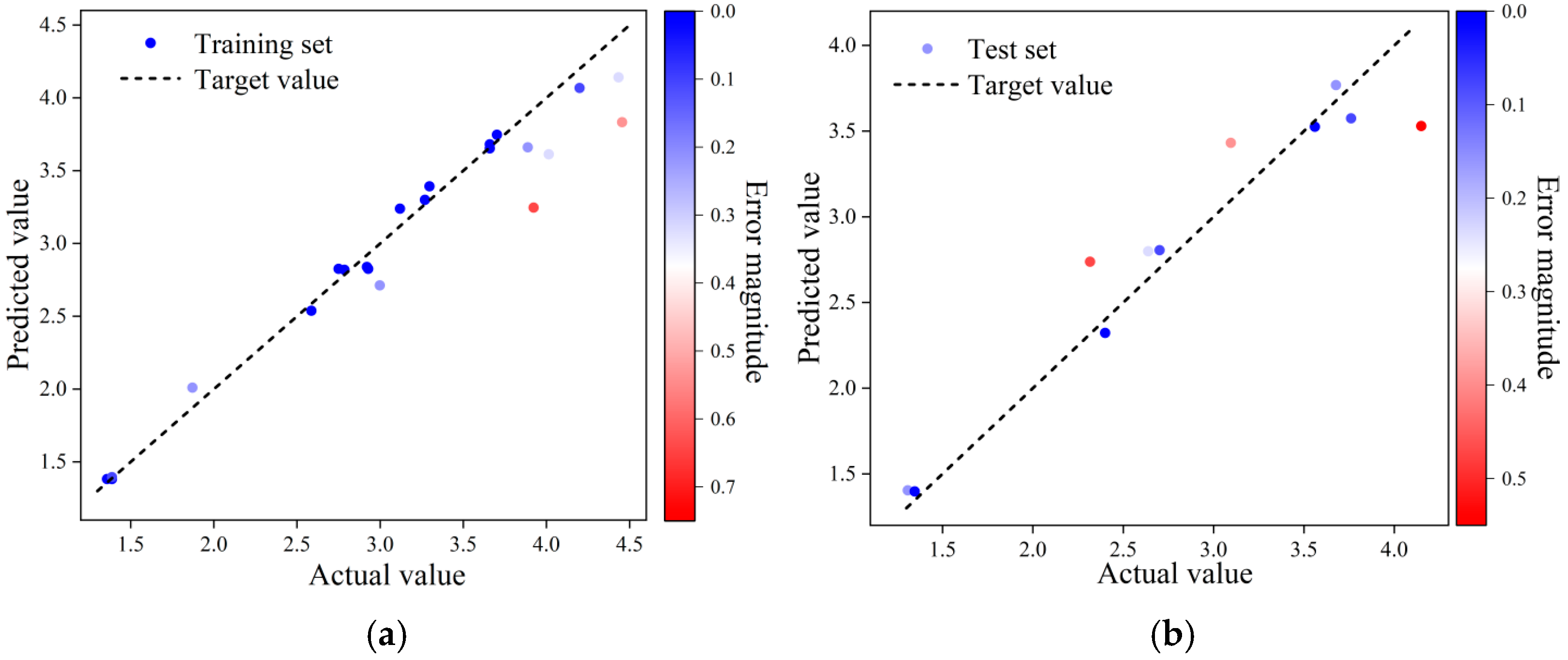
3.3. RF Prediction Model Analysis
3.3.1. Analysis of Feature Importance
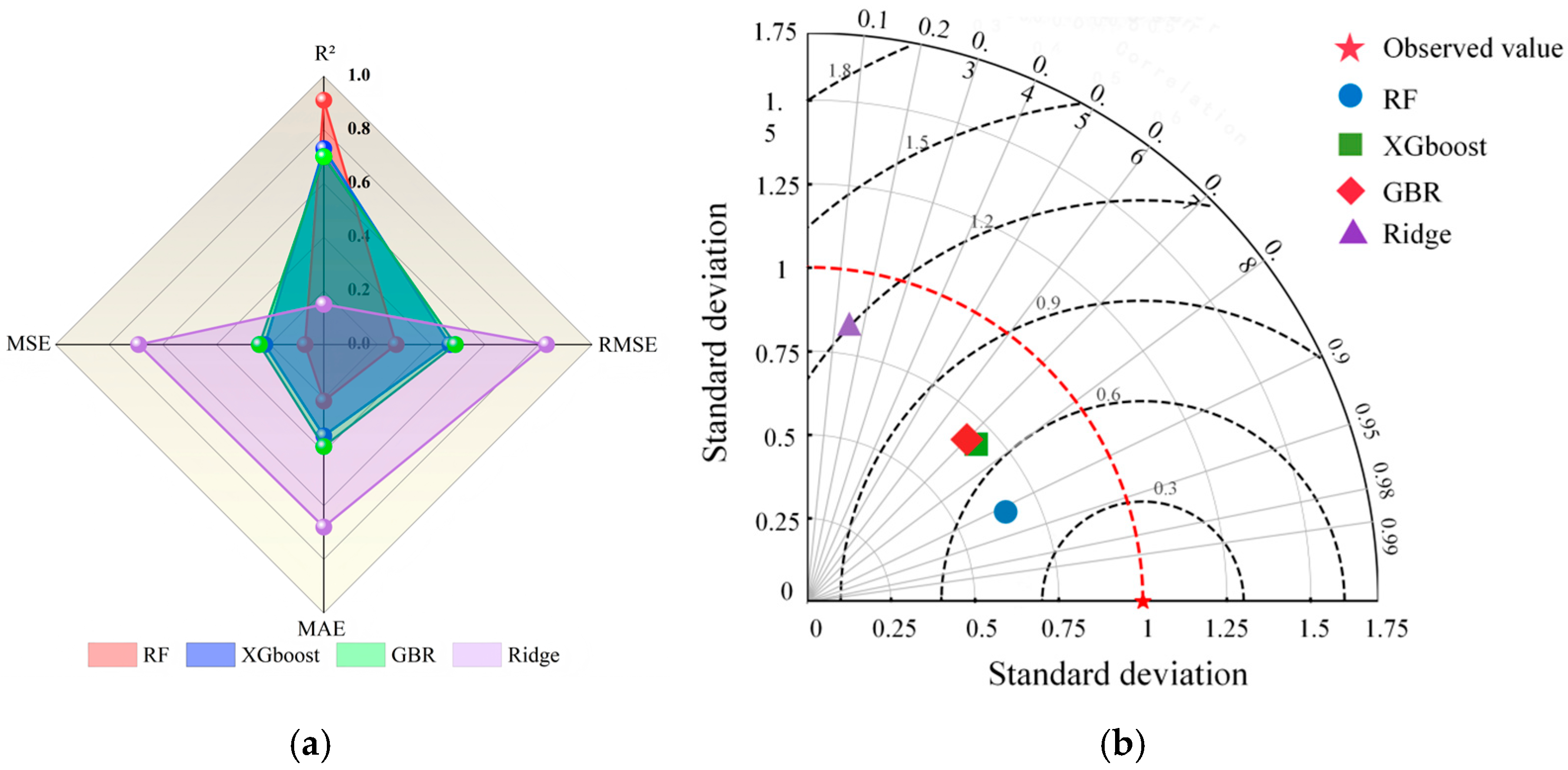
3.3.2. Comparative Analysis of RF Prediction Performance
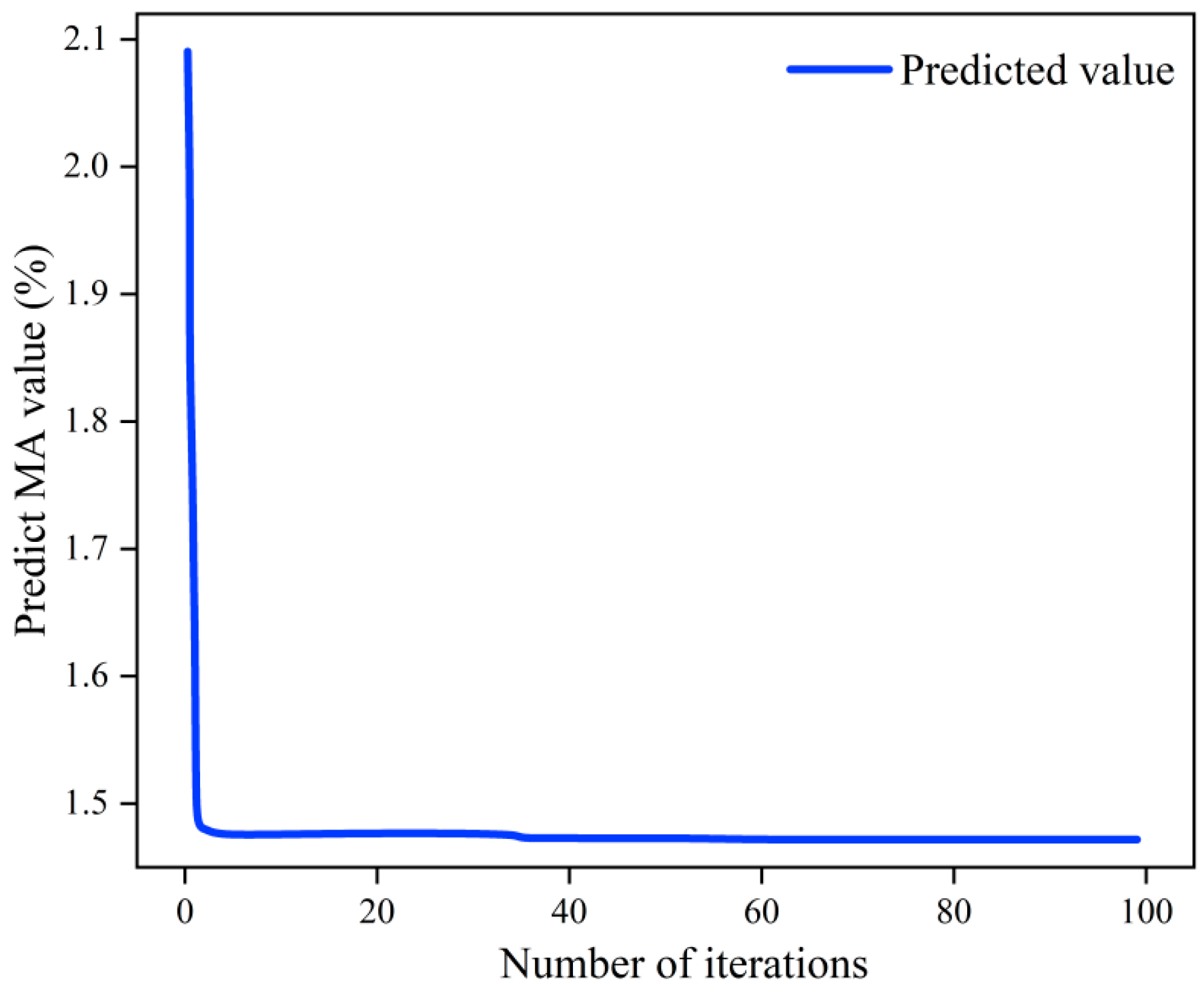
3.4. Optimization Results Using the DBO Algorithm
Robustness Analysis of DBO Optimal Solutions
- (1)
- The DBO algorithm was independently executed 30 times from random initializations under the identical setup. The statistical summary of the final objective function values (minimum MA) was as follows: mean = 1.48%, standard deviation (SD) = 0.018%, and 95% confidence interval = [1.473%, 1.487%]. The negligible SD and tight confidence interval demonstrate the algorithm’s highly stable convergence and its insensitivity to initial conditions, effectively mitigating the risk of becoming trapped in suboptimal local minima.
- (2)
- To assess the sensitivity of the optimal layout parameters to the inherent variability in the training data, a bootstrap resampling procedure with 1000 iterations was performed. In each iteration, a new training dataset was created by random sampling with replacement from the original dataset, a new RF surrogate model was trained, and the DBO optimization was executed anew. The 95% confidence intervals (CIs) for the six optimized parameters, derived from the bootstrap distribution, are summarized in Table 5.
- (3)
- During training, the RF model automatically identifies and filters out random fluctuations and incidental errors in the raw electromyography data, thereby constructing a predictive model that reflects the true, stable relationship between parameters and muscle load. DBO performs computations and optimization directly on this predictive model. This means the optimization algorithm consistently “perceives” a clear, reliable target landscape rather than the noisy raw data surface. Consequently, from data input to output results, noise impacts are effectively buffered and isolated within the framework, significantly enhancing the reliability of the optimization solution.
4. Discussion
4.1. Upper-Limb MA Patterns
- (1)
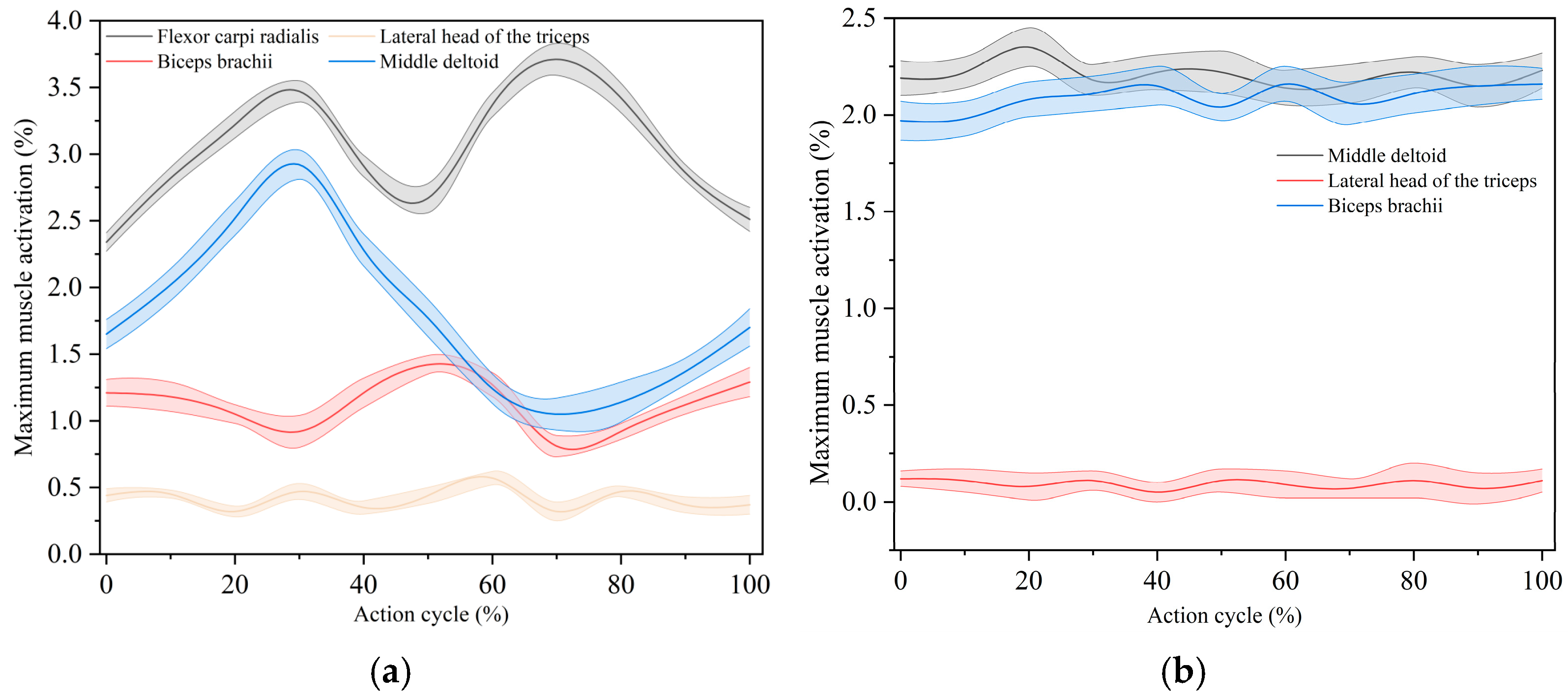
- Biceps brachii: When gripping the steering wheel, the elbow joint typically remains flexed at 90–120°. The biceps brachii, as part of the primary elbow flexor muscle group (working in conjunction with the brachialis and brachioradialis muscles), must maintain continuous isometric contraction to counteract gravity and prevent the arm from drooping. In the steering wheel grip position, the lever arm of the biceps brachii (the vertical distance from the elbow joint rotation center to the tendon insertion point) enables it to efficiently maintain torque balance. Throughout the entire movement cycle, the “W”-shaped fluctuation of the biceps brachii is essentially the result of the combined effects of pronation/supination torque demands and the transition between eccentric and concentric contractions, reflecting its dynamic adaptation to multi-directional rotational loads.
- (2)
- Flexor carpi radialis: As one of the primary wrist flexors, the flexor carpi radialis is responsible for wrist flexion and radial deviation (toward the thumb side), which aligns closely with wrist movements during steering wheel control. However, MA is not prominent in the static driving posture of the right hand, a conclusion consistent with the findings of Mark et al., who reported that the sEMG amplitude of the radial wrist flexor is greater during dynamic steering than during static grip [50].
- (3)
- Middle deltoid: The middle deltoid muscle, as the primary muscle group responsible for shoulder abduction, sustains activation to counteract gravitational forces, thereby ensuring upper-limb stability in the horizontal plane. This function aligns closely with the biomechanical demands of the suspended arm posture during driving. The maximum level of MA throughout the action cycle exhibits an “ascending–descending–ascending” pattern, reflecting adaptive regulation during dynamic rotation—from active force generation (concentric) to synergistic control (eccentric) and finally to active compensation (antigravity/deceleration). Its activation level remains positively correlated with the shoulder joint abduction torque demand.
4.2. AMS-RF-DBO Framework Validation and Optimization
4.3. Consideration of Model Assumptions
4.4. Limitations and Future Perspectives
5. Conclusions
- (1)
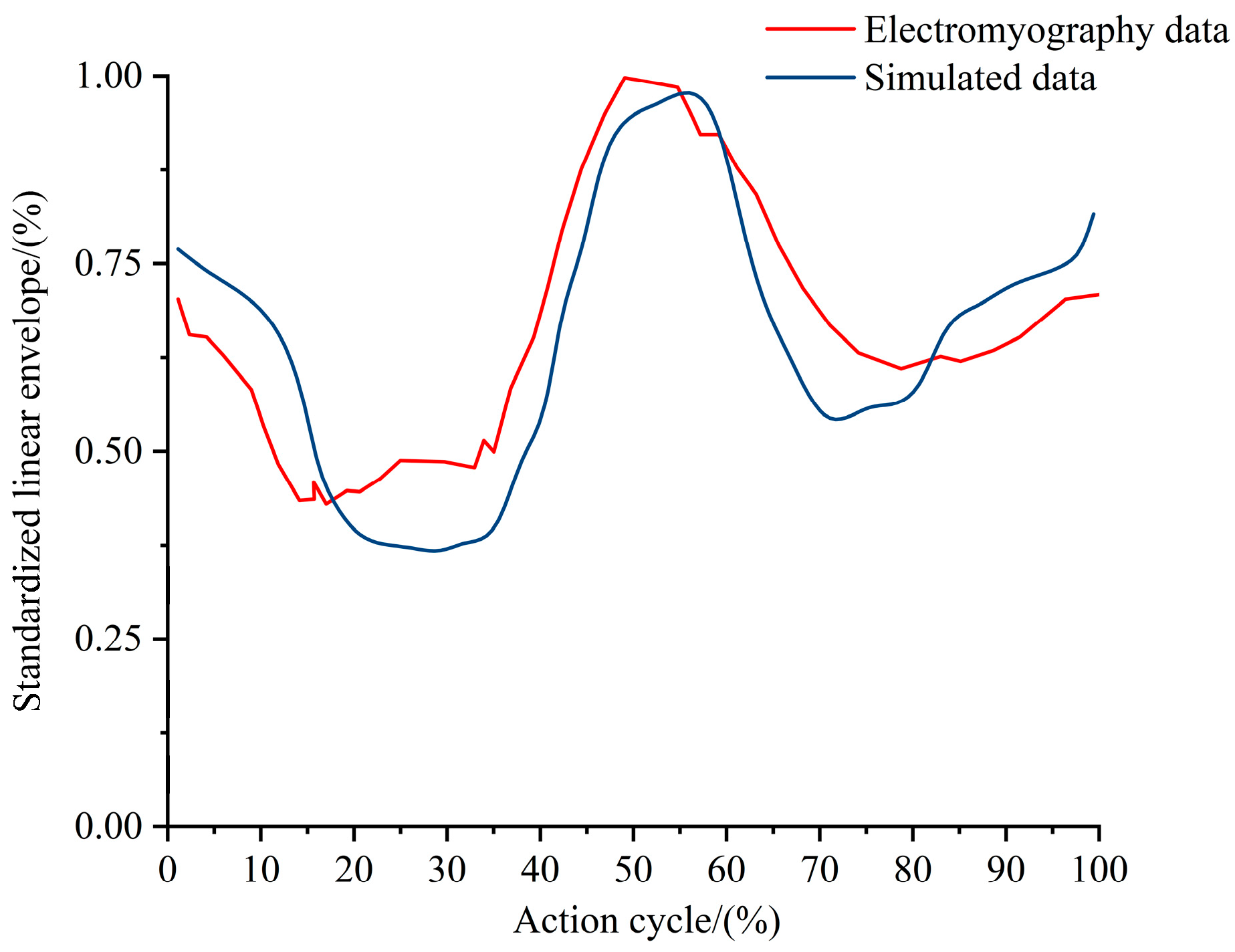
- A high-fidelity driver–cabin biomechanical model was established using the AnyBody Modeling System. Critically, its validation against experimental sEMG data (ICC = 0.695) confirms that the model can reliably replicate the unique neuromuscular demands of the “left-hand steering, right-hand lever” operation in the participant sample. This step successfully translated a complex real-world ergonomic scenario into a computable and analyzable digital framework, providing a physiologically credible basis for all subsequent analyses, rather than just a simulation output.
- (2)
- A Random Forest regression model was constructed using six key cab layout parameters as inputs. Its high predictive accuracy (R2 = 0.91) demonstrates a successful abstraction—it effectively learned the underlying, nonlinear relationship between spatial design and physiological load from the dataset generated by the biomechanical model. This success means that for the represented operator population, muscle activation can be accurately forecasted without repetitive, costly simulations, fundamentally streamlining the ergonomic evaluation process and enabling rapid design exploration.
- (3)
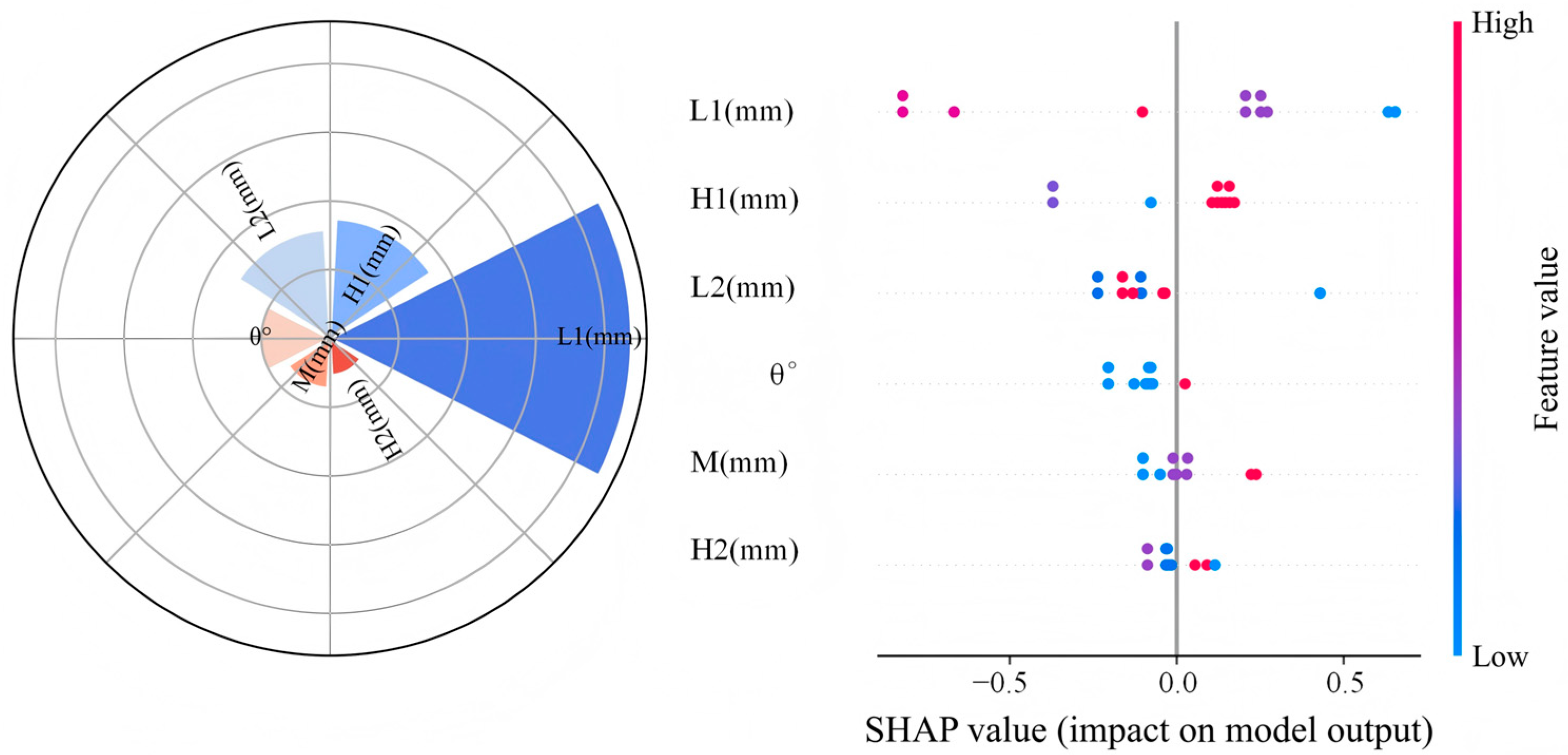
- Through the DBO optimization algorithm, the MA level of the upper limbs of cotton picker drivers was minimized, and the optimal parameter combination was obtained as L1 = 434 mm, H1 = 738 mm, θ = 32°, L2 = 357 mm, H2 = 782 mm, M = 411 mm, H2 = 782 mm, and θ = 32°. The MA value significantly decreased from the initial 3.82% to 1.47% (p < 0.001), with a 61.5% reduction in peak muscle load. The study results provide a new method for the ergonomic design of cotton picker cabs in China, offering technical support for improving operator comfort.
Author Contributions
Funding
Institutional Review Board Statement
Informed Consent Statement
Data Availability Statement
Acknowledgments
Conflicts of Interest
Appendix A

References
- Tian, L.; Lou, S.; Zhang, P.; Du, M.; Luo, H.; Li, J.; Parhat, M.; Ma, T.; Zhang, L. Analysis of Challenges and Solutions for Increasing Cotton Yields in Xinjiang Under Green and Efficient Production Models. Chin. J. Agric. Sci. 2025, 58, 1102–1115. [Google Scholar]
- Ni, G.; Li, B.; Liu, Y.; Li, Y.; Wang, T.; Wang, S. The Development History and Current Research Status of Cotton Pickers in China. Chin. J. Agric. Mach. Chem. 2020, 41, 212–218. [Google Scholar] [CrossRef]
- Baikeli, Y.; Zhang, J.; Guo, G.; Mahemet, A. Review and Development Trends of Mechanized Cotton Stalk Harvesting Technology in Xinjiang Cotton-Growing Regions. Agric. Mech. Res. 2025, 47, 292–300. [Google Scholar] [CrossRef]
- Madaleno, P.; Sousa-Uva, A. Occupational Risk Perception and Occupational and Work-Related Diseases Prevention. Eur. J. Public Health 2021, 31, ckab165.436. [Google Scholar] [CrossRef]
- Wang, J.; Zhang, Z.; Zhang, N.; Liang, Y.; Gong, Z.; Wang, J.; Ditta, A.; Sang, Z.; Li, X.; Zheng, J. The Correlation of Machine-Picked Cotton Defoliant in Different Gossypium Hirsutum Varieties. Agronomy 2023, 13, 2151. [Google Scholar] [CrossRef]
- Gómez-Galán, M.; González-Parra, J.-M.; Pérez-Alonso, J.; Golasi, I.; Callejón-Ferre, Á.-J. Forced Postures in Courgette Greenhouse Workers. Agronomy 2019, 9, 253. [Google Scholar] [CrossRef]
- Leder Horina, J.; Blašković Zavada, J.; Slavulj, M.; Budimir, D. Ergonomics Study of Musculoskeletal Disorders among Tram Drivers. Appl. Sci. 2025, 15, 8348. [Google Scholar] [CrossRef]
- Ortiz, E.; Baño-Morales, D.; Venegas, W.; Page, Á.; Guerra, S.; Narváez, M.; Zambrano, I. Evaluation of Technical and Anthropometric Factors in Postures and Muscle Activation of Heavy-Truck Vehicle Drivers: Implications for the Design of Ergonomic Cabins. Appl. Sci. 2025, 15, 7775. [Google Scholar] [CrossRef]
- Burgess-Limerick, R. Participatory Ergonomics: Evidence and Implementation Lessons. Appl. Ergon. 2018, 68, 289–293. [Google Scholar] [CrossRef]
- Fethke, N.B.; Schall, M.C.; Merlino, L.A.; Chen, H.; Branch, C.A.; Ramaswamy, M. Whole-Body Vibration and Trunk Posture during Operation of Agricultural Machinery. Ann. Work Expo. Health 2018, 62, 1123–1133. [Google Scholar] [CrossRef]
- Benos, L.; Tsaopoulos, D.; Bochtis, D. A Review on Ergonomics in Agriculture. Part II: Mechanized Operations. Appl. Sci. 2020, 10, 3484. [Google Scholar] [CrossRef]
- Mansfeld, A.; Luebke, A.; Duffy, V.G. Review and Assessment of Excavator Operations Using RAMSIS Ergonomic Engineering Software. In HCI International 2022—Late Breaking Papers: Ergonomics and Product Design; Duffy, V.G., Rau, P.-L.P., Eds.; Lecture Notes in Computer Science; Springer Nature: Cham, Switzerland, 2022; Volume 13522, pp. 275–295. ISBN 978-3-031-21703-6. [Google Scholar]
- Wu, Y.; Zhou, Z.; Xi, Z.; Li, J. Tractor Cab Virtual Modeling and Ergonomic Evaluation Based on Jack. In Proceedings of the ASME International Design Engineering Technical Conferences and Computers and Information in Engineering Conference, 2018, Quebec City, QC, Canada, 26–29 August 2018; American Society of Mechanical Engineers: New York, NY, USA, 2018; Volume 3, p. V003T01A016. [Google Scholar]
- Wang, S.; Liang, J.; Shi, Y. Ergonomic Analysis and Improvement Design of the Jack-Based Mining Loader Cabin. J. Mech. Des. 2024, 41, 170–176. [Google Scholar] [CrossRef]
- Wang, X.; Jiang, X.; Yang, G.; Ma, M.; Zhao, W.; Liu, X.; Liu, W. Research on Layout Optimization of Human-Machine Interface for Laser Additive Manufacturing Equipment Based on Accessible Domain. J. Mech. Eng. 2023, 59, 317–330. [Google Scholar] [CrossRef]
- Qu, W.; Ma, L.; Xu, J.; Yang, B. Design of Evaluation System for Workover Rig Operation Posture Comfort Based on Creo. Ind. Eng. J. 2022, 25, 168–172. [Google Scholar] [CrossRef]
- Cheng, L.; Wen, H.; Ni, X.; Zhuang, C.; Zhang, W.; Huang, H. Optimization Study on the Comfort of Human-Seat Coupling System in the Cab of Construction Machinery. Machines 2022, 11, 30. [Google Scholar] [CrossRef]
- Rathod, A.B.; Vyavhare, R.T. Optimization of Truck Driver Cab Ergonomic for Commercial Truck Based on Ramsis: Enhancing Driver Comfort and Safety. Int. J. Intell. Transp. Syst. Res. 2024, 22, 603–613. [Google Scholar] [CrossRef]
- Cen, C.; Cheng, S.; Wong, N.H. Physiological Sensing of Personal Thermal Comfort with Wearable Devices in Fan-Assisted Cooling Environments in the Tropics. Build. Environ. 2022, 225, 109622. [Google Scholar] [CrossRef]
- Zhang, H.; Meng, L.; Yang, Z. Biomechanical Mechanism Driving Typical Postural Shifts of Lower Limbs during Sleeping in an Aircraft Seat. Eur. J. Appl. Physiol. 2023, 123, 2023–2039. [Google Scholar] [CrossRef]
- Lecocq, M.; Lantoine, P.; Bougard, C.; Allègre, J.-M.; Bauvineau, L.; Bourdin, C.; Marqueste, T.; Dousset, E. Neuromuscular Fatigue Profiles Depends on Seat Feature during Long Duration Driving on a Static Simulator. Appl. Ergon. 2020, 87, 103118. [Google Scholar] [CrossRef]
- Chi, J.Y.; Halaki, M.; Booker, E.; Boyle, R.; Ackermann, B.J. Interaction between Hand Span and Different Sizes of Keyboards on EMG Activity in Pianists: An Observational Study. Appl. Ergon. 2021, 97, 103518. [Google Scholar] [CrossRef]
- Xin, Y.; Bai, W.; Jin, H.; Zhang, Q.; Su, N. Analysis of Upper Limb Muscle Fatigue in Excavator Operators Based on Electromyography Experiments. Sci. Technol. Eng. 2024, 24, 11393–11400. [Google Scholar]
- Chen, D. Inverse Dynamics Simulation of the Musculoskeletal Model of Human Legs in Driving Based on AnyBody Modeling System. Chin. J. Biomed. Eng. 2013, 32, 124–128. [Google Scholar] [CrossRef]
- Xu, H.; Wang, Q.; Zhang, W.; Yang, H.; Zhang, G. Optimization of Tractor Seat Position Parameters Based on Driver Biomechanical Characteristics. Trans. Chin. Soc. Agric. Eng. 2022, 38, 32–40. [Google Scholar]
- Zhang, W.; Wang, Q.; Xu, Z.; Shang, Y.; Xu, H. Development of a Tractor Operator-Operation Environment Coupled Biomechanical Model and Analysis of Lower Limb Muscle Fatigue. Int. J. Ind. Ergon. 2023, 93, 103407. [Google Scholar] [CrossRef]
- Xu, H.; Yang, H.; Shang, Y.; Zhang, Y.; Liu, Z.; Wang, Q.; Zhang, G. Optimization of the Key Position Parameters for Tractor Steering Wheel Based on a Driver’s Arm Muscle Load Analysis. Int. J. Agric. Biol. Eng. 2023, 16, 236–247. [Google Scholar] [CrossRef]
- Prakash, A.; Sarlin, P.J.; Thomas, J.A. Optimization of Conditions for Gelatin Extraction from Longtail Butterfly Ray, Gymnura Poecilura Skin Using Response Surface Methodology (RSM). Food Anal. Methods 2025, 18, 2672–2687. [Google Scholar] [CrossRef]
- Zhang, W.; Yang, H.; Li, Y.; Zhao, Y.; Xu, H. An Optimization Model of Tractor Clutch Pedal Design Parameters Based on Lower Limb Biomechanical Characteristics. Int. J. Ind. Ergon. 2023, 98, 103519. [Google Scholar] [CrossRef]
- Xie, Y.; Liu, C.; Li, W.; Du, M.; Feng, K. Optimization of Stamping Process Parameters Based on an Improved Particle Swarm Optimization–Genetic Algorithm and Sparse Auto-Encoder–Back-Propagation Neural Network Model. Eng. Optim. 2024, 56, 252–273. [Google Scholar] [CrossRef]
- Bharat, N.; Bose, P.S.C. Integrating Genetic Algorithms, Particle Swarm, and Neural Networks for Wear Optimization of AA7178 Matrix with Nano-SiC Particles. JOM 2024, 76, 2772–2785. [Google Scholar] [CrossRef]
- Damsgaard, M.; Rasmussen, J.; Christensen, S.T.; Surma, E.; De Zee, M. Analysis of Musculoskeletal Systems in the AnyBody Modeling System. Simul. Model. Pract. Theory 2006, 14, 1100–1111. [Google Scholar] [CrossRef]
- Ashtiani, M.B.; Akhavanfar, M.; Li, L.; Kim, S.; Nussbaum, M.A. Using Musculoskeletal Models to Estimate the Effects of Exoskeletons on Spine Loads during Dynamic Lifting Tasks: Differences between OpenSim and the AnyBody Modelling System. J. Biomech. 2025, 188, 112780. [Google Scholar] [CrossRef]
- GB/T 10000-2023; Human Dimensions of Chinese Adults. National Standards of the People’s Republic of China: Beijing, China, 2023.
- Leone, A.; Carluccio, A.M.; Caroppo, A.; Manni, A.; Rescio, G. A Systematic Review of Surface Electromyography in Sarcopenia: Muscles Involved, Signal Processing Techniques, Significant Features, and Artificial Intelligence Approaches. Sensors 2025, 25, 2122. [Google Scholar] [CrossRef]
- Murphy, B.B.; Scheid, B.H.; Hendricks, Q.; Apollo, N.V.; Litt, B.; Vitale, F. Time Evolution of the Skin–Electrode Interface Impedance under Different Skin Treatments. Sensors 2021, 21, 5210. [Google Scholar] [CrossRef] [PubMed]
- Al-Ayyad, M.; Owida, H.A.; De Fazio, R.; Al-Naami, B.; Visconti, P. Electromyography Monitoring Systems in Rehabilitation: A Review of Clinical Applications, Wearable Devices and Signal Acquisition Methodologies. Electronics 2023, 12, 1520. [Google Scholar] [CrossRef]
- Vecchio, A.D.; Hug, F.; Merletti, R.; Farina, D. JEK-ISEK Tutorials on Electromyography and Kinesiology: A Summary and a Call for the next Series of Tutorials. J. Electromyogr. Kinesiol. 2025, 81, 102986. [Google Scholar] [CrossRef]
- Boettcher, C.E.; Ginn, K.A.; Cathers, I. Standard Maximum Isometric Voluntary Contraction Tests for Normalizing Shoulder Muscle EMG. J. Orthop. Res. 2010, 26, 1591–1597. [Google Scholar] [CrossRef]
- Hermens, H.J.; Freriks, B.; Disselhorst-Klug, C.; Rau, G. Development of Recommendations for SEMG Sensors and Sensor Placement Procedures. J. Electromyogr. Kinesiol. 2000, 10, 361–374. [Google Scholar] [CrossRef] [PubMed]
- Frazao, M.; Silva, P.E.; Pereira Cacau, L.D.A.; Petrucci, T.R.; Assis, M.C.; Santos, A.D.C.; Brasileiro-Santos, M.D.S. EMG Breakpoints for Detecting Anaerobic Threshold and Respiratory Compensation Point in Recovered COVID-19 Patients. J. Electromyogr. Kinesiol. 2021, 59, 102567. [Google Scholar] [CrossRef] [PubMed]
- Koo, T.K.; Li, M.Y. A Guideline of Selecting and Reporting Intraclass Correlation Coefficients for Reliability Research. J. Chiropr. Med. 2016, 15, 155–163. [Google Scholar] [CrossRef]
- Strumbelj, E.; Kononenko, I. An Efficient Explanation of Individual Classifications Using Game Theory. J. Mach. Learn. Res. 2010, 11, 1–18. [Google Scholar]
- Chen, T.; Guestrin, C. XGBoost: A Scalable Tree Boosting System. In Proceedings of the 22nd ACM SIGKDD International Conference on Knowledge Discovery and Data Mining, San Francisco, CA, USA, 13–17 August 2016; ACM: New York, NY, USA, 2016; pp. 785–794. [Google Scholar]
- Friedman, J.H. Greedy Function Approximation: A Gradient Boosting Machine. Ann. Stat. 2001, 29, 1189–1232. [Google Scholar] [CrossRef]
- Hoerl, A.E.; Kennard, R.W. Ridge Regression: Biased Estimation for Nonorthogonal Problems. Technometrics 2000, 42, 80–86. [Google Scholar] [CrossRef]
- ISO 22514-4:2016; Statistical Methods in Process Management—Capability and Performance—Part 4: Process Capability Estimates and Performance Measures. ISO: Geneva, Switzerland, 2016.
- Prilutsky, B.I.; Zatsiorsky, V.M. Optimization-Based Models of Muscle Coordination. Exerc. Sport Sci. Rev. 2002, 30, 32–38. [Google Scholar] [CrossRef]
- McGill, S.M.; Grenier, S.; Kavcic, N.; Cholewicki, J. Coordination of Muscle Activity to Assure Stability of the Lumbar Spine. J. Electromyogr. Kinesiol. 2003, 13, 353–359. [Google Scholar] [CrossRef]
- Porter, J.M.; Gyi, D.E. Exploring the Optimum Posture for Driver Comfort. Int. J. Veh. Des. 1998, 19, 255–266. [Google Scholar] [CrossRef]
- Genç, S.; Güdücü, Ç.; Çek, M.E.; Mancı, E.; Günay, E. The Effect of Resistance Based Post-Activation Performance Enhancement Interventions at Different Loads on Maximal Voluntary Isometric Contraction and Muscle Activation: Preliminary Findings. Isokinet. Exerc. Sci. 2025, 33, 161–170. [Google Scholar] [CrossRef]
- Chua, M.X.; Okubo, Y.; Peng, S.; Do, T.N.; Wang, C.H.; Wu, L. Analysis of Fatigue-Induced Compensatory Movements in Bicep Curls: Gaining Insights for the Deployment of Wearable Sensors. IEEE Trans. Med Robot. Bionics 2024, 6, 1147–1157. [Google Scholar] [CrossRef]



| Coupling Point Name | X | Y | Z | Parent Segment | Child Segment | Clarification |
|---|---|---|---|---|---|---|
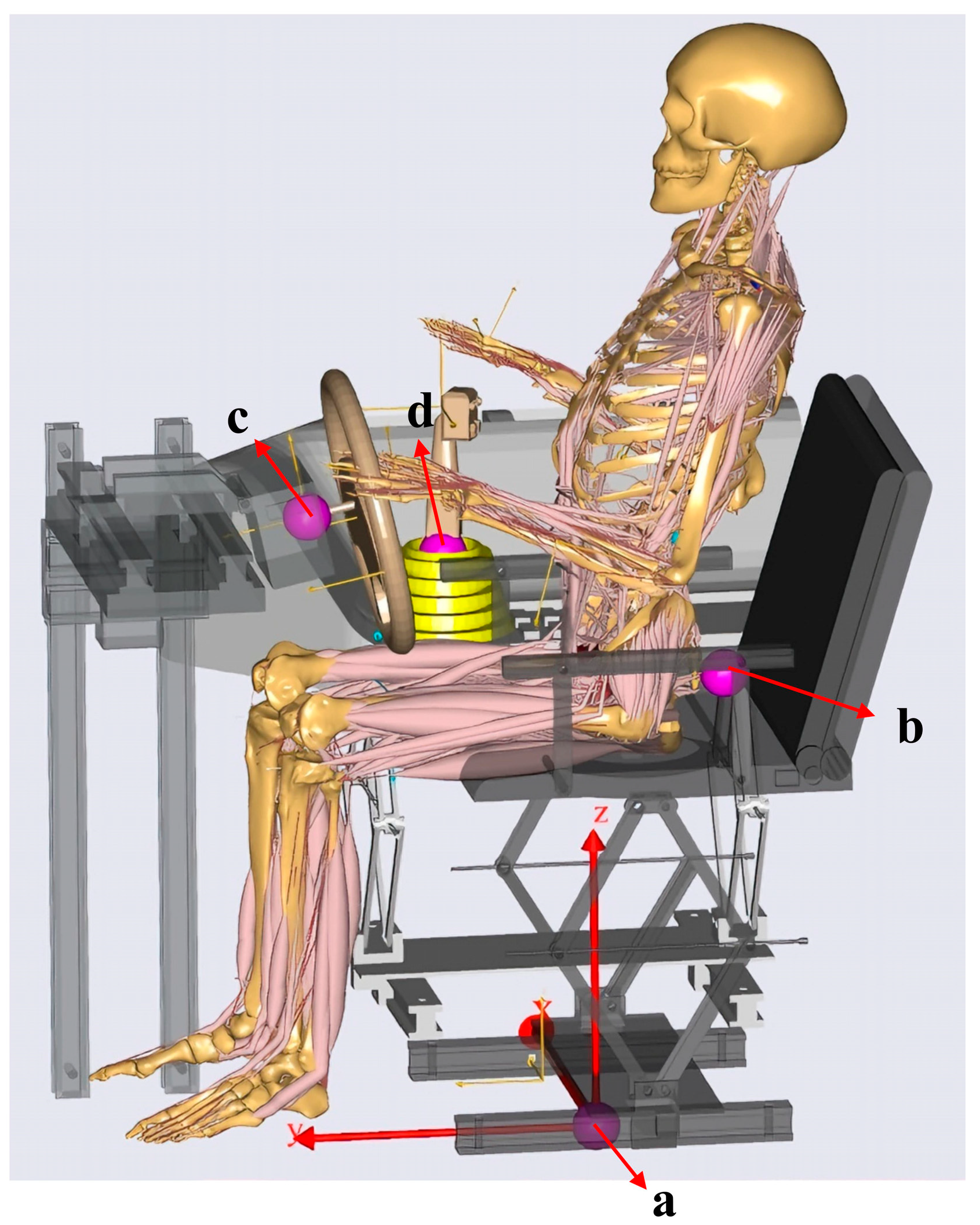
| connect_to_global (a) | 0.045 | −0.17 | 0.55 | Geodetic | Seating | Connection to the geodetic coordinate system |
| connect_to_wheel (c) | −0.08 | 0.36 | 0.80 | Steering wheel base | Steering wheel | Fixed steering wheel |
| connect_to_handle (d) | 0.01 | 0.01 | 0.01 | Joystick base | Control stick | Fixed rocker |
| pelvis_seats (b) | 0 | 0 | 0 | Seating | Pelvic | Anchor |
| Steering Wheel Position Parameters | Control Lever Position Parameters |
|---|---|
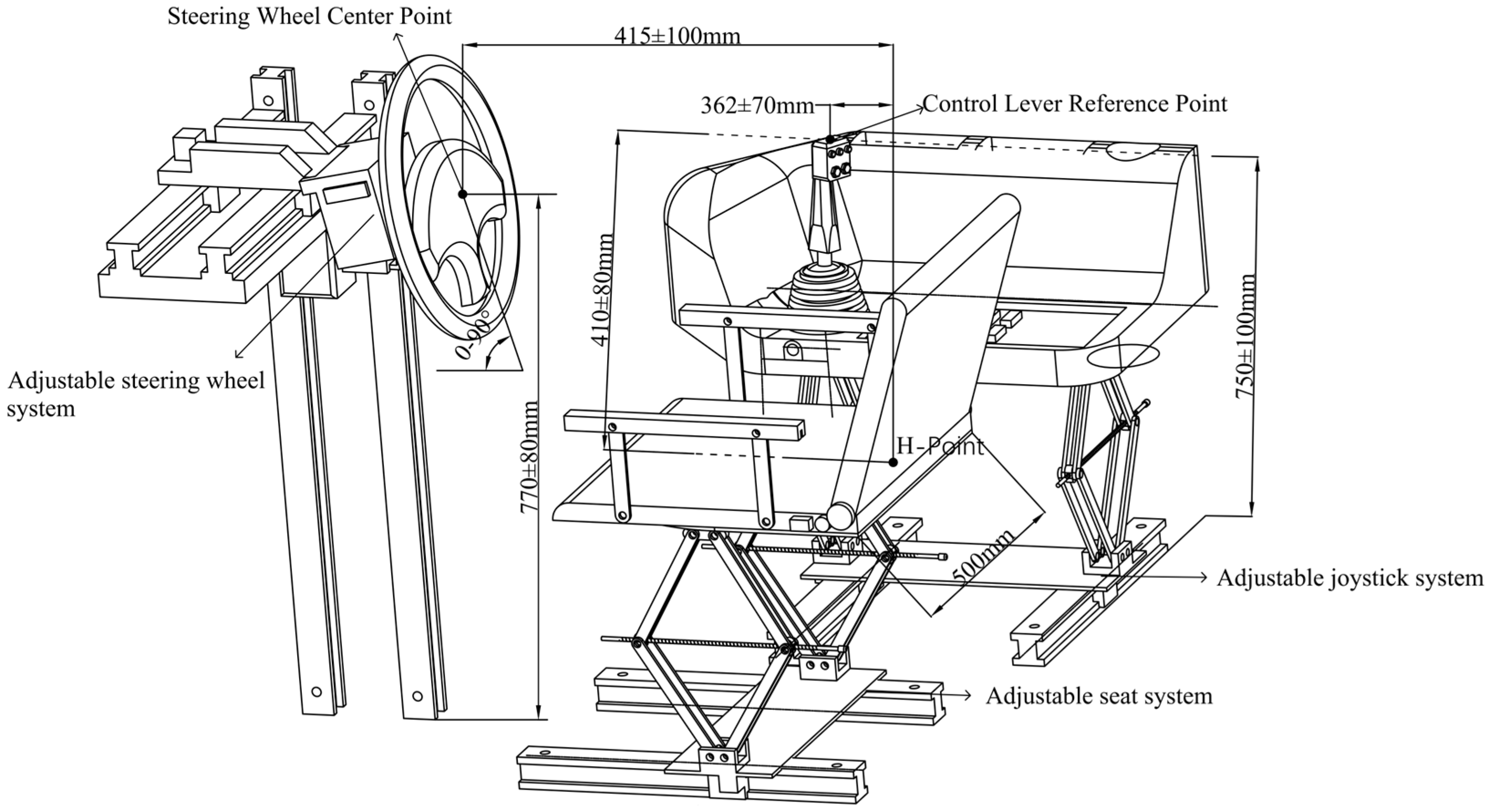
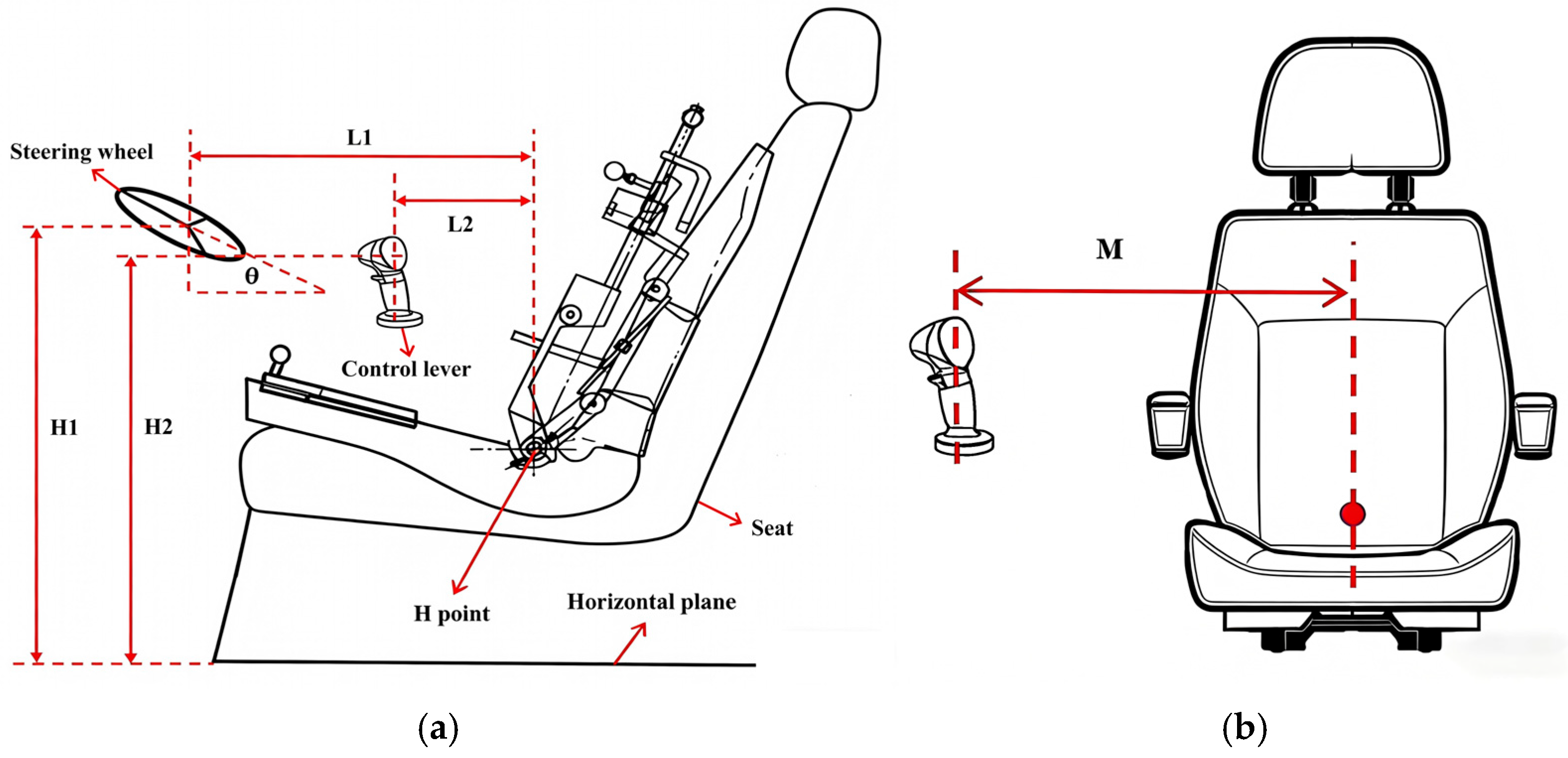
| Distance from steering wheel center to the H-point L1 (mm) | Distance from control lever center to the H-point L2 (mm) |
| Height of steering wheel center from ground H1 (mm) | Height of control lever from ground H2 (mm) |
| Angle between steering wheel and horizontal plane θ (°) | Horizontal distance from control lever center to H-point M (mm) |
| Factor | Level 1 | Level 2 | Level 3 | Level 4 | Level 5 |
|---|---|---|---|---|---|
| L1 (mm) | 400 | 425 | 450 | 475 | 500 |
| (°) | 0 | 10 | 20 | 30 | 40 |
| H1 (mm) | 720 | 745 | 770 | 795 | 820 |
| L2 (mm) | 300 | 320 | 340 | 360 | 380 |
| H2 (mm) | 710 | 735 | 760 | 785 | 810 |
| M (mm) | 375 | 400 | 425 | 450 | 475 |
| Seated Shoulder Height (mm) | Shoulder Width (mm) | Seated Elbow Height (mm) | Hand Length (mm) | Upper Arm Length (mm) | Forearm Length (mm) | Hand Width (mm) |
|---|---|---|---|---|---|---|
| 1455 | 630 | 275 | 180 | 332 | 240 | 95 |
| Parameter | Optimal Value | 95% CI Lower Bound | 95% CI Upper Bound | CI Width | Relative Width (% of Optimal) |
|---|---|---|---|---|---|
| L1 (mm) | 434 | 429 | 439 | 10 | 2.3% |
| H1 (mm) | 738 | 733 | 743 | 10 | 1.4% |
| θ (°) | 32 | 30.5 | 33.5 | 3.0 | 9.4% |
| L2 (mm) | 357 | 354 | 360 | 6 | 1.7% |
| H2 (mm) | 782 | 779 | 785 | 6 | 0.8% |
| M (mm) | 411 | 408 | 414 | 6 | 1.5% |
Disclaimer/Publisher’s Note: The statements, opinions and data contained in all publications are solely those of the individual author(s) and contributor(s) and not of MDPI and/or the editor(s). MDPI and/or the editor(s) disclaim responsibility for any injury to people or property resulting from any ideas, methods, instructions or products referred to in the content. |
© 2025 by the authors. Licensee MDPI, Basel, Switzerland. This article is an open access article distributed under the terms and conditions of the Creative Commons Attribution (CC BY) license.
Share and Cite
Tang, H.; Wei, Z.; Zhao, Y.; Li, Y.; He, Z.; Gong, J.; Wu, Y. Optimizing Cotton Picker Cab Layout Based on Upper-Limb Biomechanics Using the AMS-RF-DBO Framework. Appl. Sci. 2026, 16, 411. https://doi.org/10.3390/app16010411
Tang H, Wei Z, Zhao Y, Li Y, He Z, Gong J, Wu Y. Optimizing Cotton Picker Cab Layout Based on Upper-Limb Biomechanics Using the AMS-RF-DBO Framework. Applied Sciences. 2026; 16(1):411. https://doi.org/10.3390/app16010411
Chicago/Turabian StyleTang, Haocheng, Zikai Wei, Yongman Zhao, Yating Li, Zhongbiao He, Jingqi Gong, and Yuan Wu. 2026. "Optimizing Cotton Picker Cab Layout Based on Upper-Limb Biomechanics Using the AMS-RF-DBO Framework" Applied Sciences 16, no. 1: 411. https://doi.org/10.3390/app16010411
APA StyleTang, H., Wei, Z., Zhao, Y., Li, Y., He, Z., Gong, J., & Wu, Y. (2026). Optimizing Cotton Picker Cab Layout Based on Upper-Limb Biomechanics Using the AMS-RF-DBO Framework. Applied Sciences, 16(1), 411. https://doi.org/10.3390/app16010411