

Review

A Review of Numerical Simulation Tools for Coupling Earth’s Interior and Lithospheric Stress Fields


National Institute of Natural Hazards, Ministry of Emergency Management of China, No. 1 Rd. Anningzhuang, Beijing 100085, China
*
Author to whom correspondence should be addressed.
Appl. Sci. 2026, 16(1), 39; https://doi.org/10.3390/app16010039 (registering DOI)
Submission received: 17 November 2025 / Revised: 14 December 2025 / Accepted: 16 December 2025 / Published: 19 December 2025
(This article belongs to the Section Earth Sciences)

Abstract

As a bridge connecting processes in the Earth’s interior and the superficial lithosphere, distribution characteristics of global stress fields could benefit the verification of geodynamical models and reflect spatial variations of lithospheric strength. Numerical simulation of the global stress field could provide the temporal evolution process of the stress fields, and reveal the dynamic process of accumulation and release of the in situ stress fields as well as the quantitative relationship between force sources and the stress fields, which could compensate for the sparsity and insufficient representativeness of in situ stress observation data. To advance the investigation on the global stress fields, we review the state-of-the-art progress of numerical simulation tools for global stress fields and their applications, and show the existing problems as well as future trends.

1. Introduction

Global stress fields benefit greatly the investigation of geodynamic mechanisms of the Earth interior, seismic activity, the evolution of tectonics, and geophysical models. Firstly, as direct mechanical response to the Earth’s internal dynamic processes, a global stress field could reflect deep dynamic processes, and reveal the mechanical coupling mechanism between the lithosphere and the asthenosphere [1,2,3]. Secondly, the global stress field is the foundation for establishing earthquake prediction models and assessing seismic risks [4], whose distribution is highly correlated with the distribution of seismic zones and seismic focal mechanisms [5,6]. Thirdly, as surface tectonics are the long-term action of crustal stress [7], by restoring the paleo-stress fields of different geological periods, plate positions and the intensity of tectonics in the Earth’s history could be reconstructed, which could provide constraints for the research of continental evolution. Meanwhile, multi-dimensional constraints for the construction of unified Earth system models could be provided by the coupling relationship between the stress field and other geophysical fields such as the gravity field [8,9,10].
At present, the method of the investigation of the global stress field mainly includes statistical analysis methods based on measured or estimated data, and numerical simulation methods based on global dynamic models. For the statistical analysis methods, stress data are mainly given by focal mechanism solutions, in situ stress measurements, geological structure analysis, etc. [11,12]. The distribution characteristics of global tectonic stress field and its connection with plate motions based on the compilation of more than 7000 data are shown by World Stress Map (WSM) project in 1986 [13,14,15,16,17,18]. However, the uneven coverage and representativeness of stress data seriously limit the application of statistical analysis methods whose results are a comprehensive reflection of multiple factors and could not consider quantitatively the influence of a single factor on the stress fields.
To effectively address the limitations of statistical analysis methods for the global stress field, numerical simulation methods based on global dynamic models have been adopted to analyze the global stress field [19]. At present, combined with plate motion [15], lithospheric rheological parameters, and fault friction coefficients, numerical methods such as finite element (FE) [20,21] and discrete element (DEM) [22] are mainly used to simulate global or local stress distributions, which yield the development of software for mantle convection and plate tectonic simulation, including the Citcom series [23,24,25,26], ASPECT [27], and Gale [28], as well as software for lithospheric dynamics research, such as Shells [29], ShellSet [30], and SNAC [31] (the performance analysis of the software is provided in the Supplementary Materials). For multi-source data-driven refined simulation, the primary approach is to integrate multi-source data (e.g., seismic focal mechanisms, borehole breakout, and GPS deformation), optimize model parameters through inversion, and improve the spatial resolution of global or regional stress fields. Additionally, simulations of the temporal evolution of the stress field considering deep processes (e.g., mantle convection [32] and thermal structure [33]), as well as explanations of regional stress field directions using thermo-mechanical coupling models, have advanced software such as ASPECT [27], the Citcom series [23,24,25,26], I3ELVIS [34], and ShellSet [30]. Meanwhile, multi-source data assimilation models [35], thermo-mechanical coupling models [36], and global/regional strain rate models (GSRM) [2] have been proposed.
To advance numerical simulation research of global stress field, we summarize the state-of-the-art progress in numerical simulation software based on global dynamic models. Firstly, the fundamental equations involved in numerical simulation analysis are given, including motion equations, constitutive relations, and boundary conditions. Secondly, the state-of-the-art progress of numerical simulation tools used in numerical simulation of the global stress field are summarized, including basic principles, application scope, and analysis accuracy. Finally, application and future trends of numerical simulation software for global stress fields are discussed.

2. Fundamental Equations

For the global-stress-field investigation of the lithosphere, the lithosphere satisfies the following static equilibrium approximation because of slow movement [1].
σ i j , j + ρ g i = 0
where σ i j is the stress tensor, ρ the density, and g the gravitational acceleration. Assuming small deformation and low temperature, the brittle layer in the upper lithosphere can be expressed by a linear elastic constitutive relation [37]:
σ i j = λ δ i j ε k k + 2 μ ε i j
where λ and μ are L a m e constants, and ε i j = 1 2 ( u i , j + u j , i ) , u = ( u 1 , u 2 , u 3 ) the displacement field. Due to high temperature and the characteristic of exhibiting long-term deformation, the medium in the lower lithosphere is usually represented by a viscoelastic constitutive relation that couples the time-dependent decay of stress with elastic deformation [3].
σ i j · + σ i j / τ = 2 μ ε i j ·
where τ = η / μ is the relaxation time, and μ the viscosity. The viscoelastic deformation of the lithosphere manifests as the superposition of instantaneous elastic response and viscous time-dependent flow, and different models should be selected according to tectonic scenarios. The Maxwell model describes the viscoelasticity of a material by combining an elastic spring and a viscous dashpot in series. Its constitutive equation:
ε ˙ i j = ( 1 / 2 μ ) σ ˙ i j + ( 1 / 2 η ) σ i j
describes the relationship among elastic shear modulus, viscosity, and shear strain rate, which can accurately characterize the stress relaxation of the lower lithosphere under long-term tectonic loading. State the constitutive equation for the Kelvin–Voigt model as
σ i j = 2 μ ε i j + 2 η ε ˙ i j
It is more suitable for describing the delayed elastic deformation of the lithosphere under the constraint of mantle viscosity, such as the flexural deformation of the subducted slab.
Plastic deformation refers to the irreversible deformation of the lithosphere when stress exceeds its yield limit. Its core lies in the reasonable selection of the yield criterion requiring a comprehensive consideration of rock mechanical properties and stress states, while accounting for the regulatory effects of multiple factors such as hydrostatic pressure and shear stress on yield strength. The deformation process is accompanied by the development of micro-cracks within the rock and the degradation of macro-structures.
Cohesive modeling of different planes focuses on the failure process of weak interfaces. It requires differentiated settings of cohesive parameters (cohesion, fracture energy, and tangential/normal stiffness) based on the mechanical differences of various tectonic planes (e.g., subduction zone decoupling surfaces, crustal shear zones, and fault contact surfaces). The modeling must clarify the influence of plane geometry (strike, dip direction, and dip angle) on stress transfer. Through coordinated computation between interface elements and solid elements, it depicts the complete process of failure from local initiation to cross-plane propagation, while also considering the weakening effects of external factors such as temperature and fluids on interfacial mechanical properties.
For the boundary conditions, the frictional coupling between the lithosphere base and the asthenosphere is usually represented by the kinematic constraint of the no-slip condition
u 1 = u 2 = u 3 = 0
Kinematical constraint with the free-slip condition is imposed on the Earth’s surface or plate boundaries.
u n = 0 , u τ n = 0
where n is the boundary normal vector. For dynamic constraints, remote stress loading can be expressed as [38]
σ i j n j = T i
where T i denotes the surface force on the boundary. For the temperature boundary, the temperature field affects the stress field through rheology–temperature feedback by Dirichlet conditions and Neumann conditions. The initial state of the lithospheric stress field is determined by geological history, where the specification of the initial stress field, initial displacement/velocity field, and initial temperature field are required.
For the bottom boundary in the modeling of global-stress-field analysis of the lithosphere, the boundary drag force typically can be derived from mantle-convection analysis. Assuming incompressible fluid and negligible inertial force, mantle convection is described by the continuity equation, momentum equation, and energy equation. The viscous dissipation term in the energy equation is Φ = υ i . j σ i j . The viscous dissipation function (Φ) represents the rate at which mechanical energy is converted into thermal energy due to viscous resistance (shear heating). It must be defined through the strain rate tensor ( ε ˙ i j ), which in turn is derived from the velocity gradient tensor ( υ i , j ).
υ j , j = 0
ρ F i P , i + η ( υ i , j + υ j , i ) , j = 0
ρ ( c V T ) · + ρ υ j ( c V T ) , j = ( k T , j ) , j + Φ + ρ H
The boundary conditions for mantle convection need to constrain the velocity field and temperature field. For velocity boundary conditions, the upper boundary typically adopts the free-slip condition, while the lower boundary can use the no-slip condition, the free-slip condition, or a prescribed velocity. For temperature boundary conditions, the upper boundary employs the Dirichlet condition (with the known surface temperature) and the Neumann condition (with the known surface heat flux), and the lower boundary (referring to the core–mantle boundary) uses the Dirichlet condition (with the known core temperature) and the Neumann condition (with the known core heat flux). For initial conditions, the initial temperature field is usually set as a stable geothermal gradient or includes thermal anomalies, and the initial velocity field is typically set to zero or small perturbations are introduced to trigger convective instability.

3. Numerical Simulation Software for Global Stress Field

At present, numerical simulation software for the global stress field mainly focuses on lithospheric deformation analysis software including Shells http://peterbird.name/index.htm (accessed on 1 May 2024) [29], ShellSetv1.1.0 [30], Ellipsis https://github.com/ellipsis/ellipsis (accessed on 13 June 2022) [39], Ellipsis3Dv1.0.2 [40], Galev2.0.1 [28], I3ELVIS https://github.com/mspieg/I3ELVIS (accessed on 26 March 2021) [34], and SLIM3D https://github.com/Aracthor/SLIM3D (accessed on 10 July 2019) [41] shown in Table 1 and Figure 1. Meanwhile, mantle convection analysis software including ConManv3.0.0 [42], the Citcom series (CitcomCUv1.0.3, CitcomSv3.3.1, CitcomSVE-3.0) [23,24,25,26], ASPECTv3.0.0 [27], and SANCv1.2.0 [31] (the performance analysis of the software is provided in the Supplementary Materials) provides lower-boundary drag force constraints for lithospheric deformation models by numerically simulating thermally driven mantle flow. Then, the research progresses of these software tools are introduced from the perspectives of principle, dimensionality, and processing capabilities.

3.1. Lithospheric Deformation Analysis Software

For lithospheric deformation research, the widely used software mainly includes Shells, Shellset, Ellipsis, Ellipsis3D, Gale, I3ELVIS, SLIM3D, etc., as shown in Table 2.

3.1.1. Shells Software Series

The Shells software, developed in 1995, is based on the spherical thin-shell finite element method, which is mainly used for simulating regional or global lithospheric dynamics [29]. It has low memory requirements, with memory usage per node being less than 2 GB for global-scale models. It supports large global computation scales, enabling simulations of global plates (104–105 km). By adopting domain decomposition parallel technology, it can achieve real-time computation of global models on 10–20 CPU cores, with time steps > 104 years. This software simplifies complex 3D problems into 2D horizontal equilibrium problems, and the lithospheric strength is characterized through vertical integration and isostatic approximation. This method overcomes the limitations of Cartesian coordinates [43,44] and can effectively simulate global plate motion and tectonic deformation. Verification results show that rigid plate rotation tests ensure no spurious deformation and the strain rate consistency within small elements is consistent with the results of the traditional planar Earth program PLATES. The error in the toroidal free oscillation period of global mesh simulations is within 0.5%. The torque balance error is less than 10−5 of the total torque and the stress field balance error is within 0.1% [29].
ShellSet is a parallel neotectonic simulation software package based on the MPI framework, developed from Shells. Its memory usage is 30–50% higher than that of Shells [30]. It supports large global computation scales based on MPI-parallelized meshes with static pre-refinement capability, and it can handle global scales of 104 km, balancing resolution and efficiency to a certain extent. It can complete million-year-scale simulations on 50–100 CPU cores, with time steps of 103–104 years. This software includes three subroutines including OrbData, Shells, and OrbScore. It automatically optimizes model parameters via mesh search, realizes multi-model parallel computation using MPI, and retains the thread-level parallelism of Intel MKL to improve the solution efficiency of single models. Its core advantage lies in using the MPI framework to realize automatic parallel search and optimization of multi-model parameters, which significantly improves simulation efficiency. It also supports integrating multi-source observational data (such as GPS and stress directions) to evaluate models. However, its performance is limited by memory access patterns, which relies on a specific Intel toolchain and only runs in Linux-based environments. Additionally, it lacks true dynamic adaptive mesh refinement (AMR) capability. The static pre-refinement requires manual parameter setting in advance, leading to insufficient flexibility in mesh adjustment during simulation, and the flexibility of parameter checking also needs to be improved.

3.1.2. Ellipsis Software Series

The Ellipsis software is a 2D tool that employs a particle–mesh hybrid method to simulate large deformations of viscoelastic geological materials [39,45]. Ellipsis has moderate memory requirements, where for global models with a resolution of 50–100 km, memory usage per node is 8–16 GB. It supports global computation scales of 104 km, but its resolution is constrained by memory, where element scales rarely go below 20 km. Based on MPI distributed memory parallelism, it can complete million-year-scale quasi-static deformation simulations using 100–200 CPU cores. This software combines a fixed Eulerian mesh with moving Lagrangian particles, where the Eulerian mesh provides an efficient computational framework and Lagrangian particles track history-dependent properties such as material interfaces and strain history, effectively avoiding mesh distortion issues in large deformations that occur with pure Lagrangian methods.
Ellipsis3D is the 3D extended version of Ellipsis. It also employs a particle–mesh hybrid framework as its core to simulate large deformation processes such as mantle convection and lithospheric deformation. It can track strain history and supports complex physical processes including viscoelastic rheology and brittle fracture [40]. Ellipsis3D has high memory requirements, where for global models with 50 km resolution, memory usage per node exceeds 64 GB. It has a moderate global computation scale, where constrained by memory and computational load, global model resolution is typically 30–50 km, making it difficult to achieve high-precision simulations below 10 km globally. It requires 500–1000 CPU cores or GPU acceleration, with million-year-scale simulations taking several days to weeks.

3.1.3. Gale

Gale is a parallel 2D and 3D finite element software jointly developed by the Computational Infrastructure for Geodynamics (CIG), Victoria Partnership for Advanced Computing (VPAC), and Monash University. It is mainly used for large-scale tectonic modeling, focusing on orogeny, rifting, and subduction processes, and can also be extended to scenarios such as the evolution of crustal fault systems [28]. Gale has moderate to high memory requirements, with memory usage per node being 10–24 GB for global-scale simulations. It supports large global computation scales, where the spectral element method enables efficient handling of global 104 km scales, and it maintains a low number of elements even at a resolution of 20–50 km. Combined with GPU + MPI hybrid parallelism, 100–200 computational nodes can complete 10-million-year-scale simulations. The core functions of Gale include solving the Stokes equations and heat transfer equations, supporting a variety of viscous and plastic rheological models. It tracks material properties via particles to accurately simulate large deformations and interface tracking, and is equipped with realistic free surfaces and diverse boundary conditions [28]. In addition, this software is an efficient tool for large-scale tectonic modeling, particularly excelling in simulating complex rheology and large deformations. However, its accuracy is limited by boundary conditions and solvers. Future improvements will need to optimize and expand application scenarios through methods such as friction modeling and geothermal coupling.

3.1.4. I3ELVIS

I3ELVIS is a geodynamic simulation software based on 3D Cartesian grids. It employs a hybrid Lagrangian–Eulerian framework, combining conservative finite difference and marker-in-cell techniques to handle visco-elasto-plastic rheology, self-gravitation, and thermo-mechanical coupling. It solves the continuity and momentum equations via a multigrid method [34]. I3ELVIS has moderate memory requirements, where it features a global base resolution of 50–100 km, with deformation zones such as rifts and mid-ocean ridges refined to 5–10 km, and memory usage per node is 6–12 GB for global-scale simulations. It supports large global computation scales, block-structured MPI parallelism enables efficient handling of global 104 km scales, and refinement in deformation zones does not significantly increase global computational load. With 50–100 CPUs, it can complete million-year-scale simulations of processes like rift evolution and plate extension. This software supports 3D petrological–thermo-mechanical coupling models, capable of handling complex geological processes including free surface development, slab bending, back-arc spreading, and mantle wedge hydration and melting. It is suitable for research on regional tectonic dynamics in subduction zones. However, it has high computational resource requirements, needs to process a large number of markers, and has strict demands on heap memory and computational performance. Additionally, while the software relies on Cartesian grids (optimized through a “spherical-Cartesian” method), its accuracy may be inferior to dedicated spherical mesh models when simulating highly non-spherical or complex geometric structures.

3.1.5. SLIM3D

As a 3D thermo-mechanical coupled finite element software developed based on C++, SLIM3D adopts the Arbitrary Lagrangian–Eulerian (ALE) formulation combined with particle tracking technology to solve the momentum and energy conservation equations, and simulate lithospheric deformation via an elasto-viscoplastic rheological model [41]. SLIM3D has moderate to high memory requirements, where for global models with a resolution of 30–50 km, memory usage per node is 12–24 GB for global-scale simulations. It supports large global computation scales, is naturally compatible with spherical elements, and requires 200–400 CPUs to enable a resolution as low as 10–20 km. The MPI-parallelized iterative solver can handle 10-million-year-scale global deformation simulations. This software is applicable to tectonic deformation simulations at the lithospheric scale, and can accurately characterize processes such as plate boundary compression–torsion, crustal shear zone formation, and mantle ductile flow. In terms of analysis accuracy, it achieves a maximum deflection error of 2.6%, bending stress error of 0.8%, and cylindrical sinking velocity error < 1.7%. It can handle 3D models with approximately 100,000 mesh nodes on an ordinary PC. However, its limitations are also prominent, where the time step must be controlled at the annual scale, leading to high computational costs for long-time-series simulations. Key parameters such as viscosity rely on calibration with observational data, and differences in parameter values across studies may reduce the consistency of results. When applied at the global scale, deep processes such as mantle convection need to be simplified, and simplified assumptions about fault geometry and fluid–thermal coupling may introduce deviations in local stress simulations.

3.1.6. SNAC

SNAC (Spherical New Advection Code) is a 3D numerical simulation software based on the explicit Lagrangian finite difference method, used for simulating lithospheric elasto-viscoplastic deformation [31]. SNAC has moderate memory requirements for global models with a resolution of 50–100 km, and memory usage per node is 8–16 GB. It has a moderate global computation scale, supporting transient deformation simulations at the global 104 km scale. With 100–200 CPU/GPU cores, it can achieve high-precision dynamic processes with time steps less than 10−3 years. Million-year long-term simulations require thousands of cores and take several months. To make million-year-scale simulations computationally feasible, SNAC adopts mass scaling technology instead of density scaling to relax the stability constraints of explicit time integration. The core of this software employs an energy-based finite difference method to solve the force balance equations of elasto-viscoplastic materials. Incorporating heat diffusion calculations, it can simulate lithospheric deformation under thermal coupling. The advantages of SNAC lie in its strong capability in simulating highly nonlinear deformation, support for strain weakening and elasto-viscoplastic rheology, and good numerical stability. However, the software has limitations: plastic parameters such as strain weakening rates lack clear geological constraints, and different parameter settings may lead to model discrepancies.

3.2. Mantle Convection Analysis Software

The Citcom Series [23] and Conman [42] are major software for studying mantle convection. In addition, there is also the ASPECT software [27], as shown in Table 3.

3.2.1. ConMan

ConMan is a numerical simulation software based on the finite element method, mainly used to study the two-dimensional incompressible thermal convection process of the Earth’s mantle [42]. Its core design focuses on optimizing code performance through vectorization technology to fully leverage the hardware advantages of vector supercomputers, supporting the simulation of mantle convection scenarios with constant or temperature-dependent viscosity. In terms of technical implementation, this software adopts the penalty method to solve the momentum equation to eliminate pressure boundary condition problems, handles the energy equation via the SUPG (Streamline Upwind Petrov-Galerkin) method to address numerical oscillations in advection-dominated problems, and uses an explicit predictor-corrector algorithm for time stepping. Its vectorization optimizations include techniques such as element grouping, loop unrolling, and chaining operations, enabling efficient computation on vector computers.

3.2.2. Citcom Software Series

Citcom [23,46,47] and CitcomCU [25] are basic versions of mantle convection simulation software based on finite element method, supporting two-dimensional and three-dimensional simulations. Their core adopts the Uzawa algorithm and Gauss–Seidel multigrid method to solve Stokes flow, and can effectively handle viscosity contrasts up to 1030. Moreover, they are suitable for simulating processes such as subduction zones and mantle plumes via the augmented Lagrangian method. To achieve convergence in global-scale simulations, these software packages introduce critical simplifying assumptions and adopt the Boussinesq approximation to neglect mantle compressibility and discard inertial terms in the momentum equation based on the infinite Prandtl number hypothesis—both approximations are valid for the viscous-dominated, slow-flow regime of the mantle.
CitcomCU is their parallel version, and its core employs the Boussinesq approximation. It treats the mantle as an incompressible, viscous, and anelastic fluid, assumes an infinite Prandtl number, and enables simulations through the configuration of initial condition files.
CitcomS [48] is a mantle convection simulation software specifically designed for three-dimensional spherical shell models. It extends robust thermal–chemical convection capabilities using the particle-ratio method. Adopting non-orthogonal meshes and parallel computing [49], it features notable high accuracy (errors of key parameters are typically less than 1%) and can simulate complex physical processes such as temperature/composition-dependent viscosity.
CitcomSVE [26,50] is a specialized software package built upon CitcomS, mainly used for simulating viscoelastic deformation problems (e.g., glacial isostatic adjustment). It modifies the rheology of the original model to viscoelasticity and the numerical formulation to a Lagrangian description, and supports a compressible mantle (PREM model), inhomogeneous viscosity, and sea-level coupling. Due to the strong dependence of Sub-Viscosity Envelope (SVE) parameterization on initial models, when CitcomSVE provides dynamic boundary constraints for global stress field simulations as discussed in Section 4.1, it may lead to non-unique solutions of stress field results. This is because slight adjustments to SVE key parameters (such as the viscosity of the sub-viscosity envelope) within a reasonable geological range will change the calculated lithospheric basal traction, thereby causing deviations in stress distribution. However, in tectonically active zones dominated by strong dynamic forces, the robustness of stress directions is relatively high, with deviations usually controlled within 5°. In stable regions, the robustness is weaker, and deviations may exceed 15° without strict calibration of the initial model.

3.2.3. ASPECT

ASPECT is based on the Boussinesq approximation and combines adaptive mesh refinement (AMR), high-order spatiotemporal discretization, efficient linear solvers, and parallelization techniques to achieve efficient simulation of 2D and 3D mantle convection [51]. This software employs a particle–mesh hybrid method to handle large deformations and supports MPI (Message Passing Interface) and thread parallelism, scalable to thousands of processors.
The core advantage of this software’s solver stems from the combined application of block triangular preconditioning and algebraic multigrid (AMG). This approach enables efficient handling of the Stokes equations in mantle convection simulations. For ultra-large-scale problems involving hundreds of millions of unknowns, the solver demonstrates excellent performance under weak scaling with a fixed number of degrees of freedom per core, the computation time remains stable under strong scaling, and increasing the number of cores significantly reduces computation time, fully meeting high-performance computing requirements [27,51].

4. Application in the Analysis of Global Stress Field

4.1. Applications of Shells Software Series

In 1998, Bird [52] used the Shells software to construct a global lithospheric model incorporating realistic topography, thermal structure, and faults, verifying the rationality of traditional hypotheses such as “plates are driven by density anomalies of oceanic plates”. In 2008, Bird and Liu [53] employed Shells to build a global lithospheric finite element model. By decomposing plate torques into three categories including lithostatic pressure, side strength, and basal strength, they quantified their equilibrium relationship and clarified that deep mantle convection is the primary driver of plate motion. Tunini constructed models of six major plates (including the Arabian, Indian, and Eurasian plates) using Shells, which contained 4467 continuous elements and 435 fault elements. Integrating parameters such as topographic relief, gravitational potential energy differences, variations in crust–lithospheric mantle thickness, and thermal regimes, and by setting key conditions, he accurately characterized the stress transfer process of lateral tectonic motion [54]. This work revealed the stress distribution patterns between rigid blocks and weak deformation zones, providing reliable predictions of stress directions and strain rates for data-scarce regions.
Wang Guan et al. utilized the ShellSet software to optimize simulations of the global lithospheric stress field by integrating fine-scale lithospheric layer data from the southeastern margin of the Tibetan Plateau [55]. Through a parallel computing framework, it converts layered structures derived from seismic exploration (e.g., the rigid upper crust layer and the plastic flow layers in the middle-lower crust) into inputs for a three-dimensional parameterized model. A grid search algorithm is used to conduct parallel simulations of key parameters, quantifying the influence of different layer configurations on the regional stress field. Results show that when the simulation incorporates the lithospheric thickness abrupt zone at the western margin of the Sichuan–Yunnan block, the consistency between the principal compressive stress orientation and 166 focal mechanism solutions increases to 68%, and the residual with the crustal motion velocity field observed by GPS decreases to 2.8 mm/a. The “regional fine-structure constraint–global dynamic mechanism coupling” paradigm formed in this process not only reveals the correlation between stress localization at the southeastern margin of the Tibetan Plateau and the migration of deep low-velocity bodies but also provides a generalizable technical approach for simulating stress fields in global plate boundary zones. It is particularly advantageous in addressing the coupling between the three-dimensional structural heterogeneity of the lithosphere and global stress transfer driven by mantle flow. In this study, CitcomSVE provides global-scale dynamic boundaries, which are combined with ShellSet’s regional simulations to enable coupled analysis from global dynamic backgrounds to local stress responses.

4.2. Applications of Ellipsis Software Series

Whitney et al. used Ellipsis primarily for simulating the thermo-mechanical coupling of crustal melting during continental subduction processes [56]. By integrating mantle dynamics with lithospheric behavior, they revealed the key mechanisms of orogenic belt evolution and verified that the thermal input from the mantle provides energy for crustal melting. The density difference between the mantle and lithosphere drives buoyant flow, which controls the direction and rate of subducting plate exhumation. The melting and rheological properties of the lithosphere determine the width of orogenic belts, the efficiency of plateau formation, and the preservation and exhumation patterns of ultra-high-pressure (UHP) rocks.
Ellipsis3D, on the other hand, can accurately capture the thermo-mechanical coupling effects during large lithospheric deformations. It supports large-scale simulations of model domains exceeding 2000 km in scale and efficiently solves the global lithospheric stress field through parallel computing and multigrid techniques. It can receive boundary conditions (such as asthenospheric drag forces and mantle plume temperature anomalies) provided by mantle dynamics software including CitcomS and ConMan [57,58], while feeding back the lithospheric stress response to adjust the mantle convection model forming a “mantle-driven–lithospheric response” bidirectional coupling. To ensure numerical stability during this cross-scale coupling, Ellipsis3D adopts a staggered time-stepping algorithm, where the mechanical solver uses a relatively small time step (10–100 years) to capture rapid stress changes, while the thermal solver employs a larger adaptive time step (100–1000 years) synchronized with the mechanical solver at fixed intervals. A thermal–mechanical consistency check is implemented at each synchronization point, and if the temperature-induced viscosity change exceeds a preset threshold (5%), the thermal time step is automatically reduced to maintain solution stability. This coupling enables the resolution of phenomena like stress gradients in plate boundary zones and stress accumulation at passive margins. By a non-Newtonian fluid viscosity model, Ellipsis3D reveals the control of lithospheric thickness on global stress distribution, providing numerical support for the prediction of subduction initiation and the inversion of paleo-stress fields. Together, these two pieces of software (Ellipsis and Ellipsis3D) form a cross-scale simulation system that spans from deep mantle dynamics to shallow lithospheric responses [59].
Ellipsis and its three-dimensional extension, Ellipsis3D, serve as core tools employing a particle–mesh hybrid method for simulating large deformations in geological materials, playing a key role in investigating the frontier topic of “self-consistent plate generation” in geodynamics. This class of software, by incorporating temperature-dependent viscosity and a pseudo-plastic yield criterion, successfully achieves the spontaneous emergence of plate tectonic behavior from mantle convection, without the need to prescribe plate boundaries or motions in advance. The pioneering study by Tackley (2000) [60] systematically explored the control of yield stress on convective patterns in three-dimensional Cartesian geometry, identifying distinct regimes such as mobile lid, episodic lid, and stagnant lid. It demonstrated that, under an appropriate yield stress, an approximation of plate-like behavior could be generated, featuring a reasonable toroidal-to-poloidal velocity ratio and strain localization. van Heck and Tackley (2008) [61] further extended this framework to the more realistic three-dimensional spherical geometry, systematically investigating the influence of varying lithospheric yield stress on the morphology of self-generated plates. Their research found that at low yield stresses, a “great circle” subduction zone forms. At intermediate yield stresses, plates, spreading centers, and subduction zones form and are destroyed over time. At specific intermediate-to-high yield stresses, two hemispherical plates separated by a great circle boundary exhibiting both spreading and subduction characteristics can form. The study also noted that, compared to Cartesian geometry, spherical geometry yields a higher toroidal-to-poloidal ratio of the surface velocity field, which is closer to Earth’s observations. Together, these works reveal the powerful capability of the Ellipsis software series in simulating the self-generation process of global-scale plate tectonics governed by the combined effects of complex rheological constitutive laws and realistic geometric factors.

4.3. Applications of Gale

In their study of small-scale convection in the upper mantle and crustal dynamics in Southern California, Fay et al. used the Gale software to convert the upper mantle shear wave velocity structure obtained via seismic tomography by Yang and Forsyth [62] into quantitative mantle flow fields, Moho tractions, and crustal stress fields [63]. The software supports multi-scenario viscosity simulations and outputs vertical/horizontal tractions at the base of the crust as well as principal crustal stresses at 20 km depth, providing quantitative data for analyzing deformation mechanisms. CitcomCU, a software supporting 3D spherical shell simulations of mantle thermochemical convection, can solve governing equations to output dynamically updated data on long-term evolutionary dynamic flow fields, temperature fields, and density heterogeneities in the upper mantle of Southern California. Using these dynamic data as deep boundary conditions for Gale, it addresses Gale’s limitation of relying on static density inputs, making Gale’s simulated mantle flow more consistent with real mantle dynamic processes and thereby improving the accuracy of calculated crustal tractions and stress fields.

4.4. Applications of I3ELVIS

Gerya et al. conducted high-resolution 3D thermo-mechanical simulations using the I3ELVIS software to study how mantle plumes induce the formation of the world’s first subduction zones [34]. I3ELVIS overcomes the limitation that 2D simulations cannot reproduce 3D spherical geodynamic processes, enabling the simulation of real-world phenomena such as annular slab tearing and independent retreat of multiple subduction zones. This model successfully reconstructs the complete process from mantle plume upwelling to self-sustaining subduction, revealing the controlling roles of three key factors, which are lithospheric negative buoyancy, magmatic weakening, and hydration lubrication. It also indicates that in the hotter environment of the early Earth, only older plates (>60–70 Myr) were prone to subduction. When I3ELVIS simulates slab tearing and slab retreat during subduction, it is necessary to clarify the direction and intensity of lateral drag forces from mantle flow. CitcomS, which can output 3D mantle flow vectors, helps address the issue of simplified slab movement in I3ELVIS. Meanwhile, through consistency verification with semi-analytical solutions [64] and precision quantification of thermochemical convection [65], CitcomS ensures the reliability of parameters such as mantle viscosity and thermal expansion coefficient input into I3ELVIS. Ultimately, this helps I3ELVIS more accurately reveal how the three factors (negatively buoyant lithosphere, magmatic weakening, and hydrated crustal lubrication) control subduction initiation, as well as the correlation between plate age and subduction feasibility in the early Earth, achieving a numerical simulation closed-loop of “mantle convection → mantle plume movement → lithospheric subduction.”

4.5. Applications of SNAC

SNAC simulates brittle deformation induced by thermal stress in oceanic lithosphere by coupling mantle thermal processes with lithospheric rheological properties [66]. This model is based on setting the initial temperature field using a half-space cooling model, and correlates temperature changes with the pressure field through thermal expansion and bulk modulus, thereby driving the evolution of the stress field. However, the temperature boundary conditions of the half-space cooling model are not constant—mantle convection can cause local temperature anomalies. CitcomCU can provide SNAC with corrections to the initial temperature field that conform to actual mantle dynamics by simulating mantle convection under different Rayleigh numbers [66]. SNAC combines mantle heat-driven stress accumulation with the strength properties of the lithosphere, revealing the controlling mechanisms of crustal thickness thresholds and creep strength on principal crack spacing, and providing numerical support for the correlation between the global lithospheric stress field and fault zone distribution [67].

4.6. Applications of ASPECT

The core application of ASPECT lies in simulating mantle dynamic processes [27] and quantifying its control over the lithospheric stress field. It has successfully simulated geodynamic processes at regional to quasi-global scales, including subduction zone delamination [68], multi-driving–source coupling [69], and upper mantle regulation [70], which validates its strong capability in quantifying deep mantle driving sources and lithospheric stress responses [71,72,73].
ASPECT is a high-performance parallel finite element code originally designed for modeling mantle thermal convection. It features modern numerical methods, powerful parallel computing capabilities, and excellent extensibility. This study further extends the application scope of ASPECT from traditional global mantle convection simulations to lithosphere-scale subduction process modeling. By implementing a frictional plasticity (Drucker–Prager) criterion and incorporating nonlinear viscous rheological mechanisms such as diffusion creep and dislocation creep, ASPECT can now handle complex multi-material, nonlinear viscoplastic behavior, supporting thermo-mechanically coupled long-term dynamic simulations. The correctness and reliability of the implemented models were validated through four classic two-dimensional benchmark tests (the indentor experiment, brick experiment, numerical sandbox experiment, and slab detachment experiment). Furthermore, the potential of ASPECT in three-dimensional oceanic subduction modeling was demonstrated. These efforts establish ASPECT as a community open-source tool suitable for high-resolution, nonlinear rheology subduction modeling, promoting its practical application in lithospheric dynamics and plate subduction research [51].

5. Conclusions

This paper systematically summarizes the latest research progress of global-stress-field numerical simulation software and their applications in global-stress-field analysis. Targeting mantle driving and lithospheric response in global-stress-field simulation, a set of numerical simulation software with clear classification and technical adaptation have been developed. For mantle convection software, ConMan [42] is suitable for 2D subduction zone analysis and mantle plume–plate coupling analysis. The Citcom Series [23,24,25,26] is applicable to global mantle convection and thermochemical convection simulations. ASPECT [27] is used for simulations of high-gradient regions at regional to global scales. For lithospheric deformation software, Shells [29] and ShellSet [30] are suitable for simulating global or regional plate motion and faulting. Ellipsis [39] and Ellipsis3D [40] are applicable to simulations of large deformation in subduction zones and melting during continental collision. SLM3D [41] is used for simulations of shear zones at the lithospheric scale and stress evolution in orogenic belts. For global-stress-field simulation involving layer coupling, mantle convection simulated by software such as CitcomS [48] and ASPECT provides traction at the base of the lithosphere, and the global lithospheric stress field is derived from lithospheric deformation simulations conducted by software including ShellSet and Ellipsis3D.
However, current numerical simulation software for global stress fields still has the following limitations. There is insufficient coupling among multi-physical fields, as the connection between deep mantle convection models and shallow lithospheric deformation models remains weak. Differences in resolution across scales cause distorted stress characterization in high-gradient regions like subduction zones. Moreover, balancing computational efficiency and accuracy is challenging, since high-resolution simulations require enormous resources and adaptive mesh technology brings about significant memory overhead. Additionally, because verification systems are incomplete, including no unified geological calibration of rheological parameters, most software only enables single-data verification and fails to conduct comprehensive quantitative evaluation with multi-source observational data. From the perspective of data assimilation applications, existing software has initially laid a technical foundation, such as ASPECT’s dual-module design supporting adjoint methods and ensemble Kalman filtering, the adjoint-based viscosity inversion of the Citcom series, and the simplified Kalman filtering of ShellSet, all of which provide diverse technical pathways for integrating multi-source data (seismic tomography, GPS, and focal mechanism solutions).
To address the above limitations, future development should focus on targeted improvement of existing software and construction of integrated technical systems with three key directions. First, the coupling capability of software chains and multi-physical fields should be strengthened. For the Citcom series, the Boussinesq approximation and infinite Prandtl number hypothesis should be partially relaxed, and a dynamic parameter transfer interface should be established with ShellSet to realize the feedback of lithospheric deformation to mantle flow. For ASPECT, the coupling module with I3ELVIS should be expanded to integrate petrological–thermo-mechanical processes into mantle convection simulations. At the same time, aiming at the weak interface simulation needs of SLIM3D and I3ELVIS, a unified cohesive zone model (CZM) parameter library should be built to standardize the description of interface failure. Second, the computational efficiency of software based on their technical characteristics should be optimized. For ShellSet, dynamic AMR technology should be introduced to replace static pre-refinement, and improve memory access efficiency to break the dependence on Intel toolchains. For Ellipsis3D, GPU-accelerated solvers for key modules such as heat conduction and stress solving should be developed to reduce the time cost of global transient simulations. For SNAC, adaptive time stepping technology combined with mass scaling should be adopted to relax the stability constraints of explicit algorithms and improve the efficiency of long-term simulations. Third, a software-specific verification and parameter calibration system should be established. For ConMan, the 2D benchmark test set covering typical subduction and plume scenarios should be expanded. For the Citcom series and ASPECT, a global mantle viscosity and thermal parameter database based on seismic tomography and geothermal data should be built. For all software, a multi-source data verification platform that integrates GPS velocity fields, focal mechanisms, and borehole breakout data, and uses weighted indicators such as stress direction consistency and strain rate error, should be developed to realize quantitative evaluation of simulation results. Only by targeting the technical shortcomings of different software and promoting the integration of functions and standardization of parameters can the numerical simulation of global stress fields truly break through the current bottlenecks and better serve geodynamic research and seismic risk assessment.
Beyond the software detailed above, the geodynamic community benefits from other specialized tools. G-Plates [74] is the premier software for interactive plate tectonic reconstructions and visualizing geodata through geological time. It provides essential kinematic boundary conditions and palaeogeographic constraints for dynamic models. StagLab offers a suite of efficient, 2D/3D spectral methods for studying mantle convection and planetary dynamics, prized for its diagnostics and scientific visualization capabilities [75].
The future trends points toward integrated modeling frameworks that couple multiple specialized codes. For example, a workflow might use G-Plates for initial plate configurations, StagLab or ASPECT for global mantle convection, and ShellSet or I3ELVIS for high-resolution lithospheric deformation, with data exchanged via common interfaces. Community initiatives like the Geodynamic World Builder aim to streamline the setup of such complex, multi-scale initial conditions.

Supplementary Materials

The following supporting information can be downloaded at: https://www.mdpi.com/article/10.3390/app16010039/s1.

Funding

This research was funded by Major National Science and Technology Project of Deep Earth Program (No. 2024ZD1000702).

Institutional Review Board Statement

Not applicable.

Informed Consent Statement

Not applicable.

Data Availability Statement

No new data were created or analyzed in this study. Data sharing is not applicable to this article.

Conflicts of Interest

The authors declare no conflict of interest.

References

  1. Hager, B.H.; O’Connell, R.J. A simple global model of plate dynamics and mantle convection. J. Geophys. Res. Solid Earth 1981, 86, 4843–4867. [Google Scholar] [CrossRef]
  2. Kreemer, C.; Holt, W.E.; Haines, A.J. An integrated global model of present-day plate motions and plate boundary deformation. Geophys. J. Int. 2003, 154, 8–34. [Google Scholar] [CrossRef]
  3. Karato, S.-I.; Wu, P. Rheology of the upper mantle: A synthesis. Science 1993, 260, 771–778. [Google Scholar] [CrossRef]
  4. Xu, Z.H.; Wang, S.Y.; Huang, Y.R.; Gao, A.J. The tectonic stress field of chinese continent deduced from a great number of earthquakes. Chin. J. Geophys. 1989, 32, 636–647. [Google Scholar]
  5. Cheng, Q.M. Long-range effects of mid-ocean ridge dynamics on earthquakes, magmatic activities, and mineralization events in plate subduction zones. Earth Sci. Front. 2024, 31, 1–14. [Google Scholar]
  6. Dong, Y.P.; Hui, P.; Wang, B.; Sun, S.S.; Yao, H.J.; Liu, J.L.; Zang, R.T.; Li, Y.C.; Luo, Q.X. Transform faults and transfer faults: Plate boundary and intra-continental tectonic dynamics transition. Sci. China Earth Sci. 2025, 68, 3867–3911. [Google Scholar] [CrossRef]
  7. Chen, P.G.; He, X.H.; Xu, S.F.; Zheng, W.J.; Liu, T.; Liu, Z.L. Earthquake relocation and regional stress field around the eastern Himalayan syntaxis. Rev. Geophys. Planet. Phys. 2023, 54, 667–683. [Google Scholar]
  8. Yong, X.Y. A research on the conversion of gravity field into regional tectonic stress field. Chin. J. Geophys. 1994, 37, 259–271. [Google Scholar]
  9. Guo, F.X.; Xiao, Y.; Miao, Y.W. Inversion of tectonic stress field in Sichuan-Yunnan area using EGM2008 model and ground gravity observation. J. Geod. Geodyn. 2015, 35, 445–448. [Google Scholar]
  10. Mao, J.L.; Hui, L.; Zhu, Y.Q.; Li, Z.Y. Research on horizontal tectonic stress field based on EGM2008 in western Sichuan. J. Geod. Geodyn. 2019, 39, 307–312. [Google Scholar]
  11. Xie, F.R.; Cui, X.F.; Zhao, J.T. Analysis of global tectonic stress field. Earth Sci. Front. 2003, 10, 22–30. [Google Scholar]
  12. Xie, F.R.; Cui, X.F.; Zhao, J.T.; Chen, Q.; Li, H. Regional division of the recent tectonic stress field in China and adjacent area. Chin. J. Geophys. 2004, 47, 654–662. [Google Scholar]
  13. Zoback, M.L.; Zoback, M.D. Tectonic stress field of the continental united states. Geol. Soc. Am. Mem. 1989, 172, 523–540. [Google Scholar]
  14. Zoback, M.L.; Zoback, M.D.; Adams, J.; Assumpção, M.; Bell, S.; Bergman, E.A.; Blümling, P.; Brereton, N.R.; Denham, D.; Ding, J.; et al. Global patterns of tectonic stress. Nature 1989, 341, 291–298. [Google Scholar] [CrossRef]
  15. Gripp, A.E.; Gordon, R.G. Current plate velocities relative to the hotspots incorporating the NUVEL-1 global plate motion model. Geophys. Res. Lett. 1990, 17, 1109–1112. [Google Scholar] [CrossRef]
  16. Zoback, M.L. First-and second-order patterns of stress in the lithosphere: The World Stress Map Project. J. Geophys. Res. Solid Earth 1992, 97, 11703–11728. [Google Scholar] [CrossRef]
  17. Huang, X.Y.; Wei, D.P.; Chen, Q.F.; Chen, H. An analysis on short-wave components of the global stress field. Acta Seism. Sin. 2003, 25, 40–46. [Google Scholar] [CrossRef]
  18. Huang, X.Y.; Wei, D.P. Global plate motions and the influence on the stress fields near the plate boundary. J. Grad. Sch. Chin. Acad. Sci. 2004, 21, 227–232. [Google Scholar]
  19. Zhao, S.; MUuller, R.D. Three-dimensional finite-element modelling of the tectonic stress field in continental Australia. Geol. Soc. Am. Mem. 2003, 372, 71–89. [Google Scholar]
  20. Lithgow-Bertelloni, C.; Guynn, J.H. Origin of the lithospheric stress field. J. Geophys. Res. Solid Earth 2004, 109, B01408. [Google Scholar] [CrossRef]
  21. Ghosh, A.; Holt, W.E. Plate motions and stresses from global dynamic models. Science 2012, 335, 838–843. [Google Scholar] [CrossRef]
  22. Cundall, P.A. Formulation of a three-dimensional distinct element model—Part I. A scheme to detect and represent contacts in a system composed of many polyhedral blocks. Int. J. Rock Mech. Min. Sci. Geomech. Abstr. 1988, 25, 107–116. [Google Scholar] [CrossRef]
  23. Moresi, L.; Zhong, S.; Gurnis, M. The accuracy of finite element solutions of Stokes’s flow with strongly varying viscosity. Phys. Earth Planet. Inter. 1996, 97, 83–94. [Google Scholar] [CrossRef]
  24. Tan, E.; Choi, E.; Thoutireddy, P.; Gurnis, M.; Aivazis, M. GeoFramework: Coupling multiple models of mantle convection within a computational framework. Geochem. Geophys. Geosyst. 2006, 7, Q06001. [Google Scholar] [CrossRef]
  25. Assunção, J.; Sacek, V. Benchmark comparison study for mantle thermal convection using the CitcomCU numerical code. In Proceedings of the 15th International Congress of the Brazilian Geophysical Society and EXPOGEF, Rio de Janeiro, Brazil, 31 July –3 August 2017; pp. 1630–1635. [Google Scholar]
  26. Zhong, S.; Kang, K.; A, G.; Qin, C. CitcomSVE: A three-dimensional finite element software package for modeling planetary mantle’s viscoelastic deformation in response to surface and tidal loads. Geochem. Geophys. Geosyst. 2022, 23, e2022GC010359. [Google Scholar] [CrossRef]
  27. Kronbichler, M.; Heister, T.; Bangerth, W. High accuracy mantle convection simulation through modern numerical methods. Geophys. J. Int. 2012, 191, 12–29. [Google Scholar] [CrossRef]
  28. Landry, W.; Hodkinson, L. Gale: Large scale tectonics modelling with free software. In Proceedings of the AGU Fall Meeting Abstracts, San Francisco, CA, USA, 10–14 December 2007; p. 343. [Google Scholar]
  29. Kong, X.; Bird, P. SHELLS: A thin-shell program for modeling neotectonics of regional or global lithosphere with faults. J. Geophys. Res. 1995, 100, 22129–22131. [Google Scholar] [CrossRef]
  30. May, J.B.; Bird, P.; Carafa, M.M.C. ShellSet v1.1.0 parallel dynamic neotectonic modelling: A case study using Earth5-049. Geosci. Model Dev. 2024, 17, 6153–6171. [Google Scholar] [CrossRef]
  31. Choi, E.-S.; Lavier, L.; Gurnis, M. Thermomechanics of mid-ocean ridge segmentation. Phys. Earth Planet. Inter. 2008, 171, 374–386. [Google Scholar] [CrossRef]
  32. Wang, J.; Ye, Z.R. Effects of mantle flow on generation and distribution of global lithospheric stress field. Chin. J. Geol. 2005, 48, 584–590. [Google Scholar] [CrossRef]
  33. Moresi, L.N.; Lenardic, A. Three-dimensional numerical simulations of crustal deformation and subcontinental mantle convection. Earth Planet. Sci. Lett. 1997, 150, 233–243. [Google Scholar] [CrossRef]
  34. Gerya, T.V.; Yuen, D.A. Robust characteristics method for modelling multiphase visco-elasto-plastic thermo-mechanical problems. Phys. Earth Planet. Inter. 2007, 163, 83–105. [Google Scholar] [CrossRef]
  35. Fukao, Y.; Obayashi, M.; Inoue, H.; Nenbai, M. Subducting slabs stagnant in the mantle transition zone. J. Geophys. Res. Solid Earth 1992, 97, 4809–4822. [Google Scholar] [CrossRef]
  36. Buck, W.R. Modes of continental lithospheric extension. J. Geophys. Res. Solid Earth 1991, 96, 20161–20178. [Google Scholar] [CrossRef]
  37. Navier, H. Mémoire sur les lois du mouvement des fluides. Mémoires De L’académie R. Des Sci. 1827, 6, 389–440. [Google Scholar]
  38. Helffrich, G.R.; Wood, B.J. The Earth’s mantle. Nature 2001, 412, 501–507. [Google Scholar] [CrossRef] [PubMed]
  39. Moresi, L.; Dufour, F.; Mühlhaus, H.B. A Lagrangian integration point finite element method for large deformation modeling of viscoelastic geomaterials. J. Comput. Phys. 2003, 184, 476–497. [Google Scholar] [CrossRef]
  40. O’Neill, C.; Moresi, L.; Müller, D.; Albert, R.; Dufour, F. Ellipsis 3D: A particle-in-cell finite-element hybrid code for modelling mantle convection and lithospheric deformation. Comput. Geosci. 2006, 32, 1769–1779. [Google Scholar] [CrossRef]
  41. Popov, A.A.; Sobolev, S.V. SLIM3D: A tool for three-dimensional thermomechanical modeling of lithospheric deformation with elasto-visco-plastic rheology. Phys. Earth Planet. Inter. 2008, 171, 55–75. [Google Scholar] [CrossRef]
  42. King, S.D.; Raefsky, A.; Hager, B.H. Conman: Vectorizing a finite element code for incompressible two-dimensional convection in the Earth’s mantle. Phys. Earth Planet. Inter. 1990, 59, 195–207. [Google Scholar] [CrossRef]
  43. Bird, P.; Kong, X. Computer simulations of California tectonics confirm very low strength of major faults. GSA Bull. 1994, 106, 159–174. [Google Scholar] [CrossRef]
  44. Bird, P. New finite element techniques for modeling deformation histories of continents with stratified temperature-dependent rheology. J. Geophys. Res. 1989, 94, 3967–3990. [Google Scholar] [CrossRef]
  45. Tackley, P.J. Self-consistent generation of tectonic plates in three-dimensional mantle convection. Earth Planet. Sci. Lett. 1998, 157, 9–22. [Google Scholar] [CrossRef]
  46. Moresi, L.N.; Solomatov, V.S. Numerical investigation of 2D convection with extremely large viscosity variations. Phys. Fluids 1995, 7, 2154–2162. [Google Scholar] [CrossRef]
  47. Moresi, L.; Gurnis, M. Constraints on the lateral strength of slabs from three-dimensional dynamic flow models. Earth Planet. Sci. Lett. 1996, 138, 15–28. [Google Scholar] [CrossRef]
  48. Zhong, S.; McNamara, A.; Tan, E.; Moresi, L.; Gurnis, M. A benchmark study on mantle convection in a 3D spherical shell using CitcomS. Geochem. Geophys. Geosyst. 2008, 9, Q10017. [Google Scholar] [CrossRef]
  49. Zhong, S.; Zuber, M.T.; Moresi, L.; Gurnis, M. Role of temperature-dependent viscosity and surface plates in spherical shell models of mantle convection. J. Geophys. Res. Solid Earth 2000, 105, 11063–11082. [Google Scholar] [CrossRef]
  50. Yuan, T.; Zhong, S.; Geruo, A. CitcomSVE-3.0: A three-dimensional finite-element software package for modeling load-induced deformation and glacial isostatic adjustment for an earth with a viscoelastic and compressible mantle. Geosci. Model Dev. 2025, 18, 1445–1461. [Google Scholar] [CrossRef]
  51. Glerum, A.; Thieulot, C.; Fraters, M.; Blom, C.; Spakman, W. Nonlinear viscoplasticity in ASPECT: Benchmarking and applications to subduction. Solid Earth 2018, 9, 267–294. [Google Scholar] [CrossRef]
  52. Bird, P. Testing hypotheses on plate-driving mechanisms with global lithosphere models including topography, thermal structure, and faults. J. Geophys. Res. Solid Earth 1998, 103, 10115–10129. [Google Scholar] [CrossRef]
  53. Bird, P.; Liu, Z.; Rucker, W.K. Stresses that drive the plates from below: Definitions, computational path, model optimization, and error analysis. J. Geophys. Res. Solid Earth 2008, 113, B11406. [Google Scholar] [CrossRef]
  54. Tunini, L.; Jiménez-Munt, I.; Fernandez, M.; Vergés, J.; Bird, P. Neotectonic deformation in central Eurasia: A geodynamic model approach. J. Geophys. Res. Solid Earth 2017, 122, 9461–9484. [Google Scholar] [CrossRef]
  55. Wang, G.; Xiong, X.S.; Li, Q.S.; Lu, Z.W.; Zhang, X.Y.; Wu, G.W.; Wang, S. Deep seismic exploration and lithospheric structure in southeastern margin of tibetan plateau. East China Geol. 2025, 46, 16–32. [Google Scholar]
  56. Whitney, D.L.; Teyssier, C.; Rey, P.F. The consequences of crustal melting in continental subduction. Lithosphere 2009, 1, 323–327. [Google Scholar] [CrossRef]
  57. Lim, C.; Lee, C. Effects of temporal plume–slab interaction on the partial melting of the subducted oceanic crust. J. Asian Earth Sci. 2015, 113, 857–865. [Google Scholar] [CrossRef]
  58. Kim, Y.; Lee, C.; Kim, S.-S. Tectonics and volcanism in East Asia: Insights from geophysical observations. J. Asian Earth Sci. 2015, 113, 842–856. [Google Scholar] [CrossRef]
  59. Zhang, S.; Leng, W.; Chen, L. Continental tip with thinned lithosphere and thickened crust is a favorable location for subduction initiation. J. Geophys. Res. Solid Earth 2023, 128, e2023JB027067. [Google Scholar] [CrossRef]
  60. Tackley, P.J. Self-consistent generation of tectonic plates in time-dependent, three-dimensional mantle convection simulations. Geochem. Geophys. Geosyst. 2000, 1, 2000GC000036. [Google Scholar] [CrossRef]
  61. van Heck, H.J.; Tackley, P.J. Planforms of self-consistently generated plates in 3D spherical geometry. Geophys. Res. Lett. 2008, 35, L19312. [Google Scholar] [CrossRef]
  62. Yang, Y.; Forsyth, D.W. Rayleigh wave phase velocities, small-scale convection, and azimuthal anisotropy beneath southern California. J. Geophys. Res. Solid Earth 2006, 111, B07306. [Google Scholar] [CrossRef]
  63. Fay, N.P.; Bennett, R.A.; Spinler, J.C.; Humphreys, E.D. Small-scale upper mantle convection and crustal dynamics in southern California. Geochem. Geophys. Geosyst. 2008, 9, Q08006. [Google Scholar] [CrossRef]
  64. A, G.; Wahr, J.; Zhong, S. Computations of the viscoelastic response of a 3D compressible Earth to surface loading: An application to glacial isostatic adjustment in Antarctica and Canada. Geophys. J. Int. 2012, 192, 557–572. [Google Scholar] [CrossRef]
  65. Li, M. The influence of uncertain mantle density and viscosity structures on the calculations of deep mantle flow and lateral motion of plumes. Geophys. J. Int. 2023, 233, 1916–1937. [Google Scholar] [CrossRef]
  66. Assuncao, J.; Sacek, V. Heat Transfer Regimes in Mantle Dynamics Using the CitcomCU Software. In Proceedings of the 15th International Congress of the Brazilian Geophysical Society, Rio de Janeiro, Brazil, 31 July–3 August 2017; pp. 1636–1639. [Google Scholar]
  67. Choi, E.-S.; Gurnis, M. Thermally induced brittle deformation in oceanic lithosphere and the spacing of fracture zones. Earth Planet. Sci. Lett. 2008, 269, 259–270. [Google Scholar] [CrossRef]
  68. Negredo, A.; Clemente, C.; Carminati, E.; Jiménez-Munt, I.; Verges, J.; Fullea, J.; Torné, M. Thermo-mechanical modelling of subducting plate delamination in the northern Apennines. In Proceedings of the EGU General Assembly 2021, Virtual, 19–30 April 2021. [Google Scholar]
  69. Faucher, A.; Gueydan, F.; Van Hunen, J. Strike-slip faulting in extending upper plates: Insight from the aegean. EGUsphere 2024, 569, 1–13. [Google Scholar] [CrossRef]
  70. Priestley, K.; McKenzie, D.; Ho, T. A lithosphere–asthenosphere boundary—A global model derived from multimode surface-wave tomography and petrology. In Lithospheric Discontinuities; American Geophysical Union: Washington, DC, USA, 2018; pp. 111–123. [Google Scholar]
  71. van Zelst, I.; Crameri, F.; Pusok, A.E.; Glerum, A.; Dannberg, J.; Thieulot, C. 101 geodynamic modelling: How to design, interpret, and communicate numerical studies of the solid Earth. Solid Earth 2022, 13, 583–637. [Google Scholar] [CrossRef]
  72. Perchuk, A.L.; Gerya, T.V.; Zakharov, V.S.; Griffin, W.L. Depletion of the upper mantle by convergent tectonics in the Early Earth. Sci. Rep. 2021, 11, 21489. [Google Scholar] [CrossRef]
  73. Gerya, T.V.; Yuen, D.A. Characteristics-based marker-in-cell method with conservative finite-differences schemes for modeling geological flows with strongly variable transport properties. Phys. Earth Planet. Inter. 2003, 140, 293–318. [Google Scholar] [CrossRef]
  74. Müller, R.D.; Cannon, J.; Qin, X.; Watson, R.J.; Gurnis, M.; Williams, S.; Pfaffelmoser, T.; Seton, M.; Russell, S.H.J.; Zahirovic, S. GPlates: Building a Virtual Earth Tharough Deep Time. Geochem. Geophys. Geosyst. 2018, 19, 2243–2261. [Google Scholar] [CrossRef]
  75. Crameri, F. Geodynamic diagnostics, scientific visualisation and StagLab 3.0. Geosci. Model Dev. 2018, 11, 2541–2562. [Google Scholar] [CrossRef]
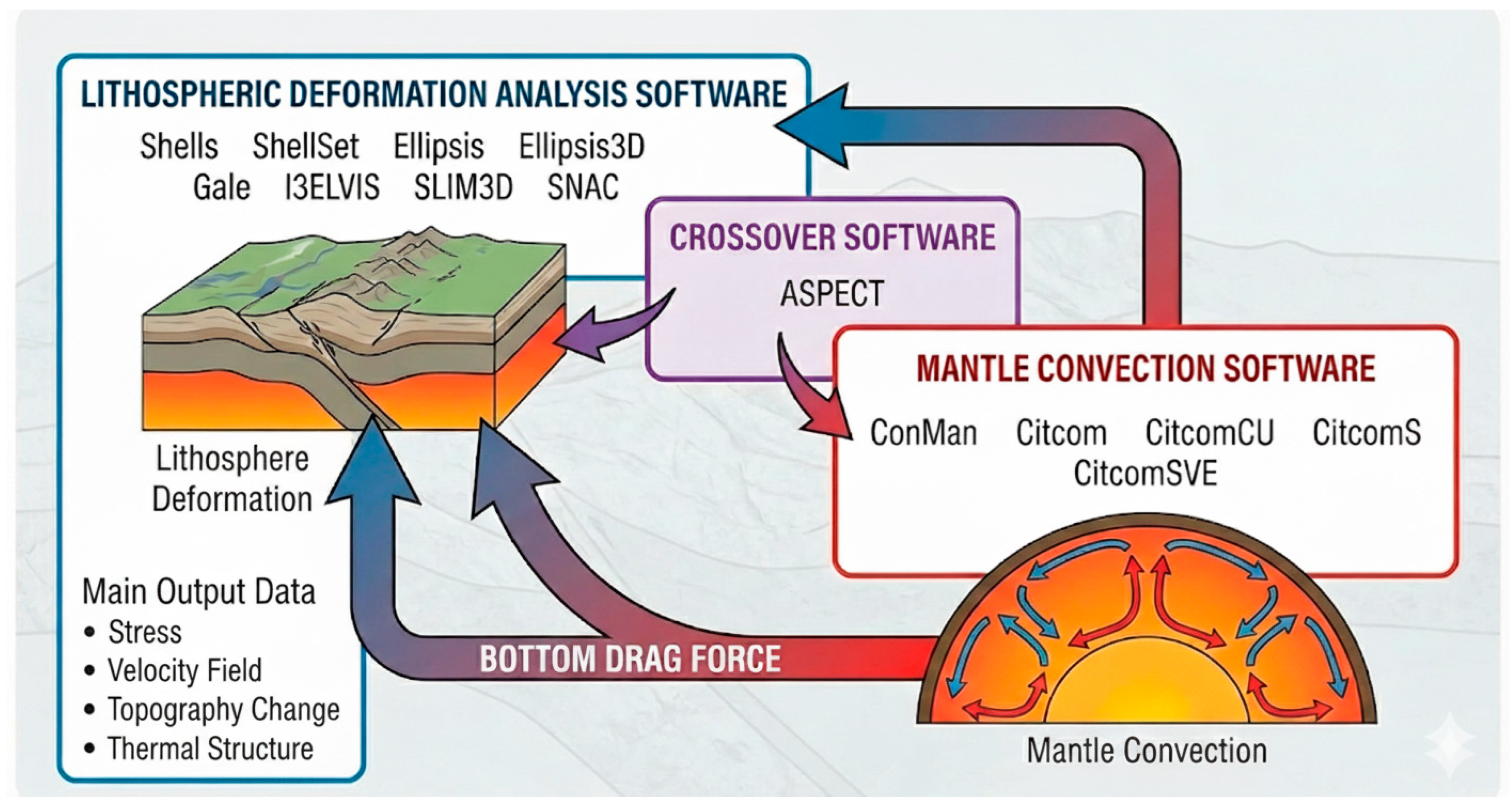
Figure 1. Schematic diagram of numerical simulation software for global stress fields.
Applsci 16 00039 g001
Table 1. Licensing and community support for key geodynamic software.
SoftwareDeveloper/InstitutionLicense TypeCommunity Support and Maintenance
Shells/ShellSetP. Bird (UCLA)/J. MayOpen Source (GPL/Academic)Academic maintenance; support via documentation and user groups.
Ellipsis/Ellipsis3DCIG/L. MoresiOpen Source (GPL)Legacy support; succeeded by Underworld, community support via CIG.
GaleCIG/VPAC/Monash Univ.Open Source (GPL)Supported by CIG (Computational Infrastructure for Geodynamics); extensive manuals and forums.
I3ELVIST. Gerya (ETH Zurich)Academic/ProprietaryCode often shared upon collaboration/request; support limited to research group.
SNACCaltech/CIGOpen SourceCIG hosted; community-driven updates.
Citcom SeriesCIG (originally Caltech)Open Source (GPL)Strong CIG support; regular benchmarks and active user forums.
SLIM3DGFZ PotsdamAcademicInternal maintenance; specialized use cases.
Table 2. Lithospheric deformation software.
SoftwarePrincipleAdvantagesDisadvantages
ShellsBased on the thin shell theory, the lithosphere is modeled as a thin elastic/plastic shell.Low computational cost; the simulation of plate flexure and large-scale horizontal movements is intuitive and easy to understand.Simplifies 3D problems to 2D horizontal equilibrium, ignoring vertical fine-scale structures and complex deep processes.
ShellsetExtends thin shell theory by integrating layered shell elements with viscoelastic/anisotropic rheological properties to adapt to layered lithospheric structures.Balances accuracy and efficiency; supports time-dependent processes (e.g., viscoelasticity) for neotectonic simulation; uses Eulerian mesh and particle tracking to record material deformation history.Static refinement setup has a steep learning curve; thin shell approximation limits 3D simulations; small geological material elements fail to transmit key information (e.g., heat); resolution is mesh-constrained with high storage demands; lacks dynamic adaptive mesh refinement capability, leading to poor flexibility in mesh adjustment during simulation and poor compatibility with other modules.
Ellipsis3DFull 3D thermo-mechanical finite element method, coupling heat conduction and deformation to simulate lithosphere–mantle interactions.Captures 3D volumetric processes; achieves realistic rheological responses via thermo-mechanical coupling.Extremely high computational requirements (large memory/CPU consumption); time-consuming transient global simulations; no adaptive mesh refinement support.
GaleThree-dimensional spectral element method with high-order polynomial spatial discretization, simulating wave propagation and quasi-static deformation.High accuracy; strong versatility; simulates dynamic and quasi-static processes simultaneously.Complex spectral element implementation; high-order basis functions require large memory for global models.
I3ELVISThree-dimensional finite element difference method with adaptive mesh refinement, focusing on lithosphere–asthenosphere interactions and rifting processes.High flexibility in simulating strong rheological transition zones; high efficiency in resource utilization, avoiding excessive resolution in stable zones.Finite difference stencils poorly handle complex curvature regions; high computational resource requirements; large number of markers to process.
SLIM3DThree-dimensional spherical finite elements, incorporating Earth’s curvature and spherical harmonic function properties to simulate global lithospheric deformation.Accurate global deformation simulation via spherical geometry; adapts to large-scale tectonic force simulation.Complex spherical mesh generation; high computational cost (comparable to full 3D finite elements); closed-loop model of mantle heat flux, lithospheric melting, and buoyancy-driven flow.
SNACExplicit Lagrangian finite difference method, simulating lithospheric elasto-viscoplastic dynamic deformation.Strong capability in simulating highly nonlinear deformation; supports strain weakening and elasto-viscoplastic rheology; accurately captures fault localization.Explicit time integration limited by stability conditions (small time steps); extremely time-consuming for long-term global simulations; lower efficiency than implicit finite element method for slow quasi-static deformation.
Table 3. Mantle convection software.
SoftwareNumerical Methods and Core EquationsAdvantagesDisadvantages
ConManTwo-dimensional finite element method; solves mantle convection equations with infinite Prandtl number.Open-source and lightweight, easy to use, suitable for studying fundamental mantle convection mechanisms (e.g., laminar flow, and plumes).Two-dimensional only, unable to simulate global 3D convection; low computational efficiency, unsuitable for large-scale problems.
CitcomThree-dimensional finite element method; PETSc-based parallel solver with MPI + OpenMP hybrid parallelism.Modular design; supports multi-physics coupling; suitable for regional mantle convection.Simplifying assumptions are required for global-scale simulations; computational cost for complex rheology is high.
CitcomCUThree-dimensional finite element method; PETSc-based DMPlex adaptive mesh; supports spherical geometry.Suitable for global mantle convection–plate motion coupled simulations; supports complex boundary conditions; strong GPS/seismic data assimilation capability.Requires simplifying assumptions for global simulations; high computational cost for complex rheology.
CitcomSThree-dimensional spherical finite element method; global mantle convection model based on spherical harmonic function expansion.High precision; supports complex physical processes and temperature-dependent viscosity; multi-scale coupling via Pyre framework.High computational cost for high-resolution simulations (large number of time steps); only supports spherical geometry, poor regional problem adaptability.
CitcomSVECitcomS extension incorporates the Sub-Viscosity Envelope (SVE) model.Realistically simulates mantle flow layering; supports fine-scale mantle plume–lithosphere interaction simulation.SVE parameterization requires specialized geological knowledge and has a strong dependence on initial models.
ASPECTSpectral Element Method with Adaptive Mesh Refinement (AMR); solves the complete Navier–Stokes equations with full inertia terms; supports complex rheologies including power law, viscoelasticity, and partial melting.Focuses on high-gradient regions via AMR (reduces computational cost while ensuring accuracy); uses block triangular preconditioning and Algebraic Multi-Grid (AMG) to solve Stokes equation saddle-point problems; supports large-scale simulations (hundreds of millions of unknowns); 2D/3D compatible, modular design facilitates new physical process integration.High-resolution simulations demand supercomputing time on the order of months, leading to high computational costs; memory requirements are stringent (109 meshes require more than 1 TB of memory).
Disclaimer/Publisher’s Note: The statements, opinions and data contained in all publications are solely those of the individual author(s) and contributor(s) and not of MDPI and/or the editor(s). MDPI and/or the editor(s) disclaim responsibility for any injury to people or property resulting from any ideas, methods, instructions or products referred to in the content.


