Article

Anthropometric Characteristics and Cardiorespiratory Capacity in Adults over 50 Years with Disabilities: Association and Differences According to Sex


1
Faculty of Education and Sport, University of the Basque Country, UPV/EHU, 01007 Vitoria-Gasteiz, Spain
2
Society, Sports and Physical Exercise Research Group (GIKAFIT), Physical Education and Sport Department, Faculty of Education and Sport, University of the Basque Country, UPV/EHU, 01007 Vitoria-Gasteiz, Spain
3
Research Group in Physical Activity, Physical Exercise and Sport (AKTIBOki), Physical Education and Sport Department, Faculty of Education and Sport, University of the Basque Country, UPV/EHU, 01007 Vitoria-Gasteiz, Spain
4
Physical Education and Sport Department, Faculty of Education and Sport, University of the Basque Country, UPV/EHU, 01007 Vitoria-Gasteiz, Spain
5
Disability Research Department, Fundación GaituzSport Fundazioa, 48004 Bilbao, Spain
*
Authors to whom correspondence should be addressed.
Appl. Sci. 2026, 16(1), 409; https://doi.org/10.3390/app16010409
Submission received: 19 November 2025 / Revised: 28 December 2025 / Accepted: 29 December 2025 / Published: 30 December 2025

Abstract

(1) Background: The Sustainable Development Goals highlight the importance of ensuring healthy lives and promoting well-being for all. Within this framework, it is essential to improve health outcomes for people with disabilities and to continue generating scientific evidence in this field. This study aimed to (I) analyze differences in anthropometric characteristics and cardiorespiratory fitness among adults with disabilities, and (II) analyze the association between anthropometric characteristics and cardiorespiratory fitness in the total sample and by sex. (2) Methods: Fifty-three adults over 50 years of age with disabilities participated in this study. Anthropometric measurements and the 6 min walk test (6MWT) were conducted, recording physical-physiological and mechanical variables (using heart rate monitors and Stryd devices). (3) Results: Significant differences were observed between men and women with disabilities in height (p < 0.001, ES = −1.10), hip-to-chest ratio (p < 0.05, ES = 0.75), mean heart rate (p < 0.05, ES = 0.67), and absolute minimum power (p < 0.05, ES = 0.64) achieved during the 6MWT. A significant correlation was found between anthropometric characteristics and 6MWT performance across the entire sample (r = −0.29 to −0.67, p < 0.05). Among women, these characteristics were associated with distance covered (r = −0.35 to −0.42, p < 0.05), whereas in men, they were associated with relative power (r = −0.60 to −0.83, p < 0.05). (4) Conclusions: The findings suggest that, in this sample, anthropometric characteristics are associated with specific 6MWT performance variables, with patterns differing by sex.

1. Introduction

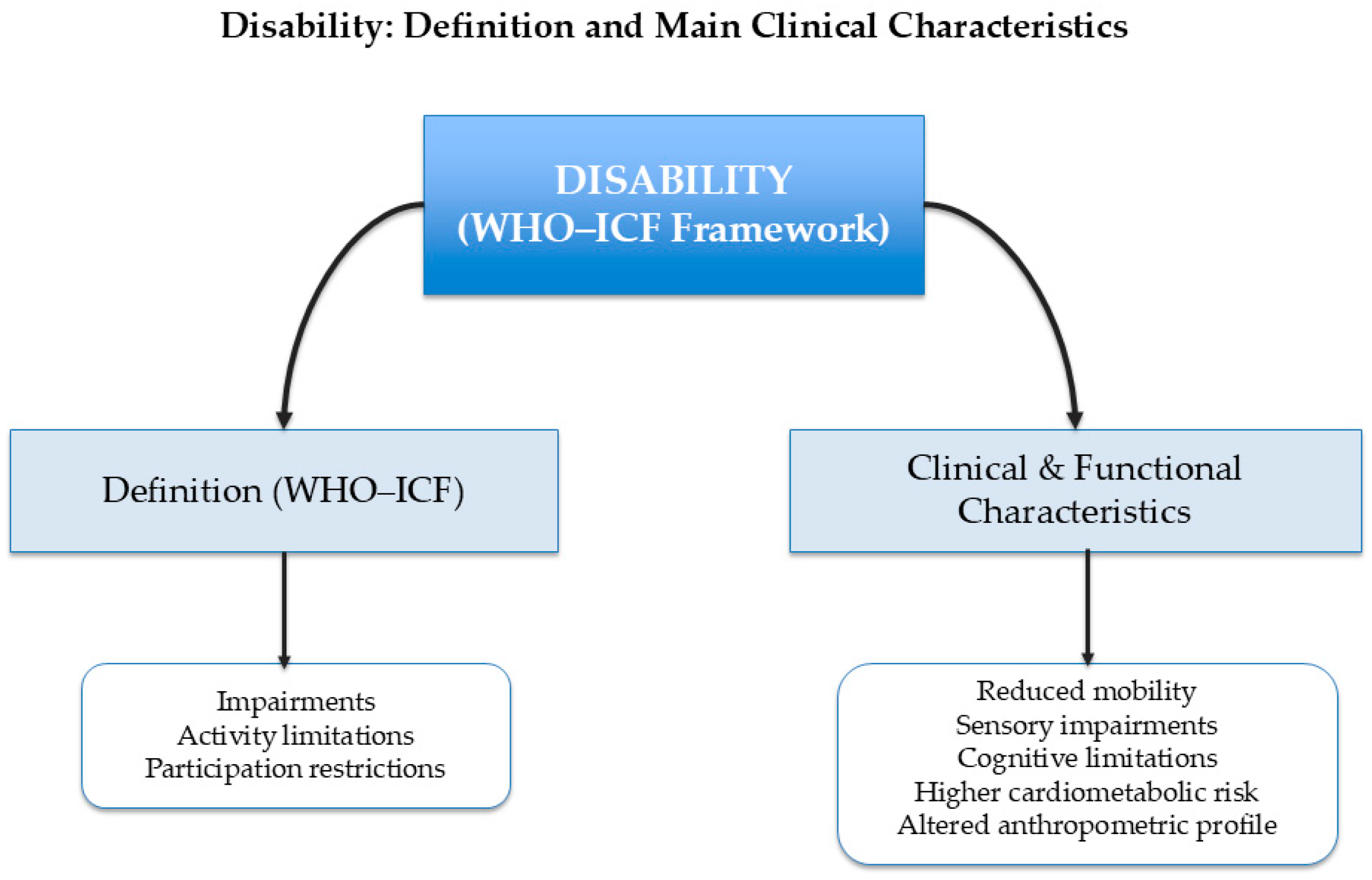
According to the World Health Organization [1,2], disability is understood as a limitation in the ability to complete a routine task, as well as a restriction in the functionality or body structure and in participation in social situations [3]. As reported by the World Health Organization [2], more than one billion people worldwide live with some form of disability, accounting for approximately 16% of the global population, with prevalence increasing markedly with age. People with disabilities usually present limitations in their sensorial systems, mobility or cognition, or have emotional or behavioral disorders [4]. This translates into a greater risk of suffering injuries and developing non-communicable diseases and premature age-related health problems [2,5,6]. Similarly, people with a disability have a greater prevalence of obesity [7,8], a higher body mass index (BMI), and higher adipose tissue percentage and body perimeter values, especially waist circumference [9]. Moreover, people with disabilities show a greater risk of incidence and mortality from cancers and cardiovascular diseases [7,10]. With age there is also the factor of cognitive deterioration and the high probability of suffering comorbidity [11] and, consequently, having a lower life expectancy in general [6]. To facilitate the understanding of the concept of disability and its main clinical characteristics in the context of the present study, a conceptual summary based on the World Health Organization (WHO) and the International Classification of Functioning, Disability and Health (ICF) framework is provided in Figure 1.
Recent evidence suggests that disability is a continuum of the human condition which can be generative, creative, affirmative and enjoyable [6]. Thus, the United Nations Organization (UNO) aspires to protecting the rights and freedoms of people with disabilities through the Convention of Rights of people with a Disability [12] and includes it in its Sustainable Development Goals (SDG), specifically in SDG3: “ensure healthy lives and promote well-being for all at all ages” [13]. There is, therefore, a need to improve the health of people with disabilities [10,14] and to continue investigating to obtain more scientific evidence in this field. Even though health may be viewed from several different angles (physical, emotional, psychological or social) [15,16], due to the very characteristics and limitations of disability, both the anthropometric features [9,10,17], and cardiorespiratory capacity [17,18], have attracted special attention in the literature. Specifically, Jacinto et al. [14] underscore the importance of analyzing the anthropometric characteristics of people with disabilities, as they reflect their overall health and nutritional status [9]. It has been found that people with disabilities tend to show an alteration in their anthropometric characteristics, which are associated with a worse state of health than their peers without a disability [8].
The study of cardiorespiratory capacity has had special relevance in research with people with disabilities [18,19,20,21]. A greater cardiorespiratory capacity, defined as the maximum capacity of the cardiovascular and respiratory systems to deliver oxygen to the skeletal muscles during exercise [22], is inversely associated with the development of various metabolic diseases [23,24]. People with disabilities tend to have lower cardiorespiratory capacity [18], which may limit their daily activities [25]. In this regard, it has been stated that there is an association between the improvement of cardiorespiratory capacity and an increase in quality of life of people with disabilities [20]. Although both laboratory and field tests have been used to measure cardiorespiratory capacity, one of the widely used tests for people with disabilities has been the 6 min walk test (6MWT), a simple and valid test that measures the functional capacity of the participants [17,26,27]. However, in practice, the 6MWT is often measured solely by counting laps. It would also be useful to incorporate other physiological variables, such as heart rate (HR), rated perceived exertion (RPE), tympanic temperature, and mechanical variables measured with more sophisticated devices, which would provide more detailed information. Additionally, despite the 6MWT having been widely used in people with disabilities to determine functional capacity and cardiorespiratory capacity [26,27], there is a need to analyze, on the one hand, if the anthropometric characteristics can be related to the cardiorespiratory capacity, and on the other, if their sex influences the cardiorespiratory capacity of people with disabilities.
Thus, the objectives of the present study were: (I) to describe the anthropometric characteristics of adults with a disability and to analyze the differences between men and women, and (II) to describe the association between the anthropometric characteristics and cardiorespiratory capacity both in all the participants and in the men’s and women’s groups separately. In this context, based on the revised literature, we hypothesized that anthropometric characteristics would be associated with functional performance in the 6MWT, and that these associations would differ according to gender in older adults with disabilities.

2. Materials and Methods

2.1. Participants

Fifty-three adults aged over 50 years with a disability participated in this study, of whom 35 were women (65%) and 18 were men (35%). The inclusion criterion to be able to participate in the study was to be diagnosed with a physical, sensorial or intellectual disability. All participants were users of a general supervised physical activity program led by professionals in physical activity and sport sciences. They engaged in structured exercise sessions two to three days per week, with each session lasting approximately 60 min. The program was delivered in a group-based format and included heterogeneous exercise contents. All the subjects were informed about the objectives of the study as well as the research procedure, and participated voluntarily. The study followed the guidelines of the Declaration of Helsinki of 2013 and was approved by the Ethics Committee for Research related to Human Beings (CEISH, code M10_2020_244) at the University of the Basque Country (UPV/EHU).

2.2. Procedure

Over 5 months, all participants attended a testing session in which their anthropometric characteristics were measured, and they performed the 6MWT. The anthropometric measurements were taken in a specially prepared room, and the 6MWT was performed in an indoor sports pavilion. Before performing the 6MWT, all participants did a warm-up consisting of 5 min at low intensity, 2 min at moderate intensity, and 3 min of general joint mobility. The participants were recommended to abstain from performing intense physical activity on the previous days and to avoid smoking and drinking alcohol, tea, or coffee on the day of the test.

2.3. Measurements

2.3.1. Primary Outcomes

Anthropometry: The anthropometrical variables of height (in cm), body mass (in kg), and waist, hip and chest circumferences (in cm) of each participant were measured. Height was measured with an accuracy of 0.1 cm using a stadiometer (Holtain Ltd., Crymych, UK). Body mass was measured with an accuracy of 0.1 kg with an electronic scale (Seca Instruments Ltd., Hamburg, Germany). BMI was obtained from the ratio between height and mass (kg/m2). Waist, hip and chest circumferences were measured with an anthropometric tape measure (Seca Instruments Ltd.®, Hamburg, Germany). The measurement of the body circumferences was performed respecting the standardized norms of the International Society for the Advancement of Kinanthropometry [28]. The waist-to-chest ratio (WCR), hip-to-chest ratio (HCR) and waist-to-hip ratio (WHR) [29], were subsequently calculated.
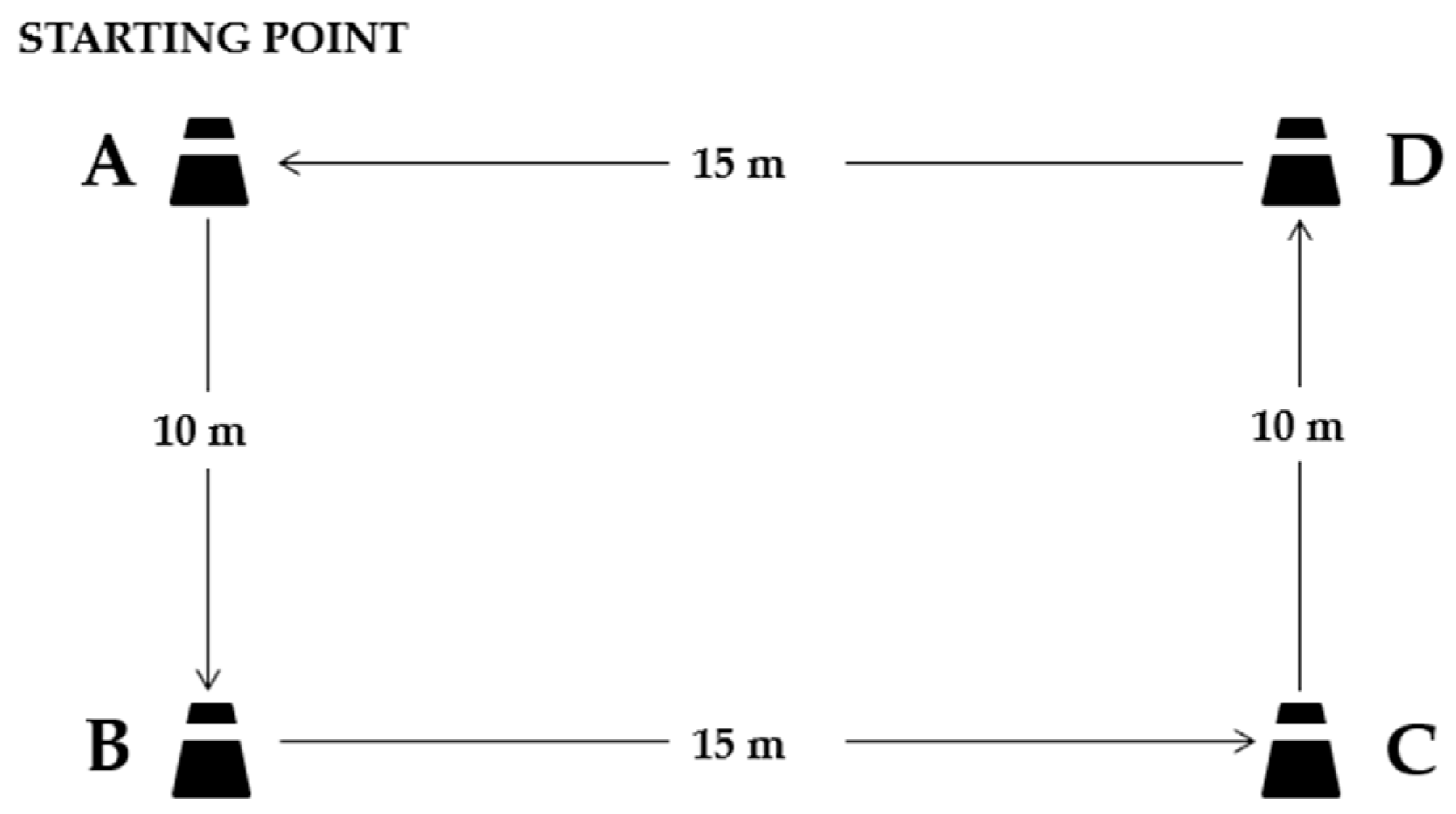
The 6 min walk test (6MWT): The 6MWT was performed following the international guidelines of the American Thoracic Society [30]. This test has been previously validated and used in populations with a disability [27,31]. The participants were told to walk at their own pace trying to cover the greatest possible distance during the assigned time. The test was conducted around a 15 × 10 m rectangle (50 m per lap) with no obstacles, and the turning points were marked by a cone (Figure 2). An encouragement protocol was standardized for all the participants and every minute of the test there was an indication of the amount of time left to finish it. The participants could stop (if necessary) during the test, but they were told to begin walking again once they felt they were able. The test finished once the 6 min were up and the total distance covered was recorded (6MWTDist) in meters (m) based on the lap count, using the reference cones marked on Figure 2. HR was monitored during the whole test at intervals of 1 s using a heart rate monitor (Polar Team Sport System; Polar Electro Oy, Kempele, Finland), and the maximum heart rate (HRpeak) attained by each participant during the test and the mean heart rate (HRmean) were recorded. Moreover, the participants wore a Stryd device during the whole test (Stryd, Inc., Boulder, CO, USA), previously used and validated to measure some mechanical variables of running or walking [32,33], and used to assess the functional capacity of people with disabilities [34]. The Stryd device was placed on the participant’s right foot, independently of foot dominance, on the laces of the shoe using a plastic clip, which was threaded through the laces and fixed on the top of the shoe and bottom of the device, following the manufacturer’s instructions. The device was connected to a smartphone application using Bluetooth [33]. Data were obtained on the following measurements: maximum power (Pmax), mean power (Pmed) and minimum power (Pmin) absolute (abs) (W) and relative (rel) (W/kg) power for each participant (reflecting the performed mechanical work), the individual mean for cadence (spm), stride length (m), and contact time for each support (ms). Distance (m) was also measured using the Stryd device during the 6 min.

2.3.2. Secondary Outcomes

Once the test was finished, tympanic temperature was also measured with a digital thermometer (ThermoScan® 5 IRT 4520, Braun GmbH, Kronberg, Germany) and following the protocol previously used by Yanci et al. [35]. Finally, the participants were asked to rate their RPE on a 10-point scale [36], presented on paper and following the protocol previously used with people with disabilities [37]. They were asked separately for their perceived respiratory exertion (RPEres) and their perceived muscular exertion (RPEmus) [37]. All the participants completed the RPE scale individually without the presence of the other subjects so that they could not see the values recorded by their companions. The participants were familiarized with the tests and measurements. The data were recorded by the same researcher on all occasions.

2.4. Statistical Analysis

The results are presented as mean ± standard deviation (SD) also including minimum and maximum data. All the variables had a normal distribution and showed equality of variances according to the Kolmogorov–Smirnov and Levene tests, respectively. A t-test for independent samples was used to determine if there were significant differences in the variables of anthropometrics and performance in the 6MWT between the men’s and the women’s groups. The differences in means were expressed as the percentage of the difference (Dif. (%) = (Mean Men − Mean Women) × 100/Mean Women). The magnitude of the differences was standardized by calculating Cohen’s effect size (ES). The ES scale was interpreted as <0.2, trivial; 0.2 to 0.5, small; 0.5 to 0.8, moderate; and >0.8, large [38]. The associations between the anthropometric variables and the variables obtained in the 6MWT were calculated using Pearson’s correlation coefficient (r). The following scale was used to interpret the magnitude of the correlations: <0.1, trivial; 0.1–0.29, low; 0.3–0.49, moderate; 0.5–0.69, high; 0.7–0.9, very high; >0.9, almost perfect [39]. Data analysis was performed with the Statistical Package for the Social Sciences (SPSS™ Inc., version 26.0 for Windows, Chicago, IL, USA) Statistical significance was set at p < 0.05.

3. Results

Table 1 presents the results on anthropometric characteristics of the total study sample and the differences by sex. Significant differences were found in height between women and men (p < 0.001, ES = −1.10, large). Furthermore, women had a greater hip-to-chest ratio than men (p < 0.05, ES = 0.75, moderate). No significant differences were observed by sex for the remaining anthropometric variables (p > 0.05; ES = −0.30 to 0.27; trivial or small).
Table 2 presents the results obtained both by the whole sample and women’s and men’s groups in the 6MWT variables. The women recorded higher values of mean HR in the 6MWT than men (p = 0.037, ES = 0.67, moderate) and a greater Pmin abs (p = 0.046, ES = 0.64, moderate). There were no significant differences in the rest of the variables analyzed (p > 0.05, ES < 0.62, small to moderate).
In the whole sample, distance covered during the 6MWT, measured by lap count and the Stryd device, was significantly and negatively correlated with waist circumference, WCR, and WHR (r = −0.29 to −0.38, low to moderate, p < 0.05). Furthermore, body mass, BMI, and waist, hip, and chest circumferences showed a significant and negative correlation with Pmax rel (r = −0.58 to −0.69, high, p < 0.001), Pmin rel (r = −0.45 to −0.63, moderate-high, p ≤ 0.002) and Pmean rel (r = −0.56 to −0.67, high, p < 0.001). There was also a significant correlation between cadence in the 6MWT and WCR (r = −0.29, low, p = 0.044), stride length in the 6MWT and height (r = 0.58, high, p < 0.001), and contact time in the 6MWT and body mass (r = 0.30, moderate, p = 0.044).
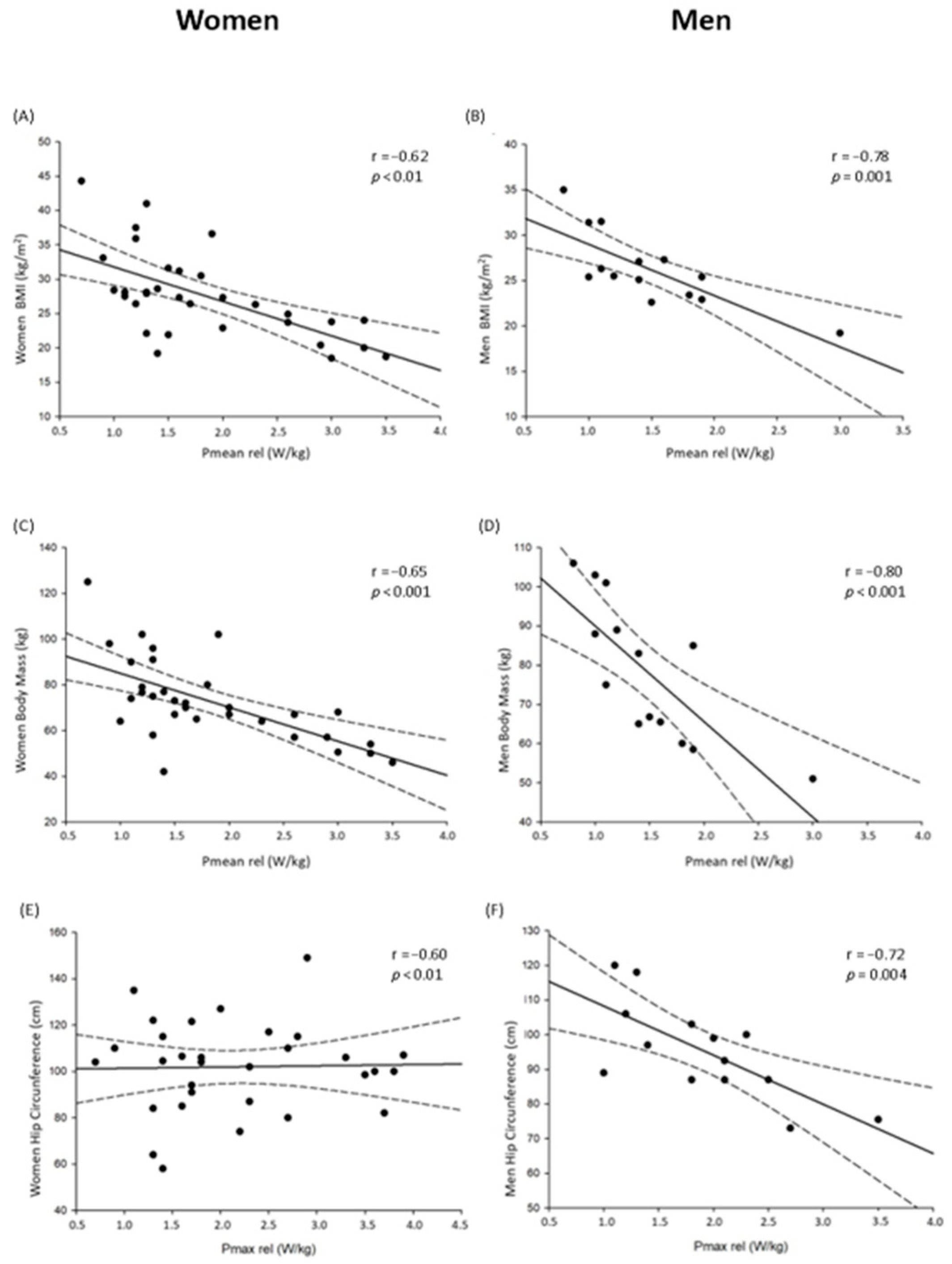
With respect to the association between anthropometric variables and performance in the 6MWT, according to sex, while in women there was a significant and moderate relation between the distance in the 6MWT and waist circumference (r = −0.35, moderate, p = 0.037) and WCR (r = −0.42, moderate, p = 0.012), and distance in the 6MWT measured by the Stryd device and WCR (r = −0.41, moderate, p = 0.017), in men’s group there was no significant correlation between distance in the 6MWT and anthropometric characteristics (p > 0.05). However, about the correlation between anthropometric characteristics studied and the values of relative power in the 6MWT, body mass, BMI and waist, chest and hip circumferences showed a weaker correlation in women (r = −0.48 to −0.65, moderate-high, p < 0.05) than in men (r = −0.60 to −0.83, high-very high, p < 0.05) (Figure 3). Finally, although a significant negative correlation between cadence and WCR was observed in women (r = −0.39, moderate, p = 0.026), no correlation was observed in men.

4. Discussion

The main objectives of the present study were, on the one hand, to compare anthropometric characteristics and cardiorespiratory capacity of adults with disabilities according to sex, and on the other, to analyze the association between anthropometric characteristics and the variables of cardiorespiratory capacity both for the whole group and for men and women separately. To date, few studies [17,40,41,42] have investigated the differences between men and women in anthropometric characteristics and cardiorespiratory capacity and the relation between both in people with disabilities [43], so that it seems necessary to carry out further research on this topic. In the present study, a few significant differences were found between men and women with a disability regarding anthropometric characteristics or cardiorespiratory capacity. However, significant correlations were observed between anthropometric and 6MWT variables in both sexes.
Anthropometric differences between men and women have been previously analyzed across different population groups [44,45], showing that several anthropometric variables differ between the sexes [44]. However, this topic has been studied much less in people with disabilities [40,41]. The results of the present study show that, except for height and HCR, no significant differences were observed between men and women for the remaining anthropometric variables. These results are contrary to those obtained by Marín and Graupera [40], in a study carried out with people between 16 and 38 years of age with Down syndrome, where they found higher values of BMI and hip circumference in the women’s group and greater muscle mass, height, and waist circumference in the men’s group. Similarly, Valenzuela et al. [42] observed significant differences according to sex in Chilean adolescents with intellectual disability in height and waist-to-height ratio, with boys presenting higher values than the girls in both variables. Einarsson et al. [41], in a study carried out with boys and girls with and without intellectual disability, also reported that boys had a greater waist circumference than girls. One possible explanation for the contradictory results of the present study compared with previous investigations is participants’ age. In the present study, participants were older adults with a disability (>50 years), whereas in the aforementioned studies, participants were children, adolescents, or young adults (<38 years). However, it should also be considered that the type of disability may play a relevant role in the observed differences, since the present study included a heterogeneous group of disabilities, whereas some previous studies focused on specific conditions. In this regard, comparisons with studies conducted in people with Down syndrome should be interpreted with caution, as this condition is characterized by a specific anthropometric phenotype, which may not be representative of the broader population of people with disabilities. Although it is true that at an early age anthropometric characteristics in people with a disability seem to be different between men and women, these differences do not seem to have been revealed in the participants in the present study (adults > 50 years). Therefore, the lack of significant sex-related differences observed in most variables may be partly explained by the mixed nature of the disabilities included in the sample, in addition to the older age of the participants. However, due to the scarcity of studies in adult age groups, more research is necessary to verify the similarities and differences according to sex in the anthropometric characteristics of people with disabilities.
In addition to anthropometric characteristics, cardiorespiratory capacity of people with disabilities has attracted special interest in recent investigations [18,19,20]. It has been found that people with disabilities have lower respiratory capacity [18], which may be a limiting factor in their daily activities [25]. It has also been reported that in people with disabilities, cardiorespiratory capacity inversely related with the development of diseases related to metabolism [23,24]. Furthermore, as in the population without disability [46,47], differences in cardiorespiratory capacity according to sex have also been studied in the population with a disability [48,49,50]. The results of this study show that women recorded higher HR and Pmin abs values than men. At the same time, for the remaining variables in the 6MWT, there were no significant differences between women and men. Specifically, no differences were observed between women and men with a disability in distance covered, RPE (both RPEres and RPEmusc), or the remaining mechanical variables measured with the Stryd device. On the contrary, previous studies that have investigated the differences according to sex in people with disability or pathologies show differences between men and women in cardiorespiratory capacity. For example, Lee et al. [48] conducted a study with 102 men and women, some with and some without lymphoma. Waatevik et al. [49], in another study of 370 men and women aged 45 to 70 years with chronic obstructive pulmonary disease, found that men covered greater distances during the 6MWT. In the same line of research, a study carried out with 34 men and 61 women with multiple sclerosis [51], found significant differences in peak (VO2peak), absolute and relative oxygen consumption and in Pmax abs, with higher values in the men than the women (p < 0.001) in an incremental exercise test to voluntary exhaustion or fatigue in the lower limbs. Specifically, in people with disabilities, Gawlik et al. [50], in a study carried out with 85 men and women between 20 and 40 years of age with intellectual disability, which used an incremental test on a cycle ergometer, found that men with intellectual disability had a higher absolute maximum oxygen consumption (VO2max) than women. The absence of differences in our study, unlike those observed in other investigations, may be due to the subjects’ regular participation in structured, supervised physical exercise programs. This aspect may have led to the absence of differences in cardiorespiratory capacity by sex, as the programs were mixed, men and women performed a similar amount of exercise, and thus could have had similar cardiorespiratory and mechanical adaptations.
Few studies in the scientific literature have examined the influence of anthropometric characteristics on cardiorespiratory capacity in people with disabilities [43,52,53]. The results of this study show that higher circumferences and anthropometric indices are associated with a shorter distance covered during the 6MWT, although correlation was low. Similarly, greater body mass, BMI, and circumferences showed moderate-to-high correlations with relative power (maximum, minimum, and mean) during the 6MWT. The findings of the present study coincide with previous research in different populations. A survey by Donini et al. [54] with 354 adult women and men with obesity (mean age 48 years, BMC > 40), found negative correlations between distance in the 6MWT and age (r = −0.37, moderate, p < 0.001), body mass (r = −0.25, small, p < 0.001) and BMI (r = −0.39, moderate, p < 0.001) and a positive correlation between distance in the 6MWT and the height of the participants (r = 0.35, moderate, p < 0.001). In the same vein, Beck et al. [43] observed a negative correlation between waist circumference or waist-to-height ratio and VO2max during a gradual treadmill exercise test (r = −0.68, high, p < 0.05). The results of the present study and previous research show that anthropometric characteristics can also partially determine cardiorespiratory capacity in adults with a disability.
Furthermore, the present study, in addition to analyzing the association between anthropometric characteristics and cardiorespiratory capacity for the whole sample, also analyzed it separately for men and women. While in women’s group, a significant moderate relation was found, on the one hand, between 6MWTDist and waist circumference (r = −0.35, moderate, p = 0.037) and WCR (r = −0.42, moderate, p = 0.012) and, on the other hand, between distance covered in the 6MWT measured with the Stryd device and WCR (r = −0.41, moderate, p = 0.017), in the case of men’s group distance covered did not correlate with any anthropometric variable. However, the correlation between anthropometric variables (body mass, BMI, and waist, hip, and chest circumferences) with relative power in the 6MWT was weaker for the women’s group (r = −0.48 to −0.65, moderate-high, p < 0.05) than the men’s group (r = −0.60 to −0.83, high-very high, p < 0.05). The differences found in the correlations between the anthropometric characteristics and cardiorespiratory capacity between men and women may be partly related to the differences between the sexes in the distribution of body fat, which has been suggested to influence walking patterns and mechanical demands in women [55]. In contrast, men have been shown to have better leg muscle quality (leg strength/kg body mass) than women. This aspect may indicate that they are capable of producing more power, although it is not associated with test’s functional performance [56]. In this respect, further studies may be needed to identify which physiological and mechanical factors influence covering a greater distance during the 6MWT in both adult men and women with a disability. Beyond physical performance, well-being in people with disabilities should be understood as a multidimensional construct integrating clinical, physical, and psychological aspects [57]. In this regard, future research should aim to jointly analyze functional capacity, anthropometric characteristics, and psychological well-being to better understand their combined influence on health and quality of life in older adults with disabilities. Although the present study focused on physical and functional outcomes, the observed associations provide a basis for future integrative approaches.

5. Limitations

Several limitations of the present study should be acknowledged. First, although the total sample size was comparable to that of previous studies conducted in similar populations, the relatively small number of men compared with women may have reduced the statistical power to detect sex-specific associations, particularly in the male subgroup. Second, the inclusion of adults with a heterogeneous range of disabilities reflects the real-world diversity of this population but also introduces variability that may have influenced both anthropometric characteristics and functional performance; consequently, the observed associations and sex-specific patterns may be specific to the particular mix of disabilities included in this sample and should not be interpreted as representative of specific disability groups. In this regard, the relatively large standard deviations observed in several variables suggest a high inter-individual variability, likely related to differences in disability type and degree of functional impairment among participants. Third, while anthropometric assessments were conducted in a specially prepared room to ensure privacy and standardization, specific environmental parameters such as precise temperature and humidity were not formally monitored. Although the room was maintained under stable clinical conditions, the absence of these environmental records should be considered as a limitation, as extreme variations could theoretically influence certain physiological or skin-fold measurements. Additionally, although cardiorespiratory capacity was assessed using the widely accepted 6 min walk test, complemented by heart rate and mechanical variables, the absence of direct metabolic gas analysis (e.g., VO2 measurements) prevents the direct validation of cardiorespiratory capacity and limits the interpretation of the physiological mechanisms underlying the observed relationships. Finally, while the Stryd power meter has shown reliability and validity in walking and running tasks in general populations, its validity has not been fully established in older adults with disabilities; gait alterations, movement variability, or compensatory strategies specific to this population may affect the accuracy of power-related metrics, and therefore these results should be interpreted with caution.

6. Practical Implications

The findings of this study have several practical implications for professionals working with older adults with disabilities. The observed associations between anthropometric characteristics and specific 6MWT performance variables suggest that simple and low-cost anthropometric assessments may provide useful information to contextualize functional performance in this population. Furthermore, the sex-specific patterns observed indicate that practitioners should consider sex-related differences when interpreting functional walking tests and mechanical outputs. However, given the heterogeneity of disabilities and the field-based nature of the assessment, these results should be applied cautiously and primarily as complementary information rather than as diagnostic indicators of cardiorespiratory capacity.

7. Conclusions

The results obtained in the present study show that, although significant differences have hardly been shown between the men and women (>50 years) with a disability in their anthropometric characteristics and the 6MWT, there is a significant relationship in which anthropometric characteristics share variance with the results obtained in the 6MWT in the study participants. While for women, anthropometric characteristics were associated with the distance covered and power in the 6MWT, in the case of men, no association was observed between the anthropometry and the distance covered in the 6MWT. Moreover, in the case of men, there was a stronger correlation between the anthropometric characteristics and relative power in the 6MWT (mean, minimum and maximum) than in women. These sex-specific patterns should be interpreted with caution, as they may be influenced by the specific mix of disabilities included in the sample.

Author Contributions

O.B.: Conceptualization, data curation, methodology, formal analysis, writing—original draft preparation. J.A.: Investigation, project administration, writing—review and editing. C.G.: Resources, writing—review and editing. A.I.: Resources, writing—review and editing. I.G.: Resources, writing—review and editing. J.M.P.: Resources, writing—review and editing. E.A.: Resources. J.Y.: Conceptualization, methodology, formal analysis, writing—original draft preparation, project administration. All authors have read and agreed to the published version of the manuscript.

Funding

This work was funded by the Proyectos Universidad-Empresa-Sociedad 2023 through the project Muévete 2.0: análisis de la capacidad funcional de personas con discapacidad (Code US23/14).

Institutional Review Board Statement

The study was conducted in accordance with the Declaration of Helsinki, and approved by the Ethics Committee for Research related to Human Beings (CEISH, code M10_2020_244) at the University of the Basque Country (UPV/EHU).

Informed Consent Statement

Informed consent was obtained from all subjects involved in the study.

Data Availability Statement

The data files that support the findings of this study are available from the corresponding authors (O.B. and J.A.) upon reasonable request.

Conflicts of Interest

The authors declare no conflicts of interest.

Abbreviations

The following abbreviations are used in this manuscript:
6MWTSix-Minute Walk Test
6MWTDistDistance covered in the Six-Minute Walk Test
BMIBody Mass Index
CadCadence
Dif. (%)Percentage Difference
ESEffect Size
HCRHip-to-Chest Ratio
HRHeart Rate
HRmeanMean Heart Rate
HRpeakPeak Heart Rate
ISAKInternational Society for the Advancement of Kinanthropometry
Pmax absAbsolute Maximum Power
Pmin absAbsolute Minimum Power
Pmean absAbsolute Mean Power
Pmax relRelative Maximum Power
Pmin relRelative Minimum Power
Pmean relRelative Mean Power
RPERating of Perceived Exertion
RPEmusRating of Perceived Muscular Exertion
RPEresRating of Perceived Respiratory Exertion
SDStandard Deviation
TContactContact Time
TymptTympanic Temperature
VO2Oxygen Consumption
VO2maxMaximal Oxygen Consumption
VO2peakPeak Oxygen Consumption
WCRWaist-to-Chest Ratio
WHRWaist-to-Hip Ratio
WHOWorld Health Organization

References

  1. World Health Organization. International Classification of Functioning, Disability, and Health; World Health Organization: Geneva, Switzerland, 2007. [Google Scholar]
  2. World Health Organization. World Report on Disability; World Health Organization: Geneva, Switzerland, 2011. [Google Scholar]
  3. McDougall, J.; Wright, V.; Rosenbaum, P. The ICF model of functioning and disability: Incorporating quality of life and human development. Dev. Neurorehabil. 2010, 13, 204–211. [Google Scholar] [CrossRef]
  4. Benjamin, G.; Mitra, M.; Graham, C.; Krahn, G.; Luce, S.; Fox, M.; Hootman, J.; Ghiya, N.; Popovic, T. CDC Grand Rounds: Public Health Practices to Include Persons with Disabilities. MMWR Morb. Mortal. Wkly. Rep. 2013, 62, 697–701. [Google Scholar]
  5. Dixon-Ibarra, A.; Horner-Johnson, W. Disability Status as an Antecedent to Chronic Conditions: National Health Interview Survey, 2006–2012. Prev. Chronic Dis. 2014, 11, E15. [Google Scholar] [CrossRef]
  6. Ginis, K.A.M.; van der Ploeg, H.P.; Foster, C.; Lai, B.; McBride, C.B.; Ng, K.; Pratt, M.; Shirazipour, C.H.; Smith, B.; Vásquez, P.M.; et al. Participation of people living with disabilities in physical activity: A global perspective. Lancet 2021, 398, 443–455. [Google Scholar] [CrossRef]
  7. Kocina, P. Body Composition of Spinal Cord Injured Adults. Sports Med. 1997, 23, 48–60. [Google Scholar] [CrossRef] [PubMed]
  8. Doody, C.M.; Doody, O. Health Promotion for People with Intellectual Disability and Obesity. Br. J. Nurs. 2012, 21, 460–465. [Google Scholar] [CrossRef] [PubMed]
  9. Huxley, R.; Mendis, S.; Zheleznyakov, E.; Reddy, S.; Chan, J. Body mass index, waist circumference and waist:hip ratio as predictors of cardiovascular risk—A review of the literature. Eur. J. Clin. Nutr. 2010, 64, 16–22. [Google Scholar] [CrossRef] [PubMed]
  10. Salse-Batán, J.; Sanchez-lastra, M.A.; Suárez-iglesias, D.; Pérez, C.A. Effects of exercise training on obesity-related parameters in people with intellectual disabilities: Systematic review and meta-analysis. J. Intellect. Disabil. Res. 2022, 66, 413–441. [Google Scholar] [CrossRef]
  11. Hussain, R.; Wark, S.; Janicki, M.P.; Parmenter, T.; Knox, M. Multimorbidity in older people with intellectual disability. J. Appl. Res. Intellect. Disabil. 2020, 33, 1234–1244. [Google Scholar] [CrossRef]
  12. United Nations. Convention on the Rights of Persons with Disabilities. Available online: https://www.un.org/development/desa/disabilities/convention-on-the-rights-of-persons-with-disabilities.html (accessed on 13 February 2025).
  13. United Nations. THE 17 GOALS | Sustainable Development. Available online: https://sdgs.un.org/goals (accessed on 17 June 2025).
  14. Larson, J.S. The Conceptualization of Health. Med. Care Res. Rev. 1999, 56, 123–136. [Google Scholar] [CrossRef]
  15. Huber, M.; Knottnerus, J.A.; Green, L.; van der Horst, H.; Jadad, A.R.; Kromhout, D.; Leonard, B.; Lorig, K.; Loureiro, M.I.; van der Meer, J.W.M.; et al. How should we define health? BMJ 2011, 343, d4163. [Google Scholar] [CrossRef]
  16. Boer, P.H.; Moss, S.J. Effect of continuous aerobic vs. interval training on selected anthropometrical, physiological and functional parameters of adults with Down syndrome. J. Intellect. Disabil. Res. 2016, 60, 322–334. [Google Scholar] [CrossRef]
  17. Simón-Siles, S.; Font-Farré, M.; Guerra-Balic, M.; Nishishinya-Aquino, M.B.; Oviedo, G.R. Effects of exercise on fitness in adults with intellectual disability: A protocol of an overview of systematic reviews. BMJ Open 2022, 12, e058053. [Google Scholar] [CrossRef] [PubMed]
  18. Jacinto, M.; Monteiro, D.; Rodrigues, F.; Diz, S.; Matos, R.; Amaro, N.; Antunes, R. Gender Differences in Anthropometric, Functional Capacity Measures and Quality of Life in Individuals with Intellectual and Developmental Disabilities. J. Funct. Morphol. Kinesiol. 2024, 9, 84. [Google Scholar] [CrossRef]
  19. Berglind, D.; Yacaman-Mendez, D.; Lavebratt, C.; Forsell, Y. The Effect of Smartphone Apps Versus Supervised Exercise on Physical Activity, Cardiorespiratory Fitness, and Body Composition Among Individuals With Mild-to-Moderate Mobility Disability: Randomized Controlled Trial. JMIR mHealth uHealth 2020, 8, e14615. [Google Scholar] [CrossRef] [PubMed]
  20. Lampousi, A.; Berglind, D.; Forsell, Y. Association of changes in cardiorespiratory fitness with health-related quality of life in young adults with mobility disability: Secondary analysis of a randomized controlled trial of mobile app versus supervised training. BMC Public Health 2020, 20, 1721. [Google Scholar] [CrossRef] [PubMed]
  21. Tafuri, F.; Martínez Roig, R.; Anam, K.; Susanto, N.; Setyawan, H.; Saraiello, E.; Latino, F. Effects of a circuit training program in improving cardiorespiratory fitness, upper extremity strength, and agility in paraplegic subjects. Retos 2024, 58, 552–559. [Google Scholar] [CrossRef]
  22. Myers, J.; Kokkinos, P.; Nyelin, E. Physical Activity, Cardiorespiratory Fitness, and the Metabolic Syndrome. Nutrients 2019, 11, 1652. [Google Scholar] [CrossRef]
  23. Duncan, G.E. Exercise, fitness, and cardiovascular disease risk in type 2 diabetes and the metabolic syndrome. Curr. Diab. Rep. 2006, 6, 29–35. [Google Scholar] [CrossRef]
  24. Church, T. Exercise in Obesity, Metabolic Syndrome, and Diabetes. Prog. Cardiovasc. Dis. 2011, 53, 412–418. [Google Scholar] [CrossRef]
  25. Marsden, D.L.; Dunn, A.; Callister, R.; Levi, C.R.; Spratt, N.J. Characteristics of Exercise Training Interventions to Improve Cardiorespiratory Fitness After Stroke: A Systematic Review With Meta-analysis. Neurorehabil. Neural Repair 2013, 27, 775–788. [Google Scholar] [CrossRef]
  26. Andersson, C.; Asztalos, L.; Mattsson, E. Six-minute walk test in adults with cerebral palsy. A study of reliability. Clin. Rehabil. 2006, 20, 488–495. [Google Scholar] [CrossRef] [PubMed]
  27. Guerra-Balic, M.; Oviedo, G.R.; Javierre, C.; Fortuño, J.; Barnet-López, S.; Niño, O.; Alamo, J.; Fernhall, B. Reliability and validity of the 6-min walk test in adults and seniors with intellectual disabilities. Res. Dev. Disabil. 2015, 47, 144–153. [Google Scholar] [CrossRef] [PubMed]
  28. International Society for the Advancement of Kinanthropometry. Kinanthropometry IX: Proceedings of the 9th International Conference of the International Society for the Advancement of Kinanthropometry; Routledge: London, UK, 2006. [Google Scholar]
  29. Angleman, S.B.; Harris, T.B.; Melzer, D. The role of waist circumference in predicting disability in periretirement age adults. Int. J. Obes. 2006, 30, 364–373. [Google Scholar] [CrossRef][Green Version]
  30. Holland, A.E.; Spruit, M.A.; Troosters, T.; Puhan, M.A.; Pepin, V.; Saey, D.; McCormack, M.C.; Carlin, B.W.; Sciurba, F.C.; Pitta, F.; et al. An official European Respiratory Society/American Thoracic Society technical standard: Field walking tests in chronic respiratory disease. Eur. Respir. J. 2014, 44, 1428–1446. [Google Scholar] [CrossRef]
  31. Elmahgoub, S.S.; Van de Velde, A.; Peersman, W.; Cambier, D.; Calders, P. Reproducibility, validity and predictors of six-minute walk test in overweight and obese adolescents with intellectual disability. Disabil. Rehabil. 2012, 34, 846–851. [Google Scholar] [CrossRef]
  32. Navalta, J.W.; Montes, J.; Bodell, N.G.; Aguilar, C.D.; Radzak, K.; Manning, J.W.; DeBeliso, M. Reliability of Trail Walking and Running Tasks Using the Stryd Power Meter. Int. J. Sports Med. 2019, 40, 498–502. [Google Scholar] [CrossRef]
  33. Pinedo-Jauregi, A.; Garcia-Tabar, I.; Carrier, B.; Navalta, J.W.; Cámara, J. Reliability and validity of the Stryd Power Meter during different walking conditions. Gait Posture 2022, 92, 277–283. [Google Scholar] [CrossRef] [PubMed]
  34. Ascondo, J.; Llodio, I.; Marcos-Rivero, B.; Granados, C.; Romero, S.; Iturricastillo, A.; Yanci, J. Proposal for a Battery to Evaluate Functional Capacity in Older Adults with Disabilities. Sensors 2025, 25, 1813. [Google Scholar] [CrossRef]
  35. Yanci, J.; Granados, C.; Otero, M.; Badiola, A.; Olasagasti, J.; Bidaurrazaga-Letona, I.; Iturricastillo, A.; Gil, S.M. Sprint, agility, strength and endurance capacity in wheelchair basketball players. Biol. Sport 2014, 32, 71–78. [Google Scholar] [CrossRef]
  36. Foster, C.; Florhaug, J.A.; Franklin, J.; Gottschall, L.; Hrovatin, L.A.; Parker, S.; Doleshal, P.; Dodge, C. A New Approach to Monitoring Exercise Training. J. Strength Cond. Res. 2001, 15, 109. [Google Scholar]
  37. Iturricastillo, A.; Granados, C.; Yanci, J. Changes in Body Composition and Physical Performance in Wheelchair Basketball Players During a Competitive Season. J. Hum. Kinet. 2015, 48, 157–165. [Google Scholar] [CrossRef]
  38. Cohen, J. Statistical Power Analysis for the Behavioral Sciences, 2nd ed.; Routledge: New York, NY, USA, 2013. [Google Scholar]
  39. Hopkins, W.G.; Marshall, S.W.; Batterham, A.M.; Hanin, J. Progressive Statistics for Studies in Sports Medicine and Exercise Science. Med. Sci. Sports Exerc. 2009, 41, 3–13. [Google Scholar] [CrossRef]
  40. Marín, S.A.; Graupera, J.X. Nutritional status of intellectual disabled persons with Down syndrome. Nutr. Hosp. 2011, 26, 1059–1066. [Google Scholar]
  41. Einarsson, I.Ó.; Ólafsson, Á.; Hinriksdóttir, G.; Jóhannsson, E.; Daly, D.; Arngrímsson, S.Á. Differences in Physical Activity among Youth with and without Intellectual Disability. Med. Sci. Sports Exerc. 2016, 47, 411–418. [Google Scholar] [CrossRef]
  42. Valenzuela, C.F.; López, A.; Pantoja, M.; Moreno, T.; Tobar, V.; Intriago, R.; Moral, P. Comparación de medidas antropométricas de riesgo cardiovascular, fuerza isométrica y funcionalidad entre adolescentes chilenos de ambos sexos con discapacidad intelectual. J. Sport Health Res. 2021, 13, 75–86. [Google Scholar]
  43. Beck, V.D.Y.; Baynard, T.; Lefferts, E.C.; Hibner, B.A.; Fernhall, B.; Hilgenkamp, T.I.M. Anthropometry does not fully explain low fitness among adults with Down syndrome. J. Intellect. Disabil. Res. 2021, 65, 373–379. [Google Scholar] [CrossRef] [PubMed]
  44. Perissinotto, E.; Pisent, C.; Sergi, G.; Grigoletto, F.; Enzi, G.; Group, I.W. Anthropometric measurements in the elderly: Age and gender differences. Br. J. Nutr. 2002, 87, 177–186. [Google Scholar] [CrossRef] [PubMed]
  45. Wang, J.; Guan, J.; Huang, L.; Li, X.; Huang, B.; Feng, J.; Zhang, Y.; Zhang, J. Sex differences in the associations between relative fat mass and all-cause and cardiovascular mortality: A population-based prospective cohort study. Nutr. Metab. Cardiovasc. Dis. 2024, 34, 738–754. [Google Scholar] [CrossRef] [PubMed]
  46. Loe, H.; Rognmo, Ø.; Saltin, B.; Wisløff, U. Aerobic Capacity Reference Data in 3816 Healthy Men and Women 20–90 Years. PLoS ONE 2013, 8, e64319, Correction in PLoS ONE 2013, 8, 10-1371. https://doi.org/10.1371/annotation/e3115a8e-ca9d-4d33-87ef-f355f07db28e. [Google Scholar] [CrossRef]
  47. Kaminsky, L.A.; Imboden, M.T.; Arena, R.; Myers, J. Reference Standards for Cardiorespiratory Fitness Measured With Cardiopulmonary Exercise Testing Using Cycle Ergometry: Data From the Fitness Registry and the Importance of Exercise National Database (FRIEND) Registry. Mayo Clin. Proc. 2017, 92, 228–233. [Google Scholar] [CrossRef] [PubMed]
  48. Lee, J.Q.; Simmonds, M.J.; Wang, X.S.; Novy, D.M. Differences in physical performance between men and women with and without lymphoma. Arch. Phys. Med. Rehabil. 2003, 84, 1747–1752. [Google Scholar] [CrossRef]
  49. Waatevik, M.; Johannessen, A.; Hardie, J.A.; Bjordal, J.M.; Aukrust, P.; Bakke, P.S.; Eagan, T.M.L. Different COPD Disease Characteristics are Related to Different Outcomes in the 6-minute Walk Test. COPD 2012, 9, 227–234. [Google Scholar] [CrossRef]
  50. Gawlik, K.; Zwierzchowska, A.; Manowska, B.; Celebańska, D. Aerobic capacity of adults with intellectual disabilities. Ann. Agric. Environ. Med. 2017, 24, 117–120. [Google Scholar] [CrossRef]
  51. Romberg, A.; Virtanen, A.; Aunola, S.; Karppi, S.; Karanko, H.; Ruutiainen, J. Exercise capacity, disability and leisure physical activity of subjects with multiple sclerosis. Mult. Scler. J. 2004, 10, 212–218. [Google Scholar] [CrossRef]
  52. Granados, C.; Yanci, J.; Badiola, A.; Iturricastillo, A.; Otero, M.; Olasagasti, J.; Bidaurrazaga-Letona, I.; Gil, S.M. Anthropometry and Performance in Wheelchair Basketball. J. Strength Cond. Res. 2015, 29, 1812. [Google Scholar] [CrossRef]
  53. Romarate, A.; Granados, C.; Iturricastillo, A.; Lizundia, M.; Yanci, J. Asociación entre las características antropométricas y la condición física en jugadores de baloncesto en silla de ruedas. SPORT TK-Eur. Am. J. Sport Sci. 2020, 29, 17–26. [Google Scholar] [CrossRef]
  54. Donini, L.M.; Poggiogalle, E.; Mosca, V.; Pinto, A.; Brunani, A.; Capodaglio, P. Disability Affects the 6-Minute Walking Distance in Obese Subjects (BMI > 40 kg/m2). PLoS ONE 2013, 8, e75491. [Google Scholar] [CrossRef]
  55. Kuk, J.L.; Lee, S.; Heymsfield, S.B.; Ross, R. Waist circumference and abdominal adipose tissue distribution: Influence of age and sex. Am. J. Clin. Nutr. 2005, 81, 1330–1334. [Google Scholar] [CrossRef]
  56. Fragala, M.S.; Clark, M.H.; Walsh, S.J.; Kleppinger, A.; Judge, J.O.; Kuchel, G.A.; Kenny, A.M. Gender Differences in Anthropometric Predictors of Physical Performance in Older Adults. Gend. Med. 2012, 9, 445–456. [Google Scholar] [CrossRef]
  57. Lassandro, G.; Trisciuzzi, R.; Palladino, V.; Carriero, F.; Giannico, O.V.; Tafuri, S.; Giordano, P. Psychophysical health and perception of well-being between master badminton athletes and the adult Italian population. Acta Biomed. 2021, 92, e2021253. [Google Scholar] [CrossRef] [PubMed]
Figure 1. Conceptual summary of disability according to the World Health Organization (WHO) and the International Classification of Functioning, Disability and Health (ICF) framework.
Applsci 16 00409 g001
Figure 2. Course and measurements taken in the 6 min walk test (6MWT).
Applsci 16 00409 g002
Figure 3. Correlation between relative mean power and BMI (A,B), between relative maximum power and body mass (C,D), between relative maximum power and hip circumference, (E) and between relative maximum power and waist circumference in women and men (F). BMI: body mass index; Pmean rel: relative mean power; Pmax rel: relative maximum power.
Applsci 16 00409 g003
Table 1. Anthropometric characteristics of the total sample and differences according to sex.
AllWomenMenDif. (%)pES
Mass (kg)73.3 ± 18.371.4 ± 18.677.0 ± 18.67.70.314−0.30
Height (cm)165.3 ± 10.6161.8 ± 8.8172.2 ± 10.76.4<0.001 ***−1.10
BMI (kg/m2)26.7 ± 5.727.2 ± 6.425.7 ± 4.2−5.60.3720.27
Waist circumference (cm)94.4 ± 15.493.6 ± 16.895.9 ± 12.72.40.616−0.15
Hip circumference (cm)101.9 ± 15.6103.0 ± 18.699.7 ± 6.7−3.20.4670.21
Chest circumference (cm)96.8 ± 11.495.7 ± 12.399.0 ± 9.33.50.319−0.30
WHR0.9 ± 0.10.9 ± 0.21.0 ± 0.14.80.313−0.29
WCR1.0 ± 0.11.0 ± 0.11.0 ± 0.10.40.895−0.04
HCR1.1 ± 0.11.1 ± 0.11.0 ± 0.1−6.40.013 *0.75
BMI: body mass index; WHR: waist-to-hip ratio; WCR: waist-to-chest ratio; HCR: hip-to-chest ratio; Dif. (%) = percentage difference; ES: effect size. Significant differences between the women’s and men’s groups (*** p < 0.001, * p < 0.05).
Table 2. Results obtained by the whole sample in the 6MWT and the differences between men and women.
AllWomenMenDif. (%)pES
6MWTDist (m)541.9 ± 104.7551.8 ± 108.4522.7 ± 97.3−5.30.3440.28
HRpeak (bpm)137.7 ± 23.0141.6 ± 23.2128.4 ±20.3−9.40.0700.59
HRmean (bpm)123.0 ± 21.3127.3 ± 20.8113.6 ± 20.1−10.70.037 *0.67
RPEmus3.2 ± 2.22.9 ±1.63.8 ±2.932.80.130−0.45
RPEresp3.1 ± 2.63.1 ± 1.63.1 ± 2.60.80.965−0.13
Tympt (°C)36.6 ± 0.636.4 ± 0.536.1 ± 0.7−0.70.1780.40
Pmax rel (W/kg)2.1 ± 0.82.1 ± 0.91.9 ± 0.7−10.90.3980.27
Pmin rel (W/kg)1.3 ± 0.61.4 ± 0.61.0 ±0.4−25.70.0590.62
Pmean rel (W/kg)1.7 ± 0.71.8 ± 0.81.5 ± 0.6−19.10.1420.48
Pmax abs (W)142.5 ± 37.9144.5 ± 41.8138.0 ± 28.2−4.50.5850.17
Pmin abs (W)87.9 ± 31.394.1 ± 34.574.7 ± 17.4−20.60.046 *0.64
Pmean abs (W)117.2 ± 33.8122.7 ± 36.9105.5 ± 22.8−14.00.1050.52
Cadence (spm)130.8 ± 12.4132.7 ± 13.2126.7 ± 9.5−4.50.1240.49
Stride length (m)0.7 ± 0.10.7 ± 0.10.7 ± 0.14.40.314−0.32
TContact (ms)730.8 ± 295688.2 ± 305.4824.7 ± 255.319.80.139−0.47
DistStryd (m)588.4 ± 132.8593.1 ± 151.9578.1 ± 79.3−2.50.7210.12
6MWTDist: distance covered by lap count; HRpeak: peak heart rate; HRmean: mean heart rate; RPEmus: perceived muscular exertion; RPEresp: perceived respiratory exertion; Tympt: tympanic temperature; Pmax rel: relative maximum power; Pmin rel: relative minimum power; Pmean rel: relative mean power; Pmax abs: absolute maximum power; Pmin abs: absolute minimum power; Pmean abs: absolute mean power; Cadence: step frequency measured in steps per minute; Stride length: stride length in m; TContact: contact time; DistStryd: distance measured by the Stryd device; Dif. (%) = percentage difference; ES: effect size. Significant differences between the women’s and men’s groups (* p < 0.05).
Disclaimer/Publisher’s Note: The statements, opinions and data contained in all publications are solely those of the individual author(s) and contributor(s) and not of MDPI and/or the editor(s). MDPI and/or the editor(s) disclaim responsibility for any injury to people or property resulting from any ideas, methods, instructions or products referred to in the content.