


Featured Application
Comparison of the sound-deadening materials in conditions mimicking those in industrial installations, the mechanical ventilation systems in particular. The measurement method with a setup based on a commercial apparatus, which is easy to apply by practitioner engineers.
Abstract
Suppression of noise by sound-deadening linings inside ventilation ducts is a complex theoretical problem. Apart from the material constants, such as the coefficients of attenuation and reflection, the geometry of both the duct and the lining must be considered. For these reasons, an easy-to-implement method of measurements can be a desirable practical solution for engineers interested in a comparison of potentially appropriate materials. Vendors of the latter rarely, if ever, provide a customer with full acoustical characteristics of the sound-deadening material. We built a simple model ventilation duct for determining such characteristics rather than just material constants. Apart from the duct itself, only commercial apparatus were used. The duct, however, is simple enough to be built in a mechanical workshop. We tested this setup and determined the sound-deadening characteristics of primary and rebond polyurethane mats. The mats mounted on the inner walls of the duct showed distinct suppression of sound waves of frequencies from 0.7 to 7 kHz. For the third-octave band of 1.6 kHz, the attenuation reached 40 dB. The frequency characteristics of the suppression of sound indeed differed from the respective function of the attenuation coefficient. The original and rebond polyurethane mats similarly suppressed noise.
Keywords:
sound-deadening material; noise; ventilating duct; PUR; PUT; foam; sound attenuation; sound absorption 1. Introduction
An assessment of the suppression of noise by sound-deadening materials in a real environment is a complex problem. The two characteristics of the acoustic properties, i.e., the coefficients of reflection, k, and attenuation, α, are just material constants and do not consider the layout of the sound-deadening material. Moreover, the coefficients are determined with sophisticated equipment in specialized laboratories, in anechoic rooms [1], in reverberation chambers [2], and using Kundt’s tube [3]. In the case of off-the-shelf damping devices used in engineering, measurements are performed using specialized, often complex, stationary installations, e.g., [4].
Many materials of various types are used for internal acoustic insulation of pipelines for gaseous media:
- Fibrous materials, e.g., mineral wool, glass fibers, fibrous mats, technical nonwovens, nanofibers [5];
- Open-cell foams, e.g., polyurethane foams, silicone foams, open-cell metal foam (in special applications) [6];
- Perforated inserts/panels [7,8];
- Metamaterials and metasurfaces (ultra-thin, “slow-sound” structures) [9].
Typical applications, advantages, and disadvantages of the most popular lining materials are reported in Table 1.
Table 1.
Materials used for the inner lining of gas pipelines.
In this paper, we report the sound suppression in a model ventilation duct lined with sound-deadening materials. The test stand was designed and constructed in our laboratory. The measurements were similar to those mentioned by Beranek [10] but covered a wider range of the acoustic wave frequency, from 0.1 to 20 kHz. Apart from the ventilation duct, all apparatus were commercially available: the white noise generator, the sound meter/analyzer, and the microphone calibrator. The conditions in the model ventilation duct mimic those in industrial installations, mechanical ventilation systems in particular. We assumed that both the material constants and the geometry of the sound-deadening material determined the measured total suppression. We are not aware of a similarly simple method for the assessment of the acoustic properties of lining mats, which can be applied in small-scale manufacturing. The new, commercial acoustic apparatus is easy-to-operate and inexpensive. This makes the measurements sufficiently easy to be performed by practitioners in industry. The small and medium ventures often cannot afford the costly measurements in external testing facilities because they specialize in small-scale or even piece production. Such measurements would substantially increase the unit cost.
We studied three types of mats made of various polyurethane foams, characterized in Table 2. Our main goals were (i) to test the measurement setup and to work out a measurement methodology, (ii) to analyze how the suppression depends on the placement of polyurethane mats in the model duct, and (iii) to check whether the density and rebonding of the polyurethane substantially influence its applicability as a noise-deadening material in ventilation ducts. Answers to the second and third questions are important from a practical point of view. For example, the rebond polyurethane mats are usually durable but more expensive than those made of the original polyurethane. On the other hand, the use of polyurethanes recycled by rebonding is beneficial for the natural environment [11,12].
Table 2.
Test materials—polyurethane mats [13].
2. Experimental
2.1. Materials
The research material consisted of commercial polyurethane (PU) foam boards, both primary (T) and rebond (R) types, supplied by JAG Sp. z o.o. (Lisków, Poland). In this paper, they were designated as PUT and PUR, respectively. Rebond polyurethane is a material obtained from granulated polyurethane foams and suitable binders, usually polyurethanes as well. Commonly, the compressed mixture forms blocks or boards. Unlike primary foams, rebond foam shows significantly improved performance, increased flexibility, and elasticity in particular [13]. The characteristics of the research material, i.e., mats for acoustic insulation, are presented in Table 2. However, the properties of rebond foams depend on the recyclables used in the manufacturing. Thus, we verified the apparent densities declared by the manufacturer by weighing ten samples of each polyurethane foam. Our results were equal, within the range of −20 to +13%, to the values reported in Table 2.
2.2. Apparatus and Methodology
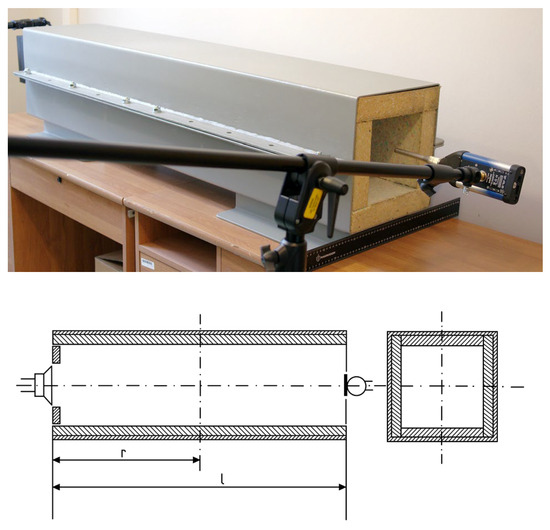
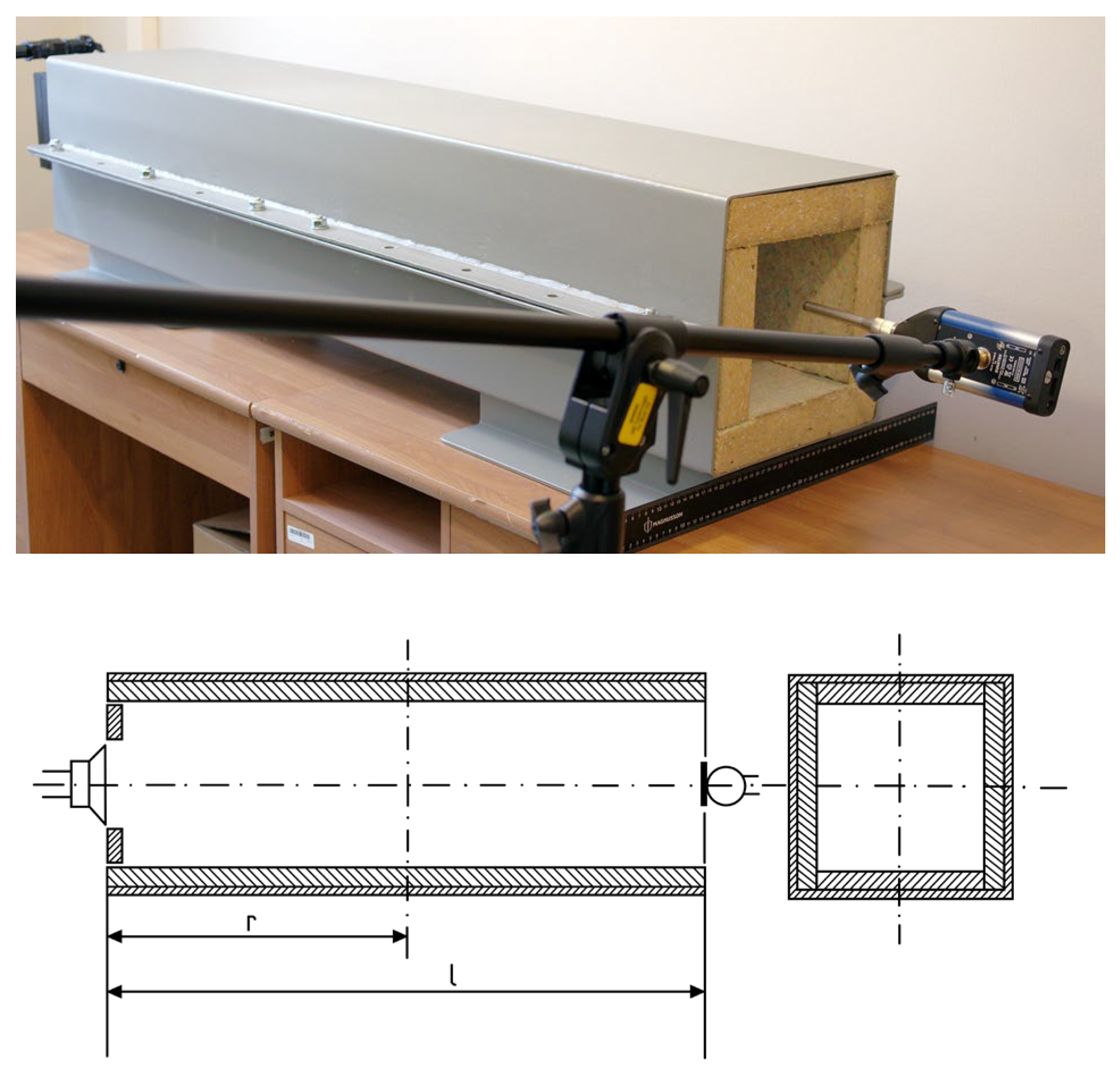
The experimental setup is shown in Figure 1. The model ventilation duct is a square-sectioned tube, 150 cm in length and with a 30 cm long side of the square, made of 2 mm-thick steel. At the opposite ends of the tube, right in their centers, the loudspeaker and the microphone are installed. The loudspeaker–microphone collinearity was checked with a laser light beam emitted by a diode placed in the center of the former. The studied polyurethane mats were placed within the steel tube in various configurations. Figure 1 shows the mat fixed to the walls. The mats were also placed perpendicularly to the tube axis at a distance r from the speaker and both on the walls and perpendicularly.
Figure 1.
The experimental setup for the measurements of the noise suppression by polyurethane mats. l—the distance between the loudspeaker and the microphone; r—the distance between the loudspeaker and the polyurethane mat fitted perpendicularly to the tube longitudinal axis (omitted for picture clarity). The gaps between the tube walls and the loudspeaker were insulated with the polyurethane mat, as shown in the schematic diagram, or left empty.
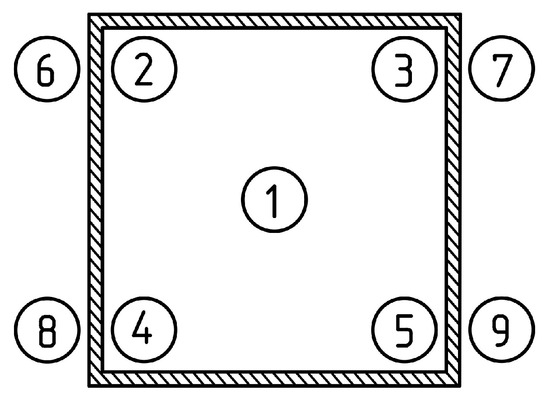
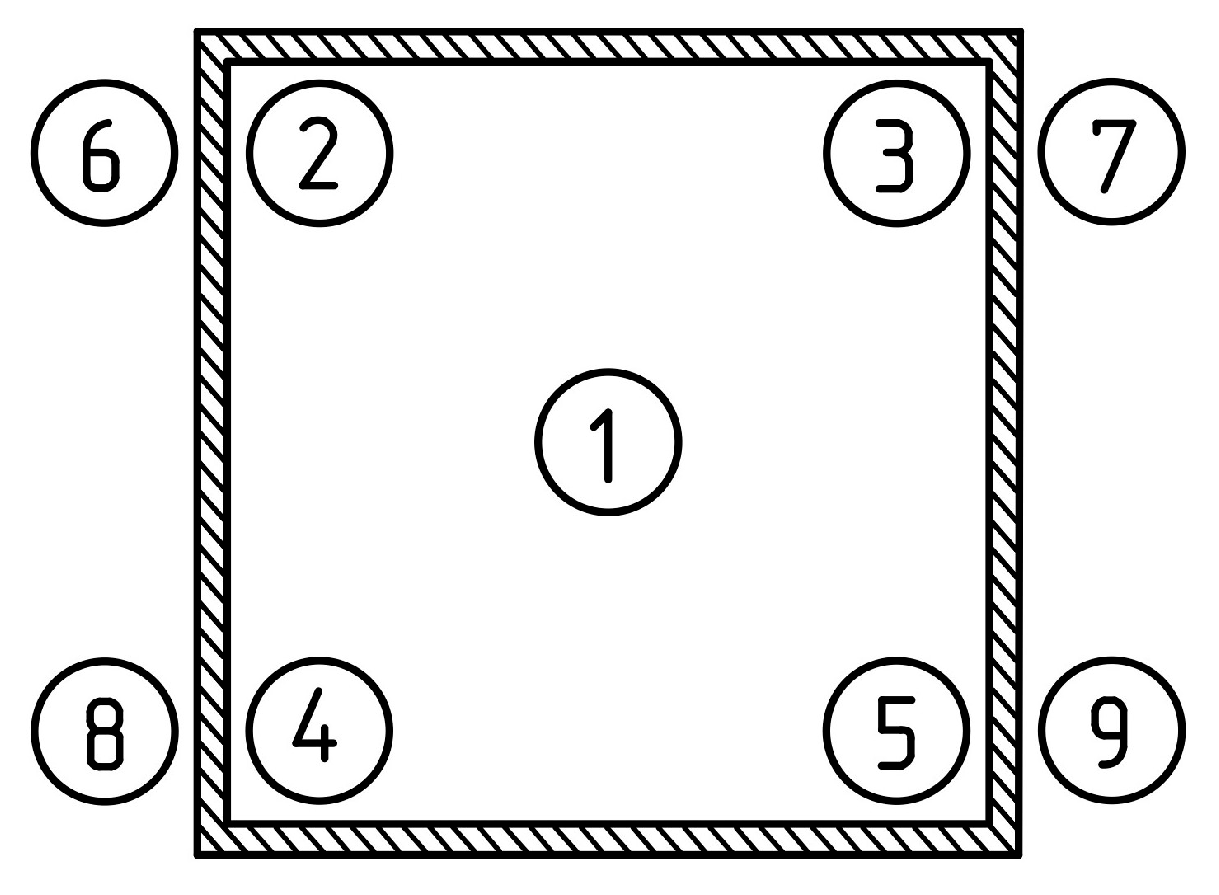
Directivity of the acoustic wave at the microphone end of the tube was analyzed using the SPLs recorded by a microphone located in five spots within the tube and four spots outside of it, as shown in Figure 2.
Figure 2.
Microphone locations for the measurements of the directivity of the acoustic waves transmitted through the square-sectioned steel tube.
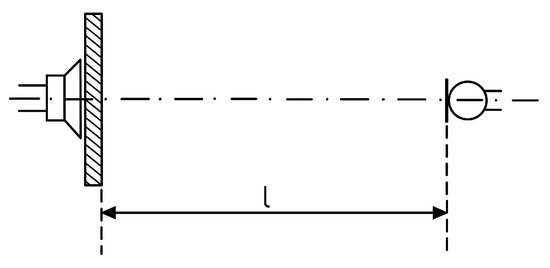
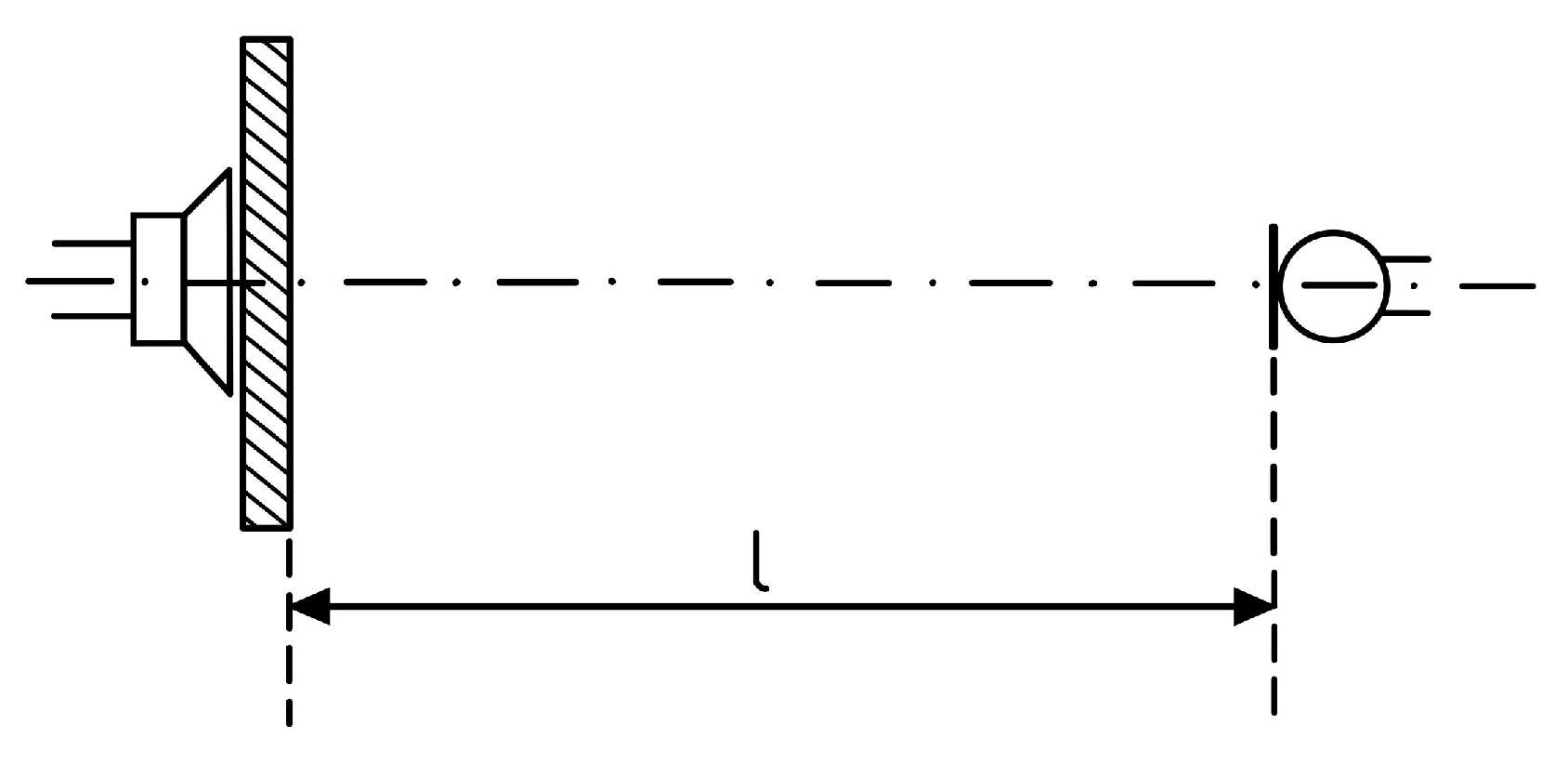
Moreover, we measured the suppression of sound by the polyurethane mats placed directly on the loudspeaker grille, without the steel tube. The setup is shown in Figure 3.
Figure 3.
The experimental setup for the measurements of the noise suppression by polyurethane mats placed on the speaker grille in an “open space”.
We applied the following procedure to all the measurements reported in this study. A Bedrock TalkBox BTB65 (Bedrock Audio BV, Rijswijk, The Netherlands) generated the white noise of the total sound pressure level (SPL) of 72 dB and 60 dB. A Svantek SVAN 979 (Svantek Sp. z o.o., Warsaw, Poland) class 1 sound and vibration analyzer compliant with the standard [14], equipped with a GRAS 40AE ½” microphone (GRAS Sound & Vibration, Holte, Denmark), recorded the SPLs in the 1/3 octave-wide frequency bands. We checked the Svantek meter with a class 1 Sound Calibrator SV36 (Svantek) according to the standard [15] immediately before and after each series of measurements. The noise generator, sound analyzer, and microphone had valid certificates of calibration. All measurements were performed in a laboratory room providing the background SPL at least 30 dB lower than the generated SPL of the white noise.
Each measurement lasted 10 s and consisted of collecting 10 successive values of the SPLs averaged for the 1 s-long interval in the 1/3 octave-wide frequency bands. Then, the results for each band were checked for consistency and averaged by applying the principle of additive acoustic energies.
Suppression of sound by the polyurethane mat in the 1/3 octave bands of center frequency f was calculated from the following formula:
where Lf0 and Lf are the values of SPL measured without and with the attenuating mat, respectively, for a given configuration of loudspeaker and microphone.
3. Results and Discussion
3.1. Assessment of the Attenuation Coefficient of a PUR Mat
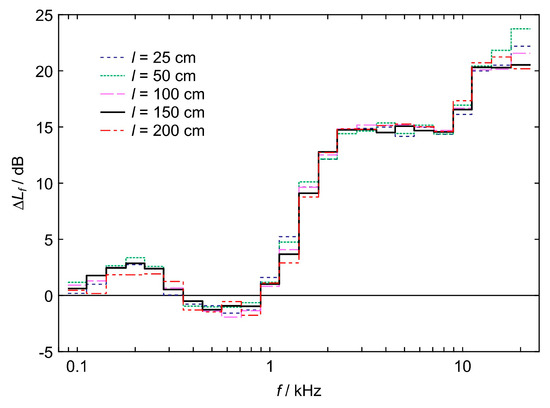
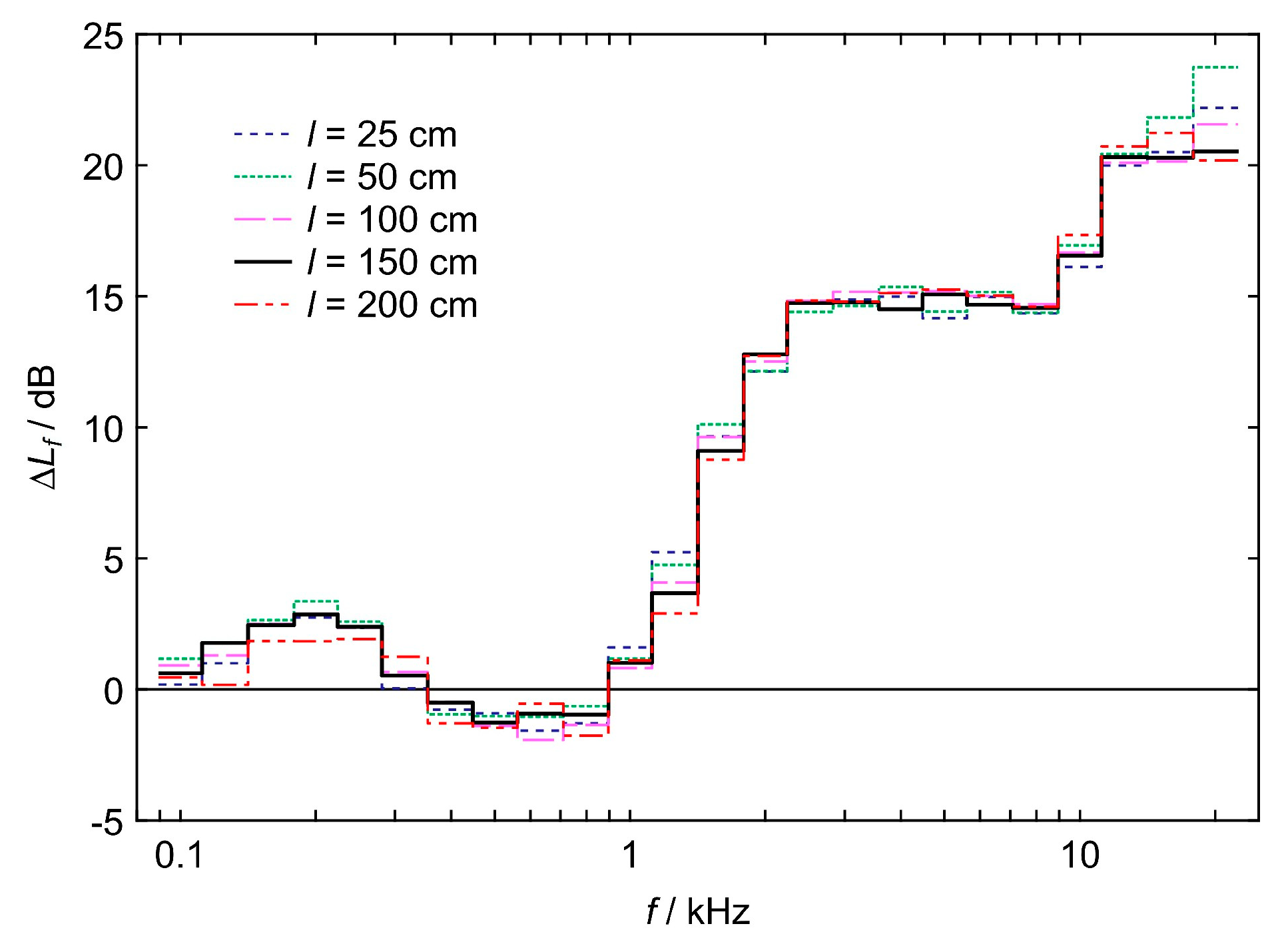
The suppression of sound by polyurethane mats placed on the loudspeaker grille in the manner shown in Figure 3 is reported in Supplementary Tables S1 and S2 and Figure 4 and Figure 5. Note that negative values of ΔLf at low frequencies are not evidence of a sound amplification. Most probably, the reason is the very small differences between the SPLs measured for the covered and uncovered loudspeaker in comparison with the range of the Lf values averaged for the 1 s-long measurement time. The average Lf range is 1.5 dB in the 1/3 octave bands with center frequency from 400 to 800 Hz and reaches 3 dB in unfavorable cases. For lower frequencies, the ranges are even bigger. Thus, the combined measurement error may exceed the observed suppression for frequencies below 1 kHz. For the 1/3 octave-wide bands with center frequencies of 1 kHz and above, the average range is 0.5 dB and seldom exceeds 1 dB.
Figure 4.
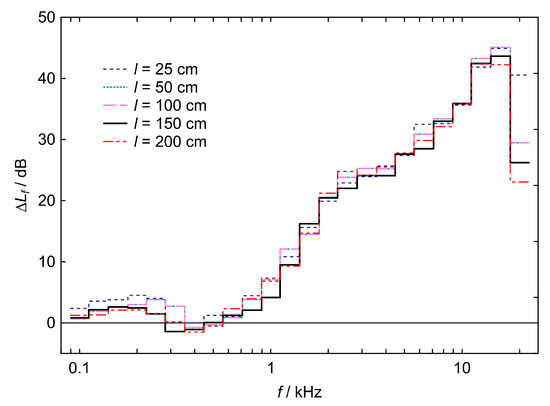
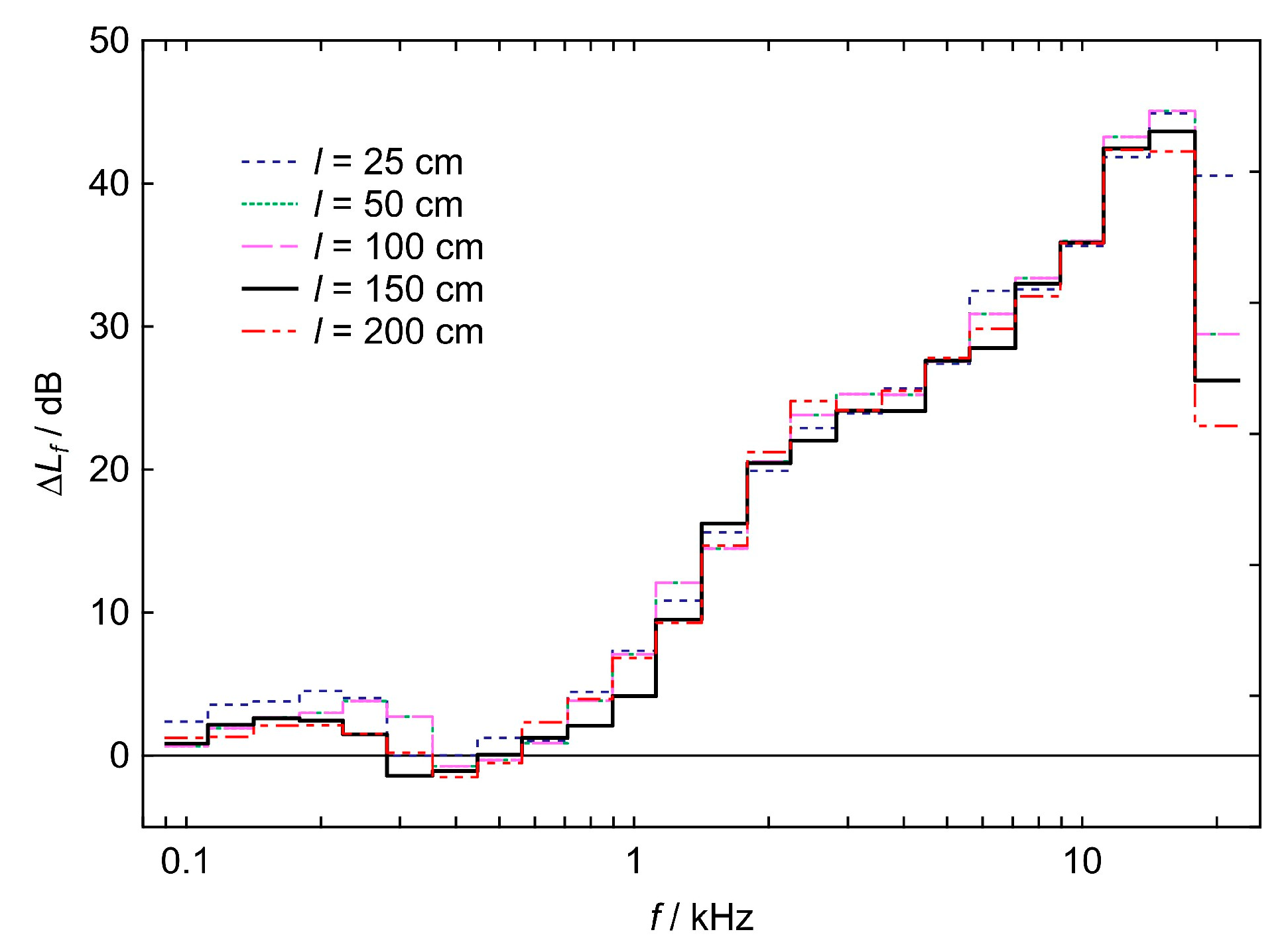
Suppression of sound in 1/3 octave-wide bands by the 2 cm-thick PUR mat placed on the speaker grille, measured for five distances between the speaker and microphone from 25 to 200 cm.
Figure 5.
Suppression of sound in 1/3 octave-wide bands by the 4 cm-thick PUR mat placed on the speaker grille, measured for five distances between the speaker and microphone from 25 to 200 cm.
The distance between the loudspeaker and the microphone does not influence the measured ΔLf value. As expected, the 4 cm-thick mat suppresses sound much more strongly. However, the two foams virtually do not attenuate the low-frequency waves, up to the 1/3 octave bands with center frequencies of 1000 Hz and 800 Hz for the 2 cm- and 4 cm-thick mat, respectively. The attenuation increases with the wave frequency in the remaining bands.
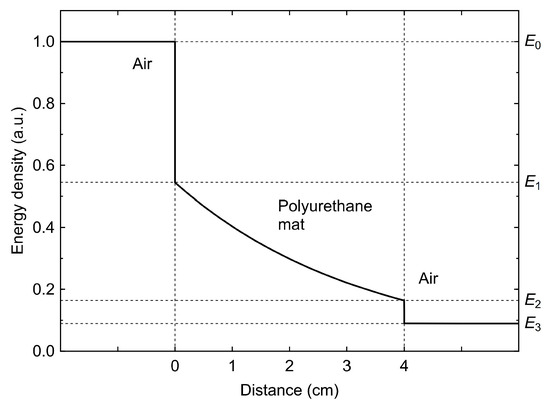
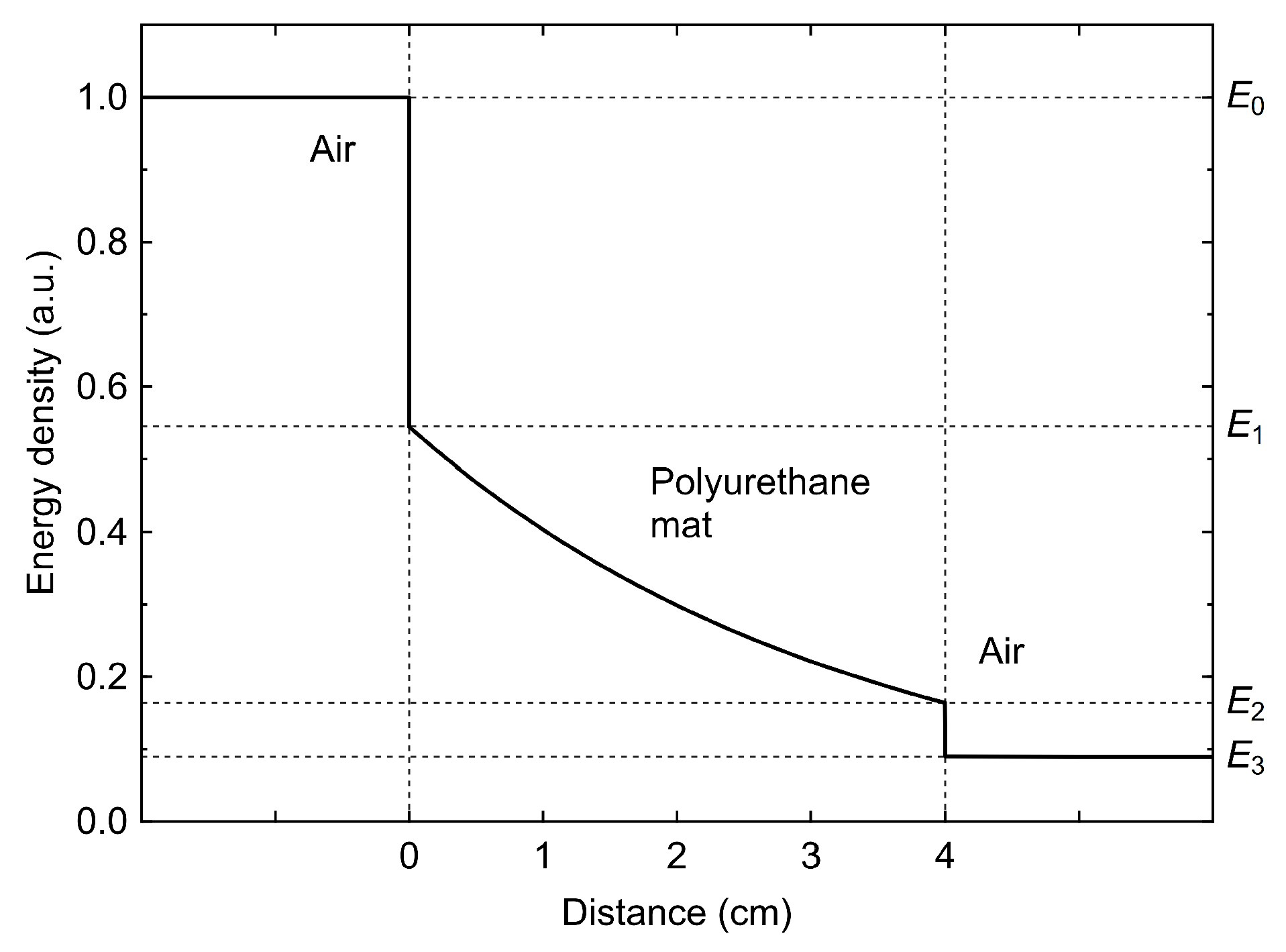
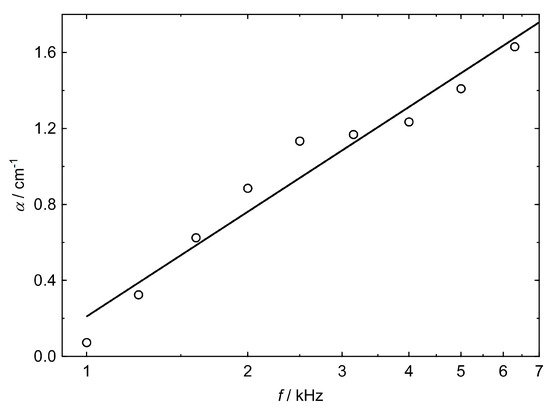
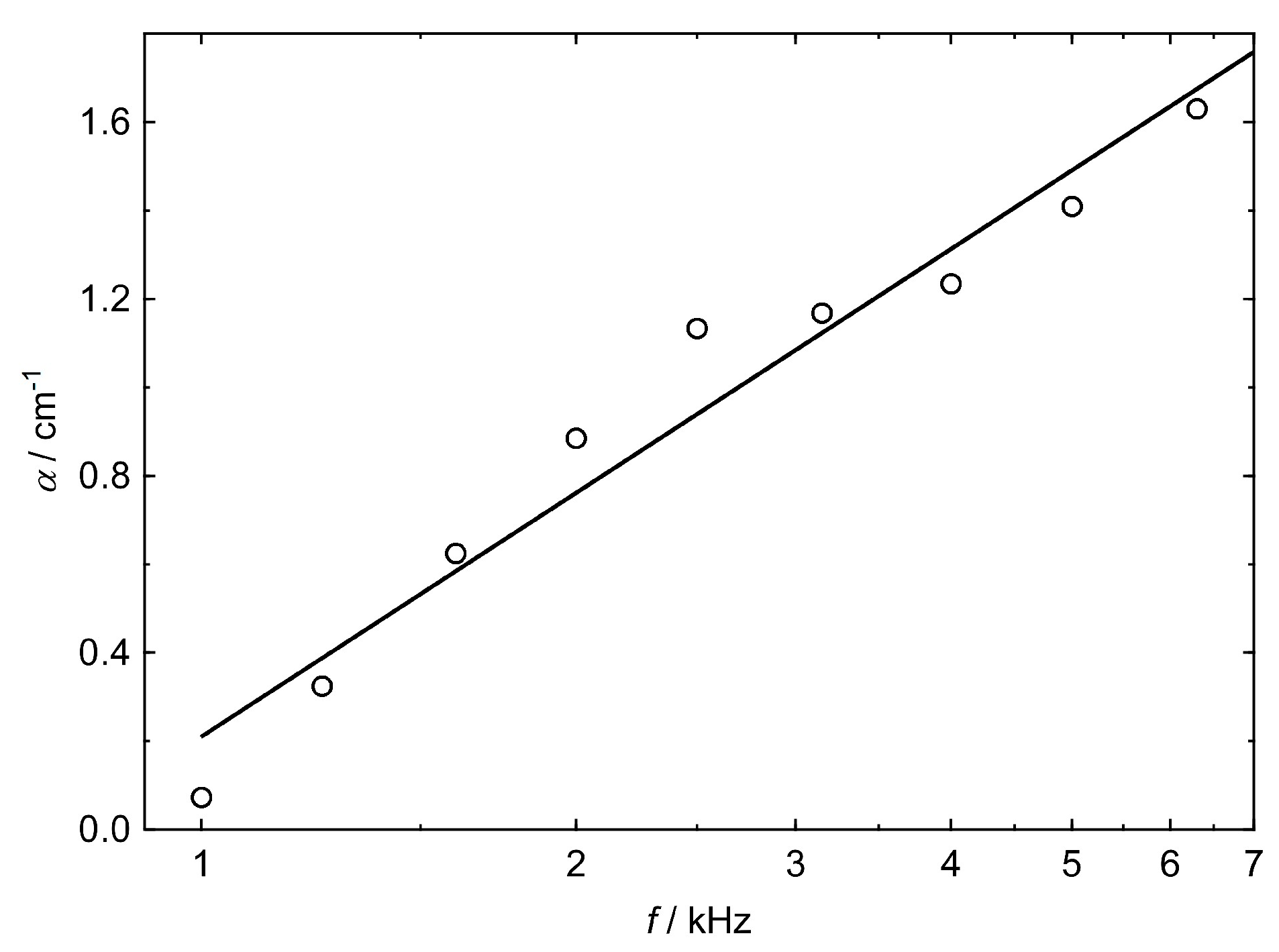
The ΔLf values obtained in this experiment and the reflection coefficients k measured earlier using Kundt’s tube [16] were applied to assess the attenuation coefficients α of the 4 cm-thick rebond polyurethane mat. This was possible for just nine 1/3 octave-wide bands with the center frequency from 1 to 6.3 kHz. The center frequency of 6.3 kHz was the highest one attainable in the Kundt’s tube measurements. For simplicity, we neglected the attenuation in air. The latter is just 0.03 dB on the 1.5 m-long distance between the loudspeaker and microphone for the most unfavorable case of f = 6.3 kHz, as calculated in the manner recommended by Beranek [17]. An explanatory Figure 6 illustrates the energy loss of a plane wave perpendicular to the flat attenuating material. The incident acoustic energy E0 splits into two parts on the air–mat boundary: the reflected and the transmitted one. Energy transferred through the boundary,
subsequently dissipates within the material, which results in the exponential decrease in the acoustic energy. Thus, the acoustic energy is equal to E2 at the mat–air phase boundary:
where x is the distance equal to 4 cm for the studied PUR mat and α is the sound absorption coefficient. There, the energy drops again due to the reflection, and the following energy reaches the microphone:
and the measured value of ΔLf is
Figure 6.
Explanatory graph of the acoustic energy loss due to the reflections on the air–polyurethane phase boundaries and the attenuation of sound waves within the 4 cm-thick polyurethane mat. See text for the explanation.
Such a simple model sufficed for the higher frequency waves. For the less-damped low-frequency ones, we considered multiple reflections and several passages through the PUR mat. The assessed sound attenuation coefficients α of the 4 cm-thick rebond polyurethane mat in the 1/3 octave-wide frequency bands are collected in Table S3 and plotted in Figure 7. Note, however, that the reported values of α are just approximate ones because of the model assumptions and simple experimental setup.
Figure 7.
The assessed sound attenuation coefficient α of the 4 cm-thick rebond polyurethane (PUR) mat in the 1/3 octave-wide bands with center frequency from 1 to 6.3 kHz. Points—experimental data, Line—logarithmic function.
3.2. Empirical Characteristics of the Acoustic Beam Propagating Through the Model Ventilation Duct
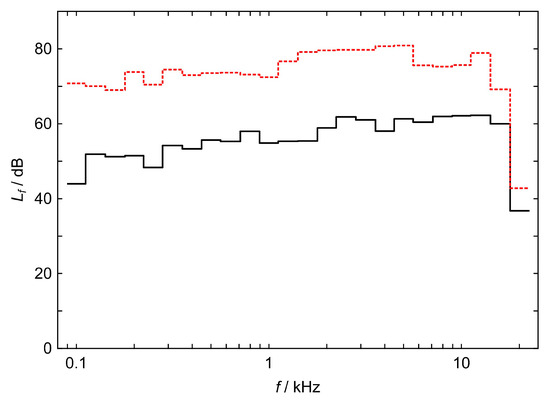
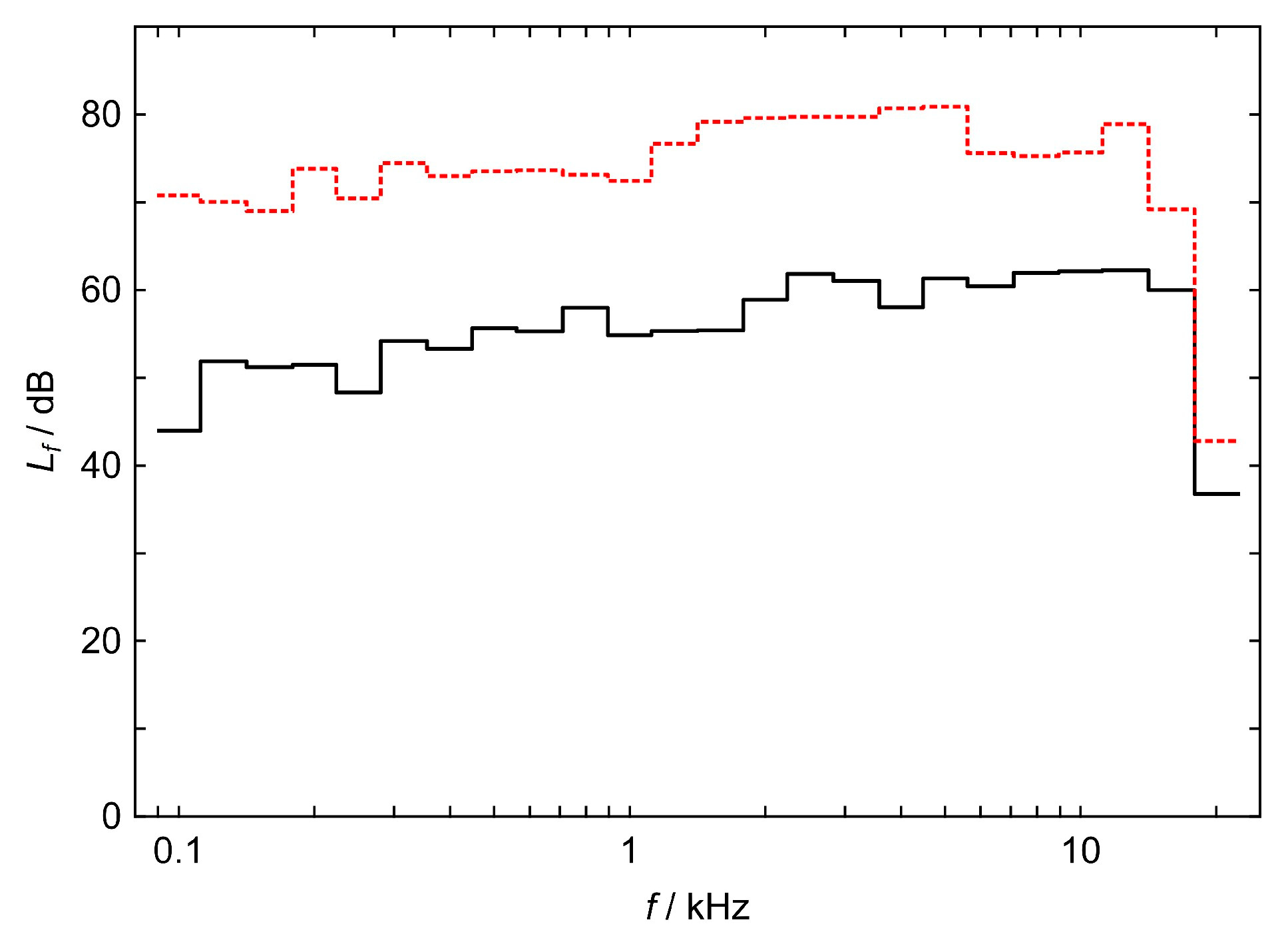
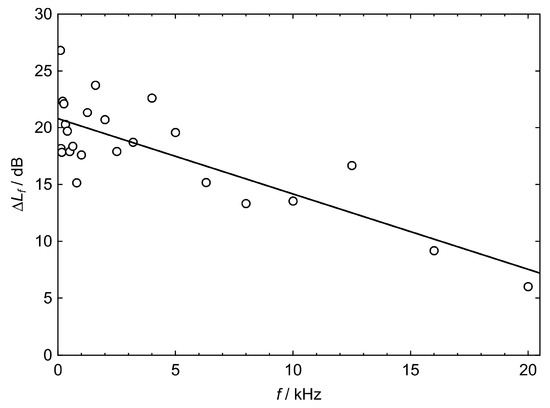
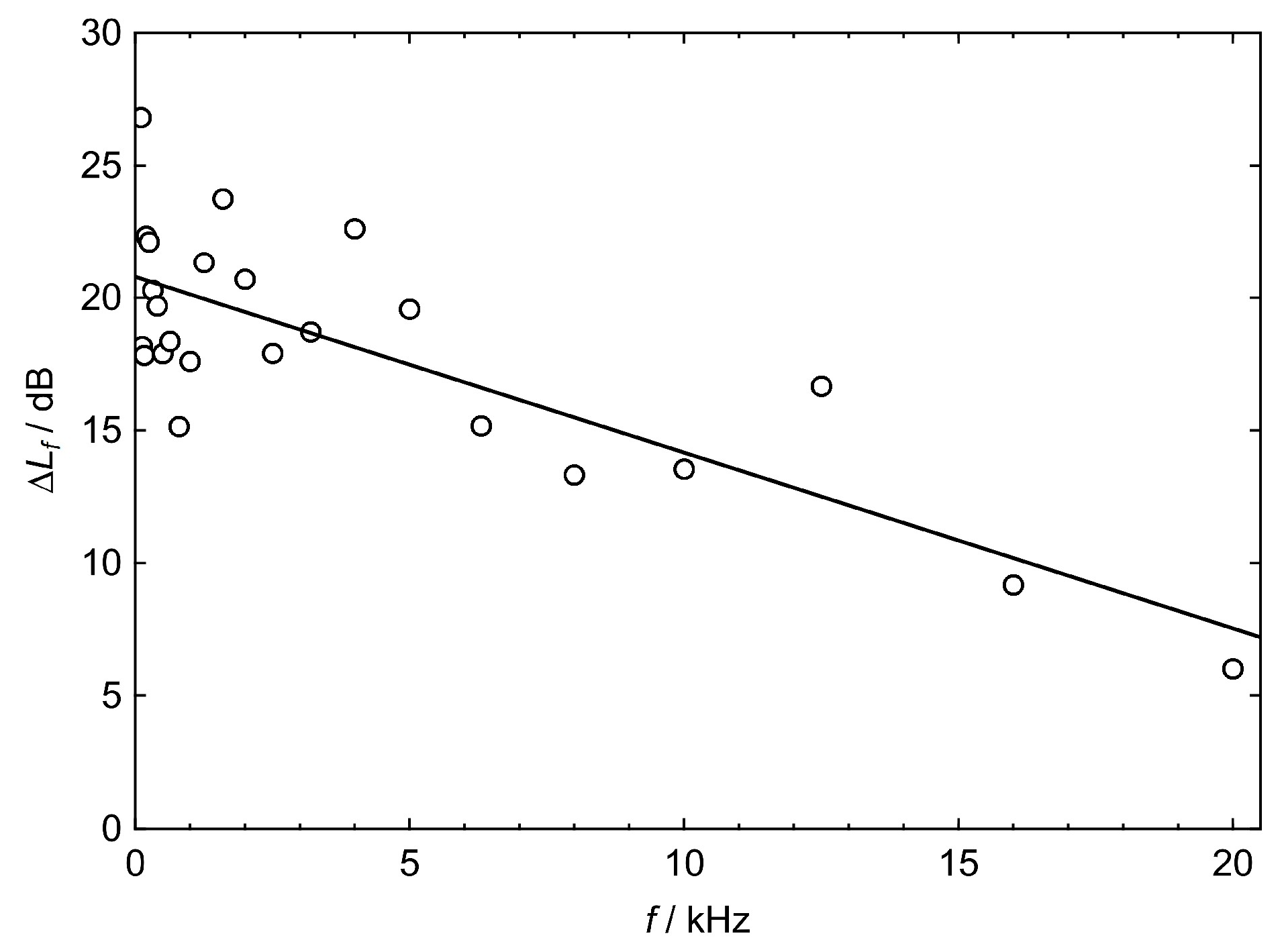
The sound pressure level measured at the end of the model ventilation duct (Figure 1) with no polyurethane mats inside is higher than that measured at the same distance from the loudspeaker in the approximately open field conditions of the laboratory room. The illustration for the white noise with the total SPL of 72 dB is plotted in Figure 8, while the recorded Lf values are collected in Table S4. With increasing wave frequency, the difference between the recorded SPL values decreases due to the higher directivity of the shorter waves, which is illustrated in Figure 9.
Figure 8.
The sound pressure level recorded at a distance of 150 cm from the loudspeaker emitting the 72 dB white noise. Solid black line—the approximate open field condition in the laboratory room, dashed red line—at the end of the model ventilation duct in the same room.
Figure 9.
Difference between the sound pressure levels at a distance of 150 cm from the loudspeaker emitting the 72 dB white noise recorded at the end of the model ventilation duct and in approximate open field conditions in the laboratory room. Points—experimental data for the 1/3 octave-wide frequency bands, line—simple regression.
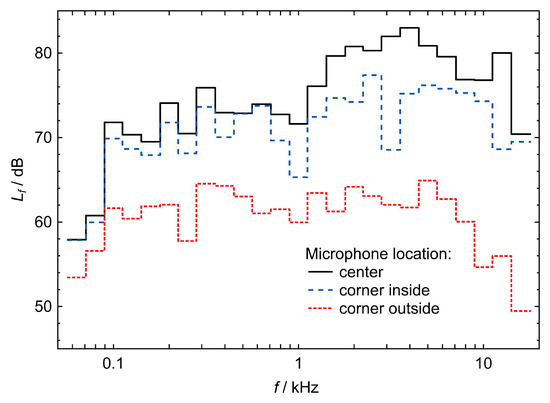
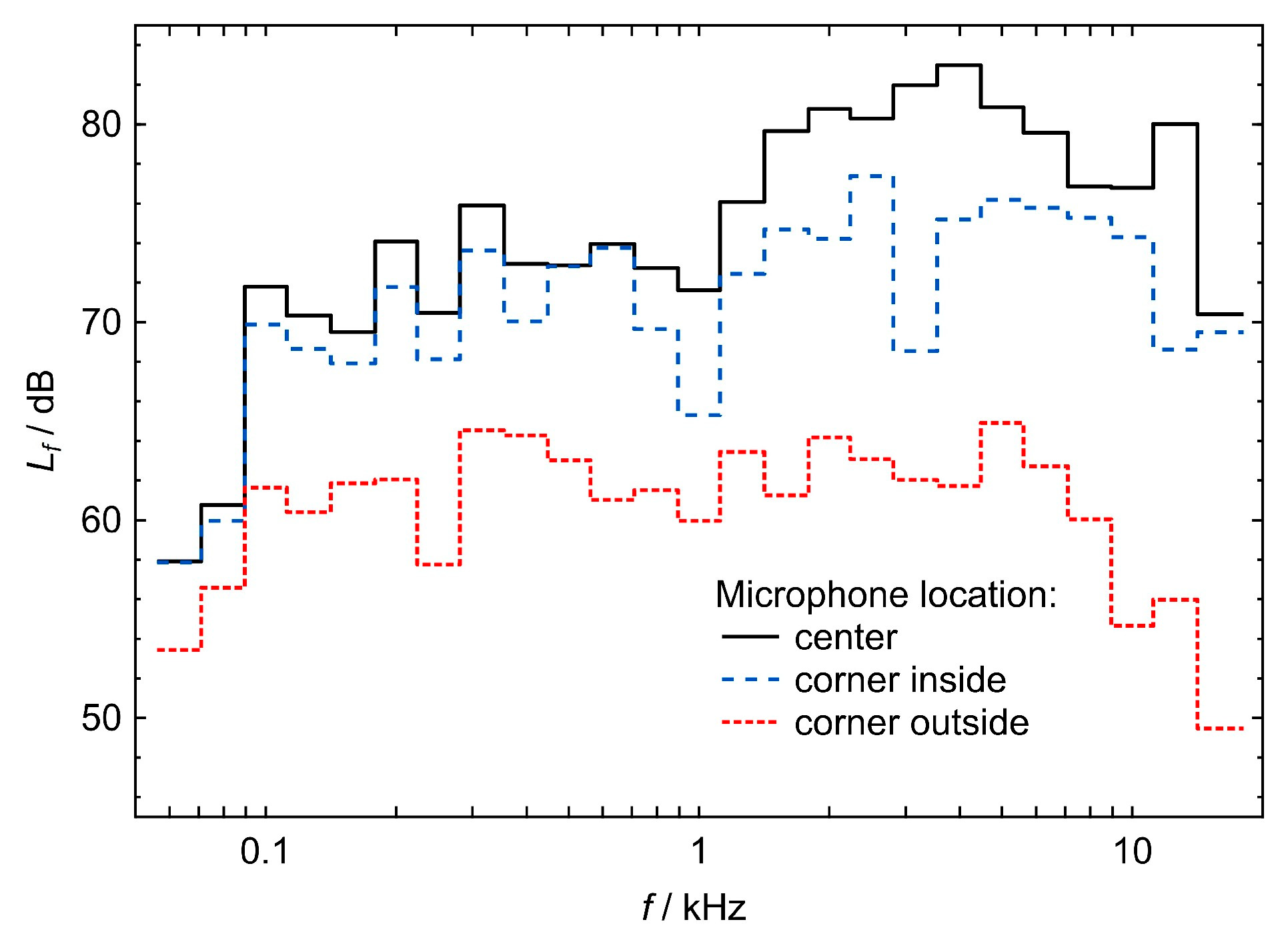
Thus, the SPL is higher at the end of the model ventilation duct than in the open field because of the reflections from the walls. Indeed, the tube collimates the acoustic beam that is evident in the difference between the SPLs recorded inside and outside of its outlet, reported in Table S5. The measurements showed that the SPLs at the spots marked 2, 3, 4, and 5 in Figure 2 are close to one another and substantially higher than those at spots 6, 7, 8, and 9 outside of the tube. The difference reaches 20 dB for the 1/3 octave band with the center frequency of 16 kHz. An illustration is given in Figure 10. The SPL in the center of the tube outlet is significantly higher than that in the vicinity of the walls for the waves of higher frequency only.
Figure 10.
White noise SPL measured in 1/3 octave-wide frequency bands at the end of the model ventilation duct. Microphone locations are shown in Figure 2. Center—location #1; corner inside—location #2; corner outside—location #6.
3.3. Suppression of Sound by a PUR Mat Perpendicular to the Longitudinal Axis of the Model Ventilation Duct
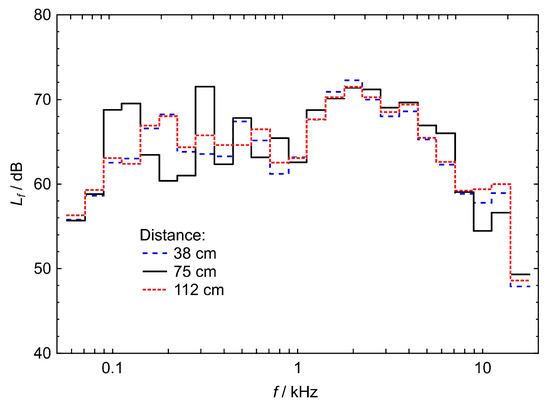
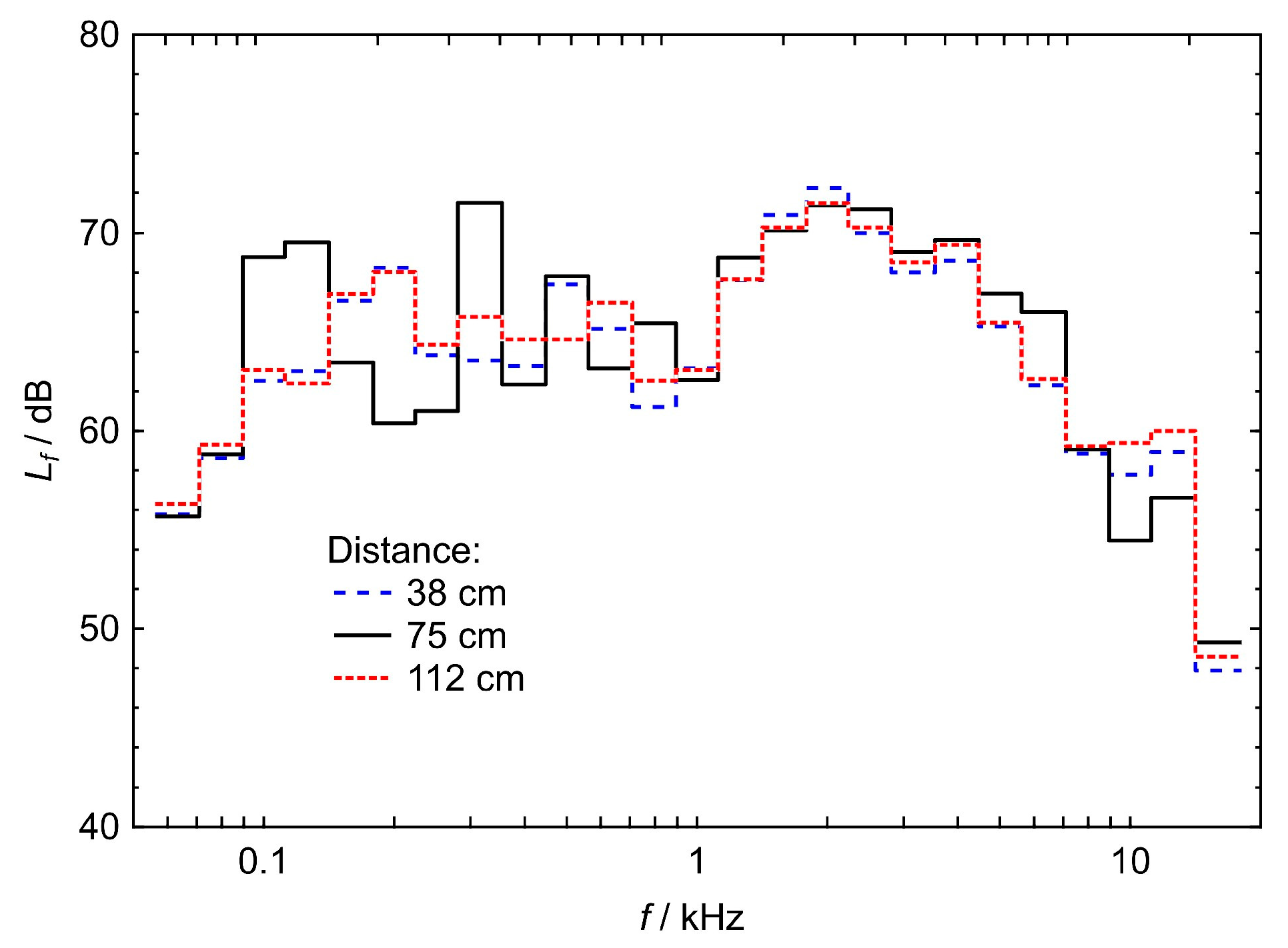
We compared the SPLs for three distances r between the loudspeaker and the 4 cm-thick rebond PUR mat tightly fitted in the model ventilation duct perpendicular to its longitudinal axis (cf. Figure 1). The measurement results are collected in Table S6. Figure 11 illustrates that the SPLs are independent of the distance between the loudspeaker and the PUR mat, particularly for the high-frequency waves.
Figure 11.
Sound pressure levels in 1/3 octave-wide frequency bands measured at the end of the model ventilation duct in its center. The emitted white noise with the total SPL of 72 dB was attenuated by the 4 cm-thick rebond polyurethane mat (PUR) tightly fitted in the tube perpendicular to its longitudinal axis at three distances from the loudspeaker.
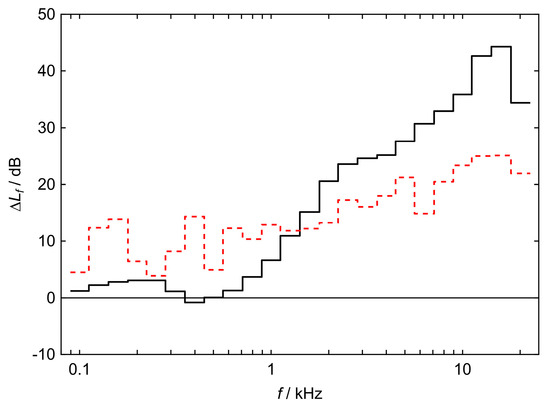
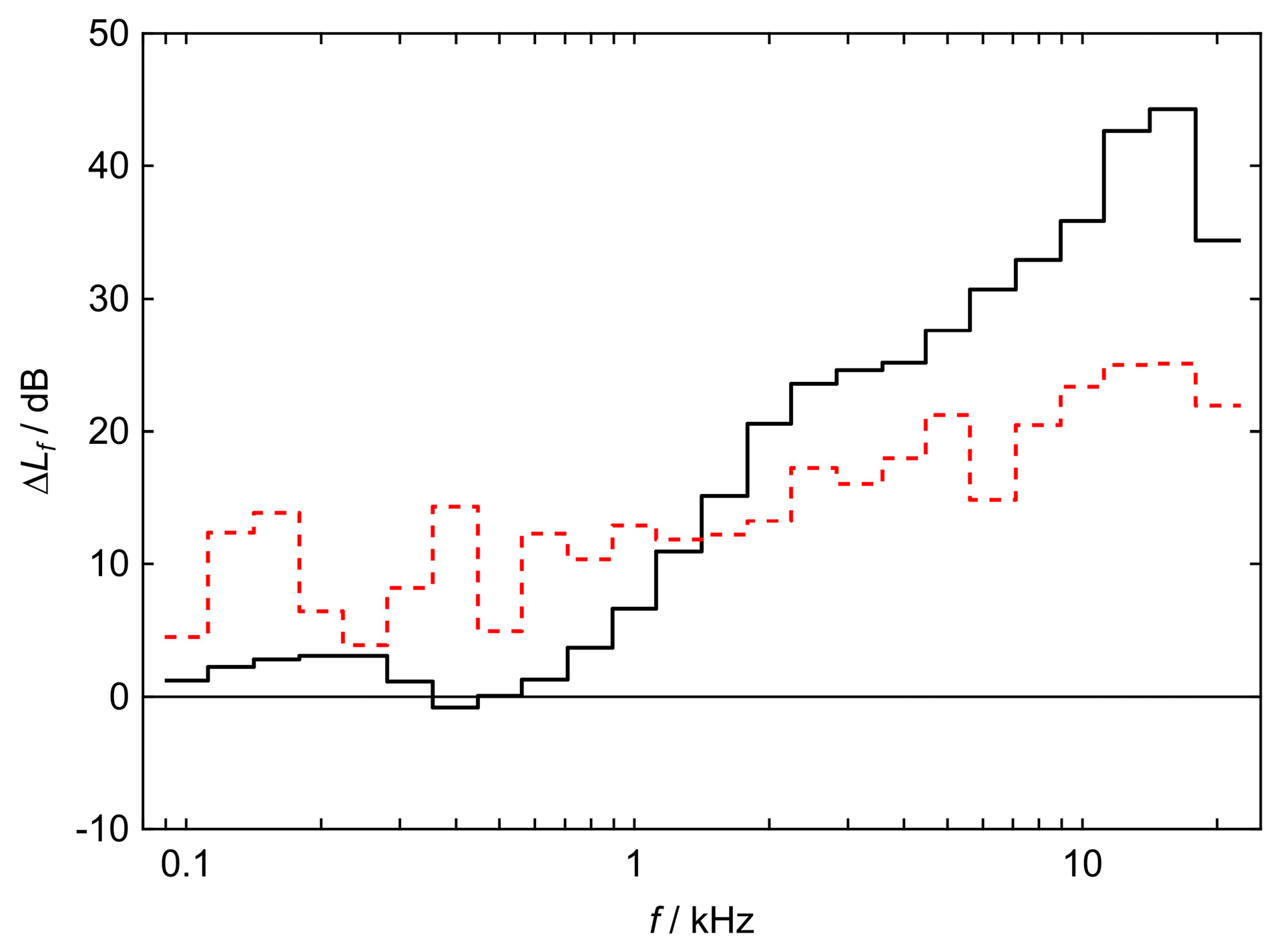
However, the attenuation by the PUR mat in the tube differs from that by the same mat placed directly on the loudspeaker grille. The ΔLf values in the 1/3 octave-wide frequency bands calculated from Equation (1) are reported in Table S7 and plotted in Figure 12. The difference is obvious. Probably, the high-frequency waves cause resonance vibrations, which transmit the energy along the tube, diminishing the damping effect of the mat.
Figure 12.
Suppression of sound in 1/3 octave-wide bands by the 4 cm-thick rebond polyurethane mat (PUR). Solid black line—the mat on the speaker grille (cf. Figure 3); dashed red line—the mat fitted perpendicularly in the steel tube, r = 75 cm (cf. Figure 1). In both configurations, the loudspeaker emitted the white noise with a total SPL of 72 dB.
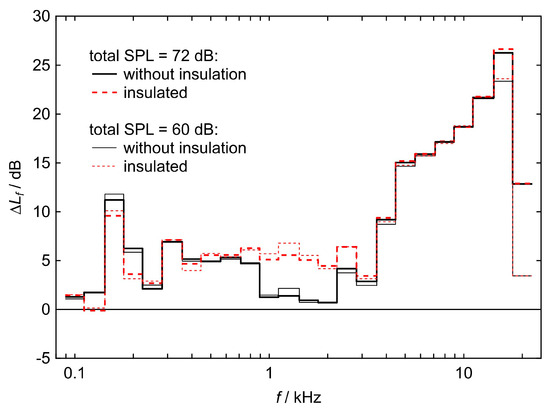
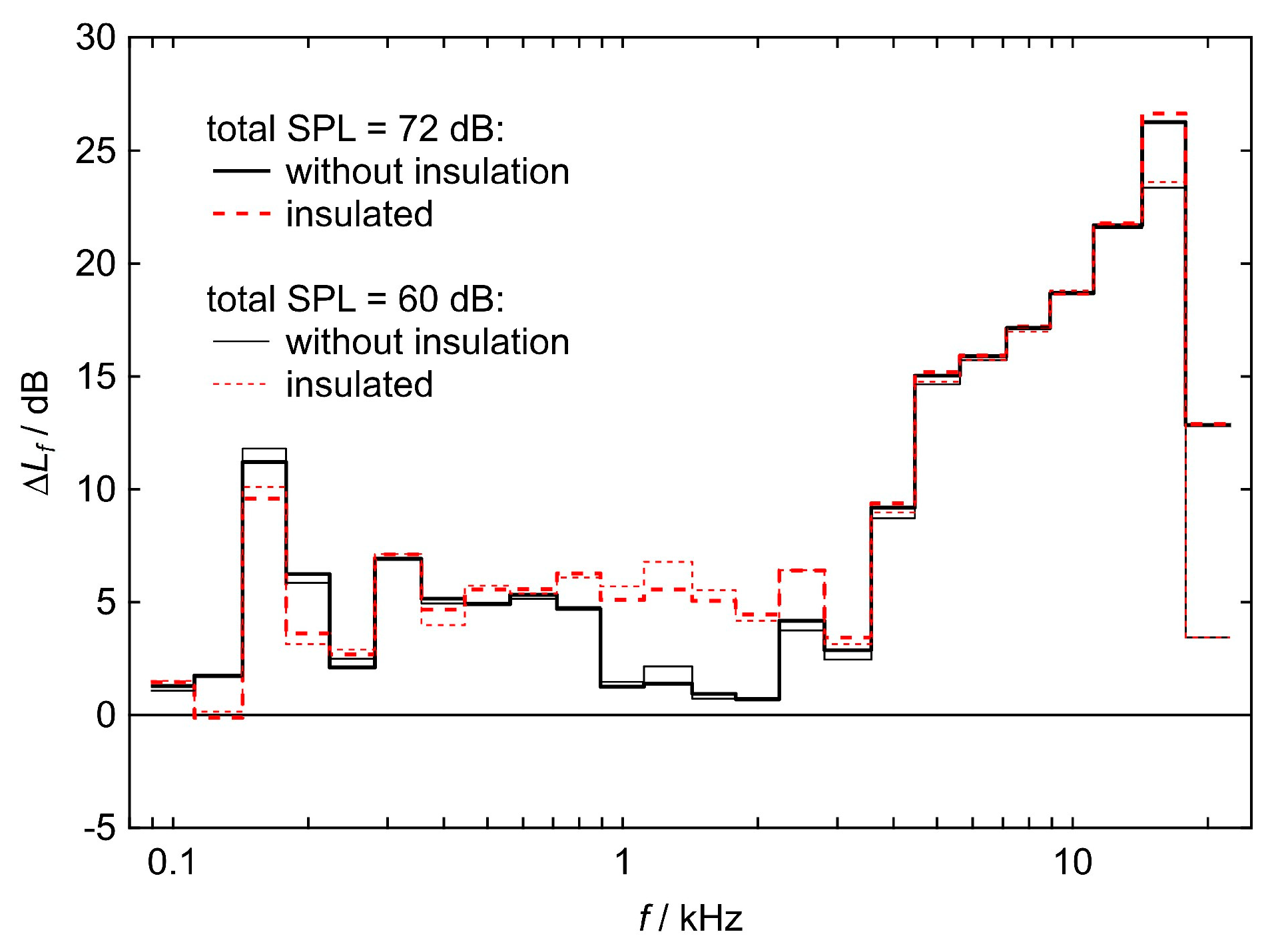
Another question was whether the measured suppression depends on the SPL of the generated white noise. To answer this, we measured the attenuation of white noise with the total SPLs of 72 and 60 dB by a 2 cm-thick rebond polyurethane (PUR) mat perpendicular to the tube axis fitted at a distance of r = 75 cm from the loudspeaker (cf. Figure 1). Two series of measurements were performed for each of the SPLs. The gap between the loudspeaker and the tube walls was left empty in the first series, while it was insulated by the same mat in the second one. The results are in Table S8. Figure 13 shows that the measured ΔLf values (Equation (1)) do not depend on the white noise total SPL. The loudspeaker insulation enhances attenuation in the six 1/3 octave-wide bands with the center frequency from 1 to 2.5 kHz. However, the effect is rather small and does not exceed 5 dB.
Figure 13.
Attenuation of the white noise of 60 and 72 dB total SPL by the 2 cm-thick rebond polyurethane (PUR) mat fitted perpendicularly in the steel tube, r = 75 cm (cf. Figure 1). Solid lines—without the loudspeaker insulation; dashed lines—with the insulated loudspeaker.
3.4. Suppression of Sound by Polyurethane Mats in Various Configurations in the Model Ventilation Duct
We studied the suppression of sound by 2 cm-thick mats made of original (PUT) and rebond (PUR) polyurethane. The mats were placed in the model ventilation duct in the following three configurations (cf. Figure 1):
- Only the inner walls covered (referred to as “walls” from now on);
- The mat perpendicular to the tube longitudinal axis, fixed at a distance of r = 75 cm from the speaker (referred to as “perpendicular”);
- The mats were both on the walls and perpendicular (“walls + perpendicular”).
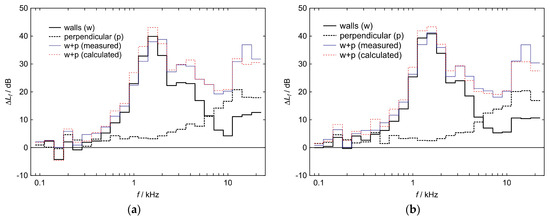
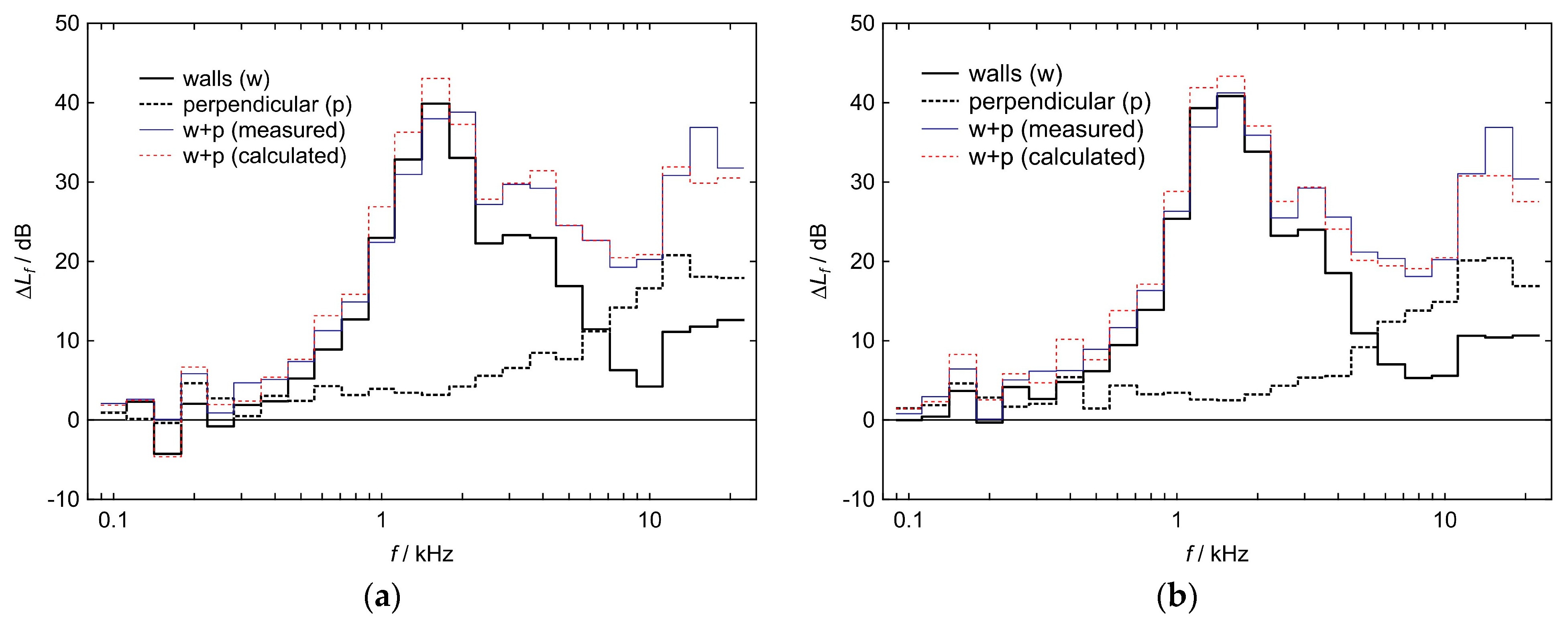
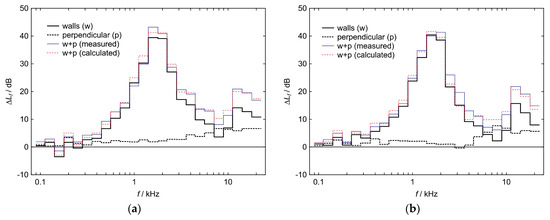
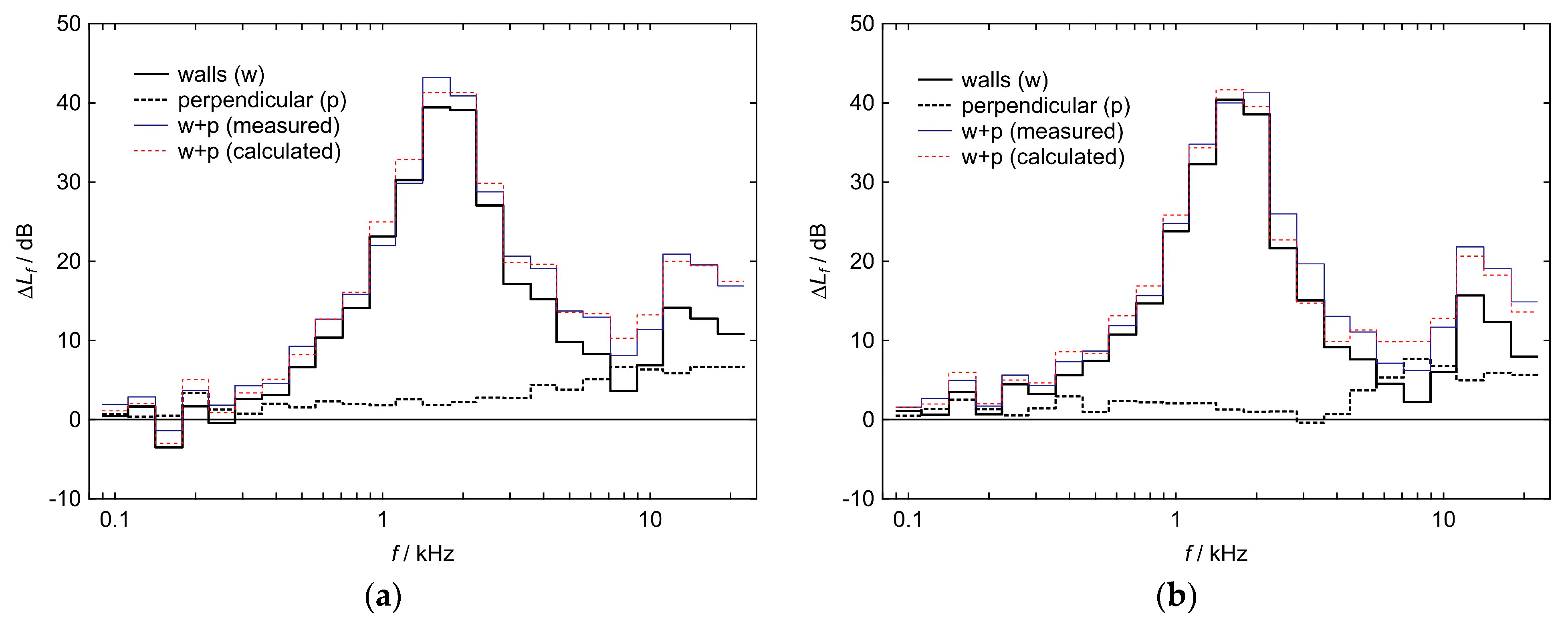
The ΔLf values are reported in Tables S9 and S10 and in Figure 14 and Figure 15 for the original and rebond polyurethane mats, respectively. For each configuration of the mats, the measurements were performed twice, with the acoustic insulation of the loudspeaker and the microphone and without it. The acoustic insulation consisted of closing the gaps between the tube walls and the loudspeaker (or the microphone) with the mat. The insulations did not significantly change the measured ΔLf values, which is illustrated by the similar attenuation graphs (Figure 14 and Figure 15).
Figure 14.
Attenuation of the white noise of 72 dB total SPL by the 2 cm-thick PUT mat in the model ventilation duct: (a) both tube ends open, (b) both ends acoustically insulated.
Figure 15.
Attenuation of the white noise of 72 dB total SPL by the 2 cm-thick PUR mat in the model ventilation duct: (a) both tube ends open, (b) both ends acoustically insulated.
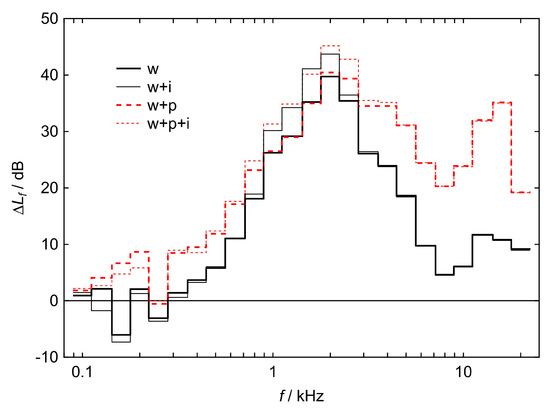
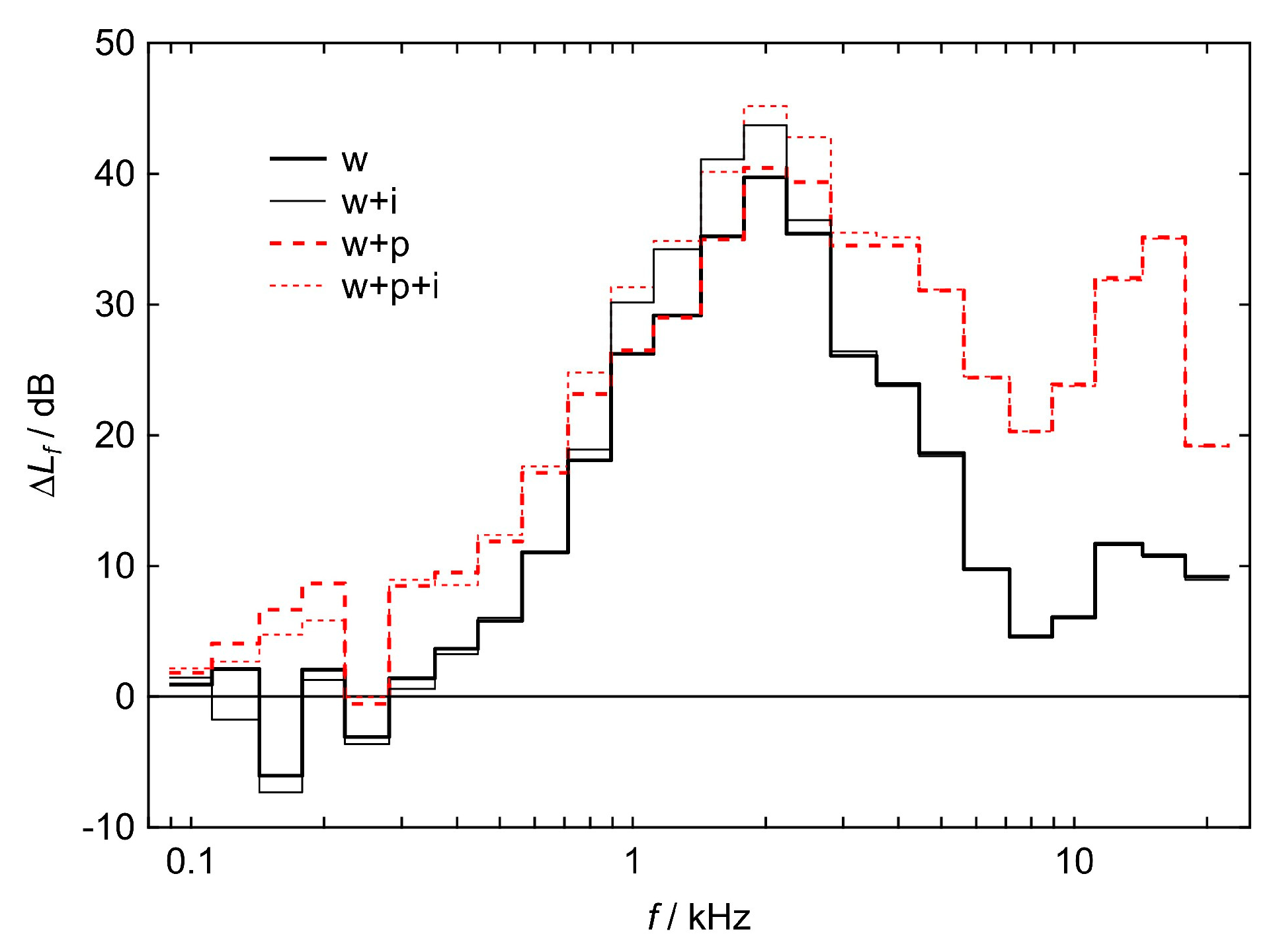
The attenuation by the 2 cm-thick original polyurethane mat (PUT) was measured once again after a half-year-long break to check the repeatability. The attenuation graphs for various configurations of the mat in the model ventilation duct are plotted in Figure 16. Indeed, the results are close to the previous ones (Figure 14).
Figure 16.
Attenuation of the white noise of 72 dB total SPL by the 2 cm-thick polyurethane mat (PUT) in the model ventilation duct, measured for the second time after a half-year-long break. The mat configurations: w—walls, the tube ends open, w + i—walls, both ends acoustically insulated, w + p—walls + perpendicular, the tube ends open, w + p + i—walls + perpendicular, both ends acoustically insulated.
The measured suppression of sound by the “walls + perpendicular” configuration proved to be approximately equal to the sum of those for the “walls” and “perpendicular” measured independently of each other. Both the original PUT and rebond PUR mats suppress the noise similarly. Worthy of notice is the spectacular difference between the ΔLf(f) characteristics for the “walls” and “perpendicular” configurations. The polyurethane foams on the inner walls of the model ventilation duct effectively attenuate the noise in the wave frequency range from 700 to 7000 Hz, those in the 1/3 octave-wide bands with the center frequency of 1600 Hz and 2000 Hz in particular, cf. Figure 14 and Figure 15. This maximum probably results from two counteracting effects: both the directivity of the acoustic beam generated by the loudspeaker and the sound absorption coefficient increase with the wave frequency, cf. Figure 7. Thus, the moderate frequency waves are prone to damping because the beam is wide enough to lose a substantial part of the initial energy due to multiple reflections within the tube. The important and complex problem of the directivity of the acoustic source (e.g., [18]) is not the subject of this study; thus, we did not discuss this topic in detail. However, it is obvious that a knowledge of the material constants, i.e., the coefficients of sound reflection k and absorption α, does not suffice for proper prediction of the attenuation of sound in a real ventilation duct. Indeed, the results for the “walls” configuration are of particular importance for practitioners.
Similar results were reported for other lining materials in ducts, such as a rigid rock-wool sheet, fiberglass board, mineral wool, and sintered clay ceramic. These linings showed the maximum attenuation at frequencies ca. 0.7, 1.5, 2.2, and 5 kHz, respectively [10], albeit the wave frequency interval was narrower than in this study.
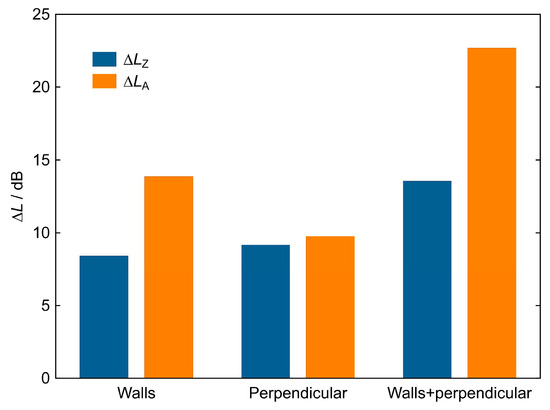
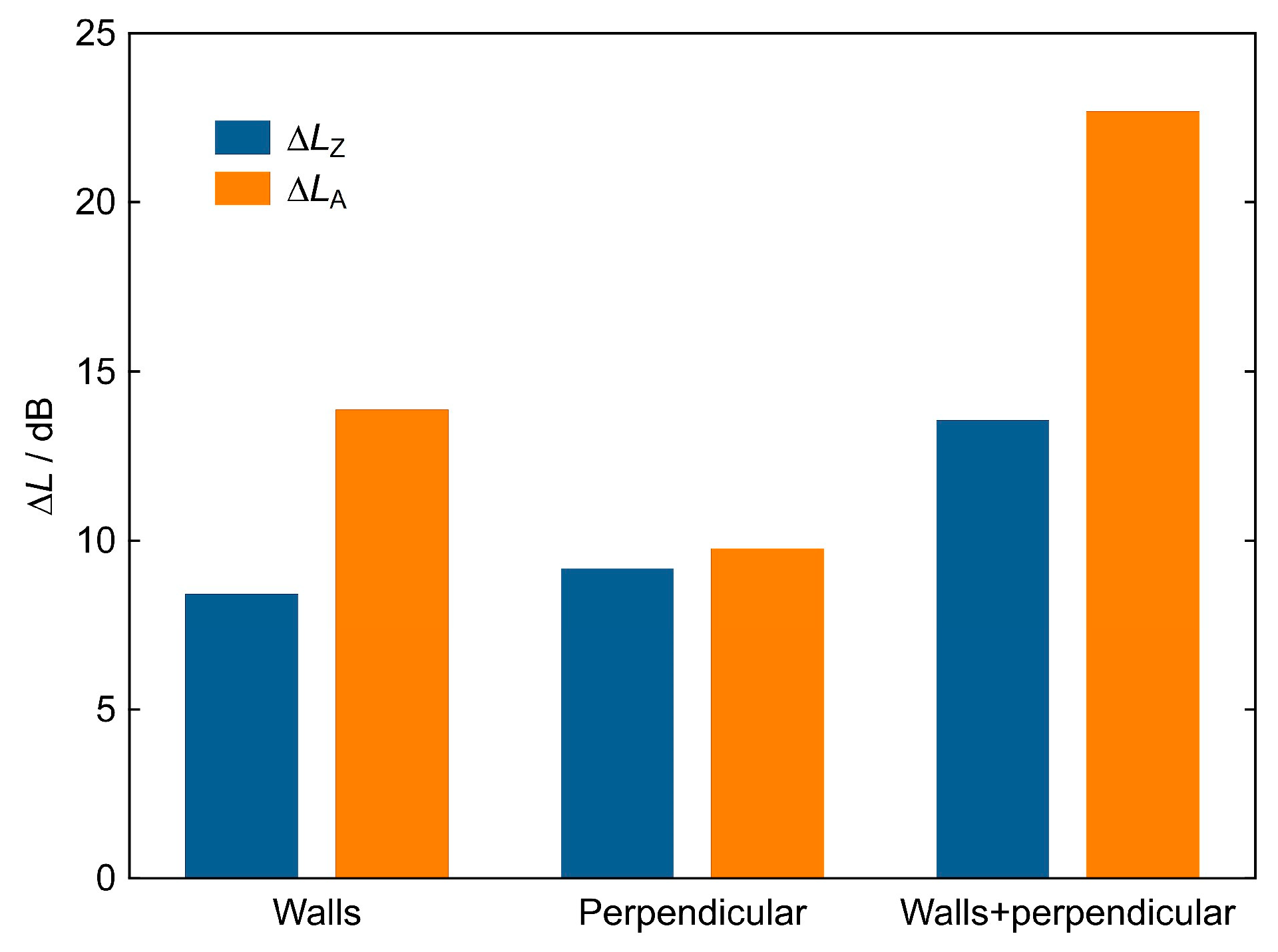
A comparison of the total attenuation effectivity, ΔLZ, with that perceived by humans, ΔLA, is reported in Figure 17. The latter values were calculated using the A-weighted sound pressure level, which is the common measure used in noise analysis despite its limitations [19]. Indeed, ΔLA differs significantly from ΔLZ when the polyurethane mat is on the inner walls of the ventilation duct due to effective suppression of sound waves of moderate frequency, from 700 to 7000 Hz, for which the human ear is most sensitive [20,21].
Figure 17.
Total attenuation effectivity of the 2 cm-thick PUT mat in three configurations within the model ventilation duct, ΔLZ, compared with the respective attenuation perceived by humans, ΔLA.
4. Conclusions
The model ventilation duct provides a simple assessment of the suppression of noise by the sound-deadening materials in realistic conditions. The results confirmed that relying solely on the coefficients of reflection (k) and attenuation (α) as material constants led to erroneous assessment. In particular, the frequency characteristic of the attenuated sound depended on the material configuration in the duct. While the sound suppression by the mat parallel to the wave front increased monotonically within the wave frequency range from 450 Hz to 18 kHz, the lining on the inner walls effectively attenuated the noise in the wave frequency range from 700 Hz to 7 kHz. A distinct maximum of ΔLf ≈ 40 dB occurred in the frequency range from 1.4 to 2.2 kHz. This maximum is in the range of the maximum sensitivity of the human ear, evidencing the usefulness of the studied polyurethane mats as sound-deadening linings in ventilation ducts.
The lining mats made of original and rebond polyurethane foam (PUT and PUR) similarly suppressed sound. This suggests that the lining mat material could be less important than its surface pattern for the sound-deadening effect in ventilation ducts. However, the latter question requires further studies.
Supplementary Materials
The following supporting information can be downloaded at: https://www.mdpi.com/article/10.3390/app16010385/s1, Table S1: Suppression of the 72 dB SPL white noise by the 2 cm-thick PUR mat on the speaker grille; Table S2: Suppression of the 72 dB SPL white noise by the 4 cm-thick PUR mat on the speaker grille; Table S3: The sound attenuation coefficient of the 4 cm-thick PUR mat; Table S4: The values of SPL at a distance of 150 cm from the loudspeaker emitting the 72 dB white noise; Table S5: The values of SPL at the three spots at the end of the model duct; Table S6: The SPL values at the end of the model duct divided by the 4 cm-thick PUR mat at the three distances from the loudspeaker, which emitted the 72 dB white noise; Table S7: Suppression of sound by the 4 cm-thick PUR mat mounted on the speaker grille and fitted in the middle of the model duct perpendicular to its longitudinal axis; Table S8: Attenuation of the white noise by the 2 cm-thick PUR mat fitted in the middle of the model duct perpendicular to its longitudinal axis; Table S9: Attenuation of the 72 dB white noise by the 2 cm-thick PUT mat in the model ventilation duct; Table S10: Attenuation of the 72 dB white noise by the 2 cm-thick PUR mat in the model ventilation duct.
Author Contributions
Conceptualization, K.N. and W.M.; methodology, K.N. and W.M.; validation, K.N. and W.M.; formal analysis, K.N. and W.M.; investigation, K.N., K.Ł., E.K., and W.M.; resources, K.N., K.Ł., E.K., and W.M.; data curation, K.N., K.Ł., and W.M.; writing—original draft preparation, K.N., E.K., and W.M.; writing—review and editing, K.Ł. and W.M.; visualization, E.K. and W.M.; supervision, K.N. and W.M. All authors have read and agreed to the published version of the manuscript.
Funding
This research received no external funding.
Institutional Review Board Statement
Not applicable.
Informed Consent Statement
Not applicable.
Data Availability Statement
The original contributions presented in the study are included in the article/Supplementary Materials, further inquiries can be directed to K.Ł.
Conflicts of Interest
The authors declare no conflicts of interest.
References
- ISO 17497-2:2012; Acoustics—Measurement of Sound Scattering Properties—Part 2: Measurement of the Directional Diffusion Coefficient in a Free Field. ISO: Geneva, Switzerland, 2012.
- PN-EN ISO 354:2005; Acoustics—Measurement of Sound Absorption in a Reverberation Chamber. PKN: Warszawa, Poland, 2025. (In Polish)
- PN-EN ISO 10534-1:2004; Acoustics—Determination of Sound Absorption Coefficient and Acoustic Impedance in Impedance Tubes—Part 1: Standing Wave Coefficient Method. PKN: Warszawa, Poland, 2004. (In Polish)
- Herget, W. Insertion Loss, Sound Power Level and Pressure Measurements on Splitter Silencers; IBP-Report P-TA 31/2014; Fraunhofer-Institut für Bauphysik IBP: Stuttgart, Germany, 2014. Available online: https://www.alnor.com.pl/index/download/certyfikaty/tlumiki/ (accessed on 28 November 2025).
- Tang, X.; Yan, X. Acoustic energy absorption properties of fibrous materials: A review. Compos.-A Appl. Sci. Manuf. 2017, 101, 360–380. [Google Scholar] [CrossRef] [Scilit]
- Trinh, V.H.; Nguyen, T.V.; Nguyen, T.H.N.; Nguyen, M.T. Design of sound absorbers based on open-cell foams via microstructure-based modeling. Arch. Acoust. 2022, 47, 501–512. [Google Scholar] [CrossRef] [Scilit]
- Lawn, C. Calculation of acoustic absorption in ducts with perforated liners. Appl. Acoust. 2015, 89, 211–221. [Google Scholar] [CrossRef] [Scilit]
- Wang, C.; Cheng, L.; Pan, J.; Yu, G. Sound absorption of a micro-perforated panel backed by an irregular-shaped cavity. J. Acoust. Soc. Am. 2010, 127, 238–246. [Google Scholar] [CrossRef] [Scilit] [PubMed]
- Liu, Y.; Zhang, W.; Cao, G.; Zuo, G.; Liu, C.; Ma, F. Ultra-thin ventilated metasurface pipeline coating for broadband noise reduction. Thin-Walled Struct. 2024, 200, 111916. [Google Scholar] [CrossRef] [Scilit]
- Beranek, L.L. Noise Control. In Acoustics; Acoustic Society of America: New York, NY, USA, 1993; pp. 332–360. [Google Scholar]
- Kemona, A.; Piotrowska, M. Polyurethane Recycling and Disposal: Methods and Prospects. Polymers 2020, 12, 1752. [Google Scholar] [CrossRef] [Scilit] [PubMed]
- Rossignolo, G.; Malucelli, G.; Lorenzetti, A. Recycling of polyurethanes: Where we are and where we are going. Green Chem. 2024, 26, 1132–1152. [Google Scholar] [CrossRef] [Scilit]
- JAG®. Flexible Rebound Polyurethane Foam. Available online: https://jag.pl/en/oferta/elastyczna-pianka-poliuretanowa-wtornie-spieniana-typ-r/ (accessed on 25 December 2025).
- IEC 61672-1; Electroacoustics—Sound Level Meters—Part 1: Specifications. International Electrotechnical Commission: Geneva, Switzerland, 2013.
- IEC 60942; Electroacoustics—Sound Calibrators. International Electrotechnical Commission: Geneva, Switzerland, 2017.
- Turkiewicz, J. Określenie Fizycznego Współczynnika Pochłaniania Dźwięku Materiału Zgodnie z Normą ISO 10534-1; Raport AGH: Kraków, Poland, 2013; (Unpublished). [Google Scholar]
- Beranek, L.L. Sound in enclosures. In Acoustics; Acoustic Society of America: New York, NY, USA, 1993; pp. 285–331. [Google Scholar]
- Mehra, R.; Antani, L.; Manoch, D. Source Directivity and Spatial Audio for Interactive Wave-Based Sound Propagation. In Proceedings of the 20th International Conference on Auditory Display (ICAD–2014), New York, NY, USA, 22–25 June 2014; Available online: https://repository.gatech.edu/bitstreams/cd7afdd5-2700-434f-8d1e-c40650eccebe/download (accessed on 2 November 2025).
- Pierre, R.; Maguire, D.J. The Impact of A-weighting Sound Pressure Level Measurements During the Evaluation of Noise Exposure, Noise-Con 2004, Baltimore, Maryland (USA). Available online: https://storeycountywindfarms.org/ref3_Impact_Sound_Pressure.pdf (accessed on 20 November 2025).
- Fletcher, H.; Munson, W.A. Loudness, its definition, measurement and calculation. J. Acoust. Soc. Am. 1933, 5, 82–108. [Google Scholar] [CrossRef] [Scilit]
- ISO 226:2023; Acoustics—Normal Equal-Loudness-Level Contours. ISO: Geneva, Switzerland, 2023.

Disclaimer/Publisher’s Note: The statements, opinions and data contained in all publications are solely those of the individual author(s) and contributor(s) and not of MDPI and/or the editor(s). MDPI and/or the editor(s) disclaim responsibility for any injury to people or property resulting from any ideas, methods, instructions or products referred to in the content. |
© 2025 by the authors. Licensee MDPI, Basel, Switzerland. This article is an open access article distributed under the terms and conditions of the Creative Commons Attribution (CC BY) license.