Review

Working from Home and Indoor Environmental Quality: A Scoping Review

by
Miguel Ángel Navas-Martín
1,2,*,
Virginia Jiménez-Planet
3 and
Teresa Cuerdo-Vilches
4,*
1
Escuela Nacional de Sanidad, Instituto de Salud Carlos III (ISCIII), 28029 Madrid, Spain
2
Facultad Ciencias de la Salud, Universidad del Atlántico Medio (UNAM), 35017 Las Palmas de Gran Canaria, Spain
3
Biblioteca Nacional de Ciencias de la Salud, Instituto de Salud Carlos III (ISCIII), 28029 Madrid, Spain
4
Instituto de Ciencias de la Construcción Eduardo Torroja (IETcc), Consejo Superior de Investigaciones Científicas (CSIC), 28033 Madrid, Spain
*
Authors to whom correspondence should be addressed.
Appl. Sci. 2026, 16(1), 250; https://doi.org/10.3390/app16010250
Submission received: 17 November 2025 / Revised: 11 December 2025 / Accepted: 18 December 2025 / Published: 26 December 2025
(This article belongs to the Special Issue Resilient Cities in the Context of Climate Change)

Abstract

The accelerated expansion of telework, driven by the COVID-19 pandemic, has transformed global work dynamics. Despite this, limited research exists on the implications of Indoor Environmental Quality (IEQ) on home workspaces. Factors like thermal comfort, lighting, air quality, and noise significantly influence the well-being, productivity, and health of teleworkers. Home spaces are often not designed to meet the environmental quality standards of traditional offices, altering indoor conditions. This scoping review investigates the IEQ–telework relationship, analyzing 41 studies from 18 countries. Findings show that elevated noise levels and insufficient lighting increase stress and fatigue, while inadequate air quality reduces cognitive performance and creativity. Conversely, access to natural light, pleasant views, and thermal comfort improves overall satisfaction and productivity. The study identifies a fragmented and poorly connected research network, with few active global groups studying IEQ in home workspaces. These results underscore the need for interdisciplinary research to address the societal and environmental challenges of teleworking and develop equitable, healthy remote environments. Future studies must consider cultural diversity and underrepresented regions to bridge existing knowledge gaps.

1. Introduction

The concept of telework emerged in the 1970s as a new mode of work organization that offered employees the flexibility to work from any location. Although there is no universally accepted definition [1], various terms such as “work from home” (WFH), “remote work” or “telework” have been used to refer to unconventional work arrangements. Telecommuting usually refers to the performance of working outside the usual location, while working from home specifically indicates the performance of work partially or completely at home [2].
Initially, the home was the primary location for telework due to its accessibility and practicality; however, in recent years, third spaces, such as coffee shops, hotels, or second homes, have gained popularity as alternative locations for working remotely [3,4]. The increasing implementation of telework has been facilitated by advances in Information and Communication Technologies (ICT), giving rise to three generations of telework: the home office, the mobile office and the virtual office [1].
The most significant change happened during the COVID-19 pandemic, when about 37% of European workers switched to remote work, transforming telework into the predominant labour modality [5]. Organizations adjusted their processes to reduce costs in facilities and transportation, while employees valued even more the autonomy and flexibility offered by this modality. However, this rapid transition also revealed limitations, especially in the quality of home workspaces. For instance, during the COVID-19 confinement in the municipality of Madrid, approximately one-third of households reported their telework spaces to be inadequate due to a lack of dedicated areas, shared spaces, limited digital resources, and inappropriate environmental conditions [2,6].
While teleworking offers employees flexibility to work from home, compared to traditional offices (regulated by strict Indoor Environmental Quality (IEQ) standards), residential spaces lack optimal hygrothermal, acoustic, visual and air quality comfort conditions to provide optimal working conditions for human well-being and productivity [7,8].
Indoor Environmental Quality (IEQ) refers to the set of physical conditions within indoor spaces that influence occupants’ comfort, health, and performance. It typically encompasses four core domains: thermal environment, indoor air quality, lighting conditions, and acoustic environment, which together determine the overall environmental experience of individuals in indoor settings [9].
The overlap between personal and work life, together with non-ergonomic furniture and lighting problems, has added new challenges for teleworking [5,6]. This study, through a scoping literature review, aims to provide a comprehensive understanding of the current knowledge concerning environmental conditions in home workspaces. Quantitative and qualitative methods were used to map the network of researchers active in the field of Indoor Environmental Quality in workspaces, identifying the leading countries in these studies, and defining key interconnections from their findings. In this context, this study answers the research question: What knowledge exists in the literature on Indoor Environmental Quality of telework spaces in homes?

2. Materials and Methods

To answer the research question defined above, a scoping review was conducted. A scoping review acts as an initial evaluation of the breadth and depth of existing research materials, aiming to reveal the nature and scope of available research findings, which may include ongoing studies. This type of review provides policymakers with a perspective to determine whether a full systematic review is needed. Scoping reviews are conducted for different purposes, with key objectives including examining the extent or depth of the existing literature, mapping and summarizing available evidence, guiding future research, and identifying or addressing knowledge gaps [10].
This scoping review was conducted and reported in accordance with the Preferred Reporting Items for Systematic Reviews and Meta-Analyses Extension for Scoping Reviews (PRISMA-ScR) guidelines [11]. The complete PRISMA-ScR checklist is provided as Supplementary Material.
The methodological design of this scoping review was informed by the PRISMA-ScR framework and updated methodological guidance [12,13], together with the approach described in [10]. Prior to data extraction, the study protocol was prospectively registered and made publicly available (https://osf.io/2C5D9, accessed on 6 November 2024). This registered protocol was specifically developed for the present study. This protocol, specifically developed for our study [14], guided the entire review process, including the search strategy, study selection, data-charting procedures, and analytical framework.

2.1. Eligibility Criteria

Based on the Population, Concept, and Context mnemonic (PCC) [15], this scoping review included studies that (a) involved all teleworkers; (b) addressed the concept of indoor environment; and (c) took place in the home space context.

2.2. Search Strategy

The search strategy was jointly developed by a specialist in the literature searches and the research team. An initial strategy was designed using the following controlled vocabulary terms for PubMed search engine: “telecommuting,” “teleworking,” “work environment,” “working conditions”, “indoor environment”, “home environment” and “housing quality”. This search strategy was then adapted for use in other databases, such as Embase, Scopus, Web of Science (WOS) and Global Health. The diversity of search strategies used in the bibliographic databases is shown in Annex 1. The analysis was conducted from 2001 onwards, as the 21st century saw advancements in information technology and technological development, which enabled greater flexibility and connectivity for remote work [16], till June 2024. Only content in English was selected, without geographical restrictions.

2.3. Screening

Using the reference management application JabRef [17], outcomes were analyzed, previously eliminating duplicate entries. The liberal accelerated screening approach [18] was employed, wherein all identified documents were screened for possible inclusion by one first reviewer. After their selection, the excluded documents were independently evaluated by a second reviewer, allowing partial inclusion of some of these documents. The initial examination focused on record titles and abstracts, followed by a full-text review of the remaining documents based on predetermined inclusion criteria. A total of 41 studies were selected for review (see Table 1) from an initial pool of 66 studies that met the eligibility criteria.
During the full-text assessment, 25 studies were excluded for clearly defined reasons. Most exclusions (n = 21) were related to studies that, although addressing working from home or aspects of indoor environments, did not examine the association between indoor environmental quality (IEQ) and work-from-home (WFH), which is the central focus of this review. Two studies were excluded because they did not analyze telework or home-based work settings, instead focusing on general residential contexts or traditional office environments. The remaining two studies did not address indoor environmental quality domains—thermal, acoustic, visual, or air quality—and instead examined organizational or psychosocial factors unrelated to IEQ.
Figure 1 presents an updated PRISMA-ScR flow diagram that reflects these exclusion criteria in detail, improving transparency in the screening and selection process.

2.4. Data Charting Process

A Microsoft Excel data extraction form was used to gather information from each article. To maintain uniformity among project team members, the research team worked together to build and test data extraction forms internally. They also included feedback and conducted testing as needed. One team member then extracted the data, and another team member independently verified it. Consensus was used to settle any differences. Article titles, authors, the corresponding author’s nation of affiliation, the year of publication, aims, and keywords were all included in the extracted information.
No critical appraisal of individual sources of evidence was performed, as the objective of this scoping review was to map the breadth and nature of the available evidence rather than assess the methodological quality of individual studies.

2.5. Data Analysis

The findings of the scoping review were analyzed using quantitative and qualitative methods. The quantitative analysis focused on aspects such as authors, affiliation countries of corresponding authors, objectives and keywords. Studies were categorized using content analysis [19] as part of the qualitative approach. This content analysis was performed by the lead reviewer, who coded all included studies according to predefined thematic categories. When uncertainties arose, classifications were discussed with the research team until consensus was reached, ensuring consistency throughout the data-charting process.
To illustrate the geographical distribution of researchers’ studies, the online tool MapChart was used. In addition, collaboration networks between authors were identified by analyzing bibliographic references. This analysis, together with a keyword network analysis, was performed using VOSviewer (version 1.6.19), a software designed to build and visualize bibliometric networks. To ensure accuracy in the reference analysis, author names were manually standardized to maintain consistency and avoid duplication caused by variations in name formats across different publications. In addition to the visualisation produced in VOSviewer, we exported the keyword co-occurrence network and computed basic network metrics in R (version 2024.09.1 + 394) using the igraph package.

3. Results

A total of 41 studies were included in this review, published between 2020 and 2024, with a marked concentration in the years following the COVID-19 pandemic. Most studies employed cross-sectional survey designs, typically based on self-reported data, while a smaller number included experimental or quasi-experimental assessments of indoor environmental conditions. Across the studies, the most frequently examined IEQ dimensions were thermal comfort, acoustic environment, lighting conditions, and indoor air quality, although the level of detail and measurement approaches varied substantially. Overall, the evidence base reflects heterogeneity in study design and scope, consistent with the exploratory nature of research on IEQ in home-based telework settings.
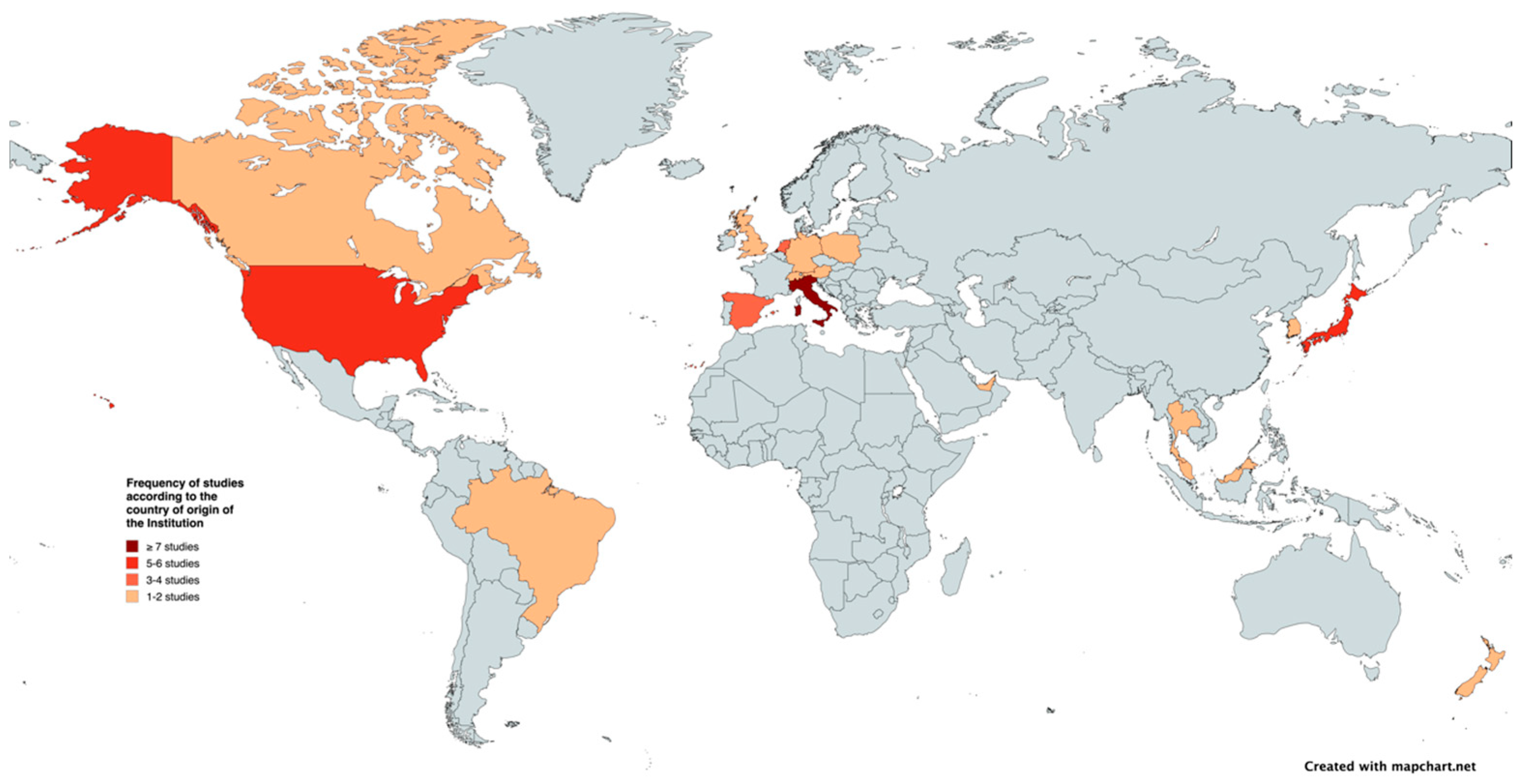
Analyzing the first author’s institution, 18 countries were identified from the reviewed literature. Italy (n = 7), the USA (n = 6), and Japan (n = 5) were the countries with the highest frequency of studies. They were followed by Spain and the Netherlands (n = 3 each). Finally, Brazil, Canada, Germany, Malaysia, and the UK had 2 studies each. Other countries represented with one study include Austria, Denmark, New Zealand, Poland, South Korea, Switzerland, Thailand, and the United Arab Emirates (Figure 2).
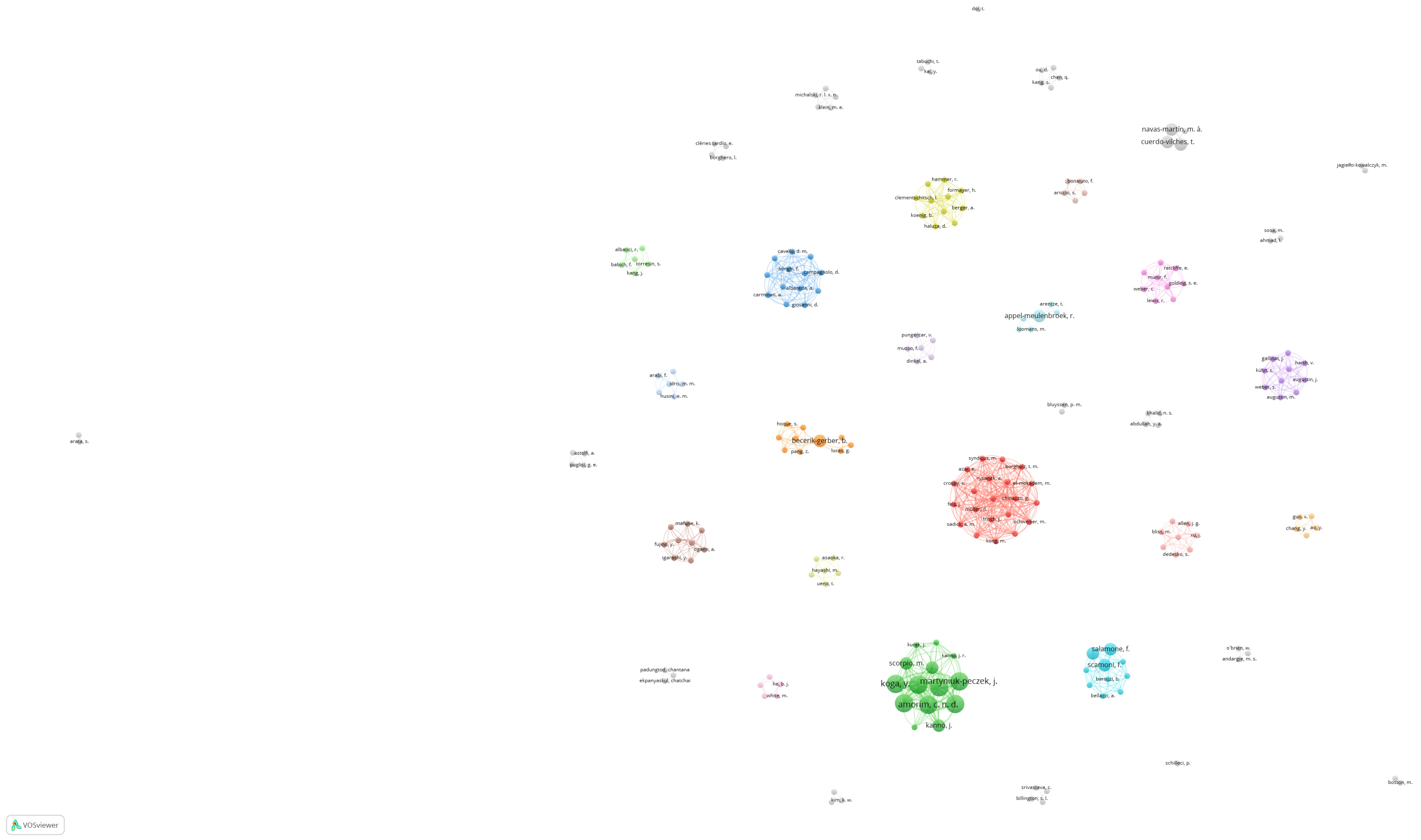
21 groups/clusters were identified from the research network map analysis (see Figure 3), interestingly, with no connections between them (i.e., isolated from each other). However, in two of these clusters, a blue one, in which one node, where Appel-Meulenbroek, R. connects with the rest of the nodes in the same group, and a light blue one node, where Becerik-Gerber, B. stands out, an additional link was identified that connects to other nodes. According to Granovetter’s theory of the strength of weak links [20], if these researchers were to cease to be part of the network, both nodes would lose their cohesive capacity, which would reduce the connectivity between the groups and weaken the network, making it more fragmented.
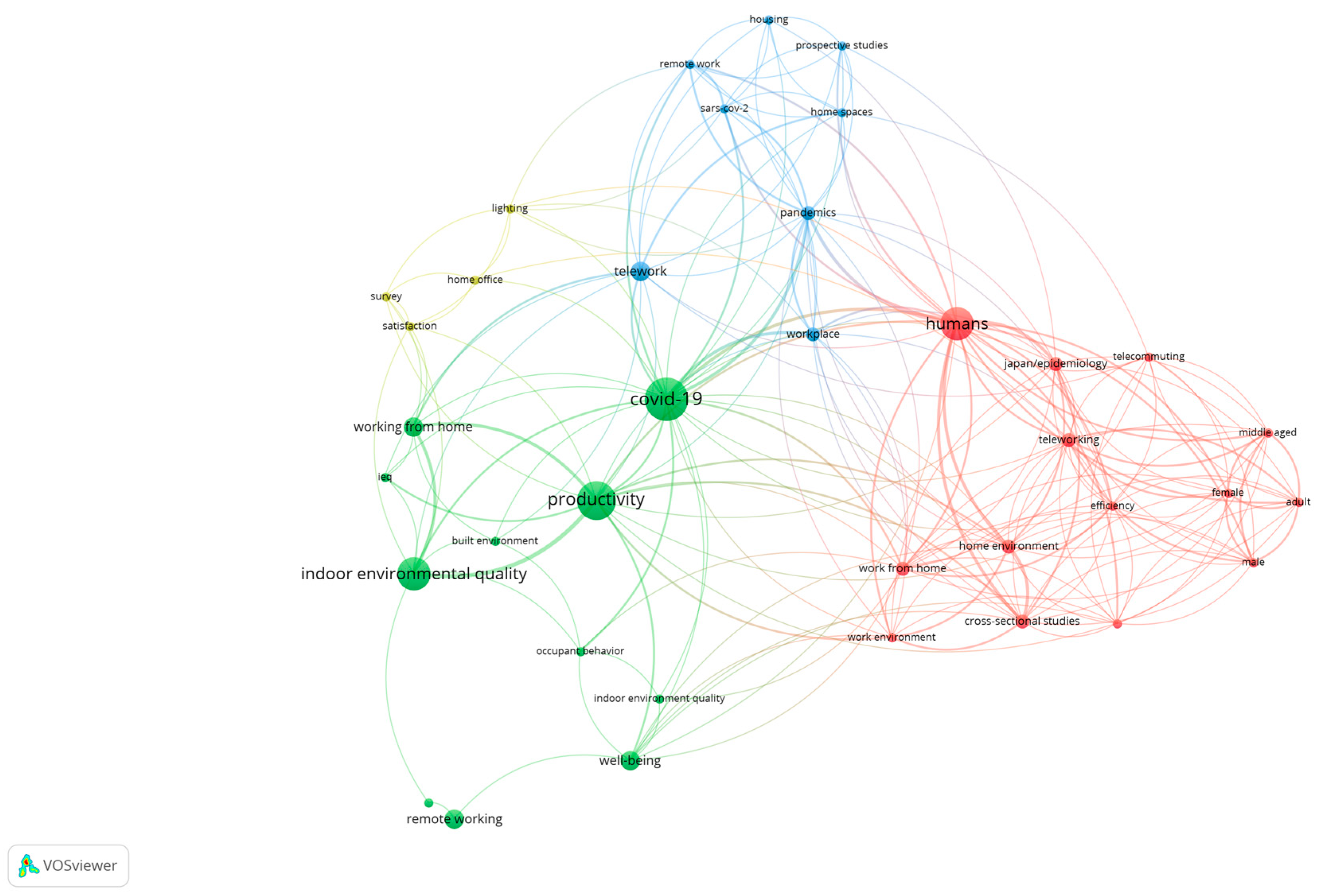
Following the network analysis methodology, COVID-19, productivity, and IEQ stood out as high-centrality nodes, acting as structural bridges between thematic clusters. According to Borgatti and Everett, centrality reflects a node’s capacity to create network cohesion, facilitating interconnections between subgroups [21]. These concepts act as axes linking key themes, enabling an interdisciplinary analysis of telework and well-being during the pandemic. Productivity, in particular, connects clusters of well-being, indoor environmental quality, and satisfaction, underscoring its importance in both office and telework contexts, where it remains a central concern [22].
To complement this qualitative interpretation, the keyword co-occurrence network (Figure 4) was exported and analyzed as a graph. It comprised 37 nodes and 212 edges. Using the Louvain algorithm, three structural communities were identified (14, 13, and 10 keywords, respectively), with a modularity index of 0.31. This moderate modularity indicates that the network is organized into coherent thematic communities but remains interconnected, particularly through bridging terms such as “COVID-19”, “health”, and “productivity”.
In parallel, VOSviewer’s co-occurrence clustering was used to generate a visual map of four keyword clusters (see Figure 4). Cluster 1 (red) focuses on demographic and epidemiological factors, exploring how gender, age, and geographic location (such as studies conducted in Japan) influence adaptation to telework; Cluster 2 (green) focuses on indoor environmental quality and its impact on well-being and productivity, considering aspects such as mental health and occupant behaviour in home workspaces; Cluster 3 (blue) addresses the impact of COVID-19 on the physical home environment, integrating concepts like telework, home spaces, and prospective studies on the integration of work within the home; and Cluster 4 (yellow) focuses on satisfaction and adaptation to telework, exploring factors such as lighting, home office, and satisfaction, reflecting the interest in understanding how the environment affects work experience. These clusters, although distinct, are connected by common themes, allowing a holistic view of telework in the pandemic era.
Nodes represent keywords, with size proportional to their frequency in the reviewed studies. Colours indicate clusters of closely related terms identified through co-occurrence analysis, while connecting lines represent the strength of co-occurrence relationships.
According to the reviewed studies, several negative factors affecting teleworking conditions were consistently reported. These included inadequate thermal comfort (e.g., overheating or insufficient heating/cooling), suboptimal lighting conditions (such as glare, low daylight availability, or inadequate artificial lighting), poor indoor air quality (low ventilation rates, stuffiness, or elevated CO2 levels), and excessive internal or external noise. Additionally, workspace-related issues—such as non-ergonomic furniture, limited dedicated workspace, and inappropriate spatial layout—were frequently identified as contributors to discomfort, reduced productivity, and increased physical or mental strain during telework.
With regard to the studies categorized as COVID-19 (n = 19), a predominant focus is observed on the relationship between Indoor Environmental Quality (IEQ) conditions and the well-being, health, and productivity of teleworkers during the pandemic. Cuerdo-Vilches et al. [2,23] highlight that telework spaces were inadequate in one-third of households. Regarding noise, Andargie et al. [24], Puglisi et al. [25], and Park et al. [26] agree that internal noise (family members, flatmates) and external noise negatively affect concentration and job satisfaction. In turn, Torresin et al. [27] emphazises that the characteristics of ventilation systems and the acoustic landscape impact the perception of the work environment, while Scamoni et al. [28] stresses the importance of assessing acoustic quality during confinement. Concerning thermal comfort, Husini et al. [29] demonstrate how passive strategies improve thermal performance in homes. In relation to air quality and mental well-being, Khalid et al. [30] conclude that the quality of the indoor environment significantly influences stress and general wellbeing. With respect to lighting and mental health, Awada et al. [31], Ortiz & Bluyssen [32], and Boegheim et al. [33] underline that dissatisfaction with lighting, humidity, and noise predicts symptoms of fatigue, anxiety, and stress. McKee & Hedge [34] review the impacts of various lighting sources in home work environments, including screen light, natural light, and task lighting, on health and ergonomics. Additionally, Mayer & Boston [35] and Umishio et al. [36] find that, despite challenges in work-related communication, the teleworking experience was perceived positively. Peixoto et al. [37] note that external sounds, such as human and mechanical noises, have a significant impact on the overall perceived quality of home workspaces during remote working. Weber et al. [38] highlight that aspects such as reduced disturbing noise, improved nighttime lighting, and satisfactory window views significantly reduce anxiety levels, underscoring the importance of tailored home environments for mental health. Finally, Stachura & Jagiełło-Kowalczyk [39] stand out in how the pandemic has redefined residential needs and preferences, while Kawakubo & Arata [40] emphasize the influence of the residential environment on productivity and satisfaction.
In relation to productivity (n = 4), studies demonstrate that various factors within the home environment influence the performance of teleworkers. Salamone et al. [41] highlight that, although most participants were satisfied with indoor environmental conditions during the lockdown, the design and layout of furniture negatively impacted the teleworking experience, thus affecting productivity. Similarly, Okawara et al. [42] emphasize that a lack of adequate space for concentration, insufficient lighting, and inappropriate thermal and humidity conditions significantly impair work functionality. In addition, Guo et al. [43] identify key factors such as personal lifestyle, satisfaction with the visual and acoustic environment, flexible schedules, and privacy as critical elements for improving productivity while working from home.
Finally, Doi [44] underscores that job autonomy and the availability of a dedicated workspace are associated with greater satisfaction, engagement, and productivity. In contrast, negative factors such as environmental noise, interruptions from household tasks, and the absence of ergonomic furniture contribute to increased stress and decreased work performance.
Regarding lighting (n = 3), studies highlight the importance of this factor in the quality of teleworking environments and its impact on workers’ well-being and satisfaction. Vasquez et al. [45] note that satisfaction levels with natural lighting vary based on gender, occupation, and region of residence, identifying that those with access to well-designed external views or adequate natural light are more prone to continue working from home. Similarly, Amorim et al. [46] emphasize cultural differences in interior design and lighting use across continents, underlining that residential design features significantly influence the perception of the visual environment and overall satisfaction. Lastly, Roberts et al. [47] investigate lighting levels in teleworking environments and find that failure to meet minimum lighting requirements can lead to visual fatigue and headaches. Furthermore, participants expressed a preference for circadian lighting systems, highlighting their positive impact on health and productivity.
According to systematic reviews (review, n = 3), the studies highlight the importance of environmental conditions in teleworking. Bergefurt et al. [48] note that noise, acoustics, and privacy are the most studied topics, although few investigations use objective measures to assess home workspaces. Schilleci [49] emphasizes academic interest in flexible and non-territorial workplace designs, while acknowledging less attention to teleworking environments compared to traditional offices. Similarly, Manu et al. [50] point out that, although indoor environmental quality (IEQ) in homes generally meets international standards, deficiencies in acoustic insulation and ergonomic support negatively impact health and productivity,
Concerning health (n = 3), the studies examine the impact of the home environment on the well-being of teleworkers. Boegheim et al. [33] note that satisfaction with noise levels enhances well-being and concentration, while elevated noise levels increase stress. Weber et al. [38] associate pleasant views, reduced noise, and good nighttime lighting with lower levels of anxiety, whereas Kanamori et al. [51] highlight inadequate conditions, such as excessive noise or extreme temperatures, as the main cause of the increase in somatic symptoms.
In relation to thermal comfort (n = 2), Schaffernicht et al. [52] highlight that systems such as thermal activation of interior surfaces are sustainable options to improve well-being and productivity, although they do not claim that these systems reduce overheating. Clèries Tardío et al. [53] find that temperatures between 18 °C and 20 °C are considered acceptable, with shared spaces being slightly warmer and having lower CO2 levels, while households with children tend to have slightly higher operative temperatures.
On air quality (n = 2), the studies highlight its impact on the health and performance of teleworkers. Borghi et al. [54] find that levels of particulate matter (PM) are up to four times higher during teleworking compared to office work, which may negatively affect health. Young et al. [55] associate thermal conditions and CO2 levels with cognitive performance, noting that even slight increases in CO2 can impair problem-solving and creativity.
Lastly, the studies were categorised into unique categories addressing various aspects of teleworking. In energy efficiency, Pungercar et al. [56] highlight how renovation strategies improve energy consumption and thermal conditions. For IEQ, Ekpanyaskul et al. [57] explore how a healthy indoor environment enhances productivity and well-being. In Tool, Mura et al. [6] develop indicators to assess acoustic, visual, and functional comfort in teleworking. Regarding Satisfaction, Hiyasat et al. [58] emphasise that flexible workspace design increases job satisfaction. Finally, on noise, Puglisi et al. [25] identify it as the main factor affecting concentration and well-being at home. Table 1 below provides an overview of the studies analyzed in this review. A synthesis of this evidence reveals several consistent patterns. Most research was conducted in high-income countries and relied primarily on cross-sectional survey designs. Thermal comfort, lighting, noise, and indoor air quality emerged as the most frequently examined IEQ dimensions. Additionally, a clear trend was observed linking inadequate environmental conditions with reduced productivity, lower satisfaction, and increased reports of stress, fatigue, and other physical or mental health symptoms. These patterns indicate that although IEQ in teleworking environments is still an emerging field, existing evidence consistently highlights the relevance of environmental factors in shaping teleworking experiences and outcomes. Although most of the studies included in this scoping review relied on self-reported outcomes and did not measure biological effects directly, mechanistic evidence from environmental health research supports the biological plausibility that indoor air pollutants may affect health, stress pathways and cognitive performance. For example, biomarker-based studies have shown that exposure to airborne pollutants can trigger oxidative stress and systemic biochemical alterations [59], form protein adducts associated with pollutant burden [60], or alter vascular and inflammatory pathways relevant to respiratory and cardiovascular function [61,62]. Although these studies were not conducted in telework environments, they provide a mechanistic framework that strengthens the interpretation of potential health implications of poor indoor air quality during working from home.

4. Discussion

Based on the findings, few studies were identified on environmental conditions in home workspaces (n = 41). This aligns with the limited number of studies reported in previous reviews on IEQ factors in work-from-home (WFH) settings, e.g., 27 manuscripts in [48], 124 papers in [49], and 41 research articles in [50]. Additionally, few research groups (n = 21) were identified according to the bibliometric analysis based on authorship, suggesting a concentration of contributions among a limited number of researchers and institutions, reflecting a fragmented yet emerging field of study. This underscores the need for broader international collaboration and more comprehensive investigations to better understand the main factors that affect the environmental conditions of home workspaces and the potential impacts in residents’ health and wellbeing.
This fragmented structure warrants further theoretical interpretation to better understand how knowledge circulates within the field.
The fragmented structure of the author collaboration network can be interpreted through Granovetter’s theory of weak ties, which highlights the importance of bridging links for the diffusion of knowledge across otherwise disconnected groups. In our network, only a small number of authors act as such bridges, suggesting a structurally vulnerable research landscape where the removal of these weak ties would increase fragmentation and limit interdisciplinary exchange.
Likewise, according to Freeman’s conceptual framework of network centrality, the high-centrality keywords identified (e.g., COVID-19, productivity, IEQ) exhibit characteristics of betweenness centrality, meaning they function as mediators that connect otherwise separate thematic areas. These nodes, therefore, play a crucial role in maintaining coherence within the field and facilitating the integration of research on environmental factors, wellbeing, and teleworking practices.
In the review conducted, a limited number of studies on telework were identified, distributed in few countries. In the analysis of the country of origin of the first author’s institutions, a total of 18 countries were found, most of them being high-income countries. This is consistent with the existing relationship between the ability to telework and the income level of the countries, as well as access to the Internet. According to World Bank Policy research working paper No 9347, while globally one in five jobs can be done from home, in low-income countries this figure is drastically reduced to one in 26 jobs, mainly due to connectivity limitations [63]. For example, in Ethiopia and Nepal, the proportion of viable home-based jobs drops significantly when internet access is considered, from 5.5% to 2.1% and from 14.7% to 6.3%, respectively. In contrast, in high-income countries such as Switzerland or Sweden, the impact of these limitations is minimal, with figures ranging from 40% to 55% of jobs being possible to be carried out from home [63]. Similarly, the Global Survey of Work Arrangements [64] shows that English-speaking countries, such as the United States, the United Kingdom and Canada, lead in the number of employees teleworking with an average of 1.4 days per week. On the other hand, in Asian, European and Latin American countries, this figure is significantly lower, at between 0.7 and 0.9 days per week. This situation reflects a double disadvantage for developing countries, where the combination of fewer telework-compatible jobs and limited ITC infrastructure (e.g., internet access) further reduces the viability of teleworking [63,64].
Four main clusters were identified in the keyword analysis. The first cluster of articles focuses on demographic and epidemiological factors, such as gender and age, and their influence on adaptation to telework. For instance, a study conducted in Tokyo shows that women face greater difficulties in balancing domestic and work roles when teleworking [65], highlighting important gender differences when it comes to telework. In the second group, articles mainly investigate the impact of IEQ in working home environments on wellbeing and productivity of the residents. According to Otsuka et al. [65], providing an ergonomic workspace in home settings can help reduce presenteeism and improve work performance while ensuring optimal conditions that reduce physical and mental stress. The negative impact of the COVID-19 pandemic on home environment settings was the main scope of the third group of articles included in this literature review. Key results show an increase in presenteeism, exacerbating physical and mental health problems in residents who worked from home [66]. The fourth and last group of articles investigates the relationship between job satisfaction and telework, and the different coping mechanisms to adapt to telework. For instance, Otsuka et al. [65] highlight how lighting quality and an organized environment positively influence adaptation and productivity when working from home. It is important to note that these clusters defined from the reviewed literature, while distinct, share common themes that offer a comprehensive understanding of the implications of telework, particularly in the COVID-19 pandemic era, such as an increase in gender inequalities, physical and mental problems, social inequalities, etc.
However, this scoping review has certain limitations. First, the search was restricted to English-language content published after 2001, which could introduce both linguistic and temporal biases, potentially excluding studies in other languages or published before this date. Additionally, the search was confined to five databases—Medline, Embase, Scopus, Web of Science (WOS) and Global Health —which may not encompass all relevant studies available in other databases, and the gray literature was not included. In particular, engineering-oriented databases such as IEEE Xplore or ScienceDirect were not incorporated, which may have limited the identification of studies related to building technologies, ventilation systems, or sensor-based assessments of indoor environmental quality. Likewise, excluding governmental reports or international guidelines (e.g., WHO telework recommendations) may have reduced the policy-relevant evidence captured by the review. Second, despite following a systematic approach, it is possible that not all relevant studies were captured during the screening process. Moreover, since only articles with search terms in the title or abstract were considered, studies that discussed working from home or IEQ within the content but did not explicitly mention it in these sections might have been excluded. Scoping reviews are inherently limited in scope since their main goal is to provide a broad overview rather than an in-depth analysis of a specific subject [67]. Consequently, some relevant studies may be omitted [68].

5. Conclusions

This study, through a scoping review, examined the impact of IEQ in telework spaces within home environments, highlighting the growing relevance of the home as a workplace in the teleworking era. Results showed that the evidence base remains limited, with few active research groups globally. Furthermore, key results pointed out that factors such as thermal comfort, lighting, air quality, and noise significantly affect productivity, wellbeing, and health of employees working from home due to the physical and environmental characteristics of current working home settings. Finally, the reviewed literature showed an upward trend in gender inequalities, physical and mental problems, social inequalities, etc., amongst those working from home. These findings underscore the need for further studies on the relationship between IEQ and working home environments, especially in diverse cultural contexts and underrepresented regions, and the societal implications of teleworking, widening gender gaps and social inequities.
The fragmentation observed in the bibliometric network may reflect disciplinary divides between architecture, engineering, environmental psychology, and occupational health, as well as disparities in funding mechanisms across countries. Initiatives such as the EU New European Bauhaus and international IEQ research platforms offer promising pathways for strengthening cross-sector collaboration and reducing thematic isolation.
Based on these findings, several policy-oriented actions are recommended to support healthier and more equitable teleworking environments. First, there is a need to develop standardized IEQ guidelines specifically tailored to home-based workspaces, addressing thermal comfort, lighting quality, ventilation, and acoustic performance. Second, establishing international databases for IEQ monitoring in telework settings would allow systematic tracking of environmental conditions and strengthen evidence-based policymaking. Third, interdisciplinary platforms involving architecture, engineering, public health, and occupational ergonomics should be promoted to better align scientific knowledge with workplace design standards. Finally, policymakers and employers should adopt measures to reduce inequalities in teleworking conditions—such as providing minimum equipment, financial support for workspace improvements, and specific protections for vulnerable workers.

Supplementary Materials

The following supporting information can be downloaded at: https://www.mdpi.com/article/10.3390/app16010250/s1. Table S1 (Annex I): Search strategies and Boolean queries used in the bibliographic databases.

Author Contributions

Conceptualization, M.Á.N.-M. and T.C.-V.; methodology, M.Á.N.-M. and T.C.-V.; investigation, M.Á.N.-M. and V.J.-P.; formal analysis, M.Á.N.-M. and V.J.-P.; data curation, M.Á.N.-M. and V.J.-P.; writing—original draft preparation, M.Á.N.-M.; writing—review and editing, M.Á.N.-M., V.J.-P. and T.C.-V.; visualization, M.Á.N.-M. All authors have read and agreed to the published version of the manuscript.

Funding

This research was funded by the Spanish State Plan for the Generation of Knowledge Projects, 2022 call, Modality A for Young Researchers, financed by the State Research Agency (AEI), reference PID2022-142864NA-I00, funded by MCIN/AEI/10.13039/501100011033/ FEDER, EU, and co-funded by the European Union. Additional funding was provided by I-LINK SHELTER project, ref. ILINK24037, funded by CSIC, and the Mid-Atlantic University through the February 2024 call for Grants for Emerging Research Projects.

Data Availability Statement

Data will be made available on reasonable request.

Acknowledgments

The authors would like to acknowledge the support we have received on National Library of Health Sciences of The Institute of Health Carlos III for the development of bibliographic search strategies. In addition, the authors thank Raúl Castaño de la Rosa (Tampere Universities, Finland) for his valuable review and feedback on the study protocol.

Conflicts of Interest

The researchers declare that they have no conflicts of interest that would compromise the independence of this research work. The views expressed by the authors do not necessarily coincide with those of the institutions to which they are affiliated.

References

  1. López-Igual, P.; Rodríguez-Modroño, P. Who Is Teleworking and Where from? Exploring the Main Determinants of Telework in Europe. Sustainability 2020, 12, 8797. [Google Scholar] [CrossRef]
  2. Cuerdo-Vilches, T.; Navas-Martín, M.Á.; Oteiza, I. Working from Home: Is Our Housing Ready? Int. J. Environ. Res. Public Health 2021, 18, 7329. [Google Scholar] [CrossRef]
  3. Asmussen, K.E.; Mondal, A.; Bhat, C.R. The Interplay between Teleworking Choice and Commute Distance. Transp. Res. Part C Emerg. Technol. 2024, 165, 104690. [Google Scholar] [CrossRef]
  4. Doling, J.; Arundel, R. The Home as Workplace: A Challenge for Housing Research. Hous. Theory Soc. 2022, 39, 1–20. [Google Scholar] [CrossRef]
  5. Rodrigues, E.A.; Rampasso, I.S.; Serafim, M.P.; Filho, W.L.; Anholon, R. Productivity Analysis in Work from Home Modality: An Exploratory Study Considering an Emerging Country Scenario in the COVID-19 Context. Work 2022, 72, 39–48. [Google Scholar] [CrossRef]
  6. Mura, A.L.; Ariccio, S.; Villani, T.; Bonaiuto, F.; Bonaiuto, M. The Physical Environment in Remote Working: Development and Validation of Perceived Remote Workplace Environment Quality Indicators (PRWEQIs). Sustainability 2023, 15, 2858. [Google Scholar] [CrossRef]
  7. Sarbu, I.; Sebarchievici, C. Aspects of Indoor Environmental Quality Assessment in Buildings. Energy Build. 2013, 60, 410–419. [Google Scholar] [CrossRef]
  8. Steinemann, A. Human Exposure, Health Hazards, and Environmental Regulations. Environ. Impact Assess Rev. 2004, 24, 695–710. [Google Scholar] [CrossRef]
  9. Godish, T. Indoor Environmental Quality; CRC Press: Boca Raton, FL, USA, 2016. [Google Scholar]
  10. Navas-Martín, M.Á.; Ovalle-Perandones, M.-A.; López-Bueno, J.A.; Sánchez, G.; Díaz, J.; Linares, C. Population Heat Adaptation Through the Relationship Between Temperature and Mortality in the Context of Global Warming on Health: A Scoping Review. Sci. Total Environ. 2024, 908, 168441. [Google Scholar] [CrossRef]
  11. Tricco, A.C.; Lillie, E.; Zarin, W.; O’Brien, K.K.; Colquhoun, H.; Levac, D.; Moher, D.; Peters, M.D.J.; Horsley, T.; Weeks, L.; et al. PRISMA Extension for Scoping Reviews (PRISMA-ScR): Checklist and Explanation. Ann. Intern. Med. 2018, 169, 467–473. [Google Scholar] [CrossRef]
  12. PRISMA PRISMA for Scoping Reviews. Available online: https://www.prisma-statement.org/scoping (accessed on 16 December 2022).
  13. Peters, M.D.J.; Marnie, C.; Tricco, A.C.; Pollock, D.; Munn, Z.; Alexander, L.; McInerney, P.; Godfrey, C.M.; Khalil, H. Updated Methodological Guidance for the Conduct of Scoping Reviews. JBI Evid. Synth. 2020, 18, 2119–2126. [Google Scholar] [CrossRef]
  14. Navas-Martín, M.Á.; Jiménez-Planet, V.; Castaño-Rosa, R.; Cuerdo-Vilches, T. Indoor Environmental Quality of Telework Spaces in Homes: A Scoping Review Protocol; Center for Open Science: Charlottesville, VA, USA, 2024. [Google Scholar] [CrossRef]
  15. Peters, M.D.J.; Godfrey, C.; McInerney, P.; Munn, Z.; Tricco, A.C.; Khalil, H. Scoping Reviews. In JBI Manual for Evidence Synthesis; Aromataris, E., Munn, Z., Eds.; JBI: Adelaide, Australia, 2020. [Google Scholar]
  16. Messenger, J.C.; Gschwind, L. Three Generations of Telework: New ICTs and the (R)Evolution from Home Office to Virtual Office. New Technol. Work Employ 2016, 31, 195–208. [Google Scholar] [CrossRef]
  17. Kopp, O. JabRef. Available online: https://www.jabref.org/ (accessed on 17 May 2023).
  18. Khangura, S.; Konnyu, K.; Cushman, R.; Grimshaw, J.; Moher, D. Evidence Summaries: The Evolution of a Rapid Review Approach. Syst. Rev. 2012, 1, 10. [Google Scholar] [CrossRef]
  19. Bardin, L. El Análisis de Contenido; Ediciones Akal: Madrid, Spain, 2002. [Google Scholar]
  20. Granovetter, M.S. The Strength of Weak Ties. Am. J. Sociol. 1973, 78, 1360–1380. [Google Scholar] [CrossRef]
  21. Borgatti, S.P.; Everett, M.G. A Graph-Theoretic Perspective on Centrality. Soc. Netw. 2006, 28, 466–484. [Google Scholar] [CrossRef]
  22. Freeman, L.C. Centrality in Social Networks Conceptual Clarification. Soc. Netw. 1978, 1, 215–239. [Google Scholar] [CrossRef]
  23. Cuerdo-Vilches, T.; Navas-Martín, M.Á.; March, S.; Oteiza, I. Adequacy of Telework Spaces in Homes during the Lockdown in Madrid, According to Socioeconomic Factors and Home Features. Sustain. Cities Soc. 2021, 75, 103262. [Google Scholar] [CrossRef]
  24. Andargie, M.S.; Touchie, M.; O’Brien, W. Case Study: A Survey of Perceived Noise in Canadian Multi-Unit Residential Buildings to Study Long-Term Implications for Widespread Teleworking. Build. Acoust. 2021, 28, 443–460. [Google Scholar] [CrossRef]
  25. Puglisi, G.E.; Di Blasio, S.; Shtrepi, L.; Astolfi, A. Remote Working in the COVID-19 Pandemic: Results from a Questionnaire on the Perceived Noise Annoyance. Front. Built. Environ. 2021, 7, 688484. [Google Scholar] [CrossRef]
  26. Park, S.H.; Shin, H.K.; Kim, K.W. Remote Work during the COVID-19 Pandemic and Perception of Indoor Environment: A Focus on Acoustic Environment. J. Acoust. Soc. Korea 2023, 42, 627–636. [Google Scholar]
  27. Torresin, S.; Albatici, R.; Aletta, F.; Babich, F.; Oberman, T.; Kang, J. Associations between Indoor Soundscapes, Building Services and Window Opening Behaviour during the COVID-19 Lockdown. Build. Serv. Eng. Res. Technol. 2022, 43, 225–240. [Google Scholar] [CrossRef] [PubMed]
  28. Scamoni, F.; Salamone, F.; Scrosati, C. A Survey on Perceived Indoor Acoustic Quality by Workers from Home during COVID-19 Lockdown in Italy. Buildings 2023, 13, 640. [Google Scholar] [CrossRef]
  29. Husini, E.M.; Arabi, F.; Shamri, S.L.; Manaf, A.A.; Idris, M.M.; Jamaludin, J. Resillient living by optimizing the building façade in designing post-COVID housing. Plan. Malays. 2022, 20, 85–98. [Google Scholar] [CrossRef]
  30. Khalid, N.S.; Abdullah, Y.A.; Nasrudin, N.; Kholid, M.F. How does the indoor environment affect mental health when working remotely? Plan. Malays. 2022, 20, 287–310. [Google Scholar] [CrossRef]
  31. Awada, M.; Becerik-Gerber, B.; Lucas, G.; Roll, S.C. Associations Among Home Indoor Environmental Quality Factors and Worker Health While Working from Home During COVID-19 Pandemic. J. Eng. Sustain. Build. Cities 2021, 2, 041001. [Google Scholar] [CrossRef]
  32. Ortiz, M.A.; Bluyssen, P.M. Profiling Office Workers Based on Their Self-Reported Preferences of Indoor Environmental Quality and Psychosocial Comfort at Their Workplace during COVID-19. Build. Environ. 2022, 211, 108742. [Google Scholar] [CrossRef]
  33. Boegheim, B.; Appel-Meulenbroek, R.; Yang, D.; Loomans, M. Indoor Environmental Quality (IEQ) in the Home Workplace in Relation to Mental Well-Being. Facilities 2022, 40, 125–140. [Google Scholar] [CrossRef]
  34. McKee, C.; Hedge, A. Ergonomic Lighting Considerations for the Home Office Workplace. Work 2022, 71, 335–343. [Google Scholar] [CrossRef] [PubMed]
  35. Mayer, B.; Boston, M. Residential Built Environment and Working from Home: A New Zealand Perspective during COVID-19. Cities 2022, 129, 103844. [Google Scholar] [CrossRef]
  36. Umishio, W.; Kagi, N.; Asaoka, R.; Hayashi, M.; Sawachi, T.; Ueno, T. Work Productivity in the Office and at Home during the COVID-19 Pandemic: A Cross-Sectional Analysis of Office Workers in Japan. Indoor Air 2022, 32, e12913. [Google Scholar] [CrossRef]
  37. Peixoto, N.G.M.; Rafael Ferreira, L.; Klein, M.E.; Michalski, R.L.X.N.; Monteiro, L.M. Influence of Soundscape on Quality of Work from Home during the Second Phase of the Pandemic in Brazil. Noise Mapp. 2023, 10, 20220175. [Google Scholar] [CrossRef]
  38. Weber, C.; Golding, S.E.; Yarker, J.; Teoh, K.; Lewis, R.; Ratcliffe, E.; Munir, F.; Wheele, T.; Windlinger, L. Work Fatigue during COVID-19 Lockdown Teleworking: The Role of Psychosocial, Environmental, and Social Working Conditions. Front. Psychol. 2023, 14, 1155118. [Google Scholar] [CrossRef] [PubMed]
  39. Stachura, E.J.; Jagiełło-Kowalczyk, M. Housing and the Pandemic: How Has COVID-19 Influenced Residents’ Needs and Aspirations? Real Estate Manag. Valuat. 2023, 31, 18–28. [Google Scholar]
  40. Kawakubo, S.; Arata, S. Study on Residential Environment and Workers’ Personality Traits on Productivity While Working from Home. Build. Environ. 2022, 212, 108787. [Google Scholar] [CrossRef] [PubMed]
  41. Salamone, F.; Barozzi, B.; Bellazzi, A.; Belussi, L.; Danza, L.; Devitofrancesco, A.; Ghellere, M.; Meroni, I.; Scamoni, F.; Scrosati, C. Working from Home in Italy during COVID-19 Lockdown: A Survey to Assess the Indoor Environmental Quality and Productivity. Buildings 2021, 11, 660. [Google Scholar] [CrossRef]
  42. Okawara, M.; Ishimaru, T.; Igarashi, Y.; Matsugaki, R.; Mafune, K.; Nagata, T.; Tsuji, M.; Ogami, A.; Fujino, Y. Health and Work Performance Consequences of Working from Home Environment: A Nationwide Prospective Cohort Study in Japan. J. Occup. Environ. Med. 2023, 65, 277–283. [Google Scholar] [CrossRef]
  43. Guo, X.; Wu, H.; Chen, Y.; Chang, Y.; Ao, Y. Gauging the Impact of Personal Lifestyle, Indoor Environmental Quality and Work-Related Factors on Occupant Productivity When Working from Home. Eng. Constr. Archit. Manag. 2023, 30, 3713–3730. [Google Scholar] [CrossRef]
  44. Doi, T. The Relationship between the Living Environment and Remote Working: An Analysis Using the SHEL Model. PeerJ 2024, 12, e17301. [Google Scholar] [CrossRef]
  45. Vasquez, N.G.; Amorim, C.N.D.; Matusiak, B.; Kanno, J.; Sokol, N.; Martyniuk-Peczek, J.; Sibilio, S.; Scorpio, M.; Koga, Y. Lighting Conditions in Home Office and Occupant’s Perception: Exploring Drivers of Satisfaction. Energy Build. 2022, 261, 111977. [Google Scholar] [CrossRef]
  46. Amorim, C.N.D.; Vasquez, N.G.; Matusiak, B.; Kanno, J.; Sokol, N.; Martyniuk-Peczek, J.; Sibilio, S.; Koga, Y.; Ciampi, G.; Waczynska, M. Lighting Conditions in Home Office and Occupant’s Perception: An International Study. Energy Build. 2022, 261, 111957. [Google Scholar] [CrossRef]
  47. Roberts, F.; White, M.; Memon, S.; He, B.J.; Yang, S. The Application of Human-Centric Lighting in Response to Working from Home Post-COVID-19. Buildings 2023, 13, 2532. [Google Scholar] [CrossRef]
  48. Bergefurt, L.; Appel-Meulenbroek, R.; Arentze, T. How Physical Home Workspace Characteristics Affect Mental Health: A Systematic Scoping Review. Work.-A J. Prev. Assess. Rehabil. 2023, 76, 489–506. [Google Scholar] [CrossRef] [PubMed]
  49. Schilleci, P. Exploring the Impact of the Physical Work Environment on Service Employees: An Analysis of Literature. J. Facil. Manag. 2023, 21, 717–732. [Google Scholar] [CrossRef]
  50. Manu, S.; Burgholz, T.M.; Nabilou, F.; Rewitz, K.; El-Mokadem, M.; Yadav, M.; Chinazzo, G.; Rupp, R.F.; Azar, E.; Syndicus, M.; et al. A State-of-the-Art, Systematic Review of Indoor Environmental Quality Studies in Work-from-Home Settings. Build. Environ. 2024, 259, 111652. [Google Scholar] [CrossRef]
  51. Kanamori, S.; Tabuchi, T.; Kai, Y. Association between the Telecommuting Environment and Somatic Symptoms among Teleworkers in Japan. J. Occup. Health 2024, 66, uiad014. [Google Scholar] [CrossRef]
  52. Schaffernicht, S.K.; Tuerk, A.; Kogler, M.; Berger, A.; Scharf, B.; Clementschitsch, L.; Hammer, R.; Holzer, P.; Formayer, H.; Koenig, B.; et al. Heat vs. Health: Home Office under a Changing Climate. Sustainability 2023, 15, 7333. [Google Scholar] [CrossRef]
  53. Clèries Tardío, E.; Ortiz, J.; Borghero, L.; Salom, J. What Is the Temperature Acceptance in Home-Office Households in the Winter? Buildings 2023, 13, 1. [Google Scholar] [CrossRef]
  54. Borghi, F.; Spinazzè, A.; Fanti, G.; Albareda, A.; Ghiraldini, J.; Campagnolo, D.; Carminati, A.; Keller, M.; Rovelli, S.; Zellino, C.; et al. Exposure to Airborne Particulate Matter in Working from Office and Working from Home Employees. Int. J. Environ. Health Res. 2024, 35, 319–329. [Google Scholar] [CrossRef]
  55. Young, A.S.; Parikh, S.; Dedesko, S.; Bliss, M.; Xu, J.; Zanobetti, A.; Miller, S.L.; Allen, J.G. Home Indoor Air Quality and Cognitive Function over One Year for People Working Remotely during COVID-19. Build. Environ. 2024, 257, 111551. [Google Scholar] [CrossRef]
  56. Pungercar, V.; Zhan, Q.; Xiao, Y.; Musso, F.; Dinkel, A.; Pflug, T. A New Retrofitting Strategy for the Improvement of Indoor Environment Quality and Energy Efficiency in Residential Buildings in Temperate Climate Using Prefabricated Elements. Energy Build. 2021, 241, 110951. [Google Scholar] [CrossRef]
  57. Ekpanyaskul, C.; Padungtod, C.; Kleebbua, C. Home as a New Physical Workplace: A Causal Model for Understanding the Inextricable Link between Home Environment, Work Productivity, and Well-Being. Ind. Health 2022, 61, 320–328. [Google Scholar] [CrossRef] [PubMed]
  58. Hiyasat, R.; Sosa, M.; Ahmad, L. Use of Work-Space at Home under COVID-19 Conditions in the UAE. Eng. Constr. Archit. Manag. 2023, 30, 3142–3159. [Google Scholar] [CrossRef]
  59. Lin, E.T.; Bae, Y.; Birkett, R.; Sharma, A.M.; Zhang, R.; Fisch, K.M.; Funk, W.; Mestan, K.K. Cord Blood Adductomics Reveals Oxidative Stress Exposure Pathways of Bronchopulmonary Dysplasia. Antioxidants 2024, 13, 494. [Google Scholar] [CrossRef]
  60. Funk, W.E.; Montgomery, N.; Bae, Y.; Chen, J.; Chow, T.; Martinez, M.P.; Lurmann, F.; Eckel, S.P.; McConnell, R.; Xiang, A.H. Human Serum Albumin Cys34 Adducts in Newborn Dried Blood Spots: Associations with Air Pollution Exposure During Pregnancy. Front. Public Health 2021, 9, 730369. [Google Scholar] [CrossRef]
  61. Voller, S.B.; Chock, S.; Ernst, L.M.; Su, E.; Liu, X.; Farrow, K.N.; Mestan, K.K. Cord Blood Biomarkers of Vascular Endothelial Growth (VEGF and SFlt-1) and Postnatal Growth: A Preterm Birth Cohort Study. Early Hum. Dev. 2014, 90, 195–200. [Google Scholar] [CrossRef]
  62. Mestan, K.K.; Gotteiner, N.; Porta, N.; Grobman, W.; Su, E.J.; Ernst, L.M. Cord Blood Biomarkers of Placental Maternal Vascular Underperfusion Predict Bronchopulmonary Dysplasia-Associated Pulmonary Hypertension. J. Pediatr. 2017, 185, 33–41. [Google Scholar] [CrossRef]
  63. Garrote Sanchez, D.; Gomez Parra, N.; Ozden, C.; Rijkers, B.; Viollaz, M.; Winkler, H. Who on Earth Can Work from Home? World Bank: Washington, DC, USA, 2020. [Google Scholar]
  64. Aksoy, C.G.; Barrero, J.M.; Bloom, N.; Davis, S.J.; Dolls, M.; Zarate, P. Working from Home around the Globe: 2023 Report; CESifo GmbH: Munich, Germany, 2023. [Google Scholar]
  65. Otsuka, Y.; Itani, O.; Nakajima, S.; Matsumoto, Y.; Kaneita, Y. Impact of Teleworking Practices on Presenteeism: Insights from a Cross-Sectional Study of Japanese Teleworkers During COVID-19. Behav. Sci. 2024, 14, 1067. [Google Scholar] [CrossRef]
  66. García-Iglesias, J.J.; Gómez-Salgado, J.; Apostolo, J.; Rodrigues, R.; Costa, E.I.; Ruiz-Frutos, C.; Martínez-Isasi, S.; Fernández-García, D.; Vilches-Arenas, Á. Presenteeism and Mental Health of Workers during the COVID-19 Pandemic: A Systematic Review. Front. Public Health 2023, 11, 1224332. [Google Scholar] [CrossRef]
  67. Tricco, A.C.; Lillie, E.; Zarin, W.; O’Brien, K.; Colquhoun, H.; Kastner, M.; Levac, D.; Ng, C.; Sharpe, J.P.; Wilson, K.; et al. A Scoping Review on the Conduct and Reporting of Scoping Reviews. BMC Med. Res. Methodol. 2016, 16, 15. [Google Scholar] [CrossRef]
  68. Pham, M.T.; Rajić, A.; Greig, J.D.; Sargeant, J.M.; Papadopoulos, A.; Mcewen, S.A. A Scoping Review of Scoping Reviews: Advancing the Approach and Enhancing the Consistency. Res. Synth. Methods 2014, 5, 371–385. [Google Scholar] [CrossRef] [PubMed]
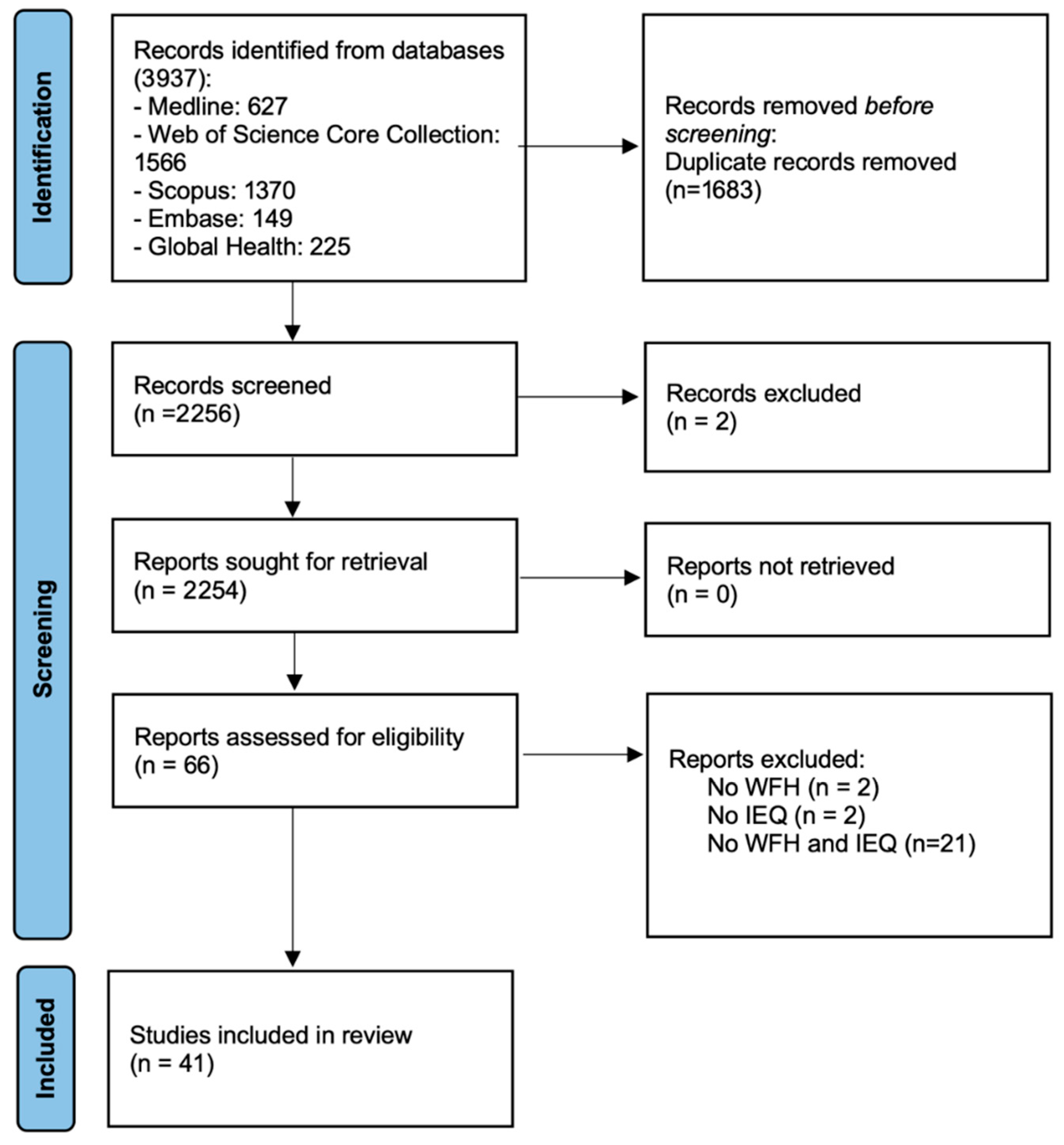
Figure 1. Flow chart of study selection for scoping review process.
Applsci 16 00250 g001
Figure 2. Geographical location of the institutions by country and frequency of the studies carried out.
Applsci 16 00250 g002
Figure 3. Visualization of the researcher network grouped by clusters.
Applsci 16 00250 g003
Figure 4. Visualization of the keywords network grouped by clusters.
Applsci 16 00250 g004
Table 1. Summary of reviewed studies on IEQ of telework spaces in homes.
First AuthorYearCountryAimsKeywordsCategory
Pungercar2021GermanyAnalyzing the indoor environment quality of a typical 1960s semi-detached house in Germany before and after our retrofitting strategyEnergy saving; Indoor environment quality; Residential buildings; Retrofit; Window machineEnergy efficiency
Andargie2021CanadaUsing the COVID-19 pandemic experience to investigate how acoustic conditions in multi-unit residential buildings affect occupants’ subjective wellbeing and work productivity for a large-scale implementation of teleworking COVID-19
Awada2021USAKnowing the satisfaction of office workers with indoor environmental quality (IEQ) factors of their houses where work activities took place and associate these factors with mental and physical healthIndoor environmental quality (IEQ); health; well-being; COVID-19; work from
home, indoor environment quality; occupant behavior
COVID-19
Pang2021USAInvestigating how working from home (WFH) has affected occupant well-being in residential buildings in the context of the coronavirus disease 2020 (COVID-19) pandemic.occupant well-being; built environment; indoor environmental quality, COVID-19, occupant-centric design and operation; international survey; building; occupant behavior; occupant productivityCOVID-19
Salamone2021ItalyAnalyzing the Indoor Environmental Quality (IEQ) of home offices and the productivity of workers during the Coronavirus pandemicworking from home; survey; questionnaire; indoor environmental quality; COVID-19 lockdown; productivityCOVID-19
Puglisi2021ItalyExtending outcomes to the environments where remote working is performed as its practice is getting more and more commonwell-being; noise annoyance; office acoustics; remote working; noise sensitivityNoise
Cuerdo-Vilches 2021SpainContributing to the debates on the effective application of telework, its real application capacities, the subjective perception and the level of satisfaction of these workspaces according to its practitioners, and how they affect their socioeconomic qualities in real practiceCOVID-19 housing confinement;
Telework;
Home spaces;
Gender;
Incomes;
User environmental perception;
COVID-19 confinement;
Workspace;
Telecommuting
COVID-19
Cuerdo-Vilches2021SpainAnalyzing in depth the nature of these teleworking spaces in homes, and their adequacy, considering multiple factors, in the context of confinementCOVID-19; confinement; telework; comfort; home spaces; telework space adequacy index (TSAI), photo; narrative; mixed-method; remote workCOVID-19
Khalid2022MalaysiaUnderstanding the role IEQ plays in ensuring comfort when working from home, as the practice could have a negative or positive impact depending on the IEQ.Indoor Environment; Mental Health; Remote Working; PandemicCOVID-19
Husini2022MalaysiaProviding healthy indoor strategies and passive building performance for open-plan home-office design, to investigate the open-plan home design with optimum thermal performance based on the passive indoor environment, and to examine the bioclimatic response and energy efficiency of home-office design during the pandemicPassive indoor performance; Daylighting; open-plan homeCOVID-19
Mayer2022New ZealandWhile some studies have considered WFH in New Zealand, no existing literature sources that explicitly examine WFH experiences concerning the WFH environment were found. This study aims to provide an initial insight into this area.Telework;
Working from home;
New Zealand;
Built environment;
Resilient; infrastructure;
COVID-19 pandemic;
COVID-19
Umishio2022JapanStudying was to investigate the link between different work styles and work environments and productivity during the COVID-19 pandemic, and to explore ways to improve productivity in the New Normal eraAir Pollution;
Indoor;
COVID-19;
Cross-Sectional Studies;
Efficiency;
Home Environment;
Humans; Japan/epidemiology;
Pandemics;
Workplace;
PM2.5;
Productivity;
Work, environment;
work from home;
work in the office;
COVID-19
Ortiz2022NetherlandsClustering office workers working at home based on their self-reported preferences for IEQ and psychosocial comfort at their most used workspace and to identify these preferences and needs of workers during the COVID-19 pandemicWorkplace;
Preferences and needs;
Health and comfort;
COVID-19;
COVID-19
Torresin2022UKUnderstanding the mutual interrelations between indoor soundscapes, building occupants, building services and window opening behaviour. COVID-19
Kawakubo2022JapanElucidating the relationships among residential environment, personality traits, and productivity while working from home.Telework; Working from home; COVID-19; Productivity;
Residential environment;
Personality traits;
COVID-19
Vasquez2022DenmarkInvestigating the drivers of participants’ satisfaction with the lighting conditions at the home officeHome office;
Lighting;
Visual environment;
Perception;
Satisfaction;
Survey
Lighting
Boegheim2022NetherlandsExploring the effects of the IEQ at the home workplace on employee
mental health.
Design; Mental health; Employee health; Field study; Indoor environmental quality;
Home office workplace
Health
McKee2022USAReviewing and discussing various lighting sources and their ergonomic impacts on the population of office employees now working from home. Specifically addressing the impacts of electronic light from screens, daylight, and task lighting’s impact on health and well-being in the frame of the COVID-19 pandemicScreen light; daylight; home work environment; COVID-19; remote work; task lightingCOVID-19
Amorim2022BrazilDefining the current limitations of home offices in providing a resilient visual environment Lighting
Hiyasat2022United Arab EmiratesAssessing user satisfaction of workspaces modified at home in response to the COVID-19
pandemic, thereby analyzing the flexibility of modern homes in the twenty-first century in the United Arab
Emirates.
Pandemic; COVID-19; Satisfaction; Working space; Living space; Interior designSatisfaction
Bergefurt2023NetherlandsProviding insights in previously studied relationships between the physical home-workspace and mental health and to identify measures for both using a systematic scoping reviewCOVID-19 pandemic; Workplace; psychological phenomena; teleworkingReview
Schaffernicht2023AustriaModeling thermal comfort changes in people working at home in three Austrian cities (Vienna, Innsbruck, and Graz) during the next decades until 2090. We present findings based on (I) an inter-disciplinary literature search and (II) indoor and outdoor climate simulations for actual and future climate scenarios.Home work; Climate simulations; Austria; Built environment; Urban Heat island effect; HealthThermal comfort
Schilleci2023ItalyProviding a clear understanding of the main and most recent issues discussed in academic literature regarding the impact of the physical work environment, particularly offices, on service employees’ internal responses, behaviors, and outcomes, highlighted by the COVID-19 emergency.Physical work environment;
Service employees;
Service environment;
Servicescape;
Systematic literature review;
Workplace design
Review
Stachura2023PolandPresenting how the phenomena mentioned above have influenced the housing environment and residential preferences and trends that may follow.housing environment; COVID
pandemic; residential needs and
preferences
COVID-19
Weber2023SwitzerlandExamining the relationships between the psychosocial, environmental, and social working conditions of teleworking during the first COVID-19 lockdown and work fatigue. Specifically, the study examined teleworkers’ physical work environment (e.g., if and how home office space is shared, crowding, and noise perceptions) as predictors of privacy fit and the relationship between privacy fit, childcare, psychosocial working conditions (job demand, job control, and job change management), and work fatigueCOVID-19; teleworking; home office; office design; privacy; psychosocial working conditions; lockdown; burnoutCOVID-19
Ekpanyaskul2023ThailandEvaluating the chronology of the effects of work hazards at home on factors such as workers’ health, productivity, and well-beingWork style; Working-from-home; Work environment; Occupational stress; Sick house syndrome, Productivity; Well-beingIEQ
Weber2023GermanyInvestigating the association between the subjective evaluation of home environment and self-reported levels of anxiety using population data from the Hamburg City Health StudyAnxiety; subjective evaluation of home environment; housing; indoor lifestyle; Hamburg City Health Study; mental well-beingHealth
Peixoto2023BrazilAssessing the impact of the soundscape in the home
office environment during the pandemic
Indoor sounds; outdoor sounds; sound perception; occupational exposureCOVID-19
Okawara2023JapanThe physical work environment while working from home (WFH) is a key component of WFH, which, if inadequate, can impair workers’ health and work functioning. This paper investigates environmental factors in WFH and worsening of work functioningwork from home; telework; work environment; presenteeism; prospective cohort study; observational studyProductivity
Guo2023USAIdentifying key causal factors of occupant productivity when working from home.Personal lifestyle; Indoor environmental quality; Work-related factor; Satisfaction; Productivity;
Working from home; Offices; Regression model
Productivity
Mura2023ItalyDeveloping a tool named Perceived Remote Workplace Environment Quality Indicators (PRWEQIs) to study the impact of the remote work environment on worker well-beingspatial-physical comfort; remote working; sustainable workplace; remote studying; scale development and validation; perceived comfort; PRWEQIsTool
Clèries Tardío2023SpainUnderstanding occupants’ accepted Indoor Environmental Quality values in winter based on self-reported comfort.thermal comfort; human perception; indoor environmental quality; building energy useThermal comfort
Roberts UKUnderstanding what lighting conditions are currently present within the WFH environments in terms of safety and visual clarity.circadian lighting; biological potency; melanopic lux; lux level; uniformityLighting
Park2023South KoreaInvestigating the relationship between indoor noise perception and remote work during the pandemic. The study assessed how people who worked from home perceived indoor noise, and how it related with their work performance and job satisfaction. COVID-19
Scamoni2023ItalyInvestigating buildings’ year of construction, presence of other people in the home, and comparison between acoustic perception before and during the pandemic.house typology; acoustic quality; survey; well-being; COVID-19 lockdown; working from homeCOVID-19
Doi2024JapanInvestigating the relationship of living environment factors with satisfaction, work engagement, perceived productivity, and stress among teleworkers.Work from home; Telecommuting; SHEL model; Living environmentProductivity
Borghi2024ItalyQuantitatively evaluating the differences, in terms of exposure to PM (particulate matter), between
WFO (working-from-office) and WFH (working-from-home) conditions
Agile working; remote
working; non-occupational
exposure; risk factors; human
health
Air quality
Kanamori2024JapanThis study aimed to clarify the association between telecommuting environments and somatic symptoms among teleworkers in Japanteleworking, home environment, somatic symptoms, occupational healthHealth
Manu2024CanadaUnderstanding the influence of indoor environmental quality (IEQ) on workers’ well-being and productivity.Thermal; Indoor air quality; Visual; Acoustics; Well-being; ProductivityReview
Young2024USAUnderstanding the impact of indoor air quality (IAQ) in homes on the cognitive performance of people working from home.Buildings; IEQ; Occupational; Productivity; Remote; VentilationAir quality
Srivastava2024USAEvaluating home and office workplaces using a comparative approach and a data-driven framework. The computational models in this study aim to predict the impact of 10 workplace spatial attributes on perceptions of comfort, work performance, and aspects of well-being, such as sense of connectedness and physical activity.Connectedness; Indoor environmental quality; productivity; return to office; worker physical activity; workplace comfortProductivity
Disclaimer/Publisher’s Note: The statements, opinions and data contained in all publications are solely those of the individual author(s) and contributor(s) and not of MDPI and/or the editor(s). MDPI and/or the editor(s) disclaim responsibility for any injury to people or property resulting from any ideas, methods, instructions or products referred to in the content.