
Article

Planning Resilient Cities: A Methodological Framework for the Integration of Nature-Based Solutions


by
María I. Rodríguez-Rojas
1,*,
Begoña Moreno Escobar
2,
Germán Martínez Montes
3 and
Maddi Garmendia Antín
4
1
Department of Urban and Regional Planning, Higher School of Civil Engineering, University of Granada, 18071 Granada, Spain
2
Department of Construction and Engineering Projects, Higher School of Civil Engineering, University of Granada, 18071 Granada, Spain
3
Department of Construction and Engineering Projects, University of Granada, 18071 Granada, Spain
4
Faculty of Engineering in Gipuzkoa, University of the Basque Country UPV/EHU, 20018 Donostia, Spain
*
Author to whom correspondence should be addressed.
Appl. Sci. 2025, 15(23), 12378; https://doi.org/10.3390/app152312378
Submission received: 21 October 2025 / Revised: 14 November 2025 / Accepted: 18 November 2025 / Published: 21 November 2025
(This article belongs to the Special Issue Resilient Cities in the Context of Climate Change)

Abstract

Climate change arguably constitutes the most significant environmental challenge of our time, making the enhancement of urban resilience a global priority. Nature-based Solutions (NbS) have emerged as effective instruments to mitigate some of its impacts, particularly by reducing flood risk and moderating urban temperatures. However, their implementation is often reactive, focusing on existing problems rather than anticipating future ones. This underscores the need for robust methodological frameworks that enable the proactive integration of NbS within urban planning processes. This study proposes a spatial planning methodology supported by Geographic Information Systems (GIS), which, through the application of opportunity, priority, and feasibility criteria, identifies optimal areas for NbS integration, determines appropriate typologies, and establishes levels of intervention urgency. Although the methodology has been developed for the city of Granada, its structure allows for replication in other urban contexts. The findings reveal that one-third of Granada’s urban area is suitable for NbS implementation, with approximately 7% exhibiting a high or very high risk of surface runoff accumulation. The proposed tool has the potential to strengthen urban resilience and enhance citizens’ quality of life.

1. Introduction

Climate change constitutes the foremost environmental challenge confronting humanity today, owing to its global magnitude and its multifaceted environmental, social, and economic repercussions [1,2]. A thorough understanding of the associated risks and impacts, coupled with robust monitoring and adaptive strategies, underpins efforts to reduce vulnerability and bolster urban resilience against this global phenomenon [3]. Urban areas are particularly vulnerable to the intensification of extreme weather events [4], largely as a consequence of the extensive impermeabilization that cities have experienced throughout the twentieth century [5]. More than a decade ago, the European Union reported that approximately 67% of the 1000 km2 of urbanized land in Europe each year was impermeable [6]. This process, commonly referred to as ‘soil sealing’ [7], has led to numerous environmental consequences [8], including soil degradation, loss of biodiversity [9], elevated urban temperatures—widely known as the ‘urban heat island’ effect [10]—and increased surface runoff [11]. These impacts are being exacerbated by more intense rainfall events and rising temperatures induced by climate change, resulting in more frequent flooding [12] and progressively higher urban temperatures [13].
In response, NbS have been employed for several years as effective tools to mitigate the impacts of soil sealing and climate change in urban environments worldwide. The concept of NbS was initially introduced by the World Bank in 2000 and subsequently adopted by the European Commission [6]. It is now widely used to denote approaches that are also referred to under other regional terminologies: Sustainable Drainage Systems (SuDS) in Europe, Low Impact Developments (LIDs) in America and Asia, and Water-Sensitive Urban Design (WSUD) in Australia, among others [14]. While each terminology emphasizes certain context-specific characteristics, all share the overarching aim of restoring, to the greatest extent possible, the natural hydrological cycle disrupted by soil sealing, through measures such as infiltration, retention, and the reuse of rainfall within urban landscapes [15]. Moreover, NbS confer multiple co-benefits under contemporary climatic conditions, including flood mitigation [16], augmentation of water resources [17], a reduction in stormwater pollution [18], enhancement of urban amenity [19], mitigation of urban heat [20], and promotion of human health and wellbeing [21]. Collectively, these solutions offer a more sustainable approach to urban runoff management, in contrast to conventional strategies that prioritize rapid collection and diversion of stormwater to sewer networks, thereby removing it from the urban environment [22].
Countries including the United States, United Kingdom, Canada, France, and Australia have long implemented such systems with notable success in strengthening urban resilience to climate change [23,24]. The body of knowledge surrounding NbS—including their design, functionality, and hydrological efficiency—is extensive, supported by numerous studies that quantify their effectiveness in mitigating floods and reducing water pollution [24,25,26,27,28,29]. Nevertheless, these interventions are often applied reactively, serving primarily to remediate pre-existing urban drainage issues. To proactively address the effects of soil sealing and climate change, it is imperative to integrate NbS at the early stages of urban planning, promoting the incorporation of green and permeable spaces in both existing urban areas and new developments.
The development of planning methodologies that embed NbS is critical to enhancing urban resilience by anticipating potential challenges [19]. The so-called ‘Water-Sensitive Cities’ model [30] exemplifies such an approach, integrating urban planning with the management, protection, and conservation of the urban water cycle, thereby ensuring that water management is harmonized with hydrological and urban processes [31]. Its principal aim is to create more habitable, resilient, and sustainable urban environments, restoring a more natural relationship between water and the urban fabric [32]. However, examples of methodologies designed for implementation at the urban planning stage remain scarce [33,34], with most efforts confined to general strategic guidance [35]. Ariza [33] proposes a multiscale analysis for the location and implementation of NbS. At the urban scale, objectives are defined through workshops with stakeholders, and multicriteria spatial analyses are used to identify priority and strategic subbasins. At the local scale, public and private spaces are evaluated according to constraints, and finally, at the microscale, NbS types are selected using multicriteria qualitative matrices. In his study, Zhang [34] defines a strategic planning cycle for the spatial location of an NbS (selection of type, design/size, and location) and analyzes its components using spatial allocation optimization tools, according to their structure (software; model–algorithm), objectives (runoff quantity, water quality, etc.), and spatial components. Consequently, no studies have produced spatially explicit information on the suitability of urban areas for NbS interventions, highlighting the need for methodologies that assist urban planners in devising strategies to integrate NbS, anticipate climate change impacts, enhance urban resilience, and transform cities into safer and healthier places to live.
This paper presents a methodology that helps planners make decisions about integrating NbS in cities, thereby contributing to this objective. Based on the definition of three spatial criteria, this methodology has been proposed to quantify the suitability of an urban space for NbS integration using GIS. This allows for a more objective and reproducible spatial assessment in other contexts. Using these indices together makes it easier to prioritize areas with the greatest potential for NbS implementation, optimizing decision-making. Furthermore, the GIS approach promotes scalability and continuous updating with new urban data, thereby improving adaptive planning in comparison with more static methods. Thus, this innovative proposal adds a spatial, integrative approach to existing multicriteria analysis methodologies, enhancing suitability analyses and helping to bridge the research gap in planning methodologies that promote urban resilience.

2. Materials and Methods

The primary objective of this study is to develop a GIS-based spatial planning methodology capable of identifying the most suitable locations in the city for the integration of NbS, their typologies, and the prioritization of interventions. This methodology has been applied to the city of Granada, located in southern Spain, although its characteristics render it replicable in other cities. The average population (232,717 inhabitants) and annual rainfall (474 mm), as well as the high percentage of impervious surface area (64%), are features commonly found.
To design the proposed methodology, the following research question was posed: which criteria define the suitability of a location for intervention through NbS? Based on a review of the specialized literature and the expertise acquired by the research team and the collaborating team from the city of Granada’s water supply and sanitation company, EMASAGRA, the following criteria were established: ‘priority’ of intervention based on the vulnerability of the site, ‘opportunity’ to implement NbS, and ‘feasibility’ of implementing NbS. For each of these criteria, an index has been defined to quantify the criterion, generating spatial information regarding areas of the city that are suitable for NbS interventions. The procedure followed for defining each of these indices is detailed below.

2.1. Priority Index

This index has been defined qualitatively based on the vulnerability of urban space. The higher the index value at a given location, the more urgent the intervention with an NbS. The vulnerability of a site has been defined based on the following variables:
  • Land use. Depending on the type of land use, integrating NbS may be more urgent to improve environmental quality and regenerate the urban space.
  • Population density. The higher the population density in an area, the more urgent it is to implement an NbS to prevent economic losses and protect human lives.
  • Runoff accumulation risk. The greater the risk at a given point, the more urgent it is to integrate an NbS to mitigate potential flooding impacts.
A detailed hydraulic analysis was not conducted due to the spatial scale of the case study. Incorporating the entire city’s sewer network, roughness coefficients, inflow hydrographs, and related parameters into a hydraulic model was deemed unfeasible, following the recommendation of the municipal sanitation company.
To obtain an index value at each point in the city, a GIS-based multicriteria analysis was applied, assigning relative weights as follows (Table 1). A relative weight was assigned to each variable (land use, population density, and runoff accumulation risk), the possible values for each variable were defined, and a relative weight was assigned to each possible value of each variable. The weights assigned to variables and their respective values were established through a structured discussion [36] between the research group and project collaborators, drawing on over ten years of experience in the field. The relative weights for the multicriteria analysis were assigned based on the combined expertise of the research team and the managers of the urban sanitation company, who will subsequently implement the NbS. These experts were selected due to their direct involvement in urban water management and practical experience with NbS implementation, ensuring that the assigned weights reflect both scientific and operational perspectives. Each criterion’s weight was determined through structured discussions and consensus between researchers and managers, considering the relevance, feasibility, and potential impact of each factor [37]. Each participant assessed the importance of each criterion independently, based on their technical experience and practical knowledge. Structured meetings were then held to discuss differences of opinion until a consensus was reached, considering both scientific and operational perspectives and based on rational arguments. The resulting weights reflect the balanced integration of research knowledge and practical constraints. A justification matrix was developed in which each variable is assigned a weight, and the reason for the assignment was recorded, taking into account the technical and operational considerations provided by experts. Table 2 illustrates how the weighting process was carried out for the priority index.
Regarding the variable weights, Table 1 shows that runoff accumulation risk carried the greatest weight in the vulnerability calculation (0.6), followed by land use (0.3) and population density (0.1). Concerning the weights of the values, the following points are noteworthy:
  • Land use. Parking areas were considered more vulnerable, assigned a weight of 0.5, due to the presence of oil and fuel, increasing rainwater contamination. Building roofs were assigned a relative weight of 0.1 because, despite being impermeable, their rainfall is rapidly drained through designed systems and slopes, contributing minimally to surface water accumulation. This reflects their secondary role in urban runoff dynamics compared with surfaces like sidewalks or parking lots.
  • Population density. A weight of 0.6 was assigned to high-density areas, 0.3 to medium-density areas, and 0.1 to low-density areas.
  • Runoff accumulation risk. Weights were defined based on the existing risk level. To calculate this risk, a specific procedure was followed, quantifying the risk of runoff accumulation using Rodrigues de Aguiar’s formula [38]. This approach was chosen because the study scale did not allow for city-wide hydrological modeling capable of quantifying flood risk while simultaneously considering urban surface runoff generation and the functioning of the sanitation network. As previously noted, this research was developed as a pilot study in the city of Granada. Therefore, the data used to calculate the flood risk are specific to this city (other values can be considered in other studies). The applied formula and its variables were as follows:
    R = 0.09 × MDE + 0.18 × Slope + 0.20 × Land Use + 0.53 × Precipitation
    R = runoff accumulation risk (dimensionless). MDE = (m) maximum elevation difference in the study area, normalized between 0 and 1 using a linear function. Value 1 corresponds to the maximum elevation in Spain (city of Vigo, 700 m). The MDE is obtained as the difference between the maximum and minimum elevation (z(i,j)) values within a defined analysis window (W(x,y)), representing local topographic relief. It is then normalized by a reference elevation range (MDE ref = 700 m for national comparison or the maximum value within the study area) (Equations (2) and (3)). MDE has a spatial resolution of 5 m. The urban area lies roughly between 580 m and 830 m above sea level, with an average elevation of around 738 m.
    MDE(x,y) = max_{(i,j) ∈ W(x,y)} z(i,j) − min_{(i,j) ∈ W(x,y)} z(i,j)
    MDE_norm(x,y) = MDE(x,y)/MDE_ref
    Slope = (%) normalized between 0 and 1 using a linear function. Value 1 corresponds to horizontal slope; value 0 corresponds to a 45° slope (higher values are set to 0). Land use = impermeability value between 0 and 1 (dimensionless), obtained through a linear function. Precipitation* = (mm) normalized between 0 and 1 using a linear function. Value 1 corresponds to the maximum average annual precipitation in Spain (2000 mm). Precipitation is uniform in the case study, meaning its effect is equivalent to an additive offset. Therefore, it does not drive spatial differences in runoff accumulation risk within the city.
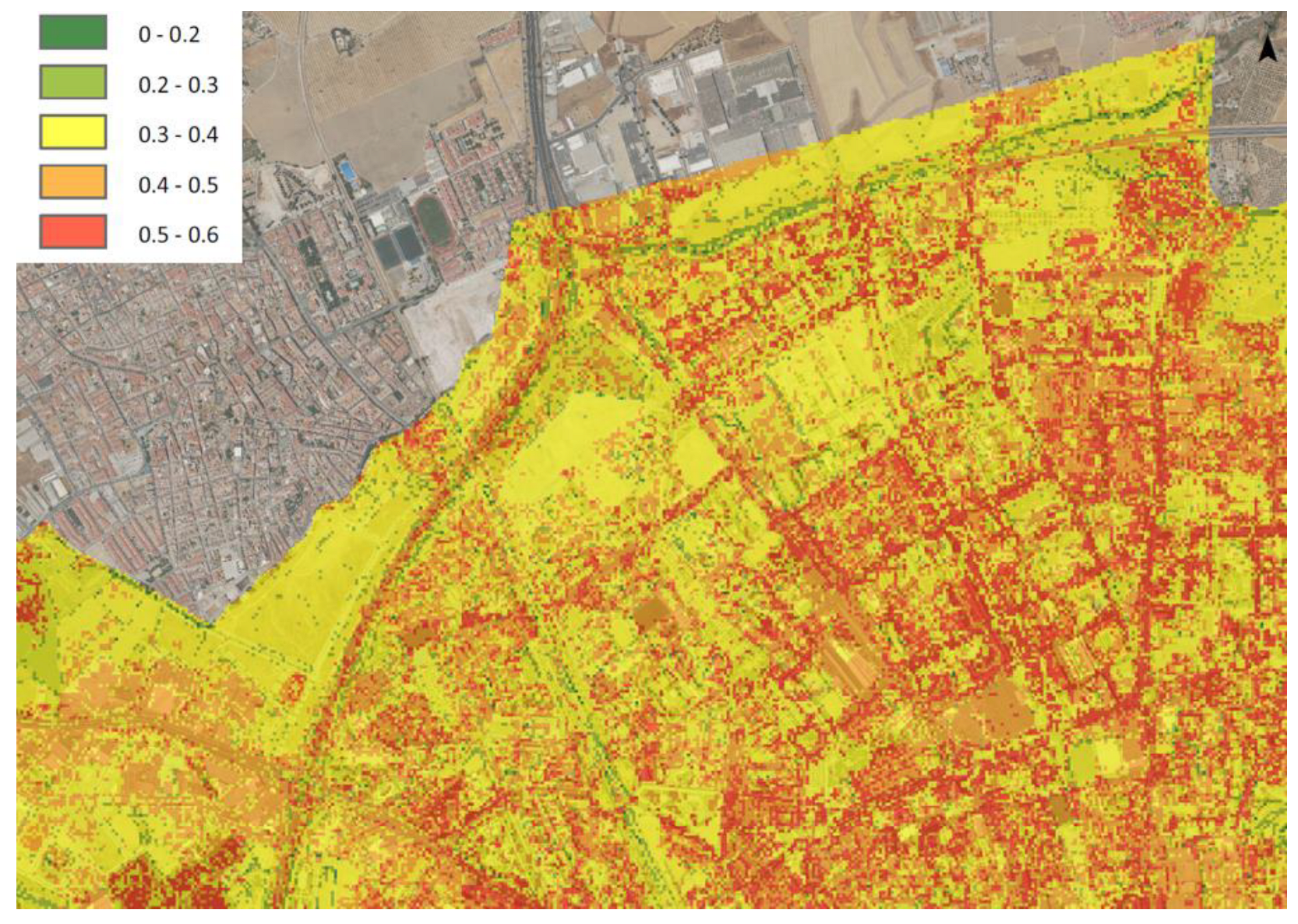
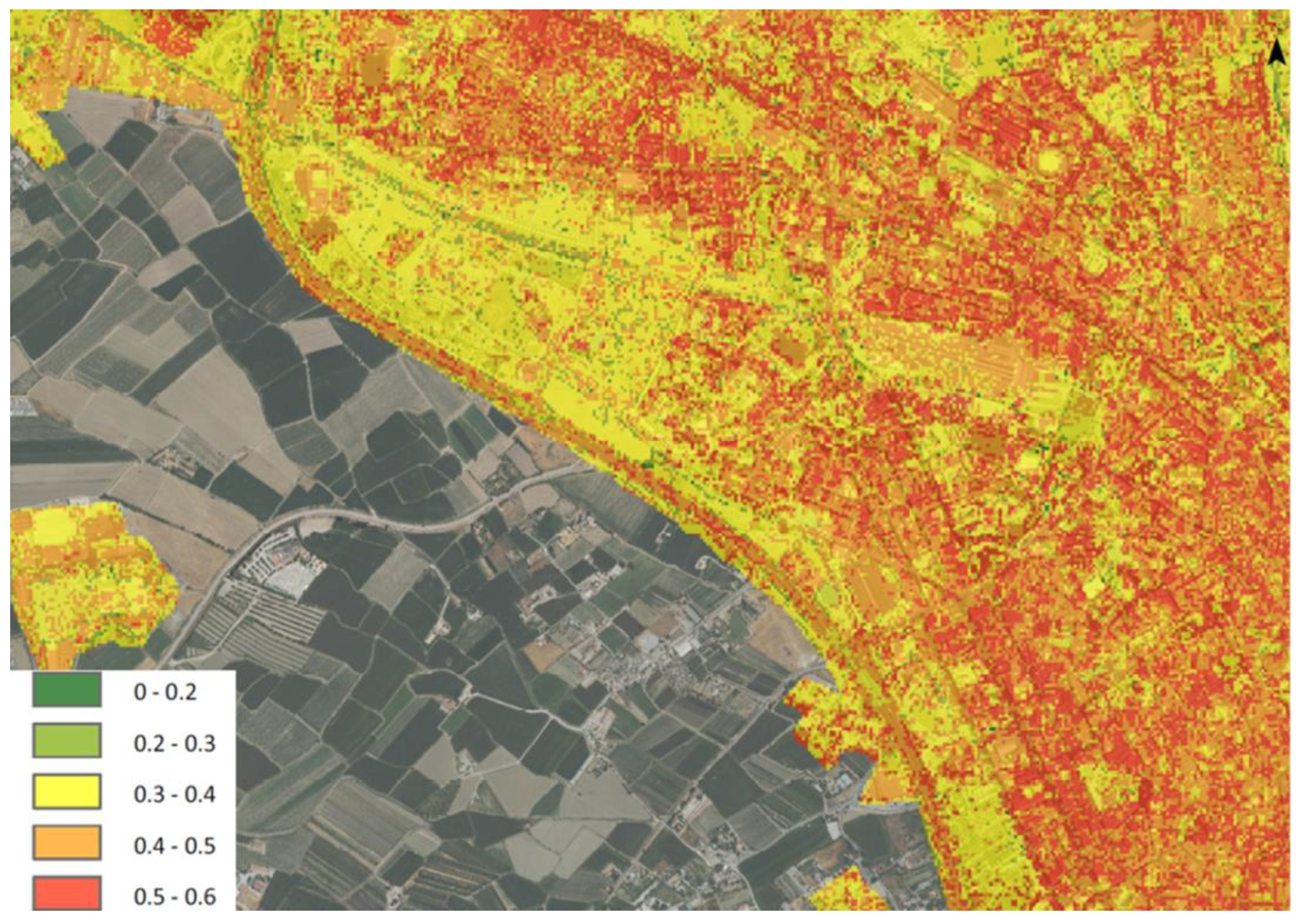
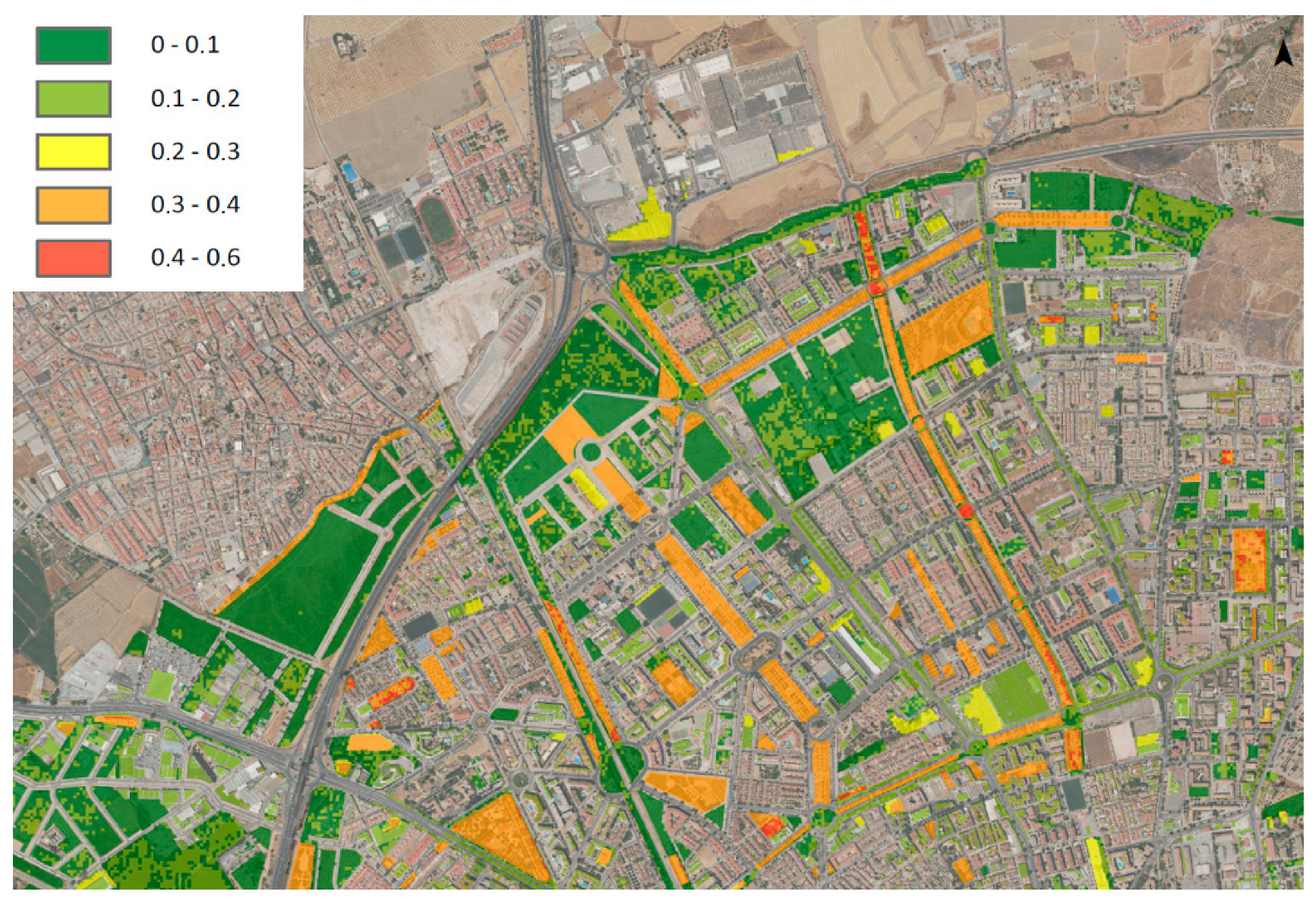
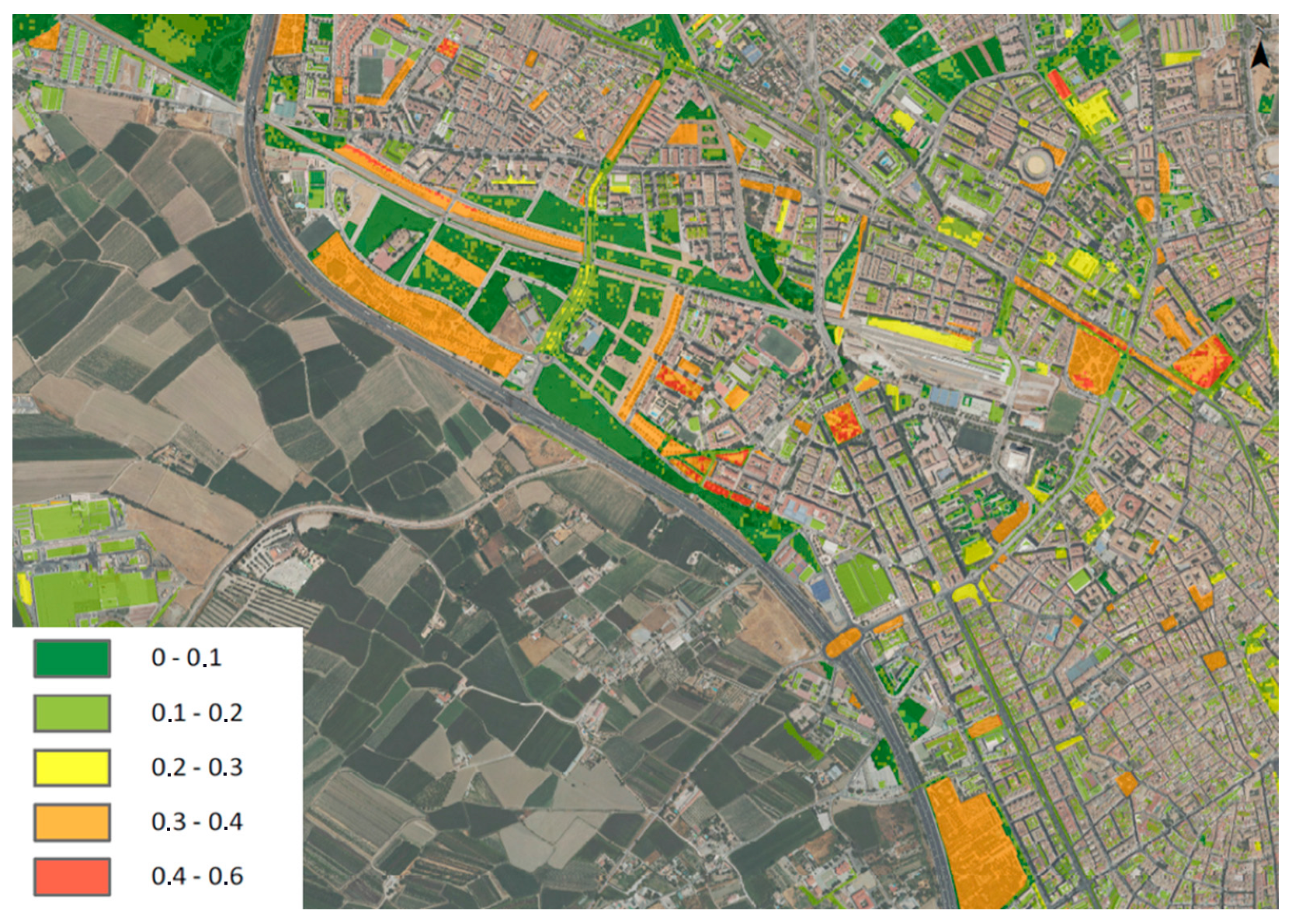
Using the different weights through GIS raster techniques, an algebraic combination of the layers was performed by applying a ‘Weighted Linear Combination’ (WLC) [39]. In this way, values for runoff accumulation risk across the entire city of Granada were obtained, with values for this variable ranging between 0 and 0.6 (Figure 1 and Figure 2). These results were validated by sanitation company technicians based on their records of faults in the sanitation network and flood-prone areas of the city.
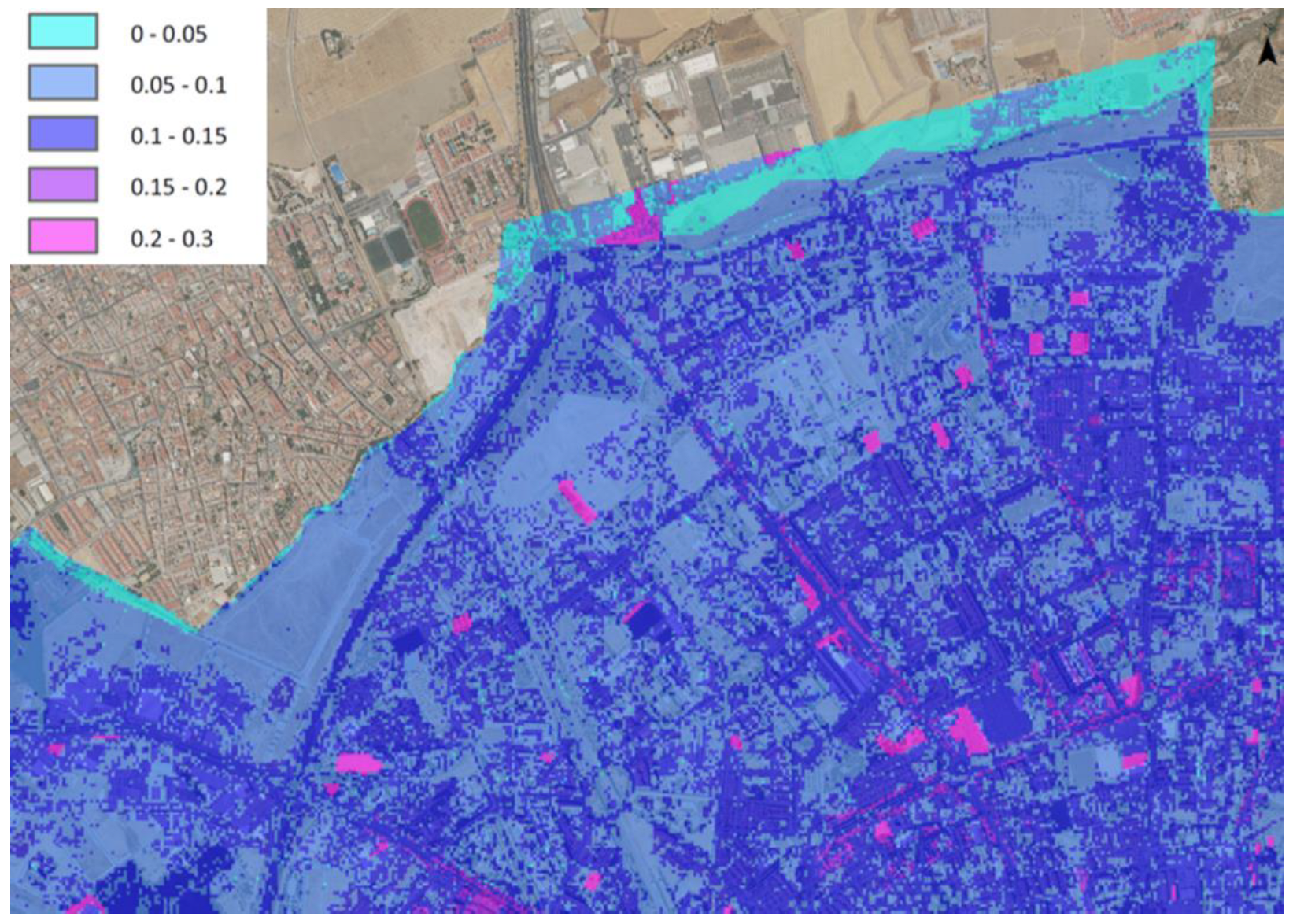
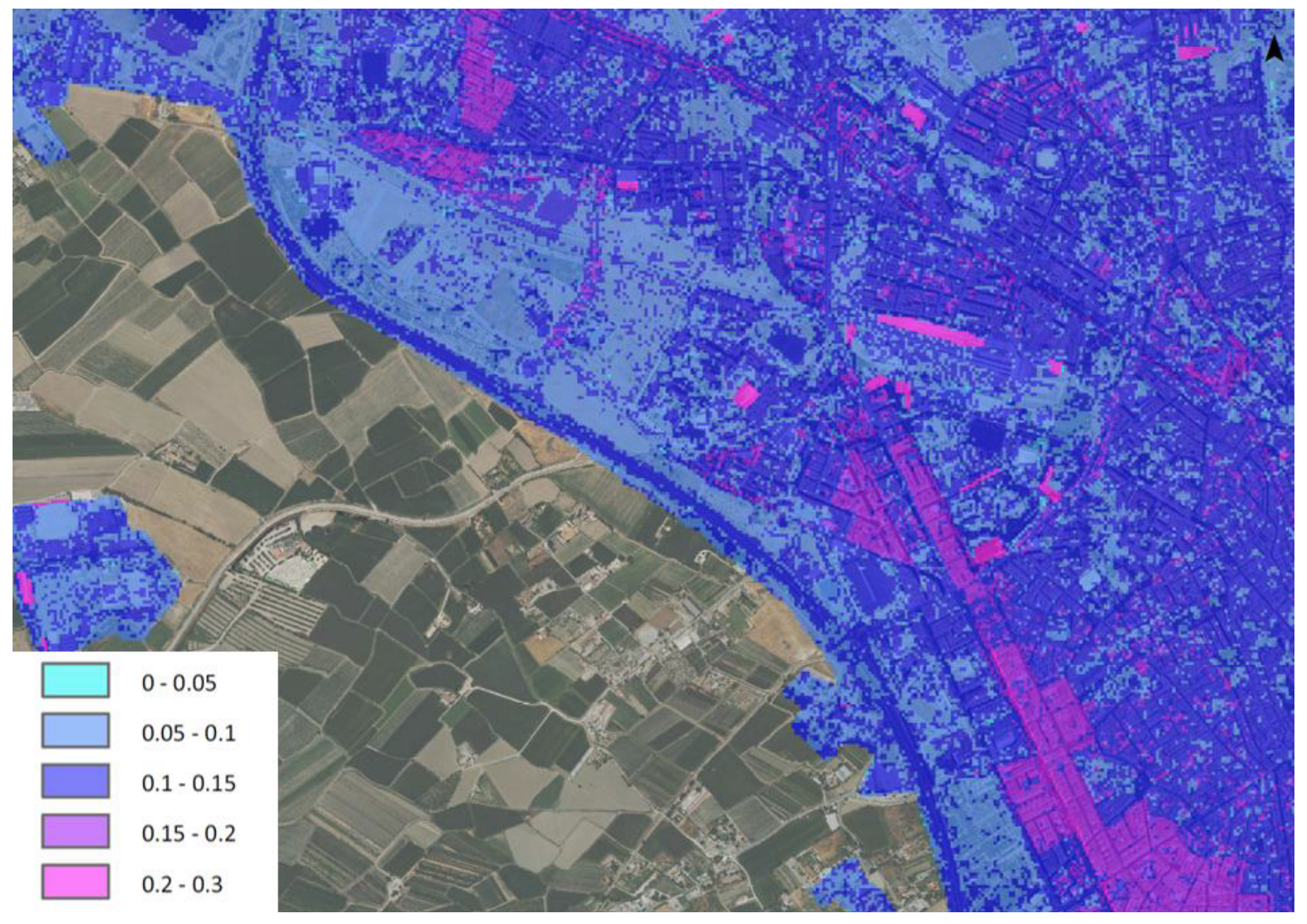
Once the values for the ‘runoff accumulation risk’ variable were defined, the priority index was calculated, which also considers ‘land use’ and ‘population density’ (Table 1). To achieve this, the values of each variable at each point in the city, along with the weights assigned to each value, were input into the GIS in the same manner as before. This process produced a map representing the priority for NbS interventions in the city of Granada (Figure 3 and Figure 4). The resulting index values range from 0 to 0.3.

2.2. Opportunity Index

This index has been defined qualitatively based on the opportunity for implementing an NbS in an urban space. The higher the index at a given location, the easier it is to intervene, and consequently, the more cost-effective the intervention. The opportunity of a site has been defined according to the following variables:
  • Land use. Depending on the type of land use, the ease of implementing an NbS will vary. Less ‘urbanized’ uses are considered more suitable for intervention.
  • Urban development. The ease of implementing an NbS also depends on the level of urban development. Non-consolidated areas are expected to be the locations where the integration of such solutions is most straightforward.
As with the priority index, a distinct weight was assigned to each of the variables considered, as well as to each possible value of these variables (Table 3). It was estimated that the weight of the ‘land use’ variable should be higher than that of the ‘urban development’ variable, as it is considered more decisive for the integration of NbS. Regarding the weights of the values, the following points are noteworthy:
  • Green spaces are naturally the easiest locations for NbS implementation and were, therefore, assigned the highest weight, 0.4. Larger areas, such as public squares and parking lots, were assigned an intermediate weight of 0.2. Pavements, due to their limited size, and building rooftops, due to structural constraints, were assigned the lowest weight, 0.1, reflecting the greater difficulty of intervention.
  • ‘Non-developable’ areas are non-built urban areas where construction is not permitted. These zones remain open spaces and, therefore, offer the highest potential for the implementation of NbS. ‘Undeveloped urbanizable’ areas are non-built urban areas where construction is permitted but has not yet occurred. NbS could be integrated within future sustainable urban development projects in these areas. ‘Urban’ areas are built-up urban areas where the implementation of NbS is more limited due to existing infrastructure and space constraints.
  • Non-developable areas were assigned the highest weight, 0.6, as these are undeveloped spaces of sufficient size for intervention. Undeveloped urbanizable land was assigned an intermediate weight of 0.3, allowing NbS integration during the planning phase. Finally, consolidated urban land was assigned the lowest weight, 0.1, as NbS integration in these areas requires urban renewal projects.
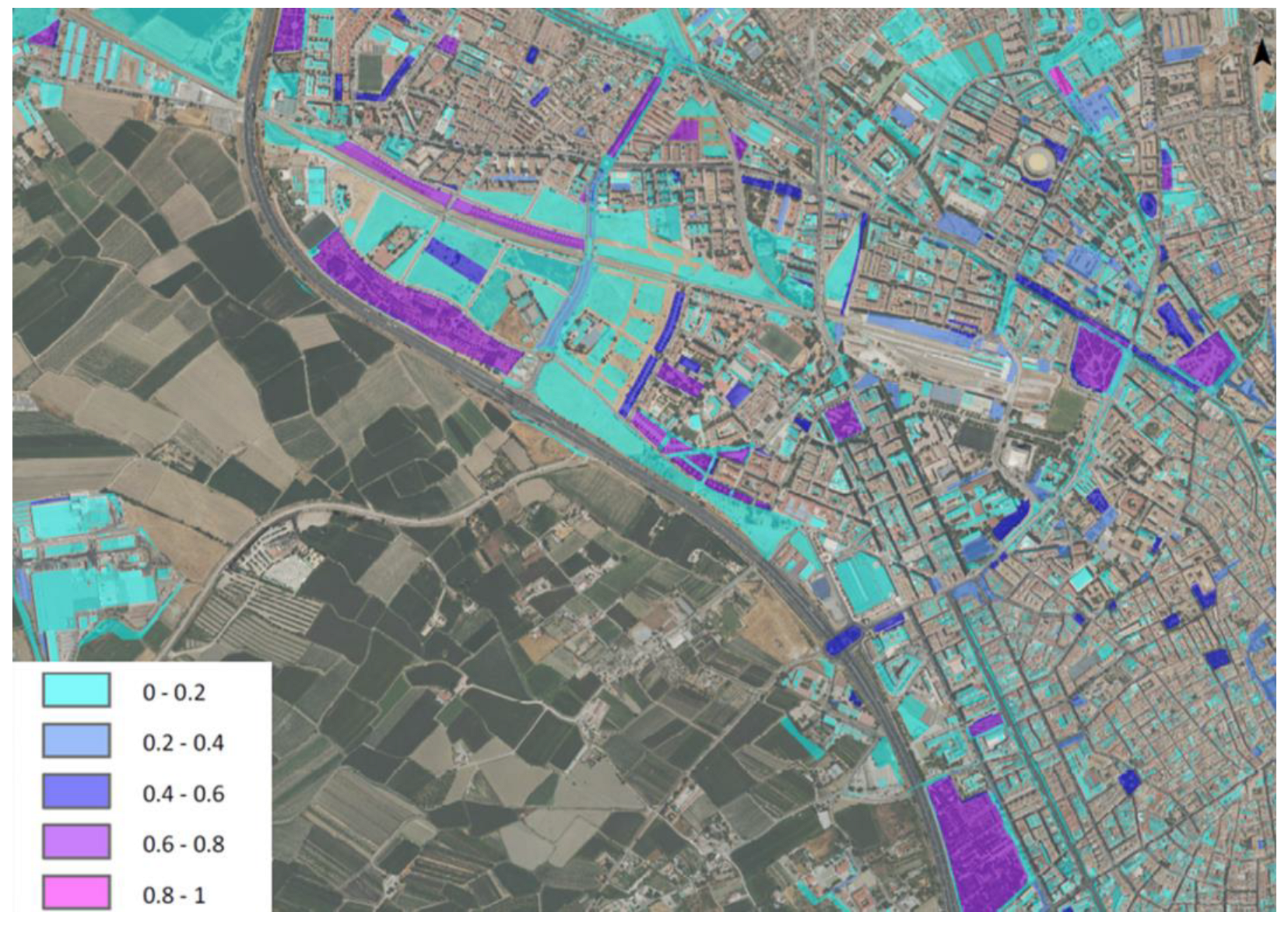
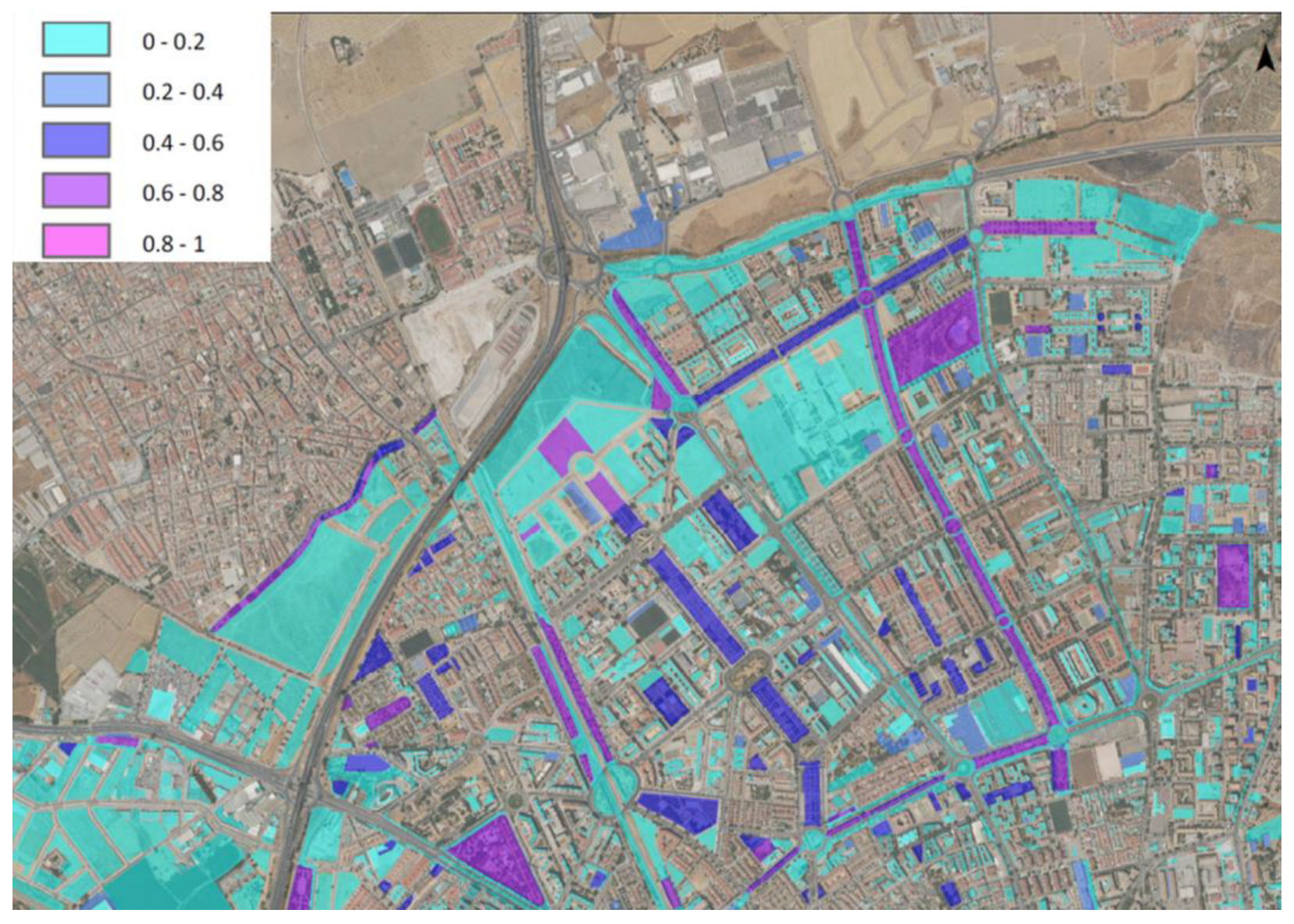
Following the methodology described, values for the opportunity index were obtained for the entire city of Granada, with values ranging from 0 to 1 (Figure 5 and Figure 6).

2.3. Feasibility Index

This index has been defined based on the feasibility of implementing an NbS in an urban space. Unlike the previous indices, which generated values within a range (continuous criterion), the values considered in the feasibility index were 0 for locations where the integration of an NbS is not feasible, and 1 where it is feasible (Boolean criterion). To determine this feasibility, the physical characteristics of the space were considered, as these are the factors that indicate whether or not it is possible to implement an NbS in a given location. Using the main reference on the design of this type of solution [15], spatial requirements for each NbS typology were defined. The following key aspects were identified:
  • Pavements. Minimum width of 4 m required to implement an NbS.
  • Urban areas (parking lots, squares, green spaces). Minimum surface area of 100 m2 required and 1000 m2 recommended for NbS implementation.
  • Buildings. According to CIRIA [15], a maximum roof slope of 10° is required for the implementation of green roofs.
Defining these values as restrictive criteria for determining NbS integration feasibility required a detailed spatial study across the entire city. This involved calculating the width of all pavements, the surface area of all urban spaces, and the roof slopes of all buildings. This analysis was carried out using all available cartographic data and involved highly meticulous work. Based on this, the physical constraints necessary for the implementation of each of the main NbS typologies analyzed were established. These NbS typologies were grouped according to their physical implementation requirements into the following categories: permeable pavements, rain gardens, infiltration trenches and filter drains, retention and infiltration areas, and green roofs.
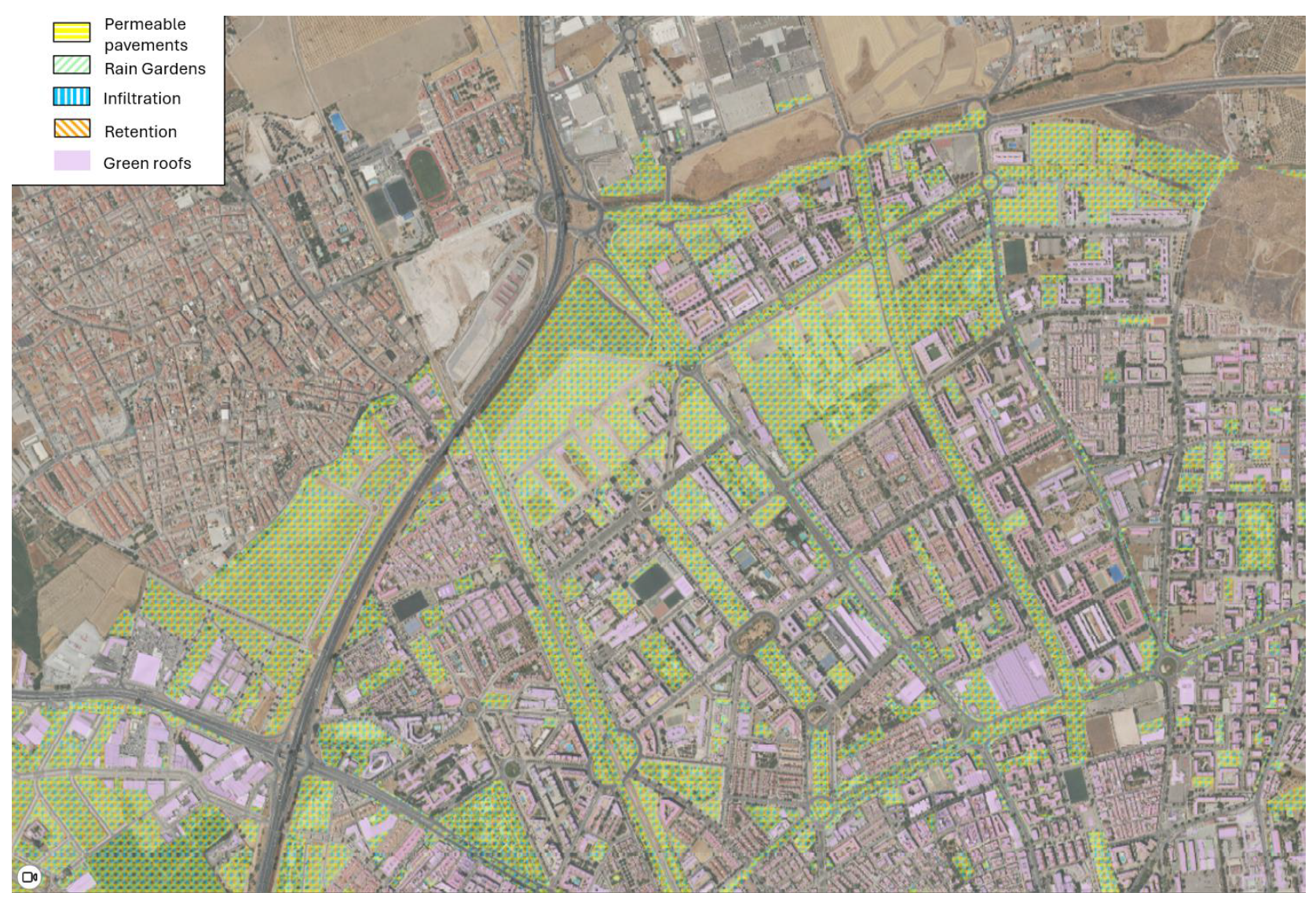
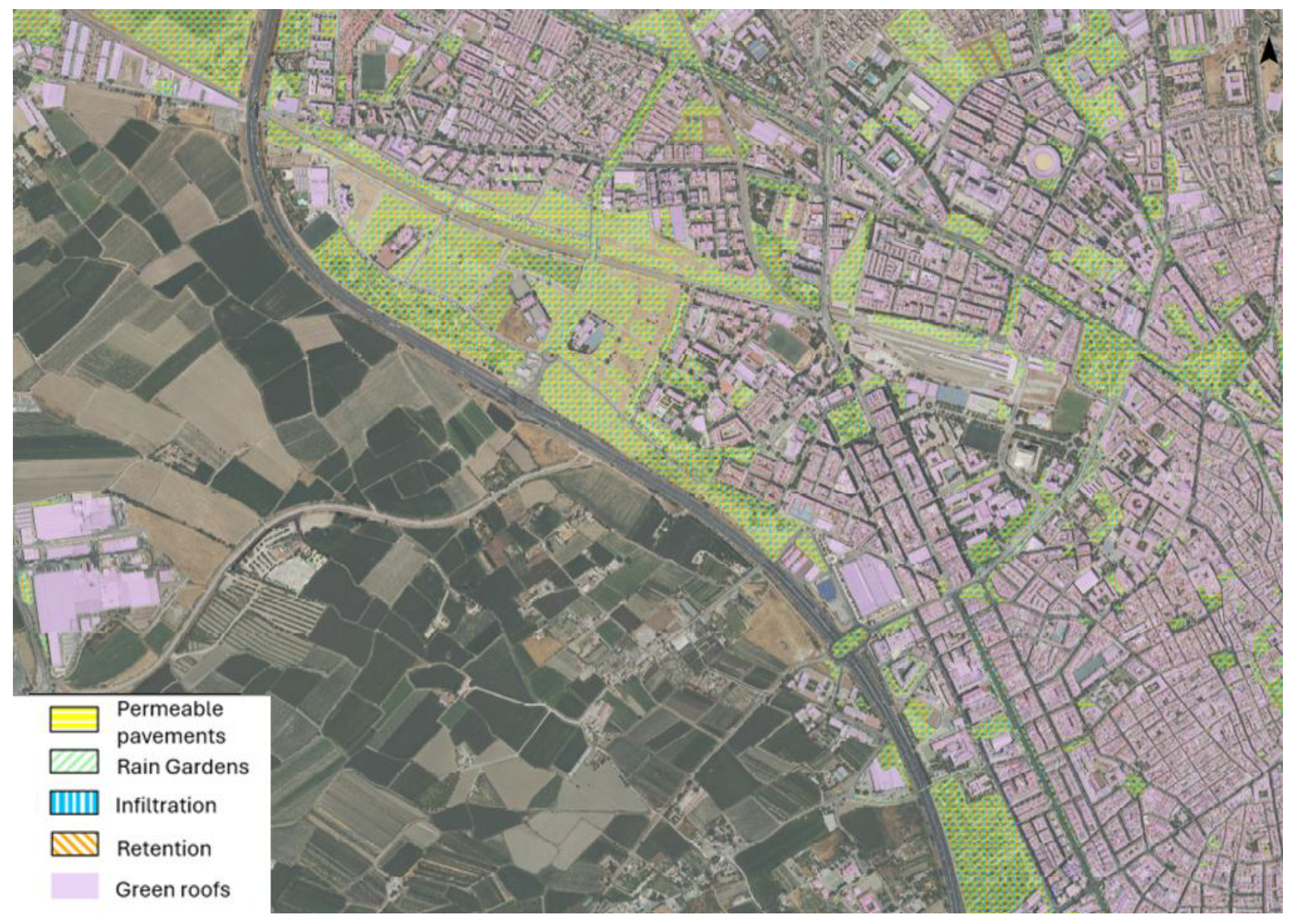
Using GIS, the corresponding feasibility maps for each NbS group were produced for the entire city (Figure 7 and Figure 8). This information will be extremely valuable for urban planners seeking to integrate NbS into urban regeneration projects, as it clearly identifies which areas are feasible and which NbS typologies can be implemented in each location.

3. Results

With regard to the priority index, it was found that 72.21% of the total surface area of the city of Granada presents low or medium priority index values (Table 4). This indicates that, in general terms, there is no significant risk of runoff accumulation across the city, except in specific localized areas. In contrast, 6.68% of the city presents high or very high priority index values, meaning that these urban areas should be the first to be targeted for immediate intervention. As shown in Figure 3, these zones are typically located on streets with low slopes that receive urban runoff from adjacent areas.
With regard to the opportunity index, Table 5 shows that 69.83% of the surface area of Granada has a very low opportunity index. This indicates that the city is a highly consolidated built environment, making NbS interventions more challenging. On a positive note, 15.14% of the city presents high or very high opportunity index values, which suggests that these areas offer more favorable conditions for intervention. As shown in Figure 3, these areas generally correspond to the city’s open spaces.
Finally, the results obtained from the feasibility index show that the most viable locations for NbS integration are green spaces and undeveloped areas larger than 1000 m2, as well as building rooftops (Table 6). Moreover, it can be observed that in nearly one-third of the urban area of Granada, it is feasible to integrate some type of NbS, highlighting the significant potential for action that exists in this city.
As outlined in the methodology, spatial integration criteria were applied to determine which NbS can be implemented in each of the feasible surface areas. The objective was to provide planners with more detailed information to support and facilitate decision-making processes. Accordingly, Table 7 shows the surface areas suitable for the integration of each of the NbS typologies analyzed. It can be observed that the surface area is the same for some of the NbS types studied, as certain typologies share very similar implementation requirements (e.g., permeable pavements and rain gardens). Furthermore, it is worth highlighting that a high proportion of the city—around 25%—has physical characteristics that allow for the implementation of at least one NbS. This finding underscores the significant potential for NbS integration projects in the city of Granada.
Finally, in order to define a hierarchy of intervention in areas suitable for NbS implementation and to assist planners, the values obtained for the opportunity and priority indices were weighted equally at 50%, considering only the areas deemed suitable. This approach was chosen to balance the urgency of intervention at a location (priority) with the ease and lower cost of implementation (opportunity). If decision-makers wished to prioritize the urgency of intervention over implementation cost, the same process could be applied with an increased weight assigned to the priority index. Conversely, if the focus were on minimizing intervention costs relative to risk, the opportunity index would be weighted more heavily. Figure 9 and Figure 10 present the results obtained based on this established criterion of 50% weighting for both the priority and opportunity indices.

4. Conclusions

The growing need to adapt urban environments to climate change makes it urgent to develop urban planning methods that promote the integration of NbS (Nature-based Solutions) in our cities. To date, the implementation of these solutions has been largely reactive, addressing existing problems, typically related to the accumulation of runoff water. Consequently, methodologies that allow us to anticipate flooding and extreme temperature issues in our cities have become a priority.
To address this research gap, this study proposes a GIS-based spatial planning methodology that enables urban planners and decision-makers to identify the most suitable locations in the city for NbS integration, as well as the priority of intervention, thereby improving urban resilience to climate change and enhancing the environmental quality of urban spaces. This paper presents a methodology that supports planners in making informed decisions on the integration of NbS in urban environments. Building on the definition of three spatial criteria, the proposed approach quantifies the suitability of urban spaces for NbS integration through GIS. This enables a more objective and reproducible spatial assessment that can be applied in diverse contexts. The combined use of these indices facilitates the prioritization of areas with the highest potential for NbS implementation, thereby optimizing decision-making processes. Moreover, the GIS-based approach enhances scalability and allows for continuous updates with new urban data, improving adaptive planning compared with other methods. Consequently, this innovative proposal introduces a spatially integrative perspective to existing multicriteria analysis methodologies, strengthening suitability assessments and helping to bridge the research gap in planning frameworks that foster urban resilience. By using opportunity, priority, and feasibility criteria, the most suitable areas for NbS integration in the city were identified, and an intervention hierarchy was established to support decision-making in urban project planning.
Regarding the results obtained, maps were generated showing areas suitable for NbS integration in Granada, along with a specific solution proposed for each location. Furthermore, an intervention hierarchy for the suitable areas was defined, enabling decision-makers to prioritize NbS urban projects. It is noteworthy that at least one-third of the city has the physical conditions necessary for NbS integration, despite being a highly consolidated urban environment where the opportunity for intervention is generally low. Additionally, although the risk of runoff accumulation is not particularly high across most of the city, nearly 7% of the urban area presents a high or very high risk, meaning these areas should be prioritized for NbS intervention. The integration of these proposals in cities would provide significant benefits, including reduced vulnerability to runoff accumulation, improved urban drainage management, lower urban temperatures, and enhanced air quality, among others.
The results demonstrate that Geographic Information Systems are a powerful tool for developing spatial methodologies that can support decision-making, representing a substantial contribution to urban planning. The proposed methodology constitutes a significant advance in the integration of NbS in urban areas, as existing studies do not identify suitable locations for implementation, focusing instead on general strategies. Application of this methodology by local authorities is expected to influence spatial planning instruments in Granada and other cities, promoting the use of NbS in both partial plans and urban development projects.
This methodology is applicable to urban areas with climatic and topographic characteristics similar to those of Granada, Spain. Specifically, it is best suited for cities exhibiting moderate rainfall patterns, where precipitation is sufficient to generate meaningful runoff without extreme flooding events. Additionally, the method assumes predominantly low to moderate slopes, facilitating effective runoff accumulation analysis and spatial modeling. The approach is most effective in urban environments with established, mixed land use patterns that allow for the integration of NbS without requiring extensive structural modifications. Furthermore, it requires access to detailed and up-to-date GIS data to accurately compute opportunity, feasibility, and suitability indices. Finally, successful application depends on the active involvement of local stakeholders and experts, who can adapt the weighting criteria to the specific urban context. Therefore, this methodology is recommended for medium- to large-sized cities facing challenges in urban water management and seeking to enhance resilience through NbS implementation under comparable environmental and infrastructural conditions.
This proposal for identifying suitable areas for integrating NbS aligns with European strategies for urban resilience. Specifically, it aligns with the objectives of the EU Green Infrastructure Strategy [40], which emphasizes the deployment of green infrastructure across urban landscapes to support ecosystem services and climate adaptation. Furthermore, it is in line with the Urban Agenda for the EU [41], which promotes multi-level governance, stakeholder engagement, and evidence-based urban planning to enhance the resilience and sustainable transition of cities. It is also in line with the mission to deliver 100 climate-neutral and smart cities by 2030 [42], which includes an action and investment plan aimed at achieving climate neutrality by 2030. Grounding our method in these strategic frameworks provides city-level planners with a spatially explicit, replicable tool that supports the operationalization of broader policy aims for resilience, water management, and nature-based urban transformation.

5. Research Limitations and Future Research Directions

This study has some limitations that should be acknowledged. One primary limitation is the use of a multicriteria analysis, which introduces a degree of subjectivity in the weighting of the variables considered. However, this process was conducted in collaboration with specialists with over ten years of experience from the research group and the city of Granada’s water supply and sanitation company, EMASAGRA, using a structured discussion supported by numerous studies. Multicriteria analysis was necessary in an urban context where quantifying certain processes is difficult, requiring qualitative assessment to enable analysis. The validation process primarily relies on internal expert discussion to ensure that the assigned weights and criteria are grounded in practical and scientific experience. To further strengthen the robustness of the approach, we are conducting local hydrological studies in three areas of the city to compare the GIS-derived suitability maps with the predicted flooding. This will enable us to validate the results of the study with greater precision. Additionally, sensitivity analyses will be performed on these local case studies to quantify the effect of variations in criteria weights on spatial outcomes, thus enhancing the replicability of the method and confidence in its results. These new studies will significantly improve the methodology and provide valuable evidence of the approach’s applicability in different urban contexts. In any case, the use of different weights in this methodology would not significantly affect the results as long as the relative ranking of the variables remained consistent for a given case. The proposed methodology can be applied to other cities by adjusting the weights according to local decision-makers’ criteria.
Another limitation is the lack of differentiation between public and private land, a critical factor in NbS integration, as the success of such interventions often depends on the willingness of private owners. With the exception of building rooftops, most of the spaces analyzed are publicly owned (streets, squares, parks, etc.), meaning that a significant portion of the proposals can be implemented by the local administration. Moreover, it would be advisable to incorporate socioeconomic considerations, such as financial feasibility or community perception of these solutions, which are key to the success of urban projects. Finally, incorporating future climate change projections could provide additional insight into the resilience of the proposed interventions.
Future research should aim to address the limitations identified. First, the quantification of the indices using artificial intelligence could make the methodology a more robust tool. Additionally, integrating aspects of public–private landownership, as well as socioeconomic and legal indicators (e.g., equity, governance, and community participation), would ensure the technical, financial, social, and institutional feasibility of NbS implementation. Applying this methodology to other cities could also help detect design issues and enhance its predictive capacity. Medium- and long-term monitoring of the proposed interventions would allow for assessment of their effectiveness in reducing flooding and urban heat islands. Finally, incorporating climate change projections into the analysis would provide a more forward-looking perspective, ensuring that NbS strategies remain effective under increasing climate variability.

Author Contributions

Conceptualization, M.I.R.-R.; Methodology, M.I.R.-R., B.M.E. and G.M.M.; Validation, B.M.E., G.M.M. and M.G.A.; Investigation, M.I.R.-R. and B.M.E.; Writing—original draft, M.I.R.-R.; Writing—review & editing, B.M.E. and G.M.M. All authors have read and agreed to the published version of the manuscript.

Funding

This research was funded by EMASAGRA, the company that manages the local water supply, sanitation, and treatment services in Granada, Spain.

Data Availability Statement

The data presented in this study are available on request from the corresponding author due to privacy.

Conflicts of Interest

The authors declare that this study received funding from EMASAGRA. The funder had the following involvement with the study.

References

  1. Ghodsi, S.H.; Zahmatkesh, Z.; Goharian, E.; Kerachian, R.; Zhu, Z. Optimal design of low impact development practices in response to climate change. J. Hydrol. 2020, 580, 124266. [Google Scholar] [CrossRef]
  2. Roseboro, A.; Torres, M.N.; Zhu, Z.; Rabideau, A.J. The impacts of climate change and porous pavements on combined sewer overflows: A case study of the city of Buffalo, New York, USA. Front. Water 2021, 3, 224–238. [Google Scholar] [CrossRef]
  3. European Environment Agency (EEA). Europe’s State of Water 2024: The Need for Improved Water Resilience; EEA Report No 17/2024; EEA: Copenhagen, Denmark, 2024; Available online: https://www.eea.europa.eu/en/analysis/publications/europes-state-of-water-2024 (accessed on 14 October 2025).
  4. Semadeni-Davies, A.; Hernebring, C.; Svensson, G.; Gustafsson, L.G. The impacts of climate change and urbanisation on drainage in Helsingborg, Sweden: Combined sewer system. J. Hydrol. 2018, 350, 100–113. [Google Scholar] [CrossRef]
  5. Zhou, Q. A review of sustainable urban drainage systems considering the climate change and urbanization impacts. Water 2014, 6, 976–992. [Google Scholar] [CrossRef]
  6. European Commission. Guidelines on Best Practice to Limit, Mitigate or Compensate Soil Sealing; Commission Staff Working Document: Brussels, Belgium, 2012; Available online: https://www.eea.europa.eu/policy-documents/guidelines-on-best-practice-to (accessed on 14 October 2025).
  7. Pistocchi, A.; Calzolari, C.; Malucelli, F.; Ungaro, F. Soil sealing and flood risks in the plains of Emilia-Romagna, Italy. J. Hydrol. Reg. Stud. 2015, 4, 398–409. [Google Scholar] [CrossRef]
  8. Navarro-Leblond, M.; Meléndez-Pastor, I.; Navarro-Pedreño, J.; Lucas, I.G. Soil sealing and hydrological changes during the development of the University Campus of Elche (Spain). Int. J. Environ. Res. Public Health 2021, 18, 9511. [Google Scholar] [CrossRef] [PubMed]
  9. Carvalho, P.N.; Finger, D.C.; Masi, F.; Cipolletta, G.; Oral, H.V.; Tóth, A.; Regelsberger, M.; Expósito, A. Nature-based solutions addressing the water-energy-food nexus: Review of theoretical concepts and urban case studies. J. Clean. Prod. 2022, 338, 130652. [Google Scholar] [CrossRef]
  10. Yoshikazu Oukawa, G.; Krecl, P.; Créso Targino, A.; Antunes Batista, F. Advantages of modeling the urban heat island intensity: A tool for implementing nature-based solutions. Sustain. Cities Soc. 2024, 102, 105204. [Google Scholar] [CrossRef]
  11. Radcliffe, J.C. History of water sensitive urban design/low impact development adoption in Australia and internationally. In Approaches to Water Sensitive Urban Design; Elsevier: Amsterdam, The Netherlands, 2015; pp. 1–15. [Google Scholar] [CrossRef]
  12. Fini, A.; Frangi, P.; Mori, J.; Donzelli, D.; Ferrini, F. Nature-based solutions to mitigate soil sealing in urban areas: Results from a 4-year study comparing permeable, porous, and impermeable pavements. Environ. Res. 2017, 156, 443–454. [Google Scholar] [CrossRef] [PubMed]
  13. Chausson, A.; Turner, B.; Seddon, D.; Chabaneix, N.; Girardin, C.A.J.; Kapos, V.; Key, I.; Roe, D.; Smith, A.; Woroniecki, S.; et al. Mapping the effectiveness of nature-based solutions for climate change adaptation. Glob. Change Biol. 2020, 26, 6134–6155. [Google Scholar] [CrossRef] [PubMed]
  14. Rodríguez-Rojas, M.I.; Grindlay Moreno, A.L. A discussion on the application of terminology for urban soil sealing mitigation practices. Int. J. Environ. Res. Public Health 2022, 19, 8713. [Google Scholar] [CrossRef]
  15. Woods Ballard, B.; Wilson, S.; Udale-Clarke, H.; Illman, S.; Scott, T.; Ashley, R.; Kellagher, R. The SuDS Manual; CIRIA: London, UK, 2015. [Google Scholar]
  16. Burns, M.J.; Fletcher, T.D.; Walsh, C.J.; Ladson, A.R.; Hatt, B.E. Hydrologic shortcomings of conventional urban stormwater management and opportunities for reform. Landsc. Urban. Plan. 2012, 105, 230–240. [Google Scholar] [CrossRef]
  17. Charlesworth, S.M.; Perales-Momparler, S.; Lashford, C.; Warwick, F. The sustainable management of surface water at the building scale: Preliminary results of case studies in the UK and Spain. J. Water Supply Res. Technol. Aqua 2013, 62, 534–544. [Google Scholar] [CrossRef]
  18. Rizzo, A.; Sarti, C.; Nardini, A.; Conte, G.; Masi, F.; Pistocchi, A. Nature-based solutions for nutrient pollution control in European agricultural regions: A literature review. Ecol. Eng. 2023, 186, 106772. [Google Scholar] [CrossRef]
  19. Dickie, S.; Ions, L.; McKay, G.; Shaffer, P. Planning for SuDS—Making it happen; CIRIA: London, UK, 2019. [Google Scholar]
  20. McMichael, A.J.; Wilkinson, P.; Kovats, R.S.; Pattenden, S.; Hajat, S.; Armstrong, B.; Vajanapoom, N.; Niciu, E.M.; Mahomed, H.; Kingkeow, C.; et al. International study of temperature, heat and urban mortality: The ‘ISOTHURM’ project. Int. J. Epidemiol. 2008, 37, 1121–1131. [Google Scholar] [CrossRef] [PubMed]
  21. Norton, B.A.; Coutts, A.M.; Harris, R.J.; Hunter, A.M.; Williams, N.S. Planning for cooler cities: A framework to prioritise green infrastructure to mitigate high temperatures in urban landscapes. Landsc. Urban. Plan. 2015, 134, 127–138. [Google Scholar] [CrossRef]
  22. Rodríguez-Rojas, M.I.; Cuevas Arrabal, M.M.; Moreno, B.; Martínez, G.; Muñoz Ubiña, A. Guía para la Integración de los Sistemas Urbanos de Drenaje Sostenible en el Proyecto Urbano; Universidad de Granada: Granada, Spain, 2017. [Google Scholar]
  23. Jones, S.; Somper, C. The role of green infrastructure in climate change adaptation in London. Geogr. J. 2014, 180, 191–196. [Google Scholar] [CrossRef]
  24. Moazzem, S.; Bhuiyan, M.; Muthukumaran, S.; Fagan, J.; Jegatheesan, V. A Critical Review of Nature-Based Systems (NbS) to Treat Stormwater in Response to Climate Change and Urbanization. Curr. Pollution Rep. 2024, 10, 286–311. [Google Scholar] [CrossRef]
  25. Perales-Momparler, S.; Andrés-Doménech, I.; Andreu, J.; Escuder-Bueno, I. A regenerative urban stormwater management methodology: The journey of a Mediterranean city. J. Clean. Prod. 2015, 109, 174–189. [Google Scholar] [CrossRef]
  26. Sañudo-Fontaneda, L.A.; Jato-Espino, D.; Lashford, C.; Coupe, S.J. Simulation of the hydraulic performance of highway filter drains through laboratory models and storm-water management tools. Environ. Sci. Pollut. Res. 2018, 25, 19228–19237. [Google Scholar] [CrossRef]
  27. Rodríguez-Rojas, M.I.; Huertas-Fernández, F.; Moreno, B.; Martínez, G.; Grindlay, A.L. A study of the application of permeable pavements as a sustainable technique for the mitigation of soil sealing in cities: A case study in the south of Spain. J. Environ. Manag. 2018, 205, 151–162. [Google Scholar] [CrossRef]
  28. Ferrans, P.; Torres, M.N.; Temprano, J.; Sánchez, J.P.R. Sustainable Urban Drainage System (SUDS) modeling supporting decision-making: A systematic quantitative review. Sci. Total Environ. 2022, 806, 150447. [Google Scholar] [CrossRef] [PubMed]
  29. García-Haba, E.; Rodríguez-Hernández, J.; Andrés-Doménech, I.; Hernández-Crespo, C.; Anta, J.; Martín, M. Diseño de pavimentos permeables en España: Situación actual y necesidades futuras. Ingeniería del Agua 2022, 26, 279–296. [Google Scholar] [CrossRef]
  30. Wong, T.H.F.; Allen, R.; Brown, R.R.; Deletic, A.; Gangadharan, L.; Gernjak, W.; Jakob, C.; Johnstone, P.; Reeder, M.; Tapper, N. Stormwater Management in a Water Sensitive City; Centre for Water Sensitive Cities: Melbourne, Australia, 2012. [Google Scholar]
  31. Abbott, J.; Davies, P.; Simkins, P. Water Sensitive Urban Design in the UK—Ideas for the Built Environment Practitioners; CIRIA: London, UK, 2013. [Google Scholar]
  32. BMT. Evaluating Options for Water Sensitive Urban Design—A National Guide; Committee for Water Sensitive Cities: Canberra, Australia, 2011. [Google Scholar]
  33. Ariza, S.L.J.; Martínez, J.A.; Muñoz, A.F.; Quijano, J.P.; Rodríguez, J.P.; Camacho, L.A.; Díaz-Granados, M. A multicriteria planning framework to locate and select sustainable urban drainage systems (SUDS) in consolidated urban areas. Sustainability 2019, 11, 2312. [Google Scholar] [CrossRef]
  34. Zhang, K.; Chui, T.F.M. A comprehensive review of spatial allocation of LID-BMP-GI practices: Strategies and optimization tools. Sci. Total Environ. 2018, 621, 915–929. [Google Scholar] [CrossRef]
  35. Shariat, R.; Roozbahani, A.; Ebrahimin, A. Risk analysis of urban stormwater infrastructure systems using fuzzy spatial multi-criteria decision making. Sci. Total Environ. 2019, 647, 1468–1477. [Google Scholar] [CrossRef]
  36. Gil Flores, J. La metodología de investigación mediante grupos de discusión. Enseñanza Teaching: Rev. Interuniv. Didáct. 2009, 10, 199–212. Available online: http://hdl.handle.net/10366/69434 (accessed on 22 October 2025).
  37. Kallio, H.; Pietilä, A.M.; Johnson, M. Systematic methodological review: Developing a framework for a qualitative semi-structured interview guide. J. Adv. Nurs. 2019, 72, 2954–2965. [Google Scholar] [CrossRef]
  38. Rodrigues de Aguiar, C.; Klemm Nuernberg, J.; Leonardi, T.C. Multicriteria GIS-based approach in priority areas analysis for sustainable urban drainage practices: A case study of Pato Branco, Brazil. Eng 2020, 1, 96–111. [Google Scholar] [CrossRef]
  39. Malczewski, J. GIS-based multicriteria decision analysis: A survey of the literature. Int. J. Geogr. Inf. Sci. 2006, 20, 703–726. [Google Scholar] [CrossRef]
  40. European Commission. EU Green Infrastructure Strategy. European Commission Directorate General for Environment. 2013. Available online: https://environment.ec.europa.eu/topics/nature-and-biodiversity/green-infrastructure (accessed on 22 October 2025).
  41. European Commission. Urban Agenda for the EU: Multi Level Governance in Action (2021 Update); Publications Office of the European Union: Luxembourg, 2021. [Google Scholar] [CrossRef]
  42. Directorate General for Research & Innovation (European Commission). EU Mission: Climate Neutral and Smart Cities—Cities on a Journey to Climate Neutrality; Directorate General for Research & Innovation (European Commission): Brussel, Belgium, 2025. [Google Scholar] [CrossRef]
Figure 1. Runoff accumulation risk in the northern area of Granada.
Applsci 15 12378 g001
Figure 2. Runoff accumulation risk in the central area of Granada.
Applsci 15 12378 g002
Figure 3. Priority index in the northern area of Granada.
Applsci 15 12378 g003
Figure 4. Priority index in the central area of Granada.
Applsci 15 12378 g004
Figure 5. Opportunity index in the northern area of Granada.
Applsci 15 12378 g005
Figure 6. Opportunity index in the central area of Granada.
Applsci 15 12378 g006
Figure 7. Feasibility index in the northern area of Granada.
Applsci 15 12378 g007
Figure 8. Feasibility index in the central area of Granada.
Applsci 15 12378 g008
Figure 9. Intervention hierarchy in areas proposed for NbS implementation in the northern area of Granada.
Applsci 15 12378 g009
Figure 10. Intervention hierarchy in areas proposed for NbS implementation in the central area of Granada.
Applsci 15 12378 g010
Table 1. Variables and weights for the calculation of the priority index.
VariableRelative Weight (0–1)ValueRelative Weight (0–1)
Runoff
accumulation risk
0.6Very high (0.5–0.6)0.48
High (0.4–0.5)0.25
Medium (0.3–0.4)0.15
Low (0.2–0.3)0.08
Very low (0.1–0.2)0.04
Land use0.3Sidewalks0.20
Parking lots0.50
Public squares0.10
Green spaces0.00
Undeveloped areas0.10
Building roofs0.10
Population density0.1High (350–750 inh./m2)0.60
Medium (150–350 inh./m2)0.30
Low (0–150 inh./m2)0.10
Table 2. Example of the process of assigning weights to variables in the priority index.
VariableRound 1: Average Expert WeightRound 2: Average Expert WeightFinal Relative Weight (0–1)Justification/Remarks
Runoff
accumulation risk
0.580.620.6The runoff accumulation risk was assigned the highest weight due to its fundamental importance in urban flood control and water management. Experts emphasized that effective management of runoff is crucial for the successful implementation of Nature-based Solutions (NbS), as it directly impacts flood risk mitigation and infrastructure resilience.
Land use0.320.280.3Land use was given a moderate weight, reflecting its influence on the spatial feasibility of NbS integration. The variable accounts for existing urban infrastructure and land availability constraints, which are key considerations for planners and sanitation managers when prioritizing areas for intervention.
Population density0.090.110.1Population density received a lower weight compared to the other variables; it remains relevant for identifying locations where NbS can provide the greatest social benefits. Higher population densities often correspond to areas where improvements in urban resilience and community wellbeing are most needed.
Table 3. Variables and weights for the calculation of the opportunity index.
VariableRelative Weight (0–1)ValueRelative Weight (0–1)
Land use0.8Sidewalks0.10
Parking lots0.20
Public squares0.20
Green spaces0.40
Building roofs0.10
Urban
Development
0.2Non-developable0.60
Undeveloped urbanizable0.30
Urban0.10
Table 4. Priority index results.
Priority IndexArea (m2)% of Total Area
Very Low (0.00–0.05)6,106,813.5721.11
Low (0.05-0.10)11,297,399.2339.06
Medium (0.10-0.15)9,588,930.1833.15
High (0.15-0.20)1,790,350.036.19
Very High (0.20-0.30)983,417.190.49
TOTAL29,766,910.20100.00
Table 5. Opportunity index results.
Opportunity IndexArea (m2)% of Total Area
Very Low (0.00–0.20)20,787,926.5469.83
Low (0.20–0.40)1,877,686.606.31
Medium (0.40–0.60)2,594,612.658.72
High (0.60–0.80)4,487,619.6715.08
Very High (0.80–1.00)19,064.750.06
TOTAL29,766,910.21100.00
Table 6. Feasibility index results.
Land UseArea (m2)% of Total Area
Pavements ≥ 4 m273,888.190.92
Surface parking areas 100–1000 m228,587.640.1
Surface parking areas ≥ 1000 m2257,844.440.87
Public squares 100–1000 m251,754.770.17
Public squares ≥ 1000 m2179,872.740.60
Green spaces 100–1000 m233,120.530.11
Green spaces ≥ 1000 m21,985,502.656.67
Undeveloped areas 100–1000 m293,680.290.32
Undeveloped areas ≥ 1000 m25,202,495.3017.48
Building rooftops roof slope ≤ 10°1,615,160.465.43
TOTAL9,722,187.1132.66
Table 7. Suitable areas for NbS implementation.
NbS TypologySuitable Area (m2)% of Total Area
Permeable pavements8,107,026.6527.24
Rain gardens8,107,026.6527.24
Infiltration trenches and filter drains8,055,271.8827.06
Retention and infiltration areas7,625,715.1325.62
Green roofs1,615,160.465.43
Disclaimer/Publisher’s Note: The statements, opinions and data contained in all publications are solely those of the individual author(s) and contributor(s) and not of MDPI and/or the editor(s). MDPI and/or the editor(s) disclaim responsibility for any injury to people or property resulting from any ideas, methods, instructions or products referred to in the content.