1. Introduction
The increasing global demand for sustainable energy solutions has accelerated the development of innovative wind power technologies. Among renewable energy sources, wind energy is one of the fastest-growing, playing a pivotal role in reducing greenhouse gas emissions and decreasing the dependence on fossil fuels.
Wind turbines can operate as standalone energy systems or be integrated with photovoltaic (PV) panels, hydrogen production units, and energy storage systems to achieve stable power generation under varying environmental conditions and throughout the 24 h cycle.
This paper is the first in a series presenting over two decades of research and development focused on high-efficiency wind turbines. It introduces a new class of Vertical-Axis Wind Turbines (VAWTs) that overcome a number of fundamental limitations of conventional designs [
1,
2].
VAWTs have emerged as a promising alternative to traditional Horizontal-Axis Wind Turbines (HAWTs) [
3], offering several well-known advantages and disadvantages, which are briefly reviewed in
Section 2. The proposed VAWT concept eliminates the main drawback of existing vertical-axis designs—low wind flow utilization efficiency—through optimized aerodynamics and the incorporation of thermodynamic effects. The latter provides an additional mechanism for enhancing the overall turbine efficiency and introduces new prospects for improving wind energy conversion technology.
Section 3 describes the proposed wind turbine design.
Section 4 focuses on the blade block as a key element of the proposed innovation. It includes the computational fluid dynamics (CFD) simulation results and the blade manufacturing technology.
Section 5 and
Section 6 present the theoretical justification of turbine efficiency and its experimental validation.
The aim of this work is to introduce a novel wind rotor concept featuring blades combined in modular blocks, offering theoretical explanations, simulation evidence, and field test results that collectively demonstrate the high efficiency of the proposed VAWT design.
2. Comparison of VAWT and HAWT: Advantages and Disadvantages
VAWTs have a number of well-known advantages over HAWTs [
4,
5,
6,
7,
8].
A VAWT can pick up wind coming from any direction. In contrast, HAWTs require a yaw system with a separate drive to orient the rotor to capture the wind. Due to this difference, VAWTs can be used even in unstable weather conditions such as turbulent gusty winds. They also function well in mountain and coastal areas.
- 2.
Lower Starting Wind Speed.
VAWTs have a lower starting wind speed compared to HAWTs. The necessary starting wind speed for a typical VAWT is 2 to 3 m/s. This allows VAWTs to generate electricity even when the incoming wind is relatively weaker. Although the amount of electricity generated at lower wind speeds is much smaller, it is still better than a wind turbine that is not able to harvest weaker incoming wind.
- 3.
Simpler design.
There is no need for a movable nacelle or a yaw system with gear and separate drive and no need to transfer electrical energy from the rotary nacelle to cables on a stationary tower.
- 4.
A minimum of two non-cantilevered blade supports.
- 5.
Easier and lower cost installation and maintenance due to fewer parts and units.
- 6.
Closer Spacing.
In a HAWT power plant, the general rule-of-thumb for spacing is to place the turbines 5 diameters apart across the wind and about 10 diameters apart extending downwind. This is to avoid the disruption of air flow and the reduction in wind speed caused by one turbine to another, which affects the power output of neighboring units. VAWTs can be grouped closer together in a wind power plant. This is because vertical axis wind turbines function well in turbulent wind and they are generally spaced 4 to 6 diameters apart.
Moreover, a concept called “VAWT in near ground turbulence” has recently gained popularity. According to this concept, VAWTs are located at a lower height between HAWTs towers. As mentioned above, due to their multidirectional properties, they operate efficiently in such conditions. This allows for the more efficient use of land and the existing electrical power transmission infrastructure [
8].
- 7.
Lower environmental impact.
Due to the aerodynamic properties and low blade linear speed, VAWTs do not create large extended drop shadows. The blades are also easier for birds and other flying animals to spot, decreasing the chance of animal casualty.
Finally, due to the lower and uniform linear velocity of all blade points, VAWTs may be quieter; so, they do not disturb people in residential neighborhoods.
However, the large-scale implementation of VAWTs is hindered by several inherent and well-known disadvantages [
6,
9]:
The main limitation for VAWT expansion is the lower efficiency of wind utilization compared to HAWTs. While an HAWT Power Coefficient (Cp) can reach 45% (for the best turbines with several tens of kilowatts power), the efficiency of Darrieus rotor-type VAWTs does not exceed 35%.
- 2.
Lower available wind speed.
The non-availability of a pitch control mechanism may result in VAWTs having to brake at a lower maximum wind speed than HAWTs.
- 3.
A self-starting mechanism may be needed.
In some configurations, the wind rotor may have a so-called “vane effect”, when the wind rotor has no initial torque. It may be necessary to have a starting mechanism, using a generator, operating in engine mode.
- 4.
Cyclical nature of loads.
Because the angle between the blade and the direction of the wind is constantly changing when the rotor is rotating, all VAWT elements from the blades to the tower are subject to pronounced cyclic loads, where the number and magnitude of load peaks depend on the number of blades. This results in the need to increase the safety factor, taking into account both the peak loads and the fatigue of materials under cyclic loading. In HAWTs, the loads are more even, and this problem occurs more rarely.
- 5.
Higher number of blades.
Generally, VAWTs have higher number of blades than HAWTs. The cost of blades for a VAWT is very important, and they require low-cost blades to be more competitive.
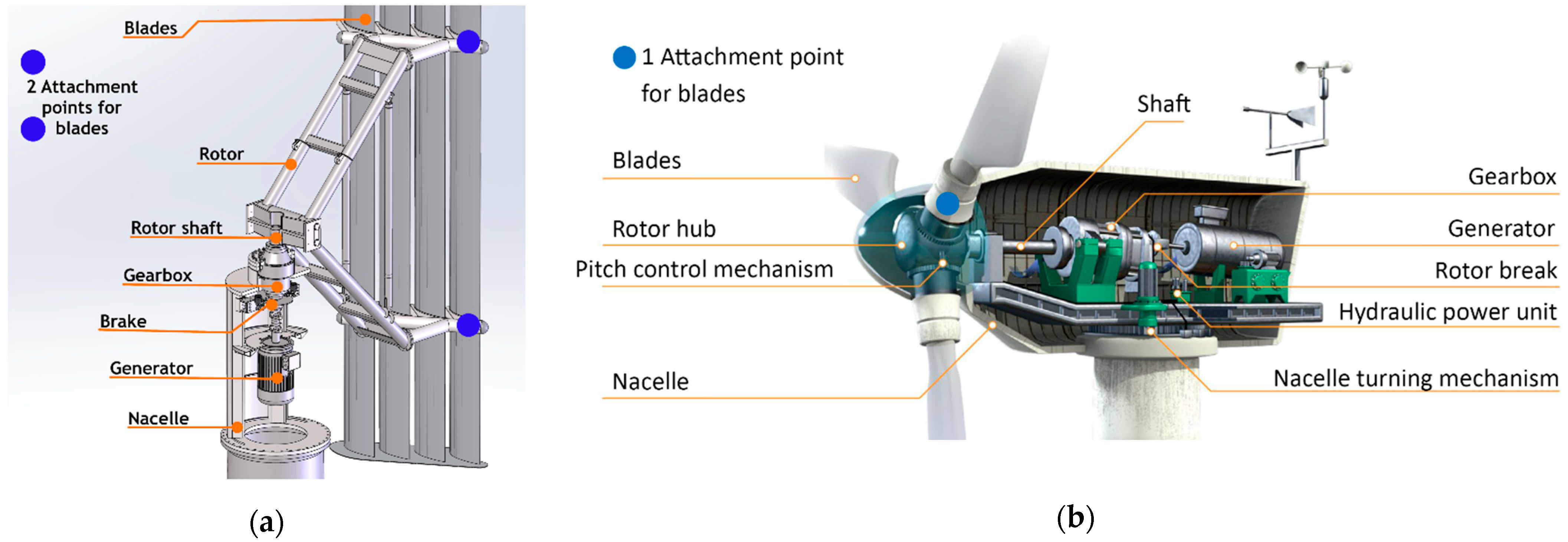
Figure 1 presents a visual overview of a VAWT (
Figure 1a) and an HAWT (
Figure 1b). It shows the nacelle of the proposed VAWT and the most common HAWT. A comparison of the two reveals that the HAWT nacelle has a significantly more complex design and features.
3. Proposed System
Aerodynamic performance research in the field of VAWTs is a dynamic area of study that focuses on improving the efficiency, reliability, and viability of VAWTs as renewable energy solutions [
10,
11,
12,
13,
14]. The key areas include airfoil optimization, tip losses and others using 3D CFD simulations, wake interactions and turbine arrays, and simulation and modeling techniques [
15,
16,
17,
18,
19].
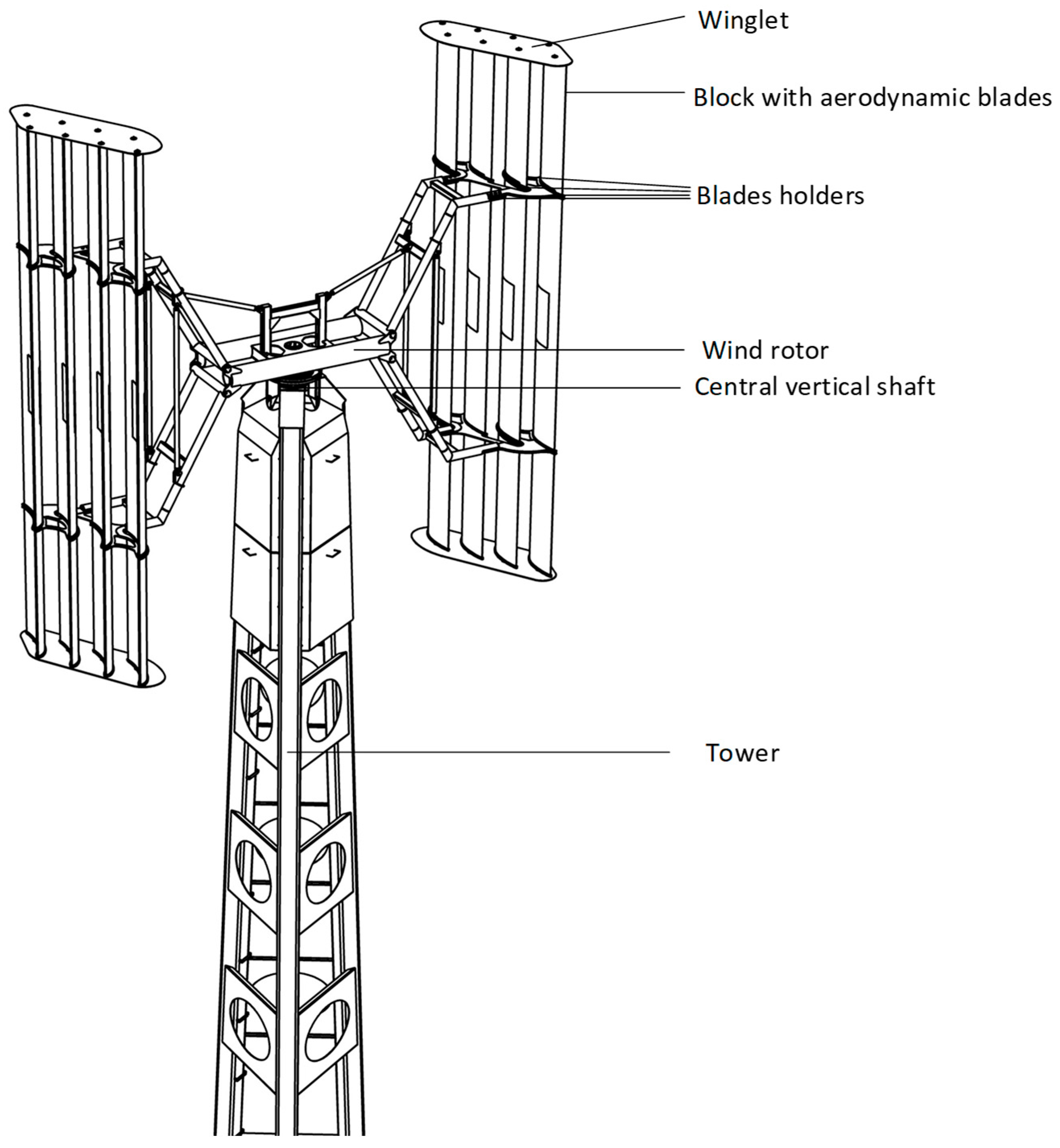
The proposed innovation is a wind turbine with a vertical axis of rotation fitted with subsonic aerodynamic blades arranged into two blocks, each consisting of several stationary blades. These blocks are distributed symmetrically around a central shaft and mounted at defined angular intervals to optimize the airflow interaction. Each block is attached to supporting arms on the rotor and oriented with a predetermined deflection angle, relative to the radial lines of the rotor. This configuration improves the aerodynamic efficiency by directing the airflow more effectively. Winglets are incorporated at the blade tips to suppress vortex formation, reduce induced drag, and enhance power capture.
As illustrated in
Figure 2, the terminal sections of each blade block are secured within winglets and form inter-blade channels. When wind flows along the blade block and through these channels, aerodynamic forces are generated on the blade surfaces. Simultaneously, thermodynamic processes driven by enthalpy variations occur within the airflow, producing localized changes in temperature. These effects introduce an additional mechanism of energy transfer. Consequently, the blades harness both the kinetic energy of the wind and supplementary thermodynamic contributions, thereby increasing the overall efficiency of energy extraction compared with conventional turbine designs. A more detailed exposition of this phenomenon is provided in
Section 4 and
Section 5.
4. Rotor Blade Block as a Significant Power Element of the VAWT System
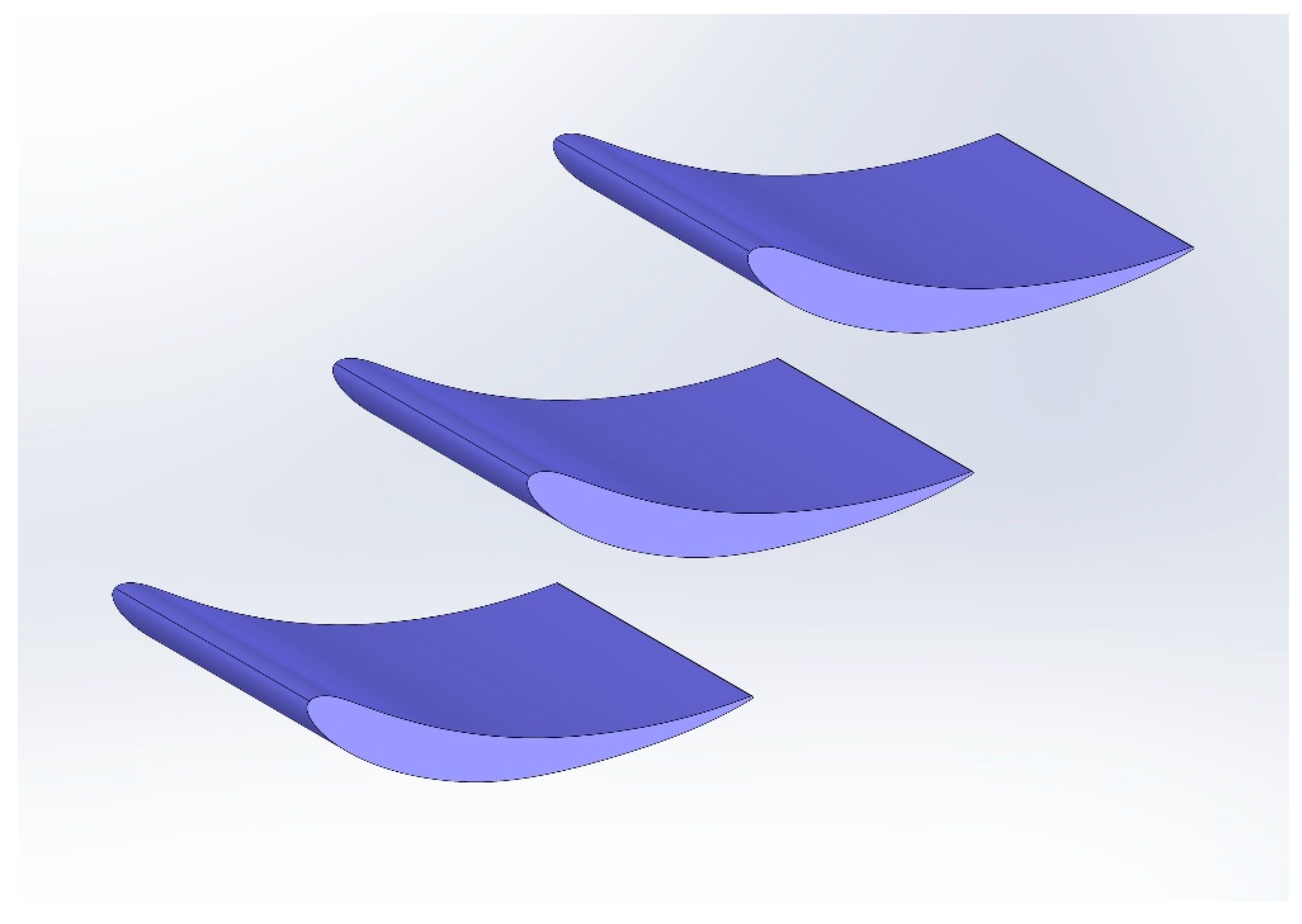
The primary concept underlying the high efficiency of GWE wind turbines is the relative positioning of the blades in blocks, as illustrated in
Figure 3. This configuration attains two significant interrelated effects, which can be illustrated using CFD simulation.
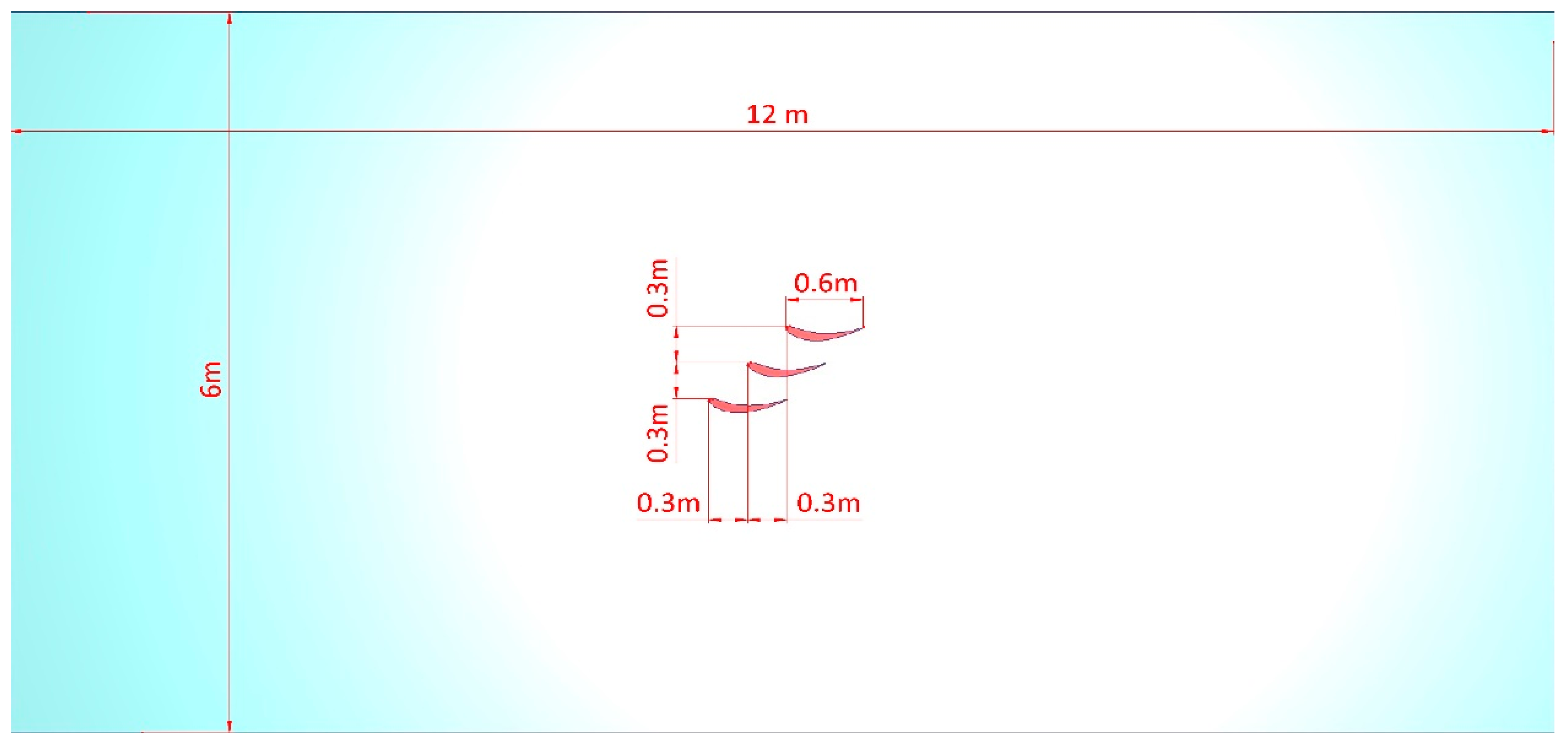
The software used for this study was Autodesk Simulation CFD 2026 Ultimate. In the context of the simulation, a 2D representation of the block with real dimensions and relative positions was utilized. The dimensions of the object and flow domain are shown in
Figure 4, and the initial simulation data are presented in
Table 1.
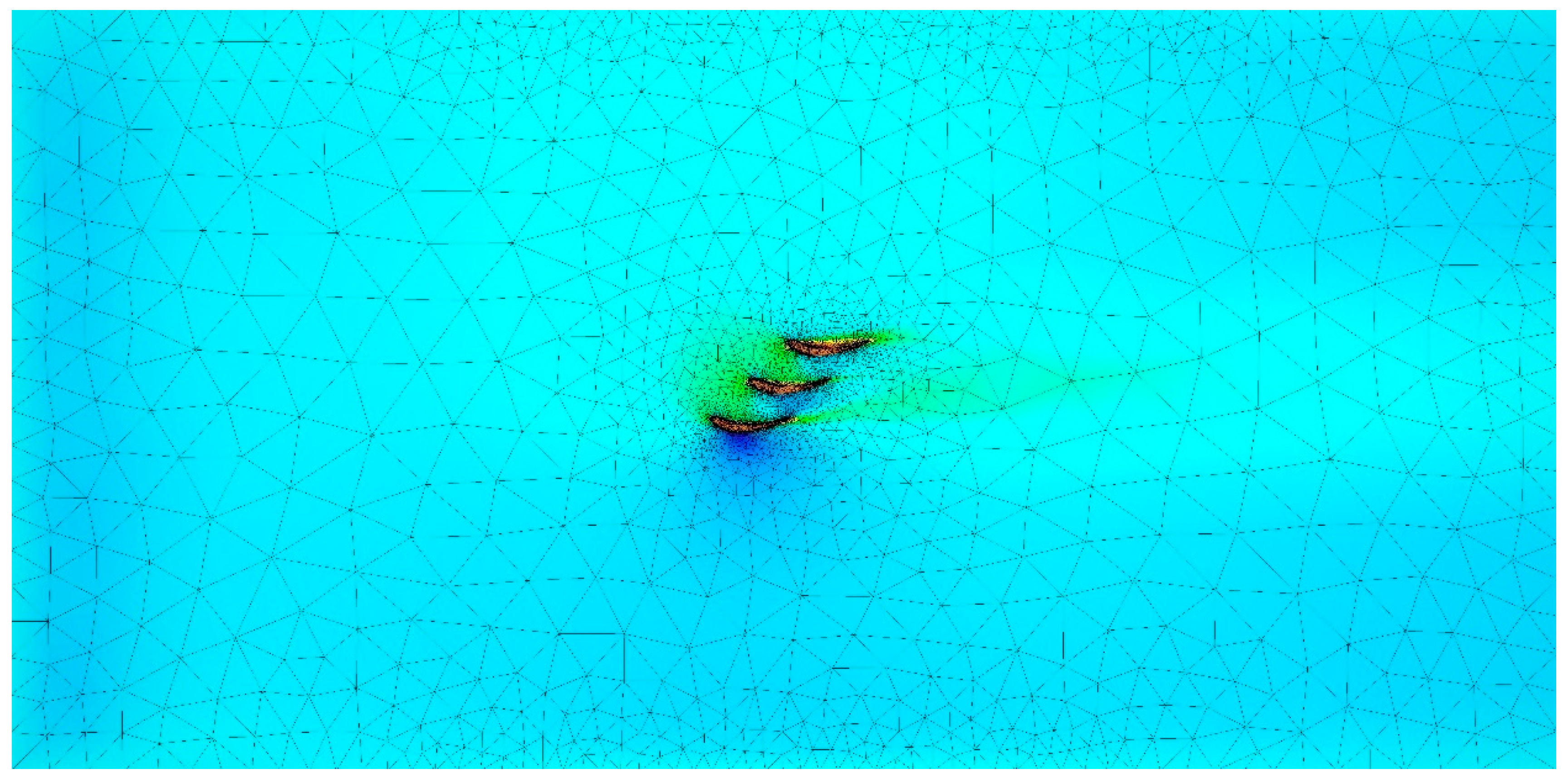
An adaptive mesh was implemented, with an additional element size reduction in the area of interaction between the flow and the blade block and a further reduction on the blade surfaces and in the space between the blocks (
Figure 5). Total number of nodes: 16,281; total number of elements: 22,903. Total number of iterations: 700, total solving time: 87 min.
The results of this simulation are as follows.
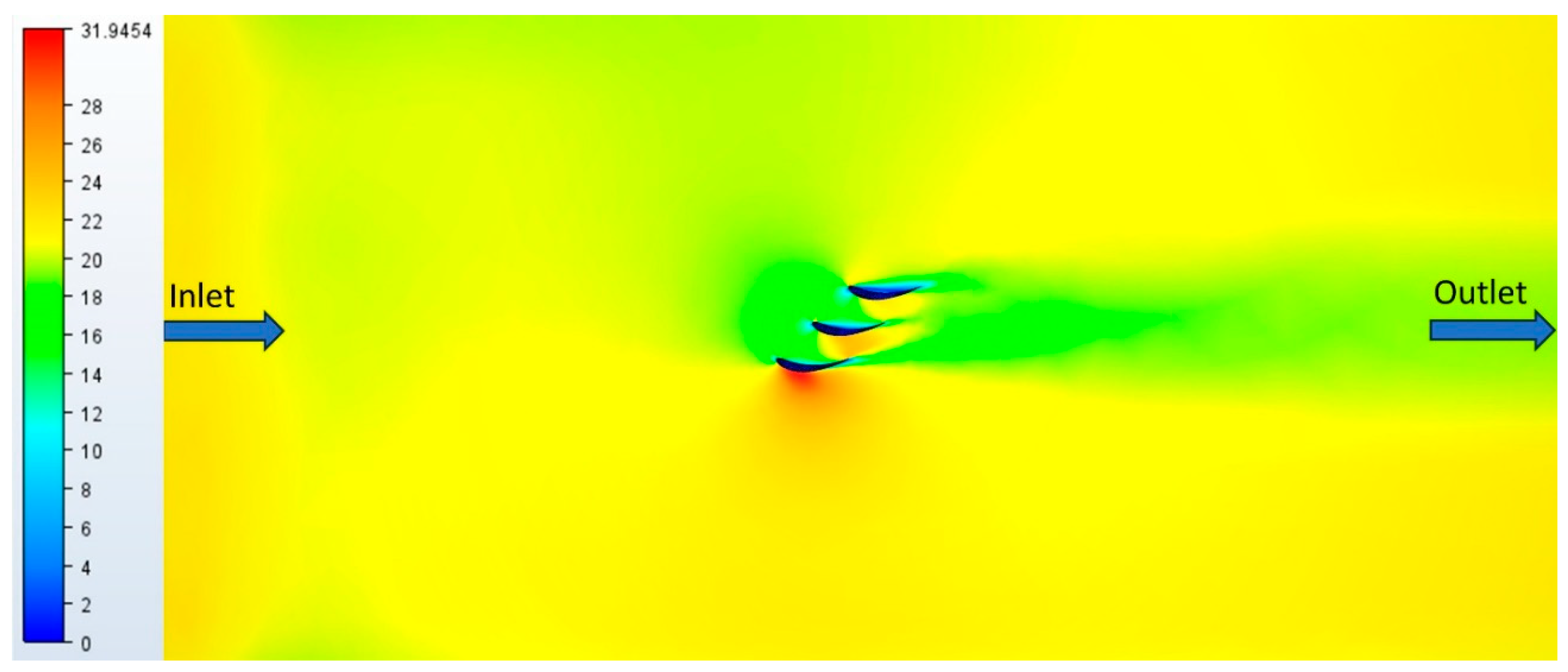
Aerodynamics. As illustrated in
Figure 6, the distribution of the air flow velocities’ magnitude, as it passes through a block consisting of three blades, was obtained using CFD modeling. The temperature, pressure, and velocity of the inlet flow were set to constant values. The main initial data of the simulation environment are shown in
Table 1. It may be observed that, ahead of the blade block, the flow velocity, in general, reduces from a specified 21.6 m/s to 15 m/s, which is well-matched with the generally accepted theory, the Betz model, for example. At the same time, on the concave part of the blades, the flow velocity decreases: on the first (upper) blade to close to 0 and on the third (lower) blade to 7.5 m/s. On the convex part of the blade, the flow velocity increases up to 25.5 m/s in the channels of the blade block and up to 31.9 m/s on the convex part of the third blade.
- 2.
Thermodynamics. The authors posit that an evaluation of the wind turbine’s efficiency should consider not only the aerodynamic but also the thermodynamic effects. As demonstrated in the following section, even a minor decrement in the average temperature of the wind flow generates significant amounts of additional energy transferred to the wind rotor.
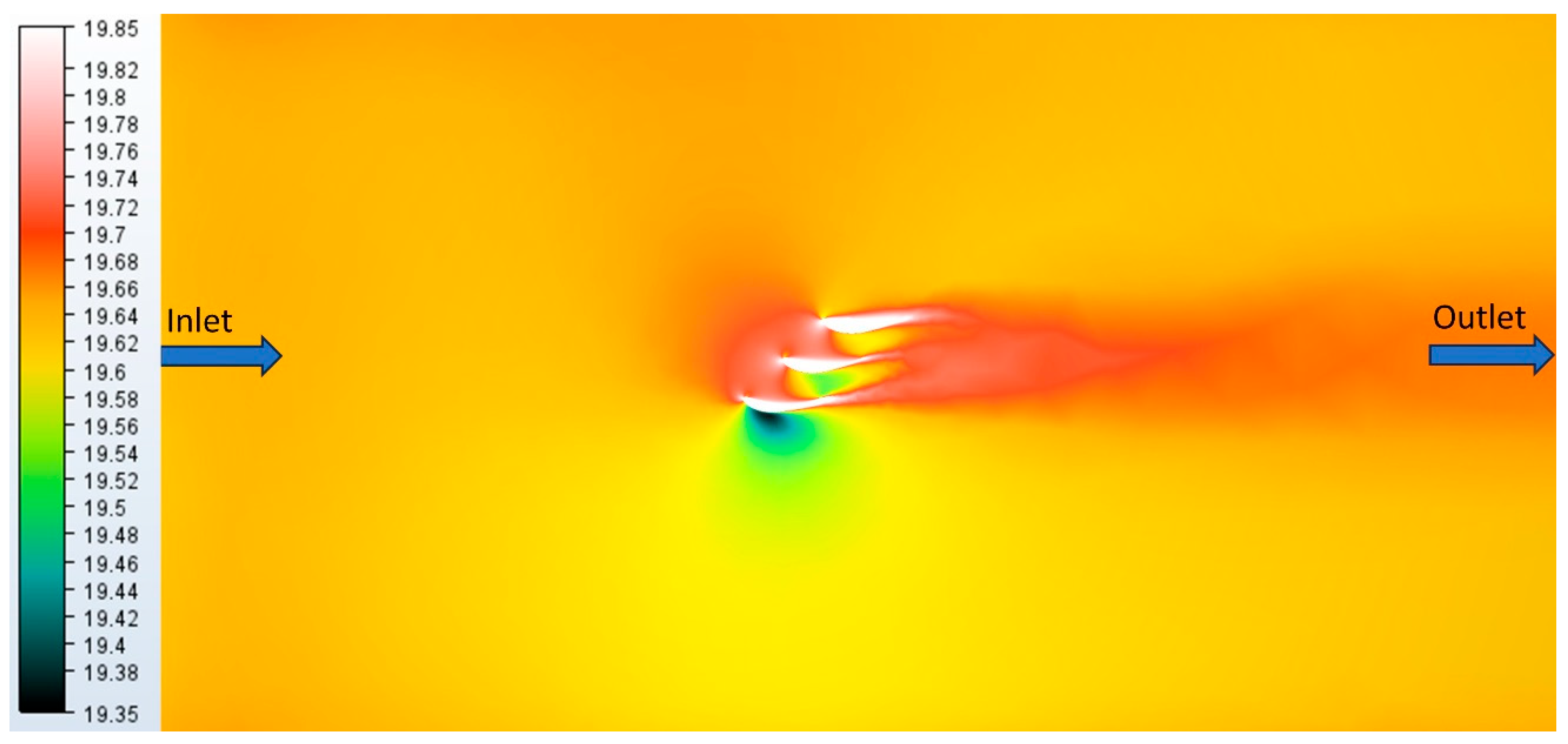
Figure 7 illustrates the temperature distribution of the wind flow surrounding the blade block. The pressure, temperature, and velocity of the inlet flow were set to constant values during the simulation, as shown in
Table 1. The flow temperature increases directly behind the blade block. However, on both sides of the block, a lower temperature stream is observed than the inlet flow temperature. The temperature drop is most visible on the convex surfaces of the blades. Notwithstanding the increase in temperature directly behind the blade block, the average flow temperature across the entire cross section is 0.01 degrees lower than the inlet flow temperature.
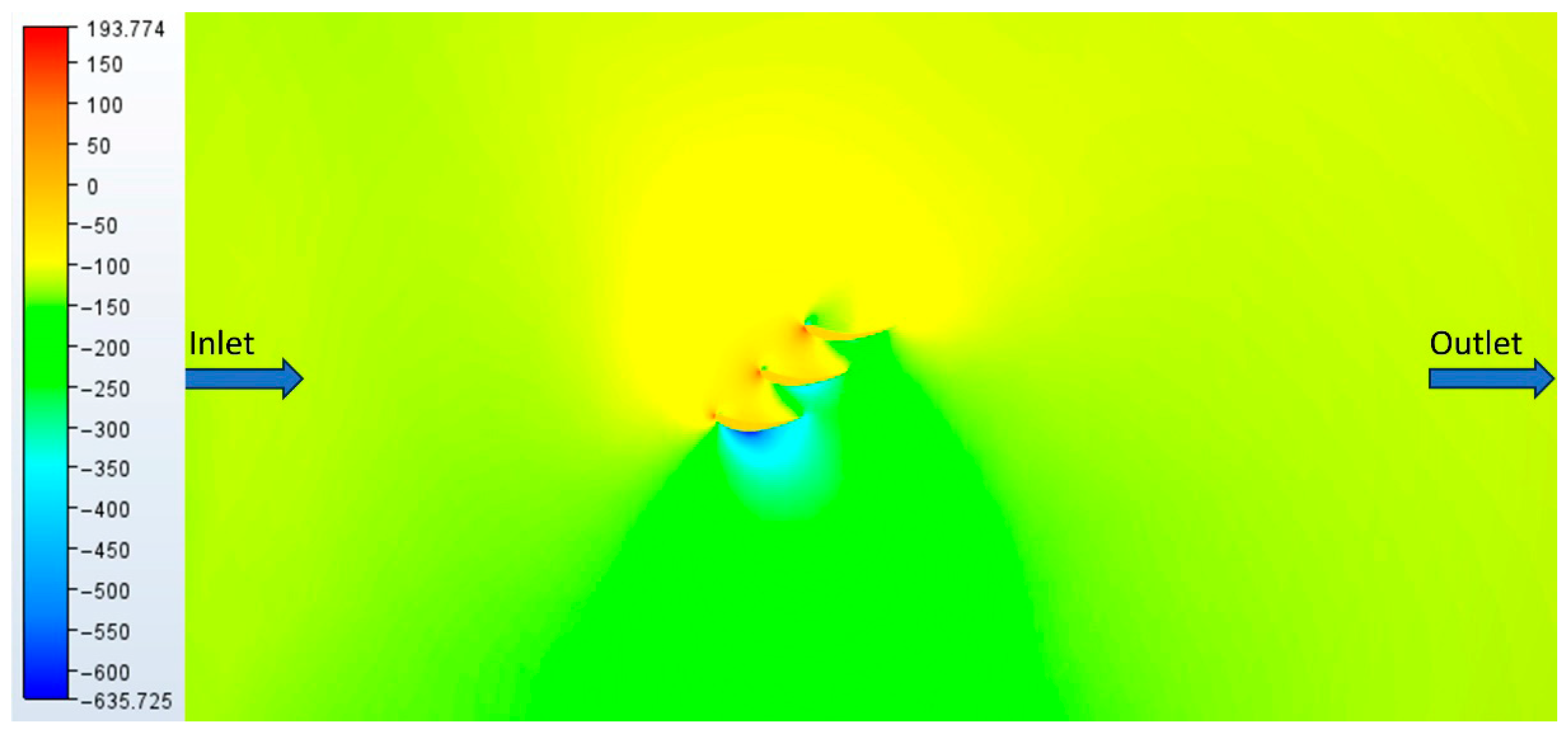
These phenomena result in a pressure differential between the two sides of the blade.
Figure 8 shows the pressure distribution pattern when the airflow flows through a blade block. There is a high-pressure area from the front edge of the first blade spreading to the second blade. At the same time, the convex part of the blade continues to be affected by a lower pressure zone, and this creates a force. This phenomenon is even more significant for the second and third blades. Areas of low pressure are clearly visible on the convex parts of the second and third blades. The maximum relative pressure values at the center of the concave and convex surfaces of each blade are shown in
Table 2. The CFD simulation results closely align with the data obtained from real wind turbine tests.
A wind rotor may contain two or three blade blocks, with two to four blades per block. Our experiments have demonstrated that increasing the number of rotor blocks from two to three may enhance the efficiency of the wind rotor by up to 25%. At the same time, the number of blades increases by 1.5 times. Therefore, determining the optimal number of wind turbine blocks, blades per block, and blade chord length is not only a technical challenge but also, to a significant degree, an economic one. In such conditions, the cost of blade manufacturing begins to play a significant role.
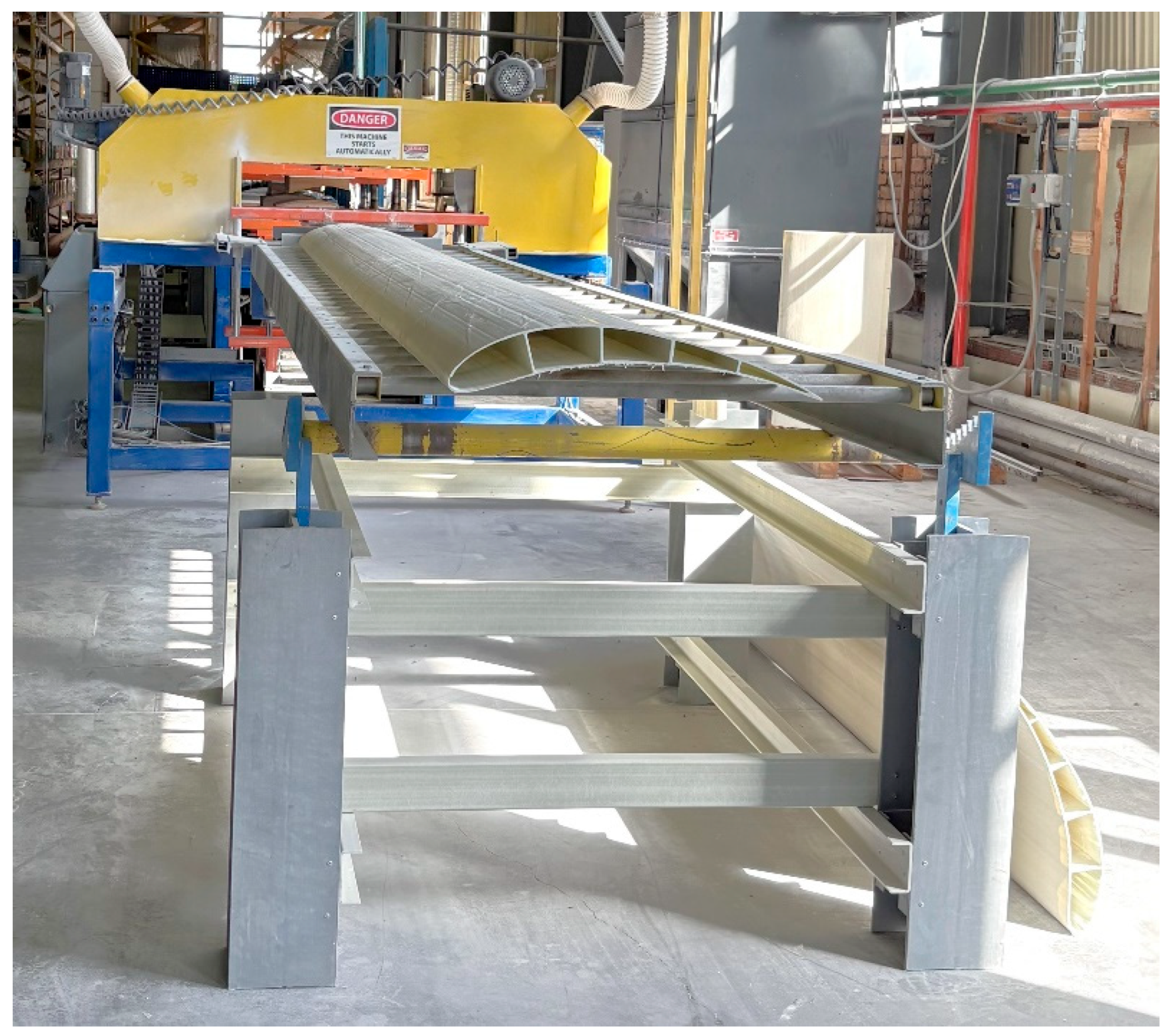
It should be noted that the proposed VAWT blades have a constant cross section. This allows the manufacturer to apply pultrusion, a modern manufacturing process.
Pultrusion offers advantages such as a high degree of automation, reduced labor cost, and the possibility of large-scale manufacturing. This technique allows for the continuous production of long straight profiles, minimizing waste materials and enables the production of high-strength lightweight polymer composites. The continuous nature of the process ensures uniform fiber distribution throughout the profile, which improves the overall strength and stiffness of the pultruded parts. Pultrusion can produce a wide range of shapes and sizes including complex profiles. This flexibility makes it a preferred choice for wind turbine components manufacturing [
20].
The typical pultrusion speed is not less than 0.5 m/min, even for such complicated profiles as a blade [
21]. In addition, the manufacture of rotor blades using traditional methods is not only very labor-intensive, but it also takes place in a hazardous environment for human health. In the case of pultrusion, all processes can be automated, allowing personnel to be situated in separate rooms.
This means that, compared to traditional manufacturing using the fiberglass contact forming method, blades can be manufactured with higher productivity and significantly lower operating costs. For our production process (
Figure 9), the production cycle time for manufacturing one blade has reduced from 4 days to 10 min, and the operating costs have been reduced by 6 times.
5. The Theoretical Basis
Regarding the proposed wind turbine concept, we focus primarily on its design, test results, and practical operation. Given the applied focus of this work, the theoretical issues concerning the mathematical description of wind turbine performance are only considered here at the level of general principles, which explain the high efficiency of the proposed concept. An article dedicated to this subject is planned for future publication.
According to the literature, for instance [
22,
23], in wind energy, the Power Coefficient C
p, or efficiency, of a wind turbine is defined as the ratio of the wind rotor’s extractable power P to the kinetic power W available in the undisturbed stream:
where the kinetic power content of the undisturbed upstream wind stream with speed V
1 and over a swept area S is
where R
o represents the air density, kg/m
3.
In accordance with classical theory, the power P
a, extractable by a wind rotor as a consequence of the reduction in airflow speed from upstream to downstream by applying the law of conservation of energy, can be defined as the change in the kinetic energy of the airflow per unit time:
where G
BP represents the mass of airflow rate through the swept area, kg/sec, and V
2 represents the speed of the downstream airflow (averaged over the time and cross section, if necessary), m/s.
According to the law of conservation of energy, a decrease in the airflow temperature implies that this energy must be considered in the power calculation at the wind turbine shaft. From the equation of thermal energy change, this power P
t can be determined as
where C
T represents the isobar heat capacity of air (C
T approximately = 1005 J/kg K), T
1 represents the thermodynamic temperature in upstream airflows, K, and T
2 represents the thermodynamic temperature in downstream airflows (averaged over the time and cross section, if necessary), K.
Then, the power P on the wind turbine shaft is
To illustrate this point, consider the example shown in
Figure 5. The initial data are as follows:
Wind flow area S = 36 m2 (6 × 6 m);
Inlet wind speed V1 = 21.6 m/s;
Temperature decrease (T1 − T2) = 0.014 K.
The mass flow rate through area S is calculated as follows:
and
The example demonstrates that even a minimal decrease in the average flow temperature can result in a substantial increase in the power output. Note that this calculation is only for a single point and does not mean that such energy is available for all wind rotor rotation angles, since the flow velocity around the blades depends on the angle between the wind rotor blade and the wind direction.
6. Experimental Verification
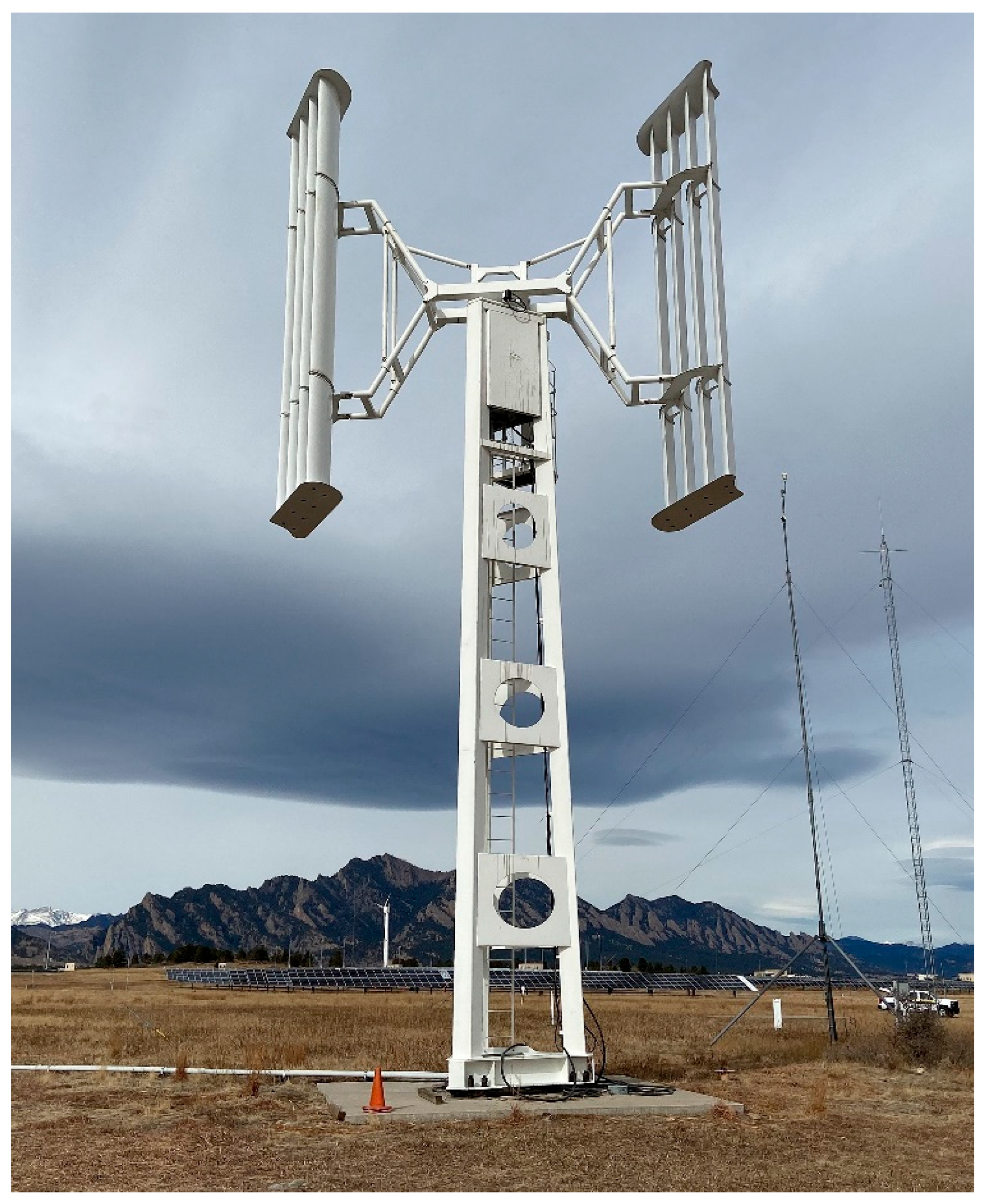
The proposed wind turbine, presented in
Figure 10 (GWT-20), was designed and manufactured by the Genuine Wind Engineering company (GWE), which the authors represent. The technical specifications of this wind turbine are presented in
Table 3.
Under an agreement between GWE and The National Renewable Energy Laboratory (NREL), it was provided to the NREL for independent experimental validation at the NREL test site in Golden, Colorado.
The National Renewable Energy Laboratory is a national laboratory of the U.S. Department of Energy. NREL is an ISO-accredited testing laboratory and follows strict quality assurance criteria to ensure all instruments are calibrated or independently verified by NREL. Experiments were carried out according to the standard IEC 61400–12 [
24] (Wind energy generation systems Part 12: Power performance measurements of electricity producing wind turbines).
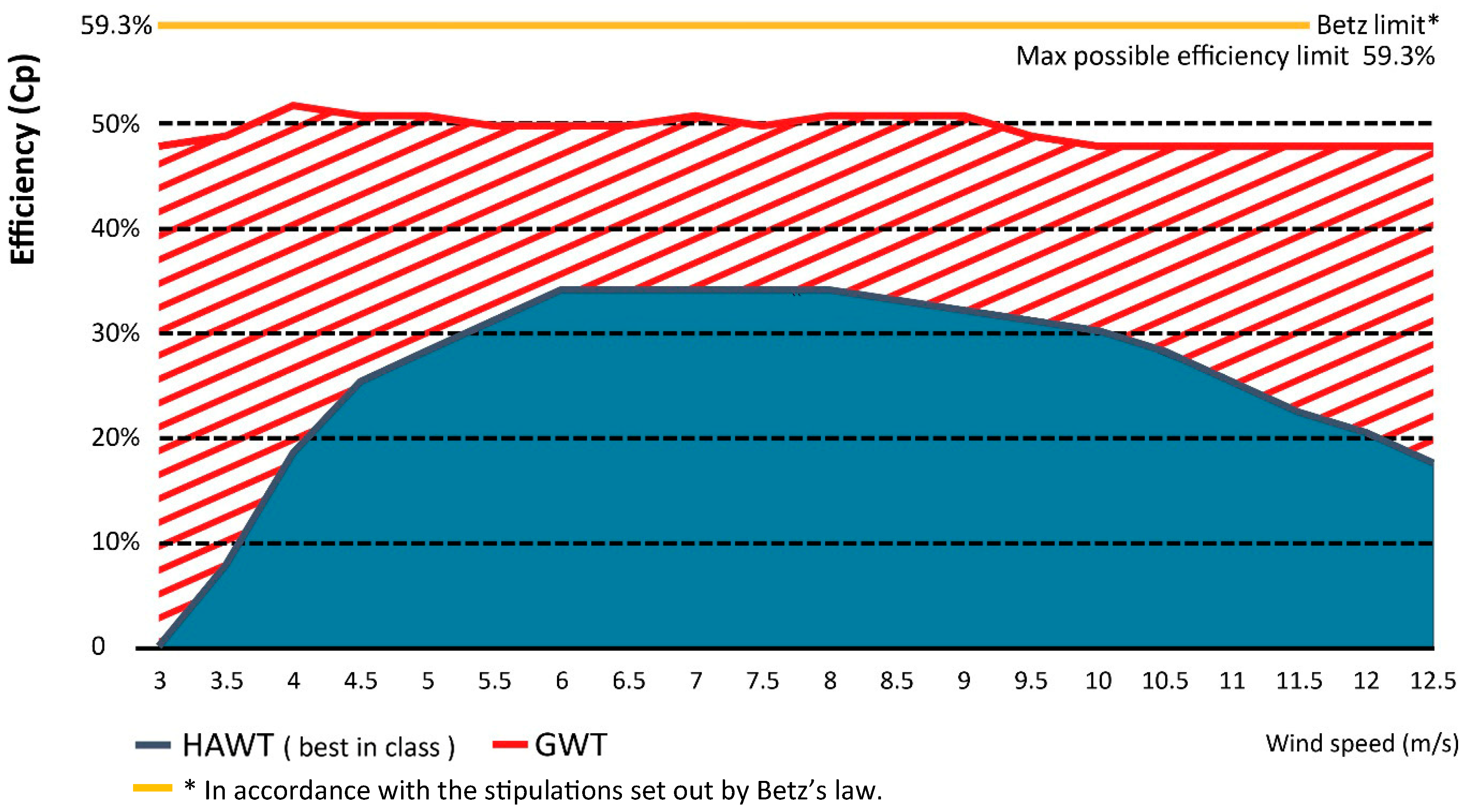
Figure 11 shows the performance as a function of wind speed. The red line on the graph represents the efficiency of the proposed wind turbine and is based on the results obtained from the wind turbine tests at NREL. As illustrated in
Figure 11, the Power Coefficient (C
p) demonstrates an increase from 0.49 to 0.53 within the wind speed range of 3–4 m/s. Thereafter, it stabilizes within the range of 0.53–0.5 for wind speeds ranging from 4 to 9 m/s, subsequently decreasing to 0.49 for speeds between 9 and 13 m/s.
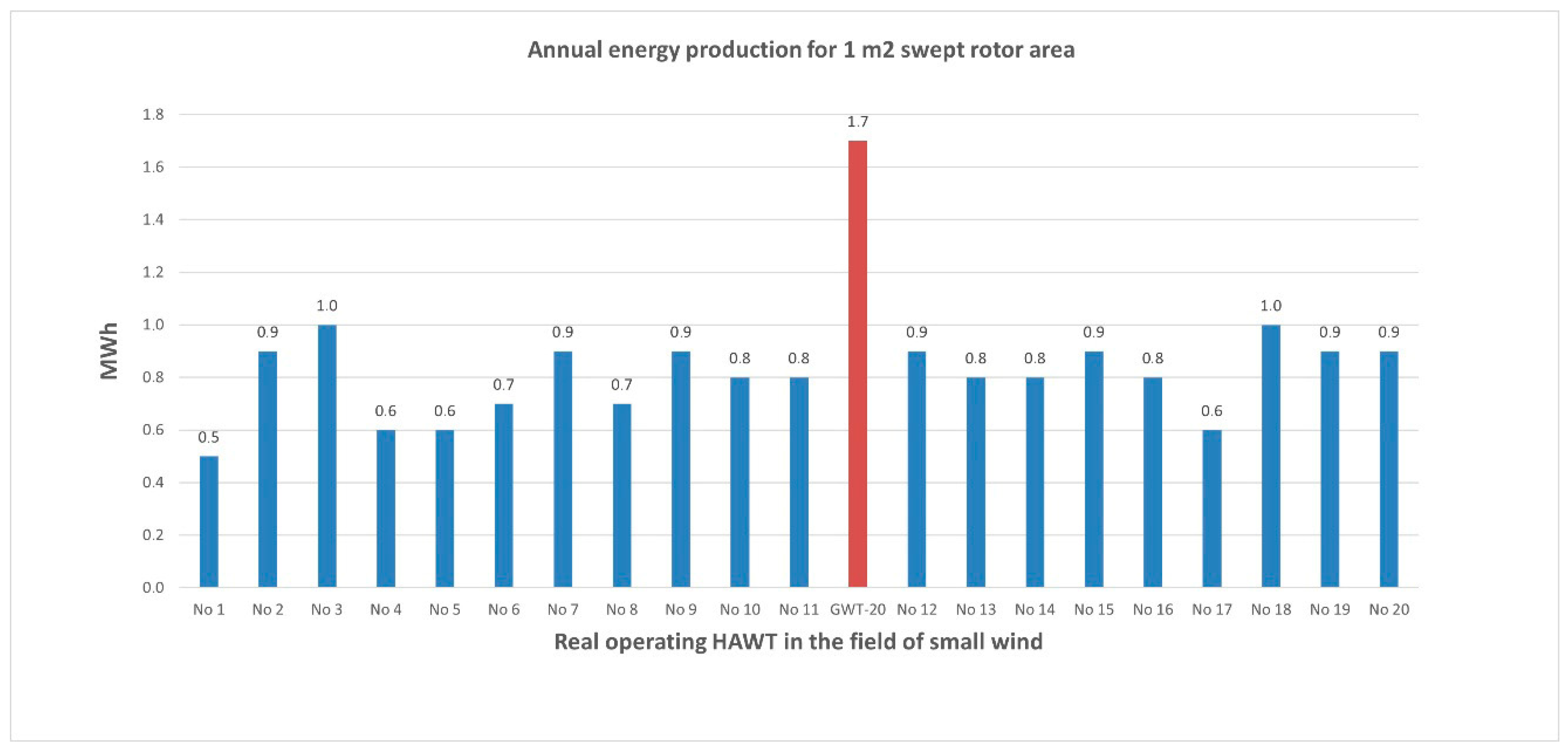
The typical efficiency of HAWTs is depicted with a blue area and is based on an analysis of the efficiency of more than 20 wind turbines from well-known European and American manufacturers with power ratings from 10 to 30 kW [
25]. The results of this analysis are shown in the diagram in
Figure 12.
In
Figure 11, the shaded red area above the blue area represents the additional energy that can be obtained with the proposed VAWT compared to a typical HAWT. A notable characteristic of the proposed VAWT, as illustrated in
Figure 11, is its effective operation even at low wind speeds (from 3 m/s and even less). On a statistical average, winds with speeds ranging from 3 to 7 m/s cover approximately 60% of the total wind action time. Therefore, the ability to operate efficiently at low wind speeds is a significant resource for increasing the annual volume of electricity generation and, consequently, the economic efficiency of the wind turbine.
7. Discussion
A review of the extant literature indicates that issues pertaining to the mathematical modeling and CFD simulation of VAWTs continue to be a subject of considerable attention from the scientific community.
This study has proposed and presented a number of ideas and theoretical assumptions that justify the high efficiency of the proposed VAWT. However, the reasons for this effect require further study. The transition from the utilization of pure aerodynamic effects to a combination of aerodynamic and thermodynamic processes offers significant opportunities for enhancing the efficiency of VAWTs. However, this transition necessitates further in-depth development and justification. Further optimization of the blade arrangement in the block, as well as the aerodynamic characteristics of the blades themselves, is also of interest.
8. Conclusions
This study introduced a novel VAWT design featuring a rotor composed of two blade blocks, each containing a few parallel blades of uniform size. A theoretical analysis explaining the processes underlying its operation and justifying the reason for the increase in efficiency has been proposed. It has been shown that the use and consideration of thermodynamic effects is a significant way to improve the efficiency of wind turbines.
Experimental validation conducted at the National Renewable Energy Laboratory (NREL) demonstrated that the proposed VAWT Power Coefficient Cp ranged from 0.49 to 0.53 over a wind speed range of 3 to 13 m/s. As a result, the annual power generation per 1 m2 of swept area is at least 1.7 times higher than that of a typical wind turbine with a horizontal axis of rotation.
Furthermore, the simple and regular blade geometry enables manufacturing using the pultrusion method, which reduces the production costs while maintaining a high quality. Consequently, the proposed VAWT combines high efficiency with economic manufacturability, offering a promising alternative to conventional wind energy systems.