Article

Left Atrial 4D Flow Characteristics in Patients with Atrial Fibrillation: Comparison with Healthy Controls and Associations with Left Atrial Remodelling and Contractile Health


1
Stephenson Cardiac Imaging Centre, University of Calgary, Calgary, AB T2N 1N4, Canada
2
Libin Cardiovascular Institute, Calgary, AB T2N 1N4, Canada
3
Department of Cardiac Sciences, University of Calgary, Calgary, AB T2N 1N4, Canada
4
Department of Radiology, University of Calgary, Calgary, AB T2N 1N4, Canada
5
Alberta Children’s Hospital Research Institute, Calgary, AB T2N 1N4, Canada
*
Author to whom correspondence should be addressed.
Appl. Sci. 2026, 16(1), 194; https://doi.org/10.3390/app16010194
Submission received: 25 November 2025 / Revised: 17 December 2025 / Accepted: 23 December 2025 / Published: 24 December 2025
(This article belongs to the Special Issue Advanced Techniques and Applications in Magnetic Resonance Imaging)

Featured Application

In this study, we employed 4D flow and strain derived from magnetic resonance imaging to assess left atrial hemodynamics and contractility in patients with atrial fibrillation.

Abstract

Left atrial (LA) four-dimensional (4D) flow quantification and strain may help predict stroke and thrombus formation in patients with atrial fibrillation (AF). We aimed to characterize flow changes in AF patients undergoing pulmonary vein isolation (PVI) and their associations with LA remodelling and contractility markers. Fifty-seven consecutive patients referred for magnetic resonance imaging before first-time PVI and twelve healthy volunteers (HV). LA velocity and stasis maps were obtained from 4D flow. Cine images were used for LA volume, ejection fraction, and strain. Patients’ age was 60 ± 9 years (25% female), versus 44 ± 15 years in HV (8% female). LA 4D flow markers showed LA stasis was reduced in AF patients (median [Q1, Q3] 45.0% (36.0, 54.0) vs. 34.5% (22.8, 45.3); p = 0.040). LA stasis and mean LA velocity were associated in AF patients (r = −0.52; p < 0.001) and HV (r = −0.9; p < 0.001). Associations were poorer for peak LA velocity in AF patients (r = −0.39; p = 0.003). LA stasis was not associated with any marker of LA contractile function in either the AF or HV cohorts. In conclusion, compared with HV patients, patients with AF showed greater LA stasis on 4D flow. LA stasis was not associated with markers of LA contractile function.

1. Introduction

Atrial fibrillation (AF) is the most common clinically relevant cardiac arrhythmia, with an estimated lifetime risk of up to 1 in 3 people over the age of 45 years [1,2]. Thrombo-embolic complications, including those leading to acute ischemic stroke, occur at a 4- to 5-fold higher rate in patients with AF [1,3]. Systemic anticoagulation is recommended to prevent thrombotic complications in individuals with risk factors as defined by the CHA2DS2-VASc score [4,5]. Expanded clinical access to four-dimensional (4D) flow magnetic resonance imaging (MRI) quantification during routine pre-procedural imaging for pulmonary vein isolation (PVI) enables direct assessment of left atrial (LA) stasis, a key suspected trigger for thrombus formation in this population. Indeed, several studies have now demonstrated altered LA flow characteristics in this referral population compared to healthy controls [6,7,8,9]. However, little is known about the factors that influence altered LA 4D flow characteristics. Two previous studies have demonstrated links with increased LA volumes [6,7,8]. Only a small study of 10 patients with paroxysmal AF explored associations between altered LA 4D flow and LA strain, concluding that there was no significant association found [9]. The latter encourages a more detailed evaluation of LA strain (reservoir, conduit, and booster) and its relationship to LA 4D flow features in patients undergoing first-time PVI.
Our primary hypothesis is that increased LA stasis would be linked to larger LA volumes and reduced LA reservoir and booster strain after first-time PVI. We aimed to describe LA 4D flow characteristics in patients referred for PVI while in sinus rhythm during MRI, as well as in a healthy volunteer (HV) cohort, and to explore associations between LA stasis and markers of LA remodelling and contractile function, including LA strain.

2. Materials and Methods

2.1. Study Design and Population

We prospectively enrolled patients referred for pre-procedural MRI before their first radiofrequency ablation PVI. This was a sub-study of the Cardiovascular Imaging Registry of Calgary (CIROC) (NCT04367220). As described previously [10], CIROC is a prospective, outcomes-based clinical registry of patients referred for cardiac MRI in Southern Alberta, Canada. Immediately before the exam, patients completed a standardized baseline questionnaire on tablet-based software (intakeDITM, ver.024.0.0.3500, Cohesic Inc., Calgary, AB, Canada). Automated linkage to administrative databases collected laboratory, pharmacy, and ICD-10-coded clinical data.
Patients were recruited between April 2016 and September 2018 and required sinus rhythm at the time of the MRI exam. Exclusion criteria: complex congenital heart disease, severe valvular heart disease, or previous cardiac surgery involving the atrioventricular valves. Patients’ AF classification into paroxysmal or persistent was based on current Canadian Cardiovascular Society guidelines [11].
Twelve healthy volunteers (HV) were prospectively recruited from the local community to undergo matched cine, 3D magnetic resonance angiography (MRA), and 4D flow MRI. These volunteers had no history of cardiovascular disease and were confirmed healthy by a certified nurse.

2.2. Magnetic Resonance Imaging Protocol

MRI examinations were performed using 3 T clinical scanners (Prisma or Skyra, Siemens Healthineers, Erlangen, Germany). All participants followed a standardized clinical protocol and an additional 4D flow MRI acquisition. Cine images were acquired using a retrospective electrocardiographic (ECG) gated, time-resolved balanced steady-state free precession (SSFP) pulse sequence in sequential short-axis slices (8 mm thickness; 2 mm gap) and conventional long-axis views (4-chamber, 2-chamber, and 3-chamber) at end-expiration. To assess the LA structure and pulmonary veins, a 3D MRA was performed using a 3D gradient-echo pulse sequence with a Gadovist (Bayer Inc., Mississauga, ON, Canada) bolus of 0.2 mmol/kg, followed by a 30 mL saline flush. Time-resolved 3D phase-contrast MRI with 3D velocity encoding (4D flow, WIP 785A, Siemens Healthineers, Erlangen, Germany) was performed using a whole-heart protocol 5–10 min after contrast administration to measure cardiac blood flow velocities. The 4D flow data were acquired as described previously [12,13].

2.3. Magnetic Resonance Imaging Analysis

2.3.1. Chamber Volume-Based Measures

Standard quantification of cardiac chamber volumes and left ventricular (LV) mass was assessed using cvi42 ver.6.1.2 (Circle Cardiovascular Imaging Inc., Calgary, AB, Canada) according to published recommendations [14]. LA volume was also measured before atrial systole (LA pre-systole) to assess LA booster function, which reflects active LA emptying driven by atrial contraction. LA volume-based function parameters were reported as LA global, conduit, and booster ejection fraction (EF), as previously described [15].

2.3.2. Left Atrial Strain

LA GLS analysis was performed on the 4- and 2-chamber cine images using the cvi42 LV strain module for feature tracking. As previously described [16,17,18], LA endocardial and epicardial contours were manually traced at LAmax volume (LAmax phase) and at LV end-diastole, respectively, and tracking was initiated at LAmax phase. Manually reviewed the quality throughout the cardiac cycle, adjusting contours as needed. LV end-diastole was used as the reference phase, resulting in positive LA GLS curves. Reservoir and booster GLS were measured at LAmax and pre-atrial systole phases, respectively. LA conduit strain was determined as the passive stretching and emptying of the LA during early diastole (Figure 1A). Strain rate (SR) curves were used to derive the three corresponding phasic strain rate values (Figure 1B). All measurements were taken from the endocardial layer. A comprehensive review of the employed LA strain calculation and limitations is reported in [19].

2.3.3. 4D Flow Analysis

As previously described in studies from our group [13,20], the LA segmentation was performed using an in-house software. LA segmentation included the pulmonary veins for visualization, but they were excluded for stasis quantification. LA segmentation (body) was separated from the LA appendage. Standard 4D flow preprocessing was performed as previously described [13]. The 4D flow data set was then masked to determine both velocity magnitude and stasis maps. Briefly, absolute atrial velocities were extracted from each voxel within the segmented LA volume to generate the peak velocity and time-to-peak (TTP) maps throughout the cardiac cycle [7,21]. Mean LA velocity was calculated as the average of all LA voxels across all cardiac phases. 4D flow stasis (in percent) was determined for each 3D voxel by dividing the number of cardiac phases with a peak velocity < 0.1 m/s by the total number of phases [8,12]. The mean LA stasis fraction was calculated by averaging across all voxels within the segmented LA volume [8,12].

2.3.4. Statistical Analysis

Continuous variables were presented as mean ± SD or median (Q1, Q3); categorical variables were shown as counts (percentages). A comparison of MRI characteristics between HV and patients with AF was performed using a two-sample t-test or Mann–Whitney test for continuous variables. Exploratory associations of LA 4D flow characteristics with markers of remodelling and contractile dysfunction were assessed using Spearman’s rank correlation coefficient. Adjustments for age and sex were performed to complement group comparisons and exploratory associations. R version 4.3.1 was used for statistics, and p-value < 0.050 indicated statistical significance.

3. Results

3.1. Clinical Characteristics of the Study Cohort

A total of 57 patients referred before PVI and 12 HV were included in the study. The baseline clinical characteristics of the patients are summarized in Table 1. The mean age of the patients was 59.9 ± 8.9 years, with most (43 patients; 75%) being male. The respective prevalence rates of diabetes mellitus, hypertension, and thyroid disorders were 5%, 23%, and 13%. One-third of patients were obese (body mass index ≥ 30 kg/m2). All patients were in sinus rhythm during MRI scans, with most having a history of paroxysmal AF (46 patients; 81%), and the rest having persistent AF. Median (Q1, Q3) CHA2DS2-VASc score was 1 (1–2). Most patients were taking both beta blockers (70%) and anti-arrhythmic medications (81%). The mean age of HV was 43.9 ± 15.5 years, with 11 patients (92%) being male. According to the inclusion criteria, none of the HV had cardiovascular disease, diabetes, hypertension, or severe obesity.

3.2. Magnetic Resonance Imaging Characteristics of Patients Versus Healthy Volunteers

Table 2 presents the MRI characteristics of patients compared to HV. There were no notable differences in LV volumes, LV mass, or biventricular EF between the groups. However, AF patients exhibited slightly smaller indexed RV end-diastolic volume (EDV) (mean difference 6.6 mL/m2; p = 0.040). Except for LA conduit EF, all phasic LA volumes and contractility markers (EF, peak GLS, and SR) were reduced in AF patients than in HV patients. The respective mean differences in LAmax volume, global EF, reservoir amplitude, and reservoir SR were 7 mL/m2, 13.5%, 23.4%, and 1/s (p-value < 0.050 for all). LA 4D flow analysis for the body and LA appendage (LAA) demonstrated similar peak and mean LA velocities in patients and HV. In contrast, AF patients showed significantly higher LA and LAA mean stasis fractions compared to HV (respective median differences 10.5% and 9%; p-value = 0.04 and 0.005). After adjustment for age and sex, most chamber volumes showed differences between groups (p < 0.001); for LA function, LA booster SR and LA conduit EF demonstrated a change (p-value < 0.0001 and p-value = 0.002, respectively). All LA and LAA flow parameters showed a significant change (p < 0.001) after the adjustment.

3.3. Associations of 4D Flow Stasis with Flow Velocity

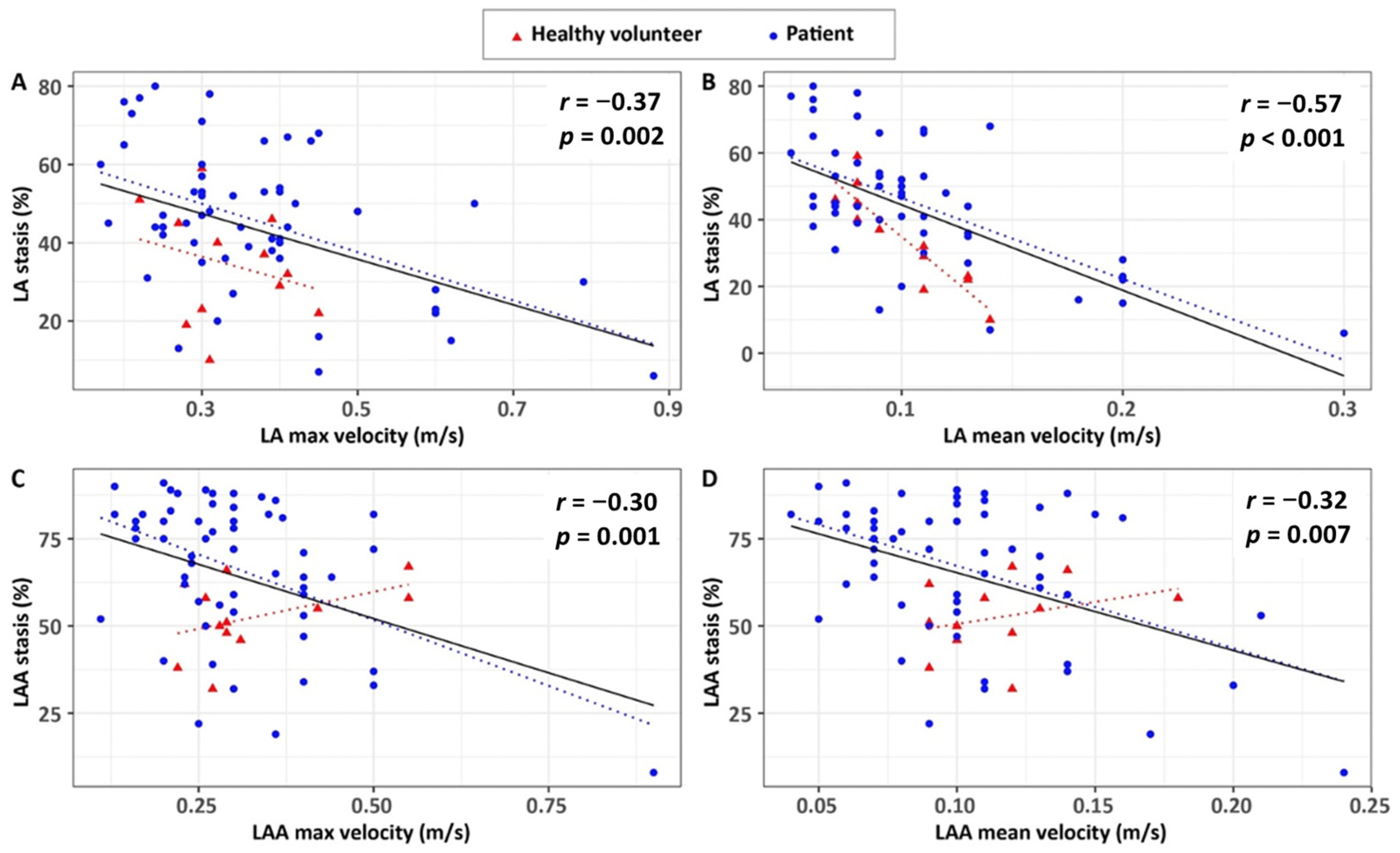
A prior associations are shown in Table 3, Figure 2 and Figure 3. The LA mean stasis fraction was inversely associated with peak and mean velocities in the overall study cohort (patients and HV; respective Spearman’s r = −0.37 and −0.57; p-value = 0.002 and <0.001) and among patients (respective Spearman’s r = −0.39 and −0.52; p-value = 0.003 and <0.001). In HV, the LA mean stasis fraction showed an association with mean, but not LA peak velocity (respective Spearman’s r = −0.90 and −0.28; p-value ≤ 0.001 and 0.380). Similar but weaker associations were observed between the LAA mean stasis fraction and peak and mean LAA velocities, except that LAA peak velocity in the HV group was not significant.

3.4. Associations of 4D Flow Characteristics with Ventricular Volumes and Atrial Remodelling and Contractile Health

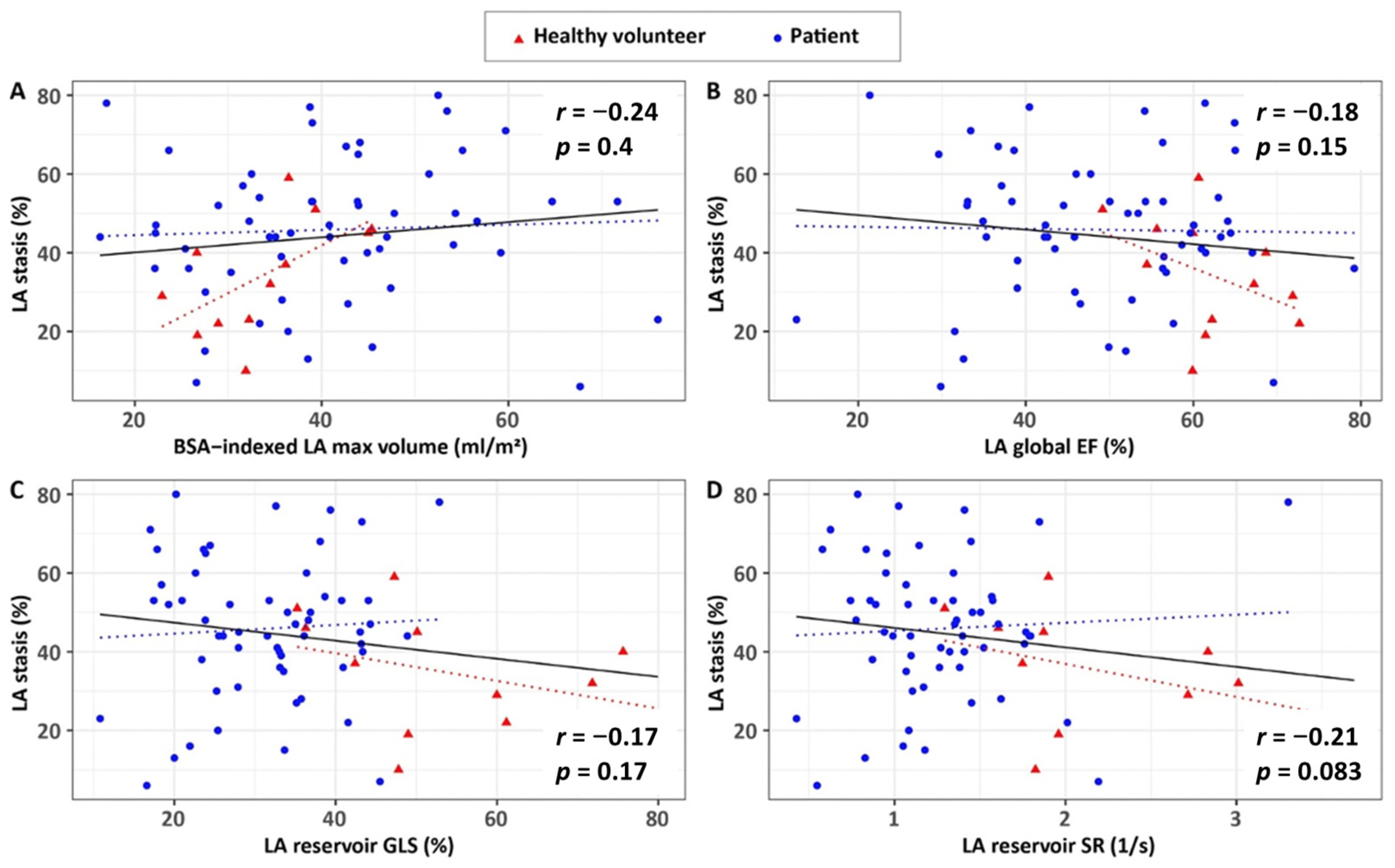
Associations between LA 4D flow markers (LA mean stasis, peak, and LA mean velocities) with age, ventricular volumes, markers of LA remodelling, and contractile health are presented in Table 4 and Figure 4. 4D flow markers were not associated with age. LA stasis, peak, and mean velocities showed moderate associations with LV EF (respective Spearman’s r = −0.62, 0.61, and 0.60; p-value < 0.050) in HV, but not in AF patients. However, LA peak velocity exhibited a modest relationship with BSA-indexed LV mass and RV EDV in AF patients (Spearman’s r = 0.3; p-value = 0.030 for each).
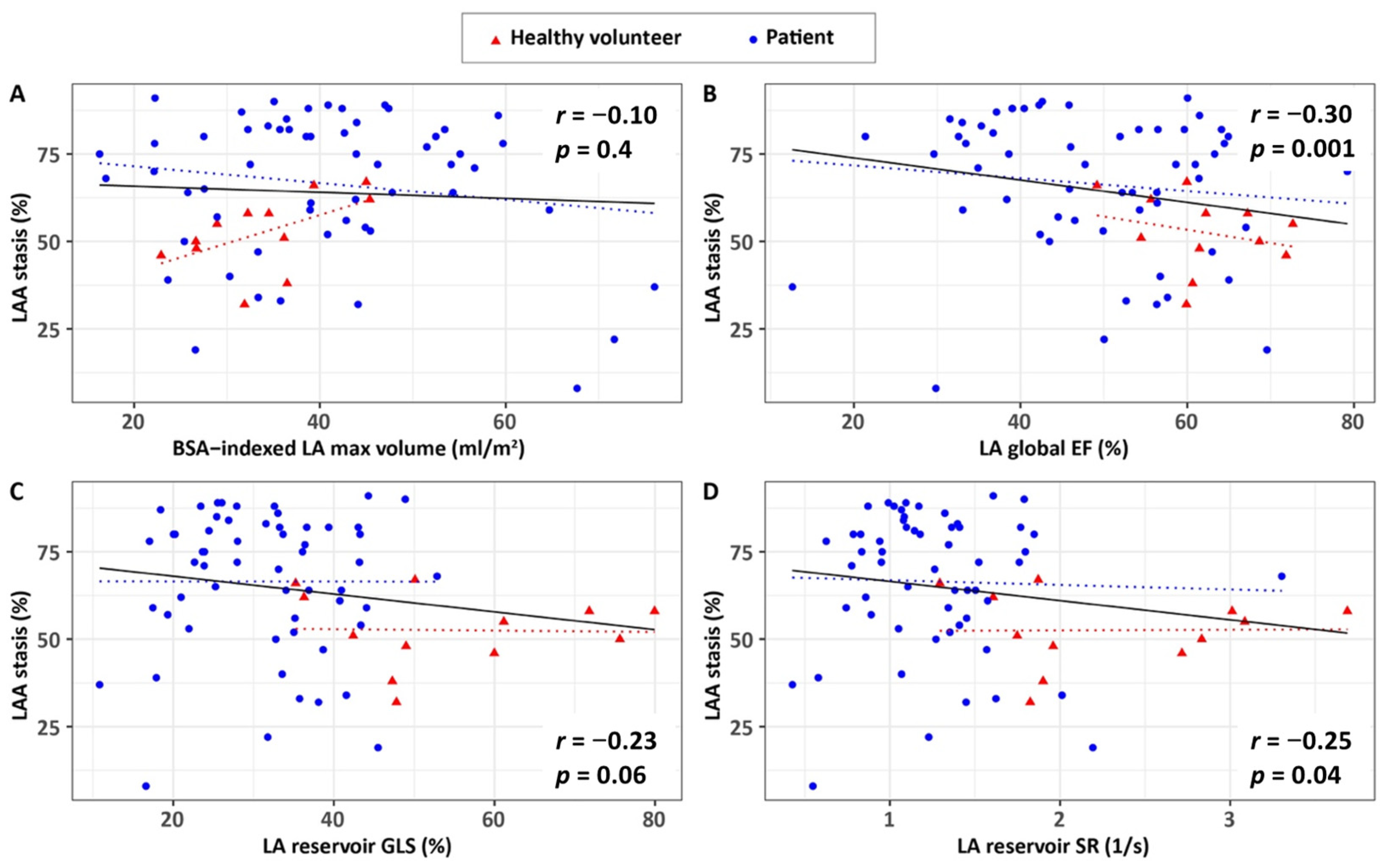
LA stasis was associated with LAmax volume in HV (r = 0.67; p = 0.020) but not in AF patients (r = 0.14; p = 0.300). A similar relationship was observed between LA mean velocity and LAmax volume, in HV (r = −0.59; p = 0.040) and in AF patients (r = −0.15; p = 0.300). No significant associations between 4D flow markers (stasis or velocities) and LA contractile health markers, including LA EF, peak strain amplitude, or SR, were identified across cohorts.
Appendix A Table A1 and Figure A1 describe associations between LAA 4D flow characteristics and age, ventricular volumes, and markers of LA remodelling and contractile health. The only significant associations were between the mean LAA stasis fraction and LAmax volume in HV, as well as LA global EF and reservoir SR in the overall study cohort (respective r = 0.63, −0.30, and −0.25; p-values 0.030, 0.010, and 0.040).
Appendix A Table A2 and Table A3 describe associations between LA and LAA 4D flow characteristics and ventricular volumes, and markers of LA remodelling and contractile health in overall cases after adjustment for age and sex. The adjustment resulted in stronger associations (p < 0.001) for the LA and LAA 4D flow parameters.

4. Discussion

Our study demonstrates that, among patients referred for MRI imaging before their first PVI for paroxysmal or persistent AF, LA chamber volumes increase, and LA contractile function decreases, as assessed by both traditional volumetric measures and strain-based markers, compared with HV. These patients showed higher 4D LA stasis, despite peak and mean LA velocities having similar distributions to those in HV. While increased LA stasis, LA volume, and decreased LA function were observed together in AF patients, LA stasis was not associated with these other markers of chamber remodelling or contractile health. Instead, the 4D LA stasis was only associated with BSA-indexed LV mass and RV EDV in patients with AF.
Our reported finding of increased 4D LA stasis in patients with AF versus HV is consistent with several studies by Markl et al. [7,8,22] and a recent study by Demirkiran et al. [9]. Another study using a unique methodology based on residence time distribution (RTD), a measure of atrial transit time, has also demonstrated reduced LA blood clearance in patients with AF [23]. In contrast, findings surrounding impaired LAA stasis fraction in patients with AF have been discordant [7,9], likely due to the small size of the LAA and the inherently elevated noise of data collected from this structure. Most studies performed to date [6,7,8,9,13,22], except one [21], have described 4D LA mean velocities as reduced in patients with AF compared to HV, with peak LA velocity similarly decreased in all but two studies [8,22]. Our current study did not identify a significant difference in mean or peak velocities. This may be due to specific inclusion criteria, variations in 4D flow sequences, our small HV cohort, and its unbalanced sex distribution.
Similarly to our study, Demirkiran et al. [9] showed no associations between LA stasis and markers of remodelling or contractile dysfunction, including LAmax volume, LA global EF, reservoir GLS amplitude and SR. Three previous studies reported significant associations between LA 4D stasis and conventional LA volume-based measures [6,7,8]. These observations are not being confirmed in our AF cohort. An essential factor to consider is the cohort effect size. For modest unadjusted associations, an estimated population target of 85 participants is required, considering r = 0.3, two-sided, and a power of 0.80. Considering potential covariates, such as age and sex, we could estimate a target population of ~100 participants. We conducted exploratory adjustments for age and sex, which resulted in stronger associations between the LA and LAA 4D flow parameters and volumes, LA remodelling, and contractile functions. The latter indicates that age and sex might play a significant role in the design of future studies.
Our study is the largest to date to assess associations between LA 4D flow markers and LA strain, SR, and conventional volume-based markers in patients with AF. Our results, which show that LA stasis cannot be predicted by LA remodelling or contractile health markers in these patients, support the idea that 4D flow LA stasis measurement could offer unique value beyond existing markers, while also indicating that LA stasis is a complex physiological phenomenon. We observed that LA stasis and velocity were associated with indexed LV EF, LVmass and RV EDV in AF patients, suggesting that both LV and pulmonary vascular health may influence the development of LA stasis in this population. While justifying the ongoing investigation into the pathophysiology of LA stasis, our work provides further supportive evidence that direct LA stasis quantification in patients with AF is clinically feasible and potentially valuable. However, larger-scale studies demonstrating associations between LA stasis and clinical endpoints are still needed. Furthermore, LA stasis lacks a standard method for reporting. Consequently, regional and anatomical patterns are not adequately identified or studied for thrombus risk formation.
This study has notable limitations. As it was conducted at a single centre with potential referral bias, our findings need external validation. Most AF patients were on medications for rate control or anti-arrhythmia, which might influence LA hemodynamics. During the examination, our technologist did not report any arrhythmia events. However, no ECG recording was performed to confirm sinus rhythm. This study did not assess inter- or intra-observer variability for flow stasis or LA strain. This omission is especially relevant in cases with significant noise and could influence the relationships between LA stasis and strain. In this study, we calculated LA strain using only endocardial contours. It has been reported that using combined endo-epicardial contours can underestimate the strain calculation [24]. Our HV cohort was small and exhibited significant age differences compared to the AF population. This limits the generalizability of HV and AF comparisons and may increase age-related confounding factors. Additionally, we performed a comprehensive exploratory correlation analysis. Nonetheless, we did not observe significant links between 4D flow LA markers and age. Furthermore, a previous study involving 42 patients with paroxysmal AF, 10 young healthy volunteers, and 20 age-matched controls similarly showed no significant differences in LA 4D stasis between young healthy volunteers and older controls [8]. It should also be noted that the pulmonary vein inflow was not assessed in this study. Pulmonary inflow could affect LA vortex formation, washout, and contribute to LA stasis. Therefore, it is important to examine this aspect in future research. Similarly, the LAA emptying fraction, which is associated with LA volume and LA function, was not assessed [25]. The 4D flow sequence used in this study was retrospectively gated. However, when using prospectively gated 4D flow, the cardiac cycle will be cut off at the end of diastole. This may have affected estimations of LA velocities and stasis fraction. This is a limitation of most published studies [6,7,8,9] and warrants re-evaluation using more modern, retrospectively gated sequences. All LAA 4D flow findings should be interpreted with caution due to the known high noise level and low spatial resolution. Additionally, we did not examine the relationships between LAA 4D flow parameters and LAA size and function. This would be an area of interest for future studies, as the LAA is a common site of thrombus formation in patients with AF. Finally, although of interest, our MRI imaging protocol was not designed to evaluate LA fibrosis, and therefore, correlation with this marker could not be explored.

5. Conclusions

Compared with healthy subjects, patients with paroxysmal or persistent AF in sinus rhythm showed greater LA stasis on 4D flow MRI. The severity of LA stasis could not be predicted from LA remodelling or contractile health markers. However, it was associated with indexed LV mass and RVEDV. These findings indicate that LA stasis is a complex physiological process influenced by factors beyond the LA itself. In this context, we also showed that quantifying LA stasis using 4D flow MRI is clinically feasible. Further investigation in larger multicentre cohorts is necessary to determine the value of this marker in settings where equipoise exists regarding the use of oral anticoagulation.

Author Contributions

Conceptualization, J.G., H.S. and J.A.W.; methodology, J.G., H.S., D.L., J.F., S.R. and J.A.W.; software, H.S., D.L., A.Y., M.L.S. and S.D.; validation, D.L., A.Y., S.B.W., J.A.W. and J.G.; formal analysis, H.S., D.L. and A.Y.; investigation, H.S., D.L., J.A.W. and J.G.; resources, J.A.W. and J.G.; data curation, H.S., D.L. and J.G.; writing—original draft preparation, H.S. and D.L.; writing—review and editing, S.B.W., J.A.W. and J.G.; visualization, H.S., D.L. and J.G.; supervision, J.A.W. and J.G.; project administration, J.F. and J.G.; funding acquisition, J.A.W. and J.G. All authors have read and agreed to the published version of the manuscript.

Funding

This research was funded by The University of Calgary, J.G. start-up funding, Calgary Health Foundation, Alberta Innovates Health Solutions (AIHS), and the Canadian Institutes for Health Research (CIHR). Cohesic Inc. provided in-kind support for research infrastructure. We acknowledge the support of the Natural Science and Engineering Research Council of Canada/Conseil de recherche en science naturelles et en génie du Canada, RGPIN-2020-04549 and DGECR-2020-00204.

Institutional Review Board Statement

The study was conducted in accordance with the Declaration of Helsinki and approved by the Institutional Review Board of the Conjoint Health Research Ethics Board (REB 13-0902).

Informed Consent Statement

Informed written consent was obtained from all subjects involved in the study.

Data Availability Statement

The anonymized data presented in this study are available upon reasonable request and data-sharing agreement. The data are not publicly available due to privacy and ethical restrictions.

Acknowledgments

We thank the staff of the Stephenson Cardiac Imaging Centre for their assistance.

Conflicts of Interest

The authors declare no conflicts of interest.

Abbreviations

The following abbreviations are used in this manuscript:
AFAtrial Fibrillation
4D FlowFour-dimensional flow
MRIMagnetic Resonance Imaging
PVIPulmonary Vein Isolation
LALeft Atrium
HVHealthy Volunteer
GLSGlobal Longitudinal Strain
CIROCCardiovascular Imaging Registry of Calgary
MRAMagnetic Resonance Angiography
ECGElectrocardiographic
SSFPSteady-State Free Precession
LVLeft Ventricular
EFEjection Fraction
SRStrain Rate
EDVEnd-Diastolic Volume
LAALeft Atrial Appendage
RTDResidence Time Distribution

Appendix A

Table A1. Associations of LAA 4D flow characteristics with CMR biventricular volume-based measures and markers of LA remodelling and contractile health.
Variabler Overallp Overallr HVp HVr Patientp Patient
4D flow LAA mean stasis
Age at scan, y0.210.0870.540.0690.040.790
LV and RV volume-based measures
BSA-indexed LV EDV, mL/m2−0.100.4200.160.610−0.110.420
BSA-indexed LV ESV, mL/m2−0.110.3700.150.640−0.160.240
LV EF, %−0.010.950−0.170.6000.090.510
BSA-indexed, LV mass, g/m2−0.020.860−0.130.690−0.020.880
BSA-indexed RV EDV, mL/m2−0.140.250−0.500.100−0.090.500
BSA-indexed RV ESV, mL/m2−0.120.310−0.260.420−0.080.570
RV EF, %0.070.570−0.080.8000.050.730
LA markers of remodelling and contractile health
BSA-indexed LAmax volume, mL/m20.100.4000.630.029−0.040.800
LA global EF, %−0.300.011−0.270.400−0.190.150
LA reservoir GLS, %−0.230.060−0.060.860−0.030.800
LA reservoir SR, 1/s−0.250.039−0.150.650−0.050.700
4D flow LAA peak velocity
Age at scan, y0.090.4800.220.4900.110.420
LV and RV volume-based measures
BSA-indexed LV EDV, mL/m20.130.280−0.420.1800.190.150
BSA-indexed LV ESV, mL/m20.110.360−0.460.1300.200.140
LV EF, %0.000.9800.360.250−0.090.530
BSA-indexed, LV mass, g/m20.250.0370.320.3000.220.100
BSA-indexed RV EDV, mL/m20.160.2000.000.9900.160.230
BSA-indexed RV ESV, mL/m20.060.6300.110.7400.050.730
RV EF, %0.110.3700.000.9900.120.370
LA markers of remodelling and contractile health
BSA-indexed LAmax volume, mL/m20.150.220−0.220.4900.220.100
LA global EF, %0.070.5500.260.4200.010.960
LA reservoir GLS, %0.040.7600.400.200−0.080.560
LA reservoir SR, 1/s0.050.7100.340.280−0.050.720
4D flow LAA mean velocity
Age at scan, y0.010.9200.120.7200.100.470
LV and RV volume-based measures
BSA-indexed LV EDV, mL/m20.000.990−0.060.8500.010.910
BSA-indexed LV ESV, mL/m2−0.010.930−0.080.8000.010.960
LV EF, %0.030.7900.060.8400.000.997
BSA-indexed, LV mass, g/m20.200.0970.490.1000.170.200
BSA-indexed RV EDV, mL/m20.070.5800.220.4800.050.740
BSA-indexed RV ESV, mL/m20.010.9200.340.280−0.030.820
RV EF, %0.080.5300.030.9200.110.430
LA markers of remodelling and contractile health
BSA-indexed LAmax volume, mL/m20.100.410−0.140.6700.200.140
LA global EF, %0.070.5600.130.680−0.030.810
LA reservoir GLS, %−0.050.7000.320.310−0.220.100
LA reservoir SR, 1/s−0.010.9400.320.320−0.150.270
Bold p-values are <0.05. r denotes Spearman’s correlation coefficient. GLS indicates global longitudinal strain; LV, left ventricle; EDV indicates end-diastolic volume; EF, ejection fraction; ESV, end-systolic volume; LA, left atrium; LAA, left atrial appendage; LAmax, maximum left atrial volume; RV, right ventricle; and SR, strain rate.
Table A2. Associations of LA flow with CMR biventricular volume-based measures and markers of LA remodelling and contractile health after adjustment for age and sex.
Variabler Overallp Overall
4D Flow LA Mean Stasis
BSA-indexed LV EDV, mL/m20.3800.001
BSA-indexed LV ESV, mL/m20.464<0.001
LV EF, %0.464<0.001
BSA-indexed, LV mass, g/m20.3100.009
BSA-indexed RV EDV, mL/m20.168
5
0.166
BSA-indexed RV ESV, mL/m20.3050.011
RV EF, %0.491<0.001
LA markers of remodelling and contractile health
BSA-indexed LAmax volume, mL/m20.497<0.001
LA global EF, %0.1620.183
LA reservoir GLS, %0.1810.136
LA reservoir SR, 1/s0.536<0.001
4D flow LA peak velocity
BSA-indexed LV EDV, mL/m20.616<0.001
BSA-indexed LV ESV, mL/m20.781<0.001
LV EF, %0.878<0.001
BSA-indexed, LV mass, g/m20.654<0.001
BSA-indexed RV EDV, mL/m20.400
5
0.001
BSA-indexed RV ESV, mL/m20.559<0.001
RV EF, %0.891<0.001
LA markers of remodelling and contractile health
BSA-indexed LAmax volume, mL/m20.730<0.001
LA global EF, %0.3950.001
LA reservoir GLS, %0.440<0.001
LA reservoir SR, 1/s0.996<0.001
4D flow LA mean velocity
BSA-indexed LV EDV, mL/m20.608<0.001
BSA-indexed LV ESV, mL/m20.778<0.001
LV EF, %0.876<0.001
BSA-indexed, LV mass, g/m20.656<0.001
BSA-indexed RV EDV, mL/m20.393
5
0.001
BSA-indexed RV ESV, mL/m20.553<0.001
RV EF, %0.890<0.001
LA markers of remodelling and contractile health
BSA-indexed LAmax volume, mL/m20.728<0.001
LA global EF, %0.3970.001
LA reservoir GLS, %0.436<0.001
LA reservoir SR, 1/s0.995<0.001
Bold p-values are <0.05. r denotes Spearman’s correlation coefficient. GLS indicates global longitudinal strain; LV, left ventricle; EDV indicates end-diastolic volume; EF, ejection fraction; ESV, end-systolic volume; LA, left atrium; LAmax, maximum left atrial volume; RV, right ventricle; and SR, strain rate.
Table A3. Associations of LAA flow with CMR biventricular volume-based measures and markers of LA remodelling and contractile health after adjustment for age and sex.
Variabler Overallp Overall
4D Flow LAA Mean Stasis
BSA-indexed LV EDV, mL/m20.3420.004
BSA-indexed LV ESV, mL/m20.451<0.001
LV EF, %0.555<0.001
BSA-indexed, LV mass, g/m20.4350.009
BSA-indexed RV EDV, mL/m20.190
5
0.118
BSA-indexed RV ESV, mL/m20.3290.006
RV EF, %0.576<0.001
LA markers of remodelling and contractile health
BSA-indexed LAmax volume, mL/m20.466<0.001
LA global EF, %0.1650.176
LA reservoir GLS, %0.2690.025
LA reservoir SR, 1/s0.592<0.001
4D flow LAA peak velocity
BSA-indexed LV EDV, mL/m20.611<0.001
BSA-indexed LV ESV, mL/m20.778<0.001
LV EF, %0.880<0.001
BSA-indexed, LV mass, g/m20.654<0.001
BSA-indexed RV EDV, mL/m20.396
5
0.001
BSA-indexed RV ESV, mL/m20.556<0.001
RV EF, %0.731<0.001
LA markers of remodelling and contractile health
BSA-indexed LAmax volume, mL/m20.731<0.001
LA global EF, %0.3960.001
LA reservoir GLS, %0.440<0.001
LA reservoir SR, 1/s0.996<0.001
4D flow LAA mean velocity
BSA-indexed LV EDV, mL/m20.603<0.001
BSA-indexed LV ESV, mL/m20.771<0.001
LV EF, %0.881<0.001
BSA-indexed, LV mass, g/m20.650<0.001
BSA-indexed RV EDV, mL/m20.390
5
0.001
BSA-indexed RV ESV, mL/m20.552<0.001
RV EF, %0.890<0.001
LA markers of remodelling and contractile health
BSA-indexed LAmax volume, mL/m20.731<0.001
LA global EF, %0.3910.001
LA reservoir GLS, %0.435<0.001
LA reservoir SR, 1/s0.996<0.001
Bold p-values are <0.05. r denotes Spearman’s correlation coefficient. GLS indicates global longitudinal strain; LV, left ventricle; EDV indicates end-diastolic volume; EF, ejection fraction; ESV, end-systolic volume; LA, left atrium; LAA, left atrial appendage; LAmax, maximum left atrial volume; RV, right ventricle; and SR, strain rate.
Figure A1. Associations of left atrial appendage (LAA) stasis fraction by 4D flow and left atrial markers of contractile health. (A) shows the association of LAA stasis with BSA-indexed LA max volume. (B) shows the association of LAA stasis with LA global EF. (C) shows the association of LAA stasis with LA reservoir GLS. (D) shows the association of LAA stasis with LA reservoir SR. Blue dots represent patients and red rectangles represent healthy volunteers. The black solid line represents the overall regression. The blue dashed line represents the patient’s regression. The red dashed line represents the healthy volunteer’s regression. BSA: body surface area. EF: ejection fraction. n = 12 for healthy volunteers. n = 57 for patients.
Applsci 16 00194 g0a1

References

  1. Kornej, J.; Börschel, C.S.; Benjamin, E.J.; Schnabel, R.B. Epidemiology of Atrial Fibrillation in the 21st Century. Circ. Res. 2020, 127, 4–20. [Google Scholar] [CrossRef]
  2. Linz, D.; Gawalko, M.; Betz, K.; Hendriks, J.M.; Lip, G.Y.; Vinter, N.; Guo, Y.; Johnsen, S. Atrial fibrillation: Epidemiology, screening and digital health. Lancet Reg. Health-Eur. 2024, 37, 100786. [Google Scholar] [CrossRef] [PubMed]
  3. Healey, J.S.; Connolly, S.J.; Gold, M.R.; Israel, C.W.; Van Gelder, I.C.; Capucci, A.; Lau, C.; Fain, E.; Yang, S.; Bailleul, C.; et al. Subclinical Atrial Fibrillation and the Risk of Stroke. N. Engl. J. Med. 2012, 366, 120–129. [Google Scholar] [CrossRef]
  4. Lip, G.Y.H.; Nieuwlaat, R.; Pisters, R.; Lane, D.A.; Crijns, H.J.G.M. Refining Clinical Risk Stratification for Predicting Stroke and Thromboembolism in Atrial Fibrillation Using a Novel Risk Factor-Based Approach. Chest 2010, 137, 263–272. [Google Scholar] [CrossRef] [PubMed]
  5. Friberg, L.; Rosenqvist, M.; Lip, G.Y.H. Evaluation of risk stratification schemes for ischaemic stroke and bleeding in 182 678 patients with atrial fibrillation: The Swedish Atrial Fibrillation cohort study. Eur. Heart J. 2012, 33, 1500–1510. [Google Scholar] [CrossRef] [PubMed]
  6. Lee, D.C.; Markl, M.; Ng, J.; Carr, M.; Benefield, B.; Carr, J.C.; Goldberger, J.J. Three-dimensional left atrial blood flow characteristics in patients with atrial fibrillation assessed by 4D flow CMR. Eur. Heart J Cardiovasc. Imaging 2016, 17, 1259–1268. [Google Scholar] [CrossRef]
  7. Markl, M.; Lee, D.C.; Furiasse, N.; Carr, M.; Foucar, C.; Ng, J.; Carr, J.; Goldberger, J.J. Left Atrial and Left Atrial Appendage 4D Blood Flow Dynamics in Atrial Fibrillation. Circ. Cardiovasc. Imaging 2016, 9, e004984. [Google Scholar] [CrossRef]
  8. Markl, M.; Lee, D.C.; Ng, J.; Carr, M.; Carr, J.; Goldberger, J.J. Left Atrial 4-Dimensional Flow Magnetic Resonance Imaging: Stasis and Velocity Mapping in Patients with Atrial Fibrillation. Investig. Radiol. 2016, 51, 147–154. [Google Scholar] [CrossRef]
  9. Demirkiran, A.; Amier, R.P.; Hofman, M.B.M.; van der Geest, R.J.; Robbers, L.F.H.J.; Hopman, L.H.G.A.; Mulder, M.J.; van de Ven, P.; Allaart, C.P.; van Rossum, A.C.; et al. Altered left atrial 4D flow characteristics in patients with paroxysmal atrial fibrillation in the absence of apparent remodeling. Sci. Rep. 2021, 11, 5965. [Google Scholar] [CrossRef]
  10. Dykstra, S.; Satriano, A.; Cornhill, A.K.; Lei, L.Y.; Labib, D.; Mikami, Y.; Flewitt, J.; Rivest, S.; Sandonato, R.; Feuchter, P.; et al. Machine learning prediction of atrial fibrillation in cardiovascular patients using cardiac magnetic resonance and electronic health information. Front. Cardiovasc. Med. 2022, 28, 9. [Google Scholar] [CrossRef]
  11. Andrade, J.G.; Aguilar, M.; Atzema, C.; Bell, A.; Cairns, J.A.; Cheung, C.C.; Cox, J.L.; Dorian, P.; Gladstone, D.J.; Healey, J.S.; et al. The 2020 Canadian Cardiovascular Society/Canadian Heart Rhythm Society Comprehensive Guidelines for the Management of Atrial Fibrillation. Can. J. Cardiol. 2020, 36, 1847–1948. [Google Scholar] [CrossRef]
  12. Garcia, J.; Sheitt, H.; Bristow, M.S.; Lydell, C.; Howarth, A.G.; Heydari, B.; Prato, F.S.; Drangova, M.; Thornhill, R.E.; Nery, P.; et al. Left atrial vortex size and velocity distributions by 4D flow MRI in patients with paroxysmal atrial fibrillation: Associations with age and CHA2DS2-VASc risk score. J. Magn. Reson. Imaging 2020, 51, 871–884. [Google Scholar] [CrossRef]
  13. Sheitt, H.; Kim, H.; Wilton, S.; White, J.A.; Garcia, J. Left Atrial Flow Stasis in Patients Undergoing Pulmonary Vein Isolation for Paroxysmal Atrial Fibrillation Using 4D-Flow Magnetic Resonance Imaging. Appl. Sci. 2021, 11, 5432. [Google Scholar] [CrossRef]
  14. Schulz-Menger, J.; A Bluemke, D.; Bremerich, J.; Flamm, S.D.; A Fogel, M.; Friedrich, M.G.; Kim, R.J.; von Knobelsdorff-Brenkenhoff, F.; Kramer, C.M.; Pennell, D.J.; et al. Standardized image interpretation and post processing in cardiovascular magnetic resonance: Society for Cardiovascular Magnetic Resonance (SCMR) Board of Trustees Task Force on Standardized Post Processing. J. Cardiovasc. Magn. Reson. 2013, 15, 35. [Google Scholar] [CrossRef] [PubMed]
  15. Hoit, B.D. Left atrial size and function: Role in prognosis. J. Am. Coll. Cardiol. 2014, 63, 493–505. [Google Scholar] [CrossRef] [PubMed]
  16. Truong, V.T.; Palmer, C.; Wolking, S.; Sheets, B.; Young, M.; Ngo, T.N.M.; Taylor, M.; Nagueh, S.F.; Zareba, K.M.; Raman, S.; et al. Normal left atrial strain and strain rate using cardiac magnetic resonance feature tracking in healthy volunteers. Eur. Heart J. Cardiovasc. Imaging 2019, 21, 446–453. [Google Scholar] [CrossRef] [PubMed]
  17. Qu, Y.Y.; Buckert, D.; Ma, G.S.; Rasche, V. Quantitative Assessment of Left and Right Atrial Strains Using Cardiovascular Magnetic Resonance Based Tissue Tracking. Front. Cardiovasc. Med. 2021, 8, 690240. [Google Scholar] [CrossRef]
  18. Hopman, L.H.; Mulder, M.J.; van der Laan, A.M.; Bhagirath, P.; Demirkiran, A.; von Bartheld, M.B.; Kemme, M.J.; van Rossum, A.C.; Allaart, C.P.; Götte, M.J. Left atrial strain is associated with arrhythmia recurrence after atrial fibrillation ablation: Cardiac magnetic resonance rapid strain vs. feature tracking strain. Int. J. Cardiol. 2023, 378, 23–31. [Google Scholar] [CrossRef]
  19. Zhao, Y.; Song, Y.; Mu, X. Application of left atrial strain derived from cardiac magnetic resonance feature tracking to predict cardiovascular disease: A comprehensive review. Heliyon 2024, 10, e27911. [Google Scholar] [CrossRef]
  20. Kim, H.; Wilton, S.B.; Garcia, J. Left atrium 4D-flow segmentation with high-resolution contrast-enhanced magnetic resonance angiography. Front. Cardiovasc. Med. 2023, 10, 1225922. [Google Scholar] [CrossRef]
  21. Fluckiger, J.U.; Goldberger, J.J.; Lee, D.C.; Ng, J.; Lee, R.; Goyal, A.; Markl, M. Left atrial flow velocity distribution and flow coherence using four-dimensional FLOW MRI: A pilot study investigating the impact of age and Pre- and Postintervention atrial fibrillation on atrial hemodynamics. J. Magn. Reson. Imaging 2013, 38, 580–587. [Google Scholar] [CrossRef]
  22. Markl, M.; Carr, M.; Ng, J.; Lee, D.C.; Jarvis, K.; Carr, J.; Goldberger, J.J. Assessment of left and right atrial 3D hemodynamics in patients with atrial fibrillation: A 4D flow MRI study. Int. J. Cardiovasc. Imaging 2016, 32, 807–815. [Google Scholar] [CrossRef]
  23. Costello, B.T.; Voskoboinik, A.; Qadri, A.M.; Rudman, M.; Thompson, M.C.; Touma, F.; La Gerche, A.; Hare, J.L.; Papapostolou, S.; Kalman, J.M.; et al. Measuring atrial stasis during sinus rhythm in patients with paroxysmal atrial fibrillation using 4 Dimensional flow imaging: 4D flow imaging of atrial stasis. Int. J. Cardiol. 2020, 315, 45–50. [Google Scholar] [CrossRef]
  24. Howard-Quijano, K.; McCabe, M.; Cheng, A.; Zhou, W.; Yamakawa, K.; Mazor, E.; Scovotti, J.C.; Mahajan, A. Left ventricular endocardial and epicardial strain changes with apical myocardial ischemia in an open-chest porcine model. Physiol. Rep. 2016, 30, 4. [Google Scholar] [CrossRef]
  25. Hwang, S.H.; Oh, Y.-W.; Kim, M.-N.; Park, S.-M.; Shim, W.J.; Shim, J.; Choi, J.-I.; Kim, Y.-H. Relationship between left atrial appendage emptying and left atrial function using cardiac magnetic resonance in patients with atrial fibrillation: Comparison with transesophageal echocardiography. Int. J. Cardiovasc. Imaging 2016, 32, 163–171. [Google Scholar] [CrossRef]
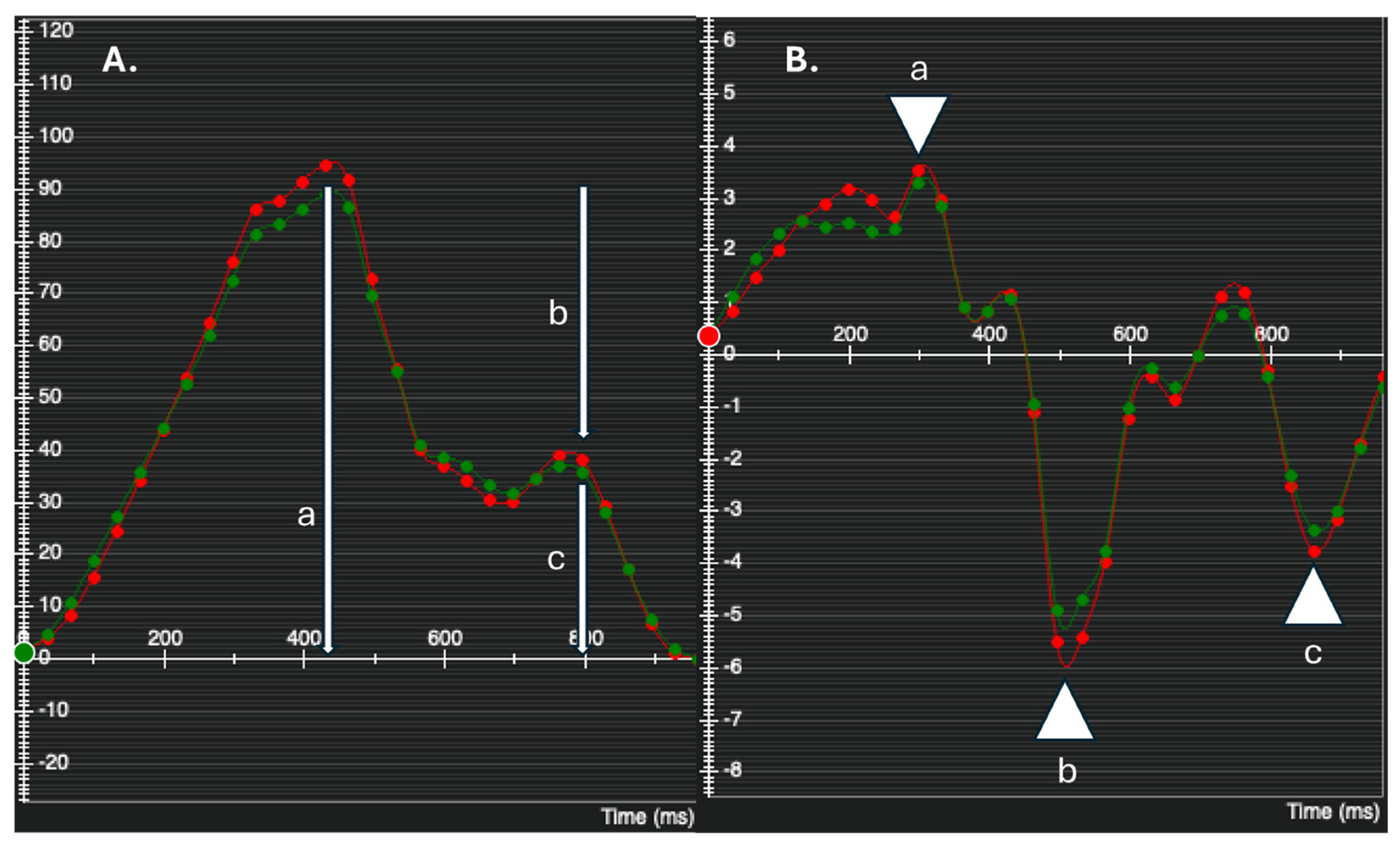
Figure 1. Measurement of phasic left atrial global longitudinal strain (GLS) and strain rate. Panels (A,B) show GLS and strain rate curves, respectively. In (A), reservoir (a), conduit (b), and booster (c) magnitudes are indicated by the length of the white line. In (B), white arrows indicate the temporal locations corresponding to a, b, and c locations.
Applsci 16 00194 g001
Figure 2. Associations of left atrium (LA) and left atrial appendage (LAA) 4D flow mean stasis fraction with peak and mean velocities. (A) shows the association of LA stasis with LA max velocity. (B) shows the association of LA stasis with LA mean velocity. (C) shows the association of LAA stasis with LAA max velocity. (D) shows the association of LAA stasis with LAA mean velocity. Blue dots represent patients and red rectangles represent healthy volunteers. The black solid line represents the overall regression. The blue dashed line represents the patient’s regression. The red dashed line represents the healthy volunteer’s regression. LA max indicates LA maximum. n = 12 for healthy volunteers. n = 57 for patients.
Applsci 16 00194 g002
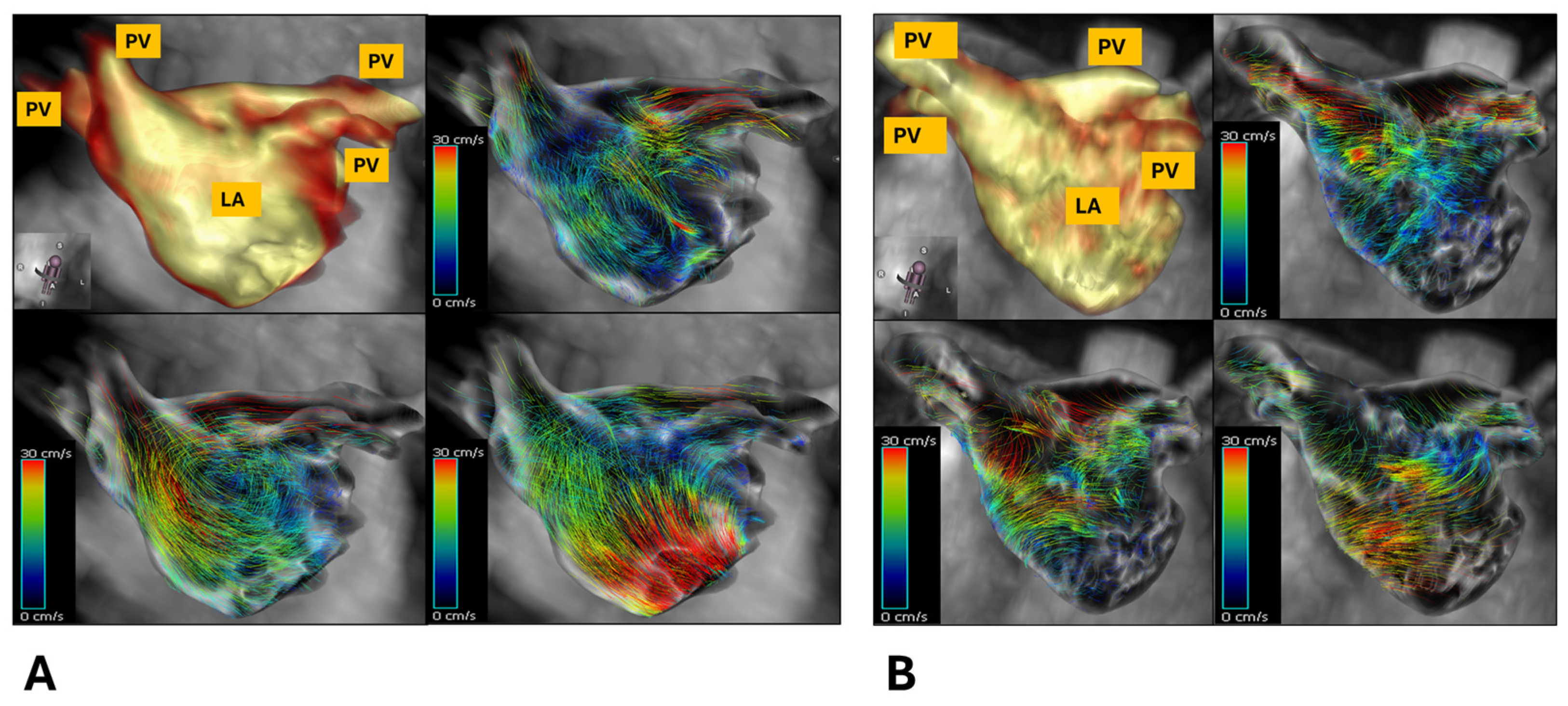
Figure 3. Quantification of left atrial hemodynamics using 4D flow MRI showing velocity distributions in a patient with atrial fibrillation. (A): Volume-rendered 4D flow MRI images of the left atrium (LA), displaying peak instantaneous velocities in a 56-year-old female patient with atrial fibrillation during mid-systole (top right), mid-diastole (bottom left), and end-diastole (bottom left). (B): Corresponding 4D flow MRI velocity maps in a 39-year-old male healthy volunteer. PV indicates pulmonary vein. The small avatar indicates the patient’s orientation. R: right. L: left. S: superior. I: inferior. A: anterior.
Applsci 16 00194 g003
Figure 4. Associations of left atrial (LA) stasis fraction by 4D flow and markers of LA remodelling and contractile health, inclusive of global longitudinal strain (GLS) peak amplitude and strain rate (SR). (A) shows the association of LA stasis with BSA-indexed LA max volume. (B) shows the association of LA stasis with LA global EF. (C) shows the association of LAA stasis with LA reservoir GLS. (D) shows the association of LA stasis with LA reservoir SR. Blue dots represent patients and red rectangles represent healthy volunteers. The black solid line represents the overall regression. The blue dashed line represents the patient’s regression. The red dashed line represents the healthy volunteer’s regression. BSA: body surface area. EF: ejection fraction. n = 12 for healthy volunteers. n = 57 for patients.
Applsci 16 00194 g004
Table 1. Baseline non-imaging characteristics of study patients with atrial fibrillation (n = 57).
CharacteristicDescriptive Statistics
Age at scan, y59.9 ± 8.9
Male sex43 (75%)
Cigarette smoking
        Never44 (80%)
        Current7 (13%)
        Former4 (7%)
Alcohol consumption
        None/occasional (<1 drink/day)46 (81%)
        Regular (≥1 drink/day)11 (19%)
Diabetes mellitus *3 (5%)
Hypertension13 (23%)
Dyslipidemia 35 (61%)
Hypothyroidism6 (11%)
Hyperthyroidism1 (2%)
Chronic kidney disease 5 (9%)
Atrial fibrillation type
        Paroxysmal46 (81%)
        Persistent11 (19%)
CHA2DS2-VASc score1 (1, 2)
Dyspnea (NYHA class ≥ II)13 (24%)
QoL (EuroQol EQ VAS)80 (70, 85)
Body mass index, kg/m228.0 ± 4.8
Obesity §17 (30%)
Medications
Aspirin6 (11%)
Beta blocker40 (70%)
ACEi/ARB18 (32%)
Calcium channel blocker10 (18%)
Anti-coagulant56 (98%)
Anti-Arrhythmic46 (81%)
Loop diuretic2 (4%)
Statin16 (28%)
Labs
Hemoglobin, g/L148.5 ± 11.5
eGFR, mL/min/1.73 m292.5 ± 27.8
Values are mean ± SD, median (IQR), or number (%). ACEi indicates angiotensin converting enzyme inhibitor; ARB, angiotensin receptor blocker; eGFR, estimated glomerular filtration rate; NYHA, New York Heart Association; QoL, quality of life; and VAS, visual analogue scale. * Coded as present if the patient was receiving oral hypoglycemics or insulin or had a HbA1C 6.5% within three years prior to or four months following index CMR. CMR indicates Cardiac Magnetic Resonance. Coded as present if the patient was receiving lipid-lowering therapy or had an LDL-C ≥ 3.5 mmol/L or triglycerides ≥ 1.7 mmol/L within three years prior to or four months following index CMR. Defined as GFR < 60 mL/kg/m2. § Defined as body mass index ≥ 30 kg/m2.
Table 2. Baseline CMR characteristics of patients with atrial fibrillation compared to healthy volunteers.
CMR CharacteristicsHV (n = 12)Patients with AF (n = 57)p-Valuep-Value *
Chamber volumes
BSA-indexed LV EDV, mL/m283.0 ± 6.681.8 ± 13.50.6400.005
BSA-indexed LV ESV, mL/m230.4 ± 5.331.3 ± 6.90.590<0.001
LV EF, %63.6 ± 4.261.5 ± 6.10.17<0.001
BSA-indexed, LV mass, g/m254.2 ± 7.055.0 ± 11.60.760<0.001
BSA-indexed RV EDV, mL/m297.0 ± 6.690.4 ± 18.90.0420.108
BSA-indexed RV ESV, mL/m244.1 ± 6.440.5 ± 11.30.1400.003
RV EF, %54.7 ± 4.755.6 ± 6.40.580<0.001
LAmax volume, mL67.9 ± 16.485.0 ± 27.10.008<0.001
BSA-indexed LAmax volume, mL/m233.8 ± 7.140.8 ± 13.30.015<0.001
LAmin volume, mL26.4 ± 9.945.1 ± 20.9<0.001<0.001
BSA-indexed LAmin volume, mL/m213.2 ± 4.721.9 ± 11.4<0.001<0.001
Pre-atrial systole LA volume, mL47.5 ± 14.663.4 ± 22.40.005<0.001
BSA-indexed pre-atrial systole LA volume, mL/m223.7 ± 6.730.6 ± 11.80.010<0.001
LA function
LA global EF, %62.0 ± 7.148.5 ± 13.2<0.0010.550
LA booster EF, %45.3 ± 7.230.7 ± 13.7<0.0010.771
LA conduit EF, %30.7 ± 8.526.0 ± 10.50.1100.002
LA reservoir GLS, %54.7 ± 15.031.3 ± 9.5<0.0010.098
LA booster GLS, %21.7 ± 8.513.9 ± 6.70.0100.056
LA conduit GLS, %33.0 ± 9.417.4 ± 5.9<0.0010.881
LA reservoir SR, 1/s2.30 ± 0.741.26 ± 0.47<0.001<0.001
LA conduit SR, 1/s−3.84 ± 1.12−1.73 ± 0.63<0.001<0.001
LA booster SR, 1/s−2.11 ± 0.80−1.23 ± 0.660.003<0.001
LA and LAA 4D flow characteristics
LA mean stasis, %34.5 (22.8, 45.3)45.0 (36.0, 54.0)0.040<0.001
LA peak velocity, m/s0.32 (0.30, 0.39)0.33 (0.28, 0.41)0.840<0.001
LA mean velocity, m/s0.10 (0.08, 0.12)0.09 (0.07, 0.11)0.500<0.001
LAA mean stasis, %53.0 (47.5, 59.0)72.0 (56.0, 82.0)0.005<0.001
LAA peak velocity, m/s0.29 (0.27, 0.34)0.28 (0.23, 0.36)0.420<0.001
LAA mean velocity, m/s0.12 (0.10, 0.12)0.10 (0.07, 0.13)0.130<0.001
GLS indicates global longitudinal strain; LV, left ventricle; EDV indicates end-diastolic volume; EF, ejection fraction; ESV, end-systolic volume; LA, left atrium; LAA, left atrial appendage; LAmax, maximum left atrial volume; LAmin, minimum left atrial volume; RV, right ventricle; and SR, strain rate. Bold p-values represent a significant difference. p-value * indicates the adjusted p-value after adjusting for age and sex.
Table 3. Associations of left atrium and left atrial appendage 4D flow mean stasis with LA peak and mean velocities.
Variabler Allp Allr HVp HVr Patientp Patient
LA mean stasis
LA peak velocity, m/s−0.370.002−0.280.380−0.390.003
LA mean velocity, m/s−0.57<0.001−0.90<0.001−0.52<0.001
LAA mean stasis
LAA peak velocity, m/s−0.300.0110.350.270−0.350.007
LAA mean velocity, m/s−0.320.0070.320.310−0.310.021
Bold p-values are <0.05. r denotes Spearman’s correlation coefficient. LA indicates left atrium and LAA, left atrial appendage.
Table 4. Associations of left atrial 4D flow characteristics with CMR phenotypic markers, inclusive of quantitative markers of LA remodelling and contractile health.
Variabler Overallp Overallr HVp HVr Patientp Patient
4D flow LA mean stasis
Age at scan, y0.100.4300.190.5500.010.920
LV and RV volume-based measures
BSA-indexed LV EDV, mL/m20.070.5900.130.7000.050.730
BSA-indexed LV ESV, mL/m20.060.6300.430.160−0.020.880
LV EF, %−0.110.390−0.620.0330.030.800
BSA-indexed, LV mass, g/m2−0.100.390−0.390.210−0.110.430
BSA-indexed RV EDV, mL/m2−0.050.700−0.400.200−0.010.950
BSA-indexed RV ESV, mL/m2−0.020.850−0.230.470−0.010.920
RV EF, %−0.040.760−0.430.160−0.010.940
LA markers of remodelling and contractile health
BSA-indexed LAmax volume, mL/m20.240.0440.670.0170.140.290
LA global EF, %−0.180.150−0.420.170−0.050.710
LA reservoir GLS, %−0.170.170−0.450.140−0.010.950
LA reservoir SR, 1/s−0.210.083−0.470.120−0.060.650
4D flow LA peak velocity
Age at scan, y−0.060.6100.270.390−0.150.250
LV and RV volume-based measures
BSA-indexed LV EDV, mL/m20.210.0890.000.9900.230.090
BSA-indexed LV ESV, mL/m20.170.170−0.310.3200.230.080
LV EF, %−0.050.6700.610.035−0.130.320
BSA-indexed, LV mass, g/m20.250.035−0.090.790.280.030
BSA-indexed RV EDV, mL/m20.220.069−0.280.3700.290.030
BSA-indexed RV ESV, mL/m20.160.190−0.520.0840.230.080
RV EF, %0.000.9900.470.120−0.070.590
LA markers of remodelling and contractile health
BSA-indexed LAmax volume, mL/m2−0.060.630−0.330.290−0.020.870
LA global EF, %0.110.3500.550.0700.090.490
LA reservoir GLS, %−0.0020.9900.320.320−0.010.940
LA reservoir SR, 1/s0.060.6100.400.2000.050.700
4D flow LA mean velocity
Age at scan, y−0.190.120−0.230.480−0.210.110
LV and RV volume-based measures
BSA-indexed LV EDV, mL/m2−0.010.930−0.310.3200.020.860
BSA-indexed LV ESV, mL/m20.020.890−0.500.1000.100.460
LV EF, %0.000.9800.600.038−0.140.300
BSA-indexed, LV mass, g/m20.240.0510.550.0620.200.130
BSA-indexed RV EDV, mL/m20.140.2500.290.3700.140.310
BSA-indexed RV ESV, mL/m20.090.4700.070.8200.110.410
RV EF, %0.000.9800.520.080−0.060.630
LA markers of remodelling and contractile health
BSA-indexed LAmax volume, mL/m2−0.230.054−0.590.044−0.150.260
LA global EF, %0.190.1200.420.1700.120.360
LA reservoir GLS, %0.030.8200.470.120−0.070.580
LA reservoir SR, 1/s0.110.3700.550.0700.030.830
Bold p-values are <0.05. r denotes Spearman’s correlation coefficient. GLS indicates global longitudinal strain; LV, left ventricle; EDV indicates end-diastolic volume; EF, ejection fraction; ESV, end-systolic volume; LA, left atrium; LAmax, maximum left atrial volume; RV, right ventricle; and SR, strain rate.
Disclaimer/Publisher’s Note: The statements, opinions and data contained in all publications are solely those of the individual author(s) and contributor(s) and not of MDPI and/or the editor(s). MDPI and/or the editor(s) disclaim responsibility for any injury to people or property resulting from any ideas, methods, instructions or products referred to in the content.