Article

Magnetic Field Simulation of Demagnetization Process in Complex Ferromagnetic Cavity Structures

by
Tao Guo
1,2,*,
Chengjin Lu
3 and
Meng Chen
4
1
The Shanxi Engineering Research Center for NDT and Structural Integrity Evaluation, State Key Laboratory for Strength and Vibration of Mechanical Structures, Xi’an Jiaotong University, Xi’an 710049, China
2
The Beijing Institute of Aerospace Systems Engineering, Beijing 100076, China
3
The Beijing Aerospace Wanyuan Science & Technology Co., Ltd., Beijing 100076, China
4
The Wuhan Second Ship Design and Research Institute, Wuhan 430064, China
*
Author to whom correspondence should be addressed.
Appl. Sci. 2026, 16(1), 176; https://doi.org/10.3390/app16010176
Submission received: 12 August 2025 / Revised: 12 October 2025 / Accepted: 1 December 2025 / Published: 24 December 2025
(This article belongs to the Section Electrical, Electronics and Communications Engineering)

Featured Application

Magnetic Field Effects During Ship Degaussing.

Abstract

The time-varying magnetic field characteristics during the demagnetization process of complex ferromagnetic cavity structures were studied based on computational electromagnetic simulation. By establishing a simulation model of the complex ferromagnetic cavity structures and the magnetic field generation coil, the main factors affecting the time-varying magnetic field characteristics were analyzed and explained, including eddy current effects, hysteresis effects, material properties of the complex ferromagnetic cavity structure, and structural gap connections. The magnetic field amplitude at typical locations was investigated, and the temporal variation of the internal magnetic field was analyzed. Additionally, the evolution motion of eddy currents during the dynamic demagnetization process was simulated. It was found that the aforementioned factors significantly affect the internal magnetic field of the complex ferromagnetic cavity structures during the demagnetization process, and their influences intertwine, resulting in complex time-varying characteristics. Through theoretical analysis and numerical simulation, the mechanisms and rules of these influences were revealed. The research findings provide important references for optimizing the demagnetization process, improving demagnetization effectiveness, and developing equipment-level magnetic field protection criteria and design.

1. Introduction

Complex ferromagnetic cavity structures are nested cavity structures formed by the combination of outer shells composed of a large amount of magnetic materials and inner multi-layer shells. During the demagnetization process, strong magnetic fields are present, which may potentially affect the electrical components of the system. In-depth investigations are therefore warranted.
With the development of non-acoustic detection technologies, magnetic field signals have increasingly become important signal sources threatening security [1,2,3,4,5]. Steel structures perform well in terms of cost, weldability, and mechanical properties; however, they exhibit strong ferromagnetism and can generate magnetism during both construction and service processes. The magnetization process of complex ferromagnetic cavity structures mainly involves fixed magnetic fields and induced magnetic fields. The fixed magnetic field does not change with the movement or position of the ferromagnetic cavity structures, while the induced magnetic field refers to the magnetic field generated under the action of the geomagnetic field. The superposition of these two fields causes changes in the background magnetic field in the space where the complex ferromagnetic cavity structures are located [6,7,8].
During demagnetization, the interaction between the intrinsic internal magnetic fields of complex ferromagnetic cavity structures and the externally applied excitation fields induces magnetic field distortion. This distortion may impact the functionality and performance of various electronic components within these structures to varying degrees. Additionally, this process results in a certain level of environmental magnetic radiation pollution, which may exert potential effects on equipment [9,10,11,12,13], thereby presenting notable challenges.
The demagnetization process typically utilizes coils [14,15] to generate magnetic fields with appropriate intensity and direction, which serve to compensate for induced magnetic fields and counteract fixed magnetic fields. The dynamic magnetic field excitation demagnetization method involves passing alternating positive-negative, intermittent, and decaying rectangular currents to generate alternating positive-negative magnetic fields with gradually attenuating amplitudes. These fields form the impulsive magnetic fields required for the demagnetization process, disturbing the fixed magnetic fields in the shell steel [15,16,17,18] and rendering the magnetic domains in ferromagnetic materials in a disordered state, thereby achieving demagnetization [19]. For the demagnetization of ferromagnetic materials, primary focus is placed on changes in the residual magnetization state after demagnetization, aiming for minimal residual magnetization to reduce impacts on the surrounding space. However, research on the magnetic field distribution within the system during demagnetization and its influencing factors remains to be further explored [20,21,22,23].
Taking a typical complex ferromagnetic cavity structure as an example, through the analysis of demagnetization mechanisms and simulation of the demagnetization process, this study aims to better simulate and analyze the magnetic field characteristics of complex ferromagnetic cavity structures during demagnetization. It provides a design basis and reference for the magnetic protection indices of systems and individual machines, thereby enhancing the system’s magnetic protection capability and ensuring the effective performance of its functions.

2. Analysis of Dynamic Demagnetization Mechanisms

By applying a sufficiently strong alternating magnetic field to a magnetic body and then gradually reducing the amplitude of the alternating magnetic field to zero, a magnetic neutral state is achieved, which is also referred to as a dynamic magnetic neutral state. During the demagnetization process, the workpiece is placed in an alternating magnetic field, and demagnetization is performed via the decreasing hysteresis loop, as shown in the schematic diagram of Figure 1. In the figure, B+ and B− represent the positive and negative saturation magnetic flux density, respectively. As the amplitude of the alternating magnetic field gradually decreases, the trajectory of the hysteresis loop shrinks progressively. When the magnetic field is gradually reduced to zero, the residual magnetization in the workpiece is close to zero. Therefore, during demagnetization, changes in the direction and magnitude of the current and magnetic field must undergo both commutation and attenuation simultaneously. The number of cycles needed to attenuate to zero should be as large as possible (generally requiring more than 30 cycles), and the current amplitude for each attenuation should be as small as possible. If the attenuation amplitude is too large, the intended demagnetization effect cannot be achieved [15].

2.1. Hysteresis Effect

When the magnetic field strength is varied, the magnetization of magnetic materials does not immediately follow the change in magnetic field strength, exhibiting a certain degree of hysteresis. This hysteresis is typically represented in the form of a hysteresis loop. Additionally, there is a distinct time lag, which is not the aforementioned hysteresis related to magnetic field changes in the hysteresis loop. Instead, it refers to the phenomenon where a certain period of time is required for the target magnetic field to stabilize after an external field is applied. The magnetization of ferromagnetic materials is solely dependent on their magnetization history and independent of time. This indicates that during the dynamic demagnetization process, there are other factors or effects inducing the “time lag” phenomenon, which will inevitably affect the internal magnetic field characteristics of complex ferromagnetic cavity structures during demagnetization.

2.2. Eddy Current Effect

In static magnetic field excitation, the intrinsic magnetic parameters of the material are the direct factors that determine magnetic outcomes. However, in dynamic magnetic field excitation, as magnetic fields change, induced eddy currents are inevitably generated. Varying currents, in turn, induce secondary magnetic fields. Eddy currents are currents induced in conductors by varying magnetic fields; they generate an opposing magnetic field that counteracts the original one, a phenomenon termed “eddy current loss.” The magnitude of eddy current loss depends on the magnitude and distribution of eddy currents, along with the magnetic properties of the target material. For materials with high magnetic permeability, eddy current loss tends to be greater.
Demagnetization of complex ferromagnetic cavity structures utilizes dynamic magnetic field excitation. Given that the target materials are various high-conductivity metals—particularly different grades of steel and aluminum alloys—the influence of the eddy current effect cannot be neglected. The generation, movement, and evolution of eddy currents are influenced by the structure of the conducting carriers; accordingly, the eddy current effect is associated with the material’s electrical properties and the target’s structural characteristics. For targets of the same material but with different structures, their magnetic field distribution characteristics also exhibit significant structural dependence or anisotropy.

3. Modeling of Dynamic Demagnetization Processes for Complex Ferromagnetic Cavity Structures

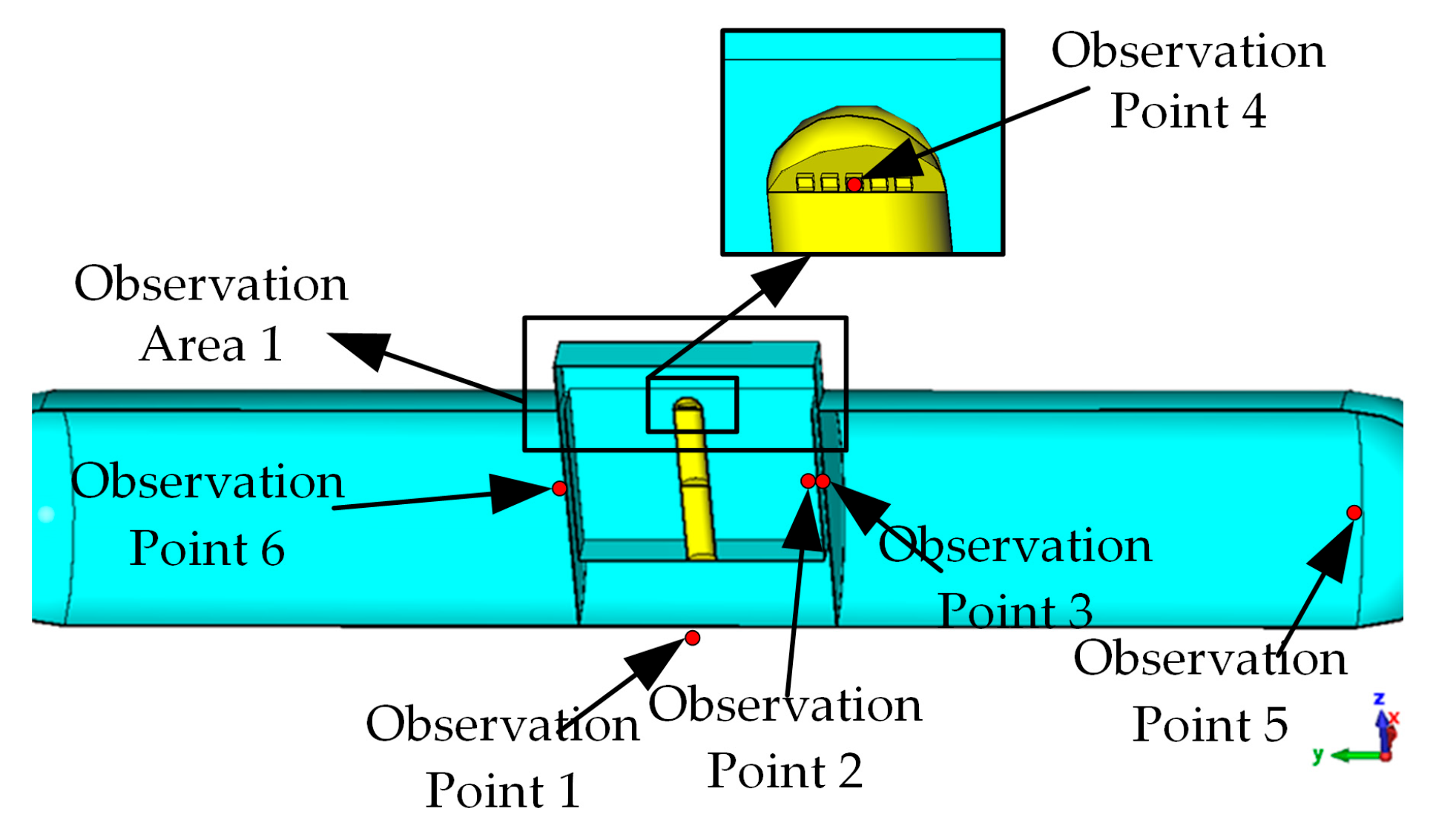
To better analyze the influencing factors of the internal magnetic field distribution characteristics of complex ferromagnetic cavity structures during the demagnetization process, this study employs the Magnet Design module of Computer Simulation Technology (CST) software 2024 [24] to construct the complex ferromagnetic cavity structures as shown in Figure 2. The structures consist of an outermost cabin, independent cabins separated by partitions, a storage device, and a cylindrical structure inside the storage device; their geometric model parameters are listed in Table 1. The cabins of the complex ferromagnetic cavity structures are equivalent to a cylindrical structure with multiple partitions, made of high-strength steel with an electrical conductivity of σ = 1.1 × 10⁶ S/m, with the corresponding hysteresis loops and relative permeability curves incorporated. The storage device is made of high-strength steel, with a cylindrical structure placed at its center. The skin of this cylindrical structure is made of aluminum alloy with an electrical conductivity of σ = 3.56 × 10⁷ S/m, and it is internally equipped with one equipment cabin and multiple structural shell segments to simulate the scenario where electrical equipment inside the cabin is affected by the magnetic field.
The axis of the complex ferromagnetic cavity structures is defined as the Y-axis direction, and their peripheral demagnetizing coils are used to generate a demagnetizing magnetic field along the Y-axis. Multiple observation points are set as follows: Observation Point 1 is located 0.1 m from the center of the bottom of the entire structure; Observation Point 2 is located 0.1 m from the internal center on the right side of the storage device; Observation Point 3 is located 0.1 m from the external center on the right side of the storage device and to the left of the partition; Observation Point 4 is located at the center of the equipment cabin inside the aluminum alloy cylindrical structure; Observation Point 5 is located 50 m from the center of the cabin outside the cabin; Observation Point 6 is located at the center of the outer surface of the partition. For research purposes, the area where the storage device protrudes from the top of the cabin is designated as Observation Area 1. By constructing the complex ferromagnetic cavity structures and setting multiple observation points, a better analysis of the internal magnetic field distribution characteristics of complex ferromagnetic cavity structures and their influencing factors during the demagnetization process is enabled.
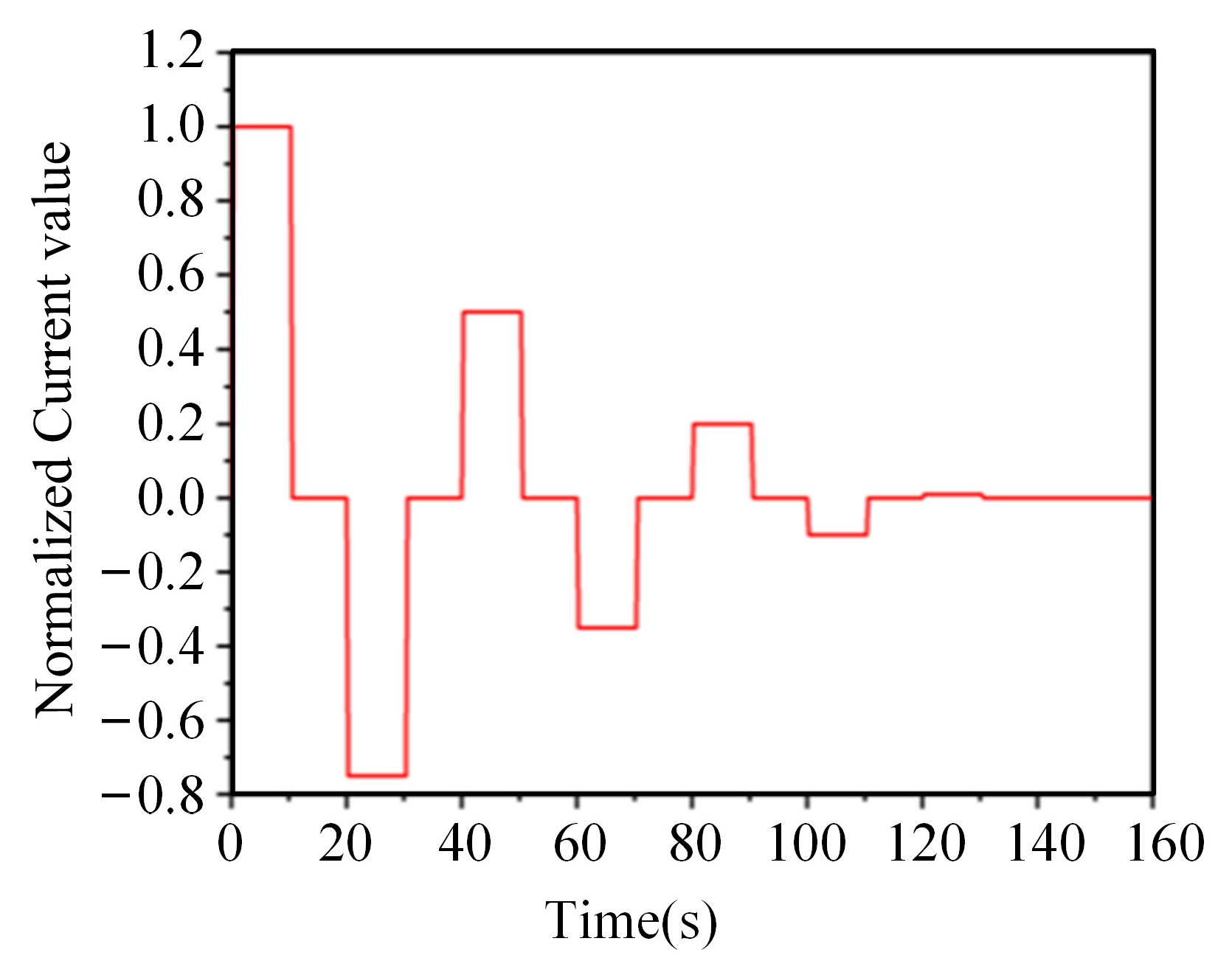
In alternating magnetic field demagnetization, the maximum critical field is adopted as the initial amplitude of the alternating magnetic field. Considering the coercivity of typical marine steel as Hc = 7.1 Oe, the maximum magnetic susceptibility χm = 780, and with the longitudinal demagnetization factor N of complex ferromagnetic cavity structures set as 0.0003, the initial amplitude of the demagnetizing magnetic field is calculated as Hm = 1.4Hc (1 + χmN) = 12.27 Oe [15]. In this calculation example, the magnetic field intensity generated at the center of the coil under the first rectangular pulse is set to 20 Oe [11]. Figure 3 shows the normalized time-varying curve of the excitation current. Both the rising edge and falling edge have a duration of 0.3 s, each rectangular pulse lasts 10 s, and each pulse period is 20 s. Considering the efficiency of simulation calculations for the demagnetization process, a total of 8 pulses are simulated, with a total time of 160 s.

4. Simulation of Magnetic Fields During Demagnetization Processes for Complex Ferromagnetic Cavity Structures

4.1. Time-Varying Characteristics of Magnetic Fields at Different Positions

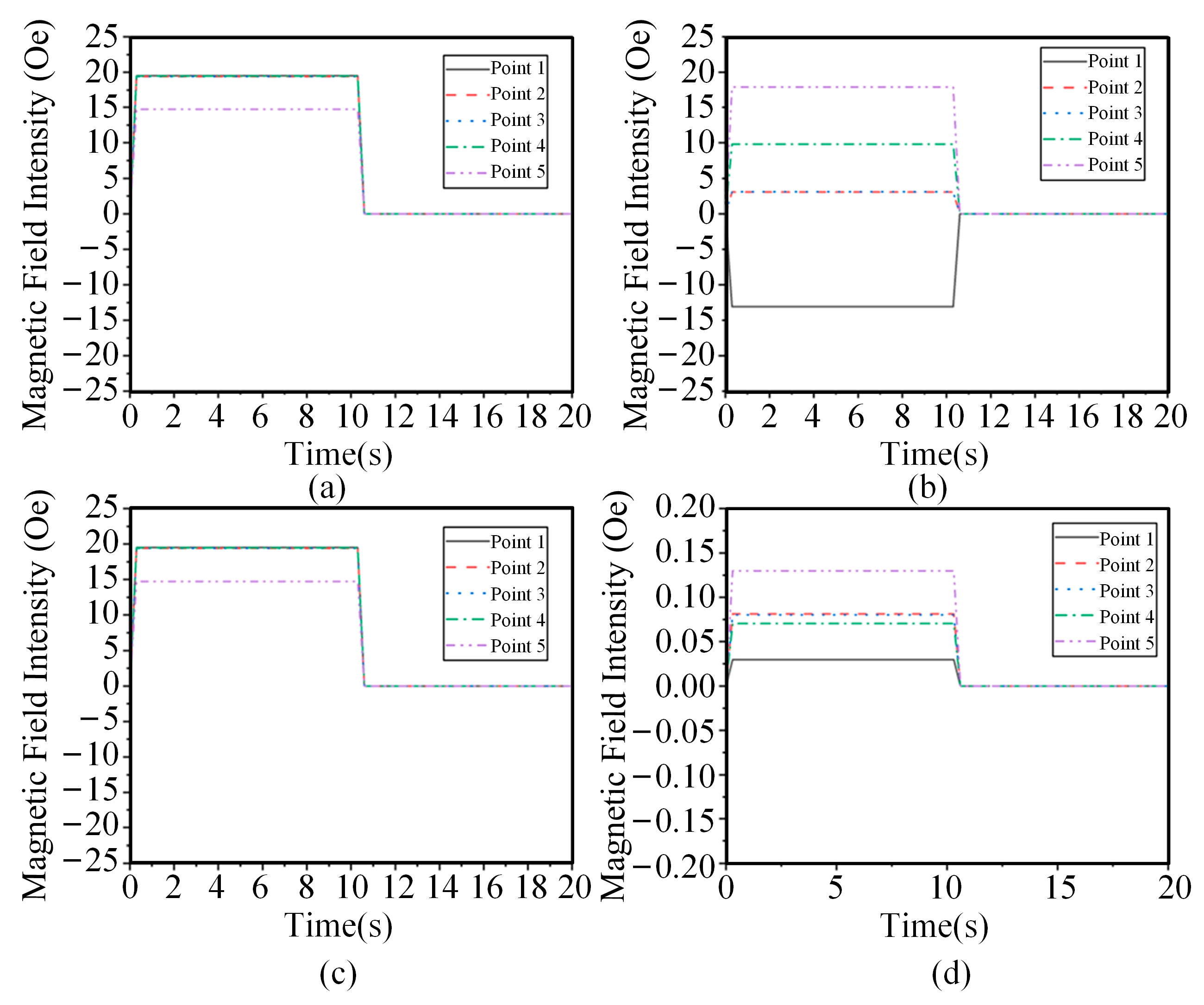
To investigate the differences in magnetic field intensity generated by demagnetization coils at different positions and further analyze the response behaviors of different positions inside complex ferromagnetic cavity structures to the applied magnetic field during dynamic demagnetization, as shown in Figure 4, this study first compares the amplitudes of the magnetic field and the magnitudes of each component at observation points 1–5 when only the coils are present. In this calculation example, the magnetic field generated by the first pulse is directed along the positive Y-axis. The magnetic field amplitudes at observation points 1–4 are equal, while the magnetic field intensity at observation point 5 is smaller than that at the other observation points because it is situated at the edge of the coils. This is mainly caused by the edge effect of the coils, which leads to non-uniform distribution of magnetic field intensity—a factor requiring consideration in the practical demagnetization process. The Y-components of the magnetic field intensity at these five points are all positive, with the primary magnetic field distributed along the Y-direction. The directions and magnitudes of the X- and Z-components depend primarily on the layout of the coils and the degree of deviation of the points from the center.
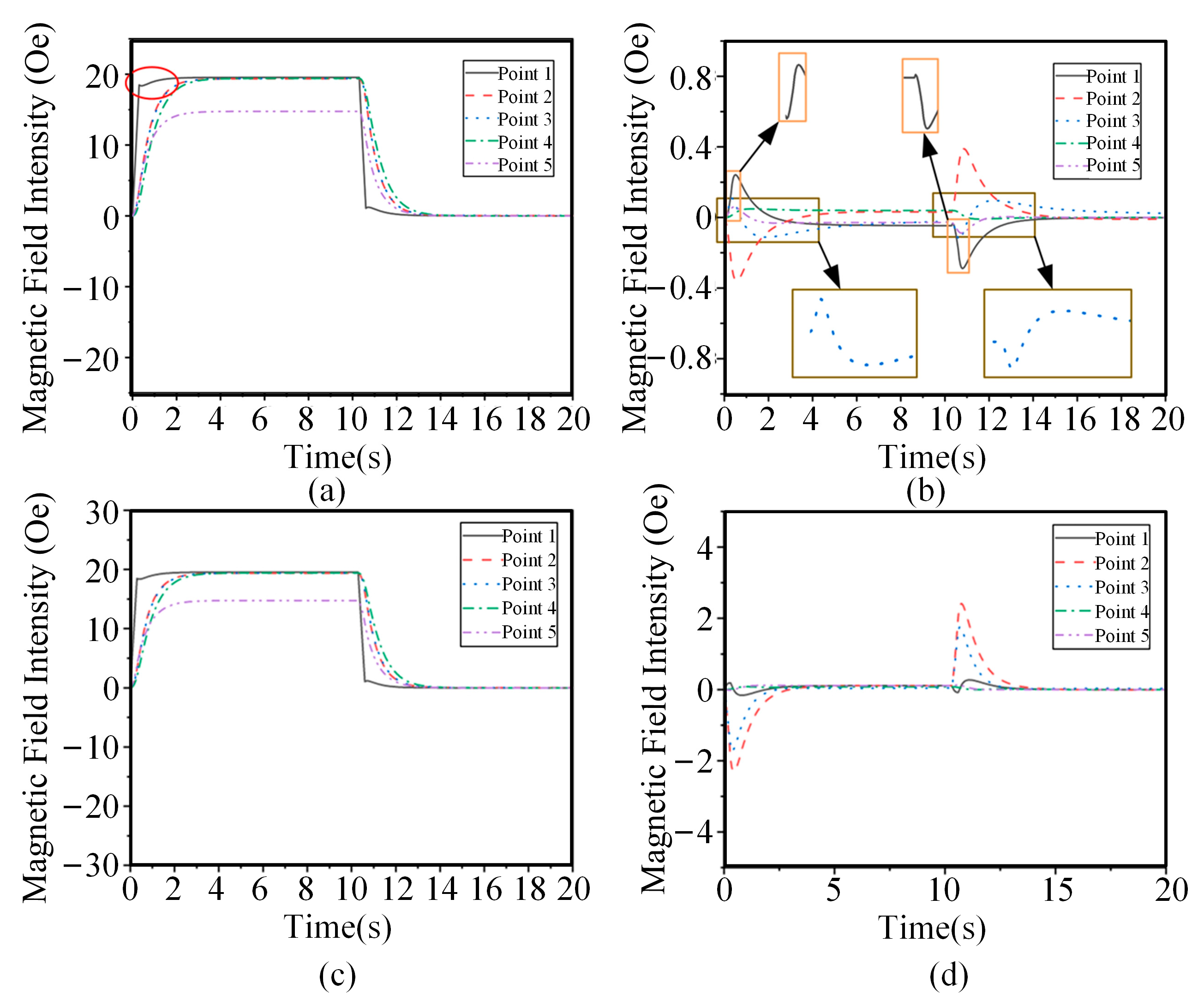
Complex ferromagnetic cavity structures are placed in demagnetization coils to investigate the influence of factors such as the hysteresis effect and eddy current effect of cabin materials on the time-varying characteristics of the magnetic field at different positions. Figure 5 shows the time-varying curves of the magnetic field at observation points 1–5 inside the complex ferromagnetic cavity structures under the action of demagnetization currents. Analysis of Figure 5 reveals that under an applied magnetic field of 20 Oe along the positive Y-axis, the magnetic field intensity at different positions and their time-varying waveforms exhibit differences, which can be summarized as follows:
(a) Figure 5a illustrates the time variation of the magnetic field intensity amplitude. Observation Point 1 monitors the magnetic field outside the shell; its rising edge is relatively steep, increasing instantaneously as the coil current rises, and it is closest to the magnetic field generated by the coil. At the circled position in the figure, the slope of the magnetic field intensity rise at Observation Point 1 flattens, which is caused by the hysteresis effect during the magnetization of ferromagnetic materials under the excitation of the applied magnetic field. The rising edges of the magnetic field intensity amplitudes at Observation Points 2–5 are slower than that at Observation Point 1, as they are located inside the ferromagnetic structures, where hysteresis exists in the magnetization process of ferromagnetic materials.
(b) Figure 5b shows that the X-component at Observation Point 1 increases in the negative X-axis direction at the very start of the pulse rising edge; this direction is consistent with the direction of the magnetic field increase at Observation Point 1 in Figure 4b. However, it begins to increase in the positive X-axis direction at 0.05 s, which is due to the eddy current effect generated by the changing magnetic field counteracting the increase in the magnetic field. When the change in the applied excitation magnetic field slows down, the eddy current effect begins to decrease, and the magnetic field stabilizes at −0.05 Oe at 6 s (consistent with the stable X-component value shown in Figure 4b). A similar phenomenon occurs at the falling edge of the first pulse. The magnetic field variation in the Z-direction follows the same underlying principle as that in the X-direction; however, due to positional factors, the secondary induced magnetic field generated by eddy currents is smaller than that in the X-direction.
(c) Figure 5b,d show the time-varying characteristics of the magnetic field intensity components in the X and Z directions at Observation Point 2, respectively. It can be seen that the X and Z components of the magnetic field intensity at Observation Point 2 have relatively large magnitudes. This is because Observation Point 2 is located 0.1 m from the internal center on the right side of the storage device; the storage device is made of ferromagnetic material, and Observation Point 2 is situated at its central position, where the eddy current-induced magnetic field is stronger.
(d) Figure 5b shows the variation of the magnetic field intensity in the X-direction at Observation Point 3, which exhibits two inflection points compared with Observation Point 2. The magnetic field at Observation Point 3 first increases in the positive X-direction due to external magnetic field excitation, after which eddy currents generated by the partition begin to act here, producing a secondary induced magnetic field. This is because its position lies between two ferromagnetic structures: the storage device and the partition. However, the two ferromagnetic structures have different areas, leading to different induced electromotive forces in their respective loops. Additionally, the magnitudes of the magnetic field intensity differ due to their locations relative to the two structures.
(e) Figure 5c shows the variation of magnetic field intensity in the Y-direction at observation points 1–5. The applied magnetic field is directed along the positive Y-axis; thus, the magnetic field intensity at each point is mainly composed of the Y-direction component. The magnitudes of the Y-direction magnetic field components and the amplitudes of the magnetic field intensity at each point do not differ significantly, and their waveforms are close to the magnetic field waveform in Figure 5a.
(f) Figure 5d shows the variation of magnetic field intensity in the Z-direction at the observation points. Observation Point 3 is affected by eddy currents generated by both the storage device and the partition, while Observation Point 2 is only affected by eddy currents generated by the storage device, resulting in a certain difference in their magnetic field intensities. The amplitude of the Z-direction magnetic field component at Observation Point 3 is 1.6 Oe, and that at Observation Point 2 is 2.2 Oe.
(g) Observation Point 4 is located at the center of the equipment cabin inside the aluminum alloy cylindrical structure, and the rising edge of its magnetic field time-varying curve is slower. Observation Point 5 is situated at the edge of the coil, with the smallest magnetic field intensity.

4.2. Effects of Eddy Currents on Time-Varying Characteristics of Magnetic Fields

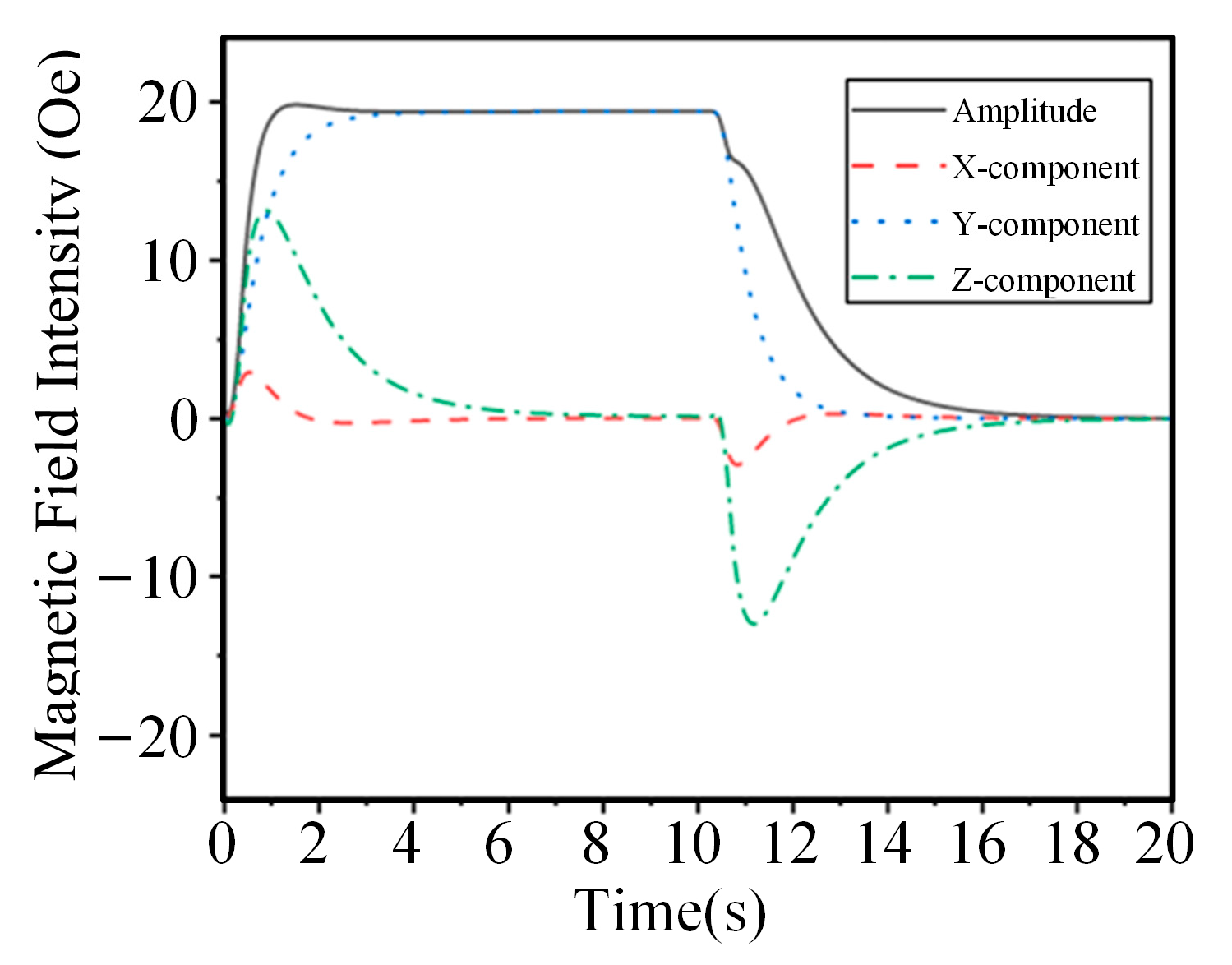
Ferromagnetic materials inevitably generate induced eddy currents in alternating magnetic fields. Meanwhile, varying currents also induce secondary magnetic fields. Due to the high electrical conductivity of the target material, eddy currents have a significant impact on the internal magnetic field. Figure 6 shows the time-varying curve of the magnetic field intensity at Observation Point 6, which is located at the center of the cabin partition inside complex ferromagnetic cavity structures. It can be observed that a significant induced magnetic field generated by the eddy current effect exists on its surface, primarily in the X and Z directions. Since it is not located at the exact center of the coil, there are certain differences in the magnetic field intensity generated by the eddy currents: the maximum magnetic field intensity in the Z direction is 13.6 Oe, and that in the X direction is 2.8 Oe, exhibiting two prominent peaks in amplitude.

4.3. Analysis of Magnetic Field Intensity at Different Positions Inside Complex Ferromagnetic Cavity Structures and Eddy Current Effects

In the dynamic demagnetization process, the evolution, propagation, and dissipation of eddy currents are the core issues of the eddy current effect. When the material thickness is less than the skin depth, eddy currents are generated from the material surface and propagate inward. This evolutionary process can be divided into two time periods. In the first time period, eddy currents move from the surface to the other side of the material, with the core current position remaining at half the material thickness. In the second time period, eddy currents no longer move along the material thickness direction; instead, they mainly diffuse along the surface direction until eventual dissipation.
Complex ferromagnetic cavity structures, to meet the requirements of different internal equipment regarding size, mechanical properties, etc., require the design of the shape and size of ferromagnetic material enclosures. Effective electrical connection and other technical operations are necessary at the joints to reduce the possible impact of eddy current-induced magnetic fields on sensitive devices.
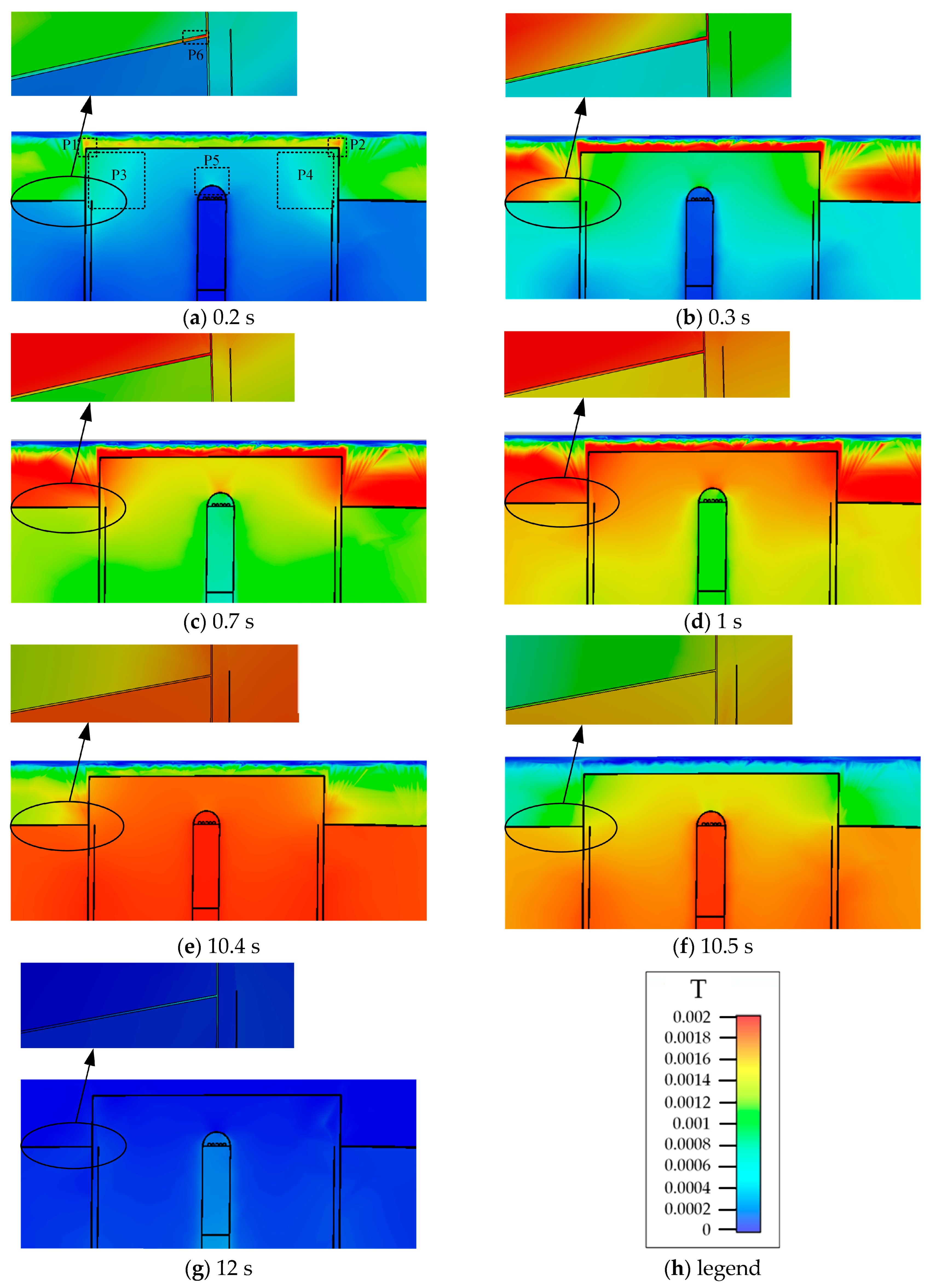
Figure 7 shows Observation Area 1 (as depicted in Figure 2), i.e., the evolution of magnetic field intensity at the top of the cylindrical structure inside the enclosures of complex ferromagnetic cavity structures and the storage device. Inside the coil and outside the cavity structures, as the external excitation magnetic field increases, the upper surfaces of the cavities are relatively close to the coil, and the magnetic field induced at the sharp corners (regions P1 and P2) increases rapidly. At 0.3 s, the magnetic field exceeds that generated by the coil, reaching 26 Oe, then gradually penetrates into the interior of the enclosures (regions P3 and P4). In region P5, the high-conductivity materials inside the enclosures, which are close to the enclosures, respond to changes in the magnetic field, generating induced eddy currents at their tops. Due to the small curvature of the top, the currents are more concentrated, thus generating a weak magnetic field. As observed in Figure 7a, the magnetic field in region P6 at the junction of the shells first increases. To maintain the uniformity and continuity of the magnetic field, for the welding process on the shell surfaces, ferromagnetic materials with magnetic properties similar to those of the welded materials should be selected as solder, and the curvature of the welded area should be minimized to reduce the impact on the original magnetic field to the least extent. Subsequently, the magnetic field at P6 diffuses along the material surface toward the left cabin skin. Meanwhile, under the action of the applied magnetic field, the magnetic field in the left cabin skin gradually moves from the surface toward the depth. Starting at 10.4 s, the magnetic field outside the ferromagnetic structures decreases rapidly; the magnetic field in the cabin skin begins to dissipate from the depth direction, and then moves toward P6 until complete dissipation.

4.4. Analysis of Three-Dimensional Magnetic Field Time-Varying Characteristics of Complex Ferromagnetic Cavity Structures

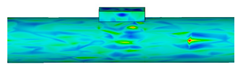
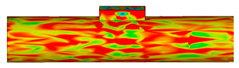
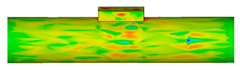
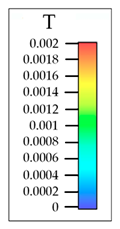
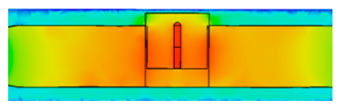
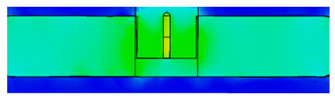
Table 2 presents the variation of the magnetic field on the surface of complex ferromagnetic cavity structures under the excitation of the demagnetizing magnetic field. Under the action of the first demagnetizing pulse, the magnetic field intensity of the outer shells gradually increases, reaches its maximum value at 3.5 s, and increases slightly in the subsequent time. When the falling edge of the demagnetizing pulse arrives, the fading of the applied excitation magnetic field is completed at 10.3 s. However, due to the hysteresis effect of the ferromagnetic materials of the shells, the magnetic field does not decrease immediately at 10.4 s, but gradually decreases over time. At 20 s, the first demagnetizing pulse cycle ends and the second demagnetizing pulse cycle begins; the variation law of the magnetic field on the shell surface follows the same pattern as in the first demagnetizing pulse cycle, but with a smaller amplitude. In this calculation example, under the action of the alternating and attenuating excitation magnetic field, the intrinsic magnetism of the cabin outer shell materials dynamically evolves along the hysteresis loop, ultimately achieving demagnetization.
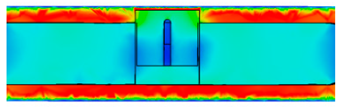
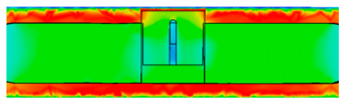
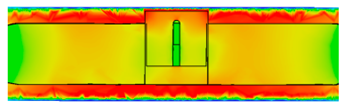
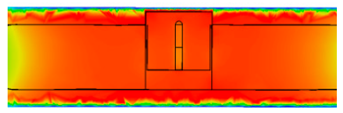
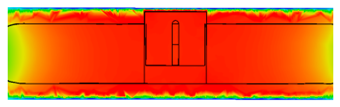
Table 3 presents the variation of the internal magnetic field in complex ferromagnetic cavity structures under the excitation of the demagnetizing magnetic field, providing the amplitude of the magnetic field intensity in the cross-section along the Y-axis at their center. At 0.3 s after the rising edge ends, the magnetic field intensity generated outside the shells is approximately 20 Oe, and the magnetic field outside the shells continues to increase after the rising edge of the rectangular pulse ends. This is because the ferromagnetic materials of the shells induce a new electric field under the action of the external excitation magnetic field. Due to the shielding effect of the shell materials, the magnetic field inside the shells does not penetrate immediately but increases slowly, reaching its maximum value entirely at 3.5 s. Additionally, the magnetic field generated by the demagnetizing coils is stronger at the middle position and weaker at the edge positions. During the decrease in the excitation magnetic field, the magnetic field outside the shells decreases rapidly, while the hysteresis effect of the outer shell materials causes the internal magnetic field to dissipate slowly, which does not completely dissipate until 13 s. Subsequently, new demagnetizing pulse cycles continue to act, ultimately completing the demagnetization.

5. Conclusions

Through numerical simulations of the dynamic demagnetization process of complex ferromagnetic cavity structures, this paper draws the following main conclusions:
(a) During demagnetization, ferromagnetic materials exhibit hysteresis, accompanied by induced magnetic fields caused by the eddy current effect, leading to a “time lag” phenomenon in the internal magnetic fields of complex ferromagnetic cavity structures during demagnetization.
(b) In the dynamic demagnetization process, the magnetic field response trends at different structures in the complex ferromagnetic cavity structural model are not entirely consistent. In particular, ferromagnetic structures perpendicular to the magnetic flux paths have a significant impact on demagnetization states and results. For different parts of ferromagnetic structures, different excitation curves or demagnetization methods should be employed as required, including the arrangement positions of demagnetizing coils and the magnitudes of excitation currents.
(c) At sharp corners of ferromagnetic material structures, changes in the direction of surface currents lead to additional electromagnetic effects. In locations with large curvature in high-conductivity materials, currents are more concentrated, thus generating weak electromagnetic induction; therefore, electronic devices should be positioned away from ferromagnetic materials.
(d) The eddy current effect in the demagnetization process can be divided into two time periods. In the first period, eddy currents are generated from the material surface and move inward; in the second period, eddy currents mainly diffuse along the material surface until dissipation. Eddy currents in ferromagnetic structures are always moving and changing. How to restrict or utilize the eddy current effect is a factor requiring consideration in dynamic demagnetization and local demagnetization.

Author Contributions

Conceptualization, M.C. and T.G.; methodology, T.G.; software, C.L.; validation, T.G. and C.L.; formal analysis, C.L.; investigation, M.C.; resources, T.G.; data curation, T.G.; writing—original draft preparation, T.G.; writing—review and editing, T.G.; visualization, T.G.; supervision, M.C.; project administration, T.G.; funding acquisition, T.G. All authors have read and agreed to the published version of the manuscript.

Funding

We acknowledge financial support from National Natural Science Foundation of China under Grant 62271033.

Data Availability Statement

All data generated or analyzed during this study are included in this published article and available from the corresponding author on reasonable request. Correspondence and requests for materials should be addressed to T.G.

Conflicts of Interest

Author Chengjin Lu was employed by The Beijing Aerospace Wanyuan Science & Technology Co., Ltd. The remaining authors declare that the research was conducted in the absence of any commercial or financial relationships that could be construed as a potential conflict of interest.

References

  1. Modi, A.; Kazi, F. Magnetic-Signature Prediction for Efficient Degaussing of Naval Vessels. IEEE Trans. Magn. 2020, 56, 6000606. [Google Scholar] [CrossRef]
  2. Antonio, V.M.; Alejandro, A.M. Using Genetic Algorithms for Compensating the Local Magnetic Perturbation of a Ship in the Earth’s Magnetic Field. Microw. Opt. Technol. Lett. 2005, 47, 281–287. [Google Scholar] [CrossRef]
  3. Oded, Y.; Gregory, Z.; Touvia, M. Detection of the Electromagnetic Field Induced by the Wake of a Ship Moving in a Random Sea of Finite Depth. J. Eng. Math. 2011, 70, 17–21. [Google Scholar] [CrossRef]
  4. Ong, K.G.; Tan, E.L.; Grimes, C.A.; Shao, R. Removal of Temperature and Earth’s Field Effects of a Magnetoelastic pH Sensor. IEEE Sens. J. 2008, 8, 341–346. [Google Scholar] [CrossRef]
  5. Nagashima, K.; Sasada, I.; Tashiro, K. High-Performance Bench-Top Cylindrical Magnetic Shield with Magnetic Shaking Enhancement. IEEE Trans. Magn. 2002, 38, 3335–3337. [Google Scholar] [CrossRef]
  6. Gontarz, S.; Radkowski, S. Impact of Various Factors on Relationships between Stress and Eigen Magnetic Field in a Steel Specimen. IEEE Trans. Magn. 2012, 48, 1143–1154. [Google Scholar] [CrossRef]
  7. Davidson, S.J.; Rawlins, P.G. A Multi-Influence Range with Electromagnetic Modeling; Ultra Electronics Limited: London, UK, 2006. [Google Scholar]
  8. Zolotarevskii, Y.M.; Bulygin, F.V.; Ponomarev, A.N.; Narchev, V.A.; Berezina, L.V. Methods of Measuring the Low Frequency Electric and Magnetic Fields of Ships. Meas. Tech. 2005, 48, 1140–1144. [Google Scholar] [CrossRef]
  9. Wikkerink, D.; Mor, A.R.; Polinder, H.; Ross, R. Magnetic Signature Reduction by Converter Switching Frequency Modulation in Degaussing Systems. IEEE Access 2022, 10, 74103–74110. [Google Scholar] [CrossRef]
  10. Nikitin, V.F.; Smirnov, N.N.; Smirnova, M.N.; Tyurenkova, V.V. On-Board Electronic Devices Safety Subject to High-Frequency Electromagnetic Radiation Effects. Acta Astronaut. 2017, 135, 181–186. [Google Scholar] [CrossRef]
  11. MacBain, J.A. Some Aspects of Vehicle Degaussing. IEEE Trans. Magn. 1993, 29, 159–165. [Google Scholar] [CrossRef]
  12. Wikkerink, D.; Mor, A.R.; Polinder, H.; Ross, R. Converter Design for High Temperature Superconductive Degaussing Coils. IEEE Access 2022, 10, 128656–128663. [Google Scholar] [CrossRef]
  13. Ma, W.; Lu, J.; Liu, Y. Research Progress of Electromagnetic Launch Technology. IEEE Trans. Plasma Sci. 2019, 47, 2197–2205. [Google Scholar] [CrossRef]
  14. Michel, N.B. Shipboard Degaussing Installations. Electr. Eng. 1949, 68, 15. [Google Scholar] [CrossRef]
  15. Choi, N.S.; Jeung, G.; Jung, S.S.; Yang, C.S.; Chung, H.J.; Kim, D.H. Efficient Methodology for Optimizing Degaussing Coil Currents in Ships Utilizing Magnetomotive Force Sensitivity Information. IEEE Trans. Magn. 2012, 48, 419–422. [Google Scholar] [CrossRef]
  16. Gordon, B. Degaussing—The Demagnetisation of Ships. Electron. Power 1984, 6, 473–476. [Google Scholar] [CrossRef]
  17. Holmes, J.J. Reduction of a Ship’s Magnetic Field Signatures; Morgan & Claypool Publishers: San Rafael, CA, USA, 2008; pp. 237–241. [Google Scholar] [CrossRef]
  18. Holmes, J.J. Exploitation of a Ship’s Magnetic Field Signatures; Morgan & Claypool Publishers: San Rafael, CA, USA, 2006; pp. 508–517. [Google Scholar] [CrossRef]
  19. Ruoho, S.; Arkkio, A. Partial Demagnetization of Permanent Magnets in Electrical Machines Caused by an Inclined Field. IEEE Trans. Magn. 2008, 44, 1773–1778. [Google Scholar] [CrossRef]
  20. Udpa, S.S.; Sun, Y.S.; Lord, W. Alternative Demagnetization Curve Representations for the Finite Element Modeling of Residual Magnetism. IEEE Trans. Magn. 1988, 24, 226–229. [Google Scholar] [CrossRef]
  21. Chen, D.X.; Brug, J.; Goldfarb, R. Demagnetizing Factors for Cylinders. IEEE Trans. Magn. 1991, 27, 3601–3619. [Google Scholar] [CrossRef]
  22. Chen, D.X.; Pardo, E.; Sanchez, A. Fluxmetric and Magnetometric Demagnetizing Factors for Cylinders. J. Magn. Magn. Mater. 2006, 306, 135–146. [Google Scholar] [CrossRef]
  23. Parq, J.H. Magnetometric Demagnetization Factors for Hollow Cylinders. J. Magn. 2017, 22, 550–556. [Google Scholar] [CrossRef]
  24. Dassault Systèmes. CST Studio Suite [Software]. 2025. Available online: https://www.3ds.com/products/simulia/cst-studio-suite (accessed on 25 July 2023).
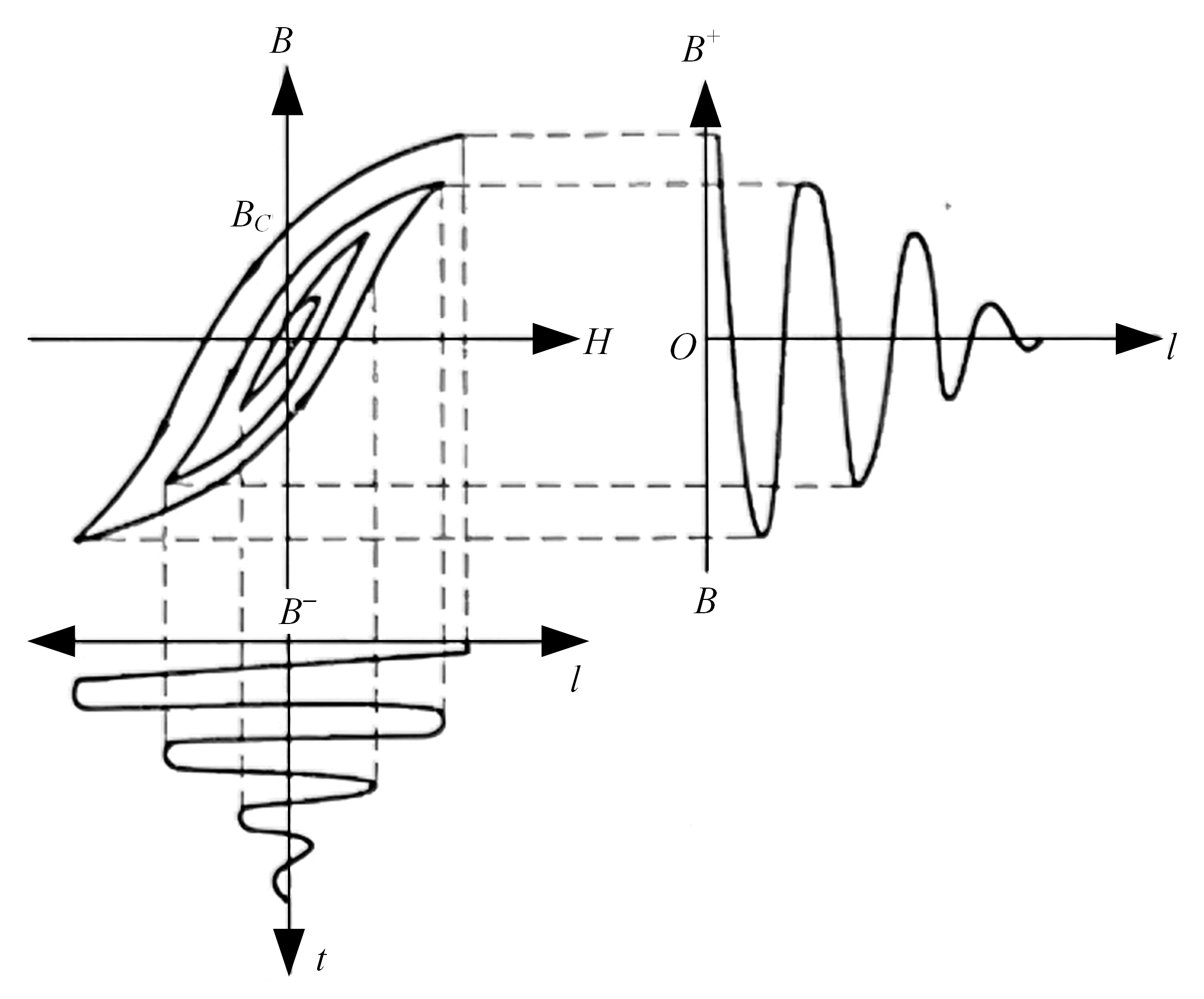
Figure 1. Schematic diagram of the dynamic demagnetization process via progressively shrinking hysteresis loops. The amplitude of the alternating magnetic field (H) is gradually reduced to zero, leading to a decrease in the magnetic flux density (B) from the saturation levels (B+ and B−) and ultimately resulting in a residual magnetization (Br) close to zero. (Note: B+ and B− denote the positive and negative saturation magnetic flux density, respectively.).
Applsci 16 00176 g001
Figure 2. Dynamic demagnetization simulation model for complex ferromagnetic cavity structures.
Applsci 16 00176 g002
Figure 3. Normalized signal waveform of excitation current.
Applsci 16 00176 g003
Figure 4. The time-varying curve of the magnetic field at observation points 1–5 when only the coil is present. (a) amplitudes of the time-varying curves of the magnetic field at observation points 1–5 when only the coils are present. (b) X-components of the time-varying curves of the magnetic field at observation points 1–5 when only the coils are present. (c) Y-components of the time-varying curves of the magnetic field at observation points 1–5 when only the coils are present. (d) Z-components of the time-varying curves of the magnetic field at observation points 1–5 when only the coils are present.
Applsci 16 00176 g004
Figure 5. The time-varying curve of the magnetic field at observation points 1–5. (a) amplitudes of the time-varying curves of the magnetic field at observation points 1–5. (b) Time-varying curves of the X-direction component magnetic field at observation points 1–5. (c) Time-varying curves of the Y-direction component magnetic field at observation points 1–5. (d) Time-varying curves of the Z-direction component magnetic field at observation points 1–5.
Applsci 16 00176 g005
Figure 6. Time varying curve of magnetic field intensity at observation point 6.
Applsci 16 00176 g006
Figure 7. Change of Magnetic flux density in observation area 1.
Applsci 16 00176 g007
Table 1. Main geometric parameters of the model Main geometric parameters of the model.
CabinLength (m)100
Diameter (m)10
Shell thickness (m)0.04
PartitionThickness (m)0.02
Storage deviceLength(m)14
Width (m)6
Height (m)10
Cylindrical structureLength (m)10
Diameter (m)1.2
Shell thickness (m)0.01
Table 2. Surface magnetic field changes in complex ferromagnetic cavity structures.
Time (s)Internal Magnetic Fields in Complex Ferromagnetic Cavity StructuresLegend
0.3Applsci 16 00176 i001Applsci 16 00176 i002
Magnetic (T)
0.5Applsci 16 00176 i003
1Applsci 16 00176 i004
3.5Applsci 16 00176 i005
10.3Applsci 16 00176 i006
10.5Applsci 16 00176 i007
10.9Applsci 16 00176 i008
Table 3. Internal magnetic field changes in complex ferromagnetic cavity structures.
Time (s)Internal Magnetic Fields in Complex Ferromagnetic
Cavity Structures
Legend
0.3Applsci 16 00176 i009Applsci 16 00176 i010
Magnetic (T)
0.5Applsci 16 00176 i011
1Applsci 16 00176 i012
3.5Applsci 16 00176 i013
10.3Applsci 16 00176 i014
10.5Applsci 16 00176 i015
10.9Applsci 16 00176 i016
13Applsci 16 00176 i017
160Applsci 16 00176 i018
Disclaimer/Publisher’s Note: The statements, opinions and data contained in all publications are solely those of the individual author(s) and contributor(s) and not of MDPI and/or the editor(s). MDPI and/or the editor(s) disclaim responsibility for any injury to people or property resulting from any ideas, methods, instructions or products referred to in the content.