Article

Research on Synergistic Fracturing Technology for Lateral Multi-Layer Thick Hard Rock Stratum in Fully Mechanized Faces with Large Mining Height Based on the Triangular Slip Zone Theory


1
Shaanxi Huadian Yuheng Coal & Electricity Co., Ltd., Yulin 719000, China
2
School of Mines, China University of Mining and Technology, Nanhu Campus, Xuzhou 221116, China
3
Jiangsu Mine Seismic Monitoring Engineering Laboratory, Xuzhou 221116, China
4
Huadian Coal Industry Group Co., Ltd., Yulin 719000, China
*
Author to whom correspondence should be addressed.
Appl. Sci. 2026, 16(1), 130; https://doi.org/10.3390/app16010130
Submission received: 5 November 2025 / Revised: 14 December 2025 / Accepted: 17 December 2025 / Published: 22 December 2025

Abstract

In response to ground pressure problems such as an abnormal increase in working face support resistance and severe roadway floor heave induced by the lateral composite structure of the multi-layer thick and hard roof in the 11,223 working face of Xiaojihan Coal Mine, based on the triangle area slip theory, this study reveals that the lateral triangle area forms a composite structure of “cantilever beam + masonry beam”. The stress transfer and unloading mechanism of the high- and low-position thick and hard rock stratum fracturing was clarified. A technical scheme is proposed and implemented to weaken the high- and low-position thick and hard rock strata through horizontal Long Directional Borehole synergistic fracturing and optimize stress transfer. The results show that (1) the lateral overlying rock forms a triangular slip area under the clamping of the cantilever and masonry beam structures. This composite structure is the main reason for the increase in the support resistance at the end of the working face and the stress concentration of the roadway surrounding rock. (2) The influence law that the load of the triangular slip area is mainly influenced by the length of the broken block, and the breaking angle was clarified. The distribution characteristics of the load in the lateral triangle area under the fracturing of thick and hard rock strata at different horizons are mastered. When the length of the key block is reduced by 40%, the supporting force F1 of the rock mass below the broken block on it is reduced by 62.5%, and the supporting force F2 and the frictional force F3 of the end part on the broken area of the triangle area are reduced by 34.6%. (3) The fracturing of high- and low-position thick and hard rock strata can collaboratively weaken the stress accumulation at high and low positions. Fracturing the low-position thick and hard rock strata can cut off the low-position “cantilever beam” structure, and fracturing the high-position thick and hard rock strata at the same time can transfer the load of the “masonry beam”. Through simulation, it is seen that the stress peaks at the end of the working face and the roadway surrounding rock during synergistic fracturing are, respectively, reduced by 12.2% and 28.9%. (4) An industrial test of directional drilling hydraulic fracturing of lateral thick and hard rock strata is carried out, achieving the regulation effect that the average value of the support resistance at the end of the cycle is reduced from 27.2 MPa to 22.7 MPa, and the floor heave amount of the reused roadway is reduced by 62.3%. The research results can provide a reference for the advanced treatment of the strong ground pressure area of the multi-layer thick and hard roof.

1. Introduction

Under the conditions of fully mechanized mining technology with a large mining height and mining the full seam thickness at one time, due to the relatively large mining height, a large-space structure is formed in the overlying strata during the coal seam mining process. The ground pressure behavior is frequent, seriously threatening the safe production of coal mines. As an important coal resource area in China, the coal occurrence conditions in the Yuheng Mining Area are simple, the coal thickness is relatively large, and the mining intensity is generally high. The lateral strata of multiple thick and hard roofs are prone to form a composite structure, resulting in a high accumulation of energy and triggering various types of disasters such as rock bursts, roadway floor heaves, and coal pillar instability [1,2,3,4].
Regarding this issue, numerous scholars have carried out a large number of studies. Wang Yongtao [5] et al. studied the failure law of the surrounding rock of the gob-side entry by combining theoretical analysis, numerical simulation, and on-site measurement. They clarified the fracture position of the key blocks in the overlying rock on the gob side. It is revealed that the asymmetric deformation and failure characteristics of the roadway surrounding rock under the influence of mining are rooted in the non-uniform distribution of the internal stress field. Wu Jingang [6] et al. found through similar simulation tests that after the overlying rock on the gob side breaks, a “semi-arch” structure is formed. Its stability is significantly affected by the mining height, burial depth, and lithology combination. A more stable structure is more likely to be formed in a hard roof. Liu Jiangbin [7] et al., aiming to address the special geological conditions in the Yushen mining area, comprehensively adopted methods such as on-site microseismic monitoring, theoretical analysis, and numerical calculation to study the overlying rock fracture law under the condition of multiple thick and hard roofs. It is revealed that the coordinated fracture movement of the multi-layer thick and hard key stratum structure is the fundamental cause of strong ground pressure manifestations. In recent years, Xie Jiahao [8] et al. explored the anti-bumping mechanism of pre-splitting blasting of the hard roof of the adjacent gob roadway by establishing a mechanical model, using UDEC numerical simulation, and conducting on-site tests. It was clarified that pre-splitting blasting can promote the transformation of the lateral overlying rock structure from a long-arm “F-shaped” structure that is prone to energy accumulation to a short-arm “L-shaped” structure that is conducive to stress release, thereby significantly reducing the degree of stress concentration. The on-site effect test confirmed the effectiveness of this technology in weakening the hard roof and preventing and controlling rock bursts.
When actively transforming the lateral overlying rock of the working face, the directional drilling hydraulic fracturing technology demonstrates significant advantages. This technology accurately reaches target horizons such as the lateral hard roof, the high-level key stratum, or the rock stratum above the coal pillar through directional boreholes. Then, hydraulic fracturing is carried out to create a controllable fracture network and weaken the strength of the rock mass. Its precise orientation ability can guide the overlying rock fractures to preferentially develop in a predetermined direction (such as the goaf), significantly reducing the disturbance to the surrounding rock of the roadway and protecting the integrity of the roadway structure. At the same time, compared with traditional blasting presplitting, hydraulic fracturing has the characteristics of being controllable, causing less disturbance, and having high safety [9,10,11].
Taking the 11,223 working face of Xiaojihan Coal Mine in Yuheng Mining Area as the engineering background, this paper focuses on the integrated research of “the structural evolution of multiple thick and hard rock strata—the synergistic fracturing of thick and hard rock strata at different heights”. It reveals the ground pressure law of the fracturing and weakening of the thick and hard roof and solves the problem of strong ground pressure manifestation in the working face, aiming to provide a reference for mines under similar conditions.

2. Occurrence Characteristics of Multi-Layer Thick and Hard Roof

2.1. Engineering Situation

The 11,223 working face of Xiaojihan Coal Mine is located in the east of the No. 1 mining area of the mine. The buried depth ranges from 420 to 510 m, the strike length is 1860 m, and the dip length is 200 m. The main mined coal seam is the No. 3 coal seam, with a thickness of 5.6 m and a dip angle of 3–7°. The working face adopts a double-gate layout with a reserved coal pillar width of 20 m.
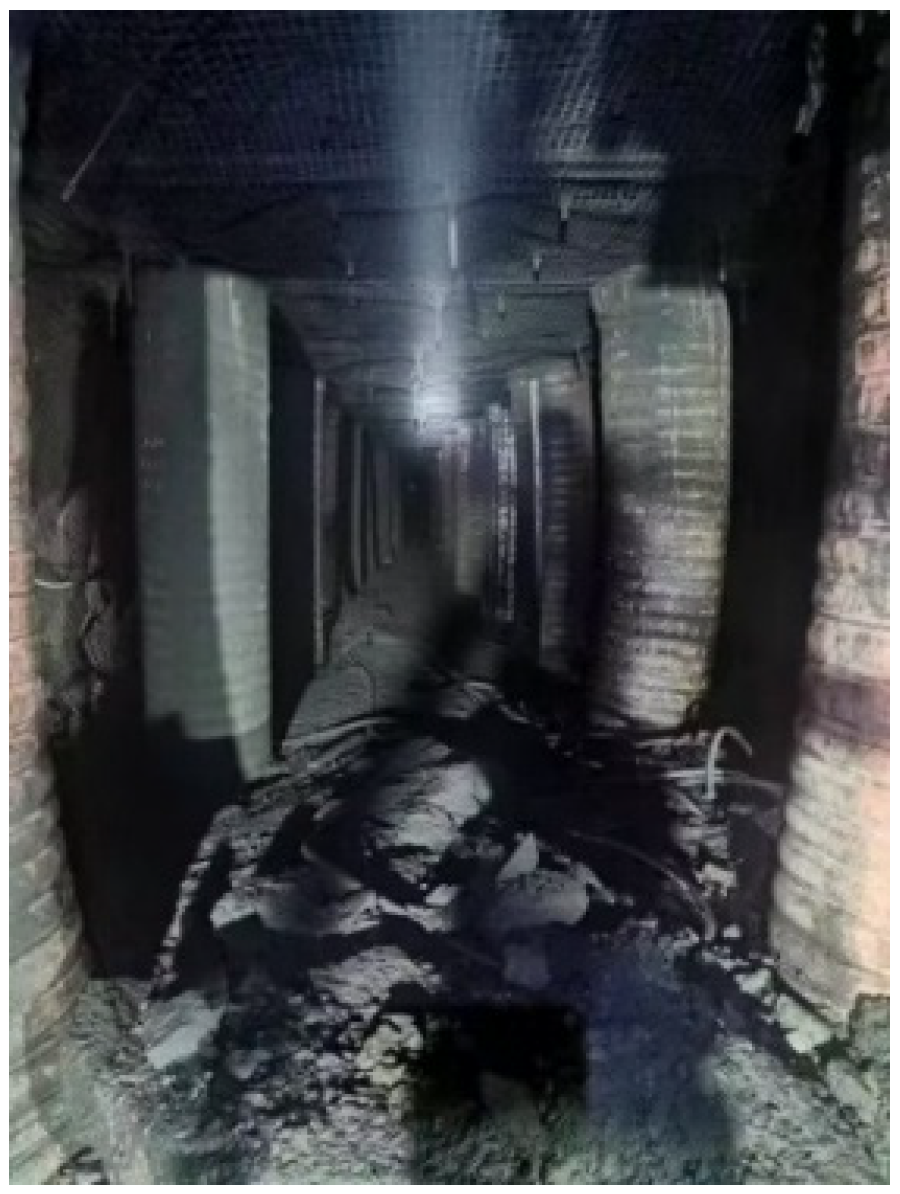
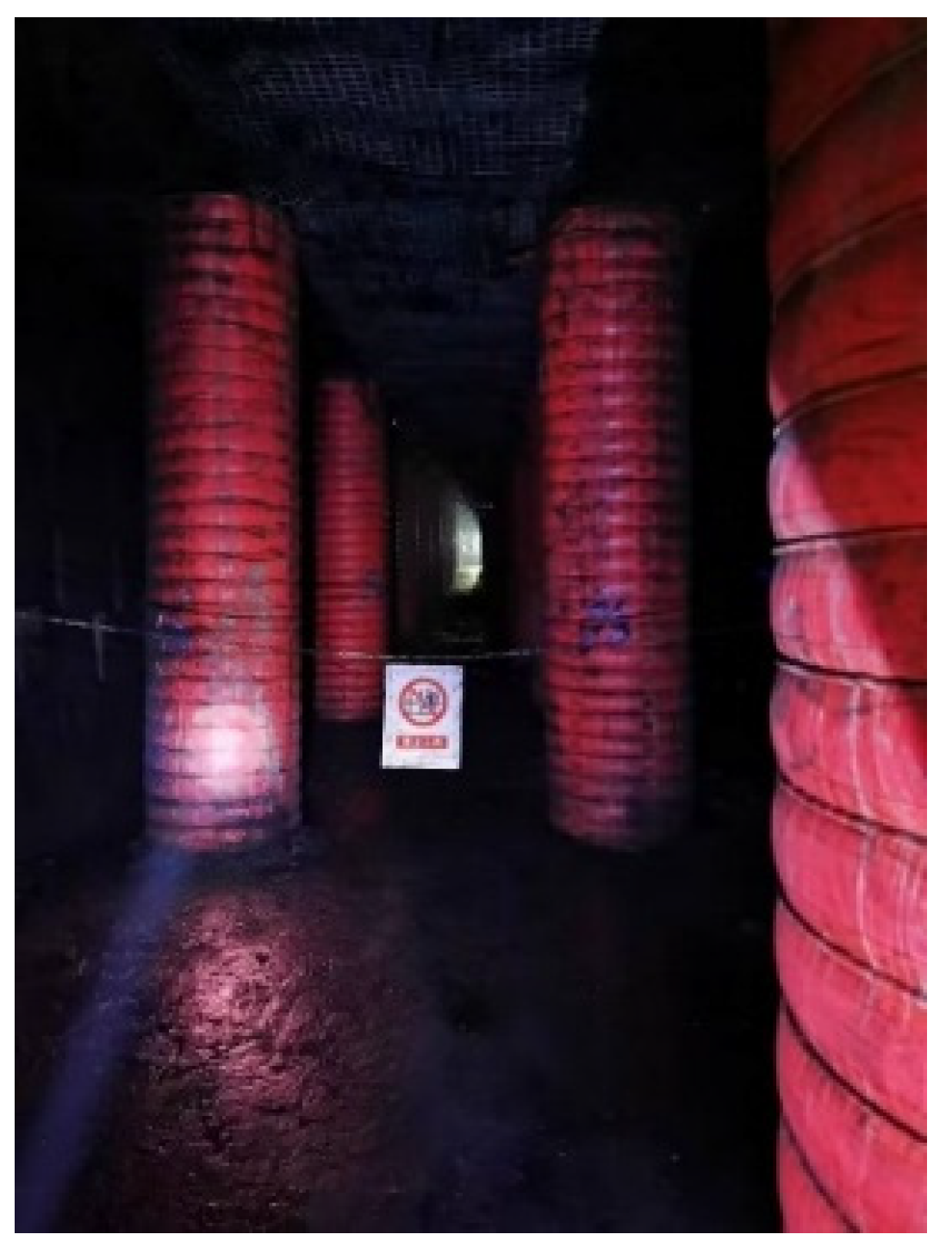
During the mining process of the working face, due to the existence of multiple hard rock strata in the roof, a cantilever structure is formed laterally, placing the surrounding rock in a high-stress environment. Severe pressure problems occur in the 11,223 return airway (reused airway), as shown in Figure 1. Controlling the surrounding rock is difficult, time-consuming, and laborious, seriously affecting the efficient production of the mine.
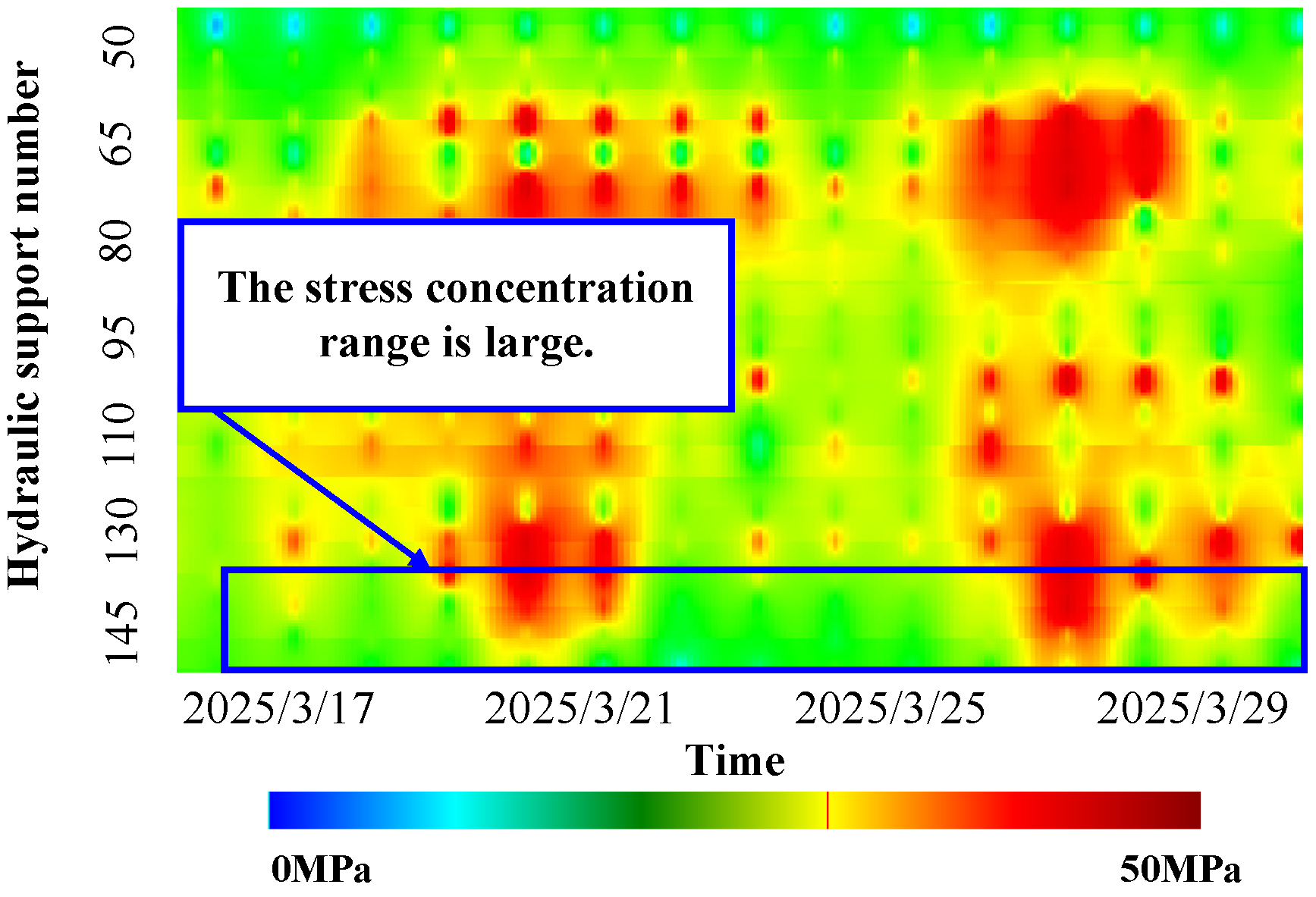
Combined with the phenomena that the cycle end resistance of supports at the end of the 11,223 working face frequently exceeds 45 MPa (Figure 2), during the cyclic operation of the support, the finally reached resistance often exceeds 45 MPa. The opening rate of the safety valve is 13.7%, meaning that the proportion of the safety valve opening situation in the overall situation is 13.7%. During the mining period, the floor heave of the return airway reaches 800–1200 mm, the coal pillar side bulges out seriously, and local rock burst warnings are induced. It can be initially determined that there is a large structure in the lateral overlying rock; that is, there is a relatively large-scale and special-structured rock mass structure in the overlying rock in the lateral direction of the working face. This seriously affects the resistance of the support at the end of the working face and the stability of the surrounding rock of the roadway.

2.2. Stratum Discrimination of Thick and Hard Rock Strata

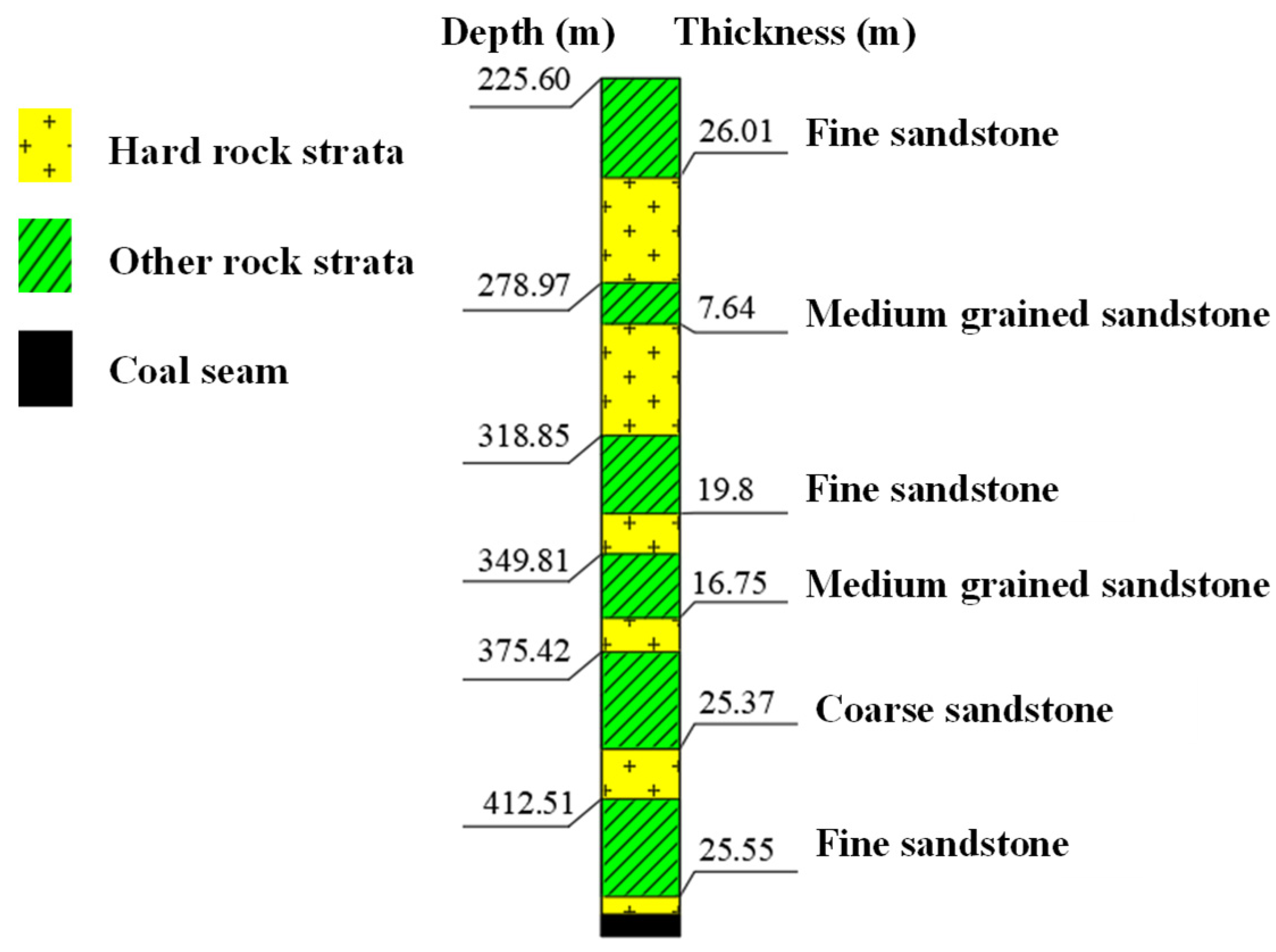
Generally, thick and hard rock strata play a major controlling role in roof activities and exist as key strata. Soft rock strata have less influence on the failure movement of the roof and can be regarded as loads acting on the key strata. Based on the provided borehole columnar diagram combined with the physical and mechanical parameters of coal and rock masses in the mine, a comprehensive determination is carried out of the occurrence and distribution of the key strata of the working face roof. The characteristic parameters of roof rock strata and the occurrence and distribution of key strata are shown in Table 1.
It can be seen that the immediate roof of the coal seam is 3.2 m of siltstone. Above it is a 25.55 m thick medium-grained feldspar sandstone (uniaxial compressive strength of 78.4 MPa). Further above, there is a multi-layer key stratum composed of five different kinds of feldspar sandstones with a multi-layer structure (Figure 3).
The rock strata mentioned above are thick, they have high strength, the weak interlayers are thin, and they are close to the coal seam being mined. When the full-seam mining method is adopted, they will have a greater impact on the ground pressure in the stope.

3. The Lateral Stress Transmission Mechanism of Multi-Layer Thick and Hard Rock Strata

3.1. Roof Structure Morphology

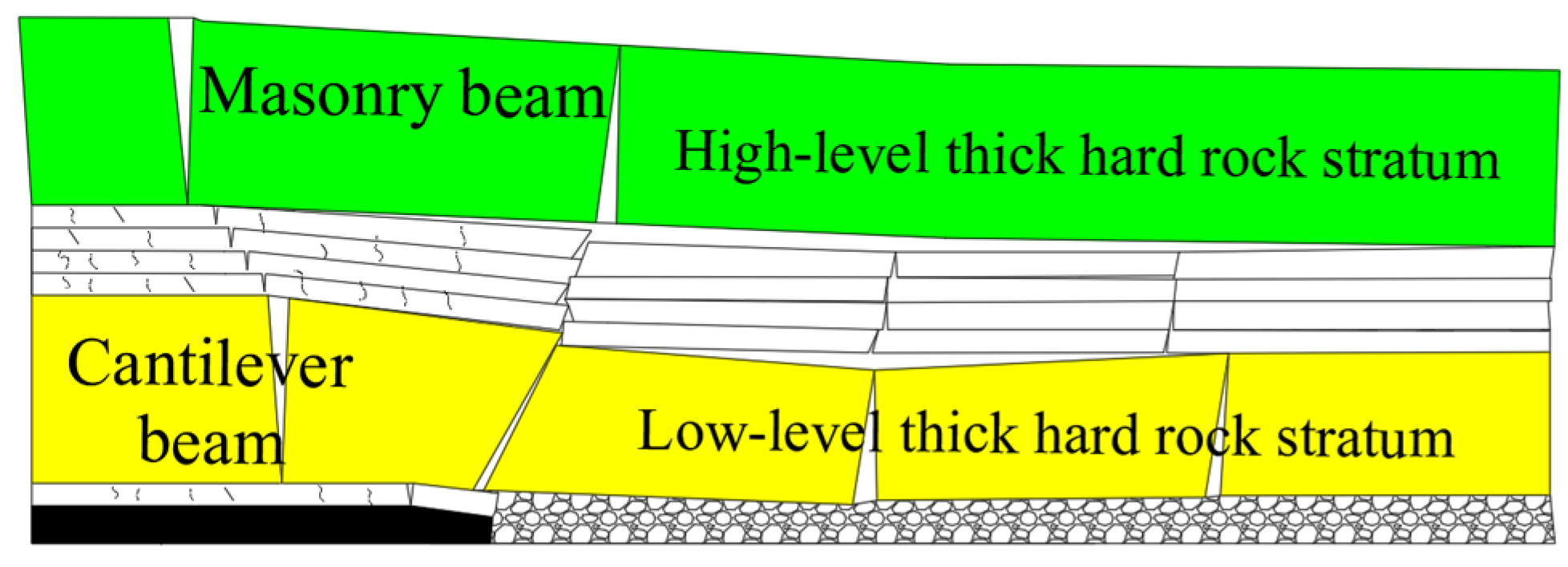
The structure formed by the overlying strata above the working face mainly depends on the filling state of the mined-out space by the swelling volume of the underlying strata, as well as the thickness and breaking distance of the overlying strata [12,13,14]. The main criteria for the roof to form different structures are as follows: when the allowable subsidence amount Δi of the strata is greater than the ultimate subsidence amount ∇i, i.e., Δi > ∇i, the strata move in the form of a “cantilever beam”. When the allowable subsidence amount Δi of the strata is less than the ultimate subsidence amount ∇i, i.e., Δi < ∇i, under this condition, if the fracture step distance of the strata is more than twice its thickness (l ≥ 2h), the fractured blocks of the strata can be “hinged” with each other to form a “masonry beam” structure. Among them, the allowable subsidence amount Δi and the ultimate subsidence amount ∇i of the strata are, respectively:
Δ i = M i = 1 n k p i × h i
i = h i 2 q i l i 2 β σ c
In the formula:
M is the thickness of the coal seam, in meters.
hi is the thickness of the i-th rock strata, in meters.
kpi is the residual bulking coefficient of the i-th rock strata.
li is the fracture length of the i-th rock strata, in meters.
qi is the load borne by the i-th rock strata, in kPa.
σc is the compressive strength of the fractured rock blocks, in MPa.
β is the extrusion coefficient between rock blocks, taken as 0.4.
Based on the fracture distance li of the rock strata, the thickness hi of the rock strata, the allowable subsidence Δi, and the ultimate subsidence ∇i, through judgment and analysis, the structure formed by the overlying rock strata of the 11,223 working face is obtained (Figure 4). The details are shown in Table 2.

3.2. Mechanical Model of the Lateral Triangular Region

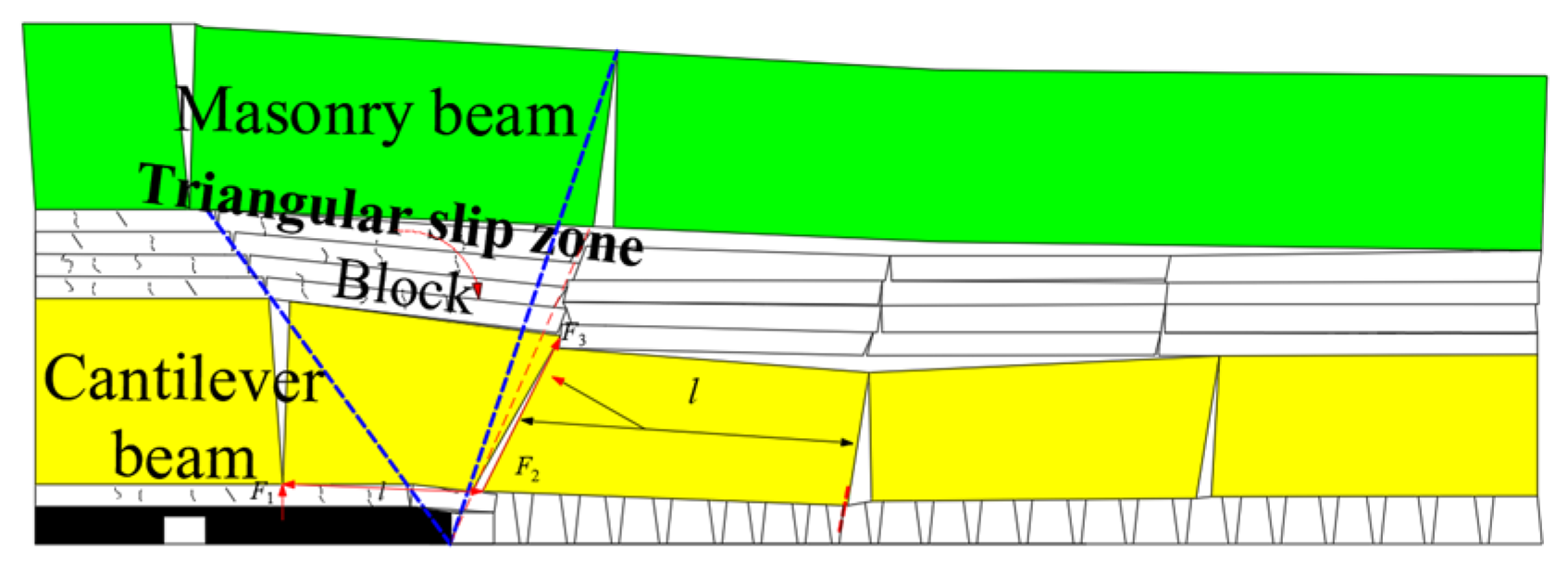
From the mechanical model of the broken block in the triangle area [15] (Figure 5), it can be seen that the lateral overburden pressure is supported by the end of the working face and the surrounding rock of the roadway. The theoretical foundation of the mechanical model is based on the traditional Key Strata Theory [16,17]. The triangular slip zone is characterized by the rotation and slip of the rock strata to the end of the working face, with the broken back to the end of the working face. The boundary of the broken development zone and the fracture zone (moving boundary line) is the hinge point to the end of the working face. When the broken block in the triangle area makes contact with the goaf debris, the rock mass below the cantilever beam breaking block provides a supporting force F1 to the broken rock mass, and the end will provide a supporting force F2 to the broken area of the triangle area and the friction force F3. As shown in Figure 6, QB load is related to the size of the broken block and the bulk density of the rock mass.
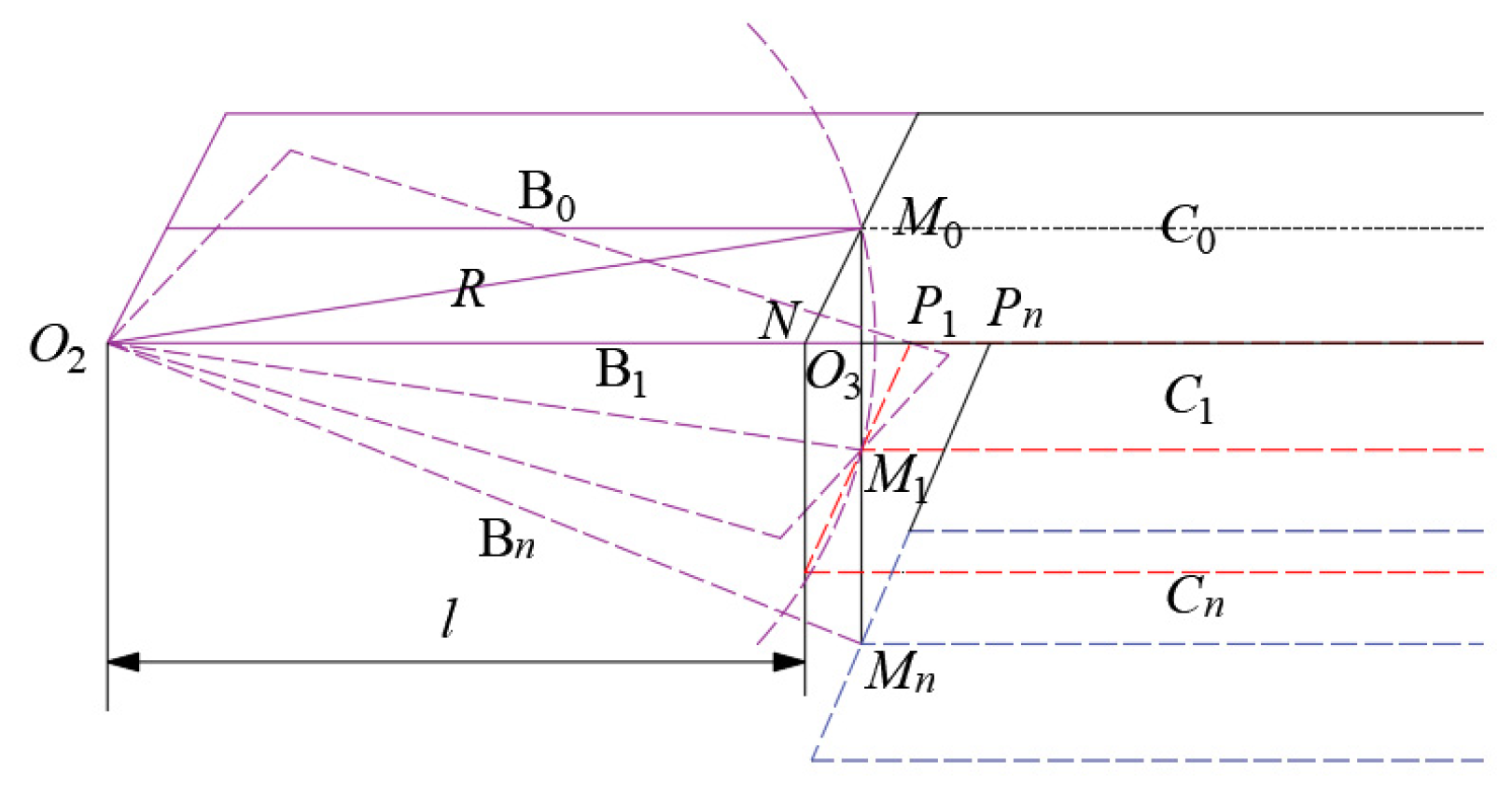
Whether the cantilever beam after breakage can form stable contact with the previously broken blocks in the goaf depends on its kinematic characteristics. For any rock stratum above the coal seam, a stable-contact model of broken blocks is established as shown in Figure 6. Solid lines represent the initial state, and dashed lines represent the predicted state. In this model, B1Bn denote the triangular broken blocks that rotate and subside, and C1Cn denote the broken blocks that have already collapsed into the goaf.
After failure, any rock stratum will subside. It is assumed that the broken block at position C0 in Figure 6 finally settles to position Cn, and the amount of subsidence depends on the bulking factor of the underlying strata that have caved into the goaf. Let the length and break angle of the triangular broken block B be l and α, respectively, and let its final subsidence be Δin. In general, the final subsidence is equal to the allowable subsidence. For a rock stratum with thickness hi, considering the break angle and the final plastic hinge, it is assumed that the contact length between the newly broken block and the previously broken block must reach hi/2 (per unit width) to achieve stable contact. After stable contact is formed, sliding will occur along the contact surface.
After breakage, the newly formed block rotates about the hinge point O2 at the bottom of the fracture plane and stops rotating once it comes into contact with the previously broken block. Before that, the new broken block B rotates around the hinge point O2. According to the geometric relationships shown in Figure 6, its rotation radius R can be expressed as (3).
R = O 2 N + N O 3 2 + M 0 O 3 2 = l + h i 2 tan α 2 + h i 2 2
For the final subsidence position of the previously broken block, the corresponding horizontal distance O2Mn is given by (4).
O 2 M n = O 2 N + N O 3 2 + P 1 M n 2 = l + h i 2 tan α 2 + Δ in h i 2 2
Therefore, for the new broken block B to achieve stable contact with the previously broken block C, the rotation radius R of block B must be greater than or equal to the horizontal distance O2Mn between the hinge point O2 and the contact point of the block; i.e., the condition expressed in (5) and (6) must be satisfied, which can be simplified to (7).
R O 2 M n
l + h i 2 tan α 2 + h i 2 2 l + h i 2 tan α 2 + Δ in h i 2 2
which can be simplified to
Δ in h i
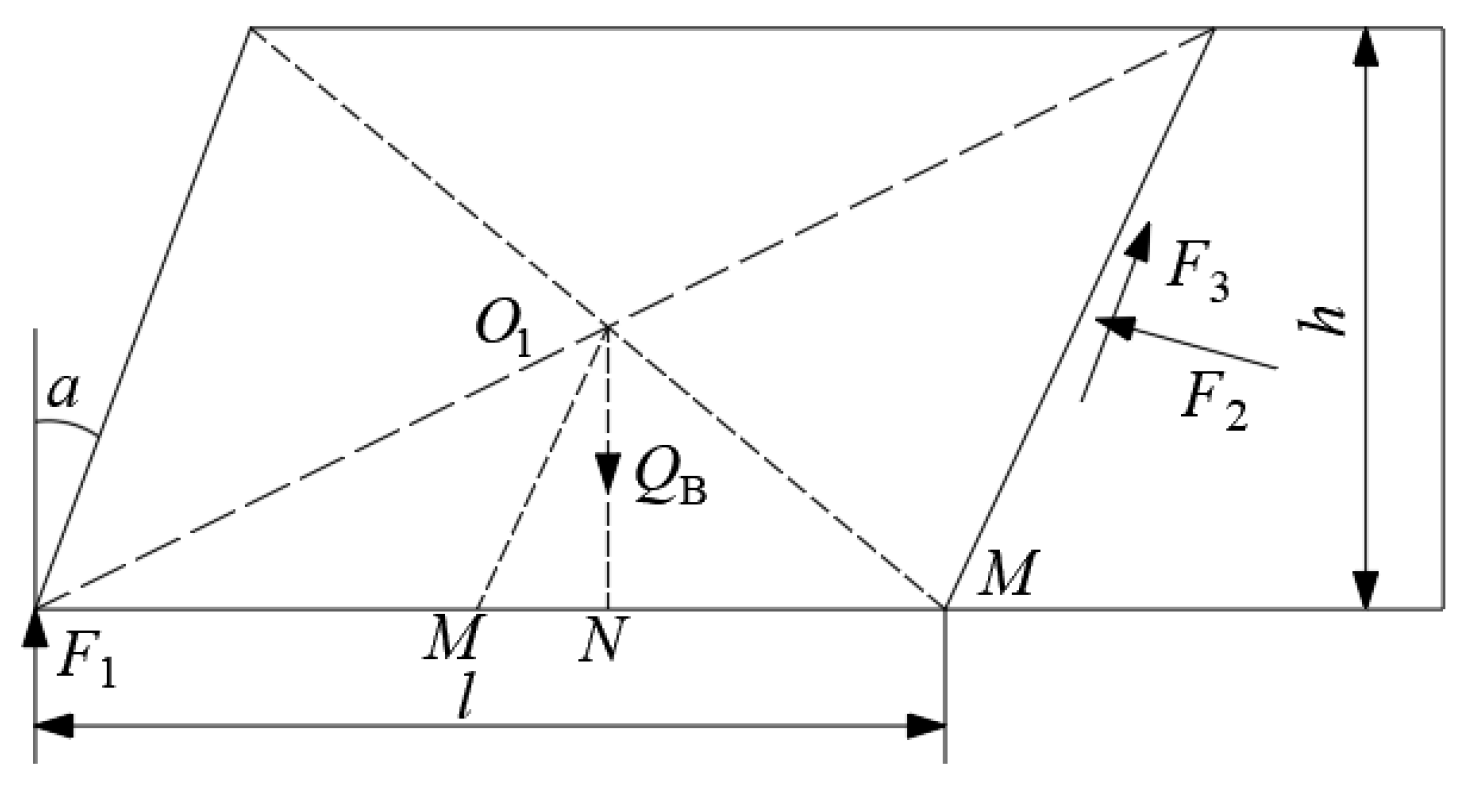
This indicates that stable contact through rotation of the triangular broken block can only be formed when the subsidence of the previously broken block does not exceed its thickness. For the lower key stratum and any stratum above it but below the upper key stratum, the corresponding mechanical model is shown in Figure 7.
Point O1 is the centroid of block B of the broken block body. According to the geometric relationship in Figure 7, the forces in the vertical direction are in equilibrium.
F y = 0 , Q B = F 1 + F 2 sin α + F 3 cos α
F 3 = F 2 f
In the formula, f is the friction factor between the contact surface of the broken block C and the broken block B in the triangular area. The value range is generally 0.3–0.8, and 0.5 is taken. QB is the load of the broken block B in the triangular area (QB = lhγ). Taking the moment at point O,
1 2 Q B ( l h tan α ) + 1 2 h F 2 sin α tan α = F 1 l
F 1 = 1 + f cot α + ( cot α f ) h l 2 + 2 f cot α + 2 sin 2 α h l Q B
F 2 = 1 + h l tan α 2 sin α + 2 f cos α + h l cos α Q B
F 3 = 1 + h l tan α 2 sin α + 2 f cos α + h l cos α Q B f

3.3. Fracturing Stress Transfer Law of Low-Level Thick Hard Rock Strata

When the low-level thick and hard rock strata are fractured, the cantilever structure will be cut off, and the load originally borne and transmitted by it will be released and transferred to the far-field position, while the load QB transmitted by the high-level rock strata remains basically unchanged.
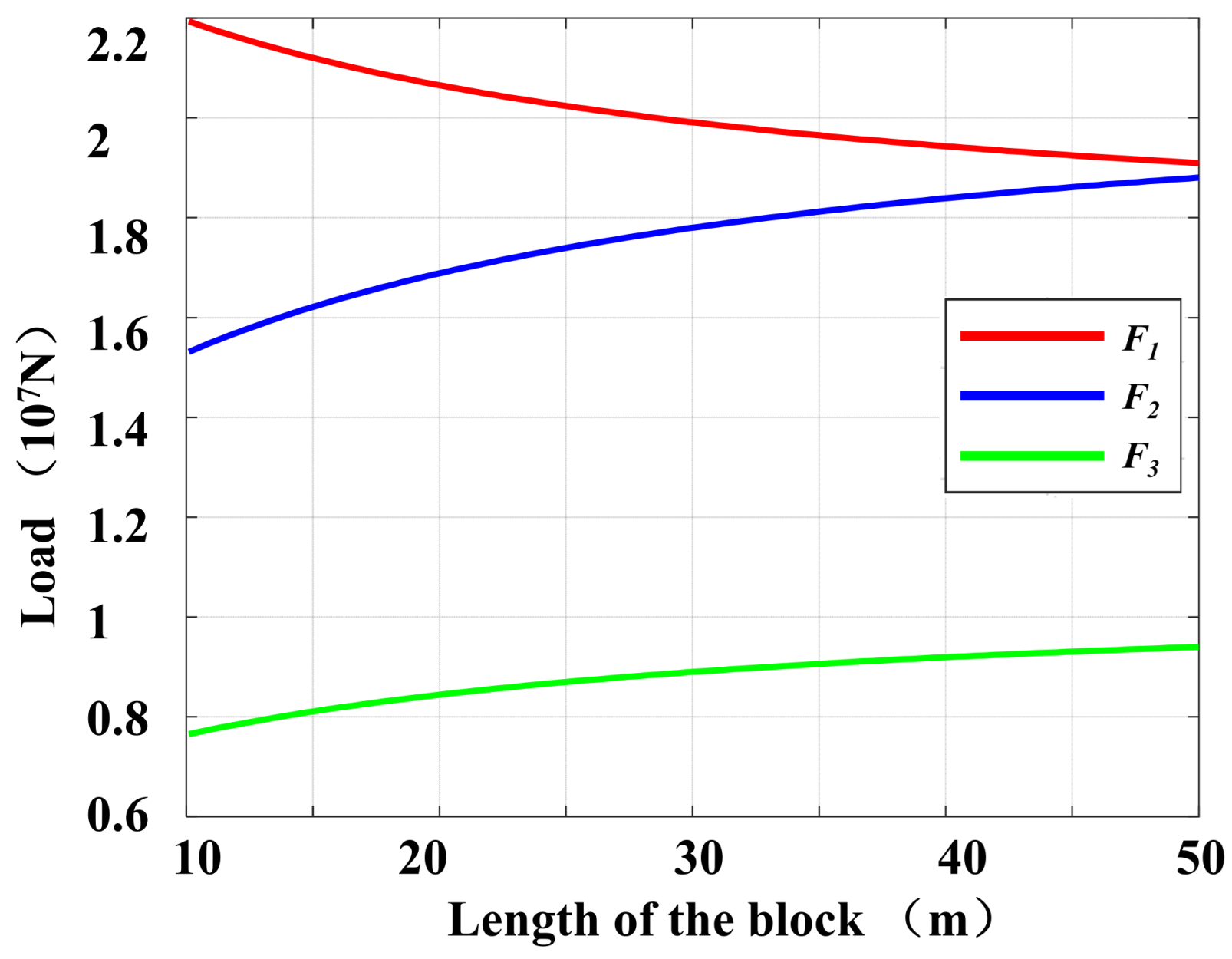
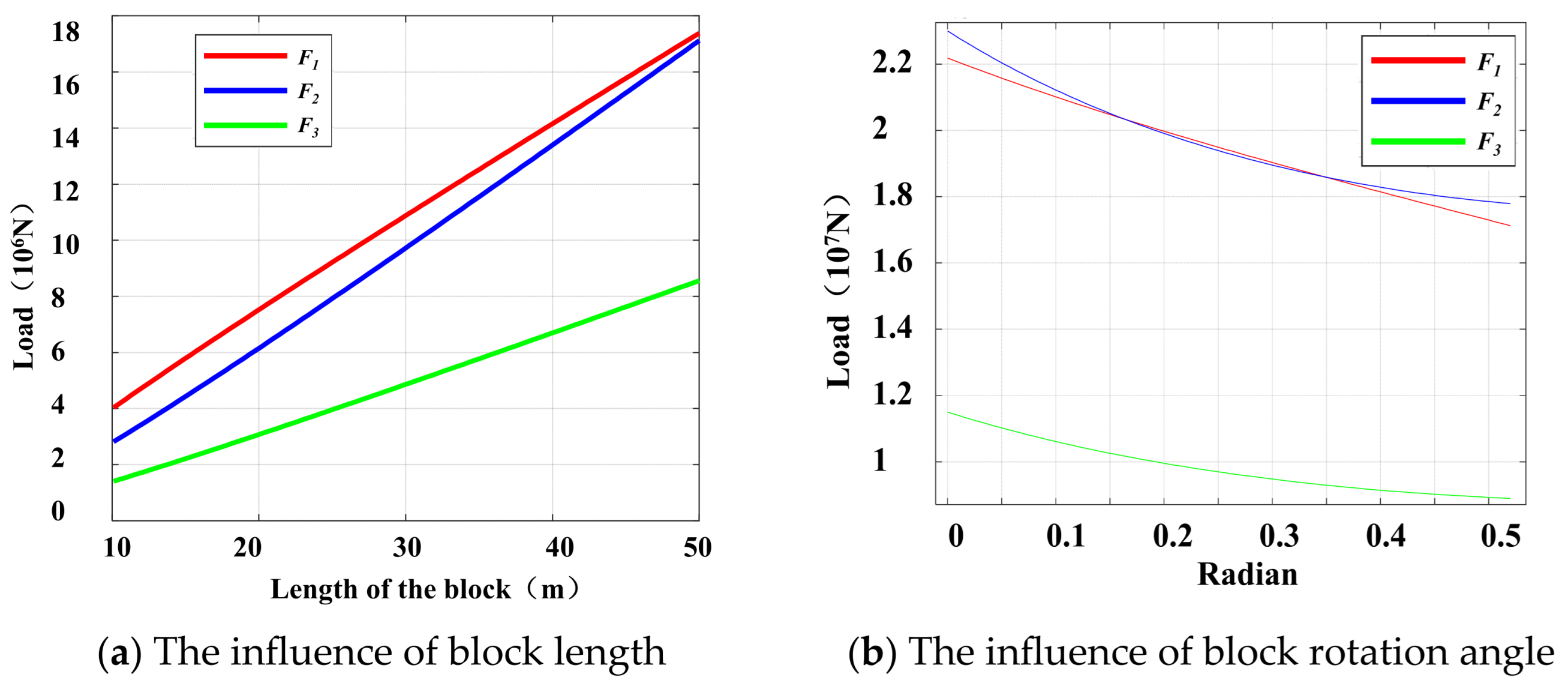
The relevant parameters of the key breaking block are as follows: breaking angle α = 70°, rock thickness h = 25.55 m, friction coefficient f = 0.5 (the friction coefficient generally ranges from 0.5 to 0.8; the minimum value is selected to achieve a larger value of F1 under extreme working conditions), and load QB = 3.44 × 10⁷ N/m. The calculation results are shown in Figure 8. As the length of the block decreases, the load at the end of the working face gradually decreases, while the load on the solid coal rib increases slightly. It can be speculated that hydraulic fracturing breaks the cantilever beam in advance, and the foundation of the low triangular area is destroyed. It is impossible to effectively transfer stress to the far side of the coal wall. The concentrated stress originally acting on the end is transferred and released to the space on both sides. However, because the high-level masonry beam structure is still in place, its load continues to be transmitted through the triangular block, so the solid coal rib pressure relief effect is limited.

3.4. Fracturing Stress Transfer Law of High-Level Thick and Hard Rock Strata

When the high-level thick and hard rock stratum is fractured, not only does the length of the breaking block change (QB is positively linearly correlated with the block length), the breaking angle also decreases due to the weakening of the rock mass strength. In order to study the influence of the two factors on the load in the triangle area, the length of the breaking block and the breaking angle of the rock stratum are analyzed, respectively.
As shown in Figure 9a, when the key block length is reduced by 40%, F1 is reduced by 62.5%, and F2 and F3 are reduced by 34.6%; as shown in Figure 9b, when the fracture angle decreases due to fracturing (α increases), the load in the triangle area will also decrease. It can be seen that by controlling the length of the key block of the high masonry beam, the support resistance of the stope and the stress concentration of the surrounding rock of the roadway can be effectively reduced.
Therefore, when the low and high thick and hard rock strata are fractured at the same time, it can not only cut off the foundation (cantilever beam) of the triangle area but also transfer and unload the load of the overlying strata transmitted by the masonry beam. It is an important way to control the surrounding rock of the return air roadway and improve the resistance level of the end support of the working face by the synergistic fracturing of multi-layer thick and hard rock strata to achieve stress optimization.

4. Numerical Simulation of Synergistic Fracturing Effect of Multi-Layer Thick and Hard Rock Strata

4.1. Modeling

In the upper section, it is clear that reducing the length and angle of the broken block in the triangle area by fracturing can significantly weaken the stope load. In order to further clarify the improvement effect of lateral stress under different thick and hard rock strata in the fracturing triangle area, UDEC 7.0 discrete element software is used to analyze the lateral stress distribution characteristics under different fracturing schemes.
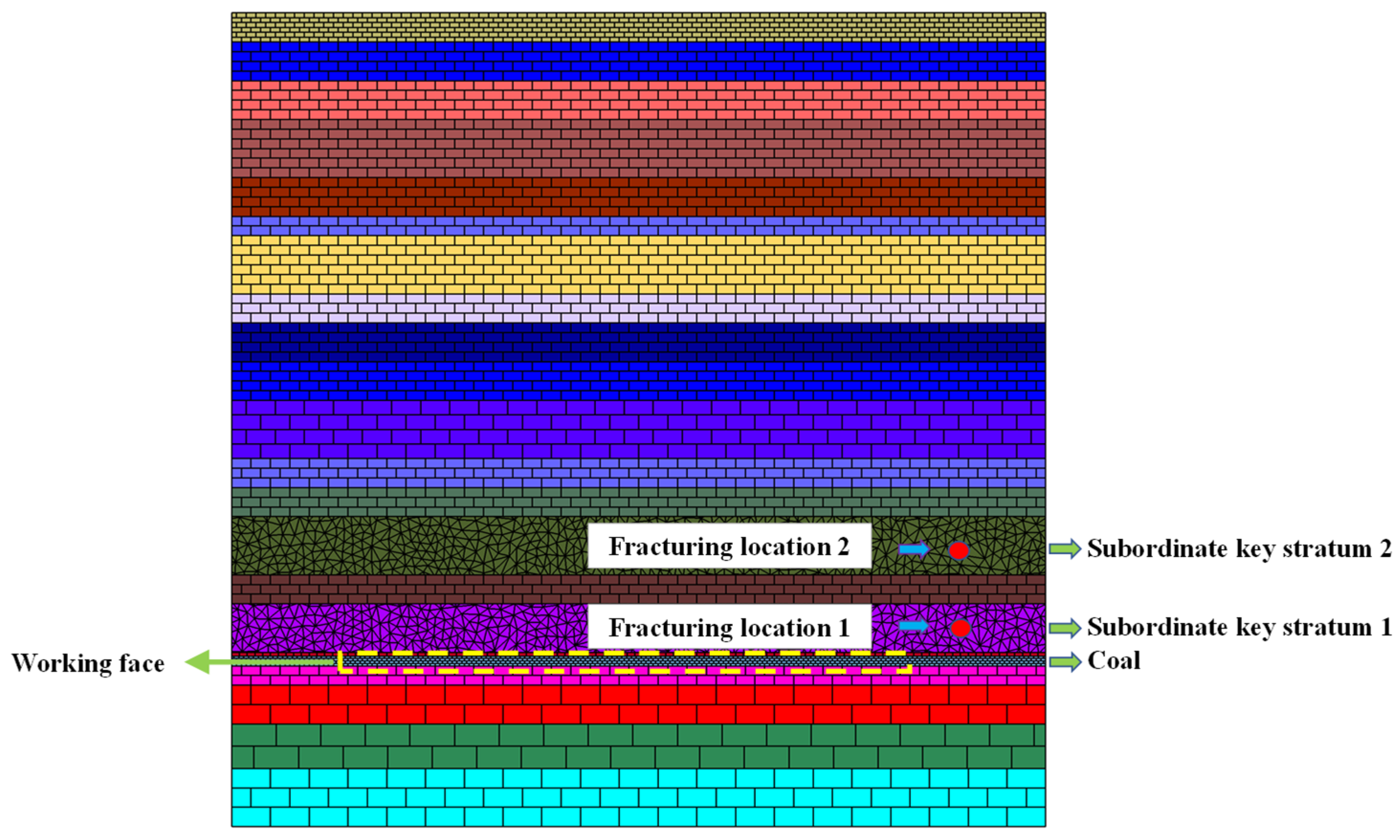
The size of the model is 420 m × 420 m (Figure 10). The rock blocks obey the Mohr–Coulomb criterion, and the joints obey the Barton–Bandis criterion [18]. TRIGON is used to divide the thick and hard rock blocks, and the fluid module is used to perform water injection fracturing on the lateral rock strata position (the fracturing position is above the roadway). The bottom of the model is fixed, and the horizontal displacement constraints of the left and right boundaries are applied. The top is applied with 2.5 MPa to equivalently omit the load generated by the 100 m rock strata, and the survey line is arranged from the lower part of the coal seam to the model boundary to monitor the change in stress distribution. The rock mass was discretized into blocks of 10 m × 5 m (the coal seam was discretized into blocks of 2.5 m × 1.25 m), and the maximum mesh size was therefore 5 m. Mesh refinement was applied to the key strata and coal seam, with a maximum mesh size of 1 m, which enables the effective calculation of stress variations in regions with large stress gradients near the roadway.
The mechanical parameters of the rock formation and the mechanical parameters of the joints are shown in Table 3 and Table 4, respectively. The parameters in the numerical simulation are all derived from laboratory tests of rock samples obtained on-site.
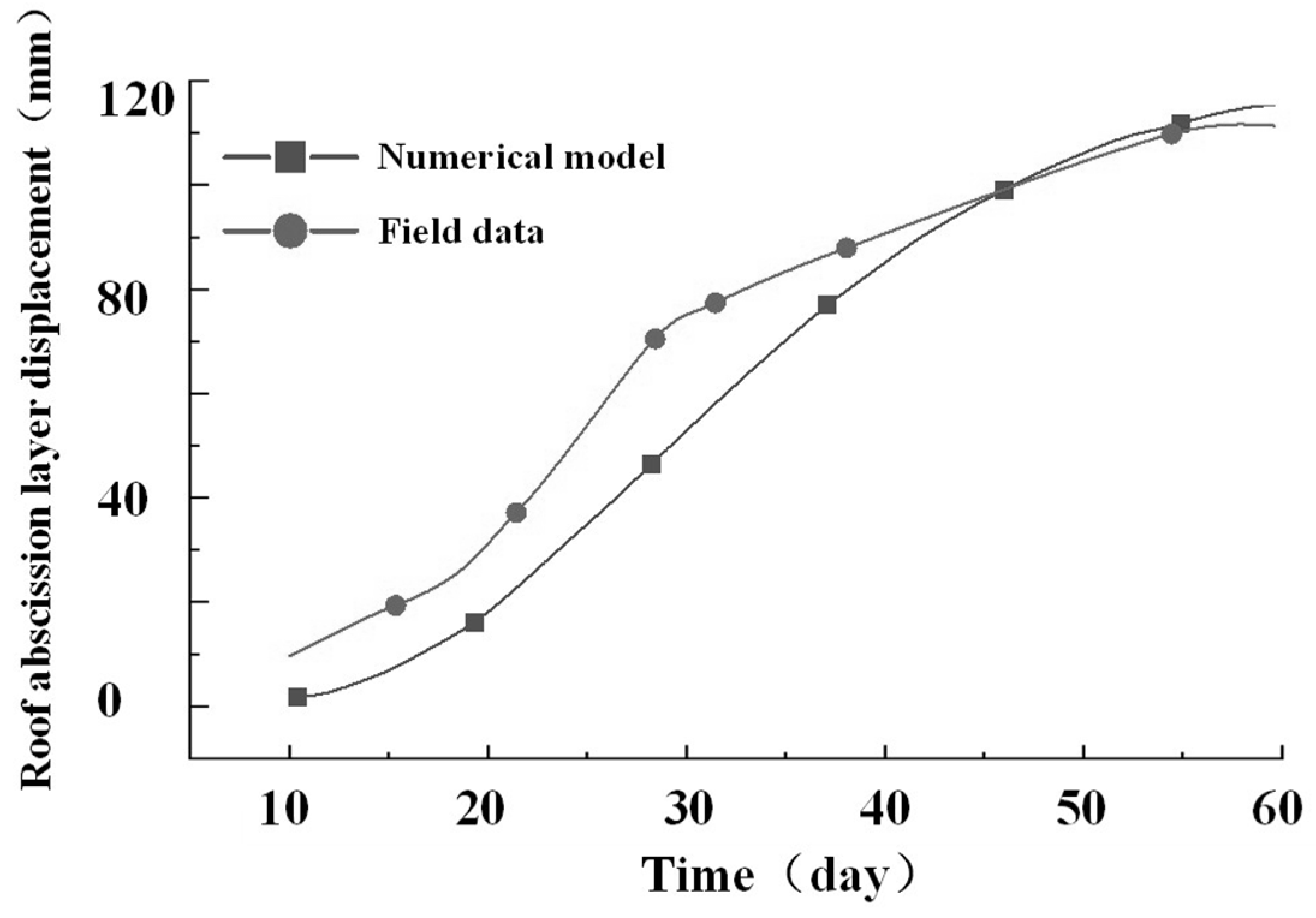
By calibrating the displacement of the separation strata below the hard rock in the numerical model with that obtained from on-site borehole monitoring, we ensure that the model can accurately simulate the movement process of the hard rock strata (Figure 10).

4.2. Scheme Design

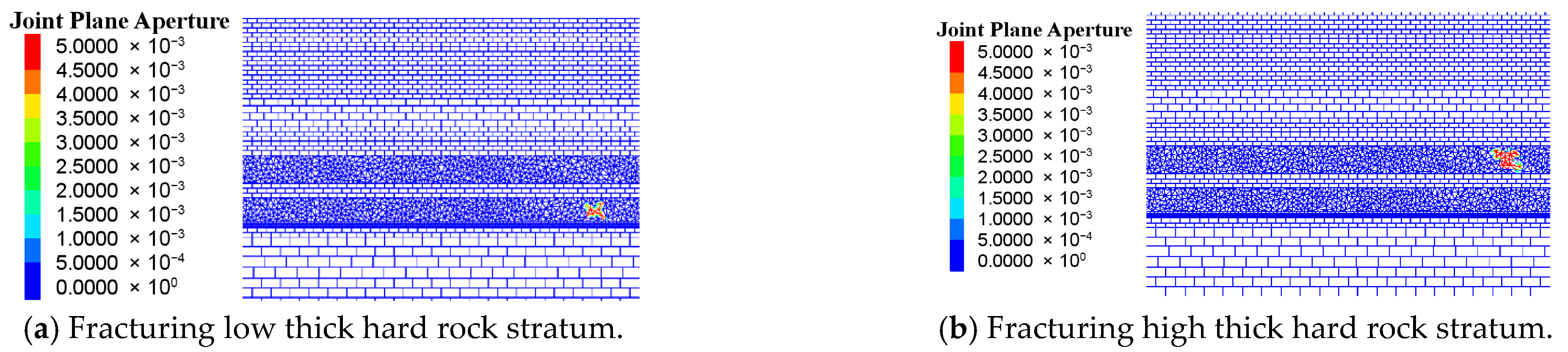
According to the field construction parameters, the target strata of drilling and fracturing are low-level coarse-grained feldspar sandstone and high-level medium–fine-grained sandstone. The set water injection volume is 30–40 m3, the displacement is 8 m3/min, and the pump pressure is 25–32 MPa (Figure 11). The boundary of the target stratum for hydraulic fracturing was assigned a pore pressure of 0. Four schemes were simulated: 1, not fracturing thick and hard rock strata; 2, fracturing low thick hard rock stratum; 3, fracturing high thick and hard rock stratum; 4, fracturing high and low thick and hard rock strata. The aperture of the rock strata after fracturing is shown in Figure 12.

4.3. Results of Synergistic Fracturing Numerical Simulation

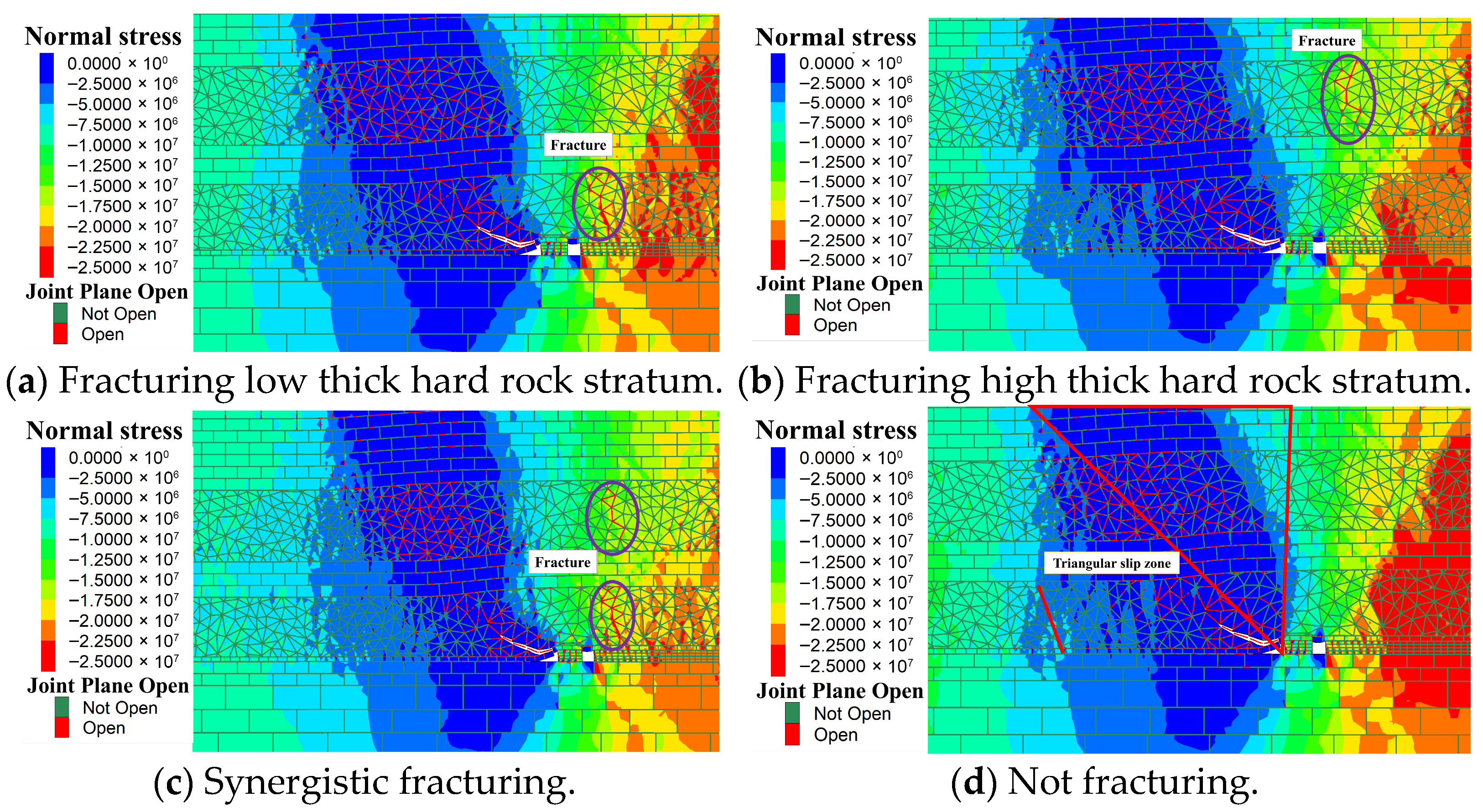
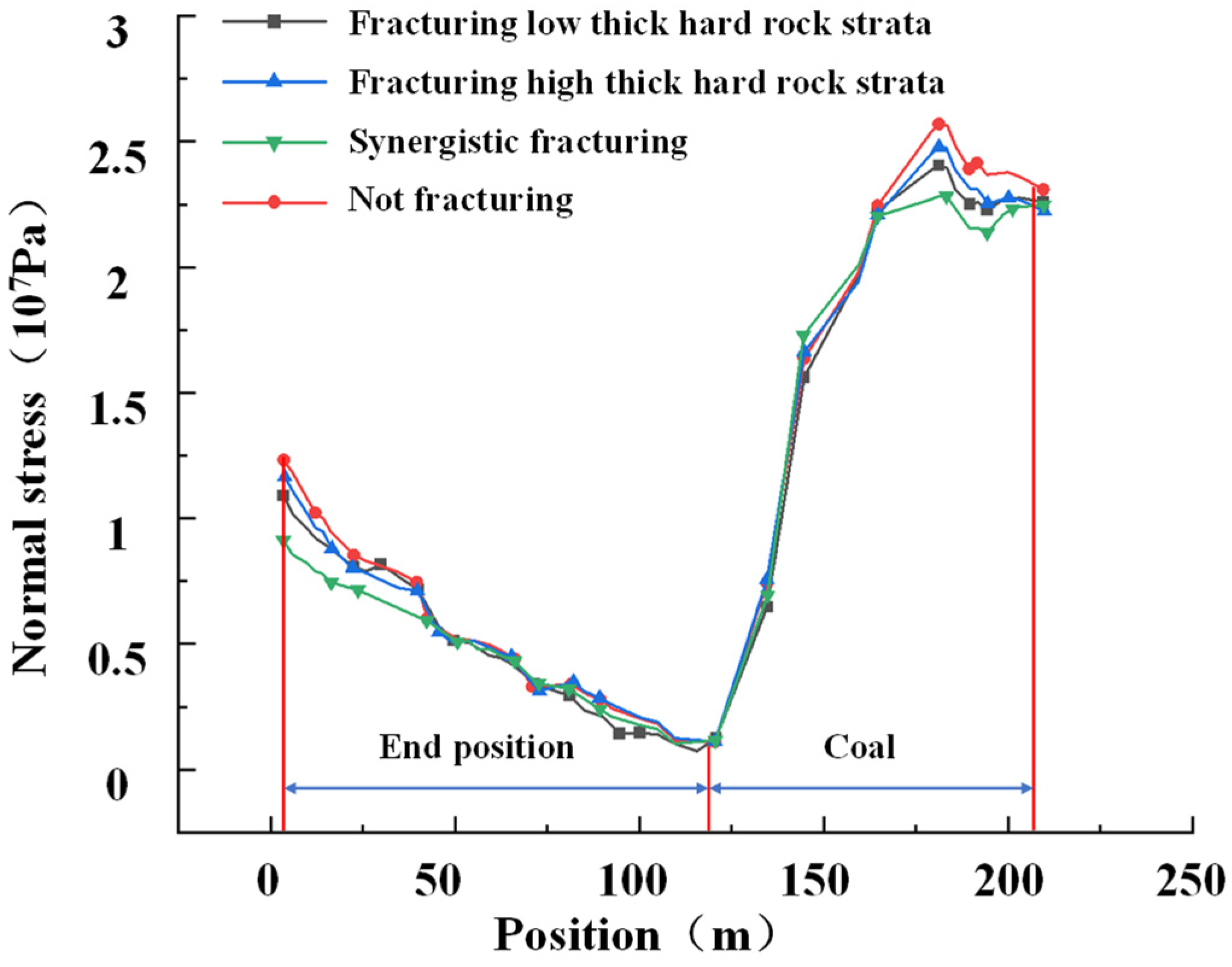
The simulation results show that the low-level thick and hard rock stratum and the high-level thick and hard rock stratum form cantilever and masonry beam structures, respectively, in the lateral direction. When there is no fracturing, the peak stresses of the solid coal rib and the end of the working face are 25.5 MPa and 12.1 MPa, respectively. When fracturing a layer of thick and hard rock separately, the stress concentration degree decreases slightly. The fracturing effect is the best for the low thick hard rock stratum and the high thick hard rock stratum at the same time.
As shown in Figure 13c,d, the red stress concentration area is significantly reduced. The peak stress at the end of the working face and the solid coal rib is 22.4 MPa and 8.6 MPa, respectively, which is reduced by 12.2% and 28.9% (Figure 14). It can be seen that the lateral stress environment of the stope can be significantly improved by directional hydraulic fracturing while weakening the multi-layer thick and hard rock stratum.

5. Industrial Test of Synergistic Fracturing Structure Control in Multi-Layer Thick and Hard Rock Strata

5.1. Directional Drilling Hydraulic Fracturing Scheme for Lateral Thick Hard Rock Strata

According to the conditions of the 11,223 working face, the multi-layer thick and hard rock strata synergistic fracturing scheme is designed and implemented for the lateral thick and hard rock strata. This fracturing test was carried out locally in the roadway, and the deformation of the roadway with or without fracturing technology was compared.
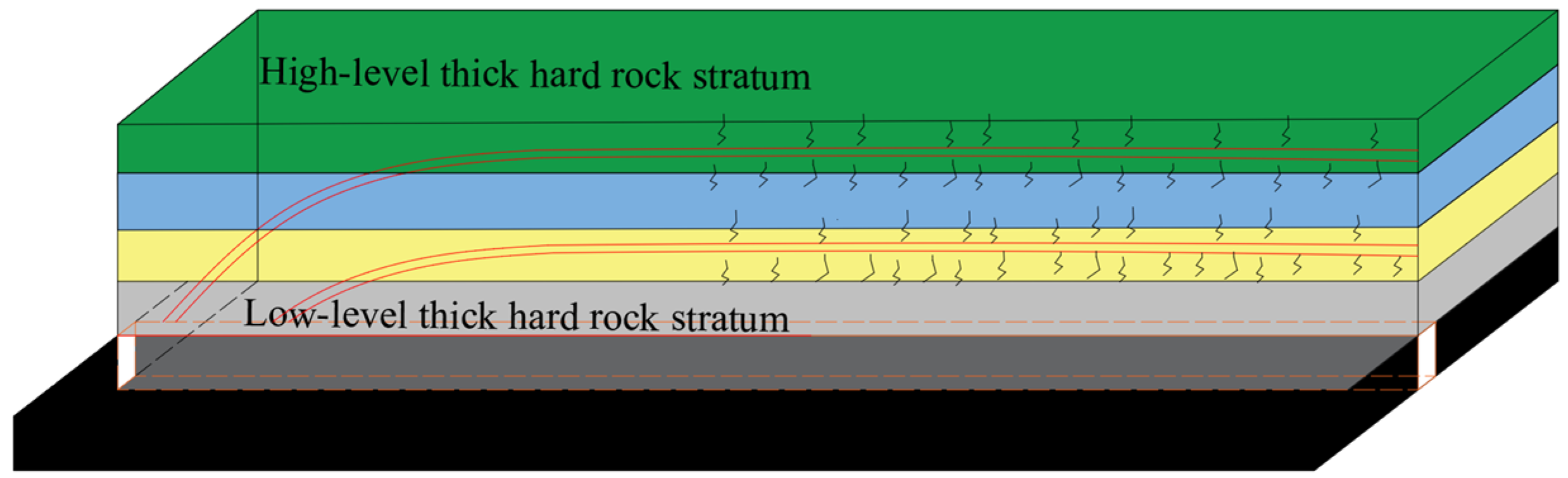
As shown in Figure 15, a total of four drilling fields and six fracturing boreholes are arranged. The target layers of drilling and fracturing are 25.55 m medium-grained feldspar sandstone and 25.37 m coarse-grained feldspar sandstone. The length of a single hole is 195~501 m. The single-hole design fractures 1~21 sections, the cumulative drilling length is 1995 m, and the cumulative design fracturing section is 63 sections, as shown in Table 5.
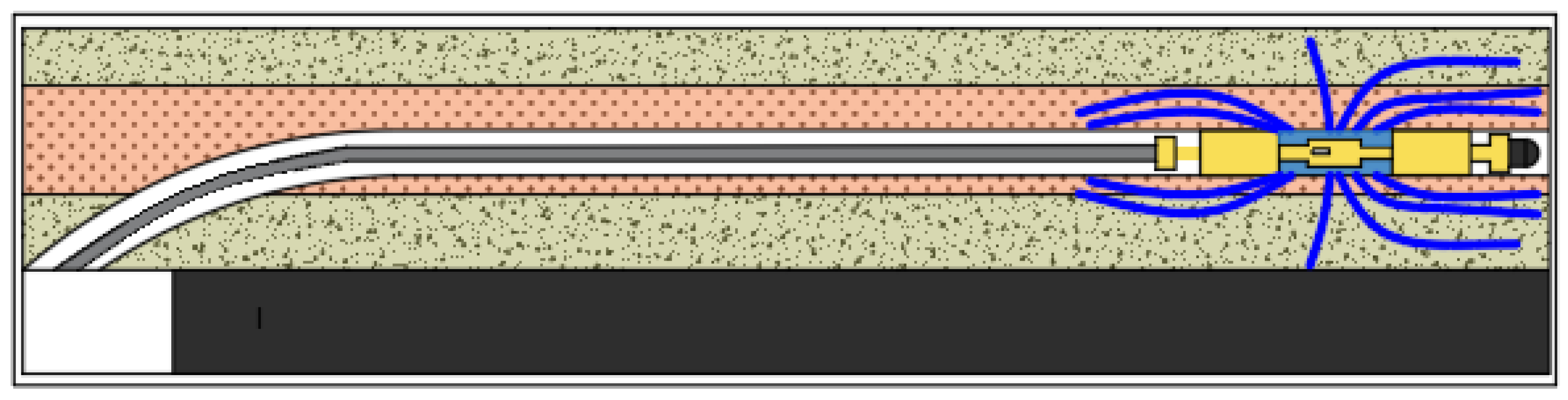
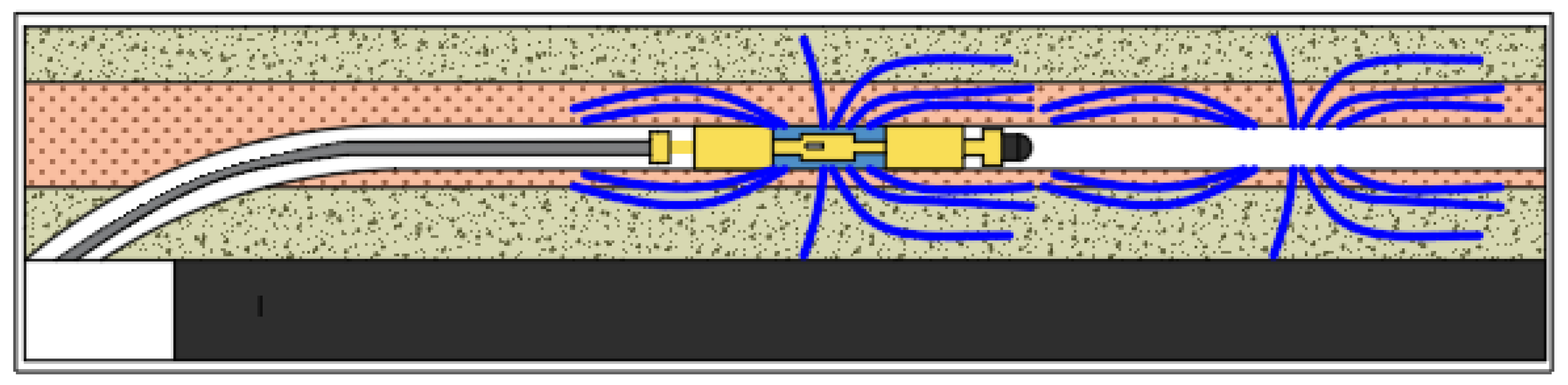
The working principle of the double-packer, single-stage, multi-point drag-type staged hydraulic fracturing technology for the roof is as follows (Figure 16 and Figure 17). After completion of the directional borehole drilling and running the fracturing tool string to the designed position, the target roof interval is isolated by a double packer and fractured in a single stage. A pressure-balancing bleed channel is designed inside the packer, through which the pressure of the high-pressure fracturing fluid in the tubing is transmitted to the packer. This configuration ensures balanced pressure between the tubing and the packer and guarantees the operation goal of “instant setting upon pressurization and instant release upon pressure relief” [19,20,21,22,23].
When the pressure of the fracturing fluid reaches 3 MPa, the packer is fully set. With further pressurization to 5 MPa, the flow-limiting valve opens and hydraulic fracturing of the selected interval is initiated. During the fracturing process, high-pressure fluid is continuously injected into the roof strata, causing the water pressure acting on the rock mass to gradually increase. Once this pressure exceeds the breakdown pressure of the rock, the elastic strain energy stored in the rock is released in the form of kinetic energy, which manifests as dynamic compressive failure of the rock mass. A new fracture system is thereby generated, the overall integrity of the rock mass is destroyed, and its strength is reduced. After completion of the first-stage fracturing, the wellhead pump and surface injection equipment are shut down and the wellhead pressure is relieved by draining the fluid; the packer then automatically returns to its original diameter. The high-pressure tubing string is then dragged by the directional drilling rig to the next designed position to conduct the second-stage fracturing. By repeating this procedure for all designed stages, fractures generated in adjacent stages coalesce into a continuous fracture network within the roof strata, thus effectively weakening the hard roof above the coal seam.

5.2. Results of Synergistic Fracturing Field Tests

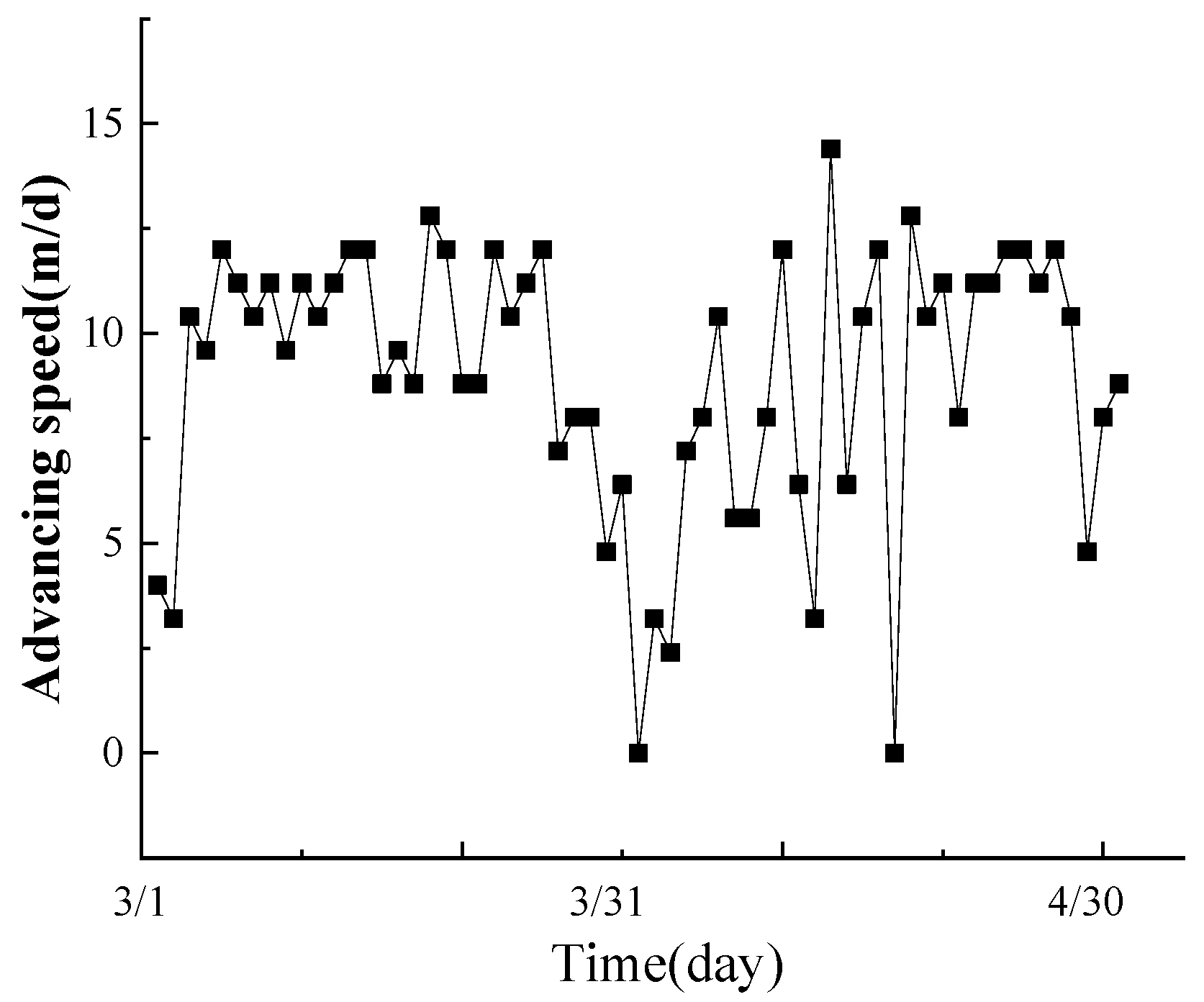
The advancing speed of the on-site working face is mainly maintained between 8 m/d and 12 m/d, and the change in advancing speed before and after fracturing is small. The average values are 9.29 m/d and 8.64 m/d, respectively, while the variances are 8.66 and 12.18, respectively (Figure 18). Therefore, the influence of advancing speed on stope ground pressure can be excluded. The specific roadway deformation is shown in Figure 19.
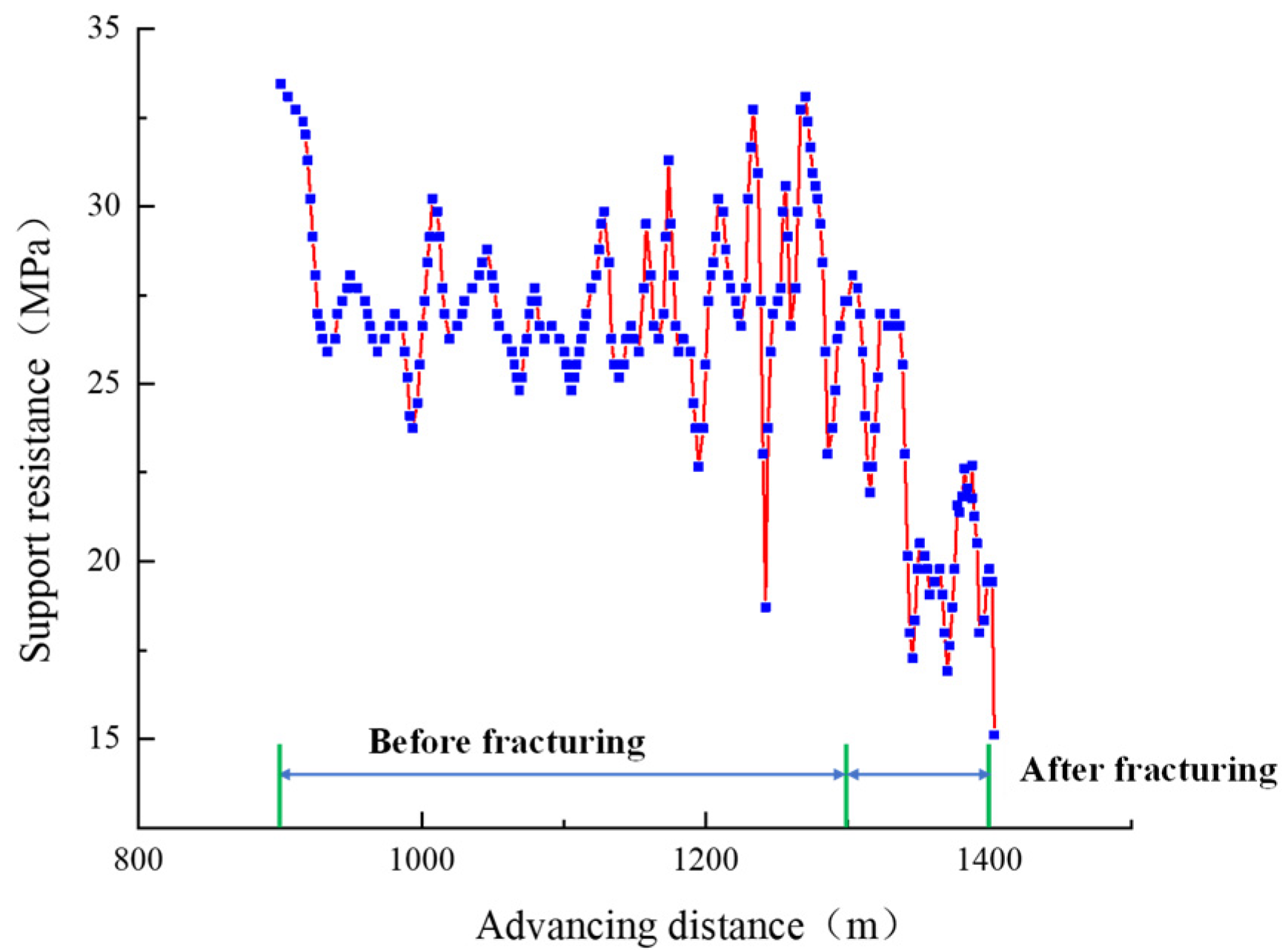
Before the working face enters the fracturing zone, the average working resistance of the support is 27.2 MPa. During the mining period of the working face, the working resistance of the support near the return airway is high, and the periodic pressure shows the characteristics of large step distance and severe pressure.
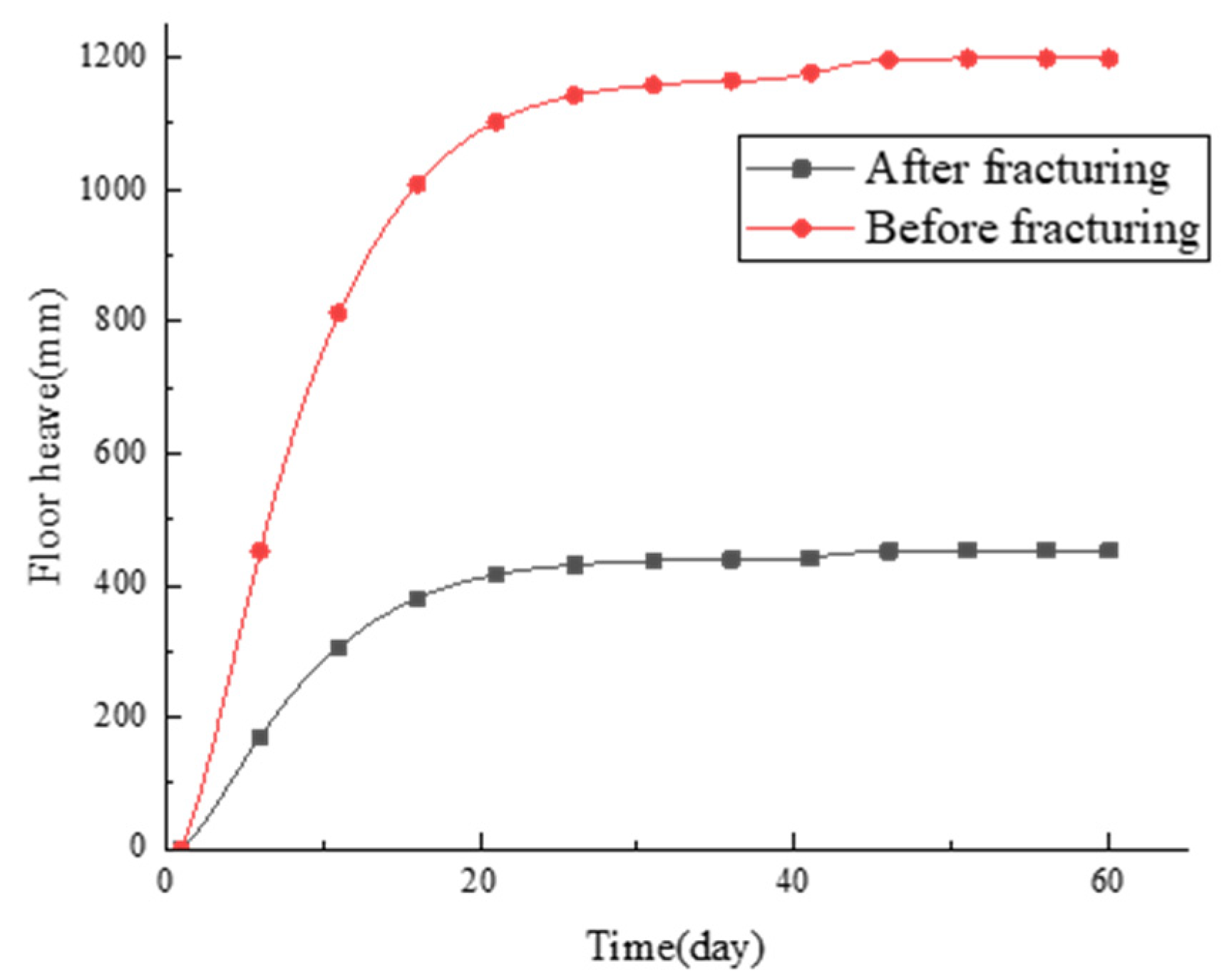
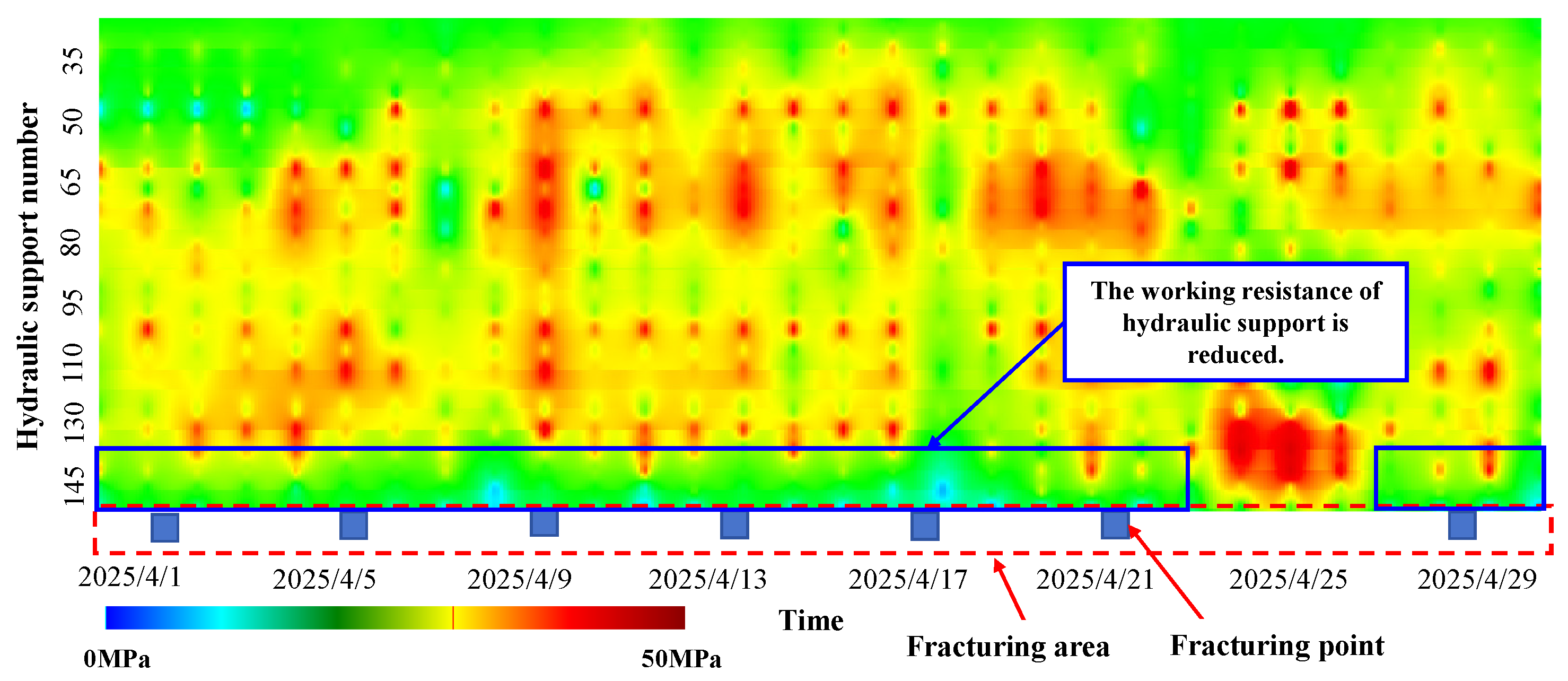
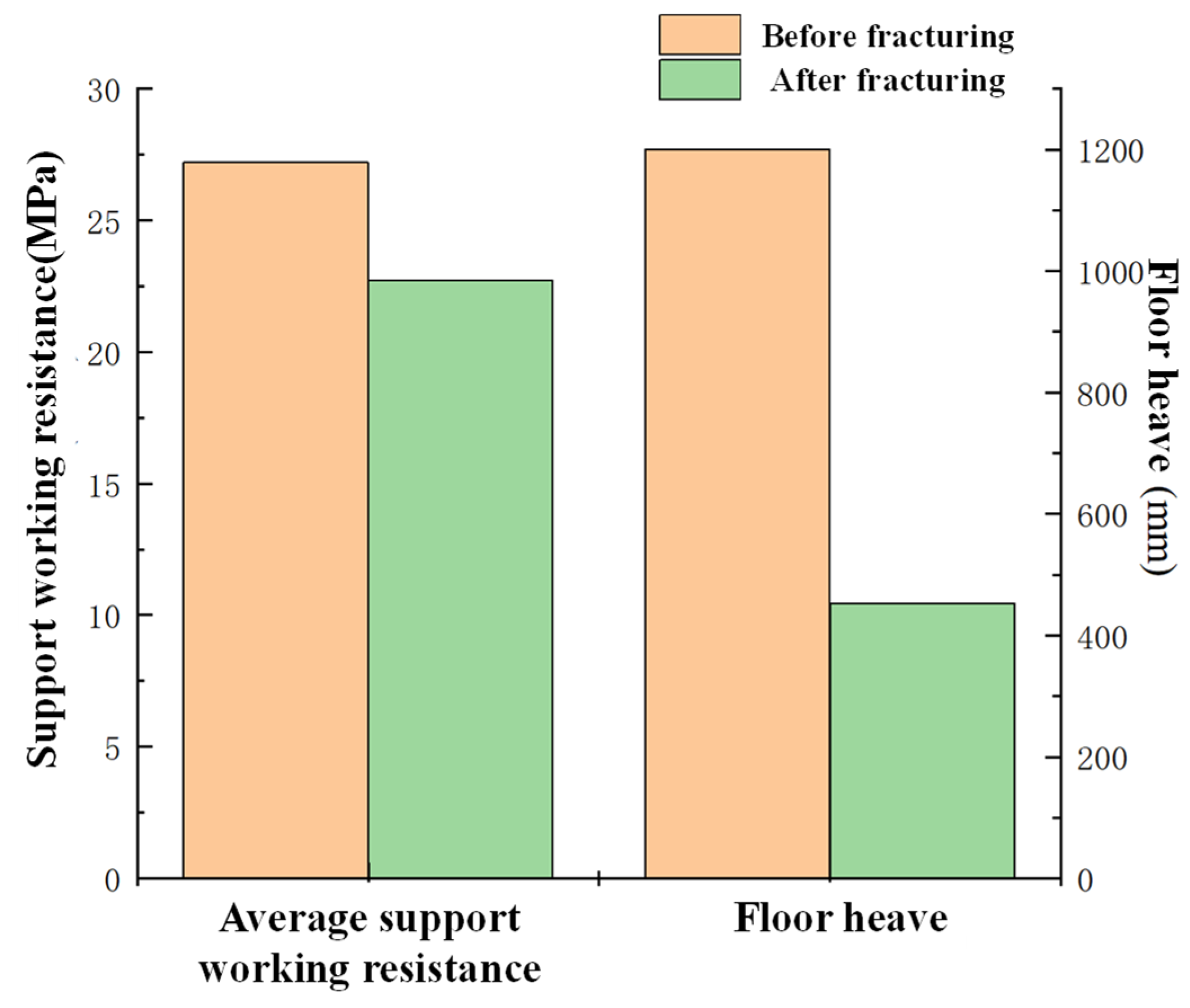
After entering the fracturing zone, the average working resistance of the support is 22.7 MPa, the average working resistance of the lower support is reduced by 16.5% (Figure 20), and the floor heave of the roadway is reduced by 62.3% (Figure 21). The stress concentration of the working face is obviously reduced. Near the fracturing section of the tailgate, an obvious pressure relief zone can be observed (Figure 22).
During the mining of the working face, the working resistance of the support near the return air roadway is obviously reduced, the periodic weighting step is obviously shortened, and the ground pressure is weakened. It shows that the synergistic hydraulic fracturing of thick and hard rock strata has a good effect on the pressure relief effect of the return airway of the working face and the control effect of the ground pressure appearance of the working face (Figure 23).

6. Conclusions

(1) The composite structural characteristics of the “cantilever beam + masonry beam” in the lateral triangular area of the multi-layer thick and hard roof in the fully mechanized mining face with large mining height were clarified. This composite structure is the main cause of the increase in the resistance of the end support of the working face and the stress concentration of the surrounding rock of the roadway. The fracturing stress transfer and unloading mechanism of the high- and low-position thick and hard rock strata was revealed. The influence law that the load in the triangular sliding area is mainly affected by the length and breaking angle of the broken block was determined, and the distribution characteristics of the load in the lateral triangular area under the fracturing of thick and hard rock strata at different horizons were mastered. When the length of the key block is reduced by 40%, the supporting force F1 of the rock mass below the broken block on it can be reduced by 62.5%, and the supporting force F2 and frictional force F3 of the end part on the broken area of the triangular area can be reduced by 34.6%.
(2) The regulation idea of using the horizontal directional long-hole hydraulic fracturing technology to synergistically weaken the high- and low-position thick and hard rock strata was determined. The control effects of single and double key stratum fracturing on the stress concentration at the end part and the coal rib were compared and analyzed. A double key stratum synergistic fracturing scheme with the goal of “cutting off the low-position cantilever beam and transferring the load of the high-position masonry beam” was proposed. Under the synergistic fracturing scheme, the stress peaks of the end part of the working face and the surrounding rock of the roadway were, respectively, reduced by 12.2% and 28.9%, which can significantly reduce the stress concentration peaks of the end part of the working face and the surrounding rock of the roadway.
(3) The directional long-hole hydraulic fracturing project was implemented on-site, and multi-stage fracturing was carried out on the target key stratum. The monitoring results show that the working resistance of the support within the fracturing influence range is reduced by 16.5%, and the floor heave amount of the roadway is decreased by 62.3%. At the same time, the periodic weighting step distance of the working face is shortened and the weighting intensity is weakened, indicating that the stress environment on the return air roadway side has been significantly improved. This technology actively transforms the overlying rock structure and cuts off the stress transfer chain in the triangular sliding area, achieving remarkable effects in reducing the support load and greatly improving the roadway stability.

7. Limitations

(1) The numerical model established in this study is two-dimensional and therefore cannot capture the three-dimensional effects of fracture propagation and stress redistribution in the rock mass;
(2) The relevant parameters input into the model (friction coefficient f, rock mass unit weight γ, unconfined compressive strength σc) have certain uncertainties;
(3) The potential influence of rock-mass heterogeneity has not been fully investigated, and there is a potential size effect between the numerical model and the actual rock mass;
(4) The support resistance will have certain errors due to different measurement methods, which may lead to some potential effects.

Author Contributions

H.G.: Project administration, Investigation, Methodology, Resources, Writing—original draft, Writing—review and editing. C.Q.: Data curation, Methodology, Software, Visualization, Writing—review and editing. X.W.: Investigation, Methodology, Supervision, Writing, review and editing. C.R.: Investigation, Software, Validation, Writing—review and editing Y.X.: Investigation, Supervision, Writing—review and editing. All authors have read and agreed to the published version of the manuscript.

Funding

This work was supported by the National Natural Science Foundation of China (52174138). NSFC, short for the National Natural Science Foundation of China, is China’s core institution supporting basic research, funding projects, nurturing talents and conducting fair, transparent evaluations.

Data Availability Statement

The data used to support the findings of this study are included and shown within the article.

Conflicts of Interest

Authors Hui Gao and Yuanman Xie were employed by the company Shaanxi Huadian Yuheng Coal & Electricity Co., Ltd. Author Chongpeng Ren was employed by the company Huadian Coal Industry Group Co., Ltd. The remaining authors declare that the research was conducted in the absence of any commercial or financial relationships that could be construed as a potential conflict of interest.

References

  1. Ming, C.; He, M.; Wang, J.; Liu, J.; Coli, M. Control technology of surrounding rock stability based on compensation theory in gob-side entry retaining with composite hard roof. J. Mt. Sci. 2024, 22, 1029–1047. [Google Scholar] [CrossRef]
  2. Fu, Q.; Yang, J.; Gao, Y.; Li, C.; Song, H.; Liu, Y.; Wu, X. Combined blasting for protection of gob-side roadway with thick and hard roof. J. Rock Mech. Geotech. Eng. 2024, 16, 3165–3180. [Google Scholar] [CrossRef]
  3. Fu, Q.; Yang, J.; Song, H.; Wu, X.; Liu, Y.; Wei, X. Study on the Method of Pressure Relief and Energy Absorption for Protecting Roadway Under Thick and Hard Roof. Rock Mech. Rock Eng. 2023, 56, 7177–7196. [Google Scholar] [CrossRef]
  4. Zhang, Z.; Xu, S.; Yu, W.; Xin, J.; Bai, J.; Yan, S.; Wu, H. Dynamic Loading Mechanism and Stability Control of Gob-Side Entry Retaining with Thick and Hard Roof: Insights from Numerical Simulation and Field Test. Min. Metall. Explor. 2023, 40, 703–717. [Google Scholar] [CrossRef]
  5. Wang, Y.T.; Xie, Z.H.; Yu, J.; Ma, H.F.; Jin, L.L.; Wang, F.; Chen, F.M. Study on deformation and failure characteristics of surrounding rock and control technology of gob-side entry. J. Min. Saf. Eng. 2025, 42, 161–171. [Google Scholar]
  6. Liu, J.B.; Liu, X.G.; Liu, M.F.; Zhang, Z.; Cheng, L.; Liu, Q.J. Study on strong ground pressure manifestation and overlying rock fracture movement law of multi-layer thick and hard roof in Yushen Mining Area. China Coal 2024, 50, 46–56. [Google Scholar]
  7. Xie, J.H.; Han, G.; Sun, K.; Ding, Z.W.; Hao, X.Q. Rock burst prevention mechanism and effect verification of presplitting blasting for hard roof of roadway adjacent to gob. J. China Coal Soc. 2023, 48, 2078–2091. [Google Scholar]
  8. Wu, J.G.; Zhang, C.Y.; Li, H. Study on high-efficiency extraction technology by directional long boreholes in soft and broken coal seams. Coal Eng. 2022, 54, 68–73. [Google Scholar]
  9. Eremin, M.O.; Peryshkin, A.Y. Analysis of the Influence of the Well Spacing on the Formation of an Effective Crack Network in the Hard-To-Cave Coal Roof during Hydraulic Fracturing Based on Mathematical Modeling. Phys. Mesomech. 2025, 28, 397–408. [Google Scholar] [CrossRef]
  10. Marek, J.; Andrzej, H.; Mateusz, Ć. Directional Hydraulic Fracturing (DHF) of the Roof, as an Element of Rock Burst Prevention in the Light of Underground Observations and Numerical Modelling. Energies 2021, 14, 562. [Google Scholar] [CrossRef]
  11. Mejia, C.; Roehl, D. Induced hydraulic fractures in underground block caving mines using an extended finite element method. Int. J. Rock Mech. Min. Sci. 2023, 170, 105475. [Google Scholar] [CrossRef]
  12. Li, J.; Zhang, M.; Wang, C.; Liao, C.; Zhang, B. Failure characteristics and fracture mechanism of overburden rock induced by mining: A case study in China. Int. J. Coal Sci. Technol. 2024, 11, 44. [Google Scholar] [CrossRef]
  13. Chai, Y.; Dou, L.; Cai, W.; Małkowski, P.; Li, X.; Gong, S.; Cao, J. Experimental investigation into damage and failure process of coal-rock composite structures with different roof lithologies under mining-induced stress loading. Int. J. Rock Mech. Min. Sci. 2023, 170, 105479. [Google Scholar] [CrossRef]
  14. Yu, Y.; Lu, J.; Chen, D.; Pan, Y.; Zhao, X.; Zhang, L. Study on the Stability Principle of Mechanical Structure of Roadway with Composite Roof. Minerals 2021, 11, 1003. [Google Scholar] [CrossRef]
  15. Wang, Y.B. End structure and lateral abutment pressure evolution mechanism of fully mechanized top-coal caving working face in extra-thick coal seam. J. China Coal Soc. 2017, 42, 30–35. [Google Scholar]
  16. Han, H.; Xu, J.; Wang, X.; Xie, J.; Xing, Y. Method to Calculate Working Surface Abutment Pressure Based on Key Strata Theory. Adv. Civ. Eng. 2019, 2019, 7678327.1–7678327.20. [Google Scholar] [CrossRef]
  17. Li, Z.; Xu, J.; Ju, J.; Zhu, W.; Xu, J. The effects of the rotational speed of voussoir beam structures formed by key strata on the ground pressure of stopes. Int. J. Rock Mech. Min. Sci. 2018, 108, 67–79. [Google Scholar] [CrossRef]
  18. Zhao, L.; Cao, J.; Zhang, Y.; Luo, Q. Effect of hydraulic distribution on the stability of a plane slide rock slope under the nonlinear Barton-Bandis failure criterion. J. Geomech. Eng. 2015, 8, 391–414. [Google Scholar] [CrossRef]
  19. Klishin, V.; Opruk, G.; Ponizov, A. Directional hydraulic fracturing application for reduction of rock heaving intensity in the development opening under conditions of SM Kirov Mine. In Proceedings of the 9th China-Russia Symposium “Coal in the 21st Century: Mining, Intelligent Equipment and Environment Protection” (COAL 2018), Qingdao, China, 18–21 October 2018; Atlantis Press: Dordrecht, The Netherlands; pp. 147–150.
  20. Serdyukov, S.V.; Patutin, A.V.; Shilova, T.V.; Azarov, A.V.; Rybalkin, L.A. Technologies for Increasing Efficiency of Solid Mineral Mining with Hydraulic Fracturing. J. Min. Sci. 2019, 55, 596–602. [Google Scholar] [CrossRef]
  21. Klishin, V.I.; Pavlova, L.D.; Fryanov, V.N.; Tsvetkov, A.B. Influence of Spatial Orientation of Initiator-Notch on Roof Rock Deformation near Production Face in Directional Hydraulic Fracturing. J. Min. Sci. 2025, 61, 1–12. [Google Scholar] [CrossRef]
  22. Lekontsev, Y.M.; Sazhin, P.V. Application of the directional hydraulic fracturing at Berezovskaya Mine. J. Min. Sci. 2008, 44, 253–258. [Google Scholar] [CrossRef]
  23. Lekontsev, Y.M.; Sazhin, P.V. Directional hydraulic fracturing in difficult caving roof control and coal degassing. J. Min. Sci. 2014, 50, 914–917. [Google Scholar] [CrossRef]
Figure 1. Roadway floor heave is serious.
Applsci 16 00130 g001
Figure 2. The working resistance of the end support is relatively high.
Applsci 16 00130 g002
Figure 3. Occurrence characteristics of thick and hard roof.
Applsci 16 00130 g003
Figure 4. Roof thick and hard rock structure diagram.
Applsci 16 00130 g004
Figure 5. The structure of the lateral overburden triangle area of the working face.
Applsci 16 00130 g005
Figure 6. Contact model of unstable broken block (solid lines represent the initial state, and dashed lines represent the predicted state).
Applsci 16 00130 g006
Figure 7. Mechanical model of broken block in triangle area.
Applsci 16 00130 g007
Figure 8. The load of triangular area under different fracture lengths.
Applsci 16 00130 g008
Figure 9. The load variation law of the triangular area of the fractured high-position thick and hard rock stratum.
Applsci 16 00130 g009
Figure 10. Numerical model calibration.
Applsci 16 00130 g010
Figure 11. Numerical model of thick hard rock fracturing.
Applsci 16 00130 g011
Figure 12. Distribution of aperture.
Applsci 16 00130 g012
Figure 13. Vertical stress distribution characteristics under different fracturing schemes.
Applsci 16 00130 g013
Figure 14. Characteristics of lateral stress distribution under different fracturing schemes.
Applsci 16 00130 g014
Figure 15. Roof fracturing borehole profile.
Applsci 16 00130 g015
Figure 16. First-stage fracturing operation of the multi-point drag-type staged hydraulic fracturing technology.
Applsci 16 00130 g016
Figure 17. Second-stage fracturing operation of the multi-point drag-type staged hydraulic fracturing technology.
Applsci 16 00130 g017
Figure 18. Advancing speed curve chart.
Applsci 16 00130 g018
Figure 19. Roadway floor heave comparison chart.
Applsci 16 00130 g019
Figure 20. The working resistance cloud diagram of support in 11,223 working face after fracturing.
Applsci 16 00130 g020
Figure 21. Characteristics of ground pressure before and after fracturing.
Applsci 16 00130 g021
Figure 22. Field Monitoring Data Plot of Rock Pressure Variation.
Applsci 16 00130 g022
Figure 23. Floor heave reduction in roadway.
Applsci 16 00130 g023
Table 1. Distribution of key strata in roof.
Rock StratumThickness/mDepth/mDistribution of Key Strata
Fine sandstone26.01225.6Primary key stratum
Medium-grained sandstone7.64278.97Subordinate key stratum 5
Fine sandstone19.8318.85Subordinate key stratum 4
Medium-grained sandstone16.75349.81Subordinate key stratum 3
Coarse sandstone25.37375.42Subordinate key stratum 2
Fine sandstone25.55412.51Subordinate key stratum 1
Table 2. Roof stratum characteristic parameters and key stratum occurrence distribution.
Rock StratumDistribution of Key StratumRock Structure
Coarse sandstoneSubordinate key stratum 2Masonry beam
Fine sandstoneSubordinate key stratum 1Cantilever beam
Table 3. Mechanical parameters of rock strata.
NumberRock StratumBulk Modulus (GPa)Shear Modulus (GPa)Friction Angle (°)Cohesion (MPa)Tensile Strength (MPa)
1Coal seam12.5310.45474.703.12
2Fine-grained sandstone11.129.39384.102.49
3Medium-grained sandstone11.199.92414.202.62
4Coarse-grained sandstone11.3410.45434.703.01
Table 4. Mechanical parameters of joints in subordinate key strata.
NumberRock StratumStiffness—Shear (GPa)Stiffness—Normal (GPa)Friction Angle (°)Cohesion (MPa)Tensile Strength (MPa)
1Subordinate key stratum 10.130.232 0.0420.03
2Subordinate key stratum 20.140.2137 0.0480.031
Table 5. Drilling construction parameter table.
Bore-HoleLayer LocationBore Diameter/mmBore Length/mNumber of Fracturing Sections
112 m 9635712
230 m962255
348 m961951
430 m9645617
530 m962617
630 m9650121
Disclaimer/Publisher’s Note: The statements, opinions and data contained in all publications are solely those of the individual author(s) and contributor(s) and not of MDPI and/or the editor(s). MDPI and/or the editor(s) disclaim responsibility for any injury to people or property resulting from any ideas, methods, instructions or products referred to in the content.