Article

Comparative Study of Lipid Quality from Edible Insect Powders and Selected Cereal Flours Under Storage Conditions


by
Zdzisław Domiszewski
1,
Arkadiusz Szpicer
2,*,
Sylwia Mierzejewska
1,
Iwona Wojtasik-Kalinowska
2,
Weronika Bińkowska
2,
Karolina Maziarz
1 and
Joanna Piepiórka-Stepuk
1
1
Division of Food Industry Processes and Facilities, Koszalin University of Technology, Racławicka Street 15-17, 75-620 Koszalin, Poland
2
Department of Technique and Food Development, Warsaw University of Life Sciences-SGGW, 02-776 Warsaw, Poland
*
Author to whom correspondence should be addressed.
Appl. Sci. 2026, 16(1), 13; https://doi.org/10.3390/app16010013
Submission received: 20 November 2025 / Revised: 12 December 2025 / Accepted: 16 December 2025 / Published: 19 December 2025
(This article belongs to the Special Issue Advanced Food Processing Technologies and Food Quality: 2nd Edition)

Abstract

The increasing demand for sustainable food requires the development of raw materials and products that provide not only high-quality proteins but also valuable lipids. The aim of this study was to compare the lipid quality of insect powders with that of selected cereal flours (millet, oat, and rice) during four months of storage at room temperature. To simulate increased oxidative conditions, the packages were filled only halfway, thereby increasing oxygen availability. Lipids were extracted using the Bligh–Dyer method, and their oxidation status was assessed based on peroxide value (PV), p-anisidine value (p-AsV), and the total oxidation (Totox) index. Fatty acid composition, antioxidant activity, and oxidative stability were determined using differential scanning calorimetry (DSC). Directly after purchase, none of the analyzed flours or insect powders exceeded a PV of 10 meq O2/kg lipids or a p-AsV of 20. After four months of storage, lipid oxidation increased in all samples, with changes ranging from 4.6% to 30%, depending on the parameter analyzed. Lipids extracted from insect powders consistently showed significantly higher oxidation levels than those from cereal flours. The proportion of PUFAs in the lipids of the flours ranged from 36.40% to 64.21%, whereas in insect powders it ranged from 30.01% to 37.29%. After storage, only minor changes in PUFA content were observed, and these did not indicate advanced destructive oxidative degradation. Overall, the lipids present in the analyzed flours demonstrated favorable nutritional quality indices, including AI (0.10–0.48), h/H (2.23–10.47), and TI (0.22–1.14). The results indicate that insect powders can serve as a valuable source of fatty acids; however, their susceptibility to lipid oxidation necessitates careful consideration during processing and storage.

1. Introduction

Insects are gaining increasing recognition in Europe as an alternative source of dietary protein. In the context of global population growth and the environmental and ethical challenges associated with conventional meat production, insect farming is widely regarded as a more sustainable and environmentally friendly solution. Insects such as crickets, mealworm larvae, and locusts are characterized by a high content of protein, vitamins, and minerals, while requiring significantly less water, feed, and land compared with conventional livestock production [1]. For many years, scientific research on edible insects focused predominantly on their protein fraction [2]. In recent years, however, growing attention has been expanded to include insects not only as a source of valuable protein but also as a source of nutritionally valuable lipids [3]. The fat content of insects may reach up to 50% of dry matter [4,5]. Insect lipids contain higher proportions of polyunsaturated fatty acids (PUFAs) than those found in meat from slaughter animals, including a considerable share of essential PUFAs [6]. As reported by Kępińska-Pacelik et al. (2023), certain insect species (e.g., crickets) may also provide long-chain n-3 PUFAs, including eicosapentaenoic acid (EPA) and docosahexaenoic acid (DHA) [7]. Moreover, insect lipids are typically characterized by a relatively high proportion of monounsaturated fatty acids (MUFAs) [8]. Due to their favorable chemical composition, edible insects may represent a nutritionally valuable alternative to meat from conventional livestock. However, their wider adoption is limited by substantial consumer acceptance barriers, largely driven by cultural factors and food neophobia. In Western societies, insects are stereotypically associated with dirt and inedibility, triggering feelings of disgust and reducing consumers’ willingness to try insect-based foods. At the same time, numerous studies have shown that processing insects into visually unrecognizable forms (e.g., flours) significantly increases consumer acceptance, including among European consumers [9].
Insect powders are ground (pulverized) whole insects. According to EU Regulation 2023/58, the correct term for such product is “insect powder”; however, due to their technological applications in bakery and confectionery products, the colloquial term “insect flour” is commonly used in the scientific literature [10,11,12,13]. In this form, insects can be incorporated as ingredients in various baked goods, serving as an alternative to cereal flours. Previous studies have shown that the degree of grain milling significantly affects the storage stability of cereal flours, primarily as a result of unfavorable reactions involving lipids [14,15]. The fat content of cereal-based products may reach approximately 10%, depending on the cereal species and cultivar [16]. Therefore, similar lipid-related changes can be expected in insect powders during storage, and determining their nature and extent is of particular importance.
One of the major processes affecting lipids during processing and storage is oxidation. Due to the relatively high content of unsaturated fatty acids in the lipid fractions of both cereal and insect powders, these materials exhibit increased susceptibility to oxidative degradation, particularly lipid autoxidation. Lipid oxidation can proceed via two main pathways: an enzymatic pathway, catalyzed by enzymes such as lipoxygenases, cyclooxygenases, and cytochrome systems, and a non-enzymatic pathway, which includes free-radical autoxidation, photosensitized oxidation involving singlet oxygen, and reactions catalyzed by transition metal ions [17]. Regardless of whether oxidation occurs through enzymatic or non-enzymatic mechanisms, the primary products formed are mainly hydroperoxides and peroxides [18]. These compounds are highly unstable and may undergo various transformations, giving rise to numerous secondary products such as aldehydes, ketones, and acids. The accumulation of these compounds contributes to the deterioration of both the nutritional value and the sensory quality of lipids. To determine primary and secondary lipid oxidation products, the peroxide value (PV) and p-anisidine value (p-AsV) are most commonly used, as these indices reliably reflect oxidative changes occurring in lipids of both plant and animal origin [19,20]. Lipid oxidation is also associated with the formation of free radicals classified as reactive oxygen species (ROS). Many secondary oxidation products, particularly malondialdehyde (MDA), trans-4-hydroxy-2-nonenal (4-HNE) and 4-hydroxyhexenal (4-HHE), exhibit mutagenic activity. ROS can damage numerous cellular components [21]. In addition to phospholipid damage in membranes, oxidation products may also substantially affect membrane proteins, contributing to their cross-linking and, consequently, to alterations in membrane integrity [22].
Lipid oxidation products can affect not only nutritional value but also the sensory quality of food products. Primary oxidation products are generally considered to have little or no direct impact on the sensory attributes of fats [23]. In contrast, low-molecular-weight secondary oxidation products (aldehydes, ketones, and acids) are responsible for the characteristic odor and flavor associated with rancid fat [24,25]. In lipids, a relationship is often observed between the perception of rancidity and aldehyde content [26].
The present study aimed to compare the quality of lipid fractions from insect powders (cricket, mealworm) with selected cereal flours (millet, oat, rice) over a 4-month storage period at room temperature. The cereal flours included in the comparison were chosen to represent differing fat contents: higher (millet, oat) and lower (rice), all of which are commonly used in bakery and confectionery applications as supplements to wheat flour.
A practical approach to handling flours and powders was adopted. Initial analyses were conducted on material obtained from intact retail packages (baseline samples). For the storage experiments, flours and powders were taken from partially used packages (“opened” packages with 50% fill level). This experimental design reflects typical household conditions, in which only part of the flour is used for food preparation while the remaining material continues to be stored. Packaging filled to approximately 50% increases headspace volume and oxygen exposure, thereby potentially accelerating lipid autoxidation. The four-month storage period corresponds to the average duration for which flours are typically kept under household conditions. Lipid quality was evaluated based on changes in oxidation level (PV, p-AsV, Totox), oxidative stability, antioxidant activity, and fatty acid composition. It was hypothesized that storage of plant flours and insect powders in half-filled packages would lead to a deterioration in lipid quality, with the rate and extent of changes influenced by both the flour origin (insect or plant) and the specific type (cricket, mealworm, millet, oat, or rice).

2. Materials and Methods

2.1. Materials

The experiment was conducted using five flours: two insect powders and three plant-based flours. The insect powders included mealworm flour (Tenebrio molitor) and house cricket flour (Acheta domesticus), while the plant-based flours consisted of rice flour (Oryza), oat flour (Avena sativa), and millet flour (Panicum miliaceum). In the first stage of our study, the insect powders were purchased, followed by the acquisition of cereal flours. This sequence allowed the selection of cereal flours with production dates closely matching those of the insect powders. The insect powders were purchased via online retailers, whereas the cereal flours were obtained from a retail chain located in Koszalin, Poland. The insect powders were produced in Belgium, and the cereal flours in Poland. All analyzed flours were manufactured between late September and October 2024.

2.2. Preparation of Samples for Analyses and Storage

All flours were analyzed on the same day. On the first day of analysis (reference sample, zero days of storage—D0), 50% of the product (approx. 500 g) was taken from each individual package of the tested flour types in order to obtain a homogenized sample. The remaining portion of each product was transferred into sealed PA/PE bags and designated for storage. All samples were stored at room temperature (20 ± 2 °C) for four months (D120) without exposure to light. After the storage period, the entire remaining amount of each product (corresponding to 50% of the original mass) was removed from each package, homogenized, and subjected to further analysis.

2.3. Analytical Techniques

2.3.1. Lipid Extraction (Bligh–Dyer Method)

Lipids from insect and cereal flours were extracted using a polar solvent (methanol) and a non-polar solvent (chloroform), following the procedure described by Bligh and Dyer [27]. The mass of each sample used for extraction was always 40 g. For qualitative analyses, the chloroform phase containing the extracted lipids was collected. Lipid extraction from each flour sample was performed in duplicate.
The lipid content of both the “fresh” flour and insect powders (D0) and those after storage (D120) was determined gravimetrically after evaporating the solvent. The lipid content (g) in the flours or powders was converted to 100 g of product.

2.3.2. Lipid Oxidation Level

In the lipids extracted from cereal flours and insect powders, the degree of lipid oxidation was determined using a procedure analogous to that described by Domiszewski and Mierzejewska [28]. Lipid oxidation was assessed based on the analysis of primary (PV) and secondary (p-AsV) oxidation products. The Totox index was also calculated. The PV was determined using the method of Pietrzyk [29]. This method involved the oxidation of ferrous ions to ferric ions by the peroxides present in the lipids. The resulting colored ferric ion complexes were measured colorimetrically at 470 nm. PV was expressed in mEqO2/kg of lipid. The p-AsV was determined using the American Oil Chemists’ Society (AOCS) method [30]. The principle of this method is based on the reaction of α- and β-unsaturated aldehydes with the p-anisidine reagent [30]. The Totox index was calculated according to the formula (2PV + p-AsV) [30].

2.3.3. Antioxidant Activity

Antioxidant compounds in the flours were extracted according to the method of Li et al. [31], with modifications proposed by Yu et al. [32], using a solvent mixture of 1 N HCl and 95% ethanol (15:85 v/v). The samples were heated and agitated in a water bath (T = 65 °C, t = 80 min), and subsequently centrifuged (10,000 rpm, T = 5 °C, t = 5 min) to obtain the supernatant for further analysis. For each flour, the extraction procedure was performed in quadruplicate.
Antioxidant activity was evaluated using an adapted protocol derived from the method of Brand-Williams et al. [33], employing the stable free radical 1,1-diphenyl-2-picrylhydrazyl (DPPH). A 0.5 mM DPPH solution was prepared directly before analysis by dissolving 19.71 mg of the compound (M = 394.32 g/mol) in 100 cm3 of ethanol, and the solution was kept protected from light until use. Absorbance was measured at λ = 517 nm with a Rayleigh UV-VIS 1601 spectrophotometer (Rayleigh, Beijing, China). The reference absorbance (A0) was obtained for a mixture of 1 mL of the DPPH solution and 4 mL of ethanol. The reaction mixture for the sample consisted of 1 mL of the DPPH solution, 0.1 mL of the tested extract, and 3.9 mL of ethanol. After 30 min of reaction, absorbance (A) was measured. Each measurement was performed in quadruplicate, and the mean absorbance (Ā) for each solution was calculated. The ability of the antioxidant to inhibit oxidation was expressed as the percentage of inhibition, calculated according to the following equation:
Inhibition (%) = 100 (A0 − Ā)/A0
where Ā—the mean absorbance of the sample solution containing the antioxidant, A0—the absorbance of the DPPH radical solution.

2.3.4. Fatty Acid Composition Analysis

The fatty acid composition of the samples was determined following the procedure described by Bińkowska et al. (2024), with minor adjustments [34]. Lipids were extracted using a methanol–chloroform mixture, and the resulting extracts were converted to fatty acid methyl esters (FAMEs) through transesterification with a potassium hydroxide solution in methanol. After methylation, the FAMEs were isolated with a hexane–water mixture (10:1 v/v), dried over anhydrous sodium sulfate (Na2SO4) (20 mg), and transferred to chromatographic vials. Gas chromatographic analyses were performed using a Shimadzu GC-2010 system (RESTEK, Bellefonte, PA, USA) equipped with a flame ionization detector (FID) and a ZB-FAME capillary column (60 m × 0.25 mm i.d., 0.2 μm film thickness) (Phenomenex, Torrance, CA, USA)). The oven temperature was initially set to 100 °C and held for 5 min, then increased to 240 °C at a rate of 2.5 °C min−1 and maintained for an additional 10 min. The injector and detector temperatures were 250 °C and 270 °C, respectively. One microliter of the FAME solution was injected with a 90:1 split ratio. Helium served as the carrier gas at a constant flow rate of 1.0 mL min−1. Individual fatty acids were identified by comparing their retention times with those of reference standards (Supelco 37 Component FAME Mix, Sigma–Aldrich, St. Louis, MO, USA). Results were expressed as the content of individual fatty acids (g per 100 g of total fat). For further statistical analyses, the n − 6/n − 3 PUFA ratio was also calculated.
The atherogenic index (AI), thrombogenic index (TI), and hypocholesterolemic/hypercholesterolemic ratio (h/H) were calculated based on the fatty acid composition, using the formulas proposed by Ulbricht and Southgate (1991) [35]:
A I = 4 × C 14 : 0 + C 16 : 0 + C 18 : 0 Σ M U F A + Σ P U F A   n 3 + Σ P U F A   n 6
T I = C 14 : 0 + C 16 : 0 + C 18 : 0 0.5 × Σ M U F A + 0.5 × P U F A   n 6 + 3 × P U F A   n 3 + n 3 P U F A n 6 P U F A
h H = h y p o c h o l e s t e r o l e m i c   F A ( C 18 : 1 + P U F A ) h y p e r c h o l e s t e r o l e m i c   F A ( C 14 : 0 + C 16 : 0 )

2.3.5. Differential Scanning Calorimetry (DSC)

Thermal oxidative stability of the extracted oils was assessed using Differential Scanning Calorimetry (DSC) according to the procedure described by Szpicer et al. (2021), with minor modifications adapted for cereal- and insect-derived lipids [36]. The analyses were performed on a DSC 1 calorimeter (Mettler Toledo, Greifensee, Switzerland) operating under a dynamic oxygen atmosphere (90 mL·min−1). The instrument was calibrated using indium and zinc standards to ensure accurate temperature and enthalpy readings. Approximately 5.0 ± 0.1 mg of each oil sample was placed into 40 μL standard aluminum pans (ME-51119870) and sealed with pierced lids (ME-51119873) using a Mettler Toledo Crucible Sealing Press. Prior to each run, a small hole was automatically punctured in the center of the lid by the autosampler needle to ensure proper contact with the oxygen flow. An empty aluminum pan with a pierced lid served as the reference. Samples were heated at constant rates (β) of 5, 7.5, 10, 12.5, and 15 °C·min−1, from ambient temperature up to the onset of oxidation. The onset oxidation temperature (TON) was determined as the intersection of the extrapolated baseline and the tangent to the leading edge of the exothermic peak. The kinetic parameters describing oxidation—activation energy (Ea), pre-exponential factor (Z), and rate constant (k)—were calculated using the Kissinger–Akahira–Sunose (KAS) approach and the Arrhenius equation, expressed as follows:
l n β T O N 2 = ln Z R E a E a R T O N
k = Z e x p E a R T O N
where β is the heating rate (°C·min−1), TON is the onset oxidation temperature (K), R is the universal gas constant (8.314 J·mol−1·K−1), Ea is the apparent activation energy (kJ·mol−1), Z is the pre-exponential factor, and k is the rate constant. Plots of ln(β/TON2) versus 1/TON were used to obtain straight lines, whose slopes corresponded to −Ea/R. The activation energy was determined from the slope multiplied by R. All kinetic parameters were computed using STARe Evaluation Software (v.9.30, Mettler Toledo, Greifensee, Switzerland). Each sample was analyzed in triplicate at two storage time points (immediately after oil extraction and after 120 days of storage). The results were expressed as mean values ± standard error.

2.3.6. Statistical Analysis

All physicochemical determinations were performed in three or four repetitions. A two-factor analysis of variance (ANOVA) was used for statistical analysis of the results. The analyzed factors were storage time and type of flour. Tukey’s post hoc test was used to identify homogeneous groups at a significance level of p ≤ 0.05. The STATISTICA program was used for statistical analysis (version 13.3, StatSoft Inc., Tulsa, OK, USA; TIBCO Software).

3. Results and Discussion

3.1. Lipid Content

The results of lipid content determination in the flours immediately after purchase and after four months of storage are presented in Figure 1. As shown by the data, insect powders exhibited significantly (up to several-fold) higher lipid levels compared to cereal flours. The obtained values fell within the typical ranges reported for the respective cereal and insect species and were in accordance with literature data [37,38,39,40]. The chemical composition of cereal flours, including their lipid content, is largely determined by the cereal species [41]. In contrast, in insect powders, lipid levels depend, among other factors, on the developmental stage of the insect, environmental conditions, and the composition of the feed [40].
After four months of storage, statistically significant changes in total lipid content were observed, although in most cases they did not exceed 10%. The differences noted can be attributed both to the influence of the extraction method used and to lipid interactions occurring during storage with proteins and starch present in cereal flours. These interactions, well documented in the literature [42,43], may reduce lipid extractability as a result of physical and chemical binding within the biopolymer matrix of the flour.
In the case of lipid–protein interactions, lipid oxidation products, particularly aldehydes, may react with amino groups of lysine, cysteine, or histidine residues, leading to the formation of lipid–protein adducts or cross-linked complexes that hinder lipid extraction [44,45]. Both plant-derived and insect powders are known to be rich in proteins [40,41], which further facilitates such reactions.
Lipid–starch interactions, in contrast, primarily involve the formation of complexes with amylose, in which fatty acid or monoglyceride molecules become physically entrapped within the helical polysaccharide structure [46,47]. These processes may occur not only during food processing but also during storage, particularly in the presence of residual moisture that allows molecular mobility.
Moreover, progressive lipid oxidation promotes the formation of increasingly polar compounds, which exhibit a higher affinity for proteins and carbohydrates. This enhances their binding within the food matrix and reduces their solubility in the organic solvents commonly used for lipid extraction [48]. Consequently, the observed decrease in the analytically determined lipid content in stored flours may be only apparent and may result primarily from lipid immobilization within the biopolymer structure rather than an actual resulting oxidative degradation.
It is likely that applying a selective extraction procedure (sequential treatment of the sample with chloroform, then with a chloroform–methanol mixture, followed by final hydrolysis in the presence of hydrochloric acid), according to the method of Pokorný et al. [48], would yield statistically insignificant differences in lipid content between fresh and stored flours, although it would simultaneously deteriorate the quality of the extracted lipids.

3.2. Lipid Oxidation

The oxidation level of lipids extracted from plant-based flours and insect powders is presented in Table 1. It was demonstrated that insect powders exhibited significantly higher values of lipid oxidation indices (PV, p-AsV, Totox) compared to cereal flours. As no specific guidelines currently exist for acceptable oxidation limits in insect lipids, the obtained results were compared with standards established for vegetable oils and animal fats [49,50,51], revealing that the lipids analyzed can be classified as of good quality. In most samples, the PV index did not exceed 15 meq O2/kg lipids. Only in the case of mealworm powder stored for 120 days was a relatively high value of 11.58 meq O2/kg observed, although this index was already approached to 10 meq O2/kg lipids in the corresponding zero-day (D0) sample.
According to Nielsen (2010) and Kiokias et al. (2010), foods of animal origin are considered spoiled when PV exceeds 20 meq O2/kg lipids [52,53]. In contrast, the p-AsV index did not exceed 20 in any of the analyzed flours, regardless of their origin (cereal or insect). The oxidation levels observed in the analyzed flours may have resulted from factors such as storage time (from the production date to the analysis), fat content (significantly higher in insect powders), the degree of unsaturation of fatty acids, the presence of natural antioxidants, and the production technology applied. Based on the production and expiry dates provided on the packaging, all samples were of comparable “age” at the time of the analyses (zero-day samples). Therefore, sample age, calculated from the production date, can be excluded as a contributing factor to the observed differences in oxidation level. It is well established that storage time has a significant effect on both the degree of lipid oxidation and the overall quality of food of both plant and animal origin [54].
The fat content of food products significantly affects not only their sensory quality but also the rate of lipid oxidation. This relationship was confirmed in the present study, as flours with lower fat content exhibited lower levels of lipid oxidation (Table 1). According to Gumus and Decker (2021), foods with a high fat content are more susceptible to lipid oxidation, particularly when the fat is rich in unsaturated fatty acids [55]. Ali et al. (2023) likewise reported higher oxidation indices in flours with higher lipid levels [56]. Studies conducted on pâtés have also shown that samples with higher fat content oxidized more rapidly than those with lower fat levels [57]. In foods with elevated fat content, free radicals responsible for oxidation reactions can diffuse more readily, thereby promoting the oxidation of unsaturated fatty acids [55].
The composition of fatty acids also plays a crucial role in lipid oxidation. Unsaturated fatty acids, particularly polyunsaturated ones, oxidize more rapidly than MUFA [23]. In the present study, plant-based flours were characterized by a higher percentage of unsaturated fatty acids (Table 2); however, they did not exhibit a higher level of lipid oxidation (Table 1). When the results from Table 1 are converted to absolute content, i.e., grams of fatty acid per 100 g of flour according to FAO (2025), it becomes evident that insect powders contain a greater amount of unsaturated fatty acids per 100 g [58]. After this conversion, it emerges that insect powders with the highest PUFA and MUFA contents also display the highest levels of lipid oxidation.
The technological parameters applied during the production of the analyzed flours, particularly processing temperature, may also have significantly influenced the level of lipid oxidation. During the processing of plant-derived raw materials such as rice, oats or millet, moderate-temperature conditions are typically used to limit the degradation of oxidation-sensitive components [59,60,61]. In contrast, insect processing operations, including drying, roasting and blanching, are often carried out at temperatures exceeding 100 °C [62,63,64]. Temperature is known to be one of the key factors determining the intensity of lipid autoxidation, affecting both the rate of initiation and propagation of free-radical reactions [26]. Research conducted by Jiang and colleagues (2025) [65] demonstrated that the oxidation levels of lipids extracted from six insect species varied widely (PV: 0.24–20.06 mmol O2/kg lipids; p-AsV: 1.38–21.85). However, the authors did not provide detailed parameters of the insect processing procedures, which prevents a clear determination of whether environmental, nutritional or technological factors played the predominant role in determining the level of lipid oxidation. A similar interpretative limitation applies to the present study, as detailed information on the processing conditions of the raw materials (both grains and insects) used for flour production was not available. This lack of information hinders a precise evaluation of pre-analytical factors affecting the obtained results. A comparable issue was noted by Osimani et al. (2018), who emphasized that insufficient data regarding cricket rearing conditions, processing steps, and the storage of the raw materials prior to purchase limit the interpretability of lipid quality assessments [66].
The literature repeatedly emphasizes additional factors that significantly affect lipid properties, including insect species, developmental stage, season of harvest, and diet composition [65]. Studies by Ojha et al. (2021) demonstrated that even the method of insect killing can modify the nutritional and physicochemical characteristics of the resulting food products, influencing, among other aspects, the stability of the lipid fraction and the quality of proteins [67]. Furthermore, according to data presented by Posner and Hibbs (2005), approximately 75% of flour quality is determined by the characteristics of the raw material, while the remaining 25% depends on the processing technology applied [68].
After four months of storage at room temperature, an increase in lipid oxidation was observed in all flour samples. In insect powders, the increase in oxidation indicators (PV, p-AsV, Totox) was higher by approximately 70% compared to cereal flours (Table 1). Among the analyzed materials, rice flour showed the greatest oxidative stability during storage, whereas mealworm flour displayed the lowest stability. Although the increase in lipid oxidation was statistically significant (ranging from 4.5% to 18.8%), all flours maintained acceptable lipid quality from a technological perspective. In none of the samples did the oxidation indices exceed the established thresholds of PV ≤ 15 meq O2/kg lipids and p-AsV ≤ 20 (Table 1).
The observed increases in PV, p-AsV, and Totox values in the analyzed lipids were associated with the progression of oxidative processes. During the storage of raw materials and food products rich in unsaturated fatty acids, increases in lipid oxidation indices are frequently reported [24,25,69]. In plant-derived flours, lipid oxidation may occur via both enzymatic and non-enzymatic (autoxidative) pathways [56,70,71,72]. A key indicator for monitoring oxidative changes in food lipids is the PUFA content. Increasing lipid oxidation often leads to PUFA degradation, thereby reducing their content in foods [23,73]. Only slight variations in PUFA content were found (Table 2), and these changes did not indicate destructive oxidation. Moreover, the reduction in the percentage of DHA (from 0.65% to 0.51%) in cricket lipids was likely the result of lipid–amino acid interactions rather than oxidation. Model studies by Bienkiewicz and Kołakowska (2003) demonstrated that PUFA, particularly DHA, preferentially participate in interactions with proteins and starch [74]. As a consequence of freezing and microwave heating, up to 90% of DHA becomes bound in a manner that prevents its extraction using the Bligh and Dyer method (i.e., a methanol–chloroform mixture). Research conducted by Ali et al. (2023) [56] on millet flours showed that within the first 10 days of storage, the content of primary lipid oxidation products increased by approximately 30%, while secondary oxidation products (malondialdehyde) increased by about 50%. The magnitude of oxidation during storage is greater in flours with higher PUFA content [56]. Further studies by Lampi et al. (2015) on oat flour demonstrated an increase in hexanal content throughout the storage period [72]. Hexanal is considered a reliable marker for monitoring the oxidation of lipids rich in unsaturated fatty acids [75].
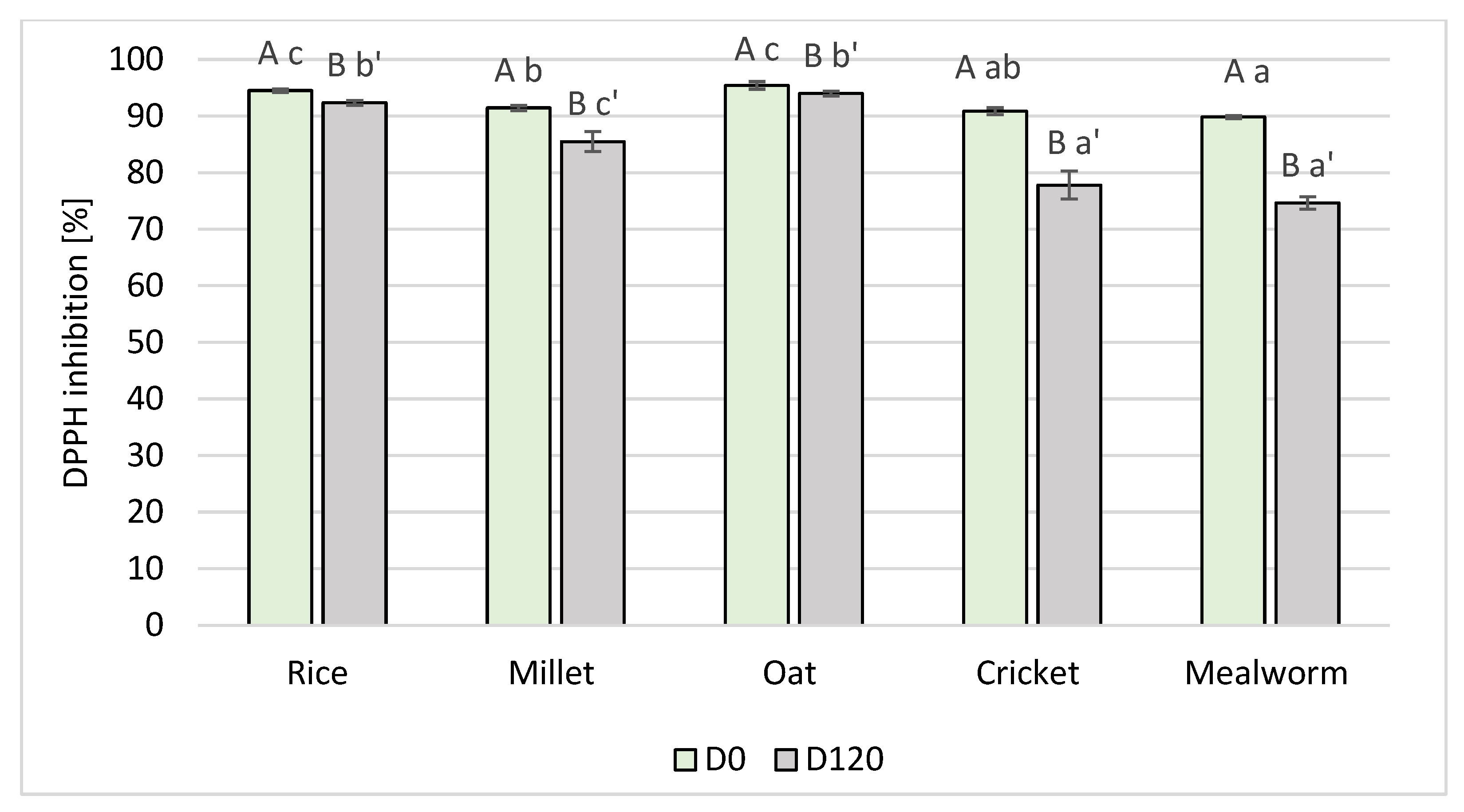
Another important factor influencing lipid oxidation levels in the analyzed flours during storage was the oxygen present inside the packaging (a deliberate condition described in the methodology). Literature data indicate that the oxygen present in the headspace of the package is a more significant oxidative factor than the oxygen dissolved in the food matrix [23,73,76]. Moreover, the rate of lipid oxidation is also influenced by natural antioxidants present in the food. For example, rice, which is rich in natural antioxidants [77], exhibited high oxidative stability during storage, which was further confirmed by measurements of the antioxidant activity of the flours (Figure 1).
An additional factor in insect powders that affects the progression of lipid oxidation during storage is the drying temperature of the raw material (insects). As demonstrated by Marzoli et al. (2023), insects subjected to lyophilization exhibited significantly lower PVs and hexanal content in the resulting flours during storage compared to insects dried at 80 °C and 120 °C [78].

3.3. Antioxidant Activity

The results of the antioxidant activity of the flours and powders immediately after purchase and after four months of storage are presented in Figure 2. It was shown that cereal flours, both before and after storage, exhibited superior antioxidant properties (D0: 91.42–95.41% DPPH inhibition; D120: 85.49–93.98%) compared with insect powders (D0: 89.83–90.86%; D120: 74.65–77.81%). The main antioxidants in cereal flours are phenolic compounds (phenolic acids, flavonoids, and tannins), carotenoids, and phytosterols [79,80]. In contrast, the antioxidant activity of insect powders is primarily associated with the presence of carotenoids, tocopherols, and phenolic compounds [81,82,83]. The content of these compounds in flours depends, among other factors, on species, cultivar, raw material quality, maturity stage, and cultivation conditions [84]. In the case of insect-derived raw materials, an additional factor is the diet applied, which may be richer in carotenoids and tocopherols [82], as well as the parameters of the processing steps. Most natural antioxidants are thermolabile compounds, and their concentrations in foods decrease with increasing temperature, particularly above 60 °C [85].
After 120 days, all flours exhibited a decrease in DPPH scavenging capacity, indicating the degradation of active antioxidant compounds [86]. This decrease was more pronounced in insect powders than in cereal flours, which is attributable to their dominant lipid fraction. Insect lipids (rich in MUFAs and PUFAs) undergo oxidation. During autoxidation, active antioxidants such as tocopherols and other antioxidant compounds are consumed, thereby reducing their availability. The remaining active antioxidants were insufficient to effectively quench the continuously generated free radicals, which ultimately led to a reduction in the overall antioxidant activity of the food matrix [86,87]. Therefore, the higher lipid content and greater extent of oxidation in insect powders are the main factors contributing to their lower antioxidant activity.
The initially higher antioxidant activity in cereal flours, as well as the less intense changes compared with insect powders, may be attributed to their high content of phenolic compounds. These compounds contain, among other structural features, hydroxyl groups (-OH) that readily donate electrons or hydrogen atoms, thereby neutralizing free radicals [88]. The high antioxidant activity of oat flour is supported, for example, by studies conducted by Kilci and Gocmen [80]. In the Turkish tarhana, antioxidant activity increased with higher proportions of oat flour. In this flour, the most abundant phenolic acids were vanillic, ferulic, and gallic acids [80], all of which are known for their strong antioxidant activity [89].

3.4. Fatty Acid Composition of Lipids

The fatty acid composition of lipids extracted from edible insect powders and cereal flours is shown in Table 2. Clear differences were observed between the two groups of raw materials. Insect-derived lipids (cricket and mealworm) contained higher proportions of saturated fatty acids (SFA; 23.3–38.4%) compared with cereal flours (12.7–24.8%). Palmitic acid (C16:0) and stearic acid (C18:0) were the major SFAs in insect powders, particularly in cricket flour. In contrast, the lipid fraction of millet, oat, and rice flours exhibited lower SFA levels, which is typical for plant-derived storage lipids.
The content of MUFA ranged from 23 to 47%. Mealworm oil showed the highest MUFA levels (46.6%), mainly due to oleic acid (C18:1 cis), which also constituted a substantial proportion of the lipids in rice and oat flours (~37%). Oleic acid is associated with higher oxidative stability and favorable nutritional properties, contributing to the overall lipid quality of these flours. The PUFA fraction was highest in cereal flours, particularly in millet (63–64%) and oat (42%), mainly due to their high content of linoleic acid (C18:2 n − 6). Insect lipids contained less PUFA (30–37%), which can be attributed to their greater SFA and MUFA proportions. The fatty acid profile of edible insect powders and cereal flours revealed distinct differences in lipid composition and nutritional quality. Similar to previous findings and more recent meta-analyses, insect lipids were characterized by a higher proportion of SFA and MUFA, with palmitic (C16:0), stearic (C18:0), and oleic acids (C18:1) as the dominant fatty acids. Cereal flours, particularly millet and oat, contained substantially higher PUFA levels, mainly linoleic (C18:2 n − 6) and α-linolenic (C18:3 n − 3) acids, resulting in higher PUFA/SFA ratios and a more favorable nutritional profile [90,91,92].
The PUFA/SFA ratio, an indicator of the nutritional and oxidative quality of fats, ranged from 1.0 to 1.3 in insects and 1.5 to 5.0 in cereals. According to dietary recommendations, a PUFA/SFA ratio above 0.4 is desirable for maintaining cardiovascular health, indicating that all tested materials met the nutritional requirement; however, cereal flours showed more favorable values. During 120 days of storage, no significant alterations were observed in the general fatty acid profile, confirming the oxidative stability of major fatty acid groups under ambient conditions. Despite their lower PUFA content, insect lipids exhibited greater oxidative stability, consistent with reports by Bernardo and Conte-Junior (2024) [93], who demonstrated that higher SFA and MUFA fractions enhance resistance to lipid peroxidation during storage. The stability observed in this study supports the view that the oxidation of insect lipids progresses more slowly than that of cereal lipids, which are richer in highly unsaturated fatty acids [93].
Nutritional quality indices, including the AI, TI, and h/H, were calculated to evaluate the potential impact of the lipid fractions on human health. The AI values ranged from 0.10 (millet) to 0.47 (cricket), while TI values varied from 0.22 (millet) to 1.14 (cricket). Insect lipids, particularly those from crickets, exhibited the highest AI and TI, mainly due to elevated levels of atherogenic (C14:0, C16:0) and thrombogenic (C18:0) fatty acids. Conversely, cereal flours, especially millet and oat, showed remarkably low AI and TI values, indicating a more favorable lipid profile for cardiovascular health. The h/H ratio, representing the balance between cholesterol-lowering and cholesterol-raising fatty acids, was highest in millet (10.0–10.5) and lowest in cricket (2.2–2.3). Values above 2 are considered acceptable, yet the substantially higher ratio in cereals suggests a stronger hypocholesterolemic potential compared with insect-derived lipids. Regarding nutritional indices, the atherogenic (AI) and thrombogenic (TI) indices of insect lipids were significantly higher than those of cereals, mainly due to the elevated SFA content. These findings agree with previous studies showing that cricket and mealworm fats display AI and TI values above those typical for plant oils. Conversely, the hypocholesterolemic/hypercholesterolemic ratio (h/H) was markedly higher in millet and oat flours, indicating stronger cardioprotective potential [94,95,96].
The n − 6/n − 3 ratio was within a wide range, from 23.7 (rice) to 70.2 (millet) at the beginning of storage, and tended to increase slightly after 120 days, particularly in millet (up to 122). The high n − 6/n − 3 ratios observed in cereals are typical for grain-based lipids and reflect the low α-linolenic acid (C18:3 n − 3) content. Insect lipids, although low in n − 3 fatty acids, maintained moderate ratios (33–51), suggesting a more balanced composition relative to cereals. The n − 6/n − 3 ratio varied widely between materials, ranging from 23 to 122 in cereals and 33 to 50 in insects. Although all samples exceeded the recommended dietary ratio (<5), insect lipids showed comparatively lower n − 6/n − 3 values than cereals, which may reduce pro-inflammatory potential. Previous studies have shown that this ratio can be modulated by adjusting the insects’ rearing diet, e.g., by supplementation with flaxseed or algae oils [97,98]. From a nutritional perspective, cereal flours exhibited a more desirable fatty acid profile, characterized by higher PUFA/SFA and h/H ratios, and lower AI and TI indices. These features make them potentially more beneficial for cardiovascular health. Insect powders, while less favorable nutritionally due to their higher SFA content, displayed greater oxidative stability and a higher proportion of MUFA, particularly oleic acid, which contributes positively to lipid metabolism. To provide a more integrated interpretation of the results, the differences observed in fatty acid profiles were analyzed in conjunction with oxidation indices, antioxidant activity, and thermal stability. The two insect powders, despite being grouped within the same category, differed markedly in lipid characteristics. Mealworm lipids contained almost twice as much MUFA as cricket lipids, whereas cricket lipids exhibited the highest SFA level among all tested materials. These compositional differences corresponded directly with the oxidation behavior: mealworm flour, with its high MUFA fraction, showed both the highest initial oxidation level and the greatest increase during storage, while cricket flour demonstrated moderate oxidation but relatively stable thermal parameters. In contrast, cereal flours, particularly millet and oat, displayed elevated PUFA levels, which explained their lower oxidative stability despite having higher antioxidant activity. By linking compositional, oxidative, and thermal features, the overall comparison highlights that each flour type has a distinct stability–nutritional quality trade-off that must be considered in potential food applications.

3.5. DSC Analysis

The thermal behavior and oxidative stability of lipids extracted from edible insect powders (cricket and mealworm) and selected cereal flours (rice, millet, and oat) were evaluated by DSC using the Kissinger–Akahira–Sunose (KAS) method. The calculated Ea and induction times (τ) at 160–180 °C provided insight into the kinetic parameters of lipid oxidation and the effect of 120-day storage on their thermal stability.
Marked differences in the activation energy values were observed among the tested oils (Table 3). The mealworm oil exhibited the highest Ea (215.37 kJ·mol−1 at D0 and 202.49 kJ·mol−1 after 120 days), suggesting superior oxidative stability and a higher energy barrier to oxidation reactions. In contrast, the millet flour oil showed the lowest Ea (28.74 → 29.31 kJ·mol−1), indicating a higher susceptibility to oxidative degradation. Oils from rice and oat flours displayed intermediate activation energies (88.18 and 117.26 kJ·mol−1 at D0, respectively), while the cricket oil presented moderate stability (Ea ≈ 60 kJ·mol−1). The significant differences in Ea among the tested oils reflect their varying oxidative stability. The highest Ea values for mealworm oil (215.37 → 202.49 kJ·mol−1) indicate a greater energy barrier for oxidation, consistent with its balanced fatty acid profile and presence of natural antioxidants. Similar results were reported by Wirkowska-Wojdyła et al. (2022), who found that oils richer in MUFA and tocopherols, such as amaranth oil, exhibit improved oxidative resistance [99]. In contrast, the very low Ea of millet flour oil (~29 kJ·mol−1) suggests high susceptibility to oxidation, likely due to its high PUFA content. Qi et al. (2016) [100] demonstrated that oils rich in PUFA display lower Ea values because double bonds accelerate radical formation during autoxidation. Rice and oat flour oils, with intermediate Ea (88–117 kJ·mol−1), showed moderate oxidative stability, similar to that of camelina or hempseed oils described by Islam et al. (2023) [100,101].
When interpreting the DSC results, we treated the lipid samples as oils, which follows directly from the methodological assumptions of the analysis. The higher stability of insect lipids (despite their higher degree of oxidation) compared with cereal flours can be attributed to several factors. During lipid extraction from cereal flours, phenolic compounds do not partition into the lipid fraction. This is because phenols typically contain a hydroxyl -OH group, which makes them polar compounds that dissolve poorly or not at all in lipids [79,102]. Consequently, the determination of the oxidative stability of lipids extracted from cereal flours was likely performed in the absence of phenolic antioxidants. This may have affected the kinetic parameters describing oxidation, particularly the energy activation (Ea). As previously discussed, phenolic compounds are known for their strong antioxidant properties [79]. In contrast, insect powders contain antioxidants (e.g., carotenoids and tocopherols), as these lipophilic compounds dissolve readily in fats. It should also be noted that natural phenolic antioxidants are prone to thermal degradation, and such elevated temperatures occur during oxidative stability measurements.
After 120 days of storage, a general decrease in Ea was observed for rice, oat, and mealworm oils, reflecting a deterioration of oxidative stability associated with the depletion of natural antioxidants such as tocopherols and phenolic compounds. Interestingly, the millet oil demonstrated a slight but statistically significant increase in Ea, which may be attributed to the selective degradation of the most labile unsaturated components, leading to a relative enrichment in more oxidation-resistant fractions. The cricket oil maintained nearly constant Ea values (60.74 → 60.46 kJ·mol−1), confirming its relative oxidative stability over the storage period. The decrease in Ea for rice, oat, and mealworm oils after 120 days indicates reduced oxidative stability due to antioxidant depletion. Similar degradation patterns were reported in olive oil, where α-tocopherol and phenolics were progressively oxidized, leading to faster peroxide formation once antioxidant protection declined [103]. In contrast, the slight increase in Ea for millet oil may result from selective oxidation of the most labile unsaturated lipids, causing relative enrichment in more stable fractions. Comparable effects have been observed in vegetable oils during accelerated oxidation tests [104].
The τ obtained from DSC isothermal runs (160–180 °C) further supports the Ea trends. Oat oil displayed the longest τ values, e.g., 138.41 min at 180 °C (D0), indicating the slowest oxidation rate and the highest thermal resistance under simulated frying conditions. In contrast, millet oil had the shortest τ (5.23 → 6.67 min), confirming its limited oxidative stability. Similar relationships between fatty acid composition and induction time were reported by Maszewska et al. (2018) [20] and Cichocki et al. (2023) [105], who found that oils richer in MUFAs, such as oat or rapeseed, exhibit longer τ and higher oxidative stability compared to polyunsaturated oils like millet or safflower. These results confirm that DSC-derived τ values reliably reflect resistance to thermal oxidation [20,105].
Storage significantly influenced the induction time (τ) values. Lipids from rice and oat flours exhibited a reduction in τ after 120 days of storage, whereas those from millet, cricket, and mealworm showed minor increases or remained stable. These differences may reflect competing processes: degradation of antioxidants, polymerization of oxidation products, or compositional shifts in the lipid matrix affecting reaction kinetics. Comparable effects were observed in cold-pressed pumpkin and safflower oils, where temperature-induced degradation of tocopherols and phenolics led to shorter induction times during prolonged storage. However, minor increases in τ, as seen in insect oils, may indicate polymerization or structural rearrangements that transiently reduce oxygen diffusion and slow oxidation [106].
The differences in Ea and τ among the investigated samples are consistent with their fatty acid profiles and bioactive composition. Insect-derived oils are typically rich in saturated and MUFAs and contain minor amounts of endogenous antioxidants such as tocopherols and carotenoids, contributing to their higher thermal stability. In contrast, cereal-derived oils, especially millet, contain higher levels of polyunsaturated fatty acids, making them more prone to oxidative initiation and propagation. Jeon et al. (2016) [107] demonstrated that mealworm oils, despite limited antioxidant content, show high oxidative resistance due to their favorable MUFA/SFA profile, similar to findings for thermally stable oil blends reported by Cichocki et al. (2023) [105]. Conversely, high-PUFA cereal oils readily undergo oxidation, as also confirmed by DSC-based studies comparing different vegetable oils [106,107].
The observed decline in Ea during storage aligns with reports indicating the depletion of natural antioxidants and the accumulation of primary and secondary oxidation products that catalyze further reactions. Conversely, a small increase in Ea (as seen in millet oil) could result from the preferential oxidation of reactive polyunsaturated fractions, effectively leaving a more resistant lipid fraction behind. These trends highlight the complex interplay between lipid composition, antioxidant content, and storage-induced structural modifications. Maszewska et al. (2018) reported a similar decrease in oxidative resistance during storage, attributed to tocopherol depletion and formation of prooxidant compounds [20]. A transient increase in Ea, as observed for millet oil, may reflect compositional adaptation—a phenomenon also described for high-PUFA oils in the DSC studies of Cichocki et al. (2023) [105].
Cereal-derived oils (notably from millet) may require stabilization strategies, such as antioxidant supplementation or controlled atmosphere packaging, to mitigate oxidative deterioration during storage. Comparable conclusions were reached by Jeon et al. (2016) [107], who highlighted the industrial potential of Tenebrio molitor oil as a thermally stable lipid source. Meanwhile, research on cold-pressed oils indicates that stabilization of high-PUFA oils with natural antioxidants or packaging optimization is an effective strategy to limit oxidation during storage [105,107].

4. Conclusions

Both insect and plant flours were evaluated immediately after purchase and exhibited good lipid-fraction quality. The samples analyzed, none exceeded a peroxide value (PV) of 15 meq O2/kg lipids, and the anisidine value (p-AsV) remained below 20, indicating a limited extent of both primary and secondary lipid oxidation. The lipid fraction was also characterized by favorable nutritional quality indices, including AI, h/H, and TI. The only deviation was observed for cricket lipids, for which the TI value was at the threshold of the level considered acceptable. After four months of storage, an increase in lipid oxidation was recorded in all samples, ranging from 4.6% to 30%, depending on the oxidation parameter analyzed. This increase in oxidation was accompanied by a decrease in antioxidant activity and oxidative stability of the lipids. A more pronounced deterioration of lipid oxidative quality was noted in insect powders compared with plant flours. However, no significant changes in the fatty acid profile were detected after the storage period, indicating that the progressive oxidation processes did not lead to degradation of the PUFA and MUFA fractions. From a technological perspective, the results indicate that insect-derived lipids, particularly those obtained from mealworm oil, maintain superior oxidative resistance even after extended storage. This characteristic suggests potential applications of these oils as stabilizing lipid fractions or partial fat replacers in food formulations requiring enhanced thermal stability, such as baked or fried products. A limitation of the present study was the inability to unambiguously identify the factors most strongly contributing to lipid quality deterioration. These limitations resulted from the lack of data on the processing parameters used to convert raw materials into flours, which are crucial for maintaining oxidative stability during storage. Consequently, the absence of information on raw-material processing constrained the interpretation of the observed oxidation dynamics.
It should be emphasized that the primary objective of this study was to assess the quality of the lipid fraction in the flours, rather than to identify all factors responsible for its deterioration. An important strength of this experiment was the evaluation of lipid quality in flours available in retail markets, which reflects the actual conditions under which the product reaches the consumer. From a food safety and quality perspective, consumers should receive a product with unimpaired lipid quality parameters, justifying the need for systematic monitoring of components particularly susceptible to oxidative processes. Overall, the results indicate that insect powders may constitute a valuable source of fatty acids; however, their increased susceptibility to oxidation necessitates further, more detailed research in this area. Future research should focus on determining the maximum safe storage time for insect powders, as such limits have already been established for plant-based flours. In addition, the incorporation of edible insect lipids into food systems may require stabilization strategies, such as the addition of natural antioxidants, to preserve both functionality and nutritional value during storage. Given the relatively high fat content and the presence of unsaturated fatty acids in insect powders, routine monitoring of lipid oxidation is strongly recommended.

Author Contributions

Conceptualization, J.P.-S. (Joanna Pipeiórka Stepuk) and S.M. (Sylwia Mierzejewska), methodology: Z.D. (Zdzisław Domiszewski) and A.S. (Arkadiusz Szpicer), validation, Z.D. and A.S.; research analyses, Z.D., A.S., S.M. and K.M. (Karolina Maziarz); resources, Z.D., A.S. and S.M.; data curation, Z.D. and A.S.; writing—original draft preparation, Z.D., A.S., S.M., J.P.-S., I.W.-K. (Iwona Wojtasik-Kalinowska), W.B. (Weronika Bińkowska) and K.M.; writing—review and editing, Z.D., A.S., S.M. and J.P.-S., visualization, Z.D., A.S., S.M., J.P.-S. and K.M.; supervision, Z.D., A.S. and J.P.-S. All authors have read and agreed to the published version of the manuscript.

Funding

This research was financed by the Polish Ministry of Science and Higher Education from the statutory activities of the university.

Institutional Review Board Statement

Not applicable.

Informed Consent Statement

Not applicable.

Data Availability Statement

The authors declare availability of data and material.

Conflicts of Interest

The authors declare no conflicts of interest.

Abbreviations

AbbreviationFull Name
AIatherogenic index
DSCdifferential scanning calorimetry
Eaactivation energy
FAMEfatty acid methyl ester
FIDflame ionization detector
h/Hhypocholesterolemic/hypercholesteolemic ratio
krate constant
KASKissinger–Akahira–Sunose
MUFAmonounsaturated fatty acids
PUFApolyunsaturated fatty acid
SEstandard error
SFAsaturated fatty acids
TIthrombogenic index
TONonset oxidation temperature
Zpre-exponential factor
βheating rate
τinduction times

References

  1. Lin, X.; Wang, F.; Lu, Y.; Wang, J.; Chen, J.; Yu, Y.; Peng, Y. A review on edible insects in China: Nutritional supply, environmental benefits, and potential applications. Curr. Res. Food Sci. 2023, 7, 100596. [Google Scholar] [CrossRef]
  2. Churchward-Venne, T.A.; Pinckaers, P.J.; van Loon, J.J.; van Loon, L.J. Consideration of insects as a source of dietary protein for human consumption. Nutr. Rev. 2017, 75, 1035–1045. [Google Scholar] [CrossRef] [PubMed]
  3. Barroso, F.G.; Sánchez-Muros, M.J.; Segura, M.; Morote, E.; Torres, A.; Ramos, R.; Guil, J.L. Insects as food: Enrichment of larvae of Hermetia illucens with omega 3 fatty acids by means of dietary modifications. J. Food Compos. Anal. 2017, 62, 8–13. [Google Scholar] [CrossRef]
  4. Liu, Y.; Zhang, H.; Xu, J.; He, R.; Ma, J.; Chen, C.; Liu, L. A New Strategy for Consumption of Functional Lipids from Ericerus pela (Chavannes): Study on Microcapsules and Effervescent Tablets Containing Insect Wax–Derived Policosanol. Foods 2023, 12, 3567. [Google Scholar] [CrossRef]
  5. Abutaha, N.; Al-Mekhlafi, F.A. The impact of drying and extraction methods on total lipid, fatty acid profile, and cytotoxicity of Tenebrio molitor larvae. Open Chem. 2024, 22, 20240110. [Google Scholar] [CrossRef]
  6. da Cruz, R.M.S.; da Silva, C.; da Silva, E.A.; Hegel, P.; Barao, C.E.; Cardozo-Filho, L. Composition and oxidative stability of oils extracted from Zophobas morio and Tenebrio molitor using pressurized n-propane. J. Supercrit. Fluids 2022, 181, 105504. [Google Scholar] [CrossRef]
  7. Kępińska-Pacelik, J.; Biel, W.; Podsiadło, C.; Tokarczyk, G.; Biernacka, P.; Bienkiewicz, G. Nutritional value of banded cricket and mealworm larvae. Foods 2023, 12, 4174. [Google Scholar] [CrossRef] [PubMed]
  8. Kolobe, S.D.; Manyelo, T.G.; Malematja, E.; Sebola, N.A.; Mabelebele, M. Fats and major fatty acids present in edible insects utilised as food and livestock feed. Vet. Anim. Sci. 2023, 22, 100312. [Google Scholar] [CrossRef]
  9. Stoops, J.; Vandeweyer, D.; Crauwels, S.; Verreth, C.; Boeckx, H.; Van Der Borght, M.; Van Campenhout, L. Minced meat-like products from mealworm larvae (Tenebrio molitor and Alphitobius diaperinus): Microbial dynamics during production and storage. Innov. Food Sci. Emerg. Technol. 2017, 41, 1–9. [Google Scholar] [CrossRef]
  10. Gomes Martins, V.M.; Milano, P.; Rodrigues Pollonio, M.A.; dos Santos, M.; de Oliveira, A.P.; Savay-da-Silva, L.K.; de Souza Paglarini, C. Adding cricket (Gryllus assimilis) flour in hybrid beef patties: Physicochemical, technological and sensory challenges. Int. J. Food Sci. Technol. 2024, 59, 450–459. [Google Scholar] [CrossRef]
  11. Neves, V.; Campos, L.; Ribeiro, N.; Costa, R.; Correia, P.; Goncalves, J.; Henriques, M. Insect flour as milk protein substitute in fermented dairy products. Food Biosci. 2024, 60, 104379. [Google Scholar] [CrossRef]
  12. Mierzejewska, S.; Domiszewski, Z.; Piepiórka-Stepuk, J.; Bielicka, A.; Szpicer, A.; Wojtasik-Kalinowska, I. Analysis of the Impact of the Addition of Alphitobius diaperinus Larval Powder on the Physicochemical, Textural, and Sensorial Properties of Shortbread Cookies. Appl. Sci. 2025, 15, 4269. [Google Scholar] [CrossRef]
  13. Marinopoulou, A.; Kagioglou, G.; Vacharakis, N.; Raphaelides, S.; Papageorgiou, M. Effects of the incorporation of male honey bees on dough properties and on wheat flour bread’s quality characteristics. Foods 2023, 12, 4411. [Google Scholar] [CrossRef]
  14. Prashanth, P.; Joshi, T.J.; Singh, S.M.; Rao, P.S. Impact of hydrothermal treatment on functional properties of pearl millet flour: Process modelling and optimisation. J. Food Meas. Charact. 2024, 18, 7627–7640. [Google Scholar] [CrossRef]
  15. Sruthi, N.U.; Rao, P.S. Effect of processing on storage stability of millet flour: A review. Trends Food Sci. Technol. 2021, 112, 58–74. [Google Scholar] [CrossRef]
  16. Kumar, A.; Tomer, V.; Kaur, A.; Kumar, V.; Gupta, K. Millets: A solution to agrarian and nutritional challenges. Agric. Food Secur. 2018, 7, 31. [Google Scholar] [CrossRef]
  17. Bartosz, G. Druga Twarz Tlenu; PWN: Warszawa, Poland, 2003; ISBN 978-83-01-13847-9. [Google Scholar]
  18. Wąsowicz, E.; Gramza, A.; Hęś, M.; Jeleń, H.H.; Korczak, J.; Małecka, M.; Mildner–Szkudlarz, S.; Rudzińska, M.; Samotyja, U.; Zawirska–Wojtasiak, R. Oxidation of lipids in food. Pol. J. Food Nutr. Sci. 2004, 54, 87–100. [Google Scholar]
  19. EFSA Scientific opinion on fish oil for human consumption. Food hygiene, including rancidity. EFSA J. 2010, 10, 1874.
  20. Maszewska, M.; Florowska, A.; Dłużewska, E.; Wroniak, M.; Marciniak-Lukasiak, K.; Żbikowska, A. Oxidative Stability of Selected Edible Oils. Molecules. 2018, 23, 1746. [Google Scholar] [CrossRef]
  21. Yehuda, S.; Rabinovitz, S.; Carass, R.L.; Mostofsky, D.I. The role of polyunsaturated fatty acids in restoring the aging neuronal membrane. Neurobiol. Aging 2002, 23, 843–853. [Google Scholar] [CrossRef] [PubMed]
  22. Farooqui, A.A.; Horrocks, L.A. Lipid peroxides in the free radical patho-physiology of brain diseases. Cell. Mol. Neurobiol. 1998, 18, 599–608. [Google Scholar] [CrossRef] [PubMed]
  23. Frankel, E.N. Lipid Oxidation, 2nd ed.; Oily Press: Bridgwater, UK, 2005; ISBN 0953194981. [Google Scholar]
  24. Molteberg, E.L.; Magnus, E.M.; Bjørge, J.M.; Nilsson, A. Sensory and chemical studies of lipid oxidation in raw and heat-treated oat flours. Cereal Chem. 1996, 73, 579–587. [Google Scholar]
  25. Liu, K.; Liu, Y.; Chen, F. Effect of storage temperature on lipid oxidation and changes in nutrient contents in peanuts. Food Sci. Nutr. 2019, 7, 2280–2290. [Google Scholar] [CrossRef]
  26. Jeleń, H.; Mildner–Szkudlarz, S.; Jasińska, I.; Wąsowicz, E. A headspace–SPME–MS method for monitoring rapeseed oil autoxidation. J. Am. Oil Chem. Soc. 2007, 84, 509–517. [Google Scholar] [CrossRef]
  27. Bligh, E.G.; Dyer, W.J. A rapid method of total lipid extraction and purification. Can. J. Biochem. Physiol. 1959, 37, 911–917. [Google Scholar] [CrossRef]
  28. Domiszewski, Z.; Mierzejewska, S. Effect of Technological Process on True Retention Rate of Eicosapentaenoic and Docosahexaenoic Acids, Lipid Oxidation and Physical Properties of Canned Smoked Sprat (Sprattus sprattus). Int. J. Food Sci. 2021, 2021, 5539376. [Google Scholar] [CrossRef]
  29. Pietrzyk, C. Spectrophotometric determination of lipid peroxides by tiocyanate technique. Roczn. Panst. Zak. Hig. 1958, 9, 75–84. [Google Scholar]
  30. AOCS Official Methods and Recommended Practices of the American Oil Chemists’ Society, 6th ed.; AOCS Press: Champaign, IL, USA, 2003.
  31. Li, W.; Pickard, M.D.; Beta, T. Evaluation of antioxidant activity and electronic taste and aroma properties of antho-beers from purple wheat grain. J. Agric. Food Chem. 2007, 55, 8958–8966. [Google Scholar] [CrossRef]
  32. Yu, L.; Nanguet, A.L.; Beta, T. Comparison of Antioxidant Properties of Refined and Whole Wheat Flour and Bread. Antioxidants 2013, 2, 370–383. [Google Scholar] [CrossRef]
  33. Brand-Williams, W.; Cuvelier, M.E.; Berset, C. Use of a free radical method to evaluate antioxidant activity, LWT. Food Sci. Technol. 1995, 28, 25–30. [Google Scholar] [CrossRef]
  34. Bińkowska, W.; Szpicer, A.; Stelmasiak, A.; Wojtasik-Kalinowska, I.; Półtorak, A. Innovative Application of Microencapsulated Polyphenols in Cereal Products: Optimization of the Formulation of Dairy- and Gluten-Free Pastry. J. Food Process Eng. 2024, 47, e14685. [Google Scholar] [CrossRef]
  35. Ulbricht, T.L.V.L.V.; Southgate, D.A.T.A.T. Coronary Heart Disease: Seven Dietary Factors. Lancet 1991, 338, 985–992. [Google Scholar] [CrossRef]
  36. Szpicer, A.; Onopiuk, A.; Wojtasik-Kalinowska, I.; Półtorak, A. Red Grape Skin Extract and Oat β-Glucan in Shortbread Cookies: Technological and Nutritional Evaluation. Eur. Food Res. Technol. 2021, 247, 1999–2014. [Google Scholar] [CrossRef]
  37. Abdalla, A.A.; El Tinay, A.H.; Mohamed, B.E.; Abdalla, A.H. Proximate composition, starch, phytate and mineral contents of 10 pearl millet genotypes. Food Chem. 1998, 63, 243–246. [Google Scholar] [CrossRef]
  38. Jokinen, I.; Pihlava, J.M.; Puganen, A.; Sontag-Strohm, T.; Linderborg, K.M.; Holopainen-Mantila, U.; Nordlund, E. Predicting the properties of industrially produced oat flours by the characteristics of native oat grains or non-heat-treated groats. Foods 2021, 10, 1552. [Google Scholar] [CrossRef] [PubMed]
  39. Ronie, M.E.; Hasmadi, M. Factors affecting the properties of rice flour: A review. Food Res. 2022, 6, 1–12. [Google Scholar] [CrossRef] [PubMed]
  40. Lorrette, B.; Sanchez, L. New lipid sources in the insect industry, regulatory aspects and applications. OCL 2022, 29, 22. [Google Scholar] [CrossRef]
  41. Biel, W.; Kazimierska, K.; Bashutska, U. Wartość odżywcza ziaren pszenicy, pszenżyta, jęczmienia i owsa. Acta Sci. Pol. Zootech. 2020, 19, 19–28. [Google Scholar] [CrossRef]
  42. Sikorski, Z.E.; Pan, B.S. The effect of heat–induced changes in nitrogenous on the properties of seafoods. In Seafood Proteins; Sikorski, Z.E., Pan, B.S., Shahidi, F., Eds.; Chapman & Hall: New York, NY, USA, 1994; pp. 84–98. ISBN 978-1-4615-7830-7. [Google Scholar]
  43. Pokorny, J.; Kołakowska, A.; Bienkiewicz, G. Lipid–protein and lipid–saccharide interactions. In Chemical and Functional Properties of Food Lipids; Sikorski, Z.E., Kołakowska, A., Eds.; CRC Press: New York, NY, USA, 2010; pp. 455–472. ISBN 978-1-58716-105-6. [Google Scholar]
  44. Sikorski, Z.E.; Kolakowska, A. Chemical and Functional Properties of Food Lipids; CRC Press: Boca Raton, NY, USA, 2010. [Google Scholar] [CrossRef]
  45. Estévez, M. Protein carbonyls in meat systems: A review. Meat Sci. 2011, 89, 259–279. [Google Scholar] [CrossRef]
  46. Gelderss, G.G.; Goesaert, H.; Delcour, J.A. Amylose-lipid complexes as controlled lipid release agents during starch gelatinization and pasting. J. Agric. Food Chem. 2006, 54, 1493–1499. [Google Scholar] [CrossRef] [PubMed]
  47. Putseys, J.A.; Lamberts, L.; Delcour, J.A. Amylose-inclusion complexes: Formation, identity and physico-chemical properties. J. Cereal Sci. 2010, 51, 238–247. [Google Scholar] [CrossRef]
  48. Shahidi, F.; Zhong, Y. Lipid oxidation and improving the oxidative stability. Chem. Soc. Rev. 2010, 39, 4067–4079. [Google Scholar] [CrossRef]
  49. Pokorny, J.; Janicek, G.; Davidek, J. Determination of the interaction products of proteins with lipids. Zesz. Probl. Post. Nauk Rol. 1975, 167, 155–170. [Google Scholar]
  50. Codex Alimentarius 2011; Codex Standard; FAO: Rome, Italy, 2011; pp. 33–198. ISBN 978-92-5-107006-2.
  51. GOED. Voluntary Monograph for Omega-3; GOED: Salt Lake City, UT, USA, 2018. [Google Scholar]
  52. Nielsen, S.S. Food Analysis Laboratory Mannual, 2nd ed.; Springer: New York, NY, USA, 2010. [Google Scholar] [CrossRef]
  53. Kiokias, S.; Varzakas, T.H.; Arvanitoyannis, I.S.; Labropoulos, A.E. Advances in Food Biochemistry, 1st ed.; CRC Press: Boca Raton, FL, USA, 2010. [Google Scholar]
  54. Goswami, S.; Kumar, R.R.; Singh, T.; Ali, A.; Meena, M.C.; Singh, S.P.; Satyavathi, C.T. Insights into recent techniques for improving shelf life and value addition in pearl millet flour: A mini review on recent advances. Ann. Arid Zone 2023, 62, 103–108. [Google Scholar] [CrossRef]
  55. Gumus, C.E.; Decker, E.A. Oxidation in low moisture foods as a function of surface lipids and fat content. Foods 2021, 10, 860. [Google Scholar] [CrossRef]
  56. Ali, A.; Kumar, R.R.; Vinutha, T.; Bansal, N.; Bollinedi, H.; Singh, S.P.; Goswami, S. Characterization of biochemical indicators and metabolites linked with rancidity and browning of pearl millet flour during storage. J. Plant Biochem. Biotechnol. 2023, 32, 121–131. [Google Scholar] [CrossRef]
  57. Estévez, M.; Ventanas, S.; Cava, R. Physicochemical properties and oxidative stability of liver pâté as affected by fat content. Food Chem. 2005, 92, 449–457. [Google Scholar] [CrossRef]
  58. FAO. 2025. Available online: https://www.fao.org/4/y4705e/y4705e22.htm (accessed on 19 November 2025).
  59. Ngamnikom, P.; Songsermpong, S. The effects of freeze, dry, and wet grinding processes on rice flour properties and their energy consumption. J. Food Eng. 2011, 104, 632–638. [Google Scholar] [CrossRef]
  60. He, C.; Zheng, J.; Liu, F.; Woo, M.W.; Xiong, H.; Zhao, Q. Fabrication and characterization of oat flour processed by different methods. J. Cereal Sci. 2020, 96, 103123. [Google Scholar] [CrossRef]
  61. Naraharasetti, B.; Chakraborty, S.; Siliveru, K.; Prasad, P.V. Thermal and nonthermal processing of pearl millet flour: Impact on microbial safety, enzymatic stability, nutrients, functional properties, and shelf-life extension. Compr. Rev. Food Sci. Food Saf. 2025, 24, e70190. [Google Scholar] [CrossRef] [PubMed]
  62. Kröncke, N.; Böschen, V.; Woyzichovski, J.; Demtröder, S.; Benning, R. Comparison of suitable drying processes for mealworms (Tenebrio molitor). Innov. Food Sci. Emerg. Technol. 2018, 50, 20–25. [Google Scholar] [CrossRef]
  63. Ssepuuya, G.; Nakimbugwe, D.; Van Campenhout, L.; De Winne, A.; Claes, J.; Van Der Borght, M. Towards establishing the spoilage mechanisms of the long-horned grasshopper Ruspolia differens Serville. Eur. Food Res. Technol. 2021, 247, 2915–2926. [Google Scholar] [CrossRef]
  64. Cha, J.Y.; Kim, M.R.; Kim, Y.J.; Kim, J.H.; Han, J.; Choi, Y.S. Influence of the drying method on the physicochemical properties, volatile compounds, and odor characteristics of edible insect oils. Food Res. Int. 2025, 220, 117088. [Google Scholar] [CrossRef]
  65. Jiang, X.; Xing, X.; Chen, X.; Li, M.; Liu, F.; Zhu, L.; Zhou, Q. Six edible insect oils extracted by ultrasound-assisted: Physicochemical characteristics, aroma patterns and antioxidant properties. Future Foods 2025, 11, 100662. [Google Scholar] [CrossRef]
  66. Osimani, A.; Milanović, V.; Cardinali, F.; Roncolini, A.; Garofalo, C.; Clementi, F.; Aquilanti, L. Bread enriched with cricket powder (Acheta domesticus): A technological, microbiological and nutritional evaluation. Innov. Food Sci. Emerg. Technol. 2018, 48, 150–163. [Google Scholar] [CrossRef]
  67. Ojha, S.; Bußler, S.; Psarianos, M.; Rossi, G.; Schlüter, O.K. Edible insect processing pathways and implementation of emerging technologies. J. Insects Food Feed 2021, 7, 877–900. [Google Scholar] [CrossRef]
  68. Posner, E.S.; Hibbs, A.N. Wheat Flour Milling; American Association of Cereal Chemists, Inc.: St. Paul, MN, USA, 2005. [Google Scholar] [CrossRef]
  69. Domiszewski, Z.; Mierzejewska, S.; Michalska-Pożoga, I.; Rybka, K.; Rydzkowski, T. Effect of graphene and graphene oxide addition to polyethylene film on lipid quality of African Catfish (Clarias gariepinus) fillets during refrigerated storage. Coatings 2024, 14, 1506. [Google Scholar] [CrossRef]
  70. Robards, K.; Kerr, A.F.; Patsalides, E. Rancidity and its measurement in edible oils and snack foods. A review. Analyst 1988, 113, 213–224. [Google Scholar] [CrossRef]
  71. Brash, A.R. Lipoxygenases: Occurrence, functions, catalysis, and acquisition of substrate. J. Biol. Chem. 1999, 274, 23679–23682. [Google Scholar] [CrossRef] [PubMed]
  72. Lampi, A.M.; Damerau, A.; Li, J.; Moisio, T.; Partanen, R.; Forssell, P.; Piironen, V. Changes in lipids and volatile compounds of oat flours and extrudates during processing and storage. J. Cereal Sci. 2015, 62, 102–109. [Google Scholar] [CrossRef]
  73. Wang, D.; Xiao, H.; Lyu, X.; Chen, H.; Wei, F. Lipid oxidation in food science and nutritional health: A comprehensive review. Oil Crop Sci. 2023, 8, 35–44. [Google Scholar] [CrossRef]
  74. Bienkiewicz, G.; Kołakowska, A. Effect of lipid oxidation on fish lipids–amylopectin interactions. Eur. J. Lipid Sci. Technol. 2023, 105, 410–418. [Google Scholar] [CrossRef]
  75. Domínguez, R.; Pateiro, M.; Gagaoua, M.; Barba, F.J.; Zhang, W.; Lorenzo, J.M. A comprehensive review on lipid oxidation in meat and meat products. Antioxidants 2019, 8, 429. [Google Scholar] [CrossRef]
  76. Marciniak–Łukasiak, K.; Żbikowska, A.; Krygier, K. Influence of use of nitrogwn into oxidative of rapseed and linseed oils. Żyw. Nauka Techmol. Jak. 2006, 132, 206–215. [Google Scholar]
  77. Goufo, P.; Trindade, H. Factors influencing antioxidant compounds in rice. Crit. Rev. Food Sci. Nutr. 2017, 57, 893–922. [Google Scholar] [CrossRef] [PubMed]
  78. Marzoli, F.; Tata, A.; Zacometti, C.; Malabusini, S.; Jucker, C.; Piro, R.; Belluco, S. Microbial and chemical stability of Acheta domesticus powder during one year storage period at room temperature. Front. Sustain. Food Syst. 2023, 7, 1179088. [Google Scholar] [CrossRef]
  79. Arzola-Rodríguez, S.I.; Muñoz-Castellanos, L.N.; López-Camarillo, C.; Salas, E. Phenolipids, amphipilic phenolic antioxidants with modified properties and their spectrum of applications in development: A review. Biomolecules 2022, 12, 1897. [Google Scholar] [CrossRef] [PubMed]
  80. Kilci, A.; Gocmen, D. Phenolic acid composition, antioxidant activity and phenolic content of tarhana supplemented with oat flour. Food Chem. 2014, 151, 547–553. [Google Scholar] [CrossRef]
  81. Bruni, A.R.S.; Alves, E.S.; Campos, T.A.F.; Carvalho, L.C.; Santos Júnior, O.O. Incorporation of natural antioxidants into biodegradable food packaging: Enhancing food quality and shelf life. J. Braz. Chem. Soc. 2025, 36, e20250074. [Google Scholar] [CrossRef]
  82. Martínez-Pineda, M.; Juan, T.; Antoniewska-Krzeska, A.; Vercet, A.; Abenoza, M.; Yagüe-Ruiz, C.; Rutkowska, J. Exploring the potential of yellow mealworm (Tenebrio molitor) oil as a nutraceutical ingredient. Foods 2024, 13, 3867. [Google Scholar] [CrossRef]
  83. Gharibzahedi, S.M.T.; Altintas, Z. Lesser mealworm (Alphitobius diaperinus L.) larvae oils extracted by pure and binary mixed organic solvents: Physicochemical and antioxidant properties, fatty acid composition, and lipid quality indices. Food Chem. 2023, 408, 135209. [Google Scholar] [CrossRef] [PubMed]
  84. Mikołajczak, N.; Tańska, M.; Ogrodowska, D. Phenolic compounds in plant oils: A review of composition, analytical methods, and effect on oxidative stability. Trends Food Sci. Tech. 2021, 113, 110–138. [Google Scholar] [CrossRef]
  85. Yamuangmorn, S.; Sreethong, T.; Saenchai, C.; Rerkasem, B.; Prom-U-Thai, C. Effects of roasting conditions on anthocyanin, total phenolic content, and antioxidant capacity in pigmented and non-pigmented rice varieties. Int. Food Res. J. 2021, 28, 73–82. [Google Scholar] [CrossRef]
  86. Decker, E.A.; Livisay, S.A.; Zhou, S. Mechanism of Endogenous Skeletal Muscle Antioxidants: Chemical and Physical Aspects. In Antioxidants in Muscle Foods: Nutritional Strategies to Improve Quality; Decker, E.A., Faustman, C., Lopez-Bote, C.J., Eds.; John Wiley & Sons, Inc.: Hoboken, NJ, USA, 2000; ISBN 978-0-471-31454-7. [Google Scholar]
  87. Losada-Barreiro, S.; Paiva-Martins, F.; Bravo-Díaz, C. Analysis of the efficiency of antioxidants in inhibiting lipid oxidation in terms of characteristic kinetic arameters. Antioxidants 2024, 13, 593. [Google Scholar] [CrossRef]
  88. Dai, J.; Mumper, R.J. Plant phenolics: Extraction, analysis and their antioxidant and anticancer properties. Molecules 2010, 15, 7313–7352. [Google Scholar] [CrossRef]
  89. Emmons, C.L.; Peterson, D.M.; Paul, G.L. Antioxidant capacity of oat (Avena sativa L.) extracts. 2. In vitro antioxidant activity and contents of phenolic and tocol antioxidants. J. Agric. Food Chem. 1999, 47, 4894–4898. [Google Scholar] [CrossRef]
  90. Palupi, E.; Nasir, S.Q.; Jayanegara, A.; Susanto, I.; Ismail, A.; Chandra, A.; Setiawan, B.; Sulaeman, A.; Damanik, M.R.M.; Filianty, F. Meta-Analysis on the Fatty Acid Composition of Edible Insects as a Sustainable Food and Feed. Future Foods 2025, 11, 100529. [Google Scholar] [CrossRef]
  91. Orkusz, A.; Dymińska, L.; Banaś, K.; Harasym, J. Chemical and Nutritional Fat Profile of Acheta domesticus, Gryllus bimaculatus, Tenebrio molitor and Rhynchophorus ferrugineus. Foods 2024, 13, 32. [Google Scholar] [CrossRef]
  92. Chantakun, K.; Petcharat, T.; Wattanachant, S.; Karim, M.S.B.A.; Kaewthong, P. Fatty Acid Profile and Thermal Behavior of Fat-Rich Edible Insect Oils Compared to Commonly Consumed Animal and Plant Oils. Food Sci. Anim. Resour. 2024, 44, 790–804. [Google Scholar] [CrossRef]
  93. Bernardo, Y.A.A.; Conte-Junior, C.A. Oxidative Stability in Edible Insects: Where Is the Knowledge Frontier? Trends Food Sci. Technol. 2024, 148, 104518. [Google Scholar] [CrossRef]
  94. Orkusz, A. Edible insects versus meat-nutritional comparison: Knowledge of their composition is the key to good health. Nutrients 2021, 13, 1207. [Google Scholar] [CrossRef] [PubMed]
  95. Mlcek, J.; Adamkova, A.; Adamek, M.; Borkovcova, M.; Bednarova, M.; Knizkova, I. Fat from Tenebrionidae bugs—Sterols content, fatty acid profiles, and cardiovascular risk indexes. Pol. J. Food Nutr. Sci. 2019, 69, 247–254. [Google Scholar] [CrossRef]
  96. Tilami, S.K.; Kouřimská, L. Assessment of the nutritional quality of plant lipids using atherogenicity and thrombogenicity indices. Nutrients 2022, 14, 3795. [Google Scholar] [CrossRef] [PubMed]
  97. Oonincx, D.G.A.B.; Laurent, S.; Veenenbos, M.E.; Loon, J.J.A. Van Dietary Enrichment of edible insects with Omega 3 fatty acids. Insect Sci. 2020, 27, 500–509. [Google Scholar] [CrossRef] [PubMed]
  98. Riekkinen, K.; Väkeväinen, K.; Korhonen, J. The Effect of Substrate on the Nutrient Content and fatty acid composition of edible insects. Insects 2022, 13, 590. [Google Scholar] [CrossRef]
  99. Wirkowska-Wojdyła, M.; Ostrowska-Lig, E.; Agata, G.; Bry, J. Application of chromatographic and thermal methods to study fatty acids composition and positional distribution, oxidation kinetic parameters and melting profile as important factors characterizing amaranth and quinoa oils. Appl. Sci. 2022, 12, 2166. [Google Scholar] [CrossRef]
  100. Qi, B.; Zhang, Q.; Sui, X.; Wang, Z.; Li, Y.; Jiang, L. Differential scanning calorimetry study–assessing the Influence of composition of vegetable oils on oxidation. Food Chem. 2016, 194, 601–607. [Google Scholar] [CrossRef] [PubMed]
  101. Islam, M.; Kaczmarek, A.; Tomaszewska-Gras, J. Differential scanning calorimetry as a tool to assess the oxidation state of cold-pressed oils during shelf-life. J. Food Meas. Charact. 2023, 17, 6639–6651. [Google Scholar] [CrossRef]
  102. Cosme, P.; Rodríguez, A.B.; Espino, J.; Garrido, M. Plant phenolics: Bioavailability as a key determinant of their potential health-promoting applications. Antioxidants 2020, 9, 1263. [Google Scholar] [CrossRef] [PubMed]
  103. Rastrelli, L.; Passi, S.; Ippolito, F.; Vacca, G.; Simone, F.D. Rate of degradation of α-tocopherol, squalene, phenolics, and polyunsaturated fatty acids in olive oil during different storage conditions. J. Agric. Food Chem. 2002, 50, 5566–5570. [Google Scholar] [CrossRef] [PubMed]
  104. Amft, J.; Meissner, P.M.; Stöckmann, H.; Meynier, A.; Vermoesen, A.; Forte, E.; Steffen-heins, A.; Hasler, M.; Birault, L.; Velasco, J.; et al. Interlaboratory study on lipid oxidation during accelerated storage trials with rapeseed and sunflower oil analyzed by conjugated dienes as primary oxidation products. Eur. J. Lipid Sci. Technol. 2023, 125, 2300067. [Google Scholar] [CrossRef]
  105. Cichocki, W.; Kmiecik, D.; Baranowska, H.M.; Staroszczyk, H.; Sommer, A.; Kowalczewski, P.Ł. Chemical characteristics and thermal oxidative stability of novel Cold-pressed oil blends: GC, LF NMR, and DSC studies. Foods 2023, 12, 2660. [Google Scholar] [CrossRef] [PubMed]
  106. Banaś, J.; Maciejaszek, I.; Surówka, K.; Zawiślak, A. Temperature—Induced storage quality changes in pumpkin and safflower cold—Pressed oils. J. Food Meas. Charact. 2020, 14, 1213–1222. [Google Scholar] [CrossRef]
  107. Jeon, Y.; Son, Y.; Kim, S.; Yun, E.; Kang, H.; Hwang, I. Physicochemical properties and oxidative stabilities of mealworm (Tenebrio molitor) oils under different roasting conditions. Food Sci. Biotechnol. 2016, 25, 105–110. [Google Scholar] [CrossRef] [PubMed]
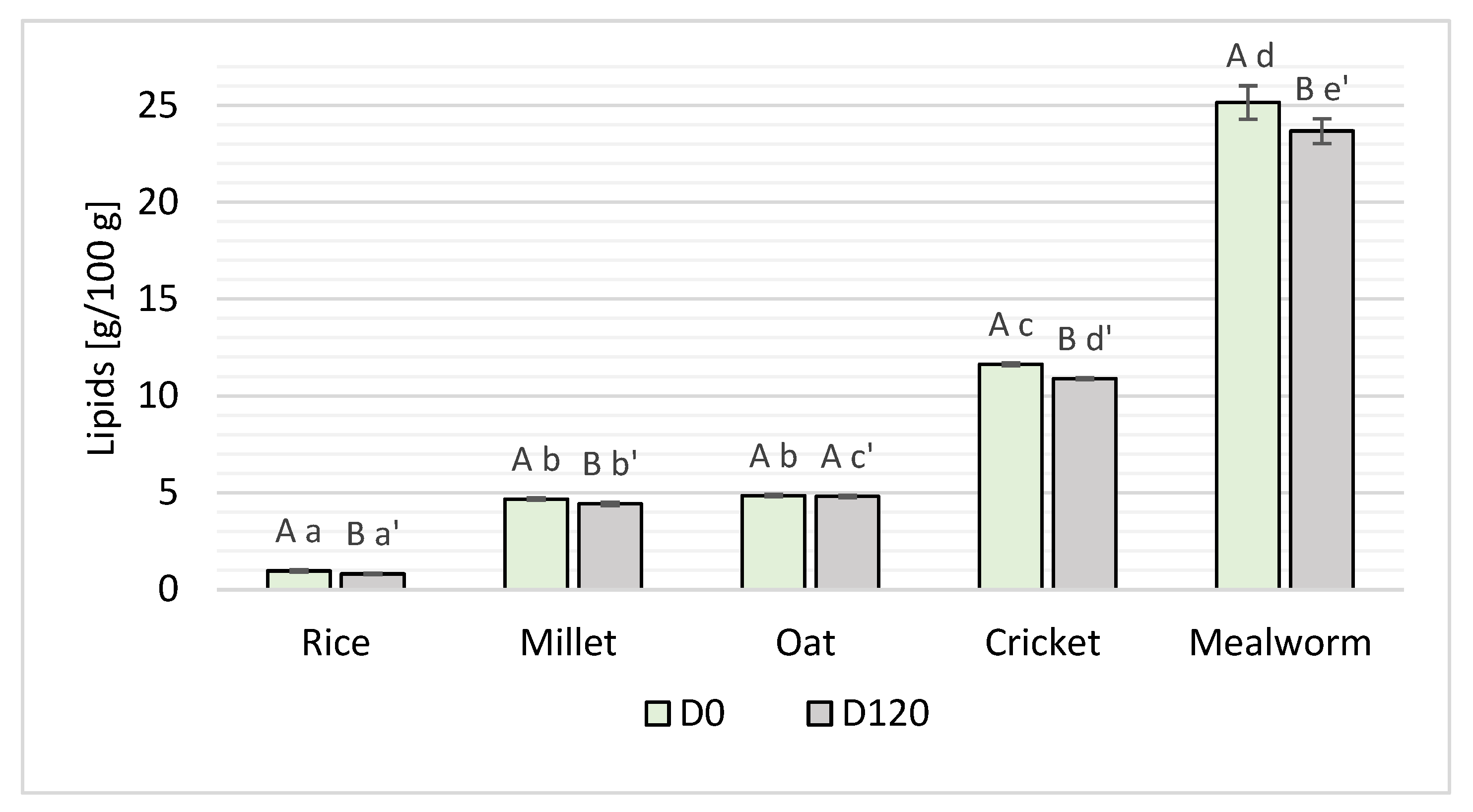
Figure 1. Lipid contents (g per 100 g) in cereal flours and insect powders. D0—day 0 (start of storage); D120—after 120 days (4 months) of storage at room temperature. Different uppercase letters (A–B) indicate significant differences (p ≤ 0.05) between the same type of flour or powder before (D0) and after storage (D120). Different lowercase letters (a–d) indicate significant differences (p ≤ 0.05) among the samples before storage (D0). Different lowercase letters with a prime (a′–e′) indicate significant differences (p ≤ 0.05) among the samples after storage (D120) (p ≤ 0.05).
Applsci 16 00013 g001
Figure 2. Changes in antioxidant activity of the tested flours during storage. D0—day 0 (start of storage); D120—after 120 days (4 months) of storage at room temperature. Different uppercase letters (A,B) indicate significant differences (p ≤ 0.05) between the same type of flour or powder before (D0) and after storage (D120). Different lowercase letters (a–c) indicate significant differences (p ≤ 0.05) among the samples before storage (D0). Different lowercase letters with a prime (a’–c’) indicate significant differences (p ≤ 0.05) among the samples after storage (D120) (p ≤ 0.05).
Applsci 16 00013 g002
Table 1. Oxidation level in the extracted lipids from cereal flours and insect powders.
PV
[meq O2/kg Lipids]
p-AsVTOTOX
D02.62 ± 0.10 Aa1.56 ± 0.11 Aa6.80 ± 0.29 Aa
D1202.74 ± 0.22 Aa’1.84 ± 0.13 Aa’7.32 ± 0.35 Aa’
D05.60 ± 0.24 Ac4.13 ± 0.31 Ac15.33 ± 0.79 Ac
D1206.20 ± 0.18 Bc’5.14 ± 0.38 Bc’17.54 ± 0.81 Bc’
D04.40 ± 0.10 Ab3.57 ± 0.24 Ab12.37 ± 0.59 Ab
D1204.72 ± 0.11 Bb’4.28 ± 0.26 Ab’13.72 ± 0.69 Bb’
D06.85 ± 0.15 Ad5.21 ± 0.21 Ad18.91 ± 0.88 Ad
D1207.78 ± 0.31 Bd’6.56 ± 0.26 Bd’22.12 ± 1.05 Bd’
D09.89 ± 0.16 Ae7.56 ± 0.29 Ae27.34 ± 1.42 Ae
D12011.58 ± 0.21 Be’9.83 ± 0.44 Be’32.99 ± 1.61 Be’
D0—day 0 (start of storage); D120—after 120 days (4 months) of storage at room temperature. PV—; p-AsV—; TOTOX. Different uppercase letters (A–B) indicate significant differences (p ≤ 0.05) between the same type of flour or powder before (D0) and after storage (D120). Different lowercase letters (a–e) indicate significant differences (p ≤ 0.05) among the samples before storage (D0). Different lowercase letters with a prime (a’–e’) indicate significant differences (p ≤ 0.05) among the samples after storage (D120) (p ≤ 0.05).
Table 2. Fatty acid composition (g per 100 g of total fatty acids; mean ± SE) of lipids extracted from cereal flours (rice, millet, oat) and edible insect powders (cricket, mealworm) at Day 0 and after 120 days of storage at room temperature.
Fatty AcidRice D0Rice D120Millet D0Millet D120Oat D0Oat D120Cricket D0Cricket D120Mealworm D0Mealworm D120SEM
C12:0ND a0.02± 0.00 b’ND aND a’ND aND a’0.10 ± 0.00 aB0.09 ± 0.00 c’A0.20 ± 0.00 b0.20 ± 0.00 d’0.008
C13:0ND aND a’ND aND a’ND aND a’ND aND a’0.06 ± 0.00 b0.06 ± 0.01 b’0.003
C14:00.46 ± 0.01 cA0.56 ± 0.03 c’B0.10 ± 0.00 aB0.05 ± 0.01 a’A0.23 ± 0.00 bB0.21 ± 0.00 b’B0.84 ± 0.01 d0.81 ± 0.04 d’3.80 ± 0.00 e3.80 ± 0.01 e’0.147
C14:1ND aND a’ND aND a’ND aND a’0.05 ± 0.01 bA0.16 ± 0.03 b’B0.01 ± 0.00 a0.01 ± 0.00 a’0.005
C15:0ND aND a’ND aND a’ND aND a’0.06 ± 0.00 b0.09 ± 0.02 b’0.09 ± 0.00 c0.11 ± 0.01 b’0.005
C16:019.78 ± 0.06 d19.66 ± 0.05 d’8.51 ± 0.02 aB8.21 ± 0.02 a’A16.67 ± 0.02 c16.67 ± 0.02 c’25.74 ± 0.02 eA25.96 ± 0.04 e’B15.56 ± 0.01 bB15.50 ± 0.01 b’A0.603
C16:10.18 ± 0.01 aA0.58 ± 0.01 b’B0.23 ± 0.00 b0.21 ± 0.01 a’0.24 ± 0.01 b0.22 ± 0.00 a’0.84 ± 0.01 c0.98 ± 0.08 c’2.56 ± 0.00 d2.59 ± 0.03 d’0.096
C17:0ND aA0.09 ± 0.00 ab’BND aA0.16 ± 0.04 b’B0.04 ± 0.00 b0.04 ± 0.00 a’0.27 ± 0.00 c0.31 ± 0.03 c’0.37 ± 0.00 d0.37 ± 0.00 c’0.016
C17:1ND aA0.02 ± 0.00 a’BND aA0.04 ± 0.01 a’B0.02 ± 0.00 b0.02 ± 0.00 a’0.34 ± 0.01 d0.35 ± 0.01 c’0.18 ± 0.00 cA0.19 ± 0.00 b’B0.014
C18:02.15 ± 0.02 bA4.66 ± 0.07 d’B1.56 ± 0.19 a1.78 ± 0.04 b’1.58 ± 0.01 a1.56 ± 0.00 a’10.54 ± 0.01 d10.48 ± 0.02 e’2.90 ± 0.00 cB2.91 ± 0.00 c’A0.360
C18:1 trans0.35 ± 0.01 bB0.04 ± 0.01 b’AND a0.02 ± 0.01 ab’ND aND a’0.09 ± 0.02 aB0.02 ± 0.00 ab’A0.02 ± 0.00 a0.03 ± 0.00 ab’0.016
C18:1 cis37.76 ± 0.15 d37.89 ± 0.02 d’22.07 ± 0.06 a22.21 ± 0.05 a’36.97 ± 0.00 cA37.32 ± 0.05 c’B22.75 ± 0.02 b22.67 ± 0.04 b’43.65 ± 0.01 eB43.34 ± 0.02 e’A0.918
C18:2 9.12 cis34.81 ± 0.13 bB31.86 ± 0.01 a’B63.31 ± 0.17 e63.72 ± 0.06 e’40.54 ± 0.05 d40.37 ± 0.06 d’36.00 ± 0.03 c36.13 ± 0.07 c’29.27 ± 0.02 aA29.63 ± 0.02 a’B1.273
C18:3 6.9.12ND aND aND aND a’0.03 ± 0.00 ab0.03 ± 0.00 b’ND aND a’0.08 ± 0.00 bND a’0.005
C18:3 9.12.151.47 ± 0.00 eB1.30 ± 0.00 c’A0.90 ± 0.00 cB0.52 ± 0.01 b’A1.26 ± 0.00 d1.30 ± 0.04 c’0.44 ± 0.00 aB0.25 ± 0.07 a’A0.57 ± 0.00 bA0.59 ± 0.00 b’B0.044
C20:00.73 ± 0.02 e0.73 ± 0.00 e’0.57 ± 0.00 dB0.55 ± 0.01 d’A0.14 ± 0.00 b0.15 ± 0.01 b’0.25 ± 0.00 cA0.28 ± 0.01 c’B0.09 ± 0.00 aA0.11 ± 0.01 a’B0.026
C20:10.54 ± 0.03 cA0.67 ± 0.00 b’B0.60 ± 0.01 dB0.25 ± 0.00 a’A0.85 ± 0.01 eA0.93 ± 0.04 c’B0.08 ± 0.00 a0.10 ± 0.01 a’0.14 ± 0.00 b0.13 ± 0.00 a’0.037
C21:0ND aA0.22 ± 0.00 b’B0.08 ± 0.00 dA1.35 ± 0.01 c’B0.04 ± 0.00 bA0.13 ± 0.04 ab’B0.06 ± 0.00 c0.12 ± 0.03 ab’0.06 ± 0.00 c0.06 ± 0.00 a’0.037
C20:3 8.11.14ND aA0.03 ± 0.01 ab’BND aND a’ND aA0.05 ± 0.02 abc’B0.13 ± 0.00 c0.11 ± 0.01 c’0.08 ± 0.00 bB0.07 ± 0.00 bc’A0.006
C20:4ND aA0.17 ± 0.06 b’BND aAND a’ND a0.10 ± 0.02 ab’B0.06 ± 0.00 b0.06 ± 0.00 ab’ND aND a’0.008
C22:00.31 ± 0.00 cB0.16 ± 0.06 b’A0.39 ± 0.00 dB0.37 ± 0.00 c’A0.07 ± 0.00 bBND a’A0.06 ± 0.00 b0.07 ± 0.01 ab’ND aND a’0.017
C22:1ND aND a’0.19 ± 0.01 dB0.16 ± 0.00 b’A0.10 ± 0.00 cBND a’A0.08 ± 0.00 bBND a’AND aND a’0.007
C22:20.12 ± 0.00 bA0.43 ± 0.11 b’BND aND a0.29 ± 0.00 bA0.50 ± 0.02 b’BND aND a’ND aND a’0.021
C23:00.44 ± 0.04 bB0.09 ± 0.01 ab’A1.04 ± 0.23 cB0.07 ± 0.01 a’A0.75 ± 0.00 bcB0.18 ± 0.04 b’A0.35 ± 0.00 abB0.08 ± 0.00 ab’AND aND a’0.044
C24:00.91 ± 0.25 b0.83 ± 0.01 c’0.45 ± 0.00 aB0.32 ± 0.02 b’A0.10 ± 0.00 a0.14 ± 0.03 a’0.15 ± 0.01 a0.17 ± 0.02 a’0.21 ± 0.00 a0.21 ± 0.00 a’0.040
C24:1ND aND aND aND a0.06 ± 0.00 b0.06 ± 0.00 ab’0.05 ± 0.01 bA0.19 ± 0.03 c’B0.10 ± 0.00 cA0.11 ± 0.00 b’B0.006
C22:6ND aND aND aND aND aND a’0.65 ± 0.00 b0.51 ± 0.04 b’ND aND a’0.026
ΣSFA24.77 ± 0.21 dA27.02 ± 0.05 d’B12.71 ± 0.23 a12.87 ± 0.09 a’19.64 ± 0.04 bB19.09 ± 0.05 b’A38.43 ± 0.04 e38.46 ± 0.04 e’23.34 ± 0.01 c23.32 ± 0.02 c’0.901
ΣMUFA38.82 ± 0.09 dA39.20 ± 0.03 d’B23.08 ± 0.06 aB22.89 ± 0.04 a’A38.23 ± 0.02 cA38.56 ± 0.02 c’B24.28 ± 0.04 b24.47 ± 0.09 b’46.65 ± 0.01 eB46.39 ± 0.01 e’A0.967
ΣPUFA36.40 ± 0.15 bB33.79 ± 0.04 b’A64.21 ± 0.17 e64.24 ± 0.05 e’42.13 ± 0.05 dA42.36 ± 0.03 d’B37.29 ± 0.04 cB37.07 ± 0.08 c’A30.01 ± 0.02 aA30.29 ± 0.01 a’B1.259
PUFA/SFA1.47 ± 0.02 bB1.25 ± 0.00 b’A5.05 ± 0.11 d4.99 ± 0.04 d’2.15 ± 0.01 cA2.22 ± 0.01 c’B0.97 ± 0.00 a0.96 ± 0.00 a’1.29 ± 0.00 bA1.30 ± 0.00 b’B0.158
AI0.29 ± 0.00 cA0.30 ± 0.00 c’B0.10 ± 0.00 a0.10 ± 0.00 a’0.22 ± 0.00 b0.22 ± 0.00 b’0.47 ± 0.00 e0.48 ± 0.00 e’0.40 ± 0.00 d0.40 ± 0.00 d’0.014
TI0.54 ± 0.00 cA0.63 ± 0.00 d’B0.22 ± 0.00 a0.22 ± 0.00 a’0.43 ± 0.00 b0.42 ± 0.00 b’1.11 ± 0.00 eA1.14 ± 0.00 e’B0.56 ± 0.00 d0.56 ± 0.00 c’0.032
h/H3.66 ± 0.02 cB3.55 ± 0.01 b’A10.02 ± 0.01 eA10.47 ± 0.02 e’B4.68 ± 0.01 dA4.72 ± 0.00 d’B2.26 ± 0.00 aB2.23 ± 0.00 a’A3.80 ± 0.00 bA3.82 ± 0.00 c’B0.293
n6/n323.66 ± 0.10 aA24.62 ± 0.05 a’B70.21 ± 0.17 dA122.06 ± 2.92 c’B32.15 ± 0.06 bB31.29 ± 0.90 a’A33.11 ± 0.33 bA47.46 ± 1.87 b’B51.28 ± 0.43 c50.35±0.35 b’2.823
Values are expressed as g/100 g of total fatty acids (mean ± SE). D0—day 0 (start of storage); D120—after 120 days (4 months) of storage at room temperature. SEM—standard error of the mean; SFA—saturated fatty acids; MUFA—monounsaturated fatty acids; PUFA—polyunsaturated fatty acids; AI—atherogenic index; TI—thrombogenic index; h/H—hypocholesterolemic/hypercholesterolemic ratio; n − 6/n − 3—omega-6/omega-3 ratio; ND—not detected. Different uppercase letters (A–B) indicate significant differences (p ≤ 0.05) between the same type of flour before (D0) and after storage (D120). Different lowercase letters (a–e) indicate significant differences (p ≤ 0.05) among the samples before storage (D0). Different lowercase letters with a prime (a’–e’) indicate significant differences (p ≤ 0.05) among the samples after storage (D120) (p ≤ 0.05).
Table 3. Thermal oxidation parameters of oils extracted from rice, millet, oat, cricket, and mealworm flours determined by the KAS method before and after 120 days of storage.
Heating Rate. β
[°C min−1]
RiceMilletOatCricketMealworm
Before storage (D0)
595.71 ± 0.01 dB40.46 ± 0.00 aB95.13 ± 0.00 cB85.53 ± 0.00 bB157.57 ± 0.01 eB
7.5100.38 ± 0.00 dB50.15 ± 0.01 aB99.29 ± 0.01 cB91.47 ± 0.00 bB160.47 ± 0.00 eB
10105.10 ± 0.00 dB58.73 ± 0.00 aB102.73 ± 0.01 cB96.15 ± 0.01 bB162.05 ± 0.00 eB
12.5108.18 ± 0.00 dB65.20 ± 0.00 aB105.78 ± 0.00 cB101.50 ± 0.01 bB163.83 ± 0.01 eB
15109.86 ± 0.01 dB67.83 ± 0.01 aB107.59 ± 0.00 cB103.17 ± 0.00 bB165.47 ± 0.00 eB
After storage (D120)
592.51 ± 0.01 c’A36.31 ± 0.00 a’A92.47 ± 0.01 c’A82.54 ± 0.00 b’A155.12 ± 0.01 d’A
7.597.12 ± 0.00 d’A47.51 ± 0.00 a’A96.78 ± 0.00 c’A88.12 ± 0.00 b’A158.45 ± 0.00 e’A
10101.74 ± 0.00 d’A53.45 ± 0.01 a’A100.33 ± 0.00 c’A93.66 ± 0.00 b’A160.24 ± 0.00 e’A
12.5105.11 ± 0.01 d’A60.42 ± 0.00 a’A103.63 ± 0.01 c’A97.74 ± 0.01 b’A161.75 ± 0.01 e’A
15107.48 ± 0.00 d’A63.25 ± 0.00 a’A105.24 ± 0.00 c’A100.21 ± 0.00 b’A163.47 ± 0.00 e’A
Parameters
Before storage (D0)
r20.9940.9910.9980.9910.995
Ea [kJ mol−1]81.31 ± 0.00 cB28.74 ± 0.00 aA94.54 ± 0.00 dB60.74 ± 0.00 bB215.37 ± 0.00 eB
log Z [s−1]11.08 ± 0.00 cB4.03 ± 0.00 aA13.04 ± 0.00 dB8.31 ± 0.00 b25.96 ± 0.00 eB
τ at 160 °C (min)18.63 ± 0.00 dB3.67 ± 0.00 bA43.46 ± 0.00 eB9.61±0.00 cA0.99±0.00 aA
τ at 170 °C (min)31.02±0.00 dB4.41±0.00 bA78.57±0.00 eB14.06±0.00 cA3.82 ± 0.00 aA
τ at 180 °C (min)50.48 ± 0.00 dB5.23 ± 0.00 aA138.41 ± 0.00 eB20.23 ± 0.00 cA13.87 ± 0.00 bA
After storage (D120)
r20.9960.9900.9960.9960.996
Ea [kJ mol−1]76.63 ± 0.00 c’A29.31 ± 0.00 a’B90.01 ± 0.00 d’A60.46 ± 0.00 b’A202.49 ± 0.00 e’A
log Z [s−1]10.49 ± 0.00 c’A4.20 ± 0.00 a’B12.47 ± 0.00 d’A8.34 ± 0.00 b’24.51 ± 0.00 e’A
τ at 160 °C (min)17.96 ± 0.00 d’A4.65 ± 0.00 b’B41.61 ± 0.00 e’A11.36 ± 0.00 c’B1.25 ± 0.00 a’B
τ at 170 °C (min)29.04 ± 0.00 d’A5.59 ± 0.00 b’B73.13 ± 0.00 e’A16.59 ± 0.00 c’B4.44 ± 0.00 a’B
τ at 180 °C (min)45.94 ± 0.00 d’A6.67 ± 0.00 a’B125.36 ± 0.00 e’A23.83 ± 0.00 c’B14.94 ± 0.00 b’B
Different uppercase letters (A–B) indicate significant differences (p ≤ 0.05) between the same type of flour or insect powder before (D0) and after storage (D120). Different lowercase letters (a–e) indicate significant differences (p ≤ 0.05) among the samples before storage (D0). Different lowercase letters with a prime (a’–e’) indicate significant differences (p ≤ 0.05) among the samples after storage (D120) (p ≤ 0.05).
Disclaimer/Publisher’s Note: The statements, opinions and data contained in all publications are solely those of the individual author(s) and contributor(s) and not of MDPI and/or the editor(s). MDPI and/or the editor(s) disclaim responsibility for any injury to people or property resulting from any ideas, methods, instructions or products referred to in the content.