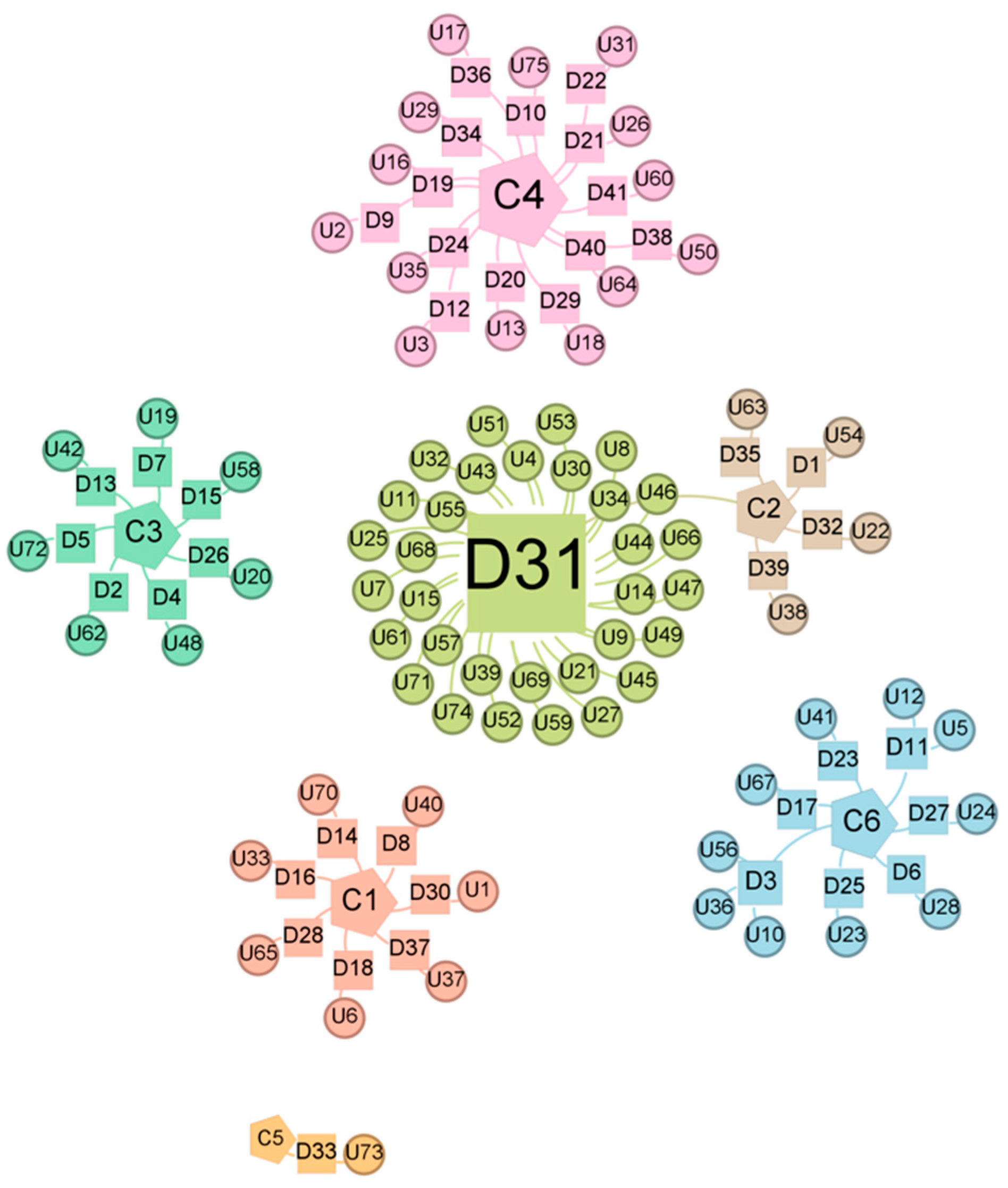
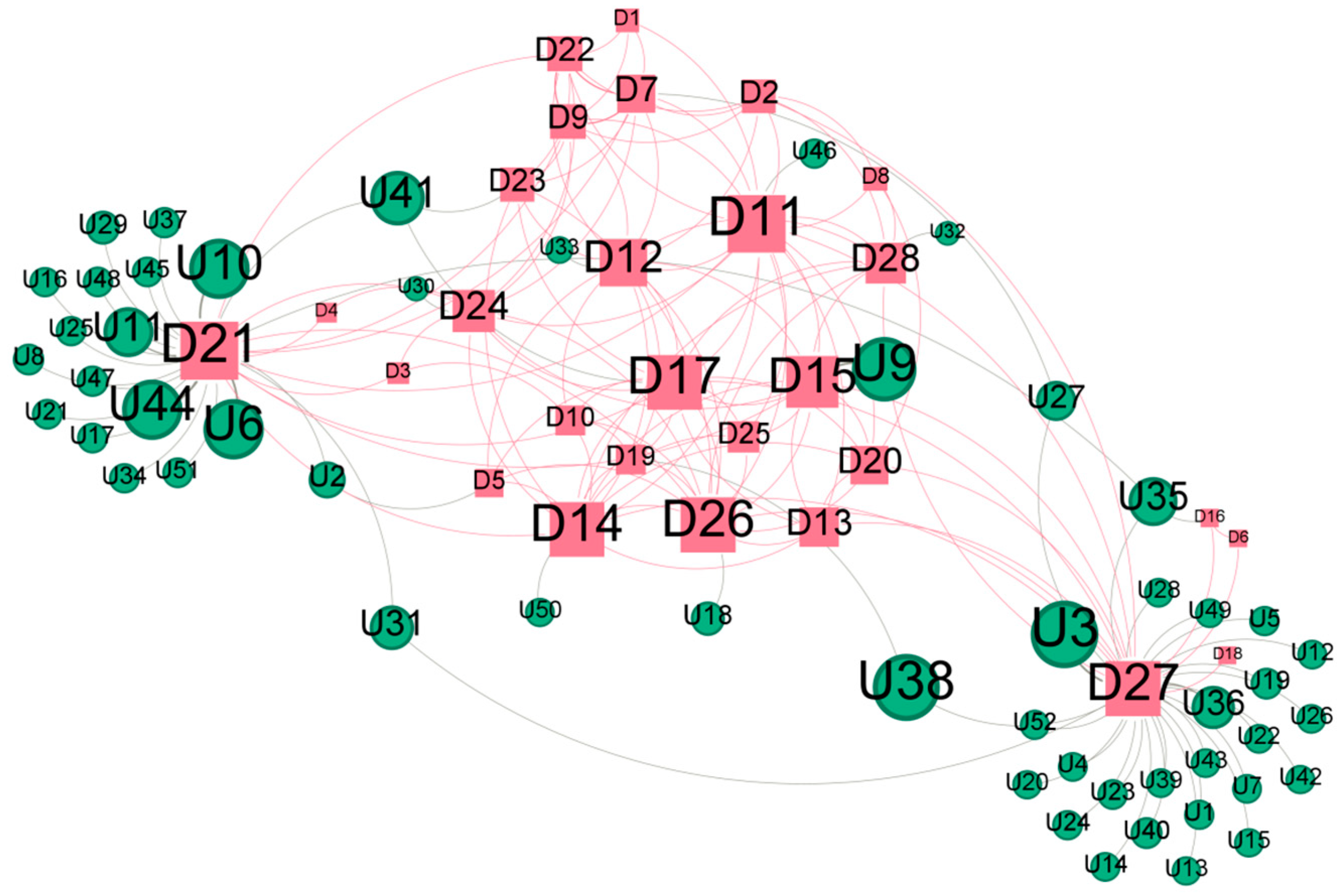
A Social Network Analysis on the Danmaku of English-Learning Programs


Abstract
1. Introduction
2. Related Work
2.1. Social Network Analysis
2.2. Pre-Trained Language Model
2.3. Clustering Algorithms
2.4. TF-IDF
2.5. The Levenshtein Distance-Based Method
3. Methods
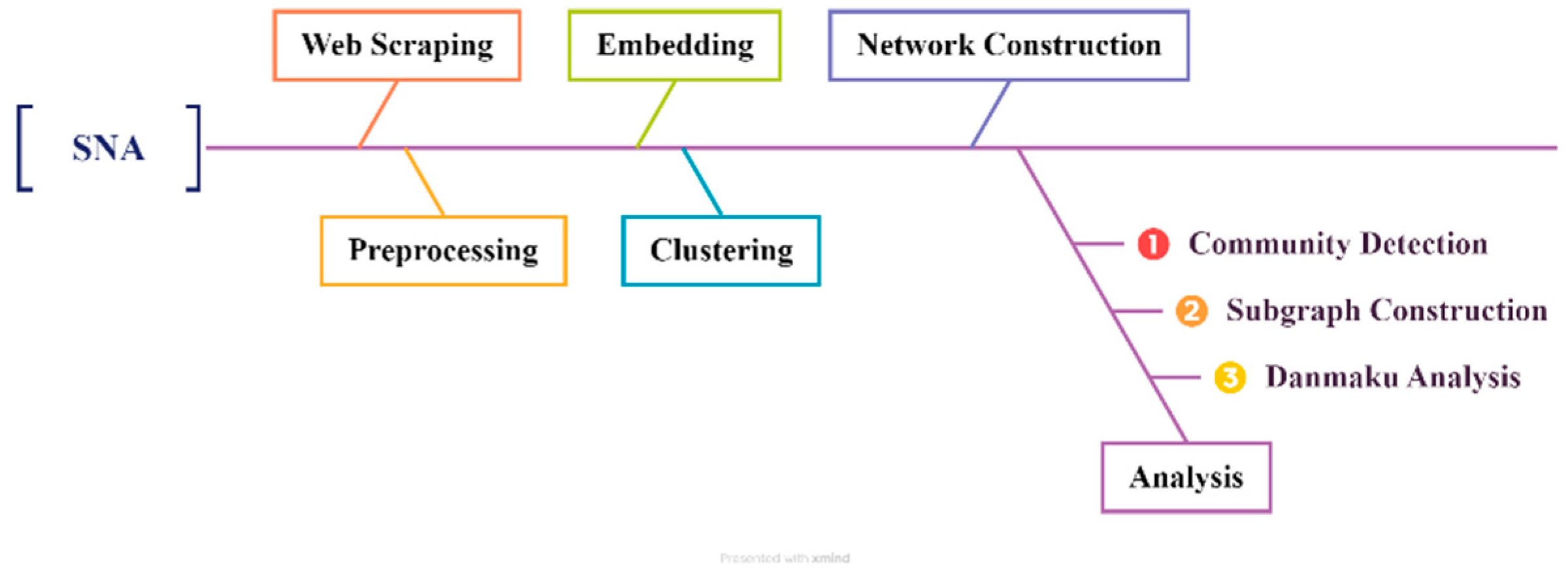
3.1. Data Collection
3.1.1. Web Scraping
3.1.2. Preprocessing
3.1.3. Embedding
3.1.4. Clustering
3.1.5. Network Construction
3.2. Social Network Analysis Procedure
3.2.1. Community Detection
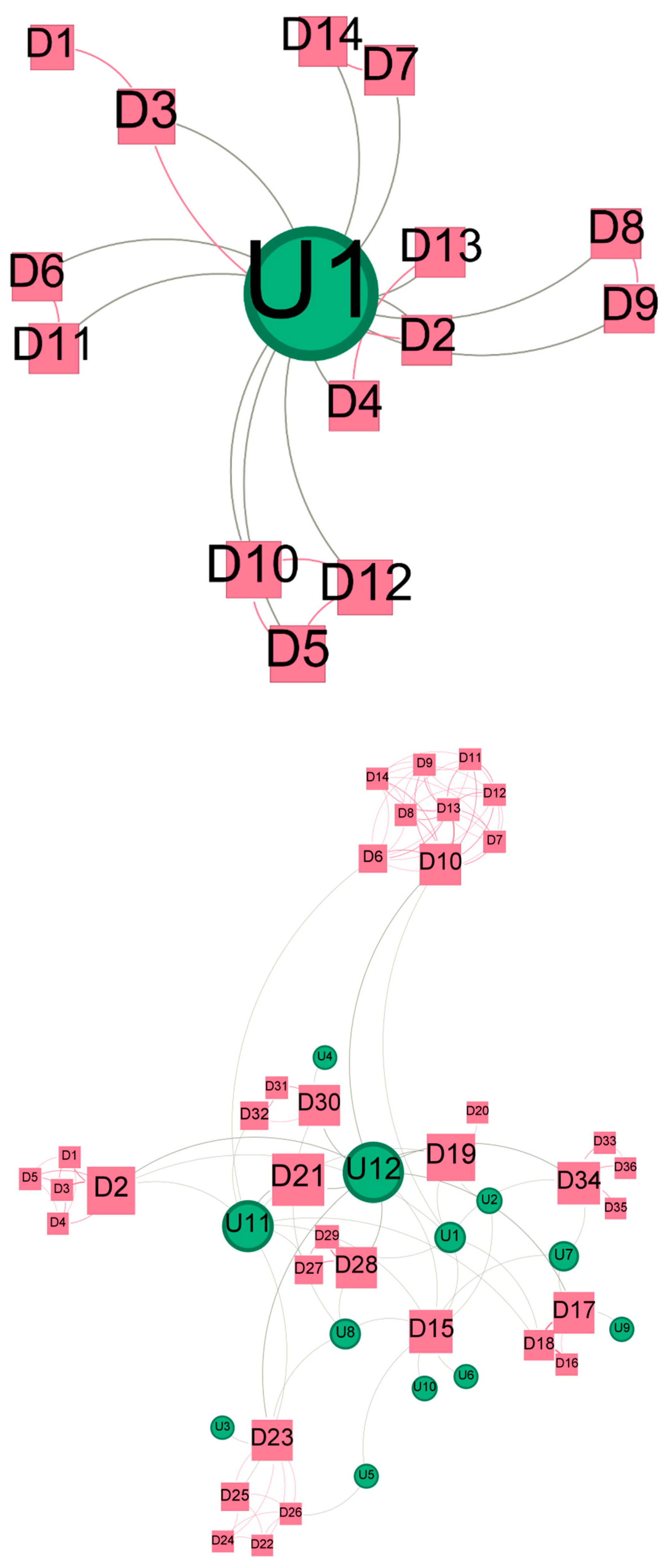
3.2.2. Subgraph Construction
4. Results
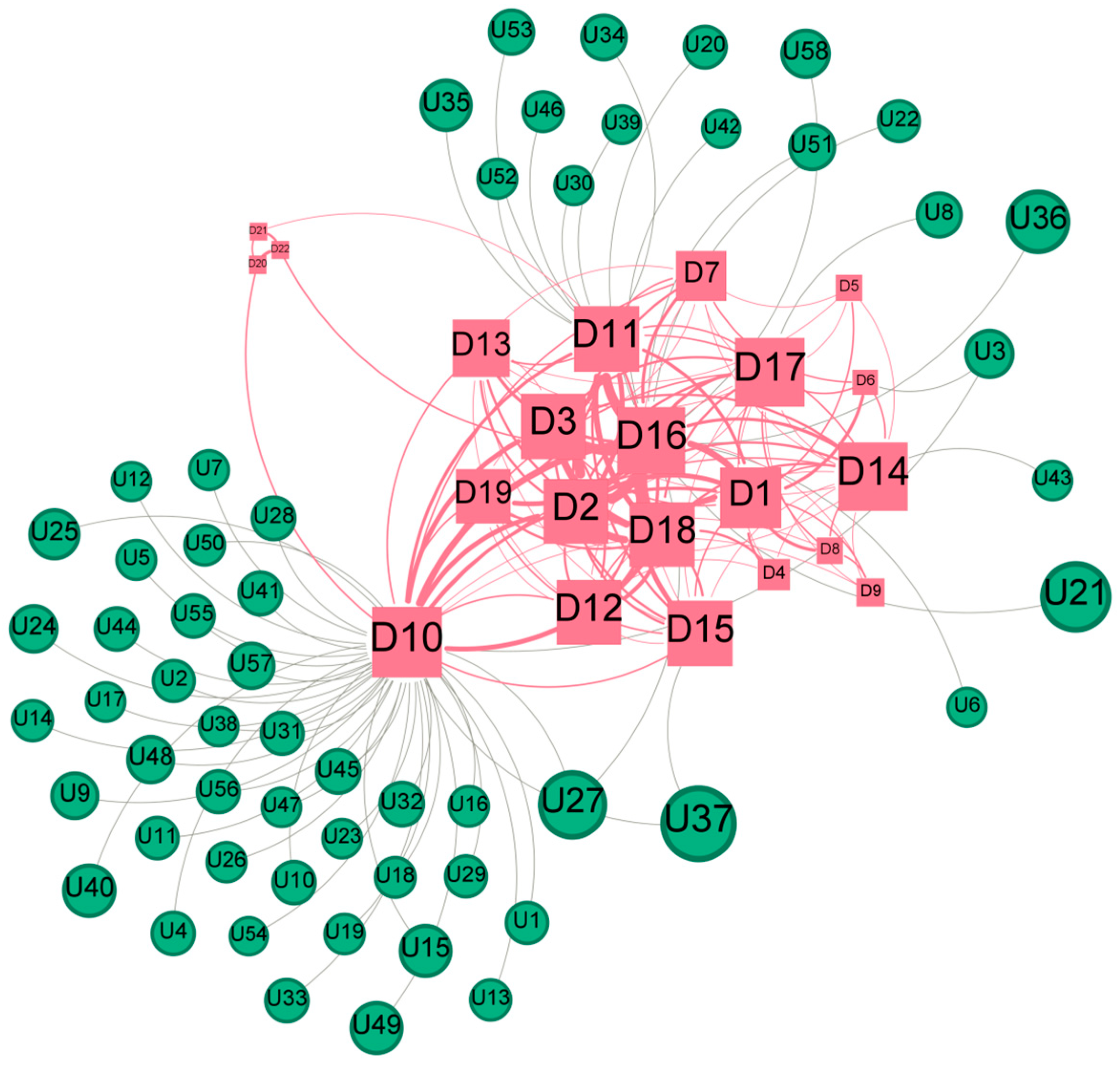
5. Discussion and Conclusions
Author Contributions
Funding
Institutional Review Board Statement
Informed Consent Statement
Data Availability Statement
Conflicts of Interest
Appendix A

| Video | Label | English Translation | Original Content |
|---|---|---|---|
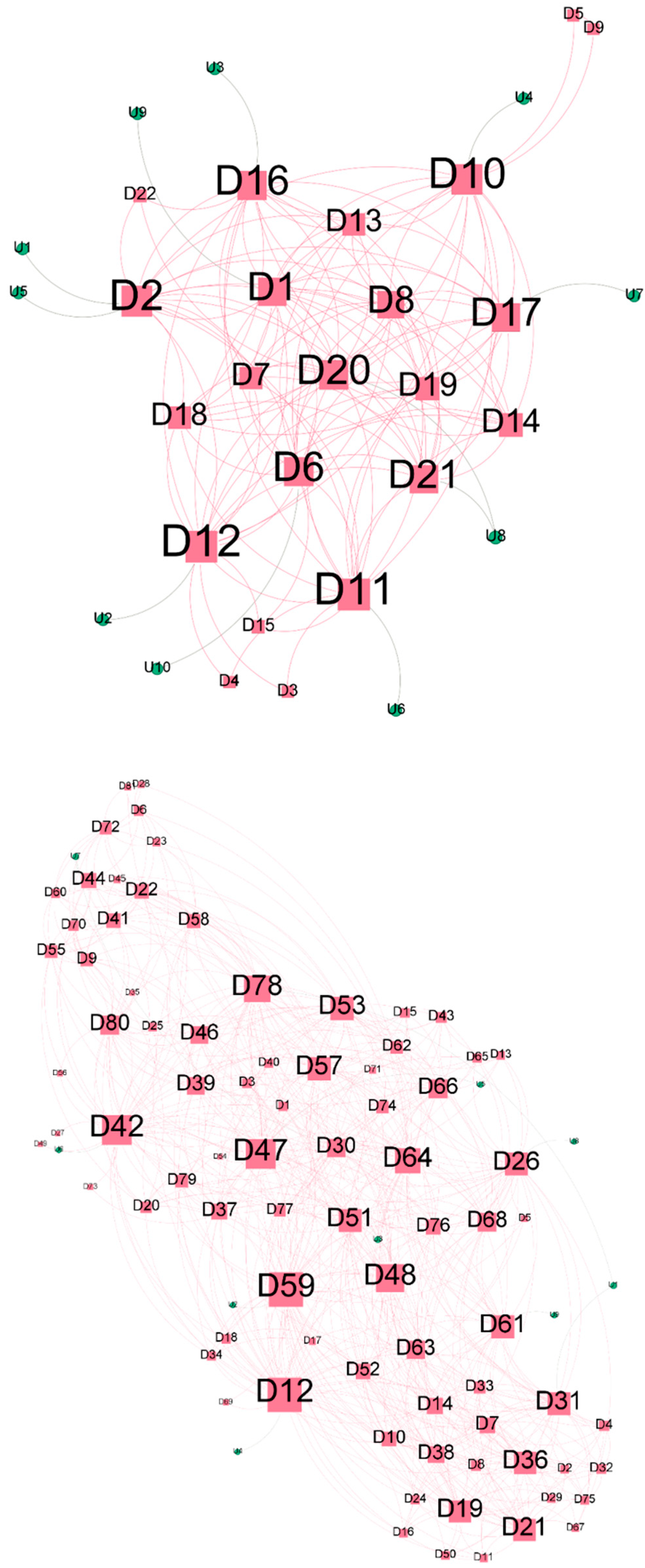
| W3 | D1 | Just bought it, output template | 剛買 出模板 |
| W3 | D2 | Exam at 3 PM, start studying at 10 AM | 下午3點考 上午10點看 |
| W3 | D3 | 1 | 1 |
| W3 | D4 | Just finished the teaching qualification exam yesterday, one hour left before the test, cramming for the CET-6 essay now | 昨天剛考完教資, 還有一個小時考試, 來突擊六級作文 |
| W3 | D5 | Exam in the afternoon, studying now | 下午考試 現在看 |
| W3 | D6 | 1000 people | 1000人 |
| W3 | D7 | Passed CET-4, now continuing with CET-6, September 18 | 四級過啦, 繼續來看6級 9.18 |
| W3 | D8 | Passed CET-6, thank you | 六級過了 謝謝 |
| W3 | D9 | Passed CET-6, thank you very much, came back to fulfill my wish | 六級過了過了, 非常感謝, 來還願了 |
| W3 | D10 | Came back to fulfill my wish, finally passed, scored 139 on the essay | 來還願了, 終於過了, 寫作拿了139 |
| W3 | D11 | 2 | 2 |
| W3 | D12 | Beep! Check-in! | 滴! 打卡! |
| W3 | D13 | Taking the CET-6 exam in the afternoon, good luck to me | 下午裸考六級, 祝自己好運 |
| W3 | D14 | Confident pass for CET-6 | 六級穩過 |
| W3 | D15 | Exam tomorrow | 明天考試啦 |
| W3 | D16 | Pass CET-6, please! | 六級過過過 拜託了 |
| W3 | D17 | Back to fulfill my wish | 回來還願 |
| W3 | D18 | Confident pass | 穩過 |
| W3 | D19 | Back to fulfill my wish, passed CET-6, happy, thank you uploader | 回來還願, 六級過了, 開心, 感謝博主 |
| W3 | D20 | Passed CET-6, came back to fulfill my wish, and gave the uploader a coin | 六級過啦, 前來還願給up主投幣 |
| W3 | D21 | Wish to pass CET-6! | 許願六級過! |
| W3 | D22 | Passed CET-6 in December 2022! Came back to fulfill my wish! Thank you so much! | 2022年12月考的六級過了! 來還願! 謝謝瑞斯拜! |
| W3 | D23 | 22 12 6 | 22 12 6 |
| W3 | D24 | Came back to fulfill my wish, thank you uploader | 來還願, 感謝up主 |
| W3 | D25 | Here I am | 來啦 |
| W3 | D26 | If I pass, I’ll recharge for you | 過了我就給瑞充電 |
| W3 | D27 | Template | mu ban |
| W3 | D28 | CET-6 in the afternoon | 下午六級 |
| W3 | D29 | Passed CET-6, came back to fulfill my wish! | 六級過了, 來還願了! |
| W3 | D30 | One-shot pass for CET-6, please | 六級一把過求求了 |
| W3 | D31 | Starting check-in | 開始打卡 |
| W3 | D32 | Check-in completed for 1 day~ | 已完成打卡1天~ |
| W3 | D33 | … | … |
| W3 | D34 | I’m back again! It’s time for CET-6! Cramming at the last minute! | 我又來了! 該考六級了! 我來臨時抱佛腳了! |
| W3 | D35 | Looking for a study partner | cpdd |
| W3 | D36 | Passed CET-6, came back to fulfill my wish, thank you so much | 六級已過, 前來還願, 感謝阿瑞 |
| W3 | D37 | One-shot pass in the afternoon | 下午一遍過 |
| W3 | D38 | This is a template to help you write when you’re stuck | 這是模板, 讓你找不到話的時候寫 |
| W3 | D39 | 600+ | 600+ |
| W3 | D40 | Came back to fulfill my wish, passed CET-4 | 來還願了, 四級過了 |
| W3 | D41 | Passed! My essay score improved by over 30 points, thank you, teacher! | 過啦過啦, 作文提高了三十多分, 謝謝老師! |
Appendix B
| Community | Label | English Translation | Original Content |
|---|---|---|---|
| P1_3 | D1 | One is “a~”, and the other is “ai” (the character for “sorrow”). | 一個是a~, 一個是悲哀的哀 |
| P1_3 | D2 | One rolls back to the gums, the other rolls to the hard palate. | 一個是捲到齒齦後, 一個是捲到硬齶 |
| P1_3 | D3 | I got it! Try adding a small “ri” sound to the previous one. | 我會啦, 你在前一個的基礎上加一個小的“日”的音試試 |
| P1_3 | D4 | Are the two pronunciations different in that one is longer and the other shorter? | 是不是倆者一個是發音較長, 一個較短? |
| P1_3 | D5 | One is a longer “u” sound, and the other is a light “oh” sound. | 一個是長一點的u的音, 一個是哦輕聲的音 |
| P1_3 | D6 | Is one “um” and the other “oh”? | 是不是一個唔, 一個歐 |
| P1_3 | D7 | The first one is a light “wo”, and the second is a light “wu”. | 前一個是wo輕聲, 後一個是wu輕聲 |
| P1_3 | D8 | One is “emmm”, and the other is a closed-mouth “hmm”. | 一個是emmm, 一個是不開口的嗯 |
| P1_3 | D9 | It feels like one is “ch” and the other is “chu”, moving into a full pinyin sound. | 感覺像是一個是ch, 一個是chu, 往後拼音 |
| P1_3 | D10 | One ends with tightly closed lips, and the other leaves the tongue tip on the upper gums. | 一個雙脣閉緊結束, 一個舌尖停留上齒齦 |
| P1_3 | D11 | One does not add a trill (voiced), and the other does. | 一個不加顫音(濁音), 一個加 |
Appendix C
| Community | Label | English Translation | Original Content |
|---|---|---|---|
| V2_2 | D1 | precious means “valuable or cherished”. | precious 寶貴的 |
| V2_2 | D2 | spacious means “having a lot of space”; broad means “wide or extensive”. | spacious 寬敞的; broad 廣闊的 |
| V2_2 | D3 | spacious means “wide or open”; broad means “extensive”; precious means “valuable”. | spacious, broad 廣闊的; precious 寶貴的 |
| V2_2 | D4 | undermine means “to weaken or destroy”. | undermine 破壞 |
| V2_2 | D5 | overlook means “to ignore or fail to notice”. | overlook 忽視 |
| V2_2 | D6 | special means “unique or distinct”; species means “a group of organisms with shared traits”. | special 特殊的; species 物種 |
| V2_2 | D7 | proper means “suitable or appropriate”; property means “assets or possessions”; asset means “a valuable resource or property”. | proper 適合的; property 財產; asset 資產(不動產) |
| V2_2 | D8 | summit means “the highest point or peak”. | summit 頂點 |
| V2_2 | D9 | summit means “a high point”; peak means “the top or apex”. | summit 高峯; peak 頂點 |
| V2_2 | D10 | neglect means “to ignore”; overlook means “to fail to notice or look over”. | neglect 忽略; overlook 忽視, 俯瞰 |
| V2_2 | D11 | species means “a group of organisms with similar traits”. | species 物種 |
| V2_2 | D12 | neglect means “to ignore or pay no attention to”; overlook means “to fail to notice”. | neglect 忽視 overlook |
| V2_2 | D13 | undermine means “to weaken or damage”. | undermine 損壞 |
| V2_2 | D14 | proper means “appropriate or suitable”; property means “assets or possessions”. | proper 合適的; property 資產 |
Appendix D
| Community | Label | English Translation | Original Content |
|---|---|---|---|
| V3_1 | D1 | annual every year | annual 每年 |
| V3_1 | D2 | annual every year | annual 每年的 |
| V3_1 | D3 | annual every year, once a year | annual 每年的 一年一次的 |
| V3_1 | D4 | annual every year, one year | annual 每年的 一年的 |
| V3_1 | D5 | annual every year, once a year | annual 每年的的 一年一次的 |
| V3_1 | D6 | beneath under | beneath 在...下方 |
| V3_1 | D7 | beneath under, lower than, inferior to, under cover of, beneath one’s dignity, below, underneath | beneath 在...下方 低於 次於 在...掩蓋下 有失...的身份 在下方 在底下 |
| V3_1 | D8 | beneath under, lower than, inferior to, under cover of, beneath one’s dignity, below, underneath | beneath 在...的下方 低於 次於 在...的掩蓋下 有失...的身份 在下方 在底下 |
| V3_1 | D9 | beneath under | beneath 在…下方 |
| V3_1 | D10 | beneath under | beneath 在下方 |
| V3_1 | D11 | beneath under, socially inferior | beneath 在下方、地位低於 |
| V3_1 | D12 | beneath under, socially inferior | beneath 在下方 地位低於 |
| V3_1 | D13 | beneath under, socially inferior, lower than | beneath 在下方 地位低於 次於 |
| V3_1 | D14 | beneath under, lower than | beneath 在下方 地位次於 |
| V3_1 | D15 | camel | camel 駱駝 |
| V3_1 | D16 | county | county 縣 |
| V3_1 | D17 | county district | county 郡 |
| V3_1 | D18 | county district, county | county 郡縣 |
| V3_1 | D19 | gene | gene 基因 |
| V3_1 | D20 | gene | geng 基因 |
| V3_1 | D21 | gram | gram 克 |
| V3_1 | D22 | instinct intuition | instinct. 本能, 直覺 |
| V3_1 | D23 | instinct | instinct 本能 |
| V3_1 | D24 | instinct intuition | instinct 本能直覺 |
| V3_1 | D25 | instinct intuition, nature | instinct 本能 直覺 本性 |
| V3_1 | D26 | instinct intuition, inherent nature | instinct 直覺 本能生性 |
| V3_1 | D27 | legal law | legal法律 |
| V3_1 | D28 | legal lawful | legal 法律的 |
| V3_1 | D29 | legal lawful, legitimate | legal 法律的 合法的 |
| V3_1 | D30 | legislation law | legislation法律 |
| V3_1 | D31 | legislation laws, regulations | legislation 法律法規 |
| V3_1 | D32 | legislation laws, regulations, legislation | legislation 法律法規立法 |
| V3_1 | D33 | resident resident doctor, inhabitant, settler | resident 住院的 居民 定居者 |
| V3_1 | D34 | resident resident | resident 居民 |
| V3_1 | D35 | resident resident, residence | resident 居民 residence居住 |
| V3_1 | D36 | resident resident, resident doctor, settled | resident 居民住院醫生定居的 |
Appendix E
| Community | Label | English Translation | Original Content |
|---|---|---|---|
| G2_2 | D1 | Can this be understood as a subjunctive mood? | 可以理解爲虛擬語氣嗎 |
| G2_2 | D2 | Isn’t this the subjunctive mood? | 這不是虛擬語氣嗎 |
| G2_2 | D3 | Here the teacher is saying that in this case, Zhang San is complaining whether this sentence can be expressed in this tense, and then the inability to do so leads to the reason why the subjunctive mood is used. What was previously discussed is the subjunctive mood for various tenses, and here it talks about the past tense, which is one type of subjunctive mood. | 這裏老師是在說, 在他說的這個案件裏, 張三抱怨這句話能不能用這個時態表示, 然後不能進而引出爲什麼要用虛擬語氣, 之前說的是各種時態時候的虛擬語氣, 這裏說的是過去時, 也就是虛擬語氣的分類之一 |
| G2_2 | D4 | It is contrary to past facts, so it is the subjunctive mood. | 與過去的事實相反, 所以是虛擬語氣 |
| G2_2 | D5 | Like a shortened clause. | 和縮寫版從句一樣 |
| G2_2 | D6 | The subjunctive mood is just a way of speaking casually. | 虛擬語氣就是口嗨的意思 |
| G2_2 | D7 | This is the impossible completion subjunctive mood. | 這裏就用不可能完成的虛擬語氣 |
| G2_2 | D8 | This is the conditional mood in the subjunctive mood. | 是虛擬語氣中條件語氣 |
| G2_2 | D9 | I thought they were the same, both are clauses. | 我以爲都是一樣的, 都是從句 |
| G2_2 | D10 | Just like the subjunctive mood. | 和虛擬語氣一樣 |
| G2_2 | D11 | The subjunctive mood is always fake. | 虛擬語氣都是假的 |
| G2_2 | D12 | Subjunctive mood? | 虛擬語氣? |
| G2_2 | D13 | Note: The subjunctive mood is included in conditional adverbial clauses, but not all conditional adverbial clauses are in the subjunctive mood. | 注意:虛擬語氣被包含於條件副詞從句, 條件副詞從句不都是虛擬語氣 |
| G2_2 | D14 | The one in front is not the subjunctive mood. | 前面的這個不是虛擬語氣 |
| G2_2 | D15 | The note means that “will” and “shall” can also be used as auxiliary verbs for the subjunctive mood. | 註釋的意思是will和shall也可做虛擬語氣的助動詞 |
| G2_2 | D16 | This is not the subjunctive mood! | 這裏不是虛擬語氣! |
| G2_2 | D17 | It might be the subjunctive mood. | 有可能是虛擬語氣 |
| G2_2 | D18 | Isn’t this still the subjunctive mood? | 這不還是虛擬語氣嗎? |
| G2_2 | D19 | Is this the subjunctive mood? | 這個是不是虛擬語氣? |
| G2_2 | D20 | This is not the subjunctive mood. | 不是虛擬語氣 |
| G2_2 | D21 | This is still the subjunctive mood. | 這裏還是虛擬語氣啊 |
| G2_2 | D22 | This assumption is not a subjunctive mood that is contrary to reality! | 這裏的假設不是與現實相反的虛擬語氣! |
Appendix F
| Community | Label | English Translation | Original Content |
|---|---|---|---|
| G3_1 | D1 | Adverbial modifier of verb, brother is a noun | 狀語修飾動詞, brother是名詞 |
| G3_1 | D2 | Are you still modifying a noun when you are already a top scorer? It is an adverbial, adverbs cannot modify nouns | 都是狀元了你還能修飾名詞嗎它是副詞詞性, 副詞不能修飾名詞呀 |
| G3_1 | D3 | Adverbial modifies “verb”, not “predicate verb”, here meeting is a verb | 狀語是修飾“動詞”的, 而不是“謂語動詞”, 這裏meeting是動詞. |
| G3_1 | D4 | Time adverbs can modify nouns | 時間副詞可以修飾名詞 |
| G3_1 | D5 | Adverbial modifies a verb, here under the tree modifies the noun the boy. Attributive is adjective-based | 狀語修飾的是動詞, 這裏under the tree是對名詞the boy的修飾. 定語是形容詞性的 |
| G3_1 | D6 | It is a location adverbial clause | 是地點狀語從句把 |
| G3_1 | D7 | Nouns can modify nouns! | 名詞可以修飾名詞! |
| G3_1 | D8 | Novel is a noun, relative clause modifies noun | novel名詞, 定語從句修飾名詞 |
| G3_1 | D9 | Isn’t this an adverbial? | 這不是狀語了麼 |
| G3_1 | D10 | Attributive modifies noun, where does this modification of subject come from? | 定語修飾名詞 哪來的修飾主語 |
| G3_1 | D11 | Attributive is used to modify limits | 定語用於修飾限定 |
| G3_1 | D12 | Attributive modifies nouns, adverbial modifies verbs? | 定語修飾名詞, 狀語修飾動詞? |
| G3_1 | D13 | Preposition modifies adjective verb | 介詞修飾 形容詞 動詞 |
| G3_1 | D14 | Attributive: modifies nouns and pronouns | 定語:修飾名詞和代詞的 |
| G3_1 | D15 | Adverb is to modify a verb, adverb, word in a sentence | 副詞就是修飾動詞 副詞 句子的詞 |
| G3_1 | D16 | Attributive is not for subject modification, it modifies nouns | 定語可不是專門修飾主語的哈 修飾名詞的 |
| G3_1 | D17 | To modify a verb, it must be an adverb; if it’s an adjective, it can only modify a noun | 修飾動詞要是副詞, in order是形容詞的話就只能修飾名詞啦 |
| G3_1 | D18 | Incorrect, adverbial does not modify noun so it cannot modify indefinite pronouns | 記錯了, 狀語不修飾名詞所以不能修飾不定代詞 |
| G3_1 | D19 | Attributive modifies noun, what are you listening to? | 定語是修飾名詞的 聽啥呢 |
| G3_1 | D20 | Classmate, adverbial doesn’t modify noun | 同學, 狀語不是修飾名詞的 |
| G3_1 | D21 | Attributive modifies noun? | 定語修飾名詞是嘛? |
| G3_1 | D22 | I mixed up with adverbial | 我跟狀語混了 |
| G3_1 | D23 | Can this not be used as a location adverbial to modify the predicate? | 這個就不能做地點狀語修飾謂語嗎 |
| G3_1 | D24 | The subsequent attributive modifies the noun baby | 後面的定語修飾的名詞baby |
| G3_1 | D25 | The adverbial clause modifies the predicate | 修飾主句謂語的是狀語從句 |
| G3_1 | D26 | Because attributive modifies nouns, adverbial modifies verbs, describes those things | 因爲定語是修飾名詞, 狀語是修飾動詞形容那些的 |
| G3_1 | D27 | How can “how” be an adverbial, modifying “did”? | how做狀語啊 修飾did啊 |
| G3_1 | D28 | Location and time are generally adverbials | 地點和時間一般都是做狀語 |
| G3_1 | D29 | This is how I understand it, attributive modifies noun, as pre-attributive before the noun and post-attributive after the noun, so those closely following the noun are most likely attributives | 我是這樣理解的, 定語修飾名詞, 在名詞前面爲前置定語, 在名詞後面爲後置定語, 所以緊跟名詞的大概率爲定語 |
| G3_1 | D30 | It modifies the verb | 修飾動詞的吧 |
| G3_1 | D31 | Attributive modifies nouns | 定語修飾名詞 |
| G3_1 | D32 | Nouns can act as attributives to modify another noun | 名詞可以作定語, 修飾另一個名詞 |
| G3_1 | D33 | Attributive actually refers to a word modifying nouns | 定語其實就是修飾名詞的詞 |
| G3_1 | D34 | Pronouns are nouns, adverbial can modify nouns, so why can’t adverbial modify indefinite pronouns? | 代詞屬名詞, 狀語可修飾名詞, 那爲什麼狀語不能修飾不定代詞? |
| G3_1 | D35 | Not a predicate verb | 不是謂語的動詞 |
| G3_1 | D36 | Attributive modifies nouns | 定語是修飾名詞的 |
| G3_1 | D37 | Adverbial doesn’t modify verbs, why can it modify the subject? | 狀語不是修飾v嗎, 爲什麼可以修飾主語[n] |
| G3_1 | D38 | Attributive modifies the preceding noun | 定語修飾前面的名詞 |
| G3_1 | D39 | Isn’t adverbial clause modifying verbs? | 狀語從句不是修飾與與動詞的嗎 |
| G3_1 | D40 | Adverbial also modifies verbs | 狀語同樣也是修飾動詞 |
| G3_1 | D41 | It’s adverbial | 是狀語吧 |
| G3_1 | D42 | Modifies adverbial? | 修飾狀語? |
| G3_1 | D43 | Adverbial modifies verbs, adjectives, adverbs, or the entire sentence | 狀語修飾動詞, 形容詞, 副詞或整個句子 |
| G3_1 | D44 | Look at adverbial | 狀語去看 |
| G3_1 | D45 | Adverbial’s part of speech is adverb, and it doesn’t describe nouns | 狀語的詞性是副詞, 並且狀語不形容名詞 |
| G3_1 | D46 | Adverbial clause can’t only modify verbs | 狀語從句不是隻能修飾動詞的嗎 |
| G3_1 | D47 | Adverbial modifies verbs here, so it’s not adverbial | 狀語修飾動詞吧 這裏修飾名詞所以不是狀語 |
| G3_1 | D48 | Because adverbial doesn’t modify nouns | 因爲狀語不修飾名詞 |
| G3_1 | D49 | Adverbial modifies sentence or verb | 狀語修飾句子或動詞 |
| G3_1 | D50 | The preceding one is attributive, it modifies the noun, helping is a verb | 前面那個, 定語是修飾名詞的, 幫助 是動詞 |
| G3_1 | D51 | Adverbial modifies action, attributive modifies noun | 狀語修飾動作啊, 定語修飾名詞啊 |
| G3_1 | D52 | It can’t be adverbial because it modifies a noun, adverbial can’t modify nouns | 不能作狀語是因爲它修飾的是名詞, 狀語不能修飾名詞 |
| G3_1 | D53 | Adverbial modifies verbs | 狀語修飾動詞 |
| G3_1 | D54 | Because it’s a prepositional phrase, it’s an adverb’s part of speech and cannot modify nouns, so it’s adverbial | 因爲那個是個介詞短語所以是副詞的詞性不能修飾名詞所以是狀語 |
| G3_1 | D55 | Isn’t adverbial? | 副詞不是狀語嗎 |
| G3_1 | D56 | Adverbial usually modifies the predicate, here it should modify began | 狀語一般修飾謂語, 在這裏我覺得應該是修飾began. |
| G3_1 | D57 | Adverbial modifies verbs | 狀語修飾動詞啊 |
| G3_1 | D58 | Adverbial—location adverbial—modifies verb before it | 狀語-地點狀語-提到動詞前面修飾動詞 |
| G3_1 | D59 | Adverbial modifies verb, attributive modifies noun | 狀語是修飾動詞的, 定語是修飾名詞的 |
| G3_1 | D60 | Complement is not adverbial | 賓補不是狀語 |
| G3_1 | D61 | Adverbial doesn’t modify nouns, nouns can be modified by attributives | 狀語不用來修飾名詞, 名詞可以被定語修飾 |
| G3_1 | D62 | It modifies verbs | 就是修飾動詞 |
| G3_1 | D63 | Complement can only modify the object, the object modified is definite, attributive modifies nouns which are general | 賓補只能修飾賓語 修飾的賓語是確定的 定語是修飾名詞的 修飾的名詞是籠統的. |
| G3_1 | D64 | Attributive modifies nouns, adverbial modifies verbs, time, location, etc. | 定語修飾名詞, 狀語修飾動詞時間地點啥的 |
| G3_1 | D65 | Isn’t modifier an adjective? | 不是修飾詞纔是形容詞嗎 |
| G3_1 | D66 | Adverbial can’t modify nouns, it only modifies verbs, adjectives, adverbs, and the entire sentence, mainly modifying verbs | 狀語不能修飾名詞, 他只修飾動詞 形容詞 副詞和整個句子, 其實主要是修飾動詞 |
| G3_1 | D67 | Attributive modifies nouns, bored is an adjective | 定語修飾名詞 bored是形容詞 |
| G3_1 | D68 | Attributive modifies nouns, adverbial modifies verbs, adjectives, and adverbs | 定語修飾名詞, 狀語修飾動詞形容詞副詞 |
| G3_1 | D69 | Meaning doesn’t change if it’s attributive; otherwise, it’s adverbial in modifying the noun or verb | 意思不變則是定語, 反之是狀語 在修飾名詞前面的動詞 |
| G3_1 | D70 | Sentence acts as adverbial, adverbial clause | 句子做狀語, 狀語從句, |
| G3_1 | D71 | Sentence acts as (time) adverbial, modifies verb stopped | 句子做(時間)狀語, 修飾動詞stopped |
| G3_1 | D72 | Adverbial isn’t “de”, it’s “di”, and when it’s a location adverbial, “di” is omitted | 狀語不是“的”, 是“地”, 且做地點狀語, “地”就省略了喔 |
| G3_1 | D73 | What does adverbial modify in subject-predicate-complement structure? | 狀語在主系表中修飾什麼? |
| G3_1 | D74 | Time adverbial modifies the entire sentence, attributive modifies a word | 時間狀語修飾整個句子, 定語修飾一個詞 |
| G3_1 | D75 | It can’t be attributive because it modifies a noun, so it doesn’t fit | 應該不能作定語吧, 定語修飾名詞, 也就是得修飾a book, 意思也不對啊 |
| G3_1 | D76 | Attributive modifies noun, here under the tree modifies reading verb, so it’s adverbial | 定語是修飾名詞的, 在樹下修飾的是reading動詞, 所以是狀語 |
| G3_1 | D77 | Emphasis sentence can only modify subject, object; adverbial can’t modify verbs | 強調句只能修飾主語賓語狀語它不能修飾動詞 |
| G3_1 | D78 | Adverbial doesn’t modify verbs | 狀語不是修飾動詞 |
| G3_1 | D79 | 1/3 is not a modifier? | 1/3不是修飾詞嗎? |
| G3_1 | D80 | Adverbial isn’t for modifying predicate? | 狀語不是修飾謂語嗎 |
| G3_1 | D81 | Time and location adverbials can also emphasize | 時間和地點狀語也能強調吧. |
Appendix G
| Community | Label | English Translation | Original Content |
|---|---|---|---|
| L1_2 | D1 | to live couldn’t be heard | to live 沒聽出來 |
| L1_2 | D2 | determine couldn’t be heard +1 | determine 沒聽出來+1 |
| L1_2 | D3 | and was heard as the | and 聽成 the |
| L1_2 | D4 | heard at the as that | 把 at the 聽成了that |
| L1_2 | D5 | a was heard as the | a 聽成 the |
| L1_2 | D6 | could hear but couldn’t write | 能聽出來但寫不出來 |
| L1_2 | D7 | but couldn’t hear show | 倒是 show 沒聽出來 |
| L1_2 | D8 | a was heard as the | a 都聽成 the |
| L1_2 | D9 | couldn’t hear the | 聽不出來 the啊 |
| L1_2 | D10 | couldn’t hear to | 沒聽出來 to |
| L1_2 | D11 | opens couldn’t hear the s | opens 沒聽出來 s |
| L1_2 | D12 | when couldn’t be heard | when 沒聽出來 |
| L1_2 | D13 | couldn’t hear anything, crying | 啥都沒聽出來, 哭了 |
| L1_2 | D14 | mother couldn’t be heard | mother 居然沒聽出來 |
| L1_2 | D15 | that was couldn’t be heard at all, wow | that was 完全沒聽出來, 哇靠 |
| L1_2 | D16 | I have learned couldn’t be heard at all | i have learned 完全沒聽出來 |
| L1_2 | D17 | the first sentence couldn’t be heard | 第一句沒聽出來 |
| L1_2 | D18 | so I heard the | 所以我聽成 the |
| L1_2 | D19 | couldn’t hear in | 沒聽出來 in |
| L1_2 | D20 | or couldn’t be heard at all | or 完全沒聽出來 |
| L1_2 | D21 | I couldn’t hear | i 沒聽出來 |
| L1_2 | D22 | applauded couldn’t be heard | applauded 沒聽出來 |
| L1_2 | D23 | this sentence couldn’t be heard at all | 這句完全沒聽出來 |
| L1_2 | D24 | I couldn’t hear anything | 我都沒有聽出來 |
| L1_2 | D25 | couldn’t hear the | 沒聽出來 the |
| L1_2 | D26 | under couldn’t be heard | under 沒聽出來 |
| L1_2 | D27 | couldn’t hear it was deceased | 沒聽出來是去世 |
| L1_2 | D28 | their was heard as the… | their 聽成 the.. |
| L1_2 | D29 | the was heard as a | the 又聽成了a |
| L1_2 | D30 | the was heard as then | the 聽成then |
| L1_2 | D31 | this the just couldn’t be heard | 這個 the 就聽不出來 |
| L1_2 | D32 | the couldn’t be heard again | the 又沒聽出來 |
| L1_2 | D33 | I give up, couldn’t hear it | 我認輸了, 沒聽出來 |
| L1_2 | D34 | laughing, the space aboard was heard as the baseboard… | 笑死, the space aboard 聽成 the baseboard…… |
| L1_2 | D35 | couldn’t hear out | 沒聽出來out |
| L1_2 | D36 | late couldn’t be heard… | late 沒聽出來… |
| L1_2 | D37 | process couldn’t be heard | process 沒聽出來 |
| L1_2 | D38 | I have couldn’t be heard | i have 沒聽出來 |
| L1_2 | D39 | lofty couldn’t be heard | lofty 沒聽出來 |
| L1_2 | D40 | only the place name couldn’t be heard | 只有地名沒聽出來 |
| L1_2 | D41 | sustain couldn’t be heard | sustain 沒聽出來, |
| L1_2 | D42 | wrote it as the | 寫成 the 了 |
| L1_2 | D43 | it is couldn’t be heard | it is 沒聽出來 |
| L1_2 | D44 | aboard couldn’t be heard | aboard 沒聽出來 |
| L1_2 | D45 | at least couldn’t be heard | at least 沒聽出來 |
| L1_2 | D46 | with couldn’t be heard | with 沒聽出來 |
| L1_2 | D47 | it couldn’t be heard | it 沒聽出來 |
| L1_2 | D48 | day couldn’t be heard | day 沒聽出來 |
| L1_2 | D49 | couldn’t hear Thor | 沒把錘哥聽出來 |
| L1_2 | D50 | heard a as the | 把 a 聽成 the |
| L1_2 | D51 | heard the day | 聽成 the day |
| L1_2 | D52 | to was heard as the again | to 又聽成 the 了 |
| L1_2 | D53 | I also heard on the | 我也聽成 on the |
| L1_2 | D54 | them was heard as the | them 聽成了 the |
| L1_2 | D55 | with couldn’t be heard | with 沒聽出來 |
| L1_2 | D56 | dumped it couldn’t be heard | dumped it 沒聽出來 |
| L1_2 | D57 | hit couldn’t be heard | hit 沒聽出來 |
| L1_2 | D58 | always hear a as the | 總是把a聽成 the |
| L1_2 | D59 | heard a as the, but couldn’t hear the again, incredible | a 聽成了the. 後面的 the 又沒聽出來, 服了自己 |
| L1_2 | D60 | I really couldn’t hear the | 我真聽不出來 the |
| L1_2 | D61 | to was heard as the | to 聽成 the |
| L1_2 | D62 | couldn’t hear wrote | 沒聽出來 wrote |
| L1_2 | D63 | I wrote the | 我寫了 the |
| L1_2 | D64 | this and couldn’t be heard at all | 這個 and 完全沒聽出來 |
| L1_2 | D65 | dies couldn’t be heard... | dies 沒聽出來... |
| L1_2 | D66 | isn’t couldn’t be heard | isnt 沒聽出來 |
| L1_2 | D67 | always hear to as the | 總把 to 聽成 the |
| L1_2 | D68 | i guess couldn’t be heard | i guess 沒聽出來 |
| L1_2 | D69 | this fear couldn’t be heard | 這個 fear 沒聽出來 |
| L1_2 | D70 | re couldn’t be heard | re 沒聽出來 |
| L1_2 | D71 | the couldn’t be heard | the 沒聽出來 |
| L1_2 | D72 | heard as the one | 聽成了 the one |
| L1_2 | D73 | the was heard as a | the 聽成 a |
| L1_2 | D74 | oh my, couldn’t hear it | 我的天 聽不出來 |
| L1_2 | D75 | us a was heard as the | us a 聽成了 the |
| L1_2 | D76 | heard on the | 聽成 on the |
| L1_2 | D77 | couldn’t hear their | 竟然沒聽出來 their |
| L1_2 | D78 | a is always heard as the, the is always heard as a | a永遠聽成 the, the 永遠聽成 a |
| L1_2 | D79 | secret couldn’t be heard | secret 沒聽出來 |
| L1_2 | D80 | the amount of couldn’t be heard | the amount of 沒聽出來 |
| L1_2 | D81 | couldn’t hear i | 沒聽出來 i |
| L1_2 | D82 | ever couldn’t be heard, heard as let (๑˙ー˙๑) | ever 沒聽出來, 聽成了 let (๑˙ー˙๑) |
| L1_2 | D83 | couldn’t hear a and missed the | 沒聽出來a 漏了the |
| L1_2 | D84 | usually really couldn’t be heard | usually 真的沒聽出來 |
| L1_2 | D85 | couldn’t be heard either | 也沒聽出來 |
| L1_2 | D86 | and couldn’t be heard | and 沒聽出來 |
| L1_2 | D87 | did not hear “is” | is沒聽出來 |
| L1_2 | D88 | heard “a” as “the” | a 聽成了 the |
| L1_2 | D89 | could not hear “ever”, very difficult | 沒聽出來 ever 好難 |
| L1_2 | D90 | could not hear “honest” | honest 沒聽出來 |
| L1_2 | D91 | could not hear “would” | would 沒聽出來 |
| L1_2 | D92 | could not hear “pass the prime” | pass the prime 沒聽出來 |
| L1_2 | D93 | heard the first word as “the” | 第一個詞聽成了 the |
| L1_2 | D94 | could not hear “how about” | how about 沒聽出來 |
| L1_2 | D95 | heard “a” as “the” | a 聽成the |
| L1_2 | D96 | every time I hear “the” as “a” and “a” as “the”! | 前面的! 我每次都是 the 聽成 a a 聽成 the! |
| L1_2 | D97 | heard it here | 這裏聽出來了 |
| L1_2 | D98 | really could not hear “i” | 真沒聽出來i |
| L1_2 | D99 | could not hear “order”, missed “that” at the end | order 後面 that 沒聽出來 |
| L1_2 | D100 | could not hear “there’s” | there`s 沒聽出來 |
| L1_2 | D101 | could not hear “and the” | and the 沒聽出來 |
| L1_2 | D102 | could not hear the part at the end | 後面沒聽出來 |
| L1_2 | D103 | could not hear “series” | series 沒聽出來 |
| L1_2 | D104 | could not hear “every” | 沒聽出來 every |
| L1_2 | D105 | could not hear “and the” | and the 我也沒聽到 |
| L1_2 | D106 | heard it as “the” | 聽成 the 了 |
| L1_2 | D107 | could not hear “fear of” | fear of 沒聽出來 |
| L1_2 | D108 | could not hear “how to”, so frustrating | how to 沒聽出來 氣 |
| L1_2 | D109 | could not hear the second “ve” | 第二個‘’ve 沒聽出來 |
| L1_2 | D110 | could not hear “could” before “that” | that 前 could.沒聽出來 |
| L1_2 | D111 | really could not hear “it” | 真的沒聽出來 it |
| L1_2 | D112 | heard “an” as “the” | 把 an 聽成 the 了 |
| L1_2 | D113 | heard “a” as “the” | 我把 a 聽是 the |
| L1_2 | D114 | I also wrote “the” and couldn’t understand why there was a “the” | 我也寫了 the 還想不通爲什麼會有個 the |
| L1_2 | D115 | could not hear the second half of the sentence | 後半句完全沒聽出來 |
| L1_2 | D116 | could not hear “a” | 沒聽出來 a |
| L1_2 | D117 | could not hear “bound” | bound 沒聽出來 |
| L1_2 | D118 | could not hear 0.5 | 0.5 我都聽不出來 |
| L1_2 | D119 | always hear “a” as “the” | 老是吧 a 聽成 the |
| L1_2 | D120 | completely could not hear it | 完全沒聽出來 |
| L1_2 | D121 | could not hear “figure” | figure 沒聽出來 |
| L1_2 | D122 | could not hear “the what” with “the” | the what 的 the 聽不出 |
| L1_2 | D123 | really could not hear it | really 竟然沒聽出來 |
| L1_2 | D124 | could not hear “and” | and 沒聽出來 |
| L1_2 | D125 | could not hear “that” | that 沒聽出來 |
| L1_2 | D126 | heard “the” as “a” | the 聽成了a |
| L1_2 | D127 | could not hear “been” | been 完全沒聽出來 |
| L1_2 | D128 | could not hear “big”, don’t understand the meaning | big 沒聽出來, 不懂啥意思 |
| L1_2 | D129 | completely could not hear the last sentence | 最後一句完全沒聽出來 |
| L1_2 | D130 | could not hear “into” | into 沒聽出來 |
| L1_2 | D131 | heard it as “open the” | 我聽成 open the |
| L1_2 | D132 | could not hear anything… | 啥也聽不出來... |
| L1_2 | D133 | could not hear the part at the end | 後面聽不出來 |
| L1_2 | D134 | was wondering why I couldn’t hear it | 我說咋聽不出來 |
| L1_2 | D135 | could not hear the place name | 地名沒聽出來 |
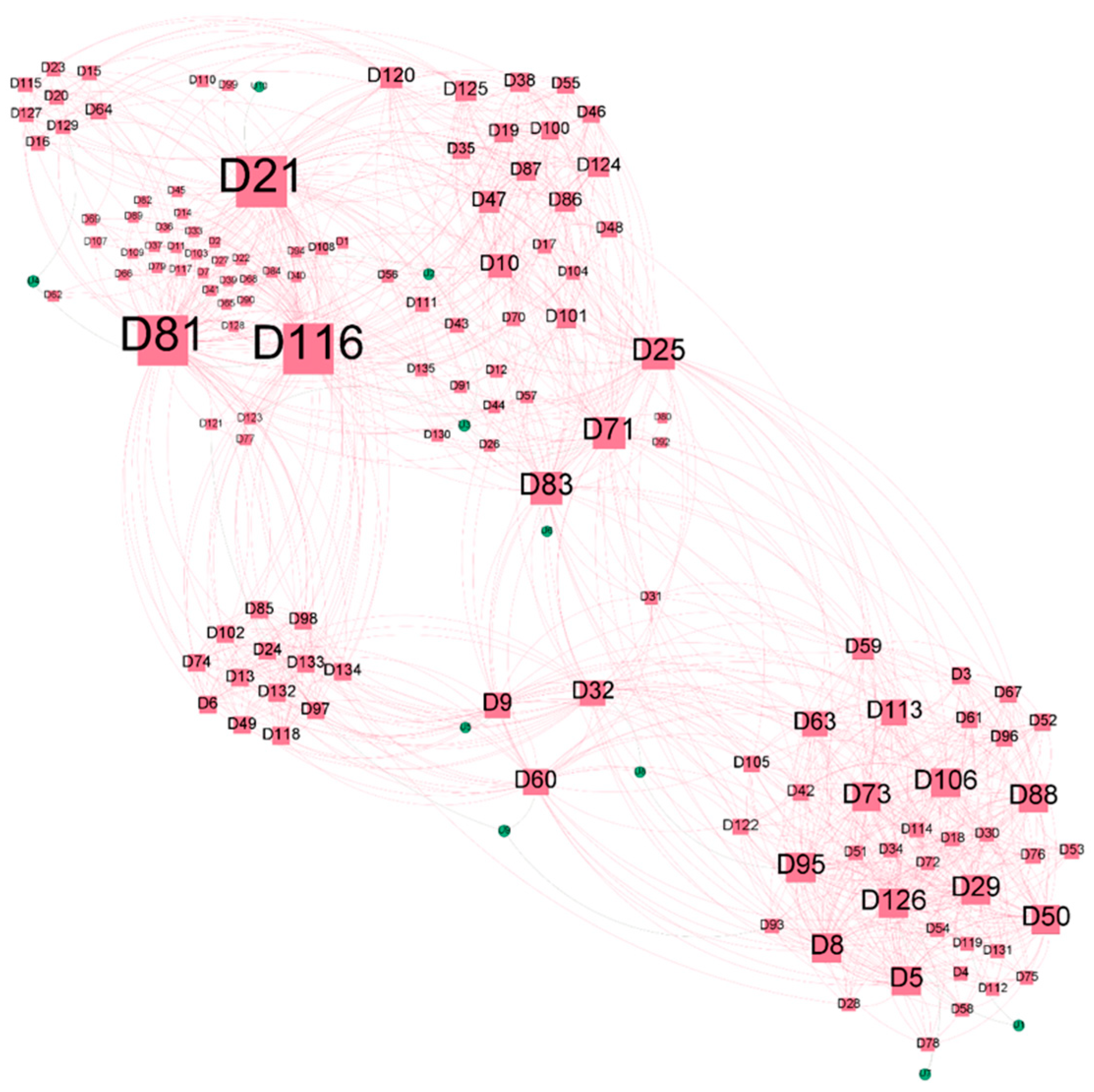
Appendix H. Visualization of Social Network and the Detailed Information in S1
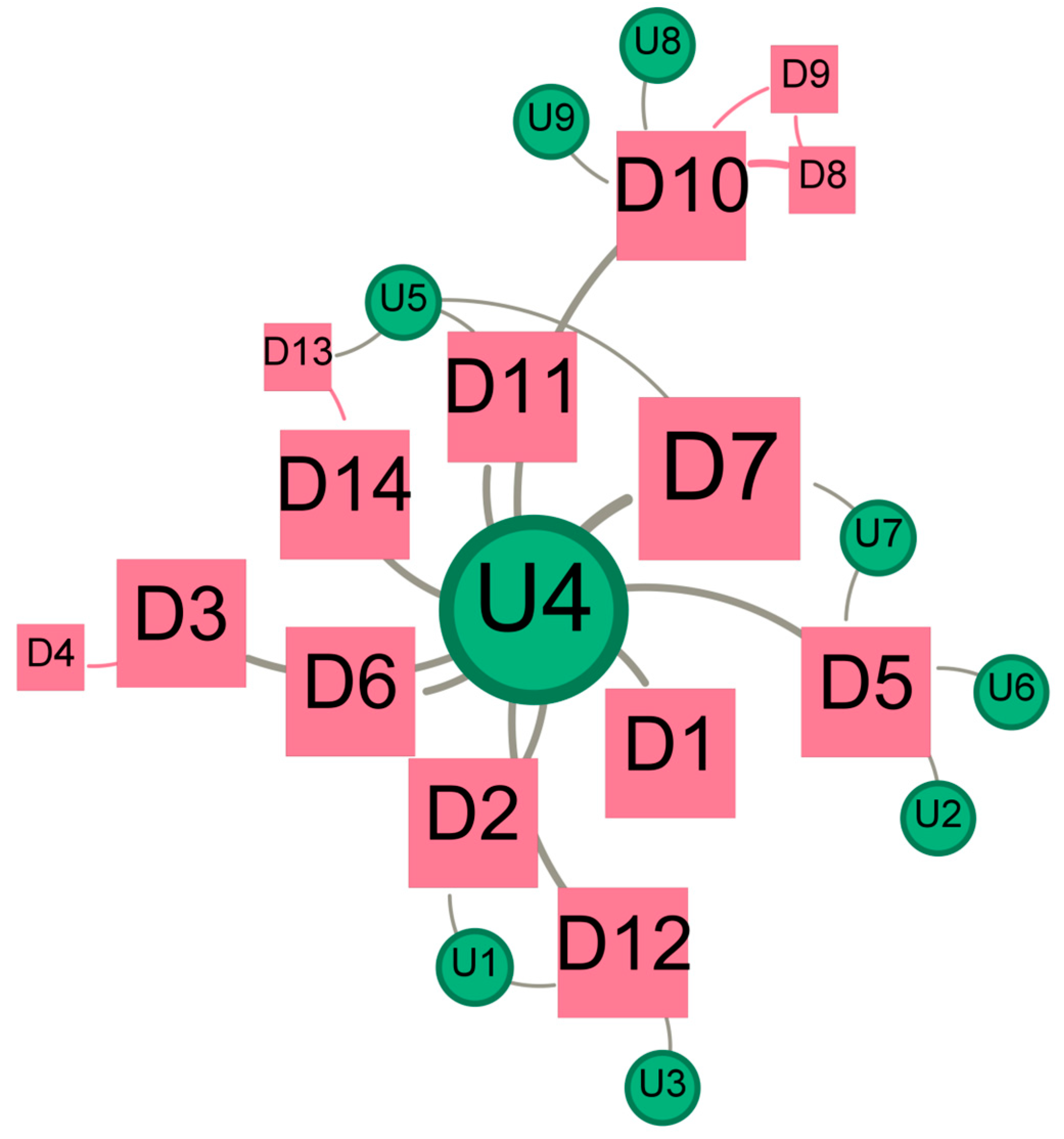
| Community | Label | English Translation | Original Content |
|---|---|---|---|
| S1_2 | D1 | bear endure; tolerate; | bear 承受; 忍受; |
| S1_2 | D2 | botulism botulinum poisoning | botulism 肉毒中毒 |
| S1_2 | D3 | collaborate cooperate | collaborate 合作 |
| S1_2 | D4 | collaborate cooperate, collaborate | collaborate 合作 協作 |
| S1_2 | D5 | glucose | glucose 葡萄糖 |
| S1_2 | D6 | likelihood probability; possibility; | likelihood 可能; 可能性; |
| S1_2 | D7 | molecule | molecule分子 |
| S1_2 | D8 | notorious infamous | notorious, 臭名昭著 |
| S1_2 | D9 | notorious infamous | notorious臭名昭著 |
| S1_2 | D10 | notorious infamous | notorious 臭名昭著的 |
| S1_2 | D11 | quantum | quantum 量子 |
| S1_2 | D12 | respiration breathing | respiration 呼吸 |
| S1_2 | D13 | synthetic artificially synthesized | synthetic 人工合成的 |
| S1_2 | D14 | synthetic synthetic | synthetic 合成的 |
Appendix I. Visualization of Social Network and the Detailed Information in S3
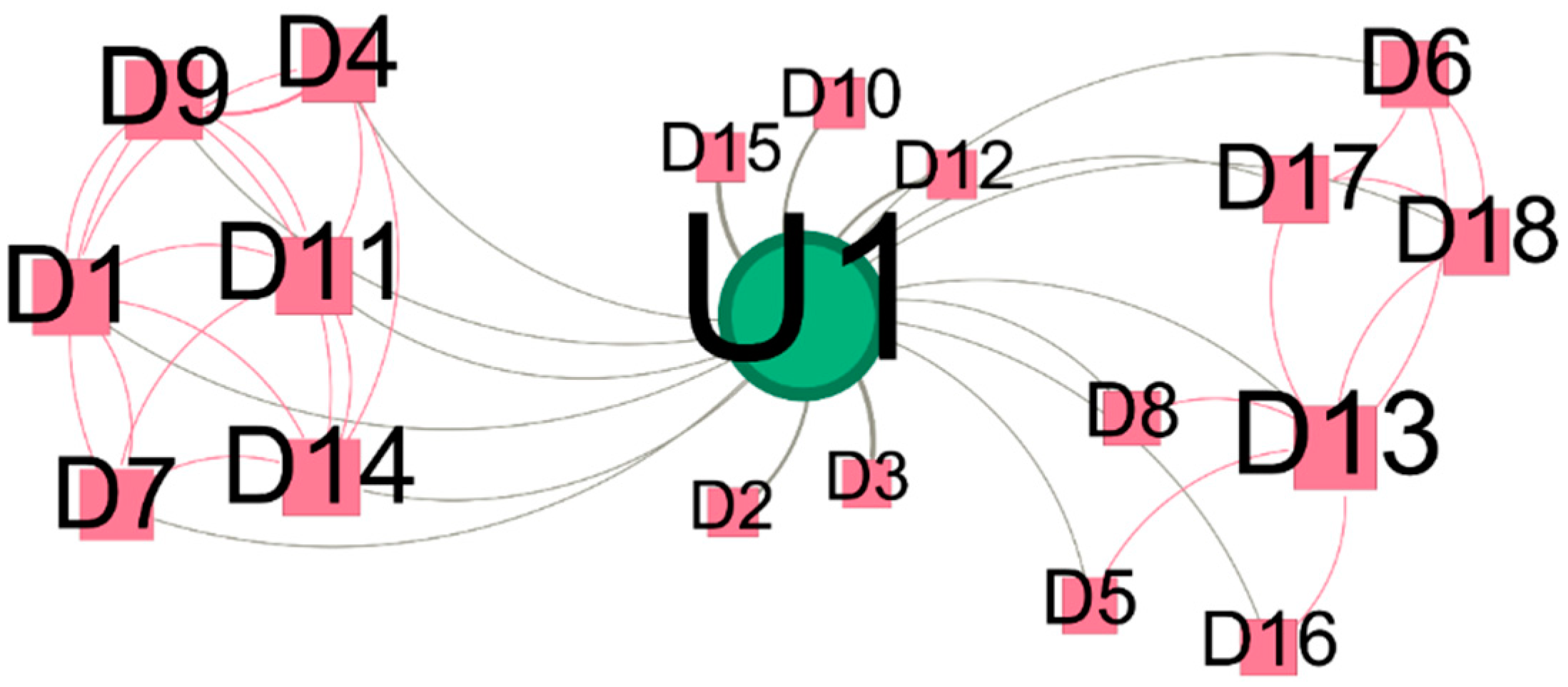
| Community | Label | English Translation | Original Content |
|---|---|---|---|
| S3_3 | D1 | recognition means “the act of identifying, acknowledging, or showing appreciation for something”. | recognition n. 認出; 承認; 讚賞 |
| S3_3 | D2 | buffalo n. | buffalo n. 水牛 |
| S3_3 | D3 | mosquito n. | mosquito n. 蚊子 |
| S3_3 | D4 | recognition means “the act of identifying, acknowledging, or showing appreciation for something”. (Spelling error case) | recogenition n. 認出; 承認; 賞識 |
| S3_3 | D5 | opposite means “completely different; situated on the other side” (adj), “the other side” (n), “across from” (prep), or “to co-star” (v). | opposite a. 迥然不同的; 對面的 n. 對面 prep. 在…對面; 與…合演 |
| S3_3 | D6 | opposite means “situated on the other side or contrary to something” (adj), “a counterpart or antonym” (n), or “facing something” (prep). | opposite a. 對面的;相反的 n. 對立面;反義詞 prep.與…相對 |
| S3_3 | D7 | recognition means “the act of identifying, acknowledging, or showing appreciation for something”. | recognition n. 認出; 認可; 賞識 |
| S3_3 | D8 | opposite means “completely different or situated on the other side” (adj), “a counterpart” (n), or “facing something” (prep). | oposite a. 截然不同的;對面的 n. 對立面 prep.與…相對與……合演 |
| S3_3 | D9 | recognition means “the act of identifying, acknowledging, or showing appreciation for something”. | recognition n. 認出; 承認; 賞識 |
| S3_3 | D10 | fragrant a. | fragrant a.香的, 芳香的 |
| S3_3 | D11 | recognition means “the act of identifying, acknowledging, or showing appreciation for something”. | recognition n.認出, 認識, 識別; 承認, 認可; 讚賞, 賞識 |
| S3_3 | D12 | vessel means “a large ship, a container, or a blood-carrying structure in the body”. | vessel n. 大船; 容器; 血管 |
| S3_3 | D13 | opposite means “situated on the other side; completely different” (adj), “a counterpart or contrary thing” (n), or “facing something” (prep). | opposite adj. 對面的; 迥然不同的 n. 對立面 prep. 與…相對; 與…合演 |
| S3_3 | D14 | recognition means “the act of identifying, acknowledging, or showing appreciation for something”. | recognition n. 讚賞; 認出; 承認 |
| S3_3 | D15 | remind v. | remind v. 提醒, 使想起 |
| S3_3 | D16 | opposite means “on the other side; very different” (adj), “a counterpart” (n), or “facing something” (prep). | oppsite adj. 對面的, 另一邊的; 迥異的 n. 對立面 prep. 與…相對的 |
| S3_3 | D17 | opposite means “contrary or completely different” (adj), “a counterpart” (n), or “facing something” (prep). | opppsite adj. 相反的, 迥然不同的; 對面的 n. 對立面 prep. 與…相對; 與…聯袂演出 |
| S3_3 | D18 | opposite means “on the other side or completely contrary” (adj), “a counterpart or opposite thing” (n). | opposite adj. 對面的, 相對的, 相反的 n. 對立面 |
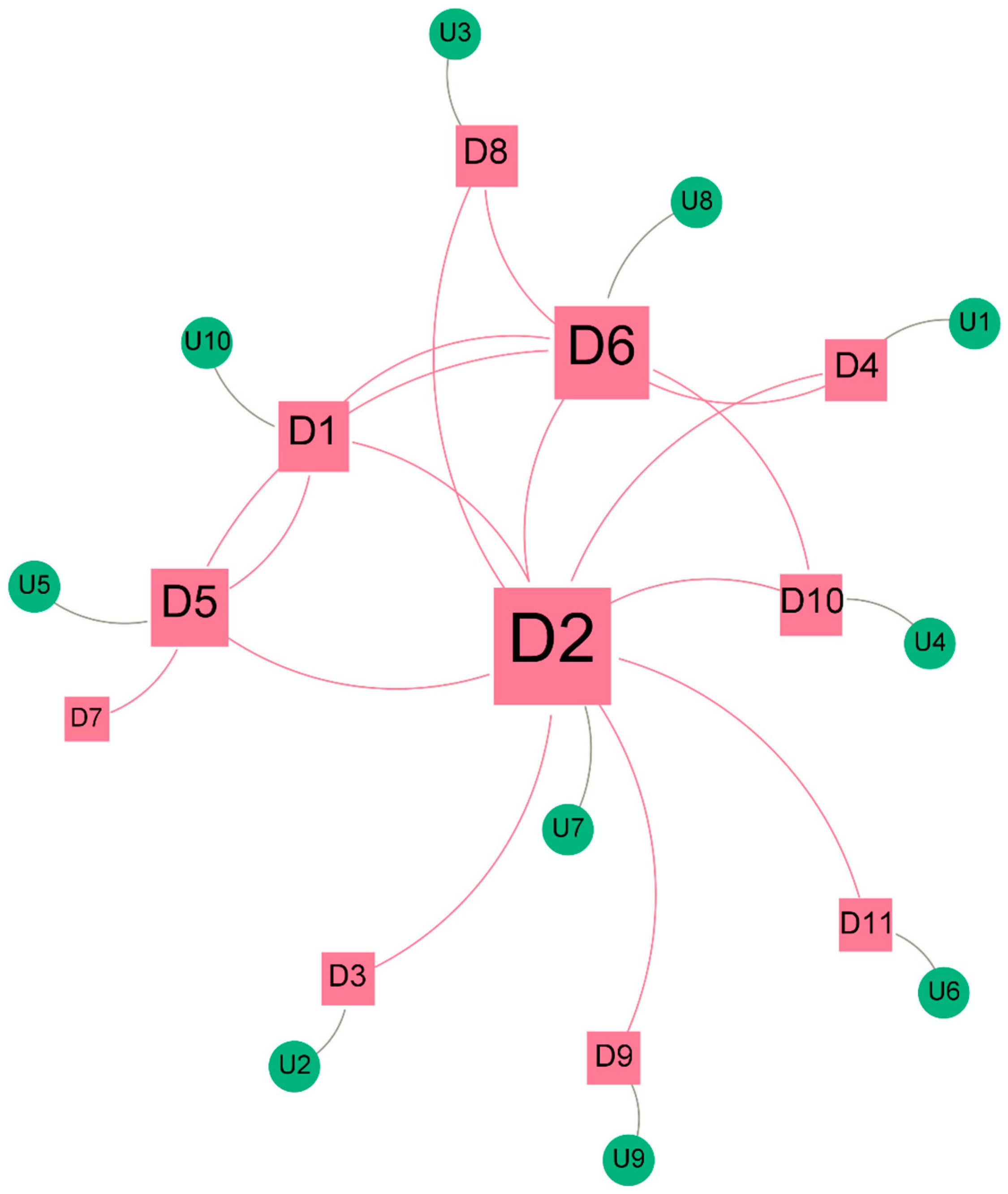
Appendix J. Visualization of Social Network and the Detailed Information in R3
| Community | Label | English Translation | Original Content |
|---|---|---|---|
| R3_1 | D1 | radical big | radical 大的 |
| R3_1 | D2 | radical big, extreme | radical 大的, 極端的 |
| R3_1 | D3 | radical big, extreme | radical 大的極端的 |
| R3_1 | D4 | radical huge | radical 巨大的 |
| R3_1 | D5 | radical thorough | radical 徹底的 |
| R3_1 | D6 | radical fundamental | radical 根本的 |
| R3_1 | D7 | radical fundamental, thorough, extreme | radical 根本的, 徹底的, 極端的 |
| R3_1 | D8 | radical extreme | radical 極端 |
| R3_1 | D9 | radical extremely big | radical 極端大的 |
| R3_1 | D10 | radical extreme | radical 極端的 |
| R3_1 | D11 | radical extreme, big | radical 極端的, 大的 |
| R3_1 | D12 | radical extreme, huge | radical 極端的, 巨大的 |
| R3_1 | D13 | radical extreme, thorough | radical 極端的, 徹底的 |
| R3_1 | D14 | radical extreme radical | radical 極端的 radical |
| R3_1 | D15 | radical extreme, big | radical 極端的, 大的 |
| R3_1 | D16 | radical extreme, big | radical 極端的大的 |
| R3_1 | D17 | radical extreme, big radical | radical 極端的 大的 radical |
| R3_1 | D18 | radical extreme, huge | radical 極端的 巨大的 |
| R3_1 | D19 | radical extremely huge | radical 極端的極大的 |
| R3_1 | D20 | radical extreme | redical 極端的 |
| R3_1 | D21 | radical extreme, big | redical 極端的, 大的 |
| R3_1 | D22 | radical extremely big | redical 極端的大的 |
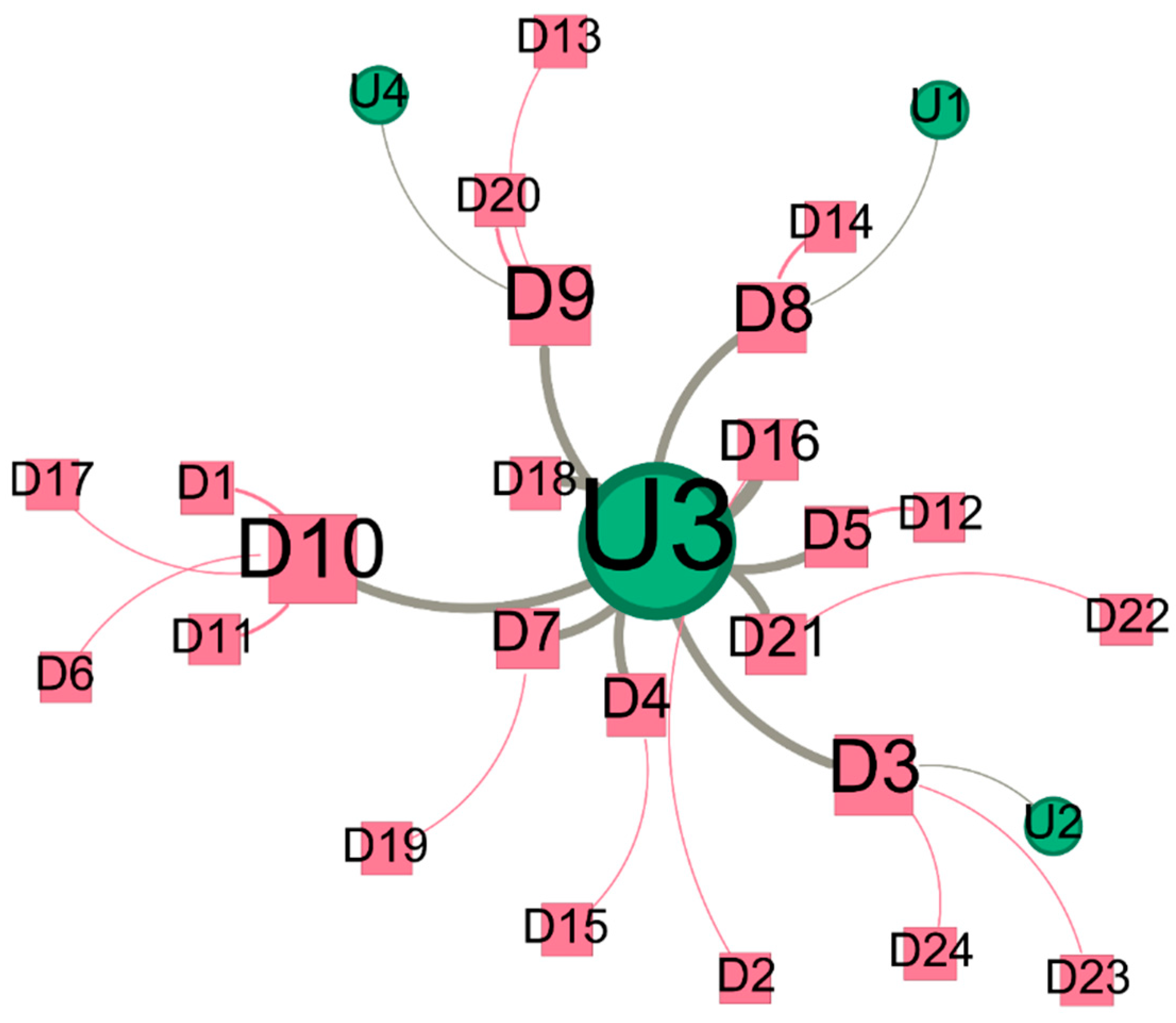
Appendix K. Visualization of Social Network and the Detailed Information in W3

| Community | Label | English Translation | Original Content |
|---|---|---|---|
| W3_2 | D1 | foster cultivate, raise | foster 培養, 扶養 |
| W3_2 | D2 | cultivate | cultivate 培養 |
| W3_2 | D3 | foster develop | foster 養成 |
| W3_2 | D4 | foster develop | foster 發展 |
| W3_2 | D5 | form | form |
| W3_2 | D6 | caltivate | caltivate |
| W3_2 | D7 | foster cultivate | foster 培養 |
| W3_2 | D8 | create cultivate foster | 營造 培養 forster cultivate |
| W3_2 | D9 | foster, cultivate | foster, 培養 |
| W3_2 | D10 | foster cultivate form develop | foster cultivate form 養成 |
| W3_2 | D11 | cultivate, foster | cultivate, foster 培養 |
| W3_2 | D12 | foster. form. cultivate develop | foster. form. cultivate 培養 |
| W3_2 | D13 | foster cultivate atmosphere | foster cultivate atmosphere |
| W3_2 | D14 | cultivate form foster | cultivate form foster |
| W3_2 | D15 | foster and cultivate | foster and cultivate |
| W3_2 | D16 | ciltivate | ciltivate |
| W3_2 | D17 | form foster cultivate | form foster cultivate |
| W3_2 | D18 | cultivate develop | cultivat 養 |
| W3_2 | D19 | form cultivate foster a habit | form cultivate foster a habit |
| W3_2 | D20 | foster cultivate create | foster cultivate 營造 |
| W3_2 | D21 | foster | foster |
| W3_2 | D22 | foster cultivate | foster 培養 |
| W3_2 | D23 | form develop foster cultivate | form 形成 foster 培養 |
| W3_2 | D24 | foster foster foster | foster foster foster |
| W3_2 | D25 | foster cultivate develop | foster cultivate develop |
| W3_2 | D26 | foster cultivate form | foster cultivate form |
| W3_2 | D27 | cultivate | cultivate |
| W3_2 | D28 | cultivate develop cultivate | cultivate 培養 cultivate |
Appendix L
| Community | Label | Original Content |
|---|---|---|
| L2_1 | D1 | he should apologize for being rude to the guests. |
| L2_1 | D2 | it’s more blessed to give than to receive |
| L2_1 | D3 | i told you not to talk about the matter in her presence. |
| L2_1 | D4 | can you wake me up at 7 o’clock tomorrow morning? |
| L2_1 | D5 | there must be a way to arrive at a diplomatic solution. |
| L2_1 | D6 | she should apologized for being rude to guests |
| L2_1 | D7 | i haven’t had time to look for what you wanted. |
| L2_1 | D8 | mary didn’t refer to the accident she had seen |
| L2_1 | D9 | the teacher lined the children up in order of height |
| L2_1 | D10 | he should apologize for being rude to the guests |
| L2_1 | D11 | he should apologize for being rude to the guest |
| L2_1 | D12 | there must be a way to arrive at a diplomatic solution |
| L2_1 | D13 | we teacher lined the children up in order of the height |
| L2_1 | D14 | mary didn’t refer to the accident she had seen |
| L2_1 | D15 | can you wake me up in the seven o’clock tomorrow morning |
| L2_1 | D16 | it is more blessed to give than to receive. |
| L2_1 | D17 | he should apolpgize for beiing rude to the guests |
| L2_1 | D18 | i have a friend whose father is a teacher. |
| L2_1 | D19 | is this what you have wanted for a long time |
| L2_1 | D20 | the teacher lined the children up in order of height. |
| L2_1 | D21 | our music teacher advised me to visit vienna. |
| L2_1 | D22 | our music teacher advised me to visit a vienna. |
| L2_1 | D23 | i told you not to talk about her in prensence |
| L2_1 | D24 | i tould you not to tell about the matter inher presence |
References
- Jiang, J.; Shi, S.; Luan, Z. Making Online English Learning More Engaging for Chinese College Students: A Comparative Analysis of MOOCs and Bilibili. In Proceedings of the 14th International Conference on Education Technology and Computers, Barcelona, Spain, 28–30 October 2022. [Google Scholar]
- Yang, B.; He, H. Learning alone yet together: Enhancing between-learner social connectivity at scale. In Proceedings of the Ninth ACM Conference on Learning@ Scale, New York, NY, USA, 1–3 June 2022. [Google Scholar]
- Hew, K.F. Unpacking the strategies of ten highly rated MOOCs: Implications for engaging students in large online courses. Teach. Coll. Rec. 2018, 120, 1–40. [Google Scholar] [CrossRef]
- Zhang, L.-T.; Vázquez-Calvo, B.; Cassany, D. The emerging phenomenon of L2 vlogging on Bilibili: Characteristics, engagement, and informal language learning. Prof. Inf. 2023, 32, 1–16. [Google Scholar] [CrossRef]
- Yang, Y. The danmaku interface on Bilibili and the recontextualised translation practice: A semiotic technology perspective. Soc. Semiot. 2020, 30, 254–273. [Google Scholar] [CrossRef]
- Zeng, L.; Tan, Z.; Ke, Y.; Xia, L. Danmaku-Based Automatic Analysis of Real-Time Online Learning Engagement. Int. J. Interact. Mob. Technol. 2024, 18, 127–139. [Google Scholar] [CrossRef]
- Peng, T.; Wang, T. The effect of using the danmaku mechanism in video learning: A pilot study. In Proceedings of the 13th International Conference on Education and New Learning Technologies, Online, 5–6 July 2021. EDULEARN21 Proceedings. [Google Scholar]
- Li, S.; Zhu, H.; Qian, Y.; Ren, S.; Fang, B. Classification and quantification of Danmaku Interactions in online video lectures: An exploratory study. Wirel. Commun. Mob. Comput. 2022, 2022, 5656669. [Google Scholar] [CrossRef]
- Khalid, H. Systematic Literature Review on Social Network Analysis. In Proceedings of the 2019 International Conference on Innovative Computing (ICIC), Lahore, Pakistan, 1–2 November 2019; pp. 1–7. [Google Scholar] [CrossRef]
- Sikarwar, R.; Shakya, H.K.; Singh, S.S. A Review on Social Network Analysis Methods and Algorithms. In Proceedings of the 2021 13th International Conference on Computational Intelligence and Communication Networks (CICN), Lima, Peru, 22–23 September 2021; pp. 1–5. [Google Scholar] [CrossRef]
- Bouhali, S.; Ellouze, M. Community detection in social network: Literature review and research perspectives. In Proceedings of the 2015 IEEE International Conference on Service Operations and Logistics, and Informatics (SOLI), Yasmine Hammamet, Tunisia, 15–17 November 2015; pp. 139–144. [Google Scholar] [CrossRef]
- Majeed, S.; Uzair, M.; Qamar, U.; Farooq, A. Social Network Analysis Visualization Tools: A Comparative Review. In Proceedings of the 2020 IEEE 23rd International Multitopic Conference (INMIC), Bahawalpur, Pakistan, 5–7 November 2020; pp. 1–6. [Google Scholar] [CrossRef]
- Choudhary, S.; Sharma, K.; Bajaj, M. Social Networks Analysis and Machine Learning: An Overview of Approaches and Applications. In Proceedings of the 2023 International Conference on Sustainable Computing and Smart Systems (ICSCSS), Coimbatore, India, 14–16 June 2023; pp. 123–128. [Google Scholar] [CrossRef]
- Oliveira, M.; Gama, J. An overview of social network analysis. Wiley Interdiscip. Rev. Data Min. Knowl. Discov. 2012, 2, 99–115. [Google Scholar] [CrossRef]
- Bonacich, P. Factoring and weighting approaches to status scores and clique identification. J. Math. Sociol. 1972, 2, 113–120. [Google Scholar] [CrossRef]
- Bonacich, P. Some unique properties of eigenvector centrality. Soc. Netw. 2007, 29, 555–564. [Google Scholar] [CrossRef]
- Newman, M. Networks: An Introduction; Oxford University Press: New York, NY, USA, 2010. [Google Scholar] [CrossRef]
- Cui, Y.; Che, W.; Liu, T.; Qin, B.; Wang, S.; Hu, G. Revisiting pre-trained models for Chinese natural language processing. arXiv 2020, arXiv:2004.13922. [Google Scholar]
- Devlin, J. Bert: Pre-training of deep bidirectional transformers for language understanding. arXiv 2018, arXiv:1810.04805. [Google Scholar]
- Cui, Y.; Che, W.; Liu, T.; Qin, B.; Yang, Z. Pre-training with whole word masking for chinese bert. IEEE/ACM Trans. Audio Speech Lang. Process. 2021, 29, 3504–3514. [Google Scholar] [CrossRef]
- MacQueen, J. Some methods for classification and analysis of multivariate observations. In Proceedings of the 5-th Berkeley Symposium on Mathematical Statistics and Probability, Berkeley, CA, USA, 21 June–18 July 1965 and 27 December 1965–7 January 7 1966; University of California Press: Berkeley, CA, USA, 1967. [Google Scholar]
- Arthur, D.; Vassilvitskii, S. K-means++: The advantages of careful seeding. In Proceedings of the Eighteenth Annual ACM-SIAM Symposium on Discrete Algorithm, SODA 2007, New Orleans, LA, USA, 7–9 January 2007. [Google Scholar]
- Jain, A.K. Data clustering: 50 years beyond K-means. Pattern Recognit. Lett. 2010, 31, 651–666. [Google Scholar] [CrossRef]
- Chowdhury, G.G. Introduction to Modern Information Retrieval; Facet Publishing: London, UK, 2010. [Google Scholar]
- Sparck Jones, K. A statistical interpretation of term specificity and its application in retrieval. J. Doc. 1972, 28, 11–21. [Google Scholar] [CrossRef]
- Salton, G.; Fox, E.A.; Wu, H. Extended boolean information retrieval. Commun. ACM 1983, 26, 1022–1036. [Google Scholar] [CrossRef]
- Levenshtein, V. Binary codes capable of correcting deletions, insertions, and reversals. Proc. Sov. Phys. Dokl. 1966, 10, 707–710. [Google Scholar]
- Serva, M.; Petroni, F. Indo-European languages tree by Levenshtein distance. Europhys. Lett. 2008, 81, 68005. [Google Scholar] [CrossRef]
- Berger, B.; Waterman, M.S.; Yu, Y.W. Levenshtein distance, sequence comparison and biological database search. IEEE Trans. Inf. Theory 2020, 67, 3287–3294. [Google Scholar] [CrossRef] [PubMed]
- Bastian, M.; Heymann, S.; Jacomy, M. Gephi: An open source software for exploring and manipulating networks. In Proceedings of the International AAAI Conference on Web and Social Media, San Jose, CA, USA, 17–20 May 2009. [Google Scholar]
- Traag, V.A.; Waltman, L.; Van Eck, N.J. From Louvain to Leiden: Guaranteeing well-connected communities. Sci. Rep. 2019, 9, 5233. [Google Scholar] [CrossRef]
- Blondel, V.D.; Guillaume, J.-L.; Lambiotte, R.; Lefebvre, E. Fast unfolding of communities in large networks. J. Stat. Mech. Theory Exp. 2008, 2008, P10008. [Google Scholar] [CrossRef]
- Squires, L. Enregistering internet language. Lang. Soc. 2010, 39, 457–492. [Google Scholar] [CrossRef]
- Zhang, L.T.; Cassany, D. ‘Is it always so fast?’ Chinese perceptions of Spanish through danmu video comments. Span. Context 2019, 16, 217–242. [Google Scholar] [CrossRef]
- Ginther, A.; Yan, X. Interpreting the relationships between TOEFL iBT scores and GPA: Language proficiency, policy, and profiles. Lang. Test. 2018, 35, 271–295. [Google Scholar] [CrossRef]
- Paradowski, M.B.; Whitby, N.; Czuba, M.; Bródka, P. Peer Interaction Dynamics and Second Language Learning Trajectories During Study Abroad: A Longitudinal Investigation Using Dynamic Computational Social Network Analysis. Lang. Learn. 2024, 74, 58–115. [Google Scholar] [CrossRef]

| Authors and Year | Domain and Platform | Investigation | Main Technology |
|---|---|---|---|
| Yang (2020) [5] | General, Bilibili | The influence of danmaku videos on learners’ social interaction and their role in increasing motivation and engagement | The two-pronged model combining a semiotic resource perspective and a social practice perspective |
| Peng & Wang (2021) [7] | Science, TED-Ed science videos | The impact of danmaku in learning: the correlation between the number of danmaku comments which subjects leave and the test of comprehension | Spearman’s rank correlation analysis |
| Li et al. (2022) [8] | General, Video lectures | Identifying the interaction mode that danmaku meets | Semi-structured interviews |
| Jiang et al. (2022) [1] | English, MOOCs and Bilibili | Comparing the learning experiences provided by MOOCs and Bilibili | Interviews and statistics |
| Zeng et al. (2024) [6] | General, Bilibili | To understand students’ learning patterns and present corresponding intervention strategies for different types of students | TextMind |
Disclaimer/Publisher’s Note: The statements, opinions and data contained in all publications are solely those of the individual author(s) and contributor(s) and not of MDPI and/or the editor(s). MDPI and/or the editor(s) disclaim responsibility for any injury to people or property resulting from any ideas, methods, instructions or products referred to in the content. |
© 2025 by the authors. Licensee MDPI, Basel, Switzerland. This article is an open access article distributed under the terms and conditions of the Creative Commons Attribution (CC BY) license (https://creativecommons.org/licenses/by/4.0/).
Share and Cite
Chu, M.-N.; Huang, X.; Hsu, J.-L.; Tu, H.-L. A Social Network Analysis on the Danmaku of English-Learning Programs. Appl. Sci. 2025, 15, 1948. https://doi.org/10.3390/app15041948
Chu M-N, Huang X, Hsu J-L, Tu H-L. A Social Network Analysis on the Danmaku of English-Learning Programs. Applied Sciences. 2025; 15(4):1948. https://doi.org/10.3390/app15041948
Chicago/Turabian StyleChu, Man-Ni, Xin Huang, Jia-Lien Hsu, and Hai-Lun Tu. 2025. "A Social Network Analysis on the Danmaku of English-Learning Programs" Applied Sciences 15, no. 4: 1948. https://doi.org/10.3390/app15041948
APA StyleChu, M.-N., Huang, X., Hsu, J.-L., & Tu, H.-L. (2025). A Social Network Analysis on the Danmaku of English-Learning Programs. Applied Sciences, 15(4), 1948. https://doi.org/10.3390/app15041948