
Article

Evaluation of Maritime Safety Policy Using Data Envelopment Analysis and PROMETHEE Method

1
Croatian Defence Academy “Dr Franjo Tuđman”, Ministry of Defence of the Republic of Croatia, Ilica 256b, 10000 Zagreb, Croatia
2
Faculty of Electrical Engineering, Mechanical Engineering and Naval Architecture, University of Split, Rudera Boskovica 32, 21000 Split, Croatia
3
Ministry of Defence of the Republic of Croatia, Croatian Navy, Croatian Coast Guard, Zrinsko Frankopanska 207, 21000 Split, Croatia
*
Author to whom correspondence should be addressed.
Appl. Sci. 2025, 15(24), 13256; https://doi.org/10.3390/app152413256
Submission received: 17 November 2025 / Revised: 9 December 2025 / Accepted: 12 December 2025 / Published: 18 December 2025
(This article belongs to the Special Issue Risk and Safety of Maritime Transportation)

Abstract

Each maritime country produces annual reports on its maritime safety policy. The annual report details the implementation of established policies, plans, and regulations concerning the supervision and protection of rights and interests at sea. By analyzing the Annual Reports for the Republic of Croatia from 2017 to 2024, maritime traffic and activities at sea were examined. The data include the number of available inspection vessels, the nautical miles traveled, fuel consumption, and similar metrics. All this information is related to the total number of inspected vessels, which is a key performance indicator for maritime traffic control. The aim of the analysis is to determine the correlation between fuel consumption, distance traveled, number of voyages, and number of inspected vessels over eight consecutive years. Data Envelopment Analysis (DEA) is used to assess the relationship between inputs and outputs to identify which years were efficient. Additionally, the multi-criteria decision-making method PROMETHEE (Preference Ranking Organization METHod for Enrichment of Evaluations) is used to interpret and validate the DEA results, particularly the efficiency ranking. The proposed DEA–PROMETHEE hybrid model enables decision-makers to better understand DEA results, especially when efficiency scores are very similar. In terms of practical applications, the results based on the DEA input and output analysis, extended with the PROMETHEE method, show that the optimized use of available resources contributes to increased overall maritime safety.

1. Introduction

Maritime safety is becoming a greater challenge each year for many maritime countries, especially for the countries with large portfolios of different inshore and offshore economic activities: intensive maritime traffic of passengers and goods [1,2], nautical and coastal tourism [3], offshore mariculture, hydrocarbon exploitation, or energy production [4], etc. All these activities affect maritime safety and the work of institutions involved in marine traffic monitoring: Coast Guard, Maritime Police, Customs, and the Navy. Therefore, maritime safety is a complex concept that is difficult to conceptualize and evaluate. In this research, conceptualization is achieved by using vessel inspections as a key output of maritime safety policy. Since the policy is implemented by various entities (Coast Guard, Maritime Police, Customs, etc.), an aggregated report is required for evaluation.
Maritime safety largely depends on the resources allocated to ensure it. Optimizing resource usage will likely enhance maritime safety. Because maritime safety must be evaluated, different scenarios can be compared, typically involving varying resource usage. Thus, a method is needed to analyze how input (resource usage) affects output (results). If results improve, a higher level of maritime safety is achieved. As noted, evaluating maritime safety is challenging, but some performance indicators, such as the number of inspected vessels, can be used. Data Envelopment Analysis (DEA) is a well-known tool for measuring the technical efficiency of organizations or production units as a central task in operations management and economic analyses. DEA is a nonparametric method introduced in the late 1970s [5], which enables the assessment of the relative efficiency of decision-making units (DMUs) that use multiple inputs to produce multiple outputs [6,7]. DEA has two main orientations: input orientation and output orientation. The first measures how inputs can be proportionally reduced without decreasing outputs, while the second measures how outputs can be proportionally increased given the inputs [8]. The choice of orientation depends on the organization’s strategic goal: reducing costs and streamlining resources; or increasing productivity and outcomes. Therefore, DEA is an appropriate tool for evaluating maritime safety because it analyzes inputs (resource usage) and compares them with outputs (inspected vessels). It enables the comparison of different scenarios, defined by varying resource usage and results. These scenarios can be viewed as different safety policies. Although it does not provide a comprehensive evaluation of maritime safety policy, it offers a preliminary assessment based on quantitative indicators. Decision-makers will use these indicators to make further decisions about maritime safety policy that are not evident from the data, such as the types of vessels to be used and their geographic distribution.
DEA has been widely used in maritime applications: Nguyen et al. use DEA to measure the efficiency of maritime transport in Europe [9]; Kim et al. use DEA to correlate operational efficiency and the safety of coastal ferry operators in Korea [10]; Gan et al. use DEA to evaluate the performance of security management in Changjiang maritime safety administrations [11]; Wang uses DEA to evaluate navigation safety in Taiwan international ports [12]; and Wu et al. use DEA to assess the effectiveness of maritime safety control from the perspective of safety levels along the Yangtze River [13]. The studies by Wang [12] and Wu et al. [13] focus on maritime safety and are therefore closest to the topic of this paper. However, both studies use completely different aspects and criteria, so they cannot be directly compared to this paper.
Therefore, the main contribution of this paper is the DEA–PROMETHEE hybrid model, that is, the combination of DEA and the multi-criteria decision-making method PROMETHEE (Preference Ranking Organization METHod for Enrichment of Evaluations) [14], to enable a better understanding of DEA results and to validate DEA results as well. The reason for combining DEA and PROMETHEE is that DEA works very well in cases with a high variability of inputs and outputs, but does not perform as well in cases with low variability. Sometimes, textbook examples are used to present DEA or its modifications instead of real-world case studies. In such cases, DEA appears very effective and the results are easy to interpret. The Case Study used in this research is based on real annual reports of maritime safety in the Republic of Croatia. These real-world data, although they appear different, result in a low variability of efficiency in DEA. Therefore, it is not easy for the decision-maker to interpret these DEA results correctly. For this reason, the PROMETHEE method is applied to enhance understanding of the results. Existing research uses PROMETHEE as an efficiency calculator in analyses similar to DEA [15], in the combination or comparison of DEA and PROMETHEE rankings [16,17,18], or in a two-stage approach of DEA efficiency calculation and PROMETHEE ranking [19]. This research is similar to the studies mentioned; however, according to the literature reviews of DEA [6,7], this is the first time a hybrid model based on multi-criteria decision-making has been applied to maritime safety and/or transport. In addition to the novelty of its application, this research also presents scientific innovation. The hybrid model proposed here uses PROMETHEE I partial ranking to better explain rankings in terms of DEA efficiency, whereas all other models use PROMETHEE II ranking [15,16,17,18,19]. The proposed model employs both input and output variables as PROMETHEE criteria and groups criteria weights into input and output groups, each with a total weight of 50%, which is not the case in [18]. Finally, the proposed model uses the PROMETHEE II Net Score [20] instead of the PROMETHEE II Net Flow or normalized PROMETHEE II Net Flow [18]. Nevertheless, the proposed hybrid model assists decision-makers in addressing one of DEA’s main disadvantages: the high difficulty in interpreting results [21]. This disadvantage becomes evident when DEA results show very narrow variation in efficiency evaluations, as in the Case Study presented in this research.
In the Section 2, the DEA method is explained and applied to a Case Study of annual reports on maritime safety in the Republic of Croatia for the period 2017–2024. In the Section 4, the DEA–PROMETHEE hybrid model is presented, which interprets DEA efficiency results using the PROMETHEE method; the validation of the proposed model is demonstrated through comparison with a similar existing approach. In the Section 5, the research findings are summarized, with comments on future work.

2. Materials and Methods

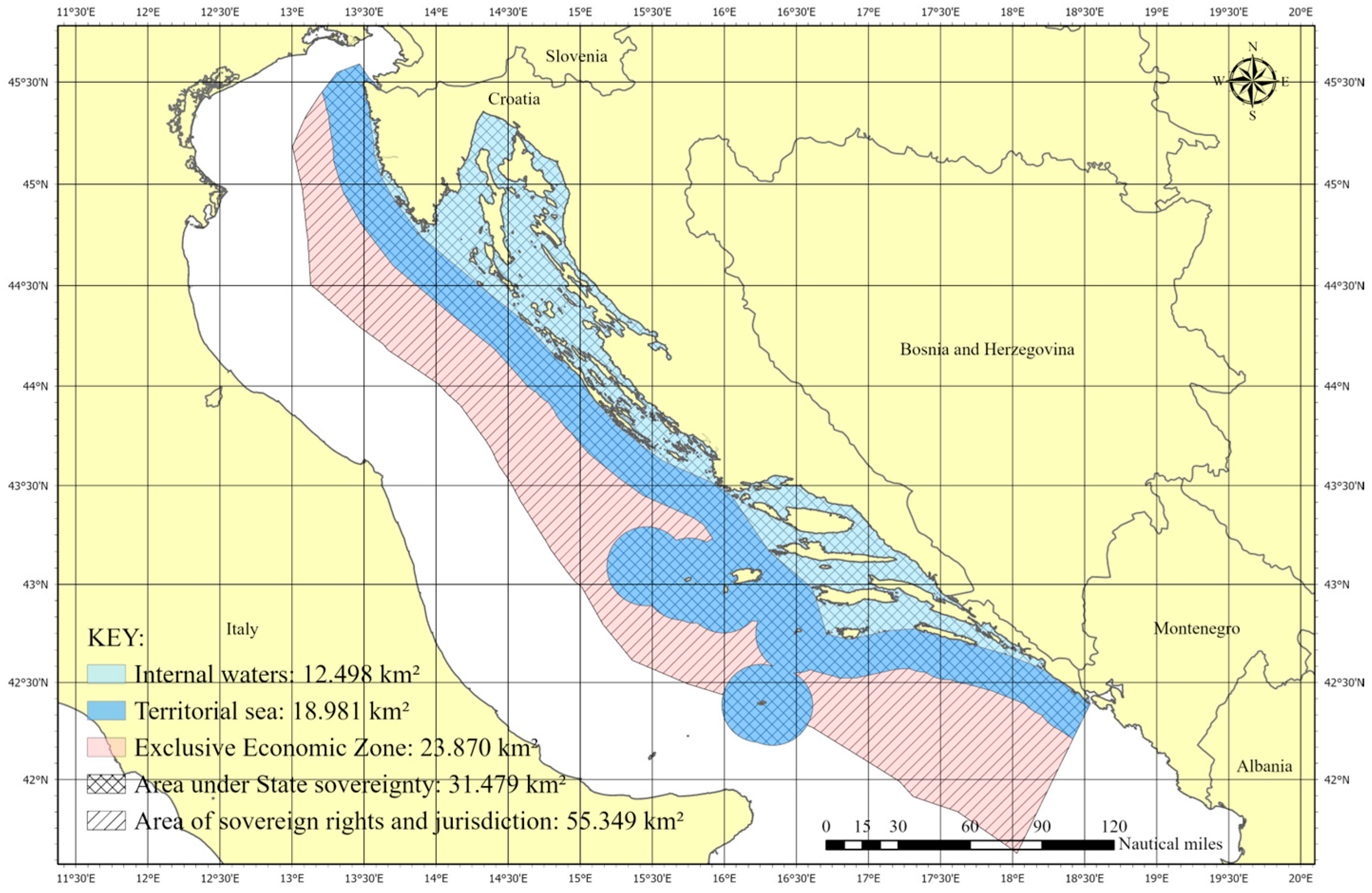
The aim of this research is to conduct an activity analysis of maritime safety in the Eastern Adriatic Sea (Figure 1) based on annual reports for the Republic of Croatia, covering the period from 2017 to 2024. For this purpose, a Data Envelopment Analysis (DEA) was conducted, comparing the results of input- and output-oriented models.
In this research, annual data for the period 2017–2024 were used. Eight decision-making units (DMUs) were included in the analysis, with each unit representing a single year of the observed period. Four input variables and one output variable were considered. The input variables are the number of voyages, the number of employed vessels, the navigational mileage of vessels, and the fuel consumption of vessels, while the output variable is the number of monitored subjects/vessels.
The data used in the study were obtained from the reports “Annual Report on the implementation of the established policy, plans and regulations related to surveillance and protection of rights and interests of the Republic of Croatia at sea” made by the Central Coordinating Committee for Surveillance and Protection of the Maritime Rights and Interests of the Republic Croatia for the period 2017–2024 [23,24,25,26,27,28,29]. The data from the reports are shown in Table 1.
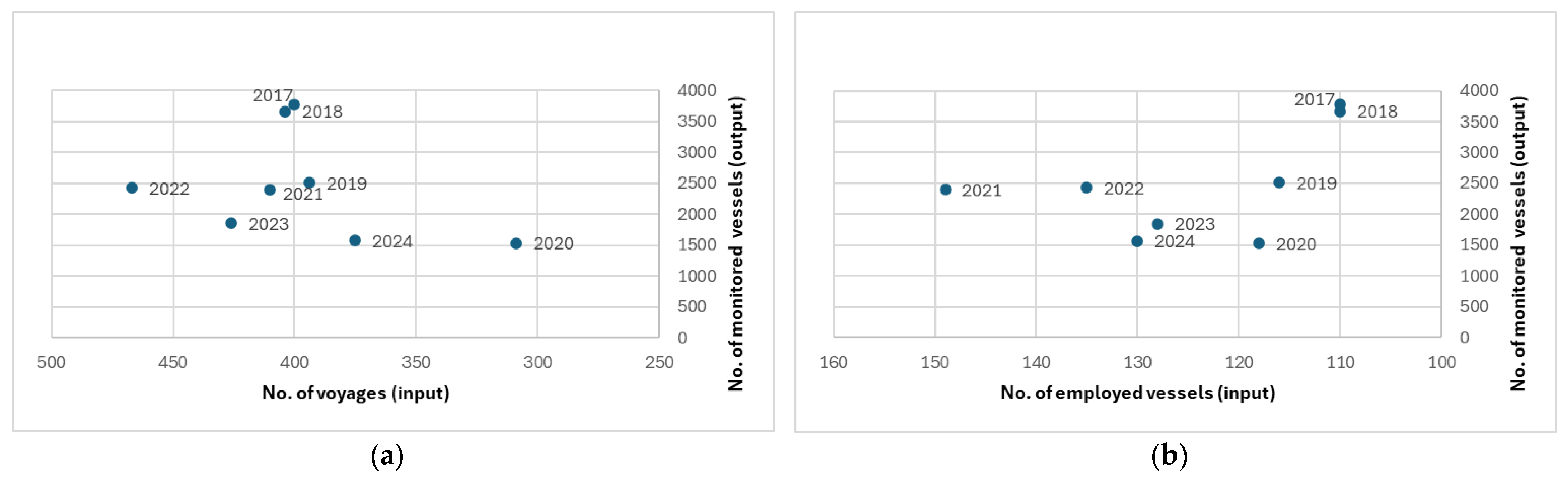
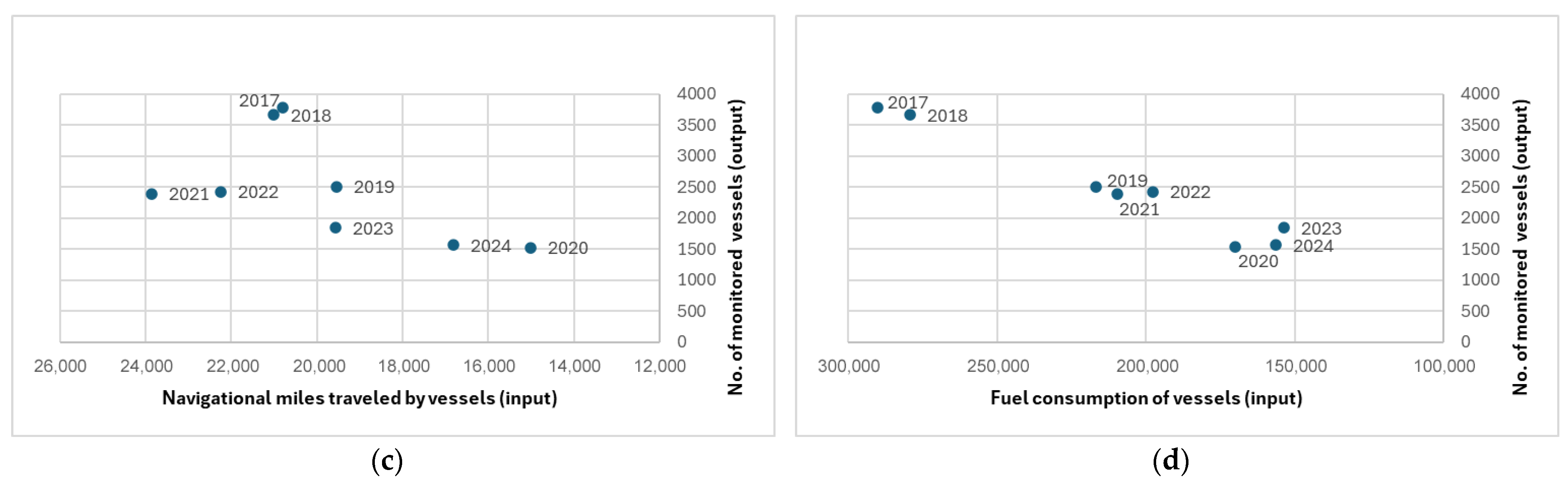
In Figure 2, each input (number of voyages, number of employed vessels, navigational mileage of vessels, and fuel consumption of vessels) is compared to the output (number of monitored subjects/vessels). The goal is to maximize the output and minimize the input. Although some years have the highest output, they consume a lot of input in some cases, as well. That is why DEA represents the ideal tool to evaluate the efficiency of those years and determine if they are efficient. The aim of the performed DEA was to determine the relative efficiency of the maritime safety activities carried out for each of the eight observed years. The analysis was conducted in two complementary steps to ensure a comprehensive assessment of technical efficiency across the observed years. In the first step, a DEA input-oriented model was applied, focusing on identifying opportunities to reduce inputs while maintaining the current level of outputs. In the second step, an output-oriented model was used, which aims to increase outputs given the specified inputs.
Both models use the assumption of variable returns to scale (VRS), which allows the differentiation between technical and scale efficiency. The primary measure is the efficiency score, which takes values between 0 and 1, with 1 indicating full efficiency.
The analysis also includes additional indicators known as slacks (surpluses or residual inefficiencies), which quantify the remaining inefficiencies after radial adjustment of the inputs or outputs. These indicators provide a more detailed insight into the structure of inefficiency by signaling the specific resources or outputs where further optimization is possible.

3. Results

This paragraph presents the results of the DEA of technical efficiency for the observed period from 2017 to 2024. The analysis was conducted separately for the input-oriented and output-oriented models, with the aim of obtaining a bidirectional assessment of efficiency—on one hand regarding resource rationalization, and on the other hand regarding maximizing results. The DEA was conducted using “Stata” statistical software (v17) by StataCorp LLC (College Station, TX, USA).

3.1. Results of the Input-Oriented DEA Model

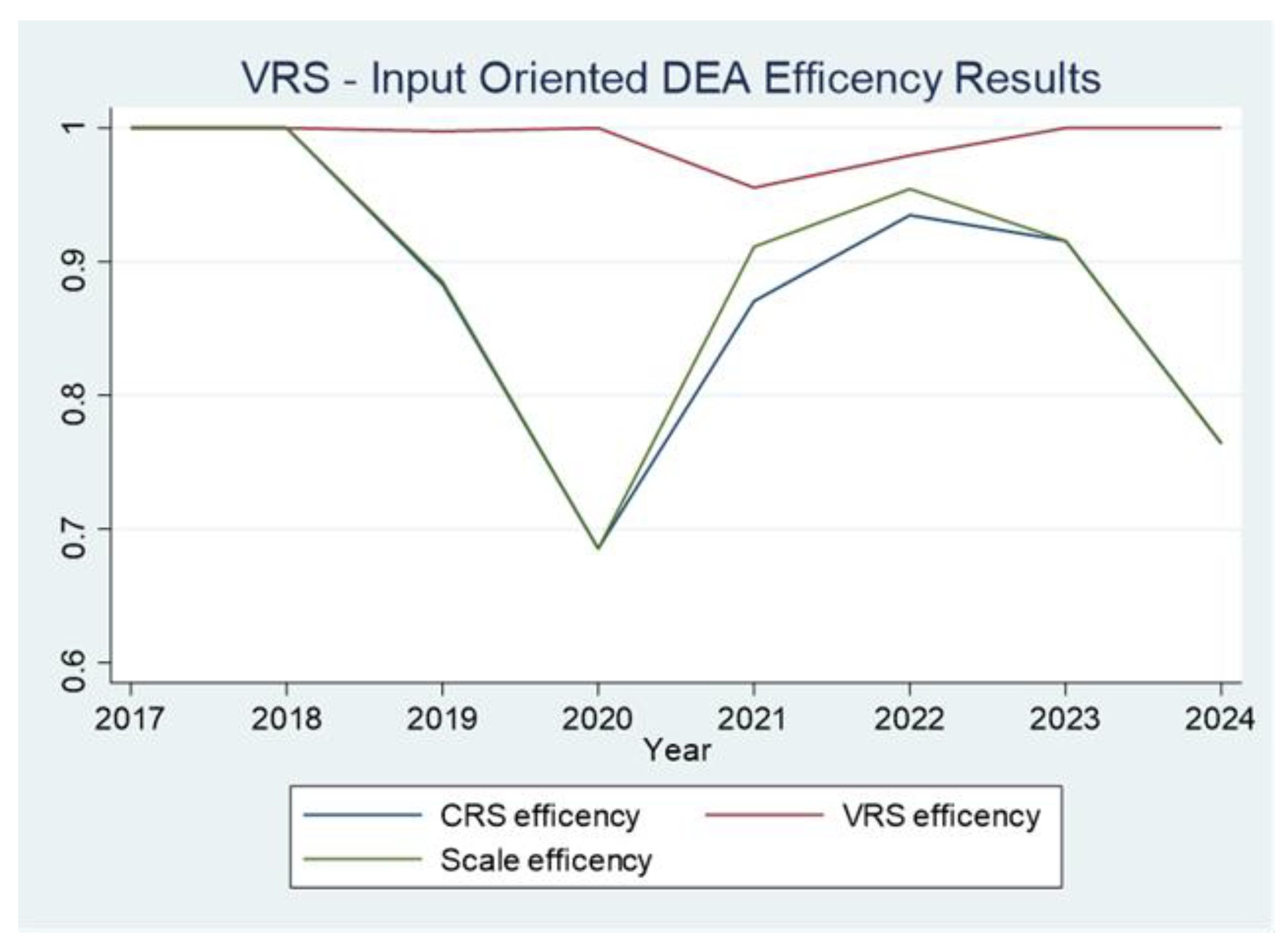
The results of the input-oriented DEA model, presented in Table 2 and shown in Figure 3, indicate that the years 2017, 2018, 2020, 2023, and 2024 were technically efficient. These years achieved maximum outputs (the number of monitored subjects/vessels) given the resources used (the number of voyages, the number of employed vessels, the navigational mileage of vessels, and the fuel consumption of vessels). Note that 2020 and 2024 exhibit considerably lower efficiency under the constant returns to scale (CRS) efficiency, with scores of 0.685 and 0.764, respectively, which suggests that activity was performed below the optimal scale and that full potential was not realized.
The years 2019, 2021, and 2022 were mildly inefficient (efficiency scores between 0.955 and 0.998). This means that inputs could be reduced by 0.2% to 4.5% without a decrease in outputs.
All years except 2017 and 2018 exhibit increasing returns to scale (IRS), which means that if inputs were increased, outputs would grow more than proportionally, i.e., the system could be more productive at a larger scale of operation.
The results of the input slack analysis show that the years 2017, 2018, 2020, 2023, and 2024 achieved full technical efficiency (strong efficiency), with no input slack present, indicating optimal use of resources during these periods.
In contrast, in 2019 there was an excess of 1.8% in vessel navigational miles and 6.39% in vessel fuel consumption, indicating overutilization of these resources relative to the achieved output. A similar pattern was observed in 2021, when an excess of 15.4% in the number of employed vessels and 15.8% in navigational miles of vessels was recorded. These data suggest that in that year it would have been possible to achieve the same output level with a substantially lower level of inputs, i.e., with a more efficient use of capacity. In 2022, slacks of 8.1% in voyages, 7.4% in the number of employed vessels, and 7.9% in navigational miles of vessels were observed.
The largest slacks (excess inputs) identified during the observed period were in the number of employed vessels and in the navigational miles of vessels, indicating that the main potential for rationalization lies in optimizing these two inputs.
A key result of the input-oriented model is that the years 2020 and 2024, despite relatively low absolute output values, were judged to be efficient, since their inputs were proportional to the outputs achieved. This situation suggests balanced resource use and confirms the system’s ability to reach technical optimality in certain years within the existing operating conditions.

3.2. Results of the Output-Oriented DEA Model

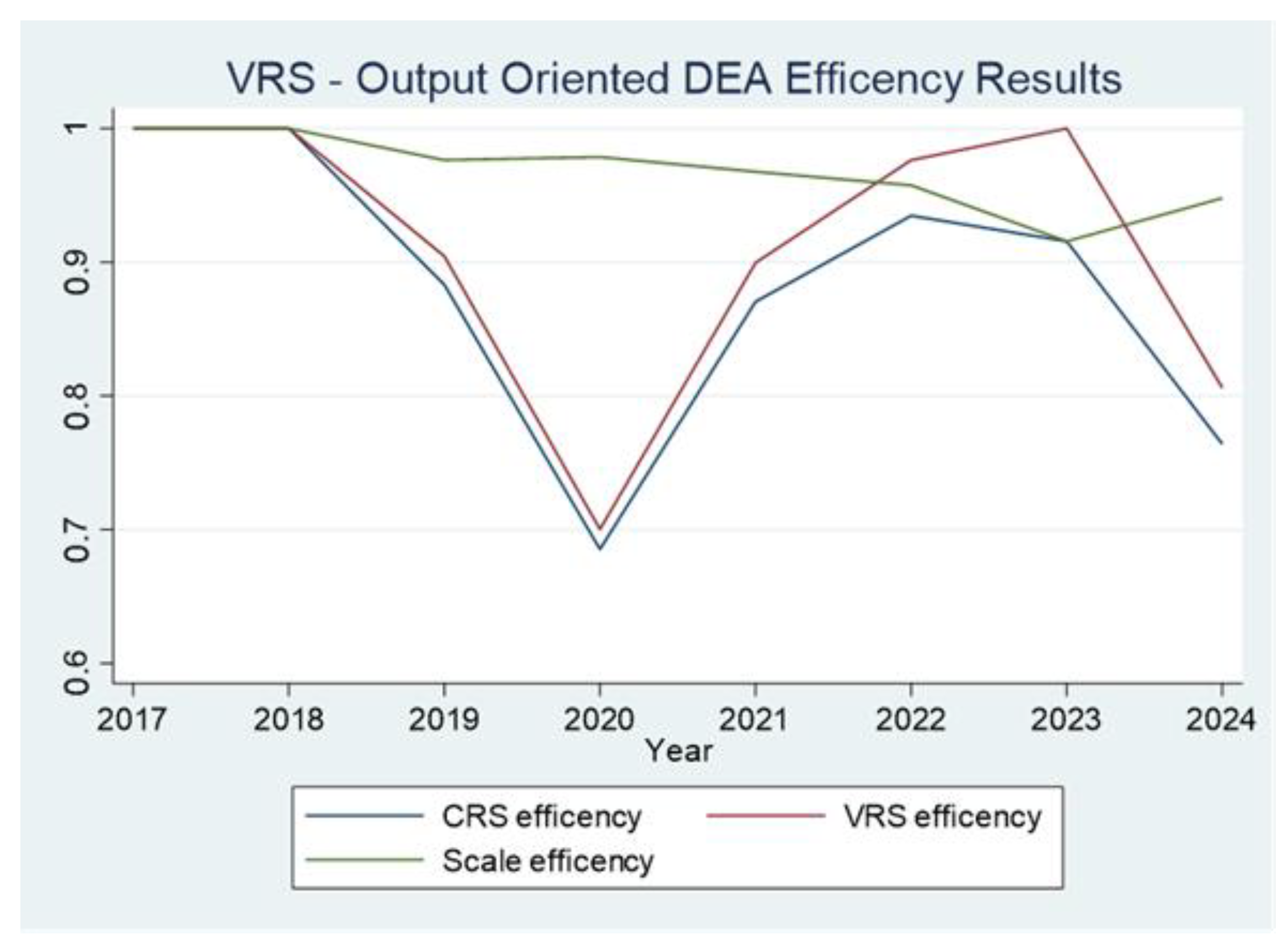
According to the results of the output-oriented DEA model, presented in Table 3 and shown in Figure 4, the years 2017, 2018, and 2023 were rated as fully efficient. The years 2017 and 2018 were also technically efficient (strong efficiency), meaning that they achieved the maximum possible output given the available number of inputs. In other words, in those years there was no scope for proportionally increasing outputs without additional input investments.
In contrast, although 2023 also reached the efficiency frontier under the VRS model, its efficiency value under the CRS model was 0.916, which indicates weak efficiency. This result suggests that activity in that year operated below the optimal scale and that the full potential of the scale of production was not utilized.
All other observed years showed varying levels of inefficiency under the output-oriented DEA model, indicating that in those years there was room for improvement in resource use.
The group of years that were close to the efficiency frontier includes 2022, 2019, and 2021. In these years, technical inefficiency was relatively low, suggesting that operating processes were well optimized and that with minimal adjustments it would be possible to achieve full efficiency.
In contrast, the years 2020 and 2024 showed the lowest level of efficiency across the entire observed period. In particular, the year 2020 stood out as the least efficient.
The results of the output-oriented DEA model show that the years 2017 and 2018 established the efficiency frontier, serving as reference points in the assessment of the other periods. The year 2023, although characterized by a somewhat lower level of output, was also rated as efficient because it achieved an optimal balance between the available inputs and the outputs attained.
The required proportional increases in outputs were 10.6% in 2019, 42.8% in 2020, 11.2% in 2021, 2.4% in 2022, and 24.1% in 2024. These results indicate that, although some years were near the efficiency frontier (e.g., 2022), the system did not reach its full production potential in most of the analyzed years.
The analysis of returns to scale showed that all years, except 2017 and 2018, are characterized by increasing returns to scale (IRS). Such results suggest that in the years observed the operation was below the optimal scale, and that increasing the scope of activity could improve overall efficiency.
In addition to radial increases in outputs, the analysis revealed significant input slacks. Slacks are present for all inputs, particularly in the number of employed vessels, the number of voyages, and the navigational miles of vessels. For example, in 2023, although formally efficient, there are substantial structural input slacks (number of voyages 52.1%, number of employed vessels 57%, navigational miles of vessels 45.9%, and fuel consumption of vessels 8.4%), indicating possibilities for further optimization. The efficiency is the result of the model’s scaling, but the input structure is not optimal.
The analysis of input slacks in the output-oriented model shows that the inefficient years are marked by simultaneous surpluses across multiple inputs, indicating a need to rationalize resources while increasing outputs. In 2019, slack values were 20.3% for the number of voyages, 25.9% for the number of employed vessels, 16.8% for navigational miles of vessels, and 2.1% for fuel consumption of vessels, signaling excessive capacity usage. The year 2020, with a technical efficiency of 0.700, requires a 42.8% increase in outputs; even so, substantial input slacks remain (number of voyages 15.5%, number of employed vessels 31.4%, navigational miles of vessels 11.7%, and fuel consumption of vessels 1.5%), confirming the need for further resource reductions.
In 2021 and 2022, significant slack values were also present in most inputs, except for fuel consumption, indicating structural inefficiency in the use of capacity. Large deviations were also recorded in 2024, with slack values of 34.4% for voyages, 44.6% for employed vessels, 27.1% for navigational miles of vessels, and 4.2% for fuel consumption of vessels.
This means that in almost all inefficient years, more resources were consumed than were necessary to produce the given level of output.

3.3. Comparison of the Results of the Input- and Output-Oriented DEA Models

The comparison of the results from the input- and output-oriented DEA models, provided in Table 4, shows that the choice of orientation significantly affects the interpretation of efficiency. Input orientation is ‘milder’, as it tolerates lower outputs if inputs are proportionally low. Output orientation is ‘stricter’, because it requires that outputs be sufficient for the existing level of inputs.
The largest differences are observed in 2020 and 2024. The input-oriented model shows these years as efficient since there are no significant input slacks, while the output-oriented model indicates that the outputs are low relative to the level of inputs.
For most inefficient years (2019, 2021, 2022), both models yield similar conclusions: there is a need for a smaller output growth and resource rationalization. However, in cases such as 2020 and 2024, the output-oriented model reveals a serious problem of low outputs that the input-oriented model ‘anticipates’ or ‘overlooks’ (depending on interpretation). This underscores the importance of combining both approaches [30].
According to both DEA models, all inefficient years exhibit increasing returns to scale (IRS), suggesting that expanding the scale of production, i.e., increasing total output, would be beneficial. Such growth would improve the utilization of existing capacity and bring the system closer to the efficiency frontier. At the same time, the slack analysis indicates a need to rationalize resource use, i.e., reduce input slacks.

4. Discussion

Although DEA clearly identified 2017 and 2018 as efficient, and 2021 and 2022 as the most inefficient, the explanation of efficiency or inefficiency for 2019, 2020, 2023, and 2024 remains unclear. In input-oriented DEA, 2019, 2020, 2023, and 2024 are efficient or nearly efficient. However, output-oriented DEA reveals different issues: the need for output growth and input slacks. Therefore, if it is necessary to rank these years by efficiency, it is very difficult, as the DEA results are very similar. As already mentioned, one of DEA’s main disadvantages is the high difficulty of interpreting results [21], especially when DEA produces very narrow variation in efficiency evaluations, as in this Case Study.

4.1. DEA Efficiency Interpretation Based on PROMETHEE Method

The solution to this issue is to use one of the multi-criteria decision-making (MCDM) methods that provide a ranking of alternatives. There are three general types of MCDM methods: utility-function-based methods, pairwise-comparison-based methods, and interactive methods [31]. Since the DEA method is based on a form of pairwise comparison, pairwise-comparison methods are the most appropriate to use alongside DEA. Although the Analytic Hierarchy Process (AHP) is the best-known pairwise-comparison-based method, the PROMETHEE method is gaining more attention and has been increasingly accepted by the scientific community [31]. The PROMETHEE method is an outranking method based on the pairwise comparison of alternatives [14,32]. The advantage of this method is that it includes PROMETHEE I and PROMETHEE II rankings, where PROMETHEE I ranks alternatives using partial order, and PROMETHEE II ranks alternatives using complete order.
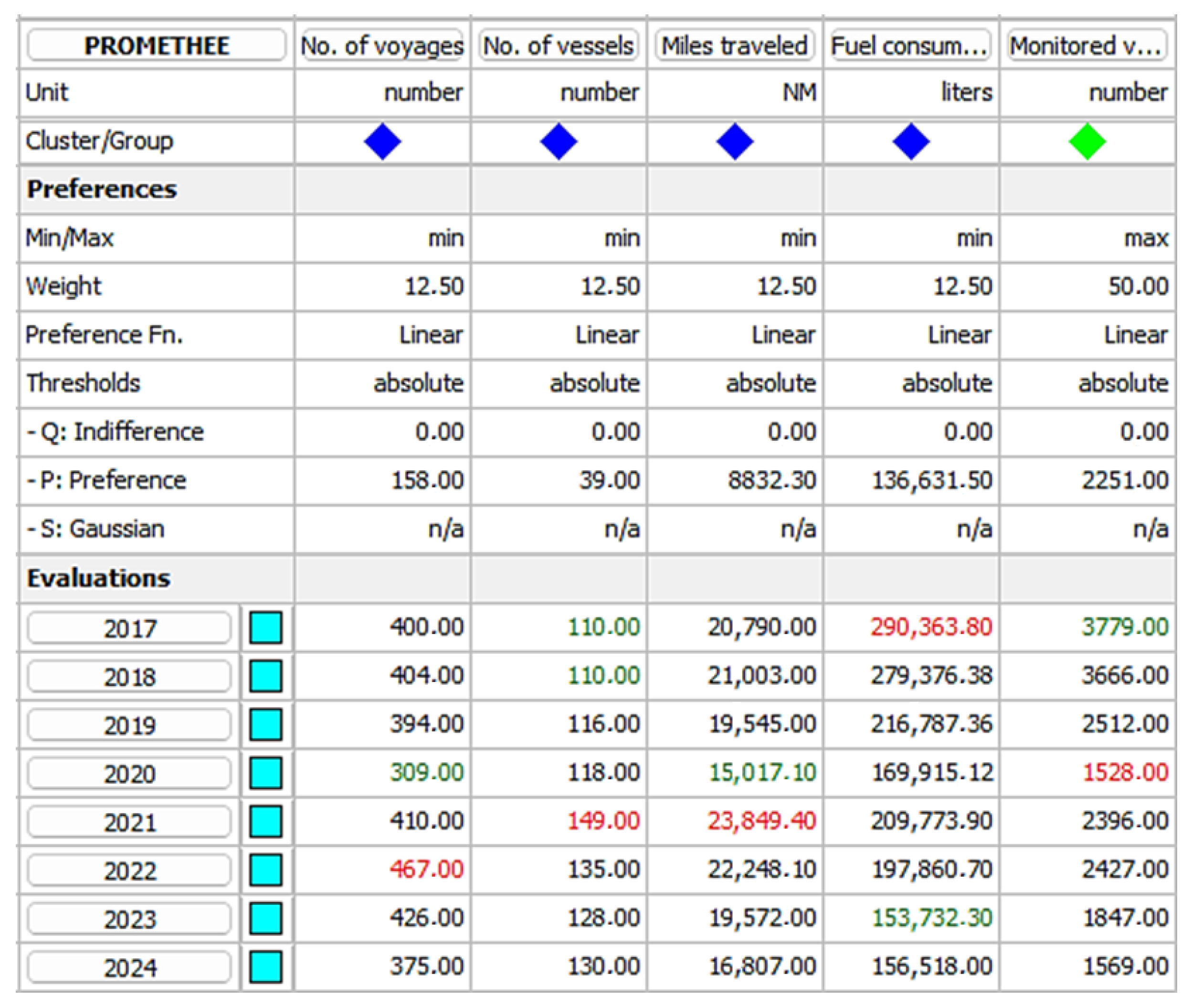
The PROMETHEE method starts with the construction of the input matrix consisting of alternatives (in this case, years) and criteria (in this case, four input and one output criteria), as it is shown in Figure 5. A linear preference function type is used with indifference and preference thresholds [33]. Since it is hard to determine what thresholds should be used in this case, the 0 is used for the indifference threshold and the preference threshold is a difference between highest and lowest criterion evaluation [33].
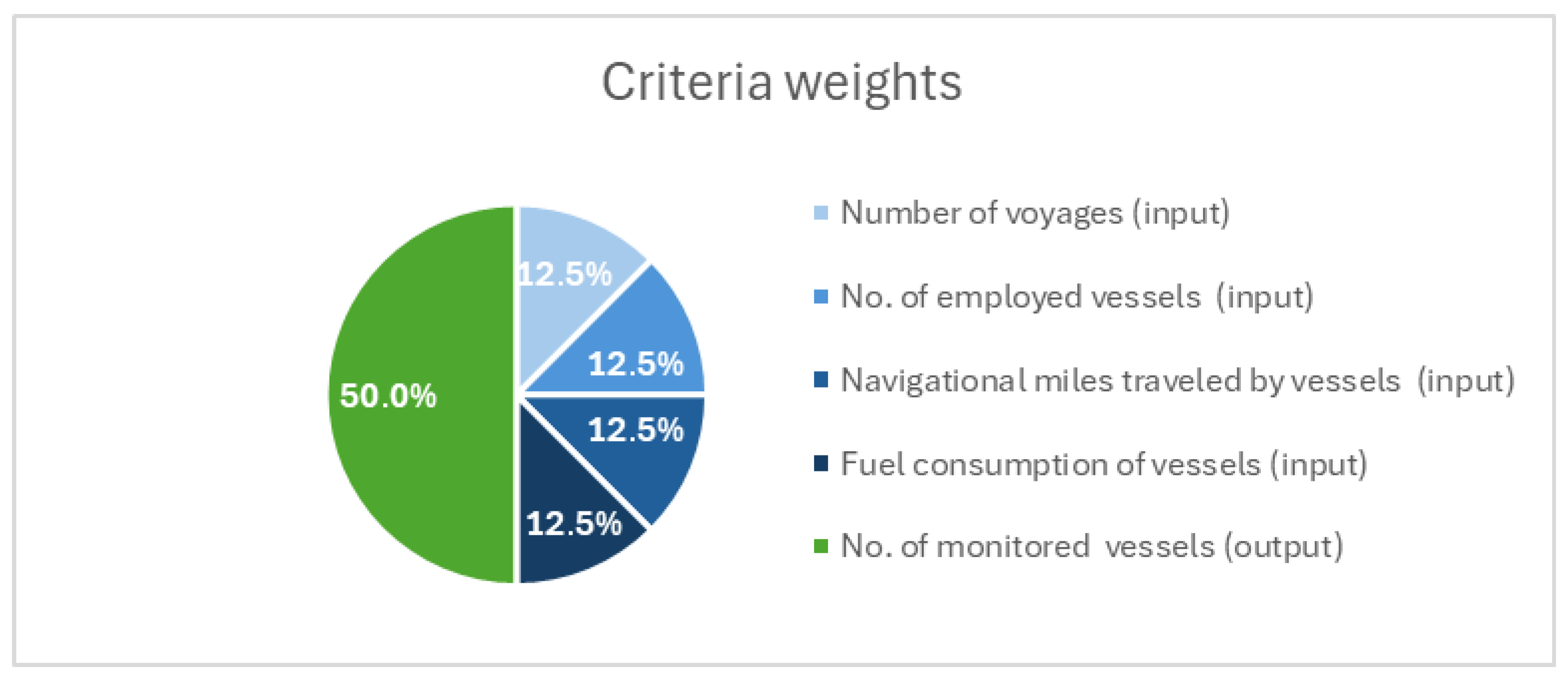
Regarding criteria weights, it is important to note that the sum of criteria weights belonging to input and sum of criteria weights belonging to output must be equal. In this case, the output weight is set to 50.0% and the sum of input weights is 50.0% as well (Figure 6).
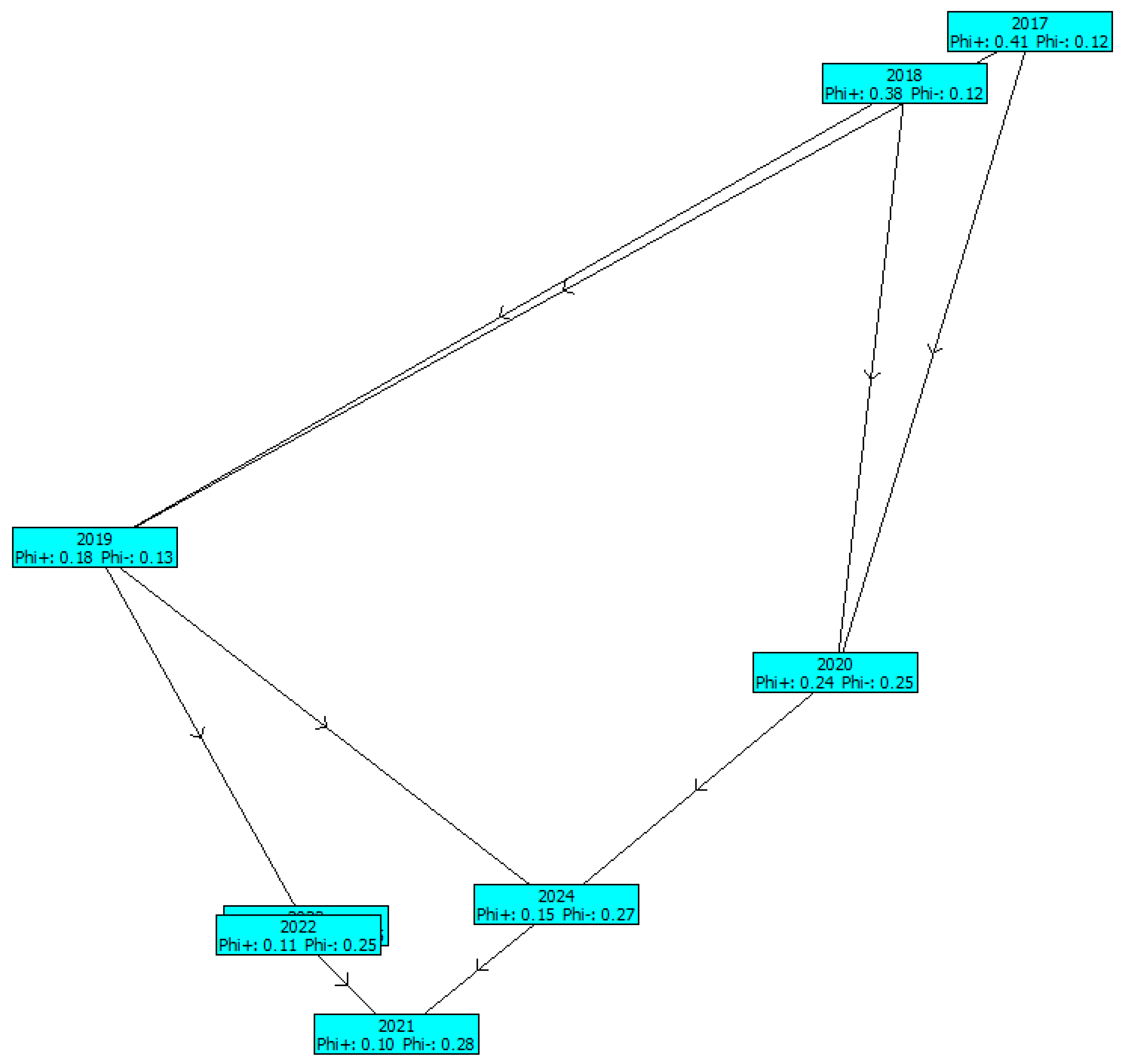
The results of PROMETHEE I partial ranking are presented in Figure 7. This is a kind of validation of the DEA results showing that 2017 and 2018 are really dominating alternatives in comparison with all others, and 2021 is the last ranked alternative. However, it is interesting to see all other alternatives, especially the comparison of 2019, 2020, 2023, and 2024. According to PROMETHEE I, 2019 is incomparable with 2020, but it is better than 2021, 2022, 2023, and 2024. The year 2020 is hard to compare with 2022 and 2023, but it is better than 2024 and 2021. All these facts show that it is very challenging to determine a clear ranking of the years 2019, 2020, 2023, and 2024. To determine the complete ranking of the alternatives, PROMETHEE II is used.
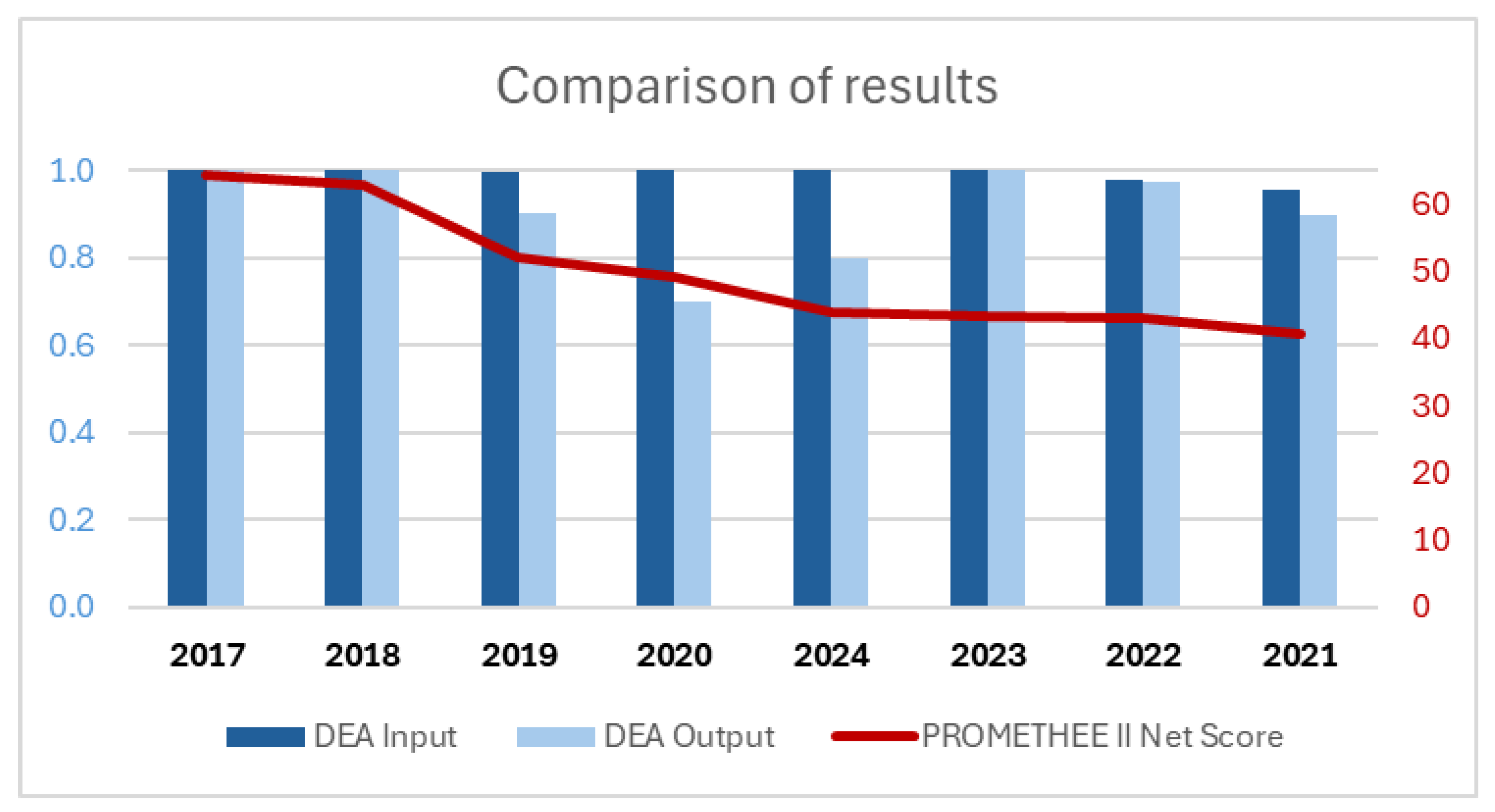
In this case, PROMETHEE II Net Score [20] will be used to completely rank the alternatives (years). The resulting ranking of alternatives is (from better to worse): 2017, 2018, 2019, 2020, 2024, 2023, 2022, 2021 (Figure 8).
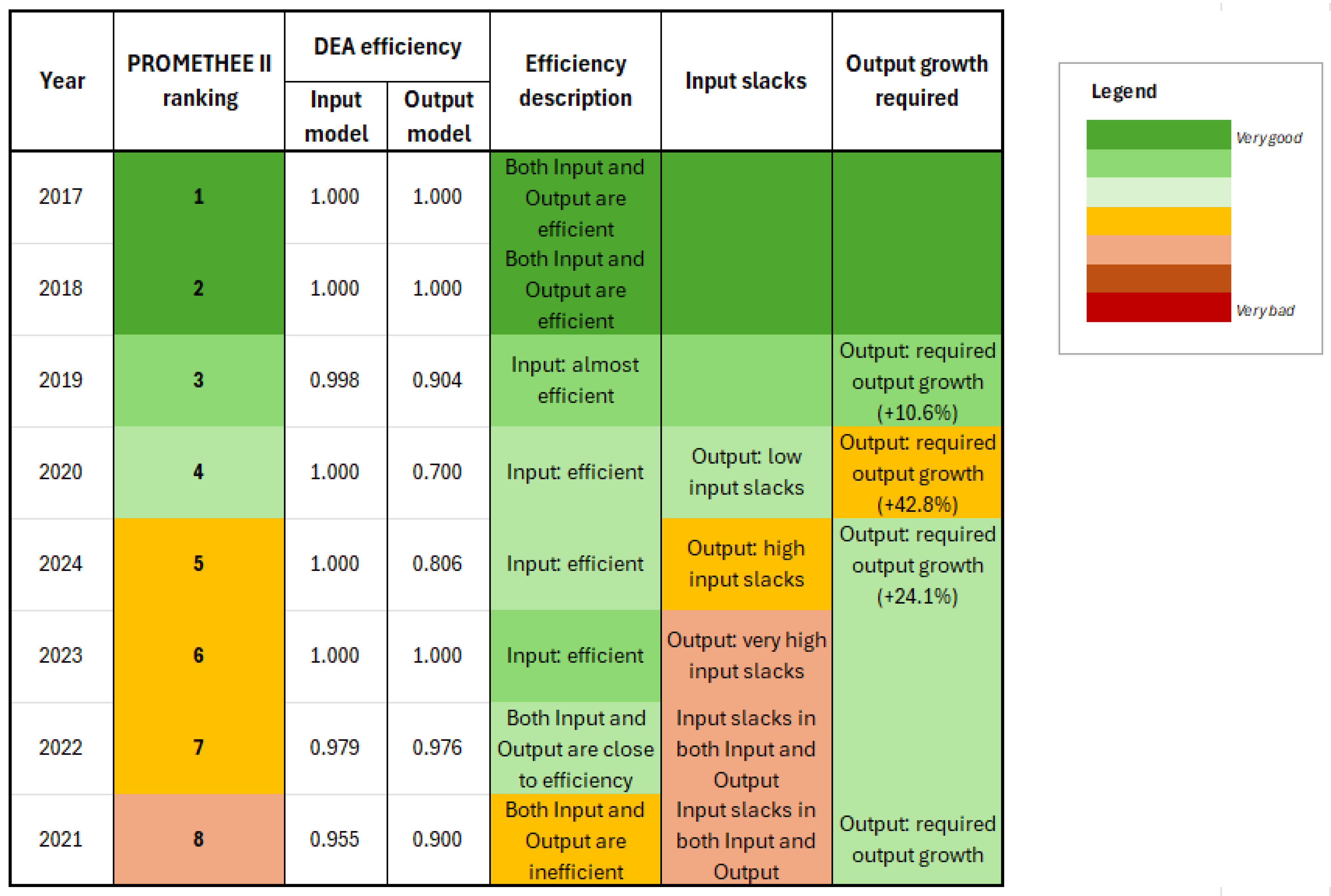
It is very interesting to see that 2019, 2020, and 2024, which are efficient and almost efficient in input-oriented DEA efficiency, have outranked 2023, 2022, and 2021, which have lower input-oriented DEA efficiency. On the other hand, 2019 outranked 2020 and 2024, because it has better output-oriented DEA efficiency. Nevertheless, the description of input-oriented and output-oriented DEA results better explains the PROMETHEE II ranking of these alternatives, and, vice versa, the PROMETHEE II ranking helped to rank the alternatives with very similar efficiency (Figure 9).
It is important to note that the PROMETHEE method has not used the DEA results, but the original data (Table 1). Yet, the ranking results are very logical. The visualization of results in Figure 9 shows that input slacks most affect the ranking, and right after is a requirement for output growth. Therefore, it can be concluded that PROMETHEE ranking confirms DEA efficiency ranking, and it can be used to better understand very similar DEA results, like in this case.

4.2. Comparison of DEA–PROMETHEE Hybrid Model with DEA-Based PROMETHEE II Approach

To validate the proposed DEA–PROMETHEE hybrid model, the approach will be compared to the most similar approach that was identified in the literature review: the DEA-based PROMETHEE II approach by Alidrisi [18]. In that research, the author is combining the DEA efficiency score with PROMETHEE II Net Flow. However, the author is calculating relative PROMETHEE II Net Flow instead of using absolute values. The relative scale is introduced: the first ranked alternative is scored 1 and the last one is scored 0. Finally, the relative PROMETHEE II Net Flow is multiplied by the DEA efficiency score, and the result is called the DEA-based PROMETHEE II Score.
It is an approach that has some issues. First, the PROMETHEE method belongs to the outranking method, and it is not recommended to interpret the results of such methods in a relative way. If the author wants to have a more suitable distribution of scores, he could consider using Robust PROMETHEE II ranking [34]. Mathematically speaking, it is a much better approach. Second, although the author is not mentioning PROMETHEE criteria weights, it is obvious from the results that he uses equal criteria weights.
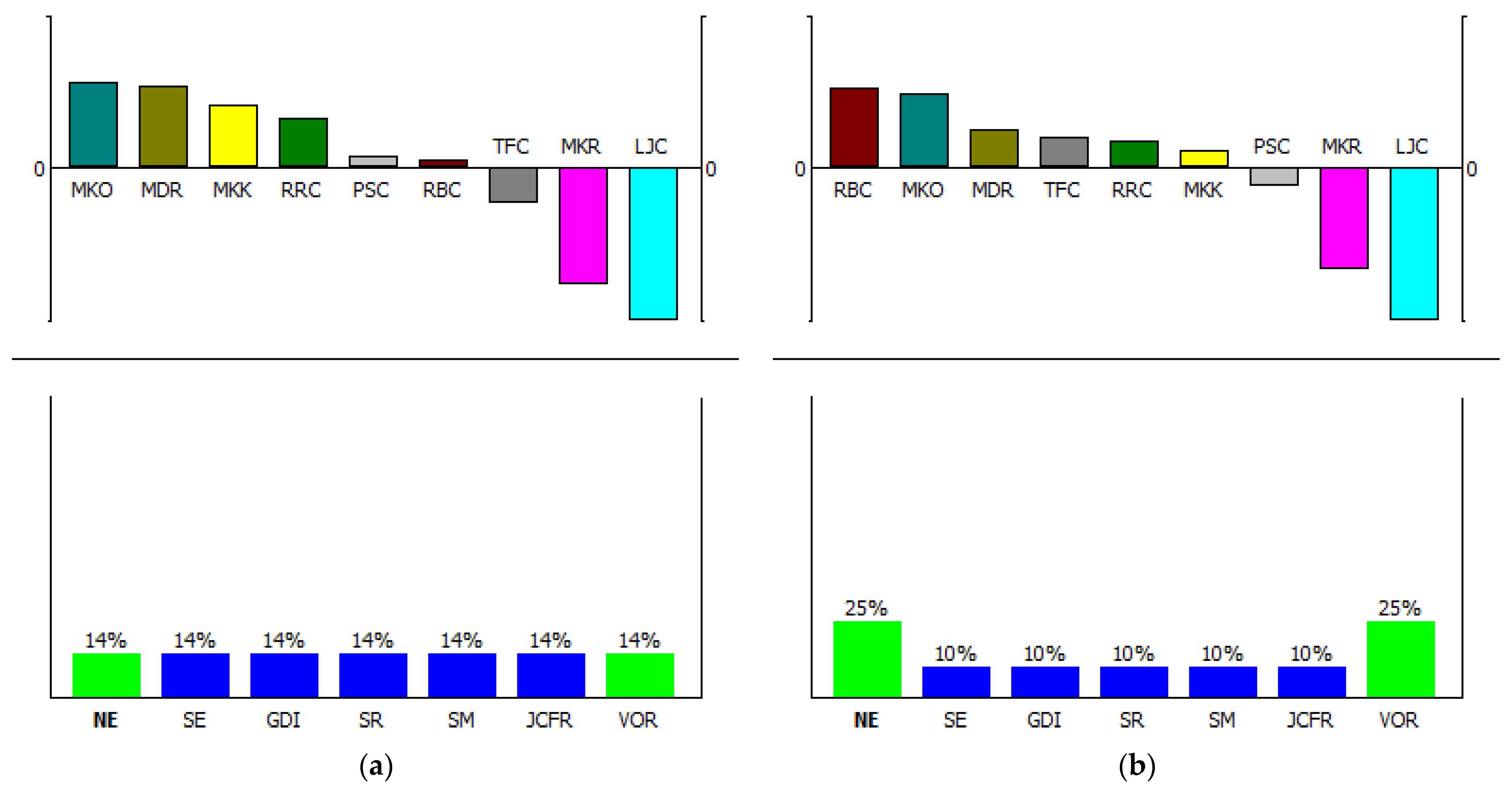
As already mentioned, the proposed DEA–PROMETHEE hybrid model is using the same sums of output criteria weights and input criteria weights, where each sum equals 50%. So, if the number of input and output variables is not the same, equal weights cannot be used. Figure 10 compares the rankings and criteria weights of the model of the DEA-based PROMETHEE II Score (all weights are equal) and the improved DEA–PROMETHEE hybrid model (sum of input criteria weights is equal to sum of output criteria weights). Input criteria weight are colored blue and output criteria weights are colored green. It is obvious that different criteria weights affect the ranking very much, and there is a lot of rank reversal.
Figure 10 clearly shows the difference in the results of two different approaches, and the question is which approach is better? The only way to determine which approach is better is to compare the PROMETHEE results (rankings and score) with the original DEA efficiency score and ranking. In the original results [18], DEA resulted with four units as completely efficient (efficiency score is 1): RBC, MKO, MDR, and TFC. These four units should be the first ranked alternatives in the PROMETHEE ranking. In the improved DEA–PROMETHEE hybrid model, these four units are the first ranked alternatives (Figure 10b). But, in the model of the DEA-based PROMETHEE II Score, these four units are the first, second, sixth, and seventh ranked alternatives (Figure 10a), and this clearly shows that the approach based on equal weights is not good.
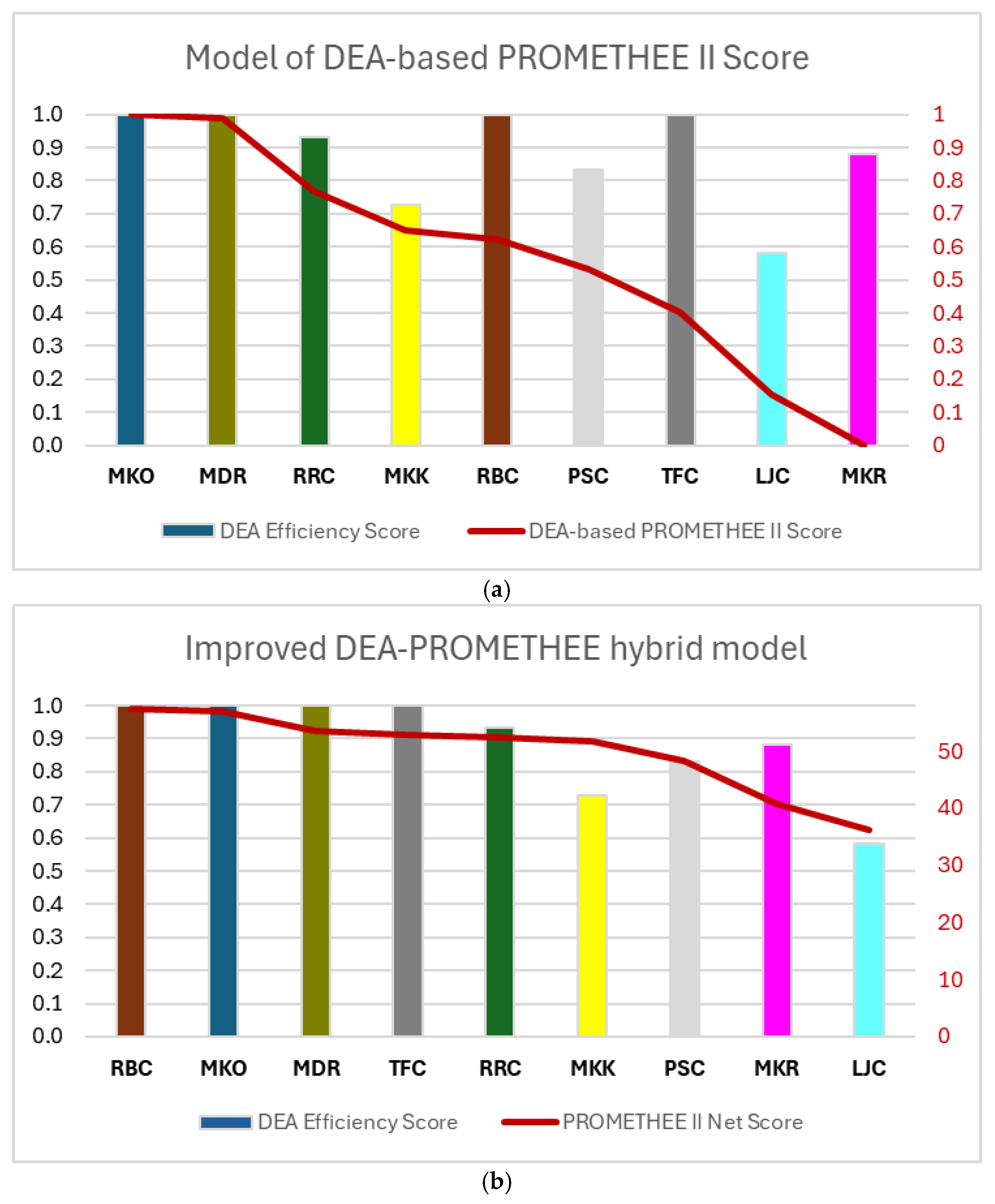
Nevertheless, if the DEA efficiency score, not just the ranking, is compared to the PROMETHEE score that both methods use, a significant deviation can be spotted (Figure 11). In Figure 11b, the DEA efficiency score is almost identically distributed as the PROMETHEE II Net Score of the proposed hybrid model. In Figure 11a, however, there are large deviations of the DEA-based PROMETHEE II Score and DEA efficiency score.
As a final comparison, the amount of rank reversal is presented for each approach in Table 5. The model of DEA-based PROMETHEE II Score has rank reversal of seven out of nine alternatives, but the bigger problem is that the two most efficient units are ranked sixth and seventh. On the other hand, the improved DEA–PROMETHEE hybrid model has rank reversal of only two out of nine alternatives, which is much better.
The DEA–PROMETHEE hybrid model presented in this research is highly robust, and its PROMETHEE rankings and scores are consistent with the DEA rankings and scores. This has been demonstrated in two completely different examples in this paper. However, additional examples should be analyzed to further assess the robustness of the presented model.

5. Conclusions

Data Envelopment Analysis (DEA) is used to examine the relationship between inputs and outputs to identify which units are efficient. However, much research uses examples that closely resemble textbook cases, making DEA efficiency results very clear. In this study, real annual reports on maritime safety in the Republic of Croatia are used. These real-world data produce very similar efficiency scores in DEA, making it difficult to draw clear conclusions. Therefore, the PROMETHEE method was applied to better interpret the DEA efficiency rankings. The PROMETHEE ranking, based on equally distributed weights between the input and output groups, produced results very similar to the DEA efficiency scores. Nevertheless, PROMETHEE effectively ranks very similar units (years), for which it is difficult to determine which is better using DEA alone. It helps to identify in which year the resources (inputs) were used most effectively. However, analysis of past data cannot be used to predict future trends in the DEA–PROMETHEE hybrid model. The decision-maker can draw conclusions from these results, but there are no quantitative calculations for the future. The decision-maker must consider all DEA and PROMETHEE data but also consider all facts not visible in the data: what types of vessels are used, how the vessels are geographically distributed, and similar. The proposed hybrid model then becomes a Decision Support System with people as the final decision-makers.
Finally, it is important to mention the limitations of the proposed methodology and provide guidelines for future research. The proposed hybrid model shares a common DEA limitation: the efficiency of some units (years) can be influenced by factors not visible in the data. For example, nautical tourism declined slightly in 2020 due to the COVID-19 pandemic. Although the decrease was not significant, as nautical tourism was considered safe, there were fewer vessels to inspect that year. As a result, 2020 had the lowest output, and DEA indicated the highest requirement for output growth. Furthermore, both DEA and PROMETHEE use pairwise comparisons of units (alternatives), which means that the results will change if an alternative is removed from or added to the set. This is the well-known rank reversal problem, and decision-makers should be aware of it.
Future research will focus on different case studies with more input and output variables, as well as a better understanding of the effect of input slacks or requirements for output growth on PROMETHEE ranking. Additionally, variable (criteria) weighting is an option missing in classic DEA but available in PROMETHEE. Different weightings can be used in the PROMETHEE analysis, but with caution: the sum of input weights must always equal the sum of output weights, as already mentioned in this paper.

Author Contributions

Conceptualization, T.S., M.M., Z.M. and M.D.; methodology, T.S., M.M., Z.M. and M.D.; software, T.S., M.M., Z.M. and M.D.; validation, T.S., M.M., Z.M. and M.D.; writing—original draft preparation, T.S. and M.M.; writing—review and editing, T.S., M.M., Z.M. and M.D. All authors have read and agreed to the published version of the manuscript.

Funding

This research received no external funding.

Institutional Review Board Statement

Not applicable.

Informed Consent Statement

Not applicable.

Data Availability Statement

Data are contained within the article.

Conflicts of Interest

The authors declare no conflicts of interest.

References

  1. Khodamoradi, A.; Figueiras, P.A.; Grilo, A.; Lourenço, L.; Rêga, B.; Agostinho, C.; Costa, R.; Jardim-Gonçalves, R. Vessel Traffic Density Prediction: A Federated Learning Approach. ISPRS Int. J. Geo-Inf. 2025, 14, 359. [Google Scholar] [CrossRef]
  2. Chen, S.; Cai, X.; Qiao, J.; Yang, J.-B. Integrated Modeling of Maritime Accident Hotspots and Vessel Traffic Networks in High-Density Waterways: A Case Study of the Strait of Malacca. J. Mar. Sci. Eng. 2025, 13, 2052. [Google Scholar] [CrossRef]
  3. Martínez Vázquez, R.M.; Milán García, J.; De Pablo Valenciano, J. Analysis and Trends of Global Research on Nautical, Maritime and Marine Tourism. J. Mar. Sci. Eng. 2021, 9, 93. [Google Scholar] [CrossRef]
  4. Yu, W.; Liu, J.; Yan, P.; Jiang, X. Research on the Impact of Deep Sea Offshore Wind Farms on Maritime Safety. J. Mar. Sci. Eng. 2025, 13, 699. [Google Scholar] [CrossRef]
  5. Charnes, A.; Cooper, W.W.; Rhodes, E. Measuring the efficiency of decision-making units. Eur. J. Oper. Res. 1978, 2, 429–444. [Google Scholar] [CrossRef]
  6. Panwar, A.; Olfati, M.; Pant, M.; Snasel, V. A Review on the 40 Years of Existence of Data Envelopment Analysis Models: Historic Development and Current Trends. Arch. Comput. Methods Eng. 2022, 29, 5397–5426. [Google Scholar] [CrossRef]
  7. Mergoni, A.; Emrouznejad, A.; De Witte, K. Fifty years of Data Envelopment Analysis. Eur. J. Oper. Res. 2025, 326, 389–412. [Google Scholar] [CrossRef]
  8. Banker, R.D.; Charnes, A.; Cooper, W.W. Some models for estimating technical and scale inefficiencies in data envelopment analysis. Manag. Sci. 1984, 30, 1078–1092. [Google Scholar] [CrossRef]
  9. Nguyen, P.-H.; Nguyen, T.-L.; Nguyen, T.-G.; Nguyen, D.-T.; Tran, T.-H.; Le, H.-C.; Phung, H.-T. A Cross-Country European Efficiency Measurement of Maritime Transport: A Data Envelopment Analysis Approach. Axioms 2022, 11, 206. [Google Scholar] [CrossRef]
  10. Kim, J.; Lee, G.; Kim, H. Analysis of Operational Efficiency Considering Safety Factors as an Undesirable Output for Coastal Ferry Operators in Korea. J. Mar. Sci. Eng. 2020, 8, 367. [Google Scholar] [CrossRef]
  11. Gan, G.Y.; Lee, H.S.; Chung, C.C.; Chen, S.L. Performance evaluation of the security management of Changjiang maritime safety administrations: Application with undesirable outputs in Data Envelopment Analysis. J. Mar. Sci. Technol. 2017, 25, 23. [Google Scholar] [CrossRef]
  12. Wang, H.C. Adaptation of undesirable-output DEA for navigation safety in Taiwan international ports. Cogent Eng. 2021, 8, 1989998. [Google Scholar] [CrossRef]
  13. Wu, B.; Wang, Y.; Zhang, J.; Savan, E.E.; Yan, X. Effectiveness of maritime safety control in different navigation zones using a spatial sequential DEA model: Yangtze River case. Accid. Anal. Prev. 2015, 81, 232–242. [Google Scholar] [CrossRef] [PubMed]
  14. Brans, J.P.; Vincke, P.; Mareschal, B. How to select and how to rank projects: The PROMETHEE method. Eur. J. Oper. Res. 1986, 24, 228–238. [Google Scholar] [CrossRef]
  15. Ishizaka, A.; Resce, G.; Mareschal, B. Visual management of performance with PROMETHEE productivity analysis. Soft Comput. 2018, 22, 7325–7338. [Google Scholar] [CrossRef]
  16. Bagherikahvarin, M. A DEA-PROMETHEE approach for complete ranking of units. Int. J. Oper. Res. 2019, 35, 224–244. [Google Scholar] [CrossRef]
  17. Bagherikahvarin, M.; De Smet, Y. A ranking method based on DEA and PROMETHEE II (a rank based on DEA & PR.II). Measurement 2016, 89, 333–342. [Google Scholar] [CrossRef]
  18. Alidrisi, H. DEA-Based PROMETHEE II Distribution-Center Productivity Model: Evaluation and Location Strategies Formulation. Appl. Sci. 2021, 11, 9567. [Google Scholar] [CrossRef]
  19. Radfar, R.; Salahi, F. Evaluation and Ranking of Suppliers with Fuzzy DEA and PROMETHEE Approach. Int. J. Ind. Math. 2014, 6, 189–197. [Google Scholar]
  20. Mladineo, N.; Mladineo, M.; Knezic, S. Web MCA-based Decision Support System for Incident Situations in Maritime Traffic: Case Study of Adriatic Sea. J. Navig. 2017, 70, 1312–1334. [Google Scholar] [CrossRef]
  21. Daugavietis, J.E.; Soloha, R.; Dace, E.; Ziemele, J. A Comparison of Multi-Criteria Decision Analysis Methods for Sustainability Assessment of District Heating Systems. Energies 2022, 15, 2411. [Google Scholar] [CrossRef]
  22. Sunko, T.; Mladineo, M.; Kovačić, M.; Mišković, T. Multi-Criteria Analysis of Coast Guard Resource Deployment for Improvement of Maritime Safety and Environmental Protection: Case Study of Eastern Adriatic Sea. Sustainability 2024, 16, 7531. [Google Scholar] [CrossRef]
  23. The Central Coordinating Committee for Surveillance and Protection of the Maritime Rights and Interests of the Republic Croatia, Annual Report on the Implementation of the Established Policy, Plans and Regulations Related to Surveillance and Protection of Rights and Interests of the Republic of Croatia at Sea for 2017 and 2018. Available online: https://vlada.gov.hr/UserDocsImages//2016/Sjednice/2019/Kolovoz/174%20sjednica%20VRH//174%20-%2017.1.pdf (accessed on 31 July 2025).
  24. The Central Coordinating Committee for Surveillance and Protection of the Maritime Rights and Interests of the Republic Croatia, Annual Report on the Implementation of the Established Policy, Plans and Regulations Related to Surveillance and Protection of Rights and Interests of the Republic of Croatia at Sea for 2019. Available online: https://mup.gov.hr/UserDocsImages/dokumenti/2020/Izvje%C5%A1%C4%87a/Godisnje%20izvjesce%20o%20provedbi%202019..pdf (accessed on 31 July 2025).
  25. The Central Coordinating Committee for Surveillance and Protection of the Maritime Rights and Interests of the Republic Croatia, Annual Report on the Implementation of the Established Policy, Plans and Regulations Related to Surveillance and Protection of Rights and Interests of the Republic of Croatia at Sea for 2020. Available online: https://www.morh.hr/wp-content/uploads/2021/07/2021-07-05-godisnje-izvjesce-o-provedbi-utvr-politike.pdf (accessed on 31 July 2025).
  26. The Central Coordinating Committee for Surveillance and Protection of the Maritime Rights and Interests of the Republic Croatia, Annual Report on the Implementation of the Established Policy, Plans and Regulations Related to Surveillance and Protection of Rights and Interests of the Republic of Croatia at Sea for 2021. Available online: https://www.morh.hr/wp-content/uploads/2022/06/2022-06-30-gizinm.pdf (accessed on 31 July 2025).
  27. The Central Coordinating Committee for Surveillance and Protection of the Maritime Rights and Interests of the Republic Croatia, Annual Report on the Implementation of the Established Policy, Plans and Regulations Related to Surveillance and Protection of Rights and Interests of the Republic of Croatia at Sea for 2022. Available online: https://mmpi.gov.hr/UserDocsImages/dokumenti/MORE/More%206_23/Godisnje%20izvjesce%20o%20provedbi%20utvrdene%20politike,%20planova%20i%20propisa%20u%20vezi%20s%20nadzorom%20i%20zastitom%20prava%20i%20interesa%20RH%20na%20moru-2022%2029-6_23.pdf (accessed on 31 July 2025).
  28. The Central Coordinating Committee for Surveillance and Protection of the Maritime Rights and Interests of the Republic Croatia, Annual Report on the Implementation of the Established Policy, Plans and Regulations Related to Surveillance and Protection of Rights and Interests of the Republic of Croatia at Sea for 2023. Available online: https://mmpi.gov.hr/UserDocsImages/dokumenti/MORE/More%206_24/Godisnje%20izvjesce%20o%20provedbi%20utvrdene%20politike,%20planova%20i%20propisa%20u%20vezi%20s%20nadzorom%20i%20zastitom%20prava%20i%20interesa%20RH%20na%20moru-2023%2028-6_24.pdf (accessed on 31 July 2025).
  29. The Central Coordinating Committee for Surveillance and Protection of the Maritime Rights and Interests of the Republic Croatia, Annual Report on the Implementation of the Established Policy, Plans and Regulations Related to Surveillance and Protection of Rights and Interests of the Republic of Croatia at Sea for 2024. Available online: https://mup.gov.hr/UserDocsImages/dokumenti/2025/5/Godi%C5%A1nje%20izvje%C5%A1%C4%87e%20Sredi%C5%A1nje%20koordinacije%20za%202024.%20godinu.pdf (accessed on 8 October 2025).
  30. Cooper, W.W.; Seiford, L.M.; Tone, K. Data Envelopment Analysis: A Comprehensive Text with Models, Applications, References and DEA-Solver Software; Springer: New York, NY, USA, 2007. [Google Scholar]
  31. Nemery, P. On the Use of Multicriteria Ranking Methods in Sorting Problems. Ph.D. Thesis, Université Libre de Bruxelles, Brussels, Belgium, November 2008. [Google Scholar]
  32. Brans, J.P.; Mareschal, B. PROMCALC & GAIA: A new decision support system for multicriteria decision aid. Decis. Support Syst. 1994, 12, 297–310. [Google Scholar]
  33. Mladineo, M.; Veza, I.; Gjeldum, N. Solving Partner Selection Problem in Cyber-Physical Production Networks using the HUMANT algorithm. Int. J. Prod. Res. 2017, 55, 2506–2521. [Google Scholar] [CrossRef]
  34. De Smet, Y. About the computation of robust PROMETHEE II rankings: Empirical evidence. In Proceedings of the 2016 IEEE International Conference on Industrial Engineering and Engineering Management, Bali, Indonesia, 4–7 December 2016. [Google Scholar] [CrossRef]
Figure 1. Sea and sub-sea areas of the Republic of Croatia in the Adriatic Sea [22].
Applsci 15 13256 g001
Figure 2. Input vs. output comparison for the dataset: (a) Number of voyages vs. Number of monitored vessels; (b) Number of employed vessels vs. Number of monitored vessels; (c) Navigational miles traveled by vessels vs. Number of monitored vessels; (d) Fuel consumption of vessels vs. Number of monitored vessels.
Applsci 15 13256 g002aApplsci 15 13256 g002b
Figure 3. Input-oriented DEA efficiency results.
Applsci 15 13256 g003
Figure 4. Output-oriented DEA efficiency results.
Applsci 15 13256 g004
Figure 5. Input matrix for PROMETHEE method.
Applsci 15 13256 g005
Figure 6. Comparison of criteria weights.
Applsci 15 13256 g006
Figure 7. PROMETHEE I partial ranking.
Applsci 15 13256 g007
Figure 8. Comparison of DEA and PROMETHEE II results.
Applsci 15 13256 g008
Figure 9. Visual comparison of PROMETHEE ranking with results of the input-oriented and output-oriented DEA models and their descriptions.
Applsci 15 13256 g009
Figure 10. Comparison of PROMETHEE II rankings and criteria weights of two different approaches: (a) model of DEA-based PROMETHEE II Score [18]; (b) improved DEA–PROMETHEE hybrid model.
Applsci 15 13256 g010
Figure 11. Comparison of DEA and PROMETHEE II rankings of two different approaches: (a) model of DEA-based PROMETHEE II Score [18]; (b) improved DEA–PROMETHEE hybrid model.
Applsci 15 13256 g011
Table 1. Input and output data for the period 2017–2024 [23,24,25,26,27,28,29].
YearInput VariablesOutput Variable
Number of
Voyages
Number of
Employed Vessels
Navigational Miles Traveled by VesselsFuel Consumption of Vessels (Liters)Number of Monitored Subjects/Vessels
201740011020,790.00290,363.803779
201840411021,003.00279,376.383666
201939411619,545.00216,787.362512
202030911815,017.10169,915.121528
202141014923,849.40209,773.902396
202246713522,248.10197,860.702427
202342612819,572.00153,732.301847
202437513016,807.00156,518.001569
Table 2. Input-oriented DEA model.
YearVRS EfficiencyCRS EfficiencyScale of EfficiencyReturns to Scale
20171.0001.0001.000CRS (0)
20181.0001.0001.000CRS (0)
20190.9980.8830.885IRS (+1)
20201.0000.6850.685IRS (+1)
20210.9550.8700.911IRS (+1)
20220.9790.9350.954IRS (+1)
20231.0000.9160.916IRS (+1)
20241.0000.7640.764IRS (+1)
Table 3. Output-oriented DEA model.
YearVRS EfficiencyCRS EfficiencyScale of EfficiencyReturns to Scale
20171.0001.0001.000CRS (0)
20181.0001.0001.000CRS (0)
20190.9040.8830.976IRS (+1)
20200.7000.6850.979IRS (+1)
20210.9000.8700.968IRS (+1)
20220.9760.9350.957IRS (+1)
20231.0000.9160.916IRS (+1)
20240.8060.7640.948IRS (+1)
Table 4. Comparison of the results of the input-oriented and output-oriented DEA models.
YearEfficiencyKey Difference
Input ModelOutput Model
20171.0001.000Both Input and Output are efficient (strong efficiency)
20181.0001.000Both Input and Output are efficient (strong efficiency)
20190.9980.904Input: almost efficient; Output: required output growth (+10.6%)
20201.0000.700Input: efficient; Output: required output growth (+42.8%), low input slacks
20210.9550.900Both Input and Output are inefficient; Input emphasizes reductions, output emphasizes growth of results
20220.9790.976Both Input and Output are close to efficiency; Input slacks in both
20231.0001.000Input: efficient; Output: very high input slacks
20241.0000.806Input: efficient; Output: required output growth (+24.1%), high input slacks
Table 5. Comparison of rank reversal between model of DEA-based PROMETHEE II Score and improved DEA–PROMETHEE hybrid model.
DEA
Ranking
Rank Reversal
Model of DEA-Based PROMETHEE II Score [18]Improved DEA–PROMETHEE Hybrid Model
RBCYesNo
MKONoNo
MDRNoNo
TFCYesNo
RRCYesNo
MKRYesYes
PSCYesNo
MKKYesYes
LJCYesNo
Disclaimer/Publisher’s Note: The statements, opinions and data contained in all publications are solely those of the individual author(s) and contributor(s) and not of MDPI and/or the editor(s). MDPI and/or the editor(s) disclaim responsibility for any injury to people or property resulting from any ideas, methods, instructions or products referred to in the content.