Article

Numerical Study on the Effect of Drafting Spacing on the Aerodynamic Drag Between Cyclists in Cycling Races


1
School of Sport and Physical Education, North University of China, Taiyuan 030051, China
2
School of Mechatronics Engineering, North University of China, Taiyuan 030051, China
*
Author to whom correspondence should be addressed.
Appl. Sci. 2025, 15(24), 13206; https://doi.org/10.3390/app152413206
Submission received: 20 November 2025 / Revised: 9 December 2025 / Accepted: 15 December 2025 / Published: 17 December 2025
(This article belongs to the Section Fluid Science and Technology)

Abstract

This study investigates the aerodynamic characteristics of drafting cyclists during 45° cornering through numerical simulations, and under the conditions of a vehicle speed of 15 m/s and a 45° body inclination, the SST k-ω turbulence model and grid independence verification (final grid count:12 million) are used to systematically analyze the distribution of velocity, vortex, pressure, and wall shear stress fields. The effects of riding velocity (5–25 m/s) and inter-rider spacing (100–500 mm) on aerodynamic drag were analyzed to reveal the underlying flow mechanisms. The results indicate that as velocity increases, airflow acceleration and boundary-layer shear intensify, leading to enhanced vortex shedding and elevated wall shear stress. In contrast, reduced spacing significantly strengthens wake coupling between riders, effectively lowering the frontal pressure and skin-friction drag of trailing cyclists. The drag reduction rate decreases monotonically with increasing spacing, with the second rider consistently achieving higher aerodynamic benefits than the third rider. Distinct from previous studies that predominantly focus on straight-line motion, this work fills a critical knowledge gap in sports aerodynamics and competitive cycling strategy. By elucidating the unique wake coupling mechanisms induced by body inclination, this study provides scientific evidence for optimizing drafting tactics specifically during high-speed technical cornering.

1. Introduction

In professional cycling competitions, the aerodynamic interactions between cyclists in a formation have long been a focal point of performance research. Drafting, the practice of riding closely behind another cyclist to reduce air resistance, plays a key role in determining race outcomes, especially in time-trial and team pursuit events. Among the many factors influencing drafting efficiency, the inter-cyclist spacing is one of the most critical, as it directly affects the wake flow structure, pressure distribution, and aerodynamic drag experienced by both leading and trailing riders. This study focuses on this aspect, aiming to investigate in depth the mechanism by which different inter-cyclist spacings influence aerodynamic resistance under racing conditions.
In cycling races, the margins between victory and defeat are often extremely narrow. For example, Primož Roglič won the 2019 Tirreno-Adriatico with a mere 0.31 s advantage over Adam Yates. Kristina Vogel secured the gold medal in the track cycling sprint competition at the 2016 Rio Olympics, leading Becky James by only 0.016 s and 0.004 s in the two races, respectively. In the 1989 Tour de France, LeMond won by just 8 s. In addition, in the 2020 Tour de France, the strategic drafting employed by Tadej Pogačar in the penultimate stage played a crucial role in his overall victory, showcasing its decisive impact even in time trial events. Similarly, in classic races like Milan-San Remo, this clearly shows that successful drafting is a prerequisite for a final sprint victory. However, when the cycling speed reaches about 40 km/h or higher, it can account for up to 90% of the total resistance (Grappe et al. [1]; Kyle & Burke. [2]). Consequently, a precise quantitative investigation into the drafting phenomenon becomes imperative, particularly in light of its significant impact on drag reduction at varying speeds and inter-rider distances.
The development of the modern bicycle can be traced back to the early nineteenth century. The earliest prototype, the Laufmaschine, was invented by Baron Karl von Drais in 1817–1818, and it established the two-wheeled, human-powered concept that shaped later design. In 1839, the Scottish blacksmith Kirkpatrick Macmillan introduced a rear-wheel pedal-driven velocipede, regarded as the first pedal-powered bicycle. Subsequently, during the 1860s, the Michaux brothers in France developed the so-called “boneshaker,” featuring a front-wheel crank and pedals, thereby providing direct propulsion. In the following decades, novel bicycle configurations began to emerge, including the recumbent bicycle in 1895 and streamlined fairings in 1913. Concurrently, the first simplified mathematical models of forces on a cyclist became available (Bourlet. [3]). Meanwhile, people also made certain discoveries about following riding, and some cyclists achieved high speeds by drafting behind trains or motorcycles. For instance, in 1899, by drafting behind a train, Charles M. Murphy achieved a mean velocity of 100.2 km/h. In addition, in 1909, Albert Marquet, from France, reached 139.90 km/h riding behind a car in 1937. Letourneur broke the record again, reaching 175 km/h on a Schwinn bicycle riding behind a specially equipped midget racer in 1941. These early attempts vividly demonstrated the effect of aerodynamics on the cycling speed of drafting.
Entering the mid-twentieth century, wind tunnel testing emerged as a critical tool in bicycle aerodynamics research (Pearce et al. [4]). Kyle rigorously compared six distinct methods for measuring maximal human power output, seeking to establish agreement and validate their use across various exercise modalities and body positions (Kyle et al. [5]; Gross et al. [6]). Zdravkovich found that the application of similar splitter plate technology to bicycles was largely ineffective (Zdravkovich. [7]). Simultaneously, scholars extended their investigations into the phenomenon of drafting cyclists using experimental methods, using an experimental wind tunnel, and measurements were taken from cyclists to analyze their aerodynamic characteristics. (Nonweiler [8]; Kyle [9]). Outdoor field tests were conducted to report on the physiological and energetic savings of drafting, providing data on VO2 and energy consumption across a range of speeds (McCole et al. [10]; Hagberg et al. [11]). Further research has employed power meters to measure cyclists’ performance directly during competition, allowing for a comparison between experimental and in-race power output. (Broker et al. [12]; Edwards et al. [13]). Overall, these experimental approaches have established a comprehensive foundation for understanding cyclist aerodynamics.
At the end of the 20th century, more and more scholars used numerical model methods to study cyclists, and the numerical model of cycling was derived and compared with the experimental values (Martin et al. [14]; Bassett et al. [15]). In addition, some scholars set up chasing mathematical models and studied the key factors in chasing a breakthrough (Olds. [16,17]). After entering the 21st century, with the rapid development of computer technology, the application of computational fluid dynamics (CFD) has also become increasingly widespread in the field of aerodynamics; numerical simulations were used to precisely investigate the aerodynamic drag experienced by cyclists. (Lukes et al. [18]; McManus et al. [19]). In addition, a computational fluid dynamics (CFD) investigation was conducted to analyze the aerodynamic effects of bicycle drafting, with drag reduction quantified relative to individual cycling conditions. (Blocken et al. [20]; Oggiano et al. [21]). Meanwhile, investigations were conducted on the drag reduction effects of multiple cyclists positioned at various spatial locations (Defraeye et al. [22]; Barry et al. [23]; Barry et al. [24]). These developments demonstrate the extensive application of CFD methods in bicycle aerodynamics research.
Currently, aerodynamic drafting investigations predominantly employ three methodological approaches: wind tunnel experimentation, computational fluid dynamics (CFD) simulations, and field-based measurements (Van Druenen T & Blocken B [25]; Benito et al. [26]; Fitzgerald et al. [27]). Extensive research has focused on the influence of inter-cyclist spacing on aerodynamic drag reduction. Research indicates that the aerodynamic drag on cyclists decreases as the spacing between them is reduced (Blocken et al. [28]; Spoelstra et al. [29]). Beyond spacing considerations, the aerodynamic impact of different cycling postures has also received considerable attention (Zdravkovich et al. [30]; Druenen & Blocken [31]). These investigations have established a solid foundation for understanding drafting aerodynamics, but also highlight that some complex factors and unresolved questions persist in this field.
Although substantial progress has been made in understanding the aerodynamics of drafting cyclists through wind tunnel testing, CFD simulations, and field measurements, the above studies still have some limitations. Most previous studies have focused on straight-line riding conditions, where drafting effects are relatively stable and easier to quantify. However, real-world racing scenarios frequently involve cornering maneuvers, during which cyclists adopt significant lean angles and experience rapidly changing flow structures. The aerodynamic interactions in these situations are further complicated by the combined influence of rider spacing and velocity, factors that have not been systematically investigated in the context of turning dynamics. Consequently, the existing body of work provides limited guidance for optimizing drafting strategies in cornering conditions. To address this gap, the present study employs high-fidelity CFD simulations to analyze the aerodynamic performance of drafting cyclists during turning maneuvers, with a particular focus on the effects of different speeds and drafting distances. This approach aims to provide novel insights into the aerodynamics of group cycling under more realistic race scenarios, offering valuable references for both performance optimization and race strategy design.

2. Numerical Research Method

2.1. Governing Equations

In the context of bicycle motion, the drag and lift exerted by air on cyclists and vehicles ultimately stem from the principle of momentum conservation. To ensure the conservation of air during its flow, the momentum conservation equation and the continuity equation are solved simultaneously. Meanwhile, at low speeds, air is regarded as an incompressible fluid. The continuity equation and the momentum equation are as follows:
ρ t + ρ u i x i = 0
ρ u i t + ρ u i u j x j = p x i + τ i j x j + ρ g i
where i = 1, 2, 3 and j = 1, 2, 3. t is the time. ρ is the density of the air. xi is the cartesian coordinate. μm represents the turbulent viscosity, and ui is the average speed of the air in the cartesian coordinate. gi is the component of gravity acceleration in the cartesian coordinate. τij is the viscous shear stress, and the expression is
τ i j = μ m u i x j + u j x i 2 3 δ i j u k x k

2.2. Turbulence Model

The SST k-ω two-equation turbulence model is tailored to analyze the complex flow fields around cyclists under the specified 20 m/s velocity and 45° inclination conditions, considering the interaction between the cyclist’s body, helmet, and the surrounding air. The SST k-ω model effectively captures the flow separation, vortex shedding, and pressure distributions critical for evaluating aerodynamic performance in cycling. The variable k represents the turbulent kinetic energy, and w represents the specific dissipation rate (defined as the rate of dissipation of turbulent kinetic energy per unit turbulent kinetic energy). The transport equations are formulated as follows:
ρ k t + ρ k u i x i = x j μ + μ t σ k k x j + G k Y k + S k
ρ ω t + ρ ω u i x i = x j μ + μ t σ ω ω x j + G ω Y ω + S ω + D ω
where μ denotes the turbulent dynamic viscosity, and T is the turbulent time scale. Gk represents the generation of turbulent kinetic energy due to mean velocity gradients. Yk is the dissipation term of turbulent kinetic energy. Yω is the dissipation term for the specific dissipation rate. Sk and Sω are user-defined source terms. ω is the turbulent dissipation rate. In Equations (4) and (5), the source terms Sk and Sw are zero for the incompressible flow considered in this study. Gω is the turbulent velocity gradient term of turbulent kinetic energy. Dω is the cross-diffusion term. σk and σω are the turbulent Prandtl numbers. Gk represents the generation of turbulent kinetic energy due to mean velocity gradients. Gw represents the generation of the specific dissipation rate Yk, and Yw represent the dissipation of k and w due to turbulence, respectively.

2.3. Computational Model and Grid Division

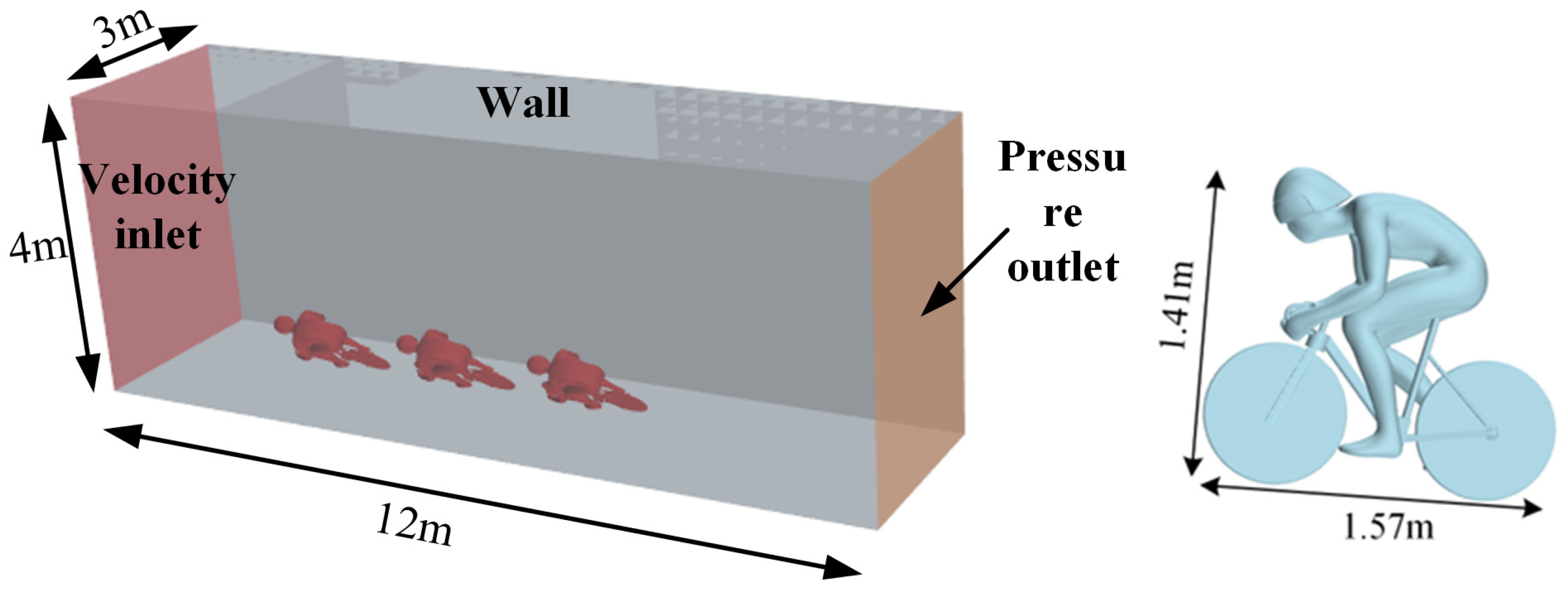
Establishing an appropriate computational domain configuration is fundamental to achieving reliable aerodynamic simulation results for cycling simulations. The computational domain, illustrated in Figure 1, adopts a rectangular parallelepiped geometry with dimensions of 12 m × 3 m × 4 m in length, width, and height, respectively. A velocity inlet boundary condition is implemented at the front end to generate airflow at predetermined speeds, thereby replicating the approaching flow environment encountered during actual cycling operations. This configuration ensures that the inlet flow parameters accurately represent real-world conditions. At the rear end, a pressure outlet is designated to facilitate unobstructed flow discharge; the fluid domain was modeled as air under standard atmospheric conditions. Consistent with the incompressible flow assumption, the physical properties were treated as constants. Specifically, the air density ρ was set to 1.225 kg/m3, and the dynamic viscosity was set to 1.7894 × 10⁻⁵ Pa·s. To prevent artificial pressure buildup within the domain and maintain computational accuracy, the surrounding and top/bottom boundaries are defined as no-slip wall conditions, which effectively capture the fluid–solid interactions at the domain perimeter and provide a realistic representation of boundary layer physics. The cyclists configuration features well-defined geometric characteristics positioned at a 45-degree inclination angle. This setup facilitates more accurate modeling of the turning aerodynamic characteristics of competitive cycling scenarios. The numerical methodology provides robust analytical support for investigating aerodynamic phenomena in cycling applications and facilitating design optimization strategies aimed at drag reduction.
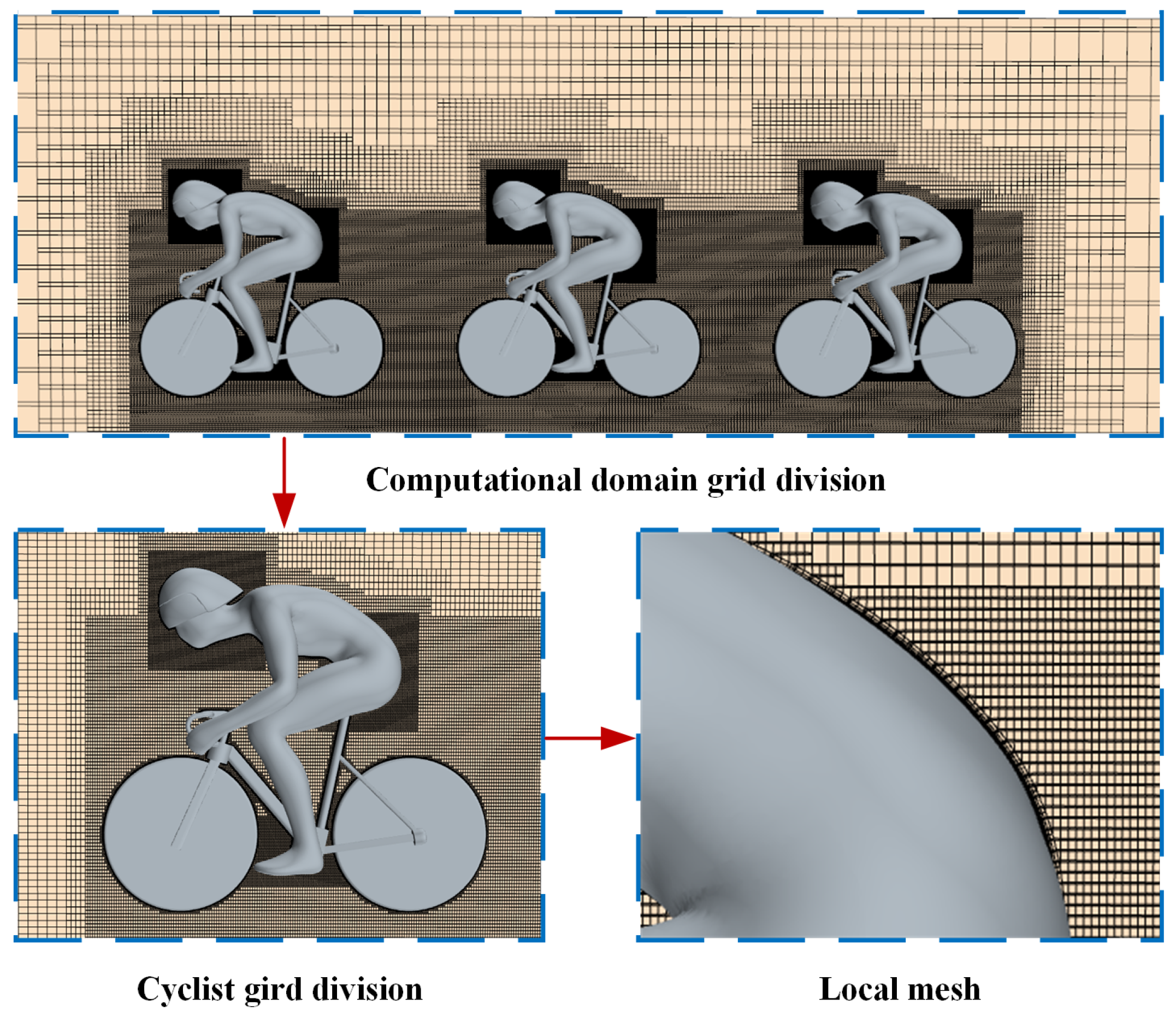
In cyclists simulation calculations, grid division is a critical step. To balance computational accuracy with efficiency, the computational domain employs a tiered meshing strategy where grid density diminishes radially from the cyclist and bicycle outwards. This method ensures sufficient resolution near the core area to accurately capture complex aerodynamic phenomena, while reducing the total number of cells in far-field regions to enhance computational efficiency, as shown in Figure 2. To further refine the analysis, local mesh refinement is applied to the cyclist and bicycle surfaces, allowing for a detailed examination of the intricate flow field. Furthermore, a prismatic layer mesh is generated on the helmet’s surface. This is vital for accurately simulating boundary layer flow and wall shear stress, as the prismatic layers effectively conform to the surface curvature, improving the capture of near-wall flow characteristics and providing a robust foundation for in-depth aerodynamic analysis.

2.4. Mesh Independence and Convergence Verification

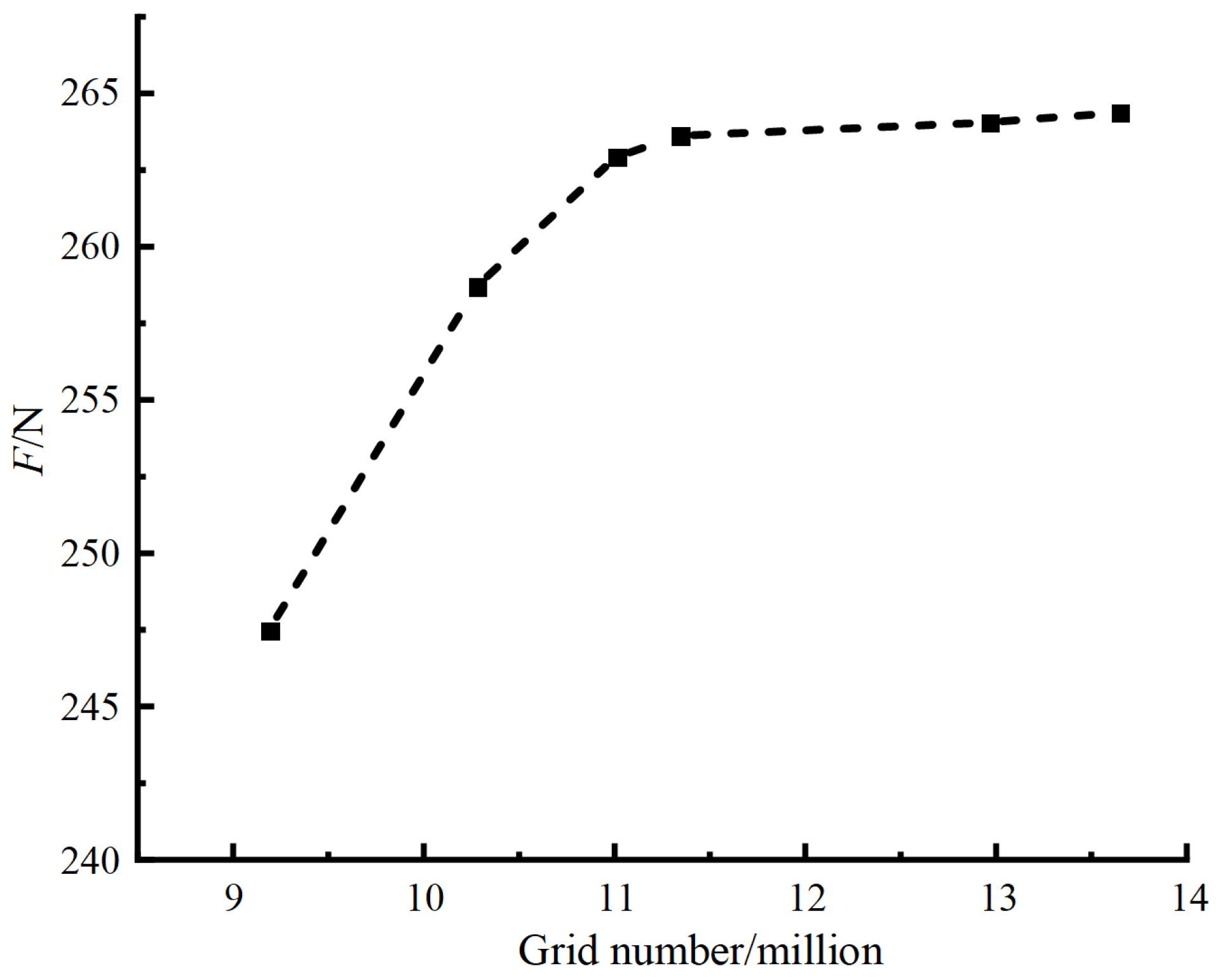
In cyclists simulations, a grid independence study is a critical step to ensure the reliability of computational results. Following established meshing rules, six different grid densities were generated and simulated. The resulting curve, which plots drag force against the number of grids, is shown in Figure 3. At 9 million grids, the calculated drag force is relatively low. As the number of grids increases, the drag force also gradually rises. The drag force value begins to stabilize as the mesh density exceeds 11 million grids, indicating that the computational result is no longer significantly sensitive to further increases in grid number. Given the need to balance both computational accuracy and resource cost, a mesh with 12 million grids was ultimately selected for this study. At this grid number, the drag force has largely converged, and further refinement offers negligible improvements in accuracy, thereby ensuring robust results without an unnecessary expenditure of computational resources.

2.5. Validation of the Numerical Simulation Method

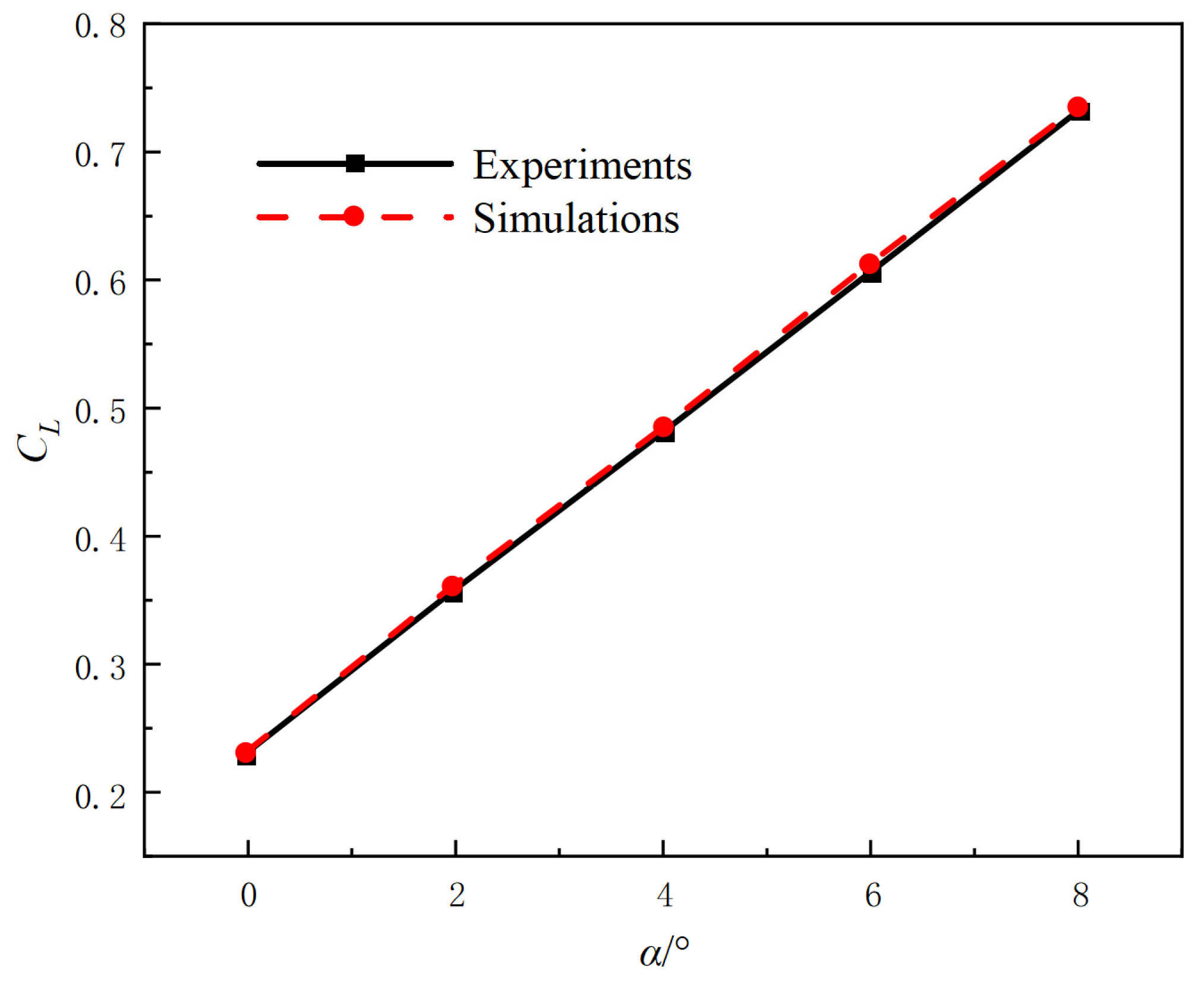
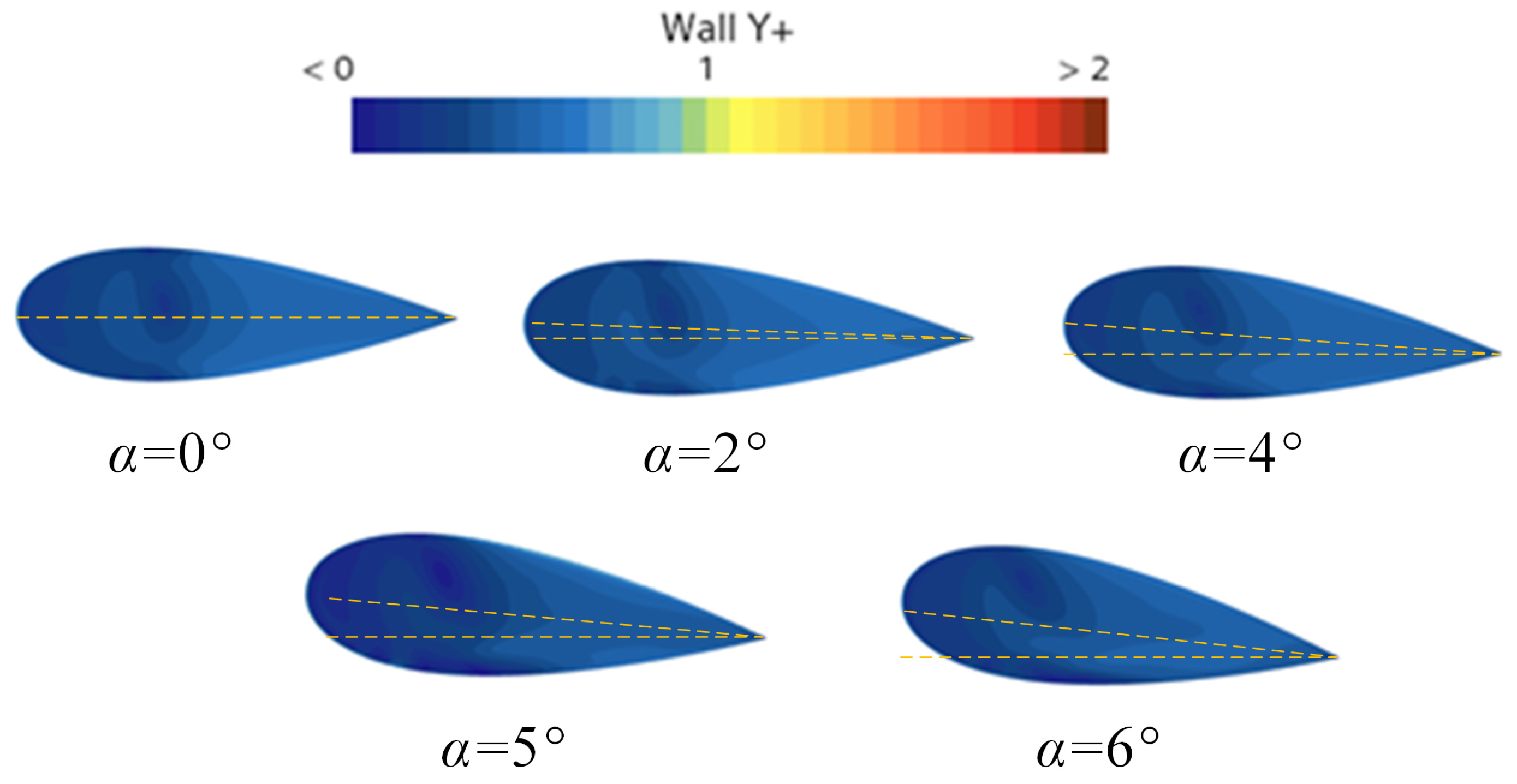
Ensuring the accuracy of the numerical model is crucial for the reliability of bicycle simulation calculations. The model’s validation was performed against experimental data from Zhang et al. [32]. As shown in Figure 4, the airfoil’s lift coefficient exhibits minimal variation across different angles of attack, which demonstrates the stability and suitability of the model for the various operating conditions investigated in this study. Furthermore, as depicted in Figure 5, all Y+ values are less than 1. This satisfies the requirements of the turbulence model, ensuring the accuracy of the turbulence simulation. Based on these two key foundations, the numerical model developed in this paper is validated.

3. Results and Discussion

3.1. Influence of the Velocity Magnitude on the Flow Field

In order to deeply explore the influence of velocities on the aerodynamic performance of the bicycle during 45° cornering, the numerical simulation was set up with the bicycle inclined at 45 degrees, a common cornering angle in cycling. The cyclist’s speed was defined within the range of 5–25 m/s. In professional cycling races, the cornering section plays a crucial role, and the performance of cyclists in corners often has a significant impact on race outcomes. Therefore, to better simulate actual race scenarios, this study carried out numerical simulations at different initial speeds with the bicycle body inclined at 45°. In addition, the inter-rider spacing within the paceline was fixed at 400 mm, which represents a typical drafting distance observed in competitive sprinting. During the analysis, the velocity field, vortex field, pressure field, and wall shear stress were examined in detail, with the aim of comprehensively revealing the influence mechanism of velocity magnitude and drafting configuration on aerodynamic characteristics.
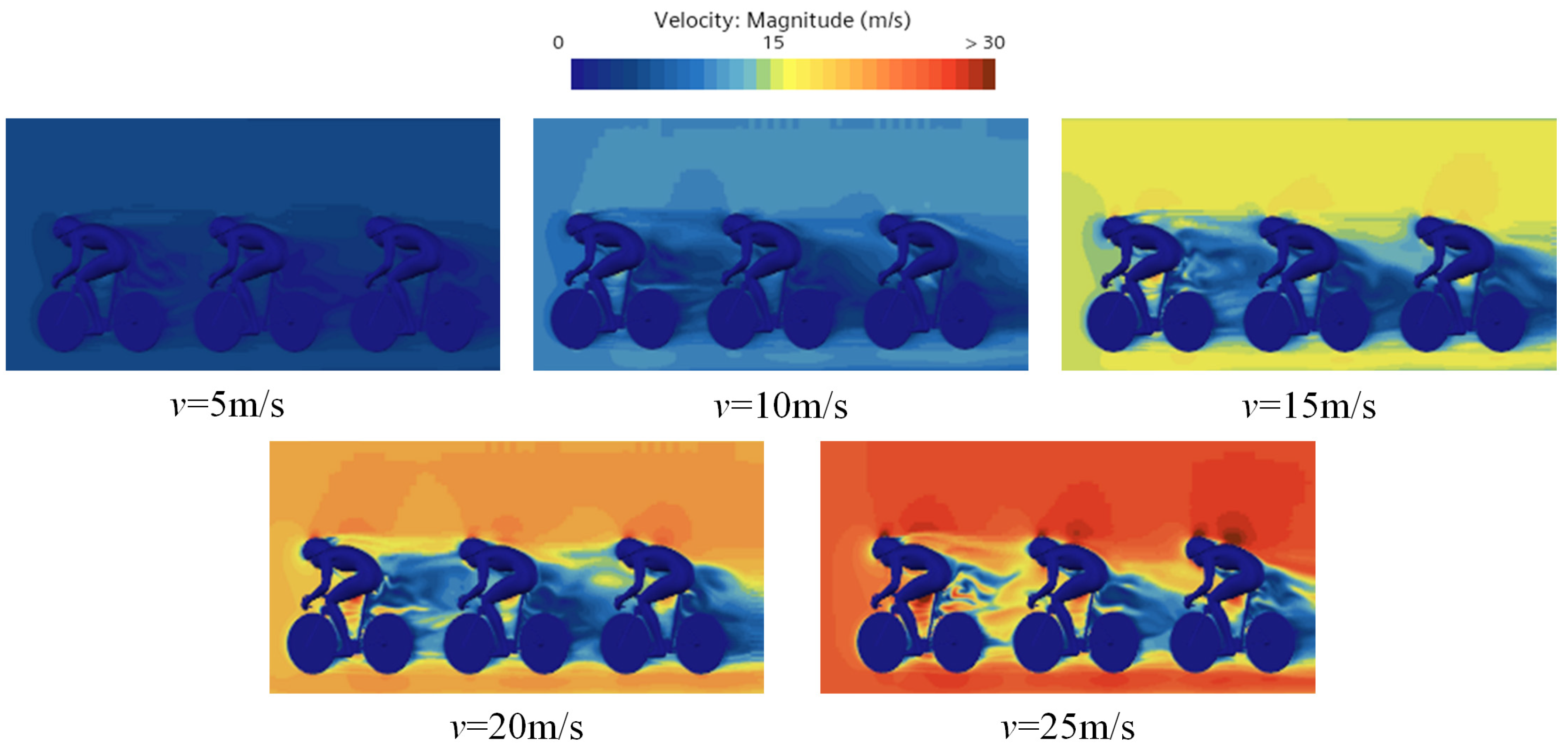
Figure 6 presents the overall flow velocity distribution around the cyclist group at different speeds. As the cycling velocity increases, the acceleration effect of the airflow around the cyclists and their bicycles becomes more pronounced, directly reflecting the increase in kinetic energy. In the frontal area of the leading cyclist, the airflow velocity decreases significantly, forming a high-pressure zone. Conversely, the airflow accelerates markedly in the wake behind the lead cyclist. Notably, the low-speed wake region created by the first rider provides a “low-drag” channel for the trailing cyclists. With increasing speed, the length and width of this wake region expand, allowing trailing cyclists to remain more effectively within the slipstream and achieve more significant drag reduction. However, the increase in speed also intensifies boundary layer separation from various parts of the cyclists’ bodies, which foreshadows the formation of stronger vortices.
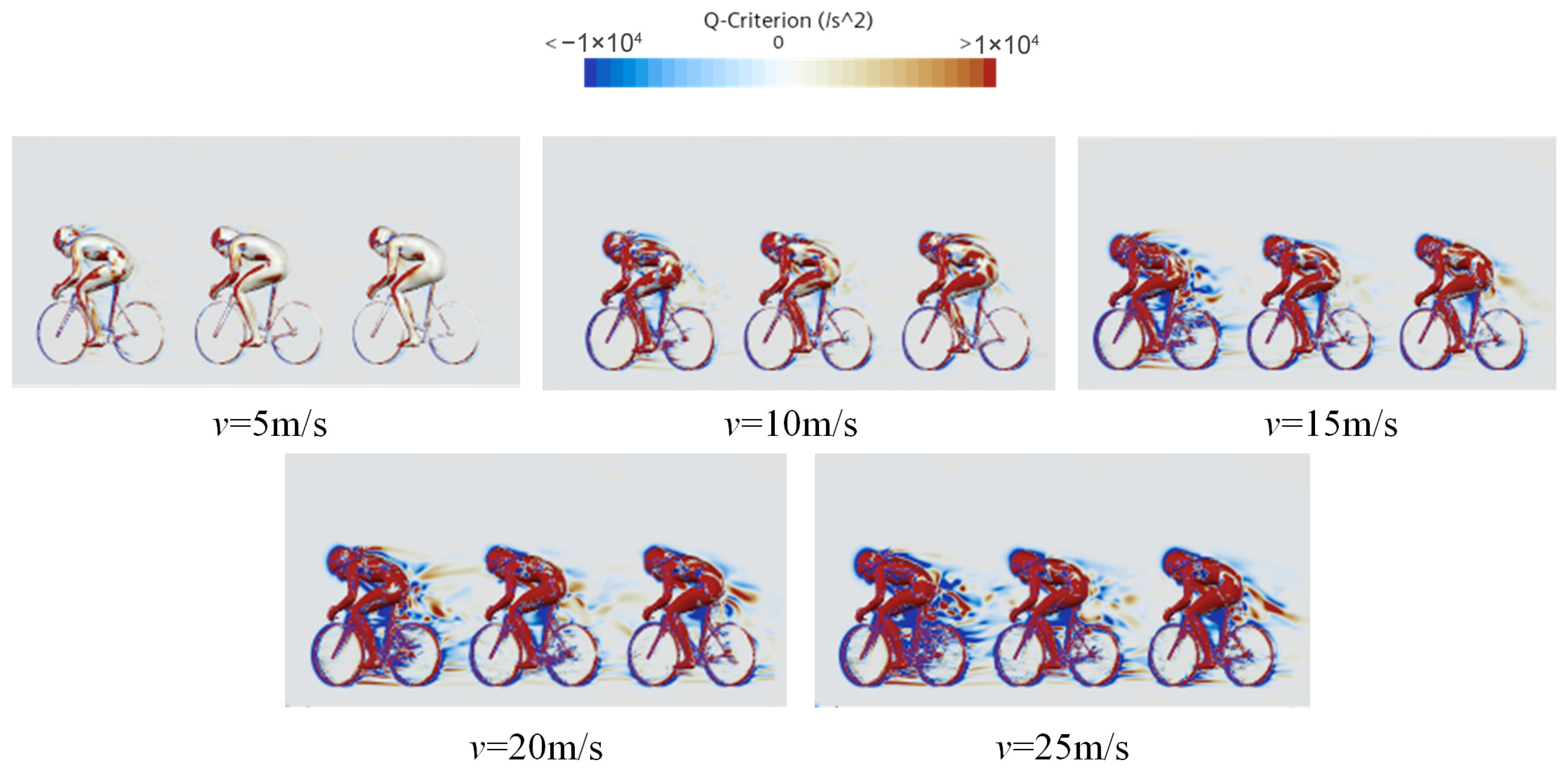
Figure 7 illustrates the vortex distribution around the cycling group at different speeds. Vortex formation is a typical flow phenomenon that arises from boundary layer separation as airflow passes over the cyclists’ complex geometries. At lower speeds, the vortex structures are relatively stable and small, mainly concentrated on the riders’ backs and legs. As speed increases, vortex shedding becomes more intense and frequent, and the size and strength of the vortices grow significantly. The leading cyclist, being directly exposed to the oncoming flow, generates a large, irregular wake vortex behind them. The presence of this primary vortex is crucial for trailing cyclists, as it effectively suppresses the formation of additional vortices that would otherwise be generated by them, thereby reducing local shear forces and significantly lowering aerodynamic drag.
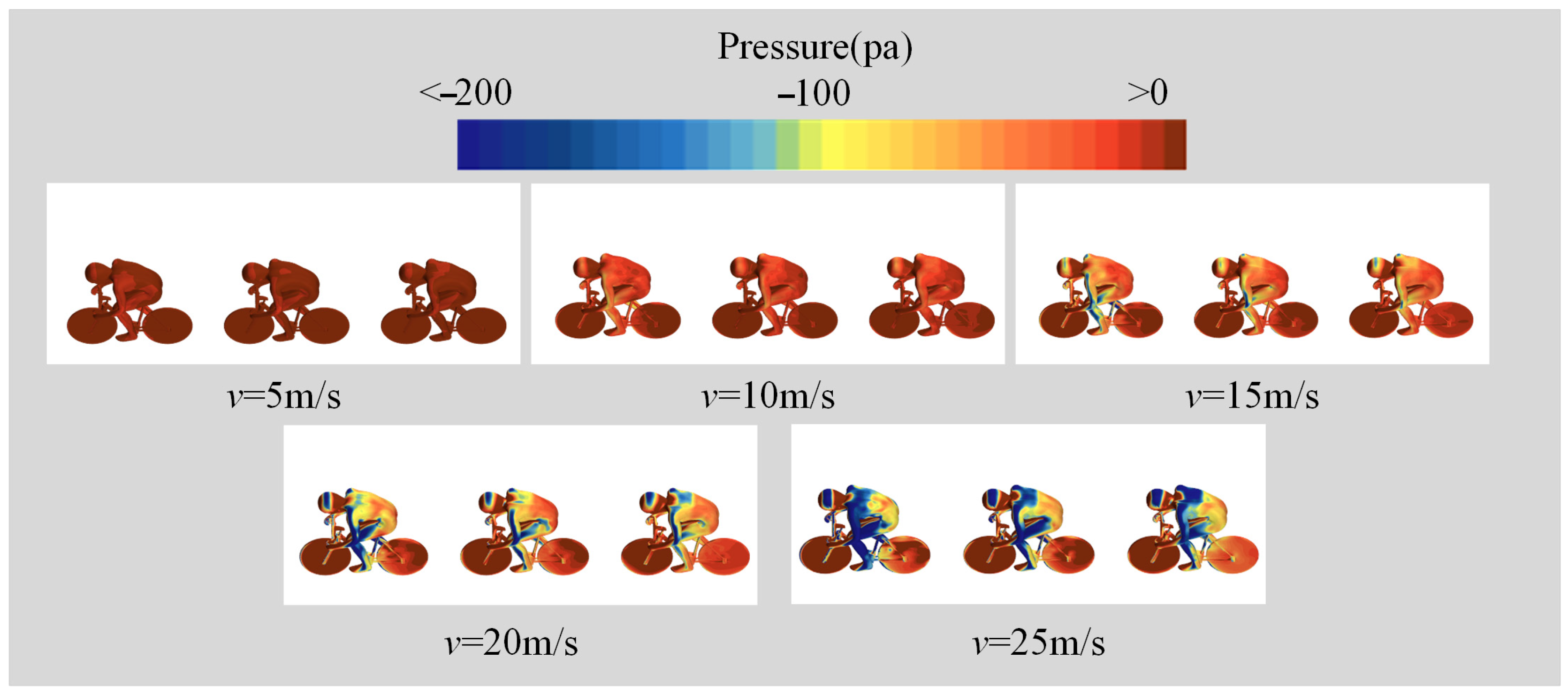
Figure 8 provides an illustration of the direct influence of cycling velocity on the surface pressure distribution within the formation, where color intensity denotes the magnitude of pressure. At low velocities, the high-pressure regions on the frontal surface of all cyclists, including the leader, are limited in both area and intensity. This observation signifies low kinetic energy transfer from the flow, resulting in low stagnation pressure and minimal pressure drag. The pressure signature on the trailing cyclists is largely comparable to the leader’s, suggesting a relatively limited aerodynamic shielding effect at this speed. As the velocity escalates, this is manifested by a clear expansion of the high-pressure regions on the frontal surfaces of all riders. This demonstrates the substantial rise in frontal pressure values, confirming pressure drag’s role as the dominant resistance factor at higher speeds. Notably, at high-speed regimes, the contrast in pressure distribution between the leading and trailing cyclists is amplified. While the leader endures the highest pressure peaks, the high-pressure area on the frontal surface of the trailing cyclists is visibly contracted. Concurrently, the rearward surface of the trailing cyclists displays a smaller low-pressure region compared to the leader. This differentiated front-to-back pressure signature clearly demonstrates that, despite the overall increase in absolute resistance with speed, the effective influence of the leading rider on the trailing rider’s frontal pressure field is strengthened, leading to the minimization of the pressure differential across the subsequent bodies and sustaining substantial drag reduction benefits.
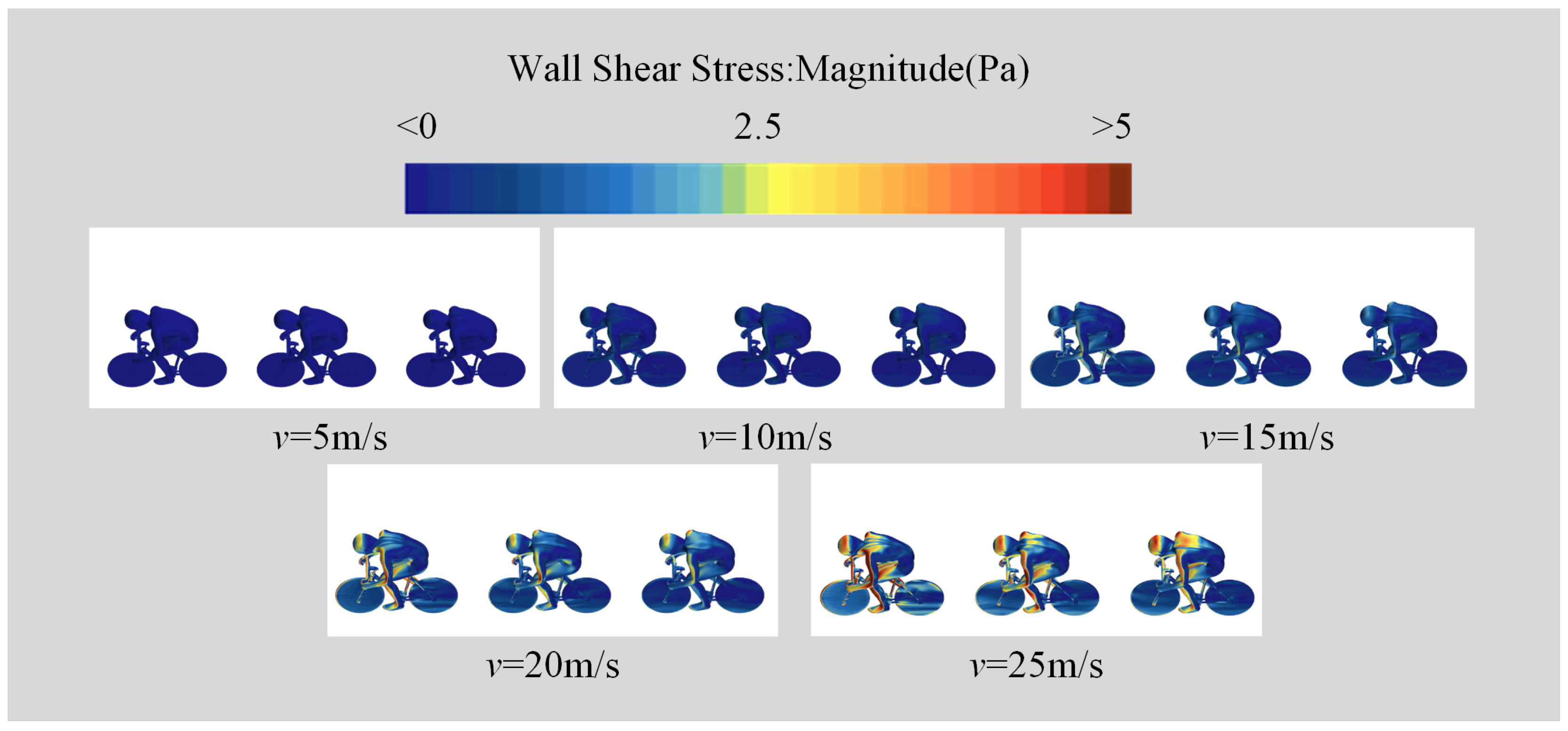
Figure 9 illustrates the distribution of wall shear stress on the cyclist surfaces under different riding velocities. At lower speeds, the wall shear stress is relatively weak across the entire group, with only localized regions on the frontal areas showing slight increases. As the velocity increases to 15 m/s, a more distinct growth in wall shear stress is observed, particularly on the leading cyclist’s head, shoulders, and frontal torso, indicating stronger airflow interaction with the surface. At higher velocities, the wall shear stress is markedly intensified and extends over larger surface regions, especially on the arms, legs, and bicycle wheels. This trend reflects the enhanced relative velocity between the airflow and the cyclists, which amplifies viscous effects and elevates skin-friction drag. Notably, despite the general increase in shear stress with velocity, trailing cyclists consistently experience lower stress magnitudes compared with the leader, this is attributed to the fact that trailing cyclists are located within the low-velocity wake of the leader, where the relative velocity between the airflow and their frontal surfaces is significantly reduced, thereby lowering wall shear stress levels. In addition, the momentum deficit within the wake diminishes viscous effects, resulting in markedly lower frictional drag on the trailing cyclists compared with the leader.
To quantify the intensification of aerodynamic interactions with increasing speed, Table 1 summarizes the peak flow variables extracted from the cyclist’s surface. The quantitative data reveals a non-linear growth in aerodynamic forces, which aligns perfectly with the color scale ranges used in the flow visualization. As illustrated in Figure 6, the local airflow accelerates over the helmet and back. At the highest speed of 25 m/s, the maximum local velocity reaches 33.2 m/s, slightly exceeding the contour limit of 30 m/s. This high-momentum flow energizes the wake, as confirmed by the Q-criterion contours in Figure 7. At low speeds (v = 5 m/s), the wake is steady, but at 25 m/s, the shedding becomes chaotic with high-frequency vortex structures. The pressure distribution highlights the critical suction loads. At v = 25 m/s, the peak stagnation pressure on the windward helmet reaches 42.5 Pa, while a strong suction zone develops on the leeward back, dropping to −225.8 Pa. This significant pressure drop at high speeds confirms that the suction force is the primary component of the drag. In contrast, at v = 5 m/s, the pressure variation is contained within a narrow range, resulting in minimal aerodynamic load. Similarly, the wall shear stress reflects the boundary layer intensity. The peak shear stress rises from a negligible 0.15 Pa at 5 m/s to 5.85 Pa at 25 m/s. The high-stress regions expand across the shoulders, confirming the increasing contribution of viscous drag at higher velocities.

3.2. Influence of the Spacing Magnitude on the Flow Field

Based on the numerical simulations conducted at different initial speeds, 15 m/s was selected as a representative velocity for subsequent drafting simulations, as it corresponds to typical sprinting speeds during cornering in competitive cycling. To more realistically reproduce the cornering condition, the cyclists were modeled with a 45° lean angle, representing a characteristic maneuver during high-speed turns. To systematically investigate the influence of drafting spacing on aerodynamic interactions within a paceline under this turning scenario, a series of simulations was performed at spacings of 100–500 mm. This setup enables a comprehensive analysis of how inter-rider spacing alters the flow-field characteristics and aerodynamic performance of the group during sprint cornering.
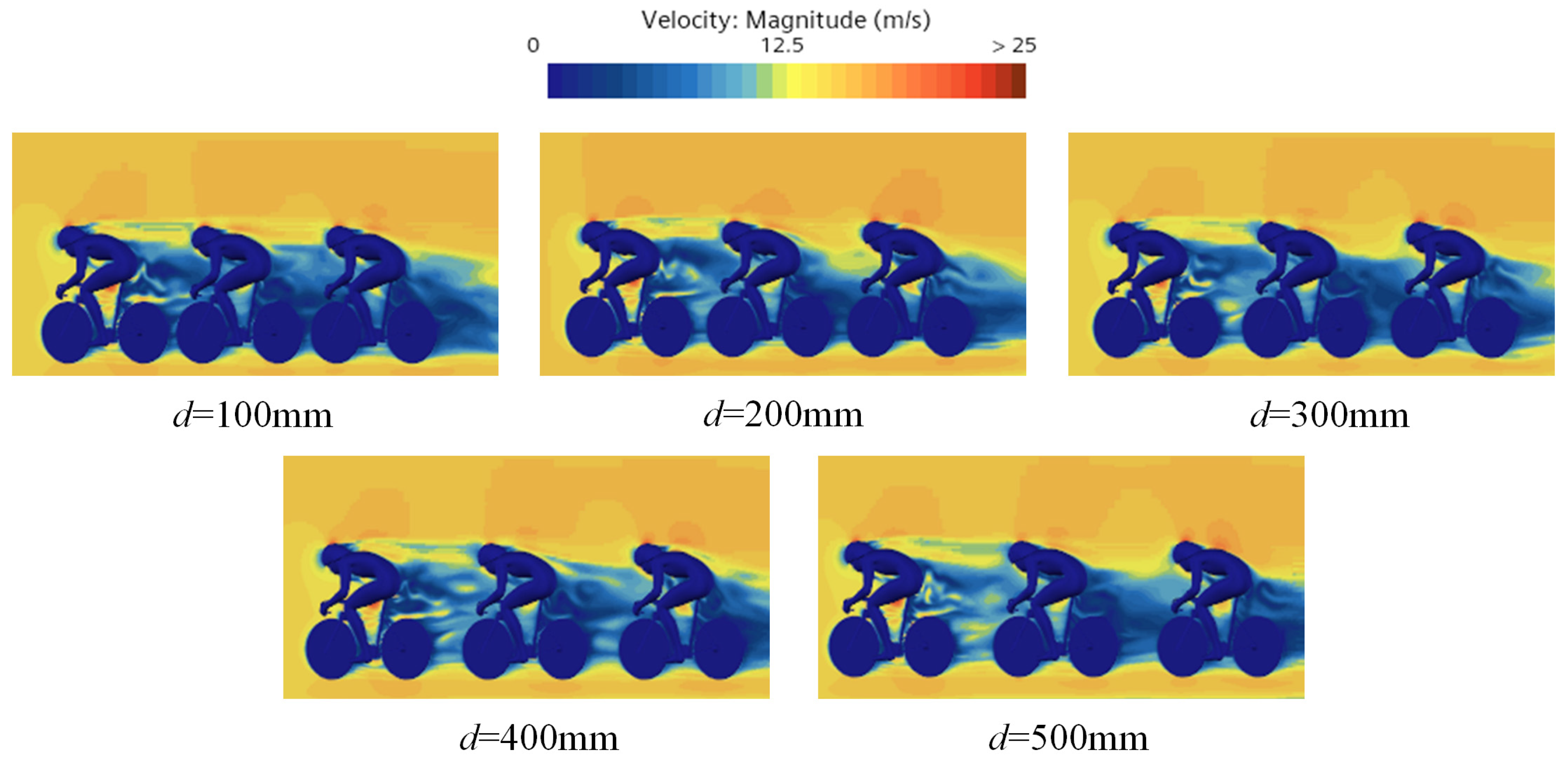
Figure 10 illustrates the velocity distribution of the flow field surrounding the cycling group at different inter-cyclist spacings. When the spacing is larger, the low-velocity wake generated by the leading cyclist begins to recover significantly toward the free-stream velocity before reaching the second cyclist. Consequently, the trailing rider captures only the peripheral region of the wake, resulting in an insignificant velocity difference and limited drag reduction. As the spacing decreases, the second cyclist is positioned within the low-velocity wake region behind the leading rider. In this configuration, the velocity gradient between the low-speed zone behind the first cyclist and the frontal area of the second cyclist is minimal, thus substantially reducing the effective dynamic pressure experienced by the trailing rider. This close arrangement significantly prolongs the coherency of the low-speed wake, maximizing the utilization of the “slipstream effect” and creating an optimal low-drag environment for the trailing cyclist.
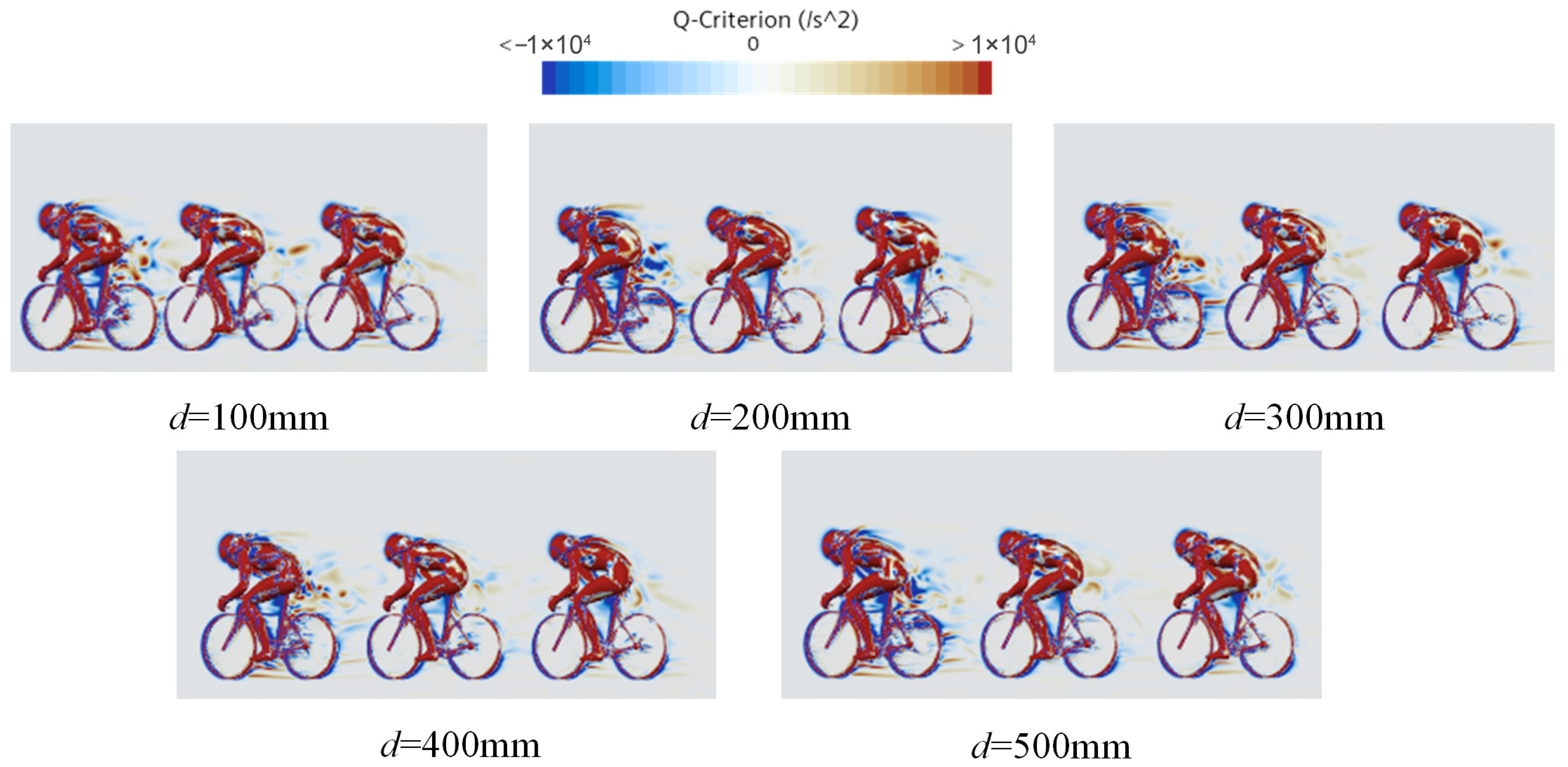
Figure 11 displays the vortex distribution around the cycling group across different spacings. Variations in spacing significantly affect the evolution of the lead cyclist’s wake vortex and its interaction with the trailing rider. At larger spacings, the shear layer behind the leading cyclist has sufficient distance and time to roll up into distinct, periodically shedding vortex structures. These fully formed vortices impact the frontal area of the second cyclist with higher energy upon arrival, inducing additional turbulence and marginally increasing drag. Conversely, at the minimum spacing, the second cyclist effectively truncates or suppresses the roll-up process of the lead cyclist’s wake shear layer. The tight proximity of the second rider captures the wake before re-attachment occurs, delaying or weakening the formation of the primary vortex and resulting in a longer, more stable compound wake. This flow regime suppresses the free shedding of high-intensity vortices, thereby minimizing the incoming turbulence intensity and air shear stress experienced by the trailing cyclist.
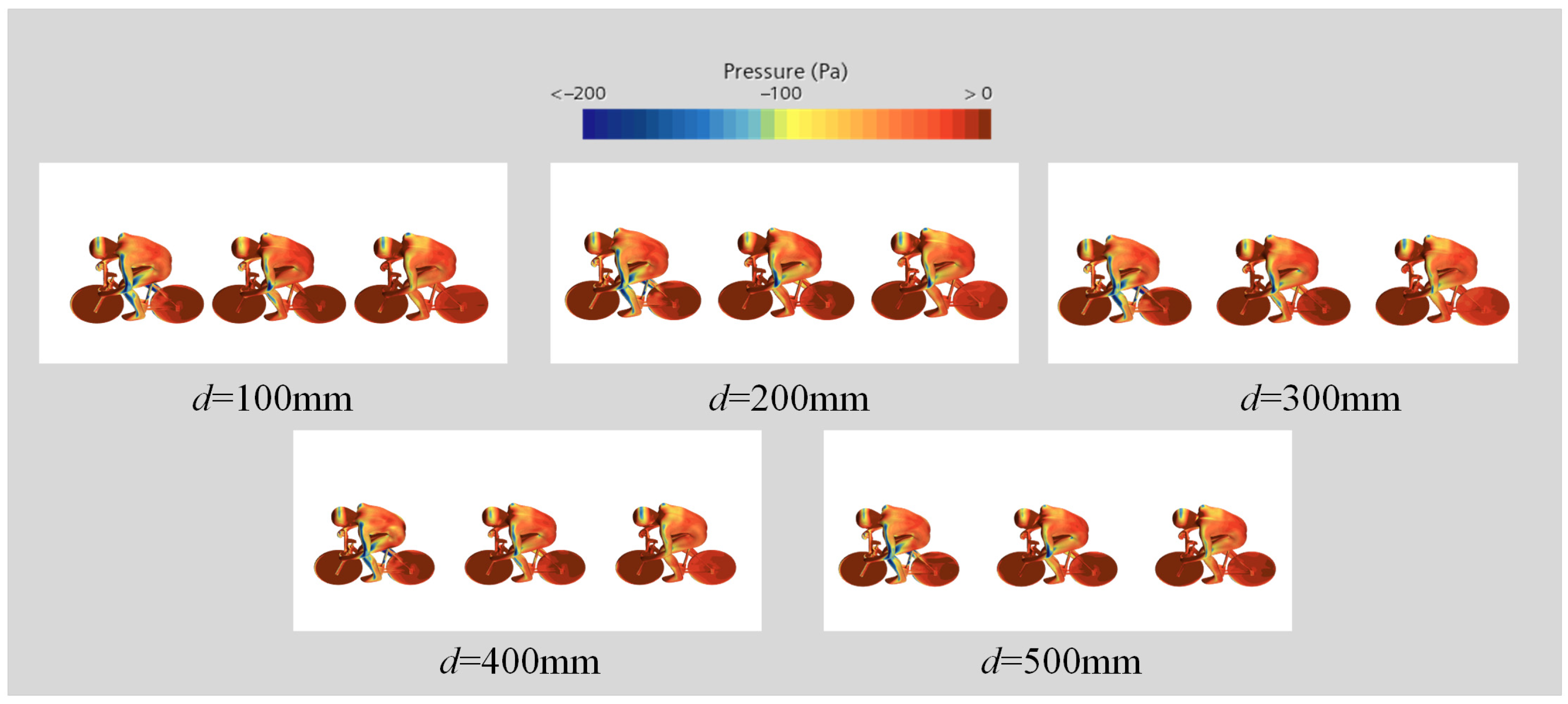
Figure 12 demonstrates the influence of drafting cyclists spacing on the surface pressure distribution within the formation. At larger spacings, the high-pressure region on the frontal surface of the second cyclist (indicated by red and orange contours) exhibits a range and intensity closely matching those observed for the leading rider. This indicates that, in the absence of significant influence from the leader’s wake, the following cyclist continues to experience near-stagnation pressure on the frontal surface, resulting in only marginal aerodynamic shielding benefits. As the spacing decreases progressively, the high-pressure region on the front of the second cyclist becomes noticeably reduced in both extent and intensity. This trend demonstrates the effective alleviation of frontal pressure by the upstream flow field, thereby highlighting the increasing aerodynamic advantage with reduced drafting spacing.
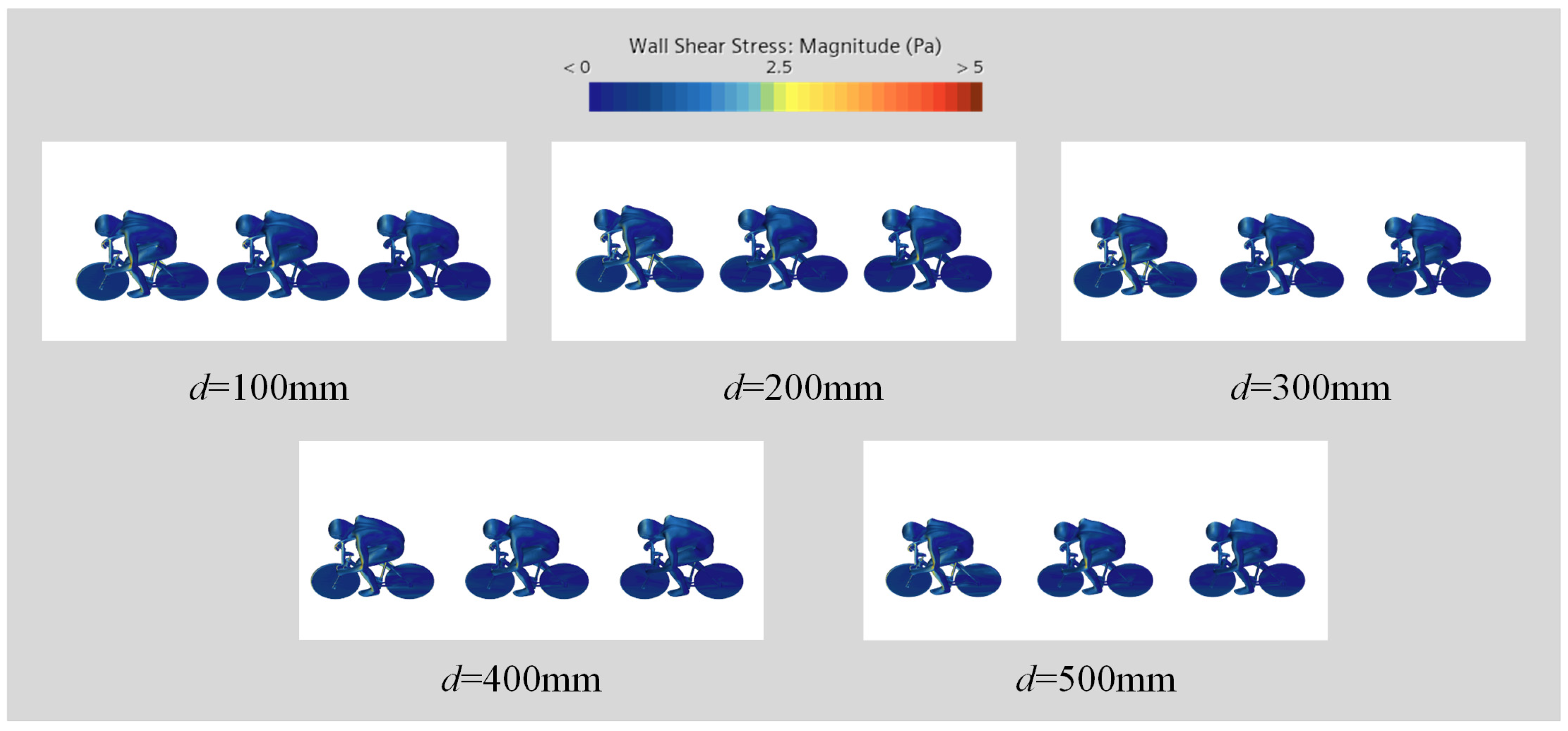
Figure 13 provides a visual representation of the influence of drafting spacing on the distribution of wall shear stress. The intensity of the contour color directly reflects the magnitude of friction drag resulting from the viscous interaction between the airflow and the surfaces. When the spacing is large, the low-shear stress regions observed on the second cyclist’s surface show only marginal reduction compared to the leader. This indicates that the flow velocity recovery causes the velocity gradient within the boundary layer acting on the trailing rider’s body to remain relatively high, limiting the mitigating effect on friction drag. In the d = 100 mm condition, the intensity of the shear stress on the third cyclist continuously declines, this is represented by a clear expansion of the dark blue area, particularly across the torso and legs. This change indicates that reduced spacing locates the trailing rider within the low-momentum wake region generated by the leader, thereby decreasing the local flow velocities around the follower.
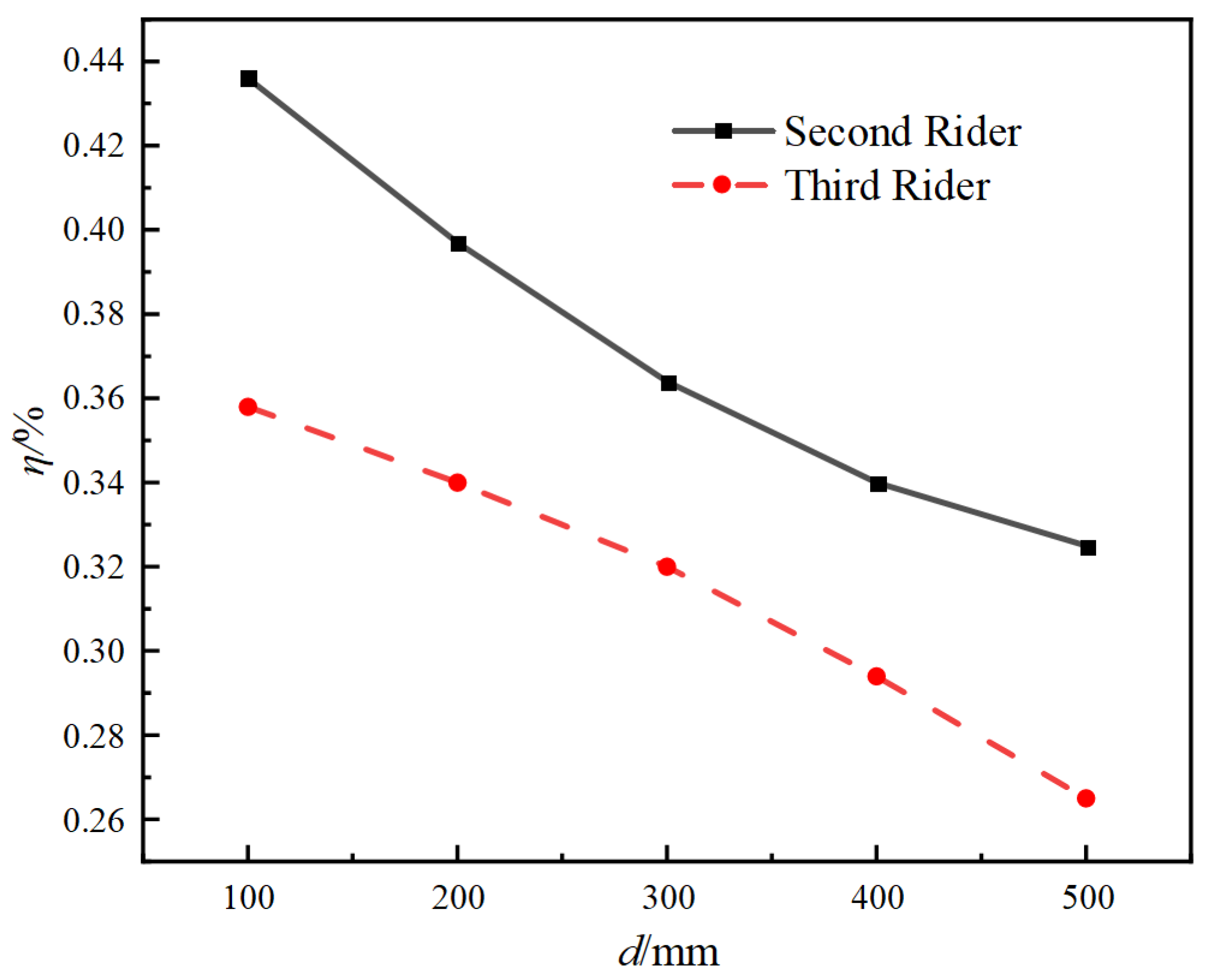
Figure 14 presents the quantitative variation in the drag reduction rate (η) for trailing cyclists across inter-rider spacings ranging from 100 mm to 500 mm. For clarity, the black curve with square symbols represents the drag reduction rate of the second rider, while the red curve with circular symbols denotes that of the third rider. The data reveals a clear monotonic decline in aerodynamic benefits as spacing increases. Specifically, for the second rider, the drag reduction rate peaks at approximately 43.6% at the closest spacing of 100 mm. However, as the gap widens to 500 mm, this value drops significantly to 32.4%, representing a total efficiency loss of 11.2% across the studied range. Similarly, the third rider experiences a reduction in shielding benefits, with η decreasing from a maximum of 35.8% at 100 mm to a minimum of 26.5% at 500 mm. Comparing the two positions, the second rider consistently outperforms the third; for instance, at d = 100 mm, the second rider enjoys an additional 7.8% drag reduction compared to the third rider. This quantitative disparity indicates that the coherent low-pressure wake generated by the leader dissipates rapidly; by the time it reaches the third rider—especially at larger spacings—the momentum deficit is significantly reduced, leading to diminishing aerodynamic returns.

4. Conclusions

This study systematically utilized computational fluid dynamics (CFD) to analyze the influence of two critical parameters, cycling velocity and inter-cyclist spacing on the aerodynamic drag characteristics and flow field structure of a two-cyclist formation. Having analyzed the velocity, vortex, surface pressure, and wall shear stress fields, the main conclusions are as follows:
Increasing velocity enhances the airflow acceleration and boundary-layer shear around cyclists, resulting in intensified vortex shedding and a significant rise in wall shear stress. Meanwhile, the low-velocity wake behind the leading rider expands both in length and width with increasing speed, providing a more coherent slipstream channel for trailing cyclists; this effectively lowers the relative flow velocity and viscous drag on the followers.
Under different inter-rider spacings, the aerodynamic interactions between cyclists vary significantly, as quantified by the drag reduction rate. At close spacing (d = 200 mm), the trailing cyclists are positioned within the coherent low-pressure wake of the leader, reducing both frontal stagnation pressure and surface shear stress. This yields the highest aerodynamic benefits, with peak drag reduction rates reaching approximately 43.6% for the second rider and 35.8% for the third rider. However, as the spacing exceeds 400 mm, the wake generated by the leader partially dissipates, resulting in a significant drop in efficiency. Specifically, at d = 500 mm, the drag reduction rates fall to 32.4% and 26.5%, respectively, representing a total efficiency loss of over 11% compared to the compact formation. Both riders exhibit a monotonic decline in drag reduction with increasing spacing; notably, the second cyclist maintains a consistent performance advantage of approximately 6–8% over the third cyclist across the entire range. Overall, this study reveals that both cycling velocity and inter-rider spacing critically determine the aerodynamic performance, with compact spacing providing quantifiable strategic advantages in cornering scenarios.

Author Contributions

F.L.: Conceptualization, Writing—review and editing, Methodology, Funding acquisition. L.L.: Investigation, Methodology, Data curation. S.Y.: Methodology. All authors have read and agreed to the published version of the manuscript.

Funding

This work is supported by the National Natural Science Foundation of China (Grant No. 52201385), the Natural Science Foundation of Shanxi Province (Grant No. 20210302123023), and the Shanxi Scholarship Council of China (Grant No. 2024-114). Central Guidance Fund for Local Science and Technology Development (Grant NO. YDZJSX2025D040).

Institutional Review Board Statement

Not applicable.

Informed Consent Statement

Not applicable.

Data Availability Statement

The data that support the findings of this study are available from the corresponding author upon reasonable request. The data are not publicly available due to privacy.

Conflicts of Interest

The authors declare no conflicts of interest.

References

  1. Grappe, F.; Candau, R.; Belli, A.; Rouillon, J.D. Aerodynamic drag in field cycling with special reference to the Obree’s position. Ergonomics 1997, 40, 1299–1311. [Google Scholar] [CrossRef]
  2. Kyle, C.R.; Burke, E.R. Improving the racing bicycle. Mech. Eng. 1984, 106, 34–45. [Google Scholar]
  3. Bourlet, C. Traité des Bicycles et Bicyclettes: Suivi d’une Application à la Construction des Vélodromes. 1894. Available online: https://cnum.cnam.fr/pgi/redir.php?onglet=d&ident=12DY14 (accessed on 1 November 2025).
  4. Pearce, D.H.; Milhorn, H.T., Jr. Dynamic and steady-state respiratory responses to bicycle exercise. J. Appl. Physiol. 1977, 42, 959–967. [Google Scholar] [CrossRef]
  5. Kyle, C.R. Experiments in human ergometry as applied to the design of human powered vehicles. J. Appl. Biomech. 1986, 2, 6–19. [Google Scholar] [CrossRef]
  6. Gross, A.C.; Kyle, C.R.; Malewicki, D.J. The aerodynamics of human-powered land vehicles. Sci. Am. 1983, 249, 142–153. [Google Scholar] [CrossRef]
  7. Zdravkovich, M.M. Aerodynamics of bicycle wheel and frame. J. Wind. Eng. Ind. Aerodyn. 1992, 40, 55–70. [Google Scholar] [CrossRef]
  8. Nonweiler, T. The Air Resistance of Racing Cyclists. 1956. Available online: https://dspace.lib.cranfield.ac.uk/items/88f6c4a5-e421-4134-9975-1980153969a9 (accessed on 1 November 2025).
  9. Kyle, C.R. Reduction of wind resistance and power output of racing cyclists and runners travelling in groups. Ergonomics 1979, 22, 387–397. [Google Scholar] [CrossRef]
  10. McCole, S.D.; Claney, K.; Conte, J.C.; Anderson, R.; Hagberg, J.M. Energy expenditure during bicycling. J. Appl. Physiol. 1990, 68, 748–753. [Google Scholar] [CrossRef]
  11. Hagberg, J.M.; McCole, S.D. The effect of drafting and aerodynamic equipment on the energy expenditure during cycling. Cycl. Sci. 1990, 2, 19–22. [Google Scholar]
  12. Broker, J.P.; Kyle, C.R.; Burke, E.R. Racing cyclist power requirements in the 4000-m individual and team pursuits. Med. Sci. Sports Exerc. 1999, 31, 1677–1685. [Google Scholar] [CrossRef]
  13. Edwards, A.G.; Byrnes, W.C. Aerodynamic characteristics as determinants of the drafting effect in cycling. Med. Sci. Sports Exerc. 2007, 39, 170–176. [Google Scholar] [CrossRef]
  14. Martin, J.C.; Milliken, D.L.; Cobb, J.E.; McFadden, K.L.; Coggan, A.R. Validation of a mathematical model for road cycling power. J. Appl. Biomech. 1998, 14, 276–291. [Google Scholar] [CrossRef]
  15. Bassett, D.R., Jr.; Kyle, C.R.; Passfield, L.; Broker, J.P.; Burke, E.R. Comparing cycling world hour records 1967–1996: Modeling with empirical data. Med. Sci. Sports Exerc. 1999, 31, 1665–1676. [Google Scholar] [CrossRef]
  16. Olds, T. The mathematics of breaking away and chasing in cycling. Eur. J. Appl. Physiol. Occup. Physiol. 1998, 77, 492–497. [Google Scholar] [CrossRef]
  17. Olds, T. Modelling human locomotion: Applications to cycling. Sports Med. 2001, 31, 497–509. [Google Scholar] [CrossRef] [PubMed]
  18. Lukes, R.A.; Chin, S.B.; Hart, J.H.; Haake, S. The Aerodynamics of Mountain Bicycles: The Role of Computational Fluid Dynamics. 2004. Available online: https://shura.shu.ac.uk/2294/ (accessed on 1 November 2025).
  19. McManus, J.; Zhang, X. A computational study of the flow around an isolated wheel in contact with the ground. J. Fluids Eng. 2006, 128, 520–530. [Google Scholar] [CrossRef]
  20. Blocken, B.; Defraeye, T.; Koninckx, E.; Carmeliet, J.; Hespel, P. Numerical study on the aerodynamic drag of drafting cyclist groups. In Proceedings of the 6th European and African Conference on Wind Engineering EACWE, Cambridge, UK, 7–11 July 2013; pp. 7–11. [Google Scholar]
  21. Oggiano, L.; Spurkland, L.; Sætran, L.; Bardal, L.M. Aerodynamical resistance in cycling on a single rider and on Two drafting riders: CFD simulations, validation and comparison with wind tunnel tests. In Proceedings of the International Congress on Sports Science Research and Technology Support, Lisbon, Portugal, 15–17 November 2015; Springer International Publishing: Cham, Switzerland, 2015; pp. 22–37. [Google Scholar]
  22. Defraeye, T.; Blocken, B.; Koninckx, E.; Hespel, P.; Carmeliet, J. Aerodynamic study of different cyclist positions: CFD analysis and full-scale wind-tunnel tests. J. Biomech. 2010, 43, 1262–1268. [Google Scholar] [CrossRef]
  23. Barry, N.; Sheridan, J.; Burton, D.; Brown, N.A. The effect of spatial position on the aerodynamic interactions between cyclists. Procedia Eng. 2014, 72, 774–779. [Google Scholar] [CrossRef]
  24. Barry, N.; Burton, D.; Sheridan, J.; Thompson, M.; Brown, N.A.T. Aerodynamic drag interactions between cyclists in a team pursuit. Sports Eng. 2015, 18, 93–103. [Google Scholar] [CrossRef]
  25. Van Druenen, T.; Blocken, B. Aerodynamic analysis of uphill drafting in cycling. Sports Eng. 2021, 24, 10. [Google Scholar] [CrossRef]
  26. Benito, M.A.; Herrero-Molleda, A.; Garcia-Lopez, J. Benefits of drafting on the leading cyclist: A preliminary field study. ISBS Proc. Arch. 2022, 40, 70. [Google Scholar]
  27. Fitzgerald, S.; Kelso, R.; Grimshaw, P.; Warr, A. Measurements of roll, steering, and the far-field wake in track cycling. Sci. Rep. 2022, 12, 11356. [Google Scholar] [CrossRef] [PubMed]
  28. Blocken, B.; Malizia, F.; van Druenen, T.; Gillmeier, S. Aerodynamic benefits for a cyclist by drafting behind a motorcycle. Sports Eng. 2020, 23, 19. [Google Scholar] [CrossRef]
  29. Spoelstra, A.; Mahalingesh, N.; Sciacchitano, A. Drafting effect in cycling: On-site aerodynamic investigation by the ‘Ring of Fire’. Proceedings 2020, 49, 113. [Google Scholar] [CrossRef]
  30. Zdravkovich, M.M.; Ashcroft, M.W.; Chishohn, S.J.; Hicks, N. Effect of cyclist’s posture and vicinity of another cyclist on aerodynamic drag. In The Engineering of Sport; CRC Press: Boca Raton, FL, USA, 2020; pp. 21–28. [Google Scholar]
  31. Van Druenen, T.; Blocken, B. Aerodynamic impact of cycling postures on drafting in single paceline configurations. Comput. Fluids 2023, 257, 105863. [Google Scholar] [CrossRef]
  32. Zhang, Q.; Dong, Y.F.; Li, H.; Ye, Z.; Zhang, J. Analysis of Overall Aerodynamic Characteristics of Spanwise Adaptive Wing. J. Xi’an Jiaotong Univ. 2020, 54, 174–184. [Google Scholar]
Figure 1. Schematic diagram of computing domain settings.
Applsci 15 13206 g001
Figure 2. Grid detail division diagram.
Applsci 15 13206 g002
Figure 3. Grid independence verification.
Applsci 15 13206 g003
Figure 4. Comparison between calculated and experimental lift coefficient values of the NACA0030 wing.
Applsci 15 13206 g004
Figure 5. Y+ values at different angles.
Applsci 15 13206 g005
Figure 6. Velocity distribution on the overall flow field under different velocities.
Applsci 15 13206 g006
Figure 7. Vortex distribution on the overall flow field under different velocities.
Applsci 15 13206 g007
Figure 8. Pressure distribution on people and bicycles under different velocities.
Applsci 15 13206 g008
Figure 9. Wall shear stress on people and bicycles under different velocities.
Applsci 15 13206 g009
Figure 10. Velocity distribution of drafting cyclists under different spacings.
Applsci 15 13206 g010
Figure 11. Vortex distribution of drafting cyclists under different spacings.
Applsci 15 13206 g011
Figure 12. Pressure distribution of drafting cyclists under different spacings.
Applsci 15 13206 g012
Figure 13. Wall shear stress distribution of drafting cyclists under different drafting spacings.
Applsci 15 13206 g013
Figure 14. Drag reduction rate variation curve diagram under different spacing.
Applsci 15 13206 g014
Table 1. Maximum aerodynamic flow parameters on the leading cyclist.
VelocityMax Flow VelocityMin PressureMax Wall Shear Stress
5 m/s6.8 m/s−12.8 Pa0.24 Pa
10 m/s14.1 m/s−42.5 Pa0.98 Pa
15 m/s21.5 m/s−95.2 Pa2.35 Pa
20 m/s29.2 m/s−158.4 Pa4.10 Pa
25 m/s37.6 m/s−225.8 Pa6.55 Pa
Disclaimer/Publisher’s Note: The statements, opinions and data contained in all publications are solely those of the individual author(s) and contributor(s) and not of MDPI and/or the editor(s). MDPI and/or the editor(s) disclaim responsibility for any injury to people or property resulting from any ideas, methods, instructions or products referred to in the content.