1. Introduction
The development of deep and tight sandstone reservoirs in China’s western region faces a series of technical challenges in reservoir transformation, which are manifested as follows:
(1) A deep burial depth, high closure pressure, brittle-to-strong plastic transformation of sandstone cores, and the further definition of mechanical and physical parameter boundaries such as brittleness and compressibility [
1,
2,
3].
(2) The parallel bedding of the reservoir is developed, and the three-dimensional stress is complex, making the expansion of hydraulic fractures more complex. The rock core has parallel bedding development, which is an important reservoir space and the main channel for crack initiation and fracturing fluid filtration. The vertical geostress is between the maximum horizontal principal stress and the minimum horizontal principal stress, increasing the uncertainty of crack propagation [
4,
5,
6,
7].
(3) The fracturing pressure of high-pressure tight oil reservoirs exceeds the equipment limit and cannot be opened, making it impossible to increase production through single-well fracturing [
8,
9].
In recent years, many scholars have conducted experimental research on the challenges faced by hydraulic fracturing in deep tight sandstone reservoirs. Peng et al. [
10] studied the layered fracturing technology of deep-fractured tight sandstone and constructed a fine identification method for fractures in the near-wellbore formation after fracturing based on logging data. Shi et al. [
11] conducted experimental research on the water production mechanism of gas wells after hydraulic fracturing in tight sandstone gas reservoirs, and proposed water control methods such as controlling the scale of fracturing transformation. Du et al. [
12] studied the closure mechanism of hydraulic fracturing fractures and natural fractures in tight sandstone formations and constructed mechanical equations for two types of fractures. Feng et al. [
13] conducted experiments to study the characteristics of fractures formed by the hydraulic fracturing of deep tight sandstone. The study showed that hydraulic fractures propagate along the direction of the minimum horizontal principal stress, and the correlation between the fracture parameters and lithology is relatively small. Zhou et al. [
14] conducted an experimental study on the brittle characteristics and crack propagation patterns of rock samples with different physical and mineral contents in tight sandstone reservoirs. The results showed that the higher the adaptive content in the rock samples, the more obvious the brittle characteristics of the rocks. Moreover, the higher the comprehensive brittleness index of sandstone rock samples, the more complex the crack network formed during hydraulic fracturing. Ma et al. [
15] proposed an improved hydraulic fracturing fracture initiation criterion based on experiments, which indicates that the fracture pressure increases to different degrees with the increase in initial pore pressure. Wu et al. [
13] studied the fracture morphology and fracture pressure of cyclic hydraulic fracturing in tight sandstone reservoirs, and the results showed that the fracture pressure of cyclic hydraulic fracturing was reduced by more than 30% compared to conventional hydraulic fracturing. Zhang et al. [
16] used acoustic emission technology to monitor the generation and propagation of hydraulic fracturing fractures in tight sandstone. The results showed that the fracture network formed by hydraulic fracturing in tight sandstone was more complex at low stress differences, and four interaction modes between hydraulic fractures and bedding planes were obtained. Huang et al. [
17] studied the backflow problem of fracturing fluid during the hydraulic fracturing of tight sandstone and proposed a method to increase the backflow rate of fracturing fluid by optimizing the diameter of the restrictor. Liu et al. [
18] conducted a physical simulation experiment of true triaxial hydraulic fracturing by simulating the natural crack network in the formation through pre-set concrete slabs, clarifying the influence mechanism of the horizontal stress difference and pre-set cracks on the initiation and propagation of hydraulic cracks. Chitrala et al. [
19] used the acoustic emission method to study the crack propagation law of sandstone under different geostress and analyzed the roughness of the fracture surface of sandstone after fracturing using an SEM electron microscope scanner, revealing the mechanism of crack initiation and propagation in tight sandstone.
Many scholars have also made relevant progress in the theoretical research of hydraulic fracturing in deep tight sandstone reservoirs. Zou et al. [
20] studied the distribution of natural cracks and the influence mechanism of weak structural plane bonding strength on the propagation of complex cracks based on a numerical model of embedded pore pressure cohesive elements. The numerical simulation results show that the complexity of the crack network is greatly affected by the bonding strength of weak structural planes. Zhang et al. [
21] used numerical simulation methods to study the influence of dimensionless lithological interface strength on the propagation of hydraulic fractures through layers. Zhou et al. [
22] conducted numerical simulation studies on the propagation of hydraulic fractures in the near-wellbore zone of layered reservoirs using PFC 5.0 software. Chen et al. [
23] conducted a detailed study on the interaction mechanism between hydraulic fractures and single natural fractures in orthogonal experiments using cohesive units. Wang et al. [
24] used cohesive units to analyze the hydraulic fracturing extension problem in natural fractured reservoirs and evaluated the influence of geostress differences on fracture network fracturing. Hou et al.’s [
25] research shows that, when the horizontal stress difference is too high, tight oil reservoirs cannot effectively form complex fractures. After adding temporary plugging agents and conducting temporary plugging fracturing, the ability of fracturing fluid to activate natural fractures is enhanced. Rungamonrat et al. [
26] established a three-dimensional non-planar numerical model of hydraulic fracture propagation in elastic media based on the boundary element method and successfully solved this numerical model using the Newton–Raphson method. The simulation results of Tan et al. [
27] indicate that the interlayer interface bonding strength and interface angle have a significant impact on the vertical propagation of hydraulic fractures.
The above scholars have made relevant research progress in the hydraulic fracturing of tight sandstone reservoirs, but research on the expansion laws of hydraulic fracturing fractures in tight sandstone reservoirs and the main controlling factors for the formation of complex pressure fractures is still relatively weak. Therefore, this article conducts physical model experiments on fracturing under different reservoir stress conditions to determine whether complex pressure fractures can be formed. The main controlling factors for the formation of complex pressure fractures are analyzed, and the influence of each factor is quantitatively studied through numerical simulation, providing technical support and reference for fracturing construction in deep tight reservoirs.
2. Hydraulic Fracturing Test of Outcrop Sandstone
2.1. Test Plan of Outcrop Sandstone
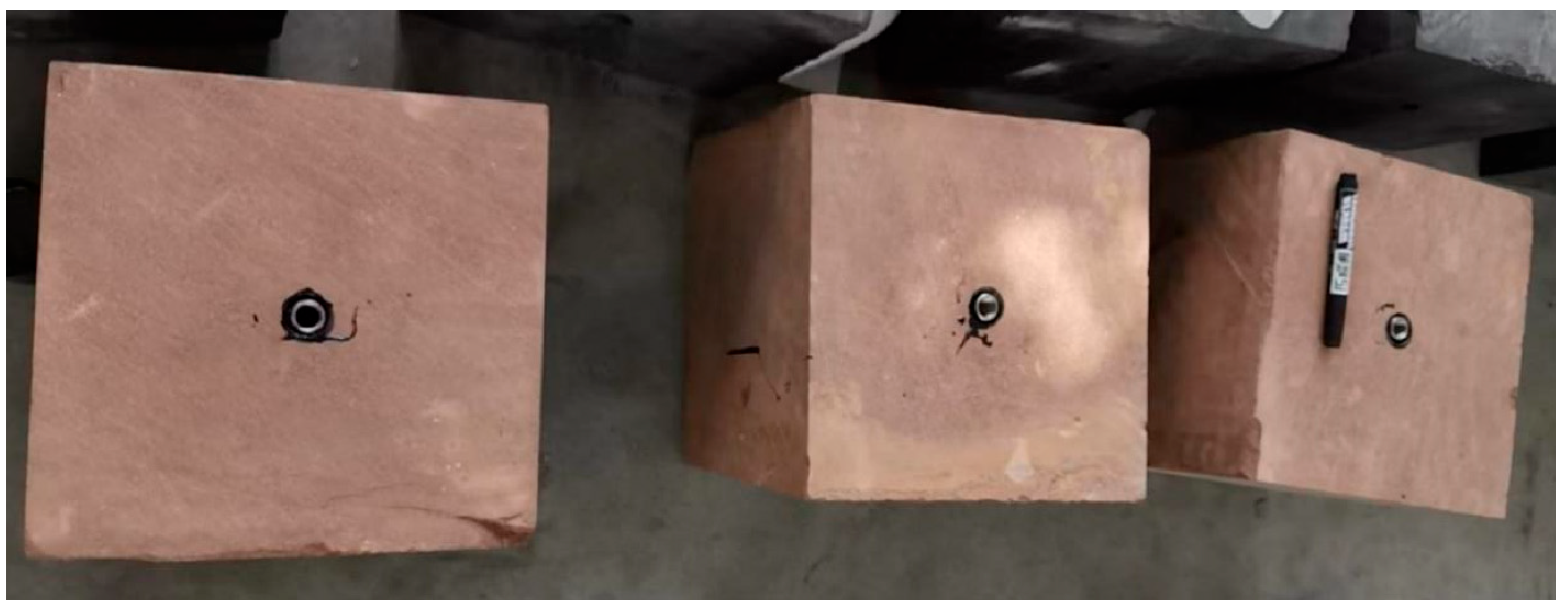
In order to study the expansion law of sandstone fractures, the fracture mode test, affected by different reservoir stress conditions and two new fracturing process parameters, is carried out so as to clarify whether the complex fracture and the main control factors can be formed. We designed a three-dimensional geostress hydraulic simulation test plan, with a sample size of 300 mm × 300 mm × 300 mm. The cubic natural dense reservoir outcrop is shown in
Figure 1. Five sets of fracturing physical model experiments with different stress states were designed, and the specific parameters (overburden pressure
, maximum horizontal geostress
, minimum horizontal geostress
, injection rate, and viscosity) are shown in
Table 1 below.
2.2. Hydraulic Fracturing Test Equipment and Process
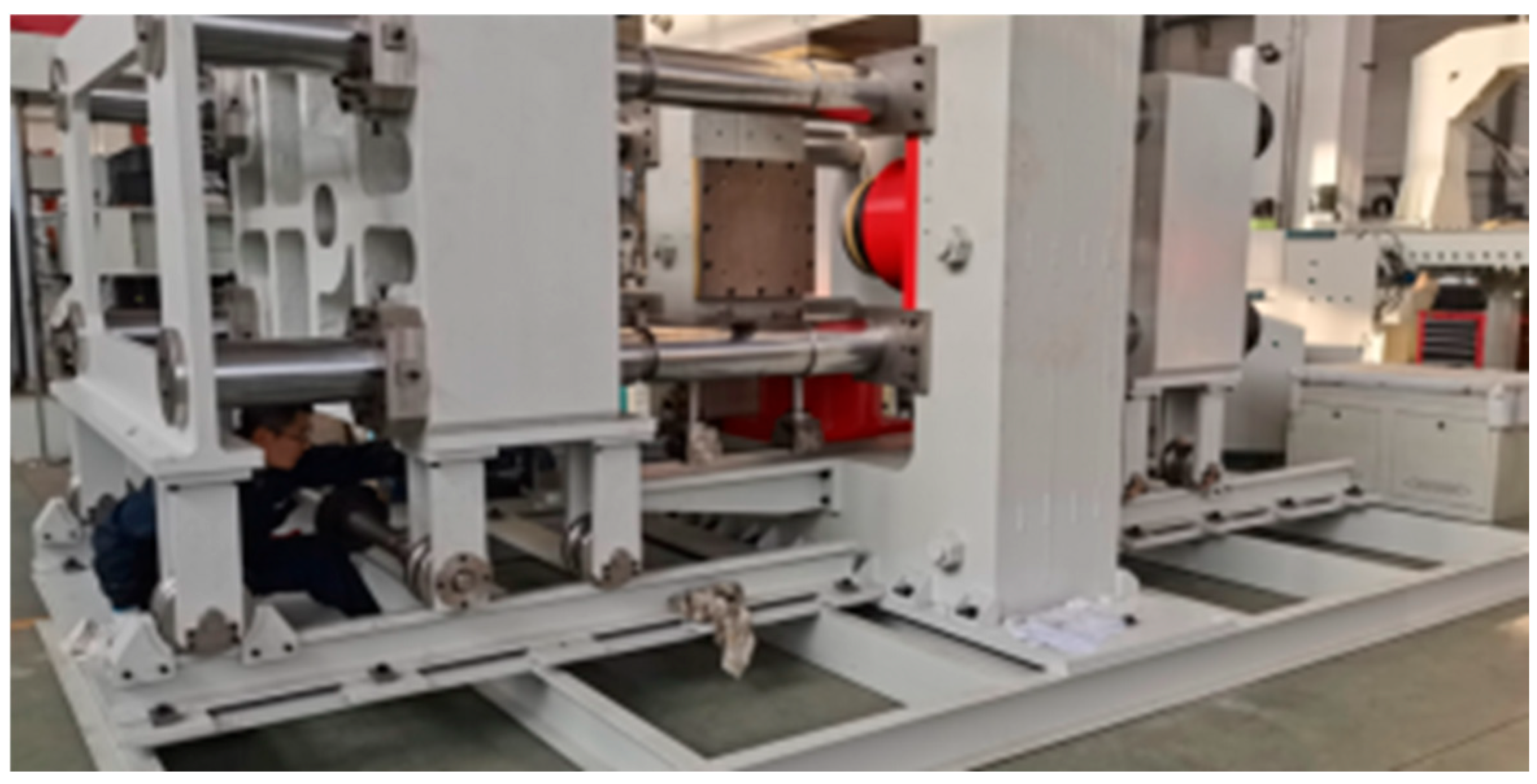
The high- and low-temperature multiphase flow fracturing physics simulation test system (as shown in
Figure 2), composed of a stress loading system, heating temperature control system, water pressure injection system, integrated control system, and monitoring and testing system, can realize deep high-temperature true three-axis hydraulic fracturing tests.
A servo loading system is used to apply constant true triaxial stress to the specimen to simulate the stress state of deep formation. The servo pump pressure control system is equipped with a program controller, which can maintain a constant flow rate or follow a preset injection program. During the test process, the data acquisition system is used to record the pump pressure, displacement, and other parameters. An AE monitoring system is used to monitor the AE signal inside the specimen during fracturing to determine the rupture time point and location of the specimen. The experimental procedure is as follows:
(1) Sample preparation and installation: Place the prepared rock sample in the center of the true triaxial loading frame. Install the fracturing fluid injection pipeline at the predetermined location of the rock sample and ensure its sealed connection with the subsequent water pressure injection system.
(2) Stress loading and temperature control: Activate the servo loading system and apply constant and independent triaxial stress to the rock sample through six loading plates to simulate the true stress state of deep formations. Activate the heating and temperature control system to heat the rock sample and surrounding environment to the target temperature.
(3) Fracturing fluid injection and crack initiation: Start the servo pump pressure control system and inject fracturing fluid into the rock sample at a constant speed or according to a specific program according to the pre-set displacement program. During this process, the system continuously applies hydraulic pressure to the rock sample.
(4) Data synchronization collection and monitoring: The data collection system records key construction parameters such as pump pressure and displacement in real-time. The acoustic emission monitoring system operates synchronously to capture microseismic signals generated within the rock sample during the fracture process, in order to determine the initiation time and spatial location of cracks.
(5) Experiment termination: When a sharp drop in pump pressure is detected or the acoustic emission signal shows that the rock sample has completely ruptured, the injection of fracturing fluid is stopped, and the loading and heating systems are sequentially turned off.
2.3. Fracturing Test Results and Analysis
Five fracturing tests were conducted, and the test conditions and results are shown in
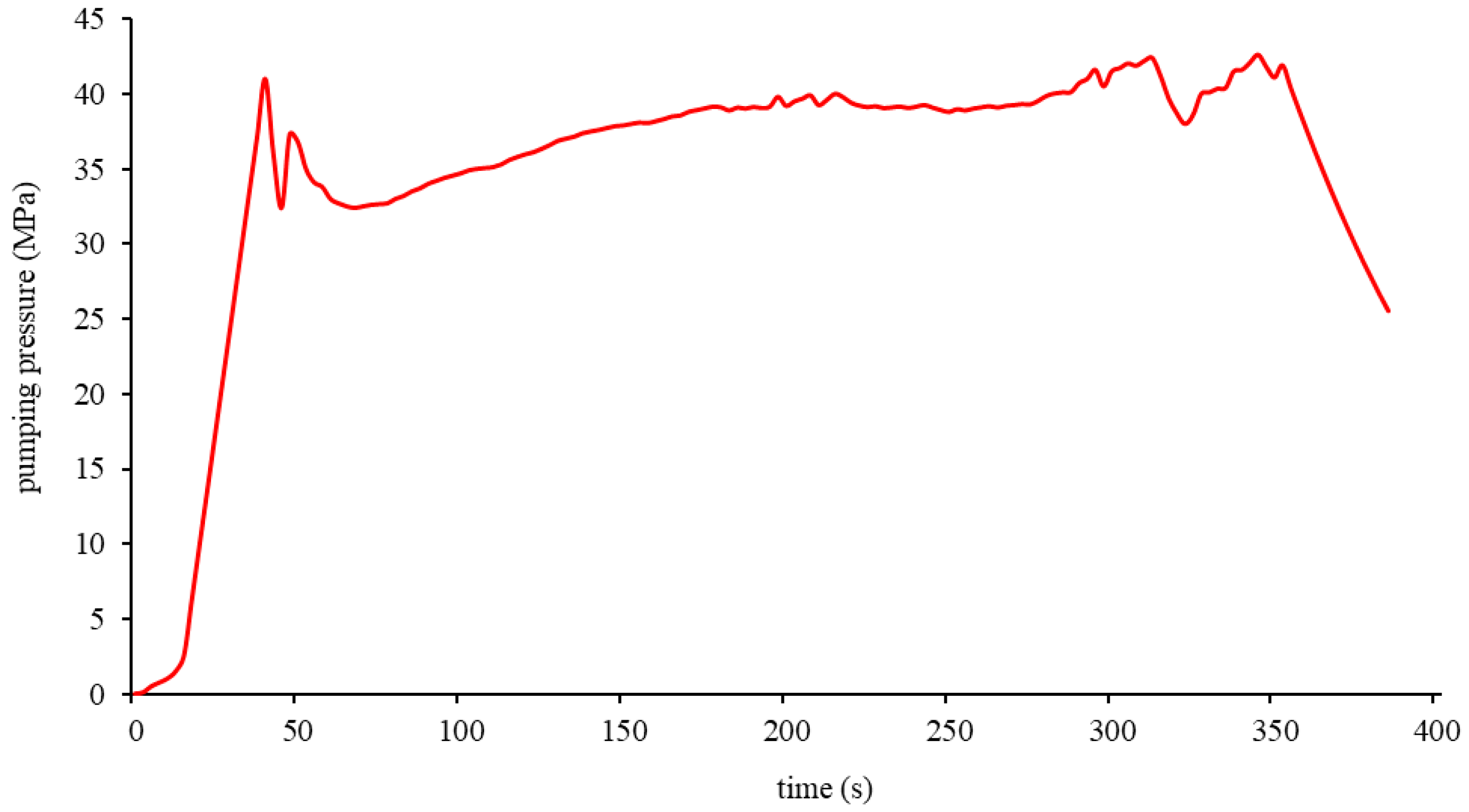
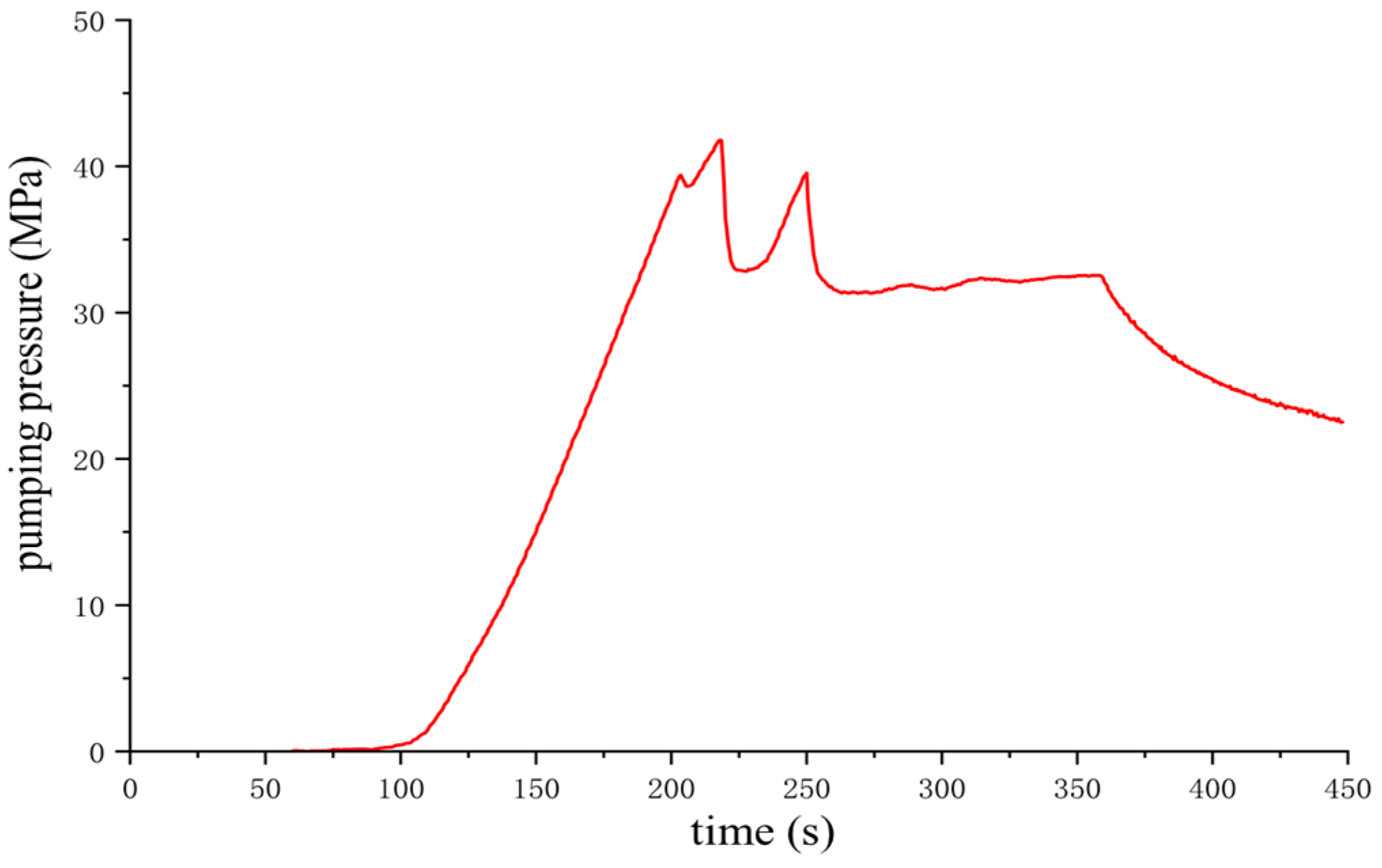
Table 2. The three-dimensional stress used in the SX1 specimen σv-σH-σh = 57-60-50 MPa. The pumping displacement is 80 mL/min, and the fracturing pumping curve is shown in
Figure 3. With the continuous injection of fracturing fluid, the pump pressure rises rapidly. After reaching the fracture pressure point, the pump pressure drops significantly. With the subsequent injection of fracturing fluid and the continuous expansion of fractures, the fluctuation of pump pressure increases. After the main crack finally breaks through, the pump pressure decreases significantly.
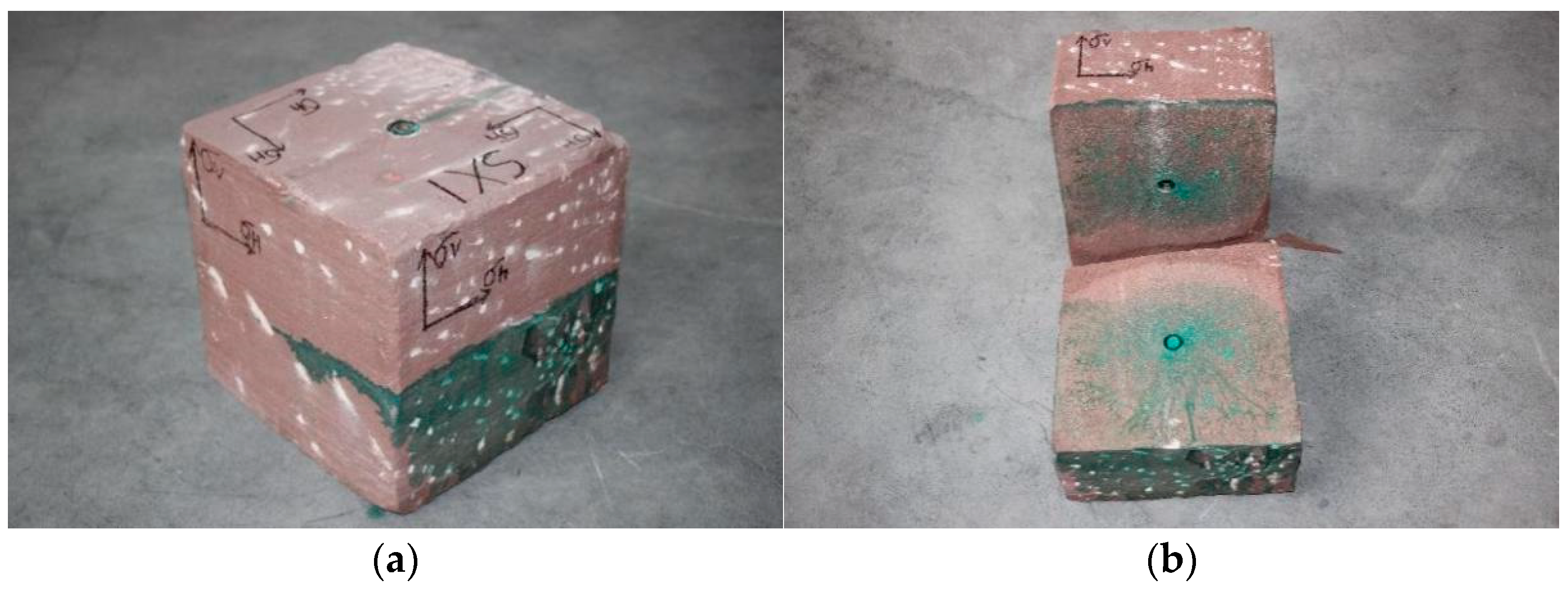
The sample in
Figure 4 comes from a collected tight reservoir outcrop, with a cube size of 300 mm × 300 mm × 300 mm. The highest rupture pressure in the experiment was 41.78 MPa.
Figure 4a shows the complete state of the SX1 specimen before fracturing, with the prefabricated wellbore located in the center of the specimen. When the specimen was opened (
Figure 4b), a main crack was formed in the direction approximately perpendicular to the wellbore. The hydraulic fracturing fractures almost pass through the encountered bedding planes, and the physical image of the fracture morphology is shown in
Figure 4. The exposed sandstone samples all opened compression cracks perpendicular to the wellbore and almost parallel to the bedding plane under four different triaxial stress conditions.
3. Experimental Study on Fracture Propagation in True Triaxial Fracturing with Three Different Stress States and Layer Characteristics
3.1. Test Plan
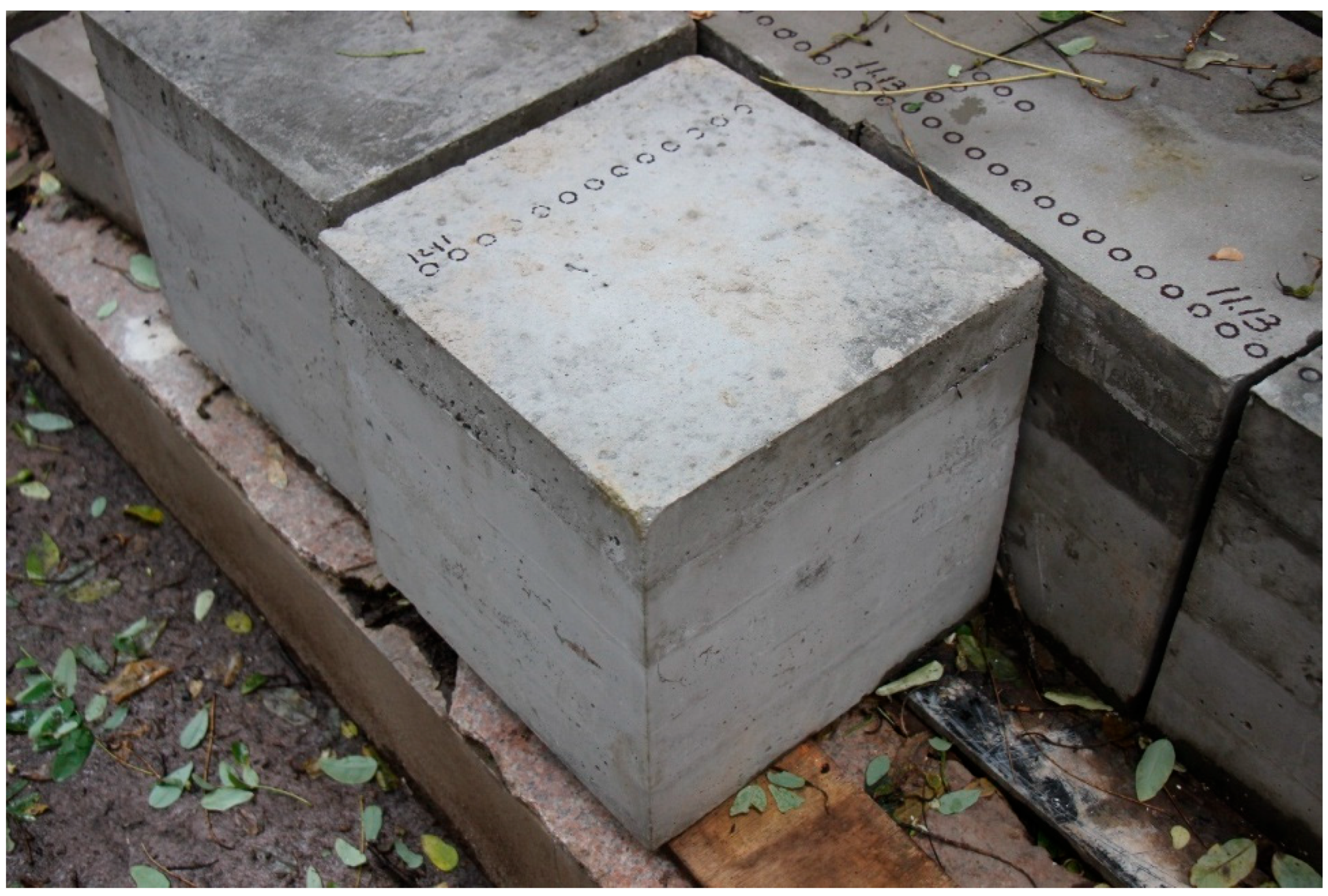
The experiment mainly studies the influence of different stress states on the true triaxial fracturing crack propagation experiment. The sample size 300 mm × 300 mm × 300 mm cubic artificial cement sample with bedding is shown in
Figure 5.
Based on the stress state of deep and tight reservoirs in the western region and the uniaxial compressive strength of cement samples, a three-dimensional in situ stress water pressure simulation test plan was designed. Six sets of fracturing physical model experiments were designed for different stress states, with specific parameters shown in
Table 3.
3.2. Test Results
The three-dimensional stress used in the WSN1 specimen σV-σH-σh = 60-65-50 MPa. The pumping displacement is 20 mL/min, and the viscosity is 10 mPa·s. The fracturing pumping curve is shown in
Figure 6.
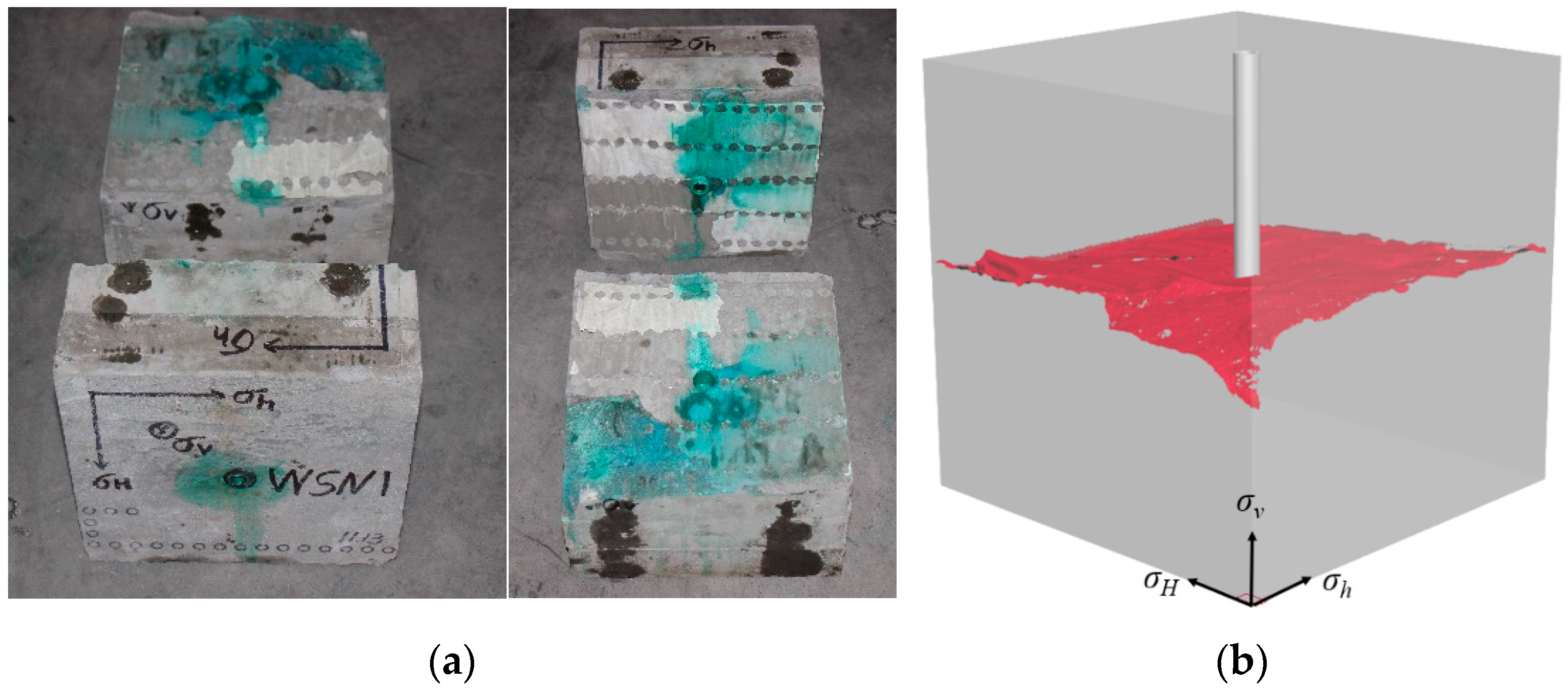
The highest rupture pressure in the experiment was 41.79 MPa. When the specimen was opened, a main crack was formed in the direction of the second weak bedding plane from top to bottom. The physical image and three scan reconstruction images of the artificial natural fracture encountered when hydraulic fracturing fractures pass through half are shown in
Figure 7.
Figure 7a shows a physical image of the specimen after fracturing. It can be clearly observed that the main crack initiates and expands along the weak bedding plane, exhibiting non-planar fracture characteristics. At the same time, it can be visually observed that hydraulic fractures intersect with some artificial natural fractures.
Figure 7b shows the corresponding three-dimensional scanning reconstruction of the crack morphology. This model accurately digitizes the spatial geometry of cracks.
4. Experimental Study on Fracturing Crack Propagation Under Circulating Pump Injection Conditions
4.1. Circulating Pump Injection Conditions Test Plan
We conducted a cyclic pump fracturing test using cylindrical specimens. For the cyclic water pressure injection mode, the maximum injection pressure was set to 90%, 80%, 70%, and 60% Pb, respectively, and the minimum pressure was set to 50% Pb. The detailed experimental conditions are summarized in
Table 4.
4.2. Circulating Pump Injection Conditions Test Results
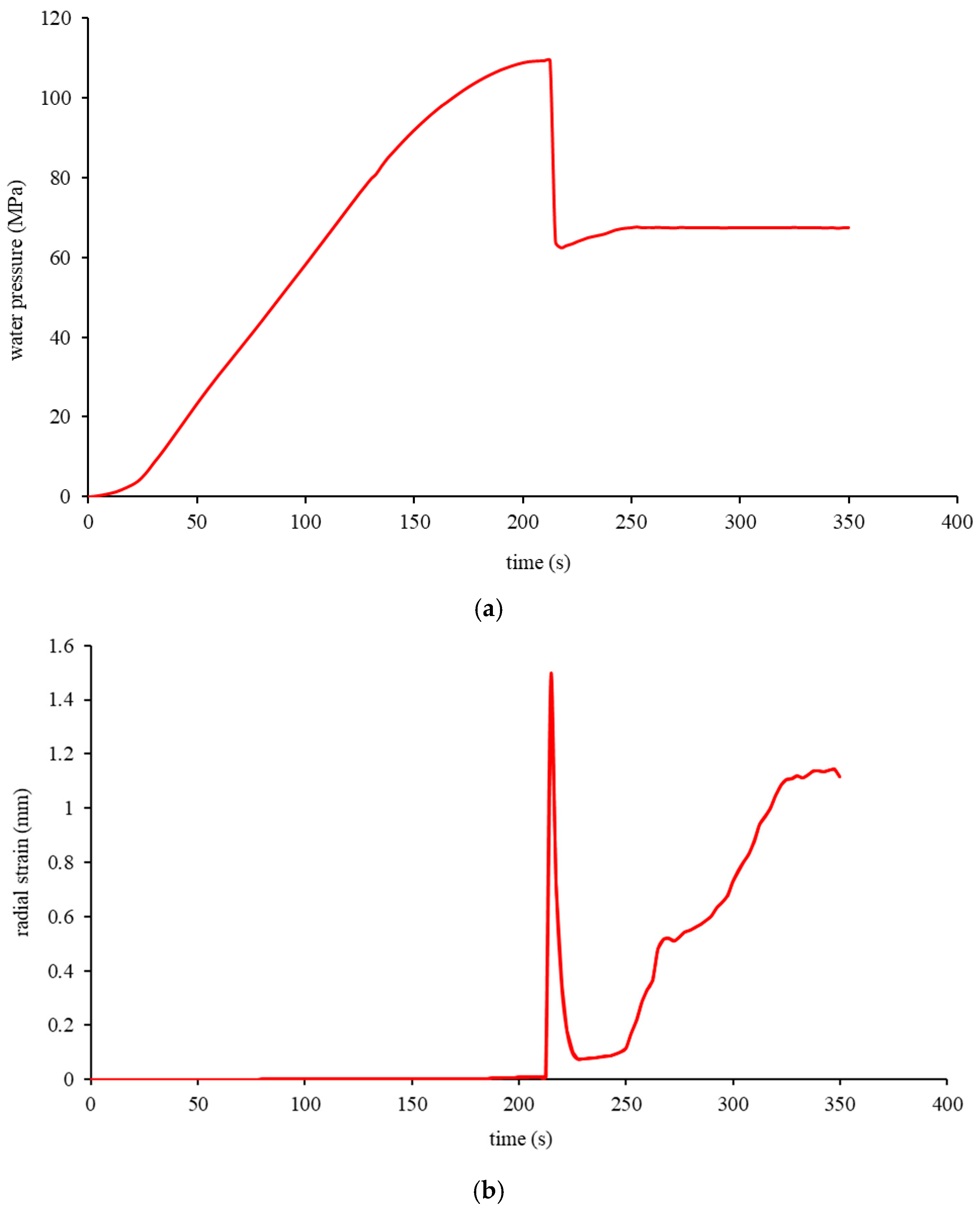
As shown in
Figure 8a, the highest rupture pressure in the test was 110.01 MPa. In the process of gradually lifting the hydraulic pump pressure, the pump pressure injection process will produce deformation near the surrounding rock of the wellbore. As shown in
Figure 8b, when the deformation accumulates to the sample rupture, the corresponding radial strain has an obvious mutation point, producing the macroscopic pressure crack surface. Then, the diameter strain returns to a smaller value, which increases with the injection of the fracturing fluid. A main crack is formed approximately parallel to the bedding plane in the middle of the sample.
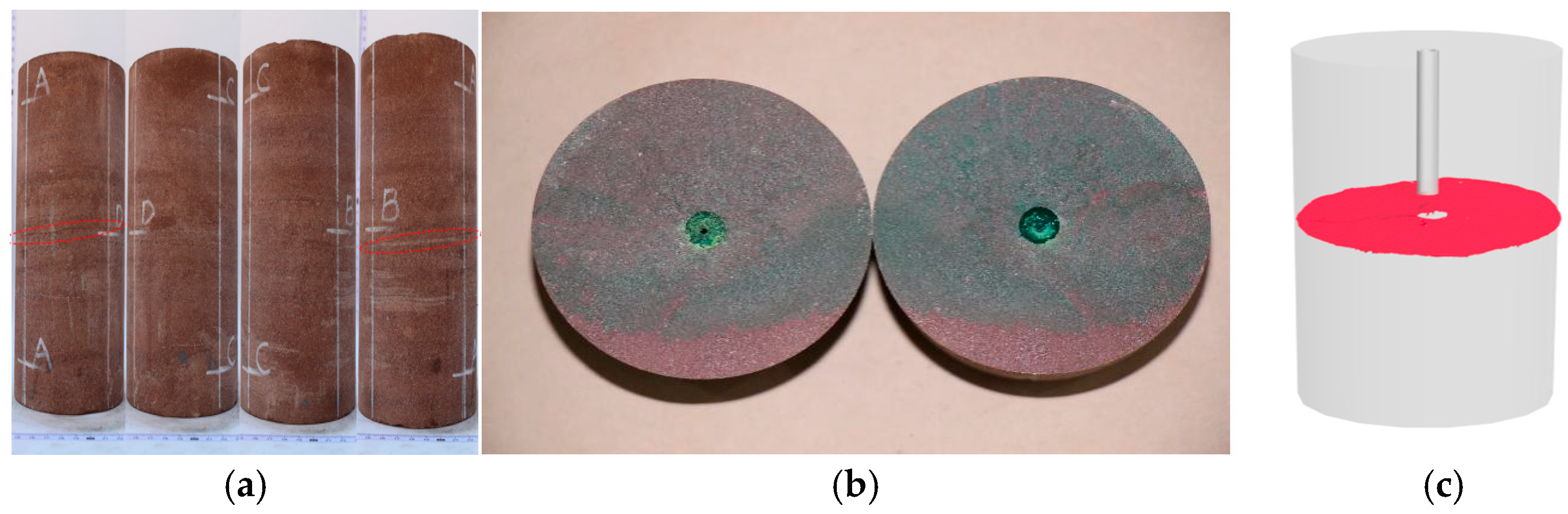
Figure 9 shows a macroscopic physical image of the crack morphology and a 3D scanning reconstruction image.
Figure 9a shows the complete physical image of the specimen before fracturing, displaying its original form.
Figure 9b shows a physical image of the fracture network of the opened specimen after fracturing. A complex network of cracks can be observed.
Figure 9c shows the three-dimensional scanning reconstruction of the crack system. This model quantifies the geometric shape, undulation height, and spatial distribution of crack surfaces from a three-dimensional spatial perspective.
5. Numerical Simulation of Hydraulic Fracturing in High-Pressure Tight Reservoirs
We used block elements to simulate the stress, deformation, and fluid diffusion of reservoir rocks, and used cohesive elements with a thickness of 0 to simulate the propagation of hydraulic fractures. The cohesive element with a thickness of 0 can flexibly define the mechanical properties of rock mass structural planes through contact surface parameters, which not only conform to the characteristics of fractured media in reservoir rocks, but also avoid the precise tracking requirements of traditional continuous media models for complex fracture networks. The calculated constitutive equations are as follows.
5.1. Fluid Flow Simulation Equation
During the fracturing process, the fracturing fluid will flow into the unopened cohesive unit through the already opened cohesive unit (hydraulic fracture). Assuming that the fluid is an incompressible Newtonian fluid, the volumetric flow rate along the tangent direction for each unit length is as follows [
28]:
In the formula, is the thickness of the cohesive unit, m. is the fluid viscosity, Pa·s. is the fluid pressure in the cohesive unit, Pa. is the pressure gradient, Pa/m.
Since the length of the fracture is greater than its width, the flow of the fracturing fluid is simplified to one-dimensional flow along the length of the fracture. According to the pressure drop equation of plate flow, the pressure drop equation of the fluid in the fracture can be obtained as follows:
In the formula, is the shape factor of the pipeline, dimensionless, for elliptical pipe flow . is the fluid pressure at position x inside the slot at time t, MPa. is the height of the crack at position x inside the crack at time t, m. is the viscosity coefficient of the power-law fluid, Pa·sn. is the width of the crack at position x inside the crack at time t, m. is the exponent of the power-law fluid flow pattern, dimensionless. is the fluid flow rate at position x inside the slot at time t, m3/s. is the partial derivative of pressure with respect to the x-coordinate, representing the pressure change along the x-direction, Pa/m.
A portion of the fracturing fluid in hydraulic fractures will leak off into the surrounding formation through the fracture interface. Assuming that the filtration rate of fracturing fluid on the upper and lower surfaces of the fracture is the same, the flow rate from the fracture into the surrounding formation can be calculated using the following equation [
29]:
In the formula, is the local fluid loss per unit of crack surface area in the rock layer, m3. represents the pore pressure in the formation, MPa. is the fluid filtration coefficient, m/Pa·s.
According to the mass conservation equation, the fluid continuity equation at position x within the fracture at time t is as follows:
In the formula, is the comprehensive filtration loss coefficient of the fracturing fluid, m/s0.5. is the fracture area at position x within the fracture at time t, m2. is the time required for the fracture to expand to position x, s. is the rate at which the crack area changes with time t at position x.
5.2. Modeling Methods for Reservoir Fracturing with Bedding Tendency
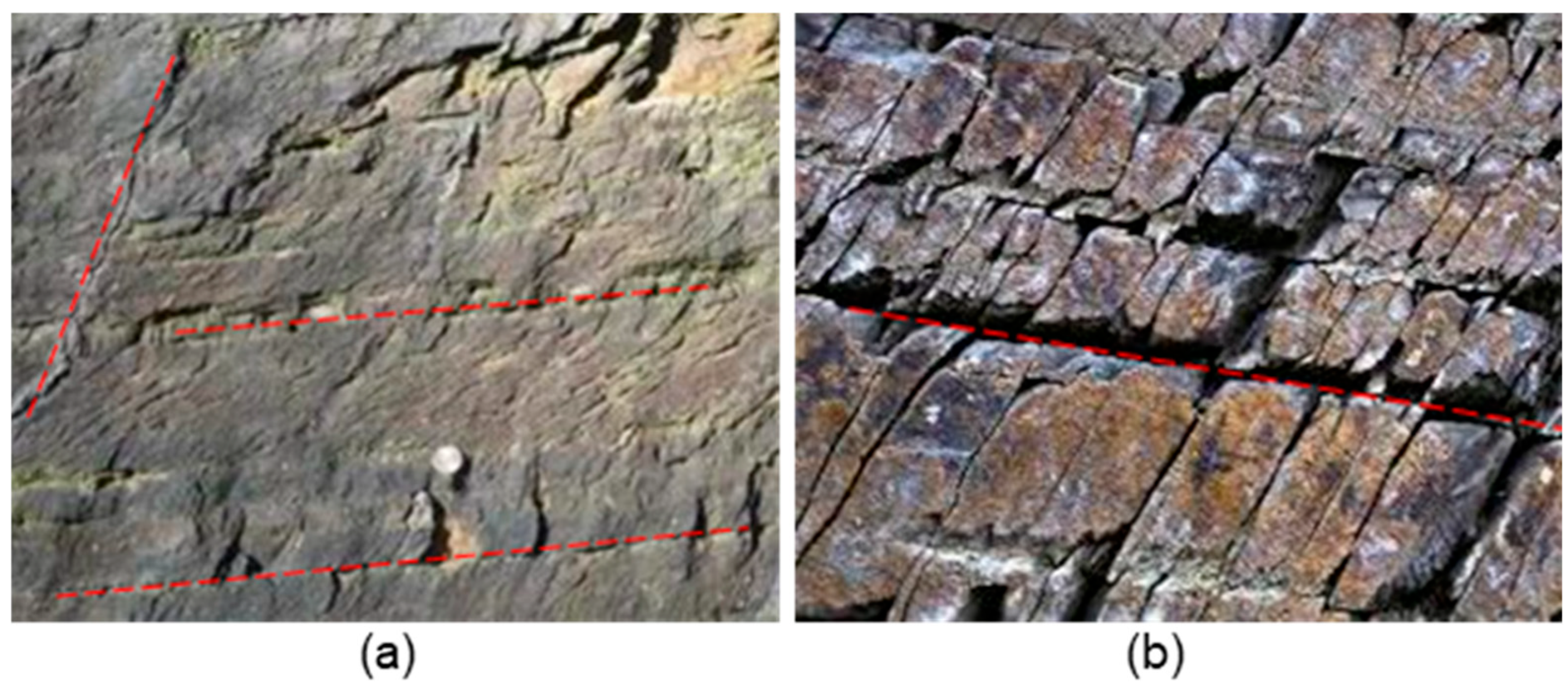
Figure 10 shows an image of a tight sandstone outcrop. The red dashed line represents the joint structure in the rock. There are differences in the exposed joints of tight sandstone in different areas.
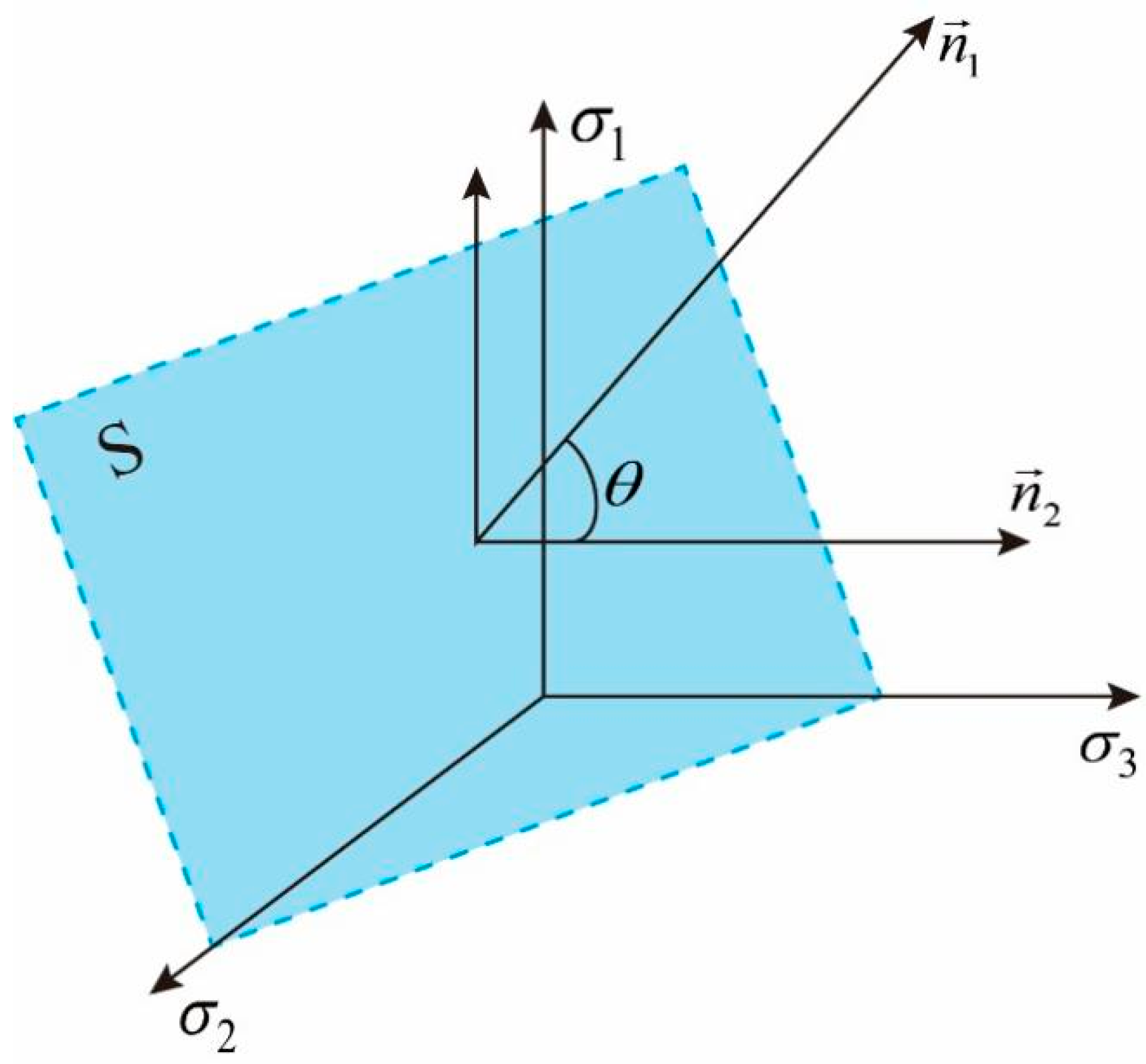
The criterion for crack shear slip discrimination adopts a three-dimensional interference criterion. As shown in
Figure 11, a spatial coordinate system is established with three principal stress directions as coordinate axes (
,
,
). The normal vector of the natural crack surface S is
, and its projection in the direction of
is
. The inclination angle of the natural crack is as follows:
For the natural fracture surface S, the critical shear stress
at which shear activity occurs can be expressed by the following equation [
30].
In the formula, is the critical shear stress along the interface, N. is the interfacial cohesive force, N. is the internal friction coefficient, dimensionless. is the normal stress, N.
By analyzing the physical essence of shear activity, parameter
is defined as the shear activity trend factor, which is used to describe the possibility of shear activity occurring at any interface [
30].
In the formula,
is the shear stress along the interface, N. When
, the interface is in a critical shear activity state. When
, it is in an active state. When
, it is in a stable state. Combining Equations (6) and (7),
can be expressed as follows:
When the magnitude and direction of the three principal stresses are known, the normal stress
and shear stress
acting on any surface in space can be calculated.
In the formula, , , and are the direction cosines of the angles between the normal vector of the natural crack surface and the three principal stress coordinate axes.
Combining Equations (8) and (9), the calculation formula of the shear activity trend factor
under any triaxial stress state is obtained.
In this study, a linear elastic constitutive model was used to simulate the mechanical behavior of bedrock deformation, involving mechanical parameters such as Young’s modulus and Poisson’s ratio [
31]. The initiation and propagation of hydraulic fractures in the fracture section are achieved through the cohesive zone model, which involves parameters such as tensile strength and critical damage displacement in the damage mechanics model [
32]. The relevant mechanical parameters are shown in
Table 5. The shear slip of natural cracks or bedding planes is judged using a three-dimensional interference criterion. The expansion of hydraulic fractures is mainly controlled by the damage criterion of the cohesive zone model. When the shear stress on the interface reaches its tensile strength, damage begins. When the separation displacement reaches the critical damage displacement, the cohesive element completely fails and the crack can expand.
According to previous experimental studies and outcrop observations, the tight sandstone reservoirs in the western region have a certain bedding tendency.
Figure 10 shows the distribution of natural bedding fractures in a typical layered reservoir outcrop. It can be seen that natural fracture networks with typical bedding characteristics generally consist of one or more groups of natural fractures with a similar length, dip angle, orthogonal distribution, and other conditions. Therefore, it is necessary to consider the influence of natural bedding on the propagation of compression cracks when modeling. The numerical framework is a comprehensive model based on the Abaqus (2022) platform, coupling its built-in mechanics and fluid modules and introducing crack shear slip discrimination criteria through self-developed subroutines. The three-dimensional interference criterion is developed by embedding Python 3.9 subroutines into Abaqus to determine the shear slip of cracks. The description of rock mechanics behavior in the solid mechanics module uses the linear elastic constitutive model built into Abaqus, and the extension of hydraulic fractures uses the cohesive zone model in Abaqus. The pressure drop and continuity equations within the cracks in the fluid flow module are simulated using the pore pressure degrees of freedom provided by the cohesive element in Abaqus and the constitutive relationship based on viscous fluid.
6. Three-Dimensional Simulation Model and Results
The specific conditions set for the 3D simulation model are the following:
(1) The model size is 20 × 20 × 5 m, with the injection point located at the center of the model.
(2) Generate 2 sets of natural cracks, with the first set having an angle of 45° to the x-axis and the second set having an angle of 135 to the x-axis. The length of natural cracks is between 1 and 2 m. The interval is 2–3 m, and the entire model contains approximately 133 natural cracks.
(3) The x-direction is assumed to be the minimum horizontal principal stress direction, the y-direction is assumed to be the vertical principal stress direction, and the z-direction is assumed to be the maximum horizontal principal stress direction.
(4) After the mesh generation is completed, there are 82,037 rock block units and 42,776 interface units.
(5) The outer boundary of the model is a fixed displacement and impermeable boundary condition.
(6) The upper and lower boundaries constrain the y-direction displacement, while the left and right boundaries constrain the x-direction displacement.
(7) The center is equipped with six injection points and initial rupture units to enhance the symmetry of the initial rupture unit.
In the benchmark calculation example of the 3D model, assuming a reservoir thickness direction of 5 m and an injection rate of 0.04 m
3/s, the injection displacement is calculated to be 6 cubic meters per minute, with a total injection duration of 600 s. The stress boundary condition is effective stress, and the difference between the overlying rock pressure and the minimum horizontal principal stress is 8 MPa. The ground stress in the benchmark model is 120 MPa, 128 MPa, and 152 MPa. The rapid pressure increase at the beginning of pumping was achieved through a constant injection rate in the numerical simulation. As the fluid is injected at a constant rate, the pump pressure increases rapidly, and a significant drop occurs after reaching the fracture pressure point. The injection rate and other simulation parameters are shown in
Table 5.
6.1. Aalysis of the Evolution Process of Compressive Cracks
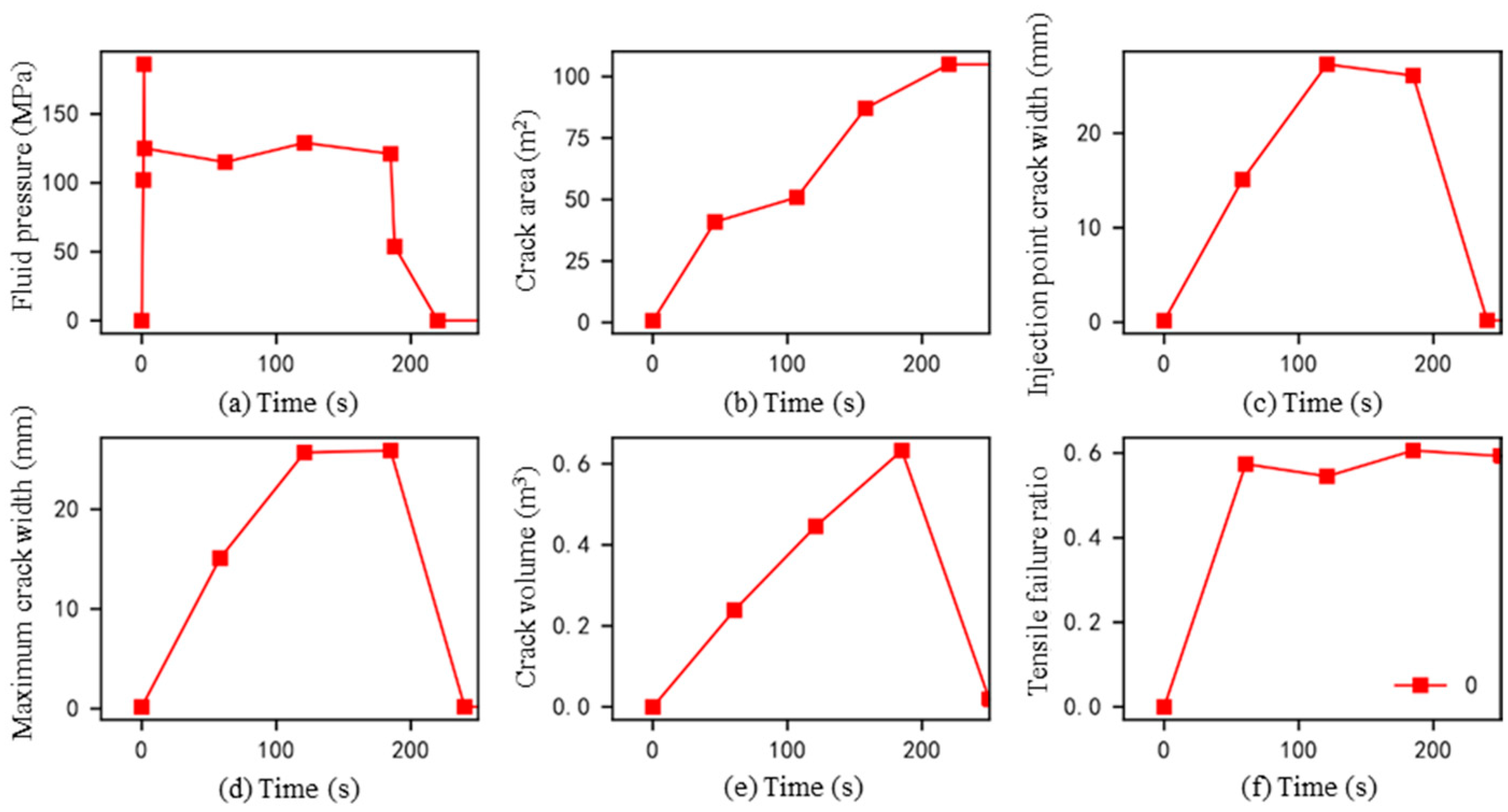
Figure 12 shows how the following parameters vary with time during fracturing: fluid pressure, total crack area, crack width at the injection point, maximum crack width, crack volume, and tensile failure ratio. As can be seen from
Figure 12, in the benchmark model, there are three main stages in the fluid pressure curve, including the stage of rapid rise in fluid pressure, the stage of rapid decline of fluid pressure and fluctuation, and the stage of another decrease in fluid pressure to a critical value. Among them, the rapid rise in fluid pressure is due to the occurrence of large oil and gas resources in the reservoir pore before the fracturing and saturated pore pressure. Therefore, in the early stage of fracturing, the local pore pressure of the reservoir increases rapidly as the fracturing fluid is pumped into the reservoir. The fluid pressure drops rapidly and fluctuates because, as the fluid is further injected, the fluid pressure reaches the reservoir cracking pressure (about 183 MPa), the reservoir breaks and deforms, and the fracturing fluid quickly flows into the reservoir, resulting in a rapid decrease in the fluid pressure. In the subsequent fracturing process, due to the influence of the expanded fracture pattern, the reservoir expansion pressure is much lower than the reservoir cracking pressure, so the fluid pressure drops rapidly. In addition, the subsequent fluid pressure fluctuation process in the fracturing process may be caused by the rupture interface inside the reservoir, the natural crack, and the bending expansion of the pressure fracture. Under the combined action of the above factors, the reservoir expansion pressure is not a fixed value, so the fluctuation changes. The decrease in the fluid pressure to a critical value is because the reservoir is not an infinite boundary during the simulation. When there are boundaries in the study area, the reservoir pressure crack can always extend to the reservoir boundary, thus running through the reservoir study area and forming another drop in fluid pressure.
With the continuous fluid injection, both the total artificial fracture area and the total fracture volume keep increasing. Among them, the total area of cracks only rises, which is because the calculation of the total area of cracks is based on the conversion of the three-dimensional crack wall area, so it is only possible to show a continuous increase. The downward phase of the fracture volume is caused by the pressure fracture running through the boundary of the simulated study area, resulting in rapid fluid pouring. At the same time, when comparing
Figure 12c,d, you can see that the simulation set the reservoir cracks at the maximum width and the injection point at the rising stage of fracturing. The scope of natural cracks is limited, resulting in the pressure crack mainly caused by the main joint extension. However, in a middle position (about 120–180 s), the injection point crack width decreased significantly, and the maximum crack width presents a certain rise. This inference is further confirmed in
Figure 12f, specifically at about 120 s; the tensile failure ratio is significantly lower than at the other moments.
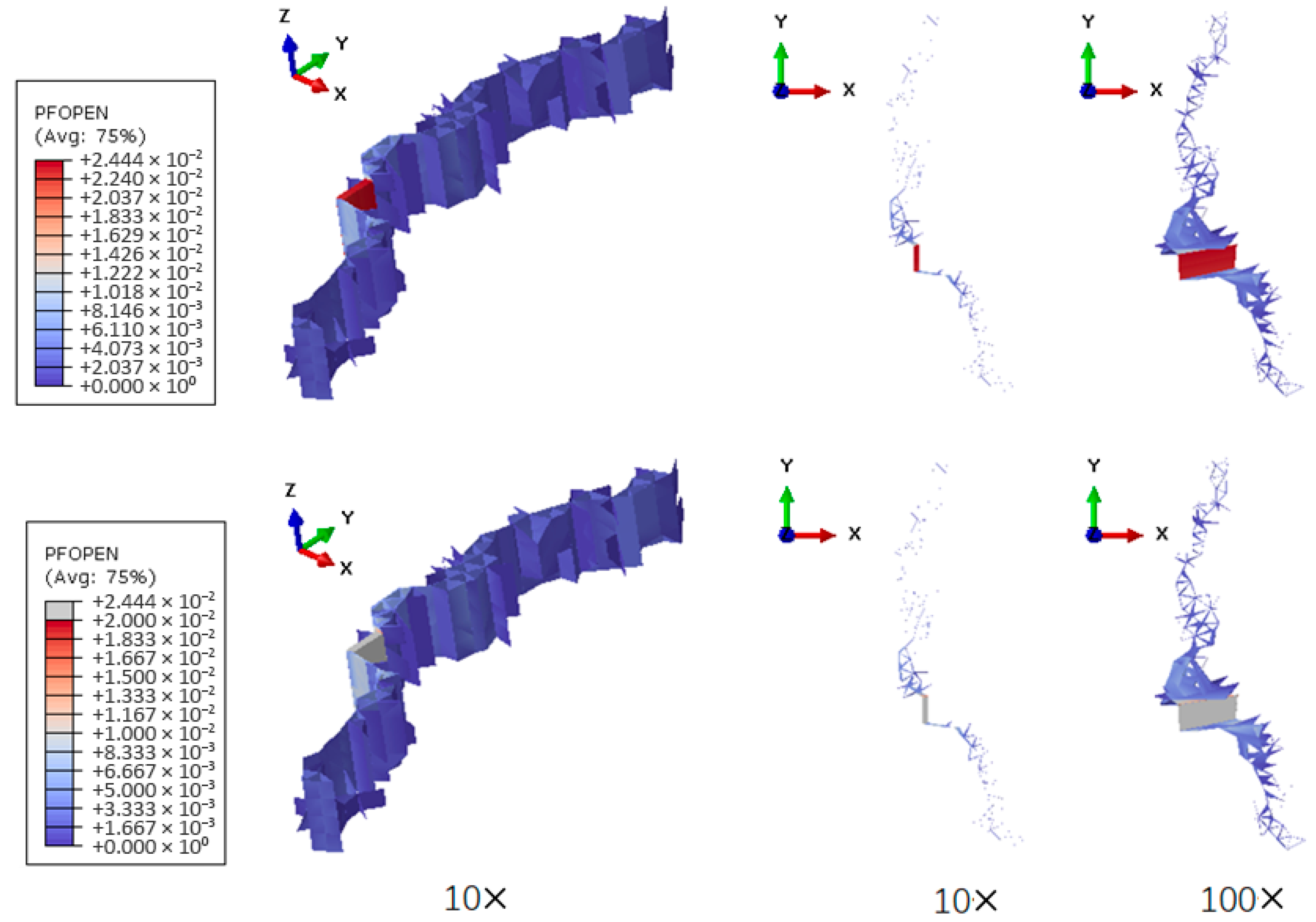
Figure 13 shows the changes in fluid pressure, total crack area, injection point crack width, maximum crack width, crack volume, and tensile failure ratio over time during the fracturing process. A single plane display may not be enough to comprehensively observe the fracture form. Therefore, this simulation first shows the fracture form results at the final moment (about 186 s) under different reference coordinate systems, as shown in
Figure 13. As can be seen from this figure, the pressure cracks formed at the final moment of fracturing show significant band/crack band distribution characteristics. By comparing the three figures in each row, it can be found that the three-dimensional perspective is complex, with a large number of branch cracks around the main crack. These branch cracks are easily blocked in a three-dimensional perspective. Therefore, the results of the pressure fracture in the top view are further extracted. From the results of the pressure cracks in the last two columns, we can see that, from the upper observation, the pressure cracks also show significant branch and fracture zone distribution characteristics. Its main direction tends to show a certain angle along the plane. In addition, when using different deformation coefficients of pressure cracks from observations, it can be clearly observed that local branch cracks have a great width for the crack area (shown in the red or gray area). This phenomenon shows that it is easy to have a pressure crack width of uneven distribution phenomena during the pressure crack expansion process. Under these conditions, the maximum width of the fracture may not be located near the vicinity of the fracturing fluid injection.
6.2. Effect of Stress Difference
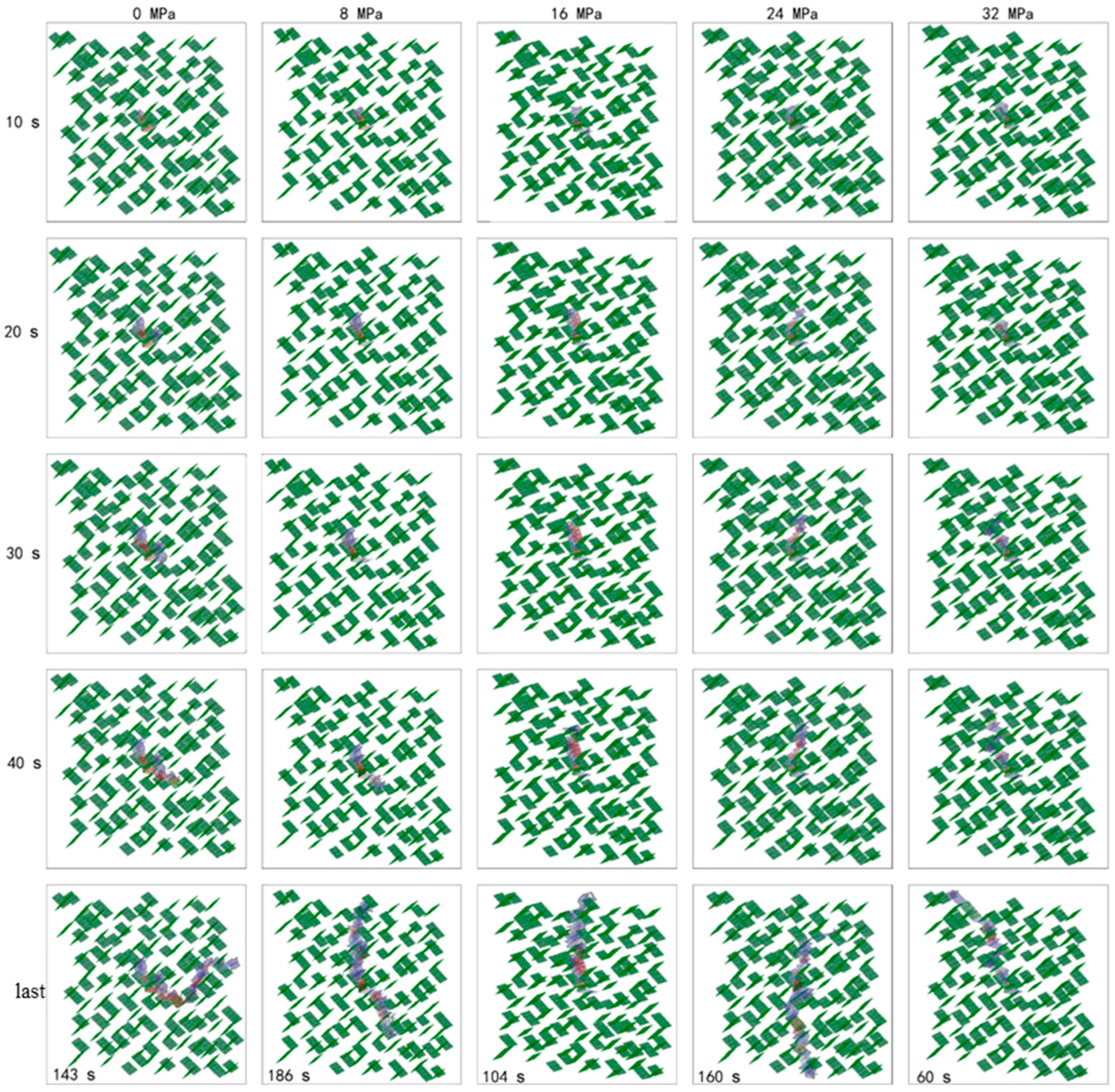
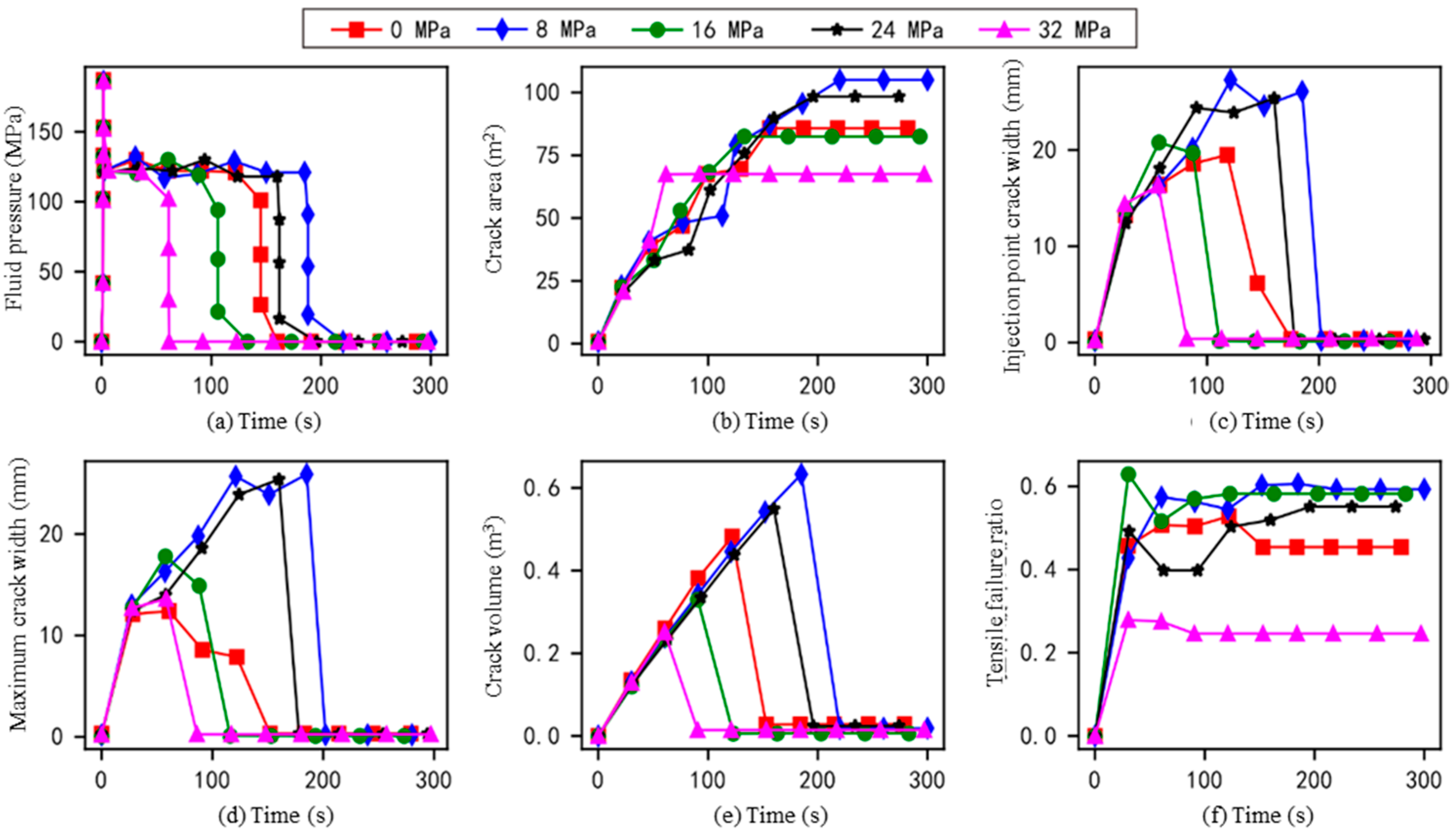
In the simulation test, the reference conditions for high ground stress used were 120 MPa, 120 MPa, and 152 MPa, while the reference conditions for low ground stress used were 60 MPa, 60 MPa, and 92 MPa. We analyzed the propagation process of compressive cracks and the interaction with natural cracks when the stress difference increases, and the results are shown in
Figure 14 and
Figure 15.
Figure 14 shows the change pattern of the conventional quantitative parameters of fractures under the influence of high ground stress. In
Figure 14a, the difference between the crack pressure and the extension pressure is small, and this phenomenon shows that the ground stress changing the extension direction of the fracture has less influence on the change in fluid pressure in the fracture. However, it is worth mentioning that, due to the combination of in situ stress and natural cracks, the shape of the pressure cracks may vary significantly, which leads to a significant difference in the time of the secondary drop of fluid pressure in the subsequent fracturing process. This phenomenon shows that, although the numerical change in the main stress in the extension direction may not significantly affect the fluctuation of fluid pressure, it may have a significant impact on the morphological evolution of the pressure fracture, thus affecting the fracturing results. In addition, we note that the trend of fluid pressure is not correlated with the numerical magnitude of the ground stress difference in the extension direction. This may be caused by the following reasons: (1) Under the comprehensive action of reservoir lithology, such as natural fractures, the expansion of pressure fractures is the result of the combined influence of multiple factors. Within the numerical range of the present study, the effect of the ground stress difference or the main stress size in the extension direction is not significant. (2) Restricted by the project time and the simulation calculation amount, the simulated model makes some simplifications in terms of the model size and number of cells. Therefore, no significant correlation was affected by the boundary effect of the study area. (3) Numerous studies have shown the randomness and dispersion of phenomena such as fracture expansion.
Figure 14b–e show the change pattern of the conventional quantitative parameters of pressure fracture morphology under the influence of ground stress difference during fracturing. From a comprehensive analysis of the above results, we can see that, with the implementation of fracturing, the area of the reservoir medium pressure fracture shows a continuous increasing trend, while the volume of the pressure fracture increases first and then decreases rapidly. This is because, in the fracturing process, the rupture surface of the reservoir is always increased. However, due to the limitation of the research area, when the pressure fracture runs through the reservoir, the fluid will quickly flow out of the reservoir, thus forming a rapid decline of fluid pressure which cannot support the wall of the pressure fracture, thus forming the rapid decline of the pressure fracture volume.
Figure 14c,d show that, at the beginning of fracturing, the maximum width of the pressure crack is basically near the injection point, and, as the fracturing continues, the maximum width of the pressure crack may no longer appear near the injection point.
Figure 14f shows the change in the proportion of tensile failure during fracturing. When the local stress difference is 32 MPa, the tensile failure ratio of the pressure crack is significantly lower than the effect of other ground stress differences. Accordingly, the comprehensive graph can give a qualitative change law. With the increase in the main stress and stress difference in the extension direction of the pressure crack, the tensile failure ratio of the pressure crack may be present.
Figure 15 shows a three-dimensional view of the changes in fracture morphology under different stress differences. When the local stress difference increases, the shear propagation phenomenon of compression cracks becomes more significant under the same lithological conditions. Under these conditions, a large number of shear fractures may occur, which can quickly connect local areas of the reservoir. However, the crack widths are relatively small, making it difficult to observe due to the influence of resolution. At the same time, a large number of extremely narrow shear cracks may rapidly induce compression cracks to extend towards the boundary. Under high-stress conditions, it is necessary to consider how to effectively support shear cracks with extremely small widths to maintain high-speed seepage channels.
6.3. Effect of Injected Fluid Viscosity
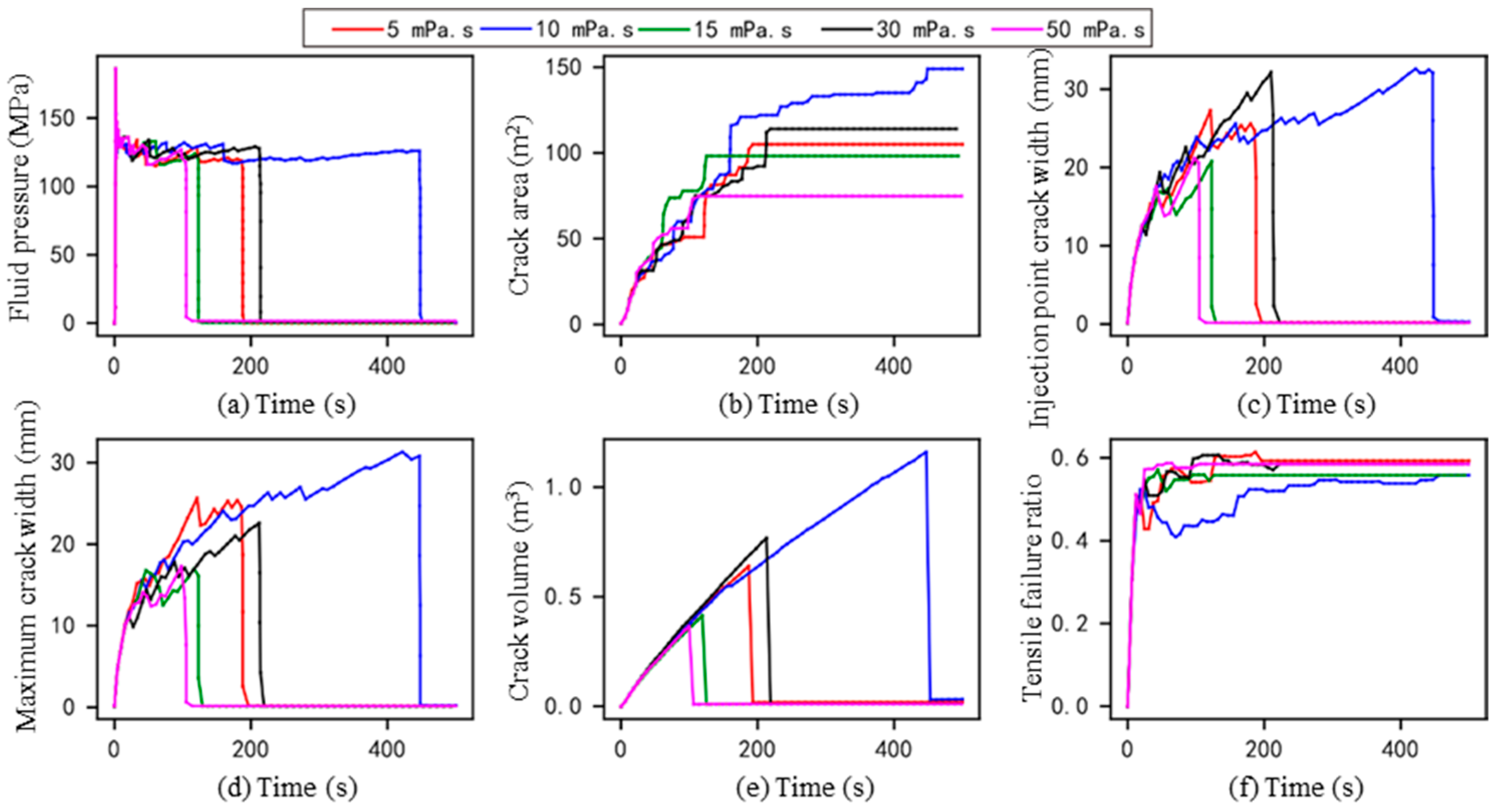
A fracturing simulation model was constructed using five parameters, with fluid viscosities of 5, 10, 15, 30, and 50 mPa·s, respectively. The results of artificial crack morphology at different times under the influence of different viscosities intersecting with natural cracks are shown in
Figure 16 and
Figure 17. The results indicate that low-viscosity fracturing fluids seem to be more prone to forming fracture zones with more developed branching fractures.
6.4. Impact of Natural Crack Strength
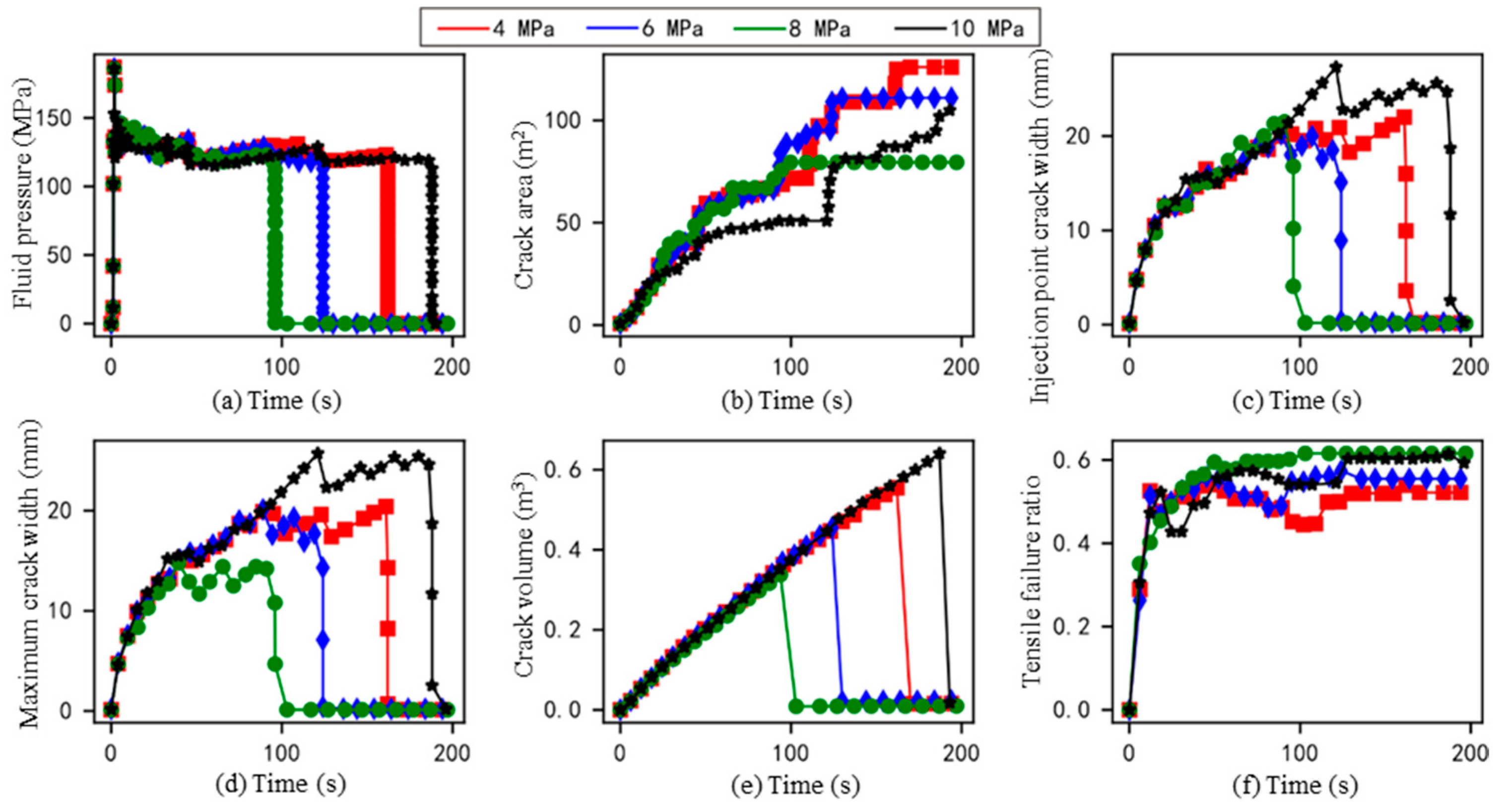
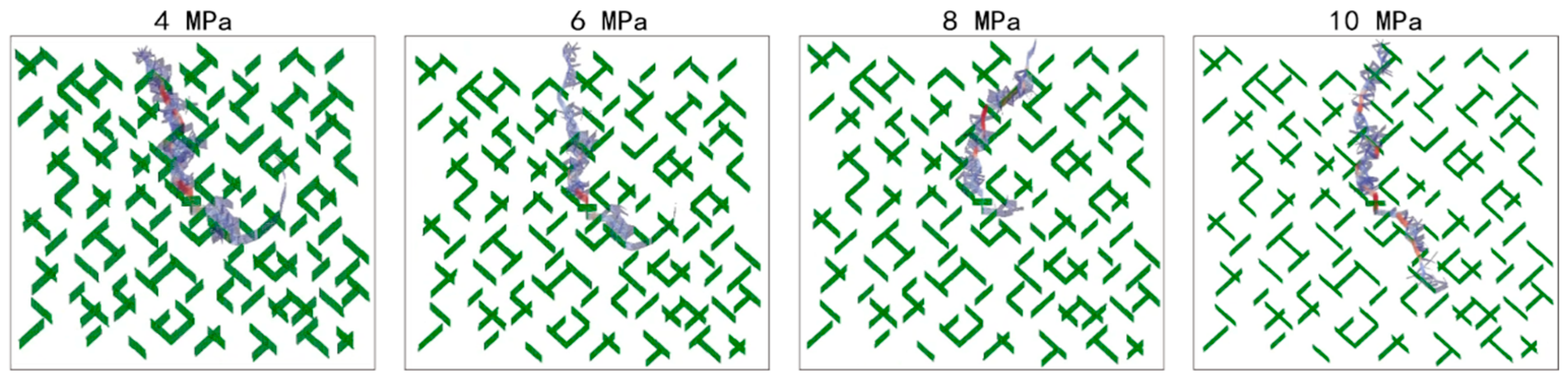
A fracturing simulation model was constructed using five parameters, with natural fractures of 2, 4, 6, 8, and 10 MPa, respectively. The results of artificial crack morphology at different times under the influence of different natural crack strengths and their intersection with natural cracks are shown in
Figure 18 and
Figure 19. The results indicate that, as the strength of natural fractures decreases, the development characteristics of branching fracture zones formed in fractured reservoirs become more significant.
6.5. Injection Rate Impact
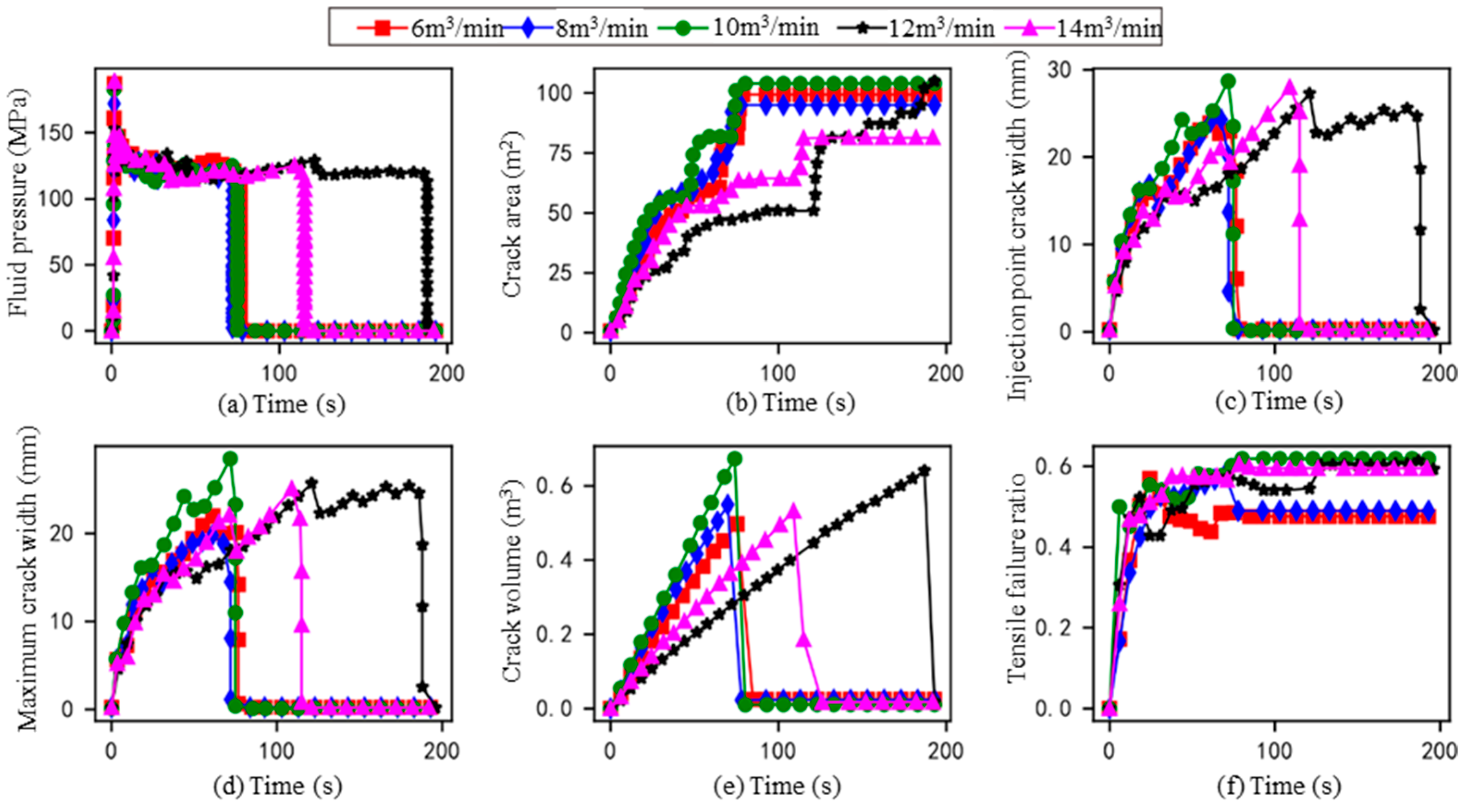
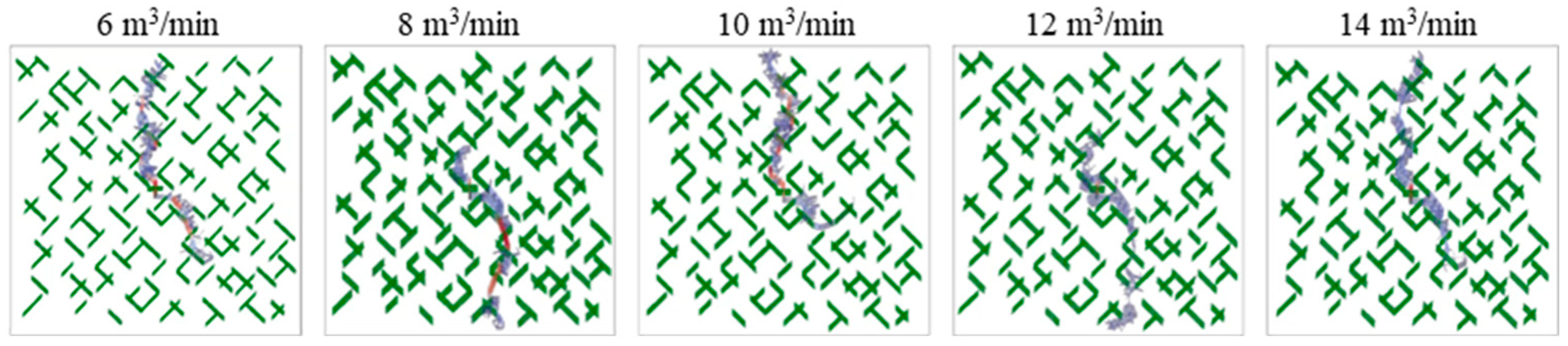
A fracturing simulation model was constructed using five parameters of natural fractures of 6, 8, 10, 12, and 14 (cubic meters per minute), with other parameter conditions consistent with the initial model. The results of the artificial fracture morphology at different times under the influence of different injection rates and their intersection with natural fractures are shown in
Figure 20 and
Figure 21. The injection rate of fluid has a significant impact on the final morphology of pressure fractures and their intersection with natural fractures. As the fluid injection rate decreases, the phenomenon of bifurcation propagation in the early stage of fracturing gradually decreases, with a small amount of bifurcation occurring. In the subsequent fracturing process, the main fracture extension trend of the fracturing fracture is more significant in reservoirs with lower fluid injection rates.
7. Conclusions
We analyzed quantitative changes in the fractal dimension parameters of conventional fracturing (fluid pressure fracturing length, maximum fracturing width, injection point fracturing width, fracture area, tensile failure ratio) and field variables (displacement field, stress field, fracturing opening field) under the influence of stress difference, fluid viscosity, injection speed, and natural fracture tensile strength.
(1) The difference in ground stress has a significant impact on the formation of pressure cracks. As the difference in ground stress increases, the lateral extension range of pressure cracks significantly decreases, resulting in a phenomenon parallel to the direction of the maximum horizontal ground stress. In the quantitative law, under the influence of geostress and geostress difference, the quantitative parameters of conventional fracturing and field variables exhibit a certain pattern, which can be fitted through a linear function.
(2) The injection rate of fluid has a significant impact on the final morphology of pressure fractures and their intersection with natural fractures. As the fluid injection rate decreases, the phenomenon of bifurcation propagation in the early stage of fracturing gradually decreases, with a small amount of bifurcation occurring. In the subsequent fracturing process, the main fracture extension trend of the fracturing fracture is more significant in reservoirs with lower fluid injection rates.
(3) The 3D fracturing simulation results show that there are significant differences in the initiation and development process of fracturing under different in situ stress conditions. Among them, under the same reservoir characteristics, reservoir fracturing in high-stress environments is more likely to form a large number of low-width shear fracture zones. At the same time, under the comprehensive effects of natural cracks, ground stress, and other factors, the low-ground-stress environment shows a more significant pattern of influence from ground stress difference, while, under high-ground-stress conditions, the influence of failure modes such as shear stimulation shows a discrete pattern of influence.
(4) The viscosity of fracturing fluid has a significant impact on the fracturing of high-stress fractured reservoirs, and, relatively speaking, low-viscosity fluid fracturing seems to be more prone to forming fracture zones with more developed bifurcated fractures. Meanwhile, as the strength of natural fractures decreases, the development characteristics of bifurcated fracture zones formed in fractured reservoirs become more significant. In addition, the injection rate also has a significant impact on the propagation of compressive cracks.
Author Contributions
Conceptualization, Y.Z. and C.D.; Methodology, Y.Z. and C.D.; Formal analysis, X.L. and G.D.; Investigation, X.L. and G.D.; Resources, C.D.; Data curation, Y.Z.; Writing—original draft, Y.Z.; Writing—review & editing, C.D., X.L. and G.D.; Supervision, C.D.; Project administration, C.D.; Funding acquisition, C.D. All authors have read and agreed to the published version of the manuscript.
Funding
We acknowledge the Special Funding Program for the Operational Expenses of National Research Institutions (SKLDOG2024-ZYRC-01) for funding this research.
Institutional Review Board Statement
Not applicable.
Informed Consent Statement
Not applicable.
Data Availability Statement
The original contributions presented in this study are included in the article. Further inquiries can be directed to the corresponding author.
Conflicts of Interest
Author Yong Zheng was employed by the company Sinopec Oilfield Exploration and Development Division. Author Xiaolan Liu was employed by the company Sinopec East China Petroleum Engineering Huamei Futai Oil and Gas Technology Service Co., Ltd. Author Guanghua Dong was employed by the company Sinopec Shengli Petroleum Engineering Company Drilling Technology Research Institute. The remaining authors declare that the research was conducted in the absence of any commercial or financial relationships that could be construed as a potential conflict of interest.
References
- Feng, Y. Research on the propagation law of hydraulic fractures based on true triaxial physical simulation experiments. China Min. 2022, 31, 126–132. [Google Scholar]
- Ding, R.; Meng, Y.; Zhong, A.; Zhang, L.; Liu, Z.; Lin, B. Effects of Geo-Stress and Natural Fracture Strength on Hydraulic Fracture Propagation in a Deep Fractured Tight Sandstone Reservoir. ACS Omega 2024, 9, 18801–18812. [Google Scholar] [CrossRef]
- Zou, C.; Yang, Z.; He, D.; Wei, Y.; Li, J.; Jia, A.; Chen, J.; Zhao, Q.; Li, Y.; Li, J.; et al. Theory, Technology, and Prospects of Conventional Unconventional Natural Gas. Pet. Explor. Dev. 2018, 45, 575–587. [Google Scholar] [CrossRef]
- Jia, C. On the Breakthrough and Significance of Unconventional Oil and Gas to Classical Petroleum and Natural Gas Geology Theory. Pet. Explor. Dev. 2017, 44, 1–11. [Google Scholar] [CrossRef]
- Zhu, R.; Zou, C.; Yuan, X.; Wu, S.; Cui, J.; Wang, L.; Lin, S.; Su, L.; Luo, Z. Research progress and development strategy of energy sedimentology in China. J. Sedimentol. 2017, 35, 1004–1015. [Google Scholar]
- Jiang, M.; Li, Z.; Duan, G.; Yang, J.; Shi, Y.; Shi, H. The impact of hydraulic fracture conductivity on the production capacity of deep shale gas. Xinjiang Pet. Nat. Gas 2023, 19, 35–41. [Google Scholar]
- Ma, X.; Wang, G.; Hu, D.; Zhou, H. Real time high-temperature true triaxial hydraulic fracturing of granite. J. Cent. South Univ. 2023, 30, 243–256. [Google Scholar] [CrossRef]
- Anderson, G.D. Effects of Friction on Hydraulic Fracture Growth Near Unbonded Interfaces in Rocks. Soc. Pet. Eng. J. 1981, 21, 21–29. [Google Scholar] [CrossRef]
- Teufel, L.W.; Clark, J.A. Hydraulic Fracture Propagation in Layered Rock Experimental Studies of Fracture Containment. Soc. Pet. Eng. J. 1981, 24, 19–32. [Google Scholar] [CrossRef]
- Peng, F.; Zhang, B.; Yang, P.; Xue, H.; Peng, J.; Sheng, Z. Vertical Subdivision Layer Transformation Technology For Ultra-Deep and Super-Thick Tight Sandstone in Kuqa Piedmont. Pet. Drill. Tech. 2024, 52, 113–146. [Google Scholar]
- Shi, X.; You, L.; Ge, Y.; Hu, Y.; Ma, L.; Wang, Y.; Guo, S. Water Production Mechanism in Tight Sandstone Gas Reservoirs After Fracturing in Linxing Gas Field. Xinjiang Pet. Geol. 2024, 45, 81–87. [Google Scholar]
- Du, X.; Su, Y.; Fang, M.; Ma, M.; Bai, Y.; Cheng, L. A semi-analytical model coupled gas-water two-phase flow-geomechanics for dynamic closure analysis of fractures in tight sandstone. Nat. Gas Geosci. 2024, 62, 1672–1690. [Google Scholar]
- Wu, X.; Guo, Y.; Chang, X.; Bi, Z.; Zhao, G.; Yang, H.; Guo, W. Experimental study on cyclic hydraulic fracturing of tight sandstone under in-site stress. Processes 2023, 11, 875. [Google Scholar] [CrossRef]
- Zhou, C.; Sun, Z.; Xiao, Y.; Huang, G.; Kuang, D.; Li, M. Study on Brittleness Characteristics and Fracturing Crack Propagation Law of Deep Thin-Layer Tight Sandstone in Longdong, Changqing. Processes 2023, 11, 2636. [Google Scholar] [CrossRef]
- Ma, D.; Wu, Y.; Yin, J.; Lu, J.; Hu, D.; Zhou, H. Effect of initial pore pressure on the hydraulic fracturing of tight sandstone: An experimental study. Geomech. Geophys. Geo-Energ. Geo-Resour. 2023, 9, 15. [Google Scholar] [CrossRef]
- Zhang, Q.; Zhang, X.; Sun, W. Hydraulic fracturing in transversely isotropic tight sandstone reservoirs: A numerical study based on bonded-particle model approach. J. Struct. Geol. 2020, 136, 104068. [Google Scholar] [CrossRef]
- Huang, J.; Hu, J.; Zeng, W.; Zhang, Y. Investigation of a critical choke during hydraulic-fracture flowback for a tight sandstone gas reservoir. J. Geophys. Eng. 2019, 16, 1178–1190. [Google Scholar] [CrossRef]
- Liu, Z.Y.; Chen, M.; Zhang, G.Q. Analysis of the Influence of a Natural Fracture Network on Hydraulic Fracture Propagation in Carbonate Formations. Rock Mech. Rock Eng. 2014, 47, 575–587. [Google Scholar] [CrossRef]
- Chitrala, Y.; Moreno, C.; Sondergeld, C.; Rai, C. An experimental investigation into hydraulic fracture propagation under different applied stresses in tight sands using acoustic emissions. J. Pet. Sci. Eng. 2013, 108, 151–161. [Google Scholar] [CrossRef]
- Zou, J.; Jiao, Y.; Tan, F.; Lv, J.; Zhang, Q. Complex Hydraulic-Fracture-Network Propagation in a Naturally Fractured Reservoir. Comput. Geotech. 2021, 135, 104165. [Google Scholar] [CrossRef]
- Zhang, F.S.; Huang, L.K.; Yang, L.; Dontsov, E.; Weng, D.-W.; Liang, H.-B.; Yin, Z.-R.; Tang, J.-Z. Numerical Investigation on the Effect of Depletion-induced Stress Reorientation on Infill Well Hydraulic Fracture Propagation. Pet. Sci. 2022, 19, 296–308. [Google Scholar] [CrossRef]
- Zhou, J.; Zhang, L.; Pan, Z.; Han, Z. Numerical Investigation of Fluid-driven Near-borehole Fracture Propagation in Laminated Reservoir Rock Using PFC2D. J. Nat. Gas Sci. Eng. 2016, 36, 719–733. [Google Scholar] [CrossRef]
- Chen, Y.; Zhang, Q.; He, J.; Liu, H.; Zhao, Z.; Du, S.; Wang, B. Pressure transient analysis of volume-fractured vertical well with complex fracture network in the reservoir. J. Nat. Gas Sci. Eng. 2022, 101, 104556. [Google Scholar] [CrossRef]
- Wang, B.; Zhou, F.; Wang, D.; Liang, T.; Yuan, L.; Hu, J. Numerical simulation on near-wellbore temporary plugging and diverting during refracturing using XFEM-Based CZM. J. Nat. Gas Sci. Eng. 2018, 55, 368–381. [Google Scholar] [CrossRef]
- Hou, B.; Zhang, R.X.; Tan, P.; Song, Y.; Fu, W.; Chang, Z.; Kao, J.; Muhadasi, Y.; Chen, M. Characteristics of Fracture Propagation in Compact Limestone Formation by Hydraulic Fracturing in Central Sichuan, China. J. Nat. Gas Sci. Eng. 2018, 57, 122–134. [Google Scholar] [CrossRef]
- Rungamornrat, J.; Wheeler, M.F.; Mear, M.E. A Numerical Technique for Simulating Nonplanar Evolution of Hydraulic Fractures. In Proceedings of the SPE Annual Technical Conference and Exhibition, Dallas, TX, USA, 9–12 October 2005. [Google Scholar]
- Tan, P.; Jin, Y.; Yuan, L.; Xiong, Z.-Y.; Hou, B.; Chen, M.; Wan, L.-M. Understanding Hydraulic Fracture Propagation Behavior in Tight Sandstone–coal Interbedded Formations: An Experimental Investigation. Pet. Sci. 2019, 16, 148–160. [Google Scholar] [CrossRef]
- Jiang, H.; Liu, S.; He, B.; Chen, M.; Zhang, G. Experimental study on the effect of directional perforation on the morphology of multiple fractures in hydraulic fracturing. Nat. Gas Ind. 2014, 34, 66–70. [Google Scholar]
- Li, Q.; Liu, J.; Wang, S.; Guo, Y.; Han, X.; Li, Q.; Cheng, Y.; Dong, Z.; Li, X.; Zhang, X. Numerical Insights into Factors Affecting Collapse Behavior of Horizontal Wellbore in Clayey Silt Hydrate-Bearing Sediments and the Accompanying Control Strategy. Ocean Eng. 2024, 297, 117029. [Google Scholar] [CrossRef]
- Tvergaard, V.; Hutchinson John, W. The relation between crack growth resistance and fracture process parameters in elastic-plastic solids. J. Mech. Phys. Solids 1992, 40, 1377–1397. [Google Scholar] [CrossRef]
- Wang, J.; Dai, F.; Yan, Z.; Pang, Y.; Wei, M. Dynamic response of sandstone under hydro-mechanical coupling: Macroscopic behavior and microscopic mechanism. Int. J. Rock Mech. Min. Sci. 2026, 197, 106342. [Google Scholar] [CrossRef]
- Huo, X.; Luo, Q.; Li, Q.; Zheng, G.; Sun, G. On characterization of cohesive zone model (CZM) based upon digital image correlation (DIC) method. Int. J. Mech. Sci. 2022, 215, 106921. [Google Scholar] [CrossRef]
Figure 1.
Physical image of hydraulic fracturing specimen.
Figure 1.
Physical image of hydraulic fracturing specimen.
Figure 2.
Multifunctional true triaxial fracturing physical simulation experimental system.
Figure 2.
Multifunctional true triaxial fracturing physical simulation experimental system.
Figure 3.
Time-dependent curve of fracturing pump injection pressure for SX1 specimen.
Figure 3.
Time-dependent curve of fracturing pump injection pressure for SX1 specimen.
Figure 4.
Physical view of fracturing cracks in SX1 specimen. (a) Sample before opening; (b) sample after opening.
Figure 4.
Physical view of fracturing cracks in SX1 specimen. (a) Sample before opening; (b) sample after opening.
Figure 5.
Physical image of artificial cement sample with bedding.
Figure 5.
Physical image of artificial cement sample with bedding.
Figure 6.
Time-dependent curve of WSN1 specimen fracturing pump injection pressure.
Figure 6.
Time-dependent curve of WSN1 specimen fracturing pump injection pressure.
Figure 7.
Physical and 3D reconstruction images of WSN1 specimen fracturing cracks (natural cracks). (a) Physical image; (b) three-dimensional reconstruction diagram.
Figure 7.
Physical and 3D reconstruction images of WSN1 specimen fracturing cracks (natural cracks). (a) Physical image; (b) three-dimensional reconstruction diagram.
Figure 8.
Fracturing pump injection pressure and radial strain versus time curve of specimen 4. (a) Pump injection pressure; (b) radial strain.
Figure 8.
Fracturing pump injection pressure and radial strain versus time curve of specimen 4. (a) Pump injection pressure; (b) radial strain.
Figure 9.
Physical and 3D reconstruction images of fracturing cracks of specimen 4. (a) Complete sample; (b) sample after opening-dashed line position in (a); (c) three-dimensional image.
Figure 9.
Physical and 3D reconstruction images of fracturing cracks of specimen 4. (a) Complete sample; (b) sample after opening-dashed line position in (a); (c) three-dimensional image.
Figure 10.
Stratification tendency of reservoir outcrops ((a,b) are images of different outcrop areas).
Figure 10.
Stratification tendency of reservoir outcrops ((a,b) are images of different outcrop areas).
Figure 11.
Schematic diagram of natural crack surface space.
Figure 11.
Schematic diagram of natural crack surface space.
Figure 12.
The variation in conventional quantization parameters over time (a) Fluid pressure; (b) crack area; (c) Injection point crack width; (d) maximum crack width; (e) crack volume; (f) tensile failure ratio.
Figure 12.
The variation in conventional quantization parameters over time (a) Fluid pressure; (b) crack area; (c) Injection point crack width; (d) maximum crack width; (e) crack volume; (f) tensile failure ratio.
Figure 13.
Schematic diagram of three-dimensional fracture morphology under different observation angles and deformation magnifications at the final moment of fracturing.
Figure 13.
Schematic diagram of three-dimensional fracture morphology under different observation angles and deformation magnifications at the final moment of fracturing.
Figure 14.
Effects of different ground stress differences under high-ground-stress conditions (a) Fluid pressure; (b) crack area; (c) Injection point crack width; (d) maximum crack width; (e) crack volume; (f) tensile failure ratio.
Figure 14.
Effects of different ground stress differences under high-ground-stress conditions (a) Fluid pressure; (b) crack area; (c) Injection point crack width; (d) maximum crack width; (e) crack volume; (f) tensile failure ratio.
Figure 15.
Final crack morphology results under different ground stress differences (3D side view).
Figure 15.
Final crack morphology results under different ground stress differences (3D side view).
Figure 16.
The influence of injected fluid viscosity on parameters.
Figure 16.
The influence of injected fluid viscosity on parameters.
Figure 17.
Final fracture morphology results under the influence of fracturing fluid viscosity (3D view).
Figure 17.
Final fracture morphology results under the influence of fracturing fluid viscosity (3D view).
Figure 18.
The influence of natural crack strength on parameters.
Figure 18.
The influence of natural crack strength on parameters.
Figure 19.
Final crack morphology results under the influence of natural crack strength (3D view).
Figure 19.
Final crack morphology results under the influence of natural crack strength (3D view).
Figure 20.
Effect results of different injection rates.
Figure 20.
Effect results of different injection rates.
Figure 21.
Final crack morphology results under different injection rates (3D view).
Figure 21.
Final crack morphology results under different injection rates (3D view).
Table 1.
Experimental parameters for true triaxial fracturing crack propagation.
Table 1.
Experimental parameters for true triaxial fracturing crack propagation.
| NO. | σv/MPa | σH/MPa | σh/MPa | (σH-σh)/MPa | Injection Rate mL/min | Viscosity mPa·s |
|---|
| SX1 | 60 | 50 | 57 | 7 | 80 | 40 |
| SX2 | 50 | 40 | 47 | 7 | 80 | 40 |
| SX3 | 34 | 36 | 30 | 6 | 80 | 40 |
| SX4 | 40 | 36 | 30 | 6 | 80 | 40 |
| SX5 | 57 | 60 | 50 | 10 | 80 | 40 |
Table 2.
Results of true triaxial fracturing test for sandstone.
Table 2.
Results of true triaxial fracturing test for sandstone.
| NO. | σH/MPa | σh/MPa | σv/MPa | Injection Rate mL/min | Viscosity mPa·s | Fracturing Pressure MPa |
|---|
| SX1 | 60 | 50 | 57 | 80 | 40 | 42.78 |
| SX2 | 36 | 32 | 34 | 80 | 40 | 34.35 |
| SX3 | 36 | 30 | 34 | 80 | 40 | 16.53 |
| SX4 | 36 | 30 | 40 | 80 | 40 | 39.79 |
| SX5 | 36 | 30 | 50 | 80 | 40 | 34.35 |
Table 3.
Experimental parameters for true triaxial fracturing crack propagation under different stress.
Table 3.
Experimental parameters for true triaxial fracturing crack propagation under different stress.
| No. | σv/MPa | σH/MPa | σh/MPa | (σH-σh)/MPa | Injection Rate mL/min | Viscosity mPa·s |
|---|
| WSN1 | 34 | 36 | 30 | 6 | 80 | 70–90 |
| WSN2 | 34 | 36 | 34 | 2 | 80 | 70–90 |
| WSN3 | 34 | 36 | 32 | 4 | 80 | 70–90 |
| WSN4 | 34 | 36 | 28 | 8 | 80 | 70–90 |
| WSN5 | 32 | 36 | 30 | 6 | 80 | 70–90 |
| WSN6 | 35 | 36 | 30 | 6 | 80 | 70–90 |
Table 4.
Summary of experimental conditions for sandstone cyclic hydraulic fracturing.
Table 4.
Summary of experimental conditions for sandstone cyclic hydraulic fracturing.
| Injection Mode | No. | Axial Stress (MPa) | Confining Pressure (MPa) | Fracturing Fluid
Viscosity (mPa·s) | Maximum Fluid Pressure | High-Voltage Period Time | Low-Voltage Period Time |
|---|
| Constant flow rate injection | 1 | 56.5 | 50 | 40 | Pb | / | / |
| 2 | 56.5 | 50 | 40 | Pb | / | / |
| 3 | 56.5 | 50 | 40 | Pb | / | / |
| Circulating pump pressure injection | 4 | 56.5 | 50 | 40 | 90% Pb | 15 s | 5 s |
| 5 | 56.5 | 50 | 40 | 90% Pb | 10 s | 10 s |
| 6 | 56.5 | 50 | 40 | 90% Pb | 5 s | 15 s |
| 7 | 56.5 | 50 | 40 | 80% Pb | 15 s | 5 s |
| 8 | 56.5 | 50 | 40 | 80% Pb | 10 s | 10 s |
| 9 | 56.5 | 50 | 40 | 80% Pb | 5 s | 15 s |
| 10 | 56.5 | 50 | 40 | 70% Pb | 15 s | 5 s |
| 11 | 56.5 | 50 | 40 | 70% Pb | 10 s | 10 s |
| 12 | 56.5 | 50 | 40 | 70% Pb | 5 s | 15 s |
| 13 | 56.5 | 50 | 40 | 60% Pb | 15 s | 5 s |
| 14 | 56.5 | 50 | 40 | 60% Pb | 10 s | 10 s |
| 15 | 56.5 | 50 | 40 | 60% Pb | 5 s | 15 s |
Table 5.
Basic input parameters of the model.
Table 5.
Basic input parameters of the model.
| Parameter | Value |
|---|
| Young modulus (GPa) | 20 |
| Poisson ratio | 0.22 |
| Density (kg/m3) | 2600 |
| Permeability coefficient (m/s) | 1 × 10⁻⁷ |
| Porosity | 0.1 |
| Tensile strength (MPa) | 2 |
| Critical damage displacement (m) | 0.001 |
| Injection rate (m3/min) | 6 |
| Viscosity (mPa·s) | 5 |
| Disclaimer/Publisher’s Note: The statements, opinions and data contained in all publications are solely those of the individual author(s) and contributor(s) and not of MDPI and/or the editor(s). MDPI and/or the editor(s) disclaim responsibility for any injury to people or property resulting from any ideas, methods, instructions or products referred to in the content. |
© 2025 by the authors. Licensee MDPI, Basel, Switzerland. This article is an open access article distributed under the terms and conditions of the Creative Commons Attribution (CC BY) license (https://creativecommons.org/licenses/by/4.0/).