Article

Microplastics in Sand: Green Protocol for Expert Citizen Science over Large Geographical Areas

Istituto Tecnico Tecnologico (ITT) “G. e M. Montani”, Via Montani 7, 63900 Fermo, Italy
Appl. Sci. 2025, 15(24), 13007; https://doi.org/10.3390/app152413007
Submission received: 12 November 2025 / Revised: 1 December 2025 / Accepted: 4 December 2025 / Published: 10 December 2025

Featured Application

MPs research is needed, and expert citizen science can help. Undergraduate chemistry students can use the green and logical approach we optimized in this case study to generate large datasets at national and international levels.

Abstract

Microplastics (MPs) pollution assessment must not pollute. Inspired by this catch phrase, we critically evaluated the environmental impact, safety, and effectiveness of various analytical strategies currently used to assess MPs contamination on sand. Density separation enables the isolation of MPs from sand. We highlighted the major drawbacks of using the standard high-density solutions. As we recognized there is room for greenness improvement in this hot research field, we considered 21 reagents able to provide high-density media. We aimed to put forward the green MPs determination protocol to be used in subsequent expert citizen science national campaign. The analytical workflow was optimized studying MPs contamination of composite sand specimens representatively sampled from a large beach-dune complex WWF oasis exposed to the effect of tourism in Venice (Italy). MPs have been quantified and characterized. We suggest calcium nitrate as the best trade-off reagent providing both greenness/safety and efficacy. Calcium nitrate can be upcycled from industrial waste streams according to the circular economy vision. Additionally, we critically reviewed all other critical steps of the MPs isolation to put forward a preeminent green, simple, reliable, and logical approach to the analysis of MPs in sand for expert citizen science campaigns.

1. Introduction

The attractive qualities of plastics lead us, around the world, to a voracious appetite and over-consumption of plastic goods. Their main advantages, which are durability and resistance, turn out to be their main disadvantage: they are very slow to degrade. Microplastics (MPs) of <5000 μm in size [1] have become ubiquitous environmental contaminants. Standardized green analytical methods to assess MPs concentrations in various environmental compartments are an urgent research need. The biological impacts, ecotoxicity, and health risks associated with MPs have been recently highlighted [2]. MPs include a wide range of polymers, including thermoplastics (e.g., polyethylene, polypropylene, polystyrene, and polyamide), thermosets (e.g., polyurethane and epoxy resin), and semi-synthetic materials (e.g., regenerated cellulose and cellulose acetate), among others [3]. Bioplastics (biobased or biodegradable or both biobased and biodegradable plastics) have been developed as alternatives to conventional polymers [4]. The transition to circularity is firmly established and reported data are encouraging about the ambition of achieving 25% circular plastics by 2030: in total, 26.9% of European plastics waste is now recycled mechanically or chemically [5]; the use of recycled plastics has increased by 70% since 2018 [6] but the fossil-based plastics released in the environment during the last decades are a major environmental problem.
Weathering, due to ultraviolet light from the sun and extreme temperatures, is responsible for plastics fragmentation [7]; during this process, the leaching of monomers, flame retardants, and other additives (supplemented to the polymer to improve its characteristics and produce the final product) may occur [8]. The MPs generated during this process are known as secondary MPs because they originate from the degradation of larger plastic materials present in the environment [9]. Additionally, some MPs are intentionally manufactured for specific purposes; they are known as primary MPs. For example, microbeads, ranging 5–1000 μm in diameter, have been used in personal care products such as exfoliants and toothpaste and they are washed down in the household drain and survive to the wastewaters treatments; many countries introduced bans or regulations due to their environmental impact [10]; plastic pellets, ranging 1000–5000 μm in diameter [11] are regularly utilized in the production of plastic goods and their accidental release may occur.
Secondary MPs pollution may be derived from a wide gamut of human activity, incidents, improper disposal of plastic waste, loss of fishing equipment, tire wear, resistance to wastewater treatment plants, and fibers released from washing textiles. Water currents, run-off, and drainage systems make the marine environment the ultimate receptor of inland sources. Moreover, plastic pollution on beaches could originate from the oceans, where a variety of low-density floating plastic accumulates and is transported across great distances by waves and wind [7]. For this reason, MPs have been studied extensively on coastal beaches.
A recent review [12] illustrates a global perspective on the status of management and mitigation of microplastic pollution; the review highlights that international and industrial cooperation is crucial for reducing overall municipal and industrial plastic waste, which is the main source of secondary MPs; technologies for MPs removal complementing plastic cleanup campaigns, sustainable plastic alternatives, and plastic waste upcycling are significant research gaps. Global strategies to mitigate microplastic pollution fit into the European and local ones, which promote a transition from reactive clean-up to proactive prevention. Significant progress has been made on easily targetable sources via (i) the restriction on the use of primary MPs [13], (ii) prevention of secondary MPs generation through the ban on single-use plastic goods, (iii) promotion of reusable non-toxic items, and (iv) development of biodegradable and biobased plastics [14]; the next frontier involves tackling diffuse sources, like tire dust and microfibers, and promoting circular approaches to reduce the quantity of waste generated.
In this context, environmental monitoring is pivotal. A major challenge is the lack of standardized methods to measure and monitor microplastics.
Actually, researchers have used different preanalytical and analytical strategies concerning (i) the studied area, (ii) the way the composite sample is obtained, (iii) the drying temperature and time, (iv) the density separation media used to isolate MPs from the sand, (v) the way the supernatant containing the MPs is recovered, (vi) the digestion of the organic matter of biotic origin, (vii) MPs qualitative detection, (viii) MPs quantitation, (ix) units of measure of the presented data. It follows that the reliability of the literature results is sometimes inconsistent and inconclusive. Unfortunately, the scientific community cannot rest assured that different results are only due to real different MPs concentrations. It has been reported that MPs contamination in beach sands varies significantly, also within the same region. Physical and geochemical characteristics, such as grain size distribution and environmental and morphological differences in the studied beach, may influence the outcomes of variegated analytical approaches in different ways and produce scattered results. Reported MPs abundances span three orders of magnitude: it has been reported in tens (South Australia [15], Vietnam [16]) to hundreds (beaches in the U.S. national parks beaches [17]) and thousands of particles per kg of beach sand (Vietnam [18]) among investigated studies that have been reviewed recently [19,20]. To date, there is no single, universally mandated standard for extracting MPs from sand. Hence, the comparison of reported MPs concentrations among studies is almost impossible. Furthermore, the paucity of MPs monitoring campaigns over large geographical areas impairs a comprehensive understanding of the ecological and human health risks of average microplastic exposure.
In these respects, citizen science can help. Motivated and well-trained undergraduate chemistry students, supervised by their teachers, would be essential to expand research capabilities and provide environmental monitoring. Moreover, project-based learning develops students’ talent and engagement with sustainability. To date, volunteer participation has been instrumental only in shoreline sampling [21]. This is due to the technical difficulties of the subsequent analytical phase, but chemistry students’ skills are suitable for performing both the preanalytical and the analytical stages of the MPs determination. We critically screened the existing protocols; they all share the core procedural steps described in a publication by the National Oceanic and Atmospheric Administration [22] on which there is broad scientific consensus; there is room for greenness improvement, crucial in the educational context. We aim to provide expert citizen scientists with a simple and green method to generate reliable and vast datasets and to map MPs abundance in sand at the national and international levels. We describe a supervised Enquiry-Based Learning scenario, developed for undergraduate students. MPs’ determination in the sand of a WWF Oasis in Venice is a case study to standardize a rational, research-oriented protocol, aligned with the 12 Principles of Green Chemistry.

2. Materials and Methods

2.1. Sampling

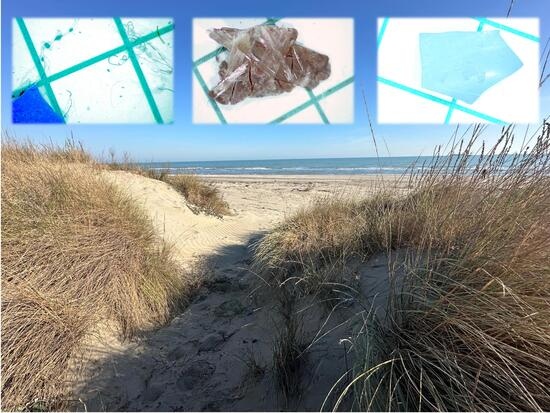
The WWF Oasis Alberoni in Venice Lido, a Natura 2000 site, popular beach tourism destination in one of the most iconic towns in the world, is the primary sampling site. A preventive beach macrolitter monitoring was conducted by Venice Lagoon Plastic Free (VLPF) on 27 September 2024. The surveys followed a protocol aligned with the EMODnet Guidelines for Beach Litter (v7.1, 2018) [23] and the draft Guidance of the EU MSFD Technical Group on Marine Litter [24]. Data collection was supported by the digital tools developed by VLPF within the Horizon Europe REMEDIES project, which enables in-field classification, item counting, and structured metadata recording. These tools generate data strings fully compliant with EMODnet Data Ingestion requirements, allowing VLPF—as an EMODnet data provider—to submit standardized marine litter datasets for validation, open data publication, and wider societal use through EMODnet services.
MPs sampling was carried out within about 1 h during ebb tide conditions, in dry and calm circumstances, outside the tourist season (15 November 2024). Beach sediment was collected according to a frame method at three locations (1, just above the low water line, 2, intertidal positions, and 3, the high-water line) spaced equally (5 m apart) along five orthogonal foreshore transepts (25 m apart). This way, 15 positions covered the entire intertidal zone from the strandline to the shoreline along the transects perpendicular to the coastline (1000 m2) as indicated in Figure 1. Sand samples were collected by students of the first Green Chemistry and Outreach course in a technical high school in Italy (ITT Montani, Fermo, IT), aged 18–19. In each position, sand was sampled at the vertices and in the center of a 50 cm by 50 cm quadrat (enclosed using four stakes), to a depth of 5 cm [25]), using a stainless steel spoon (Figure 1); sand from all 5 shoreline positions was poured and mixed into a screw-capped glass container; the same procedure was repeated for the strandline and intertidal line; the containers were transferred to the laboratories and stored at 4 °C prior to analysis. Due to access constraints, transects could not be continued directly into the dunes.

2.2. Sample Preparation, Density Separation, Organic Matter Oxidation

With the container lids loosened, samples were dried in an oven until the weight remained unchanged at low temperature (40 °C).
Sand was sieved (5000 μm pore size) and the retentate was rejected. Large vegetative items were manually removed using stainless-steel tweezers before samples were weighed on a Sartorius ME215P balance. The composite samples were obtained by mixing equal amounts of sand from the shoreline, the intertidal line, and the strandline.
Density separation media were prepared by saturating water with specific solutes and their densities at 20 °C were determined using a pycnometer.
MPs flotation, in triplicate, was conducted at room temperature: 1000 mL of a saturated solution of calcium nitrate Ca(NO3)2 was added to 500 g dry composite sand sample; the mixture was stirred gently with a spatula for 10 min and then on a magnetic stirring plate at 200 rpm for 30 min at room temperature (20 °C) to let MPs agglomerates break and float. Then the mixture was let static to enable sand settling overnight.
The supernatant was carefully pipetted in a bottle. The beaker walls were dropwise rinsed by saturated solution of Ca(NO3)2. A total of 100 mL of 30% w/w H2O2 was then added to the mixture; the bottle was covered with aluminum foil and the vigorous oxidation of the organic matter was visually monitored until the pale brown and slightly turbid mixture turned colorless and transparent (it took 3 days at room temperature), thereby indicating the absence of suspended organic matter. A total of 10 mL of H2O2 30% was added to the beaker to assess any possible further reaction.
The solution was processed further, straining it through a cascade of sieves (1000, 300, 100 μm pore size) in order to separate MPs classes of different sizes.
Each sieve was rinsed and each retentate was transferred with ultrapure water to the vacuum filtration on a Whatman nitrocellulose filter (47 mm diameter, 0.45 μm pore size) housed in a clamped, glass filtration kit.
Each filter with the corresponding retentate (a specific size class) was stored in a covered glass Petri dish and dried at room temperature for 24 h for subsequent microscopy.

2.3. Identification and Classification of Microplastics

Each filter, related to a specific size class, was inspected under a stereomicroscope at a magnification of 20× and 40× with the aid of stainless-steel tweezers. The retentate comprised particles in a specific size class. Particles that exhibited homogeneity in color and equal thickness throughout, with no organic or cellular structure evident, were considered MPs. MPs were further classified according to shape (fiber/filament, fragment, film, pellet/beads, foam), color, and size.

2.4. Granulometric Analysis

A 100 g aliquot of sand was used for the granulometric analysis using the same sieves indicated above and following the procedure described by Banik et al. [26].

2.5. Cleanliness and Quality Control

Samples were in contact with ceramic surfaces only; before any operation, working surfaces were cleaned with filtered ultrapure Milli-Q water (0.45 μm), considered the least contaminated water [27]. Labware was cleaned in a dishwasher and dried in a drying oven. Filtered ultrapure water (0.45 μm) was used in the sample and negative control processing. Laboratory operators wore white laboratory cotton coats and non-latex nitrile gloves. The time a sample was exposed to air was limited as much as possible to prevent atmospheric contamination. Glass containers were covered with aluminum foil during stirring and settling.
The experiment was run in triplicate and a blank negative control, including all the reagents processed as the sample, was used to correct results.

3. Results and Discussion

The present discussion focuses on the lab stage of the simple, green, and rational laboratory workflow we aim to propose as a best practice in MPs analysis. While in some studies beach sand samples were collected from the most recent flotsam deposited at the high tide line, only a few studies have covered the total extent of the beach, as desirable and recommendable [19]. The largest contamination is associated with the storm wrack line [28]. Hence, in the present study, the mixing of the sand from the three locations in the transects perpendicular to the coastline was deemed mandatory for the representativeness of (i) the studied area and (ii) the composite sand samples (Figure 1).
In the following we will scrutinize all aspects which may easily introduce bias that may undermine the analytical outcomes.

3.1. Drying and Granulometric Analysis

Even if authoritative technical reports recommend a drying temperature as high as 90 °C [22,26,29], the drying temperature was not higher than 40 °C to prevent the glass transition of nylon (47 °C, [30,31]). The glass transition would alter the nature of the polymer and should be avoided [32].
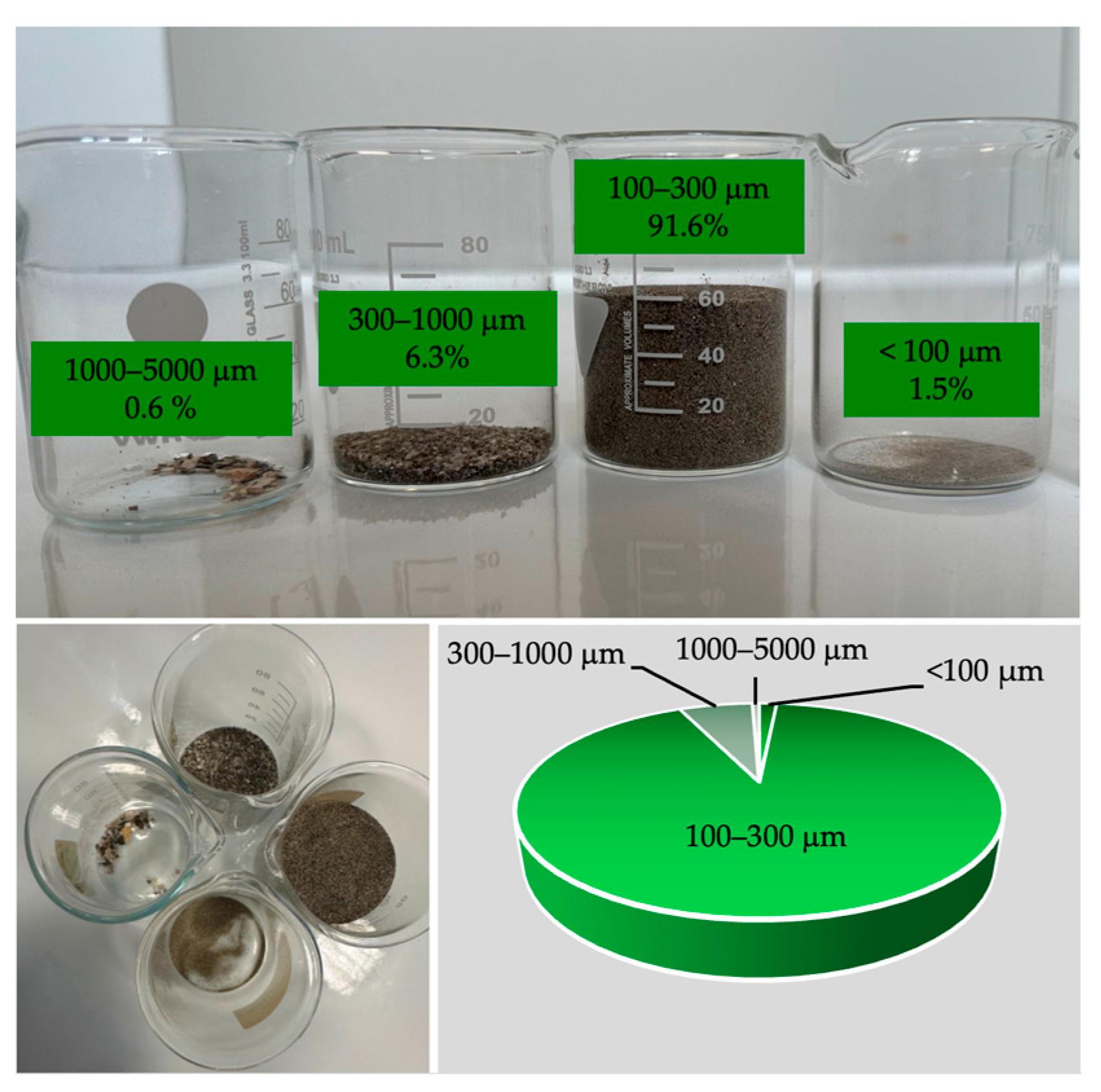
The results of the granulometric analysis are shown in Figure 2.

3.2. Critical Screening of Density Separation Media Used to Isolate MPs from the Sand

Density separation is a physical separation method that utilizes density differences to separate buoyant MPs mainly from inorganic natural particles, such as sand grains and shell fragments prone to sinking.
Table 1 details the density of most common virgin polymers. Final plastic density may differ from that of the polymer because of the presence of chemicals added during the product manufacture, such as plasticizers, UV stabilizers, pigments, and fillers. Furthermore, environmental modifications by UV lights, biofouling, and mineral adsorption can decline the original buoyancy and increase the theoretical density [19,33].
Theoretically, all polymers but PTFE are expected to float in a solution whose density is 1.45 or higher, while sand, whose density is ca. 2.65 g/mL [34], is expected to sink. In this context it is interesting to observe that the floating step aiming at MPs extraction from the sand is very common but not always included [35].
Table 1. Densities of common polymers [34,36,37].
Polymer TypeDensity (g/mL)
Natural rubber0.92
Polyethylene-low density (LDPE) a0.91–0.97
Polyethylene-high density (HDPE) a0.94–0.97
Polypropylene (PP) a0.85–0.94
Polystyrene (PS) a0.96–1.05
Polyamide (PA6 or PA66) a1.12–1.14
Polyurethane (PU) a1.20
Polymethylmethacrylate (PMMA) a1.20
Polycarbonate (PC) a1.20 b
Polylactic acid (PLA)1.21–1.25
Cellulose acetate (CA)1.28
Polyvinyl chloride (PVC) a1.38
Polyethylene terephthalate (PET) a1.34−1.39
Polytetrafluoroethylene (PTFE) a2.2
a priority polymers according to [38] b [39].
Table 2 presents 21 high-density solutions in order of increasing density; some have been explored by diverse research groups, while others have never been investigated, such as saturated solutions of sucrose, calcium nitrate, xylitol, and sodium silicate. Table 2 summarizes the main limitations associated with a specific solute.
Sodium chloride is one of the most used solutes [46] because it is inexpensive, non-hazardous, and environmentally friendly. Unfortunately, all MPs denser than 1.2 g/mL, including the widespread PET, would not be recovered. Similarly, the densities of sodium hexametaphosphate [40] and calcium chloride [41] solutions were not considered sufficient. Hence, sodium chloride, sodium hexametaphosphate, and calcium chloride were not considered any further, because a general trend of increasing MPs recovery with increasing floating solution density was observed [47].
Hence, we investigated many possible solutes to produce a safe, environmentally friendly, cheap high-density solution, able to provide an effective floating of the vast majority of MPs. The compatibility with other reagents used in the workflow and the absence of depolymerization reaction were also considered.
The final selection criteria were as follows:
  • Density of at least 1.45 g/mL
  • No organ hazard for the sake of operator safety
  • No damage to aquatic environment
  • No reaction with H2O2 used to remove the organic matter
  • No low pH (Polyamides at risk)
  • No high pH (Polyesters at risk)
  • No high viscosity
  • Not expensive
Zinc chloride (ZnCl2) is the prevalent salt used to ensure high MPs recovery; sodium polytungstate is recommended because even the densest polymer, namely PTFE, could float in its solution [33]. Anyhow, they both threaten aquatic life with long-lasting effects (hazard identification H410 and H412, respectively). Hence, their use cannot be recommended in a green expert citizen science campaign.
Iron (III) chloride (FeCl3) was not considered a suitable solute due to the acidic pH of its solutions that would depolymerize polyamides.
Potassium carbonate (K2CO3) has been used in MPs assessment in sand, but the carbonate ion is strongly basic, and the alkaline pH of its solution can depolymerize polyesters.
Various iodides and bromides pose serious concerns for the subsequent oxidation of the biogenic material by hydrogen peroxide; hence, they cannot be recommended as general floating brine solutions. Moreover, their use would bring more toxicological and environmental concerns.
The ultra-high viscosity of sodium silicate, xylitol, and sucrose solutions prevents MPs from floating in a reasonable time due to low flotation kinetics.
Potassium formate (HCOOK) solutions from disposed heat transfer fluid in geothermal and other renewable energy systems could be recovered; moreover, various waste streams (e.g., from the production of formic acid or from well drilling in the oil and gas Industry) contain potassium formate. This salt is biodegradable under aerobic conditions. It is non-toxic to humans and animals at typical usage concentrations. Unfortunately, preliminary tests indicated that the aldehydic moiety of the formate ion may react vigorously with H2O2; hence, it is not recommended for expert citizen science.
Calcium nitrate, according to the circular economy approach, can be obtained in industrial scrubbing or in the neutralization of nitric acid production effluents. If it is upcycled, interlocking diverse production cycles, its affordability may increase. Calcium ion and nitrate ion are involved in biological pathways, essential for cell structure and growth. Nitrate is not only an essential source of nitrogen for plants, but also functions as a signaling molecule, modulating gene expression and physiological processes. Calcium signaling networks mediate nitrate sensing. Nitrate is converted into amino acids and proteins, and calcium strengthens cell walls and membranes [48]. Furthermore, calcium nitrate is a fertilizer and it is also a remediation reagent [49]. Its disposal does not pose any particular concern. Sand in contact with calcium nitrate solutions, once properly rinsed, can be safely returned to the environment while the brine can be reused; for this reason, it was considered the best density separation solute in the armory of skilled undergraduate chemistry students to tackle MPs monitoring.
PTFE floating in calcium nitrate solution is not ensured, but its transport is similarly difficult, and the use of the extremely expensive and toxic sodium polytungstate does not seem to be justified, since the procedure would be neither green nor affordable.
Once the best density separation salt was assessed, flotation was performed according to the procedure detailed in Section 2. The standardization of stirring time and rpm is necessary as MPs can be strongly sorbed to the matrix [50] and floating cannot occur properly if agglomeration with denser abiotic material occurs.

3.3. Recovery of the Floating Mixture

The separation of the floating mixture from the sand is rarely discussed in detail, but it poses other methodological hazards: decanting and pouring the supernatant is risky because of the adhesion of MPs to container walls [41]. The transfer of the supernatant via a glass pipette, moved around the solution surface, was preferred because it avoids turbulence and carryover of the smallest sand grains. The beaker walls were dropwise rinsed with a saturated Ca(NO3)2 solution to prevent turbulence in the bulk and to pursue the quantitative recovery of the floated MPs.

3.4. Removal of the Organic Matter

After the recovery of the floating mixture, many authors jump directly to the quantitative and qualitative analytical phase, relying on the visual discrimination of different morphological structures peculiar to MPs or biotic debris: they regard the lack of cell structure and homogeneity in color sufficient criteria to identify the debris as MPs [7,51], but the visual sorting is prone to misinterpretation and errors; biofouling and the dwelling of organic material on the MPs can mask them; biotic matter interference undermines the reliability of the numerical results.
In the literature, very harsh methods have been described to limit the interference of biotic matter; they include acid digestion of the mixture obtained from the floating step with concentrated or boiling nitric acid and alkaline digestion with concentrated NaOH [52]; none of them were considered appropriate for isolating MPs because some polymers are damaged or hydrolyzed by these treatments [3]. PET was not resistant during treatment with either KOH (1, 10, 30, and 50%) or NaOH (30 and 50%), with KOH less aggressive compared to NaOH [53]. The higher surface-to-volume ratio of fibers makes them more prone to degradation during various chemical treatments.
To ensure the greenness of the preanalytical phase, harsh chemical treatments should be avoided. The use of H2O2 to remove organic matter is more sustainable because the reaction product is simply water, and no energy input is needed, given the reaction’s spontaneity and exothermicity. To devise a rational workflow, it is necessary to decide when it is better to oxidize the organic matter in order to avoid affecting MPs. Some authors directly treat sand with concentrated hydrogen peroxide (H2O2) [18] but in this case its consumption is the highest since all the sample matrix components are present. The direct oxidative H2O2 digestion of the recovered MPs was also investigated [54] and the disruptive Fenton H2O2/Fe(II) oxidation and/or high temperatures were additionally explored to accelerate the organic matter oxidation. A direct attack of concentrated H2O2 on MPs might be too harsh and can result in oxidative damage to microplastics; a loss of MPs, especially fibers, might not be excluded. High temperatures may be disruptive on one side and would make the step energy-intensive and dangerous, thereby decreasing the method’s greenness. Similarly, the Fenton chemistry prescribed by the National Oceanic and Atmospheric Administration standard procedure [22] was demonstrated to physically and chemically alter MPs [55]; furthermore, the solution can boil violently [22]; hence, according to the 12th Green Chemistry Principle (Inherently Safer Chemistry for Accident Prevention) this route cannot be recommended for a large expert citizen science campaign. It follows that the room temperature H2O2 digestion of the organic matter in the mixture obtained in the flotation step is a judicious, mild, and green choice to avoid MPs loss or alteration [3].
The amount of required oxidant depends on the organic matter content of the sample; the volume used has no direct influence on the final outcome as the negative sample is processed in the same way, and quantitative results are corrected using the blank scores. In general, it can be recommended to perform the oxidation at room temperature, avoiding concentrated H2O2/floating mixture ratios higher than 1 to prevent MPs discoloring [56,57]. Discoloration of the visible MPs did not occur in our samples.

3.5. MPs Physical Classification

The most common MPs physical classification criteria are size class, shape, and color. Stereomicroscopy is a widely used and the simplest classification tool for MPs larger than 100 μm. MPs smaller than 45 μm in size cannot be easily seen under current stereomicroscopes [56]. Magnified images provide detailed surface texture and structural information, which is essential for identifying MPs correctly.
It is still common to determine size class numerosity visually [7]; again, visual classification is prone to error and should be avoided.
We propose to strain the solution containing the floated MPs through a cascade of sieves (1000, 300, 100 μm pore size) in order to separate MPs classes of different sizes in an objective way, limiting potential observation bias. This way we could easily classify MPs in three classes (5000–1000 μm, 1000–300 μm, 300–100 μm). Particles retained on each sieve should be carefully and thoroughly rinsed into clean glass beakers by tilting each sieve. Each resulting mixture, after vacuum filtration, provides a retentate that corresponds to a specific MPs size class. MPs can be easily counted and scrutinized concerning the morphological and physical structure [18,58]. In each size class, MPs were sorted out concerning shape (filament/fiber, fragment, pellet/beads/granule, film, foam) and color (colorless, white, black, and colored).
Average results and standard deviations are indicated in Table 3.
The total MPs abundance for all size classes is 219 MPs/kg. Compared to the most recent results featuring thousands MPs/kg in Malaysia [59], Galapagos [60], and Ecuador [61], the present results are encouraging. Results are slightly higher than those found in the UNESCO Can Gio Mangrove Biosphere Reserve in Vietnam (31.99 to 92.56 MPs/kg), even if in that case the density separation salt was NaCl hence not all MPs could have been estimated [16].
For a fair comparison of MPs pollution in Venetian beaches and other studied sites in the world, we decided to compare our scores only to those reported by recent (from 2020) studies featuring (i) floating solution with density at least 1.5 g/mL, (ii) H2O2 oxidation of biotic materials (Table 4). Results obtained using NaCl as the density separation salt were not deemed comparable because MPs from PET or PVC would not float in its saturated solution. Similarly, the lack of H2O2 oxidation makes the procedure prone to biased quantitation of MPs. Table 4 features the size range of the investigated MPs. It is clear that: (i) MPs abundance among different studies spans two orders of magnitudes; (ii) MPs standard deviation within the same study is generally of the same order of magnitude as the average score; (iii) the lowest abundance is obtained if the size range is narrower (i.e., 500–5000 μm); (iv) fibers are the vast majority of MPs type.
Only sand from the Baltic Sea shore in Poland [62] and the Curonian Spit National Park in Russia [28] feature results lower than those found in the WWF Oasis Alberoni in Venice Lido, but in both cases the size class targeted (500–5000 μm) in these two studies is narrower than the present one (100–5000), and it is well known that the smaller the MPs’ size, the higher their abundance.
The size distribution of MPs in Table 4 confirms the literature results in Table 4: the most abundant size class is the 100–300 μm one [65]. Generally, microplastic abundance increases with decreasing size [54] with a few exceptions [36]; for example, the size range of 1–5 mm was dominant on a Bangladesh beach [26]. MPs contamination in individual samples from different zones and locations can vary over two orders of magnitude (e.g., from 6.9 up to 724.4 MPs/Kg [62]).
Fibers were found to be the most abundant MPs type in Venice seawater [66] and are confirmed to be the most widespread MPs in Venice sand as well. Shape patterns are very different across the literature, but fibers appeared to be more abundant in more populated areas [36]. They have been reported as the most common microplastic material in marine water samples [67] and sandy beaches [18]. Actually, only fibers were found in the beach sediments of the Southern Baltic Sea [68].
The very low abundances of plastic pellets in the investigated samples might be due to the fact that they are primarily obtained from plastic-processing plants near study sites [33].
The coastal accumulation of MPs in the riverine plume of the Po River (Northern Italy) was already studied, and their abundance was found to range from 0.5 to 78.8 particles/kg [69], but only MPs in the 1–5 mm range were considered; hence, their results are confirmed by the present results for that size class (Table 4).
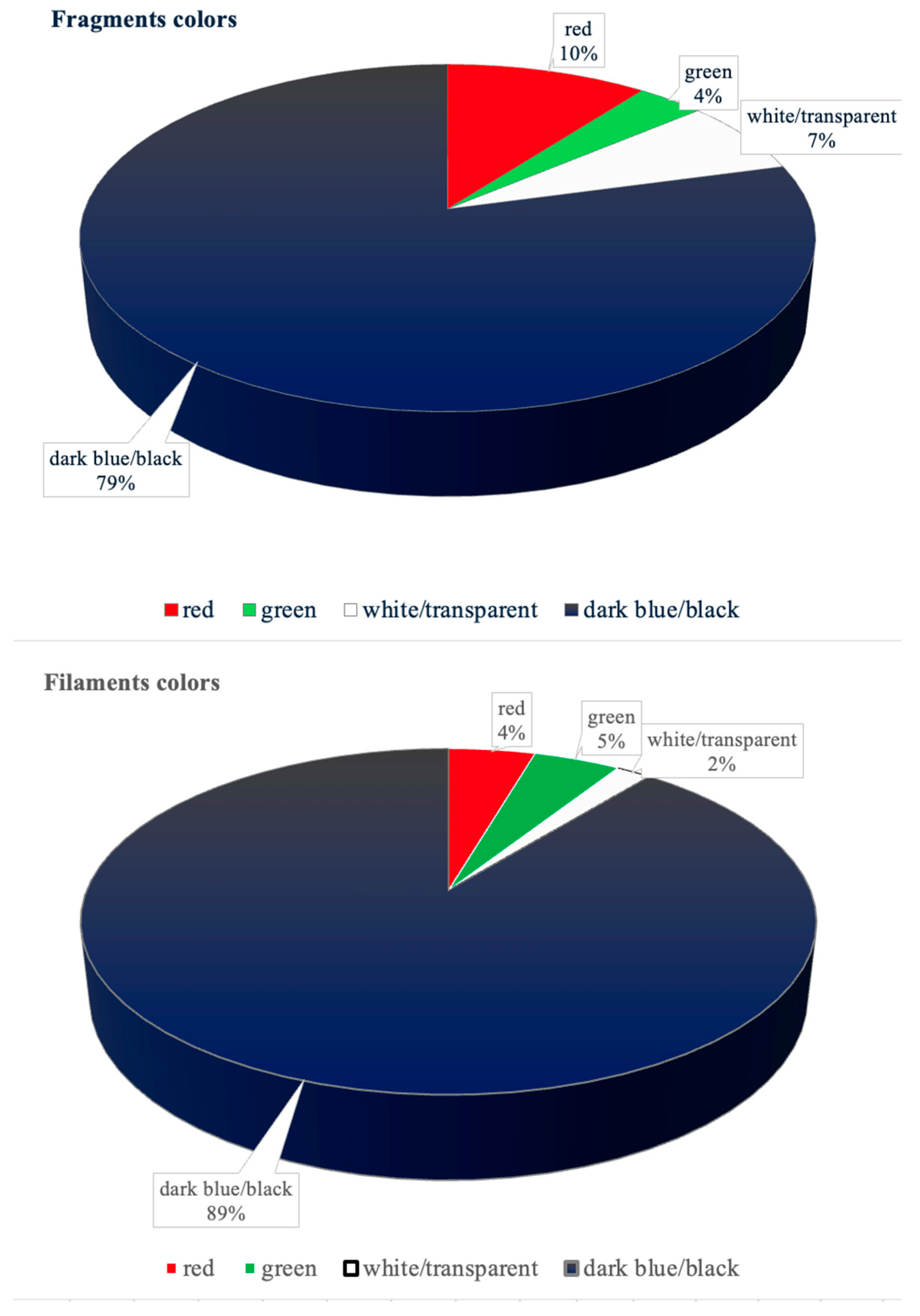
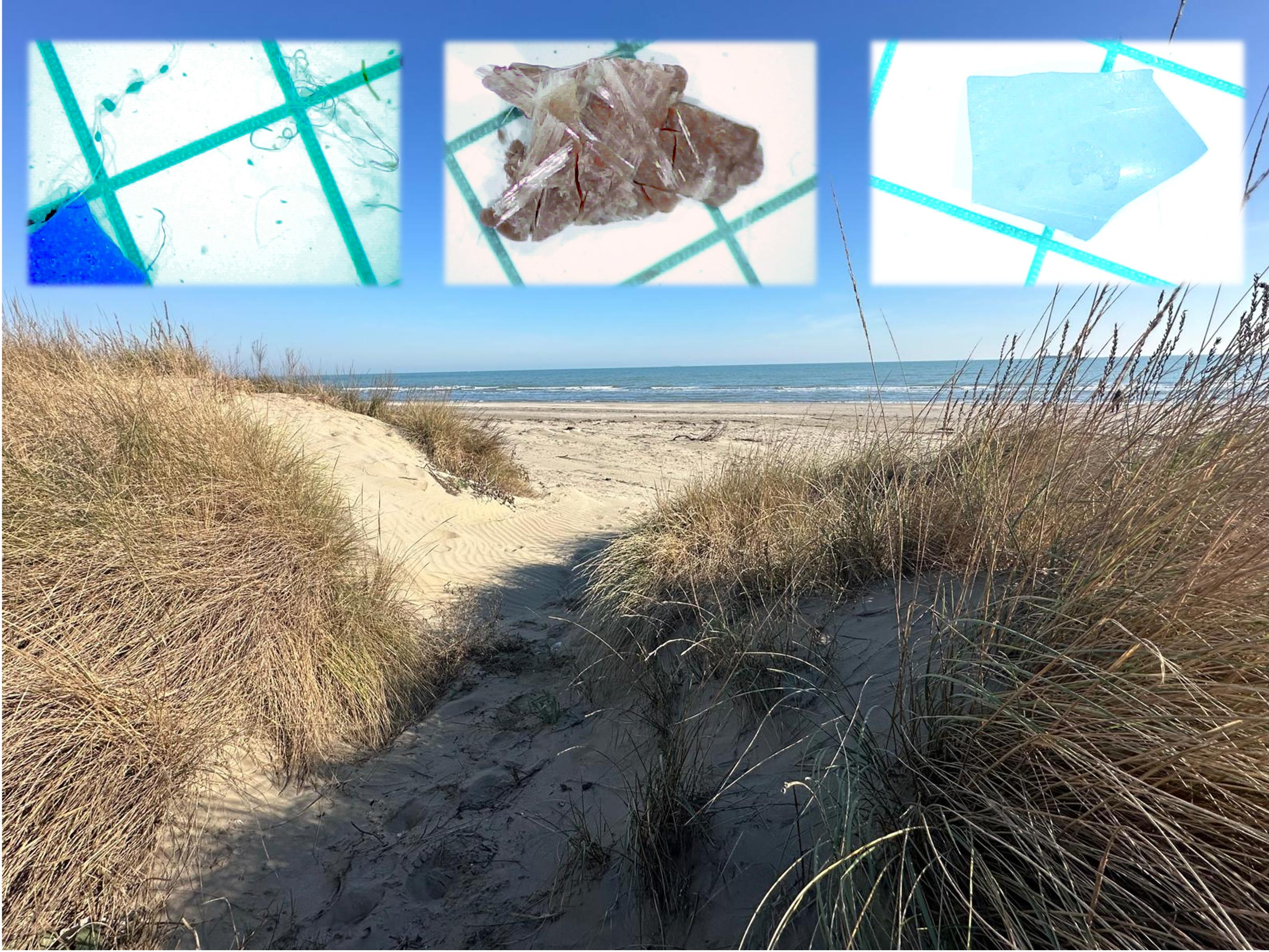
Figure 3 illustrates the colors of the retrieved MPs. It has to be recalled that, in the environment, weathering and natural aging (comprising photoaging, thermo-aging, biological and mechanical aging processes [70]) can change the plastics’ appearance [36].
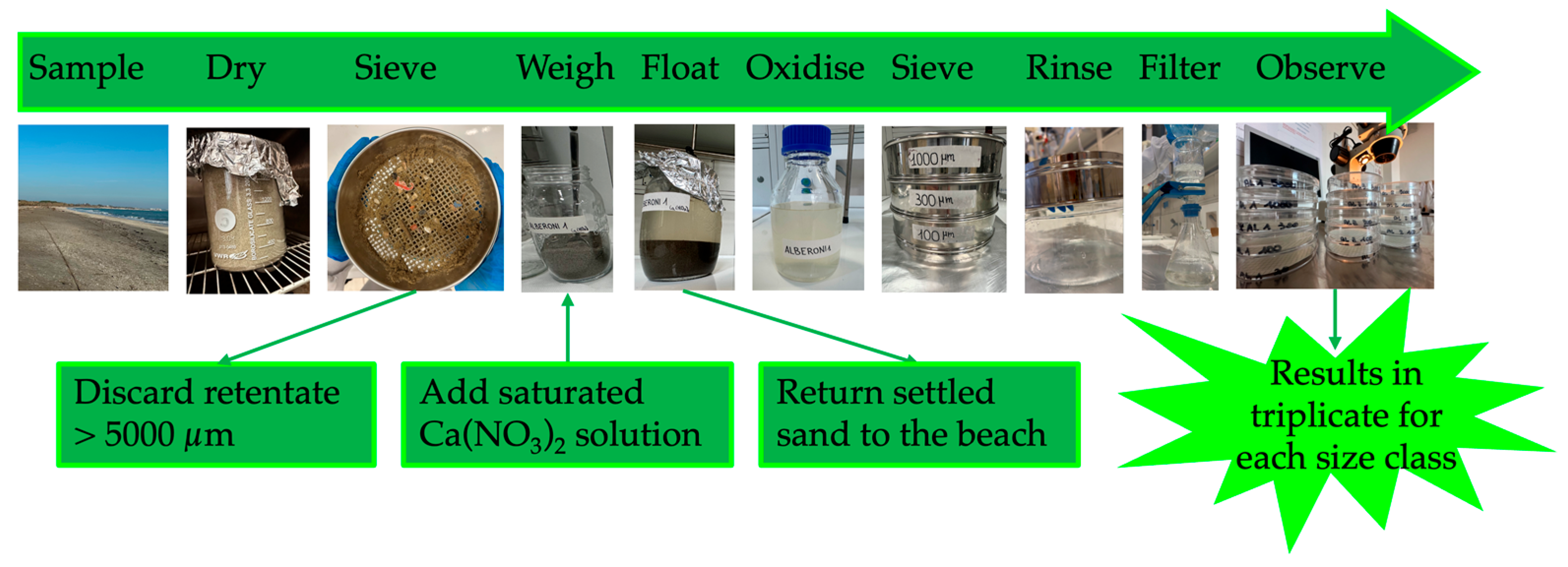
Figure 4 displays both the preanalytical and the analytical workflow followed in the present study. A comparison with commonly used procedures might be beneficial. We already discussed the environmental concerns about the saturated ZnCl2 solution, commonly used to extract MPs from sand. The reference National Oceanic and Atmospheric Administration procedure [22] recommends 90 °C as the drying temperature, the use of lithium metatungstate for density separation, and the hazardous Fenton chemistry on the collected solids; while the high drying temperature alters nylon MPs, the lack of cascade sieving may prevents the accurate MPs size class separation; furthermore, lithium metatungstate is unfit for citizen science as it only used in research contexts, it is very expensive, and its toxicity is still quite unknown.

3.6. Understanding the Causes of MPs Pollution and Civic Education

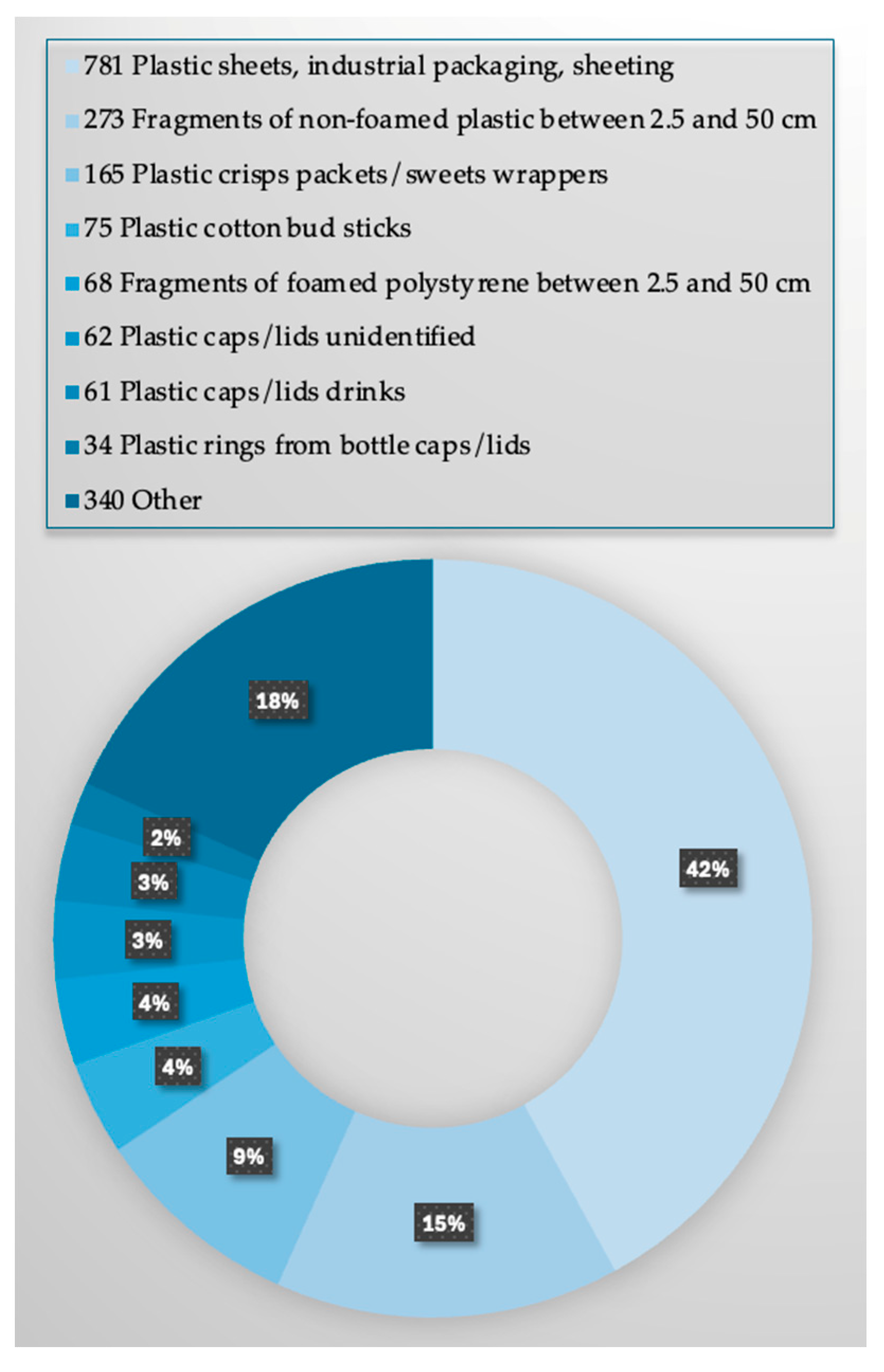
MPs’ analysis was corroborated by marine litter monitoring, as macroplastics are the main cause of secondary MPs generation. Results are summarized in Figure 5. A total of 1859 plastic items were found in a sampling unit along a 100 m transect extending from the waterline to the back of the beach, following Commission Decision 2017/848/EU. The survey was conducted in dry, calm weather and under ebb tide conditions, outside the tourist season, to minimize short-term fluctuations. The pattern in Figure 5 indicates a dominance of packaging-derived plastics, likely linked to recreational beach use and upstream litter inputs transported by sea currents. These findings also confirm the usefulness of repeated monitoring in fixed spatial units for assessing temporal changes in anthropogenic pressure, litter fluxes, and the persistence of high-risk categories such as polystyrene foams and fragmented plastics. Monitoring of macroplastics at national and international levels enables a comparative evaluation of the influence of diverse lifestyles on plastic pollution; hands-on activities uphold civic education, fostering environmental awareness and possibly behavioral change, according to the 4Rs (Reduce, Reuse, Recycle, Recover) strategy [12].

3.7. A Green Protocol for Expert Citizen Science and Future Directions

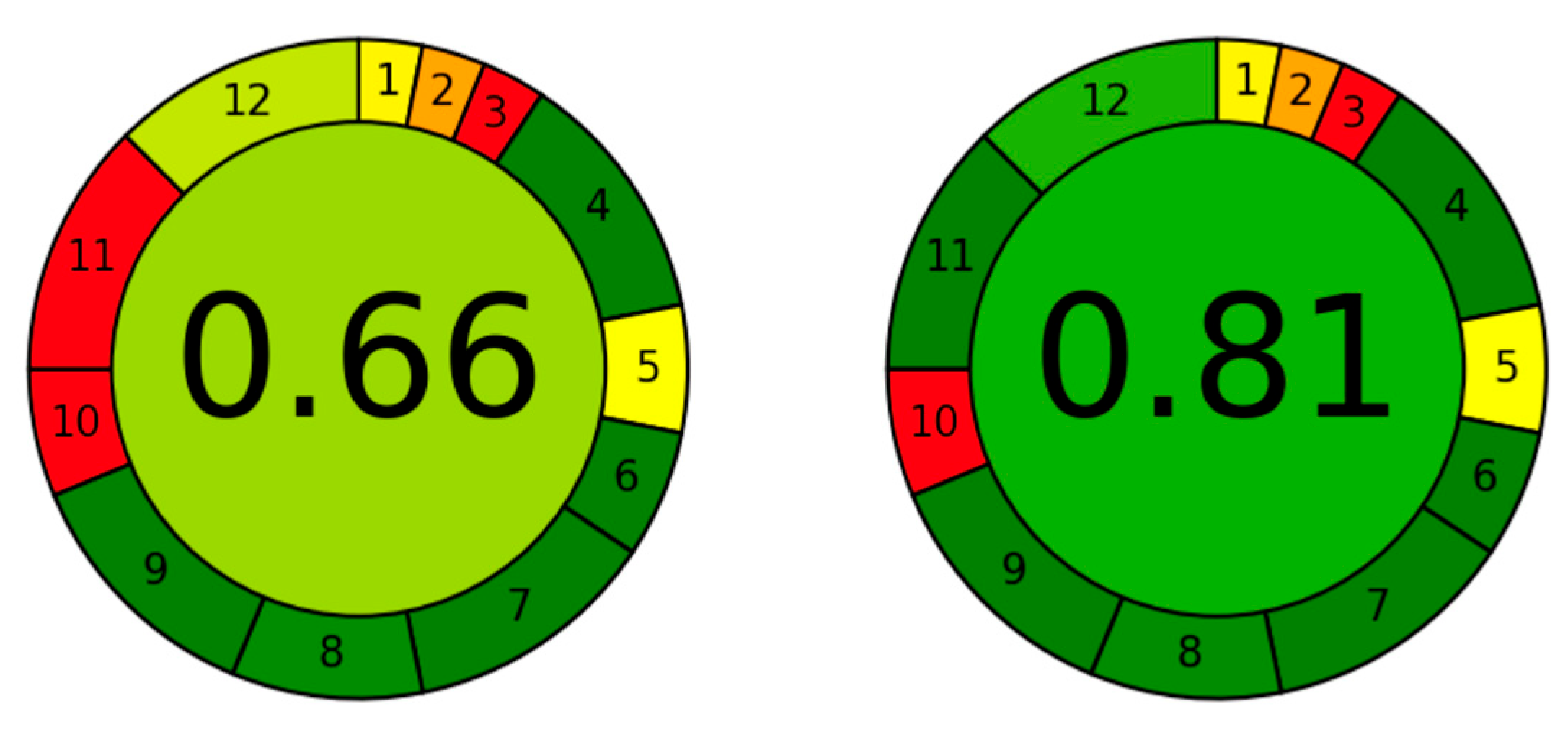
Figure 6 illustrates the greenness AGREE score [71] increases from 0.66 to 0.81 resulting from the replacement of ZnCl2 with Ca(NO3)2 as density separation salts. The increase is mainly due to the absence of toxicity for the operator and the aquatic life if Ca(NO3)2 is used. The solutions used for density separation can be recovered at the bottom of the sieving cascade and can be reconstituted up to appropriate density, refiltered and reused, to drastically cut down on the purchasing of salts and generation of waste, thereby increasing the greenness of the procedure.
The active involvement of the public in scientific research, with citizens contributing their knowledge, time, and effort, alongside professional scientists is Citizen Science [72]. The effectiveness of the transition from citizen raw data to evidence-based validated data is often limited by methodological inconsistencies that impair the real scientific impact of citizen science. While fair volunteer participation is expedient for the easy monitoring of macroplastics, it might not be enough to provide sound, reliable, and meaningful data in MPs assessment. By this scenario, the engagement of undergraduate chemistry students, the use of a standardized sampling kit, and the expert supervision of their teachers in both the preanalytical and analytical stages can be pivotal: students’ participation does not suffer from spatial and demographic biases, and their supervised competence ensures the reliability of datasets from local to global levels. With the help of the network of the Didactic Group of the Società Chimica Italiana we aim to produce the first nationwide dataset on environmental MPs pollution. The community-focused campaign aims to (i) foster societal impact, (ii) engage stakeholders and local officials, (iii) stimulate public awareness and responsibility, and (iv) promote ongoing participation [73].

4. Conclusions

For meaningful environmental monitoring, protocols need to be “green”, consistent, and easy to follow regarding sampling method, isolation, classification, and quantitation.
No consensus has been reached about MPs’ determination in the coastal zone, despite the fact that they are ubiquitous and extensively studied pollutants. Furthermore, to date, the impact that the methodologies used to isolate and determine MPs have on the environment and the generation of waste has not yet been properly considered. We addressed these research needs by optimizing a rational, simple, green, safe, and easy best practice that undergraduate chemistry students can use to generate large datasets during expert citizen science campaigns at national and international levels. We propose sand as a suitable coastal environmental matrix because its sampling does not require any boat trip that might be difficult to organize.
The lack of standardization of the current procedures and the need for the greenness improvement were documented. Each preanalytical and analytical phase was critically analyzed to propose the best solution in order to obtain a good comparability of results. A prone-to-error step, such as the visual size classification, was replaced by an objective sieving classification. The greenness of the procedure was quantified: the high AGREE score (0.81) is mainly due to the replacement of the toxic ZnCl2 with Ca(NO3)2 to prepare the high-density separation solution. We did not focus on advanced polymer characterization because this activity might not be feasible for all undergraduate chemistry students, and a compromise between the breadth and the depth of the expert citizen science campaigns must be reached. Classified and quantified MPs can be further analyzed via more sophisticated instrumental methods if a link is established between educational and research settings.
The development of an app dedicated to MP sampling and analysis for nationwide educational contexts is a work in progress.

Funding

D.P. T. C. acknowledges financial support from VLPF and IMG Group as the official donor of MICRO1.0-related activities. MICRO1.0 included all costs for the infield logistics and transport.

Data Availability Statement

The dataset is available on request from the authors.

Acknowledgments

Davide Poletto and Gherardo Toso are gratefully thanked for the managerial and the fundamental technical support on the use of the digital shoreline beach-litter monitoring app (created by VLPF, with technical assistance from INFORDATA, based on VLPF’s original conceptualization under the H2020 project MAELSTROM and developed with the financial support from the European Union’s Horizon Europe innovation and research program for the REMEDIES project (Grant Agreement No. 101093964),;VLPF is gratefully thanked for the coverage of the sampling costs. Stefania Scatasta, Nadia Fraticelli and Roberto Barbieri and the chemistry students of ITT “G. e M. Montani” are thanked for their helpful support.

Conflicts of Interest

The author declares no conflicts of interest.

Abbreviations

The following abbreviations are used in this manuscript:
MPMicroplastic
VLPFVenice Lagoon Plastic Free

References

  1. UNI EN ISO 24187:2023; UNI Ente Italiano di Normazione. UNI: Milan, Italy, 2023. Available online: https://store.uni.com/uni-en-iso-24187-2023 (accessed on 8 November 2025).
  2. Ansari, I.; Arora, C.; Verma, A.; Mahmoud, A.E.D.; El-Kady, M.M.; Rajarathinam, R.; Verma, D.K.; Mahish, P.K. A Critical Review on Biological Impacts, Ecotoxicity, and Health Risks Associated with Microplastics. Water Air Soil Pollut. 2025, 236, 88. [Google Scholar] [CrossRef]
  3. GESAP. Guidelines for the Monitoring and Assessment of Plastic Litter in the Ocean: GESAMP Joint Group of Experts on the Scientific Aspects of Marine Environmental Protection. Rep. Stud. GESAMP 2019, 99, 138. [Google Scholar]
  4. Cecchi, T.; De Carolis, C. Biobased Products from Food Sector Waste: Bioplastics, Biocomposites, and Biocascading; Springer: Berlin/Heidelberg, Germany, 2021; ISBN 978-3-030-63435-3. [Google Scholar]
  5. Faussone, G.C.; Cecchi, T. Chemical Recycling of Plastic Marine Litter: First Analytical Characterization of The Pyrolysis Oil and of Its Fractions and Comparison with a Commercial Marine Gasoil. Sustainability 2022, 14, 1235. [Google Scholar] [CrossRef]
  6. Plastic Europe 2024. Available online: https://plasticseurope.org/knowledge-hub/the-circular-economy-for-plastics-a-european-analysis-2024/ (accessed on 8 November 2025).
  7. Anderson, R.J.; Turner, A. Microplastic Transport and Deposition in a Beach-Dune System (Saunton Sands-Braunton Burrows, southwest England). Sci. Total Environ. 2024, 909, 168535. [Google Scholar] [CrossRef]
  8. Cecchi, T. Analysis of Volatiles Organic Compounds in Venice Lagoon Water Reveals COVID 19 Lockdown Impact on Microplastics and Mass Tourism Related Pollutants. Sci. Total Environ. 2021, 783, 146951. [Google Scholar] [CrossRef]
  9. Cole, M.; Lindeque, P.; Halsband, C.; Galloway, T.S. Microplastics as Contaminants in the Marine Environment: A Review. Mar. Pollut. Bull. 2011, 62, 2588–2597. [Google Scholar] [CrossRef]
  10. Rochman, C.M.; Kross, S.M.; Armstrong, J.B.; Bogan, M.T.; Darling, E.S.; Green, S.J.; Smyth, A.R.; Veríssimo, D. Scientific Evidence Supports a Ban on Microbeads. Environ. Sci. Technol. 2015, 49, 10759–10761. [Google Scholar] [CrossRef]
  11. Turra, A.; Manzano, A.B.; Dias, R.J.S.; Mahiques, M.M.; Barbosa, L.; Balthazar-Silva, D.; Moreira, F.T. Three-Dimensional Distribution of Plastic Pellets in Sandy Beaches: Shifting Paradigms. Sci. Rep. 2014, 4, 4435. [Google Scholar] [CrossRef] [PubMed]
  12. Nafea, T.H.; Chan, F.K.S.; Xu, H.; Wang, C.; Xiao, H.; He, J. Status of Management and Mitigation of Microplastic Pollution. Crit. Rev. Environ. Sci. Technol. 2024, 54, 1734–1756. [Google Scholar] [CrossRef]
  13. EU Commission Regulation (EU) 2023/2055—Restriction of Microplastics Intentionally Added to Products—Internal Market, Industry, Entrepreneurship and SMEs. Available online: https://single-market-economy.ec.europa.eu/sectors/chemicals/reach/restrictions/commission-regulation-eu-20232055-restriction-microplastics-intentionally-added-products_en (accessed on 26 November 2025).
  14. EU Directive (EU) 2019/904 of the European Parliament and of the Council of 5 June 2019 on the Reduction of the Impact of Certain Plastic Products on the Environment. Www.Plasticseurope.De 2019, 2019, 1–19. Available online: https://eur-lex.europa.eu/legal-content/EN/TXT/PDF/?uri=CELEX:32019L0904 (accessed on 26 November 2025).
  15. Hayes, A.; Kirkbride, P.; Leterme, S.C. Variation in Polymer Types and Abundance of Microplastics from Two Rivers and Beaches in Adelaide, South Australia. Mar. Pollut. Bull. 2021, 172, 112842. [Google Scholar] [CrossRef] [PubMed]
  16. Khuyen, V.T.K.; Le, D.V.; Fischer, A.R.; Dornack, C. Comparison of Microplastic Pollution in Beach Sediment and Seawater at UNESCO Can Gio Mangrove Biosphere Reserve. Glob. Chall. 2021, 5, 2100044. [Google Scholar] [CrossRef]
  17. U.S. National Park Service Microplastics on National Park Beaches. Available online: https://www.nps.gov/articles/microplastics-on-national-park-beaches.htm?utm_source=chatgpt.com (accessed on 19 January 2025).
  18. Tran Nguyen, Q.A.; Nguyen, H.N.Y.; Strady, E.; Nguyen, Q.T.; Trinh-Dang, M.; Vo, V.M. Characteristics of Microplastics in Shoreline Sediments from a Tropical and Urbanized Beach (Da Nang, Vietnam). Mar. Pollut. Bull. 2020, 161, 111768. [Google Scholar] [CrossRef]
  19. Tiwari, M.; Sahu, S.K.; Rathod, T.; Bhangare, R.C.; Ajmal, P.Y.; Pulhani, V.; Vinod Kumar, A. Comprehensive Review on Sampling, Characterization and Distribution of Microplastics in Beach Sand and Sediments. Trends Environ. Anal. Chem. 2023, 40, e00221. [Google Scholar] [CrossRef]
  20. Soursou, V.; Campo, J.; Picó, Y. A Critical Review of the Novel Analytical Methods for the Determination of Microplastics in Sand and Sediment Samples. TrAC Trends Anal. Chem. 2023, 166, 117190. [Google Scholar] [CrossRef]
  21. Walther, B.A.; Pasolini, F.; Korez Lupše, Š.; Bergmann, M. Microplastic Detectives: A Citizen-Science Project Reveals Large Variation in Meso- and Microplastic Pollution along German Coastlines. Front. Environ. Sci. 2024, 12, 1458565. [Google Scholar] [CrossRef]
  22. Masura, J.; Baker, J.; Foster, G.; Arthur, C.; Herring, C. Laboratory Methods for the Analysis of Microplastics in the Marine Environment: Recommendations for Quantifying Synthetic Particles in Waters and Sediments; NOAA: Washington, DC, USA, 2015. [Google Scholar]
  23. EU Reports|European Marine Observation and Data Network (EMODnet). Available online: https://emodnet.ec.europa.eu/en/reports?field_report_type_new_value[]=technical (accessed on 26 November 2025).
  24. Ruiz-Orejón, L.; Martini, E.; Hanke, G. TG ML Annual Meeting 2023. 2023. Available online: https://mcc.jrc.ec.europa.eu/documents/TG_ML_Meeting/TG_ML_meeting_summary_Brussels-21-22.06.2023.pdf (accessed on 26 November 2025).
  25. Ronda, A.C.; Menéndez, M.C.; Tombesi, N.; Álvarez, M.; Tomba, J.P.; Silva, L.I.; Arias, A.H. Microplastic Levels on Sandy Beaches: Are the Effects of Tourism and Coastal Recreation Really Important? Chemosphere 2023, 316, 137842. [Google Scholar] [CrossRef]
  26. Banik, P.; Hossain, M.B.; Nur, A.A.U.; Choudhury, T.R.; Liba, S.I.; Yu, J.; Noman, M.A.; Sun, J. Microplastics in Sediment of Kuakata Beach, Bangladesh: Occurrence, Spatial Distribution, and Risk Assessment. Front. Mar. Sci. 2022, 9, 860989. [Google Scholar] [CrossRef]
  27. Jones, N.R.; de Jersey, A.M.; Lavers, J.L.; Rodemann, T.; Rivers-Auty, J. Identifying Laboratory Sources of Microplastic and Nanoplastic Contamination from the Air, Water, and Consumables. J. Hazard. Mater. 2024, 465, 133276. [Google Scholar] [CrossRef]
  28. Chubarenko, I.; Esiukova, E.; Khatmullina, L.; Lobchuk, O.; Grave, A.; Kileso, A.; Haseler, M. From Macro to Micro, from Patchy to Uniform: Analyzing Plastic Contamination along and across a Sandy Tide-Less Coast. Mar. Pollut. Bull. 2020, 156, 111198. [Google Scholar] [CrossRef] [PubMed]
  29. Béraud, E.; Bednarz, V.; Otto, I.; Golbuu, Y.; Ferrier-Pagès, C. Plastics Are a New Threat to Palau’s Coral Reefs. PLoS ONE 2022, 17, e0270237. [Google Scholar] [CrossRef]
  30. Grishanov, S. Structure and Properties of Textile Materials. Handb. Text. Ind. Dye. Princ. Process. Types Dye. 2011, 1, 28–63. [Google Scholar] [CrossRef]
  31. Gowda, S.; Srinivas, S.; Santhosh, G.; Basavarajaiah, S. Mechanical and Tribological Performance Evaluation of Maleic Anhydride Grafted Ethylene Octene Copolymer Toughened Acrylonitrile Butadiene Styrene/Polyamide 6 Composites Strengthened with Glass Fibres. J. Text. Inst. 2021, 112, 1240–1248. [Google Scholar] [CrossRef]
  32. Gao, Z.; Wontor, K.; Cizdziel, J.V.; Lu, H. Distribution and Characteristics of Microplastics in Beach Sand near the Outlet of a Major Reservoir in North Mississippi, USA. Microplast. Nanoplast. 2022, 2, 10. [Google Scholar] [CrossRef]
  33. Jahanpeyma, P.; Baranya, S. A Review of Microplastic Identification and Characterization Methods in Aquatic Environments. Period. Polytech. Civ. Eng. 2024, 68, 684–703. [Google Scholar] [CrossRef]
  34. Hidalgo-Ruz, V.; Gutow, L.; Thompson, R.C.; Thiel, M. Microplastics in the Marine Environment: A Review of the Methods Used for Identification and Quantification. Environ. Sci. Technol. 2012, 46, 3060–3075. [Google Scholar] [CrossRef]
  35. Castellón-Mena, N.D.C.; Sarmiento-Devia, R.; Romero-Murillo, P. Temporal Variability of Plastic Litter in Two Sand Beaches of San Andres Island, Colombian Caribbean. Lat. Am. J. Aquat. Res. 2024, 52, 793–804. [Google Scholar] [CrossRef]
  36. Wagner, M.; Lambert, S. Freshwater Microplastics—The Handbook of Environmental Chemistry 58; Springer: Berlin/Heidelberg, Germany, 2018; ISBN 9783319616148. [Google Scholar]
  37. Ashby, M.F. Material Profiles. In Materials and the Environment; Elsevier: Amsterdam, The Netherlands, 2013; pp. 459–595. [Google Scholar] [CrossRef]
  38. EU Commission Delegated Decision (EU) 2024/1441 of 11 March 2024 Supplementing Directive (EU) 2020/2184 of the European Parliament and of the Council by Laying down a Methodology to Measure Microplastics in Water Intended for Human Consumption (Notified Unde). Off. J. Eur. Union 2024, 1–7. Available online: https://eur-lex.europa.eu/legal-content/EN/TXT/PDF/?uri=OJ:L_202401441 (accessed on 24 November 2025).
  39. Sigma Aldrich Poly(Methyl Methacrylate)|9011-14-7. Available online: https://www.sigmaaldrich.com/IT/it/product/aldrich/182265?srsltid=AfmBOoon1vW1vUcpmKR9Kp0NKDtuFV81LjF8hh_OHHyLu8iWWpoVV8Vr (accessed on 24 November 2025).
  40. Schütze, B.; Thomas, D.; Kraft, M.; Brunotte, J.; Kreuzig, R. Comparison of Different Salt Solutions for Density Separation of Conventional and Biodegradable Microplastic from Solid Sample Matrices. Environ. Sci. Pollut. Res. 2022, 29, 81452–81467. [Google Scholar] [CrossRef]
  41. Thomas, D.; Schütze, B.; Heinze, W.M.; Steinmetz, Z. Sample Preparation Techniques for the Analysis of Microplastics in Soil—A Review. Sustainability 2020, 12, 9074. [Google Scholar] [CrossRef]
  42. Cesium Formate|Energy Glossary. Available online: https://glossary.slb.com/terms/c/cesium_formate (accessed on 9 November 2025).
  43. Haynes, W.M. CRC Handbook of Chemistry and Physics, 97th ed.; CRC Press: Boca Raton, FL, USA, 2017; ISBN 9781498754293. [Google Scholar]
  44. Saliwanchik, D. Heavy Caesium Salt Containing Liquids for Use in Separation Processes. 1999. Available online: https://patents.google.com/patent/WO2000036165A2/en (accessed on 24 November 2025).
  45. Sigma-Aldrich. Available online: https://www.sigmaaldrich.com/IT/it/specification-sheet/SIGMA/71913 (accessed on 9 November 2025).
  46. Zhang, X.; Yu, K.; Zhang, H.; Liu, Y.; He, J.; Liu, X.; Jiang, J. A Novel Heating-Assisted Density Separation Method for Extracting Microplastics from Sediments. Chemosphere 2020, 256, 127039. [Google Scholar] [CrossRef] [PubMed]
  47. Quinn, B.; Murphy, F.; Ewins, C. Validation of Density Separation for the Rapid Recovery of Microplastics from Sediment. Anal. Methods 2017, 9, 1491–1498. [Google Scholar] [CrossRef]
  48. Hao, L.; Meng, L.; Wang, X.; Qu, J.; Jiang, Z.; Song, X. Nitrate Sensing and Response in Plants: From Calcium Signaling to Phytohormone Regulation. J. Plant Physiol. 2025, 312, 154572. [Google Scholar] [CrossRef]
  49. Xia, D.; Zhao, H.; Kobayashi, S.; Mi, Q.; Hao, A.; Iseri, Y. Effect of Remediation Reagents on Bacterial Composition and Ecological Function in Black-Odorous Water Sediments. Arch. Microbiol. 2022, 204, 280. [Google Scholar] [CrossRef]
  50. Liu, M.; Song, Y.; Lu, S.; Qiu, R.; Hu, J.; Li, X.; Bigalke, M.; Shi, H.; He, D. A Method for Extracting Soil Microplastics through Circulation of Sodium Bromide Solutions. Sci. Total Environ. 2019, 691, 341–347. [Google Scholar] [CrossRef] [PubMed]
  51. Maynard, I.F.N.; Bortoluzzi, P.C.; Nascimento, L.M.; Madi, R.R.; Cavalcanti, E.B.; Lima, Á.S.; de Lourdes Sierpe Jeraldo, V.; Marques, M.N. Analysis of the Occurrence of Microplastics in Beach Sand on the Brazilian Coast. Sci. Total Environ. 2021, 771, 144777. [Google Scholar] [CrossRef]
  52. Claessens, M.; Van Cauwenberghe, L.; Vandegehuchte, M.B.; Janssen, C.R. New Techniques for the Detection of Microplastics in Sediments and Field Collected Organisms. Mar. Pollut. Bull. 2013, 70, 227–233. [Google Scholar] [CrossRef] [PubMed]
  53. Olsen, L.M.B.; Knutsen, H.; Mahat, S.; Jane, E.; Arp, P.H. Facilitating Microplastic Quantification through the Introduction of a Cellulose Dissolution Step Prior to Oxidation: Proof-of-Concept and Demonstration Using Diverse Samples from the Inner Oslofjord, Norway. Mar. Environ. Res. 2020, 161, 105080. [Google Scholar] [CrossRef] [PubMed]
  54. Luo, Y.; Sun, C.; Li, C.; Liu, Y.; Zhao, S.; Li, Y.; Kong, F.; Zheng, H.; Luo, X.; Chen, L.; et al. Spatial Patterns of Microplastics in Surface Seawater, Sediment, and Sand Along Qingdao Coastal Environment. Front. Mar. Sci. 2022, 9, 916859. [Google Scholar] [CrossRef]
  55. Ortiz, D.; Munoz, M.; Nieto-Sandoval, J.; Romera-Castillo, C.; de Pedro, Z.M.; Casas, J.A. Insights into the Degradation of Microplastics by Fenton Oxidation: From Surface Modification to Mineralization. Chemosphere 2022, 309, 136809. [Google Scholar] [CrossRef]
  56. Cashman, M.A.; Ho, K.T.; Boving, T.B.; Russo, S.; Robinson, S.; Burgess, R.M. Comparison of Microplastic Isolation and Extraction Procedures from Marine Sediments. Mar. Pollut. Bull. 2020, 159, 111507. [Google Scholar] [CrossRef]
  57. Dekiff, J.H.; Remy, D.; Klasmeier, J.; Fries, E. Occurrence and Spatial Distribution of Microplastics in Sediments from Norderney. Environ. Pollut. 2014, 186, 248–256. [Google Scholar] [CrossRef]
  58. Urban-Malinga, B.; Zalewski, M.; Jakubowska, A.; Wodzinowski, T.; Malinga, M.; Pałys, B.; Dąbrowska, A. Microplastics on Sandy Beaches of the Southern Baltic Sea. Mar. Pollut. Bull. 2020, 155, 111170. [Google Scholar] [CrossRef]
  59. Khalid, A.A.; Abd Razak, N.I.; Anuar, S.T.; Ibrahim, Y.S.; Rusli, M.U.; Jaafar, M. Microplastics Contamination in Natural Sea Turtle Nests at Redang Island, Malaysia. Mar. Pollut. Bull. 2025, 211, 117412. [Google Scholar] [CrossRef]
  60. Basurto Alcívar, D.J.; Chavarría Peñarrieta, M.A.; Pincay Cantos, M.F.; Calderón Pincay, J.M. Microplastics on the Coasts of San Cristobal, Galapagos: A Threat to the Archipelago. Vis. Sustain. 2024, 22, 215–233. [Google Scholar] [CrossRef]
  61. Arteaga, I.; Pinos-Vélez, V.; Capparelli, M.; Moulatlet, G.M.; Cipriani-Avila, I.; Cabrera, M.; Rebolledo, E.; Arnés-Urgellés, C.; Cazar, M.E. Microplastic Occurrence and Distribution in the Gulf of Guayaquil, Ecuador. Mar. Pollut. Bull. 2024, 209, 117288. [Google Scholar] [CrossRef]
  62. Esiukova, E.; Lobchuk, O.; Haseler, M.; Chubarenko, I. Microplastic Contamination of Sandy Beaches of National Parks, Protected and Recreational Areas in Southern Parts of the Baltic Sea. Mar. Pollut. Bull. 2021, 173, 113002. [Google Scholar] [CrossRef]
  63. Pellegrini, C.; Saliu, F.; Bosman, A.; Sammartino, I.; Raguso, C.; Mercorella, A.; Galvez, D.S.; Petrizzo, A.; Madricardo, F.; Lasagni, M.; et al. Hotspots of Microplastic Accumulation at the Land-Sea Transition and Their Spatial Heterogeneity: The Po River Prodelta (Adriatic Sea). Sci. Total Environ. 2023, 895, 164908. [Google Scholar] [CrossRef]
  64. Sunitha, T.G.; Monisha, V.; Sivanesan, S.; Vasanthy, M.; Prabhakaran, M.; Omine, K.; Sivasankar, V.; Darchen, A. Micro-Plastic Pollution along the Bay of Bengal Coastal Stretch of Tamil Nadu, South India. Sci. Total Environ. 2021, 756, 144073. [Google Scholar] [CrossRef] [PubMed]
  65. Eo, S.; Hong, S.H.; Song, Y.K.; Lee, J.; Lee, J.; Shim, W.J. Abundance, Composition, and Distribution of Microplastics Larger than 20 Μm in Sand Beaches of South Korea. Environ. Pollut. 2018, 238, 894–902. [Google Scholar] [CrossRef] [PubMed]
  66. Cecchi, T.; Poletto, D.; Berbecaru, A.C.; Cârstea, E.M.; Râpă, M. Assessing Microplastics and Nanoparticles in the Surface Seawater of Venice Lagoon—Part I: Methodology of Research. Materials 2024, 17, 1759. [Google Scholar] [CrossRef]
  67. Kanhai, L.D.K.; Gårdfeldt, K.; Lyashevska, O.; Hassellöv, M.; Thompson, R.C.; O’Connor, I. Microplastics in Sub-Surface Waters of the Arctic Central Basin. Mar. Pollut. Bull. 2018, 130, 8–18. [Google Scholar] [CrossRef]
  68. Graca, B.; Szewc, K.; Zakrzewska, D.; Dołęga, A.; Szczerbowska-Boruchowska, M. Sources and Fate of Microplastics in Marine and Beach Sediments of the Southern Baltic Sea—A Preliminary Study. Environ. Sci. Pollut. Res. 2017, 24, 7650–7661. [Google Scholar] [CrossRef]
  69. Atwood, E.C.; Falcieri, F.M.; Piehl, S.; Bochow, M.; Matthies, M.; Franke, J.; Carniel, S.; Sclavo, M.; Laforsch, C.; Siegert, F. Coastal Accumulation of Microplastic Particles Emitted from the Po River, Northern Italy: Comparing Remote Sensing and Hydrodynamic Modelling with in Situ Sample Collections. Mar. Pollut. Bull. 2019, 138, 561–574. [Google Scholar] [CrossRef]
  70. Shi, Y.; Shi, L.; Huang, H.; Ye, K.; Yang, L.; Wang, Z.; Sun, Y.; Li, D.; Shi, Y.; Xiao, L.; et al. Analysis of Aged Microplastics: A Review. Environ. Chem. Lett. 2024, 22, 1861–1888. [Google Scholar] [CrossRef]
  71. Pena-Pereira, F.; Wojnowski, W.; Tobiszewski, M. AGREE—Analytical GREEnness Metric Approach and Software. Anal. Chem. 2020, 92, 10076–10082. [Google Scholar] [CrossRef] [PubMed]
  72. Bonney, R.; Cooper, C.B.; Dickinson, J.; Kelling, S.; Phillips, T.; Rosenberg, K.V.; Shirk, J. Citizen Science: A Developing Tool for Expanding Science Knowledge and Scientific Literacy. Bioscience 2009, 59, 977–984. [Google Scholar] [CrossRef]
  73. Corbau, C.; Lazarou, A.; Bajt, O.; Filipović Marijić, V.; Simčič, T.; Coltorti, M.; Pignoni, E.; Simeoni, U. Citizen Science for Monitoring Plastic Pollution from Source to Sea: A Systematic Review of Methodologies, Best Practices, and Challenges. Water 2025, 17, 2668. [Google Scholar] [CrossRef]
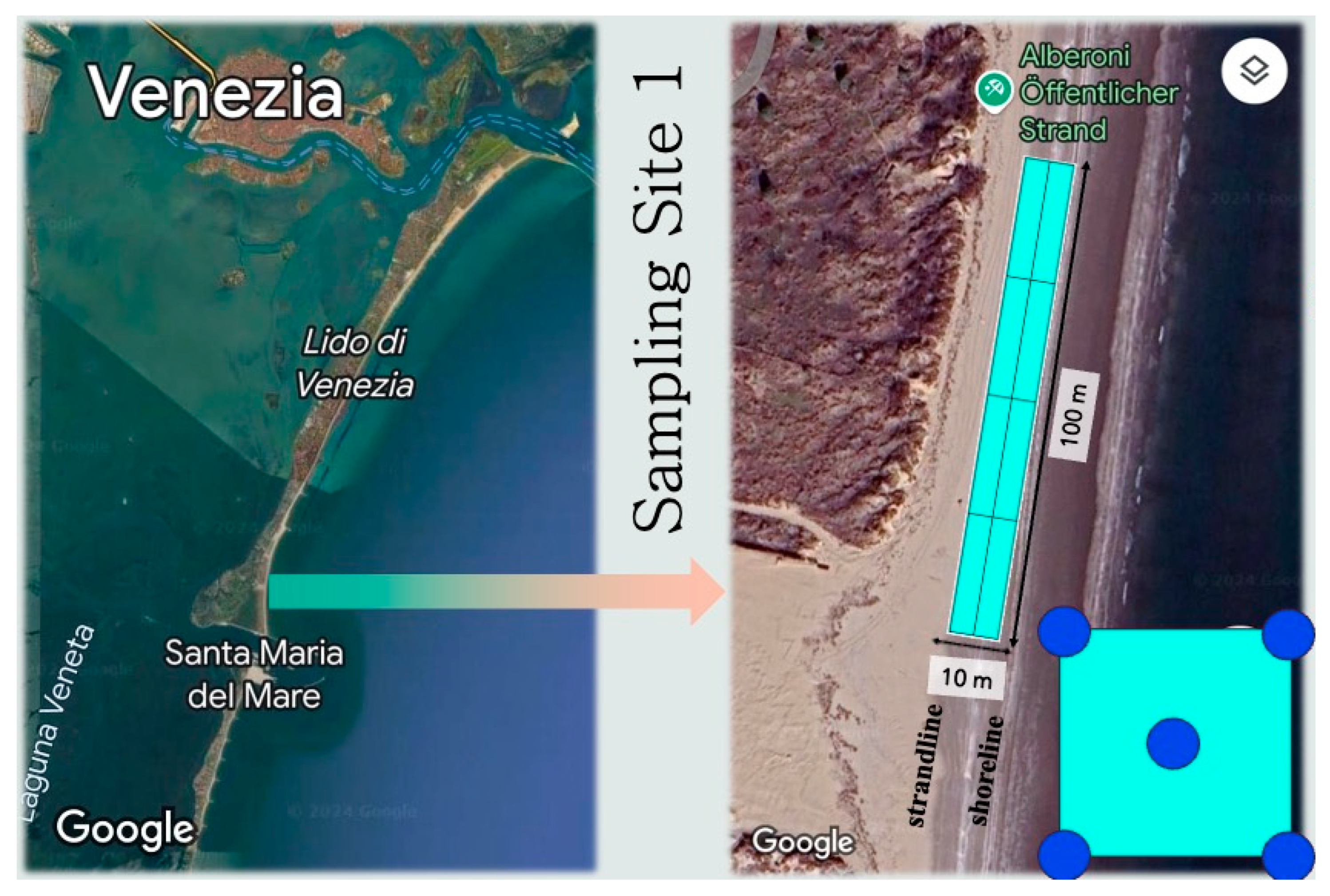
Figure 1. Sampling site, sampling frame with 15 sampling locations, and quadrat with 5 sampling points.
Applsci 15 13007 g001
Figure 2. Granulometric results concerning sand from the Alberoni WWF Oasis (top panel: front view; bottom left panel: top view; bottom right panel: pie chart.
Applsci 15 13007 g002
Figure 3. MPs colors. Top Panel: fragments; Bottom panel: fibers.
Applsci 15 13007 g003
Figure 4. The preanalytical and analytical workflow.
Applsci 15 13007 g004
Figure 5. Macroplastics monitoring results.
Applsci 15 13007 g005
Figure 6. AGREE greenness scores for ZnCl2 (left) and Ca(NO3)2 (right) as density separation media. The color-coded, circular pictogram with 12 segments shows the environmental impact of analytical methods; colors transition from red (non-green/bad) to dark green (fully green/good).
Applsci 15 13007 g006
Table 2. Possible solutes able to provide high-density separation media, their hazard classification and pictogram (Regulation (EC) No 1272/2008; pictograms related to organ hazard or damage to the aquatic environment are framed in red); density, reference, and note. Solutes are arranged in order of increasing density.
Solute, Hazard ClassificationsPictogram(s)Saturated Solution Density at Room Temperature (g/mL)ReferenceNote
Sodium Chloride
Not a hazardous substance or mixture according to Regulation (EC) No 1272/2008
1.2[3]Unsuitable for high-density polymers
Sodium hexametaphosphate
Not a hazardous substance or mixture according to Regulation (EC) No 1272/2008
1.30 [40]Unsuitable for high-density polymers
Calcium Chloride
H319 Causes serious eye irritation.
Applsci 15 13007 i0011.4[41]Unsuitable for high-density polymers
Sucrose
Not a hazardous substance or mixture according to Regulation (EC) No 1272/2008.
1.45This studyToo viscous
Iron (III) Chloride
H290 May be corrosive to metals
H302 Harmful if swallowed
H315 Causes skin irritation
H318 Causes serious eye damage
Applsci 15 13007 i001Applsci 15 13007 i0021.45This studyAcidic pH endangers polyamides
Calcium Nitrate
H302: Harmful if swallowed.
H318: Causes serious eye damage.
Applsci 15 13007 i001Applsci 15 13007 i0021.5This study
Xylitol
Not a hazardous substance or mixture according to Regulation (EC) No 1272/2008.
1.5This studyToo viscous
Potassium Formate
Not a hazardous substance or mixture according to Regulation (EC) No 1272/2008.
1.57[41]Vigorous reaction with H2O2
Sodium Silicate
H290: May be corrosive to metals
H314: Causes severe skin burns and eye damage
H318: Causes serious eye damage
H335: May cause respiratory irritation
Applsci 15 13007 i001Applsci 15 13007 i002- Too viscous, Alkaline pH endangers polyesters
Zinc Chloride
H302: Harmful if swallowed.
H314: Causes severe skin burns and eye damage.
H318: Causes serious eye damage
H335: May cause respiratory irritation.
H400: Very toxic to aquatic life
H410: Very toxic to aquatic life with long lasting effects.
Applsci 15 13007 i001Applsci 15 13007 i002Applsci 15 13007 i0031.6–1.7[3]Very toxic to aquatic life with long lasting effects.
Sodium Iodide
H303: May be harmful if swallowed
H315 + H319 Causes skin and serious eye irritation
H372 Causes damage to organs (thyroid gland) through prolonged or repeated exposure (if swallowed)
H400 Very toxic to aquatic life
Applsci 15 13007 i001Applsci 15 13007 i004Applsci 15 13007 i0031.6[3]Causes damage to organs
Very toxic to aquatic life with long lasting effects.
Potassium Iodide
H372 Causes damage to organs (Thyroid) through prolonged or repeated exposure if swallowed.
Applsci 15 13007 i0041.7[41]Causes damage to organs
Vigorous reaction with H2O2
Calcium Bromide
H319: Causes serious eye irritation.
Applsci 15 13007 i0011.71This studyVigorous reaction with H2O2
Strontium Bromide
H315 Causes skin irritation
H319 Causes serious eye irritation
H335 May cause respiratory irritation
Applsci 15 13007 i001- Vigorous reaction with H2O2
Cesium Chloride
H361fd Suspected of damaging fertility. Suspected of damaging the unborn child
Applsci 15 13007 i0041.9This studyCauses damage to organs
Zinc Bromide
H302 Harmful if swallowed
H314 Causes severe skin burns and eye damage
H318: Causes serious eye damage.
H317 May cause an allergic skin reaction
H411 Toxic to aquatic life with long lasting effects.
Applsci 15 13007 i001Applsci 15 13007 i002Applsci 15 13007 i0031.99This studyVigorous reaction with H2O2
Toxic to aquatic life with long lasting effects.
Cesium Iodide
H361fd Suspected of damaging fertility
Suspected of damaging the unborn child
H400 Very toxic to aquatic life
Applsci 15 13007 i004Applsci 15 13007 i0032.4 (estimated) Causes damage to organs
Very toxic to aquatic life
Cesium Formate
H302 Harmful if swallowed
H319 Causes serious eye irritation.
H371 May cause damage to organs (Nervous system) if swallowed
H373 May cause damage to organs (Nervous system, Blood) through prolonged or repeated exposure if swallowed
Applsci 15 13007 i001Applsci 15 13007 i0042.4[42]Causes damage to organs
Potassium carbonate
H315 Skin irritation
H319 Eye irritation
H335 May cause respiratory irritation
Applsci 15 13007 i0012.43 (14 °C)[43]Alkaline pH endangers polyesters
Cesium tungstate
H302 Harmful if swallowed
H315 Causes skin irritation
H319 Causes serious eye irritation
H335 May cause respiratory irritation
Applsci 15 13007 i0013.0133[44]Too expensive
Sodium Polytungstate
H302 Harmful if swallowed.
H318 Causes serious eye damage.
H412 Harmful to aquatic life with long lasting effects
Applsci 15 13007 i001Applsci 15 13007 i0023.1 (20 °C)[45]Too expensive
Harmful to aquatic life with long lasting effects
Table 3. Average results as MPs/kg (3 replicates) and standard deviations obtained with the saturated solution of Ca(NO3)2 as a floating medium.
Size ClassFilament/FiberFragmentFilmBeads/PelletSpongeTotal
1000–5000 μm29 ± 829 ± 900059
300–1000 μm39 ± 1026 ± 81 ± 16 ± 2072
100–300 μm42 ± 1131 ± 94 ± 111 ± 4088
Total110875170
Table 4. Results from recent (from 2020) studies featuring floating solution with density higher than 1.5 g/mL and 30% H2O2 or Fenton’s reagent (30% H2O2 with 5 mg ferrous iron catalyst) oxidation of biotic materials. Density separation (DS); Digestion (DG); Drying (DR); Fenton Reagent (FR); Filtration (FL); Room Temperature (RT); Sieving (SV).
LocationStudy DesignMPs/kgPrevalent ShapeSize Range (μm)Prevalent PolymerPrevalent ColorRef
Baltic Sea shore,
Poland
Drying (60 °C)
SV (cascade, 5000, 2000, 1000, 500 μm)
DS (ZnCl2 only for the 2000–500 μm fractions)
FL (174 μm)
DG (H2O2 30%, 75 °C)
Calcite removal (HCl)
DS (ZnCl2)
FL (174 μm)
Drying
68 ± 117Mostly fibers500–5000-Transparent/White[62]
Curonian Spit
National Park,
Russia
Drying
SV (cascade, 5000, 2000, 1000, 500 μm)
DS (ZnCl2 only for the 2000–500 μm fractions)
FL (174 μm)
DG (FR 75 °C)
Calcite removal (HCl)
DS (ZnCl2)
FL(174 μm)
Drying
115 ± 61Mostly fibers (74.3%)500–5000PE-[28]
The Po River, prodelta Adriatic Sea,
Northern Italy
DR (50 °C)
a-Large MPs (500–5000 μm) scrutinized via a stereomicroscope
b-Small MPs (5–500 μm)
DG (H2O2 30%)
FL (5 μm stainless steel)
DS (ZnCl2)
FL (Whatman® GF/C 1.2 μm)
139.7 ± 80Mostly Fibers and Fragments5–5000PAGray/blue[63]
Kuakata Beach,
Bangladesh
DR (90 °C)
DS (ZnCl2)
SV (300 μm)
DR (90 °C)
DG (FR, 75 °C for 30 min on the dried retentate)
FL (5.0 μm cellulose nitrate)
232 ± 52 Mostly fibers300–5000 PETTransparent[26]
Marina Beach,
India
DR (60 °C)
SV (300 μm)
DG (30% H2O2 on sand)
DR (60 °C)
DS (NaI)
FL (Whatman® grade GF/C filter 1.2 μm)
330.8 ± 364.6Mostly Fibers300–5000-Blue/Pink[64]
Inner Oslofjord, NorwayDebris Removal
SV (stainless-steel 45 μm)
Two-step digestion (NaOH/urea/thiourea −20 °C and 30% H2O2/1%NaOH)
750 ± 477n.a.45–5000PE-[53]
Qingdao coast,
China
DR (RT)
DS (ZnCl2)
FL (5 μm nitrocellulose)
DG (FR 65 °C for 72 h on the scraped particles)
FL (0.45 μm nitrocellulose)
3602 ± 1708 Mostly Fibers and Fragments50–5000Chlorinated PolyethyleneWhite[54]
Disclaimer/Publisher’s Note: The statements, opinions and data contained in all publications are solely those of the individual author(s) and contributor(s) and not of MDPI and/or the editor(s). MDPI and/or the editor(s) disclaim responsibility for any injury to people or property resulting from any ideas, methods, instructions or products referred to in the content.