Review

Recent Advances in Non-Isolated DC/DC Converter Topologies: A Review and Future Perspectives

by
Rafael Antonio Acosta-Rodríguez
1,
Javier Rosero-García
1,*,
Marco Rivera
2,3 and
Knapoj Chaimanekorn
3
1
Electrical Machines and Drives (EM&D) Group, Department of Electrical and Electronic Engineering, Universidad Nacional de Colombia, Bogota 111321, Colombia
2
Laboratorio de Conversión de Energías y Electrónica de Potencia (LCEEP), Vicerrectoría de Innovación, Universidad de Talca, Curicó 3341717, Chile
3
Power Electronics, Machines and Control (PEMC) Research Institute, Faculty of Engineering, University of Nottingham, Nottingham NG7 2QL, UK
*
Author to whom correspondence should be addressed.
Appl. Sci. 2025, 15(24), 12868; https://doi.org/10.3390/app152412868
Submission received: 10 November 2025 / Revised: 27 November 2025 / Accepted: 1 December 2025 / Published: 5 December 2025

Abstract

Continuous advancements in power conversion techniques address the growing need for efficiency and adaptability in contemporary energy applications, including e-mobility, renewable energy, and energy storage systems. This work presents a review grounded in the fundamental topologies of power converters and subsequently analyzes their modern modifications and technological advances. Traditional structures such as Buck, Boost, Ćuk, and flyback converters remain effective solutions for voltage and current regulation; however, they exhibit limitations when extremely high voltage conversion ratios are required. These constraints have motivated the emergence of more sophisticated architectures capable of overcoming such challenges. In this context, the paper provides a novel characterization and comparative analysis of quadratic and bidirectional converter topologies, emphasizing their capability to efficiently achieve both high and low conversion ratios while minimizing component stress and avoiding extreme load cycles. Quadratic converters demonstrate high performance in nonlinear systems with significant energy demands, whereas bidirectional converters enhance energy management in applications requiring bidirectional power flow, such as electric vehicles and energy storage systems.

1. Introduction

As renewable energy sources such as solar and wind continue to gain relevance, the need for efficient energy conversion systems has grown considerably. In this scenario, switched DC-DC converters have become indispensable for managing power transfer between different voltage levels [1]. These converters play a vital role in ensuring stable power delivery, particularly in wind power systems where input voltage levels can fluctuate significantly. Therefore, the development of highly reliable and efficient DC-DC converter topologies has emerged as a key research objective, aiming to improve both performance and component count [2].
This work presents a review grounded in the fundamental topologies of DC-DC converters and subsequently examines their modern modifications and advancements. Various DC-DC converter topologies are investigated, with a particular focus on their application in green energy systems. By studying their essential functions, strengths, and limitations, this work evaluates their suitability in different scenarios and analyzes the control methods used to enhance their performance [3,4]. A comparative analysis of these methods is presented, focusing particularly on stability, effectiveness, and adaptability in renewable energy source contexts [5]. Both traditional and emerging converter designs are evaluated based on their performance in terms of power conversion, component voltage stress, and implementation feasibility [6].
Some of the traditional topologies considered include Buck-Boost, Ćuk, SEPIC, Zeta, and Z-Source, together with more recent innovations that address limitations such as restricted voltage gain and high voltage stress [7]. Although classical Boost converters remain attractive due to their simplicity and low component count, they also present limitations in high-efficiency or high-gain applications [8,9]. Consequently, alternative approaches such as power supplies, switched-capacitor networks, and voltage multipliers have been explored, particularly when efficiency and cost become critical design factors [10,11]. Advanced configurations such as cascaded, interleaved, and multistage converters are also being developed to meet the demands of high-voltage applications [12,13].
Despite considerable progress, several challenges persist that hinder the full integration of these converters in green energy systems. One of the main concerns is improving energy efficiency in high-power applications, where power interruptions and outages can significantly reduce system performance [14]. To mitigate these losses, new strategies must optimize conversion efficiency without increasing expense or complexity [15]. Furthermore, renewable energy sources often exhibit highly dynamic and nonlinear behavior due to factors such as wind variability and fluctuations in solar irradiance. This calls for the development of robust and adaptive control strategies capable of maintaining system safety and efficiency under diverse operating conditions [16,17].
The incorporation of new technologies such as multivalent and quadratic converters adds further complexity, particularly regarding the coordination of control stages [18]. Although this type of converter offers several benefits, the interconnection of two control stages can reduce their suitability for high-power systems, making them more appropriate for low-power applications [19,20]. In contrast, multivalent DC-DC converters present potential advantages in industrial applications due to their scalability, simplicity, and ability to handle high voltages and power levels [21].
Nevertheless, several issues remain unsolved. Improving energy efficiency in high-power systems requires innovative strategies capable of reducing switching losses without increasing system size or cost [22,23]. Moreover, advances in modern control techniques—such as model predictive control and real-time adaptive feedback—can enhance adaptability to rapid fluctuations commonly encountered in renewable energy inputs [24,25]. Finally, the management of modularity and the coordination of control loops in multiphase and multistage configurations continues to be a central topic in current research [26,27].
A recent approach proposes a detailed characterization and comparative evaluation of quadratic and bidirectional converter topologies to assess their relevance in modern energy applications [26]. Combining theoretical analysis, simulation studies, and experimental validation, this review seeks to identify key design strategies that enhance efficiency, reduce component stress, and support the development of compact, reliable, and scalable energy conversion systems capable of meeting the increasing sustainability demands of modern infrastructures.
Recent review studies further support these developments, highlighting notable trends in non-isolated DC-DC converter topologies. For example, ref. [28] emphasizes the growing interest in high-gain topologies that overcome the voltage limitations of conventional Boost and Buck-Boost converters, achieving efficiency improvements of up to 95% in renewable applications. Similarly, ref. [29] reports the emergence of interleaved and cascaded designs that reduce ripple current, improve thermal behavior, and enable higher power density. Reviews in [30,31] discuss the integration of advanced control techniques, including sliding mode control [20], predictive control [6], and adaptive real-time feedback which have demonstrated improved robustness under rapidly fluctuating solar and wind inputs. Finally, studies in [32,33] identify remaining challenges such as the optimization of multistage and multiphase converters, coordination between control loops, and reduction in component stress in compact designs. These findings underline the necessity of a systematic comparative evaluation of converter topologies that consider not only efficiency and voltage gain but also reliability, scalability, and applicability in modern green energy systems.
Despite these significant contributions, existing review articles tend to examine high-gain structures, advanced control techniques, or multi-stage configurations in isolation, without providing an integrated perspective that connects structural design, dynamic performance, and practical implementation constraints. Furthermore, very few studies offer a combined comparative assessment of quadratic and bidirectional converter topologies, even though these architectures are increasingly relevant for applications in e-mobility, renewable energy systems, and energy storage. Current works often overlook essential aspects such as component stress minimization, scalability for industrial deployment, and the interaction between converter topology and control strategy in nonlinear and highly dynamic environments. Therefore, this review fills a critical gap by unifying structural characterization, control-oriented analysis, and performance comparison, offering a comprehensive framework that supports the selection and design of next-generation high-performance DC-DC converters.

2. Conventional Converter Topologies

Non-isolated DC-DC converters have advantages over isolated ones. By eliminating the transformer or isolation component, non-isolated DC-DC converters are more compact and lighter, making them simpler and more cost-effective. This is especially beneficial in applications where space and weight are essential, providing greater energy efficiency.

2.1. Buck Topology

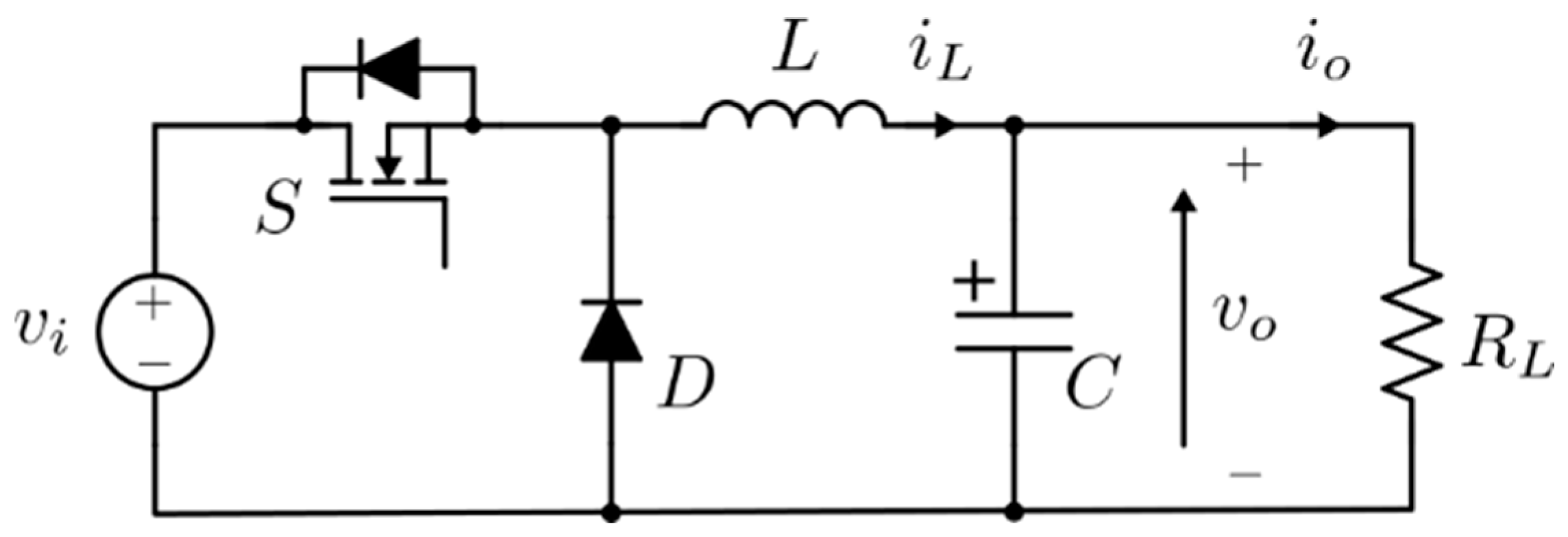
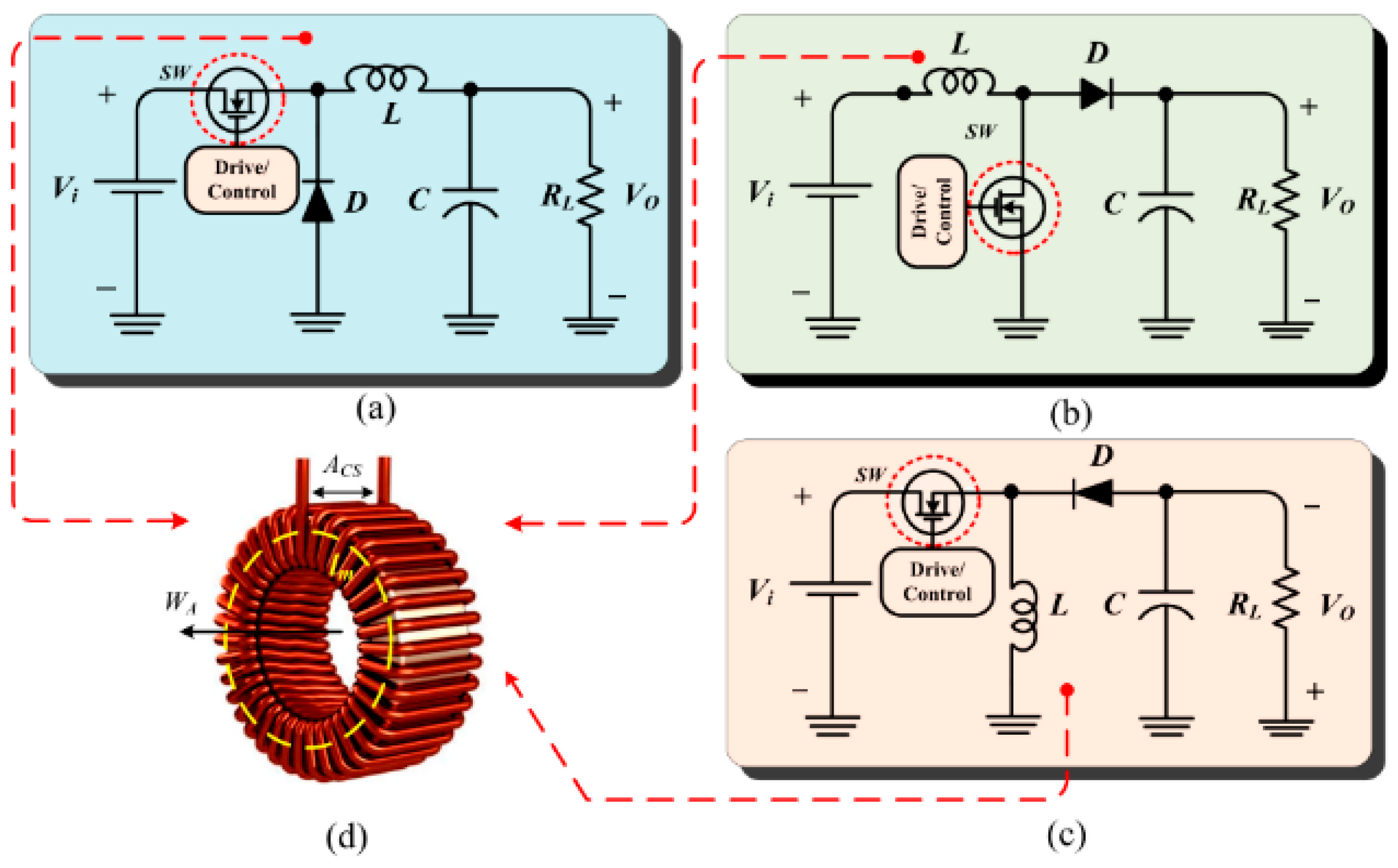
The Buck converter, considered one of the easiest DC-DC converters, is widely applied in voltage step-down scenarios. As illustrated in Figure 1, this converter features a power switch linked to the input and the load.
The Buck converter works by periodically switching on and off, producing a rectangular output voltage that is subsequently filtered to a ripple-free DC voltage. The voltage conversion ratio is determined by: G v equals D , where D is the duty cycle. It supplies output voltages from zero to the input voltage.
Although it is suitable for non-isolated auxiliary power supplies (APS) due to its simplicity and efficiency, its use in high-voltage voltage reduction contexts is limited, especially at high switching frequencies where achieving ultra-low duty cycles can be difficult. To address this, an enhanced Buck converter topology is proposed, capable of high reduction ratios at 1 MHz by employing energy extraction control to emulate an ultra-low duty cycle. This design also supports integration with various main power stages via power switch sharing. Experimental validation confirms a reduction ratio of 18:1 at 1 MHz [27].
An innovative double-pass Buck converter with interleaved switching and a coupled inductor decreases voltage stress by spreading the input voltage across blocking capacitors, allowing the use of lower-voltage semiconductors. The coupled inductors increase the output voltage gain, achieving a high conversion ratio even with longer duty cycles unlike traditional designs that require short duty cycles [33]. Furthermore, it maintains a stable voltage gain equation throughout the entire duty cycle range. A 600 W (820 V/30 V) prototype was built and experimentally validated, thus corroborating its theoretical performance [34].
Electrical devices face challenges such as high maintenance costs, volume, and emissions, which can be addressed using advanced electronic power converters. This study suggests an interleaved Buck converter with an observer-based controller for electric aircraft applications shown in Figure 2. In high-power scenarios, interleaving allows the combination of converters in series or parallel. The controller employs state feedback to ensure balance and a load estimator to ensure resilience to parameter variations. Simulations performed in MATLAB/Simulink R2022b corroborate the controller’s effectiveness in maintaining voltage tracking despite system fluctuations [29].

2.2. Boost Topology

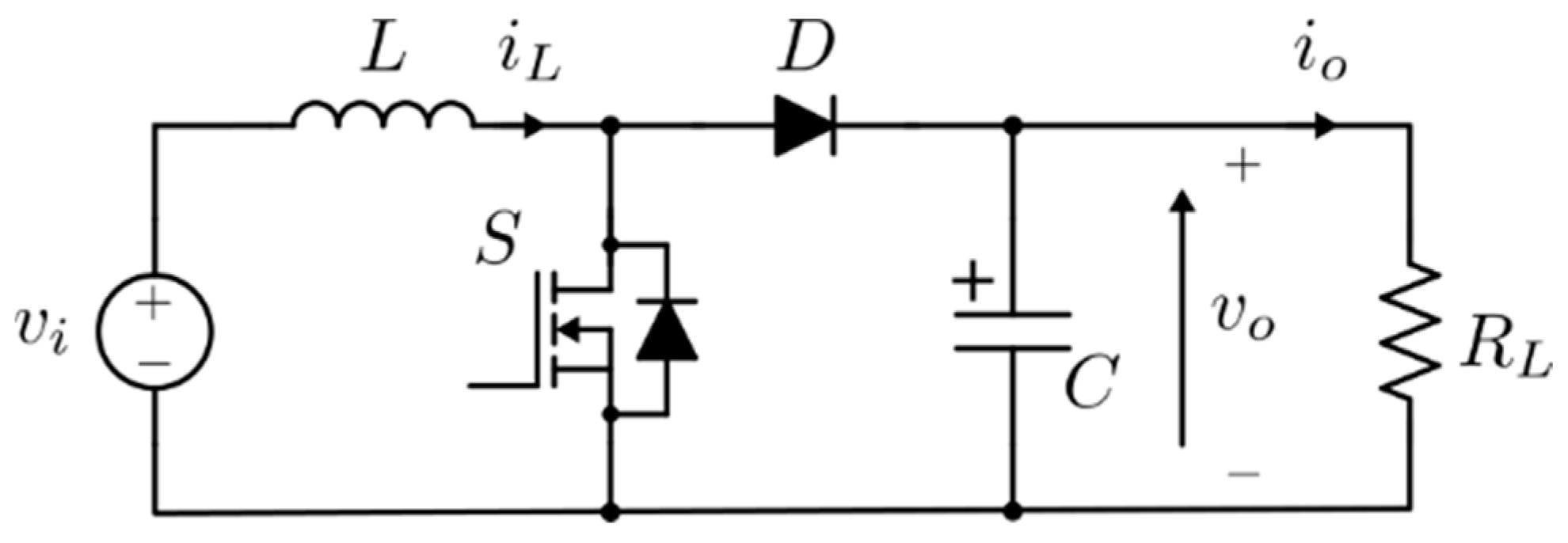
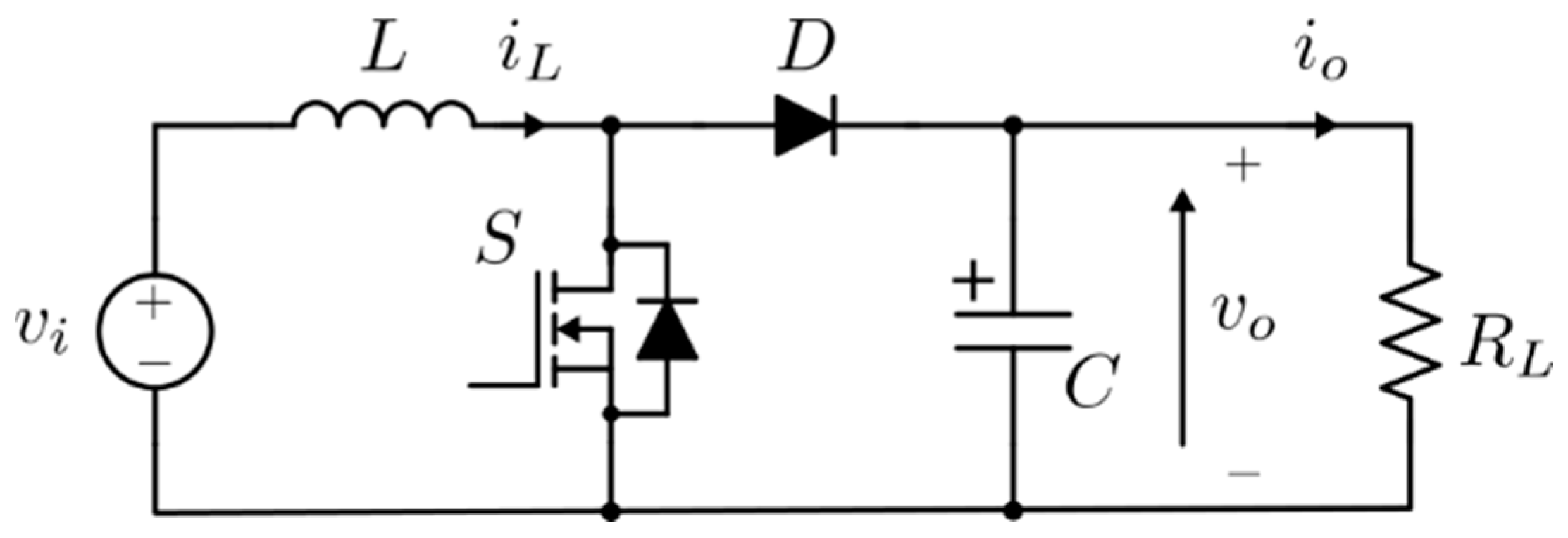
Figure 3 shows a Boost converter topology with an inductor, switch, and diode. When the switch is activated, it increases the inductor current flow; when it is deactivated, the current flow flows through the diode toward the load. The conversion coefficient is given by G v = 1 / ( 1 D ) , indicating that the output voltage is not constrained by parasitic components.
Using dynamic modelling, a 48-watt system was analyzed without employing a conventional Boost converter [29]. The inductor was designed using the Area Product Technique (APT), considering factors such as window area, number of turns, and wire length. The converter’s response was evaluated against variations in input voltage, input voltage, and load resistance at 100 and 500 kHz. Reliability and component breakdown rates were evaluated, with the inductor showing the lowest breakdown rates while the MOSFET had the highest. Frequency-domain testing corroborated the controller’s stability and rapid response to disturbances. MATLAB® Simulink was used to perform simulations [31], as shown in Figure 4 and Figure 5.
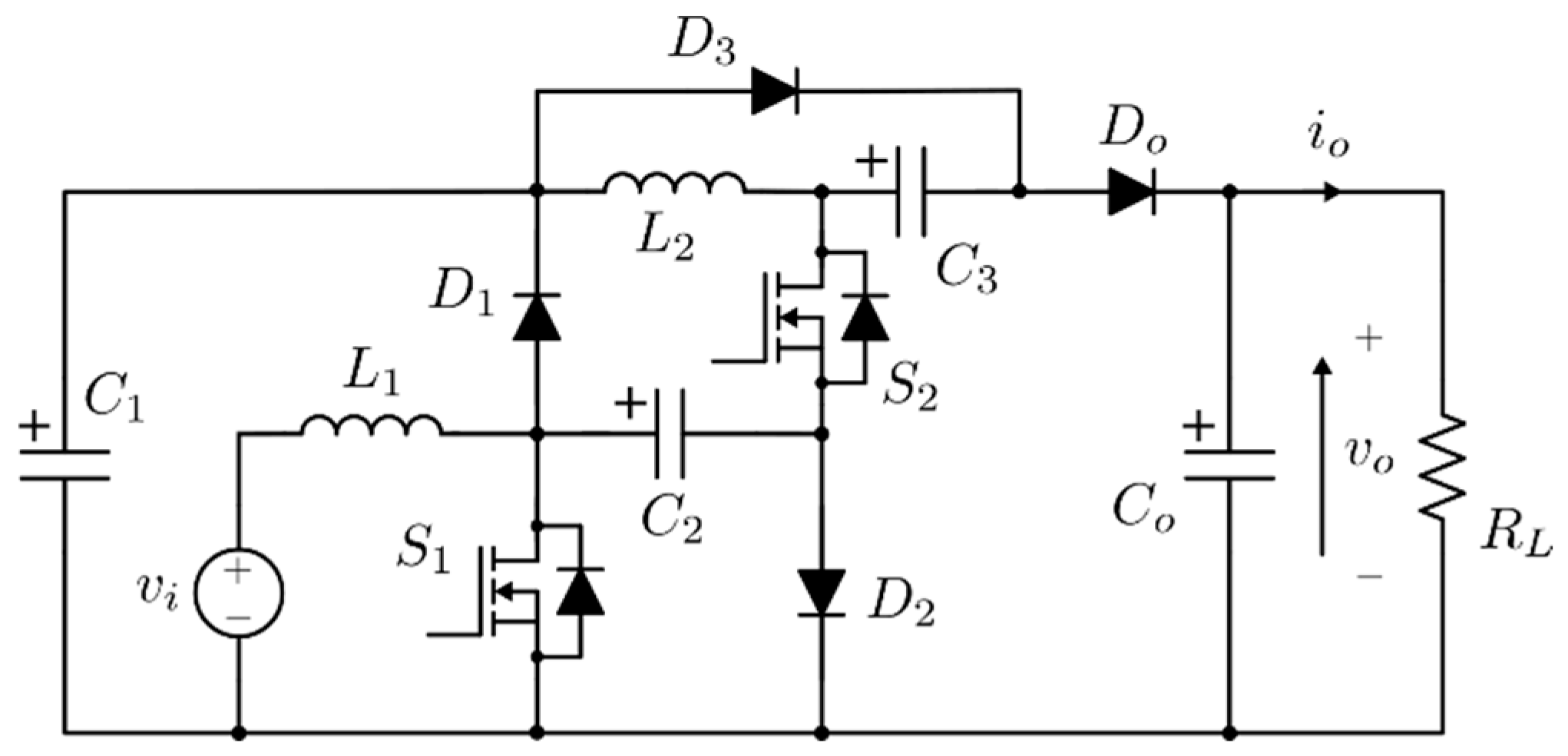
The suggested converter is compared with previously developed high-gain topologies, demonstrating superior performance across all evaluated parameters. A 300 W prototype was built to corroborate theoretical results, achieving voltage increases of up to 17.77 with duty cycles of 0.6 and 0.7. The efficiency ranges between 92.5% and 94.5%, highlighting its suitability for mid-high-power applications. Its design simplicity and high efficiency make it the perfect choice for sustainable energy systems [13], Figure 6 proposes a high-gain boost converter topology.
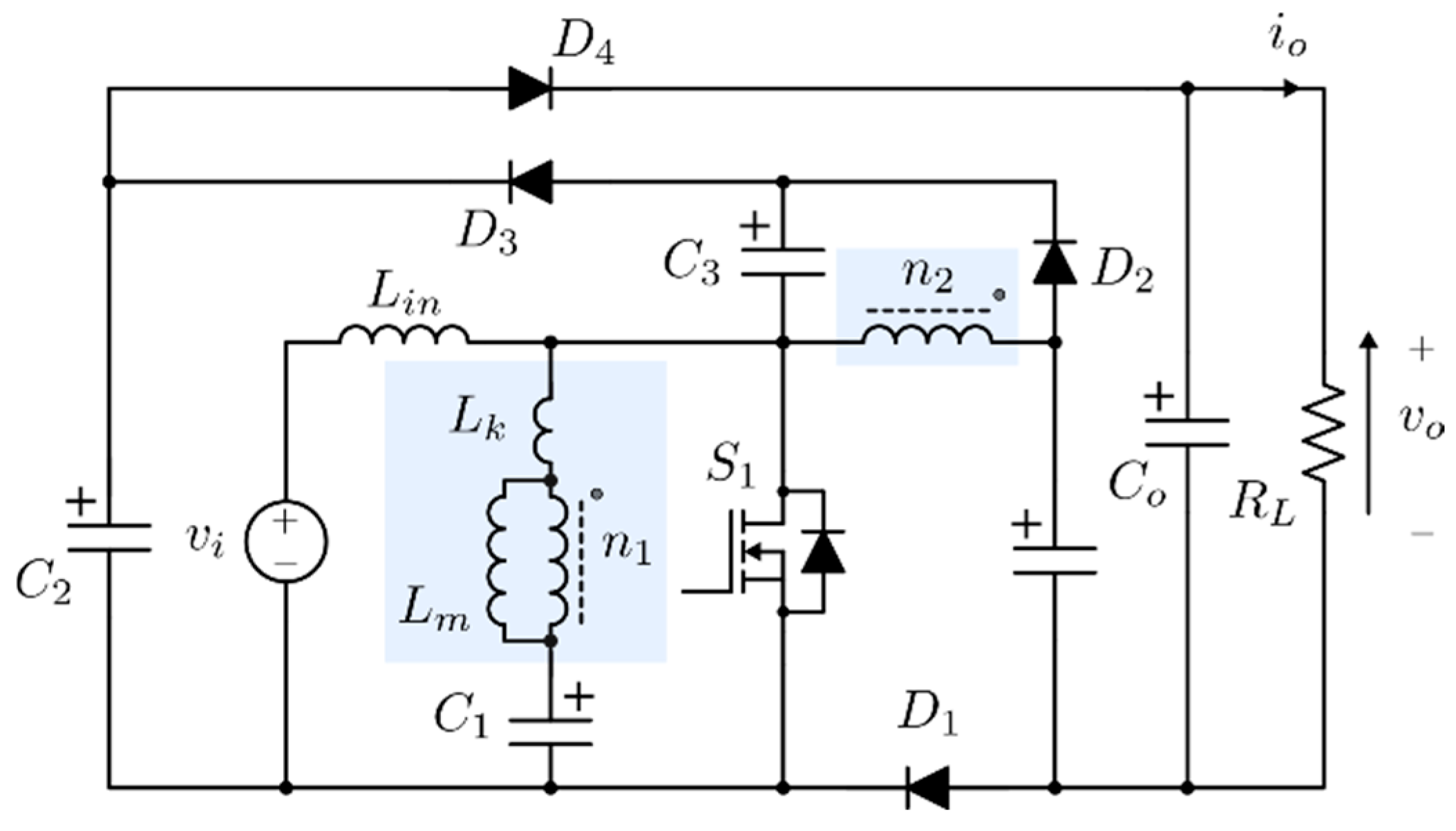
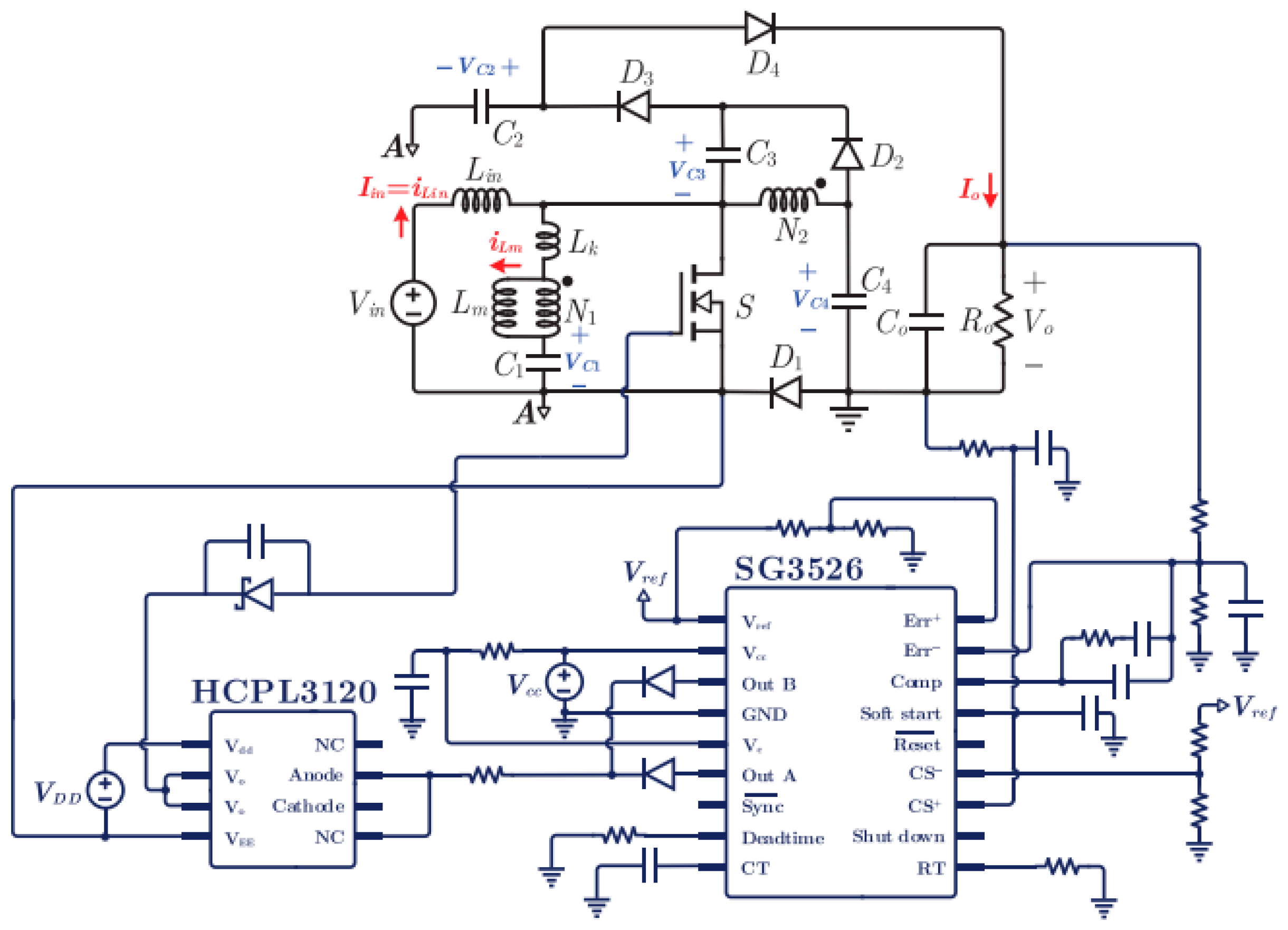
Presented here [14] is a high-gain, non-isolated, non-coupled DC-DC Boost converter designed for renewable energy and solar power applications. It provides comfortable voltage absorption, reduced voltage stress, and efficient low-level duty cycle performance. Built exclusively with two switches and a single PWM control, the design is compact, affordable, and perfect for distributed generation systems. In addition, a high-stage converter with interleaved coupled inductors and a voltage multiplier are proposed. A regenerative clamping circuit is included to increase efficiency and decrease the effects of leakage inductance. A 260 W prototype shows an efficiency of 96.9%, corroborating with its suitability for wind energy applications [14], as illustrated in Figure 7 and Figure 8.
In the equivalent circuit of Figure 8, mitigating parasitic effects—primarily leakage inductance, parasitic capacitances, and series resistances is essential to increase the stress-handling capability of the semiconductor devices and to improve overall efficiency. First, the leakage inductance must be minimized through a magnetic design with high coupling (interleaved windings and reduced flux dispersion), thereby decreasing the amount of energy that becomes trapped in the leakage path when the current reaches its peak. This trapped energy cannot be delivered to the load and later emerges as a voltage spike during the turn-off transition, increasing device stress. Second, implementing a regenerative clamp circuit or an active snubber enables the recovery of this leakage energy while effectively limiting the voltage overshoot produced by the leakage inductance, thus reducing switching losses. Finally, the use of soft-switching techniques (ZVS/ZCS) or resonant networks helps to control the voltage and current slopes (dv/dt and di/dt), mitigating the dissipation associated with the parasitic capacitances of the semiconductor devices. Together, these strategies substantially reduce the influence of parasitic elements and enable higher electrical stress tolerance and superior efficiency in the proposed converter.
A thorough theoretical study of the proposed converter is carried out, including its design, operation, and performance under various circumstances. Simulations are run with PSIM software (version 2021b), using photovoltaic (PV) sources as inputs, with the aim of verifying the converter’s suitability for renewable energy systems. Furthermore, a prototype is built and experimentally evaluated in various operating scenarios to support the theoretical conclusions [33,35].
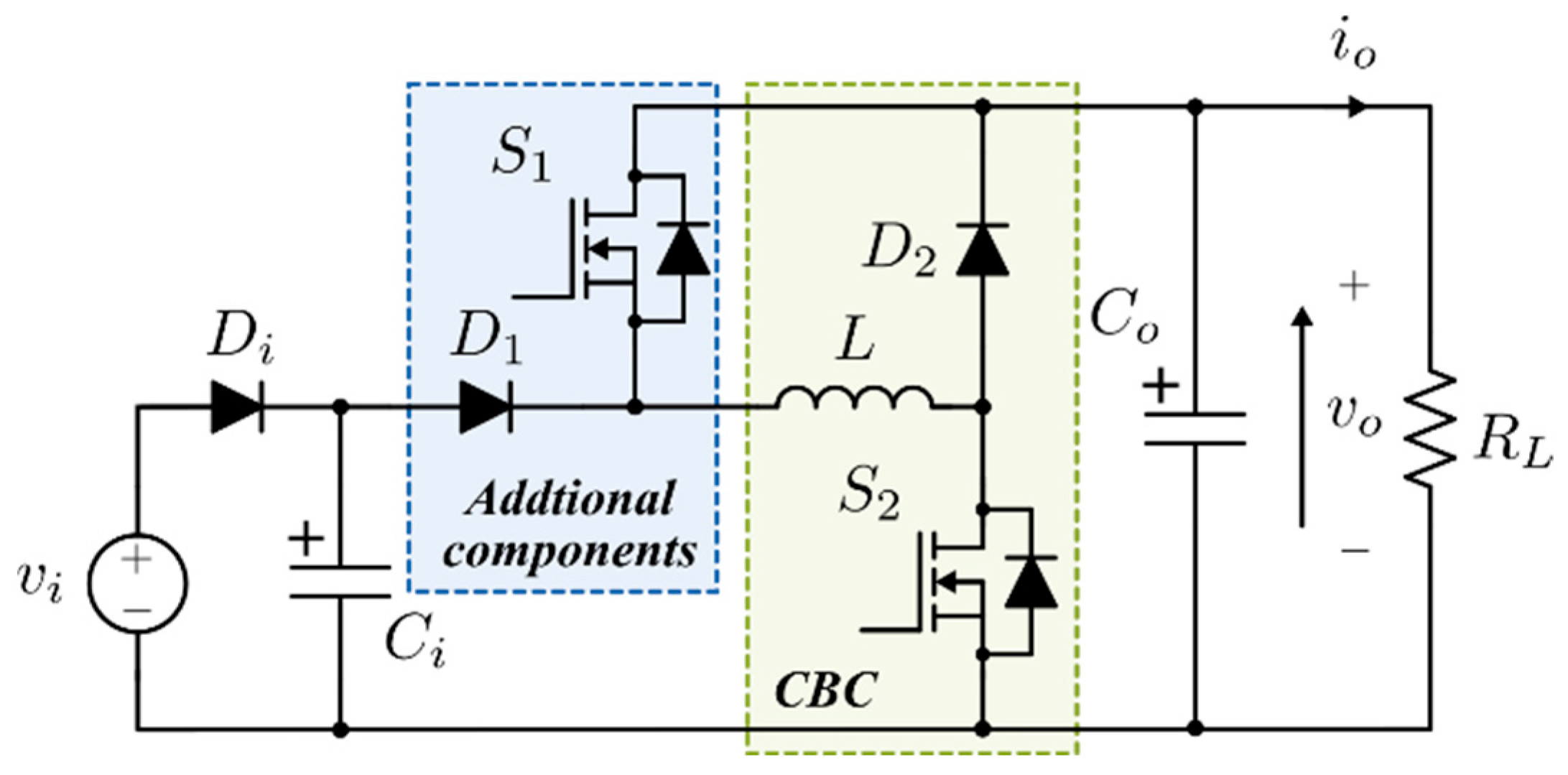
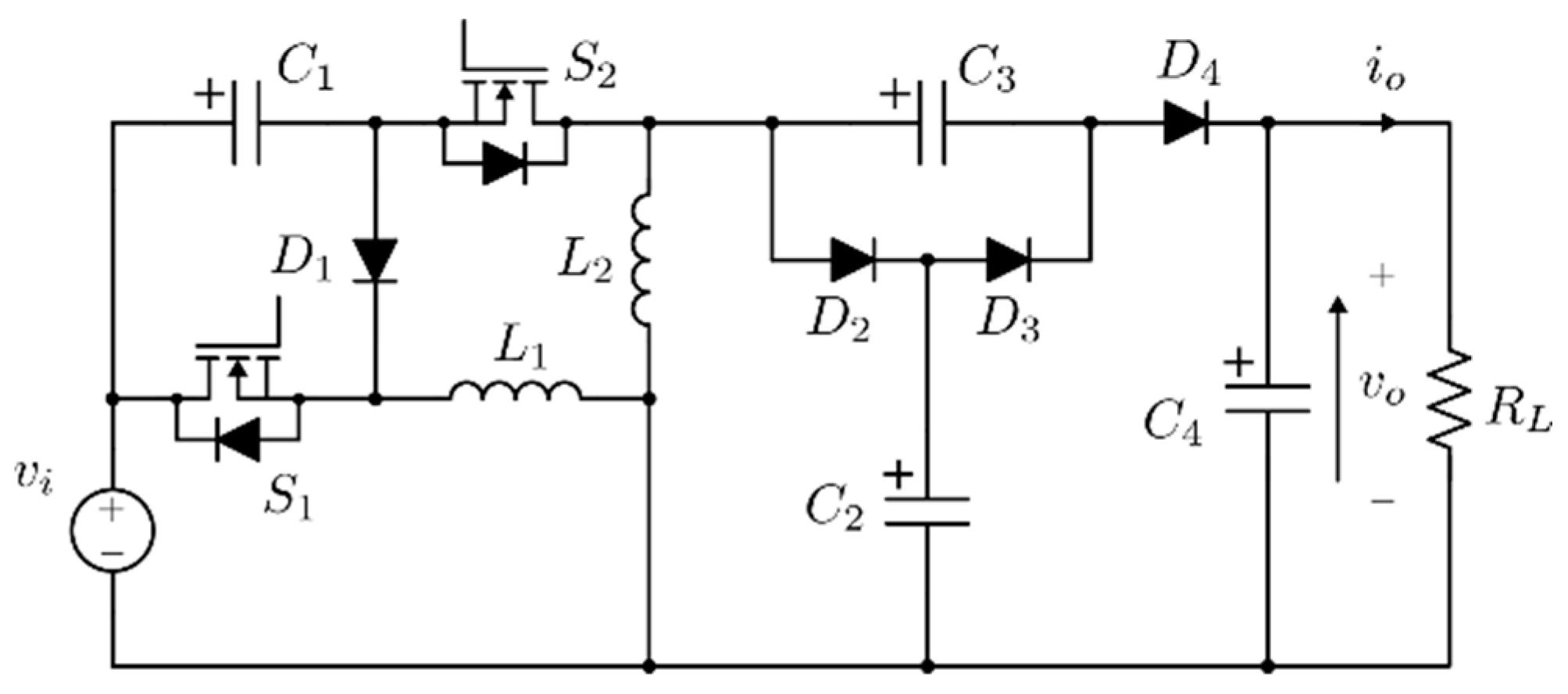
To overcome the limitations of conventional Boost converters (CBCs) in wind energy applications, a two-switch Boost converter (TSBC) is introduced. By incorporating two switch diodes, the TSBC increases the voltage gain and extends the freedom of control (DoFoC), avoiding the need for high duty cycles. The converter structure includes comprehensive guidelines for switching intervals and formulas for component selection. Mathematical derivations support the theoretical foundations of the TSBC, and its performance is verified through simulations and experimental testing. The results indicate that increasing the duty cycle of the additional switch from 0 to 0.1, while maintaining 0.7 for the main switch, increases the voltage step-up from 3.2 to 4.3. The TSBC also optimizes the regulation of the inductor pulse and maintains constant ripple ratios, offering a practical and flexible alternative to CBCs [36] as presented in Figure 9.
In the TSBC structure shown in Figure 9, the use of an additional NMOS and its corresponding diode serves to provide an extra energy transfer path, enabling higher voltage gain without requiring extreme duty cycles. This complementary branch enhances control over the inductor’s charge–discharge process, expands the degrees of freedom of control (DoFoC), and helps maintain constant ripple ratios in the internal currents of the converter.
Regarding performance, incorporating these two components enables an approximate 34% increase in voltage gain, rising from 3.2 to 4.3 when the auxiliary switch’s duty cycle increases from 0 to 0.1, while keeping the main switch’s duty cycle fixed at 0.7. These improvements result in more stable regulation, reduced stress on semiconductor devices, and greater operational flexibility compared to conventional Boost converters reported in the literature.
To address the challenges of voltage conversion in renewable energy systems, such as photovoltaics, a new converter topology is suggested in [28]. Conventional Boost converters often experience diode recovery problems, current spikes, inadequate transient response, and decreased efficiency at high duty cycles. The new design utilizes three regulated multifunction switches and a switched inductor-capacitor configuration to achieve a high degree of voltage gain at low duty cycles, eliminating the need for complex elements such as transformers or coupled inductors. Additionally, it supports auxiliary load mode, providing optimized voltage gain, continuous input current, an extended duty cycle range, and control versatility. Theoretical postulates are corroborated through experiments with a 200 W prototype in the laboratory, with comparative studies demonstrating superior performance compared to other high-gain converters [28].
Furthermore, to meet the needs of efficient and reliable energy transformation in wind and solar systems, two Enhanced Quadratic Boost Converters (EQBCs) are presented. These utilize hybrid voltage multiplier cells to offer exceptionally wide voltage gain ranges and extremely low voltage stress, thus enabling short duty cycles and the use of lower-grade components. The EQBCs provide continuous input current, reduce ripple effects on inputs, and provide stable output with simple control circuits, thanks to their common-base structure and single-activated switch. Experimental validations, along with exhaustive design and performance studies, corroborate the advantages and feasibility of the converters for renewable applications [37].

2.3. Buck-Boost Topology

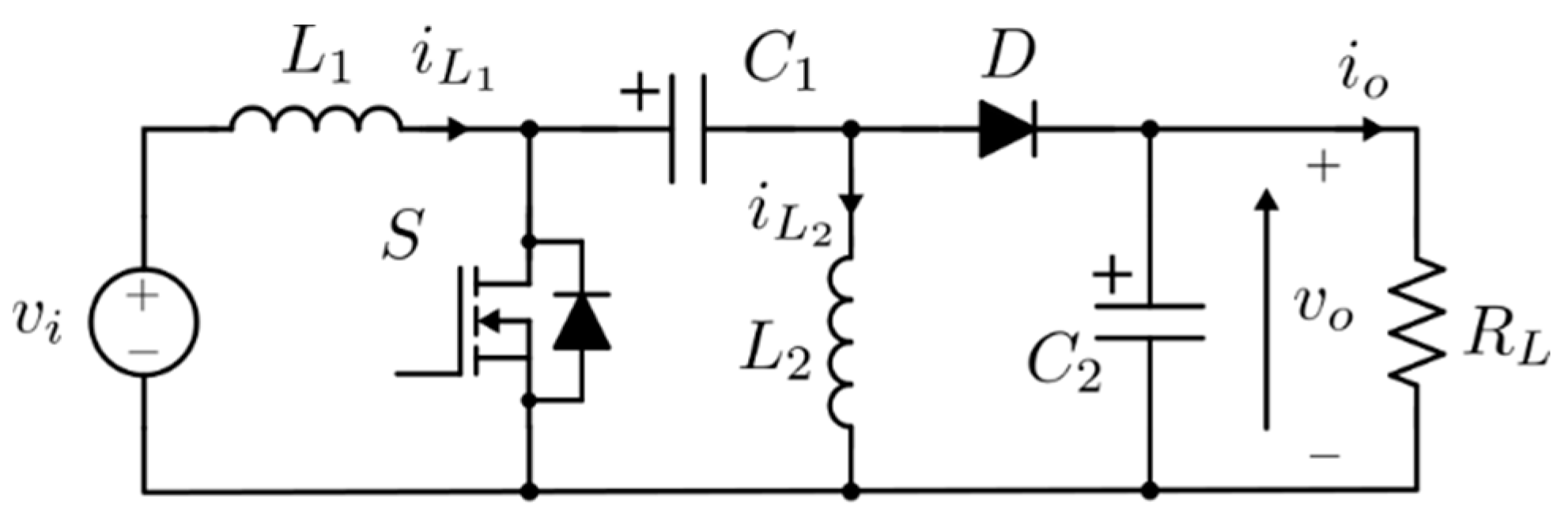
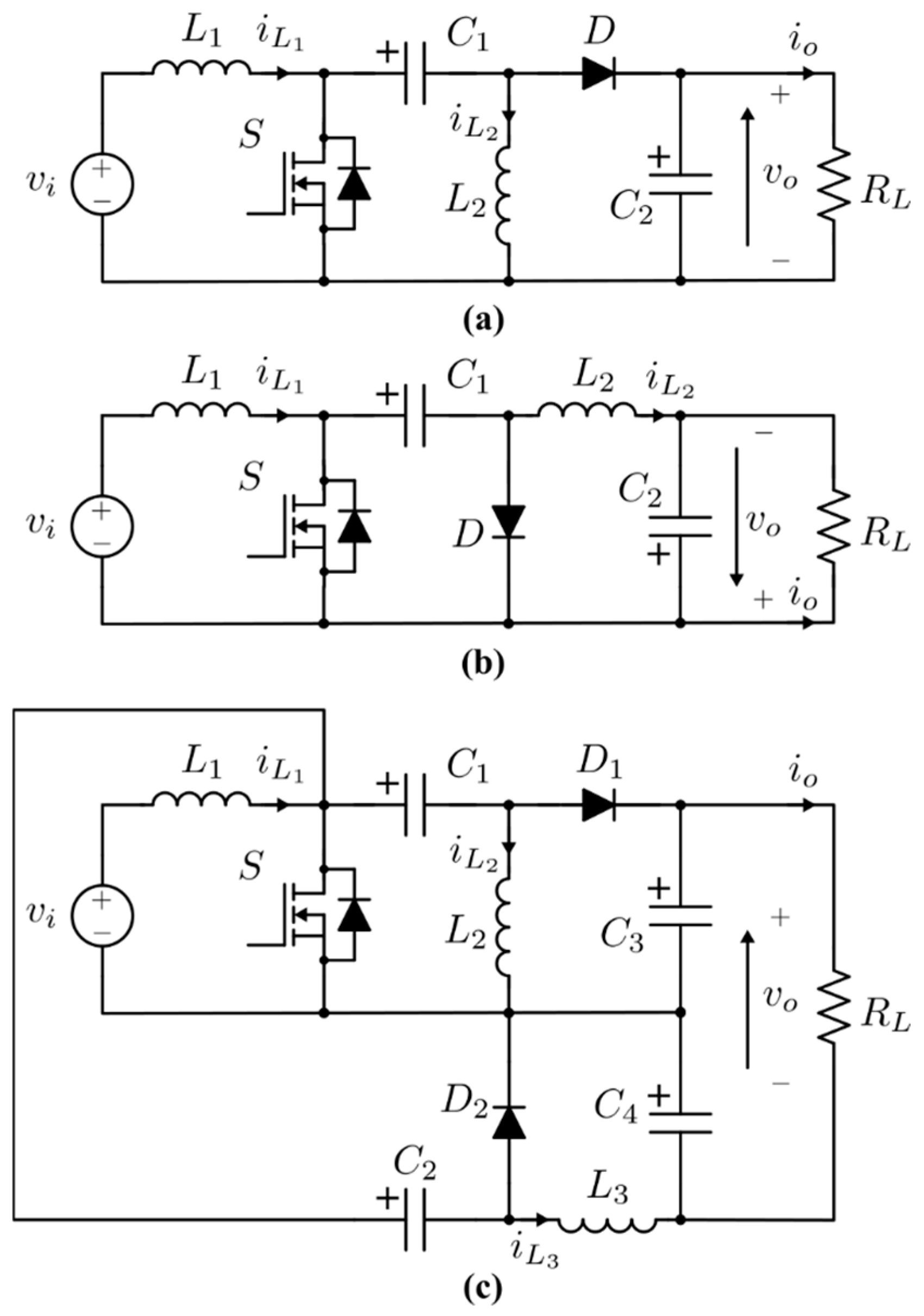
As depicted in Figure 10, the Buck-Boost converter incorporates the capabilities of both the Buck and Boost topologies, allowing voltage escalation or de-escalation as required. This hybrid topology is widely used in propulsion systems and both stand-alone and grid-tied photovoltaic (PV) systems. Ongoing research into voltage-boosting converters seeks to further increase the efficiency and versatility of solar power systems. Several non-isolated DC-DC converter topologies such as SEPIC, Ćuk, Luo, and Z-source have been developed with the goal of optimizing voltage gain. A dual-switched Buck-Boost converter has been experimentally shown to effectively monitor the maximum power point in PV applications, while maintaining high efficiency under various loading conditions.
Buck-Boost converters with coupled inductors have also been incorporated into hybrid fuel systems, providing non-invertible outputs with low ripple and high efficiency. In industrial applications, Buck-Boost converters directly coupled to motor drives are beneficial in reducing switching and conduction losses without the need for an H-bridge. An interleaved Buck-Boost topology with two switches has been implemented to correct the power factor, resulting in reduced inductor loads, lower switching effort, and lower electromagnetic interference.
Other use cases include LED power supplies where cascaded Buck-Boost converters with a single control switch help reduce filter capacitance and electric vehicles (EVs), where FPGA-controlled interleaved converters manage power transitions between batteries and capacitors. In the telecommunications sector, multi-input Buck-Boost converters located between the supplies and the DC bus are employed to reduce switching losses. A new technique has also been suggested to ensure smooth transitions between switching modes in non-inverting Buck-Boost configurations, as depicted in Figure 10.
An innovative transformer less Buck-Boost converter is presented in [16], providing extended voltage conversion to boost efficiency in green energy applications. The converter features a semi-quadratic voltage gain characteristic. As a result, the converter achieves high voltage gains at relatively low duty cycles. Moreover, its straightforward structure and implementation simplicity promote cost-effectiveness and improved overall efficiency. Operating in continuous conduction mode (CCM), the converter supports two independent operations, depending on the switching stages. Key design features include continuous input current and low voltage variation, essential for renewable energy systems.
A thorough analysis is presented in [12], covering both ideal and effective voltage boost, current calculations, voltage and current stresses on switches and diodes, design parameters and efficient performance, and a brief discussion on discontinuous conduction mode (DCM) and boundary conditions. Efficiency figures reach 93.1% in Boost mode and 92.14% in Buck mode, with an output power of 50 W. The converter can handle input voltage variations from 20 V to 48 V in Boost mode and from 20 V to 10.4 V in Buck mode. A laboratory prototype was designed to corroborate the simulation results and the theoretical analysis of the proposed converter [12], as displayed in Figure 11.
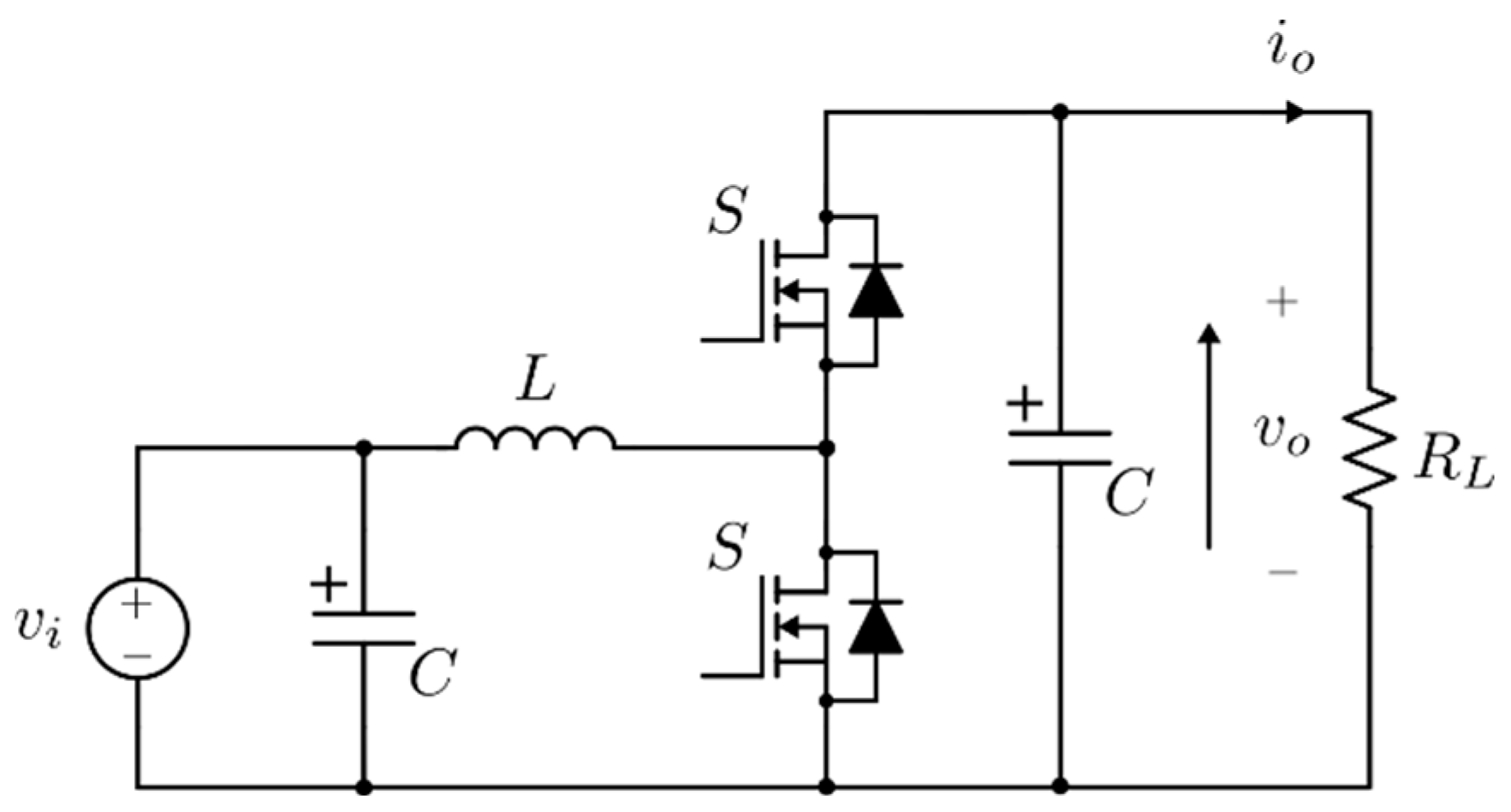
A bidirectional DC-DC Buck-Boost converter is designed to maximize energy conservation in photovoltaic (PV) systems using batteries. The converter operates in Buck mode to charge the batteries during the day and in Boost mode to provide power to the DC load when solar power is unavailable. The system efficiently manages a bidirectional flow of power with high power capacity. Both the control and power circuit boards are designed and examined within nominal voltage, current, and power conditions. Experimental tests in charge and discharge modes corroborate the performance and efficiency of the converter [20], as observed in Figure 12.
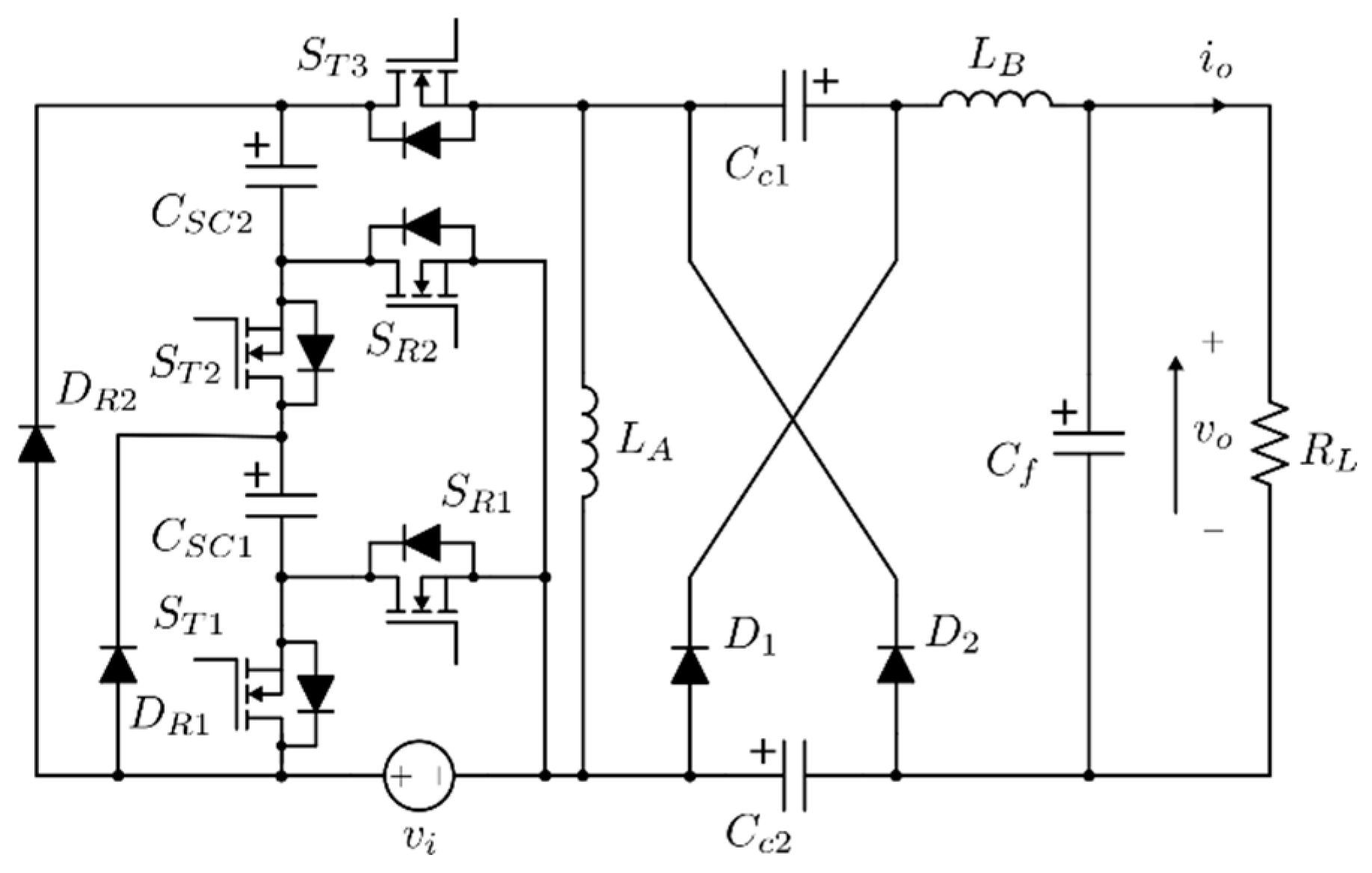
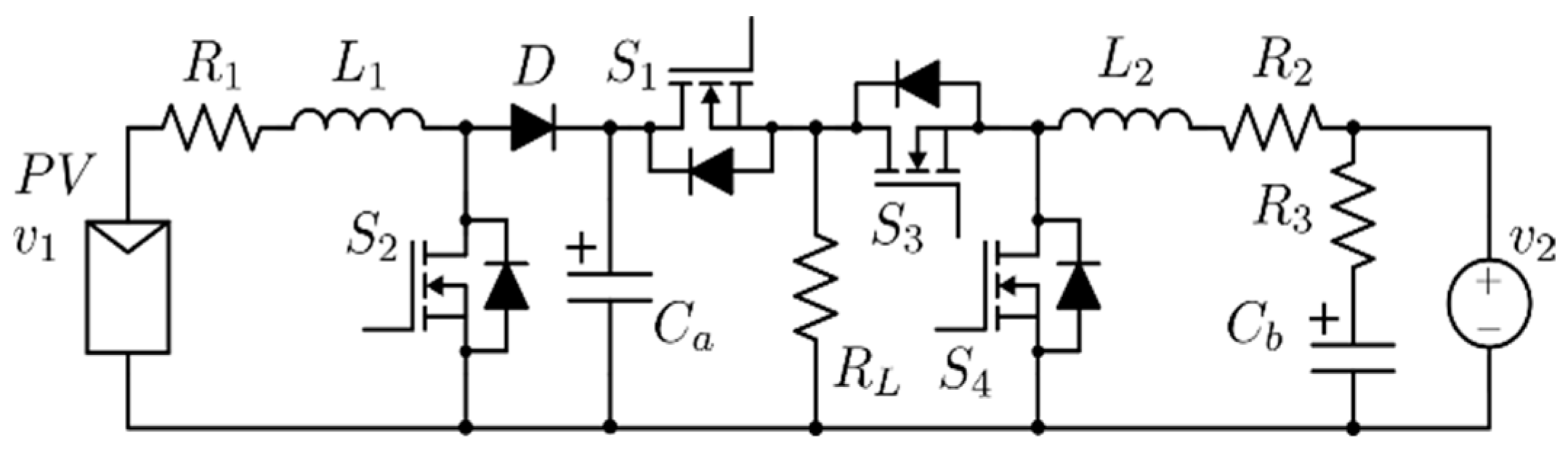
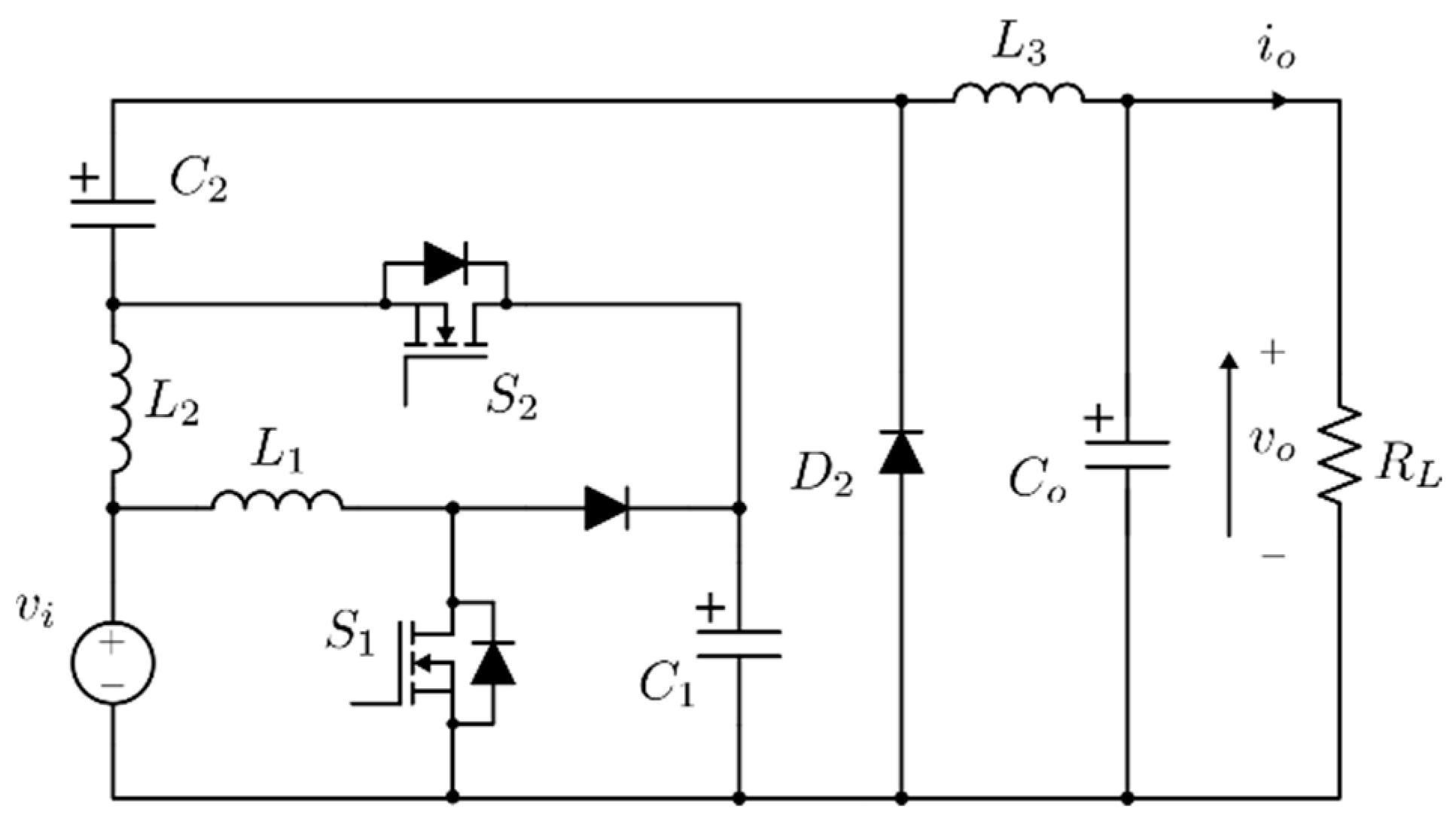
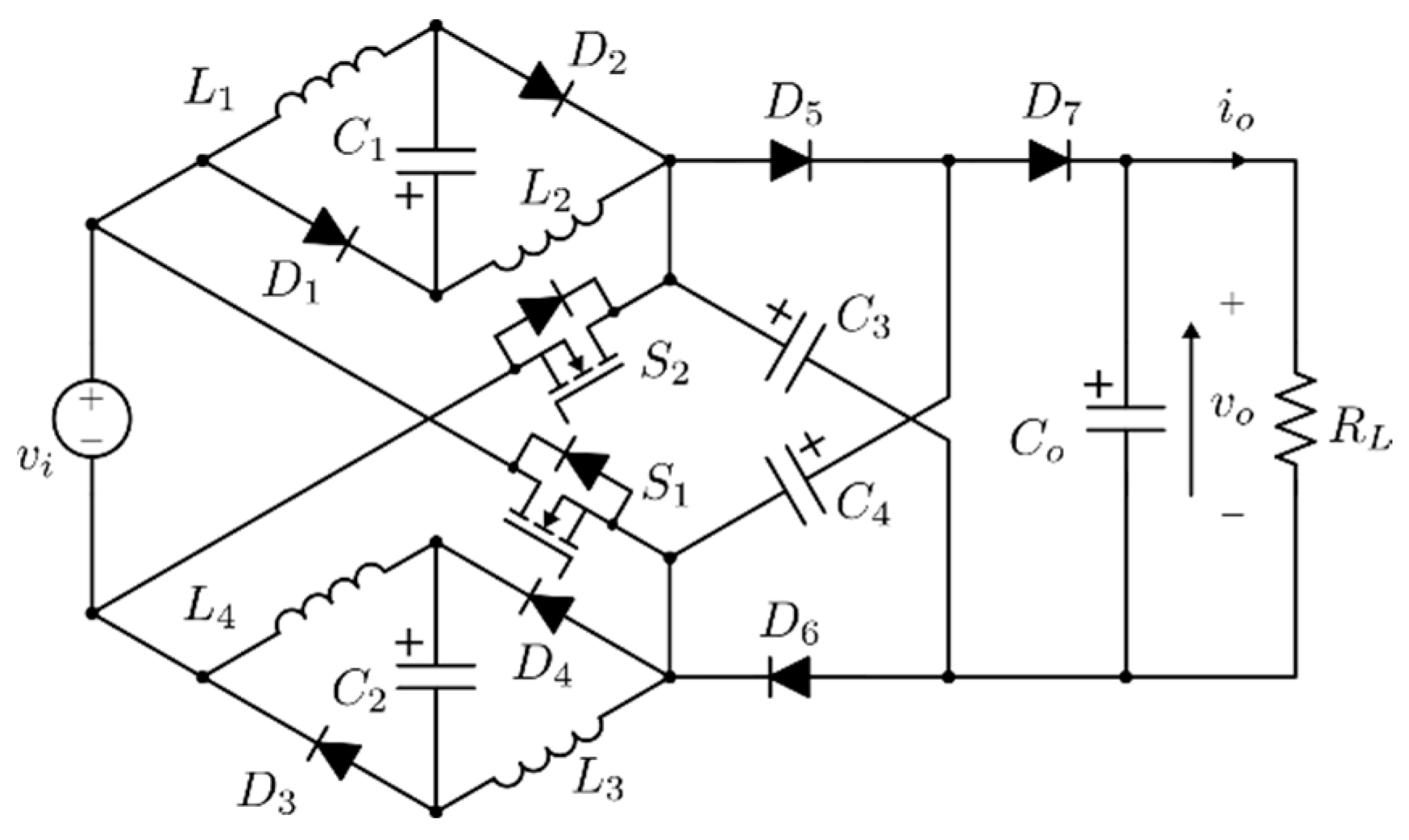
Figure 13 shows that a new strategy suggests an innovative DC-DC Buck-Boost converter based on switched capacitors (SCs), providing highly variable voltage gain and reduced voltage stress on capacitors, and switching devices. This modular architecture with switched capacitor cells enables high voltage to gain at low duty cycles and guarantees continuous input current. A thorough theoretical investigation is carried out along with a comparative evaluation of current topologies. A 200 W prototype with an efficiency of 91.34% corroborates both the performance and the theoretical results of the converter proposed in [38].
From Figure 14, in the framework of distributed generation, this study presents a high-efficiency DC-DC converter (HGBC-PVS) to incorporate low-voltage photovoltaic panels into high-voltage DC microgrid systems. The suggested converter, which uses low-rated switching devices, increases the voltage gain and efficiency. An incremental adaptive conductance-based MPPT algorithm is applied to obtain the maximum power from the solar modules [35]. Simulation results—assessed through key metrics such as output voltage, inductor current, efficiency, and voltage demonstrate the expected behavior and reliability of the proposed converter. The close agreement between simulated and theoretical data further supports the validity and effectiveness of the designed topology [39].
From Figure 15, it can be seen that a revolutionary DC-DC converter with a quadratic Buck-Boost voltage gain, which could significantly increase or decrease the voltage depending on whether the duty cycle exceeds or decreases by 50%. Unlike traditional quadratic converters, the suggested topology guarantees continuous input and output current, decreasing the stress on the filters and enhancing its suitability for renewable energy systems. It uses only one upper and one lower switch, thus simplifying the control system. The design contemplates a shared space between the source and the load, maximizing its size and conserving energy. Small signal control and mode-based studies are presented. A 100 W prototype corroborates the theoretical findings through simulations and experimental results [40].
Currently, the company is introducing a revolutionary multi-input DC-DC converter aimed at improving the low power output of renewable sources such as solar panels and fuel cells. The technology incorporates modified Buck-Boost converters, switched inductors (SI), and voltage multiplier modules (VMMs) to obtain a high degree of voltage gain by modifying the duty cycle and voltage ratios between inductors. It incorporates both bidirectional and numerous unidirectional inputs, allowing for flexible power sharing and ESS charging/discharging. A coupled inductor and series inductor SI enhance power transfer and decrease inrush current stress. The design ensures stable operation under PV conditions and load fluctuations and allows for continuous operation across two ESS units. Simulation conclusions corroborate the viability and performance of the converter [41], as illustrated in Figure 16.
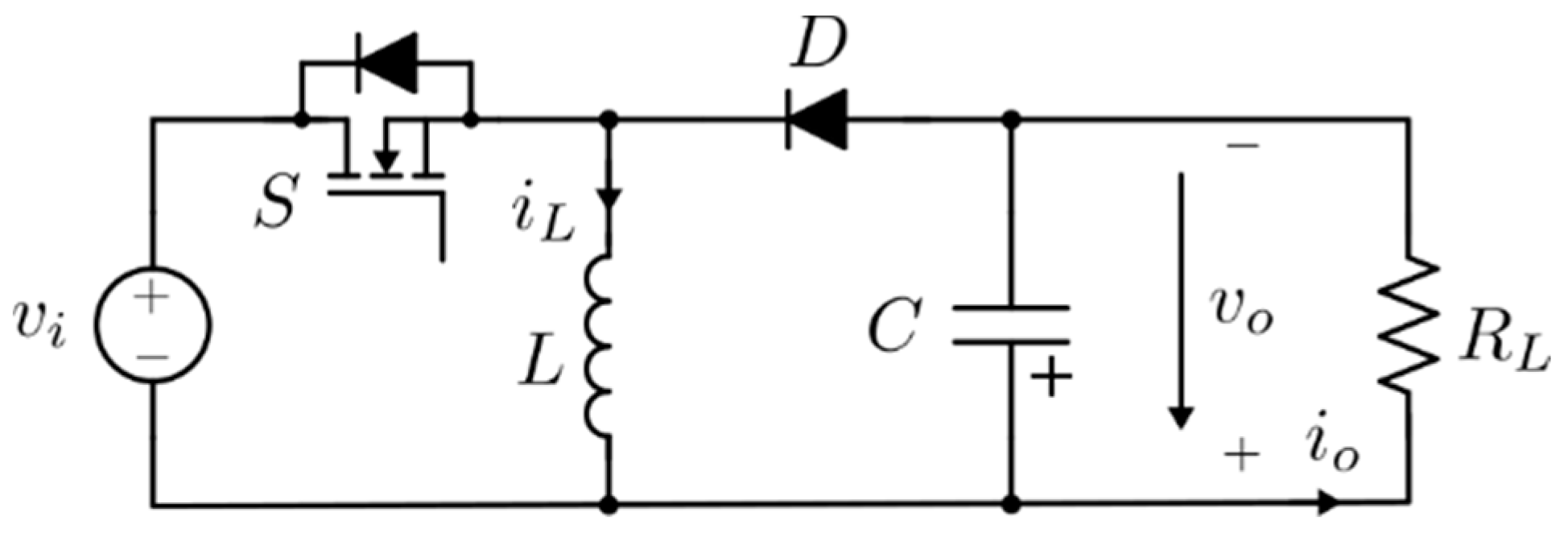
A new Buck-Boost topology is suggested for grid-integrated supercapacitors and photovoltaics (PV). It allows large variations in the input voltage, enabling efficient power extraction [42]. The non-inverting output voltage facilitates control. Both continuous and discontinuous conduction modes are considered in the design. A low-power laboratory prototype corroborates the theoretical efficiency of the converter proposed in [43], as presented in Figure 17.
A bidirectional DC-DC converter with three operating modes (Boost, Buck, and Buck-Boost) is proposed in [44] to enhance the efficiency and speed regulation of electric vehicles, particularly during the regenerative braking process. Its architecture allows voltage adaptation based on power demand, thereby decreasing the electrical stress on the switches. Furthermore, the concept of Partial Power Processing (PPP) is presented through a high-efficiency QZSSRC-type resonant converter, achieving efficiencies above 99% in systems up to 2 kW. Finally, a bidirectional Buck-Boost converter is developed using control tactics for vehicle charging management and V2G (Vehicle-to-Grid) applications, utilizing a multiple-input/multi-output intermediate current bus. Experimental examinations and simulations corroborate its transient performance, modularity, and controllability, highlighting its utility in electric mobility [43,45,46,47].

2.4. SEPIC Topology

A SEPIC converter (Single-Ended Primary Inductor Converter) is suggested for use in renewable energy systems, highlighting its ability to increase and decrease output voltage. Unlike a Buck-Boost converter, the SEPIC has the advantage of not inverting the voltage, making it the perfect instrument for optimizing the power factor in photovoltaic systems. A high duty cycle is required for its operation and to achieve a significant voltage reduction. Furthermore, an isolated SEPIC, driven by a sliding mode, is suggested to adjust the power factor, highlighting both its low total harmonic distortion (THD) and its enhanced factor. Changes to the SEPIC converter for photovoltaic applications have also been proposed, including a double-pulse converter with two inductors and a design that increases the voltage gain and reduces the voltage at the main switch, making it suitable for renewable energy systems [19,23], as depicted in Figure 18.
In recent years, high-efficiency DC-DC converters have gained recognition for their versatility in various fields, such as water treatment and green energy applications [25]. A converter combining SEPIC and quadratic topologies with a single diode-capacitor cell is proposed. This design generates recurrent high-voltage pulses through a single semiconductor switch, thus reducing the component count.
Unlike other high-efficiency converters, this design [10], reduces the component footprint. Furthermore, the topology can be modulated by including more diode-capacitor cells without increasing the voltage level. The superiority of this high-voltage pulse generator is confirmed by comparing it with an equivalent converter reported in the literature. A 50 Volt prototype with various input voltages is analyzed to generate high-voltage pulses, thus corroborating with the analytical studies [10].
The discontinuous conduction modes (DCM) of modified versions of SEPIC, Ćuk, and Zeta converters are examined. These modifications incorporate an additional diode, allowing the converters to operate in various DCM modes. In the SEPIC and Ćuk converters, the additional diode is connected in series with the input inductor, replicating the arrangement of a four-diode rectifier used for power factor rectification in AC/DC conversion.
The incorporation of diodes enables the use of four distinct conduction modes: three Discontinuous Conduction Modes (DCM) and one Continuous Conduction Mode (CCM). The manuscript [48] thoroughly examines these four modes, determining their voltage-conversion relationships and deriving equations for the boundaries between driving modes in closed-loop and open-loop operations. These modes, along with their operating characteristics, are represented in the “ k 1 , k 2 ” plane, which visually illustrates the converter’s behaviors.
Building on previous studies on SEPIC, Ćuk, and Zeta converters, the research [48] shows that all three converters exhibit similar behavioral patterns, voltage-to-voltage linkages, and modulation limits. The theoretical conclusions derived from this research are experimentally corroborated by a reconfigurable prototype that can operate as both a modified SEPIC and a modified Ćuk converter [48].
To meet the growing energy demand, renewable energy sources are turning toward high-efficiency DC-DC converters with wide voltage transfer capabilities. Given certain drawbacks of isolated structures, non-isolated DC-DC converters are preferred. Conventional Boost, SEPIC, and Ćuk converters are modified by incorporating additional switches, diodes, and passive components to achieve superior voltage absorption. However, these modified structures entail increased control algorithm complexity, decreased power conversion efficiency, and increased costs.
As a solution, a hybrid DC-DC converter structure is examined [49], merging the traditional SEPIC and Ćuk topologies to obtain a superior voltage gain through a single power switch. The suggested hybrid converter improves overall efficiency and performance. In all operating modes, the input current remains constant, and the power switch experiences a lower voltage-current strain. A closed-loop configuration with PID and FOPID controllers is simulated in MATLAB® Simulink, using a duty cycle of D = 0.7 for the power switch. The results indicate notable improvements in dynamic performance, with shorter settling time, less overshoot, and a reduction in ripple compared to conventional PID control [49], as displayed in Figure 19.

2.5. Ćuk Topology

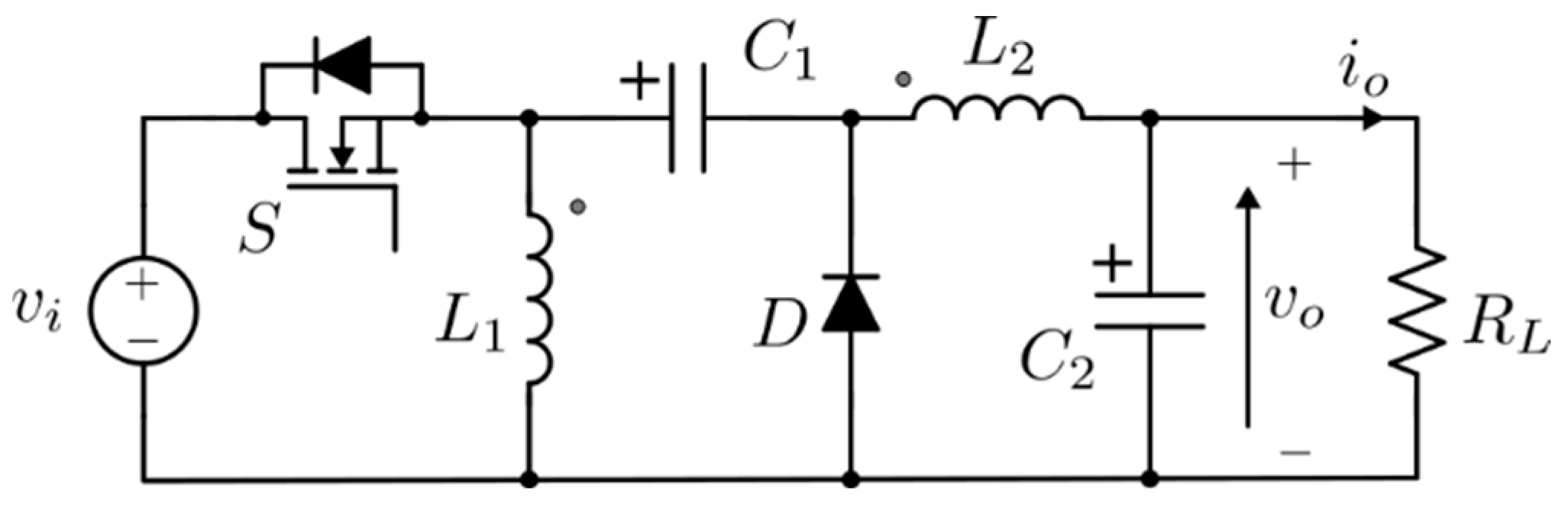
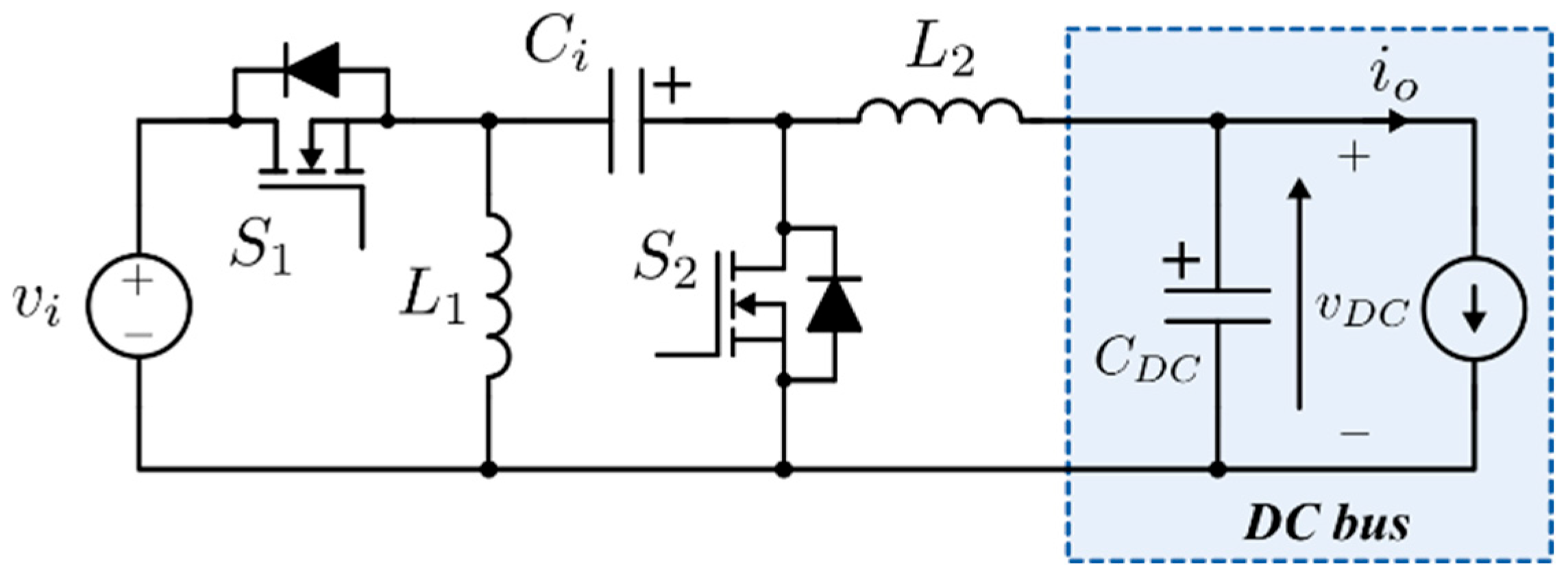
As observed in Figure 20, the topology of the Ćuk converter is shown in Figure 20, consisting of two stages: an elevator during the first stage and a Buck during the second. Its main uses include voltage regulation and power factor correction (PFC). The Ćuk converter inverts the input voltage, providing greater efficiency with lower conversion losses. The voltage gain is determined by the switch operating cycle.
For this configuration, the capacitors discharge energy while the inductors store energy when the switch is on, and the diode operates when the switch is off. For photovoltaic uses, the Ćuk converter is connected to a switched inductor to obtain a high-efficiency voltage with a lower switching voltage.
Recent innovations in Ćuk converters include a high-efficiency DC-DC version for use with fuel cells and applications such as air conditioning power factor correction, maintaining a power factor close to unity in a variety of applications. This converter reduces conduction losses and allows for reduced inductance measurements in power factor correction applications [25,26,27,28].
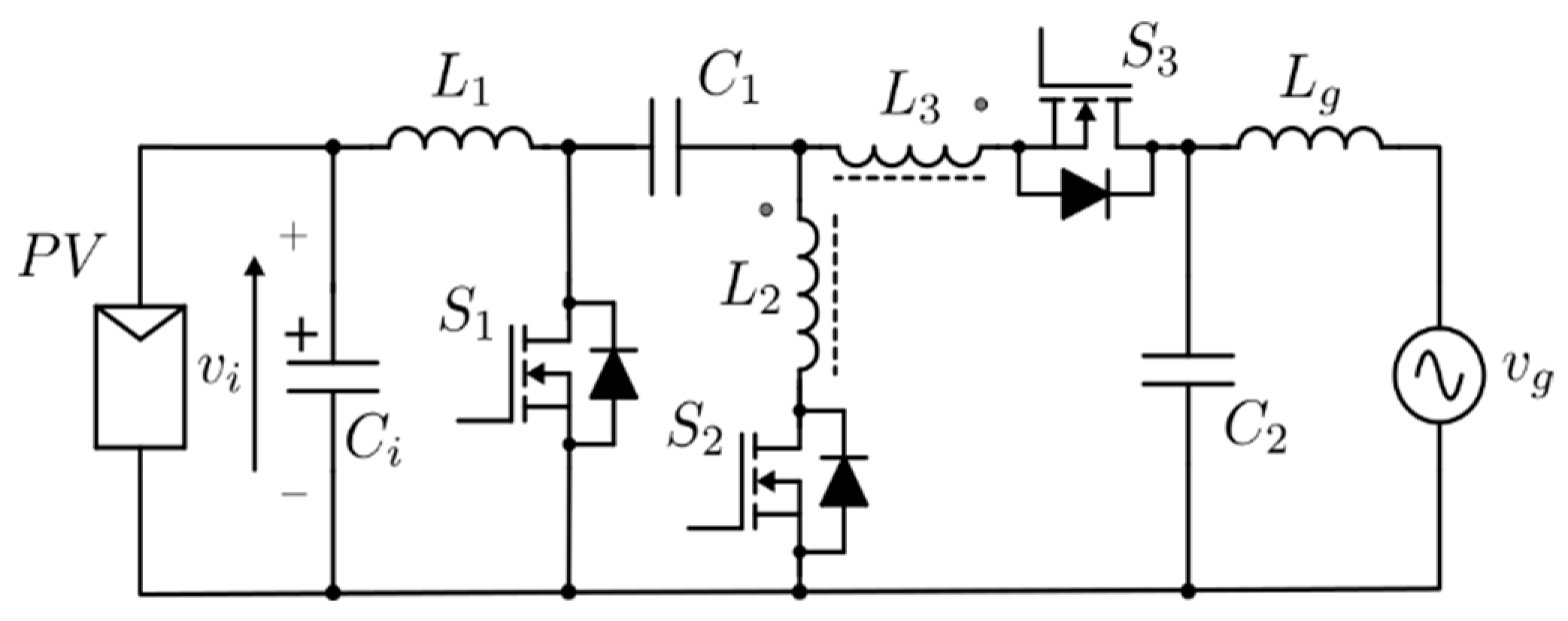
The study continues with the proposal for a cost-effective micro-inverter that includes a common-ground configuration. This micro-inverter minimizes leakage current and employs three switches, with only one operating at high frequency. It also includes a passive, lossless damper to reduce electrical stress and ensure smooth transitions for high-frequency switches. The use of inductors increases voltage gain while maintaining a controllable duty cycle, making the inverter ideal for use with AC modules.
The micro-inverter’s input voltage is continuous, minimizing losses in the capacitor input by reducing high-frequency components. The inverter operates in two modes: positive current mode (like the SEPIC converter) and negative current mode (like the Ćuk converter) [50,51].
Simulations examine the dynamic behavior of the inverter, with basic PI control designed for the highest risk case. A loss study is performed, and the results are compared with those of other studies. The effectiveness of the proposed inverter is verified through simulations and a real 300-watt prototype [52].
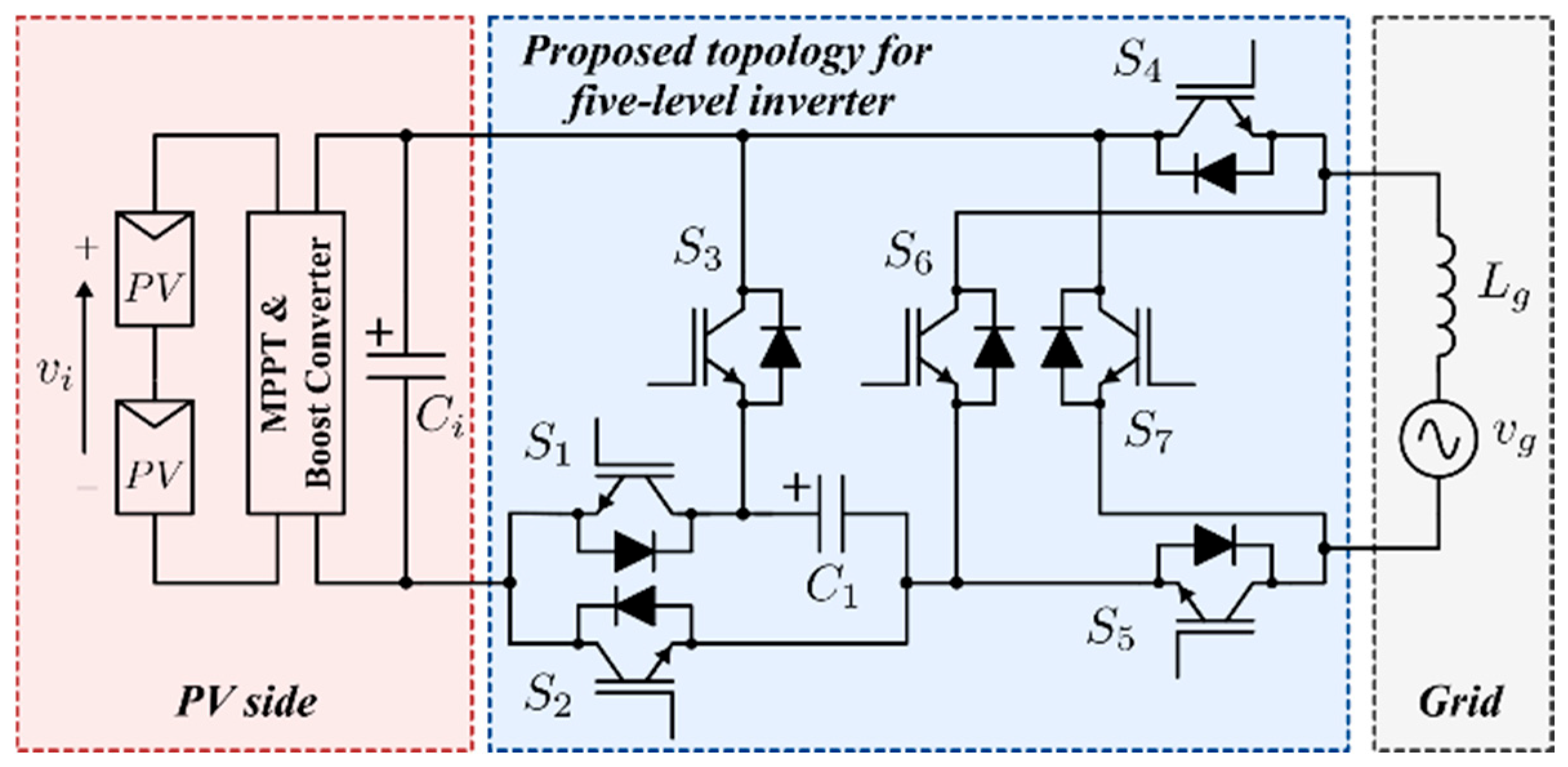
Figure 20. Proposed microinverter topology for single-phase grid-connected applications [52].
Applsci 15 12868 g020

2.6. Z-Source Topology

Figure 21 shows that the Z-source converter is an efficient topology that can simultaneously step up and step-down voltage. As shown in Figure 21, this system employs a network of inductors and capacitors that connect the converter to the power source. Z-source converters are especially beneficial for applications requiring high power capacity due to their low ripple and duty cycle, which do not exceed 0.5. Furthermore, these converters can offer a voltage increase compared to traditional Boost converters operating on the same duty cycle. Furthermore, Z-source converters feature higher efficiency, smaller size, and lower cost compared to other topologies.
An innovative strategy incorporating a Z-source network, a voltage multiplier and a flyback converter achieves an efficiency of 89%, although its component count is higher than that of the traditional Z-source converter [30]. In [26], a modified version of the Z-source converter is presented for photovoltaic applications, providing advantages such as lower conversion stress and smaller size. In addition, a hybrid Z-source converter suitable for motor control applications is proposed [38].
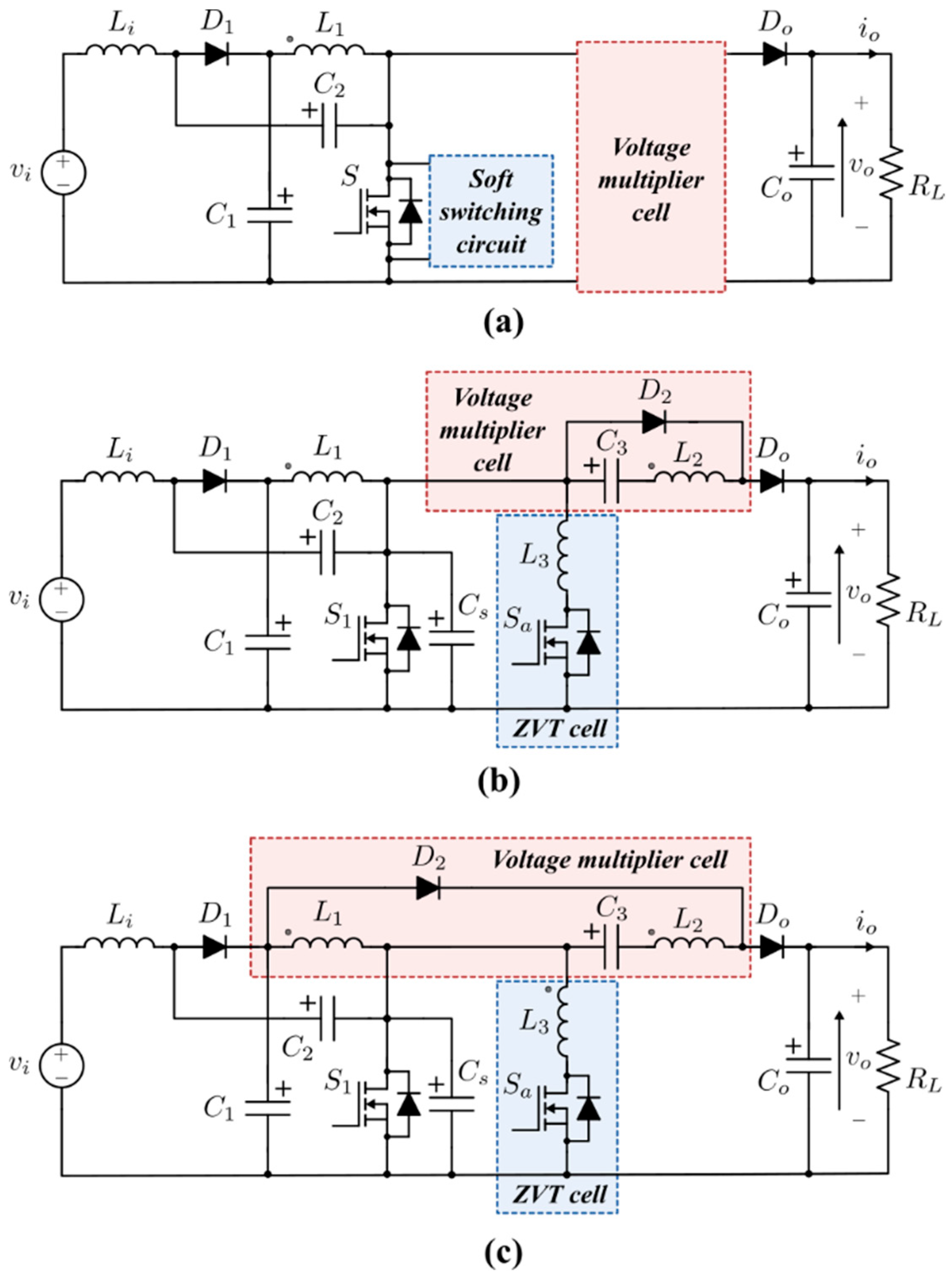
From Figure 22, the high-end DC-DC converter shown here [34] is based on a quasi-Z-source converter, which switches smoothly to increase voltage gain. This converter incorporates acoustic and capacitor transformation techniques to improve voltage conversion efficiency. In addition, a Zero Voltage Transition (ZVT) cell, consisting of a single switch and an inductor linked to the quasi-Z-source inductor, is used to reduce magnetic losses, and enable semiconductor operation without adding voltage or electrical charge to the components.
The main switch of this converter works by achieving Zero Voltage Switching (ZVS) and Zero Current Switching (ZCS) upon power-up, regardless of load variations and duty cycle changes. A capacitor snubber is implemented to facilitate the easiest activation of the main switch. Furthermore, ZCS operation reduces reverse recovery problems for all diodes while maintaining input current flow, thereby improving the converter’s overall performance.
To corroborate the theoretical evaluation and operation of this suggested converter, a 300 W, 100 kHz prototype was built. A thorough comparative analysis is performed between the suggested converter and other high-step converters based on the quasi-Z-source structure, highlighting the advantages of the new converter structure [34].

2.7. Zeta Topology

According to Figure 23, the Zeta converter, commonly used in photovoltaics, is a power optimizer that offers DC and voltage regulation with more components than other topologies. It has been implemented in solar-powered BLDC water pumps, reducing power loss, and improving photovoltaic power tracking [53]. In turbine applications, it maintains a constant output voltage under varying loads [54]. A modified version of the Zeta converter has been suggested for high voltage applications to increase efficiency [52,55]. Additionally, a hybrid Zeta-SEPIC converter has been proposed for electric vehicles, operating in three modes (propelling, plug-in, regenerating), optimizing efficiency by voltage boosting in all modes [56].
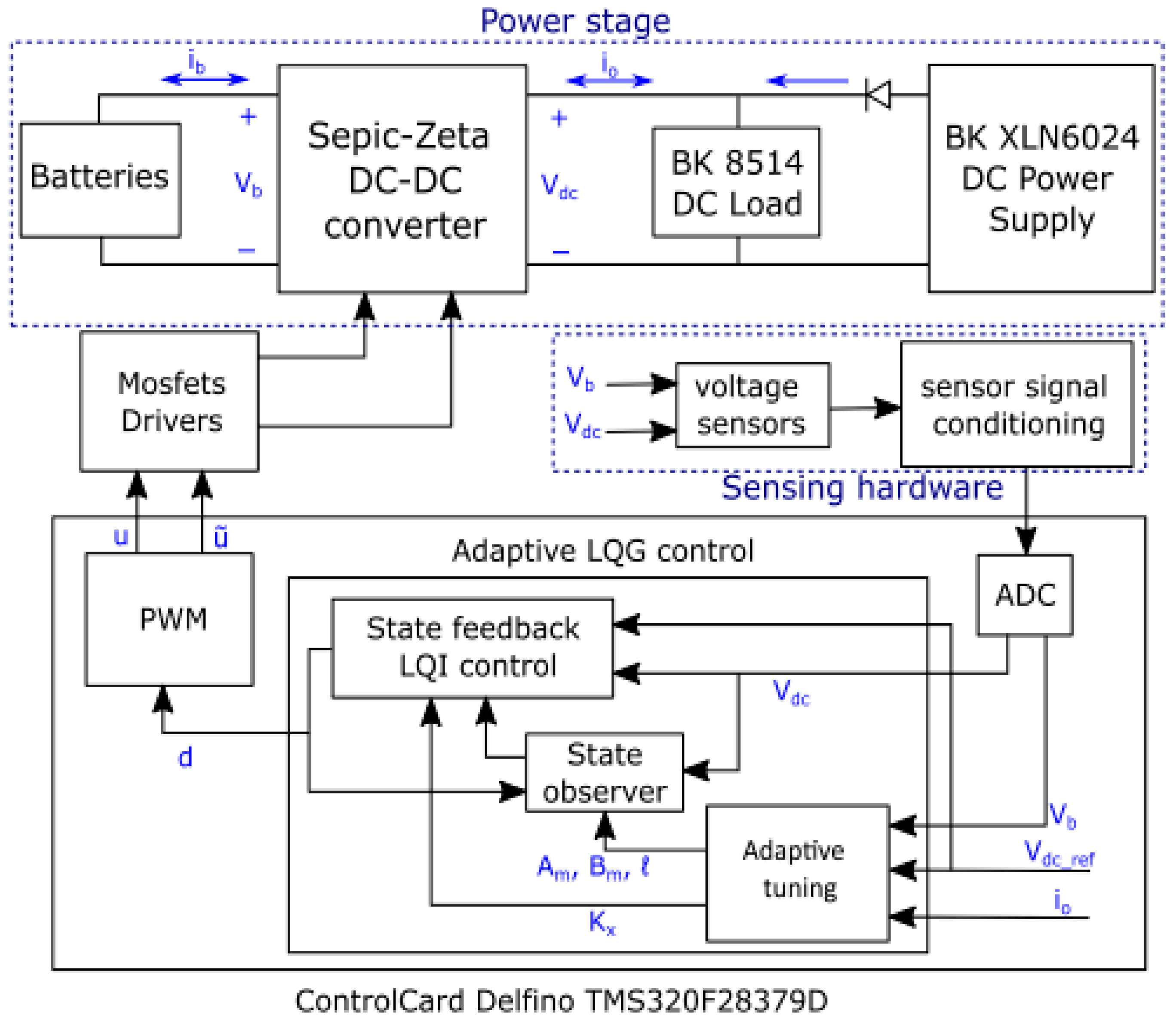
A charge/discharge device is recommended to maintain the DC bus voltage under various circumstances, such as fluctuations in battery voltage, variations in state of charge (SoC), changes in load demand, bidirectional power flow, and compatibility with different battery types and bus voltages [43]. The challenge is to keep the bus voltage stable while considering variations in battery voltage and charge. As illustrated in Figure 24, a SEPIC/Zeta-based converter with a flexible control system is suggested to provide bidirectional current flow and stable voltage at the bus. The system adjusts the controller parameters to any operating situation, allowing compatibility with various batteries and bus voltages as presented in Figure 25. The design incorporates a thorough mathematical study to determine stability and performance, in addition to an experimental prototype that verifies the solution in real-world applications [56].

3. Emerging Non-Isolated Converter Topologies

Non-isolated topologies are frequently used in contemporary applications, although they tend to be less efficient and reduce the durability of electrical equipment. To solve this problem, combining different topologies presents a promising strategy, taking advantage of the strengths and weaknesses of each. Essential parameters of these topologies include voltage, voltage, voltage stress, switching voltage, and duty cycle. The advantages and disadvantages of these converters are detailed in Table 1.
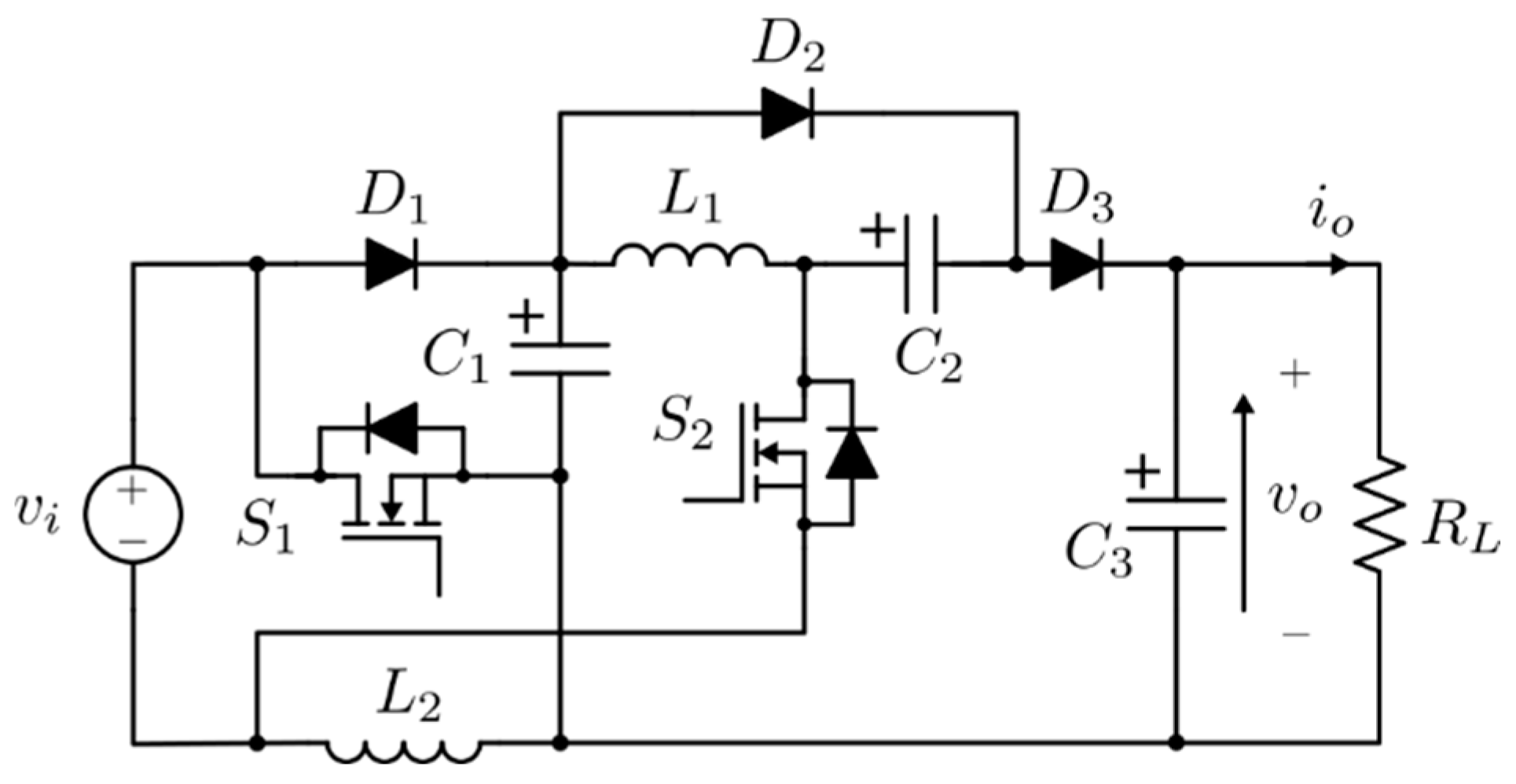
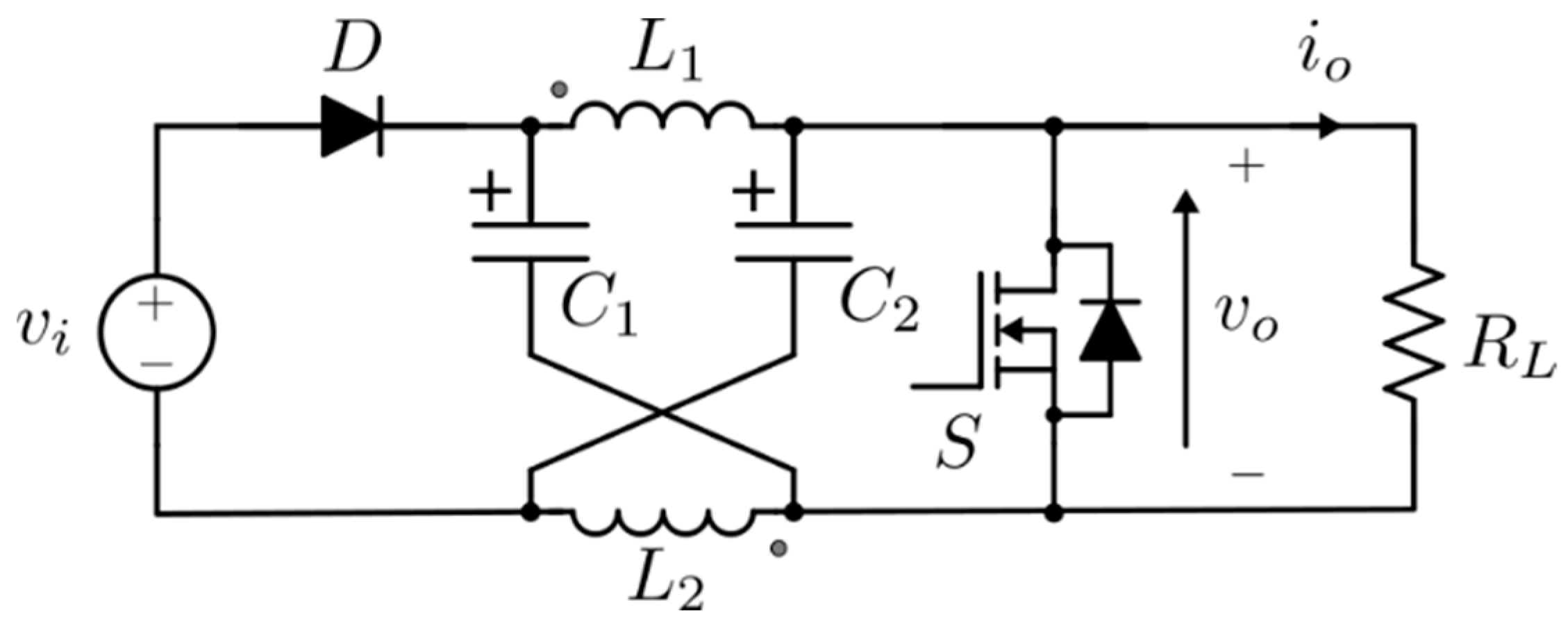
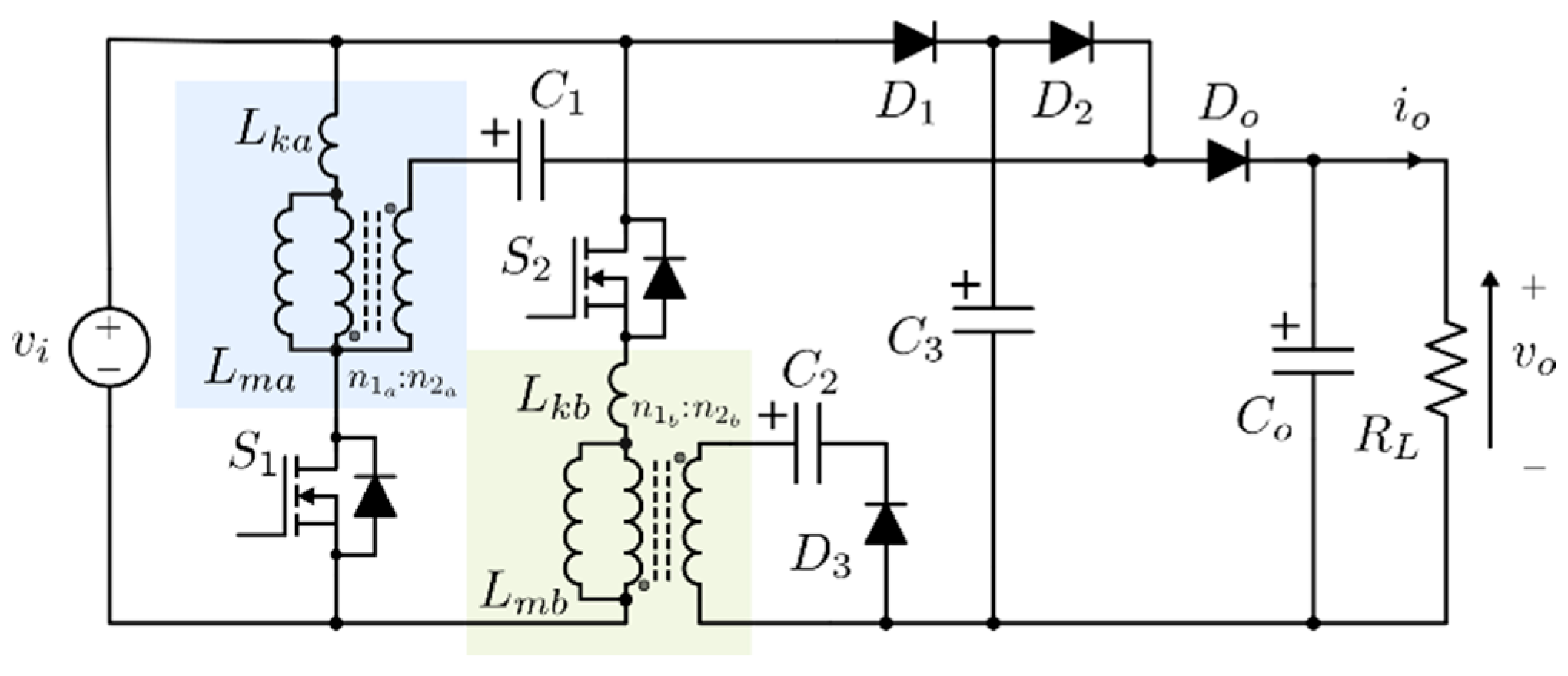
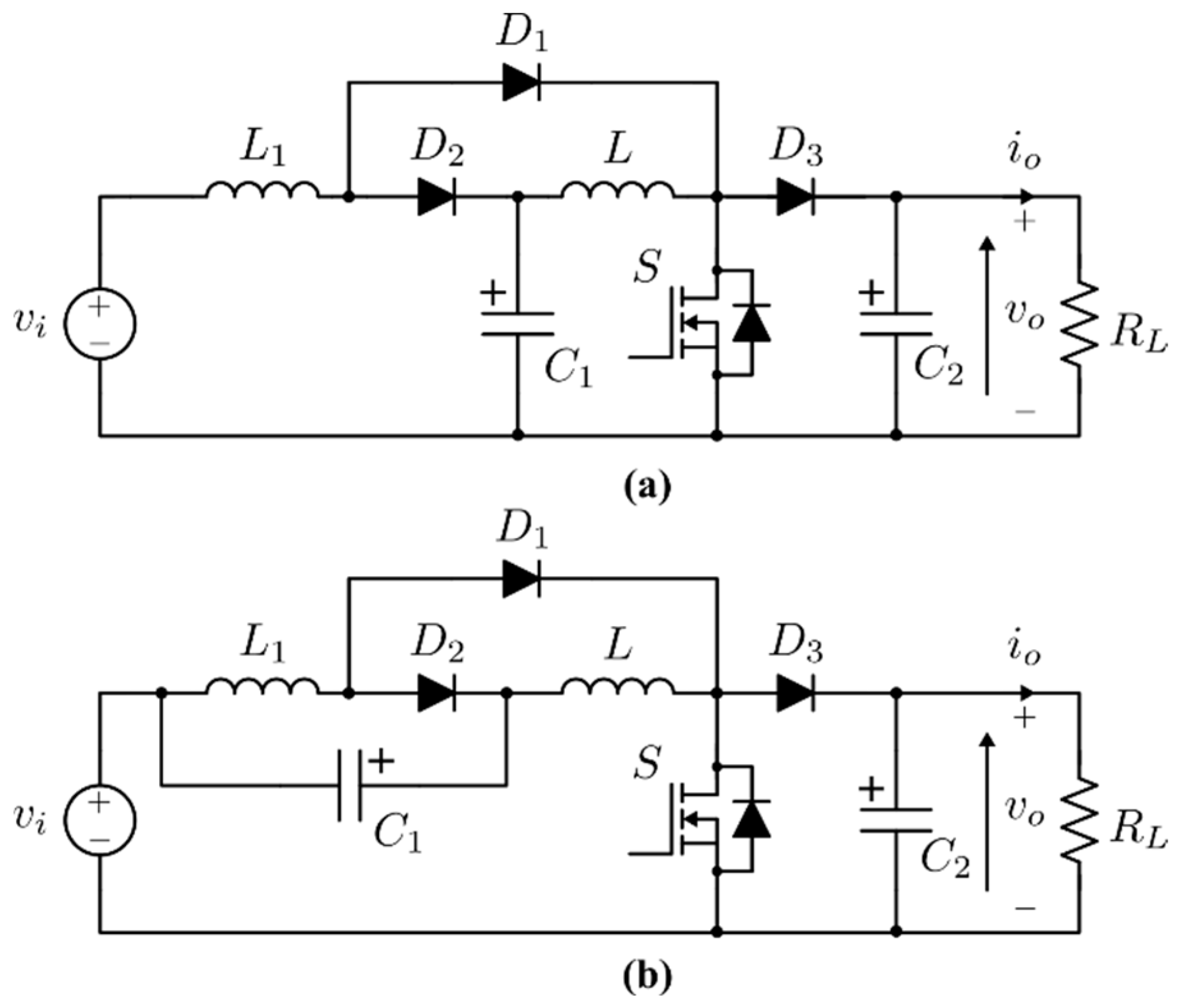
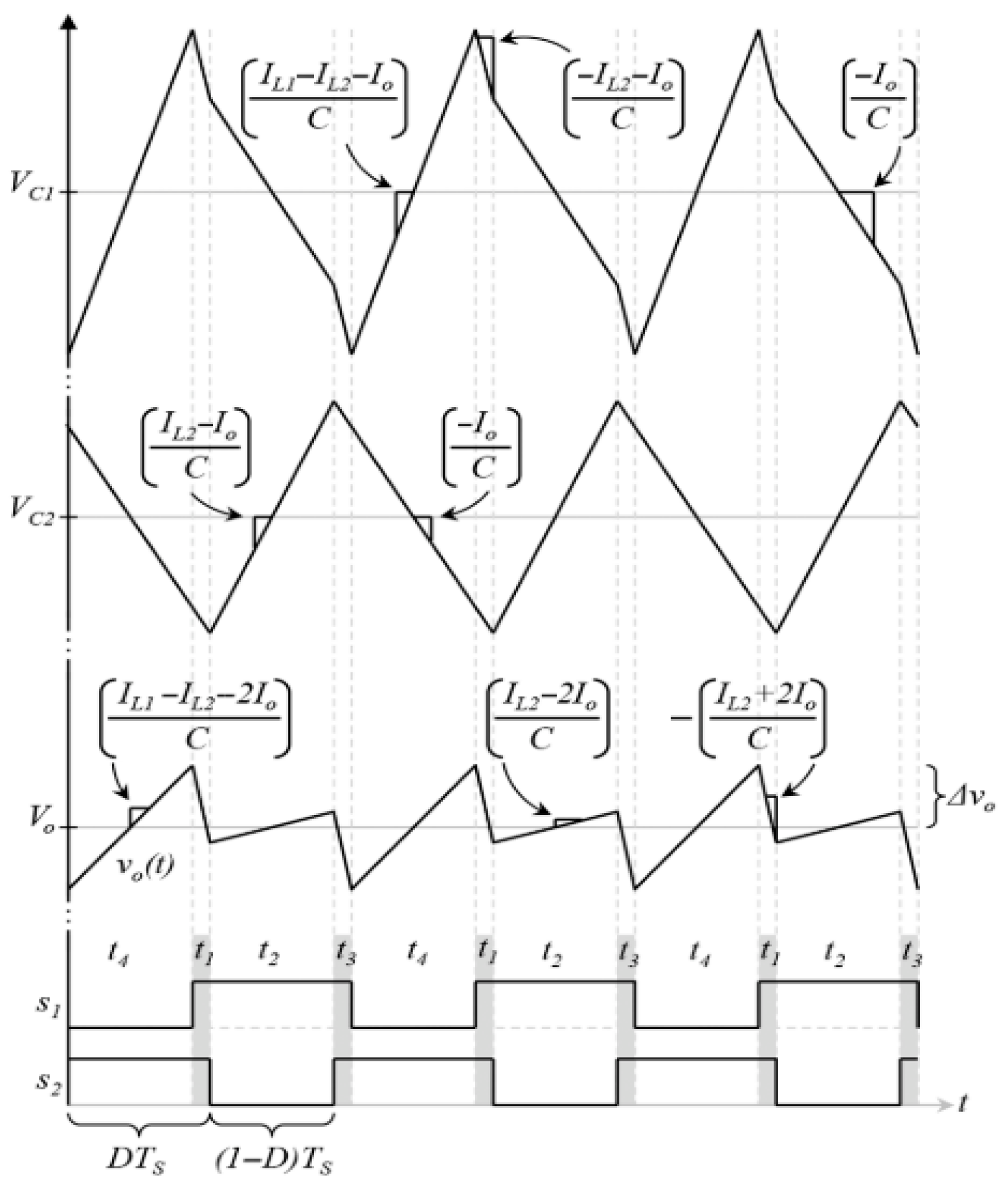
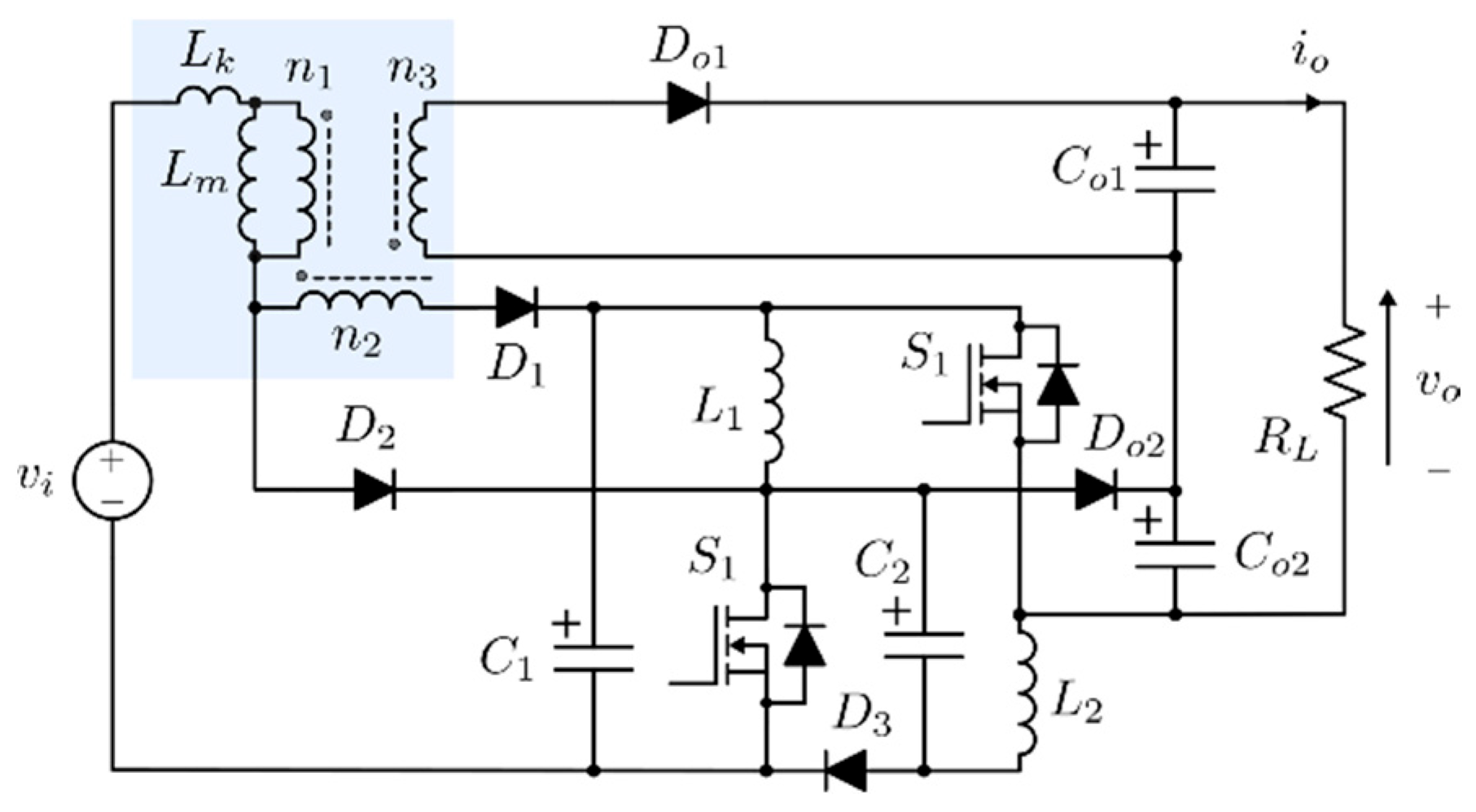
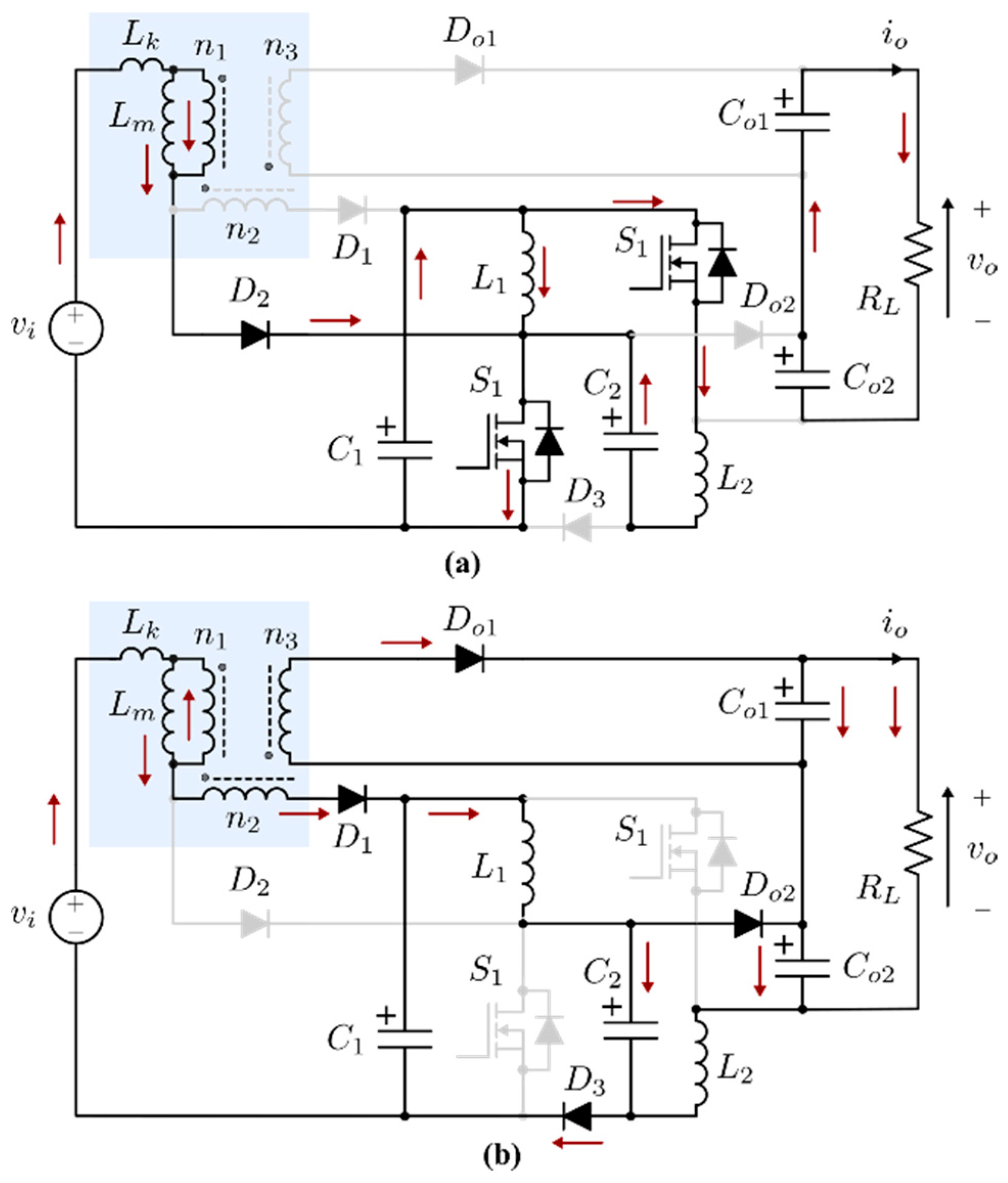
Figure 26 and Figure 27a present recent DC-DC topologies, ideal for photovoltaic applications, with the ability to increase and decrease the production voltage. The series inductor and the reduced duty cycle enhance the voltage gain, as shown by the waveform in Figure 28. This configuration provides normal conversion voltage and reduced voltage ripple, making it ideal for industrial and domestic applications [28,48,52,56].
The topology suggested in [58] stands out for its high efficiency and low component count. It achieves high voltage performance without the need for additional circuits such as voltage amplifiers or multipliers. Therefore, it is ideal for micro-DC connections and renewable energy systems, such as photovoltaics.
To boost the voltage, a new DC-DC converter based on coupled inductors is introduced, as suggested in [1], the topology comprises two power switches and two coupled inductors working at the same time. The suggested configuration for the converter, and the conversion relationship between the converter and the user can be illustrated as follows: The formula for G v is set as
V o V i = 3 + 2 N b + N a 1 D
where N a = V L a 2 / V L a 1 , and N b = V L b 2 / V L b 1 , and D is the duty cycle.
The results of simulating the proposed topology through the PSIM program are presented in Figure 26, and the experimental results of the topology corresponding to the criteria in Table 2 at an input voltage of 11. Therefore, the voltage increase is 268/11 = 24.36.
Recent advances in non-isolated DC-DC converters focus on creating compact and efficient topologies that overcome the limitations of traditional designs. These new configurations aim to boost efficiency, energy density, and overall system performance.
A proposal is presented to address an isolated Quadratic Boost Converter (QBC) with lower voltage ripple and reduced size, requiring less energy storage compared to traditional designs. It is suitable for high voltage applications such as wind energy, demonstrating its advantages through modelling, waveform analysis, and experimentation [1,61].
An innovative technique is presented that analyses a symmetric multilevel Boost converter designed for DC-DC applications in photovoltaic solar systems, including a ripple reduction mechanism. The topology provides a high level of voltage absorption, decreased switching stress, and a decrease in the input voltage and the capacitor return voltage. A thorough operational evaluation and experimental validation support the proposed design [2].
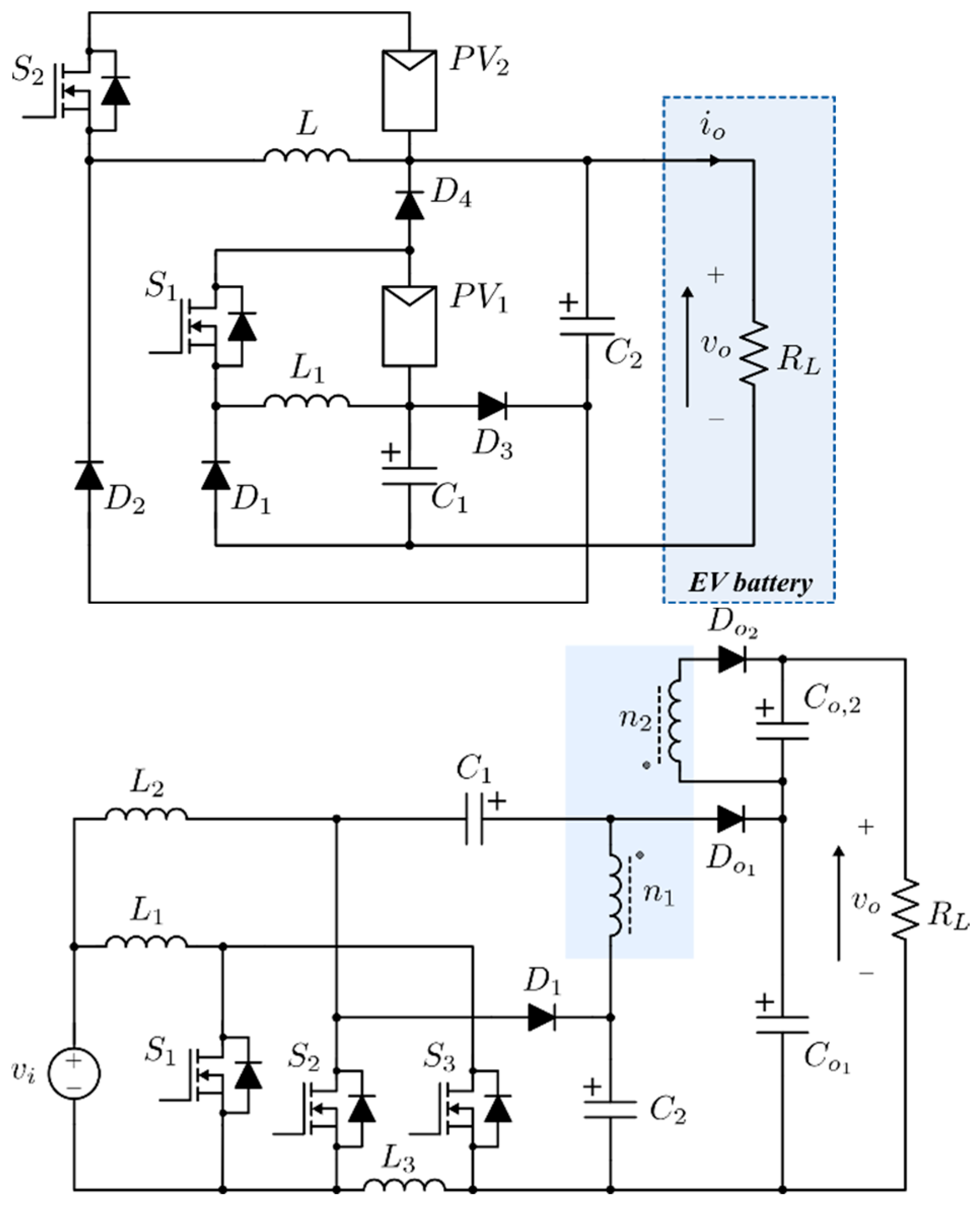
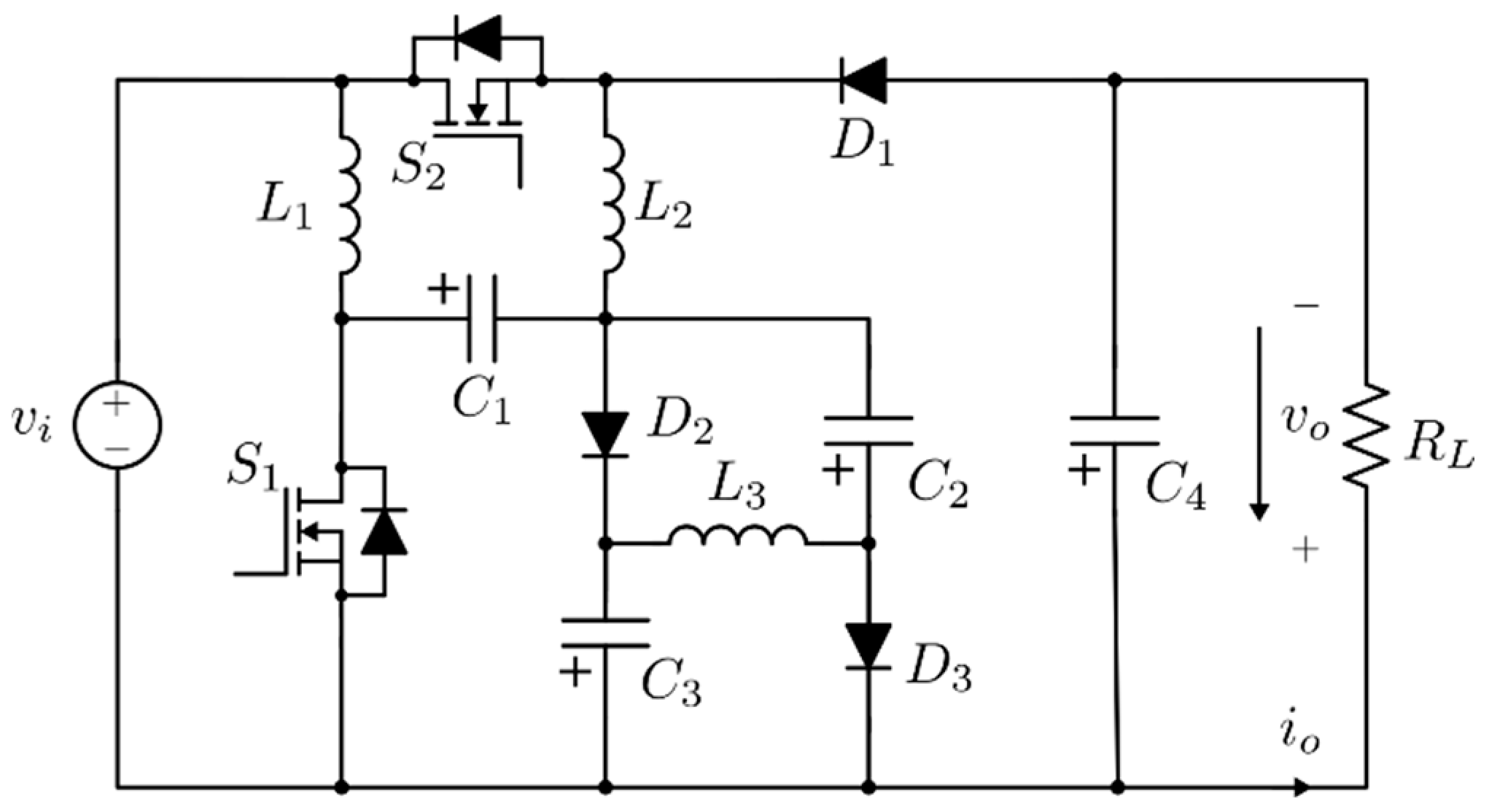
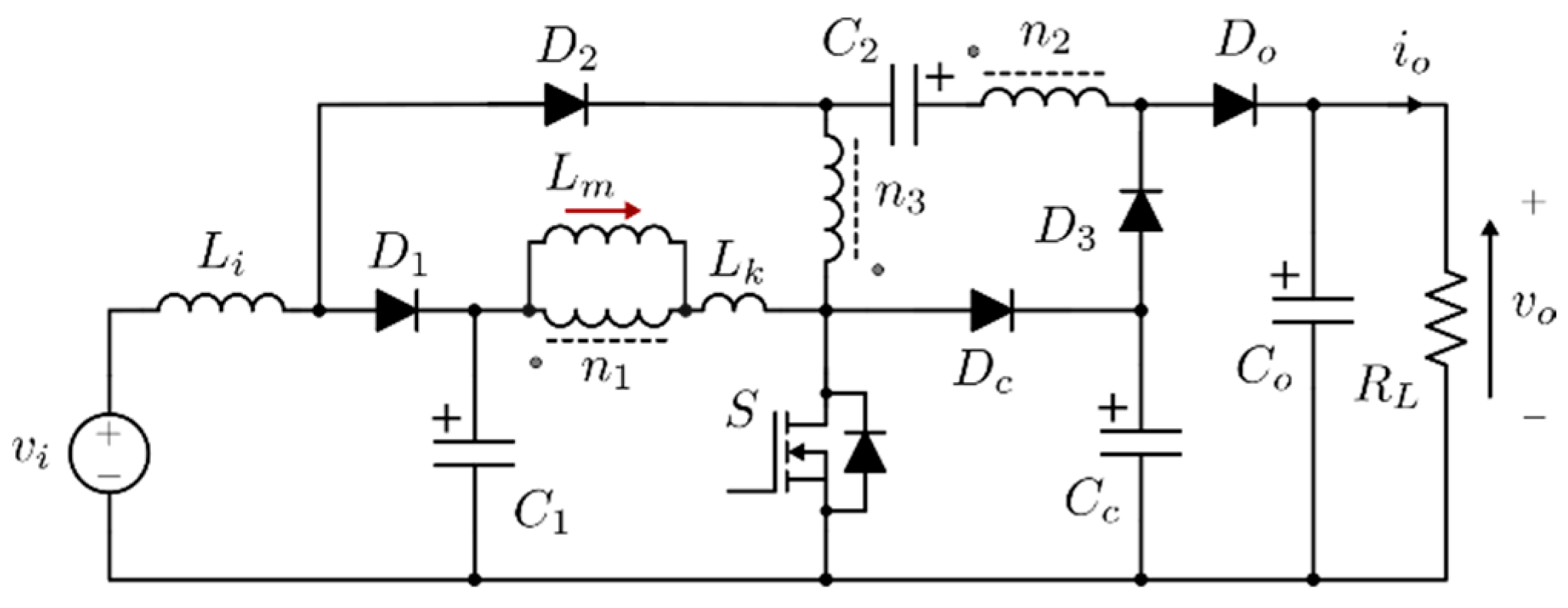
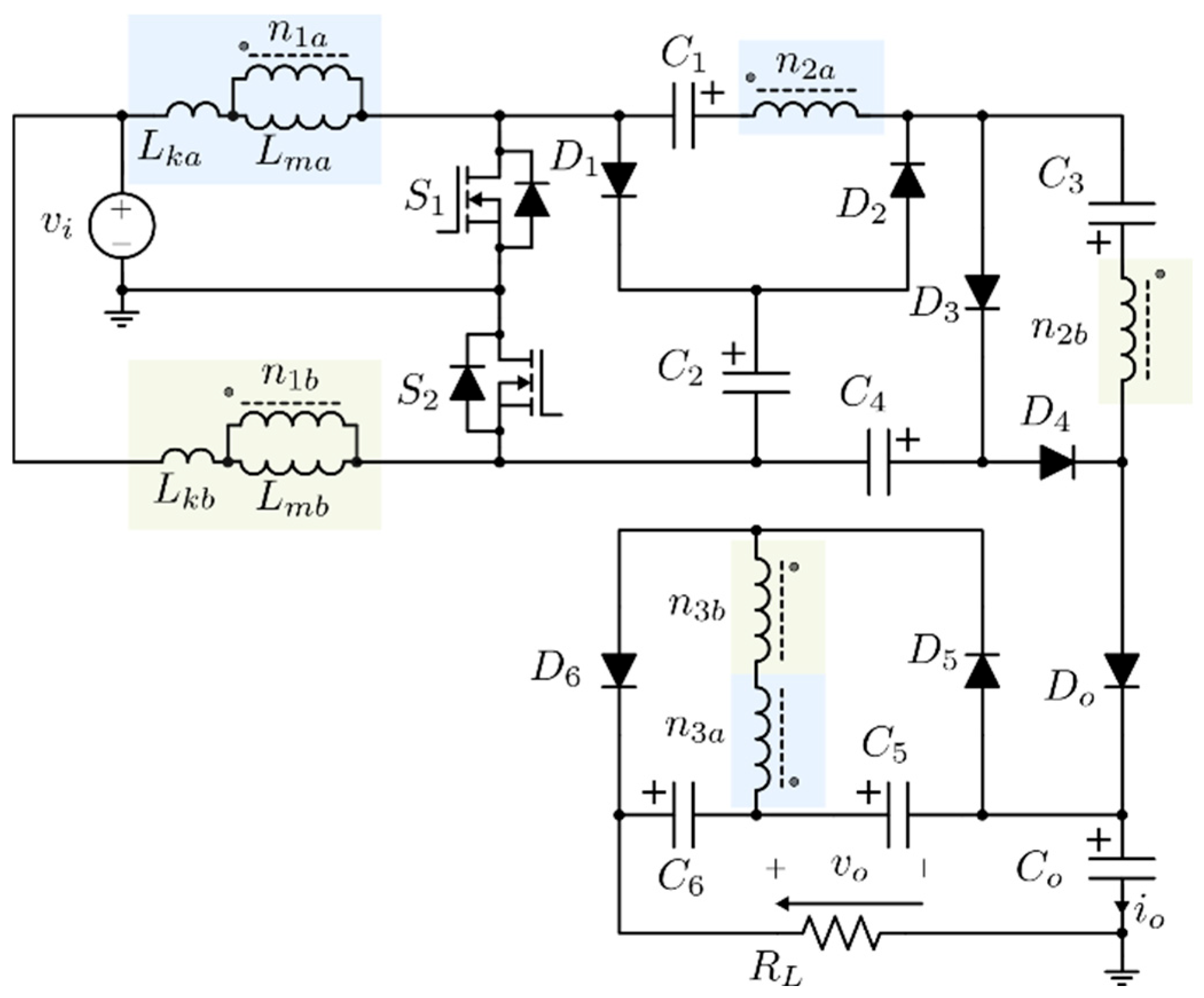
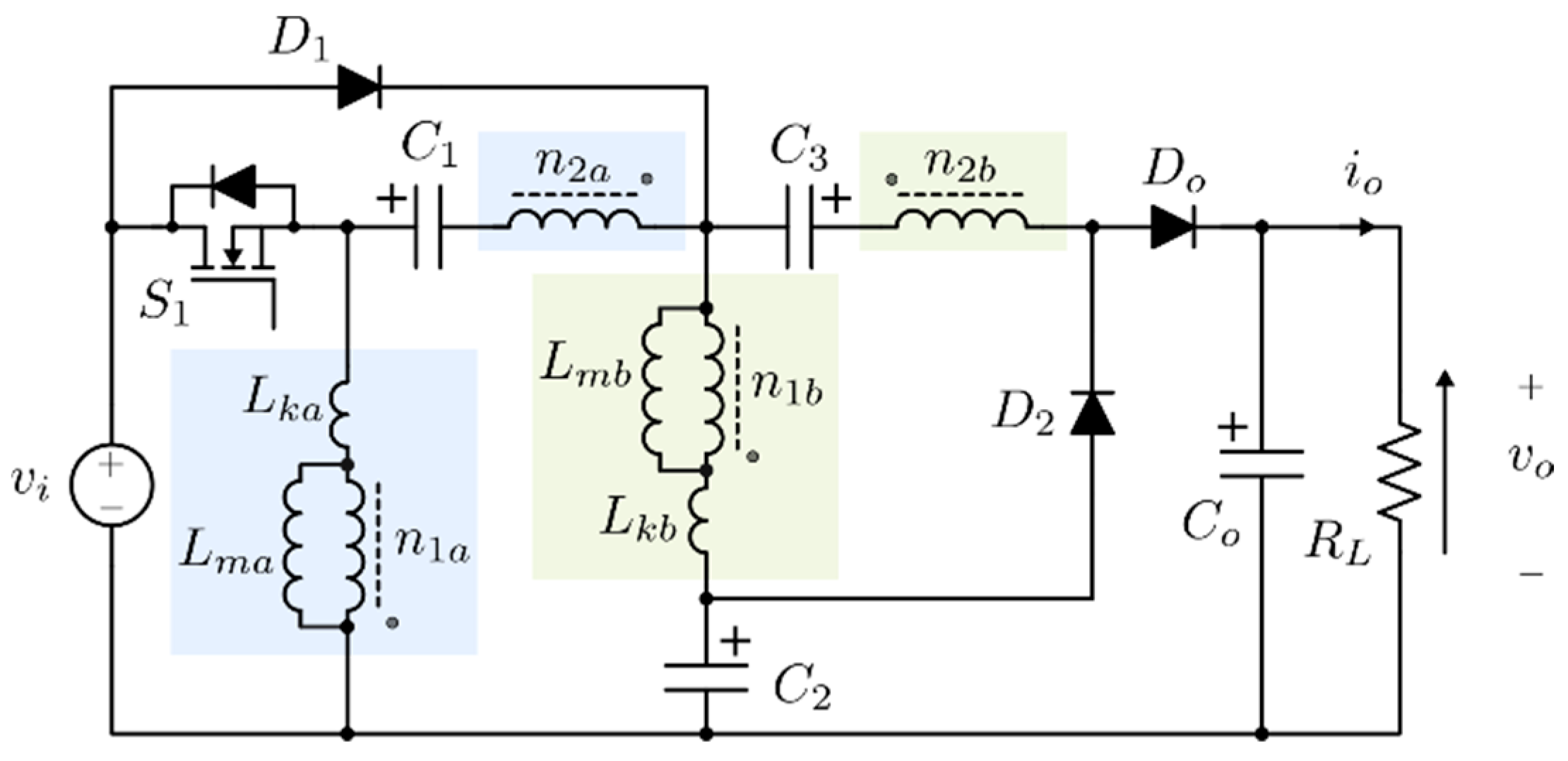
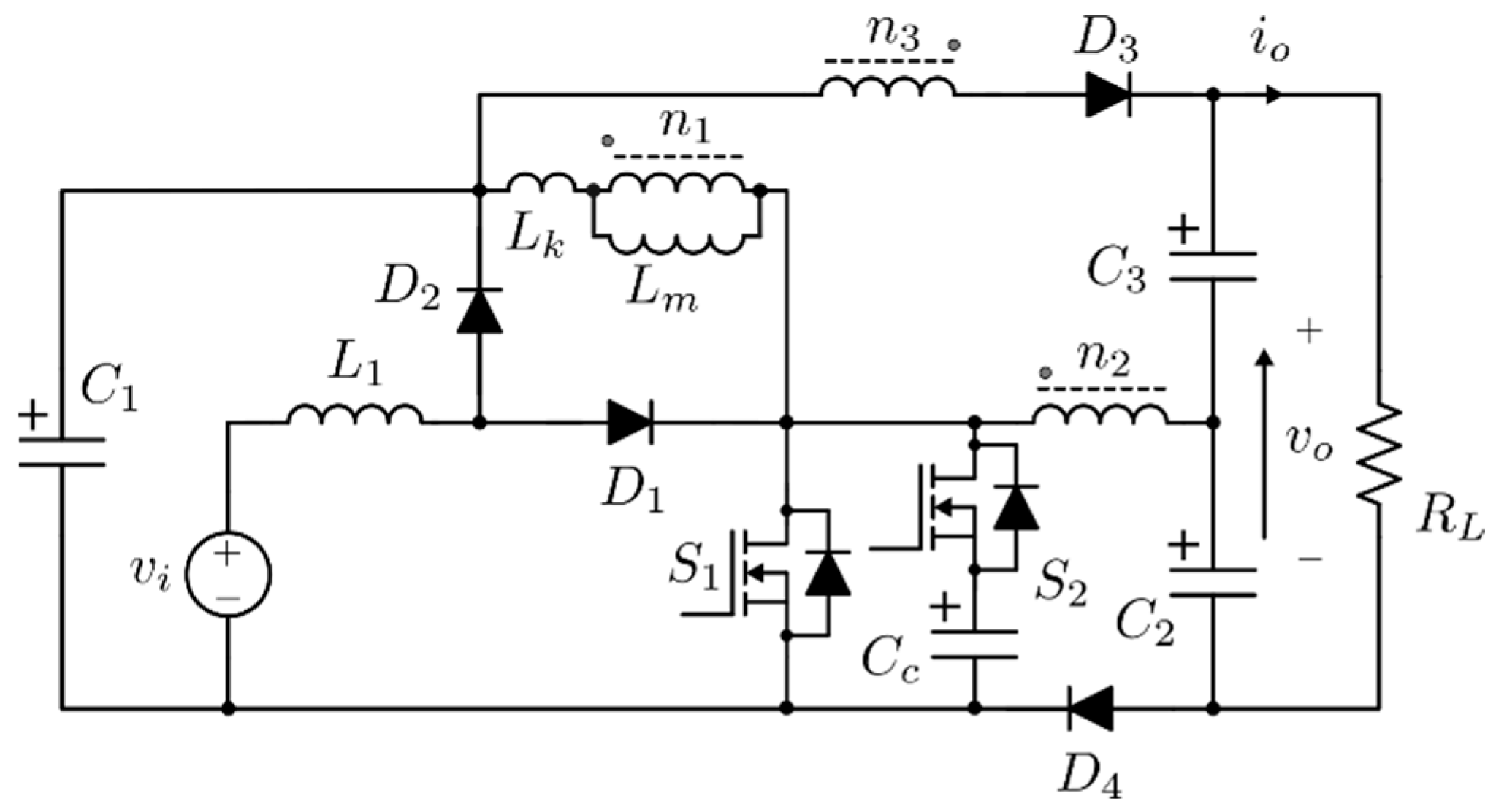
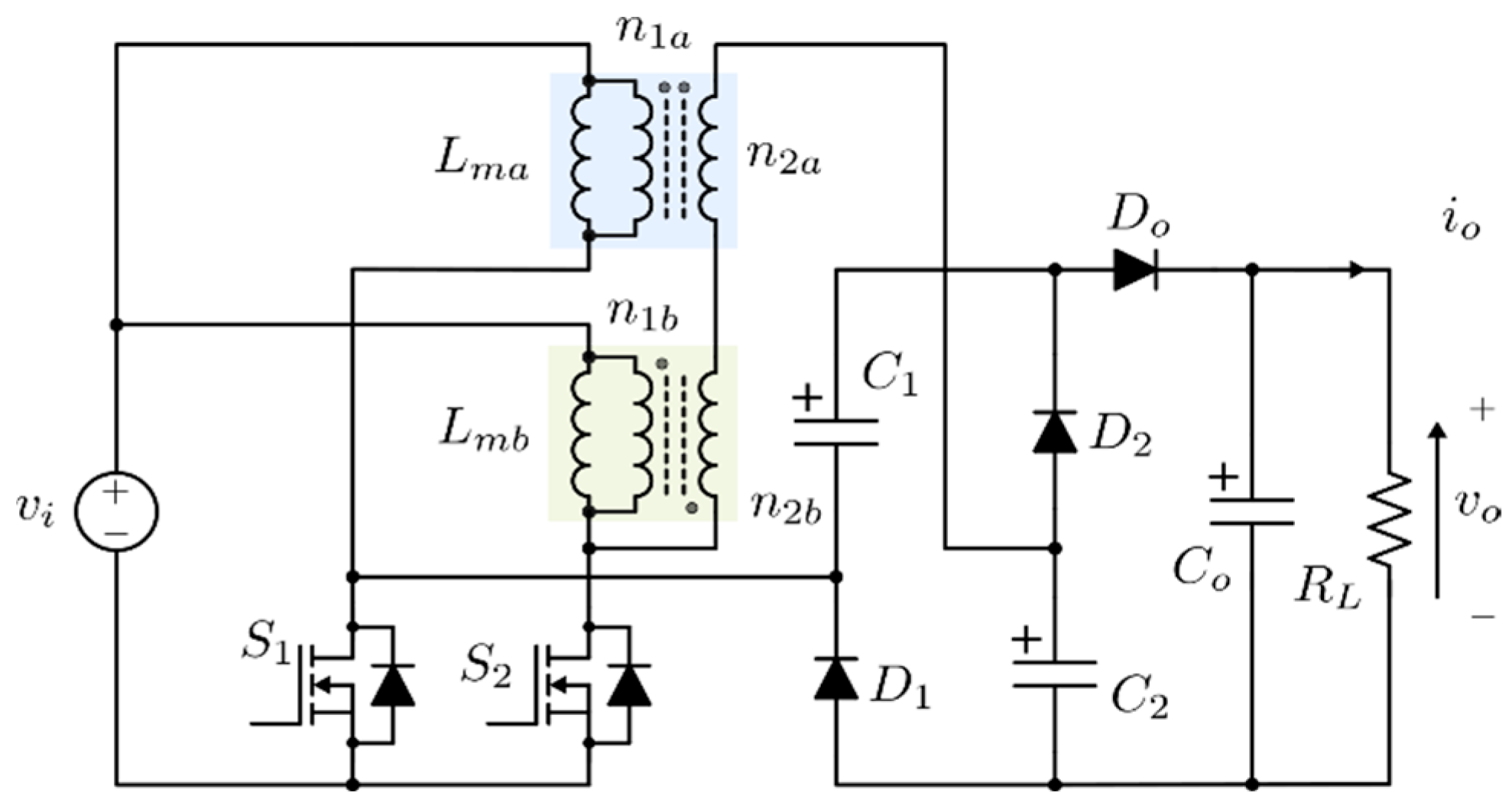
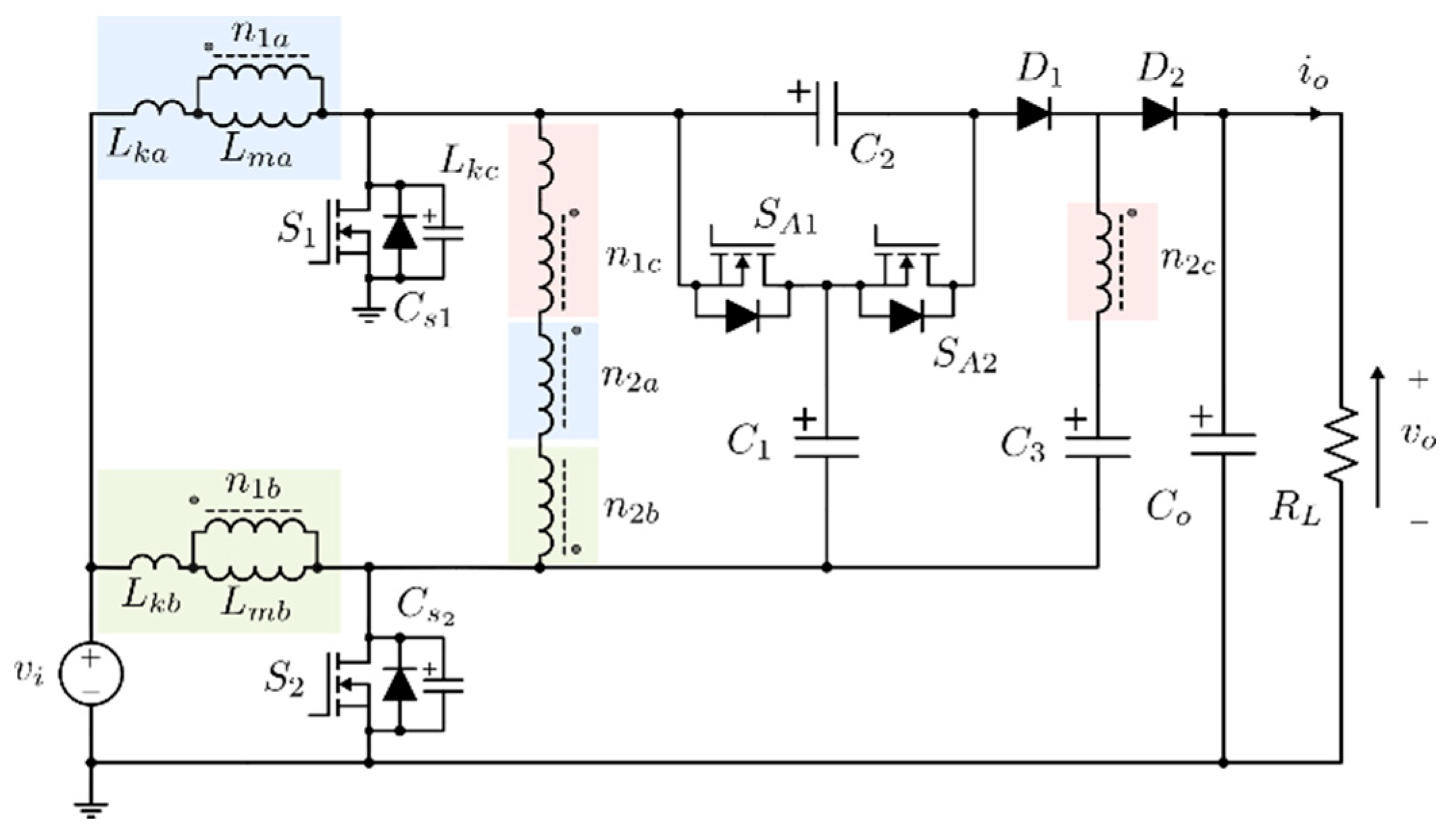
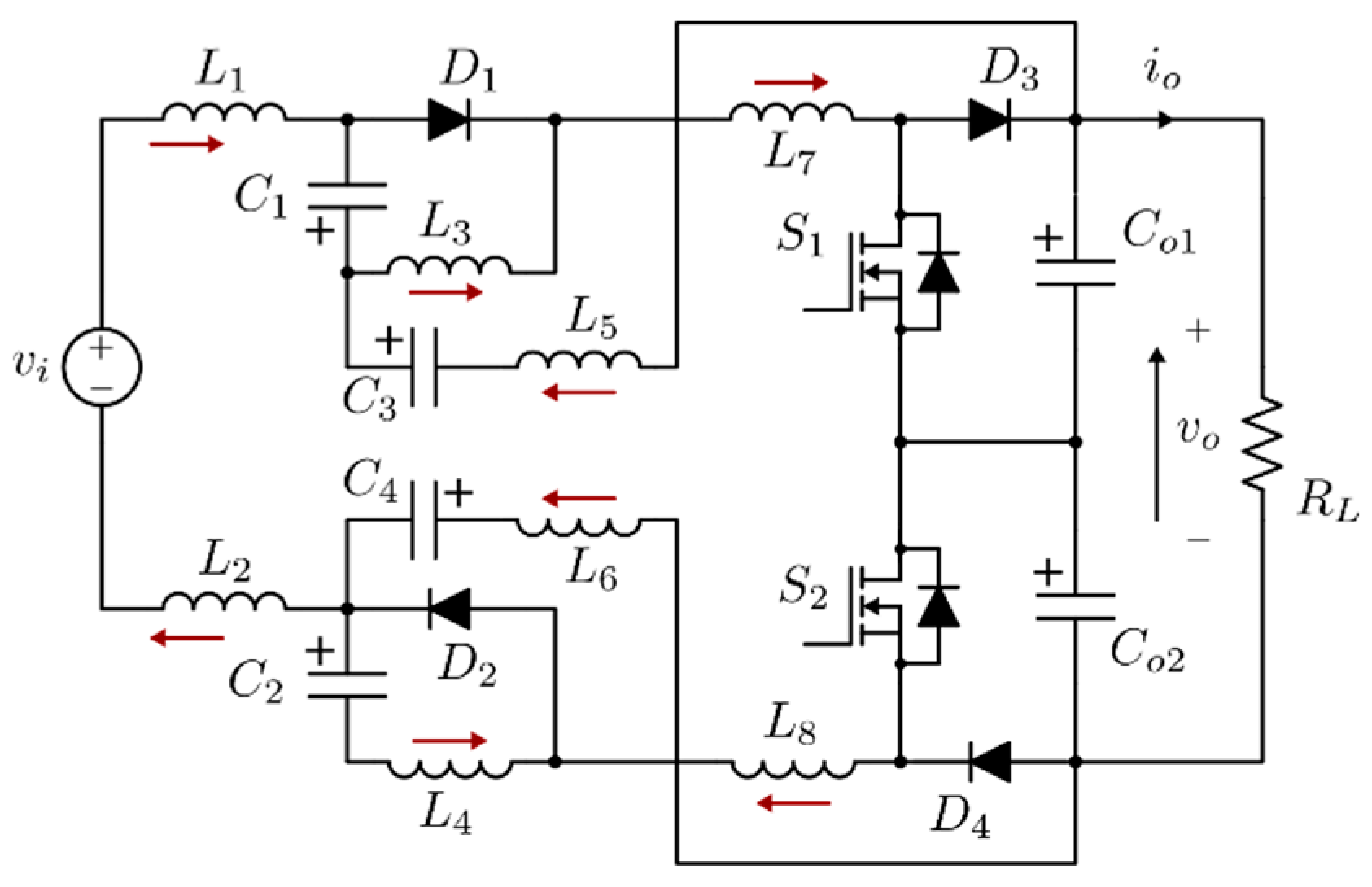
As depicted in Figure 29, a new version of the DC-DC converter for wind energy production systems is available [3], offering a higher voltage, efficient conversion, and lower input current. The suggested circuit includes a three-turn inductor, a quadratic boost stage, and a voltage multiplier to achieve high voltage levels. Notable benefits include reduced electrical loading on the switching components, lower DC ripple at the input, and a shared ground clearance between the input and output. Due to its partially inverted topology, it achieves significant advantages with reduced coupling ratios, which improves its efficiency. In addition, a regenerative snubber circuit is used to further minimize the voltage across the single power switch as shown in Table 3. The paper presents a comprehensive conceptual analysis, including state-to-state operation and an efficiency evaluation, supported by experimental verification using a 200 W (25 V to 400 V) prototype [3].
A new high-efficiency DC-DC converter is proposed in [4] at high transmission frequencies in distributed power generation systems.
A novel high-efficiency DC-DC converter is proposed for use in high-frequency transmission within distributed power generation systems. The approach incorporates a coupled inductor and a secondary active-switching inductor, utilizing stepped conduction to minimize input current fluctuations. Additionally, a voltage-doubling unit connected to the coupled inductor significantly enhances voltage conversion efficiency.
To limit voltage overshoot and reduce switching stress, a passive snubber circuit—comprising a diode–capacitor–resistor (DCR) network—is installed across the main switch. This configuration absorbs the energy stored in parasitic elements during switching transients, thereby protecting the device, and improving overall efficiency. The snubber also contributes to reducing electromagnetic interference (EMI) and enhancing switching smoothness.
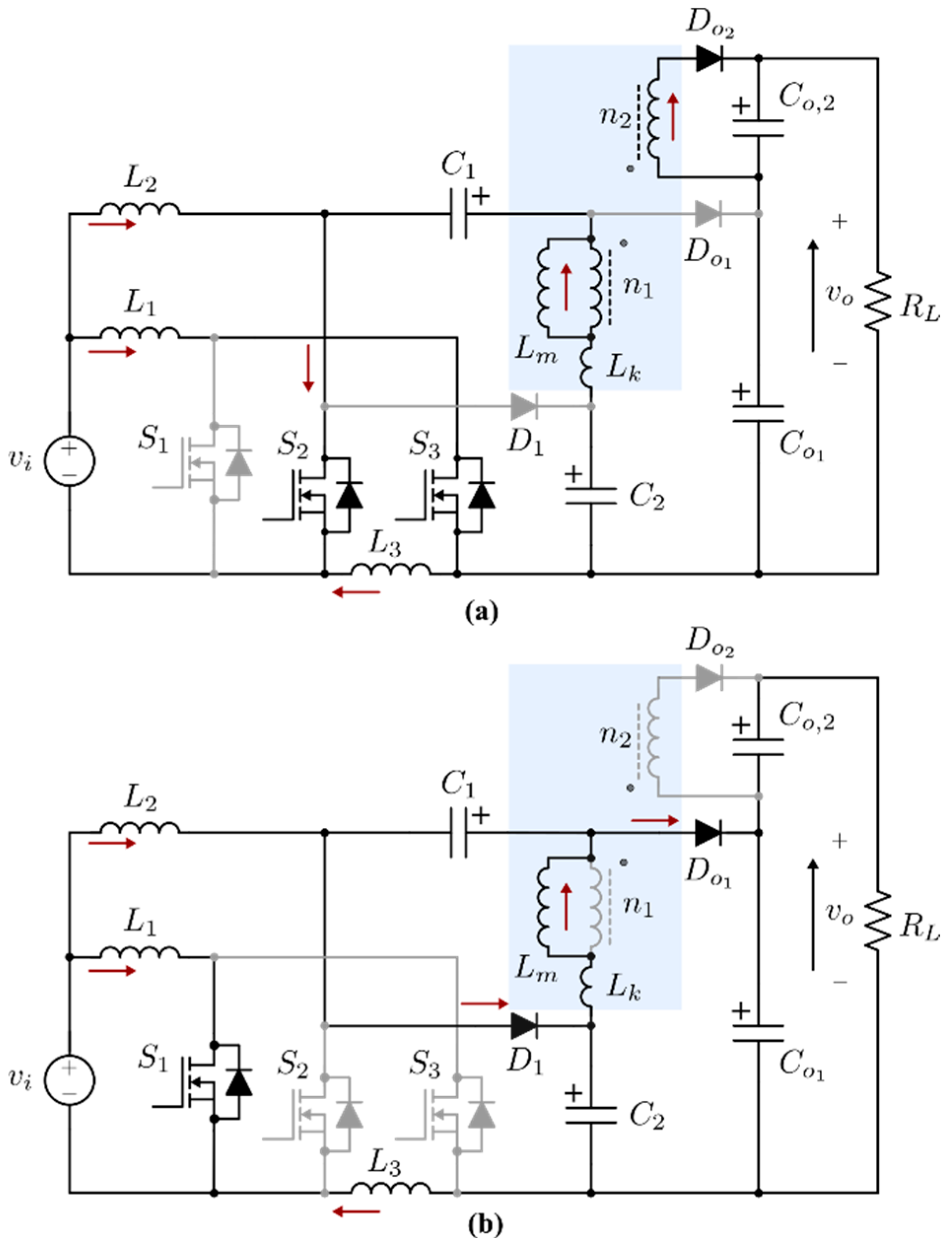
As observed in Figure 30, the operating principle and dynamic behaviors of the converter are thoroughly analyzed. Comparative performance evaluations highlight the superiority of the proposed design. A 200 W experimental prototype was constructed using discrete components, achieving a maximum efficiency of 92.2%, thereby validating both the theoretical analysis and the practical effectiveness of the converter [4].
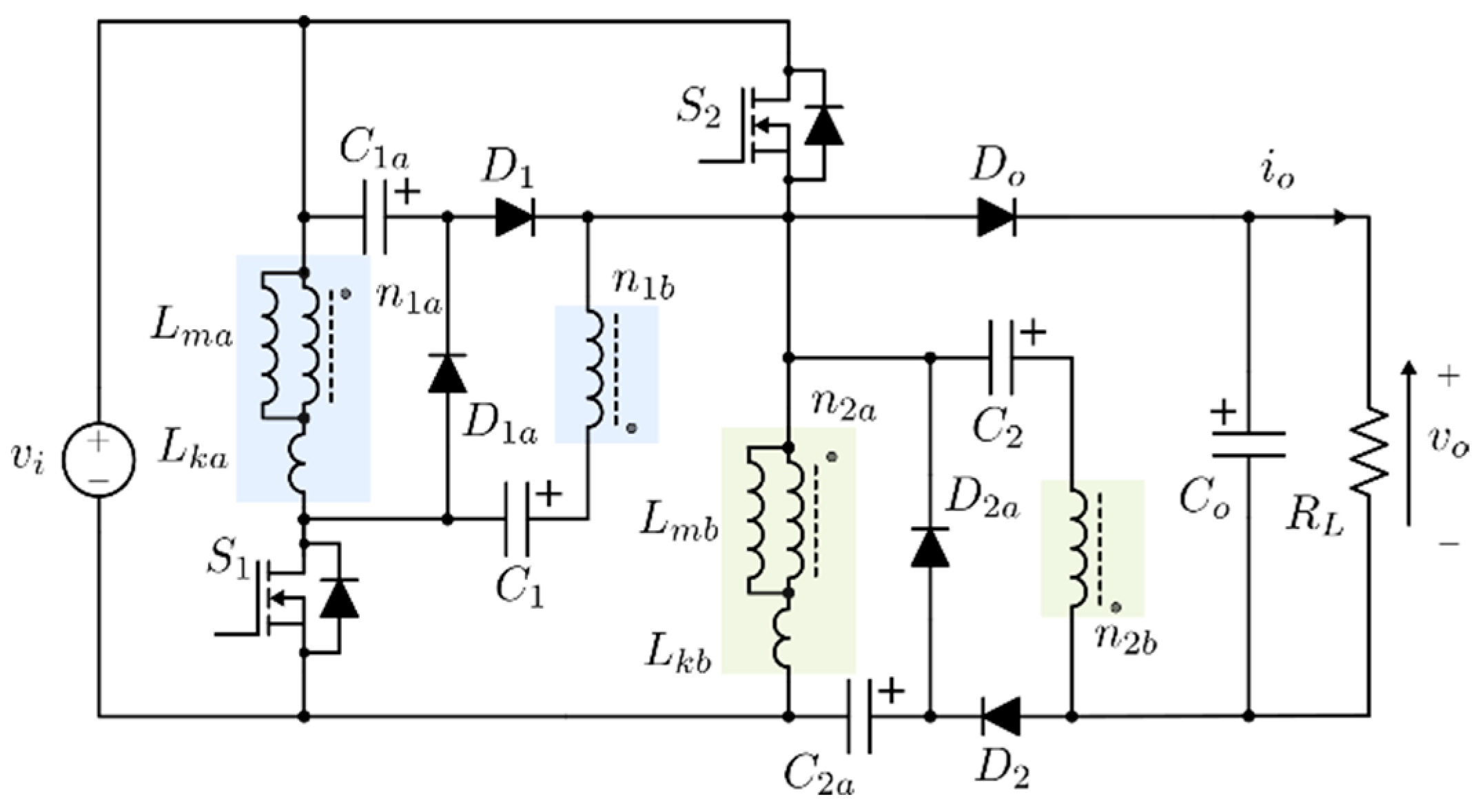
Figure 31 shows that a high-performance interleaved DC-DC converter for photovoltaic applications is proposed [5], including windings with cross-coupled inductors (WCCIs) and voltage multiplication cells. The converter is based on an interleaved boost configuration enhanced by diode-capacitor snubbers, winding-based inductive amplification, and voltage multipliers, with the objective of increasing voltage gain and decreasing semiconductor strain. By using WCCIs, an equitable load distribution between the interleaved stages is achieved, in addition to achieving high voltage gain through an appropriate choice of duty cycle. Low voltage and low resistance MOSFETs are employed to reduce conduction losses. In addition, the design takes advantage of the wind energy of the inductors to reduce voltage spikes across the power switches. The interleaved operation leads to a notable reduction in the current ripple input. The study provides a comprehensive operating principle, a state-by-state analysis, and a design methodology. In addition, a closed-loop control is established to regulate the output voltage against input and load variations. Experimental validation is performed on a 1000 W prototype with 36 V input and 400 V output, confirming the effectiveness of the proposed topology [5].
According to Figure 32 a high-performance, single-switch DC-DC converter is recommended for use in direct current (DC) microgrids [6]. To achieve voltage boost with a reduced duty cycle, the design includes a quadratic converter, a switched-capacitor cell, and a coupled inductor. The switched-capacitor cell, comprising two diodes and two capacitors, operates by charging the capacitors in parallel and discharging them in series. Furthermore, adjusting the turns ratio of the coupled inductor further increases the voltage gain. The input inductor regulates current fluctuations and ensures continuous current.
The converter features a modest on-state resistance (Rds.(on)) to reduce conduction losses and incorporates a passive snubber circuit to reduce voltage spikes across the MOSFET. This approach improves component reliability, reduces power losses, and lowers switching costs. Furthermore, the converter efficiently transfers the leakage energy from the inductor to the output capacitor, which reduces reverse recovery of the diode and increases overall efficiency.
The converter’s performance is evaluated through various operating modes, and its performance is corroborated through a 160 W laboratory prototype with 20 V input and 400 V output. Comparative evaluations demonstrate the benefits of the converter in terms of voltage boost, component voltage, conversion efficiency and overall performance compared to traditional designs [6].
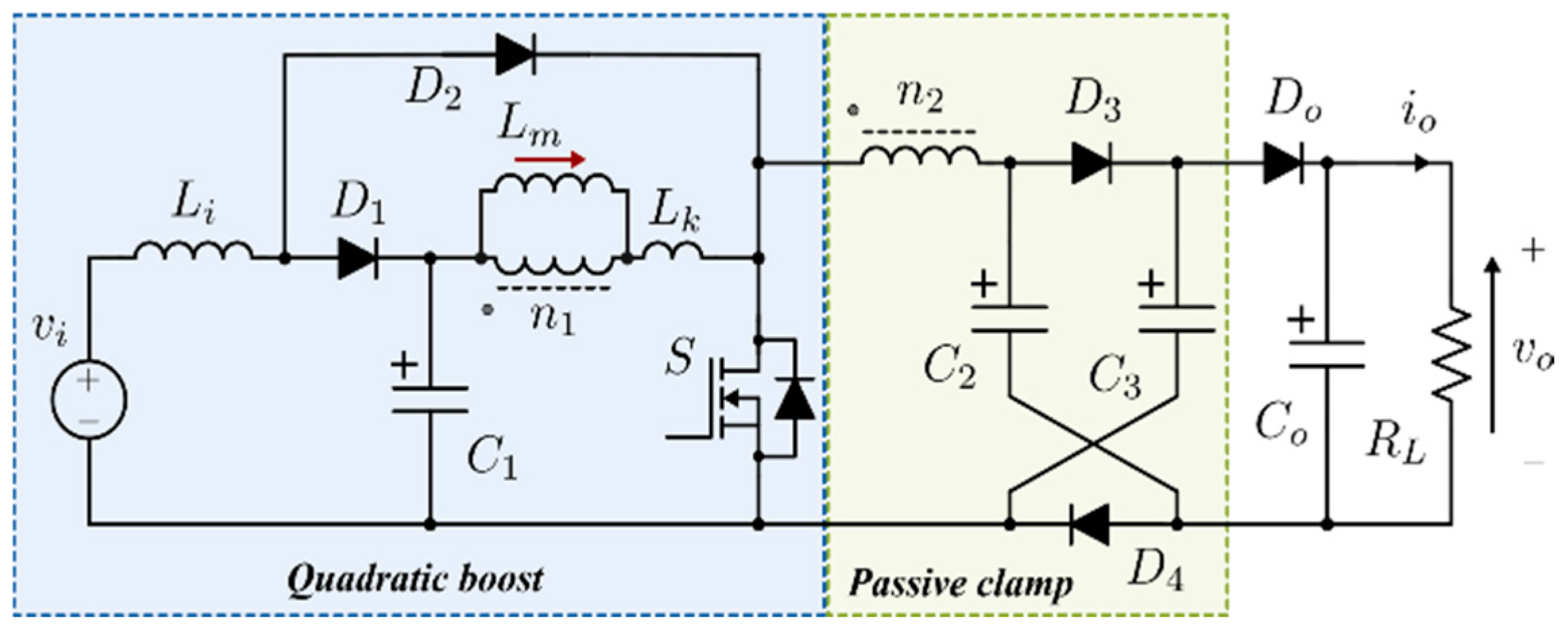
The proposed structure [7] features a high voltage conversion ratio, lower switching stress, lower input signals, and zero-current semiconductor switching (ZCS) operation. The trans-inverted characteristic of the circuit allows voltage increases without large inductor turn ratios, reducing energy loss due to conductivity. A passive regenerative damping cell is used to minimize the maximum voltage strain across the power switch. The operating principle, state-by-state analysis, efficiency, and performance comparison with similar converters are thoroughly discussed.
A 200 W prototype with 25 V input and 400 V output was designed to support the theoretical evaluation.
Cascading power converters expand conversion capacity, although it presents challenges such as a large component count and efficiency losses due to redundant processing. Active switches, which require repeated activation, add complexity to management and operation. In response to these restrictions, single-switch quadratic DC-DC converters have been suggested for various applications, such as LED drivers. However, the rationale behind these strategies, beyond increasing the conversion rate, remains unclear. Another area yet to be explored is the possibility of designing single-switch versions of cascaded converters that include multiple stages, with the goal of achieving high-voltage step-down or boost through a grafting model.
Following on from previous studies, the construction of non-isolated DC-DC converters with a single switch is examined. Important factors include voltage gain, the actions required to regulate active switches, the number of components, input and output voltage characteristics, and voltage behavior. A thorough evaluation is provided to assess the potential benefits and limitations of the resulting structures [8].
Regarding hydrogen fuel cells used in electric vehicles (FCEVs), one of the most significant challenges is ensuring that a structure can efficiently transport the battery once it has been fully discharged, using fuel cells or other resources. Furthermore, in many locations, high-capacity battery stations are essential. Based on this, a new converter with high efficiency in dual inputs and single outputs is suggested.
The proposed topology integrates an augmentation function with advanced diode and switch networking, resulting in a system with high efficiency and voltage boost. It features a small footprint, low voltage, reduced electrical stress on components, a reduced component count, a continuous input current, and a lightweight design, making it more efficient than existing structures. Mathematical calculations and stability tests were conducted, and the converter’s effectiveness was corroborated through MATLAB/Simulink simulations, where the rated power was 1 kW, the output voltage was 220 V, and the output voltage was 1 A.
The suggested converter achieved a maximum efficiency of 97.4% at medium power and 96% at nominal power. The voltages of the capacitors, diodes, and switches in the suggested structure represented 63%, 83%, and 41%, respectively, of the descent voltage. Finally, a 1 kW prototype was built to test the converter efficiency and corroborate the obtained connections [9].
Transportation vehicles require an energy storage system (ESS) that meets their charging, acceleration, and wind energy recovery needs. A standalone ESS cannot provide the necessary energy density and longevity, so the integration of batteries and supercapacitors through a bidirectional DC-to-DC converter is a common solution. Hybrid battery-supercapacitor energy storage systems (HBSCESS) significantly extend battery life, with supercapacitors handling high transient currents and power requirements.
However, converter configuration influences HBSCESS performance, and a comprehensive analysis of non-isolated bidirectional DC-DC converters for HBSCESS development has not been conducted. This paper provides [11] a thorough literature review, categorizes converters, and proposes constructive solutions for the future development of HBSCESS in applications such as transportation vehicles, microgrids, and renewable energy systems.
The study highlights that multi-input, multi-port, multi-port, multi-port, tri-port, coupled-inductor, switched-capacitor, and Z-source/quasi-Z-source converters are perfect for HBSCESS development, allowing bidirectional power flow [11]. It also points out the single-inductor multi-input converter topology as especially beneficial due to its design simplicity, high efficiency, low component count, and moderate duty cycle operation [11].
Additionally, the research examines a high-efficiency, high-power, and high-density 2.5 kW four-level power factor correction (PFC) rectifier without the need for a power pump. The rectifier uses an interleaved flying capacitor totem-pole (FCML) topology with 200 V GaN devices, achieving ripple voltages three times higher than the switching frequency, considerably decreasing the size of the inductors, and reducing switching losses.
A comparison between the GaN CCM totem-pole PFC and a two-level design shows a reduction in device waste over the four-level interleaved GaN CCM PFC. In addition, the paper [15] presents an EMI spectrum analysis and a mathematical model for the required attenuation. A prototype of the totem-pole GaN interleaved CCM PFC was developed, with 2.5 kW and an optimized switching frequency of 94 kHz, achieving a power density of 89.47 W/in3 and a peak efficiency of 99.14% [15].
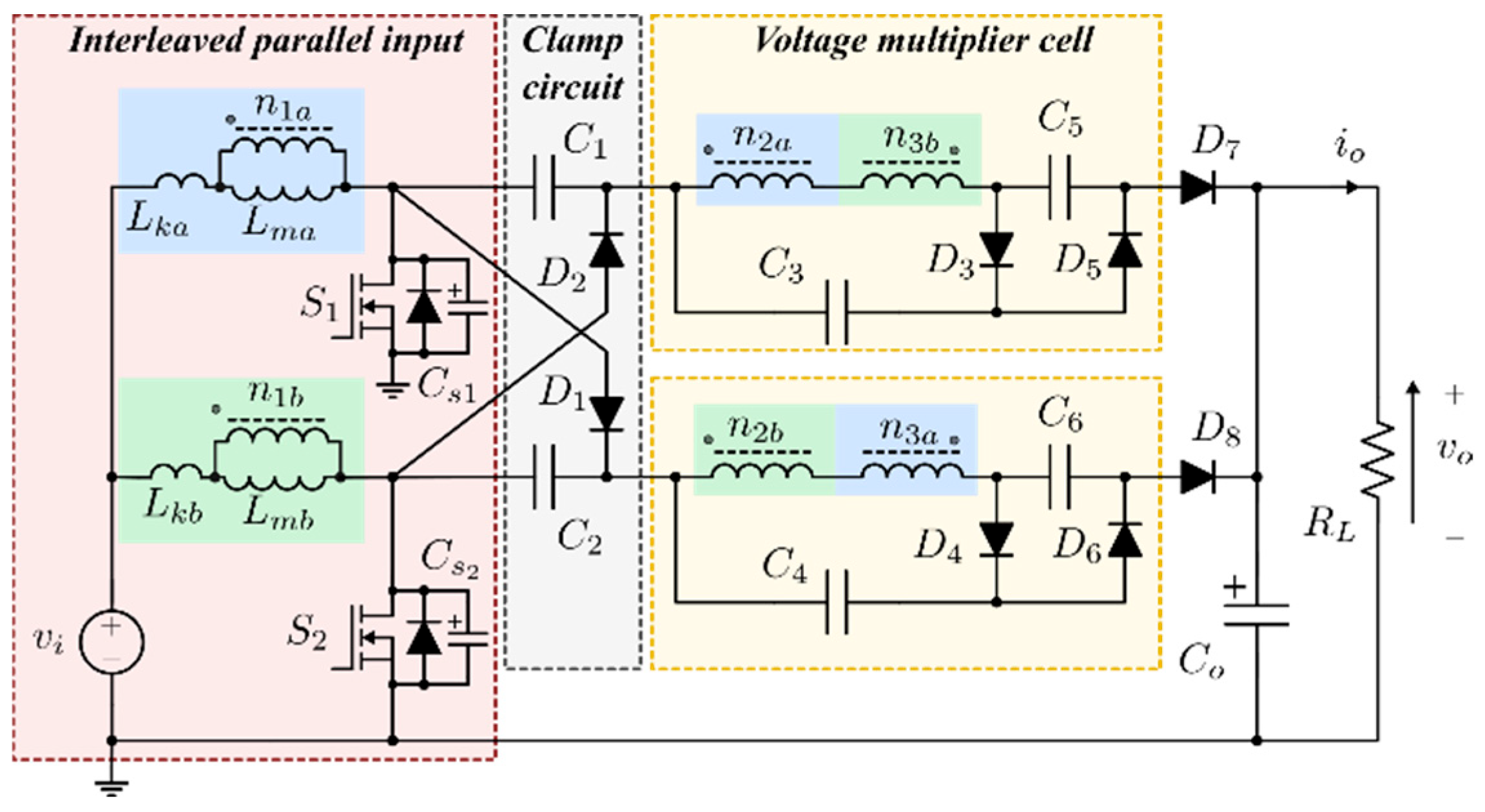
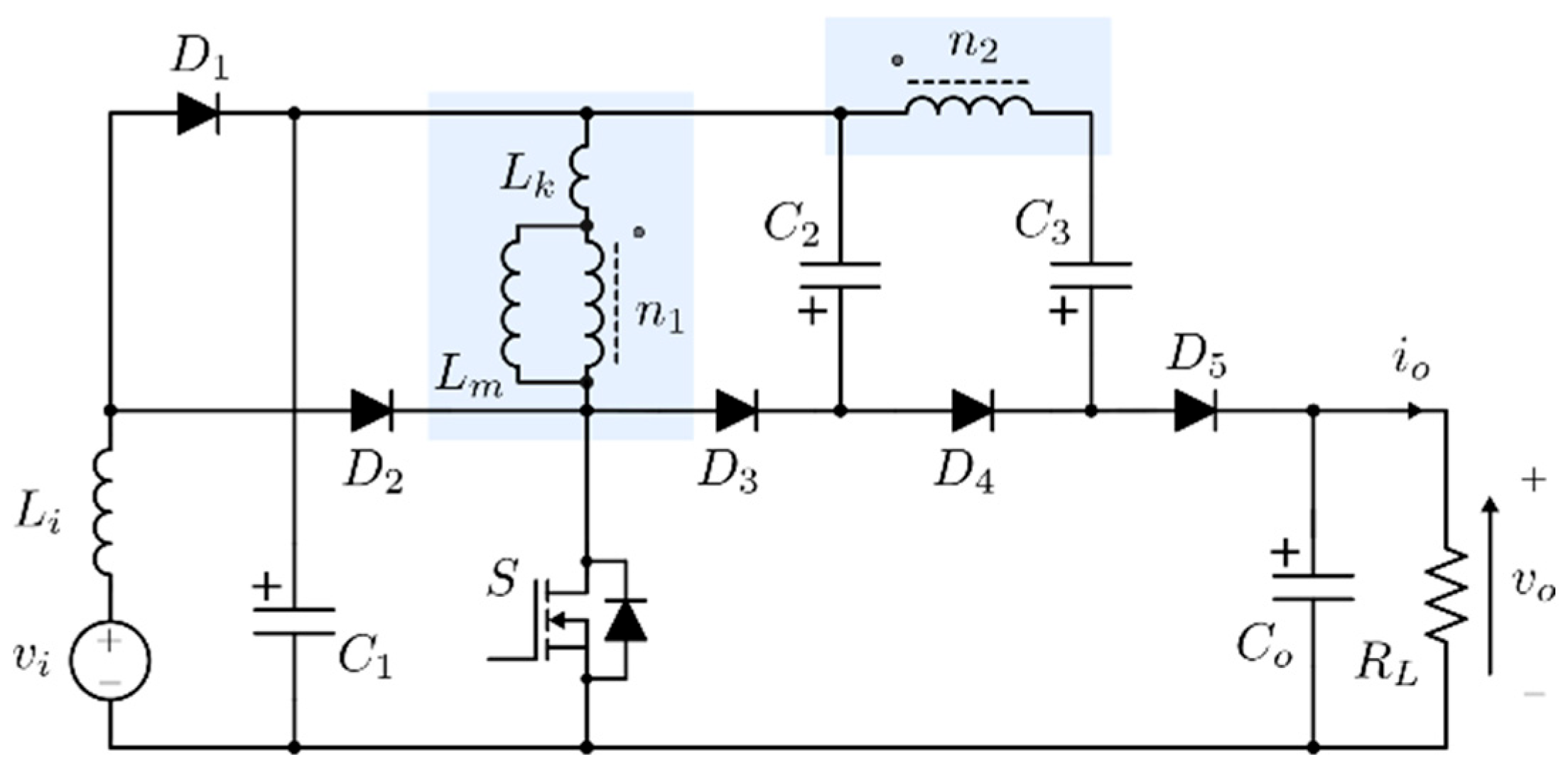
A high-efficiency interleaved DC-DC topology is recommended for renewable energy applications, particularly for solar photovoltaic (PV) systems. The converter features an interleaved structure that reduces input variability and utilizes coupled inductors and voltage multiplier cells (VMCs) to achieve high-voltage conversion. The technology uses two coupled inductors equipped with three windings, in combination with VMCs, to reduce the voltage on the power switches, thus enabling the use of low-rated and affordable switches. A 200 W prototype operating at 25 kHz with a conversion range of 20 V to 409 V was developed, and experimental results support the mathematical evaluation [16], as illustrated in Figure 33.
For different converter topologies, addressing electromagnetic interference (EMI) filtering requires a combined consideration of switching behavior, parasitic elements, and the propagation paths of conducted and radiated noise. In general, EMI issues arise from the fast voltage and current transitions (dv/dt and di/dt) inherent to switched-mode power converters, which excite parasitic inductances and capacitances and generate high-frequency components that propagate through both differential-mode (DM) and common-mode (CM) paths.
Thus, for each converter type, the EMI filter must be designed according to its specific switching pattern and energy transfer characteristics. Converters with hard-switching transitions typically demand larger DM filters to attenuate high-frequency current ripple, while topologies that exhibit significant parasitic capacitance to ground—such as isolated converters or high-side switch configurations—require dedicated CM inductors and Y capacitors to suppress common-mode noise. Additionally, the placement of the filter must respect the converter’s impedance characteristics to avoid resonance, and damping networks may be required to stabilize the filter–converter interaction.
In today’s fast-paced, information-driven world, data centers play a crucial role in delivering high-performance and fast capacity due to the ever-increasing demand for information networks and systems. To ensure the stability and reliability of data centers, isolated bidirectional DC-DC converters are essential in their power systems, ensuring a stable and uninterrupted power flow. This review addresses the fundamentals, structures, switching tactics, and control technologies of DC-DC bidirectional converters. It also analyses the findings of previous studies [16], specifically addressing challenges such as low efficiency at light loads, limited voltage gain, and increased component stress in isolated bidirectional DC-DC converters. The article [17] concludes by outlining future trends, including the integration of wide-bandgap semiconductors, digital control strategies, and modular converter architectures. These developments provide valuable insights to overcome existing engineering challenges and guide future research in this field.
In addition, a new high-capacity DC-DC converter is being suggested, with a reduced component count that allows for a significant increase in output voltage. The converter uses an inductor at the input end to ensure direct current, thus maintaining a positive output voltage. This technique also simplifies the manufacture of filters input thanks to its constant power source, making it ideal for photovoltaic applications. A key benefit of the converter is that it uses the same ground pin as the switch, eliminating the need for an additional power supply to drive the system. The study provides a detailed mathematical model of the topology, including state-by-state analysis for different types of operations, component voltages, and power loss calculations. Simulations were performed using MATLAB/Simulink [18].
An isolated quadratic boost DC-DC converter is suggested in [18], which includes fewer components and achieves a high increase in output voltage. The inductor located at the input guarantees continuous current, and the output voltage remains constant. The continuous energy flow facilitates the design of the input filter, making it ideal for photovoltaic applications. A key feature is that the converter shares the same ground pin with the switch, thus eliminating the need for an additional power supply for control. The mathematical model, which includes state-by-state analysis for different types of operations, component voltage stress, and power loss calculations, is exhaustively presented. Simulations were performed using MATLAB/Simulink [18], as presented in Figure 34.
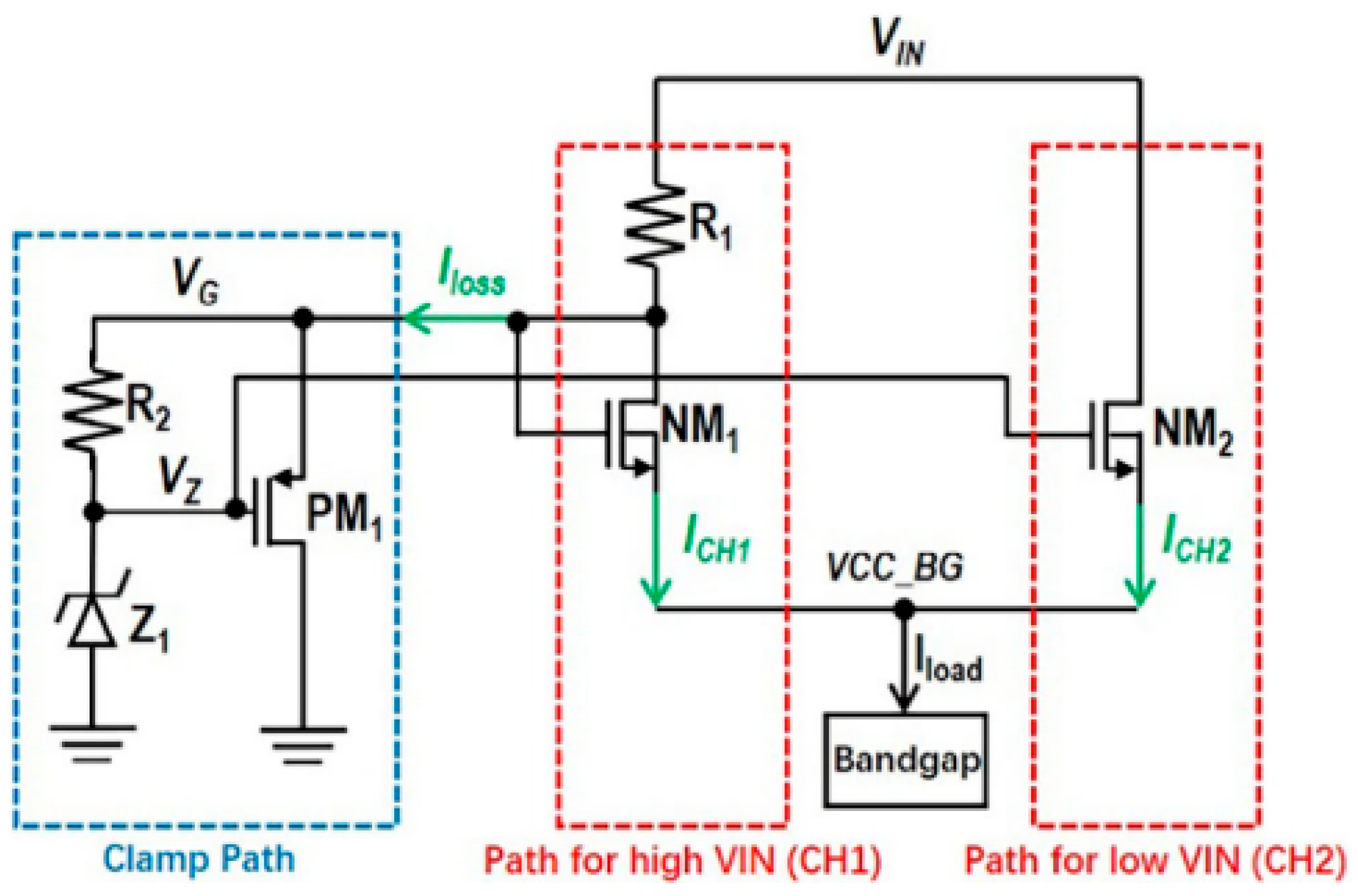
An innovative strategy is suggested [21] for highly passive DC-DC converters requiring a high-resistance, pre-regulated, low-power reference. The structure shown includes two voltage channels to achieve efficient power pre-regulation under high and low input voltage conditions. The design eliminates the need for large current-restraining resistors, which are often indispensable in high-end power supplies. The pre-regulator’s design and bandgap circuit were fabricated using TSMC’s 180 nm BCD process.
The results obtained indicate that the suggested structure has a wide voltage range between 3.5 and 45 V, a temperature coefficient of 5.63 ppm/°C, and a typical power consumption of 1.1 μA [21], as depicted in Figure 35.
The following proposal [22] highlights the growth in electric vehicle (EV) production, driven by environmental concerns, technological advancements, and the idea of a smart grid. Vehicle-to-grid (V2G) technology is an efficient and cost-effective method for managing multiple electric vehicles, boosting energy sustainability, and simplifying the transfer of power to the grid. Bidirectional converters play a vital role in the V2G structure, providing essential features and capabilities.
The review analyses the technical aspects, features, and advancements of V2G technology, with a focus on bidirectional interface topologies and control strategies. It also classifies chargers and rechargers based on various factors, including constraints and impacts. The analysis addresses the benefits, challenges, and potential solutions for V2G implementation, providing guidance for future innovations in V2G technology and electrical power interfaces [22,39].
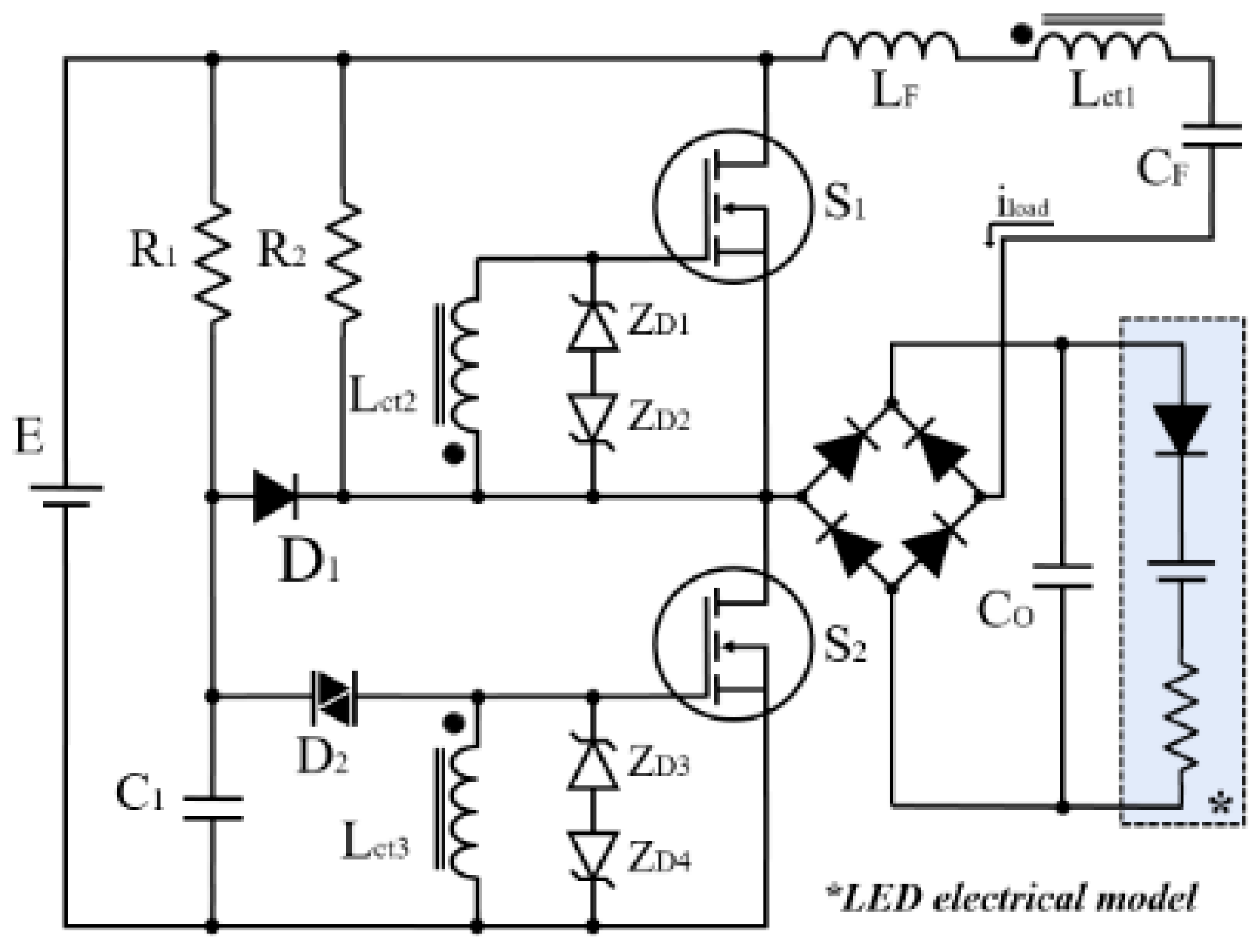
Increasing the operating frequency of resonant auto-oscillator (SORC) converters is difficult due to high conversion costs, mechanical constraints, and the impact of passive components on frequency accuracy. This study examines two SORC models and design methodologies at higher than usual frequencies, both experimentally and through SPICE simulations. The objective is to recognize constraints linked to the frequency techniques, such as the maximum possible self-oscillation degree and variations in the designed frequency between traditional and modified methodologies. A more sophisticated design equation is presented [23] to extend the first frequency constraint, considering the port weight required to maintain self-oscillation at higher frequencies, as displayed in Figure 36.
An innovative Boost converter is proposed in [25], which operates without the need for a transformer or inverter, providing higher voltage conversion, leading to a cubic increase in output voltage with minimal modifications to the duty cycle. This DC power source facilitates the construction of the input filter, thus improving the safety and durability of the energy storage chamber. It also reduces voltage and voltage stresses on semiconductors compared to other architectures, making it a viable option compared to Quadratic Boost Converters. A crucial aspect is the incorporation of common-mode switches, which eliminates the need for other elements in the control system, thereby reducing both cost and size.
A thorough evaluation of each state is provided, and a comparison with other converter circuits is presented to highlight their unique features [24].
At the Superior School of Technology of Setubal, a battery charging system for electric vehicles (EVs) is being developed using a DC-DC converter. The system employs 48 V EVs with 12 V VRLA (Valve-Regulated Lead-Acid) batteries that require no maintenance. The charger is designed for three charging stages: constant voltage, constant current, and constant voltage (I-V-I). The power source consists of a two-transistor Boost converter with an intermediate transformer, operating at a frequency of 50 kHz, optimizing efficiency by allowing energy recovery during demagnetization.
The study addresses constraints on high-amplitude DC-DC converter structures, which typically have a restricted duty cycle and multiple components. The proposed new converter offers a high degree of conversion with a smaller component count. Instead of using conventional voltage multiplier cells, it uses two coupled inductors to increase its gain. The switch converter, located on the low-voltage side, has a duty cycle that can oscillate between zero and one, thus reducing voltage stress.
The design employs switches with low voltage rated voltages to reduce conduction losses and boost efficiency. This converter is distinguished by its high performance, high efficiency, low component count, and low voltage across the switch.
Although the implementation of a common ground improves the design, it also incorporates a pulsed current input. The theoretical foundations and experimental results, including a 240 W prototype, corroborate the converter’s performance and functionality [25,26], as observed in Figure 37.
A proposal is presented in [30] to address power losses in DC-DC converters employing coupled inductors, which often experience switching due to leakage inductance. Traditional solutions require additional resonators or complex inductor designs. As an alternative, the authors suggest an improved converter that includes a coupled inductor and an activated clamp circuit, enabling zero-voltage switching (ZVS), which decreases the voltage torque at the switch. This allows the use of low-voltage, low-resistance MOSFETs, which reduce conduction losses.
Figure 38 shows that the converter achieves high absorption of quadratic voltages, excellent efficiency, and maintains a favorable component-to-absorption ratio. The study provides an exhaustive theoretical exploration, including DC and small-sign models, loss modelling, and the transition between continuous (CCM) and discontinuous (DCM) conduction modes. A 240 V/240 W prototype was developed to confirm the proposed design, with experimental results confirming its effectiveness and supporting the theoretical claims [30].
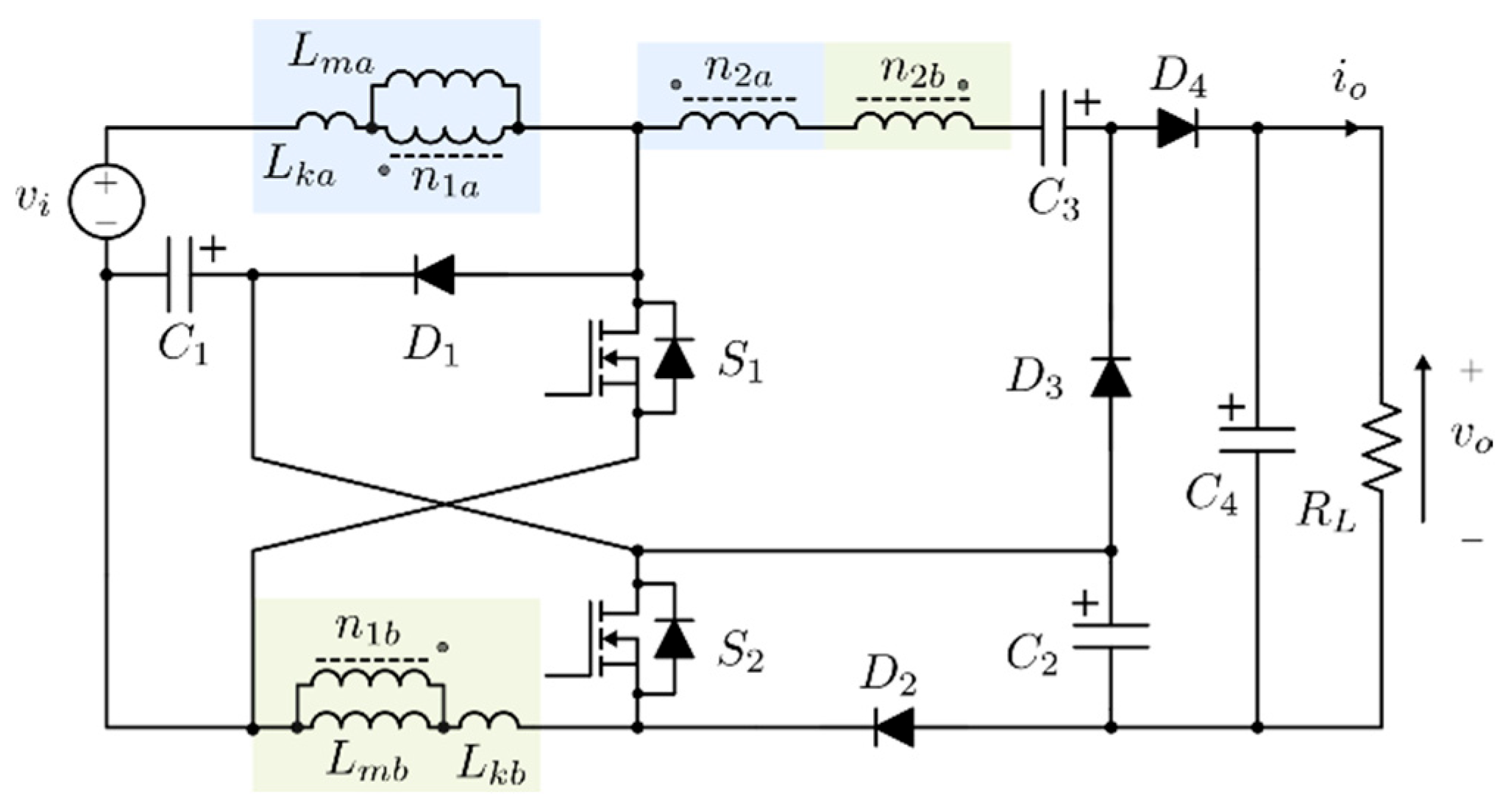
From Figure 39, a non-isolated DC-DC converter with a high interleaved voltage boost is proposed in [32] for sustainable energy systems. The design achieves this high voltage level through a coupled inductor and capacitor-based conversion incorporated into an interleaved boost converter structure. Both coupled inductors, connected in parallel on the input side, have a unique structure with primary and secondary windings in series, and are linked to a switched capacitor circuit on the output side.
Using an auxiliary inductor, the switched-capacitor circuit can charge in parallel and discharge in series, thus optimizing the output voltage. To recover the energy from the leakage inductance, a passive clamp circuit is used, which redirects this energy to the output, thus improving overall efficiency.
This topology enables the use of switching devices with low voltage stress and low on-state resistance, which helps reduce power losses and overall size, while mitigating issues related to diode reverse recovery. The theoretical analysis and operating principle of the proposed converter are validated with a prototype operating at 20 V input, 400 V output, and 320 W output power, confirming the converter’s effective performance [32,61].
Conventional Boost converters are often used to connect fuel cells, power storage, and high-power loads, although their efficiency and reliability vary considerably, particularly in high-power applications. Furthermore, the high ripples produced can reduce fuel cell durability.
To address these issues, the article suggests and experimentally verifies a power-sharing strategy using Boost converters (PCCs), designed for high-power, low-voltage systems. This strategy reduces practical problems such as internal circulating currents (ICCs) and power distribution instability. To avoid ICCs, an inverted blocking diode is implemented, in addition to a power equalization filter to optimize the sharing efficiency.
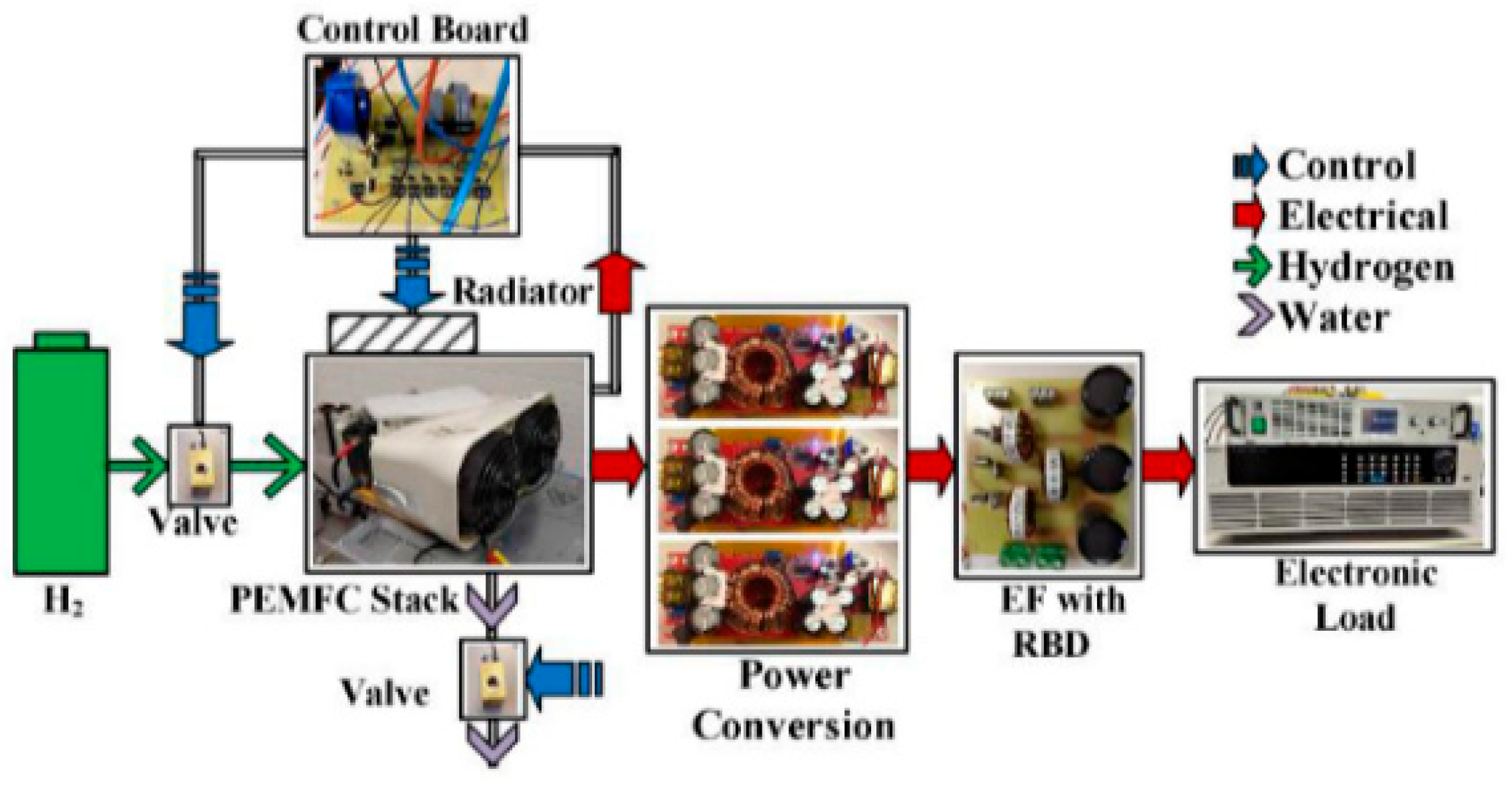
The strategy is corroborated both through simulations in MATLAB/Simulink using a 6-kW proton-exchange membrane fuel cell (PEMFC) and through experimental tests in a reduced-scale 810 W PEMFC configuration with three boost converters and one electrical load. The results show a strong alignment between simulation and real-life performance, corroborating the effectiveness of the suggested methodology [53], according to Figure 40.
As illustrated in Figure 41, this paper [54] presents a comprehensive analysis of non-isolated DC-DC converters using high-voltage amplification techniques. These techniques are systematically classified into six broad categories: multi-stage/multi-level, capacitor conversion, voltage multiplier, voltage boost, inductor conversion, and magnetic amplification. Each category is examined in terms of its advantages and limitations, with emphasis on factors such as cost, design complexity, power handling, reliability, and efficiency. The comparison covers essential technical metrics such as the number of active and passive components, potential voltage rises, stress on components, switching frequency, overall efficiency, and power handling. Although coupled inductors are discussed, the focus of the evaluation remains on non-isolated architectures capable of high-voltage conversion. The main contribution of this research lies in the structured analysis and benchmarking of high-performance techniques, which promote the advancement of new converter topologies designed for low-voltage energy applications, especially in fields such as photovoltaics. Furthermore, the article summarizes various control tactics related to these converters, providing an overview of their effectiveness and versatility [54].
An innovative approach is proposed for a non-isolated DC-DC converter that achieves a massive voltage boost through an activated inductor and a coupled inductor (CI) [55]. The junction between the windings provides two extra degrees of freedom, allowing for a wide range of voltage levels. To efficiently recover the energy stored in passive elements, a combination of capacitive and inductive energy transfer techniques is used without the need for air circulation.
The converter incorporates a passive suspension device and two series-connected output ports to manage output and switching voltages more efficiently. This synchronized switching operation simplifies the creation of the control system. The study analyzes the converter’s performance in various conduction modes, including continuous, discontinuous, and boundary variables.
A comprehensive design guide for component selection is provided. The proposed topology is compared with recent converter designs such as [e.g., interleaved boost, quasi-Z-source, and resonant converters], highlighting advantages in voltage gain, efficiency, and component stress. Experimental validation is carried out using a 300 W laboratory prototype, confirming the theoretical analysis through measurements of efficiency above 94%, stable output under variable loads, and consistent performance over a wide input voltage range (e.g., 20–60 V) [55], as presented in Figure 42.
The following proposal [55] presents a revolutionary, non-isolated, four-port DC-DC converter (FPC) designed for hybrid power applications, such as rapid electric vehicle charging. The suggested converter links three input sources to a single output and offers several key advantages: high output voltage efficiency, reduced component count, and high efficiency. An essential element of the design is the Active Inductor Capacitor Switching (ALC) connection, which allows for a significant voltage increase. By reducing the number of components particularly the switches for each input the design achieves an efficiency of 96.77% and a voltage increase of 4.75%. The paper provides a comprehensive description of the converter topology and operating principles, including a fracture study and a thorough analysis of the voltage stress (VS) across the switches. The converter supports five operating modes that allow any of the three power resources to be dynamically linked to the load through various switching schemes. Furthermore, the work includes circuit simulations and real-time experimental validations to support its findings [56].
The following proposal [57] presents an innovative, high-efficiency Zero Voltage Switching (ZVS) DC-DC converter designed for renewable energy systems. By combining a Boost Integrated Transformer (BIT) and a Coupled Inductor (CI), the converter achieves a massive voltage boost. The CI’s secondary windings are in parallel with the BIT’s primary windings, while the BIT’s primary windings are fed to a Voltage Multiplier Cell (VMC).
An innovative method is presented in [57] which the voltage gain increases in proportion to the number of shift changes between the BIT and CI. A clamp circuit is implemented to enable ZVS functionality in MOSFET switches and to recover leakage energy, to further increase the voltage gain and reduce losses. Furthermore, the design reduces electrical stress on switches and reduces conduction and conversion losses due to a short duty cycle. Other benefits include low input current ripple, balanced shared current without the need for a dedicated controller, and a shared ground configuration. A comprehensive modern evaluation is included, and the proposed converter is compared with other technologies, demonstrating superior performance. Finally, a 500 W laboratory prototype with an input-output voltage range of 20–400 V is developed to corroborate the theoretical evaluation [57], as depicted in Figure 43.
In reference [58] proposes a high-efficiency DC-DC converter that combines switching techniques for inductors and capacitors with an ideal four-turn inductor. Using the switched inductor method, two of the coupled inductors are connected in parallel and disconnected in series, thus providing high voltage performance. In addition, two diode-capacitor circuit combinations are incorporated into the primary windings, allowing for the recovery of energy that causes voltage fluctuations in the power switches, while also enhancing the communication ratio. To optimize efficiency, the converter employs power switches with a lower voltage stress rating. The basics of operation, steady-state evaluation, and significant design parameters of the converter are thoroughly discussed. A 400 W laboratory prototype is built and evaluated with 24 V input and 480 V output. The converter achieves a peak efficiency of 95.8% and an overall efficiency of 94.8% [58], as displayed in Figure 44.
In [61] presents a novel and in-depth analysis of non-isolated high step-down DC-DC converters (NHSDCs), focusing on topologies that have been highlighted in recent academic publications and industrial applications due to their improved efficiency, compact design, and reduced component stress. Unlike previous evaluations that focused on classification and voltage-boosting techniques, this study examines NHSDCs from a variety of theoretical and operational perspectives. A comprehensive comparison is provided, examining variables such as voltage gain, component stress, ripple, cost, power density, weight, size, control complexity, and component count. New metrics are also introduced to guide future comparative studies of power electronic converters. The study concludes with a general and practical approach to NHSDC structures and the feasibility of using both single and multiple objective merit numbers [61].
In electrical systems linked to combustion cells, electric loads often produce reactive energy, disrupting grid functions and decreasing the power factor. This leads to energy losses, increased electricity demand, system overloads, and increased costs. The constant use of nonlinear loads intensifies harmonic distortion, further deteriorating power quality and possibly causing interruptions due to voltage drops. Traditional filters used in fuel cell-based networks often fail to address these issues.
To address this issue, this paper proposes a Unified Linear Self-Regulating (LSR) system for Sustainable Energy Management (SEM). The system effectively reduces harmonics, compensates for electrical reactivity, and adjusts the power factor, thereby preventing energy losses and reducing utility costs. Furthermore, the SEM includes an automatic transfer circuit that ensures uninterrupted power supply to critical loads regardless of grid availability. Performance evaluations under various load conditions show that the SEM can reduce harmonic distortion and maintain a power factor close to unity [63].
Figure 45 shows that a recent improvement in a DC-DC converter, also known as “low voltage in capacitors” (LVC), is detailed in reference [64]. The LVC converter operates with a relatively low voltage across its capacitors (lower than the output voltage), while achieving a voltage increase compared to a traditional boost converter. The improvement focuses on adjusting the pulse-width modulation (PWM) technique to reduce output voltage ripple, which in turn improves power quality.
The LVC converter uses two transistors, although it is designed to operate with a single switching signal. The suggested PWM method uses two switching stages with the same duty cycle (same waveform and average high-state time) but applies a 180° switching stage between them. This innovation significantly reduces voltage ripple at the output.
The method achieves a decrease in output voltage ripple without increasing the switching frequency of the transistors or modifying circuit parameters (such as capacitance or inductance). The article presents the converter and offers a mathematical model to determine the output ripple voltage. Experimental results indicate a significant decrease in voltage ripple with the proposed enhancement, compared to the previous operation. A comparative study with the traditional boost converter highlights the advantages of the new methodology [64], as observed in Figure 46 and Figure 47.
From Figure 48, based on advances in DC-DC converter technology, an enhanced quadratic Boost converter with DC input current (CSC) is introduced in [57]. This converter achieves high voltage performance by employing switched capacitor cells. It can step up low input voltages to high levels without the need for a double circuit voltage, thus reducing the overall component count compared to traditional technologies. The converter reduces electrical stress on semiconductors, diodes, and switches, maintaining a high degree of voltage gain at low duty cycles. It also features DC input current and a common input-output gap, making it especially suitable for wind energy applications.
A comprehensive performance comparison with similar topologies is included in [59], along with lost energy calculations. MATLAB/Simulink simulations are contrasted and examined against traditional models. Experimental studies are underway to create a 150 W laboratory prototype, achieving a peak efficiency of 90% under an 80 W load [59].
This paper [65] provides an advanced analysis of a non-isolated DC-DC converter operating in direct current mode (DCCM), employing a step-up phase of the power input to achieve a high degree of static voltage rise. The proposed converter follows an amplitude-duality DC-DC conversion model. The initial stage comprises a boost power module, which includes a switch, inductor, pre-charge diode, and rectifier diode, incorporated into the conventional three-stage DC-DC converter, forming the basis for the proposed topology. The objective of this stage is to increase the amplifier’s conversion capacity through three conventional steps. To reduce conversion losses, the topology employs two power switches along with the additional power switch, all managed by a simple strategy with low voltage and current applied to the switches. The non-isolated converter acts as a DC source for the inductor in an open-loop configuration. The converter was simulated using MATLAB/Simulink. In operation, a 24 V DC input is supplied to the drive stage, while the output signal is delivered at approximately 208 V DC, with a low duty cycle (0.8) of the switches. The converter has been designed with passive components to reduce filtering requirements and voltage reduction. The performance of the proposed converter is compared to a three-level converter without the input boost stage. System efficiency and various operating modes are discussed, and a hardware prototype of a 100 W converter based on a low-cost PWM controller (KA3525A) corroborates the design.
Furthermore, the research presents a five-level photovoltaic (PV) inverter that employs a single switched capacitor (SC). This inverter requires only seven switches, no diodes, a single capacitor, and a DC voltage source. It features self-boosting capability, with only three power switches operating at high frequency, thereby reducing switching losses. A current control strategy based on, e.g., PI, predictive control, or sliding mode dependent case is proposed to ensure accurate grid current regulation and support grid stability and power quality. The inverter design is validated through MATLAB/Simulink R2022b and PLECS v4.6 simulations, and further confirmed using a laboratory-built prototype [46,62,65], according to Figure 49.
In contrast, this section examines how the direction and magnitude of power flow through the interconnection converter (IC) affect the safety of a hybrid (DC/AC) microgrid under weak signal conditions. An invariant no-drops tracking strategy is proposed to regulate power flow in hybrid microgrids during both reverse and correction modes. The proposed tracker ensures fast response, error-free operation, and robustness against system uncertainties.
Given the complexity of determining the invariant combination, an ellipsoid boundary (i.e., a linear function) is used, which reduces the problem to convex optimization, which is easier to solve. A new theory based on linear inequalities of the matrix is being developed in [45] to obtain ideal trackers. The hybrid microgrid is modelled and estimated in both operating modes:
  • Mode 1: the interconnection converter acts as an inverter, converting DC power into AC power.
  • Mode 2: the converter functions as a rectifier, transforming AC power into DC power.
The performance of the suggested trackers is compared with H-infinity trackers under various operating scenarios, including load variations, input voltage fluctuations, and dynamic changes in reference signals. The results indicate that the proposed control is considerably faster and exhibits less overshoot compared to H-infinity controllers. Furthermore, this method can serve as a support for hybrid microgrids due to its simplicity, ease of implementation, and computational efficiency [45].
This work also introduces an optimized DC-DC converter topology designed for photovoltaic (PV) applications. The converter can draw power from multiple AC sources—such as two or more PV modules—and delivering AC output to the load. It can regulate the output voltage without reversing polarity during low-voltage operating conditions. Additionally, the converter offers improved reliability, maintaining operation even if some of the input sources partially fail.
In addition, a new quasi-Z-source (QZ) DC-DC converter is suggested in [60] for solar energy systems and IoT. This converter employs a common-ground switch, reducing voltage loss and lowering component stress. Figure 50 shows that the Boost quasi-Z-source converter (LQZC) achieves 94.9% efficiency in a 60 W prototype [60]. In addition, it offers a three-level DC-DC converter with a symmetrical structure for solar energy applications. This design incorporates two high-stage cells and two resonant paths, offering high voltage gain with minimal current ripples. The simple implementation of PWM control ensures efficient operation, with devices operating under zero-current switching (ZCS) conditions, thus reducing conversion losses.
A high-frequency DC-DC converter with an integrated AC inductor (IC) and voltage multiplier (VMC) is presented in [66], based on earlier designs of this type. The synchronized pulse control for the switches links the ICs to the input when ON and to the output when OFF. The passive clamp circuit, powered by leakage inductances, contains the VMC for a MOSFET. This configuration increases the voltage gain, reduces the number of other components, and enables Zero-Current Switching (ZCS) to reduce switching losses. The design provides high voltage absorption, lower voltage across switches, and improved current distribution between MOSFETs. A 300 W prototype (25 V to 400 V) corroborates its performance [66].
In addition, a new DC-DC converter based on the quadratic power converter (QBC) was introduced in [66]. The converter reduces electrical stress on switches and diodes, significantly increasing voltage gain, efficiency, and current continuity. The design achieves a voltage increase more than five times that of a basic QBC by incorporating an impedance network with inductor-capacitor components. Experimental results indicate a voltage increase of up to 12 times and an efficiency of 95%, while reducing voltage stress by one-third.

4. Discussions of Results

The results obtained from the comparison of different DC-DC converter topologies highlight a set of trade-offs between voltage gain, efficiency, number of components, and control complexity. This diversity explains why literature does not identify a universal topology, but rather a portfolio of solutions adapted to specific application scenarios.
In the case of conventional converters, the Buck and Boost remain key references due to their simplicity of implementation and the high efficiency achieved in practice [1,3,57]. The Boost converter achieves efficiencies above 96% in several renewable energy conversion applications [17], making it a competitive option for low- and medium-power applications. However, its inherent limitation in voltage gain restricts its applicability in systems requiring very high conversion ratios.
In contrast, variable-gain converters such as Buck-Boost, SEPIC, and Ćuk provide greater operational flexibility, allowing both step-down and step-up operation [37]. Nevertheless, this benefit comes at the cost of increased control complexity and significant sensitivity to design parameters, which reflects the need for more robust control strategies, such as fuzzy or nonlinear techniques, as reported in [41,47].
Impedance-network-based architectures, such as the Z-Source and its variants, have attracted considerable attention due to their fault tolerance and ability to operate within extended voltage ranges [2,26,30,38,60]. However, comparative results indicate that the efficiency of these converters can be limited, reaching values close to 89% in certain scenarios [38]. Moreover, the complexity associated with their modelling and control increases the design requirements, which restricts their application to systems where electrical robustness is prioritized over overall efficiency.
Converters based on coupled inductors stand out as an intermediate solution: they achieve high efficiency levels (94–95.8%) and a significant voltage gain increase, without reaching the complexity of modular converters [5,46]. These results suggest that this topology is suitable for systems requiring high performance with compact design, such as in electric mobility or renewable energy integration [56,63].
The Quadratic Boost emerges as one of the most relevant topologies in scenarios demanding very high voltage gain with a relatively low number of components [55,59]. Although its efficiency range is between 90% and 95%, slightly lower than that of the conventional Boost, its ability to achieve high voltage levels without resorting to multilevel architecture makes it an ideal candidate for photovoltaic systems, distributed generation, and electric propulsion. Furthermore, ref. [55] demonstrates that this converter can be effectively controlled with conventional techniques of low-to-moderate complexity, while maintaining stability and good dynamic performance.
Finally, multilevel, hybrid, and modular topologies offer the highest flexibility, enabling voltage scalability and improved waveform quality [37]. However, the results confirm that their implementation involves a higher number of components and significantly increased control complexity, aspects that raise both cost and development time. Despite these limitations, they remain the most robust option for high-power systems, where the benefits outweigh the design compromises.
Overall, the analysis confirms that the relationship between efficiency, gain, and complexity is decisive in selecting a topology. While basic converters remain competitive in low-cost and simple applications, the results show that quadratic converters and those based on coupled inductors represent highly attractive alternatives for emerging applications, as they adequately balance efficiency, high voltage gain, and control feasibility.
The comparative analysis presented in Table 4 summarizes the main performance indicators of the most representative DC-DC converter topologies, highlighting the trade-offs among voltage gain, efficiency, component count, and control complexity. This tabular overview reinforces the trends discussed in the literature and allows a more direct visualization of the practical implications of each topology.
The table shows that the Boost converter achieves the highest efficiency (up to 96.9%) with a relatively low component count and simple to moderate control requirements, which confirms its competitiveness in applications where efficiency and low cost are prioritized. On the other hand, converters such as Z-Source exhibit significantly lower efficiency (below 89%), even though they provide extended operating ranges and higher fault tolerance.
Another relevant observation is the Quadratic Boost converter, which, according to Table 4, stands out with a very high voltage gain while maintaining a moderate efficiency level (90–95%) and relatively simple control requirements. This balance makes it an attractive option for renewable energy and electric mobility applications, where compactness and high conversion ratios are crucial.
The topology of coupled inductors also exhibits competitive behaviour, achieving efficiencies above 94% while offering high voltage gains, although at the expense of increased control complexity and higher component count. Finally, multilevel and modular converters, as reflected in the table, provide scalability and waveform quality but at the cost of increased design complexity and hardware requirements.

5. Conclusions

Research on DC-DC converters plays a vital role in increasing energy efficiency and the incorporation of green energy sources [1]. As the adoption of green energy sources such as solar and wind continues to increase, the need for more reliable and efficient power conversion systems becomes increasingly evident. DC-DC converters are essential in facilitating power conversion between different voltage levels, ensuring the stability of renewable energy sources, which are affected by voltage fluctuations and variable power consumption [2].
One of the key findings of this study is the diversity of topologies available for DC-DC conversion, each with its respective advantages and limitations. Traditional topologies, such as Buck-Boost, Ćuk, SEPIC, Z-Source, and Zeta converters, have been extensively studied for their robustness and efficiency in traditional applications [3,5]. However, the growing demand for high power and high voltage applications has driven research into more innovative converters, such as multi-level and quadratic converters, which offer advantages in reducing component voltage and increasing input voltage [6,7].
The study of these topologies has highlighted the importance of several key factors, such as the rise in voltage, the effect on switches and diodes, and the number of elements involved in the conversion process. These components are crucial in determining the feasibility of implementing any topology in renewable energy systems and high-efficiency industrial applications [8,9]. Furthermore, the control methods employed in these topologies are essential to ensure efficiency, stability, and adaptability to the inherent variations in renewable energy sources. Advanced control techniques, such as predictive control and real-time control, offer promising alternatives for optimizing the behavior of converters in nonlinear systems with power variations [24,25].
In terms of efficiency, Boost converters, which store energy in components such as capacitors and inductors, have proven to be suitable for applications requiring efficient voltage increases. However, their effectiveness can be affected by parasitic switching effects and high duty cycle ratios, thus increasing the stress on both active and passive components [10,11]. Several techniques, such as the implementation of coupled inductors and switched capacitor topologies, have been proposed to mitigate these drawbacks and enhance the overall converter efficiency [12,13].
Despite the advancement in DC-DC converter technology, several challenges remain. Energy efficiency remains a major issue, particularly in high-power applications, where power losses due to switching interruptions and voltage variations between switches can be significant [22]. Furthermore, the incorporation of next-generation converters, such as quadratic and multi-level converters, poses challenges related to design complexity and the coordination of various control stages [26,27]. To address these challenges, it is essential to develop new conversion methods that reduce losses without altering the size and cost of the components.
Finally, the importance of robust and flexible control strategies that can handle intrinsic fluctuations in renewable energy sources is highlighted. It is crucial for converters to be able to adapt to dynamic variations in renewable energy for their effective use in renewable energy systems. It is essential to enhance control techniques to address these challenges. The combination of advances in conversion topologies and control techniques suggests a promising field for future studies and industrial implementations.

6. Future Works

The field of DC-DC converters is constantly evolving, presenting numerous opportunities for future research aimed at improving the efficiency, performance, and utility of these systems, particularly about the incorporation of environmentally friendly resources. Several areas with significant potential for further study include:
1.
Establishment of Advanced Converter Topologies.
Although current DC-DC conversion topologies, such as Buck, Boost, and Quadratic, have proven effective in a variety of applications, there is still significant potential for developing more efficient and robust topologies. Future research could focus on developing multi-level converters, which ensure increased peak voltage and reduced component stress. Furthermore, the implementation of coupled inductors and switched capacitor topologies can further increase efficiency and reduce system complexity. Research into hybrid converter topologies, which combine different conversion stages, may also be useful for improving performance in high-power applications [1,6].
2.
Optimization of Control Strategies for Nonlinear Systems
A significant challenge when implementing DC-DC converters in renewable energy systems lies in the unpredictable nature of the power input, which can vary due to ecological factors. It is crucial to develop advanced control strategies to manage nonlinear behaviors and disturbances. Tactics such as Model Predictive Control (MPC), Adaptive Control, and Sliding Mode Control (SMC) can be investigated to enhance stability, dynamic responsiveness, and adaptive capability of converters. These strategies could also be investigated in the future for implementation in real-time control systems to assess their practical feasibility in various wind energy applications [24,25].
3.
Improved Efficiency in High-Power Applications
A crucial aspect of interest is maximizing the efficiency of high-power DC-DC converters, especially in applications requiring high voltage and current. Examining the impacts of parasitic components, such as parasitic inductances and capacitances in high-frequency switching, will be essential to reduce power losses. Techniques such as soft switching, resonant converters, and the application of spread-spectrum semiconductors (such as GaN or SiC) can be investigated to improve the efficiency of power conversion systems [10,11].
4.
Integration with Energy Storage Systems
Another crucial area for future research is the integration of DC-DC converters with energy storage systems, such as batteries and supercapacitors. Since renewable energy systems are typically intermittent, combining these converters with energy storage solutions will be crucial to maintain constant production. Research could focus on improving the management of energy storage systems, including battery charge/discharge cycles, and ensuring optimal energy flow between renewable energy sources, storage, and loads [9].
5.
Emerging Technologies in Power Electronics
With the rapid advancement of new power semiconductor devices and control techniques, future research may investigate the application of emerging technologies such as wide band gap semiconductors (SiC, GaN) in the creation of more efficient DC-DC converters. These materials provide superior thermal conductivity, accelerated switching speeds, and increased efficiency at high frequencies and voltages. Research into the incorporation of these new materials into next-generation conversion topologies may significantly increase performance and decrease system costs [12,13].
6.
Reliability and Fault Tolerance
Reliability and fault tolerance aspects are essential for future work, particularly in industrial and green energy areas. Research could focus on developing algorithms to identify and diagnose problems, as well as designing fault-tolerant converters that can maintain operation even in the event of component failures. These advances would result in increased robustness in power conversion systems, ensuring greater availability and reliability over extended periods of operation [22].
7.
Experimental Validation and Industrial Applications
Finally, experimental verification of the proposed converter topologies and control strategies will be crucial to assess their practical effectiveness. Future studies should focus on developing experimental setups to confirm the simulation results and evaluate converter performance under various load conditions, input variations, and disturbances. Furthermore, expanding the suggested systems to industrial applications such as electric vehicles, renewable energy integration, and microgrids can significantly increase the practical utility of these technologies.

Author Contributions

Conceptualization, J.R.-G., M.R. and K.C.; Methodology, M.R.; Validation, R.A.A.-R.; Formal analysis, R.A.A.-R., M.R. and K.C.; Investigation, R.A.A.-R.; Resources, J.R.-G.; Data curation, R.A.A.-R.; Writing—original draft, R.A.A.-R.; Writing—review & editing, J.R.-G. and M.R.; Visualization, K.C.; Supervision, J.R.-G.; Project administration, J.R.-G.; Funding acquisition, J.R.-G. All authors have read and agreed to the published version of the manuscript.

Funding

The authors appreciate the support provided by the National Research and Development Agency (ANID) through the FONDECYT Regular grant number 1220556 and SERC Chile FONDAP 1523A0006. Additional funding was provided by the Research Project PINV01-743 and PINV01-272 of the National Council of Science and Technology (CONACYT) and the UK-FRANCE Science Innovation and Technology Researcher Mobility Scheme UUK Award #1102. Furthermore, the authors acknowledge Programa de Redução de Assimetrias na Pós-Graduação (PRAPG)—Edital no. 14/2023—DRI—CAPES. ID Number: 046.821.818-15. Also, this research was supported by Electrical Machines and Drives (EM&D) from Universidad Nacional de Colombia, Red de cooperación de soluciones energéticas para comunidades, code: 59384.

Data Availability Statement

No new data were created or analyzed in this study.

Conflicts of Interest

The authors declare no conflict of interest.

References

  1. Ebrahimi, R.; Kojabadi, H.M.; Chang, L.; Blaabjerg, F. Coupled-inductor-based high step-up DC–DC converter. IET Power Electron. 2019, 12, 3093–3104. [Google Scholar] [CrossRef]
  2. Kojabadi, H.M.; Ebrahimi, R.; Esmaeilifard, H.; Chang, L.; Chen, Z.; Blaabjerg, F. High boost transformer-based Z-source inverter under continuous input current profile. IET Power Electron. 2019, 12, 3716–3723. [Google Scholar] [CrossRef]
  3. Lish, M.H.; Ebrahimi, R.; Kojabadi, H.M.; Guerrero, J.M.; Esfetanaj, N.N.; Chang, L. Novel high gain DC-DC converter based on coupled inductor and diode capacitor techniques with leakage inductance effects. IET Power Electron. 2020, 13, 2380–2389. [Google Scholar] [CrossRef]
  4. Acar, C.; Dincer, I. Environmental impact assessment of renewables and conventional fuels for different end use purposes. Int. J. Glob. Warm. 2017, 13, 260–277. [Google Scholar] [CrossRef]
  5. Singh, R.; Bansal, R.C. Review of HRESs based on storage options, system architecture and optimization criteria and methodologies. IET Renew. Power Gener. 2018, 12, 747–760. [Google Scholar] [CrossRef]
  6. Al-Ammar, E.A.; Habib, H.U.R.; Kotb, K.M.; Wang, S.; Ko, W.; Elmorshedy, M.F.; Waqar, A. Residential Community Load Management Based on Optimal Design of Standalone HRES with Model Predictive Control. IEEE Access 2020, 8, 12542–12572. [Google Scholar] [CrossRef]
  7. Vieira, M.D.M.; Huijbregts, M.A.J. Comparing mineral and fossil surplus costs of renewable and non-renewable electricity production. Int. J. Life Cycle Assess. 2018, 23, 840–850. [Google Scholar] [CrossRef]
  8. Day, C.; Day, G. Climate change, fossil fuel prices and depletion: The rationale for a falling export tax. Econ. Model. 2017, 63, 153–160. [Google Scholar] [CrossRef]
  9. Burmester, D.; Rayudu, R.; Seah, W.; Akinyele, D. A review of nanogrid topologies and technologies. Renew. Sustain. Energy Rev. 2017, 67, 760–775. [Google Scholar] [CrossRef]
  10. Soliman, M.A.; Hasanien, H.M.; Alkuhayli, A. Marine Predators Algorithm for Parameters Identification of Triple-Diode Photovoltaic Models. IEEE Access 2020, 8, 155832–155842. [Google Scholar] [CrossRef]
  11. Colmenar-Santos, A.; Monteagudo-Mencucci, M.; Rosales-Asensio, E.; de Simón-Martín, M.; Pérez-Molina, C. Optimized design method for storage systems in photovoltaic plants with delivery limitation. Sol. Energy 2019, 180, 468–488. [Google Scholar] [CrossRef]
  12. Sabouhi, H.; Abbaspour, A.; Fotuhi-Firuzabad, M.; Dehghanian, P. Reliability modeling and availability analysis of combined cycle power plants. Int. J. Electr. Power Energy Syst. 2016, 79, 108–119. [Google Scholar] [CrossRef]
  13. Hernández-Callejo, L.; Gallardo-Saavedra, S.; Alonso-Gómez, V. A review of photovoltaic systems: Design, operation and maintenance. Sol. Energy 2019, 188, 426–440. [Google Scholar] [CrossRef]
  14. Kaouane, M.; Boukhelifa, A.; Cheriti, A. Regulated output voltage double switch Buck-Boost converter for photovoltaic energy application. Int. J. Hydrogen Energy 2016, 41, 20847–20857. [Google Scholar] [CrossRef]
  15. Bist, V.; Singh, B. An adjustable-speed PFC bridgeless Buck-Boost converter-fed BLDC motor drive. IEEE Trans. Ind. Electron. 2014, 61, 2665–2677. [Google Scholar] [CrossRef]
  16. Alonso, J.M.; Viña, J.; Vaquero, D.G.; Martínez, G.; Osorio, R. Analysis and design of the integrated double Buck-Boost converter as a high-power-factor driver for power-led lamps. IEEE Trans. Ind. Electron. 2012, 59, 1689–1697. [Google Scholar] [CrossRef]
  17. Blanes, J.M.; Gutiérrez, R.; Garrigós, A.; Lizán, J.L.; Cuadrado, J.M. Electric vehicle battery life extension using ultracapacitors and an FPGA controlled interleaved Buck-Boost converter. IEEE Trans. Power Electron. 2013, 28, 5940–5948. [Google Scholar] [CrossRef]
  18. Onar, O.C.; Shirazi, O.H.A.; Khaligh, A. Grid interaction operation of a telecommunications power system with a novel topology for multiple-input Buck-Boost converter. IEEE Trans. Power Deliv. 2010, 25, 2633–2645. [Google Scholar] [CrossRef]
  19. Lee, Y.J.; Khaligh, A.; Emadi, A. A compensation technique for smooth transitions in non-inverting Buck-Boost converter. In Proceedings of the IEEE Applied Power Electronics Conference and Exposition—APEC, Washington, DC, USA, 15–19 February 2009; pp. 608–614. [Google Scholar] [CrossRef]
  20. Lopez-Santos, O.; Cabeza-Cabeza, A.J.; Garcia, G.; Martinez-Salamero, L. Sliding mode control of the isolated bridgeless SEPIC high power factor rectifier interfacing an AC source with a LVDC distribution bus. Energies 2019, 12, 3463. [Google Scholar] [CrossRef]
  21. Gules, R.; Santos, W.M.D.; Reis, F.A.D.; Romaneli, E.F.R.; Badin, A.A. A modified SEPIC converter with high static gain for renewable applications. IEEE Trans. Power Electron. 2014, 29, 5860–5871. [Google Scholar] [CrossRef]
  22. Sabzali, A.J.; Ismail, E.H.; Behbehani, H.M. High voltage step-up integrated double Boost–SEPIC DC–DC converter for fuel-cell and photovoltaic applications. Renew. Energy 2015, 82, 44–53. [Google Scholar] [CrossRef]
  23. Ardi, H.; Ajami, A. Study on a High Voltage Gain SEPIC-Based DC-DC Converter with Continuous Input Current for Sustainable Energy Applications. IEEE Trans. Power Electron. 2018, 33, 10403–10409. [Google Scholar] [CrossRef]
  24. Moradpour, R.; Ardi, H.; Tavakoli, A. Design and implementation of a new SEPIC-based high step-up DC/DC converter for renewable energy applications. IEEE Trans. Ind. Electron. 2017, 65, 1290–1297. [Google Scholar] [CrossRef]
  25. De Morais, J.C.D.S.; De Morais, J.L.D.S.; Gules, R. Photovoltaic AC Module Based on a Ćuk Converter with a Switched-Inductor Structure. IEEE Trans. Ind. Electron. 2019, 66, 3881–3890. [Google Scholar] [CrossRef]
  26. Babaei, E.; Abu-Rub, H.; Suryawanshi, H.M. Z-Source Converters: Topologies, Modulation Techniques, and Application-Part i. IEEE Trans. Ind. Electron. 2018, 65, 5092–5095. [Google Scholar] [CrossRef]
  27. Singh, B.; Bist, V. Improved power quality bridgeless Ćuk converter fed brushless DC motor drive for air conditioning system; Improved power quality bridgeless Ćuk converter fed brushless DC motor drive for air conditioning system. IET Power Electron. 2013, 6, 902–913. [Google Scholar] [CrossRef]
  28. Alnuman, H.; Samiullah, M.; Armghan, A.; Ahmed, E.M.; Islam, S.; Iqbal, A. Switched inductor super boost converter with auxiliary charging mode for low duty operation in a DC microgrid. Energy Rep. 2023, 10, 2319–2329. [Google Scholar] [CrossRef]
  29. Silva, J.F.; Pinto, S.F. Linear and Nonlinear Control of Switching Power Converters. In Power Electronics Handbook, 4th ed.; Butterworth-Heinemann: Oxford, UK, 2018; pp. 1141–1220. [Google Scholar] [CrossRef]
  30. Torkan, A.; Ehsani, M. A Novel Nonisolated Z-Source DC-DC Converter for Photovoltaic Applications. IEEE Trans. Ind. Appl. 2018, 54, 4574–4583. [Google Scholar] [CrossRef]
  31. Niasse, O.A.; Tankari, M.A.; Dia, F.; Mbengue, N.; Diao, A.; Niane, M.; Diagne, M.; Ba, B.; Levebvre, G. Optimization of Electrics Parameters CdS/CdTe Thin Film Solar Cell Using Dielectric Model. World J. Condens. Matter Phys. 2016, 6, 75–86. [Google Scholar] [CrossRef]
  32. González-Santini, N.S.; Zeng, H.; Yu, Y.; Peng, F.Z. Z-Source Resonant Converter with Power Factor Correction for Wireless Power Transfer Applications. IEEE Trans. Power Electron. 2016, 31, 7691–7700. [Google Scholar] [CrossRef]
  33. Freytes, J.; Bergna, G.; Suul, J.A.; D’Arco, S.; Saad, H.; Guillaud, X. State-space modelling with steady-state time invariant representation of energy-based controllers for modular multilevel converters. In Proceedings of the 2017 IEEE Manchester PowerTech Powertech 2017, Manchester, UK, 18–22 June 2017. [Google Scholar] [CrossRef]
  34. Hu, X.; Gong, C. A high gain input-parallel output-series DC/DC converter with dual coupled inductors. IEEE Trans. Power Electron. 2015, 30, 1306–1317. [Google Scholar] [CrossRef]
  35. Eltawil, M.A.; Zhao, Z. MPPT techniques for photovoltaic applications. Renew. Sustain. Energy Rev. 2013, 25, 793–813. [Google Scholar] [CrossRef]
  36. Noguchi, T.; Togashi, S.; Nakamoto, R. Short-current pulse-based maximum-power-point tracking method for multiple photovoltaic-and-converter module system. IEEE Trans. Ind. Electron. 2002, 49, 217–223. [Google Scholar] [CrossRef]
  37. Mumtaz, F.; Yahaya, N.Z.; Meraj, S.T.; Singh, B.; Kannan, R.; Ibrahim, O. Review on non-isolated DC-DC converters and their control techniques for renewable energy applications. Ain Shams Eng. J. 2021, 12, 3747–3763. [Google Scholar] [CrossRef]
  38. Ellabban, O.; Abu-Rub, H. An overview for the Z-Source Converter in motor drive applications. Renew. Sustain. Energy Rev. 2016, 61, 537–555. [Google Scholar] [CrossRef]
  39. Battiston, A.; Miliani, E.H.; Martin, J.P.; Nahid-Mobarakeh, B.; Pierfederici, S.; Meibody-Tabar, F. A control strategy for electric traction systems using a PM-motor fed by a bidirectional Z-source inverter. IEEE Trans. Veh. Technol. 2014, 63, 4178–4191. [Google Scholar] [CrossRef]
  40. Mahmoud, H.Y.; Hasanien, H.M.; Besheer, A.H.; Abdelaziz, A.Y. Hybrid cuckoo search algorithm and grey wolf optimiser-based optimal control strategy for performance enhancement of HVDC-based offshore wind farms. IET Gener. Transm. Distrib. 2020, 14, 1902–1911. [Google Scholar] [CrossRef]
  41. Hassan, S.A.; Iqbal, S. Automatic car braking system using fuzzy logic controller with environmental factors. In Proceedings of the 22nd International Multitopic Conference INMIC 2019, Islamabad, Pakistan, 29–30 November 2019. [Google Scholar] [CrossRef]
  42. Taghavi, S.S.; Rezvanyvardom, M.; Mirzaei, A.; Gorji, S.A. High Step-Up Three-Level Soft Switching DC-DC Converter for Photovoltaic Generation Systems. Energies 2023, 16, 41. [Google Scholar] [CrossRef]
  43. Loukil, K.; Abbes, H.; Abid, H.; Abid, M.; Toumi, A. Design and implementation of reconfigurable MPPT fuzzy controller for photovoltaic systems. Ain Shams Eng. J. 2020, 11, 319–328. [Google Scholar] [CrossRef]
  44. Xiang, X.; Yu, C.; Lapierre, L.; Zhang, J.; Zhang, Q. Survey on Fuzzy-Logic-Based Guidance and Control of Marine Surface Vehicles and Underwater Vehicles. Int. J. Fuzzy Syst. 2017, 2, 572–586. [Google Scholar] [CrossRef]
  45. Awad, H.; Bayoumi, E.H.E.; Soliman, H.M.; Ibrahim, A.M. Invariant-set design of robust switched trackers for bidirectional power converters in hybrid microgrids. Ain Shams Eng. J. 2023, 14, 102123. [Google Scholar] [CrossRef]
  46. Khalili, S.; Ahmadi, A.A.; Adib, E.; Golsorkhi, M.S. Single-switch coupled-inductors-based high step-up converter with reduced voltage stress. IET Power Electron. 2023, 16, 1227–1238. [Google Scholar] [CrossRef]
  47. Quoc, D.P.; Nhat, Q.N.; Phuong, L.M.; Khoa, L.D.; Vu, N.T.D.; Bao, A.N.; Lee, H.H. The new combined maximum power point tracking algorithm using fractional estimation in photovoltaic systems. In Proceedings of the International Conference on Power Electronics and Drive Systems, Jeju, Republic of Korea, 30 May–3 June 2011; pp. 919–923. [Google Scholar] [CrossRef]
  48. Soliman, M.A.; Hasanien, H.M.; Azazi, H.Z.; El-Kholy, E.E.; Mahmoud, S.A. An adaptive fuzzy logic control strategy for performance enhancement of a grid-connected PMSG-Based wind turbine. IEEE Trans. Ind. Inf. 2019, 15, 3163–3173. [Google Scholar] [CrossRef]
  49. Velayudhan, A.K.D. Design of a supervisory fuzzy logic controller for monitoring the inflow and purging of gas through lift bags for a safe and viable salvaging operation. Ocean Eng. 2019, 171, 193–201. [Google Scholar] [CrossRef]
  50. Rani, P.H.; Navasree, S.; George, S.; Ashok, S. Fuzzy logic supervisory controller for multi-input non-isolated DC to DC converter connected to DC grid. Int. J. Electr. Power Energy Syst. 2019, 112, 49–60. [Google Scholar] [CrossRef]
  51. Oudda, M.; Hazzab, A.; Meryem, O. Photovoltaic System with SEPIC Converter Controlled by the Fuzzy Logic. Int. J. Power Electron. Drive Syst. (IJPEDS) 2016, 7, 1283–1293. [Google Scholar] [CrossRef]
  52. Hosseini, S.H.; Alishah, R.S.; Kurdkandi, N.V. Design of a new extended Zeta converter with high voltage gain for photovoltaic applications. In Proceedings of the 9th International Conference on Power Electronics—ECCE Asia: “Green World with Power Electronics” ICPE 2015-ECCE Asia, Seoul, Republic of Korea, 1–5 June 2015; pp. 970–977. [Google Scholar] [CrossRef]
  53. Kumar, R.; Singh, B. BLDC Motor-Driven Solar PV Array-Fed Water Pumping System Employing Zeta Converter. IEEE Trans. Ind. Appl. 2016, 52, 2315–2322. [Google Scholar] [CrossRef]
  54. Sowmya, B.; Saranya, D. Solar integrated Zeta converter for DFIG based wind energy conversion system applications. AIP Conf. Proc. 2022, 2405, 040003. [Google Scholar] [CrossRef]
  55. Andrade, A.M.S.S.; Martins, M.L.D.S. Quadratic-Boost with Stacked Zeta Converter for High Voltage Gain Applications. IEEE J. Emerg. Sel. Top. Power Electron. 2017, 5, 1787–1796. [Google Scholar] [CrossRef]
  56. Singh, A.K.; Pathak, M.K. Single-stage Zeta-SEPIC-based multifunctional integrated converter for plug-in electric vehicles. IET Electr. Syst. Transp. 2018, 8, 101–111. [Google Scholar] [CrossRef]
  57. Forouzesh, M.; Shen, Y.; Yari, K.; Siwakoti, Y.P.; Blaabjerg, F. High-Efficiency High Step-Up DC-DC Converter with Dual Coupled Inductors for Grid-Connected Photovoltaic Systems. IEEE Trans. Power Electron. 2018, 33, 5967–5982. [Google Scholar] [CrossRef]
  58. Bhaskar, M.S.; Meraj, M.; Iqbal, A.; Padmanaban, S.; Maroti, P.K.; Alammari, R. High Gain Transformer-Less Double-Duty-Triple-Mode DC/DC Converter for DC Microgrid. IEEE Access 2019, 7, 36353–36370. [Google Scholar] [CrossRef]
  59. Subhani, N.; May, Z.; Alam, M.K.; Khan, I.; Hossain, M.A.; Mamun, S. An Improved Non-Isolated Quadratic DC-DC Boost Converter with Ultra High Gain Ability. IEEE Access 2023, 11, 11350–11363. [Google Scholar] [CrossRef]
  60. Sai, T.; Moon, Y.; Sugimoto, Y. Improved Quasi-Z-Source High Step-Up DC–DC Converter Based on Voltage-Doubler Topology. Sensors 2022, 22, 9893. [Google Scholar] [CrossRef]
  61. Tarzamni, H.; Gohari, H.S.; Sabahi, M.; Kyyra, J. Nonisolated High Step-Up DC-DC Converters: Comparative Review and Metrics Applicability. IEEE Trans. Power Electron. 2024, 39, 582–625. [Google Scholar] [CrossRef]
  62. Mondal, S.; Biswas, S.P.; Islam, M.R.; Muyeen, S.M. A Five-Level Switched-Capacitor Based Transformer less Inverter with Boosting Capability for Grid-Tied PV Applications. IEEE Access 2023, 11, 12426–12443. [Google Scholar] [CrossRef]
  63. Hasan, K.; Othman, M.M.; Meraj, S.T.; Ahmadipour, M.; Lipu, M.S.H.; Gitizadeh, M. A Unified Linear Self-Regulating Method for Active/Reactive Sustainable Energy Management System in Fuel-Cell Connected Utility Network. IEEE Access 2023, 11, 21612–21630. [Google Scholar] [CrossRef]
  64. Hernandez-Ochoa, J.C.; Alejo-Reyes, A.; Rosas-Caro, J.C.; Valdez-Resendiz, J.E. Improved Operation of the Step-Up Converter with Large Voltage Gain and Low Voltage on Capacitors. Appl. Sci. 2023, 13, 2854. [Google Scholar] [CrossRef]
  65. Murali, D.; Girija, V.; Murali, D.; Girija, V. Use of boost power stage for static voltage gain improvement of a non-isolated continuous input current three-level DC-DC converter. J. Appl. Res. Technol. 2022, 20, 160–172. [Google Scholar] [CrossRef]
  66. Radmehr, H.; Nouri, T.; Shaneh, M. A dual switches high step-up DC–DC converter with low voltage stresses across switches. IET Renew. Power Gener. 2023, 17, 1180–1193. [Google Scholar] [CrossRef]
Figure 1. Basic schematic of a Buck (step-down) DC-DC converter [27].
Applsci 15 12868 g001
Figure 2. Architecture of the power system of a more electric aircraft [29].
Applsci 15 12868 g002
Figure 3. Boost converter topology [29].
Applsci 15 12868 g003
Figure 4. The basic structure of the power electronic converter [31].
Applsci 15 12868 g004
Figure 5. Structure of transformer less DC-DC converter topologies: (a) Buck converter, (b) Boost converter, (c) Buck-Boost converter, (d) Inductor design configuration, “L” (Toroidal) [31].
Applsci 15 12868 g005
Figure 6. Proposed high-gain Boost converter [13].
Applsci 15 12868 g006
Figure 7. Structure of the proposed converter [14]. The blue area shows the effect of coil induction.
Applsci 15 12868 g007
Figure 8. Proposed equivalent circuit for the operating mode: (a) Mode 1, (b) Mode 2 [14]. The blue area shows the effect of coil induction.
Applsci 15 12868 g008
Figure 9. Topology of the proposed TSBC [36].
Applsci 15 12868 g009
Figure 10. Non-inverting/inverting Buck-Boost converter topology [16].
Applsci 15 12868 g010
Figure 11. Proposed converter [12].
Applsci 15 12868 g011
Figure 12. Two-switch bidirectional Buck-Boost converter topology [12].
Applsci 15 12868 g012
Figure 13. Extended Buck-Boost DC-DC converter [38].
Applsci 15 12868 g013
Figure 14. Bidirectional step-up/step-down converter based on a dual-switch structure [39].
Applsci 15 12868 g014
Figure 15. Proposed topology diagram.
Applsci 15 12868 g015
Figure 16. Bidirectional Buck-Boost converter with coupled inductor and series inductor (SI) for dual ESS operation [40].
Applsci 15 12868 g016
Figure 17. Proposed high-efficiency converter configuration [43].
Applsci 15 12868 g017
Figure 18. Proposed SEPIC converter with non-inverting step-up/down operation [24].
Applsci 15 12868 g018
Figure 19. DC-DC converter topologies including the (a) conventional SEPIC converter, (b) Ćuk converter, and (c) integrated converter proposed in [49].
Applsci 15 12868 g019
Figure 21. Conventional Z-Source converter topology [26].
Applsci 15 12868 g021
Figure 22. (a) Basic quasi-Z converter (qZS), (b) high-step-up qZS converter with smooth commutation operation, and (c) high-step-up qZS converter with a full range of smooth commutation [34].
Applsci 15 12868 g022
Figure 23. Conventional converter in Topology Z [56].
Applsci 15 12868 g023
Figure 24. Circuit interface based on SEPIC/2zeta for bidirectional energy flow [56].
Applsci 15 12868 g024
Figure 25. Schematic of the battery charger/discharge test bench [56].
Applsci 15 12868 g025
Figure 26. Topology with dual coupled inductors for isolated/non-isolated operation [1]. The blue and green areas represent the inductors of the converter.
Applsci 15 12868 g026
Figure 27. Comparison between traditional QBC, energy storage-reduced configuration, and Quadratic Boost Converter. (a) Quadratic Boost Converter with Dual-Inductor (L–L) Topology. (b) Quadratic Boost Converter with Coupled-Inductor Topology.
Applsci 15 12868 g027
Figure 28. Wave shapes with a razed when D is greater than 0.5 [2].
Applsci 15 12868 g028
Figure 29. Topology and circuit diagram of the proposed converter [3].
Applsci 15 12868 g029
Figure 30. Simplified equivalent circuit of the proposed high-efficiency converter [4].
Applsci 15 12868 g030
Figure 31. Proposed high-voltage interleaved DC-DC converter with coupled inductors [33].
Applsci 15 12868 g031
Figure 32. Proposed single-switch quadratic converter for high voltage applications [6].
Applsci 15 12868 g032
Figure 33. Experimental prototype of the proposed high-efficiency interleaved DC-DC converter for PV systems [16].
Applsci 15 12868 g033
Figure 34. Proposed converter [18].
Applsci 15 12868 g034
Figure 35. Proposed low-power pre-regulation structure for passive DC-DC converters [21].
Applsci 15 12868 g035
Figure 36. LC automatic oscillators for LED charge [23].
Applsci 15 12868 g036
Figure 37. Diagram of the proposed converter [26].
Applsci 15 12868 g037
Figure 38. Topology diagram of the proposed DC-DC converter for quadratic voltage handling [30].
Applsci 15 12868 g038
Figure 39. Proposed converter topology with low voltage stress and experimental validation [32].
Applsci 15 12868 g039
Figure 40. Proposed energy system configuration with PEM fuel cell [53].
Applsci 15 12868 g040
Figure 41. Advanced converter solution for power circuit integration [55].
Applsci 15 12868 g041
Figure 42. Equivalent electrical models of the proposed converter: (a) Model 1 and (b) Model 2 [55].
Applsci 15 12868 g042
Figure 43. Electrical diagram of the proposed converter with balanced current sharing [57].
Applsci 15 12868 g043
Figure 44. Schematic of the proposed converter featuring switched inductor–capacitor network [58].
Applsci 15 12868 g044
Figure 45. Boost converter topology for voltage elevation [64].
Applsci 15 12868 g045
Figure 46. A unique CI-based converter using a single switch, achieving high voltage gain with reduced component stress and simplified control proposed in [64].
Applsci 15 12868 g046
Figure 47. Control circuit diagram of the implemented prototype converter [64].
Applsci 15 12868 g047
Figure 48. Schematic diagram of the proposed converter [59].
Applsci 15 12868 g048
Figure 49. Output voltage and current waveforms of the proposed five-level switched-capacitor PV inverter [65].
Applsci 15 12868 g049
Figure 50. Circuit configuration of the proposed converter [60].
Applsci 15 12868 g050
Table 1. Comparison of the topologies DC-DC converters.
TopologyKey FeaturesBenefitsLimitations
Buck-Boost [14,15,16,17,18,19]Simple control, compact size, low costSuitable for low-power applicationsHigh switching frequency, output ripple, discontinuous output current
SEPIC [19,20,21,22,23,24]Compact, low cost, simple controlNon-inverting output, used as PFCLow voltage efficiency, complex control for multi-input/output systems
Ćuk [25,26,27,28]Compact, low cost, simple controlSuitable for low-power applicationsInverting output voltage, discontinuous output current
Z-Source [26,30,31,32,33]Medium complexity, compact, low costNon-inverting outputUnidirectional energy flow, discontinuous input current
Zeta [35,36,38,39,53]Medium complexity, compact, low costSuitable for medium/high-power applications, non-inverting outputUnidirectional energy flow
Topology [57]Medium complexity, compact, high costNon-inverting output, common ground, renewable energy applicationsInput conduction losses (coupled inductor)
Topology [34]Medium complexity, medium size, high costNon-inverting output, renewable energy applicationsUnidirectional energy flow
Topology [58]Medium complexity, medium size, high costNon-inverting output, renewable energy applicationsUnidirectional energy flow
Table 2. Emerging non-insolate technologies DC-DC converters.
TechnologyAdvantagesDisadvantagesApplicationsReferences
Quadratic ConvertersHigh voltage gain, simple design.Complex control, potential losses.High-gain systems, renewables.[55,59]
Resonant ConvertersHigh efficiency, low losses.Complex design.High-frequency electronics.[32,38]
ZVS ConvertersLow losses, durable components.Needs precise design.High-efficiency, portable.[26,30,60]
Interleaved ConvertersBetter thermal/ripple control.Complex phase control.High-power systems.[17,18,61]
Multilevel ConvertersHigh efficiency, less stress.Complex design.EVs, high-power systems.[33,62]
Bidirectional ConvertersFlexible energy management.Complex design.Energy storage, EVs.[39,45]
Hybrid BidirectionalHigh efficiency, adaptable.Complex control.Renewables, industry.[40,45]
Supercapacitor IntegratedBetter dynamic response, storage.High cost, complex integration.Pulsed load, EVs.[17,58]
SOI ConvertersSmaller size, better efficiency.High cost, less flexibility.Portable electronics.[37,54]
Table 3. Comparison of proposed converters under different topologies.
Parameter[1][5][7][8][9][10][12]Proposed
Voltage-Gain (M)3 + D/1 − D3 − D/1 − D1 + 3D/1 − D3/(1 − D)3 + D/1 − D3 + D/2(1 − D)3 + D/1 − D3 + D/1 − D
Voltage-stress Switches/VoutM + 1/2MM − 1/2MM + 1/2M(1)/(3)M + 1/4M2M + 1/4MM + 1/4MM + 1/4M
Maximum Voltage-stress Diodes/VoutM + 1/2MM − 1/2MM + 1/2M(1)/(3)M + 1/4M2M + 1/4MM + 1/4MM + 1/4M
Input-CurrentPulsatingPulsatingPulsatingContinuousContinuousContinuousContinuousContinuous
Common GroundNoNoNoYesYesNoYesNo
Switches11222622
Diodes5471014466
Capacitors44788666
Inductors21446222
Table 4. Comparison of DC-DC converter topologies.
TopologyVoltage Gain (Vo/Vin)Typical Efficiency (%)Approx. No. of ComponentsControl ComplexityReferences
Buck(G = D), 0–192–94.5Low–MediumSimple[1,3]
Boost1/(1 − D)92–96.9Low–MediumSimple–Moderate[17]
Buck–BoostD/(1 − D)91–92.14MediumModerate[37,57]
SEPICD/(1 − D)High (not always reported)MediumModerate[37,63]
Ćuk(−D)/(1 − D)High (not always reported)MediumModerate[37,41,63]
Z-SourceDepends on shoot-through duty cycleUp to 89Medium–HighModerate–Complex[2,26]
ZetaD/(1 − D)Up to 94.9MediumModerate[37,56]
Quadratic Boost1/(1 − D)290–95Low–MediumSimple–Moderate[55,59]
MultilevelStepwise, depends on levels (n·Vin)VariableHighHigh[37,44,60]
Coupled InductorN/(1 − D)94–95.8Medium–HighModerate–Complex[5,46]
Hybrid ConvertersDepends on configurationVariableVariableHigh[43,63]
Modular ConvertersScalable, depends on modulesVariableVariable (High)High[44,47]
Disclaimer/Publisher’s Note: The statements, opinions and data contained in all publications are solely those of the individual author(s) and contributor(s) and not of MDPI and/or the editor(s). MDPI and/or the editor(s) disclaim responsibility for any injury to people or property resulting from any ideas, methods, instructions or products referred to in the content.