Article

Visual Attention Tracking Alters Inter-Joint Coordination During Dual-Task Walking: Implications for Sports Injury Prevention and Training Optimization


1
Department of Basic Course, Suzhou City University, Suzhou 215104, China
2
School of Physical Education and Sports, Soochow University, Suzhou 215021, China
*
Author to whom correspondence should be addressed.
Appl. Sci. 2025, 15(23), 12838; https://doi.org/10.3390/app152312838
Submission received: 12 September 2025 / Revised: 8 November 2025 / Accepted: 17 November 2025 / Published: 4 December 2025

Abstract

Background: The visual attention tracking task plays a pivotal role in studying posture control and gait regulation. This study aims to explore the effects of visual attention tracking tasks on gait performance in young adults, providing a theoretical basis for gait optimization strategies through dual-task training. Method: Twenty healthy young males were recruited. Participants in the experimental group performed a multi-objective tracking task while walking (dual-task, DT), while the control group performed only walking (single-task, ST). The Vicon motion capture system and gait analysis system were used to collect full-body kinematic and ground reaction force data. The symmetry index of key spatiotemporal parameters and continuous relative phase (CRP) metrics were calculated to assess gait symmetry and inter-joint coordination. Result: The dual-task condition led to significant alterations in gait patterns, characterized by increased stride time and frequency, as evidenced by a longer gait line and greater foot inclination angle. Furthermore, inter-joint coordination was disrupted, demonstrated by elevated magnitude of absolute relative phase values at the hip–knee and knee–ankle joints, alongside more variable continuous relative phase trajectories. Conclusions: Visual attention tracking during walking significantly compromises gait symmetry and inter-joint coordination in young adults, suggesting that divided attention during athletic activities may elevate injury risk and should be considered in training program design.

1. Introduction

Gait control is one of the most fundamental motor functions in daily human life, involving complex neuromuscular coordination and sensorimotor integration mechanisms [1]. During natural walking, individuals must maintain dynamic balance while simultaneously processing environmental cognitive tasks, such as distributing visual attention and decision-making. This simultaneous performance of motor and cognitive tasks is termed the “dual-task paradigm” and has emerged as a critical research focus in sports science. With the accelerating pace of modern life, multitasking during locomotion (such as observing complex road conditions while walking) has become increasingly common, highlighting the importance of studying how cognitive tasks affect gait control.
Visual attention, as a core component of cognitive function, plays a crucial role in posture control and gait regulation. To effectively simulate such dynamic attention scenarios, the Multiple Object Tracking (MOT) task offers a highly relevant paradigm. It requires sustained attention to multiple moving targets, directly engaging the visuospatial working memory and dynamic resource allocation necessary for real-world activities like navigating a busy street—where one must concurrently monitor vehicles, pedestrians, and signals [2]. Thus, it provides a robust experimental model for investigating visual attention tracking during walking. Research shows that in order to complete cognitive and visual tasks, individuals need to shift their visual attention from the walking environment and focus it on secondary tasks [3,4,5]. This “shift” of visual attention is regarded as one of the key factors leading to a decline in walking stability and an increased risk of falls [4,6,7]. For instance, Pothier et al. (2017) observed that visual attention tracking tasks increase gait velocity [8]. Motor visual attention and dual-task planning might affect lower-limb coordination and variability in basketball players, increasing the risk of injury [9]. Other research indicates that such tasks may adversely affect motor control in elite soccer athletes and healthy individuals [4,10], altering gait patterns and muscle activation strategies [11]. Although substantial evidence confirms that resource competition during MOT tasks negatively impacts gait performance, most studies focus on static balance or simple walking tasks, lacking a systematic analysis of gait characteristics under complex visual attention conditions.
Gait symmetry and joint coordination are two key dimensions reflecting gait quality and neuromuscular control efficiency. Gait symmetry, an important indicator of walking quality, is often associated with neurological impairments or abnormal motor control. Even in healthy individuals, slightly increased asymmetry may signal compensatory adaptations in the motor system [12]. Inter-joint coordination reflects the central nervous system’s integrated control of multi-joint movements, and its alterations may reveal adaptive adjustments in motor control strategies under dual-task conditions [13]. Classical theory holds that the central nervous system simplifies control by constructing motor modules (such as motor primitives), enabling multiple joints to move in a coordinated manner [14]. Previous studies have shown that when cognitive load increases or attention resources are dispersed, this precise collaborative control may be disrupted. Thus, changes in these parameters could indicate underlying neuromuscular control modifications, providing critical insights into dual-task interference mechanisms. However, most existing studies focus on the overall gait parameters or the kinematics of individual joints, lacking a perspective from multi-joint coordination to deeply explore the specific impact of dynamic changes in visual attention on it.
Therefore, this study will employ a visual attention tracking paradigm to assess gait characteristics in young adults and will analyze their gait symmetry and inter-joint coordination patterns, thereby understanding the effects of visual attention demands on locomotor control. This research could provide novel theoretical insights into dual-task neuromotor integration mechanisms while establishing an evidence-based foundation for developing clinically effective interventions for specific populations, including fall prevention protocols and gait rehabilitation strategies grounded in dual-task training paradigms for specific populations.

2. Materials and Methods

2.1. Participants

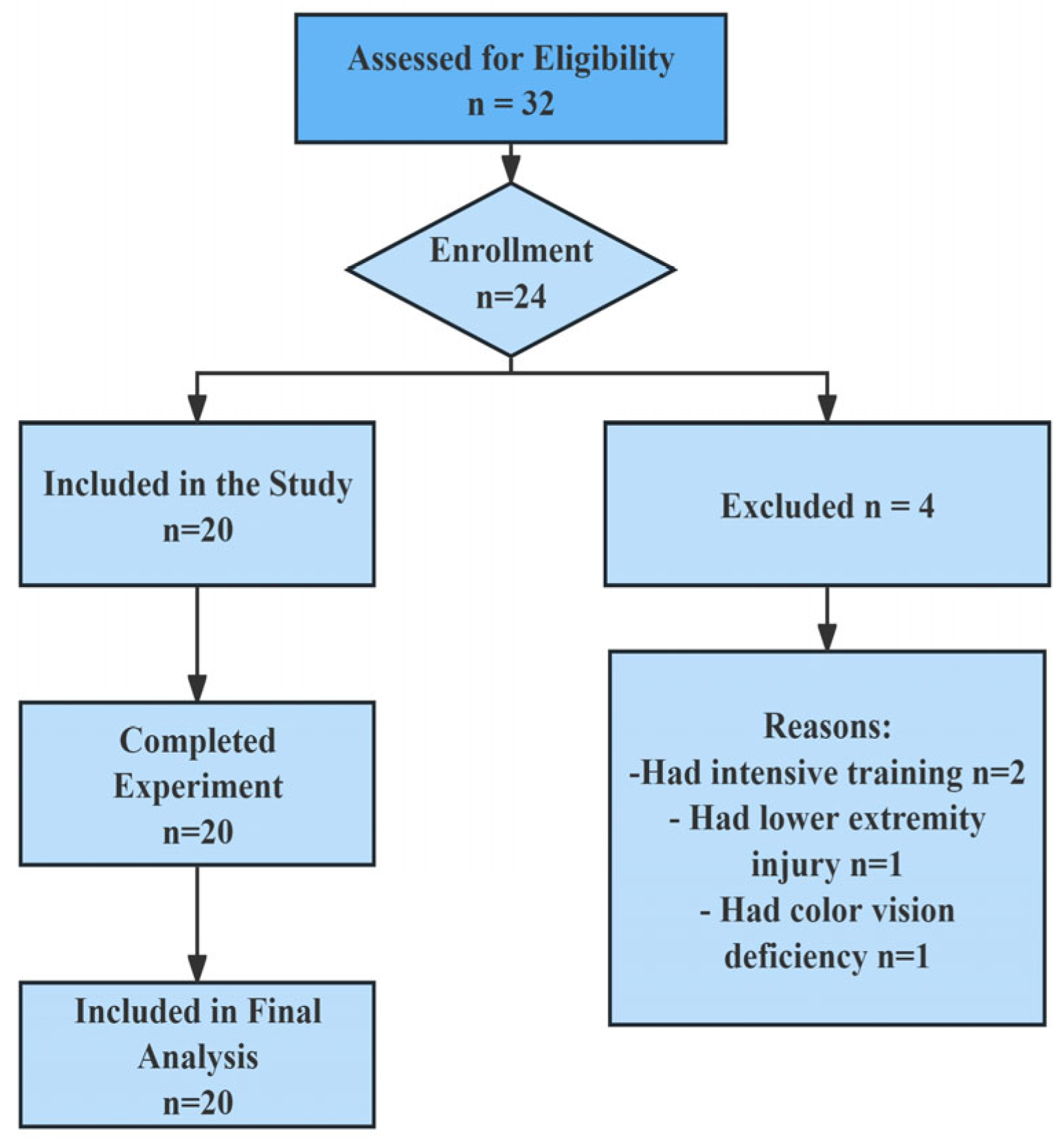
This study investigates gait symmetry and inter-joint coordination in healthy young male adults during walking under varying task conditions. It was approved by the Research Ethics Committee of Soochow University (No. SUDA20211227H03). Prior to enrollment, we assessed all potential participants using a sports activity questionnaire to verify equivalent and moderate recreational activity levels. This was supplemented by stringent exclusion criteria that eliminated elite athletes, individuals engaged in intensive training, and individuals with lower-extremity injuries or color vision deficiencies. To estimate the sample size, G-Power software (Version 3.1) was used. Based on previous studies [4,10], the type I error α was set to 0.05, the effect size was set to 0.25, and the statistical test power (1-β err prop) was set to 0.95. Finally, a minimum sample size of 12 people was estimated. Considering that unexpected situations such as sample loss or participant withdrawal may occur during the data collection process, 20 participants were ultimately included to ensure that the final valid data volume did not fall below the minimum sample size requirement. The participant flow throughout the study is summarized in the CONSORT diagram (Figure 1). Inclusion criteria: (1) No lower-limb musculoskeletal injury within half a year or any bone, joint, or muscle surgery within the past year. (2) No vigorous exercise or any physical condition that affects running gait within 48 h prior to testing. (3) No cognitive impairment.

2.2. Materials and Experimental Instruments

2.2.1. Three-Dimensional High-Speed Camera for Motion Analysis

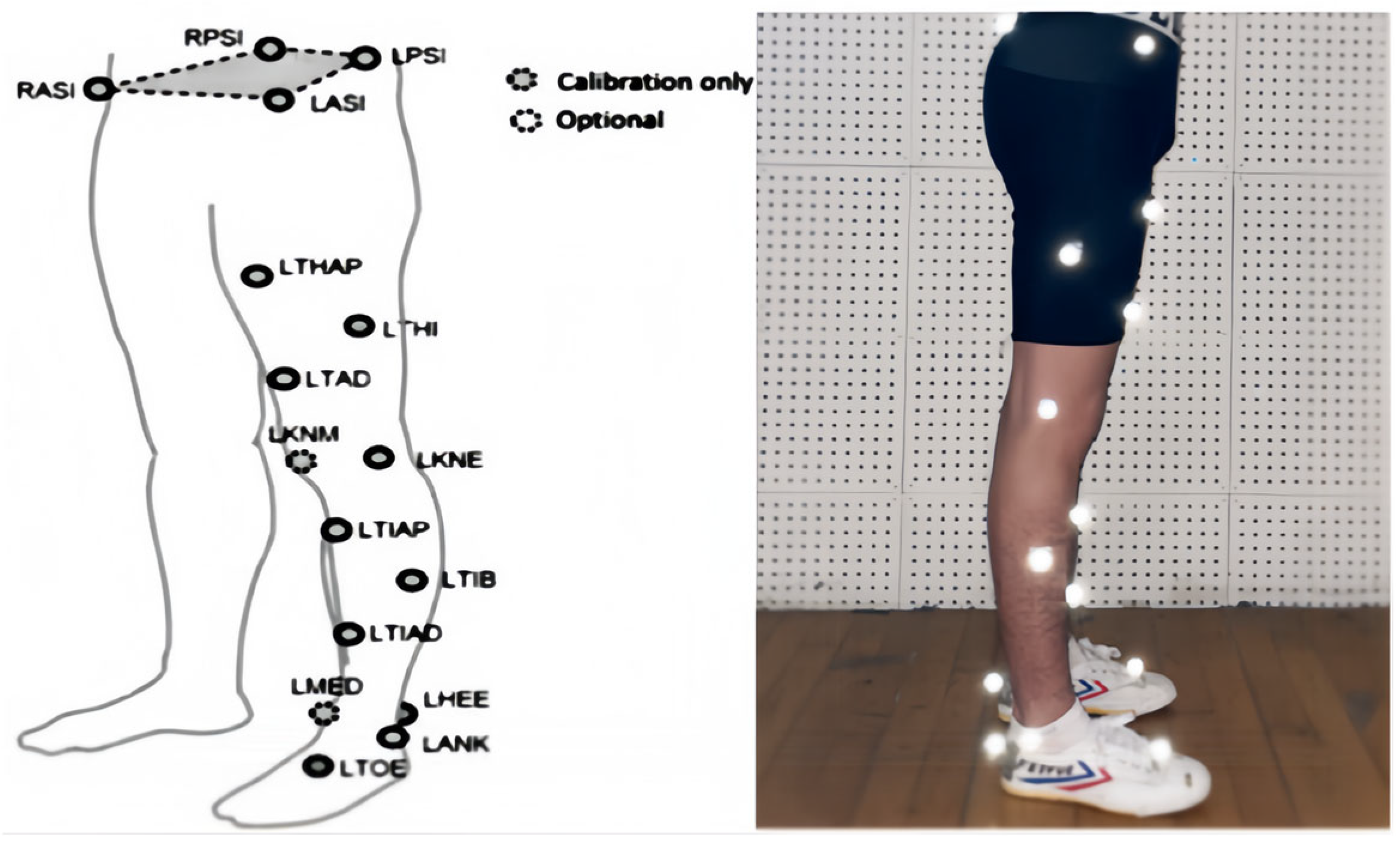
Motion data were captured using an eight-camera three-dimensional motion analysis system (Vicon Motion Systems Ltd., Oxford, UK) operating at 100 Hz. The system configuration included 14 mm infrared reflective markers placed according to the lower-extremity_CGM23 marker set protocol. Marker placement followed standardized anatomical landmarks, as illustrated in Figure 2. To ensure measurement consistency, all marker applications were performed by a single trained technician following established protocols.

2.2.2. Gait Analysis System

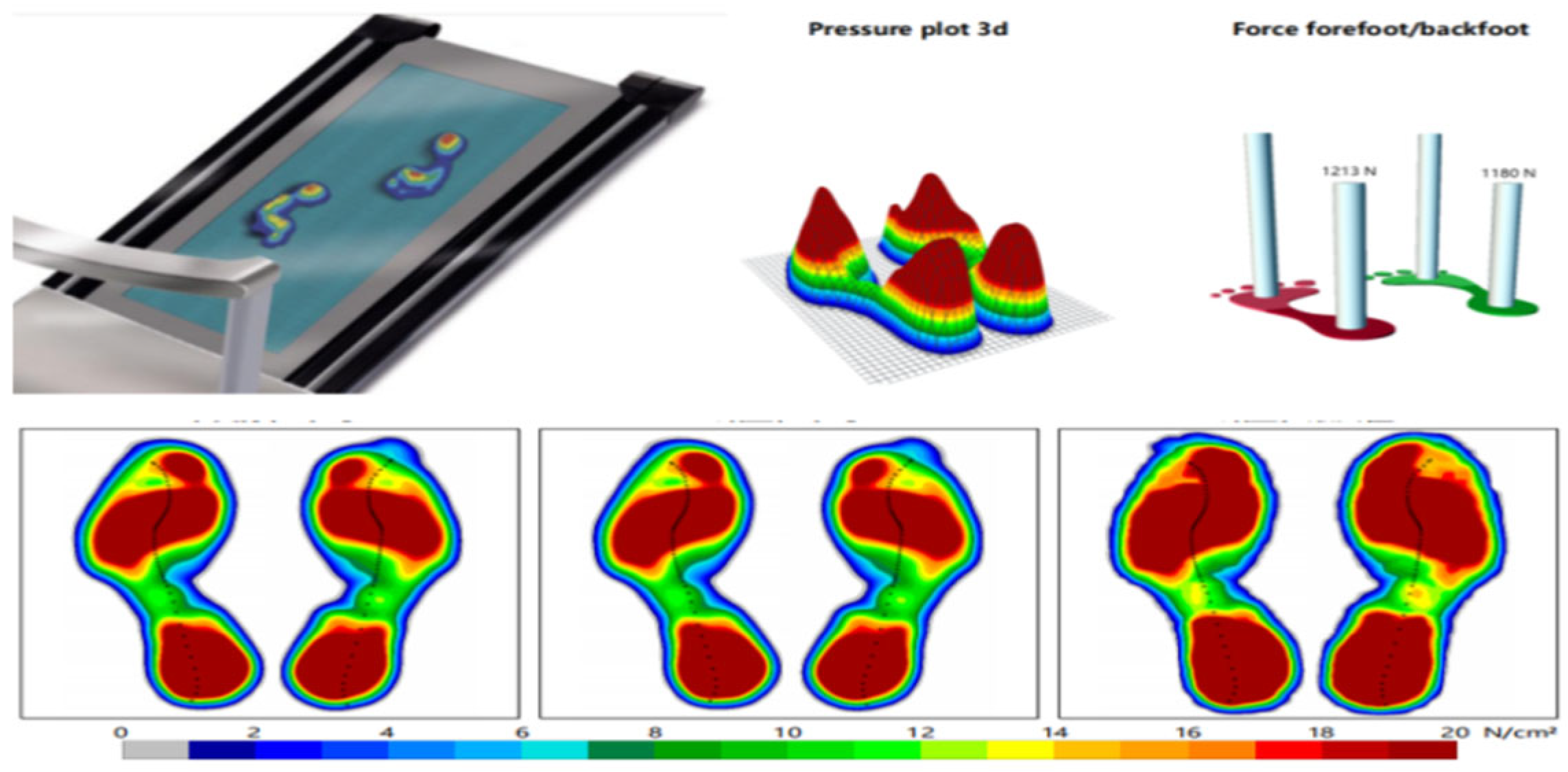
A treadmill (FDM-T, Zebris Medical GmbH, Isny, Germany) with a gait analysis system (Figure 3) was placed in the center of the measurement space of the Vicon infrared motion capture system.

2.2.3. Other Materials

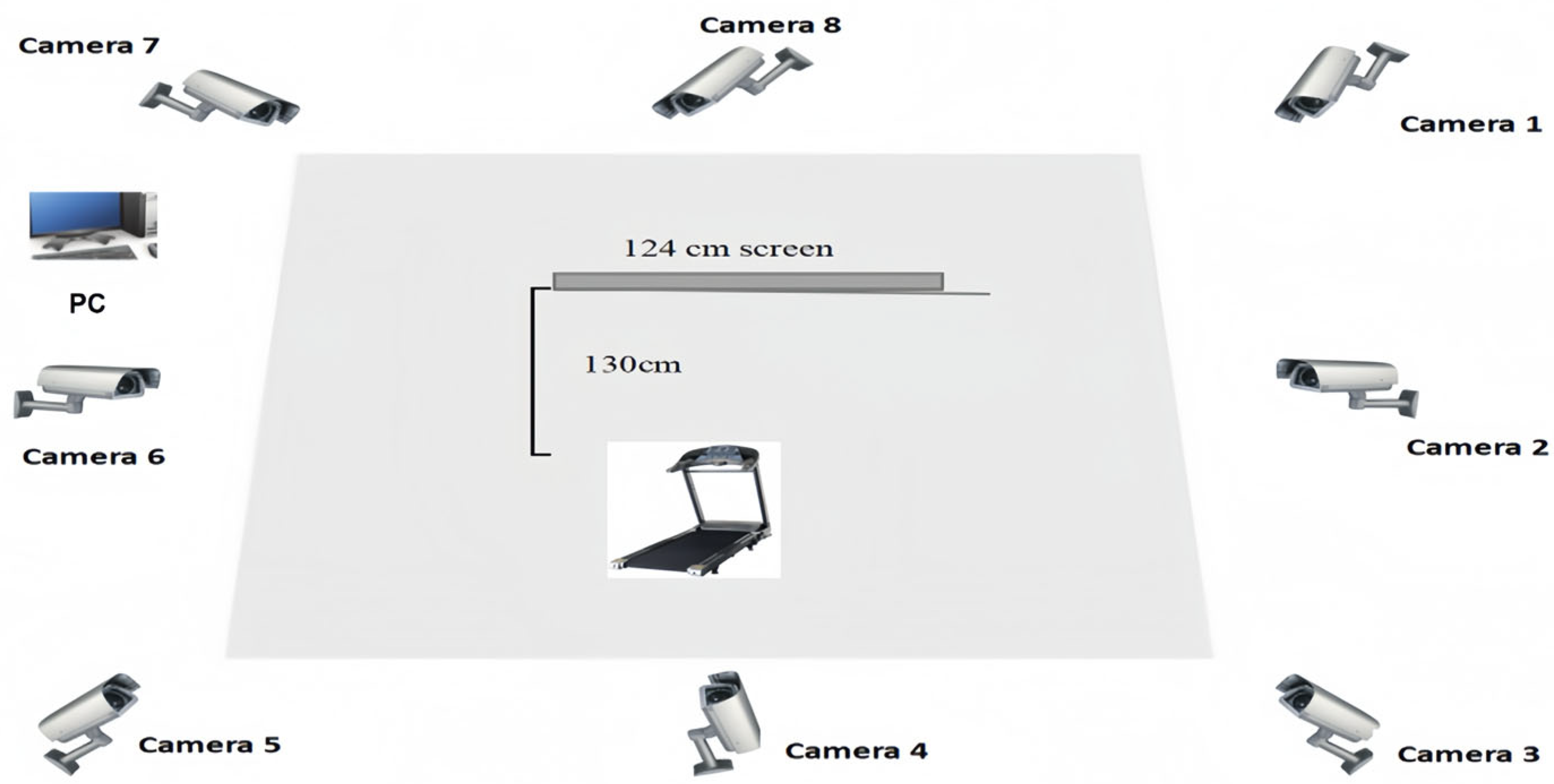
One projection computer, a 3D projector, a white projection board with a height of 123 cm from the ground, a length of 124 cm, and a height of 71 cm, a weighing scale, and a height-measuring instrument. The main instruments placed during the experiment are shown in Figure 4.

2.3. Movement Test Protocol

Before formal data collection, all participants conducted practice tests for each task to ensure they fully understood the task requirements and achieved stable performance. To balance the sequential effect, the order in which each participant performed a single-task or dual-task conditions was completely random. Each task was carried out twice, and each test lasted for more than 30 s. We mandated rest periods of at least 30 s between trials and 5 min between different task conditions to allow full recovery and avoid fatigue.

2.3.1. Single-Task (ST)

For the single-task, participants were asked to walk on a treadmill at a speed of 4 km/h [15,16] (ensuring ecological validity), with arms swinging freely and eyes looking straight ahead at a blank screen.

2.3.2. Dual-Task (DT)

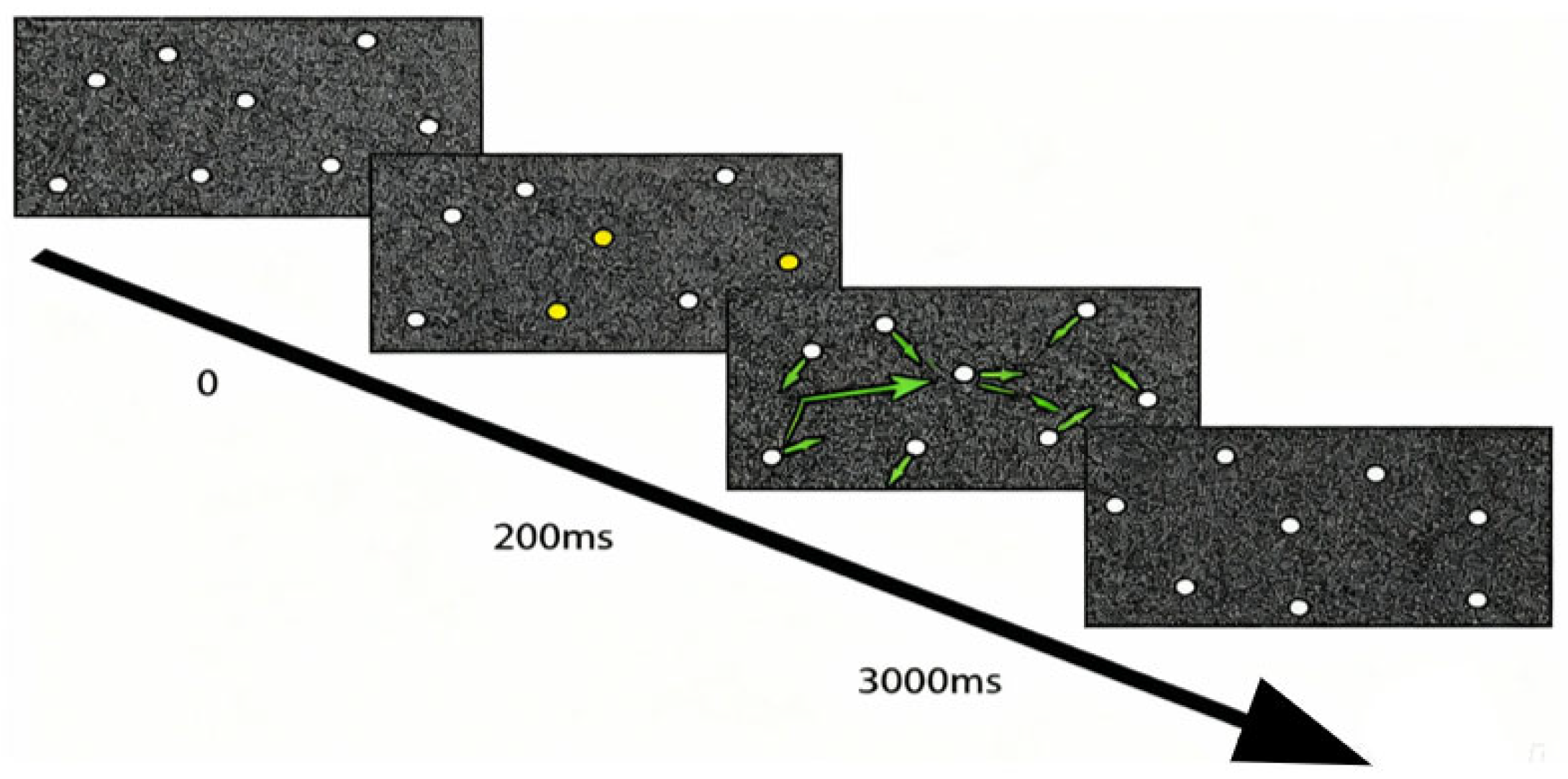
For the dual-task condition, participants simultaneously performed a standardized Multiple Object Tracking (MOT) task while walking. The MOT protocol consisted of four distinct phases: (1) Initial display of eight white spheres distributed randomly on a black background. (2) Three target spheres highlighted in yellow for 2 s. (3) All spheres returning to white while executing continuous, non-overlapping random motion for 30 s. (4) A 2 s response window for target identification. Trials were considered unsuccessful if participants either misidentified targets or failed to respond within the allotted time (Figure 5). The use of this specific cognitive task is grounded in citations of previous studies that have successfully employed and validated it in similar contexts [4,6,10].

2.4. Data Collection and Processing

2.4.1. Gait Cycle Analysis and Data Processing

A complete gait cycle was defined as the period from initial right heel strike to the subsequent right heel strike of the same limb. During each 1 min testing session, we captured ten complete gait cycles for analysis. To ensure consistent gait pattern measurement, data acquisition commenced following a 30 s walking acclimatization period.

2.4.2. Indicator Selection

(1)
Gait parameters
The selected gait parameters include step length, gait line length, foot inclination angle, etc., as shown in Table 1.
(2)
Symmetry index
The study employed the symmetry index (SI) to reflect the symmetry of the lower-extremities. The symmetry index, also known as the Robinson index, was developed by Robinson et al. [17].
(X1 − X2) /(X1 + X2) × 100
Following Formula (1), the smaller the symmetry index, the better the inter-limb symmetry, whereas a larger symmetry index indicates poorer inter-limb symmetry.
(3)
Inter-joint coordination
Prior to computing the continuous relative phase (CRP), it is necessary to determine the angular displacements and angular velocities of the trunk, pelvis, thighs, and calves. Following Formulas (2) and (3), normalize each angle (θ) and angular velocity (ω). For standardization, set the maximum sagittal plane angle of the three lower-extremity joints to “+2” and the minimum value to “0.” Similarly, normalize the angular velocity (ω) by scaling it to its maximum observed value.
ω(i)norm = ω/max[max(ωi), max(−ωi)]
θ(i)norm = 2 × [θj − min(θi)]/max(θi) − min(θi)
Then, calculate the relative phase angle of each joint according to Formula (4), and standardize the phase angles of each joint according to the four-quadrant phase diagram [10]. A continuous relative phase value of 0° indicates in-phase motion, while −180° and 180° indicate out-of-phase motion.
φ ( i ) = tan 1 [ ω ( i ) norm / θ ( i ) norm ]
Finally, lower-extremity joint coordination was calculated as the difference between the distal joint and the proximal joint through Formula (5). A positive continuous relative phase indicates that the proximal joint dominates the distal joint, while a negative continuous relative phase indicates that the distal joint dominates the proximal joint. The continuous relative phase changes in the hip–knee joint are recorded as CRP1, and those in the kene–ankle joint are recorded as CRP2.
The mean absolute relative phase (MARP) is computed using Formula (6) to determine the average phase angle of each joint along the curve. The average phase angles for the left and right limbs are denoted as L-MARP and R-MARP, respectively. The deviation phase (DP) is calculated using Formula (7) to quantify the standard deviation across all points on the overall curve. The standard deviations for the left and right limbs are designated as L-DP and R-DP, respectively.
Higher continuous relative phase and mean absolute relative phase values indicate a greater likelihood of an anti-phase movement pattern between the two joints. Deviation phase reflects variations in coordination patterns—an increase in deviation phase signifies greater variability in coordination mode.
CRP = φ distal φ proximal
M A R P = i = 1 n φ i n
D P = i = 1 n S D i n

2.5. Statistical Analysis

Statistical analyses were performed using IBM SPSS Statistics Softwar (Version 21.0). Descriptive data for all continuous outcome variables are presented as mean ± standard deviation. The normality of data distribution for each variable was assessed using the Shapiro–Wilk test, and studentized residuals were examined to identify potential outliers. Paired-sample t-tests were conducted to compare gait parameters and inter-joint coordination measures between single-task and dual-task walking conditions. To control for the increased risk of Type I error due to multiple comparisons, the Bonferroni correction was applied. The significance level (α) was set at 0.05 for each family of tests, and 95% confidence intervals are reported where appropriate.

3. Results

This section presents the key findings from the gait analysis under single- and dual-task conditions. The analysis first addresses the effects on spatiotemporal parameters to establish the overall impact of dual-tasking. It then focuses on gait symmetry, a key metric for assessing gait quality, which we hypothesized would be degraded by cognitive load. Finally, it details the results for inter-joint coordination, which is crucial for understanding the strategic neuromuscular adaptations to dual-task interference. The statistical outcomes for each set of comparisons are provided in the corresponding subsections and figures.

3.1. Changes in Gait Parameters

According to the Shapiro–Wilk tests, all the data conformed to a normal distribution. As shown in Table 2, gait parameters including stride time, left step time, and stride demonstrated obvious differences between dual-task and single-task conditions. Under dual-task conditions, significant increases were observed in stride time (t = −2.412, p = 0.027), L-step time (t = −2.419, p = 0.027), cadence (t = −2.344, p = 0.031), stride (t = −2.462, p = 0.025), L-step (t = −2.687, p = 0.016), L-GLL (t = −2.171, p = 0.044), R-GLL (t = −2.323, p = 0.033), L-FIA (t = −2.977, p = 0.008), and R-FIA (t = −2.548, p = 0.021). Although the numerical differences are small, they might be meaningful in functional or clinical settings. The following section further explores the impact of dual-tasking by analyzing their gait symmetry and inter-joint coordination.
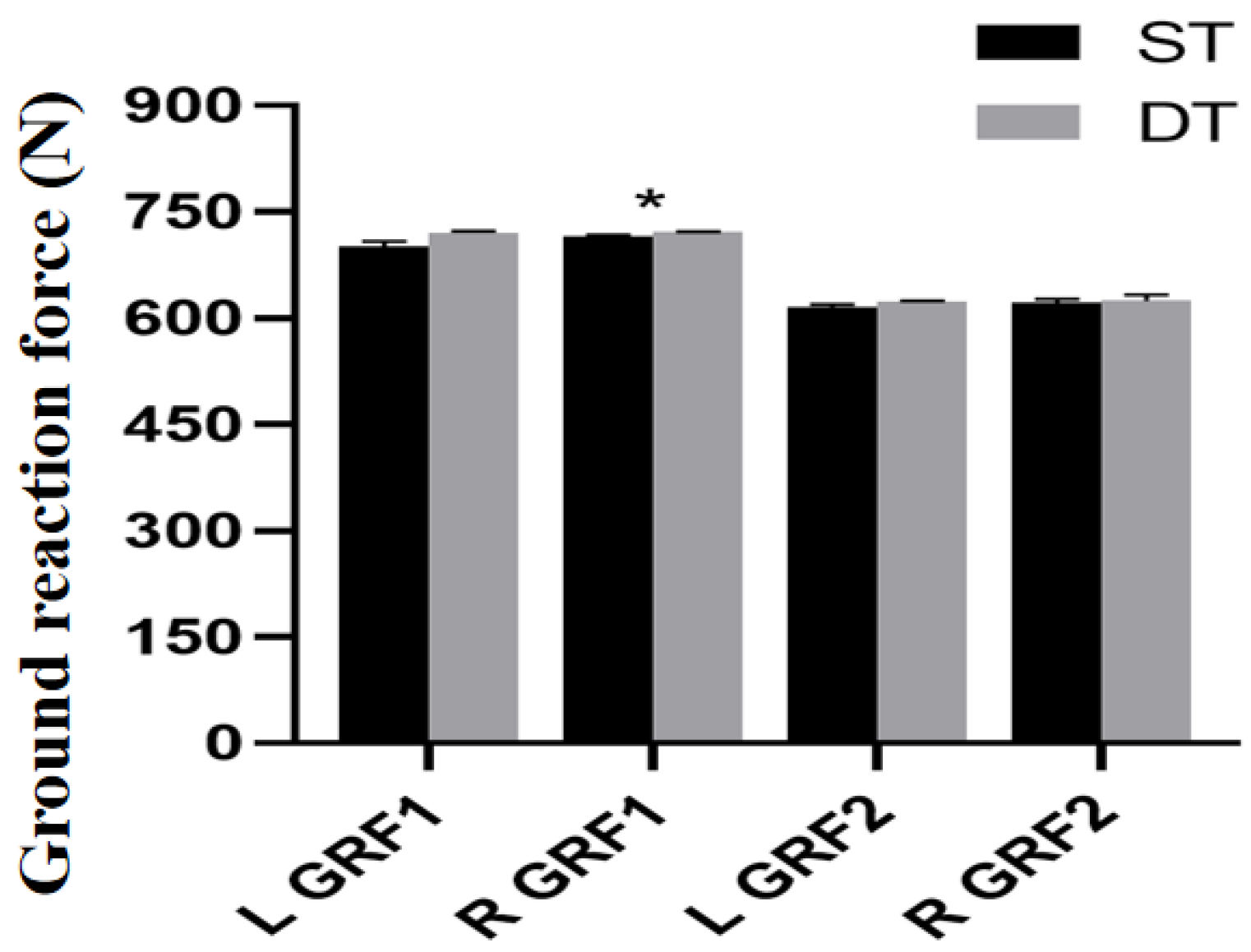
The results in Figure 6 show that the ground reaction force of the right lower limb under dual-task conditions had an obvious difference from that under single-task conditions, and the first peak of the ground reaction force under dual-task conditions increased significantly (t = −25.037, p < 0.001).

3.2. Changes in Gait Symmetry

Table 3 showed that the symmetry index of step time and the maximum ground reaction force under dual-task conditions were significantly different from those under single-task conditions. The symmetry index of step time and the peak ground reaction force under dual-task conditions increased significantly (t = −2.223, p = 0.038; t = 2.479, p = 0.024). The analysis revealed a statistically significant difference in the ground reaction force symmetry index under different tasks (p < 0.05). However, the practical or clinical significance of this finding may be limited, as evidenced by the marginal difference in mean values.

3.3. Changes in Inter-Joint Coordination

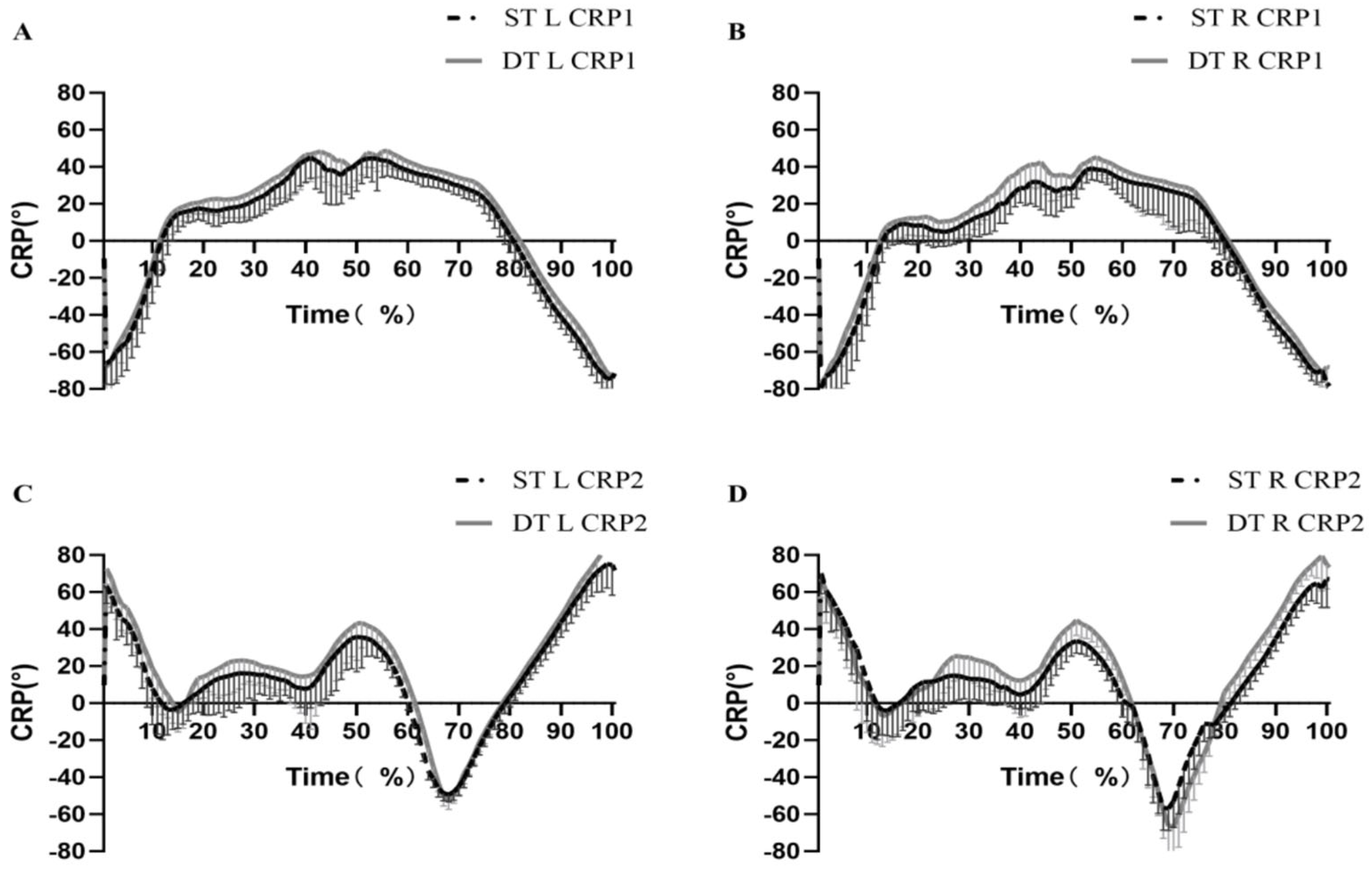
Referring to previous dual-task research [7], continuous relative phase and deviation phase reflects variations in inter-joint coordination patterns. Figure 7 illustrated the general trend of dynamic changes in relative phase angles for bilateral hip–knee and knee–ankle joints across different task conditions. As shown in Figure 7A,B, the continuous relative phase pattern during dual-task conditions demonstrated significant divergence from single-task conditions, with CRP1 values exhibiting greater deviation from 0° (where 0° represents perfect in-phase synchronization). Figure 7C,D demonstrate that the knee–ankle coordination (CRP2) under dual-task conditions was markedly more variable than during single-task conditions, characterized by an expanded range of fluctuations and heightened deviations of the phase angle from 0°, indicating reduced inter-segmental coordination stability.
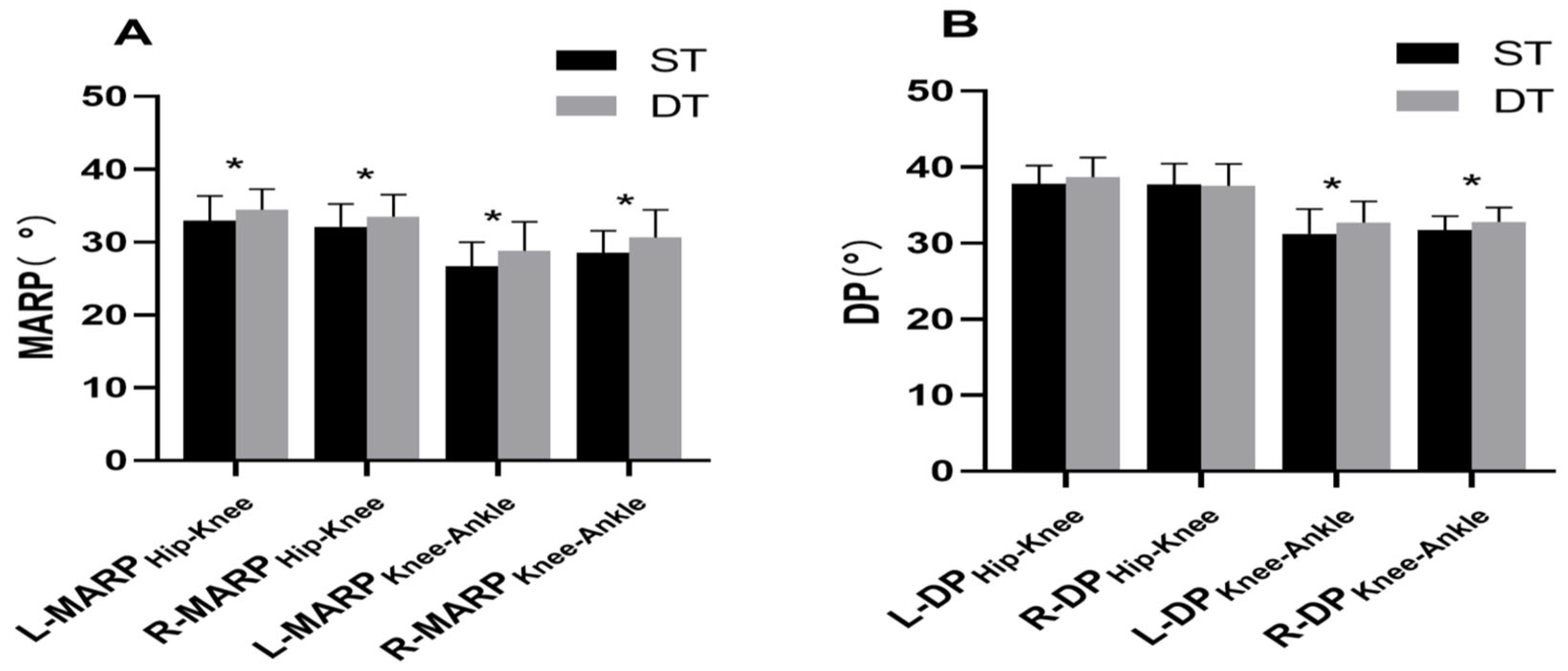
Figure 8 illustrates the values of mean absolute relative phase and deviation phase under different task conditions. It shows that the indicators of L-MARPHip-Knee, R-MARPHip-Knee, L-MARPKnee-Ankle, and R-MARPKnee-Ankle under dual-task conditions are significantly higher than those under single-task conditions (t = −3.917, p = 0.001; t = −3.816, p = 0.001; t = −2.742, p = 0.013; t = −4.765, p < 0.001). It indicates that under dual-task conditions, the lower-limb coordination undergoes adverse changes, and the hip–knee joint and knee–ankle joint might be in a greater anti-phase motion mode. The L-DPKnee-Ankle and R-DPKnee-Ankle indicators under dual-task conditions were significantly greater than those under single-task conditions (t = −2.597, p = 0.018; t = −2.393, p = 0.027). An increase in the DP value indicates increased variability in the coordination patterns of both the knee and ankle joints under dual-task conditions. The other indicators had no statistical significance (p > 0.05).

4. Discussion

It was found that the introduction of a dual-task led to significant alterations in gait, characterized by prominent increases in spatiotemporal parameters—including stride time, left step time, cadence, step, gait line length, and foot inclination angle—along with disrupted symmetry. The increase in cadence and stride length indicates that the participants changed their walking strategy under dual-task conditions, while the extension of left step time and stride suggests that the participants adopted a more cautious walking strategy. The increase in gait line length and foot inclination angle under dual-task conditions indicates that the risk of plantar pressure fluctuation and lower-extremity injury was greater during dual-task conditions. This is consistent with the results described in previous studies [18,19], which reported that when dual-task walking was adopted, gait performance and individual asymmetry were impaired [20,21]. In contrast, a previous study investigated the impact of cognition and vision on the walking of younger and older adults. It was found that dual-task had no significant effect on the gait of young adults, indicating that the dual-task conditions adopted were not challenging enough for this group [5]. This might be because they employed a sequence subtraction task, whose task difficulty and cognitive load were insufficient to cause gait changes in young people. Therefore, in our study, it is of great significance to explore the influence of MOT tasks involving complex cognitive and visual tasks on dual-task gait in young people.
Furthermore, another result shows that the symmetry index of the step time and ground reaction force under dual-task conditions significantly increased, indicating that the symmetry of the participants deteriorated. Gait symmetry is an important indicator for evaluating the quality of walking and can detect subtle changes in neuromuscular control [22]. Studies have shown that even in healthy individuals, a slight asymmetry increase is sufficient to reflect compensatory changes in the motor system and regulatory abnormalities in the central nervous system [23]. Therefore, in our study, the disrupted symmetry could lead to a decrease in walking efficiency, a decline in gait stability, and an increased risk of falls [20]. We also found that the first peak of the ground reaction force (GRF1) under dual-task conditions increased. We propose that the first peak of the ground reaction force, occurring during the weight-acceptance period, requires precise sensorimotor integration and rapid feedforward postural adjustments to ensure stability. The cognitive load from the dual-task paradigm likely diverts attentional resources precisely during this phase of high demand, disrupting the fine neuromuscular control needed for optimal shock absorption and stability initiation. This interpretation is supported by the literature on gait initiation and early stance control [24,25]. The above results collectively indicate that the dual-task paradigm induced a series of adaptive changes in young individuals, providing clear evidence of cognitive–motor interference caused by visual attention tracking during walking. However, this finding of the ground reaction force difference must be interpreted with considerable caution, as the observed mean values for both groups were remarkably similar. This statistical significance, which is not underpinned by substantial mean differences, can typically be attributed to the exceptionally low variability in the data combined with a sufficient sample size. Consequently, while the result confirms a reliable effect of the intervention from a purely statistical standpoint, its practical or clinical relevance is likely limited. The minimal change in mean values suggests that the intervention’s effect, though detectable, may not be meaningful in a real-world context. This underscores the critical distinction between statistical significance and practical importance. Future studies should therefore expand the sample size to further verify this conclusion.
In addition, under dual-task conditions, the inter-joint coordination patterns between lower-limb joints were substantially altered along with these changes across the lower-extremities. Specifically, the introduction of the dual-task led to increased values in mean absolute relative phase of left hip–knee joint, mean absolute relative phase of right hip–knee joint, and mean absolute relative phase of left knee–ankle joint. From the perspective of the movement chain, the increase in indicators such as mean absolute relative phase and deviation phase during walking usually leads to increased variability in lower-extremity coordination patterns, which indicates that the dual-task condition has a negative impact on the lower-extremity coordination patterns of young adults. On the one hand, hip–knee coordination plays a crucial role in locomotor control, with its stability largely determining dynamic stability of the lower limbs [26]. Previous studies have confirmed that in the coupled movement of the hip and knee joints, the hip joint assumes a primary stabilizing role when movement is unstable [27]. As explained by Rosenblatt et al. [28], stronger synergies are required during the swing phase to stabilize limb trajectories and reduce the risk of limb collision when the lower limbs are closest in the frontal plane. Thus, alterations in hip–knee coordination patterns induced by the Multiple Object Tracking task suggest a potential compromise in lower-limb stability. On the other hand, the elevated mean absolute relative phase values demonstrated a progressive increase in anti-phase coordination between the hip and knee joints. This amplified anti-phase pattern might raise mechanical loading on the knee joint [29], thereby potentially increasing the risk of lower-extremity injury. Consistent with this, another study also demonstrated that even among healthy young men and football players, their performance in motor tasks was affected by the intervention of visual attention tracking tasks [10]. The decline in dual-task motor performance is commonly interpreted through the two following major theoretical frameworks: the capacity-sharing model [30] and the bottleneck model [31]. Although these models differ in their assumptions regarding parallel versus serial processing, empirical evidence suggests that the human cognitive–motor system flexibly alternates between these modes, with a general preference for capacity-sharing (parallel) processing.
Notably, neurophysiological evidence from functional near-infrared spectroscopy (fNIRS) studies reveals significant prefrontal cortex activation during dual-task performance [32], underscoring its central role in integrating cognitive and motor processes across theoretical frameworks. The prefrontal cortex supports multiple components of dual-task performance, including attentional allocation [33], multisensory integration of visual and proprioceptive inputs, and working memory processes mediated by the dorsolateral prefrontal region. In the present study, the high visual attention demands (MOT tasks) during concurrent cognitive and motor tasks likely diverted cognitive resources and intensified competition for frontal lobe capacity. This may have forced participants to unconsciously reduce the level of control allocated to walking, resulting in characteristic declines in gait symmetry and inter-joint coordination, thereby significantly altering overall gait performance. These findings are further supported by research from Michaud et al. [34] and Tasci et al. [35], which identified shared neural substrates for cognitive and balance functions. Collectively, these results suggest that dual-task performance involves fundamental cognitive–motor conflicts within central processing systems, providing a neurocognitive basis for the reduced visual attention efficiency and postural control observed in our study. Thus, the introduction of cognitive tasks such as visual attention tracking can disrupt movement symmetry and inter-joint coordination, potentially leading to altered gait adaptation strategies during walking. These findings offer important theoretical insights for gait optimization strategies, indicating that structured visual attention demands during walking may serve as an effective training approach to enhance neuromuscular coordination through regulated joint coupling [36,37]. Beyond advancing the theoretical understanding of dual-task motor control, this work also contributes to evidence-based intervention design. Future studies incorporating physiological or electromyographic (EMG) measurements would complement the present kinematic findings by enabling a more comprehensive neuromuscular analysis, crucial for elucidating the specific mechanisms underlying dual-task gait alterations.
However, this study has several limitations. The limited and homogeneous sample size limits the generalizability and broader biomechanical relevance of the findings. Future research should expand the demographic scope to include women or other age groups to enhance the generalizability of findings. Additionally, there was no reporting of accuracy in MOT, leading to a lack of dual-task costs. Subsequent studies should record cognitive task performance to better evaluate task priorities.

5. Conclusions

The visual attention tracking task significantly altered gait in young adults by reducing gait symmetry and disrupting inter-joint coordination. These findings highlight the profound impact of cognitive–motor interference on the neuromuscular control of walking. Strategically incorporating such tasks into training may improve neuromuscular coordination and adaptability, offering a reference approach for optimizing performance and reducing injury risk in applied settings.

Author Contributions

Y.R.: Writing—Original Draft, Conceptualization, and Data Curation; A.L.: Writing—Review and Editing, Methodology, and Supervision. All authors have read and agreed to the published version of the manuscript.

Funding

This research was supported by the following grants: the Key Project under the management of the Sports Research Bureau of Suzhou Sports Bureau in 2025 (TY2025-003); the National Program Pre-Research Foundation of Suzhou City University (No. 2024SGY010); and the Higher Education Reform Project of Suzhou City University (No. 5110302625).

Institutional Review Board Statement

This study was approved by the Ethics Committee of Soochow University (registration number: SUDA20211227H03, 27 December 2021) and was conducted in accordance with the Declaration of Helsinki.

Informed Consent Statement

Informed consent was obtained from all subjects involved in the study.

Data Availability Statement

The original contributions presented in this study are included in the article. Further inquiries can be directed to the corresponding author.

Conflicts of Interest

The authors declare no conflict of interest.

References

  1. Lin, Y.C.; Walter, J.P.; Pandy, M.G. Predictive Simulations of Neuromuscular Coordination and Joint-Contact Loading in Human Gait. Ann. Biomed. Eng. 2018, 46, 1216–1227. [Google Scholar] [CrossRef]
  2. Alvarez, G.A.; Cavanagh, P. Independent Resources for Attentional Tracking in the Left and Right Visual Hemifields. Psychol. Sci. 2005, 16, 637–643. [Google Scholar] [CrossRef]
  3. Walsh, G.S.; Snowball, J. Cognitive and visual task effects on gaze behaviour and gait of younger and older adults. Exp. Brain Res. 2023, 241, 1623–1631. [Google Scholar] [CrossRef]
  4. Ren, Y.; Wang, C.; Zhang, L.; Lu, A. The effects of visual cognitive tasks on landing stability and lower extremity injury risk in high-level soccer players. Gait Posture 2022, 92, 230–235. [Google Scholar] [CrossRef] [PubMed]
  5. Pham, T.; Suen, M.; Cho, Y.H.; Krishnan, V. The Effects of Cognition and Vision While Walking in Younger and Older Adults. Sensors 2024, 24, 7789. [Google Scholar] [CrossRef]
  6. Ren, Y.; Wang, G.; Zhang, L.; Lu, A.; Wang, C. Perceptual-Cognitive Tasks Affect Landing Performance of Soccer Players at Different Levels of Fatigue. Appl. Bionics Biomech. 2022, 2022, 4282648. [Google Scholar] [CrossRef]
  7. Wang, C.; Wang, G.; Lu, A.; Zhao, Y. Effects of Attentional Control on Gait and Inter-Joint Coordination During Dual-Task Walking. Front. Psychol. 2021, 12, 665175. [Google Scholar] [CrossRef] [PubMed]
  8. Pothier, K.; Benguigui, N.; Kulpa, R.; Chavoix, C. Multiple Object Tracking While Walking: Similarities and Differences Between Young, Young-Old, and Old-Old Adults. J. Gerontol. Ser. B Psychol. Sci. Soc. Sci. 2015, 70, 840–849. [Google Scholar] [CrossRef] [PubMed]
  9. Heidarnia, E.; Letafatkar, A.; Khaleghi-Tazji, M.; Grooms, D.R. Comparing the effect of a simulated defender and dual-task on lower limb coordination and variability during a side-cut in basketball players with and without anterior cruciate ligament injury. J. Biomech. 2022, 133, 110965. [Google Scholar] [CrossRef]
  10. Ren, Y.; Wang, C.; Lu, A. Effects of perceptual-cognitive tasks on inter-joint coordination of soccer players and ordinary college students. Front. Psychol. 2022, 13, 892118. [Google Scholar] [CrossRef]
  11. Zukowski, L.A.; Tennant, J.E.; Iyigun, G.; Giuliani, C.A.; Plummer, P. Dual-tasking impacts gait, cognitive performance, and gaze behavior during walking in a real-world environment in older adult fallers and non-fallers. Exp. Gerontol. 2021, 150, 111342. [Google Scholar] [CrossRef]
  12. Qin, S.C.; Dai, B.J.; Yan, J.A.; Li, P.; Liu, Z.; Chen, X. Human Gait Symmetry Analysis Based on Human Electrostatic Fields. IEEE Sens. J. 2023, 23, 13422–13432. [Google Scholar] [CrossRef]
  13. Qu, X.D.; Ma, L.; Cheng, D.; Hu, X. Lower-limb inter-joint coordination during balance recovery after trips. Gait Posture 2024, 114, 175–179. [Google Scholar] [CrossRef]
  14. Li, Y.; Ko, J.; Walker, M.A.; Brown, C.N.; Simpson, K.J. Joint Coordination and Stiffness During Landing in Individuals With Chronic Ankle Instability. J. Appl. Biomech. 2021, 37, 156–162. [Google Scholar] [CrossRef] [PubMed]
  15. Crawford, R.; Gizzi, L.; Dieterich, A.; Ni Mhuiris, Á.; Falla, D. Age-related changes in trunk muscle activity and spinal and lower limb kinematics during gait. PLoS ONE 2018, 13, e0206514. [Google Scholar] [CrossRef]
  16. Saleh, M.M.; Parasuraman, S.; Deisy, C.; Padmavathy, S.; Kingsly, D.; Singh, J.; Khan, M.A. Effects of Aging on Human Gait Stability. In Proceedings of the 8th IEEE International Conference on Computational Intelligence and Computing Research (IEEE ICCIC):2017313-317, Delhi, India, 3–5 July 2017. [Google Scholar]
  17. Robinson, R.O.; Herzog, W.; Nigg, B.M. Use of force platform variables to quantify the effects of chiropractic manipulation on gait symmetry. J. Manip. Physiol. Ther. 1987, 10, 172–176. [Google Scholar]
  18. Tang, P.F.; Wilford, E.; Tu, C.K.; Wu, Y.T. Comparative analysis of gait domains in middle-aged and older adults under single- and dual-task conditions. Gait Posture 2025, 118, 115–121. [Google Scholar] [CrossRef]
  19. Park, G.Y.; Yeo, S.S.; Kwon, Y.C.; Song, H.S.; Lim, Y.J.; Ha, Y.M.; Han, S.H.; Oh, S. Changes in Gait Parameters and Gait Variability in Young Adults during a Cognitive Task while Slope and Flat Walking. Healthcare 2020, 8, 30. [Google Scholar] [CrossRef]
  20. Sanghan, T.; Hohsoh, N.; Dissaneewate, T.; Chong, D.Y.; Stojanović, G.; Begg, R.; Chatpun, S. Comparative Analysis of 3D Shank Kinematics During Walking: Stroke Patients Versus Healthy Individuals. IEEE Access 2025, 13, 83229–83239. [Google Scholar] [CrossRef]
  21. Wang, C.Y.; Jin, B.M.; Lu, A.M. Effects of Cognitive-Motor and Motor-Motor Dual Tasks on Gait Performance in Older Adults with Sarcopenia. Healthcare 2024, 12, 1206. [Google Scholar] [CrossRef] [PubMed]
  22. Halliwell, C.; Wilson, J.A.; Rutherford, D.; Budarick, A.; Hannigan, M.; Moyer, R. Establishing a threshold for total joint moment asymmetry in asymptomatic adults. J. Biomech. 2025, 181, 112559. [Google Scholar] [CrossRef] [PubMed]
  23. Arauz, P.G.; Garcia, M.G.; Chiriboga, P.; Taco-Vasquez, S.; Klaic, D.; Verdesoto, E.; Martin, B. Spine and lower body symmetry during treadmill walking in healthy individuals-In-vivo 3-dimensional kinematic analysis. PLoS ONE 2022, 17, e0275174. [Google Scholar] [CrossRef] [PubMed]
  24. Toda, H.; Nagano, A.; Luo, Z.W. Age and gender differences in the control of vertical ground reaction force by the hip, knee and ankle joints. J. Phys. Ther. Sci. 2015, 27, 1833–1838. [Google Scholar] [CrossRef] [PubMed]
  25. Li, L.; Hamill, J. Characteristics of the vertical ground reaction force component prior to gait transition. Res. Q. Exerc. Sport 2002, 73, 229–237. [Google Scholar] [CrossRef]
  26. Sinsurin, K.; Vachalathiti, R.; Srisangboriboon, S.; Richards, J. Knee joint coordination during single-leg landing in different directions. Sports Biomech. 2020, 19, 652–664. [Google Scholar] [CrossRef]
  27. Davis, K.; Williams, J.L.; Sanford, B.A.; Zucker-Levin, A. Assessing lower extremity coordination and coordination variability in individuals with anterior cruciate ligament reconstruction during walking. Gait Posture 2019, 67, 154–159. [Google Scholar] [CrossRef]
  28. Rosenblatt, N.J.; Latash, M.L.; Hurt, C.P.; Grabiner, M.D. Challenging gait leads to stronger lower-limb kinematic synergies: The effects of walking within a more narrow pathway. Neurosci. Lett. 2015, 600, 110–114. [Google Scholar] [CrossRef]
  29. Smith, J.A.; Popovich, J.J.; Kulig, K. The influence of hip strength on lower-limb, pelvis, and trunk kinematics and coordination patterns during walking and hopping in healthy women. J. Orthop. Sports Phys. Ther. 2014, 44, 525–531. [Google Scholar] [CrossRef]
  30. Tombu, M.; Jolicœur, P. A central capacity sharing model of dual-task performance. J. Exp. Psychol. Hum. Percept. Perform. 2003, 29, 3–18. [Google Scholar] [CrossRef]
  31. Strobach, T.; Schubert, T. Mechanisms of Practice-Related Reductions of Dual-Task Interference with Simple Tasks: Data and Theory. Adv. Cogn. Psychol. 2017, 13, 28–41. [Google Scholar] [CrossRef]
  32. Moro, S.B.; Bisconti, S.; Muthalib, M.; Spezialetti, M.; Cutini, S.; Ferrari, M.; Placidi, G.; Quaresima, V. A semi-immersive virtual reality incremental swing balance task activates prefrontal cortex: A functional near-infrared spectroscopy study. Neuroimage 2014, 85, 451–460. [Google Scholar] [CrossRef]
  33. Holtzer, R.; Mahoney, J.R.; Izzetoglu, M.; Wang, C.; England, S.; Verghese, J. Online fronto-cortical control of simple and attention-demanding locomotion in humans. Neuroimage 2015, 112, 152–159. [Google Scholar] [CrossRef] [PubMed]
  34. Michaud, L.; Desjardins, D.; Perreault, A.; Mayer, A.S.; Sauvé, M.O.; Desjardins, R.; Lajoie, Y. Visual Biofeedback and Postural Control: Exploring Potential Implicit Visual Integration. J. Mot. Behav. 2025, 57, 554–567. [Google Scholar] [CrossRef]
  35. Tasci, S.; Celik, H.; Kirazci, S. Effects of environmental and task related conditions on postural control under concurrent visual feedback. Hum. Mov. Sci. 2024, 94, 103186. [Google Scholar] [CrossRef]
  36. Smith-Ray, R.L.; Irmiter, C.; Boulter, K. Cognitive Training among Cognitively Impaired Older Adults: A Feasibility Study Assessing the Potential Improvement in Balance. Front. Public Health 2016, 4, 219. [Google Scholar] [CrossRef] [PubMed]
  37. Lee, Y.; Pyo, Y.; Lim, C. Effects of Foot Position-Based Gait Training on Muscle Activity, Gait Parameters, and Balance in Subacute Stroke Patients. Healthcare 2024, 12, 2206. [Google Scholar] [CrossRef] [PubMed]
Figure 1. CONSORT flow diagram of participant enrollment.
Applsci 15 12838 g001
Figure 2. The position of the marking points of the lower-extremity model.
Applsci 15 12838 g002
Figure 3. Treadmill with a gait analysis system.
Applsci 15 12838 g003
Figure 4. Schematic diagram of the placement of experimental instruments.
Applsci 15 12838 g004
Figure 5. Schematic diagram of visual attention tracking tasks. Note: The green arrow indicates that the direction of the sphere’s movement is random; the yellow spheres indicates that the target spheres.
Applsci 15 12838 g005
Figure 6. Changes in ground reaction force under different tasks. Note: GRF1: the first peak of the ground reaction force; GRF2: the peak of the ground reaction force; ST: single-task; DT: dual-task; * means p < 0.05.
Applsci 15 12838 g006
Figure 7. The trend of continuous relative phase changes in the gait cycle. Note: (A) shows the changes in CRP1 on the left side of the participants; (B) shows the changes in CRP1 on the right side of the participants; (C) shows the changes in CRP2 on the left side of the participants; (D) shows the changes in CRP2 on the right side of the participants. L: left; R: right; CRP: continuous relative phase; ST: single-task; DT: dual-task.
Applsci 15 12838 g007
Figure 8. Changes in mean absolute relative phase and deviation phase under different tasks. Note: (A) shows the changes in mean absolute relative phase under different tasks; (B) shows the changes in deviation phase under different tasks; L: left; R: right; MARP: mean absolute relative phase; DP: deviation phase; ST: single-task; DT: dual-task; * means p < 0.05.
Applsci 15 12838 g008
Table 1. Gait parameters and ground reaction force.
Parameters Definitions
Stride timesThe time it takes for one foot to follow the ground while walking until the heel of that foot touches the ground again.
Step timesThe time it takes for one foot to follow the ground while walking until the other foot follows the ground.
Cadencesteps/minThe number of steps taken per unit time during ambulation.
Step widthcmThe medio–lateral (side-to-side) distance between the heel centers of both feet during consecutive foot strikes in the gait cycle.
StridecmThe distance between the ground followed by one foot and the ground followed by the same foot when walking.
StepcmThe distance between the ground followed by one foot and the ground followed by the other foot when walking.
Gait line length, GLLmmThe length of the trajectory line of the center of foot pressure.
Foot inclination angle, FIA°The angular deviation between the foot’s longitudinal axis and the direction of forward progression during gait.
Ground reaction force, GRFNThe first peak of the ground reaction force in the vertical direction is recorded as GRF1, and the peak of the ground reaction force is recorded as GRF2.
Table 2. Changes in gait parameters under different tasks ( x ¯ ± s ) .
Gait ParametersSTDTtp
Stride time1.07 ± 0.061.09 ± 0.05−2.4120.027 *
L-step time0.537 ± 0.030.544 ± 0.03−2.4190.027 *
R-step time0.536 ± 0.030.541 ± 0.03−2.0880.052
Cadence110.85 ± 5.35112.17 ± 5.99−2.3440.031 *
Step width10.71 ± 2.2410.96 ± 2.49−0.5560.586
Stride122.42 ± 6.33123.91 ± 5.70−2.4620.025 *
L-step61.12 ± 3.5062.14 ± 2.99−2.6870.016 *
R-step61.30 ± 3.1061.77 ± 2.97−1.2770.219
L-GLL264.90 ± 17.05266.95 ± 17.99−2.1710.044 *
R-GLL265.63 ± 15.28268.55 ± 17.64−2.3230.033 *
L-FIA8.59 ± 6.347.76 ± 6.132.9770.008 *
R-FIA10.39 ± 4.999.48 ± 4.712.5480.021 *
Note: L: left; R: right; GLL: gait line length; FIA: foot inclination angle; ST: single-task; DT: dual-task; * means p < 0.05.
Table 3. Changes in symmetry index of gait parameters under different tasks ( x ¯ ± s ) .
Symmetry IndexSTDTtp
Step time0.006 ± 0.0010.009 ± 0.002−2.2230.038 *
Step0.013 ± 0.0090.012 ± 0.0080.3880.703
GLL0.009 ± 0.0090.007 ± 0.0071.1560.264
FIA0.366 ± 0.5340.428 ± 0.691−0.7660.454
GRF10.428 ± 0.6920.428 ± 0.6921.6410.119
GRF20.428 ± 0.6920.428 ± 0.6922.4790.024 *
Note: GLL: gait line length; FIA: foot inclination angle; GRF1: the first peak of the ground reaction force; GRF2: the peak of the ground reaction force; ST: single-task; DT: dual-task; * means p < 0.05.
Disclaimer/Publisher’s Note: The statements, opinions and data contained in all publications are solely those of the individual author(s) and contributor(s) and not of MDPI and/or the editor(s). MDPI and/or the editor(s) disclaim responsibility for any injury to people or property resulting from any ideas, methods, instructions or products referred to in the content.