Review

Using VR and BCI to Improve Communication Between a Cyber-Physical System and an Operator in the Industrial Internet of Things


by
Adrianna Piszcz
1,
Izabela Rojek
1,*,
Nataša Náprstková
2 and
Dariusz Mikołajewski
1
1
Faculty of Computer Science, Kazimierz Wielki University, 85-064 Bydgoszcz, Poland
2
Faculty of Production Technology and Management, Jan Evangelista Purkyně University, 400 96 Ústí Nad Labem, Czech Republic
*
Author to whom correspondence should be addressed.
Appl. Sci. 2025, 15(23), 12805; https://doi.org/10.3390/app152312805
Submission received: 30 October 2025 / Revised: 20 November 2025 / Accepted: 26 November 2025 / Published: 3 December 2025
(This article belongs to the Special Issue Brain-Computer Interfaces: Development, Applications, and Challenges)

Abstract

The Industry 5.0 paradigm places humans and the environment at the center. New communication methods based on virtual reality (VR) and brain–computer interfaces (BCIs) can improve system–operator interaction in multimedia communications, providing immersive environments where operators can more intuitively manage complex systems. The study was conducted through a systematic literature review combined with bibliometric and thematic analyses to map the current landscape of VR-BCI communication frameworks in IIoT environments. The methodology employed included structured resource selection, comparative assessment of interaction modalities, and cross-domain synthesis to identify patterns, gaps, and emerging technology trends. Key challenges identified include reliable signal processing, real-time integration of neural data with immersive interfaces, and the scalability of VR-BCI solutions in industrial applications. The study concludes by outlining future research directions focused on hybrid multimodal interfaces, adaptive cognition-based automation, and standardized protocols for evaluating human–cyber-physical system communication. VR interfaces enable operators to visualize and interact with network data in 3D, improving their monitoring and troubleshooting in real time. By integrating BCI technology, operators can control systems using neural signals, reducing the need for physical input devices and streamlining operation (including touchless technology). BCI-based protocols enable touchless control, which can be particularly useful in situations where operators must multitask, bypassing traditional input methods such as keyboards or mice. VR environments can simulate network conditions, allowing operators to practice and refine their responses to potential problems in a controlled, safe environment. Combining VR with BCI allows for the creation of adaptive interfaces that respond to the operator’s cognitive load, adjusting the complexity of the displayed information based on real-time neural feedback. This integration can lead to more personalized and effective training programs for operators, enhancing their skills and decision-making. VR and BCI-based solutions also have the potential to reduce operator fatigue by enabling more natural and intuitive interaction with complex systems. The use of these advanced technologies in multimedia telecommunications can translate into more efficient, precise, and user-friendly system management, ultimately improving service quality.

1. Introduction

Innovative interaction protocols combining virtual reality (VR) and brain–computer interfaces (BCI) offer transformative opportunities to enhance system-operator interactions in multimedia telecommunications. These advanced technologies create immersive environments that allow operators to manage complex systems more intuitively and effectively [1,2]. VR interfaces provide operators with a three-dimensional view of network data, enabling real-time visualization, monitoring, and troubleshooting. This immersive perspective improves situational awareness, enabling faster and more accurate decision-making in critical scenarios. Integrating BCI technologies further revolutionizes operations by enabling system control via neural signals, reducing the dependence on traditional physical input devices. Hands-free control facilitated by BCI proves particularly beneficial in multitasking environments where operators must perform several tasks simultaneously without the constraints of a keyboard or mouse. In addition, VR environments simulate real-world network conditions, allowing operators to practice and hone their skills in a safe, risk-free environment. These simulations not only increase preparedness for potential issues, but also facilitate innovative training methods tailored to individual needs. When VR and BCI technologies are combined, they can create adaptive interfaces that dynamically adjust to the cognitive load of the operator [3]. This real-time adaptivity ensures that operators receive the optimal amount of information, reducing the risk of overload and improving operational efficiency. Personalized training programs can also benefit from this integration, supporting improved skill acquisition and decision-making among operators [4,5]. Another significant benefit of integrating VR and BCI is the potential to reduce operator fatigue. By enabling more natural and intuitive interactions with complex systems, these technologies promote sustained concentration and comfort during extended use. In multimedia telecommunications, such advances lead to more efficient and accurate system management, providing higher quality of service to end users. In addition to the immediate operational benefits, the combined use of VR and BCI provides the basis for future innovations in system design, training, and user experience. These protocols not only streamline workflows, but also pave the way for smarter, more user-friendly telecommunications systems. Overall, the synergy between VR and BCI represents a paradigm shift in how operators interact with and manage sophisticated technological infrastructure [6,7].
The genesis of VR and BCI-based protocols to enhance system–operator interaction in multimedia telecommunications stems from the increasing complexity of network systems and the need for more intuitive management tools [8,9]. Traditional interfaces, relying on physical devices such as keyboards and monitors, often limited operators’ ability to efficiently process and interact with large volumes of data. The advent of virtual reality (VR) introduced immersive, three-dimensional environments, allowing operators to more intuitively visualize and manipulate network data. At the same time, advances in neuroscience and brain–computer interface (BCI) technology provided a way to bypass physical controls, allowing operators to issue commands via neural signals. The convergence of these technologies was driven by the demand for hands-free solutions, especially in multitasking scenarios where traditional input methods proved cumbersome. Researchers began to explore VR environments as training and operational tools, recognizing their potential to simulate network conditions in risk-free environments. The integration of BCI into these environments enabled real-time system control and adaptive responses to the operator’s cognitive state, addressing issues such as information overload and decision fatigue. The integration also highlighted opportunities to personalize workflows and improve user engagement through tailored interactions [10,11]. This combination of VR and BCI promised not only to increase operational efficiency, but also to reduce training time and increase operator resilience in complex, high-stakes environments. The protocols evolved through interdisciplinary collaboration, combining insights from telecommunications, neuroscience, computer science, and human factors engineering. As a result, VR and BCI technologies began to redefine the human–technology interface in multimedia telecommunications, enabling smarter, more efficient, and more user-friendly systems [12,13].
This work provides a comprehensive conceptualization of how VR and BCI technologies can be used together to improve communication between operators and cyber-physical systems in the Industrial Internet of Things (IoT). It integrates and synthesizes distributed research streams, offering a unified framework combining immersive visualization, neural signal interpretation, and adaptive system feedback. The study illuminates specific communication bottlenecks—such as cognitive overload and delayed situational awareness—that are ideally suited for combining VR and BCI. It demonstrates that coupling neural cues with VR environments can support more responsive, context-aware system behaviors consistent with the operator’s cognitive state. The research advances understanding of multimodal human–machine interaction by identifying mechanisms through which VR and BCI integration enhance bidirectional information flow. It also highlights new use cases, such as cognitive/adaptive control and immersive training systems, that expand the applicability of IIoT communication paradigms. This work contributes methodological value by establishing criteria for assessing the effectiveness of VR-BCI communication channels in industrial applications. It offers a comparative perspective that situates these technologies in the context of augmented reality (AR), haptics, and conventional automation interfaces, thus elucidating their unique benefits and limitations. The analysis presents a roadmap for the technological and scientific challenges that must be addressed for VR-BCI systems to thrive, including signal fidelity, interface standardization, and real-time data fusion. The study enriches the research field by demonstrating the transformative potential of VR-BCI integration and outlining strategic directions for future innovations in human–cyberphysics communication.
The novelty and contribution of the VR and BCI-based protocol introduces a groundbreaking approach to system–operator interaction in multimedia telecommunications by combining immersive visualization and neural-based control. Virtual reality enables operators to interact with network data in 3D environments, extending real-time monitoring and troubleshooting capabilities beyond traditional interfaces [14,15]. Brain–computer interfaces further innovate by enabling hands-free control using neural signals, reducing the need for physical input devices, and streamlining multitasking operations. These protocols are innovative in their ability to dynamically adapt to the operator’s cognitive load, providing optimal information delivery and minimizing fatigue. They also contribute to more effective training through realistic simulations, improving operator preparation and decision-making in complex scenarios. Together, VR and BCI redefine the efficiency, personalization, and usability of system management in telecommunications, setting a new standard for technological interaction [16,17].
The aim of this paper is to determine the current state of knowledge and the leading and future research directions in the area of VR and BCI-based protocols to improve system–operator interaction in multimedia telecommunications.

2. Materials and Methods

Section 2 begins by outlining the methodological approach adopted for a systematic literature review of VR-BCI technologies to improve communication between operators and cyber-physical systems in the Industrial Internet of Things. This chapter presents the rationale for using a structured review process, ensuring transparency, reproducibility, and comprehensive coverage of relevant research areas. It describes the sequential procedures used to identify, select, screen, and classify sources, according to established guidelines for systematic and integrative reviews. The section also explains how qualitative thematic synthesis was combined with quantitative bibliometric techniques to capture technology trends, conceptual developments, and research gaps. Particular attention was paid to ensuring that the review encompassed interdisciplinary topics spanning VR, BCI, human–machine interaction, and IIoT communication frameworks. Together, these methodological decisions provide a solid foundation for analyzing the current state of knowledge and identifying future research directions.
The study begins with a systematic literature review that identifies existing VR and BCI-based communication paradigms in cyber-physical and industrial IoT environments. A classification framework is then developed to organize prior work by technological components, interaction mechanisms, and performance metrics. The methodology includes a bibliometric analysis to uncover dominant research topics, influential authors, and emerging trends in multimedia telecommunications. A detailed source selection protocol ensures that only high-quality, peer-reviewed studies are included, providing a basis for sound conclusions. The study also conducts a comparative analysis of VR and BCI integration models to assess their effectiveness in improving operator-system interactions. A conceptual model is then constructed to determine how VR and BCI jointly contribute to improving communication flow in industrial cyber-physical systems. The study uses thematic synthesis to identify recurring challenges and opportunities in the collected literature. A scenario-based assessment maps VR-BCI capabilities to specific industrial communication challenges, demonstrating their relevance in real-world IIoT contexts. Expert validation, conducted through interviews or consultations with subject matter experts, ensures that the interpretations and proposed frameworks align with current industry needs. Ultimately, the methodology concludes with the identification of gaps and the projection of future research directions that directly support the study’s goal of developing VR and BCI protocols to improve system-to-operator interactions.

2.1. Dataset

This bibliometric analysis examines the research landscape around the use of VR and BCI-based protocols to enhance system–operator interaction in multimedia telecommunications. Our methodology involves formulating research questions to identify key aspects, including the progress of research topics, provenance of publications, and most influential authors and studies. This process aims to provide an in-depth understanding of prevailing research and industry trends. Through the analysis of bibliometric data, the study aims to contribute to ongoing discussions and lay a solid foundation for future research.

2.2. Methods

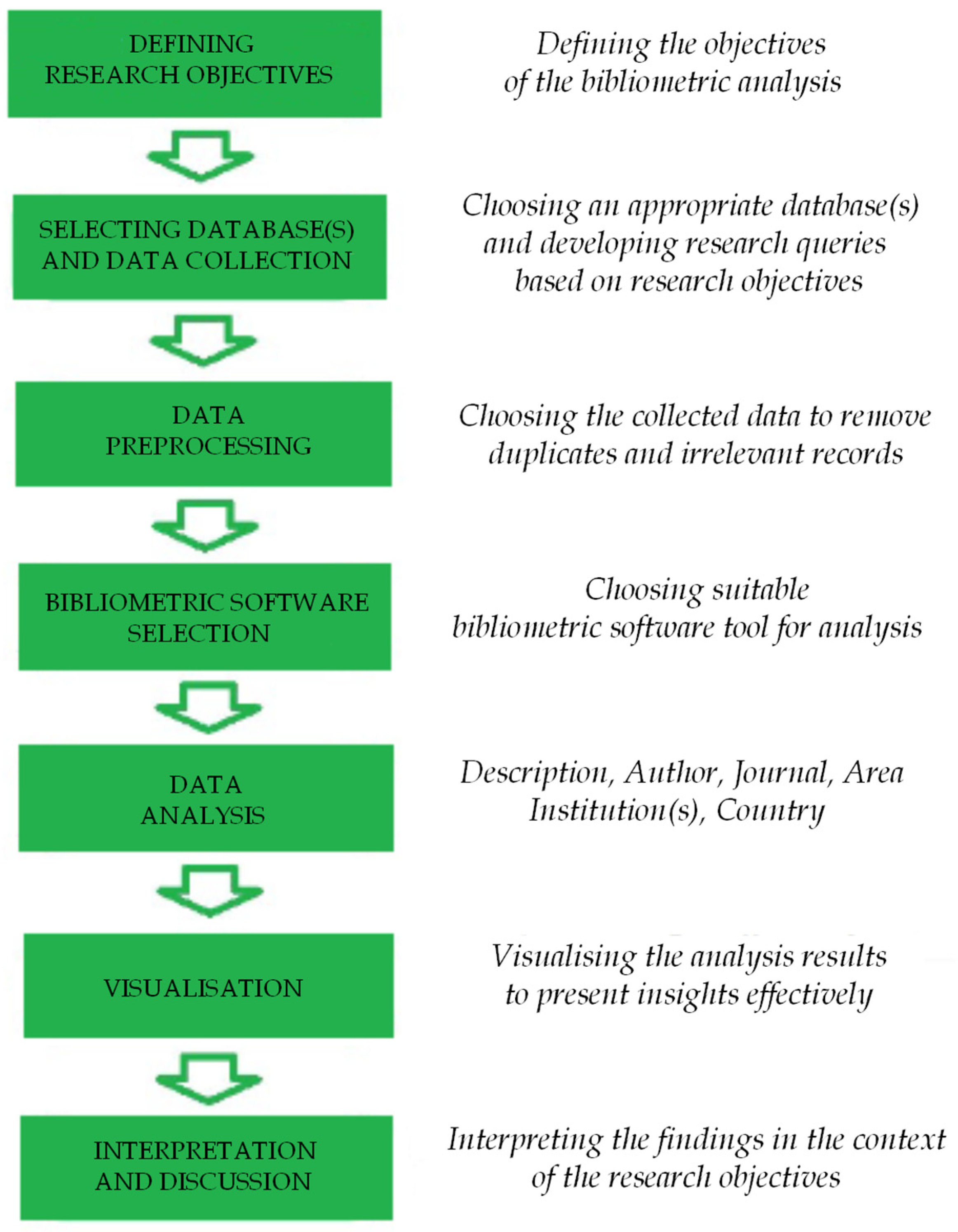
This study used the bibliographic databases Web of Science (WoS), Scopus, PubMed, and dblp, selected for their extensive coverage and rich datasets that facilitate comprehensive bibliometric analysis (Figure 1). To identify relevant literature, we applied filters to limit the selection to original articles written in English. We then manually reviewed each article to ensure that it met our study criteria, which determined the final sample size. The dataset was then analyzed to examine key features such as prominent authors, research groups or institutions, topic clusters, and emerging trends. This approach allowed us to trace the evolution of key terminology and significant advances in the field. In addition, we assessed metrics such as years of publication and authorship patterns to provide quantitative insights and highlight significant themes across studies.
The study was based on specific elements of the PRISMA 2020 guidelines for bibliographic reviews [18] (Supplementary Materials), focusing on aspects such as rationale (item 3), objectives (item 4), eligibility criteria (item 5), information sources (item 6), search strategy (item 7), selection process (item 8), data collection process (item 9), synthesis methods (item 13a), synthesis results (item 20b), and discussion (item 23a). For bibliometric analysis, we used tools embedded in the Web of Science (WoS), Scopus, PubMed, and dblp databases. This constructed methodology supports bibliometric and scientometric studies, often enabling refined categorization by conceptual structures, research areas, authors, documents, and sources. The results are presented in tables that allow flexible analysis and visualization options. Given the interdisciplinary scope and complexity of the topic, we have collected the most important results of the review in a summary table.
The manuscript presents and describes the application of the PRISMA 2020 methodology, as the review process adhered to the core principles of transparency, structured literature search, and replicability promoted by PRISMA. However, only 10 of the 27 checklist items were fully implemented. This is primarily due to the specific scope and nature of the article, which is not a full systematic review but rather a focused, narrative-enhanced PRISMA-based review. The article’s topic lies at the intersection of emerging technologies, human–machine interaction, and industrial systems engineering. To meaningfully position these developments, the manuscript considers both local and global perspectives. This broader contextualization is necessary because the implementation of VR-BCI systems depends not only on technical factors but also on regional industrial maturity, socio-technical dynamics, the regulatory environment, and sustainability issues. These dimensions go beyond what is typically covered in a tightly structured systematic review, and many of them have not been fully addressed in the identified literature. Consequently, the discussion extends beyond the formal PRISMA findings to integrate policy implications, regional trends, and cross-domain tradeoffs, essential for industry application. For these reasons, the article uses PRISMA 2020 as a reference framework—specifically for searching, screening, and selecting relevant studies—but does not attempt to meet all 27 checklist items. This selective application is appropriate for a hybrid scoping/narrative review, where the goal is not to exhaustively assess all available evidence but to synthesize insights from diverse sources and offer an integrated perspective. Although the article is not a full systematic review, it maintains scientific rigor. The application of the 10 key PRISMA items ensures methodological clarity, and the discussion sensibly synthesizes evidence from multiple studies and databases. Additional comparative analysis strengthens the paper’s contributions by highlighting patterns, differences, and opportunities that are crucial for implementing VR-BCI solutions in industrial environments. All of these elements enhance the paper’s credibility and position it as a scientifically grounded, context-rich review that serves as a source of inspiration for future research and development.

3. Results

Section 3 presents the results of the systematic review, offering an integrated overview of the technological, methodological, and application findings identified in the selected studies. This chapter synthesizes the extracted evidence into coherent thematic categories reflecting current trends in VR-BCI research for operator-CPS communication in IIoT environments. It highlights dominant research trends, key technological configurations, and emerging interaction paradigms observed in the literature. This section also presents comparative analyses that demonstrate how VR-BCI systems differ from, and potentially surpass, alternative human–machine interface technologies. Furthermore, it identifies significant gaps and limitations that persist in existing research, providing a context for further discussion and interpretation. In summary, Chapter 3 provides a consolidated evidence base that provides a foundation for subsequent assessment of technological potential and future research directions.

3.1. Data Sources

We refined our search to better suit our research objectives. We used filtered queries to limit results to articles in English. In WoS, searches were performed using the “Subject” field (consisting of title, abstract, keyword) and in Scopus using the article title, abstract and keywords, in PubMed and dblp using manual sets of keywords. The databases were searched for articles using keywords such as “virtual reality”, “brain computer interface”, “optimization/optimization”, “interaction”, and related terms (Table 1).
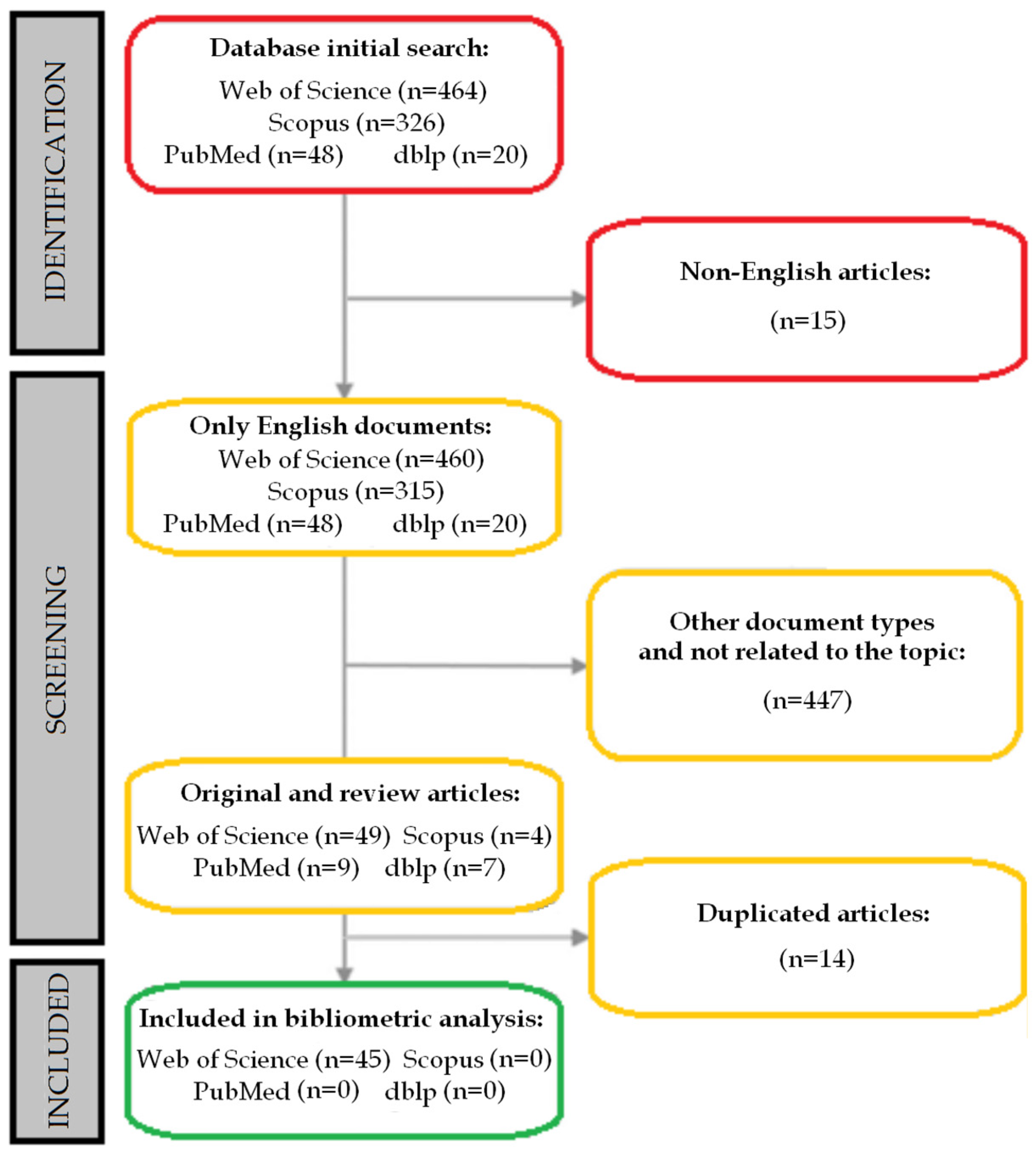
We then further filtered the selected publications by manually reviewing the articles, removing thematically irrelevant publications and duplicates, which allowed us to determine the final sample size (Figure 2). For the keywords “VR” and “BCI” we found in the WoS database 464 (2000–2024), Scopus: 326 (2000–2024), PubMed: 48 (2000–2024), dblp: 20 (2004–2023). For the keywords “VR” and “BCI” and “optimisation/optimization” we found only 9 publications. For the keywords “VR” and “BCI” and “optimisation/optimization” and “interaction” no publications were observed. Thus we show results for keywords “VR” and “BCI” and “optimisation/optimization”.
The Biblioshiny tool served as an indirect analytical interface for the review, processing, cleaning, and standardizing bibliographic records collected from selected databases. It enabled descriptive bibliometric analyses, including annual publication trends, top authors, influential journals, and keyword co-occurrence patterns. These results supported the synthesis, potentially revealing structural patterns in the research topic under review that might not have been apparent from a qualitative review alone.
We have summarized the results of this bibliographic analysis in Table 2. Forty five articles (from 2013 to 2026) met the inclusion criteria for the review, which shows that this topic is still rarely discussed in the literature.
Research on improving communication between operators and CPSs in the IIoT has advanced significantly, particularly through the use of immersive interfaces and neurophysiological sensors [19]. VR enables high-fidelity visualization of industrial environments, supports improved situational awareness, and facilitates intuitive spatial understanding of system states [20]. BCIs, in turn, enable the interpretation of operator cognitive patterns—such as attention, workload, or stress—offering a unique source of implicit feedback that traditional interfaces cannot capture [21]. Combining VR and BCI has proven to be a promising approach for reducing communication gaps, dynamically adapting system responses, and supporting more effective human–machine collaboration. Table 3 summarizes alternative interaction technologies [22].
VR systems are computer-generated interactive environments that immerse users in stereoscopic displays, motion tracking, and multisensory feedback, enabling intuitive perception and processing of complex spatial information [23]. VR operates by rendering 3D scenes in real time and continuously updating them based on head and body movements. It relies on architectures that integrate tracking subsystems, rendering engines, and user interface components connected via powerful graphics pipelines [24]. Key features of VR include immersion, presence, interaction fidelity, and the ability to simulate hazardous or inaccessible industrial spaces with high realism. VR models include fully immersive head-mounted displays, semi-immersive projection environments, and desktop VR, each of which supports various industrial applications such as training, remote surveillance, and digital twin visualization [25,26]. BCIs are neurotechnological systems that acquire and interpret brain signals—typically EEG, fNIRS, or invasive recordings—to infer cognitive states or generate control commands without relying on muscle activity. BCI operation involves signal acquisition, preprocessing, feature extraction, classification, and translation into system output, supported by architectures based on real-time feedback loops. BCIs are characterized by non-invasiveness, temporal resolution, sensitivity to cognitive states, and adaptability, and are increasingly used for workload estimation, attention monitoring, and hands-free data entry in industrial settings [27,28]. BCI models encompass active, reactive, and passive paradigms, enabling applications ranging from command entry and cognitive state tracking to adaptive automation. In IIoT and cyber-physical systems, BCIs support safety-critical monitoring and operator assistance functions, providing real-time insights into mental workload, fatigue, and intention [29]. VR and BCI technologies are being designed for combined applications by embedding neural state indicators into immersive environments, creating bidirectional systems where VR provides contextual information and BCI generates adaptive system responses, enabling more intuitive, responsive, and cognitively synchronized human–machine communication [30].
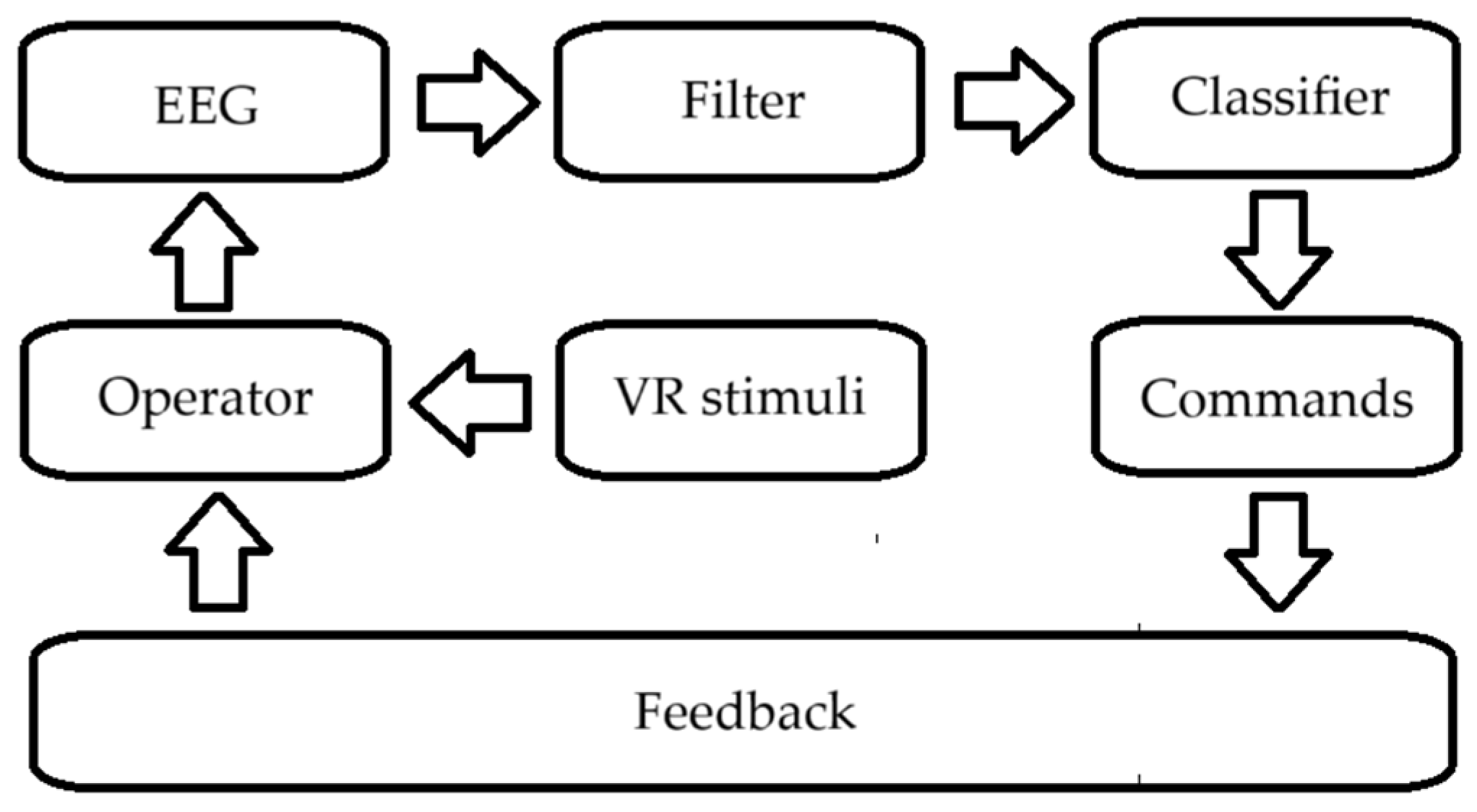
The study of the impact of VR on BCI performance has shown how the use of VR can affect brain activity and neural plasticity, improving the performance of BCI in IoT control, e.g., within intelligent systems. This provides an immersive, adaptive environment that increases signal accuracy and user control, offers real-time feedback and simulations to help users improve their interactions with intelligent systems, making the interface more intuitive and responsive. It leads to greater autonomy, efficiency, and ease of use in managing IoT devices. The literature review highlights significant advances and multi-faceted challenges, especially the development of adaptive signal processing techniques and multimodal integration (BCI with eye tracking and motion capture) [1]. The adoption of the Industry 5.0 paradigm puts people and their applications in the center of attention, and with the increasing automation and robotization of work, the expectations towards employees are becoming even higher. Supporting VR and BCI with machine learning (ML) in assessing the conditions of work–life balance of employees will allow for prediction, including the subjective assessment of this balance and optimization of comfort and quality of work. Industry 5.0 systems could actively prevent work–life imbalance in smart factories for Industry 5.0. Hybrid solutions here combine traditional tests with automated tests using VR and BCI in preventive medicine technologies of Industry 5.0 [2]. By combining VR and BCI, clinicians can stimulate specific areas of the brain, hence such interventions have the potential to be used in rehabilitation, treatment of phobias and anxiety disorders, and improvement of cognitive functions, especially since personalized VR experiences, adapted based on feedback from BCI, increase the effectiveness of these interventions [31]. Integration of BCI with VR requires taking into account the influence of virtual visual cues and traditional visual cues on the subjects using motor imagery (MI) and brain–computer interface (BCI) performance when creating a classification model for MI-BCI. MI is more stable under traditional visual cues, while virtual visual cues improve the connectivity of the brain functional network during MI and increase the fatigue level of the subjects [32]. The combination of brain–computer interface (BCI) and virtual reality (VR) improves user experience and enables intuitive control of virtual environments by immersing users in real-life situations, making the experience engaging and safe(Figure 3) [33].
Cyber-physical systems (CPS) are integrated computing-physical infrastructures that tightly couple sensing, control, and communication mechanisms to monitor and influence physical processes in real time, forming the technological backbone of modern industry [34]. CPS are connected via distributed sensor networks and industrial communication protocols, enabling large-scale data exchange, coordinated decision-making, and autonomous operations in manufacturing and logistics environments. CPS in IIoT environments are characterized by interoperability, real-time response, resilience, and the ability to integrate heterogeneous devices, machines, and software systems into unified operational ecosystems [35]. Typical applications include predictive maintenance, robotics coordination, smart manufacturing, remote supervision, and cyber-physical production systems that leverage data-driven intelligence to optimize industrial workflows. Communication between CPS and operators is essential because operators provide contextual reasoning, supervision, and high-level decision-making that automated systems cannot fully replicate. However, this communication often faces challenges related to information overload, complex interfaces, and the need to interpret system states in dynamic industrial environments. IIoT communication frameworks are increasingly emphasizing human-centered design, providing operators with access to timely, accurate, and cognitively manageable information from CPSs via dashboards, augmented interfaces, or wearable technologies. Development opportunities include multimodal interaction, adaptive interfaces that respond to operator cognitive states, and the integration of immersive or neurophysiological technologies to enhance situational awareness and reduce cognitive load. Emerging research suggests that improving communication between CPSs and operators can significantly improve safety, efficiency, and resilience in complex industrial operations, particularly in highly automated environments [36]. This current situation therefore creates fertile ground for the development of advanced technologies—such as VR and BCI—that offer more intuitive, adaptive, and high-bandwidth communication channels between humans and cyber-physical systems [37].
Improving system–operator interaction in multimedia telecommunications using VR and BCI protocols involves the use of advanced technologies to increase the efficiency, accuracy, and intuitiveness of the communication process. VR provides immersive environments that improve the interaction between operators and multimedia systems, especially for highly complex or visualized tasks. VR interfaces enable operators to interact with three-dimensional representations of network components, data streams, or multimedia systems. This improves decision-making in areas such as network management, troubleshooting, or content delivery optimization. VR platforms can simulate real-world telecommunications scenarios to train operators, increasing skill development and preparedness for critical situations. Using hand gestures, motion tracking, and spatial orientation in VR interfaces allows operators to perform tasks in a more natural way compared to traditional interfaces. VR facilitates collaborative problem-solving between geographically dispersed operators via virtual environments, reducing response times and operational costs [38,39].
BCIs enable direct communication between the operator’s brain and the system, bypassing traditional input methods. This is particularly valuable in situations requiring fast, non-contact, or precise control. BCIs can detect the operator’s mental state (e.g., stress or fatigue) and adjust the system’s response accordingly, for example, by reducing the complexity of the task or suggesting breaks. Operators can use BCIs to issue commands using thought patterns, which improves the speed of interaction in dynamic environments, such as real-time network monitoring or customizing multimedia streaming. BCIs can enable people with physical disabilities to manage and operate multimedia telecommunications systems, promoting inclusivity [40,41].
Integrating VR and BCI creates synergistic benefits. Operators can navigate VR environments using BCI-based commands, combining the intuitive nature of VR with the hands-free precision of BCI. BCIs can analyze brain activity to provide immediate feedback to the VR system, optimizing the user experience by adapting the VR environment to the operator’s cognitive state. The VR-BCI combination can simulate high-stakes scenarios while tracking brain responses, enabling better training outcomes and system optimization. Implementing these protocols requires addressing several challenges:
  • Data privacy and security, i.e., protecting sensitive information from unauthorized access;
  • System latency, i.e., ensuring real-time performance, especially in critical telecommunications operations;
  • User experience, i.e., mitigating VR motion sickness and ensuring that BCI devices are non-invasive and user-friendly;
  • Scalability, i.e., ensuring that these technologies can be implemented at various operational scales in a cost-effective manner [42,43].
Applications in multimedia telecommunications include:
  • Network operations centers (NOCs): VR and BCIs improve monitoring, diagnostics, and optimization of multimedia traffic in telecommunications networks.
  • Customer service: VR can provide interactive troubleshooting guides, while BCIs enable efficient responses in high-volume support environments.
  • Content creation and delivery: VR-based editing and BCI-assisted personalization of multimedia content enhance the user experience [44,45].
By integrating VR and BCI, telecom operators can significantly improve interaction with complex systems, enabling faster, smarter, and more accessible multimedia telecom management [38,39].

3.2. Criteria of Signal(s) and Device(s) Selection Including Hybrid

The selection of signals and devices, including hybrids of VR and BCI-based protocols, requires careful evaluation based on specific criteria to optimize system–operator interactions in multimedia telecommunications. Signal reliability and accuracy are paramount. Signals from BCI devices must accurately capture brain activity, while VR devices should provide precise tracking of movement and interactions [46,47]. Compatibility with existing systems is essential. Devices and protocols must integrate seamlessly with current telecommunications infrastructure to avoid interference or redundancy. Minimizing latency is a key criterion. Both VR and BCI systems should process signals and provide real-time responses to meet the demands of dynamic telecommunications operations. Fourth, usability and ergonomics are key issues. Devices such as VR headsets and BCI devices must be comfortable for long-term use, lightweight, and intuitive for operators to adopt. Multi-signal processing capabilities are key to hybrid systems. VR and BCI devices should support simultaneous inputs such as gestures, brain signals, and voice commands, providing smooth and flexible interactions. Adaptability to cognitive states is a key feature of BCI. Devices must detect and adapt to the operator’s mental state, such as stress or fatigue, which improves interaction and reduces errors. Durability and reliability of the equipment are essential for long-term use, especially in high-demand telecommunications environments where downtime can be costly [48,49]. Signal noise reduction is a must for BCI devices. Advanced algorithms should filter out irrelevant brain activity or ambient noise to provide clear and actionable input. Visual fidelity and field of view are key for VR systems. High-resolution displays with a wide field of view improve immersion and make navigation through the system more efficient. Cost-effectiveness is a practical issue. While innovation is key, devices and protocols must be cost-effective for large-scale deployment in telecom operations. Data security and encryption are essential to protect sensitive information from unauthorized access, especially when processing cognitive data from BCI devices. Scalability should guide selection, ensuring that devices and signals can meet increased demand or additional functionality as operations evolve. Standardization and interoperability are key to integrating hybrid systems. Devices should be compliant with industry standards, enabling them to operate across platforms and networks. Adaptability is an important criterion, allowing operators to tailor interfaces, signal processing, and system behaviors to their specific needs. Future-proofing capabilities are key. Devices should support updates and upgrades, ensuring longevity and relevance in rapidly evolving telecom environments [50,51]. These criteria ensure that the selected signals and devices provide robust, efficient, and user-friendly solutions to improve system–operator interaction.

3.3. Planning of VR-BCI System

The planning phase for implementing VR and BCI-based protocols in multimedia telecommunications involves a detailed roadmap that balances innovation with the practical challenges of implementation. This phase begins with defining goals, such as increasing operator efficiency, improving decision-making, or increasing accessibility for a variety of users. Clear goals help prioritize resources and align technology choices with operational needs. A feasibility study is key, assessing the compatibility of VR and BCI technologies with the operator’s existing infrastructure, network capacity, and workflows. This includes assessing hardware requirements, such as VR headsets, motion sensors, and BCI devices, along with software capabilities to process data and generate real-time feedback [52,53]. The next step is prototyping and testing. Developing pilot systems allows stakeholders to test the usability, functionality, and reliability of VR and BCI solutions in controlled environments. Simulations of real-world telecommunications scenarios, such as troubleshooting network issues or managing multimedia content, help refine the systems. User training and adoption play a key role. Operators must be trained to use VR and BCI devices effectively, which involves designing ergonomic, non-invasive systems and reducing the cognitive load associated with new technology. Scalability planning is also essential to ensure that these systems can be expanded to meet organizational needs without significant disruption. This includes optimizing for low-latency performance to maintain smooth, real-time operation [54,55]. At the same time, a privacy and security framework must be developed to protect sensitive operator data, particularly brain activity recorded by BCI devices. Ensuring compliance with data protection regulations promotes trust and ethical use. Collaboration with industry stakeholders such as telecommunications service providers, technology developers, and regulators is crucial to align the project with broader market trends and technological advances. The planning phase concludes with an assessment of long-term benefits and risks. Cost–benefit analysis and risk assessment help determine the feasibility of scaling VR and BCI protocols while addressing potential obstacles such as user discomfort, maintenance costs, or rapid technology obsolescence. By combining structured planning, robust testing, and ethical considerations, organizations can create a solid foundation for integrating VR and BCI-based protocols that will revolutionize how operators interact in multimedia telecommunications [56,57].

3.4. Operation of VR-BCI System

The principles of VR and BCI protocols in multimedia telecommunications focus on providing efficient, secure, and user-friendly interactions. Usability standards must guide the design, ensuring that interfaces are intuitive and accessible to operators with varying levels of technical expertise. Systems should prioritize ease of navigation and clear visualization of complex data. Operator training is mandatory, equipping users with the skills to effectively interact with VR environments and BCI systems. Regular training sessions and adaptive learning modules are essential to maintain proficiency as the technology evolves. Real-time response is critical for both VR and BCI systems. Protocols must minimize latency to ensure seamless interaction during time-sensitive operations such as troubleshooting network issues or managing multimedia traffic. Data accuracy and reliability must be a priority. VR simulations and BCI interpretations should be validated against real-world scenarios to provide operators with actionable and accurate information. Privacy and security protocols must be strictly enforced, especially for sensitive data such as brain activity from BCI devices. Encryption and secure access controls are non-negotiable to protect operators and the integrity of the organization’s data. Adaptive feedback mechanisms must be integrated. Systems must dynamically respond to operators’ cognitive states by adjusting complexity, highlighting critical information, or offering assistance when fatigue or stress is detected. Ergonomics and comfort are essential. Both VR equipment and BCI devices must be lightweight, non-invasive, and designed for long-term use without causing physical or mental strain. A key principle is to support collaboration. VR systems should enable multiple operators to work together in virtual spaces, facilitating team problem-solving and remote collaboration. System diagnostics and maintenance must be automated where possible. Regular performance checks ensure that VR and BCI systems are operating optimally and are updated with the latest software improvements. Scalability and customization are key to adapting to different organizational needs, ensuring that protocols can grow with system requirements and adapt to specific operational contexts. Compliance with industry standards is mandatory, aligning systems with regulations governing telecommunications, data privacy, and user security. Cross-platform integration should be a guiding principle, ensuring that VR and BCI systems can seamlessly interoperate with existing telecommunications infrastructure and software. Ethical guidelines must govern the use of BCI data, ensuring the psychological privacy of operators and preventing misuse of cognitive information. Continuous monitoring and improvement protocols should be implemented, gathering feedback from operators to improve system performance and address emerging challenges. There must be fallback mechanisms that allow operators to revert to traditional interfaces or manual controls in the event of a VR or BCI system failure, ensuring uninterrupted telecommunications operations. These principles ensure that VR and BCI-based protocols operate effectively, ethically, and sustainably [58,59].
The concept of VR and BCI-based protocols introduces a novel approach by combining immersive virtual environments with direct brain–system communication to improve operator interaction in multimedia telecommunications. VR offers real-time 3D visualization of complex systems; revolutionizing traditional 2D interfaces. BCI enables hands-free interaction by translating brain signals into commands; providing unprecedented efficiency and accessibility. Hybrid integration of VR and BCI enables the control of virtual spaces using cognitive data; creating a more intuitive and personalized user experience. This concept helps streamline workflows; reduce errors by monitoring cognitive state; and improve training through realistic VR simulations. It increases inclusivity by enabling people with physical limitations to engage in telecommunications roles. This approach represents a leap in efficiency; adaptability; and innovation; positioning telecommunications systems for future requirements.

4. Discussion

Increased communication bandwidth between humans and machines can accelerate the implementation of resilient, semi-autonomous IIoT systems. Our study positions VR-BCI technologies as a promising evolutionary step towards more intelligent, responsive, and human-aware industrial communication ecosystems.
The conceptual framework explains the theoretical logic of how VR and BCI technologies can improve communication between a cyber-physical system and a human operator in the IIoT, specifying constructs, mechanisms, and their expected relationships. The literature review summarizes, organizes, and critiques previous research on VR, BCI, and CPS interactions with humans, providing the empirical and scientific background that underpins the framework. The conceptual framework proposes how information flows, cognitive load, situational awareness, and system responsiveness can be integrated through VR-BCI architectures, while the literature review documents what is already known about these components and where gaps exist. Thus, the framework represents the authors’ theoretical contribution, while the review is an evidence-based synthesis of previous research. Its contribution lies primarily in the systematic and bibliometric mapping of VR and BCI applications in industrial communication contexts, rather than in the development or testing of new experimental systems. The value of the work lies in explaining research trends, identifying gaps, and proposing directions for future experimental development, rather than in presenting an implemented technological breakthrough.
According to current knowledge and publications, VR and BCI-based protocols aimed at improving system–operator interaction in multimedia telecommunications have the following advantages:
  • VR provides operators with an immersive and intuitive interface, improving the understanding of complex data and system operations;
  • BCI enables hands-free control, allowing operators to perform tasks faster and more accurately in dynamic environments;
  • BCIs can monitor cognitive states such as stress or fatigue, allowing systems to adapt and improve operator performance;
  • BCI systems offer people with physical disabilities the ability to effectively interact with telecommunications systems.
At the same time, we should consider the following disadvantages of the above-mentioned solutions:
  • developing and implementing VR and BCI systems requires significant investments in hardware, software, and integration;
  • VR may cause motion sickness or discomfort, while BCI devices may be invasive or difficult to wear for long periods of time;
  • both technologies require low latency to be effective, which can be difficult in real-time telecommunications environments;
  • use of BCIs involves sensitive data on brain activity, raising serious concerns about safety and ethical use.
Proposed Roadmap for Integrating VR and BCI with CPS Communications in the Industrial Internet of Things (IIoT):
  • Phase 1—Assessment and feasibility: conduct a comprehensive needs analysis to identify communication gaps between operators and CPSs in industrial environments, with a focus on areas where VR and BCI can provide tangible added value;
  • Phase 2—Infrastructure preparation: modernize the network and computing infrastructure to support the high-bandwidth, low-latency data transmission required for real-time VR visualization and BCI signal processing;
  • Phase 3—Prototype development: develop small-scale pilot systems combining VR-based control interfaces with non-invasive BCI devices to test real-time operator-machine interactions;
  • Phase 4—Data integration and AI enhancement: implementation of AI and machine learning algorithms to interpret neural data, personalize operator interfaces, and enhance system adaptability;
  • Phase 5—Security and privacy framework: introduce robust cybersecurity measures and neural data protection policies that address privacy, consent, and data ownership;
  • Phase 6—Human factors and training: development of ergonomic, cognitive, and safety guidelines for operators, including specialized training in VR-BCI system operation;
  • Phase 7—Large-scale implementation and optimization: gradual scaling of implementations across industrial facilities, continuously monitoring performance, safety, and user acceptance;
  • Phase 8—Standardization and policy development: collaboration with regulatory authorities, industry organizations, and ethics committees to develop standard protocols, interoperability frameworks, and ethical use policies.

4.1. Limitations

While VR and BCI-based protocols offer significant advances, they are not without significant limitations in improving system–operator interactions in multimedia telecommunications. The high cost of developing and implementing VR and BCI systems can be a barrier to widespread adoption, especially for smaller organizations. VR equipment such as headsets can cause discomfort or fatigue during prolonged use, potentially impacting operator performance. BCI technologies are still in their early stages of development and often require extensive calibration and user training to ensure reliable operation. Interpretation of neural signals in BCI systems can be inconsistent, especially in real-world environments with noise and interference [60,61]. The cognitive load on operators can still be high because immersive VR environments can present an overwhelming amount of information if not carefully designed. Privacy concerns arise with the use of BCIs because neural data is highly sensitive and can be misused if not properly secured. VR and BCI systems are hardware dependent and may have compatibility issues with existing telecommunications infrastructure. Network latency in VR applications can impact real-time interaction, undermining intended performance gains. Prolonged exposure to VR environments can lead to health issues such as motion sickness or eyestrain for operators. Integrating these protocols requires cross-disciplinary expertise and time-consuming collaboration, which can slow down implementation in fast-moving industries [62,63].

4.2. Technological and Economic Implications

The combination of VR, BCI, and CPS represents a transformative but costly evolution in industrial communications, balancing technological advancement with economic viability. Integrating VR and BCI with CPS within the IIoT framework enhances human–machine interaction through immersive and intuitive communication. VR provides operators with real-time 3D visualizations of complex industrial processes, improving situational awareness and decision-making. BCIs enable direct neural interaction with machines, allowing operators to control or monitor systems using brain signals without relying solely on manual interfaces. Together, these technologies reduce cognitive load by transforming complex system data into easily interpretable visual and neural feedback. The technological implications include the need for high-performance computing, low-latency communication, and advanced data synchronization between VR, BCI, and CPS components. Security is becoming crucial, as data from brain signals and the VR environment introduce new privacy and integrity threats to industrial networks [64]. From an economic perspective, these technologies can significantly increase productivity, reduce human error, and minimize downtime through faster and more precise operator responses. However, the high costs of VR/BCI hardware, software integration, and specialized employee training create significant financial barriers for many industries. Continuous system maintenance and calibration increase operating costs, especially when scaling in large industrial environments. Over time, increased efficiency, predictive maintenance, and optimized workflows can offset the initial investment, leading to long-term economic benefits [65]. Implementing VR and BCI in the IIoT also stimulates innovation, fueling new markets for immersive interfaces, cognitive ergonomics, and neuroadaptive automation.

4.3. Societal, Ethical and Legal Implications

The use of VR and BCI in the IIoT is driving significant societal change by transforming how humans interact with machines and industrial environments. Improved human–machine communication can improve worker safety and productivity, but it can also lead to job losses as automation reduces the need for manual oversight. Ethical concerns arise from the collection and interpretation of neural data, which can reveal sensitive information about an individual’s thoughts, emotions, and cognitive states. There is a risk of breaching neural privacy, where unauthorized access to brain data can lead to the misuse or manipulation of personal psychological information [66]. Continuous monitoring using BCI and VR can create a sense of surveillance, impacting employee autonomy and psychological well-being. From a societal perspective, unequal access to such advanced technologies could deepen the digital divide between well-funded industries and smaller businesses. Ethical guidelines are needed to ensure that BCI-based interfaces are used to augment human capabilities rather than exploit or control workers. The use of immersive VR environments can also raise concerns about overreliance on virtual representations and potential detachment from physical reality. Legally, ownership and control over neural and behavioral data remain unclear, requiring updated data protection and intellectual property regulations [67]. Liability issues become complex when operator errors result from misinterpretation of neural signals or system failures in VR-BCI-CPS interactions. Employers must ensure informed consent, transparency, and fairness in the collection and use of neural data to maintain trust and regulatory compliance. Although VR and BCI can enhance industrial communication, their implementation requires careful regulation and ethical oversight to protect privacy, autonomy, and equality in the evolving digital workplace.

4.4. Directions for Further Research

Further research on VR and BCI-based protocols to improve system–operator interaction in multimedia telecommunications should focus on improving system reliability and usability. One direction is to develop lightweight, ergonomic VR hardware to reduce operator fatigue and improve comfort during extended use. Research can also explore more efficient neural signal processing algorithms for BCI systems, improving accuracy and responsiveness in different operating environments. Another critical area is the design of adaptive interfaces that balance cognitive load, ensuring that information is presented in a clear, non-overwhelming manner tailored to the operator’s needs. Investigating the privacy and security mechanisms of neural data in BCI systems is essential to address ethical concerns and protect confidential information. Researchers should also investigate how to seamlessly integrate VR and BCI technologies into existing telecommunications infrastructure to minimize implementation challenges [68,69]. Reducing network latency and improving real-time response in VR applications would greatly improve operator interaction and performance. In addition, advances in machine learning could enable predictive analytics within these protocols, helping operators make proactive decisions. Research into training methodologies that use VR simulations, combined with BCI feedback, could improve skill acquisition and operator preparation. Multidisciplinary research examining long-term health outcomes and user experiences will help refine these technologies for broader and safer adoption [70].

5. Conclusions

VR and BCI-based protocols are playing a transformative role in enhancing system–operator interactions in IIoT. VR offers immersive, intuitive interfaces that improve visualization, control, and decision-making in complex operational environments. BCI enables direct communication between operator and system, supporting touchless, efficient, and precise interactions. Together, they increase accessibility and inclusivity, ensuring that operators with different needs can effectively use CPS.
This study provides a comprehensive synthesis of how VR and BCI, when combined, can create more intuitive, cognitively aligned communication channels between operators and cyber-physical systems in IIoT environments. It highlights that VR provides immersive situational awareness, while BCI offers direct insight into operator intentions and cognitive state, making this combined approach more adaptive than traditional interfaces. The findings suggest that integrating neural indicators of workload and attention with VR-driven visualizations can significantly reduce operator errors in complex industrial scenarios. Comparing these results with previous work on AR interfaces, haptic feedback systems, and automated decision support tools, the study demonstrates that VR-BCI solutions offer improved bidirectional communication by incorporating both environmental and human state information. The analysis also reveals that VR-BCI interaction frameworks align with broader trends in cognitive augmentation and human-centric automation observed in related research areas. This work demonstrates that VR-BCI integration can be a transformative technology, enabling cyber-physical systems to dynamically respond to human cognitive fluctuations in real time. Furthermore, the study advances understanding of how multimodal feedback loops—visual immersion, neural sensors, and adaptive system output—can outperform the single-modal solutions used in current industrial interfaces. It demonstrates that VR-BCI architectures can enhance operator trust and situational understanding more effectively than standard graphical dashboards or wearable sensor systems.
Looking to the future, these technologies have the potential to revolutionize real-time training, monitoring, and operations, allowing for significant improvements in efficiency and user experience. However, challenges such as high cost, latency, and user comfort must be addressed for widespread adoption. Data privacy and social and ethical considerations regarding brain activity data will also require careful regulation.
With continued advancements in hardware, AI integration, and user-centric design, VR and BCI-based protocols are poised to become an integral part of the future of Industry 5.0, enabling smarter and more adaptive system–operator interactions.

Supplementary Materials

The following supporting information can be downloaded at: https://www.mdpi.com/article/10.3390/app152312805/s1, Partial PRISMA 2020 Checklist based on [18].

Author Contributions

Conceptualization, A.P., I.R., N.N. and D.M.; methodology, A.P., I.R., N.N. and D.M.; software, A.P., I.R., N.N. and D.M.; validation, A.P., I.R., N.N. and D.M.; formal analysis, A.P., I.R., N.N. and D.M.; investigation, A.P., I.R., N.N. and D.M.; resources, A.P., I.R., N.N. and D.M.; data curation, A.P., I.R., N.N. and D.M.; writing—original draft preparation, A.P., I.R., N.N. and D.M.; writing—review and editing, A.P., I.R., N.N. and D.M.; visualization, A.P., I.R., N.N. and D.M.; supervision, I.R.; project administration, I.R.; funding acquisition, I.R. All authors have read and agreed to the published version of the manuscript.

Funding

The work presented in this paper has been financed under a grant to maintain the research potential of Kazimierz Wielki University.

Data Availability Statement

Dataset not generated.

Conflicts of Interest

The authors declare no conflicts of interest.

References

  1. Piszcz, A.; Rojek, I.; Mikołajewski, D. Impact of Virtual Reality on Brain–Computer Interface Performance in IoT Control—Review of Current State of Knowledge. Appl. Sci. 2024, 14, 10541. [Google Scholar] [CrossRef]
  2. Mikołajewski, D.; Piszcz, A.; Rojek, I.; Galas, K. Machine Learning Supporting Virtual Reality and Brain–Computer Interface to Assess Work–Life Balance Conditions for Employees. Electronics 2024, 13, 4489. [Google Scholar] [CrossRef]
  3. Deng, T.; Huo, Z.; Zhang, L.; Dong, Z.; Niu, L.; Kang, X.; Huang, X. A VR-based BCI interactive system for UAV swarm control. Biomed. Signal Process. Control 2023, 85, 104944. [Google Scholar] [CrossRef]
  4. Niu, L.; Bin, J.; Wang, J.; Zhan, G.; Zhang, L.; Gan, Z.; Kang, X. A dynamically optimized time-window length for SSVEP based hybrid BCI-VR system. Biomed. Signal Process. Control 2023, 84, 104826. [Google Scholar] [CrossRef]
  5. Sideraki, A.; Drigas, A. Combination of Virtual Reality (VR) and BCI & fMRI in Autism Spectrum Disorder. Int. J. Online Biomed. Eng. 2023, 19, 99–110. [Google Scholar]
  6. Niu, L.; Bin, J.; Wang, J.; Zhan, G.; Jia, J.; Zhang, L.; Gan, Z.; Kang, X. Effect of 3D paradigm synchronous motion for SSVEP-based hybrid BCI-VR system. Medical Biol. Eng. Comput. 2023, 61, 2481–2495. [Google Scholar] [CrossRef] [PubMed]
  7. Zhou, Z.; Zhang, Z.; Wei, S.; Zhang, X.; Mao, L. Development and evaluation of BCI for operating VR flight simulator based on desktop VR equipment. Adv. Eng. Inform. 2022, 51, 101499. [Google Scholar] [CrossRef]
  8. Cattan, G.H.; Andreev, A.; Mendoza, C.; Congedo, M. A Comparison of Mobile VR Display Running on an Ordinary Smartphone with Standard PC Display for P300-BCI Stimulus Presentation. IEEE Trans. Games 2021, 13, 68–77. [Google Scholar] [CrossRef]
  9. Tudjarov, B.; Mitrev, R. Web-based VR Environment for Simulation and Visualization of Construction Manipulator Motion. In Proceedings of the 9th Balkan Conference on Informatics, BCI 2019, Sofia, Bulgaria, 26–28 September 2019; Volume 7, pp. 1–7. [Google Scholar]
  10. Aamer, A.; Esawy, A.; Swelam, O.; Nabil, T.; Anwar, A.; Eldeib, A. BCI Integrated with VR for Rehabilitation. In Proceedings of the 31st IEEE International Conference on Microelectronics (ICM 2019), Cairo, Egypt, 15–18 December 2019; pp. 166–169. [Google Scholar]
  11. Grichnik, R.; Benda, M.; Volosyak, I. A VR-Based Hybrid BCI Using SSVEP and Gesture Input. In International Work-Conference on Artificial Neural Networks; Springer International Publishing: Cham, Switzerland, 2019; pp. 418–429. [Google Scholar]
  12. Stawicki, P.; Gembler, F.; Grichnik, R.; Volosyak, I. Remote Steering of a Mobile Robotic Car by Means of VR-Based SSVEP BCI. In International Work-Conference on Artificial Neural Networks; Springer International Publishing: Cham, Switzerland, 2019; pp. 406–417. [Google Scholar]
  13. Lupu, R.G.; Irimia, D.C.; Ungureanu, F.; Poboroniuc, M.; Moldoveanu, A. BCI and FES Based Therapy for Stroke Rehabilitation Using VR Facilities. Wirel. Commun. Mob. Comput. 2018, 2018, 4798359. [Google Scholar] [CrossRef]
  14. McMahon, M.; Schukat, M. A low-Cost, Open-Source, BCI-VR Game Control Development Environment Prototype for Game Based Neurorehabilitation. In Proceedings of the 2018 IEEE Games, Entertainment, Media Conference (GEM), Galway, Ireland, 15–17 August 2018; pp. 1–9. [Google Scholar]
  15. Vourvopoulos, A.; Ferreira, A.; Bermúdez i Badia, S. Development and Assessment of a Self-paced BCI-VR Paradigm Using Multimodal Stimulation and Adaptive Performance. In International Conference on Physiological Computing Systems (Selected Papers); Springer International Publishing: Cham, Switzerland, 2018; pp. 1–22. [Google Scholar]
  16. Koo, B.; Lee, H.G.; Nam, Y.; Choi, S. Immersive BCI with SSVEP in VR head-mounted display. In Proceedings of the 2015 37th Annual International Conference of the IEEE Engineering in Medicine and Biology Society (EMBC), Milan, Italy, 25–29 August 2015; pp. 1103–1106. [Google Scholar]
  17. Zuo, M.; Yu, B.; Sui, L. Classification of EEG evoked in 2D and 3D virtual reality: Traditional machine learning versus deep learning. Biomed. Phys. Eng. Express 2024, 11, 015005. [Google Scholar] [CrossRef]
  18. Page, M.J.; McKenzie, J.E.; Bossuyt, P.M.; Boutron, I.; Hoffmann, T.C.; Mulrow, C.D.; Shamseer, L.; Tetzlaff, J.M.; Akl, E.A.; Brennan, S.E.; et al. The PRISMA 2020 statement: an updated guideline for reporting systematic reviews. BMJ 2021, 372, n71. [Google Scholar] [CrossRef]
  19. Guo, S.; Li, J.; Yang, G.H. Deep neural network-based adaptive supervisory control for strict-feedback nonlinear systems with sensor and actuator faults. Appl. Math. Comput. 2026, 511, 129745. [Google Scholar] [CrossRef]
  20. Husinsky, M.; Schlager, A.; Jalaeefar, A.; Klimpfinger, S.; Schumach, M. Situated Visualization of IIoT Data on the Hololens 2. In Proceedings of the 2022 IEEE Conference on Virtual Reality and 3D User Interfaces Abstracts and Workshops (VRW), Christchurch, New Zealand, 12–16 March 2022; pp. 472–476. [Google Scholar]
  21. Lian, J.; Dias Pereira, J. Editorial: IoT, UAV, BCI empowered deep learning models in precision agriculture. Front. Plant Sci. 2024, 15, 1399753. [Google Scholar] [CrossRef]
  22. Coogan, C.G.; He, B. Brain-computer interface control in a virtual reality environment and applications for the internet of things. IEEE Access 2018, 6, 10840–10849. [Google Scholar] [CrossRef]
  23. Jaufmann, R.; Widulle, N.; Ehrhardt, J.; Vranjes, D.; Niggemann, O. On the Impact of Pretraining with Simulated Data on Anomaly Detection in CPS—A Case Study. In Proceedings of the 2025 IEEE 30th International Conference on Emerging Technologies and Factory Automation (ETFA), Porto, Portugal, 9–12 September 2025; pp. 1–8. [Google Scholar]
  24. Antzoulatos, G.; Orfanidis, G.; Giannakeris, P.; Tzanetis, G.; Kampilis-Stathopoulos, G.; Kopalidis, N.; Gialampoukidis, I.; Vrochidis, S.; Kompatsiaris, I. Severity Level Assessment from Semantically Fused Video Content Analysis for Physical Threat Detection in Ground Segments of Space Systems. In European Symposium on Research in Computer Security; CyberICPS/SECPRE/ADIoT/SPOSE/CPS4CIP/CDT&SECOMANE ESORICS; Springer International Publishing: Cham, Switzerland, 2021; pp. 461–476. [Google Scholar]
  25. Dangana, M.; Ansari, S.; Abbasi, Q.H.; Hussain, S.; Imran, M.A. Suitability of NB-IoT for Indoor Industrial Environment: A Survey and Insights. Sensors 2021, 21, 5284. [Google Scholar] [CrossRef]
  26. Ali, O.; Ishak, M.K.; Bhatti, M.K.L.; Khan, I.; Kim, K.I. A Comprehensive Review of Internet of Things: Technology Stack, Middlewares, and Fog/Edge Computing Interface. Sensors 2022, 22, 995. [Google Scholar] [CrossRef]
  27. Douibi, K.; Le Bars, S.; Lemontey, A.; Nag, L.; Balp, R.; Breda, G. Toward EEG-Based BCI Applications for Industry 4.0: Challenges and Possible Applications. Front. Hum. Neurosci. 2021, 15, 705064. [Google Scholar] [CrossRef]
  28. Asgher, U.; Ayaz, Y.; Taiar, R. Editorial: Advances in artificial intelligence (AI) in brain computer interface (BCI) and Industry 4.0 for human machine interaction (HMI). Front. Hum. Neurosci. 2023, 17, 1320536. [Google Scholar] [CrossRef]
  29. Onciul, R.; Tataru, C.I.; Dumitru, A.V.; Crivoi, C.; Serban, M.; Covache-Busuioc, R.A.; Radoi, M.P.; Toader, C. Artificial Intelligence and Neuroscience: Transformative Synergies in Brain Research and Clinical Applications. J. Clin. Med. 2025, 14, 550. [Google Scholar] [CrossRef]
  30. Rodríguez-Azar, P.I.; Mejía-Muñoz, J.M.; Cruz-Mejía, O.; Torres-Escobar, R.; López, L.V.R. Fog Computing for Control of Cyber-Physical Systems in Industry Using BCI. Sensors 2023, 24, 149. [Google Scholar] [CrossRef]
  31. Drigas, A.; Sideraki, A. Brain Neuroplasticity Leveraging Virtual Reality and Brain—Computer Interface Technologies. Sensors 2024, 24, 5725. [Google Scholar] [CrossRef]
  32. Yang, J.; Zhu, S.; Ding, P.; Wang, F.; Gong, A.; Fu, Y. The Effects of VR and TP Visual Cues on Motor Imagery Subjects and Performance. Electronics 2023, 12, 2381. [Google Scholar] [CrossRef]
  33. Martín-Chinea, K.; Gómez-González, J.F.; Acosta, L. Brain–Computer Interface Based on PLV-Spatial Filter and LSTM Classification for Intuitive Control of Avatars. Electronics 2024, 13, 2088. [Google Scholar] [CrossRef]
  34. Hoffmann, M.W.; Malakuti, S.; Grüner, S.; Finster, S.; Gebhardt, J.; Tan, R.; Schindler, T.; Gamer, T. Developing Industrial CPS: A Multi-Disciplinary Challenge. Sensors 2021, 21, 1991. [Google Scholar] [CrossRef]
  35. Paul, G.; Abele, N.D.; Kluth, K. A Review and Qualitative Meta-Analysis of Digital Human Modeling and Cyber-Physical-Systems in Ergonomics 4.0. IISE Trans. Occup. Ergon. Hum. Factors 2021, 9, 111–123. [Google Scholar] [CrossRef]
  36. Yang, W.; Green, A.E.; Chen, Q.; Kenett, Y.N.; Sun, J.; Wei, D.; Qiu, J. Creative problem solving in knowledge-rich contexts. Trends Cogn. Sci. 2022, 26, 849–859. [Google Scholar] [CrossRef]
  37. Bagula, A.; Ajayi, O.; Maluleke, H. Cyber Physical Systems Dependability Using CPS-IOT Monitoring. Sensors 2021, 21, 2761. [Google Scholar] [CrossRef]
  38. Lakshminarayanan, K.; Shah, R.; Ramu, V.; Madathil, D.; Yao, Y.; Wang, I.; Brahmi, B.; Rahman, M.H. Motor Imagery Performance through Embodied Digital Twins in a Virtual Reality-Enabled Brain-Computer Interface Environment. J. Vis. Exp. 2024, 207, e66859. [Google Scholar] [CrossRef]
  39. Afonso, M.; Sánchez-Cuesta, F.; González-Zamorano, Y.; Pablo Romero, J.; Vourvopoulos, A. Investigating the synergistic neuromodulation effect of bilateral rTMS and VR brain-computer interfaces training in chronic stroke patients. J. Neural Eng. 2024, 21, 056037. [Google Scholar] [CrossRef]
  40. Zhang, Y.Y. Invasive BCI and Noninvasive BCI with VR/AR technology. In International Conference on Artificial Intelligence, Virtual Reality, and Visualization (AIVRV); SPIE: Bellingham, WA, USA, 2021; p. 12153. [Google Scholar]
  41. Kohli, V.; Tripathi, U.; Chamola, V.; Rout, B.K.; Kanhere, S.S. A review on virtual reality and augmented reality use-cases of brain computer interface based applications for smart cities. Microprocess. Microsyst. 2022, 88, 104392. [Google Scholar] [CrossRef]
  42. McMahon, M.; Schukat, M. A low-cost, open-source, BCI-VR prototype for real-time signal processing of EEG to manipulate 3DVR objects as a form of neurofeedback. In Proceedings of the 29th Irish Signals and Systems Conference (ISSC), Belfast, UK, 21–22 June 2018. [Google Scholar]
  43. Jamil, N.; Belkacem, A.N.; Ouhbi, S.; Lakas, A. Noninvasive electroencephalography equipment for assistive, adaptive, and rehabilitative brain–computer interfaces: A systematic literature review. Sensors 2021, 21, 4754. [Google Scholar] [CrossRef]
  44. Parivash, F.; Amuzadeh, L.; Fallahi, A. Design Expanded BCI with Improved Efficiency for VR-embedded Neurorehabilitation Systems. In Proceedings of the 19th CSI International Symposium on Artificial Intelligence and Signal Processing (AISP), Shiraz, Iran, 25–27 October 2017; pp. 230–235. [Google Scholar]
  45. Pruss, E.; Prinsen, J.; Alimardani, M. ABCI-controlled Robot Assistant for Navigation and Object Manipulation in a VR Smart Home Environment. In Proceedings of the 15th International Joint Conference on Biomedical Engineering Systems and Technologies (BIOSTEC)/15th International Conference on Biomedical Electronics and Devices (BIODEVICES), Virtual, 9–11 February 2022; Volume 1, pp. 231–237. [Google Scholar]
  46. Cattan, G. The use of brain–computer interfaces in games is not ready for the general public. Front. Comput. Sci. 2021, 3, 628773. [Google Scholar] [CrossRef]
  47. Ramu, V.; Lakshminarayanan, K. Virtual Embodiment: Revolutionizing Motor Imagery in VR-Enabled BCI with Digital Twins. In Proceedings of the 10th IEEE International Conference on Electronics, Computing and Communication Technologies (IEEE CONECCT), Bangalore, India, 12–14 July 2024. [Google Scholar]
  48. Chen, P.C.; Nuo, G. Research of VR-BCI and Its Application in Hand Soft Rehabilitation System. In Proceedings of the 7th IEEE International Conference on Virtual Reality (ICVR), Foshan, China, 20–22 May 2021; pp. 254–261. [Google Scholar]
  49. Cattan, G.; Andreev, A.; Visinoni, E. Recommendations for Integrating a P300-Based Brain-Computer Interface in Virtual Reality Environments for Gaming: An Update. Computers 2020, 9, 92. [Google Scholar] [CrossRef]
  50. Rojek, I.; Mikołajewski, D.; Dostatni, E.; Piszcz, A.; Galas, K. ML-Based Maintenance and Control Process Analysis, Simulation, and Automation—A Review. Appl. Sci. 2024, 14, 8774. [Google Scholar] [CrossRef]
  51. Awuah, W.A.; Ahluwalia, A.; Darko, K.; Sanker, V.; Tan, J.K.; Tenkorang, P.O.; Ben-Jaafar, A.; Ranganathan, S.; Aderinto, N.; Mehta, A.; et al. Bridging minds and machines: The recent advances of brain-computer interfaces in neurological and neurosurgical applications. World Neurosurg. 2024, 189, 138–153. [Google Scholar] [CrossRef]
  52. Różanowski, K.; Sondej, T. Architecture Design of the High Integrated System-on-Chip for Biomedical Applications. In Proceedings of the 20th International Conference on Mixed Design of Integrated Circuits and Systems (MIXDES 2013), Gdynia, Poland, 20–22 June 2013; pp. 529–533. [Google Scholar]
  53. Lima, J.P.S.; Silva, L.A.; Delisle-Rodriguez, D.; Cardoso, V.F.; Nakamura-Palacios, E.M.; Bastos-Filho, T.F. Unraveling Transformative Effects after tDCS and BCI Intervention in Chronic Post-Stroke Patient Rehabilitation—An Alternative Treatment Design Study. Sensors 2023, 23, 9302. [Google Scholar] [CrossRef]
  54. Antonowicz, P.; Podpora, M.; Rut, J. Digital Stereotypes in HMI—The Influence of Feature Quantity Distribution in Deep Learning Models Training. Sensors 2022, 22, 6739. [Google Scholar] [CrossRef]
  55. Zapała, D.; Augustynowicz, P.; Tokovarov, M. Recognition of Attentional States in VR Environment: An fNIRS Study. Sensors 2022, 22, 3133. [Google Scholar] [CrossRef]
  56. Sen, O.; Sheehan, A.M.; Raman, P.R.; Khara, K.S.; Khalifa, A.; Chatterjee, B. Machine-Learning Methods for Speech and Handwriting Detection Using Neural Signals: A Review. Sensors 2023, 23, 5575. [Google Scholar] [CrossRef]
  57. McDermott, E.J.; Raggam, P.; Kirsch, S.; Belardinelli, P.; Ziemann, U.; Zrenner, C. Artifacts in EEG-Based BCI Therapies: Friend or Foe? Sensors 2022, 22, 96. [Google Scholar] [CrossRef]
  58. Kawala-Janik, A.; Podpora, M.; Baranowski, J.; Bauer, W.; Pelc, M. Innovative Approach in Analysis of EEG and EMG Signals—Comparision of the Two Novel Methods. In Proceedings of the 19th International Conference on Methods and Models in Automation and Robotics (MMAR), Miedzyzdroje, Poland, 2–5 September 2014; pp. 804–807. [Google Scholar]
  59. Camargo-Vargas, D.; Callejas-Cuervo, M.; Mazzoleni, S. Brain-Computer Interfaces Systems for Upper and Lower Limb Rehabilitation: A Systematic Review. Sensors 2021, 21, 4312. [Google Scholar] [CrossRef]
  60. Rojek, I.; Mikołajewski, D.; Dostatni, E.; Kopowski, J. Specificity of 3D Printing and AI-Based Optimization of Medical Devices Using the Example of a Group of Exoskeletons. Appl. Sci. 2023, 13, 1060. [Google Scholar] [CrossRef]
  61. Juliano, J.M.; Spicer, R.P.; Vourvopoulos, A.; Lefebvre, S.; Jann, K.; Ard, T.; Santarnecchi, E.; Krum, D.M.; Liew, S.-L. Embodiment Is Related to Better Performance on a Brain–Computer Interface in Immersive Virtual Reality: A Pilot Study. Sensors 2020, 20, 1204. [Google Scholar] [CrossRef]
  62. Rojek, I.; Dostatni, E.; Mikołajewski, D.; Pawłowski, L.; Wegrzyn-Wolska, K. Modern approach to sustainable production in the context of Industry 4.0. Bull. Pol. Acad. Sci. Tech. Sci. 2022, 70, e143828. [Google Scholar] [CrossRef]
  63. Abbasi-Asl, R.; Keshavarzi, M.; Chan, D.Y. Brain-Computer Interface in Virtual Reality. In Proceedings of the2019 9th International IEEE/EMBS Conference on Neural Engineering (NER), San Francisco, CA, USA, 20–23 March 2019; pp. 1220–1224. [Google Scholar] [CrossRef]
  64. Liu, Z.; Fan, K.; Gu, Q.; Ruan, Y. Channel-Dependent Multilayer EEG Time-Frequency Representations Combined with Transfer Learning-Based Deep CNN Framework for Few-Channel MI EEG Classification. Bioengineering 2025, 12, 645. [Google Scholar] [CrossRef]
  65. Dillen, A.; Omidi, M.; Ghaffari, F.; Romain, O.; Vanderborght, B.; Roelands, B.; Nowé, A.; De Pauw, K. User Evaluation of a Shared Robot Control System Combining BCI and Eye Tracking in a Portable Augmented Reality User Interface. Sensors 2024, 24, 5253. [Google Scholar] [CrossRef]
  66. Saunier, L.; Hoffmann, N.; Preda, M.; Fetita, C. Virtual Reality Interface Evaluation for Earthwork Teleoperation. Electronics 2023, 12, 4151. [Google Scholar] [CrossRef]
  67. Jin, X.; Teng, J.; Lee, S.-M. Optimizing HMI for Intelligent Electric Vehicles Using BCI and Deep Neural Networks with Genetic Algorithms. World Electr. Veh. J. 2024, 15, 338. [Google Scholar] [CrossRef]
  68. Kim, S.; Lee, S.; Kang, H.; Kim, S.; Ahn, M. P300 Brain–Computer Interface-Based Drone Control in Virtual and Augmented Reality. Sensors 2021, 21, 5765. [Google Scholar] [CrossRef]
  69. Yao, Y.; Hasan, W.Z.W.; Jiao, W.; Dong, X.; Ramli, H.R.; Norsahperi, N.M.H.; Wen, D. ChatGPT and BCI-VR: A new integrated diagnostic and therapeutic perspective for the accurate diagnosis and personalized treatment of mild cognitive impairment. Front. Hum. Neurosci. 2024, 18, 1426055. [Google Scholar] [CrossRef] [PubMed]
  70. Hadjiaros, M.; Shimi, A.; Avraamides, A.N.; Neokleous, K.; Pattichis, C.S. Virtual Reality Brain–Computer Interfacing and the Role of Cognitive Skills. IEEE Access 2024, 12, 129240–129261. [Google Scholar] [CrossRef]
Figure 1. Bibliometric analysis procedure (own approach).
Applsci 15 12805 g001
Figure 2. A PRISMA flow diagram of the review process using selected PRISMA 2020 guidelines [18] (Supplementary Materials).
Applsci 15 12805 g002
Figure 3. Co-operation of VR-BCI within the system.
Applsci 15 12805 g003
Table 1. Detail search query over databases.
ParameterDescription
Inclusion criteriaArticles (original, reviews, communication, editorials), and chapters, including conference proceedings, in English
Exclusion criteriaBooks older than 5 years, letters, conference abstracts without full text, other languages than English
Keywords usedVirtual reality, VR, brain–computer interface, BCI, interaction, optimisation/optimization
Used field codes (WoS)“Subject” field (consisting of title, abstract, keyword plus and other keywords)
Used field codes (Sopus)article title, abstract and keywords
Used field codes (PubMed)manually
Used field codes (dblp)manually
Boolean operators usedYes (AND)
Applied filtersResults refined by publication year, document type (e.g., articles, reviews), and subject area (e.g., engineering)
Iteration and validation optionsQuery run iteratively, refinement based on the results, and validation by ensuring relevant articles appear among the top hits here available
Leverage truncation and wildcards usedUsed symbols like * for word variations (e.g., “virtual realit*”) and ? for alternative spellings (e.g., “optimi?ation”)
Table 2. Summary of results of bibliographic analysis (WoS, Scopus, PubMed, dblp).
Parameter/FeatureValue
Leading types of publicationArticle (55%), conference paper (45%)
Leading areas of scienceComputer science (33%), Neuroscience (33%), Health (16%), Social sciences (16%)
Leading topicsComputer science interdisciplinary applications (33%), neurosciences (33%), computer science cybernetics (22%), computer science information systems (22%), computer science artificial intelligence (11%), computer science software engineering (11%), computer science theory methods (11%)
Leading countriesSouth Korea, Italy, China, Austria, Croatia, Germany, India
Leading scientistsL. Kim, J. Shin
Leading affiliationsKorea University, Korea Institute of Science and Technology KIST
Leading funders (where information available)Institute for Information Communication Technology Planning Evaluation IITP Republic of Korea, Ministry of Science ICT MSIT Republic of Korea
Sustainable development goalsGood Health and Well Being, Life on Land
Table 3. Comparative Overview of Interaction Technologies for Operator–CPS Communication in IIoT.
TechnologyMain
Capabilities
LimitationsTypical
Use Cases
Relevance Compared to VR–BCI
VRImmersive 3D visualization; simulated environments; enhanced situational awarenessRequires hardware setup; limited tactile realismTraining, remote monitoring, simulationForms one half of the VR–BCI synergy, but lacks implicit cognitive data
AROverlays digital information on real environment; supports real-time guidanceLimited field of view; potential cognitive overloadMaintenance, assisted assemblyLess immersive than VR; does not capture operator cognitive states
Haptic SystemsForce and tactile feedback; improved motor guidanceComplex hardware; limited scalabilityTeleoperation, precision tasksComplements VR–BCI but cannot infer mental state
Eye-
Tracking Interfaces
Measures gaze, attention; supports natural targetingSensitive to lighting and calibrationControl panels, safety monitoringUseful but provides only partial cognitive insight
BCI (stand-alone)Measures workload, attention, intention; enables hands-free controlNo environmental immersion; susceptibility to noiseCognitive monitoring, command triggeringProvides the cognitive dimension that VR lacks
Adaptive
Automation
Dynamic task allocation based on predefined rulesLimited insight into operator state; not immersiveProcess control, system optimizationVR–BCI can make adaptive automation context- and cognition-aware
VR–BCI
Integration
Immersion + real-time cognitive adaptation; improved bidirectional communicationSignal processing challenges; integration complexityTraining, monitoring, decision supportMost comprehensive and human-aware approach
Disclaimer/Publisher’s Note: The statements, opinions and data contained in all publications are solely those of the individual author(s) and contributor(s) and not of MDPI and/or the editor(s). MDPI and/or the editor(s) disclaim responsibility for any injury to people or property resulting from any ideas, methods, instructions or products referred to in the content.