Utilization of Spent Yerba Mate as an Unconventional Sorbent for the Removal of Acid and Basic Dyes from Aqueous Solutions

Abstract
1. Introduction
2. Materials and Methods
2.1. Yerba Mate
2.2. Sorbates (Dyes)
2.3. Chemical Reagents
2.4. Laboratory Equipment
3. Methods
3.1. Preparation and Conditioning of Spent Yerba Mate (YM)
3.2. Sorbent Properties Investigation
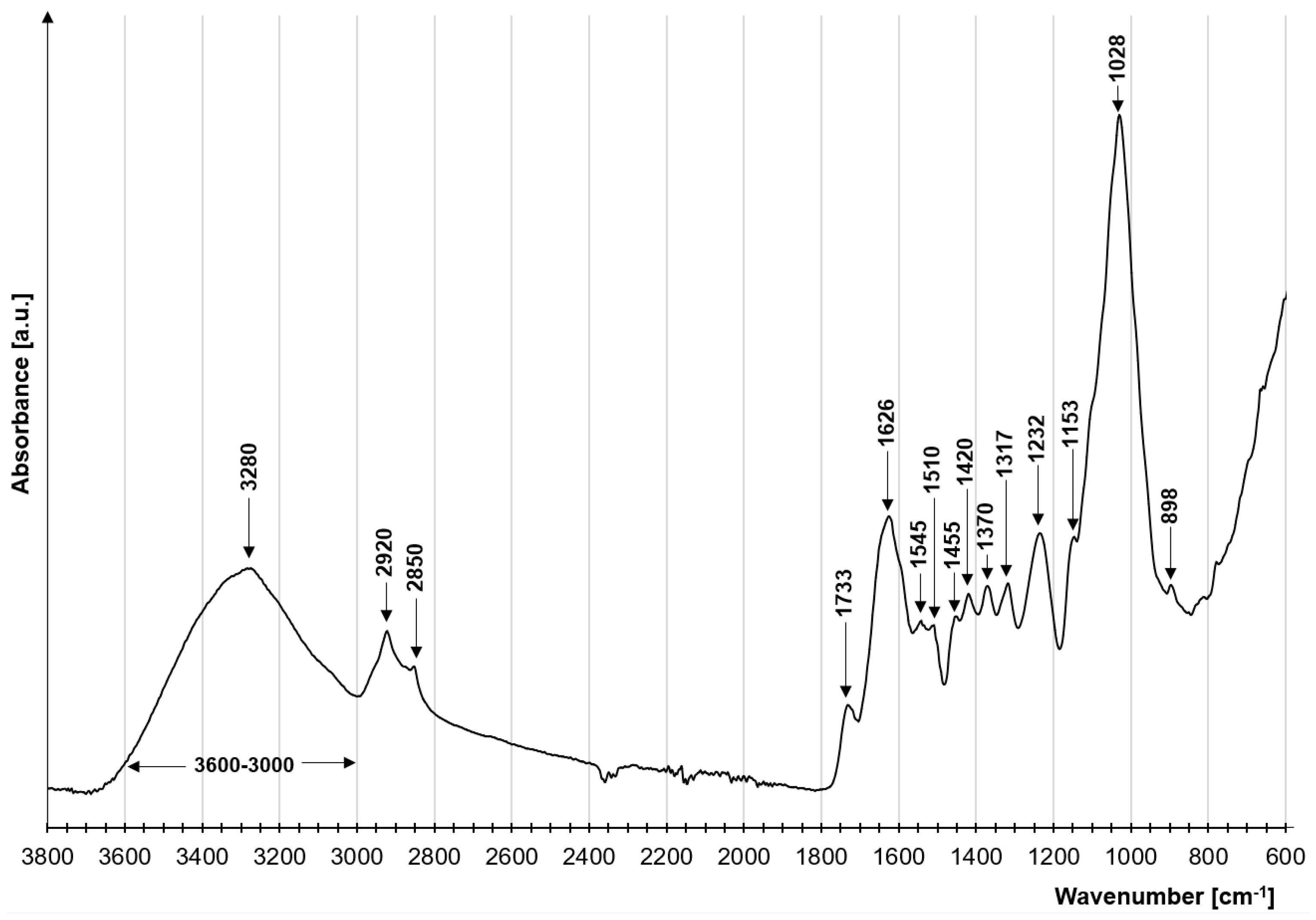
3.2.1. FTIR Spectroscopic Analysis of the YM
3.2.2. Measurement of Specific Surface Area (BET) of YM
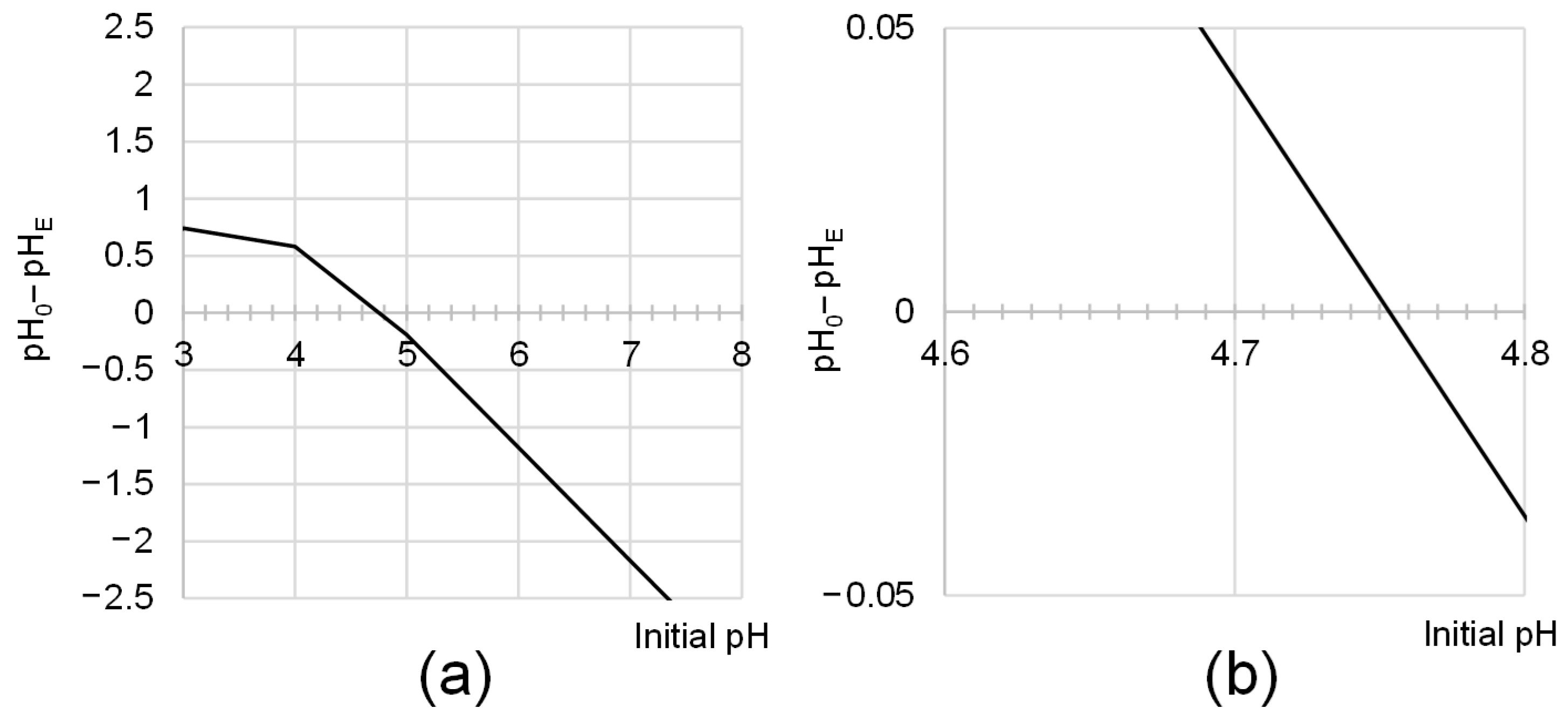
3.2.3. Measurement of pHPZC of YM
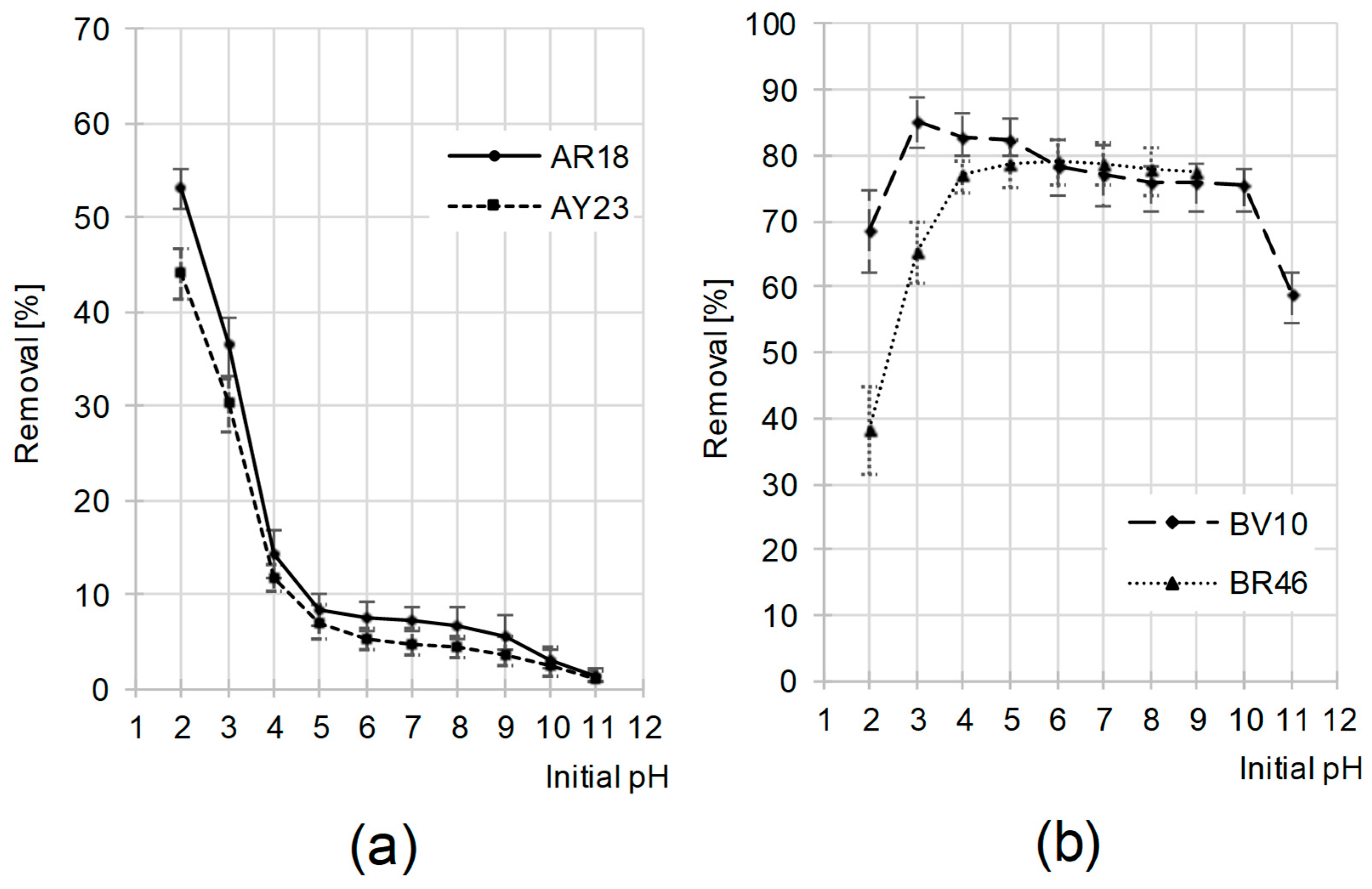
3.3. Studies on the Effect of pH on the Efficiency of Dye Sorption on YM
3.4. Studies on the Kinetics of Dye Sorption on YM
3.5. Determination of the Maximum Sorption Capacity
- Throughout all stages of the investigation, the sorption properties of YM were assessed against AR18, AY23, BV10, and BR46.
- The range of dye concentrations in the studies was from typical levels for textile wastewater (50 mg/L) to very high levels (500–600 mg/L) [42].
- Deionized water was used exclusively for the preparation of all dye stock and working solutions.
- In every experiment, the YM dose was 10.00 g dry matter (s.m.)/L. The YM dose of 10 g/L ensured a significant removal of each tested dye (at least several dozen percent) and allowed for an observation of differences in dye sorption efficiency at each stage of the research.
- YM portions were prepared using a precision balance calibrated to an accuracy of 0.001 g.
- Mixing parameters ensured a homogeneous distribution of YM throughout the entire volume of the solutions.
- The concentration of the dyes in the collected liquid samples was determined spectrophotometrically using a UV-VIS spectrometer equipped with a quartz cuvette with a standard optical path length of 10 mm.
- Calibration curves, essential for the spectrophotometric quantification of dye concentrations, were established at the λmax specific to each dye. The standard concentration range used for generating these curves was 0.0–50.0 mg/L, except for BV10, which used the 0–10 mg/L range. If necessary, samples were diluted appropriately with deionized water prior to measurement.
- All experimental series were conducted in triplicate, and the reported data represent the arithmetic mean of these measurements.
- The laboratory environment was thermostated at 20 °C throughout the study, ensuring that the temperature of the reacting solutions remained constant at ambient conditions.
3.6. Computation Methods
- Q—mass of sorbed dye [mg/g];
- C0—initial concentration of dye [mg/L];
- CS—concentration of dye after sorption [mg/L];
- V—volume of the solution [L];
- m—mass of the sorbent [g].
- q—instantaneous value of the sorbed dye [mg/g];
- qe—the amount of dye sorbed at the equilibrium state [mg/g];
- t—time of sorption [min];
- k1—pseudo-first-order adsorption rate constant [1/min];
- k2—pseudo-second-order adsorption rate constant [g/(mg × min)];
- kid—intraparticle diffusion model adsorption rate constant [mg/(g × min0.5)].
- Q—mass of the sorbed dye at the equilibrium state [mg/g];
- Qmax—maximum sorption capacity in the Langmuir equation [mg/g];
- b1—maximum sorption capacity of sorbent (type I active sites) [mg/g];
- b2—maximum sorption capacity of sorbent (type II active sites) [mg/g];
- KC—constant in Langmuir equation [L/mg];
- K1,K2—constants in Langmuir 2 equation [L/mg];
- K—the equilibrium sorption constant in the Freundlich model;
- C—concentration of dye remaining in the solution [mg/L];
- n—constant in the Freundlich model.
4. Results and Discussion
4.1. Characterization of YM
4.1.1. FTIR Analysis
4.1.2. pHPZC of YM
4.1.3. BET Surface Area and Porosity
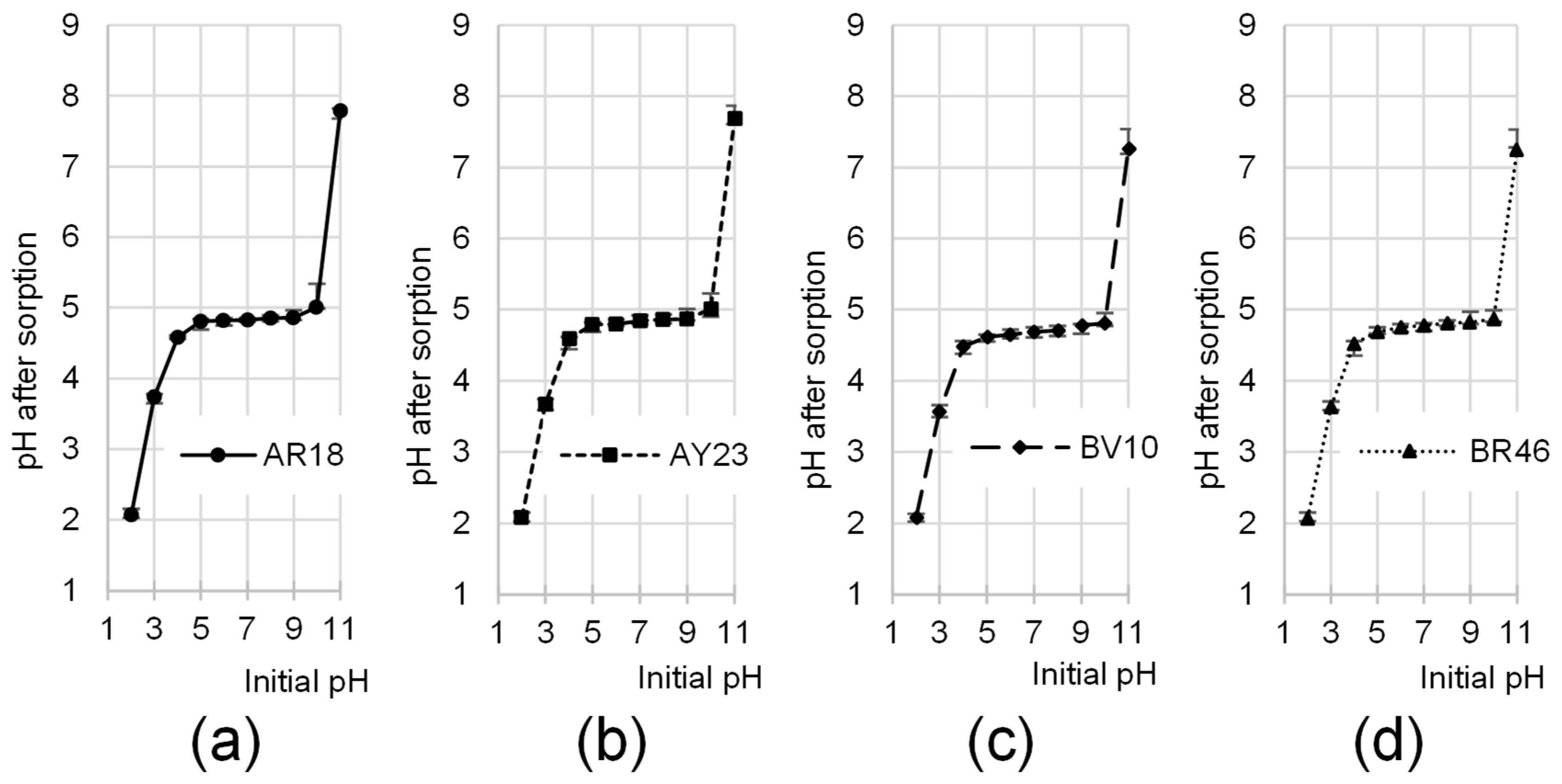
4.2. Effect of pH on the Effectiveness of Dye Sorption on YM
- -SO3H + H2O → -SO3- + H3O+ (deprotonation in the wide pH range 2–11)
- -NH2 + H3O+ → -NH3+ + H2O (protonation effective even at pH < 9)
- -OH + H3O+ → -OH2+ + H2O (low efficiency even at pH < 3)
- -OH + H3O+ → –OH···H-OH2+ (“···”—indicates hydrogen bond formation)
- -COO− + H3O+ → -COOH + H2O (protonation by proton attachment pH < 3)
- -OH + OH− → -O− + H2O (deprotonation at pH > 10)
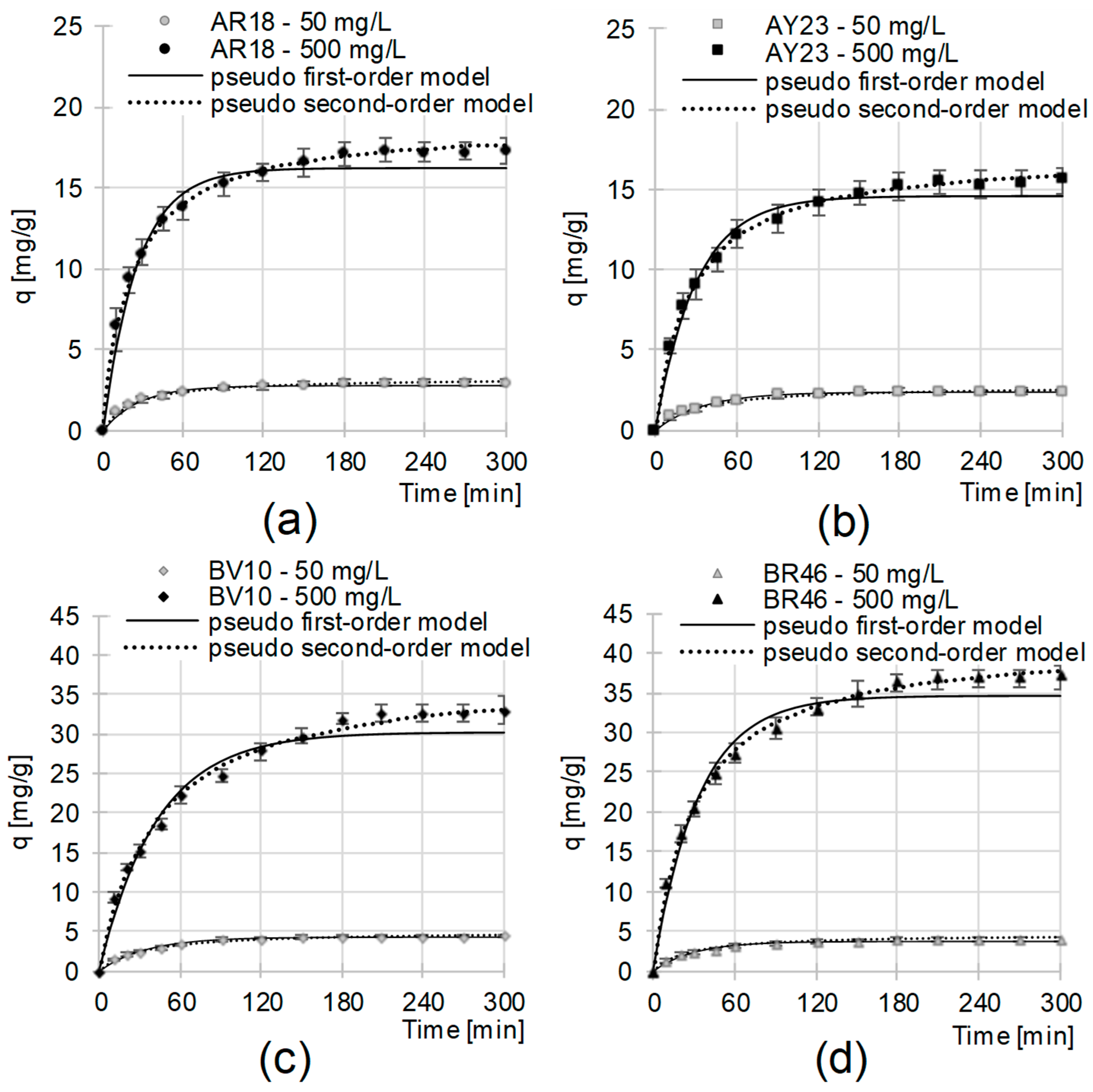
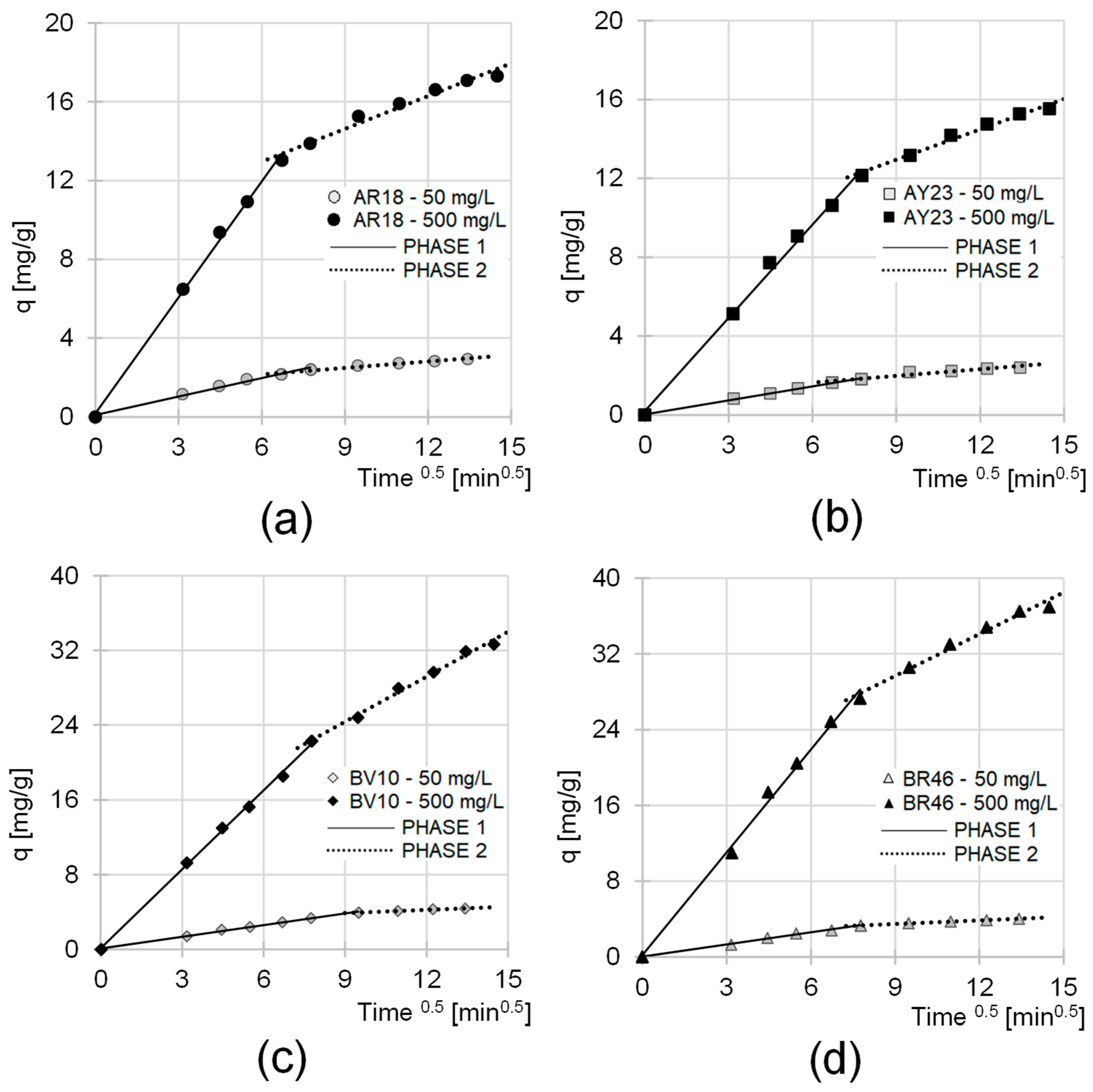
4.3. Kinetics of Dye Sorption on YM
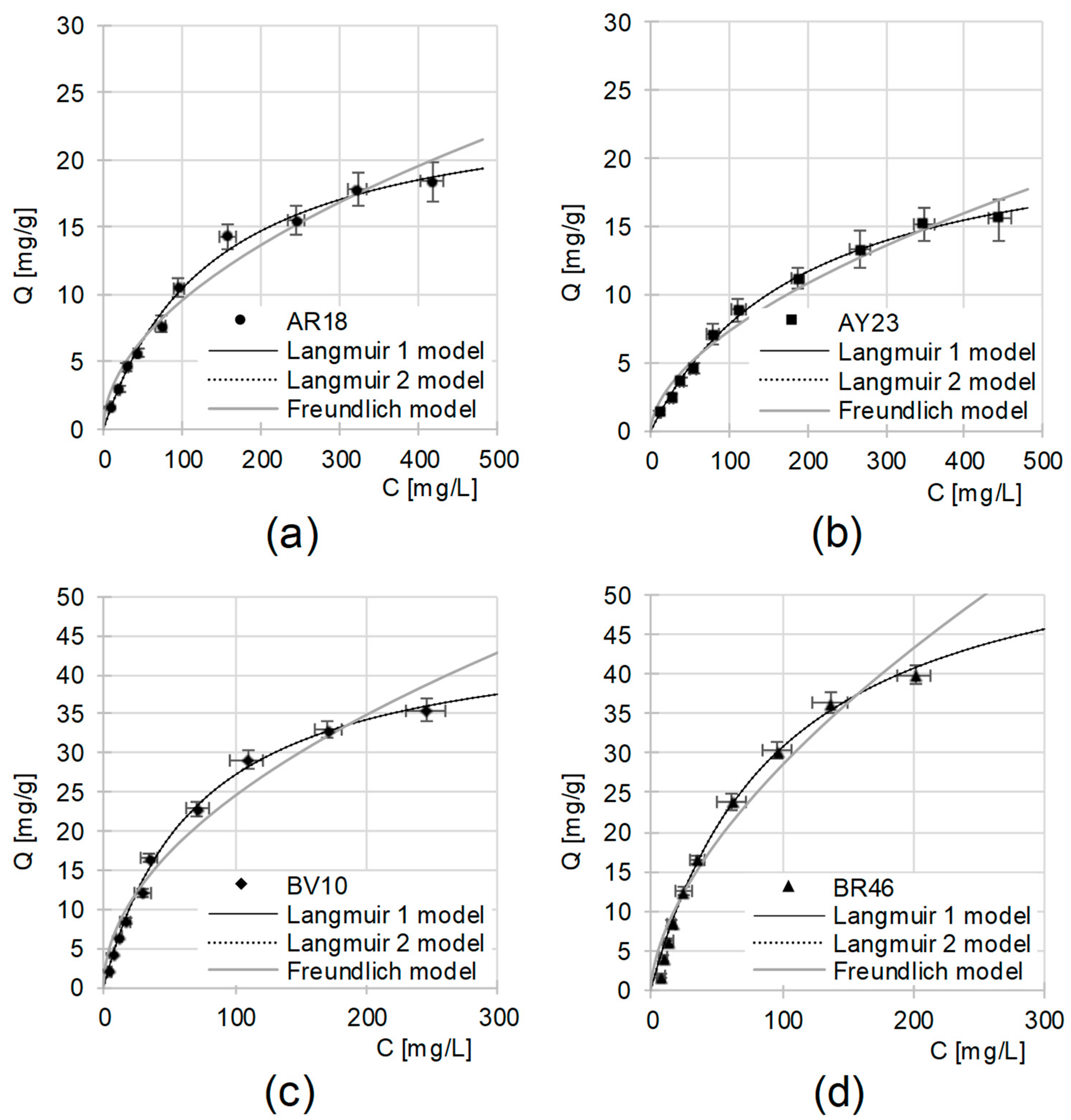
4.4. Maximal Sorption Capacity of YM
5. Conclusions
Author Contributions
Funding
Institutional Review Board Statement
Informed Consent Statement
Data Availability Statement
Conflicts of Interest
References
- Al-Tohamy, R.; Ali, S.S.; Li, F.; Okasha, K.M.; Mahmoud, Y.A.G.; Elsamahy, T.; Jiao, H.; Fu, Y.; Sun, J. A Critical Review on the Treatment of Dye-Containing Wastewater: Ecotoxicological and Health Concerns of Textile Dyes and Possible Remediation Approaches for Environmental Safety. Ecotoxicol. Environ. Saf. 2022, 231, 113160. [Google Scholar] [CrossRef]
- Dutta, S.; Adhikary, S.; Bhattacharya, S.; Roy, D.; Chatterjee, S.; Chakraborty, A.; Banerjee, D.; Ganguly, A.; Nanda, S.; Rajak, P. Contamination of Textile Dyes in Aquatic Environment: Adverse Impacts on Aquatic Ecosystem and Human Health, and Its Management Using Bioremediation. J. Environ. Manag. 2024, 353, 120103. [Google Scholar] [CrossRef] [PubMed]
- Khoshmanesh, M.; Sanati, A.M.; Shahcheragh, S.; Farjadfard, S.; Bonyadi, Z.; Ramavandi, B. Recent Advances in Dyes Uptake by Microplastics in Aquatic Environments: Influencing Factors and Ecotoxicological Behaviors. Arab. J. Chem. 2024, 17, 105737. [Google Scholar] [CrossRef]
- Soni, V.; Bhatt, U.; Tailor, P.; Strasser, R.J. Impact of Synthetic and Herbal Dyes on Photosynthesis and ROS Scavenging Enzyme Activities in Spirodela polyrhiza. Sci. Rep. 2025, 15, 24775. [Google Scholar] [CrossRef] [PubMed]
- Sardar, M.; Manna, M.; Maharana, M.; Sen, S. Remediation of Dyes from Industrial Wastewater Using Low-Cost Adsorbents. In Green Adsorbents to Remove Metals, Dyes and Boron from Polluted Water; Springer: Cham, Switzerland, 2021; pp. 377–403. [Google Scholar] [CrossRef]
- Jargalsaikhan, M.; Lee, J.; Jang, A.; Jeong, S. Efficient Removal of Azo Dye from Wastewater Using the Non-Toxic Potassium Ferrate Oxidation–Coagulation Process. Appl. Sci. 2021, 11, 6825. [Google Scholar] [CrossRef]
- Abhisek, K.; Vhatkar, S.S.; Mathew, H.T.; Singh, P.; Oraon, R. A Critical Review on the Challenges and Techno-Economic Assessment of Dyes Removal Technologies from Waste Water. Discov. Chem. 2025, 2, 41. [Google Scholar] [CrossRef]
- Innocenzi, V.; Colangeli, A.; Prisciandaro, M. Advanced Oxidation Processes for the Removal of Dyes from Synthetic Industrial Wastewaters. Desalination Water Treat. 2022, 259, 315–320. [Google Scholar] [CrossRef]
- Aleixo, N.A.; Schmeing, A.; Perdão, A.B.; Silva, J.D.; Subtil, E.L.; Bueno, R.; Coelho, L.H.G. Advanced Oxidation Processes in the Mitigation of Antibiotic-Resistant Genes in Effluents. In Degradation of Antibiotics and Antibiotic-Resistant Bacteria from Various Sources; Academic Press: Cambridge, MA, USA, 2023; pp. 341–367. [Google Scholar] [CrossRef]
- Bai, X.; Chao, L.; Shilong, H.; Zhou, J.; Hu, J. Combining Advanced Oxidation Processes with Biological Processes in Organic Wastewater Treatment: Recent Developments, Trends, and Advances. Desalination Water Treat. 2025, 323, 101263. [Google Scholar] [CrossRef]
- Nasirabadi, P.S.; Saljoughi, E.; Mousavi, S.M. Membrane Processes Used for Removal of Pharmaceuticals, Hormones, Endocrine Disruptors and Their Metabolites from Wastewaters: A Review. Desalination Water Treat. 2016, 57, 24146–24175. [Google Scholar] [CrossRef]
- Saini, K.; Sahoo, A.; Kumar, J.; Kumari, A.; Pant, K.K.; Bhatnagar, A.; Bhaskar, T. Effective Utilization of Discarded Reverse Osmosis Post-Carbon for Adsorption of Dyes from Wastewater. Environ. Res. 2023, 231, 116165. [Google Scholar] [CrossRef]
- Tarrass, F.; Benjelloun, O.; Benjelloun, M. Towards Zero Liquid Discharge in Hemodialysis. Possible Issues Hacia el Vertido Cero de Líquidos en Hemodiálisis. Posibles Problemas. Nefrologia 2021, 41, 620–624. [Google Scholar] [CrossRef]
- Kuyucu, A.E.; Selçuk, A.; Önal, Y.; Alacabey, İ.; Erol, K. Effective Removal of Dyes from Aqueous Systems by Waste-Derived Carbon Adsorbent: Physicochemical Characterization and Adsorption Studies. Sci. Rep. 2025, 15, 28835. [Google Scholar] [CrossRef]
- Kuptajit, P.; Sano, N.; Nakagawa, K.; Suzuki, T. A Study on Pore Formation of High Surface Area Activated Carbon Prepared by Microwave-Induced Plasma with KOH (MiWP-KOH) Activation: Effect of Temperature-Elevation Rate. Chem. Eng. Process.-Process Intensif. 2021, 167, 108511. [Google Scholar] [CrossRef]
- Ren, L.; Zhao, G.; Pan, L.; Chen, B.; Chen, Y.; Zhang, Q.; Xiao, X.; Xu, W. Efficient Removal of Dye from Wastewater Without Selectivity Using Activated Carbon- Juncus Effusus Porous Fibril Composites. ACS Appl. Mater. Interfaces 2021, 13, 19176–19186. [Google Scholar] [CrossRef]
- Neolaka, Y.A.B.; Riwu, A.A.P.; Aigbe, U.O.; Ukhurebor, K.E.; Onyancha, R.B.; Darmokoesoemo, H.; Kusuma, H.S. Potential of Activated Carbon from Various Sources as a Low-Cost Adsorbent to Remove Heavy Metals and Synthetic Dyes. Results Chem. 2023, 5, 100711. [Google Scholar] [CrossRef]
- Larasati, A.; Fowler, G.D.; Graham, N.J.D. Insights into Chemical Regeneration of Activated Carbon for Water Treatment. J. Environ. Chem. Eng. 2021, 9, 105555. [Google Scholar] [CrossRef]
- Filipkowska, U.; Jόźwiak, T.; Szymczyk, P.; Kuczajowska-Zadrożna, M. The Use of Active Carbon Immobilised on Chitosan Beads for RB5 and BV10 Dye Removal from Aqueous Solutions. Prog. Chem. Appl. Chitin Deriv. 2017, 22, 14–26. [Google Scholar] [CrossRef]
- Jóźwiak, T.; Filipkowska, U.; Bakuła, T.; Bralewska-Piotrowicz, B.; Karczmarczyk, K.; Gierszewska, M.; Olewnik-Kruszkowska, E.; Szyryńska, N.; Lewczuk, B. The Use of Chitin from the Molts of Mealworm (Tenebrio molitor) for the Removal of Anionic and Cationic Dyes from Aqueous Solutions. Materials 2023, 16, 545. [Google Scholar] [CrossRef]
- Carrasqueira, J.; Bernardino, S.; Bernardino, R.; Afonso, C. Marine-Derived Polysaccharides and Their Potential Health Benefits in Nutraceutical Applications. Mar. Drugs 2025, 23, 60. [Google Scholar] [CrossRef]
- Jóźwiak, T.; Filipkowska, U.; Walczak, P. The Use of Aminated Wheat Straw for Reactive Black 5 Dye Removal from Aqueous Solutions as a Potential Method of Biomass Valorization. Energies 2022, 15, 6257. [Google Scholar] [CrossRef]
- Yasin, F.; Javed, T.; Jilani, M.I.; Zafar, S.; Din, M.I. Adsorption of Toxic Crystal Violet Dye Using Rice Husk: Equilibrium, Kinetic, and Thermodynamic Study. Desalination Water Treat. 2021, 227, 338–349. [Google Scholar] [CrossRef]
- Priyantha, N.; Lim, L.B.L.; Tennakoon, D.T.B.; Liaw, E.T.Z.; Ing, C.H.; Liyandeniya, A.B. Biosorption of Cationic Dyes on Breadfruit (Artocarpus altilis) Peel and Core. Appl. Water Sci. 2018, 8, 37. [Google Scholar] [CrossRef]
- Zhai, Q.Z. Adsorption of Rhodamine B Dye on Potassium Permanganate Modified Peanut Shell: Adsorption Kinetics, Thermodynamics and Isotherm Studies. Desalination Water Treat. 2023, 303, 212–223. [Google Scholar] [CrossRef]
- Sharma, N.; Tiwari, D.P.; Singh, S.K. Sorption Potential of Treated Plant Residues Viz. Potato Peel and Neem Bark for Removal of Synthetic Dyes from Aqueous Solution. Rasayan J. Chem. 2020, 13, 1063–1073. [Google Scholar] [CrossRef]
- Yhon, J.; Mendoza, J.; Osorio, E.; Domínguez, M.P. Continuous Removal of Dyes from Wastewater Using Banana-Peel Bioadsorbent: A Low-Cost Alternative for Wastewater Treatment. Sustainability 2023, 15, 9870. [Google Scholar] [CrossRef]
- Santhi, T.; Manonmani, S.; Vasantha, V.S.; Chang, Y.T. A New Alternative Adsorbent for the Removal of Cationic Dyes from Aqueous Solution. Arab. J. Chem. 2016, 9, S466–S474. [Google Scholar] [CrossRef]
- Jóźwiak, T.; Filipkowska, U. The Use of Rapeseed Husks to Remove Acidic and Basic Dyes from Aquatic Solutions. Appl. Sci. 2024, 14, 1174. [Google Scholar] [CrossRef]
- Jóźwiak, T.; Filipkowska, U.; Bednarowicz, A.; Zielińska, D.; Wiśniewska-Wrona, M. The Use of Various Types of Waste Paper for the Removal of Anionic and Cationic Dyes from Aqueous Solutions. Molecules 2024, 29, 2809. [Google Scholar] [CrossRef]
- Yerba Mate Producers from Argentina, Paraguay, and Brazil Join Forces—MercoPress. Available online: https://en.mercopress.com/2024/03/20/yerba-mate-producers-from-argentina-paraguay-and-brazil-join-forces (accessed on 27 October 2025).
- Yerba Mate Tea Market Size, Trends|Report [2033]. Available online: https://www.marketreportsworld.com/market-reports/yerba-mate-tea-market-14716381 (accessed on 27 October 2025).
- Beltrán, F.R.; Arrieta, M.P.; Gaspar, G.; de la Orden, M.U.; Urreaga, J.M. Effect of Iignocellulosic Nanoparticles Extracted from Yerba Mate (Ilex paraguariensis) on the Structural, Thermal, Optical and Barrier Properties of Mechanically Recycled Poly(Lactic Acid). Polymers 2020, 12, 1690. [Google Scholar] [CrossRef] [PubMed]
- Gawron-Gzella, A.; Chanaj-Kaczmarek, J.; Cielecka-Piontek, J. Yerba Mate—A Long but Current History. Nutrients 2021, 13, 3706. [Google Scholar] [CrossRef] [PubMed]
- Sola, I.M.M.S.; Sola, M.B.M.S.; Nogueira, A.; Alberti, A. Circular Economy Opportunities in the Yerba Mate Industry: A Review. J. Sci. Food Agric. 2025, early view. [Google Scholar] [CrossRef]
- Berté, K.A.S.; Beux, M.R.; Spada, P.K.W.D.S.; Salvador, M.; Hoffmann-Ribani, R. Chemical Composition and Antioxidant Activity of Yerba-Mate (Ilex paraguariensis A.St.-Hil., Aquifoliaceae) Extract as Obtained by Spray Drying. J. Agric. Food Chem. 2011, 59, 5523–5527. [Google Scholar] [CrossRef]
- De Haro, J.M.; Domínguez, E.; Rodríguez, A.; Heredia, A.; Benítez, J.J.; Sanchez, L.M.; De Haro, J.; Domínguez, E.; Rodríguez, A.; Heredia, A.; et al. Revalorization of Yerba Mate Residues: Biopolymers-Based Films of Dual Wettability as Potential Mulching Materials. Polymers 2024, 16, 815. [Google Scholar] [CrossRef]
- Neis, E.R.; Covinich, M.M.; Scipioni, G.P.; Schmalko, M.E. Mass Transfer Parameters for the Aqueous Extraction of Yerba Mate (Ilex paraguariensis) Leaf Residue. Discov. Chem. Eng. 2025, 5, 13. [Google Scholar] [CrossRef]
- Jóźwiak, T.; Filipkowska, U.; Nowicka, A.; Baranowska, N. Use of Larch, Spruce and Pine Cones as Unconventional Sorbents for Removal of Reactive Black 5 and Basic Red 46 Dyes from Aqueous Solutions. Molecules 2025, 30, 3614. [Google Scholar] [CrossRef]
- Chwastowski, J.; Guzik, M.; Bednarz, S.; Staroń, P. Upcycling Waste Streams from a Biorefinery Process—A Case Study on Cadmium and Lead Biosorption by Two Types of Biopolymer Post-Extraction Biomass. Molecules 2023, 28, 6345. [Google Scholar] [CrossRef] [PubMed]
- Jóźwiak, T.; Filipkowska, U. Aminated Rapeseed Husks (Brassica napus) as an Effective Sorbent for Removing Anionic Dyes from Aqueous Solutions. Molecules 2024, 29, 843. [Google Scholar] [CrossRef] [PubMed]
- Yaseen, D.A.; Scholz, M. Textile Dye Wastewater Characteristics and Constituents of Synthetic Effluents: A Critical Review. Int. J. Environ. Sci. Technol. 2019, 16, 1193–1226. [Google Scholar] [CrossRef]
- Raspolli Galletti, A.M.; D’Alessio, A.; Licursi, D.; Antonetti, C.; Valentini, G.; Galia, A.; Di Nasso, N.N.O. Midinfrared FT-IR as a Tool for Monitoring Herbaceous Biomass Composition and Its Conversion to Furfural. J. Spectrosc. 2015, 2015, 719042. [Google Scholar] [CrossRef]
- Zhuang, J.; Li, M.; Pu, Y.; Ragauskas, A.J.; Yoo, C.G. Observation of Potential Contaminants in Processed Biomass Using Fourier Transform Infrared Spectroscopy. Appl. Sci. 2020, 10, 4345. [Google Scholar] [CrossRef]
- Parihar, A.; Vongsvivut, J.; Bhattacharya, S. Synchrotron-Based Infra-Red Spectroscopic Insights on Thermo-Catalytic Conversion of Cellulosic Feedstock to Levoglucosenone and Furans. ACS Omega 2019, 4, 8747–8757. [Google Scholar] [CrossRef]
- Vârban, R.; Crișan, I.; Vârban, D.; Ona, A.; Olar, L.; Stoie, A.; Ștefan, R. Comparative FT-IR Prospecting for Cellulose in Stems of Some Fiber Plants: Flax, Velvet Leaf, Hemp and Jute. Appl. Sci. 2021, 11, 8570. [Google Scholar] [CrossRef]
- Salem, K.S.; Kasera, N.K.; Rahman, M.A.; Jameel, H.; Habibi, Y.; Eichhorn, S.J.; French, A.D.; Pal, L.; Lucia, L.A. Comparison and Assessment of Methods for Cellulose Crystallinity Determination. Chem. Soc. Rev. 2023, 52, 6417–6446. [Google Scholar] [CrossRef]
- Kubovský, I.; Kačíková, D.; Kačík, F. Structural Changes of Oak Wood Main Components Caused by Thermal Modification. Polymers 2020, 12, 485. [Google Scholar] [CrossRef] [PubMed]
- Timar, M.C.; Varodi, A.; Hacibektasoglu, M.; Campean, M. Color and FTIR Analysis of Chemical Changes in Beech Wood (Fagus sylvatica L.) After Light Steaming and Heat Treatment in Two Different Environments. Bioresources 2016, 11, 8325–8343. [Google Scholar] [CrossRef]
- Bryant, N.; Engle, N.; Tschaplinski, T.; Pu, Y.; Ragauskas, A.J. Variable Lignin Structure Revealed in Populus Leaves. RSC Adv. 2023, 13, 20187–20197. [Google Scholar] [CrossRef] [PubMed]
- Di Foggia, M.; Taddei, P.; Torreggiani, A.; Dettin, M.; Tinti, A. Self-Assembling Peptides for Biomedical Applications: IR and Raman Spectroscopies for the Study of Secondary Structures. Proteom. Res. J. 2022, 2, 231–272. [Google Scholar]
- Al-Kelani, M.; Buthelezi, N. Advancements in Medical Research: Exploring Fourier Transform Infrared (FTIR) Spectroscopy for Tissue, Cell, and Hair Sample Analysis. Ski. Res. Technol. 2024, 30, e13733. [Google Scholar] [CrossRef]
- Albadarin, A.B.; Solomon, S.; Daher, M.A.; Walker, G. Efficient Removal of Anionic and Cationic Dyes from Aqueous Systems Using Spent Yerba Mate “Ilex Paraguariensis”. J. Taiwan Inst. Chem. Eng. 2018, 82, 144–155. [Google Scholar] [CrossRef]
- Mazzeo, L.; Bavasso, I.; Bracciale, M.P.; Cocchi, M.; Di Palma, L.; Piemonte, V. Yerba Mate (Ilex paraguarensis) as Bio-Adsorbent for the Removal of Methylene Blue, Remazol Brilliant Blue and Chromium Hexavalent: Thermodynamic and Kinetic Studies. Water 2020, 12, 2016. [Google Scholar] [CrossRef]
- Malitha, S.B.; Mahmudunnabi, D.M.; Mazumder, S.; Hossain, K.S.; Nurnabi, M.; Alam, M.Z. Rapid Adsorptive Removal of Pb2+ Ions from Aqueous Systems Using a Magnetic Graphene Oxide Calcium Alginate Composite: Optimisation, Isotherms, and Kinetics. Environ. Sci. Adv. 2025, 4, 595–605. [Google Scholar] [CrossRef]
- Zeeshan, M.; Javed, T.; Kumari, C.; Thumma, A.; Wasim, M.; Taj, M.B.; Sharma, I.; Haider, M.N.; Batool, M. Investigating the Interactions between Dyes and Porous/Composite Materials: A Comprehensive Study. Sustain. Chem. Environ. 2025, 9, 100217. [Google Scholar] [CrossRef]
- Li, J.; Qiu, S.P.; Zhao, H.F.; Guo, D.L.; Yan, Z.Y.; Wu, J.H.; Li, J. Preparation of Magnetic Lignin-Based Adsorbents and Its Adsorption Properties for Dyes. Dig. J. Nanomater. Biostructures 2023, 18, 1065–1077. [Google Scholar] [CrossRef]
- Jóźwiak, T.; Filipkowska, U.; Brym, S.; Kopeć, L. Use of Aminated Hulls of Sunflower Seeds for the Removal of Anionic Dyes from Aqueous Solutions. Int. J. Environ. Sci. Technol. 2020, 17, 1211–1224. [Google Scholar] [CrossRef]
- Banerjee, S.; Chattopadhyaya, M.C. Adsorption Characteristics for the Removal of a Toxic Dye, Tartrazine from Aqueous Solutions by a Low Cost Agricultural by-Product. Arab. J. Chem. 2017, 10, S1629–S1638. [Google Scholar] [CrossRef]
- Jóźwiak, T.; Filipkowska, U.; Struk-Sokołowska, J.; Bryszewski, K.; Trzciński, K.; Kuźma, J.; Ślimkowska, M. The Use of Spent Coffee Grounds and Spent Green Tea Leaves for the Removal of Cationic Dyes from Aqueous Solutions. Sci. Rep. 2021, 11, 958. [Google Scholar] [CrossRef] [PubMed]
- Kuczajowska-Zadrożna, M.; Filipkowska, U.; Jóźwiak, T.; Szymczyk, P. The Use of Polysaccharides for Acid Red 18 Anionic Dye Removal from Aqueous Solutions. Prog. Chem. Appl. Chitin Deriv. 2017, 22, 106–117. [Google Scholar] [CrossRef]
- Jóźwiak, T.; Filipkowska, U.; Brym, S.; Zyśk, M. The Use of Aminated Cotton Fibers as an Unconventional Sorbent to Remove Anionic Dyes from Aqueous Solutions. Cellulose 2020, 27, 3957–3969. [Google Scholar] [CrossRef]
- Hasani, N.; Selimi, T.; Mele, A.; Thaçi, V.; Halili, J.; Berisha, A.; Sadiku, M. Theoretical, Equilibrium, Kinetics and Thermodynamic Investigations of Methylene Blue Adsorption onto Lignite Coal. Molecules 2022, 27, 1856. [Google Scholar] [CrossRef]
- Sonawane, M.R.; Chhowala, T.N.; Suryawanshi, K.E.; Fegade, U.; Isai, K.A. Adsorption of MO Dyes Using Various Adsorbents: Past, Present and Future Perspective. Next Sustain. 2025, 6, 100153. [Google Scholar] [CrossRef]
- Józwiak, T.; Filipkowska, U.; Bugajska, P.; Kalkowski, T. The Use of Coconut Shells for the Removal of Dyes from Aqueous Solutions. J. Ecol. Eng. 2018, 19, 129–135. [Google Scholar] [CrossRef]
- Zazouli, M.A.; Moradi, E.; Zazouli, M.A.; Moradi, E. Adsorption Acid Red18 Dye Using Sargassum glaucescens Biomass from Aqueous Solutions. Iran. J. Health Sci. 2015, 3, 7–13. [Google Scholar] [CrossRef]
- Heibati, B.; Rodriguez-Couto, S.; Al-Ghouti, M.A.; Asif, M.; Tyagi, I.; Agarwal, S.; Gupta, V.K. Kinetics and Thermodynamics of Enhanced Adsorption of the Dye AR 18 Using Activated Carbons Prepared from Walnut and Poplar Woods. J. Mol. Liq. 2015, 208, 99–105. [Google Scholar] [CrossRef]
- Combination of Coagulation-Flocculation and Adsorption on Granular Activated Carbon for Color Removal from AR18 and Real Textile Wastewater—JOURNAL of the Tunisian Chemical Society. Available online: http://www.sctunisie.org/journal-sct/index.php?article645/combination-of-coagulation-flocculation-and-adsorption-on-granular-activated-carbon-for-color-removal-from-ar18-and-real-textile-wastewater (accessed on 29 April 2024).
- Okoniewska, E. Removal of the Dye of Acid Bright Red 4R from Water Solutions on Activated Carbons. Eng. Prot. Environ. 2016, 19, 331–340. [Google Scholar] [CrossRef]
- Mittal, A.; Mittal, J.; Kurup, L. Adsorption Isotherms, Kinetics and Column Operations for the Removal of Hazardous Dye, Tartrazine from Aqueous Solutions Using Waste Materials—Bottom Ash and De-Oiled Soya, as Adsorbents. J. Hazard. Mater. 2006, 136, 567–578. [Google Scholar] [CrossRef] [PubMed]
- Dotto, G.L.; Vieira, M.L.G.; Pinto, L.A.A. Kinetics and Mechanism of Tartrazine Adsorption onto Chitin and Chitosan. Ind. Eng. Chem. Res. 2012, 51, 6862–6868. [Google Scholar] [CrossRef]
- de Souza Macedo, J.; da Costa Júnior, N.B.; Almeida, L.E.; da Silva Vieira, E.F.; Cestari, A.R.; de Fátima Gimenez, I.; Villarreal Carreño, N.L.; Barreto, L.S. Kinetic and Calorimetric Study of the Adsorption of Dyes on Mesoporous Activated Carbon Prepared from Coconut Coir Dust. J. Colloid Interface Sci. 2006, 298, 515–522. [Google Scholar] [CrossRef]
- Gautam, R.K.; Gautam, P.K.; Banerjee, S.; Rawat, V.; Soni, S.; Sharma, S.K.; Chattopadhyaya, M.C. Removal of Tartrazine by Activated Carbon Biosorbents of Lantana camara: Kinetics, Equilibrium Modeling and Spectroscopic Analysis. J. Environ. Chem. Eng. 2015, 3, 79–88. [Google Scholar] [CrossRef]
- Shen, K.; Gondal, M.A. Removal of Hazardous Rhodamine Dye from Water by Adsorption onto Exhausted Coffee Ground. J. Saudi Chem. Soc. 2017, 21, S120–S127. [Google Scholar] [CrossRef]
- Namasivayam, C.; Dinesh Kumar, M.; Selvi, K.; Ashruffunissa Begum, R.; Vanathi, T.; Yamuna, R.T. ‘Waste’ Coir Pith—A Potential Biomass for the Treatment of Dyeing Wastewaters. Biomass Bioenergy 2001, 21, 477–483. [Google Scholar] [CrossRef]
- KHAN, T.A.; SHARMA, S.; ALI, I. Adsorption of Rhodamine B Dye from Aqueous Solution onto Acid Activated Mango (Magnifera indica) Leaf Powder: Equilibrium, Kinetic and Thermodynamic Studies. J. Toxicol. Environ. Health Sci. 2011, 3, 286–297. [Google Scholar]
- Ali, H.; Muhammad, S.K. Biosorption of Crystal Violet from Water on Leaf Biomass of Calotropis procera. J. Environ. Sci. Technol. 2008, 1, 143–150. [Google Scholar] [CrossRef]
- Parab, H.; Sudersanan, M.; Shenoy, N.; Pathare, T.; Vaze, B. Use of Agro-Industrial Wastes for Removal of Basic Dyes from Aqueous Solutions. Clean 2009, 37, 963–969. [Google Scholar] [CrossRef]
- Sureshkumar, M.V.; Namasivayam, C. Adsorption Behavior of Direct Red 12B and Rhodamine B from Water onto Surfactant-Modified Coconut Coir Pith. Colloids Surf. A Physicochem. Eng. Asp. 2008, 317, 277–283. [Google Scholar] [CrossRef]
- Al-Zawahreh, K.; Barral, M.T.; Al-Degs, Y.; Paradelo, R. Comparison of the Sorption Capacity of Basic, Acid, Direct and Reactive Dyes by Compost in Batch Conditions. J. Environ. Manag. 2021, 294, 113005. [Google Scholar] [CrossRef] [PubMed]
- Annadurai, G.; Juang, R.S.; Lee, D.J. Use of Cellulose-Based Wastes for Adsorption of Dyes from Aqueous Solutions. J. Hazard. Mater. 2002, 92, 263–274. [Google Scholar] [CrossRef]
- Porkodi, K.; Vasanth Kumar, K. Equilibrium, Kinetics and Mechanism Modeling and Simulation of Basic and Acid Dyes Sorption onto Jute Fiber Carbon: Eosin Yellow, Malachite Green and Crystal Violet Single Component Systems. J. Hazard. Mater. 2007, 143, 311–327. [Google Scholar] [CrossRef]
- Mohammadi, M.; Hassani, A.J.; Mohamed, A.R.; Najafpour, G.D. Removal of Rhodamine B from Aqueous Solution Using Palm Shell-Based Activated Carbon: Adsorption and Kinetic Studies. J. Chem. Eng. Data 2010, 55, 5777–5785. [Google Scholar] [CrossRef]
- Bazan-Wozniak, A.; Jędrzejczak, A.; Wolski, R.; Kaczmarek, S.; Nosal-Wiercińska, A.; Cielecka-Piontek, J.; Yagmur-Kabas, S.; Pietrzak, R. A Study on the Adsorption of Rhodamine B onto Adsorbents Prepared from Low-Carbon Fossils: Kinetic, Isotherm, and Thermodynamic Analyses. Molecules 2024, 29, 1412. [Google Scholar] [CrossRef]
- Laasri, L.; Elamrani, M.K.; Cherkaoui, O. Removal of Two Cationic Dyes from a Textile Effluent by Filtration-Adsorption on Wood Sawdust. Environ. Sci. Pollut. Res. Int. 2007, 14, 237–240. [Google Scholar] [CrossRef]
- El-Sayed, G.O.; Mohammed, T.Y.; Salama, A.A.-A. Batch Adsorption of Maxilon Red GRL from Aqueous Solution by Natural Sugarcane Stalks Powder. ISRN Environ. Chem. 2013, 2013, 514154. [Google Scholar] [CrossRef]
- Yeddou, N.; Bensmaili, A. Kinetic Models for the Sorption of Dye from Aqueous Solution by Clay-Wood Sawdust Mixture. Desalination 2005, 185, 499–508. [Google Scholar] [CrossRef]
- Yang, X.; Zhu, W.; Song, Y.; Zhuang, H.; Tang, H. Removal of Cationic Dye BR46 by Biochar Prepared from Chrysanthemum Morifolium Ramat Straw: A Study on Adsorption Equilibrium, Kinetics and Isotherm. J. Mol. Liq. 2021, 340, 116617. [Google Scholar] [CrossRef]
- Azmi, N.A.I.; Zainudin, N.F.; Ali, U.F.M. Adsorption of Basic Red 46 Using Sea Mango (Cerbera odollam) Based Activated Carbon. AIP Conf. Proc. 2015, 1660, 070068. [Google Scholar] [CrossRef]
- Martin, M.J.; Artola, A.; Balaguer, M.D.; Rigola, M. Activated Carbons Developed from Surplus Sewage Sludge for the Removal of Dyes from Dilute Aqueous Solutions. Chem. Eng. J. 2003, 94, 231–239. [Google Scholar] [CrossRef]
- Nowicka, A.; Jóźwiak, T.; Zieliński, M. The Possibility of Using Waste from Dye Sorption for Methane Production. Energies 2024, 17, 4756. [Google Scholar] [CrossRef]



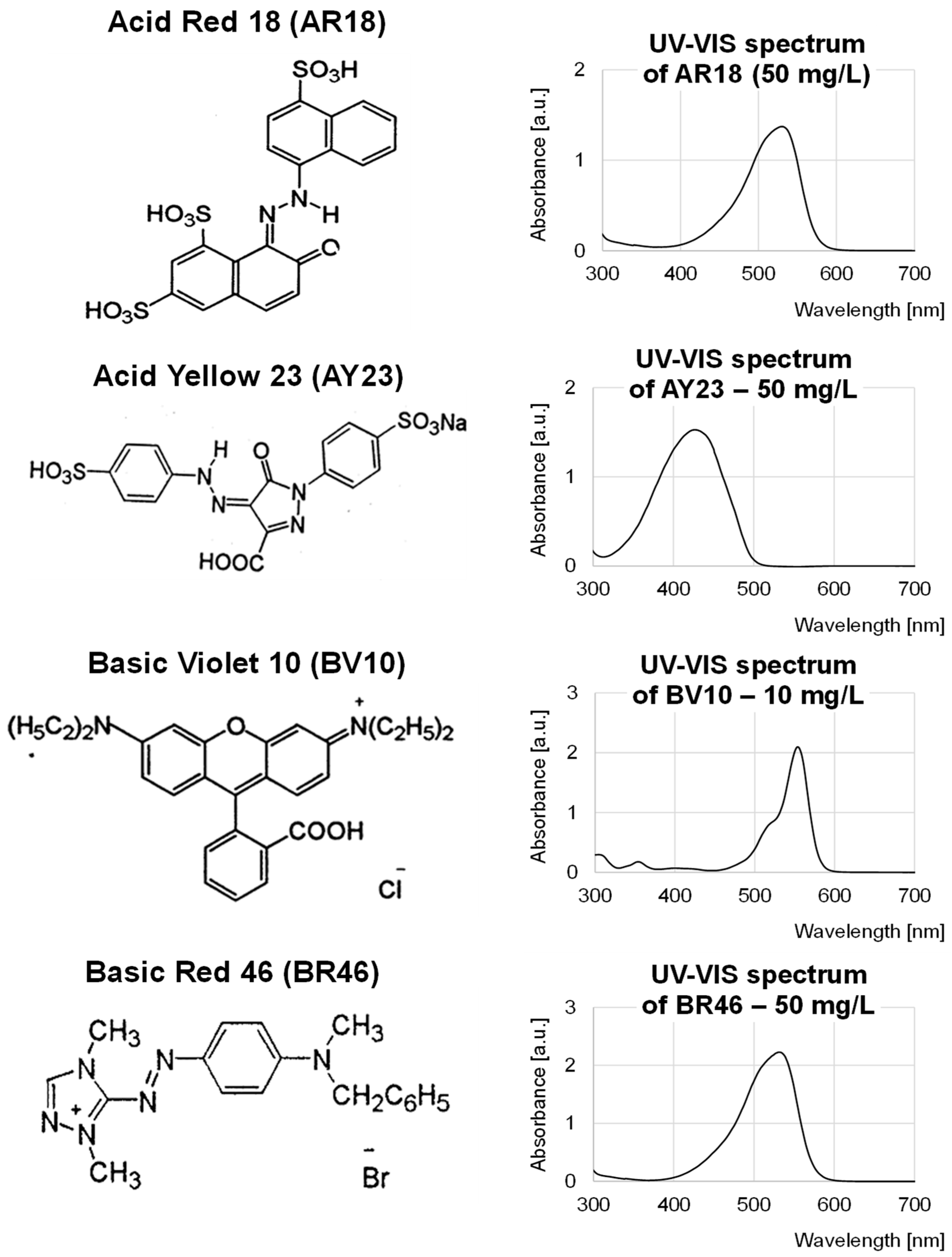
| Dye Name | Acid Red 18 (AR18) | Acid Yellow 23 (AY23) | Basic Violet 10 (BV10) | Basic Red 46 (BR46) |
|---|---|---|---|---|
| Other trade names | Acid Brilliant Red 3R, Acid Scarlet 3R | Tartrazine, Acid Tartrazine | Rhodamine B, Basic Red RB | Anilan Red GRL, Basic Red X-GRL |
| Chemical formula | C20H11N2Na3O10S3 | C16H9N4Na3O9S2 | C28H31ClN2O3 | C18H21BrN6 |
| Molecular weight | 604.5 g/mol | 534.4 g/mol | 479.0 g/mol | 321.4 g/mol |
| Dye class | single azo dye | single azo dye | xanthene dye | single azo dye |
| Dye type | anionic (acidic) | anionic (acidic) | cationic (basic) | cationic (basic) |
| λmax | 509 nm | 428 nm | 554 nm | 530 nm |
| Uses | dyeing wool, silk, polyamide fiber | dyeing wool, silk, polyamide fiber | dyeing textiles, paper, leather | dyeing leather, paper, wool, |
| Dye | Dye Conc. | Pseudo-First-Order Model | Pseudo-Second-Order Model | Exp. Data | Equilibrium Time | ||||
|---|---|---|---|---|---|---|---|---|---|
| k1 | qe, cal. | R2 | k2 | qe, cal. | R2 | qe, exp. | [min] | ||
| [mg/L] | [1/min] | [mg/g] | - | [g/mg × min] | [mg/g] | - | [mg/g] | ||
| AR18 | 50 | 0.0377 | 2.82 | 0.9816 | 0.0141 | 3.28 | 0.9974 | 2.99 | 180 |
| 500 | 0.0393 | 16.26 | 0.9760 | 0.0025 | 18.90 | 0.9908 | 17.32 | 210 | |
| AY23 | 50 | 0.0293 | 2.34 | 0.9839 | 0.0118 | 2.80 | 0.9942 | 2.35 | 180 |
| 500 | 0.0332 | 14.54 | 0.9850 | 0.0023 | 17.21 | 0.9981 | 15.37 | 210 | |
| BV10 | 50 | 0.0292 | 4.28 | 0.9851 | 0.0064 | 5.14 | 0.9954 | 4.38 | 180 |
| 500 | 0.0233 | 30.35 | 0.9760 | 0.0006 | 37.73 | 0.9905 | 32.78 | 210 | |
| BR46 | 50 | 0.0338 | 3.86 | 0.9896 | 0.0086 | 4.56 | 0.9983 | 4.01 | 180 |
| 500 | 0.0300 | 34.56 | 0.9849 | 0.0008 | 41.55 | 0.9980 | 36.44 | 210 | |
| Dye | Dye Conc. | Phase I | Phase II | ||||
|---|---|---|---|---|---|---|---|
| kd1 | Time Duration | R2 | kd2 | Time Duration | R2 | ||
| [mg/L] | [mg/(g × min0.5)] | [min] | - | [mg/(g × min0.5)] | [min] | - | |
| AR18 | 50 | 0.3126 | 60 | 0.9887 | 0.1086 | 120 | 0.9558 |
| 500 | 1.9610 | 45 | 0.9969 | 0.5536 | 165 | 0.9714 | |
| AY23 | 50 | 0.2356 | 90 | 0.9969 | 0.1135 | 90 | 0.9225 |
| 500 | 1.5758 | 60 | 0.9958 | 0.5130 | 150 | 0.9810 | |
| BV10 | 50 | 0.4171 | 90 | 0.9952 | 0.1114 | 90 | 0.9846 |
| 500 | 2.8178 | 60 | 0.9980 | 1.6062 | 150 | 0.9902 | |
| BR46 | 50 | 0.4280 | 60 | 0.9951 | 0.1261 | 120 | 0.9975 |
| 500 | 3.6180 | 60 | 0.9947 | 1.4686 | 150 | 0.9794 | |
| Dye | Langmuir 1 Model | Langmuir 2 Model | Freundlich Model | |||||||||
|---|---|---|---|---|---|---|---|---|---|---|---|---|
| Qmax | Kc | R2 | Qmax | b1 | K1 | b2 | K2 | R2 | k | n | R2 | |
| [mg/g] | [L/mg] | - | [mg/g] | [mg/g] | [L/mg] | [mg/g] | [L/mg] | - | - | - | - | |
| AR18 | 24.95 | 0.0072 | 0.9912 | 24.95 | 12.49 | 0.0072 | 12.46 | 0.0072 | 0.9912 | 0.892 | 0.515 | 0.9634 |
| AY23 | 22.86 | 0.0052 | 0.9958 | 22.86 | 11.34 | 0.0052 | 11.52 | 0.0052 | 0.9958 | 0.552 | 0.561 | 0.9737 |
| BV10 | 46.24 | 0.0143 | 0.9961 | 46.24 | 25.51 | 0.0143 | 20.73 | 0.0143 | 0.9961 | 2.376 | 0.507 | 0.9648 |
| BR46 | 60.54 | 0.0103 | 0.9941 | 60.54 | 32.86 | 0.0103 | 27.68 | 0.0103 | 0.9941 | 1.754 | 0.605 | 0.9650 |
| Dye | Sorbent | Qmax [mg/g] | pH of Sorption | Time of Sorption [min] | Source |
|---|---|---|---|---|---|
| AR18 | Coconut Shells | 0.7 | 2 | 45 | [65] |
| Sunflower seed hulls | 1.8 | 3 | 90 | [58] | |
| Corrugated cardboard (used) | 6.6 | 2 | 150 | [30] | |
| Newsprint paper (used) | 7.8 | 2 | 90 | [30] | |
| Sargassum glaucescens biomass | 15.0 | 6 | 60 | [66] | |
| Yerba Mate residues | 25.0 | 2 | 210 | This work | |
| Carboxymethyl cellulose | 29.7 | 6 | 120 | [61] | |
| Activated carbon from poplar wood | 30.3 | 5 | 120 | [67] | |
| Chitosan flakes | 39.9 | 4 | 180 | [61] | |
| Granular activated carbon | 45.5 | 9 | 120 | [68] | |
| Activated carbon WG-12 | 100.0 | – | – | [69] | |
| AY23 | Coconut Shells | 0.5 | 2 | 45 | [65] |
| Sunflower seed hulls | 2.3 | 3 | 90 | [58] | |
| Cotton fibers | 3.6 | 3 | 240 | [62] | |
| Sawdust | 4.7 | 3 | 70 | [59] | |
| Corrugated cardboard (used) | 6.6 | 2 | 150 | [30] | |
| Newsprint paper (used) | 7.2 | 2 | 90 | [30] | |
| Yerba Mate residues | 22.9 | 2 | 210 | This work | |
| Chitin flakes | 24.2 | 2 | 120 | [61] | |
| Deoiled soya | 24.6 | 2 | – | [70] | |
| Chitin | 30.5 | 3 | 240 | [71] | |
| Commercial activated carbon | 56.5 | 8 | 120 | [72] | |
| Activated carbon of Lantana camara | 58.8 | 2 | 30 | [73] |
| Dye | Sorbent | Qmax [mg/g] | pH of Sorption | Time of Sorption [min] | Source |
|---|---|---|---|---|---|
| BV10 | Powdered coffee | 2.5 | 2 | 180 | [74] |
| Coal-fired coconut fiber | 2.6 | 6.5 | 150 | [75] | |
| Chitin from the molts of mealworms | 3.2 | 6 | 120 | [20] | |
| Mango leaves (powder) | 3.3 | – | 50 | [76] | |
| Calotropis procera leaf biomass | 4.1 | – | 60 | [77] | |
| Office paper (used) | 5.9 | 2 | 120 | [30] | |
| Sugar cane fiber | 10.4 | – | – | [78] | |
| Coconut fiber | 14.9 | 9.2 | 90 | [79] | |
| Municipal solid waste compost | 19.3 | 3 | 1440 | [80] | |
| Banana peels | 20.6 | 7 | 1440 | [81] | |
| Rapeseed husks | 20.9 | 3 | 180 | [29] | |
| Corrugated cardboard (used) | 24.7 | 2 | 210 | [30] | |
| Spent green tea leaves | 26.7 | 3 | 240 | [60] | |
| Activated carbon from jute fiber | 28.0 | 8 | 220 | [82] | |
| Coconut shells | 28.5 | 3 | 180 | [65] | |
| Activated carbon (palm shell-based) | 30.0 | 3 | – | [83] | |
| Yerba Mate residues | 46.2 | 3 | 210 | This work | |
| Activated carbon (from carbon fossils) | 119.0 | 12 | 240 | [84] | |
| BR46 | Wood sawdust | 19.2 | – | 120 | [85] |
| Office paper (used) | 19.6 | 6 | 90 | [30] | |
| Natural sugarcane stalk powder | 21.0 | 7.2 | 60 | [86] | |
| Nut sawdust | 30.1 | 7 | – | [87] | |
| Biochar from Chrysanthemum morifolium straw | 32.3 | 10 | 60 | [88] | |
| Spent green tea leaves | 58.0 | 6 | 240 | [60] | |
| Rapeseed hulls | 59.1 | 6 | 180 | [29] | |
| Yerba Mate residues | 60.5 | 6 | 210 | This work | |
| Activated carbon from Cerbera odollam | 65.7 | 7 | 90 | [89] | |
| Activated carbon “Chemviron” | 106.0 | 7.4 | 120 | [90] |
Disclaimer/Publisher’s Note: The statements, opinions and data contained in all publications are solely those of the individual author(s) and contributor(s) and not of MDPI and/or the editor(s). MDPI and/or the editor(s) disclaim responsibility for any injury to people or property resulting from any ideas, methods, instructions or products referred to in the content. |
© 2025 by the authors. Licensee MDPI, Basel, Switzerland. This article is an open access article distributed under the terms and conditions of the Creative Commons Attribution (CC BY) license (https://creativecommons.org/licenses/by/4.0/).
Share and Cite
Jóźwiak, T.; Filipkowska, U.; Gradzik, K. Utilization of Spent Yerba Mate as an Unconventional Sorbent for the Removal of Acid and Basic Dyes from Aqueous Solutions. Appl. Sci. 2025, 15, 12794. https://doi.org/10.3390/app152312794
Jóźwiak T, Filipkowska U, Gradzik K. Utilization of Spent Yerba Mate as an Unconventional Sorbent for the Removal of Acid and Basic Dyes from Aqueous Solutions. Applied Sciences. 2025; 15(23):12794. https://doi.org/10.3390/app152312794
Chicago/Turabian StyleJóźwiak, Tomasz, Urszula Filipkowska, and Kacper Gradzik. 2025. "Utilization of Spent Yerba Mate as an Unconventional Sorbent for the Removal of Acid and Basic Dyes from Aqueous Solutions" Applied Sciences 15, no. 23: 12794. https://doi.org/10.3390/app152312794
APA StyleJóźwiak, T., Filipkowska, U., & Gradzik, K. (2025). Utilization of Spent Yerba Mate as an Unconventional Sorbent for the Removal of Acid and Basic Dyes from Aqueous Solutions. Applied Sciences, 15(23), 12794. https://doi.org/10.3390/app152312794