Article

Tests of Operational Wear of Trolleybus Traction Wires—A Case Study


1
Łukasiewicz Research Network—Institute of Sustanbility Technology, Tribology Centre, ul. K. Pułaskiego 6/10, 26-600 Radom, Poland
2
Motor Transport Institute, ul. Jagiellońska 80, 03-301 Warsaw, Poland
3
Faculty of Transport and Computer Science, WSEI University, ul. Projektowa 4, 20-209 Lublin, Poland
4
Faculty of Economics, Maria Curie-Skłodowska University, 5 M. Curie-Skłodowskiej Square, 20-031 Lublin, Poland
5
Military Institute of Armoured and Automotive Technology, Okuniewska 1, 05-070 Sulejówek, Poland
*
Authors to whom correspondence should be addressed.
Appl. Sci. 2025, 15(23), 12716; https://doi.org/10.3390/app152312716
Submission received: 28 October 2025 / Revised: 19 November 2025 / Accepted: 27 November 2025 / Published: 1 December 2025
(This article belongs to the Section Transportation and Future Mobility)

Abstract

This study presents an experimental evaluation of operational wear in Djp 100 trolleybus contact wires used in the city of Lublin (Poland). The objective was to determine quantitative geometric and mechanical indicators of wear and to propose empirically based replacement criteria. New and long-service wires were examined using 3D scanning, optical profilometry, nanoindentation, and tensile testing. The results show significant changes in the cross-sectional geometry and mechanical performance: the maximum local profile deviation reached ≈2.5 mm, the average cross-sectional area decreased by ≈17%, and the moment of inertia J x was reduced by ≈30% (from ≈878 mm4 to ≈610 mm4). Tensile tests revealed a drop in breaking force from ≈37 kN (new wire) to ≈27 kN (used wire). Surface roughness Sa decreased approximately threefold, while nanoindentation showed local near-surface strengthening, with hardness and elastic modulus increasing up to twofold in worn zones. Based on these quantitative changes, combined geometric–mechanical wear indicators were formulated and used to derive practical replacement thresholds for trolleybus contact wires. These findings demonstrate that integrating cross-sectional wear, loss of load-bearing capacity, and local surface property changes provides a consistent and technically justified foundation for maintenance decisions in overhead contact line systems.

1. Introduction

In many developed countries (including the USA, China and EU countries), dynamic deployments of electric drives in the urban public transport sector are being observed [1,2,3]. In addition to replacing conventional (diesel) buses with electric buses, the improvement of existing trolleybus transport is also important here. Trolleybuses are distinguished by the well-established technology of the basic structural systems (modules) and the relatively low cost of technical maintenance [4]. Modern technological solutions significantly increase the attractiveness of trolleybuses, especially when traction batteries are used, which enable travel on sections without a catenary [5].
However, it should be emphasised that the foundation for the effective operation of a trolleybus system remains the overhead line, which ensures that the vehicles are supplied with electricity with specific parameters under varying operating conditions. This network allows not only the power supply of the trolleybus powertrain, but also the recharging of batteries in vehicles equipped with In Motion Charging (IMC) [6]. It is assumed that effective battery charging on 12-metre trolleybuses requires overhear line coverage of at least 30–35% of the route [7].
The transmission of energy to the vehicle occurs as a result of frictional contact between the current collector elements and the sliding surface of the wire. A side effect of the friction junction’s cooperation is wear and tear of their surfaces in the contact zone. Wear on the overhead contact line leads, among other things, to a reduction in its load-bearing capacity [8]. As a result of statistical and dynamic loads, the functional properties of the overhead lines deteriorate. Wear on the wire can result in abnormal contact with the pick-up shoes, reduced stiffness and increased susceptibility to deviation from the nominal trajectory due to external influences such as wind gusts [9]. This phenomenon increases the risk of losing contact between the collector heads and the wires. This is a particularly significant problem as trolleybus networks, unlike tram and rail traction, are usually not fully compensated.
Crucial to the service life of an overhead contact line is its surface layer, which interacts directly with the contact shoe insert. According to the definition, the surface layer is a material bounded by the outer surface of the component and an inner surface located at some distance from it, characterised by different physical, and sometimes chemical, properties to the core material [10]. Overhead contact lines are manufactured by extrusion or drawing processes and then profiled to obtain a shape that allows them to work properly with the contact shoes [11]. The working surface of the line should be free of defects such as burrs, tears, scales, dents, mechanical damage or pea-shaped [12].
The ongoing electrification of urban public transport has highlighted the importance of reliable trolleybus systems. Despite systematic technological advances, the insufficient durability of overhead contact lines remains a key operational challenge [1,2]. The primary cause of the reduced service life is tribological wear in the contact zone between the overhead wire and the current collector’s contact shoe. While predictive models and wear criteria are established for railway catenaries, such methodologies are not directly transferable to trolleybus systems due to fundamental differences in network dynamics, the geometry of current collectors, and operational environments. This creates a significant gap in maintenance planning and lifecycle cost assessment for trolleybus infrastructure. Preliminary studies by our team [8] indicated that a combined analysis of geometric and strength parameters is crucial for understanding the wear process in this specific context.
The aim of this research was therefore to develop and validate a model scheme for assessing the operational wear of trolleybus overhead contact wires, using the network in Lublin as a case study. This was achieved by selecting and analyzing a complementary set of geometric and strength indicators of wear, comparing decommissioned wires with unused ones to establish criteria for end-of-service-life assessment. The scope of work included a comparative analysis of decommissioned trolleybus contact wires from the Lublin network against unused reference wires. The purpose was to develop a model scheme for wear assessment by selecting and validating a set of complementary indicators. This included geometric measurements (3D scanning, profilometry) to quantify changes in the wire’s cross-section, the position of its geometric centre, and surface topography; mechanical property tests (nanoindentation, tensile tests) to assess changes in the surface layer microhardness, elastic modulus, and bulk strength; and microscopic analysis (optical, SEM) to identify the dominant wear mechanisms.
The content of the article is organised as follows. Section 1 describes the genesis of the research topic and the research problem. Section 2 presents the trolleybus overhead contact line network in Lublin and the detailed physical and mechanical characteristics of an overhead wire as a tested object. Section 3 lists the measurement methods used. Section 4 presents the results of the measurements and Section 5 presents a discussion. Finally, Section 6 presents the conclusions of the research carried out and calls for its continuation in the future.
The novelty of this study lies in the development of a comprehensive, multi-parameter evaluation scheme for trolleybus overhead contact wires, combining geometric, topographic, microscopic, and mechanical analyses into a single diagnostic framework. Although individual testing methods such as 3D scanning, optical profilometry or nanoindentation are well established, they have not previously been jointly applied to overhead wiring in trolleybus systems. Unlike railway catenaries, trolleybus networks exhibit specific operational challenges—such as the lack of full compensation, more numerous track bends, variable sliding speed, and stronger environmental and road-debris influences. These unique conditions significantly differentiate the wear processes and justify the dedicated methodology presented in this paper.

2. Tested Object and Conditions

2.1. Characteristics of the Trolleybus Overhead Line Network

The description of the trolleybus overhead line network is based on the practical case of the transport system in Lublin. Lublin is a city with district rights in eastern Poland and the capital of the province. It serves as the central agglomeration centre of the Lublin Metropolitan Area with a population of approximately 400,000.
The main carrier in the municipal public transport system is MPK Lublin. MPK’s vehicle fleet in Lublin consists of 250 buses and 100 trolleybuses. Trolleybus transport has been operating here since 1953. Figure 1 shows a view of a trolleybus of the Solaris brand, the most popular local brand. The basic characteristics of the trolleybus traction network in Lublin are presented in Table 1. Among other things, the table includes information on mechanical loads, network geometry and electrical parameters of the network.
The supporting structure of the network is formed of transverse suspensions, which use stainless steel wires of 25, 35 and 50 mm2. The outriggers (brackets) are made of solid glass-laminate (GRP—glass fibre reinforced polyester resin), with a diameter of 55 mm and a maximum length of 12 m.
In order to increase the rigidity of outriggers longer than 7.5 m and those mounted at track bends where the sum of the angles facing the pole exceeds 15°, a double structure was used. Transverse suspensions are attached to traction and lighting poles. Concealed tensioners in the form of turnbuckles are provided to allow for tension adjustment.
To dampen vibrations in the transverse suspensions, 1.5 m long dampers made of Parafil or Kevlar insulating wire were used. On straight sections of the route and in curves of up to 2°, standard DELTA-type suspensions are used, made of 9 mm insulating wire (Minorok—polyester fibres with PA coating).
Oscillatory suspensions equipped with single, double or triple lever guides are used at track bends greater than 2°. Single-track solutions have been used at junctions.
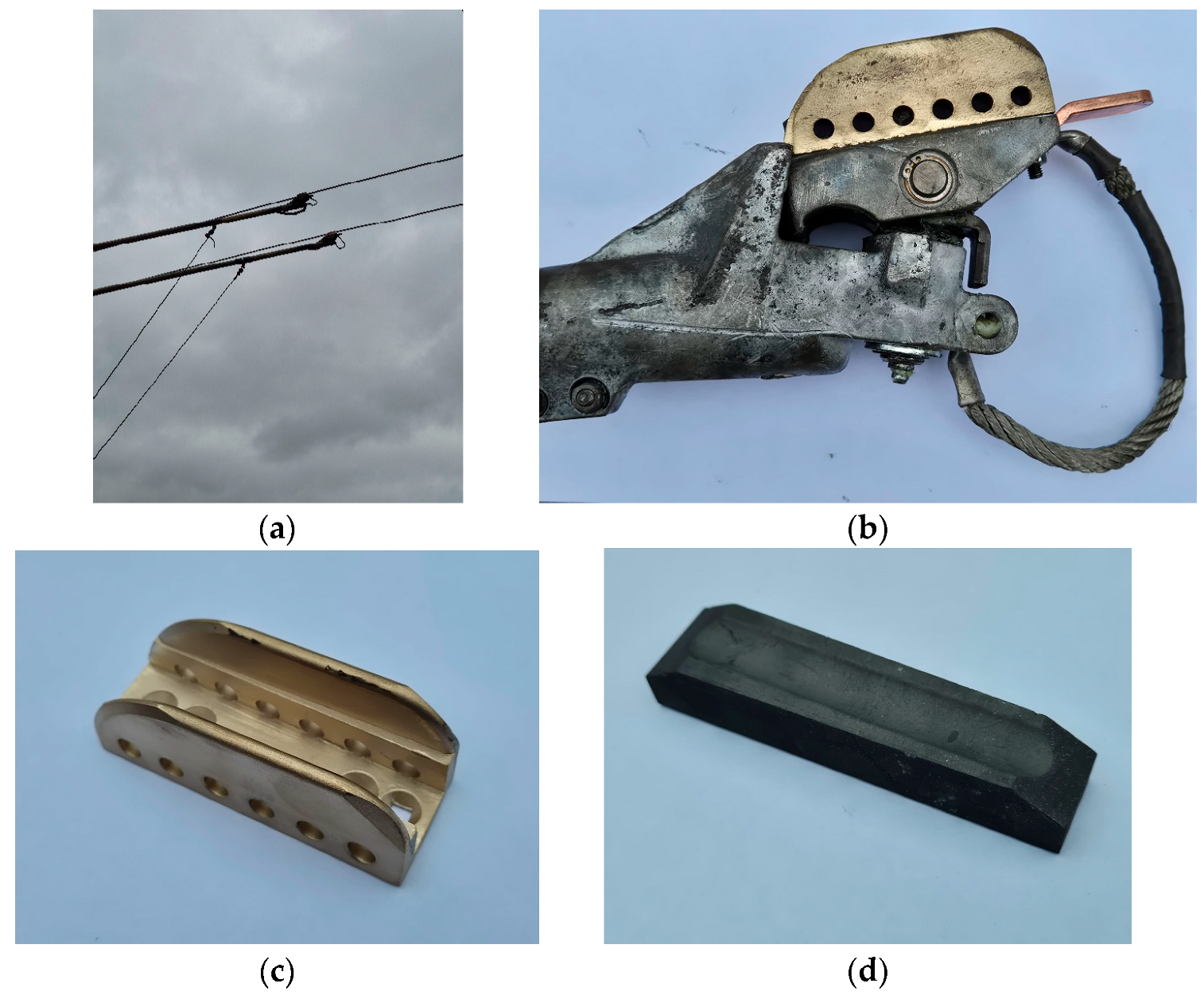
Current collectors are used to draw current from the overhead lines (Figure 1a–c). Thanks to the springs at their base, the pick-up rods are pressed against the over-head line with a force of 80 to 140 N at a height of 4 m to 6 m. At the end of the rod is a head in which a contact shoe insert—made of graphite or, in winter, of a graphite–copper mixture (Figure 1b), is fitted. Its cross-section is adapted to the shape of the overhead line [13]. The collector head itself has two degrees of freedom.
A more detailed description of the trolleybus network and operation can be found in [14].

2.2. Tested Object

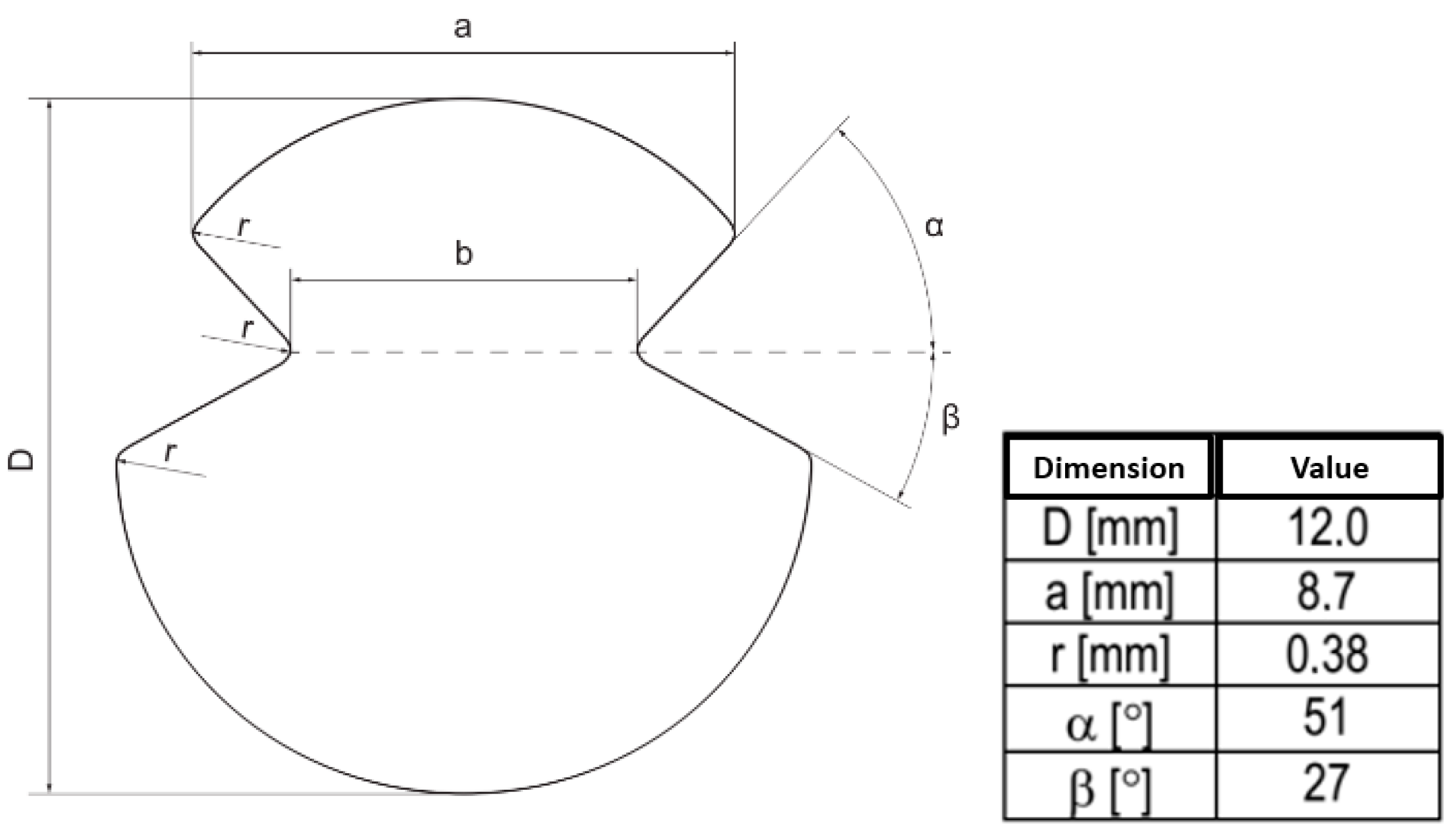
The tested object was an overhead line of type Djp 100 (Figure 2). The rated cross-section of the wire is 100 mm2, the electrical conductivity is 56.3 m/Ω·mm2, the minimum tensile strength is 355 MPa, the Young’s modulus is 120 GPa (kN/mm2) and the nominal weight of the wire is 0.89 kg/m. The characteristic dimensions of the wire are presented in Figure 3. Sections of overhead line with a length of 150 mm were used in the test. Wires of this type should meet the requirements of EN-50149 [15,16].
Used cables (samples 01, 02, and 03) were collected from the same straight section of the trolleybus network in Lublin, which were decommissioned after reaching their standard service life, as defined by the operator, MPK Lublin. The roadway over which this section of trolleybus line is located has two lanes in each direction.
The characterization of the nominal wire geometry and its base material properties, as provided in this section, establishes the essential reference state against which operational wear is quantified. The subsequent analysis of geometric deviations from this nominal profile, changes in the cross-sectional area, and the degradation of the mechanical properties (such as a decrease in tensile strength or an alteration of the surface layer hardness) form the core set of wear indicators investigated in this study. The purpose of employing these specific indicators is to provide a comprehensive assessment of wear that encompasses both the loss of material and the concomitant changes in the wire’s structural integrity.

3. Testing Method

The wear test method consisted of comparing the values of the relevant condition characteristics of the decommissioned wire with the nominal values determined from measurements of the unused (new) wire [16,17].
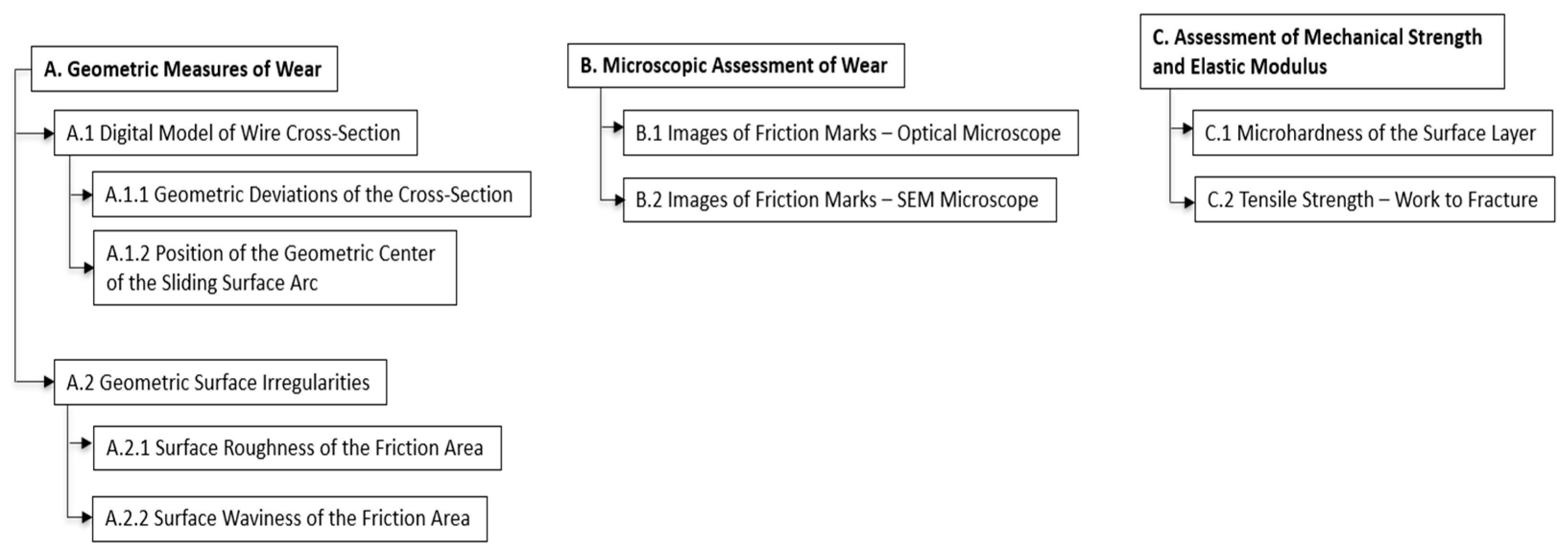
The main criterion for the selection of essential characteristics was that they should include complementary (correlated) characteristics of the mechanical strength and tribological resistance (abrasion resistance) of the wire. Current technical standards in-house instructions and expert opinions were taken into account [18,19]. A diagram of the test procedure is shown in Figure 3.
Research procedures included:
  • A.1—3D scanning and model reconstruction: The surface geometry of wire specimens was digitized using a GOM Atos III Triple ® 3D scanner (Carl Zeiss GOM Metrology GmbH, Braunschweig, Germany). The acquired data were used to reconstruct digital models for analysis, including the assessment of profile deviations, the position of the geometric centre, and the arc radius. The section profile deviations in four sections measured from the end of the specimens—30 mm, 60 mm, 90 mm and 120 mm—were analysed. The position of the geometric centre and the radius of the arc of the wire sliding surface were also ana-lysed [18,19].
  • A.2—Optical profilometer (WLI microscope, Taylor Hobson Talysurf CCI. CCI, Taylor Hobson Ltd., Leicester, UK)—roughness and waviness according to ISO 25178 [20]. Its operating principle is based on scanning broadband interferometry. The device makes it possible to generate three-dimensional images of technical surfaces.
  • B.1, B.2—Research on optical microscope and SEM microscope (Phenom G2 Pro, Phenom-World BV, Eindhoven, Netherlands.). Surface wear mechanisms were assessed.
  • C.1—Mechanical indentation tests in the cross-section of the surface layer. Hysitron TS 77 (Bruker, Minneapolis, MN, USA)Select was used to assess the mechanical properties of the material phases. The method used was In Situ SPM Imaging. Topographic imaging of the surface with an indenter was performed (Berkovich indenter used), while nanomechanical properties are determined. Mapping was performed and hard-ness and modulus of elasticity were determined according to the method described in ISO 14577 [21]. Samples for indentation tests were cut from longer sections of overhead contact line on an ATM Brillant 221 cutter (ATM Gmbh, Mammelzen, Germany), ground with abrasive discs (grit P600, P1200, P2400) and polished on a cloth-covered disc on an ATM Saphir 550 (ATM Gmbh, Mammelzen, Germany) laboratory grinder-polisher. Water cooling was used during grinding and polishing.
  • C.2—Mechanical strength and modulus of elasticity tests of the wires were carried out in accordance with ISO 6892-1 [22] on a Zwick/Roell Z100 (ZwickRoell GmbH & Co. KG, Ulm, Germany) electro-mechanical machine, using hydraulic grips providing automatic clamping of the samples. Deformations were measured using a makroXtens high resolution extensometer (ZwickRoell GmbH & Co. KG, Ulm, Germany).
The strength indicators of wear included microhardness, elastic modulus, tensile and yield strength, and work to fracture, which were measured to evaluate both surface and bulk mechanical property changes due to operational wear.

4. Research Findings

4.1. Results of Spatial Scanning of DJP 100 Wire Sections

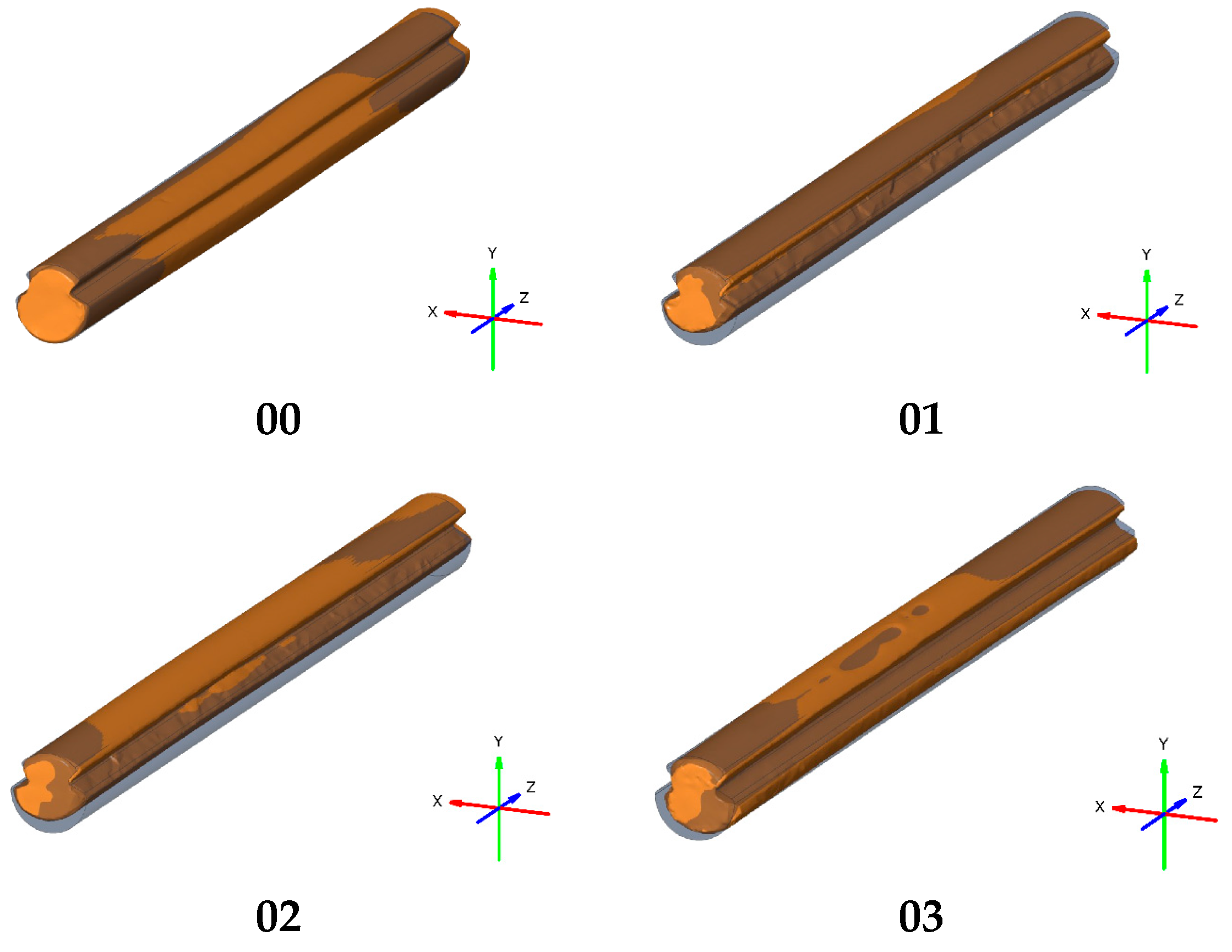
The overview drawing (Figure 4) shows the Djp 100 wire, showing the conformity of the shape of the actual bars with the nominal bar model (shaded areas). A nominal bar model was developed by averaging the dimensions over four analysed cross-sections of a real, unused wire sample and aligning the resulting profile with respect to the origin of the coordinate system. This procedure made it possible to eliminate the influence of geometric deviations resulting not from operation, but from inherent imperfections in the actual product relative to the ideal theoretical model.
In order to achieve the highest possible accuracy, the cross-sections of the actual specimens at each height were independently referenced to the nominal model based on the top outlines that best retained the original shape of the bar.
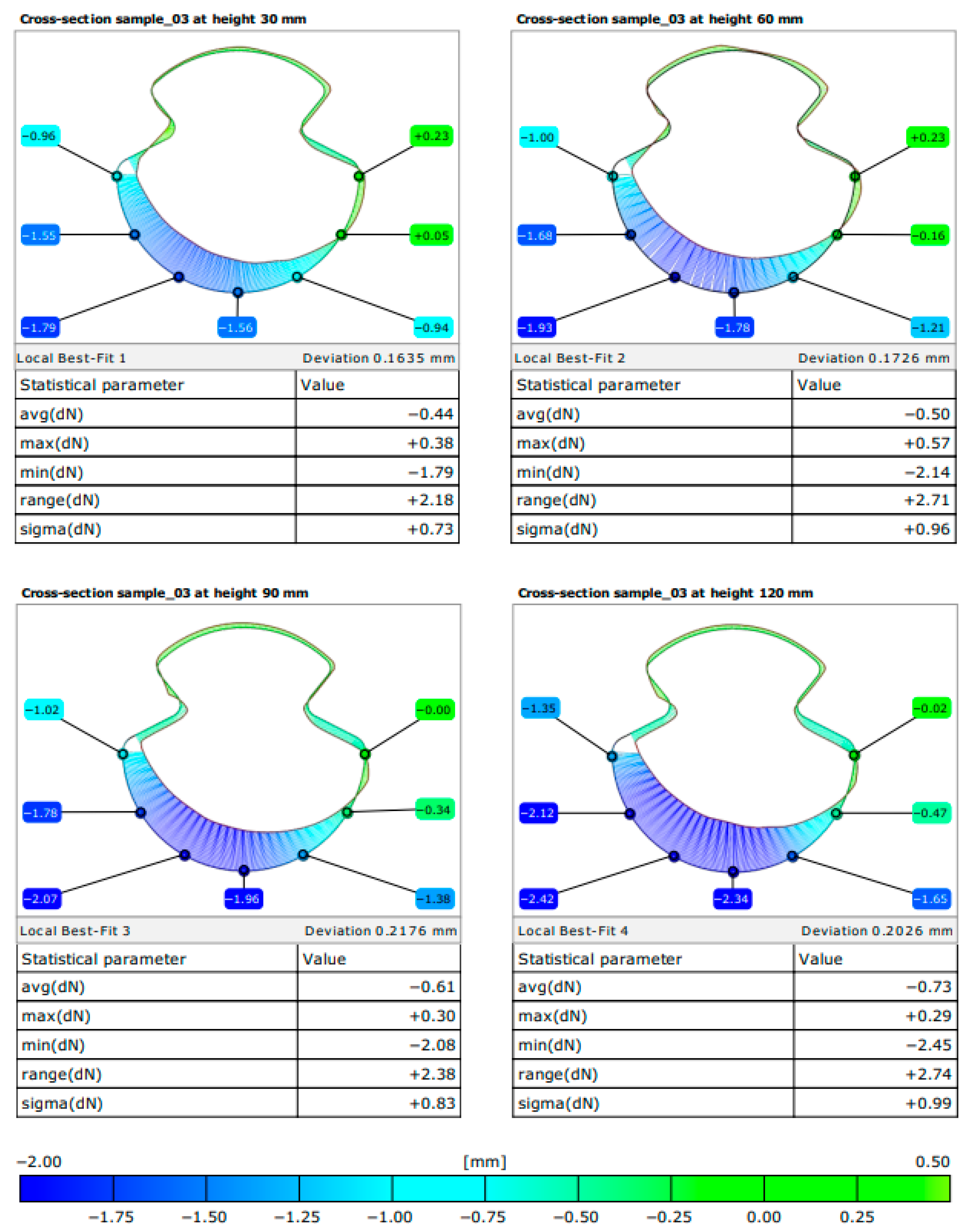
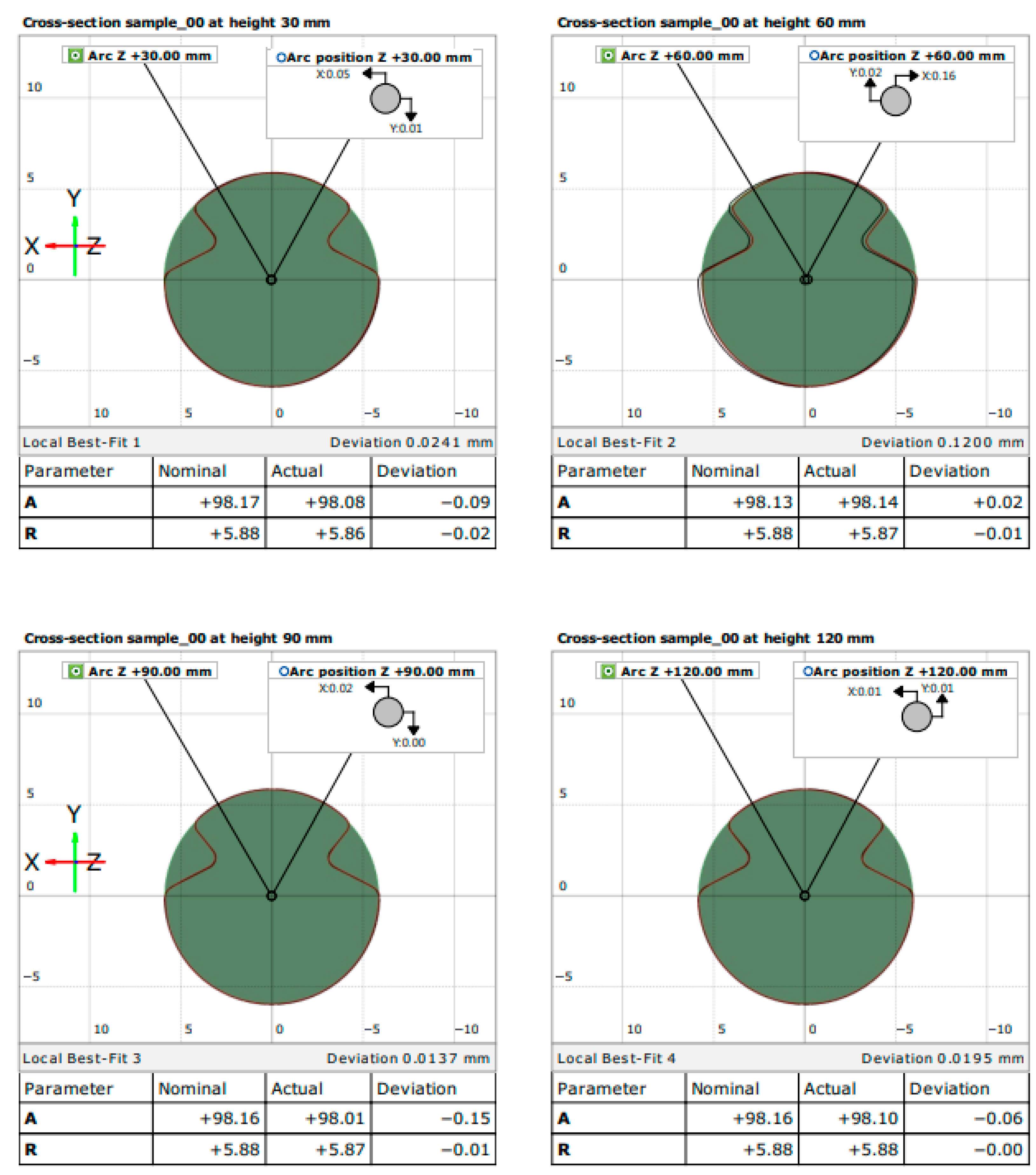
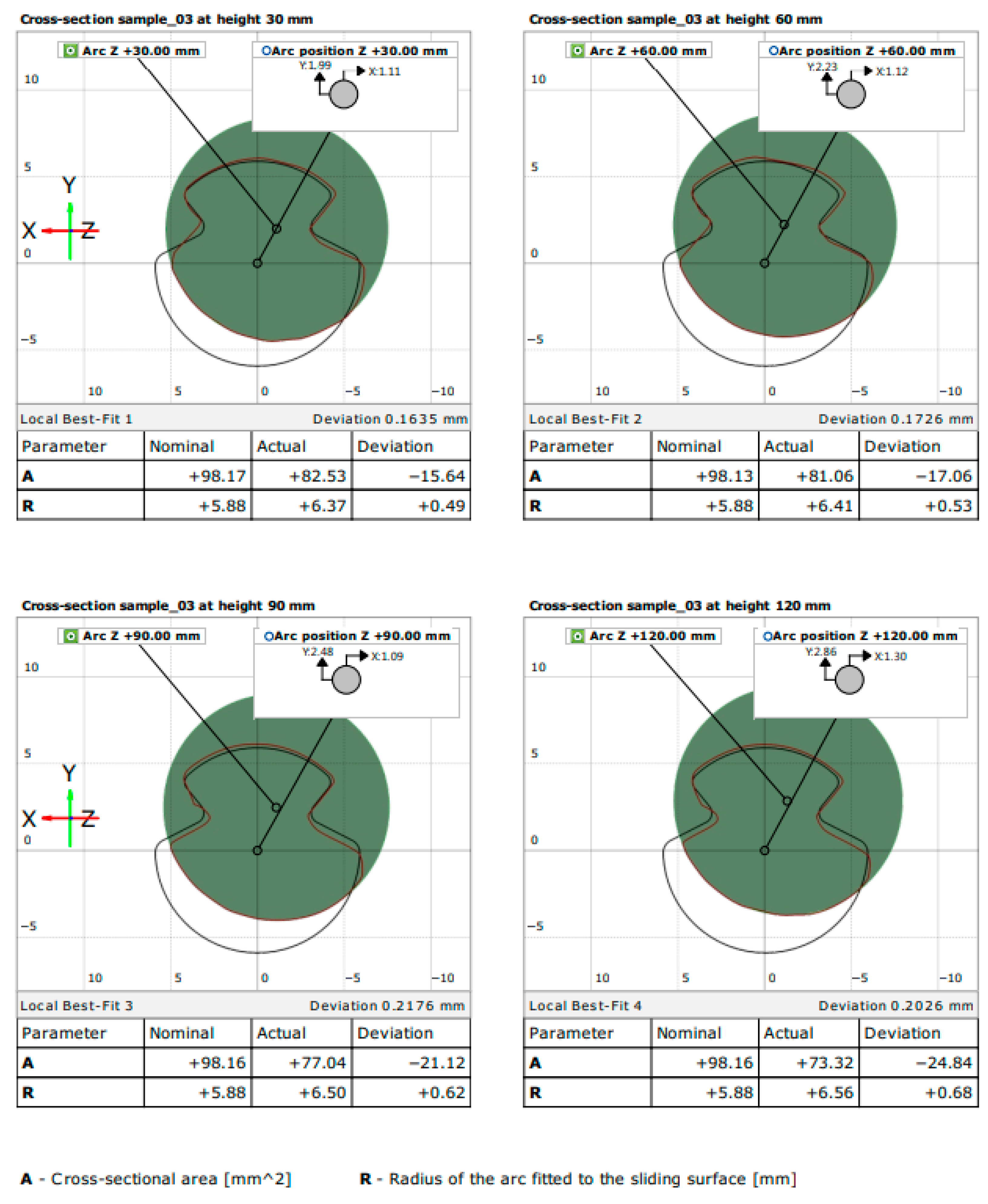
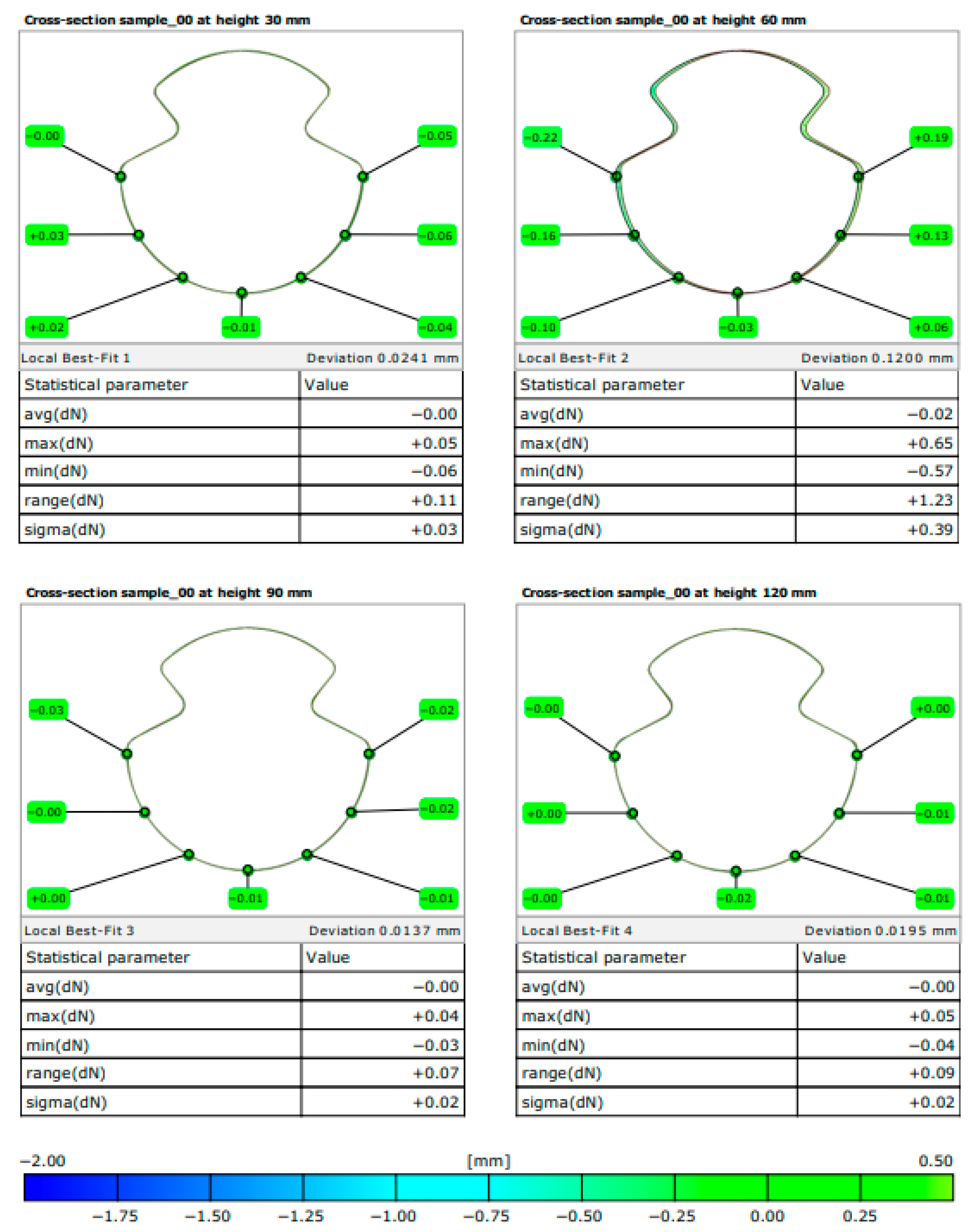
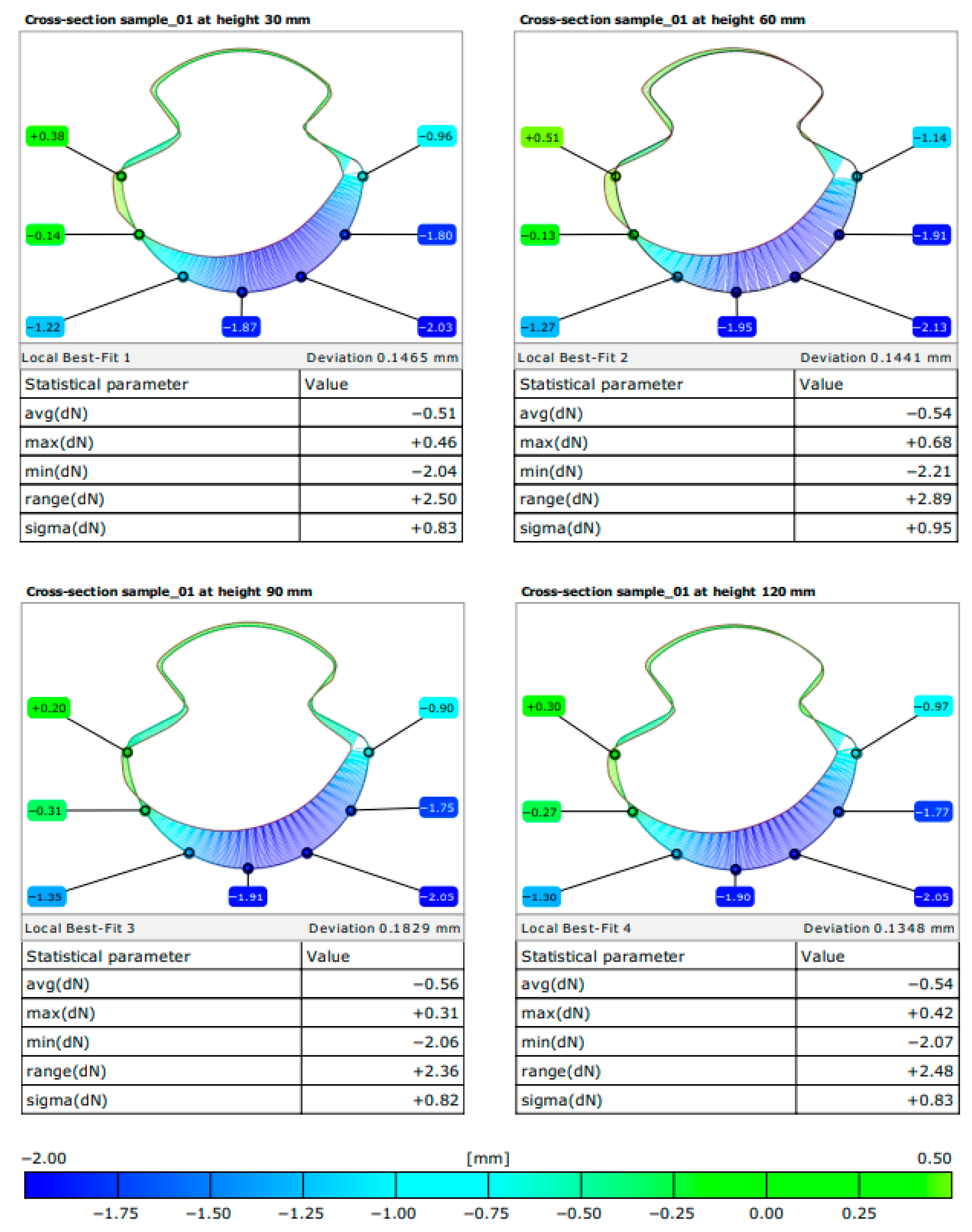
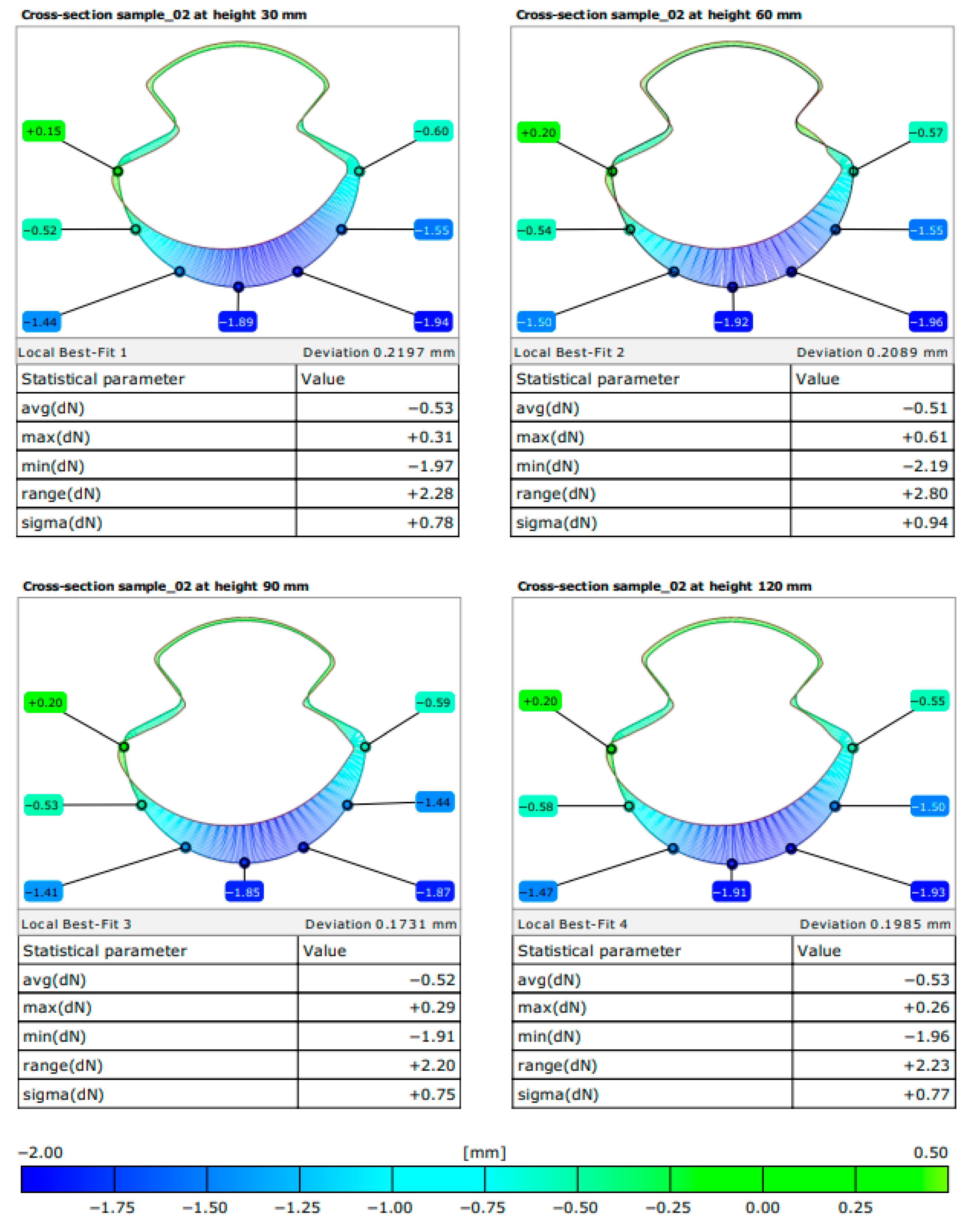
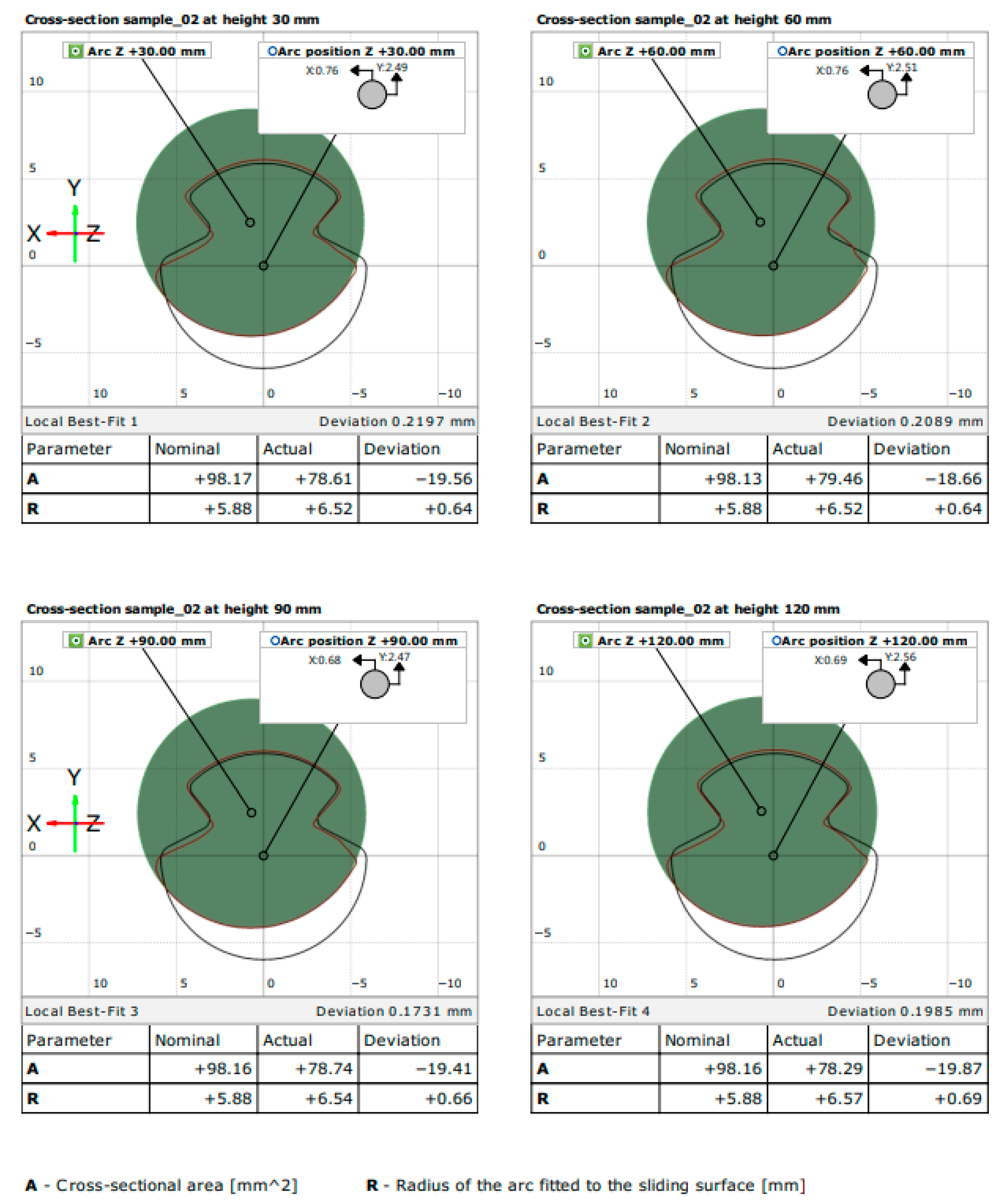
Figure 5 presents the deviations of the cross-section profile of sample 00 (unused wire), while Figure 6, Figure 7 and Figure 8 present the deviations for samples of used wire.
Significant deviations in the geometric profile due to wear were shown, amounting to more than 2 mm in some places. The largest deviation was almost 2.5 mm.
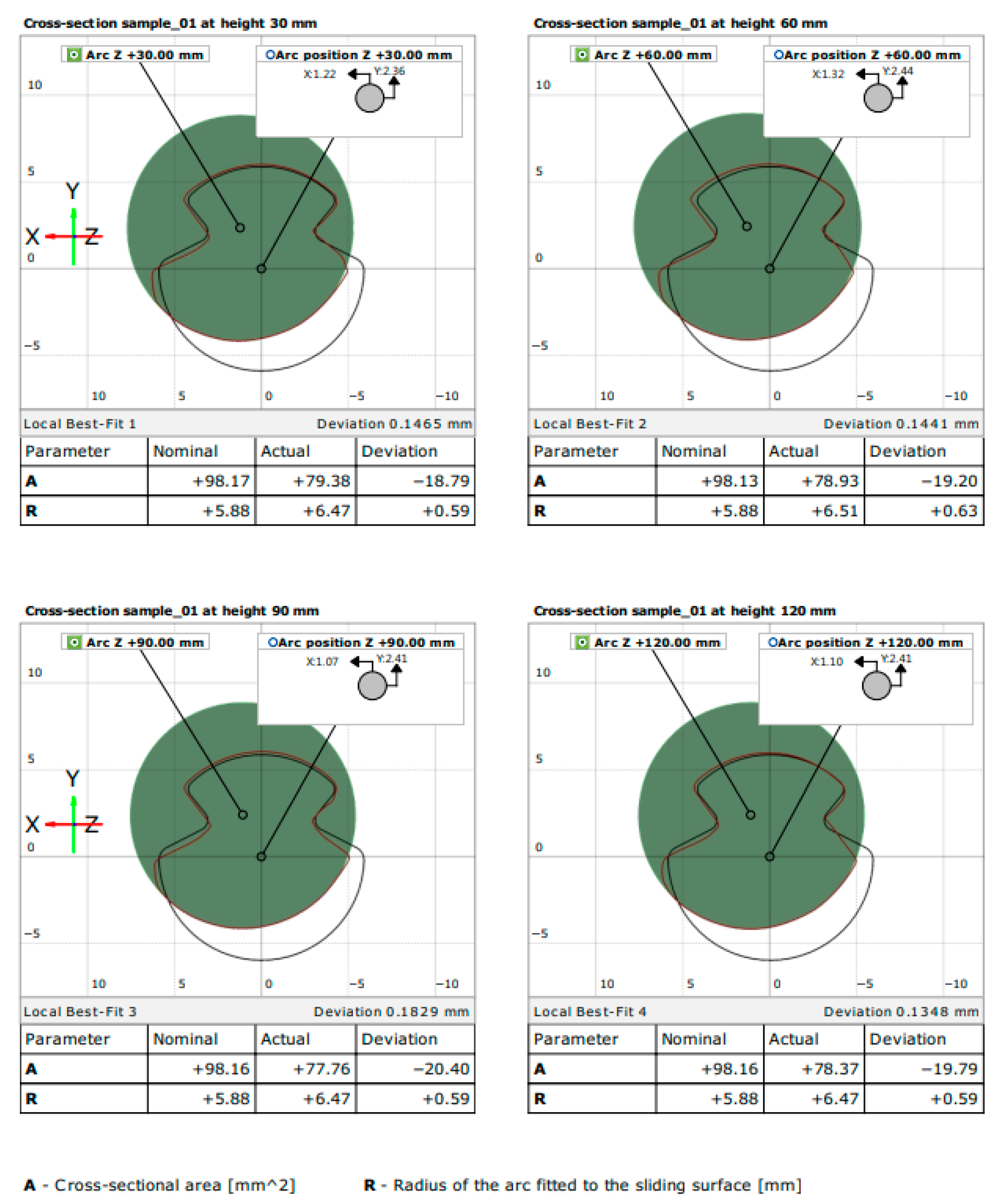
The position of the geometric centre and the radius of the arc of the sliding surface were also analysed (Figure 9, Figure 10, Figure 11 and Figure 12). The used wire samples (Figure 10, Figure 11 and Figure 12) show a significant shift in the geometric centre of the cross-sectional area, as well as a shift in the centre of the arc of the sliding surface in both main directions. Significant changes in cross-sectional area and changes in arc radius of the sliding surface were also shown.

4.2. Results of Microscopic Examination of Wear on the Friction Surface of DJP 100 Wires

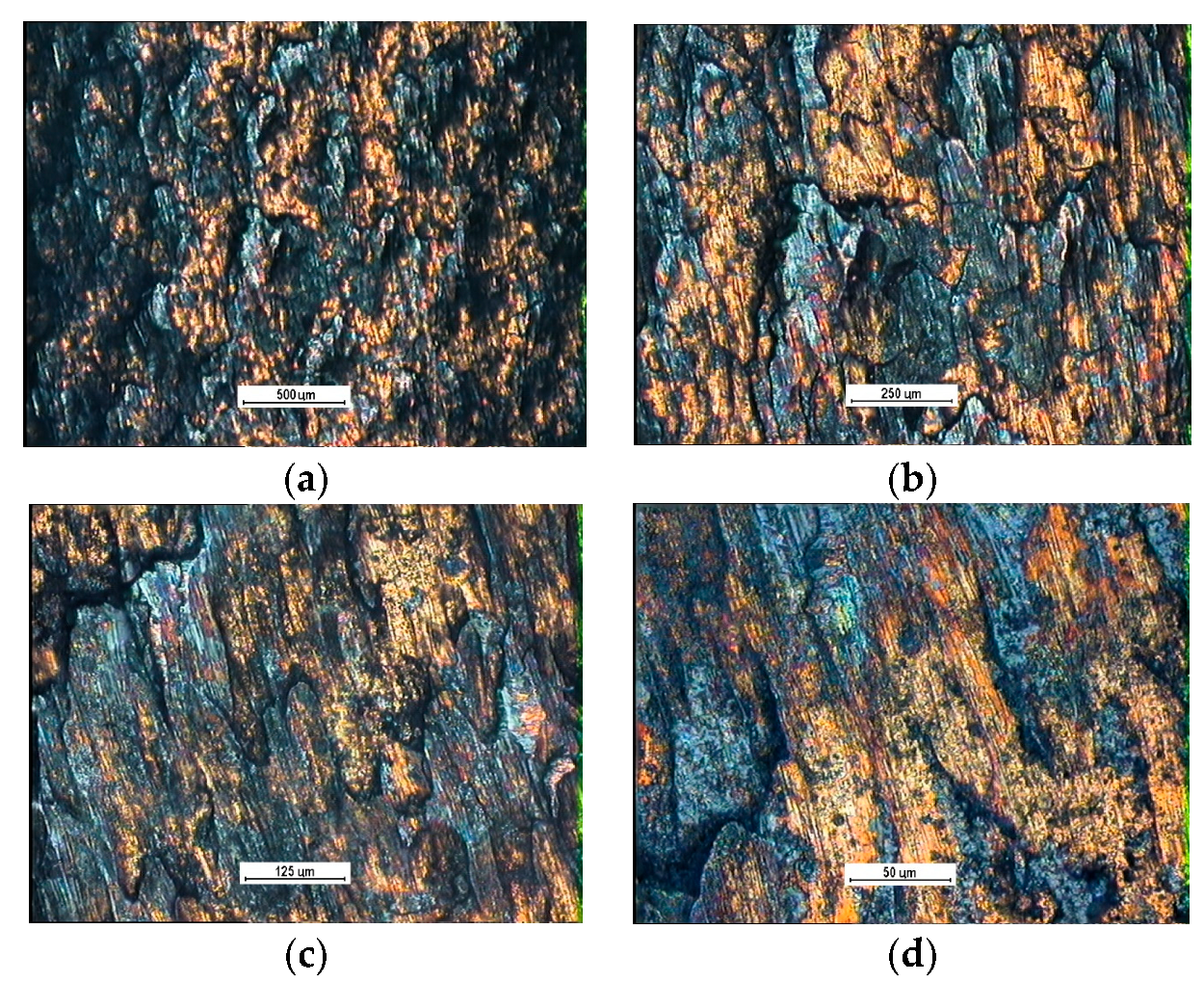
Figure 13 presents microscopic images of the sliding process surface of unused wires. Clear surface irregularities of a regular nature, associated with machining, are evident. This is the condition of the surface after cold forming (broaching). The condition of the surface depends, among other things, on the die in which the geometric section of the wire is shaped.
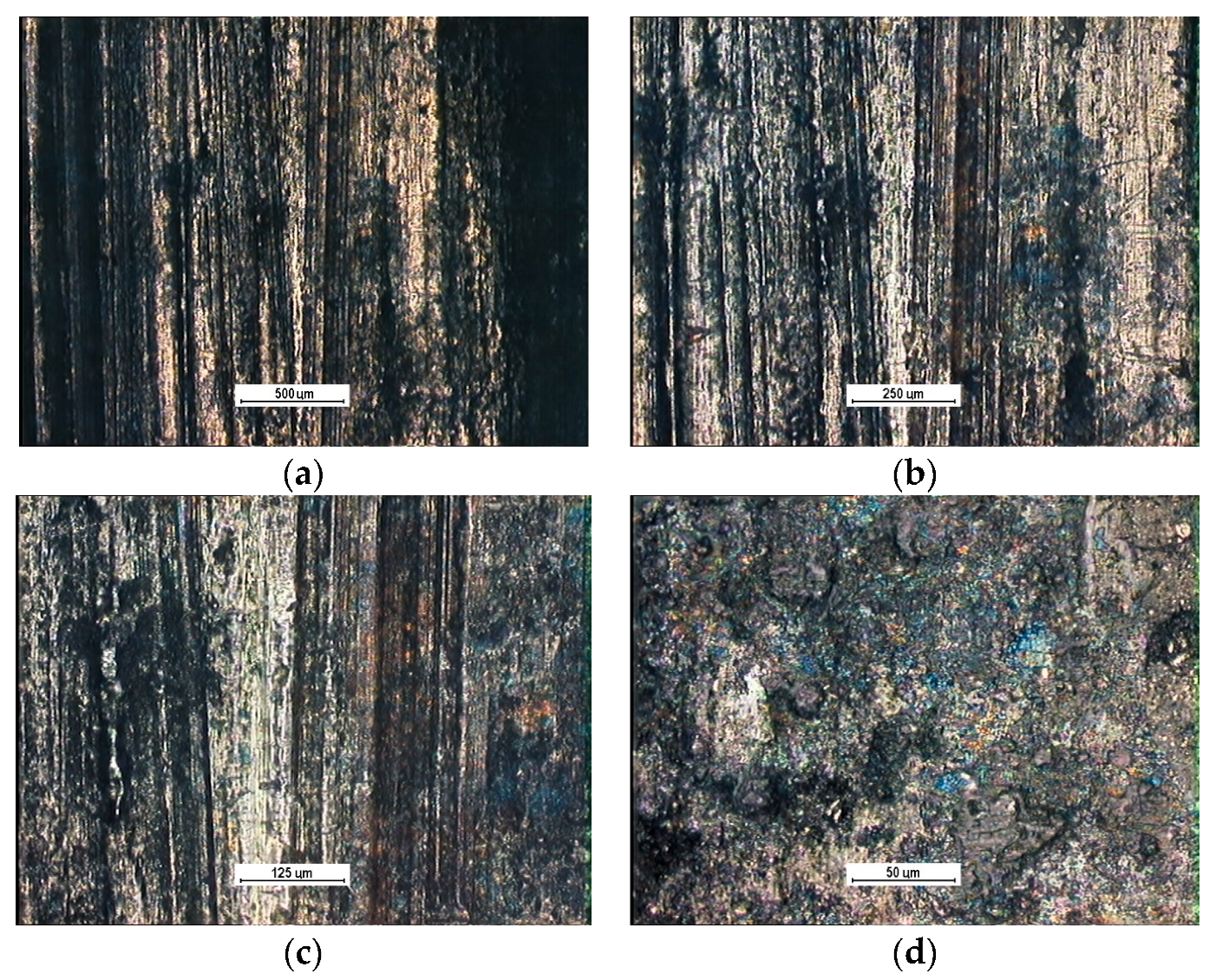
Figure 14 shows the condition of the working surface of the used wire. The appearance of the surface is markedly different from the technological surface. Microbrushings consistent with the sliding direction of the friction pair components are noticeable. This surface condition is indicative of an abrasive wear mechanism [23].
There may be visible loss of material on the surface of conductors in service, caused by the action of an electric arc (Figure 14d). This is a case of heat-impact wear [24,25]. These areas are partly filled with wear products of the friction pair components and contaminants from the operating environment. A greenish colour may indicate acidic copper carbonates. The dark tarnish is oxides or sulphides of copper.
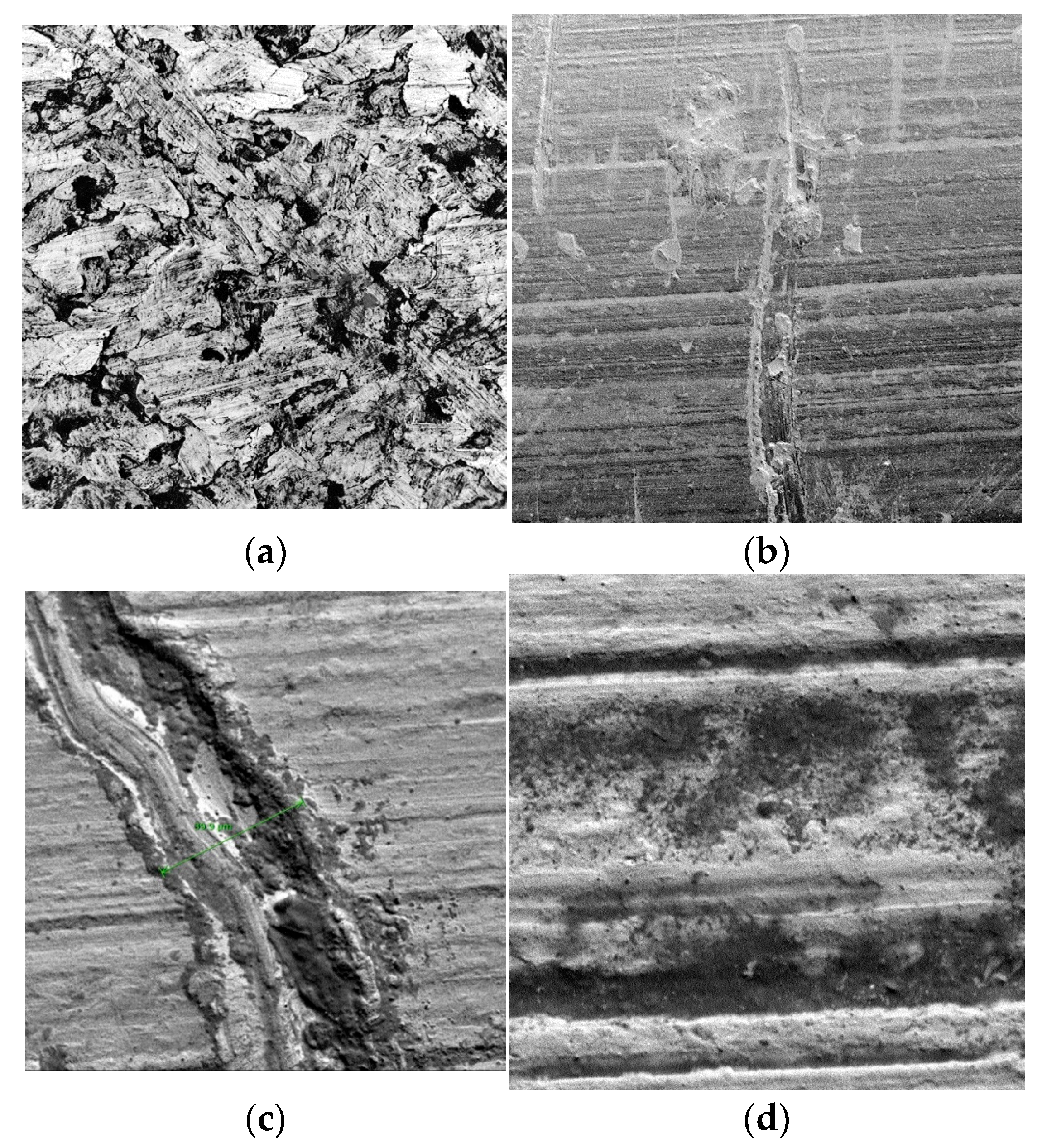
Figure 15 presents SEM microscope images of the process and service surfaces of the overhead lines. The change in the condition of the operating surface is clear. In addition to abrasion damage characterised by furrowing in the main sliding direction, other damage was observed. This can be caused by a so-called third body that has entered the contact zone of the friction pair’s main components. The third body may also be products of tribological wear [26].
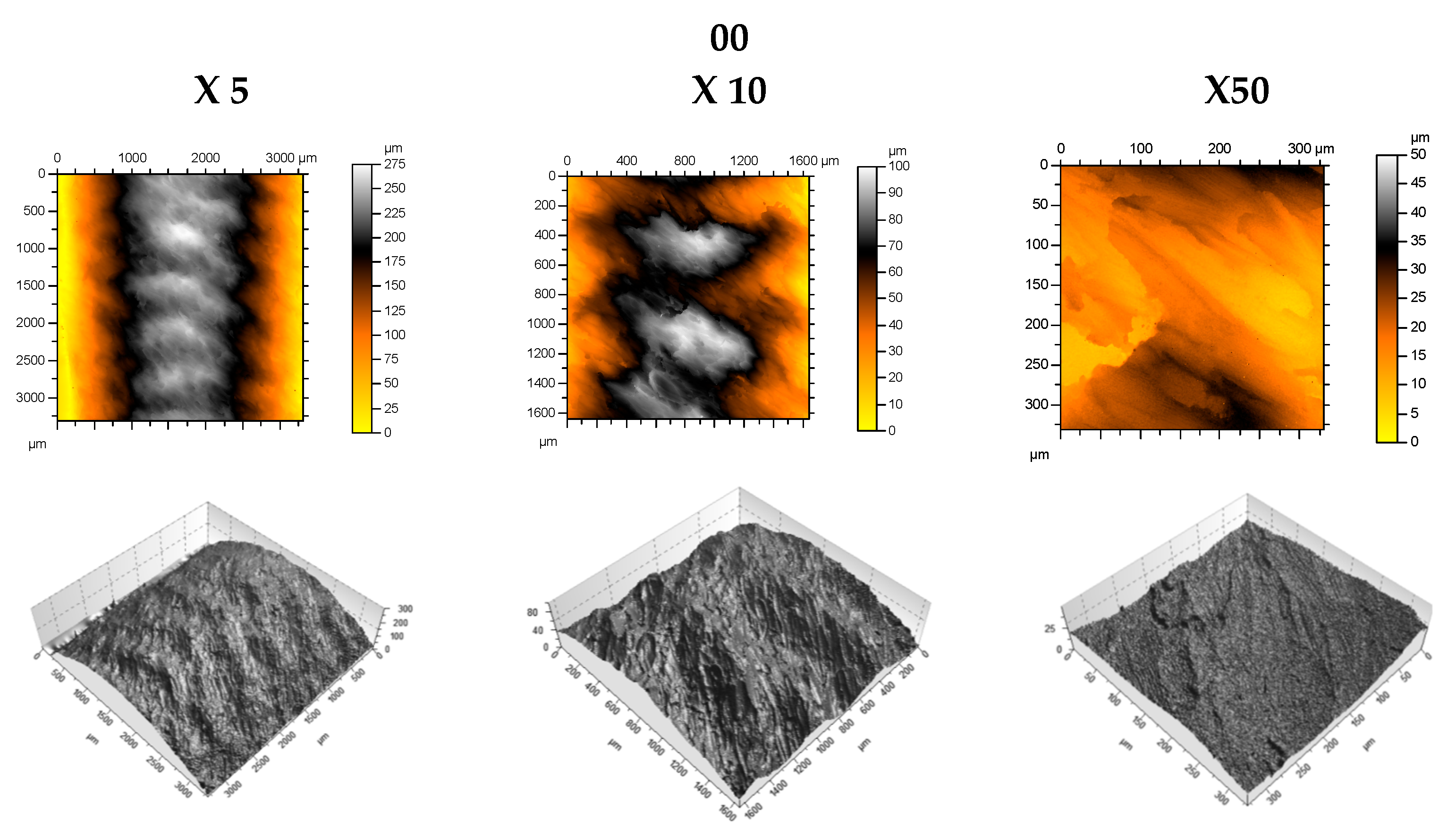
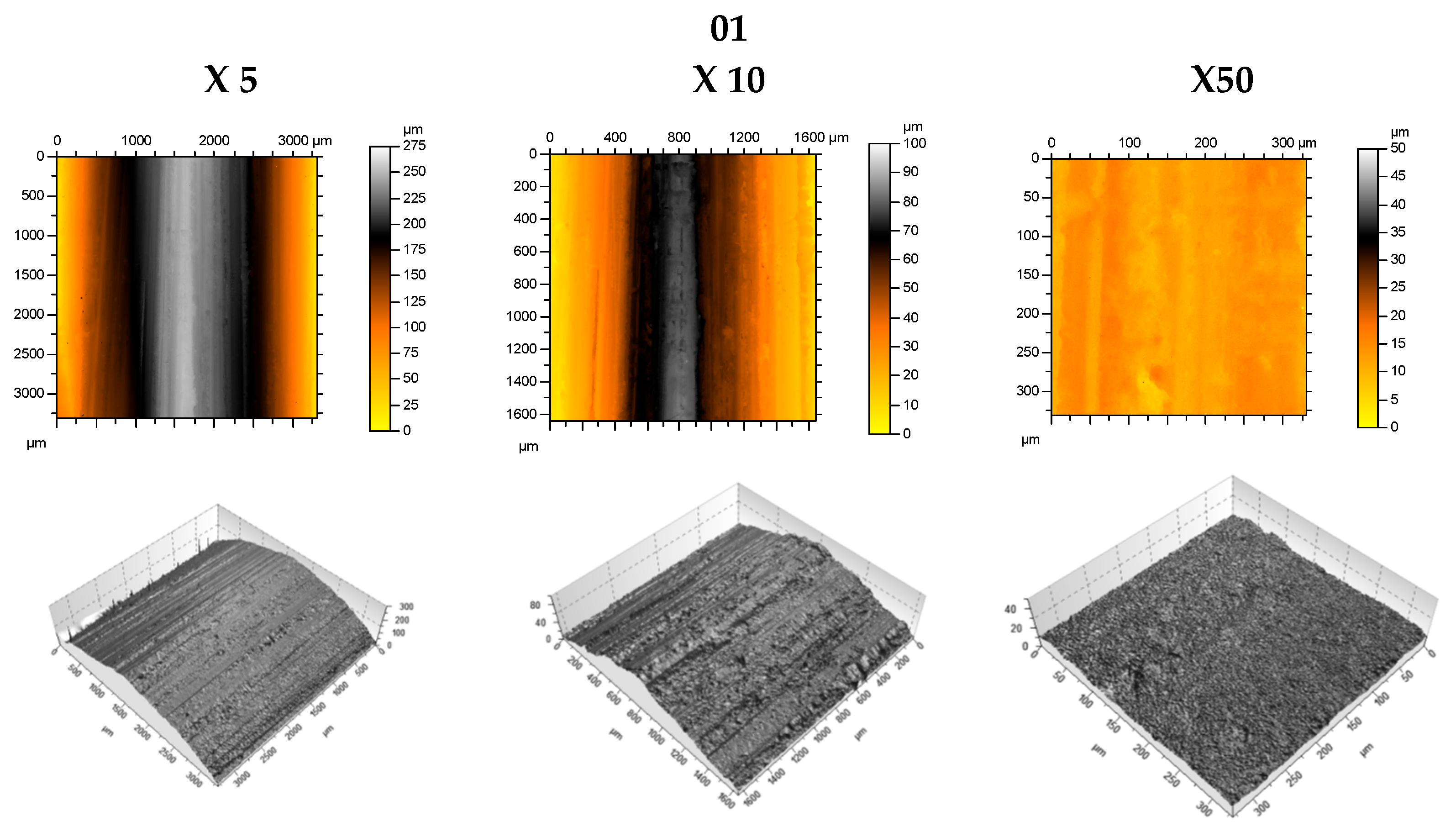
Figure 16 and Figure 17 present the results of the analyses carried out on the WLI microscope of the technological surface of the new wire and the operational surface of the used wire. The process surface is characterised by pronounced periodic undulations (Figure 16). Waviness as a surface topography feature has a negligible effect on contact deformation/contact stiffness, friction and wear, and electrical conductivity [27,28]. The waviness and surface roughness decreased as a result of wear and tear (Figure 17).
It is reported in the literature that cold-drawn bars are characterised by a roughness described by the parameter Rz = 0.8 μm ÷ 5 μm [29]. The test bars showed significantly higher technological roughness. The value of the Rz parameter of the surface of the reference sample at 50× was about 50 um, while that of the used samples was about 28 um (Table 2). On this basis, it can be surmised that the friction conditions in the kinematic shoe—overhead wire pair change as a result of the change in roughness. In addition, surface observations revealed the presence of a so-called graphitic membrane. Such a film is formed on friction surfaces in the case of dry friction. Changing some roughness parameters may translate indirectly into other performance characteristics. The variation in the height parameters describing the roughness (e.g., Sa, Sq) of the surfaces shown in Table 1 has a functional relationship with load-bearing capacity, contact stiffness, sliding connection and electrical contact, among others [27].

4.3. Test Results for Hardness and Modulus of Elasticity of the Surface Layer in the Vertical Direction

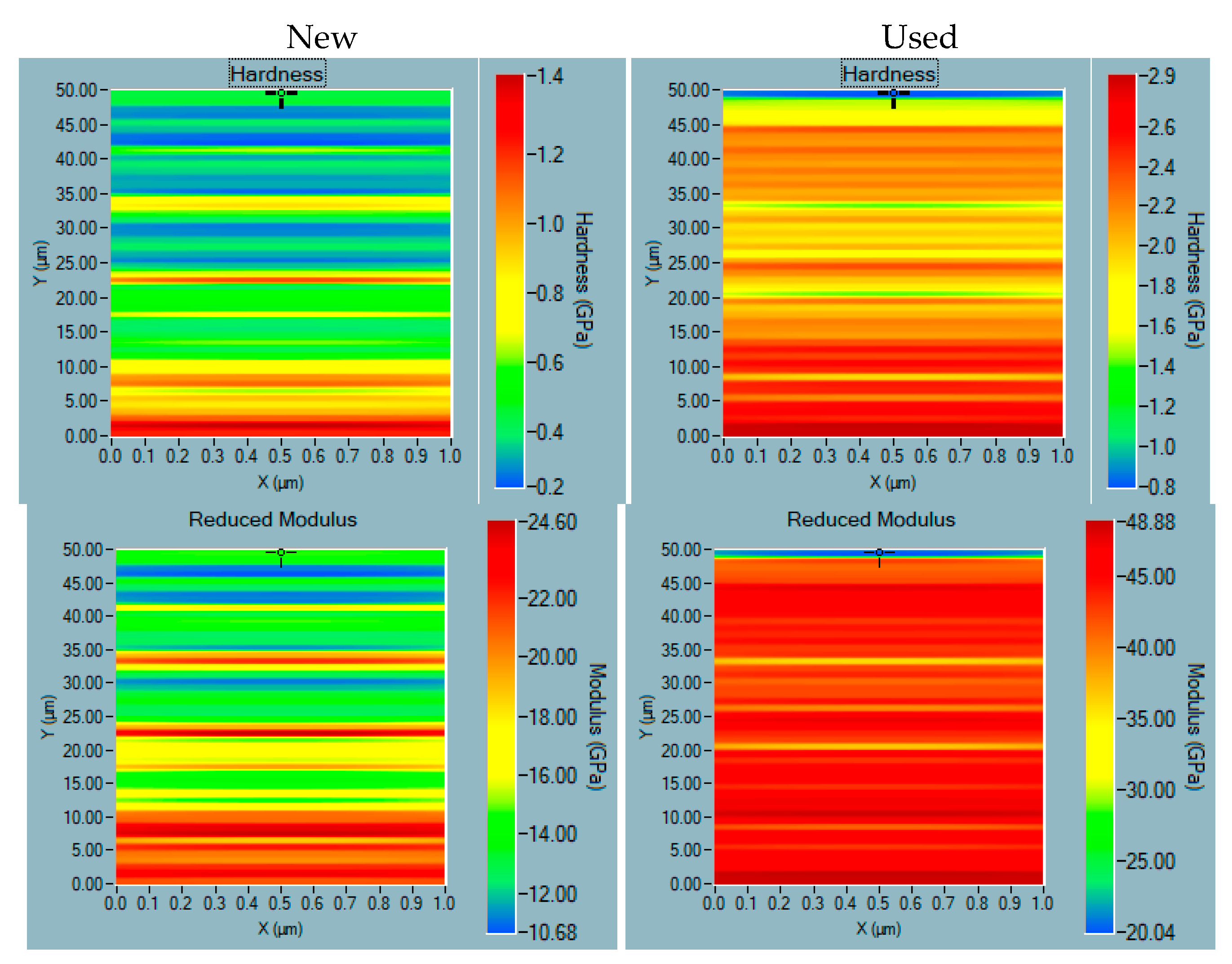
The test method refers to the surface layer (SL) model [11]. The study focused on the near-surface zones and the plastic deformation zone. The plastic deformation zone is created by the action of the process tools during machining and the mating friction pair component during operation. The depth of this zone under average frictional condi-tions generally does not exceed 60 μm to 90 μm [30]. With this in mind, tests were car-ried out to a depth of 55 μm. Figure 18 presents the results of the hardness and elastic modulus tests. The results are presented in a comparative system for new and after-service (used) wire.
Plastic deformation of the in-service surface layer in the vertical direction resulted in strengthening (Figure 18). The surface layer at this point has a higher strength than the material deeper down. This can lead to a negative strength gradient [11].

4.4. Results of Volumetric Testing of the Mechanical and Elastic Properties of the DJP 100 Wires

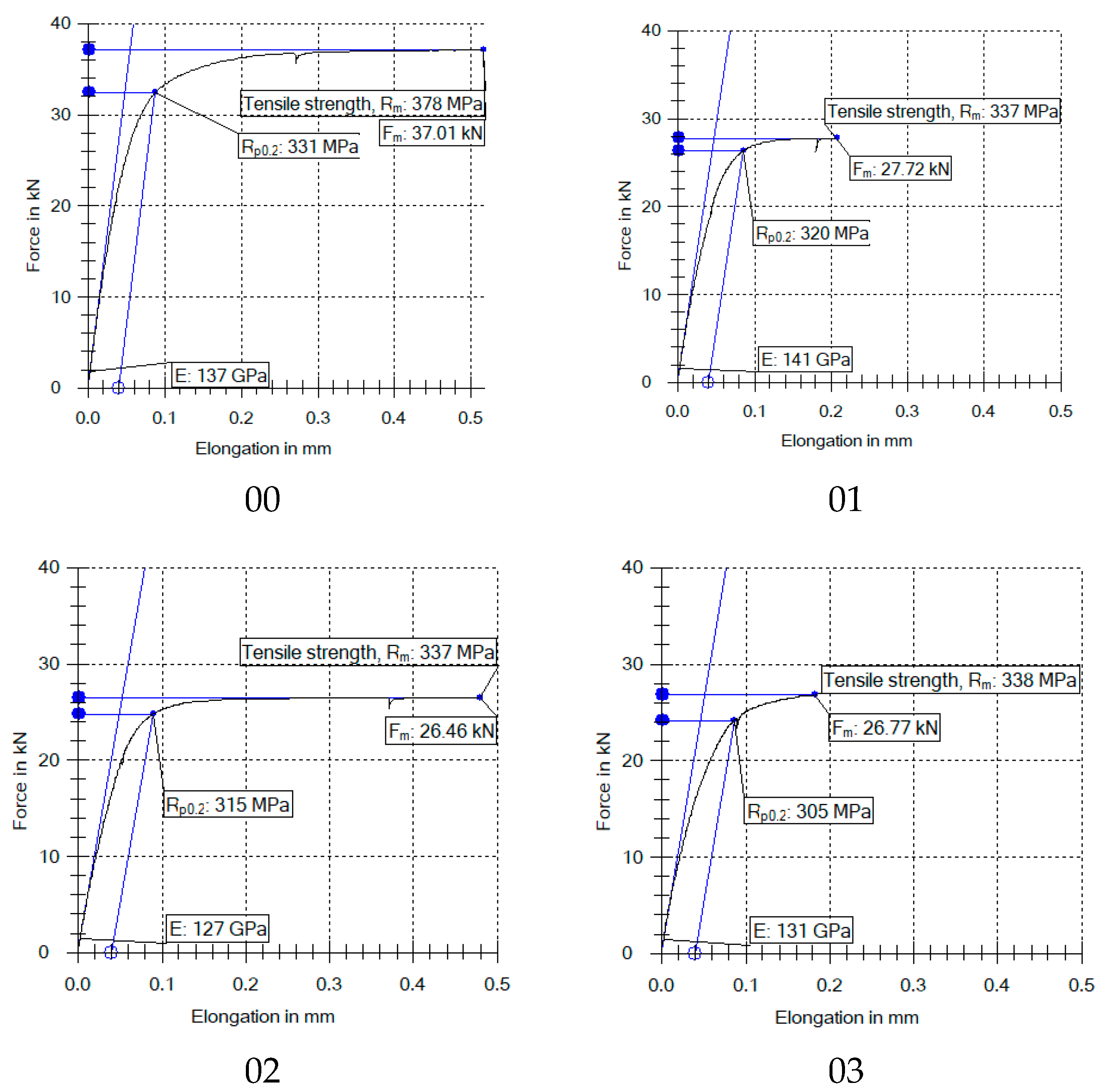
The tensile strength of the overhead wires decreased slightly compared to the reference sample. In contrast, the load-bearing capacity of the partially worn wires is much lower; the breaking force of the reference sample was about 37 kN, that of the worn samples about 27 kN. The yield strength of samples with a history of operation also decreased. In contrast, the modulus of elasticity did not change significantly (Figure 19).
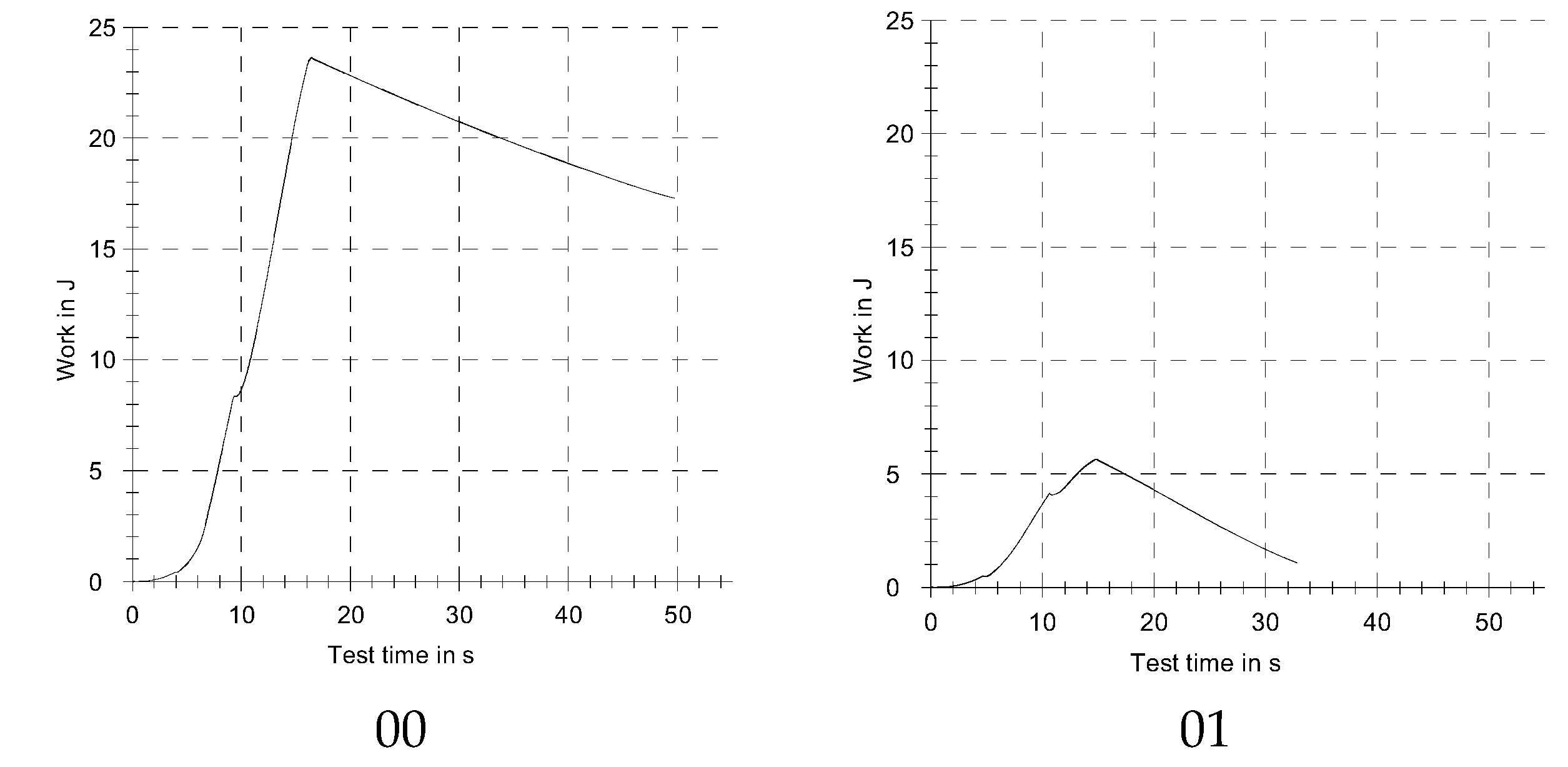
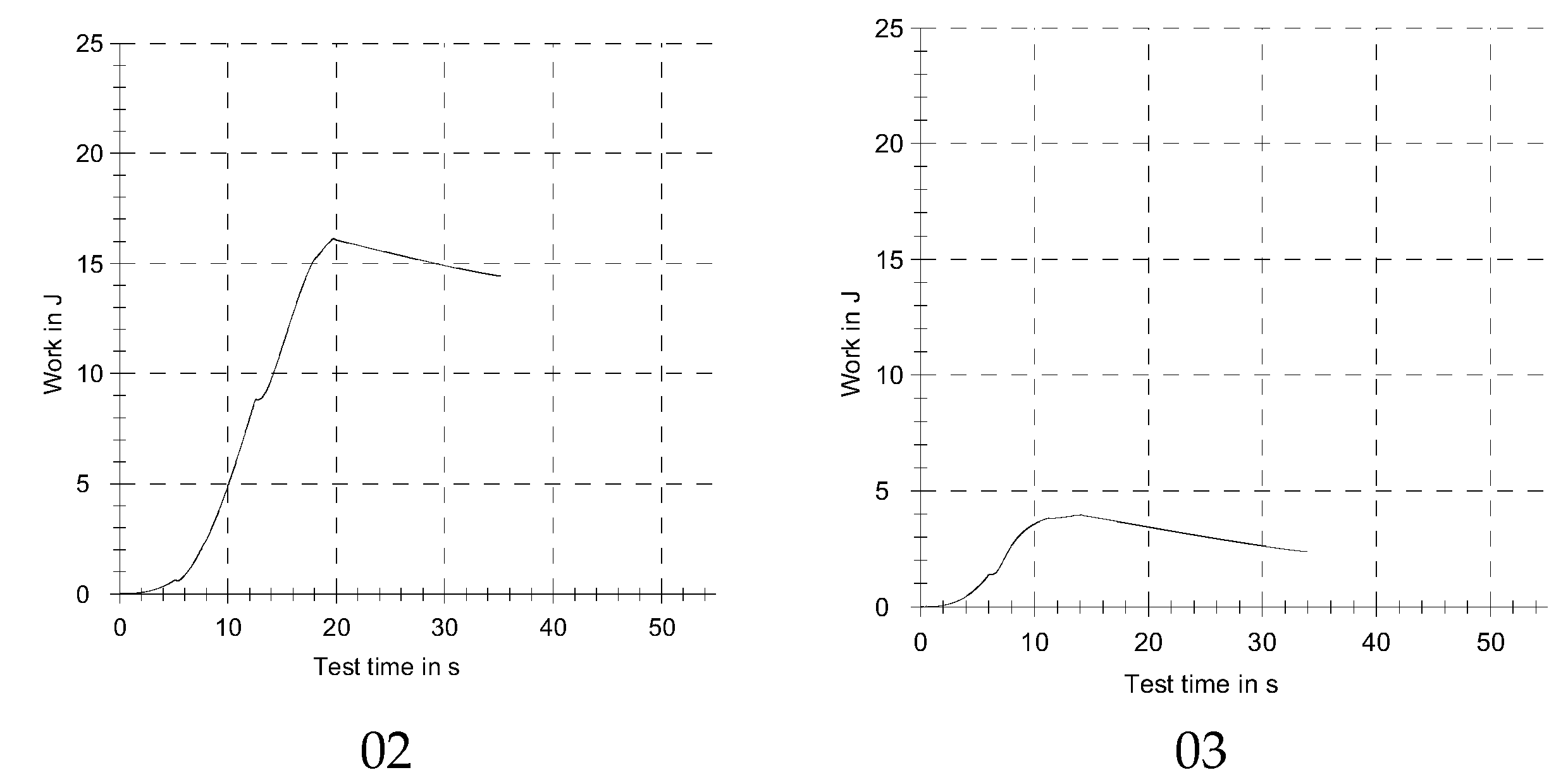
The parameter Wm is defined as the work of external forces on the deformation to failure. The work of force on deformation, as an energy measure, provides the basis for assessing the combined magnitude of load and deformation. Its threshold value more fully reflects the degree of damage to the structure of the tested plastics. The work of force as a function of time of the test samples is presented in Figure 20.

4.5. Evaluation of Shoes

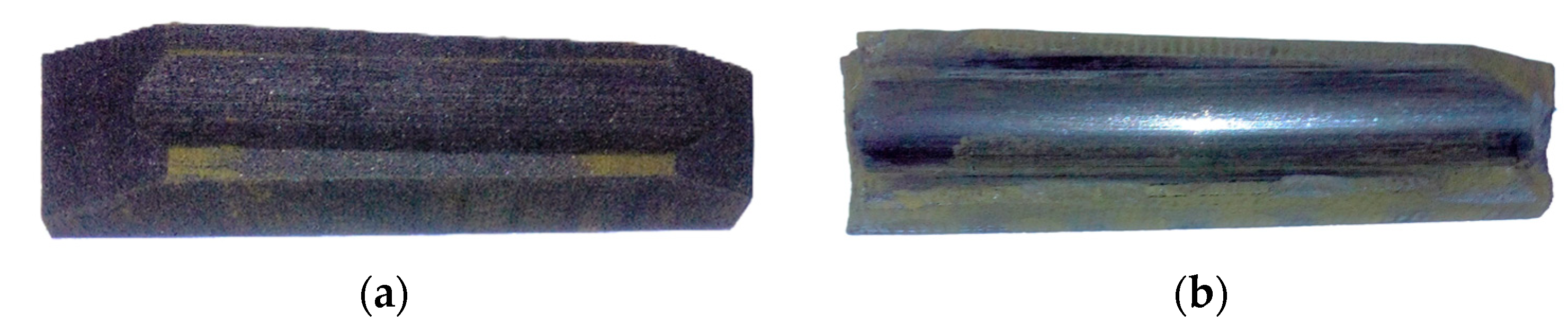
Figure 21 compares photographs of a new shoe (Figure 21a) and a worn shoe (Figure 21b). Adhesive wear involves the transfer of microscopic amounts of material from the surface of the component to the surface of the mating component. It occurs through adhesive bonding. Adhesive bonding occurs at low sliding speeds. It leads to the tearing out of particles of weaker material [31]. In the described friction system, the weaker material is the shoe material.

4.6. Derivation of Replacement Criteria

To establish practical thresholds for withdrawing trolleybus contact wires from service, an empirical procedure was applied. The criteria were derived by comparing the geometric and mechanical parameters of new wires with those of long-service wires removed from the Lublin trolleybus network. First, quantitative indicators sensitive to operational degradation were selected: (i) geometric wear indicators—cross-sectional area loss, maximum local profile deviation, and reduction in the bending stiffness index J x ; and (ii) mechanical wear indicators—breaking force, plastic strain energy W m , and local surface properties measured by nanoindentation (hardness and elastic modulus). The relationship between these parameters was analyzed to determine which combinations consistently marked the transition from safe to degraded structural performance. The thresholds were validated by comparing measured degradation with operational assessments provided by maintenance engineers at MPK Lublin. In this study, wires exhibiting approximately 17% loss in cross-sectional area and a 27% decrease in breaking force already reached a mechanically critical state, while the reduction of J x by ≈30% corresponded to visibly increased susceptibility to deflection under service loading. Based on these observations, the replacement criteria proposed herein are empirical, derived from direct measurements and supported by maintenance practice, and are intended as a foundation for further refinement and numerical validation in future work.

5. Discussion

Identifying operating conditions is a key element in assessing the quality and durability of technical products [32]. In the case of a trolleybus network, current collectors, pressed against the overhead wire by springs, are responsible for transmitting electrical energy to the vehicle’s propulsion system. At the end of the collector rod, a head is mounted with a graphite or graphite–copper insert (shoe) (more often used in winter), the cross-section of which is adapted to the geometry of the overhead wire. The head itself is characterised by two degrees of freedom. The interaction of wire and shoe results in a kinematic pair with nominal contact between the cylindrical surfaces, in which sliding friction occurs.
The technical requirements for wires are specified in the PN-E-90090:96 standard [18]. These include values for breaking force and elongation at break, hardness, technological ductility assessed by torsion, bending and winding tests, increased recrystallisation temperature and high electrical conductivity. The service life of wire depends primarily on the degree of wear on the sliding surface. This increase is possible by lowering the coefficient of friction in the wire-slipper friction pair and improving the wear resistance of the wire material [33]. In this context, the identification of wear mechanisms is important, allowing the development of mathematical predictive models [34].
The in-house tests revealed significant deviations in the geometric profile of the worn conductors and a shift in the geometric centre of arc of the sliding surface in both main cross-sectional directions. Clear changes in cross-sectional areas were also observed as a consequence of tribological wear. The dominant wear mechanism appeared to be abrasive. As in other kinematic pairs, the technological surface layer of the wire is transformed into an operational layer with different characteristics [35]. Analysis of the topography revealed significant surface waviness and roughness, exceeding the values reported in the literature for cold-drawn bars [29]. Assessing the geometrical parameters of the surface layer of the exploited wires, a reduction in the value of the Sa parameter by approx. three times and the Sz parameter by 30–40% in relation to the value of the technological surface was found. These changes suggest a modification of the frictional conditions in the shoe-wire kinematic pair.
Observations of the surface revealed the presence of a so-called graphite film, formed under dry friction conditions [36]. According to [37], the friction coefficient of copper in contact with graphite–copper material is in the range of 0.20–0.24 and decreases during operation, which indirectly confirms the formation of a protective film [38]. The literature also suggests the possibility of using solid lubricants to reduce the coefficient of friction and increase the life of the wires [37,38].
Analysis of the wire sections showed that the centre of gravity of the used wire profile had shifted horizontally and upwards relative to the centre of the nominal section, with the main axes of the section rotated by 30–45°. This may indicate a progressive twisting of the wire profile as it wears, particularly where there are lateral forces (e.g., on curves or roundabouts) [39].
Nanoindentation tests revealed a strengthening of the surface layer of used wires—the values of maximum hardness and modulus of elasticity were about twice as high as in new wires. It is possible, however, that the strengthening does not occur uniformly, as the local impact of the electric arc created when the shoe is detached from the conductor [40] leads to over-melting, recrystallisation of the copper and a decrease in hardness [41]. This phenomenon also promotes local acceleration of wear [42].
When analysing measures of wear, both linear wear (thickness of the layer of separated material) and volumetric wear can be identified [43]. In the literature on railway conductors [44], the assessment of wear is based on the measurement of the D dimension (the so-called “diameter”), with an accuracy of ±0.05 mm. Degrees of wear are determined by the ratio of the actual section to the nominal section, the limits being: 25% for track and main tracks in stations, 30% for station and other tracks, 40% for local wear [45]. In the present study, the degree of wear was estimated at around 17%, which—according to the opinion of maintenance specialists (including MPK Lublin)—justifies wire replacement.
Mechanical property tests showed a slight decrease in the tensile strength of the worn wires and a more pronounced reduction in load capacity and yield strength, with no significant change in the elastic modulus. This means that the wire material exhibits greater susceptibility to permanent deformation after operation, while maintaining a similar elastic deformation capacity. These deformations were confirmed by cross-sectional observations, where, in addition to wear leading to a reduction in cross-sectional area, form deformations were also found in the X-axis direction. Similar tribological phenomena have been reported in studies of railway traction wires [46,47,48]. Furthermore, it was observed that the depth of wear is less near the support arm of the substructure on which the catenary wires are suspended and more in the region of the centre of the span. In the case of the trolleybus network, the fixed supports are steel or reinforced concrete poles and support arms attached to poles made of glass fibre-reinforced polymer composite, characterised by relatively high rigidity.
Of particular operational significance is the deflection of the conductors between the supports under static loads (dead weight) and dynamic loads (wind action [9], pressure from current collectors). As can be seen from the classical formula for the deflection arrow of a bar, the modulus of elasticity and the moment of inertia of the section are crucial [49]. Geometrical analysis showed that the average moment of inertia with respect to the X-axis (Jx) for new conductors was approximately 878 mm4 (cross-sectional area 98 mm2), while for worn conductors it fell to 610 mm4 (area 79 mm2). This means a reduction in moment of inertia of approximately 30%, which significantly reduces the bending stiffness of the wire. While maintaining an elastic modulus of E ≈ 120 GPa, the bending stiffness (E-Jx) decreased from 105.4·106 Nmm2 to 73.2·106 Nmm2. Further analyses should also take into account the variability of linear mass density [48,50].
An analysis of the wear mechanisms of the insert material was carried out in order to more fully evaluate the tribological assessment of the wire–shoe friction pair. Observations confirmed the presence of adhesive wear, consisting of the transfer of micro-material due to adhesive bonding. In the described system, the weaker material is the slip graphite, whose layered structure promotes easy sliding of the graphite flakes relative to each other [51]. Cyclic pressing of the slip against the wire leads to fretting, fatigue microcracks and penetration of dirt and moisture, which intensifies wear [52,53,54]. In addition, it has been shown in the literature that relative humidity can affect the intensity of fretting wear in a non-linear manner [55].
The assessment of the in-service wear and tear of trolleybus traction wires is a new research subject. The results obtained from the railway wire tests can be helpful for interpretation, but direct transfer of existing predictive models is not possible due to important differences, such as the variability of the sliding speed, the large number of network kinks, lack of full compensation of the trolleybus network, the different geometry of the friction elements of the pickups and the different nature of road debris af-fecting the contact surfaces. An overview of the operation of the overhead wires cooperating with the trolleybus current collectors can be assessed on the basis of video footage [56].
While this study provides a novel methodology for assessing trolleybus wire wear, certain limitations must be acknowledged. The pilot nature of this research, based on a limited set of samples from a single network, means that the proposed wear thresholds require validation across a broader range of operational conditions and wire batches. Furthermore, the presented methodology, while comprehensive, is laboratory-intensive and may pose challenges for direct, rapid implementation in field conditions.
Placing our results in the context of the existing literature reveals both alignments and divergences. The identification of abrasive wear as the dominant mechanism is consistent with findings reported for railway catenaries [23,46]. However, the pronounced shift in the geometric centre and the twisting of the wire profile appear to be more characteristic of trolleybus systems, a phenomenon likely driven by the different kinematics of their current collectors and lateral forces in road curves, which is not as prominently reported in rail studies [47]. Our observation of surface hardening aligns with general tribological principles [11], but the juxtaposition with arc-induced softening highlights a critical difference from purely mechanical wear systems and is supported by studies on electrical sliding contacts [40,41].
The combined use of shape-deviation analysis, topography measurement, microstructural inspection and mechanical testing enables a more accurate diagnosis of the structural condition of trolleybus contact wires than any individual method alone. Such a multi-parameter evaluation has not yet been applied in the context of trolleybus infrastructure, and it provides a broader basis for formulating replacement criteria adapted to the operational specifics of trolleybus networks rather than relying solely on standards derived from railway systems.

6. Conclusions

Based on the comprehensive geometric, microscopic, and strength analysis of new and in-service trolleybus traction wires (type Dip 100), the following main conclusions can be drawn:
  • A multi-parameter assessment scheme, combining geometric indicators of cross-sectional profile change with strength indicators, has been successfully developed and proven effective for evaluating the operational wear of trolleybus overhead wires and defining scientifically based replacement criteria.
  • Significant geometric degradation was observed in used wires. The cross-sectional area decreased by up to approximately 25%, and the moment of inertia was reduced by about 30%. This substantial loss of cross-section directly translates to a critical reduction in the wire’s bending stiffness, increasing its susceptibility to excessive deflection and vibration.
  • The primary wear mechanism identified was abrasive wear, evidenced by micro-grooves aligned with the sliding direction. However, the presence of micro-cracks and pits on the worn surface also indicates the co-occurrence of fatigue and thermal wear mechanisms, likely initiated by cyclic mechanical loads and localized heating from electric arcing.
  • The surface topography undergoes significant changes during operation. The surface roughness (e.g., the Sa parameter) of the used wires was approximately three times lower than that of the new wire, indicating a smoothing process and the formation of a transferred graphite-based layer, which alters the friction conditions in the contact pair.
  • The surface layer of the used wires exhibits work hardening. Nanoindentation tests revealed that the near-surface zone had a microhardness and modulus of elasticity approximately twice as high as those of the new wire’s core material. This creates a negative strength gradient, which can promote delamination and accelerated wear.
  • The mechanical strength of the wires is compromised by service wear. While the decrease in tensile strength was moderate, the load-bearing capacity (breaking force) and yield strength showed a more pronounced reduction (by approx. 27% and 17%, respectively). This indicates a greater susceptibility to permanent deformation under load, even though the elastic modulus remained largely unchanged.
  • The study confirms that the wear assessment methodologies commonly used for railway catenaries cannot be directly applied to trolleybus networks due to fundamental differences in system dynamics, contact geometry, and environmental operating conditions. The proposed methodology is tailored to address these specific challenges.
  • A complex of geometric and strength methods was selected for measuring the wear of the sliding pair constituting the electrical contact. The tests used were shown to be effective in assessing the wear of trolleybus overhead contact wires. A new geometric criterion for wear of overhead contact wires was developed.
  • The principal scientific contribution of this pilot study is the establishment of a novel, holistic paradigm for assessing wear in trolleybus overhead wires. By integrating geometric and strength indicators, we provide a more physically complete understanding of the material’s degradation pathway, setting a new standard for future research in this field.

Author Contributions

Conceptualization, D.P., M.G. and A.N.; methodology, D.P.; software, M.G., W.K.; validation, A.N. and P.H.; formal analysis, P.H., W.K.; investigation, A.N., M.G., D.P. and D.K.; resources, P.H. and D.K.; data curation, D.P., P.H.; writing—original draft preparation, D.P., A.N. and D.K.; visualization, M.G., W.K.; supervision, D.P., A.N., W.K. All authors have read and agreed to the published version of the manuscript.

Funding

This research received no external funding.

Data Availability Statement

The original contributions presented in this study are included in the article. Further inquiries can be directed at the corresponding author.

Conflicts of Interest

Author Piotr Hołyszko was employed by the company Municipal Transport Company Lublin Ltd. The remaining authors declare that the research was conducted in the absence of any commercial or financial relationships that could be construed as potential conflicts of interest. Support from MPK Lublin significantly contributed to the research covered in this paper—for which the authors express their gratitude.

References

  1. Sobczuk, S.; Borucka, A. Recent Advances for the Development of Sustainable Transport and Their Importance in Case of Global Crises: A Literature Review. Appl. Sci. 2024, 14, 10653. [Google Scholar] [CrossRef]
  2. Leone, C.; Longo, M.; Corradini, L.; Monti, M.; Zaninelli, D.; Fernández-Ramírez, L.M. Charging Infrastructure Sizing for the Electrification of a Bus Line. In Proceedings of the 2021 AEIT International Conference on Electrical and Electronic Technologies for Automotive (AEIT AUTOMOTIVE), Torino, Italy, 17–19 November 2021; pp. 1–6. [Google Scholar] [CrossRef]
  3. Niewczas, A.; Mórawski, Ł.; Rymarz, J.; Dębicka, E.; Hołyszko, P. Operational Risk Assessment Model for City Buses. Eksploat. Niezawodn.—Maint. Reliab. 2023, 25, 14. [Google Scholar] [CrossRef]
  4. Iliopoulou, C.; Tassopoulos, I.X.; Kepaptsoglou, K. Multi-Objective Planning of Electric Bus Systems in Cities with Trolleybus Infrastructure Networks. Sustain. Cities Soc. 2024, 103, 105227. [Google Scholar] [CrossRef]
  5. Bartłomiejczyk, M.; Caliandro, P. Electrifying the Bus Network with Trolleybus: Analyzing the In-Motion Charging Technology. Appl. Energy 2025, 377, 124585. [Google Scholar] [CrossRef]
  6. Ševčík, J.; Přikryl, J.; Peroutka, Z. In-Motion Charged Vehicle Simulation Considering Traffic and Power Grid Interactions. Transp. Res. Part D Transp. Environ. 2022, 109, 103489. [Google Scholar] [CrossRef]
  7. Wołek, M.; Wolański, M.; Bartłomiejczyk, M.; Wyszomirski, O.; Grzelec, K.; Hebel, K. Ensuring Sustainable Development of Urban Public Transport: A Case Study of the Trolleybus System in Gdynia and Sopot (Poland). J. Clean. Prod. 2021, 279, 123807. [Google Scholar] [CrossRef]
  8. Pieniak, D.; Guzik, M.; Pasierbiewicz, K. Wstępne Badania Eksploatacyjnego Zużywania Przewodów Jezdnych Trakcji Trolejbusowej (Raport z Badań) (Preliminary Research on the Operational Wear of Trolleybus Contact Wires (Research Report)). In Seminarium Naukowe Oddziału Lubelskiego Polskiego Naukowo-Technicznego Towarzystwa Eksploatacyjnego; Instytut Naukowo-Wydawniczy “Spatium”: Nałęczów, Poland, 2018. [Google Scholar]
  9. Song, Y.; Zhang, M.; Øiseth, O.; Rønnquist, A. Wind Deflection Analysis of Railway Catenary under Crosswind Based on Nonlinear Finite Element Model and Wind Tunnel Test. Mech. Mach. Theory 2022, 168, 104608. [Google Scholar] [CrossRef]
  10. Polish Standard PN-M-04301:1991; Tribologia. Terminologia Podstawowa. (Tribology. Basic Terminology.). Polish Committee for Standardization: Warsaw, Poland, 1991.
  11. Nosal, S. Tribologia. Wprowadzenie do Zagadnień Tarcia, Zużywania i Smarowania (Tribology: An Introduction to Friction, Wear, and Lubrication); Wydawnictwo Naukowe PWN: Warszawa, Poland, 2012; ISBN 978-83-7775-146-6. [Google Scholar]
  12. Dokument Normatywny 01-3/ET/2008; Przewody Jezdne Profilowane (Iet-113) (Profiled Contact Wires (Iet-113).). Warszawa —Zarządzenie nr 2/2009 Zarządu PKP Polskie Linie Kolejowe S.A. z 2 marca 2009. PKP Polskie Linie Kolejowe S.A.: Warszawa, Poland, 2008.
  13. Esko Praha. Carbon Insert Impregnated—Technical Data Sheet. Available online: https://www.esko-praha.cz/wp-content/uploads/0070.113.1p-carbon-insert-impregnated.pdf (accessed on 10 October 2025).
  14. Zalewska, A. Structure and Principle of Operation of Trolleybus Illustrated with an Example of Solaris Trollino 12. Autobusy 2017, 12, 1436–1442. [Google Scholar]
  15. Polish Standard PN-EN 50149:2002; Zastosowania Kolejowe—Urządzenia Stacjonarne—Trakcja Elektryczna—Profilowane Druty Jezdne z Miedzi i Jej Stopów (Railway Applications—Stationary Equipment—Electric Traction—Profiled Contact Wires Made of Copper and Its Alloys). Polish Committee for Standardization: Warsaw, Poland, 2002.
  16. Elpar Sp. z o.o. Produkt AC—Dane Techniczne. Available online: https://www.elpar.pl/produkt/ac (accessed on 10 October 2025).
  17. Carbograf. Ślizgi Węglowe—Zbieracze Prądu. Available online: https://www.carbograf.pl/slizgi-weglowe-zbieracze-pradu (accessed on 10 October 2025).
  18. Polish Standard PN-E-90090:1996; Przewody Jezdne z Miedzi i Miedzi Modyfikowanej (Overhead Conductors Made of Copper and Copper-Alloyed Materials). Polish Committee for Standardization: Warsaw, Poland, 1996.
  19. Polish Standard PN-K-92002; Komunikacja Miejska—Sieć Jezdna Tramwajowa i Trolejbusowa—Wymagania (Urban Transport—Tram and Trolleybus Overhead Network—Requirements). Polish Committee for Standardization: Warsaw, Poland, 1997.
  20. ISO 25178-2:2012; Geometrical Product Specifications (GPS)—Surface Texture: Areal—Part 2: Terms, Definitions and Surface Texture Parameters. International Organization for Standardization: Geneva, Switzerland, 2012.
  21. ISO 14577-1:2015; Metallic Materials—Instrumented Indentation Test for Hardness and Materials Parameters—Part 1: Test Method. International Organization for Standardization: Geneva, Switzerland, 2015.
  22. ISO 6892-1:2019; Metallic Materials—Tensile Testing—Part 1: Method of Test at Room Temperature. International Organization for Standardization: Geneva, Switzerland, 2019.
  23. Falconnet, E.; Chambert, J.; Makich, H.; Monteil, G. Prediction of Abrasive Punch Wear in Copper Alloy Thin Sheet Blanking. Wear 2015, 338–339, 144–154. [Google Scholar] [CrossRef]
  24. Yang, H.J.; Wang, K.; Liu, Y.H.; Fu, L.; Cui, X.; Jiang, G.; Hu, B. The Formation of the Delamination Wear of the Pure Carbon Strip and Its Influence on the Friction and Wear Properties of the Pantograph. Wear 2020, 454–455, 2034–2043. [Google Scholar] [CrossRef]
  25. Sutter, G.; Ranc, N. Flash Temperature Measurement during Dry Friction Process at High Sliding Speed. Wear 2010, 268, 1237–1242. [Google Scholar] [CrossRef]
  26. Żurowski, W. Structural Factors Contributing to Increased Wear Resistance of Steel Friction Couples. Eksploat. Niezawodn.—Maint. Reliab. 2012, 14, 19–23. [Google Scholar]
  27. Grzesik, W. Effect of the Machine Parts Surface Topography Features on the Machine Service. Mechanik 2015, 8–9, 493. [Google Scholar] [CrossRef]
  28. Edjeou, W.; Larsson, P.-O.; Larsson, R.; Almqvist, A. Effect of the Rail Surface Topography on Wear and Fatigue. Wear 2025, 206218. [Google Scholar] [CrossRef]
  29. Legutko, S.; Nosal, S. Kształtowanie Technologicznej i Eksploatacyjnej Warstwy Wierzchniej Części Maszyn (Shaping the Technological and Operational Surface Layer of Machine Components); Ośrodek Wydawnictw Naukowych PAN: Poznań, Poland, 2004. [Google Scholar]
  30. Szumniak, J. Budowa i Właściwości Warstwy Wierzchniej (Structure and Properties of the Surface Layer). In Tribologia i Tribotechnika; Szczerek, M., Wiśniewski, M., Eds.; ITeE: Radom, Poland, 2000. [Google Scholar]
  31. Zwierzycki, W. (Ed.) Modele Prognostyczne Korozyjno-Mechanicznego Zużywania się Elementów Maszyn (Predictive Models of Corrosion-Mechanical Wear of Machine Components); ITeE: Radom–Poznań, Poland, 2002. [Google Scholar]
  32. Nadolny, K. Podstawy Modelowania Niezawodności Materiałów Eksploatacyjnych (Fundamentals of Reliability Modeling of Engineering Materials); Wydawnictwo i Zakład Poligrafii Instytutu Technologii Eksploatacji: Poznań–Radom, Poland, 1999. [Google Scholar]
  33. Knych, T.; Rojek, A. Stanowisko do Badań Odporności Przewodów Jezdnych na Ścieranie (Test Rig for Investigating the Wear Resistance of Overhead Conductors). Tech. Transp. Szyn. (TTS) 2003, 1–2, 73–77. [Google Scholar]
  34. Bucca, G.; Collina, A. A Procedure for the Wear Prediction of Collector Strip and Contact Wire in Pantograph–Catenary System. Wear 2009, 266, 46–59. [Google Scholar] [CrossRef]
  35. Niemczewska-Wójcik, M.; Madej, M. Surface Topography and Tribological Properties of Cutting Tool Coatings. Adv. Sci. Technol. Res. J. 2023, 17, 39–48. [Google Scholar] [CrossRef]
  36. Szczerek, M.; Wiśniewski, M. Tribologia i Tribotechnika; Wydawnictwo ITeE: Radom, Poland, 2002; ISBN 8372041997. [Google Scholar]
  37. He, D.H.; Manory, R.R.; Grady, N. Wear of Railway Contact Wires against Current Collector Materials. Wear 1998, 215, 146–155. [Google Scholar] [CrossRef]
  38. He, D.H.; Manory, R.; Sinkis, H. A Sliding Wear Tester for Overhead Wires and Current Collectors in Light Rail Systems. Wear 2000, 239, 10–20. [Google Scholar] [CrossRef]
  39. Hołyszko, P.; Zieliński, D.; Niewczas, A.; Rymarz, J.; Dębicka, E. Ensuring the Continuity of Power Supply to the On-Board Auxiliary Devices of the Trolleybus through the Recuperation of Kinetic Energy. Energies 2021, 14, 5035. [Google Scholar] [CrossRef]
  40. Kubo, S.; Kato, K. Effect of Arc Discharge on Wear Rate of Cu-Impregnated Carbon Strip in Unlubricated Sliding against Cu Trolley under Electric Current. Wear 1998, 216, 172–178. [Google Scholar] [CrossRef]
  41. Maciołek, T. Zmniejszanie Zużycia Przewodów Sieci Trakcyjnej Dużych Prędkości Poprzez Zmiany Konstrukcji Pantografów i Sieci Trakcyjnej (Reducing Wear of High-Speed Overhead Contact Wires Through Modifications of Pantograph and Catenary Design). Tech. Transp. Szyn. (TTS) 2007, 12, 55–58. [Google Scholar]
  42. Nagasawa, H.; Kato, K. Wear Mechanism of Copper Alloy Wire Sliding against Iron-Base Strip under Electric Current. Wear 1998, 216, 179–183. [Google Scholar] [CrossRef]
  43. Zhou, W.; Qin, Z.; Du, X.; Xue, X.; Wang, H.; Li, H. Measurement Method for Contact Wire Wear Based on Stereovision. Sensors 2024, 24, 2085. [Google Scholar] [CrossRef]
  44. Dzierżek, K. The Rodman System of Wear of the Trolley Wires in Railway Traction. Probl. Eksploat. 2009, 3, 57–64. [Google Scholar]
  45. Dyrekcja Generalna PKP. Instrukcja Utrzymania Sieci Trakcyjnej ET II (Maintenance Manual for ET II Overhead Contact Network): Załącznik do Zarządzenia nr 160; PKP: Warszawa, Poland, 1997. [Google Scholar]
  46. Wu, X.; Ma, J.; Wang, J.; Song, H.; Xu, J. Contact Wire Position Measurement on Trolley-Based System Using 3D Laser Scanning with Geometric Constraint Method. Measurement 2023, 221, 113470. [Google Scholar] [CrossRef]
  47. Bruni, S.; Bucca, G.; Carnevale, M.; Collina, A.; Facchinetti, A. Pantograph–Catenary Interaction: Recent Achievements and Future Research Challenges. Int. J. Rail Transp. 2018, 6, 57–82. [Google Scholar] [CrossRef]
  48. Gregori, S.; Gil, J.; Tur, M.; Pedrosa, A.; Fuenmayor, F. Simulation of the Contact Wire Wear Evolution in High-Speed Overhead Contact Lines. In Proceedings of the YIC2021 Conference, Valencia, Spain, 7–9 July 2021. [Google Scholar] [CrossRef]
  49. Patnaik, S.N.; Hopkins, D.A. Simple Beam. In Strength of Materials; Butterworth-Heinemann: Oxford, UK, 2004; pp. 129–215. [Google Scholar] [CrossRef]
  50. Cho, Y.H.; Lee, K.; Park, Y.; Kang, B.; Kim, K. Influence of Contact Wire Pre-Sag on the Dynamics of Pantograph–Railway Catenary. Int. J. Mech. Sci. 2010, 52, 1471–1490. [Google Scholar] [CrossRef]
  51. Zhao, J.; Mao, J.; Li, Y.; He, Y.; Luo, J. Friction-Induced Nano-Structural Evolution of Graphene as a Lubrication Additive. Appl. Surf. Sci. 2018, 434, 21–27. [Google Scholar] [CrossRef]
  52. Piscitello, A.; Bianco, C.; Casasso, A.; Sethi, R. Non-Exhaust Traffic Emissions: Sources, Characterization, and Mitigation Measures. Sci. Total Environ. 2021, 766, 144440. [Google Scholar] [CrossRef]
  53. Zhou, S.; Tian, Z.; Di, H.; Guo, P.; Fu, L. Investigation of a Loess–Mudstone Landslide and the Induced Structural Damage in a High-Speed Railway Tunnel. Bull. Eng. Geol. Environ. 2020, 79, 2201–2212. [Google Scholar] [CrossRef]
  54. Cheng, X.Y. A Study on Dynamic Measurement System of Contact Wire Wear in Electrified Railway. Procedia Comput. Sci. 2019, 154, 210–220. [Google Scholar] [CrossRef]
  55. Bill, R.C. Review of Factors That Influence Fretting Wear. In Materials Evaluation under Fretting Conditions, Symposium Proceedings; ASTM: Warminster, PA, USA, 1981. [Google Scholar]
  56. YouTube. Pantograph–Catenary Interaction Visualization. Available online: https://www.youtube.com/watch?v=l7zOCgCfPU0&t=417s (accessed on 10 October 2025).
Figure 1. Elements of the collector cooperating with the Djp 100 traction wire: (a) trolleybus collector, (b) collector head, (c) shoe carrier, (d) graphite shoe (graphite–copper).
Applsci 15 12716 g001
Figure 2. Nominal cross-section of the overhead line Djp 100 [16].
Applsci 15 12716 g002
Figure 3. Test method for the in-service wear of the catenary wire of a trolleybus network.
Applsci 15 12716 g003
Figure 4. Digitalised overhead line models: actual unused (sample_00) and used (samples: 01, 02, and 03) wires (the shaded boxes indicate deviations from the nominal dimensions of the actual model).
Applsci 15 12716 g004
Figure 5. Geometric deviations in the profile of sample 00 cross-sections.
Applsci 15 12716 g005
Figure 6. Geometric deviations in the profile of sample 01 cross-sections.
Applsci 15 12716 g006
Figure 7. Geometric deviations in the profile of sample 02 cross-sections.
Applsci 15 12716 g007
Figure 8. Geometric deviations in the profile of sample 03 cross-sections.
Applsci 15 12716 g008
Figure 9. Position of the geometric centre of the arc of the sliding surface of the unused (nominal) wire—sample_00.
Applsci 15 12716 g009
Figure 10. Position of the geometrical centre of the arc of the sliding surface of the used wire—sample_01.
Applsci 15 12716 g010
Figure 11. Position of the geometric centre of the arc of the sliding surface of the used wire—sam-ple_02.
Applsci 15 12716 g011
Figure 12. Position of the geometric centre of the arc of the sliding surface of the used wire—sam-ple_03.
Applsci 15 12716 g012
Figure 13. Optical microscope images of unused wire surfaces, from the lowest magnification to the highest: (a) area 2.5 mm × 2 mm, (b) area 1.25 mm × 1 mm, (c) area 625 μm × 500 μm, (d) area 250 μm × 200 μm.
Applsci 15 12716 g013
Figure 14. Optical microscope images of the surface of the wires used, from the lowest magnification to the highest: (a) area 2.5 mm × 2 mm, (b) area 1.25 mm × 1 mm, (c) area 625 μm × 500 μm, (d) area 250 μm × 200 μm.
Applsci 15 12716 g014
Figure 15. SEM microscope images of the process surface: unused wire (a); abrasive wear of the wear surface (b); furrows formed by the hard particle, transverse to the main direction of sliding (c); and furrows formed in the direction consistent with the direction of sliding, in which the wear products of the graphite slides are deposited (d).
Applsci 15 12716 g015
Figure 16. Topography of the technological surface of unused (00) overhead wires.
Applsci 15 12716 g016
Figure 17. Topography of the operational surface of used (01) wires.
Applsci 15 12716 g017
Figure 18. Test results for hardness and modulus of elasticity of the surface layer in the vertical direction.
Applsci 15 12716 g018
Figure 19. Force–deflection characteristics of overhead wire samples.
Applsci 15 12716 g019
Figure 20. Work of force on deformation of overhead wire samples.
Applsci 15 12716 g020aApplsci 15 12716 g020b
Figure 21. Photographs of new (a) and used shoes (b).
Applsci 15 12716 g021
Table 1. Characteristics of the trolleybus overhead line network in Lublin.
ItemDetailsParameter
1.Type of trolleybus networkOscillatory
2.Overhear line tracksDjp 100
3.Maximum track tension800 daN (8 kN)
4.Suspension typeFlat
5.Height of the contact track from roadway level~5.5 m
6.Spacing between the wires of one track0.6 m ± 0.05 m
7.Network equipmentElektroline Czechia
8.Network insulationDouble
9.Equipotential bonding750 V/95 mm2
10.Wires containing section insulators750 V/120 mm2
Table 2. Parameters characterizing the surface topography of the tested samples.
Parameters [µm]NewUsed
×5×10×50×5×10×50
Sq72.11619.4216.30361.03321.0331.848
Ssk−0.623−0.2680.158−0.6090.040−0.181
Sku2.1942.4112.2612.3561.7362.947
Sp116.83141.29729.596111.79840.15513.934
Sv157.40457.36519.071164.60244.05813.275
Sz274.23598.66248.667276.40084.21327.209
Sa61.58616.0125.23050.86918.5081.514
Sq—square mean of the height of the 3D profile; Sp—height of the highest peak of the 3D profile; Sv—depth of the deepest valley of the 3D profile; Sz—maximum height of the 3D profile; Sa—arithmetic mean of the height of the 3D profile; Ssk—skewness; and Sku—kurtosis.
Disclaimer/Publisher’s Note: The statements, opinions and data contained in all publications are solely those of the individual author(s) and contributor(s) and not of MDPI and/or the editor(s). MDPI and/or the editor(s) disclaim responsibility for any injury to people or property resulting from any ideas, methods, instructions or products referred to in the content.