Article

In Vivo Assessment of PCL Cog Thread Reinforcement Using an Intravaginal Force Measurement Device


by
Fábio Pinheiro
1,2,
António Fernandes
1,3,
Ana Colette Maurício
2,4,5,
Nuno Alves
6 and
Maria Elisabete Silva
1,*
1
LAETA, INEGI, Campus da FEUP, R. Dr. Roberto Frias 400, 4200-465 Porto, Portugal
2
Departamento de Clínicas Veterinárias, Instituto de Ciências Biomédicas de Abel Salazar (ICBAS), Universidade do Porto (UP), Rua de Jorge Viterbo Ferreira, n° 228, 4050-313 Porto, Portugal
3
Faculty of Engineering, University of Porto, s/n, R. Dr. Roberto Frias, 4200-465 Porto, Portugal
4
Centro de Estudos de Ciência Animal (CECA), Instituto de Ciências, Tecnologias e Agroambiente da Universidade do Porto (ICETA), Rua D. Manuel II, Apartado 55142, 4051-401 Porto, Portugal
5
Associate Laboratory for Animal and Veterinary Science (AL4AnimalS), 1300-477 Lisboa, Portugal
6
Centre for Rapid and Sustainable Product Development, Instituto Politécnico de Leiria, Centro para o Desenvolvimento Rápido e Sustentado de Produto, 2430-028 Marinha Grande, Portugal
*
Author to whom correspondence should be addressed.
Appl. Sci. 2025, 15(23), 12677; https://doi.org/10.3390/app152312677
Submission received: 14 October 2025 / Revised: 21 November 2025 / Accepted: 25 November 2025 / Published: 29 November 2025

Abstract

Background: Pelvic organ prolapse (POP) motivates the development of temporary, biodegradable reinforcements that avoid the long-term drawbacks of permanent meshes. Barbed (cog) poly(ε-caprolactone) (PCL) threads are designed to self-anchor and enhance tissue–implant friction, promoting load redistribution during strain while gradually resorbing. Hypothesis: Compared with non-reinforced controls, PCL cog reinforcement would increase in vivo intravaginal contact forces under standardized loading—consistent with a mechanical reinforcement effect—and would attenuate over time with material resorption. Methods: A prospective longitudinal ovine pilot study (n = 5) was conducted. Intravaginal forces were recorded at 0, 10, 20, and 30 mm speculum openings before implantation (to establish a baseline) and at 90 and 180 days post-surgery using a calibrated force-sensing speculum. All measurements were performed on the same animals at each time point, following an identical protocol. Results: At 90 days post-implantation, intravaginal forces were significantly higher than controls, with the largest increase at 0 mm (+76.0%, p = 0.0003). At 180 days, forces remained above baseline but declined relative to 90 days (+55.3% vs. control, p = 0.0035). Significant reinforcement effects were observed exclusively at 0 mm, while differences at larger openings were smaller and not statistically significant. Conclusions: These findings support the mechanical feasibility of PCL cog threads as a temporary reinforcement strategy compatible with progressive resorption.

1. Introduction

The female pelvic anatomy consists of interconnected organs, muscles, ligaments, and fasciae that support the bladder, uterus, and rectum, maintaining pelvic organ position and function [1]. This complex anatomical structure is susceptible to conditions such as pelvic organ prolapse (POP) [2], in which weakened support tissues lead to the descent of pelvic organs—including the anterior or posterior vaginal walls, and the vaginal apex (such as the uterus or the vaginal cuff scar following hysterectomy)—as defined by the IUGA and ICS [3,4].
The vaginal canal, situated between the bladder and rectum, is especially susceptible to structural alterations, which can result in conditions such as cystocele—where the bladder protrudes into the anterior vaginal wall—and rectocele—where the rectum bulges into the posterior vaginal wall [5,6]. These interdependent structures highlight the challenges in treating POP effectively. Due to the progressive nature of the disorder, its prevalence is expected to increase with aging populations, reinforcing the need for effective diagnostic and therapeutic strategies [7,8]. Beyond physical symptoms, POP affects a woman’s quality of life, impacting emotional and social well-being [9,10,11].
POP prevalence is influenced by factors such as childbirth, menopause, and hysterectomy [12,13,14], affecting 3–6% of women. It represents a significant public health concern due to its impact on quality of life and the high cost of treatment [15]. Women aged 60 to 69 have the highest rates of POP surgery, with 6–18% requiring surgical intervention and an annual incidence of 1.5–1.8 per 1000 women [16].
Treating POP complexity necessitates a comprehensive approach, involving lifestyle adjustments to surgical interventions. Surgical options, whether vaginal or abdominal, entail repairing defects using native tissue or synthetic mesh implants. Native tissue repairs carry a recurrence risk (16–29%), leading to increased adoption of synthetic mesh implants [17]. The prevalence of POP surgeries is expected to rise by 48.2% from 2010 to 2050, with a 30% re-operation rate [17,18,19,20].
In 2005, Germany, France, and England recorded 102,492 POP surgery admissions, costing €308,335,289 [21]. In Portugal, from 2000 to 2012, registered genital prolapse diagnoses increased by 105%, linked to the heightened use of ND implants [22].
Mesh-related complications (MRCs), such as erosion, chronic pain, and voiding symptoms, raised safety concerns, prompting FDA restrictions in 2019 [3,23]. Despite efforts, reducing MRCs has been slow, emphasizing the need for innovative tools to enhance biomechanical understanding for effective interventions [3,23].
Recent studies have focused on developing novel biodegradable mesh implants with varying geometries, pore sizes, and filament diameters; however, these efforts remain in the testing and analysis phase [24,25,26]. Both medical-grade and non-medical-grade PCL have been investigated for this application, including their degradation properties [27,28,29]. Despite the advances in synthetic mesh implants, current interventions for POP remain suboptimal due to issues with recurrence, complications, and the long-term effectiveness of reinforcement materials. This has prompted the search for novel reinforcement techniques with biomechanical advantages, such as the use of biodegradable PCL cog threads. Given PCL’s established biocompatibility and controlled, slow degradation profile, it is well suited to provide temporary mechanical support in dynamic pelvic tissues. Additionally, other research has explored the adaptation of cog threads, commonly used in facelift procedures, for prolapse repair. The barbed (cog) geometry is designed to self-anchor and enhance frictional engagement within submucosal connective tissue, promoting mechanical reinforcement and more even load redistribution during strain [30,31].
Cog threads were first introduced in obstetrics and gynecology in 2008, initially used for tissue reapproximation during laparoscopic myomectomy and specific hysterectomy procedures [31]. An ex vivo study demonstrated that applying cog threads to the sow’s vaginal wall resulted in an increase in tissue strength, highlighting their potential for reinforcing the vaginal wall. These threads provide temporary mechanical reinforcement by self-anchoring within the tissue, enhancing tissue–implant friction and promoting more even load redistribution during strain, which contributes to the observed increase in tissue strength [27]. This strengthening is consistent with the intended temporary structural support provided as the material gradually resorbs without compromising tissue integrity over time [27]. Further in vivo studies are needed to confirm these preliminary findings and determine the long-term biocompatibility and mechanical integrity of cog threads under physiological loading in dynamic pelvic environments.
Diagnostic techniques such as clinical examination and medical imaging are commonly employed to evaluate POP, but they often lack the precision needed to quantify the extent of prolapse and its impact on pelvic floor function [32]. The POP Quantification (POP-Q) system remains the standard for assessing prolapse severity by measuring the descent of specific pelvic segments relative to the hymen during the Valsalva maneuver [33,34]. While objective, the POP-Q system does not address the biomechanical factors or mechanisms underlying prolapse, limiting its effectiveness in guiding targeted therapeutic strategies [35]. Moreover, the lack of standardized biomechanical assessment tools hinders the development of patient-specific treatment plans, potentially leading to suboptimal surgical outcomes. To overcome these limitations, the development of devices capable of quantifying intravaginal forces has emerged as a promising approach, enabling a deeper understanding of vaginal wall biomechanics and advancing diagnostic and treatment options.
Recent research has focused on creating devices that measure force distribution and structural integrity within the vaginal walls. For instance, vaginal tactile imaging generates detailed images of vaginal tissue and surrounding structures, offering valuable in-sights but requiring numerous pressure sensors, typically 120, which drives up production costs [36]. Similarly, manometry catheters, widely used for evaluating vaginal pressure profiles, provide accurate readings at specific points but are less reliable in the distal vagina, where air exposure compromises pressure measurements [37]. Other innovations, such as optical-fiber sensor devices, can map absolute pressure and pressure distribution within the vaginal canal [38]. However, these designs also require multiple sensors, which increase manufacturing costs, reduce durability, and complicate handling, limiting their feasibility for routine clinical use [39]. Recently, a novel diagnostic device has been developed using a modified stainless-steel duckbill speculum, enabling controlled blade dilation and intravaginal force measurement at predefined openings. This approach provides a new method for biomechanical assessment relevant to POP [40].
This in vivo study in sheep aims to evaluate vaginal canal reinforcement through the minimally invasive implantation of biodegradable PCL cog threads. Intravaginal force measurements were conducted in the same animals at baseline (before implantation), and at 90 and 180 days post-surgery, enabling a longitudinal within-subject analysis. To assess the mechanical reinforcement, we employed a previously developed force measurement device, adapting the configuration to three sensors per blade to accommodate the smaller dimensions of the ovine vaginal canal compared to humans [40]. We hypothesize that biodegradable PCL cog threads can improve vaginal wall mechanical strength over time compared with controls, by providing temporary reinforcement and facilitating tissue remodeling during the degradation process. This study represents the first in vivo application of biodegradable PCL cog threads for quantitative biomechanical assessment, linking biodegradable barbed reinforcement with standardized force mapping at multiple time points (90 and 180 days). The use of this device allows for precise, real-time measurements of mechanical changes in reinforced vaginal tissues, offering new insights into their mechanical behavior and long-term effectiveness in a dynamic pelvic environment.

2. Materials and Methods

2.1. In Vivo Analysis

A total of five sheep were included in this longitudinal, proof-of-concept study. All animals underwent a minimally invasive surgical procedure involving the longitudinal implantation of biodegradable polycaprolactone (PCL) cog threads into the vaginal walls. Intravaginal force measurements were conducted using a custom-developed speculum equipped with calibrated piezoresistive sensors—described in Section 2.3—designed to evaluate the reinforcing effect of the cog threads on vaginal tissue. Measurements were performed at three time points: before implantation (to establish a baseline) and at 90 and 180 days post-implantation. Due to anesthesia during the surgical procedure, measurements could not be obtained immediately after implantation. The small sample size (n = 5) was determined based on (1) the pilot nature of this proof-of-concept study, (2) strict ethical requirements to minimize animal use (in accordance with the 3Rs principle), and (3) the need for longitudinal monitoring at multiple time points, which imposed logistical constraints. To reduce inter-animal variability, all selected sheep had consistent age and weight profiles. All measurements were performed under identical conditions regarding device calibration, sensor configuration, and measurement protocol, ensuring consistency across all measurements. This within-subject, repeated-measures design enabled a direct comparative biomechanical assessment for each animal, using the pre-implantation data as its own control. All animal procedures complied with Directive 2010/63/EU of the European Parliament and DL 113/2013. The procedures were approved by the Ethics Committee of the Animal Protection Agency of ICBAS-UP (ORBEA—Organismo Responsável pelo Bem-Estar dos Animais; Approval Code: PROJECT Nº 406/2021/ORBEA; Approval Date: 1 September 2022) and the Direção-Geral de Alimentação e Veterinária (DGAV). Animal welfare was carefully monitored throughout the study, following the OECD’s Guidance Document on the Recognition, Assessment, and Use of Clinical Signs as Humane Endpoints for Experimental Animals Used in Safety Evaluation (2000). All necessary measures to minimize pain and discomfort were implemented, with animals managed by FELASA C-certified veterinary surgeons experienced in handling this specific animal model.

2.2. In Vivo Minimally Invasive Surgery for Cog Thread Insertion

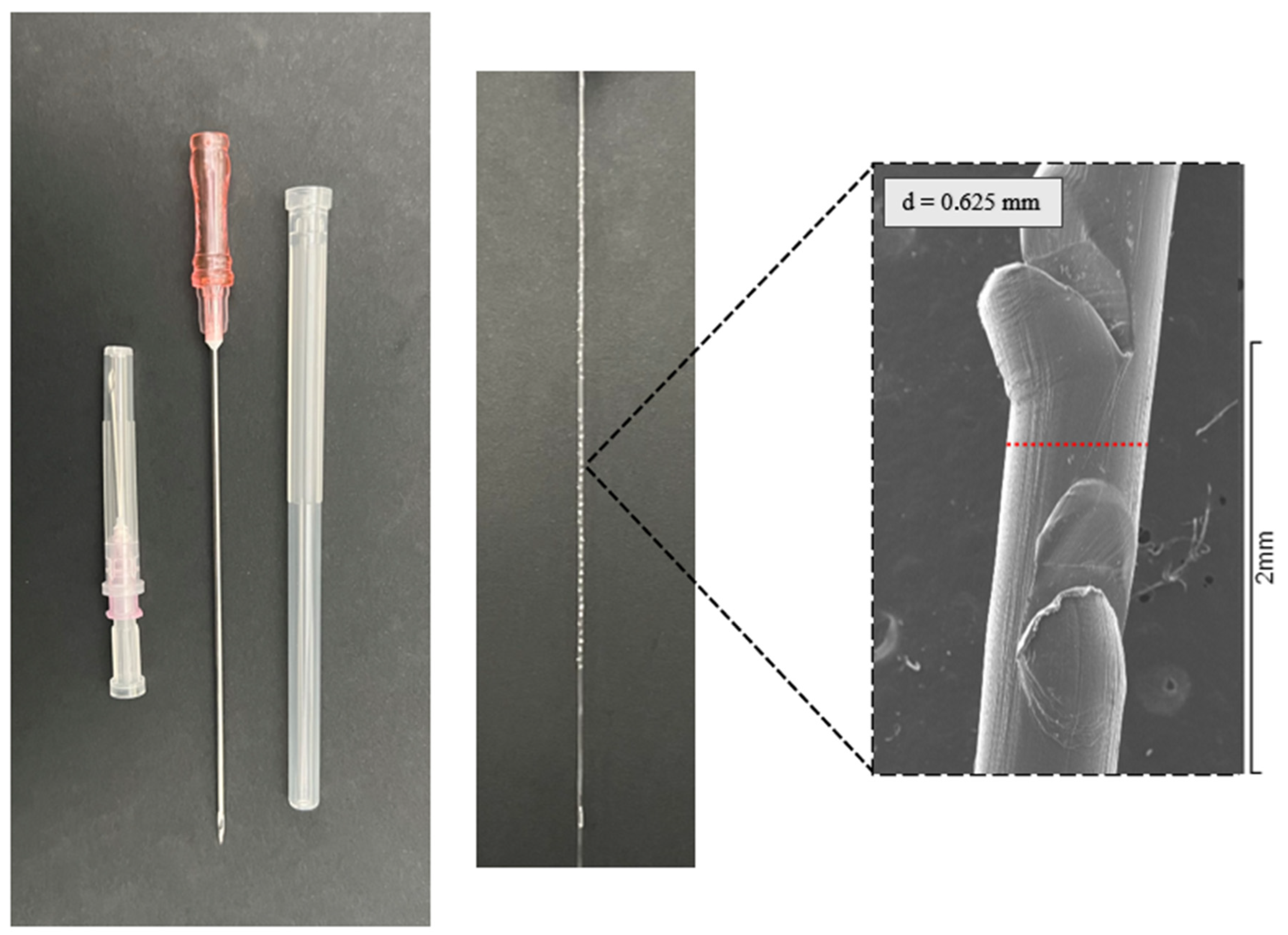
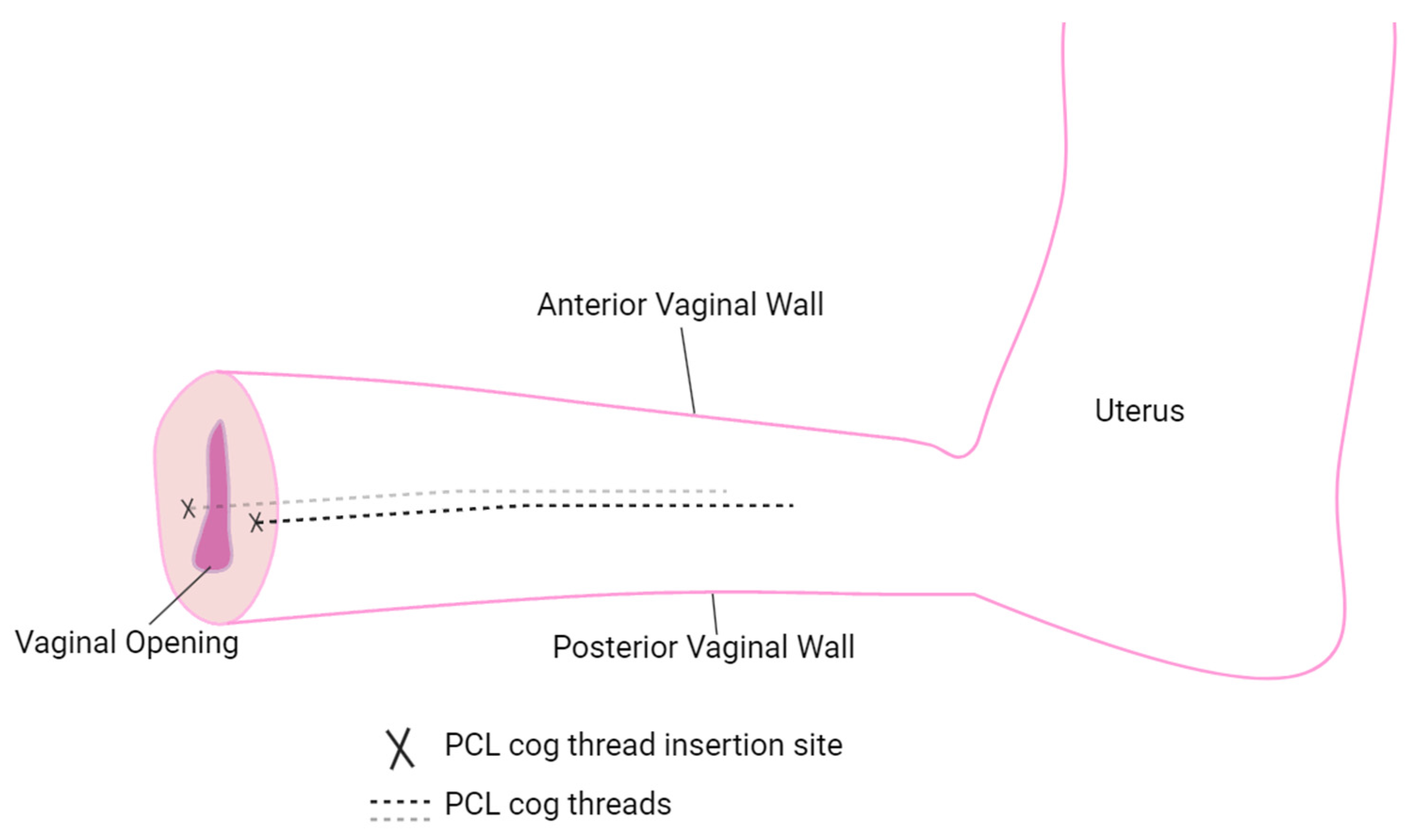
The in vivo minimally invasive procedure was performed on a sheep model, involving the insertion of commercially available biodegradable polycaprolactone (PCL) cog threads as depicted in Figure 1. The threads used in this study are commercially available 360° 4D barb threads (PCL-19G-100), provided in sterile packs by Yastrid (Shanghai, China). Once implanted, these threads are expected to last between two and three years. The filament diameter of the cog threads, as measured from SEM micrographs, is approximately 0.625 mm. Each kit contained two PCL threads preloaded in an L-type introducer cannula with a 19G stainless-steel needle. Threads were advanced longitudinally along the lateral vaginal walls with the barbs oriented to resist withdrawal (distal-to-proximal), following the trajectory illustrated in Figure 2, to enhance anchorage within the submucosal connective tissue. After implantation, incisions (if any) were inspected and hemostasis confirmed; animals recovered under veterinary supervision according to the predefined postoperative protocol.
The cog threads were placed laterally (see Figure 2, marked by “X” symbols) to ensure stable and effective placement. This lateral positioning was strategically chosen to distribute the mechanical load more evenly across the vaginal wall, enhancing the overall structural support. By positioning the threads in this way, we aimed to optimize the reinforcement of the vaginal wall during stress, particularly in areas where natural tissue reinforcement is most needed. This approach also facilitated the gradual remodeling of the vaginal tissue as the PCL threads degraded, allowing for adaptive tissue response while maintaining wall stability. Moreover, the lateral placement was crucial in accommodating the anatomical constraints encountered during the procedure, ensuring both effective placement and long-term mechanical support.
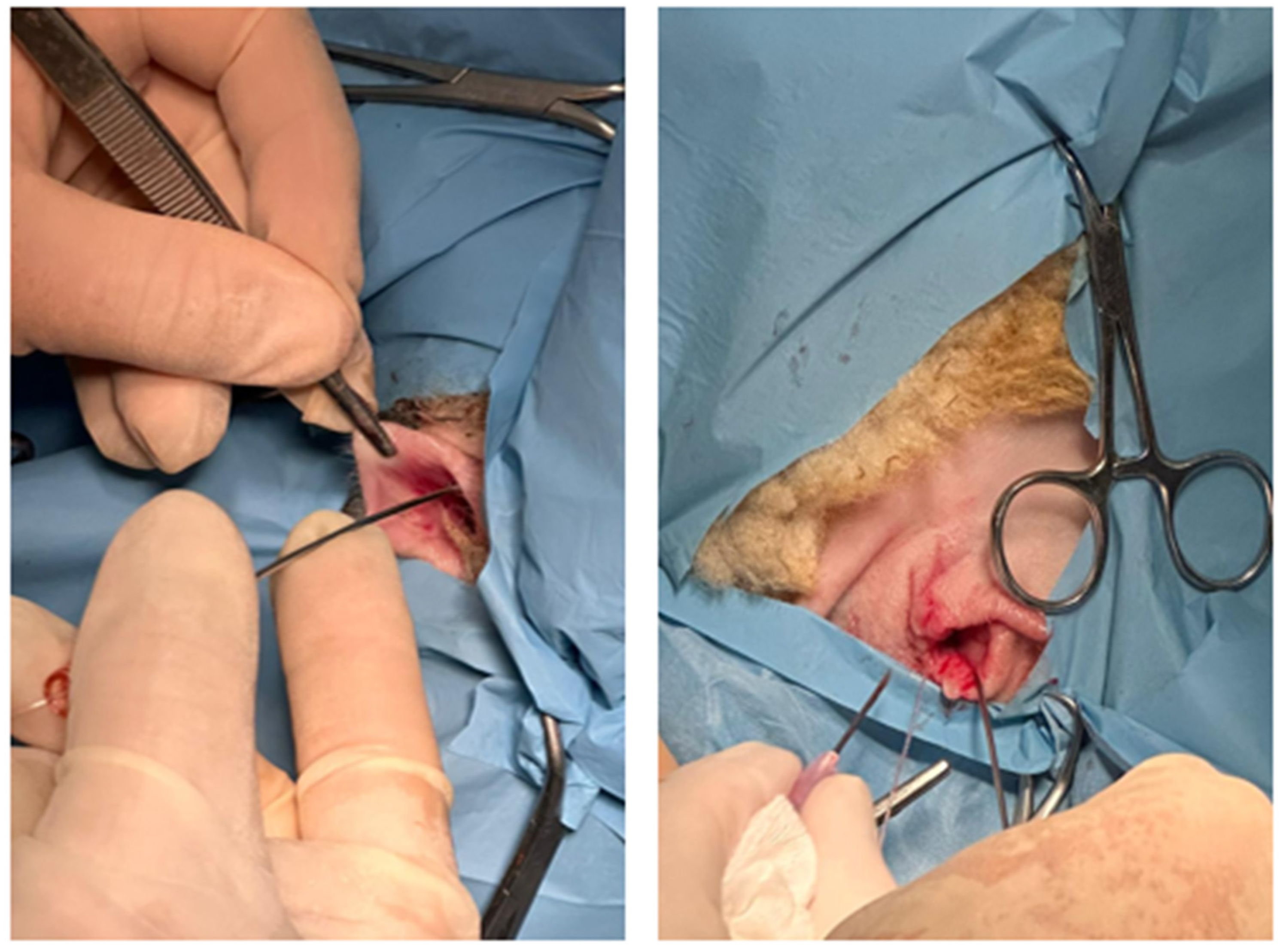
Figure 3 illustrates the surgical procedure used to reinforce the vaginal canal by inserting commercially available cog threads via a cannula. Although these threads are typically used in cosmetic procedures for temporary structural support, they were employed in this study to enhance the strength of the vaginal canal in sheep.

2.3. Intravaginal Force Measurement Device

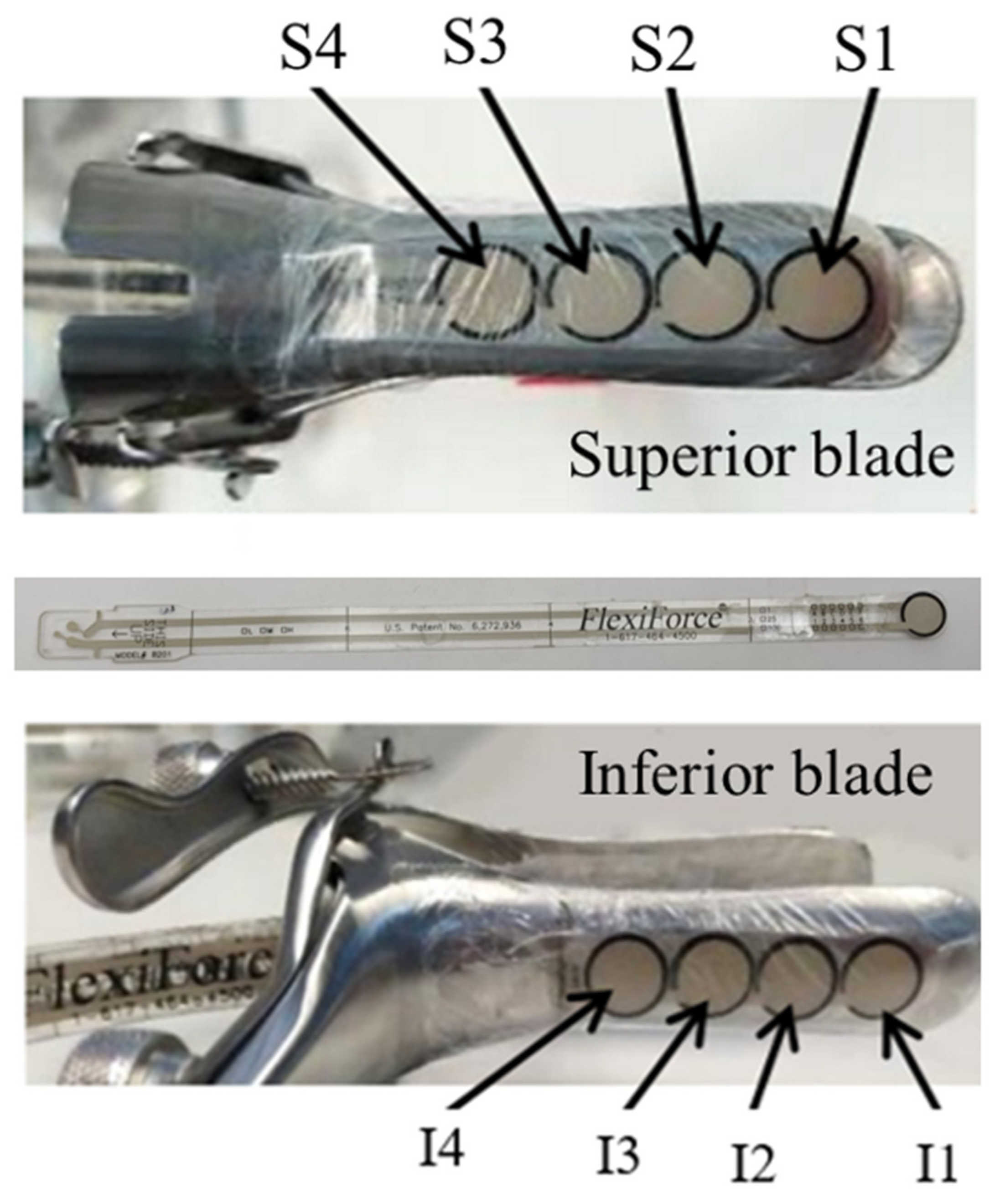
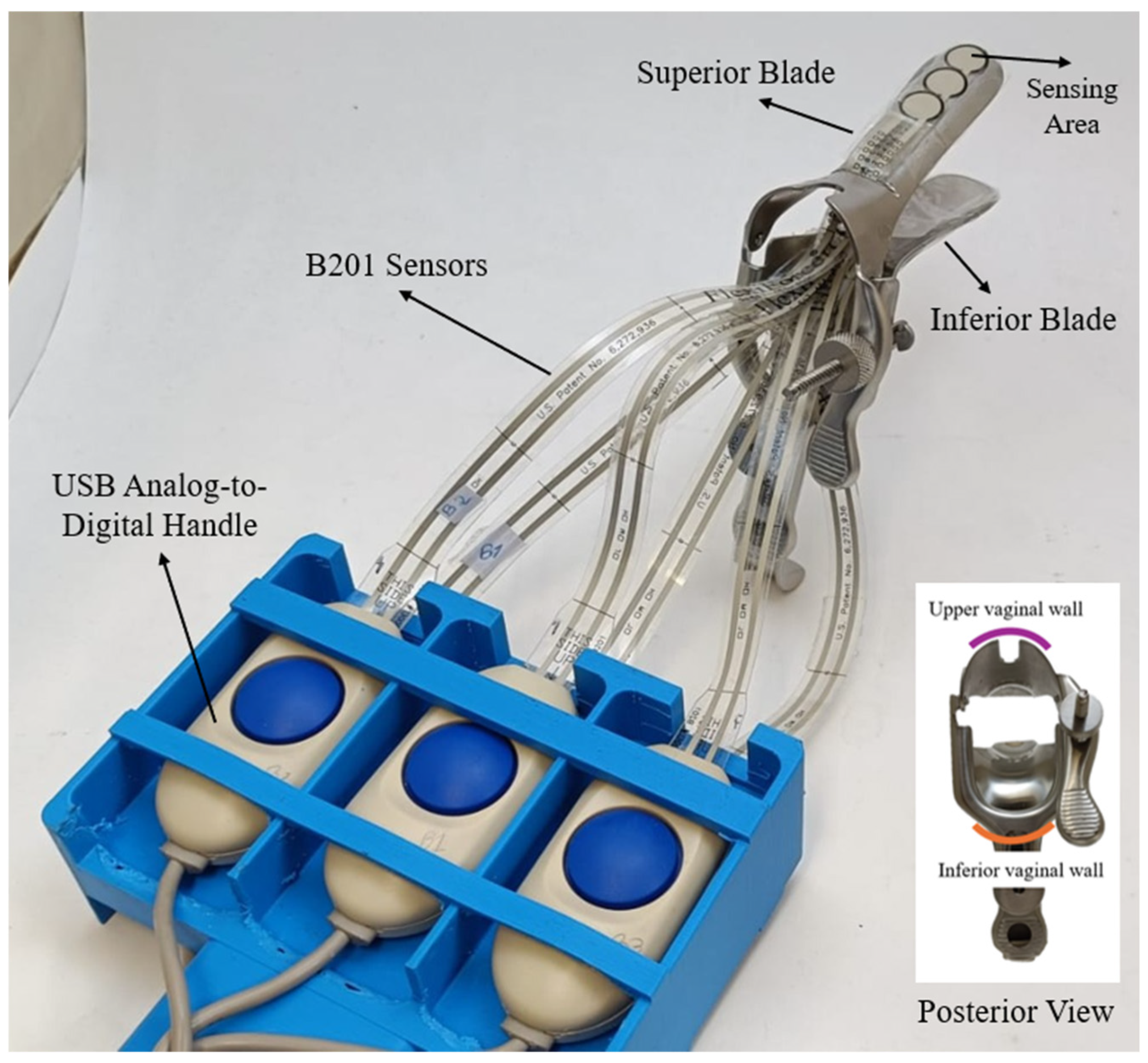
A standard double-bladed stainless-steel speculum served as the structural base of the diagnostic tool. The device locked at controlled openings (0–30 mm) and incorporated eight Tekscan FlexiForce™ B201 (Norwood, MA, USA) piezoresistive sensors (four per blade), as shown in Figure 4. Each sensor underwent a three-point calibration using predetermined loads to establish its resistance-force relationship. Force values were obtained by linear interpolation of the calibration curve within the 0–255 digital range using ELF™ software. Sensors demonstrated linearity across the expected force range (0–10 N), with negligible drift over the study period and an uncertainty of ±3%. These procedures ensured consistent and reliable force measurements [41].
The FlexiForce™ sensors were strategically positioned on the outer surfaces of both speculum blades—four sensors on the superior blade (S1–S4) and four on the inferior blade (I1–I4)—using medical-grade adhesive. Each sensor was coupled to a custom 3D-printed receptor housing designed to ensure precise positioning and facilitate clinical handling during in vivo measurements, as shown in Figure 5. During experimental measurements, sensors S4 and I4 were frequently found to lie outside the vaginal canal due to anatomical constraints. Consequently, only data from the three consistently intracanal sensors per blade (S1–S3 and I1–I3) were included in the final biomechanical analysis. This configuration allowed real-time acquisition of spatially resolved force distribution patterns via USB-connected interface electronics, with a focus on the mechanical interactions between the vaginal tissue and the cog thread reinforcement elements. This sensor-instrumented speculum system builds upon our previously validated prototype developed in earlier studies, which demonstrated consistent measurement performance in bench tests and strong correlation with reference measurement systems [40]. The techniques and calibration protocols used in these prior studies were directly applied in the current study, ensuring methodological consistency. Although the sensor configuration was the same as in previous research, the S4 and I4 sensors were removed in this study. This does not affect the integrity of the data, as each sensor’s calibration and measurement values are independent, with no interference between the sensors.
Previous studies have identified sheep as a suitable large-animal model for pelvic floor and prolapse research due to anatomical and reproductive similarities with the human female pelvis [42]. The vaginal and cervical structures in both species share relevant anatomical features that support the use of sheep for studying human pelvic anatomy and for preclinical testing of medical devices. Several studies have demonstrated the applicability of the ovine model in evaluating vaginal biomechanics [43] and in testing surgical meshes and techniques for POP treatment [44,45,46,47]. Despite some anatomical differences, these similarities render sheep a valuable model for assessing pelvic implants and surgical approaches in preclinical settings [42].
The probe, consisting of the speculum with attached sensors, was inserted to assess the reinforcement of the vaginal canal following the implantation of cog threads. The measured variable, referred to as intravaginal force, represents the resultant contact pressure generated by the interaction between the vaginal wall and the speculum at specific dilation points (0, 10, 20, and 30 mm). Because the animals remained passive during testing, this parameter reflects the mechanical resistance of the wall under standardized expansion, serving as a surrogate for tissue reinforcement rather than intrinsic stiffness. Intravaginal force represents the contact force generated between the speculum blades and the vaginal wall during controlled dilation. It does not directly quantify tissue stiffness or intrinsic biomechanical properties; instead, it serves as a surrogate indicator of local mechanical resistance. Although the present study focused exclusively on in vivo mechanical measurements, integrating biomechanical data with tissue-level information has proven valuable for interpreting mechanical changes. Laganà et al. [48] illustrate how combining mechanical metrics, tissue assessment, and computational modelling provides a more comprehensive understanding of tissue behaviour. This supports the rationale for including biological endpoints in future studies to complement force measurements.
During the measurements, a passive examination of the sheep model was performed with the speculum dilation set at 0 mm, 10 mm, 20 mm, and 30 mm in the medial position. Data were collected at each speculum opening to evaluate the capacity of cog threads to reinforce the vaginal canal and improve its mechanical strength. Before each measurement, the speculum and sensors were covered with a sterile single-use female condom, avoiding direct tissue contact. Calibration and measurements were performed with the barrier in place. Barriers were replaced between animals and time points.
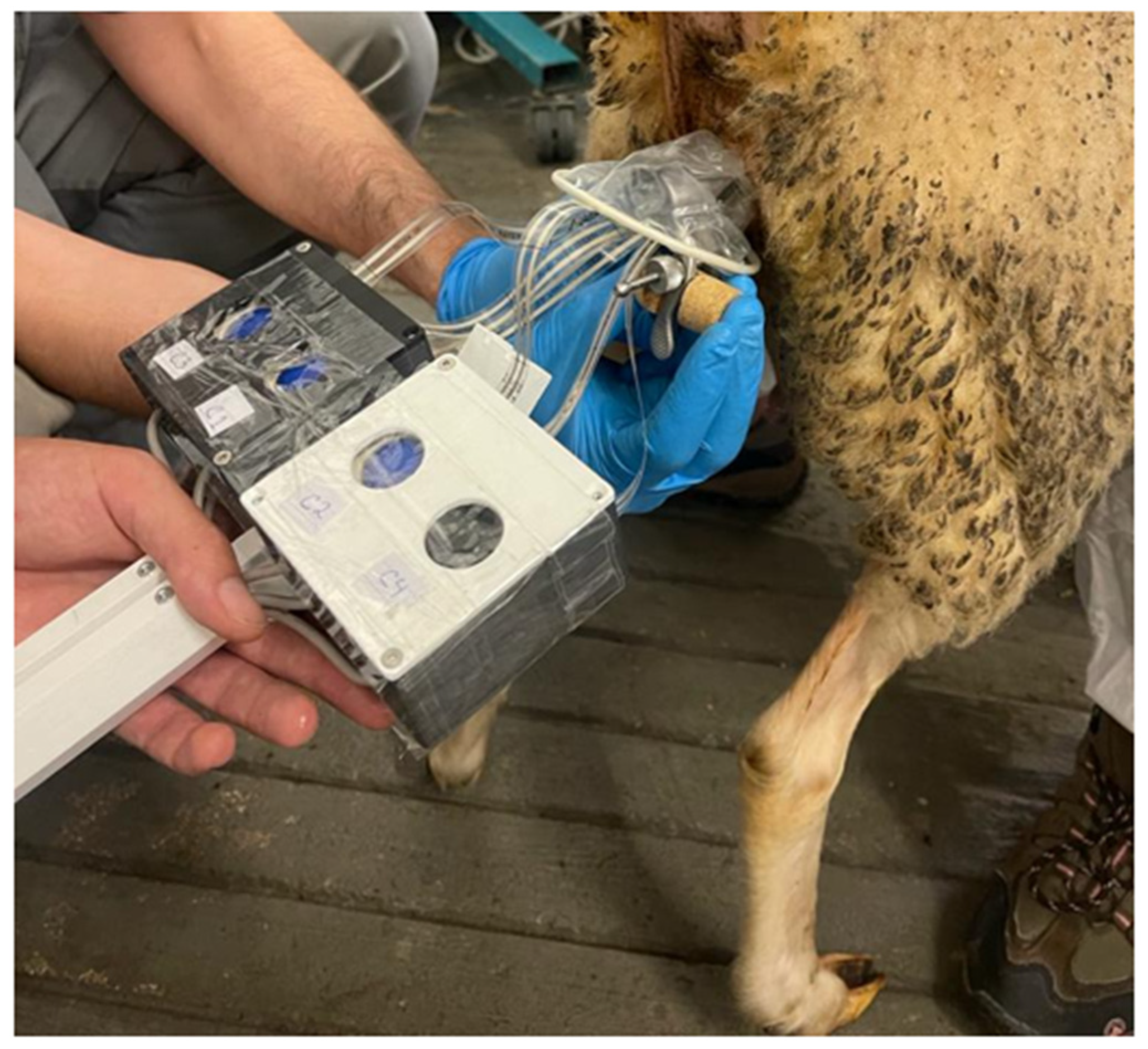
Figure 6 illustrates the insertion and positioning of the instrumented speculum within the sheep’s vaginal canal, with the superior blade placed against the upper vaginal wall and the inferior blade against the lower wall. During the procedure, the sheep remained awake and standing in an upright position.
For each speculum opening, force values were recorded continuously for 50 to 60 s at a sampling rate of eight values per second. Three measurement trials were performed per opening, each separated by a 2 min interval. From each trial, a mean force was calculated based on the high-frequency data. The final intravaginal force value for each opening corresponds to the mean of three trial averages, yielding a total of 15 individual force measurements per opening condition, each considered an independent measurement.

2.4. Statistical Analysis

All data were analyzed using IBM SPSS Statistics 28.0 (New York, NY, USA). A p-value of <0.05 was considered statistically significant. Continuous variables are reported as mean value and standard deviation (SD). Normality was confirmed for all groups using Shapiro–Wilk tests (all p > 0.05). Paired t-tests were used to compare intravaginal forces between pre-implantation (Control) and both post-implantation timepoints (90 and 180 days) within each speculum opening condition (0, 10, 20, and 30 mm). Two-way repeated-measures ANOVA evaluated the main effects of opening size, post-implantation time, and their interaction, while accounting for within-subject correlations across repeated measurements. All p-values are two-tailed.

3. Results

3.1. In Vivo Force Measurements of the Vaginal Wall at Baseline (Pre-Implantation)

Table 1 presents the intravaginal force measurements for the control group (no cog thread reinforcement), recorded under the standardized protocol across the full range of speculum openings (0, 10, 20, and 30 mm). The data indicate that intravaginal force increased as the speculum opening widened, with a force of 0.371 N when closed (0 mm) and 0.695 N at a 20 mm opening, representing an increase of approximately 87%. Statistical analysis using paired t-tests (validated by Shapiro–Wilk normality tests) revealed significantly higher intravaginal forces at 20 mm and 30 mm compared to 0 mm (adjusted p < 0.05), indicating a measurable increase in force with speculum opening. However, when comparing the 30 mm opening to the 20 mm opening, a decrease in force is observed at 30 mm. This pattern is consistent with approaching the canal’s maximal dilation at 30 mm, which may limit further increases in contact force under the standardized maneuver. The intravaginal force measurements at different speculum openings obtained before implantation now serve as the baseline reference for within-subject comparisons with post-implantation values at 90 and 180 days in the same intervention cohort.
Table 2 presents the intravaginal forces recorded on the superior and inferior blades of the speculum at each opening level. Forces increased progressively with speculum dilation in both blades. No statistically significant differences were detected between the superior and inferior blades at any opening (p > 0.05, paired Wilcoxon test). Although the inferior blade tended to register slightly higher forces at larger openings, the magnitude of the difference was modest (maximum variation of approximately 13% at 30 mm). Measurement variability was greater at smaller openings (0–10 mm), likely reflecting normal compliance of the vaginal tissue during the initial stages of dilation. Overall, force distribution remained symmetrical between blades, indicating that the applied dilation does not preferentially increase loading on one vaginal wall over the other.

3.2. In Vivo Intravaginal Force Measurements of the Vaginal Wall After Reinforcement

Intravaginal force measurements were obtained in the same intervention cohort (with PCL cog thread reinforcement) to evaluate the effect of the threads on the vaginal canal under standardized loading. Measurements were recorded at four speculum openings (0, 10, 20, and 30 mm) at 90 and 180 days post-implantation.
Table 3 presents the mean intravaginal force at various speculum openings and post-implantation time points (90 and 180 days) with PCL cog-thread reinforcement. These measurements reflect the effect of the cog threads on the vaginal canal under standardized loading. The largest between-group difference was observed at 0 mm, with a +76.0% change at 90 days and +55.3% at 180 days.
Two-way repeated measures ANOVA showed significant main effects of speculum opening (p = 0.0032) and post-implantation time (p = 0.0025), confirming that force values depend on distension level and elapsed time after implantation. The group × time interaction was not significant (p = 0.7474), indicating that the effect of time on force measurements was consistent across all opening levels. Subject variability was also statistically significant (p = 0.0136), reflecting individual differences in the response. Among the main factors, speculum opening accounted for the largest portion of variance (34.83%), followed by subject differences (26.45%) and time effects (15.21%). The non-significant interaction suggests a broadly uniform temporal pattern regardless of distension level. While compatible with gradual polymer resorption or tissue remodeling, this interpretation remains hypothesis-generating because degradation was not directly measured in this study.
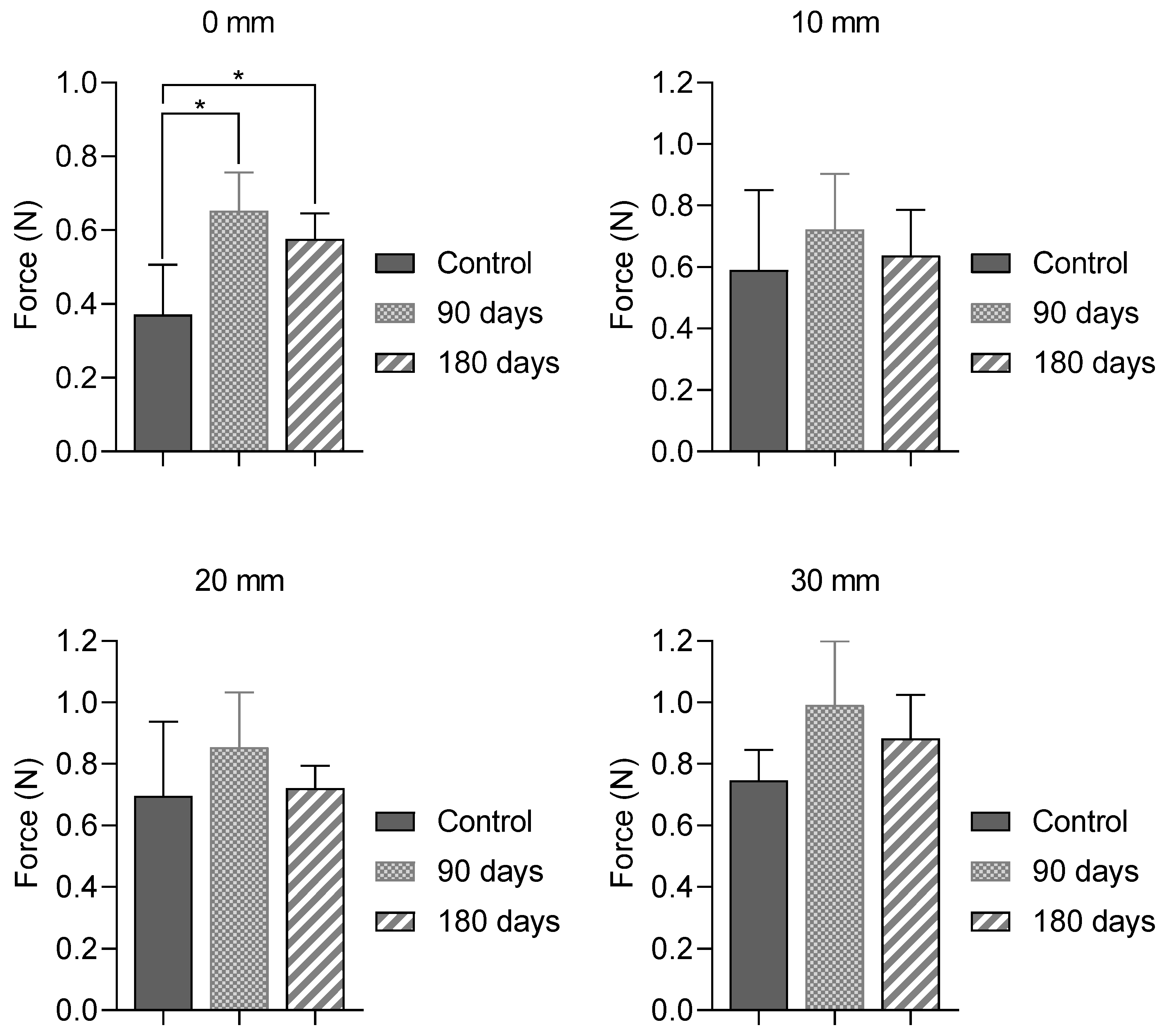
Figure 7 presents the results from the tables above, organized by different speculum openings to highlight the effect of cog thread insertion in the vaginal canal. The plots show higher intravaginal contact forces at 90 and 180 days post-implantation compared to baseline, consistent with a measurable mechanical effect of PCL cog-thread reinforcement, most evident at 0 mm. Planned within-subject contrasts revealed a highly specific opening-dependent pattern. Significant reinforcement effects were exclusively observed at 0 mm opening (90 d: p = 0.0003; 180 d: p = 0.0035), while no significant differences were detected at distended openings (10–30 mm). Based on these observations, we hypothesize that the reinforcement mechanism operates primarily under minimal distension, with reduced efficacy during tissue stretching. The limited sample size warrants caution in interpreting these opening-dependent effects.

4. Discussion

The aim of this study was to evaluate the biomechanical performance of biodegradable PCL cog threads in reinforcing ovine vaginal tissue. To this end, cog threads were implanted in sheep, and intravaginal forces were measured using a custom-engineered device previously validated in earlier work [40]. The device, equipped with individually calibrated, high-sensitivity sensors, enabled localized quantification of intravaginal force under standardized speculum dilation, providing a reproducible readout of passive vaginal-wall response. Intravaginal force should be understood as an instrumental contact force rather than a direct measure of tissue stiffness, functioning as a contextual surrogate of mechanical resistance under standardized loading.
Baseline intravaginal force measurements in the non-reinforced condition showed a clear trend of increasing force with progressive speculum opening, from 0 mm to 30 mm. This pattern reflects the expected passive biomechanical response of the vaginal canal to controlled expansion, in which tissue resistance rises as dilation increases. Statistical analysis confirmed higher forces at larger openings compared with 0 mm, indicating that the standardized maneuver effectively engages the vaginal walls and generates a measurable mechanical response. These baseline data provide the reference against which post-implantation changes are interpreted.
Previous in vivo approaches to vaginal distensibility, such as balloon inflation with pressure transducers [49,50], have mainly provided global measures of resistance. In contrast, the present intravaginal device allows localized force quantification along the canal, offering a more direct characterization of instrument–tissue interaction during controlled dilation. This contributes to a more detailed understanding of passive vaginal-wall mechanics and may support future developments in pelvic assessment and device testing.
Comparative studies have shown that, despite species-specific differences, the ovine pelvic cavity shares several relevant anatomical and biomechanical characteristics with the human vagina, including similar wall structure, tissue elasticity and stress-distribution behaviour [44,46,51]. These similarities support the use of sheep as a preclinical model for studying vaginal biomechanics and evaluating implants. However, important distinctions must be acknowledged. The human vaginal canal is longer and more flexible than the ovine canal, which includes funnel-shaped cervical rings that alter force-distribution patterns. In addition, sheep do not perform voluntary pelvic or abdominal straining, and physiological loading conditions such as Valsalva cannot be reproduced in this model. These factors limit direct translatability and may influence tissue-remodelling kinetics under functional loading. For these reasons, the present study focuses on passive, quasi-static measurements of reinforcement. Future studies in human subjects—where controlled Valsalva and dynamic pelvic responses can be assessed—will be essential to complement the passive findings reported here and to determine the functional relevance of biodegradable PCL cog-thread reinforcement under clinically realistic conditions.
After implantation of the cog threads, an increase in intravaginal force was observed, consistent with a measurable mechanical effect under standardized loading, most evident at minimal dilation (0 mm). This behaviour is compatible with the expected performance of barbed cog threads, whose self-anchoring design enhances tissue–implant friction and limits local slippage [30,31]. However, the interpretation of this increase must be cautious. The present study did not include histological, microstructural or polymer-degradation analyses, and the ovine model cannot reproduce physiological pelvic maneuvers. Increases in intravaginal force may therefore reflect a combination of passive mechanical reinforcement from the threads and biological responses such as local inflammation, or edema or early scar formation. Because tissue-level endpoints were not assessed, the observed increase cannot be considered definitive evidence of structural or clinically meaningful reinforcement and should be regarded as hypothesis-generating. Given these limitations, the findings should be interpreted as exploratory and preliminary, providing indications rather than definitive confirmation of the underlying biological or degradation processes.
At 180 days post-implantation, force values remained above baseline but were lower than at 90 days, indicating attenuation of the mechanical effect over time. While this reduction is compatible with the gradual degradation of PCL cog threads described in previous experimental studies using the same design [27,28,29,52], degradation was not directly measured in the present work. The two-way repeated-measures ANOVA confirmed significant effects of opening level and post-implantation time on force values, with no significant interaction, suggesting a broadly consistent attenuation pattern across openings. Nonetheless, without direct evaluation of polymer degradation or tissue remodelling, the temporal evolution observed here must be interpreted as consistent with, but not confirmatory of, progressive cog-thread degradation and tissue adaptation.
Several limitations should be noted. The small sample size (n = 5) in this pilot study, justified by ethical constraints (3Rs principle) and the exploratory nature of the work, limits statistical power and increases the risk of Type II error. Although consistent trends were observed across time points in a within-subject design, larger cohorts, informed by formal power analysis, will be necessary to validate these preliminary findings and to better account for inter-individual anatomical variability. In addition, intravaginal force measurements were not obtained immediately after implantation. Because the animals remained under anesthesia and thread placement was not yet stabilised, measurements at that time could have introduced procedural variability and risked altering thread positioning. As a result, very early mechanical changes could not be assessed; incorporating immediate post-implantation measurements in future work would be valuable to capture the initial temporal evolution of the response. Finally, the lack of histological, microstructural and chemical-degradation endpoints constrains interpretation of the biological processes underlying the observed mechanical changes.
Despite these limitations, the study demonstrates the mechanical feasibility of biodegradable PCL cog threads as a temporary passive reinforcement strategy in vivo. Independent experimental work using the same PCL cog-thread design has shown progressive reductions in mechanical strength over time, consistent with the bulk-erosion degradation profile of PCL [27,28,29,52]. This external evidence provides mechanistic context for the attenuation seen in the present in vivo measurements, while underlining the need for integrated mechanical–biological assessment in future studies.

5. Conclusions

This study demonstrated that vaginal reinforcement with surgically inserted PCL cog threads has the potential to serve as a more conservative approach for delaying and managing POP.
Although not the primary focus of this work, the intravaginal measurement device employed—previously tested and validated—proved effective once again in assessing variations in intravaginal force. The recorded forces progressively increased with speculum dilation, accurately reflecting the natural resistance of the vaginal wall.
Beyond its diagnostic applications, this study explored the use of biodegradable PCL cog threads for vaginal wall reinforcement. The in vivo results showed a significant increase in tissue strength across various speculum openings, suggesting that the cog threads provided temporary structural support while gradually integrating with the surrounding tissue. This indicates that PCL cog threads could offer a safer and more adaptable alternative to permanent synthetic meshes.
In summary, by integrating an innovative diagnostic tool with a temporary reinforcement strategy, this approach presents a minimally invasive, patient-centered solution for early POP intervention. It has the potential to reduce recurrence rates and improve long-term patient outcomes. However, further research is needed to optimize the degradation profile and biocompatibility of PCL cog threads, particularly in human tissues, to ensure clinical safety and long-term efficacy.
Future studies should focus on refining the ergonomic design of the diagnostic device, enhancing sensor precision, and evaluating its performance across diverse anatomical contexts. Additive manufacturing techniques could allow for patient-specific customization, further improving clinical applicability. Ultimately, this study advances both the diagnosis and treatment of POP by combining enhanced diagnostic accuracy with temporary biomechanical support. These innovations may pave the way for real-time monitoring and personalized interventions, potentially reducing the need for repeat surgeries and improving patient outcomes over the long term.

Author Contributions

Conceptualization, F.P. and M.E.S.; methodology, F.P., M.E.S. and A.F.; validation, F.P., M.E.S. and A.F.; formal analysis, M.E.S., A.F., A.C.M. and N.A.; investigation F.P., M.E.S. and A.F.; resources, M.E.S., A.F. and A.C.M.; writing—original draft preparation, F.P., M.E.S. and A.F.; writing—review and editing, All authors; supervision, M.E.S., A.F., A.C.M. and N.A.; project administration, M.E.S. and A.F.; funding acquisition, M.E.S., A.F., A.C.M. and N.A. All authors have read and agreed to the published version of the manuscript.

Funding

The research received funding from FCT, project PRECOGFIL-PTDC/EMD-EMD/2229/2020, and LA/P/0079/2020, through INEGI, under LAETA. This work was financially supported by the Em-prego Científico 2021.00077.CEECIND, financed through FCT. Additionally, this work was sup-ported by the FCT PhD grant 2023.00640.BD.

Institutional Review Board Statement

The animal study was conducted in accordance with national and European regulations. The study was approved by the Bem-Estar Animal (ORBEA) of ICBAS, University of Porto (Project No. 406/2021/ORBEA; Approval Date: 1 September 2022).

Informed Consent Statement

Not applicable.

Data Availability Statement

Data is contained within the article.

Acknowledgments

The authors gratefully acknowledge the funding by Ministério da Ciência Tecnologia, e Ensino Superior, FCT, Portugal, under grants 2023.00640.BD, project PRECOG-FIL-PTDC/EMD-EMD/2229/2020 and from Stimulus of Scientific Employment 2021.00077.CEECIND. This work was supported by FCT, through INEGI, under LAETA, project LA/P/0079/2020.

Conflicts of Interest

The authors declare that there is no financial, professional or other personal interest of any nature or kind in any product, service and/or company that could be constructed as influencing the position.

References

  1. Roch, M.; Gaudreault, N.; Cyr, M.-P.; Venne, G.; Bureau, N.J.; Morin, M. The Female Pelvic Floor Fascia Anatomy: A Systematic Search and Review. Life 2021, 11, 900. [Google Scholar] [CrossRef]
  2. Wu, X.; Liu, X.; Li, T. Potential Molecular Targets for Intervention in Pelvic Organ Prolapse. Front. Med. 2023, 10, 1158907. [Google Scholar] [CrossRef]
  3. Haylen, B.T.; de Ridder, D.; Freeman, R.M.; Swift, S.E.; Berghmans, B.; Lee, J.; Monga, A.; Petri, E.; Rizk, D.E.; Sand, P.K.; et al. An International Urogynecological Association (IUGA)/International Continence Society (ICS) Joint Report on the Terminology for Female Pelvic Floor Dysfunction. Neurourol. Urodyn. 2010, 29, 4–20. [Google Scholar] [CrossRef]
  4. Raju, R.; Linder, B.J. Evaluation and Management of Pelvic Organ Prolapse. Mayo Clin. Proc. 2021, 96, 3122–3129. [Google Scholar] [CrossRef]
  5. Lamblin, G.; Delorme, E.; Cosson, M.; Rubod, C. Cystocele and Functional Anatomy of the Pelvic Floor: Review and Update of the Various Theories. Int. Urogynecol. J. 2016, 27, 1297–1305. [Google Scholar] [CrossRef]
  6. Laganà, A.S.; La Rosa, V.L.; Rapisarda, A.M.C.; Vitale, S.G. Pelvic Organ Prolapse: The Impact on Quality of Life and Psychological Well-Being. J. Psychosom. Obstet. Gynecol. 2018, 39, 164–166. [Google Scholar] [CrossRef]
  7. Guan, Y.; Han, J. Pelvic Organ Prolapse According to Educational Level. Res. Square 2022. [Google Scholar] [CrossRef]
  8. Zumrutbas, A.E. Understanding Pelvic Organ Prolapse: A Comprehensive Review of Etiology, Epidemiology, Comorbidities, and Evaluation. Soc. Int. Urol. J. 2025, 6, 6. [Google Scholar] [CrossRef]
  9. Wang, B.; Chen, Y.; Zhu, X.; Wang, T.; Li, M.; Huang, Y.; Xue, L.; Zhu, Q.; Gao, X.; Wu, M. Global Burden and Trends of Pelvic Organ Prolapse Associated with Aging Women: An Observational Trend Study from 1990 to 2019. Front. Public Health 2022, 10, 975829. [Google Scholar] [CrossRef]
  10. Walker, G.J.A.; Gunasekera, P. Pelvic Organ Prolapse and Incontinence in Developing Countries: Review of Prevalence and Risk Factors. Int. Urogynecol. J. 2011, 22, 127–135. [Google Scholar] [CrossRef] [PubMed]
  11. DeLancey, J.O.L. The Hidden Epidemic of Pelvic Floor Dysfunction: Achievable Goals for Improved Prevention and Treatment. Am. J. Obstet. Gynecol. 2005, 192, 1488–1495. [Google Scholar] [CrossRef]
  12. Hendrix, S.L.; Clark, A.; Nygaard, I.; Aragaki, A.; Barnabei, V.; McTiernan, A. Pelvic Organ Prolapse in the Women’s Health Initiative: Gravity and Gravidity. Am. J. Obstet. Gynecol. 2002, 186, 1160–1166. [Google Scholar] [CrossRef] [PubMed]
  13. Dietz, H.P. Pelvic Organ Prolapse—A Review, 7th ed.; Australian Family Physician: Melbourne, Australian, 2015; Volume 44. [Google Scholar]
  14. Tunn, R.; Baeßler, K.; Knüpfer, S.; Hampel, C. Urinary Incontinence and Pelvic Organ Prolapse in Women. Dtsch. Arztebl. Int. 2023, 120, 71. [Google Scholar] [CrossRef]
  15. Collins, S.; Lewicky-Gaupp, C. Pelvic Organ Prolapse. Gastroenterol. Clin. N. Am. 2022, 51, 177–193. [Google Scholar] [CrossRef]
  16. Barber, M.D.; Maher, C. Epidemiology and Outcome Assessment of Pelvic Organ Prolapse. Int. Urogynecol. J. 2013, 24, 1783–1790. [Google Scholar] [CrossRef]
  17. Guler, Z.; Roovers, J.P. Role of Fibroblasts and Myofibroblasts on the Pathogenesis and Treatment of Pelvic Organ Prolapse. Biomolecules 2022, 12, 94. [Google Scholar] [CrossRef]
  18. Fayyad, A.; Harris, R.; Ibrahim, S. Two-Year Anatomical and Functional Outcomes of Laparoscopic Sacrocolpopexy Using Light-Weight Y Shaped Mesh for Post Hysterectomy Vaginal Prolapse. Eur. J. Obstet. Gynecol. Reprod. Biol. 2022, 270, 139–143. [Google Scholar] [CrossRef]
  19. Kiyosaki, K.; Ackerman, A.L.; Histed, S.; Sevilla, C.; Eilber, K.; Maliski, S.; Rogers, R.G.; Anger, J. Patients’ Understanding of Pelvic Floor Disorders. Female Pelvic Med. Reconstr. Surg. 2012, 18, 137–142. [Google Scholar] [CrossRef]
  20. Lee, U.; Raz, S. Emerging Concepts for Pelvic Organ Prolapse Surgery: What Is Cure? Curr. Urol. Rep. 2011, 12, 62–67. [Google Scholar] [CrossRef] [PubMed]
  21. Subramanian, D.; Szwarcensztein, K.; Mauskopf, J.A.; Slack, M.C. Rate, Type, and Cost of Pelvic Organ Prolapse Surgery in Germany, France, and England. Eur. J. Obstet. Gynecol. Reprod. Biol. 2009, 144, 177–181. [Google Scholar] [CrossRef] [PubMed]
  22. Mascarenhas, T.; Mascarenhas-Saraiva, M.; Ricon-Ferraz, A.; Nogueira, P.; Lopes, F.; Freitas, A. Pelvic Organ Prolapse Surgical Management in Portugal and FDA Safety Communication Have an Impact on Vaginal Mesh. Int. Urogynecol. J. 2015, 26, 113–122. [Google Scholar] [CrossRef]
  23. FDA. FDA Takes Action to Protect Womens Health, Orders Manufacturers of Surgical Mesh Intended for Transvaginal Repair of Pelvic Organ Prolapse to Stop Selling All Devices. FDA 2019, 11, 58. [Google Scholar]
  24. da Cunha, M.N.B.; Rynkevic, R.; da Silva, M.E.T.; Brandão, A.F.M.d.S.; Alves, J.L.; Fernandes, A.A. Melt Electrospinning Writing of Mesh Implants for Pelvic Organ Prolapse Repair. 3D Print. Addit. Manuf. 2022, 9, 389–398. [Google Scholar] [CrossRef]
  25. Sterk, S.; Silva, M.E.T.; Fernandes, A.A.; Huß, A.; Wittek, A. Development of New Surgical Mesh Geometries with Different Mechanical Properties Using the Design Freedom of 3D Printing. J. Appl. Polym. Sci. 2023, 140, e54687. [Google Scholar] [CrossRef]
  26. Hympánová, L.; Rynkevic, R.; Román, S.; Mori da Cunha, M.G.M.C.; Mazza, E.; Zündel, M.; Urbánková, I.; Gallego, M.R.; Vange, J.; Callewaert, G.; et al. Assessment of Electrospun and Ultra-Lightweight Polypropylene Meshes in the Sheep Model for Vaginal Surgery. Eur. Urol. Focus 2020, 6, 190–198. [Google Scholar] [CrossRef]
  27. Vaz, M.F.; Martins, J.A.P.; Pinheiro, F.; Ferreira, N.M.; Brandão, S.; Alves, J.L.; Fernandes, A.A.; Parente, M.P.L.; Silva, M.E. Optimizing Melt Electrowriting Prototypes for Printing Non—Medical and Medical Grade Polycaprolactone Meshes in Prolapse Repair. J. Appl. Polym. Sci. 2025, 142, 9670. [Google Scholar] [CrossRef]
  28. Vaz, M.F.R.; Martins, J.A.P.; Pinheiro, F.; Ferreira, N.M.; Brandão, S.; Alves, J.L.; Fernandes, A.A.; Parente, M.P.L.; Silva, M.E.T. Medical- and Non-Medical-Grade Polycaprolactone Mesh Printing for Prolapse Repair: Establishment of Melt Electrowriting Prototype Parameters. Appl. Sci. 2024, 14, 9670. [Google Scholar] [CrossRef]
  29. Rynkevic, R.; Silva, M.E.T.; Martins, P.; Mascarenhas, T.; Alves, J.L.; Fernandes, A.A. Characterisation of Polycaprolactone Scaffolds Made by Melt Electrospinning Writing for Pelvic Organ Prolapse Correction—A Pilot Study. Mater. Today Commun. 2022, 32, 104101. [Google Scholar] [CrossRef]
  30. Soares, C.; Martins, P.; Silva, E.; Hympanova, L.; Rynkevic, R. Cog Threads for Transvaginal Prolapse Repair: Ex-Vivo Studies of a Novel Concept. Surgeries 2022, 3, 101–110. [Google Scholar] [CrossRef]
  31. Greenberg, J.A.; Goldman, R.H. Barbed Suture: A Review of the Technology and Clinical Uses in Obstetrics and Gynecology. Rev. Obstet. Gynecol. 2013, 6, 107–115. [Google Scholar] [PubMed]
  32. Gilyadova, A.; Ishchenko, A.; Puchkova, E.; Mershina, E.; Petrovichev, V.; Reshetov, I. Diagnostic Value of Dynamic Magnetic Resonance Imaging (DMRI) of the Pelvic Floor in Genital Prolapses. Biomedicines 2023, 11, 2849. [Google Scholar] [CrossRef] [PubMed]
  33. DeLANCEY, J.O.L. Anatomy and Biomechanics of Genital Prolapse. Clin. Obstet. Gynecol. 1993, 36, 897–909. [Google Scholar] [CrossRef] [PubMed]
  34. Braga, A.; Caccia, G. Pelvic Organ Prolapse: Pathophysiology and Epidemiology. In Management of Pelvic Organ Prolapse: Current Controversies; Springer: Berlin/Heidelberg, Germany, 2018; pp. 19–30. [Google Scholar]
  35. Samantray, S.R.; Mohapatra, I. Study of the Relationship Between Pelvic Organ Prolapse Quantification (POP-Q) Staging and Decubitus Ulcer in Pelvic Organ Prolapse. Cureus 2021, 13, e12443. [Google Scholar] [CrossRef]
  36. Egorov, V.; van Raalte, H.; Sarvazyan, A.P. Vaginal Tactile Imaging. IEEE Trans. Biomed. Eng. 2010, 57, 1736–1744. [Google Scholar] [CrossRef] [PubMed]
  37. Guaderrama, N.M.; Nager, C.W.; Liu, J.; Pretorius, D.H.; Mittal, R.K. The Vaginal Pressure Profile. Neurourol. Urodyn. 2005, 24, 243–247. [Google Scholar] [CrossRef]
  38. Ferreira, L.A.; Araújo, F.M.; Mascarenhas, T.; Natal Jorge, R.M.; Fernandes, A.A. Dynamic Assessment of Women Pelvic Floor Function by Using a Fiber Bragg Grating Sensor System. In Proceedings of the SPIE: Optical Fibers and Sensors for Medical Diagnostics and Treatment Applications VI, San Jose, CA, USA, 21–22 January 2006; Gannot, I., Ed.; p. 60830H. [Google Scholar] [CrossRef]
  39. Parkinson, L.A.; Gargett, C.E.; Young, N.; Rosamilia, A.; Vashi, A.V.; Werkmeister, J.A.; Papageorgiou, A.W.; Arkwright, J.W. Real-Time Measurement of the Vaginal Pressure Profile Using an Optical-Fiber-Based Instrumented Speculum. J. Biomed. Opt. 2016, 21, 127008. [Google Scholar] [CrossRef]
  40. Pinheiro, F.; Silva, M.E.; Fernandes, A.A. Prototype of a Medical Device for Measuring Intravaginal Forces. In Proceedings of the 2023 IEEE 7th Portuguese Meeting on Bioengineering (ENBENG), Porto, Portugal, 22–23 June 2023; IEEE: Piscataway, NJ, USA; pp. 124–127. [Google Scholar]
  41. Tekscan, Inc. FlexiForce™ Sensor Model ELF. Datasheet Rev I. Available online: https://www.tekscan.com/sites/default/files/resources/FLX-Datasheet-ELF-RevI.pdf (accessed on 4 November 2025).
  42. Seifalian, A.; Digesu, A.; Khullar, V. The Use of Animal Models in Preclinical Investigations for the Development of a Surgical Mesh for Pelvic Organ Prolapse. Int. Urogynecol. J. 2024, 35, 741–758. [Google Scholar] [CrossRef]
  43. Rubod, C.; Boukerrou, M.; Brieu, M.; Dubois, P.; Cosson, M. Biomechanical Properties of Vaginal Tissue. Part 1: New Experimental Protocol. J. Urol. 2007, 178, 320–325. [Google Scholar] [CrossRef]
  44. de Tayrac, R.; Alves, A.; Thérin, M. Collagen-Coated vs Noncoated Low-Weight Polypropylene Meshes in a Sheep Model for Vaginal Surgery. A Pilot Study. Int. Urogynecol. J. 2007, 18, 513–520. [Google Scholar] [CrossRef]
  45. Deprest, J.; Zheng, F.; Konstantinovic, M.; Spelzini, F.; Claerhout, F.; Steensma, A.; Ozog, Y.; De Ridder, D. The Biology behind Fascial Defects and the Use of Implants in Pelvic Organ Prolapse Repair. Int. Urogynecol. J. 2006, 17, 16–25. [Google Scholar] [CrossRef]
  46. Krause, H.; Goh, J. Sheep and Rabbit Genital Tracts and Abdominal Wall as an Implantation Model for the Study of Surgical Mesh. J. Obstet. Gynaecol. Res. 2009, 35, 219–224. [Google Scholar] [CrossRef] [PubMed]
  47. Rezapour, M.; Novara, G.; Meier, P.A.; Holste, J.; Landgrebe, S.; Artibani, W. A 3-Month Preclinical Trial to Assess the Performance of a New TVT-like Mesh (TVTx) in a Sheep Model. Int. Urogynecol. J. 2006, 18, 183–187. [Google Scholar] [CrossRef] [PubMed]
  48. Laganà, F.; Pellicanò, D.; Arruzzo, M.; Pratticò, D.; Pullano, S.A.; Fiorillo, A.S. FEM-Based Modelling and AI-Enhanced Monitoring System for Upper Limb Rehabilitation. Electronics 2025, 14, 2268. [Google Scholar] [CrossRef]
  49. Dubik, J.; Alperin, M.; De Vita, R. The Biomechanics of the Vagina: A Complete Review of Incomplete Data. npj Women’s Health 2025, 3, 4. [Google Scholar] [CrossRef]
  50. Van Kuiken, M.E.; Suskind, A.M. Complications of the Use of Synthetic Mesh Materials in Stress Urinary Incontinence and Pelvic Organ Prolapse. In Female Genitourinary and Pelvic Floor Reconstruction; Springer International Publishing: Cham, Switzerland, 2023; pp. 569–592. [Google Scholar]
  51. Ulrich, D.; Edwards, S.L.; Letouzey, V.; Su, K.; White, J.F.; Rosamilia, A.; Gargett, C.E.; Werkmeister, J.A. Regional Variation in Tissue Composition and Biomechanical Properties of Postmenopausal Ovine and Human Vagina. PLoS ONE 2014, 9, e104972. [Google Scholar] [CrossRef]
  52. Pinheiro, F.; de Jesus, A.M.P.; Maurício, A.C.; Alves, N.; Fernandes, A.A.; da Silva, M.E.T. Biomechanical Evaluation of Biodegradable PCL Cog Threads for Prolapse Rehabilitation. Proc. Inst. Mech. Eng. H 2025, 239, 687–696. [Google Scholar] [CrossRef]
Figure 1. PCL biodegradable cog thread and its corresponding cannula, along with a representative SEM image showing the sample’s surface morphology.
Applsci 15 12677 g001
Figure 2. The diagram illustrates the insertion sites of PCL cog threads for vaginal wall reinforcement.
Applsci 15 12677 g002
Figure 3. Surgical insertion of a PCL cog thread for vaginal wall reinforcement. (Left): Cannula placement within the vaginal tissue. (Right): Following cannula withdrawal, the deployed cog thread remains anchored, providing structural support to the vaginal canal.
Applsci 15 12677 g003
Figure 4. FlexiForce sensors used in intravaginal measurements and the speculum blades; upper speculum blade with the four sensors attached (S1 to S4) and lower speculum blade with the four sensors attached (I1 to I4).
Applsci 15 12677 g004
Figure 5. Instrumented speculum used for intravaginal force measurements. The posterior view highlights the anatomical positioning of the blades in relation to the vaginal walls.
Applsci 15 12677 g005
Figure 6. Instrumented speculum used for intravaginal force measurements, illustrating the insertion of the sensor-equipped device into the sheep vaginal canal.
Applsci 15 12677 g006
Figure 7. Intravaginal force values at different speculum openings: baseline measurements (Control) and post-implantation values following cog thread insertion at 90 and 180 days. Statistically significant differences (p < 0.05) are indicated by a (*).
Applsci 15 12677 g007
Table 1. Mean force values in the vaginal canal at various speculum openings before the implantation of cog threads. Values represent mean ± standard deviation. The significant difference noted when p < 0.05 (*).
Speculum Opening [mm]Intravaginal Force [N]p-Value (vs. 0 mm)
0 mm0.371 ± 0.120
10 mm0.591 ± 0.2330.083
20 mm0.695 ± 0.2160.017 *
30 mm0.747 ± 0.0890.027 *
Table 2. Mean intravaginal force measured at the superior and inferior sensor blades of the speculum during progressive openings at baseline (pre-implantation). Values represent mean ± standard deviation.
Speculum Opening [mm]Superior Blade [N]Inferior Blade [N]Variation (%)p-Value
Mean ± SDMean ± SD
0 mm0.398 ± 0.1440.360 ± 0.126−9.4%p > 0.05
10 mm0.571 ± 0.2580.616 ± 0.0587.9%p > 0.05
20 mm0.656 ± 0.2680.676 ± 0.1363.1%p > 0.05
30 mm0.772 ± 0.1550.873 ± 0.11613.1%p > 0.05
Note: Superior Blade—Sensors placed on the superior blade of the speculum; Inferior Blade—Sensors placed on the inferior blade of the speculum. Variation (%) = ((Inferior Blade − Superior Blade)/Superior Blade) × 100.
Table 3. Mean intravaginal force at various speculum openings and post-implantation time points (90 and 180 days), with control values for comparison.
Intravaginal Force [N]
Speculum Opening0 mm10 mm20 mm30 mm
Time P.I. (days)Control0.371 ± 0.1200.591 ± 0.2330.695 ± 0.2160.747 ± 0.089
900.653 ± 0.1040.722 ± 0.1630.854 ± 0.1600.971 ± 0.150
1800.576 ± 0.0740.637 ± 0.1430.721 ± 0.0660.883 ± 0.145
Variation (%) Control vs. 90 days76.0%22.2%22.9%30.1%
Variation (%) Control vs. 180 days55.3%7.8%3.2%18.2%
Note: Time P.I. (days)—Time post-implantation in days.
Disclaimer/Publisher’s Note: The statements, opinions and data contained in all publications are solely those of the individual author(s) and contributor(s) and not of MDPI and/or the editor(s). MDPI and/or the editor(s) disclaim responsibility for any injury to people or property resulting from any ideas, methods, instructions or products referred to in the content.